Sep
20
Stock/Bond ratio, from Zubin Al Genubi
September 20, 2026 | Leave a Comment
I am re reading Practical Speculation and it's a gold mine that I didn't understand when I first read it 20 years ago. Vic and Laurel wrote in Prac Spec that some times are not good to buy stocks. "An increase in the stock-bond ratio (the number of 30-year Treasury bonds it requires to “buy” the level of the current S&P 500 futures contract)."
Stock/Bond Ratios
2026 3.6
2025 2.4
2024 2.3
2023 1.8
Cagdas Tuna asks:
Is this calculation futures contract price divided by each one or contract size also included?
Peter Ringel responds:
I think, It does not matter. Ratios have scale invariance ( was that the term ? ). The shape will be the same.
Zubin Al Genubi clarifies:
ES 50×7709 = $385,450
ZB 1000×107 = $107,000
Cagdas Tuna writes:
Thanks for confirming the calculation. I respect the findings however the concentration in S&P (not to mention Nasdaq) has changed in the last years. While any fixed income instrument weighs the same US indexes weighting have shifted a lot.
Steve Ellison writes:
I have tracked this ratio ever since reading Practical Speculation 20+ years ago. One thing I quickly found is that the stock market has drift, but the bond market does not, so comparing ratios from different eras is not very meaningful. To assess whether the ratio was high or low, I graphed it with a 50-day moving average and Bollinger bands.
For the ratio calculation, I pulled the 10-year bond yield from Yahoo Finance and used the bond pricing formula to calculate the net present value of a 10-year bond given the current yield. I then calculated the ratio of the S&P 500 index price to the bond value.
As of yesterday's close, this ratio was below its 50-day average, but well within the Bollinger bands. I start paying attention when the ratio falls below the lower Bollinger band.
Aug
23
Appreciating The Chair
August 23, 2026 | 1 Comment
Obituary: Victor Niederhoffer - December 10, 1943 – August 4, 2026
Alex Castaldo:
I think I was lucky to know Vic for so many years. He was very generous to me and although he liked to do things unconventionally sometimes, it was because he sincerely felt everyone should do things their own way and never just to be eccentric or shock people. He always had interesting points of view on many issues not just work related.
Pamela Van Giessen:
It was my great honor and privilege to publish Education of a Speculator. In fact, working on the book with Victor was the highlight of my career. I knew in my heart that whether the book sold 1 copy or 100,000 copies or more, it was an important work. Throughout the process Victor drove me crazy, but mostly in a good way. He was always challenging the status quo, often spot on. He was one of the most generous people I have ever encountered, and I will carry to my grave all the lessons he taught me, along with the many interesting people he introduced me to including Marty Reisman who negotiated the publishing contract with me/Wiley on Victor’s behalf (and wasn’t that just a trip!) and, of course, Bo, among so many others.
The most beautiful person Victor introduced me to was his amazing wife, Susan. If we were fortunate to know Victor, Victor was beyond fortunate to have Susan in his life. May the hole in your heart, and the hearts of your children, be filled with Victor’s love for you and the love of all those around you.
Vince Fulco:
Terribly, terribly sad to hear this news. Working for him was among the best years of my life. I would have carried his ammo can in any trench, in any war.
May his memory be a blessing. Warmest condolences to all who knew him.
Jared Albert:
I sent this to Vic in June and it seems like I should just share it as my commemoration of the man of extraordinarily outsized importance in my life. My deepest condolences to Susan and all of their children.
Dear Vic,
I was sorry to read that you weren’t feeling that well these days, and I wanted to thank you again, while there’s time in this world, for taking a shot on me 20 years ago. Although it didn’t work out like I hoped, it gave me a kind of seal of approval at a pretty low point in my early 30’s and I’ve always appreciated that you did that.
You've remained a central positive figure in my life and I wish you all the best for a full recovery.
James Sogi:
Condolences to his extended family and past business associates and partners . Vic was truly one of the all time greats of the financial world who helped many and changed the markets. He changed my life and my family through his help. I am very sad to hear of his passing. I will always treasure my association and times with him as one of the highlights of my life.
Tyler Cowen:
In addition to his well-known public roles, he worked very hard to help and befriend me when I was younger. Here are the Google searches for Victor. Less well known about Victor is that he had one of the world’s best collections of private letters. He also once gave me a very nice small painting by Jack Savitzky, for which I remain grateful.
Michael Brush:
Vic did a lot of things, but one thing he did for all of us was to generously introduce us to new worlds, new worlds of ideas, and new people.
Vic was really great man. Meeting him was one of those “before and after” moments in my life, back when he started writing for MSN Money when I wrote there.
I remember our last conversation while leaving one of his parties.
Me: Vic you were such a big influence in my life.
His answer surprised me and to this day I am not sure I know what it really meant: “I hope in a good way.”
I will really miss you Vic. Thanks again for everything.
Steve Ellison:
I posted a photo on X (then Twitter) when the Chair played handball against the Senator at the 2015 Spec Party.
William Weaver:
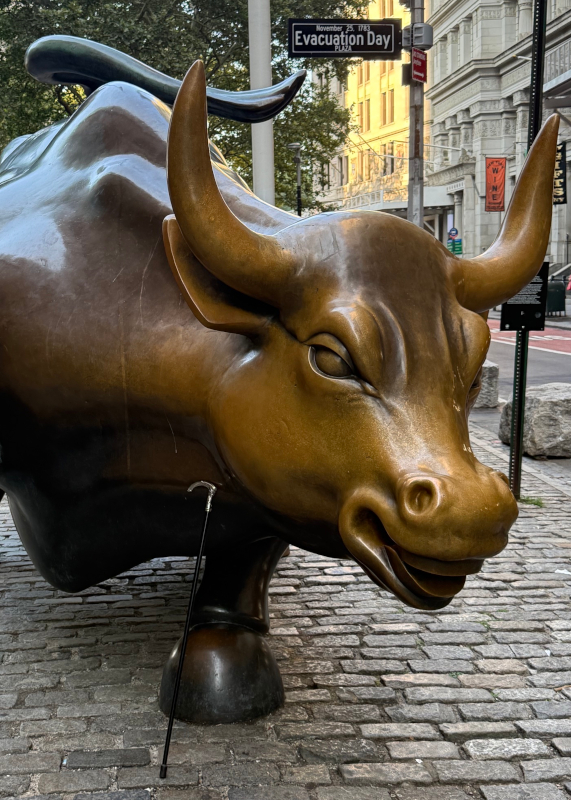
Victor gave a number of us these canes years ago. At least for me it was a reminder anyone can achieve their goals, and it won’t always be an easy path. I took mine down to Wall Street this morning. Thank you, Vic. Will
It is good to take out the canes and hobble down to Wall Street at the close of days when there is a panic. - Victor Niederhoffer
Laurel Kenner:
I found the last cane maker in Manhattan and purchased a number of the most striking ones to send as prizes.
Asindu Drileba:
Until this day, since a few years since I read The Education of a Speculator, I have not found another book remotely close to it. In the finance industry, market analogies are mostly limited to maths & physics. This is why when I read The Education of a Speculator, my mind was genuinely blown by how The Chair would create market references to genetics, music sheets, Dutch philopher Johan Huizinga (Homo Lundens is worshipped in the game design community), checkers and more.
This type of thinking in analogies is what E. O Wilson referred to as "Consilience." So because of this, I would regard The Chair as "The Master of Consilience".
I wrote a short tribute to Vic.
Kiran Kaur:
I was a student of Vic’s. In 2025 he gave me a full weekend at his home, him and Susan both. He walked me through his own book. When I left he put Elmer Kelton’s The Time It Never Rained in my hands and told me The Trees in My Forest by Bernd Heinrich was the other one to read.
I have wondered since whether the pairing was deliberate. A rancher who will not take the drought subsidy and stays on the land, and a biologist counting what is actually happening in three hundred acres of Maine woods. Endurance and counting. He handed it over without a lecture, which I think was the point.
Condolences to Susan, to Aubrey, and to the whole community. Rest in Peace Legend!
Sam Johnson:
A veteran trader pointed me to Vic back in 2011 via speculations website. Encouraged me to think differently about markets and led to a career. Question and test orthodoxy. I wish i could have attended one of his get togethers. He never met me or knew it but he was the second most important person to my trading success.
Yelena Sennett:
Victor certainly did like his hats…
It was a privilege to do podcasts with him. You never knew what fascinating analogy he would come up with to explain the markets. He was always generous with sharing his knowledge, but I believe his greatest gift was an instinct for reading the markets that simply couldn't be quantified.
One of his favorite sayings was, "Never short the market." He certainly lived an extraordinary life, with its share of highs and lows—much like the markets themselves.
Today (August 4th), as the S&P 500 reached another all-time high, it felt like a fitting tribute to his memory.
Richard Barsom:
RIP Victor. Great guy, literally saved my life. Rest in peace Chair.
John Netto:
I remember meeting him for the first time back in the summer of 2011. He graciously invited several from the spec list over to his UWS home. The whole experience fascinated me and his affable personality and welcoming disposition quickly removed any anxiety I had about being in front of a true legend. Thank you to John Floyd for introducing me to the Chair and the list.
Paolo Pezzutti:
I will miss Victor very much. To me, he was a mentor. I received far more from him than I ever gave, and that was part of his greatness. I have applied many of his teachings in both my life and my work.
A brilliant, original and courageous man has left us—courageous even beyond any reasonable limit. He was eclectic, competitive and a great contrarian by nature, but also generous beyond measure. He was a bold, direct and aggressive speculator.
As Nelson used to say: “Go right at them”, Victor always urged me to apply his battle-tested principles to my own trading style.
Newton Linchen:
Victor Niederhoffer was a major inspiration for my development as a market practitioner and had huge impact in the way I view markets and the World.
We are all at a great loss. My respects and sentiment to the family and friends.
Thank you, Chair!
Eric Lindell:
I'm saddened to hear of Victor's passing. I had gotten to know him over the years attending his junto meetings. He was a great guy, and it's a big loss to the investment community and all those whose lives he touched. My deepest sympathies to his family.
Jordan Low:
Victor’s passing is a loss to many. He was so generous with his time and wisdom, and he was a friend to my whole family: he taught my daughter Annabelle tennis, squash, and checkers, and he came to the gala to support my wife Annie when she was honored among the Outstanding 50 Asian Americans in Business. He also taught me the triangle defense in checkers, and drew the line straight to portfolio management: balance risk, reward, and liquidity, and hold the formation at all times. I trade that way to this day. My deepest sympathies to his family.
Rest in peace, Chair. We will remember you fondly.
George Coyle:
Jul
28
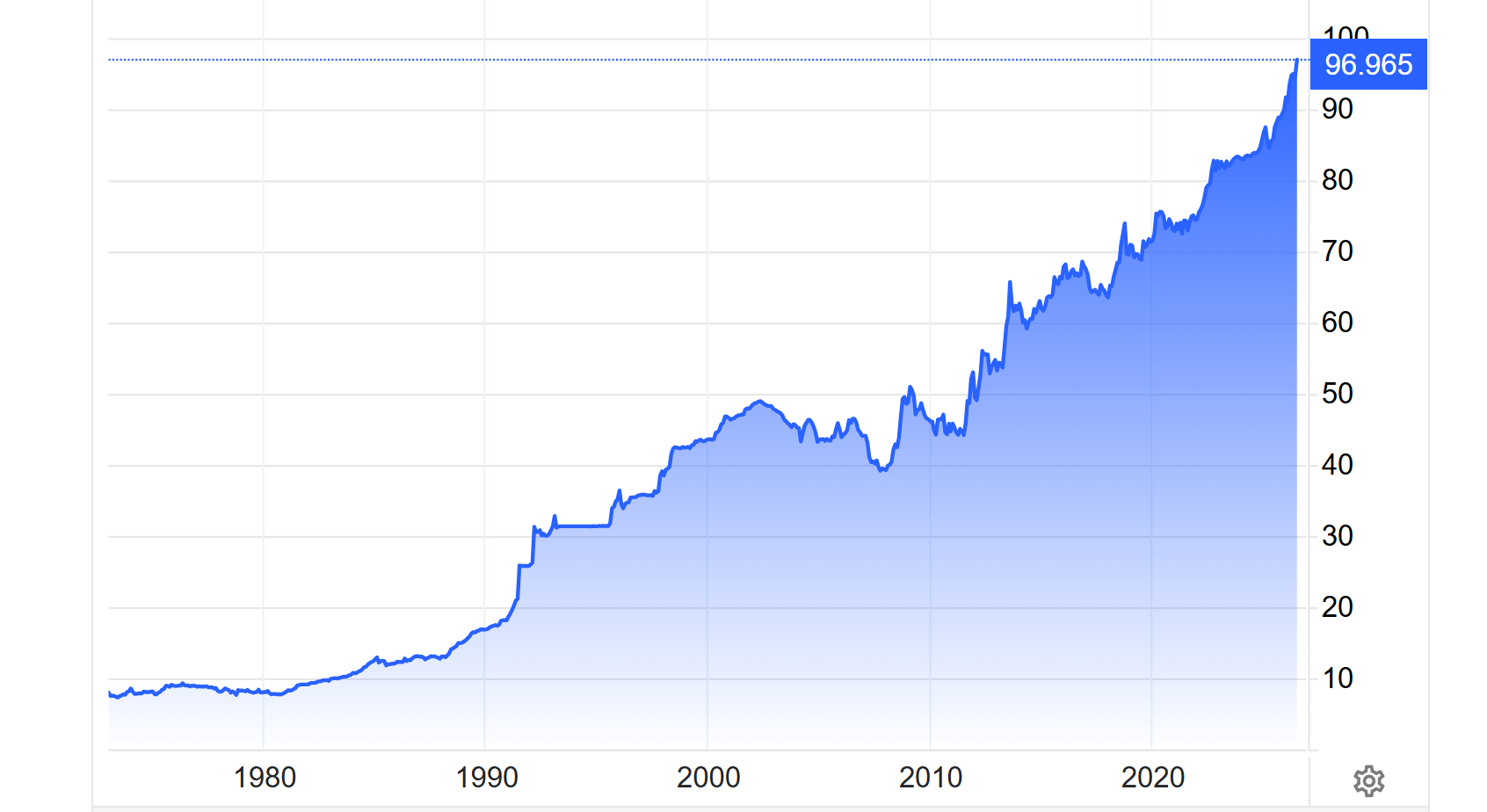
Indian Rupees to the US Dollar:
Steve Ellison writes:
Earlier this week I was recounting my tale of being in Turkey in 2003 when the currency notes in circulation were 1 million lira notes and 10 million lira notes. 1 million lira bought a cup of coffee; 10 million lira could buy a book. Both notes had 1 followed by a string of zeroes with no commas or periods; both had Atatürk's picture, and they were very hard to tell apart at a glance. I learned to turn them over and read the Turkish words as the fastest way to distinguish them.
Aside from that minor challenge, this Byzantine history enthusiast had a wonderful visit, and Istanbul is one of the world's great cities.
Bud Conrad adds:
The Indian ruble, at 90 to the dollar, is only half of the story. The dollar ain't what it used to be either. 1% of what it was in 1971 as measured in gold. How about Iran? 1.3 Million to the $.
Zubin Al Genubi recalls:
I remember Argentina a few years back with Lira 20 to the dollar. $10 US bill could buy crab dinner for two with nice Argentinian whitr wine.
May
23
Sentiment, from Steve Ellison
May 23, 2026 | Leave a Comment
Here is my three-year graph of AAII's sentiment survey. I ignore the neutral voters and calculate the bullish percentage as = Bullish / (Bullish + Bearish).
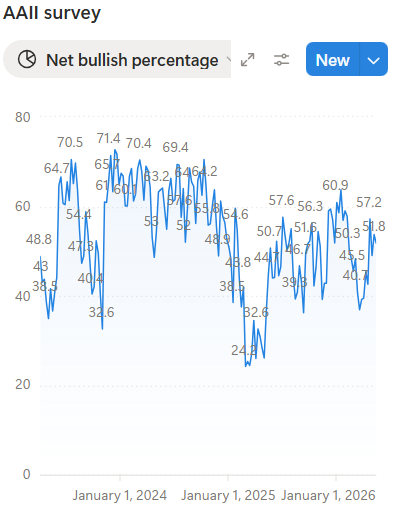
Sentiment as measured by this survey is middle-of-the-road, and has not had any extreme readings since the tariff tantrum in April 2025. The recent high was 63.7% on January 14, 2026, which fell short of a few 70-plus readings in 2023-24.
Jeffrey Hirsch writes:
This is cool Steve. I’ve been looking at trend and shape in addition to level with sentiment indicators as well as some of my seasonals and other analogs. The sentiment turns in Investors intelligence Bullish %-Bearish Percent and the VIX off the March Lows were not from as extreme levels as 2025 and others, but the shape of the sharp trend reversal was there.
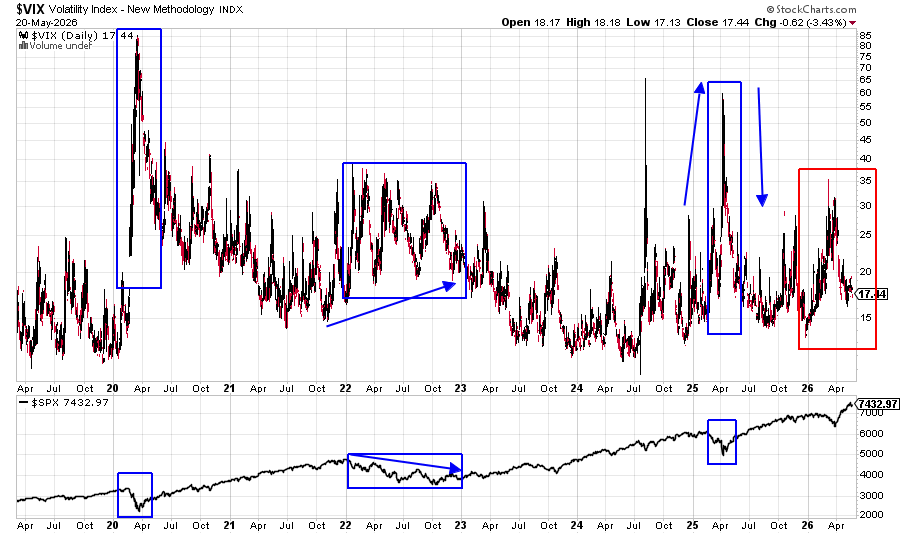
VIX for example only got to about 35 intraday and was in that nervous area of 20-30 where bear markets fester for most of March then it fell below 20 sharply after spiking quickly to 35. Same V in your AAII chart here. So perhaps correction end vs bear or near bear bottom. Also note the trend of higher lows during the 2022 bear market.
May
7
Consumer sentiment, from Steve Ellison
May 7, 2026 | Leave a Comment
The US consumer sentiment surveys have become completely politicized and useless for economic analysis. When Biden was president, respondents who preferred the Republicans said they felt very bad about the economy. After Trump was elected, they felt very optimistic. Respondents who preferred the Democrats did the opposite. And yet bad consumer sentiment as expressed in surveys never turned into action. Consumers did not actually reduce spending.
Larry Williams suggests:
Use this one then:
May
4
What Makes a Trading Strategy Work?
In quant trading finding an alpha is not enough.
What is the edge you have that others do not?
A backtest is not the hard part.
The hard part is explaining why the opportunity exists, why others have not competed it away, and why it should continue to exist in the future.
In practice, most real strategy edges come from one or more of these: …
Some good discussion in the comments also. In response to a question about spinoffs:
Tad Haley Spinoffs are one of the best examples of an opportunity that can be visible without being equally tradable.
The edge is often not in spotting the situation. It is in understanding who has to sell, who cannot own it, who can actually fund and hold it, and how long the implementation friction lasts.
That brings in mandate and tolerance, liquidity, balance sheet, and constraints all at once. Information still matters, especially in separating flow-driven weakness from real fundamental weakness, but a lot of the opportunity exists because the natural ownership base is temporarily broken.
Larry Williams responds:
Is it really that complex? You find out what fundamental conditions drive a market. Maybe it's supply, maybe it's good earnings, and take advantage of that impact.
Zubin Al Genubi comments:
Its good to understand market structure in addition to stats. Structure is changing from a few years ago.
Nils Poertner adds:
Excellent, Yes Zubin. Also the trader may change and develop a bit of an ego after yrs of success….that is why trading requires constant shedding of false personality.
Asindu Drileba writes:
I have also come across three recurring reasons why some edges still exist.
Liquidity: So common in the Bitcoin markets, more in smaller cryptos markets. I have heard people with serious AUM complain about how the can't deploy $30m positions. But small specs don't have this problem.
Impatience: Even though some long term strategies like following the drift, indexing, work people are impatient, often demanding salary like consistency from the market like Robert Bacon suggests.
High stress strategies: Some people are patient, though can't handle strategies that are profitable, but have a very high frequency of losses. I have suggested some (buy) options strategies to my friends, but they just can't endure the 70% to 90% losing rates.
Larry Williams writes:
The big edge is to think forward, to see the future before other people do there are fundamental facts to this game, like insider buying. Mister Brush has written so much about. There are advantages, and they're very simple.
Apr
28
How to account on the principle of ever changing cycles?, from Asindu Drileba
April 28, 2026 | Leave a Comment
This principle outlines the idea that markets change their behaviour. For example:
- the 13th business day of the month made money for 5 years ( lost for some days in the year, but overall ended the year profitable)
then the market changes and
- the same 13th business day of the month loses money for 5 years ( won for some days in the year, but overall ended the year at a loss)
If you tested the data set for the last 10 years as a single block, (5 years losing + 5 years winning) the regularity would completely cancel out. The only thing I can think of is testing data sets in chunks of say 1 year, but over 10 years. and avoiding large blocks in general. Any suggestions?
Steve Ellison writes:
I agree with the idea of shortening the lookback period. I remember the Chair suggesting 60 days as a typical lookback period, but obviously you would need a much longer lookback for an event that only occurred once per month.
I would also suggest assessing, if there really is an edge here, why? In this example, which market participants have reasons to sell (buy) on the 11th and 12th days of the month that override price sensitivity, such that others come in to buy (sell) on the 13th day? There is a lot more noise than signal in market price movements, and some of the noise may appear statistically significant if you torture the data long enough, but without an underlying reason, a regularity is unlikely to continue.
Jeffrey Hirsch responds:
The 11th and 12th trading days of the month – what we refer to in the Almanac as the mid-Month spike is driven by automatic payroll deductions bi-monthly or every 2 weeks into 401Ks and other retirement accounts where fund managers are required by law to invest. I discussed this with Steve Eisman on his podcast, The Real Eisman Playbook, recently where he comes in and helps me prove the point. It starts at the 19-minute mark and runs for about 2 minutes.
20:37: mutual funds are only allowed to have a certain amount of cash. So generally, let's say 5%. They're not allowed to have more than 5%. So, if all of a sudden people are putting money in because of their 401k, they got to buy. It's not optional.
Asindu Drileba adds:
I was playing with Google's decision tree Python library called YDF. (it's shockingly easy to use)
I simply used days of the month as features against, up or down days. Mid month dates showed very strong regularities (some up to 60% up days). I never understood why they occurred, until I remembered Mr. Hirsch talking about payrolls hitting brokerage accounts. What's different is that I found these in crypto. But it was harder to trade than I thought.
Larry R Williams writes:
It's been that way for years: the eleventh trading day of the month in stocks is usually a rally day, going way back to the 1980s when I first started trading this.
Apr
23
The Art of War by Sun Tzu, from Q. Humbert (Updated)
April 23, 2026 | 1 Comment

Good book to re-read. Are all those crisis meetings are just choreography? In order to "sell" something unpopular (a war) to the managed masses in the West (or whatever system there is in Iran respectively). Humanitarian aid talks often precede wars as well.
Jeffrey Hirsch offers:
Art of the Deal. Seasonality edition
Nils Poertner responds:
Top notch analysis! (I'm wondering though, we in the West value transactions and deal making a lot - whereas in some countries, which are more religious…they may rather die than surrender).
Steve Ellison writes:
I just borrowed The Art of the Deal from the library because the Chair's brother says that the President's thinking process is all laid out in that book, and one ought not to react to his statements at face value because they are negotiating positions.
Jeffrey Hirsch adds:
Ever since Liberation day and the tariff tumble last year have had the President’s truth social posts as the only lock screen alert coming through my phone.

Kiran Kaur comments:
Free markets used to be a natural hand that would correct markets when they were inflated, avoiding catastrophes. But now we have the hand of government that removes the natural corrections that are supposed to occur and take out zombie companies. We have a few actors taking meetings behind closed doors to set the cycles, using regulation as a key mechanism. its nice for us because we are close to the liquidity that sets the rest of the markets.. Have you read Edward Chancellor's The Price of Time?
Asindu Drileba writes:
One opinion I heard recently is that, this conflict is actually doing exactly what "they" want. The constant talk of colonising Canada & previous "take over" of Venezuela is because these are oil rich countries. The conspiracy is as follows:
Shut down the strait.
Make Middle Eastern oil suffer logistics issues (price oil higher?)
Oil from Americas moved ok (priced cheaper?)
Demand for Americas oil increases. Subsequently, demand for USD also increases.
Finally weaken & decapitate BRICS.
Does this make sense? Or is it imaginary 5D chess?
Kiran Kaur responds:
Absolutely the most sane analysis i can imagine. Especially after reading the blueprint of the genius act and the user's guide to global trade. Increasing demand for us debt, oil, and the dollar, while decreasing dependencies on global players are agendas directly mentioned in both of those papers.
Apr
16
What can’t happen, from Steve Ellison
April 16, 2026 | Leave a Comment
In 2007 some pairs trades moved 25 standard deviations from their historical norms. If markets were truly random walks, such events would have had miniscule probabilities of ever occurring even had the stock market been in existence since the Big Bang.
As Augustin Lebron said in his excellent book The Laws of Trading, the more market participants assume some event can't happen, the more certain it becomes that the event will happen. Remember when house prices never went down?
William Huggins responds:
that 25 st devs quip just shows you what the spread of their calibration set was, and where the real problem was imo - assuming recent stability was some established fact (one of the problems with exponential weight decay)
Nils Poertner recalls:
Italian friend of mine (big hitter at US bank) had a burn out in 2007, and his wife checked him into a monastery (ora and labora Benedectiner type). Ora is contemplative - it is receiving (not thinking, thinking, thinking) it is what we don't know. Whether you have "AI" or "science models" it is like standing in a room full of mirrors and putting more mirrors into them and thinking one knows the future.
William Huggins writes:
My favourite way out of echo chambering one's self (and to avoid the lure of gurus as this august list taught me forever ago) comes from 17th century Japanese poet Matsuo Basho: "Do not seek to follow in the footsteps of the wise. Seek what they sought". In any competitive domain (markets, chess, etc), you have to learn how to think like a master rather than proverbially copying some smart kid's homework.
An overreliance on historical data instead of trying to imagine what could (quite reasonably) be, is one of the contributing factors that led the 2007/8 crash. In their August 2007 conference call (see pg 21), AIG's Joe Cassano told analysts (regarding their CDS business), "it is hard for us, and without being flippant, to even see a scenario within any realm of reason that would see us losing $1 in any of those transactions".
25 st devs indeed…
Larry R Williams adds:
People talking and over talking their book is a massive clue. Like tom lee this and last year.
Apr
12
The “attention economy”, from D. Humbert
April 12, 2026 | Leave a Comment
Media ("attention economy") marginalizes positive stories of ordinary people building solutions from the ground up. That is why trading + media exposure during the day needs to be balanced in off hours to see that ((helping the neighbour, inviting to parties, gardening, anything that gives us joy). And this will be even more important in coming years (as social moods probably drops a lot…initially felt in Europe / Asia and later in the US. The US is not long convexity it is also short IMO).
Steve Ellison writes:
I have always followed Livermore's admonition to neither seek out nor follow tips, not even those from the brilliant members of this list. On X, I follow a number of accounts that I find add value by providing economic and market insight, but some of my favorite recent follows have been people who talk more about psychology and mindset than about particular markets.
For example, Ben Calusinski has some very interesting ideas. One is that authenticity is the one thing that AI can never replace. Another is that you have access to more information than any human in recorded history, simply by being alive today, so there is no excuse to not succeed. Possibly related to Mr. Humbert's point, Mr. Calusinski envisions a future in which 90% of the population is so dopamine-addicted by their devices that they achieve nothing, but a person who resists the siren call of social media and actually builds something, ideally something that aligns well with their authentic self, can do quite well.
Mar
30
Delmonico’s memories, from Steve Ellison
March 30, 2026 | Leave a Comment

I remember a number of Spec Party dinners in Delmonico's, and I had a very educational conversation with then-81-year-old Yale Hirsch at one of them.
America’s Original Steakhouse Is Expanding - After Nearly 200 Years
When Delmonico’s first opened around the corner from Wall Street in 1837, it coincided with a financial panic, bank failures and the popping of a real-estate bubble. But the steakhouse survived. And in the coming years, it would serve famous customers such as Abraham Lincoln and Mark Twain.
Now, nearly two centuries later, the restaurant that calls itself the first fine-dining spot in the U.S. is poised to open its second outpost in Midtown Manhattan next year.
Jeffrey Hirsch responds:
Thanks for the memory Steve!
Mar
19
Requiem for a permabear, from Steve Ellison
March 19, 2026 | Leave a Comment
[Paul Ehrlich's] predictions were not premature but just flat wrong. Not wrong as in they were a little off but wrong as in completely and entirely wrong not even close. However, that is not the part that people are missing.
Ehrlich thinking wormed its way into [so] much thinking and dominates large parts of polite society thinking today. Europe hands out advanced degrees in 'degrowth' and while no one would say it is an advanced degree in Ehrlich's wrongness, his ideas permeate polite society.
It boggles the mind that his ideas which are so universally wrong have such life under a different brand.
William Huggins writes:
It's always useful to understand why a prediction is wrong, rather than simply lambasting anyone with enough guts to take on the humbling task of estimating the outcome of mankind's war against entropy. In this case, Ehrlich, like Malthus, made his predictions on the basis of "the system as we know it, from accumulated data". This made his understanding slow to recognize a new data regime where in both cases, agricultural yields were set to boom as a result of new techs. one of the big contributors to lifting the ceiling on food production between 1960-2010 (+1/3 to +1/2) was the widespread application of chemical fertilizers (from Haber-Bosch, which cratered the cost of nitrogen), while India and much of the rest of Asia began applying Norman Borlaug's seed improvements (plants able to process more fertilizer…). Echoing Malthus' timing right as the British agricultural revolution was hitting its stride, Ehrlich's book came out just as these developments were really kicking into high gear.
The bigger issue appears to be blind spots regarding what "can't happen" (failure of imagination?). Last generation's notion of peak oil was informed by similar thinking but along came improvements in the economics of fracking. While the long-term drop in agricultural commodity prices seems to reinforce the idea that tomorrow is a brighter day, it has been built on processes which are themselves vulnerable to disruption (globalized hydro-carbon trade being the most proximate example) so imo there is also a converse risk in assuming stability.
on that note, is anyone else (long Canada)-(short everyone else) since the attack on Iran? easy macro trade on the stability of oil exports.
Peter Ringel comments:
the problem is, in Europe the base line is Malthusian. always has. Odds are, the inteligencia here has not even heard of Borlaug. And if, then rejected based on the Holy Church of Green. A variation of the idea, that has the world in its grip. Short the continent. Already based on that.
Feb
8
CIO predicts 2026, too
February 8, 2026 | Leave a Comment
Expect Equity Markets to Broaden in 2026, Led by Small Caps, International
Both fiscal and monetary stimulus should boost earnings in the U.S. and abroad, with dollar weakness continuing to underpin international stocks.
Nils Poertner comments:
Back in High School, they gave a 1 pager of Latin and we had 1 hour to translate it (since it is an ancient language I was spending a lot of time to see what this all meant.) We all know English more or less. These days, I read a 1 pager in English (like this page) in 1 minute. My modern brain actually agrees with the whole article. Yummy. In reality there are probably a lot of cliches in it….
Zubin Al Genubi writes:
AI is about training data otherwise it gets stale and cliched. Like a person reading the same newspaper every day. Google has lots of data. Musk is merging SpaceX with AI because as internet provider he will have access to unlimited global data. I wonder what their contract disclosures say about data privacy.
Steve Ellison responds:
"Expect"? I have seen the broadening occurring since November. There was an extended non-confirmation of Dow Theory last summer into fall as the Industrials were making new highs, but the Transports remained below their November 2024 high. Not only did the Transports finally make an all time high, now they are making new highs before the Industrials do. Similarly, the equal-weighted S&P 500 ETF RSP, which was badly lagging the cap-weighted SPY in the 2025 rally off the "Liberation Day" tariff lows, made a new high yesterday while the cap-weighted index only partially regained some of its losses from earlier in the week.
I said on X [6 Feb.], "Lots of strength in the broader market. While technology stocks were selling off the last few days, the Industrial, Materials, Consumer Staples, and Energy sector ETFs all made new highs".
Feb
5
6 new lows, from Zubin Al Genubi
February 5, 2026 | Leave a Comment
The last few down swings each had 6 new lows before a bottom. Today, marking a new low for this swing after hours will end up a new low number 5 by the end of tomorrow.
Steve Ellison writes:
Interesting. I have been experimenting with multi-level point and figure charts. Using a box size of 1.4% (a long-term average true daily range) and a 3-box reversal, SPY is still within 4.2% of its all-time high and hence in an uptrend. Drill down with smaller box sizes and shorter time intervals, and interesting price structures appear. At a 1/4 ATR box size, today's close was at a similar level to the Jan. 20 low.
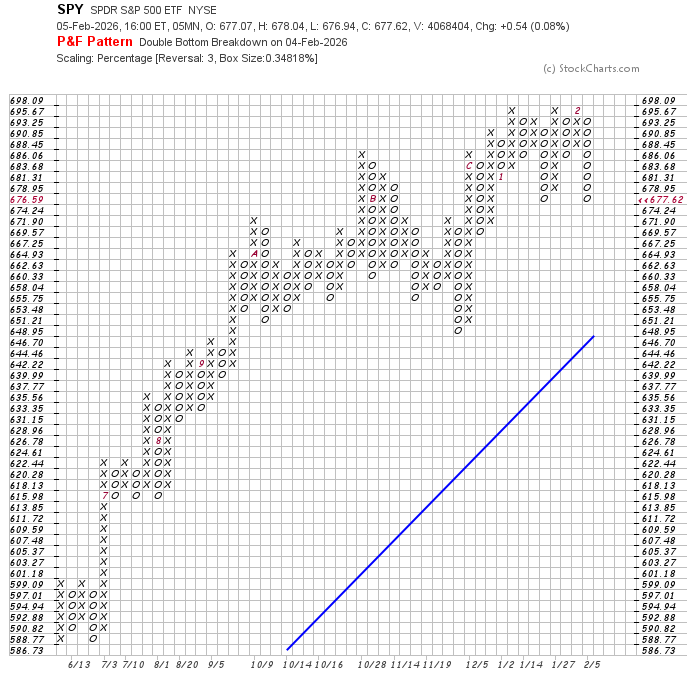
Lots of sector rotation under the surface. If 2025 was the year of the magnificent 7 and the flatlining 493, this year may be the opposite. While technology was getting beaten down this week, the Industrial, Materials, Consumer Staples, and Energy sector ETFs all made new highs.
Zubin Al Genubi adds:
Lots of late night shenanigans going on. Asian markets trading open in late thin US futures creating imbalances. Price action appears algo driven.
Nils Poertner comments:
I like the pattern with 6 new lows. Well spotted. Otoh, if the pattern does not repeat the surprise for mkts is bigger. nature offers "patterns" and "break of patterns" and both are relevant - else it would be a museum.
Cagdas Tuna predicts:
Then it is going to be a rough year for market cap weighted indices in US.
Peter Ringel writes:
While I would always give a study, like Big Al‘s more weight to remove opinion. I wonder, if there is a January effect regarding regime type or sector or general trading type. Not necessary % performance. Will the rest if the year trade like January? Would give a 2015 type year.
Nils Poertner responds:
yes. for practical purpose, it may be easier to trade mkts which receive less attention by the wider financial community /media.
Jan
27
Ralph Vince’s latest, from Larry Williams
January 27, 2026 | Leave a Comment

Ralph Vince's newest book. Not about the markets.
The Theology of Lust follows Ricky “Pork Chop” White — a wounded, self-mythologizing erotic savant — as he stumbles through desire, regret, and violent entanglements, trying to turn raw masculinity into something redemptive. It’s a darkly funny, psychologically unfiltered journey where erotic obsession, betrayal, and a lurking murder plot converge on one man’s desperate attempt to find some sort of salvation out of the mess he calls a life.
Asindu Drileba writes:
Nice! I remember Ralph Vince mentioned that one of his favourite books was The Bible. There is a strange relationship between speculation, theology & computers(artificial intelligence) that no one has comprehensively talk about. Hopefully, I will learn more about theology from this book.
Peter Ringel comments:
When I read the senator writing "the greatest project of his life", I immediately feared, that he fell victim to French, Spanish or Portuguese girls. The title seems to confirm this.
Larry Williams responds:
Good guess but not quite Ralph has a new steal proof coin coming out the book is a year old but was just translated to English from French.
Steve Ellison recalls:
We had a long-ago list member who would frequently draw parallels between never-ending market arguments such as fundamental vs. technical analysis and the European religious wars of the 1600s or theological debates such as predestination vs. free will.
Jan
21
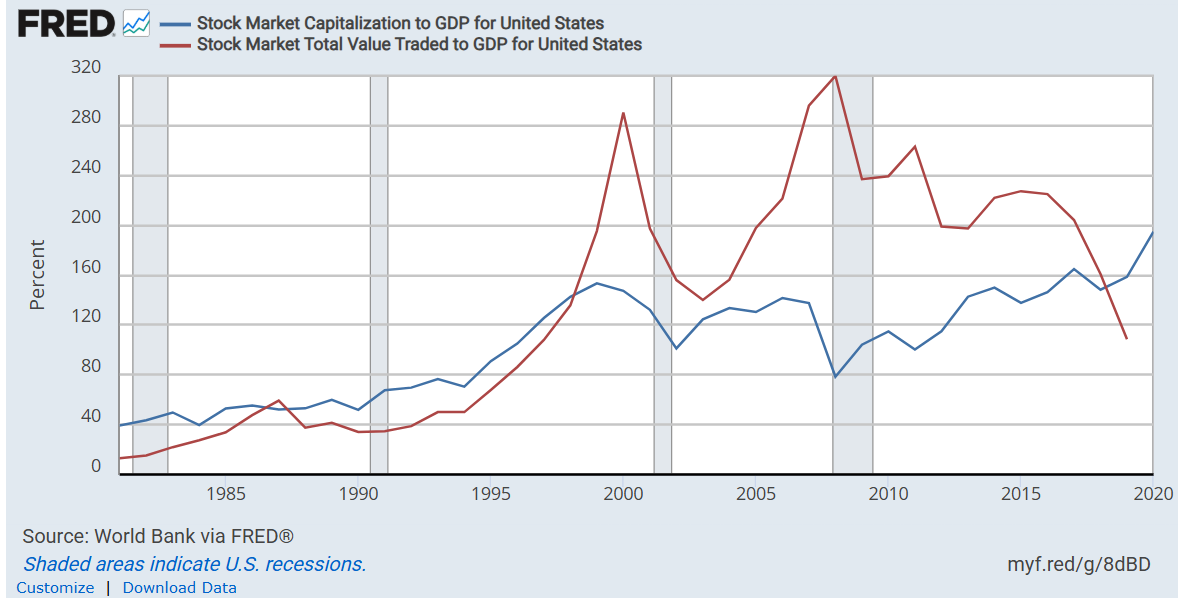
US Stock Mkt Value as pc of GDP (US), from Humbert X.
January 21, 2026 | Leave a Comment
Used to be like sub 50pc in the 1990 and now well over 200pc. Not meant to be of any value for speculation (would have been rubbish in the past and don't think any value for future). but one wonders what it does in terms of tension (internal/ external) as we as shareholders would not like to give back gains so easily (and there is the drift etc). Tricks to be used to keep it up - see v recent events- not judging here.
Larry Williams offers a chart:
Big Al wonders:
I wonder to what extent the decline in "Stock Market Total Value Traded to GDP" reflects a shift to dark-pool/off-exchange trading.
Peter Ringel writes:
TY Larry, great data! looks like we are severely undervalued. A 90s style party is coming.
@BigAl this too is a valid point. If founders don't go the exchanges anymore. Is there data on this off-exchange size? At least for their exit they will most likely show up in equities. Why should early backers not do this in the end? Its too juicy.
related: If off-exchange sector really gets dominant, then FED policy becomes even more toothless.
They have no tools to influence this.
Big Al asks Gemini:
In the US, how much stock trading occurs in dark pools or otherwise off exchanges?
Over 50% of all U.S. stock trading volume now occurs off-exchange, in venues such as dark pools and through internalizers at major firms, exceeding the volume on public exchanges for the first time in early 2025.
Overall Off-Exchange Volume: While dark pools specifically account for a smaller portion of the off-exchange activity (around 13% of consolidated turnover), the overall off-exchange market, including internalizers and bilateral trades, accounts for the majority of U.S. equity trading volume.
Purpose of Dark Pools: Dark pools and other off-exchange venues are primarily used by large institutional investors to execute big orders anonymously, which helps them avoid significant market impact and predatory high-frequency trading (HFT) strategies that can occur on public "lit" exchanges.
Regulatory Oversight: Despite their name, dark pools are regulated as Alternative Trading Systems (ATS) by the SEC and must report executed trades to regulators like the FINRA on a delayed basis.
Market Share Trends: Off-exchange trading share has been on a general upward trend for years, driven by the desire for better execution quality and anonymity. This shift has implications for traditional price discovery on public exchanges.
Steve Ellison does some analysis:
The Shiller Cyclically Adjusted Price Earnings (CAPE) ratio is at its second highest level in history, exceeded only in 1999-2000. What I find interesting is that the 30-year moving average of this ratio has nearly doubled since 1990. My theory is that permanently lower interest rates in an aging population support generally higher stock valuations than in past eras when large families were the norm.
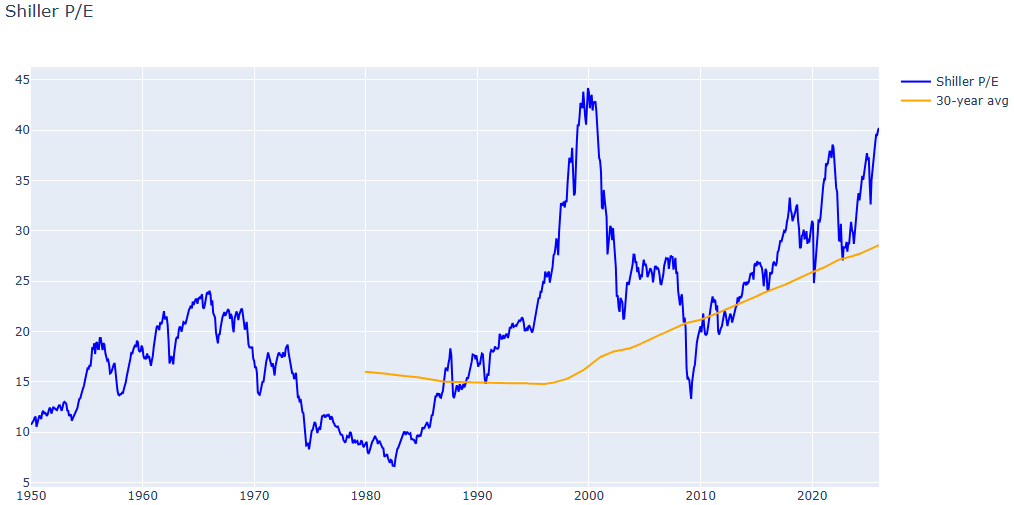
And in the spirit of the old Spec List, here is the Python code I used (.text file) to generate this graph.
Big Al adds:
Another issue is the effect of Mag7 stocks which are global in a new way, beyond US GDP.
Jan
6
Leather jacket indicator, from Cagdas Tuna
January 6, 2026 | Leave a Comment
I asked Gemini if the Nvdia stock price milestone dates associated with Jensen Huang's famous leather jackets. Here is the timeline of Jensen's jacket evolution alongside Nvidia’s stock milestones:
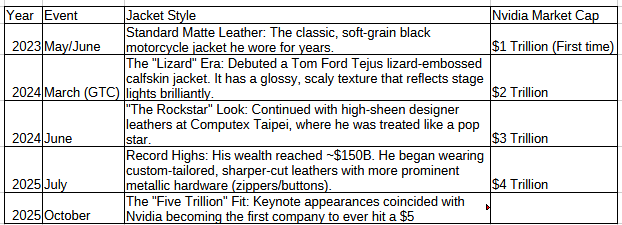
The one that caught my attention is Lizard Era in March 2024. At that time Nvdia price was around $100 and after Jensen's Lizard Jacket appearance Nvdia stock fell 20-25%. And here is Jensen while debuting new chips last night. We will learn soon if the Lizard Jacket is a helpful tool for front running Nvdia stock!
Steve Ellison likes the idea:
Very unique and insightful analysis. My wife read a biography of Mr. Huang. When he was growing up in Oregon, his immigrant relatives wanted to put him in a private school, but the school they enrolled him in was a reformatory. After that life experience, I am pretty sure that Mr. Huang can't be intimidated by Donald Trump or Xi Jinping.
Peter Ringel adds:
agree. probably useful insights can come from seemingly absurd corners. Like the weather of sports teams in NYC.
Dec
14
Ever Changing Cycles in the NBA, from Andrew Moe
December 14, 2025 | Leave a Comment
Wonderful example of ever changing cycles in the NBA vis a vis the post up play which went dramatically out of favor when analytics reshaped the game into a three point shooting contest but now has come back into favor due to the spacing afforded by all those three point shooters.
How post-ups became the NBA's most efficient play
Stefan Jovanovich comments:
Steve Ellison is wistful:
Might one dare to hope that actually putting the ball in play for fielders might once again gain favor in baseball?
Nov
21
Sheep shearing, Humbert Q.
November 21, 2025 | Leave a Comment

Sheep needs to be regularly sheared to take off some extra wool- it is actually good for them- healthy!
Henry Gifford adds:
Back in the day sheep didn’t have people handy to shear them. A farmer told me that over the past few hundred years sheep have been bred to grow more wool, thus they need people now, but before that change the sheep didn’t grow as much wool.
Steve Ellison writes:
The S&P 500 reaching its lower 50-day Bollinger band on Thursday might indeed indicate some modicum of panic, as might VIX being well above its upper 50-day Bollinger band.
I have thought sentiment was quite restrained this year given that the S&P 500 was at a record high as recently as October 28. Bears have outnumbered bulls in the AAII survey for the past two weeks. And the publishing of a book titled 1929 was very well publicized. I perceive that out in the general population there is a lot of fear about AI; lots of scaremongering about AI eliminating nearly all white collar jobs.
Cagdas Tuna comments:
Many years ago when I was a teenager, I heard this from the head of top brokerage firm in Turkiye and he said "It is not news until it matters." Circle funding of AI companies and its effect on jobs have been long discussed at least by the people I follow on social media but it has had no impact until yesterday. So can we say it has become news now?
Nov
17
Corporate earnings, from Zubin Al Genubi
November 17, 2025 | Leave a Comment
I see they are down [at least through Q2]:
FRED: Corporate Profits After Tax (without IVA and CCAdj)
Steve Ellison responds:
Interesting. S&P 500 earnings per share were up both year to date and year over year. And Q3 so far looks better than Q2.
S&P source spreadsheet: Click link to download file: S&P 500 Earnings.
Big Al wonders:
So maybe the big firms are doing better than the smaller ones?
Nils Poertner remembers:
Investment Bank earnings 2007…My very cerebral friend Maurice at the time: "IBs are cheap - look at their PE ratios."
Nov
7
Ten days since an ATH
November 7, 2025 | Leave a Comment
10 days since all-time high. very bullish.
Steve Ellison comments on CAPE:
[Click chart for original post on X.]

6637-6660 is an important level for the ES December contract; not breaching this level (yet) in today's selloff is short-term bullish in my opinion, but the second highest valuation in history means the longer-term risk is high.
And I'm not sure exactly what the "rolling historical average" is, but by my calculation, the 30-year average CAPE is 28, which might make 40 somewhat less overvalued.
Oct
24
Another Historical Analogy, from Stefan Jovanovich
October 24, 2025 | Leave a Comment
Grok and I have produced this summary of the growth of the electric utilities industry in the United States from 1910 to 1930. [Click on chart for full view.]
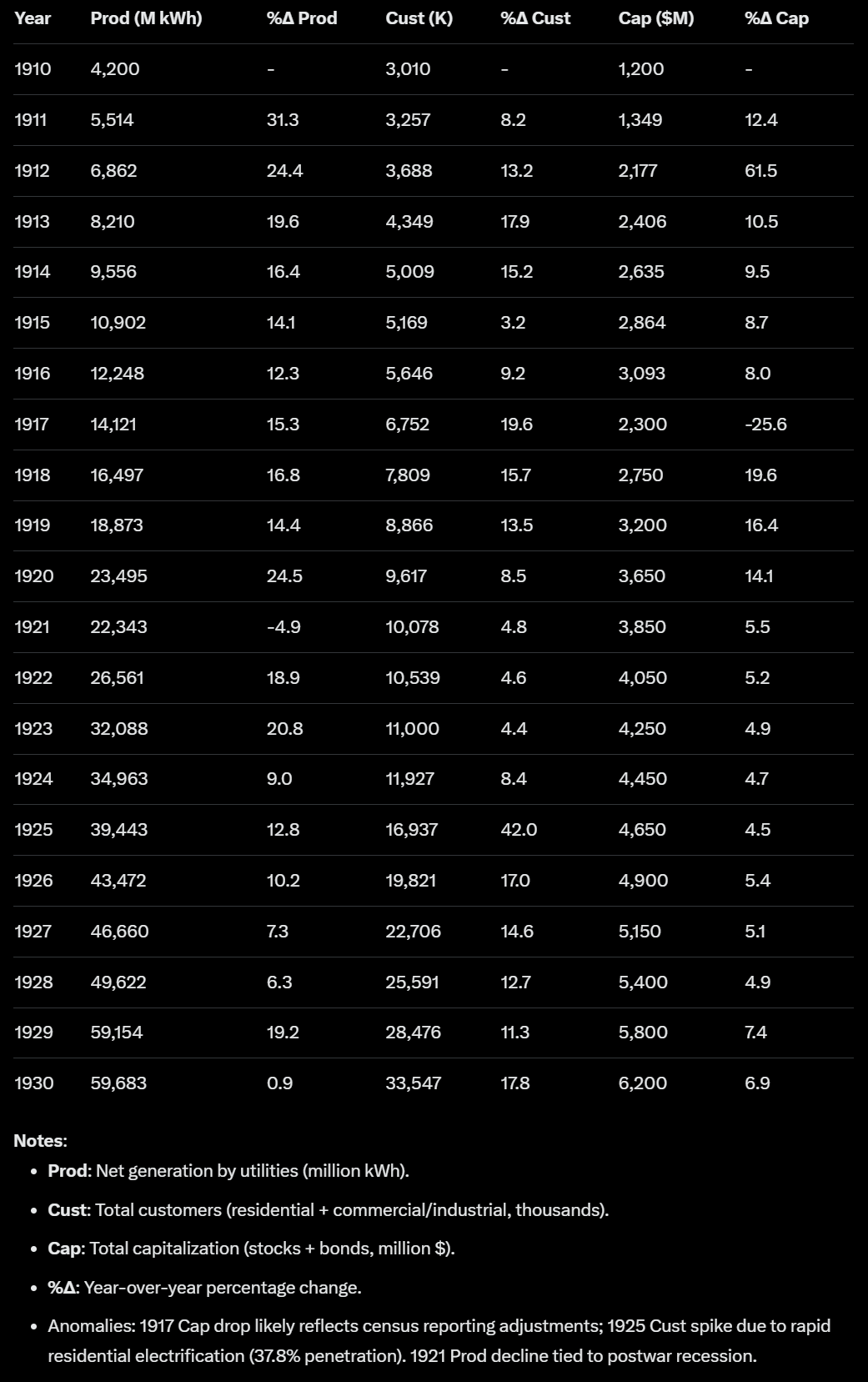
Bud Conrad comments:
Not sure what you take from this data. Electrification was probably more important than AI. Its growth rate was big at first in %, but slowed. Recessions were big downturns. What do you apply to today?
Steve Ellison writes:
My grandmother was a telephone operator in the 1920s. It was a high-tech industry at the time.
Carder Dimitroff clarifies:
The definition of an "electric utility" changed over time.
Big Al suggests:
An excellent series available on Prime:
Shock and Awe: The Story of Electricity
Professor Jim Al-Khalili tells the electrifying story of our quest to master nature's most mysterious force: electricity.
Books I haven't read yet, which get lots of stars:
The Power Makers: Steam, Electricity, and the Men Who Invented Modern America
The power revolution is not a tale of machines, however, but of men: inventors such as James Watt, Elihu Thomson, and Nikola Tesla; entrepreneurs such as George Westinghouse; savvy businessmen such as J.P. Morgan, Samuel Insull, and Charles Coffin of General Electric. Striding among them like a colossus is the figure of Thomas Edison, who was creative genius and business visionary at once.
Empires of Light: Edison, Tesla, Westinghouse, and the Race to Electrify the World
In the final decades of the nineteenth century, three brilliant and visionary titans of America’s Gilded Age—Thomas Edison, Nikola Tesla, and George Westinghouse—battled bitterly as each vied to create a vast and powerful electrical empire. In Empires of Light, historian Jill Jonnes portrays this extraordinary trio and their riveting and ruthless world of cutting-edge science, invention, intrigue, money, death, and hard-eyed Wall Street millionaires.
Oct
3
Where am i wrong, from Larry Williams
October 3, 2025 | 2 Comments
Zero sum game: for every $ that wins the same amount will be lost. REALLY? you bought at 7 sold to me at 10 I sell at 20 and the contract goes off the board and delivered at 22 who lost? We lost that we could have made more $$ but where is a net loss?
Steve Ellison comments:
Adverse selection can make us all feel like losers. If I sold at 10, I should have held to 22. Or I should have put on more size. If I bought at 7, and it went to 5, that would have been even worse.
Jeff Watson goes literary:
But Yossarian still didn't understand either how Milo could buy eggs in Malta for seven cents apiece and sell them at a profit in Pianosa for five cents.
[ … ]
Milo chortled proudly. "I don't buy eggs from Malta," he confessed… "I buy them in Sicily at one cent apiece and transfer them to Malta secretly at four and a half cents apiece in order to get the price of eggs up to seven cents when people come to Malta looking for them."
"Then you do make a profit for yourself," Yossarian declared.
"Of course I do. But it all goes to the syndicate. And everybody has a share. Don't you understand? It's exactly what happens with those plum tomatoes I sell to Colonel Cathcart."
"Buy," Yossarian corrected him. "You don't sell plum tomatoes to Colonel Cathcart and Colonel Korn. You buy plum tomatoes from them."
"No, sell," Milo corrected Yossarian. "I distribute my plum tomatoes in markets all over Pianosa under an assumed name so that Colonel Cathcart and Colonel Korn can buy them up from me under their assumed names at four cents apiece and sell them back to me the next day at five cents apiece. They make a profit of one cent apiece, I make a profit of three and a half cents apiece, and everybody comes out ahead."
Sep
23
Health care costs, from Nils Poertner
September 23, 2025 | Leave a Comment
health care costs, our Achilles heel.
Health Insurance Costs for Businesses to Rise by Most in 15 Years
Insurers say that the rising premiums are driven by growing healthcare costs
(on a personal note: no-one is really fully healthy, not even kids normally! science uses a lot of Aristotelian logic (which is an either/or logic) but there are limits to it - and we take it way beyond its usefulness. Nature does not have those clear mental compartments - it is way more fluid /dynamic).
Steve Ellison writes:
Until the public announcement that Warren Buffett had bought shares in UnitedHealth, health care was by far the worst performing of the 11 S&P 500 sectors in 2025.
Nils Poertner responds:
Yes, the whole sector / subindex looks bullish (XLV). (the type of logic in the West (logic from Aristoteles) that dominates MODERN SCIENCE cripples our society. Why? Because in many cases, whatever the doctor says, "it is not" - it is only an image of something abstract (like the apple painting by Rene Magritte).
Pamela Van Giessen comments:
We overconsume healthcare because we pay so much for insurance and/or our employers give it to us in lieu of salary so we want to get all we can for “free.” We’ve been conditioned to believe that if we visit doctors (though now we see PAs) and get “check ups” and “tests” regularly and take pills to manage our bodies and minds in perpetuity that we won’t get seriously ill. Has got to be the biggest subscription scam ever perpetuated on a society.
Perhaps some spec would like to pull out the data and do some forensic financial analysis of all those hospital system balance sheets. I think that fully 1/3rd or more of hospital systems are owned by private equity firms and the bulk of non-profit hospital systems are extracting meaningful sums from the business regardless of how “healthy” their margins look on their financial statements. From an equity perspective the biz may have looked lousy but I can promise that it is extraordinarily profitable for the inside players.
Jeffrey Hirsch adds:
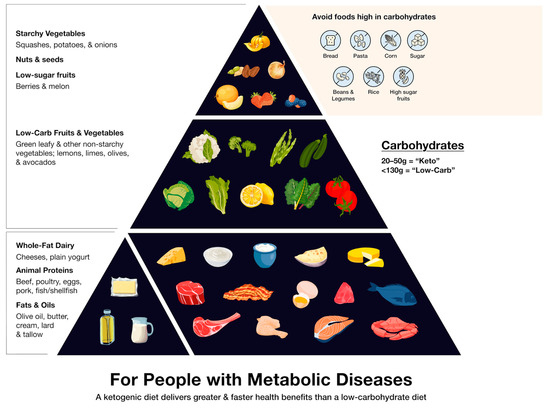
Not only is it a total scam, but it gets in the way of real needed pharmaceutical/medical care and completely ignores metabolic healthcare via lifestyle and diet changes.
Too bad RFK is all wrapped up in his vaccine crusade to focus on the real USA health crisis with obesity and metabolic health, which causes diabetes, heart disease, cancer and cognitive decline. I think the covid vax is total BS as are others. But MMR and most childhood vaccines save lives. We had a measles outbreak in Rockland County a few years back because some communities did not vaccinate.
We should also flip the old USDA Food upside down. The chart is from my Doc’s paper. And my doc's site is Dr. Tro Kalayjian).
Sep
19
Dow theory, from Steve Ellison
September 19, 2025 | 1 Comment
This is a bit disturbing: According to classic Dow Theory, the Transports have not confirmed any new highs in the Industrials since November 25, 2024. If fewer goods are moving, is the economy really growing?

Aug
31
George Pólya, from N. Humbert
August 31, 2025 | Leave a Comment
George Pólya came up with the term Inventor Paradox.
Basically, if one thinks about a problem more deeply, something else may open up. And one can achieve extraordinary results! Plenty of examples in finance, engineering, medicine.
Steve Ellison writes:
From the Wikipedia link about the inventor's paradox:
When solving a problem, the natural inclination typically is to remove as much excessive variability and produce limitations on the subject at hand as possible. Doing this can create unforeseen and intrinsically awkward parameters.
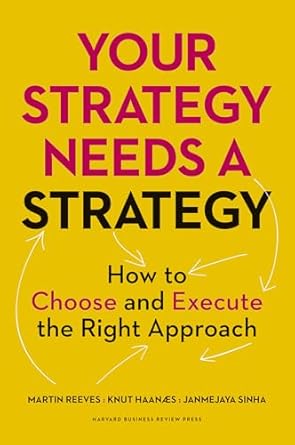
Very interesting idea with applications in many fields. As one example, I recently told my daughter, who is a partner at Boston Consulting, that I was reading a book about strategy by a professor at Harvard Business School. She told me, "Boston Consulting literally wrote the book on strategy": Your Strategy Needs a Strategy.
I ordered that book and so far have read the first chapter. One of the key questions is how predictable the business environment is. Another is, how much can you influence the environment? "Classical strategy" as taught in business schools generally assumes that the environment can be forecast and that the company has very limited influence over it. A case study was the Mars candy bar company.
But if you cannot forecast the environment, a very different approach is called for, with heavy emphasis on learning and iterating. And if you can in fact shape the business environment, you might want to find some partners and create an ecosystem.
As a footnote, the book I was originally reading, which I also found informative, was by Richard Rumelt: Good Strategy, Bad Strategy.
Asindu Drileba offers:
Optimize the Overall System Not the Individual Components, interview given by Edwards Deming. Excerpts:
The results of a system must be managed by paying attention to the entire system. When we optimize sub-components of the system we don’t necessarily optimize the overall system.
Optimizing the results for one process is not the same as operating that process in the way that leads to the most benefit for the overall system.
Applied to markets:
- It's easier to do well on the S&P 500 index (the general market), than do well in a single stock (picking).
- Attributed Mark Spitznagel, we should judge the buying of far OTM puts based on how they help the entire portfolio. Not the individual PnLs of buying the far OTM puts.
- Attributed to Roy Niederhoffer, many traders turn off trading strategies once they start loosing money, but different trading strategies make money at different times.
Aug
26
0DTE & Volatility, from Peter Ringel
August 26, 2025 | Leave a Comment
The abysmal Volatility last Monday, 18 August, and the dead stop last Tuesday, EOD, were attributed by some to 0DTE. A little back on Spec List, papers were posted, showing this Volatility suppression effect by 0DTE options and their market makers.
I know it is just the latest holy grail traders flog to. Quite a few websites are offering subscriptions for the data. So, I was surprised to find it for free on Barcharts – the EOD version:
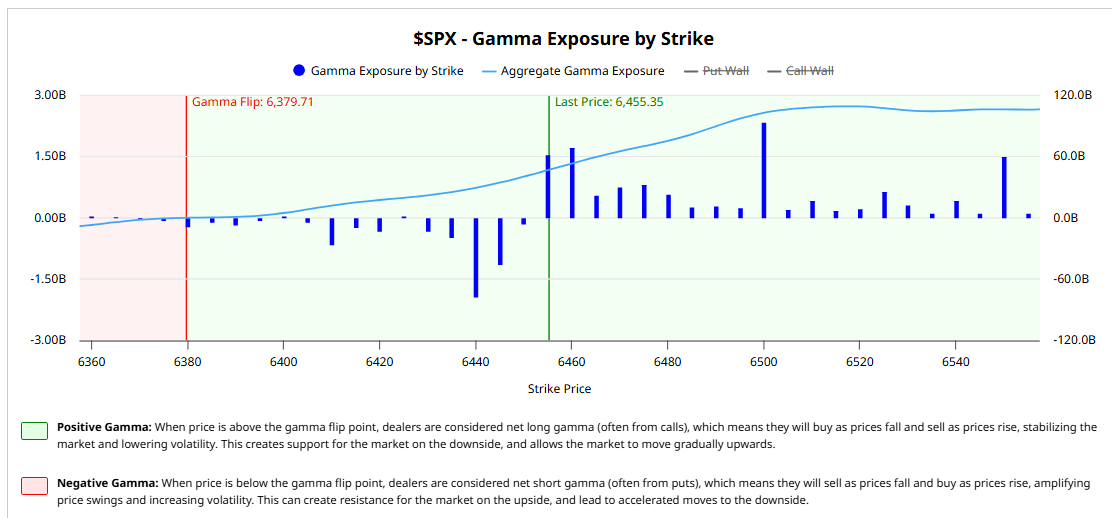
Steve Ellison adds:
Important information, thanks. Jeff Clark said on a podcast that 68% of all S&P 500 option contracts are 0DTE.
Aug
14
Book rec from Steve Ellison
August 14, 2025 | Leave a Comment

The Laws of Trading: A Trader's Guide to Better Decision-Making for Everyone
This is a book about decision-making through the lens of a professional prop trader. For years, behavioral and cognitive scientists have shown us how human decision-making is flawed and biased. But how do you learn to avoid these problems in day-to-day decisions where you have to react in real-time? What are the important things to think about and to act on?
Aug
2
Originally posted May 2, 2009:
Einstein purportedly said that compound interest was the most powerful force in the universe. I challenge his statement and offer the hypothesis that the vig is the most powerful force in the universe, exceeding that of even free market forces because it's always there. Exerting a constant force on every trade, transaction, purchase, sale, or any human activity of any kind, the vig is always first in line to get paid.

The vig is a powerful enough force that both winners and losers pay, without even realizing it in many cases. The vig has clever ways of hiding and disguising itself but is always there. From the widening and narrowing bid/ask spreads in the market, to the 35 to 1 (or even more insidious 35 for 1) payout on a single number on the roulette wheel, the vig constantly grinds out and extracts it's percentage on every trade or activity. Like the steady beat of a metronome, the vig is just extracted, extracted, and extracted some more.
The general public has little awareness of the vig, but the vig takes a huge toll from the unsuspecting public. All of the great deals offered the public generally have a higher vig, although even the professionals must pay it. Games with longer odds such as trifecta pools, keno, and lotteries charge high vig, while short games and trades usually have much lower vig. Games that advertise that they're commission free usually charge the highest vig of all, such as those bucket shop Forex places that are sprouting up like mushrooms all over the place. The vig allows the beautiful Vegas casinos to exist, Churchill Downs to run it's card, and allows the temple at Wall and Broad to continue it's operation day and night.
I contend that although the electronic trading is supposed to increase liquidity and eliminate the vig charged by the locals, thus benefiting the public, the opposite occurs. The apparent percentage takeout of the vig might be reduced, but the increase in the velocity of trading, with a smaller vig collected each round trip, more than makes up the difference, sort of a Laffer Curve applied to the vig.
One can easily see this by looking at the volume and revenues at places like the CME where volume has exploded and the market cap of those high temples of finance has gone into the stratosphere. Those beautiful buildings have been built by the pennies per transaction takeout from everyone, every trade, and it all adds up. The apparent reduction of vig has allowed the online poker sites to flourish with advertised low rakes versus the brick and mortar clubs. People think they're getting a great deal with such a low rake but don't realize that they're playing at a rate six times faster than in real life and probably paying out more vig than they would in Vegas, Atlantic City, or the numerous underground clubs I used to frequent in my misspent youth.
Although the vig is a constant fixed percentage in sports betting, in the markets it is ever changing. With the advent of the electronic markets, I have a certain difficulty these days in calculating the amount of vig I pay every trade, although I have a general idea. I have some pretty sophisticated math that's supposed to help me figure out the vig I pay, but even that's just an approximation When I was a local, I knew how much vig I collected down to the quarter cent depending on what type of trade I was accepting. I collected a certain amount of vig buying a spread, selling a spread, trading with little locals, and fading paper from the public. I offered discounts in vig for size, and would give up a quarter cent if I knew I could bag a big order. I also knew how much vig I would have to pay and the percentage that might change if I were desperate enough. Even though I collected vig every day, I also knew how precisely much vig I would have to fork over at the end of the day to play in the pit, because everybody has to pay tribute to someone. Since every player pays vig in trading, the money has a way of working it's way up, to some unknown repository somewhere. All of this paid tribute and upward movement of money feels like it has a part in a certain Francis Ford Coppola movie that was so popular in the 1970's.
Free market forces do affect vig, widening and narrowing the percentage, but while free market forces might disappear for awhile due to governmental regulations and laws, the vig will always be around. Vig shows up in many other clever disguises such as lower yields on fixed investments, taxes, assessments, points, fees, payoffs, and graft. Vig has to be calculated into every transaction, and must be figured into every apparent overlay one might spot.
My late, great, grandfather used to cite the old axiom that "There's two kinds of people in this world, those who pay interest and those who collect interest." While he was spot on with reciting that observation, he sadly neglected to tell me that everyone has to pay vig, a hard lesson that I had to learn for myself.
Steve Ellison writes:
A traditional recipe for business success: reduce the price of a product and thereby generate much greater demand and higher profits.
Aug
1
How do you fight the Vig?, from Asindu Drileba
August 1, 2025 | 1 Comment
I interpret the "Vig" as the collective term for:
1) bid-ask spread (difference in prices between buying & selling) due to market makers
2) transaction fees (for limit & market orders) charged by the exchange
3) slippage (an instrument is more expensive the deeper in the order book you go) due to how liquid an asset is.
Possible solutions for each?
1) Can be fought with the exclusive use of limit orders instead of market orders.
"Be patient and you will have the edge", The Chair in, Practical Speculation — The fine art of bargaining for an edge
2) I noticed (at least in crypto markets) that the more volume you trade, the less fees you pay (on a percentage basis)
3) Restrict yourself to deep and very liquid markets.
Also, one technique is to trade as less often as you can (buy & hold). That way you will automatically pay less of all the three sources of Vig. I think this is so important as I often found many "edges", then accounted for the vig and they often became loosing strategies.
Big Al writes:
I would also add "opportunity cost" as part of the "Meta Vig" (MV), i.e., the total costs associated with trying to trade the markets. The MV would also include the negative effects of cortisol on the human body.
Henry Gifford suggests:
I think two good steps are to ask others what the big is, and to try to calculate it yourself. Both exercises will no doubt be educational. A few times over the years I have asked horse bettors what the big is, but none seemed to know. As for calculating yourself, one hopefully will learn how much it varies by, and maybe also gain insight into hidden vig.
Steve Ellison responds:
There is no free lunch with limit orders because of adverse selection. Sooner or later, you will place a limit order on a security that simply moves up and never looks back. It would have been your best trade ever, had you actually been filled. In the opposite scenario, for example when I bought Coca-Cola in 1998, and it was already down 25 percent by the T + 3 settlement date, you will of course be filled.
Studies of retail investing accounts have shown a negative correlation between number of transactions and investment returns. In one study, accounts that had been inactive for 18 months because their owners had died, and their estates had not been settled, outperformed the vast majority of their retail account peers.
Peter Ringel writes:
Generally, the lower you go ( smaller time frame - smaller scope of the trade ) the larger the relative Vig costs. a subclass of opportunity costs is spent time of (daily) preparation. my required prep is nearly the same over many time-frames - but the scope of a trade is way lower for lower time-frames. in cash equities, the resale of your order-flow by your broker to some HF shop can be counted as Vig too. is this a common practice in option markets too? Yes, the Vig greases the fin-industry, but it is mostly unavoidable paying / avoiding the Vig does not lead to success or failure in mkts IMHO.
Vic simplifies:
just trade once a quarterfrom long side
Zubin Al Genubi comments:
The biggest vig is capital gain taxes. The richest people in the world hold their single company stock 10000x and realize no gain. Its very hard to beat a long term hold.
Jul
28
Tufte fail, from Humbert X.
July 28, 2025 | Leave a Comment
Specs have been posting about copper, and I happened across this act of chartcrime.
Steve Ellison comments:
Wow, I don't think the software I used to generate Sankey charts in a previous career analyzing a petabyte-sized data lake to surface key insights for one of the big 3 personal computer companies would have allowed me to just start a new stream in the middle ("Imports of Refined Copper"). Anyway wouldn't it make more sense to join "Concentrate Net Exports" and "Scrap Net Exports" on the right side of the chart, and then put "Imports of Refined Copper" downstream of that junction?
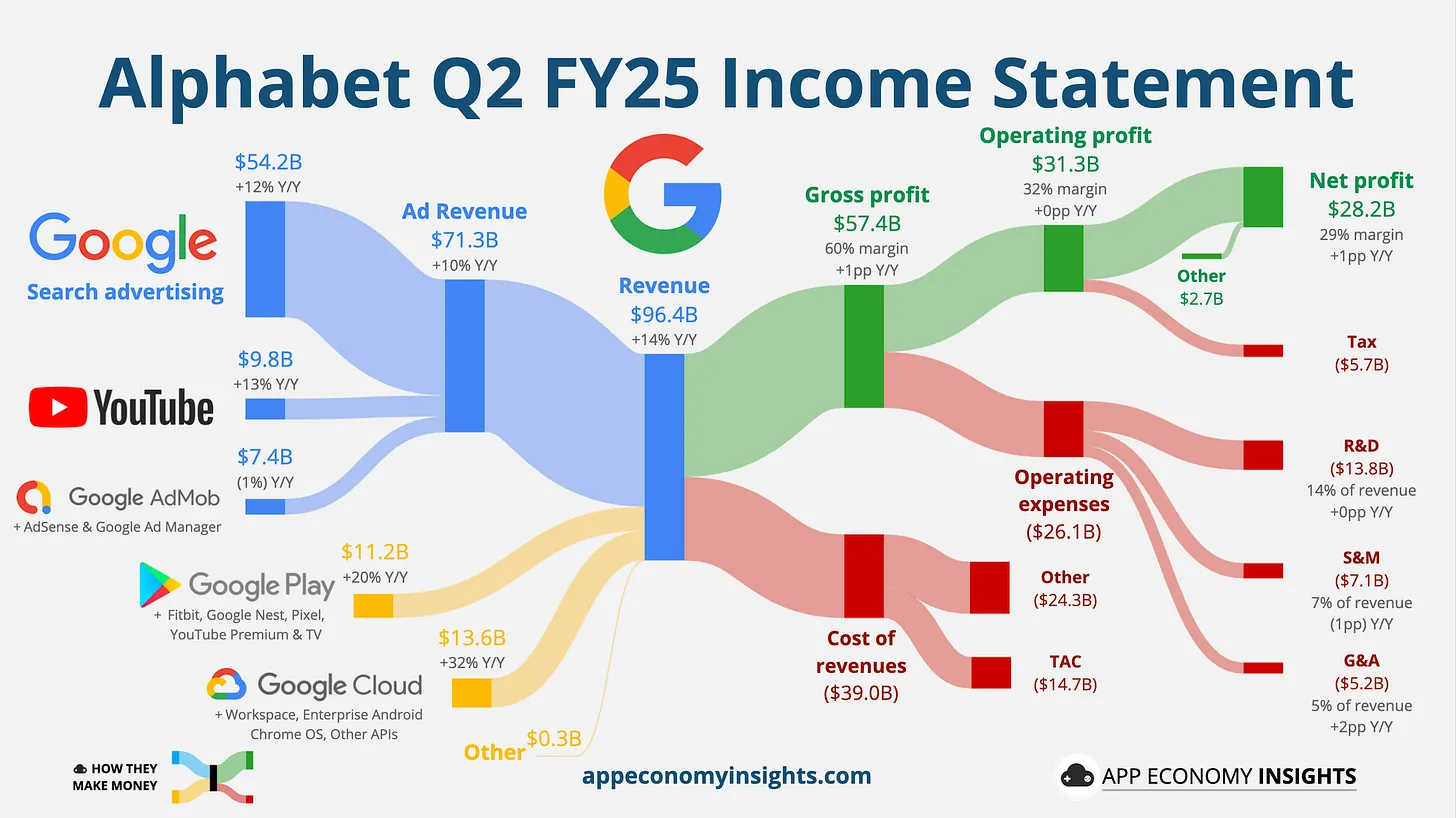
I was using D3 in those days; now that I am much more experienced with Python, maybe I should search for a Sankey charting library in Python.
On the subject of copper, I perceive a macro trend that the US has geopolitical risk because too much domestic mining and basic material production was shut down, partly in order to export environmental impacts to less developed countries. Lithium and steel are in similar situations.
Peter Ringel writes:
"Sankey" that is a nice search term. I had it on my list to research. These guys use it a lot..
One finds several sankey libraries in Python on Github, such as this one.
Jul
19
Big Mac Index, from Jeff Watson
July 19, 2025 | Leave a Comment
For those who study such data, here’s the 2025 Big Mac index.
The Big Mac Index, a real and recognized metric developed by The Economist magazine in 1986, initially served as a light-hearted tool to measure purchasing power parity between countries. Today, it has evolved into a significant indicator of the global economy and currency valuation. This index compares the price of Big Macs in various countries to the price in the United States, offering insights into economic conditions.
Steve Ellison writes:
I love the Big Mac Index. But inquiring minds want to know, what about the eurozone, conspicuously missing from the article? The Big Mac Index judges the euro to be 15.2% overvalued, so this year's runup in EUR/USD appears not to be supported by burger fundamentals.
Jul
15
July, 1798 - John Adams Starts the first Loser War of the United States, from Stefan Jovanovich
July 15, 2025 | Leave a Comment
The rules for American warfare are painfully simple: we win the ones that other people start, and we lose the ones that we start. Today is the formal anniversary of the first loser war by the American Republic. Congress, at the urging of President Adams and his Secretary of the Navy, Benjamin Stoddert, revokes its treaty with France. Because the revocation put the country in a state of war with France but is not a formal declaration by Congress, our history books call it a "Quasi-War". Conventional history does its best to pretend that this was a success. History Today tells us "the Navy gained respect as a powerful force. It grew from a mere six vessels to about 30 commissioned ships. American warships captured more than 80 French vessels during the Quasi-War."
U.S. launches the Quasi-War with France, the first conflict since the Revolution
Total tonnage of ships captured during the Quasi-War
(the figures given are a range because the sizes of the individual ships captured have to be estimated; there are not enough surviving records to know how large each ship was.)
• American ships captured by French Navy: 200,050–400,100 tons
• French ships captured by U.S. Navy: 5,200–10,000 tons

We have better numbers for the the number of ships captured:
• American ships captured by French Navy: roughly 2,000
• French ships captured by U.S. Navy: 85-86
The American records are much more precise because the captures had to be valued; prize money was the incentive pay for the officers and sailors.
Steve Ellison writes:
Paul Johnson, in A History of the American People, wrote that Thomas Jefferson during his two terms as president was endlessly vexed by the depredations of both the British and French navies on American shipping. One wonders why we start any wars if we are guaranteed to lose.
Stefan Jovanovich responds:
The data for the war that the Democrat-Republicans (Jefferson and Madison) wanted and formally declared - the one that started in 1812 and is still looking for a name:
• U.S. Captures: 44,412–63,912 tons (200–250 vessels)
• U.K. Captures: 144,799–424,799 tons (1,406 vessels)
Jun
3
Books again, from Asindu Drileba
June 3, 2025 | Leave a Comment

I can't find any books from the 1700s. Big events like the Mississippi Scheme and the South Sea Bubble happened in that period. But I can't find literature from the 1700s of people describing markets then. Maybe they had PTSD from having their fingers burnt? I heard Newton never wanted anyone to mention "South Sea" around him. (he lost his pile in the investment)
Stefan Jovanovich responds:
Essai sur la Nature du Commerce en Général, by Richard Cantillon (1680s–1734)
During 1719 Cantillon sold Mississippi Company shares in Amsterdam and used the proceeds to buy them in Paris. Mississippi Company shares surged from 500 livres in January 1719 to 10,000 livres by December 1719; during the same period the prices in Amsterdam went from 400 to 7,000. The daily average spread is calculated to have been between 20% and 40%.
Carder Dimitroff suggests:
Empire Incorporated — The Corporations that Built British Colonialism, by Philip J. Stern
The book provides historical perspectives about British markets and corporate financing. It's not an easy read, but it is fascinating.
William Huggins writes:
there is a collection of "things written afterwards" about 1720 called The Great Mirror of Folly but its mostly moralizing tracts than a steely-eyed review of what went down. keep in mind the experience (a bubble in uk-fr-nl, all at the same time) had profound effects on the market for almost a century afterwards with the fr retreating from paper money and the british passing the bubble act which made it waaaay harder for anyone to raise capital. trading stock largely returned to being an insiders game until the 1800s. GMoF was recently published along with a pile of other primary docs by Yale U press:
The Great Mirror of Folly: Finance, Culture, and the Crash of 1720
I like the goetzmann treatment of 1720 from Money Changes Everything personally. He's got a couple of good recorded talks on it too. for those interested in institutional developments around markets and financial institutions in north america, I strongly recommend Kobrak and Martin's "Wall Street to Bay Street."
Steve Ellison offers:
Extraordinary Popular Delusions and the Madness of Crowds was written in 1841 by Charles Mackay. The first three chapters are devoted to the Tulip Mania, the South Sea Bubble, and the Mississippi scheme. The remainder of the book is about non-financial episodes of irrationality, including a chapter about plagues that I re-read closely in March 2020.
May
18
Strategies, from Francesco Sabella
May 18, 2025 | Leave a Comment
With long-term investors, short-term traders, trend-followers, mean-reversion advocates, and buy-low-sell-high activists all confident their strategy is superior and showing market success, is this evidence that all approaches work together, or does survivorship bias and misplaced confidence masks that no single strategy truly dominates in today’s volatile markets?
I’ve always been fascinated by the fact that there are investors holding forever competing with traders who do the complete exact opposite and usually one says the other person is an idiot and the same is the opposite haha. (The only time I think I’ve heard of someone praising another’s way of working which was totally opposite of his in this business, was the yearly speech of Buffett and Munger claiming Jim Simons and his team were very very smart.)
Steve Ellison responds:
There are different ways to find an edge in the market, so market participants behave differently. A market maker who uses order flow information behaves very differently from a fundamental investor who believes a company has value that is unrecognized, but they may both be very good at what they do. Probably neither person could do the other's job. It's a big reason why I heed Livermore's admonition to neither seek out nor act on tips about the market.
My observation having seen multiple market cycles is that bad news spreads fast and is known quickly, while good news often occurs so diffusely and so quietly that it often doesn't even register as "news". I have as my pinned X post a 54-year chart of the S&P 500 that is annotated with the most prominent bad news for each year. Every one of these events seemed at the time to be a reason for stocks to go down (as did many other things that were only the second or third worst news of the year). I adapted this from a similar chart that Venita Van Caspel published in her 1983 book The Power of Money Dynamics.
May
16
Be careful with AI, from Asindu Drileba
May 16, 2025 | Leave a Comment
The chair recently made a tweet about a Galton book he was reading. I could read the text on the image but had to squint. I later took a copy of the image as asked Grok to extract for me the text so I can read it comfortably. Grok could only extract the text "Natural Inheritance."
After that, it didn't tell me it failed to extract the rest. it just made up its own fictional text that sounded plausible. I quickly learned it was just slop since I had already read some of the actual text in the picture.
My worry is that some people are using these LLM tools for medical records, creating legal documents. The latest AI gimmick is the so called "Agents" that will supposedly be used to file tax returns, book flights and do actual tasks on behalf of humans. My opinion would be to completely cut out all AI tools for critical tools.
Steve Ellison responds:
I am very, very careful about what I enter at an AI prompt, especially when doing proprietary or confidential work, lest my ideas become part of the cloud.
Laurence Glazier comments:
For this sort of thing use NotebookLM. Choose your sources for it, it will give you citation and preview.
Apr
27
Age is just a number, from Jeff Watson
April 27, 2025 | Leave a Comment
88 years old and skating. He started skating at age 70.
Octogenarian skateboarder shreds concrete in Spain's Bilbao
"My bones are special," he chuckles between sips on a post-workout glass of white wine at his favourite bar in Bilbao's working-class neighbourhood of Begoña. "Though I touch wood."
Steve Ellison writes:
In only 2 more years, he will be old enough to have "sufficient experience … to command success" in Wall Street, as Clews put it, and know exactly when to skateboard down to lower Manhattan in a panic.
Apr
17
The Theory Of Societal Stupidity, from Jeff Watson
April 17, 2025 | Leave a Comment
Any market parallels?
The Theory Of Societal Stupidity
by Dietrich Bonhoeffer
Dietrich Bonhoeffer (4 February 1906 – 9 April 1945) was a German Lutheran pastor, neo-orthodox theologian and anti-Nazi dissident who was a key founding member of the Confessing Church. His writings on Christianity's role in the secular world have become widely influential; his 1937 book The Cost of Discipleship is described as a modern classic. Apart from his theological writings, Bonhoeffer was known for his staunch resistance to the Nazi dictatorship, including vocal opposition to Nazi euthanasia program and genocidal persecution of Jews.
Stefan Jovanovich asks:
Why do we need a theory?
Steve Ellison adds:
Gustave Le Bon in his 1895 book The Crowd noted that the intellect of any crowd was far lower than that of any of its members. And he considered all political parties to be crowds.
Apr
15
Trade deficits, from Steve Ellison
April 15, 2025 | Leave a Comment

The president seems to believe that trade deficits are evil and must be stamped out. If he ever actually succeeded at meaningfully reducing the trade deficit (so far the reverse is happening), what would be the implications for capital flows into and out of the US, and how might those changes affect markets?
Humbert L. responds:
Finance professor Jeremy Siegal wrote a piece decades ago about how the trade deficit is driven in part to demographics. Currently, the US is consuming more than it can produce, due to baby boomers retiring, no longer working, while still consuming. China is on the other side of the coin, with a younger workforce that is producing more than it's consuming.
Eventually the demographics will reverse, along with the trade deficit. The old folks in the US pass away, along with their consumption, and the US will start producing more than it's consuming, while China's young ones become old, retire, and they start consuming more than they are producing.
Asindu Drileba writes:
This sounds like a very plausible explanation for the phenomenon of "cycles" in the stock market, as described by the senator.
Apr
5
Time for the canes?, from Doug Martin (Updated)
April 5, 2025 | Leave a Comment

I'm liking the look of that huge spike down in ES, out of my euro and sterling, that was a crazy move too. Technically it's nice looking low, from a chart perspective. I'm liking the low interest rate and commodity softening posture, I'm pretty damn bullish on equities.
William Huggins responds:
the shock moment is not when the canes come out - those metaphorically come out when the bulls have given up. those are generational moments related to the culling of new speculators who have only known rising markets (ie, anyone who joined robin hood with their stimulus checks in hand). as long as there are people willing to pay x60-100 earnings for hype, i don't think its quite time for a shift in strategic allocation.
this is simply the first serious wakeup call for anyone who thought this administration is doing anything remotely like macroeconomic analysis when it sets policy. according to the executive, there will be more such shocks to come so as many were fond of suggesting in mid-november "buckle up" (your 401k, and the usd, have both been liberated from gravity!)
Steve Ellison comments:
The S&P 500 has not even gone off the bottom of my hand-drawn chart. The move down since yesterday strikes me as more an efficient market repricing of reduced economic prospects than an emotional panic or forced selling.
By contrast, my hand-drawn chart on February 28, 2020.
Adam Grimes states:
Canes? Nowhere close, in my opinion. And the fact that many people think this is a crash is just a lack of perspective (and a misunderstanding of potential.) Again, all in my opinion, which may change with any tick.
UPDATE: Stefan Jovanovich has a shopping list:
The idiot list is the catalog of companies that our model collects on the presumption that their common stocks will be worth more in 5 years than they are now. I publish it when we guess that our stupidity is within the 25% range - i.e. we won't lose more than $1 out of every $4 we invest in those companies if they liquidate. Thanks to the List and others, we have learned not to trade so the publication is, in no sense, a "Buy"; it is simply an indication that prices have gotten low enough that the list has more than 10 companies on it. (A month ago it had 5.)

Mar
30

The hypothesis is that at the end of a quarter in which bonds are up while stocks are down, institutions need to rebalance their asset allocations by selling bonds and buying stocks.
I found 14 such quarters since 2002, not including the current quarter. In the last 5 trading days of those 14 quarters, SPY was up 8 times and down 6 times, with an average net change of 0.9% with a t score of 0.76–statistically insignificant.
My Python code that I used to obtain the above results.
Big Al responds:
That's an event I hadn't thought about in a long time. It's hard to imagine a lot of big institutions running a simple strategy like that these days, which doubt your study would appear to support. But it does make me wonder if there are other, more complex balances or relationships that big players do manage on a calendar basis.
Alex Castaldo comments:
The general idea of trying to take advantage of "fixed behavior" by others is a good one IMO.
Paolo Pezzutti agrees:
It's like finding regularities end of month or Holiday's behavior or several others. I think there may be many still uncovered. Steve on Github has made public a number of Python notebooks. Very nice work to stimulate curiosity in searching patterns. It's not rocket science based on Artificial Intelligence, but I think this methodology has still value.
Asindu Drileba writes:
The rebalancing edge is real. In BTC for example, I realized that the most consistently active, "high activity" period is the time around 0:00 UTC (Server time). Something interesting is always happening during that period.
It turns out alot of people trade BTC daily and it just makes sense to rebalance the position size at midnight. I too even choose it sub-consciously. I don't think many people are choosing 03:00 UTC , 17: 43 UTC etc. Unfortunately, you need second by second, price quotes over many days, weeks, months and years to investigate this activity further. So I put it on pause. But the "activity" still exists.
M. Humbert adds:
Window dressing at quarters end is probably still occurring as well.
William Huggins writes:
several years ago i followed in Markman's steps of investigating the S&P500 drops and additions for irregularities (they did exist but have since been arb'd out). the driving mechanism was that index fund managers were paid to minimize tracking errors, not maximize performance so they would all trade at the same time, causing a secondary effect on the day the change actually took place (there was a preliminary change the day of announcement). it was a pretty basic academic event study but the most valuable part was uncovering "why" big money was doing a thing that created opportunities for fast moving traders (email me if you want it, but the trade doesn't work anymore)
Mar
27
Spec roundup
March 27, 2025 | Leave a Comment
Jeff Watson has been watching the CME:
Anyone else notice the increase in seat prices (trading rights) recently?

Big Al found a history lagniappe:
BabelColour
@StuartHumphryes
Travel back in time 117 years to the Russia of 1908. I have enhanced for you this rare colour photo of the Russian writer Leon Tolstoy, regarded as one of the greatest and most influential authors of all time. It was taken in the grounds of his house at Yasnaya Polyana, near Tula, Russia. It is original colour, not colourised.
Steve Ellison provided his own:
Since one might be well advised to beware the Ides of March, here is a picture I took in 2017 of the ruins of the Theater of Pompey.
Asindu Drileba has been reading:
The importance of contrarianism emphasized by Jeff Bezos, from the Amazon 2020 Letter to Shareholders:
Differentiation is Survival and the Universe Wants You to be Typical
Our bodies, for instance, are usually hotter than our surroundings, and in cold climates they have to work hard to maintain the differential. When we die the work stops, the temperature differential starts to disappear, and we end up the same temperature as our surroundings….While the passage is not intended as a metaphor, it’s nevertheless a fantastic one, and very relevant to Amazon. I would argue that it’s relevant to all companies and all institutions and to each of our individual lives too. In what ways does the world pull at you in an attempt to make you normal? How much work does it take to maintain your distinctiveness? To keep alive the thing or things that make you special?…This phenomenon happens at all scale levels. Democracies are not normal. Tyranny is the historical norm. If we stopped doing all of the continuous hard work that is needed to maintain our distinctiveness in that regard, we would quickly come into equilibrium with tyranny….We all know that distinctiveness – originality – is valuable. We are all taught to “be yourself.” What I’m really asking you to do is to embrace and be realistic about how much energy it takes to maintain that distinctiveness. The world wants you to be typical – in a thousand ways, it pulls at you. Don’t let it happen.
Mar
20
Shoeshine boy, from P. Humbert (Updated)
March 20, 2025 | 1 Comment
I had a reverse shoe shine boy moment to day. A friend, who shouldn't talk to me about markets, talked to me: "Your boy Trump is crashing the markets. My portfolio …." I take such data points serious - in combinations.
Steve Ellison responds:
Similarly, my sister in October 2008 was getting 150 calls per day from clients asking, "Should I sell?" She worked at an insurance company that also offered investment services. My reaction at the time was, "Isn't anybody calling to ask, 'Should I buy?'"
Jeffrey Hirsch writes:
Still hearing a lot of “Should I buy?” Two weekends ago was asked if would come on cable biz Monday 2/24 to say I was buying mega cap tech. I declined and said I did not think is was time. Posted this that day.
Updates:
Nils Poertner writes:
valid observations here. good to pay attention to odd moves, anything strange (eg like bund move recently) - as there may be more odd things coming!! in other words, be like Alexander Fleming - who stumbled on penicillin by chance - and didn't bin the sample as he wasnt looking for it.
Adam Grimes comments:
I obviously understand the shoe shine boy/taxi driver point here, but it's worth considering that market psychology is not asymmetrical.
P. Humbert responds:
Hi Adam. there is high risk, that I initially heard about the old masters from your writings. I agree, that it probably has more weight for tops. I think, that is where you are pointing to? My friend has quite a good performance in being wrong. He called the the Bitcoin top being bullish and some more. He is a nice guy, just not for markets.
Adam Grimes agrees:
Yeah that's always been my thinking–a little more actionable with exuberance at tops. Bottoms tend to overshoot a bit more, on balance, so I think the shoe shine boy cries uncle a bit too soon.
Nils Poertner adds:
sometimes the crowd is right or they have a hunch but they don't connect the dots yet
eg. "a bit of subprime" in early 2008 - as sort of consensus view among your typical investor back them it was high time to position extra cautious.
Bill Rafter comments:
The “crowd” is mostly right, but the problem is that there are usually several crowds, and of course the composition of the crowds change. If you’re lucky, there will only be two crowds, the knowledgeable ones, and those “asleep at the switch”. The trading rule is simple: follow the informed ones, particularly if the uninformed ones are 180 degrees away. A classic example of this is the Commitment of Traders Report. Ideally the reporting specs will be one way, with the non-reporters the other way (and preferably short). Without the benefit of COT, you can identify best- and worst-informed with regression.
Mar
17
A Specialist in Panics, from Steve Ellison
March 17, 2025 | Leave a Comment
From the first section of:
Fourteen Methods of Operating in the Stock Market
Magazine of Wall Street, 1918

Mar
16
10% correction in S&P 500, from Steve Ellison
March 16, 2025 | Leave a Comment
Before last week, the S&P 500 index had 25 declines of 10% or more since 2003. The median of the maximum drawdowns is -14.6%.

Mar
5

If your company is a domestic power generator like Constellation (CEG) or Calpine (CPN), the proposed Trump Administration tariffs at the Canadian and Mexican borders could help elevate gross margins. If Canada cuts off electricity altogether, additional margins may become available. While generators may benefit, US consumers will be harmed.
Uncertainty clouds northern US grids amid Canada tariff threat
Canadian premier says he will cut off electricity exports to US ‘with a smile on my face’
M. Humbert writes:
It’s my understanding that utilities are generally regulated to provide a steady ROA based return. If so, I don’t believe that they can raise their prices and increase their gross margins, as that would raise their ROA. They can raise their prices though if their costs go up (to maintain their ROA). It’s been a while since I last looked at utilities though. Am I mistaken about this?
Carder Dimitroff responds:
Yes, regulated utilities generally provide steady ROAs. However, some states fully regulate their electric utilities. Other states deregulated bulk power (wholesale power) and the generators that supply bulk power. Most population centers in the US are in deregulated states.
In the deregulated states, the title to bulk power passes to regulated distribution utilities at substations adjacent to transmission lines. Specifically, titles pass to distribution utilities at substations' step-down transformers.
Ontario supplies bulk power to unregulated states (Minnesota, Michigan, and New York). Quebec supplies bulk power to New York and New England. New Brunswick also supplies New England. All three provinces own and operate nuclear power plants. While Canadian transmission lines feed power directly to specific locations within those states, imbalances propagate to other states.
Ontario updated its strategy. They now plan to tax Ontario power exports at 25%.
Steve Ellison writes:
In this video Peter Zeihan says that a hurdle to green energy is that essentially all cost is up front, unlike natural gas plants in which only 20% of the lifetime cost is in construction, and 80% is in fuel costs over the life of the plant. So even when total lifetime cost of green energy is less than that from a natural gas plant, the higher upfront costs make financing more difficult. If true, I would guess cost recovery of the upfront expenses is also more risky in a deregulated market.
Feb
11
Full vs part-Time employment growth rates, from Bill Rafter
February 11, 2025 | 1 Comment

Steve Ellison wonders:
Will NBER ever acknowledge there was a recession? Or maybe as in 2001, they will retrospectively announce a recession after the recession has already ended. The job market for white collar job seekers was horrendous in 2023 and 2024. But GDP never went negative. "Learn to code" is out; "Learn to weld" is in.
Bill Rafter responds:
Yes, there was Recession. If bureaucrats in power refuse to admit the obvious, or use obtuse metrics to define economic activity, then the Intelligent Man has to find another way to define or measure that activity. The chart below, of Payroll Tax Receipts Growth, matches the negative period you described.

Jan
29
From the archives: Mind Set! by John Naisbitt, from Steve Ellison
January 29, 2025 | Leave a Comment

Book Review: Mind Set! by John Naisbitt, from Steve Ellison, April, 2007
Some interesting bits:
- One trend is the continuing growth of China, which Mr. Naisbitt points out is quite decentralized: “Beijing pretends to rule, and the provinces pretend to be ruled”.
- While some fear that American culture is obliterating local cultures, Mr. Naisbitt asserts that the world is changing America more than America is changing the world, as more than 1 million legal immigrants per year enter the United States.
- In an intriguing tidbit, Mr. Naisbitt quotes Alan Greenspan as expecting private currencies to return by the end of the 21st century.
Steve Ellison updates:
That book was written in 2004, before bitcoin was invented (speaking of "private currencies"). Mr. Naisbitt is no longer with us, having passed on at age 92. The last thing I noticed him doing, in 2010 or so, was touting the emerging world as the most important story. In my opinion, A LOT has changed since then. We have macro experts on the List who would have much better insight, but I would start with Rocky's accurate prediction in 2016 that the Brexit vote was the canary in the coal mine for the post-Cold War global elite and their policies of globalization, mass immigration, and "cling[ing] to the religion and arrogance of knowing what is best for the common man — and which often also involves rejecting common sense and facts in evidence."
The decentralization of Chinese government finances is today a key reason why a massive economic stimulus from Beijing, as urged by many Western economists, simply cannot happen. The critical mass of government spending is in the provinces, and their governments are starved for revenue after the real estate bust. Christopher Balding writes frequently about all things China on X as @BaldingsWorld.
Nov
30
Productivity and AI, from David Lillienfeld
November 30, 2024 | 1 Comment
When do we start seeing the effects of AI show up in national economic data? If you had invested $5K in a laptop and a word processing program, you could replace a secretary at multiples of the cost. When the web came in, there was Amazon squeezing out the costs of the middlemen.
But I don't see the savings for AI. I see lots of talk, some free programs, but in terms of real productivity, not so much. I'm also told that it's early days and I'm asking for too much in posing such a question, but I think we're now getting far enough into AI that it's not an unreasonable matter to bring up.
One thing that's clear is that AI isn't going to generate employment the way the last tech push did. But if it's going to really change the world as its advocates suggest that it will, those productivity gains should be apparent by now.
M. Humbert writes:
However AI productivity gains are measured, it’ll have to account for the productivity loss due to its high energy consumption. For the Austrian economics fans here. I’ve found Copilot to be a helpful time saving tool, so others probably do as well, so time savings definitely are occurring from AI use today.
Laurence Glazier responds:
Using it all the time, huge experiential benefit. Chatting to GPT every morning while reading Thoreau. Instant context. The other big breakthrough is spatial computing. All in the service of art.
Asindu Drileba comments:
From my experience, co-pilot and other LLMs, have not solved anything that could not already be done via ordinary Googling. Looking up solutions to code issues on stack overflow is no different from LLMs. And stack overflow is still better for some tasks (fringe computer languages like APL for example). LLMs are impressive, but are mostly just gimmicks. The only thing it has actually saved me time on is generating copyrighter material and filler text.
Jeffrey Hirsch adds:
Just had that discussion today about ordinary google still being even better than LLM Ais in finding info. Had some fun with AI editing and embellishing copy.
Asindu Drileba adds:
I suspect that the bad SWE job market is due to high interest rates, no AI. The SWE job market is enriched mostly by VC money. And VC money dried up when LPs withdraw to earn risk free money in treasuries instead of betting on start-ups whose success is on probability. I expect it to recover if interest rates come down to previous levels.
I think the LLM narrative was just something that tech executives parroted to show they had an LLM strategy. It's, Like how in 2018/2017 every executive had a "Blockchain" strategy. A lot of businesses assumed that LLMs would replace simple customer support jobs but they just saw their tickets pile up. Even the $2B valued, Peter Thiel financed, code assistant that would make you money on Up work as you sleep turned out to be a blatant scam.
Steve Ellison writes:
I don't have an answer for Dr. Lilienfeld's question about when AI effects will show up in productivity statistics. But I do hear anecdotally through my professional networks that AI projects are adding real value.
At the same time, Asindu is correct that the bad job market for techies, myself included, is more a consequence of rising interest rates–and I would add overhiring during the pandemic–than positions being replaced by AI. As Phyl Terry put it, "But this company [that announced layoffs] wants to go public so the better story is 'we are smart leaders using AI to become more efficient and profitable' vs 'we were idiots during the pandemic and have to lay off some people because we messed up.'"
Gyve Bones writes:
I find that the AI's ability to interpret my request and put together a coherent synthesis of several sources to be very helpful. Grok is nice because it provides a set of links to sources relevant to the prompt, and to related ??-posts and threads.
Laurence Glazier asks:
I usually have audio conversations with GPT rather than the older typed-in input/output. I just subscribed to X Premium to get access to Grok. Any good links for learning good usage? How nice Musk names it from the Heinlein novel.
Gyve Bones responds:
Check out the sample prompts Grok supplies on the [ / ] section in ??. The news analysis prompts for trending items is pretty cool.
Bill Rafter writes:
My business partner and I are in the process of marketing a new software application. Although we are rather literate, we have been running all of our marketing materials through Copilot, and we are amazed at the improvements Copilot makes to our text. It results not only in improved communication, but is a real time-saver. We even asked it to write a business plan, and it came back with a better one than our original.
Peter Penha offers:
I have not (yet) been on Grok but have found that the prompts do not differ very much across LLMs:
A Primer on Prompting Techniques, June 2024.
Prompt engineering is an increasingly important skill set needed to converse effectively with large language models (LLMs), such as ChatGPT. Prompts are instructions given to an LLM to enforce rules, automate processes, and ensure specific qualities (and quantities) of generated output. Prompts are also a form of programming that can customize the outputs and interactions with an LLM. This paper describes a catalog of prompt engineering techniques presented in pattern form that have been applied to solve common problems when conversing with LLMs. Prompt patterns are a knowledge transfer method analogous to software patterns since they provide reusable solutions to common problems faced in a particular context, i.e., output generation and interaction when working with LLMs. This paper provides the following contributions to research on prompt engineering that apply LLMs to automate software development tasks. First, it provides a framework for documenting patterns for structuring prompts to solve a range of problems so that they can be adapted to different domains. Second, it presents a catalog of patterns that have been applied successfully to improve the outputs of LLM conversations. Third, it explains how prompts can be built from multiple patterns and illustrates prompt patterns that benefit from combination with other prompt patterns.
This is earlier/shorter February 2023 paper - I am also a fan/follower of Prof. Jules White’s classes on Coursera why I flag the shorter/earlier paper as well.

Separate on the subject of AI - Eric Schmidt has a new book Genesis with Dr. Kissinger as a co-author (his last work before his passing) but Schmidt did a Prof G Pod Conversation released Nov 21st - in the podcast Schmidt goes over the threat from LLMs that are unleashed and noted that China in his view has open sourced an LLM equal to Llama 3 and that China instead of a being three years behind the USA on LLMs is a year behind. That China comment can be found here at 26:30.
Finally if anyone wants a great book I have read, on the history of the race to AGI going back to 2009: the Parmy Olsen book Supremacy on the histories of Sam Altman and Demis Hassabis is a wonderful read. Also breaks the world down between the AI accelerationists and the AI armaggedonists.
Big Al adds:
I do use Bard to learn or refresh my memory with R. For example, I am trying to use the "tidyverse" set of packages, and Bard is very useful when asked to write code for some task specifically using, say, tidyquant. The code almost never works first time cut & paste, but I can see how things are done differently and figure out what needs fixing. And I get answers to simpler problems faster than on Stack Exchange which is better for more complicated issues.
Laurence Glazier comments:
It's an inverted Turing test situation. The things that AI can't do help identify our humanity, our birthright.
Nov
24
Stops, from Hernan Avella
November 24, 2024 | Leave a Comment
Contrary to what has often been repeated on this esteemed list over the years, the art and process of trading is fundamentally the art and process of setting the right stops. Simpletons may claim that adding stops to a system (trading ES) reduces profitability, but that's only because the system itself is flawed, with laziness baked into its design. Setting the right stop is an integral process—it involves gauging current and expected volatility, weighing potential paths, and accounting for the bias.
Steve Ellison writes:
One of my best experiences with this list was that at the sparsely attended Spec Party in summer 2009, the 20 or so of us who were there had a very spirited discussion in Victor's living room about whether it was advisable to use stops or not. Many excellent points were made both pro and con.
Speaking for myself, I usually don't enter stop orders because they become part of the market, but I have mental stops. On the rare occasions when I actually have a profit, I am determined to not let it turn into a loss. And if a trade goes against me (by a nontrivial amount), that's new information that apparently my original analysis missed; in that case I am determined not to let a small loss turn into a big loss.
To put it another way, I entered a trade because I thought I had an edge, but the market moved in the wrong direction. Maybe something bigger is going on than, say, my analysis of the last 10 post-options-expiration weeks.
Big Al offers:
Stop Orders in Select Futures Markets
Nicholas Fett and Lihong McPhail
Office of the Chief Economist
Commodity Futures Trading Commission
August 29, 2017
This paper analyzes trade and order book audit trail data to provide a detailed summary of the use of stop orders in select futures markets; specifically E-mini S&P 500 Futures, Ten Year Treasury Note Futures, and WTI Crude Oil Futures. Recent flash rallies and the ever increasing speed of futures markets have called into question the appropriateness of traditional stop order strategies. By utilizing metrics related to both placement of and execution of stop orders, we show that stop orders are being used in these futures contracts with varying frequency and the strategy of stop order placement varies greatly by participant. As expected, trades involving stop orders are found to be highly correlated with intraday price volatility. Existence of stop orders is generally unknown to market participants as stop orders are not visible in the orderbook but must be triggered by a trade in the market at the corresponding price. More importantly, our analysis indicates that many traders are not only using stop orders for hedging purposes but also using them for latency reduction strategies. We provide a background on the usage and depth associated with stop orders in selected futures markets.
Larry Williams responds:
THANKS FOR THE POST. This should dispel the notion "they are going after my stops."
Asindu Drileba writes:
I don't actually use stops at all. My position size is my stop. I only bet a maximum of 3% of my bankroll. I really only get out of the market when I am liquidated. I sleep knowing that if I am to loose, my maximum loss is capped at 3%. I don't even respond to margin call emails. I often want to capture the moves between the daily open and the close. So what happens in between is something I usually ignore.
Oct
16
Professor Bejan interview, from Steve Ellison
October 16, 2024 | Leave a Comment
75-minute interview with Professor Bejan on the occasion of his winning the 2024 Association of Mechanical Engineers Medal: The professor discusses, among other things, how his experience playing basketball gave him insights into how systems of flow evolve.
J.A. Jones Distinguished Professor of Mechanical Engineering
Professor Bejan was awarded the Benjamin Franklin Medal 2018 and the Humboldt Research Award 2019. His research covers engineering science and applied physics: thermodynamics, heat transfer, convection, design, and evolution in nature.
He is ranked among the top 0.01% of the most cited and impactful world scientists (and top 10 in Engineering world wide) in the 2019 citations impact database created by Stanford University’s John Ioannidis, in PLoS Biology. He is the author of 30 books and 700 peer-referred articles. His h-index is 111 with 92,000 citations on Google Scholar. He received 18 honorary doctorates from universities in 11 countries.
Oct
12
Asking for recommendations, from Steve Ellison
October 12, 2024 | Leave a Comment
Recommendations for an intro to multivariate statistics?
Bill Egan replies:
Here are four excellent multivariate statistics books I have used for many years. I suggest tackling them in this order.
1. Jerrold Zar - Biostatistical Analysis, 5th ed. (this is half univariate and half multivariate)
2. Neter, Kutner, Wasserman, Nachtsheim - Applied Linear Statistical Models, 4th ed (there is now a 5th ed and you can find the pdf by googling)
3. Alvin Rencher - Methods of Multivariate Analysis (there is now a 3rd ed.)
4. Mardia, Kent, Bibby - Multivariate Analysis (there is now a 2nd ed.)
You need to understand linear algebra to do this, e.g., at the level of Strang's Introduction to Linear Algebra, 6th ed. (his lectures are on MIT's opencourse website). Rencher, Neter, and Mardia all use that notation extensively. You also need to understand and be able to do univariate stats at the level of:
• Snedecor and Cochran - Statistical Methods, 8th ed.
• Riffenburgh and Gillen - Statistics in Medicine, 4th ed.
You will really learn multivariate methods only if you code them. Matlab is the best (Matlab Home is cheap), and yes, I coded everything in these books and a lot more work of my own invention in Matlab.
David Lillienfeld adds:
Snedecor and Cochran is the grand old lady of texts. Neter et al is still pretty popular on campuses.
Asindu Drileba asks:
Concerning statistical packages. I often hear some data science communities complain about how there are simply too many bugs & wrong implementations in the Python space. Maybe this is why you are recommending MATLAB? What do think of R or Julia?
Bill Egan responds:
I have used Matlab since 1993 for many things - research, papers, patents, commercial scientific software products. Matlab stands for matrix laboratory. The original data structure was scalar, vector, matrix. If you like to work in matrix/linear algebra notation, or need to, Matlab is the program to use. Other data structures have been added on, such as tables for mixed data types, but like al ladd-ons, this does not always work well. Quality control of the software is great. Very widely used by engineers. Very high level language, so you can see the algorithm without getting lost in the details like you do in C++.
R is not so good for linear algebra because the original data structure is a table for mixed data types. Matrix work is more difficult. Quality control of core R and major packages is good despite R being open source (although it has license restrictions) because it is used by many academic statisticians. I used R for analysis for a couple of years. Fairly high level language. Better for classical stats work where you make a table out of the data and have mixed data types.
Python is completely open source and the people who created and use it most have no knowledge of statistics and that shows. We used it primarily as a scripting/control language inside one of my software products. Available packages do have bugs/errors or are missing methods for stats. We tested them and could not use them; I had my guys code any stats related stuff from scratch. It is not as high level a language as R or Matlab, so you have to do more work. Do not recommend it.
I have no experience with Julia.
Sep
28
What is in Brooklyn?, from Asindu Drileba
September 28, 2024 | Leave a Comment

Lana Del Rey — My boyfriends really cool, but he is not as cool as me. Cause I'm a Brooklyn Baby. An interview recently posted here with The Chair — "I attribute your being humble to being from Brooklyn" (interviewer referring to The Chair). Another person I listen to - Such mistakes can only be made by people who have not spent a lot of time in Brooklyn. Brooklyn comes up so many times. What's is there to know about it? Of course I have heard of people talking about other cities.
But people that talk about Brooklyn always say it like there is something they know which others don't know. What is in Brooklyn? What does it do to people?
David Lillienfeld adds:
In the epidemiology world, when one of the organizations meets in Manhattan, inevitably someone will suggest to the younger members to go across the Brooklyn Bridge and experience Brooklyn. There is definitely something about Brooklyn that focuses one's thoughts.

Steve Ellison offers:
The Chair wrote a whole chapter on this topic, the first chapter of Education of a Speculator, titled Brighton Beach Training.
Laurel Kenner suggests:
Survivors go there when they get to America.
Alex Castaldo responds:
Agreed, immigrants from Central and Eastern Europe often arrived in Brooklyn as a first step towards success and acceptance in America.
H. Humbert writes:
There is a hierarchy among the real estate developers of New York. Those who develop real estate (especially large commercial buildings) in the central area (the island of Manhattan, also known as New York County) consider themselves socially above the multimillionaires who develop property in the boroughs of Brooklyn, Queens, Bronx and Staten Island. They refer to Manhattan as simply "the City" and seldom go to the other boroughs (other than to take an airplane at LGA or JFK airports, which are in Queens).
Donald Trump's father was a developer of large number of properties all of which were in Queens and Brooklyn and he considered Manhattan development too financially risky. He was quite wealthy but in view of the above was not considered a "major New York developer", like Roth, Reichmann and other well known names.
His son Donald was very ambitious and wanted to move up in society. Contrary to his father's policy he took a gamble and decided to put up a large building, the Grand Hyatt Hotel on 42d street in Manhattan. The project was completed in 1978 and Donald Trump joined the ranks of major NY real estate developers. (What the other developers thought of his operation is another subject and requires a separate article). Even if he wasn't fully accepted by all, when his daughter married a member of the Kushner family, another prominent Manhattan developer, a few years later, it confirmed that the Trump family had reached the first rank among New York's wealthy families. But Donald Trump, having overcome his Queens handicap and shown that he could do better than his father, was not quite satisfied and he decided to enter national politics.
In summary, there is a slight prejudice against people from Queens and Brooklyn, which sometimes causes people to be even more motivated to succeed and be accepted.
In addition Brooklyn has its own distinct accent, which causes the prejudice to be slightly greater. If you would like to know what a Brooklyn accent sounds like you can listen to any speech by Janet Yellen. When she was in line for a top job in Washington, a previous Treasury secretary (probably hoping to get the job himself) mentioned her accent as a reason she should not be appointed. She got the job anyway. Another success for Brooklyn.
Jeff Watson gets musical:
Steely Dan nailed it.
Jul
28
Inflection points, from Zubin Al Genubi
July 28, 2024 | Leave a Comment

Inflection points at prior highs and lows seem pretty obvious recently especially in lowered liquidity. The market makers seem to thin and spread their markets for protection resulting in bigger directional moves. The vol gives a small trader good opportunity as the big boys dump large orders creating large auto trade moves like escalators.
Anatoly Veltman wants more information:
every word I read on three lines of text appears totally (?) random. It would be extremely impressive, if you ventured to explain at least ONE of these, and how this could be used as edge. P.S. Bonus would be to know the approximate date (?) of "lowered liquidity"
William Huggins responds:
It's not random, it's about microstructure. MMs spread their risk as they usually get caught out by information driven moves while they supply liquidity. When they spread their capital to diversify, or withdraw from choppy markets, the price impact of trading rises (Kyle's lambda).
Steve Ellison comments:
My takeaway from Zubin's post is that there are edges to be found in studying market microstructure and looking for clues in price action of what some of the key players are doing. A specific example I have found is, if you bin trading days by number of days before or after options expiration, options expiration day has had the worst total return in the S&P 500 of any day of the month in the past 6 years or so. Apparently the need for a large number of market players to adjust and re-establish hedges can create imbalances in supply and demand of various assets.
I could form a hypothesis about liquidity that a sustained price move in one direction, as happened a couple of times to the downside in the S&P 500 since July 17, is toxic for market makers and forces them to widen their spreads lest they be saddled with unwanted inventory. I'll leave it as an exercise for the reader to test this hypothesis.
Jul
4

Bud Conrad is not sanguine:
We avoided an official recession despite negative 2% to 3% tax growth. The Treasury and the deficits were pumping money into the economy in 2023. It now looks like no problem in Tax receipts, but I just don't believe that things are clear sailing. Wars, Debts, Foreigners cashing in Treasuries from their trade surpluses (our Trade deficit), Stock market toppy concentration in the Tech winners. Incompetent politicians. I think things are worse than I think they are.
Steve Ellison keeps the wall of worry updated:
Updated! Now 53 years of convincing reasons why the stock market should go down, superimposed over the 48x increase in the S&P 500 during the same time period (logarithmic scale). 2023: Nearly everybody expected a recession. That reason is added, along with the S&P's 24% increase.

May
30
NYC history lagniappe
May 30, 2024 | Leave a Comment

Coney Island Was Once Full of Dueling, Backstabbing Theme Parks
Come one, come all to the controversial, ugly beginnings of what was once called ‘Sodom by the Sea.’
Coney Island was once a glittering star of the early 1900s. It was the Progressive Era, amusement parks were becoming enormously popular across America, and New York City’s version of roller coasters and carnival games seemed like the epitome of wholesome fun. But the beachy entertainment land was quite different than it is today. Coney Island mainly consisted of three theme parks: Steeplechase Park, Luna Park, and Dreamland. And from 1904 to 1911, all were locked into a perpetual dance of stealing acts, copying rides from each other, and some dirty competition.
Steve Ellison recalls:
We had a big Spec Party event at Coney Island in 2007 when Aubrey was still a toddler.
May
19

Apropos worry wall:
- Unprecedented US debt
- Presidential candidates to debate from jail cell vs hospital room
- Democracy in decline
Humbert H. writes:
Sooner or later, everyone is right.
Larry Williams responds:
Bob Prechter would like to hear that!
Steve Ellison adds:
My pinned tweet documents 53 bricks in a 53-year wall of worry. But Venita Van Caspel made the original chart in her 1983 book The Power of Money Dynamics. I just added 40 years of additional worries.
May
12
Cost of Carry, from Zubin Al Genubi
May 12, 2024 | Leave a Comment

A carry trade is borrowing/buying at low interest and selling/lending at higher interest rates using leverage. Its used in currencies. The authors propose the trade had become systemic including the FED such that the markets have disconnected from fundamentals and are moved by dynamics of the carry/bust pattern. Further that it is the main driver of economic cycles not classic economic supply and demand.
If so, maybe the Fed watch traders are not always wrong as I've stated and the bad news is good news idea has merit under the carry trade.
Humbert H. writes:
Is there anyone who has done this for decades and not blown up, other than maybe Palindrome? Leverage combined with simultaneous forex and interest rate bets seems like it will eventually blow up, unless you always get advance warnings from central bankers.
Jeff Watson expands:
In the grain markets we determine the cost of carry as Futures price = Spot price + carry or carry = Futures price – spot price. Carry consists of storage costs, insurance, and interest. Carry provides the farmer with signals helping with crop marketing decisions while it provides a trader an opportunity to capture the carry. As an aside, here’s a handy dandy little formula to play around with:
F = Se ^ ((r + s - c) x t)
Where:
F = the future price of the commodity
S = the spot price of the commodity
e = the base of natural logs, approximated as 2.718
r = the risk-free interest rate
s = the storage cost, expressed as a percentage of the spot price
c = the convenience yield
t = time to delivery of the contract, expressed as a fraction of one year
Steve Ellison adds:
The US stock market had a carry trade from 2008 to 2018 and again in 2020 and 2021 when zero interest rate policy made it possible for traders to buy stocks with borrowed money, and cover the interest costs using the stock dividends. Philip L. Carret wrote in his 1931 book The Art of Speculation that the best time to buy stocks is in such situations when stocks "carry themselves".
As a quick approximation, the prices of the front-most ES contracts are:
June 5225
September 5282
So the cost of carry at the moment is roughly 47 points per quarter, and the S&P 500 is not carrying itself (if it were, the contracts would be in backwardation).
Apr
14
Lunar cycles, from Steve Ellison
April 14, 2024 | Leave a Comment
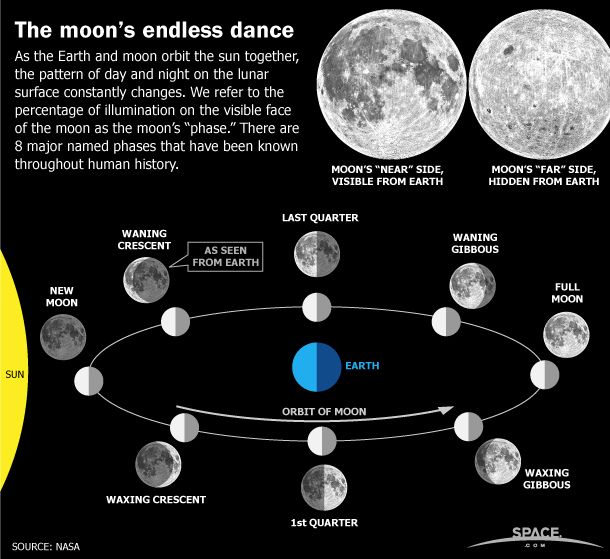
It has been claimed that the stock market was bearish during the interval from the full moon to the new moon. I wrote a Python script that tested this theory and found it wanting.
The Python script is on my GitHub page. You will also need the csv files "new_moon_date_components.csv" and "full_moon_date_components.csv" (in the same GitHub directory) if you want to follow along at home.
The Github page shows the steps, but there is additional explanation on this X thread (hit "Show replies" to see all steps.)
Mar
30

From The Mind of Bill JamesThe Mind of Bill James by Scott Gray, which I've been reading:
All things in baseball tend to return to their previous form. A team whose record improves one year will tend to decline the following year, and vice versa. In 1980, for example, only five of the twenty-six teams moved in the same direction in which they moved in 1979. It also applies to individual players. Bill found a way to express not merely the statistical principle of regression to the mean, but also what he called the 70/50 rule. Seventy percent of teams that decline in one year will improve the next; 70 percent of teams that improve will decline; and in all cases the amount of rise or fall is about 50 percent, so that a team twenty games over .500 one year would be ten games over .500 the next. (The percentages are much different for very big or very small improvements and declines.) “These were not things that I had expected to find,” Bill wrote. “Weaned on the notion of ‘momentum’ since childhood, I had expected a team which won eighty-three games one year and eighty-seven the next to continue to improve, to move on to ninety; instead, they consistently relapsed. Half-expecting to find that the rich grow richer and the poor grow poorer, I found instead that the rich and the poor converged on a common target at an alarming rate of speed.
It also applies to individual players. Bill found a way to express not merely the statistical principle of regression to the mean, but also what he called the 70/50 rule. Seventy percent of teams that decline in one year will improve the next; 70 percent of teams that improve will decline; and in all cases the amount of rise or fall is about 50.
Steve Ellison writes:
From my experience, I think the S&P 500 is less mean reverting in 1- to 2-week timeframes now than it was in the mid-2010s. On the other hand, the presidential election cycle pattern has been spot on since the beginning of bearish midterm election year 2022.
Eric Lindell comments:
These data pertain to relative performance — eg, a team's record relative to other teams. For absolute gauges — like how much I weigh on a diet, there's no such reversion to mean.
Kim Zussman responds:
Funny stuff! For asset managers everything is relative. For their customers (without yachts), it is absolutely absolute.
Where Are the Customers' Yachts?: or A Good Hard Look at Wall Street
Humbert H. agrees:
And that’s why people should not entrust their assets to asset managers, unless these people suffer from some sort of emotional instability and can’t handle losses without some stranger pretending to care.
Mar
10
An interesting period to study, from Steve Ellison
March 10, 2024 | Leave a Comment

1999-2001 is an interesting period to study as there are many parallels to the present. Back then, the approach of the year 2000 caused a rush to buy new technology to fix all the old systems that used two digits to represent the year. The efforts were generally successful, and doomsday predictions failed to materialize, but the event pulled a lot of demand for technology from the future into the present. When that future arrived in 2001 and 2002, technology sales slumped because everybody already had shiny new systems–no need to buy more. A similar scenario occurred with the rush to enable remote work and communications in 2020, a bonanza for technology companies. What is different this time is that the technology bust resulting from the saturated market already occurred in 2022-23, but now there is a second wave.
K. K. Law notes:
Don't know if anybody ever mentioned about in the 2000 era many optical components manufacturers double-booked and triple-booked the actual TAM. I knew that first hand but too late. Then the CEO of a major component manufacturer called JDSU, now has become a much bigger company, due to multiple M&As, decided to resign in order to sell his company stocks.
Steve Ellison responds:
I vividly remember that JDSU reported blockbuster earnings in October 2000 that for a day or so reversed the Nasdaq rout that by then had been in progress for 7 months. Jim Cramer, who was still running his hedge fund and presumably still had an edge from calling his buddies at bulge bracket firms to find out what big orders they were working that day, pointed out that JDSU's sales were probably just piling up in inventory at downstream suppliers (that had all reported disappointing results); hence JDSU sales were about to go off a cliff. Since I still have the scars from owning JDSU, I developed a tracker of some important companies in Nvidia's ecosystem (chart below). If one of the other stocks turns down, maybe it will be an early warning.

K. K. Law comments:
The actual bookings of all the optical suppliers were over-inflated by many folds over the actual demands by the telecom system manufacturers and service providers . The market eventually realized that.
Steve Ellison adds:
Even in the absence of fraud, when there is a component shortage, buyers inflate their orders to try to gain priority, and executives at the supplier might misinterpret the orders as real demand. When the bottleneck is alleviated, and supply begins to actually flow, the buyers quickly cancel the excess orders in a phenomenon known as the "dreaded diamond", as I discussed in a Spec List thread in 2021.
Mar
2
ATH, from Zubin Al Genubi
March 2, 2024 | Leave a Comment
While S&P 500’s Friday [23 Feb] gain was only 0.03%, it was enough to propel it to another all-time high (13th record close this year); in years when S&P 500 did hit an all-time high, it did so 29 times on average since inception of modern version of index in 1957.
-Liz Ann Sonders
Here's #14 this year as we close up [1 Mar].
Peter Ringel asks:
How & why should one exit any equity longs [given the market advance of the last 10 years]? Not a trivial question to me.
Zubin Al Genubi responds:
Trade your system expectation time. Develop systems that can capture a trend. (Good luck with that.) (Or at least allow re entries, break outs.) Use appropriate money management and the geometric returns over time and increase net wealth. Trading in a nutshell.
Peter Ringel continues:
what if buy & hold is the best system in your arsenal - not annualized systems, but realized systems and normalized for risk? (though normalized for risk & leverage might be a debate.)
Let's say I have an uber-bullish setup: enter on 5th trading day of year and hold 5 days (not a real one). I can annualize it to compare it to other systems, but really it is just one trade, just a little slice of the year. In this case and current drift - an exit on day 5 is not justified, holding forever is.
Zubin Al Genubi sums it up:
Hard to beat buy and hold, but the drawdowns are hard to handle. Define your risk tolerance and design system around money management. As long as the system is positive it doesn't really matter how good because all returns were in the past. If you mean by "annualize" compounded annual geometric returns, that is the right way to compare systems, but also include the money management in the comparison. That is critical part many leave out.
Jeffrey Hirsch writes:
Today’s post RE ATH:
Ex-2020 S&P 500 Flatter Election Year March
But after 4 months of solid gains the market is poised for a modest pullback of maybe 3-6%.
S&P 500 Support: 4800 old ATH.
Steve Ellison comments:
A decade or so ago, I studied the 4-year presidential cycle and concluded that the pattern in annual returns had been very pronounced from 1948 to 1980. After 1980, maybe as a result of the pattern becoming widely known, later results were much more mixed and fell below statistical significance.
That said, for the past two years beginning with bearish midterm election year 2022, the major market averages have closely followed the classic presidential cycle playbook. I assume that, like the uptrend in NVDA, it will continue to work until it doesn't.
Feb
7
Nvidia $200 Billion in 3 Days, from Cagdas Tuna
February 7, 2024 | Leave a Comment
It is not hard to see this is very late stages of speculative madness but I really would like to know how the risk management teams approve buying Nvidia stock here after adding $200 billion to market cap in 3 days?
Larry Williams offers:
Maybe my cycle forecast for NVDA would help:

Asindu Drileba writes:
I don't know why people are still buying Nvidia. But this is what I personally think of the stock. Nvidia has an 80% market share in the Graphics Card business. Their bread and butter used to be video gaming, 3d animation, video editing, later crypto mining, AI (computer vision), AI (Large Language Models), AI (Image generation) possible new advances may occur in Molecular Dynamics, Self driving cars etc. The CEO had an interesting interview where he talked about possible areas Nvidia may venture into.
But here is one strange thing about high performance computing (Nvidia's Niche): We would think that the better (higher performing) their products are, the less people would buy because people would do more with less right? It's actually the opposite.
— In gaming for example, when graphics cards improved people moved to less polygon looking characters and wanted more details like finer hair & plants. From there they even went to more computationally intensive algorithms like ray tracing that mimic real world scattering of light. Requiring even more compute in subsequent algorithmic advances.
— In Bitcoin, many people using Nvidia GPUs made it more difficult to earn money from crypto mining. Which requires people to have even more Nvidia GPUs just to continue earning the same income.
— In AI, when ever a new breakthrough was made, researchers often trained models with larger datasets, using more & more GPUs. Chat GPT for example was trained on 1 Trillion corpus of text.
So if they do maintain this 80% market share and these underlying industries continue to grow (and make new break throughs). It makes sense that Nvidia will be very valuable in the near or distant future. Buying now (at all time highs) is definitely dangerous but, even if the bubble pops, the underlying industries it facilitates will still be present. And if more breakthroughs in these industries are made, it makes sense that Nvidia still has some value left in it.
Cagdas Tuna responds:
Good fundamental points and there I have 2 counter outlook:
-Gaming industry; I almost everyday play an online game called Destiny 2, and their developer Bungie has reduced workforce around 10%. I know many other gaming companies are reducing/reduced workforce which doesn't give too much optimism in that area.
-Bitcoin mining; there is halving in a few weeks and this will require more powerful computers but it will also increase the cost which in the end will end up new miners losing money in most cases. Only way to maintain gains in mining is Bitcoin price to double or triple in a year.
Even on the best possible scenario it will not add 200 billion dollars worth growth in many many years.
Steve Ellison comments:
Words of wisdom from Rocky's Ghost, posted in the Spec List on April 4, 2017. And yes, I am long NVDA. I believe this is the study Rocky referred to.
Soros and I share very little. However, I have come to agree with him that the right position is to be long "bubble" (however defined). I used to subscribe to Anatoly's view and to be bearish during bubbled but I discovered that from a risk-adjusted-return perspective, it's better to be right "today" than right "tomorrow." Along this point, I read a study that shows a substantial percentage of stock returns occur during the last surge in a "bull market". If you miss this surge, it's very difficult to keep up with the indices in the short term. And in the long term, we're all dead.
Asindu Drileba replies:
Gaming Revenue was about $142B just in 2022. If cloud gaming, something Nvidia is planning todo is successful, I expect this to jump by several multipliers. I expect Cloud gaming to be a bigger business than say AWS. Gaming is really big, I believe you have heard about gaming being bigger than movies & music combined.
The Crypto market cap is $1.6T, a lot of these Crypto currencies use graphics cards to mine their currencies. So I don't think $200B is too much. For Nvidia which is well positioned in these industries, i.e., owning 80% of that market.
Humbert H. adds:
One fundamental point about predicting the future of NVIDIA. It's a complete accident (lucky for NVIDIA) that the hardware optimized matrix multiplication used for 3D graphics pipelines was also useful for AI.
K. K. Law riffs on The Great One:
Confirmation bias. And this is where the AI computation puck is at of course.
Cagdas Tuna realizes:
Now I see why everyone chasing this momentum with FOMO as all assumptions based on Nvidia will get all of the cake in the market!
Jan
11
NVDA up 6% on Monday, from Steve Ellison
January 11, 2024 | Leave a Comment
Looking at 5-day forward returns after one-day net changes of 5% or more, the expectation for NVDA stock is negative based on the period back to 2015, but if I shrink the study period to only the past 2 years, results are consistent with randomness with a t score of -0.60.
Output of my Python code:
The sample mean log return is 0.0019077453098868752
The population mean log return is 0.005224266059430747
Backtest sample statistics (log returns):
Mean: 0.0019077453098868752
Standard deviation: 0.03251087812071903
N: 35
t: -0.6035149614769291
I put my code on Github.
Last 10 results:

Nov
16
Herd mentality, from Zubin Al Genubi
November 16, 2023 | Leave a Comment

Everyone went to Hawaii last year. They all went to Europe this year. Everyone drives the same vehicle. People love to follow the herd. Hedgies, quants, teckies all looking at the same data, same correlations, all doing the same trade.
Nils Poertner writes:
being in a herd somewhat offers protection and one can save energy - as our brains like to save energy (constant decision making and testing stuff costs energy and our brains are already weakened via e-smog etc etc).
as a trader though - one cannot make any money long term if one is constantly part of the group - one is more like that rabbit that is hypnotized with the headlight of the oncoming vehicle. so one has to find a niche. energy is key in my view- to keep the energy up - as traders often lose it as time goes by (maybe a talent to not give a f*** about anything, too).
William Huggins comments:
i would argue that running with the herd minimizes the energy lost scrambling in all directions looking for an edge. unless someone has a refined technique for discovering edges and implementing them, its hard to conceive that active selection would overcome the "drift of industrialization". numerous studies (most famously jack bogle's) have shown that buying and holding the index is just fine and does in fact make decent money over the long term. when you factor in the costs of active trading, you really need an edge to overcome the friction imposed.
clearly, both strategies can be successful but one requires much more skill (and earns commensurate rewards) so i think its misguided to suggest that "one cannot make any money long term" by following the herd. you just won't earn exceptional returns.
Nils Poertner adds:
I think it is time to sharpen up in coming yrs- the reality is that most folks in finance (in particular at large firms) really don't have special skills compared to other professions in non-finance (yet they get paid so much more). The whole financial system has just gotten a bit too big - and time will be for those who go the extra mile - and not sit comfortably and hope mediocracy will be work out. many things will change anyway…many….medicine got to change - see how unfit and mentally challenged most citizens are by now.
Humbert H. asks:
You think if they don't know how to sharpen up just getting that advice will somehow help them find the way? What exactly do they need to do?
Nils Poertner replies:
1980 - til 2021 - bond bull mkts and good for lev assets (private equity, real estate), neg real rates. easy money - favouring a few more than others. with rising nominal rates, that is going to change. (had a lot more in mind - people are somewhat depressed, highly suggestible, joy missing, too)
William Huggins expands:
predicting regime shifts (and their direction) has proven to be quite challenging so i would start by ensuring that one doesn't get knocked out of the game when they come (position limits with exit numbers away from rounds, etc). that way, you might at least survive the turn. resilience seems essential but people who only know one-directional markets don't put enough stock in it.
something related i'm teaching tonight is that people's beliefs always trump the facts. i don't mean pie in the sky fantasies, i mean what people think the facts are, and what the implications of those things should be. but when the herd's thinking changes, their volume moves markets. perhaps the key is to identify the early rumbling (or other signs) that precedes a stampede? i'm inclined to expect a high risk of false positives though as it is a well-worn strategy to spook the herd from time to time.
Henry Gifford writes:
I used to wonder how running with the herd helped animals in the wild. Sure, some will likely survive, but what is the incentive for an individual to be part of that large target?
Then I found out about one technique deer and many deer-like animals use. Someone, maybe a human who can outrun a deer on a hot day (furry animals generally can't sweat, people can, thus people can cool themselves very effectively). chases after a herd. After a brief sprint one member of the pack takes off in a direction away from the pack. The human or other hunter might choose to go after the individual animal, thinking it is easier prey than the pack, and safer because there are only four hooves to avoid, not dozens. But the deer aren't stupid - one of the fastest and fittest is running alone. After a while the individual circles back into the pack. Now the pack, which wasn't running fast, or maybe not at all, is more rested than the hunter, who ran a longer distance chasing the individual deer. Now the pack takes off again, with the hunter after them, then another fit and rested individual animal takes off away from the pack, again and again. I assume they have other strategies.
Art Cooper adds:
This is the mirror image of how wolves hunt their prey.
Humbert H. responds:
Being in a herd offers lots of benefits. Clearly there are lots of pairs of eyes facing in multiple directions to alert others about approaching predators and emit warning sounds. Also, many predators tend to surround a isolated victim for a few reasons, one of them being that it's much harder for an individual animal to fight back when attacked from all sides. Obviously it's almost impossible to use this method with a herd. It's also more distracting for a predator to have to focus on multiple targets. Large herd animals find it a lot easier to fight a predator while facing them and a herd can protect the backs of all of it's members.
Now being a part of a "herd" or market participants is quite different. Market participants have no incentives and, typically, means to protect each other, and metaphorical market predators, whatever they are, don't really behave like a pack of wolves or a pride of lions. It's much harder to jump on an isolated market participant, unless it's some "whale" known to be in distress, and distressed "whales" don't run in herds anyway. You often have no idea why a market stampede has started, so imitation is more dangerous than for a herd animal. All the physicality of being a grazing herd animal goes out the window and this analogy seems of dubious value.
Henry Gifford continues:
The discussion was about pack animal behavior. The description from the deer expert sounds like he was adventurous and curious and brave enough to chase a solitary deer. I don't think North American deer exhibit pack animal behavior - I've never seen them in packs, only family groups, maybe they don't form packs at all - I don't know. I wish I knew why some fish swim in a group ("school"), but I don't.
I think I can judge the budget of a zoo by seeing how many deer-like animals they have. Such animals look much like deer, thus my description, and presumably have evolved to survive much like deer: eating leaves and running away. Zoos that I think have low budgets don't have the interesting predator animals kids see in books, but instead have many deer-like animals with only minor variations from one species to another, from one animal enclosure to another. Suffice to say there are many animals in the world similar to deer, but which are not North American deer, especially in Africa, where many or all those species found in low-budget zoos come from. Presumably some run in packs, even if North American deer don't.
The story that humans ate by outrunning deer-like animals has been around a while, but was finally documented by anthropologist Louis Liebenberg, who reportedly, in 1990, witnessed human hunters !Nam!kabe, !Nate, Kayate, and Boro//xao run down antelope in the heat of the day in the Kalahari desert in Botswana. Please don't ask me how to pronounce those guys' names. One time when I was googling around on the topic I saw maps created with the aid of electronic tracking devices that showed one or more of the parties to such chasing running fairly straight for a while, then circling around, then straight, etc. I don't remember if the tracking device was on a human or animal or both.
Another method has multiple humans chasing a pack of animals. One human gets tired chasing the animal that left the pack, chasing it on a zigzag or circular path, while the other humans jog slowly, on a shorter route, following footprints left by the pack, and soon the animal that left the pack rejoins the pack while the pack of humans is very close to the pack, with only one tired human in the pack of humans. If Randy has tried that method it would be nice to hear how he and his friends made out.
I suspect all the above has implications for trading in the same sense others have posted about pack behavior and trading.
Those guys in Botswana have at least one of the three factors some say are the reasons why marathon runners tend to come from Kenya and that area (the Rift Valley). One is that their ancestors lived in a hot climate (Africa) for tens of thousands of years, thus they developed limbs that have a relatively high surface/area ratio: long and skinny, optimal for cooling, and also optimal for moving back and forth (running) with minimal energy (low WRsquared) compared to short, stubby limbs (similar to the physics of pendulums). The second factor is that their ancestors lived at sea level for thousands of years, thus they have the ability to produce more hemoglobin (moves Oxygen to muscles) readily when they are at altitude. The third factor is that they grew up at a mountain altitude, thus they developed large lungs. I don't know if the hunters in Botswana had any of the other two. A mass migration from sea level to high altitude is I think not so common (or people from other areas would also be winning marathons), but reportedly many humans ate via chasing down animals for many years, presumably many who didn't have all three of these factors in their favor.
Then there was the argument in a Welsh pub that led to the annual 22 mile Man vs. Horse race, run since 1990. I suspect, but cannot confirm, that alcohol was involved. Some years the humans win. The human ability to sweat, and therefore cool the body, keeping it in a temperature range necessary for metabolic processes to function (running, breathing, not dying, etc.), is key - presumably the humans would do better in a warmer climate or in a longer race. I think it would be interesting to track the temperature and relative humidity of different race years vs. who won, but I don't have the data handy, and don't know if it is available on a Bloomberg terminal.
Larry Williams writes:
Correct on deer. Antelope and buffalo go in herds-packs, if you will. so do elk - a beautiful sight to see as the bugle sounds.
Zubin Al Genubi adds:
The Gwich'in natives in the Arctic run down the caribou on snowshoes. Caribou bolt, rest, bolt. Man runs runs runs without rest up to 60-100 miles.
The caribou vadzaih is the cultural symbol and a keystone subsistence species of the Gwich'in, just as the buffalo is to the Plains Indians.[4] In his book entitled Caribou Rising: Defending the Porcupine Herd, Gwich-'in Culture, and the Arctic National Wildlife Refuge, Sarah James is cited as saying, "We are the caribou people. Caribou are not just what we eat; they are who we are. They are in our stories and songs and the whole way we see the world. Caribou are our life. Without caribou we wouldn't exist."
I met Sarah James and spent a week with her in Arctic Village and up at hunting camp. She is an amazing person. The villagers and tribe have a beautiful philosophy of life and respect for nature.
Rich Bubb comments:
the herding/grouping re/actions is/are common in so many species' game plans & their instincts, then there's their need to hunt, defend, fight-flight, etc en-masse because of their evolutionary status vs predecessors. Humans same; hopefully.
Pamela Van Giessen writes:
Bison herds are led by a cow. And when she decides to move, they all move. Quickly. You definitely don’t want to be in the path of a bison herd on the move. Elk herds will go around you or they will make you wait for them to pass. Antelope herds will outrun everything. More deer get hit by cars than any other creature (except maybe raccoons). Perhaps they are at higher risk because they do not travel in large herds. The type of herd matters. One imagines there must be similar parallels in the markets.
Rich Bubb recounts:
about those cute furry deer etc… having a mini-herd slam into vehicle on a highway is rarely something I can evade. Got Deer'd 4 times in NE Indiana, only?. I think 1 of the mini-herds died, the rest either bounced off or got bumped out of the way, which also? causes very extensive collision expenses! When a shifty insurance office-drone tried to blame me once that I as to blame for the deer-car (b/c I was driving the car, not the deer). After the ofc-drone ranted at me for while, I said, "Here's how much time I had react (GOING 55MPH), then slam the phone's receiver down on my desk, hard. The drone lost that one.
Steve Ellison understands:
I never hit an animal while driving, but once I was on a state highway in Idaho headed to Hells Canyon through a forest. A deer shot out from the trees on a dead run and crossed the highway some distance ahead of me. I only saw it for a second or two, and it was gone. I was lucky to see it from a distance, because it would not have been possible to stop a car traveling 55 miles per hour in one second.
Richard Barsom offers:
Turkeys, they are super smart. I mean despite their rather undeserved reps of being "Turkeys" . They travel in large groups but send scouts out in various directions. The scouts are usually so fast that they send hunters on a wild goose chase so to speak. This is done on purpose to alert the group and frustrate the we be hunters. You could learn a lot from a turkey.
Nov
1
Is buy-and-hold investing dead?
November 1, 2023 | Leave a Comment

[28 Oct] is buy and hold investing dead? after 64 days since the last 20 day max on 7-31-2023 and three twenty day minima in a row, time to throw in towel. but in situations like this, its 97% bullish for 13 days later with a 130 big S&P expectation, so don't. and presidential odds increasing - also bullish.
yes i've lately been wrong. should i give up ship about 5 occasions a year like this - all with expectation of 13 days to next 20-day max and big positive expectation? one recall 1998 when Dow stood at 800 and one started buy and hold.
Steve Ellison responds:
There have been many bear markets (which can only be identified retrospectively) that lasted a year or more, with one as recently as 2009. I usually interpret buy and hold to pertain to a period much longer than 3 months.
[1 Nov] well that's 118 pts of the 130-pt expectation i noted. but it took 3 days not 17.
Oct
18
Market training, from Zubin Al Genubi
October 18, 2023 | Leave a Comment

The market trains you to do certain things. Like this year with long sideways or down, the market trains you to take your profits on an up move rather than hold for a bull run. Then after the traders are trained the market will throw in 7% up move. Then having suckered in the trend followers reverts right back to down/sideways normal action.
The market (or the exchanges/mmakers/exchanges) seeks maximal flow which occurs during sideways and down chop. Thus the greater part of the action is sideways (current regime). I'm wondering when the change in regime to big up move will happen.
Nils Poertner comments:
there might be pain coming for lazy thinker. Lazy thinkers are those who cut corners, maybe they are intelligent to some degree, but basically they rather copy and paste other ppls opinion (then delude themselves it is their own opinion).
Zubin Al Genubi adds:
Like the Turkey says its real hard to get back in once the big up move starts. Its so much easier to buy a falling market. Its also tough to hold for the continuation move up rather than sell the bounces as one does in the down move. One good sign is slicing up through the big rounds. The rebounds off the round in the down market usually ended up in a continued down move.
Steve Ellison writes:
Or as the Chair wrote about Steve Irwin and the crocodiles he had captured, those who try to take money out of the market using the same technique too many times will find an ambush waiting.
In the archives of the old Daily Spec site, search on "crocs" within the page to quickly find the original post.
H. Humbert writes:
Steve hired expert handlers for some of the more dangerous animals he filmed with. A friend worked for him many times and said he was very careless. One time on the Leno set, Steve got too close, and a large Gaboon viper struck at his leg and just missed.
The moral is don't play with fire if you don't want to get burned, and don't get too close to viperids with 3cm fangs (they are pretty though).
Oct
9
Remote viewing? from Nils Poertner
October 9, 2023 | Leave a Comment

For the military guys here- does remote viewing work? friend of mine - a statistician - who was tangentially involved decades ago- said what is striking: "those who didn't believe in it - scored worse than chance". Can imagine that.
I go with the notion it may work in rare cases - but when it comes to forecasting mkts - one may run into many new challenges. probably takes time and would require years of training. not exact science anyway. could help with overall intuition perhaps.
Alex Castaldo is skeptical:
"those who didn't believe in it - scored worse than chance".
Trying to salvage something from a negative experimental result. Reminds me of "Well, our anticancer drug failed in a large sample test, but it seemed to work for left handed women between 65 and 75 years of age. That's very promising". Shifting the analysis to a question other than what was asked.
Nils Poertner responds:
for trading (or life in general) - it is good to be skeptical- and don't believe anything that comes along. on the other hand, one wants to keep the option of some (pleasant) surprises that one does not know everything. Controlled RV was used by the Military to my knowledge. that itself is a hint it may work.
Eric Lindell asks:
were these controlled experiments where either the viewer or viewed were in a faraday cage? Personally, I think there are two possible outcomes statistically: chance and not chance.
I'd like to see a rigorous study of remote viewing by those who don't believe in it — with faraday and standard scientific controls. I'd be surprised if it held up. You would need an objective measure of similarity of appearance between viewed and vision — which itself would be hard to gauge — statistically or even anecdotally. The faraday control especially is key to identifying the question itself — let alone its answer.
Humbert H. writes:
I've seen at least two Sci-Fi type movies where the remote viewer is tortured by all the evil he can see to the point of not being able to live on. I would say there are enough people in this world who wouldn't be troubled by seeing evil if they can become really rich, so I would say there is no real evidence of statistically significant remote viewing.
Steve Ellison comments:
There is a huge problem in academia, where the paradigm is "publish or perish", of research that can't be replicated. A 1940 study by Rhine and Pratt that found evidence of extrasensory perception was the original poster child for this problem. A big part of the problem is the traditional significance cutoff of p = 0.05. That's a reasonable starting point, but when thousands of researchers are working at any moment, 5% of their studies will reject the null hypothesis purely by chance. It adds up to a lot of non-replicability.
I have often thought that an advantage for those of us who are scholars of the market is that we don't have any pressure to publish and hence don't need to force dubious findings into practice. Instead of a pat on the back for being published, we get a cruel but not unusual form of "capital punishment" if our backtests can't be replicated in the market.
Anders Hallen actually finds research for critique:
Stock Market Prediction Using Associative Remote Viewing by Inexperienced Remote Viewers
Sep
16
Accounting gimmicks, from H. Humbert
September 16, 2023 | Leave a Comment
have not idea really about health of US regional banks and to what extent some use creative accounting to say it that way.
What makes me wonder is only that European banks (and Japanese) are quite good with their gimmicks and I have seen this pattern before. Many US analysts slacking off foreign banks and they are prob right here. and then we had those 2 US banks earlier this year …oh, no they were only a special case (allegedly). and what happens if the econ surprises to the downside? remember we live in times when people are low re irony, and highly suggestible and lack imagination.
Henry Gifford comments:
I think those two banks were a special case because they made loans on rent-regulated New York City apartment buildings, and held those loans in their portfolios.
New rent regulations passed in 2019 severely limit rent increases, require most increases to be rolled back after thirty years, eliminate all paths to deregulate an apartment, etc., thus the buildings are worth less than owed on them, and as the five-year loans come up for renewal they go into foreclosure. Few banks were stupid enough to make loans on those buildings. I think definitely a special case.
Humbert H. is skeptical:
Seems like a stretch to attribute SVB to just those loans give the well-documented run on the bank and the treasuries they were forced to sell and recognize their market value vs. book, the possibility of the latter being the commonly attributed trigger for the run, along with the slower liquidity crunch at the client startups causing high withdrawals.
Henry Gifford elaborates:
Word in New York real estate circles is that the run on the bank was caused by depositors hearing about the bad loans and rushing to get their money out. Selling treasuries and etc. were all after the run. Here in NYC, nobody is surprised to hear about craziness when it comes to regulations and the effects later. The stories here don’t mention liquidity crunches at startups. Maybe the banks made two types of risky loans?
The printed articles stuck to good journalistic standards by avoiding saying just what % of loans in the portfolio were on rent-regulated buildings. It might have been a minor %, but still caused a panic, or it might have been a large % - presumably rent-regulated buildings paid higher interest than other buildings, thus an incentive to make more loans.
If a bank already has enough loans to force them under if the political pendulum in NY swung hard in favor of tenants, there would be no reason to not make more of them, thus they might have had a large % of them. But, nobody seems to be saying. I think the only real word would come from the depositors – maybe the ones who got their money out first.
Humbert H. replies:
There were pictures of lines both in Silicon Valley and NYC. Peter Thiel's recommendation to the portfolio companies of his fund supposedly played a role. It's hard to do a thorough analysis on the anatomy of a run, too chaotic and not well documented in terms of why anyone did anything in particular. To this day there's contradictory information on the collapse of the tulip craze.
Steve Ellison writes:
Jim Bianco has been saying that the banking issues this cycle are more likely to occur in slow motion, as depositors individually decide to take low-yielding money out of banks in favor of T-bills and other higher yield instruments. As deposits shrink, banks are cutting back on credit, and there was an upsurge in bankruptcies in August.
Humbert H. responds:
This is true, but there is a contrary trend of low-yielding treasuries maturing as well as getting sold, and new money invested in higher-yielding treasuries thus making the balance sheets less of a work of fiction and improving that side of the cash flow equation.
Humbert X. adds:
Bank loan to deposit ratio is actually at very low levels, historically speaking. The problem is demand.
Humbert H. disagrees:
Can't be just demand. There are zillions of articles out there about banks significantly tightening their lending standards. Some of these came out almost a year ago, but right after the spring banking crisis, around 50% were reporting that they had tightened their standards and through the summer the trend continued and/or was reported expected to continue.
Humbert X. processes:
Excellent. You just identified consensus. Now, do you want to bet against it, based on fact based observations of data? Or go with the crowd. Always the ultimate question in investing.
Stefan Jovanovich offers:
We now have the same financial system that Ulysses Grant forced Congress to accept by unconditional surrender during his two terms as President. The savings of bank depositors were going to be guaranteed by the promises to pay of the U.S. Treasury.
The SVB collapse established a basic rule that all deposits by people and their entities are utterly safe. There can be no bank runs by depositors because the FDIC and the other financial satraps created by Congress are not allowed to default. If you want a comparison from more recent political history, the old people chasing Dan Rostenkowski in the parking lot is an appropriate one. The rest of the government's promises might be at risk; but Social Security was never going to default.
Humbert X. replies:
Except that two banks just blew up because of bank runs.
Humbert H. analyzes:
I don’t find bank stocks very interesting at this point regardless of the exact nature of what ails them. Banks aren’t very transparent to begin with. I’ve owned three for a long time, I’ll stick with those, but won’t explore any new ones. Those that are expert bank balance sheet readers can separate the wheat from the chaff, but overall this is mostly a macro bet.
Stefan Jovanovich replies:
"Bank runs by depositors" vs. bank runs by shareholders and bondholders.
Humbert H. asks:
What does that second category even mean? A bank run deprives the bank of cash and can in some instances cause a quick collapse via various mechanisms (like not having the cash to operate or having to redeem underwater securities). Shareholders and bondholders selling their property is in a totally different category, while certainly not welcome by the management or the remaining s/b-holders. You can call it a "run", but it's just a common market reaction to bad news or rumors.
Stefan Jovanovich expands:
United States banks could expand their cash issuances to the full extent of the face value of their holdings of Treasury bonds. That meant that it was impossible in practice for a U. S. bank to be "deprived of cash" as GR puts it. U. S. banks were required to have their required statutory capital invested in Treasuries; in an era where bank's total liabilities rarely exceeded 3 times that capital, banks could draw on the Comptroller of the Currency for notes equal 30%-40% of their total deposits. The result was that there was not a single failure of a United States bank between 1865 and their disappearance in the years after the passage of the Federal Reserve Act. (There were bank failures but those were limited to the state chartered banks, which were not restricted from investing in real estate and were not regulated under such an inflexible standard by the Comptroller of the Currency.) It was this very inflexibility that the Federal Reserve Act was supposed to solve.
The current guarantees of deposits under the FDIC produce the same net result; no one will have to worry about getting "cash" from a bank for their deposits. Shareholders and bondholders, on the other hand, now have to wonder what a bank franchise is worth if the depositors will have to be reassured by the promises of yields comparable to those offered by the Treasury market and the Federal guarantors are looking at a future where politics demands that they make good on all accounts of the banks small enough to fail.
Humbert H. expands:
SVB failed precisely because customers who had more cash on deposit than the FDIC limit started withdrawing that cash, which led to a chain reaction when other customers started worrying even more about THEIR ability to withdraw cash once the first batch initiated the run, which in the age of modern communications became public within hours or even minutes. They called the bank and formed lines outside the branches, but SVB simply didn't have enough cash to give them and actually stopped giving it them. To the contrary of what you're saying, they could not simply issue cash. Many of their customers faced bankruptcy, and I personally knew a couple of them. The bank, in fact, was forced to mark their treasuries to market, was thus insolvent, and would have to declare bankruptcy had the FDIC not stepped in. The VAST MAJORITY of deposits was above the FDIC limit, so "no one" having to worry is pure fiction.
Stefan Jovanovich responds:
You are describing what the rules were before SVB's failure, not what they are now. The FDIC was forced by circumstance to effectively remove all limits to its deposit guarantees. Are you saying that there were depositors of SVB who have not been 100% made good?
Humbert H. explains:
No, I'm not saying that, the last part. The FDIC did not explicitly change the rules, so people have to worry even now. You can interpret their actions as an iron-clad guarantee, but that's just that, an interpretation. They, with rare exceptions, had not let depositors lose money even before SVB, and yet people were still worried. There were billions withdrawn from regional banks after SVB precisely because people were worried about the same thing happening there, and a lot of that money went into the systemically important banks and other safer places/instruments. Now it all kind of died down, arguably because no similar runs requiring FDIC intervention happened.
Stefan Jovanovich is appreciative:
Thx, HH. I am basing my assumption about the de facto extension of the FDIC guarantee to all deposits on the Pew Research data.
As banking industry observers wonder whether more dominoes will fall, about a third of Americans (36%) say they’re very concerned about the stability of banks and financial institutions – considerably smaller than the shares expressing that level of concern about consumer prices and housing costs – according to a recent Pew Research Center survey.
Sep
8
Reliability of econ figures, from H. Humbert
September 8, 2023 | 1 Comment
More an open question - don't have the answer…To what extent are economic figures released from gov and gov related entities are really representative of the whole eco situation in the US and Canada? Eg have a number of friends in the US who have lost their jobs in recent months in various industries - and find it hard to get back in. Of course these are all anecdotes only.
The thing I noticed about so many analysts now (also traders) is that they take everything for granted- but our world is based (at least to some extent) on smoke and mirrors.
Larry Williams responds:
For years I have heard this argument: the Gummint guys cook the books, yet their data has, indeed, reflected reality. As I see it, the Shadow Stat crowd just seeks something to prove they are right about being wrong.
Humbert H. comments:
This weekend some figures came out with a huge drop in employment of the native-born Americans and a large increase in the employment of the foreign-born. Supposedly, Bureau of Labor statistics show that 1.2 million native-born workers lost their jobs last month while the number of foreign-born workers increased by 668,000 in August. So depending on who your friends are, you can get a vastly different impression of the overall employment situation.
Steve Ellison comments:
The labor market is very much a mixed bag. The Wall Street Journal had a feature article in May about the "white-collar recession", while it appears that job openings for blue-collar and service workers are going begging.
The big tech company layoffs this year included significant numbers of H-1B visa holders. An H-1B visa holder who is laid off must find a new job within 60 days or leave the US. I read a month or so ago that 90% of the laid-off H-1B visa holders had found re-employment. That situation might be exacerbating the white-collar recession for native-born workers as even in good economic times, many companies use H-1Bs as a way to pay below-market salaries. It is easy to imagine that in a tech market glutted with job seekers, most companies choose the cut-rate H-1B holders.
I looked in the latest BLS report:
Comparing apples to apples (in thousands):
first number July - second number August
Foreign-born employed: 29728 - 30396
Foreign-born unemployed: 1142 - 1171
Native employed: 132254 - 131031
Native unemployed: 5230 - 5452
Big Al writes:
When I think of economic data, I think about how the releases affect markets. As has been posted on the list before, the question is: If you knew the number beforehand, could you trade it? How will the market react? And in today's market, there may be many black boxes programmed to trade each release in particular ways, and then adapting to the reactions to previous releases. And then one must wonder whether some players get the number faster than others.
I asked ChatGPT for examples of data breaches, and it provided these:
US Federal Reserve Lockup Breach (2020): In March 2020, it was reported that a former Federal Reserve employee and his contacts had allegedly leaked confidential economic information to a financial analyst, who then provided it to traders. This case raised concerns about the security of the Federal Reserve's data release process and led to a review of its procedures.
UK Pre-Release of Budget Information (2013): In 2013, it was discovered that some traders had gained access to the UK government's budget information a day before its official release. This breach resulted in regulatory investigations and legal actions against those involved.
Australian Bureau of Statistics Data Leak (2016): In 2016, the Australian Bureau of Statistics had to delay the release of its employment data due to concerns about leaks. The incident highlighted the importance of maintaining data integrity and security in the release process.
European Central Bank Data Leak (2016): The European Central Bank had a data leak in 2016 when it accidentally released sensitive market-moving information to a select group of media organizations a day ahead of the official announcement. This breach raised questions about data handling procedures.
Kim Zussman adds:
NGOs too:
Unusual Option Market Activity and the Terrorist Attacks of September 11, 2001
Eric Lindell asks:
Relative to which indicators would you say their data reflects reality? The government misdirects on so many things, why would their data be reliable? Cost projections for scientific or national security projects are not reliable. Remember when they redefined unemployment to make it drop a few points? Didn't they stop reporting M2? Didn't they lose a couple trill in the pentagon budget? Have recently reported CPI numbers reflected actual costs to consumers? From what I've seen in stores, CPI numbers seem low.
Nils Poertner answers:
exactly. Eric, or see this Gell-Mann amnesia effect. People (not just medical doctors) correctly knew about "misreporting" related to some viral infections, but then read the WSJ and think CPIs numbers are all correct.
H. Humbert comments:
My take is the labor market is just fine and doing exactly what we want to see. Labor participation is rising. Demand for workers is falling.
Sep
5
Foundational ideas
September 5, 2023 | Leave a Comment

as long as the old gray mare can keep ahead of the rivals, the S&P is bullish. the reg capture is supreme and is much more important to the damage of agrarianism.
one is interviewing some interns and as foundation i told them to remember 3 things: (1) eveything is deceptive. (2) there is a general uptrend of 50,000 a century. (3) all is geared for the house to always win in short term and long term.
what would you add to that of a foundational nature? be sure not to let the volatile moves force you into oblivion? Perhaps my punctuation and spelling will improve and i will be able to post a picture like the old gray mare with his shirt off on the beach.
Steve Ellison responds:
Beware the vig … "always copper the public play" … "the form always moves away from public knowledge" (Bacon) … "Borrowed money is the lifeblood of speculation" (Carret).
Vic replies:
good lessons to follow.
Aug
19
Is America winning? from Bill Rafter
August 19, 2023 | Leave a Comment
In response to the President’s rant, the data shows that Payroll Tax Receipt growth turned negative in March 2022. Despite an “almost” rally last Christmas season, the Payroll Tax growth has been negative the entire time. The data shows the current rate of decline at ~2 percent per annum. Given the vehemence of the rant, any government official who might be tempted to say otherwise might lose his/her career. Reminds one of “The Emperor’s New Clothes”.
Ayn Rand: We can ignore reality, but we cannot ignore the consequences of ignoring reality.
Bud Conrad comments:
Your work on taxes is the best I've seen. It is a bit of a tle cycle indicator confirming economic slowing. as seen in the standard government numbers below.

So has the government hidden that we are in a recession with cooked up numbers, say from understated inflation so real GDP looks more positive than it really is? and that unemployment is low from birth death over additions to jobs, and disabilities not in the workforce?
Bill Rafter responds:
IMO it’s misdirection. The government picks something on which they want us (and the media) to focus. Usually it’s the unemployment rate, which is determined by a poll, and then they have the birth/death adjustment (i.e. the fudge factor). So it’s impossible to get a definitive “just the facts, ma'am” story if the gummint wants otherwise.
Regarding leads/lags, the payroll tax receipts numbers are accumulated electronically. There have been days when Treasury was closed, but the data was released anyway (automatically). That data is released with a one-day lag from when it hits the Treasury bank account.
The raw Payroll Tax Receipts data just looks like static. To make sense it must be seasonally adjusted (it’s highly seasonal). That is why it is ignored by gummint and the media, because they do not know how to seasonally adjust the data. MRL and DB have shops that work with the data and their output is barely intelligible.
Stefan Jovanovich adds:
As Bill knows better than any of us, "employment" is the category box that compels the people writing the checks to add contributions to the American-Prussian scheme that protects the worker through unemployment payments. Neither self-employment (i.e. real estate brokers) nor independent contractor (Uber drivers) is a worker category that requires employment tax payments or has eligibility for unemployment.
Larry Williams writes:
I would argue, with vigor, that stocks predict tax receipts; it is not the other way around. Lead time is a little over one quarter. Stocks (red) lead receipts:

Steve Ellison writes:
Anecdotally, having been removed from a payroll a few months ago, I am having the most difficult job hunt of my life, not at all what I would have expected given the headline unemployment rate of 3.5% (I'm an experienced data analyst with a passion for finding truth and extracting insights that lead to actions and better business decisions. I have thorough knowledge of data warehousing, SQL, optimizing queries in big data environments, and data visualization). Boston Consulting, where I know a partner, laid off 20% of its workforce this year.
Despite the sanguine reports from the BLS, Pete Earle examined state-level data in May and found rising trends in initial claims for unemployment and in WARN filings (advance notices of layoffs as required by the Worker Adjustment and Retraining Notification Act).
Stefan Jovanovich comments:
There is also the problem of delay. The Census produces a count of the receipts of what they call "Non-Employer" entities using income tax returns. Everyone who is self-employed and reports income as an individual separate from any business dba and everyone who is an independent contractor falls into this category. Today the Bureau proudly announced that "we tentatively plan to release the 2021 Non-employer Statistics estimates in the spring of 2024."
Jul
12
ATH and three zeroes
July 12, 2023 | 1 Comment
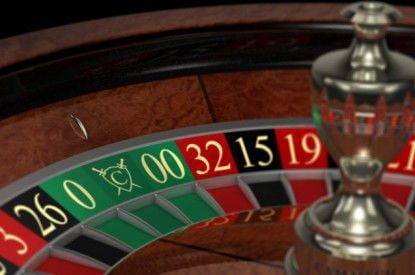
you keep hitting it to the opponent's weak backhand, but despite the good strategy, the opponent is near match point. the zeal with which the opposition is gloating over the fissures in the opponent is belied by the score.
despite the best efforts of truly knowledgable bettors like mad dog, they can't surmount the 52% hurdle.
Steve Ellison adds:
Most casinos in Vegas have now added triple zero to their roulette wheels, so even more gamblers will lose more than they have a right to. 7.7% house edge??
Vic continues:
in line with the roulette wheels with 3 zeros, on my platform is a prominent command: 'flatten everything'. one is waiting for a command flatten and reverse everything.
One hasn't heard from the chronic bears lately making fun of me as to when the S&P will make an all-time high. it appears that in Nov 2021, the S&P index was in the 4600-4700 handle and futures were in 4700 handle.
Steve Ellison comments:
The S&P 500 looks very much like it is making a Lobagola along its 2021 price trajectory (orange line). If this pattern continues, the new all time high should arrive by December. I don't know how to test this hypothesis, so for the moment it remains a conjecture.
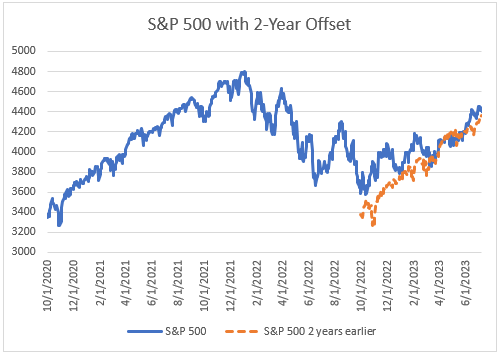
Vic continues:
thus we are about 5% away form ATH at 4700. if the devoted father increases his prob of winning to old, we should surmount. let all S&P bulls hope for more news of cog decline and hand in till.
Mr. Wonderful's utterances are the perfect example of a distraction display used by so many animals in nature.
at 4500 S&P, we are 5% away from ATH. where are we going? europeans have finally caught up with July, up a few months in a row. S&P should close at ATH. also depends on reg capture.
Jun
15
Wagers and squeezes
June 15, 2023 | Leave a Comment

no matter how high they go, most gentlemen don't like stocks. nor do they realize that bonds have to go up to save the banks from marking down their holdings.
10 Qualities of a Modern Gentleman
seems like a good day to review all the reasons that the former president didn't win in 2020. lets start with the big pharma that withheld the announcement that they had an effective vaccine until the day after the election.
Steve Ellison replies:
Marginal voters proverbially vote their pocketbooks, and Mr. Trump had the misfortune to be the incumbent as GDP abruptly contracted by 9%, and unemployment rose to 15% in April 2020.
Vic writes:
yes that's a winner although no evil hand in that. let us not forget the military in their advocacy and demeaning and threats. all the three-letter agencies and the doj. scores of 4-star generals comparing Pres to Mussolini and guaranteeing that they would escort him out of office if he resisted. the professional sports leagues all acting to undermine. Director Wray negating all of Trumps critiques about their bias. another reason for the former golfer to lose was the lineup of all of the Fangs to do whatever they could to do him in.
Gary Boddicker adds:
Constitutionally questionable executive and judicial changes to voting rules in key states, bypassing legislatures and favoring Democrats. “It’s unsafe to vote in person!”
Vic continues:
excellent book for those who like Patrick O'Brian but aren't see salts. none of O'Brian's erudition but author made valiant attempt to research incident.
The Wager: A Tale of Shipwreck, Mutiny and Murder
Also: Shantaram: A Novel
a critique of my methods, lifestyle and answer is elicited on twitter. i don't know when exchange took place - i would guess 15 years ago. I would add to my defense that I was much younger then and also I did not take account of ability of market to squeeze you and margin you out. they and the market inexorably get together by an evil hand to manipulate prices and margins so that you will contribute to the big players so that one day they will do you in and then prices will get back to their norm. one solution is to have good credit. Imagine the palindrome having enuf confidence to withstand the Bank of England and all the banks they control to speculate against the Pound successfully.
Jun
1
Steel Box Indicator, from Stefan Jovanovich
June 1, 2023 | Leave a Comment

In the first quarter of 2023, container output contracted by 71% compared to the previous year, with only 306,000 TEUs produced, marking the lowest level since 2010. Drewry estimates that full-year production will not exceed 1.8 million TEUs, the lowest since the recession-hit year of 2009.
Container Production Slumps to Lowest Level in 14 Years, Says Drewry
Henry Gifford writes:
What sort of time lag can be expected between ordering the containers and their actual use? I order cardboard boxes, and they are used to ship goods a few weeks later, I expect a shorter time lag for larger cardboard box users. But I expect it takes time to ramp up steel container production and delivery.
Stefan Jovanovich responds:
Top 10 Shipping Container Manufacturers In USA
Steve Ellison adds:
Maybe the shipping container industry does not have just in time inventory replenishment, or maybe it did, but the policies did not survive the covid pandemic. In a previous career in supply chain management, I needed to be aware of how inventory and decision lags downstream in the supply chain amplified demand fluctuations upstream, on manufacturers for example. This is known as the bullwhip effect.
Pamela Van Giessen comments:
There was an article in the WSJ earlier this year/late last year (the months seem to fly by) that shipping has fallen off a cliff. Part due to less goods needed/wanted, overstock because of covid era over ordering, and backlogs having caught up. Could it be there is an oversupply of containers based on things normalizing and/or a temp decrease while everything catches up?
I have been interested in knowing what the rail freight looks like but haven’t been able to find a source that provides that info (also haven’t looked that hard). Living in a rail town, it was much definitely quieter 6 mos ago than it has been lately. But maybe it’s just more coal out of the Powder River basin for China, India, etc. At least 3 long trains of coal/day. Every time I hear the environmentalists cry about CO2 emissions and how we have to get rid of xyz in the US, I have to laugh at the latest pet peeve (gas stoves & furnaces, increasing energy efficiency in dishwashers, wash machines, etc), it will never make a dent against all that coal being fired up in other parts of the world.
Jeff Watson offers:
Stefan Jovanovich adds:
Container Shipping Industry Faces Unprecedented Slump in Long-Term Rates
— keep looking »The container shipping industry experienced a significant downturn in global long-term freight rates during the month of May, as the contracted cost of shipping containers plummeted by a staggering 27.5%, according to Xeneta’s Shipping Index (XSI®). This marks the ninth consecutive month of rate drops and represents the largest monthly fall ever recorded on the platform.
Archives
- October 2026
- September 2026
- August 2026
- July 2026
- June 2026
- May 2026
- April 2026
- March 2026
- February 2026
- January 2026
- December 2025
- November 2025
- October 2025
- September 2025
- August 2025
- July 2025
- June 2025
- May 2025
- April 2025
- March 2025
- February 2025
- January 2025
- December 2024
- November 2024
- October 2024
- September 2024
- August 2024
- July 2024
- June 2024
- May 2024
- April 2024
- March 2024
- February 2024
- January 2024
- December 2023
- November 2023
- October 2023
- September 2023
- August 2023
- July 2023
- June 2023
- May 2023
- April 2023
- March 2023
- February 2023
- January 2023
- December 2022
- November 2022
- October 2022
- September 2022
- August 2022
- July 2022
- June 2022
- May 2022
- April 2022
- March 2022
- February 2022
- January 2022
- December 2021
- November 2021
- October 2021
- September 2021
- August 2021
- July 2021
- June 2021
- May 2021
- April 2021
- March 2021
- February 2021
- January 2021
- December 2020
- November 2020
- October 2020
- September 2020
- August 2020
- July 2020
- June 2020
- May 2020
- April 2020
- March 2020
- February 2020
- January 2020
- December 2019
- November 2019
- October 2019
- September 2019
- August 2019
- July 2019
- June 2019
- May 2019
- April 2019
- March 2019
- February 2019
- January 2019
- December 2018
- November 2018
- October 2018
- September 2018
- August 2018
- July 2018
- June 2018
- May 2018
- April 2018
- March 2018
- February 2018
- January 2018
- December 2017
- November 2017
- October 2017
- September 2017
- August 2017
- July 2017
- June 2017
- May 2017
- April 2017
- March 2017
- February 2017
- January 2017
- December 2016
- November 2016
- October 2016
- September 2016
- August 2016
- July 2016
- June 2016
- May 2016
- April 2016
- March 2016
- February 2016
- January 2016
- December 2015
- November 2015
- October 2015
- September 2015
- August 2015
- July 2015
- June 2015
- May 2015
- April 2015
- March 2015
- February 2015
- January 2015
- December 2014
- November 2014
- October 2014
- September 2014
- August 2014
- July 2014
- June 2014
- May 2014
- April 2014
- March 2014
- February 2014
- January 2014
- December 2013
- November 2013
- October 2013
- September 2013
- August 2013
- July 2013
- June 2013
- May 2013
- April 2013
- March 2013
- February 2013
- January 2013
- December 2012
- November 2012
- October 2012
- September 2012
- August 2012
- July 2012
- June 2012
- May 2012
- April 2012
- March 2012
- February 2012
- January 2012
- December 2011
- November 2011
- October 2011
- September 2011
- August 2011
- July 2011
- June 2011
- May 2011
- April 2011
- March 2011
- February 2011
- January 2011
- December 2010
- November 2010
- October 2010
- September 2010
- August 2010
- July 2010
- June 2010
- May 2010
- April 2010
- March 2010
- February 2010
- January 2010
- December 2009
- November 2009
- October 2009
- September 2009
- August 2009
- July 2009
- June 2009
- May 2009
- April 2009
- March 2009
- February 2009
- January 2009
- December 2008
- November 2008
- October 2008
- September 2008
- August 2008
- July 2008
- June 2008
- May 2008
- April 2008
- March 2008
- February 2008
- January 2008
- December 2007
- November 2007
- October 2007
- September 2007
- August 2007
- July 2007
- June 2007
- May 2007
- April 2007
- March 2007
- February 2007
- January 2007
- December 2006
- November 2006
- October 2006
- September 2006
- August 2006
- Older Archives
Resources & Links
- The Letters Prize
- Pre-2007 Victor Niederhoffer Posts
- Vic’s NYC Junto
- Reading List
- Programming in 60 Seconds
- The Objectivist Center
- Foundation for Economic Education
- Tigerchess
- Dick Sears' G.T. Index
- Pre-2007 Daily Speculations
- Laurel & Vics' Worldly Investor Articles
