Jul
31
A comparison
July 31, 2024 | Leave a Comment
Deep Enough, a beautiful heroic book about the same subject as a hateful book, Angle of Repose. one won the Pulitzer Prize, the other is hardly known but highly recommended by me.
Jul
30
Intermittent fasting and your noodle, from Kim Zussman
July 30, 2024 | 1 Comment
Two Diets Linked to Improved Cognition, Slowed Brain Aging
An intermittent fasting (IF) diet and a standard healthy living (HL) diet focused on healthy foods both lead to weight loss, reduced insulin resistance (IR), and slowed brain aging in older overweight adults with IR, new research showed. However, neither diet has an effect on Alzheimer's disease (AD) biomarkers.
Although investigators found both diets were beneficial, some outcomes were more robust with the IF diet.
Larry Williams adds:
A “dry” fast loses weight more than wet fast.
Big Al writes:
Sergei's AI says:
The main difference between dry fasting and wet fasting, also known as water fasting, is whether you consume liquids:
Dry fasting: Restricts both food and liquids, including water, broth, and tea. It can be done as part of intermittent fasting, which cycles between eating and fasting. For example, you might restrict food for 16 hours and eat during an 8-hour window. Wet fasting: Allows you to drink water, and sometimes certain teas.
Dry fasting can be dangerous, especially for long periods of time. Some potential side effects include: Dehydration, Nutrient deficiencies, Urinary problems, Kidney issues, Heat injury, and Swollen or ruptured cells.
Jul
29
Federer…on trading?
July 29, 2024 | Leave a Comment
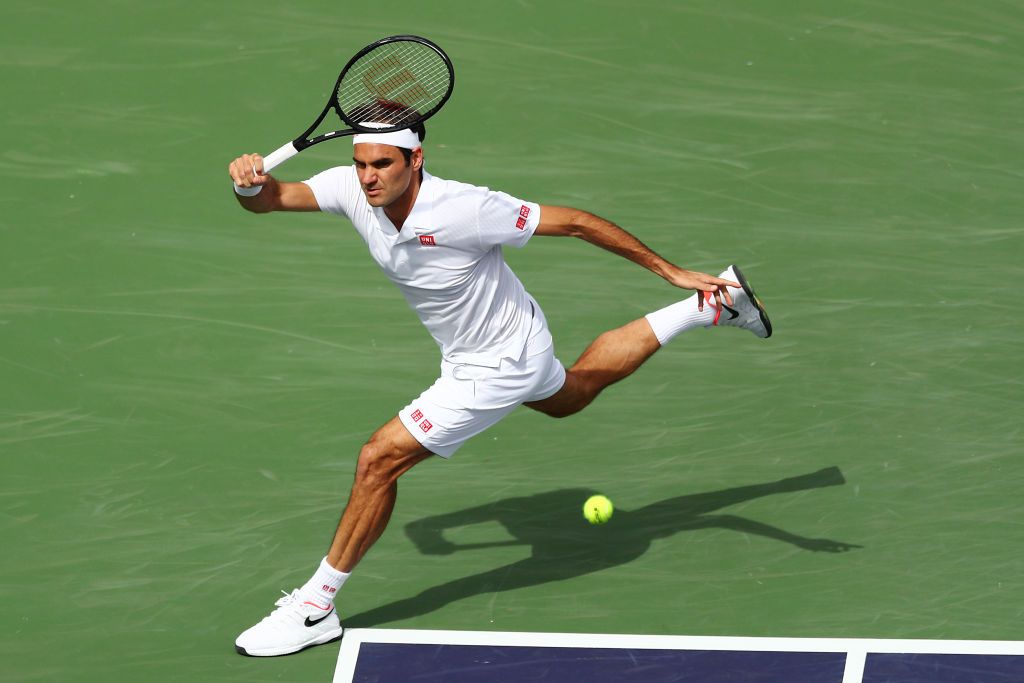
In the 1,526 singles matches I played in my career, I won almost 80% of those matches. What percentage of the POINTS do you think I won in those matches? Only 54%.
When you’re playing a point, it is the most important thing in the world. But when it’s behind you, it’s behind you. This mindset is really crucial, because it frees you to fully commit to the next point… and the next one after that… with intensity, clarity and focus.
The truth is, whatever game you play in life… sometimes you’re going to lose. A point, a match, a season, a job… it’s a roller coaster, with many ups and downs.
[ H/t to Ritholtz ]
Jul
28
Inflection points, from Zubin Al Genubi
July 28, 2024 | Leave a Comment

Inflection points at prior highs and lows seem pretty obvious recently especially in lowered liquidity. The market makers seem to thin and spread their markets for protection resulting in bigger directional moves. The vol gives a small trader good opportunity as the big boys dump large orders creating large auto trade moves like escalators.
Anatoly Veltman wants more information:
every word I read on three lines of text appears totally (?) random. It would be extremely impressive, if you ventured to explain at least ONE of these, and how this could be used as edge. P.S. Bonus would be to know the approximate date (?) of "lowered liquidity"
William Huggins responds:
It's not random, it's about microstructure. MMs spread their risk as they usually get caught out by information driven moves while they supply liquidity. When they spread their capital to diversify, or withdraw from choppy markets, the price impact of trading rises (Kyle's lambda).
Steve Ellison comments:
My takeaway from Zubin's post is that there are edges to be found in studying market microstructure and looking for clues in price action of what some of the key players are doing. A specific example I have found is, if you bin trading days by number of days before or after options expiration, options expiration day has had the worst total return in the S&P 500 of any day of the month in the past 6 years or so. Apparently the need for a large number of market players to adjust and re-establish hedges can create imbalances in supply and demand of various assets.
I could form a hypothesis about liquidity that a sustained price move in one direction, as happened a couple of times to the downside in the S&P 500 since July 17, is toxic for market makers and forces them to widen their spreads lest they be saddled with unwanted inventory. I'll leave it as an exercise for the reader to test this hypothesis.
Jul
27

Here's a performance of a one-movement sonata for flute and piano I wrote a few years ago.
Traditionally, sonatas were three or four movements. My goal here was to respect that structure, but to do so in a highly compressed format. The piece is built around a recurring pattern (an ostinato) that the flute first "discovers" before it lands in the bass of the piano. The middle section begins with a nod to a more primitive, primal flute. Again, a pattern is discovered that is worked and reworked in counterpoint between the instruments. This little sonata is a pretty solid reflection of my musical aesthetic: I'm striving for a whole that makes sense, but also exploring some extremes.
What I think might be interesting to the group is that some elements of this piece were generated from financial market data. (Think of a GARCH-type process.) Aspects of volatility were allowed to dictate some elements of harmonic density and texture in the piece. I bent this to my overall musical concept as opposed to leaving it bare. (I don't find much engaging in process-driven compositions… they are far more interesting to write and maybe to talk about then to hear, in most cases.)
Sushil Rungta appreciates:
Very much enjoyed it. It was marvelous. Thanks for sharing.
Peter Ringel responds:
Beautiful. TY Adam.
some elements of this piece were generated from financial market data. (Think of a GARCH-type process.)
This seems brilliant. I have no doubt that volatility is deeply human. Sadly, my ear is too poorly trained to understand your translation of this into composition.
Somewhat related: I use order-flow audible sounds during my day-trading. Like the old guys used floor noise. There is a non-regular rhythm to it. For me it is so ingrained now, I feel naked without it. It also helps with not needing to stare at the screen all the time. The Mkt- music will alert me if necessary.
[ Lagniappe: Sonata, pl. sonate; from Latin and Italian: sonare [archaic Italian; replaced in the modern language by suonare], "to sound"), in music, literally means a piece played as opposed to a cantata (Latin and Italian cantare, "to sing"), a piece sung. -Ed ]
Jul
26
Precedent weather-change responses, from Kim Zussman
July 26, 2024 | Leave a Comment

A mass sacrifice of children and camelids at the Huanchaquito-Las Llamas site, Moche Valley, Peru
Here we report the results of excavation and interdisciplinary study of the largest child and camelid sacrifice known from the New World. Stratigraphy, associated artifacts, and radiocarbon dating indicate that it was a single mass killing of more than 140 children and over 200 camelids directed by the Chimú state, c. AD 1450. Preliminary DNA analysis indicates that both boys and girls were chosen for sacrifice. Variability in forms of cranial modification (head shaping) and stable isotope analysis of carbon and nitrogen suggest that the children were a heterogeneous sample drawn from multiple regions and ethnic groups throughout the Chimú state. The Huanchaquito-Las Llamas mass sacrifice opens a new window on a previously unknown sacrificial ritual from fifteenth century northern coastal Peru. While the motivation for such a massive sacrifice is a subject for further research, there is archaeological evidence that it was associated with a climatic event (heavy rainfall and flooding) that could have impacted the economic, political and ideological stability of one of the most powerful states in the New World during the fifteenth century A.D.
Laurel Kenner comments:
In Lessons from History, the Durants write that Peru was a happy socialist state until the arrival of the conquistadors in the 16C.
Bo Keely reports:
Iquitos, Peru at the headwaters of the Amazon Rio is the only of two places I've lived in the past 20 years. The other is here in Slab City. I had a trip planned to Peru this month but got a desert skin infection that the jungle would have ravaged. As such, i've lived in the Peruvian Amazon a half-dozen times for months at a stint, all in the jungle hiking and hitchhiking banana boats. The proposed postponed trip was to hitch the rios again doing magic tricks for the natives in putting together a photo-essay. The Peruvian Amazon is my haunt because the people operate very low on the brainstem. Cannibalism and malaria make them perhaps the greatest evolved and toughest humans on the planet. Put succinctly, if one is invited to dinner make sure the host isn't licking his chops. I'll go back, and escape again with magic.
Asindu Drileba is concerned:
Put succinctly, if one is invited to dinner make sure the host isn't licking his chops. I'll go back, and escape again with magic.
You have unlocked a whole new level to what I consider a set of risks people take. Please don't do that again.
Jul
25
Naval art lagniappe
July 25, 2024 | Leave a Comment

- Lord Cochrane's 'Speedy' capturing the Spanish frigate 'El Gamo', by Nicholas Pocock
Description from the Royal Museum Greenwich:
Between 28 March 1800 and 3 July 1801, Thomas Cochrane, in command of the 14-gun brig-sloop ‘Speedy’, claimed to have taken 50 vessels, 122 guns, and 534 prisoners while cruising off the Spanish coast. The most spectacular of his small-ship victories was the boarding and capture of the 32-gun Spanish frigate ‘El Gamo’, a ship more than twice as powerful as his and with a complement nearly six times larger.
Cochrane ran ‘Speedy’ alongside the ‘Gamo’, and fired his guns treble-shotted into her. The Spanish tried three times to board but, at each attempt, Cochrane pulled away briefly and fired on the concentrated boarding parties. Eventually, having depleted the enemy, ‘Speedy’ emptied her whole crew upon the Spanish ship’s deck and carried her after a bloody struggle that cost four killed and seventeen wounded, the Spaniards losing fourteen and forty-one wounded.
In a calm sea, ‘El Gamo’, flying a Spanish ensign, is shown in starboard-broadside view, obscuring all but the stern end of ‘Speedy’ behind her. ‘Speedy’ flies both white and blue ensigns (the American colours Cochrane is said to have flown on approaching are not depicted). Both ships’ sails have been peppered with shot, and vicious hand-to-hand fighting is underway on ‘El Gamo’’s quarter-deck. In the background, a few miles distant, the Barcelona coastline is depicted approximately, in aerial perspective.
Inscribed: “To the Right Honourable Earl Spencer (late First Lord of the Admiralty) this print representing the Boarding and taking his Catholic Majesty’s Xebecque Frigate El Gamo, by His Majesty’s Sloop Speedy, Commanded by the Right Hon. Captain Lord Cochrane after a close Action of One Hour and Ten Minutes off Barcelona at Noon on the 6th of May 1801. Is most respectfully Dedicated. El Gamo 32 Guns 309 Men. Speedy 14 Guns 54 Men”.
Bio of the man: Cochrane: Britannia's Sea Wolf, by Donald Thomas.
Jul
24
Mega-Tinderbox buy-and-hold, from Kim Zussman
July 24, 2024 | Leave a Comment

‘Greatest Bubble’ Nearing Its Peak, Says Black Swan Manager
Universa’s Mark Spitznagel, who has made billions from past crashes, sees last hurrah for stocks before severe reckoning
Humbert H. asks:
His job is to make money on black swans, not to predict black swans. What kind of black swan is it if it can be predicted?
Asindu Drileba writes:
Black Swans are relative. If you have tail risk protection it means you are aware of tail risk. If you don't have tail risk protection, the notion of a "surprise" when it happens means you encounter a black swan. So Mark may be speaking form the perspective of those that actually don't think they will encounter a black swan.
Humbert H. responds:
Is there anyone who invests in the magnificent seven and NVDA in particular who isn't aware of their elevated valuations, possible bubble formation, and the risk of a major decline? There's some level of obviousness to warning people of this possibility. It's like he is suddenly preaching "past performance is no guarantee of future results" or "correlation does not equal causation". Is he doing this to help humanity? Someone will make more money and someone will make less money if they act on his warning, and there will be bagholders either way, so humanity will not benefit as a whole.
Asindu Drileba adds:
I think for his case, he is just marketing his fund.
Zubin Al Genubi observes:
Cheap Deep OTM puts are up 45% on a 3% decline showing exponential gearing in place from ATH as a directional trade or as a hedge. Surprisingly unidirectional.
Asindu Drileba expands:
His philosophy is more like that of "insurance" for stocks. I think Uncle Roy also has the same philosophy. I remember his describing portfolio protection akin to having fire insurance for your house. To benefit from fire insurance on your house, you don't need to predict when it will burn down. Just make sure you always have coverage for it. So most of the time, percentage wise, your predictions of having a fire are going to be wrong. He mostly advocates that everyone should have "fire insurance" for your portfolio.
To learn more about Mark's strategy:
1) A section called "The Forest In the Pine Cone" inside his book The Dao of Capital
2) His solution to the "narrow framing" problem
3) How he sizes his positions
Nils Poertner comments:
good to be open minded. that said: the more stories (like this one) we can read in mass financial media (FT, WSJ, etc) - the less likely this is going to play out anytime soon. "get the joke"
Humbert H. writes:
I don't think it makes any difference unless "everybody" has the opposite view of the future from what the market is doing. Every single day multiple people prognosticate both doom and gloom and full steam ahead. Since the motivation for this warning is clearly suspect this is white noise. But if his prediction comes true soon which it obviously has a reasonable chance of doing he'll be venerated for decades as the great prophet. This guy is clearly a disciple of Taleb, and they even collaborated in the past. Victor's take would be interesting.
Jul
23

We cheered on Larry who competed in the Big Sky Games, Sunday, July 21.
Big Al adds:
Larry had a great result in the 5k.
Larry Williams writes:
Pam’s donuts, she kindly brought a box to Red Lodge were the most beautiful I have ever seen (cute little ones) and best tasting…well worth a trip to the Home of Dan Bailey.
Big Al is enthusiastic:
Daisy Donuts look great!
Pamela Van Giessen responds:
Not great pic of the mini donuts Larry enjoyed. I should have taken a photo before we left instead of in the car while driving. For anyone venturing to Red Lodge MT, we highly recommend the pig races in Bear Creek. And a nice visit with Larry!
Jul
22
Probability matching, from Big Al
July 22, 2024 | Leave a Comment
Probability matching is an interesting phenomena, a bit subtle as to trading.
Probability matching is a decision strategy in which predictions of class membership are proportional to the class base rates. Thus, if in the training set positive examples are observed 60% of the time, and negative examples are observed 40% of the time, then the observer using a probability-matching strategy will predict (for unlabeled examples) a class label of "positive" on 60% of instances, and a class label of "negative" on 40% of instances.
Andrew Lo takes a very deep dive into probability matching:
Evolutionary Foundations of Economic Behavior, Bounded Rationality, and Intelligence
Andrew W. Lo, Massachusetts Institute of Technology
Institute for Pure and Applied Mathematics, UCLA May 19, 2015
Jul
21
Classic SPEC reading list (with movies, too)
July 21, 2024 | 1 Comment
From the original version of the Daily Spec site and worth a review:
Jeff Watson writes:
Being There is a movie adapted from Jerzy Kosinski’s book about a gardener who took Washington DC by storm. His name was Chance and he could not read or write, but the public thought he was a genius. He ultimately became the President of the United States. The book should also be on the list.

Stefan Jovanovich suggests:
Asindu Drileba offers:
- Risk Savvy by Gerd Gigerenzer. How to cut your cancer risk by 50%, how to beat Nobel Prize portfolio strategies, why certainty is an illusion. I think everyone can benefit at least one thing from reading this book. It doesn't matter if you're a spec or not.
- The Visual Display of Quantitative Information (everything by Edward R. Tufte is worth reading)
- Adam Curtis documentaries. He has dedicated his life talking about "Power", mostly the relationship between Markets, Politics, Science, Religion & Philosophy. He informed alot of my thinking about the relationship between those. An incomplete assortment.
- Zurich Axioms. This was recommended by on a podcast. I think it was Larry Williams (but I am not sure). It's a very good book of aphorisms, useful to get your psychology right.
- This is the Road to Stock Market Success (1944). Recommend by Vic. I also find the book very instrumental in developing a psychological edge.
Zubin Al Genubi recommends:
Conrad, J, Heart of Darkness. A river trip into Africa loses grip.
Khilav Majmudar agrees:
Loved Heart of Darkness. Conrad's writing is hypnotic.
Humbert H. adds:
Heart of Darkness is kind of similar to Kafka’s writing in that it’s mysterious and unusual, and nobody knows what it’s really about after reading it. It was famously an inspiration for the movie Apocalypse Now which is arguably even stranger.
Jul
20
Looking deeper into employment, from Bill Rafter
July 20, 2024 | Leave a Comment

First the chart. The two data sets are of different magnitude, so to compare them they must be normalized. The chart represents the slope of the data divided by the trend of that data. Both are determined by regression over 12 months. Each point on the chart is effectively the expected rate of change of the data as determined by the moving trendline. As such, the data is NOT lagged, and presents a truer picture than that of lagged data.
Interpretation. Periods of higher part-time employment tend to coincide with recessions. However, if the employment picture is recessionary, then how would one explain the growth in Payroll Tax Receipts, which I have shown separately? Well, it turns out that the growth from January to June in Part-time employment matches the growth in Payroll Tax Receipts. Thus, the economy is growing solely by the increase of part-timers.
Zubin Al Genubi writes:
Many young people I know do gigs, seasonally or part time. Recent employment numbers (with temp way up and full-time way down)support the theory.
Humbert H. adds:
I’ve seen a lot of information on part-time vs full-time. Often it’s accompanied by foreign-born vs native-born, where the dichotomy is similar, in favor of the foreign-born.
Jul
19
The golden ratio
July 19, 2024 | Leave a Comment

golden ratio of 1.65 appears in thousands of settings over thousands of years.
The Golden Ratio: The Divine Beauty of Mathematics, by Gary B. Meisner (Author) and Rafael Araujo (Artist)
The Golden Ratio examines the presence of this divine number in art and architecture throughout history, as well as its ubiquity among plants, animals, and even the cosmos. This gorgeous book—with layflat dimensions that closely approximate the golden ratio—features clear, enlightening, and entertaining commentary alongside stunning full-color illustrations by Venezuelan artist and architect Rafael Araujo.

A trader writes:
I have used the golden ratio trying to predict where the technical people find Fibonacci support and resistance levels in both cash and futures and applying them to grain spreads and basis capture. This was in conjunction with other tools being used and tested. I completely abandoned the method after finding other, more successful ways that work better than random.
William Huggins offers an historical lagniappe:
Leonardo of Pisa may be best known for his "sequence" but in his lifetime, it was his work as a tutor to the rich business class of late-Medieval Italy that paid the bills. His mathematical treatise Liber Abaci (1202), which was only "recently" translated into English, is broken into chapters including basic operations but he quickly jumps into the calculation of profits from business voyages and even introduces the notion of the time value of money.
Jul
18
More on property rights, from Asindu Drileba
July 18, 2024 | Leave a Comment

Investing in places where property rights are fundamentally not respected just isn't worth it because you can't calculate the risk.
This is completely true. In my country (Uganda) there is a lot of what you may call "arbitrary use of power". If you a Ugandan and are political connected enough, you can screw almost any foreign or local financier by summoning a "presidential directive". Here are some examples within the past 2 - 3 years:
1. Some guys lent money to a financier and used the mosque as collateral. When the mosque defaulted on the loan, the Moslem community appealed for "help" from politicians. The liquidation of the mosque was blocked.
2. In another instance, some foreign financiers lend money to some local "tycoons". When they defaulted on their loans, the courts suddenly declared that the foreign entities did not have enough paperwork to actually lend the local "tycoons" any money. So the "tycoons" didn't have to pay anything back. This didn't happen once, but *thrice* in the last 3 or so years.
3. Last year (2023) people woke up one day to discover that all licenses and permits to export timber were cancelled. So if you invested money into forestry for export, your return on investment was basically marked to zero.
So if you do business in these places:
a) Be well connected politically
b) Plan your exit at least as well as how you enter into business
c) Don't think long term
d) Restrict yourself to a business that is easy to move to neighbouring country.
A group of financiers however that has seen some success seems to be Venture Capitalists. They are well positioned in b) & d). VCs for example will not touch your business if it is not a Delaware C-Corp. This limits how much damage local politics can affect your business. Also, VCs tend to favour software businesses & service businesses over say manufacturing. This makes them easy to expand or ship operations at a whim. Some VC backed Startups for example just have 1 employee per country just for legal & administrative purposes.
Humbert H. writes:
Regarding publicly listed companies in sub-Saharan Africa, I do not think there are many that would fit the requirements of global institutional investors. This fact contributes to the challenges that private equity firms have in finding exits for investee companies.
Many of the listed companies in Sub-Saharan Africa are owned by the public pension funds in the corresponding country. For example, South African pension systems (PIC, GEPF, ESKOM) are significant shareholders in companies listed on the JSE therefore there is limited liquidity.
Every time I go there I am reminded how small the national economies of countries in sub-Saharan Africa are relative to Europe and the US. In 2010 Goldman Sachs published a paper called Lions on the Move which sounded a bullish tone; however, in my view most of what they predicted did not come to fruition.
Sub-Saharan Africa needs to produce higher value products with their raw material and natural resources on the continent as opposed to simply exporting their raw material and natural resources.
H. Humbert comments:
Historically, property rights were respected in Northern Europe and some of their former settlements/colonies, parts of Central Europe, China, Japan, Korea, small parts of Italy, and small enclaves in Southeast Asia and the Iberian Peninsula. These are relatively high-trust societies. Among many problems I have with mass migration is that it always flows from low-trust societies to high-trust societies, which can't be good for the latter. Migration and ever-decreasing penalties for property crimes even in the high-trust societies leave very few counties safe. Switzerland and Japan are likely to last the longest, Germany is doing pretty well although I think it's doomed long term, but the rest of the world is circling the drain. It's possible to reverse trends locally, as recently demonstrated in El Salvador and Argentina, but that's not common. In Russia and Ukraine, if you didn't give bribes or had "blat" (connections) nothing could be done. I don't know the current details, but they're obviously still highly corrupt, as there was no reason for high trust to be established. China (which is a historically high-trust society but corrupted by the Communist dictatorship) and India are complex and have elements of both high-trust and low-trust. If you look at the map of the world, between Russia, Africa, Latin America, and (arguably) a lot of Asia property rights are rare indeed.
Jul
17

I don't have much knowledge of foreign exchange, although I admire and envy people like John Floyd who do. In 2017 I was interested in the idea of using PPP (purchasing power parity theory) to select countries that might be good prospects for stock investing over a 4-5 years horizon.
Looking at 2 different publicly available PPP rankings I noticed that SAR (South African Rand) was considered undervalued approximately 50% (!) on a PPP basis. In addition after several years of mismanagement the country seemed ready for a turnaround (bad policies cannot continue indefinitely). I purchased some shares of EZA (IShares South Africa ETF) in October 2017 at 59.36 usd a share.
Today, 7 years later, EZA is at 44.32 a share. More interestingly SAR is considered undervalued by 52.5% (on one of the 2 rankings, I can't find the other at the moment) and has been one of the most undervalued currencies throughout this period.
My mistake was not to do a thorough historical study of stock markets of countries that are undervalued on a PPP basis, and giving too much credit to the academic theory that PPP undervaluations are substantially corrected in 4 or 5 years time. Clearly some countries (eg Switzerland) can stay PPP overvalued more or less forever, and some like SAR can be consistently undervalued more or less continuously.
I learned my lesson.
Humbert H. writes:
I have been involved in raising private equity funds for emerging markets (Asia, Latin America, and Sub-Saharan Africa) since 2004. I have been specifically focused on Sub-Saharan Africa since 2017.
In my view and the view of others who I know that have been tasked with raising capital for these markets over the past 20 years, investors in these markets have not and do not get paid for the risk they are taking.
Nils Poertner responds:
maybe you are right on SA. am interested in the liquid stuff - and that is already a challenge in some of the EM markets.
Bruce Kovner used to say that most investors never really practise much imagination and test new ideas- they tend to go along with what others tell them - and then repeat the learned ideas (as their own). keeping this in the back of the mind everyday (even intelligent ppl forget that).
H. Humbert comments:
Investing in places where property rights are fundamentally not respected just isn't worth it because you can't calculate the risk. I've always considered Russia uninvestable, had one Chinese stock, would never buy any stock in a country led by a dictator. I do have a Mexican stock but in general avoid highly corrupt countries. SA is just too full of crazies to calculate the risk. The US love of sanctions and confiscations of Russian assets and the desire to impose wealth taxes endangers property rights and thus the overall level of attractiveness. At the moment, looking what happened in France, that makes it un-investable. When an Antifa leader leader on the national security watchlist gets elected to the National Assembly and and admirer of Hugo Chavez and Fidel Castro has a realistic path to be PM, watch out.
Henry Gifford responds:
Investing in places where property rights are fundamentally not respected just isn't worth it.
Indeed there is no need to look to outside the US to find examples. Just buy an apartment building in New York City and try to make a profit with the politicians telling you how much rent to charge. A politician looks at an apartment building and sees the owner as one vote, but the tenants as a large number of votes, thus the politician "buys" votes by "giving" low rent to the tenants. A few years ago the property owners in California lobbied for universal rent control on all properties, and got it, out of fear of a worse version passing into law.
In general avoid highly corrupt countries: In New York City it is impossible to get a gas or electric meter installed without a cash bribe to a utility company employee, and almost impossible to get any improvement to a building, including a single-family house, past inspection without a cash bribe to a city inspector. And the sanitation police who come fine store owners $250.00 for a cigarette butt or a leaf on the sidewalk (or on the street within 18" of the curb) have been reported paying their supervisors to assign them to areas with lots of stores, not single-family homes, so they can collect bribes for not fining the store owners $250/day.
Yes, it is possible to do honest business in New York, but it is very, very hard. I have never paid a bribe but don't make nearly the money I would if I did. Things are getting worse this way in New York City, which is perhaps the future of the US as the idea that our chair says has the world in its grip gets ever more popular.
I think Mr. Humbert's advice is very wise, but amounts of socialism and corruption are relative - find someplace completely free of both and I will move this afternoon.
Pamela Van Giessen suggests:
Wyoming might be the closest we get to corruption and socialist-free from what I can tell. Corruption, tho, is hard to uncover from a distance.
Jul
16
First and second derivatives of bulk power prices, from Carder Dimitroff
July 16, 2024 | Leave a Comment
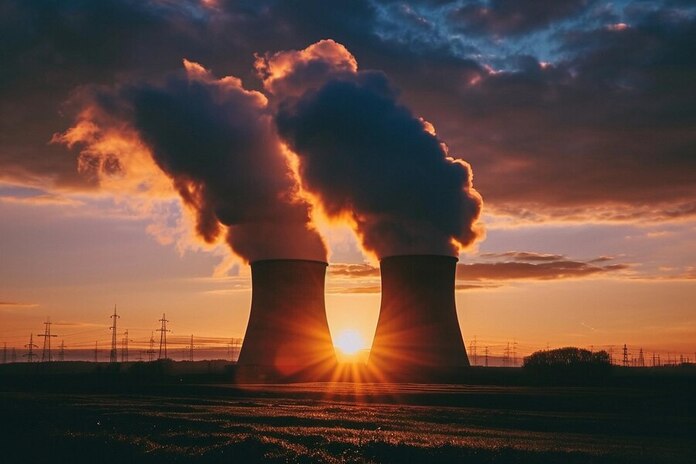
The trade is the first (power producers) but not the second (uranium). I'd caution anyone considering uranium as an investment proxy for nuclear power. Traders may see bumps from news stories, but uranium fundamentals should not and do not track well with bulk power production.
Speculating in bulk power prices is difficult because power is a unique commodity with no [mature] futures market. The first derivative of bulk power might be merchant power plant fleets composed of nuclear, natural gas, and coal-fired power plants. Wind power might be responsive, but solar would be low on my list.
Since this thread is about nuclear energy, commercial nuclear power plants could emerge as profitable assets for the first time in over a decade. Consequently, merchant nuclear power plants would be among the first derivative beneficiaries.
Sticking with the nuclear theme, nuclear fuel would be the second derivative, and uranium would be the third. Therefore, speculating on uranium at the end of nuclear power's value chain would require different considerations. Let me explain.
All commercial nuclear plants operating in the United States are large light water reactors. Unlike military reactors, commercial reactors consume low-enriched uranium (enriched between 3 and 5 percent). This enrichment level is by design and regulation.
Mining is the first of many steps in producing nuclear reactor fuels. Globally, vast reserves of raw uranium, including Virginia, Australia, and many other places, could be available for mining.
The second step in creating nuclear fuel is milling and processing, generally conducted at NRC and EPA-regulated sites near the mine. Processing uranium into yellowcake is the last step in creating a commodity. Because yellowcake is a highly regulated asset, speculating on its pricing is a unique endeavor requiring specialized knowledge.
Regulated carriers ship the yellowcake to enrichment facilities, where the fuel is de-commoditized. The enrichment process and fuel fabrication add the most value. Fuel fabrication creates customized fuel rod assemblies tailored to fit into specific reactors. Because they are customized, those fuel assemblies are, for the most part, not fungible.
Commercial nuclear plants must order their new fuel from approved facilities capable of handling their fuel configurations. They must order far enough in advance to ensure that their place in the facility's queue meets refueling schedules (this queuing problem is why Germany could not extend or restart its retiring nuclear plants after Russia invaded Ukraine; they fell out of the fabricator's queue).
After receiving new fuel, individual nuclear power plants store it onsite and wait for the next refueling. Volumetrically, small amounts of new fuel are needed because most commercial plants run on existing fuel for 24 months before refueling. When they shut down, they do not replace all the old fuel with new fuel; they replace their oldest fuel with new fuel and reconfigure the remaining fuel to achieve specific physics.
In summary, for uranium investors, the critical points are:
Uranium may be a commodity, but nuclear fuel is not.
Nuclear fuel is highly regulated, controlled, and difficult to trade.
Nuclear plants do not consume uranium like legacy plants consume coal.
The elapsed time between mining and consuming is months or years.
Speculating in uranium is complex and requires specialized knowledge.
So, the question remains: how do investors profit from the coming changes in the power markets? For me, it's not speculating in uranium or uranium mines.
I don't provide investment advice. Be cautious, do your additional research, and seek professional advice. Given those disclaimers, consider Constellation Energy (CEG), the owner of the nation's largest fleet of merchant nuclear power plants. They also own other generating assets. They stand to gain if bulk energy transactions sustain elevated prices.
Keep in mind the following facts about merchant nuclear power plants:
Their LCOE is relatively high compared to gas and coal-fired power plants.
Their production costs are relatively low compared to the same plants.
They run 24/7/365, independent of market prices (capture negative prices).
They need constant access to cool water (problem: droughts and warm water).
The market value of nuclear assets is likely below book value ($ is in decommissioning).
Not all US commercial nuclear plants operate as merchant plants.
Nonpartisan federal/state policymakers protect nuclear power assets.
For me, CEG is a long-term investment. But short-term prices may react to the news.
Jul
15
Possible demand-supply mismatch coming in the power markets, from Carder Dimitroff
July 15, 2024 | Leave a Comment

Only some people agree, but the power industry believes there may be a demand-supply mismatch from AI data centers. Here are some summary views - from the American Nuclear Society's Nuclear Newswire (April 2024):
Major tech companies see artificial intelligence (AI) as something that will transform their industry, and there is a race to be first. When they look for clean, dependable power 24/7, nuclear clearly stands out as a good match. Constellation [the nation's largest nuclear utility] summarized it best in its recent forecast:
• AI and data center growth will drive power demand.
• Major tech companies are expected to invest $1 trillion in data centers over the next five years.
• In the next five years, consumers and businesses will generate twice as much data as all the data created over the past 10 years.
• AI data center racks could require seven times more power than traditional data center racks.
• Between now and 2030, domestic data center electricity consumption is expected to grow anywhere from 6.5 percent to 7.5 percent (335 terawatt-hours to 390 terawatt-hours).
• In its report, Data Centers 2024 Global Outlook, global real estate services company JLL has said that "AI is driving extreme scale for new developments with requirements now ranging from 300 megawatts (MW) to over 500 MW."
From the IEEE Spectrum (June 2024):
Scientists have predicted that by 2040, almost 50 percent of the world's electric power will be used in computing. What's more, this projection was made before the sudden explosion of generative AI.
From Data Center Dynamics (May 2024):
US utility Dominion expects to connect 15 more data centers to the grid in Virginia over the course of 2024, after connecting 15 facilities last year totaling almost a gigawatt of capacity [1 gigawatt = 1 nuclear plant]. In its most recent earnings presentation this week, the company said it had connected 94 data centers with more than 4GW of capacity in Northern Virginia since 2019. This included 15 data centers totaling 933MW in 2023, and 15 more are due to be connected in 2024. The company didn't include the capacity of those 15 facilities going live this year, and in the earnings call, CEO Robert Blue said he doesn't know how quickly they will ramp up to full capacity.
For those who think new nuclear power is the solution (2024), this is not a quote but a fact: The new Vogtle nuclear power plant took about 20 years to design and build, from concept to commercial operations. This recent construction schedule was set by an experienced nuclear utility that previously built access to transmission on a nuclear site they've owned for decades.
The critical metric is not the overall demand. Data centers' demand sits on the grid 24/7, so generating capacity must be available 24/7. While massive amounts of energy are already oversupplying some US power markets, most new sources originate from part-time wind, solar, and battery assets. Those part-time assets cannot serve the 24/7 load demanded by data centers. Therefore, the critical metric is the difference between the base supply and the constant load.
With growing 24/7 demand, a fleet of legacy power plants (natural gas, nuclear, coal) is needed to fill in the [significant] gaps left by part-time renewable energy sources. That fleet currently exists, but its overall capacity is declining. Retired plants (to the extent they can be summoned) and new generation will be needed.
However, any new base generation will experience poor capacity factors and difficult gross revenues. Both impair investors' revenues and erode their expected levelized cost of energy. Even if investors overcome profitability concerns, the time it takes to commercialize any new traditional generating asset exceeds the expected demand for new power (extreme example: Georgia Power).
These projections and concerns appear to contradict current trends. Demand has declined in the United States, Europe, and the United Kingdom. Current reporting suggests there could be too much supply, particularly in Europe. However, if projections described by ANS, IEEE, and utilities are correct, the opposite problem could be presented: insufficient supply. If supply becomes the issue as expected, scarcity curves will be taxed, unprofitable generating assets will become profitable, and residential, commercial, and industrial consumers will pay more. This issue is not limited to North America.
Humbert H. writes:
I was listening to an interview of some fund manager from Reno earlier today and he was talking about power shortage around where he lives due to AI server farms. He said they could be quickly and cheaply addressed with new gas powered plants, but due to the Biden administration now requiring all such plants to have complete carbon sequestration this stopped them from being a practical solution.
H. Humbert writes:
Increased the energy supply for data centers is the obvious and near-term brute-force solution. Of course (almost) everybody not in the tech industry assumes that the joule per bit per second for data centers can't be improved and hence producing more energy is the only solution using nuke. In fact Sam Altman said that too, what conventional thinking can possibly go wrong, right?
Zubin Al Genubi asks:
What would be a good way to invest in modern nuclear power? How about Bill Gates project?
Asindu Drileba adds:
I would suspect via buying Uranium ETFs? I first saw this conjecture from following the financier Lyn Alden.
Mark Zuckerberg of recent also mentioned in an interview that Energy and not Compute will be the number 1 bottle neck to AI progress.
H. Humbert responds:
The energy being the presumed AI investment proxy won't last in the long term. Increasing the energy supply is just an incremental engineering no-brainer approach to solve a longer term problem and the approach is not disruptive and it doesn't change the world.
Stefan Jovanovich offers:
Radiant Nuclear
Kaleidos: a Portable Nuclear Microreactor that Replaces Diesel Generators
Peter Penha writes:
A relevant interview on the Hidden Forces podcast with Brian Janous who was hired by Microsoft in 2011 to focus on energy (Google had just hired someone themselves as they thought the cloud might become something) - wound up as VP of Energy.
AI data centers need to be where they can individually draw the electricity of a city like Seattle (800 MWh) - so away from major urban areas - discusses the history of the grid from Sam Insull through to where we are going…also on the efficiency / consumption of AI chips - his view with AI is Jevons Paradox will apply and the more efficient the chips and the (new) grid gets the more consumers will demand.
Jul
14
Randomness, with a bit of song
July 14, 2024 | Leave a Comment

I would love to ask Dr. David Hand to answer the question of randomness of the negative correlation between Yankees winning and S&P performance. i believe the negative correlation is a real expression of the nature of the commercial background and spirit of the Yankees. all commercials e.g. are dei.
i thought it mite be an easy example of a random coincidence that would be grist for Dr. Hand's mill. i admire his work enormously. sent one of his, Statistics: A Very Short Introduction, to Berkeley son. The book has no numbers or maths in it and my Aubrey just received yet another 5 on his grads even though he never took a stats class.
[And now for the song…] completely fictional made up by Sondheim. example of how great composers with evil in hearts and do great things like Debussy and Wagner:
Someone in a Tree - Stereo - Pacific Overtures - Original Broadway Cast
Jul
13
Goldman Sachs prediction, from K. K. Law
July 13, 2024 | Leave a Comment

I am sure there are people who treat what Goldman Sachs says as Gospel.
GEN AI: Too much spend, too little benefit?
Tech giants and beyond are set to spend over $1tn on AI capex in coming years, with so far little to show for it. So, will this large spend ever pay off? MIT’s Daron Acemoglu and GS’ Jim Covello are skeptical, with Acemoglu seeing only limited US economic upside from AI over the next decade and Covello arguing that the technology isn’t designed to solve the complex problems that would justify the costs, which may not decline as many expect.
Big Al writes:
The main critique seems to be one of cost/benefit: benefits are, as of now, too small, and costs too high. But it's apparent, even from the cheap seats, that lots of very smart people are devoting lots of resources to (1) improving existing models and creating new ones, thus increasing benefit; and (2) improving the efficiency of the hardware (and related software) to improve processing efficiency and reduce power consumption. Given how quickly things have developed over the last few years, it's hard to predict where we will be even 2-3 years from now.
Fwiw, this caught my attention:
GS US semiconductor analysts Toshiya Hari, Anmol Makkar, and David Balaban argue that chips will indeed constrain AI growth over the next few years, with demand for chips outstripping supply owing to shortages in High-Bandwidth Memory technology and Chip-on-Wafer-on-Substrate packaging—two critical chip components.
So I asked Gemini:
What companies produce High-Bandwidth Memory?
There are a few major companies that produce High-Bandwidth Memory
(HBM), but the top three are:Micron Tech
Samsung
SK Hynix (https://en.wikipedia.org/wiki/SK_Hynix)
These companies have been producing HBM since its introduction in 2014, and they continue to develop new and improved versions of the technology. HBM is used in a variety of high-performance computing applications, including artificial intelligence (AI), graphics processing units (GPUs), and supercomputers.
What companies produce Chip-on-Wafer-on-Substrate packaging?
Chip-on-Wafer-on-Substrate (CoWoS) packaging is a type of advanced packaging technology that is becoming increasingly important for high-performance computing applications. Here are some of the leading companies that produce CoWoS packaging:
TSMC (Taiwan Semiconductor Manufacturing Company)
Intel
Samsung
ASE (Advanced Semiconductor Engineering)
Amkor Technology
JCET Group: JCET Group is a Chinese company that is a leading provider
of OSAT services in China.
K. K. Law comments:
Regarding the bandwidth constraints, the other one is communication bandwidth which still has yet to catch up with the computational speed. There are limits as to how close they can move their chips closer together even using 3-D integration to shorten the latency caused by propagation delay. In the near term, there are companies, including Intel, working to move the optical communication pipelines to the chip level. That in and of itself also soon presents a challenge as there are only so many optical fibers can be accommodated right next to the chip.
The generative AI appears to the biggest elephant for now because that gets the most attention from general public. However, AI/ML is penetrating into all sorts of applications that have not got much attention. The Goldman Sachs people, despite they are highly paid, they are surprisingly ignorant in this subject mater.
Jul
10
Correlations, miracles, and rare events
July 10, 2024 | Leave a Comment

the negative corr between the Yankees winning and the S&P during last 25 days is about -0.80. can you come up with an explanation?
Yankees record in last 25 games
The Improbability Principle: Why Coincidences, Miracles, and Rare Events Happen Every Day
In The Improbability Principle, the renowned statistician David J. Hand argues that extraordinarily rare events are anything but. In fact, they're commonplace. Not only that, we should all expect to experience a miracle roughly once every month. But Hand is no believer in superstitions, prophecies, or the paranormal. His definition of "miracle" is thoroughly rational. No mystical or supernatural explanation is necessary to understand why someone is lucky enough to win the lottery twice, or is destined to be hit by lightning three times and still survive. All we need, Hand argues, is a firm grounding in a powerful set of laws: the laws of inevitability, of truly large numbers, of selection, of the probability lever, and of near enough. Together, these constitute Hand's groundbreaking Improbability Principle.
Jul
9
Amazing Weston Lifetime Collection of a Gentleman
July 9, 2024 | Leave a Comment
Amazing Weston Lifetime Collection of a Gentleman
Sale begins to close:
Wednesday, July 10th 2024 at 8:05 pm est
Jul
9
Floored, from Jeff Watson
July 9, 2024 | 1 Comment
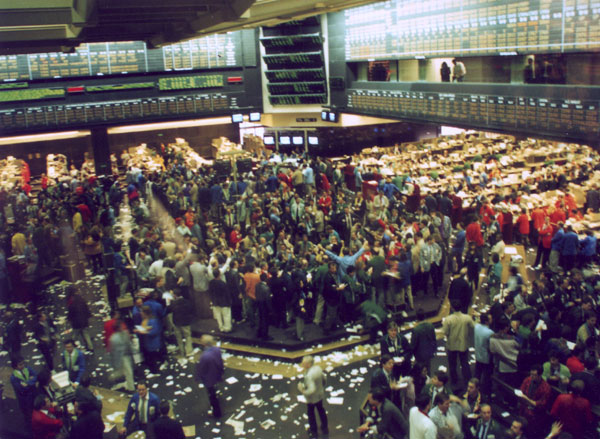
I’ve posted a link to this documentary before but feel compelled to post it again for all of the newcomers to the list. It’s a great weekend flick, and covers a period when we used to do our business in the pits. There was nothing like it.
Floored - The Complete Documentary Film
Floored is a 2009 documentary film about the people and business of the Chicago trading floors. The film focuses specifically on several Chicago floor traders who have been impacted by the electronic trading revolution and whose jobs have been threatened by the use of computers in the trading world. Directed by James Allen Smith, the film runs for 77 minutes.
Jeffrey Hirsch writes:
Thanks Jeff. Just sent it to my 18yo son who has been getting into the markets and trading.
Nils Poertner asks:
Were you a floor trader, Jeff, and if so, what lessons did you learn that helped you in trading electronically?
Jeff Watson replies:
Yes I was. The most important lesson I learned was to not overtrade.
Humbert H. comments:
Asking Jeff is he was a floor trader is like asking Paganini if he ever played the violin, asking Taylor Swift if she ever thought of making a living as a pop singer, or LeBron James if he ever heard of a game named "basketball". But what I really want to know Jeff is if you like to surf?
Jeff Watson answers:
I would love to surf, but my health won't allow it. We’re still a surfing family, but I just don’t surf anymore and am relegated to taking pictures from the beach.
Jul
8
Ralph Vince and Larry Williams Win 2024 CMT Association Charles H Dow Award for Groundbreaking Paper, from Andrew McCauley
July 8, 2024 | Leave a Comment
The CMT Association proudly announces Ralph Vince and Larry Williams as the recipients of the prestigious 2024 Charles H Dow Award for their seminal paper, The Ripple Effect of Daily New Lows. The award, bestowed annually, recognizes outstanding research contributions to the field of technical analysis and market behavior.
The winning paper, The Ripple Effect of Daily New Lows, delves into the intricate dynamics of market movements following the occurrence of daily new lows. Through rigorous analysis and innovative methodologies, Vince and Williams unveil the profound implications of this seemingly minute event, shedding light on its cascading effects throughout financial markets.
Their groundbreaking research not only expands our understanding of market behavior but also provides invaluable insights for traders, analysts, and researchers alike. Their work exemplifies the essence of the Charles H. Dow Award, which honors excellence, innovation, and scholarly rigor in the field of technical analysis.
Ralph Vince, an esteemed figure in the financial industry and a pioneer in quantitative trading, expressed his gratitude for being recognized with this esteemed award. "It's a tremendous honor to receive the Charles H. Dow Award for my research on the ripple effect of daily new lows," said Vince. "I am deeply grateful to the CMT Association for this recognition and to all those who have supported and inspired me throughout my journey."
Williams added, "This is the star on the Christmas tree of my career, and to share it with Ralph (we’ve been working together since 1986) is a glow that will last many years."
Pamela Van Giessen writes:
Congratulations, Larry. I recall the first time I met you in person was at a CMT conference where you were a keynote speaker, and I thought you were given some kind of award but I am hazy on those details. May 1995. I also vividly remember that the Grateful Dead were staying at the same only non-gaming hotel in Vegas and would pass Jerry Garcia by the pool. I signed you to write a book but neglected to get Jerry’s signature. There has to be a trading analogy here. I think that you have single-handedly gotten more people into trading all around the world than maybe anyone else.
Humbert H. adds:
It’s a good thing you didn’t sign Jerry to write a book since in May 1995 he only had three months left to write it.
Pamela Van Giessen responds:
I should have asked Garcia for his autograph. The trade I let get away. 3 months later I took a 5 am flight from Phoenix to LA for a meeting with Bill O’Neil. Walked into his office wearing a Jerry Garcia tie (remember those?) on the day it was announced that Garcia died, but I didn’t know it. O’Neil and the editor of IBD asked if my tie was signed. I did not tell them that I could have had it signed a few months before in Vegas. That would have been sort of embarrassing but I can admit to it now.
Jul
7
I found this interesting piece of research:
Ergodicity transformations predict human decision-making under risk
Decision theories commonly assume that risk preferences can be expressed as utility functions, which vary from person to person but are stable over time. A recent model from ergodicity economics reveals that if people want their wealth to grow at the fastest rate they need to adjust their utility functions depending on the dynamics of their wealth. Here, we ask whether humans make such adjustments by exposing them to different wealth dynamics….Together, these results provide evidence that human risk-taking behaviour is sensitive to the dynamical context in which decisions are made and that long-term wealth maximization is an important explanatory principle.
It's about two things concerning the psychology of gamblers. First, is the attitude of risk towards bets that entail absolute returns & absolute losses. An absolute return from a bet is when:
- a gambler is given say $10 if they win
- and if they loose the outcome is -$5
What amount they loose or gain is absolute i.e in dollars terms, $10 or -$5.
Second is a group of gamblers whose risk is phrased in relative terms. A relative return on a bet is when:
- a gambler gains 10% if they win
- and if they loose the outcome is -5%
Rewards & gains are framed as percentages.
The conclusion of the research is that people that gamble in absolute terms take more risk than people that gamble in relative terms. People do change their risk appetite if you present gambles to them differently.
So I have a question for you specs: Which statement would make you more likely to buy Nvidia's stock?
a) $1,000 invested in Nvidia stock at IPO ($0.04) would become about $3,200,000 ( i.e absolute terms)
b) $1,000 invested in Nvidia stock would grow by 327,000% (i.e relative terms)
Personally a) would do a better job at baiting me to buy some stock (the research is true for me). What about you?
Here is a twitter thread by one of the authors with a more simplified explanation.
Jul
6
Identifying Tourism Opportunities With Credit Default Swaps, from Asindu Drileba
July 6, 2024 | Leave a Comment

I just listened to this guy who uses Credit Default Swaps for countries (sovereign CDS) as an indicator to evaluate if a country is good for tourism investments. He claims his methods can make between 15% to 20% annually. The person interviewing (Joe De Sena) was also a trader on wall street for 20 years and asked some questions I liked.
Do all countries have these sovereign credit default swaps? I did some Googling and I could only find a few dozen listed on here. If more countries have them, is there a comprehensive list where I can look them up? I need those of Kenya right now for example.
In this episode, Joe De Sena, chats with his friend Kalojan Georgiev, currently residing in Zanzibar. Kalojan provides an engaging insight into the untapped potential of Zanzibar as a prime investment destination and a wonderful place to live.
Big Al responds:
There is some web data.
Nils Poertner comments:
by and large, CDS on sov not really relevant at all for so many reasons. better to look at traded bonds in USD (or EUR) and look at volume, too. in any case, test everything!
Asindu Drileba adds:
I don't know if anyone here is following what's happening in Kenya but it's falling apart:
- They are heavily in debt (foreign debts are 65% of GDP)
- They government wanted to increase taxes to service the debts
- We are seeing heavy protests in Nairobi & other Kenyans cities
- The new tax Bills have been withdrawn
- Protests are still intensifying
- Interest rates on treasuries are at 19% (I often laugh when I hear Americans complain about 5% interest rates)
I just wanted to know how the Sovereign CDS are pricing the events or if the predicted them.
Nils Poertner writes:
plenty of opportunities coming for EM markets (listed equity) - one needs to do a lot of research, as always (and look beneath the surface and dig deeper and test ideas and express it in a trade and learn and so on). your search, Asindu is your search alone and am not laying out the road map, just saying it is possible.
Jul
4

Bud Conrad is not sanguine:
We avoided an official recession despite negative 2% to 3% tax growth. The Treasury and the deficits were pumping money into the economy in 2023. It now looks like no problem in Tax receipts, but I just don't believe that things are clear sailing. Wars, Debts, Foreigners cashing in Treasuries from their trade surpluses (our Trade deficit), Stock market toppy concentration in the Tech winners. Incompetent politicians. I think things are worse than I think they are.
Steve Ellison keeps the wall of worry updated:
Updated! Now 53 years of convincing reasons why the stock market should go down, superimposed over the 48x increase in the S&P 500 during the same time period (logarithmic scale). 2023: Nearly everybody expected a recession. That reason is added, along with the S&P's 24% increase.

Jul
3
Chaos Kings, from Hernan Avella
July 3, 2024 | Leave a Comment

I found this to be one of the worst books I've ever read; I couldn't even finish it. It felt like a disjointed collection of blog posts, miscellaneous information, and ramblings about catastrophes. However, the topic of portfolio protection through options trading does have its merits. Here are a few observations:
Spitznagel's Track Record: While Universa has shown good results, its success could be attributed to the specific sequence of market events. It raises the question of how it would perform in a more stable, long-term market environment.
Leveraging Equity Risk: The argument that paying a 3% annual "fee" allows for taking on more equity risk is compelling. This is reflected in the fund’s CAGR relative to the S&P 500.
Options Trading During Crises: As someone not deeply versed in options, I'm curious about how traders manage to capitalize on positions at the peak of a crisis without losing the hedge if conditions worsen, thus maintaining their investment mandate.
Relationships with Dealers: Effective trading in size in options seems to require solid relationships with dealers.
Further Reading: I plan to revisit Safe Haven: Investing for Financial Storms to pinpoint other intriguing aspects.
Asindu Drileba responds:
On the contrary, I liked Chaos Kings. Scott Patterson is not a financier so I understand it when you read him expecting him to sound like a financier but he doesn't. He is just a story teller. You can tell this in his earlier book, The Quants. Which was not really about finance but just a story about financiers.
Reading "The Quants" for example reinforced/confirmed my suspicion on the relationship between gambling & financiers. I found it to be a very beautiful story. A beautiful beginning & a beautiful ending.
Quick overview of "The Quants":
- It's starts with this poker tournament organized amongst financiers.
- During the tournament, the author describes the characters traits of the financiers by outlining their attitude towards playing poker
- The book then talks about their character when there are in the market. (mostly when they are winning)
- The financial crash of 2007/08 humbles alot of the cocky characters. Previously humble financiers remained humble (also made money). (By cocky I mean hubris)
- Another poker tournament was held after the 07/08 crisis. And the attitudes financiers had towards each other actually changed.
To me, Chaos Kings is a continuation of The Quants. It has 3 central themes. 1st theme is the human story behind the characters.
- Didier Sornette & his love for motorcycles (whom some people in this thread think is useless)
- Yaneer Bar-Yam getting heart broken by famine in Ethiopia
- Mark Spitznagel's love for goats
2nd theme is about the disconnect between how "non chaos kings" think about markets & "chaos kings" think about markets.
- Mark Spitznagel's philosophy on risk for example is that risk management should not simply be to cap your down side, but to actually increase returns. But predicting crashes is impossible.
- Didier Sornette thinks some huge market disasters can be predicted & tactically mitigated.
3rd theme is seeing how people apply inter disciplinary research to markets.
- Didier Sornette uses techniques used to predict mechanical failure in rocket engines. And applys them to classifying the nature of bubbles in financial markets and when markets are likely to fail.
- Yaneer Bar-Yam has his background in modeling epidemics & pandemics (Ebola, COVID). And he uses the same tool box to predict the likelihood of crashes in the market. One of the tools described in the book is a statistical indicator described as "mimicry".
So, my take away is that Chaos Kings is not really an "investment book". It's just a story about how a certain group of financiers approach market crashes. I found it to be a great source of potential research topics.
Jul
2
What markets teach
July 2, 2024 | Leave a Comment

a book recommended as the best book on economics ever is Reinventing the Bazaar, by John McMillan. you learn about flower markets, camel markets, pharma markets, bazaar markets in Morocco. and what it takes for them to work. i found the book fascinating albeit takes middle road.
Dasgupta, very erudite and sharp economist, recommends the McMillan book as essential for every current and would be economist. it tried to be eclectic as to free markets and need for government control. it's good to keep the enemy close as Godfather says.
Economics: A Very Short Introduction, by Partha Dasgupta.
Wes McCain is one of the most successful and erudite economists I have met in my 65 years career in Wall street. He recommends the Godfather as the most important and useful book for traders. I just watch the three Godfather Movies and they are excellent and highly recommended.
one of lessons that I wish my colleagues followed: "Fredo, don't ever take sides against the family again." so important in business and military, and markets especially.
every one says the opening line "i believe in america" is one of greatest opening lines ever. imagine the contumely that would be directed at it today.
Archives
- October 2026
- September 2026
- August 2026
- July 2026
- June 2026
- May 2026
- April 2026
- March 2026
- February 2026
- January 2026
- December 2025
- November 2025
- October 2025
- September 2025
- August 2025
- July 2025
- June 2025
- May 2025
- April 2025
- March 2025
- February 2025
- January 2025
- December 2024
- November 2024
- October 2024
- September 2024
- August 2024
- July 2024
- June 2024
- May 2024
- April 2024
- March 2024
- February 2024
- January 2024
- December 2023
- November 2023
- October 2023
- September 2023
- August 2023
- July 2023
- June 2023
- May 2023
- April 2023
- March 2023
- February 2023
- January 2023
- December 2022
- November 2022
- October 2022
- September 2022
- August 2022
- July 2022
- June 2022
- May 2022
- April 2022
- March 2022
- February 2022
- January 2022
- December 2021
- November 2021
- October 2021
- September 2021
- August 2021
- July 2021
- June 2021
- May 2021
- April 2021
- March 2021
- February 2021
- January 2021
- December 2020
- November 2020
- October 2020
- September 2020
- August 2020
- July 2020
- June 2020
- May 2020
- April 2020
- March 2020
- February 2020
- January 2020
- December 2019
- November 2019
- October 2019
- September 2019
- August 2019
- July 2019
- June 2019
- May 2019
- April 2019
- March 2019
- February 2019
- January 2019
- December 2018
- November 2018
- October 2018
- September 2018
- August 2018
- July 2018
- June 2018
- May 2018
- April 2018
- March 2018
- February 2018
- January 2018
- December 2017
- November 2017
- October 2017
- September 2017
- August 2017
- July 2017
- June 2017
- May 2017
- April 2017
- March 2017
- February 2017
- January 2017
- December 2016
- November 2016
- October 2016
- September 2016
- August 2016
- July 2016
- June 2016
- May 2016
- April 2016
- March 2016
- February 2016
- January 2016
- December 2015
- November 2015
- October 2015
- September 2015
- August 2015
- July 2015
- June 2015
- May 2015
- April 2015
- March 2015
- February 2015
- January 2015
- December 2014
- November 2014
- October 2014
- September 2014
- August 2014
- July 2014
- June 2014
- May 2014
- April 2014
- March 2014
- February 2014
- January 2014
- December 2013
- November 2013
- October 2013
- September 2013
- August 2013
- July 2013
- June 2013
- May 2013
- April 2013
- March 2013
- February 2013
- January 2013
- December 2012
- November 2012
- October 2012
- September 2012
- August 2012
- July 2012
- June 2012
- May 2012
- April 2012
- March 2012
- February 2012
- January 2012
- December 2011
- November 2011
- October 2011
- September 2011
- August 2011
- July 2011
- June 2011
- May 2011
- April 2011
- March 2011
- February 2011
- January 2011
- December 2010
- November 2010
- October 2010
- September 2010
- August 2010
- July 2010
- June 2010
- May 2010
- April 2010
- March 2010
- February 2010
- January 2010
- December 2009
- November 2009
- October 2009
- September 2009
- August 2009
- July 2009
- June 2009
- May 2009
- April 2009
- March 2009
- February 2009
- January 2009
- December 2008
- November 2008
- October 2008
- September 2008
- August 2008
- July 2008
- June 2008
- May 2008
- April 2008
- March 2008
- February 2008
- January 2008
- December 2007
- November 2007
- October 2007
- September 2007
- August 2007
- July 2007
- June 2007
- May 2007
- April 2007
- March 2007
- February 2007
- January 2007
- December 2006
- November 2006
- October 2006
- September 2006
- August 2006
- Older Archives
Resources & Links
- The Letters Prize
- Pre-2007 Victor Niederhoffer Posts
- Vic’s NYC Junto
- Reading List
- Programming in 60 Seconds
- The Objectivist Center
- Foundation for Economic Education
- Tigerchess
- Dick Sears' G.T. Index
- Pre-2007 Daily Speculations
- Laurel & Vics' Worldly Investor Articles
