Oct
6
Markets as buffers, Zubin Al Genubi
October 6, 2026 | Leave a Comment
A quote from myself from the 2007 Spec Party on Vic's Central Park Rose Garden talk which I remember vividly. "Chairman espoused his theory of the markets as the mechanism that mediates between government and the the populace…that causes not only the obvious capital allocation but buffers the power of government to protect the needs of the populace through price and capital demands. It is a novel theory which I have never heard discussed anywhere else. The market itself is the mechanism that effects large scale social and political change through changes in incentives, attitudes and demand, and is more than merely shuffling money. Understanding the markets as a social and political driver can lead to long term trading strategies and keep the trader on the right course."
As Bonds hit multidecade lows, I ask (rhetorically) who is more powerful, the market or the government? What does it portend?
James Gavrity writes:
That question raises more questions than it answers. I could answer with a long macro analysis, but the answer to these two sub-questions will give us the answer to the original.
I ask myself: which one is more fearful of the other? And which one tries to exert control and influence over the other? The one that's more fearful and tries to exert the most control is typically the least powerful.
James Carville famously hung a sign in the Little Rock campaign war room during the 1992 election that read: "The economy, stupid."
Who tries to control the price of fuel and eggs? Who takes credit for a booming market? In my view, the market is the most powerful force, whether you live in a democracy or not. Quoting James Carville, "The economy, stupid"—this is what has the power to change governments of all types.
Jeff Watson is unambivalent:
Markets are bigger than governments, hands down.
Larry Williams comments:
Great point. When everyone is a millionaire thanks to the stock market Bernie Sanders pitch falls on deaf ears—just one example of this theory.
William Huggins writes:
while its clear that markets are quite powerful, its important to remember that the sorts of markets we are talking about (capital markets) can only really thrive when there are enforcement mechanisms and dispute resolution - both of which are often supplied by the "force monopolists" of the state. this pattern extends into the bronze age (see: Assur)
imo, states and markets have a symbiotic relationship. either could exist in isolation but would be much poorer and weaker than they are today. in that context, i'm inclined to consider whether one of the two symbiants might try to "devour" the other for its own survival - it would certainly spell the end of a beautiful marriage.
James Gavrity responds:
IMO. As a trader and businessman, I am no expert here; this is just my perspective from where I sit. The market is the boss in that relationship. The Market is the King Maker And Wealth Creator.
The government is the tail attempting to wag the dog, The theory at hand the way I see it doesn't view the market as a quote board; it's the ultimate check on the politicians. The government pushes fiat and mandates, but the market reflects what people are actually doing with their money. When D.C. overspends, overregulates, or debases the dollar, the market acts as a shock absorber. It reprices risk and pulls the leash on the government before ideological policies can completely wipe out the public's economic foundation.
Price discovery doesn't lie. If they print money to fund a political agenda without creating real value, the market violently reprices hard assets and demands a premium to hold Treasuries. It’s not just shuffling cash around; it’s capital voting against political arrogance. It forces a behavioral shift by making it too expensive for the government to keep running its game, which ultimately protects the public from total ruin.
To your question: the market wins, hands down. Central banks can manipulate and suppress rates like the QE we've dealt with for over a decade but that's just building a dam. The market is the water. The government might write the rules, give away free stuff and tax our Income, but the market enforces the economic physics. Eventually, the dam breaks and gravity takes over.
With the long bond hitting multi-decade lows, the market is effectively ripping up the sovereign blank check. If you look at this through the macro cycles, it points to a few massive structural shifts:
The Bond Vigilantes Are Back: The market is stepping in to enforce the fiscal discipline the politicians refuse to legislate. As debt service eats the national budget alive, the government is going to be backed into a corner—austerity, higher taxes, or financial repression—regardless of who is in office. The market is forcing their hand.
Flight to Hard Assets: The era of zero-interest-rate easy money is dead. The mechanism is actively rotating capital out of paper promises and fiat debt, and moving it into commodities, precious metals, and real production. It’s a classic defensive posture against debasement.
Social and Political Friction: Cheap debt has numbed the public to government incompetence for a long time. Turn off that spigot, and the real cost of these policies hits home. When the public actually feels that economic pain, it drives massive shifts in societal attitudes and intense political turnover.
When you watch the tape through this lens, it means looking past the daily noise and short-term setups to see the tectonic plates shifting. When the bond market moves like this, it’s not just another trade. Understanding the market as a social and political driver keeps us on the right side of the trend long-term.
Carder Dimitroff offers:
I generally agree that markets, rather than governments, can be kingmakers. But not all markets are equally independent of the state. Sovereigns establish and enforce the legal order within which markets function, and they control access to territory, airspace, waters, natural resources, strategic infrastructure, and military procurement. Some markets would scarcely exist without that framework; others operate only by license and under close state supervision. When a government judges that national security or another core interest is at stake, firms in those markets must adapt, exit, or risk losing access to the market itself. In that sense, the king may not choose every winner—but it can still decide who remains in the game.
James Gavrity again:
Agreed my thoughts were focused on the 10,000-foot view. Yes they can pick a choose winners and losers. When a government judges that national security or another core interest is at stake, firms in those markets must adapt, exit, or risk losing access to the market itself. In that sense, the government may not choose every winner—but it can still decide who remains in the game. Like Intel and others, from the bigger, broader picture, there is a sequence of order to this. The hubris of the state always brings it to a Marie Antoinette moment: "Let them eat cake." Ultimately, the markets will bring the government and those consensus elites exactly that fate, regardless of how many kings they make along the way. That quote was not her actual words. "Let them eat cake." was a political myth popularized to fit a narrative. Historically her actual last words were an apology to her executioner after accidentally stepping on his foot on the scaffold: "Pardon me, sir. I did not do it on purpose." When the steak and lobster are gone, a new king will be crowned.
Mar
4
The US data center buildout looks increasingly supply-constrained, not because of capital, but because of infrastructure. Announced projects far exceed what can realistically be delivered on current timelines. New capacity requires a rare intersection of:

Proximity to internet hubs.
Reliable, large-scale power (plus generators/transformers with multi-year lead times).
Viable cooling and water.
State/local support in communities that are already pushing back on load growth and land use.
Access to critical, long-lead-time equipment currently has multi-year queues.
Finding sites that clear all five hurdles is getting harder in the US and across most Western markets. This is solvable, but on a 5–10 year grid and permitting timelines, not on 12–18 month tech timelines.
Near-term, not many operational changes, but the narrative probably does. When the market internalizes that a meaningful slice of “announced” capacity is delayed or won’t get built, I’d expect:
Incumbent capacity with grid access to gain pricing power.
Late-stage greenfield and some capex-heavy stories to be repriced.
Utilities, grid upgrade plays, and on-site power to screen better than marginal new-build data center names.
High-level takeaway: AI demand is real; the binding constraint is infrastructure. The gap between slide-deck capacity and physically deliverable capacity is likely where the mispricing lies.
Jan
22
The Engineering Rules that Trade, Stefan Jovanovich
January 22, 2026 | Leave a Comment
If a design takes too long to execute, it fails.
Never fall for sunk costs; the current tally does not know what you paid.
Avoid the Optimizing trap: do not develop system for a market that does not actually trade
Leave school early. In classes you come in first by getting the correct answer to every question on the test. In markets the winners ask the right questions and accept the risks that come from being wrong.
Carder Dimitroff writes:
Never fall for sunk costs; the current tally does not know what you paid.
The real story behind commercial nuclear power.
Vic approves:
a sparkling and useful post
Jan
5
Oil, from Cagdas Tuna
January 5, 2026 | Leave a Comment

So where lies the thin line between liberating Venezuela and putting world into oil supply based recession?
Larry Williams comments:
The quality of their crude is a different issue we use to refine it here; sour, full of gravel etc.
Stefan Jovanovich writes:
Historically, before full sanctions in 2019, the US imported over 600,000 barrels per day (bpd) of Venezuelan crude, with refiners like Citgo (PDVSA-owned), Valero, Chevron, and Phillips 66 as top recipients.
More recently (post-2023 relief), Valero accounted for 44% of imports, Chevron 32%, and Phillips 66 10%.
Carder Dimitroff writes:
IMO, it's not about oil. The US is a net exporter. They're doing just fine without Venezuela. If heavy oil is desired for refining optimization, as some claim, there's a direct pipeline from Canada.
Stefan Jovanovich responds:
It would help if Carder focused on the use of heavy oil for marine diesel and bunker oil for steam turbines. Those are the essential propulsion fuels for China's Navy; hence, Hegseth's comment today assuring China that it would continue to receive its share of Venezuela's output.
Carder Dimitroff expands:
Globally, three major regions produce heavy crude: Russia, Canada, and Venezuela. Downstream, “heavy oil” or “heavy fuel oil” usually means the residual, high-boiling product left after lighter fractions (gasoline, diesel, kerosene, etc.) are distilled from crude. As Stefan suggests, heavy oil and bunker oil are growing markets, not only in China but also elsewhere.
In my opinion, the administration's interests in Venezuela reflect several interests. High on my list are Venezuela's untapped rare-earth elements (about 300,000 metric tons).
Pamela Van Giessen offers:
Interesting analysis here:
The Real Reason the Pentagon Approved Venezuela: Critical Minerals and Adversary Expulsion
The Department of War has allocated $7.5 billion under the One Big Beautiful Bill Act specifically for critical minerals, with $1 billion already deployed to stockpile antimony, bismuth, cobalt, indium, scandium, and tantalum. This is not economic policy. This is national security infrastructure. The United States is 100% import reliant for 12 critical minerals and over 50% reliant for 28 of the 50 minerals classified as essential to national security. These materials are not interchangeable. They cannot be substituted. They form the irreducible foundation of modern weapons systems.
Boris Simonder questions the thesis:
What rare earth does Venezuela hold that is proven and confirmed? Based on USGS Mineral Commodity Summaries 2025 and other sources like CSIS reports, Venezuela has no significant cobalt production or reserves listed. Antimony deposits exist but are small and underdeveloped, with declining output due to infrastructure issues.
Jan
4
Natural Gas, from Nils Poertner [Update]
January 4, 2026 | Leave a Comment
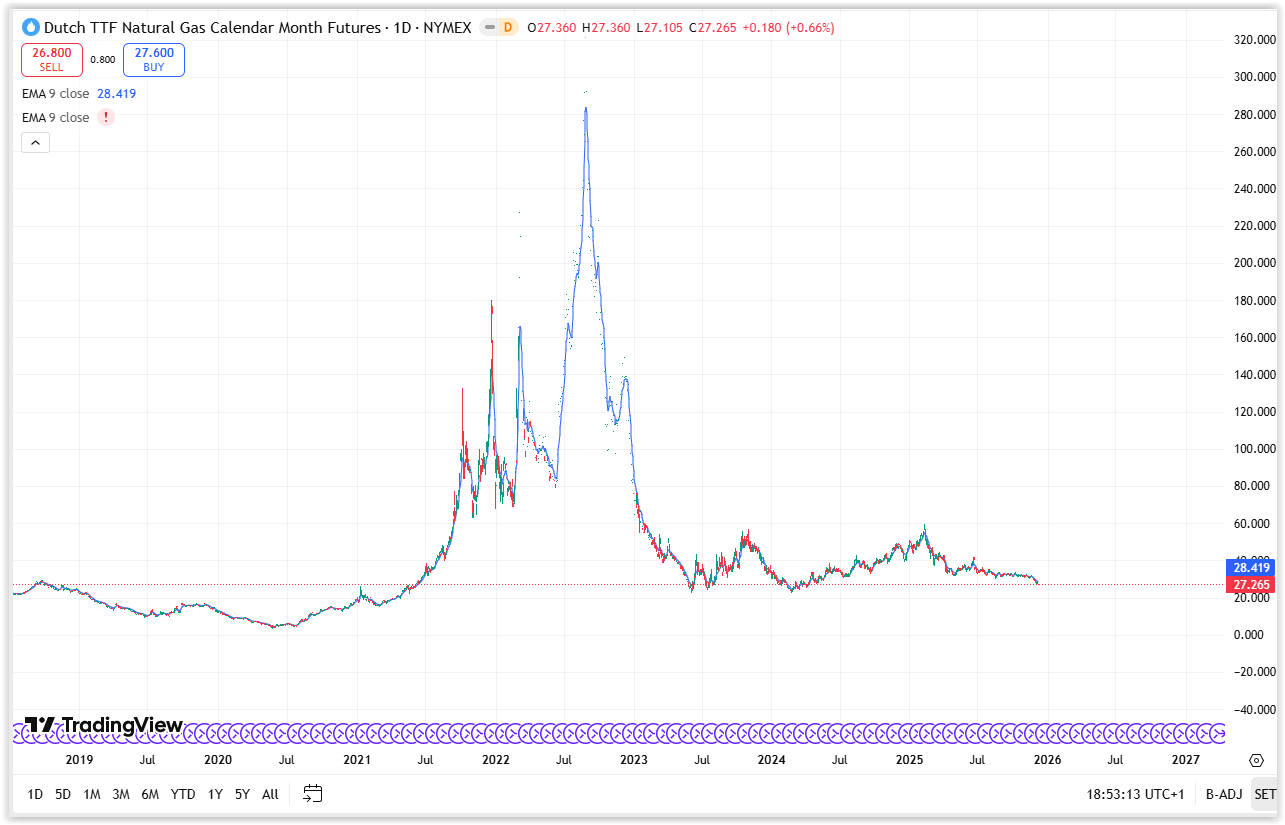
European Natural gas - not that far to test 2024 lows, and perhaps even pre-Ukraine-war levels eventually? Peace coming (?) Or general decline in Gas prices (US natty has gone the other direction for a while).
"Price move first - fundamentals later." When something moves (even though I don't trade it - or have expertise in it yet), I often look at it and wonder what it could mean. Mass financial media hasn't picked up on this theme either (much) - another reason to consider what it means…
Carder Dimitroff comments:
For me, this is an important observation. EU-US fundamentals have changed. The current US administration "encouraged" the EU to accept US LNG imports. At the same time, US LNG export capacity has increased. For Europe, the supply-demand dynamics changed. In the next several months, it will continue to change:
• 14.49 Bcfd US LNG export capacity - current.
• 21.81 Bcfd US LNG export capacity - under construction.
• 13.24 Bcfd US LNG export capacity - approved but not under construction.
• 12.49 Bcfd US LNG export capacity - proposed and seeking approval.
Most of this LNG use capacity uses, and will use, Texas/Louisiana natural gas as its feedstock. Feedstock and LNG prices will likely be correlated with Henry Hub prices. If most of this capacity is built, the following trends are likely to emerge:
• US citygate (NG) average prices will float higher.
• US LMP (electric) average prices will float higher.
• US NGL average prices will sink.
• EU NG average NG and LMP prices will stabilize.
More importantly, global LNG markets are changing and will continue to change. Keep in mind:
• Global LNG capacity is expanding
• The US is not the LNG cost leader and never can be.
• As the US dominates EU imports, global markets adjusted accordingly.
Of course, traders should be indifferent about these long-term fundamentals. But long-term investors might consider options.
Stefan Jovanovich asks:
Follow-up question for Carder and others: "What do you think about the Doombird thesis that the Permian drillers and the mid-stream connectors will shift to have natural gas be the hydrocarbon asset that they look to make money from and oil will be the secondary source of income?"
Carder Dimitroff replies:
If the question concerns long-term prospects, global demand for diesel, jet fuel, plastics, and related products is expected to grow. Gasoline consumption may be slowing, but it is not crashing. But who knows where the economy is headed?
For the US, natural gas as a bridging fuel makes sense if it can reach consumers. In the US, domestic delivery is a problem. Globally, LNG delivery is also a problem, but for different reasons. Because they deliver to Henry Hub, producers should be indifferent between the two markets. Beyond Henry, LNG is becoming increasingly accessible, whereas citygates will continue to struggle.
The US is also a net exporter of oil and oil products. Again, the product supports two separate markets.
Most Permian wells produce oil and associated gas (and they are getting gassier). It's not a choice. They get both.
For me, the short-term challenge is global overproduction. Geopolitical considerations rather than economic factors drive the decision to overproduce and erode margins. It will end, and the markets will revert. Until then, it will be difficult for American producers to finance new wells.
Dec
29
A curious case of silver, from Anatoly Veltman
December 29, 2025 | Leave a Comment

So as Silver trades yet another stratospheric (psychological) target, there are a few questions. On commercial side, both Demand and Supply are price-inelastic. Whatever industrial uses are, Silver is hardly substitutable, especially at the time when other metals are just as pricey. And on new Supply side, much Silver gets out of the ground as a by-product from mines not primarily operating as "a Silver mine". So, again, Silver production can't be easily jacked up during Silver's rise.
On non-commercial side, however, it's the opposite. Supply/Demand balance works as it should. $77 (or $100 lol) market would cause Buyers to be abandoning bids; while grandmas might start dusting silverware off and storming pawnshops. Any other considerations?
Peter Penha responds:
Exactly - if you look at the Silver Institute Supply / Demand models it shows we have been in several years of deficits (still in deficit of course this year and next) - Mine supply peaked a decade ago
If you add up all the non industrial uses of silver (Jewelry, Photography+film (Chris Nolan & IMAX), and all silverware) they do not make up the deficit.
So in the Silver Institute model and I am talking 2023 $28 silver price we have some 20% of total ounces that need to be divested every year to maintain supply/demand.
60% of uses are industrial - solar is the future everywhere now….for those missing the US battery trade —> the Biden era tax credits for solar are now Trump credits for solar+batteries & the AI data centers are now going to be Bring Your Own Capacity and storage & connect to the grid.
Read the full post with additional comments.
Dec
23
Low status jobs becoming high status, from Nils Poertner
December 23, 2025 | Leave a Comment
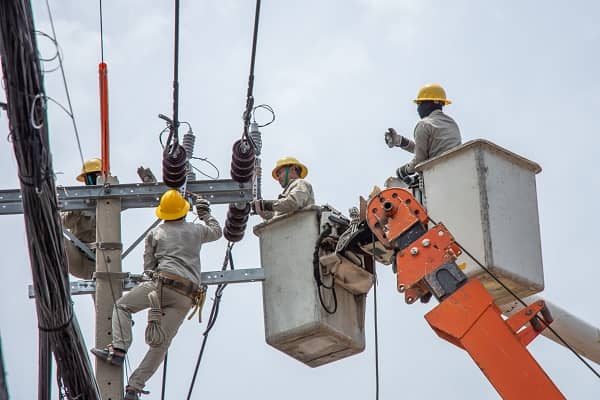
Fascinating to watch how former low status jobs, like cybersecurity, have become high status now. Same is true the other way around as well (eg (male) technician at the London tube system who makes a quarter of his wife who is in real estate - although that is changing now). Wondering what low type jobs / or ppl are on the fringes today will be in high demand in coming years.
Carder Dimitroff responds:
Try these:
Any of the crafts. Specifically, licensed electricians, plumbers, and HVAC techs. Many make more than engineers.
Public response teams. Specifically, firefighters, EMTs, and law enforcement. Many make more than lawyers, particularly when pensions are considered.
Career military. Specifically, for those with 20 years of service. Lifetime benefits are incredible (free college, unlimited grad schools, pensions w/colas, lifetime medical insurance, VA benefits, hiring preferences).
Pamela Van Giessen suggests:
Car mechanics
Henry Gifford writes:
My friend who fixed boilers said to his sophisticated, suit-and-tie, well educated in-laws “I’m not the smartest guy around. I’ve only read two or three books in my life. I don’t think I’m smart enough to come up with a sophisticated investment plan (nods all around the room at this point). So I just buy one piece of New York City real estate each year and hope for the best”. No more nodding at that point.
Guess what blue collar people who don’t have vices do with their money? They buy property. Who is better suited to own real estate? People who fix things and have friends who fix things, or lawyers?
And what nobody mentions is that some people are much better at those sorts of work than others. Simply finding someone to show up and try to do those things is hard. Someone who is good at one of those trades is in even higher demand.
Those fantastic benefits for former military people are not limited to the military – all federal employees get all those benefits after twenty years of work. If someone joins the military at 18, and gets out at 38, or gets out sooner and then works in the post office or etc. until they “get their twenty”, they get full salary with increases for life. Income that will survive any lawsuit, even the IRS can’t take it all. They maybe collect a total of three years of salary for every year worked.
Nils Poertner responds:
Certainly good to encourage young men (or women) to follow a path that interests them - and not just follow a path that is currently "high status". This "Yousef" guy who was my IT guy at Bankers Trust decades ago (low status in my eyes back then) became a cyberpunk in 2008…you get the idea. That said, it is a power game outside. young men need wives etc.
Henry Gifford adds:
I judge the level of a single woman’s interest in me by counting the seconds until she says “what do you do?”.
No woman has ever asked me if I like what I do, or am good at what I do – not important.
Many men have a choice between coming home miserable to a wife, or coming home happy to an empty house. Age old dilemma, no known fix, as all our DNA has evolved to enhance survival, which for a woman over the millennia has meant marrying the chief’s son, or someone else with high status.
Larry Williams recalls:
When I was dating all women ever asked me is your place or mine. Must have been doing something wrong.
Michael Brush is curious:
Do you have a cycle chart for that?
Larry Williams clarifies:
Yes but there are not enough examples to draw a conclusion.
Dec
9
Interesting AI read, from Big Al
December 9, 2025 | Leave a Comment
The Structural Collapse: How Google’s Integrated Stack Is Dismantling the OpenAI Thesis
Shanaka Anslem Perera
Nov 22, 2025
A leaked internal memo reveals the tectonic shift reshaping artificial intelligence, where platform economics are defeating venture-backed innovation at the exact moment markets assumed the opposite.
Carder Dimitroff writes:
My Australian daughter is a Google employee. She recently completed Google's 3-month AI training program in the US. From what I understand, Google's AI capabilities are big. When demonstrated to Google's large-cap clients, they were surprised.
Based on her comments, I've concluded that AI technologies will displace accountants, engineers, lawyers, financial analysts, medical staff, educators, sales, and more.
Obviously, leaders in those disciplines will continue to do well. While most normal positions can be eliminated, there must be a human somewhere in the mix. There's an ongoing need to manage the architecture of the questions and review AI responses. Anyone who wants to remain in the game may wish to develop expertise in leadership, program management, systems management, and communication.
Then again, there will be an ongoing need for the crafts. They will reap while others weep.
Musk is right. Work will become optional. But he was not the first.
Nov
13
The $38 Trillion Question, from Humbert X.
November 13, 2025 | Leave a Comment
The $38 Trillion Question: An Interview with Stanford Professor Hanno Lustig
Hanno Lustig: I started thinking about the valuation of government debt by looking at the valuation of all Treasuries. What do we have to believe to get to a number like $38 trillion? You must believe there will be a huge fiscal correction, because ultimately the value of debt should be backed by future primary government surpluses. When you do the numbers, you realize that either bond investors are pricing in a huge fiscal correction that seems impossible, or Treasuries are significantly overpriced.

Carder Dimitroff notes:
The interest on debt is approaching $1 trillion per year and continues to compound. Interest costs currently exceed Department of Defense spending.
Larry Williams disagrees:
Meaningless measure look at debt vs gdp
Carder Dimitroff responds:
Yes, that makes sense. However, from a different perspective, it becomes meaningful under the One Beautiful Budget Bill when automatic sequestrations are implemented. Unless new legislation is passed, sequestrations will result in Medicare cuts and other reductions in expenditures. Current projections suggest sequestration will present in early 2026.
Big Al checks with FRED:
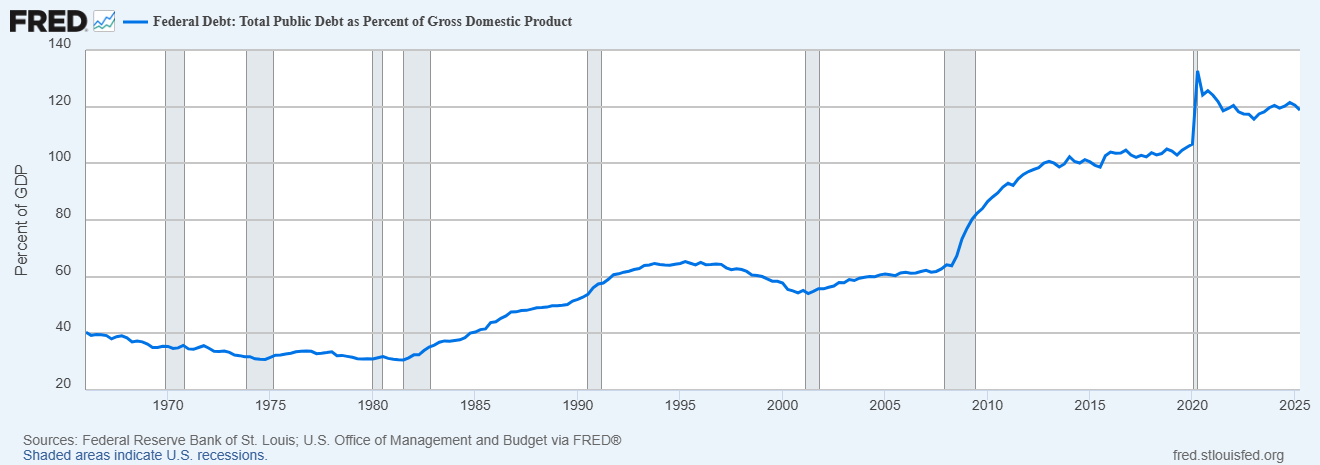
Nils Poertner writes:
recession + zero short term rates + lots of QE ….leading to a lot more public debt
maybe that is more likely path.
Stefan Jovanovich offers some history:
This chart shows the solvency ratios that can be found from the Census and other data [by decade 1880 to 2020] - how much "we the people" have in money divided by how much the American governments promise to pay.
Nov
10
Best indicators for inflation, from Asindu Drileba
November 10, 2025 | Leave a Comment
The more goods cost, the more money visa makes since the fees they charge Issuing banks & acquiring banks are based on a percentage basis. So, higher prices (inflation) –> better predicted revenues for Visa? Inspired by a nice documentary on the history of VISA.
I wonder what the best indicator for inflation would be for testing this? CPI? Oil?

Cagdas Tuna writes:
I was thinking as to find a similar indicator for economic slow turn, spending cuts. It came to my mind to follow sales slips. I live in Malta which is a very tech friendly country for spending habits such as Apple/Google Pay availabilities, many digital banks access etc. I often asked if I need a receipt that I usually don’t. It depends for every country but if there is a rule for stores/restaurants to keep at least a copy for each transaction then it might be the indicator to follow. It might be used for inflation as well but of course needs detailed information.
Pamela Van Giessen comments:
To the best of my knowledge, merchants are not required to keep receipts. We track each sale but it will be the credit card processor or platform such as Square that holds the credit card or Apple or Google pay receipts. I can’t imagine that merchants would be willing to share their sales data. I know I wouldn’t.
Visa doesn’t care how much goods cost. They get their nearly 3% processing fee (+ .10 or .15 per transaction) whether there are 20 transactions for $100/ea or 40 transactions for $50/ea. In fact, they make more $ on a higher volume of transactions.
I don’t think tracking Visa or MC, etc could be a meaningful prediction of inflation as all the credit card companies continuously fight for market share. Note that they all send out multiple credit card offers to everyone all the time. Then, you have a store like Costco that only accepts their credit card (Citibank).
Additionally, there are people who use primarily cash. Those $ would be left out. You may say that cash use is low, and maybe it is. What I can tell you is that today at a market 80% of my sales were cash and that was likely the case for all the other merchants at this market. Older people especially use cash a lot. Just like drug dealers.
I have a theory that the cash economy is much bigger than everyone thinks. Insight into that might be more interesting.
Carder Dimitroff responds:
After considering Panela's cash sales point, I remembered that several companies required customers to switch from credit card payments to bank transfers. Additionally, several small establishments offer incentives for customers to pay in cash. They may be attempting to simplify their accounting and tax reporting. I do know that the federal government has immediate access to individual credit card transactions.
Pamela Van Giessen adds:
I thought it was the Fed that used to report on aggregated credit card data.
The other challenge with using credit card financials is that the credit card processors raise their % cut all the time. This is not due to actual inflation; it is due to them having a government protected moat that allows them to take more and more whenever they want because merchants are stuck with the whole system and consumers don’t realize that they will pay for the service — in increased prices. Every time Square, PayPal, etc., send me notices that they will be increasing fees, I increase my prices. I guess that is a kind of proxy for inflation but it’s a lousy sort of financial market induced inflation not based on anything more than their desire for more profits. I am all about free markets but the credit card processing biz is not even close to a free market.
The government using credit card processing to surveil us may be one reason I see more and more people using cash.
Larry Williams suggests:
Stock market is good predictor of inflation.
Oct
30
Demand, Supply, and Electricity Prices, from Carder Dimitroff
October 30, 2025 | Leave a Comment
Funded by the U.S. Department of Energy, five scientists associated with California's Lawrence Berkeley National Laboratory claim that data centers are not a significant cause of retail electricity price increases. Counterintuitively, they suggest that data centers could have a beneficial effect in lowering costs. But more research is needed.
Factors influencing recent trends in retail electricity prices in the United States
Summarizing their "Ten Key Findings":
4.1. National-average retail electricity prices have tracked inflation in recent years.
4.2. State-level retail electricity price trends vary widely.
4.3. Residential customers and investor-owned utilities experienced greater increases.
4.4. Load growth has tended to depress retail electricity prices in recent years.
4.5. Behind-the-meter solar was associated with higher prices.
4.6. Utility-scale wind and solar are not—alone—broadly related to recent price increases.
4.7. State renewables portfolio standards are associated with recent price increases.
4.8. Exposure to natural gas price risk increases electricity prices when gas prices rise.
4.9. Hurricanes, storms, and wildfires have increased retail prices.
4.10. Several other variables appear to have limited statistical explanatory power.
Oct
24
Another Historical Analogy, from Stefan Jovanovich
October 24, 2025 | Leave a Comment
Grok and I have produced this summary of the growth of the electric utilities industry in the United States from 1910 to 1930. [Click on chart for full view.]
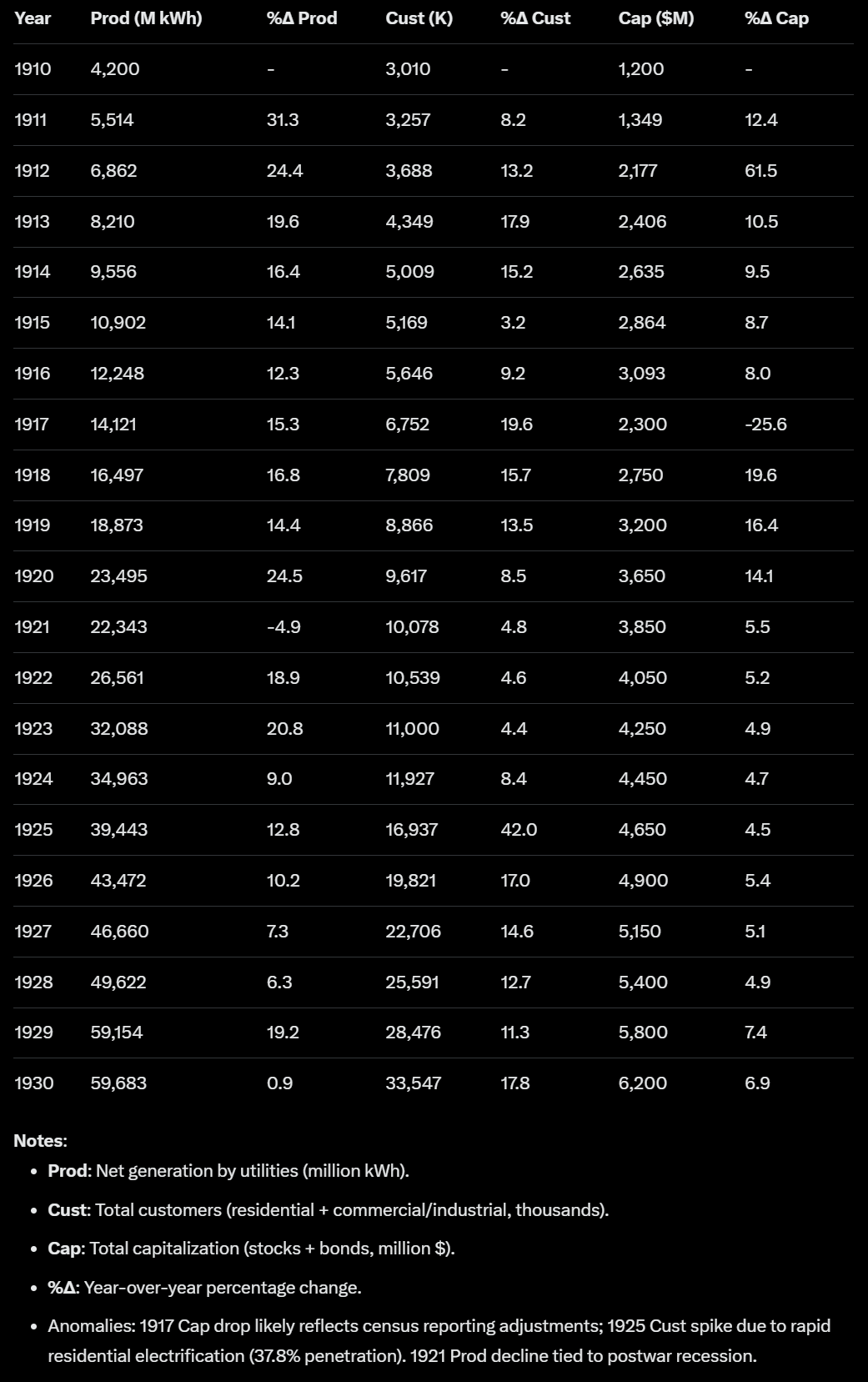
Bud Conrad comments:
Not sure what you take from this data. Electrification was probably more important than AI. Its growth rate was big at first in %, but slowed. Recessions were big downturns. What do you apply to today?
Steve Ellison writes:
My grandmother was a telephone operator in the 1920s. It was a high-tech industry at the time.
Carder Dimitroff clarifies:
The definition of an "electric utility" changed over time.
Big Al suggests:
An excellent series available on Prime:
Shock and Awe: The Story of Electricity
Professor Jim Al-Khalili tells the electrifying story of our quest to master nature's most mysterious force: electricity.
Books I haven't read yet, which get lots of stars:
The Power Makers: Steam, Electricity, and the Men Who Invented Modern America
The power revolution is not a tale of machines, however, but of men: inventors such as James Watt, Elihu Thomson, and Nikola Tesla; entrepreneurs such as George Westinghouse; savvy businessmen such as J.P. Morgan, Samuel Insull, and Charles Coffin of General Electric. Striding among them like a colossus is the figure of Thomas Edison, who was creative genius and business visionary at once.
Empires of Light: Edison, Tesla, Westinghouse, and the Race to Electrify the World
In the final decades of the nineteenth century, three brilliant and visionary titans of America’s Gilded Age—Thomas Edison, Nikola Tesla, and George Westinghouse—battled bitterly as each vied to create a vast and powerful electrical empire. In Empires of Light, historian Jill Jonnes portrays this extraordinary trio and their riveting and ruthless world of cutting-edge science, invention, intrigue, money, death, and hard-eyed Wall Street millionaires.
Sep
22
Get ready to rumble, from Carder Dimitroff
September 22, 2025 | Leave a Comment
Holtec is thinking about restarting the Indian Point Nuclear Power Station. It is located on the Hudson River, about 30 miles north of Manhattan.
Holtec eyes restarting another nuclear plant – this time in New York
Although the company has not made any major moves yet, Holtec International is eyeing the restart of the Indian Point Energy Center in New Jersey, a 2,000 MW nuclear plant that ceased operations in 2021 and is currently being decommissioned.
Several groups will likely oppose Indian Point. Several others will be in favor.
Sep
3
Data centers and power demand, from Big Al
September 3, 2025 | Leave a Comment
I post these wondering what Carder D thinks:
Big Tech’s A.I. Data Centers Are Driving Up Electricity Bills for Everyone
Electricity rates for individuals and small businesses could rise
sharply as Amazon, Google, Microsoft and other technology companies
build data centers and expand into the energy business.
14 August, 2025
AI Boom Reshapes Power Landscape as Data Centers Drive Historic Demand Growth
Monday, March 3, 2025
The power industry was once considered slow-moving and perhaps even boring. That is no longer the case as technology has expanded and power demand projections skyrocket. New reports released by analysts at Enverus and Deloitte are examined to provide insight on what’s likely to evolve in the power industry over the coming year and beyond.

Carder Dimitroff responds:
I believe these articles present several issues that could benefit investors:
1) Transformers (not pole transformers). The queue for new transformers is long, and about half are manufactured offshore. Data centers need transformers as do new power sources.
2) Gas turbines. Same situation as transformers. For efficient turbines, the queue is about 5 years.
3) Solar panels. Those who previously invested in solar will see their ROIs grow faster than they expected.
4) Retail consumers. They will see their gas and electric utility bills grow as they pay for higher costs of energy and subsidize infrastructure costs to support new loads.
5) New manufacturing. Several geographical options will present better opportunities than others, as the cost of power is regional and seasonal.
6) Forget new nuclear as a near-term solution.
Asindu Drileba asks:
What do you think about nuclear fusion? Is it really close? The joke is that nuclear fusion has always been ready in 5 years for many decades. But I recently heard Chris Sacca (one of the best VCs ever, made over 250x for his entire fund), mention it is genuinely close and that his new fund, Lower Carbon existing partly to capture the incoming advancements in nuclear fusion.
Carder Dimitroff replies:
Today, nuclear fusion is a science project. Keep in mind that fusion requires operating temperatures of over 100 million degrees (at this level, the distinction between Fahrenheit and Celsius is irrelevant). Producing bulk power from this technology is more than ten years away. At these temperatures, it's unlikely they will be operating near population centers.
Jun
16
GridFree AI: Data centers to bypass utilities, from Carder Dimitroff
June 16, 2025 | Leave a Comment
From: Axios Generate (2 June 2025):
The startup GridFree AI, born in "electron economy" incubator Montauk Climate, emerges from stealth today with $5 million led by Giant Ventures.
It's modular, off-grid "power foundry" concept integrates gas power, battery storage, and cooling with computing infrastructure.
It's "systematic, repeatable, and becomes a manufacturing process, not a stick-built process," GridFree AI co-founder and executive chairman Ralph Alexander said.
It converts gas into electricity and cooling with 90% efficiency and ensures more power is used for the actual data center IT and processing units, which means much lower CO2, it said."
The efficiency of the overall solution enables a 50% increase in available power for IT loads," the announcement states.
This is a good idea. It utilizes an older concept called cogeneration, which has been widely employed in municipalities and on private campuses. This structure's capital and operating costs are significantly lower. Owners bypass onerous ISO, transmission, distribution, and utility charges. Their presence has no impact on LMPS (local wholesale power prices). Additionally, owners capture the turbine's waste heat and convert it into cooling, which data centers require.
With minimal barriers to entry, expect more data centers to capitalize on these opportunities, particularly near fuel sources (e.g., Pennsylvania, Louisiana, and Texas).
Jun
3
Books again, from Asindu Drileba
June 3, 2025 | Leave a Comment

I can't find any books from the 1700s. Big events like the Mississippi Scheme and the South Sea Bubble happened in that period. But I can't find literature from the 1700s of people describing markets then. Maybe they had PTSD from having their fingers burnt? I heard Newton never wanted anyone to mention "South Sea" around him. (he lost his pile in the investment)
Stefan Jovanovich responds:
Essai sur la Nature du Commerce en Général, by Richard Cantillon (1680s–1734)
During 1719 Cantillon sold Mississippi Company shares in Amsterdam and used the proceeds to buy them in Paris. Mississippi Company shares surged from 500 livres in January 1719 to 10,000 livres by December 1719; during the same period the prices in Amsterdam went from 400 to 7,000. The daily average spread is calculated to have been between 20% and 40%.
Carder Dimitroff suggests:
Empire Incorporated — The Corporations that Built British Colonialism, by Philip J. Stern
The book provides historical perspectives about British markets and corporate financing. It's not an easy read, but it is fascinating.
William Huggins writes:
there is a collection of "things written afterwards" about 1720 called The Great Mirror of Folly but its mostly moralizing tracts than a steely-eyed review of what went down. keep in mind the experience (a bubble in uk-fr-nl, all at the same time) had profound effects on the market for almost a century afterwards with the fr retreating from paper money and the british passing the bubble act which made it waaaay harder for anyone to raise capital. trading stock largely returned to being an insiders game until the 1800s. GMoF was recently published along with a pile of other primary docs by Yale U press:
The Great Mirror of Folly: Finance, Culture, and the Crash of 1720
I like the goetzmann treatment of 1720 from Money Changes Everything personally. He's got a couple of good recorded talks on it too. for those interested in institutional developments around markets and financial institutions in north america, I strongly recommend Kobrak and Martin's "Wall Street to Bay Street."
Steve Ellison offers:
Extraordinary Popular Delusions and the Madness of Crowds was written in 1841 by Charles Mackay. The first three chapters are devoted to the Tulip Mania, the South Sea Bubble, and the Mississippi scheme. The remainder of the book is about non-financial episodes of irrationality, including a chapter about plagues that I re-read closely in March 2020.
May
25
Atlas Shrugged, from Francesco Sabella
May 25, 2025 | 1 Comment

This morning I finished rereading the classic Atlas Shrugged of Ayn Rand and every time I learn something new; her thought is monumental. I don’t agree with a lot of her ideas and I fully agree with others, but I’ve always found this book to be an impressive catalyst for thought; this is in my opinion her power: the ability in sparking debate.
Rich Bubb comments:
Atlas Shrugged is also available as a 3-part movie. I think the book was better.
Adam Grimes writes:
My opinion on her work has shifted over the years, in a strongly negative direction. Too much of my experience contradicts her metaphysics and epistemology, particularly the rigidity of her rational materialism, and, as someone who treasures the craft of writing, much of her prose lands as clunky and overly didactic. I'm also now unconvinced on the primacy and sufficiency of rational self-interest… but, as you said, perhaps her greatest value is in creating discussion.
Asindu Drileba adds:
Ayn Rand had a reading group called the "Ayn Rand Collective" — Which Alan Greenspan was part of. They [Greenspan, Rand and a "professor"] would meet at Rand's apartment to read every new chapter of her new book. She (Ayn Rand) then fell in love with the professor and they started dating.
After sometime, the "professor" encountered a pretty young student in his own class and he "fell in love with her". The professor told Rand about the affair, but Rand begged the professor to cancel it. The professor then said that he would dump Ayn Rand, and then exclusively date the young pretty student. He said that this was the right thing to do since he was following his "rational self-interest". Ayn Rand got angry, slapped the professor in the face twice and kicked him out of her reading group.
This was a good illustration of cognitive dissonance. Rand thought her readers should practice "rational-self interest" towards everyone else, except her.
Francesco Sabella met a girl:
I was very fascinated to meet a girl times ago who I knew for her philanthropic activities and for her ideas being the exact opposite of Rand; and I was surprised to see her carrying an Ayn Rand book and she told me she didn’t like at all her; it made me think of her ability in creating debates.
Victor Niederhoffer responds:
i would always marry a girl who admired the book. susan introduced me to it and i knew then i had to marry her. it was very good choice.
May
13
A call for great new books, from Jeffrey Hirsch
May 13, 2025 | Leave a Comment

I am putting together a list of the Best Investments Books of the Year. I am not seeing many great books on trading, investing, finance, markets, crypto, options, futures, cycles, etc. I would love to hear if you folks know of any great books out in the past 6 months or so or coming soon.
Matthew Gasda is justifiably proud:
Big Al offers:
This is high-level quant stuff - ie, over my head, and despite "Elements" in the title - but a fun stretch:
The Elements of Quantitative Investing (Wiley Finance) 1st Edition, by Giuseppe A. Paleologo
His more basic 2021 book is "Advanced":
Advanced Portfolio Management: A Quant's Guide for Fundamental Investors, by Giuseppe A. Paleologo
Carder Dimitroff suggests:
This book is about historical finance and may not be a direct response to the question.
Empire, Incorporated: The Corporations That Built British Colonialism, by Philip J. Stern
William Huggins responds:
on a similar (historical) note, one of my students just recommended this title to me. looking forward to cracking it later this month:
Ages of American Capitalism: A History of the United States, by Jonathan Levy
Asindu Drileba adds:
If you would regard a speculator/investor as someone who also builds businesses:
Never Enough: From Barista to Billionaire, by Andrew Wilkinson
Andrew is building Tiny. His intention is to build the Berkshire Hathaway of Tech and software. He is inspired by Monish Pabrai (The Dhando Investor). So he is more in the "Value investing" camp not really quantitative.
May
2
Working thorium reactor, from Asindu Drileba
May 2, 2025 | Leave a Comment
:max_bytes(150000):strip_icc()/GettyImages-465426935-edcdf31401e94eb3a3df656656509326.jpg "Thorium")
I wanted to ask Carder's opinion on this article that I came across titled:
China builds world’s first working thorium reactor using declassified US documents
It uses molten salt to carry the fuel and manage heat, while thorium serves as the radioactive fuel source. Experts have long viewed thorium reactors as the next leap in energy innovation. Some scientists estimate that a single thorium-rich mine in Inner Mongolia could theoretically supply China’s energy needs for tens of thousands of years with far less radioactive waste than current uranium-based reactors.
Carder Dimitroff responds:
Thorium is a fuel that is currently used in some commercial reactors. Canadian reactors can accept thorium and other nuclear materials in their CANDU reactors. (Read more: We can use thorium.)
One reason that the US, EU, and other reactors do not use thorium is that their reactors and related supply lines were not designed to accept that type of fuel. In US PWRs and BWRs, the reactor relies on precise fuel physics to achieve optimal performance. Changing the type of fuel would present a tough, if not impossible, outcome in terms of performance, let alone capital and operating costs.
When compared to a plant's production costs, nuclear fuel is surprisingly inexpensive, including the cost of disposal. Most of its energy is wasted. Consequently, there is little motivation to change the nuclear fuel's value chain.
Molten salt reactors are not new. In 1959, the US built the "Sodium Reactor Experiment" in California. Since then, several other countries have improved the design. Today, it is a viable technology, particularly in the Small Module Reactor (SMR) market. One example is TerraPower's Natrium Project (Bill Gates). They are currently testing the liquid sodium fuels for their Small Modular Reactor (SMR) product. (Read more: Terrapower: Natrium)
Apr
20
An interesting article that is making me think its mostly IP theft:
An image of an archeologist adventurer who wears a hat and uses a bullwhip
One of the internet-est things to come out of the most recent update to GPT image generation is the Studio Ghibli-zation of everything - another reminder of how OpenAI (and everyone else) trains on images that are very obviously someone else’s work.
Carder Dimitroff adds:
It's also an energy thief. Some data center owners are trying to get ratepayers to cover infrastructure costs through the state ratemaking process. On top of the capital costs, ratepayers are also expected to pay elevated marginal power costs. It's not just power. It's also natural gas:
This proposed gas plant to power a data center campus is massive
The soaring power needs of data centers continue to raise eyebrows, and nowhere is this more evident than at one Pennsylvania project, where a massive proposed natural gas plant would replace a legacy coal facility.
Pamela Van Giessen responds:
Thanks for sharing this. Every publishing/media legal department should read this, along with all artist guilds. And then they should do their own tests. AI was always theft.
Asindu Drileba offers:
There is a developing case NYT vs OpenAI:
Judge explains order for New York Times in OpenAI copyright case
April 4 (Reuters) - The New York Times made its case, for now, that OpenAI and its most prominent financial backer, Microsoft, were responsible for inducing users to infringe its copyrights, a New York federal judge said in a court opinion on Friday explaining an order from March 26.
Ars Technica did a more comprehensive article about it a year ago.
Apr
16
The Invisible Gorilla in the Room, from Stefan Jovanovich
April 16, 2025 | Leave a Comment
That is the creature Hugh Hendry - the Acid Capitalist - says we have to find in order to profit from our speculations.
The events in Ukraine are that gorilla. They are predicting the likelihood that Trump, Putin and the Muslim oil producers will establish a Drill, Baby, Drill world of orderly energy production and supply priced in U.S. $. The effects on the European and Asian consumers will be comparable to what happened to the German-speaking world and its silver standard when the French fulfilled the terms of the Treaty of Frankfurt by paying their reparations in gold.

Big Al needs some help:
Perplexity answers the question, "What happened to the German-speaking world and its silver standard when the French fulfilled the terms of the Treaty of Frankfurt by paying their reparations in gold?"
Stefan Jovanovich answers:
They = "events, dear boy". The prediction is that the new cartel of oil and gas exporters will establish "orderly production" that manages the risks of overproduction in the same artful manner that OPEC once operated before the invention of fracking.
William Huggins responds:
So you are suggesting us producers will submit to directives from moscow or Riyadh to limit their production? No evidence of anything but predation among those players but somehow trump purs them all on the same page? I have a bridge for sale….
Mar
5
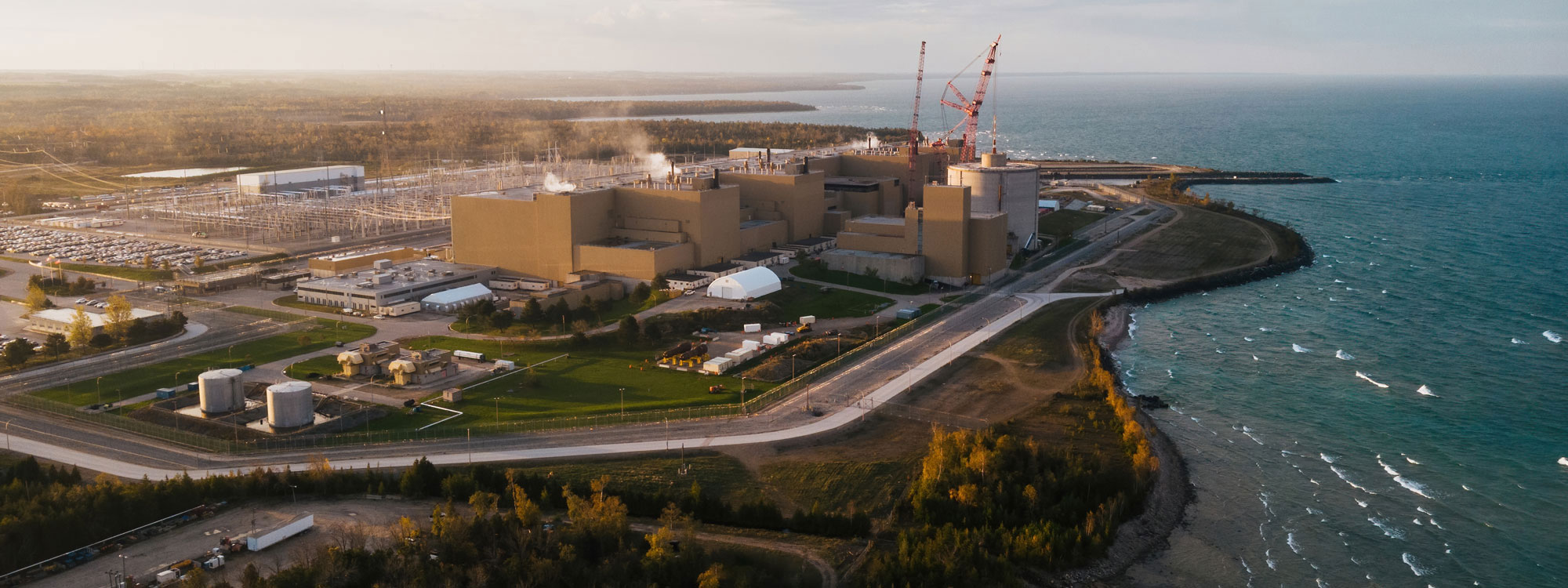
If your company is a domestic power generator like Constellation (CEG) or Calpine (CPN), the proposed Trump Administration tariffs at the Canadian and Mexican borders could help elevate gross margins. If Canada cuts off electricity altogether, additional margins may become available. While generators may benefit, US consumers will be harmed.
Uncertainty clouds northern US grids amid Canada tariff threat
Canadian premier says he will cut off electricity exports to US ‘with a smile on my face’
M. Humbert writes:
It’s my understanding that utilities are generally regulated to provide a steady ROA based return. If so, I don’t believe that they can raise their prices and increase their gross margins, as that would raise their ROA. They can raise their prices though if their costs go up (to maintain their ROA). It’s been a while since I last looked at utilities though. Am I mistaken about this?
Carder Dimitroff responds:
Yes, regulated utilities generally provide steady ROAs. However, some states fully regulate their electric utilities. Other states deregulated bulk power (wholesale power) and the generators that supply bulk power. Most population centers in the US are in deregulated states.
In the deregulated states, the title to bulk power passes to regulated distribution utilities at substations adjacent to transmission lines. Specifically, titles pass to distribution utilities at substations' step-down transformers.
Ontario supplies bulk power to unregulated states (Minnesota, Michigan, and New York). Quebec supplies bulk power to New York and New England. New Brunswick also supplies New England. All three provinces own and operate nuclear power plants. While Canadian transmission lines feed power directly to specific locations within those states, imbalances propagate to other states.
Ontario updated its strategy. They now plan to tax Ontario power exports at 25%.
Steve Ellison writes:
In this video Peter Zeihan says that a hurdle to green energy is that essentially all cost is up front, unlike natural gas plants in which only 20% of the lifetime cost is in construction, and 80% is in fuel costs over the life of the plant. So even when total lifetime cost of green energy is less than that from a natural gas plant, the higher upfront costs make financing more difficult. If true, I would guess cost recovery of the upfront expenses is also more risky in a deregulated market.
Mar
1
Sampler
March 1, 2025 | Leave a Comment

Carder Dimitroff points to:
Michigan’s Palisades nuclear plant nearing reopening
Michigan’s Palisades Nuclear Generating Station is one step closer to becoming the first nuclear power plant in the United States to reopen. After closing in 2022, the company that was set to decommission the plant has changed course, aided by a $1.5 billion loan from the U.S. Department of Energy to restart operations.
And a new SMR will be added on the same property in about 2030:
Michigan: First nuclear re-start is scheduled for this August
FWIW, the federal regulator (NRC) may be immune from budget cuts. Their licensing and regulatory activities are funded by the industry, not taxpayers.
Asindu Drileba suggests:
Great podcast on LLMs:
What kind of Intelligence is an LLM
[Part 3 of a 6-part series on intelligence in the Complexity podcast series by the Santa Fe Institute.]
Stefan Jovanovich finds:
The best underdog story in professional baseball in US:
The Best Underdog Story of 2025
Payton Eeles #11
St. Paul Saints
Minnesota Twins
Triple-A Affiliate
2BB/T: L/R5' 5"/180Age: 25
Jan
10
Energy, from Carder Dimitroff
January 10, 2025 | Leave a Comment
I believe 2024 will be remembered as the year of great awakening. First, the so-called "hydrogen economy," pushed by several administrations and countries, is struggling. Plug Power, Ballard Power, Bloom Energy, and Hyyvia have all experienced losses and related financial challenges. Wood Mackenzie warns that green hydrogen projects are near collapse, with several projects likely to be canceled or deferred (how does it make economic sense to consume electricity to make hydrogen, compress it, move it, store it, and then consume it to make electricity?).
Second, Big Tech is colonizing local power grids at a scale and speed few anticipated. Policymakers are slowly realizing that demand is eclipsing supplies, and at the current rate that demand grows, supplies will quickly be exhausted.
Third, there are unrealistic expectations that the industry can respond in time to avert troubles by increasing supply. Many assume that energy supplies are commodities and can respond to market forces. With new baseload power projects taking at least five years and an average of ten years to initiate and complete, the only realistic option is to manage demand. This conclusion presents significant implications for Big Tech and local consumers.
Like biotech, the electric and gas industries will face an uncertain future in 2025. In the United States, states and Regional Transmission Operators have ultimate control, with the federal government's role limited to providing economic incentives. Consequently, the nation will likely witness various responses depending on local interests.
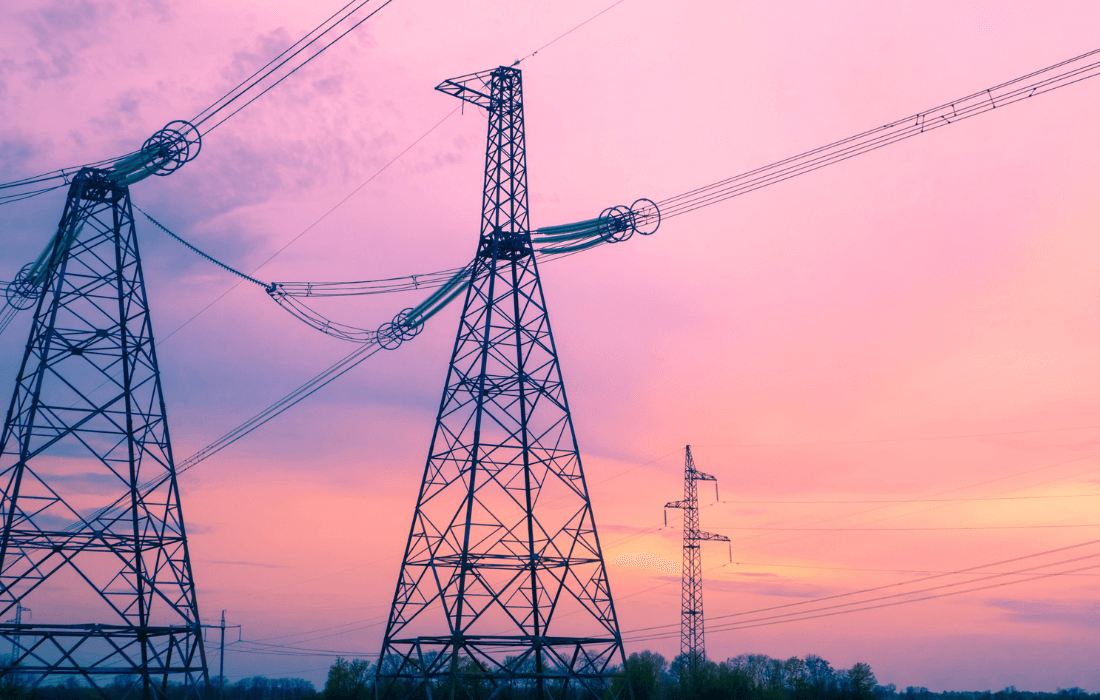
In any case, Big Tech's demand for power may be severely checked. If investors see unlimited growth in AI and related technologies, they may want to consider the challenges.
The alternative is less pleasant. If Big Tech successfully colonizes the nation's grids to the needed levels, the price of electricity and gas for other industries, commercial properties, and residential consumers will jump, resulting in more inflation.
Either way, the current situation is not sustainable. Solutions will be implemented in 2025 and beyond, but new nuclear power and transmission lines will not be among them for several years.
Remember that there are always winners and losers in energy; there's rarely an easy win-win opportunity. Higher prices produce substantial margins for those previously invested. For cost leaders, supply-demand mismatches present a happy outcome at the bottom line. Even marginal assets, like old nuclear and coal, could become more attractive. However, pipeline capacity issues could create growing challenges for natural gas assets.
The consumer is at risk. Self-generation is attractive to upper-income consumers. Avoiding the purchase of any watt-hours at any time of the day could produce significant savings.
Stefan Jovanovich writes:
The appeal of the income tax was that it promised a tiered system of pricing - i.e. the rich would pay more. There could be an Americans First progressive movement in this century that demanded the same system of pricing for electricity, health care and other services that have become rights. The "average" Americans could pay one rate; the corporations and wealthy users could pay a higher one.
A question for CD. Assuming that politics produces an Americans First tiered system for utility and other pricing where the "average" Americans are guaranteed priority over the large volume consumers, what would the effects be for the utilities? Don't current rate structures give large users a unit discount because they provide so much more demand?
Carder Dimitroff responds:
Remember, a utility's primary mission is/should be to rent its wires or pipes. Every wire and pipe used by utilities in the United States is economically regulated to ensure its owners earn a margin above its levelized costs. Theoretically, utilities' gross margins for wires and pipes are guaranteed no matter how individual tariff books are constructed.
In states where utilities have not deregulated their power plants, utility commissioners may create sophisticated tariffs where utility returns consider the combination of wires, power plants, commodities, and services. If a utility upsets its state commissioners, it could see margins thinned. This frequently happened with nuclear utilities when they delivered new power plants late and over budget. But the penalty is temporary; their full returns were restored later.
Tariffs are [intentionally] complicated. Large power users are frequently offered a break on their energy costs. However, they pay more for services that are not charged to residential consumers. Historically, one hefty example has been the utilities' demand charges, which large consumers hate. Another is for power factor charges, which require large customers to actively manage how they consume energy. In addition, many states require large power users to pay the utility for their capital costs to place transformers on customers' properties and to compensate utilities for stringing high-voltage power cables to those transformers. However, every state is different, and utilities within states negotiate different tariffs.
Big Al adds:
AI Needs So Much Power, It’s Making Yours Worse
AI data centers are multiplying across the US and sucking up huge amounts of power. New evidence shows they may also be distorting the normal flow of electricity for millions of Americans, threatening billions in damage to home appliances and power equipment. 75% of highly-distorted power readings across the country are within 50 miles of significant data center activity.
Jan
3
Five-year US load growth forecast, from Carder Dimitroff
January 3, 2025 | Leave a Comment
1 GW = about 1 nuclear power plant
Five-year US load growth forecast [for power] surges to 128 GW
U.S. electricity demand is forecast to increase 15.8% by 2029, according to a new report from Grid Strategies. Six regions of the country are driving the growth
The report's load growth estimates are based on annual planning reports submitted to the Federal Energy Regulatory Commission by electric balancing authorities and updated with additional data from utilities and planning regions.

Consider this question from another list member: What would happen to the grid if Silicon Valley companies found technologies a decade hence that would provide similar server services with less electric power?
Answer 1a: The utility could face stranded assets, including underutilized power plants, transmission lines, substations, and distribution systems. Remember that most utility investments are 30-year-plus assets, are leveraged, and have their levelized costs, plus margin, firmly embedded in utility bills.
Answer 1b: How would investors hedge their position if they considered building a $1 billion gas turbine in states that deregulated their power plants?
David Lillienfeld responds:
Basically, you're going to see a mismatch between where demand from data centers are and where there's generating capacity. You can build demand a lot faster than you can build supply though, and if you get efficiency on the demand end, you have overpriced supply relative to the ability of the region to pay for the power generated. At some point, someone's going broke.
But here's the curious question–how much economic activity can be attributed to a server building? It's like a parking lot for data–nothing more than that. And if there isn't that much taxable revenues that it's generating, what's the appeal to governments–the risk for the electorate of holding the bag at the end of the day is non-trivial it would seem. So what's the appeal?
Henry Gifford writes:
In other industries power saving strategies are known but not adopted yet, but could be at any time without much warning.
Take cars for example. I heard that in about three years the whole car industry in Europe is going to switch from the now-standard twelve volt electrical system (actually about fifteen volts) to seventy-six volts. One advantage of voltage about five times higher is that electric motors can be about one-fifth the size they are now. This includes the starter motor used to start the engine, the motors used to raise and lower the windows, the heating/cooling system’s fan motor, the engine’s cooling fan motor, the alternator (which is basically a motor wired to work in reverse), and others. As motors are made in large part from Copper and rare earth magnets, smaller motors can save a lot of money. Another advantage is that the wires, usually made from Copper, can be about one-fifth the cross sectional area. Another advantage is that some things typically driven directly off the engine by rubber belts, such as the air conditioning system’s refrigerant compressor and the power steering pump can instead be driven by a small electric motor that can be located anyplace the designer chooses, instead of now having to be located in line with a belt wrapped around part of the engine. Shrinking all these things would make the car lighter, saving fuel. Voltages higher than seventy-six would of course extend these advantages in an ever-diminishing way, but be more capable of going through a person’s skin, thus seventy-six is thought to be the best choice.
The problem is, I heard the three year prediction about twenty years ago, and a few times after that, but not more recently than about ten years ago. So maybe it won’t happen anytime soon, or ever, but the technology and advantages are well known and waiting to be used.
Similar changes could gradually or suddenly drop the power used by data centers.
Dec
23
Tariffs on Canadian goods, from David Lillienfeld
December 23, 2024 | 1 Comment

So now we're going to get an interesting experiment in what happens when you impose tariffs on your neighbor. To wit:
1. The DEW Line? Probably going to be history very quickly
2. The Keystone Pipeline? The first pipeline to nowhere (why would Canada bother?)
3. Drug interdiction? I doubt the Canadians are interesting in dealing with drug gangs, but they will also have little reason to look kindly on us.
4. NATO? It's a goner already.
I'm not sure that we gain all that much in this tit for tat, but it will be interesting to see what's conjured up.
Carder Dimitroff responds:
It's more than oil from the Keystone Pipeline. As the name suggests, TC Energy (formerly TransCanada) is a Canadian company that exports significant amounts of oil and natural gas to the United States and US natural gas to Canada.
The Keystone Pipelines and the oil they transport are assets owned by Canadian companies rather than US companies. New tariffs on Canadian oil and natural gas traversing TC Energy's pipelines could increase wholesale energy prices within the US. Of course, higher prices help domestic producers.
The US produces more oil and natural gas than it consumes and is a net exporter of natural gas, oil, and byproducts. However, exports could decline if US wholesale feedstock prices increase relative to global markets.
Dec
15
LNG: different perspectives, from Carder Dimitroff
December 15, 2024 | Leave a Comment
Whither the weather: predicting weather patterns helps predict LNG demand and prices.
Asia and Europe in a contest to attract LNG cargoes:
US LNG exports to Europe surge in November on higher prices
U.S. LNG exports to Europe surged in November as the world's largest producer of the superchilled gas sent more cargoes to the continent and fewer to Asia and Latin America, according to preliminary data from financial firm LSEG. European natural gas prices climbed in November to their highest levels in two years on fears remaining Russian pipeline supplies to Europe will be halted or face further curtailment.

LNG tankers divert to Europe from Asia after Russia halts supplies to Austria's OMV
LNG traders divert cargoes from Europe to Asia as eastern demand strengthens
Meanwhile:
U.S. inventories enter the winter with the most natural gas since 2016
Rising LNG terminal costs to make new US projects less competitive
FYI, U.S. LNG producers must buy natural gas at market prices. Many competitors pay only lifting costs.
Oct
21
Nuclear: Back to the Future, from Carder Dimitroff
October 21, 2024 | Leave a Comment
The media is buzzing about nuclear power as the silver bullet. Two commercial nuclear power plants are in the process of coming out of retirement.
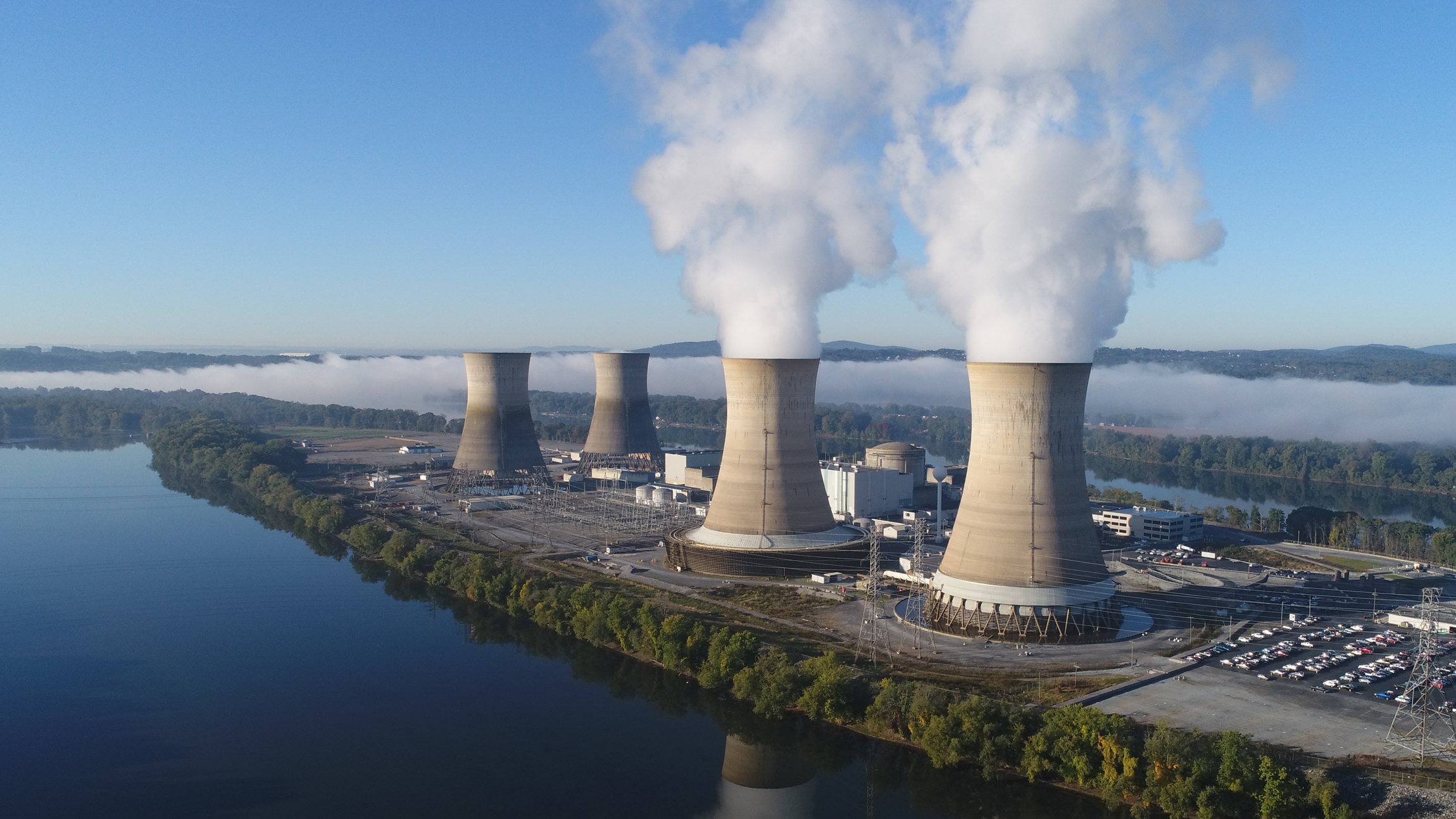
The odds of the two retired nuclear plants successfully navigating their way out of retirement are high. The Michigan unit (Palisades) won a $1.52 billion federal loan guarantee, $300 million from the state, [significant] tax benefits, and bipartisan support from state lawmakers. In addition, Palisades has already signed long-term Power Purchase Agreements for the full power output with rural electric co-ops Wolverine Power Cooperative and Hoosier Energy, which serve rural communities in Michigan, Illinois, and Indiana. DOE will also provide $1.3 billion in funding to two Michigan area power cooperatives to boost power purchases from the Palisades plant.
The Pennsylvania unit (Three Mile Island) is about two years behind Palisades. Their 20-year offtake agreement is with Microsoft. They may decline federal loan guarantees but take advantage of aggressive tax advantages (federal loans have feisty terms).
Both plants will require extensive and high-paying workforces. They will generate significant state and local property taxes and create economic multipliers for local, state, and regional areas.
While each plant may appear old, its components are relatively new. Over the years, each plant has undergone preventive maintenance that required replacing components and maintaining federal safety standards. While each plant is relatively small (under 900 MW), they can safely run for an additional 20 years with routine maintenance.
The validity of the proposed restart schedules is a question. I wonder if they can access new fuel in time because of a rigid queue to support the nation's nuclear fleet. I also question whether there is enough time to overcome the hurdles of the federal regulator (NRC). These are external activities that developers can manage but cannot control.
The natural question is about other nuclear plants. Specifically, how many more retired nuclear plants can be restarted? The answer is that it depends. It depends on how far a plant has been decommissioned, who owns the title, the degree to which the state supports continued operations, whether government incentives can overcome costs, and how desperate consumers are for power.
David Lillienfeld comments:
I find it hard to believe that the community around TMI is going to accept a restart all that easily.
Carder Dimitroff replies:
Thank you. This is an important point. TMI has two nuclear power plants (two reactors and two generators). Only one unit was involved in the TMI incident. Until it retired in late 2019, the other had operated reliably for 40 years after the incident. It retired for financial reasons, and local property taxes jumped when it did.
Not all, but most communities hosting nuclear power plants appreciated the employment, economic, and tax benefits the facility provided. When plants approached retirement age, community leaders sought opportunities to extend or replace the facility.
With one operating unit, TMI was the biggest employer in the county, with nearly 700 high-paying workers. Local businesses depended on the plant for their economic success. In addition, schools and other government departments enjoyed robust budgets while average homeowners' property taxes remained relatively low.
For these reasons, most communities would likely support continued operations. As always, some will want to see the asset permanently decommissioned. While there are no public safety issues that differ from those of any other nuclear plant, those most concerned about TMI would have moved years ago.
David Lillienfeld responds:
There was a documentary about TMI made in the last decade (I think). There were a lot of local residents who registered anger that the reactors had been built there in the first place. I'm not so confident that they would have moved by now. That said, your comments about the economics make a strong case for moving forward with a restart. I guess the big winners are Microsoft shareholders.
Oct
20
Nuclear restart: Murphy strikes, from Carder Dimitroff
October 20, 2024 | Leave a Comment

Whenever there's a home project, it usually requires three visits to the hardware store. Murphy's Law prevails as "anything that can go wrong will go wrong." The same is true in the nuclear world. But in this case, Murphy was an optimist:
Corrosion exceeds estimates at Michigan nuclear plant US wants to restart.
Steam generators are radiators. They transfer heat from inside the reactor building to outside the building without mixing fluids that move the heat. They have a simple job but rely on complex metallurgy. It's common practice to replace steam generators from time to time. So, this news is not a surprise, but it will delay the expected restart and increase costs.
In general, nuclear power plants come in two flavors. One uses steam generators that isolate the reactor's primary loop from the turbine's secondary loop. The other has only one loop directly connecting the reactor to the turbine without steam generators.
The first is a Pressurized Water Reactor (PWR) manufactured mainly by Westinghouse and its technology partners (France, China, and Korea). The second is a Boiling Water Reactor (BWR) manufactured by General Electric and its technology partners.
Both Michigan and Pennsylvania restarts rely on PWR technology.
Oct
13
FL insurance markets, from David Lillienfeld
October 13, 2024 | 1 Comment

Milton's travel through Florida had the eye wall intact straight through until it got to the Atlantic. Strong storm. Among the 4 strongest in the history of the Atlantic. One thing is clear though: There's a lot of destruction from this storm.
Hence, I have to wonder if there are going to be any insurers left in the Florida market, and if there are any left, which ones? I'm not sure that those insurers still there will make for good investment, but maybe they'll be able to survive in that market. It just seems unlikely.
Art Cooper responds:
There will certainly be private P&C insurers (in addition to state-created Citizens Property Insurance Company) continuing to do business in FL after Milton, but I strongly suspect they will continue to increase their restrictions on coverage. I understand that many victims of Hurricane Helene who thought they had coverage for its damage are being shocked to find out they either didn't, or did not to the extent to which they'd believed.
Historically, the aftermath of an event causing massive insurance claims is an opportune time to invest in carriers doing a lot of business in the affected area, because marginal carriers cease writing policies, thereby minimizing competition, and the event provides cover for dramatic rate increases. (Buy when there's "blood in the streets".) If you're bullish on the P&C sector, wait till after billions of dollars of claims are made, then try to buy at support levels.
I don't have any numbers on net migration out of FL, but I can attest anecdotally that the pandemic-induced flood into the state has ended. Bear in mind, however, that migration to FL has been characterized by wild swings for the past 100 years, and I'm confident it will continue to be volatile. Weather events such as Helene and Milton, and more importantly the greatly increased cost of homeowner's insurance, will of course be inhibiting factors going forward.
Carder Dimitroff writes:
I understand why some would consider NEE for short positions. I can see why the market might ping them. If the price sinks and the value is right for you, consider buying NEE as others sell.
Why? NEE Florida's assets are regulated. Within the state, they operate on a cost-plus-a-margin basis. They have a good relationship with the state's regulators (the state needs them). Their power plants and wires may be damaged, but the state's ratepayers will likely cover all their losses. There may be a temporary cash flow issue, but even those costs will be covered. For traders, it might take a year for NEE to recover financially.
Oct
8
Government planning and efficiency, from Big Al
October 8, 2024 | Leave a Comment
Originally, 32 ships were planned, with $9.6 billion research and development costs spread across the class. As costs overran estimates, the number was reduced to 24, then to 7; finally, in July 2008, the Navy requested that Congress stop procuring Zumwalts and revert to building more Arleigh Burke destroyers. Only three Zumwalts were ultimately built. The average costs of construction accordingly increased, to $4.24 billion, well exceeding the per-unit cost of a nuclear-powered Virginia-class submarine ($2.688 billion), and with the program's large development costs now attributable to only three ships, rather than the 32 originally planned, the total program cost per ship jumped. In April 2016 the total program cost was $22.5 billion, $7.5 billion per ship.
Henry Gifford disagrees with the implication:
I am no fan of runaway government spending, and waste, and stealing, but I applaud the decision to stop construction of the Zumwalt ships when it became apparent they were not what the navy wanted. It would have been better for the egos and careers of senior Navy officers to make believe the Zumwalt ships were desirable and keep making them, then quietly retiring.
The "peacetime" military has a huge challenge predicting what weapons will work well in the next war. At the same time, the military needs to maintain some shipbuilding capacity in the US, so that ships can be made in the US in the future. Maintaining shipbuilding capacity requires continuously building navy ships, needed or not needed, as the capacity to build ships in the future is critical. I haven't heard about anyone putting numbers on the value of this capacity.

Before WW2 the US has a robust shipbuilding industry that shifted to building navy ships, and ramped up for increased production. In the years since, that industry has gone away, except for a few pleasure boats and for military craft. One version I heard was that the last time ships were manufactured in the US installing a porthole required work by members of thirteen different unions, a problem presumably not faced in the places where the shipbuilding industry is robust today. With no significant shipbuilding industry in the US now, outside of military ships, the navy needs to keep building ships. (I think navy ships don't have many portholes, which probably avoids on of the challenges formerly faced by the commercial shipbuilding industry in the US).
One version of the Zumwalt story I heard is that much of the Zumwalt superstructure was made of Aluminum, to save weight, especially high up where saving weight increases stability and/or frees up capacity for mounting weapons high up, while the lower parts of the structure and hull were made of steel, and the dissimilar metals reacted with each other (happens quickly in the presence of salt water), resulting in terrible corrosion and structural damage. The Aluminum superstructure idea has been tried on naval ships before, but as Aluminum burns in a fire, it is not without risk to crew and ship in battle.
Another version of the story I heard is that the ship was designed for weapons which never materialized, thus the ships were cancelled. It all sounds logical, but somehow doesn't have the ring of truth that the version above has.
I also note that the Zumwalt ships were significantly larger than the Burke class ships made before and after it, and it seems quite believable (to me) that the navy simply wanted a larger number of smaller ships. Once upon a time the larger a battleship was the larger the guns it could carry and thus it had the firepower to shoot further than opponents, which meant it had the capability to maneuver to where an enemy was within range of its guns, while staying out of range of the enemy's guns. This battle-winning capability was worth the cost of huge ships. Now in the age of missiles and radar, the size of a ship is not nearly as relevant. During WW2 German soldiers reportedly said "one of our panzer tanks is worth ten of those American Sherman tanks, but every time we build one panzer they build eleven Shermans". As tank-on-tank battles were not the main, or main intended use of tanks, eleven OK tanks had many, many advantages over one superior tank. The US Navy might have decided that for similar reasons they are much better off with a larger number of smaller ships than a smaller number of Zumwalt ships. I would be surprised if the actual truth about the decision is ever made public, and more surprised if I was ever convinced that I was convinced the real reason(s) was made public.
The math about per-unit cost when development cost is amortized over the number of units produced is, I think, useful, but implies that development cost for something that never saw production or only went into limited production was somehow wasted.
The US navy now has hard data on the seakeeping ability of a full-scale tumblehome hull ship design, which I think nobody had before the Zumwalt actually went to sea. No, testing a scale model is not a robust test because much in fluid dynamics does not scale (google "Reynolds Number"). And if computer modeling alone was good enough nobody would have wind tunnels. The history of airplane development is full of planes that were built and flown in very small numbers, with the data helping to inform future designs. As the Zumwalt was such a radical design, departing so far from normal shipbuilding experience and formulas (google "metacentric height", "center of buoyancy", and "center of gravity"), it, I think, deserves to be thought of in much the same way as plane designs that saw very limited production and saw testing, and informed future designs in a useful way.
The US navy also has hard data on the radar signature of a tumblehome hull design, which nobody else has unless they pointed their radar sets at a Zumwalt class ship while configured for battle. I somehow doubt the US Navy sailed the Zumwalts close to the coast of Russia unless they added radar reflectors to them to mask their actual wartime radar signatures.
Maybe someone on the list developed and tested a trading strategy and found it lacking, then used the insights gained to test another strategy that turned out to be useful. Was the cost of developing and testing the first strategy wasted? I think not.
Carder Dimitroff writes:
Henry, your comment about aluminum reminded me of nuclear power plant design. For the reasons you state, aluminum is not allowed inside the containment (reactor building). Copper and stainless steel are used in place of aluminum. Outside the containment, aluminum is everywhere. I assume the US Navy requires similar standards for their nuclear submarines and aircraft carriers. Many design features in commercial nuclear plants originate from the nuclear navy.
Oct
7
What some Specs are keeping an eye on
October 7, 2024 | Leave a Comment
From Carder Dimitroff:
Note: 1 GW = about 1 nuclear power plant.
US DOE/EIA: Batteries are a fast-growing secondary electricity source for the grid.
Utility-scale battery energy storage systems have been growing quickly as a source of electric power capacity in the United States in recent years. In the first seven months of 2024, operators added 5 gigawatts (GW) of capacity to the U.S. electric power grid, according to data in our July 2024 electric generator inventory. In 2010, only 4 megawatts (MW) of utility-scale battery energy storage was added in the United States. In July 2024, more than 20.7 GW of battery energy storage capacity was available in the United States.
From Kim Zussman:
Argentina Scrapped Its Rent Controls. Now the Market Is Thriving.
For years, Argentina imposed one of the world’s strictest rent-control laws. It was meant to keep homes such as the stately belle epoque apartments of Buenos Aires affordable, but instead, officials here say, rents soared.
Now, the country’s new president, Javier Milei, has scrapped the rental law, along with most government price controls, in a fiscal experiment that he is conducting to revive South America’s second-biggest economy.
The result: The Argentine capital is undergoing a rental-market boom. Landlords are rushing to put their properties back on the market, with Buenos Aires rental supplies increasing by over 170%. While rents are still up in nominal terms, many renters are getting better deals than ever, with a 40% decline in the real price of rental properties when adjusted for inflation since last October, said Federico González Rouco, an economist at Buenos Aires-based Empiria Consultores.
From Asindu Drileba:
Charles Piller and the team here at Science dropped a big story yesterday morning, and if you haven't read it yet, you should. It's about Eliezer Masliah, who since 2016 has been the head of the Division of Neuroscience in the National Institute on Aging (NIA), and whose scientific publication record over at least the past 25 years shows multiple, widespread, blatant instances of fraud. There it is in about as few words as possible.
It turns out that alot of FDA drug approvals where based on this guy's research (a few listed in the article). I wonder what effect it may have on pharmaceutical businesses based off his research. Imagine spending decades & billions on a drug whose prior research turn's out to be completely forged (photoshopped images). This looks really bad for the Alzheimer's drug focused pharmaceutical industry.
From David Lillienfeld:
This is a comparison of international drug prices. U.S. gross prices are higher than those in comparison countries for all drugs and for brand-name originator drugs but lower for unbranded generic drugs.
Oct
1
Book rec, from Carder Dimitroff
October 1, 2024 | Leave a Comment

Empire, Incorporated: The Corporations That Built British Colonialism
Across four centuries, from Ireland to India, the Americas to Africa and Australia, British colonialism was above all the business of corporations. Corporations conceived, promoted, financed, and governed overseas expansion, making claims over territory and peoples while ensuring that British and colonial society were invested, quite literally, in their ventures. Colonial companies were also relentlessly controversial, frequently in debt, and prone to failure. The corporation was well-suited to overseas expansion not because it was an inevitable juggernaut but because, like empire itself, it was an elusive contradiction: public and private; person and society; subordinate and autonomous; centralized and diffuse; immortal and precarious; national and cosmopolitan-a legal fiction with very real power.
Sep
25
Smörgåsbord
September 25, 2024 | Leave a Comment
Jeff Watson likes info on the softs:
Here’s a copy of a magazine that offers a high level view of all things agricultural:
Carder Dimitroff is watching lithium batteries:
Utility Dive: Lithium battery oversupply, low prices seen through 2028
Despite falling raw material costs and U.S. policy support, North American battery suppliers are delaying or canceling planned capacity investments
Bloomberg: Why Public EV Chargers Almost Never Work as Fast as Promised
Most public machines in the US average about half their maximum speed, a gap that risks hindering further adoption of electric cars.
David Lillienfeld follows pharma:
Immuno-oncology drugs have changed oncology and required rewriting of many sections of medical texts. They have created a revolution. That doesn't mean they are without downsides.
A decade of cancer immunotherapy: Keytruda, Opdivo and the drugs that changed oncology
Medicines that can rev up the immune system against tumors have reshaped expectations of what cancer treatment can accomplish. Their success has hit limits, however.
Sep
3
Apparently, it’s not just an American thing - Australia, from Carder Dimitroff
September 3, 2024 | Leave a Comment

Sydney Morning Herald: Three Months to Back Up the Grid as Risk of Summer Blackouts Ramps Up.
Interesting Engineering: Australia Is Generating Too Much Solar Power (12:25).
IMO, expect:
1. volatile wholesale energy prices, including deeply negative prices,
2. forced load shedding and expanding demand-response programs,
3. sudden awareness that infrastructure is needed,
4. growing reliance on natural gas/ LNG, and
5. growing interest in competitive energy contracts
Aug
23
Counting is one thing, statistics is another, from Carder Dimitroff
August 23, 2024 | Leave a Comment
Today, the U.S. Energy Information Administration (EIA) is counting how many power plants were added in the first half of 2024 and projecting how many will be added in the last half.
It's all wonderful news. About 20.2 GW (the equivalent of about 18 nuclear power plants) were added. By the end of the year, EIA expects about 62 GW of new capacity. About 95 percent of these additions are intermittent sources (wind, solar, batteries).
Offsetting this new capacity are retirements. Utilities plan to retire 7.6 GW, all of which use coal, natural gas, and petroleum as fuel. They are likely being retired because they are uneconomic and rarely dispatched. Their levelized costs exceed revenues, and investors want to tidy up their books.
Statistics unearth a problem that counting hides. The problem is not on the supply side; it's on the demand side. Specifically, counting 24/7 demand reveals tremendous growth (e.g., baseload). It appears there's a hidden mismatch between supply and demand. While there will be hours on most days when the grid is flooded with cheap power, there will also be hours on other days when there will not be enough supply to serve all loads.
Retail prices will jump. In fact, they already have. PJM is the Regional Transmission Organization (RTO) that manages bulk power markets for the mid-Atlantic region. It's one of the largest of the nation's ten RTOs. In addition to transmission line responsibilities, PJM manages energy and capacity auctions for power plant production.
PJM conducts an auction for capacity each year. Power plant asset owners may enter the auction and offer their prices. Owners are paid a daily rate for each megawatt if their bids clear. Auction results:
2024/2025
$28.92 / MW-day
2025/2026
$269.92 / MW-day
Next year, a 1,000 MW power plant can earn $269,920 daily compared to $28,920 this year. These payments are in addition to any revenues earned from energy auctions.
While these auctions seem arcane to the average consumer, they will feel it in their pocketbooks—and not just in one part of the country—it's everywhere. All these costs will flow to the consumer, who will have only the choice of paying or reducing consumption.
Two options may become quickly viable. One is to build gas turbines as fast as possible. To attract investors, capacity payments have to be attractive. But starting new projects today may be too late.
The other option is "demand-response," where consumers are enticed to reduce demand for a price. Demand response is in place today but has yet to be aggressively implemented. It appears grid operators like PJM (not the government) will be forced to become aggressive and offer lucrative demand-response programs.
Lastly, those who invest in "behind-the-meter" assets like their own renewable energy sources, including geothermal, will avoid some of these accelerating costs. Those who have already invested will likely experience returns higher than expected.
The roots of this problem germinated decades ago. That is its own story for another time.
Kim Zussman wonders:
XLU?
Big Al observes:
XLU up 25% from Feb low.
Jeffrey Hirsch was there before us:
Our recommendation at the outset of XLU/Utes seasonal bullish March-Oct period.
Humbert H. writes:
Nuclear is clearly the real solution as the current generation of nuclear reactors are pretty much (we hope) not vulnerable to meltdowns. But as the situation stands, battery technology is likely to receive an ever-increasing amount of investment, and also reused old EV batteries will be more and more prevalent as storage banks for solar and wind. Intermittent sources = more and more need for battery capacity.
William Huggins offers:
one possible solution to transmission problems is to use rail-bound batteries.
Aug
12
Texas Data Centers, from Carder Dimitroff
August 12, 2024 | Leave a Comment
This is not going to end well:
59 GW in data center load seeking to connect to Oncor’s system: CEO
Nearly three-fourths of new interconnection requests are coming from data centers, Oncor officials said.
FWIW:
59 GW ˜ 50 nuclear power plants.
80 GW ˜ 65 nuclear power plants.
1 new nuclear plant - about 15 years to build one.
Conclusion:
If these loads connect to the grid as planned, expect sizeable investments in natural gas and combined-cycle gas turbines. Turbines may share the same real estate as data centers and avoid utility costs.
I expect to see development near the Texas Waha hub (Waha prices tend to be lower than Henry Hub), or if not on or near Waha, on a pipeline connected to Waha.
CCGT strategies may work in the short term. However, history suggests they could be financially problematic for turbine owners in the long term.
Humbert H. writes:
Next gen data centers are expected to have about 18% lower in overall energy consumption. Next gen would mean it is likely happening in a couple of years. It doesn't quite move the needle in the percentage sense. But every bit helps. Let me quote what Wayne Gretzky once said, "Focus on where the puck will be at, not where the puck is at."
Aug
3
European vs American Power Markets, LNG, and Natural Gas, from Carder Dimitroff
August 3, 2024 | Leave a Comment
Europe (decreasing use of natural gas)
It appears Europe needs less natural gas and will import lower volumes of LNG. As a whole, their gas-fired and thermal power plants are experiencing lower capacity factors. Several factors contribute to the decline.

One factor is the French nuclear power plant fleet, which has been experiencing higher capacity factors and lower production costs. Another is the EU's wind, solar, and energy storage assets, which have low production costs. Other factors include the EU's weaker economy and milder winters.
- Gavin Maguire, Reuters, 6 February 2024
- Sarah Brown, Dave Jones, EMBER, 7 February 2024
- Seb Kennedy, EnergyFlux.News, 1 August 2024
- European Network of Transmission System Operators for Electricity (ENTSO-E)
United States (increasing use of natural gas)
U.S. power plant operators generated 6.9 million MWh of electricity from natural gas on a daily basis in the lower 48 states on July 9, 2024, the U.S. Energy Energy Information Administration (EIA) said, which is “probably” the most in history, and definitely the most since at least January 1, 2019, when the EIA began to collect hourly data about natural gas generation.
The spike in natural gas-fired generation on July 9 was because of both high temperatures across most of the country and a steep drop in wind generation. According to the National Weather Service, most of the U.S. experienced temperatures well above average on July 9, 2024., with particularly high temperatures on the West Coast and East Coast.
- Sean Wolfe, Power Engineering, 25 July 2024
With July heatwaves, US ‘probably’ saw highest natural gas generation in history, EIA says
Differences
Several factors may explain why the United States is consuming more natural gas than Europe. One factor is price. Wholesale natural gas prices in the United States are much lower than in Europe.
Air conditioning is an important factor. Air conditioning is widespread in the United States but not so much in Europe. Air conditioners consume large amounts of electric power, and they are the key asset targeted by utility demand-response programs.
A related factor is that the United States has two energy-consuming peaks (summer and winter), while Europe's major peak is in the winter. With lower bulk pricing for natural gas, bulk power prices are also low, and incentives to conserve energy are muted.
Finally, the United States economy is outperforming Europe.
There's India:
- John Kemp (Reuters), India electricity generation - Selected indicators, 31 July 2024
Jul
16
First and second derivatives of bulk power prices, from Carder Dimitroff
July 16, 2024 | Leave a Comment
The trade is the first (power producers) but not the second (uranium). I'd caution anyone considering uranium as an investment proxy for nuclear power. Traders may see bumps from news stories, but uranium fundamentals should not and do not track well with bulk power production.
Speculating in bulk power prices is difficult because power is a unique commodity with no [mature] futures market. The first derivative of bulk power might be merchant power plant fleets composed of nuclear, natural gas, and coal-fired power plants. Wind power might be responsive, but solar would be low on my list.
Since this thread is about nuclear energy, commercial nuclear power plants could emerge as profitable assets for the first time in over a decade. Consequently, merchant nuclear power plants would be among the first derivative beneficiaries.
Sticking with the nuclear theme, nuclear fuel would be the second derivative, and uranium would be the third. Therefore, speculating on uranium at the end of nuclear power's value chain would require different considerations. Let me explain.
All commercial nuclear plants operating in the United States are large light water reactors. Unlike military reactors, commercial reactors consume low-enriched uranium (enriched between 3 and 5 percent). This enrichment level is by design and regulation.
Mining is the first of many steps in producing nuclear reactor fuels. Globally, vast reserves of raw uranium, including Virginia, Australia, and many other places, could be available for mining.
The second step in creating nuclear fuel is milling and processing, generally conducted at NRC and EPA-regulated sites near the mine. Processing uranium into yellowcake is the last step in creating a commodity. Because yellowcake is a highly regulated asset, speculating on its pricing is a unique endeavor requiring specialized knowledge.
Regulated carriers ship the yellowcake to enrichment facilities, where the fuel is de-commoditized. The enrichment process and fuel fabrication add the most value. Fuel fabrication creates customized fuel rod assemblies tailored to fit into specific reactors. Because they are customized, those fuel assemblies are, for the most part, not fungible.
Commercial nuclear plants must order their new fuel from approved facilities capable of handling their fuel configurations. They must order far enough in advance to ensure that their place in the facility's queue meets refueling schedules (this queuing problem is why Germany could not extend or restart its retiring nuclear plants after Russia invaded Ukraine; they fell out of the fabricator's queue).
After receiving new fuel, individual nuclear power plants store it onsite and wait for the next refueling. Volumetrically, small amounts of new fuel are needed because most commercial plants run on existing fuel for 24 months before refueling. When they shut down, they do not replace all the old fuel with new fuel; they replace their oldest fuel with new fuel and reconfigure the remaining fuel to achieve specific physics.
In summary, for uranium investors, the critical points are:
Uranium may be a commodity, but nuclear fuel is not.
Nuclear fuel is highly regulated, controlled, and difficult to trade.
Nuclear plants do not consume uranium like legacy plants consume coal.
The elapsed time between mining and consuming is months or years.
Speculating in uranium is complex and requires specialized knowledge.
So, the question remains: how do investors profit from the coming changes in the power markets? For me, it's not speculating in uranium or uranium mines.
I don't provide investment advice. Be cautious, do your additional research, and seek professional advice. Given those disclaimers, consider Constellation Energy (CEG), the owner of the nation's largest fleet of merchant nuclear power plants. They also own other generating assets. They stand to gain if bulk energy transactions sustain elevated prices.
Keep in mind the following facts about merchant nuclear power plants:
Their LCOE is relatively high compared to gas and coal-fired power plants.
Their production costs are relatively low compared to the same plants.
They run 24/7/365, independent of market prices (capture negative prices).
They need constant access to cool water (problem: droughts and warm water).
The market value of nuclear assets is likely below book value ($ is in decommissioning).
Not all US commercial nuclear plants operate as merchant plants.
Nonpartisan federal/state policymakers protect nuclear power assets.
For me, CEG is a long-term investment. But short-term prices may react to the news.
Jul
15
Possible demand-supply mismatch coming in the power markets, from Carder Dimitroff
July 15, 2024 | Leave a Comment
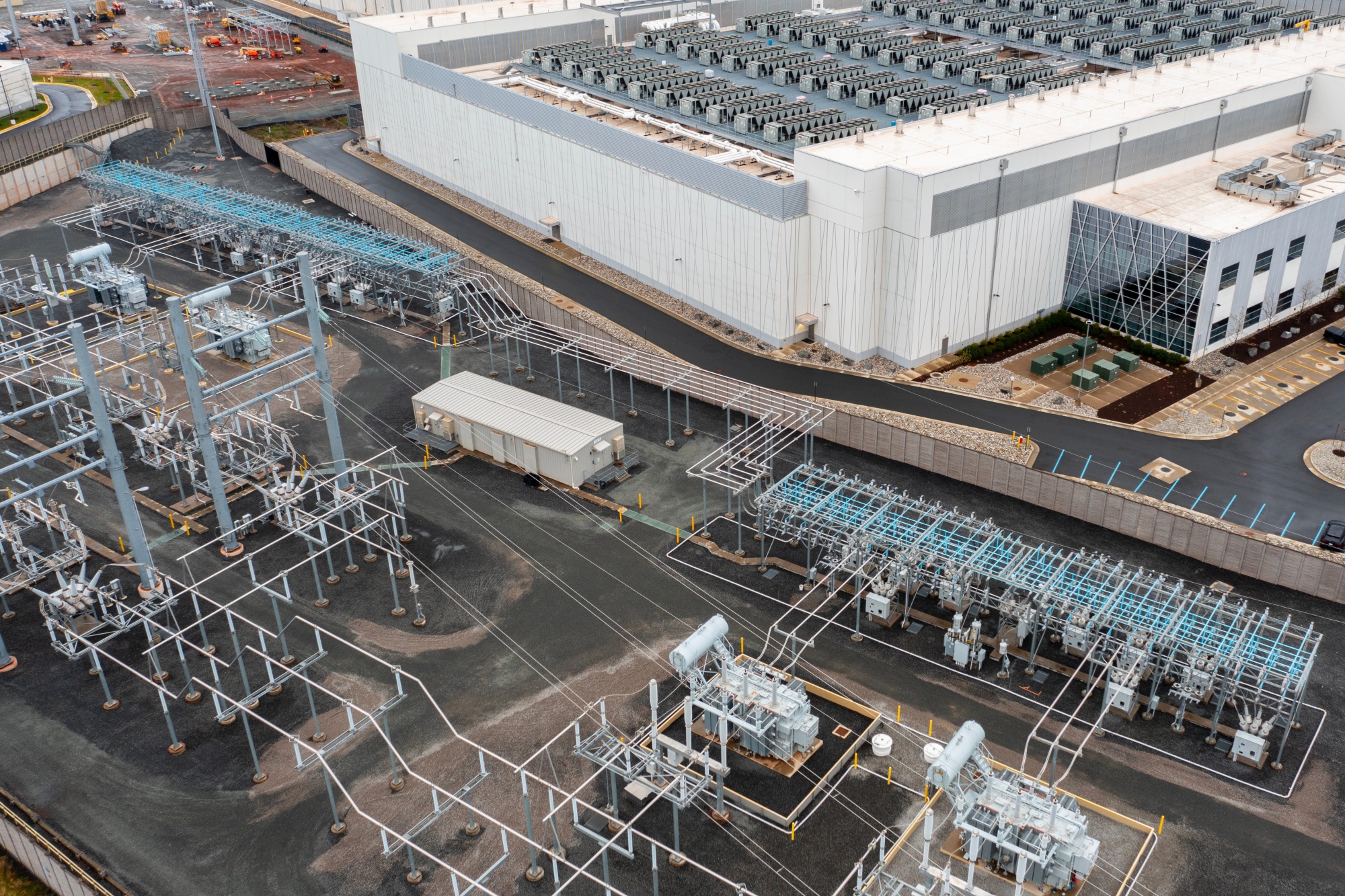
Only some people agree, but the power industry believes there may be a demand-supply mismatch from AI data centers. Here are some summary views - from the American Nuclear Society's Nuclear Newswire (April 2024):
Major tech companies see artificial intelligence (AI) as something that will transform their industry, and there is a race to be first. When they look for clean, dependable power 24/7, nuclear clearly stands out as a good match. Constellation [the nation's largest nuclear utility] summarized it best in its recent forecast:
• AI and data center growth will drive power demand.
• Major tech companies are expected to invest $1 trillion in data centers over the next five years.
• In the next five years, consumers and businesses will generate twice as much data as all the data created over the past 10 years.
• AI data center racks could require seven times more power than traditional data center racks.
• Between now and 2030, domestic data center electricity consumption is expected to grow anywhere from 6.5 percent to 7.5 percent (335 terawatt-hours to 390 terawatt-hours).
• In its report, Data Centers 2024 Global Outlook, global real estate services company JLL has said that "AI is driving extreme scale for new developments with requirements now ranging from 300 megawatts (MW) to over 500 MW."
From the IEEE Spectrum (June 2024):
Scientists have predicted that by 2040, almost 50 percent of the world's electric power will be used in computing. What's more, this projection was made before the sudden explosion of generative AI.
From Data Center Dynamics (May 2024):
US utility Dominion expects to connect 15 more data centers to the grid in Virginia over the course of 2024, after connecting 15 facilities last year totaling almost a gigawatt of capacity [1 gigawatt = 1 nuclear plant]. In its most recent earnings presentation this week, the company said it had connected 94 data centers with more than 4GW of capacity in Northern Virginia since 2019. This included 15 data centers totaling 933MW in 2023, and 15 more are due to be connected in 2024. The company didn't include the capacity of those 15 facilities going live this year, and in the earnings call, CEO Robert Blue said he doesn't know how quickly they will ramp up to full capacity.
For those who think new nuclear power is the solution (2024), this is not a quote but a fact: The new Vogtle nuclear power plant took about 20 years to design and build, from concept to commercial operations. This recent construction schedule was set by an experienced nuclear utility that previously built access to transmission on a nuclear site they've owned for decades.
The critical metric is not the overall demand. Data centers' demand sits on the grid 24/7, so generating capacity must be available 24/7. While massive amounts of energy are already oversupplying some US power markets, most new sources originate from part-time wind, solar, and battery assets. Those part-time assets cannot serve the 24/7 load demanded by data centers. Therefore, the critical metric is the difference between the base supply and the constant load.
With growing 24/7 demand, a fleet of legacy power plants (natural gas, nuclear, coal) is needed to fill in the [significant] gaps left by part-time renewable energy sources. That fleet currently exists, but its overall capacity is declining. Retired plants (to the extent they can be summoned) and new generation will be needed.
However, any new base generation will experience poor capacity factors and difficult gross revenues. Both impair investors' revenues and erode their expected levelized cost of energy. Even if investors overcome profitability concerns, the time it takes to commercialize any new traditional generating asset exceeds the expected demand for new power (extreme example: Georgia Power).
These projections and concerns appear to contradict current trends. Demand has declined in the United States, Europe, and the United Kingdom. Current reporting suggests there could be too much supply, particularly in Europe. However, if projections described by ANS, IEEE, and utilities are correct, the opposite problem could be presented: insufficient supply. If supply becomes the issue as expected, scarcity curves will be taxed, unprofitable generating assets will become profitable, and residential, commercial, and industrial consumers will pay more. This issue is not limited to North America.
Humbert H. writes:
I was listening to an interview of some fund manager from Reno earlier today and he was talking about power shortage around where he lives due to AI server farms. He said they could be quickly and cheaply addressed with new gas powered plants, but due to the Biden administration now requiring all such plants to have complete carbon sequestration this stopped them from being a practical solution.
H. Humbert writes:
Increased the energy supply for data centers is the obvious and near-term brute-force solution. Of course (almost) everybody not in the tech industry assumes that the joule per bit per second for data centers can't be improved and hence producing more energy is the only solution using nuke. In fact Sam Altman said that too, what conventional thinking can possibly go wrong, right?
Zubin Al Genubi asks:
What would be a good way to invest in modern nuclear power? How about Bill Gates project?
Asindu Drileba adds:
I would suspect via buying Uranium ETFs? I first saw this conjecture from following the financier Lyn Alden.
Mark Zuckerberg of recent also mentioned in an interview that Energy and not Compute will be the number 1 bottle neck to AI progress.
H. Humbert responds:
The energy being the presumed AI investment proxy won't last in the long term. Increasing the energy supply is just an incremental engineering no-brainer approach to solve a longer term problem and the approach is not disruptive and it doesn't change the world.
Stefan Jovanovich offers:
Radiant Nuclear
Kaleidos: a Portable Nuclear Microreactor that Replaces Diesel Generators
Peter Penha writes:
A relevant interview on the Hidden Forces podcast with Brian Janous who was hired by Microsoft in 2011 to focus on energy (Google had just hired someone themselves as they thought the cloud might become something) - wound up as VP of Energy.
AI data centers need to be where they can individually draw the electricity of a city like Seattle (800 MWh) - so away from major urban areas - discusses the history of the grid from Sam Insull through to where we are going…also on the efficiency / consumption of AI chips - his view with AI is Jevons Paradox will apply and the more efficient the chips and the (new) grid gets the more consumers will demand.
Jun
23
 This may seem like an under the radar issue, but it's a big deal.
In Carter administration, the US decided that civilian spent nuclear fuel should not be recycled. Instead, it was to be stored and buried in deep geologic repositories.We can have some fun criticizing Carter's decision, but there were reasons for making the disposal decision. The decision paved the way for the construction of Yucca Mountain, which is funded by utilities (not taxpayers).
I'm in favor of recycling. Burying spent nuclear fuel in a cave is like burying a car because the battery died. As a car can be recycled after a new battery installed, nuclear fuel can be recycled after the fuel has been processed.
In the end, recycled fuel will need disposal. However, the volume is dramatically reduced (from a car to a used battery), and the ultimate disposal becomes less costly.
Recycling is an expensive process. Facilities cost billions to build. But, Yucca Mountain has already cost $12 billion, and the project is far from finished.
George Devaux writes:
From Policy Options for Nuclear Waste Management:
Sustainable Solutions for Expanded Nuclear Energy
"Reprocessing technology has the ability to decrease the volume of HLW by a factor of 4 while at the same time decreasing the required storage timeframe from hundreds of thousands of year to less than 1,000 years. The HLW produced from reprocessing is also vitrified in glass, to produce a stable, homogenous waste product. Reprocessing and recycling SNF could require only one Yucca Mountain-sized repository this century and decrease the amount of fresh uranium fuel required by 25 percent."
Jun
13
Blame Canada: The Canadians Decide, Once Again, to Show the Americans that They Will Not Be Bullied But Will Shrink Their Economy Instead, from Carder Dimitroff
June 13, 2018 | Leave a Comment
 Why are we at war with Canada? According to the Trump Administration, there's a net trade surplus between US and Canada (goods and services):
"The U.S. goods trade deficit with Canada was $17.5 billion in 2017, a 59.7% increase ($6.5 billion) over 2016."
"The United States has a services trade surplus of an estimated $26 billion with Canada in 2017, up 8.0% from 2016."
Stefan Jovanovich writes:
1. Cars and Auto Parts.
Canada manufactures 4 million cars. It buys 3 million and exports 1 million to the United States. It is also the largest auto parts exporter to the United States.
2. Marketing Boards
Canada uses the agricultural marketing board mechanism for controlling production and prices of domestic dairy and other "grocery" farm products. To support this mechanism the marketing boards restrict all imports by tariff and by quota while allowing Canadian "surplus" production to be exported at foreign market prices.
Question: Who would profit most from the shift of car and auto parts production to the United States? Whose domestic production of "grocery" farm products would be boosted by the exclusion of "surplus" Canadian production?
Answer: Agricultural and car and auto parts producers in the Great Lakes States of the Mid-West
Ain't the study of actual political economic events much more interesting than further refinement of marginal utility theory?
Geoge Zachar writes:
The reports I've seen indicate Canadian dairy protectionism is driven by Quebec…something the the anglophone provinces deeply resent, as they're forced to pay up for dairy products.
So, in addition to being seen supporting important US constituencies, Trump is deepening political divisions north of the border.
Stefan Jovanovich writes:
The Canadian Parliament decided to "stand with Canadian workers" when President Trump announced the steel and aluminum tariffs.
I doubt very much that they have examined their own history with regard to trade "wars". If they had, they might have been tempted to take President Trump at his word about the need for "reciprocity".
In the Elgin-Marcy Treaty, signed in 1854, the U.S. and London entered into a free trade agreement. As the Wikipedia article notes, the Canadian business interests threatened to ask the U.S. for annexation if Britain did not work to open the U.S. markets to Canadian exports. Under the Treaty timber and wheat and coal were admitted to the U.S. without duties or quotas; the existing 21% tariff was eliminated by the U.S. The reward for the Americans was open navigation on the Great Lakes and St. Lawrence and access to the Grand banks fisheries. The arrangement was broadly popular and hailed as the Canadian-American Reciprocity Treaty.
Within 4 years the Canadians decided that they needed to protect their manufacturers. The Cayley tariff of 1858 and the Galt tariff of 1859 raised the duties on imported manufactured goods 20 per cent. For the new Republican Party, this was an absolute Godsend. In 1860, as now, the United States had the lowest tariffs and least restrictive trade rules of any country. Why, Congressman Morrill asked, should American producers have to accept foreign competition but be shut out of foreign markets? Morrill shifted the discussion on tariffs from being a question about protecting Northeastern manufacturers to one for the nation as a whole. He introduced his bill by announcing this change: "In adjusting the details of a tariff, I would treat agriculture, manufactures, mining, and commerce, as I would our whole people—as members of one family, all entitled to equal favor, and no one to be made the beast of burden to carry the packs of others." The "free trade" Democrats did not have an answer.
By 1861 the U.S. had increased overall tariffs from 17% to 26%; by the end of the Civil War the average rate had increased to 38%. It was to stay there until the Underwood tariff (the Revenue Act of 1913).
May
1
There is an article circulating on Twitter. I'm sure it's selling ink for Forbes. It plays into the politics of providing additional government supports for higher-priced coal and nuclear. But it's based on faulty analysis.
There is no debate among industry participants. Wind and solar have had a significant impact on power markets (energy markets). Market-clearing prices in Europe, United Kingdom, the United States have declined. As more wind and solar resources are added, prices decline further. This phenomenon explains why independent power producers struggle for margin. It also explains why coal and nuclear plants are seeking additional government supports to stay in business. They will tell anyone willing to listen, coal and nuclear are not competitive without new subsidies (their initial capital costs were fully subsidized).
Here's the author's trickery. He completely ignores power market dynamics. He jumps to the end of the utility value chain, focuses on the final retail price of electricity, and falsely concludes the villains are wind and solar.
What the author doesn't tell readers is that electricity prices (not energy prices) are heavily regulated all over the world, including Europe and the United States. When deciding on the price of electricity, regulators include the market price of energy and add much more (state and local taxes, fees, reliability costs, infrastructure costs, bad debt, line maintenance, operations, management costs, union costs, pension costs, guaranteed utility margins, and so on). While energy prices have been declining, regulated costs have been increasing.
It turns out the villain is not the market; it's the regulators. The other villain is the publication of faulty analysis.
Apr
18
USPS Annual Mail Volume, from anonymous
April 18, 2018 | Leave a Comment
 Chart of USPS annual mail volume from the USPS website.
Carder Dimitroff writes:
I'm wondering if it makes sense to sell US Postal System assets.
anonymous comments:
There are basically three different theories on what to do with the post office.
Theory 1: The post office is dying. The solution lies in free markets which means privatizing it which may or may not mean ultimately the sale of many of its assets and properties.
Theory 2: Yes first class mail is dying, but package delivery is increasing. We can't privatize the post office because nobody will ever be able to put together this package of assets/distribution again. The post office just needs to re-purpose it's assets the way it has already started to do and get into same day package delivery. This of course is supported by the postal union and its political allies.
Theory 3: (This was once the position of the postal union, and is now relegated to weird, out of touch leftists): The postal union is an American institution that connects us all into a society. Yes, you don't know anybody who hangs out at the post office, but believe me, if we close a lot of post offices it will devastate small communities where people hang out at the post office. Again, you don't know anybody who hangs out at the post office, but millions of people do.
It's an interesting debate between theories 1 and 2, but unfortunately the debate is always mixed up with a bunch of people lobbing Theory 3 stuff into the conversation.
anonymous adds:
New Zealand's experience: "history of new zealand post".
Apr
16
New Jersey Nuclear Plants Bailout: Bad for Markets? from Carder Dimitroff
April 16, 2018 | 1 Comment
It appears New Jersey's governor will sign a bill subsidizing the state's nuclear power plants:
"One bill would provide two Public Service Enterprise Group nuclear power plants with subsidies costing ratepayers about $300 million per year."
While friends at American Nuclear Society and Nuclear Energy Institute may be celebrating, those invested in the power markets may have a different view.
The issue is "market response." When a state pays an owner to run their plant independent of regional market signals, the owner will run his plant. In fact, the owner will happily run their plant when their production costs fall below market prices.
That's fine for the nuclear plant. It's not fine for other participants. When large assets ignore market signals and continue to produce, market-clearing prices for everyone crashes. The nuclear owners win, other producers lose. Those other producers include coal, natural gas, oil, hydro, wind, solar, and storage.
FWIW: Consumers win with lower energy costs (yes, they could get some of their $300 million back). State and local governments win with SIP programs and tax bases.
The power market may adjust bids in the attempt to offset state subsidies. While adjustments help, they would not address the behavior.
This is not a new problem. In US, EU, and other deregulated power markets, nuclear plants frequently ignore market signals. When they do, market-clearing prices frequently cross $0.00. With added incentives to "must-run", zero-priced energy may appear more frequently.
To be candid, I'm being a bit ornery. I believe it's in the nation's best interests to keep existing nuclear plants running. For free-market proponents, there are no perfect solutions. For New Jersey (and Illinois and New York), this is one of the policymakers' least bad options.
IMO, there's another choice. It relies on markets. It would reside at the wholesale level (multi-state). The grid could offer a two-tier pricing system for capacity. One tier would be for baseload plants, which would capture nuclear, large coal, large hydro, and large natural gas. The other would be for non-base load plants, which would include small gas, oil, small hydro, wind, and solar.
Sep
1
The Hurricane, from Carder Dimitroff
September 1, 2017 | 1 Comment
 My wife's family experienced severe flooding. They did not live in a flood plain. It took the community over a decade to recover.
Their most challenging issue was silt. It got into everything. It found its way into walls, insulation, floors, and ceilings. To restore a flooded home, walls and insulation had to be removed. In many cases, it was easier to level the house and build a new structure on the existing foundation.
The problem with silt is its composition. While the flood originated with fresh water, it found its way into sewer systems, oil storage, and everything else. When the water receded, bacteria and oil-laden silt was left behind.
As you can imagine, some attempted to "fix" their homes without removing the silt. A decade later, you could still smell an odor inside the home, particularly when it rained. They paid when they attempted to sell the home. The lesson is you'll pay me now, or you'll pay me later.
The community included the corporate headquarters for Corning Glass. They used their technical, financial, and political resources to help rebuild the community. It did not matter if you were employed by the company or owned the local florist shop, the company was there for you. Their sense of community was never forgotten.
Aug
2
Infrastructure, from Carder Dimitroff
August 2, 2017 | Leave a Comment
 Nuclear construction plant abandoned. About 5,000 highly skilled jobs were suddenly lost today.
South Carolina decided to walk away from their nuclear construction project. Called V. C. Summer, the project was a two-reactor commercial nuclear power plant. SCANA spent/committed about $10 billion, which is down the drain.
The decision was a direct result of the Westinghouse bankruptcy. As a result of Westinghouse's financial woes, utilities were exposed to unacceptable levels of financial risk.
Utilities looked to Washington for help. They needed a tax credit extension. All they got was rhetoric. Nice talk from Congress. Happy talk from the Administration.
In the power industry, SCG's decision to quit the V. C. Summer project is a big deal.
Jun
27
The Battery, from Carder Dimitroff
June 27, 2017 | Leave a Comment
 Batteries will become increasingly important actors in the future. This opinion is shared by many managers in the utility industry. As evidence, there are massive R&D public/private partnerships already underway, involving government laboratories, universities, and corporate participants. There are at least five separate centers of innovation in the United States, Europe, and China. Already, there have been interesting breakthrough technologies announced, including lithium ion II batteries.
For our conversations, I believe it might be important to have a common understanding of the term "battery." For me, a battery is an energy storage mechanism. In most cases, it's a chemical.
In my opinion, a fuel cell is not a battery any more than a car engine is a battery. A fuel cell does not store energy; it converts energy. The fuel tank stores energy.
If you chose to combine the fuel tank with the fuel cell and call the combination a battery, that's fine. Personally, given where we are today, I don't believe there are many opportunities for fuel cells in the transportation sector.
A problem with fuel cell economics is how proponents set up the question. They usually begin the argument with, "given I have hydrogen," fuels cells are amazing. I might agree; fuel cells can be amazing little power plants if sourcing hydrogen were not a substantial challenge.
Unfortunately, that's not reality. If fuel were free, oil-burning power plants could also be amazing.
Fuel Cell Electric Vehicle (FCEV) serves to make a point. What is an FCEV? It's an electric car with a fuel cell, and a hydrogen tank bolted on. Like a Tesla, an FCEV needs a motor and a bank of batteries. However, FCEV's battery capacity has to be reduced to accommodate added weight and space needed for the fuel tank, fuel management system, and the [hot] fuel cell. To make concerns more challenging, the fuel tank in an FCEV has to be larger than normal because compressed hydrogen is a relatively low-density fuel and it can be hazardous.
The first macro question that should surface is basic. Specifically, what is accomplished by toting around hydrogen?
I will save time. If there's something to be gained, it's not substantial. Compared to a combustion engine, a fuel cell is more energy efficient. It's more energy efficient.
However, hydrogen is not economically efficient. If the objective is to compete with electricity, I doubt hydrogen could ever be a cost competitor anytime soon.
In many ways, hydrogen and electricity are similar. One is about protons, and the other is about electrons. Both are secondary fuels. Both are manufactured from primary fuels. Most important, both require vast investments in infrastructure to be useful.
They differ economically. The electric infrastructure is already built. Electricity already has a comprehensive infrastructure in place. It was developed incrementally over several decades. It cost hundreds of billions of dollars to build and more to maintain.
The hydrogen infrastructure does not exist. As a redundant fuel, to compete with electricity economically, any hydrogen infrastructure would be scaled, vast and costly.
As Western utilities move towards natural gas as their primary source of fuel, electric cars store natural gas' energy in their batteries. FCEVs store the same energy in hydrogen tanks. Why not deploy natural gas vehicles (NGVs)? You'd save several energy conversions.
TL;DR:
Approximate energy densities MJ/L:
May
23
Give Up On Coal, from Carder Dimitroff
May 23, 2017 | 1 Comment
 If American Enterprise Institute's numbers are correct and if the Trump Administration is serious about their promise of creating jobs, Trump should immediately give up on coal and focus on solar. Unfortunately, AEI's presentation is wrong.
AEI put their thumb on the solar scale. For solar, they included employees dedicated to the construction and installation of new solar assets in addition to operating employees. They did not do the same for coal. They didn't do it for coal because almost no one is building a new coal plant.
Instead of comparing apples with oranges, AEI compared apples with orange trucks. Nevertheless, on the jobs front, the conclusion is the same: Trump should give up on coal.
Stefan Jovanovich writes:
When Milton Friedman was shown a construction project in The Third World where the earth moving was done by people using shovels, he was told that this was helping with employment. Friedman is said to have replied: "Then why not take away the shovels and give them trowels." The output for solar remains trivial - .04 billion MWH vs. 1.24 billion for coal and 1.38 billion for natural gas. Even the most optimistic projections of the DOE don't have solar producing even 10% of the present output of either coal or natural gas before 2025. Perhaps the solution to the employment problem is to abolish the long-wall mining equipment and bring back the shovels.
Leo Jia writes:
It is alive and well here in China. At my building complex on the east side of Shanghai, which was an early 1990s series of lux buildings, they'll send a ground crew of 10 to trim hedges all day. I could have easily done the same with a trimmer in an afternoon during my summer odd jobs.
Other bizarre aspects of town– even in some of the most posh areas with the latest buildings, there are a dirth of street lights and almost none of the bicycles, runners, and electric mopeds, even the newest, have lights and/or reflectors.
Another thing I wince at is workmen of all kinds not using safety glasses which cost all of a couple of USD equivalent. The ones I see wearing are the supervisors well away from the dangers.
Apr
30
Westinghouse, from Carder Dimitroff
April 30, 2017 | 1 Comment
 Westinghouse Electric filed for bankruptcy protection a few weeks ago. Westinghouse is the prime contractor, original equipment manufacturer, and financial guarantor of approximately $40 billion worth of nuclear construction. That construction is underway in Georgia and South Carolina. Depending on how it's measured, construction is approximately 50 percent complete. More than 50 percent of the money has been spent or committed.
Owners of these projects represent every utility operating in Georgia and South Carolina. Owners include every cooperative utility, municipal utility, and investor-owned utility operating in each state. By extension, every consumer living or working in either state will assume their pro rata share of construction liabilities.
Georgia utilities are also liable to the federal government for $8 billion in loan guarantees. These loans are in addition to any exposure to $2 billion in federal tax credit clawbacks.
Utilities and state regulators will be forced to make some tough decisions. Do they proceed with construction, do they abandon, do they defer, or do they implement some combination? There's no right answer.
Either way, it appears the states' captive customers will pay the price. If utilities proceed with construction, customers will face higher utility bills. In the first several years, those monthly invoices could be painful. However, over time, they will become palatable.
If utilities and regulators abandon construction, consumers will pay for all utilities' costs to date (this requirement is due to state Construction Work In Progress - CWIP policies). Unfortunately, captive consumers will gain nothing in return for their involuntary contributions.
Stakeholders are beginning to understand the depth of their predicament. Some are deeply concerned:
Unless there's a sovereign bailout, it's looking grim for utility stakeholders. It's difficult for the 10,000 or so highly skilled construction workers at both construction sites. It's sour for shareholders, communities relying on the plant's tax base, utility employees, state agencies, regulators, and consumers.
I take no delight in the Westinghouse meltdown. For me, nuclear power is an elegant solution to power industry challenges. It's clean, it's reliable, and, over the long term, it's economic. But, make no mistake. Nuclear power plants are sovereign assets.
Apr
16
Coal Industry’s Dark Spread, from Carder Dimitroff
April 16, 2017 | Leave a Comment
If data matters, coal miners should worry. It appears another round of layoffs is in the making. Reducing regulations won't help. While regulations are an issue, they are not the industry's greatest challenge.
Here's some data to consider:
National power production increased year over year since 1949. It wasn't until 1982 before the first decline was recorded. Growth resumed in the subsequent years until production reached its peak in 2006. Since 2006, production ceased growing.
For 60 years, coal enjoyed between 44 percent and 57 percent of the power industry's market share. From a percentage point of view, the worst years were between 1971 and 1978 when market share hit their low near 44 percent. The best years were 1955, 1985, 1987, and 1988. The peak year occurred in 1988 when coal hit 56.97 percent
Since 1988, coal's market share has been in decline. In 2011, the percentage punched through 44 percent. In 2016, it sank below 30 percent. The trend is lower.
Percentages are one consideration. Raw production is another. Since 1949, the amount of power produced from coal (coal power) increased year over year. While there were minor declines, the general trend was upward from 1949 until 2005. Since 2007, the year-over-year trend has been in a steep decline. From 2005 to 2016, 20 years of growth had been erased leaving the industry at 1980 levels.
Politicians have it wrong. Most coal industry jobs were lost in the 1950s. Peak employment occurred in the 1920s. By 1970, 80 percent of the industry's jobs were lost. In 2003, employment numbers fell below 100,000. By 2011, 40,000 new jobs had been added; the industry was restored to 1992 levels. Today, it's returned to 2003 levels.
It wasn't regulation that killed employment. It was economics and efficiency. In 1950, the industry required 3.2 employees for each gigawatt-hour (GWh) of coal power produced. By 1955, that number dropped to less than 1 employee per GWh. By 1978, the number sank to 0.25. By 2003, it had bottomed out at 0.05 employees per GWh.
Here's a surprise. Since 2003, employee counts have been increasing. Today, counts are almost 50 percent higher than 2003 lows (.073 employees per GWh). As such, it appears the cost may be too high.
It appears the coal industry is gambling on the power industry. Specifically, employers may be gambling that wholesale power prices will increase. With higher power prices, utilities might be willing to buy more coal or pay more for coal. Either way, miners might earn more.
If the industry's gamble is wrong, there could be a problem. Either mining companies will cut fat or the power industry will do it for them. If higher labor costs percolate into a constrained power market, more power plants will be idled or retired. More plant retirements mean less coal consumed. Less coal consumed means fewer jobs.
Finally, it's important to appreciate that most members of the energy industry want government interference and regulations. The coal industry wants the government to force consumers to pay more. The power industry wants the same. The only stakeholder not wanting regulatory interference is the consumer, unless it's about regulating power plant emissions.
Notes:
Energy Information Administration (EIA), Mine Safety and Health Administration (MSHA) were the source of most data and analysis used in this discussion. Their data appears to have an error rate near five percent.
Reliable power production data for 1948 or earlier was neither available nor relevant. Production for 1949 was approximately 290 GWh. Today, it's almost 4,100 GWh. Pre-1949 data had to be insignificant.
In earlier years, coal was used for heating. Heating coal was not considered in this discussion. That omission represents a flaw that could represent an error that's greater than five percent, particularly in pre-1960 discussions.
Aug
29
Energy: Some Trends, from Carder Dimitroff
August 29, 2016 | 3 Comments
 I rarely have erudite thoughts. Occasionally I have some pedestrian views.
First, oil has made a fool out of me. Nevertheless, I believe oil prices will revert to $80 and beyond. Unless there's a geopolitical event, oil prices should remain low for the next 24-36 months as the market rebalances and works down excessive inventories. However, I believe one or more geoplotical events will take place. It will likely take place within the 24-36 month timeframe. It could be severe enough to cause crude oil and LNG prices to spike.
Second, Mexico will become an important energy partner for US and Canada. Energy powerlines, pipelines, and unit trains will cross borders to facilitate trading, blending and shipping commodities. By merging Canadian, US, and Mexican resources, North America can become energy independent and energy secure.
Third, here are different views about North American electric and gas.
One trend underway today is for producers to exit from commodity markets and migrate towards regulatory assets. In some cases where the migration isn't possible, producers want to force consumers to pay above-market prices for electricity and natural gas. For example, nuclear power producers have convinced New York State, Georgia, and South Carolina regulators to force consumers to buy their electricity at above market prices. Coal producers argue that consumers should be paying above market prices and, at the same time, regulators should allow their customers to pollute air, land, and waters so the state can save mining companies and jobs. In addition, companies like Dominion, Duke, Exelon, PPL, and NextEra are dumping market assets and buying regulated assets (or hedged assets). It turns out, traditional utilities dislike free markets. These "conservative" companies prefer being regulated.
Industry leaders describe other trends. You may find some of these ideas interesting - or not:
1. America can no longer build large nuclear or coal-fired power plants. Yes, there are five nukes under construction. One is scheduled to reach commercial operations shortly. However, capital costs far exceed any financial benefits, and government subsidies are necessary to finance construction.
2. The only profitable option for those needing large-scale power producing assets is high technology gas turbines (combined cycle gas turbines). While capital costs are low, there are substantial [financial] risks in owning gas turbines. If fuel prices leap, generating assets depending on that fuel could become marginalized and unprofitable. Also, gas turbines need to be built near interstate gas pipelines with surplus capacities. Profitable locations are rare. As such, geographic limitations have become substantial barriers to widespread development.
3. Thermal coal consumption will continue to decline in North America. As more coal-burning power plants' production costs drift towards the markets' margins, owners will throw in the towel and retire uneconomic units. Like renewable energy, coal burners have been granted substantial government supports, which are slowly dissolving. Without government supports, coal burning costs increase and energy production becomes uneconomic.
4. Investors and regulators will continue to favor [new] wind and solar assets. Returns on these assets are substantial and financial risks are comparatively minimal. Compared to other alternatives, wind and solar are winners because they are frequently the markets' cost leaders.
5. The biggest winner is energy efficiency. It is the cost leader. It requires minimal investments in new infrastructure. Companies like Exelon are exploiting energy efficiency with success. Most expect energy efficiency programs will grow. As more technology is introduced and merged with energy infrastructure, investments in energy efficiency could explode.
6. You guys like might like one trend. It's called transactional energy. Instead of buyers and sellers transacting bulk power deals at the wholesale level, transactional energy will allow retail buyers and sellers trade electricity at the local level. Transactional energy is currently limited by policy. Those limits may change as regulators struggle with increasingly difficult choices.
7. A precursor to transactional energy is distributed energy, which is gaining traction. Distributed energy turns the current utility system upside down. Instead of spoke and wheel system centered around a single central power station, small generating assets are moved closer to consumers. High costs associated with spoke-and-wheel systems provides growing economic incentives for locally-owned fuel cells, batteries, solar panels, wind farms, and energy efficiency. It also eliminates the need for more transmission lines and associated costs.
8. Local electric and gas utilities will likely migrate to a different business model. They will keep their monopoly status, but they will likely change their core activities to the simple business of renting wires and pipes. After they change their model, they will likely allow customers to hang approved equipment off their distribution systems for a fee. Presently, California and New York State are heading in this direction; others will follow.
9. Motivation to change the current model will likely come about by consumer frustration. Today, wholesale regulators are piling on costs that reward power producers at the expense of consumers. At the same time, retail regulators are adding costs that must be borne by consumers. Taken together, the cost of electricity is substantially less than the cost of renting wires and related equipment to deliver that electricity. In some areas the ratio is 2-to-1. In other areas, it's 4-to-1. As the ratio grows, consumers will be motivated to self-generate or build distributed energy systems. The first to exit will likely be large business and government [military] consumers, followed by small consumer groups. In fact, the exodus has already begun. It will accelerate should natural gas prices jump above $5.00, because that price will be ripple through the value chain and amplify electricity prices.
Some trends are in progress and may accelerate in the near future. Others could take decades to gain traction. The underlying assumption is that all things will remain equal. Of course, all things will not remain equal. A recession will slow change. A recovery will accelerate change.
Aug
16
“Blackouts Looming, California Speeds Battery Deployment…” from Carder Dimitroff
August 16, 2016 | Leave a Comment
 Mr. McGuire: I want to say one word to you. Just one word.
Benjamin: Yes, sir.
Mr. McGuire: Are you listening?
Benjamin: Yes, I am.
Mr. McGuire: Batteries
Benjamin: Exactly how do you mean?
Mr. McGuire: There's a great future in batteries. Think about it. Will you think about it?
Jun
22
A Discussion of Vitamin D, from Carder Dimitroff
June 22, 2016 | Leave a Comment
 Disclosure: I'm not an expert in this topic. However, I met with my physician. I took the test. The results suggested one critical deficiency. I'm currently on a 12-week prescription of Vitamin D (50,000 IU).
Dylan Distasio writes:
Based on the fact it's a script and that dose, I am guessing your doc put you on D2 versus D3. Not a biggie, but there is a fair amount of evidence D2 is inferior to D3. D2 needs to be converted by your body to D3. I would recommend just picking up a quality D3 supplement OTC once your script is done. My doc did the same thing as yours when my levels came back low. I don't think your average one is familiar with the nuance.
It's an incredibly important vitamin, the RDAs for it are way too low, and it is one of the few vitamins you are probably not getting near enough of especially during our winters. I don't take a multi but I am taking 12,000IUs of D3 a day divided in two doses. I'm not recommending that as your circumstances may vary.
Carder Dimitroff writes:
I checked. You are right!
Next visit I'll ask about D3.
Thank you.
Do you have recommendations for sourcing high quality D3?
Dylan Distasio writes:
I should add that the best source of D is the sun, and that monitoring blood levels regularly is really the best way to know what is going on (not that I am currently doing so). Regardless of D2 or D3, be sure to take them with some food that has fat in it, as neither is water soluble. In terms of a source, I use Kirkland but a lot have good test results.
anonymous writes:
Vitamin D follow up from a n of 1…
As mentioned, I had not been monitoring blood levels regularly, but have been religiously taking 4,000 units of D3 a day for a year+ as a conservative dose since I really don't get much sun, and was deficient even by conservative standards on my last physical.
I just got bloods done for a physical tomorrow, and even with 4,000IU a day, I am just barely at the low end of the normal range (>0 ng/mL) at 31 ng/ml.
I should add that through genetic testing, I've discovered I am likely prone to Vitamin D deficiency due to an issue at this SNP rs2282679:
This gene encodes for the vitamin D binding protein which affects the delivery of 25-hydroxyvitamin D (precursor to vitamin D hormone) and activated vitamin D (1,25-dihydroxyvitamin D) to target organs, as well as clearance of vitamin D metabolites from the circulation.
This genotype, rs2282679(A;C), is associated with an increased risk of vitamin D deficiency.
It is known that supplementing with 1,000 IU of vitamin D3 per day generally raises serum 25-hydroxy vitamin D levels by around 5 ng/ml. This may not be the case for people with the affected genotypes, rs2282679(A;C) and rs2282679(C;C), which may require higher vitamin D supplementation doses to achieve the same serum levels as individuals without these polymorphisms.
Blood levels of 25-hyroxyvitamin D below 20 ng/ml are considered deficient, less than 30 ng/ml is inadequate. Individuals with levels between 30-60 ng/ml are considered adequate. Meta-analyses have shown that people with serum levels between 40-60 ng/ml have the lowest all-cause mortality. Regardless of an individuals genotype for this particular SNP, a 25-hydroxy vitamin D blood test available from most health care providers can be useful for providing insight in how to optimize overall vitamin D levels.
Jun
20
Market Power, from Carder Dimitroff
June 20, 2016 | Leave a Comment
In the gas and electric industries, deregulation began in the early 1990's. For electric utilities, New England was the first region to restructure utilities and create an independent wholesale market. California followed and faltered. MidAtlantic learned from New England and California and they created the most sophisticated wholesale power market in the nation. The MidAtlantic market was called PJM, which referenced their Pennsylvania, Jersey, and Maryland footprint. Over the years, PJM's territory expanded to serve parts of North Carolina, Virginia, Maryland, Deleware, New Jersey, Pennsylvania, Michigan, Ohio, Kentucky, Indiana, and Illinois.
Since the 1990's, new markets formed, old marketed expanded and new players emerged. In addition, physical trading was replaced by financial trading.
The transition from physical to financial created new opportunities for the financial community. Trades have become complex, sophisticated, and fascinating. Some of the most impressive shops create financial packages that combine transmission rights, fuel options, generation assets, and power (one of the nation's most sophisticated operations is owned by Exelon). The result is big players can profit by delivering bulk power at prices below generating costs.
Up to now, federal regulation in this space has been relatively light. One area where federal regulators intrude is market power abuses. After the Enron debacle, regulators have been motivated to monitor markets to assure that no single entity can influence or control a market.
One example is Duke. Some may recall that the Federal Energy Regulatory Commission (FERC) delayed Duke Energy's acquisition of Progress Energy over the issue of market power. The FERC believed that unless there were changes, the combined utilities could dominate and control prices paid by small utilities.
In recent times, market power concerns continue as new players emerge and grow. New players have grown through acquisitions and mergers into large holding companies. Previously small utilities are now part of huge holding companies, which are largely unknown to most Americans.
One such utility has become so large that the FERC has developed concerned about their "horizontal and vertical market power" in the Western United States Concerns have reached a point where the FERC is in the process of revoking the company's authority to sell their power into the wholesale markets.
That large utility holding company is Berkshire Hathaway. You can bet they are reconsidering every option possible to resolve FERC's concerns.
For more, see Law360.
Mar
23
Markets and Regulators, from Carder Dimitroff
March 23, 2016 | Leave a Comment
 This is a nit in the world of markets, but today might represent a continuation of an interesting trend. In short, the market and DC's utility regulator see the same world differently.
Twice before, DC regulators spurned EXC's attempt to gobble up POM. Twice before, the market guessed wrong. Moments before DC's regulators announced their decision, equity markets projected an approval.
The markets were right. The regulators were wrong. Moments after DC's announcement, POM crashed. Consumers were denied the benefits of a stable utility.
Today, DC regulators plan to announce their new decision. For the first time, the market is pricing POM with an ~ 80 percent probability that DC regulators will reject EXC's proposal.
This is supposedly EXC's last attempt. If DC's regulators reject EXC's third offer, EXC will either appeal to the federal courts or take their toys and go home.
Are the markets right? Are regulators foolish? Will POM jump?
I don't have answers except to point out the obvious: At midday there will be volatility around EXC and POM.
If DC rejects the merger again, POM is a dead company. No utility will attempt to acquire them. Their regulators will prevent growth. Shareholders could lose dividends. Consumers could lose reliability.
Enjoy the entertainment. Enjoy the day. DC's cherry blossoms are out in full bloom
Mar
8
A Good Article, from Victor Niederhoffer
March 8, 2016 | Leave a Comment
A good article on regulatory capture is here.
Carder Dimitroff writes:
Some observations.
First, regulatory capture is frequently discovered at the state level. State regulators may have built-in conflict of interests that can benefit the regulated. In some cases, state regulators approved questionable investments that appear to harm constituents.
Second, regulatory capture is not a digital issue. It's an analog that is represented by degrees of capture that change over time.
With regard to the second observation, consider fee-for-service agencies such as the Federal Aviation Administration (FAA), the Food and Drug Administration (FDA), the Nuclear Regulatory Commission (NRC) and others. Today, many might say these agencies appear to be free from capture. In fact, they are captured at a macro level. Without customers to pay regulatory fees, their agencies will shrink or they may go out of business. As such, regulatory decisions are often framed in terms of what "the industry" will tolerate.
Keep in mind that "the industry" represents a portfolio of regulated interests. Industry and regulators may allow a few of the regulated may experience difficult regulatory interactions as long as the overall portfolio is unharmed. This is why we see industry associations carefully take on regulators. This is also why we also see revolving doors between regulators and associations.
The art of regulating requires an understanding of timing, incrementalism and return on investment. Regulators can increase regulation incrementally and over time as long as the industry can tolerate (or profit) from changes. In some cases, courts step in and force regulators to speed up the process (Mass v. EPA - https://en.wikipedia.org/wiki/Massachusetts_v._Environmental_Protection_Agency).
A fascinating scenario is when industry interacts with two or more regulators at the same time. In the Mass v. EPA case where the US Supreme Court required EPA to act, industry went to state regulators and asked for rate increases.
Guess who won in that deal? The regulated and the regulators!
Jan
8
Epic Shareholder Value Destruction: Royal Dutch Shell / BG Deal, from anonymous
January 8, 2016 | Leave a Comment
 On January 27, shareholders of Royal Dutch Shell will vote on the company's plan to buy BG Group PLC (the upstream remnant of Margret Thatcher's privatized British Gas).
If you are a merger arbitrageur, you are praying that the RDS shareholders will shoot themselves and vote yes, as the deal spread is very wide.
If you are a shareholder in RDS and have carefully studied the assets, forward prices, and assumptions, you have concluded that this deal is likely to be remembered among the largest destructions of shareholder value in the history of the world. I reached this conclusion several weeks ago. Today, Standard Life, RDS' 11th largest shareholder concluded the same thing and said they will vote "no."
Perhaps if you are the analyst at Institutional Shareholder Services (ISS) who recommended that shareholders vote in favor of the deal, you might be assured of a future job at Goldman Sachs, JP Morgan or Rothschilds after the deal closes — as the investment banking success fees will likely be extraordinary.
But — where are the activists? They can easily and rightly point out that there are numerous other assets around the world that RDS can buy at much better prices ; with a better risk/reward…
THIS DEAL IS EERILY REMINISCENT OF BANK OF AMERICA'S KEN LEWIS BUYING MERRILL LYNCH DURING THE FINANCIAL CRISIS OF 2008. The day that this RDS deal closes, billions of RDS equity will be destroyed.
Are we witnessing the downside of billions of dollars of passive index money blindly following the ISS pied piper over a cliff?
Carder Dimitroff writes:
This deal is complicated. Most shareholders lack enough information to form an opinion. While I'm on record as being concerned about the liquefied natural gas industry as an investment, I have no opinion on this deal.
This deal is about BG and RDS's natural gas portfolios and forward values of any combination. To know future values requires a full understanding of their book of contracts, their hedges and their speculative accounts. It also requires the analyst to be certain about future market conditions.
Here's what I know:
1) By definition, liquefied natural gas is an international commodity. There are few to zero domestic markets for this commodity.
2) RDS will likely become the <production> cost leader in Western Pacific's liquefied natural gas markets.
3) BG could become a cost leader in the Atlantic liquefied natural gas markets. BG bought 20 years of supply in the US market and must sell in another market. Those markets are not correlated. It's likely BG's 20-year purchase agreement is unhedged. Nevertheless, the deal currently has a substantial gross margin. If oil prices increase, their margins will likely increase.
4) Combining portfolios can sometimes offer surprising results (good or bad). Combining Pacific and Atlantic portfolios could create substantial value. It also could create interesting hedging opportunities, which in turn create value. Without understanding details of RDS's portfolio strategies, it would be difficult for most shareholders to correctly value the combined portfolio.
5) Liquefied natural gas can be used as a substitute for coal. Under current market and political conditions, natural gas is currently an economic alternative to coal.
6) Finally, there is a speculative element to liquefied natural gas industry. Consider the pressure to reduce coal consumption. Also, consider desperate gas markets. If Europe and Asian markets can replicate UK and US markets, indexing natural gas to oil prices could be defeated. If defeated, international natural gas markets could open up with RDS as the clear leader.
Apparently, people looked at portfolio details and they have concluded the BG-RDS merger is a good deal. Other experts looked at the same data and concluded the merger is a bad deal. I don't know.
Dec
23
Ideas for 2016: Go West, Young Man, from Carder Dimitroff
December 23, 2015 | Leave a Comment
 California is leading the way. There you'll find the next big idea is not solar panels or wind turbines. It's batteries.
The motivation is not what many believe. The interest in batteries has little to do with storing wind or solar energy. The interest has a lot to do with displacing standby generators.
Today low performing power plants are on spinning reserve to respond to changing demand by supplying incremental energy. Historically this was the only method available to grid managers. The result was wasted fuel and unnecessary pollution.
Batteries can do it better, faster and cheaper. Consequently, grid managers are shifting revenues from old generators and directing funds to battery owners, including SolarCity.
One of the biggest players in the battery space is AES. Yes, SolarCity and Tesla are involved, but IMO their products are toys.
AES is an owner operator. Duke Energy is another owner operator. LG is a manufacturer. Pick your position: Manufacturer or buyer.
Here are "11 innovative companies giving energy storage a jolt".
Dec
16
Now Might Be a Good Time, from Carder Dimitroff
December 16, 2015 | Leave a Comment
Current wholesale prices for power and natural gas are at historic lows. In many areas, power and natural gas prices are correlated. In addition, in many states, wholesale energy prices flow into retail markets with modest multipliers.
For those in deregulated states, the next several days may be a good time to lock in prices for retail natural gas and electricity. Consider long positions and be careful about terms.
For most consumers, this opportunity is about commodity prices. It is not about delivery charges, which is a separate issue.
Sep
30
Big Sky: Introducing a New Power Market, from Carder Dimitroff
September 30, 2015 | Leave a Comment
October 1st will be the day a new power market appears. It will be the product of a merger between two existing systems. The "Integrated System" (IS) is a emerging power market for Northern states. The "Southwest Power Pool" (SPP) is a more mature market for southern states. The merger will be called SPP.
The new SPP will cover 575,000 square miles from northern Texas to the Canadian border. It will serve all or part of Arkansas, Iowa, Kansas, Louisiana, Minnesota, Missouri, Montana, Nebraska, New Mexico, North Dakota, Oklahoma, South Dakota, Texas and Wyoming.
Not everyone is happy. The City of Lubbock will have none of it. They plan to jilt SPP and join Texas' closed system, which is called the Electric Reliability Council of Texas (ERCOT).
Also a neighboring market seems upset. SPP finds itself squabbling with the Midcontinent Independent System Operator (MISO) over territory and market rights. Perhaps MISO had grand plans to eat SPP or IS, but did not move fast enough or provide good enough offers.
SPP's new market footprint will serve a large portfolio of coal generators. While emission compliance is not their responsibility, SPP may price coal resources near the margin.
This merger is part of a grander plan. The Federal Energy Regulatory Commission (FERC) wants the entire nation to use markets. Many states resist. In particular, states located in the southeastern portion of the country hate FERC's idea. South Carolina, Georgia, Alabama, Mississippi and neighbors currently resist free markets.
It's not just the states. It's also utilities regulated by the states. Southern and Duke would prefer to have FERC stay out of their business.
Sep
17
Is This The End Of The LNG Story? from Gordon Haave
September 17, 2015 | Leave a Comment
 I thought the specs would find interest in this given past discussions on coal. Japan is decreasing LNG use in favor of Coal.
Carder Dimitroff writes:
This is interesting. Thank you for posting.
Not mentioned in the article is nuclear. Japan is restarting some of their nuclear units. Nuclear displaces LNG, even at $7 per MMBtu.
From NEFTE Compass:
Baltic Republics Get to Grips With First LNG Terminal
The new LNG vessel moored in Lithuania's Klaipeda harbor represents for millions of Baltic consumers the end of a quarter-century of Russia's natural gas monopoly.
It appears European demand may be increasing as Japan's demand falls. Helpful news for $D and $LNG
Aug
10
New REIT, from Carder Dimitroff
August 10, 2015 | Leave a Comment
There is an interesting transition underway. According to the WSJ, investors are attempting to acquire Oncor and form a REIT out of an ordinary electric utility.
Here is some background:
1. The Electric Reliability Council of Texas (ERCOT) is a regional Independent System Operator (ISO) that manages transmission systems within the state of Texas. It is the largest of four ISOs currently operating in Texas. Its operations do not cross state lines (no electric power ever moves in or out of ERCOT). It is not engaged in interstate commerce. It is a non-profit organization.
2. Oncor is a local distribution company (LDC) that operates within the State of Texas. It is a wires-only utility. It owns no power plants. It is not engaged in interstate commerce. It's assets are regulated by the Public Utility Commission of Texas. Oncor is one of the nation's ten largest LDCs.
3. Oncor also owns transmission line assets (a transmission line company is not a LDC). Those transmission assets also operate exclusively within ERCOT's system. ERCOT feeds wholesale power into Oncor's retail distribution system.
4. Dallas-based Hunt Utility Services (Ray L. Hunt family) pioneered REITs for transmission and distribution utilities. They received a private letter ruling from the IRS in 2009 and approval from the FERC. Their transmission and distribution REIT is called InfraREIT. It was formed in
2010. InfraREIT operates within Texas and within ERCOT.
5. To my knowledge, no other regulated transmission or LDC company outside of Texas has formed a REIT. Many would like to use the REIT structure. However, most non-Texan electric utilities are engaged in the interstate commerce of electric power.
6. The Hunt family and others (see WSJ's article http://tinyurl.com/przszn6) are attempting to buy Oncor from Energy Future Holdings. If successful, they intend to move Oncor's assets into a REIT. Since they are replicating actions taken by Hunt Utility Services to the letter, they should be successful on the REIT front.
It is reasonable to assume other companies would attempt to form REITs out of regulated utility assets (this may include natural gas systems). Intrastate systems are likely to be the early adopters. Interstate systems could face the most scrutiny by federal and state regulators.
One challenge for regulators could be rate setting. There is potential overlap in regulatory interests that can be resolved within Texas as intrastate issues. In the rest of the country, those issues may not be resolved without new challenges.
Aug
3
That Sugar Film, from Carder Dimitroff
August 3, 2015 | Leave a Comment
 That Sugar Film just opened in DC in small theaters.
This film may be of interest to those concerned about diet and health. It is an excellent packaging of existing science. It leaves viewers with a better understanding of the sugar issue.
Scientifically, this film offers nothing new. Similar information was presented in the book Salt, Sugar, Fat.
In my opinion, it's 20 minutes longer than needed. However, as educators know, an important message must be repeated at least three times before most viewers comprehend.
Jul
20
Calpine to Acquire Champion Energy for $240 Million, from Carder Dimitroff
July 20, 2015 | Leave a Comment
Calpine is an independent power producer. Most of their generating assets are gas turbines. Until today, Calpine was considered a near pure play on gas-to-electricity.
Champion is an energy service provider. Their services are limited to providing retail electricity.
Both companies operate in the deregulated energy markets. Calpine is focused in federally regulated wholesale markets. Champion is focused in state-regulated retail markets.
On the surface, Calpine's acquisition makes little sense. Digging a little deeper, it makes a lot of sense.
By owning 2.5 million retail customers, Calpine is able to hedge their generating fleet against a retail portfolio. They are also able to hedge their retail customer base against their generating fleet. After this acquisition is complete, Calpine can go long on natural gas and lock in a margin.
As an aside, 2.5 million retail customers is considered a stable base. On its own, Champion should be profitable.
Here is the announcement.
Jun
22
Ratios, from Carder Dimitroff
June 22, 2015 | Leave a Comment
From my limited experience, assessing equity from balance sheet information can be a non-trivial exercise. An issue is the company's assets. Specifically, what are those assets? How were they acquired? What was the accounting treatment?
I've been involved in situations where companies debated the merits of expensing capital costs and capitalizing expenses. Accountants tend to see this question as a black and white issue. Financial officers tend see it as a strategic issue.
The issue frequently arises in project finance. In particular, long-term capital improvement projects tend to finish with complex cost structures. In my experience, capitalized costs can represent half expenses and half assets (bricks and sticks). Some of those expenses include officer salaries, professional fees, corporate allocations and other distributables. In the end, retirement accounts prorate those costs according to the strategic need of the parent company. Once the accountants retire the plant (that is, allocate final costs across company retirement accounts), the asset capex strategy is locked in.
The issue also appears in operations and maintenance. Sometimes replacing expensive equipment is expensed. Sometimes it is capitalized. Often, there is a combination. Again, accountants tend to see this as a black and white issue. Financing, legal and regulatory people understand it as a strategic issue.
The issue pops up in special cases. It is common for utilities to create regulatory assets out of expenses. They do this with the knowledge and approval of their respective state regulators.
I've found the accounting of assets is not consistent within the utility industry. Policies change over time and by geography. They change as economic conditions change. They also change as corporate administrations change.
Finally, there are the subsequent issues of asset depreciation and mark-to-market values. While depreciation appears simple, it is not. How depreciation schedules are developed and used is complex and difficult [impossible] for third parties to analyze. In addition, the depreciated value of the asset is often uncorrelated to the asset's mark-to-market value.
For me, assets can be fuzzy numbers. Any analysis using asset values as a critical component can also be fuzzy.
Ed Stewart writes:
All good points Carder.
Another issue is when a company clearly has very valuable intangible assets that are almost completely unrepresented on the balance sheet. Consider Nathan's Famous, best known for its flagship hotdog restaurant and sponsorship of the eating contest. They build on top of that brand value to create a licensing business. Last year (ending march 31) they did 18M of this business, which is almost pure pre-tax profit as they just get a % of sales, renting the brand to a manufacturer/distributor. Capitalize that at a reasonable rate (licensing revenue streams usually valued at a premium) u see it is worth quite a bit of money. Yet, on the balance sheet intangible assets is only something like 1.4M, which is absurd from an economic perspective.
Stefan Jovanovich writes:
Accounting was developed to catch internal fraud; the whole point of double-entry was that it required two different people to keep track of every transaction. As long as enterprises were family businesses, single-entry worked just fine (as, for example, in the Rothschilds' books well into the 19th century). In that sense, all "book" numbers will be maddeningly disappointing in terms of their economic logic.
Rocky Humbert writes:
S-man makes an excellent point. To wit, some of my worst investments have been in insurance company stocks that were trading at significant discounts to their stated tangible book value. What seems to happen (with annoying regularity) is that the company "discovers" that they under-reserved for claims and they write-off massive amounts of tangible equity — leaving the stock at a premium to book value. Hence I view a substantial discount to book value as a warning sign of impending bad news rather than a blue plate special. Mr. Market may go through bipolar episodes, but he's quite astute most of the time.
Ed Stewart writes:
Ive seen another situation beyond unforeseen markdowns that can cause trouble for an investor looking at book value to find undervaluation. The issue occurs when an investor marks book value assets "to market" and finds a supposedly huge undervaluation. The first problem I have seen is that it is very easy for a bad or even mediocre business with a good asset to somehow encumber or use that asset in a way that is not helpful to shareholders - feeding a lousy "growth initiative" or simply mortgaging an asset to fund continued operations. It's amazing how many "value bloggers" write about truly crappy, sketchy businesses because they think they spot this type of situation.
In the case where the business is decent, that by no means the business is going to realize the value of the asset over any reasonable time frame, which means that the value must be discounted far off into the future. So far and so uncertain it might be impossible to assign much value to it at all. In this second case, it might add some positive option value to a decent business that is otherwise worth considering, nothing more. My conclusion is that without an activist situation or change of heart by the CEO or some similar circumstance, undervalued assets are not always what they are cracked up to be.
Gary Rogan comments:
A bet on undervalued assets IS a bet on an activist situation and/or if not "change of heart by he CEO" change of the CEO. Undervalued assets will not of course suddenly start performing by themselves. That's why "undervalued" cash on the books or undervalued assets combined with a substantial cash flow are so much better than an "undervalued" steel plant or similar: cash is easy to understand and reuse and attracts activists, acquirers, and CEO replacement.
Andrew Goodwin writes:
Not sure why the talk on ratios attracted so much interest. In a group that favors scientific modeling, why no thoughts on finding the significance of each industry valuation ratio through regression studies?
Charles Pennington writes:
Stefan, what's your definition of "soft jobs"? Do you have an opinion about which companies out there are wasting their money on "soft jobs" and which are acting more wisely?
Stefan Jovanovich replies:
This is a feeble answer to your question, Charles, but it is all I have. Cantillon wrote that nations got into trouble when their tastes for what he called "luxury" outran their capacities to make enough money to pay for them in foreign trade. He was not a mercantilist, but he thought that nations had to accept the verdict of the foreign exchange market when it went against them. They could not use "Chinese paper" (Singleton's phrase for puffed-up securities) when their counter-parties expected coin. As Cantillon put it, nations cannot use use finance as a substitute for commerce and they cannot indefinitely leverage their credit so that rich men's wives could continue buying more lace. For at least some of the time, even the wealthy have to endure being less rich until trade once again comes into something approaching balance.
It seems to me that many, many companies are now like Cantillon's luxurious nation. David's drug companies are one set. Their profits are projected to continue to grow enormously even as the savings and earnings of the hospitals and governments and individual paying customers have stagnated and even begun to fall again. The drug companies' happy futures are based on the assumption that the centrally-banked remedies to the world's savings "glut" can somehow be transmuted into continuing demand without anyone having to endure even temporary insolvency. There is no arguing that the plan has worked up to now (cue John Hussman's explanations of why he has missed the last 5+ years). But, as the Orioles and other clubs regularly demonstrate, the last innings can be very rough even when the guys coming in from the bullpen have had such sterling records.
P.S. Ignore all monetary puns; this is not a recommendation to buy gold.
May
5
 I thought some might find this clip interesting "Remarkable HD Footage of Berlin from July 1945".
The video quality is astonishing. Fascinating HD color video shows the situation of the city in summer 1945, just after the Second World War and the capitulation of Germany.
Daily life after years of war. Pictures from the destroyed city, the Reichstag, Brandenburger Tor, Adlon, Führerbunker, Unter den Linden, rubble women working in the streets, the tram is running again.
May
4
FERC’s Order 745, from Carder Dimitroff
May 4, 2015 | Leave a Comment
This is a big deal: US Supreme Court agrees to hear case about FERC's Order 745.
FERC Order 745 is about regional grids' ability to offer market-based incentives to reduce demand. In a word, it's about demand-response.
Generating utilities hate demand-response. It represents new competition. It dramatically alters supply-side economics. It reduces generating revenues and margins.
To fight expansion of demand-response programs, generating utilities argue that the federal government (FERC) lacks authority to regulate demand. They argue that demand represents retail consumers, which are traditionally within the domain of individual states.
It's a rich question. It touches many other issues, including new authorities granted to NERC. It affects the future value of batteries (TSLA) and transmission lines (ITC, AEP)
It's also an academic argument. If the Supreme Court knocks down FERC's presumed authority, many states will implement demand-response programs on their own. In fact, some already have.
Apr
14
Coal Bits: US Coal Is On The Ropes, from Carder Dimitroff
April 14, 2015 | Leave a Comment
 In the US, coal is on the ropes for several reasons. First, the strong dollar is making exporting coal [and LNG] relatively uneconomic.
Second, coal has become uneconomic. Coal burners are turning to lower-cost natural gas or renewable energy. In fact, no US utility is seriously considering building a new coal-fired power plant. To make matters worse, most utilities who own coal-burning assets are seeking exit plans.
Then, there's this:
"Recent report reveals dramatic decline in number of active W.Va. miners"
The article describes declining mining activity in WVA. They report that 2,596 WVA miners lost their jobs in the first quarter. It should not be a surprise. What they do not say is more jobs will be lost in 2015 as dozens of uneconomic power plants exit from the nation's deregulated power markets.
The article is exaggerating when it suggests the root cause of WVA's mining woes is a federal war on coal. There's no federal war on coal. There is federal [and state] war on carbon.
Just ask the natural gas burners. Ask oil burners. Ask nuclear burners. Ask state regulators. But, don't ask the media. And, for heaven sakes, don't ask a politician.
Victor Niederhoffer asks:
If all this supply is coming off the market, isn't that bullish?
Carder Dimitroff writes:
Interesting question. The answer is not simple.
Coal mining will struggle. Coal transportation will struggle. Gas boilers will struggle. Manufacturers supporting these types of assets will also struggle.
Turbine manufacturers are gaining. General Electric, Siemens and other turbine manufacturers are seeing growth in high technology turbine sales (combined cycle gas turbines). They offer turbines that are 60 percent fuel-efficient (coal burners are approximately 20 to 30 percent fuel-efficient). The combination of high fuel efficiency, low fuel costs and low labor costs offers buyers a significant competitive advantage.
Energy prices are unlikely to improve. Market-clearing prices for wholesale power are challenged as low-cost gas turbines enter the market. Ohio alone expects six new gas turbines (the equivalent of four new nuclear power plants). These turbines will likely lower average market-clearing prices by displacing less competitive sources (coal).
Energy prices are also challenged as renewables and energy efficiency programs take hold and grow. As California demonstrates, it only takes a small amount of renewable energy (or energy efficiency and demand-response) to shave off average market-clearing prices.
Nuclear power is winning on the carbon war argument. The State of Illinois recently passed a carbon bill, which helps existing nuclear power plants (Exelon) and renewable energy sources.
While existing nuclear power is a winner, new nuclear plants are losers. It appears no new nuclear plants will be built for a long, long time. Yes, there are nuclear construction projects underway. Yes, nuclear power displaces carbon and other air pollutants. However, it's not enough. After watching TVA, SCG and SO struggle with spiraling nuclear construction costs, it's unlikely other utilities [or state regulators] will repeat their mistakes. In fact, it appears most other applicants have put their nuclear ambitions on the shelf.
Capacity markets are improving. Old and inefficient plants cannot compete. Some assets are failing to clear auctions. As such, it shouldn't be a surprise that the market's losers are forced into permanent retirement. They can blame the "war on coal" if they want, but it's mostly operating economics that are driving retirement decisions. Those decisions are also capturing other types of plants; not just coal plants.
In the spirit of markets, there appears to be clear winners at the expense of losers.
Stefan Jovanovich writes:
Thanks to another part of my misspent youth, when the U.S. Navy wasted its money teaching me about marine propulsion systems, turbines continue to fascinate me. So, any pretense of knowledge here is restricted to that subject only. The inefficiency of what Carder calls "coal burners" comes from the fuel, not the gas that moves the turbine blades. Steam is actually slighty more efficient than natural gas in its isentropic efficiency because it is easier to capture the residual heat energy from steam after it passes through the first (and second) turbines. (Note: "isentropic efficiency" is the ratio of a turbine's actual power output to those of theoretical turbine with perfect physics with the same inlet conditions and discharge pressures. Or, to put it in engineering speak - actual enthalpy drop divided by the isentropic enthalpy drop).
So, "coal burners" - i.e. plants that burn coal to generate steam - are "inefficient" only because coal has a much lower energy density than other fuels. (This why the British Navy switched from coal to bunker oil; the same ships could go much farther without refueling using the same fuel storage spaces.)
As to how prices for fuels will arbitrage the energy density differentials, beats me; but List members should not take the relative electrical generating efficiency numbers to be a statement about the obsolescence of steam turbines. This is not a repeat of the fate of the railroad steam engine.
Feb
27
Watches, from Victor Niederhoffer
February 27, 2015 | 5 Comments
 We're talking about watch sales around here. Rolex apparently sells 650 million in watches each year. Susan says that wearing a watch these days is like jewelry for men, and that it's useless since everyone has a smart phone. We're thinking about Apple's watches. They'll have to compete with all the other watches. Supposedly they forecast it to use up 1/2 of all the gold production in the world. I wonder when Apple will stumble and launch a product that doesn't set the world on fire. Samsung wearable watches apparently didn't do that great. What do you think, and how will it affect the price of Apple. We just bought some on the news that they had to pay 600 million out of 150 billion in cash on a patent suit, which will probably be reduced to 10 or 30 million.
Stefan Martinek writes:
I agree with the view that watches = jewelry, but then it is more about IWC Portuguese watches in platinum having an unassuming steel look and simple elegant design. Apple is not a competition here. Apple watch will need a phone for core applications + daily charging. Some people probably like to carry two devices when one is enough. Some people probably disagree with Diogenes "who wanted to be free of all earthly attachments — on seeing a boy drinking with his hands from a stream he threw away his drinking bowl, his last remaining possession".
Pitt T. Maner III writes:
Given the popularity of the "Quantified Self" and Fitbit, why not a watch that monitors all your physiological parameters (via implanted sensors) and provides feedback on the optimal things to do next.
An early example might look something like this: "a new digital wellness and telemedicine platform which helps patients live a healthier lifestyle and connects healthcare providers to patients using telemedicine and wearable mobile technologies, today announced that its platform will be fully integrated with Apple Watch products. Or this: "Apple Watch wearers with diabetes will be able to use an app to monitor their glucose levels."
Carder Dimitroff writes:
I believe the iWatch will be an ongoing success. Like they've done with the iPhone, Apple will convert the old watch into amazing and useful technologies. As such, the iWatch will likely become less of a watch and more of something else.
In my family, we seldom call each other. It's either an email, text or FaceTime. Phone calls are the last option. Our iPhones are not used much for phoning home.
Like the iPhone, each iWatch upgrade will pack in more technologies on less real estate. We will likely learn new tricks, become mindful of health issues and live a better life.
You can sign me,
Dick Tracy
anonymous writes:
My son asked me why he has to go to school? "Why can't all this learning simply be uploaded into my brain?", he asks.
anonymous writes:
The question becomes:
1. Will it ever have a cam?
2. Will it ever be independent of an iPhone?
3. What body sensors can be built into it?
4. Perhaps it will be the base for iHome?
Just some questions.
Duncan Coker writes:
A watch is a perfect accoutrement for a man as it is rooted in a practical function. The form and design however vary greatly. They can be showy and expensive or simple, like the Timex my father had. Men like things that have a purpose. Watches are handed down from fathers to sons or daughters for generations. The Tank watch is one of my favorites though I don't own one. Fountain pens are in the same category as would be certain sporting gear like classic hunting rifles, bamboo fly rods, Hardy reels, or Swiss pocket knives that every man used to carry. For Apple I know design is very important along with function which is a good start for continuing this tradition.
Jim Sogi writes:
A Swiss army pocket knife with can opener, screw driver, wine bottle opener and blade, a simple model, is the most handy camping tool. I love mine. I also have a pocket tool with pliers, knife, screwdriver with multiple tips. It's very handy for many things like sports, camping, and skiing.
anonymous writes:
I got a very nice waterproof sport watch used at the Salvation Army for $6. The guy at the jewelry store laughed when he saw the price tag and the battery was $15. You can get a real nice casio waterproof sport watch for $20 with alarms, date, stopwatch. I just don't understand some guys desire for expensive watches or computer watches. If the watch were small, had a phone and music and alarm, and GPS and the battery lasted… maybe.
Sep
17
Good News in the Nuclear Patch, from Carder Dimitroff
September 17, 2014 | Leave a Comment
 There is good news in the nuclear patch. The US Nuclear Regulatory Commission (NRC) approved a new nuclear power plant design. It is GE-Hitachi's Economic Simplified Boiling-Water Reactor (ESBWR). Barring a few procedural hoops, GE-Hitachi's design is officially certified.
It's a big deal.
GE-Hitiachi can now sell their reactor to any qualified buyer in the US. Once certified, the design can be used to make unlimited number of reactors without additional regulatory review.
Internationally, NRC's certification is the golden seal of approval. Sovereign buyers know the certification means the design and equipment is safe and reliable.
For all practical purposes, there are only two reactors that have earned NRC's design certification. The other is Westinghouse's AP1000.
Today, utilities can go to the reactor store and buy an off the shelf reactor. They now have a choice between a boiling water reactor and a pressurized water reactor. No matter which they chose, it will seem expensive.
A new ESBWR or AP1000 will cost owners approximately $7.5 billion per copy (this is opinion, not fact; it varies by location). This hefty price tag limits the number of potential buyers.
New regulatory framework.
An easy way to understand NRC's certification process is to consider commercial airplanes. When Boeing or other manufacturers design a new airplane, they must submit their design to the FAA for their analysis and approval. Only after the FAA approves the design can Boeing build planes for unlimited number of airlines.
A decade ago, the NRC changed their regulatory process to mirror the process used by the FAA. Now the industry needs only to seek approval once so they can build many.
Builders must also seek site approval. That process has also been modified. After site approval, a utility can build any reactor they choose as long as it has been certified.
The site process also mirrors FAA's process. For example, FAA must also approve new airports. After approval, any certified plane may use the airport.
Reactor market.
Other than TVA restart project, only two utilities are building new reactors. Four AP1000s are under construction in Georgia and South Carolina. More have been announced. Many more have been shelved.
The current market is not the US or EU - at least not yet. The current market is China, India and oil producing regions. For example, Saudi Arabia is going "all in" on civilian nuclear to displace domestic oil consumption.
Internationally, nuclear power is far cheaper than most alternatives. When a nation is forced to import hydrocarbons, most pay a price that is indexed to oil. When those hydrocarbons (oil, natural gas, coal) are used as fuel for a power plant, the cost of electricity becomes prohibitive.
In Saudi Arabia's case, nuclear can easily pay for itself in five years (plus or minus). If oil prices increases, the payback is even faster.
Here is a bonus. No western nation will criticize another country if they choose to build a nuclear plant using NRC-certified technology. Even Iran could build an ESBWR or an AP1000 without much objection.
Good news today.
There are many winners today. It is hard to find a loser. The regulator delivered as promised. The market has a new choice. It is easier for utilities and nations to buy new nuclear technology.
To add frosting to the cake, ESBWR and AP1000 technologies are neat. Both are next generation designs, which take advantage of passive technologies. There are fewer moving parts. The plants are safer, more reliable and economic. Every backyard should have one.
Sep
8
Potential problem with EXC - POM merger, from Carder Dimitroff
September 8, 2014 | Leave a Comment
 One of the nation's largest grids is PJM Interconnection. Pepco Holdings' native territories are exclusively within PJM's borders. Exelon's native territories straddle PJM and a neighboring grid, but most of their assets are located within PJM.
Today, PJM's independent Market Monitor announced a potential problem. If the Exelon - Pepco merger takes place as planned, there could be a market problem.
In a report to the federal regulator, who needs to approve the transaction, Monitoring Analytics, LLC claimed, "The transaction should not be approved based on an incomplete record, or without taking steps necessary to protect the public interest in competition."
IMO, this will be resolved. Exelon will negotiate with the Federal Energy Regulatory Commission. Like Duke Energy (DUK), Exelon will give up something for FERC's approval. But the merger will become more expensive.
This will not be Exelon's last hurdle. In addition, more expenses are likely. If there are too many, the merger will not take place.
May
13
Article of the Day: Follow the Ants, from Scott Brooks
May 13, 2014 | 1 Comment
 I found this article quite fascinating: "Want to Get Out Alive? Follow the Ants: ants show that emergency exits work better when they're obstructed"
Shiwakoti and his team are experimenting with placing barriers in front of the Melbourne football stadium exits that lead to the train station. The preliminary results look promising. "Just by having small architectural changes in the layout, or the train stations, or stadiums, you can have thmassive improvement in terms of evacuation rate," Shiwakoti says. Perhaps we shouldn't be surprised at the unexpected lessons we're learning. Ants have been learning how to deal with congestion for millions of years. They might just show us the way out.
Carder Dimitroff writes:
This is incredible. There have to be important market lessons here.
Ken Drees writes:
I keep thinking that an element may be missing in this concept. Ants basically lay flat, like cylinders on legs, and they can climb up and over, lift more than their weight, etc. The blocking strategy may lead to more orderly traffic for their bodies where as the human biped body is almost opposite. I can see the panic happening around the new block in my mind just the same with two packed flows all crowding and then choking at the exit. Plus what usually happens is someone falls down and then there is trampling and bunching, not to mention there are large slow body types. I am not sold on the idea, although it is very interesting.
Apr
10
Beware of Observation Status, from Carder Dimitroff
April 10, 2014 | 1 Comment
 If you are responsible for the care of an elderly family member, beware of a new development. Medicare is increasing pressure on hospitals to admit patients under "observation status." It appears their goal is to shift hospital costs onto patients and third parties. According to AARP, when a patient is classified under "observation status," the hospital may provide similar services. However, they are not compensated under Medicare Part A; they are compensated under Part B.
Compensation under Part B means the patient's family could be in for a surprise. Unless they pre-purchased additional insurance, the patient assumes financial responsibilities for hospital charges. Those charges could be significant.
There is more. The decision to admit under "observation status" reaches beyond the hospital. It means the patient will be denied Medicare coverage for any subsequent skilled nursing facility expenses, even if those services were ordered by the the hospital or the patient's doctor. Under these circumstances, patients become financially liable for most of facility's daily rates and charges.
Most thought they thought they were insured for these expenses. They are surprised by by the hospital's admission decisions. They are also surprised by consequential financial obligations.
To learn more, read AARP's bulletin. In addition, google "Observation Status" (keep the quotes).
David Lillienfeld writes:
Back in the early 1990s, 25 percent of all health care expenditures in the US occurred during the last year of life. It is now up to 30 percent.
Medicare and Medicaid was 36% of health care spending in 2011, though the same fact sheet lists government expenditures as 28 percent of spending. Not included in these data are the health care expense coverage for uniformed military personnel, their dependents, those in the VA system, and those in the federal government. If those were included, I'm sure the proportion of health care funded by the federal government would increase.
Of note is that not all of Medicare is spending on the elderly. Medicare also covers those persons with end stage renal disease (ESRD). There are already at 950,000 of such patients in the US, and while the incidence rate has leveled out (probably reflective of better blood pressure control, reduced rates of renal arterial atherogenesis, and better control of early and mid-stage Type II diabetes mellitus (most commonly secondary to obesity but not exclusively so)), the prevalence of the disease will likely continue to increase.
Individuals with ESRD receive regular dialysis treatments. These are time-consuming, sapping of energy, and expensive. The only way to stop dialysis is with a kidney transplant. Medicare will cover the costs of a transplant, but it will not cover the cost of the immunosuppressive medications afterwards. A not uncommon experience is for the patient to receive the transplant but not be able to afford the immunosuppressant drugs, and the transplant is consequently rejected. The patient then returns to dialysis which is—you guessed it—still covered by Medicare, until the next transplant. (If you wonder why DeVita is a low risk stock, at least in terms of demand for its product, this description provides an answer.)
One of the complications of ESRD is anemia, correctable by erythropoietin. Amgen sells this biological and has, courtesy of Medicare coverage, built a $4+ billion product. Unless the FDA allows generic biologicals, that franchise is pretty safe. It's worth remembering that generic biologicals are not as easily produced as pharmaceutical ones, so some caution is in order.
I don't know what proportion of Medicare expenditures are for ESRD care, particularly for those under 65 years of age, but I can't imagine it to be trivial, and it is growing. As with coronary bypass surgery (which at one time Medicare did not cover), however, the projections of likely expenditures has been eclipsed by the actual amounts spent.
One would like to see efforts at identifying best practices funded, but that idea has been repeatedly shot down.
With health care spending at 17-18 percent of the economy, it is a substantial industry. Trying to restrain its continued growth will be challenging on many levels. There is little political will/leadership to do so.
Apr
1
The Missouri Loophole, from Carder Dimitroff
April 1, 2014 | Leave a Comment
 The Missouri loophole is positioned to spread like a virus to other states.
The issue is about interstate transmission lines. It is positioned as a battle between state and federal regulators. The utility believes interstate commerce is in the domain of the Federal Energy Regulatory Commission (FERC). The state believes it is in the domain of the state's Public Service Commission (PSC). Kansas City Power & Light now seeks clarification from the Supreme Court of the United States.
According to the St. Louis Post Dispatch, "The case is also considered an important test of federal authority over energy policy. It hinges in part on the doctrine that interstate transmission rates approved by a federal agency are considered just and reasonable, the Star reported. Another issue is the U.S. Constitution's supremacy clause, which allows the federal government to trump state authority."
I thought this was a settled matter. Apparently, [many] others disagree.
If this matter goes forward, a SCOTUS decision would impact Entergy (ETR) and ITC Holdings (ITC). It would also impact American Electric Power (AEP), FirstEnergy (FE) and any other company owning t-line assets.
I believe this issue could creep into natural gas.
For more, see the newspaper's article here.
— keep looking »Archives
- October 2026
- September 2026
- August 2026
- July 2026
- June 2026
- May 2026
- April 2026
- March 2026
- February 2026
- January 2026
- December 2025
- November 2025
- October 2025
- September 2025
- August 2025
- July 2025
- June 2025
- May 2025
- April 2025
- March 2025
- February 2025
- January 2025
- December 2024
- November 2024
- October 2024
- September 2024
- August 2024
- July 2024
- June 2024
- May 2024
- April 2024
- March 2024
- February 2024
- January 2024
- December 2023
- November 2023
- October 2023
- September 2023
- August 2023
- July 2023
- June 2023
- May 2023
- April 2023
- March 2023
- February 2023
- January 2023
- December 2022
- November 2022
- October 2022
- September 2022
- August 2022
- July 2022
- June 2022
- May 2022
- April 2022
- March 2022
- February 2022
- January 2022
- December 2021
- November 2021
- October 2021
- September 2021
- August 2021
- July 2021
- June 2021
- May 2021
- April 2021
- March 2021
- February 2021
- January 2021
- December 2020
- November 2020
- October 2020
- September 2020
- August 2020
- July 2020
- June 2020
- May 2020
- April 2020
- March 2020
- February 2020
- January 2020
- December 2019
- November 2019
- October 2019
- September 2019
- August 2019
- July 2019
- June 2019
- May 2019
- April 2019
- March 2019
- February 2019
- January 2019
- December 2018
- November 2018
- October 2018
- September 2018
- August 2018
- July 2018
- June 2018
- May 2018
- April 2018
- March 2018
- February 2018
- January 2018
- December 2017
- November 2017
- October 2017
- September 2017
- August 2017
- July 2017
- June 2017
- May 2017
- April 2017
- March 2017
- February 2017
- January 2017
- December 2016
- November 2016
- October 2016
- September 2016
- August 2016
- July 2016
- June 2016
- May 2016
- April 2016
- March 2016
- February 2016
- January 2016
- December 2015
- November 2015
- October 2015
- September 2015
- August 2015
- July 2015
- June 2015
- May 2015
- April 2015
- March 2015
- February 2015
- January 2015
- December 2014
- November 2014
- October 2014
- September 2014
- August 2014
- July 2014
- June 2014
- May 2014
- April 2014
- March 2014
- February 2014
- January 2014
- December 2013
- November 2013
- October 2013
- September 2013
- August 2013
- July 2013
- June 2013
- May 2013
- April 2013
- March 2013
- February 2013
- January 2013
- December 2012
- November 2012
- October 2012
- September 2012
- August 2012
- July 2012
- June 2012
- May 2012
- April 2012
- March 2012
- February 2012
- January 2012
- December 2011
- November 2011
- October 2011
- September 2011
- August 2011
- July 2011
- June 2011
- May 2011
- April 2011
- March 2011
- February 2011
- January 2011
- December 2010
- November 2010
- October 2010
- September 2010
- August 2010
- July 2010
- June 2010
- May 2010
- April 2010
- March 2010
- February 2010
- January 2010
- December 2009
- November 2009
- October 2009
- September 2009
- August 2009
- July 2009
- June 2009
- May 2009
- April 2009
- March 2009
- February 2009
- January 2009
- December 2008
- November 2008
- October 2008
- September 2008
- August 2008
- July 2008
- June 2008
- May 2008
- April 2008
- March 2008
- February 2008
- January 2008
- December 2007
- November 2007
- October 2007
- September 2007
- August 2007
- July 2007
- June 2007
- May 2007
- April 2007
- March 2007
- February 2007
- January 2007
- December 2006
- November 2006
- October 2006
- September 2006
- August 2006
- Older Archives
Resources & Links
- The Letters Prize
- Pre-2007 Victor Niederhoffer Posts
- Vic’s NYC Junto
- Reading List
- Programming in 60 Seconds
- The Objectivist Center
- Foundation for Economic Education
- Tigerchess
- Dick Sears' G.T. Index
- Pre-2007 Daily Speculations
- Laurel & Vics' Worldly Investor Articles
