Apr
30
For the cowboys thread
April 30, 2024 | Leave a Comment

The Highly Exalted documents the life of working cowboys on the last horse-drawn chuckwagon in modern America. Shot against the spectacular backdrop of northern Nevada, nine cowboys and their cook tell colorful stories of six months roaming the half million acre ranch where they work. These are some of America’s last true cowboys. They are horse-back specialists: men unwilling to do the haying and maintenance work and who are not looking for job security or a permanent home. The Highly Exalted presents a vestige of the past, a portrait of a nearly extinct way of cowboy life. Against the wild and isolated country of northern Nevada, the nine cowboys and chuckwagon cook tell their stories of six months roaming the half-million acres of the IL Ranch.
Apr
29
Follow-up to bourgeois virtues
April 29, 2024 | Leave a Comment

Jimmy Buffett and the Bourgeois Virtues
Jimmy Buffett was known for his “tropical rock,” whose music and lyrics borrowed liberally from rock, country, calypso, and island life. He sang with Frank Sinatra and Alan Jackson, and covered Old Hank. But he was also a lifelong entrepreneur – and erstwhile journalist – much like the great French economist Frédéric Bastiat. AIER is the home of the Bastiat Society, “a global network of individuals committed to advancing free trade, individual freedom, and limited government.” AIER is also the home of the Sound Money Project, something Jimmy knew about: “Now I got quarters in my loafers, tryin’ to fight inflation/When it only used to take a cent.”
Jimmy’s unflagging entrepreneurship embodies the “bourgeois virtues,” about which my AIER colleague and friend Art Carden has written with his mentor Deirdre McCloskey. Art is a Senior Fellow at AIER and Dr. McCloskey is a contributor. I don’t know if either is a fan of Jimmy Buffett.
Apr
28
A good antidote
April 28, 2024 | Leave a Comment
Carnegie Hero Fund Commission
Jameson Lobb, New York, NY
Jameson Lobb helped save a man from drowning, New York, New York, October 4, 2021. As a middle-aged man floated motionless in the East River between two piers at a popular waterfront overlook, a bystander on the pier nearest the man called for help. Alerted on the opposite pier was Lobb, 24, banking analyst, who was exercising with his friend. Lobb climbed over a railing and, fully clothed, jumped into the cold river and swam toward the submerging man’s location. Lobb submerged, grasped him, and resurfaced as the friend swam to them and positioned the man, who appeared to be unconscious, face up on the friend’s chest. Lobb held the man’s legs, and they swam, towing the man at least 100 feet back to the wooden, barnacle-covered fender of the far pier, where they had entered the water. While the friend held the man to the fender about 8 feet below the pier’s deck, Lobb climbed onto a beam, and they used a rope and life ring lowered by others to secure the man as he became responsive. With help from Lobb and the friend, bystanders then lifted the man onto the pier. Arriving first-responders tended to the man, who was taken to a hospital. Lobb, who suffered cuts on his arms, climbed back onto the pier and went to a hospital for precautionary treatment.
Apr
27
A few useful ideas
April 27, 2024 | Leave a Comment
From Asindu Drileba:
This video is about how to use a technique known as "dimensional analysis" that can be used to derive equations or attain further insights about a physical system.
From Big Al:
A nice, simple explanation of Markov chain.
(Sidebar history note:Alexandre-Théophile Vandermonde.)
More complex: Markov Decision Processes - Computerphile.
Apr
25
FTC Announces Rule Banning Noncompetes, from Big Al
April 25, 2024 | Leave a Comment
FTC Announces Rule Banning Noncompetes
Today, the Federal Trade Commission issued a final rule to promote competition by banning noncompetes nationwide, protecting the fundamental freedom of workers to change jobs, increasing innovation, and fostering new business formation.
“Noncompete clauses keep wages low, suppress new ideas, and rob the American economy of dynamism, including from the more than 8,500 new startups that would be created a year once noncompetes are banned,” said FTC Chair Lina M. Khan. “The FTC’s final rule to ban noncompetes will ensure Americans have the freedom to pursue a new job, start a new business, or bring a new idea to market.”
Kim Zussman writes:
This will also help knock down the value of businesses. Mike sells his business to Mary. One week later Mike opens the same kind of business one block away, and contacts all his old customers. How much should Mary pay to buy Mike's business?
H. Humbert comments:
Certainly has more merit than trying to destroy Amazon or preventing Kroger from buying Alberson's, her two other favorite busybody activities. Not a very libertarian thing to do, but noncompetes are often used against many powerless people as a nakedly aggressive move.
The argument she uses is that Silicon Valley where noncompetes are illegal beat out Boston Route 128, and is doing just fine in terms of starting new businesses. Whether it's due to noncompetes or the weather is anybody's guess. The other argument is that noncompetes are used to restrain security guards or sandwich shop workers from getting employment across the street, cases where intellectual property or customer lists are clearly not involved.
Pamela Van Giessen adds:
There is another downside to this. When companies lay off people, especially middle and senior management, they give them attractive parting gifts that are contingent on non-compete agreements. E.g, ABC co lays off senior manager, pays them up to 1 yr salary plus health benefits, etc. but the caveat is that former senior manager doesn’t work for a competitor for x period of time. These workers already have the right to decline the parting gifts if they don’t want to sign the non-compete. Now there is almost no incentive for companies to provide compensation to the people they lay off since they can’t bargain for a non compete. That sucks for employees who can now be laid off with pretty much nothing. I’d say this is a loss for employees and a win for big companies. Thank you to Joe Biden & co.
William Huggins responds:
let's not oversell this - firms seek out non-compete agreements for THEIR benefit, not that of employees. strange that an erosion of their position would somehow strengthen them but war is peace and ignorance strength?
Apr
24
Pandemics good for profits, from Big Al
April 24, 2024 | Leave a Comment
From FRED:

George Zachar comments:
A big inflation effect — the cpi index:

Apr
23
Speak of the devil, from William Huggins
April 23, 2024 | Leave a Comment
Looks like someone in Can Gov was listening in for ideas (Tax rate to rise from 50% of reg to 67% of reg):
In the 2024 budget unveiled Tuesday, Finance Minister Chrystia Freeland said the government would increase the inclusion rate of the capital gains tax from 50 per cent to 67 per cent for businesses and trusts, generating an estimated $19 billion in new revenue. Capital gains are the profits that individuals or businesses make from selling an asset — like a stock or a second home. Individuals are subject to the new changes on any profits over $250,000.
Big Al is sanguine:
No worries - it only affects a few:
The government estimates that the changes would impact 40,000 individuals (or 0.13 per cent of Canadians in any given year)…
H. Humbert writes:
With 67%, the government clearly thinks that either it both needs and deserves the profits of some people more than they do OR that those people need to be treated like one would treat an enemy, without any regard for their needs or feelings. Let's see, would a Communist think that way (both ideas) about his or her class enemy?
William Huggins explains:
It's a move back towards the status quo ante 1980s tax cut. The idea that tax cuts are only good is just silly. As silly as the notion that government is efficient with those same taxes. This isn't revolutionary, simply the slow reduction of a subsidy we -thought- would lead to more investment. Turns out future demand is a larger determinant of that than current taxes. We gave too much to capital back in the early 80s when we rebalance last time and now were rebalancing again. Cap gains will still pay less tax than working folks. No need for enemies or "communists".
H. Humbert replies:
I apologize William, the problem was my reading comprehension as I wasn't familiar with the meaning of the term "inclusion rate" in the Canadian tax system and interpreted it incorrectly after, to be honest, spending about 20 seconds to "read" the article. With your explanation and the tiniest bit of research, this makes sense. As I mentioned before, I'm against special cap gains rates, but only if (a) the losses aren't capped (b) there is no special "investment gains" tax as currently exists in the US.
Asindu Drileba adds:
David Graeber once mentioned that the most productive period in American industry was when the tax rates were highest (65%). The referenced the advances made by Bell Labs as a example. He claimed that the productivity occurred because corporations were nudged by the high taxes to invest more money into research and development.
H. Humbert provides context:
Very few people paid the top marginal rate as tax shelters were highly prevalent and a lot easier to use than they are now.
Hernan Avella comments:
True MMT’rs would argue that rates should be 0 and the tax rate higher, as needed to curb inflation.
Apr
21
Very bullish
April 21, 2024 | Leave a Comment
very bullish when S&P is down 7 days in a row - only occurred 5 times since 1996, expectation in 2 days is +39 big. 6 20-day minimums in a row, happened 7 times since 1996, expectation in 4 days 100% up, mean gain 45 big.
Hernan Avella agrees:
I imagine the 2 or 3 fellow specs that still trade a significant size in this list are already loaded up with enough spu, because one expects fireworks next week.
From the department of non predictive studies: Choose your favorite trend indicator, or better yet, create an ensemble of trend indicators. Choose a measure of persistence of extreme readings (intensity and duration). Look back in history what happens after your signal gets triggered, look at different time frames.
I get 12 signals since 1980: 1985, 1987, 1991, 1994, 2001, 2007, 2008, 2009, 2011 and 2022.
Good luck next week.
Larry Williams comments:
We have only seen 6 down days in a row here in S&P 500 and not that in the Dow.
Big Al suggests:
Regarding the Dow vs S&P divergence, a relevant comparison below. INTC is the only shared component.

Apr
21
Good book, good food, good company
April 21, 2024 | Leave a Comment

great book that i'm reading as I am taking Aubrey around to visit colleges that accepted him:
The Bourgeois Virtues: Ethics for an Age of Commerce, by Deirdre Nansen McCloskey.
For a century and a half, the artists and intellectuals of Europe have scorned the bourgeoisie. And for a millennium and a half, the philosophers and theologians of Europe have scorned the marketplace. The bourgeois life, capitalism, Mencken’s “booboisie” and David Brooks’s “bobos”—all have been, and still are, framed as being responsible for everything from financial to moral poverty, world wars, and spiritual desuetude. Countering these centuries of assumptions and unexamined thinking is Deirdre McCloskey’s The Bourgeois Virtues, a magnum opus that offers a radical view: capitalism is good for us.
McCloskey’s sweeping, charming, and even humorous survey of ethical thought and economic realities—from Plato to Barbara Ehrenreich—overturns every assumption we have about being bourgeois. Can you be virtuous and bourgeois? Do markets improve ethics? Has capitalism made us better as well as richer? Yes, yes, and yes, argues McCloskey, who takes on centuries of capitalism’s critics with her erudition and sheer scope of knowledge. Applying a new tradition of “virtue ethics” to our lives in modern economies, she affirms American capitalism without ignoring its faults and celebrates the bourgeois lives we actually live, without supposing that they must be lives without ethical foundations.
visit to Sam's in Berkeley coming after 60 years:
Sam's Grill and Seafood Restaurant
Serving Mesquite-grilled Fresh Fish and Classic
San Francisco Dishes from the Gold Rush to today!
To Our Friends and Patrons,
We are happy to present to you an Old-Fashioned Eating House with Old Fashioned Waiter Service and Private Booths together with a professionally equipped kitchen for better and faster service. We want to continue to serve you as we have done over the past 75 years and keep our reputation as one of the GOOD EATING PLACES of “Old San Francisco.” We are proud of it and hope you will be, too.
Thank You! (taken from Sam’s menu from 1946)
An update: nothing has changed much at Sam's in 160 and 60 years - the petrale is still the best sole (better than Dover), the bread is the same excellent sourdough, and on a wed. evening it was packed (the lavatories were messy).
Apr
20

Copenhagen stock exchange fire: Spire collapses as historic Borsen engulfed in flames
a bad omen? ppl are way more superstitious than they like to admit…
Big Al adds colour:
One of the paintings that was saved:
From Copenhagen Stock Exchange (Danish: Fra Kjøbenhavns Børs) is a monumental 1895 oil on canvas group portrait painting by Peder Severin Krøyer, featuring 50 representatives of the Danish commercial and financial industries gathered in the Great Hall of Børsen (the Exchange Building) in Copenhagen, Denmark.
A list of building fires in history.
Apr
19
Sins of omission, from Big Al
April 19, 2024 | Leave a Comment
Fear and Loathing in Las Vegas: Evidence from Blackjack Tables
Bruce Ian Carlin and David T. Robinson
NBER Working Paper No. 14955, May 2009
Psychologists study regret primarily by measuring subjects’ attitudes in laboratory experiments. This does not shed light on how expected regret affects economic actions in market settings. To address this, we use proprietary data from a blackjack table in Las Vegas to analyze how expected regret affects peoples’ decisions during gambles. Even among a group of people who choose to participate in a risk-taking activity, we find strong evidence of an economically significant omission bias: players incur substantial losses by playing too conservatively. This behavior is prevalent even among large stakes gamblers, and becomes more severe following previous aggressive play, suggesting a rebound effect after aggressive play.
Apr
18
Sooner or later, from Nils Poertner
April 18, 2024 | 1 Comment

cf Sidney Homers' classic book, A History of Interest Rates:
Sooner or later every generation is shocked by the behaviour of interest rates.
!! (first ! is for me to figure out what it means, 2nd ! is one for everyone else)
Big Al adds:
What If Fed Rate Hikes Are Actually Sparking US Economic Boom?
A radical theory is spreading as economy defies expectations
‘The reality is people have more money,’ one convert says
One of the more bullish points is that a large block of homeowners are shielded by the effect of higher mortgage rates because they locked in low rates during zirp. In other countries (much of Euroland) with only variable-rate mortgages, the effect is very different. Something else that doesn't get mentioned is the covid stimulus. That money doesn't get spent just once. I asked Bard/Gemini:
Disaggregating the exact total for stimulus checks vs. business support is a bit difficult, but here's what we can find:
Stimulus checks: There were three rounds of Economic Impact Payments totaling $814 billion distributed to individuals and households. Pandemic Oversight
Business support: The CARES Act alone allocated $500 billion for various business relief programs, including loans, grants, and other assistance. This number doesn't include other legislation passed to aid businesses. The COVID-19 pandemic: The US economic stimulus program for businesses: The legislative response
Since some business support involved grants (essentially free money), it's impossible to give a perfectly precise combined total. However, you can be confident that the federal government provided well over $1.3 trillion in total aid through stimulus checks and business support programs.
H. Humbert reminds us:
Larry Williams stated quite some time ago that all the money being paid out in interest to savers is beneficial for the economy.
Apr
17
Bits and pieces
April 17, 2024 | Leave a Comment
Zubin Al Genubi on market prices:
Twenty S&P points used to be a good trading day. It still is, but now 50 points is the new normal. Need to recalibrate mentally and recalibrate old systems. It's a dichotomy between points and percentages as the prior Rocky/Vic argument discussed. The higher price has resulted in a stealth increase in leverage. Announcements widen spreads and create great small entry points. The FED speak traders are always wrong and offer great opportunity. Why are they wrong? Bad news is not good news.
I've read that the current market price is always right. I disagree. The market price is set at the margin by a few, maybe several hundred participants with a variety of reasons for transacting. The reasons are often wrong and the price is wrong at that moment. This can be used to advantage either in patterns prospectively, or in the case of liquidity holes on the fly.
Big Al suggests:
Daniel Kahneman on Cutting Through the Noise | Conversations with Tyler
Andre Agassi tennis hack against Boris Becker
Nils Poertner on effortless learning:
When learning a foreign language, we learn the best when being PRESENT and don't fret to get it right all the time. This being right puts a huge amount of unnecessary stress on the student. To some extent it seems the same in trading: we don't need to know everything in advance - far more important is to be PRESENT.
Easan Katir on an old book:
NHK offers a sensitive review of In Praise of Shadows. The book is by Juni'chiro Tanizaki, one of Japan's eminent novelists. Market relevance? One can muse on how much of market activity takes place in the shadows, the dark pools, the anonymous orders whizzing by on level 2… is there a shadowy level 3, 4, 5 where identities are revealed?
Kim Zussman responds:
Relatedly to spec interests, A Taxing Woman, a nice film about Yazuka/tax evasion at Nippon ATH ca late 80s.
Apr
16
Higher for longer, from Nils Poertner
April 16, 2024 | Leave a Comment
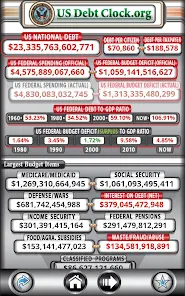
Investors wrongfooted as ‘higher for longer’ rates return to haunt markets
Zubin Al Genubi asks:
Interest alone on US debt is 1 trillion dollars a year! Anyone concerned?
Larry Williams is definite:
NOPE. NOT AT ALL.
Art Cooper, however:
*I* am certainly concerned, in the long term. When the coverage ratio on gov't debt auctions drops close to 1.0, it will be time to take meaningful action, with a major re-allocation of investment portfolios.
Larry Williams responds:
Not to worry…says MMT guys…as long as we are not gold-backed $, it's all just accounting numbers.
Kim Zussman wonders:
Reallocate to what? (he says looking around twice with stocks near ATHs)
Art Cooper suggests:
There are a universe of hard assets out there, including gold (though GLD could easily go far higher). Because I like to emulate the Sage and shop in the bargain basement, I personally find extremely distressed income-producing real estate of interest. Babies are being thrown out with the bath water.
Larry Williams writes:
The public debt is just $ in savings accounts at the Federal Reserve Bank. When it matures the Fed transfers those dollars to checking accounts (aka reserves) at the same Fed. It's just a debit of securities accounts and a credit of reserve accounts. All internal at the Fed. When gov sells new Tsy secs, the Fed debits the reserve accounts and credits securities accounts. Those $ only exist as balances in one account or the other.
Asindu Drileba adds:
David Graeber once mentioned that the US can never default on its debts since the Fed is the largest holder of Treasuries.
William Huggins comments:
its not that the US -can't- default on its debts, its that 70% of those debts are to americans. so what is the probability of americans voting to default on themselves when they have the ready alternative of printing money? more important might be whether or not the 30% foreign holders will keep playing along but that analysis is an exercise in ranking "next best alternative" for them. when one starts looking under the hood at the alternatives, its boils out like china's bank regulator said in early 2009, "except for treasuries, what can you hold? gold? you don't hold japanese government bonds or uk bonds. us treasuries are the safe-haven. for everyone, including china, it is the only option: "we hate you guys but there is nothing much we can do."
H. Humbert replies:
The Americans would be about equally unlikely to default if most of the debt was held by foreigners. If you can print money there is no need to piss off any of your "customers". It's not like things worked out super well for Argentina, at least until they hit bottom.
Apr
15
Reading (and viewing) recommendations
April 15, 2024 | Leave a Comment
From Easan Katir:
The Hall of Uselessness: Collected Essays, by Simon Leys.
Simon Leys is a Renaissance man for the era of globalization. A distinguished scholar of classical Chinese art and literature and one of the first Westerners to recognize the appalling toll of Mao’s Cultural Revolution, Leys also writes with unfailing intelligence, seriousness, and bite about European art, literature, history, and politics and is an unflinching observer of the way we live now.
From Zubin Al Genubi:
Pathogenesis: History of the World in Eight Plagues, by Jonathan Kennedy.
According to the accepted narrative of progress, humans have thrived thanks to their brains and brawn, collectively bending the arc of history. But in this revelatory book, Professor Jonathan Kennedy argues that the myth of human exceptionalism overstates the role that we play in social and political change. Instead, it is the humble microbe that wins wars and topples empires.
From Asindu Drileba:
Math Without Numbers, by Milo Beckman.
Math Without Numbers is a vivid, conversational, and wholly original guide to the three main branches of abstract math—topology, analysis, and algebra—which turn out to be surprisingly easy to grasp. This book upends the conventional approach to math, inviting you to think creatively about shape and dimension, the infinite and infinitesimal, symmetries, proofs, and how these concepts all fit together. What awaits readers is a freewheeling tour of the inimitable joys and unsolved mysteries of this curiously powerful subject.
Peter Ringel is watching:
Voltaire: The Rascal Philosopher
I discovered a terrible knowledge gap and missed details of a great one. so many angles to be impressed. his writings seem to be the least of it. he even gamed the king's lottery and won with a group of investors & mathematicians.
William Huggins suggests a somewhat older work:
A General History of The Most Prominent Banks, by Thomas H. Goddard, published in 1831.
its dry - but if you are interested in the 1819 panic, there are some good details. the book is mistitled imo as 3/4 of its pages and 2/3 of its text centers on the history of central/national banking in the united states from 1786 through 1831 (publication). on titular matters, it had a couple of interesting tidbits on the bank of genoa and some "interesting" statistical information for archivists but there are better modern sources on major banks in venice, the netherlands, england, and france (for example, the author skips over how the bankers of geneva funded the french revolution to knock the bank of genoa off its perch, etc). i suspect such deficiencies are because the text was designed as ammo in the "bank wars" of the early 1830s rather than a deep exposition on titular topics.
its exposition on us matters feels remarkably haphazard, i presume because the author's intended audience would have the context to appreciate why it includes what it does, including a description of the bank of north america, hamilton's report to congress on the need for a bank, and a brief on the First Bank of the US. where it begins to shine is in the next set of docs, which includes an auditor's report and statement by the president of the Second Bank of the US on how the panic of 1819 was navigated. it follows with mcduffie's 1930 report to congress on the SBUS (includes more details on the rise and fall of FBUS), and closes with a statistical archive of the "monied institutions of the US" and an appendix on how banking and commercial exchange granularly worked in the 1800s.
Stefan Jovanovich comments:
I was puzzled by the "decline and fall" description, since the Bank did not fail but simply had its charter expire without renewal because George Clinton did not like what Thomas Willing had done as President of the Bank. (Clinton failed to cast what would have been the winning vote for renewal.)
William Huggins responds:
"fall" referring to its near brush with survival, not any sort of mismanagement or fraud as in 1819. mcduffie describes FBUS as the victim of partisan politics, but one of such import that the same party who killed it started calling for a replacement almost immediately.
Stefan Jovanovich adds:
They wanted what Willing would not give them - a central bank that would do what the Fed does now - discount the Treasury's IOUs at par. Can't have a war without that.
Apr
14
Lunar cycles, from Steve Ellison
April 14, 2024 | Leave a Comment
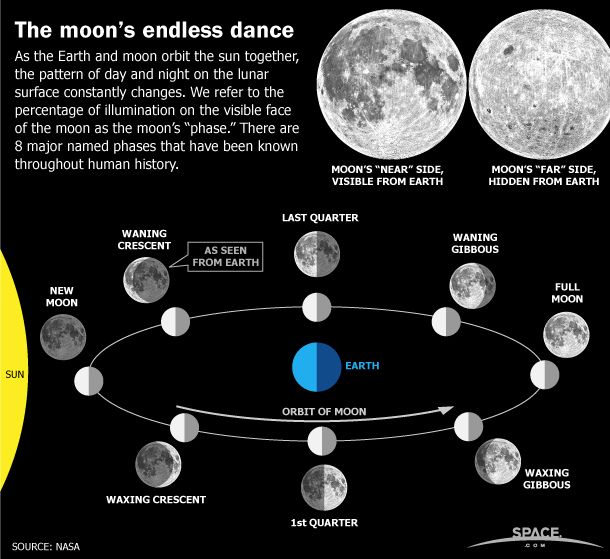
It has been claimed that the stock market was bearish during the interval from the full moon to the new moon. I wrote a Python script that tested this theory and found it wanting.
The Python script is on my GitHub page. You will also need the csv files "new_moon_date_components.csv" and "full_moon_date_components.csv" (in the same GitHub directory) if you want to follow along at home.
The Github page shows the steps, but there is additional explanation on this X thread (hit "Show replies" to see all steps.)
Apr
13
Memorylessness, from Asindu Drileba
April 13, 2024 | Leave a Comment
This is a topic that keeps appearing when people talk about probability. I don't seem to have a good intuition for it. Is the stock market with memory or without memory? Why? What would be your intuitive explanation of what memory is?
From Memorylessness:
In probability and statistics, memorylessness is a property of certain probability distributions. It usually refers to the cases when the distribution of a "waiting time" until a certain event occurs does not depend on how much time has elapsed already. To model memoryless situations accurately, we must constantly 'forget' which state the system is in: the probabilities would not be influenced by the history of the process.
Only two kinds of distributions are memoryless: geometric distributions of non-negative integers and the exponential distributions of non-negative real numbers.
Humbert H. responds:
Of course it's not completely memoryless otherwise there would be no point to any spec of this list trying to beat the market. It's ALMOST memoryless, and that's why it's hard to beat, but there are still some irregularities, like days of the week, month, season, reaction to events, like increased volatility following a big change. It would have a lot more memory if people didn't try to take advantage of the irregularities, because market participants have emotions and also information doesn't spread instantaneously even in this day and age.
Eric Lindell comments:
Blackjack is with memory, provided the number of decks is finite. As you play with more and more decks, the game becomes less memory-dependent. A small player in a huge market makes trades that are less memory-dependent than a big player's trades. The bigger the portion of the total market a trader trades, the more memory-dependent it becomes.
Wikipedia's discussion of a memoryless probability distribution refers to a poisson process. The time before the next car arrives at a toll booth doesn't depend on the time since the last car arrived — provided the cars' arrivals are truly random. This would NOT be the case with a nonrandom distribution, as when more cars arrive per minute during rush hour.
Zubin Al Genubi writes:
A normal distribution of a series of events, indicates that the events are independent of each other, in that the occurrence of one does not affect the probability of another. Of course the market has memory and emotion. We are looking for the regularities to trade that are not random with a high degree of confidence.
Larry Williams agrees:
Amen! People react in similar fashion to events and those reactions create patterns. Plus, there are unique time elements to many markets; jewelry is mostly sold at Christmas, hogs live and die in 18 months etc.
Penny Brown adds:
Investors who suffer a big, sudden decline in a stock remember it. Often they vow to hold on until they are made "whole". This can cause a stock to sell off as it approaches that spot. But if the stock clears this area, the weak hands are gone, and the stock can move up sharply.
Big Al suggests:
For further study, re the quality of "memoryless" and possible applications:
Also, Vic has referred to Markov processes relating to the market calendar at the top of this site.
Apr
11
Uncle Roy on emotions and trading
April 11, 2024 | Leave a Comment
Taking The Emotion Out Of Trading | "Off The Tape" with Roy Niederhoffer
Guy is joined by Kaitlin Malin, COO at iConnections, to interview Roy Niederhoffer, president of R.G. Niederhoffer. They discuss Roy’s background as a teenage entrepreneur and how he learned about the markets, making emotional mistakes in trading/behavioral biases, how allocators should think about sharp ratios, R.G. Niederhoffer’s investment strategy, drivers of volatility in the markets, following trends, how his love of music has helped him with investing and AI/machine learning.
Apr
10
Gould, Fisk, and Black Friday
April 10, 2024 | Leave a Comment

From Wall Street and the Wilds, by A. W. Dimock, pages 178-180:
Gold business improved and my balance was growing when the Fisk and Gould gang entered the gold market. Fortunately I had not the capital to enter the lists with them and besides I was afraid. Their methods lacked sense and represented brute force only and the corner they were running was foredoomed to destruction, but their immediate power was uncanny. For they not only had money, but they controlled a bank which would have certified their checks in payment for all the gold on earth and they so controlled the courts that they could have filled their pockets with blank injunctions and mandamuses or even the profane form of the latter suggested by Fisk himself.
The price of gold had been run up to a point where it was impossible to hold it and ruin was in sight. Fisk's best suggestion to force mercantile and other shorts to cover was to advertise names and amounts in the morning journals with the warning that the price would be at once put to two hundred unless all the shorts covered. There was sense enough in the gang to suppress that manifesto of folly, for Gould had a scheme of sheer diabolism brooding in his more subtle mind.
[ … ]
That the corner was broken was clear to me and that a crash was coming seemed certain, so I sold and I sold and I sold.
[ … ]
Though I had made many a fine turn as the market reeled back and forth that day and my books at its close showed cash assets that would put financial trouble behind me for all time, yet a deadly fear held me in its grip. For my chief sales had been to the Gould broker, Speyers, and the Gould purpose to repudiate these purchases was now apparent. The intent to repudiate all purchases and enforce all sales, was confirmed by the course of the swindlers on the following day. The robbery had been deliberate and the FiskGould brokers who had been deputed to sell received instructions to make no sales to Speyers but to sell to others without regard to what Speyers was bidding.
From The Wizard of Wall Street and His Wealth, by Trumbull White:
Fisk, in his dark back office across the street, with his coat off, swaggered up and down, ‘a big cane in his hand,’ and called himself the Napoleon of Wall street. He really believed that he directed the movement, and while the street outside imagined that he and Gould were one family, and that his purchases were made for the clique, Gould was silently flinging away his gold at any price he could get for it.
Whether Fisk really expected to carry out his contract, and force the bears to settle or not, is doubtful, but the evidence seems to show that he was in earnest and felt sure of success. His orders were unlimited. ‘Put it up to 150,’ was one which he sent to the gold-room. Gold rose to 150. At length the bid was made—‘160 for any part of five millions,’—‘162 for five millions.’ No answer was made and the offer was repeated—‘162 for any part of five millions.’ A voice replied, ‘Sold one million at 62,’ The bubble suddenly burst, and within fifteen minutes, amid an excitement without parallel even in the wildest excitements of the war, the clique workers were literally swept away and left struggling by themselves, bidding still 160 for gold in millions which no one would any longer take their word for, while the premium sank rapidly to 135. A moment later the telegraph brought the government order from Washington to sell, and the result was no longer possible to dispute. Mr. Fisk had gone too127 far, while Mr. Gould had secretly weakened the ground under his feet.
[ … ]
Every person involved in the affair seemed to have lost money, and dozens of brokers were swept from the street. But Mr. Jay Gould and Mr. James Fisk, Jr., continued to reign over Erie, and no one can say that their power or their credit was sensibly diminished by a shock which, for the time, prostrated all the interests of the country.
For an overview: Black Friday (1869)
some items about Jay Gould. he was expert surveyor, writer, accountant, lawyer, metal tinkerer, and unblemished family man. passed away with 100 million dollar estate in 1892. had a grandson who was US squash champ, whose trophy i have.
Apr
9
Ideas for markets from Bill James
April 9, 2024 | Leave a Comment

some consilient ideas for markets from The Mind of Bill James, by Scott Gray:
(1) the strikeout rate is directly indicative of the longevity of a career. (2) the best managers are easy going. (3) minor-league performance is predictive of major league performance. (4) circular results: when something happens to offense, it also will happen to defense.
(5) having a runner on first base is bad - it's negative. (6) stealing is a negative. teams leading in steals do worse. (7) batting order doesn't matter. (8) a team playing in a hitter's park will have stronger pitchers.
similarity of scores are predictive: (9) the ratio between a team's wins and losses will be the same as the square of runs scored / runs allowed. (10) devise theories to explain how things are connected to one another.
Apr
7
Interesting research
April 7, 2024 | Leave a Comment
Kim Zussman is optimistic:
Age and High-Growth Entrepreneurship
Pierre Azoulay, Benjamin F. Jones, J. Daniel Kim, and Javier Miranda
American Economic Review: Insights
Vol. 2, No. 1, March 2020
Abstract
Many observers, and many investors, believe that young people are especially likely to produce the most successful new firms. Integrating administrative data on firms, workers, and owners, we study start-ups systematically in the United States and find that successful entrepreneurs are middle-aged, not young. The mean age at founding for the 1-in-1,000 fastest growing new ventures is 45.0. The findings are similar when considering high-technology sectors, entrepreneurial hubs, and successful firm exits. Prior experience in the specific industry predicts much greater rates of entrepreneurial success. These findings strongly reject common hypotheses that emphasize youth as a key trait of successful entrepreneurs.
Asindu Drileba adds:
This infographic is really good.
Big Al finds value in experience:
Neoclassical Theory Versus Prospect Theory: Evidence from the Marketplace
John A. List
ISSUE DATE June 2003
Abstract
Neoclassical theory postulates that preferences between two goods are independent of the consumer's current entitlements. Several experimental studies have recently provided strong evidence that this basic independence assumption, which is used in most theoretical and applied economic models to assess the operation of markets, is rarely appropriate. These results, which clearly contradict closely held economic doctrines, have led some influential commentators to call for an entirely new economic paradigm to displace conventional neoclassical theory e.g., prospect theory, which invokes psychological effects. This paper pits neoclassical theory against prospect theory by investigating three clean tests of the competing hypotheses. In all three cases, the data, which are drawn from nearly 500 subjects actively participating in a well-functioning marketplace, suggest that prospect theory adequately organizes behavior among inexperienced consumers, whereas consumers with intense market experience behave largely in accordance with neoclassical predictions. The pattern of results indicates that learning primarily occurs on the sell side of the market: agents with intense market experience are more willing to part with their entitlements than lesser-experienced agents.
Apr
6
From Thinking Fast and Slow:
I had one of the most satisfying eureka experiences of my career while teaching flight instructors in the Israeli Air Force about the psychology of effective training. I was telling them about an important principle of skill training: rewards for improved performance work better than punishment of mistakes. This proposition is supported by much evidence from research on pigeons, rats, humans, and other animals.
When I finished my enthusiastic speech, one of the most seasoned instructors in the group raised his hand and made a short speech of his own. He began by conceding that rewarding improved performance might be good for the birds, but he denied that it was optimal for flight cadets. This is what he said: “On many occasions I have praised flight cadets for clean execution of some aerobatic maneuver. The next time they try the same maneuver they usually do worse. On the other hand, I have often screamed into a cadet’s earphone for bad execution, and in general he does better on his next try. So please don’t tell us that reward works and punishment does not, because the opposite is the case.”
This was a joyous moment of insight, when I saw in a new light a principle of statistics that I had been teaching for years. The instructor was right—but he was also completely wrong! His observation was astute and correct: occasions on which he praised a performance were likely to be followed by a disappointing performance, and punishments were typically followed by an improvement. But the inference he had drawn about the efficacy of reward and punishment was completely off the mark. What he had observed is known as regression to the mean, which in that case was due to random fluctuations in the quality of performance. Naturally, he praised only a cadet whose performance was far better than average. But the cadet was probably just lucky on that particular attempt and therefore likely to deteriorate regardless of whether or not he was praised. Similarly, the instructor would shout into a cadet’s earphones only when the cadet’s performance was unusually bad and therefore likely to improve regardless of what the instructor did. The instructor had attached a causal interpretation to the inevitable fluctuations of a random process.
Apr
5
Disruption wins: 3% of companies created all the wealth, from Humbert H.
April 5, 2024 | Leave a Comment
From a Bank of America report:
Understanding which breakthroughs are on the cusp of commercialization has never been more important. In the past 100 years, 3% of companies generated nearly 100% of global net wealth (source: Bessembinder), and roughly a third of the S&P 500 index has been replaced since 2015. In our separate primer picks report, we highlight the enablers to access these breakthroughs theme with a combined market cap of c.$16tn. We identify 30 breakthroughs & tech evolutions across AI, computing, robots, communication, health tech, energy and mobility.
Big Al adds:
Just for reference, combined cap of MSFT, AAPL, AMZN, NVDA, META, and GOOGL is ~12.5T.
H. Humbert comments:
The problem with breakthroughs is this: most of the wealth is created by breakthroughs, but most companies working on breakthroughs or trying to commercialize them fail. Once the breakthrough has been so successfully commercialized that some specific companies are identified with it, they're prices are typically so high that you have to bet on their continuous growth, and if you do, you will often lose, and of course sometimes you will keep winning for a long time. "Understanding breakthroughs on the cusp of commercialization" seems like a good goal, but it's not clear it can be turned into a successful investment strategy. Cathie Woods attempts to ride these waves, so this whole approach isn't exactly a well-kept secret.
Andy Aiken writes:
What we call productive disruption (i.e., technology adoption that has sufficient economies of scale that above-market returns are available to investors) is in fact two “laws” at work: Moore’s law and Wright’s law.
Although in recent years we have not continued the log-linear progression of miniaturization obtained in an earlier time, Wright’s law (cost of technology decreases as the cumulative production of the technology increases - later famously marketed by Bruce Henderson and BCG as the “experience curve”) has continued to hold. It my view, it’s one of the few reasons that even headline inflation isn’t in double digits at the moment.
The challenge is to find the innovative companies with technology improvements on the scale of Moore’s law with cost reductions that outpace the cumulative production of the technology. At least, that’s what I look for.
Apr
2
Unintended (intended) consequences, from Kim Zussman
April 2, 2024 | Leave a Comment
California Restaurants Cut Jobs as Fast-Food Wages Set to Rise
Chains lay off workers, shave hours ahead of state minimum-wage increase
Big Al suggests:
Jacob Vigdor on the Seattle Minimum Wage, Mar 4 2019
Jacob Vigdor of the University of Washington talks with EconTalk host Russ Roberts about the impact of Seattle's minimum wage increases in recent years. Vigdor along with others from the Evans School of Public Policy and Governance have tried to measure the change in employment, hours worked, and wages for low-skilled workers in Seattle. He summarizes those results here arguing that while some workers earned higher wages, some or all of the gains were offset by reductions in hours worked and a reduction in the rate of job creation especially for low-skilled workers.
Archives
- October 2026
- September 2026
- August 2026
- July 2026
- June 2026
- May 2026
- April 2026
- March 2026
- February 2026
- January 2026
- December 2025
- November 2025
- October 2025
- September 2025
- August 2025
- July 2025
- June 2025
- May 2025
- April 2025
- March 2025
- February 2025
- January 2025
- December 2024
- November 2024
- October 2024
- September 2024
- August 2024
- July 2024
- June 2024
- May 2024
- April 2024
- March 2024
- February 2024
- January 2024
- December 2023
- November 2023
- October 2023
- September 2023
- August 2023
- July 2023
- June 2023
- May 2023
- April 2023
- March 2023
- February 2023
- January 2023
- December 2022
- November 2022
- October 2022
- September 2022
- August 2022
- July 2022
- June 2022
- May 2022
- April 2022
- March 2022
- February 2022
- January 2022
- December 2021
- November 2021
- October 2021
- September 2021
- August 2021
- July 2021
- June 2021
- May 2021
- April 2021
- March 2021
- February 2021
- January 2021
- December 2020
- November 2020
- October 2020
- September 2020
- August 2020
- July 2020
- June 2020
- May 2020
- April 2020
- March 2020
- February 2020
- January 2020
- December 2019
- November 2019
- October 2019
- September 2019
- August 2019
- July 2019
- June 2019
- May 2019
- April 2019
- March 2019
- February 2019
- January 2019
- December 2018
- November 2018
- October 2018
- September 2018
- August 2018
- July 2018
- June 2018
- May 2018
- April 2018
- March 2018
- February 2018
- January 2018
- December 2017
- November 2017
- October 2017
- September 2017
- August 2017
- July 2017
- June 2017
- May 2017
- April 2017
- March 2017
- February 2017
- January 2017
- December 2016
- November 2016
- October 2016
- September 2016
- August 2016
- July 2016
- June 2016
- May 2016
- April 2016
- March 2016
- February 2016
- January 2016
- December 2015
- November 2015
- October 2015
- September 2015
- August 2015
- July 2015
- June 2015
- May 2015
- April 2015
- March 2015
- February 2015
- January 2015
- December 2014
- November 2014
- October 2014
- September 2014
- August 2014
- July 2014
- June 2014
- May 2014
- April 2014
- March 2014
- February 2014
- January 2014
- December 2013
- November 2013
- October 2013
- September 2013
- August 2013
- July 2013
- June 2013
- May 2013
- April 2013
- March 2013
- February 2013
- January 2013
- December 2012
- November 2012
- October 2012
- September 2012
- August 2012
- July 2012
- June 2012
- May 2012
- April 2012
- March 2012
- February 2012
- January 2012
- December 2011
- November 2011
- October 2011
- September 2011
- August 2011
- July 2011
- June 2011
- May 2011
- April 2011
- March 2011
- February 2011
- January 2011
- December 2010
- November 2010
- October 2010
- September 2010
- August 2010
- July 2010
- June 2010
- May 2010
- April 2010
- March 2010
- February 2010
- January 2010
- December 2009
- November 2009
- October 2009
- September 2009
- August 2009
- July 2009
- June 2009
- May 2009
- April 2009
- March 2009
- February 2009
- January 2009
- December 2008
- November 2008
- October 2008
- September 2008
- August 2008
- July 2008
- June 2008
- May 2008
- April 2008
- March 2008
- February 2008
- January 2008
- December 2007
- November 2007
- October 2007
- September 2007
- August 2007
- July 2007
- June 2007
- May 2007
- April 2007
- March 2007
- February 2007
- January 2007
- December 2006
- November 2006
- October 2006
- September 2006
- August 2006
- Older Archives
Resources & Links
- The Letters Prize
- Pre-2007 Victor Niederhoffer Posts
- Vic’s NYC Junto
- Reading List
- Programming in 60 Seconds
- The Objectivist Center
- Foundation for Economic Education
- Tigerchess
- Dick Sears' G.T. Index
- Pre-2007 Daily Speculations
- Laurel & Vics' Worldly Investor Articles
