Aug
24
Meaning of “Counting”, from Asindu Drileba
August 24, 2024 | Leave a Comment

I remember an interview by Vic where he said he did a lot of "counting". Does he mean combinatorics? Or something else. What are some resources where he has talked about this "counting" in more detail?
William Huggins replies:
he literally meant count the data/do the math. at its most basic, statistics is about counting and comparing to the results we would have expected from randomness. too many people form their beliefs because they were told something, or were presented with cherry-picked "supporting" data so the chair's injunction has been to actually check before committing capital.
Zubin Al Genubi adds:
Count the number of: Private Jets, pretty girls, closed businesses, for lease signs, big market drops, increase in vix, number of down days, number of days since last high/low, volume of trades, bids, offers, crashes, all time highs, stocks at new highs/ lows, crosses of round numbers, cigarette butt length, change in price, etc etc.
Test: is number above or below mean/ median? How many standard deviations away from mean? What happened after the time of count?
Penny Brown adds more:
I'll add to the list: the price of thoroughbred horses sold at auction and the length of women's dresses. (long hem below knee is bearish as was style in 70s, short hem in mini skirts is bullish)
Asindu Drileba responds:
Thank you. "Test Everything" is definitely something that keeps coming up whenever I listen to the chair.
Humbert H. asks:
In all these years I could never understand how this approach can coexist with affirming the reality of the ever-changing cycles. Like how do you know when to trust this counting and when the cycles changed on you?
Laurence Glazier offers:
Music is the pleasure the human mind experiences from counting without being aware that it is counting.
- Gottfried Leibniz
Apr
13
Memorylessness, from Asindu Drileba
April 13, 2024 | Leave a Comment
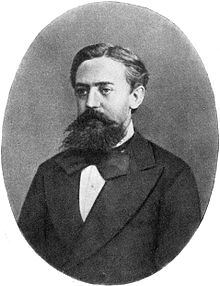
This is a topic that keeps appearing when people talk about probability. I don't seem to have a good intuition for it. Is the stock market with memory or without memory? Why? What would be your intuitive explanation of what memory is?
From Memorylessness:
In probability and statistics, memorylessness is a property of certain probability distributions. It usually refers to the cases when the distribution of a "waiting time" until a certain event occurs does not depend on how much time has elapsed already. To model memoryless situations accurately, we must constantly 'forget' which state the system is in: the probabilities would not be influenced by the history of the process.
Only two kinds of distributions are memoryless: geometric distributions of non-negative integers and the exponential distributions of non-negative real numbers.
Humbert H. responds:
Of course it's not completely memoryless otherwise there would be no point to any spec of this list trying to beat the market. It's ALMOST memoryless, and that's why it's hard to beat, but there are still some irregularities, like days of the week, month, season, reaction to events, like increased volatility following a big change. It would have a lot more memory if people didn't try to take advantage of the irregularities, because market participants have emotions and also information doesn't spread instantaneously even in this day and age.
Eric Lindell comments:
Blackjack is with memory, provided the number of decks is finite. As you play with more and more decks, the game becomes less memory-dependent. A small player in a huge market makes trades that are less memory-dependent than a big player's trades. The bigger the portion of the total market a trader trades, the more memory-dependent it becomes.
Wikipedia's discussion of a memoryless probability distribution refers to a poisson process. The time before the next car arrives at a toll booth doesn't depend on the time since the last car arrived — provided the cars' arrivals are truly random. This would NOT be the case with a nonrandom distribution, as when more cars arrive per minute during rush hour.
Zubin Al Genubi writes:
A normal distribution of a series of events, indicates that the events are independent of each other, in that the occurrence of one does not affect the probability of another. Of course the market has memory and emotion. We are looking for the regularities to trade that are not random with a high degree of confidence.
Larry Williams agrees:
Amen! People react in similar fashion to events and those reactions create patterns. Plus, there are unique time elements to many markets; jewelry is mostly sold at Christmas, hogs live and die in 18 months etc.
Penny Brown adds:
Investors who suffer a big, sudden decline in a stock remember it. Often they vow to hold on until they are made "whole". This can cause a stock to sell off as it approaches that spot. But if the stock clears this area, the weak hands are gone, and the stock can move up sharply.
Big Al suggests:
For further study, re the quality of "memoryless" and possible applications:
Also, Vic has referred to Markov processes relating to the market calendar at the top of this site.
Mar
24
Book recommendation, from Zubin Al Genubi
March 24, 2023 | Leave a Comment

Pirate Latitudes, by Michael Crichton. Aubriesque tale of privateers and Spanish Galleons.
As the SPEC list is about books, as well as markets, counting, and barbeque.
William Huggins adds:
single best book on the history of finance that i've come across is William Goetzmann's Money Changes Everything. He's a Yale finance prof with a background in art history and archeology and its shows throughout the book as he looks at the roots of our toolkit (sumerian word for "baby cow" is the same word they used for "interest", etc). a very good description of the 1720 bubble with the hypothesis that the bubble was a reasonable reaction to the shifting expectations around insurance companies and the lines of risk they could cover. he also suggests that Venetian gov debt (1172) snowballed into the creation of western capital markets, which in turn propelled the west ahead of "the rest" (to steal a ferguson quote). three solid chapters on the tools imperial China used to increase its "span of control" over its rugged territory. 10/10.
(I used to use it as the required reading in my history course until I realized too many were balking at its size)
Jeffrey Hirsch responds:
Appreciate the reco Mr. Sogi. Almost done with Pam V’s reco on Keith Richard’s autobiography, Life, which is far out. Here’s one from me, The Immortal Irishman, by Timothy Egan. Irish revolutionary becomes a Civil War general. Adventurous tale across many continents.
Laurel Kenner writes:
I offer Harpo Speaks, the autobiography of Harpo Marx, the silent brother. Plenty of poker, speculation, and spectacular success, including an account of his Soviet tour, to entertain this List well.
Pamela Van Giessen responds:
Harpo Speaks is fantastic. For a meditative introspective read on things out of our control and how the body copes A Match to the Heart, by Gretel Ehrlich.
Big Al suggests:
I will recommend The Biggest Bluff: How I Learned to Pay Attention, Master Myself, and Win, by Maria Konnikova.
First of all, it's just an entertaining, well-written story. But in her study of poker and portrait of one of the best professional players, Eric Seidel, there are many lessons for traders.
Penny Brown writes:
I recently re-read the cult classic, The Moviegoer, by Walker Percy. It has nothing to do with trading but the main character is a stockbroker. Read it for the wonderful prose and the delineation of Southern characters with great dialogue.
Also, re-read A Fan's Notes, Fredrick Exley's memoir of growing up under shadow of his father's football fame in Watertown. It's amazing that this book even got written since Exley makes three trips to mental institutions where he undergoes electro-shock and insulin therapy and was an inveterate alcoholic for his entire life. You can see the influence of Nabokov and Edmund Wilson (among his favorite writers) in his prose style.
And then I read Embrace the Suck - a book I literally found at my feet on the sidewalk - hey, the price was right - and I assumed it had a special message for me. It certainly did. It describes the training undergone to become a Navy SEAL including the infamously horrid "Hell Week" that resulted in the death of one participant. It has lots of lessons for traders as it extols the virtues of discipline, focus, planning and most of all, a willingness to embrace suffering, as a means of moving beyond mediocrity.
One guy's way of shaping up for the ordeal of SEAL training was to run the Badlands Ultramarathon - a little 100 mile race through the desert at temperatures over 110.
Okay, I'm not going to try that - never could have even in my prime. But it got me out of my chair committed to doing a full set of Bikram's yoga postures including the ones I hate because I can't do it - Salabhsana - or hate because it hurts - Supta-Vajrasana. As the author says, "you've got to embrace the suck everyday."
Gary Boddicker adds:
I recently read Mule Trader: Ray Lum’s Tales of Horses, Mules, and Men. I originally picked it up for the regional interest. Ray was based about 60 miles down Hwy 61 from me in Vicksburg, and traded mules and livestock throughout the Mississippi Delta…but, it turns out a few of the Chair’s favorite writers, Dr.Ben Green and Elmer Kelton, were running buddies of Ray and are mentioned and vouch for his character in the book. Many tales of trades, moving the herds as the tractors slowly replaced them from California to the Delta. In one case, he bought 80,000 horses in South Dakota, and arb’d them to where they could be used. The book rambles a bit, as it is essentially an oral history, but many lessons within.
It brought to mind a discussion I had years ago over dinner with an buddy of mine who farms about 20,000 acres in NE Louisiana. “Gary, there is isn’t a real farmer in Louisiana who picks up that government agricultural census and doesn’t mark down that he owns at least one mule. We are damn slow to admit we gave ‘em up.” I haven’t fact checked him, but a betting man says the mule census is Louisiana is overstated.
Gyve Bones responds:
I have two copies of that book… one autographed by the re-publishing editor. It’s a great book.
Dec
7
Trial and error, from Big Al
December 7, 2022 | Leave a Comment
Watching Victoria via PBS Masterpiece sub, and it's shown that, during the 19th century, one treatment for syphilis was basically a mercury sauna, inhaling the vapors - yikes!
The history of syphilis is an interesting case for seeing how quack medical treatments, such as mercury, were applied and killed people even more quickly. Of course, one shouldn't judge too harshly as they were treating things of which they had no understanding.
The relevance to trading is that humans have an impulse, when confronted with challenges they don't understand, to resort to superstition and to believe anything that is claimed with great confidence.
Penny Brown notes:
Flaubert took the mercury treatment for syphilis and as a result his tongue turned blue.
Laurel Kenner adds:
Qin Shi Huang, first emperor of China, drank mercury-infused wine to attain eternal life. Rivers of mercury surrounded his burial chamber, a depiction of China. Qin died at 49.
Gyve Bones writes:
We saw examples of that in the recent pandemic. At first "masks don't work. Don't wear masks." then… "Everyone must wear a mask at all times, even alone outside or in a car." Then "The virus stops dead in the vaccinated person, who will not get Covid, and won't spread it to others." then… "Anthony Fauci contracts COVID three times, but is certain it would have been worse had he not been quad-jabbed."
Now there's this disturbing study which shows the effects on infant cord blood and their immune systems from mothers who have been infected with COVID.
Henry Gifford comments:
The early instruction for people to not wear masks was so that security cameras could see people’s faces. The police seem to really love security cameras with an enthusiasm that strikes me as going above and beyond any usefulness to “fight crime”.
There was the time a landlord in NYC put a camera outside a tenant’s door to prove if the tenant was using the apartment as a “primary residence”, and would therefore still be entitled to rent protection or not. The tenant’s boyfriend put bubble gum on the lens and was promptly hunted down and arrested and charged with every crime the cops could think of, with an enthusiasm certainly not caused by anyone’s love for a NYC landlord.
Not being seen clearly on security cameras was, if I remember correctly, sometimes even stated as the reason to not wear masks, which made me wonder – if they think masks work, more people dying is OK as long as people can be seen on cameras?
Pamela Van Giessen responds:
Henry — There exists decades of research that show that masks do not reduce transmission. I have yet to see meaningful evidence (research or real world) that shows that they do work. The current situation in China would seem real world validation of the lack of mask effectiveness. Lockdowns don’t seem to work much either. Most people don’t die from covid either. They don’t even get very sick.
Henry Gifford writes:
I tend to believe things if they can be measured, if the measurements can be repeated by others, and if they can be explained by the laws of physics. I tend to not believe anything not meeting these three criteria. As the owner and fairly regular user of over fifty measuring instruments, the measuring part often means measured by me.
Nov
16
Tells
November 16, 2022 | Leave a Comment

i have been asked what signals Mr. Bankman gave of wrongness. khaki shorts, effective altruism, tremendous gifts to 46 and hope of giving 1 billion more, entire family interconnected in supposedly altruistic causes…virtue signaling - what else?
smartest guy in room, stanford professors in family, lover of video games, naming rites. frequent use of curse words. first name basis with head of sec. wanted to be first trillionaire, use of standard of silicon valley " it sucks" in "heartfelt" apology. walked out of meeting with regulators with one crucial demand " need more ubers".
Mr. Bankman's activities and interconnected firms has been compared to Enron, and Madoff, but I would add it to Bernie Cornfeld at IOS. the only thing missing is sex.
Barry Gitarts writes:
- Renaming Miami stadium to "FTX".
- Running a crypto company but sponsoring anti-crypto legislation.
- Talked about how they made so much money arbitraging the "kimchi premium", when no one else in the industry could get around the capital controls of South Korea.
- Badly out of shape and was always visibly shaking (now known to be a result of strong stimulants).
- Goes to congressional hearings with his shoelaces untied.
- Arrogant against critics online, tweets out: "Sell me all your SOL at $3 than F*CK off" in response to an account that asked him what is going on with the price of Solana which he is a big backer of.
- Only achieved a bronze level after playing the video game League of legends for years.
- Playing the video game he is so bad at while on important calls like trying to raise money from Sequoia capital.
- Claims to be frugal only driving a toyota corolla but lives in a $40M condo.
Big Al adds:
Misleading statements?
FTX US, Four Others Ordered to Correct FDIC Insurance Claims
Agency ramping up efforts to crack down on misleading comments
Follows similar action against bankrupt crypto firm Voyager
The Federal Deposit Insurance Corporation issued letters to five companies, including crypto exchange FTX US, demanding that they take immediate steps to correct “false or misleading statements” about certain products being eligible for insurance protection.
John Floyd asks:
I find it interesting delving into how this can help us become better traders in large part by recognizing the human psychology at play here. Is it as simple as if it looks to good to be true it is? Or a filter on linguistic frequency relative to price movement? Or a filter on price movement relative to one's expectations of prospective fundamentals? I can remember being in a room of 10-20 people in 1998 and saying we all own 85% plus of Russia's local currency debt….is that a bad thing and what can go wrong?
Clearly there were smart and successful investors/traders who waived their usual safeguards….what can we learn from this?
Nils Poertner suggests:
I think every company, every group, etc should have at least one person (better a whole team) which only job is to constantly imagine the complete opposite of what the group is doing or thinking.at the moment…
Big Al again:
It also helps to have experienced people on board:
Ultimate Bet Scandal Lawyer Daniel Friedberg at Centre of FTX Crypto Crash
The poker world was shocked to learn that one of the main players in the FTX crypto crash is none other than Daniel Friedberg, the attorney who was in it up to his neck in the Ultimate Bet and Absolute Poker scandals of the late noughties.
Easan Katir writes:
An anecdotal tell with a sample size of one: When I was managing an emerging markets fund, while doing due diligence on the island of Mauritius I met a young fellow who looked a lot like SBF who was guaranteeing his investors that he would profit 50% each year. I advised him to never guarantee anything, since markets are…well, y'know, fickle. He didn't listen and kept repeating his guarantee, with the predictable result: big losses, angry investors.
What strikes me is the same body type: large round head, gangly, same slightly vacant expression… probably coincidence…
Penny Brown suggests:
All movie stars (Matt Damon) and celebrities (Giselle & Brady, Naomi Osaka) the new shoe shine boys Joe Kennedy warned against?
Jan
19
Rate hikes and stock market returns, from Zubin Al Genubi
January 19, 2022 | Leave a Comment
From Marketwatch.
As it turns out, during so-called rate-hike cycles, which we seem set to enter into as early as March, the market tends to perform strongly, not poorly.
In fact, during a Fed rate-hike cycle the average return for the Dow Jones Industrial Average DJIA is nearly 55%, that of the S&P 500 SPX is a gain of 62.9% and the Nasdaq Composite COMP has averaged a positive return of 102.7%, according to Dow Jones, using data going back to 1989 (see attached table). Fed interest rate cuts, perhaps unsurprisingly, also yield strong gains, with the Dow up 23%, the S&P 500 gaining 21% and the Nasdaq rising 32%, on average during a Fed rate hike cycle.
Penny Brown wonders:
Very surprising. I am wondering why there is a mantra: "don't fight the fed." And "three hikes and a stumble."
Vic adds:
not mentioned is that the average fed rate increase cycle lasts 5 years. there have only been 13 of them since the fed was founded in 1910. usually these is a run of 15 increases once they turn from red to black.
i believe that the fed will not raise until the S&P is much stronger. a very nice close today (18 Jan.)
Nils Poertner comments:
the more talk about rising rates (and neg impact on stocks) the better it is for stocks. to a point of course.
everything is taking to the extreme these days. said to my cousin "eating apples is good for health" - and he replied "eating 10 apples isn't." of course not, but for now it seems so wrt rates.
Paolo Pezzutti writes:
Over the next few days option expiration this month can be an issue for stocks in terms of volatility. Not rising rates in my humble view.
Jeffrey Hirsch agrees:
Performance during January’s option expiration week
Big Al writes:
The Fed has never been sitting on a balance sheet like this, along with the other major CB's. Plus, the aggregate amount of debt is quite high after all these years of ZIRP. This will not be a "normal" rate-hiking cycle.
Jan
2
Time for books about time
January 2, 2022 | Leave a Comment
A reader writes:
Time's Arrow by Martin Amis, is a novel which plays on topsy turvyness - everything being upside down, time is moving backwards, what is good is bad and vice versa. E.g, the pimp dishing out cash to the prostitute, doctors killing patients, and garbage men adding more trash into the bin.
In our hyper-rationale world- of cartesian thinking - those novels tease the reader and stretch imagination. Saw pics of overflowing trash bins in NYC - so at least one of the examples could be true today?
Laurence Glazier writes:
Thanks for the reference, I didn't know of this book. I have read some of his earlier, more frivolous books, and also some of his father's, Kingsley Amis. I love time-bending themes, but might find this one harrowing.
A reader adds:
inversion theme - also a link to mkts? novice trader: fundamentals first, then price action, whereas more seasoned trader can see the implicit -and more nuances, eg. house price stocks moved up in 2009, then housing boom in the US etc for yrs to come etc. or spiritually - one can find a few other things ….Castaneda /Gurdjieff - on topsy turvy ness of human perception.
Andrew Aiken writes:
Philip K.Dick’s novel, Counter-Clock World, was published in 1967. By a quirk of physics, time in this future is running backward. In this world, people disgorge whole food, greet with “Good-bye” and part with “Hello”, pregnancy ends with copulation, libraries busily eradicate books, and the dead come back to life in the world’s cemeteries. Because libraries control the availability of knowledge, they have absolute power. Even militaries and police are terrified of the libraries. A departed cult leader, whose following has continued to flourish after his death, comes back to life, with devastating implications.
Nils Poertner responds:
yeah, a number of authors of the previous centuries probably could not take it anymore with society's linear attending to the world and wrote books like these. Lewis Carroll's Through the Looking Glass is another one. some are more light hearted and fun to read than others. good for stimulation of novice traders.
Laurence Glazier comments:
Music is interesting here, as whatever I write is heard linearly, even though I sometimes create it as a non-linear fractal structure. It nonetheless works.
Wondering where the Gurdjieff Work comes in re Time’s Arrow? Phillip K Dick was certainly an extraordinary individual.
A reader responds:
Music is about vibration and energy - and more harmonious energy is good for us and vice versa. We constantly rec and send energy even if we don't think so. I'm not huge into Gurdjieff or Castaneda - only know a few bits about this topsy turvyness in perceptions and tend to concur. Would not interest others here perhaps anyway. Will have a look at Philip K Dick.
Penny Brown writes:
I loved Martin Amis's last "novel" - put it in quotes because it's more of a memoir - Inside Story which chronicles some of his early relationships and the death of his closest friend, Christopher Hitchens, and his literary father, Saul Bellow.
Laurel Kenner enthuses:
Androids DO Dream of Electric Sheep! Reading ALL Dick’s books.
Zubin Al Genubi writes:
I've read pretty much every Michael Connelly book.
Laurel Kenner adds:
I have read all of Michael Connelly, William Gibson, Alexander McCall Smith, John Grisham, John D. MacDonald, Walter Mosley, Eric Ambler, Martha Wells, Earl Derr Biggers, Robert Graves, Gene Wolfe, T.S. Eliot, George MacDonald, and Phillip K. Dick. I recommend Epictetus, Publius, Shelley, Keats, James Burnham, and Curtis Yarvin on Substack. Merry Christmas to all Specs.
Ashton Tate writes:
P.D. Ouspensky, a student of Gurdjieff wrote the novel, Strange Life of Ivan Osokin. It can relate to markets as the story tells of a man who meets a genie who is willing to grant him any wish. The man (Ivan Osokin) wishes to be able to go back in time and replay certain pivotal moments in his life with the caveat that when replaying these events he is aware of the things he did the first time in these instances so that he doesn't mess up again. The genie grants him his wish but assures him that even though he may know what not to do in replaying these scenarios, he will still make the same faulty decision anyways, to which he does, again and again. There is a rumor that this book was used as inspiration for the movie Groundhog Day.
Jeffery Rollert responds:
That idea came from Sartre, in Les Jeux Sont Fait (The Die/Dice Are Cast), and should be required reading by all.
Laurence Glazier adds:
Keith Pearson has written several light-hearted, but well-constructed novels on this theme.
Ouspensky believed in a theory of recurrence, in which lifetimes could be repeated. I don’t think that was connected to Gurdjieff’s teaching, though in Beelzebub’s Tales he suggests that themes in history repeat.
Penny Brown offers:
My greatest literary experience this year was listening to the 1862 classic, Oblomov, which came as a free addition in the Plus Catalogue (Audible). The narrator, Stephen Rudnicki, has a beautiful resonant voice and adds just the right amount of ironic inflection.
"Oblomovism" or "Oblomovshchina" is a term has made it into the vernacular as representing all the negative qualities of romantic inaction.
Kim Zussman replies:
Do you mean the qualities of an inactive lazy indolent being? The sentient women I have known would not consider such inambition very romantic.
Larry Williams adds:
Laurel did you read this one: A Friendship: The Letters of Dan Rowan and John D. MacDonald 1967-1974. Like you I read every novel he wrote.
Laurel Kenner replies:
Thanks for the tip, Larry. If you believe, as I do, that politics are not on a right-left spectrum but are more like an elliptical orbit with totalitarianism at the nadir and freedom at the apex, read Thomas Pynchon, With a salt shaker handy.
One additional recommendation: Louis-Vincent Gave published Avoiding the Punch in August, and I think it's the best book of the year. Chair and I had the pleasure of dining with him and his brilliant father, Charles, at the lamented Four Seasons restaurant and found them kindred spirits.
Some chapter titles:
The Asch experiment we inhabit
CYA, the guiding principle of our time
Fighting for relevance [central banks]
Who will survive the unfolding Marxist clash?
Are US treasuries set to fall from heaven?
Archives
- October 2026
- September 2026
- August 2026
- July 2026
- June 2026
- May 2026
- April 2026
- March 2026
- February 2026
- January 2026
- December 2025
- November 2025
- October 2025
- September 2025
- August 2025
- July 2025
- June 2025
- May 2025
- April 2025
- March 2025
- February 2025
- January 2025
- December 2024
- November 2024
- October 2024
- September 2024
- August 2024
- July 2024
- June 2024
- May 2024
- April 2024
- March 2024
- February 2024
- January 2024
- December 2023
- November 2023
- October 2023
- September 2023
- August 2023
- July 2023
- June 2023
- May 2023
- April 2023
- March 2023
- February 2023
- January 2023
- December 2022
- November 2022
- October 2022
- September 2022
- August 2022
- July 2022
- June 2022
- May 2022
- April 2022
- March 2022
- February 2022
- January 2022
- December 2021
- November 2021
- October 2021
- September 2021
- August 2021
- July 2021
- June 2021
- May 2021
- April 2021
- March 2021
- February 2021
- January 2021
- December 2020
- November 2020
- October 2020
- September 2020
- August 2020
- July 2020
- June 2020
- May 2020
- April 2020
- March 2020
- February 2020
- January 2020
- December 2019
- November 2019
- October 2019
- September 2019
- August 2019
- July 2019
- June 2019
- May 2019
- April 2019
- March 2019
- February 2019
- January 2019
- December 2018
- November 2018
- October 2018
- September 2018
- August 2018
- July 2018
- June 2018
- May 2018
- April 2018
- March 2018
- February 2018
- January 2018
- December 2017
- November 2017
- October 2017
- September 2017
- August 2017
- July 2017
- June 2017
- May 2017
- April 2017
- March 2017
- February 2017
- January 2017
- December 2016
- November 2016
- October 2016
- September 2016
- August 2016
- July 2016
- June 2016
- May 2016
- April 2016
- March 2016
- February 2016
- January 2016
- December 2015
- November 2015
- October 2015
- September 2015
- August 2015
- July 2015
- June 2015
- May 2015
- April 2015
- March 2015
- February 2015
- January 2015
- December 2014
- November 2014
- October 2014
- September 2014
- August 2014
- July 2014
- June 2014
- May 2014
- April 2014
- March 2014
- February 2014
- January 2014
- December 2013
- November 2013
- October 2013
- September 2013
- August 2013
- July 2013
- June 2013
- May 2013
- April 2013
- March 2013
- February 2013
- January 2013
- December 2012
- November 2012
- October 2012
- September 2012
- August 2012
- July 2012
- June 2012
- May 2012
- April 2012
- March 2012
- February 2012
- January 2012
- December 2011
- November 2011
- October 2011
- September 2011
- August 2011
- July 2011
- June 2011
- May 2011
- April 2011
- March 2011
- February 2011
- January 2011
- December 2010
- November 2010
- October 2010
- September 2010
- August 2010
- July 2010
- June 2010
- May 2010
- April 2010
- March 2010
- February 2010
- January 2010
- December 2009
- November 2009
- October 2009
- September 2009
- August 2009
- July 2009
- June 2009
- May 2009
- April 2009
- March 2009
- February 2009
- January 2009
- December 2008
- November 2008
- October 2008
- September 2008
- August 2008
- July 2008
- June 2008
- May 2008
- April 2008
- March 2008
- February 2008
- January 2008
- December 2007
- November 2007
- October 2007
- September 2007
- August 2007
- July 2007
- June 2007
- May 2007
- April 2007
- March 2007
- February 2007
- January 2007
- December 2006
- November 2006
- October 2006
- September 2006
- August 2006
- Older Archives
Resources & Links
- The Letters Prize
- Pre-2007 Victor Niederhoffer Posts
- Vic’s NYC Junto
- Reading List
- Programming in 60 Seconds
- The Objectivist Center
- Foundation for Economic Education
- Tigerchess
- Dick Sears' G.T. Index
- Pre-2007 Daily Speculations
- Laurel & Vics' Worldly Investor Articles
