Feb
28
Self organization, from Zubin Al Genubi
February 28, 2023 | 1 Comment

Self-Organization in Biological Systems
The concept of pattern-formation as a result of self-organization is common in such disciplines as chemistry and physics. For instance, in Chapter 1 we discussed the patterns formed by the Belousov-Zhabotinsky reaction, the ripples on a sand dune, and Bénard convection.
The challenge, is to see whether particular instances of adaptive, group-level pattern formation can be explained largely or fully in terms of a small set of relatively simple behavioral rules for members of the group. These rules are often implemented in the form of a mathematical model or simulation.
Interesting definitions found useful for markets:
A Pattern is an arrangement in time or space. It is created internally without external direction. It is created locally by individual element's reaction to nearby changes without larger awareness or control. The complex patterns result from simple local rules. Very market appropriate.
How does self organization occur? Random fluctuations and positive feedback can form patterns or trends. Humans follow rules, I do what you do. Sygmergy, information from work in progress, such as chart patterns, can accelerate creation of patterns.
Self organization in complex systems exhibits emergent properties known as changing cycles such as Bernard cells. Change occurs due to positive and negative feedback, outside influence, information from neighbors, stigmergy. Self organizing systems can be quantified and modeled! They tend to be stable but can exist in chaotic states, chaos meaning without pattern. Alternatives to self organization are: Leaders (powell), blueprint, recipe.
Nils Poertner writes:
probably a good book to read indeed - thanks for sharing.
yeah. in the human created world - we tend to think leaders run the show - and they do- to some extent
but obviously it is left-brainy to think that is all and not a way make money from (e.g ppl looking at the lips of Powell to trade the next tick…..close to insanity - that is). it is more a mass psych kind of game.
Zubin Al Genubi adds:
Schools of fish self organize to avoid predators. The are able to coordinate by the Trafalgar effect where communication with neighbors is fast like Lord Nelsons ships. Traders self organize - bulls v bears. What is their mode of communication? Volume, tape, executions, speed, change, amount of change, order depth, density of trades, resting orders, many others which could be quantified.
Nils Poertner responds:
fish don't get the clue from adjacent fish (alone) - - they "tap" in their common field (morphogenic field) of that special group - see Sheldrake on this note it is "same" time almost. wild animals have this super- power since they think less - thinking (the cousin is worrying) seem to interfere here (actually in theory humans have the same). can*t verify this but Sheldrake says: the idea is that the brain of animals (also humans) is more like a receiver and sender at the same time - sort of like a TV that emits as well memory is not in the brain per se.
Zubin Al Genubi replies:
It's possible to build a simple model for fish schooling based solely on reaction to the neighboring fish. I wonder if trader behavior might be modeled with similar simple parameters. Trader buys when other traders buy. Trader sells when others sell. Negative feed back starts as buying slows. Test parameters.
H. Humbert responds:
Morphogenic fields are contained within the organism and used for cell coordination such as embryonic development, so it's hard to believe that the fish respond to it as a group. As for morphic resonance pioneered by Sheldrake, while I think it's a promising idea that would explain a lot, casually using it to explain simple events without extraordinary proof is like using some random primitive god to explain natural phenomena. If he is right, than we have to discard most of our knowledge about biology, psychology, etc.
It also seems that modeling traders, many of whom are equipped with machine learning devices, and many who like to buy when others sell, as fish relying on a couple of sensory signals seems too simple to predict the future. Seeing clouds and predicting rain kind of works, but it's not a good starting point for weather modeling by an individual in modern times given the state of the art.
Nils Poertner replies:
Yes probably. But then a lot of older cultures knew it all the way already. see Amazon tribes people or study Carlos Castaneda. Sheldrake found some statistical evidence of telepathy in rare occasions. I don't know to what extent that is correct - for my own purpose I am interested in "intuition" which is somehow linked to telepathy eg being a tad earlier in mkts than others etc.
[Re: Sheldrake: below, a review of Sheldrake's A New Science of Life. -Ed.]
A Book for Burning? by John Maddox, Nature, Sept 1981
As things are, however, Sheldrake's book is a splendid illustration of the widespread public misconception of what science is about….Sheldrake's hypothesis is no better than the hypothesis that a person equipped with a water-divining rod is able to detect subterranean water as a consequence of some intervening "field" generated by the presence of water, and his proposals for experimental tests no better than the argument that since water-diviners succeed in making money, there must be something in the theory.
H. Humbert writes:
As I mentioned, using this theory without proof is like using some primitive deity to explain rainstorms and earthquakes. But I wouldn't be as adamant as the reviewer in attacking it. It has puzzled me for a long time that so many people somehow don't recognize that there is something fundamental missing about our understanding of reality, and different aspects of it. Like when people start talking abut AI becoming sentient while we have no clue about what it really means to feel pain or see colors in the human sense from any kind of scientific point of view (vs having some regions of the brain light up). Or what I mentioned about how various instincts/behaviors are inherited by animals. Like can 20,000 or so genes, mostly used to encode the creation of proteins, really transmit to animals what foods to like, how to have sex, how to be afraid of certain predators, how to fly south from Maryland to Brazil over the Gulf of Mexico and predict hurricane seasons fairly well, or a thousand other complex concepts. Or more fundamentally, what enforces various laws of physics over vast regions of space. So strange theories that try to explain the nature of the universe shouldn't be so easily rejected even if they lack in the scientific method orthodoxy.
Nils Poertner comments:
good that people here are skeptical. as always - for traders - believe nothing, verify things for yourself
(and start with things that are relevant and simple) and go from there.
Feb
28
Value Creation Principles, from the Mises Institute
February 28, 2023 | Leave a Comment
Bartley J. Madden: Value Creation Principles
Value for customers is the purpose of all entrepreneurial business. Firms big and small must know, follow, and adhere to the principles of value creation. This is pragmatic not theoretical — the consequence of a failure to do so is that the firm cannot survive.
Bartley J. Madden studied value creating firms as a co-founder of a successful investment research firm and then managing director of Credit Suisse HOLT. He is now an independent researcher and founder of the Madden Center For Value Creation in the College of Business at Florida Atlantic University.
He joins the Economics For Business podcast and shared a summary of a lifetime of research.
Feb
27
The altruist, Beethoven, and the Romans
February 27, 2023 | Leave a Comment

one of remarkable things about effective altruist saga was that while he was the second biggest donor, and promised to give a billion more, and every celebpol was captured, the Palindrome appears to have been uninvolved. he has instinct.
Beethoven was in a furious rage in 1819. his favorite restaurant didn't have his favorite of veal. he ran out cursing and would have been taken for a vagrant again had not Schlesinger rushed back to Vienna and sent him some veal upon which B kissed him and called him his best friend.
that's Ken Roman who plays squash 3 times a week at 92 and is former CEO of Ogilvie where he taught Ogilvie how to write in complete sentences when he became French.
Feb
27
Adjusting continuous data, from Zubin Al Genubi
February 27, 2023 | Leave a Comment
Wouldn't the adjusting up of the prior contract data to the current destroy information about the beneficial effects of inflation on stocks and owning assets?
Leo Jia responds:
I had considered about this and believe the adjusting does destroy some information, but one can go around the problem.
Generally I use one of two schemes to adjust: subtraction, or division, each destroying the info in a different way. Which one to use depends on one's analytical formulas to be used. For instance, if one is concerned about absolute price differences, like close of today minus close of 2 days ago, then one needs to use the subtraction scheme; one the other hand, if relative difference is of concern, like close of today divided by close of 2 days ago, the division scheme should be used. Using it the right ways nullifies the information destruction.
The subtraction scheme can produce an artifact of prices becoming negative, so mostly I concentrate on the division scheme.
Btw, I open-sourced the adjusting routine called Stitcher (in Julia) on GitHub.
Steve Ellison adds:
Much depends on what you are trying to achieve by using adjusted prices. I use them to make sure my calculations of net price changes and n-day highs and lows are accurate in the event such calculations cross a contract roll. When back-testing, I typically do selection using the adjusted prices and then translate the specific occurrences back into the contract that would have been used at the time of entry– then I can compare the net change to the original price, resulting in a more meaningful percentage change.
Feb
27
Statistical hypothesis testing in trading strategy development, from Leo Jia
February 27, 2023 | Leave a Comment
This has long been in my mind, recently put to text and published on my webpage. Happy to have any feedback.
Statistical hypothesis testing in trading strategy development
So What is statistical hypothesis testing? From Wikipedia: “A statistical hypothesis test is a method of statistical inference used to decide whether the data at hand sufficiently support a particular hypothesis.”
Though the exact procedures are still not without debates, the general idea is: if a hypothesis can be confirmed as true or valid, it has to stand out from the random processes that apply to the same matter of the hypothesis.
So, it sounds very logical. For instance, if you want to prove that you have good skills at the football penalty kicks, you do say 100 kicks (without a goalkeeper) and compare your results with those of a thousand idiots. Say you scored 97 and rank the 11th among the thousand idiots, or the top 1.1%, then the committee confirms your skill, or in other words, they confirm that your claim of having good skills at the football penalty kicks as true or valid. That means that since you rank at the top 1.1% they trust that you truly have the skill and you will score similarly in future kicks.
Steve Ellison comments:
I am one of the "idiots", ha ha, who has found patterns that back-tested with a statistically significant edge, only to find they did not work very well when I actually traded them.
Part of the problem is that, with a threshold of p = 0.05, if you evaluate more than 20 hypotheses, you are likely to find some that show significance just by random chance. And this problem is multiplied in any study that involves multiple comparisons.
Furthermore, in an era of widespread machine learning, some institution is likely to find a pattern before you do, and may either arb the edge away or discover at its own expense there really is not an edge. David Aronson, who was on the Spec List for some years, discussed "data mining bias" in his 2007 book Evidence-Based Technical Analysis, when machine learning capabilities were in their infancy compared to today.
Big Al adds:
That appears to be a big problem with all sorts of research. It's easy to imagine a large, diverse group of researchers forming a sort of "meta-researcher" that is data snooping on multiple levels, even though the individual researchers are not aware of it.
As a trader, one must be skeptical and ideally have enough data to split it into a test dataset while reserving an out-of-sample data set for confirmation.
When I'm feeling more optimistic, I think of the market as layers of players, from very large down to minute (e.g., me), and most of the market bulk is the result of the bigger players making macro moves, which creates effects that smaller players can trade off of. The issue now is that, with AI technology, tens or even hundreds of billions of dollars can be deployed to black-box strategies that constantly search for smaller anomalies and patterns. But then the Palindrome's concept of reflexivity kicks in as all those black boxes create effects of their own.
Zubin Al Genubi writes:
I am looking at what factors causes price change and why and how. Model it to understand its function. Test with Monte Carlo. Its gives you a step ahead of price. Volatility clustering is a classic example. This what modern biologists do.
Jeffery Rollert responds:
My mental model is a sphere of sponge, suspended in space, with rain droplets hitting it everywhere all the time. It’s a variation of Al’s idea yet with more dimensions. One additional dimension is the age of the idea. As ideas are older, they are absorbed and move to the center where they have less impact on the balance. Market moves are represented when the sphere’s center of gravity shifts from the geometric center. Sort of plate tectonics but with a lot of plates.
Feb
23
Analysis of Train Derailment in East Palestine, Ohio, from Stefan Jovanovich
February 23, 2023 | Leave a Comment

Starts at Minute 4:00: A Failed Defect Detector and the Train Derailment at East Palestine
The achievement of railroads is that they can carry massive loads thousands of miles with an economic efficiency that no other form of ground transport can come close to matching. To do this they have to violate the first rule of all practical mechanical engineering and have metal scrape against metal without any lubrication. The wheels and rails are steel against steel. If an air brake fails for a wheel, it stops it dead and the wheel becomes a giant flint throwing sparks and then flames. The only solution to this problem is to slow the train to walking speed and move it to a siding. If the train continues at speed (30-40 mph in developed areas), that car will eventually derail. The unanswered question for this incident is why the train crashed in the pattern of an emergency stop by the engine, not the derailment of a single car. That could have been caused by the engineer not having the skill and temperament required to avoid literally slamming on the brakes because "the train is on fire". But, that is pure speculation by those of us sitting safe in the bleachers.
Bud Conrad writes:
Thank you for the explanation in bigger picture context. There seems to be something much more unusual about this particular incident, than just a mechanical failure, of a type that must happen frequently because steel is riding on steel.
Jeffery Rollert comments:
Modern rail cars have systems that brake all cars at once (locomotives included). It’s done by a radio signal or wire, and no longer a pneumatic propagation. I know, because a very good friend designed and built the system decades ago. Cars derail, when the locomotive derails and effectively becomes the brake. So why did the locomotive derail?
I haven’t seen the video, but strongly suspect something in the tracks or a switch was improperly diverted that the locomotive couldn’t handle the redirection at that speed.
Henry Gifford explains:
Steel rolling on steel is a great idea because there is such a small amount of friction. An adult human can allegedly push a fully loaded (200,000 Pounds or more) railroad car along a level track (but not get it started – another story). Rubber covered wheels, in contrast, require much more energy because heat is generated as the rubber flexes (internal friction from molecules rubbing on each other). But, if the railroad train car bearings seize up, steel is sliding on steel – still lower friction than rubber rubbing on a road, thus the locomotive(s) can drag it along until derailment…
Read the full discussion here.
Feb
23
Close price and spreads, from Zubin Al Genubi
February 23, 2023 | Leave a Comment
Why is the close price so much higher than trading at the close? Why is June ES 38 points higher than March ES? That's a really big spread. It must mean something. And to adjust the back data to continuous must remove or affect information.
Justin Klosek responds:
March-June ES spread is due to the difference between the (assumed) dividend rate of the S+P and the risk free rate.
Investor A who owns the portfolio of S&P 500 stocks receives the dividends and the return from the changing stock prices. Investor B who owns the futures and a Treasury bill has (to first order) the same portfolio. He does not receive the stock dividend but instead earns the T-bill rate, which is now higher than the dividend yield. So the futures prices have to adjust to account for this.
If the risk free rate is 4.75% vs a dividend rate of 1.25%, that 3.50% difference is reflected in the futures roll—about 87bp per quarter, or around 38 points, plus/minus.
Kora Reddy adds:
Fisher effect as chair says here:
The Performance of Market Index Futures Contracts
Zubin Al Genubi comments:
Seems it would behoove one to own bonds with the futures to capture the roll. Especially now.
Justin Klosek asks:
Long T-bills plus S&P futures is no different than owning cash stocks…. what drives your “especially now” comment?
Zubin Al Genubi responds:
If FOMC is done at 5 1/4, in 2 increments 3 months apart we are 6 months away from the end of rate increases. Powell's bond "put" so to speak. Yields are high. Seems, like today [22 Feb], the bonds have decoupled from stocks. Why not carry some bonds to support a portfolio of futures? Carry margin is much less with futures than stocks. The overnight market is a big plus of futures over stocks.
Feb
21
Weekend reading
February 21, 2023 | Leave a Comment
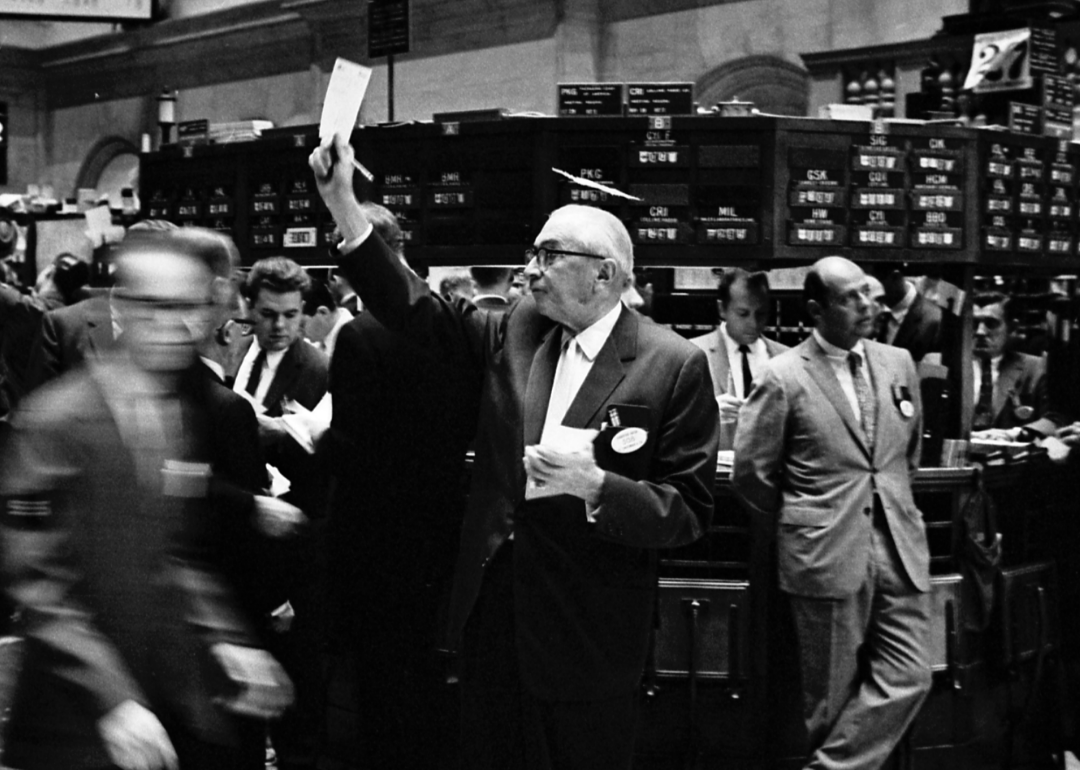
while snoring at the market over the weekend, and remembering that I had to be awakened by my assistant at 915 on Friday feb 17 as I had "watched" the market for 24 hours straight and I can no longer do that without sleep, I read some good books over the weekend.
i was younger then: Someone in a Tree
the best book was Beethoven Unleashed. here is a year by year chronology of Beethoven's development, family life, music, and love life. I know a hundred anecdotes about Beethoven (collab and I were once going to do a play about the great man) and this book thrilled me by teaching 100 more also about his hard study under Hayden, the progress to write string quartets, and the Austrian war's influence on his fortunes. highly recommended. I recommend the audio version which brings forth music to illuminate each part of his life (although their constant playing of the fifth and ninth symphonies is boring and over the top).
the most disappointing book for me was Models of Adaptive Behaviour: An Approach Based on State by Houston and McNamara. It takes a state approach to predicting molecular behavior. all the states could just as well be market states with the change of a few words. an organisms behavior strategy is a rule that specifies how the organism deals with every possible circumstance. a strategy is a rule specifying the dependence of behavior on a state and time.
"the costs and benefit of an action must depend on state." "fitness is a measure that can be used to measure the performance of strategies." "that an action cannot be considered in isolation is an important reason for considering sequences of actions and hence for using dynamic programming." regrettably there is one empirical finding that illuminates the state-based topology into concrete life. Although I can get the gist of most mathematical treatises, the dynamic programming examples and other techniques were beyond me.
I turn to a book that's much more useful to financial readers and mure more up my alley: This is the Road to Stock Market Success by George Seamans.
the Seamans book was first published in 1944, and the dow was about 150 at the end of that year, and Seamans recommended the base method in use of Heads and Shoulders to sell high and buy low. There are so many bad recommendations in the book that it's even worse as a guide book than Reminiscences of a Stock Operator.
From George Seamans (1945):
What is a business barometer? Whether it be Barron's Weekly, the Federal Reserve Bank, the Cleveland Trust Co, the National City Bank, or any other– it is the published facts of supply and demand as expressed in the volume of steel production, number of freight cars loaded, orders for locomotives, amount of payrolls, amount of checks cleared, bank savings, money in circulation, electricity consumed, quantity of lumber cut.
Supply and demand (the time element theory–a time to buy when low, a time to sell when high) is the basis for all forecasting of market movements.
"But who has time to read books?" he replied. Whereupon I told him frankly he wasn't fit to hunt squirrels.
[One notes that SBF prides himself on never reading books. and if he were one of the big shots that constituted the thousands of clients that Seamans had, Seamans mite call him a baboon.]
In the market session of October 19, 1937. Stocks crashed that morning by ten points or more. However by two or three o'clock of that same day many of these identical stocks were up to their previous prices. Was this the play of genuine and natural forces of "supply and demand"?
The safest time to buy is when the market is dull and trading is going on only in small volume with prices on the easy side. If you buy then, exercise patience (comparable to that of the Insiders) and hold on until activity develops at times taking as long as six months or more for the market to generate. Months later you will get 'the' signal that it is time to sell.
In 1914, at the outbreak of hostilities, stock market prices dropped. In September, 1939, prices soared upward the moment a European conflict became a certainty. Developments in industry since the last war in sociology, economics, electronics, machinery, politics and finance were of sufficient importance to warrant entirely different conclusions. In 1918 for instance we sent troops to Siberia to fight Communism. In 1944-45 our presidents drank vodka with Stalin and toasted his great country.
Seamans is adamant that the big-guy subscribers to his service which number thousands should never hesitate to sell short. Thus he joins the boy speculator in sowing the seeds of destruction.
i am very fortunate to have a very sharp wife who has seen many a mistake in my trading over 60 years i have been trading. (she has only seen 45 years.) she sees me reading all these old books and throws up her hands and like Don Quixote's wife she burns them while I rest.
Feb
19
Snoring as a fine art
February 19, 2023 | 1 Comment

Snoring as a Fine Art: see War and Peace, General Kutuzov could have snored with all the bulls on S&P, bonds, gold today.
"Snoring as a fine art": desite the enemy's ardent attempt to scare all bulls to oblvion, S&P, bonds, and gold ended close to unchanged or up. a typical way to force speculators to lose much more than their entitlement.
"Snoring as a fine art": bulls in bonds, S&P, and gold subjected to terrible warfare and mark-to-market loss during lows but all markets ended unchanged or up on day. A typical way for the bigs to make public lose much more than their due. (and snoring remedy)
Feb
14
The little things matter
February 14, 2023 | Leave a Comment
Many markets are near 30-day highs but haven't breached it. crude, bonds, S&P, gold to name a few. is there a forced of destiny that pushes these markets to set significant extremes when they are close but now quite there?
little things matter in super bowl and market:
The Little Things You Do Together
Chief's coach banned players from watching Rihanna halftime show. i.e., it's the little things that make a win, and shades of Rene Lacoste who was quintessentially focused on the next match period. also Ted Williams. also me when I played squash.
let us reiterate our stand that we must continue the fight against inflation, thereby assisting 30-year bonds. (whatever the perfect father wants.)
Lobogola lives:
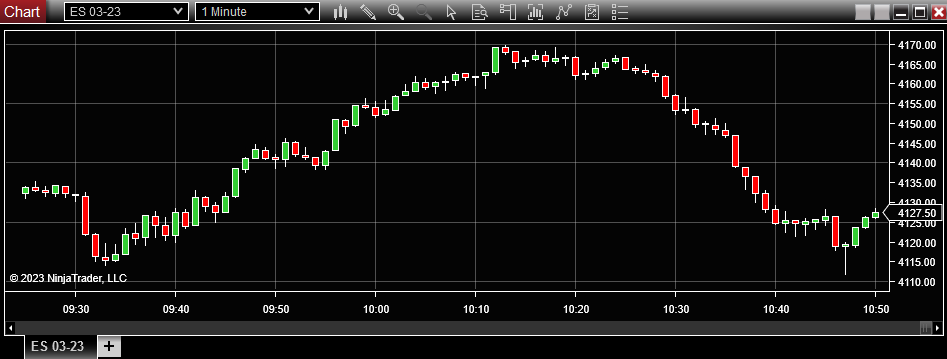
S&P refused to set its required 20-day high (for 8 consecutive days). should make the "usuals" teeter to bear.
Feb
11
Market observations, and Big Bill Tilden
February 11, 2023 | Leave a Comment

is there one general factor, i.e., one market, which impacts all other markets? and does this general factor change within day and between days?
what is reason that the bulk of the consumer products companies - especially Disney, Amex, and Gillette, and the professional sports leagues - are uniformly agrarian? is it in their self interest? or just the training that their top execs get at Harvard and Yale?
a typical article. but i noticed this much earlier. their Hall of Presidents, e.g., has always been a platform against those who admire enterprise.
a nice, archetypal way for the public to lose more than they have any rite to lose. On thur, crude was the least volatile of any commodity or itself. its total range was 50 pts from 77.50 to 78.00. and the moves between half hours was 20 pts. friday crude moved 250 pts from 77.50 to 80.00 from 2:30 TO 4 EST.
invaluable advice from the great Bill Tilden: (1) Keep your eye on the ball. (2) The body must be at right angles to the net and the shoulders parallel to the line of flight of the ball.
(3) The weight must always travel into the stroke that is from back foot to the front foot. (4) the shot must never be hurried or cramped. Match Play and the Spin of the Ball. Bill Tilden was considered the greatest tennis player ever as of 1930.
Some interesting market advice was given in his classic article, Pace and Speed. "Speed and pace are two very different things. Speed is measured by the time required by the flight of the ball thru the air. Pace is the momentum (speed plus weight) with which the ball comes off the ground from its bounce. It is the solidity of the stroke." one should compare this to the velocity of the price change of a market. that's speed. but pace is the volume behind the advance.
Feb
7
Hypotheticals, free associations, and big bets
February 7, 2023 | Leave a Comment

an interesting hypothetical: what would happen if Flor. Gov would announce that he will not run in 2024. i would guess that 45 would take the lead of now leader "the guy". and the chances of R's winning the election would drop from 51% to 45%. most important S&P would soar.
free associations: two usefuls jim chanos and Mohammad el Erian: pockets of absudity, worthless pieces of paper, gross margin higher than tiffany, "the best father I know", "agree with larry", "as you know, i was calling for a 50-basis hike."
estimated bet on super bowl is 7 billion - estimated on world cup is 60 billion. big industry in spotting fixing in it. the estimated volue in e-minis is 400 billion a day. perhaps same in spiders. which field has more chicanery?
Feb
6
All-time highs, bias, books, and Bo Keely
February 6, 2023 | Leave a Comment

one has been wrestling with the question, which many put to me to embarrass me over the weekend, when we will hit an ATH again. it's been a whole year. since 1996 there have been approximately 30 days out of 8000 that have lasted more than a year without. from 1996 this would be extremely bullish for S&P, and crude. but from 2022 very ambiguous. for gold the stats are very encouraging - bullish now at $1878. So I turn to books I have read over weekend for long-term foundation.
Verdi A Biography by Mary Jane Phillips-Matz. one learns about every respect of Verdi's day to day life with not one iota of info about his music. Its particularly good about his Menage a troi with Stolz and Strepponi. How the wife suffered with his brutal behavior. and how it was routine for Verdi to leave 50,000 francs in his wallet in shared hotel room with Solz and how Verdi, one of richest men in Italy when he died in 1901, was very generous throughout his life except for the conductor Miriani who he decimated for bringing Wagner to Italy. Much more harmonious and enjoyable is the Life & Works - Giuseppe Verdi by Siepmann, et al.
Memoirs of a Superfluous Man by Albert Jay Nock. this book which honors Jefferson, Rabelais and Artemus Ward is the perfect antidote for those who are dissatisfied with the present milieu and a preventative for going a gaping with strange Gods whose blandishments go against traditions of their culture and discipline. Much closer to home is The Travels of Marco Polo and how a Venetian merchant was able to learn about and prosper from Asian cultures except the Chinese.
Robustness and Evolvability in Living Systems by Andreas Meyer. distributed robustness and not robustness of parts is the key to stability. a brilliant author's exploration of genetics, biology, and chemistry with much extensions to our field.
much talk about bias especially from the big 2 newspapers. but left out is the incredible ratio of pro "guy' to anti golfer articles and reports of former mayor's site. amazing that they persist in this when one would speculate that 50% of their users are neutral. thus the business site joins the professional sports leagues and the 3 letter agencies et al in agrarian activity.
AllSides - Don't be fooled by media bias and misinformation
the guy pulling out to clear lead in odds of winning which is very long term bullish as more capture and consilience with all the agrarians harmonizes.
Marco Polo was a great inventor but was very calm didn't seek out adventures but was a wayfarer as he brought back to Venice gunpowder, spectacles, paper money and numerous maritime inventions of his own. There is a modern day counterpart. Hobo Keely. that's Hobo Keely who traversed 30 separate countries and left every one better off and met all his responsibilities to his noble bosses while not refraining from prurient activities. For those new to the Hobo i would refer you to Daily Speculations where he has chronicled his travels almost daily for 20 years.
Like Marco and Odysseus who were gone from their homes for 20 years, they were not reconized when they came back. and worse yet, all sorts of moochers were living in their home. Hobo has found home stolen or burned down, be it ever so humble even if it was a pipe.
Feb
4
Query of the day, and notes on the week
February 4, 2023 | Leave a Comment
query of the day: we know that the more trouble it's in, the better the stock market for the future looks. what politician is like that with his odds constantly increasing while the backdrop gets worse and worse?
and the more useful idiots who make the rounds and who have always been bearish and love to predict a devastating fall is ahead, the better it is. the upside down man was correct in saying his partner never had a rite prediction.
as prof does his thing breaking thru unprecedented 5 consecutive Sogi's and constructals, we note gold at an 18-day low down $40 today, and coffee has very quietly dropped 20%. and scarily the European stocks refuse to harmonize up with US stocks. crude touched $74.
Anything You Can Do I Can Do Better
the futures markets refuse to be outshined, in the old days of the pits it was more obvious but i dare say not more prevalent.
How the NFL Cheats: A Five-Part Report
Victor Niederhoffer Presentation
Stout-Hearted Men - South Wales Male Choir (Cor Meibion De Cymru)
from shirtsleeves to shirtsleeves in 30 and 2 days. 2 days gold at 200-day high at 1967. was at low on 6 Jan at 1870. now back to low at 1875 in two days. guaranteed to happen: "let's churn and create liquidation."
The former Ivy prez joins Boy Rasmussen and other chronic bears but this time will not be kicked out for 30 to friend. "Boy Rasmussen" going to Dodge before the others get their first and lower the price. See The Good Old Boys by Elmer Kelton.
Feb
1
S&P in January, and the tall one
February 1, 2023 | Leave a Comment
S&P maintains its record in jan 2023: since 2011 there have been 714 separate 20-day highs, of a total of 3118 trading days, that's 23%. in jan 2023 there were six 20-day highs of total of 22 trading days.
there is much adulatory talk about Paul Volker. how current chair admires him and wishes to follow in his footsteps. Having met the tall one at Larry Ritter's bedside and studied his record, I can say that nothing would be worse.
The tall man was Chair from 1979 to 1987. During his tenure unemployment, fed funds and the inflation rate started at 5%. they each increased gradually over the next 3 to 6 years to 10%. Interest rates on long term bonds reached a high of 18%, and the stock market performed dismally until the fake doc Greenspan took over.
dismal stagflation and misery was bound to happen . Mr Volker hated technology . he didn't use a typewriter , computer or tv or tape recorder. with a view of stamping out production and controlling the economy by reducing potential supply of goods, the misery was guaranteed.
correction: during his first four years the S&P was relatively constant, was approx 100. during the last 4 years the S&P doubled. perhaps the S&P anticipated the opposite approach of Mr. Reagan.
Archives
- October 2026
- September 2026
- August 2026
- July 2026
- June 2026
- May 2026
- April 2026
- March 2026
- February 2026
- January 2026
- December 2025
- November 2025
- October 2025
- September 2025
- August 2025
- July 2025
- June 2025
- May 2025
- April 2025
- March 2025
- February 2025
- January 2025
- December 2024
- November 2024
- October 2024
- September 2024
- August 2024
- July 2024
- June 2024
- May 2024
- April 2024
- March 2024
- February 2024
- January 2024
- December 2023
- November 2023
- October 2023
- September 2023
- August 2023
- July 2023
- June 2023
- May 2023
- April 2023
- March 2023
- February 2023
- January 2023
- December 2022
- November 2022
- October 2022
- September 2022
- August 2022
- July 2022
- June 2022
- May 2022
- April 2022
- March 2022
- February 2022
- January 2022
- December 2021
- November 2021
- October 2021
- September 2021
- August 2021
- July 2021
- June 2021
- May 2021
- April 2021
- March 2021
- February 2021
- January 2021
- December 2020
- November 2020
- October 2020
- September 2020
- August 2020
- July 2020
- June 2020
- May 2020
- April 2020
- March 2020
- February 2020
- January 2020
- December 2019
- November 2019
- October 2019
- September 2019
- August 2019
- July 2019
- June 2019
- May 2019
- April 2019
- March 2019
- February 2019
- January 2019
- December 2018
- November 2018
- October 2018
- September 2018
- August 2018
- July 2018
- June 2018
- May 2018
- April 2018
- March 2018
- February 2018
- January 2018
- December 2017
- November 2017
- October 2017
- September 2017
- August 2017
- July 2017
- June 2017
- May 2017
- April 2017
- March 2017
- February 2017
- January 2017
- December 2016
- November 2016
- October 2016
- September 2016
- August 2016
- July 2016
- June 2016
- May 2016
- April 2016
- March 2016
- February 2016
- January 2016
- December 2015
- November 2015
- October 2015
- September 2015
- August 2015
- July 2015
- June 2015
- May 2015
- April 2015
- March 2015
- February 2015
- January 2015
- December 2014
- November 2014
- October 2014
- September 2014
- August 2014
- July 2014
- June 2014
- May 2014
- April 2014
- March 2014
- February 2014
- January 2014
- December 2013
- November 2013
- October 2013
- September 2013
- August 2013
- July 2013
- June 2013
- May 2013
- April 2013
- March 2013
- February 2013
- January 2013
- December 2012
- November 2012
- October 2012
- September 2012
- August 2012
- July 2012
- June 2012
- May 2012
- April 2012
- March 2012
- February 2012
- January 2012
- December 2011
- November 2011
- October 2011
- September 2011
- August 2011
- July 2011
- June 2011
- May 2011
- April 2011
- March 2011
- February 2011
- January 2011
- December 2010
- November 2010
- October 2010
- September 2010
- August 2010
- July 2010
- June 2010
- May 2010
- April 2010
- March 2010
- February 2010
- January 2010
- December 2009
- November 2009
- October 2009
- September 2009
- August 2009
- July 2009
- June 2009
- May 2009
- April 2009
- March 2009
- February 2009
- January 2009
- December 2008
- November 2008
- October 2008
- September 2008
- August 2008
- July 2008
- June 2008
- May 2008
- April 2008
- March 2008
- February 2008
- January 2008
- December 2007
- November 2007
- October 2007
- September 2007
- August 2007
- July 2007
- June 2007
- May 2007
- April 2007
- March 2007
- February 2007
- January 2007
- December 2006
- November 2006
- October 2006
- September 2006
- August 2006
- Older Archives
Resources & Links
- The Letters Prize
- Pre-2007 Victor Niederhoffer Posts
- Vic’s NYC Junto
- Reading List
- Programming in 60 Seconds
- The Objectivist Center
- Foundation for Economic Education
- Tigerchess
- Dick Sears' G.T. Index
- Pre-2007 Daily Speculations
- Laurel & Vics' Worldly Investor Articles
