Aug
13
Celebration of life, from Duncan Coker
August 13, 2026 | 1 Comment
Hey friends. This has been a hard week and difficult to fully accept. So many things to write about Victor, but I'll pick just one small part to bring some levity and that is his sense of humor. Vic had a wicked sense of humor. It comes across particularly is his coded language and his voice that always carried a 40s Brooklyn accent. Here are a few that tickle me: "pretty kettle of fish", "gentlemen and ladies heal thyself", "haaaaaave" (for half), "fish dinner", "brisket at the petroleum club", "not bad for a poor speculator", "Ha!" (as a trade fills), "Mr. Coke", the tennis balls raining down on the roof, "Let's go for a walk". This last one really hits, I'll forever be taking walks with Victor and listening.
Steve Ellison responds:
The Chair’s invitation in 2004 to “join our group of scholars” changed the trajectory of my life. I treasure the many friendships I have from this List and have numerous anecdotes about Victor, but for the sake of brevity, I will confine myself to two instances from the economically depressed year of 2009.
In May that year, I went to a West Coast mini-Spec Party in honor of Kenny Sogi’s graduation from USC. The event was held at a beach house in Los Angeles County where James Tar was living. At some point, we decided to call the Chair in New York. For some reason, the most suitable phone for a conference call was in Mr. Tar’s car, so 12 of us jammed into the car to talk with the Chair. After we all identified ourselves, Victor asked, “What do you think of the market?”
One person after another in the car outlined his reasons for being bearish. After 5 or 6 people had had their say, maybe Victor was getting tired of the bearishness because he called on me by name. “Steve, you’re bullish, right?” I said that I was and cited a few findings from my counting studies.
In August that year, I went to New York for the smallest Spec Party I ever attended, I think between 20 and 30 people. While we were gathered in Victor’s living room, he asked us whether using stops was good practice. The conversation that followed, with everybody participating, was pure gold, a meal for multiple lifetimes.
Jul
15
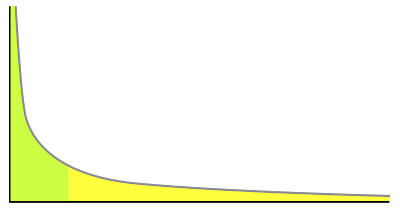 I have always wondered to what extent a random walk with normally distributed steps would differ from a Pareto distribution with comparable means and third moments. I have never believed that stock prices are fractals or infinitely variance, or any way different from a shifting normal distribution or a mixture of same. The hazard rates of fall off for both distributions could be compared, and one would hypothesize that there would not be a observable difference.
Ralph Vince writes:
Vic,
I have always agreed with precisely what you are saying. The "Pereto Explanation," does NOT explain market conditions changing; it is stationary. Clearly, those who posited that were naive when such might be better modelled by moving distributions (maybe even Cauchy distributions, where variance issues still persist).
However, when we speak of variance in returns, we must consider that the ntion of "infinite variance" is equally naive(!) as follows: What is varying is returns, specifically, today's price divided by some price in the past (e.g. yesterday for daily returns). Everyone seems to (conveniently) discount that these cannot go below zero. Thus, if returns were equivalently bound on the upside (at 200%) we could be certain that variance in returns was NOT infinite. Sine we cannot makes this assumption, we can only assume that variance can be infinite ONLY by upside moves of ever increasing maximum magnitude as we increase the window of time into the future.
We should be so lucky!
p.s. my own take on it is that we are dealing with moving distributions, likely Normal or at least where the variance is measurable and finite. The shape of the distribution, it;s moments, however, can move rapidly and without any warning whatsoever. price change, is just the single data point selected at that moment from such chrono-dynamic distributions, the real question pertaining to price change — and challenge — is to discern what that distributions is at the moment. THAT is the real price change, the solitary point witnessed, just a random manifestation of it.
Steve Stigler writes:
On stock models: Some aspects of these models are driven by a wish for internal consistency, that the step distribution is the same (rescaled) for steps in minutes or hours, etc. And the steps are independent. These imply that the steps are "stable distributed", a class that includes normal and some heavy tail distributions. The reason is the central limit theorem (clt) - if the step for a minute was pareto with finite variance then the step for an hour would be the sum of 60 such and by the CLT approximately normal. If the step for a second is pareto, even more like a normal for an hour. So if you don't want a very complicated analysis the only choice with finite variance in normal, and if you take any other step dist for small steps the dist for large steps will be approx normal.
Archives
- October 2026
- September 2026
- August 2026
- July 2026
- June 2026
- May 2026
- April 2026
- March 2026
- February 2026
- January 2026
- December 2025
- November 2025
- October 2025
- September 2025
- August 2025
- July 2025
- June 2025
- May 2025
- April 2025
- March 2025
- February 2025
- January 2025
- December 2024
- November 2024
- October 2024
- September 2024
- August 2024
- July 2024
- June 2024
- May 2024
- April 2024
- March 2024
- February 2024
- January 2024
- December 2023
- November 2023
- October 2023
- September 2023
- August 2023
- July 2023
- June 2023
- May 2023
- April 2023
- March 2023
- February 2023
- January 2023
- December 2022
- November 2022
- October 2022
- September 2022
- August 2022
- July 2022
- June 2022
- May 2022
- April 2022
- March 2022
- February 2022
- January 2022
- December 2021
- November 2021
- October 2021
- September 2021
- August 2021
- July 2021
- June 2021
- May 2021
- April 2021
- March 2021
- February 2021
- January 2021
- December 2020
- November 2020
- October 2020
- September 2020
- August 2020
- July 2020
- June 2020
- May 2020
- April 2020
- March 2020
- February 2020
- January 2020
- December 2019
- November 2019
- October 2019
- September 2019
- August 2019
- July 2019
- June 2019
- May 2019
- April 2019
- March 2019
- February 2019
- January 2019
- December 2018
- November 2018
- October 2018
- September 2018
- August 2018
- July 2018
- June 2018
- May 2018
- April 2018
- March 2018
- February 2018
- January 2018
- December 2017
- November 2017
- October 2017
- September 2017
- August 2017
- July 2017
- June 2017
- May 2017
- April 2017
- March 2017
- February 2017
- January 2017
- December 2016
- November 2016
- October 2016
- September 2016
- August 2016
- July 2016
- June 2016
- May 2016
- April 2016
- March 2016
- February 2016
- January 2016
- December 2015
- November 2015
- October 2015
- September 2015
- August 2015
- July 2015
- June 2015
- May 2015
- April 2015
- March 2015
- February 2015
- January 2015
- December 2014
- November 2014
- October 2014
- September 2014
- August 2014
- July 2014
- June 2014
- May 2014
- April 2014
- March 2014
- February 2014
- January 2014
- December 2013
- November 2013
- October 2013
- September 2013
- August 2013
- July 2013
- June 2013
- May 2013
- April 2013
- March 2013
- February 2013
- January 2013
- December 2012
- November 2012
- October 2012
- September 2012
- August 2012
- July 2012
- June 2012
- May 2012
- April 2012
- March 2012
- February 2012
- January 2012
- December 2011
- November 2011
- October 2011
- September 2011
- August 2011
- July 2011
- June 2011
- May 2011
- April 2011
- March 2011
- February 2011
- January 2011
- December 2010
- November 2010
- October 2010
- September 2010
- August 2010
- July 2010
- June 2010
- May 2010
- April 2010
- March 2010
- February 2010
- January 2010
- December 2009
- November 2009
- October 2009
- September 2009
- August 2009
- July 2009
- June 2009
- May 2009
- April 2009
- March 2009
- February 2009
- January 2009
- December 2008
- November 2008
- October 2008
- September 2008
- August 2008
- July 2008
- June 2008
- May 2008
- April 2008
- March 2008
- February 2008
- January 2008
- December 2007
- November 2007
- October 2007
- September 2007
- August 2007
- July 2007
- June 2007
- May 2007
- April 2007
- March 2007
- February 2007
- January 2007
- December 2006
- November 2006
- October 2006
- September 2006
- August 2006
- Older Archives
Resources & Links
- The Letters Prize
- Pre-2007 Victor Niederhoffer Posts
- Vic’s NYC Junto
- Reading List
- Programming in 60 Seconds
- The Objectivist Center
- Foundation for Economic Education
- Tigerchess
- Dick Sears' G.T. Index
- Pre-2007 Daily Speculations
- Laurel & Vics' Worldly Investor Articles
