Aug
13
Celebration of life, from Duncan Coker
August 13, 2026 | 1 Comment
Hey friends. This has been a hard week and difficult to fully accept. So many things to write about Victor, but I'll pick just one small part to bring some levity and that is his sense of humor. Vic had a wicked sense of humor. It comes across particularly is his coded language and his voice that always carried a 40s Brooklyn accent. Here are a few that tickle me: "pretty kettle of fish", "gentlemen and ladies heal thyself", "haaaaaave" (for half), "fish dinner", "brisket at the petroleum club", "not bad for a poor speculator", "Ha!" (as a trade fills), "Mr. Coke", the tennis balls raining down on the roof, "Let's go for a walk". This last one really hits, I'll forever be taking walks with Victor and listening.
Steve Ellison responds:
The Chair’s invitation in 2004 to “join our group of scholars” changed the trajectory of my life. I treasure the many friendships I have from this List and have numerous anecdotes about Victor, but for the sake of brevity, I will confine myself to two instances from the economically depressed year of 2009.
In May that year, I went to a West Coast mini-Spec Party in honor of Kenny Sogi’s graduation from USC. The event was held at a beach house in Los Angeles County where James Tar was living. At some point, we decided to call the Chair in New York. For some reason, the most suitable phone for a conference call was in Mr. Tar’s car, so 12 of us jammed into the car to talk with the Chair. After we all identified ourselves, Victor asked, “What do you think of the market?”
One person after another in the car outlined his reasons for being bearish. After 5 or 6 people had had their say, maybe Victor was getting tired of the bearishness because he called on me by name. “Steve, you’re bullish, right?” I said that I was and cited a few findings from my counting studies.
In August that year, I went to New York for the smallest Spec Party I ever attended, I think between 20 and 30 people. While we were gathered in Victor’s living room, he asked us whether using stops was good practice. The conversation that followed, with everybody participating, was pure gold, a meal for multiple lifetimes.
May
28
List member Duncan Coker’s music
May 28, 2026 | Leave a Comment

Late bloomer: Boulder singer-songwriter Duncan Coker drops long-awaited debut
Longtime Boulder singer-songwriter Duncan Coker has been honing his craft ever since he picked up his first guitar as a New Jersey teenager four decades ago. It was a Fender Squier, and it opened the door to a love for performing that’s going strong to this day.
After years of exclusively playing live, Coker felt the time was finally right to hit the studio and share his music in another format on his self-titled debut album, released in February.
It wasn’t his first time recording, though. Coker released an acoustic single in 2018, but says his latest material is his most well-rounded. He felt ready to lay it down in the studio, even if the path took longer than anticipated.
“I’m feeling now, in my mid-50s, very creative and prolific — like, I’m writing a lot. It just took me a while. It’s part of your life journey,” he says. “I’m really glad I waited to put out material that I was really proud of. I guess I peaked late in life.”
Duncan Coker Band live:
Duncan Coker Band - Rodeo Girl - LIVE@LUNCH on KRFC RadioVision
Duncan's music site:
Jan
10
Original music from Duncan Coker
January 10, 2026 | Leave a Comment
Duncan Coker - Roadside Attractions

Duncan Coker likes to leave a little distance between himself and the characters that narrate his songs. That way he’s free to imagine himself as a long haul trucker, a cowboy or a young singer with dreams of a Nashville music career. He can put himself back a decade, feign an accent or wind up on a different side of the continent. Whatever it takes to move the story forward. What else is songwriting but real feelings channeled through fiction? Every character a sideways version of its author but in another multiverse.
Still, Coker’s songs are true-to-life. He keeps his antenna up, always looking for the signals in the noise. He is a stenographer of the human condition. You might even catch him in the dairy aisle, thumb-typing a phrase he overheard into his phone, destined for a spot in his next verse. Coker’s songs also grapple with the realness of life—the loss of his father or his love for his wife Julie. He enjoys the puzzle of conveying big emotions with a few choice words that rhyme.
Jan
7
News, from Duncan Coker
January 7, 2026 | Leave a Comment
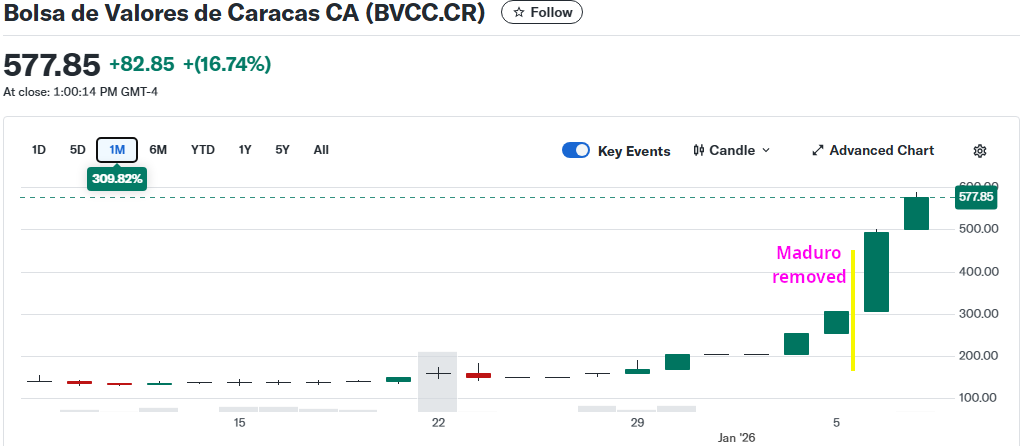
Interesting 40% move in Caracas stocks the days Before the capture. It is as if someone knew about the plans and acted on that information. News follows the markets as Larry has taught us.
Nov
6
Percentages versus discrete values, from Duncan Coker
November 6, 2025 | 1 Comment
I notice how journalist select for stories to use percentages versus discrete values to server their own interests and the "public" is easily confused. Today, they pick the number nearing 1T to describe Mr. Tesla's pay which seems high. But they could have framed the story as he could be raising his ownership to 12% to 25% of a company he founded. Not much of a story there. Other places like crime statistics they usually go with the %. As in violent crime has risen 100%, this could mean 1 homicide to 2. Without the data with percent's the conclusions are obfuscatory. Percents can never go down more than 99.9%, but they can rise by an infinite amount. This fact also leaves much room for spurious selection.
Oct
28
Risk, from Duncan Coker
October 28, 2023 | Leave a Comment

It seems a misnomer to call longs bonds risk free. Indeed the default risk is near zero, but the interest rates risk is wilder than a bronco at Montana rodeo. Credit risk is also a factor with potential downgrades. Which begs the question will risk premiums decrease equity vs bonds. Which asset class is actually carries more "risk"" on an annual basis.
Big Al asks:
Are long bonds (UST 30s) referred to as "risk free"? I think of the "risk-free rate" as Treasury bills. Whereas with bonds, doesn't longer duration equal greater risk?
William Huggins responds:
the risks of a long-term contract are mostly in getting out early at a bad time (and thus having a holding period yield lower than YTM), default, and of course inflation. if you hold to maturity (liability matching for instance) then the first risk vanishes but the last two remain. in gov bonds, the second risk also vanishes but the third becomes all important since a gov can promise to give you 1000 currency units but makes no reps about what that will buy at maturity.
Hernan Avella writes:
Interest rate volatility is only a problem for people who don't know how to immunize the risk. One should always match the investment horizon to the duration of the bond holdings. To quote Campbell and Viceira:
In financial economics a one-period indexed bond is usually thought of as riskless. Over one period, a nominal bond is a good substitute for an indexed bond, and thus by extension the riskless asset is often identified with a short-term nominal asset such as a Treasury bill. In a world with time-varying interest rates, however, only the current short-term real interest rate is riskless; future short term interest rates are uncertain. This makes a one-period bond risky from the perspective of long-horizon investors. For such investors, a more natural definition fo a riskless asset might be a real perpetuity, since this asset pays a fixed coupon of one unit of consumption per period forever.
In practical terms, given that we do live in the most powerful country in the history of the world and this country issues indexed bonds. For a long term investor, a TIPS ladder to finance your long term consumption is the riskless asset. Which should be 100% of the portfolio of the infinitely risk averse investor with zero intertemporal elasticity of substitution.
Kim Zussman reflects:
The most risk-free state is death because nothing worse (or better) can happen to you. Less severely one likes to lay on the floor. The cool hard surface is good for back pain and there is no further to fall.
Aug
20
Serial correlation, from Duncan Coker
August 20, 2023 | Leave a Comment
It would be interesting to look at the daily serial correlation of major markets last few weeks and months. I would posit it has turned positive or more positive than usual. I will take a shot at it. And if positive what does it pose for the coming days.
Zubin Al Genubi adds:
One of the the longest stretch of lower lows consecutive or nearly. 1986 had 8 down days in a row.
Big Al computes:
Rolling 60-tday autocorr for SPY back to 2018:

Looking at the calendar on Daily Spec made me wonder about this: SPY - Rolling count of down days in every 20 trading days:

Mar
6
Term structure 101, from Duncan Coker
March 6, 2023 | Leave a Comment
Futures prices, particularly financial futures like S&P and Bond prices, have a relationship to the cash markets which can be arbitraged. It is a function of cash flows usually interest borrowing costs and dividends, but it depends on being able go short and long the cash/spot markets. My questions is this: seems to not hold in hard assets like crude where there is currently large backwardation. You can buy Dec 24 Crude at a large discount and have been able to do so for some time. Specifically, is it possible to short the spot market for crude? Is there a counterparty that will accept this trade? It seems that for term structures like crude futures, the prices are an actual prediction of supply and demand and not an interest rate arbitrage.
Zubin Al Genubi responds:
With crude, storage (or not to store) is part of the future price. I read there is a lot of Russian crude stored in ships now. I'm not sure how that figures in.
In backwardation (tight market) normally one buys the future waiting for convergence with spot. Selling spot- yes you can, but delivery is an issue.
Big Al ruminates:
Not sure what "shorting the spot price" would even mean, other than Zubin's point where you have to have crude for delivery. Doesn't the concept of shorting a contract inherently involve a future price point? You could have 1-day futures, but then the vig might be far more significant.
If we model it on stocks, then shorting spot crude would involve "borrowing" somebody else's oil and then selling it for delivery. But then you're just back to why futures exist in the first place, aren't you?
But speaking of the term structure of crude, I ran across this:
Forecasting WTI crude oil futures returns: Does the term structure help?
Abstract
Nelson-Siegel (NS) factors extracted from the term structure of WTI oil futures are shown to predict subsequent WTI holding period returns in-sample. This in-sample predictability is not diminished by augmenting with macroeconomic indicators or oil market specific predictors. Allowing the decay factor in the Nelson-Siegel model to vary over time improves in-sample predictions at medium horizon return forecasts. We conduct out-of-sample forecasting exercises on models that use NS factors, such as a simple two factor model that uses a composite leading indicator along with the NS decay factor, and a LASSO model that combines NS factors with macroeconomic indicators and oil market specific predictors. These models significantly reduce forecast errors relative to a no change benchmark across a range of return horizons and futures contract maturities. We also find consistent evidence that models that use the NS factors result in trading strategies with higher Sharpe ratios and better skewness properties than buy and hold strategies and historical mean strategies.
Relatedly, the Nelson-Siegel model.
Nov
17
FTX surprise
November 17, 2022 | Leave a Comment
H. Humbert writes:
I find it amazing that an exchange with monopolistic market making, and no Manning Rule equivalent can ever lose money. As bad as stealing customer funds to cover trading losses sounds, I wonder if there's even worse to come because it sounds so incompetent. However, once again the value of crypto to nefarious actors is demonstrated by the 'asset classes' anti-fragility. Some flavor of the notion of honor among thieves.
Zubin Al Genubi replies:
Market makers can't handle big fast moves, of which we've seen some breathtaking one recently. I believe they are caused in part by the market makers and the ones who are just a bit slower get eaten by the lion. Of course this is sheer speculation on mu part.
H. Humbert comments:
With respect, your model of what a market maker is hasn't existed for about 15-20 years. Market making today is machine driven, speed of light kind of thing, and balanced/correlated across a firm's book. It is almost touchless for the most part.
So for example, if you are a Manning-Rule-free exchange, and you have your own internal market making operation that sees the flow first, you can, at the speed of light, see the direction of the order flow, front run it, sell into it, take the other side of the stupid trades ie the trades that are 'random' going against the flow that you are seeing, see the limit orders and the stop orders and run those etc etc. You see the flow first and decide how to execute against or with it or pass to the punters on the exchange.
It seems impossible to lose money at this and if you don't believe me, look at how few losing days Virtu and Citadel put up and they only get to see about 90% of just the retail flow in equities and they generally can't front run it. They can only decide if they want to take the other side or pass the order on to the market. Imagine if you had no fiduciary responsibility at all and no any kind of rule of best execution.
Anyway I go on and on, but point is, that FTX's Alameda lost money and a lot of it is very strange. Also, I should add, that I know absolutely nothing about crypto.
I can't help but notice that another of Vic's flags is prominent in this FTX story, and that's all the charity work they were doing. All while seemingly running some crazy embezzling thing to cover what? How were they generating these huge losses?
I knew a living human market maker at Schwab in the dot com era. His boss took and traded a single security(I won't name it) and split the rest of the book up. My living human associate got like m-z or something and one day he's long a zillion XLNX. Supervisor screams at him 'What are you and ANAL-IST?"–meaning what ever you think you know, get back to making markets and leave the positions to the buy side suckers. So maybe the losses are from directional market supporting efforts or some such.
Zubin Al Genubi suggests:
Maybe machine/com speed now determines winners?
William Huggins agrees:
can't see why that wouldn't be the case. on a precisely related note, a friend (ex-mit) gave a talk on algos in finance a decade ago, noting at one point how buildings were then being hollowed out to reduce microseconds of lag (i start the clip where its juicy).
H. Humbert writes:
This is one issue with co-location of servers at the exchanges, why it costs so much, why IEX markets a 200ms 'speedbump' to protect resting orders, why dark pools offer some very strange order types, etc etc but ultimately, the winners and losers imo, are determined by rent seeking in the regulations. Ban payment for order flow and Virtu disappears, ban internalization and Schwab has to charge commission, make best execution mean best possible all in price at the moment the order is received and all brokers will institute intermarket sweeps and order flow will go to exchanges, etc.
Stefan Jovanovich comments:
I hope H. Humbert will agree with this comment from the financial bleachers. The anti-trust laws, including agricultural marketing restrictions, have offered the same opportunities for rent-seeking around regulation without having any of the pushback from innovation - i.e. new and better ways to game the system. So, we have an age of inflation at the same time transaction and carry costs for retail customers have gone steadily down.
Duncan Coker writes:
This is a great description of the rent seeking infrastructure or "top feeders" as vic would say. It is all sell-side as that is where the stable income resides. Still as a lowly buy-sider if my choice is to get fleeced by the exchange/locals or the hft hedge funds I think I would go with the later. At least the hedge funds are competing against one other to steal from me. Don't even get me started with the wirehouses. Used to be 100 bp to execute/clear a trade back in the 80s, off exchange that is.
H. Humbert replies:
In the US equity world, which is the only thing I know anything about, the issue that that the HFT shops segment the order flow into smart and dumb and pay for the dumb order flow, which they get first look at and first dibs on off-exchange - through FINRA, which has it's own rules on order handling.
Segmenting the flow makes the rest of the market(not the internalizes, not the payment for flow(PFOF)), both lit and dark, more toxic in terms of adverse selection to resting quotes. This widens the spread, which makes internalization/PFOF more profitable - virtuous cycle kind of thing and also increases the concentration of who gets to see the flow first and decided where to fill.
Given the midterms, I think Chair Gensler has enough political capital to push through some of the rule changes he's been talking about: “Competition and the Two SECs” Remarks Before the SIFMA Annual Meeting
To me, the most likely significant change to get through easily is SEC's own Best Execution rule(amazing I know that there is none currently) and that could dramatically change where orders get filled. We'll see.
Sep
16
Federer adieu, from Duncan Coker
September 16, 2022 | Leave a Comment
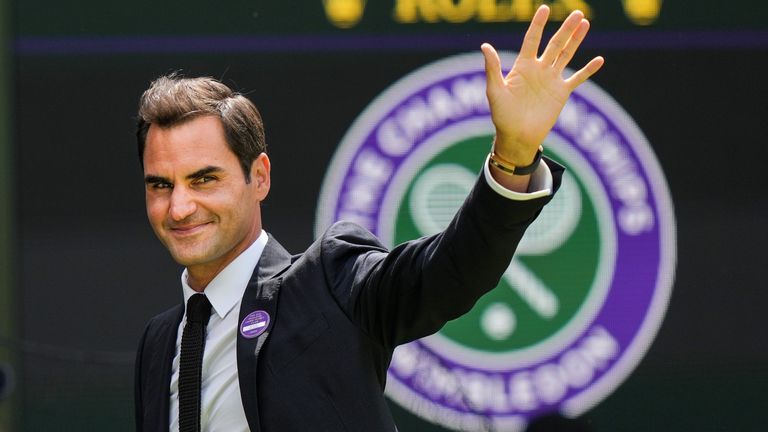
Market declining in sympathy with announced retirement. I was lucky to see him play on several occasions. A great player and a great gentleman to the game. What a backhand, and what a forehand, serve, volley, footwork, strategy and touch.
Alston Mabry adds:
Farewell address, very classy.
Bud Conrad agrees:
Yes. Classy.
Laurel Kenner recalls:
My tennis teacher knew him and said he never swore.
Aug
30
Keeping charts by hand, an interview with Helene Meisler
August 30, 2022 | Leave a Comment
Big Al writes:
A fun and interesting interview with Helene Meisler who has been keeping charts by hand since the 80s.
Helene Meisler On What's Going On With the Stock Market Now
The Federal Reserve is in tightening mode. And there's that old adage "don't fight the Fed" which means in theory it's a bad time for stocks. And yet we saw a surprisingly powerful rally off the bottom in June. But now what? Can the market resume its ascent? Or will we return to the lows, or possibly make new lows? On this episode we speak to Helene Meisler, who has been trading stocks for roughly four decades, and who has a unique approach to analyzing the market. She draws stock charts by hand. In our chat, Meisler explains her methodology, and gives her assessment of the market right now.
Jeff Watson comments:
I still keep up my charts by hand, and I know at least 3 others on the list who do the same. Does keeping charts add value for those who partake in the practice?
Duncan Coker responds:
I would posit that the physical act of writing and drawing is beneficial. It improves focus and generates a sense of mastery and accomplishment, however small, both of which are good for trading. This is all in addition to the statistical information garnered.
Aug
30
Practical applications of counting beyond finance /trading, from Nils Poertner
August 30, 2022 | Leave a Comment
1. telling marauding children in back of a car (when on longer trips) to count number of green vehicles….and then red and so on (or let them experience boredom and don't give in and hand over a tablet).
2. for natural vision building -so ppl who lost ability to see far ahead (myopia), they would benefit from counting leaves of a tree or anything they can see - and don't worry if it is still blurry…it is getting better - coz nature rewards those who at least try….but once we believe something (that it can't get better - well, then it won't) - same for presbyopia (start counting tiny letters font size 1 btw).
counting can be wonderful for the brain and the brain is the motor that keeps it all together….millions of other applications. I wish ppl would do more counting - we are just going (as society) in the complete other direction. but the individual can escape that trend.
Vic comments:
very Galtonian who said "always count" and he kept a little pad and pricker with him at all times. counted the number of fidgets in the audience at 90.
Big Al offers:
I practice counting steps to measure distance, say around the park with the dogs, or on a hike. I count only lefts or rights (switching between the two at intervals) so that for me one "pace" is two "steps". I calibrated my pace counting against a wristband GPS and found that a mile is about 1100 paces for me.
Another practice is to count breaths, on the exhale, following the breath with one's attention. It is focusing and relaxing. One can calibrate one's breaths to measure time.
Nils Poertner writes:
love that counting for breathing - it is not that the drama outside does not exist, but in order to see things more realistically and go with probabilities also for trading… one better improve own mental health….. and many people (not just traders) are so fickle.
eg one of my trader friends would call me in the middle of the night and leave a voicemail that this and that is going to happen since he saw it on TV - mostly pictures that have a strong impact on his amygdala…
Zubin Al Genubi adds:
I count breathing 5.5 seconds in, 5.5 second out, 5.5 breaths a minute, and 5.5 liters per breath.
Andrew Moe writes:
I count seconds during cooking, particularly when operating on multiple dishes simultaneously. Also count seconds when trying to squeeze out an extra minute or two in the sauna.
Duncan Coker notes:
Watering the plants with a garden hose. 10 seconds about half gallon with my
sprayer.
Aug
10
The Count, from Duncan Coker
August 10, 2022 | Leave a Comment
Rereading the Count of Monte Cristo with my highs schooler, I am struck by the fact the all the virtuous characters are failures at business (ship owner, tailor, inn owner), while all the evil ones are great financial successes (currency speculators, war profiteers, state bankers). Of course the Count rectifies this. His fortune comes by way of a cardinal in Italy, a secrete cave and 14 years in prison. Perhaps the author's ( Alexandre Dumas) message is that every great fortune has a dark past. Maybe that was true in his day, but ones hopes that is not the case today.
Kim Zussman comments:
Socialism is as old as the bell curve.
Gyve Bones writes:
I'm reading this book too, and have found it really interesting. I picked it up because I'd seen two different film adaptations of the story, one starring James Caviezel, who a year later would portray Jesus Christ in Mel Gibson's "The Passion", and an earlier one from the 1970s. The two were so different in many details that I wanted to see the real story in the book. Both movies were good, each in their own way.
Like Les Miserables, by Victor Hugo, the Dumas story is about French society dealing with the ripple effects of the French Revolution. Both have heroes who are sort of New Christ figures. Both characters are unjustly imprisoned. In the case of Danton, the "Count", it was a case of a corrupt prosecutor during a time much like now, where Napoleon is in exile, and his alleged supporters still in France are being hunted down and imprisoned. It reminds me a lot of this nation, which has sent a former president into exile on an island off the coast of Florida, and there is an official inquisition into his affairs which is imposing punitive political prison sentences on his political supporters, and making it a crime to speak with the former president on the phone, in order to thwart any attempt to organize a campaign to return to office.
There's a point where the Count uses and extols the virtues of hashish which you might want to be prepared to discuss with your teenager.
Project Gutenberg has a very nice illustrated edition of the book available, which is helpful in imagining the scenes described.
I had trouble with the size of the illustrated ePub version for my iOS Books app on my iPad. It's 76 megabytes with the images included and it would crash the app. So as an alternative workaround, I downloaded the image free ePub into the Books app, and keep a web page open on the index of the images, which are named according to the page numbers in the book, and I view them as needed as I'm reading along.
Stefan Jovanovich responds:
Dumas pere was anything but a socialist. He was an aristocrat who was beyond snobbery and sentimentality. Good people regularly get screwed by thieves, frauds and liars; but then, so do the thieves, frauds and liars by each other. That is the "moral" of the novel. The Count succeeds in his quest for revenge by turning the bad guys against one another. He is a truly great figure, and the wiki page does him proper justice.
Dumas was neither a monarchist nor a Bonapartist. He was a republican and a Freemason. The novel makes that very clear; and it got Dumas in real trouble when a second Bonaparte became Fuhrer. Dumas had to flee France for Brussels, which also helped him escape his creditors. Read the wiki page; it is a beautiful exposition of an extraordinary life.
Full disclosure: One of the Stefan's weird (academics don't even want to discuss it) speculations about Ulysses Grant is that he was reading Dumas' novels when he was at West Point when he was supposed to be studying "tactics". Grant did not have a full duplex brain when it came to language and music; he taught himself to read German and French, but he found it impossible to speak or understand the languages when spoken. He loved music, but could not play it or read it as anything but notation (i.e. he could not translate the symbols on the page to sounds in his head). Hence, his joking about himself that he only knew two songs - one was Yankee Doodle Dandy and the other was not. The biographers all assume that because Grant had no verbal fluency, he had not read Jomini. He had; he also knew it was complete crap, but why say so except to start an argument? (Grant definitely did not have the legal mind or temperament).
Gyve Bones counters:
Straw men are easy to knock over. I did not assert Dumas was either a monarchist or a Bonapartist. In the same way, Hugo, son of a mother of the ancien regime and a father who was a Revolutionary, he was a melding of the two, and the novel sort of becomes a Hegelian dialectic about the synthesis which emerges from the thesis (the old order) in conflict with the anti-thesis (the Revolution). Jean Valjean is his synthesis, the New Man, a man of Christian virtues without Christ and the sacraments of the Church He founded.
Steve Ellison adds:
Dumas lived a high life and was chronically in debt despite having a number of bestsellers. I still remember one sentence from the book, "He was denounced as a Bonapartist …" It made me think that the first totalitarian society was Revolutionary France, but I hesitate to make such a sweeping pronunciation in the presence of Mr. Jovanovich. In any case, current efforts to make modern denunciations similarly career-ending are a grave threat to liberty.
Stefan Jovanovich agrees:
Great comment, SE. The French revolution - as an event - has a scale and complexity that can only be matched by the global war that began in Spain in 1936 and China in 1937 and ended in Korea in 1954. What Dumas was describing was its net effect: everyone in France had become so kind of spy and snitch. So, yes, it was the first totalitarian society; but you need to give the Citizen Emperor the same credit that Stalin and Hitler deserve for so thoroughly organizing the tyranny.
Bill Rafter offers:
Pardon me for coming in late to this discussion, but there is a mistake: The tailor was Caderousse, one of the three co-conspirators against young Dantes. That failed tailor then became the owner of the Inn at Beauclaire, who then murdered the jeweler. The Inn itself failed because its location was bypassed by a newly constructed canal. That leaves Mr. Morrel, who failed because he was in a highly speculative business (the hedge fund of its time) and was not diversified. However his successors in the business, Emmanuel and Julie were certainly righteous and successful. They retired to a nice home in Paris.
Stefan Jovanovich writes:
Not mine. Dumas was very much someone who believed that an honorable life was the only one worth living, whatever its financial costs or rewards.
Henry Gifford writes:
When I was growing up in a part of New York City that was populated by about half Christians and half Jewish people, almost none of the Christian adults owned a business – they had jobs. The one Christian adult that I knew owned a business did not attend religious services. All the Jewish adults owned businesses except a few that were involved in organized crime (professional level: state senator, state assembly, etc.).
When I was a child attending a Christian school, they made us sing a song that included the words “oh lord, do until me as you would do unto the least of my brothers”. I didn’t sing it, even though I was required to, as I saw it as a request for the all the worst things that happened to other people to all happen to me. As a child I thought this included blindness, loss of multiple limbs, leprosy, locusts (even though I wasn’t sure what those were) etc.
I have never had a mentor in my life. The closest I came were adults who advised me to “make sure you learn a trade so you will have something to fall back on”, who I made sure to steer clear of after I nodded and smiled and made good my escape. When I was 16 I asked my father what he thought I should do when I grew up. He suggested I go on welfare. I never asked again, or brought up the topic of what I was doing with myself, etc. When I was about ten years into writing a book, I showed the almost-finished version to my parents, figuring they should see it while they were still alive. The only comment they had was a harsh criticism of the grammar on one page, which they insisted I correct. The “incorrect” grammar was part of an insightful and charming passage written by Benjamin Franklin in the 1700s.
A few years ago I was walking past a Jewish community center near where I live in Manhattan. On the bulletin board outside I saw a schedule of upcoming lectures. One was titled “The Five Risks Every Entrepreneur Should Take”. I picture a member of the community that sponsored that lecture stumbling in business a little while being surrounded by people who are supportive, and who applaud the person for trying, and then for getting up and going at it again. I doubt any member of that community would ask the person who stumbled if she or he had made sure to first learn a trade to fall back on, or demand that children sing a song like the one I and my classmates were required to sing.
I still manage to do OK financially. Among other endeavors I own or am part owner of property in nine US states, soon to be ten, all worth much more than I paid (including the properties I am contracted to buy on Monday). And I have never “paid my dues” by spending years doing something I hate, or by gaining all the easily available advantages of being dishonest. But the Christian kids I grew up with? I can’t think of one who owns a business, and I can only think of two who likely have enough investments to carry them for long if they didn’t keep working at their job. And I can’t think of any who seem to enjoy or gain much satisfaction from that which they spend their day doing.
As for the emotional toll religion has taken on people over the centuries, suffice to say that someone once summarized the difference between the emotional state of veterans of the US military during WW2 vs. those who were veterans of the Vietnam War as the emotional state of Vietnam War veterans being the embodiment of the result of one generation of young men being lied to by their father’s generation. Likewise, young people being lied to about what economic decisions they ought to make, meanwhile a different reality is there for the seeing, also has its cost.
When growing up I spent time in Jewish households when I could, as the people there seemed to me to have an upbeat and healthier attitude, compared to the funeral home ambience I sensed in most Christian households. But, of course, most people growing up in the US do not have that opportunity, and fewer take the opportunity if available. Most are simply beaten down by the forces of religious insanity and stay down for life. Just today I was waiting for a train and a person nearby was shouting into her phone on speaker, describing in an upbeat tone her life that struck me as horrible, while she periodically mentioned that “god is good.” Not to her, I think, but I didn’t argue with her.
Bo Keely responds:
henry, this is interesting from our comparative angles. I’ll bet the few kids like u and I would say the same thing. as a child, I also rejected the ‘do unto others…’ because it included negative things.
i also had no mentor throughout life. when I eventually took a teacher test that required answering, ‘describe your first mentor’ I wrote about an admitted imagined mentor.
likewise, when I was sixteen, my mother asked, ‘what do you want to do in life,’ on receiving a selective service notice. It had never donned on me, so I replied, ‘be a veterinarian’ since that was my summer job. that’s how I became a vet.
and, i also have never ‘paid my dues’ to society figuring i never owed any. The only real money I ever made was in rental housing in Lansing, MI with a strategy of buy cheap complexes, fix them up, and rent to tenants receiving monthly checks directly deposited into my account. i still do well financially with 25 published books that sell, on average, one each per month. my financial secret of life is to have negligible expenses. I have gained satisfaction from each of dozens of jobs too, and never lived hand-to-mouth. it’s long-term gratification.
I have reacted to the lies of my father’s generation by retreating from Babylon into an anarchic desert town. each is an independent citizen who thinks god is a stinking mess in the sky, and one should learn in youth to take care of himself.
Kim Zussman adds a coda:
After the revolution apartments and land was confiscated and living arrangements made equitably* by central committees.
Los Angeles voters to decide if hotels will be forced to house the homeless despite safety concerns
*government jobs, military, connections, etc.
Jul
23
Books and BBQ, from Duncan Coker
July 23, 2022 | Leave a Comment
You have to admire a state that distinguishes is BBQ intrastate between eastern and western styles. Ole Time BBQ on Hillsborough in Raleigh serves an excellent example of the former for those in NC. (ie Stefan)
Reading The Boys in the Boat about the 1936 U Washington crew team and their journey to compete in the Berlin Olympics. Some great coaching and lessons from Ulbrickson the Washington coach. The downplaying of expectations before big races, "My boys are not ready for the race but they're the best we got", the quiet in the boatyard before the competitions, the practices at night in brutally cold conditions to avoid observation from competitors. The Stoicism in the face of victory and defeat.
Art Cooper responds:
I enjoyed The Boys of '36 by PBS on their American Experience series very much.
Jeff Watson adds:
I’ve been rereading Finnegan’s Pulitzer-Prize-winning Barbarian Days, arguably one of the best autobiographies I have ever read. The best surfing literature.
Nils Poertner writes:
good to read a book at all. most adults I know, in particular - males, and from a certain age onwards, say 40 - often give up on reading long text. why? hm, I guess visual stress during the day from excessive near vision these days so overwhelming (screen time), and made worse by poor visual habits etc (ppl don't blink enough when they read text etc) maybe other reasons, too. lack of curiosity etc.
May
1
Moral certainty, from Zubin Al Genubi
May 1, 2022 | Leave a Comment
Moral certainty is always a sign of cultural inferiority. The more uncivilized the man, the surer he is that he knows precisely what is right and what is wrong. All human progress, even in morals, has been the work of men who have doubted the current moral values, not of men who have whooped them up and tried to enforce them. The truly civilized man is always skeptical and tolerant, in this field as in all others. His culture is based on “I am not too sure.” - H. L. Mencken
(Quoted in Bejan, Time And Beauty: Why Time Flies And Beauty Never Dies)
Duncan Coker writes:
I recently spent time at a conference on a college campus that included input from many grad and undergrads. I was expecting intolerance towards any but the most agrarian of ideas. I was pleasantly surprised to find more openness, nuance, and free speech that I had anticipated, leading me to change a few my own preconceptions. Point is, it's good to get out in the wild and test long-held beliefs, empirically. The virtual world can become a confirmation bias factory.
Nils Poertner comments:
quite often we just learn things from our ancestors (societal beliefs) which we take for granted - but by closer inspection, they aren't necessarily true and are far more fluid. it seems as if society is run by the lowest common denominator at any point if time (as if we are afraid of ourselves or the greatness of the other human fellow). but perhaps one needs to see "through" this and try solve some of our own little paradoxes and take it easy. see also the early Carlos Castaneda on that - before he experimented with drugs.
Jan
24
Jeremy Grantham says the end of ‘bubble extravaganza’ is coming, from Kora Reddy
January 24, 2022 | Leave a Comment
1) Search results for "Grantham" on CNBC
2) of the 118 results , the below 7 more caught my attention
3) assuming a hypothetical 1k USD investment on those 7 occasions

Jeffrey Hirsch comments:
Nicely done Kora. Perhaps it’s just a marketing campaign. Fear sells you know.
Duncan Coker responds:
Consider the source. Grantham's contrarian flagship fund GBMFX total return since 2003 when it launched is 30.5% ( that's total not annual compounded) and that included 2 bear markets. SPY over the same period 488%.
Andy Aiken writes:
Back in the late 90s, I had a few $ in David Tice's Prudent Bear Fund, which was, essentially, short stocks and long PMs. Entered in 1999, got out in 2002 at a very small gain. Gold & silver dropped along with other risk assets during that time, killing returns. If I'm going to short, I'll do it myself now…
Jan
1
Human error, from Zubin Al Genubi
January 1, 2022 | Leave a Comment
From Human Error, by James Reason:
People often have an overwhelming tendency to verify generalisations rather than falsify them: this is a fundamental attribution error.
Whatever governs general proneness to everyday slips and lapses also appears to contribute to stress because certain styles of cognitive management can lead to both absent-mindedness and to the inappropriate matching of coping strategies to stressful situations.
Predictable potential for error is the inappropriate acceptance of readily available but irrelevant patterns.
Humans, if given a choice, would prefer to act as context-specific pattern recognizers rather than attempting to calculate or optimize.
Nils Poertner agrees:
so true. chess for kids = excellent - they learn to falsify a "winning path" by looking at all possible defenses of opponents. so many good projects now everywhere -eg St Louis Chess club for kids etc - also see Ben Finegold.
Duncan Coker offers:
Read an interesting book called Scatterbrain by Henning Beck. Humans makes tons of mistakes especially in repetitive, mundane tasks or difficult calculations. Computers do that way better. What the brain is quite good at is forming ideas based on connections, patterns, correlations, and intuition. We are also very good at adaptation and learning from mistakes. AI will be much better and grinding through terabytes of data. But human brains better at separating the wheat from the chaff and making sense of it all.
Dec
14
The market goes where it wants
December 14, 2021 | Leave a Comment

the bonds were up as usual on the inflation number, -10 today but up 48 ticks yesterday. but stocks went down on the ppi number which presumably has wholesale prices of 1 month ago. as always the market goes where it wants regardless of the news.
James Lackey writes:
Mr Vic Wrote: "calumniate, traduce - wrongfully accuse." the 6.8% inflation rate announced on the cpi for friday was good enough to raise the S&P futures to an ATH on a 1% rise. as mentioned repeatedly the inflation is not a problem. bonds and mortgages predict a 5 year rate of 1.5%.
what's worse is that the current administration is being wrongfully accused of driving inflation up by miles to this rate. when it comes down as will be seen on all future cpi's and eci, one should not credit with the great miracle of driving it down. its was front page news about the horrible spike. its not the fault of bbb so much, what's wrong with all these programs is the opposite of capitalism (i dare not use the word for fear of total cancelation). in any case a great opportunity to go long sp on future releases like last friday.
There is something I need to say. This statement took 20 years to pass. Guys I have never agreed with Victor Neiderhoffer publicly because I had to or for any other reasons than this one: He’s correct.
If we need a reason inflation isn’t ever a problem outside of the printing press or the rigged short term rates set by the central’s for their 12 and only 12 clients, when businesses are left alone to do their thing it is this one which probably comes from Vics books but the gist is: Business men drive profit to Zero!
If you can’t wrap your head around that one think of Trucks in transportation services. There are times in history where Trucks have lost money. It’s not that truck drivers cost too much or fuel or repairs. It’s the business. A truck will take a lower load vs no load at all dead head.
That’s easy to understand. What is driving me more insane, more crazy or best stated by my bmx racing kids is your crazier than usual Mr Lack. Why do industries as a whole seemingly lose on purpose? An example is BBBY or cars in general like Autonation, Sonic et al? Why would any business not.
Text book "pure competition" was described as agriculture in my old books. Why? How why what in the world are they doing driving profit to zero? Please help with anecdotal evidence and stats if we get them.
Here is why: Covid rigged shortage some of these old line businesses like food service Carz and others are running 10% non levered margin profit or triple of what was stasis and as usual driven to zero.
My hypothesis is men never learn as a people. A person is smart but people can be toxic as hades and let’s not forget Every day is better than the years 1942 to 45 at least for Americans.
Duncan Coker observes:
5-year TIPS yield -1.6%, with 5-year Treasuries yield 1.2%, implies a 2.8% inflation rate over the period. Wake me up when it hits 5%.
Nov
20
Inflation and I Bonds, from Duncan Coker
November 20, 2021 | Leave a Comment
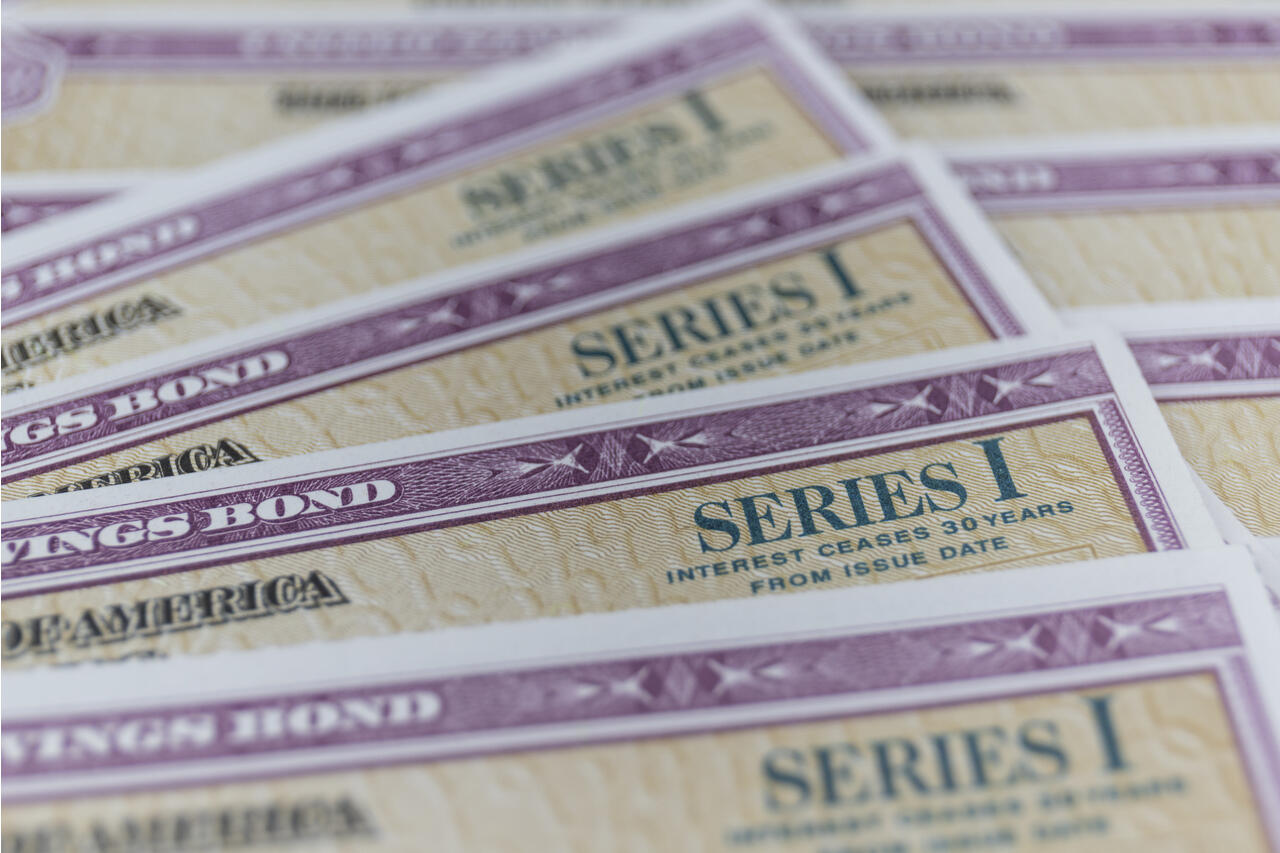
The Fed talks of the transitory nature of inflation and not raising rates, meanwhile Treasury is offering I bonds at 7% yield to small investors. Seems
to be a disconnect.
Peter Penha responds:
I Bonds Purchases are limited to US$10k a person, the extra coupon is indexed to the Urban CPI (why higher - nothing funny or contradictory it is formulaic)…this was all seen in advance by I series holders who track the urban CPI (which if you believe the rent increase stories - should remain high).
The FAQ is here: Series I Savings Bonds FAQs
Separately I do believe everyone should have a treasury direct account (was made a little more difficult to open one during the GFC) but no fees of any kind and you can leave your money as a certificate of indebtedness (C of I) of the US treasury with 24 hour withdrawal/ credit to any banking institution & you jump the queue among indirect/direct bidders on any US treasury auctions and I believe I read years ago that the original legislation (Ron Paul was part of it) guarantees you cannot be issued at a negative interest rate even if rates are negative for financial repression purposes.
Was about putting the little guy/gal first.
Nov
8
J. S. Bach, from Nils Poertner
November 8, 2021 | Leave a Comment

JS Bach was once asked why he wrote so much music.
His answer:
1. "To the glory of God" (not sure whether he meant it, nevermind)
2. To amuse himself.
Maybe some like this piece here as well:
Bach - Concerto in D minor BWV 596 - Van Doeselaar | Netherlands Bach Society
In the first notes of the Concerto in D minor, performed by Leo van Doeselaar for All of Bach, it is immediately clear that this is not the usual Bach. This piece is an organ version of a concerto for two violins and orchestra from Antonio Vivaldi’s L’Estro Armonico. Vivaldi’s music was popular throughout Europe and Germany was no exception. During his years at the court in Weimar, Bach made a series of arrangements of Italian concerto music for organ and harpsichord, including six concertos by Vivaldi.
Gyve Bones adds:
From 20 arguments for the existence of God, from Prof. Peter Kreeft, Department of Philosophy, Boston College:
17. The Argument from Aesthetic Experience
There is the music of Johann Sebastian Bach.
Therefore there must be a God.
You either see this one or you don't.
Alston Mabry writes:
There is a scene in Professor T (Antwerp version) where T is talking to his cellmate and says very sadly something like, "Is there a God?". And his cellmate says something like, "There is Bach. Bach is God." And T smiles and says "Yes, Bach is God."
Peter Saint-Andre offers:
A quote from Pablo Casals:
For the past eighty years I have started each day in the same manner. It is not a mechanical routine but something essential to my daily life. I go to the piano, and I play two preludes and fugues of Bach. I cannot think of doing otherwise. It is a sort of benediction on the house. But that is not its only meaning for me. It is a rediscovery of the world of which I have the joy of being a part. It fills me with awareness of the wonder of life, with a feeling of the incredible marvel of being a human being. The music is never the same for me, never. Each day it is something new, fantastic and unbelievable. That is Bach, like nature, a miracle!
Nils Poertner responds:
that's great. I always try to listen in the moment - whatever works for ppl - life works a bit by invitation anyway. one can't force stuff. a basic sense of joy and harmony is certainly missing in our era (the media, the drama etc outside).
Jeffrey Hirsch recalls:
An English professor whose class I was in asked the question why people write poetry. Answer: Because they have to. Similar reason why Bach wrote so much music. Because he had to.
Richard Owen wonders:
Does Bach have an Onlyfans? I can't see it in the search.
Laurence Glazier suggests:
There are free versions of Sibelius. May I recommend the pleasures of composing now available to all?
Richard Owen admits:
Thank you Laurence, an answer from a real musician of note I think? I should therefore disclose, because you are a decent and proper individual of good character and standing… my question was touched with satire. Google Onlyfans via google news, and you might learn something about the debasement of our culture.
Nils Poertner makes a connection:
btw…I always wondered whether one could re-train a musician becoming good trader? Why? Coz good musicians (of any style) tend to enjoy the process of learning - and are the complete opposite of end-gainers. perhaps they are not interested in financial markets enough- otherwise it would be an interesting project. any idea?
Duncan Coker writes:
I am not in the class or universe of LG in terms of composing, but I do write country songs as a hobby. One thing I have found useful is, often I have to throw something away that I thought was good, a melody, a lyric and start from scratch. The more easily and quickly I scrap an idea, the easier it is to start over. You can't force it. This is true for trading.
James Lackey expands:
Dunc is not gonna get mad at me because we never argue. However sure we can force it and to add to the comment of "those people". As if a career makes a man!?)@“”
Anyways path dependence omg I sound like the geek I am. Ok in a sport or music the pleasure has to be the process of practicing or doing it every damn day. As parents we teach this as in brush your hair teeth good girl boy kiddo! The pleasure of rewriting written words must be higher than start from scratch or least effort kicks in no?
I do not care if she likes my poems. I love them. I’m not sure if it’s a coin toss but I can’t fathom whether I like the poems I wrote in one blast or over 6 hours weeks days or? Good is good and great is better than 6 years ago and awesome is when she says so.
I wrote an awful poem once. Many bad but awful because you can hear the blood hit the floor. I gave it to a song writer buddy and he said damn that’s awesome. I said write a song. He said no man you never write over another mans blood sweat or tears.
In trading the get the joke one liners or 5 lots are cute and won’t hurt anyone much can’t kill you but will never inspire romance. The all in big line can and will get you the one, the forever girl or death one way or the other every 7 years death to the marriage of business and of the romantic life.
They say you’ll get what you need out of trading the market. I think perhaps that’s what separates us from the other guys. We need we want we just can’t help ourselves, we need everything. We want it all!
Adams Grimes writes:
I do think there are some fairly intense connections between music and successful trading/investing. There are the obvious issues of "sticktuitiveness" and grit… I'm currently working my way through one of the Bach Partitas and spent about 4 hours yesterday on 2 measures of music. (For reference that's probably 4-6 seconds, when performed). That degree of focus on detail is absolutely normal for musicians, but is not normal for most peoples' experience, at least in the modern world.
In markets, we get kicked in the head (if we're lucky) or the balls (or, more likely, both) on a regular basis. Some degree of stubbornness and a willingness to just not give up.
I think there are also some profound tie-ins in terms of pattern recognition. For me, I think this worked both ways… after taking a decade away from music I discovered my "musical brain" and compositional skills were probably better than they were, in some ways, when I was focusing my life around music. (My keyboard technique emphatically DID NOT improve, as that's something that does take a fair amount of maintenance.)
Serious, important, and maybe even interesting epistemological questions lurk here.
It's hard to have a favorite Bach piece… his works are surprisingly even in quality across his output, but let me share one that is at the top of my list. This has always been one of my favorites:
Bach: Trio Sonata in G major BWV 530 - I. Vivace - Koopman
(And, for sounding so simple and transparent, it's a nasty little nightmare to perform!)
Gyve Bones harmonizes:
I first heard this performed in the 1970s by Walter/Wendy Carlos on the “Switched-On Bach” on Moog synthesizer, and it has remained a favorite piece of music since then. There are various settings of the piece for guitar and piano as well. Here is a full symphony rendition… It is a song of gratitude to God for his many blessings.
Bach - Sinfonia from Cantata BWV 29 | Netherlands Bach Society
Peter Saint-Andre responds:
I had a similar experience with one of the Bach Cello Suites last night. There is much effort (both time and concentration) involved in learning these pieces. And he probably just dashed them off!
BTW, many years ago there was a software company that specifically recruited music majors because they were highly trainable for programming. And music majors also scored quite high on the even older IBM Programmer's Aptitude Test.
Adam Grimes comments:
And he probably just dashed them off!
This, for me, is one of the biggest and probably eternally unanswerable questions in music history. I suspect our performance standards today are probably far higher than they were historically. It's possible we have an army of at least highly technically competent instrumentalists who've devoted more time to, say, the Chopin scherzi than he ever did himself. We know that Beethoven's playing of his own pieces was, according to contemporary accounts, thrilling but filled with mistakes. When Czerny (a student of Beethoven) proposed playing Beethoven's pieces from memory, Beethoven replied that it was impossible to get all the details without looking at the score… and then admitted he was incorrect on that assumption.
Reading between the lines of what CPE Bach wrote (the Essay on the True Art… is a must-read) I suspect contemporary performance practice was much more improvisatory and perhaps less detail-oriented than we'd expect. We know many of these Bach cantatas were written, rehearsed, and performed in a week. These performers were not super human… the only thing that makes sense to me is that our performance standards and expectations (which approach technical perfection, due to the advent and growth of recording) might be much higher than in past ages.
But perhaps I'm wrong on that.
Interesting on the programming front. I would think those are two quite different modes of thinking (and knowing the expertise is domain-specific in many cases), but I'm a far better programmer than I should be given my level of actual training in the discipline. Maybe there's something to that.
Peter Saint-Andre writes:
In his book "Baroque Music Today", Nikolaus Harnoncourt notes that before music was recorded, people most likely heard any given piece of music only once and didn't want to keep listening to the same music over and over as we do but instead continually sought out whatever was new. Perhaps there was a sense of discovery as composers explored the potentials of the tonal system; once those potentials were exhausted and composers started to produce extremely chromatic or even atonal music in the 20th century, listeners were turned off by the new and sought refuge in the old (thus Western art music ceased to be a living tradition for most listeners). Thankfully composers like Adam Grimes and Laurence Glazier are bucking that trend!
Laurence Glazier writes:
One would expect coding and music skills to be correlated. A symphony is partly an encoded instruction set, whether performed by a computer or an orchestra. The conductor is the "crystal", the timer that pumps the flow. But oh, so much more, than that.
It would be very hard to combine the music and trading fields. To be attentive to the Muse and the S&P at the same time? Surely both are all-consuming. But trading, with its psychological dimension, of self-awareness and development, is a fine path. Alexander Borodin managed to combine composing with a distinguished career in science, as did Charles Ives in insurance.
Oct
28
Supply, from Duncan Coker
October 28, 2021 | Leave a Comment
Yes, it is a different mind set and self fulfilling. I am thinking about replacing some wood flooring and got a quote and now makes me think better do it now before the wood becomes less available and/or more expensive. Meanwhile cash is losing 5% this year. Multiply this mindset x 100m people and you get some inflation. Fed won't raise rates, wages won't keep up, but assets should do well until the yield curve is so steep that rates have to go up, which is the big unknown. Who will be our Volcker of 2020s? Does this not make the case for all the supply-siders. You can demand all you want, but someone has to make the stuff.
Steve Ellison adds:
I worked in technology supply chain management in a previous career and have been thinking about a scenario called the "dreaded diamond".
Technology part shortages occurred with some frequency as the transition from designing a next-generation product to ramping up production did not always go smoothly. And even before covid, accidents happened; some years ago, a factory in Japan caught fire. Many specialized components have only one supplier.
What typically happened in shortage situations was that the supplier would allocate the limited supply among the buyers. The buyers would try to game the system by placing 3x to 5x their normal orders, hoping that would increase their share of the allocation. Meanwhile, executives would want daily updates on the situation: how many units were delivered, and what the likely delivery schedule was.
This situation might continue for some months, with buyers continuing to place inflated orders, and the apparent shortage stretching out longer into the future with the higher orders.
As actual deliveries increased, one day, all of a sudden, the buyer would cancel all the excess orders. As other buyers did the same, the demand on the supplier would crash to near zero. This phenomenon of illusory orders that would vanish later was called the "dreaded diamond". A few quarters later, there would be big inventory write-downs because technology products lose value fast as they age.
Maybe some variation of this scenario could occur in the general economy as some of the shortages are alleviated in the course of time. We might find out the shortages have been exaggerated by purchasers trying to maximize their own supply.
Alston Mabry offers:
The Odd Lots podcast (BBG) had a recent episode about the chip shortage, and the guest described this exact scenario, where a customer orders 10x chips and is told by the supplier, "We can deliver 1x chips now, and the rest within 50 weeks." So the customer then orders 100x chips, hoping to get a 10x allotment, after which they cancel the rest of the order. But suppliers must be catching on.
A reader comments:
Sounds like how the Street allocates hot deals. The “pad-my-order-by-a-factor-of-10” move can’t help but to attract attention on the syndicate desk… and the result rarely benefits the customer.
A reader adds:
This has been my base case for some time. Interestingly, I get the sense that complacency is increasing lately, which us odd.
I expect a deflationary shock from overproduction within 24 months, globally synchronized. The delay us from supply chain snafu’s continuing for about another 18 months.
The difference between this and the diamond is deliveries being made and a simultaneous demand drop (ie they get their increased orders).
Hybrid system in time models are rolling out still.
Pamela Van Giessen writes:
This is not rocket science or even dismal science.
Quit testing healthy people for covid so companies that engage in non-Zoom activities can work at capacity and people aren’t "scared" to be around other people. We are still testing well over 1M and sometimes 2M people daily. ~2.5M people were unable to work between June-Sept because of covid. Since there weren’t that many sick people the bulk of them were out of work due to covid related quarantines. And I can promise you they weren’t the zoom class. Supply issues and inflation last as long as covid is a 24/7 threat that "must be conquered."
Our World in Data: Daily COVID-19 tests: USA
Yes, hoarding makes the problem worse but that will evaporate in 2 seconds once we have reliable supply.
Last week I saw a man on a bike wearing a mask in Park County MT where we have nearly 3000 sq mi and a population of ~16k. No helmet but he had a mask on. I should have snapped a pic as it was a perfect illustration of the brainwashing insanity that plagues our economy and health right now. The vaccines may prevent serious illness/death from covid but they don’t seem to be good for much else be it the supply of canola oil, engines, or other health conditions/injuries, etc.
Duncan Coker writes:
The reformers always make the assumption that supply will just naturally bubble forth like a spring constant and unaffected by the world around, be it for labor, capital, services, products. It is assumed no incentives apply and the curve is a vertical line stretching to the the outer limits of the universe. However, this assumption is always wrong and being tested right now.
Oct
20
Energy - Things that make you go hmmmm, from Zubin Al Genubi
October 20, 2021 | Leave a Comment
The energy crunch in China and Europe may grow into a bigger trend worldwide. Its one of those small line notes you notice and go hmmm. Like the pandemic was in early 2020. Hmmm, shortage of masks. Hmmm, Shortage of gas, coal. Things that make you go hmmm.
Water shortages also coming up. See how this winter is. Reservoirs are quite low. Look at weekly chart of FIW water etf.
Jeff Watson adds:
I’m noticing many holes where product should be on shelving at every retail establishment we patronize. I’ve been waiting on a part for my Jeep that’s been on back order for 6months. Still see little to no ammo in stores. The system is full of hiccups.
Tim Melvin notes:
I saw a lot of empty shelf space at Costco last week. Very unusual.
Pamela Van Giessen writes:
No joke. We have a huge problem. This is what happens when the world gets shut down and everything is all covid fear all the time. No workers. Test school kids constantly and they will end up being sent home and parents won’t be able to work. Then stuff won’t get made or shipped to where it needs to be. Freight train, fully loaded, sat parked in Livingston MT for nearly 2 weeks. Just left the other day.
As someone running a business that relies on actual commodities (flour, sugar, etc) I find myself overbuying out of concern that I will not be able to get basic ingredients. I had a hard time getting boxes about 2 weeks ago. It’s ridiculous.
Laurence Glazier writes:
It’s getting reminiscent or the Atlas Shrugged movie.
Nils Poertner suggests:
UK is worth to watch as most things we are going to see here in Eurozone or you guys in the US are happening a touch earlier over there (UK being such a tiny, little, open, exposed, econ).
Laurence Glazier adds:
Yes, over here in London it's harder to get petrol (i.e. gas) for the car, less things available in online stores.
James Lackey writes:
I can get everything to build a car a bike or a motorcycle and mysteriously no spikes no single bearing or one simple chip - I call BS. This is almost as big as a Vatican scam.
Jeff Rollert adds:
The most common boat engine, the Merc Cruiser, is quoting deliveries of full engines for next summer.
Duncan Coker notes:
Motors being taken out of production. Sounds a lot like a book I know.
Oct
12
Economists win Nobel prize for proving laws of economics don’t exist, from Duncan Coker
October 12, 2021 | Leave a Comment
No it is not the Onion.
3 economists awarded Nobel for work on real-world experiments
"The Royal Swedish Academy of Sciences said that Card's studies from the early 1990s "challenged conventional wisdom." By comparing what happened when New Jersey hiked its minimum wage to labor market conditions in neighboring Pennsylvania, he was able to upend the accepted theory that increasing the minimum wage would lead to fewer jobs."
Peter Saint-Andre adds:
Why don't we raise the minimum wage to $200/hr so everyone can be rich?
James Lackey relates:
True story: What is the probability old lack would sell a unit to University PhDs in Econ in a year? They both asked why I sell Carz. That I blew up again peaked their interest. What they didn’t realize is the Econ profession told me the exact same thing the Law clerks told me: Go trade lack.
Anyhoo they always bring up the big short movie book or some other mumbo story then they quote their book. I exhale and call bs.
I get very upset at men calling me a not ummm honorable man or imply that whether it’s Carz or trading for a living.
I blast them with a 11 minute data dump and why the street works and how and Mr Vics ecology the story of the elephants and like Gresham law they know they never read Albert K Nock and they do implicitly understand the law of least effort. I end my discussion with the same to all business men: It’s the pay plan man!
I’ve been asked to speak at MBA classes and seminars and for sure interviews for their next book. After blow up artist and hour interviews and a one line quote that was actually the get the joke true real deal about Mr Vic "he always found a way for all of us to make money". Which in bmx or drag racing terms means to win! I say no thanks have a nice day.
A year later I see the profs new book at the library. I flip through it and I’ll be damned. Ya can’t make a jackass drink the koolaid.
Henry Gifford comments:
The thing frequently referred to as the Nobel Prize in Economics is misleading, at best.
The original Nobel Prizes were established in 1895, and financed (the word "funded" implies "free" government money in some circles) by Alfred Nobel's will.
The prize in economics was established in 1968 by a donation from Sweden's central bank. Perhaps the central bank has some economic agenda to pursue, but if so, they didn't state that as their goal.
In 1995 the prize in economics was redefined as a prize in social sciences for the stated purpose of widening the field of possible recipients to include people who are not economists.
While the prize in economics is often called "The Nobel Prize in Economics" in the US, that has never been the official translation to English agreed on by the people giving the award. The official English translation of the name has changed eleven times since 1971 - perhaps they are striving for the most confusing and politically correct name possible. The official names in English usually include the words "Memorial" and "Alfred Nobel."
At a minimum, the prize should be referred to with the word "Memorial" in the name, to distinguish it from a genuine "Phone call from Sweden."
Oct
6
Books, from Zubin Al Genubi
October 6, 2021 | Leave a Comment
1. Human Error, James Reason. A rather disappointing academic treatise on cognitive analysis of how humans make errors which is really dragged down by obtuse academia speak. Two major sources of error are lapses and slips, and secondly errors of reason and rules. Slips are when you forget steps, lose your place, get distracted, fall into a habitual practice inappropriate for the situation. Errors of reason are using the wrong rule for the situation, where the plan does not go as expected, or the plan was wrong. When the rule doesn't fit, the expert acts like a novice.
There are the raft of heuristics. One is how humans utilize familiar patterns rather than calculate or optimize a current new situation. It is cognitively difficult to consciously think through a new situation.
An interesting section was about how the brain uses "autodrive" to do many familiar things to make room for conscious thought. I was driving down somewhere thinking, and look up and arriving at my destination, realize that I basically had no recollection of the drive there - just on autopilot. A lot of daily life is on auto pilot thus ripe for error.
It's a difficult read. Better to rent, than buy.
2. The Genetic Lottery: Why DNA Matters for Social Equality, by Kathryn Paige Harden
A flawed book addressing a difficult subject. Galton's biggest failing was his theory on eugenics. One of Harden's main points is to debunk the misconception that the genetics of race has any meaning. Race is close to meaningless in genetics. For example, people with genes from people from Africa have a much larger variation in genes than in all the other races, and the categorization of Black and White becomes meaningless.
Genetics does have an effect on personal traits. It predicts certain diseases. The attempt at connecting genetics with achievement in education, life satisfaction, and wealth, suffers from too many variables to have any use.
Their statistical studies, not disclosed, I think will not be robust.
3. John Steinbeck, Sea of Cortez, recommended by Andrew Moe. A beautifully written book and a joy to read.
4. Yottam Ottolenghi, Plenty More. Highly recommended cook book with smashing recipes for vegetarian dishes with a mideastern influence. He has other cookbooks such as Jerusalem with recipes that are real home runs. I've made a number with great success.
5. Michael Lewis, The Premonition. Excellent book about the sad state of the lack of preparedness for a pandemic in the US. Outlines some of the goings on in California to deal with pandemics and disease. Lewis is a fine writer and easy to read.
Pamela Van Giessen comments:
Lewis is a facile writer who performs a parlor trick by bringing forward, in Vanity Fair like story telling, that which will convince you that his view is the correct view. He will not be remembered 100 yrs from now.
A reader writes:
There are three sentences in the short review of The Genetic Lottery that are utter nonsense:
"Galton's biggest failing was his theory [sic] on eugenics."
"Race is close to meaningless in genetics."
"The attempt at connecting genetics with achievement in education, life satisfaction, and wealth, suffers from too many variables to have any use."
These sentences could probably be accepted in, say, the NY Times given that and other leading publications' denial of much of genetic science, but not on this Spec List.
James Lackey appreciates:
Fantastic report! I dig Lewis because moneyball was a great movie lol but really love him because his Wife is so amazing that he must be a good dude to keep her.
Duncan Coker
Thanks for the list. Has anyone read the latest from Steven Pinker, Rationality? It seems like a more scientific analysis of what Kahneman failed to do. We humans have trouble with advanced probability in every day life, so appear to be irrational, but there is more to the story. Do the shortcuts we use help or hurt. Try doing Bayesian Analysis at the grocery story. I think Pinker is one of the best writers we have at present.
An excerpt from Pinker's latest:
Why You Should Always Switch: The Monty Hall Problem (Finally) Explained
By Steven Pinker
Sep
28
Ken Burns is pessimistic, from Jack Cook
September 28, 2021 | Leave a Comment
Historian and documentary filmmaker Ken Burns said that the present day is one of the worst times in American history.
Burns made the remark while on the “SmartLess” podcast, hosted by Will Arnett, Jason Bateman, and Sean Hayes, comparing current events with the Civil War, the Depression, and World War II.
“It’s really serious. There are three great crises before this: the Civil War, the Depression, and World War II. This is equal to it,” he said on Monday’s episode when asked about the direction the United States was headed.
Peter Saint-Andre offers:
Perhaps he's been reading The Fourth Turning by Strauss & Howe. Highly recommended.
It does strike me that the recent run of presidents rivals the likes of Fillmore, Pierce, and Buchanan. Stefan can provide a more informed perspective for us.
Leo Jia writes:
The Fourth Turning sounds very interesting, thanks for sharing. I had similar senses in recent years, hope I had read it earlier.
According to Wikipedia [Strauss–Howe generational theory], our current turning is crisis starting in 2008 and ending in 2020 (+a couple years perhaps). The last crisis was between 1929 and 1947 (depression and ww2 together for 17 years). The crisis before that was between 1860 and 1865 (civil war for 5 years).
As one turning generally lasts 20-22 years, the current one is coming to the final years.
The next turning following a crisis is termed high. It's like 1946 - 1964, and 1865 - 1886, for which we can be hopeful.
I am not sure if the authors discussed about the not fully synchronous nature of the turnings through the world. For instance, America didn't suffer ww2 so much as Europeans or some Asians. Europe didn't have the depression, though it had ww1 earlier. Also, even in the same crisis turning for instance, different groups or countries can take differently: winners get more benefits than losers for instance.
So the podcaster talks about a worst crisis we are in, well that may be true, but the good news is that not everyone has to suffer.
Vic adds:
presumably that fellow traveler who has never believed in american excetionalim is referring to the negative feelings about president biden which i happen to agree is bearish as the masters 1000 and the big tech and the bilious billionaires will have less chance of capturing the rake from being one with the lokis.
Henri Huws suggests:
If you’re enjoying The Fourth Turning have a look at Decline of the West by Oswald Spengler. He was a history teacher by trade that wrote extensively on the coming decline of the west. Spengler’s cyclical theory on history is very interesting. He famously predicted the fall of the third reich, 9 years before the end of the war. All of his work is fantastic, but has a much longer time horizon than the 4th turning. In vol1 he focuses on how culture in civilisations throughout history changed as their civilisations grew and declined. In vol 2 He puts more emphasis on politics and economics. Its a dense read, but well worth it.
Duncan Coker recommends:
For geopolitics I recommend Peter Zeihan. His latest is due out next year, and the title is provocative: The End of the World is Just the Beginning. It could be taken as negative or positive depending on your time frame. As much as I like Ken, his comparisons to other points in history seem way off the mark.
Stefan Jovanovich
Mr. Burns left out the wow finish with Jesus and George Washington - always Lincoln's favorite bit of stagecraft.
Reason, cold, calculating, unimpassioned reason, must furnish all the materials for our future support and defence.–Let those materials be moulded into general intelligence, sound morality, and in particular, a reverence for the constitution and laws: and, that we improved to the last; that we remained free to the last; that we revered his name to the last; that, during his long sleep, we permitted no hostile foot to pass over or desecrate his resting place; shall be that which to learn the last trump shall awaken our WASHINGTON. Upon these let the proud fabric of freedom rest, as the rock of its basis; and as truly as has been said of the only greater institution, "the gates of hell shall not prevail against it."
Aug
13
Trouble ahead?
August 13, 2021 | Leave a Comment
 Jeff Watson writes:
The market weathermen, self described sage like realists, always see trouble on the horizon and are compelled to give all knowing, logical reasons the market will get hit. Sometimes even invoking "science." To them the pressure is dropping hard, the seas are building, and we're about to get hit with sustained gale force winds. It's always doom and gloom to them. They want the little guy to get scared, pitch his position and make the broker money, rinse and repeat. Meanwhile, Steve provides some perspective and his chart lists 49 reasons for the market to get hit…while the S&P went up 35X during that time. Unfortunately the brokers don't want their clients looking at charts like this or reading Dimson.
James Lackey agrees:
Jeff says what we all learned the hard way. The market in stocks is an engine designed to go up. Any business decisions based otherwise are in between risk-based conservative - which in most cases is a good thing - and ruinous, as the vigorish will grind you to a long-term guaranteed loser.
Michael Cook responds:
I broadly agree with this but let’s not take it as written on tablets of stone.
One of the nastiest human failings in my opinion is recency bias and for investors in US stocks, an entire career (unless a very seasoned investor indeed) has been a basic bull market tempered by the bear markets of 1997, 2002 and 2008 and whatever the hell March last year qualifies as. Recency bias on steroids.
But it doesn’t mean it must always be like that. Just ask eg the investors in the Japanese stock market 40 years ago who pretty much are still waiting to be making money now…
Leo Jia adds:
Even if there is a sharp drop, it will only be shallow and short term. This is not a big bubble and there is no euphoria yet. If one suspects big money are selling, the question is what is the alternative to the US market. Perhaps the worry will be legitimate when Turkey and China become out of any concerns.
Nils Poertner writes:
what makes the difference between folks who are in the market - and trade successfully in the long-term and those who don't is often the acquisition of implicit knowledge. Things we know are true on some level, and that we need to experience personally many times to know that they are true - not in the absolute sense but more intuitively - and percentage-wise.
we live in a very explicit world now everything needs to be spelled out. but the "absense" of something is a better guide than the appearance of an event.
an example would be that SPX drops by 3pc one one day (after months of overheating) - AND the financial press is somwheat quiet aout the drop. as long as they are loud…one can normally relax a bit more.
not to be confused with long-term investing. eg, some of my English friends who bought prime real estate in the 90s in London, and levered up every year with new flats, are all fabulously rich now. was it being lucky or smart? who knows? implicit knowledge is underrated - was my point to say.
Leo Jia comments:
Even if there is a sharp drop, it will only be shallow and short term. This is not a big bubble and there is no euphoria yet. If one suspects big money are selling, the question is what is the alternative to the US market. Perhaps the worry will be legitimate when Turkey and China become out of any concerns.
Duncan Coker writes:
Agreed, it's worth noting that the 00's were the worst decade since the 30's for stocks. I'd propose there was a bearish recency bias going on during the 2010s.
I liked the video about carnival scams. I recall "winning" an album at age 13 from a darts game on the boardwalk at Asbury Park, NJ. No doubt I overpaid. It was a vinyl from a band I had never heard of at the time called the The Allman Brothers which forever changed my life in music.
Apr
5
Vix
April 5, 2021 | Leave a Comment
Anonymous writes:
Do you mind sharing what's needed to be read inferred in your svxy chart for beginners.
Gary Phillips writes
nothing particularly esoteric here, other than the dotted yellow line is a level that has shown support in the past, and old support may become new resistance. in terms of constructal law it is an area that has evolved over time to allow greater access to the currents that flow through it.
Duncan Coker writes:
Feb of 2018 was quite a move for SVXY, down 90%. SVXY is really a proxy for selling the term structure of VIX which is almost always in contango.(ie sell the distance month, cover after a month, rinse and repeat). Except when the spot and front month explode upward and go into backwardation. I did a study a while back showing backwardation of futures term structure is very bullish for SP500, but not that many trades.
Apr
5
Play Ball
April 5, 2021 | Leave a Comment
Since we are all in the predictions market, any early season baseball
prognostications? Rockies were able to host 21k fans yesterday and win the
opener, and driving around town seeing high school ball in action was a fine
sight.
Jan
22
Inverted Curves
January 22, 2021 | Leave a Comment
Duncan Coker writes:
Amid all the melee of the last year it is easy to forget the yield curve inversion that occurred in May of 2019 presaging a recession in 2020. This indicator is 4/4 on calling recessions within 12 months including 2020, 2008, 2001 and 1991. Of course a lot of things can and do happen 12 months before a recession including pandemics, lock downs, credit crisis', bubbles, real estate and oil shocks. Bankers hate inverted curves because it makes renting money more difficult. Academics who pine for equilibrium also are chagrined by inverted curves. Soon we will have an academic at Treasury and a banker at the Fed and I doubt we will see an inverted curve again for a long while.
Stefan Jovanovich writes:
CD's use of "renting money" to describe banking is, for this 19th century mind, a wonderful highlighting of the fundamental discontinuity between my favorite century and the present one. People in the 19th century actually did rent money; loans were made in issues of actual currency - bank notes and coin. That helps explain the seeming paradox of permanently inverted interest rates curves - where call loan rates would always be higher than the yields on 30 and 50 year private and U.S. Treasury debt. Now that all debt payments are credit extensions (even payday lenders are "paid back" not in cash but in paper), are there any transactions that still have the moneyness that can be subject to panic?
That seems to me to be at the heart of CD's comment.
Oct
20
Models vs Execution
October 20, 2020 | Leave a Comment
On Saturday a fire started and ripped 8000 acres and traveled more the 10
miles in less than 3 hours till finally firefighters made a stand at a wide,
two-lane road. 26 homes burnt to the ground. No one hurt thank goodness. Next
day another fire starts first reported at 5 acres. Extrapolating from the
prior day, fire 2 should be closing in on Boulder in 6 hours. Yet, it did not
happen. Fire 2 never got within 12 miles or above 300 acres. Credit goes to
brave pilots in DC-10 Airtankers and firefighters on the ground. Those planes
are as sight to behold as they graze the tree line spreading 10,000 gallons of
fire retardant at a pop. Wind, moisture, terrain, plane availability, fuel can
all be put into models and they may help, but it is execution and
improvisation that really save the day.
Oct
9
What Happened in 2018
October 9, 2020 | Leave a Comment
Big Al writes:
https://fivethirtyeight.com/features/money-and-elections-a-complicated-love-story/ Money is certainly strongly associated with political success. But, “I think where you have to change your thinking is that money causes winning,” said Richard Lau, professor of political science at Rutgers. “I think it’s more that winning attracts money.”
Stefan Jovanovich writes:
Did I miss the memo? Has there been an edict that particular facts are to be subsumed into coy academic attempts at irony?
There is one professor book that created the standard for electoral analysis and predictions: *The American Voter* by Angus Campbell, Philip Converse, Warren Miller, and Donald Stokes. They produced a detailed analysis of the 1952 and 1956 Presidential elections using what is still a wonderfully subtle methodology. Michael S. Lewis-Beck, Helmut Norpoth, William G. Jacoby and Herbert F. Weisberg took that work, applied the extraordinary advances in computing and computation since 1958 and revisited that work. *The American Voter Revisited* does the 2000 and 2004 elections. 1952 and 1956 elections. Professor Lau thinks he has invented a superior methodology; his proof is hat his model correctly predicted how 3 out of 4 voters in a mock election made the same choice that they would have made "under conditions of perfect information". Meanwhile, Professor Norpoth continues to stick his neck out and make a prediction every 4 years based on his primary turnout model. (For those who don't know it, he picks Trump.)
You can do better, Big Al.
Duncan Coker writes:
Since you brought up the 1952 and 1956 for those who don't remember Adlai Stephenson was the Democratic candidate against Eisenhower. It marked the start of televised and advertised campaigns. It also launched the start of a company called Simulmatics. They were the first to apply data and simulation to campaigns and politics, granted they were using punch card tech. Parsing data into groups like "white non-college educated, rural voter" or "women suburbanites" they were the first to use. Kennedy hired them in earnest to help him get elected. They did not predict elections so much as the issues that might turn elections and which side was best. For Kennedy they recommended expanding civil right issues, not hiding from being Catholic and more debates. They were not wrong but perhaps Kennedy would have done all thee things anyway. Today take the same process, but multiply the computing
speed by 1 million x. All in a very good book called If Then by Jill Lepore.
Sep
18
Another Indicator
September 18, 2020 | Leave a Comment
Duncan Coker writes:
If you are an ESG investor you may want to move on from this post
Casting aside market morality, if one is looking for a proxy for election and Covid volatility with some leverage kicked in, look to prison REITs. Most are still down around 30% ytd. The sector plunged in March with the rest of the market, but has just stayed there. As background, the previous administration wanted to end the use of private prisons, but this was reversed
in 2017. Private prisons still make up a fraction of overall prisons and some operate in a hybrid way with public guards and employees. A democratic win in Nov would most most likely curtail the use of private prison. Also Covid has been a big issue and the main reason for the declines. The sector is despised by lenders, pension funds and big banks, so a contrarian play. If things improve however, yields are double digit and an ethical case can be made that private prisons do a more humane job than public for prison administration. If you are truly against mass incarceration, which I am, then vote to end the WOD, ( but that is a longer post). CXW and GEO are two of the larger REITs. Both have announced dividend cuts. As always the big question is how much bad news is priced in. A spike in either direction would be a harbinger for election results or progress on Covid, and not necessarily mutually exclusive.
Kim Zussman writes:
A bolshie sweep would combine prison and build the wall funds. Quickly finish walling off the country but repurpose the direction: in only.
Sep
3
Mostly F’s
September 3, 2020 | Leave a Comment
Thanks for the comments and ideas on REITs. I bought a basket of 10 today
under the premise that stocks down by 50% with good free cashflow, with the
ability to borrow far below lease yields, should come back. Areas like
healthcare, storage and re-purposing seem sustainable. Amusingly the discount
broker I have been using for decades added a new rating system using classroom
grades - which I did not know about until after the purchases. Of ten buys I
made, they graded me almost entirely with F's with a few C's.
Aug
17
Deflation Is Not My Cup of Tea
August 17, 2020 | Leave a Comment
At the risk of being lambasted again, one of the things Keynes was first to
understand was the difference between economic theories versus how the world
actually works. He was a behavioral economist before there was such a word.
For example, Inflation or Deflation should be equally tolerable by the
rational economic man. But in practice it is not so. No one likes a pay-cut
even if the hard currency is theoretically more valuable. Deflation
eventually leads to lost confidence, unemployment, economic stagnation,
strikes and rioting. ( see the 1930's UK) It just does not fit human nature to
feel better off with less cash.
But inflation works just fine in both theory and practice. (not hyper
inflation though). And that is what every developed country has practiced
since the 1970's. Wages generally go up to appease us worker-bees.
Governments can spend and borrow like there is no tomorrow and then inflate
the debt away. No one really calculates the implicit tax in a decreasing
currency valuation. The rich never hold cash anyway. The working man doesn't
save enough for it to matter. Assets priced in dollars go up. In effect all
government policy is Keynesian now. It is written into the Fed charter to
target inflation. The Treasury has not balanced an annual budget in 20 years.
Believe me I prefer the elegant work of Hayek, Hazlitt, Uncle Milty and most
of all Thomas Sowell, but this is not our present world.
It would be an interesting thought experiment to imagine a world of balanced
budgets, decreasing credit and a strong dollar policy. I posit is would be
quite bad for stocks. The last time the US balanced the budget was during the
Clinton years 1998 to 2001. They actually suspended Treasury bond auctions for
a period. Shortly after we entered a 3-year bear market. We are nowhere near
such a world now. All of this is a long-winded way of saying if the choice is
between having the best model and making money, I will go with the later.
Jul
11
Safety, from Duncan Coker
July 11, 2020 | Leave a Comment
So much in the world of late about safety, feeling safe, makes things more safe. Safety is not a binary state and is one of degree. No one is ever completely safe or conversely completely unsafe either. And should safety even be a desired goal? Life is not a safe activity. In fact, in the end it is quite deadly. No one got very far being safe in trading. In fact, safety in a high turnover activity like trading probably leads to bankruptcy with repeated trading costs and de-risking at the wrong times for the sake of safety. The whole industry of asset management is built around the concept of Safety - protecting asset, managing risk, having a third party advise on what is safe and most importantly making investors feel safe. Whether they actually are or are not safe in another matter.
Jul
9
PPP Anecdote
July 9, 2020 | Leave a Comment
"I heard some people are re-incorporating their business under a different name to avoid repaying PPP loans" - Anonymous Source
As I recall the last time we had big loans programs like TALF and TARP they were eventually paid off with interest. Though the size would seem trivial now, in 2007/8 there was a fair amount of debate in congress and rules set up to at least make a good faith effort for repayment of tax payer funds. This time around with PPP and other SBA loans there was almost no debate and the vague payment/forgiveness language makes it almost certain a good portion >50% will never be repaid. Maybe that is the intent. Add in outright fraud of 2% (my estimate) on 1 trillion is another $20 billion. A lot of cash searching for a home, even if it a terrible misappropriation.
Feb
7
Returns by Decade Since Ike, from Duncan Coker
February 7, 2020 | 1 Comment
Compounded total returns for SP 500 with dividends.
50s 19.3%
90s 18.2%
80s 17.5%
10s 13.4%
60s 7.8%
70s 5.8%
00s -0.9%
Overall 11.4% compounded annual return
Jan
30
Lessons From GE, from Duncan Coker
January 30, 2020 | 2 Comments
If Rocky were here I wonder what lesson would be learned from GE, up 8% today. As I recall he was long calls at 12 ish (last year I think or earlier) that have come back into the money. All prices will be seen at least twice is one of them. Also, positions are bound to go way against before they go in your favor. And the cotton trader's never get out at break even after a big paper loss.
Kim Zussman writes:
Yes, but for every GE how many Enrons, Tycos, Worldcoms, Pets.com, etc?
Jan
18
Another All Time High, from Duncan Coker
January 18, 2020 | Leave a Comment
The contrarian in me and I think many readers of the site tend to buy when we see red on the screen, and sell after lots of green flashes. I've thought to conduct an experiment to turn the colors off on the trading screen to see if there is a bias and just go by the numbers. In the same way certain phrases evoke a reaction, like the words "all-time-high", but it is not symmetrical to "all-time-lows". In our lifetimes it is unlikely we will ever see an all-time-low in equities or bonds, maybe in some commodities and currencies. Yet, we see ATHs quite regularly, for example in the last four year on ES SP500. ( 2016 - 27 , 2017- 65 , 2018 -16 , 2019 -33), or roughly 13% of the time. I think like the colors on the screen ATH is a meaningless phrase. I think more important is market price "x" is high or low compared to what "y"? I would vote for bond yields to go in the y variable, but the possibilities are wide. Employment, GDP. The variable one chooses for "y" has everything to with the predictions for x.
Jun
7
 Does anyone have some tips for teaching a 9 to 11 year old checkers and chess from a beginner/intermediate level? Thanks.
Victor Niederhoffer writes:
I would suggest checkers as much better relevance to logical thinking and binary decision making the crux of all electrical circuits as a foundation for decision making in life. Chess is a contrived world relating to warfare in the old days. As to how to learn checkers, I would load checkerboard program onto their computers and play against the engine. Tom Wiswell wrote 22 books that are good and some of them are for beginners. You might read Edspec the chapter on Tom's proverbs of life: "Checkers and Markets". Playing with one's father or mother is very resonant in life. Good luck.
JayJay Hales writes:
Go is a nice boardgame as well. Although in general not as popular in the west, it has a bit of a foothold among mathematicians.
Dec
12
Loving Vincent, from Duncan Coker
December 12, 2017 | 1 Comment
 Loving Vincent is a visually stunning movie and highly recommended. The production is a blending of animation and art as each frame has been hand-painted in the style of Van Gogh often using one of his actual works as a base. The film tells the story of the last years of his life introducing us to the characters of a small French town where he lived and painted; they include his friends, benefactors, doctors, contemporaries as well as the countryside which inspired his work. The story puzzles over the mystery surrounding his death as the narrator seeks to deliver a final letter from Vincent to his brother. It moves very slowly but this is welcome as the unfolding art is so enjoyable to watch. In his short 8 years as a painter Van Gogh produced 800 works. Though he sold but one, he never waivered from his singular devotion to his craft. This films reintroduces us to his work. It is like gazing at one of his painting for 90 minutes and really absorbing the impact. Would love to hear Marion's review.
Aug
14
The Play’s the Thing, from Duncan Coker
August 14, 2017 | Leave a Comment
 My family went to an annual outdoor Shakespeare performance this year, Taming of the Shrew, which is among other things, a humorous treatise on marriage.
It also revealed that his plays, as wonderful as they are to read, are meant to be staged and performed, not studied in isolation.
And it is a good reminder in this virtual age that there is no substitute for living in the real, analog, non-artificially intelligent, non virtual, messy, human, loud, world and for kids to get outside, get muddy, get lost, and come home with a story.
May
23
Survival Skills, from Duncan Coker
May 23, 2017 | Leave a Comment
 I took a survival and orientation course over the weekend. Reading maps is a lost art and good skill to have; being able to plot a course using a simple protractor, degrees and adjustments for magnetic north. The error calculations are interesting: for example if you are off by 1 degree over a 1000 meter walk this is 18 meters of error. Over a few miles this error can be quite large and easy to see how people get lost in the woods. GPS can solve many off these issues, but still good not follow GPS blindly as it could lead you over cliff or an obstacle heading to a coordinate. Accuracy and attention to detail are important in planning. Once in the field you should use the terrain features to makes sense of the course, look for check points and reevaluate often.
In survival there is a rule of 3's. The body can survive 3 minutes without air, 3 hours in harsh conditions without shelter, 3 days without water, 3 weeks without food. If you have a plastic bag, wrapping it around a green branch will produce condensation water in just a few hours if there is sun on the bag. Fire can be made with shoe laces leveraged to turn wood pieces using friction. It is not easy, but possible. Shelters can be built in a few hours and improve both physical and mental outlook. Preparation is critical and a few simple things like having a plastic tarp, knife, and first aid kit can make a big difference. Improvising is important: For instance batteries in contact with metal will heat and make fire; Tree branches can be used to make simple snares; pine nuts in the west or acorns in the east can sustain the body.
Apr
20
The Elements of Style, from Duncan Coker
April 20, 2017 | Leave a Comment
 All journalists will know The Elements of Style by Strunk and White. William Strunk was a professor at Cornell and my grandfather had the good fortune to study under him as did E. B. White. White later went on to compile Strunk's notes into this gem of a book, as well as write many of his own books like Charlotte's Web. My grandfather, an admirer of both gentlemen, always kept a copy close by and recommended I do the same. Recently, I found a used copy at a bookstore and purchased it for one dollar, though I felt guilty the price was so low. Though not quite 100 years-old, it nonetheless qualifies as time-tested wisdom.
Heuristics add to the style of trading just as they do writing. In that spirit here are some of Strunk's and White's rules along with ideas on how they apply to trading. The whole book can be read in a few hours and is well worth the effort.
Apr
6
Cows, from J.T Holley
April 6, 2017 | Leave a Comment
 My Papa used to walk to town (8 miles round trip) just to get a RC Cola and a hot dog whenever the weather permitted.
I stayed with him during the Summer months as a kid and would join him for the walks.
He used to exclaim looking over at the streams while walking "The cows are up and walking. Good day to fish" or "The cows are down and laying. No fishing today."
I generally followed his sage advice in my adult life. It really did net more fish. Still does when I go to smaller streams and rivers when there are stretches with cows on the other side of the bank.
I asked him later in his life if it was just an ole wise tale or if there it had any truth. He exclaimed that it was sound. He let me know that when then cows were up and walking they stirred up all the insects. Swatting more flies as well as making grasshoppers make last second jumps. The fish know this and get excited.
It might not be sound science but I bought it. More observations like this were things that shaped my mind. Trial and error. Looking at outcomes from different attempts. Keeping things simple to get positive results.
Duncan Coker writes:
Great post on many levels, about spending time with your father, fishing, nature, observing and prediction. I was trying to guess the connection before reading and thought it might have something to do with sunlight causing the cows to move seeking shade. Sunlight means the fish might be looking up feeding and easier for an angler to see them.
Statistically brings up good example, A (walking cows) are good predictor for B (catching fish). On the surface this seems an odd correlation, not causation, and tempting to disregard. But there is actual another factor C (insects) that is the explanation. Statistically, the cows are easy to see, small insects not so much. Question is even if we don't know about C or can't measure, should we still use the A as a predictor even if it does not seem to make sense. For fishing the answer is defiantly, yes
Charles Pennington writes:
My fishing experience was mostly gained in Georgia, fishing for largemouth bass. That maxim seems right to me. On very hot summer days, for example, both the fish and the cows are listless from the heat.
Another bass fishing rule of thumb is that bass are total suckers for spring lizards as bait. The problem is that it's easier to catch a bass than to catch a spring lizard.
Feb
6
Overture, from Duncan Coker
February 6, 2017 | Leave a Comment
 It is good to see the market getting back to its musical roots. On Monday the market starts with an old-fashion musical overture playing a small part of each song melody giving a preview of what is to come later in the play. Then daily, one song is heard expanding on a theme. On Friday there is a Finale where the dominant songs complete the musical often with some fanfare at one extreme or the other.
Some evidence is in the fact that since 2006 Friday has the highest variance. Alas, the minima and maxima seems evenly distributed among days of week, but still believe there is a musical symmetry.
Jan
28
10 Reasons, from Duncan Coker
January 28, 2017 | Leave a Comment
No one asked, but here is a qualitative list, some have been tested but not all.
10 reasons to be bullish US equities
1) stocks futures term structure is positive carry
2) term structure of bonds positive slope (1 vs 5 vs 10 vs 30)
3) overall CAROR of SP since 2000 of 4.6% is well below average
4) crude and natural gas near decade lows
5) credit is expanding
6) strong dollar good for consumers
7) global trade has doubled since 2000
8) ending of marijuana prohibitions
9) solar and battery technologies
10) prospect of tax reductions
10 reasons to be bearish US equities
1) 20 trillion in US debt to refund next decade
2) 16 years of war since 9/11
3) Inflation cutting into real returns
4) Euro affects on Southern Europe
5) tariffs or VAT hurt consumption
6) possible restrictions on flow of labor
7) poverty rates in US still high at 15%
8) entitlements underfunded
9) single party rule overreach
10) education cost/benefit in decline
Dec
31
Opportunity, from Duncan Coker
December 31, 2016 | Leave a Comment
 President Washington was a very busy man under constant demand. To make the most of his limited time, he arranged for non-governmental meetings to occur on one specified day for just several hours in his New York residence. He would remain standing while dignitaries were brought into a receiving salon where he would circulate around the room, listening, engaging in conversation, then moving on to the next group. The only exception to this routine would be occasions when notable females might come to call. In this case, he would greet them at their carriages in the street and escort them personally. Washington rarely missed a good opportunity.
Nov
30
OPEC, from Duncan Coker
November 30, 2016 | 1 Comment
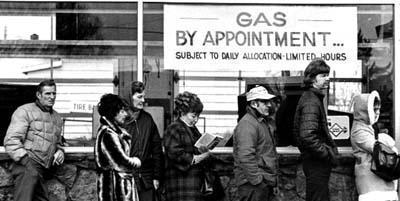 I grew up in the 70s and when I hear OPEC it always brings back vague, distant memories of waiting in the gas car line in our Pontiac LeMans, Nixon and the Bee Gees, sometimes all at once. What I did not know then which I know now, is that in some countries when a group of competitors gets together to set production and price levels it is considered an illegal activity, called collusion. Proving again when the crime is big enough it can go unfettered.
Fortunately, the arrangement is along the lines of a Puzo novel where enforcement and compliance are very difficult and the family business might not make it to the next generation. There are larger forces at work including cheaper alternatives, better efficiency, new reserves, and the technology to get at them. I predict in the years and decades ahead that OPEC will be looked back on with a wistful relevance somewhere between ABBA and frozen fish sticks.
Nov
28
George Washington, from Duncan Coker
November 28, 2016 | Leave a Comment
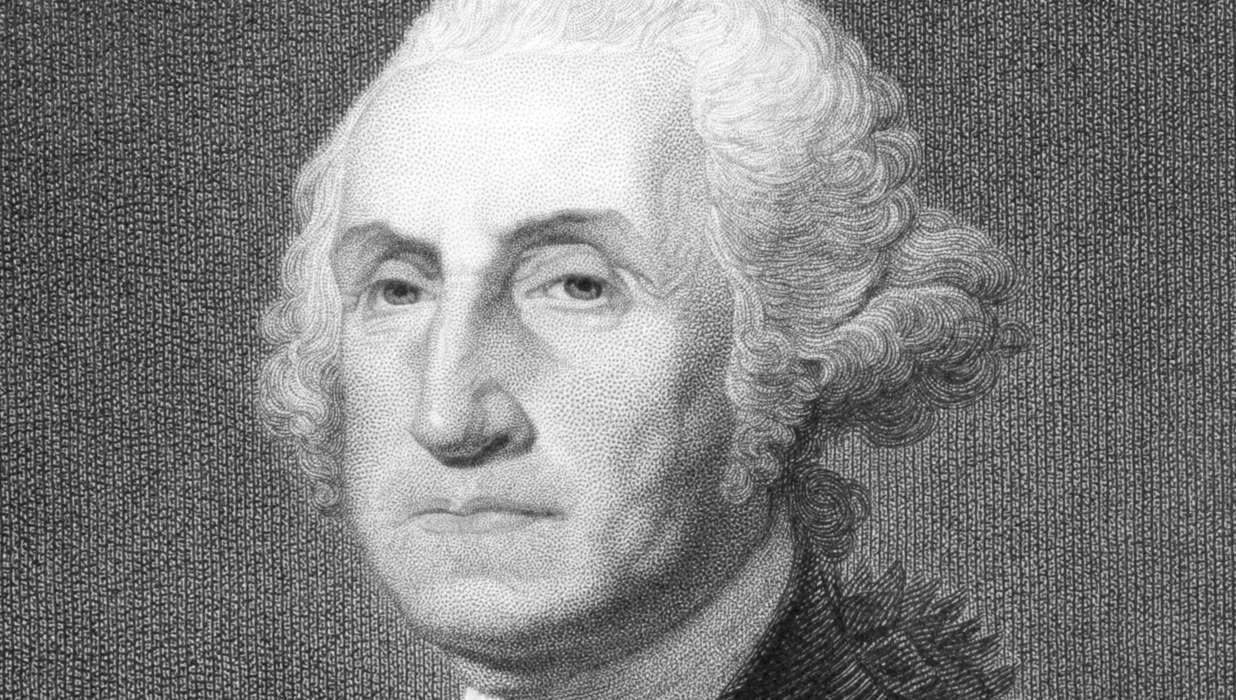 In a second installment on Washington let me echo Mr. Jov's comments. Washington's story is not what he was in 1775, but what he became over the course of the next eight years. The Revolution started as grievances by the elite over restrictions on western land expansion, credit expansion and taxes. But these were primarily "rich peoples" problems. The taxes affected luxury goods for the wealthy or mercantile traders. It was initially a revolution for practical reasons not ideals.
The Revolution became great when Washington and others turned the fight into an ideological war described early on by Thomas Paine in Common Sense. The war turned on the higher ideals of Freedom, Liberty and a fight against the foreign tyranny.
What is most astounding about Washington is how he was able to keep a standing army in the field for those eight years of incredible suffering. The infrequent battles were difficult enough, but the real hardship came during the winters and years of deprivation. He lead an army with no clothes, shoes, weapons, pay, food, or shelter. The men, for good reason, enlisted for only very short periods, and Washington was constantly losing half his army to disease, desertion or end-of-enlistment . He somehow managed to keep them together and perhaps those higher ideals and his example of leadership were the glue. The average Continental had little to gain personally and truly was fighting for the greater cause of Liberty.
It was also a time where chivalry and honor still ruled the day. In an amazing gesture, after the bloody siege of Yorktown and the British surrender, Cornwallis and British officers were invited to a celebratory ball by Washington. The Revolutionary elite still respected the European elite. The 8000 British regulars however, were resigned as prisoners.
The larger point being the country has always grappled with leadership's elite status and the blood, toil and tears of the rest of us. Washington was able to convince the country by words and deeds he was of the people. A farmer, statesman, warrior, but not a ruling elite. He put his life on the line countless time to prove that. In my mind he did prove that. Very few of our leaders since who call themselves public servants have served anyone other than themselves. That is why Washington remains great.
Aug
29
Let's hope a woman of such infinite jest brings some levity to the markets today (2016/08/26), lest we end up like poor Yorick.
Jul
6
In Media Res, from Duncan Coker
July 6, 2015 | Leave a Comment
In media res is a writing technique in which a story begins in the middle, then flashes back to the past to fill in the narrative, concluding back at the beginning. Hamlet and the Odyssey are examples. Markets often follow this narrative and like to revisit certain narratives from the past before concluding the day's story. Today I think qualifies.
May
6
Life on the Mississippi, from Duncan Coker
May 6, 2015 | 3 Comments
I am reading Life on the Mississippi by Mark Twain about his years as a steamboat pilot. It was a treacherous business and shares much in common with trading bonds.
Apr
10
The Most Frustrating Thing in Trading, from Ed Stewart
April 10, 2015 | 6 Comments
 One of the most frustrating things in trading is when you research a (qualitative, not a systematic) trade, stay up late figuring out how you want to express the idea to maximize gain and minimize loss, and then the next day when you want to put on the trade that stock is up near 3%.
Considering it has done nothing for months you figure, "I will wait till to buy on a decline a bit lower". Then the next day you see it is up 8% and the options you had looked at were would be up 60% in a few days had you conceived of the idea just 1 day sooner.
I think at such times (similar things have happened to me 3 times so far this year) one is very prone to going on tilt, such as finding some other market to chase, or otherwise do something out of frustration that is not logical and end up losing what you would have made had you been one day sooner.
I am wondering if there is any way this sequence of events can be generalized beyond specific circumstances of one trader, to general market phenomenon, maybe even events that lead to predictable circumstances.
Jeff Watson writes:
Whenever I go surfing, I miss a lot of good waves. I either am in a wrong position, miss it completely, or just blow it off thinking a better one will be behind. I never feel bad about missing a wave because there will always be another wave sooner or later. I look at trading exactly the same way I look at surfing.
John Floyd writes:
Agreed, put another way as someone once said to me “there is a bus every 5 minutes”. Also importantly in terms of the limits of time and energy don’t spend it worrying about missed moves, focus on what is ahead.
I read a poignant quote recently in The Joyful Athlete: ”Second tier athletes tended to beat themselves up for mistakes, while the champions simply noted their errors and moved on, wasting no energy on self-recrimination.”
Stefan Jovanovich writes:
I have the same problem. Sometimes I wait on a trade too. I think it is greed, the desire to seize the least/highest perfect. So I remember: "Luke, trust your instincts!"
Anonymous writes:
I strenuously disagree with the philosophy that "there is a bus every five minutes." (My late great father used to say, "there's always another street car.")
This is a rationally flawed analysis. Because it treats an opportunity cost as economically different from a realized cost. The reality is that the P&L from an opportunity cost is real, and it compounds over time. And this is true so long as one is consistent regarding timeframe, methodology and performance benchmarking. The most pernicious thing about this street car delusion is that it can be hidden, rationalized and forgotten.
By way of example, our fellow Spec Lister and Bitcoin Booster, Henrik Andersson declared on March 12: "Crashing commodity prices, currency war, crashing yields (with a big chunk of European debt trading at negative yield), surely this can't be because everything is so rosy in the world, this cant possibly be 'good' news. Couple this valuations close to ATH and I have for the first time in 25 years sold everything (I started investing when I was 12). Everything."
Since this declaration, the SPX, Dax and Nikkei have all risen between 3 and 6% — and the DAX is at an all time high. If Henrik measures his performance on a daily or weekly basis, this is a bona fide opportunity loss of substantial note. But if Henrik measures his performance on a long term, multi-year basis, it is way too early to render a verdict and this opportunity cost may well morph into an opportunity gain.
John Floyd comments:
Point well taken and a good one. I was afraid my quick comment might garner the need for elaboration. The point I was trying to make is if you “miss” a trade you should learn from the experience and move on, while trying not to repeat the same error in the future. Juxtaposed against expending energy lamenting the perceived lost opportunity, which also has a cost. Assuming this is done with some degree of improvement I think it is both rational and sound. In this way the opportunity cost is treated as real and minimized over time. If there is improvement made then returns are compounded in a positive fashion as opposed to a pernicious one. In anonymous’ example that might even mean Henrik recognizes what may or may not have been an incorrect thesis and “buys” everything the minute he read anonymous’ post.
Sushil Kedia writes:
My two cents on the table:
Opportunity costs as well as realized costs are both known and quantifiable only after the market has moved. At the instant of a decision as to whether to decide to take a trade or not, both are unknown.
Since a real P&L is a progression of a series of unknown infinitesimally sized but infinite number of moments, it is likely a flawed debate to undertake whether or not opportunity costs compound, since if those said opportunity costs actually turned out to be realized losses they too would compound.
Transliterating approximately what the Senator has said often in the past, the purpose of a trader is not to be in the market, but to come out of the market, one would like to tune one's mind to focusing on how much could one gain without losing beyond a point. For each this is a unique set of numbers despite the market being same for all. This uniqueness comes not only from different skills, but different restrictions on the types of trade one is allowed to take, the different marketing pitch each has to use for garnering risk capital (oh we keep transaction costs low), the different risk tolerances each must remain within etc. etc.
So each needs to focus on how one will travel from an infinite series of infinitesimally small pockets of time in deciding when to not decide.
Paolo Pezzutti writes:
With regards to missed opportunities, I have two observations.
Firstly, I think our mind is biased in focusing on the good trades that one could have made. We tend to forget the bad calls. It is true, however, that if your trading methodology is systematically not "efficient" then your performance will eventually be sub par.
Secondly, if you continue to miss opportunities, you may have an issue in pulling the trigger when it is the right time to do it. I have a long way to go to improve my trading and I think I have to work on both these areas. My trades are inefficient, because I can spot good entry points but my exits too often get only crumbles that the market mistress is willing to leave on the floor after a lavish dinner. Moreover, one tends to be afraid of taking the trade right when the risk/reward is more convenient, that is when fear is the prevalent sentiment in the market, the moment when you should "embrace you fears" as Larry Williams would say.
As a final comment, I have to commend the market mistress for her naughtiness and deceitfulness. The employment report on Good Friday released with markets closed saw prices of stocks plunge seriously (20 pts in 1 hour) to get 30 pts back on Monday. Many opportunities during the Easter weekend in stocks, bonds, currencies, commodities because of ephemeral end deceptive moves. Who knows if they were orchestrated or simply "random".
I went short gold on Thursday at the close (1715) at 1202.6. The first price printed on Monday was 1212.7. I eventually took a loss later that day of about 14 points. After 2 days gold was down at 1994. Focused on my potential loss, I did not exploit the huge opportunities offered. Afraid of even bigger losses, I liquidated my position instead of trying to close the big gap printed at the open. Moreover, I did not buy stocks or bonds to trade the obvious lobagola move. Double damage.
It is a matter of mindset. There are coincidences, situations; there is the ability of a trader to translate into action tests, statistics related to these conditions created by the market mistress. The more extreme the conditions, the more compressed is the coil, stronger and more powerful it will be the reaction in the opposite direction. Much to learn.
Duncan Coker writes:
I have always had a hard time reconciling opportunity costs/gains with realized costs/gains, though I know in economics they are comparable. For example, a casual friend offered me a private investment opportunity which didn't smell quite right and I declined and I left the money in cash earning -1% real rates. Shortly thereafter the enterprise went bankrupt and all would have been lost. I suppose on an opportunity basis it was a huge success for me, 100% gainer, and yet my cash account is the same earning -1%. Every day trading is a missed opportunity to be fishing on a nearby river which is easier for me to grasp and adds to the overall cost of the trading endeavor. Being able to forget and move on is a useful thing in trading. A swim or run at the end of the day does it for me.
anonymous writes:
I do believe one can go broke from taking profits. Maybe if one has very few positions at a time this could take a while to notice (the benefit to marketing a long term strategy of any sort– few observations) but everyone will fail.
Think of football, a defense might determine that if they can hold the other team to 17 points that they have won their part. What if the offense deploys their secondary after 14 points? May your successes be larger than your defeats.
We are playing an unbounded game, we have no idea the amplitude of future gains or losses, let alone their frequency. Taking profit when unwarranted may not give us a chance at tomorrow.
As for opportunity, we all balance the fear of missed opportunity with the fear of loss. The more successful traders I've known are slightly more fearful of leaving money on the table than losing money. Slightly.
But that depends on the difference between the value and utility of the opportunity. Duncan, you bring up the ultimate question about the purpose of life. Way to make this a deep conversation.
Mar
13
Permutations, from Duncan Coker
March 13, 2015 | 3 Comments
I am reading a math book now and came across a section regarding permutations. I thought it relevant in looking at various markets and the possible combinations like a ranking. If you had 10 markets for example, I was curious how many possibilities there are of those 10 when the order is noted. Turns out there are 3.6 million combinations for just those 10 markets. The formula is P(n,r) = n! / (n - r)! where N is a set of items and R a sub set of selected items. In my example both N and R are 10. Intuitively I would have guessed much lower and shows how my brain at least is not very good estimated very large numbers. Math experts please educate me if I have erred.
Mar
11
The Mighty Dollar, from Duncan Coker
March 11, 2015 | Leave a Comment
 On the currency moves versus the dollar the headlines get it sort of correct. A currency change seems to effects the non-US country much more that the US. For example since 2003 when the Euro/$ gown down 3 points over 10 days on average,n35 the Dax goes up 50 over next 10 days. When the Euro/$ goes up 3 points over 10 days, the Dax goes down -32 over the next 10 days on average, n05. In both cases the SP is relatively flat during those period. Admittedly the R square is very low. Todays outperformance of the DAX so far is unprecedented since 2003 with the Dax up over 200 and SP up a fraction or possibly down.
Meanwhile, the US consumer is the envy of the world. Energy cost halved, currency at 12 year highs. Rate at historic lows. What's not to like, except US equity markets which lag every other Western nation, except of course Greece.
John Floyd writes:
"I skate to where the puck is going to be, not where it has been." -Wayne Gretzky
I for one would consider the IMF assumption that a 20% rise in the US dollar has a 1% impact on both GDP and inflation. What if the Fed tightens in June to September and the US dollar is still appreciating and markets approach more Greek issues, a UK election, and upcoming Portuguese and Spanish elections?
Chris Cooper writes:
I've been short non-US currencies for some time. But this appears to have been successful mostly because it is a "risk off" trade. In other words, one theme. My question is similar to Mr. Floyd's. Even if we assume that "risk off" will continue, at what point does USD cease to be a good vehicle for this theme? Is there, or will there be, a better vehicle, such as corporate bonds?
Mar
5
Stand Up Desk Review, from Duncan Coker
March 5, 2015 | Leave a Comment
 I recently purchased a convertible desk that allows you to sit or stand. I highly recommend them. In this first week I have been gaining stamina each day and now stand about half of the work day. It is great for the back, but more than that allows you to get a different perspective. Going from sitting to standing I think stimulates some energy or intensity and gives you an extra focus in your work. When you stand you mean business. For trading, I think the act of standing simulates the energy of the pits and whether real or imaginary is beneficial. I find I am getting more work done particularly in the afternoons when fatigue sets in. I have one from Varidesk. Ergotron looks like another good manufacture.
Tom Printon writes:
There was many issues for me to contend with when transitioning from 25 years in the pits to an office, one of which was sitting. Purchased a sit/stand desk a few years ago (Geekdesk) and felt much better for all the reasons Mr Coker stated.
Feb
27
Watches, from Victor Niederhoffer
February 27, 2015 | 5 Comments
 We're talking about watch sales around here. Rolex apparently sells 650 million in watches each year. Susan says that wearing a watch these days is like jewelry for men, and that it's useless since everyone has a smart phone. We're thinking about Apple's watches. They'll have to compete with all the other watches. Supposedly they forecast it to use up 1/2 of all the gold production in the world. I wonder when Apple will stumble and launch a product that doesn't set the world on fire. Samsung wearable watches apparently didn't do that great. What do you think, and how will it affect the price of Apple. We just bought some on the news that they had to pay 600 million out of 150 billion in cash on a patent suit, which will probably be reduced to 10 or 30 million.
Stefan Martinek writes:
I agree with the view that watches = jewelry, but then it is more about IWC Portuguese watches in platinum having an unassuming steel look and simple elegant design. Apple is not a competition here. Apple watch will need a phone for core applications + daily charging. Some people probably like to carry two devices when one is enough. Some people probably disagree with Diogenes "who wanted to be free of all earthly attachments — on seeing a boy drinking with his hands from a stream he threw away his drinking bowl, his last remaining possession".
Pitt T. Maner III writes:
Given the popularity of the "Quantified Self" and Fitbit, why not a watch that monitors all your physiological parameters (via implanted sensors) and provides feedback on the optimal things to do next.
An early example might look something like this: "a new digital wellness and telemedicine platform which helps patients live a healthier lifestyle and connects healthcare providers to patients using telemedicine and wearable mobile technologies, today announced that its platform will be fully integrated with Apple Watch products. Or this: "Apple Watch wearers with diabetes will be able to use an app to monitor their glucose levels."
Carder Dimitroff writes:
I believe the iWatch will be an ongoing success. Like they've done with the iPhone, Apple will convert the old watch into amazing and useful technologies. As such, the iWatch will likely become less of a watch and more of something else.
In my family, we seldom call each other. It's either an email, text or FaceTime. Phone calls are the last option. Our iPhones are not used much for phoning home.
Like the iPhone, each iWatch upgrade will pack in more technologies on less real estate. We will likely learn new tricks, become mindful of health issues and live a better life.
You can sign me,
Dick Tracy
anonymous writes:
My son asked me why he has to go to school? "Why can't all this learning simply be uploaded into my brain?", he asks.
anonymous writes:
The question becomes:
1. Will it ever have a cam?
2. Will it ever be independent of an iPhone?
3. What body sensors can be built into it?
4. Perhaps it will be the base for iHome?
Just some questions.
Duncan Coker writes:
A watch is a perfect accoutrement for a man as it is rooted in a practical function. The form and design however vary greatly. They can be showy and expensive or simple, like the Timex my father had. Men like things that have a purpose. Watches are handed down from fathers to sons or daughters for generations. The Tank watch is one of my favorites though I don't own one. Fountain pens are in the same category as would be certain sporting gear like classic hunting rifles, bamboo fly rods, Hardy reels, or Swiss pocket knives that every man used to carry. For Apple I know design is very important along with function which is a good start for continuing this tradition.
Jim Sogi writes:
A Swiss army pocket knife with can opener, screw driver, wine bottle opener and blade, a simple model, is the most handy camping tool. I love mine. I also have a pocket tool with pliers, knife, screwdriver with multiple tips. It's very handy for many things like sports, camping, and skiing.
anonymous writes:
I got a very nice waterproof sport watch used at the Salvation Army for $6. The guy at the jewelry store laughed when he saw the price tag and the battery was $15. You can get a real nice casio waterproof sport watch for $20 with alarms, date, stopwatch. I just don't understand some guys desire for expensive watches or computer watches. If the watch were small, had a phone and music and alarm, and GPS and the battery lasted… maybe.
Feb
23
Lessons From History, from Duncan Coker
February 23, 2015 | Leave a Comment
 I am finishing The Deluge by Adam Tooze, an ambitious undertaking of a book which covers the post-WW1 rebalancing of power on a global scale. WW1 was largely a war of feuding imperialist nations with entangled alliances. But after the war the world became a different place. One particular issue that has relevance today is that of debt. Europe was very familiar with debt with from 1917 to 1925, particularly Germany. All the powers, Germany, England, France and Britain had borrowed heavily from their populace and international bankers (JP Morgan and friends) to finance the war and reconstructions. The populace could be easily taxed or the currency devalued to eliminate a portion of the debt. The foreign debt holders, however, demanded payment in hard currency or gold and were ruthless in collection. Their was no debt forgiveness by friends or foes. The Entente (Britain, France, Russia) had their ongoing currency and gold wars amongst themselves and with the US over debt. Germany was crushed by debt during that period. Perhaps Germany's intransigence today is due to their history. No one showed them much mercy at that time.
All told today in Greece the total debt at par is roughly 400b euro. A reasonable haircut could easily be absorbed by the central banks and official institutions who own most of the debt. I think the battle is one of ideas. The German notion of aggressive self reliance and go-it-alone attitude, versus the dream of a family of nations which Wilson wanted ( at least for everyone outside the US). I predict in Europe the latter path will prevail. No one wants another war, metaphoric or otherwise. The cost of a write off is negligible when the ECB is prepared to spend 1.6 trillion euro on various paper. The 5 and 10 year Greek bonds appear to agree as they started to rally in October well in advance of the current debate and are up roughly 40% since that time.
Stefan Jovanovich writes:
Adam Tooze has written a very good book on the Nazi economy. Now he has written a very bad one. There was only one foreign debt holder for Britain and France after WW I - the U.S. The only justification for describing the Americans as "ruthless" is the Keynesian one: the U.S. Should not have insisted on being paid back in the same money that it had lent - gold priced at the U.S. Exchange rate. The U.S. Did not, in fact, collect any war debts beyond the amounts lent to Germany under the Dawes and Young plans which were paid to the European Allies as reparations and then sent back to the U.S. Finland is the one country that actually paid back what it borrowed. Germany was not crushed by debt; the hyperinflation literally wiped out all the creditors. The reparations demanded by the Allies were large, but they were less than a third the size of the ones demanded from France after their defeat in 1870. The French actually paid, in gold; the Germans never did pay up. The British thought they could ignore their default by adopting a gold exchange standard - i.e one that only applied to account reconciliation between central banks but not to money held privately. The French and the Japanese, to their credit, actually tried to restore fully so that their money would once again be automatically exchangeable to specie. The Japanese were defeated by the Tokyo earthquake and fire of 1925; the French by the U.S. Reversion to mercantilism under Hoover and Roosevelt's planned economies and the devaluation of the dollar. The great sin of the U.S. Was not to have tried to collect the war debts; it was to have violated the Constitution by failing to value foreign coin. Without the U.S. Treasury and Federal Reserve's connivance, the New York banks would not have been able to discount francs and pounds at pre-war par; and the war in Europe would have ended by summer 1915.
Jan
23
Stops, from Duncan Coker
January 23, 2015 | Leave a Comment
All the testing I have done on stops indicates they work exactly as you would expect. They reduce risk and they also reduce expected return. Sometime they reduce the return to breakeven or negative in which case its better off just not to trade. In other cases they eliminate bankruptcy risk and allow for some return, but not the expected return you get without stops. It seems to fit right in with EMT, CAPM and practical ideas on markets regarding risk and return. If you are selling disaster risk, you expect to be paid for it.
Ralph Vince writes:
Or, expressed in terms of their effect:
Total Return = (A^2 - V)^(Q/2) - 1
Where A = Average return per trade (expressed as a multiple, i.e. 1.0 + return)
V = Variance in the A's
Q = total number of A's
When stops reduce V more than they increase A^2, it pays to use them.. I suggest conducting tests on this, it is far more revealing (in terms of the distribution of the A's) then meets the (rolling) eye(s) when looking at the simple equation.
Jan
15
Round Numbers, from Duncan Coker
January 15, 2015 | Leave a Comment
Speaking of round numbers, the euro/swiss must want to end up close to parity of 1. It will make it so much easier to do all the conversion at Davos.
Jan
5
Quote of the Day, from Duncan Coker
January 5, 2015 | Leave a Comment
 The part from Ecclesiastes that Runyon missed, "but time and chance happeneth to them all," was covered in another of Runyon's gems that I have shared before, the one mentioning that all life is 6:5 against. I think the Bard deserves to be included with this list and one of my favorites that is related is from Hamlet:
"Not a whit. We defy augury. There's a special providence in the fall of a sparrow. If it be now, 'tis not to come. If it be not to come, it will be now. If it be not now, yet it will come–the readiness is all."
I can still hear my college professor repeating this line with all his British vigor. The readiness is all!
Dec
18
Connecting the Dots, from Duncan Coker
December 18, 2014 | Leave a Comment
Speaking with a friend in Latvia (Skype is amazing), he told me things are very quiet for this time of year. Normally it is full of Russian students. Now, their student debt has increased by a factor and they are staying home. I am sympathetic to anyone whose nest egg evaporates from being caught holding the wrong government paper. Politically a group of wildcatters in North Dakota have achieved far more than the UN sponsored sanction entities could do. Two rhetorical questions: who could ever have connected the dots in advance, and should I take the rouble vs dollar off my quote screen yet.
Dec
2
An All Seeing Eye Could Write a Novel About What Happened, from Victor Niederhoffer
December 2, 2014 | Leave a Comment
 An all seeing eye could write a novel about what happened today. Some lessons seem to cry out. Buy on the announcement of the bad news. Gold lost the vote in the mountains, and oil lost the OPEC meeting amid talk of 40 buck oil. They both sent up 10% or so from low. The first day of the month is the most bullish day. Great. Too many people know it. Great time to sell when it don't open the right way. Bonds, nas, and dax finally went down after 12 or 13 of the last 15 up. Nothing goes up forever even stocks and bonds. Gold's price up 50 bucks from its overnight low has nothing to do with deflation. It's beautiful, useful, and a hedge against evil. When the battleship is leaking, that's the time to buy. Commodities all around at 5 year low. They're up 3 or 5% today.
What other things do you see that the all seeing eye should note?
anonymous writes:
The sneak attack has to come at night, on a holiday, when the Americans, and only the Americans, are eating turkey and on holiday, stuck in airports.
Ken Drees comments:
The grains at the end of the summer–indeed.
Gary Rogan writes:
Something needs to be done to avoid the supposed "government shutdown" by Dec. 11. Talking about it could provide some mild market-related entertainment.
Steve Ellison writes:
Silver made both a 20-day low and a 20-day high on Monday. Going back to 2006, I find no previous occurrences of such an event.
Craig Mee comments:
It would appear the commodity turn around was a function of a Friday Monday suicide run created by combined single factors and then astute cover, not by a function of any meaningful low being in and a return to global meaningful growth.
Duncan Coker writes:
March Chicago wheat had a robust move to the upside almost at limit on Monday, which in this case was not mimicked by the other grains, in other words grain spreads got a lot wider.
Jeff Watson comments:
Yesterday, the spread between beans and wheat narrowed, and is still narrowing, while the spread widened with corn. Spreads in wheat stayed pretty much in line. Due to arcane exchange rules for the delivery in grains, there is much gamesmanship in the front month that's ready to expire. The gamesmanship comes from the cash side of the business.
Nov
7
The Rouble, from Duncan Coker
November 7, 2014 | 1 Comment
 There are offsetting affects to the decrease in $ priced crude. The decline in the rouble is in fact a windfall to those in power. The oligarchs in Russia have access to hard currency via exports, crude, natty gas, etc. The hard currency is converted to roubles to buy national real assets at 40% discount, like land, hard assets. As long as they can keep ahead of inflation it is a great deal for those in power. Or they borrow form the populous, sell paper bonds and pay back in worthless currency and pocket the difference.
I am not an expert in Russian affairs, but this scenario has played out in history before.
Oct
16
Hydro, from Duncan Coker
October 16, 2014 | Leave a Comment
The hydraulic fracturing process which has lead to a big increases in recoverable fossil fuels is having an interest effect on other resources. Hydro is the Greek root for water and the process is extremely water intensive. In places where water is finite in supply like the western states, water rights are being sold by municipalities at prices 10x those just a few year ago. This is not a new story but an interesting twist. I'd rather own water rights than oil/mineral rights out west and I wonder how long before the h2o commodity becomes actively traded.
Oct
9
A Visit to Mount Vernon, from Duncan Coker
October 9, 2014 | Leave a Comment
 Last week while in the DC area I took a visit to Mt. Vernon which I would highly recommend. It is an education into the life of GW the man, and not just the iconic figure that sits on the dollar bill. One interesting thing they have done is to construct images and statues of how he would have looked in his 20s and 30s since there are few portraits from this period. His early life was new to me and it is the story of a young ambitious man, whose father died early leaving most of the wealth to his old brother. GW, though guided by his older brother, was left to support himself and took up the trade of surveying. He learned the terrain of the expanding territories around Virginia and Maryland. He was an excellent horseman and outdoorsman. He began his land speculations at this time, eventually obtaining over 50,000 acres. He joined the British in fighting the French in disputed western and Ohio territories and was a colonel by the age of 23. He was involved with the first shots of that 7 Years War and showed many acts of leadership and bravery. After the war he married a widow of means to begin his life as a country planter in Virginia. This was cut short with the events of the Revolutionary War which occupied the next 8 years of his life, returning home just once.
What sets him apart from the other founding fathers is that he was first a military man, second a man of enterprise and afterward a man of government. He had immense power and was hugely popular, but he chose to leave government for his beloved Mt Vernon. He only had two years to do so before his death. This act of giving up power was his greatest achievement and is one of the cornerstones of our republic today. A visit to Mt. Vernon brings GW out of mythic stature to real life, where I learned about a very practical and able man, who had the courage to take big risks on his way to achieving greatness.
Sep
26
Closes, from Duncan Coker
September 26, 2014 | Leave a Comment
 I've been thinking about the importance of the actual day session. Pit close seems to be a moving target these days since most liquid markets trade almost 24/7. With futures there is a relationship to the cash market which must be respected. Also for margin purposes there is specific time/price which the "committee" uses which also must be respected. There is probably a range regarding importance depending on the contract. I would put FX at one extreme where the arbitrary close matters least. For stocks and equity futures, I believe the NYSE, Dax, Nikkei closes do still matter as a reference point. For the softs and metals they too seem more connected to the pits where the close is important.
Sep
24
Hydro, from Duncan Coker
September 24, 2014 | 1 Comment
The hydraulic fracturing process which has lead to a big increases in recoverable fossil fuels is having an interest effect on other resources. Hydro is the Greek root for water and the process is extremely water intensive. In places where water is finite in supply like the western states, water rights are being sold by municipalities at prices 10x those just a few year ago. This is not a new story but an interesting twist. I'd rather own water rights than oil/mineral rights out west and I wonder how long before the h2o commodity becomes actively traded.
Sep
18
Pimco, from Duncan Coker
September 18, 2014 | Leave a Comment
In an article today about Pimco they disclosed that they prefer holding bond futures as opposed to cash bonds. The logic being that since futures only require a good faith margin they can deploy excess capital into higher yielding shorter term corporates for the interest payments. The futures positions are used primarily to capture any price movements on bonds. They hold a $63 billion position in 5, 10, 30 year futures which I calculate represents roughly 11% of the open interest and every quarter they would need to roll 630,000 contracts.
Jonathan Bower writes:
One of the huge trades I remember them making many years ago on the floor was selling 30-50k out of the money puts on US and TY. They did this several expirations in a row. The rationale was they could capture the premium and if the market went down they'd take delivery at their line in the sand. Perhaps it is an efficient way to put on size at a target level.
Aug
18
Statistics, from Duncan Coker
August 18, 2014 | Leave a Comment
One of the good parts of trading using statistics versus fundamentals is that you can be right for the wrong reason, or for no reason at all. Take the bond market this year. No one was bullish bonds a year ago other than Gary Shilling. His reasoning was deflation, new recession, no growth and general earnings disaster. None of the reasons happened, and yet he was still correct on the direction and made money on his long Treasury Bonds. Good for him. It is another version of the win ugly argument which is much better than losing gracefully.
Aug
13
Know Thine Enemy, from Duncan Coker
August 13, 2014 | 1 Comment
I think knowing your counterparty in a trade falls under “to know thine enemy” and is always of value. These days, however, it is hard to verify or test. In floor trading there are locals and the ubiquitous “paper” when it come to fills. I would much rather trade against the latter then the former. With electronic trading I used to have a theory I was trading against the retailer traders who would not hold over night, or the trend followers who would tolerate losses in the short-term. But these were hard to verify even then, and now I would not propose those theories as valid. I have yet to develop an alternative theory.
Aug
10
Fire Research, from Duncan Coker
August 10, 2014 | Leave a Comment
 On August 5, 1949 the Mann Gulch fire claimed the lives of 13 of the Forest Services' best and bravest from the elite group of fire fighter/parachuters known then as the Smokejumpers. That day turned into a foot race against an apocalyptic fire. Two outran it and one survived by laying down in a smaller escape fire he set himself. The others did not survive. It is told by Norman Maclean, woodsmen, scholar and Montana native in his book Young Men and Fire. It is a fine book by an even finer man. I can do no justice as a reviewer other than to say it is a universal story of the tragedy of young men or woman, facing danger, and who do not return. It is also the story of the old men who are compelled to tell the story of the young, searching for answers to how it all occurred, and maybe even parts of the why it occurred. It is told with dignity and compassion.
 One part that has particular relevance to many on this list is the creation of three Forest Fire Laboratories in the early 60s that was a partial result of the Mann Gulch tragedy. Here scientists and engineers began to research and create models predicting how fires spread.
The research led to new approaches to fighting forest fires which up to then had simple been to "get there early". Using controlled wind tunnels they varied inputs and measured outputs. As inputs they had 12 fuel categories, terrain slope from 0 to 90 degrees (fires burn faster uphill), fuel water content from 0 to 50% (little burns beyond 24% moisture) and lastly wind conditions. This last point is complex as fires create their own wind as rising heat pulls in colder air from below. This wind is in addition to whatever prevailing winds are already in the area. Some of the outputs include fire Btu per foot per second, speed in feet per minute, height of flames, and most likely direction of spreading.
Maclean enlisted the researchers there to help tell the story of Mann Gulch attempting to recreate the past events of that day. Equally important scientists could make predictions to aid the Forest Service on big fires. It is a tragedy none of this was available at Mann Gulch, but a positive consequence that science now complements bravery for those firefighters facing nature in the field.
Jul
31
Potential Energy, from Duncan Coker
July 31, 2014 | Leave a Comment
 I can make the case this year volatility has been low in the major markets, stocks and bonds. It has been a bit more firey in some of the other markets like energy (crude) and metals (gold). Yet there have been glimpses of movement like some of the European moves down 1% today and on occasion earlier this month.
I would make the comparison to stored potential energy waiting to be released. When I google it the first image is that of an archer pulling back a bow before it is released, or springs held in check. A damn of a river is holding a lot of potential energy. Potential energy could be generated in this way as an impediment to the natural flow state of constructural theory. A test would be to look at what impediments there might be in a system and when or how those could break down to release the potential energy, thereby sending the arrow to its target.
Jul
24
Prices, from anonymous
July 24, 2014 | Leave a Comment
One of the greatest features of any market is they enable price discovery. The words are almost interchangeable. Markets equals prices. Once a price is established from hundreds, thousands or millions of transactions, then the laws of supply and demand, scarcity, comparative advantage, can kick in to allocate resource to create the greatest aggregate wealth. Also things can be measured when there are accurate prices to study baselines, make comparisons, and determine trends. The opposite would be true for industries where there is no price discovery. I can think of one big industry prices where discovery is notably absent and there is much waste as a result.
anonymous writes:
anonymous's comment deserves far more applause than it is going to get - given his understandable reluctance to have his words delivered to the public. Marx's "Capitalism" - that schoolteacher word of schoolteacher words from the postdoc of all postdocs - says almost nothing about prices except to ridicule the notion that they are anything but a fraud. It is not surprising that Leftist thinking almost always ends up saying something nasty about "the Jews". In different times and places, you can substitute "Hugeunots, Quakers, Italians (actually not but use it as a short-hand for Venetians, Genoese, Milanese, etc.), Greeks, Phoenecians, Lebanese, Masons…." - anyone guilty of being able to do the math.
Of course, prices are bent; someone in every trade has the advantage of having a better idea of what his present costs and future profits are. But, an unfair trade is a better start than a hope for mercy or "fairness". People learn from prices; they learn what Morgan said was most important - "the character" of their counter-party - and, where there are markets, they have the means of acting on what they learn.
FWIW, Eddy agrees with you, anonymous, about the waste that results from the failure of our medical-industrial system to allow any bid-ask pricing to intrude on its theological rationing of services. She told her Dad aka the History Beet (not Kerouac but the vegetable) last night at dinner that she now understands how so many of the monasteries collapsed even when they were not taken over by Henry VIII and other monarchists: "the abbots swallowed all the money with their building programs and then complained about the greed of their donors and the usury of their lenders".
anonymous adds:
With anonymous's support I am emboldened. As a thought experiment if there is a cogent argument against having accurate, transparent prices for a good or service, what are those benefits? It is not a left vs. right issue as they are not mutually exclusive. I can be in favor of giving away apples and still think it important to know what the price of that apple is.
— keep looking »Archives
- October 2026
- September 2026
- August 2026
- July 2026
- June 2026
- May 2026
- April 2026
- March 2026
- February 2026
- January 2026
- December 2025
- November 2025
- October 2025
- September 2025
- August 2025
- July 2025
- June 2025
- May 2025
- April 2025
- March 2025
- February 2025
- January 2025
- December 2024
- November 2024
- October 2024
- September 2024
- August 2024
- July 2024
- June 2024
- May 2024
- April 2024
- March 2024
- February 2024
- January 2024
- December 2023
- November 2023
- October 2023
- September 2023
- August 2023
- July 2023
- June 2023
- May 2023
- April 2023
- March 2023
- February 2023
- January 2023
- December 2022
- November 2022
- October 2022
- September 2022
- August 2022
- July 2022
- June 2022
- May 2022
- April 2022
- March 2022
- February 2022
- January 2022
- December 2021
- November 2021
- October 2021
- September 2021
- August 2021
- July 2021
- June 2021
- May 2021
- April 2021
- March 2021
- February 2021
- January 2021
- December 2020
- November 2020
- October 2020
- September 2020
- August 2020
- July 2020
- June 2020
- May 2020
- April 2020
- March 2020
- February 2020
- January 2020
- December 2019
- November 2019
- October 2019
- September 2019
- August 2019
- July 2019
- June 2019
- May 2019
- April 2019
- March 2019
- February 2019
- January 2019
- December 2018
- November 2018
- October 2018
- September 2018
- August 2018
- July 2018
- June 2018
- May 2018
- April 2018
- March 2018
- February 2018
- January 2018
- December 2017
- November 2017
- October 2017
- September 2017
- August 2017
- July 2017
- June 2017
- May 2017
- April 2017
- March 2017
- February 2017
- January 2017
- December 2016
- November 2016
- October 2016
- September 2016
- August 2016
- July 2016
- June 2016
- May 2016
- April 2016
- March 2016
- February 2016
- January 2016
- December 2015
- November 2015
- October 2015
- September 2015
- August 2015
- July 2015
- June 2015
- May 2015
- April 2015
- March 2015
- February 2015
- January 2015
- December 2014
- November 2014
- October 2014
- September 2014
- August 2014
- July 2014
- June 2014
- May 2014
- April 2014
- March 2014
- February 2014
- January 2014
- December 2013
- November 2013
- October 2013
- September 2013
- August 2013
- July 2013
- June 2013
- May 2013
- April 2013
- March 2013
- February 2013
- January 2013
- December 2012
- November 2012
- October 2012
- September 2012
- August 2012
- July 2012
- June 2012
- May 2012
- April 2012
- March 2012
- February 2012
- January 2012
- December 2011
- November 2011
- October 2011
- September 2011
- August 2011
- July 2011
- June 2011
- May 2011
- April 2011
- March 2011
- February 2011
- January 2011
- December 2010
- November 2010
- October 2010
- September 2010
- August 2010
- July 2010
- June 2010
- May 2010
- April 2010
- March 2010
- February 2010
- January 2010
- December 2009
- November 2009
- October 2009
- September 2009
- August 2009
- July 2009
- June 2009
- May 2009
- April 2009
- March 2009
- February 2009
- January 2009
- December 2008
- November 2008
- October 2008
- September 2008
- August 2008
- July 2008
- June 2008
- May 2008
- April 2008
- March 2008
- February 2008
- January 2008
- December 2007
- November 2007
- October 2007
- September 2007
- August 2007
- July 2007
- June 2007
- May 2007
- April 2007
- March 2007
- February 2007
- January 2007
- December 2006
- November 2006
- October 2006
- September 2006
- August 2006
- Older Archives
Resources & Links
- The Letters Prize
- Pre-2007 Victor Niederhoffer Posts
- Vic’s NYC Junto
- Reading List
- Programming in 60 Seconds
- The Objectivist Center
- Foundation for Economic Education
- Tigerchess
- Dick Sears' G.T. Index
- Pre-2007 Daily Speculations
- Laurel & Vics' Worldly Investor Articles
