Feb
4
Convergence under CLT, from Zubin Al Genubi
February 4, 2024 | Leave a Comment

Under the central limit theorem, the distribution of sample means approximates a normal distribution as the sample size gets larger, regardless of the population's distribution. For a Gaussian distribution a sample size of 30 is fine. For Student T distribution with 3 degrees of freedom, which many of us use, with fatter tails, convergence under CLT requires a sample of at least 130! This would leave only some very broad trade criteria for a robust confidence level.
William Huggins responds:
that sample size is only required is you want to make confidence intervals based on the normal distribution (which requires convergence) but you can make confidence interval from almost any sample size and certainly with any distribution. the difference is that smaller sample T's produce large standard errors (due to fatter tails).
Theodosis Athanasiadis comments:
i believe one should approach testing and risk management differently. for back-testing you care more about the mean of the distribution so you should use either a bootstrap (as William mentioned) or even shrink the outliers using some robust statistic. for risk management/stops you should definitely use fatter tails.
Jan
9
John Floyd on the Biggest Trades and Risks for 2024
Peter Ringel writes:
regarding the other topic on win rate: In this interview, John too mentioned (as an FX macro trend trader) a win rate below 50%. "I am more wrong than right." Of course, this gets rectified by larger wins than losses and the resulting expectancy.
Zubin Al Genubi adds:
My biggest take aways were that volatility will be higher next year and Japan will do better than it has been.
Feb
28
Questions on return, risk and drawdowns, from John Floyd
February 28, 2022 | Leave a Comment
Given the following parameters in macro (FX and rates primarily):
Portfolio return target 10%
Vol average 8%
Max drawdown 8% - portfolio cut and out
Drawdown 4% - capital cut in half
How best to consider various ways to trade within these parameters:
What do you do at -2% drawdown in terms of adjust position sizes, risk, etc.?
How adjust position sizes, risk etc. at +4%, etc.?
How consider position sizing at point 0 relative to percent of portfolio at risk, trade return goal, etc.?
How best overall utilize a strategy to reach those objectives?
Generic questions and these and others can be expanded of course. Any thoughts or reference materials I might read?
Zubin Al Genubi comments:
Parameters need to be dynamic and adjust with volatility.
John Floyd responds:
Yes, agreed. I am thinking more along the lines of specific quantitative measures and rules such as fractional Kelly criterion and assessing probabilities outside a fixed system and how to size in drawdowns and upturns both when trading tactically and on longer-term basis.
Kim Zussman offers:
The authority on this is Ralph Vince, who is here or elsewhere. Search optimal F.
Zubin Al Genubi agrees:
Ralph Vince's books are quite good and improve on Kelly's risk measures.
Theodosis Athanasiadis writes:
it depends on the type of approach and systems. those parameters are for a high sharpe approach (>=2) which is hard in rates and fx. they also make you become ostensibly a trend follower and short-term trader in your approach and pnl.
there are many methods for sizing that at the end of the day are similar; expected return divided by a measure of risk. Kelly is just a subset of the whole spectrum. Vince's work is a must read. The question is the inputs and as you know better they are very hard to estimate. fractional sizing, sizing inverse to vol etc will help but it is not going to change your return profile immensely. Most likely you want an approach similar to constant portfolio insurance. the best approach would be to use simulations along with extremes/penalties (eg haircut your returns by half etc) to create a distribution of pnl and then decide the optimal way. it is tedious but you avoid making more assumptions and you incorporate worse than historical scenarios.
from my experience, those don't work well in practice and you end up reducing allocation when expected returns are higher but if you have those restrictions you need to have something in place.
Nov
14
Bond rates and inflation
November 14, 2021 | Leave a Comment
why would someone buy a bond paying 2% interest for 30 years if the expected inflation was 5% or more a year? There is a growing fallacy among R's that inflation is going to ruin us. but the bond rate shows that expected and actual inflation is going way down.
This should provide a big boost to d's before the nov 2022 election. and a tremendous disconnect in the way the public is contemplating one of the hypothetical but transitory and ephemeral problems that they attribute to bbb and other boondoggles.
much more salient is the diversity, equity, inclusion tests that are explicit or implicit in all government and masters 100 regulatory capture firms.
it is distressing to see someone like victor hanson and so many other clear thinkers so wrong-headed about the problem of inflation. long term bonds are up in price about 4 pts since sep month end.
the problem with bbb is not increased inflation or deficits but replacement of private control of capital with government, socialism and pork.
Theodosis Athanasiadis comments:
I believe it is prudent to separate expected inflation and expected real rates when one looks at nominal rates. You can look at the tips and get those numbers. Right now expected inflation that the bond market is pricing is the highest it has been which means that rates have stayed low because of zeroish expected real rates. In other words the bond market is pricing a sort of stagflationary environment for the next 10-30yrs. How likely that is is an open question.
Some other things to keep in mind:
- 30 year rates are weighted averages of future expected inflation. At some point the fed will tighten and this will stabilize inflation creating a mean reversion. This is what drives the yield curve flattening
- bonds historically have offered a crisis protection which in theory means one can hold them even if he expects negative return as a cheaper alternative ie to buying puts
Aug
10
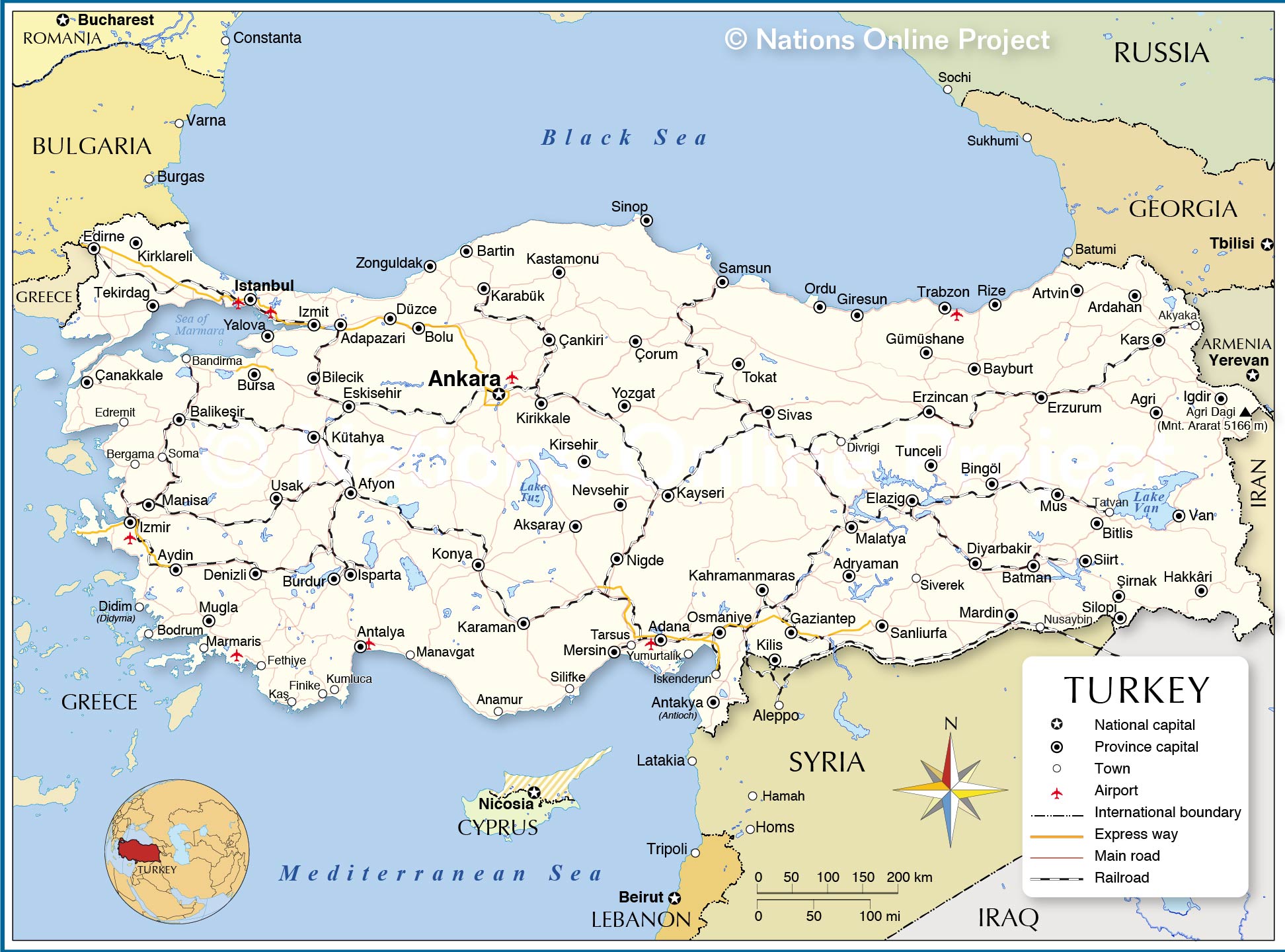
Is Turkey a good buying opportunity now for holding 5 years?
August 10, 2021 | Leave a Comment
Leo Jia asks:
Any thoughts on the prospect of Turkish economy? Is Turkey a good buying opportunity now for holding 5 years?
Larry Williams clarifies:
Is the Turkish economy about the same as the Turkish stock market?
Some references:
The CIA World Factbook: Turkey/economy
iShares MSCI Turkey ETF (symbol: TUR)
Nils Poertner responds:
as we know from other EM countries, listed equity can be really a good play - even with fx tanking. see Latam and many Asian countries. a vast "play" on the USD (as lots of banks are financed in USD - and EUR) and a bet on the faith in the current regime. cap controls an issue.
understanding EM requires study of previous bull-and bear mtks for EM mkts itself- doing the tedious work - building implicit knowledge over time, cycles, mass psychology, whateever it takes - it is worth it, Jia and a lot of fun - as one learns from it and can share with others.
John Floyd writes:
Larry has somewhat taken the words out of my mouth on the economy and stocks in Turkey. I would expand on that somewhat given the unorthodox nature of the current Turkish administration and the expanding Taliban presence and thus likely growing chance of further friction with the US, following recent and historical comments by the head of Turkey on the topic.
As economy and FX it does sure have the potential to get things right and turn for the better. But, the odds of that happening and the headwinds against it seem rather large at the moment. The current path is one of further unorthodoxy in policy and leadership combined with expanding debt that will likely lead to a default or restructuring and FX going from 8.6 north of 10.
Reserves are tenuous at best, local capital outflows a perennial risk, and the need to continue to pump up the economy through credit, tourism headwinds given COVID, current account deficit of 5%, etc…
Given the circa near -20% returns for the Turkish indices there may be some gems within the them with careful selection, as is needed in China given the P-like oligarch crackdown there as the aim by X is to stay in power for life and control data and tech to do so.
James Lackey suggests:
As John clearly said the news risk..what about the derivative of the big Mac index and or the hot dog stand.
If I'm forced to value a stock on foreign exchange correctly, I'd go to Turkey, rent a flat, and open a food stand and sell Harley Davidson T Shirts. The McDs index of brands is HOG. I can sell merchandise like a roadie at a show and let's use the most recognized brands in the world.
Sell shirts for 6 weeks and my guess is you're going to learn exactly what's going on.
Larry Williams adds:
Bring lots of NIKE stuff to sell.
Jayson Pifer provides local insight:
Fwiw, I can offer some boots on the ground perspective. I spend a few weeks a year in Turkey and have done so for the past 15 years, missing last summer due to covid however please take the below comments with an appropriate amount of salt. Each time the conversations come up on investing in real estate there. And each year, I come away boggled at the lack of progress and steadfast in keeping money away.
If I were to hazard why the Turkish economy isn't more than it could be, I would suggest that it is the general absence of faith in any of the government constructs. Without commenting much on their current 'populist' leadership, I mean to say that the average person has little faith in the police, courts, and laws and work around or without them. (plied with a bit of scotch and I could relate some Keeleyesque tales of my encounters there with these systems  )
)
Absent true legal financial recourse, trust stays in small personal circles that are difficult and slow to grow and this has various and deep side effects. As an example, if one were to meet a VP of a bank in the US or UK, you might assume they had interviewed for the role from a range of candidates and/or had been in the role for a while and knew the business and their area. One would likely be correct in those assumptions. In Turkey, you do not have that assurance as they will probably have gotten their role through a circle of acquaintances. They may be qualified or not, but they are almost certainly in somebody's inner circle.
The low trust and inner circle workings are seen in both the political and business environments. When new leadership comes in, it is typical and considered normal to bring in their trusted group, reward them for their loyalty and displace anyone they do not trust. Partisanship there compounds the issue, similar to the partisan wars in Google but with more serious consequences if one supports an out of favor party (eg. non-AKP).
Wrt the stock market, my impression is that it's a lottery. There is money to be made, for sure, by smarter and luckier people than me. But the risks are real.
I don't have numbers, but my anecdata shows a worsening brain drain with talented turks leaving the country and those that have returned are struggling.
Taking a further step back for the five year horizon posed originally, my impression like Mr. Floyd's is that Turkey has headwinds and not much to stop it from falling. My questions are what could change to reverse this trend? A change in leadership is often cited, but it would not create an overnight increase in trust. I could barely speculate how long it might take, but would guess decades if all went well. While it's not exactly fair and I'm out of my historical depth, I compare it with Iran when it went down the path of Islamic leadership in '79. How will Turkey not fall into the same trap?
Theodosis Athanasiadis comments:
Historically real exchange rates have been a good predictor of emerging market economies and equities through the mechanism of cheap exports, labor, external investments etc. they are a form of valuation for the whole economy. I see them currently at multi-year lows which has been bullish for equities in Turkish lira for the long term.
John Floyd responds
Yes, on real rates in Turkey that is true and can be seen in the standard OECD PPP, but that has been like that for ages and you need the positive catalyst for change…..move to orthodoxy one way or another….monetary, fiscal, and geopolitics…should gradually grow confidence in varying degrees and speeds and drive capital flows in a positive fashion if it occurs and given valuations you can find some gems I am sure…perhaps on well capitalized companies that can benefit from the inflows and cheaper FX…plenty of meals for a lifetime if you look at Argy, Venny, Russia, SA, Zimbabwe, etc…
If anyone is bored, I did an interview on Turkey last August - it somehow has gotten just under 20k views that highlights both contemporaneous points at the time and some of these longer term issues.
Alex Forshaw writes:
Erdogan is in bed with the asset heavy industrial elite of Turkey… this is China but with very ineffective capital controls (mainland Chinese stock performance has been terrible for 12+ years btw, altho indices don't include juicy dividend yields). They're all massively overleveraged, and basically long and wrong The only way is devaluation / financial repression (forcing inflation >> cost of capital) until they deleverage… but Erdogan can't really let them deleverage because the economy would implode, Turkey is poor, the opposition is highly organized with high recourse to violence (Kurds), so Erdogan would be dead. So they just keep building and building, but who's going to come?
Seems to me that Turkey is uninvestable until Erdogan is gone…but he's a de facto dictator…so he can't go.
Leo Jia offers more data:
New home sales are down lately, which may be caused by the pandemic:
Turkey: new home sales
But existing home sales shot up sharply in recent years:
Turkey: existing home sales
Archives
- October 2026
- September 2026
- August 2026
- July 2026
- June 2026
- May 2026
- April 2026
- March 2026
- February 2026
- January 2026
- December 2025
- November 2025
- October 2025
- September 2025
- August 2025
- July 2025
- June 2025
- May 2025
- April 2025
- March 2025
- February 2025
- January 2025
- December 2024
- November 2024
- October 2024
- September 2024
- August 2024
- July 2024
- June 2024
- May 2024
- April 2024
- March 2024
- February 2024
- January 2024
- December 2023
- November 2023
- October 2023
- September 2023
- August 2023
- July 2023
- June 2023
- May 2023
- April 2023
- March 2023
- February 2023
- January 2023
- December 2022
- November 2022
- October 2022
- September 2022
- August 2022
- July 2022
- June 2022
- May 2022
- April 2022
- March 2022
- February 2022
- January 2022
- December 2021
- November 2021
- October 2021
- September 2021
- August 2021
- July 2021
- June 2021
- May 2021
- April 2021
- March 2021
- February 2021
- January 2021
- December 2020
- November 2020
- October 2020
- September 2020
- August 2020
- July 2020
- June 2020
- May 2020
- April 2020
- March 2020
- February 2020
- January 2020
- December 2019
- November 2019
- October 2019
- September 2019
- August 2019
- July 2019
- June 2019
- May 2019
- April 2019
- March 2019
- February 2019
- January 2019
- December 2018
- November 2018
- October 2018
- September 2018
- August 2018
- July 2018
- June 2018
- May 2018
- April 2018
- March 2018
- February 2018
- January 2018
- December 2017
- November 2017
- October 2017
- September 2017
- August 2017
- July 2017
- June 2017
- May 2017
- April 2017
- March 2017
- February 2017
- January 2017
- December 2016
- November 2016
- October 2016
- September 2016
- August 2016
- July 2016
- June 2016
- May 2016
- April 2016
- March 2016
- February 2016
- January 2016
- December 2015
- November 2015
- October 2015
- September 2015
- August 2015
- July 2015
- June 2015
- May 2015
- April 2015
- March 2015
- February 2015
- January 2015
- December 2014
- November 2014
- October 2014
- September 2014
- August 2014
- July 2014
- June 2014
- May 2014
- April 2014
- March 2014
- February 2014
- January 2014
- December 2013
- November 2013
- October 2013
- September 2013
- August 2013
- July 2013
- June 2013
- May 2013
- April 2013
- March 2013
- February 2013
- January 2013
- December 2012
- November 2012
- October 2012
- September 2012
- August 2012
- July 2012
- June 2012
- May 2012
- April 2012
- March 2012
- February 2012
- January 2012
- December 2011
- November 2011
- October 2011
- September 2011
- August 2011
- July 2011
- June 2011
- May 2011
- April 2011
- March 2011
- February 2011
- January 2011
- December 2010
- November 2010
- October 2010
- September 2010
- August 2010
- July 2010
- June 2010
- May 2010
- April 2010
- March 2010
- February 2010
- January 2010
- December 2009
- November 2009
- October 2009
- September 2009
- August 2009
- July 2009
- June 2009
- May 2009
- April 2009
- March 2009
- February 2009
- January 2009
- December 2008
- November 2008
- October 2008
- September 2008
- August 2008
- July 2008
- June 2008
- May 2008
- April 2008
- March 2008
- February 2008
- January 2008
- December 2007
- November 2007
- October 2007
- September 2007
- August 2007
- July 2007
- June 2007
- May 2007
- April 2007
- March 2007
- February 2007
- January 2007
- December 2006
- November 2006
- October 2006
- September 2006
- August 2006
- Older Archives
Resources & Links
- The Letters Prize
- Pre-2007 Victor Niederhoffer Posts
- Vic’s NYC Junto
- Reading List
- Programming in 60 Seconds
- The Objectivist Center
- Foundation for Economic Education
- Tigerchess
- Dick Sears' G.T. Index
- Pre-2007 Daily Speculations
- Laurel & Vics' Worldly Investor Articles
