Mar
18
More on intuition, from Denise K. Shull
March 18, 2026 | Leave a Comment
Yes it certainly can be trained – from a note I wrote on intuition a couple of weeks ago:
One of the biggest mental shifts that your work has given me is how I understand intuition. It stopped feeling mystical or vague and became a real internal compass. I really started to see intuition as lived experience, emotional 'data', pattern recognition, and self-awareness integrating in real time. Paradoxically…this has made me calmer rather than more impulsive. I tend to trust myself more, take better risks, and stay aligned with my process more consistently.
- Toby Donovan, CITI, Director, Commodities Trading
His experience exemplifies what the founder of a large hedge fund said on Thursday. “Your brain is picking something up. Are you in touch with that internal conversation?"
Academic researchers also describe the value of intuition. Valerie Reyna, Professor of Human Development and Psychology at Cornell University, the Director of the Human Neuroscience Institute, and the co-director of the Center for Behavioral Economics and Decision Research, directly links intuition to probability, and risk judgment, saying that “intuitive reasoning contributes to performance in hard, fast-paced probability tasks.”
In her fuzzy trace theory, gist-based intuition provides an advanced form of cognition that often outperforms verbatim, analytical processing. She shows how reliance on intuition can grow and yield better decisions than strict adherence to probability calculus, especially when the key is extracting the bottom-line meaning.
Feb
4
2026 Bullish Confirmation, from Larry Williams
February 4, 2026 | Leave a Comment
Yale Hirsch and his son Jeff have shown that a positive change, from the last trading day of the year to the 5th trading day of the new year, portends a bullish year (positive first 5-day percent change).*
Consider this … in the last 76 years of trading, the S&P 500 has declined for the year 20 times or 26% of the time. In other words, 74% of the time, there has been a yearly gain.
Jeff’s numbers show that in those last 76 years, 49 years showed a positive first 5-day percent change. Only 8 of those years went on to close down for the year. That’s an 84% bias for the year to close higher when we have a positive first 5-day percent change.
My add-on to Yale’s and Jeff’s work was to look at the years that gained 1.2% or more in the first 5 days of trading. There were 28 such years. Of those years, only 2 were down for the year. That’s a 93% bias for the year to close higher. What an improvement from the average 74%!
In 2026, the first 5-day** change for the Dow Jones 30 was +3%.
In 2026, the first 5-day** change for the S&P 500 was +1.6%.
Those 28 years had an average annual return of 14%. The remaining years had an annual gain of 5.3%. I see this as excellent confirmation of the bullishness of my Forecast 2026 Report.
Cagdas Tuna writes:
There is no need for a statistical analysis to assume any given year will be positive for US indices. It is almost guaranteed to be positive every year. No offense to any list member.
Larry Williams responds:
Wrong 24% of time we close down for the year.
Michael Brush is surprised:
Wow did not know it was that high.
Larry Williams agrees:
I was taken back by it as well.
Asindu Drileba asks:
2026 is bullish? But Senator, you said you expect a recession in 2026 with 100% certainty. Is this a contradiction? Or maybe its possible for the market to be bullish even during a recession?
Larry Williams answers:
Yes, there was a projection made a year ago for a 2026 sell off —in the last 12 months data changed—large improvements in fundamentals and hopefully I got a little better understanding of long term cycles. New Data matters.
Nils Poertner writes:
Asindu- there would be simply too many variables out to make that statement with such a certainty in advance. Just impossible. It remains a probability game. Used to subscribe to some cycle research that claimed to have things figured out yrs in advance. quite pricey subscription. it was HOOK, LINE and SINKER (for me).
Denise Shull comments:
New Data matters.
Indeed it does. Wonder why it’s challenging for many to incorporate?
Nils Poertner responds:
Good question. On this note… (Pure) data analysts believe pattern matching on large datasets will solve our problems. But what if the really vital information isn't being collected? What if it's invisible to our trained systems?
Jul
20
Believing is Seeing, from Marlowe Cassetti
July 20, 2007 | Leave a Comment
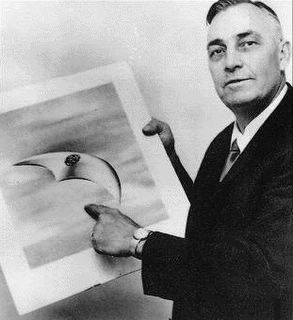 For most of my investing career, which goes back to the mid-1940s, I have been attracted to technical analysis. It also helps that my degree is in engineering and much of my aerospace engineering career has been associated with the solution of engineering problems. So it was natural that I was attracted to technical analysis. Through my investing experience I have become a skeptic of all the magic powers TA is suppose to have.
I recently got a query from a friend who wanted to discuss Fibonacci levels as they applied to the current market. He was upset when I gave my opinion that Fibonacci numbers, although relevant to the physical world, were an illusion when applied to the markets. He responded that financial prices almost always followed Fib levels.
After our discussion, which ended in agreeing to disagree, I recalled the first UFO Arnold reported seeing boomerang-shaped objects that flew like speedboats in rough water or saucers skipped across the water. A junior news reporter trying to squeeze his article into the newspaper reported flying saucers were spotted.
From that point forward, there were thousands of flying saucers sighted but no flying boomerangs. Why? Believing that strange sightings are saucers gives reports of saucers. Believing prices must fall to the third Fib line before recovering to the second level (or whatever) is reinforced by the imagined view of looking at the charts. Believing is seeing.
Denise Shull writes:
The human mind reacting to the ebb and flow of prices is always entertaining. Becoming objective about the tricks that our minds play on us presents the true eternal challenge of successful speculating.
Stefan Jovanovich remarks:
A now-gone wise man, who was a cop for 30 years in my Dad's hometown of Denver, once explained the problem of auto theft thusly: "People steal cars because they are out there on the street. If people left their bathtubs outside at night, all of us cops would have to become experts on what American Standard sells and faucets would have VIN numbers."
Archives
- October 2026
- September 2026
- August 2026
- July 2026
- June 2026
- May 2026
- April 2026
- March 2026
- February 2026
- January 2026
- December 2025
- November 2025
- October 2025
- September 2025
- August 2025
- July 2025
- June 2025
- May 2025
- April 2025
- March 2025
- February 2025
- January 2025
- December 2024
- November 2024
- October 2024
- September 2024
- August 2024
- July 2024
- June 2024
- May 2024
- April 2024
- March 2024
- February 2024
- January 2024
- December 2023
- November 2023
- October 2023
- September 2023
- August 2023
- July 2023
- June 2023
- May 2023
- April 2023
- March 2023
- February 2023
- January 2023
- December 2022
- November 2022
- October 2022
- September 2022
- August 2022
- July 2022
- June 2022
- May 2022
- April 2022
- March 2022
- February 2022
- January 2022
- December 2021
- November 2021
- October 2021
- September 2021
- August 2021
- July 2021
- June 2021
- May 2021
- April 2021
- March 2021
- February 2021
- January 2021
- December 2020
- November 2020
- October 2020
- September 2020
- August 2020
- July 2020
- June 2020
- May 2020
- April 2020
- March 2020
- February 2020
- January 2020
- December 2019
- November 2019
- October 2019
- September 2019
- August 2019
- July 2019
- June 2019
- May 2019
- April 2019
- March 2019
- February 2019
- January 2019
- December 2018
- November 2018
- October 2018
- September 2018
- August 2018
- July 2018
- June 2018
- May 2018
- April 2018
- March 2018
- February 2018
- January 2018
- December 2017
- November 2017
- October 2017
- September 2017
- August 2017
- July 2017
- June 2017
- May 2017
- April 2017
- March 2017
- February 2017
- January 2017
- December 2016
- November 2016
- October 2016
- September 2016
- August 2016
- July 2016
- June 2016
- May 2016
- April 2016
- March 2016
- February 2016
- January 2016
- December 2015
- November 2015
- October 2015
- September 2015
- August 2015
- July 2015
- June 2015
- May 2015
- April 2015
- March 2015
- February 2015
- January 2015
- December 2014
- November 2014
- October 2014
- September 2014
- August 2014
- July 2014
- June 2014
- May 2014
- April 2014
- March 2014
- February 2014
- January 2014
- December 2013
- November 2013
- October 2013
- September 2013
- August 2013
- July 2013
- June 2013
- May 2013
- April 2013
- March 2013
- February 2013
- January 2013
- December 2012
- November 2012
- October 2012
- September 2012
- August 2012
- July 2012
- June 2012
- May 2012
- April 2012
- March 2012
- February 2012
- January 2012
- December 2011
- November 2011
- October 2011
- September 2011
- August 2011
- July 2011
- June 2011
- May 2011
- April 2011
- March 2011
- February 2011
- January 2011
- December 2010
- November 2010
- October 2010
- September 2010
- August 2010
- July 2010
- June 2010
- May 2010
- April 2010
- March 2010
- February 2010
- January 2010
- December 2009
- November 2009
- October 2009
- September 2009
- August 2009
- July 2009
- June 2009
- May 2009
- April 2009
- March 2009
- February 2009
- January 2009
- December 2008
- November 2008
- October 2008
- September 2008
- August 2008
- July 2008
- June 2008
- May 2008
- April 2008
- March 2008
- February 2008
- January 2008
- December 2007
- November 2007
- October 2007
- September 2007
- August 2007
- July 2007
- June 2007
- May 2007
- April 2007
- March 2007
- February 2007
- January 2007
- December 2006
- November 2006
- October 2006
- September 2006
- August 2006
- Older Archives
Resources & Links
- The Letters Prize
- Pre-2007 Victor Niederhoffer Posts
- Vic’s NYC Junto
- Reading List
- Programming in 60 Seconds
- The Objectivist Center
- Foundation for Economic Education
- Tigerchess
- Dick Sears' G.T. Index
- Pre-2007 Daily Speculations
- Laurel & Vics' Worldly Investor Articles
