Oct
12
Walmart automation status, from Pamela Van Giessen
October 12, 2026 | Leave a Comment
For those who don’t read the WSJ, this article about Walmart’s automation status is interesting in terms of how long it takes to automate and the savings trade offs (bigger energy bills vs labor costs which may not be reduced though productivity may increase).
For Walmart, Replacing Humans With Robots Is a Multibillion-Dollar Struggle
Aug
23
Appreciating The Chair
August 23, 2026 | 1 Comment
Obituary: Victor Niederhoffer - December 10, 1943 – August 4, 2026
Alex Castaldo:
I think I was lucky to know Vic for so many years. He was very generous to me and although he liked to do things unconventionally sometimes, it was because he sincerely felt everyone should do things their own way and never just to be eccentric or shock people. He always had interesting points of view on many issues not just work related.
Pamela Van Giessen:
It was my great honor and privilege to publish Education of a Speculator. In fact, working on the book with Victor was the highlight of my career. I knew in my heart that whether the book sold 1 copy or 100,000 copies or more, it was an important work. Throughout the process Victor drove me crazy, but mostly in a good way. He was always challenging the status quo, often spot on. He was one of the most generous people I have ever encountered, and I will carry to my grave all the lessons he taught me, along with the many interesting people he introduced me to including Marty Reisman who negotiated the publishing contract with me/Wiley on Victor’s behalf (and wasn’t that just a trip!) and, of course, Bo, among so many others.
The most beautiful person Victor introduced me to was his amazing wife, Susan. If we were fortunate to know Victor, Victor was beyond fortunate to have Susan in his life. May the hole in your heart, and the hearts of your children, be filled with Victor’s love for you and the love of all those around you.
Vince Fulco:
Terribly, terribly sad to hear this news. Working for him was among the best years of my life. I would have carried his ammo can in any trench, in any war.
May his memory be a blessing. Warmest condolences to all who knew him.
Jared Albert:
I sent this to Vic in June and it seems like I should just share it as my commemoration of the man of extraordinarily outsized importance in my life. My deepest condolences to Susan and all of their children.
Dear Vic,
I was sorry to read that you weren’t feeling that well these days, and I wanted to thank you again, while there’s time in this world, for taking a shot on me 20 years ago. Although it didn’t work out like I hoped, it gave me a kind of seal of approval at a pretty low point in my early 30’s and I’ve always appreciated that you did that.
You've remained a central positive figure in my life and I wish you all the best for a full recovery.
James Sogi:
Condolences to his extended family and past business associates and partners . Vic was truly one of the all time greats of the financial world who helped many and changed the markets. He changed my life and my family through his help. I am very sad to hear of his passing. I will always treasure my association and times with him as one of the highlights of my life.
Tyler Cowen:
In addition to his well-known public roles, he worked very hard to help and befriend me when I was younger. Here are the Google searches for Victor. Less well known about Victor is that he had one of the world’s best collections of private letters. He also once gave me a very nice small painting by Jack Savitzky, for which I remain grateful.
Michael Brush:
Vic did a lot of things, but one thing he did for all of us was to generously introduce us to new worlds, new worlds of ideas, and new people.
Vic was really great man. Meeting him was one of those “before and after” moments in my life, back when he started writing for MSN Money when I wrote there.
I remember our last conversation while leaving one of his parties.
Me: Vic you were such a big influence in my life.
His answer surprised me and to this day I am not sure I know what it really meant: “I hope in a good way.”
I will really miss you Vic. Thanks again for everything.
Steve Ellison:
I posted a photo on X (then Twitter) when the Chair played handball against the Senator at the 2015 Spec Party.
William Weaver:
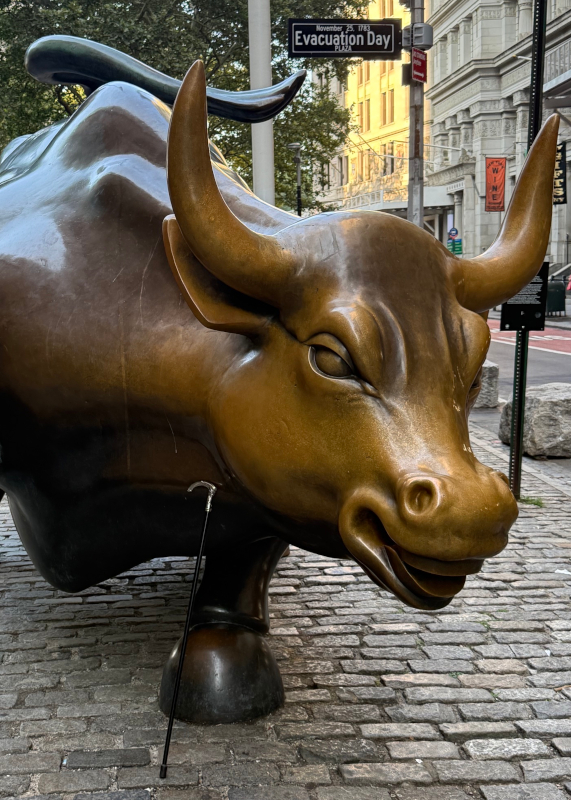
Victor gave a number of us these canes years ago. At least for me it was a reminder anyone can achieve their goals, and it won’t always be an easy path. I took mine down to Wall Street this morning. Thank you, Vic. Will
It is good to take out the canes and hobble down to Wall Street at the close of days when there is a panic. - Victor Niederhoffer
Laurel Kenner:
I found the last cane maker in Manhattan and purchased a number of the most striking ones to send as prizes.
Asindu Drileba:
Until this day, since a few years since I read The Education of a Speculator, I have not found another book remotely close to it. In the finance industry, market analogies are mostly limited to maths & physics. This is why when I read The Education of a Speculator, my mind was genuinely blown by how The Chair would create market references to genetics, music sheets, Dutch philopher Johan Huizinga (Homo Lundens is worshipped in the game design community), checkers and more.
This type of thinking in analogies is what E. O Wilson referred to as "Consilience." So because of this, I would regard The Chair as "The Master of Consilience".
I wrote a short tribute to Vic.
Kiran Kaur:
I was a student of Vic’s. In 2025 he gave me a full weekend at his home, him and Susan both. He walked me through his own book. When I left he put Elmer Kelton’s The Time It Never Rained in my hands and told me The Trees in My Forest by Bernd Heinrich was the other one to read.
I have wondered since whether the pairing was deliberate. A rancher who will not take the drought subsidy and stays on the land, and a biologist counting what is actually happening in three hundred acres of Maine woods. Endurance and counting. He handed it over without a lecture, which I think was the point.
Condolences to Susan, to Aubrey, and to the whole community. Rest in Peace Legend!
Sam Johnson:
A veteran trader pointed me to Vic back in 2011 via speculations website. Encouraged me to think differently about markets and led to a career. Question and test orthodoxy. I wish i could have attended one of his get togethers. He never met me or knew it but he was the second most important person to my trading success.
Yelena Sennett:
Victor certainly did like his hats…
It was a privilege to do podcasts with him. You never knew what fascinating analogy he would come up with to explain the markets. He was always generous with sharing his knowledge, but I believe his greatest gift was an instinct for reading the markets that simply couldn't be quantified.
One of his favorite sayings was, "Never short the market." He certainly lived an extraordinary life, with its share of highs and lows—much like the markets themselves.
Today (August 4th), as the S&P 500 reached another all-time high, it felt like a fitting tribute to his memory.
Richard Barsom:
RIP Victor. Great guy, literally saved my life. Rest in peace Chair.
John Netto:
I remember meeting him for the first time back in the summer of 2011. He graciously invited several from the spec list over to his UWS home. The whole experience fascinated me and his affable personality and welcoming disposition quickly removed any anxiety I had about being in front of a true legend. Thank you to John Floyd for introducing me to the Chair and the list.
Paolo Pezzutti:
I will miss Victor very much. To me, he was a mentor. I received far more from him than I ever gave, and that was part of his greatness. I have applied many of his teachings in both my life and my work.
A brilliant, original and courageous man has left us—courageous even beyond any reasonable limit. He was eclectic, competitive and a great contrarian by nature, but also generous beyond measure. He was a bold, direct and aggressive speculator.
As Nelson used to say: “Go right at them”, Victor always urged me to apply his battle-tested principles to my own trading style.
Newton Linchen:
Victor Niederhoffer was a major inspiration for my development as a market practitioner and had huge impact in the way I view markets and the World.
We are all at a great loss. My respects and sentiment to the family and friends.
Thank you, Chair!
Eric Lindell:
I'm saddened to hear of Victor's passing. I had gotten to know him over the years attending his junto meetings. He was a great guy, and it's a big loss to the investment community and all those whose lives he touched. My deepest sympathies to his family.
Jordan Low:
Victor’s passing is a loss to many. He was so generous with his time and wisdom, and he was a friend to my whole family: he taught my daughter Annabelle tennis, squash, and checkers, and he came to the gala to support my wife Annie when she was honored among the Outstanding 50 Asian Americans in Business. He also taught me the triangle defense in checkers, and drew the line straight to portfolio management: balance risk, reward, and liquidity, and hold the formation at all times. I trade that way to this day. My deepest sympathies to his family.
Rest in peace, Chair. We will remember you fondly.
George Coyle:
Jan
5
Oil, from Cagdas Tuna
January 5, 2026 | Leave a Comment

So where lies the thin line between liberating Venezuela and putting world into oil supply based recession?
Larry Williams comments:
The quality of their crude is a different issue we use to refine it here; sour, full of gravel etc.
Stefan Jovanovich writes:
Historically, before full sanctions in 2019, the US imported over 600,000 barrels per day (bpd) of Venezuelan crude, with refiners like Citgo (PDVSA-owned), Valero, Chevron, and Phillips 66 as top recipients.
More recently (post-2023 relief), Valero accounted for 44% of imports, Chevron 32%, and Phillips 66 10%.
Carder Dimitroff writes:
IMO, it's not about oil. The US is a net exporter. They're doing just fine without Venezuela. If heavy oil is desired for refining optimization, as some claim, there's a direct pipeline from Canada.
Stefan Jovanovich responds:
It would help if Carder focused on the use of heavy oil for marine diesel and bunker oil for steam turbines. Those are the essential propulsion fuels for China's Navy; hence, Hegseth's comment today assuring China that it would continue to receive its share of Venezuela's output.
Carder Dimitroff expands:
Globally, three major regions produce heavy crude: Russia, Canada, and Venezuela. Downstream, “heavy oil” or “heavy fuel oil” usually means the residual, high-boiling product left after lighter fractions (gasoline, diesel, kerosene, etc.) are distilled from crude. As Stefan suggests, heavy oil and bunker oil are growing markets, not only in China but also elsewhere.
In my opinion, the administration's interests in Venezuela reflect several interests. High on my list are Venezuela's untapped rare-earth elements (about 300,000 metric tons).
Pamela Van Giessen offers:
Interesting analysis here:
The Real Reason the Pentagon Approved Venezuela: Critical Minerals and Adversary Expulsion
The Department of War has allocated $7.5 billion under the One Big Beautiful Bill Act specifically for critical minerals, with $1 billion already deployed to stockpile antimony, bismuth, cobalt, indium, scandium, and tantalum. This is not economic policy. This is national security infrastructure. The United States is 100% import reliant for 12 critical minerals and over 50% reliant for 28 of the 50 minerals classified as essential to national security. These materials are not interchangeable. They cannot be substituted. They form the irreducible foundation of modern weapons systems.
Boris Simonder questions the thesis:
What rare earth does Venezuela hold that is proven and confirmed? Based on USGS Mineral Commodity Summaries 2025 and other sources like CSIS reports, Venezuela has no significant cobalt production or reserves listed. Antimony deposits exist but are small and underdeveloped, with declining output due to infrastructure issues.
Dec
23
Low status jobs becoming high status, from Nils Poertner
December 23, 2025 | Leave a Comment

Fascinating to watch how former low status jobs, like cybersecurity, have become high status now. Same is true the other way around as well (eg (male) technician at the London tube system who makes a quarter of his wife who is in real estate - although that is changing now). Wondering what low type jobs / or ppl are on the fringes today will be in high demand in coming years.
Carder Dimitroff responds:
Try these:
Any of the crafts. Specifically, licensed electricians, plumbers, and HVAC techs. Many make more than engineers.
Public response teams. Specifically, firefighters, EMTs, and law enforcement. Many make more than lawyers, particularly when pensions are considered.
Career military. Specifically, for those with 20 years of service. Lifetime benefits are incredible (free college, unlimited grad schools, pensions w/colas, lifetime medical insurance, VA benefits, hiring preferences).
Pamela Van Giessen suggests:
Car mechanics
Henry Gifford writes:
My friend who fixed boilers said to his sophisticated, suit-and-tie, well educated in-laws “I’m not the smartest guy around. I’ve only read two or three books in my life. I don’t think I’m smart enough to come up with a sophisticated investment plan (nods all around the room at this point). So I just buy one piece of New York City real estate each year and hope for the best”. No more nodding at that point.
Guess what blue collar people who don’t have vices do with their money? They buy property. Who is better suited to own real estate? People who fix things and have friends who fix things, or lawyers?
And what nobody mentions is that some people are much better at those sorts of work than others. Simply finding someone to show up and try to do those things is hard. Someone who is good at one of those trades is in even higher demand.
Those fantastic benefits for former military people are not limited to the military – all federal employees get all those benefits after twenty years of work. If someone joins the military at 18, and gets out at 38, or gets out sooner and then works in the post office or etc. until they “get their twenty”, they get full salary with increases for life. Income that will survive any lawsuit, even the IRS can’t take it all. They maybe collect a total of three years of salary for every year worked.
Nils Poertner responds:
Certainly good to encourage young men (or women) to follow a path that interests them - and not just follow a path that is currently "high status". This "Yousef" guy who was my IT guy at Bankers Trust decades ago (low status in my eyes back then) became a cyberpunk in 2008…you get the idea. That said, it is a power game outside. young men need wives etc.
Henry Gifford adds:
I judge the level of a single woman’s interest in me by counting the seconds until she says “what do you do?”.
No woman has ever asked me if I like what I do, or am good at what I do – not important.
Many men have a choice between coming home miserable to a wife, or coming home happy to an empty house. Age old dilemma, no known fix, as all our DNA has evolved to enhance survival, which for a woman over the millennia has meant marrying the chief’s son, or someone else with high status.
Larry Williams recalls:
When I was dating all women ever asked me is your place or mine. Must have been doing something wrong.
Michael Brush is curious:
Do you have a cycle chart for that?
Larry Williams clarifies:
Yes but there are not enough examples to draw a conclusion.
Nov
10
Best indicators for inflation, from Asindu Drileba
November 10, 2025 | Leave a Comment
The more goods cost, the more money visa makes since the fees they charge Issuing banks & acquiring banks are based on a percentage basis. So, higher prices (inflation) –> better predicted revenues for Visa? Inspired by a nice documentary on the history of VISA.
I wonder what the best indicator for inflation would be for testing this? CPI? Oil?

Cagdas Tuna writes:
I was thinking as to find a similar indicator for economic slow turn, spending cuts. It came to my mind to follow sales slips. I live in Malta which is a very tech friendly country for spending habits such as Apple/Google Pay availabilities, many digital banks access etc. I often asked if I need a receipt that I usually don’t. It depends for every country but if there is a rule for stores/restaurants to keep at least a copy for each transaction then it might be the indicator to follow. It might be used for inflation as well but of course needs detailed information.
Pamela Van Giessen comments:
To the best of my knowledge, merchants are not required to keep receipts. We track each sale but it will be the credit card processor or platform such as Square that holds the credit card or Apple or Google pay receipts. I can’t imagine that merchants would be willing to share their sales data. I know I wouldn’t.
Visa doesn’t care how much goods cost. They get their nearly 3% processing fee (+ .10 or .15 per transaction) whether there are 20 transactions for $100/ea or 40 transactions for $50/ea. In fact, they make more $ on a higher volume of transactions.
I don’t think tracking Visa or MC, etc could be a meaningful prediction of inflation as all the credit card companies continuously fight for market share. Note that they all send out multiple credit card offers to everyone all the time. Then, you have a store like Costco that only accepts their credit card (Citibank).
Additionally, there are people who use primarily cash. Those $ would be left out. You may say that cash use is low, and maybe it is. What I can tell you is that today at a market 80% of my sales were cash and that was likely the case for all the other merchants at this market. Older people especially use cash a lot. Just like drug dealers.
I have a theory that the cash economy is much bigger than everyone thinks. Insight into that might be more interesting.
Carder Dimitroff responds:
After considering Panela's cash sales point, I remembered that several companies required customers to switch from credit card payments to bank transfers. Additionally, several small establishments offer incentives for customers to pay in cash. They may be attempting to simplify their accounting and tax reporting. I do know that the federal government has immediate access to individual credit card transactions.
Pamela Van Giessen adds:
I thought it was the Fed that used to report on aggregated credit card data.
The other challenge with using credit card financials is that the credit card processors raise their % cut all the time. This is not due to actual inflation; it is due to them having a government protected moat that allows them to take more and more whenever they want because merchants are stuck with the whole system and consumers don’t realize that they will pay for the service — in increased prices. Every time Square, PayPal, etc., send me notices that they will be increasing fees, I increase my prices. I guess that is a kind of proxy for inflation but it’s a lousy sort of financial market induced inflation not based on anything more than their desire for more profits. I am all about free markets but the credit card processing biz is not even close to a free market.
The government using credit card processing to surveil us may be one reason I see more and more people using cash.
Larry Williams suggests:
Stock market is good predictor of inflation.
Nov
9
Prestigious consulting firm, from Nils Poertner
November 9, 2025 | Leave a Comment

Came to our financial firm 2007 and gave a 100 page presentation full of bullet points and cartesian logic (why housing boom will last). Either 3,5, or 9 bullet points per page.
At the end of the presentation I was tempted to go over to the presenter and ask him "why do you love your wife? (I didn't). The answer might have been bullet points.
Pamela Van Giessen writes:
Michael Korda tells in his memoir, Another Life, of the time that Simon & Schuster hired probably the same prestigious consulting firm to study how to improve revenues/profitability. Prestigious consulting firm (after taking the prestigious consulting firm fee) told the publishing company that they should publish more bestsellers.
Laurel Kenner comments:
I bet the prestigious firm concluded with ‘Key Takeaways’ as a final insult to the intelligence of the client.
Asindu Drileba writes:
I heard that people pay consultancy firms not for their knowledge, but for the fact that executives use them as a scape goat. If an executive wants to pursue policy X. They simply hire a consultancy to recommend policy X. If policy X ends up as a disaster (legally, morally or financially). They can simply say "Policy X was an idea from XYZ consultancy", we had nothing to do with it.
Peter Ringel adds:
a variation of this are fighting owners/ partners about policy. If decision pipelines are blocked, external council is used. Like a neutral arbitrator. I think, these are the main situations externals are used. Usually a good reason to short the entity, especially outside of markets. If they don't have the capability to decide and act on strategy in-house, it‘s a red flag.
Henry Gifford responds:
Even better is hiring a licensed engineer to instruct everyone to do something stupid that they know won’t work, so everyone who did as the engineer decided is blameless.
Jeff Watson offers:
A consultant is a person who knows 1000 ways to make love to a woman…..but he doesn’t know any women.
Sep
23
Health care costs, from Nils Poertner
September 23, 2025 | Leave a Comment
health care costs, our Achilles heel.
Health Insurance Costs for Businesses to Rise by Most in 15 Years
Insurers say that the rising premiums are driven by growing healthcare costs
(on a personal note: no-one is really fully healthy, not even kids normally! science uses a lot of Aristotelian logic (which is an either/or logic) but there are limits to it - and we take it way beyond its usefulness. Nature does not have those clear mental compartments - it is way more fluid /dynamic).
Steve Ellison writes:
Until the public announcement that Warren Buffett had bought shares in UnitedHealth, health care was by far the worst performing of the 11 S&P 500 sectors in 2025.
Nils Poertner responds:
Yes, the whole sector / subindex looks bullish (XLV). (the type of logic in the West (logic from Aristoteles) that dominates MODERN SCIENCE cripples our society. Why? Because in many cases, whatever the doctor says, "it is not" - it is only an image of something abstract (like the apple painting by Rene Magritte).
Pamela Van Giessen comments:
We overconsume healthcare because we pay so much for insurance and/or our employers give it to us in lieu of salary so we want to get all we can for “free.” We’ve been conditioned to believe that if we visit doctors (though now we see PAs) and get “check ups” and “tests” regularly and take pills to manage our bodies and minds in perpetuity that we won’t get seriously ill. Has got to be the biggest subscription scam ever perpetuated on a society.
Perhaps some spec would like to pull out the data and do some forensic financial analysis of all those hospital system balance sheets. I think that fully 1/3rd or more of hospital systems are owned by private equity firms and the bulk of non-profit hospital systems are extracting meaningful sums from the business regardless of how “healthy” their margins look on their financial statements. From an equity perspective the biz may have looked lousy but I can promise that it is extraordinarily profitable for the inside players.
Jeffrey Hirsch adds:
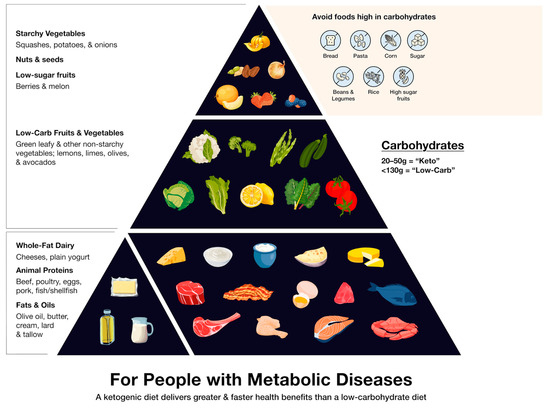
Not only is it a total scam, but it gets in the way of real needed pharmaceutical/medical care and completely ignores metabolic healthcare via lifestyle and diet changes.
Too bad RFK is all wrapped up in his vaccine crusade to focus on the real USA health crisis with obesity and metabolic health, which causes diabetes, heart disease, cancer and cognitive decline. I think the covid vax is total BS as are others. But MMR and most childhood vaccines save lives. We had a measles outbreak in Rockland County a few years back because some communities did not vaccinate.
We should also flip the old USDA Food upside down. The chart is from my Doc’s paper. And my doc's site is Dr. Tro Kalayjian).
May
28
Adapting to the situation, from Big Al
May 28, 2025 | Leave a Comment

Street smarts: how a hawk learned to use traffic signals to hunt more successfully
But what was really interesting, and took me much longer to figure out, was that the hawk always attacked when the car queue was long enough to provide cover all the way to the small tree, and that only happened after someone had pressed the pedestrian crossing button. As soon as the sound signal was activated, the raptor would fly from somewhere into the small tree, wait for the cars to line up, and then strike.
Easan Katir predicts:
Next iteration: the hawk will be pressing the pedestrian crossing button!
Michael Brush quips:
Pavlov’s birds.
Henry Gifford writes:
When I was hiking down The Grand Canyon I sat on a rock at the edge of the trail and took out a sandwich and started to eat. A bird came flying from my left side, toward the sandwich in my right hand. I reacted by pulling the sandwich back, to the right side of my head. Another bird came from behind and grabbed it.
Later I heard the birds’ favorite food is tuna fish, which they steal cans of from hikers. They open the can by grabbing it in their beak and flying above the one of the three cabins at the bottom of the canyon where the park rangers live and dropping it on the roof. The rangers have been trained to comply by opening the can and placing it on a convenient rock.
Pamela Van Giessen responds:
Was it a raven? They are particularly smart birds when it comes to getting food out of visitors to the national parks we have visited.
Asindu Drileba writes:
Crows & ravens would make good scientists. Here for example a video of a crow showing that it understands water displacement in different scenarios.
Bo Keely, from the desert:
Yesterday at the meteor crater in Death Valley two crows perched on the rim. They had grown feather sunglasses and asked for food. I went to the car & they followed and I gave them whole wheat bread. Then I got in & drove a couple miles down the road, pulled over to check directions, and they landed outside the driver's door asking for more bread.
May
11
Echoes from the past, from Jeff Watson
May 11, 2025 | Leave a Comment
I have heard every single one of these more than once on the floor. This is the G version; the X version would be very inappropriate for this venue.
You’re long hope and short reality.
He couldn’t trade his way out of a wet paper straddle.
You’re bidding like it’s your wife’s money.
His stops have stops.
He buys the high, sells the low, and thinks he’s range trading.
If brains were dynamite, he couldn’t blow his nose.
He's so underwater, Aquaman just waved.
Tighter than a bull’s ass in fly season.
Your size is what we use for toilet paper.
He’s a momentum trader—in reverse.
He couldn’t fill a corn order, let alone an order ticket.
That guy trades like he’s reading Braille.
He thinks ‘limit down’ means he hit the jackpot.
He trades like he’s got a rearview mirror taped to his glasses.
He’s scalping—his own account.
Nice fade. If I ever need a contrary indicator, I’ll call you.
He went from hero to sandwich in one tick.
I’ve seen better risk management at a toddler’s birthday party.
Market’s moving—better go ask your horoscope.
You trading or just making donations today?
He’s got a 30-lot mouth and a 1-lot account.
That guy’s P&L looks like an EKG flatline.
You're not trading—you're gambling, but slower.
He’s so unlucky, he’d lose money in a rigged market where he’s the rigger.
The guy’s charts look like modern art—ugly, meaningless, and overpriced.
He averages losers like he’s building a position in failure.
Don’t worry, he’ll blow up before lunch.
His fills are like Bigfoot—plenty of stories, no proof.
That trade had more slippage than a greased pig at a county fair.
He went full margin—and full stupid.
Asindu Drileba writes:
I watched the documentary "Floored" that was about the extinction of pit traders due to the advent of computer driven traders. A lot of the traders seemed to have their edge in bullying and intimidation that was both physical and psychological.
I made a pit trading playlist that I binged on, and this seemed consistent even to pit traders in the currency pits of London.
One of the pit traders called the computer "The most vile invention ever made." I think he was just sad that his bullying was no longer an advantage. You can't insult a computer, or use your big body to push it away so you can have the edge, or seduce it with good looks.
Michael Brush responds:
Behind every computer, there is a person.
“The offer is $25.”
“But my computer says $45.”
“So sell it to your computer.”
Pamela Van Giessen adds:
For those interested in a biography of a once famous and beloved pit trader, I recommend Charlie D: The Story of the Legendary Bond Trader by William Falloon.
Francesco Sabella adds:
It's an incredible book! I read it years ago, I even saw a 2 hour video of Charlie D. when i was in high school where he gave a lecture on trading on 1989.
Larry Williams writes:
Charly D was one stand up guy. He loved the Bears and suggested a bet with a young lady trader for a nickel on the weekend's game. She said sure…and won. Monday morning Charley D gave her 5 grand (a nickel in betting parlance). She was astounded, told him she meant 5 cents not 5G's. No way could she risk that or take the money. He left it in her hand and walked away.
I was fortunate, thanks to T Demark, to be part of his Vegas support group - he was just amazing to hang with.
Apr
24
Planck’s principle, from Nils Poertner
April 24, 2025 | Leave a Comment

A new scientific truth does not triumph by convincing its opponents and making them see the light, but rather because its opponents eventually die and a new generation grows up that is familiar with it…
An important scientific innovation rarely makes its way by gradually winning over and converting its opponents: it rarely happens that Saul becomes Paul. What does happen is that its opponents gradually die out, and that the growing generation is familiarized with the ideas from the beginning: another instance of the fact that the future lies with the youth.
— Max Planck, Scientific autobiography, 1950, p. 33, 97
relevance of how new ideas are being adopted in science, markets, everywhere.
Jeff Watson responds:
Science by consensus is not science. Just ask Galileo.
Pamela Van Giessen writes:
John McPhee wrote extensively about this and how the science of geology advanced over a few centuries in Annals of the Former World. Scientific community consensus is pernicious, and it is clear that there is mostly no convincing it.
William Huggins comments:
the foundation of science rests of replicability - anyone with the same data should be able to replicate results (even if they disagree about the mechanism). once replication is established, the difficult questions come from "is this data sufficient and representative?"; "is the data generating process stable or dynamic?"; "did i gather data in support of my hypothesis or to try to disprove it?". the fun stuff.
philosophy of science ensures we ask good questions and have good tools to tackle them with. this is why the Ph in PhD is short for "philosophy."
correction: "same data" is the wrong phrase - "equivalent, out-of-sample" would be a better choice of words.
Asindu Drileba writes:
The problem with the human mind is that it has too many glitches. You can verify data successfully and still be wrong. Here are two examples from Astronomy. First, The Mayans had models that would accurately predict eclipses. So, your data of when eclipses occur would replicate really well with their model. However the model of the solar system the Mayans used, had the Earth at the centre and the Sun revolved around it. The assumptions of the model were completely wrong, but the data (predictions) were accurate.
Second, is Newton's models, that predicted the movement of a comet accurately. Then you often here people say that Einstein proved Newton wrong with Relativity.
I think when it comes to science, explanations are very flimsy. What should matter is if the idea useful or not.
Francesco Sabella responds:
I think it’s a very good exercise to start from the point of view that our mind is bound to make mistakes, have glitches and start to work from that assumption; even if it’s not always true but it can be good as working hypothesis.
Big Al recalls:
Years ago, doing simple quantitative analyses to post to this list, I learned that one of the biggest pitfalls was my own desire to get a nice result.
Apr
20
An interesting article that is making me think its mostly IP theft:
An image of an archeologist adventurer who wears a hat and uses a bullwhip
One of the internet-est things to come out of the most recent update to GPT image generation is the Studio Ghibli-zation of everything - another reminder of how OpenAI (and everyone else) trains on images that are very obviously someone else’s work.
Carder Dimitroff adds:
It's also an energy thief. Some data center owners are trying to get ratepayers to cover infrastructure costs through the state ratemaking process. On top of the capital costs, ratepayers are also expected to pay elevated marginal power costs. It's not just power. It's also natural gas:
This proposed gas plant to power a data center campus is massive
The soaring power needs of data centers continue to raise eyebrows, and nowhere is this more evident than at one Pennsylvania project, where a massive proposed natural gas plant would replace a legacy coal facility.
Pamela Van Giessen responds:
Thanks for sharing this. Every publishing/media legal department should read this, along with all artist guilds. And then they should do their own tests. AI was always theft.
Asindu Drileba offers:
There is a developing case NYT vs OpenAI:
Judge explains order for New York Times in OpenAI copyright case
April 4 (Reuters) - The New York Times made its case, for now, that OpenAI and its most prominent financial backer, Microsoft, were responsible for inducing users to infringe its copyrights, a New York federal judge said in a court opinion on Friday explaining an order from March 26.
Ars Technica did a more comprehensive article about it a year ago.
Feb
19
Strange AI twist, from Larry Williams (updated)
February 19, 2025 | Leave a Comment

We sent my 2025 annual forecast to the Copyright office. They would not copyright it saying, “it was AI generated so could not be copyrighted.” We replied it was not AI, showing why so were finally approved. This raises an unraised question about AI protection. What is/will be the law??
Asindu Drileba comments:
The purpose of AI regulation is just so the big players can build a cartel and lock in the market. This is why people like Sam Altman say they "welcome it".
Big Al gets conspiratorial:
Not to be too conspiratorial, but…
OpenAI whistleblower found dead at 26 in San Francisco apartment
A former OpenAI employee, Suchir Balaji, was recently found dead in his San Francisco apartment, according to the San Francisco Office of the Chief Medical Examiner. In October, the 26-year-old AI researcher raised concerns about OpenAI breaking copyright law when he was interviewed by The New York Times.
Peter Ringel writes:
I always suspected, that the senator is a robot. His performance is inhuman!
Your work is obviously your work. But, what if one uses AI for ones work, creations and everything? It should be still your IP. We have musicians on this list, who use AI for inspirations and research. I constantly lookup code via AI, b/c I am not a good coder. But the final script is mine. I even run AI models locally. The opensource models like Facebook's LAMA. (for an easy install, i can recommend: msty.app)
There is creativity in asking questions, to squeeze the right results out of AI. Prompt engineering is a thing.
Pamela Van Giessen prompts:
No doubt every single publishers’ lawyers are fighting the ability for AI generated anything to be copyrighted because so much AI is taking from existing copyrighted works, usually without permission or payment. Some publishers are feeding into AI programs with permission/payment (I think my previous employer, Wiley, is feeding at least some content into AI, for instance). This is a lousy deal for the authors and artists. The publishers will make vast sums, much like Spotify, and the content creators (I really hate that phrase) will get less than pennies on the dollar.
Liberals have done a great job of deflecting the real problem with platforms (omg, no content moderation or fact checking, TikTok is spying on Americans, the world will end!). The real problem with platforms is that they steal content, outright theft. And where is your government protecting you from this theft? NOWHERE.
Easan Katir relates:
I sent an unpublished manuscript to an Oxford-educated editor, asking her to edit. She asked if any of it was AI. I replied truthfully that I wrote most of it but I asked AI to add some. She declined the job, I guess making a stand: humans vs. AI. Fortunately or not, we know which is going to win.
Peter Ringel offers:
Pamela Van Giessen comments:
I imagine that the courts are going to get involved at some point. Since much AI is from existing copyrighted material, some (most?) used without permission, someone is going to challenge copyrighted AI that is really someone else’s material.
Jordan Low agrees:
precisely. i have been seeing a lot of content creators complain that their work is just automatically reworded into another article without attribution.
Update: Big Al offers an historical lagniappe:
The battle of Cúl Dreimhne (also known as the Battle of the Book) took place in the 6th century in the túath of Cairbre Drom Cliabh (now County Sligo) in northwest Ireland. The exact date for the battle varies from 555 AD to 561 AD. 560 AD is regarded as the most likely by modern scholars. The battle is notable for being possibly one of the earliest conflicts over copyright in the world.
Stefan Jovanovich writes:
The first written mention of the Battle of the Book occurs in the Life of Saint Columba composed by Manus O'Donnell in 1532. Britain did not have a formal copyright law until the passage of the Statute of Anne in 1710; that gave authors their first ownership claim to their writings. Until then the Stationers' Company had an exclusive right to all printing and publishing in Britain. The term "copyright" comes from the right a member of the Stationers' Company had to copy a written manuscript into print after the text had been registered with the Stationers' Company. The charter for the Stationers' Company was granted in 1557 by Queen Mary and King Philip, then confirmed in 1559 by Queen Elizabeth. The Company had the authority to seize "offending books".
Carder Dimitroff adds:
From March's Library: Early printed books were customized with hand-painted illumination for the wealthy.
Feb
7
The Licensing Racket, from Humbert Q.
February 7, 2025 | Leave a Comment

The Licensing Racket: How We Decide Who Is Allowed to Work, and Why It Goes Wrong
by Rebecca Haw Allensworth
A bottom-up investigation of the broken system of professional licensing, affecting everyone from hairdressers and morticians to doctors, lawyers, real estate agents, and those who rely on their services.
Pamela Van Giessen writes:
When my dad was suffering from dementia and it was too stressful on him to go places, I called in a podiatrist to take care of his feet and toe nails. I asked the doctor if he could also clip my dad’s fingernails, at least on his right hand which suffered constant trembles from a stroke. I did not feel confident doing it with the tremors.
The podiatrist informed me that he was not licensed to clip fingernails. I asked who was licensed and was told that in IL only manicurists and nurse aids in care homes can clip fingernails. I asked him if he thought it would be a good idea to take my dad to a manicurist (or have one come to dad) given his tremors. Dr said “no, and probably no manicurist wants to trim your dad’s fingernails.”
I called the state licensing board to complain and was told this rule existed for a good reason to protect people like my dad. I told them that this was absurd and not protective of anyone except this bizarre bureaucracy. I was told that I was being disrespectful and they hung up on me. Fortunately the podiatrist took pity on the situation after seeing my dad and broke the rules.
Licensing (and certification) is a racket. It is meant to keep some out and it is also a lucrative racket for states, licensing boards, and non-profit organizations. The CFA Institute makes over $275M annually on the CFA certification (and it costs less than 1/2 that to administer the program).
Sushil Rungta comments:
Agreed! Licensing is a racket and in many instances, unnecessary. Often, it is nothing more than a means to generate revenues for the licensing authority!
Rich Bubb writes:
I completely agree with the 'license Non-sense' of some (ahem) rationales. My basic take is that if some institute was involved, they were rarely better than learning-by-doing types (eg., me). When I was working thru attaining six sigma black belt (SSBB looked good on the resume), the major quality name (withheld) institution was over-hyping their SSBB program only as some sort of easy-to-attain achievement, [but] with their seminars/classes/literature/mentors/videos/etc., only. Truth to tell, I knew so-called 'withheld-name'-SSBB-certified wingnuts that knew nearly 10% of what I'd literally done already. Oftentimes by doing deep research and generally trying to learn more about More.
Henry Gifford provides the NY POV:
In New York City a plumbing license is like a license to print money. More and more work requires a permit, and therefore a license. Hire a licensed plumber for an agreed-on price of $10,000, usually the bill comes in at about double. Hire by the hour and keep careful track of the hours and you still get a bill for double. After you pay you notice the permit is not closed out (signed off by the licensed plumber), which becomes a violation on the property, and a bar to clean title at sale. Want it signed off? Maybe another $10K?
Word is that the number of licenses is fixed - they give them out only at the rate that licensed plumbers die. Applying for a license requires seven years of "experience", which is defined as being an employee of a licensed plumber - basically sons and nephews, someone with ambition who buys a van and tools and goes to work is nobody's employee, thus never can get a license. Then comes the written test.
Not long ago the written test had a drawing of all the drains in a building, with inch sizes marked next to each piece of pipe. The question required calculating how many ounces of lead are required to pour molten lead into all the joints in the drain pipes to connect them - something not done regularly for 50 years at the time of the test. The drawing was a copy of a copy of a copy, not legible - required guessing at the pipe sizes, or else buying the answer for cash.
Then comes the practical test, which not long ago required melting lead pipes together, but without the help of a propane torch or any other torch. Thee equipment supplied is a cast iron kettle and a stove - melt some lead or solder in the kettle, throw the molten lead at the joint, wipe it smooth with an asbestos rag or similar.
I know a guy who got his experience and passed both tests, but the city didn't give him a license. He went to court and sued the city, and after much time and expense finally won - hooray! The judge ordered the city to give him a license. But, last I heard, he still didn't have a license.
Other parts of the US are catching up. Most professional licenses cannot be transferred to another city. A friend of mine in NYC married a guy in Vermont who was a counselor to juvenile delinquents. His experience in Vermont was not transferrable to NY State - he would have to start all over, thus she moved to Vermont.
Does this system benefit anyone but holders of existing licenses, and the powers that be? I don't think so.
Stefan Jovanovich gets historical:
The licensing presumption goes back to the royal charters of the English kings and queens. The sovereign has the (God-given) authority to decide who has the right to practice a trade. The Saddler's Company received theirs from Edward I in 1272.
Gyve Bones writes:
Very interesting account of how the plumbers' trade operates in NYC. It reminded me of Mark Twain's account of how the Pilot's Association formed on the Mississippi River. Samuel Clemens, before he took the pen name "Mark Twain", was a riverboat pilot, and a member of the Association so he knows and tells the story well in Life on the Mississippi. He shows how at first the really good pilots avoided joining the Association out of pride and because they had such a good reputation they didn't need it. And the Association became the refuge of B and C rank pilots… at first. But Twain shows how the Association provided an information edge about the current state of the river conditions which the "outsiders" could not match, and were able to develop a monopoly once the underwriters found that Association pilots were better at avoiding claim losses.
Here's a link to Life on the Mississippi, Chapter XV which contains the story.
I think there are excellent insights in this story how any sort of trade establishes a guild system that protects the trade, creating moats to competition. We see it with doctors, lawyers, undertakers, nail salons, barbers, electricians &c. &c. ad infinitum. Lots of the work of legislatures is creating laws for these associations to institutionalize the moats with the force of law for the various guilds.
The previous chapters detail very interestingly on how riverboat pilots do their jobs, which is a fascinating context if you want a deeper dive. It's one of my favorite books of all time.
Dec
20
On your last leg, from Kim Zussman
December 20, 2024 | Leave a Comment
How Old Are You? Stand on One Leg and I'll Tell You
I’m always interested in ways to quantify how my body is aging, independent of how many birthdays I have passed. And, according to a new study, there’s actually a really easy way to do this: Just stand on one leg.
Pamela Van Giessen writes:
I slipped on black ice a few years ago and broke my wrist. It was awful and I exclaimed that I would do everything possible to avoid that happening again. I have never had great balance to begin with. I started doing lots of planks. Minor improvement. This year I started running and walking backwards for ~10 mins/day (and I increased the planks to 4 mins). I have been doing this at least 5 days/week since January. I also do about 3 mins/day (7 days/week) sideways leg lifts (one leg at a time and then alternating) with my eyes closed.

HUGE improvement. On recent hikes I was able to rock hop over creeks without my usual falling on my rear and walked several round tree trunks over creeks (like a balance beam) successfully. Two yrs ago I would have had to scootch over those tree trunks on my butt.
Falls are one of the leading causes of mortality as we age because when people fall and hurt themselves it takes longer to recover and they get really nervous about it happening again so they become more sedentary. Peter Attia spends a lot of time discussing this in his book and podcast.
Larry Williams offers:
I had this in my February letter:
We are all aware of how dangerous falls can be for older people. I did not realize it was this dangerous; “The mortality rate for falls increases dramatically with age in both sexes and in all racial and ethnic groups, with falls accounting for 70 percent of accidental deaths in persons 75 years of age and older.” Am Fam Physician.
Most say older people fall because they lose their balance, surely that is part of it. But, there’s another part you can start working on now that costs nothing.
When you start to lose your balance, your body immediately corrects it with how you are standing. Weak ankles, as I see it, are the problem. I first realized this when training for the Sr Olympics. Faster sprinters have stronger ankles. Weak ankles mean you can’t “catch yourself” as you start to fall. To strengthen your ankles, walk barefoot. Walk on your toes, then walk on your heels (careful) to build up these muscles and protect you from falling. Lots of YouTube videos on this as well. Strong people fall less. Muscle loss and ankle strength will keep you upright.
A good exercise is to rock back on your heels, may want to hold on to something, to develop balance and strength
Andrew Moe adds:
Walking backwards uphill, dragging a big weight sled backwards and doing squats on an incline board are all favorites of the Knees Over Toes guy. He's an innovator who believes in building strength from the ground up. Also combines strength and flexibility. Worked for me and is now part of my regular exercise.
Nov
10
The Old Right was a principled band of intellectuals and activists, many of them libertarians, who fought the “industrial regimentation” of the New Deal, and were the first to note that, in America, statism and corporatism are inseparable.
Despite some current claims, however, these writers ardently defended capitalism, including big business and corporations, celebrated the profit motive, and took a strict laissez-faire attitude towards international trade. They loathed tariffs, and saw protectionism as a species of socialist planning.
Humbert H. writes:
Current restrictionist trade theories in the conservative movement, therefore, are not those of the Old Right. Their intellectual legacy is more likely British mercantilism.
The British did pretty well under mercantilism. I have always supported free (meaning from both sides) trade with equally situated countries, like US and Canada, but I love restrictionism and tariffs imposed on countries like China. It's crazy, in my opinion, to have "free trade" with a country that can and routinely does restrict imports, has slave labor, no "social safety net", steals intellectual property in a variety of ways, and can chose to focus on any trade area to bankrupt it's counterparts in a "free" country. The ability to produce a variety of goods is fundamental to the strength of the country. In wars, pandemics, and trade wars the other country starts having domestic capabilities is crucial. When this debate was first discussed in France, restricting the imports of oranges from Spain and Portugal into France was used as an example of what not to do, and that's a poor example compared to importing steel and semiconductors.
Larry Williams comments:
Hamilton's use of tariffs made America great.
Stefan Jovanovich writes:
Hamilton made his living as a private attorney in New York representing the marine insurance companies whose policies required shippers to be "woke" - i.e. perfect observers of their policies' neutrality warranties.
Pamela Van Giessen adds:
Silent Cal Coolidge the Vermonter was also good with tariffs and preferred them to income taxes.
Along with Secretary of the Treasury Andrew Mellon, Coolidge won the passage of three major tax cuts. Using powers delegated to him by the 1922 Fordney–McCumber Tariff, Coolidge kept tariff rates high in order to protect American manufacturing profits and high wages. He blocked passage of the McNary–Haugen Farm Relief Bill, which would have involved the federal government in the persistent farm crisis by raising prices paid to farmers for five crops. The strong economy combined with restrained government spending produced consistent government surpluses, and total federal debt shrank by one quarter during Coolidge's presidency.
Michael Brush responds:
Smoot-Hawley worsened the Great Depression.
Humbert H. cautions:
That's not really a fact, it's a debatable point. There's a range of opinions there from "it caused it" to "it did nothing to worsen it". It's one of those things like "what caused the fall of Rome" that can't be decisively proven.
Stefan Jovanovich offers:
Effective date of Smoot-Hawley Tariff: June 17, 1930
Tariff collections:
Fiscal Year 1931: $378,354,005.05
Fiscal Year 1932: $327,754,969.45
Fiscal Year 1933: $250,750,251.27
Total tax collections by Treasury:
Fiscal Year 1931: $2,118,092,899.01
Fiscal Year 1932: $2,118,092,899.01
Fiscal Year 1933: $2,576,530,202.00
Pamela Van Giessen writes:
Amity Shlaes goes into detail about how the depression was extended (or recovery didn’t come) in The Forgotten Man. She attributes the worsening of the depression, especially in the late ‘30s, to a combination of government interventions that included the Smoot-Hawley tariff, government (and union) demands to keep wages high, banking regulation, over-regulation, and FDR’s new deal, among other government interventions. In short, there doesn’t seem to be just one cause though it seems reasonable to blame each of the interventions.
Art Cooper adds:
I also found Murray Rothbard's America's Great Depression to have worthwhile insights.
Jul
23

We cheered on Larry who competed in the Big Sky Games, Sunday, July 21.
Big Al adds:
Larry had a great result in the 5k.
Larry Williams writes:
Pam’s donuts, she kindly brought a box to Red Lodge were the most beautiful I have ever seen (cute little ones) and best tasting…well worth a trip to the Home of Dan Bailey.
Big Al is enthusiastic:
Daisy Donuts look great!
Pamela Van Giessen responds:
Not great pic of the mini donuts Larry enjoyed. I should have taken a photo before we left instead of in the car while driving. For anyone venturing to Red Lodge MT, we highly recommend the pig races in Bear Creek. And a nice visit with Larry!
Jul
17

I don't have much knowledge of foreign exchange, although I admire and envy people like John Floyd who do. In 2017 I was interested in the idea of using PPP (purchasing power parity theory) to select countries that might be good prospects for stock investing over a 4-5 years horizon.
Looking at 2 different publicly available PPP rankings I noticed that SAR (South African Rand) was considered undervalued approximately 50% (!) on a PPP basis. In addition after several years of mismanagement the country seemed ready for a turnaround (bad policies cannot continue indefinitely). I purchased some shares of EZA (IShares South Africa ETF) in October 2017 at 59.36 usd a share.
Today, 7 years later, EZA is at 44.32 a share. More interestingly SAR is considered undervalued by 52.5% (on one of the 2 rankings, I can't find the other at the moment) and has been one of the most undervalued currencies throughout this period.
My mistake was not to do a thorough historical study of stock markets of countries that are undervalued on a PPP basis, and giving too much credit to the academic theory that PPP undervaluations are substantially corrected in 4 or 5 years time. Clearly some countries (eg Switzerland) can stay PPP overvalued more or less forever, and some like SAR can be consistently undervalued more or less continuously.
I learned my lesson.
Humbert H. writes:
I have been involved in raising private equity funds for emerging markets (Asia, Latin America, and Sub-Saharan Africa) since 2004. I have been specifically focused on Sub-Saharan Africa since 2017.
In my view and the view of others who I know that have been tasked with raising capital for these markets over the past 20 years, investors in these markets have not and do not get paid for the risk they are taking.
Nils Poertner responds:
maybe you are right on SA. am interested in the liquid stuff - and that is already a challenge in some of the EM markets.
Bruce Kovner used to say that most investors never really practise much imagination and test new ideas- they tend to go along with what others tell them - and then repeat the learned ideas (as their own). keeping this in the back of the mind everyday (even intelligent ppl forget that).
H. Humbert comments:
Investing in places where property rights are fundamentally not respected just isn't worth it because you can't calculate the risk. I've always considered Russia uninvestable, had one Chinese stock, would never buy any stock in a country led by a dictator. I do have a Mexican stock but in general avoid highly corrupt countries. SA is just too full of crazies to calculate the risk. The US love of sanctions and confiscations of Russian assets and the desire to impose wealth taxes endangers property rights and thus the overall level of attractiveness. At the moment, looking what happened in France, that makes it un-investable. When an Antifa leader leader on the national security watchlist gets elected to the National Assembly and and admirer of Hugo Chavez and Fidel Castro has a realistic path to be PM, watch out.
Henry Gifford responds:
Investing in places where property rights are fundamentally not respected just isn't worth it.
Indeed there is no need to look to outside the US to find examples. Just buy an apartment building in New York City and try to make a profit with the politicians telling you how much rent to charge. A politician looks at an apartment building and sees the owner as one vote, but the tenants as a large number of votes, thus the politician "buys" votes by "giving" low rent to the tenants. A few years ago the property owners in California lobbied for universal rent control on all properties, and got it, out of fear of a worse version passing into law.
In general avoid highly corrupt countries: In New York City it is impossible to get a gas or electric meter installed without a cash bribe to a utility company employee, and almost impossible to get any improvement to a building, including a single-family house, past inspection without a cash bribe to a city inspector. And the sanitation police who come fine store owners $250.00 for a cigarette butt or a leaf on the sidewalk (or on the street within 18" of the curb) have been reported paying their supervisors to assign them to areas with lots of stores, not single-family homes, so they can collect bribes for not fining the store owners $250/day.
Yes, it is possible to do honest business in New York, but it is very, very hard. I have never paid a bribe but don't make nearly the money I would if I did. Things are getting worse this way in New York City, which is perhaps the future of the US as the idea that our chair says has the world in its grip gets ever more popular.
I think Mr. Humbert's advice is very wise, but amounts of socialism and corruption are relative - find someplace completely free of both and I will move this afternoon.
Pamela Van Giessen suggests:
Wyoming might be the closest we get to corruption and socialist-free from what I can tell. Corruption, tho, is hard to uncover from a distance.
Apr
25
FTC Announces Rule Banning Noncompetes, from Big Al
April 25, 2024 | Leave a Comment
FTC Announces Rule Banning Noncompetes
Today, the Federal Trade Commission issued a final rule to promote competition by banning noncompetes nationwide, protecting the fundamental freedom of workers to change jobs, increasing innovation, and fostering new business formation.
“Noncompete clauses keep wages low, suppress new ideas, and rob the American economy of dynamism, including from the more than 8,500 new startups that would be created a year once noncompetes are banned,” said FTC Chair Lina M. Khan. “The FTC’s final rule to ban noncompetes will ensure Americans have the freedom to pursue a new job, start a new business, or bring a new idea to market.”
Kim Zussman writes:
This will also help knock down the value of businesses. Mike sells his business to Mary. One week later Mike opens the same kind of business one block away, and contacts all his old customers. How much should Mary pay to buy Mike's business?
H. Humbert comments:
Certainly has more merit than trying to destroy Amazon or preventing Kroger from buying Alberson's, her two other favorite busybody activities. Not a very libertarian thing to do, but noncompetes are often used against many powerless people as a nakedly aggressive move.
The argument she uses is that Silicon Valley where noncompetes are illegal beat out Boston Route 128, and is doing just fine in terms of starting new businesses. Whether it's due to noncompetes or the weather is anybody's guess. The other argument is that noncompetes are used to restrain security guards or sandwich shop workers from getting employment across the street, cases where intellectual property or customer lists are clearly not involved.
Pamela Van Giessen adds:
There is another downside to this. When companies lay off people, especially middle and senior management, they give them attractive parting gifts that are contingent on non-compete agreements. E.g, ABC co lays off senior manager, pays them up to 1 yr salary plus health benefits, etc. but the caveat is that former senior manager doesn’t work for a competitor for x period of time. These workers already have the right to decline the parting gifts if they don’t want to sign the non-compete. Now there is almost no incentive for companies to provide compensation to the people they lay off since they can’t bargain for a non compete. That sucks for employees who can now be laid off with pretty much nothing. I’d say this is a loss for employees and a win for big companies. Thank you to Joe Biden & co.
William Huggins responds:
let's not oversell this - firms seek out non-compete agreements for THEIR benefit, not that of employees. strange that an erosion of their position would somehow strengthen them but war is peace and ignorance strength?
Feb
23
Backlash against travel meme, from Zubin Al Genubi
February 23, 2024 | Leave a Comment

There is a backlash against travel meme occurring. I don't have numbers but I'm noticing travel is down. I don't feel like traveling. My traveling friends are staying home. I saw a magazine article on why travel is bad. Boeing is down.
The Case Against Travel
It turns us into the worst version of ourselves while convincing us that we’re at our best.
H. Humbert responds:
Boeing is down because of the well publicized mechanical problems and the exposure of their general carelessness. They're not affected a great deal by the minute-to-minute variations in travel demand due to long lead times and large backlog.
Pamela Van Giessen writes:
The Davos crowd has been pushing no travel because climate change. Except for their private jets to exclusive Swiss resorts.
Air fare to AZ is high for Feb-April and Scottsdale airbnbs are pricey so I’m not sure if travel is really down except to MT because no snow for skiing. A friend reports that Park City was busy for Sundance. Besides, don’t most people travel a bit later during spring break when the kiddos are out of school? And could it be they are booking their travel for when they can drive and avoid airport unpleasantness?
Word is that Coachella sales are slow but Stagecoach which takes place a week later sold out super fast. Seems like Coachella is flagging on the booked acts, not a lack of travel interest (given that Stagecoach is basically down the road). Charley Crockett tickets for the middle of nowhere Emigrant MT sold out in about 20 mins for June. Maybe it’s all local but I suspect a fair number of tickets were bought by out of towners.
H. Humbert observes:
I was in Napa Valley recently for somebody’s birthday and everything was sold out but the winery. Some people needed to find last minute hotel reservations, was almost impossible. The restaurant where you eat in a yurt had no empty yurts, in torrential rain. Not considered the best time of the year to visit it either because it does tend to get rainy.
Henry Gifford comments:
10 or 20 years ago Boeing moved their corporate headquarters to Chicago for the stated purpose that they wanted to be taken seriously by Wall Street. Headquarters >1,000 miles from the nearest factory? Insane. The place was run by engineers, which is smart for a company manufacturing complex things. Now I think they are run by accountants and lawyers - see how Detroit has been making out with that strategy.
The problems a few years ago with planes diving unexpectedly were caused by the MCAS system: Maneuvering Characteristics Augmentation System - an acronym giving little indication about what it is or does. The system took an input from one angle-of-attack sensor on the nose - a fin whose position changes with the angle of the wind passing over the nose of the plane - and if it saw the nose was too high (could lead to a stall: chaotic airflow over the wings causing a loss of lift), it automatically pointed the nose of the plane down. This broke the rule in aviation design that the failure of one mechanical device (the angle-of-attack sensor) should not lead to a crash. Bad sensor readings caused the sensor to push the nose down when the plane was actually flying fine - two planes nosed down into the ground, killing hundreds of people. A better design strategy is to require simultaneous failure of two mechanical devices to cause a crash. In other words, the computer should have been wired to two sensors. The crazy thing was that the computer was wired to two sensors; each plane had two, or optionally three. If the software received contradictory signals, a red light should have alerted the pilots and disconnected the "ANDS" (automatic-nose-down-system (my name), and if the plane was on the ground, it should not take off until the sensor(s) work. Basic engineering 101.
The company might do well with government contracts, automatic market share, etc. But it will be decades before the young and ambitious will be proud to work there.
Bo Keely relates:
A new Slabber just retired here from Continental Air. He insists that Continental for years has been tied to the CIA, and that he too was that. With a Masters in Electronics, he is also the person the President called to deflect missals gone astray. The technique is to send two jets after the launch to intercept the wrong destination. The most recent example was one shot from a submarine off Hawaii aimed for a Utah test target, that misguided toward LA. That would have been a horrendous traffic jam. The first jet, slower that the missile, intercepts its trajectory to radio the bearing to a second jet to close in to electronically knock the missile off-course. It landed outside San Bernardino to cause a forest fire that the military blamed on careless campers. Other scapegoats have been UFOs, but they've been US missiles.
Humbert H. is skeptical:
Distance from Hawaii to Utah is about 3000 miles. So slow moving cruise missiles can be ruled out. For either ICBM or IRBM, depending on the phases of the trajectory, the speeds can vary. These vehicles' speeds after the boost phases range from Mach 18 to 25. Mach 1 is 767 miles per hour. A typical passenger jet can reach no more than 600 miles per hour. There are many things about the fictional story of the ex pilot just simply don't add up.
Dec
31
A diet shock Bill Gates does not mention, from Larry Williams
December 31, 2023 | Leave a Comment

Mr Fake Meats does not support is own research:
Findings: In 2017, 11 million (95% uncertainty interval [UI] 10-12) deaths and 255 million (234-274) DALYs were attributable to dietary risk factors. High intake of sodium (3 million [1-5] deaths and 70 million [34-118] DALYs), low intake of whole grains (3 million [2-4] deaths and 82 million [59-109] DALYs), and low intake of fruits (2 million [1-4] deaths and 65 million [41-92] DALYs) were the leading dietary risk factors for deaths and DALYs globally and in many countries. Dietary data were from mixed sources and were not available for all countries, increasing the statistical uncertainty of our estimates. [Funding: Bill & Melinda Gates Foundation.]
Note meat does not pop up in this data.
Jeffrey Hirsch writes:
Lot’s of meat works for me. Keto, exercise and sleep. I’m down 50lbs. Skipping the Booze was a big help.
Pamela Van Giessen comments:
Virtually all nutrition studies are pretty meaningless because it is almost impossible to confine study to one food to the exclusion of all else (do people who eat red meat also not drink and exercise regularly; do people who eat low grain diets also eat a lot of processed food and lack exercise, and so on).
Maybe you can hack your health and longevity with diet. Maybe not. I’d err on the maybe not side and get a lot of good exercise (mix of cardio and strength training), dial back the alcohol and soft drinks, drink a goodly amount of water, eat everything in moderation but be sure to get good protein, green veggies, and fruit, especially as you age. But know that your diet is meaningless without the exercise, good mental health, and purpose in life — whatever it may be for you.
Pretty much what my grandmother, born in 1901, used to say. Except I also drink a glass of athletic greens every morning. Can’t hurt. And stretch and do planks/core work. Both are super important to maintaining balance and agility. More ill health and deaths start with falls than anything else.
K. K. Law wonders:
No argument about the benefit of exercising. But a simple and cursory inspection of the regional maps of (a) and (b) show the people in the regions highlighted by red ellipses appear to have lowest death rates. Do they have something in common in their diets that lead to longer lives?
Pamela Van Giessen responds:
Shouldn’t the question be to first isolate commonalities in everything among the people in those regions as opposed to assuming it is solely a food such as fatty fish? Is it just omega 3 or do peoples in those areas also have lower obesity rates, for instance? If they have lower obesity rates (and where there are lower obesity rates, there are routinely lower premature death rates), how come? What are they doing? Is it all diet or are there other variables?
That said, I try to eat fish at least twice a week. Fortunately I have a neighbor who likes to fish but he doesn’t like to eat fish. So we have a steady stream of fresh Montana trout. And elk. Elk meat is fantastic.
Kim Zussman adds:
Genes are a big factor in longevity, likely the biggest factor (besides distance from windows in Moscow). Could explain regional performance since primates primarily mate locally. The best tactic is to choose your parents carefully.
H. Humbert writes:
The media story on how the 100 yr old lived that long because he had one shot of whiskey per day or ate French fries three times a week always crack me up. I’m not saying nutrition (and exercise) do not matter, but of course their longevity is most likely because they won the gene pool lotto and not because of whatever quirky dietary habit they had.
“Virtually all nutrition studies are pretty meaningless”. This comment always cracks me up. It is untrue. Of course epidemiological and observational studies (observation) have value, even if they are not double blind placebo. For example, if you observe four people eat strychnine and die, would you not conclude that it might be dangerous? Would you stay in line to be the fifth person, even though you have merely done an observational study, and strictly speaking causation is unproven by a scientific study? If your answer is “no” then you must believe that epidemiological and observational studies have some value. Otherwise, you would be “blinded by science” (and dead).
Humbert H. responds:
Of course simple studies, like is strychnine dangerous, are useful. However, studies of subtle effects are generally useless, because of the various biases involved. It is to this day not possible to know if Ivermectin helps fight Covid, or if so, to what degree. Partly is because people are invested in the outcome and the set up of the studies appears suspect, and partly is because the effect is seemingly not overwhelming. Hearing about various "Coffee is good/bad for your health" through the years is a more common example.
Big Al adds:
Another issue with broader studies is that we are learning more about how different individuals with different genetics respond differently to coffee or salt or red wine or a high-fat diet. It becomes more difficult to make conclusions like "coffee is good/bad for you".
Humbert H. replies:
I agree completely. Coffee, if I drink it for a week and than stop, gives me terrible, incapacitating headaches, and if I keep drinking it, eventually I will get the same headaches. I don't know anyone else who has the same side effects, but I can only drink it once in a while. So all the recent studies I've read about the positive effects of its consistent use are of no use to me.
H. Humbert agrees:
Yes, this is absolutely true. And the genes may respond differently to foods over time, as other lifestyle factors change. Epigenetics.
Big Al offers:
An interesting show to watch:
Live to 100: Secrets of the Blue Zones
Though thinking about the stats, you would assume there would be pockets of longevity around the world just by chance. Also stat-wise, he claims there is a correlation in Corsica between the longevity of people in towns with the steepness of the streets in the town (steeper = longer lived). Haven't seen the data, but that's an interesting one on an intuitive basis. Maybe you could compare NYC residents on the first floor vs those on the fourth floor of a walkup building. 
Peter Saint-Andre is skeptical:
That Blue Zone hypothesis is somewhat questionable. Here's one critique.
My impression from previous reading is that in some of these remote and frankly somewhat backward areas (e.g., Sardinia, Ikaria), the original cohort of centenarians contained a large number of people who faked their ages (e.g., to obtain government benefits), which they could do because they were born before birth certificates were common. The centenarian numbers didn't hold up in cohorts born after documentation of birth dates kicked in.
Pamela Van Giessen maintains:
The comment is true. Nutrition studies are meaningless. It’s a backward science in crisis with a host of issues starting with what gets published (and then reported) to garbage analytical studies on the same data sets, most of which have null results (but don’t get published) done from a laptop in about an hour.
Until people spend some time learning how “science” gets funded and what gets published, and demanding change, our knowledge will remain more antiquated than my grandmother’s guidance which was at least practical and based on real world experience.
John McPhee wrote about the funding problem in geology in Annals of the Former World. His observations apply to most fields. In short, what gets funded is what is trendy until it is not and then the new trend gets funded. This process takes about 100 yrs. In nutrition it may be worse. Vinay Prasad does a nice recap of the problems.
Dec
22
Fire, from Nils Poertner
December 22, 2023 | Leave a Comment

A number of factors contributed to the destruction caused by the Great Fire of 1910. The wildfire season started early that year because the winter of 1909–1910 and the spring and summer of 1910 were extremely dry, and the summer sufficiently hot to have been described as "like no others." The drought resulted in forests with abundant dry fuel, in an area which had previously experienced dependable autumn and winter moisture. Hundreds of fires were ignited by hot cinders flung from locomotives, sparks, lightning, and backfiring crews. By mid-August, there were 1,000 to 3,000 individual fires burning in Idaho, Montana, and Washington.
same as in mkts- the longer the rally…might not be one major fire but more a series coming.
Perhaps the most famous story of survival is that of Ranger Ed Pulaski, a U.S. Forest Service ranger who led a large crew of about 44 men to safety in an abandoned prospect mine outside of Wallace, Idaho, just as they were about to be overtaken by the fire. It is said that Pulaski fought off the flames at the mouth of the shaft until he passed out like the others. Around midnight, a man announced that he, at least, was getting out of there. Knowing that they would have no chance of survival if they ran, Pulaski drew his pistol, threatening to shoot the first person who tried to leave. In the end, all but five of the forty or so men survived. Pulaski has since been widely celebrated as a hero for his efforts; the mine tunnel in which he and his crew sheltered from the fire, now known as the Pulaski Tunnel, is listed on the National Register of Historic Places.
Stefan Jovanovich recommends:
Gyve Bones agrees:
I was tempted to mention that book, which I enjoyed. I read it after reading A River Runs Through It.
Pamela Van Giessen suggests:
For a comprehensive look at the fire of 1910 and how it was fought (and lost), The Big Burn: Teddy Roosevelt and the Fire that Saved America, by Timothy Egan, is interesting.
Big Al points to:
Fire Weather: A True Story from a Hotter World
About the Fort McMurray wildfire in 2016.
Nov
16
Herd mentality, from Zubin Al Genubi
November 16, 2023 | Leave a Comment

Everyone went to Hawaii last year. They all went to Europe this year. Everyone drives the same vehicle. People love to follow the herd. Hedgies, quants, teckies all looking at the same data, same correlations, all doing the same trade.
Nils Poertner writes:
being in a herd somewhat offers protection and one can save energy - as our brains like to save energy (constant decision making and testing stuff costs energy and our brains are already weakened via e-smog etc etc).
as a trader though - one cannot make any money long term if one is constantly part of the group - one is more like that rabbit that is hypnotized with the headlight of the oncoming vehicle. so one has to find a niche. energy is key in my view- to keep the energy up - as traders often lose it as time goes by (maybe a talent to not give a f*** about anything, too).
William Huggins comments:
i would argue that running with the herd minimizes the energy lost scrambling in all directions looking for an edge. unless someone has a refined technique for discovering edges and implementing them, its hard to conceive that active selection would overcome the "drift of industrialization". numerous studies (most famously jack bogle's) have shown that buying and holding the index is just fine and does in fact make decent money over the long term. when you factor in the costs of active trading, you really need an edge to overcome the friction imposed.
clearly, both strategies can be successful but one requires much more skill (and earns commensurate rewards) so i think its misguided to suggest that "one cannot make any money long term" by following the herd. you just won't earn exceptional returns.
Nils Poertner adds:
I think it is time to sharpen up in coming yrs- the reality is that most folks in finance (in particular at large firms) really don't have special skills compared to other professions in non-finance (yet they get paid so much more). The whole financial system has just gotten a bit too big - and time will be for those who go the extra mile - and not sit comfortably and hope mediocracy will be work out. many things will change anyway…many….medicine got to change - see how unfit and mentally challenged most citizens are by now.
Humbert H. asks:
You think if they don't know how to sharpen up just getting that advice will somehow help them find the way? What exactly do they need to do?
Nils Poertner replies:
1980 - til 2021 - bond bull mkts and good for lev assets (private equity, real estate), neg real rates. easy money - favouring a few more than others. with rising nominal rates, that is going to change. (had a lot more in mind - people are somewhat depressed, highly suggestible, joy missing, too)
William Huggins expands:
predicting regime shifts (and their direction) has proven to be quite challenging so i would start by ensuring that one doesn't get knocked out of the game when they come (position limits with exit numbers away from rounds, etc). that way, you might at least survive the turn. resilience seems essential but people who only know one-directional markets don't put enough stock in it.
something related i'm teaching tonight is that people's beliefs always trump the facts. i don't mean pie in the sky fantasies, i mean what people think the facts are, and what the implications of those things should be. but when the herd's thinking changes, their volume moves markets. perhaps the key is to identify the early rumbling (or other signs) that precedes a stampede? i'm inclined to expect a high risk of false positives though as it is a well-worn strategy to spook the herd from time to time.
Henry Gifford writes:
I used to wonder how running with the herd helped animals in the wild. Sure, some will likely survive, but what is the incentive for an individual to be part of that large target?
Then I found out about one technique deer and many deer-like animals use. Someone, maybe a human who can outrun a deer on a hot day (furry animals generally can't sweat, people can, thus people can cool themselves very effectively). chases after a herd. After a brief sprint one member of the pack takes off in a direction away from the pack. The human or other hunter might choose to go after the individual animal, thinking it is easier prey than the pack, and safer because there are only four hooves to avoid, not dozens. But the deer aren't stupid - one of the fastest and fittest is running alone. After a while the individual circles back into the pack. Now the pack, which wasn't running fast, or maybe not at all, is more rested than the hunter, who ran a longer distance chasing the individual deer. Now the pack takes off again, with the hunter after them, then another fit and rested individual animal takes off away from the pack, again and again. I assume they have other strategies.
Art Cooper adds:
This is the mirror image of how wolves hunt their prey.
Humbert H. responds:
Being in a herd offers lots of benefits. Clearly there are lots of pairs of eyes facing in multiple directions to alert others about approaching predators and emit warning sounds. Also, many predators tend to surround a isolated victim for a few reasons, one of them being that it's much harder for an individual animal to fight back when attacked from all sides. Obviously it's almost impossible to use this method with a herd. It's also more distracting for a predator to have to focus on multiple targets. Large herd animals find it a lot easier to fight a predator while facing them and a herd can protect the backs of all of it's members.
Now being a part of a "herd" or market participants is quite different. Market participants have no incentives and, typically, means to protect each other, and metaphorical market predators, whatever they are, don't really behave like a pack of wolves or a pride of lions. It's much harder to jump on an isolated market participant, unless it's some "whale" known to be in distress, and distressed "whales" don't run in herds anyway. You often have no idea why a market stampede has started, so imitation is more dangerous than for a herd animal. All the physicality of being a grazing herd animal goes out the window and this analogy seems of dubious value.
Henry Gifford continues:
The discussion was about pack animal behavior. The description from the deer expert sounds like he was adventurous and curious and brave enough to chase a solitary deer. I don't think North American deer exhibit pack animal behavior - I've never seen them in packs, only family groups, maybe they don't form packs at all - I don't know. I wish I knew why some fish swim in a group ("school"), but I don't.
I think I can judge the budget of a zoo by seeing how many deer-like animals they have. Such animals look much like deer, thus my description, and presumably have evolved to survive much like deer: eating leaves and running away. Zoos that I think have low budgets don't have the interesting predator animals kids see in books, but instead have many deer-like animals with only minor variations from one species to another, from one animal enclosure to another. Suffice to say there are many animals in the world similar to deer, but which are not North American deer, especially in Africa, where many or all those species found in low-budget zoos come from. Presumably some run in packs, even if North American deer don't.
The story that humans ate by outrunning deer-like animals has been around a while, but was finally documented by anthropologist Louis Liebenberg, who reportedly, in 1990, witnessed human hunters !Nam!kabe, !Nate, Kayate, and Boro//xao run down antelope in the heat of the day in the Kalahari desert in Botswana. Please don't ask me how to pronounce those guys' names. One time when I was googling around on the topic I saw maps created with the aid of electronic tracking devices that showed one or more of the parties to such chasing running fairly straight for a while, then circling around, then straight, etc. I don't remember if the tracking device was on a human or animal or both.
Another method has multiple humans chasing a pack of animals. One human gets tired chasing the animal that left the pack, chasing it on a zigzag or circular path, while the other humans jog slowly, on a shorter route, following footprints left by the pack, and soon the animal that left the pack rejoins the pack while the pack of humans is very close to the pack, with only one tired human in the pack of humans. If Randy has tried that method it would be nice to hear how he and his friends made out.
I suspect all the above has implications for trading in the same sense others have posted about pack behavior and trading.
Those guys in Botswana have at least one of the three factors some say are the reasons why marathon runners tend to come from Kenya and that area (the Rift Valley). One is that their ancestors lived in a hot climate (Africa) for tens of thousands of years, thus they developed limbs that have a relatively high surface/area ratio: long and skinny, optimal for cooling, and also optimal for moving back and forth (running) with minimal energy (low WRsquared) compared to short, stubby limbs (similar to the physics of pendulums). The second factor is that their ancestors lived at sea level for thousands of years, thus they have the ability to produce more hemoglobin (moves Oxygen to muscles) readily when they are at altitude. The third factor is that they grew up at a mountain altitude, thus they developed large lungs. I don't know if the hunters in Botswana had any of the other two. A mass migration from sea level to high altitude is I think not so common (or people from other areas would also be winning marathons), but reportedly many humans ate via chasing down animals for many years, presumably many who didn't have all three of these factors in their favor.
Then there was the argument in a Welsh pub that led to the annual 22 mile Man vs. Horse race, run since 1990. I suspect, but cannot confirm, that alcohol was involved. Some years the humans win. The human ability to sweat, and therefore cool the body, keeping it in a temperature range necessary for metabolic processes to function (running, breathing, not dying, etc.), is key - presumably the humans would do better in a warmer climate or in a longer race. I think it would be interesting to track the temperature and relative humidity of different race years vs. who won, but I don't have the data handy, and don't know if it is available on a Bloomberg terminal.
Larry Williams writes:
Correct on deer. Antelope and buffalo go in herds-packs, if you will. so do elk - a beautiful sight to see as the bugle sounds.
Zubin Al Genubi adds:
The Gwich'in natives in the Arctic run down the caribou on snowshoes. Caribou bolt, rest, bolt. Man runs runs runs without rest up to 60-100 miles.
The caribou vadzaih is the cultural symbol and a keystone subsistence species of the Gwich'in, just as the buffalo is to the Plains Indians.[4] In his book entitled Caribou Rising: Defending the Porcupine Herd, Gwich-'in Culture, and the Arctic National Wildlife Refuge, Sarah James is cited as saying, "We are the caribou people. Caribou are not just what we eat; they are who we are. They are in our stories and songs and the whole way we see the world. Caribou are our life. Without caribou we wouldn't exist."
I met Sarah James and spent a week with her in Arctic Village and up at hunting camp. She is an amazing person. The villagers and tribe have a beautiful philosophy of life and respect for nature.
Rich Bubb comments:
the herding/grouping re/actions is/are common in so many species' game plans & their instincts, then there's their need to hunt, defend, fight-flight, etc en-masse because of their evolutionary status vs predecessors. Humans same; hopefully.
Pamela Van Giessen writes:
Bison herds are led by a cow. And when she decides to move, they all move. Quickly. You definitely don’t want to be in the path of a bison herd on the move. Elk herds will go around you or they will make you wait for them to pass. Antelope herds will outrun everything. More deer get hit by cars than any other creature (except maybe raccoons). Perhaps they are at higher risk because they do not travel in large herds. The type of herd matters. One imagines there must be similar parallels in the markets.
Rich Bubb recounts:
about those cute furry deer etc… having a mini-herd slam into vehicle on a highway is rarely something I can evade. Got Deer'd 4 times in NE Indiana, only?. I think 1 of the mini-herds died, the rest either bounced off or got bumped out of the way, which also? causes very extensive collision expenses! When a shifty insurance office-drone tried to blame me once that I as to blame for the deer-car (b/c I was driving the car, not the deer). After the ofc-drone ranted at me for while, I said, "Here's how much time I had react (GOING 55MPH), then slam the phone's receiver down on my desk, hard. The drone lost that one.
Steve Ellison understands:
I never hit an animal while driving, but once I was on a state highway in Idaho headed to Hells Canyon through a forest. A deer shot out from the trees on a dead run and crossed the highway some distance ahead of me. I only saw it for a second or two, and it was gone. I was lucky to see it from a distance, because it would not have been possible to stop a car traveling 55 miles per hour in one second.
Richard Barsom offers:
Turkeys, they are super smart. I mean despite their rather undeserved reps of being "Turkeys" . They travel in large groups but send scouts out in various directions. The scouts are usually so fast that they send hunters on a wild goose chase so to speak. This is done on purpose to alert the group and frustrate the we be hunters. You could learn a lot from a turkey.
Jun
1
Steel Box Indicator, from Stefan Jovanovich
June 1, 2023 | Leave a Comment

In the first quarter of 2023, container output contracted by 71% compared to the previous year, with only 306,000 TEUs produced, marking the lowest level since 2010. Drewry estimates that full-year production will not exceed 1.8 million TEUs, the lowest since the recession-hit year of 2009.
Container Production Slumps to Lowest Level in 14 Years, Says Drewry
Henry Gifford writes:
What sort of time lag can be expected between ordering the containers and their actual use? I order cardboard boxes, and they are used to ship goods a few weeks later, I expect a shorter time lag for larger cardboard box users. But I expect it takes time to ramp up steel container production and delivery.
Stefan Jovanovich responds:
Top 10 Shipping Container Manufacturers In USA
Steve Ellison adds:
Maybe the shipping container industry does not have just in time inventory replenishment, or maybe it did, but the policies did not survive the covid pandemic. In a previous career in supply chain management, I needed to be aware of how inventory and decision lags downstream in the supply chain amplified demand fluctuations upstream, on manufacturers for example. This is known as the bullwhip effect.
Pamela Van Giessen comments:
There was an article in the WSJ earlier this year/late last year (the months seem to fly by) that shipping has fallen off a cliff. Part due to less goods needed/wanted, overstock because of covid era over ordering, and backlogs having caught up. Could it be there is an oversupply of containers based on things normalizing and/or a temp decrease while everything catches up?
I have been interested in knowing what the rail freight looks like but haven’t been able to find a source that provides that info (also haven’t looked that hard). Living in a rail town, it was much definitely quieter 6 mos ago than it has been lately. But maybe it’s just more coal out of the Powder River basin for China, India, etc. At least 3 long trains of coal/day. Every time I hear the environmentalists cry about CO2 emissions and how we have to get rid of xyz in the US, I have to laugh at the latest pet peeve (gas stoves & furnaces, increasing energy efficiency in dishwashers, wash machines, etc), it will never make a dent against all that coal being fired up in other parts of the world.
Jeff Watson offers:
Stefan Jovanovich adds:
Container Shipping Industry Faces Unprecedented Slump in Long-Term Rates
The container shipping industry experienced a significant downturn in global long-term freight rates during the month of May, as the contracted cost of shipping containers plummeted by a staggering 27.5%, according to Xeneta’s Shipping Index (XSI®). This marks the ninth consecutive month of rate drops and represents the largest monthly fall ever recorded on the platform.
Mar
24
Book recommendation, from Zubin Al Genubi
March 24, 2023 | Leave a Comment

Pirate Latitudes, by Michael Crichton. Aubriesque tale of privateers and Spanish Galleons.
As the SPEC list is about books, as well as markets, counting, and barbeque.
William Huggins adds:
single best book on the history of finance that i've come across is William Goetzmann's Money Changes Everything. He's a Yale finance prof with a background in art history and archeology and its shows throughout the book as he looks at the roots of our toolkit (sumerian word for "baby cow" is the same word they used for "interest", etc). a very good description of the 1720 bubble with the hypothesis that the bubble was a reasonable reaction to the shifting expectations around insurance companies and the lines of risk they could cover. he also suggests that Venetian gov debt (1172) snowballed into the creation of western capital markets, which in turn propelled the west ahead of "the rest" (to steal a ferguson quote). three solid chapters on the tools imperial China used to increase its "span of control" over its rugged territory. 10/10.
(I used to use it as the required reading in my history course until I realized too many were balking at its size)
Jeffrey Hirsch responds:
Appreciate the reco Mr. Sogi. Almost done with Pam V’s reco on Keith Richard’s autobiography, Life, which is far out. Here’s one from me, The Immortal Irishman, by Timothy Egan. Irish revolutionary becomes a Civil War general. Adventurous tale across many continents.
Laurel Kenner writes:
I offer Harpo Speaks, the autobiography of Harpo Marx, the silent brother. Plenty of poker, speculation, and spectacular success, including an account of his Soviet tour, to entertain this List well.
Pamela Van Giessen responds:
Harpo Speaks is fantastic. For a meditative introspective read on things out of our control and how the body copes A Match to the Heart, by Gretel Ehrlich.
Big Al suggests:
I will recommend The Biggest Bluff: How I Learned to Pay Attention, Master Myself, and Win, by Maria Konnikova.
First of all, it's just an entertaining, well-written story. But in her study of poker and portrait of one of the best professional players, Eric Seidel, there are many lessons for traders.
Penny Brown writes:
I recently re-read the cult classic, The Moviegoer, by Walker Percy. It has nothing to do with trading but the main character is a stockbroker. Read it for the wonderful prose and the delineation of Southern characters with great dialogue.
Also, re-read A Fan's Notes, Fredrick Exley's memoir of growing up under shadow of his father's football fame in Watertown. It's amazing that this book even got written since Exley makes three trips to mental institutions where he undergoes electro-shock and insulin therapy and was an inveterate alcoholic for his entire life. You can see the influence of Nabokov and Edmund Wilson (among his favorite writers) in his prose style.
And then I read Embrace the Suck - a book I literally found at my feet on the sidewalk - hey, the price was right - and I assumed it had a special message for me. It certainly did. It describes the training undergone to become a Navy SEAL including the infamously horrid "Hell Week" that resulted in the death of one participant. It has lots of lessons for traders as it extols the virtues of discipline, focus, planning and most of all, a willingness to embrace suffering, as a means of moving beyond mediocrity.
One guy's way of shaping up for the ordeal of SEAL training was to run the Badlands Ultramarathon - a little 100 mile race through the desert at temperatures over 110.
Okay, I'm not going to try that - never could have even in my prime. But it got me out of my chair committed to doing a full set of Bikram's yoga postures including the ones I hate because I can't do it - Salabhsana - or hate because it hurts - Supta-Vajrasana. As the author says, "you've got to embrace the suck everyday."
Gary Boddicker adds:
I recently read Mule Trader: Ray Lum’s Tales of Horses, Mules, and Men. I originally picked it up for the regional interest. Ray was based about 60 miles down Hwy 61 from me in Vicksburg, and traded mules and livestock throughout the Mississippi Delta…but, it turns out a few of the Chair’s favorite writers, Dr.Ben Green and Elmer Kelton, were running buddies of Ray and are mentioned and vouch for his character in the book. Many tales of trades, moving the herds as the tractors slowly replaced them from California to the Delta. In one case, he bought 80,000 horses in South Dakota, and arb’d them to where they could be used. The book rambles a bit, as it is essentially an oral history, but many lessons within.
It brought to mind a discussion I had years ago over dinner with an buddy of mine who farms about 20,000 acres in NE Louisiana. “Gary, there is isn’t a real farmer in Louisiana who picks up that government agricultural census and doesn’t mark down that he owns at least one mule. We are damn slow to admit we gave ‘em up.” I haven’t fact checked him, but a betting man says the mule census is Louisiana is overstated.
Gyve Bones responds:
I have two copies of that book… one autographed by the re-publishing editor. It’s a great book.
Dec
7
Trial and error, from Big Al
December 7, 2022 | Leave a Comment
Watching Victoria via PBS Masterpiece sub, and it's shown that, during the 19th century, one treatment for syphilis was basically a mercury sauna, inhaling the vapors - yikes!
The history of syphilis is an interesting case for seeing how quack medical treatments, such as mercury, were applied and killed people even more quickly. Of course, one shouldn't judge too harshly as they were treating things of which they had no understanding.
The relevance to trading is that humans have an impulse, when confronted with challenges they don't understand, to resort to superstition and to believe anything that is claimed with great confidence.
Penny Brown notes:
Flaubert took the mercury treatment for syphilis and as a result his tongue turned blue.
Laurel Kenner adds:
Qin Shi Huang, first emperor of China, drank mercury-infused wine to attain eternal life. Rivers of mercury surrounded his burial chamber, a depiction of China. Qin died at 49.
Gyve Bones writes:
We saw examples of that in the recent pandemic. At first "masks don't work. Don't wear masks." then… "Everyone must wear a mask at all times, even alone outside or in a car." Then "The virus stops dead in the vaccinated person, who will not get Covid, and won't spread it to others." then… "Anthony Fauci contracts COVID three times, but is certain it would have been worse had he not been quad-jabbed."
Now there's this disturbing study which shows the effects on infant cord blood and their immune systems from mothers who have been infected with COVID.
Henry Gifford comments:
The early instruction for people to not wear masks was so that security cameras could see people’s faces. The police seem to really love security cameras with an enthusiasm that strikes me as going above and beyond any usefulness to “fight crime”.
There was the time a landlord in NYC put a camera outside a tenant’s door to prove if the tenant was using the apartment as a “primary residence”, and would therefore still be entitled to rent protection or not. The tenant’s boyfriend put bubble gum on the lens and was promptly hunted down and arrested and charged with every crime the cops could think of, with an enthusiasm certainly not caused by anyone’s love for a NYC landlord.
Not being seen clearly on security cameras was, if I remember correctly, sometimes even stated as the reason to not wear masks, which made me wonder – if they think masks work, more people dying is OK as long as people can be seen on cameras?
Pamela Van Giessen responds:
Henry — There exists decades of research that show that masks do not reduce transmission. I have yet to see meaningful evidence (research or real world) that shows that they do work. The current situation in China would seem real world validation of the lack of mask effectiveness. Lockdowns don’t seem to work much either. Most people don’t die from covid either. They don’t even get very sick.
Henry Gifford writes:
I tend to believe things if they can be measured, if the measurements can be repeated by others, and if they can be explained by the laws of physics. I tend to not believe anything not meeting these three criteria. As the owner and fairly regular user of over fifty measuring instruments, the measuring part often means measured by me.
Nov
15
On virtue signaling, from Henry Gifford
November 15, 2022 | Leave a Comment
While Lance Armstrong was racing he tested positive seven times, but was let off the hook on technicalities, not all valid, each time. This was well known at the time, but few journalists mentioned it. As far as I know, among the few with the courage to mention it, none said “therefore he is cheating” or said “therefore he was cheating”.
During the years Lance and The US Postal Service team were winning The Tour de France year after year it was said that the team specializes in winning the team time trial (race against the clock) events that were part of the tour. As a former racer I wondered how that could be, as that event arguably does not require special skills different from the skills required for other events - probably fewer skills are required. I strongly suspect that they won those events with a lot of help from electric motors hidden in the bicycles, probably within the “disk” (streamlined) rear wheels. Maybe motor doping helped Lance in his other events as well.
Bo Keely adds:
i remember reading & studying something similar from you before. or, it could be that the electric clocks were fixed. a guy with a top hat used to walk through las vegas casinos & a device in the hat triggered jackpots to his associates. lance armstrong was the marty hogan of bicycling. people supported his cheating because they wanted a hero, and because his sponsors had so much invested in him.
Pamela Van Giessen writes:
The human animal craves heroes so we will go to a lot of lengths to support the illusion. Because admitting that heroism is an act, not a personage, is almost like refuting the existence of god.
Good people can do bad things and bad people can do good things. Too bad we have such a hard time wrapping our heads around this.
Laurel Kenner agrees:
Brilliant insight, Pamela. The idea is hard to embrace because it means confronting our own bad deeds. We all want to see ourselves as good people.
Nils Poertner comments:
in Vedic culture there is something like Maya- the fog …that we see through the world - everybody has a fog around him/her so we never meet - we just see through this fog…and some are more caught up in Maya than others.
Oct
11
Interesting cultural lagniappe, from Big Al
October 11, 2022 | Leave a Comment
Americans Are Fake and the Dutch Are Rude!
Do all human beings have emotions, just like we all have noses or hands? Our noses have different shapes and sizes but when all is said and done they help us breathe, and let us sniff and smell the world around us. Our hands can be big or small, strong or weak, but regardless they help us touch, grasp, hold, and carry.
Does the same hold for emotions? Is it true that emotions can look different but, in the end, we all have the same emotions—that deep inside, everybody is like yourself? It would mean that once you take the time to get to know somebody, you will recognize and comprehend the feelings of people who have different backgrounds, speak different languages, come from other communities or cultures. But are other people angry, happy, and scared, just like you? And are your feelings just like theirs? I do not think so.
Andrew Aiken asks:
Why do Belgians have windshield wipers on the inside of the windshield?
Peter Saint-Andre doubts:
As someone who is half American and half Dutch, I am skeptical. The fact that there is a difference between Americans and Dutch in the style of public emotional expression doesn't mean that Americans experience, say, gratitude and Netherlanders don't. Also, if this person had come to New York (New Netherland!) instead of the midwest (midwesterners are fake, New Yorkers are rude!), she might have come to different conclusions.
And let's not forget that one of the world's famously untranslatable words is "gezellig", which in Dutch means the warm, cozy, comfortable feeling you experience when in the company of family or close friends.
Pamela Van Giessen agrees:
Over 50% of social science research, of which psychology comprises a significant proportion, fails on bad data, poor data management, and is unreproducible. Seems like this author is a poster child for that.
Sep
16
Talking with strangers, from John Floyd
September 16, 2022 | Leave a Comment

Talking with strangers is surprisingly informative
"anybody knows more about something than you do"
Significance
Conversation can be a useful source of learning about practically any topic. Information exchanged through conversation is central to culture and society, as talking with others communicates norms, creates shared understanding, conveys morality, shares knowledge, provides different perspectives, and more. Yet we find that people systematically undervalue what they might learn in conversation, anticipating that they will learn less than they actually do. This miscalibration stems from the inherent uncertainty of conversations, where it can be difficult to even conceive of what one might learn before one learns it. Holding miss-calibrated expectations about the information value of conversation may discourage people from engaging in them more often, creating a potentially misplaced barrier to learning more from others.
Zubin Al Genubi agrees:
I've noticed people don't listen well. They often like to talk. Its good to listen and encourage others to talk and they think you are a great conversationalist. As Yogi Berra said, Listen and its amazing what you can learn. I have some good ideas but no one listens to me.
William Huggins adds:
2018's Nobel in econ went out (in part) for the endogenous growth theory, which posits that a good part of economic growth that isn't "more people" or "more kit" comes from the positive externality associated with education. Romer basically says that once someone learns how to do something better, we gain by having them tell us about it. people uncomfortable with updating their beliefs might avoid conversation and lose out as a result (value of keeping an open mind?)
Nils Poertner writes:
deep down it is probably that we are so excited about our own ideas (whether adequate or not) - that we often over-sell it to ppl in our own social circle. mea culpa. whereas with strangers it is often more a light touch - or an encounter that lasts a few minutes only and this lightness creates a magic…and a sparkle and that is all that is needed sometimes.
Gary Phillips expands:
I've always been a gregarious person, not because I am socially needy, but because I often find conversations with strangers to be an edifying experience. Quite instinctively I gravitate to the following people:
1) smarter / better educated individuals - if you're going to converse with someone, you might as well learn something. I love talking with my friend David, who is a Lubavitch rabbi. His knowledge of the Talmud is extraordinary, and its analogs to trading are remarkable.
2) older people - experience has given them a rational perspective on life and insights that are invaluable. My favorite encounter was with Lou Lesser, a L.A. real estate developer who was 93 when I picked him up in Beverly Hills and drove him to Laguna Beach. He regaled me with stories about his life, including personal experiences with Marilyn Monroe, John Kennedy, and Mickey Cohen. It was a ride I'll never forget.
3) tourists in the U.S. - talking with a 2 young ladies from Kyrgyzstan I met at a local bar in Chicago. Extremely intelligent and well educated, they were extremely critical of the lack of education and sophistication of the average American. They were completely shocked by Americans' lack of knowledge and ignorance of what lies outside of America. I was the only American they had met, who had heard of their country. Nevertheless, while they were very cynical, they were also beautiful, charming, and thoroughly engaging.
4) people from diverse and varied walks of life- if you are seeking a diverse experience with people of varying levels of social status, there's no place better than the joint. My 30 days spent incarcerated in the Montgomery County Correctional facility was not necessarily entertaining, but it was certainly educational. There's not much street cred to be earned jacking an O.G., so I was afforded a level of respect, and was able to engage and befriend various inmates, from incredibly disparate backgrounds and lifestyles.
5) people you meet while travelling- my favorite aspect about traveling is the ability to meet a wide variety of people. I have a tendency to let my guard down while traveling, and open up even more than usual. recent trips to Japan, Mexico, and Crete were made all the more enjoyable because of the people my wife and I interreacted with and met.
Kim Zussman responds:
Typically internationals - especially Europeans - look down on Americans in this way. As if the prize is not what you own but what (or who) you know (especially in France).
Funny thing is that in most countries outside the US wealth-generation efforts are futile because of huge governments and massive corruption. At least if smart people aren't allowed to become rich at least they can become educated, cultured, and erudite. Their educated-but-poor status is a consolation prize, and when they are here there is envy.
In the USSR the only wealthy people were in government or military - which is the same now with the addition of para-governmental oligarchs. You can be talented and work like the devil but if you're not connected you have to settle for Dostoyevsky and Dugin.
The problem with America is that, for the most part - less so in recent years - the main limit on your personal success is yourself. This is not very compassionate (elevation of failure), and is the fuel of socialism. We are ugly Americans for not expending formative decades on poetry, languages, and philosophy - but allowing people to compete in a quasi-free economy.
Pamela Van Giessen writes:
There are interesting people wherever you look for them. Especially in this day and age, no one place has a monopoly on interesting and clever.
Larry Williams agrees:
And they don’t have a clue where our state and cities are. Snobs for the most part Europe is not superior to much of anything other that Italian wine and food. It’s a worn out old lady that was beautiful in its day.
William Huggins asks:
Any Americans here happen to read Gustavus Myers America Strikes Back (1935)? He had a pretty savage takedown of European elitists that's heavy on economic history and well referenced. Much of the sentiment here echoes his charges.
Stefan Jovanovich notes:
Disdain for Americans at home and abroad is the oldest of all cultural traditions. It has survived the death of beaver hats, bustles and whist and shows no signs of decline. I think the scorn for Americans here in their own country has its root in bewilderment - how can all these fat stupid slobs have made their language and money the world standards for communication and exchange? Beats me.
Boris Simonder suggests:
A test would be to survey domestic population on domestic locations of cities/states. Who would do better since you mention location of cities/states? Jay Leno has some clips from his Walk of fame episodes.
High quality cars Larry, at least fossil, although EVs and H2 is up-coming and leading. Telecom networks, Beer, furniture design, clothing designs, Handbags/Cases, Trucks, Industrial/Electrical Machinery/Equipment, Pharma, Mineral fuels, Plastics, Optical/technical medical apparatus, Iron/Steel, Organic chemicals, Insulated wire/cables, Optical readers, Centrifuges, Electrical converters, Auto parts to name a few high value exports. EU accounts for approx 30% of total global export value. Just a tad more than Italian wine and food.
That old lady still has some of the most beautiful ones. Go visit Norway again.
Larry Williams responds:
I'll take the food! You can have the handbags and such.
Jul
23
97 year-old billiards pro, from Pamela Van Giessen
July 23, 2022 | Leave a Comment
97-year-old Billings billiards player not letting age slow him down
Nils Poertner responds:
good for him. an inspiration for others.
"It just astounds me the shots he makes. When you’re 97, usually your vision isn’t real good. And to make the shots he makes you have to have good vision. You have to be able to see the ball, you have to know where to hit exactly and he does," Asleson said.
Oct
28
Supply, from Duncan Coker
October 28, 2021 | Leave a Comment
Yes, it is a different mind set and self fulfilling. I am thinking about replacing some wood flooring and got a quote and now makes me think better do it now before the wood becomes less available and/or more expensive. Meanwhile cash is losing 5% this year. Multiply this mindset x 100m people and you get some inflation. Fed won't raise rates, wages won't keep up, but assets should do well until the yield curve is so steep that rates have to go up, which is the big unknown. Who will be our Volcker of 2020s? Does this not make the case for all the supply-siders. You can demand all you want, but someone has to make the stuff.
Steve Ellison adds:
I worked in technology supply chain management in a previous career and have been thinking about a scenario called the "dreaded diamond".
Technology part shortages occurred with some frequency as the transition from designing a next-generation product to ramping up production did not always go smoothly. And even before covid, accidents happened; some years ago, a factory in Japan caught fire. Many specialized components have only one supplier.
What typically happened in shortage situations was that the supplier would allocate the limited supply among the buyers. The buyers would try to game the system by placing 3x to 5x their normal orders, hoping that would increase their share of the allocation. Meanwhile, executives would want daily updates on the situation: how many units were delivered, and what the likely delivery schedule was.
This situation might continue for some months, with buyers continuing to place inflated orders, and the apparent shortage stretching out longer into the future with the higher orders.
As actual deliveries increased, one day, all of a sudden, the buyer would cancel all the excess orders. As other buyers did the same, the demand on the supplier would crash to near zero. This phenomenon of illusory orders that would vanish later was called the "dreaded diamond". A few quarters later, there would be big inventory write-downs because technology products lose value fast as they age.
Maybe some variation of this scenario could occur in the general economy as some of the shortages are alleviated in the course of time. We might find out the shortages have been exaggerated by purchasers trying to maximize their own supply.
Alston Mabry offers:
The Odd Lots podcast (BBG) had a recent episode about the chip shortage, and the guest described this exact scenario, where a customer orders 10x chips and is told by the supplier, "We can deliver 1x chips now, and the rest within 50 weeks." So the customer then orders 100x chips, hoping to get a 10x allotment, after which they cancel the rest of the order. But suppliers must be catching on.
A reader comments:
Sounds like how the Street allocates hot deals. The “pad-my-order-by-a-factor-of-10” move can’t help but to attract attention on the syndicate desk… and the result rarely benefits the customer.
A reader adds:
This has been my base case for some time. Interestingly, I get the sense that complacency is increasing lately, which us odd.
I expect a deflationary shock from overproduction within 24 months, globally synchronized. The delay us from supply chain snafu’s continuing for about another 18 months.
The difference between this and the diamond is deliveries being made and a simultaneous demand drop (ie they get their increased orders).
Hybrid system in time models are rolling out still.
Pamela Van Giessen writes:
This is not rocket science or even dismal science.
Quit testing healthy people for covid so companies that engage in non-Zoom activities can work at capacity and people aren’t "scared" to be around other people. We are still testing well over 1M and sometimes 2M people daily. ~2.5M people were unable to work between June-Sept because of covid. Since there weren’t that many sick people the bulk of them were out of work due to covid related quarantines. And I can promise you they weren’t the zoom class. Supply issues and inflation last as long as covid is a 24/7 threat that "must be conquered."
Our World in Data: Daily COVID-19 tests: USA
Yes, hoarding makes the problem worse but that will evaporate in 2 seconds once we have reliable supply.
Last week I saw a man on a bike wearing a mask in Park County MT where we have nearly 3000 sq mi and a population of ~16k. No helmet but he had a mask on. I should have snapped a pic as it was a perfect illustration of the brainwashing insanity that plagues our economy and health right now. The vaccines may prevent serious illness/death from covid but they don’t seem to be good for much else be it the supply of canola oil, engines, or other health conditions/injuries, etc.
Duncan Coker writes:
The reformers always make the assumption that supply will just naturally bubble forth like a spring constant and unaffected by the world around, be it for labor, capital, services, products. It is assumed no incentives apply and the curve is a vertical line stretching to the the outer limits of the universe. However, this assumption is always wrong and being tested right now.
Oct
20
Energy - Things that make you go hmmmm, from Zubin Al Genubi
October 20, 2021 | Leave a Comment
The energy crunch in China and Europe may grow into a bigger trend worldwide. Its one of those small line notes you notice and go hmmm. Like the pandemic was in early 2020. Hmmm, shortage of masks. Hmmm, Shortage of gas, coal. Things that make you go hmmm.
Water shortages also coming up. See how this winter is. Reservoirs are quite low. Look at weekly chart of FIW water etf.
Jeff Watson adds:
I’m noticing many holes where product should be on shelving at every retail establishment we patronize. I’ve been waiting on a part for my Jeep that’s been on back order for 6months. Still see little to no ammo in stores. The system is full of hiccups.
Tim Melvin notes:
I saw a lot of empty shelf space at Costco last week. Very unusual.
Pamela Van Giessen writes:
No joke. We have a huge problem. This is what happens when the world gets shut down and everything is all covid fear all the time. No workers. Test school kids constantly and they will end up being sent home and parents won’t be able to work. Then stuff won’t get made or shipped to where it needs to be. Freight train, fully loaded, sat parked in Livingston MT for nearly 2 weeks. Just left the other day.
As someone running a business that relies on actual commodities (flour, sugar, etc) I find myself overbuying out of concern that I will not be able to get basic ingredients. I had a hard time getting boxes about 2 weeks ago. It’s ridiculous.
Laurence Glazier writes:
It’s getting reminiscent or the Atlas Shrugged movie.
Nils Poertner suggests:
UK is worth to watch as most things we are going to see here in Eurozone or you guys in the US are happening a touch earlier over there (UK being such a tiny, little, open, exposed, econ).
Laurence Glazier adds:
Yes, over here in London it's harder to get petrol (i.e. gas) for the car, less things available in online stores.
James Lackey writes:
I can get everything to build a car a bike or a motorcycle and mysteriously no spikes no single bearing or one simple chip - I call BS. This is almost as big as a Vatican scam.
Jeff Rollert adds:
The most common boat engine, the Merc Cruiser, is quoting deliveries of full engines for next summer.
Duncan Coker notes:
Motors being taken out of production. Sounds a lot like a book I know.
Oct
6
Books, from Zubin Al Genubi
October 6, 2021 | Leave a Comment
1. Human Error, James Reason. A rather disappointing academic treatise on cognitive analysis of how humans make errors which is really dragged down by obtuse academia speak. Two major sources of error are lapses and slips, and secondly errors of reason and rules. Slips are when you forget steps, lose your place, get distracted, fall into a habitual practice inappropriate for the situation. Errors of reason are using the wrong rule for the situation, where the plan does not go as expected, or the plan was wrong. When the rule doesn't fit, the expert acts like a novice.
There are the raft of heuristics. One is how humans utilize familiar patterns rather than calculate or optimize a current new situation. It is cognitively difficult to consciously think through a new situation.
An interesting section was about how the brain uses "autodrive" to do many familiar things to make room for conscious thought. I was driving down somewhere thinking, and look up and arriving at my destination, realize that I basically had no recollection of the drive there - just on autopilot. A lot of daily life is on auto pilot thus ripe for error.
It's a difficult read. Better to rent, than buy.
2. The Genetic Lottery: Why DNA Matters for Social Equality, by Kathryn Paige Harden
A flawed book addressing a difficult subject. Galton's biggest failing was his theory on eugenics. One of Harden's main points is to debunk the misconception that the genetics of race has any meaning. Race is close to meaningless in genetics. For example, people with genes from people from Africa have a much larger variation in genes than in all the other races, and the categorization of Black and White becomes meaningless.
Genetics does have an effect on personal traits. It predicts certain diseases. The attempt at connecting genetics with achievement in education, life satisfaction, and wealth, suffers from too many variables to have any use.
Their statistical studies, not disclosed, I think will not be robust.
3. John Steinbeck, Sea of Cortez, recommended by Andrew Moe. A beautifully written book and a joy to read.
4. Yottam Ottolenghi, Plenty More. Highly recommended cook book with smashing recipes for vegetarian dishes with a mideastern influence. He has other cookbooks such as Jerusalem with recipes that are real home runs. I've made a number with great success.
5. Michael Lewis, The Premonition. Excellent book about the sad state of the lack of preparedness for a pandemic in the US. Outlines some of the goings on in California to deal with pandemics and disease. Lewis is a fine writer and easy to read.
Pamela Van Giessen comments:
Lewis is a facile writer who performs a parlor trick by bringing forward, in Vanity Fair like story telling, that which will convince you that his view is the correct view. He will not be remembered 100 yrs from now.
A reader writes:
There are three sentences in the short review of The Genetic Lottery that are utter nonsense:
"Galton's biggest failing was his theory [sic] on eugenics."
"Race is close to meaningless in genetics."
"The attempt at connecting genetics with achievement in education, life satisfaction, and wealth, suffers from too many variables to have any use."
These sentences could probably be accepted in, say, the NY Times given that and other leading publications' denial of much of genetic science, but not on this Spec List.
James Lackey appreciates:
Fantastic report! I dig Lewis because moneyball was a great movie lol but really love him because his Wife is so amazing that he must be a good dude to keep her.
Duncan Coker
Thanks for the list. Has anyone read the latest from Steven Pinker, Rationality? It seems like a more scientific analysis of what Kahneman failed to do. We humans have trouble with advanced probability in every day life, so appear to be irrational, but there is more to the story. Do the shortcuts we use help or hurt. Try doing Bayesian Analysis at the grocery story. I think Pinker is one of the best writers we have at present.
An excerpt from Pinker's latest:
Why You Should Always Switch: The Monty Hall Problem (Finally) Explained
By Steven Pinker
May
10
Book Recommendations, from Victor Niederhoffer
May 10, 2020 | Leave a Comment
 Has anyone read any good books lately that they can recommend. I reiterate my rec for: The Time it Never Rained by Elmer Kelton and I'd add rec for books by Bernard Cornwell. I just read Waterloo with much learning its a good antidote to chapter on Waterloo in Les Miserables.
Pamela Van Giessen writes:
Empire of Shadows by George Black about the people who explored the Yellowstone area, all of whom had an impact on the space being made a national park. Some were dark people who ended up doing great things; others were "good" people who did some terrible things, and some were just lame. We are a complex creature. Way too much detail but probably more fascinating American history than you ever got in school.
Indian Creek Chronicles by Pete Fromm about a young man who takes the craziest job in the world on a lark, living for 7 (winter) months in the Idaho backcountry guarding salmon eggs. Great tale of isolation, resiliency, stamina, and ingenuity.
Oct
6
Extractive Commodities and Economies, from Pamela Van Giessen
October 6, 2019 | 1 Comment
 It has been awhile since I have engaged with the list. Alas, the job left little bandwidth for email lists. The good new is that I currently have some free time on my hands in advance of relocating to Montana.
With this once in a lifetime sabbatical I am pursuing a side project: market-based solutions to wilderness protection. I am currently in the research phase of the idea and could use specs' assistance in locating good reading materials (journal articles, white papers, books, etc.) on extractive commodity-based economies. I have a theory that no society (maybe ever) has a strong economy where that economy is based on extractive commodities (eg., mining, drilling). Rather, these societies suffer terrible booms and busts and all eventually go bust. I would like to know if my theory can be supported or refuted, and the data that can be used in storytelling (if my theory is correct)–the time between booms and busts, how long it takes to go permanently bust, what happens to the land when miners leave, what happens to the people and their lives?
Specifically, I am looking for material that will provide data, facts, figures, and not "policy" which tends to be partisan in nature.
Does Triumph of the Optimists show historical returns for commodities?
Stefan Jovanovich writes:
If you include livestock herding, fishing and logging as "extractive" industries, all civilizations have depended on robbing "nature" of the energy humans need to live. When no more net calories can be extracted, people either move on or die out. The resources last longer where they owned by people who want them to be productive for their ancestors and their ownership rights are secure enough for them to believe that they can, in fact, be passed on. The terrible fallacy of the non-profit world view is that it presumes that humans will be less wasteful if selfish individual and small interest group ownership disappears and the unselfish collective takes title. The opposite is always the case as the environmental record of all believers in central authority continue to prove each day.
Dec
10
A Brief Interlude at the Algonquin, from Pamela Van Giessen
December 10, 2008 | Leave a Comment
 In the event NYC specs are interested in taking a break from the markets (and they still have a few dollars in their pockets), I recommend an evening with Andrea Marcovicci singing movie tunes from old Fred Astaire movies such as "Roberta" to more modern takes such as "Tootsie." In addition to lovely vocals, Andrea also provides interesting storytelling about the history behind the scores. A charming evening offering much needed respite from markets gone wild.
Sort of. . . after telling the audience that at the age of 60 she can do something that most her age can't (move her face muscles), she proceeded to inform us that she had invested her monies in her lovely sparkling gown. "It doesn't go up, it doesn't go down, and I don't have to watch TV all day to learn what it's been doing."
Cute. Andrea will be at the Algonquin through 12/27.
Jul
31
New York Times Bestseller List, from Pam Van Giessen
July 31, 2007 | 2 Comments
 There is a book that lists most bestsellers from 1900-1999 called Making the List by Michael Korda.
You can claim "NY Times bestseller" status if you made the list one week, which is, theoretically, relatively easy to do (I overstate, of course) by selling 5,000 copies, give or take depending on what other books are selling in any one week period, through tracking accounts (such as Barnes & Noble, Borders, Amazon, etc.). Thus, one may be a NY Times bestseller and still sell relatively few copies. Conversely, a book may sell quite a lot of copies over, say, a year period and never make the NY Times list because: 1) other books outsold it in every reporting week period; 2) it sold through outlets not tracked by the Gray Lady; 3) it had legs vs. a one-hit wonder.
Marketing everything involves utilizing "ploys," much as I dislike that word. Whether we are selling a product or service or ourselves for a job or a romantic partner, we use anything that will give us an edge, make us seem sexy and appealing and wanted. Animals do it — the cliched example is the male peacock strutting his colorful feathers. Imbuing ourselves or our products with seemingly important or sexy attributes may be ploy but if we didn't do it then there would be no books, no movies, no Google, no Ford Explorers, and so on.
Why do some Specs have such disdain for "marketing"? How do they imagine that the companies whose stocks they buy sell their products and services? By magic?
Steve Leslie writes:
I agree with Pamela. What is so unseemly about marketing? It may have to do with the people who work in marketing and advertising.
When you think about it, they are hired to do one thing. That is to represent the client and promote someone or something. Their tastes, political views, morals, opinions as to the quality of the product etc. do not matter. They are hired to do one thing and that is to sell a product to the public however unattractive that product may be.
There are some other professions that come to mind who perhaps stand out in this respect.
Lawyers for example. When you hire a lawyer it is for one purpose. They represent the client to the best of their abilities and with great passion and prejudice to their cause within the confines of ethics and the law. The lawyer has latitude to accept or reject representation but once they come on board they are expected to bring their full skills to the arena of play.
We hold athletes in high esteem, yet they are just paid entertainers who are promoting themselves constantly through their skills and statistics. And if there is a market for their skills in another venue, such as when Shaquille O'Neal left Orlando for Los Angeles and onto Miami, we soon find that they are more than willing to accept another offer.
My point is that everyone is involved in some form of marketing and advertising and even "ghast" selling. It is the form of the promotion which may be uncomfortable to the observer.
Look at money management. One may be one of the finest money managers around however that is defined, but if nobody knows about it and you don't have money to manage, then you won't be around for very long.
In my view, a professional can be both, excellent at their work and excellent at promoting themselves.
Jul
10
For Aching Speculators, from Pamela Van Giessen
July 10, 2007 | Leave a Comment
For those of the bearish persuasion, especially, perhaps you need a good therapy dog?
The 165-pound Newfoundland works his magic daily with abused and neglected children at Camarillo's Casa Pacifica. Only his drool is 'yucky!'
Apr
5
Boomer, from Pam Van Giessen
April 5, 2007 | Leave a Comment
 On 2/5 we acquired a 4-5 year-old field English Setter stuck in shelter hell since at least November. His name is Boomer and he's excellent. Upon entering our home with three Newfies he immediately got the message that he's low man on the totem pole. When he saw our cat, Shitty Kitty, he was overcome. Clearly here was good bait. Well, maybe not. Mr. Kitty proceeded to march right up to him and telegraphed an important message about the pecking order. Check. Read you loud and clear. Most evenings Boomer and Mr. Kitty can be found curled up on the sofa together.
Boomer does have one flaw: outside means hunting time. He is forever on the chase and alerting to whatever small creature may be around. The other day we were perambulating down the block when a loud bang burst forth from a construction site. Boomer stopped, cocked his head, and when the boom/shot happened again, the hunt was on. All of which served to have me flat on my you know what, sliding down the sidewalk, legs straight out, like a Looney Tunes cartoon. Thankfully no YouTubers around.
So Boomer got a personal trainer. Someone convinced me to call in the positive reinforcement people (otherwise known as clicker trainers). Thankfully the clicker has been replaced with voice commands and treat rewards. I was skeptical about the methodology but have become a convert. Boomer is now sporting a handsome magic halter and I've got this groovy new command "Watch me" that really works. Even better, it works on people including punk teenagers. Turns out that animals, human and otherwise, can't resist responding positively to eye contact accompanied by a happy yet commanding voice and a smile. And there is the secret to getting your way in life. No charge.
Apr
4
Coffee, from Jim Sogi
April 4, 2007 | 2 Comments
 The best coffee is Arabica. You guys drink the worst coffee. I'll bring some good Kona stuff out when I come next.
I got a sampler of eight different international coffees with the new iRoast 2, in green bean from Mexico, Peru, Timor, Sumatra, Congo, Panama, Nicaragua, Guatemala, and a few others. I'm not sure if it's what they're trying to sell or just trying to get rid of, but none held a candle to fresh roasted homegrown hand-picked sun dried Kona Coffee. Most were bland. Peruvian was about the best of the bunch, but still rather bland. Some were close to undrinkable. Sumatra tasted like dirt, Panama very bland, Nicaragua very bitter, and Peru mellow, good to mix 10% with 90% Kona.
Sam Humbert asks:
Why does anyone voluntarily drink "flavored" coffee? I'm having a cup just now, because "hazelnut flavored" beans were all we had on hand in the office today. But I feel like the high-school stoner who's so desperate he'll smoke roaches. The stuff tastes like something the EPA would send HazMat-suited guys out to Jersey to detoxify.
Who buys it? Is it a ladies' drink? Would appreciate insight.
Yishen Kuik adds:
A coffee importer once told me that the flavoured coffee industry grew out of a desire to use cheaper robusta beans and yet avoid the inferior aftertaste that caused manufacturers to prefer arabica. But then flavoured coffee took off.
J T Holley writes:
Having earned and financed my college education working at various coffee shops such as Mill Mountain Coffee and Tea in the Roanoke Valley, and Food For Thought in Missoula, MT, I can tell you very few [buy flavored coffee]! Most coffeehouses have pots of coffee lined up on the counter of some sort for self pouring. The ratio to the best of my knowledge on refilling those was around 5 to 1 compared to regular coffees of many varieties.
Not that what you drank was good but there are two ways to flavor coffee. I have utilized both ways. One is with a horrible flavored oil and the other is via bottled syrup. The oiled way is to roast a rather cheap Columbian bean and then mix the oil and coat the beans (like applying chemicals to kill weeds). The other is much better and that is having an individual cup of coffee and adding a shot of flavored syrup. This seemed less toxic to me even though both are probably the same.
I witnessed very few people other than women that would order flavored coffee. Espresso drinks would be the exception to that. I would classify flavored coffee along the lines of 100 cigarettes. We used to joke that those extra long 100's were for people that like to ash not smoke. They don't smoke the cigarette they simply puff to be able to "ask" so they look sleek and sexy or something. Same with flavored coffee drinkers I've witnessed. They don't drink coffee like you and me, they sip and end up throwing half of it away in those plastic lined trash cans that weren't made to hold liquids!
My experience in the Navy taught me something about coffee as well. Cream and sugar were rarely added to a cup on my ship. Your sexual orientation back in the early 90s when I served was questioned if you had a stir stick in the cup. It was taunting or hazing thing on my ship. Words were slung at you in humiliating ways and made a man either quit drinking coffee altogether or go with the straight black cup of coffee to avoid the hassle.
It's amazing how psychological warfare works. I drank my coffee straight anyways so it wasn't a bother to me, but literally saw fights break out. Can't even imagine what would've come about if someone would have brought their own International Flavored Coffee onboard.
On a lighter note, I spent 6 to 8 years of my life roasting and serving coffee in all of its varieties. I have to confess that it is amazing how much caffeine is abused and that literal addicts consume the beverage. The mark-up on a cup of coffee from raw bean, to roasting, to brewing and serving is utterly amazing to me as well. The shops that I worked in did absolutely zero advertising as well, another fascinating fact of the coffee business.
Pitt Maner adds:
I hate to think of the abuse one might get for using the following, but based on a crude experiment it does seem that cold brewing makes for a smoother (some say lack of) taste.
With respect to Nicaragua there seems to be a fair amount of variability in the taste of the coffee. The best coffee growing region is up around Matagalpa and Jinotega in northern Nicaragua.
The Nicas seem to like to drink it black with a fair amount of sugar.
Problem with all coffee though seems to be how long it has been sitting on the shelf. You don't always get a "born on date" on the package. Of course you can pay $9 a pound for some of the brands that are sealed with nitrogen gas.
I know of someone who actually was marketing small discs that you put in your coffee maker to flavor the coffee of your choice. Better living through chemistry indeed.
Pamela Van Giessen writes:
The Irish coffee flavored stuff is the worst. My mother served it to me once when I was visiting. Being sleepy I didn't focus on the malodorous nature but the second it hit my taste buds I literally spit it out. Thankfully we were outside. I think that stuff was made for older ladies.
Scott Brooks writes:
Chicory is a plant that I use in my food plots to feed and attract deer and turkey. It is highly desirable, palatable, and nutritious to deer and turkey as well as many species of birds, and other assorted animals.
Gordon Haave adds:
I am a big chicory fan. The only kind to get is Cafe Du Monde. Every other kind I have tried is terrible. That being said, I don't know that it mellows the flavor, unless the underlying coffee is much more harsh than regular. I drink it with sugar and cream.
Feb
23
Some Book Recommendations, from Pamela Van Giessen
February 23, 2007 | Leave a Comment
 I wanted to alert specs to some new books they may find of interest, the first of which I published:
The Science of Success: How Market-Based Management Built the World's Largest Private Company, by Charles Koch should be read by anyone who works in any kind of organization. I am terribly biased but I have never before seen someone take the free market view and apply it to actual business management. When I read the manuscript for this compelling book my first thought was 'Wow. Now I get how the economic principles that Heyne so wonderfully explained works in real business on a day to day, ground level.' Koch may be the most under appreciated yet brilliant businessman in the world. He's also a succinct writer that should appeal to ADD readers. When I am queen of the world, I will run it Charles Koch's way.
Radicals for Capitalism: A Freewheeling History of the Modern American Libertarian Movement, by Brian Doherty was reviewed last week in the WSJ. It is not succinct (clocking in at over 700 pages), and I'm not done reading it yet but it's proving a fascinating read that is the first libertarian history of which I am aware. The index is a who's who of so many of specs' favorite thinkers and writers.
A big thank you to Chair for his recommendation of His Excellency George Washington, by Joseph Ellis which tops my list of best reads for 2006. Extraordinary and I didn't want it to end. The lessons I learned will, hopefully, stay with me forever.
Finally, I am also finding The Island at the Center of the World, by Russell Shorto utterly fascinating. NYC owes the Dutch almost everything. . . which takes us back to Charles Koch who is, coincidentally, of Dutch ancestry.
Feb
4
A Dog That Saves You When You’re Under Water, by Pamela Van Giessen
February 4, 2007 | Leave a Comment
You have a Newfoundland dog on hand to save you from drowning. No doubt specs, I wish man's best friend could be trained to rescue drowning stocks. Read Pooch Saves a Drowning Dog
Dec
14
An Unsolicited Email Defense, from Pam Van Giessen
December 14, 2006 | Leave a Comment
I've been on Victor's wonderful lists for some years now and regularly read disparaging comments about promotion and marketing of this or that product, service, etc. as if the very act of promoting one's goods or services is in and of itself evil and denigrating. How do specs imagine that things are sold? By magic? Do you think that the stocks in the companies you trade would be worth anything if these firms and their affiliates didn't do all they could to promote their goods and services in the most cost efficient and results-oriented fashion? Do you really think that things get sold on advertising placed in declining newspaper and magazine circulations? Why wouldn't one turn to the internet, be it email or banner ads or whatever, where that is clearly where the action is? Or should goods and services not be promoted but sold only on the basis of gatekeeper reviews in these (declining circulation) vehicles? Should GE not promote their light bulbs or refrigerators actively but only in-store (by buying product placement shelf space) or through vetted reviewers such as Consumer Reports? Do you really want a world where gatekeepers determine what is promoted to you, and then tell you what to think about it? I don't — keep those spam mails coming from Nieman Marcus and zappos.com!. One would like it if only the best rose to the top, magically, with no promotion (of course, then your newspaper subscription would cost a lot more, and you'd pay for all tv, including local stations or your tax dollars would support such, or the Amazon discount wouldn't be as generous) but all firms would save a bundle in time and money. But this is not reality and it's never been the case. In time, the best survive but in the short run the best promoter wins (and the two are not mutually exclusive). Promotion is necessary and I'll go as far as to say it's not even a necessary evil. Promotion is good and long live promotion. With the internet it is an increasingly level playing field that anyone can join. People are inundated daily with messages from the stop sign on the way to work to the song in their head. They have a million things to do and see and read. The most effective promotion is not magazine or newspaper or whatever advertising (and I would suggest that it is ultimately the least effective because we've conditioned ourselves to ignore it) but promotion that reaches out and touches you. It may touch you by repetition, it may touch you personally, it may touch you by its outrageous message. But it must touch you, and often more than once. If you got the message the first time and responded, great, it was a message you were open to. But millions of other people might not have received the original message, or may not have been open to it at that moment. Jim Cramer is brilliant for his keen sense of promotion. Whether you buy what he is selling or not, millions adore the manner in which he delivers. Madonna is not the most talented singer in the room but she packaged herself in a way that reached out and touched people personally. She and Jim Cramer got our attention; the only difference is how they did it, but it was, at heart, extremely self-promotional. Before them there have been no shortage of savvy and aggressive direct mail marketers who have achieved great success by such promotions. The best promotion will hit you over the head like a Jim Cramer commercial, a Madonna sex video, or a repetitive email message. The best promotion is the personal touch. GE trying to sell you a fridge will lead to 0 sales which is why they bring in celebrity stand ins. Sony trying to sell the Justin Timberlake album will get 0 sales which is why Justin gets out there and self-promotes. The 'tude that the good and worthy (or successful) shouldn't promote because it is beneath them or tacky is exactly the attitude that has the libertarian party ranking somewhere below the Green party and Ralph Nader. No promotion = no attention and that is a ticket to failure for anyone or any business trying to sell something. I can well imagine any number of dead artists who achieved "success" after the fact who would love the opportunity to come back and have another go at the promotion thing. Even the rich and famous promote, and heartily. How do you think they got so rich and famous? By hiding? Whether Madonna or Tom Cruise or 'insert famous hedge fund manager names here', they all promote.
Nov
16
On Government Statistics, by Pamela Van Giessen
November 16, 2006 | Leave a Comment
CHICAGO A police watchdog group is calling Tuesday on the FBI to review whether the Chicago Police Department is hiding crimes to lower the murder rate and make the city seem safer.
We have anecdotal but first hand evidence that they are massaging the data so that reports indicate a rosier scenario in more crimes than just murders. It’s been an ongoing bone of contention that property damage crimes are not being reported, that shootings that don’t result in murder get reported as “assaults,” and similar sorts of schemes are taking place. Frankly, I don’t think that the CPD is driving the data distortion but that commands to do such are coming straight out of city hall, happily aided and abetted by our Rocky Horror Show cast of a city council. God love an oligarchy.
Nov
14
Operant Conditioning, by Victor Niederhoffer
November 14, 2006 | Leave a Comment
The Hawaiian polymath James Sogi recommends Coercive Family Processes by Gerald R. Patterson. The book discusses how to measure and study aggressive behavior, and has already lead to great controversy in my family, as it recommends an authoritarian approach to raising children by removing what kids value, e.g. attention, when they are bad. Don't give them attention when they cry. Removing the attention is called negative reinforcement. The whole subject of how we behave when faced with stimuli of various kinds, with selling and buying being the behavior, and the environment, e.g. an economic announcement, a vivid change in a related market, or a backdrop of staged conditioning by the Fed Commissioners, would seem to call out for study and testing. This introduction to operant conditioning provides a nice summary of the kinds of things that behavioral psychologists study and might open up some fruitful lines of inquiry. A good reference to Patterson's work can be found here. In examining the diverse bodies of stimulus and response schedules covered by behavioral psychologists, one comes away with the impression that the grass is always greener on the other side and that if instead of following the promiscuous theories of cognitive psychology, that have a hypothesis for any seemingly irrational behavior, (albeit most of them are completely rational and based on rules of thumb that people in real life as opposed to college students for a buck an hour would choose), the often validated and completely specified studies of operant conditioning would be a much more fruitful line of inquiry for market people. One feels he is one the right track here as "Operant Conditioning" and "Stock Market " is almost a Google whack at 337 mentions but "Operant Conditioning" "Cognitive Psychology" has a promiscuous 38,700 mentions. It would be good to take the basic two by two table of operant conditioning and classify it by fixed ratio, fixed interval, variable ratio, variable interval, and see how these relate to predictive patterns. For example: bonds up/ stocks down, a positive reinforcer when it occurs at a steady rate with little variation (fixed interval) versus when it occurs with great variability (variable ratio). But bonds up/ stocks down, if it occurs at an unsteady state, it is an example of a positive punishment variable ratio. All the predictions of operant conditioning could be tested in the real world of humans with prices in markets, instead of on rats.
| Reinforcement (behavior increases) | Punishment (behavior decreases) | |
| Positive (something added) | Positive Reinforcement: Something added increases behavior | Positive Punishment: Something added decreases behavior |
| Negative (something removed) | Negative Reinforcement: Something removed increases behavior | Negative Punishment: Something removed decreases behavior |
Source: "An Animal Trainer's Introduction To Operant and Classical Conditioning"
Alston Mabry Replies:
 As I understand it, in animal learning trials, if you put the rat in the cage with the little lever, eventually, in the process of exploring the cage, the rat pushes on the lever, and there is some possibility that a bit of food plops out. The process repeats, and the rat learns to associate pushing the lever with getting food. Interestingly, if what you want is for the rat to push the lever a lot, you provide the food reward only intermittently and randomly. If the food is provided each time the rat pushes the lever, the rat will push the lever only when it is hungry. However, if the food appears only occasionally when the lever is pressed, the rat will press the lever over and over, brimming with anticipation. Now let's assume the Mistress is a master trainer, to her own benefit. She places the rat (trader) in it's cage (home office with high-speed internet access, TradeStation account, etc.) and waits until the rat discovers the plastic keys on the keyboard and starts tapping them. Then she provides the rat with a food pellet (profitable trade).
  If the Mistress wants the trader/rat to trade as often as possible, she will reward the trader/rat with a profit (food pellet) only intermittently and randomly. If the trader/rat could get profit/food any time it pleased just by tapping the keys on the keyboard, then it would tap the keys only when it needed money. But because it is actually the Mistress who is in control, and she wants to maximize trading behavior from each rat, she keeps the rewards as random and unexpected as possible. In fact, "unexpectedness" is one of her most important tools. By the Rescorla-Wagner model of conditioning, the greater the unexpectedness of the reward, the higher the associative strength of the learning. This is why it is so effective for the Mistress, after a rat has tapped the keys many, many times with no reward at all and become convinced in bleak despair that no further reward is possible, to toss a nice food pellet into the cage and provoke the rat to even greater efforts.
Russell Sears responds:
This is of course the opposite of what is recommended for a baby totally dependent on the parent. I find this one of the greatest challenges of parenting, determining when to use negative reinforcement to cut off the dependency. And looking around to family and friends, especially with young adults, it seems many have never truthfully acknowledged this.
Steve Leslie adds:
This is exactly the foundation of slot machines. Intermittent rewards promote more activity on behalf of the participant. The theory is that if one gets rewarded on equal installments the activity is seen as work, whereas if one receives an intermittent reward then it is seen more as recreation. This is also how companies motivate their salesmen and saleswomen. They conduct sales contests but they do it randomly. It is one way that the company keeps the salespersons attention. Brokerage firms were famous for offering sales contests during the summer months, typically the slowest months for commissions to keep the brokers working and keep the revenue flowing. Here is a sidebar to this discussion. In Las Vegas, if a casino advertises that they give a 99% payout on their slots, then they must pay out on average the machines that they have posted to pay out that amount. This does not mean that every slot machine in the casino pays out 99%. It applies only to the bank of machines that are listed as paying out this amount and the patron has to look long and hard inside the facility to find those. What this does mean is that if you took a large enough sample size for example a $1 slot machine and played this machine forever and each individual were to put $100 in and no more, taken collectively they would receive back $99 on average. Now statisticians will tell you that everyone who plays slots will eventually go broke. The reason for this is that people continually take their reward and plow it back into the machine until eventually they have spent their full bankroll. Therefore the machine will collect everything, it just takes longer if the payouts are higher. This applies to all other games as well including roulette baccarat and dice. Even though you can approach almost even money odds such as betting the color on a roulette wheel, the player only on the baccarat table, and the line on the craps table, if you keep playing them long enough you will lose your entire bankroll.
Jay Pasch replies:
Markets are authoritarian, nature is authoritarian, society is authoritarian, the world they're going to live in is authoritarian, "ya gotta serve somebody" as Dylan would say. Of course there is great benefit to self and others in going against at times, i.e. Thoreau's Civil Disobedience, the rebel call, et al. But on the battlefield of child-rearing, relieving one's self of authority is like dropping one's arms on the field, and pants, and waiting to take one between the… eyes. What works best for the young warriors is that they have 'contracted' to decency and respect with all of the ensuing benefits and luxuries given their meritorious behavior; but break the contract and it is they that surrender their benefits, rather than the mindset that some sort of entitlement has been 'taken away'. Under this arrangement the kids have buy-in, they feel important, creative, their ideas beneficial, because they were asked to help create their world in the first place. They see clearly the reality of their own behavior, understanding it was they that surrendered their privileges rather than the big bad general removing their stripes…
Daniel Flam replies:
It would seem to me that all education revolves around pain. So you say we can't "flik" the kids? Ok let's give them a mental pain Like take away something they like, put them in the corner, its like the way the intelligence interrogators in the western world operate under the democratic laws, we just find a better way of inflicting pain in confines of the law… I find the same with the market… which bring an old adage… "No pain, no gain" How would we go about studying pain in the market?
Steve Leslie replies:
First let me say that "No Pain No Gain" is a very dangerous statement. Physical pain while training is an indication that one is approaching a physical limit. By going too far, one can instill permanent damage. Only a fool would feel a muscle tearing during a set of lifting weights and continue to lift weights. Now there are minor aches and pains that an athlete must endure however there are limits that the body can withstand. An athlete who is in touch with their body is well aware of the difference. I am sure my good friends Dr. Goulston and Dr. Dorn are much more qualified than myself to comment on this subject matter and I hope that they do weigh in. However, there are three distinct subjects here.
- Positive reinforcement
- Negative reinforcement
- Punishment
Giving a child an iPod for excellent grades is positive reinforcement. Withholding a reward from a child or taking away privileges would be negative reinforcement. Yelling and/or corporal punishment would be forms of punishment They are very different. The problem with punishment is that it has a very short term result. And repeated punishment eventually will result in no positive result whatsoever. Please forgive me for probably misrepresenting this study but here goes: There was a famous study performed where an electric grid was installed in an enclosed box. Mice were placed in the box and half of the box was shocked. The mice went over to the other side away from the pain. Then a barrier was installed so they could not move from one side of the box to the other. Then the mice were shocked. They initially tried to escape to the other side. However the barrier would not allow them to move over. After repeated shocking, the barrier was removed. The mice were shocked yet they did not move over to the safe side. In effect, they were conditioned to just sit and take the pain. Think about this: When your dog runs away and you beat it. That is punishment. If the dog runs away and you beat it again it will be trained to stay away. If you beat a dog long enough eventually it will just lie there and allow itself to be beaten. This is shown dramatically in abused wives. They become beaten physically and/or mentally and that if this occurs long enough that eventually they just sit there and continue to be beaten. And should someone come along and offer them sanctuary, the abused wife will chose to stay with the abuser. Someone once said you train animals but you teach children. If you really want to go into deeper understanding of this, I recommend an exceptional person Dr. James Dobson either in his numerous books on this subject most notably Love Must Be Tough. He also hosts an extremely informative radio show entitled Focus on the Family. My church radio station broadcasts this as do many Christian radio stations around the corner. He is seen very regularly on Fox shows such as Hannity and Colmes.
Daniel Flam adds:
Having spoiled brats that everyone in the room hates to be around because you don't want to put them in their spot, Will just delay the point in time where someone that is not a family member will put him in place in a most unpleasant way. Bringing up Children is like painting a work of art. You must use all the colors of the spectrum, although some colors should be used a very small dose, or you might get an ugly result. I see additional factors to the one suggested:
- Fourth: Randomness. We also act randomly, the fact is that we need to be *taught* to be consistent parents. (it is referred as a mood and there is a theory that most people have moods).
- Fifth: The Counter. Kids also press our buttons in order to understand how to live in a society. As James Sogi mentioned kids training their parents.
Today we find names for anyone who doesn't behave like a sedated rabbit. This reminds me of that shirt "I hate it when people think I have ADD! Oh look, a chicken!"
James Sogi replies:
Rather than 'greed' and 'fear', counting, like behaviorism, is more scientific. Quantify to predict. The market trains everyone to do the wrong thing. When one is trained to go long, the market goes south. When one is trained to play the range, it breaks out. Of course it trains one in the just the most intermittent and thus most powerful manner, like slots, to go the wrong way. It is called variable reinforcement. Counting gives the clue that the training is in play and not to follow the masses and to stay a step ahead of the market. Be the trainer not the trainee. Who is in control here after all. Little babies train their parents. It is the brat in public that has the haggard parent running around like a chicken. Both are miserable. Proper training involves the use of love attention and affection. It is not the rats-in-a-box syndrome. The natural reaction is to run to the crying baby. That merely reinforces the crying. The natural crying pattern has variations. When there is a break in the first few moments of crying, use that moment variation to sooth the child. The reinforces the calm not the cry. Inconsistent parents give mixed signals can cause confused children, unhappiness. Consistency give certainty and clearness to the child. I tried to see how many days we could et my kids without crying. How many times per day would they cry? Why did they cry, what were the operant conditions? Quantify the responses. Forget the mumbo cognitive jive. In the market, the public rushes to the upsurge, but is this the correct response? When the market tanks, the public trained panics. Again, scientists, is this the right response? Quantify one's own responses to get an idea of what works, what doesn't. consistency brings profit.
J. T. Holley reminisces:
My PaPa would espouse to me "the grass might be greener on the other side but someone has to mow and rake it too" whenever I would act like those cognitive psychologists! I think the operant conditioning like B. F. Skinner is appropriate for those dealing with the markets. The classic philosophy (shortened and brief) is that Plato felt to "know the good was to do the good", whereas Aristotle had a more operant conditioning belief in that "to do the good was to know the good".
Russell Sears suggests exercise:
What the kid needs is an outlet for his energy. Have the kid run a few lapse, go a few miles on his bike, or even shoot some hoops. I would suggest, that what Lackey encourages his kids to do has more to do with his kids well adjusted behavior . Lackey little league, and coaching wouldn't see these kids. Kids with no competitive outlet, takes it out on the adults. Exercise generally works better than any drug for mild depression. But what Doctor will prescribe 2-3 miles run everyday for 2 months to a single Mom for her kid. Its called "child abuse". But giving him mind altering drugs, to a developing growing brain, is called "therapeutic care."
Pamela Van Giessen laments:
 This seems to be part of a larger issue where every single moment of childrens' days are being structured and moderated by adults. There is school, soccer practice, swim lessons, judo, music lessons, play dates, etc. It's kind of like jail. Even worse because at every turn there are adults loitering, supervising, and otherwise keeping a watchful eye. I call them helicopter parents. They mean well, but I can't help but be eternally grateful for my parent's lack of vigilance. I read an excerpt from John Dickerson's book about his mother, Nancy (first female TV news star), where he noted how absent his parents were and that he and his siblings were often left to their own devices, and how, in the long run, that turned out to not be an entirely bad thing. My American nephews are supervised 24/7 and while they are smart and adorable children, I notice that they are more prone to temper tantrums and the like. My Dutch nephews roam free; they rarely have a baby spell. And, honestly, the Dutch kids seem more creative and amusingly naughty. I like children who stick carrots up their nose at the dinner table, provided they are stealthy and quiet about it. Kids don't put up with other kid's temper tantrums and so children who hang out with children stop behaving like brats — at least if they want to have friends. At the age of seven, I was biking a mile to go get candy. I rarely see children about my 'hood without adults. Can't they even go to the bodega without Mom? At what point will they not be supervised and watched over? I've also noticed that the young women (oh, how I hate saying that) that work for me seem to approach their jobs, careers, and even daily to-do list like a school exam that they must ace. They miss the larger point about spontaneity, about creating, about doing as you go and it all becomes about getting an A and moving on to the next "test." They also seem to structure their lives accordingly. From x-time to y-time is work time, from z-time to a-time is not work time. One hopes that romance isn't scheduled so rigidly. When I think of all the wonderful experiences and successes (and even some failures) I've had by being spontaneous, by looking in rooms I wasn't due to be in, by not scheduling my life with much structure it makes me sad to see us creating a society of automatons.
Nat Stewart adds:
One of the most worrisome trends in my view is the "bans" on student organized, spontaneous recess games, which for me were always the highlight of the day in the early grades. The spontaneity and sense of it being "ours" and not a teacher/instructor lead activity also increased the value and fun of these activities. I think for many kids this type of vigorous exercise is almost a need or requirement, It certainly was for me. Kids who are naturally curious, such as this kid in the article who is a "gifted reader" need independent outlets to exercise their own curiosity, and opportunities for individual study and thought. I think many of these kids are just bored stiff! The extreme bureaucratic environment is not a good learning environment for many children. Kid can use logic, and I believe many start to rebel and have trouble when they are repeatedly asked to do things that they do not find logical. "Johnny has a problem…" Well, maybe he is mad that so much of his day is wasted in useless, pointless, mind numbing activities? Maybe he would rather be off on his own, reading a book. Kids can be sensitive to injustice, and little things over time poison can poison ones attitude to the entire process or system, which is unfortunate. All kids are different. Labeling children with 1000 different Disorders is only a smokescreen that hides our severely dysfunctional system.
Professor Gordon Haave replies:
I would suggest that what is wrong with the children is nothing… except a total lack of discipline and their learning at 5 when taken to a psychiatrist that being crazy is normal and they can do whatever they want because they are not being bad, they are "sick". Another good thing about Oklahoma: I don't know anyone who sends their kid to a psychiatrist. Kids get discipline, hard work, and an ass-whupping if they do something particularly egregious.
November 11, 2006 Troubled Children What's Wrong With a Child? Psychiatrists Often Disagree By Benedict Carey
Paul Williams, 13, has had almost as many psychiatric diagnoses as birthdays.
The first psychiatrist he saw, at age 7, decided after a 20-minute visit that the boy was suffering from depression.
A grave looking child, quiet and instinctively suspicious of others, he looked depressed, said his mother, Kasan Williams. Yet it soon became clear that the boy was too restless, too explosive, to be suffering from chronic depression.
Paul was a gifted reader, curious, independent. But in fourth grade, after a screaming match with a school counselor, he walked out of the building and disappeared, riding the F train for most of the night through Brooklyn, alone, while his family searched frantically.
It was the second time in two years that he had disappeared for the night, and his mother was determined to find some answers, some guidance.
Sam Humbert responds:
The long-time sense of the word "discipline" was to instruct, educate, train. It somehow became twisted (as has the word "liberal") to mean, in common usage, Prof. H's "ass-whupping." What does an "ass-whupping" instruct or educate? Well, it teaches that if you're frustrated, angry, tired or stressed, and have the advantage of being bigger and stronger than the other guy, then it's OK to indicate your frustration with verbal or physical violence. Is this the what a parent wants to teach? "Discipline", in the bastardized sense of the word, means the parent has failed. Failed to authentically instruct, educate, train. And is now lashing out, motivated by frustration, not by a desire to educate or improve the child. The parent's reptile brain is in charge. And what becomes of kids who are beaten into submission for 12, 14 years.. But then become teenagers? How will they conduct themselves "out of eyeshot" of their parents, when their parents are around to "control" them with "discipline"? What actually does work in parenting — since "discipline" doesn't — is spending time with kids, and most especially, meeting them at their level, not at your own. Becoming engaged in their lives, their interests, their hopes, fears, dreams. Really hearing them, rather than lecturing them. My kids have never been "disciplined", and many parents in our town have commented to us that there are — far from being "undisciplined" — among the kindest, most thoughtful little boys they've met. The proof is in the pudding.
Professor Gordon Haave replies:
Although, as I have said, I don't believe in Ass whupping, I don't think what you are stating is correct. In its simplest form, it is the most crude way of stating "actions have consequences". Most of this on this list know that there are better ways of teaching that then ass-whupping, therefore they don't do it. Around here in Oklahoma, it is probably not very common, but was even just 15 or 20 years ago. Now, what goes on in NYC is simply the opposite message, that actions don't have consequences, that nothing is your fault, that if you look out the window during class or talk back to your mother you have a problem that needs to be medicated. Mr. Wiz suggests that those who receive an ass-whupping grow up having learned the wrong lessons, etc. I submit that it is better than the weirdos who grow up thinking that actions don't have consequences. They are more prone to destroying families and societies, in my opinion. So, I will restate: Ass-whupping is preferable to the NYC psychobabble approach, even if it is crude in its own right.
Stefan Jovanovich responds:
The "ass-whupping" meme seems to me more than a bit overdone. Striking a small child is like beating a cat. Children are small creatures compared to us adults, and they spend most of the years up to the age of puberty navigating around us comparative giants. Simply restraining them physically - holding them still - is enough physical punishment for "acting out". What was notable in the article about poor Paul Williams is that his father - the person most likely to have the physical strength to be able to hold him still - is nowhere mentioned. You can step on a cat's tail, and she will instantly forgive you even though the pain was excruciating. Intentionally strike the same animal with one-tenth the same force, and she will view you as an enemy until the day one of you dies. I agree with Gordon's skepticism about psychiatric diagnoses. Since they almost always have no clinical basis in blood chemistry or any other quantifiable physical symptom, they are usually like visits before the parole board. The patient - i.e. prisoner - has to reassure everyone that he is "sorry" and will make a sincere effort towards "rehabilitation" - i.e. sitting still in school. My Dad's theory was that compulsory education was invented so that the adults could find somewhere to warehouse the children during working hours. In his darker moments he also speculated that it was an expression of society's underlying belief that poverty was a crime. Since almost all children were destitute, society was simply doing what it did with other criminals - locking them up and then pretending that incarceration had some useful purpose.
GM Nigel Davies responds:
I agree. And given that one of the tenets of libertarianism is to remove physical force and coercion from human affairs, this seems to be given quite the wrong message. I strongly suspect that kids who get beaten will tend towards an authoritarian attitude to life. There are more creative ways to instill discipline, such as gaining a child's attention by showing them something that actualky interests them and using a system of reward and punishment based on what they like to do. If good behaviour is rewarded it represents a trade and fosters an attitude to life based on exchange rather than force.
The President of the Old Speculators Club:
I recently read an article with a darker view — suggesting that Americans who send their children to public schools are allowing the "state" to "kidnap" their children for 8 hours a day. Hours in which they are taught what it is believed they should be taught, and shielded from those things that might make them less than docile, cooperative citizens. The goal is to produce individuals who will view governments the provider of all solutions.
Roger Arnold replies:
When I was a boy, getting a butt tannin from time to time was a part of growing up, as it was for everyone else I knew. I can still hear the sound of my father's belt as it is pulled through his belt loops. My mother would send me and my brother to our room with a pronouncement of "wait til your father gets home", and we would sit in there laughing and joking until we heard the front door open — and oh my god that's when the terror began. Nowadays we joke about it at family get togethers and, although I have never raised a hand to my own child, I can understand the utility of the spanking as a tool of nurturing.
Jim Sogi adds:
The characterization as 'authoritarian' places the wrong emphasis. The reason is that firstly operant conditioning is not necessarily controlled by parents as the authoritarian and that secondly rewards are more powerful than punishments. Everyone is subject to operant conditioning regimes, some of which they may be aware, but also by many others of which they are not aware. There are in fact random conditioning regimes that wreak havoc on the unsuspecting. The result is superstitious behavior and the development of personal "issues" and psychotic behavior due to the various random influences at work creating random patterns in people without their knowledge. We see this in the markets daily. When one is not aware of the theories of social learning, feedback loops can be created that are destructive and create bad habits. When one is aware of feedback patterns in social situations one can control the bad influences and foster the good. A human cannot opt out of conditioning regimes. They exist everywhere in the family, in society, at work, and also as random elements in daily life. The question is not whether social learning takes place, the question is which regime is going to dominate your development? The random crying of a baby? The whims of a teenager? The random flow of traffic? Or the structured goal oriented regime of successful adults in the pursuit of happiness. To believe one is not conditioned every minute is denial. The question is who is doing the conditioning and to what ends? In the delightful and hilarious book, Taxonomy of Barnacles by Galt Niederhoffer, read during the last vacation, the issue posed by the author was whether nature or nurture were the determining factors in the success of a person. This issue has been a great debate in our family and I agree with the author that nature is the predominant influence, and that we in fact are subject to many of the same traits our grandfather's displayed to a remarkable degree, and that conditioning might try to guild refined gold or paint the lily, but the mold is cast genetically to a much greater degree than most are willing to admit.
Steve Leslie offers:
Jim, you have nailed what I find one of the most difficult aspects of trading. If I open a trade and the price goes the direction I want, I feel rewarded; if it goes the other way, I feel punished, but these feelings have little to do with actual success. Success is trading when, and only when, one has an edge. Individual trades may not be profitable because of variance or because the hypothesized edge is illusory or has fallen prey to changing cycles. Success is managing risk so that, after the inevitable setbacks, one lives to fight another day.
Sep
28
Pam Van Giessen on a Buy and Hold Strategy
September 28, 2006 | 1 Comment
Both my grandfathers bought Exxon in some distant time. As my mother is fond of reminding me — it paid for her and my father's parents' retirement, funded some of my parents' endeavors (house, cars, etc.), paid for college for three children, (sadly) enabled her divorce, is now funding her and my father's (separate) retirements, and now is partially in the portfolios of the grandkids', where, presumably, it will be used to further fund great-grandchildrens' education, a retirement or two, etc. Exxon has been very good to my family on both the maternal and paternal side. A colleague tells me about how Disney stock has been very good to her family.
Buy and hold has been a very good thing indeed for me and mine. I hope I will have opportunity to gift my SBUX to a future generation as well. And before some spec comments — regardless of where it has been this year or last year or even 5 years ago, it is still way higher than what it was bought for and it has split several times (I stopped counting at the 3rd split, I think it was). Stocks may not progress in a straight line up but the line is clearly up over time.
That said, we will refrain from making much mention of the Bethlehem Steel stock in the family portfolio, though I imagine Exxon gains substantially outstrip the BS losses. I think.
Vic comments:
As the Abelprecbifurcflecprudents would say, there is little employment in Bethlehem right now, and many unused warehouses and railroad sidings.
J. T. Holley adds:
Yeah, and those Woolworth employees and their shelves seem very empty as well, not that there are umpteen million times more people shopping at Wallymart than ever shopped at the ole' Wooly.
Not to worry about the railroad sidings either, their foundations are put to good use across most of the U.S. through the Rails to Trails program. At least the labor that produced those tracks didn't die in vain!
Tom Larsen mentions:
Here is a buy and hold story that I think comes from a book edited by Charles Ellis called Classics: An Investor's Anthology
A money manager was called by a client's widow, who asked to meet with him about some stocks she had found in her husband's safety deposit box. When he examined the certificates, he came to the realization that the deceased had a financial secret. The money manager realized that each time he had bought a new stock in his client's managed account, the client had bought some more stock elsewhere and had it delivered out to be put in his safety deposit box. He had done this for many years. Many of the stocks were issues the manager had sold periodically for all of the usual good reasons, but that the client had put away permanently. The manager was amazed at the value of many of the individual issues in the box that he had sold over the years for small profits. So the manager was a good stock picker, but the client was a good stock holder.
Sep
19
An Awkward Step to Save Humanity, by Bo Keely
September 19, 2006 | Leave a Comment
Having previously debunked love as panacea and the Golden Rule as hogwash, I will proceed to explain that humans are as breeds of dogs, and try to make you happy about it. This first step of cooperation may be the only way, outside eugenics, to rescue our faltering world.
My credential for this essay begins as a semi-feral kid living across a northern swath of American states who took behavioral and social cues from animals. Not surprisingly, I became a veterinarian daily walking for a few years lines of hundreds of kennels of cats and dogs and stalls with horses, cows and pigs. I left that calling to travel the world for a decade under a backpack studying and taking notes on the myriad aspects — toes to earlobes and the conduct — of the peoples in 96 countries. I specialized at once on either end of their bell curves thinking that once these border pieces were in place, the rest of the puzzle of humanity and solution to the world falls into place.
For example, I remember trailing in the streets of Maputo, Mozambique an albino black man I silently called Oxymoron until he noticed, stopped and confronted me. I explained forthrightly that I was interested in his anomalous color to which he intoned, 'Follow me.' We went straight to a laundromat where I met his lovely jet black wife and identical twin albino girls. 'The doctors tell me they are probably the only albino twins in this country,' the wife reported.
As certain as we are individuals, each type in the crayon box of humanity has varying capacities for physical and mental performance. White trash like me think slow as February molasses but are thorough, Mexicans talk rapidly as auctioneers, Orientals have heart and beehive minds, Indians bend and multiple faster, if only Jews could drop their Bible and climb as a superior race, Native Americans booze and brawl, and my favorite line on the football field is 'Did you ever try to catch a black guy.' These and other 'tribes' are the world orchestra sections of evolution.
Their symphony today offers the crash of egalitarianism, the belief in the equality of people. My experience is contrary, that different strains of humanity offer varying capabilities. In a sentence, a barnyard version of George Orwell's Animal Farm reads, 'All humans are equal but some are more equal than others'. This is the specificity of evolution. To embrace its truth is to take one giant step forward in your life as well as be entertained.
Suppose an egalitarian physician is called to set the broken toe of a man and instead goes out and breaks a toe each of nine other men, explaining that it will make them feel better. The study is written into the AMA journal and Congress passes a law that everyone must go about on crutches. That's where the world stands now.
Instead, go forth with compassion to look for the relative pluses and minuses of each race that bring greater vitality and color to life. By giving the next person the benefit of doubt when greeting him, you create opportunities that will not be available if you assume the worst in others and act like it. Oxymoron in Mozambique invited me to dinner after the laundromat which I politely accepted, and that led to mutual gain.
Pay attention to this truth, exert your will, and choose happiness for everyone.
Pamela Van Giessen adds:
Beautiful post. We are like dogs, and that is actually a good thing. I can not imagine a life with just one breed of dog any more than a life with just one sort of human.
Some dogs are flushers, some retrievers, some working, some herding, some are ratters, some are for sitting pretty on lovely ladies' laps. Each serves an important function. I do not always want them all but I admire all of them from Affenpinchers to Yorkies and everything between. Each has something amazing to offer though not all are great at all things. Just this weekend I was perusing my dog books, thinking about which breed would make a good companion for my Newfies as a personal trainer, and there was not a one that did not have wonderful strengths but also some shortcomings. I am leaning toward a Petite Basset Griffon Vendeen or a Brittany for the Newfs.
Bo has written a very wise thing. One can take it even further and recognize that you do not train all breeds the same way. Newfies demand training at a young age, but a soft touch. Rotties need a firmer hand. Pointers are super smart but can be skittish if not given purpose. Springers never stop moving, and Goldens are children well into adulthood. All are great if trained according to their disposition and strengths. But at the end of the day, Clumbers just won't do well in obedience competition, St. Bernards rarely excel in agility competition, and a Pomeranian isn't going to a pull a heavily weighted cart . No amount of training or work will ever overcome their physical limitations and DNA. I often gasp when I see people who insist on forcing an issue with a breed where success is most likely outside the realm of possibility and from which there is rarely a good outcome. If you want to excel in agility why wouldn't you get a dog that is physically appropriate for the task instead of forcing a square peg into a round hole?
Dylan Distasio comments:
In contrast to the previous replier that found the parent post a beautiful one, I found a lot of dangerous posturing bandied about with little scientific evidence for most of the assertions made, some borderline if not outright racial slurs, and an incredibly flawed analogy involving crutches. I may be at a disadvantage in this response, if the parent was actually a satirical post, but I have a hard time reading it that way.
I will also try to set aside my bias of disliking most dogs as pets versus work animals as I find their slavish devotion and dependence on their masters an undesirable trait. That, alas, is a topic for another post …
Bo wrote "These and other 'tribes' are the world orchestra sections of evolution" after opining on the traits of various races. Assuming for a moment these generalizations are true (which I don't in general), there are no allowances made for cultural versus genetic transmission of these traits ( i.e. meme versus gene). The word "evolution" carries a connotation of selection pressures on the gene pool. I am not aware of conclusive scientific evidence for any of these assertions.
Culture is a powerful transmission medium for changes. People cut loose from their historical culture who emigrate to the US develop a new one that is often strikingly different from that of their ancestors within a few generations.
The parent's lumping together of races with an enormously broad brush done with sloppy abandon. "Orientals" (who I am not sure enjoy this term for the most part these days) have a wide variety of cultural traits across tribal and state borders. I don't think a Korean or a Chinese person would appreciate being thrown into the same bucket as a Japanese one. The comment on the Native Americans is flat out derogatory and racist, nuff said on that one.
Would the parent also have us believe that the Jews have a special need for religion in their genes that is not present in the genes of other races?
And while I will grant that selection pressures may have created some physical differences in muscle type distributions across races in general, there are exceptions in every pool. I am not sure that there is even conclusive scientific evidence in this realm, but then again, I'm not up on my eugenics reading.
The assertions made about meaningful differences in intelligence across race is spurious at best, and destructive at worst especially considering the difficulties in defining and measuring intelligence in general.
We are also blessed with this gem "All humans are equal but some are more equal than others'. This is the specificity of evolution. To embrace it's truth is to take one giant step forward in your life as well as be entertained." I'm sure Orwell is rolling in his grave seeing a satire used to rally against the Stalinist corruption of socialism used to argue for the inequality of the races based on a eugenic argument.
The physician analogy is flawed and laughable. It left me speechless; I confess to being unable to elaborate on it.
As the parent closes, we get some mixed signals such as "By giving the next person the benefit of doubt when greeting him, you create opportunities that will not be available if you assume the worst in others and act like it." which sounds like a good idea that would argue for recognizing the individual not the stereotype the parent elaborated on earlier.
However, we are left with a closing that sounds like fascist propaganda "Pay attention to this truth, exert your will, and choose happiness for everyone." In other words, embrace a worldview based on perceived genetic differences of races based on broad stereotyping, and exert it on others.
I can almost see that the parent's intent was good here, it is a shame it's wrapped in a message of stereotype, abuse of the scientific method, and at times outright racism.
Sep
6
Ohio’s Oldest County Fair, from Pamela Van Giesen
September 6, 2006 | Leave a Comment

Every year I venture back to my roots to visit the Geauga County Fair where it often seems that time has almost stood still. Hoover's fudge has been selling the best fudge in the world to locals since the beginning of time; the corn dogs are hand dipped; the fries greasy and skinny and drenched with vinegar. The 4-H animal husbandry competition is always robust, the draft horses huge and wonderfully tricked out (the agricultural version of Harleys), the Amish kids are almost always found by the grandstand sneaking cigarettes. This year there seemed to be a few more veteran tents, the Dems still had a lousy location, the GOPers had prime real estate but both tents seemed a little empty (maybe everyone was getting corn dogs and fries and too sugary lemonade).
This year did bring some changes, though.
First, a couple of new Walmarts opened in Geauga County, one smack dab in the middle of Amish country and another at the other end of the county. I expected long faces but the locals appeared happy about it. The feeling seemed to be that existing clothing shops such as Peebles would sell more discount "upscale" goods (Woolrich, Tommy Hilfiger, et al.) and let Walmart have the very low end; Giant Eagle might feel it but since their produce is not so hot and their prices are not all that cheap maybe they deserve to go out of business, and Heinen's, the upscale grocery store, would be fine. Meanwhile, everyone was tickled about the low prices. Johan and I ventured into one of the Walmarts, my first visit to the establishment, and I have to say I loved it! I loved the greeter, loved the merchandise, and really loved the prices. It was bright and while not hip in the manner of Target, the goods were nicely displayed. The stores seemed to be doing decent business though it was a bit slow on Labor Day but that was because nearly the entire county was at the fair or stuck in traffic trying to get to the fair (we hit the fair early and took the secret back way, figuring that the wet weather earlier in the weekend would lead to high attendance).

The second change took place at the fair. This year we were fortunate to see the new coon hound races whereby three coon hounds chase a fake raccoon across a large pond and up a tree. It was a crowd pleaser and also offered some interesting lessons. In the first race the hound that seemed to have the greatest lead gave it up because his front legs were too high in the water and he was not properly using his back legs. He was fast, but not using all his equipment led to loss. In the final heat where the three previous winners faced off, two of the hounds were neck and neck the length of the pond. As they neared shore they started snipping at each other. Meanwhile, the dog that everyone had given up for loser and that appeared to be swimming in the wrong direction materialized out of nowhere to beat the other two to the tree. While the "neck and neck" hounds were busy snipping at each other, the apparently really smart hound swam the shorter distance to shore and then ran the rest of the way. Lesson: taking the shortest distance to the prize will not necessarily get you the win; it's important to play to your strengths (dogs run faster than they swim); and, finally, while you are busy looking at your closest competition someone else is bearing down out of left field. The crowd loved it and roared.
Ohio now has two of the poorest 10 big cities in the country (Cleveland and Cincy) but life in Geauga looked to be on an upward trajectory. A fair bit of building, some of it still in the planning stages, more businesses in most towns (though not all). Real estate prices not out of control. You can get a nice farm house, updated, with 6-12 acres in Middlefield for under $400k, and a sizeable ranch or colonial in a very desirable village in Cuyahoga County for $300k or less. One local realtor informed us that it is a buyer's market at the moment, softer than it has been since 9/11, but she is still selling homes. Over on the northwestern side of the state the fields were flush with nearly ready to harvest crops.
Folks looked to be happy and enjoying life. Maybe it was the $2.29/gallon gasoline in Chesterland or the agricultural subsidies. Maybe they are just too fat and happy to know otherwise. Or maybe more rural folks are naturally optimistic or see that life outside an urbanized view of things is not so bad. Anyway, it was nice to go home again and see that the standard of living continues to rise for most.
John Kuhn mentions:

Talk about memory lane: I caught my first calf in a calf scramble at the Idaho State Fair when i was around 11. 1953. Named him "Sir Cumference." Sold at .33/lb. An outstanding price as he weighed over 1000 lbs by the end of the summer a year later. Pretty good ROI, (small rope burn) for an 11 yr old. He had a nasty disposition however, even before the hideous heel flies began to emerge (the 2" long grubs migrate from eggs laid on heel up and out thru the back which ugly emergence irritated even the most docile beast. We would paint the stock in creosote but did not always get 'em soon enough). I got to show him and talk to the folks on the Sheriff Spud TV program too that year. I figured I was pretty much a celebrity what with the TV appearance and being the President of the "Pick and Shovel" club. 4H.
Geeze, makes me want to go out and buy me some cotton candy and fried dough. But now all you can get downtown where I live is mocha lattes. That standard of living thing.
Archives
- October 2026
- September 2026
- August 2026
- July 2026
- June 2026
- May 2026
- April 2026
- March 2026
- February 2026
- January 2026
- December 2025
- November 2025
- October 2025
- September 2025
- August 2025
- July 2025
- June 2025
- May 2025
- April 2025
- March 2025
- February 2025
- January 2025
- December 2024
- November 2024
- October 2024
- September 2024
- August 2024
- July 2024
- June 2024
- May 2024
- April 2024
- March 2024
- February 2024
- January 2024
- December 2023
- November 2023
- October 2023
- September 2023
- August 2023
- July 2023
- June 2023
- May 2023
- April 2023
- March 2023
- February 2023
- January 2023
- December 2022
- November 2022
- October 2022
- September 2022
- August 2022
- July 2022
- June 2022
- May 2022
- April 2022
- March 2022
- February 2022
- January 2022
- December 2021
- November 2021
- October 2021
- September 2021
- August 2021
- July 2021
- June 2021
- May 2021
- April 2021
- March 2021
- February 2021
- January 2021
- December 2020
- November 2020
- October 2020
- September 2020
- August 2020
- July 2020
- June 2020
- May 2020
- April 2020
- March 2020
- February 2020
- January 2020
- December 2019
- November 2019
- October 2019
- September 2019
- August 2019
- July 2019
- June 2019
- May 2019
- April 2019
- March 2019
- February 2019
- January 2019
- December 2018
- November 2018
- October 2018
- September 2018
- August 2018
- July 2018
- June 2018
- May 2018
- April 2018
- March 2018
- February 2018
- January 2018
- December 2017
- November 2017
- October 2017
- September 2017
- August 2017
- July 2017
- June 2017
- May 2017
- April 2017
- March 2017
- February 2017
- January 2017
- December 2016
- November 2016
- October 2016
- September 2016
- August 2016
- July 2016
- June 2016
- May 2016
- April 2016
- March 2016
- February 2016
- January 2016
- December 2015
- November 2015
- October 2015
- September 2015
- August 2015
- July 2015
- June 2015
- May 2015
- April 2015
- March 2015
- February 2015
- January 2015
- December 2014
- November 2014
- October 2014
- September 2014
- August 2014
- July 2014
- June 2014
- May 2014
- April 2014
- March 2014
- February 2014
- January 2014
- December 2013
- November 2013
- October 2013
- September 2013
- August 2013
- July 2013
- June 2013
- May 2013
- April 2013
- March 2013
- February 2013
- January 2013
- December 2012
- November 2012
- October 2012
- September 2012
- August 2012
- July 2012
- June 2012
- May 2012
- April 2012
- March 2012
- February 2012
- January 2012
- December 2011
- November 2011
- October 2011
- September 2011
- August 2011
- July 2011
- June 2011
- May 2011
- April 2011
- March 2011
- February 2011
- January 2011
- December 2010
- November 2010
- October 2010
- September 2010
- August 2010
- July 2010
- June 2010
- May 2010
- April 2010
- March 2010
- February 2010
- January 2010
- December 2009
- November 2009
- October 2009
- September 2009
- August 2009
- July 2009
- June 2009
- May 2009
- April 2009
- March 2009
- February 2009
- January 2009
- December 2008
- November 2008
- October 2008
- September 2008
- August 2008
- July 2008
- June 2008
- May 2008
- April 2008
- March 2008
- February 2008
- January 2008
- December 2007
- November 2007
- October 2007
- September 2007
- August 2007
- July 2007
- June 2007
- May 2007
- April 2007
- March 2007
- February 2007
- January 2007
- December 2006
- November 2006
- October 2006
- September 2006
- August 2006
- Older Archives
Resources & Links
- The Letters Prize
- Pre-2007 Victor Niederhoffer Posts
- Vic’s NYC Junto
- Reading List
- Programming in 60 Seconds
- The Objectivist Center
- Foundation for Economic Education
- Tigerchess
- Dick Sears' G.T. Index
- Pre-2007 Daily Speculations
- Laurel & Vics' Worldly Investor Articles
