Dec
31
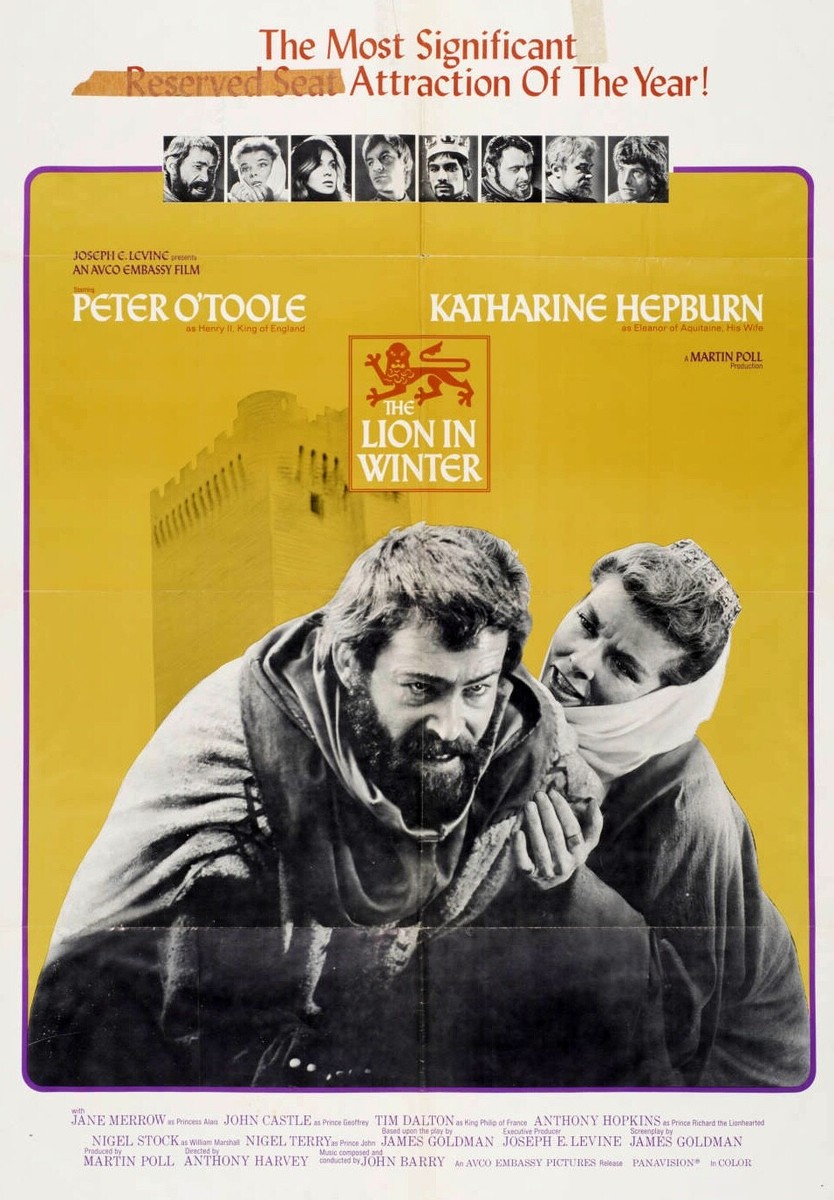
Lions in winter
December 31, 2024 | Leave a Comment
in a discussion of U.S. strength in Scribner's jan 1900 they point to not only the cost of Europe's 4 million soldiers but the loss of productive activity from these young men. How many in the 3 letter agencies are contributing to our loss in productivity and current expenditure?
a resonant character from the past: In "East of Eden," the father figure who is considered to have a "fake" persona is Cyrus Trask; he presents a facade of a strong, military hero but is revealed to have exaggerated his war record and suffered a debilitating hit.
Cyrus is the Papa Bear. He's a one-legged ex-soldier who takes his brief military career very seriously. He destines his favorite son, Adam, for the army—whether Adam wants it or not—and lets his other son Charles tend to the farm or whatever. All of the nation's military higher-ups take Cyrus very seriously, and Adam is just about the only one who sees through his dear old dad for what he really is: a fraud. It eventually comes out that Cyrus probably did something shady because when he dies he has way more money than he should have.
from 2010 to 2025 there have been 12 years with sp up more than 10% - the next year was up in 11 years up about an average of 20%.
Biden is an 82-year-old lion in winter who fills his public and private meetings with war stories from a long career and reminders of his achievements. He seeks to burnish his legacy, infusing even the most rudimentary of White House events with a retrospective look at his career.
Dec
29
Chance, luck, and ignorance: how to put our uncertainty into numbers
December 29, 2024 | Leave a Comment

Chance, luck, and ignorance: how to put our uncertainty into numbers - David Spiegelhalter, Oxford Mathematics
We all have to live with uncertainty. We attribute good and bad events as ‘due to chance’, label people as ‘lucky’, and (sometimes) admit our ignorance. In this Oxford Mathematics Public Lecture David shows how to use the theory of probability to take apart all these ideas, and demonstrate how you can put numbers on your ignorance, and then measure how good those numbers are.
Coffee cup he got from MI5 showing verbal-numerical scale they use.
Also: The Art of Statistics
William Huggins offers:
i like to give this guide to my students for whom English is a 2nd/3rd (sometimes 4th+ language).
Kim Zussman is unimpressed:
David Spiegelhalter was Cambridge University's first Winton Professor of the Public Understanding of Risk.
Translation: He is the most qualified of the vast array of those who don't know WTF they are talking about, but are knighted to tell us.
Peter Grieve responds:
I heard a story a decade ago about one of the big decision theorists, I think it was a Harvard professor. He was offered a position somewhere else, and was agonizing about whether to accept it. A colleague suggested he use his decision theory, and he said "Come on! This is serious!" I've no idea about the veracity of the story, or who was involved.
Alex Castaldo clarifies:
You are talking about Howard Raiffa. The story was told by another professor, although apparently Raiffa later denied that he had said it.
Dec
27
Slab City photos, from Larry Williams
December 27, 2024 | 1 Comment

50 Photos of The Last Free Place in America
Hidden in Southern California’s desert is a small squatter’s paradise affectionately known as “The Last Free Place in America”.
More on Slab City
Slab City, also called The Slabs, is an unincorporated, off-the-grid alternative lifestyle community consisting largely of snowbirds in the Salton Trough area of the Sonoran Desert, in Imperial County, California. It took its name from concrete slabs that remained after the World War II Marine Corps Camp Dunlap training camp was torn down. Slab City is known for attracting people who want to live outside mainstream society.
Dec
26
Cons
December 26, 2024 | Leave a Comment
i have fallen victim to more scams than anyone. let me describe some of them. the typical one was a big con that a bookseller from Pennsylvania pulled on me. first part was to have all my good books removed because of "mold" etc.
a part of the book seller bib con was to have another independent autograph and bookseller assure me that the best thing for me was to remove all my books and send them to Penn. unknown to me was that he was receiving a fee from the supposedly independent but sickly Penn.
There were many other strands in this big con which particularly hurt me since books was a a sin qua non of my parents. I have not gone into my library since I fell into the con. I hope one of my siblings doesn't fall victim to another big con.
Dec
23
Tariffs on Canadian goods, from David Lillienfeld
December 23, 2024 | 1 Comment

So now we're going to get an interesting experiment in what happens when you impose tariffs on your neighbor. To wit:
1. The DEW Line? Probably going to be history very quickly
2. The Keystone Pipeline? The first pipeline to nowhere (why would Canada bother?)
3. Drug interdiction? I doubt the Canadians are interesting in dealing with drug gangs, but they will also have little reason to look kindly on us.
4. NATO? It's a goner already.
I'm not sure that we gain all that much in this tit for tat, but it will be interesting to see what's conjured up.
Carder Dimitroff responds:
It's more than oil from the Keystone Pipeline. As the name suggests, TC Energy (formerly TransCanada) is a Canadian company that exports significant amounts of oil and natural gas to the United States and US natural gas to Canada.
The Keystone Pipelines and the oil they transport are assets owned by Canadian companies rather than US companies. New tariffs on Canadian oil and natural gas traversing TC Energy's pipelines could increase wholesale energy prices within the US. Of course, higher prices help domestic producers.
The US produces more oil and natural gas than it consumes and is a net exporter of natural gas, oil, and byproducts. However, exports could decline if US wholesale feedstock prices increase relative to global markets.
Dec
22
Alfred Cowles
December 22, 2024 | Leave a Comment
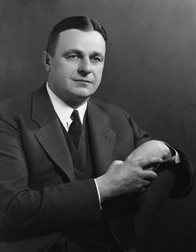
A stock market person who is always sensible, with a memorable reference to Harold Davis:
Dutch biochemist Charles H. Boissevain…advised him that multiple-correlation analysis could be applied to economic research and recommended that he speak to Harold T. Davis, a mathematician at Indiana University who spent his summers in Colorado Springs and a member of the fledgling Econometric Society. Cowles called Davis to ask if it was possible to compute a correlation coefficient in a problem involving 24 variables. Davis suggested that the calculations could be performed by Hollerith punch card machines, developed by a company that would later become International Business Machines (IBM). Cowles acquired a Hollerith computer and worked with Davis on the problem. When it turned out that the machines were ill-suited to the task, Cowles decided to perform a series of linear regressions to test the hypothesis that market analysts using current estimation techniques could not outperform random guessing.
Can Stock Market Forecasters Forecast?, By Alfred Cowles 3rd, December, 1932
This paper presents results of analyses of the forecasting efforts of 45 professional agencies which have attempted, either to select specific common stocks which should prove superior in investment merit to the general run of equities, or to predict the future movements of the stock market itself. The paper falls into two main parts. The first deals with the attempts of two groups, 20 fire insurance companies and 16 financial services, to foretell which specific securities would prove most profitable. The second part deals with the efforts of 25 financial publications to foretell the future course of the stock market. Various statistical tests of these results are given.
Harold Thayer Davis, a forgotten great and his time series book was the first to calculate the distribution of runs of all lengths.
Dec
21
Deviations from Real Earnings Yields, from Hernan Avella
December 21, 2024 | Leave a Comment
An Investigation into the Causes of Stock Market Return Deviations from Real Earnings Yields
Posted: 6 Dec 2024
Austin Murphy, Oakland University - School of Business Administration
Zeina N. Alsalman, Oakland University
Ioannis Souropanis, Loughborough University
This research demonstrates that the simple difference between the current earnings yield on the S&P500 and the long-term real TIPS yield has significant forecasting power for excess returns on that stock market index over both short-term and long-term investment horizons. For all time frames, deviations from that theoretical identity for the equity premium are positively related to current economic slack in the economy. Over annual horizons, those excess stock return deviations are negatively (positively) associated with recent inflation rates (money growth). Inflation is found to be positively (negatively) related to monetary policy restrictiveness (long-term real profit growth) in the future.
Vic asks:
is this bull or bear?
Dec
20
On your last leg, from Kim Zussman
December 20, 2024 | Leave a Comment
How Old Are You? Stand on One Leg and I'll Tell You
I’m always interested in ways to quantify how my body is aging, independent of how many birthdays I have passed. And, according to a new study, there’s actually a really easy way to do this: Just stand on one leg.
Pamela Van Giessen writes:
I slipped on black ice a few years ago and broke my wrist. It was awful and I exclaimed that I would do everything possible to avoid that happening again. I have never had great balance to begin with. I started doing lots of planks. Minor improvement. This year I started running and walking backwards for ~10 mins/day (and I increased the planks to 4 mins). I have been doing this at least 5 days/week since January. I also do about 3 mins/day (7 days/week) sideways leg lifts (one leg at a time and then alternating) with my eyes closed.

HUGE improvement. On recent hikes I was able to rock hop over creeks without my usual falling on my rear and walked several round tree trunks over creeks (like a balance beam) successfully. Two yrs ago I would have had to scootch over those tree trunks on my butt.
Falls are one of the leading causes of mortality as we age because when people fall and hurt themselves it takes longer to recover and they get really nervous about it happening again so they become more sedentary. Peter Attia spends a lot of time discussing this in his book and podcast.
Larry Williams offers:
I had this in my February letter:
We are all aware of how dangerous falls can be for older people. I did not realize it was this dangerous; “The mortality rate for falls increases dramatically with age in both sexes and in all racial and ethnic groups, with falls accounting for 70 percent of accidental deaths in persons 75 years of age and older.” Am Fam Physician.
Most say older people fall because they lose their balance, surely that is part of it. But, there’s another part you can start working on now that costs nothing.
When you start to lose your balance, your body immediately corrects it with how you are standing. Weak ankles, as I see it, are the problem. I first realized this when training for the Sr Olympics. Faster sprinters have stronger ankles. Weak ankles mean you can’t “catch yourself” as you start to fall. To strengthen your ankles, walk barefoot. Walk on your toes, then walk on your heels (careful) to build up these muscles and protect you from falling. Lots of YouTube videos on this as well. Strong people fall less. Muscle loss and ankle strength will keep you upright.
A good exercise is to rock back on your heels, may want to hold on to something, to develop balance and strength
Andrew Moe adds:
Walking backwards uphill, dragging a big weight sled backwards and doing squats on an incline board are all favorites of the Knees Over Toes guy. He's an innovator who believes in building strength from the ground up. Also combines strength and flexibility. Worked for me and is now part of my regular exercise.
Dec
19
The service rate
December 19, 2024 | Leave a Comment
two heroes of speculation and investment are both receiving cheers all over. but left out is the one common factor they have. a better relation with service as well as better commission and margin structure.
how can someone paying 3.5 a round trip compete with someone who pays zero - and if you buy a company that was paying dividends and then you stop on grounds that your secretary pays a greater %.
what was average service rate over previous 15 years for these fossils? (one still living)
Dec
18
Vanished occupations
December 18, 2024 | 1 Comment
some occupations that have vanished in the last 150 years (eric sloanes america): stagecoach driving, chimney sweeping, town crying, aviation barnstormer, ice cutters, snow rollers, drovers, keel boatmen, grindstone man, sandwich men, etc. When will technical analysts vanish?
An informative guide to the vanishing landscape of America's forefathers includes brilliant photography of the barns, covered bridges, road signs, country inns, and steepled churches that they left behind.
Dec
17
Not conforming to the herd, from Asindu Drileba
December 17, 2024 | 1 Comment
In a few books I have noticed a pattern of the author insinuating people not to conform to the herd. Here are some examples:
"My resistance to conformity has been the bedrock of my speculative persona." — Education of a Speculator, The Chair
"Copper the public opinion" — Secrets of Professional Turf Betting, Robert Bacon
"The most contrarian thing of all is not to oppose the crowd but to think for yourself." — Zero To One, Peter Thiel
"Whoso would be a man must be a nonconformist. " — Self Reliance, Ralph Emerson
"If you suggest a doubt as to the morality of these institutions, it is boldly said that “You are a dangerous innovator, a utopian, a theorist, a subversive; you would shatter the foundation upon which society rests.” " — The Law, Frederic Bastiat
Are there any other books you know of that advise their readers not to be conformists?
Vinh Tu adds:
A connected concept is the minority game.
Humbert H. writes:
In markets, simply being contrarian is a recipe for losing money because "the herd" is often correct and markets are almost always efficient. Unlike the El Farol Bar problem, to be successfully contrarian one has to have insight into either something fundamental "the herd" doesn't see or anticipate a change in direction for whatever reason while having a correct insight into the timing. Game theory in its basic form doesn't seem to be very useful.
Asindu Drileba responds:
Yes, the minority game (El Farol Bar Problem) is just a toy model. So it may seem to be detached from reality at times. There is an ecological model that zoologists have come up with. I don't know it's exact name but it is described as follows.
Environment 1: If you're a buffalo and feed on the same grass plains with 1,000 other buffalos (herd members). The quality of grass you will feed on will be lower, since your competing with 1,000 herd members. Fortunately the odds of being eaten by a predator are lower. If a lion/cheetah attacks, your individual odds of being eaten are 1/1000.
Environment 2: If you're a "contrarian" buffalo, i.e move alone without your 1,000 friends. The quality of grass your eating will be higher since you don't need to share with anyone. But the odds that you are eaten, on the condition that the predator is successful are 100% i.e 1 in 1, cause you're the only target and possible victim.
So to the prey: The contrarian buffalo should figure out a way to not be eaten if it is to enjoy higher quality grass. To the predator: Education of a Speculator, describes retail people like me (the public) as the primary food for superior predators. Remember the more buffalos that join a herd the bigger it becomes and the higher the probability of a predator catching a meal.
Hernan Avella offers:
Conformity in Large Language Models
The conformity effect describes the tendency of individuals to align their responses with the majority….In this paper, we adapt psychological experiments to examine the extent of conformity in state-of-the-art LLMs. Our findings reveal that all models tested exhibit varying levels of conformity toward the majority, regardless of their initial choice or correctness, across different knowledge domains.
Humbert H. comments:
There are a couple of reasons why I like my own version of buy-and-hold, but really buy-and-hold in general: whatever happens you're not food for any predators in the market. You can be a victim of financial shenanigans, but when diversified that's not a big problem. The other is the drift. Same reason I never became a physicist: I always found physics really easy, and was always good from my high schools in the USSR and the US where I was the physics teachers' "pet" to college. But early on I figured out that to really make it in physics you needed to be a genius, and I was not, so there was not point in going that way. I don't feel I can beat the predators in the market because the top ones are both smarter and have more resources, so I don't even want to try. I admire those on the list who are trying, but to quote Dirty Harry "a man's got to know his limitations". I do have a couple of strengths for my version of buy-and-hold: I like to buy falling knives, which very few people like, so that's contrarian, and I can lose (or gain) value without any emotions other than "this is fun to watch".
Dec
16
Relevant quotes
December 16, 2024 | Leave a Comment

Some relevant Sherlock Holmes quotes, included at the beginning of each chapter of the brilliant statistics textbook Statistical Inference (Second Edition) by Casella and Berger:
"How do all these unusuals strike you, Watson?"
"Their cumulative effect is quite considerable, and yet each of them is quite possible in itself.""I confess that I have been blind as a mole, but it is better to learn wisdom late than never at all."
"You can, for example, never foretell what any one man will do, but you can say with precision what an average number will be up to. Individuals vary, but percentages remain constant. So says the statistician."
"We want something more than mere theory and preaching."
"I’m afraid that I rather give myself away when I explain. Results without causes are much more impressive."
"We are suffering from a plethora or surmise, conjecture, and hypothesis. The difficulty is to detach the framework of fact - of absolute undeniable fact - from the embellishments of theorists and reporters."
Dec
15
LNG: different perspectives, from Carder Dimitroff
December 15, 2024 | Leave a Comment
Whither the weather: predicting weather patterns helps predict LNG demand and prices.
Asia and Europe in a contest to attract LNG cargoes:
US LNG exports to Europe surge in November on higher prices
U.S. LNG exports to Europe surged in November as the world's largest producer of the superchilled gas sent more cargoes to the continent and fewer to Asia and Latin America, according to preliminary data from financial firm LSEG. European natural gas prices climbed in November to their highest levels in two years on fears remaining Russian pipeline supplies to Europe will be halted or face further curtailment.

LNG tankers divert to Europe from Asia after Russia halts supplies to Austria's OMV
LNG traders divert cargoes from Europe to Asia as eastern demand strengthens
Meanwhile:
U.S. inventories enter the winter with the most natural gas since 2016
Rising LNG terminal costs to make new US projects less competitive
FYI, U.S. LNG producers must buy natural gas at market prices. Many competitors pay only lifting costs.
Dec
14
Father and son
December 14, 2024 | 1 Comment

a 63-yr differential between us. My father always said he would be the happiest man in the world when I could beat him at almost all things. I feel the same about Aubrey. (Until my stroke I could beat him at most racket sports.)
Dec
13
Crazy without provocation
December 13, 2024 | Leave a Comment
A Quixotic President, by Daniel Tenreiro
Wed, January 13, 2021
“The thing is to turn crazy without any provocation,” Quixote tells his sidekick, Sancho Panza, when asked what compelled him to give up his quiet countryside existence and playact knight errantry in the mountains of Spain. A rich bachelor wasting away on his vineyard in La Mancha, the protagonist of Miguel de Cervantes’s novel grows frustrated with the smallness of life. He yearns instead for the toil, anxiety, and arms of the chivalric romances he spends his days reading. Unable to make his dream a reality, Quixote opts to pretend: He mounts a ragged horse, costumes himself in a rusted breastplate, and sets off in search of eternal fame.
when you see a person registered for one party proclaiming views completely opposite - is it a case of false deception or the stockholm syndrome or sinking into the swamp or…
Dec
12
Positively aging, from Kim Zussman
December 12, 2024 | Leave a Comment
Want to Live a Long and Fulfilling Life? Change How You Think About Getting Old
Research consistently shows our attitudes and beliefs influence our health and longevity.
Data is mounting, much of it from research by Yale epidemiologist Becca Levy, about the impact our attitudes and beliefs have on our health and longevity. Levy’s interest in the connection began in the 1990s, when she traveled to Japan to try to understand why the Japanese had the longest lifespan in the world. She was familiar with explanations that attributed this longevity to diet—Japanese people consume less meat, dairy products, sugar and potatoes than other wealthy countries. But what stood out to her was how the culture respected and celebrated older people.
“It struck me as very different to what I had observed in the U.S.,” she told me. “So I began to wonder if these positive age beliefs could contribute to the longer lifespan in Japan.”
Nils Poertner writes:
Psychology plays a huge role here - eg. excessive nostalgia means one does not appreciate the moment - in my view it is also linked to far-sightedness (went farsighted at the age of 15! which is rare and then recovered). there is somewhat a placebo in life - and the joke is on us really.
Big Al comments:
There are maybe complicated issues around causality, e.g., do people with a positive attitude live longer and better, or do people with underlying factors that promote health and longevity tend to have a positive attitude? But I will stipulate that we might as well try it. Which leads to the issue of people feeling like they have failed if they *don't* have a positive attitude. Perhaps as a way of avoiding this pitfall, we could be given information on how to *practice* a positive attitude. Then, over time and with practice, we might see a benefit.
Dec
10
The principle of least effort
December 10, 2024 | Leave a Comment

Grandfather Martin liked to encap stock market moves as an example of theory of least effort. Elmer Kelton applies the theory to the explosion of oil in a mine.
Any explosion will follow the path of least resistance. We want its main force to go out to the sides of the hele, to break up the formation. We don’t want it wasted, comin back up the open casing like a blast from a shotgun barrel. So we tamp a yard or so of pea gravel on top of the charge.
-Honor at Daybreak, by Elmer Kelton
I sat besides a stream of water in complete tranquility wondering about life, its purpose, “who am I?” and such esoteric thoughts. Abruptly, my left brain kicked in and started wondering about well, more left-brain things, like how water finds its own level and how it flows along the path of least resistance. That took me back to my college days when I first learnt about the path of least resistance in the context of electrons flowing through a wire creating electricity. This concept stayed close to my heart as I naively related it to my own disposition of doing things that took the least effort. Later on in life I figured that this Principle of Least Effort (POLE) is actually prevalent in all of nature.
much more work should be done on applying this principle to the stock market in the last 100 years after Granpa passed.
what examples of markets displaying theory of least effort ($1000 reward for best example).
[More on the math/physics side: Action Principles]
Dec
9
This is what recovery looks like, from Bill Rafter
December 9, 2024 | Leave a Comment
Payroll Tax Receipts growth:

More charts (click for full view):
Payroll Tax Receipts growth with a leading indicator
Employment: full-time vs part-time
Dec
8
Doom, bonds, and Elmer Kelton
December 8, 2024 | Leave a Comment
Is This Wildly Overvalued Stock Market Doomed? Yes, but Maybe Not Yet -WSJ
the wsj foregoes the Dow theory, and the drift, and the seasonals, and the tendncy for the best to continue to do the best.

another great from Elmer Kelton with a million similarities of the path of mining for oil to markets:
very quietly the 30-year bond future price has hit a 32-day high. this has been insanely bullish for the S&P. in the last year for example S&P 40 days later is up 154 big points (up 80% to 100% of time) true for all back intervals thru 2001. no wonder wsj is bear.
Dec
5
Sex and the City and the Times
December 5, 2024 | Leave a Comment
I listened to Sex and the City over the weekend and the NY Times Sunday edition was like another version of it. here was a man who kept dozens of ratings of sex in city types on past dates and rated them 1 to 10 on how far they'd go more recently. He's a vac denier who ran for Pres in 2024.
continuing the coincidence of sex and city and nytimes there is big article about the Financial District Hip Mystery Tower and the cool x sex and city types who are leasing space there at 1/10 the going rate. somehow my chapter in Edspec on sex and the market is very relevant.
Dec
3
Roughing It
December 3, 2024 | Leave a Comment

for the past week ive been reading Roughing It and Following the Equator. It is amazing how much Mark Twain knew and how amusing it is. I particularly liked his analysis of the German Language, the Mormon migration and the booms and busts in the silver mines.
[Below, a market story from Roughing It. - Ed.]
A youth of nineteen, who was a telegraph operator in Virginia on a salary of a hundred dollars a month, and who, when he could not make out German names in the list of San Francisco steamer arrivals, used to ingeniously select and supply substitutes for them out of an old Berlin city directory, made himself rich by watching the mining telegrams that passed through his hands and buying and selling stocks accordingly, through a friend in San Francisco. Once when a private dispatch was sent from Virginia announcing a rich strike in a prominent mine and advising that the matter be kept secret till a large amount of the stock could be secured, he bought forty "feet" of the stock at twenty dollars a foot, and afterward sold half of it at eight hundred dollars a foot and the rest at double that figure. Within three months he was worth $150,000, and had resigned his telegraphic position.
[ And Twain analyzes The Awful German Language, from A Tramp Abroad. ]
Dec
2
Stop-loss orders: browsing the research, from Humbert X.
December 2, 2024 | Leave a Comment
(1) When Do Stop-Loss Rules Stop Losses?
EFA 2007 Ljubljana Meetings Paper
51 Pages Posted: 5 Mar 2007
Kathryn Kaminski, Massachusetts Institute of Technology (MIT)
Andrew W. Lo, Massachusetts Institute of Technology (MIT) - Laboratory
for Financial Engineering
Date Written: January 3, 2007
In this paper, we develop a simple framework for measuring the impact of stop-loss rules on the expected return and volatility of an arbitrary portfolio strategy, and derive conditions under which stop-loss rules add or subtract value to that portfolio strategy. We show that under the Random Walk Hypothesis, simple 0/1 stop-loss rules always decrease a strategy's expected return, but in the presence of momentum, stop-loss rules can add value. To illustrate the practical relevance of our framework, we provide an empirical analysis of a stop-loss policy applied to a buy-and-hold strategy in U.S. equities, where the stop-loss asset is U.S. long-term government bonds. Using monthly returns data from January 1950 to December 2004, we find that certain stop-loss rules add 50 to 100 basis points per month to the buy-and-hold portfolio during stop-out periods. By computing performance measures for several price processes, including a new regime-switching model that implies periodic Flights-to-quality, we provide a possible explanation for our empirical results and connections to the behavioral finance literature.
(2) Stop-Loss Orders And Price Cascades In Currency Markets
C. L. Osler, New York Fed, June 2002
In this paper, I provide evidence that currency stop-loss orders contribute to rapid, self-reinforcing price movements, which I call "price cascades." Stop-loss orders…generate positive-feedback trading. Theoretical research on the 1987 stock market crash suggests that such trading can cause price discontinuities, which would manifest themselves as price cascades. My analysis of high-frequency exchange rates offers three main results that provide empirical support for the hypothesis that stop-loss orders contribute to price cascades: (1) Exchange rate trends are unusually rapid when rates reach exchange rate levels at which stop-loss orders have been documented to cluster. (2) The response to stop-loss orders is larger than the response to take-profit orders, which generate negative-feedback trading and are therefore unlikely to contribute to price cascades. (3) The response to stop-loss orders lasts longer than the response to take-profit orders. Most results are statistically significant for hours, although not for days. Together, these results indicate that stop-loss orders propagate trends and are sometimes triggered in waves, contributing to price cascades. Stop-loss propagated price cascades may help explain the well-known “fat tails” of the distribution of exchange-rate returns, or equivalently the high frequency of large exchange-rate moves. The paper also provides evidence that exchange rates respond to non-informative order flow.
Dec
1
Seasonals, and a deep-thinking man
December 1, 2024 | Leave a Comment

what can one say about the seasonals for December? the seasonals are bullish when the prev 6 months are up and bearish when then prev 6 months are down. recently a rise in the last day of November has been bullish.
a book by a stubborn and deep thinking man - highly recommended:
A Personal Odyssey, by Thomas Sowell.
Archives
- October 2026
- September 2026
- August 2026
- July 2026
- June 2026
- May 2026
- April 2026
- March 2026
- February 2026
- January 2026
- December 2025
- November 2025
- October 2025
- September 2025
- August 2025
- July 2025
- June 2025
- May 2025
- April 2025
- March 2025
- February 2025
- January 2025
- December 2024
- November 2024
- October 2024
- September 2024
- August 2024
- July 2024
- June 2024
- May 2024
- April 2024
- March 2024
- February 2024
- January 2024
- December 2023
- November 2023
- October 2023
- September 2023
- August 2023
- July 2023
- June 2023
- May 2023
- April 2023
- March 2023
- February 2023
- January 2023
- December 2022
- November 2022
- October 2022
- September 2022
- August 2022
- July 2022
- June 2022
- May 2022
- April 2022
- March 2022
- February 2022
- January 2022
- December 2021
- November 2021
- October 2021
- September 2021
- August 2021
- July 2021
- June 2021
- May 2021
- April 2021
- March 2021
- February 2021
- January 2021
- December 2020
- November 2020
- October 2020
- September 2020
- August 2020
- July 2020
- June 2020
- May 2020
- April 2020
- March 2020
- February 2020
- January 2020
- December 2019
- November 2019
- October 2019
- September 2019
- August 2019
- July 2019
- June 2019
- May 2019
- April 2019
- March 2019
- February 2019
- January 2019
- December 2018
- November 2018
- October 2018
- September 2018
- August 2018
- July 2018
- June 2018
- May 2018
- April 2018
- March 2018
- February 2018
- January 2018
- December 2017
- November 2017
- October 2017
- September 2017
- August 2017
- July 2017
- June 2017
- May 2017
- April 2017
- March 2017
- February 2017
- January 2017
- December 2016
- November 2016
- October 2016
- September 2016
- August 2016
- July 2016
- June 2016
- May 2016
- April 2016
- March 2016
- February 2016
- January 2016
- December 2015
- November 2015
- October 2015
- September 2015
- August 2015
- July 2015
- June 2015
- May 2015
- April 2015
- March 2015
- February 2015
- January 2015
- December 2014
- November 2014
- October 2014
- September 2014
- August 2014
- July 2014
- June 2014
- May 2014
- April 2014
- March 2014
- February 2014
- January 2014
- December 2013
- November 2013
- October 2013
- September 2013
- August 2013
- July 2013
- June 2013
- May 2013
- April 2013
- March 2013
- February 2013
- January 2013
- December 2012
- November 2012
- October 2012
- September 2012
- August 2012
- July 2012
- June 2012
- May 2012
- April 2012
- March 2012
- February 2012
- January 2012
- December 2011
- November 2011
- October 2011
- September 2011
- August 2011
- July 2011
- June 2011
- May 2011
- April 2011
- March 2011
- February 2011
- January 2011
- December 2010
- November 2010
- October 2010
- September 2010
- August 2010
- July 2010
- June 2010
- May 2010
- April 2010
- March 2010
- February 2010
- January 2010
- December 2009
- November 2009
- October 2009
- September 2009
- August 2009
- July 2009
- June 2009
- May 2009
- April 2009
- March 2009
- February 2009
- January 2009
- December 2008
- November 2008
- October 2008
- September 2008
- August 2008
- July 2008
- June 2008
- May 2008
- April 2008
- March 2008
- February 2008
- January 2008
- December 2007
- November 2007
- October 2007
- September 2007
- August 2007
- July 2007
- June 2007
- May 2007
- April 2007
- March 2007
- February 2007
- January 2007
- December 2006
- November 2006
- October 2006
- September 2006
- August 2006
- Older Archives
Resources & Links
- The Letters Prize
- Pre-2007 Victor Niederhoffer Posts
- Vic’s NYC Junto
- Reading List
- Programming in 60 Seconds
- The Objectivist Center
- Foundation for Economic Education
- Tigerchess
- Dick Sears' G.T. Index
- Pre-2007 Daily Speculations
- Laurel & Vics' Worldly Investor Articles
