Aug
23
Appreciating The Chair
August 23, 2026 | 1 Comment
Obituary: Victor Niederhoffer - December 10, 1943 – August 4, 2026
Alex Castaldo:
I think I was lucky to know Vic for so many years. He was very generous to me and although he liked to do things unconventionally sometimes, it was because he sincerely felt everyone should do things their own way and never just to be eccentric or shock people. He always had interesting points of view on many issues not just work related.
Pamela Van Giessen:
It was my great honor and privilege to publish Education of a Speculator. In fact, working on the book with Victor was the highlight of my career. I knew in my heart that whether the book sold 1 copy or 100,000 copies or more, it was an important work. Throughout the process Victor drove me crazy, but mostly in a good way. He was always challenging the status quo, often spot on. He was one of the most generous people I have ever encountered, and I will carry to my grave all the lessons he taught me, along with the many interesting people he introduced me to including Marty Reisman who negotiated the publishing contract with me/Wiley on Victor’s behalf (and wasn’t that just a trip!) and, of course, Bo, among so many others.
The most beautiful person Victor introduced me to was his amazing wife, Susan. If we were fortunate to know Victor, Victor was beyond fortunate to have Susan in his life. May the hole in your heart, and the hearts of your children, be filled with Victor’s love for you and the love of all those around you.
Vince Fulco:
Terribly, terribly sad to hear this news. Working for him was among the best years of my life. I would have carried his ammo can in any trench, in any war.
May his memory be a blessing. Warmest condolences to all who knew him.
Jared Albert:
I sent this to Vic in June and it seems like I should just share it as my commemoration of the man of extraordinarily outsized importance in my life. My deepest condolences to Susan and all of their children.
Dear Vic,
I was sorry to read that you weren’t feeling that well these days, and I wanted to thank you again, while there’s time in this world, for taking a shot on me 20 years ago. Although it didn’t work out like I hoped, it gave me a kind of seal of approval at a pretty low point in my early 30’s and I’ve always appreciated that you did that.
You've remained a central positive figure in my life and I wish you all the best for a full recovery.
James Sogi:
Condolences to his extended family and past business associates and partners . Vic was truly one of the all time greats of the financial world who helped many and changed the markets. He changed my life and my family through his help. I am very sad to hear of his passing. I will always treasure my association and times with him as one of the highlights of my life.
Tyler Cowen:
In addition to his well-known public roles, he worked very hard to help and befriend me when I was younger. Here are the Google searches for Victor. Less well known about Victor is that he had one of the world’s best collections of private letters. He also once gave me a very nice small painting by Jack Savitzky, for which I remain grateful.
Michael Brush:
Vic did a lot of things, but one thing he did for all of us was to generously introduce us to new worlds, new worlds of ideas, and new people.
Vic was really great man. Meeting him was one of those “before and after” moments in my life, back when he started writing for MSN Money when I wrote there.
I remember our last conversation while leaving one of his parties.
Me: Vic you were such a big influence in my life.
His answer surprised me and to this day I am not sure I know what it really meant: “I hope in a good way.”
I will really miss you Vic. Thanks again for everything.
Steve Ellison:
I posted a photo on X (then Twitter) when the Chair played handball against the Senator at the 2015 Spec Party.
William Weaver:
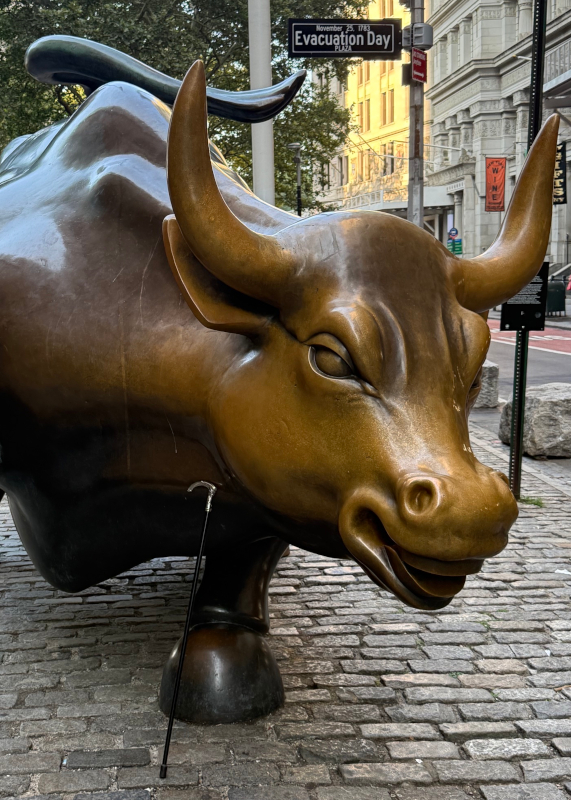
Victor gave a number of us these canes years ago. At least for me it was a reminder anyone can achieve their goals, and it won’t always be an easy path. I took mine down to Wall Street this morning. Thank you, Vic. Will
It is good to take out the canes and hobble down to Wall Street at the close of days when there is a panic. - Victor Niederhoffer
Laurel Kenner:
I found the last cane maker in Manhattan and purchased a number of the most striking ones to send as prizes.
Asindu Drileba:
Until this day, since a few years since I read The Education of a Speculator, I have not found another book remotely close to it. In the finance industry, market analogies are mostly limited to maths & physics. This is why when I read The Education of a Speculator, my mind was genuinely blown by how The Chair would create market references to genetics, music sheets, Dutch philopher Johan Huizinga (Homo Lundens is worshipped in the game design community), checkers and more.
This type of thinking in analogies is what E. O Wilson referred to as "Consilience." So because of this, I would regard The Chair as "The Master of Consilience".
I wrote a short tribute to Vic.
Kiran Kaur:
I was a student of Vic’s. In 2025 he gave me a full weekend at his home, him and Susan both. He walked me through his own book. When I left he put Elmer Kelton’s The Time It Never Rained in my hands and told me The Trees in My Forest by Bernd Heinrich was the other one to read.
I have wondered since whether the pairing was deliberate. A rancher who will not take the drought subsidy and stays on the land, and a biologist counting what is actually happening in three hundred acres of Maine woods. Endurance and counting. He handed it over without a lecture, which I think was the point.
Condolences to Susan, to Aubrey, and to the whole community. Rest in Peace Legend!
Sam Johnson:
A veteran trader pointed me to Vic back in 2011 via speculations website. Encouraged me to think differently about markets and led to a career. Question and test orthodoxy. I wish i could have attended one of his get togethers. He never met me or knew it but he was the second most important person to my trading success.
Yelena Sennett:
Victor certainly did like his hats…
It was a privilege to do podcasts with him. You never knew what fascinating analogy he would come up with to explain the markets. He was always generous with sharing his knowledge, but I believe his greatest gift was an instinct for reading the markets that simply couldn't be quantified.
One of his favorite sayings was, "Never short the market." He certainly lived an extraordinary life, with its share of highs and lows—much like the markets themselves.
Today (August 4th), as the S&P 500 reached another all-time high, it felt like a fitting tribute to his memory.
Richard Barsom:
RIP Victor. Great guy, literally saved my life. Rest in peace Chair.
John Netto:
I remember meeting him for the first time back in the summer of 2011. He graciously invited several from the spec list over to his UWS home. The whole experience fascinated me and his affable personality and welcoming disposition quickly removed any anxiety I had about being in front of a true legend. Thank you to John Floyd for introducing me to the Chair and the list.
Paolo Pezzutti:
I will miss Victor very much. To me, he was a mentor. I received far more from him than I ever gave, and that was part of his greatness. I have applied many of his teachings in both my life and my work.
A brilliant, original and courageous man has left us—courageous even beyond any reasonable limit. He was eclectic, competitive and a great contrarian by nature, but also generous beyond measure. He was a bold, direct and aggressive speculator.
As Nelson used to say: “Go right at them”, Victor always urged me to apply his battle-tested principles to my own trading style.
Newton Linchen:
Victor Niederhoffer was a major inspiration for my development as a market practitioner and had huge impact in the way I view markets and the World.
We are all at a great loss. My respects and sentiment to the family and friends.
Thank you, Chair!
Eric Lindell:
I'm saddened to hear of Victor's passing. I had gotten to know him over the years attending his junto meetings. He was a great guy, and it's a big loss to the investment community and all those whose lives he touched. My deepest sympathies to his family.
Jordan Low:
Victor’s passing is a loss to many. He was so generous with his time and wisdom, and he was a friend to my whole family: he taught my daughter Annabelle tennis, squash, and checkers, and he came to the gala to support my wife Annie when she was honored among the Outstanding 50 Asian Americans in Business. He also taught me the triangle defense in checkers, and drew the line straight to portfolio management: balance risk, reward, and liquidity, and hold the formation at all times. I trade that way to this day. My deepest sympathies to his family.
Rest in peace, Chair. We will remember you fondly.
George Coyle:
Feb
3
Inflation and it’s Causes, from Asindu Drileba
February 3, 2025 | Leave a Comment
What causes inflation? Suppose we define inflation simply as the rise in prices of commodities, stocks, real estate etc. What causes it?
1) A generic explanation people offer (acolytes of Milton Friedman & Margaret Thatcher for example) is to blame monetary policy. Simplified as, inflation is caused by "too much money chasing too few goods."
Many people blamed President Trump's COVID stimulus packages for the rise of prices during that period. It seems specs in this list agree upon this when it comes to stock prices, i.e., lower interest rates (higher money supply) -> Higher stock prices (inflated stock prices).
2) An alternative explanation is that higher prices are caused by supply chain issues.
So they would claim that higher commodity prices were so because it was extremely difficult to move them around during lockdowns, let alone processing them in factories. A member also described that egg prices may be going up because of disease (a chink in the supply chain) not necessarily monetary policy. I am thinking that supply chain issues are more important to look at, than monetary policy.
Larry Williams predicts:
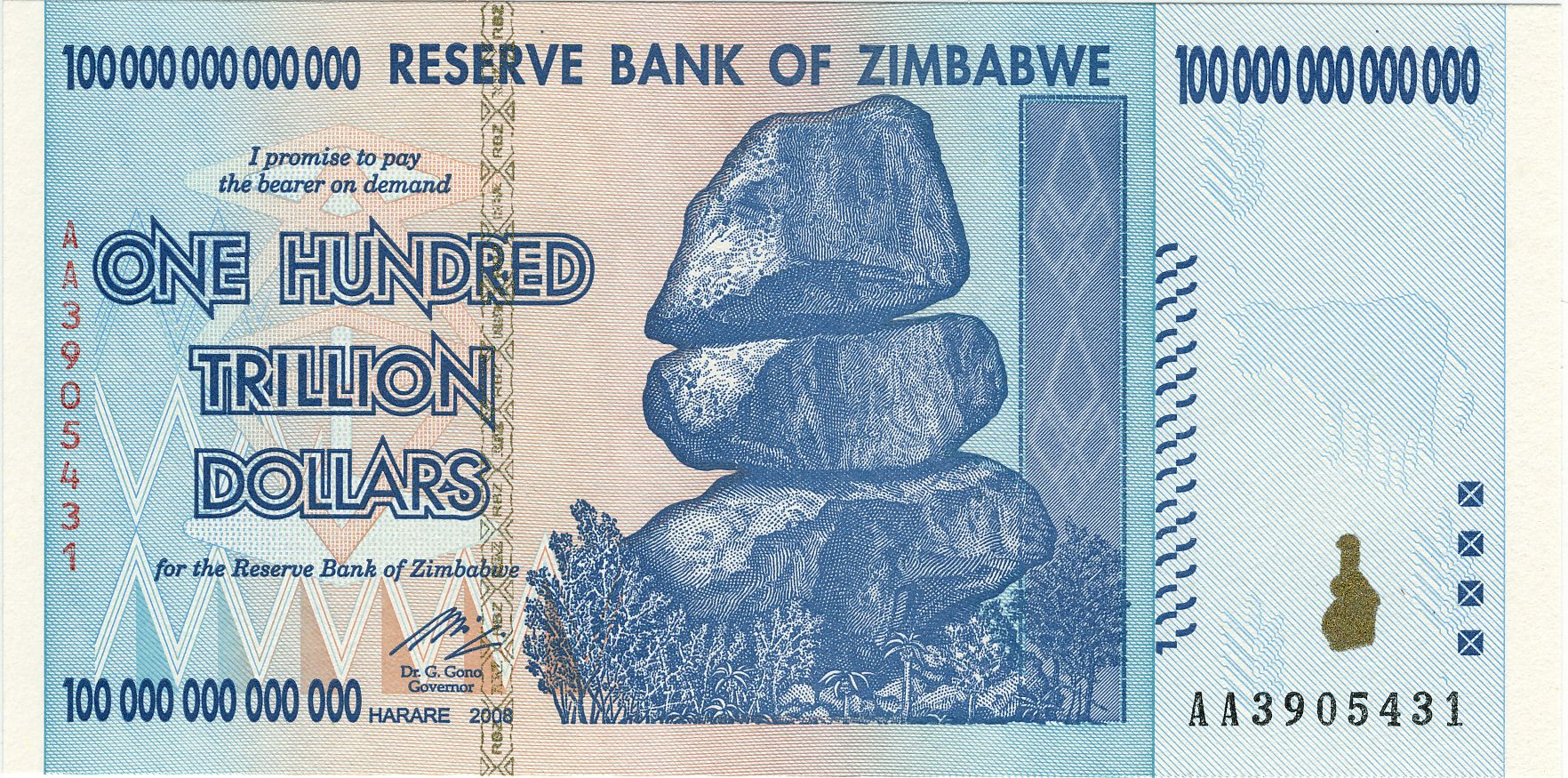
Inflation is very, very cyclical so maybe the real cause resides in the human condition and emotions. It will continue to edge lower until 2026.
Yelena Sennett asks:
Larry, can you please elaborate? Do you mean that when people are optimistic about the future, they spend more, demand increases, and prices go up? And then the reverse happens when they’re pessimistic?
Larry Williams responds:
Just that it is very cyclical— as to what drives the cycles I am not wise enough to know…though I suspect…some emotional pattern dwells in the heart and souls of as all that creates human activity—along the lines of Edgar Lawrence Smiths work.
Jun
15
Megacaps in Random Land, from Big Al
June 15, 2024 | Leave a Comment
Lots going around about how NVDA dominates; and MSFT, NVDA and AAPL now account for about 20% of the S&P 500. I was curious to see what happened in a toy index and so did an experiment (using R):
1. Create an index of 500 stocks, each with a starting value of $100.
2. Each year, for 40 years, each stock's value is multiplied by 1 + a value randomly drawn from a normal distribution with mean 8% and sd 15%, roughly what you might see with the S&P 500.
3. The starting value of the index was $50,000. The final value after 40 years was $1,152,446.
4. The final summed value of the largest 10 out of 500 stocks was $142,320, or 12.35% of the 500-stock index.
I was curious to see if megacaps would emerge from a simple toy model. I ran it only once, and they did. For me, this is a comment on the perennial alarm stories about "Only X% of stocks account for Y% of the market!" Even with a simple model, you wind up with something like that.
Adam Grimes agrees:
Can confirm. Have done variations of this test with more sophisticated rules, distribution assumptions, index rebalancing, etc. Get similar results.
Peter Ringel responds:
so we can take this ~12% of the index as a base value, that develops naturally or by chance? Then a clustering of being 20% of a total index (only greater by 8%) does not look so outrageous.
William Huggins is more concerned:
keep in mind it's 10 companies making up 12% (~1.2% each) vs 3 companies making up 20% (8.3% each) - in that sense, the concentration DOES look pretty high. am reminded of when NT was 1/5 of the entire CDN index in 99/00.
Peter Ringel replies:
You are right, I failed to catch this difference of only 3 stocks. In general, I am not so much surprised about the concentration. Money always clusters. Always clusters into the perceived winners of the day. Should they blow up, money flows into the next winner. To me, the base for this is herd mentality.
Adam Grimes comments:
It's Pareto principle at work imo. I'm not making any claims about exact numbers or percents, but as you use more realistic distribution assumptions (e.g., mixture of normals) the clustering becomes more severe. There's nothing in the real data that is a radical departure from what you can tease out of some random walk examples. Winners keep on winning. Wealth concentrates. (As Peter correctly points out.)
Asindu Drileba offers:
Maybe you try replacing the normal distribution of multiples with a distribution of multiples constructed with those historically present in the S&P 500? It may reflect the extreme dominance in the market today.
To me, the base for this is herd mentality.
It is also referred to as preferential attachment:
A preferential attachment process is any of a class of processes in which some quantity, typically some form of wealth or credit, is distributed among a number of individuals or objects according to how much they already have, so that those who are already wealthy receive more than those who are not. "Preferential attachment" is only the most recent of many names that have been given to such processes. They are also referred to under the names Yule process, cumulative advantage, the rich get richer, and the Matthew effect. They are also related to Gibrat's law. The principal reason for scientific interest in preferential attachment is that it can, under suitable circumstances, generate power law distributions.
Zubin Al Genubi writes:
Compounding of winners is also at work and returns will geometrically outdistance other stocks. No magic, just martini glass math.
Anna Korenina asks:
So what are the practical implications of this? Buy or sell them? Anybody in the list still owns nvda here? If you don’t sell it now, when?
Zubin Al Genubi replies:
Agree about indexing. Hold the winners, like Buffet, Amazon, Microsoft, NVDIA. Or hold the index. Compounding takes time. Holding avoids cap gains tax which really drags compounding. (per Rocky) Do I? No, but should. It also works on geometric returns. Avoid big losses.
Humbert H. wonders:
But what about the Nifty Fifty?
Feb
29
A +1 for the inspiring story, from Kim Zussman
February 29, 2024 | Leave a Comment

Nvidia Hits $2 Trillion Valuation on Insatiable AI Chip Demand
The chips are so valuable that they are delivered to the networking company Cisco Systems by armored car, said Fletcher Previn, Cisco’s chief information officer, at The Wall Street Journal’s CIO Network Summit this month.
H. Humbert is skeptical:
This won't end well, but I have no idea about the timing. I have a mixed record on predicting the future, so my prediction is worth what you paid for it, but this is what's likely to happen: due to the chip shortage (the TSMC bottlenecks described aren't easily solved in the short term) and their high prices, NVIDIA's hold on the software stack will be punctured. Someone will say "Hey, we need a second source, it's not good to just have one supplier". Once that happens their monopoly will be over, and it will deflate. Are there any signs of this today? No, none.
Asindu Drileba writes:
Nvidia's edge will evaporate if there is a breakthrough in a new AI paradigm that is not as computationally intensive as deep learning. Herding exists in research just as it does in markets. As of today, researchers are herding on deep learning because it is what has shown a great track record so far. But it is clearly known that there are better (but unarticulated) ways to build systems that exhibit the properties of Artificial Intelligence that industry wants to use to solve problems. As long as these techniques are not yet developed. I still see a growing market for someone like Nvidia in the long term.
H. Humbert adds:
Nvidia will see a growing market for a long time to come, the point is they're not levitating due to durable hardware advantages but because nobody wants to abandon their CUDA toolkit. Not yet, but some day someone will diversify for any number of reasons. They will still remain king of the hill, but cracks will develop.
Humbert H. comments:
Von Neumann latency and huge power consumption are issues and will eventually be a big enough problem. It is a know problem. If not solving the problem organically, I am sure they are looking out to buy the solutions if there are viable solutions. Don't know when it happens but will happen.
Jensen Huang's speech in 2011 about failure and changing course quickly. Sounds like a trader mindset.
Some alternate techniques are being developed but most of the average Joes don't know that yet. Speaking from my observation of what are happening, not just sheer speculations. This conference ISSCC - International Solid-State Circuits Conference on solid state device held this week at SF definitely covered areas related to high speed solid state device advances, limitations and solutions. The published papers and abstracts should have the most updated information.
Yelena Sennett is skeptical, too:
As long as Nvidia are buying their own chips, their sales will keep growing, especially if they keep recording it as revenue before delivery, lol. Scott McNealy's famous 'What were you thinking?' rant to investors for bidding Sun Microsystems' stock price up to 10x sales during the DotCom bubble:
At 10 times revenues, to give you a 10-year payback, I have to pay you 100% of revenues for 10 straight years in dividends. That assumes I can get that by my shareholders. That assumes I have zero cost of goods sold, which is very hard for a computer company. That assumes zero expenses, which is really hard with 39,000 employees. That assumes I pay no taxes, which is very hard. And that assumes you pay no taxes on your dividends, which is kind of illegal. And that assumes with zero R&D for the next 10 years, I can maintain the current revenue run rate. Now, having done that, would any of you like to buy my stock at $64? Do you realize how ridiculous those basic assumptions are? You don't need any transparency. You don't need any footnotes. What were you thinking?
It’s not different this time - trading around ~ 30 times sales! The only question is if the market is different this time and NVDA is just one stock that will not affect the general market when it goes down back to reality of $200 - $300.
Sep
6
Markets and recessions, from Yelena Sennett
September 6, 2023 | 1 Comment
Do markets lead recessions or do recessions cause markets to drop? I think Larry had a chart on this. Consumer is going to be spending less on discretionary spending. Retailers have already warned us of this.
- Student loan payments are due starting September
- Savings rates are down
- Employment situation is weakening a bit
- Consumer credit is slowing
- Interest payments rates are up on credit cards, cars, homes, etc.
Jeffrey Hirsch responds:
We had our U.S. recession on 2022 with back to back negative quarters of GDP Q1-Q2 2022. "They" changes the rules during Covid. Generally, markets lead recessions. This last time they ran concurrently.
Larry Williams comments:
No recession in sight with the indicators I keep…
Yelena Sennett asks:
thank you Larry, in sight means a few months or so? or a few quarters?
Larry Williams answers:
A year or so I would say.
Hernan Avella writes:
When was the last time the yield curve inversion (with the specific configuration by Campbell Harvey at Duke) didn't precede a recession in the out of sample period? It's a 8 out of 8 record I believe. While one would be foolish to act solely on this, this might be the best of all the bad recession indicators we have. Especially because it was conceived in 1986, has some rationale and we are experiencing the out of sample, Unlike Larry's drawings that are constantly overfitted to the data.
Larry Williams responds:
Me overfit data? Try my best not to but you Y-curvers refuse to acknowledge times of negative curve and massive stock rallies. Here is just one DJIA in red:

Hernan Avella replies:
But Larry, kindly stop straw-manning. The gist of the yc indicator, is the out of sample track record of preceding 8 out of the last 8 recessions. There's no controversy about this. Nobody serious has related this to stock returns. So you are trying to disprove a point that nobody is making.
Larry Williams writes:
Two points: (1) To say the curve has accurately predicted recessions you have to acknowledge it as often lead by 2 years. Wowsa!! Now there’s a real helpful tool. Gee those negative readings are not so precise. but maybe you are happy with that I am not. especially when there are so many better tools. (2) And if the YC and recessions don’t mean much to stocks, why would I care?
Hernan Avella responds:
Who said “predicted”. You keep making stuff up!. I can’t find the source, but the lag for the indicator is 12 or 18 months after 2 consecutive quarters of inversion of 3m-10y. Ignore it if you want. Just don’t straw-man the thing.
Larry Williams responds:
No straw man here—just look a the data its very poor indication recession is coming. now what did I make up???????
Hernan Avella states:
I don’t get it. 8 out of 8 within 18 months after 2 consecutive quarters of inversion….it could be luck, but let it at least fail once. Go to the source: Harvey’s 86’ dissertation.
Larry Williams says:
Curve went negative last April. you are the end of the time zone…better get ready for the sky to fall!
Michael Brush writes:
Yardeni charts yield curve inversion against stock returns. It has a good record but not quite as good as forecasting recessions. Agree no recession in sight.
Gary Phillips writes:
Not every yield curve inversion has been followed by a recession; however, every recession has been preceded by a yield curve inversion.
Larry Williams replies:
Agree but with a massive lead time. I want/need more precise timing and then—its not always market relevant.
Gary Phillips responds:
The clock doesn’t start ticking from the inception of the inversion, rather than when the curve begins to re-steepen.
Larry Williams offers:
Sure just like this:

Yelena Sennett writes:
Thank you for sharing your graphs and your concise points. “And if the YC and recessions don’t mean much to stocks why would I care?” Indeed, YC and recessions don’t seem to be very helpful or timely tools.
Peter Ringel comments:
highly subjective: the last break since July did not felt overly bearish. Low volume , a little deeper than I would like yes, but no gusto. Maybe a big range is developing, but more likely the drift kicks in and carries us higher. The AI - story is alive.
H. Humbert adds:
I agree with Larry that this time the YC inversion will not have forecasted a recession. It usually sparks a credit crisis which then causes recession, the normal procession of events. This time it seems to have only sparked the mini bank crisis which seems to have wound down. Of course we do not know if there will be another crisis that gets sparked. But so far, no, and to Larry’s point it has been quite some time now.
Oct
25
Sennett & Aiken: A pullback before the rally into the year end for S&P 500 and crypto?
October 25, 2021 | Leave a Comment
A pullback before the rally into the year end for S&P 500 and crypto? 2021/10/22
Yelena Sennett and Andy Aiken: Bitcoin and Ethereum sell off after the ETFs launch, is the top in? Can S&P 500 trade 1000 points lower next year? Tesla is on the way to a trillion dollar company…
Oct
17
Sennett & Aiken: After a bull week, S&P500 & crypto ready for the new highs? Coinbase and Galaxy
October 17, 2021 | Leave a Comment
After a bull week, S&P500 & crypto ready for the new highs? Coinbase and Galaxy 2021/10/15
Yelena Sennett and Andy Aiken: A pause, small pullback and range trading for S&P 500 next week is likely. Bitcoin ETF, Coinbase NFT trading, lots of other headline news contribute to bitcoin rally, is it too much too fast?
Oct
9
Sennett & Aiken: Is the market ready to rally to new highs as bonds sell off?
October 9, 2021 | Leave a Comment
Is the market ready to rally to new highs as bonds sell off? Part 1 2021/10/08
Yelena Sennett and Andy Aiken: Everything being woke is good for the markets as well as the sell off in bonds. Lower volatility is likely for next week as we close above the vol trigger level.
Part 2
Best DeFi project to buy now. Shibu? Ethereum & Bitcoin update. Part 2 2011/10/08
Yelena Sennett and Andy Aiken: Will the Ethereum killers succeed this time or will history repeat itself? Curve CRV has one of the best valuations in DeFi now.
Oct
3
Sennett & Aiken: Is the market correction over? S&P 500 new highs coming up or 200 day MA?
October 3, 2021 | Leave a Comment
Is the market correction over? S&P 500 new highs coming up or 200 day MA? 2021/10/01
Yelena Sennett and Andy Aiken: Crypto breaks out as Fed loses the hawks and Powell goes woke. Crypto rally was not confirming the risk-off selloff.
Sep
29
Sennett & Aiken: S&P 500 test of all time highs coming up? Fed, Tesla, Inflation. Part 1
September 29, 2021 | Leave a Comment
S&P 500 test of all time highs coming up? Fed, Tesla, Inflation. Part 1, 2021/09/24
Yelena Sennett & Andy Aiken: Tesla breaks out. Nasdaq tests and holds 15K. Evergrande and China update.
Part 2
Full blown attack on crypto last week. But is it too late? Part 2, 2021/09/24
Yelena Sennett & Andy Aiken: Are the powers to be threatened by DeFi and Crypto? But price action is very resilient, given the amount of negative news. Is Evergrande paper behind Tether?
Part 3
Bitcoin and crypto valuation metrics, security. Bitcoin, Ethereum. Part 3, 2021/09/24
Yelena Sennett & Andy Aiken: How to value the crypto space, given that traditional metrics don't work in a new decentralized structure. Bitcoin price vs its security vs the number of users
Part 4
Dogecoin popularity, DOGE AMC adoption coming? Part 4, 2021/09/24
Yelena Sennett & Andy Aiken: Is it a broken coin? A publicity stunt for AMC? Dogecoin popularity continues, despite the lack of use or any new development.
Sep
19
Sennett & Aiken: Time to buy S&P 500? Levels to watch. Tesla breakout?
September 19, 2021 | Leave a Comment
Time to buy S&P 500? Levels to watch. Tesla breakout? 09/18/2021
Sep
13
Sennett & Aiken: S&P pullback, Apple lawsuit & Crypto selloff explained
September 13, 2021 | Leave a Comment
S&P pullback, Apple lawsuit & Crypto selloff explained
Yelena Sennett and Andy Aiken: S&P 500 2% pullback, what next? Crypto's sharp reversal this week, cause and levels, weekly close is important. Inflation and hawkish Fed is likely.
Sep
6
Sennett & Aiken: Blow off top or a small pullback? NFTs craze fuels Ethereum?
September 6, 2021 | Leave a Comment
Blow off top or a small pullback? NFTs craze fuels Ethereum? 2021/09/03
Yelena Sennett and Andy Aiken: S&P 500 statistics on all time highs bring up the ghosts of 1987 & 1929. Crypto Punk is worth more then Picasso as NFTs become the new status symbols.
Aug
28
Sennett & Aiken: Is this market as good as it gets? Cardano vs Ethereum?
August 28, 2021 | Leave a Comment
Is this market as good as it gets? Cardano vs Ethereum? 2021/08/27
Yelena Sennett and Andy Aiken: The less freedom, the more the market rallies, but it can continue longer than anybody expects, like during the great financial crisis in 2007. ADA Cardano Coin outperformance.
Aug
21
Sennett & Aiken: While 4500 is still a possibility, large correction is likely.
August 21, 2021 | Leave a Comment
While 4500 is still a possibility, large correction is likely. 2020/08/20
Yelena Sennett and Andy Aiken: Odds of a 10-15% correction in S&P 500 & Nasdaq are increasing with the continued loss of confidence in the US military and government.
Aug
18
Sennett & Aiken: S&P 500 pullback probabilities. Afghanistan effect
August 18, 2021 | Leave a Comment
S&P 500 pullback probabilities. Afghanistan effect. 2021/08/17
Aug
14
Sennett & Aiken: Will the market pull back next week after disappointing consumer sentiment data?
August 14, 2021 | Leave a Comment
Will the market pullback next week after disappointing consumer sentiment data? 2021/08/13
Aug
12
Will S&P 500 pullback this week? Buy Coinbase? 2021/08/10
Aug
8
Is Nasdaq pullback coming? Crypto regulation? 08/06/2021
Aug
5
S&P is range bound, as vaccine stocks run up. Novavax NVAX? 08/03/2021
Aug
1
Is crypto pullback coming? S&P 4450 next? 07/30/2021
Jul
28
Market pullback, Covid and Fed. BTFD? BABA buy? 07/27/2021
Jul
25
Risk of another market pullback is high. 2021/07/23
Jul
22
Sennett & Aiken: Bitcoin breaks 30k, what’s next?
July 22, 2021 | Leave a Comment
Bitcoin breaks 30k, what's next? Markets rebound. 2021/07/20
Jul
18
Sennett & Aiken: Is stock market pullback over?
July 18, 2021 | Leave a Comment
Is stock market pullback over? Crypto? 2021/07/16
Jul
14
Sennett & Aiken: Has the market run up too high on optimism? 07/13/2021
July 14, 2021 | Leave a Comment
Has the market run up too high on optimism? 07/13/2021
Jul
12
S&P levels and Monday prediction. 2021/07/09
Jul
9
Sennett & Aiken: After 8 days of new highs, a pullback in S&P 500 (7/6/2021)
July 9, 2021 | Leave a Comment
After 8 days of new highs, a pullback in S&P 500. Is inflation trade over? Crypto, DeFi. 2021/07/06
Jul
2
S&P 500 new highs over 4300, 6 up days, bullish? Employment report trade. Crypto chopping 2021/07/01
Jun
30
Sennett & Aiken: S&P 500 made another new high, as breadth deteriorates
June 30, 2021 | Leave a Comment
S&P 500 made another new high, as breadth deteriorates. Crypto and Coinbase COIN rally. 2021/06/28
Jun
28
Sennett & Aiken: S&P500 finally made new highs
June 28, 2021 | Leave a Comment
S&P500 finally made new highs, as inflation PCE highest since 1991, but everything's woke 2021/06/25
Jun
28
Tweets, June 27
June 28, 2021 | Leave a Comment
Jun
24
Sennett & Aiken: Opportunities in De-Fi tokens
June 24, 2021 | Leave a Comment
Opportunities in De-Fi tokens explained. Uniswap, Curve, Synthetix, PolkaDot, Yearn?
Archives
- October 2026
- September 2026
- August 2026
- July 2026
- June 2026
- May 2026
- April 2026
- March 2026
- February 2026
- January 2026
- December 2025
- November 2025
- October 2025
- September 2025
- August 2025
- July 2025
- June 2025
- May 2025
- April 2025
- March 2025
- February 2025
- January 2025
- December 2024
- November 2024
- October 2024
- September 2024
- August 2024
- July 2024
- June 2024
- May 2024
- April 2024
- March 2024
- February 2024
- January 2024
- December 2023
- November 2023
- October 2023
- September 2023
- August 2023
- July 2023
- June 2023
- May 2023
- April 2023
- March 2023
- February 2023
- January 2023
- December 2022
- November 2022
- October 2022
- September 2022
- August 2022
- July 2022
- June 2022
- May 2022
- April 2022
- March 2022
- February 2022
- January 2022
- December 2021
- November 2021
- October 2021
- September 2021
- August 2021
- July 2021
- June 2021
- May 2021
- April 2021
- March 2021
- February 2021
- January 2021
- December 2020
- November 2020
- October 2020
- September 2020
- August 2020
- July 2020
- June 2020
- May 2020
- April 2020
- March 2020
- February 2020
- January 2020
- December 2019
- November 2019
- October 2019
- September 2019
- August 2019
- July 2019
- June 2019
- May 2019
- April 2019
- March 2019
- February 2019
- January 2019
- December 2018
- November 2018
- October 2018
- September 2018
- August 2018
- July 2018
- June 2018
- May 2018
- April 2018
- March 2018
- February 2018
- January 2018
- December 2017
- November 2017
- October 2017
- September 2017
- August 2017
- July 2017
- June 2017
- May 2017
- April 2017
- March 2017
- February 2017
- January 2017
- December 2016
- November 2016
- October 2016
- September 2016
- August 2016
- July 2016
- June 2016
- May 2016
- April 2016
- March 2016
- February 2016
- January 2016
- December 2015
- November 2015
- October 2015
- September 2015
- August 2015
- July 2015
- June 2015
- May 2015
- April 2015
- March 2015
- February 2015
- January 2015
- December 2014
- November 2014
- October 2014
- September 2014
- August 2014
- July 2014
- June 2014
- May 2014
- April 2014
- March 2014
- February 2014
- January 2014
- December 2013
- November 2013
- October 2013
- September 2013
- August 2013
- July 2013
- June 2013
- May 2013
- April 2013
- March 2013
- February 2013
- January 2013
- December 2012
- November 2012
- October 2012
- September 2012
- August 2012
- July 2012
- June 2012
- May 2012
- April 2012
- March 2012
- February 2012
- January 2012
- December 2011
- November 2011
- October 2011
- September 2011
- August 2011
- July 2011
- June 2011
- May 2011
- April 2011
- March 2011
- February 2011
- January 2011
- December 2010
- November 2010
- October 2010
- September 2010
- August 2010
- July 2010
- June 2010
- May 2010
- April 2010
- March 2010
- February 2010
- January 2010
- December 2009
- November 2009
- October 2009
- September 2009
- August 2009
- July 2009
- June 2009
- May 2009
- April 2009
- March 2009
- February 2009
- January 2009
- December 2008
- November 2008
- October 2008
- September 2008
- August 2008
- July 2008
- June 2008
- May 2008
- April 2008
- March 2008
- February 2008
- January 2008
- December 2007
- November 2007
- October 2007
- September 2007
- August 2007
- July 2007
- June 2007
- May 2007
- April 2007
- March 2007
- February 2007
- January 2007
- December 2006
- November 2006
- October 2006
- September 2006
- August 2006
- Older Archives
Resources & Links
- The Letters Prize
- Pre-2007 Victor Niederhoffer Posts
- Vic’s NYC Junto
- Reading List
- Programming in 60 Seconds
- The Objectivist Center
- Foundation for Economic Education
- Tigerchess
- Dick Sears' G.T. Index
- Pre-2007 Daily Speculations
- Laurel & Vics' Worldly Investor Articles
