Mar
28
Morse, bonds, Clews
March 28, 2023 | Leave a Comment

Charles W. Morse was instrumental in two panics. the first came during the civil war. he believed that the worthless greenback would lead to all industrials and railroads going thru the roof. when sec chase sold gold, the boom burst and Morse was execrated. the second Morse was the ice king panic.
there's trouble in market city. it's all because the bond prices are way below the cost for many banks and others. even the perfect father is beginning to suffer. there's one way out. for bonds to go way up. a good speculation.
one has been reading Fifty Years in Wall Street. the book is resonant with me because i could write a book 65 Years in Wall Street. that will have to wait until stocks go to a new high amid ag making fun of me. i can hear him now: "It took 18 months."
but the Clews book is amazing in that all the characters he talks about from the 19th century have their exact counterparts today. i will memorialize these shortly.
it's a little difficult for me because I was asked to write a preface for that book. and the frugal publisher didn't want to spend the $750 to get a copy of the book. they borrowed my book. and returned it unbound. its 700 pages, and in my current state i can't lift it.
Mar
24
Comment letters on: S7-31-22, ‘Order Competition Rule’, S7-32-22, ‘Regulation Best Execution’, from Jared Albert
March 24, 2023 | Leave a Comment
Dear Chairman Gensler, Commissioner Crenshaw, Commissioner Lizarraga, and SEC review staff:
Thank you for the opportunity to comment in support of proposed rule S7-31-22, ‘Order Competition Rule’.
Commissioner Peirce and Commissioner Uyeda:
Although you both said that you looked forward to reading public comments on the proposed rules, and then voted against opening them up for public comment, I hope you will nonetheless read the comments with an open mind and vote to adopt the rules.
I want to start with a quick thought experiment. Imagine if the NYSE specialists had been able to act like wholesalers: If they could have backed away from quotes, picked and chosen which orders to execute, sent orders they didn’t like to other exchanges, bought on plus ticks and sold on minus ticks for their own book, and placed their orders ahead of others’ orders. How long would the investing public put up with that behavior?
I encourage the SEC to ban payment for order flow and unexposed internalized flow outright. The notion that paying for ‘Right or First Trade’ is legitimate is extremely disappointing. It is a discretion that no registered dealer with a fiduciary duty would be allowed. The ability to pay to see the order first, take or decline that order, and then use the aggregate information from seeing so much order flow first to front run that aggregate order flow for one’s own account is outrageous.
Mar
24
Book recommendation, from Zubin Al Genubi
March 24, 2023 | Leave a Comment

Pirate Latitudes, by Michael Crichton. Aubriesque tale of privateers and Spanish Galleons.
As the SPEC list is about books, as well as markets, counting, and barbeque.
William Huggins adds:
single best book on the history of finance that i've come across is William Goetzmann's Money Changes Everything. He's a Yale finance prof with a background in art history and archeology and its shows throughout the book as he looks at the roots of our toolkit (sumerian word for "baby cow" is the same word they used for "interest", etc). a very good description of the 1720 bubble with the hypothesis that the bubble was a reasonable reaction to the shifting expectations around insurance companies and the lines of risk they could cover. he also suggests that Venetian gov debt (1172) snowballed into the creation of western capital markets, which in turn propelled the west ahead of "the rest" (to steal a ferguson quote). three solid chapters on the tools imperial China used to increase its "span of control" over its rugged territory. 10/10.
(I used to use it as the required reading in my history course until I realized too many were balking at its size)
Jeffrey Hirsch responds:
Appreciate the reco Mr. Sogi. Almost done with Pam V’s reco on Keith Richard’s autobiography, Life, which is far out. Here’s one from me, The Immortal Irishman, by Timothy Egan. Irish revolutionary becomes a Civil War general. Adventurous tale across many continents.
Laurel Kenner writes:
I offer Harpo Speaks, the autobiography of Harpo Marx, the silent brother. Plenty of poker, speculation, and spectacular success, including an account of his Soviet tour, to entertain this List well.
Pamela Van Giessen responds:
Harpo Speaks is fantastic. For a meditative introspective read on things out of our control and how the body copes A Match to the Heart, by Gretel Ehrlich.
Big Al suggests:
I will recommend The Biggest Bluff: How I Learned to Pay Attention, Master Myself, and Win, by Maria Konnikova.
First of all, it's just an entertaining, well-written story. But in her study of poker and portrait of one of the best professional players, Eric Seidel, there are many lessons for traders.
Penny Brown writes:
I recently re-read the cult classic, The Moviegoer, by Walker Percy. It has nothing to do with trading but the main character is a stockbroker. Read it for the wonderful prose and the delineation of Southern characters with great dialogue.
Also, re-read A Fan's Notes, Fredrick Exley's memoir of growing up under shadow of his father's football fame in Watertown. It's amazing that this book even got written since Exley makes three trips to mental institutions where he undergoes electro-shock and insulin therapy and was an inveterate alcoholic for his entire life. You can see the influence of Nabokov and Edmund Wilson (among his favorite writers) in his prose style.
And then I read Embrace the Suck - a book I literally found at my feet on the sidewalk - hey, the price was right - and I assumed it had a special message for me. It certainly did. It describes the training undergone to become a Navy SEAL including the infamously horrid "Hell Week" that resulted in the death of one participant. It has lots of lessons for traders as it extols the virtues of discipline, focus, planning and most of all, a willingness to embrace suffering, as a means of moving beyond mediocrity.
One guy's way of shaping up for the ordeal of SEAL training was to run the Badlands Ultramarathon - a little 100 mile race through the desert at temperatures over 110.
Okay, I'm not going to try that - never could have even in my prime. But it got me out of my chair committed to doing a full set of Bikram's yoga postures including the ones I hate because I can't do it - Salabhsana - or hate because it hurts - Supta-Vajrasana. As the author says, "you've got to embrace the suck everyday."
Gary Boddicker adds:
I recently read Mule Trader: Ray Lum’s Tales of Horses, Mules, and Men. I originally picked it up for the regional interest. Ray was based about 60 miles down Hwy 61 from me in Vicksburg, and traded mules and livestock throughout the Mississippi Delta…but, it turns out a few of the Chair’s favorite writers, Dr.Ben Green and Elmer Kelton, were running buddies of Ray and are mentioned and vouch for his character in the book. Many tales of trades, moving the herds as the tractors slowly replaced them from California to the Delta. In one case, he bought 80,000 horses in South Dakota, and arb’d them to where they could be used. The book rambles a bit, as it is essentially an oral history, but many lessons within.
It brought to mind a discussion I had years ago over dinner with an buddy of mine who farms about 20,000 acres in NE Louisiana. “Gary, there is isn’t a real farmer in Louisiana who picks up that government agricultural census and doesn’t mark down that he owns at least one mule. We are damn slow to admit we gave ‘em up.” I haven’t fact checked him, but a betting man says the mule census is Louisiana is overstated.
Gyve Bones responds:
I have two copies of that book… one autographed by the re-publishing editor. It’s a great book.
Mar
22
FOMC day and another record
March 22, 2023 | Leave a Comment
nice deception in bonds: down over 4 pts in last 2 and a half days…yet the entire problem with all the banks was they had bonds way against them down. so naturally the maneuvers for the market and the perfect father is to bull the bonds up.
although the chair without a background in finance is an ignoramus regarding economics, he can sense the agrarians all over the 3-letter agencies, the consumer products companies, and the agrarian at treasury, that they all want bonds up. presumably the 5000 financial economists and the banks which they all talk to before the meeting have emphasized that the perfect father and the fellow travelers want bonds up.
what is useful number 1 advocating? presumably the discussion at 2: 30 will put him in limbo.
as part of the back scratching and incestuous relations, ed used to give stipends to half of all finance profs. presumably they still back scratch each other. my grandfather Martin who spoke 50 languages as a interpreter used a back scratcher to dance with.
there is always a record. the decline form 1530 to 1600 in just one half hour from 4037 to 3969 - a terrible 68 full big points - was the second largest ever. the only exceedance was on 2-6-2018 when the decline was 86 points.
Mar
21
Always a record somewhere
March 21, 2023 | Leave a Comment
the public has no right to lose so much and to be fooled by the bromide that they get a better deal from the high frequency boys at the opening. the reversals at the opening 30 minutes are spectacular unless you are trying to get a good fill.
nobody asked me, but…perhaps the single greatest mistake that specs make is to try to go for short term profits -like the move in the next half hour or worse yet trying to sneak 2 pts of profit. the vig on such trades is at least 20%. much better to try the impossible of beating the 52% on sports bet.
always a record somewhere: gold down second largest ever, down $39 before FOMC. only 12-22-2011 bigger down move of $45.
one is reminded of my 1 day i had a job on Cramer's site. i got fired because i mentioned that Galton had invented the concept of regression. he says there is always a bull market somewhere. I say there's always a record move somewhere.
i place Cramer and Mad Dog in the same box. they both know so much and try so hard to come up with good predictions, they both have the benefit of experts and insiders, they are both less than random.
Mar
19
Stigmergy, from Zubin Al Genubi
March 19, 2023 | Leave a Comment
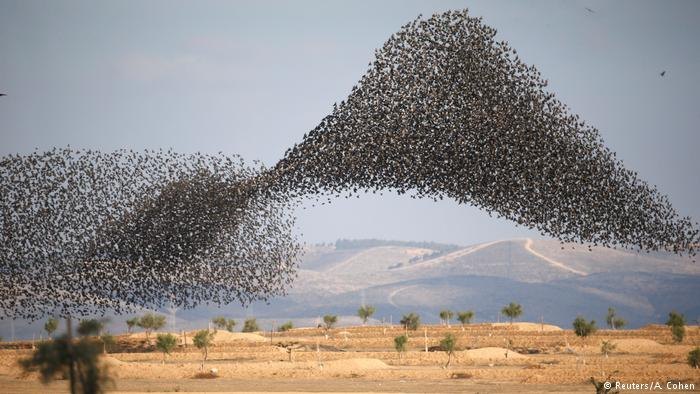
My theory is the market is mostly self organized. One important mechanism is stigmergy - spontaneous, indirect coordination between agents or actions, where the trace left in the environment by an action stimulates the subsequent action. The traces basically is time and sales or on a cruder level charts and trade data.
H. Humbert comments:
My theory is that markets do sometimes self-organize, but at the very basic level they operate in two regimes: normal and "emotional". Of course they are always emotional to some degree, but what I mean is this: they are good at processing distributed data, that is averaging out the noise and extracting information from multiple participants who create noise and add bits and pieces of information. But that is only when the information is widely distributed. When like now key pieces of information come from very few participants in random bursts (as compared to the typical regime) the markets get swept up in emotion generated by each jolt and self-organize around that emotion. Even in normal markets they can abandon reason and self-organize into manias or panics, more into manias when there is prolonged liquidity, but more prone to do so when there is a distributed information glut and participants just generate noise.
Gary Phillips adds:
No doubt that (decentralized) collective behavior is shaped by adaptive evolution. That is, efficiency gains are a result of stigmergy and constructal theory. Perhaps, there is even a coordination between the two.
The recent explosion in 0DTE options volume comes to mind. And, the stigmergic and constuctal theories may explain how the phenomenon evolved. This self organized collective behavior emerged as a perceived improvement on futures as a vehicle for day trading i.e., better liquidity, flexibility, and leverage.
Both stigmergy and constructal theory are self-reinforcing processes. The more something works, the more people it draws, and the more people available to improve it further.
Mar
19
Counting the Final Four, from Big Al
March 19, 2023 | Leave a Comment
Below is an update on some counting I did on the NCAA basketball tournament and the Final Four, originally posted in 2010. The data are the programs that made it to the Final Four from 1979-2022, as well as the results. I divided the schools into ones that had made 1 trip to the FF, 2 trips, 3 trips, and 4 or more trips.
58 programs made 172 trips to the Final Four, 1979-2022
Total FF slots: 172
Total Championships: 43
Schools that made 1 trip to the FF
FF trips: 28 - 16.3% of total trips
Championships: 2
Success rate: 7.1%
2-trip schools
FF trips: 14 - 8.1% of total trips
Championships: 1
Success rate: 7.1%
3-trip schools
FF trips: 21 - 12.2% of total trips
Championships: 3
Success rate: 14.3%
Schools that went 4 or more times
FF trips: 109 - 63.4% of total trips
Championships: 37
Success rate: 33.9%
You can see that programs that consistently get to the FF have a much higher success rate for winning the championship. These "power programs" dominate the "lucky underdogs" who have only gotten to the FF once or twice.
The "modal Final Four" is probably 3 power programs and one lucky underdog, and the underdog's luck has usually run out. The 3 power programs then each have about an equal chance of winning the championship.
Notes for fans: The two 1-trip teams that have won the championship are NC State in 1983, and Baylor in 2021. Of the power programs, the outlier is UConn which has been to the FF 5 times and won 4 championships, for an 80% success rate.
Scott Haley asks:
Pardon my ignorance, but the data considers programs' number of FF trips "prior" to the championship of that year, correct? Not total as of 2022?
Big Al replies:
Not ignorance but a good question! No, this is purely an ex-post analysis, totaling up all FF trips and championship wins. Predictively, it supports betting against first-time FF teams, but maybe a lucky underdog is starting a period of sustained performance that will make them a powerhouse.
Scott Haley adds:
An interesting consideration would be the effect of the head coach often being poached by another team after a lucky run. It almost always happens as the lucky underdogs rarely have the resources and/or gravitas to keep them. Basketball is not my speciality so I am unlikely to be able to properly do the analysis. But it's food for thought.
Mar
17
Not yours to give
March 17, 2023 | Leave a Comment
with agrarian economists in every 3-letter agency and the treasury, it's hard to look to free markets in the near term. but this too will pass as the British Library scholar of the 1840's views go out of style and poverty and envy reign.
A little story: Richard Sandor once introduced me for a lecture about my non-mathematical colleague at UC who garnered a Prize. He told that while he was on the Exchange many savants noticed the vol of distant options was way too high mathematically and market speaking. He ended right before my talk, "Not one of them is still around the Exchange." As the "prefect father" according to Ron Kline would say "true story" and one has nightmares about 30 years later.
the great Robert Merton was in the audience as his son was also honored. I told the story of Davey Crockett refusing to vote for aid to the benefit of a widow of a distinguished naval officer and how he offered to pay out of his pocket. Amazingly I have a letter from the 90-year old Robert Merton asking me for the reference to that story.
not the end of the story. I went up to Richard Sandor at the end of my talk and I said that like Horatio Bunce I realized from Richard's talk that I was a wrong to sell out-of-the-money puts and that I would never do it again because my adversaries controlled the margins et al.
Mar
12
Nobody asked me, but…
March 12, 2023 | Leave a Comment
(1) the bonds had their biggest two-day advance of 4 big pts ever. (2) the problem seems to be that Silicon Valley Bank was offering depositors 2.2% on their deposits. no wonder they all flocked to them.
(3) the most laudatory testimonial for the two silvers come from man who doesn't read books SBF. it was taken down. (4) interesting to see the judicial system bending all the way to accommodate comfort of SBF, the Uncle Remus tale of Brer Rabbit and the briar patch comes to mind.
Mar
8
On the Firing Line (Fifteenth in a series) Breathe, Breathe in the Air
One of the first exercises we do in clinics is called “Learning to Breathe”. Of course, the athletes have quizzical looks on their face and say, “But we’ve been breathing all our life. What do you mean?” After sharing a laugh, we explain. Infants and very young children breathe very naturally with their belly being drawn down and slightly out as the diaphragm is lowered in order to fill the lungs. Sometime in childhood, as the stress and rush of modern life takes its toll; the natural belly breathing is replaced by a breathing technique that uses upper chest expansion to draw air into the lungs.
In natural belly breathing, the lungs fill in roughly three stages. First the lowest part of the lungs begins to fill as the diaphragm is drawn down and the belly is pushed down and slightly out. Then the middle part of the lungs fill as the lower rib cage expands slightly. Finally, the upper part of the lungs is filled as the upper chest expands. In the more typically observed upper chest breathing, only about 30% of the lung capacity is utilized. Belly breathing has significant positive effect on both the body and the mind.
Vinh Tu writes:
Back when I took piano lessons, I remember getting some advice on how to breathe while playing certain passages. Recently while playing some rhythm-based video games, I've noticed that either I hold my breath, or try to time my inhalation or exhalation so as not to disrupt my rhythm. The wrong syncopation between your breath and the beat can throw you off the rhythm.
Laurel Kenner responds:
For a smooth motion, action should come after you start to exhale.
Mar
7
Limitless: The Federal Reserve Takes on a New Age of Crisis, from Zubin Al Genubi
March 7, 2023 | Leave a Comment
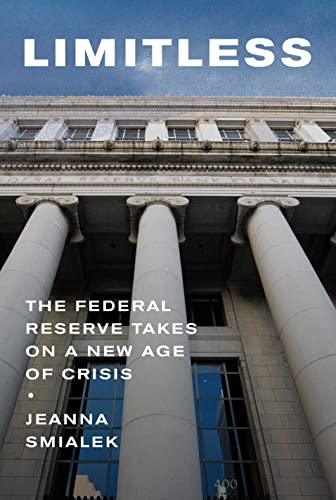
Now, when every fool and his mother fruitlessly attempts to interpret what size the brief case means, this book is timely, very well written and highly recommended:
Limitless: The Federal Reserve Takes on a New Age of Crisis
Also, another interesting read, 180 years old, with lessons for the modern reader, Walter Bagehot’s seminal 1873 book, Lombard Street: A Description of the Money Market.
Kora Reddy suggests:
PDF download: Credit Suisse Global Investment Returns Yearbook 2023 Summary Edition
here is a two-line summary (as TAPAS [there are plenty of alternatives]), as opposed to the one-line summary i used to do: figure 50 is interesting "higher the inflation higher the interest rates thus higher the stock market returns." table 15, short rubber spot & long coal is the trade in the commodities.
Mar
6
Term structure 101, from Duncan Coker
March 6, 2023 | Leave a Comment
Futures prices, particularly financial futures like S&P and Bond prices, have a relationship to the cash markets which can be arbitraged. It is a function of cash flows usually interest borrowing costs and dividends, but it depends on being able go short and long the cash/spot markets. My questions is this: seems to not hold in hard assets like crude where there is currently large backwardation. You can buy Dec 24 Crude at a large discount and have been able to do so for some time. Specifically, is it possible to short the spot market for crude? Is there a counterparty that will accept this trade? It seems that for term structures like crude futures, the prices are an actual prediction of supply and demand and not an interest rate arbitrage.
Zubin Al Genubi responds:
With crude, storage (or not to store) is part of the future price. I read there is a lot of Russian crude stored in ships now. I'm not sure how that figures in.
In backwardation (tight market) normally one buys the future waiting for convergence with spot. Selling spot- yes you can, but delivery is an issue.
Big Al ruminates:
Not sure what "shorting the spot price" would even mean, other than Zubin's point where you have to have crude for delivery. Doesn't the concept of shorting a contract inherently involve a future price point? You could have 1-day futures, but then the vig might be far more significant.
If we model it on stocks, then shorting spot crude would involve "borrowing" somebody else's oil and then selling it for delivery. But then you're just back to why futures exist in the first place, aren't you?
But speaking of the term structure of crude, I ran across this:
Forecasting WTI crude oil futures returns: Does the term structure help?
Abstract
Nelson-Siegel (NS) factors extracted from the term structure of WTI oil futures are shown to predict subsequent WTI holding period returns in-sample. This in-sample predictability is not diminished by augmenting with macroeconomic indicators or oil market specific predictors. Allowing the decay factor in the Nelson-Siegel model to vary over time improves in-sample predictions at medium horizon return forecasts. We conduct out-of-sample forecasting exercises on models that use NS factors, such as a simple two factor model that uses a composite leading indicator along with the NS decay factor, and a LASSO model that combines NS factors with macroeconomic indicators and oil market specific predictors. These models significantly reduce forecast errors relative to a no change benchmark across a range of return horizons and futures contract maturities. We also find consistent evidence that models that use the NS factors result in trading strategies with higher Sharpe ratios and better skewness properties than buy and hold strategies and historical mean strategies.
Relatedly, the Nelson-Siegel model.
Mar
5
Excellent books read this weekend
March 5, 2023 | Leave a Comment

excellent books read this weekend: The Big Ratchet: How Humanity Thrives in the Face of Natural Crisis, by Ruth Defries. the numerous incredibly lucky things that make life on earth possible. the three indespensible requirement for life are: (1) a stable climate, (2) a planetary recycling mechanism, and (3) a smorgasbord of diverse species.
these 3 mechanisms would seem to play a role in markets, preventing any hatchet-like move in one commodity like bonds and its influence on stocks as exemplified by March 3, 2023 action with a 2-pt increase in bonds sending all market life thru this.
Beating the Dow, by O'Higgins and Downes, recommending buying the lowest-priced and highest-yield components of the Dow as a superior, infallible investment rule. (no cognition of multiple comparisons or ever-changing cycles.) the rule doesn't seem to work anymore.
i have the 1991 edition but many interesting facts about the stability of the Dow. contrary to popular belief the 1923 components are almost all there thru acquisitions. emphasis on Dow stocks as magnets for investment.
Timothy Sandefur's Freedom's Furies, a well-researched and informative review of the work and lives of Isabel Paterson, Rose Wilder Lane, and Ayn Rand.
Thayers Life of Beethoven, revised by Elliot Forbes. A year-by-year chronicle of verified events in B's life. the great man's music and quirks and obsessions.
Mar
5
The Fed, markets
March 5, 2023 | Leave a Comment
the useful:
El-Erian says the Fed should go back to raising interest rates more aggressively
re completely independent and don't take into consideration such things as market moves or politics: they act like puppets with some inexorable force puling on them to arrest market declines like yesterday with Bostic. methinks the Governors and their spokesman and the agrarians at Treasury protest too much.
an admirable performance for the optimists [3 March]: S&P, gold, crude, at 10-day highs, bonds up on week. sogi has Kona coffee twice in day and Prof stands tall. barron coleman day. grains at low. wheat lowest in 18 months. corn lowest in 5 months. fed can pretend they worry about personal consumption prices, as long as it helps the idea that has world in grip.
That same deception: "The Fed doesn’t care as much about Wall Street as Wall Street thinks, meaning that market-based indexes of financial conditions including stocks and bonds aren’t so important to them." the conventional wisdom they like to spread.
where will the markets go next week? after a 20-day minimum and two big up days in S&P but not a 20-day high again. about a once-in-year event. the stats favor Bonds.
Mar
3
Adrian Bejan will speak for 30 minutes at Night of Ideas on 3 March, from Nils Poertner
March 3, 2023 | Leave a Comment
Night of Ideas
New York
Friday, March 3, 2023 | 4:30pm-12am
The Ukrainian Institute of America, 3rd Floor Library, 2 E 79th St,
New York, NY 10075
Talk
9:30-10:00 pm
Freedom, Beauty, Evolution, Nature
Adrian Bejan
Evolution is the defining phenomenon of nature: change after change, in a direction perceptible as ‘time’. Freedom is everywhere because design change is everywhere: inanimate, animate, and human. Power and movement result from the consumption of foods and fuels. Conversion happens in flow configurations (designs). Manifestations of movement are endless. Society is an earth-size organism, constantly morphing to provide greater access to what flows and lives. Society develops, moves, changes, and produces more when endowed with freedom, free questioning, and self-correcting. Nature is dynamic, free, always evolving: one law of physics (constructal law) covers all aspects of evolution in nature.
Mar
3
Calibration of Probabilities: The state of the art to 1980
Sponsored by OFFICE OF NAVAL RESEARCH
June 1981
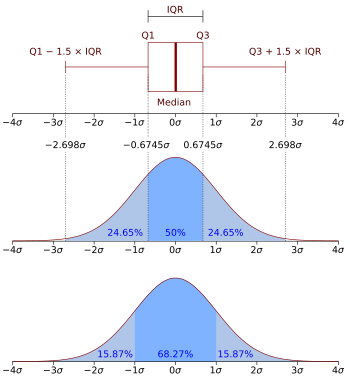
This paper presents a comprehensive review of the research literature on an aspect of probability assessment called "calibration." Calibration measures the validity of probability assessments. Being well-calibrated is critical for optimal decision-making and for the development of decision-aiding techniques.
The first class is calibration for events for which the outcome is discrete…. For such tasks, the following generalizations are justified by the research:
1. Weather forecasters, who typically have had several years of experience in assessing probabilities, are quite well calibrated.
2. Other experiments, using a wide variety of tasks and subjects, show that people are generally quite poorly calibrated. In particular, people act as though they can make much finer distinctions in their degree of uncertainty than is actually the case.
3. Overconfidence is found in most tasks; that is, people tend to overestimate how much they know.
4. The degree of overconfidence untutored assessors show is a function of the difficulty of the task. The more difficult the task, the greater the overconfidence.
5. Training can improve calibration only to a limited extent.
The second class of tasks is calibration for probabilities assigned to uncertain continuous quantities…. For calibration of continuous quantities, the following results summarize the research.
1. A nearly universal bias is found: assessors' probability density functions are too narrow. For example, 20 to 50% of the true values lie outside the .01 and .99 fractiles, instead of the prescribed 2%. This bias reflects overconfidence; the assessors think they know more about the uncertain quantities than they actually do know.
2. Some data from weather forecasters suggests that they are not overconfident in this task. But it is unclear whether this is due to training, experience, special instructions, or the specific uncertain quantities they deal with (e.g., tomorrow's high temperature).
3. A few studies have indicated that, with practice, people can learn to become somewhat better calibrated.
Stefan Jovanovich writes
Grant's great virtue as a warrior was that he had seen the absence of certainty in war everywhere from the front line (having a fellow junior officer lose his head to a Mexican cannonball as the two them walked forward) to the far rear (where half the sick, women and children left behind in crossing the Isthmus die from cholera because the contracted mules do not arrive; Grant saved the others by buying pack animals at the market price and then spending the rest of his tour in California and Oregon arguing with the War par5ment about the waste of funds). Man proposes and God disposes.
Gyve Bones adds:
In preparing for battle I have always found that plans are useless, but planning is indispensable.
[General Dwight D. Eisenhower]
Archives
- October 2026
- September 2026
- August 2026
- July 2026
- June 2026
- May 2026
- April 2026
- March 2026
- February 2026
- January 2026
- December 2025
- November 2025
- October 2025
- September 2025
- August 2025
- July 2025
- June 2025
- May 2025
- April 2025
- March 2025
- February 2025
- January 2025
- December 2024
- November 2024
- October 2024
- September 2024
- August 2024
- July 2024
- June 2024
- May 2024
- April 2024
- March 2024
- February 2024
- January 2024
- December 2023
- November 2023
- October 2023
- September 2023
- August 2023
- July 2023
- June 2023
- May 2023
- April 2023
- March 2023
- February 2023
- January 2023
- December 2022
- November 2022
- October 2022
- September 2022
- August 2022
- July 2022
- June 2022
- May 2022
- April 2022
- March 2022
- February 2022
- January 2022
- December 2021
- November 2021
- October 2021
- September 2021
- August 2021
- July 2021
- June 2021
- May 2021
- April 2021
- March 2021
- February 2021
- January 2021
- December 2020
- November 2020
- October 2020
- September 2020
- August 2020
- July 2020
- June 2020
- May 2020
- April 2020
- March 2020
- February 2020
- January 2020
- December 2019
- November 2019
- October 2019
- September 2019
- August 2019
- July 2019
- June 2019
- May 2019
- April 2019
- March 2019
- February 2019
- January 2019
- December 2018
- November 2018
- October 2018
- September 2018
- August 2018
- July 2018
- June 2018
- May 2018
- April 2018
- March 2018
- February 2018
- January 2018
- December 2017
- November 2017
- October 2017
- September 2017
- August 2017
- July 2017
- June 2017
- May 2017
- April 2017
- March 2017
- February 2017
- January 2017
- December 2016
- November 2016
- October 2016
- September 2016
- August 2016
- July 2016
- June 2016
- May 2016
- April 2016
- March 2016
- February 2016
- January 2016
- December 2015
- November 2015
- October 2015
- September 2015
- August 2015
- July 2015
- June 2015
- May 2015
- April 2015
- March 2015
- February 2015
- January 2015
- December 2014
- November 2014
- October 2014
- September 2014
- August 2014
- July 2014
- June 2014
- May 2014
- April 2014
- March 2014
- February 2014
- January 2014
- December 2013
- November 2013
- October 2013
- September 2013
- August 2013
- July 2013
- June 2013
- May 2013
- April 2013
- March 2013
- February 2013
- January 2013
- December 2012
- November 2012
- October 2012
- September 2012
- August 2012
- July 2012
- June 2012
- May 2012
- April 2012
- March 2012
- February 2012
- January 2012
- December 2011
- November 2011
- October 2011
- September 2011
- August 2011
- July 2011
- June 2011
- May 2011
- April 2011
- March 2011
- February 2011
- January 2011
- December 2010
- November 2010
- October 2010
- September 2010
- August 2010
- July 2010
- June 2010
- May 2010
- April 2010
- March 2010
- February 2010
- January 2010
- December 2009
- November 2009
- October 2009
- September 2009
- August 2009
- July 2009
- June 2009
- May 2009
- April 2009
- March 2009
- February 2009
- January 2009
- December 2008
- November 2008
- October 2008
- September 2008
- August 2008
- July 2008
- June 2008
- May 2008
- April 2008
- March 2008
- February 2008
- January 2008
- December 2007
- November 2007
- October 2007
- September 2007
- August 2007
- July 2007
- June 2007
- May 2007
- April 2007
- March 2007
- February 2007
- January 2007
- December 2006
- November 2006
- October 2006
- September 2006
- August 2006
- Older Archives
Resources & Links
- The Letters Prize
- Pre-2007 Victor Niederhoffer Posts
- Vic’s NYC Junto
- Reading List
- Programming in 60 Seconds
- The Objectivist Center
- Foundation for Economic Education
- Tigerchess
- Dick Sears' G.T. Index
- Pre-2007 Daily Speculations
- Laurel & Vics' Worldly Investor Articles
