Aug
29
TLT? from Michael Brush
August 29, 2023 | 1 Comment
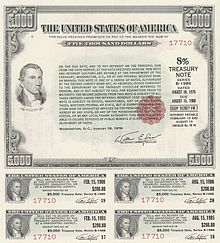
Who is buying TLT [as of 18 Aug]? Raise your hands.
Nils Poertner responds:
could be a fab trade. What are the odds that in the next downturn some of the US Tbonds would have zero or even neg yields? It is not impossible at all And Knowing how those CBs have to try ever harder, and mkts tend to overshoot then.
Big Al comments:
The thing about Treasuries at this point is that the probability that the Fed will raise rates much farther from here is very low. Much more likely is that rates stay in the current area for a while, maybe even 2-3 years, and then come down a couple hundred bps. So you're getting a nice coupon while you wait for the Fed to lower rates. There is the opportunity cost, but one assumes you factor that in one way or another.
Nils Poertner replies:
Maybe. The way to make a killing in mkts is to play with scenarios. Whether the consensus belief is misguided and there are good reasons /signs for a meaningful move (does not always have to be inn the other direction, can also be in the same - just more extreme).
Eg. remember the discussion (also here in this group before inflation really took off.. "Only a bit of inflation vs More Pronounced." And how it really unfolded. I just asking qn - don't have the answers.
Jared Albert writes:
I'm not a macro person, but the theory that China is selling treasuries to support the Yuan seems to have legs given the relentless quality to the selling IF the fed is done or nearly done raising. Especially since until now the longer bonds haven't moved very much.
William Huggins adds:
Chinese money supply has been on an expansive tear for over a decade (since 2008?) So no surprise the limits of cash to activity would eventually be breached. Inflation by its other name (devaluation). Youth unemployment is in the range that Spain peaked at during the euro-crisis. Not a good time to "ride the dragon" (Evergrande finally blew up too).
Michael Brush responds:
The main important role of China in this equation is that its economic weakness is putting downward pressure on U.S. prices.
Big Al offers:
Another option is to buy dividend-payers.
Michael Brush comments:
Ha what fool wrote that. RILY, nice yield and insider buying. Market sensitive in the early stages of a new bull market.
Aug
23
Neutral position, from Nils Poertner
August 23, 2023 | 1 Comment
Paul Tudor Jones used to say that whenever one of his portfolio managers was going through a divorce, he would pull his money. Sooner or later, he or she would drop some money. (fear/flight center activated)
Most of us may not go through a divorce, but I often wonder: In a car, that has an automatic gear system that has this one position that is hardly used. And it is called "N" for neutral. When we operate from a neutral/stress-free point of view, then we probably trade the best. (compare that with ppl who engage in endless personal drama or drag you in w emotional stories or looking for a fight.)
Zubin Al Genubi agrees:
Good advice. Don't trade during a life crisis.
Stefan Jovanovich writes:
The real gear heads among us will already know that "neutral" exists in automatic transmissions so that the driver has a positional clutch. Naval engine room telegraphs have the same feature.
Nils Poertner adds:
there is a fx strategist on twitter (I think he gets paid by some supra-national now, ex Goldie). anyway, he has strong FX views /shares data etc - and at the same time strong political views. I often wonder: how would he do as lone trader over time?
Aug
20
Serial correlation, from Duncan Coker
August 20, 2023 | Leave a Comment
It would be interesting to look at the daily serial correlation of major markets last few weeks and months. I would posit it has turned positive or more positive than usual. I will take a shot at it. And if positive what does it pose for the coming days.
Zubin Al Genubi adds:
One of the the longest stretch of lower lows consecutive or nearly. 1986 had 8 down days in a row.
Big Al computes:
Rolling 60-tday autocorr for SPY back to 2018:

Looking at the calendar on Daily Spec made me wonder about this: SPY - Rolling count of down days in every 20 trading days:

Aug
19
Markets and Yankees both not winning
August 19, 2023 | Leave a Comment

S&P and gold at 20-day minimum 3 days in a row - bonds in 6-day downstreak. too much bearishness. [17 August]
every futures with exception of crude is down near the low of the month.
the yankees and the stock market have concurrently gone though terible losses the last month and big gains the previous several months. is there a causal relation and is the daily correlation non-random?
The New York Yankees just keep losing
are there any like me who don't listen to yankees radio any more because of their concentrated and promotional advertising in 2 hrs and their tired and useless albeit well meaning announcers?
Aug
19
Is America winning? from Bill Rafter
August 19, 2023 | Leave a Comment
In response to the President’s rant, the data shows that Payroll Tax Receipt growth turned negative in March 2022. Despite an “almost” rally last Christmas season, the Payroll Tax growth has been negative the entire time. The data shows the current rate of decline at ~2 percent per annum. Given the vehemence of the rant, any government official who might be tempted to say otherwise might lose his/her career. Reminds one of “The Emperor’s New Clothes”.
Ayn Rand: We can ignore reality, but we cannot ignore the consequences of ignoring reality.
Bud Conrad comments:
Your work on taxes is the best I've seen. It is a bit of a tle cycle indicator confirming economic slowing. as seen in the standard government numbers below.

So has the government hidden that we are in a recession with cooked up numbers, say from understated inflation so real GDP looks more positive than it really is? and that unemployment is low from birth death over additions to jobs, and disabilities not in the workforce?
Bill Rafter responds:
IMO it’s misdirection. The government picks something on which they want us (and the media) to focus. Usually it’s the unemployment rate, which is determined by a poll, and then they have the birth/death adjustment (i.e. the fudge factor). So it’s impossible to get a definitive “just the facts, ma'am” story if the gummint wants otherwise.
Regarding leads/lags, the payroll tax receipts numbers are accumulated electronically. There have been days when Treasury was closed, but the data was released anyway (automatically). That data is released with a one-day lag from when it hits the Treasury bank account.
The raw Payroll Tax Receipts data just looks like static. To make sense it must be seasonally adjusted (it’s highly seasonal). That is why it is ignored by gummint and the media, because they do not know how to seasonally adjust the data. MRL and DB have shops that work with the data and their output is barely intelligible.
Stefan Jovanovich adds:
As Bill knows better than any of us, "employment" is the category box that compels the people writing the checks to add contributions to the American-Prussian scheme that protects the worker through unemployment payments. Neither self-employment (i.e. real estate brokers) nor independent contractor (Uber drivers) is a worker category that requires employment tax payments or has eligibility for unemployment.
Larry Williams writes:
I would argue, with vigor, that stocks predict tax receipts; it is not the other way around. Lead time is a little over one quarter. Stocks (red) lead receipts:

Steve Ellison writes:
Anecdotally, having been removed from a payroll a few months ago, I am having the most difficult job hunt of my life, not at all what I would have expected given the headline unemployment rate of 3.5% (I'm an experienced data analyst with a passion for finding truth and extracting insights that lead to actions and better business decisions. I have thorough knowledge of data warehousing, SQL, optimizing queries in big data environments, and data visualization). Boston Consulting, where I know a partner, laid off 20% of its workforce this year.
Despite the sanguine reports from the BLS, Pete Earle examined state-level data in May and found rising trends in initial claims for unemployment and in WARN filings (advance notices of layoffs as required by the Worker Adjustment and Retraining Notification Act).
Stefan Jovanovich comments:
There is also the problem of delay. The Census produces a count of the receipts of what they call "Non-Employer" entities using income tax returns. Everyone who is self-employed and reports income as an individual separate from any business dba and everyone who is an independent contractor falls into this category. Today the Bureau proudly announced that "we tentatively plan to release the 2021 Non-employer Statistics estimates in the spring of 2024."
Aug
15
Connections and odds
August 15, 2023 | Leave a Comment

James Burke's Connections: the major innovations that have led to change and how they are all related starting with the plough. Highly recommended and relevant to bonds and stocks now within a gnat's eyelash of 20 day lows [13 Aug.].
beautifully illustrated and highly recommended and relevant for markets now:
a million articles about how every media is now angry about the corruption of perfect father for first time but odds of winning go up.
Aug
13
Inflation back up because, from Larry Williams
August 13, 2023 | Leave a Comment
Inflation back up because fed has raised rates—when will they figure it out - high rates cause inflation.
William Huggins responds:
That's what Erdogan believed in turkey too but those beliefs crashed the lira. Rates (chosen) are a response to inflation (explicitly too).
Larry Williams replies:
Higher rates mean more money into the economy…hence inflationary.
John Floyd writes:
I think Larry probably has some careful thought or evidence behind this in and is not likely influenced by a Crucian Thanksgiving upcoming, MMT in the ‘hood or the like. I am not sure I agree given MV=PY, the collapse of M in the US, UK, Europe, rising financial stress, China headwinds, etc. But I would love to hear the other side.
Larry Williams responds:
MMT has some deep insights—rates cause inflation is one of them.
Stefan Jovanovich writes:
Apologies to all for what is another heretical comment from someone who thinks the United States lost its greatest advantage when it joined the other nations of the world in establishing a central bank as the issuer of sovereign currency IOUs. "Inflation" is always and everywhere a credit phenomenon; the supply of legal tender - the unit of account by which loans are measured - is never the cause. It is, as William implies in his remark about Turkey, the response; the hyperinflations in Germany, Zimbabwe and the moderately awful ones in Argentina and Turkey and elsewhere are not caused by money printing. The money is printed in response to the fact that the country's credit supply has been destroyed; all that is left is to run the rapid wheel of money supply. The prices for things have gone up because the Covid shutdown and regulations were the economic equivalent of a war; the regulations destroyed businesses (including our family office's last operating company; we formally dissolved at the end of last year because there was no reason left for us members to own securities collectively). The destruction reduced the supply; the transfer payments from Trump and Biden gave people the additions to their personal balance sheets that allowed them to spend more.
H. Humbert comments:
Only those with a lot of cash get more money, any new borrowers wind up with less money, and many potential borrowers are scared off by the high cost of debt. Do people with a lot of cash to begin with have a high propensity to spend their extra 2-3% after taxes, enough to compensate for the countereffects?
Larry Williams disagrees:
Wrong. The largest payer of rates is the Gummint - it goes, one way or another to many. Soon I will post chart to prove point but look at Japan and low rates to inflation.
Nils Poertner writes:
we live in a predatorial world - in which inflation is obviously deliberately created to benefit some and hurt others. it still goes in cycles - eg EM fx and inflation - Turkish Lira and Brazilian Real the fx and inflation figures may go the other way - as in previous yrs…as those countries were pretty early w tightening and it is going backwards now.
Larry Williams responds [tongue in cheek?]:
That is so so wrong that someone causes inflation to hurt/help others.
Big Al posits:
Governments need inflation to reduce the future value of their present promises.
John Floyd writes:
There is a myriad more drivers in Japan both economically and culturally driving things. Debt, money velocity, ethos on bankruptcy, ethos on price hikes, demographics, zombification, lost decades. yes govt ownership of debt growth depends on whether money spent or saved.
While I on the topic, those are the headlines generally carried in Turkey and created the narrative; beneath that and related are many different ingredients that put Turkey where it is today, and those are the things to watch for a turn one way or the other; you can be sure the current leader is not going to do a public about face on the below causality belief system, but there are other things happening geopolitically and on the macro. I wrote in 2020 about the challenges; they are pretty much unchanged and give clues what to watch for.
Larry Williams responds:
Sure always drivers but some are race car drivers and mean more and as a general rule.
Stefan Jovanovich offers:
The NY Fed's definition of what they call Underlying Inflation
Their August 2023 reading of the UIG
Bud Conrad writes:
My views on what causes rising prices and declining purchasing power of the dollar:
I follow the simple axiom that inflation will rise when too much money is chasing fewer goods. (And the reverse). The rising quantity of money starts with Federal Government deficits: They print Treasuries to cover the deficit, borrowing new money they spend that exceeds taxes. Traditionally, the public would buy Treasuries to gain guaranteed interest. Banks did the same. When banks make loans they do that by printing money out of thin air given as new deposits at the banks for borrowers to spend; as for example in buying a house with a mortgage. As loans expand, money supply expands almost by definition. A few decades ago, much of Treasury issuance was bought by foreigners with the dollars they accumulated from their trade surplus from the US buying more foreign goods than it sold. The Trade Deficit became the support for the US government Budget Deficit. Foreigners took the dollars that exporters gained and exchanged at their Central Banks for local currency to pay workers, and the foreign Central Banks bought Treasuries. China and Japan had $1.3 trillion each in Treasuries backing their own currency issuance. But foreigners have begun to slow such purchases as they realize that the US dollar is not as good as gold. China has sold a third of its Treasuries, and Russia sold all of its holdings. So foreigners are not the buyers of our government debt now. They are trying to de-dollarize for both financial and political reasons, with the risk that if they turned to net sellers, they could drive rates higher. While domestic institutions provide some buying for themselves and customers, they are not big enough to cover all deficits.
In the current situation, of $ trillion deficits, the Fed becomes the "lender of last resort" that prints up new money to accommodate the new treasury issues, in the form of QE and expanding their balance sheet; which is accomplished by creating new deposits with which to buy Treasuries (and MBS). They increased the money supply, now by about $6 trillion since 2009. They supplied enough buying power that interest rates were kept low. Inflation as measured by consumer goods purchasing was commensurately low, because foreign consumer goods were manufactured in Asia at a wage rate of one fifth of the US. We could just print money to buy cheap goods. The government CPI is manipulated lower with hedonic substitution, calling technological improvements like more powerful computers as a decrease in price, and using rental equivalent housing prices. Their resulting measure of inflation is about half what it should be. Even more seriously: a comprehensive measure of what the dollar can purchase should include asset prices; namely stocks, bonds and accurate housing; and commodities like oil to be a more inclusive indication of changes in the purchasing power of the currency. We had low CPI but higher asset prices when the Fed forced rates below usual market levels, and that drove stock prices higher, (which is not included in the government inflation measure). In summary, the foreign expanded supply of goods kept CPI low, so inflation was below the expected growth in money alone might have indicated.
We are in a different world from before 1971 when international trade was settled in gold, and currency issuance was limited by having backup gold. Our government (and the rest of the world) are creating new deficits and new money at unsustainable levels. The expected new gold backed Currency from the BRICS is expected to replace the importance of dollars to world trade. Politically, the US dominance is declining with losing wars and over spending. Deficits will expand to cover the aging baby boomers demographics. The Fed will be creating trillions to buy the Treasuries to fund the deficits. This quarter Treasury funding is scheduled at $1 Trillion new money and Q4 is planned to be $800Billion (maybe more when the taxes slow in recession). There will be cycles, but the big move is to create new money by the government and banks which will decrease the purchasing power of the dollar in the decade ahead.
Summary differences from common beliefs:
1. Inflation starts from government deficits. (It is affected by many things, but this is the fundamental driver. (not wage push, consumer demand, price gouging, interest rates))
2. Cutting inflation requires less government deficit.
3. Raising interest rates by the Fed is not a very effective way to control inflation.
4. The Fed is forced to raise rates when government deficits and inflation rise; to keep the markets functioning so lenders get some real return. (Not the reverse)
5. We can get a slowing economy AND inflation together. With no anchor to the currency, this is the usual pattern and has happened a hundred times in many countries. (The opposite is expected in the Fed raising rates to fix inflation)
6. Inflation can go much higher than in 1980 when it hit 20%, because we have 120% Debt to GDP now, and it was 30% then. It took three waves.
7 Expect currency destabilization, inflation, and no deflation in the foreseeable future.
Zubin Al Genubi comments:
Credit creation cycle fuels inflation. As credit is given, asset prices go up at the margin. More collateral leads to more credit in a self reinforcing cycle. In contrast to financial assets, Prices of goods demand/supply curve is linear. Financial assets are convex crating booms busts. FED should focus on financial asset price not goods cpi.
John Floyd responds:
Look at money supply, fin stress indicators, consumer buying power info adjusted as savings rate is below pre Covid stimulus in many countries , etc…that will tell you a bit of odds of prospective future infl from demand side …supply side a bit trickier as reshoring, ESG govt led direction takes away Mr Smiths can’t see hand. Simpler equation is to ask how many times the CB’s get it right.
Stefan Jovanovich adds:
Goods can boom and bust because of the order cycle. Customers will double even triple orders on the upcycle and then threaten to pull them in the down cycle.
Aug
6
Prices as coordinating signals
August 6, 2023 | 1 Comment

Hayek's grand summary of his main insight of his life's work: "The whole economic order [rests] on the fact that by using prices as a guide, or as signals, we were led to serve the demands and enlist the powers and capacities of people of whom we knew nothing."
"Basically the insight that prices were signals bringing about the coordination of efforts became the leading idea behind my work."
"Evolution of human activities, profitability works as a signal that guides selection toward what makes man more fruitful " - "Prices and profits are the invisible hands."
i would add to that that Hayek found that centralized control of choice led to total control of what consumers choose - gas stoves, incandescent lights, electronic vehicles only the beginning.
Aug
5
Trees, mostly
August 5, 2023 | Leave a Comment

old gray mare prob at 3-month hi at 35%.
Lott/Stossel: Election Betting Odds
books read this weekend:
The Hidden Life of Trees: What They Feel, How They Communicate - Discoveries from a Secret World
The Battle for Investment Survival
Trees: A Complete Guide to Their Biology and Structure.
i find the study of trees - especially how high they grow, and how they develop buttresses, and how they branch out and compete with other trees for light - immensely revealing for the various moves.
Big Al suggests:
The Age of Wood: Our Most Useful Material and the Construction of Civilization
Nils Poertner comments:
In many parts of central Europe, the Beech tree used to dominate the landscape thousands of yrs ago. Used to be well over 2/3 - and even today it is like 1/3 in Germany. Why? They tend to grow super and sort of take away all the light from slower growing trees. An oak tree would not stand a chance.
Gyve Bones suggests:
Long term strategy: planting a grove of oaks in a forest in France to be ready in 150 years to replace the roof of Notre Dame de Paris when it burns down.
Peter Saint-Andre offers:
Oxford's Oak Beams, and Other Tales of Humans and Trees in Long-Term Partnership
Peter Ringel writes:
For the last two years I am involved in a project for a German horticulture company. They mainly produce young plants of ornamental plants aka flowers. As a little side project (in early stages) they also produce Paulownia trees (as young plants).
Paulownia is the fastest growing tree in Europe. They originate from Asia. (Some criticize them as invasive species.) Typical commercial applications are wood for instrument manufacturing, wood pellets for energy production or particle boards. The wood is very light (caused by very fast-growing).
Propagation is a little challenging. Usually it is done in-vitro via Biotec-lab, which we have. It is not the easiest variety for in-vitro. We also had some success to propagate via cuttings from mother plants.
Laurel Kenner comments:
Terrible idea to grow these, down there with tree of heaven, kudzu and bamboo. Yes, they are quick to grow, but also impossible to eradicate or even to contain. I am not an eco-hippie, just a gardener.
Zubin Al Genubi adds:
A friend planted a tree farm about 25 years ago with rare exotic hardwoods such as Koa, Bubinga, Cedar, rosewood, mahogany, ebony. It is a multigenerational project but some early woods are being harvested. Some of the rare woods will be very valuable as they are disappearing in their disappearing native habitat. There are numerous governmental grants benefiting the project as well.
Laurel Kenner responds:
I like the project. The idea is not to grow "trees" that are in effect big weeds. Pawlonia is illegal in my state, CT, as is Norwegisn maple, another nasty weed-tree planted in a less enlightened day because it grew fast. They often come down in storms because they're weak. One memorably crashed over my driveway in a big blow and its eldritch too brach rang ny side doorbell.
Peter Ringel replies:
Yes, storms are an issue, especially during the first years. My big mouth was referring to the EU government as hippies, because subsidies and grant policies are highly ideological here. Not referring to anyone else.
The church of Greens has Europe tight in their grip and currently they like Paulownia. There is a trend / hype growing. Other psalms the church likes are "renewable raw materials" or "CO2 neutrality". Paulownia fit these mantras. (plants eat and need CO2 to confuse the church)
Paulownia are not really new to Europe. Introduced to Europe 100 years ago or so. So far they were unable to survive in the European wild in size. Maybe because of frequent stronger winds? On a farm, as industrial product it makes a lot of sense to me. I am obviously biased here, because this would be our customers. It is a nice economic product. E.g. after about the first 2 years of growth, farmers cut them back near the ground level. This timber can be sold. They rapidly grow back and faster than without cutting. A case of eat your cake and have it too. One argument is, to use this locally produced timber instead of importing from South America, Asia, Finland or Russia.
forgot: Paulownia on farms are usually all clones of hybrids. Like a mule, they can not reproduce themselves into surrounding areas.
Aug
4
Revenge of the AI nerds
August 4, 2023 | Leave a Comment

A.I. Researchers Are Making More Than $1 Million, Even at a Nonprofit
Peter Ringel comments:
good for them! Everyone now rushes into this research because of the hype. Of course, the top-level AI experts can sell themselves at a premium. But overall, costs for non-AI IT development should come down. One reads, coders boost their productivity via GPT, Codepilot and the other tools by 10x. I use the simple GPT for coding daily and easily believe this. It is very useful for the hobby coder.
Laurence Glazier writes:
I'm using GPT 4 every day as a companion while composing. A source of detailed knowledge on composing practice and orchestration.
Peter Ringel responds:
wow, for music/composing too? Stephen Wolfram offered a fitting definition: "at a minimum LLM like GPT provide the next generation of user interface" (paraphrased).
Laurence Glazier replies:
Of course it can't compose in the sense of the transcendent experience, but it can help in background historical information, e.g. today based on discussion with it I moved material from the first to the third movement of my new symphony. I might have made that decision anyway but it is a huge boost to have access to the AI's wealth of knowledge and apparent understanding.
H. Humbert adds:
Depending on what you want it to do, it could fabricate an answer that is downright incorrect. There have been multiple occasions in my experience that it makes craps up, and craps don't exist in real world. Per this research, its accuracy is getting way worse.
Archives
- October 2026
- September 2026
- August 2026
- July 2026
- June 2026
- May 2026
- April 2026
- March 2026
- February 2026
- January 2026
- December 2025
- November 2025
- October 2025
- September 2025
- August 2025
- July 2025
- June 2025
- May 2025
- April 2025
- March 2025
- February 2025
- January 2025
- December 2024
- November 2024
- October 2024
- September 2024
- August 2024
- July 2024
- June 2024
- May 2024
- April 2024
- March 2024
- February 2024
- January 2024
- December 2023
- November 2023
- October 2023
- September 2023
- August 2023
- July 2023
- June 2023
- May 2023
- April 2023
- March 2023
- February 2023
- January 2023
- December 2022
- November 2022
- October 2022
- September 2022
- August 2022
- July 2022
- June 2022
- May 2022
- April 2022
- March 2022
- February 2022
- January 2022
- December 2021
- November 2021
- October 2021
- September 2021
- August 2021
- July 2021
- June 2021
- May 2021
- April 2021
- March 2021
- February 2021
- January 2021
- December 2020
- November 2020
- October 2020
- September 2020
- August 2020
- July 2020
- June 2020
- May 2020
- April 2020
- March 2020
- February 2020
- January 2020
- December 2019
- November 2019
- October 2019
- September 2019
- August 2019
- July 2019
- June 2019
- May 2019
- April 2019
- March 2019
- February 2019
- January 2019
- December 2018
- November 2018
- October 2018
- September 2018
- August 2018
- July 2018
- June 2018
- May 2018
- April 2018
- March 2018
- February 2018
- January 2018
- December 2017
- November 2017
- October 2017
- September 2017
- August 2017
- July 2017
- June 2017
- May 2017
- April 2017
- March 2017
- February 2017
- January 2017
- December 2016
- November 2016
- October 2016
- September 2016
- August 2016
- July 2016
- June 2016
- May 2016
- April 2016
- March 2016
- February 2016
- January 2016
- December 2015
- November 2015
- October 2015
- September 2015
- August 2015
- July 2015
- June 2015
- May 2015
- April 2015
- March 2015
- February 2015
- January 2015
- December 2014
- November 2014
- October 2014
- September 2014
- August 2014
- July 2014
- June 2014
- May 2014
- April 2014
- March 2014
- February 2014
- January 2014
- December 2013
- November 2013
- October 2013
- September 2013
- August 2013
- July 2013
- June 2013
- May 2013
- April 2013
- March 2013
- February 2013
- January 2013
- December 2012
- November 2012
- October 2012
- September 2012
- August 2012
- July 2012
- June 2012
- May 2012
- April 2012
- March 2012
- February 2012
- January 2012
- December 2011
- November 2011
- October 2011
- September 2011
- August 2011
- July 2011
- June 2011
- May 2011
- April 2011
- March 2011
- February 2011
- January 2011
- December 2010
- November 2010
- October 2010
- September 2010
- August 2010
- July 2010
- June 2010
- May 2010
- April 2010
- March 2010
- February 2010
- January 2010
- December 2009
- November 2009
- October 2009
- September 2009
- August 2009
- July 2009
- June 2009
- May 2009
- April 2009
- March 2009
- February 2009
- January 2009
- December 2008
- November 2008
- October 2008
- September 2008
- August 2008
- July 2008
- June 2008
- May 2008
- April 2008
- March 2008
- February 2008
- January 2008
- December 2007
- November 2007
- October 2007
- September 2007
- August 2007
- July 2007
- June 2007
- May 2007
- April 2007
- March 2007
- February 2007
- January 2007
- December 2006
- November 2006
- October 2006
- September 2006
- August 2006
- Older Archives
Resources & Links
- The Letters Prize
- Pre-2007 Victor Niederhoffer Posts
- Vic’s NYC Junto
- Reading List
- Programming in 60 Seconds
- The Objectivist Center
- Foundation for Economic Education
- Tigerchess
- Dick Sears' G.T. Index
- Pre-2007 Daily Speculations
- Laurel & Vics' Worldly Investor Articles
