Oct
6
Markets as buffers, Zubin Al Genubi
October 6, 2026 | Leave a Comment
A quote from myself from the 2007 Spec Party on Vic's Central Park Rose Garden talk which I remember vividly. "Chairman espoused his theory of the markets as the mechanism that mediates between government and the the populace…that causes not only the obvious capital allocation but buffers the power of government to protect the needs of the populace through price and capital demands. It is a novel theory which I have never heard discussed anywhere else. The market itself is the mechanism that effects large scale social and political change through changes in incentives, attitudes and demand, and is more than merely shuffling money. Understanding the markets as a social and political driver can lead to long term trading strategies and keep the trader on the right course."
As Bonds hit multidecade lows, I ask (rhetorically) who is more powerful, the market or the government? What does it portend?
James Gavrity writes:
That question raises more questions than it answers. I could answer with a long macro analysis, but the answer to these two sub-questions will give us the answer to the original.
I ask myself: which one is more fearful of the other? And which one tries to exert control and influence over the other? The one that's more fearful and tries to exert the most control is typically the least powerful.
James Carville famously hung a sign in the Little Rock campaign war room during the 1992 election that read: "The economy, stupid."
Who tries to control the price of fuel and eggs? Who takes credit for a booming market? In my view, the market is the most powerful force, whether you live in a democracy or not. Quoting James Carville, "The economy, stupid"—this is what has the power to change governments of all types.
Jeff Watson is unambivalent:
Markets are bigger than governments, hands down.
Larry Williams comments:
Great point. When everyone is a millionaire thanks to the stock market Bernie Sanders pitch falls on deaf ears—just one example of this theory.
William Huggins writes:
while its clear that markets are quite powerful, its important to remember that the sorts of markets we are talking about (capital markets) can only really thrive when there are enforcement mechanisms and dispute resolution - both of which are often supplied by the "force monopolists" of the state. this pattern extends into the bronze age (see: Assur)
imo, states and markets have a symbiotic relationship. either could exist in isolation but would be much poorer and weaker than they are today. in that context, i'm inclined to consider whether one of the two symbiants might try to "devour" the other for its own survival - it would certainly spell the end of a beautiful marriage.
James Gavrity responds:
IMO. As a trader and businessman, I am no expert here; this is just my perspective from where I sit. The market is the boss in that relationship. The Market is the King Maker And Wealth Creator.
The government is the tail attempting to wag the dog, The theory at hand the way I see it doesn't view the market as a quote board; it's the ultimate check on the politicians. The government pushes fiat and mandates, but the market reflects what people are actually doing with their money. When D.C. overspends, overregulates, or debases the dollar, the market acts as a shock absorber. It reprices risk and pulls the leash on the government before ideological policies can completely wipe out the public's economic foundation.
Price discovery doesn't lie. If they print money to fund a political agenda without creating real value, the market violently reprices hard assets and demands a premium to hold Treasuries. It’s not just shuffling cash around; it’s capital voting against political arrogance. It forces a behavioral shift by making it too expensive for the government to keep running its game, which ultimately protects the public from total ruin.
To your question: the market wins, hands down. Central banks can manipulate and suppress rates like the QE we've dealt with for over a decade but that's just building a dam. The market is the water. The government might write the rules, give away free stuff and tax our Income, but the market enforces the economic physics. Eventually, the dam breaks and gravity takes over.
With the long bond hitting multi-decade lows, the market is effectively ripping up the sovereign blank check. If you look at this through the macro cycles, it points to a few massive structural shifts:
The Bond Vigilantes Are Back: The market is stepping in to enforce the fiscal discipline the politicians refuse to legislate. As debt service eats the national budget alive, the government is going to be backed into a corner—austerity, higher taxes, or financial repression—regardless of who is in office. The market is forcing their hand.
Flight to Hard Assets: The era of zero-interest-rate easy money is dead. The mechanism is actively rotating capital out of paper promises and fiat debt, and moving it into commodities, precious metals, and real production. It’s a classic defensive posture against debasement.
Social and Political Friction: Cheap debt has numbed the public to government incompetence for a long time. Turn off that spigot, and the real cost of these policies hits home. When the public actually feels that economic pain, it drives massive shifts in societal attitudes and intense political turnover.
When you watch the tape through this lens, it means looking past the daily noise and short-term setups to see the tectonic plates shifting. When the bond market moves like this, it’s not just another trade. Understanding the market as a social and political driver keeps us on the right side of the trend long-term.
Carder Dimitroff offers:
I generally agree that markets, rather than governments, can be kingmakers. But not all markets are equally independent of the state. Sovereigns establish and enforce the legal order within which markets function, and they control access to territory, airspace, waters, natural resources, strategic infrastructure, and military procurement. Some markets would scarcely exist without that framework; others operate only by license and under close state supervision. When a government judges that national security or another core interest is at stake, firms in those markets must adapt, exit, or risk losing access to the market itself. In that sense, the king may not choose every winner—but it can still decide who remains in the game.
James Gavrity again:
Agreed my thoughts were focused on the 10,000-foot view. Yes they can pick a choose winners and losers. When a government judges that national security or another core interest is at stake, firms in those markets must adapt, exit, or risk losing access to the market itself. In that sense, the government may not choose every winner—but it can still decide who remains in the game. Like Intel and others, from the bigger, broader picture, there is a sequence of order to this. The hubris of the state always brings it to a Marie Antoinette moment: "Let them eat cake." Ultimately, the markets will bring the government and those consensus elites exactly that fate, regardless of how many kings they make along the way. That quote was not her actual words. "Let them eat cake." was a political myth popularized to fit a narrative. Historically her actual last words were an apology to her executioner after accidentally stepping on his foot on the scaffold: "Pardon me, sir. I did not do it on purpose." When the steak and lobster are gone, a new king will be crowned.
May
26
A deck of cards, from Jeff Watson
May 26, 2026 | Leave a Comment
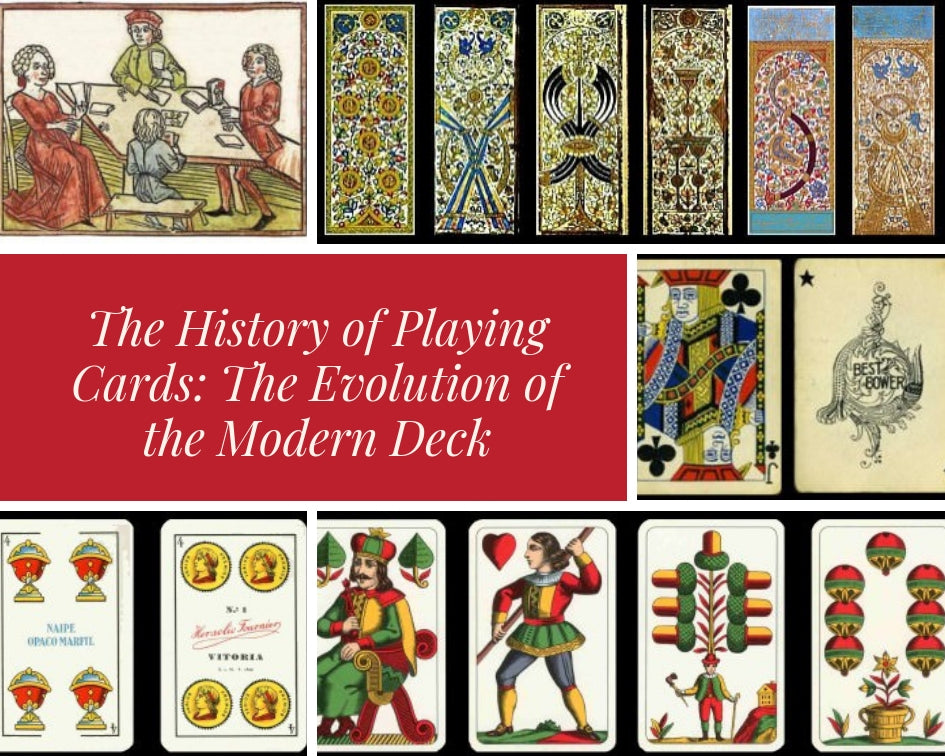
A standard deck of cards contains 52! combinations after riffle shuffling at least 7 times to ensure randomness. Expressed as a number, there are 8.06×10^67 total combinations. To put this in perspective, there are 4.37×10^17 seconds since the big bang. It is estimated there are 5×10^18 grains of sand and 10^50 atoms on earth. There are 10^46 molecules in all of the oceans. The estimated number of stars in the observable universe is 10^23. It’s a certainty that two entire 52 card decks have never ever matched, let alone more than once. They never will. Here’s another way of looking at it, if a billion people shuffled a deck of cards every second since the big bang, it would total 2×10^32 shuffles, which is still 10^22 less than the total. All of that said, there are some elegant propositional bets that can be derived from this material.
Nils Poertner responds:
Yes - incredible numbers. LIfe itself is a miracle (I don't buy into this bing bang thing) - but would not be able to bet against the odds you described here.
Asindu Drileba offers:
Leo Susskind explains that many constants in physics need to be fine tuned for the universe to exist in the way we see it. Some cannot be deviated by as low as 5%. All these constants needed to be fine tuned concurrently. Otherwise, stars would not even form.
Big Al writes:
If you assume that order matters, then when dealing cards for a game of Texas Holdem at a 9-seat table (18 hole cards and 5 community cards), there are 52!/29! possible permutations. That's roughly 9 x 10^36, or 9 x (1 billion)^4. Which means that, though possible, it is highly unlikely that any game (at a fair table) has ever been dealt the same way twice.
Feb
7
Filming Electrons at 1 Quadrillion FPS, from Jeff Watson
February 7, 2026 | Leave a Comment
Veritasium: Filming Electrons at 1 Quadrillion FPS
Explore slow motion like never before, from century-old strobe techniques to a quadrillion FPS camera. Witness light's journey through objects and the movement of electrons within molecules. Discover how scientists use sound and incredibly short laser pulses to capture these breathtaking moments.
Jan
3
Fund manager’s bizarre apology video, from Jeff Watson
January 3, 2026 | Leave a Comment
From 2018: Investment boss in tearful video apology over losses
And a recent take on it: Fund Manager's Bizarre Apology Video
J. Humbert responds:
Reminds me of this one from a few years ago…
Fleeing investment manager offers victims teary bon voyage – Chicago Tribune
Charles Harris wiped tears from his eyes, looked straight at one of his friends and apologized for lying about the value of the commodity pool he oversaw.
This scene was recorded on one of three DVDs made aboard Harris’ boat as it was apparently heading away from the U.S. and the federal authorities who are looking for Harris.
Dec
22
Tales from the pit, from Jeff Watson
December 22, 2025 | Leave a Comment
Chuck Proctor (video interview)
In this episode of In The Harbor, we sit down with Chuck Proctor, a seasoned spread trader specializing in 30-year Treasury bond futures. Chuck takes us through his remarkable rise on the trading floor—from starting as a runner, to becoming a clerk, and ultimately earning his place as a local trader.
Together, we revisit the golden era of open-outcry pit trading: the chaos, the camaraderie, the competition, and the moments that shaped a generation of traders. Chuck shares firsthand stories of what it was like to survive—and thrive—in an environment built on instinct, speed, and human connection.
We then shift to the present day to examine the “death of the pits” and the takeover of markets by computers and algorithms. Chuck offers candid insights on how the culture of trading has evolved, what was lost, and where opportunity still exists for those willing to adapt.
Dec
15
Harvard Club antisemitism, from Jeff Watson
December 15, 2025 | Leave a Comment
No comment needed.
The Harvard Club of New York Cancels Dershowitz Book Event
The Harvard Club of New York is being accused of censorship after abruptly cancelling a book event featuring famed Harvard professor Alan Dershowitz. In a statement, Dershowitz says that invitations were sent out and the event was approaching when he was suddenly told that the Harvard Club would have none of it. He blamed his representation of President Donald Trump for the cancellation. For a club that bills itself as offering “unique experiences,” it appears that hearing from opposing or different views is not one of them. Dershowitz has been associated with Harvard for over 60 years and remains one of its best known law faculty members.
Nils Poertner comments:
Large Universities in the US, Canada and parts of Europe are doomed beyond repair. No error correction process happening- built through collapse.
Henry Gifford writes:
Harvard was just used as an example when Trump tried to cancel “their” research funding (polite word for money). I didn’t pay attention to the details of the outcome - the point got made that universities better step into line.
Sure, Trump’s objection had something to do with DEI and being too liberal, but as all colleges are dependent on not paying taxes, and on government loans for most tuition, and government research money, they can hardly be anything but socialist in thinking, and can be expected I think to stay that way.
If they paid taxes and people had to pay to go there and research had to be paid for by someone spending their own money things would, I think, be greatly improved, but that is not the world we live in.
The government is basically paying the universities to breed socialism. In New York City we even have colleges that teach people to be bureaucrats.
Nov
19
Market lesson, from Jeff Watson
November 19, 2025 | 1 Comment
Ben Mallah is a real player in the real estate market and offers a palate cleanser that applies to any market.
Ben Mallah puts a recently renovated house up for auction. The video documents the preparation and the auction process itself, including discussions with the auctioneer and potential buyers. Viewers will see the property's features and the bidding unfold.
Nov
9
Prestigious consulting firm, from Nils Poertner
November 9, 2025 | Leave a Comment

Came to our financial firm 2007 and gave a 100 page presentation full of bullet points and cartesian logic (why housing boom will last). Either 3,5, or 9 bullet points per page.
At the end of the presentation I was tempted to go over to the presenter and ask him "why do you love your wife? (I didn't). The answer might have been bullet points.
Pamela Van Giessen writes:
Michael Korda tells in his memoir, Another Life, of the time that Simon & Schuster hired probably the same prestigious consulting firm to study how to improve revenues/profitability. Prestigious consulting firm (after taking the prestigious consulting firm fee) told the publishing company that they should publish more bestsellers.
Laurel Kenner comments:
I bet the prestigious firm concluded with ‘Key Takeaways’ as a final insult to the intelligence of the client.
Asindu Drileba writes:
I heard that people pay consultancy firms not for their knowledge, but for the fact that executives use them as a scape goat. If an executive wants to pursue policy X. They simply hire a consultancy to recommend policy X. If policy X ends up as a disaster (legally, morally or financially). They can simply say "Policy X was an idea from XYZ consultancy", we had nothing to do with it.
Peter Ringel adds:
a variation of this are fighting owners/ partners about policy. If decision pipelines are blocked, external council is used. Like a neutral arbitrator. I think, these are the main situations externals are used. Usually a good reason to short the entity, especially outside of markets. If they don't have the capability to decide and act on strategy in-house, it‘s a red flag.
Henry Gifford responds:
Even better is hiring a licensed engineer to instruct everyone to do something stupid that they know won’t work, so everyone who did as the engineer decided is blameless.
Jeff Watson offers:
A consultant is a person who knows 1000 ways to make love to a woman…..but he doesn’t know any women.
Oct
27
State debt, from Jeff Watson
October 27, 2025 | Leave a Comment
Here’s an interesting breakdown and analysis of the debt of individual states. All the usual subjects are near the top.
Report ranks every state’s debt, from California’s $497 billion to South Dakota’s $2 billion
State governments had $2.7 trillion in debt at the end of 2023, a new Reason Foundation analysis finds. This state debt is equivalent to approximately $8,000 per person nationally.
On a per capita basis, Connecticut had the highest state debt, with $26,187 of debt per state resident at the end of 2023. With $22,968 in debt per resident, New Jersey was the only other state with more than $20,000 in liabilities per capita.
Reason Foundation finds 13 states—Connecticut, New Jersey, Hawaii, Delaware, Illinois, Massachusetts, Wyoming, Alaska, North Dakota, California, Washington, New York, and Vermont—had more than $10,000 in debt per resident.
Oct
3
Where am i wrong, from Larry Williams
October 3, 2025 | 2 Comments
Zero sum game: for every $ that wins the same amount will be lost. REALLY? you bought at 7 sold to me at 10 I sell at 20 and the contract goes off the board and delivered at 22 who lost? We lost that we could have made more $$ but where is a net loss?
Steve Ellison comments:
Adverse selection can make us all feel like losers. If I sold at 10, I should have held to 22. Or I should have put on more size. If I bought at 7, and it went to 5, that would have been even worse.
Jeff Watson goes literary:
But Yossarian still didn't understand either how Milo could buy eggs in Malta for seven cents apiece and sell them at a profit in Pianosa for five cents.
[ … ]
Milo chortled proudly. "I don't buy eggs from Malta," he confessed… "I buy them in Sicily at one cent apiece and transfer them to Malta secretly at four and a half cents apiece in order to get the price of eggs up to seven cents when people come to Malta looking for them."
"Then you do make a profit for yourself," Yossarian declared.
"Of course I do. But it all goes to the syndicate. And everybody has a share. Don't you understand? It's exactly what happens with those plum tomatoes I sell to Colonel Cathcart."
"Buy," Yossarian corrected him. "You don't sell plum tomatoes to Colonel Cathcart and Colonel Korn. You buy plum tomatoes from them."
"No, sell," Milo corrected Yossarian. "I distribute my plum tomatoes in markets all over Pianosa under an assumed name so that Colonel Cathcart and Colonel Korn can buy them up from me under their assumed names at four cents apiece and sell them back to me the next day at five cents apiece. They make a profit of one cent apiece, I make a profit of three and a half cents apiece, and everybody comes out ahead."
Aug
2
Originally posted May 2, 2009:
Einstein purportedly said that compound interest was the most powerful force in the universe. I challenge his statement and offer the hypothesis that the vig is the most powerful force in the universe, exceeding that of even free market forces because it's always there. Exerting a constant force on every trade, transaction, purchase, sale, or any human activity of any kind, the vig is always first in line to get paid.
The vig is a powerful enough force that both winners and losers pay, without even realizing it in many cases. The vig has clever ways of hiding and disguising itself but is always there. From the widening and narrowing bid/ask spreads in the market, to the 35 to 1 (or even more insidious 35 for 1) payout on a single number on the roulette wheel, the vig constantly grinds out and extracts it's percentage on every trade or activity. Like the steady beat of a metronome, the vig is just extracted, extracted, and extracted some more.
The general public has little awareness of the vig, but the vig takes a huge toll from the unsuspecting public. All of the great deals offered the public generally have a higher vig, although even the professionals must pay it. Games with longer odds such as trifecta pools, keno, and lotteries charge high vig, while short games and trades usually have much lower vig. Games that advertise that they're commission free usually charge the highest vig of all, such as those bucket shop Forex places that are sprouting up like mushrooms all over the place. The vig allows the beautiful Vegas casinos to exist, Churchill Downs to run it's card, and allows the temple at Wall and Broad to continue it's operation day and night.
I contend that although the electronic trading is supposed to increase liquidity and eliminate the vig charged by the locals, thus benefiting the public, the opposite occurs. The apparent percentage takeout of the vig might be reduced, but the increase in the velocity of trading, with a smaller vig collected each round trip, more than makes up the difference, sort of a Laffer Curve applied to the vig.
One can easily see this by looking at the volume and revenues at places like the CME where volume has exploded and the market cap of those high temples of finance has gone into the stratosphere. Those beautiful buildings have been built by the pennies per transaction takeout from everyone, every trade, and it all adds up. The apparent reduction of vig has allowed the online poker sites to flourish with advertised low rakes versus the brick and mortar clubs. People think they're getting a great deal with such a low rake but don't realize that they're playing at a rate six times faster than in real life and probably paying out more vig than they would in Vegas, Atlantic City, or the numerous underground clubs I used to frequent in my misspent youth.
Although the vig is a constant fixed percentage in sports betting, in the markets it is ever changing. With the advent of the electronic markets, I have a certain difficulty these days in calculating the amount of vig I pay every trade, although I have a general idea. I have some pretty sophisticated math that's supposed to help me figure out the vig I pay, but even that's just an approximation When I was a local, I knew how much vig I collected down to the quarter cent depending on what type of trade I was accepting. I collected a certain amount of vig buying a spread, selling a spread, trading with little locals, and fading paper from the public. I offered discounts in vig for size, and would give up a quarter cent if I knew I could bag a big order. I also knew how much vig I would have to pay and the percentage that might change if I were desperate enough. Even though I collected vig every day, I also knew how precisely much vig I would have to fork over at the end of the day to play in the pit, because everybody has to pay tribute to someone. Since every player pays vig in trading, the money has a way of working it's way up, to some unknown repository somewhere. All of this paid tribute and upward movement of money feels like it has a part in a certain Francis Ford Coppola movie that was so popular in the 1970's.
Free market forces do affect vig, widening and narrowing the percentage, but while free market forces might disappear for awhile due to governmental regulations and laws, the vig will always be around. Vig shows up in many other clever disguises such as lower yields on fixed investments, taxes, assessments, points, fees, payoffs, and graft. Vig has to be calculated into every transaction, and must be figured into every apparent overlay one might spot.
My late, great, grandfather used to cite the old axiom that "There's two kinds of people in this world, those who pay interest and those who collect interest." While he was spot on with reciting that observation, he sadly neglected to tell me that everyone has to pay vig, a hard lesson that I had to learn for myself.
Steve Ellison writes:
A traditional recipe for business success: reduce the price of a product and thereby generate much greater demand and higher profits.
Jul
22
Smörgåsbord
July 22, 2025 | Leave a Comment
Big Al offers:
Very nice Veritasium vid on randomness and information:
Asindu Drileba likes a new interview:
I learned about Gappy Paleologo from this list. He has a new interview on a Bloomberg podcast. In it, he talks about:
- Why he suspects Astrophysicists make good quants
- Why AI can't fully take over trader's jobs (in principle)
- What makes a "good quant"
Jeff Watson is following the floor traders last stand:
Old-School Floor Traders Finally Get Their Day in Court Against CME
Trial opens in the Chicago plaintiffs’ long-running lawsuit claiming harm from the launch of electronic markets
The plaintiffs, who estimate that they are owed about $2 billion in damages plus interest, say the company broke its promises to them when it opened a data center for electronic trading that effectively doomed the old trading floors. CME has called the lawsuit baseless.
A spokeswoman for CME declined to comment. The company repeatedly tried to get the suit thrown out, but failed each time.
The lawsuit, filed in 2014, has dragged on so long that one of the original plaintiffs has died. Hundreds of former floor traders could be affected by the outcome. The trial, being held at a county courthouse in downtown Chicago, kicked off Monday with jury selection. It is expected to last several weeks.
Jul
19
Big Mac Index, from Jeff Watson
July 19, 2025 | Leave a Comment
For those who study such data, here’s the 2025 Big Mac index.
The Big Mac Index, a real and recognized metric developed by The Economist magazine in 1986, initially served as a light-hearted tool to measure purchasing power parity between countries. Today, it has evolved into a significant indicator of the global economy and currency valuation. This index compares the price of Big Macs in various countries to the price in the United States, offering insights into economic conditions.
Steve Ellison writes:
I love the Big Mac Index. But inquiring minds want to know, what about the eurozone, conspicuously missing from the article? The Big Mac Index judges the euro to be 15.2% overvalued, so this year's runup in EUR/USD appears not to be supported by burger fundamentals.
Jun
11

One must admire the first guy to introduce Brownian Motion into a theory about speculation.
Louis Bachelier's Theory of Speculation: The Origins of Modern Finance
Asindu Drileba wrires:
If you like that, you may find Louis Bachelier's other book Sketches in Quantitative Finance interesting. It's very accessible as it has no complex math and describes many concepts in probability/statistics in a very straightforward way. In it, he say's for example that despite Martingale strategies looking lucrative, "no one has gotten rich by using this method."
May
11
Echoes from the past, from Jeff Watson
May 11, 2025 | Leave a Comment
I have heard every single one of these more than once on the floor. This is the G version; the X version would be very inappropriate for this venue.
You’re long hope and short reality.
He couldn’t trade his way out of a wet paper straddle.
You’re bidding like it’s your wife’s money.
His stops have stops.
He buys the high, sells the low, and thinks he’s range trading.
If brains were dynamite, he couldn’t blow his nose.
He's so underwater, Aquaman just waved.
Tighter than a bull’s ass in fly season.
Your size is what we use for toilet paper.
He’s a momentum trader—in reverse.
He couldn’t fill a corn order, let alone an order ticket.
That guy trades like he’s reading Braille.
He thinks ‘limit down’ means he hit the jackpot.
He trades like he’s got a rearview mirror taped to his glasses.
He’s scalping—his own account.
Nice fade. If I ever need a contrary indicator, I’ll call you.
He went from hero to sandwich in one tick.
I’ve seen better risk management at a toddler’s birthday party.
Market’s moving—better go ask your horoscope.
You trading or just making donations today?
He’s got a 30-lot mouth and a 1-lot account.
That guy’s P&L looks like an EKG flatline.
You're not trading—you're gambling, but slower.
He’s so unlucky, he’d lose money in a rigged market where he’s the rigger.
The guy’s charts look like modern art—ugly, meaningless, and overpriced.
He averages losers like he’s building a position in failure.
Don’t worry, he’ll blow up before lunch.
His fills are like Bigfoot—plenty of stories, no proof.
That trade had more slippage than a greased pig at a county fair.
He went full margin—and full stupid.
Asindu Drileba writes:
I watched the documentary "Floored" that was about the extinction of pit traders due to the advent of computer driven traders. A lot of the traders seemed to have their edge in bullying and intimidation that was both physical and psychological.
I made a pit trading playlist that I binged on, and this seemed consistent even to pit traders in the currency pits of London.
One of the pit traders called the computer "The most vile invention ever made." I think he was just sad that his bullying was no longer an advantage. You can't insult a computer, or use your big body to push it away so you can have the edge, or seduce it with good looks.
Michael Brush responds:
Behind every computer, there is a person.
“The offer is $25.”
“But my computer says $45.”
“So sell it to your computer.”
Pamela Van Giessen adds:
For those interested in a biography of a once famous and beloved pit trader, I recommend Charlie D: The Story of the Legendary Bond Trader by William Falloon.
Francesco Sabella adds:
It's an incredible book! I read it years ago, I even saw a 2 hour video of Charlie D. when i was in high school where he gave a lecture on trading on 1989.
Larry Williams writes:
Charly D was one stand up guy. He loved the Bears and suggested a bet with a young lady trader for a nickel on the weekend's game. She said sure…and won. Monday morning Charley D gave her 5 grand (a nickel in betting parlance). She was astounded, told him she meant 5 cents not 5G's. No way could she risk that or take the money. He left it in her hand and walked away.
I was fortunate, thanks to T Demark, to be part of his Vegas support group - he was just amazing to hang with.
Apr
27
Age is just a number, from Jeff Watson
April 27, 2025 | Leave a Comment
88 years old and skating. He started skating at age 70.
Octogenarian skateboarder shreds concrete in Spain's Bilbao
"My bones are special," he chuckles between sips on a post-workout glass of white wine at his favourite bar in Bilbao's working-class neighbourhood of Begoña. "Though I touch wood."
Steve Ellison writes:
In only 2 more years, he will be old enough to have "sufficient experience … to command success" in Wall Street, as Clews put it, and know exactly when to skateboard down to lower Manhattan in a panic.
Apr
24
Planck’s principle, from Nils Poertner
April 24, 2025 | Leave a Comment

A new scientific truth does not triumph by convincing its opponents and making them see the light, but rather because its opponents eventually die and a new generation grows up that is familiar with it…
An important scientific innovation rarely makes its way by gradually winning over and converting its opponents: it rarely happens that Saul becomes Paul. What does happen is that its opponents gradually die out, and that the growing generation is familiarized with the ideas from the beginning: another instance of the fact that the future lies with the youth.
— Max Planck, Scientific autobiography, 1950, p. 33, 97
relevance of how new ideas are being adopted in science, markets, everywhere.
Jeff Watson responds:
Science by consensus is not science. Just ask Galileo.
Pamela Van Giessen writes:
John McPhee wrote extensively about this and how the science of geology advanced over a few centuries in Annals of the Former World. Scientific community consensus is pernicious, and it is clear that there is mostly no convincing it.
William Huggins comments:
the foundation of science rests of replicability - anyone with the same data should be able to replicate results (even if they disagree about the mechanism). once replication is established, the difficult questions come from "is this data sufficient and representative?"; "is the data generating process stable or dynamic?"; "did i gather data in support of my hypothesis or to try to disprove it?". the fun stuff.
philosophy of science ensures we ask good questions and have good tools to tackle them with. this is why the Ph in PhD is short for "philosophy."
correction: "same data" is the wrong phrase - "equivalent, out-of-sample" would be a better choice of words.
Asindu Drileba writes:
The problem with the human mind is that it has too many glitches. You can verify data successfully and still be wrong. Here are two examples from Astronomy. First, The Mayans had models that would accurately predict eclipses. So, your data of when eclipses occur would replicate really well with their model. However the model of the solar system the Mayans used, had the Earth at the centre and the Sun revolved around it. The assumptions of the model were completely wrong, but the data (predictions) were accurate.
Second, is Newton's models, that predicted the movement of a comet accurately. Then you often here people say that Einstein proved Newton wrong with Relativity.
I think when it comes to science, explanations are very flimsy. What should matter is if the idea useful or not.
Francesco Sabella responds:
I think it’s a very good exercise to start from the point of view that our mind is bound to make mistakes, have glitches and start to work from that assumption; even if it’s not always true but it can be good as working hypothesis.
Big Al recalls:
Years ago, doing simple quantitative analyses to post to this list, I learned that one of the biggest pitfalls was my own desire to get a nice result.
Apr
22
Reading list
April 22, 2025 | Leave a Comment
Victor Davis Hanson Should Stick to the Classics
by Don Boudreaux at Cafe Hayek
Prof. Hanson, for example, presumes that the trade surpluses of various foreign countries are the results of clever cheating by those countries’ governments – cheating that yields unfair benefits to those countries as it damages the U.S. and inflicts on us Americans harmful trade deficits. He’s apparently unaware that countries that run trade surpluses also necessarily run capital-account deficits: global investors prefer, on net, to invest elsewhere than in those countries. In contrast, countries that are especially attractive to global investors run capital-account surpluses – another name for trade (or, more precisely, current-account) deficits.
Jeff Watson is keeping up with the CME dispute:
Here’s an interesting article about the upcoming trial:
Judge clears the way for a titanic trial pitting old-school traders against CME Group
But the plaintiff traders, many of whom formerly worked in the pits and are retired now, allege that CME reneged on a deal preserving members’ rights — including preferred trading floor access and pricing and information advantages — when it closed the physical floors and confined transactions to the Aurora operation. As a result, they say, the value of those memberships (reflected in B shares of CME) has fallen by two-thirds in the past decade even as CME’s A shares (the stock held by ordinary investors) have soared in that period.
Humbert X. writes:
I wonder if the PMs will get a heads up on tariff changes?
Trump Media Launches Separately Managed Accounts
SARASOTA, Fla., April 15, 2025 (GLOBE NEWSWIRE) — Trump Media and Technology Group Corp. (Nasdaq, NYSE Texas: DJT) ("TMTG" or "the Company"), operator of the social media platform Truth Social, the streaming platform Truth+, and the FinTech brand Truth.Fi, along with Yorkville America Equities, an America-First asset management firm, and Index Technologies Group (ITG), an originator and provider of thematic investment solutions, today announced that the three firms have created a strategic partnership and launched a new suite of Truth Social-branded Separately Managed Accounts (“SMAs”). These investment strategies offer investors access to curated, thematic investment strategies rooted in American values and priorities.
The initial lineup of SMA strategies includes:
Faith & Values
Liberty & Security
Energy Independence
Made in America
Apr
17
The Theory Of Societal Stupidity, from Jeff Watson
April 17, 2025 | Leave a Comment
Any market parallels?
The Theory Of Societal Stupidity
by Dietrich Bonhoeffer
Dietrich Bonhoeffer (4 February 1906 – 9 April 1945) was a German Lutheran pastor, neo-orthodox theologian and anti-Nazi dissident who was a key founding member of the Confessing Church. His writings on Christianity's role in the secular world have become widely influential; his 1937 book The Cost of Discipleship is described as a modern classic. Apart from his theological writings, Bonhoeffer was known for his staunch resistance to the Nazi dictatorship, including vocal opposition to Nazi euthanasia program and genocidal persecution of Jews.
Stefan Jovanovich asks:
Why do we need a theory?
Steve Ellison adds:
Gustave Le Bon in his 1895 book The Crowd noted that the intellect of any crowd was far lower than that of any of its members. And he considered all political parties to be crowds.
Mar
27
Spec roundup
March 27, 2025 | Leave a Comment
Jeff Watson has been watching the CME:
Anyone else notice the increase in seat prices (trading rights) recently?

Big Al found a history lagniappe:
BabelColour
@StuartHumphryes
Travel back in time 117 years to the Russia of 1908. I have enhanced for you this rare colour photo of the Russian writer Leon Tolstoy, regarded as one of the greatest and most influential authors of all time. It was taken in the grounds of his house at Yasnaya Polyana, near Tula, Russia. It is original colour, not colourised.
Steve Ellison provided his own:
Since one might be well advised to beware the Ides of March, here is a picture I took in 2017 of the ruins of the Theater of Pompey.
Asindu Drileba has been reading:
The importance of contrarianism emphasized by Jeff Bezos, from the Amazon 2020 Letter to Shareholders:
Differentiation is Survival and the Universe Wants You to be Typical
Our bodies, for instance, are usually hotter than our surroundings, and in cold climates they have to work hard to maintain the differential. When we die the work stops, the temperature differential starts to disappear, and we end up the same temperature as our surroundings….While the passage is not intended as a metaphor, it’s nevertheless a fantastic one, and very relevant to Amazon. I would argue that it’s relevant to all companies and all institutions and to each of our individual lives too. In what ways does the world pull at you in an attempt to make you normal? How much work does it take to maintain your distinctiveness? To keep alive the thing or things that make you special?…This phenomenon happens at all scale levels. Democracies are not normal. Tyranny is the historical norm. If we stopped doing all of the continuous hard work that is needed to maintain our distinctiveness in that regard, we would quickly come into equilibrium with tyranny….We all know that distinctiveness – originality – is valuable. We are all taught to “be yourself.” What I’m really asking you to do is to embrace and be realistic about how much energy it takes to maintain that distinctiveness. The world wants you to be typical – in a thousand ways, it pulls at you. Don’t let it happen.
Feb
9
A biography of Jay Gould, from David Lillienfeld
February 9, 2025 | Leave a Comment
American Rascal: How Jay Gould Built Wall Street's Biggest Fortune, by Greg Steinmetz
If you needed to pick out major figures of the Gilded Age, such characters as Rockefeller or Carnegie immediately come to mind. If you were in the midwest, you might include Armour in that list. When I was growing up in the 1960s, Jay Gould might have gotten a mention, but chances are good that he certainly wouldn't have been the first to come to mind. This is unfortunate, insofar as Gould was one of the wealthiest Americans of his day, leaving a fortune of some $75+ million in the 1890s. While some like the Vanderbilts (arguably with a greater net worth) succeeded in one major industry in railroading or Carnegie in steel, Gould's success was in multiple industries, including railroading, telecommunications (think Western Union), finance, and fashion (his early success was in leather goods). Gould not only had an impact in these industries, his actions had national impact, triggering panics, new means of communication (not the technology so much as the scale), political scandals (one of the more stark scandals of the Grant Administration, though that's probably subject to some argument), and even the manner in the US financial world grew on the world stage (though surely not at the scale that JP Morgan or Jacob Schiff did). He left an indelible mark on the United States during a crucial time in its immediate post-Civil War period as the industrial revolution was taking hold in the US.
Steinmetz offers a brief, easy-to-read biography of Gould. Some might argue it's a little too easy to read. It is definitely more of an overview than a deep study of the financier that was Gould. Gould was one of the foci around which some of the more colorful scoundrels that defined Wall Street in the post war period assembled. Daniel Drew, for instance, or Jim Fisk as another. The problem with this biography is that it is good only as an overview. And if that's what you seek, it functions perfectly well. But as Steinmetz did with his biography of Fugger (The Richest Man Who Ever Lived), there's just enough meat to do more than whet the appetite.
If you would like to learn more about the Erie War, there's The Scarlet Woman of Wall Street - not light reading but a tad more insightful than Steinmetz. Or the first Black Friday, when in 1869, Gould tried to corner the gold market, and had all the success that the Hunts would later experience in trying to do the same with silver a century or so later. Steinmetz gives just enough to whet one's appetite, but not enough that one is casting about looking for something meatier. Gould was the force behind Western Union's dominance of the telegraph industry, the world's first internet. He was one of the creators of an empire of transcontinental railroads, as well as elevated local train transit in New York City. Any one of these could be the subject of an in-depth study, but Steinmetz doesn't provide enough to forestall someone from having to consult another book or two.
Some might say that Gould epitomized the Robber Barons on the age, but he actually had little use for any sort of cabals. Sure, he appreciated a monopoly as much as any, but like Commodore Vanderbilt, with whom he waged war of a sort during the Erie War, he ran his businesses with a focus on profitability without necessarily having a monopoly or oligopoly. There are some instances where Gould drove the price of the product down, not hiking it. In building his empire, he demonstrated a shrewd sense of timing and of the anticipated direction of human events.
Jeff Watson writes:
I enjoyed that book. Here’s a lagniappe:
Dark Genius of Wall Street, from Jeff Watson
Stefan Jovanovich adds:
People liked him, and he was - until facial neuralgia destroyed his looks and tuberculosis robbed him of his general health - a charmer.
In 1879 Thurlow Weed said this about him: “I am Mr. Gould’s philanthropic adviser. Whenever a really deserving charity is brought to my attention, I explain it to Mr. Gould. He always takes my word as to when and how much to contribute. I have never known him to disregard my advice in such matters. His only condition is that there shall be no public blazonry of his benefactions. He is a constant and liberal giver, but doesn’t let his right hand know what his left hand is doing. Oh, there will be a full page to his credit when the record is opened above.”
Feb
6
The South Sea Bubble, from Jeff Watson
February 6, 2025 | Leave a Comment
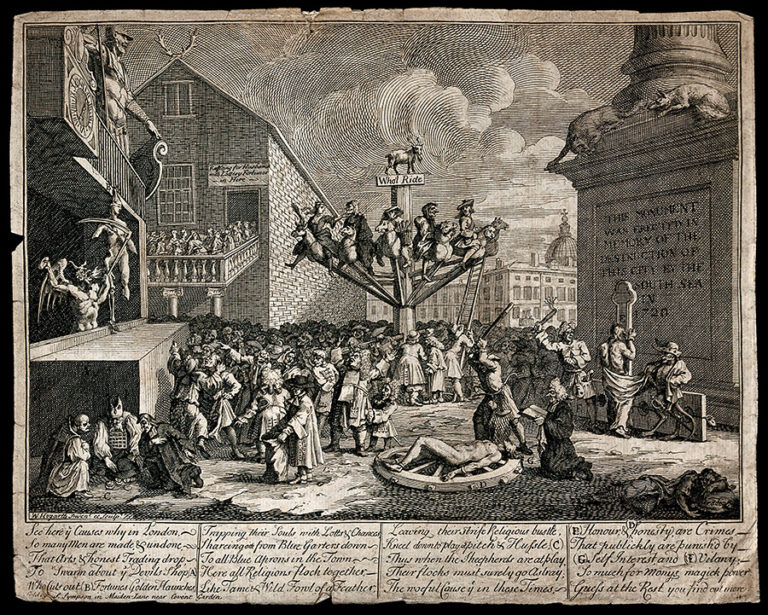
This documentary is a necessity for those interested in markets.
The South Sea Bubble - The First Financial Crash
Khilav Majmudar adds:
The South Sea bubble spared no one, even Isaac Newton! Here is a detailed paper written on his interaction with the bubble, written by a mathematician with a more-than-passing interest in the history of technological and financial manias:
Newton’s financial misadventures in the South Sea Bubble
A very popular investment anecdote relates how Isaac Newton, after cashing in large early gains, staked his fortune on the success of the South Sea Company of 1720 and lost heavily in the ensuing crash. However, this tale is based on only a few items of hard evidence, some of which are consistently misquoted and misinterpreted. A superficially plausible contrarian argument has also been made that he did not lose much in that period, and John Maynard Keynes even claimed Newton successfully surmounted the South Sea Bubble. This paper presents extensive new evidence that while Newton was a successful investor before this event, the folk tale about his making large gains but then being drawn back into that mania and suffering large losses is almost certainly correct. It probably even understates the extent of his financial miscalculations.
Humbert B. offers:
UK Natl Archives: The South Sea Bubble of 1720
Jan
15
Maybe relevant to the issue of stops, from Humbert Q.
January 15, 2025 | Leave a Comment

How to Gamble If You Must: Inequalities for Stochastic Processes
This classic of advanced statistics is geared toward graduate-level readers and uses the concepts of gambling to develop important ideas in probability theory…. Following an introductory chapter, the book formulates the gambler's problem and discusses gambling strategies. Succeeding chapters explore the properties associated with casinos and certain measures of subfairness. Concluding chapters relate the scope of the gambler's problems to more general mathematical ideas, including dynamic programming, Bayesian statistics, and stochastic processes.
And a more recent paper:
How to Gamble If You Must
Kyle Siegrist, Department of Mathematical Sciences, University of Alabama - Huntsville
In red and black, a player bets, at even stakes, on a sequence of independent games with success probability p, until she either reaches a fixed goal or is ruined. In this article we explore two strategies: timid play in which the gambler makes the minimum bet on each game, and bold play in which she bets, on each game, her entire fortune or the amount needed to reach the target (whichever is smaller). We study the success probability (the probability of reaching the target) and the expected number of games played, as functions of the initial fortune. The mathematical analysis of bold play leads to some exotic and beautiful results and unexpected connections with dynamical systems. Our exposition (and the title of the article) are based on the classic book Inequalities for Stochastic Processes; How to Gamble if You Must, by Lester E. Dubbins and Leonard J. Savage.
Jeff Watson comments:
Only play cards with suckers, and never try to fill an inside straight. Never sit in a poker game with a guy named Doc. Never lay the points, stay away from sports betting altogether, never be the bank in a casino baccarat style game. Stay away from slots, casino pit games, you will get ground down by the vig.
There are only two bets I can afford in a casino. One is betting the pass/no pass line in craps, the vig on the pass is 1.414% and 1.36% on the no pass. Plus you can get bets behind the line. The other is the banker bet in baccarat where the house has a 1.06% edge. Even with the commission, it’s a good bet. Still, no matter what, play the game long enough and the vig will kill you.
The banker bet can be real good. Playing for an entire session as banker can cause one the embarrassment of losing everything then having the game boss ask very politely, “How do you plan to settle the commission?”
Nov
21
Poker player’s brain, from Jeff Watson
November 21, 2024 | Leave a Comment
The Incredible Brain of a Poker Player
A true social phenomenon, poker is not just a game of chance and money. From a scientific perspective, we can think of it as a sporting discipline, requiring numerous biological and mental resources. Winning, losing, thinking, bluffing, resisting stress…each of these events results in specific brain activity. By combining testimonials from some of the best players in the world with insights from scientific experts and unique experiences, this documentary will allow each of us to understand the internal processes that govern our risk-taking, and each of our decisions.
Oct
14
1924 Immigration Act, from Stefan Jovanovich
October 14, 2024 | Leave a Comment

This year is the 100th anniversary of the Johnson-Reed Immigration Act signed into law in 1924 by President Coolidge. It was a modification of the 1917 Immigration Act which was the first law to establish quotas for entry into the United States.
Before 1917 the only numerical restrictions on entry to the United States was the Chinese Exclusion Act of 1882, which excluded EVERYONE Chinese. Immigration acts had placed restrictions on individuals (1882 - no convicts, indigents, prostitutes, lunatics, idiots; 1903 - no anarchists, epileptics, crazies; 1907 - no infected, mentally or physically handicapped who could not work), but there had been no quotas. The 1917 Immigration Act continued the exclusion of the Chinese but extended it to everyone else in East Asia except the Japanese and the Filipinos. The law also imposed a literacy test for anyone over 16, but the test was for the person's own language, not just English.
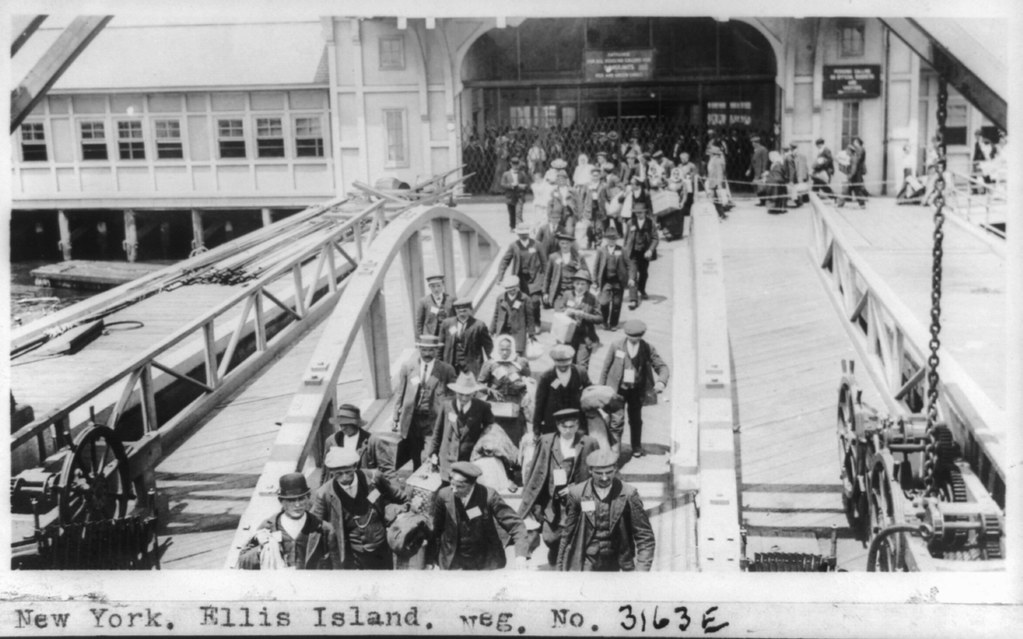
The 1924 Act extended the outright exclusion to the Japanese and can reasonably be identified as the triggering event that allowed Fascists to take control over the government of Japan and spend the next decade and a half convincing the people who had embraced representative democracy, American jazz and baseball that they should choose their own race as the one to come first.
Humbert H. comments:
It’s interesting how some reasons for excluding specific groups from being able to immigrate have changed over time. “Strong economic competitor” has completely disappeared, whereas it was one of two main reasons for excluding the Japanese. There must be some sort of widespread recognition that importing groups that demonstrate great achievement in some economic areas is good for the country even though there is certainly some collateral damage to the established population.
Stefan Jovanovich rejoins:
GR and I have different readings about the exclusion for the Japanese. It was not economic competition; the U.S. had a healthy positive trade balance with Japan between the two world wars. We sent them oil and wheat; they sent us toys and trinkets.
The political pressures for exclusion came from
(1) Teddy Roosevelt's complete hatred of the Japanese AND the Russians (Give a President the Nobel Peace prize and bad things always happen). That made disdain for the Nips into a bedrock belief of all progressive Republicans (Thank you Earl Warren)
(2) The continuing negotiations after the signing of the Washington Naval Treaty of 1922
Humbert H. clarifies:
I didn’t mean economic competition with Japan, but with Japanese immigrants, mainly in California
Asindu Drileba writes:
I heard from somewhere, that before World War 1, passports & visas where not enforced that seriously. You could just show up to any place you wanted to go to without many formal requirements. I just imagine if the world was like that? Anyone can show up anywhere anytime without any legal hurdles?
Noam Chomsky (MIT linguist) says that there are two kinds of globalization.
Globalization 1: Is the free movement of people (labour) around the world with less restrictions.
Globalization 2: Is the free movement of capital & goods (products) with little legal restrictions.
He says that as we we're entering the 21st century, there has been a sharp decrease in Globalization 1 and a sharp increase in Globalization 2. It has been described that Globalization 2 has benefited corporations a lot (some even claim it has benefited the economy as a whole).
Can a country benefit economically (can corporations & markets see gains?) by making immigration as easy as it is to send money around the world? That is, people (labour) moving around with very little restrictions?
Jeff Watson offers:
It would be better this way:
A world of free movement would be $78 trillion richer
Yes, it would be disruptive. But the potential gains are so vast that objectors could be bribed to let it happen.
Humbert H. responds:
Of course anyone with a minimal economic education would realize that free movement of “labor” or entrepreneurs would result in creation of enormous wealth. In the real world though, new immigrants going on the dole has become a feature and not a bug in many wealthy countries. You read anything from England, and that seems like an accepted fact there. The list of various culture-clash and crime issues is long and only irritates people who are for unrestricted immigration. So this not a pure economics problem but more multifaceted. My point was that something, perhaps better knowledge of economics or personal experience, or maybe less dog-eats-dog competition for survival, taught the populace that importing highly capable people usually leads to good outcomes.
Jordan Low adds:
Do you enjoy Bing Cherries? He lost his farm in the act.
Ah Bing was a 19th century horticulturalist and credited as the cultivator and namesake of the popular Bing cherry. Bing migrated to the U.S. around 1855 and worked as foreman in the Lewelling family fruit orchards in Milwaukie, Oregon.
Sep
28
What is in Brooklyn?, from Asindu Drileba
September 28, 2024 | Leave a Comment

Lana Del Rey — My boyfriends really cool, but he is not as cool as me. Cause I'm a Brooklyn Baby. An interview recently posted here with The Chair — "I attribute your being humble to being from Brooklyn" (interviewer referring to The Chair). Another person I listen to - Such mistakes can only be made by people who have not spent a lot of time in Brooklyn. Brooklyn comes up so many times. What's is there to know about it? Of course I have heard of people talking about other cities.
But people that talk about Brooklyn always say it like there is something they know which others don't know. What is in Brooklyn? What does it do to people?
David Lillienfeld adds:
In the epidemiology world, when one of the organizations meets in Manhattan, inevitably someone will suggest to the younger members to go across the Brooklyn Bridge and experience Brooklyn. There is definitely something about Brooklyn that focuses one's thoughts.

Steve Ellison offers:
The Chair wrote a whole chapter on this topic, the first chapter of Education of a Speculator, titled Brighton Beach Training.
Laurel Kenner suggests:
Survivors go there when they get to America.
Alex Castaldo responds:
Agreed, immigrants from Central and Eastern Europe often arrived in Brooklyn as a first step towards success and acceptance in America.
H. Humbert writes:
There is a hierarchy among the real estate developers of New York. Those who develop real estate (especially large commercial buildings) in the central area (the island of Manhattan, also known as New York County) consider themselves socially above the multimillionaires who develop property in the boroughs of Brooklyn, Queens, Bronx and Staten Island. They refer to Manhattan as simply "the City" and seldom go to the other boroughs (other than to take an airplane at LGA or JFK airports, which are in Queens).
Donald Trump's father was a developer of large number of properties all of which were in Queens and Brooklyn and he considered Manhattan development too financially risky. He was quite wealthy but in view of the above was not considered a "major New York developer", like Roth, Reichmann and other well known names.
His son Donald was very ambitious and wanted to move up in society. Contrary to his father's policy he took a gamble and decided to put up a large building, the Grand Hyatt Hotel on 42d street in Manhattan. The project was completed in 1978 and Donald Trump joined the ranks of major NY real estate developers. (What the other developers thought of his operation is another subject and requires a separate article). Even if he wasn't fully accepted by all, when his daughter married a member of the Kushner family, another prominent Manhattan developer, a few years later, it confirmed that the Trump family had reached the first rank among New York's wealthy families. But Donald Trump, having overcome his Queens handicap and shown that he could do better than his father, was not quite satisfied and he decided to enter national politics.
In summary, there is a slight prejudice against people from Queens and Brooklyn, which sometimes causes people to be even more motivated to succeed and be accepted.
In addition Brooklyn has its own distinct accent, which causes the prejudice to be slightly greater. If you would like to know what a Brooklyn accent sounds like you can listen to any speech by Janet Yellen. When she was in line for a top job in Washington, a previous Treasury secretary (probably hoping to get the job himself) mentioned her accent as a reason she should not be appointed. She got the job anyway. Another success for Brooklyn.
Jeff Watson gets musical:
Steely Dan nailed it.
Sep
25
Smörgåsbord
September 25, 2024 | Leave a Comment
Jeff Watson likes info on the softs:
Here’s a copy of a magazine that offers a high level view of all things agricultural:
Carder Dimitroff is watching lithium batteries:
Utility Dive: Lithium battery oversupply, low prices seen through 2028
Despite falling raw material costs and U.S. policy support, North American battery suppliers are delaying or canceling planned capacity investments
Bloomberg: Why Public EV Chargers Almost Never Work as Fast as Promised
Most public machines in the US average about half their maximum speed, a gap that risks hindering further adoption of electric cars.
David Lillienfeld follows pharma:
Immuno-oncology drugs have changed oncology and required rewriting of many sections of medical texts. They have created a revolution. That doesn't mean they are without downsides.
A decade of cancer immunotherapy: Keytruda, Opdivo and the drugs that changed oncology
Medicines that can rev up the immune system against tumors have reshaped expectations of what cancer treatment can accomplish. Their success has hit limits, however.
Sep
22
Choking, from Jeff Watson
September 22, 2024 | Leave a Comment
Ever choke during a big event?
The Brain Really Does Choke Under Pressure
Study links choking under pressure to the brain region that controls movement
Have you ever been in a high-stakes situation in which you needed to perform but completely bombed? You’re not alone. Experiments in monkeys reveal that ‘choking’ under pressure is linked to a drop in activity in the neurons that prepare for movement.
The researchers found that, in jackpot scenarios, the activity of neurons associated with motor preparation decreased. Motor preparation is the brain’s way of making calculations about how to complete a movement — similar to lining up an arrow on a target before unleashing it. The drop in motor preparation meant that the monkey’s brains were underprepared, and so they underperformed. To a certain extent, “you just don't perform better as the reward increases”, Moghaddam says.
Asindu Drileba writes:
This seems related something psychologists call habituation (defined as the diminishing of an innate response to a frequently repeated stimulus). I leaned about it from Daniel Cohen, the first economist I actually enjoyed reading (I recommend the books Prosperity of Vice, Homo Economics). Daniel Cohen mentioned that "habituation" is the reason why in some instances adding financial incentives makes people perform worse at a task.
He gives an example of a Kindergarten School experiment. The school had a problem with parents coming late. So the school said that for every time a parent comes late to pick their child they will be fined a certain amount (lest say $10 every time you come late to pick up your child). The result was that more parents actually came late to pick their kids.
The psychological interpretation might be that parents eventually valued money less than that coming late. So paying a fine made them feel like they have "paid off their sin" that is, the monetary fine erased their guilt.
Daniel Cohen also thinks we are all going to be immortal some day. Here is a nice podcast where he talk about his ideas.
Aug
6
List for a well-lived life, from Jeff Watson
August 6, 2024 | Leave a Comment

Since I have become my grandson’s teacher (and playmate), I’ve been compiling advice lists. Wish someone had shared this with me.
1. Don’t call someone more than twice continuously. If they don’t pick up your call, presume they have something important to attend to.
2. Return money that you have borrowed even before the person who loaned it to you remembers or asks for it. It shows your integrity and character. The same goes for umbrellas, pens, and lunch boxes.
3. Never order the expensive dish on the menu when someone is treating you to lunch or dinner.
4. Don’t ask awkward questions like ‘Oh, so you aren’t married yet?’ Or ‘Don’t you have kids?’ Or ‘Why haven't you bought a house?’ Or ‘Why haven't you bought a car?’ For God’s sake, it isn’t your problem.
5. Always open the door for the person coming behind you. It doesn’t matter if it is a guy or a girl, senior or junior. You don’t grow small by treating someone well in public.
6. If you take a taxi with a friend and he/she pays now, try paying next time.
7. Respect different shades of opinions. Remember, what may seem like 6 to you might appear as 9 to someone else. Besides, a second opinion is good for an alternative.
8. Never interrupt people while they are talking. Allow them to pour it out. As they say, hear them all and filter them all.
9. If you tease someone, and they don’t seem to enjoy it, stop it and never do it again. It encourages one to do more and shows how appreciative you are.
10. Say “thank you” when someone is helping you.
11. Praise publicly. Criticize privately.
12. There’s almost never a reason to comment on someone’s weight. Just say, “You look fantastic.” If they want to talk about losing weight, they will.
13. When someone shows you a photo on their phone, don’t swipe left or right. You never know what’s next.
14. If a colleague tells you they have a doctor's appointment, don’t ask what it’s for. Just say, "I hope you’re okay." Don’t put them in the uncomfortable position of having to tell you their personal illness. If they want you to know, they'll do so without your inquisitiveness.
15. Treat the cleaner with the same respect as the CEO. Nobody is impressed by how rudely you treat someone below you, but people will notice if you treat them with respect.
16. If a person is speaking directly to you, staring at your phone is rude.
17. Never give advice until you’re asked.
18. When meeting someone after a long time, unless they want to talk about it, don’t ask them their age or salary.
19. Mind your business unless anything involves you directly - just stay out of it.
20. Remove your sunglasses if you are talking to anyone in the street. It is a sign of respect. Moreover, eye contact is as important as your speech.
21. Never talk about your riches in the midst of the poor. Similarly, don't talk about your children in the midst of the barren.
22. After reading a good message, consider saying, "Thanks for the message."
APPRECIATION remains the easiest way of getting what you don't have.
Jul
21
Classic SPEC reading list (with movies, too)
July 21, 2024 | 1 Comment
From the original version of the Daily Spec site and worth a review:
Jeff Watson writes:
Being There is a movie adapted from Jerzy Kosinski’s book about a gardener who took Washington DC by storm. His name was Chance and he could not read or write, but the public thought he was a genius. He ultimately became the President of the United States. The book should also be on the list.

Stefan Jovanovich suggests:
Asindu Drileba offers:
- Risk Savvy by Gerd Gigerenzer. How to cut your cancer risk by 50%, how to beat Nobel Prize portfolio strategies, why certainty is an illusion. I think everyone can benefit at least one thing from reading this book. It doesn't matter if you're a spec or not.
- The Visual Display of Quantitative Information (everything by Edward R. Tufte is worth reading)
- Adam Curtis documentaries. He has dedicated his life talking about "Power", mostly the relationship between Markets, Politics, Science, Religion & Philosophy. He informed alot of my thinking about the relationship between those. An incomplete assortment.
- Zurich Axioms. This was recommended by on a podcast. I think it was Larry Williams (but I am not sure). It's a very good book of aphorisms, useful to get your psychology right.
- This is the Road to Stock Market Success (1944). Recommend by Vic. I also find the book very instrumental in developing a psychological edge.
Zubin Al Genubi recommends:
Conrad, J, Heart of Darkness. A river trip into Africa loses grip.
Khilav Majmudar agrees:
Loved Heart of Darkness. Conrad's writing is hypnotic.
Humbert H. adds:
Heart of Darkness is kind of similar to Kafka’s writing in that it’s mysterious and unusual, and nobody knows what it’s really about after reading it. It was famously an inspiration for the movie Apocalypse Now which is arguably even stranger.
Jul
9
Floored, from Jeff Watson
July 9, 2024 | 1 Comment
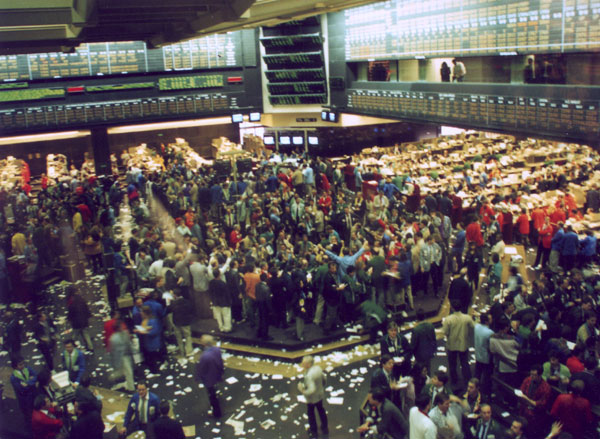
I’ve posted a link to this documentary before but feel compelled to post it again for all of the newcomers to the list. It’s a great weekend flick, and covers a period when we used to do our business in the pits. There was nothing like it.
Floored - The Complete Documentary Film
Floored is a 2009 documentary film about the people and business of the Chicago trading floors. The film focuses specifically on several Chicago floor traders who have been impacted by the electronic trading revolution and whose jobs have been threatened by the use of computers in the trading world. Directed by James Allen Smith, the film runs for 77 minutes.
Jeffrey Hirsch writes:
Thanks Jeff. Just sent it to my 18yo son who has been getting into the markets and trading.
Nils Poertner asks:
Were you a floor trader, Jeff, and if so, what lessons did you learn that helped you in trading electronically?
Jeff Watson replies:
Yes I was. The most important lesson I learned was to not overtrade.
Humbert H. comments:
Asking Jeff is he was a floor trader is like asking Paganini if he ever played the violin, asking Taylor Swift if she ever thought of making a living as a pop singer, or LeBron James if he ever heard of a game named "basketball". But what I really want to know Jeff is if you like to surf?
Jeff Watson answers:
I would love to surf, but my health won't allow it. We’re still a surfing family, but I just don’t surf anymore and am relegated to taking pictures from the beach.
May
12
Cost of Carry, from Zubin Al Genubi
May 12, 2024 | Leave a Comment

A carry trade is borrowing/buying at low interest and selling/lending at higher interest rates using leverage. Its used in currencies. The authors propose the trade had become systemic including the FED such that the markets have disconnected from fundamentals and are moved by dynamics of the carry/bust pattern. Further that it is the main driver of economic cycles not classic economic supply and demand.
If so, maybe the Fed watch traders are not always wrong as I've stated and the bad news is good news idea has merit under the carry trade.
Humbert H. writes:
Is there anyone who has done this for decades and not blown up, other than maybe Palindrome? Leverage combined with simultaneous forex and interest rate bets seems like it will eventually blow up, unless you always get advance warnings from central bankers.
Jeff Watson expands:
In the grain markets we determine the cost of carry as Futures price = Spot price + carry or carry = Futures price – spot price. Carry consists of storage costs, insurance, and interest. Carry provides the farmer with signals helping with crop marketing decisions while it provides a trader an opportunity to capture the carry. As an aside, here’s a handy dandy little formula to play around with:
F = Se ^ ((r + s - c) x t)
Where:
F = the future price of the commodity
S = the spot price of the commodity
e = the base of natural logs, approximated as 2.718
r = the risk-free interest rate
s = the storage cost, expressed as a percentage of the spot price
c = the convenience yield
t = time to delivery of the contract, expressed as a fraction of one year
Steve Ellison adds:
The US stock market had a carry trade from 2008 to 2018 and again in 2020 and 2021 when zero interest rate policy made it possible for traders to buy stocks with borrowed money, and cover the interest costs using the stock dividends. Philip L. Carret wrote in his 1931 book The Art of Speculation that the best time to buy stocks is in such situations when stocks "carry themselves".
As a quick approximation, the prices of the front-most ES contracts are:
June 5225
September 5282
So the cost of carry at the moment is roughly 47 points per quarter, and the S&P 500 is not carrying itself (if it were, the contracts would be in backwardation).
May
4

The Doctor Is In. And He’s an Orangutan.
For the first time, researchers have seen a wild animal treat an open wound with a medicinal plant. After getting injured—probably in a brawl with another male—a wild Sumatran orangutan chewed the stems and leaves of a vine humans use to treat wounds and ailments such as dysentery, diabetes and malaria. The orangutan then repeatedly smeared the makeshift salve on an open gash on its cheek until it was fully covered. After the treatment, scientists saw no signs of infection. The wound closed within five days. And it healed within a month.
Jeffrey Hirsch is enthusiastic:
This is awesome! An good friend of mine spent several years in Borneo working with Orangutans under Birute Galdikas’ program. They are super crafty and smart. Don’t doubt this.
Humbert H. writes:
And nobody can explain how they know to do this in these situations. There is obviously a lot of learning apes can acquire from others, but this? There is also no way the current understanding of how genetic information is passed on that can explain this. There is something very mysterious about the mind and animals doing non-obvious things is the best example, this is not a simple biological phenomenon.
Asindu Drileba comments:
One of the things I hear in the AI research community in the pursuit of of AGI (Artificial General Intelligence) is people thinking of intelligence as something hierarchical like height.
In The Singularity is Near Raymond Kurzweil makes a plot of Computers approaching AGI. He puts insects at the bottom and manuals later then humans at the top. You often hear some people say that "We haven't yet reached dog level AI, so we can't say we can reach human level AI soon." That statement makes the assumption that A humans intelligence is more than that of a dog. But it has been reported in some cases a dog's sense of smell can be 100,000 more acute than that of a human being! And not just that it can tell time just by smelling what's around. Another example is also how birds can sense magnetic fields and use them like a compass.
Anyway my point is that just by the (limited) way humans perceive reality we have access to some secrets we can't pass to animals. My suspicion is that animals also have their own secrets that they cannot pass to us.
Humbert H. adds:
They have recently discovered that some insects are self-aware. The test that's used for animals is that they recognize their reflection in the mirror as themselves judging by their reaction. Usually only dolphins, apes, and some corvids (crows) pass the test.
But more importantly, what I meant was that animals seem to "know" how to do things that no current scientific understanding can explain. This means we don't understand basic things about animal (and human) mind. AI is a machine function: an algorithm using some data provides some outputs in response to inputs. A mind is like that too, except we really don't understand the nature of self-awareness, nor do we understand how animals just "know" things. Sometimes they call it "instinct" but there is no real science behind that word. And in this case it's not even that, apes have no "instinct" to cure wounds with specific processed plant material.
Jeff Watson writes:
Here is an interview with cognitive psychologist, Donald Hoffman. Some find him brilliant, some a flake. His ideas are unconventional to say the least, but the questions that come to mind out of his interview will break one’s brain. Many moments in the video, I pause and ask myself how this applies to markets.
Stefan Jovanovich gets philosophical:
The wheel of time turns on the axle of our self-awareness: Transcendentalism.
Mar
25
History of KC BBQ, from Humbert Humbert
March 25, 2024 | 1 Comment

Interesting to learn that Gates and Arthur Bryant's trace their lineage to the original BBQ entrepreneur. As a KC native I'm biased, but it really is the best city for BBQ. Although plenty of good BBQ can also be found in TX and Memphis.
How did Kansas City become Barbecue City, USA? KCQ cooks up a delicious tale
“What’s your KC Q” is a joint project of the Kansas City Public Library and The Kansas City Star. Readers submit questions, the public votes on which questions to answer, and our team of librarians and reporters dig deep to uncover the answers.
Big Al offers:
More BBQ history:
Barbecue in Memphis has a rich history with deep roots
Mapping Texas Barbecue History
A Barbecue Nerd’s Guide to the Most Historic Joints in Texas
The History of BBQ in St. Louis
And for anybody travelling, here is some information on upcoming BBQ competitions and festivals in the US:
Check out 10 of the Best BBQ Festivals in the U.S.
Northeast Barbecue Society: Event Calendar
Rocky Mountain BBQ Association
And per Jeff's comment:
8 Restaurants That Prove Arkansas Barbecue Is Here To Stay
Jeff Watson adds:
This place has the best BBQ in Arkansas, and they’ve only been around for 10-12 years:
Face Behind the Place: Susie Powell of Hoots BBQ & Steaks
Feb
20
Many lessons, from Jeff Watson
February 20, 2024 | Leave a Comment
There are many lessons in this short talk by Richard Feynman.
Barnum’s classic, The Art of Money-Getting, is read aloud in this video. A great addition to any spec’s collection. Quite dated, but the spirit is undeniable.
Feb
5
Trading smörgåsbord
February 5, 2024 | Leave a Comment
Kim Zussman offers:
Meet the Investors Trying Quantitative Trading at Home
Pietros Maneos trades stocks like many of Wall Street’s most sophisticated operations: running dozens of computer-driven strategies in parallel to chase market-beating returns. But he isn’t some tech-savvy math type. He is a published poet who doesn’t know how to code. Maneos, 44 years old, uses online-trading platform Composer.trade to build, test and bet on quantitative trading algorithms that buy and sell stocks and exchange-traded funds out of his home office in Boca Raton, Fla. One algorithm, for example, holds a triple-leveraged exchange-traded fund tracking the Nasdaq-100 index if the S&P 500 index has recently trended higher—and Treasury bills otherwise. He is currently running 72 such schemes he constructed with the application’s graphical interface, but can also type requests in plain English that Composer’s AI will translate into code. “It’s like having my own personal black box,” he said. “You could argue that I’m a hedge fund with 72 strategies.”
Big Al is puzzled by this bit from the above:
Many users praise its simplicity. But several warned about the tax implications of wash sales and the absence of some common Wall Street risk-management tools, such as one that would automatically exit a strategy when a specified loss is reached.
Huh?
Zubin Al Genubi wonders about market microstructure:
On CME is not clear. Is there somewhere how price changes is explained? Seems the asks should go to 0 before price clicks up but they don't. There is a lot of juggling in the queue as well, spoofing, stuffing. I'm reading Flash Crash, by Liam Vaughan.
Jeff Watson responds:
Here is an excellent perspective on spoofing.
Big Al adds:
This book gets recommended a lot but I haven't read it. Pubbed in 2002.
Trading and Exchanges: Market Microstructure for Practitioners, by Larry Harris.
Asindu Drileba recommends:
I am currently enjoying this biography of Jessie Livermore by Patrick Boyle. It's so well narrated, I hope some of you enjoy it.
Henry Gifford observes:
Patrick Boyle says he used to work for Vic.
Jan
7
Lee Stern: legendary trader, from Jeff Watson
January 7, 2024 | Leave a Comment

December 27th was the 97th birthday for Lee Stern, the oldest and longest-standing member of the CBOT. Lee is a legendary trader and one of the most respected members of the exchange. He’s the guy that took the 9 million dollar hit when a fake trader scammed the bond pit. He’s also a spreader which explains his longevity in the business.
Here’s the story of the scammer which is a compelling read on it’s own.
Jan
1
Quant ballyhoo, from Zubin Al Genubi
January 1, 2024 | Leave a Comment
A main goal of the spec list is discrediting ballyhoo: Many so-called quant this quant that show the arithmetic capital appreciation and a fixed bet creating an artificially inaccurate accumulation. Some show the max loss, but due to volatility drag (33% needed to recover 25% drawdown) the growth will not be as their charts show. Instead of $100,000 bet every trade, after a 25% loss the fund is under water.
On the upside geometric returns will rapidly outpace the arithmetic returns due to compounding rather than a fixed trade amount but they don't use that either. So the quant charts twitter charts are wrong in 2 of the most important aspects.
Larry Williams:
What I have come to believe and practice that in money management is all that matters is the trade I’m in right now. The past numbers of the strategy have no bearing on what I will do. Why? Its like a gunfight —you will kill or killed. The trade I am in now will lose or win. There are no other options. That is the hard reality I deal with and protect myself accordingly.
Jeff Watson agrees:
Bingo!
H. Humbert asks:
So are you all saying you literally have to create a new strategy or a version of the old strategy from scratch in every single trade, without regard for the past. This can't be right, can it?
Larry Williams replies:
Oh no, not at all each trade offers the same odds of winning, 50/50, so ‘bet’ accordingly.
Dec
13
Trade N, dispersion, Expectation, from Zubin Al Genubi
December 13, 2023 | Leave a Comment

With a positive expectation (actually doesn't matter how great) increasing N and or decreasing dispersion of returns of trades will increase terminal net wealth in direct proportion! If you understand this you can succeed in trading. Each variable is a leg on a right triangle solvable by the Pythagorean equation!
- James Sogi
Decreasing stop loss to reduce sd will reduce N and may reduce overall return.
Jeff Watson writes:
I only use mental stops, and strive for 100% personal compliance when pulling the trigger to get out. My rationale is that any stops on an exchange or broker server…or in a broker’s deck, become part of the market. That’s too much information to give to the market.
Peter Ringel comments:
yes, quite a few studies show, that stops degrade systems. mental stops but with technical alert levels seem useful. fight for exit - fight for entry. catastrophic hard stop still makes sense.
Larry Williams advises:
Not having a stop has been the death of more traders than having stops.
Humbert H. writes:
To me a "stop" is a trading concept, not an investing concept. It's almost devoid of meaning if you're an investor. Traders operate on price movements, investors operate on price vs. value. Just the way I understand it from observing the lingo in the two "camps", and what it means to be one vs. the other. Of course if you're an investor and there is a huge unexpected price movement, you have to rethink what you know and don't know about the asset.
H. Humbert adds:
My Step 1: Monitor all stops. This is from an Aught's (maybe '03 or '07?) Spec-Gathering in Central Park, per Larry Williams' Wisdom. It is also so appreciated that The Chair, his Dinner Table Guests & Friends, His Co-Opetition Friends (Spec-Listers) & his Superior Employees' annual efforts.
Sep
7
Support, from Nils Poertner
September 7, 2023 | 1 Comment
talented musicians often have support groups, family, friends, even fans. Whereas in trading, when we screw up even a little bit (after many good yrs) the spouse will just throw us with tomatoes and if we are employed - our risk capital cut or we are fired. am half-serious here - being a trader is bloody hard. Very much under-appreciated.
Zubin Al Genubi points out:
We traders have the Spec List!
Jeff Watson writes:
In the late 70’s, I made it a firm and fast rule to never, ever discuss my P&L with my wife….or anyone for that matter. She has no clue as to my positions, and has no idea whether I made or lost money that day. Most successful guys in the pits were the same way with their wives. We saw too many guys complain to their wives, the wives got pissed and nagged them to death, and the negativity provided a catalyst for more losses. Many on this list adhere to the same rule.
H. Humbert comments:
As usual, Jeff speaks wisdom for the ages. The problem is that spouses typically can't determine whether fluctuations are short term, long term, relevant, or irrelevant. A few years ago, my wife logged on at the end of a quarter to get the account value for estimated taxes. It had been a very profitable quarter, but the account was nose-diving that day. I'll never forget her calling out "306, 304, 305, OMG 301, 299!!!" like some panicked automatic altimeter reading. Instead of "pull up, pull up!" she was saying "get out, get out!"
Hernan Avella asks:
To what extent can one really hide one's P&L with a life partner? It's evident when one is thriving. Savings balances, new properties, ventures, new toys, travel, charity contributions. Short term fluctuations are irrelevant, but at the end of the day you are making a bundle or not and your wife knows it.
Jeff Watson replies:
It works for many of us at this dinner party. When one is thriving, does one spend all that money, or does one keep their powder dry for the inevitable big hit?
Hernan Avella agrees:
Absolutely, cash management is an often-overlooked aspect that really demands attention. Think about it: How much opportunity cost are you incurring by running an extremely volatile trading operation that demands a surplus of cash? And man, those big hits? I've been there. It just makes the whole trading thing feel pointless. Ever wonder how many traders, even some big names we're familiar with, end up with lifetime records in the red? Imagine someone starting small, compounding at 40% for a decade, then raising assets 20-fold… and after all that, takes a massive loss. Poof! That trader hasn't earned a cent in profits. Sure, in the real world, they're pocketing yearly fees and stashing money away, but in the grand scheme of things, their investors are at a net loss. High Watermark agreements? Always a gray area. This industry has its shadows. At the end of the day, CAGR should be where our focus is.
P.S. As of now, even the most conservative brokers are offering intraday leverages around 15x for Spu, with a major chunk of the cash invested in bills. Despite a VIX hovering around 13-ish, in just the past five days, we've seen 6 moves that are 25 points or more.
May
29
in what other areas, apart from financial markets and sports betting, is there vig? and what is really relevant for everyday life? and how to avoid it?
maybe we don't see it that way because of Gell-Mann Amnesia affect.
Hernan Avella responds:
There’s a rich literature on rent-seeking behavior. It’s pervasive, Pharma, Telecom, Agriculture, Natural Resources. Not all lobbying is RS but the majority is.
Vic asks:
is there a universal law of vig where it goes to 2% in all activities like sports betting?
Jeff Watson offers:
I wrote this in 2009 about vig:
The Vig Keeps Grinding Away, from Jeff Watson
Steve Ellison comments:
Games that advertise that they're commission free usually charge the highest vig of all …
Mr. Watson's statement was written well before all the retail brokerages offered commission-free trading, which I contend simply means convoluted execution that costs customers much more than the $7.95 commissions that existed previously. "Where are the customers' yachts?", indeed.
Separately, the way the CME evolved is a good example of the Professor's constructal theory that all systems evolve to increase flow and velocity.
Hernan Avella disagrees:
Your insights on electronic trading seem to lack sufficient grounding. Abundant evidence disputes your hypothesis, highlighting the significance of the percentage extracted rather than the total volume. The evidence is clear that more opaque markets, like credit and emerging debt, are more expensive, for everybody except for a selected group that invests heavily in keeping the status quo. Electronic markets are more transparent, more anonymous, standardized, continuous, centralized, offer multilateral interaction and informationally more efficient.
Zubin Al Genubi responds:
Give the evidence then, if its so abundant, rather than your usual vague negative comments.
H. Humbert comments:
The beauty of long term investing is there's no vig and there are no taxes, other than once or twice in a few years.
The origin of the word is interesting. It's a Yiddish corruption of a Russian (or some other Slavic) word pronounced "vi igrish" or "gain", but it's more like "winning in a game", and the root means "game".
Alex Castaldo adds:
Interesting. The word can be found in online Russian dictionaries.
"vigorish" has a similar pronunciation, though the meaning has changed to be the fee for the game instead of the winnings.
Nils Poertner writes:
we want to battle against vig in all aspects of our lives. almost build a register where there is vig and share it with family and friends.
Henry Gifford comments:
Vig is one of the many things I find it helpful to view with an understanding of the laws of thermodynamics. The laws of thermodynamics describe the movement of heat in the universe, and because all energy is either heat now or becoming heat, they could be called the laws of heat.
The idea of “follow the money” to understand a system or organization or relationship is closely parallel by “follow the heat”, and heat follows clearly defined laws.
In approximate inverse sequence to importance, the fourth law says that if things A and B are at the same temperature, and things B and C are at the same temperature, then things A and C are at the same temperature. This is also called the zeroth law because it is so basic it should have been thought of first. The fourth law reminds me of the unlikelihood of much true arbitrage existing.
The third law says nothing can be cooled to absolute zero, because that would require something colder to absorb the heat, and nothing can be colder than absolute zero.
The first law says energy can neither be created nor destroyed.
The second law, most analogous to vig, says that heat always flows from hot things to cold things, and never flows the other way on its own. This law is the most profound, with many implications.
For example, one implication of the second law is that a car engine cannot convert all the energy in gasoline to mechanical energy - some will leave as heat that is not useful (except for heating the passenger compartment during the winter). Vig. A utility power plant burns fuel and about 31% of the energy in the fuel gets to the customer’s electric meter - 5 or 10% transmission losses (heat escaping from wires is “lost” - see first law), the rest is waste heat at the power plant. Vig. Various devices can reduce the amount lost to heat, but these devices have too high a vig themselves.
Big Al adds:
The first law makes me think of markets (not the Fed or banking) where money is neither created nor destroyed. For example, in the FTX collapse, the media talked about all the money that was "lost". But of course it wasn't lost, it was simply transferred from one group of entities to others.
Hernan Avella critiques:
This line of thought fails empirically when looking at deflationary crises, loss of crypto keys, central bank operations, bad loans, bankruptcy.
Henry Gifford responds:
Loss of crypto keys and central bank operations both follow the first law - printing money leads to inflation (if inflation is defined as a lowering of the value of money), destroying some of the money in circulation by losing keys, or destroying a dollar left in the pocket of clothing getting washed, increases the value of the remaining money.
I have heard the term “deflationary crisis” before, but don’t believe there has ever been a crisis whose root cause is the increase in the value of money.
In the saving and loan crisis of the late 80s, lenders sometimes asked borrowers to make sure they borrowed enough to make the payments for two years, as it was taxpayer money being lent out, and the lenders were collecting enough vig to make it worth going under I s couple of years.
A bankruptcy stops wasteful behavior, and the threat of bankruptcy causes people to take steps to prevent it. But I guess the waste in a government can continue forever, apparently violating the first law, while also proving that a perpetual motion mechanism really can exist, violating both the first and second laws.
Larry Williams comments:
printing money leads to inflation—data does not suggest that to be true
May
18
Simple modeling, from Zubin Al Genubi
May 18, 2023 | Leave a Comment

What are the most basic market states traders might need to model?
1. Going up
2. Going down
3. Reversing
Ranges, trends are subsets of the 3.
Next step is modeling what simple mechanism causes the 3.
Hernan Avella writes:
There are no “simple mechanisms”. But I would start with the microscopic dynamics of “the turn”. Yesterday [2 May] was a good day to study.
Big Al offers:
An interesting thought experiment is to imagine that you have a chart of a random walk but you still have to trade it. Money management, trade sizing, stops, limits - could you still trade it?
Zubin Al Genubi responds:
Random walk with drift would be the default basic state (S) with random factor u say with sd2. What simple rules might model market activity. Like ants and bees following simple rules but building coordinated complex structures. Adam Smith first mentioned emergence in his invisible hand.
Hernan Avella responds:
Isn't this the basis for most uniform trading that occurs?. While the other big chunk of participants "think" they have a model, "think" they have patterns, but are essentially doing a version of the same?
This reminds me of the infamous Kirilenko paper:
We examine the profitability of a specific class of intermediaries, high frequency
traders (HFTs). Using transaction level data with user identifications, we find that high frequency trading (HFT) is highly profitable: 31 HFTs earn over $29 million in trading profits in one E-mini S&P 500 futures contract during one month. The profits of HFTs are mainly derived from Opportunistic traders, but also from Fundamental (institutional) traders, Small (retail) traders and Non-HFT Market Makers. While HFTs bear some risk, they generate an unusually high average Sharpe ratio of 9.2. These results provide insight into the efficiency of markets at high-frequency time scales and raise the question of why we don’t see more competition among HFTs.
Zubin Al Genubi adds:
Yes HFT guys probably have done it at market maker level. Chair says yes you can trade random walk with drift with buy and hold due to drift. MM and HFT may also have order flow info they buy which may or may not be a different process.
Adam Grimes writes:
Absolutely and of course… that's why the hurdle rate for any test has to be the baseline (unconditional) drift in the sample.
[Re the "thought experiment"] Unless I'm missing something, not profitably (over a large sample size). All these other things are important, but they, at best, keep you at breakeven in a RW environment (i.e., no "signal" or "edge" possible). In real life, a comparable approach keeps you paying the vig with consistency. As for the thought experiment, correct?
Big Al responds:
For me, the thought experiment doesn't have a correct answer but forces me to think more rigorously about issues such as money management, trade sizing, stops, limits.
Andrew Moe writes:
Chair often advised that rather than considering just up/down or above/below a given threshold, one might look at "up big"/"up small"/"down small"/"down big" as classifiers. This is particularly salient in information theoretic calcs (ie, entropy) but interestingly moving to deciles offers little or no improvement.
Zubin Al Genubi adds:
I've been interest in agent based modeling of complex systems using simple rules. A new wrinkle would be adding a random factor following power law distribution in tails which stock data displays.
Jeff Watson responds:
That sounds like a perfect task for ChatGPT.
Gary Phillips adds:
Absent from the previous post on modeling was any mention of time frame. There is greater model risk the shorter the time frame you’re trading in, because price action is more random. Realized volatility, liquidity, gamma, and 0DTE options can and will, shape the trading environment. And, has been demonstrably evident the past 10 weeks, each day has its own ecosystem and market structure. This makes modeling in a short time frame a fool’s errand, and its participants useful liquidity providers.
As one moves to a higher time frame, positioning, money flows and sentiment become most important. Fund flows and positioning, along with cross asset flows, target dated funds, corporate buybacks, seasonal factors, and factor flows take on more meaning.Yet, even if one could ascertain the above factors with certainty, he wouldn’t know if the data was priced into the market or not.
And finally, while there may be a lag or even a disconnect on a long term time frame, macro economic factors, geo-political factors and CB policy, will inevitably exert its influence on the market. But, we don't know if we have experienced the event(s), nor know how traders will react to the event(s), that will finally move the market out of its current trading range.
A pragmatist's model then, is to know the market one’s trading, and to have a well defined process. Then one can make (bias free) observations and accurate, probability-based assumptions.
Oct
11
Greg Steinmetz - Biography of Jay Gould, from Stefan Jovanovich
October 11, 2022 | Leave a Comment
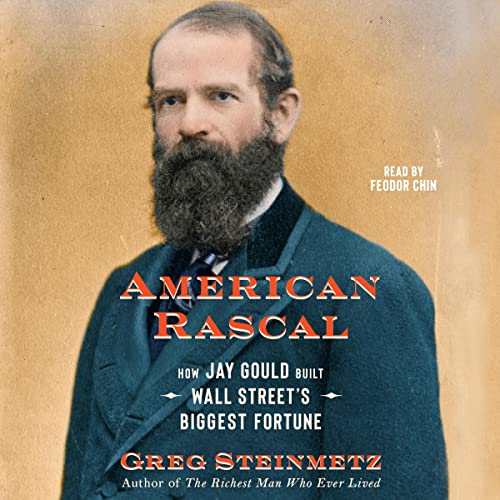
Learning From the Most Ruthless Robber Baron (Jay Gould) | Greg Steinmetz
American Rascal: How Jay Gould Built Wall Street's Biggest Fortune
Kim Zussman comments:
Likely worthwhile but I was stopped out at 2:59 "Buffett was a model of integrity"
Stefan Jovanovich replies:
Agreed. One of the many things the List has done is teach me the limits of my own understanding. I find the Oregano offensive because he has an outright pimp for a partner; in a decade of active practice in LA during the GO-GO years of the 70s and 80s, Munger's firm was - by far - the worst combination of self-righteousness and chickenshit deviousness that we and every lawyer we knew encountered. But, Buffett's artful dodging as a taxpayer has never bothered me. Thx to KZ for reminding me that all cheating really is equal in the eyes of God.
Jeff Watson writes:
I liked this biography better.
Aug
30
Keeping charts by hand, an interview with Helene Meisler
August 30, 2022 | Leave a Comment
Big Al writes:
A fun and interesting interview with Helene Meisler who has been keeping charts by hand since the 80s.
Helene Meisler On What's Going On With the Stock Market Now
The Federal Reserve is in tightening mode. And there's that old adage "don't fight the Fed" which means in theory it's a bad time for stocks. And yet we saw a surprisingly powerful rally off the bottom in June. But now what? Can the market resume its ascent? Or will we return to the lows, or possibly make new lows? On this episode we speak to Helene Meisler, who has been trading stocks for roughly four decades, and who has a unique approach to analyzing the market. She draws stock charts by hand. In our chat, Meisler explains her methodology, and gives her assessment of the market right now.
Jeff Watson comments:
I still keep up my charts by hand, and I know at least 3 others on the list who do the same. Does keeping charts add value for those who partake in the practice?
Duncan Coker responds:
I would posit that the physical act of writing and drawing is beneficial. It improves focus and generates a sense of mastery and accomplishment, however small, both of which are good for trading. This is all in addition to the statistical information garnered.
Jul
31
Equipment, from Zubin Al Genubi
July 31, 2022 | Leave a Comment
When you first start learning a sport equipment seems important. After years of practice and finally mastery you realize equipment doesn't matter. I suppose true. I suppose true life mastery makes you realize you don't even need equipment.
Peter Saint-Andre writes:
Recently I visited an uncle of mine for a few days and, to help while away the time, played a cheap guitar he had sitting around in his attic. I sure was happy to get home and play the nice Taylor 6-string I bought years ago on 48th Street (the now-vanished "Music Row") in NYC.
Steve Ellison adds:
I used my skis for 16 years. Good value for money, but in the meantime designs and materials improved. In recent years, my old skis were noticeably skinnier than those of others riding lifts with me. In March I bought new skis, and I hope I can be proficient with less effort.
Larry Williams writes:
Running shoes have made a major breakthrough with the carbon soles, etc. no way will I ever go back to my old Tigers.
Justin Klosek comments:
Musical instruments can improve over time, too — my Nord keyboard has terrific sounds (and effects) that used to require lots of pieces to achieve. now in one convenient package, and more reliable!
Michael Brush says:
Taylors are nice! Jewel used to borrow them from that store for recording sessions in NYC. She helped put Taylor on the map back then, and cutaways.
Peter Saint-Andre responds:
I bought my Taylor jumbo six-string (serial #690, made at their original workshop in Lemon Grove) in 1988, when Jewel was 14 years old and still living on a far.
Jeff Watson offers:
Interesting list of artists who play Taylors. Much more than Jewel.
Michael Brush replies:
Of course. But she put them on the map. I never bought one. I can't stand having to use Elixirs, and they got way to trendy. I have many Martins and Gibsons.
Big Al offers:
Some quotes from Yvon Chouinard:
You perfect a sport when you can do all of these things with less stuff. The most impressive ascent of Everest was by the Swedish guy who bicycled from Stockholm to Kathmandu and then soloed Everest and bicycled back to Stockholm. That is cool, as opposed to this huge multinational guided thing with computers and internet cafes at the base of Everest.
The more you know, the less you need.
The word adventure has gotten overused. For me, when everything goes wrong – that’s when adventure starts.
Jul
23
Sergio Garcia bunker nightmare at the 2022 open
Jul
23
Books and BBQ, from Duncan Coker
July 23, 2022 | Leave a Comment
You have to admire a state that distinguishes is BBQ intrastate between eastern and western styles. Ole Time BBQ on Hillsborough in Raleigh serves an excellent example of the former for those in NC. (ie Stefan)
Reading The Boys in the Boat about the 1936 U Washington crew team and their journey to compete in the Berlin Olympics. Some great coaching and lessons from Ulbrickson the Washington coach. The downplaying of expectations before big races, "My boys are not ready for the race but they're the best we got", the quiet in the boatyard before the competitions, the practices at night in brutally cold conditions to avoid observation from competitors. The Stoicism in the face of victory and defeat.
Art Cooper responds:
I enjoyed The Boys of '36 by PBS on their American Experience series very much.
Jeff Watson adds:
I’ve been rereading Finnegan’s Pulitzer-Prize-winning Barbarian Days, arguably one of the best autobiographies I have ever read. The best surfing literature.
Nils Poertner writes:
good to read a book at all. most adults I know, in particular - males, and from a certain age onwards, say 40 - often give up on reading long text. why? hm, I guess visual stress during the day from excessive near vision these days so overwhelming (screen time), and made worse by poor visual habits etc (ppl don't blink enough when they read text etc) maybe other reasons, too. lack of curiosity etc.
Jun
29
RIP, William Thomas Ziemba
June 29, 2022 | Leave a Comment
Jeff Watson writes:
We lost a giant.
William Thomas Ziemba, August 30, 1941 - June 22, 2022
Known as “Dr. Z,” Bill developed scenarios, models and studied anomalies across any market he could think of – from Jai alai, sports betting, currencies, equities, and horse racing, seeing all as forms of investment where decisions could be studied, optimized, and bets appropriately scaled. Believing that the best way to understand a topic was to write a book, Bill wrote over 40 on topics ranging from financial markets, sports betting, anomalies, lotteries and even Turkish flat weaves. Other ground-breaking work focused on energy supply scenarios on what became Canada’s oil sands in collaboration with Sandra. One of the publications of which he was most proud was his memoir, Adventures of a Modern Renaissance Academic in Investing and Gambling.
Jun
22
Freak wave, from Jeff Watson
June 22, 2022 | Leave a Comment
There are many cautionary tales and market lessons in the first minute or so of this video.
Freak Wave Steamrolls Lineup (Opening Scene) – Uluwatu
Jun
8
New CBOE floor, from Jeff Watson
June 8, 2022 | Leave a Comment

Sneak peek: The new CBOE open outcry trading floor opening in June
A reader asks:
What % of the floor space is the SPX pit?
Jeff Watson replies:
No clue. The CME is moving what’s left of their trading floor back to the old South Room, where the CBOT bond pit was 40 years ago before the new floor opened in 1982.
[A related link. -Ed.]
FLOORED The Complete Documentary Film
A world that's more riot than profession, the trading floors of Chicago are a place where gambling your family's mortgage is all in a day's work. FLOORED offers a unique window to this lesser-known world of finance. Traders may not have degrees, but they've got guts, and penchant for excess. But like many aspects of our economy, technology is changing their business, and these eccentric pit denizens aren't the type to take kindly to new tricks. Computerized trading may take the emotion out of the job, but it may also take these old-timers out- they are dinosaurs in a young man's game. FLOORED is a gripping, honest look behind the curtain of the trading floor that few have ever seen.
Jeff Watson adds:
A new trading floor in 2022 and I’m stoked.
Stefan Jovanovich offers some history:
Chicago Stock Exchange Trading Room: Reconstruction at the Art Institute of Chicago
May
27
The idea that has the world in its grip
May 27, 2022 | Leave a Comment
i haven't seen an update on this in 20 years. i believe its relevant.
The World in the Grip of an Idea Revisited
Socialism Destroys Institutions, Societies, and Individuals
chalk up the losses of the yankees to the unholy assuaging of the idea that has the world in its grip. its shameful that a manager can't support his players, but this is part of the idea that certain personages are entitled because of the masters 100 and disney syndrome.
Laurel Kenner writes:
I have long wanted to do a study of Sweden, the darling of US socialists.
Peter Saint-Andre adds:
I read an article in the last ~2 years about Sweden (perhaps in Reason magazine?) which argued that these days the country is not nearly so socialistic as "progressives" think.
Jeff Watson comments:
I like Sweden’s system of private roads, and the fact that everyone, rich and poor, has to pay the same rate of taxes.
Andre Wallin writes:
my parents immigrated to the US when Olof Palme was prime minister. they claimed they moved in large part because of his socialistic policies. he was assassinated in 1986 by "Skandia Man" who they only figured out who it was in 2020 posthumously. my uncles do pretty well in sweden as small business owners these days, but nothing compared to what is possible for so many in the US.
Henry Gifford responds:
Some years ago I attended a lecture by two people from Sweden, who argued that Sweden has high taxes, but it is worth it for all the services the government provides. But they did not convince me that they paid lower taxes than we pay in the US – sounds like we pay higher taxes here. They were shocked to hear about paying high real estate taxes with money that has already been taxed.
Yes, Sweden is the darling of socialists in the US. But most articles I’ve read say that Sweden is an example of socialism that works, then include nothing to back up that claim, and don’t even reference it later. I’ve heard that Sweden toys with socialism every 20 or 30 years, finds it is a disaster, and gets as free of socialism as fast as possible. If this is true, it wouldn’t discourage a socialist from claiming that Sweden is socialist.
One time I was talking about “government” schools in the US. Politically incorrect to call them what they are. I might have quoted Cato’s finding that government schools cost twice as much as private schools. A guy was talking about a wonderful “public” school, and I asked if it was a government school. He said he didn’t know. I asked if it was on land or floating around on a boat. He said it was on land. I asked him who owned the land. He said he didn’t know. I assured him that his level of dishonesty qualified him for being a very good comrade. He didn’t object. Some level of dishonesty seems a prerequisite for people who claim to believe that socialism is a good idea.
Bo Keely comments:
After traveling the world to 105 countries, I've concluded it's not a matter of Socialism vs Capitalism. It's a matter of people. Some peoples can make a socialism work and do it. Other peoples at their best cannot make capitalism work nor desire it. So, one should look at squares and circles before deciding which hole they should fit into. I personally prefer the lone wolf life.
May
1
Constructal theory, from Zubin Al Genubi
May 1, 2022 | Leave a Comment
For a finite-size system to persist in time (to live), it must evolve in such a way that it provides easier access to the imposed (global) currents that flow through it.
- Adrian Bejan
At Chair's suggestion I am enjoying some of Prof Bejan's books:
Time And Beauty: Why Time Flies And Beauty Never Dies
As applied to current markets it had some trouble breaking the 4500 big round last few times and that is a big constructal round.
The "Professor" defines the Constructal law: Every system flows in a design that evolves to improve flow. Examples of flow systems are river deltas, blood circulation, heat transfer, economic systems, and the stock market. The "flow" of the stock market is to provide capital transfer from investors to companies to run business. Chair says that the flow has evolved to transfer wealth from the public and to cause them to do the wrong thing.
The standard time price tape bar chart might not be the best visual to track the increase in capital flow. A good type of chart would be in money flow defined as dollars flowing to companies ie total net stock sales less vig which would measure the increase and decrease of capital flows in and around the system. The underlying principle is based on simple economics. Growth leads to higher profits and prices.
The variations in price are needed to maximize the flow so participants can put money (energy) into the flow at a price they like. Sometimes buying the bottom isn't best if one needs a lot of money. Stated another way there may not be sufficient liquidity at bottom tick. Our new chart should show available and new liquidity or loss. Analysis should find areas/times/ prices of liquidity and when that leads to higher prices and profits. I'm not sure if the standard money flow charts do this.
Flow systems often look like trees or rivers. Binomial statistics would be a useful tool. Ralph Vince used binomial statistics and branch analysis for his risk analysis. I don't fully understand the derivations but appreciate the outcomes. A branch chart would show points of high and low money flow and branch to profit or loss outcome at each branch. Binomial analysis would show direction for profit higher price path.
In markets infrastructure is to flow commissions to brokers. Maximum flow will occur in a range. That is why ranges around 50's are so common. Its in the middle. Its a time of uncertainty.
Jeff Watson adds:
Which segues nicely with what my mentor told me in the 70’s that markets will move in the direction that will maximize the number of trades in that period. If there is more stuff to be traded at .6, the market will not be moving away from .6 to trade at .2, it’s going to clear out the .6 trades before it moves away, either way, from the price. This supports the maximization of commission for the brokers.
Feb
18
An old canard, from Jeff Watson
February 18, 2022 | Leave a Comment
The old canard, “You never go broke taking a profit” was not coined by a winner, that’s for sure.
Big Al adds:
Markets are an excellent venue for cultivating outcome bias and hindsight bias. It's too easy to look at a chart and think, "Why didn't I buy *here* and sell *there*???" Then you turn to face the future, and the future is blank.
Jeff Watson writes:
People who watch televised poker with the hole cards exposed and % to win, frequently make judgments of the players performances based on the complete information they see vs the incomplete information the player is working with. It’s easy to be an armchair quarterback.
Dendi Suhubdy comments:
True. You could however predict the bluff rate, and percentages from past play, which can be used to win a game. New outlier players are hard to predict because lack of data, you need some sort of one-shot learning there. Hard.
Zubin Al Genubi responds:
The best buys are at the point of maximum pain and uncertainty.
Jan
30
Loving and Loathing Kenny G
January 30, 2022 | Leave a Comment
Penny Lane on Loving and Loathing Kenny G
Love it or hate it, but you've definitely heard it: the so-called "smooth jazz" of saxophonist Kenny G. Filmmaker Penny Lane talks about her documentary, Listening to Kenny G, with EconTalk host Russ Roberts. They discuss the pursuit of perfection, the power of vulnerability in art, and why Kenny G is loved by the people and reviled by the critics.
Here is the trailer for the documentary.
Jeff Watson comments:
If I was forced to listen to Kenny G, I would welcome an increase in the rate of my deafness, in fact deafness would be my safe space.
Zubin Al Genubi writes:
In contrast to Kenny G I've really been into John Coltrane. Took a number of years to truly appreciate his music.
Adam Grimes adds:
I absolutely loathe smooth jazz and New Age music (Einaudi, et. al.). I'm not completely sure why, but I've always had a very strong visceral reaction to music like this. And I DO embrace a lot of simplicity and minimalism… so it's not that… Perhaps it's music that is obviously intended to be trivial.
James Lackey writes:
Well joy! Who loves listening to the same key trillion not low tech music? Kenny G blah blah blah. Charlie Parker on a 50s Miles album. If the ever frustrates me is because I can’t play it. Branford Marcellus probably the best ripper sax ever but whatever. Some may think taking pop tunes re sketch them into EDM is silly or lazy. It’s not hard but it’s hard to do and who wants women to dance anyways.
The point was Kenny G hit a note and held it then. Did not hit a note a rest then hit a note on same scale coming from and angle and your eyebrows raised. Damn!
And guys the emotional response to music rests rhythmic beats to each his own. Like the markets please remember the scientific evidence. Down 20% is always going to be emotional. The first 10, I’m not sure if any of us should lift a brow.
Jeffrey Hirsch writes:
I get into some of that old jazz from time to time. But I am a rocker at heart. Recent highlights:
Grateful Dead in Honolulu Jan 23, 1970, with Pig Pen and an extended Turn On Your Lovelight. It's on Dicks Picks.
Little Feat - Electric Lycanthrope – recent release of a live studio performance in 1974
Laurel Kenner responds:
I'm with Adam — I hate the phony sentimentalism/exhibitionism.
Antonio Porres Miranda suggests:
I end up always defaulting to what ever has to do with Antonio Carlos Jobim.
Laurel Kenner approves:
Jobim is impeccable — good choice!
Vic offers:
i always and continuously listen to Verdi. every aria is a perfect blend of instrumental music and singing. each aria is designed to please. and he's very innovative in his orchestration, sometimes 7 basses, other times 4 clarinets. beautiful augmentation of life for me, heartily recommend it.
Maria Callas - Early Verdi arias
Jan
24
The Government Gets into the Business of Monopoly Auctions
January 24, 2022 | Leave a Comment
Stefan Jovanovich offers:
The mania for sudden fortunes made in cotton, raging in a vast population of Jews and Yankees scattered throughout this whole country, and in this town almost exceeding the numbers of the regular residents, has to an alarming extent corrupted and demoralized the army. Every colonel, captain, or quartermaster is in secret partnership with some operator in cotton; every soldier dreams of adding a bale of cotton to his monthly pay. I had no conception of the extent of this evil until I came and saw for myself. Besides, the resources of the rebels are inordinately increased from this source. Plenty of cotton is brought in from beyond our lines, especially by the agency of Jewish traders, who pay for it ostensibly in Treasury notes, but really in gold. What I would propose is that no private purchaser of cotton shall be allowed in any part of the occupied region. Let quartermasters buy the article at a fixed price, say twenty or twenty-five cents per pound, and forward it by army transportation to proper centers, say Helena, Memphis, or Cincinnati, to be sold at public auction on Government account. Let the sales take place on regular fixed days, so that all parties desirous of buying can be sure when to be present.
- Charles Dana's recommendation to the Secretary of War, 1863
Jeff Watson responds:
Sounds like sour grapes from Mr Dana, almost like he was having problems with his hidden cotton partner and since he didn’t find easy money, nobody else should either.
Stefan Jovanovich replies:
Score by WS. But, according to his memoir, Dana was no more secretive about his partnership with Conkling than anyone else in D.C. He asked Halleck for letters of introduction to the generals not named Grant. He omitted Grant because he already had the reputation of being incorruptible.
How the Story Ends:
On March 31, 1863, Mr. Lincoln issued a proclamation declaring unlawful all commercial intercourse with the States in insurrection, except when carried on according to the regulations prescribed by the Secretary of the Treasury. These regulations Mr. Chase prepared at once. At the same time that Mr. Lincoln issued his proclamation, Mr. Stanton issued an order forbidding officers and all members of the army to have anything to do with the trade.
Or does not end:
Diary of Gideon Welles: Saturday, May 21, 1864
Last night I was at a party at Mr. Chase's, or his daughter Mrs. Sprague’s, and late in the evening he spoke to me of the great abuses in cotton speculations. It was a new and singular theme for him, and I said it could not be otherwise than demoralizing. He said, “Yes, your whole fleet out West is infected; Porter devotes his attention to getting cotton and has a boat to himself, with a piano and his pipe, on these cotton raids.” I replied this could not be so. The naval men could capture and retain nothing, which the courts do not adjudge to be (a) good prize. We were interrupted at this point. I conclude the Committee on Commerce have notified Chase that they disapprove of his “Trade Regulations,” and this outburst on the Navy is to turn off attention from his officials. But we shall see.
Lieutenant-Commander S. L. Phelps has been with me this evening and given me many interesting details concerning the Red River expedition and the incompetency of General Banks. Among other matters he relates some facts in regard to cotton speculations by persons connected with General Banks — some of his staff — that are exceedingly discreditable. Among others whom he specially mentions is one Clark from Auburn, New York, who appears to be managing director of the cotton operations.
Jan
1
Secrets of Professional Turf Betting, from Jeff Watson
January 1, 2022 | Leave a Comment
For those who haven't read it, here’s a pdf of Robert L. Bacon’s book, Secrets of Professional Turf Betting. The book provides a banquet for a lifetime.
But first, it must be understood that while it is possible for ANY man or woman to get started with a lonely deuce or sawbuck and run it up to a handsome amount, it is at the same time impossible for EVERY man or woman to make a living at the races.
The careless, the inconsistent, the people who must be "in action" every minute, the stabbers at the moon, the followers of free public selectors, the people who go to the races "just for fun", the players who are ignorant of the principle of winning, the people who do not keep up to date with all the new ideas and trends — all such people must lose. That is true because every cent of the purse money, the jockey fees, the track upkeep and amortization, the trainer's living, the plater owner's living — and the profits of the consistent bet winners — all must come out of the money lost by the careless and uninformed public.
Dec
12
Arrival of the Queen of Sheba - G.F. Händel, from Nils Poertner
December 12, 2021 | Leave a Comment
A music piece by Händel - the Arrival of the Queen of Sheba. One could tell that the organ player is enjoying himself.
So many of us finance do terribly well - financially speaking. But then we see it as toil. Some go to the theater or listen to concert in the eve- but perhaps we got it all backward then?
Laurence Glazier writes:
Let’s remember that Handel was enjoying himself too.
Nils Poertner replies:
Wasn't he a pretty good investor as well?
Most (good) musicians experience life in greater fullness than ordinary folks (like us) and express it via their music, eg, the late US singer Johnny Cash…same thing with him. also good lyric with toil and feeling depressed and the sun comforting him etc. some of my more narrow minded friends are like: "I am rich, I can buy happiness." No, you can't. It is an illusion.
Vic adds:
i listen to verdi whenever i need cheer. every one of his arias and chorus pieces is bite sized to enjoy. verdi was a genius in all things like mozart and brahms. a great investor also was about the richest man in Italy when he passed. maintained amazing secrecy about his mistresses also.
Jeff Watson offers:
Whenever I need cheering up, I listen to Steve Fromholz sing his epic Texas Trilogy, and his Man With a Big Hat. (If that one doesn’t bring a tear to your eye, have someone check you for a pulse.)Beautiful music that celebrates real men, freedom, and the open range.
Adam Grimes writes:
Thank you for the share, Nils. This is a fun piece… I've played arrangements of it literally hundreds of times in church services and weddings, etc.
By the way, if any of you play piano, Handel's keyboard music is vastly underrated. Almost all of it is super accessible and a real joy to play. Worth checking out!
I've been more successful in the past few years finding a balance between my artistic, creative life as a musician and the markets. It's a terribly hard balance to maintain and I haven't quite got it right yet.
James Lackey writes:
The Blues Travelers Run Around, the blues brothers and the prison movies Shawshank Redemption, Clint Eastwood Alcatraz always cheer me.
Verdi is fantastic for its simple yet full and rich chord structure and the similar movie sound tracks. Or how about that chord and crescendo on the TDX patented movie surround sound vrrrrmph there is nothing like the sounds of a properly tuned full blown racing engine at idle then a single thump of the throttle and shut it down to silence.
Simon and Garfunkel the sound of silence is wonderful with the remakes of recent rockers.
The sound of silence trading is one thing, like sunshine itself that is either one of the most beautiful things a day or annoying. The sounds of a single fan on in a room across the hall, a car door, mumbled sounds of laughter on the next block. In a panic as your fingers cut plastic keyboard buttons and you search for an honorable retreat. A big rally, the escape with a proper reduction, back to even you laugh as your holding what you’ve got for the duration as we mumble we should have had the balls to hold all to close.
Then like the sun rising over a few covered manicured field of dreams. You whisper, Put some music on brother…Why is it so quiet in here?
Life without music is death.
Laurence Glazier responds:
Nicely put, Lack, with a great rhythm and turn of phrase. Music is a force of nature we cannot tame, but we can be its instrument.
A quote from the painter David Hockney's latest book, Spring Cannot Be Cancelled:
I intend to carry on with my work, which I now see as very important. We have lost touch with nature, rather foolishly as are a part of it, not outside it. This will in time be over and then what? What have we learned? I am almost 83 years old, I will die. The cause of death is birth. The only real things in life are food and love, in that order, just like our little dog Ruby, I really believe this and the source of art is love. I love life.
Larry Williams suggests:
Food and love?? How about air? How about something to be passionate about—like trading or whatever turns you on.
James Lackey :
Larry as you know "trading for a living" opens up self - I we me - to the world in a very simple output PnL and you can not fake it for long. To complete on the worlds stage full time is to immerse yourself. If you give the market 80% effort perhaps you’ll end up with a 20% loss. Give it 98% maybe you’ll get a 2% profit after expenses and paying yourself a working wage. Go all in and it’s literally limitless. All the money fame fortune a many can ever want.
Take back 2% of your time? The mistress of the market is a very jealous person. If she doesn’t kill you your cohorts running at 100% will.
Trading is one of the best things that has ever consumed me and mine. Yet it consumes me.
Laurence Glazier comments:
Better the passion is in the art than the artist.
Nils Poertner writes:
well said. there is nothing wrong with some healthy ego. but the ego that modern man (modern woman) has formed is perhaps way too narcissistic. We are co-creators in fife and that spirit is encapsulated in many religious books- even by Ralph Walter Emerson. one has to feel it - it has nothing to do with IQ.
In The Gospel of Emerson, Ralph Waldo Emerson is quoted as saying:
"There is a principle which is the basis of things . . . a simple, quiet, undescribed, indescribable presence, dwelling very peacefully in us . . . we are not to do, but to let do; not to work, but to be worked upon."
James Lackey adds:
The gist of whatever m saying comes from my dad and army guys and y’all:
Give a smart man time he finds problems.
Give a real smart guy time he finds solutions.
Give a genius time they find the right questions.
With leadership all 3!work together and create the undiscovered unlimited human potential. Alone without leadership and a dose of pain you get what my dad called "lost souls". Time is the 21st century issue most have too much time to think of problems. Those with solutions have no voice as they live in fear. The genius sit alone talking to the connections.
The genius around the globe never before without a middle man or government wishing some one would take charge and get it done. What is it? That list is now so long it’s an infinity symbol. No begging. No end.
Alston Mabry suggest:
Speaking of music, the Fresh Air podcast has a 3-part Sondheim
retrospective. It's really interesting to hear somebody at that level
talk about his work.
Nov
5
The Book of Proposition Bets, by Owen O’Shea
November 5, 2021 | Leave a Comment
Jeff Watson writes:
Proposition bets have been around since the beginning of time. They capture the greed of the victim and put money in the pocket of the prop hustler. Proposition bets rely on the greed of the victim combined with the ignorance of the real probability of what they are betting on. Most good proposition bets are of the sort that will give the victim at least a small chance of winning, the bets that allow the victim no chance to win aren't really bets, but swindles. Although I'm not a fan of swindles, there are some very elegant swindles out there. The book only mentions a couple of them.
Owen O'Shea has presented 50 different proposition bets, mostly in the card, dice, or numbers categories. The real beauty of his short book is that the author kindly explains the math behind each of the prop bets in easy to follow detail. The math is very friendly to those math challenged individuals who might read the book.. The description of each wager and the subsequent true odds of the outcomes allows the reader to "see" what's under the hood for each bet.
The bets described in the book could be easily modified for different situations. For example, he describes the birthday problem wager, but also describes a wager that is a kissing cousin to the birthday problem. I could think of 15 different scenarios that one could apply the same principles of the birthday problem.. All of the other wagers mentioned the book could be expanded upon in this manner.
O'Shea's book is brand new, July 2021, and I highly recommend it. It is an easy read, which is surprising, considering the level of explanation for each bet. This book should be included on the shelf of every library of those interested in gambling, probabilities, math, cards, dice….and for those with a touch of larceny in their hearts. For the beginning proposition hustler, this book could be a bible.
When I was a young man about to go out into the world, my father says to me a very valuable thing. He says to me like this… "Son," the old guy says, "I am sorry that I am not able to bank roll you to a very large start, but not having any potatoes which to give you, I am now going to stake you to some very valuable advice. One of these days in your travels, a guy is going to come to you and show you a nice, brand new deck of cards on which (Sky snaps fingers) the seal has not yet been broken. This man is going to offer to bet you that he can make the jack of spades jump out of that deck and squirt cider in your ear. Now son, you do not take this bet, for as sure as you stand there, you are going to wind up with an earful of cider."
- Sky Masterson "Guys and Dolls"
Stefan Jovanovich adds:
The prop bet was whether Mindy's (actually, Lindy's) sold more strudel or cheesecake.
Vic comments:
all prop bets on S&P from short side are losers. in sports betting you can win if 52% against the line. is that better or worse than markets? how can you beat the 52%?
Henry Gifford writes:
After hearing about the book on the list, I bought a copy. Thanks for the tip. I particularly looked forward to having the examples explained.
I started reading the introduction, which starts with an explanation of the Monty Hall paradox.
Now let’s get something straight – the problem described in the book is described as being a description of the game that was played on TV. All such explanations I have ever heard also say they describe the game that was played on TV.
A hustler offers a mark the option of choosing which one of three doors (cards in the book) is a winner, with the mark betting $10 for a chance to win $10 for choosing the winning door. The three choices are designated A, B, and C.
In the example given, the mark chooses A, then the hustler reveals that C is a losing option, then the hustler gives the mark the option of switching to choice B. The book then explains the mark’s situation as follows:
Here’s the thing. If you do not switch, your choice of picking the [winner] is 1/3, so think of the other unturned card as the “winning card” with probability of 2/3. Therefore, if you switch 2/3 of the time, you switch to the [closed winning door]. Consequently, by switching you double your chances from 1/3 to 2/3 of picking the [winner].
Suppose a con artist is offering this bet to various marks at various locations. At a bet of say, $10 a round, where the mark wins, they win $10. About 1/3 of the time the mark will choose the wrong card. If the mark decides not to switch from their original choice, they lose. This will occur about 1/3 of the time. But the hustler wins about 2/3 of the time and therefore for every $10 the mark wins, the hustler wins $20. Therefore, the con artist is winning this bet 2/3 of the time and in so doing, is making a tidy profit.
Then the book names a famous mathematician who was fooled by this bet, then changes the subject.
I don’t see any explanation of the paradox, and a lot of other things are not explained in any way I can understand.
For example, if switching improves the odds from 1/3 to 2/3, why would switching 2/3 of the time improve the odds to only 2/3? And what is the assumption of the mark switching 2/3 of the time based on?
And “If the mark decides not to switch from their original choice, they lose.” Huh? They lose all the time by not switching? But the previous sentence says the mark wins 1/3 of the time if not switching.
Another gem is “About 1/3 of the time the mark will choose the wrong card.” Really? I thought that with one choice out of three cards the mark will choose the wrong card 2/3 of the time.
And, at the core of the issue, the claim that switching improves the odds to 2/3 is not explained.
Of course the greatest paradox is that the book is about proposition bets that appear to be better bets than they really are, meanwhile the bet described says the mark is betting $10 to win $10 on a choice of one out of three options – a bet which does not appear to me to be a winning bet, as the hustler has a 2/3 chance of winning. Then, after the “paradox” is allegedly explained, the book explains that the hustler enjoys odds of winning of 2/3 because of the paradox. So, the hustler’s odds of winning improve from 2/3 to 2/3. Just how much did the hustler gain by improving his odds of winning from 2/3 to 2/3? This is another thing I don’t understand, and don’t see any explanation of.
This leaves me with zero faith in the accuracy of anything else in the book, and zero faith that anything else in the book will be adequately described. Or, at least, explained in a way I can understand it. My copy is in my garbage can, but I can retrieve it and mail it to any list member who asks for it.
Oct
20
Energy - Things that make you go hmmmm, from Zubin Al Genubi
October 20, 2021 | Leave a Comment
The energy crunch in China and Europe may grow into a bigger trend worldwide. Its one of those small line notes you notice and go hmmm. Like the pandemic was in early 2020. Hmmm, shortage of masks. Hmmm, Shortage of gas, coal. Things that make you go hmmm.
Water shortages also coming up. See how this winter is. Reservoirs are quite low. Look at weekly chart of FIW water etf.
Jeff Watson adds:
I’m noticing many holes where product should be on shelving at every retail establishment we patronize. I’ve been waiting on a part for my Jeep that’s been on back order for 6months. Still see little to no ammo in stores. The system is full of hiccups.
Tim Melvin notes:
I saw a lot of empty shelf space at Costco last week. Very unusual.
Pamela Van Giessen writes:
No joke. We have a huge problem. This is what happens when the world gets shut down and everything is all covid fear all the time. No workers. Test school kids constantly and they will end up being sent home and parents won’t be able to work. Then stuff won’t get made or shipped to where it needs to be. Freight train, fully loaded, sat parked in Livingston MT for nearly 2 weeks. Just left the other day.
As someone running a business that relies on actual commodities (flour, sugar, etc) I find myself overbuying out of concern that I will not be able to get basic ingredients. I had a hard time getting boxes about 2 weeks ago. It’s ridiculous.
Laurence Glazier writes:
It’s getting reminiscent or the Atlas Shrugged movie.
Nils Poertner suggests:
UK is worth to watch as most things we are going to see here in Eurozone or you guys in the US are happening a touch earlier over there (UK being such a tiny, little, open, exposed, econ).
Laurence Glazier adds:
Yes, over here in London it's harder to get petrol (i.e. gas) for the car, less things available in online stores.
James Lackey writes:
I can get everything to build a car a bike or a motorcycle and mysteriously no spikes no single bearing or one simple chip - I call BS. This is almost as big as a Vatican scam.
Jeff Rollert adds:
The most common boat engine, the Merc Cruiser, is quoting deliveries of full engines for next summer.
Duncan Coker notes:
Motors being taken out of production. Sounds a lot like a book I know.
Oct
20
Sleep patterns and disruption, from Big Al
October 20, 2021 | Leave a Comment
How do traders deal with sleep patterns or disruption? Especially with markets in different time zones, etc.
Circadian Rhythm and Sleep Disruption: Causes, Metabolic Consequences, and Countermeasures
Abstract
Circadian (~24-hour) timing systems pervade all kingdoms of life and temporally optimize behavior and physiology in humans. Relatively recent changes to our environments, such as the introduction of artificial lighting, can disorganize the circadian system, from the level of the molecular clocks that regulate the timing of cellular activities to the level of synchronization between our daily cycles of behavior and the solar day. Sleep/wake cycles are intertwined with the circadian system, and global trends indicate that these, too, are increasingly subject to disruption. A large proportion of the world's population is at increased risk of environmentally driven circadian rhythm and sleep disruption, and a minority of individuals are also genetically predisposed to circadian misalignment and sleep disorders. The consequences of disruption to the circadian system and sleep are profound and include myriad metabolic ramifications, some of which may be compounded by adverse effects on dietary choices. If not addressed, the deleterious effects of such disruption will continue to cause widespread health problems; therefore, implementation of the numerous behavioral and pharmaceutical interventions that can help restore circadian system alignment and enhance sleep will be important.
Larry Williams comments:
That’s one of the hardest parts of this business 'secially when you live in 2 places.
Zubin Al Genubi writes:
Haha. I sleep when I trade. Wake up . Sell too soon.
Jeff Watson responds:
Sell too soon? My life story is that I always pay too much and sell too cheaply. It's a bad habit.
James Lackey adds:
In Ecuador your perfect 12 hours of sunlight all year 365 sure beats fall back to dark at 5pm here. The fall back time change and the further/ farther your from the equator is
More difficult than staying up 100 hours a few times a year.
Oct
19
The Harvard Classics Anthology, from Jeff Watson
October 19, 2021 | Leave a Comment
Here's a good download site for all 51 books of the Harvard Classics Anthology. Since they are all in the public domain, there is no charge. They can be easily put on your Kindle or other reader.
Oct
14
Music QOTD, from Jeff Watson
October 14, 2021 | 1 Comment
Heard a great quote today while driving and listening to SiriusXM. No clue who said it but enjoying this nugget of deliciousness from the meal for a lifetime:
Music is mathematics for the ears.
[Ed. note: attributed to Stockhausen]
Art Cooper writes:
Here's another, in a similar vein:
Geometry is frozen music.
Peter Saint-Andre chimes in:
Music is the hidden arithmetical exercise of a mind unconscious that it
is calculating. - Leibniz
Music is mathematics - and architecture is music in stone. - Ayn Rand
Andy Aiken builds on the theme:
Goethe said, "Architecture is frozen music".
There aren’t physical geometric forms, but many physical representations of geometry, such as in architecture.
Nils Poertner suggests:
Christopher Wolfgang Alexander
(born 4 October 1936 in Vienna, Austria)is a widely influential British-American architect and design theorist, and currently emeritus professor at the University of California, Berkeley. His theories about the nature of human-centered design have affected fields beyond architecture, including urban design, software, sociology and others.
Oct
12
Biden’s nominee for Comptroller, from Jeff Watson
October 12, 2021 | Leave a Comment
Biden's nominee for Comptroller of the currency has a plan, a big plan. It's such a big plan, it's best done in places that used to have 5 year plans…don't worry, we're getting there soon enough.
Oct
5
Could traders learn from other traders?
October 5, 2021 | Leave a Comment
"Decoded Neurofeedback (DecNef) is the process of inducing knowledge in a subject by increasing neural activation in predetermined regions in the brain, such as the visual cortex. This is achieved by measuring neural activity in these regions via functional magnetic resonance imaging (FMRI), comparing this to the ideal pattern of neural activation in these regions (for the intended purpose), and giving subjects feedback on how close their current pattern of neural activity is to the ideal pattern. Without explicit knowledge of what they are supposed to be doing or thinking about, over time participants learn to induce this ideal pattern of neural activation. Corresponding to this, their 'knowledge' or way of thinking has been found to change accordingly."
Nils Poertner comments:
interesting. personally, I found cross-training v helpful - so honing skills in non-work areas, too. eg, professional trader in equity who has singing as hobby might benefit a lot from taking professional singing classes to open up new pathways (also re creativity in trading. also) - am happy to be the subordinate then whereas in trading there can be some unconscious resistance in learning from others.
Jeff Watson adds:
Ben K Green wrote a book called Horse Tradin'. The entire book is cross-training and might even be on Chair's list of recommended books. If it isn't on a list, then it should be.
James Lackey writes:
I've been working on this for a while now 3 years. Path duration outcome based on neuroscience. Dr Andrew Huberman my skate park guy is one of the best - Prof from Stanford University and Army special forces fan. It's fantastic to study.
Nils Poertner responds:
yes excellent. the thing is it can't be an endgaining experience, one needs to have an intrinsic interest in something /also the learning part. if ppl love skateboarding for the sake of skateboarding and hire a teacher to get better, this enthusiasm may carry over for trading (learning /improve process here as well) too.
(our whole culture is way too much based on endgaining - maybe not in all areas - but in a lot of them which is part of the problem why are in this situation altogether)
Sep
29
Symphony No 2 in D The Hello, by Laurence Glazier
September 29, 2021 | Leave a Comment
Jeff Watson comments:
Fellow spec lister Laurence Glazier knocked this one out of the park. This piece can only be described as "delightful." The man certainly has musical chops.
Andrew Moe adds:
Thanks Jeff and of course, Laurence. Loved watching the musical arrangements for the entire orchestra simultaneously. It's like watching the ticks in multiple markets go together. A little ditty from gold, then the bonds … suddenly the euro and yen rise - all to the beat set down by Sanchez. Beautiful!
Laurence Glazier writes:
Thanks both for kind comments.
Yes, it is market-like. Taking in data - melodies and fragments which come to mind - and putting them together, constructing positions, treading a narrow path between excesses of caution and exuberance.
Sep
19
Friday’s big decline
September 19, 2021 | Leave a Comment
some comments on the big decline.
(1) it was a decline red in tooth and claw with bonds, stocks, and gold down.
(2) it was harbingered by the decline of 47 bucks in gold on thursday. a once in a decade decline. the main reason there was a status incongruence.
(3) everything bad for the US. the 70 billion of equipment left behind. and all the US could come up with was that the afghans and their allies aren't smart enuf to reverse engineer it.
(4) the foreigners have to decide on options expiration whether they should continue their US buying. with the US in decline from the withdrawal and everything related, why should they park in US.
(5) the status incongruence of the admission we killed 19 civilians in the drone strife. but this was clearly an attempt to come up with good talking points about our over the horizon capability. this was the only thing they coudn't blame on pele another incongruence.
(6) the incongruence of Milley worrying about sanity of Trump but not concerned about the montreal semantic test for other high officials. incongruence of no punishment for generals who worked for raytheon and g.d. but impeachment if pele did it.
(7) as the professor says, the market moves to every higher numbers with cataracts along the way.
Jeff Watson writes:
With many talking doom and gloom regarding the future, it is a noteworthy accomplishment for the S&P to only be 2.5% off it's ATH.
Mark Graham asks:
so what's next come monday?
Jeff Watson responds:
Who knows what the market is going to do on Monday. Who cares what I think? Who cares what anyone thinks should happen in the future? Why should one trust the "experts?" People might have an idea of what might happen, but that's about all it is. I can't count the times I've been perfectly convinced something would happen and it didn't. What happens tomorrow happens, and you will either be right or wrong. That's the case for every one of us. It doesn't matter what Chair, Bill, Sogi San, Larry, myself, or any other member of this list thinks the market is going to do. It only matters what you think and how you navigate the often treacherous currents, eddies and shoals of the markets. Opinions given for free, market tips, supposed insider info, etc are worth less than what you pay for them. LeFevre talked all about tips, and allowing others to do one's thinking for them, and his advice should be heeded.
Larry Williams joins in:
There are people I listen to intently; they have established they are worth listening to…some are on this list. An explanation of why a trader expects such and such to happen is not a “tip". Big difference.
Jeff Watson clarifies:
Since I obviously wiffed the ball in my previous reply, to clarify and make my point clear, the message was it's best to keep one's own counsel.
Larry Williams concurs:
Yup, listen to all but pull the trigger at the target you see.
Nils Poertner adds:
I think what is tricky for most people to understand that in many other parts of business life (in particular as an employee), one can do very well as long one is social enough, aggressive, disciplined enough, progressive etc… or went to the right school…
whereas maneuvering mkts (long-term - over decades) by oneself requires a different mindset altogether - and trading even more so than pure investing
Aug
13
Trouble ahead?
August 13, 2021 | Leave a Comment
 Jeff Watson writes:
The market weathermen, self described sage like realists, always see trouble on the horizon and are compelled to give all knowing, logical reasons the market will get hit. Sometimes even invoking "science." To them the pressure is dropping hard, the seas are building, and we're about to get hit with sustained gale force winds. It's always doom and gloom to them. They want the little guy to get scared, pitch his position and make the broker money, rinse and repeat. Meanwhile, Steve provides some perspective and his chart lists 49 reasons for the market to get hit…while the S&P went up 35X during that time. Unfortunately the brokers don't want their clients looking at charts like this or reading Dimson.
James Lackey agrees:
Jeff says what we all learned the hard way. The market in stocks is an engine designed to go up. Any business decisions based otherwise are in between risk-based conservative - which in most cases is a good thing - and ruinous, as the vigorish will grind you to a long-term guaranteed loser.
Michael Cook responds:
I broadly agree with this but let’s not take it as written on tablets of stone.
One of the nastiest human failings in my opinion is recency bias and for investors in US stocks, an entire career (unless a very seasoned investor indeed) has been a basic bull market tempered by the bear markets of 1997, 2002 and 2008 and whatever the hell March last year qualifies as. Recency bias on steroids.
But it doesn’t mean it must always be like that. Just ask eg the investors in the Japanese stock market 40 years ago who pretty much are still waiting to be making money now…
Leo Jia adds:
Even if there is a sharp drop, it will only be shallow and short term. This is not a big bubble and there is no euphoria yet. If one suspects big money are selling, the question is what is the alternative to the US market. Perhaps the worry will be legitimate when Turkey and China become out of any concerns.
Nils Poertner writes:
what makes the difference between folks who are in the market - and trade successfully in the long-term and those who don't is often the acquisition of implicit knowledge. Things we know are true on some level, and that we need to experience personally many times to know that they are true - not in the absolute sense but more intuitively - and percentage-wise.
we live in a very explicit world now everything needs to be spelled out. but the "absense" of something is a better guide than the appearance of an event.
an example would be that SPX drops by 3pc one one day (after months of overheating) - AND the financial press is somwheat quiet aout the drop. as long as they are loud…one can normally relax a bit more.
not to be confused with long-term investing. eg, some of my English friends who bought prime real estate in the 90s in London, and levered up every year with new flats, are all fabulously rich now. was it being lucky or smart? who knows? implicit knowledge is underrated - was my point to say.
Leo Jia comments:
Even if there is a sharp drop, it will only be shallow and short term. This is not a big bubble and there is no euphoria yet. If one suspects big money are selling, the question is what is the alternative to the US market. Perhaps the worry will be legitimate when Turkey and China become out of any concerns.
Duncan Coker writes:
Agreed, it's worth noting that the 00's were the worst decade since the 30's for stocks. I'd propose there was a bearish recency bias going on during the 2010s.
I liked the video about carnival scams. I recall "winning" an album at age 13 from a darts game on the boardwalk at Asbury Park, NJ. No doubt I overpaid. It was a vinyl from a band I had never heard of at the time called the The Allman Brothers which forever changed my life in music.
Jun
8
Increased Volatility and Instability in the Grains After the Pits Were Shut Down
June 8, 2021 | Leave a Comment
Apr
19
Spontaneous Synchronization
April 19, 2021 | Leave a Comment
Jeffrey Watson writes:
I've been thinking a lot about the old physics demo on how metronomes will sync up. I'm wondering if there are any market lessons.https://www.youtube.com/watch?v=T58lGKREubo
Leo Jia writes
More explanations here: https://youtu.be/t-_VPRCtiUg
Mar
30
A History of Interest Rates
March 30, 2021 | Leave a Comment
Jeffrey Watson writes:
I found the pdf copy of one of my favorite books of all time, A History
of Interest Rates, by. Sydney Homer and Richard Sylla. I found it a
compelling read in the 80's when it first was published, and still find
it compelling today, in 2021. If one is interested in history, money,
exchange, banking, markets, interest rates, then one might find this
book to offer great value and a meal of a lifetime. It certainly gives
one pause and that there is nothing really new, it's all been done before.
http://vnn1.online.fr/Cafeteria/Financial_Accounting_Banking/
A.History.of.Interest.Rates.Wiley.Finance.Series.4th.Ed.eBook-YYePG.pdf
George Zachar writes:
It's a must-have.
I keep a copy at my office, and a copy at home.
Mar
22
Why Has Nobody Died in Big Surf Recently?
March 22, 2021 | Leave a Comment
Jeffrey Watson writes:
This Surfline article delves into the reasons that while the waves people are riding are getting bigger and bigger, nobody has died while riding them in a long time. The author attributes this to better training, better conditioning, better equipment, and new safety measures with a team effort.
https://www.surfline.com/surf-news/nobody-died-big-waves-lately/112815?
Zubin Al Genubi writes:
Feb
15
Last Train
February 15, 2021 | Leave a Comment
Victor Niederhoffer writes:
To paradise: https://www.amazon.com/s?k=henry+flagler+last+train+to+paradise&crid=2K4P028N815Z3&sprefix=
train+to+paradise+henry%2Caps%2C166&ref=nb_sb_ss_ts-doa-p_1_23 tells the story of a great adventures and benefactor of Florida and the country written in 20002 without the cancel culture exerting too much of these influence. highly regomme3nde and inspiring as to what an man of integrity and the books should aspire to.
Jeffery Watson writes:
That book is a must read for anyone who loves the history of Florida.
Tim Melvin writes:
The authors fiction books set in Florida are also outstanding reads.
Jan
18
Delayed vs Instant Gratification
January 18, 2021 | Leave a Comment
Jeffrey Watson writes:
I wonder if specs as children would eat the marshmallow now or wait the 15 minutes and get another one?
https://www.youtube.com/watch?v=N_jakAtI0Zo
Stefan Jovanovich writes:
The fraud in social science is that its practitioners almost always end up being Platonists. Instead of doing what Darwin and others did - collecting data in massive quantities and then using mathematics to find the probabilities, they define an idea - delayed gratification - and then work at finding the evidence that proves that the idea exists. The law - the worst of all modern social sciences - does this automatically. If you repeated the marshmallow experiment a hundred times, you would get the beginnings of understanding. You might discover that the issue with the child who does not wait on the first trial is trust of strangers, that, after seeing that waiting does get you a second one, he is happy to wait as long as required. If you change the reward structure so it is competitive - the one who waits longer gets 2, you would see yet another result. The length of the finches' beaks is a statistical response to reality, not a measure of any particular bird's desire for instant or delayed gratification.
To answer Watsurf's question, for marshmallows I could wait forever - hate the things and always have. For black licorice, I would have stolen the other kids before he had a chance to think.
Anna K writes:
Stefan, very good points about all the issues with the test, but do you really think that “delayed vs instant gratification” doesn’t exist or doesn’t matter?
Stefan Jovanovich writes:
To give AK's questions a binary answer, No and No. Delayed gratification is another categorical description that pretends human beings have innate behavioral qualities that can be quantitied, will be stable over time, and have predictive value. But, the only measure that more than a century of experimental data has shown to have a correlation with future behavior is the one that makes no effort to dissect people's minds but takes them completely as a whole - IQ. And that, of course, is the very measure that has become illegal because it can foretell what individuals can and will do.
Penny Brown writes:
Towards that end, De Blasio has decided to end testing to determine which students receive a place in schools for the gifted and talented.
No one is allowed to be superior in his world. He has foster the dumbing down of education because having superior achievers is not equal.
Henceforth admission to the schools for gifted students will just be determined by a lottery.
Nov
6
What’s Next
November 6, 2020 | Leave a Comment
Michael Cook writes:
Ok, so assuming Biden gets called today or the weekend - which starts to look likely, what is next for the markets?
If Trump obsessively focuses on lawyers and anger/anguish, do we not get next stimulus until late January just as Covid cases rocket? So the sugar high we have been on basically gets its sugar removed?
I get the relief rally on the back of (I assume) no blue wave, tech breakup, paralysis is good etc, but once the dust settles - isnt this actually bad, at least for the next couple of months - or am I miss reading this?
Jeffery Watson writes:
One could make a case that the market doesn't care about who's the boss as long as stocks can carry themselves. After all, what will really change about the nuts and bolts of things? Will the clerk at the DMV, the food inspector, the apparatchik, the cop, the local judge, pr the IRS agent suddenly change their stripes and modus operandi with a new president?
Aug
31
BBQ Heaven.
August 31, 2020 | Leave a Comment
Jeffery Watson writes:
Yesterday at 4PM, I put a couple of shoulders on the smoker. I'm doing it very low and slow, and expect this meat to run 22-24 hours on the smoker. No problem, our guests aren't coming until 6 so we should be OK. Smoking meat is the easiest thing to do in the world, just marinate the night before, give it a good dry rub and let it go on low temp (215-230 degrees) until internal temp reaches 205 and it's tender. Keep the meat moist while smoking and spray with apple juice every 2 hours or so. Temperature is critical. After the smoke, let the pork rest for 90 minutes wrapped in tin foil inside an insulated cooler, then take out the bone and pull the pork apart with forks. I always throw a little rub and the juices back into the pulled pork for an extra taste sensation. BBQ'ing might take a long time, but it's easy to do and tastes so good.
Larry writes:
Beautiful… Love the idea of the long smoke time think it makes a huge difference. I'm smoking whole chickens today about 3 1/2 hours also doing smoke corn in the cob if you haven't tried that yet it's a real treat.
Jeffery Watson writes:
Smoked corn on the cob is also part of our menu along with slaw and homemade potato salad, the potatoes also got some smoke. Just took the shoulders out of the smoker and am now allowing them to rest. Total time was 20 hours and 45 minutes. I cranked up the smoker To 300 and will be smoking a couple of pounds of sweet and hot Italian sausage. This dinner should turn out pretty decently.
Archives
- October 2026
- September 2026
- August 2026
- July 2026
- June 2026
- May 2026
- April 2026
- March 2026
- February 2026
- January 2026
- December 2025
- November 2025
- October 2025
- September 2025
- August 2025
- July 2025
- June 2025
- May 2025
- April 2025
- March 2025
- February 2025
- January 2025
- December 2024
- November 2024
- October 2024
- September 2024
- August 2024
- July 2024
- June 2024
- May 2024
- April 2024
- March 2024
- February 2024
- January 2024
- December 2023
- November 2023
- October 2023
- September 2023
- August 2023
- July 2023
- June 2023
- May 2023
- April 2023
- March 2023
- February 2023
- January 2023
- December 2022
- November 2022
- October 2022
- September 2022
- August 2022
- July 2022
- June 2022
- May 2022
- April 2022
- March 2022
- February 2022
- January 2022
- December 2021
- November 2021
- October 2021
- September 2021
- August 2021
- July 2021
- June 2021
- May 2021
- April 2021
- March 2021
- February 2021
- January 2021
- December 2020
- November 2020
- October 2020
- September 2020
- August 2020
- July 2020
- June 2020
- May 2020
- April 2020
- March 2020
- February 2020
- January 2020
- December 2019
- November 2019
- October 2019
- September 2019
- August 2019
- July 2019
- June 2019
- May 2019
- April 2019
- March 2019
- February 2019
- January 2019
- December 2018
- November 2018
- October 2018
- September 2018
- August 2018
- July 2018
- June 2018
- May 2018
- April 2018
- March 2018
- February 2018
- January 2018
- December 2017
- November 2017
- October 2017
- September 2017
- August 2017
- July 2017
- June 2017
- May 2017
- April 2017
- March 2017
- February 2017
- January 2017
- December 2016
- November 2016
- October 2016
- September 2016
- August 2016
- July 2016
- June 2016
- May 2016
- April 2016
- March 2016
- February 2016
- January 2016
- December 2015
- November 2015
- October 2015
- September 2015
- August 2015
- July 2015
- June 2015
- May 2015
- April 2015
- March 2015
- February 2015
- January 2015
- December 2014
- November 2014
- October 2014
- September 2014
- August 2014
- July 2014
- June 2014
- May 2014
- April 2014
- March 2014
- February 2014
- January 2014
- December 2013
- November 2013
- October 2013
- September 2013
- August 2013
- July 2013
- June 2013
- May 2013
- April 2013
- March 2013
- February 2013
- January 2013
- December 2012
- November 2012
- October 2012
- September 2012
- August 2012
- July 2012
- June 2012
- May 2012
- April 2012
- March 2012
- February 2012
- January 2012
- December 2011
- November 2011
- October 2011
- September 2011
- August 2011
- July 2011
- June 2011
- May 2011
- April 2011
- March 2011
- February 2011
- January 2011
- December 2010
- November 2010
- October 2010
- September 2010
- August 2010
- July 2010
- June 2010
- May 2010
- April 2010
- March 2010
- February 2010
- January 2010
- December 2009
- November 2009
- October 2009
- September 2009
- August 2009
- July 2009
- June 2009
- May 2009
- April 2009
- March 2009
- February 2009
- January 2009
- December 2008
- November 2008
- October 2008
- September 2008
- August 2008
- July 2008
- June 2008
- May 2008
- April 2008
- March 2008
- February 2008
- January 2008
- December 2007
- November 2007
- October 2007
- September 2007
- August 2007
- July 2007
- June 2007
- May 2007
- April 2007
- March 2007
- February 2007
- January 2007
- December 2006
- November 2006
- October 2006
- September 2006
- August 2006
- Older Archives
Resources & Links
- The Letters Prize
- Pre-2007 Victor Niederhoffer Posts
- Vic’s NYC Junto
- Reading List
- Programming in 60 Seconds
- The Objectivist Center
- Foundation for Economic Education
- Tigerchess
- Dick Sears' G.T. Index
- Pre-2007 Daily Speculations
- Laurel & Vics' Worldly Investor Articles
