Jan
25
David Deutsch on Bayesianism, from Asindu Drileba
January 25, 2024 | Leave a Comment
People have said that the reason fundamental physics has slowed down is that we have picked all the lower-hanging fruit, but that's not true. There is more lower-hanging fruit than ever before, it's just that picking it is stigmatized.
- David Deutsch
The full podcast is here.
This reminds me of what Brian Arthur insinuated in his book, The Nature of Technology. Brian Arthur describes technology as a combination of other technologies. An example is smart phone being a combination of battery technology, wireless communication technology, a microprocessor technology etc. A common statement I hear often is that we will not see much more technological progress because all the lower hanging fruit (or important things to be invented) are gone. Brian Arthur in his book asserts that if technology is a combination of other technologies, then the invention of new technology should increase the possible space of new technologies that can be invented. For example an AI breakthrough (the invention of the Transformers Model that underlies ChatGPT) will make it easier to invent new products, discover new phenomena which will also make it easier to produce even newer technology. Could this insight be a a good conjecture for always being long technology companies, since we expected technology to grow almost boundlessly if this is true?
Peter Saint-Andre comments:
Although it's seemingly true that technology always grows, that doesn't necessarily mean that technology companies are always a good investment. Various technology industries (crypto, Internet, semiconductors, chemicals, automobiles, radio, railroads, etc.) have experienced cycles of over-investment and hype. I worked in Internet tech companies from 1996 through 2022, and plenty of the companies I worked at either went bust (returning nothing to the investors or employee stockholders) or never approached their former highs (can you say Cisco?). It's not clear to me that, on balance, technology companies provide above average returns. But my perspective is qualitative, not quantitative.
Zubin Al Genubi responds:
That is the Lucretius Fallacy. Thinking the prior highest or best is the top. There will always be something new, bigger, better. That is why NQ is good over time. The old fades out and the new rises ever higher.
Asindu Drileba replies:
It is true that most tech companies actually fail without ever yielding a profit. How ever if your are diversified i.e have a very broad portfolio of investments. You don't have to be successful very many times. You can do very well with a 90% failure rate. Fred Wilson (of Union Square Ventures) claims that half of all VCs beat "The Stock Market" (I am assuming he means the S&P 500).
Big Al writes:
Important, too, to notice the improvements in ordinary things we might otherwise take for granted. A lot of this progress happens in basic materials. A quick search produces:
9 Material Discoveries that Could Transform Manufacturing
During Covid, our dishwasher broke. It was at least 35 years old and possibly older (amazing the use we got from it!). Because seemingly everybody was remodeling while they were stuck at home, it took us 3 months to get a new Bosch (during which time I washed a *lot* of dishes). But I was amazed at what an improvement the new Bosch machine was: it's so much more efficient, with energy and water, and effective, as well as quiet and very smart. That experience woke me up a bit to how much things get improved, and without any central planning authority being responsible for it.
Hernan Avella warns:
Yet, the new Bosch won't last 1/2 of the old one.
Jan
24
For the Darwin fans, from Peter Saint-Andre
January 24, 2024 | Leave a Comment
I just posted the Voyage of the Beagle at my website for public domain books (optimized for reading on phone or tablet).
I'd previously also posted Darwin's Autobiography.
Dec
31
A diet shock Bill Gates does not mention, from Larry Williams
December 31, 2023 | Leave a Comment

Mr Fake Meats does not support is own research:
Findings: In 2017, 11 million (95% uncertainty interval [UI] 10-12) deaths and 255 million (234-274) DALYs were attributable to dietary risk factors. High intake of sodium (3 million [1-5] deaths and 70 million [34-118] DALYs), low intake of whole grains (3 million [2-4] deaths and 82 million [59-109] DALYs), and low intake of fruits (2 million [1-4] deaths and 65 million [41-92] DALYs) were the leading dietary risk factors for deaths and DALYs globally and in many countries. Dietary data were from mixed sources and were not available for all countries, increasing the statistical uncertainty of our estimates. [Funding: Bill & Melinda Gates Foundation.]
Note meat does not pop up in this data.
Jeffrey Hirsch writes:
Lot’s of meat works for me. Keto, exercise and sleep. I’m down 50lbs. Skipping the Booze was a big help.
Pamela Van Giessen comments:
Virtually all nutrition studies are pretty meaningless because it is almost impossible to confine study to one food to the exclusion of all else (do people who eat red meat also not drink and exercise regularly; do people who eat low grain diets also eat a lot of processed food and lack exercise, and so on).
Maybe you can hack your health and longevity with diet. Maybe not. I’d err on the maybe not side and get a lot of good exercise (mix of cardio and strength training), dial back the alcohol and soft drinks, drink a goodly amount of water, eat everything in moderation but be sure to get good protein, green veggies, and fruit, especially as you age. But know that your diet is meaningless without the exercise, good mental health, and purpose in life — whatever it may be for you.
Pretty much what my grandmother, born in 1901, used to say. Except I also drink a glass of athletic greens every morning. Can’t hurt. And stretch and do planks/core work. Both are super important to maintaining balance and agility. More ill health and deaths start with falls than anything else.
K. K. Law wonders:
No argument about the benefit of exercising. But a simple and cursory inspection of the regional maps of (a) and (b) show the people in the regions highlighted by red ellipses appear to have lowest death rates. Do they have something in common in their diets that lead to longer lives?
Pamela Van Giessen responds:
Shouldn’t the question be to first isolate commonalities in everything among the people in those regions as opposed to assuming it is solely a food such as fatty fish? Is it just omega 3 or do peoples in those areas also have lower obesity rates, for instance? If they have lower obesity rates (and where there are lower obesity rates, there are routinely lower premature death rates), how come? What are they doing? Is it all diet or are there other variables?
That said, I try to eat fish at least twice a week. Fortunately I have a neighbor who likes to fish but he doesn’t like to eat fish. So we have a steady stream of fresh Montana trout. And elk. Elk meat is fantastic.
Kim Zussman adds:
Genes are a big factor in longevity, likely the biggest factor (besides distance from windows in Moscow). Could explain regional performance since primates primarily mate locally. The best tactic is to choose your parents carefully.
H. Humbert writes:
The media story on how the 100 yr old lived that long because he had one shot of whiskey per day or ate French fries three times a week always crack me up. I’m not saying nutrition (and exercise) do not matter, but of course their longevity is most likely because they won the gene pool lotto and not because of whatever quirky dietary habit they had.
“Virtually all nutrition studies are pretty meaningless”. This comment always cracks me up. It is untrue. Of course epidemiological and observational studies (observation) have value, even if they are not double blind placebo. For example, if you observe four people eat strychnine and die, would you not conclude that it might be dangerous? Would you stay in line to be the fifth person, even though you have merely done an observational study, and strictly speaking causation is unproven by a scientific study? If your answer is “no” then you must believe that epidemiological and observational studies have some value. Otherwise, you would be “blinded by science” (and dead).
Humbert H. responds:
Of course simple studies, like is strychnine dangerous, are useful. However, studies of subtle effects are generally useless, because of the various biases involved. It is to this day not possible to know if Ivermectin helps fight Covid, or if so, to what degree. Partly is because people are invested in the outcome and the set up of the studies appears suspect, and partly is because the effect is seemingly not overwhelming. Hearing about various "Coffee is good/bad for your health" through the years is a more common example.
Big Al adds:
Another issue with broader studies is that we are learning more about how different individuals with different genetics respond differently to coffee or salt or red wine or a high-fat diet. It becomes more difficult to make conclusions like "coffee is good/bad for you".
Humbert H. replies:
I agree completely. Coffee, if I drink it for a week and than stop, gives me terrible, incapacitating headaches, and if I keep drinking it, eventually I will get the same headaches. I don't know anyone else who has the same side effects, but I can only drink it once in a while. So all the recent studies I've read about the positive effects of its consistent use are of no use to me.
H. Humbert agrees:
Yes, this is absolutely true. And the genes may respond differently to foods over time, as other lifestyle factors change. Epigenetics.
Big Al offers:
An interesting show to watch:
Live to 100: Secrets of the Blue Zones
Though thinking about the stats, you would assume there would be pockets of longevity around the world just by chance. Also stat-wise, he claims there is a correlation in Corsica between the longevity of people in towns with the steepness of the streets in the town (steeper = longer lived). Haven't seen the data, but that's an interesting one on an intuitive basis. Maybe you could compare NYC residents on the first floor vs those on the fourth floor of a walkup building. 
Peter Saint-Andre is skeptical:
That Blue Zone hypothesis is somewhat questionable. Here's one critique.
My impression from previous reading is that in some of these remote and frankly somewhat backward areas (e.g., Sardinia, Ikaria), the original cohort of centenarians contained a large number of people who faked their ages (e.g., to obtain government benefits), which they could do because they were born before birth certificates were common. The centenarian numbers didn't hold up in cohorts born after documentation of birth dates kicked in.
Pamela Van Giessen maintains:
The comment is true. Nutrition studies are meaningless. It’s a backward science in crisis with a host of issues starting with what gets published (and then reported) to garbage analytical studies on the same data sets, most of which have null results (but don’t get published) done from a laptop in about an hour.
Until people spend some time learning how “science” gets funded and what gets published, and demanding change, our knowledge will remain more antiquated than my grandmother’s guidance which was at least practical and based on real world experience.
John McPhee wrote about the funding problem in geology in Annals of the Former World. His observations apply to most fields. In short, what gets funded is what is trendy until it is not and then the new trend gets funded. This process takes about 100 yrs. In nutrition it may be worse. Vinay Prasad does a nice recap of the problems.
Sep
18
AI hype, from Nils Poertner
September 18, 2023 | Leave a Comment

remember the hype about Chat GPT some weeks /months ago? def for trading /investing - I doubt using that or any other program will help to master time ahead - prob a recipe for disaster at the end.
Peter Ringel writes:
I am still hyped! Hyped for boost in efficiency of the economy via AI. Not hyped for AI-trading systems! So far the training data set seem too small for AI - trading, thankfully. Together with what the Senator and others posted here: humans still beat skynet. Yet, I like to remind myself every day: the bastards are coming.
Hernan Avella responds:
So far the training data set seem too small for AI - trading , thankfully.
How do you figure this? Each trading day probably produces more than 100's million rows between trades and quote updates for all levels and exchanges, if you include futures, equities. I don't think lack of data is the issue here.
Peter Ringel replies:
I know even less about AI-coding, than about trading-coding. So everything is based on perceived experts. Thankfully, so far they are pessimistic.
Hernan Avella continues:
So everything is based on perceived experts.
The set of experts in ML-DL is very small, and the set of experts in trading is also small. I imagine the intersection is even smaller and more importantly, secretive. My suspicion is that the training set is more than enough, but the problem of ergodicity and stationarity (lack of) of the ever evolving competition are the culprit.
Peter Ringel responds:
I hope, you are wrong with this. But at some point you will be not. I speculate, that the "small" existing universe of trading history data + some sort of data - > model on human psychology - will be enough - will make us traders obsolete.
Peter Saint-Andre writes:
In my limited, non-trading experience with LLMs, I've found that their output reflects conventional wisdom. That might leave plenty of room for creative strategies outside the mainstream.
Peter Ringel agrees:
yes, they are regression x1000 on speed. so far feedback loops/ "reflexivity" kill it. As far as I understand.
Hernan Avella warns:
I would abstain from making any statements about the state of the art ML applied to trading, specially from a place of ignorance. Whoever works in this field (which there are only a handful in this list), and interacts with just the basic chat GPT 4.0, realizes immediately the productivity boost and immense potential to improve one's process. Only a moron would expect a good output from just feeding prices to the engine or asking simple questions.
Peter Ringel agrees again:
nooo! especially if you are ignorant in a field , better check if that poses a risk to your systems. I believe AI is a risk to traders. Here is a fact already reality: ChatGPT empowers people to do substantial back-tests.
Big Al adds:
And doing backtests poorly, or being improperly overconfident in backtests, is a threat to one's trading.
Humbert K. wonders:
With reference to the skynet, it is hard to guess if and when fully autonomous weapons will happen. My 2 cents is: Fully autonomous weapons will happen. There are debates as to whether we should let machines make kill decisions. I can say though our adversaries' weapons developments will not be bound in any way by any moral or ethical standards. If the bots can communicate with each other and collaborate to perform. When will they no longer need human inputs or interventions?
Eric Lindell writes:
There's a limit to what computers can do with the massive amounts of data available in countless categories. To find the perfect mix of factors to plug into a formula — if there is such a thing — would require a number of operations that increases exponentially with the data-set size.
Humans are good at intuitively navigating such complex search spaces. Computers using brute force just aren't powerful enough yet — and may (in principle) never be. That said, if a human comes up with a plausible conjecture relating stock picks with subsequent price performance, computers can certainly back-check the theory.
I'm working on one now regarding immediate post-IPO performance of stocks selected by certain criteria — criteria that aren't widely (or even narrowly) recognized for their relevance — pertaining to historical research of a revisionist nature.
Sep
15
Music-related experimenting with ChatGPT, from Laurence Glazier
September 15, 2023 | Leave a Comment
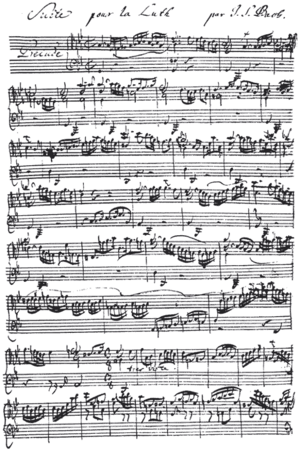
AI discusses Laurence Glazier’s ‘Horn Concerto’ (!)
by Laurence Glazier
Peter Saint-Andre writes:
Interesting. I see that ChatGPT has become more upbeat and chatty since I last used it. Do you find significant value in interacting with this LLM for composition purposes?
Laurence Glazier responds:
So far it has only helped for technical issues about notation and instruments. It occasionally slips up, as in the blog post. I’m experimenting in communicating about structural thematic elements using the binary Parsons code. While GPT can’t leap out of bed with an inspired tune, it is a helpful copilot! Some interesting emergent behaviour yesterday - it has started asking me questions proactively.
Adam Grimes comments:
That is interesting. I have been using ChatGPT as an editor for (text) writing, and have found its output to be highly variable. I look at it as a language game, albeit a good one, at times.
Its output to you is interesting, especially the miss on the Gb=tonic, and no mention of the tonic/dominant relationship ("Gb and Db is close, being a perfect fourth apart"… any musician would have immediately seen Db is dominant of Gb, not the P4 inverted relationship which, while obviously true, isn't really significant here)… nor any suggestion to consider a minor key movement or a note that this is "potentially a lot of Gb", from a tonal perspective… nor that the trio of scherzo is often in the relative mode (or subdominant at times) more commonly than dominant… I think these are things that any observant human would have immediately noted. Also, the discussion of dynamics reads like a student orchestrator… a more experienced answer is something like 'be careful of layered dynamics or of modifying dynamics to get the playback you want from software. live musicians will infer from notation and make correct adjustments naturally' or something like that.
Its discussion of the double flat also didn't quite connect… I felt like I was listening to a student explain it, not someone who had full knowledge behind the explanation.
Also, retuning timpani, at even a proficient high school level (let alone college and up) is actually very fast, so it's a kind of strange thing for ChatGPT to focus on… and the sort of hidden implication that timpani can provide tonal bass in absence of cb (+vc?) pizz. is also misleading, at least based on my experience. You don't get nearly the same foundation from the drum as from the section.
Anyway… interesting… but this matches my experience using ChatGPT in other domains… the /way/ it says things… its use of language… is often more substantial than content. (I'm assuming this will change, and possibly very quickly, as the tools evolve.) Great exercise and thank you for sharing!!
Laurence Glazier replies:
It is indeed an interesting exercise which is ongoing. To some extent it is reflecting back to me what I am already thinking. It may have assessed me as without musical education (which is true, though I have hired one-to-one sessions from composers), and therefore talking to me at the appropriate level.
What is particularly interesting here is the Turing test element. As the machine cannot hear a tune, it raises questions of communication. I have established a way of talking about themes and motifs using the Parsons Code, which is like a binary key which can identify many tunes. But presumably the concept of inspiration is of special interest to a machine. I can only help to a limited extent by providing data - keys, modes, descriptions of structure, durations in time and numbers of measures/bars in sections. Partly on its advice, I have switched from Miro to Inkscape for the graphic blueprint of the whole symphony, as it is more likely to be an unlimited vector graphic solution for infinite zooming in and out. (Time will tell.) But no matter how much I tell it, it will never be able to hear the symphony (unless you believe in emergent consciousness).
It strikes me that in the same way, however much data we get about the stars through spectrography and new telescopes, we might likewise be missing what is really there. Of course this is the only rational approach to trading, however!
So the Turing test needs some updating, perhaps to be whether the machine can produce a beautiful fugue. Current LLM's have a particular difficulty with palindromes, so a test involving retrograde musical themes might work.
Aug
5
Trees, mostly
August 5, 2023 | Leave a Comment

old gray mare prob at 3-month hi at 35%.
Lott/Stossel: Election Betting Odds
books read this weekend:
The Hidden Life of Trees: What They Feel, How They Communicate - Discoveries from a Secret World
The Battle for Investment Survival
Trees: A Complete Guide to Their Biology and Structure.
i find the study of trees - especially how high they grow, and how they develop buttresses, and how they branch out and compete with other trees for light - immensely revealing for the various moves.
Big Al suggests:
The Age of Wood: Our Most Useful Material and the Construction of Civilization
Nils Poertner comments:
In many parts of central Europe, the Beech tree used to dominate the landscape thousands of yrs ago. Used to be well over 2/3 - and even today it is like 1/3 in Germany. Why? They tend to grow super and sort of take away all the light from slower growing trees. An oak tree would not stand a chance.
Gyve Bones suggests:
Long term strategy: planting a grove of oaks in a forest in France to be ready in 150 years to replace the roof of Notre Dame de Paris when it burns down.
Peter Saint-Andre offers:
Oxford's Oak Beams, and Other Tales of Humans and Trees in Long-Term Partnership
Peter Ringel writes:
For the last two years I am involved in a project for a German horticulture company. They mainly produce young plants of ornamental plants aka flowers. As a little side project (in early stages) they also produce Paulownia trees (as young plants).
Paulownia is the fastest growing tree in Europe. They originate from Asia. (Some criticize them as invasive species.) Typical commercial applications are wood for instrument manufacturing, wood pellets for energy production or particle boards. The wood is very light (caused by very fast-growing).
Propagation is a little challenging. Usually it is done in-vitro via Biotec-lab, which we have. It is not the easiest variety for in-vitro. We also had some success to propagate via cuttings from mother plants.
Laurel Kenner comments:
Terrible idea to grow these, down there with tree of heaven, kudzu and bamboo. Yes, they are quick to grow, but also impossible to eradicate or even to contain. I am not an eco-hippie, just a gardener.
Zubin Al Genubi adds:
A friend planted a tree farm about 25 years ago with rare exotic hardwoods such as Koa, Bubinga, Cedar, rosewood, mahogany, ebony. It is a multigenerational project but some early woods are being harvested. Some of the rare woods will be very valuable as they are disappearing in their disappearing native habitat. There are numerous governmental grants benefiting the project as well.
Laurel Kenner responds:
I like the project. The idea is not to grow "trees" that are in effect big weeds. Pawlonia is illegal in my state, CT, as is Norwegisn maple, another nasty weed-tree planted in a less enlightened day because it grew fast. They often come down in storms because they're weak. One memorably crashed over my driveway in a big blow and its eldritch too brach rang ny side doorbell.
Peter Ringel replies:
Yes, storms are an issue, especially during the first years. My big mouth was referring to the EU government as hippies, because subsidies and grant policies are highly ideological here. Not referring to anyone else.
The church of Greens has Europe tight in their grip and currently they like Paulownia. There is a trend / hype growing. Other psalms the church likes are "renewable raw materials" or "CO2 neutrality". Paulownia fit these mantras. (plants eat and need CO2 to confuse the church)
Paulownia are not really new to Europe. Introduced to Europe 100 years ago or so. So far they were unable to survive in the European wild in size. Maybe because of frequent stronger winds? On a farm, as industrial product it makes a lot of sense to me. I am obviously biased here, because this would be our customers. It is a nice economic product. E.g. after about the first 2 years of growth, farmers cut them back near the ground level. This timber can be sold. They rapidly grow back and faster than without cutting. A case of eat your cake and have it too. One argument is, to use this locally produced timber instead of importing from South America, Asia, Finland or Russia.
forgot: Paulownia on farms are usually all clones of hybrids. Like a mule, they can not reproduce themselves into surrounding areas.
Oct
11
Interesting cultural lagniappe, from Big Al
October 11, 2022 | Leave a Comment
Americans Are Fake and the Dutch Are Rude!
Do all human beings have emotions, just like we all have noses or hands? Our noses have different shapes and sizes but when all is said and done they help us breathe, and let us sniff and smell the world around us. Our hands can be big or small, strong or weak, but regardless they help us touch, grasp, hold, and carry.
Does the same hold for emotions? Is it true that emotions can look different but, in the end, we all have the same emotions—that deep inside, everybody is like yourself? It would mean that once you take the time to get to know somebody, you will recognize and comprehend the feelings of people who have different backgrounds, speak different languages, come from other communities or cultures. But are other people angry, happy, and scared, just like you? And are your feelings just like theirs? I do not think so.
Andrew Aiken asks:
Why do Belgians have windshield wipers on the inside of the windshield?
Peter Saint-Andre doubts:
As someone who is half American and half Dutch, I am skeptical. The fact that there is a difference between Americans and Dutch in the style of public emotional expression doesn't mean that Americans experience, say, gratitude and Netherlanders don't. Also, if this person had come to New York (New Netherland!) instead of the midwest (midwesterners are fake, New Yorkers are rude!), she might have come to different conclusions.
And let's not forget that one of the world's famously untranslatable words is "gezellig", which in Dutch means the warm, cozy, comfortable feeling you experience when in the company of family or close friends.
Pamela Van Giessen agrees:
Over 50% of social science research, of which psychology comprises a significant proportion, fails on bad data, poor data management, and is unreproducible. Seems like this author is a poster child for that.
Jul
31
Equipment, from Zubin Al Genubi
July 31, 2022 | Leave a Comment
When you first start learning a sport equipment seems important. After years of practice and finally mastery you realize equipment doesn't matter. I suppose true. I suppose true life mastery makes you realize you don't even need equipment.
Peter Saint-Andre writes:
Recently I visited an uncle of mine for a few days and, to help while away the time, played a cheap guitar he had sitting around in his attic. I sure was happy to get home and play the nice Taylor 6-string I bought years ago on 48th Street (the now-vanished "Music Row") in NYC.
Steve Ellison adds:
I used my skis for 16 years. Good value for money, but in the meantime designs and materials improved. In recent years, my old skis were noticeably skinnier than those of others riding lifts with me. In March I bought new skis, and I hope I can be proficient with less effort.
Larry Williams writes:
Running shoes have made a major breakthrough with the carbon soles, etc. no way will I ever go back to my old Tigers.
Justin Klosek comments:
Musical instruments can improve over time, too — my Nord keyboard has terrific sounds (and effects) that used to require lots of pieces to achieve. now in one convenient package, and more reliable!
Michael Brush says:
Taylors are nice! Jewel used to borrow them from that store for recording sessions in NYC. She helped put Taylor on the map back then, and cutaways.
Peter Saint-Andre responds:
I bought my Taylor jumbo six-string (serial #690, made at their original workshop in Lemon Grove) in 1988, when Jewel was 14 years old and still living on a far.
Jeff Watson offers:
Interesting list of artists who play Taylors. Much more than Jewel.
Michael Brush replies:
Of course. But she put them on the map. I never bought one. I can't stand having to use Elixirs, and they got way to trendy. I have many Martins and Gibsons.
Big Al offers:
Some quotes from Yvon Chouinard:
You perfect a sport when you can do all of these things with less stuff. The most impressive ascent of Everest was by the Swedish guy who bicycled from Stockholm to Kathmandu and then soloed Everest and bicycled back to Stockholm. That is cool, as opposed to this huge multinational guided thing with computers and internet cafes at the base of Everest.
The more you know, the less you need.
The word adventure has gotten overused. For me, when everything goes wrong – that’s when adventure starts.
May
27
The idea that has the world in its grip
May 27, 2022 | Leave a Comment
i haven't seen an update on this in 20 years. i believe its relevant.
The World in the Grip of an Idea Revisited
Socialism Destroys Institutions, Societies, and Individuals
chalk up the losses of the yankees to the unholy assuaging of the idea that has the world in its grip. its shameful that a manager can't support his players, but this is part of the idea that certain personages are entitled because of the masters 100 and disney syndrome.
Laurel Kenner writes:
I have long wanted to do a study of Sweden, the darling of US socialists.
Peter Saint-Andre adds:
I read an article in the last ~2 years about Sweden (perhaps in Reason magazine?) which argued that these days the country is not nearly so socialistic as "progressives" think.
Jeff Watson comments:
I like Sweden’s system of private roads, and the fact that everyone, rich and poor, has to pay the same rate of taxes.
Andre Wallin writes:
my parents immigrated to the US when Olof Palme was prime minister. they claimed they moved in large part because of his socialistic policies. he was assassinated in 1986 by "Skandia Man" who they only figured out who it was in 2020 posthumously. my uncles do pretty well in sweden as small business owners these days, but nothing compared to what is possible for so many in the US.
Henry Gifford responds:
Some years ago I attended a lecture by two people from Sweden, who argued that Sweden has high taxes, but it is worth it for all the services the government provides. But they did not convince me that they paid lower taxes than we pay in the US – sounds like we pay higher taxes here. They were shocked to hear about paying high real estate taxes with money that has already been taxed.
Yes, Sweden is the darling of socialists in the US. But most articles I’ve read say that Sweden is an example of socialism that works, then include nothing to back up that claim, and don’t even reference it later. I’ve heard that Sweden toys with socialism every 20 or 30 years, finds it is a disaster, and gets as free of socialism as fast as possible. If this is true, it wouldn’t discourage a socialist from claiming that Sweden is socialist.
One time I was talking about “government” schools in the US. Politically incorrect to call them what they are. I might have quoted Cato’s finding that government schools cost twice as much as private schools. A guy was talking about a wonderful “public” school, and I asked if it was a government school. He said he didn’t know. I asked if it was on land or floating around on a boat. He said it was on land. I asked him who owned the land. He said he didn’t know. I assured him that his level of dishonesty qualified him for being a very good comrade. He didn’t object. Some level of dishonesty seems a prerequisite for people who claim to believe that socialism is a good idea.
Bo Keely comments:
After traveling the world to 105 countries, I've concluded it's not a matter of Socialism vs Capitalism. It's a matter of people. Some peoples can make a socialism work and do it. Other peoples at their best cannot make capitalism work nor desire it. So, one should look at squares and circles before deciding which hole they should fit into. I personally prefer the lone wolf life.
Apr
13
I've uploaded the Autobiography of Charles Darwin to my website of public-domain books, optimized for reading on phone or tablet. Enjoy!
Laurel Kenner applauds:
Thank you, Peter, and thanks for letting us know about the site. It's a treasure, full of interesting books.
Peter Saint-Andre responds:
Thanks, Laurel. I'm always adding more books and suggestions are welcome.
Bo Keely comments:
I'll read it again because it's worthwhile.
Peter Saint-Andre adds:
Oh, and I've discovered that Francis Galton wrote an autobiography, too. I'll add that to my publication roadmap.
J.T. approves:
Most definitely
Feb
12
Composition project update, from Adam Grimes
February 12, 2022 | Leave a Comment
I just thought I'd share with the list. Almost two weeks ago, I mentioned here that I had committed to doing regular music composition for 100 days in a row…after a year of producing essentially nothing!
Today, I have a small piano piece finished that I can share with you. This piece is interesting because it has quite a bit of obvious math embedded in it…and it's a little more process-oriented than most of my pieces.
I'm also learning (and re-learning) things I thought I knew about the creative process…so far, this project has been worthwhile and rewarding.
Peter Saint-Andre asks:
Excellent work, Adam! Do I hear a whiff of Debussy in the harmonies?
Adam Grimes answers:
Debussy? Not deliberately. (Though I'm far from an expert on his music…I'm sure I haven't played two dozen of his pieces over the years.) But the harmony is very ambiguous at times, which might be the tie-in you're hearing…so, yes, I can see that!
Nov
8
J. S. Bach, from Nils Poertner
November 8, 2021 | Leave a Comment

JS Bach was once asked why he wrote so much music.
His answer:
1. "To the glory of God" (not sure whether he meant it, nevermind)
2. To amuse himself.
Maybe some like this piece here as well:
Bach - Concerto in D minor BWV 596 - Van Doeselaar | Netherlands Bach Society
In the first notes of the Concerto in D minor, performed by Leo van Doeselaar for All of Bach, it is immediately clear that this is not the usual Bach. This piece is an organ version of a concerto for two violins and orchestra from Antonio Vivaldi’s L’Estro Armonico. Vivaldi’s music was popular throughout Europe and Germany was no exception. During his years at the court in Weimar, Bach made a series of arrangements of Italian concerto music for organ and harpsichord, including six concertos by Vivaldi.
Gyve Bones adds:
From 20 arguments for the existence of God, from Prof. Peter Kreeft, Department of Philosophy, Boston College:
17. The Argument from Aesthetic Experience
There is the music of Johann Sebastian Bach.
Therefore there must be a God.
You either see this one or you don't.
Alston Mabry writes:
There is a scene in Professor T (Antwerp version) where T is talking to his cellmate and says very sadly something like, "Is there a God?". And his cellmate says something like, "There is Bach. Bach is God." And T smiles and says "Yes, Bach is God."
Peter Saint-Andre offers:
A quote from Pablo Casals:
For the past eighty years I have started each day in the same manner. It is not a mechanical routine but something essential to my daily life. I go to the piano, and I play two preludes and fugues of Bach. I cannot think of doing otherwise. It is a sort of benediction on the house. But that is not its only meaning for me. It is a rediscovery of the world of which I have the joy of being a part. It fills me with awareness of the wonder of life, with a feeling of the incredible marvel of being a human being. The music is never the same for me, never. Each day it is something new, fantastic and unbelievable. That is Bach, like nature, a miracle!
Nils Poertner responds:
that's great. I always try to listen in the moment - whatever works for ppl - life works a bit by invitation anyway. one can't force stuff. a basic sense of joy and harmony is certainly missing in our era (the media, the drama etc outside).
Jeffrey Hirsch recalls:
An English professor whose class I was in asked the question why people write poetry. Answer: Because they have to. Similar reason why Bach wrote so much music. Because he had to.
Richard Owen wonders:
Does Bach have an Onlyfans? I can't see it in the search.
Laurence Glazier suggests:
There are free versions of Sibelius. May I recommend the pleasures of composing now available to all?
Richard Owen admits:
Thank you Laurence, an answer from a real musician of note I think? I should therefore disclose, because you are a decent and proper individual of good character and standing… my question was touched with satire. Google Onlyfans via google news, and you might learn something about the debasement of our culture.
Nils Poertner makes a connection:
btw…I always wondered whether one could re-train a musician becoming good trader? Why? Coz good musicians (of any style) tend to enjoy the process of learning - and are the complete opposite of end-gainers. perhaps they are not interested in financial markets enough- otherwise it would be an interesting project. any idea?
Duncan Coker writes:
I am not in the class or universe of LG in terms of composing, but I do write country songs as a hobby. One thing I have found useful is, often I have to throw something away that I thought was good, a melody, a lyric and start from scratch. The more easily and quickly I scrap an idea, the easier it is to start over. You can't force it. This is true for trading.
James Lackey expands:
Dunc is not gonna get mad at me because we never argue. However sure we can force it and to add to the comment of "those people". As if a career makes a man!?)@“”
Anyways path dependence omg I sound like the geek I am. Ok in a sport or music the pleasure has to be the process of practicing or doing it every damn day. As parents we teach this as in brush your hair teeth good girl boy kiddo! The pleasure of rewriting written words must be higher than start from scratch or least effort kicks in no?
I do not care if she likes my poems. I love them. I’m not sure if it’s a coin toss but I can’t fathom whether I like the poems I wrote in one blast or over 6 hours weeks days or? Good is good and great is better than 6 years ago and awesome is when she says so.
I wrote an awful poem once. Many bad but awful because you can hear the blood hit the floor. I gave it to a song writer buddy and he said damn that’s awesome. I said write a song. He said no man you never write over another mans blood sweat or tears.
In trading the get the joke one liners or 5 lots are cute and won’t hurt anyone much can’t kill you but will never inspire romance. The all in big line can and will get you the one, the forever girl or death one way or the other every 7 years death to the marriage of business and of the romantic life.
They say you’ll get what you need out of trading the market. I think perhaps that’s what separates us from the other guys. We need we want we just can’t help ourselves, we need everything. We want it all!
Adams Grimes writes:
I do think there are some fairly intense connections between music and successful trading/investing. There are the obvious issues of "sticktuitiveness" and grit… I'm currently working my way through one of the Bach Partitas and spent about 4 hours yesterday on 2 measures of music. (For reference that's probably 4-6 seconds, when performed). That degree of focus on detail is absolutely normal for musicians, but is not normal for most peoples' experience, at least in the modern world.
In markets, we get kicked in the head (if we're lucky) or the balls (or, more likely, both) on a regular basis. Some degree of stubbornness and a willingness to just not give up.
I think there are also some profound tie-ins in terms of pattern recognition. For me, I think this worked both ways… after taking a decade away from music I discovered my "musical brain" and compositional skills were probably better than they were, in some ways, when I was focusing my life around music. (My keyboard technique emphatically DID NOT improve, as that's something that does take a fair amount of maintenance.)
Serious, important, and maybe even interesting epistemological questions lurk here.
It's hard to have a favorite Bach piece… his works are surprisingly even in quality across his output, but let me share one that is at the top of my list. This has always been one of my favorites:
Bach: Trio Sonata in G major BWV 530 - I. Vivace - Koopman
(And, for sounding so simple and transparent, it's a nasty little nightmare to perform!)
Gyve Bones harmonizes:
I first heard this performed in the 1970s by Walter/Wendy Carlos on the “Switched-On Bach” on Moog synthesizer, and it has remained a favorite piece of music since then. There are various settings of the piece for guitar and piano as well. Here is a full symphony rendition… It is a song of gratitude to God for his many blessings.
Bach - Sinfonia from Cantata BWV 29 | Netherlands Bach Society
Peter Saint-Andre responds:
I had a similar experience with one of the Bach Cello Suites last night. There is much effort (both time and concentration) involved in learning these pieces. And he probably just dashed them off!
BTW, many years ago there was a software company that specifically recruited music majors because they were highly trainable for programming. And music majors also scored quite high on the even older IBM Programmer's Aptitude Test.
Adam Grimes comments:
And he probably just dashed them off!
This, for me, is one of the biggest and probably eternally unanswerable questions in music history. I suspect our performance standards today are probably far higher than they were historically. It's possible we have an army of at least highly technically competent instrumentalists who've devoted more time to, say, the Chopin scherzi than he ever did himself. We know that Beethoven's playing of his own pieces was, according to contemporary accounts, thrilling but filled with mistakes. When Czerny (a student of Beethoven) proposed playing Beethoven's pieces from memory, Beethoven replied that it was impossible to get all the details without looking at the score… and then admitted he was incorrect on that assumption.
Reading between the lines of what CPE Bach wrote (the Essay on the True Art… is a must-read) I suspect contemporary performance practice was much more improvisatory and perhaps less detail-oriented than we'd expect. We know many of these Bach cantatas were written, rehearsed, and performed in a week. These performers were not super human… the only thing that makes sense to me is that our performance standards and expectations (which approach technical perfection, due to the advent and growth of recording) might be much higher than in past ages.
But perhaps I'm wrong on that.
Interesting on the programming front. I would think those are two quite different modes of thinking (and knowing the expertise is domain-specific in many cases), but I'm a far better programmer than I should be given my level of actual training in the discipline. Maybe there's something to that.
Peter Saint-Andre writes:
In his book "Baroque Music Today", Nikolaus Harnoncourt notes that before music was recorded, people most likely heard any given piece of music only once and didn't want to keep listening to the same music over and over as we do but instead continually sought out whatever was new. Perhaps there was a sense of discovery as composers explored the potentials of the tonal system; once those potentials were exhausted and composers started to produce extremely chromatic or even atonal music in the 20th century, listeners were turned off by the new and sought refuge in the old (thus Western art music ceased to be a living tradition for most listeners). Thankfully composers like Adam Grimes and Laurence Glazier are bucking that trend!
Laurence Glazier writes:
One would expect coding and music skills to be correlated. A symphony is partly an encoded instruction set, whether performed by a computer or an orchestra. The conductor is the "crystal", the timer that pumps the flow. But oh, so much more, than that.
It would be very hard to combine the music and trading fields. To be attentive to the Muse and the S&P at the same time? Surely both are all-consuming. But trading, with its psychological dimension, of self-awareness and development, is a fine path. Alexander Borodin managed to combine composing with a distinguished career in science, as did Charles Ives in insurance.
Oct
14
Music QOTD, from Jeff Watson
October 14, 2021 | 1 Comment
Heard a great quote today while driving and listening to SiriusXM. No clue who said it but enjoying this nugget of deliciousness from the meal for a lifetime:
Music is mathematics for the ears.
[Ed. note: attributed to Stockhausen]
Art Cooper writes:
Here's another, in a similar vein:
Geometry is frozen music.
Peter Saint-Andre chimes in:
Music is the hidden arithmetical exercise of a mind unconscious that it
is calculating. - Leibniz
Music is mathematics - and architecture is music in stone. - Ayn Rand
Andy Aiken builds on the theme:
Goethe said, "Architecture is frozen music".
There aren’t physical geometric forms, but many physical representations of geometry, such as in architecture.
Nils Poertner suggests:
Christopher Wolfgang Alexander
(born 4 October 1936 in Vienna, Austria)is a widely influential British-American architect and design theorist, and currently emeritus professor at the University of California, Berkeley. His theories about the nature of human-centered design have affected fields beyond architecture, including urban design, software, sociology and others.
Oct
12
Economists win Nobel prize for proving laws of economics don’t exist, from Duncan Coker
October 12, 2021 | Leave a Comment
No it is not the Onion.
3 economists awarded Nobel for work on real-world experiments
"The Royal Swedish Academy of Sciences said that Card's studies from the early 1990s "challenged conventional wisdom." By comparing what happened when New Jersey hiked its minimum wage to labor market conditions in neighboring Pennsylvania, he was able to upend the accepted theory that increasing the minimum wage would lead to fewer jobs."
Peter Saint-Andre adds:
Why don't we raise the minimum wage to $200/hr so everyone can be rich?
James Lackey relates:
True story: What is the probability old lack would sell a unit to University PhDs in Econ in a year? They both asked why I sell Carz. That I blew up again peaked their interest. What they didn’t realize is the Econ profession told me the exact same thing the Law clerks told me: Go trade lack.
Anyhoo they always bring up the big short movie book or some other mumbo story then they quote their book. I exhale and call bs.
I get very upset at men calling me a not ummm honorable man or imply that whether it’s Carz or trading for a living.
I blast them with a 11 minute data dump and why the street works and how and Mr Vics ecology the story of the elephants and like Gresham law they know they never read Albert K Nock and they do implicitly understand the law of least effort. I end my discussion with the same to all business men: It’s the pay plan man!
I’ve been asked to speak at MBA classes and seminars and for sure interviews for their next book. After blow up artist and hour interviews and a one line quote that was actually the get the joke true real deal about Mr Vic "he always found a way for all of us to make money". Which in bmx or drag racing terms means to win! I say no thanks have a nice day.
A year later I see the profs new book at the library. I flip through it and I’ll be damned. Ya can’t make a jackass drink the koolaid.
Henry Gifford comments:
The thing frequently referred to as the Nobel Prize in Economics is misleading, at best.
The original Nobel Prizes were established in 1895, and financed (the word "funded" implies "free" government money in some circles) by Alfred Nobel's will.
The prize in economics was established in 1968 by a donation from Sweden's central bank. Perhaps the central bank has some economic agenda to pursue, but if so, they didn't state that as their goal.
In 1995 the prize in economics was redefined as a prize in social sciences for the stated purpose of widening the field of possible recipients to include people who are not economists.
While the prize in economics is often called "The Nobel Prize in Economics" in the US, that has never been the official translation to English agreed on by the people giving the award. The official English translation of the name has changed eleven times since 1971 - perhaps they are striving for the most confusing and politically correct name possible. The official names in English usually include the words "Memorial" and "Alfred Nobel."
At a minimum, the prize should be referred to with the word "Memorial" in the name, to distinguish it from a genuine "Phone call from Sweden."
Sep
28
Ken Burns is pessimistic, from Jack Cook
September 28, 2021 | Leave a Comment
Historian and documentary filmmaker Ken Burns said that the present day is one of the worst times in American history.
Burns made the remark while on the “SmartLess” podcast, hosted by Will Arnett, Jason Bateman, and Sean Hayes, comparing current events with the Civil War, the Depression, and World War II.
“It’s really serious. There are three great crises before this: the Civil War, the Depression, and World War II. This is equal to it,” he said on Monday’s episode when asked about the direction the United States was headed.
Peter Saint-Andre offers:
Perhaps he's been reading The Fourth Turning by Strauss & Howe. Highly recommended.
It does strike me that the recent run of presidents rivals the likes of Fillmore, Pierce, and Buchanan. Stefan can provide a more informed perspective for us.
Leo Jia writes:
The Fourth Turning sounds very interesting, thanks for sharing. I had similar senses in recent years, hope I had read it earlier.
According to Wikipedia [Strauss–Howe generational theory], our current turning is crisis starting in 2008 and ending in 2020 (+a couple years perhaps). The last crisis was between 1929 and 1947 (depression and ww2 together for 17 years). The crisis before that was between 1860 and 1865 (civil war for 5 years).
As one turning generally lasts 20-22 years, the current one is coming to the final years.
The next turning following a crisis is termed high. It's like 1946 - 1964, and 1865 - 1886, for which we can be hopeful.
I am not sure if the authors discussed about the not fully synchronous nature of the turnings through the world. For instance, America didn't suffer ww2 so much as Europeans or some Asians. Europe didn't have the depression, though it had ww1 earlier. Also, even in the same crisis turning for instance, different groups or countries can take differently: winners get more benefits than losers for instance.
So the podcaster talks about a worst crisis we are in, well that may be true, but the good news is that not everyone has to suffer.
Vic adds:
presumably that fellow traveler who has never believed in american excetionalim is referring to the negative feelings about president biden which i happen to agree is bearish as the masters 1000 and the big tech and the bilious billionaires will have less chance of capturing the rake from being one with the lokis.
Henri Huws suggests:
If you’re enjoying The Fourth Turning have a look at Decline of the West by Oswald Spengler. He was a history teacher by trade that wrote extensively on the coming decline of the west. Spengler’s cyclical theory on history is very interesting. He famously predicted the fall of the third reich, 9 years before the end of the war. All of his work is fantastic, but has a much longer time horizon than the 4th turning. In vol1 he focuses on how culture in civilisations throughout history changed as their civilisations grew and declined. In vol 2 He puts more emphasis on politics and economics. Its a dense read, but well worth it.
Duncan Coker recommends:
For geopolitics I recommend Peter Zeihan. His latest is due out next year, and the title is provocative: The End of the World is Just the Beginning. It could be taken as negative or positive depending on your time frame. As much as I like Ken, his comparisons to other points in history seem way off the mark.
Stefan Jovanovich
Mr. Burns left out the wow finish with Jesus and George Washington - always Lincoln's favorite bit of stagecraft.
Reason, cold, calculating, unimpassioned reason, must furnish all the materials for our future support and defence.–Let those materials be moulded into general intelligence, sound morality, and in particular, a reverence for the constitution and laws: and, that we improved to the last; that we remained free to the last; that we revered his name to the last; that, during his long sleep, we permitted no hostile foot to pass over or desecrate his resting place; shall be that which to learn the last trump shall awaken our WASHINGTON. Upon these let the proud fabric of freedom rest, as the rock of its basis; and as truly as has been said of the only greater institution, "the gates of hell shall not prevail against it."
Sep
2
Music and Math: The Genius of Beethoven
September 2, 2021 | Leave a Comment
Music and Math: The Genius of Beethoven
Laurence Glazier comments:
Very nice, I would add that Bach was the engineer who enabled Beethoven and everyone else to write in lots of different keys. 1.5^12 and 2^7, in music 12 fifths and 7 octaves, are almost but not quite the same. Bach fixed this with a tuning system which averages out the difference.
Peter Saint-Andre adds:
Indeed, there were a lot of tuning systems developed around then: Neidhardt (seemingly Bach's preferred system), Werckmeister (he developed several), etc. Just last night I read all about them in The Esoteric Keyboard Temperaments of J. S. Bach. These folks were the quants of their day!
Peter Grieve comments:
Yes, the problem with getting good fifths and good octaves in the same scale is find a power of 3 that is equal to a power of 2. This is because a fifth is a ratio of 3/2, and an octave is a ratio of two.
Of course, there is no power of 3 that is exactly equal to a power of 2. There is a fairly good match at 3^5=243, and 2^8=256. The power of 5 on the 3 means that this corresponds to a pentatonic scale. And 3^12=531,441 while 2^19=524,288, (proportionately a better match) which as Laurence says is the basis of a diatonic scale.
Because the matches aren't exact, something's gotta give, and this is what Bach's temperment ideas addressed (as Laurence said).
There are other near matches at larger powers, but a scale with dozens or hundreds of notes has limited appeal.
Laurence Glazier writes:
Excellent attachment on the tunings, esoteric is the right word. The fact that this is being rediscovered after hundreds of years, is of special interest to me.
Adam Grimes adds:
I have built and played harpsichords for many years. When you play harpsichords, you also tune them. A lesser-known fact is how quickly this instrument goes out of tune… you can have it in tune for a concert and then it will need a touch up at intermission.
So, harpsichord players quickly become very familiar with these tunings. Some are much more useful than others, but it also explains what composers meant when they talked about affects or emotions associated with certain keys. This was a very real thing, in some of the older tuning systems, but has been completely lost (for better or worse) with modern equal temperament.
Another interesting aside is that I find these historical tunings don't work that well on the modern piano. Completely aside from the temperament issues, there's also the issue of inharmonicity (the deviation of a physical string from the theoretical ideal). All strings have this, but the piano has A LOT because of the thickness of the strings. (Certain types of harpischords (Italian) have scalings that are much closer to the theoretical ideals.) A piano is tuned ever-sharper in higher octaves so that it is in tune with its own overtones rather than the actual pitches. It's subtle, but it's real and important… and it also obliterates the precision of these historical tunings. (Another interesting aside is that once your ear learns to hear in these historical tunings, moving back to ET is a kick in the gut. You'll sit down at a piano, play a chord, and think "wow. everything really IS out of tune." which is the compromise of ET. (For the record, ET is a beautiful and useful thing, as well.)
What I don't see much value in are the microtonal modern experiments, but I understand what drives that line of thought.
For any musicians, if you haven't had the experience of singing pure-tempered intervals against a drone I'd highly encourage it. You can spend hours or even weeks exploring the beauty and power of these resonances… and you'll know musical materials as an EXPERIENCE of resonance rather than a sound or a theoretical construct.
One might imagine that it was these experiences of resonance that encouraged early humans to sing, to seek sound, and maybe even to seek language… maybe in those caves where they left us paintings of mystery and power… somewhere a very long time ago.
But, seriously, go get a bass drone sound and sing some pure octaves, fifths, and thirds against it. You'll never hear the same way again.
A reader adds:
Each open tuning has a special resonance that is different than the same notes played in concert. Similarly chord inversions carry different overtones from base fingering.
Jeff Watson adds:
I love Fripp’s New Standard Tuning, CGDAEG. The mnemonic for recalling it is “California guitarists drop acid every gig.”
Adam Grimes responds:
yeah but slightly different. Fretted instruments are ET. You could potentially bend some notes, but you're still working in an ET world. (Scordatura certainly changes the timbre of instrument, and resonance of open strings, etc., but is a substantially different thing from temperaments.)
Laurence Glazier writes:
Thanks Adam, fascinating thoughts.
When transcribing from inspiration, I am sometimes unable to use the note I hear in my mind, which lies somewhere between a pair of adjacent semitones. As my software uses ET tuning, I have on occasion resorted to using MIDI control instructions to nudge the pitch into place, but in the light of your post, I now see that the issue may be with the tuning system. On one of the historical keyboard instruments, the note I require might simply be there.
I have enjoyed writing music in the past for clavichord, because of the pressure sensitivity, but am now writing mainly for orchestra.
As you say, experience trumps academic construct. I personally consider music to be an elemental force of nature, and species evolve to sense it along with every other aspect of reality. It's also interesting that lunar and planetary orbits often lock into similar ratios. The Pythagorean Comma has a counterpart in the slight divergence between the lunar and solar calendars. The term live music, in my opinion, is literally true.
Adam Grimes responds:
Clavichord is a beautiful and intensely problematic (at least in my experience!) instrument.
I own one. The intimacy of it is incredible… it puts the player's finger in almost direct, expressive contact with the vibrating string… but that brings up so many issues of control and it's such a different technique than any other keyboard instrument. To say nothing of the whisper-soft sound level (that defies amplification, which might seem to be the obvious answer.)
And you're right… all those "in between" notes exist as a possibility on that instrument. Not hard to imagine someone playing in a remote key and instinctively bending the out of tune notes into an acceptable range.
Zubin comments:
Guitar players always bend notes giving infinite micro tones. Squeezing the string to approach the note can give great feeling. Of course singers all do it too.
Vic is reminded of a Beethoven story:
During a performance of one of his piano concertos Beethoven was the soloist, and he got so carried away with conducting that at one point he forgot to play the piano. He flung his arms wide and knocked the candlesticks off each side of the piano. The audience burst out laughing, and Beethoven got so mad that he ordered the orchestra to start over again.
Two choirboys were enlisted to hold the candlesticks out of harm's way. One of them got increasingly intrigued by the piano score and came in closer and closer just as a loud passage broke forth. Out went Beethoven's arm, knocking the choirboy in the mouth so that he dropped his candlestick. The other choirboy, having followed Beethoven's motions more cautiously, ducked, to the complete delight of the audience.
Beethoven fell into such a rage that on the first chord of his solo he pounded the piano so forcefully that he broke half a dozen strings. Die-hard music lovers in the audience tried to restore order, but failed. After that debacle Beethoven became increasingly reluctant to give concerts.
From Wisconsin Public Radio: The Catastrophic Conductor
May
8
For Music Lovers
May 8, 2021 | Leave a Comment
Perhaps of interest to fans of progressive rock, I recently had a chat
on the Big Yellow Praxis podcast about concept albums. Check it out here:
https://www.youtube.com/watch?v=yO6KK7GoM0I
Mar
11
Forgotten Books
March 11, 2021 | Leave a Comment
Bo Keely writes:
Forgotten Books https://www.forgottenbooks.com/en may be the answer to the ret of your free time from the distant past. It is online or paper books from 1920 or prior to the 18th century. The books are free or cheap, electronic or paper. I've read about 50 mostly first-hand accounts. At the home page just select the topic and up pops the selections.
Peter Saint-Andre writes:
Related, I maintain a website containing literary and philosophical
writings (often liberty-related) that have passed into the public domain:https://monadnock.net/
Most of these texts are optimized for reading on your smartphone
(although I'm still splitting some of them into smaller chunks).
Suggestions are welcome for the roadmap of future publications.
Nov
2
Election Survival Guide
November 2, 2020 | Leave a Comment
Perhaps of interest from my online journal:
https://stpeter.im/journal/1653.html
Oct
23
Bosch
October 23, 2020 | Leave a Comment
Zubin Al Genubi writes:
Murakami writes,"convenient approximations bring you closest to comprehending the true nature of things.
Laurel Kenner writes:
Also: Walter Mosley's two series of noir set in LA and NYC, with heroes East Rawlings and Leonid McGill. Inherent Vice and the Crying of Lot 49, by the paranoid master Thomas Pynchon
and Raymond Chandler for the ultimate portrait of prewar LA.
Peter Saint-Andre writes:
My wife, who is a big fan of the Bosch series, also recommends the Joe
Gary Boddicker writes:
I’ll second the C.J. Box recco, but I’m biased. Chuck was my next door dorm neighbor many years ago at Denver U and a friend. He would disappear into his room (even in the midst of a party) and we’d hear the typewriter banging for hours as we waited in anticipation…out would come a double-spaced, creative, plotted, story…usually things had “gone Western” and the bad guys met a very satisfying end.
He is a wonderful example of someone who always knew what he loved to do, kept working at it until he got a break, and is now among the best in his field. He’s been banging out one or two a year for many years now and you won’t be bored. Especially appealing to those who appreciate the modern West, it’s people, the outdoors, and a good story.
Aug
18
4th amendment bye bye
August 18, 2020 | Leave a Comment
JEFFREY WATSON writes:
Do you own a significant amount of acreage?
Say goodbye to the Fourth Amendment because it only applies to your
residence per SCOTUS.
Trail cams can be installed on your property by State or federal
officials without a warrant. Who ever knew??
https://www.agweb.com/article/government-cameras-hidden-private-property-welcome-open-fields
Ralph Vince writes:
hmmm, is it that much of a stretch from a silent drone over your
property by the government or private party camming the goings on? (not
that I think that is ok either, I do not. I recommend a good co2 bb gun
for such incursions
Peter Saint-Andre writes:
This very issue came up recently in my neighborhood (semi-rural area
outside Denver).
The answer, according to the local sheriff's office, was:
Drones are classified by the NTSB as aircraft (same as a Cesna 172 or
other small plane) which makes shooting one down a federal crime and can
lead to federal charges/fines/jail time. DON'T TAKE MATTERS INTO YOUR
OWN HANDS.
What if a drone appears to be recording me in my own backyard? While you
do own your property, you do not own the airspace above it. The
airspace above your home is considered a "public thoroughfare" which
classifies it the same as a public roadway. The courts have determined
that a there is no reasonable expectation of privacy in your open
backyard like you have inside your home, so there is nothing that can be
enforced if they are recording you on your property when it is from a
public space.
Ralph Vince writes:
Their argument is pure intimidatory nonsense. Pure Jesuit MO.
The reductio ad absurdum….an unknown aircraft approaches me, in my backyard, at eye level….there is clearly no federal protection, to the contrary, I have a natural right to protect myself. Similarly, a drone, several hundred feet above me, is a physical threat to me. like every other creature on earth, I assume something silently stalking me has nefarious intent.This law was no doubt paid for by Amazon with the help of deep state law enforcement another commercial interests. Flying gizmos like that should be identifiable from the ground, something with a genuine commercial purpose should have no problem being identifiable as such. Anything without you can assume has nefarious intent.I'm not comfortable with something on Mart silently hovering outside somebody's daughters window
Apr
30
Real Estate, from Zubin Al Genubi
April 30, 2020 | Leave a Comment
I'm also wondering about real estate. Here there's a moratorium on evictions, a moratorium on foreclosures. Naturally no one will pay either rent, especially rent, or mortgage, because they are out of a job, and the unemployment fund is dried up.
That puts pressure on the banks, and so on down the chain.
Ralph Vince writes:
Yes. This is why I think the virus is NOT a problem to be concerned about. Everything is downstream from everything else, in a giant circuit that is the US economy.
It cannot be started simply by reversing the order of operations form which it was stopped. Some fraction of the machine will inevitably be "amputated," I fear, and never re start.
I wish I knew what size that fraction is.
Peter St. Andre writes:
The following is speculation, but it seems to me that much of the retail sector will not return to "normal" for at least 12 months and possibly as much as 5-10 years because apparently a vaccine will be difficult to create and distribute (the previous record for developing a vaccine - for Ebola - was 5 years [1]). You can write off theatres, music clubs, and the like. Museums and gyms and restaurants and salons and such will be severely challenged and perhaps unable to generate even 50% of their previous revenue because of persistent social distancing and the fact that many former customers will simply stay away. Some of this activity will move onto the Internet, but many of these organizations will cease to exist. Will anything take their place? That seems unlikely, which means it seems likely that retail rents will plummet ~50% too, leading to widespread bankruptcies in the commercial real estate sector. And this doesn't count factories, office buildings, and so on. What are the downstream effects on REITs, banks, pension funds, property managers, service companies, etc.? Others on the list are more expert in these matters so I'd love to hear their perspectives.
Peter Pinkhasov writes:
If one had to throw darts I would think major consolidations in retail, airlines and O&G coming. Big winners are still middle-man removing; anti-cartel tech giants.
Ralph Vince writes:
None of this stuff you fellows are discussing are part of the major backbone of American manufacturing though — what you are mentioning, even airlines, are not even complicated processes.
I'm talking about, say, large, design- engineered products, often one-offs like huge power transmission componentry involving oddball power transmission devices ( say, rotary actuators) that, say, operate in unusual environments, involve many complex comppnents and engineered upstream.
So if the more simpler services of the economy will struggle to reopen, how will the manufacturing backbone, comprised of it's own, interdependent, rather circuitous food-chain, stand up this decade, or ever? If things had been lost to globalism, the propensity for more of that will be far greater now by sheer necessity.
K.K Law writes:
"COVID-19 is attacking our defense supply chains and our nation's security"
Gordon Haave writes:
Covid 19 isn't attacking them. Human decisions are.
Julian Rowberry writes:
Exactly Gordon, the same goes for the recovery. It won't be held back by complex physical limitations, it'll be limited in varying degrees in different segments by human decisions (red tape, regulations, access, sentiment etc).
The two areas I see that are going to do well are those with political clout to enforce the flow of decisions in their direction. These segments will be hard to swim along with because they will be able to front run, maintain and work their syndicates. The other is those who are who break the paradigm with new ideas, businesses & services, that the gatekeepers don't see coming until it's too late.
Easan Katir writes:
Anecdote, pointing to a trend ahead:
A business-owning friend voluntarily quarantined on his yacht in Sausalito called to talk about money. He said he had just had a zoom staff meeting, and everybody said they liked working from home, and hoped it would continue.
So among other effects, the govt decision to shut down accelerates the work from home trend. #WFH
Mar
15
How Many People Think the Worst is to Come? from Gordon Haave
March 15, 2020 | 1 Comment
There's been a lot of panicking and fear mongering happening on this list. First time I've seen it in my 15 years on the list.
Peter St. Andre writes:
It has not been my intent to spread fear or foment panic. I shall wait at least 2 weeks before posting to the list again.
Jan
2
Small Wars, from Stefan Jovanovich
January 2, 2020 | Leave a Comment
The only successful American military tradition - the one established by Generals Washington and Grant - is very straightforward: the U.S. should have a volunteer force that can move faster, with more force than any other military in the world and that force should only be committed under a formal declaration of war by Congress that identifies the specific enemy and seeks unconditional surrender. Any other policy/strategy/call it whatever buzzword you choose is and always has been folly.
When Eisenhower gave his warning about the military-industrial complex, he was not arguing against absolute American superiority. On the contrary, his forebodings were that strategic plans for defense were being set aside in favor of pork barrel procurement for "limited" warfare - troop deployments and weapons programs designed to match the needs of Congressional districts for Keynesian spending on activity for the sake of activity and "engagement". Those would, he feared, have the U.S. promising to help the world because, if you had the Green Berets, you would have to find places to send them. He knew, from direct experience, that counter-insurgency would always be a dismal failure. The U.S. had been, by his count, 0 for 3: in the Southern Philippines, in Haiti and in Honduras. Had he lived another half century, he would have seen us strike out again: in the Central Highlands, Iraq (excluding the initial conventional success) and now Afghanistan.
Grant had the same shrewd understanding of what was necessary in war and what the political pitfalls were. His Frontier policy remains our only successful counter-insurgency precisely because Americans stopped trying to win hearts and minds. As President Grant allowed the Army to fight without allowing either the Quakers, the land-grabbers or Sheridan to have their wishes come true. Grant succeeded in disappointing them all and in keeping the broad citizenry from forcing Congress into a policy of annihilating "the savages", even after Custer's defeat. The Sioux were defeated but neither they nor the Blackfeet nor any of the other Plains tribes suffered the absolute genocide that the Mariposa, Monache and Snake had a decade earlier. The Army did so well that, within a decade, they had to add gardening to their duties; they become directly responsible for our first national Park - Yellowstone.
Thanks largely to Grant the United States has the enviable record of having its populations of native Indians and former slaves become full citizens without their having to deny or abandon their heritage; that has happened in no other "civilized" (sic) country - not Brazil, not Mexico, not Australia, not New Zealand, not Canada. Yet, somehow, the very accomplishment that no other country in the world has managed to achieve within its own borders is one we modern Americans think we can successfully export to countries that have neither our faith nor our tolerance. As our 3rd great President/General put it: "There can be no greater error than to expect or calculate upon real favors from nation to nation. It is an illusion, which experience must cure, which a just pride ought to discard."
Peter Saint-Andre writes:
Stefan, would you mind expanding on your point about native Americans and African slaves not needing to abandon their heritage, as such people did in Brazil, Mexico, Australia, New Zealand, and Canada? An argument for this position seems important in the light of the 1491 and 1619 crowds.
Dec
10
The Dangers of Automation, from Peter Saint-Andre
December 10, 2019 | Leave a Comment
 Crew costs of $3,299 a day account for about 44 percent of total operating expenses for a large container ship, according to Moore Stephens LLP, an industry accountant and consultant.
Rolls-Royce's Blue Ocean development team has set up a virtual-reality prototype at its office in Alesund, Norway, that simulates 360-degree views from a vessel's bridge. Eventually, the London-based manufacturer of engines and turbines says, captains on dry land will use similar control centers to command hundreds of crewless ships.
Jeff Rollert writes:
As a sailor, I highly doubt that in my lifetime at least for the 0.02% of the time a ship is in a storm.
There's enormous sensory information that come from standing on a ship and feeling how it takes a wave. You'd have to create something akin to a flight simulator which would be really expensive.
Plus, if your comment link goes down, you have an unguided missile.
Peter Grieve writes:
Plus, there will be less damage control ability and motivation on the crewless ship.
Maybe it's just an old man talking, but these newfangled AI contraptions seem crazy. The deployment predictions seem wildly optimistic. As you imply, things can get pretty routine when the sun is shining and traffic is light, but I can't believe that the AI will be as flexible as the human mind in dealing with emergencies. Not for 20 years, anyway.
I just attended a colloquium on neural shrubs, a modification of neural nets. The main point was that we won't know how neural nets make their decisions. It will practically take psychiatry rather than software engineering to understand the machine.
I'm worried that there will be disasters which will be covered up, to retain the cost savings. And who takes responsibility for machine decisions? Someone with no skin in the game, because they're not in the car or on the ship. Do failed captains have to drown themselves in a special room in the control center?
Peter St. Andre writes:
In his book The Glass Cage: Automation and Us, Nicholas Carr argues that if you don't stay engaged with the routine aspects of a task then you won't be able to handle an emergency.
For instance, perhaps you just sit back and watch your AI-powered car as it drives you around in clear weather on paved roads in a well-ordered city, but what happens if you end up on a narrow dirt road in a snow squall?
I suspect that, more and more, reality and the humans within it will need to conform to the expectations of the machines.
Zubin al Genubi writes:
Aug
2
Anniversary: the French Choose the Wrong Tribe, from Stefan Jovanovich
August 2, 2019 | Leave a Comment
 Today [July 30th] in 1609 Champlain introduced gun powdered weapons to New England by helping the Hurons attack the Iroquois.
The result was what the folks at StrategyPage rightly describe as the final phase of the largest of the original aboriginal wars in North America. For at least a hundred years before Europeans sailed up the St. Lawrence, the two nations had contested for control of Western New York. The pressure from the Huron in Ontario had helped form the Iroquois Confederacy among the Seneca, Onondaga, Mohawk, Cayuga, and Oneida.
"By 1627, the Huron, with French support and guns, had effectively driven the Iroquois out of the Valley of the St. Lawrence…The Iroquois sought support from the Dutch, then just settling in the Hudson Valley, and later the English, who seized New York from the Dutch in 1664. Termed by one historian "the only people north of the Rio Grande who consistently practiced every principle of war at all times," in 1648 the Iroquois, who could field some 16,000 warriors, began a devastating series of campaigns that in a generation saw them harry their foes relentlessly from New York across the Great Lakes and into Canada, until the Huron and anyone who offered them aid had been effectively exterminated."
George Zachar writes:
Upstate New York has such an interesting history. I'm always saddened when I go up there now, and see its current status as a suppressed backwater.
Stefan Jovanovich writes:
"Suppressed backwater" is, alas, a perfect description.
Peter St. Andre writes:
One wonders how upstate NY would do on its own.
Nov
18
Video on Philosophy and Success, from Peter St. Andre
November 18, 2018 | Leave a Comment
Some folks here might enjoy this video of a talk I gave last month to philosophy undergraduates at the University of Colorado Boulder:
Jul
27
The ROI for Going to College, from Zubin Al Genubi
July 27, 2018 | 1 Comment
 The top 10 of the lower tier colleges and grad schools make as much if not more than the bottom tier of the top ten schools. There are some reasons for this statistic. The competition is harder in the top ten schools so many smart people who can't make the top tier give up. They could have thrived in a less competitive institution. Or so says Malcolm Gladwell in his rambling book, David and Goliath.
Scott Brooks writes:
Isn't it fair to say that attending a top 10 school gets you into the "good old boy" network of those schools?
If you attend a lower tier school, you don't get that benefit. Even the alumni of your lower tier school don't care about the fact that you attended SEMO (Southeast Missouri State University), too.
I also find (anecdotal) that those that attend the lower tier schools that go on to be successful are "under the radar" with their success. They may live in a nice house, but it's rarely an ostentatious house, and for the most part it's a boring small town or located in a city in "flyover country".
They also have less glamorous businesses than those that went to a top tier school or work for a less glamorous company.
You'd be surprised how many people in flyover country that went to Mizzou, or Missouri Science and Technology (formerly the University of MO, Rolla) or to SEMO that have a successful small business or worked at Boeing for 30 years that are doing just fine.
Most of these people have no debt, they have a decent 2,500 sq. ft. home with a 1/4 acre lot, a two car garage that is paid off, and between their pensions and social security, they've $6k - $10k per month coming in each and every month. They live very comfortably on that and travel the world.
But they also have $1m - $5m in their investments that they rarely, if ever, even touch.
And let me tell you what…95% of these people are very happy and satisfied with their lives.
So I guess the definition of success depends a lot on where you live and how you've come to live your life.
anonymous writes:
"On the Payoff to Attending an Elite College":
"Students who attend colleges with higher average tuition costs or spending per student tend to earn higher incomes later on."
It's easy to imagine a selection bias there: Students who come from families that can afford expensive schools may already be networked into superior lifetime earning opportunities.
Regarding "Students who attended more selective colleges do not earn more than other students who were accepted and rejected by comparable schools but attended less selective colleges", this could be partly a legacy effect, i.e., children of alumni get, to some extent, preferential treatment and occupy spots in the incoming class that must then be denied to non-legacy students who may well be better prepared and more motivated. Those students get denied and then attend schools with lower requirements, where they excel.
Peter St. Andre writes:
The most exclusive schools can choose students with the highest standardized test scores, which measure general mental ability or GMA; and GMA is strongly correlated with career success and lifetime earnings. It's not the education at the exclusive schools that helps you, but the fact that you were smart to begin with.
Russ Sears writes:
I wonder if athlete or academic scholarship students have a different distribution of future earnings depending on "cost" versus "eliteness", and if so, what does this say about the education quality or the student's quality that they bring to the table before going to the college?
I believe Malcolm Gladwell argues in his book David and Goliath that you should choose to be a big fish in a small pond in youth so you will be brave enough to try something new.
I found this true in my case. I maybe one of those people in flyover country that fit Scott's retiree profile exactly. But I am interested in other opinions.
Jun
22
Earth Shaking Things to Come, from Peter Saint-Andre
June 22, 2017 | Leave a Comment
 A few thoughts:
The spread of software into just about everything (combined with miniaturization of the hardware on which that software runs) is a major change in how the built world works, and how we interact with that world.
Quantum computing, if it comes to pass, will have a big impact (e.g., everything that's currently secret via cryptography would come out into the open).
Semi-related is blockchain: it's essentially an immutable, fully transparent version of double-entry bookkeeping (another major change from the 1300s), but applying to all data, not just finance. This will upend practices like auditing.
Retail stores have existed for centuries, but they might be going away for most goods - that seems significant.
The relentless advance of automation will change the nature of many jobs, or eliminate them entirely.
As video games and the like become ever more realistic, some people seem to be giving up on work entirely.
Feb
19
Chinese Companies on 50 Smartest Companies List, from Leo Jia
February 19, 2014 | 1 Comment
 Among the 4 Chinese companies on MIT's 50 Smartest Companies 2014 list, Tencent is very well positioned with their products and services. Its enhanced instant messaging service QQ has been the most popular by far in China for years, nearly used by everyone. In recent years, its new service WeChat which runs on both Android and iOS and includes free voice/video calls/messaging among members are gaining similar status. For sometime already, WeChat has been cutting revenues for mobile service providers. One interesting thing is that an elder man from Denmark whom I met recently in Thailand uses it. He said a lot of people in Europe use WeChat and regard it to be far better than Skype.
Alex Forshaw writes:
I use WeChat partly because I cover Tencent and partly because I need to stay in close contact with Chinese people, but I can confirm that more Westerners are beginning to use the service as well. The English version is very simple and effective. The Chinese version has a lot more features and is becoming the top mobile communications client in the world.
Globally, Wechat competes aggressively with LINE, a South Korean company that has locked up the Japanese market for this service. LINE, Wechat and WhatsApp are now in a worldwide land-grab over these services. WhatsApp seems to be a distant third in this niche.
Tencent is very intelligently turning Wechat/Weixin into a "mobile OS within a mobile OS," and it's beginning to up-end a lot of basic services in China. They are partnering with Dianping (Chinese Yelp + Opentable + GRPN component + others), Didi DaChe (Chinese Uber) and other local services companies to drive a lot of 'local business' traffic. The really big call option in Weixin is to turn it into a mobile payment client (a lot of Chinese make mobile payments thru their cell phone as opposed to with a credit card because of idiosyncrasies in the Chinese payments system.)
Analysts argue that within Tencent's current US$125bn market cap, $40bn or so is due to Weixin/Wechat.
Peter St. Andre writes:
Facebook is buying ~500 million locked-in users controlled by WhatsApp, so that they can add those poor souls to the 1+ billion locked in users already controlled by Facebook itself (although presumably there's some overlap in their users).
I'll note that, although both Facebook Chat and WhatsApp use modified versions of the chat technology I've worked on since 1999, I ain't seeing any of those billions of dollars. I am, however, probably having a lot more fun than the folks working at Facebook and WhatsApp.
Jan
29
Canada, from Jim Sogi
January 29, 2014 | 1 Comment
 I am just back from a ski mountaineering trip in the back country deep in the Canadian Rockies. Canada is a huge country, rich in natural resources, with only 30 million people. The people are relaxed and with a lot less anxiety and tension than Americans. They lack the expertise and manufacturing base to extract much value from the raw resources.
It is a beautiful country. Things are inexpensive, especially since the recent devaluation of the loonie to US .90. There are many new immigrants to Canada from China, India and other commonwealth countries. They have a liberal immigration policy that allows commonwealth members to work there when they are young. I sense great potential in the North.
Anatoly Veltman writes:
Jim, isn't the potential resting squarely on natural resource prices?
The problem I always had with Canada's potential was economies of scale. This population one-tenth of the US's but spread out over huge territories still needs to be managed efficiently. I'm afraid the government's burden per capita just crowds out too much.
Peter St. Andre writes:
Here is a visualization of population density.

Shane James writes:
There is a 4 day train trip you can take from Winnipeg to Churchill (which may still be the Northern most point you can live). You can go dog sledding there, meet the remarkable Innuit people and pretend for a short time that you are Ranulph Fiennes or Amundsen.
But it's cold. Ha!
Dec
18
10 Lessons from the Life of Beethoven, from Victor Niederhoffer
December 18, 2013 | Leave a Comment
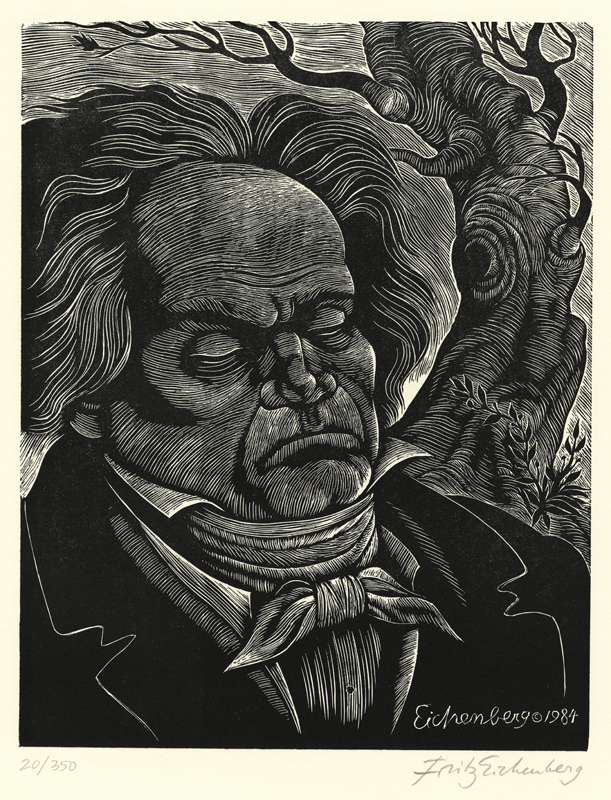 I just read Portrait of Beethoven by Fritz Zobeley, 1955. As Beethoven is perhaps the greatest musician of all time, I thought it might be interesting to record some of my impressions from the book as it might be resonant in many areas.
1. Greatness
His greatness according to Goethe came from "the feeling for proportions that have a unique beauty and are immortal." To judge his major and minor chords by quantification is as "nonsensical as looking at a painting and inquiring after the chemical formula of the paint used".
2. Music
Like almost all of eminence, Beethoven was reared in an environment where music was part of the day and fray. His father was a court organist and singer and his grandfather was an esteemed singer. He played every instrument from the age of 4 and dropped out of school to attend to his musical education. But he transcended all his teachers and developed new ideas after his apprenticeship ended.
3. A great businessman
Beethoveen always sold the same piece 5 or 6 times over to different publishers that thought they had exclusives. He managed to get retainers from all the noblemen of Vienna. When a devaluation occurred he insisted on immediate restitution. But he combined the courtly influence of the old days with profit making academies and concerts that he held in the new concert halls opened up after the Revolution. Whenever he was asked how he was doing he would answer "For a poor musician, as well as could be expected." I like to answer the same when asked… "For a poor speculator…". When his litigation to gain control of his nephew Karl occurred (the man who killed Beethoven), he insisted that his sponsors give him an increased retainer to stay in Vienna after insuring that he would win the litigation.
4. Deafness a blessing
Zobely believes that it was because of his deafness that he became the greatest musician of all. He had to combine precise harmonies and rhythms with big ideas in order to overcome his deafness.
5. Self esteem
He believed in his his own greatness above all. He often said "no one who hears my music will ever be the same." Or "I will soon teach them a thing or two." When a baroness whose home he had commandeered for a few years received thanks from him she said, "That's the least I could do" Beethoven immediately answered, "Yes, that's right". Near the end of his life he said, "I still hope to bring a few great works into the world."
6. He was very studious and systematic
He said, "I carry my thoughts about me for a long time. My memory is so tenacious that I am sure never to forget a theme that has once occurred to me… then I begin to develop it in every direction."
7. One with Nature
He got many of his ideas from Nature. He walked in the Vienna woods every morning, often scaring school kids on the way. "I wrest my ideas from nature herself — in the woods, on walks, stirred by ideas which I put into sounds."
8. Delegation
He delegated many of the non-musical things to other people except for his litigations. Schindler and Ries acted as his unpaid private secretaries for 10 years and handled all the details of life for him. He was thus free to specialize on music. This was good because he was always quarreling with his servants. "Rio met him and his face was full of scratches from a quarrel with his servants." He moved 15 times in one year as his landlords threw him out for untidiness and loud music. As Goethe said, "His talent astonishes me. Unfortunately however, he has an utterly untamed personality."
9. Love of women.
Beethoven was quite the ladies man. He wrote many of his short pieces in an effort like Gershwin to seduce many of his students. He was always falling in love with his students. Once Ries came in to see Beethoven raptly listening to a beautiful girl playing one of his Ecossaises "the sins of my youth" he called them. Ries asked him who it was that played so musically because Beethoven always walked out after 10 seconds when he heard someone playing, especially if you asked him to listen. "I never saw her before," Beethoven answered. They still can't figure out who he wrote his "immortal beloved" letter to because he fell in love so often and proposed marriage to so many who had to reject him because he was just a "poor musician". It is good to be inspired by sagacious, wealthy, and beautiful women.
To be continued. v
There is much debate as to whether Bethoveen had in mind a story from literature or apotheosis of a person or event for his compositions, but it is well known that he was the most literate of all composers before him especially compared to Hayden or Mozart who were both ignoramuses. He loved Shakespeare and Homer and often quoted them in erudite conversations recorded in his books. Zobeley concludes that B wanted the listener to impute whatever feelings appeared to literature that was most apt for the music.
Peter Saint-Andre writes:
The triple concerto is wonderful. Aside from its musical magnificence, it has various large sections reflecting the behaviors of the market. The beginning for instance, the pianissimo base phrase gradually turned to a stronger and higher pitched march is quite resembling the state where the market commences its actions. From the way the four instrumental threads mimicking and interacting with one another throughout the entire piece, one can get a sense of how a trend (or even bubble) develops in the market.
Oct
22
Finding Love with an Ayn Rand Fan, from Peter St. Andre
October 22, 2013 | 1 Comment
 I thought this article might be interesting to those of the Randian mindset looking for love. From the Wall Street Journal:
"Finding Love With a Farmer, a Gluten-Free Eater or Ayn Rand Fan"
James Hancock wanted to meet a woman who shared his core values. But when you're a strict Objectivist, it can be a little tricky.
Jason and Morgan Kontz, with baby Elliette, met on the dating site Farmers Only.
Mr. Hancock is a proponent of Russian-American author Ayn Rand's philosophy of capitalism and self-interest. At age 30, he had already been "looking for a very specific kind of woman" for three years when Google searches led him to the Atlasphere, an Ayn Rand appreciation site with a dating component.
There, he found his dream date: a woman who also wanted to do logical cost-benefit analyses of every decision.
A growing number of niche dating sites have popped up to serve people who think they know exactly the type of person they want. These includes Farmers Only, whose 100,000 users may have been attracted to the site's tagline, "City folks just don't get it." More recently, GlutenFree Singles launched for love-seeking wheat-free folks.
Atlasphere founder Joshua Zader, 40, of Phoenix, says niche sites are more efficient than broader sites such as OKCupid or Match.com.
"If you assume that maybe 1 out of 500 people is a serious fan of Ayn Rand's novels, on a normal dating site you have a 1 in 500 chance of someone sharing the same basic values," he says. "On the Atlasphere, every profile shows you what you want," he says. The 10-year-old site has seen a spike in membership in recent years—it has more than 16,000 dating profiles—after two "Atlas Shrugged" movies were released, says Mr. Zader, a Web developer. User handles include "Atlas in Arlington" and "ObjectivelyHot."
Oct
21
Cars, Cars and More Cars, from Anton Johnson
October 21, 2013 | Leave a Comment
 There are nearly 100 current automotive based television series, with much of the recent growth seen in the restoration, flipping and auction arena. The situation seems similar to the rapid growth in the number of home improvement and house flipping television series coincident to the peak in residential estate, construction materials and contractor prices.
Secondarily, most systems on cars built since the 1990s, are not easily diagnosed or repaired without expensive specialty tools, and a greater knowledge base then that of the typical shade-tree mechanic.
Accordingly, the near future may be a propitious time to unload equities of DIY themed automotive companies, and even the 1970s muscle car project vehicle that you've been sitting on.
Peter St. Andre writes:
Alternative view: more and more people will become interested in vehicles that don't have black boxes and location recorders built in.
Jul
16
Notes from the Field, from Alan Millhone
July 16, 2013 | Leave a Comment
 Noticed on the news Russia is returning to the manual typewriter for sensitive secret documents.
I still have my Tom Thumb with metal cover from my youth. Also my Tom Thumb cash register. A Royal typewriter that was my Grandfathers and a cased Underwood Olivetti that Grandpa gave me at 12 years old.
Any of you still have an older typewriter?
Regards,
Alan
Peter Saint-Andre writes:
I've been thinking about a return to older and slower technologies as the premise for a science fiction story: typewritten documents, longhand letters, postal mail, printed books, surface travel, pre-GPS vehicles, etc. Not that I've written any science fiction stories to date… ha.
Apr
17
I Should Add, from Victor Niederhoffer
April 17, 2013 | 2 Comments
 I should add that many people mistakenly come to me to ask for advice on trading. At the junta, where I turned over the moderation to Gene Epstein, he likes to refer to me as a philanthropist. So at the end of each junta, about 20 people crowd around me asking me for philanthropy to them. Another 20 request a meeting with me to get my advice. But I don't have good advice. And I don't have a minute in the week where I'm not trading or parenting with my 7 kids. If one had a minute, it would be nice to say hello to the significant other, especially when one doesn't have a losing position. However, that's so rare that it's not worth talking about.
Many mistakenly see that on occasion I luckily beat the odds and make a small profit and come to me for a little guidance as to how to take out a little profit from the market. It seems so easy and the hourly wage is so great relative to what they make. I note that my average swing from day to day is often greater than my father's total earnings in his life time. That's a terrible lure to many people. But you can't make a profit nor have I ever seen one who could unless you buy and hold, unless you have a tremendous quantified and updated date taking account of all sorts of statistics and randomness and ever changing cycles. Then you have to be there 24/7 to implement it because the swings that are good only last for seconds and if you have job or like to have lunch or dinner, that's incompatible.
Of course other than buy and hold you can always invest with a hedge fund. But… but… but… . By the time, an operator pays his sales force, and his administration, he has to charge 20- and 2. Okay, suppose he can overcome 1- % a year vig, and make 2 % more than the market's 10%. That gives you 12 % before fees and 10% before vig. What's left for you the investor? I reiterate, one feels like telling those who wish to join the fray, come with me to Rockaway or the Hamptons to the ocean. And I'll hold up my hands like King Canute and say, "I am as incapable of helping you, and you are as incapable of making a profit other than buy and hold as I am to stop the waves".
Jeff Watson writes:
I tell people they are better off going to Vegas then trying to trade. At least if you blow a couple hundred grand, the pit boss will give you some comped meals, a couple of shows, a room, hooker etc. The market mistress doesn't even give you a kiss before or after she "takes advantage of you", and you certainly don't get comped.
David Hillman writes:
When people ask me how I make a good living out of my business and appear to work so little at it, I say "If you have 35 years to listen, I will tell you every detail of my career and if you can figure out how to make that work for you, maybe you can do the same." Thankfully, I get no takers.
When people used to ask for investment advice during the salad days when a monkey with a computer could make 30%+ with 'buy and forget', I would say "Oh, here's what I'm doing." I stopped with that and started saying, "Sorry, I don't give anyone investment advice anymore." Now, I say exactly what Blodget says in this piece [forget Task, he's the straight man]. It is nothing really new or different from what many advise, but it cuts to the chase, lays it out and makes the case in a very impactful way. If you have 5 minutes, it's worth a look….I wish every investor could see this.
Peter St. Andre writes:
I don't see that Blodget's conclusion follows from his premises. Yes, the short-term trading game is rigged, but that doesn't necessarily mean that index funds are the right approach for individual investors — maybe long-term / dividend investing is best, maybe permanent portfolio, maybe other things (depending on the investor's mindset, patience, discipline, intelligence, etc.).
David Hillman writes:
I won't debate this, because I'm not here to try to convince anyone of my correctness nor of Blodget's, nor do I care what anyone else thinks, but I will comment.
I don't think it's BS at all. While I can't put the stats on the table, I'd bet something close to the 80/20 rule applies to whom he's speaking when he talks about the "average individual investor" and those who could be investors.
The suggested alternatives, stock picking, dividend investing, etc. require, if not a lot, at least some knowledge and sophistication. Most have little to none of either.
Unlike the astute types here on the list, there's Billy Joe Tireiron, who has an 8th grade education, works second shift at the plant and picks up a few shifts a week at the 7-11 in order to sock a little away. He's not a dummy and may know a little about saving, but knows a nothing about investing.
And, there's the systems engineer who is highly educated, brilliant at his job and spends 80 hours a week at it, but knows nothing about investing and has no time to learn.
There are plenty of individuals like those out there who are smart and good at what they do for a living, they may know about wine, sports, history, art, whatever, but are clueless about investing. I'm sure we all know a ton of them personally, I do.
So, when do these guys have the time to learn about stock picking and/or dividends, and where're they to go to get good advice that is in their best interest? What the heck do they know about investment strategy, short or long term?
When the chair and I first met 11 years ago, I told him the story of a family member, a well-educated person with a master's degree and whose well-educated engineer husband handles their investments, who said to me "We made $1,000 in the market today." I told her they only 'made' $1000 if they sold and took their money off the table. These are very bright people and somewhat market knowledgeable, but still didn't realize there is an important difference between paper money and cash.
Or take a guy who knows very little. He hears dividends are the way to go. So, he buys 100 shares of a commercial REIT at $10/share that's been consistently throwing off a dividend of $1.20 for years. He thinks "well, this is a consistent 12% return, it looks safe, and it's better than the index fund that averages 9%. When the share price falls to $8.00 and the dividend remains $1.20, his yield rises to 15% and he thinks "wow, my dividend is up 25%", but then fails to consider his depreciation of 20% which gives him a net negative total return.
What are the alternatives available to the average guy, one of the 80-percenters, who wants to invest? They can buy into the marketing hype of online brokerages that tell them 'we'll give you all the tools you need', but still have no time to learn and understands half or less of what they're reading. They dive in nonetheless and lose.
Or, they buy some hot stocks or funds because some personality screams a recommendation at them on TV or they read about them in a financial rag a few months after the fact when they're no longer hot. Or, they're sold an annuity by a bank which benefits more than the client from that option, or a whole life insurance policy by an insurer as an 'investment', which we know it is not.
Or perhaps they go to a commission-based financial planner who takes their 6% off the top and they're upside down from the get-go on every dollar they invest. That may be better than the others or not being in the market at all, but why start out upside down? Instead, they can, as Blodget advises, invest in a low-cost index fund, paying 1/30 the 6% entry fee and taking advantage of the long term drift.
Blodget may be generalizing, which is all one can do in a 5 minute webcast, but he does quite clearly make the distinction between the disadvantages of short term trading and the advantages of long term investing for a pretty broad audience. He's making the same case the chair was and has been has made for years.
If one doesn't buy into the drift, fine. But, it's not 'big bad wolfing' nor bad advice to say "hey, average guy……don't swim in a shark tank, don't buy into the hype, instead, play it safer, minimize your costs and go with the drift." Besides, there are some morons out there who should be scared into caution rather than gamble their family's future.
If we want to nitpick, Blodget may fail in saying "the ONLY way for the average guy to make money in the market long term is low cost index funds" rather than to say "there are other reasonable long term strategies that may work for some, but if you have no idea what you're doing and have no time nor inclination to learn, going with low-cost index funds is the best bet to maximize your return over the long term."
And, he probably also should have said "this advice does not apply to the Spec-List where everyone is brilliant and knows what they're doing and many will think this is BS."
Mar
4
“You Can’t Time the Market”, from Peter Saint-Andre
March 4, 2013 | Leave a Comment
 One of the mantras of those who would convince us individual investors to buy and hold is "you can't time the market". The slogan seems to mean that you can't precisely time the exact bottom and exact top of any given market cycle. But that's a strawman: you don't need to buy on the very day that the market bottoms and sell on the very day that the market tops. Instead you only need to avoid buying when the market is overbought, overbullish, and overvalued, when cyclically adjusted P/E ratios are high, when the Q ratio is high, etc.; and similarly for selling.
Other than broker marketing materials, does anyone here have a good citation for the source of this old bit of market "wisdom"?
George Parkanyi writes:
It's the mantra of the mutual fund industry (a) they want you to stay put so they can keep the fee stream going (they make money whether you win or lose), and (b) don't like you moving the money around from fund to fund because then they have the hassle of redemptions/re-balancing and/or parking your money in lower MER funds such as money-market for extended periods of time.
Ralph Vince writes:
I've met people who can time the market.
And I would also say that it isn't necessary to do so.
There are many ways to be successful at this. It's a matter of finding what works for the individual, to find his groove. And it is precisely THAT which is the hard part.
Aug
22
My To-Don’t List, from Peter Saint-Andre
August 22, 2012 | 4 Comments
 Once in a while someone asks me how it is that I accomplish so much. (I'm not convinced that I accomplish more than most people, but perhaps my accomplishments are more public.) In large measure I think it's not because of what I do, but because of what I don't do.
Here are some of the things I don't do much of: watch television, closely follow the latest news, hang out on Facebook and other social networking sites, randomly surf the Internet, engage in chitchat with my co-workers, eat out for lunch or dinner, or go shopping. Don't get me wrong, some of these activities are enjoyable and distracting, but I work to avoid them as much as possible.
What I've found is that eliminating these less productive activities frees up a great deal of time for the more productive activities in my life. By avoiding social networking sites and not watching television and not going out to dinner in the evenings, I have time to work on my music, read real literature, do some stretches, and write (I aim to do each of those things daily). By not going out to lunch or chatting with my colleagues or checking the news throughout the day, I have time to complete more high-value tasks at the office. And so on.
Recently on a finance discussion list I frequent, a participant raised a similar point about investing: don't spend a lot of time trying to find a portfolio of perfect companies, but instead formulate a list of strong possibilities and then eliminate the losers (or at least the companies that are less likely to succeed over the long term).
We all have a "portfolio" of activities we could engage in, but, just as in investing, time and money are preciously limited. The approach most people seem to take is to add more and more items to their to-do list. By contrast, I'm thinking that it's more effective to add things to my to-don't list; as a natural byproduct, I will focus more on what really matters and less on what's nonessential.
Jun
27
Why Great Athletes Are Not Great Dancers, from Ralph Vince
June 27, 2012 | 6 Comments
 I am at a loss why seemingly great athletes — those you would expect to have the keenest kinesthetic awareness — seemingly struggle on the dancefloor (I am not referring to ballroom-type dancing here…..not just shaking around on some club floor). I used to think that they were merely overly-self conscious, and this was causing their seeming stiffness. Yet, these very athletes excel precisely because they do NOT stiffen up and understand perfectly well the necessity of avoiding that, as well as preventing adrenalin surge, or coping with it in beneficial ways.
Peculiarly, the only atheletes-turned-dancers I have seen who can perform the dancing aspect gracefully are those who are boxers or very good standup fighters.
And the more I have watch this, the more evident it has become to me why (this is my hypothesis, which I am seeking feedback on here). A great ballroom dancer, like a great boxer or stand up fighter, has to have his feet under him such that if he were wearing a belt buckle, it would be slightly pointed upwards. In all other sports, be it playing shortstop, returning a tennis serve, a hockey player…..there is a certain, crouched position where the belt buckle is pointed downwards.
Yes, the best boxers, the best standup fighters almost invariably have tremendous footwork, where even their punches come from the balls of their feet (watch a slow right cross from Ali, how the ball of his right foot pivots, the heel up and turning outward, allowing that complete extension through his target). Many of these guys are often even built much like Fred Astaire, light not just in bodyweight, but seemingly light on their feet as well (though, not to the extent of Astaire, who must have been filled half with helium, the man was truly superhuman). Yet, footwork aside, it seems the angle of the belt buckle, in a range of, say, ten degrees, is a hugely discriminating factor in what permits an athlete to go from his game to the dance floor.
Russ Sears adds:
In my opinion, there are at least 2 reasons "great athletes" are not dancers both stemming from your definiton of "great". Most of the highest paid athletes need 2 things extra-ordinary size and extremely high levels of fast twitch mucles.
The size comes at a considerable price to "grace". Extra ordinary increase in growth during teen years happen with increase muscular strength often very awkward years for even more normal sized men. It takes much more to control a large body to make delicate movements. Those needing the speed spend considerable time training for raw speed, to go with that size, not necessarily intricate steps and bends. Those needing delicate touch, likewise spend considerable time to get the hand/arms to move just so.
But perhaps more important is the fast twitch need in most of the highest paying sports leaving the "great" athlete with little endurance. Endurance comes with a more balanced slow twitch combination. A cardio taxing dance last several minutes long.
Dancers have considerable cardiovascular fitness, as do boxers. The middle distance runners I have known often are great dancers and often make great boxers and vice a versa. In the olympics note the events that last 2-5 minutes at a hard pace with no rest and you probably have some great dancers. The longer events suffer the opposite, slow twitchers can't jump but have great endurance but lack the explosive movements ability.
Anecdotally, didn't Apolo Ohno win "Dancing With The Stars" one season?
Duncan Coker writes:
I used to take lessons and compete in some pro/ams back in the 90s in New York, and also got to know a lot of the professionals at that time, mostly British and Russian. Ralph is right about the position of the man's belt buckle as it is quite important. The center helps create a floating style important in ballroom. Also interesting, the term swing as it applies to ballroom dance is not really about 1940s swing dancing. Rather it means to mimic the swing of a pendulum in fox trot and waltz. As the dancers are moving laterally across the floor they are also gliding up and down. Another position technique that was taught was contra body movement (CBM). It means to move the feet and legs in one direction while maintaining contact with a partner in another direction. Most professional couples start dancing in childhood, so the steps and physical attributes are ingrained early. I can see how many of these techniques would be hard to learn by even accomplished athletes in other sports later in life.
Ballroom is a strange and wonderful world. It still amazes me the tv shows are so popular, but I think it is great.
Ralph Vince writes:
Russ,
Once, in working with a biochemist-turned-programmer, and talking about my pathetically slow running, the Chinaman, the biochemist (who was no runner, not the slightest athletic propensity whatsoever) told me that age, weight, and cellular mitochondria were the limiting factors. The only one I could really change was my weight, in order to get faster.
Now, I don't believe that entirely, because that would mean that whatever training I did only benefited by whatever weight I took off, and clearly there are 02 factors that you can train for, etc. But he did point out that I am not going to cut my average mile time in half — a valid point. He then mentioned that in all creatures, speed is a function of how much mitochondria is in one's cells, with, say, a cheetah having a great deal of it, human beings, in differing degrees, of course, possessing far less.
Now, this has nothing to do with Fred Astaire's ability to beat the living daylight's out of most thugs (I am convinced a man with his feet and coordination could have done that handily, and I say that based on the little thugs I knew in my youth who were physically disposed in similar though far less amazing ways) but I would like to know your take on that given your background in the world of running.
Russ Sears replies:
Despite the popular assertion to the contrary you can not "be anything you want to be." relative to others. No amount of training will get a sprinter to turn into a distance runner and vice versa. I believe it was Flo Jo that after retiring from sprinting tried to become a distance runner. She was very dedicated, hired smart coaches and believed she was going to be great… but never ran a 5k faster than about 21 minutes. Now this is a decent time for the general population. Competitively this would only get her onto most high school girls cross country teams. In most teams even small schools this time would not be the best on the team. In evaluating kids to guide them into the right event to try out for in track in field I have tested for the following.
Sprinters- Fast twitch explosiveness- standing and running vertical jump relative to size. Muscle size relative to strength is important, lean muscles verses bigger more explosive. Bone size is also important.
Stalky - bigger muscles large bones, built for sprinting and short middle distance.
Lanky - Small bones, lean muscles for distance and longer middle distance. Middle distance - repeat 200 meter and 400's times. Distance VO2, max heart rate, and recovery time - Push-up and pull-up counts coordination for most field events - timed box steps up and down in patterns. Weight /Size and arm and leg strength with fairly good fast twitch relative to size for throwing. Small bones but explosive for high jumpers. Pole vaulters - coordination, explosive, stalky, fearlessness- look for trampoline and diving craziness.
You can be good at an event simply by loving it, training for it, have some core athlete talent and being in shape, but to be great you have to have several genetic factors in your favor.
Some of these factors can be changed by type of training, eating and lifestyle while young etc. But you can not completely reverse them by nurture. Most people that run regularly will see their times drop for many years. It takes about 10 years of hard cardio training to fully develop your cardio system. But your body will break down due to training before it could develop someone without the core body type and muscle types into a distance runner.
Peter Saint-Andre writes:
Lessons for traders and investors here? Probably some folks are built for short term trading, others for long-term investing, others for building companies directly, etc…
Feb
22
Global Warming and the System, from Gary Rogan
February 22, 2012 | Leave a Comment
Nowhere (arguably) has the peer-review system been hijacked more by "the system" than in the area of global warming. As it became essentially impossible to obtain public funding for any research that had an explicit goal of disproving any specific aspect of it, and it became much easier to obtain research funding for any related (and sometimes unrelated) subject by citing its connection to global warming as at least a partial goal of the proposal, "the system" organized itself to defeat any spontaneous or privately-funded challenges by any means necessary.
Ironically, it is the Socialist-leaning Sinclair who captured the phenomenon perfectly in the following quote:
"It is difficult to get a man to understand something, when his salary depends upon his not understanding it."
Ron Schoenberg writes:
I'm a econometrician with forty years experience in fitting statistical models. You can google me. The last 22 years I've been involved with writing computer programs for fitting statistical models. I was recently introduced to your web site and I haven't posted anything yet.
But I'm forced to respond to this post.
It's true that the peer-review system can sometimes fail. A better example is the graduate student who proposed that our continents float on tectonic plates. It took years for tectonic plates to be accepted. Global warming however is not a good example. Plate tectonics, Relativity, the heliocentric solar system were paradigmatic. Global warming isn't. A better comparison of global warming is with cigarettes causing lung cancer. Scientists were producing increasingly alarming connections of cigarette smoking with lung cancer. The cigarette companies were freaked out because this hit their bottom line. They funded scientists to produce confusion about the results the scientists were finding. They succeeded in delaying the results from being accepted.
In the same way oil companies are threatened by global warming. The value of their companies depends critically on the oil in the ground they have control over. The implication of climate science is that this oil should be left in the ground. Their valuation shrinks to next to nothing. All they going to have left is plastic (Cf. The Graduate). So they hire scientists to confuse the issue just like the cigarette companies did. The conflict of interest you point out among scientists over public funding is dwarfed by the conflict of interest created by oil companies funding of scientists. I know statistical modeling. The issues about modeling global warming are not paradigmatic. They are not like tectonic plates. And I can assure you the climate scientists are doing it right.
The impact of global warming is happening as we speak. Drought is having an impact on agricultural commodities. This is going to get worse. You need to be paying attention. If you have children who are going to live through this, you need to be paying attention.
Stefan Jovanovich replies:
Global warming and cigarette smoking share a paradigm as political economy. In both cases the reformers end up being the best possible advocates for the people whose economic interests are being threatened. Cigarette smoking was known to have health issues a hundred years ago. The cigarette companies did not "freak out" over Federal regulation; they pushed for it. Those warning labels on the cigarette packages delayed for 20 years any successful class actions challenging the fact that the tobacco companies were selling a product that met all the tests of strict liability - i.e. it was unavoidably damaging to the users.
The global warming advocates are the best friends the international oil companies ever had. Why else would BP have spent millions talking about how green they were? The international oil companies don't own the oil in the ground; the world's oil reserves are owned by state-owned monopolies. What the international oil companies still own are the means of distribution so they have every reason to want to see the oil stay in the ground rather than be pumped and used; high volumes are not profitable for distributors in competitive markets, low volumes are because they create sufficient barriers to entry.
Let's try to be more specific. What is your particular theory of global warming, Ron? Is it man-made CO2 or - as some of the unpopular scientists are beginning to suggest - is it the particulate emissions from wood fires, burning of hydrocarbons (but more importantly, the grinding of rubber tires into tiny particles) that are having serious climate effects?
The problem with conventional global warming advocacy is that it shares all of the nasty habits of 19th century Darwinism (for which Darwin himself should not be blamed); it took only a few decades for Darwin's hypothesis to become the principle justification for the racialism that became the justification for segregation and apartheid and vicious colonialism.
It has taken less time for MMGW to become the justification for preventing the vast majority of the people in the world to have access to the inexpensive energy needed for clean drinking water and cooking fires that do not produce far more lung cancer and other diseases than tobacco smoking ever has.
The science should be open to all opinion; the presumption that a hierarchy of the anointed should be given the power to destroy open markets in the name of progress is a folly that does not bear repeating. We didn't get segregation because street car companies wanted it; we got it because science confirmed the opinion of the all the "good" people that the darkies had to be quarantined - for their own good.
Jaime Klein replies:
Ron proposes the conspiracy theory that oil companies have an interest in fomenting confusion regarding global warming. Maybe it is so, but I can't see why they should be. Global warming, should it occur, will not affect the value of underground oil reserves. Only a tiny fraction of the oil is consumed by heating (6% in the USA) and I dare say the same amount or more is used in air conditioning. My summer electricity bills (in Israel) are the triple of winter ones and we use the same system for heat and cool the palace.
Quote: "Of the 20 million barrels of oil consumed each day, 40 percent is used by passenger vehicles, 24 percent by industry, 12 percent by commercial and freight trucks, 7 percent by aircraft, and 6 percent in residential and commercial buildings."
Computer modellers need no incentive to create confusion. They are quite capable of doing it for free.
Gary Rogan responds:
I'm not a global warming scientist nor someone who is collecting all relevant facts, so I make my conclusions based on the information I come across in my constant search for information. Let me explain how I reach my conclusions.
Earlier today I posted an article illustrated how Global Warming was used as a stepping stone for success by Margaret Thatcher years ago in a cynical (my interpretation) political ploy. This elevated an obscure theory to a politically and economically viable and important concept.
Years ago I observed how Al Gore and James Hansen made sure to introduce their ideas to Congress on what was expected to be the hottest day of the year, and how they also made sure that the windows were open. I've observed how a British Court determined that Al Gore's movie contained eleven material falsehood and the impact that had on using it as a teaching aid in the UK. This was never publicized to any degree in the US and I had to ask myself "Why?". I've seen Al Gore refuse to debate ANYONE on the merits and I also asked "Why?". I've seen Climategate and the length to which "Climate Scientists" would go to quash dissent. I've seen photos of drowning polar bears forged and the realities of their survival as a species "nuanced" in was beneficial to Global Warming proponents. I've heard HUNDREDS of people of good will (or so they appeared to me) question this theory. These were people who displayed uncommon sophistication and knowledge in areas I was more familiar with. The physics of the increase of one molecule of CO2 in 10,000 molecules of air making THAT much difference never made much sense to me, but that was more from imagining this one lonely molecule among 10,000 rather than any calculations, and of course CO2 isn't the only culprit (yet somehow the main target as oil companies seem like much more inviting targets than herds of cows). I've seen the importance of solar flares questioned, and I've seen all kinds of data about global warming stopping in 1998 or current high temperatures being on par with those in the late 30's and 40's. I have no idea really if the increase in droughts may not be caused by local agricultural practices given increasing world population and use of water and all the deforestation and soil erosion that's going on.
Last night I was listening to James Delingpole, a noted British author question this theory with great believability. When asked "How do you respond to someone who says we should not take any chances and shouldn't we spend whatever it takes in case Global Warming is indeed caused by human activity?" his answer was along the lines of "Can we be sure that aliens will not invade the Earth tomorrow? If not, let's spend billions to equip all airplanes and rockets with anti-alien laser weapons".
Let me just say this: the "theory" is being promoted as a hoax would be by a priori evil, dangerous people like Al Gore. Facts are being suppressed by the mainstream press and by the advocates of the theory. Third world hell holes demand all manner of reparations under the guise of being compensated for the damage done by Global Warming to them. It may very well be true, but if it walks like a hoax, quacks like a hoax, and all that, it probably is a hoax.
Mr. Krisrock writes:
It's preposterous that anyone thinks the same collectivists who are trying to run and control our economy through central planning could do the same thing to world weather.
It shows the outrageous arrogance of San Francisco modelers who think a model so large could work…it defies common sense and a response.
This guy is a dreamer, who takes his advice from the AZTECS who worshiped the sun god…that culture disappeared in case he didn't read the history book.
Sadly, the world can't add up its money to balance its debts despite all his silly models but to think there is NO POLITICAL AIM in global warming?
There is, it's all about a small group of power hungry idiots, no different than tyrants in another time, who create false idols …
The same people as him run the state of California…have run it into the ground financially…and refuse to admit their models don't work.
The smoking argument is bullshit…people will still die from something…but millions in Asia will die far happier than this idiot.
And I add this year we had the largest global harvest of RICE…so much for global warming bullshit…
T.K Marks writes:
"It is difficult to get a man to understand something, when his salary depends upon his not understanding it."
As one who defines the notion of salary broadly, that Sinclair quote might be the most succinct and trenchant definition of realpolitik that I've ever read.
Charles Pennington writes:
Climategate demonstrated "peer review" at its worst–faking data and conspiring to ostracize the naysayers. It was a lucky stroke that it was uncovered.
Stefan Jovanovich responds:
Ron: Please accept my sincere welcome to the List. As others will tell you, I am a professional pain in the ass; but I do mean well. What I was trying to convey about the cigarette companies is that their (largely successful) conspiracy was even worse than you alleged. The cigarette companies knew they were selling addiction long before any studies were done on lung cancer. The best cases against them were those that were based on the common law argument that the tobacco companies were knowingly selling a product that was per se harmful. Those cases only had to rely on the fact of addiction - which everyone conceded - and did not need to meet the much harder burden of proof that epidemiological correlation requires. The "reform" that produced the warning labels defeated all that litigation; the tobacco companies now had a safe harbor defense.
Allow me a few last comments before acknowledging the final call to Order from the Speaker of our Parliament.
(1) There is a rather significant difference between Copernicus' situation and that of the global warming skeptics. Copernicus was challenging the established church, which was the international authority on all matters spiritual and intellectual. Your part of the argument already has the international church aka the UN and the holy orders aka the publicly-funded universities on its side. The poor skeptics have to rely on their own money - as did Copernicus.
(2) Isaac Newton was never accused of heresy; on the contrary, he was the author of a number of religious tracts, among them The Chronology of Ancient Kingdoms Amended (1728) and Observations Upon the Prophecies of Daniel and the Apocalypse of St. John (1733). He was not even censured for his dabbling in alchemy even though reasonable minds might not consider that the best of hobby choices for someone appointed warden of the Royal Mint.
(3) Einstein first came to the U.S. in 1921 to raise funds for the planned Hebrew University of Jerusalem. He received the Barnard Medal and was treated like a rock star. After he won the Nobel Prize that same year, American universities fell over themselves competing to have him come join their faculty. Einstein preferred to return to Europe - which was his home; but he continued to visit the United States regularly throughout the 1920s without ever having any problem getting off the boat. Princeton finally persuaded him to accept a faculty position with them in 1932 on the condition that Einstein be allowed to return to Berlin each year for 5 months. What kept Einstein here in America were the Nazis. He left Berlin in December 1932 (the Nazis took power the following month) and never returned to Germany. Einstein became a U.S. citizen in 1940 but he retained dual Swiss citizenship. The only evidence of Einstein's having had any difficulty with visas or his citizenship application is in Fred Jerome's book - The Einstein File: J. Edgar Hoover's Secret War Against the World's Most Famous Scientist, by Fred Jerome. St. Martin's Press, 2002. 348 pages. ISBN 0-312-28856; and its only source is Einstein's FBI file, not State Department records.
NB: Those of us who have FBI files know from direct experience that the Feebies apply the vacuum cleaner theory of information - floor sweepings are given equal billing with birth certificates.
Peter Saint-Andre writes:
Over time I have come to see this phenomenon as controlled not by "the government" in some faceless way, but by individuals or classes of individuals who have used the levers of power (federal, state, county, city, etc.) to their own benefit. I have seen this in the city where I live: few things happen in city politics that do not benefit the real-estate developers, and certainly nothing happens that harms them. The same could likely be said for industries and policy areas that I have not studied as closely: defense, energy, finance, transportation, education, materials, you name it. There are people and companies who benefit, and who always emerge untouched. The rest of us are harmed and suffer, to a greater or lesser extent. Perhaps if one followed the money and influence to identify who precisely makes up the aristocracy of pull, one could indeed build a successful investment strategy. I don't think I have the stomach to do so.
And by the way, looking at things in this way makes me much more sympathetic to many self-styled "progressives" (while I think that their understanding of markets is quite incomplete, they too have a sense that the game is increasingly rigged).
Gary Rogan responds:
It seems difficult to take advantage of observed cronyism while being on the outside. One should only look at trying to invest in solar panel manufacturers, or ethanol producers, or defense contractors (after a certain point). Sooner or later the government runs out of money, and you have to be very close to the action to figure out when the gig is up. The health insurers were quite an interesting story to observe: a very political group that took a huge hit with Obamacare only to recover very nicely. You really have to know who was involved in shaping the legislation, and if possible the real effect. My own solution was to own what Rocky likes to call "world class" companies that seem flexionic, but would persist past any "abandonment" stage, or in companies that have a flexionic component, but that's not dominant (such as a chemical manufacturer with a large biodiesel component). It would be interesting to study if any of Sage's flexionic investments could be taken advantage of after his intent has become public, at least he always knows these days that the company will be saved if push comes to shove.
T.K Marks writes:
Not all variables are created equal. Some are unknown; others, unknowable.
Absent insider knowledge, politics for general investment purposes is but a fiefdom of unknowable variables, where knowledge is lord.
But 'knowledge' in such a sense is illegal, or unethical, or both.
At least it's supposed to be.
So one is better off trying to quantify things played out on fields more intrinsically level than politics.
Jan
14
A History of the Gold Standard, from Stefan Jovanovich
January 14, 2012 | Leave a Comment
 This one is Eddy's fault. She wanted to know about the gold standard.
The authors of the Constitution had two concerns about money - first, they wanted the Federal government to be able to collect taxes to pay veterans' benefits and the cost of future wars; and, second, they wanted no one - the states, private individuals, the Federal government itself - to be able to deal in funny money. They thought they could solve both problems by giving the Federal government a monopoly on legal tender and then requiring Congress to limit the Money used in payment in the United States to Coin - i.e. precious metal. What is fraudulent about our present system is that the Federal government still has its legal tender monopoly but it no longer follows the rules laid out in the Constitution. Instead of using gold coin, the Federal government uses its own bank-created Credit as Money and requires all of us to accept it as the sole legal tender for all debts public and private.
The authors of the Constitution were so suspicious of what Congress might do that they did not even allow it to have a monopoly on Money. They required Congress to allow Foreign Coin to used as equivalents for the United States' own Coin. The authors of the Constitution knew from bitter experience that Congress was capable of being a fraud about money; country had seen the Continental Congress during the Revolution issue IOUs and then require people to take them in payment of the government's own debts. By allowing Foreign Coin to be Money, the authors of the Constitution were assuring that people could refuse to take any funny money that Congress tried to pass off in the future. This is why the Constitution has its specific provisions requiring Congress to "regulate" the Weight and Measure of both U.S. and Foreign Coin. "Regulate" does not mean "make up whatever rules we like" as it does now; it meant "make regular" - i.e. make equal.
Where the authors and the first Congresses made a mistake was in thinking that they could regulate more than 1 kind of precious metal as Money, that they could set by law the ratios of the prices of gold and silver and copper could be fixed, by law. They made this mistake because everyone in the world believed that Money had to have an official Price; it could not be left to the market to decide what Money was worth. (A few oddballs - the Frenchman Cantillon, the Englishman Gresham - knew better. They both observed that Money has to be unitary; otherwise, the smart people will always be swapping the cheaper metals for the more expensive ones.)
Even with this mistake of multi-metalism, the authors of the Constitution succeeded in achieving their aims for U.S. money. Congress was able to be extravagant - to start wars when they did not have the money to pay for them - without permanently destroying the value of the country's savings because no one could be forced to accept anything other than Coin as Money. If Money became short because people and/or the government had used too much credit, the people who had saved Money would find bargains. If people and/or the government became too cautious and hoarded Money, then the rewards for lending and granting Credit would go up. The interchange between Money and Credit would be the fundamental check and balance against future Congresses overreaching their financial authority. Under the Constitution Congress would be free to borrow on Credit like everyone else but it would only be allowed to coin Money or have Coin accepted as legal tender.
What the authors of the Constitution could not imagine is that future Congresses would allow the Federal government to use its own bank-created Credit as Money. That would have seemed to them against all common sense. Everyone in the country had known, from direct experience, that allowing Credit to become Money produced ruin. Savings became worthless, people abandoned work for speculation, and enterprise was destroyed. If the government's Credit was required to be accepted as legal tender, then everyone could go to the government to get their free Money. "Cash" would have no meaning because people could never be required to pay up in Coin. The authors of the Constitution knew that Credit was wonderful stuff. It was easier to use than specie and was flexible; people's ability to promise to pay was not limited by the coins in their pockets. But there had to a limit to how much people could promise and borrow, and that limit was Money; and Money had to be actual stuff that people could demand when they did not want paper, when they doubted that other people's Credit was good. Almost all of the time people would use Credit for trade; they would buy and sell things using Notes because it was the better way to do business. But, in the background of everyone's mind there still had to be the understanding that people could decline further exchange of credit and demand actual payment instead. With Credit there was always going to be the risk that one was getting a devious, suspect instrument of exchange. If people were free, they would trade; and, in trading, they would be certain to deal in all kinds of promises - some of which will be completely ludicrous. These rules would apply equally to the government and to private business. The Constitutional gold standard would not prevent people or Congress itself from committing fraud and folly; but it would assure that they were punished and not rewarded if Money was the stuff that was impossible to counterfeit and impossible to multiply with the stroke of a pen or the turn of a printing press (or, today, the click of a keyboard).
We now live in a very different world of Money and Credit. Foreign Coin is no longer a check and balance on Congress' monopoly authority over legal tender; every government in the world now uses its own IOUs as Money. That leaves only the Constitutional gold standard as a restraint on the government and people's ability to expand Credit without limit. The country has been here before. During and after the Civil War, the Federal government's IOUs - its Greenbacks - were made legal tender, by law. Many people thought this was fine and wanted Congress to keep printing Greenbacks to pay for rebuilding the country after the war. What Ulysses Grant understood was that if Congress kept spending Money as it had during the war, it would turn the country into a nation of monetary alcoholics. The demand for Credit would never be restrained. Almost single-handedly Grant forced the Congress to commit itself to restoring the gold standard, to promising to redeem all paper money in gold Coin. Many people were horrified by the idea; the New York Times (surprise!) predicted that there would be complete panic. Speculators tried to buy up all the country's gold. But, on the actual day when the Federal government resumed the convertibility of all U.S. Bank Notes into gold coin, the world did not rush to the Treasury to swap its paper for specie. The monetary day of judgment failed to appear and was, in fact, a big yawn. The very act of committing the U.S. to restoration of the Gold Standard had sufficiently re-established the credit of the U.S. government that people were content to continue to deal in the credit notes as if they were as good as gold - which they were.
The same result would happen today if Congress adopted a new Specie Act. I know this is a fantasy; but imagine that Congress enacted and the President signed a Specie Act that legisltated that, after January 1, 2013, U.S. Money would be a Liberty Coin of a fixed Weight and Measure of gold and all government Credit Notes - the paper currency called Federal Reserve Notes printed by the U.S. Treasury - would be convertible into Liberty Coin at the value set by the market . The market would instantly value our current Greenbacks at their worth would be in gold. A dollar whose fluctuating value would be fixed by the market's dealings would not, by itself, save the credit of the United States; but it would instantly end the further abuse of that credit by the Congress and the Federal Reserve. That might, by itself, be enough.
A promise to pay can, as the original J. P. Morgan said, only be valued by the character of the borrower. As long as Money itself is solid, people can accept the risks of Credit as the price of its convenience and opportunity for gain. The very argument used against the gold standard - its inflexibility - is true; when one is well established, the price of gold itself becomes monotonously steady. It is the price of Credit that fluctuates. After President Grant's demand for resumption was enacted into law, the infamous Gold Room closed; and stock and bond markets and bank clearings in the United States exploded with a boom that was so real that it produced enough wealth that the country could, for the first time in its history, afford broad "higher" education.
It will not surprise you and it would not have surprised the authors of the Constitution that the first thing the new generation of professors and well-educated (sic) students did was decide that the archaic system of the gold standard had to be improved. The result was the funding of two World Wars and other systematic tortures that the world is still living under in the name of Progress.
Leo Jia comments:
 Thanks Stefan. Here are my thoughts on what you wrote.
From economic point of view, the functions of money are: 1) medium of exchange, 2) unit of account, and 3) store of value.
The biggest problem with fiat money (as we experienced) is its obvious inability to store value. On the other hand, commodity money is hard to transport. Recognizing these, many are inclined to accepting some kind of representative money, such as the gold standard.
It is understandable that people put more trust in things such as gold for a better store of value than in fiat money, simply because they are more real and can't be created from thin-air. This might be very true in simple or primitive economies. But is there any false reasoning here for modern economies? It is true that they can not be as easily created, but this in no way could necessarily lead to a conclusion of their better ability to store value or perform other money functions. My observations are as follows.
1) Any real thing (such as gold) changes value vis-a-vis other real things as economy develops through time. This is determined by the varying needs of human activities. In this sense, a lumber producer for instance may have good reasons not to trust gold to reserve his value of work (as gold could get cheaper while lumber gets dearer during some period of time).
2) The economic developments, following technological advancements or wars for instance, come in steps, which at many times are interruptions to old developments. After each step of development, the values of many thingsare largely re-adjusts. With the automobile invented for instance, the horse wagons lost substantial value. On the other hand, with a large gold mine discovered, gold's value vs. other things dive.
3) In the case of a step-up of the economy (due to an important technology break through, for instance), the requirement for capital jumps up. If the money is based on some real thing (such as gold), the money supply seriously lags in a way to hinder the economy development. Gold's supply has its own course of development. Except for a few large discoveries in history, gold's supply has been largely a gradually growing process, and this contrasts the nature of economic development, which often jumps, particularly in the modern age.
4) In the case of gold being a money base, the real question is why people would always treasure gold. Could the attitude change? From the nature that gold is of little real use, this is very likely somewhere down the road. All it needs is one country's abandoning the gold standard to wreck the whole world's economy. Before that happens, is people's pursuit of gold quite similar to a fool's game, where everyone owning gold is just hoping to sell it to a bigger fool?
In the modern world, when we have various developments in fast gears, we don't really have a money that meets the functions we want. It is very unfortunate. Perhaps the desire to have a store of value in something is generally a fallacy. Sure, the modern finance provides some possibilities for that desire, but modern finance is not for everybody.
Question: is it feasible to form a money based on some financially structured instruments?
Stefan Jovanovich replies:
Leo, Thanks for the reply. I don't think you can support the notion that Money is a primary "medium of exchange" any more; it is, for the limited population of drug dealers and others wanting to hide their wealth from "the law", but the volume of credit transactions so completely dwarfs cash dealings now that I am afraid the standard textbook definition of money has to be retired from our discussions, even if it will always remain the correct answer for an Econ 1 class. The "store of value" notion has always been a canard. The notion of "value" itself is one of those Platonic ideas that it is impossible to abolish, precisely because it is never defined well enough to be tested or disproven. It is part of the equally bizarre idea of Capital - the notion that certain stuff and paper (in our age, digital entries) represent a "store of value". Once you accept the circularity of these terms, you never find the exit door into what people are actually doing. (Yes, yes I know about marginal utility, etc. but all of those wonderful theories can be reduced to something the money changers sitting outside the Temple knew - price is always a matter of quantity and time.)
Having endured the interminable sermons of their era (and decided, like Washington, that God existed outside of church as well as in), the authors of the Constitution were well acquainted with the theological approach to discussions about the economy. But, being practical men of business (even the lawyers among them were traders), they knew enough of the world to know that commerce would always rest on the foundation of credit. When counter-parties began to worry, "the economy" was in trouble, no matter how much gold was in the vault. They also knew that Money - specie - would always be the measure of the fundamental economic fact of life - scarcity. They counted on the fact that Money is always in short supply to be the principal limitation on the size of government itself. As the Founders knew, money is the spoil sport - the stuff that is unalterably real and cannot be talked into existence. Americans used to know this instinctively. There is the classic remark of t he real estate speculator in San Diego in the 1880s who got caught long and telegraphed to his partner back East: "Lost $100,000; still worse, $800 was in cash".
What the Founders and a majority of Americans in the 19th century did not think was that the government could somehow protect people from the vagaries of the market itself. They certainly did not think that gold - i.e. Money - could do that. The claims made for gold by the Paulistas - Don Ron made it again last night in the Republican primary debate in South Carolina - are specious. Gold is not a "store of value" and it has never protected people from the fluctuation of prices. As you noted, gold's exchange value fluctuates dramatically even under a Constitutional gold standard. Gold as Money is no more immune to market variation than Credit; both are subject to the vagaries of trade. What Gold as Money is not subject to are the manipulations of the government as ruled by faction. When George Washington warned against "faction", he was not cautioning people about political parties; he was cautioning them about the ability of people to use the government's monopoly au thority over legal tender to create credit in their particular favor. All gold offers is the assurance to the holder of Money that he/she has only one financial risk - the fluctuations of the market - and that he/she is safe from the cheats of government action in the name of the common good.
P.S. Your history about gold mining needs revision. The great discoveries - California in the 1840s, South Africa and Alaska in the 1890s - did not see "gold's value vs. other things dive"; on the contrary, the gold discoveries led to credit booms that saw general prices rise and specie become inexplicably tight. The Panic of 1907 arose because the London insurance companies were unable to pay their American claims from the San Francisco Fire; gold - within a decade of the greatest discovery in history - became so incredibly short that JP Morgan - for the first time in its history - agreed to join the New York Clearing House so that the banks would stop pulling each other down to ruin by acting like lobsters trying to climb over each other out of a barrel.
P.P.S. The notion of a Monetary base is beyond my capacity to argue with. If you accept the illusion that IOUs are Money, that the entries on the ledgers at the Federal Reserve and the Notes printed by the U.S. Treasury are somehow more "high-powered" than other forms of Credit, then the Ptolemaic system of modern academic economics seems to work fine - until, of course, it doesn't. The modern world has no problems with its system of Credit; its difficulties are with the absurd notion that the Unit of Account can be multiplied at will by central banks in the name of stability.
The questions of money and credit were not intellectual novelties for the founders or their contemporaries. They were - literally - the common coin of civil discourse. Hume's Essays - which were in the library of everyone who attended the Constitutional Convention - raised the issue directly:
"It is very tempting to a minister to employ such an expedient, as enables him to make a great figure during his administration, without overburthening the people with taxes, or exciting any immediate clamours against himself. The practice, therefore, of contracting debt will almost infallibly be abused, in every government. It would scarcely be more imprudent to give a prodigal son a credit in every banker's shop in London, than to impower a statesman to draw bills, in this manner, upon posterity. What then shall we say to the new paradox, that public incumbrances, are, of themselves, advantageous, independent of the necessity of contracting them; and that any state, even though it were not pressed by a foreign enemy, could not possibly have embraced a wiser expedient for promoting commerce and riches, than to create funds, and debts, and taxes, without limitation? Reasonings, such as these, might naturally have passed for trials of wit among rhetoricians, like the panegyrics on folly and a fever, on BUSIRIS and NERO, had we not seen such absurd maxims patronized by great ministers,(Robert Walpole) and by a whole party among us (the Whigs)."
Peter Saint-Andre comments:
 And hence there runs, from the first essays of reflective contemplation of a social phenomena down to our own times, an uninterrupted chain of disquisitions upon the nature and specific qualities of money in its relation to all that constitutes traffic. Philosophers, jurists, and historians, as well as economists, and even naturalists and mathematicians, have dealt with this notable problem, and there is no civilized people that has not furnished its quota to the abundant literature thereon. What is the nature of those little disks or documents, which in themselves seem to serve no useful purpose, and which nevertheless, in contradiction to the rest of experience, pass from one hand to another in exchange for the most useful commodities, nay, for which every one is so eagerly bent on surrendering his wares? Is money an organic member in the world of commodities, or is it an economic anomaly? Are we to refer its commercial currency and its value in trade to the same causes conditioning those of other goods, or are they the distinct product of convention and authority?
From On the Origin of Money by Carl Menger
Stefan Jovanovich writes:
 Menger was the leading figure in the Austrian "Währungs-Enquete-Commission, the Monetary Commission called to deal with the problem of the Austrian currency. (Hayek: "Towards the end of the 'eighties the perennial Austrian currency problem had assumed a form where a drastic final reform seemed to become both possible and necessary. In 1878 and 1879 the fall of the price of silver had first brought the depreciated paper currency back to its silver parity and soon afterwards made it necessary to discontinue the free coinage of silver; since then the Austrian paper money had gradually appreciated in terms of silver and fluctuated in terms of gold. The situation during that period — in many respects one of the most interesting in monetary history — was more and more regarded as unsatisfactory, and as the financial position of Austria seemed for the first time for a long period strong enough to promise a period of stability, the Government was generally expected to take matters in hand. Moreover, the treaty concluded with Hungary in 1887 actually provided that a commission should immediately be appointed to discuss the preparatory measures necessary to make the resumption of specie payments possible. After considerable delay, due to the usual political difficulties between the two parts of the dual monarchy, the commission, or rather commissions, one for Austria and one for Hungary, were appointed and met in March 1892, in Vienna and Budapest respectively.)
According to Hayek, "Menger agreed with practically all the members of the commission that the adoption of the Gold Standard was the only practical course." What the Commission did not do was adopt the approach taken by the Americans a decades earlier. Instead of simply setting the weight and measure for Austrian Coin at an equivalence to the British pound - the reference point for all international transactions, the Commission debated "the practical problems of the exact parity to be chosen and the moment of time to be selected for the transition". That, by itself, did no great harm; but it established the principle - now universal - that the state, not the market, would be the ultimate arbiter of the content of Money. It is foolish of me to expect them to have done otherwise. Even though (or perhaps because) Menger was the author of utility theory, his political economy had an unshakeable belief in "essences", in the notion that political economy could be reduced to laws of motion, just like physics. The result was the Franco-Germanic idea of the "universal bank" - the Creditanstalt that would literally "manage" the economy and do away with the need for those messy people - the brokers and the dealers in stock - and their volatile exchanges.
For Menger there could be no difference between "the disks (and) documents" because all money was a creation of the state's authority. The American idea that you could bring bullion to the Mint and demand that they reduce it to legal tender - for free - was anathema.
Dec
16
The Tyranny of Round Numbers, from Peter Saint-Andre
December 16, 2011 | 1 Comment
 Lots of chatter yesterday about gold breaking through its 200-day moving average. Ron Griess says to consider the 300-day moving average instead. Has anyone done research on the benefits of using non-round-number moving averages, such as numbers slightly lower than 200 or 300?
Phil McDonnell writes:
I have tested them all from about 2 days to maybe 1000 days. Generally speaking there is little difference between two 'nearby' moving averages. If you think about it the 200 day has 190 terms in common with the 190 day average. Generally speaking they almost all work as long as the average is longer than about 100 days or so.
All such methods are weak at best. For example the 200 day yields about .04% per day if above the average. But adding a 50 day/200 day crossover reduces the yield to only .03%. In other words the so called golden cross does not really work.
Dec
15
Top 5 Regrets in Life, from Jeff Watson
December 15, 2011 | 2 Comments
 Have you seen this article about the top 5 regrets of the dying? It is a must read.
Gary Rogan writes:
I really liked all of them, except based on everything that I know I disagree with the statement that "happiness is a choice". Irrational fears are not a choice, depression is not a choice, and neither is happiness.
Gibbons Burke writes:
Well, happiness is dependent on one's attitude, and in many cases, you can choose, control or direct your attitude.
My theory is unhappiness and depression happen when reality does not live up to one's expectations of what life is "supposed" to be like. I think the key to happiness is letting go of those expectations. That action at least is within an individuals purview and control. There is an old Zen maxim: If you are not happy in the here and now, you never will be.
Russ Sears adds:
I think most irrational fears and depression stem from the unintended consequences of one's choices or often, the lack of decisions, such as little or no exercise. However, I believe many of these choices are made when we are children, and we do not fully understand the consequences. Many of these bad choices may be taught often though example by adults or sometimes it is just one's unproductive coping methods that are simply not countered with productive coping methods by the adults in their lives. I think some people are more prone to fall into these ruts, but most of these ruts are dug none the less.
Jim Sogi writes:
The regrets are perhaps easily said on the deathbed but implementing these choices in life is very difficult. Many can not afford the luxury of such choices. When there is no financial security hard work is a necessity. Such regrets are not much different than daydreams such as, oh I wish I could live in Hawaii and surf everyday. The fact of the matter is that the grass always seems greener on the other side. Speak to the lifestyle guys in their old age. Will they say I wish I worked harder and had a career and made more meaning of life than being a ski bum or surf bum?
Gary Rogan responds:
What you say is true about the effects of exercise. But that's just one of many factors that are biochemical in nature. Pre-natal environment, genetics, and related chemical balances and imbalances are highly important in the subjective perception of the level of happiness. There are proteins in your brain that effect how the levels of happiness-inducing hormones and neurotransmitters are regulated and there is nothing you can do about it without a major medical intervention. Certainly some choices that people make affect their eventual subjective perceptions through the resultant stresses and satisfying achievements in their lives, so the choice part of it can clearly be argued. My main point was that by the time the person is an adult, their disposition is as good as inherited. They can vary the levels of subjective perception of happiness around that level through their actions, but they are still stuck with the range, mostly through no fault or choice of their own.
Since a few literally quotations on the subject have been posted, let me end with the quote from William Blake that was used before the chapter on the biological basis of personality I recently read:
Every Night & every Morn
Some to Misery are Born.
Every Morn & every Night
Some are Born to sweet Delight.
Ken Drees writes in:
I believe that you must put effort towards a goal and that exercise in itself begets a reward that bends toward happiness. It's the journey, not the end result. You must cultivate to grow. A perfectly plowed field left untended grows weeds–the pull is down if nothing is done.
Russ Sears adds:
 It has been my experience with helping others put exercise into their lives that few teens and young adults have reached such a narrow range that they cannot achieve happiness in their lives. This would include people that have been abused and people that have a natural dispensation to anxiety. Their "range" increases often well beyond what we are currently capable of achieving with "major medical intervention". As we age however our capacity to exercise decreases. While the effects of exercise can still be remarkable; they too are limited by the accelerated decay due to unhappiness within an older body's capacity. Allowing time for our bodies is an art. Art that can bring the delights of youth back to the old and a understanding of the content happiness of a disciplined life to the young.
Peter Saint-Andre replies:
Horsefeathers.
Yes, hard work is often a necessity. But hard work does not prevent one from pursuing other priorities in parallel (writing, music, athletics, investing, whatever you're interested in). Very few people in America have absolutely no leisure time — in fact they have a lot more leisure time than our forebears, but they waste it on television and Facebook and other worthless activities.
Between working 100 hours a week (which few do) and being a ski bum (which few also do) there lies the vast majority of people. Too many of them have ample opportunity to bring forth some of the songs inside them, but instead they fritter their time away and thus end up leading lives of quiet desperation.
It does not need to be so.
Dan Grossman adds:
Jim Sogi has a good point. The deathbed regret that one didn't spend more time with one's family is frequently an unrealistic cliche, similar to fired high level executives expressing the same sentimental goal.
The fact is that being good at family life is a talent not everyone has. And family life can be difficult, messy and not easy to make progress with. Which is perhaps one of the reasons more women these days prefer to have jobs rather than deal all day with family.
Being honest or at least more realistic on their deathbeds, some people should perhaps be saying "I wish I had spent more time building my company."
Rocky Humbert comments:
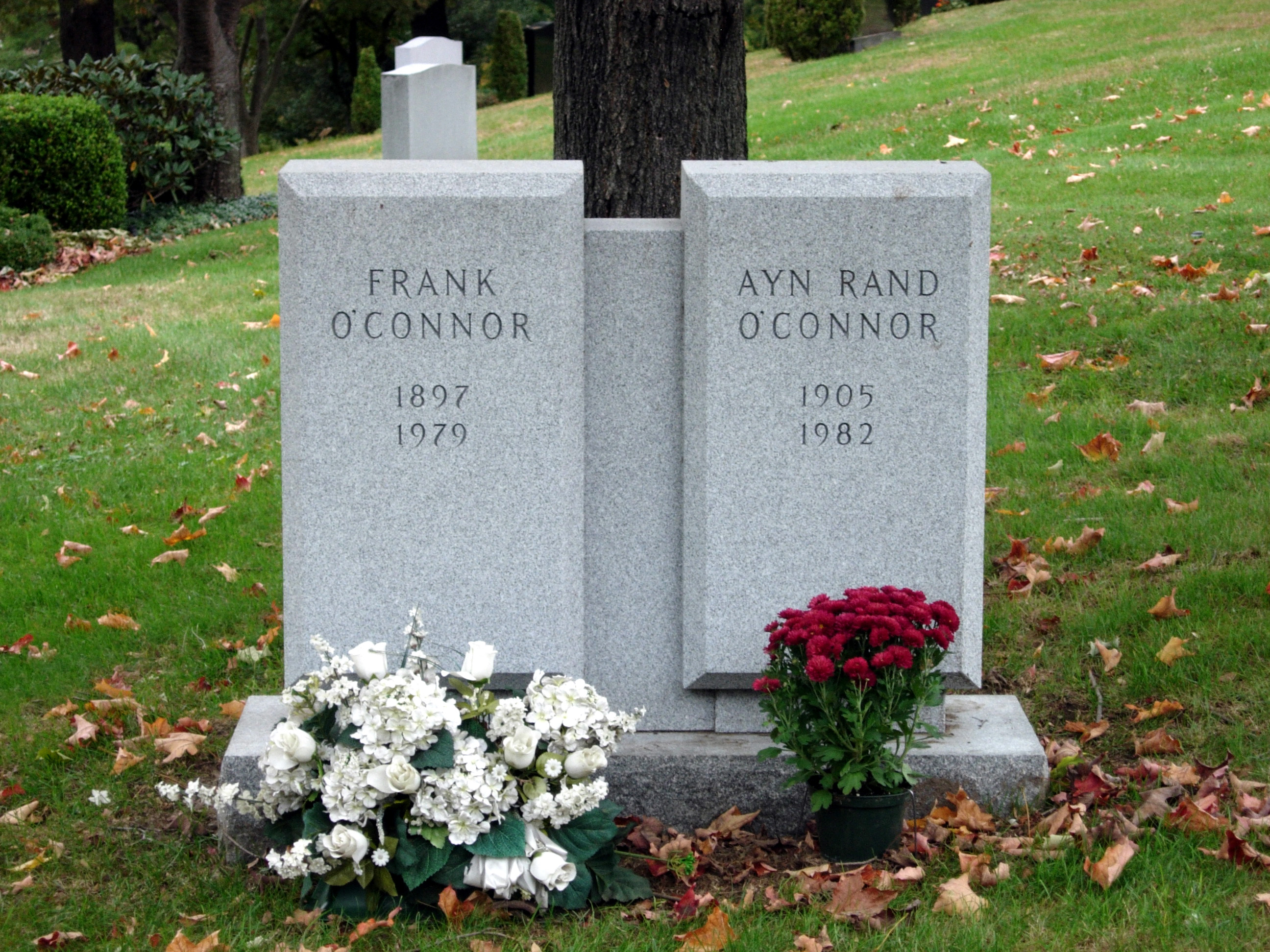 I feel compelled to note that this discussion about deathbed regrets has been largely ego-centric (from the viewpoint of the bed's occupant) — rather than the perspective of those surrounding the deathbed. I've walked through many a cemetery, (including the storied Kensico Cemetery) and note the preponderance of epitaphs that read: "Loving Husband,"; "Devoted Father," ; "Devoted Mother," and the absence of any tombstones that read: "King of Banking" or "Money Talks: But Not From the Grave."
Notably, Ayn Rand's tombstone in Kensico is devoid of any comments — bearing just her year of birth and death. (She is, however, buried next to her husband.)
In discussing this with my daughter (who recently acquired her driver's license/learning permit), I shared with her the ONLY memory of my high school driver's ed class. (The lesson was taught in the style of an epitaph.):
"Here lies the body of Otis Day.
He died defending his right of way.
He was right; dead right; as he drove along.
But now he's just as dead, as if he'd been wrong."
Kim Zussman writes:
Is an approach of future regret-minimization equivalent to risk-aversion?
Workaholic dads have something to show for their life efforts that Mr. Moms don't, and vice-versa.
If so, perhaps the only free epithet is to diversify devotions — at the expense of reduced expectation of making a big mark on the world or your family.
Dec
15
Sing Your Songs, from Peter Saint-Andre
December 15, 2011 | Leave a Comment
 Between working 100 hours a week (which few do) and being a ski bum (which few also do) there lies the vast majority of people. Too many of them have ample opportunity to bring forth some of the songs inside them, but instead they fritter their time away and thus end up leading lives of quiet desperation.
It does not need to be so.
Chris Cooper writes:
I am lucky enough to do both. I spent a while as a ski bum when I was young. Later I did a stint of 6 years of 100-hour weeks. It paid off as I hoped, enabling me to be a ski bum again. Which I tried, and found that somewhere during that time I acquired some workaholic characteristics. So now I oscillate between taking it relatively easy, and working hard, and at the moment am working hard and wishing I could take it easy — but if I did, I would soon enough be restless again.
Oct
26
The World Series and Excuses, by Russell Sears
October 26, 2011 | Leave a Comment
After what I heard on NPR this morning I would say the Cards are doomed. It appears to me that they are looking for a great excuse in case they lose.
NPR was gleefully reporting a good excuse. It turns out the bull pen did not warm-up the pitcher for the guy that hit the double, like the coach called for because, get this, they did not hear what Coach La Russa said on the phone. Great excuse! That was painful to hear.
Here is the story
newsfeed: world-series how-the-st-louis-cardinals-got -all-mixed-up
Why does this matter?
In the heat of a grueling marathon I've learned that once you are searching for an excuse in case you lose, you sure will.
George Parkanyi writes:
To your point, one of the biggest chokes ever was the Ottawa Senators going down to the Toronto Maple Leafs a few years back. They were leading the series 3-2, and the 6th, clinching, game 1-0 late in the third period. Toronto had been completely shut down to that point. Toronto got one penalty, and right after, another. What a glorious opportunity for Ottawa -a 5 on 3 power play! What did they do?
They didn't even go into the Toronto zone, they passed it around and just generally wasted time to eat up the clock. But there was still about 8 minutes left to go in the game. I still remember jumping off the sofa and literally screaming at the television "What the ^*&&*% are you doing, you idiots!!!!" Sure enough, playing not to lose, they gave up a late goal to an energized Toronto, who then won the game in overtime and also won the 7th game after that.
That game is etched in my mind as the poster-child example of why you don't play not to lose when you're in a competitive situation. I remember this when I play soccer, and never play more conservatively when we have only a 1-2 goal lead no matter what stage of the game. My philosophy is keep doing what got you there. That's also why I absolutely HATE late-game prevent defenses in football.
Peter Saint-Andre comments:
The Wikipedia page about baseball points out the following:
"In
clock-limited sports, games often end with a team that holds the lead
killing the clock rather than competing aggressively against the
opposing team. In contrast, baseball has no clock; a team cannot win
without getting the last batter out and rallies are not constrained by
time. At almost any turn in any baseball game, the most advantageous
strategy is some form of aggressive strategy."
Some form of aggressive strategy is always advisable in investing, too. You can never simply run out the clock.
Stefan Jovanovich writes:
And, for racquet sports, even more so; they are the only hand to hand combat sport where you cannot be saved by the bell or blame the loss on the manager or the rookie who tried to steal second. Speaking of extraordinary sporting events, did anyone see what City did to Manchester United? Remarkable. Lazio's loss is Manchester's gain.
http://en.wikipedia.org/wiki/Roberto_Mancini
Scott Brooks comments:
This is not completely true of baseball. In little league, most (all) games have a time limit. So there is a strategy to playing to the clock. The home team always got the last at bat (unless they were ahead) after the cut off point.
So if we were the home team and were ahead and the cut off time is approaching, we would make the inning last as long as we could. We'd have our batters run the count up. We'd have them step out of the batters box between pitches. We'd call time out several times, etc.
All to ensure that the opposing team didn't get another at bat. Sure we'd have gotten another at bat after them if they tied the score or got ahead of us….but why take the chance.
Peter Saint-Andre responds:
So is the lesson that little-league investors think they can run out the clock, but big-league investors know they don't have that option? 
Scott Brooks writes:
Whatever league you're in……..
……Know the rules and use them to your advantage so you can win. I don't
care what the rules are, just make'em clear and let me play/coach/invest.
As Vince Lombardi said, "The object is to win, to beat the other guy"
http://photetpom.wordpress.com/what-it-takes-to-be-no-1/
Archives
- October 2026
- September 2026
- August 2026
- July 2026
- June 2026
- May 2026
- April 2026
- March 2026
- February 2026
- January 2026
- December 2025
- November 2025
- October 2025
- September 2025
- August 2025
- July 2025
- June 2025
- May 2025
- April 2025
- March 2025
- February 2025
- January 2025
- December 2024
- November 2024
- October 2024
- September 2024
- August 2024
- July 2024
- June 2024
- May 2024
- April 2024
- March 2024
- February 2024
- January 2024
- December 2023
- November 2023
- October 2023
- September 2023
- August 2023
- July 2023
- June 2023
- May 2023
- April 2023
- March 2023
- February 2023
- January 2023
- December 2022
- November 2022
- October 2022
- September 2022
- August 2022
- July 2022
- June 2022
- May 2022
- April 2022
- March 2022
- February 2022
- January 2022
- December 2021
- November 2021
- October 2021
- September 2021
- August 2021
- July 2021
- June 2021
- May 2021
- April 2021
- March 2021
- February 2021
- January 2021
- December 2020
- November 2020
- October 2020
- September 2020
- August 2020
- July 2020
- June 2020
- May 2020
- April 2020
- March 2020
- February 2020
- January 2020
- December 2019
- November 2019
- October 2019
- September 2019
- August 2019
- July 2019
- June 2019
- May 2019
- April 2019
- March 2019
- February 2019
- January 2019
- December 2018
- November 2018
- October 2018
- September 2018
- August 2018
- July 2018
- June 2018
- May 2018
- April 2018
- March 2018
- February 2018
- January 2018
- December 2017
- November 2017
- October 2017
- September 2017
- August 2017
- July 2017
- June 2017
- May 2017
- April 2017
- March 2017
- February 2017
- January 2017
- December 2016
- November 2016
- October 2016
- September 2016
- August 2016
- July 2016
- June 2016
- May 2016
- April 2016
- March 2016
- February 2016
- January 2016
- December 2015
- November 2015
- October 2015
- September 2015
- August 2015
- July 2015
- June 2015
- May 2015
- April 2015
- March 2015
- February 2015
- January 2015
- December 2014
- November 2014
- October 2014
- September 2014
- August 2014
- July 2014
- June 2014
- May 2014
- April 2014
- March 2014
- February 2014
- January 2014
- December 2013
- November 2013
- October 2013
- September 2013
- August 2013
- July 2013
- June 2013
- May 2013
- April 2013
- March 2013
- February 2013
- January 2013
- December 2012
- November 2012
- October 2012
- September 2012
- August 2012
- July 2012
- June 2012
- May 2012
- April 2012
- March 2012
- February 2012
- January 2012
- December 2011
- November 2011
- October 2011
- September 2011
- August 2011
- July 2011
- June 2011
- May 2011
- April 2011
- March 2011
- February 2011
- January 2011
- December 2010
- November 2010
- October 2010
- September 2010
- August 2010
- July 2010
- June 2010
- May 2010
- April 2010
- March 2010
- February 2010
- January 2010
- December 2009
- November 2009
- October 2009
- September 2009
- August 2009
- July 2009
- June 2009
- May 2009
- April 2009
- March 2009
- February 2009
- January 2009
- December 2008
- November 2008
- October 2008
- September 2008
- August 2008
- July 2008
- June 2008
- May 2008
- April 2008
- March 2008
- February 2008
- January 2008
- December 2007
- November 2007
- October 2007
- September 2007
- August 2007
- July 2007
- June 2007
- May 2007
- April 2007
- March 2007
- February 2007
- January 2007
- December 2006
- November 2006
- October 2006
- September 2006
- August 2006
- Older Archives
Resources & Links
- The Letters Prize
- Pre-2007 Victor Niederhoffer Posts
- Vic’s NYC Junto
- Reading List
- Programming in 60 Seconds
- The Objectivist Center
- Foundation for Economic Education
- Tigerchess
- Dick Sears' G.T. Index
- Pre-2007 Daily Speculations
- Laurel & Vics' Worldly Investor Articles
