Jun
18
Win rate, from Francesco Sabella
June 18, 2025 | Leave a Comment
What exactly means this quote? I read of it years ago on a book about Medallion Fund but never understood if I got the meaning correctly.
We're right 50.75% of the time…but we're 100 % right 50.75% of the time. You can make billions that way.
- Robert Mercer
Peter Ringel responds:
my guess: trend following systems can have 40% win rate and lower. Yet via expectancy these sys can be very profitable. Medallion though, would do HF stuff, less MoMo.
Michael Chekalin comments:
Mercer refers to the consistency of Medallion. In other words, they are “consistently” profitable in the 50% area, which through proper money management, risk/reward, etc, can be extremely profitable.
Asindu Drileba writes:
I think its a reference to the "law of large numbers." Suppose you noticed the market goes up 51% of the time on Thursday. (for the 100 Thursdays in your sample dataset) This means that you will also loose 49% of the time. If you decide for example to only place bets for the first 20 days, you might have a win rate of 0%. All bets of the first 20 days can fail.
But the model will still be correct since you can make money for the subsequent 51 days and the lose money for the next 29 days — thus playing the market for all the 100 days (20 + 51 + 29). So your win rate will converge to 51/100 which is the same 51% you identified in your sample. You have therefore acquired 100% of the edge. I think that is what he means when he says "we are 100% right 50.75% of the time."
Nils Poertner adds:
Some specs have a 10pc win rate and do really well. Friend of mine was early investor in ETH in size- but all other of his ideas didn't work out. His nick name was "Harbinger of Failure." Kind of like the joke: "I told my friends I want to become a comedian - and they all laughed. And then I became a comedian and no-one laughed anymore." I often think about him now.
May
25
Atlas Shrugged, from Francesco Sabella
May 25, 2025 | 1 Comment

This morning I finished rereading the classic Atlas Shrugged of Ayn Rand and every time I learn something new; her thought is monumental. I don’t agree with a lot of her ideas and I fully agree with others, but I’ve always found this book to be an impressive catalyst for thought; this is in my opinion her power: the ability in sparking debate.
Rich Bubb comments:
Atlas Shrugged is also available as a 3-part movie. I think the book was better.
Adam Grimes writes:
My opinion on her work has shifted over the years, in a strongly negative direction. Too much of my experience contradicts her metaphysics and epistemology, particularly the rigidity of her rational materialism, and, as someone who treasures the craft of writing, much of her prose lands as clunky and overly didactic. I'm also now unconvinced on the primacy and sufficiency of rational self-interest… but, as you said, perhaps her greatest value is in creating discussion.
Asindu Drileba adds:
Ayn Rand had a reading group called the "Ayn Rand Collective" — Which Alan Greenspan was part of. They [Greenspan, Rand and a "professor"] would meet at Rand's apartment to read every new chapter of her new book. She (Ayn Rand) then fell in love with the professor and they started dating.
After sometime, the "professor" encountered a pretty young student in his own class and he "fell in love with her". The professor told Rand about the affair, but Rand begged the professor to cancel it. The professor then said that he would dump Ayn Rand, and then exclusively date the young pretty student. He said that this was the right thing to do since he was following his "rational self-interest". Ayn Rand got angry, slapped the professor in the face twice and kicked him out of her reading group.
This was a good illustration of cognitive dissonance. Rand thought her readers should practice "rational-self interest" towards everyone else, except her.
Francesco Sabella met a girl:
I was very fascinated to meet a girl times ago who I knew for her philanthropic activities and for her ideas being the exact opposite of Rand; and I was surprised to see her carrying an Ayn Rand book and she told me she didn’t like at all her; it made me think of her ability in creating debates.
Victor Niederhoffer responds:
i would always marry a girl who admired the book. susan introduced me to it and i knew then i had to marry her. it was very good choice.
May
22
Books on markets before 1900, from Asindu Drileba
May 22, 2025 | Leave a Comment
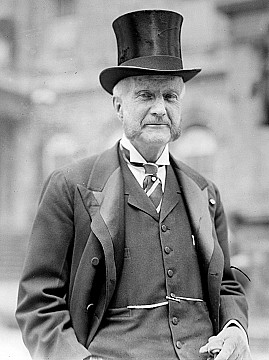
I noticed that I know of very few books on the stock market before 1900. I only know of:
Confusion of Confusions, by Joseph De La Vega (1688)
The Art of Investing, by John F Hume (1888)
Are there any books about the market before 1900 that can help me grow this list?
Big Al replies:
Lombard Street: A Description of the Money Market, by Walter Bagehot
Fifty Years in Wall street, Henry Clews
Francesco Sabella suggests:
The Stock Exchange: A Short Study of Investment and Speculation, by Francis W. Hirst
Stefan Jovanovich offers:
The Stock Exchange from Within, by Van Antwerp, William Clarkson
Martin’s Boston Stock Market, by Joseph Gregory Martin
Wall Street in History, by Martha J. Lamb
May
20
Trend following, from Francesco Sabella
May 20, 2025 | Leave a Comment
Which are the flaws of trend following strategies? For me, the markets are homeostatic but not in a strictly way, they are like a thermostat trying to keep a room’s temperature steady. But, sometimes they can spiral into imbalance when people’s actions and beliefs feed off each other.
I’m amazed by how this dynamic of the markets has never been of particular interest in the academic world. It’s years since I don’t put in serious research given my focus on active trading, but unless something changed over this time, The classics wisdom is that markets are (let’s leave the perfectly efficient markets alone) in a perfect world supply demand state, I don’t remember having read of documented positive feedback loops etc, and overshooting and disequilibrium, which are clearly the case. I studied economics and I always found funny how some theories are.
William Huggins writes:
econ is not the right place to learn about markets because the demands of "equilibrium" require us to bend reality into the "preferred" (supposed logical) state. what most EM theorist missed was the friction in markets (adjustment time, imperfect info, etc). but momentum has been documented by financial theorists for decades. you're just digging in the wrong part of the field.
Francesco Sabella responds:
I know momentum has been documented, my point was about my economics classes, where I’ve never read about the topic, but also about how the mainstream academia is built - disequilibrium is not the classic wisdom and not even considered; you’re right that some academics have addressed momentum, but the mainstream economics is still fixated with equilibrium.
William Huggins adds:
econ likes equilibrium because its calculable, and because it approximates a physical science - if only those pesky active agents weren't so concerned about their perception of what matters instead of just obeying economists' assumptions!
in the end, its -hard- to math out the implications of imperfect, changing perceptions among a changing cast of strategically interacting characters when the targets are moving and trading may (or may not) be informed. because of these challenges, most prefer to stick to sanitized general equilibrium models, even if those are basically mathematical masturbation based on definable, stable, continuously differentiable utility functions. people usually find it expedient when modelling to pretend the net impact of all the above microstructure is "random" (its not really random, more like "too complex to model") within some defined distribution, which itself is a fudge but as Bachelier showed in 1900, might not be a bad one (and it helps avoid overfitting your forecast models).
here's are a couple of articles less than 30 years old on dynamic disequilibria (i cited Jegadeesh and Titman years ago so they were top of mind). the first talks about implications for macro, the second for asset pricing:
Towards a Dynamic Disequilibrium Theory with Randomness
May
18
Strategies, from Francesco Sabella
May 18, 2025 | Leave a Comment
With long-term investors, short-term traders, trend-followers, mean-reversion advocates, and buy-low-sell-high activists all confident their strategy is superior and showing market success, is this evidence that all approaches work together, or does survivorship bias and misplaced confidence masks that no single strategy truly dominates in today’s volatile markets?
I’ve always been fascinated by the fact that there are investors holding forever competing with traders who do the complete exact opposite and usually one says the other person is an idiot and the same is the opposite haha. (The only time I think I’ve heard of someone praising another’s way of working which was totally opposite of his in this business, was the yearly speech of Buffett and Munger claiming Jim Simons and his team were very very smart.)
Steve Ellison responds:
There are different ways to find an edge in the market, so market participants behave differently. A market maker who uses order flow information behaves very differently from a fundamental investor who believes a company has value that is unrecognized, but they may both be very good at what they do. Probably neither person could do the other's job. It's a big reason why I heed Livermore's admonition to neither seek out nor act on tips about the market.
My observation having seen multiple market cycles is that bad news spreads fast and is known quickly, while good news often occurs so diffusely and so quietly that it often doesn't even register as "news". I have as my pinned X post a 54-year chart of the S&P 500 that is annotated with the most prominent bad news for each year. Every one of these events seemed at the time to be a reason for stocks to go down (as did many other things that were only the second or third worst news of the year). I adapted this from a similar chart that Venita Van Caspel published in her 1983 book The Power of Money Dynamics.
May
14
Sergio Marchionne, from Francesco Sabella
May 14, 2025 | Leave a Comment
One person who left a profound impact on my life when I was in school was Sergio Marchionne. He was the CEO of Fiat Chrysler Automobiles and CEO of Ferrari. One legacy he left on me as a person and for my work on the financial markets is definitely his philosophy. He had a very particular philosophical thought which I've always found unique for being practical and abstract at the same time, an intellectual and a mechanic, a quality I deeply admired. There is much of his thought that I find highly relevant for understanding the markets:
- Marchionne never followed predictable roads, but always pursued new, creative, bold roads. When he was appointed as CEO of Fiat, basically the most important asset of Italy at that time, he was losing 5 million euros a day; and he got out of that terrible point by taking courageous and strategic moves which were totally unexpected.
- He always stressed about adaptability. I know he was a big fan of Darwin and of course it very much applies to our field. He had a belief that failure to adapt was severely punished and the same if for the markets, where having an open mind and spirit of adaptability cannot be negotiated.
- There is a quote of him which I particularly like as someone who operates in a field which is survival-based, which is "We can never say: things are going well. At most: things are not going badly. We must be paranoid. The journey is extremely difficult. We are survivors, and the honour of survivors is to survive" and it highlights perfectly the financial markets winning mentality to employ.
- Another thing he used to say is that "Leadership is not anarchy. In a large company, the one who leads is alone. 'Collective guilt,' shared responsibility, does not exist. I often feel alone." and that definitely applied to trading.
- “Mediocrity is not worth the trip" is one of these iconic quotes.
-He believed that the market was without morality, without consciousness, and without being able to differentiate between what is right, fair, and what is not, and that none of us could break or alter the operations of the markets.
Sergio Marchionne was an extraordinary man, maybe not a perfect one, but definitely exceptional, brilliant, determined, consistent, with an open mind, humble but strong, decisive, courageous, and a true leader. He thought that "focusing solely on yourself is such a small ambition." Without this quality, it will be hard to stand above mediocrity, unless you find someone who takes the risk for you.
May
11
Echoes from the past, from Jeff Watson
May 11, 2025 | Leave a Comment
I have heard every single one of these more than once on the floor. This is the G version; the X version would be very inappropriate for this venue.
You’re long hope and short reality.
He couldn’t trade his way out of a wet paper straddle.
You’re bidding like it’s your wife’s money.
His stops have stops.
He buys the high, sells the low, and thinks he’s range trading.
If brains were dynamite, he couldn’t blow his nose.
He's so underwater, Aquaman just waved.
Tighter than a bull’s ass in fly season.
Your size is what we use for toilet paper.
He’s a momentum trader—in reverse.
He couldn’t fill a corn order, let alone an order ticket.
That guy trades like he’s reading Braille.
He thinks ‘limit down’ means he hit the jackpot.
He trades like he’s got a rearview mirror taped to his glasses.
He’s scalping—his own account.
Nice fade. If I ever need a contrary indicator, I’ll call you.
He went from hero to sandwich in one tick.
I’ve seen better risk management at a toddler’s birthday party.
Market’s moving—better go ask your horoscope.
You trading or just making donations today?
He’s got a 30-lot mouth and a 1-lot account.
That guy’s P&L looks like an EKG flatline.
You're not trading—you're gambling, but slower.
He’s so unlucky, he’d lose money in a rigged market where he’s the rigger.
The guy’s charts look like modern art—ugly, meaningless, and overpriced.
He averages losers like he’s building a position in failure.
Don’t worry, he’ll blow up before lunch.
His fills are like Bigfoot—plenty of stories, no proof.
That trade had more slippage than a greased pig at a county fair.
He went full margin—and full stupid.
Asindu Drileba writes:
I watched the documentary "Floored" that was about the extinction of pit traders due to the advent of computer driven traders. A lot of the traders seemed to have their edge in bullying and intimidation that was both physical and psychological.
I made a pit trading playlist that I binged on, and this seemed consistent even to pit traders in the currency pits of London.
One of the pit traders called the computer "The most vile invention ever made." I think he was just sad that his bullying was no longer an advantage. You can't insult a computer, or use your big body to push it away so you can have the edge, or seduce it with good looks.
Michael Brush responds:
Behind every computer, there is a person.
“The offer is $25.”
“But my computer says $45.”
“So sell it to your computer.”
Pamela Van Giessen adds:
For those interested in a biography of a once famous and beloved pit trader, I recommend Charlie D: The Story of the Legendary Bond Trader by William Falloon.
Francesco Sabella adds:
It's an incredible book! I read it years ago, I even saw a 2 hour video of Charlie D. when i was in high school where he gave a lecture on trading on 1989.
Larry Williams writes:
Charly D was one stand up guy. He loved the Bears and suggested a bet with a young lady trader for a nickel on the weekend's game. She said sure…and won. Monday morning Charley D gave her 5 grand (a nickel in betting parlance). She was astounded, told him she meant 5 cents not 5G's. No way could she risk that or take the money. He left it in her hand and walked away.
I was fortunate, thanks to T Demark, to be part of his Vegas support group - he was just amazing to hang with.
May
7
Francesco Sabella in Conversation With Victor Niederhoffer: Harvard Educated Hedge Fund Pioneer
Gary Boddicker writes:
Thanks Francesco. Always good to see and learn from Vic. Subscribed and look forward to your future interviews.
Steve Ellison adds:
This is a great interview. The 2 minutes starting at 13:36 about ever-changing cycles is itself a meal for a lifetime. "The world is always changing, and [the] road to success is always a little different, and the techniques that you’re using are always subject to competition. You should try to be alert to change."
I increasingly perceive that the pre-2020 world in which I lived most of my adult life is gone forever. It's a new era, and old techniques in many fields don't work any more.
May
5
TSLA Stock, from Francesco Sabella
May 5, 2025 | Leave a Comment
Fundamentally one thing i like of Tesla its the self driving technology, even if proper implementation is probably years ahead, maybe even more. And this extraordinary technology was funded thanks to Tesla high stock price. With the high stock price it strenghtned the fundamentals which fueled funding for innovation creating a virtuous cycle.
Thanks to this Elon could borrow easier and invest more and more… i waited to see if sentiment flipped on its favor again, but it didn't, so the same dynamics that made him so successful in the past will now (not now actually, as its months already) work against him can help deteriorate the fundamentals even faster.
I do not forget about the exceptional ability of american companies into adapting to different economic environments, but i have a lot of confidence on this trade. Plus all the reputational risks of Elon with his political activity and its exposure. Again, Elon's exposure is what helped a lot TSLA growing so big, but now that exposure is working again him unless he recognizes the mistake is doing and change the way he deals with his public image, which he won't.
In Q1 2025, Tesla's net income dropped an incredible 71%, to just 409 mln , compared to the same quarter in the previous year. This dramatic decline signals serious trouble in maintaining profitability, especially when you consider that without 595 mln from selling zero-emissions tax credits, Tesla would have actually posted a loss. This reliance on external credits to stay in the black is a grim indicator of weakness in its core operations. Operating margin is Operating Margin is at 2.1%, which is below industry.
And, in my opinion one of the most bad-looking things is the warranty liabilities, which is out of control. Let’s assume they hit $3.5 billion, up from, say, $2.5 billion in Q1 2024—a 40% jump in one year. Compare that to their $409 million net income in Q1 2025, and you’re looking at a liability that’s 8.5 times their quarterly earnings which will drain cash and destroy profitability.
If this trend holds, which very likely will given the self reinforcing behavior of the stock, tesla will need to raise prices of the car to cover the costs shutting demand even more,cut research and innovation and raise capital.
And most don’t realize how much Tesla’s battery production hinges on cobalt from politically unstable regions and a conflict or export ban could choke their supply chain overnight, spiking costs or halting production. It’s a hidden risk, that can cause serious problems, without adding the macroeconomic current environment which you are probably aware of.
Elon's bold announcements worked very well in the past because it was unexpected, now he lost that power. He has no power to influence his stock if not for a day or two, those especially retails who bought the dip in the past, made a lot of money and will do it again more and more forgetting about Robert Bacon ever changing cycles and the market can only come down when nobody expects it.
Henry Gifford writes:
A few days ago I attended a reunion of my grade school class. Guys I haven't spoken to in decades were commenting on how the rush to all-electric for cars and buildings strikes them as insane.
For seven years I taught about energy efficiency at the graduate level in an architecture college. One assignment was to compare the energy used by a gasoline powered car to an electric car, including the energy required to make the electricity to charge the batteries. No student over those years argued that electric cars saved any energy at all when the energy needed to make the electricity was included. In the later years more students refused to do the assignment, and instead take a D, as the assignment became more politically incorrect as the years went by.
I imagine fewer students would do that assignment these days, but sooner or later those who don't believe electric cars save energy, or reduce burning of fossil fuels, will get even more tired of keeping quiet to avoid being seen as an outcast. Remember, it was a kid who pointed out that the emperor was naked - no adult dared say that. But sooner or later, something along these lines will have a large effect on TSLA stock. Or, there simply won't be enough electricity around, and/or the price will be so high people will not want to buy the electricity and stop buying TSLA cars.
Without the backstory that TSLA is good for the environment, or saving the planet, it wouldn't be much more than a cool looking, inconvenient car that will need a very expensive battery replacement long before a gas engine needs replacement.
Sam Johnson responds:
Electric cars seem the best optimized for full self driving (individual tire motor control, acceleration/deceleration). They will take over in most climates for this reason alone. Everyone will want the tech, even if "less green."
Stefan Jovanovich comments:
The point of Tesla from its inventor's point of view was that it would provide ideal learning curves for (1) advanced fabrication and (2) autonomous machine thinking. If you were going to visit Mars in your lifetime, you had to have a rocket and a planetary construction technology that used (1) and (2). The instinctive mistrust of Elon Musk by short sellers and Democrats has not been misplaced; he is the consummate hustler. Since we (the BW and I) never trade or speculate, we have never once been tempted to go long or short on TSLA.
For us the connection there is an unavoidable connection between TSLA and NVDA; and we have, as a family, been long on NVDA for a dozen years now. We had no choice; our one and only child chose one of its engineers for her true love, and he chose her. We had to study Nvidia as a business because we were financially married to it. What we found is that rare company that can have repeated growth spurts like a child's - where everything financial - revenues, earnings, cash flows - increases 10 times faster than the financial world around it while its "bad" years never see declines any greater than the figures that Wall Street considers normal for a "recession". It did this without ever once getting the permanent subsidy that Musk had to depend on for TSLA.
I agree with HG about TSLA's technology; he is confirming Carroll Shelby's prediction that, in the end, hybrids would be the best engineering solution to the question of how you match electrical motor drives to automobiles.
TSLA as a car brand can disappear, and Musk will not care; he will have acquired the knowledge needed to build rockets at scale. Given his wonderful abilities as a financial hustler - PayPal remains to this day a wonderful invention of something no one needed but everyone bought into, Musk may find a way to get others to buy him out (has anyone ever actually made money in Ford after it went public?).
Update to earlier Idiot advice about common stocks: NVDA and PHM are now Owns, not Buys. TOL is the one company we are still punching on the Buffett bus ticket. We will continue to be married to NVDA financially because its climb to vertical integration is only half-way done. I asked the SIL if there was any comparison between Carnegie's acquiring the coal, iron ore, clay and earth metals that his mills used and Nvidia's "investment" in America. He wisely deferred to offer any opinion since that would be, in the small minds of SEC lawyers, "inside" information. He did offer a general comment: for the world of ICs and their users, the vertical integration is already happening; it is AI.
Apr
28
11 things I learnt racing that relate to the markets, from Francesco Sabella
April 28, 2025 | 1 Comment
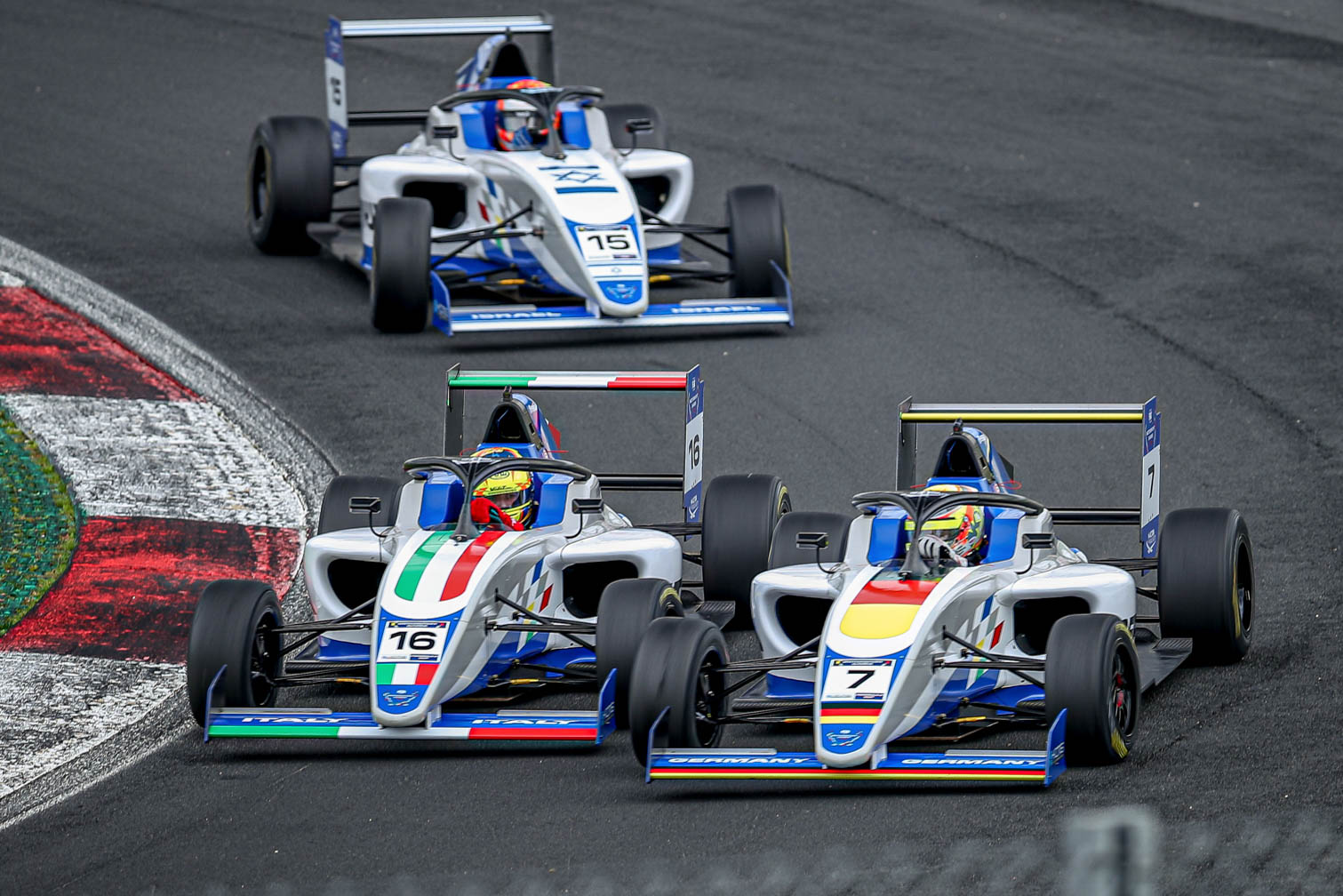
I’ve been a professional racing driver from the age of 3, the first time I’ve been on a karting circuit driving, until 17 doing a formula 4 championship and I placed myself at the 3rd place in the international final race in karting at 15. Here’s what I learnt from that extremely competitive sport that may apply to trading, investing and I’d say to many other aspects of life:
1. You can’t perform well in all the track conditions and different weathers, you may suffer more with the hot weather and perform best with cold, or the opposite , the key is to survive and doing your best when conditions are not ideal, and maximize your performance when the conditions are in your favor.
2. Think astute and strategically, an important part of winning a race was being smart in the way you used your tires. You could only have one set of tires per race, so if you had a very qualification, during the manche (the fight after qualification which will give you a place on the grid of the final race) it was smart to preserve your tires and drive conservative in order to arrive at the final race, maybe even a couple of positions lower of where you could’ve been, but with better tires. In this way you’re going to be performing best at the last race, which is the only one that matters.
3. When I was 12, a retired legendary old man who was the karting principle of Ayrton Senna (he had like 100 t-shirts with still the sweat of ayrton, because senna when he was in Italy racing never changed t-shirt but just threw them away, but he never sold any as memory) called Ernesto, who’s not very well known online but he’s been a crucial person on Senna’s life, was impressed with my driving skills and decided to help me in winning the world championship when I was 12. He told me, as important rule, the importance of being patience. When I was 2nd, to not surpass the 1st guy, stalk him and make him go nervous , always right behind him , until it’s the right time. You’re going to be relaxed, keeping your engine fresh and when it’s the last 2 laps you surpass him. It very well applies to trading and investing I’d say.
4. Do not show your edge and your strong performance. When I was practicing during the weekend race, I’ve never showed when I was performing well. You need to keep the eyes away from you and make your competitors think you’re performing terrible or average. Then you surprise them on Sunday at the race day. It very well applies to fund managers I think.
5. Talent is not enough. You need to be talented, competitive , prepared and very well trained on track; but it’s as much important to be good at selling your talent to the right person, otherwise you won’t go nowhere. My goal was to become a f1 driver , and I’ve seen countless of people and friends getting extremely close , spending a fortune, and then getting nowhere. And then I’ve seen a guy, talented but not as many others, achieving this goal thanks to his ability to network his talent to the right person. In finance it’s the same I believe.
6. Luck. Luck played a very important role in racing , it was the little peace of the puzzle needed to end a perfect race. But after seeing it so many times, I can tell one thing for sure: luck favors the bold, so when you’ve the wind on your back push over your limits, because luck will drift in your favor.
7. Arrogance and humility. The true enemy of a man , I discovered not to be losing but to win and winning too much. That’s where the real strength is seen; not from how you handle losing.
Winning, especially winning streaks, will make you feel arrogant and superior to others, training and practicing less and underestimating your competitors. Always try to stay as much humble as you can because it was humility that made you winning and it’s the lack of humility that will destroy you.
8. Setups. Always change as many setups as you need until your performance improve if they’re bad and you don’t feel adapted to the current circuit conditions, but NEVER change a setup that it’s currently winning. I’ve often see setups working amazing, turning a race into a terrible performance trying to make a great setup a perfect one. When something it’s working, let it work and don’t interfere.
9. Edge. Don’t expect all your competitors to follow the rules, I’ve often seeing racers, maybe multibillionaires ones who could afford to cheat on an international event , doing little cheating maybe to the engine or to the kart itself to gain that very little edge to win a race. As my father used to told me when as young kid, it’s important to be morally on the right side and do what’s right doing the best we can having the best engine as possible at the limits of what’s allowed, but never a single step beyond. It won’t give you an edge today but it will give you an edge tomorrow.
10. Strategy. You need a strategy to perform, but the biggest wins are the ones that come from your intuition where you drive with your heart and soul and let your talent and preparation to the heavy lifting without rationalizing too much. It very well applies to trading, espeicially on volatile times.
11. Keep eyes open, around the paddock I often had my eyes very opened trying to understand what the fastest drivers were doing and which setups they had, not necessarily to copy them but to get a feeling on what’s working; in fact they were often trying to hide crucial parts of the setup, but still every little detail made a difference; in trading I think it’s important to do that.
Apr
26
Book question, from Francesco Sabella
April 26, 2025 | Leave a Comment
Does someone have a great modern macroeconomics book to recommend?
William Huggins responds:
it depends how theory heavy you want it to be. the author i usually recommend is Mankiw but Williamson (intermediate) and Romer (advanced) are good too depending on your needs. for the best "whole picture" i like a CFA publication from 2013 called Economics for Investment Decision Makers, by Piros and Pinto, which gives a great summary of micro, macro, and int'l econ under one roof.
for single-day-beach-reading i bought a casually interested buddy a copy of How Economics Explains the World, by Andrew Leigh, which is a great intro for non-users.
Apr
24
Planck’s principle, from Nils Poertner
April 24, 2025 | Leave a Comment

A new scientific truth does not triumph by convincing its opponents and making them see the light, but rather because its opponents eventually die and a new generation grows up that is familiar with it…
An important scientific innovation rarely makes its way by gradually winning over and converting its opponents: it rarely happens that Saul becomes Paul. What does happen is that its opponents gradually die out, and that the growing generation is familiarized with the ideas from the beginning: another instance of the fact that the future lies with the youth.
— Max Planck, Scientific autobiography, 1950, p. 33, 97
relevance of how new ideas are being adopted in science, markets, everywhere.
Jeff Watson responds:
Science by consensus is not science. Just ask Galileo.
Pamela Van Giessen writes:
John McPhee wrote extensively about this and how the science of geology advanced over a few centuries in Annals of the Former World. Scientific community consensus is pernicious, and it is clear that there is mostly no convincing it.
William Huggins comments:
the foundation of science rests of replicability - anyone with the same data should be able to replicate results (even if they disagree about the mechanism). once replication is established, the difficult questions come from "is this data sufficient and representative?"; "is the data generating process stable or dynamic?"; "did i gather data in support of my hypothesis or to try to disprove it?". the fun stuff.
philosophy of science ensures we ask good questions and have good tools to tackle them with. this is why the Ph in PhD is short for "philosophy."
correction: "same data" is the wrong phrase - "equivalent, out-of-sample" would be a better choice of words.
Asindu Drileba writes:
The problem with the human mind is that it has too many glitches. You can verify data successfully and still be wrong. Here are two examples from Astronomy. First, The Mayans had models that would accurately predict eclipses. So, your data of when eclipses occur would replicate really well with their model. However the model of the solar system the Mayans used, had the Earth at the centre and the Sun revolved around it. The assumptions of the model were completely wrong, but the data (predictions) were accurate.
Second, is Newton's models, that predicted the movement of a comet accurately. Then you often here people say that Einstein proved Newton wrong with Relativity.
I think when it comes to science, explanations are very flimsy. What should matter is if the idea useful or not.
Francesco Sabella responds:
I think it’s a very good exercise to start from the point of view that our mind is bound to make mistakes, have glitches and start to work from that assumption; even if it’s not always true but it can be good as working hypothesis.
Big Al recalls:
Years ago, doing simple quantitative analyses to post to this list, I learned that one of the biggest pitfalls was my own desire to get a nice result.
Archives
- October 2026
- September 2026
- August 2026
- July 2026
- June 2026
- May 2026
- April 2026
- March 2026
- February 2026
- January 2026
- December 2025
- November 2025
- October 2025
- September 2025
- August 2025
- July 2025
- June 2025
- May 2025
- April 2025
- March 2025
- February 2025
- January 2025
- December 2024
- November 2024
- October 2024
- September 2024
- August 2024
- July 2024
- June 2024
- May 2024
- April 2024
- March 2024
- February 2024
- January 2024
- December 2023
- November 2023
- October 2023
- September 2023
- August 2023
- July 2023
- June 2023
- May 2023
- April 2023
- March 2023
- February 2023
- January 2023
- December 2022
- November 2022
- October 2022
- September 2022
- August 2022
- July 2022
- June 2022
- May 2022
- April 2022
- March 2022
- February 2022
- January 2022
- December 2021
- November 2021
- October 2021
- September 2021
- August 2021
- July 2021
- June 2021
- May 2021
- April 2021
- March 2021
- February 2021
- January 2021
- December 2020
- November 2020
- October 2020
- September 2020
- August 2020
- July 2020
- June 2020
- May 2020
- April 2020
- March 2020
- February 2020
- January 2020
- December 2019
- November 2019
- October 2019
- September 2019
- August 2019
- July 2019
- June 2019
- May 2019
- April 2019
- March 2019
- February 2019
- January 2019
- December 2018
- November 2018
- October 2018
- September 2018
- August 2018
- July 2018
- June 2018
- May 2018
- April 2018
- March 2018
- February 2018
- January 2018
- December 2017
- November 2017
- October 2017
- September 2017
- August 2017
- July 2017
- June 2017
- May 2017
- April 2017
- March 2017
- February 2017
- January 2017
- December 2016
- November 2016
- October 2016
- September 2016
- August 2016
- July 2016
- June 2016
- May 2016
- April 2016
- March 2016
- February 2016
- January 2016
- December 2015
- November 2015
- October 2015
- September 2015
- August 2015
- July 2015
- June 2015
- May 2015
- April 2015
- March 2015
- February 2015
- January 2015
- December 2014
- November 2014
- October 2014
- September 2014
- August 2014
- July 2014
- June 2014
- May 2014
- April 2014
- March 2014
- February 2014
- January 2014
- December 2013
- November 2013
- October 2013
- September 2013
- August 2013
- July 2013
- June 2013
- May 2013
- April 2013
- March 2013
- February 2013
- January 2013
- December 2012
- November 2012
- October 2012
- September 2012
- August 2012
- July 2012
- June 2012
- May 2012
- April 2012
- March 2012
- February 2012
- January 2012
- December 2011
- November 2011
- October 2011
- September 2011
- August 2011
- July 2011
- June 2011
- May 2011
- April 2011
- March 2011
- February 2011
- January 2011
- December 2010
- November 2010
- October 2010
- September 2010
- August 2010
- July 2010
- June 2010
- May 2010
- April 2010
- March 2010
- February 2010
- January 2010
- December 2009
- November 2009
- October 2009
- September 2009
- August 2009
- July 2009
- June 2009
- May 2009
- April 2009
- March 2009
- February 2009
- January 2009
- December 2008
- November 2008
- October 2008
- September 2008
- August 2008
- July 2008
- June 2008
- May 2008
- April 2008
- March 2008
- February 2008
- January 2008
- December 2007
- November 2007
- October 2007
- September 2007
- August 2007
- July 2007
- June 2007
- May 2007
- April 2007
- March 2007
- February 2007
- January 2007
- December 2006
- November 2006
- October 2006
- September 2006
- August 2006
- Older Archives
Resources & Links
- The Letters Prize
- Pre-2007 Victor Niederhoffer Posts
- Vic’s NYC Junto
- Reading List
- Programming in 60 Seconds
- The Objectivist Center
- Foundation for Economic Education
- Tigerchess
- Dick Sears' G.T. Index
- Pre-2007 Daily Speculations
- Laurel & Vics' Worldly Investor Articles
