Dec
31
Great recent webinars, from Peter Ringel
December 31, 2025 | Leave a Comment
Reviews of 2025 and previews of 2026:
Mr Hirsch:
- Got many new ideas for research and helpful context
- also learned that I use the term Santa wrong!
Adam Grimes:
Trading the Changes: Structure, Regimes, and the Path to 2026
- always brilliant
- lots of actionable stuff and gems
Larry Williams:
Larry Williams’ 2026 Market Forecast: Cycles, Risks, and Opportunities
Dec
31
There is market manipulation, from Larry Williams
December 31, 2025 | Leave a Comment
Every time I take a position the market manipulates my emotions. Every damn time.
Humbert Y. agrees:
Ha! As always, Larry nails it. This is the only relevant manipulation to be on guard for, and it is not an easy task…
W. Humbert comments:
My entrances are typically during what I perceive as a manipulation, I look for them.
Dec
30
Only the strong
December 30, 2025 | Leave a Comment
making you hold for the rounds at 6950 and 7000. only the strong.
Dec
30
Jobs: Rebirth, from Bill Rafter
December 30, 2025 | Leave a Comment
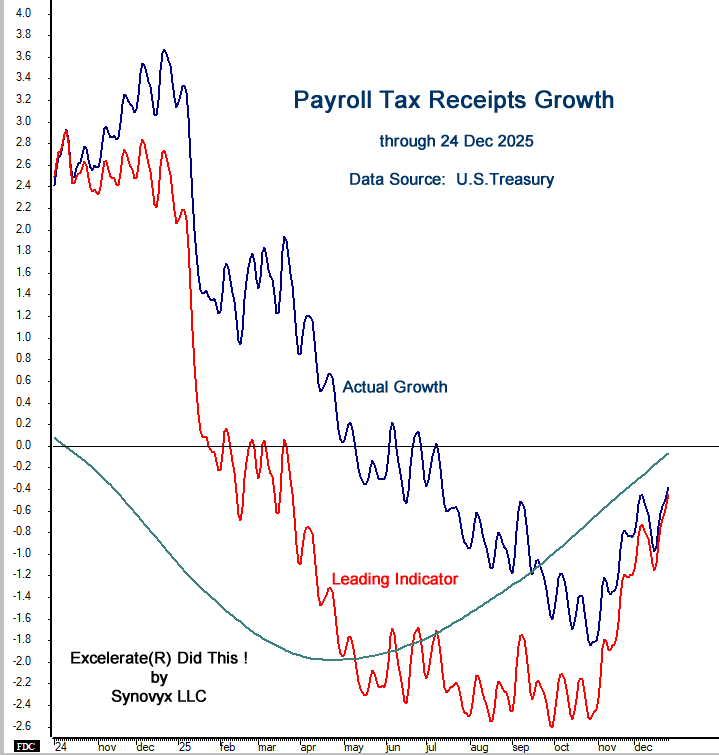
Monitoring the U.S. economy through job growth has been unusually difficult in recent months. Under normal circumstances, the labor data would offer a clean read on economic momentum. Instead, a politically driven government shutdown temporarily removed millions of workers from payrolls, distorting every major employment indicator. The strategy failed to achieve its political aims, but it forced millions of Americans to forgo paychecks until the shutdown ended—leaving analysts with a statistical mess to untangle.
The central question now is straightforward but critical: How much of the current job growth reflects genuine economic expansion, and how much is simply the reinstatement of furloughed workers—or seasonal part-time hiring for the holidays?
The next Non-Farm Payroll Report arrives Friday, January 2, 2026, and for the first time in months we may get a clearer signal. Our estimate points to a substantial increase in jobs, driven entirely by the behavior of Payroll Tax Receipts, which have long been our most reliable real-time indicator of labor market strength.
After a period of negative growth, Payroll Tax Receipts have turned sharply upward. As shown in the accompanying chart, the leading indicator (red line) has lagged the actual receipts (blue line) during the shutdown distortions, but is now crossing above and beginning to lead the series higher. This is not a temporary blip. It marks the beginning of a multi-year positive trend—one we forecasted months ago and which is now unfolding exactly as expected.
Our estimate for the January 2nd NFP Report: +162,000 jobs
If this projection holds, it will confirm that the underlying economy has regained its footing and that the Payroll Tax Receipt signal is once again pointing the way forward.
Sorry — 4.3% GDP Growth Isn’t Real
Several major outlets (Bloomberg, CNBC, Axios) recently reported that the U.S. economy grew at an annualized 4.3% pace in Q3 2025. The number comes from a delayed BEA release (12/23) that extrapolated partial quarterly data into an annual rate. But that headline figure simply doesn’t match real-time economic activity.
Payroll Tax Receipts Tell the Truth
Our most reliable indicator of economic momentum has always been Payroll Tax Receipts. They reflect actual wages and actual jobs — not model-based projections.
Here’s what the tax data shows:
During Q3 2025, Payroll Tax Receipt growth was never positive.
Annualized growth for the quarter averaged 1.42%, and that’s looking back over a full year.
Current annualized growth through Christmas 2025 is under 0.5%.
Those numbers are nowhere near 4.3%.
Why the BEA Estimate Misleads
The BEA’s figure is:
Annualized — multiplying a partial quarter by four
Distorted by the government shutdown, which delayed data collection
Contradicted by real-time tax flows that never showed a surge
Even the BEA notes this is an initial estimate, replacing two missed releases. It is unusually fragile and backward-looking.
Interpretations Will Vary — But the Data Doesn’t
Some may speculate that an unexpectedly high GDP print could influence monetary policy by suggesting renewed inflation pressure. Whether or not one believes that, the conclusion is straightforward:
The 4.3% GDP claim cannot be supported by real economic data.
Payroll Tax Receipts — the cleanest, least-manipulable indicator we have — show growth well under 1%, not 4%.
Larry Williams adds:
One of the best predictors of jobs is the stock market, which is also forecasting more people back to work.
Dec
29
A curious case of silver, from Anatoly Veltman
December 29, 2025 | Leave a Comment

So as Silver trades yet another stratospheric (psychological) target, there are a few questions. On commercial side, both Demand and Supply are price-inelastic. Whatever industrial uses are, Silver is hardly substitutable, especially at the time when other metals are just as pricey. And on new Supply side, much Silver gets out of the ground as a by-product from mines not primarily operating as "a Silver mine". So, again, Silver production can't be easily jacked up during Silver's rise.
On non-commercial side, however, it's the opposite. Supply/Demand balance works as it should. $77 (or $100 lol) market would cause Buyers to be abandoning bids; while grandmas might start dusting silverware off and storming pawnshops. Any other considerations?
Peter Penha responds:
Exactly - if you look at the Silver Institute Supply / Demand models it shows we have been in several years of deficits (still in deficit of course this year and next) - Mine supply peaked a decade ago
If you add up all the non industrial uses of silver (Jewelry, Photography+film (Chris Nolan & IMAX), and all silverware) they do not make up the deficit.
So in the Silver Institute model and I am talking 2023 $28 silver price we have some 20% of total ounces that need to be divested every year to maintain supply/demand.
60% of uses are industrial - solar is the future everywhere now….for those missing the US battery trade —> the Biden era tax credits for solar are now Trump credits for solar+batteries & the AI data centers are now going to be Bring Your Own Capacity and storage & connect to the grid.
Read the full post with additional comments.
Dec
28
Letters From A Self-Made Merchant To His Son
December 28, 2025 | Leave a Comment

The book Letters From A Self-Made Merchant To His Son was a bestseller in 1901 and is still one that every kid and businessman should read. it's advice from a meatpacker for his son and goes thru Harvard and is based on the founders of Armour and co and Swift.
it's filled with advice on a proper way to choose a girl and how to be successful in business. Highly recommended.
Here is a good summary of the letters from the best book on business and life wisdom that there is. The timeless advice is more relevant for today than any new work could be. Just buy it. Read it. Implement it.
Dec
26
Fantastic Veritasium video on power laws, from Asindu Drileba
December 26, 2025 | Leave a Comment
With direct application to speculation (featuring VC's):
You've (Likely) Been Playing The Game of Life Wrong
The world is not Normal.
Dec
24
Stubby Pringle’s Christmas, from Dailyspeculations
December 24, 2025 | 8 Comments
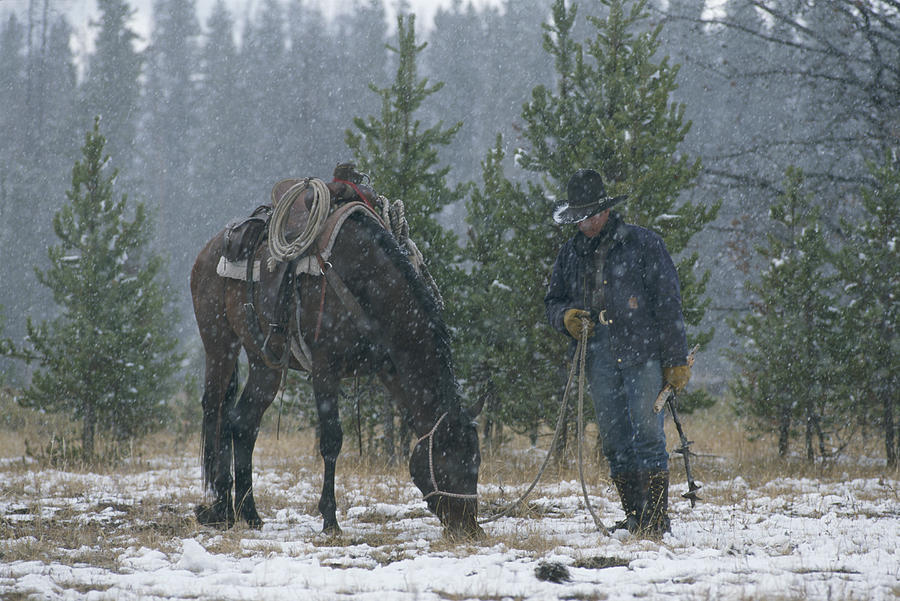 This is one of my favorite stories. I hope you enjoy it, and I wish you a Merry Christmas. — Victor Niederhoffer
High on the mountainside by the little line cabin in the crisp clean dusk of evening Stubby Pringle swings into saddle. He has shape of bear in the dimness, bundled thick against cold. Double stocks crowd scarred boots. Leather chaps with hair out cover patched corduroy pants. Fleece-lined jacket with wear of winters on it bulges body and heavy gloves blunt fingers. Two gay red bandannas folded together fatten throat under chin. Battered hat is pulled down to sit on ears and in side pocket of jacket are rabbit-skin earmuffs he can put to use if he needs them.
Stubby Pringle swings up into saddle. He looks out and down over worlds of snow and ice and tree and rock. He spreads arms wide and they embrace whole ranges of hills. He stretches tall and hat brushes stars in sky. He is Stubby Pringle, cowhand of the Triple X, and this is his night to howl. He is Stubby Pringle, son of the wild jackass, and he is heading for the Christmas dance at the schoolhouse in the valley.
[For the entire text of the story, please follow this link].
Dec
23
Force of destiny
December 23, 2025 | Leave a Comment
force of destiny sp at 7000 now at 6900.
Dec
23
Low status jobs becoming high status, from Nils Poertner
December 23, 2025 | Leave a Comment
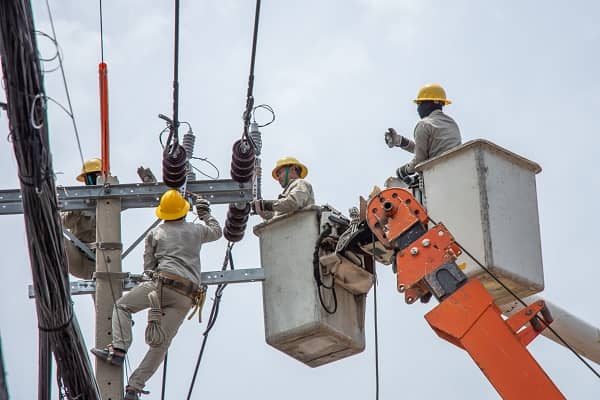
Fascinating to watch how former low status jobs, like cybersecurity, have become high status now. Same is true the other way around as well (eg (male) technician at the London tube system who makes a quarter of his wife who is in real estate - although that is changing now). Wondering what low type jobs / or ppl are on the fringes today will be in high demand in coming years.
Carder Dimitroff responds:
Try these:
Any of the crafts. Specifically, licensed electricians, plumbers, and HVAC techs. Many make more than engineers.
Public response teams. Specifically, firefighters, EMTs, and law enforcement. Many make more than lawyers, particularly when pensions are considered.
Career military. Specifically, for those with 20 years of service. Lifetime benefits are incredible (free college, unlimited grad schools, pensions w/colas, lifetime medical insurance, VA benefits, hiring preferences).
Pamela Van Giessen suggests:
Car mechanics
Henry Gifford writes:
My friend who fixed boilers said to his sophisticated, suit-and-tie, well educated in-laws “I’m not the smartest guy around. I’ve only read two or three books in my life. I don’t think I’m smart enough to come up with a sophisticated investment plan (nods all around the room at this point). So I just buy one piece of New York City real estate each year and hope for the best”. No more nodding at that point.
Guess what blue collar people who don’t have vices do with their money? They buy property. Who is better suited to own real estate? People who fix things and have friends who fix things, or lawyers?
And what nobody mentions is that some people are much better at those sorts of work than others. Simply finding someone to show up and try to do those things is hard. Someone who is good at one of those trades is in even higher demand.
Those fantastic benefits for former military people are not limited to the military – all federal employees get all those benefits after twenty years of work. If someone joins the military at 18, and gets out at 38, or gets out sooner and then works in the post office or etc. until they “get their twenty”, they get full salary with increases for life. Income that will survive any lawsuit, even the IRS can’t take it all. They maybe collect a total of three years of salary for every year worked.
Nils Poertner responds:
Certainly good to encourage young men (or women) to follow a path that interests them - and not just follow a path that is currently "high status". This "Yousef" guy who was my IT guy at Bankers Trust decades ago (low status in my eyes back then) became a cyberpunk in 2008…you get the idea. That said, it is a power game outside. young men need wives etc.
Henry Gifford adds:
I judge the level of a single woman’s interest in me by counting the seconds until she says “what do you do?”.
No woman has ever asked me if I like what I do, or am good at what I do – not important.
Many men have a choice between coming home miserable to a wife, or coming home happy to an empty house. Age old dilemma, no known fix, as all our DNA has evolved to enhance survival, which for a woman over the millennia has meant marrying the chief’s son, or someone else with high status.
Larry Williams recalls:
When I was dating all women ever asked me is your place or mine. Must have been doing something wrong.
Michael Brush is curious:
Do you have a cycle chart for that?
Larry Williams clarifies:
Yes but there are not enough examples to draw a conclusion.
Dec
22
Bitcoin Historical Drawdowns, from Cagdas Tuna
December 22, 2025 | 1 Comment
It will be the first time mainstream institutions, such as ETFs, banks etc. are so heavily involved with this asset class if it is repeating the historical pattern.
Cycle 1 (2010 - 2013)
• Peak: December 2013
• Drawdown: 93% from ATH
Cycle 2 (2014 to 2017)
• Peak: December 2017
• Drawdown: ~86-87% from ATH
Cycle 3 (2018 to 2021)
• Peak: November 2021
• Drawdown: ~75-77% from ATH
Cycle 4 (2025 to ???)
• Peak: October
• Drawdown: 30% from ATH for now
If 70-80% drawdown repeats, Bitcoin will be below 40000 and Crypto Treasury geniuses will be meeting with Trump for a bailout! But Who will bailout Trump?
Dec
22
Tales from the pit, from Jeff Watson
December 22, 2025 | Leave a Comment
Chuck Proctor (video interview)
In this episode of In The Harbor, we sit down with Chuck Proctor, a seasoned spread trader specializing in 30-year Treasury bond futures. Chuck takes us through his remarkable rise on the trading floor—from starting as a runner, to becoming a clerk, and ultimately earning his place as a local trader.
Together, we revisit the golden era of open-outcry pit trading: the chaos, the camaraderie, the competition, and the moments that shaped a generation of traders. Chuck shares firsthand stories of what it was like to survive—and thrive—in an environment built on instinct, speed, and human connection.
We then shift to the present day to examine the “death of the pits” and the takeover of markets by computers and algorithms. Chuck offers candid insights on how the culture of trading has evolved, what was lost, and where opportunity still exists for those willing to adapt.
Dec
21
Study of ancient languages. from Nils Poertner
December 21, 2025 | Leave a Comment
Idea for younger Specs: In School, some of us studied old languages, Latin, ancient Greek, one had to sit 1 hour to figure out what individual words could mean. And then put it all together. One could have the same approach for reading modern newspaper articles now. like this WSJ article here (I know that ppl can read "English" - I meant in a more reflective way. "Get the joke")
Five Reasons Investors Are Feeling Good About Stocks Again
and then check /study with "expected" vs "actual" in 1 week, 1 month, 1 quarter etc,
on a rolling basis to hone intuition /train memory.
Stefan Jovanovich recalls:
Arthur Sullivan - "no, I am not a descendant of the composer, whom none of you dunces will have heard of. He was English; I am Irish." - remains my favorite of all teachers. He lasted 1 year at Hackley - then a borstal boarding school for children who had to be warehoused, now a respectable Westchester County day school. He taught 9th grade Latin and turned it into a lesson in military tactics and strategy. The little Latin and less Greek are long gone, but I can still see his face and those of my classmates the day he explained to us how Caesar used a company of archers to conduct reconnaissance by fire.
Dec
20
Low range of S&P
December 20, 2025 | Leave a Comment
amazingly low range of sp last 2 months with half of all prices in 6800 handle and sd of 9.
Dec
20
Another amazing measurement: LIGO, from Alston Mabry
December 20, 2025 | Leave a Comment
The Absurdity of Detecting Gravitational Waves
The LIGO site.
Dec
19
Request for “off topic” books on speculation, from Asindu Drileba
December 19, 2025 | Leave a Comment
Often when I listen to specs I hear "off-topic" book recommendations. Examples:
"The most important book to do with trading is Secrets of Professional Turf Betting by Robert Bacon" — The Chair. A book about parimutuel horse betting.
"The most important book to do with the stock market is Horse Trading by Ben Green" — A game theorist & friend of The Chair. A book about selling horses
"I can find new trading strategies on almost every new page (Thinking Fast and Slow by Daniel Khaneman)" — The Chair's Brother (Mr. Roy Niederhoffer). A psychology book
"Our entire investment philosophy is based off this book (Snow Crash by Neal Stephenson) — Fred Wilson of Union Square Ventures, a Tier 1 VC firm. Its a sci-fi book.
"One of the most important things you can learn todo with investing is creative writing" — Jeffrey Hirsch. Not a book but still an off-topic research recommendation.
I have never regretted reading an "off-topic" book. Any more of such recommendations?

Nils Poertner responds:
Coaching Plain & Simple, by P. Szabo, D. Meier (book about learning - how to coach oneself in a way)
Asindu - what books to get rid off, to burn, what is an obstacle in your life is also relevant. Early 2008, I visited a French friend on Lehman trading floor in London. V nice guy, senior analyst for their credit models, high IQ 130 plus, bit gullible though. He was surrounded by over 20 books of advanced math on either side of his desk. I had the urge to get a huge sledgehammer and whack down the books…you know.
Larry Williams suggests:
Zurich axioms. A must read.
Peter Ringel agrees with Larry:
I have them on my wall. Besides some of the lists by Vic, Larry, Adam Grimes and some other. Valuable.
And did you find the Daily Speculations booklist?
Asindu Drileba writes:
Yes. I forgot about Zurich Axioms. Thanks. This Daily Speculations list is good, I actually wasn't aware of it.
Dec
18
Clustering, from Nils Poertner
December 18, 2025 | 2 Comments
There is this known phenomenon that coffee chains (Starbucks, Costa Coffee) in a city are often next to each other. Same for gas (petrol) Stations. Makes no sense for the customer but applying game theory it certainly does.
Perhaps the same could be said for analysts forecasts by major broker dealers?
Early 2010 (pre Eurocrisis) I recall speaking to a Deutsche Banker covering Italian regional banks. She said she would have loved to write a more bearish story but was afraid of internal repercussions (as they were trying to win other business from those Italian banks).
Dec
17
John Freeborn, from Stefan Jovanovich
December 17, 2025 | Leave a Comment

His book Tiger Cub: The Story of John Freeborn DFC* is the best writing about the RAF in WW 2.
The facts are from Grok; the comments are mine.
John Connell Freeborn, DFC & Bar (1 December 1919 – 28 August 2010), was a distinguished British fighter pilot and flying ace in the Royal Air Force (RAF) during the Second World War. He was kicked out of Leeds Grammar School at 16 for fighting and found his calling when he joined the RAF 3 years later under a short service commission. After 4 hours and 20 minutes of flight time, he was allowed to solo. In 3 months he went from trainee to pilot officer.
During the Battle of Britain (July–October 1940) Freeborn flew more operational hours than any other RAF pilot—over 300 sorties. He is credit with 5 confirmed kills (Messerschmitt Bf 109s) and 3 shared kills.
Freeborn served as RAF liaison and test pilot in the United States (January–December 1942), commanded No. 118 Squadron (June 1943–January 1944), was wing commander of 286 Wing in Italy (1944–1945). He quit the RAF in 1946; it was, he said, "run by nincompoops".
Dec
16
Oil at $55
December 16, 2025 | Leave a Comment
oil at $55 a barrel. all inflation numbers very bull for S&P and USD. definitely deserving of a rate reduction. except for chance gardner posturing.
Dec
16
Only the paranoid survive, from Nils Poertner
December 16, 2025 | Leave a Comment

written by another smart Hungarian (who came to the US). Andy Grove (late Intel CEO), real name is Gróf, András István. Jewish Hungarian middle class. András Gróf was born to a middle-class Jewish family in Budapest in 1936.
typically it does not pay to be surrounded by paranoid ppl in business or speculating (one reason I don't like preppers in my vicinity as they irritate me too much) -OTOH, perhaps there is some value to adding here and there a friend who is a bit paranoid at times.
Dec
15
McDonald’s Admits It’s Too Expensive for Customers, from Art Cooper
December 15, 2025 | Leave a Comment
[Re the DailySpec Thanksgiving story.]
McDonald's Admits It's Too Expensive for Customers
In no way does this contradict the point of the story — customers looking for a low-price meal can (and have) go to other fast-food chains, such as Taco Bell. Free enterprise and competition are necessary for a happy society.
Dec
15
Harvard Club antisemitism, from Jeff Watson
December 15, 2025 | Leave a Comment
No comment needed.
The Harvard Club of New York Cancels Dershowitz Book Event
The Harvard Club of New York is being accused of censorship after abruptly cancelling a book event featuring famed Harvard professor Alan Dershowitz. In a statement, Dershowitz says that invitations were sent out and the event was approaching when he was suddenly told that the Harvard Club would have none of it. He blamed his representation of President Donald Trump for the cancellation. For a club that bills itself as offering “unique experiences,” it appears that hearing from opposing or different views is not one of them. Dershowitz has been associated with Harvard for over 60 years and remains one of its best known law faculty members.
Nils Poertner comments:
Large Universities in the US, Canada and parts of Europe are doomed beyond repair. No error correction process happening- built through collapse.
Henry Gifford writes:
Harvard was just used as an example when Trump tried to cancel “their” research funding (polite word for money). I didn’t pay attention to the details of the outcome - the point got made that universities better step into line.
Sure, Trump’s objection had something to do with DEI and being too liberal, but as all colleges are dependent on not paying taxes, and on government loans for most tuition, and government research money, they can hardly be anything but socialist in thinking, and can be expected I think to stay that way.
If they paid taxes and people had to pay to go there and research had to be paid for by someone spending their own money things would, I think, be greatly improved, but that is not the world we live in.
The government is basically paying the universities to breed socialism. In New York City we even have colleges that teach people to be bureaucrats.
Dec
14
Ever Changing Cycles in the NBA, from Andrew Moe
December 14, 2025 | Leave a Comment
Wonderful example of ever changing cycles in the NBA vis a vis the post up play which went dramatically out of favor when analytics reshaped the game into a three point shooting contest but now has come back into favor due to the spacing afforded by all those three point shooters.
How post-ups became the NBA's most efficient play
Stefan Jovanovich comments:
Steve Ellison is wistful:
Might one dare to hope that actually putting the ball in play for fielders might once again gain favor in baseball?
Dec
13
To Build a Better Rat Trap, from Bo Keely
December 13, 2025 | Leave a Comment
The rat had no morals, no scruples, no consideration and left half-inch scat throughout my trailer for weeks. Peanut butter in a Havahart trap failed so I upscaled to the Victor rat trap, world leader since 1898 with the snap of an alligator. I heard it about midnight. Peeking over the attic drop ceiling was a rat the size of a chihuahua and it must have thought my Kilroy head was the largest mammal it had ever seen. It’s nose was locked in the trap, legs flailing with a 9” tail. I raised a 1-pound ball-peen hammer to dispatch it, the ladder slipped, and I fell into the darkness. Nobody here but me lying conscious and paralyzed on the floor with the rat thrashing and bleeding six-feet above. The stealthy, secret fellow had built a better rat trap.
The crash onto three 70-pound Marine batteries left me in underwear on the dirty, 40-degree floor for 1.5 days. No water, no food, unable to crawl. Finally, I inched like an inchworm for 15’ to a cellphone and called my desert neighbor a mile away.
The Brawley, CA Pioneer Hospital ER accepted me gleefully on a slow night and the attention was professional. A CT scan and Xray exposed four broken ribs (8-11), Lumbar-1 compression fracture, a 30% hemothorax (blood in the thoracic cavity), slight pneumothorax (air in the thoracic cavity), and pleural hemorrhage (gurgling blood in the lungs). I could have died that gray night from labored breathing.
‘The injuries,’ urged the doctor, are just shy of surgery but transport to a Level 1 trauma center is mandatory to monitor the hemothorax.’ He offered me morphine, fentanyl, and I finally accepted an opiate Norco (Hydrocodone) for the ambulance ride. Suddenly I was streaking on the dark desert highway 111 for two hours to Palm Springs Trauma Center.
The ER was professional and fast. A fascinating fracture case brought the six-man team to my blood-drained face under a chocolate brown cowboy hat like The Good, Bad, and Ugly, as the lead physician whistled the theme song and the lung specialist shook his head. ‘You’ll get better in a private room on the 4th floor.’
Instead, they wheeled the bed down the block long emergency hall to an elevator and I watched the aide press Floor 3. The door opened to a raised dungeon of mops, cobwebs, and people who couldn’t speak English. Tortured screams echoed along myriad halls. They stuck me in a room with a sheet separating my ears from a man moaning in agony for 30-minutes until I called as loud as my lungs could allow, ‘Help!’ A nurse creeped into the room and instructed me to take a blood thinner. ‘That’s contraindicated with hemothorax; are you trying to kill me?’ ‘Then take this anxiety pill first.’ ‘Get me the head nurse!’ She came. ‘Move me to Floor 4 or I’ll crawl to the Palm Springs Newspaper office.’
That’s how I commandeered a 3:00am penthouse in the finest, largest hospital in southern California. It was a private room with two full-time, around-the-clock nurses who fed me 5-star meals and told war stories until I was glutted with tenderness and said I wanted to go home. The requirements were to inhale 1500ml of air on an incentive spirometer (I passed with 3000ml akin to a healthy, 20-year old male); lower my pulse from 90 to 85 beats in a heartbeat, roll out of bed, and walk 50 yards. ‘We’ll call you an Uber,’ praised a nurse.
I was released to my Slab City car mechanic and walked up a wash to my camp. It’s been a month now of daily walking and light yard work. I took one Norco every four nights to fall asleep and shunted my blood to the healing areas, and when it hit my brain added columns of numbers to link the opiate to math instead of getting high.
Life is good again. It’s 10% what happens and 90% how you react to it.
Dec
12
Comments on free trade, from Stefan Jovanovich
December 12, 2025 | Leave a Comment
"Free trade" never loses an argument; it is like being in favor of virtue. Even the worst sinner knows that vice is not to be publicly defended. The difficult for those of us in the bleachers is that we have never been able to avoid asking the follow-on question: if you don't like tariffs as taxes, what do you want to have instead? Adam Smith's answers were (1) domestic excises - the sugar is allowed to arrive untaxed and then have a tax levied when it is sold and (2) occupancy taxes - to be measured by how many windows a building had. What is never mentioned, of course, is that Smith was completely in support of the navigation acts; Britain would have "free trade" but only on cargoes carried on British ships that traveled directly to British ports. His specific comment on that question was: “Defense is of much more importance than opulence.”
William Huggins writes:
i'm all ears to hear what national security threat the us is responding to with their 50% tariff on aluminum processed where there is an abundance of clean energy to do so and (until recently) all but perfectly aligned nat sec interests with the processor?
Stefan Jovanovich responds:
The answer offered by the authors and voters who made the Constitution the national law was "protection". I offer this only as an historical explanation, not advocacy, since those of us who live on popcorn and waiting from spring (what Rogers Hornsby said he did after the baseball season ended) have abandoned all attempts to understand what is called "policy", whether monetary or otherwise.
Art Cooper asks:
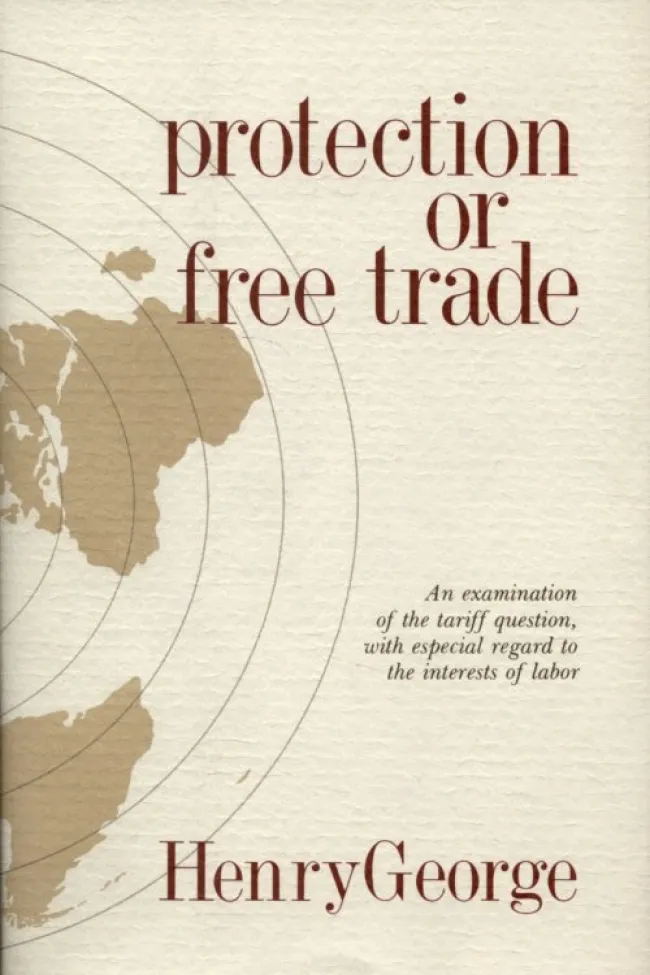
May I have your thoughts on Henry George's advocacy for the replacement of all other taxes by a land value tax?
Henry Gifford comments:
I think Henry George’s idea has a lot of merit, and not just because I heard that my father once taught at The Henry George School of Economics.
More than one calculation has shown that the cost of complying with tax laws in the US is about equal to the amount of taxes paid. If a land value tax eliminated all other taxes, almost all that cost would be saved. But, this would disadvantage the government because vague and complicated laws can be used by the strong against the weak, something not many in government want to see the end of.
Then there is the issue of jobs. The existing tax systems create a huge number of jobs, most of which would go away with a greatly simplified tax. Sure, those people could find more useful endeavors, increasing wealth for all, but if politicians started talking like that a lot of other things would be seen as folly.
Disagreements about the value of land could be handled like the ancient Greeks did – anyone claiming a lower value for their property can be challenged to sell it at that lower price.
A similar situation exists with the part of building design laws that regulate the energy efficiency of new buildings that get built. Now the laws run to hundreds of pages, which makes them very difficult to enforce. The vagueness gives the government people more power, as they interpret the laws as they see fit, or as they are paid under the table to do. For a time I was advocating a simple energy code: limit the size of the heating and cooling systems installed per the size of the building (you-tube: “The Perfect Energy Code”). Governments around the US were loathe to adopt a simplified energy code, because then jobs would be “lost” and the power to make arbitrary decisions would be reduced and the laws would actually be enforceable. A simplified tax collecting system will probably always be unpopular for similar reasons, despite what I think is a lot to recommend it.
Stefan Jovanovich responds:
Smith agreed with Henry George. He thought a land tax had all the attributes of a good tax, unlike income and employment taxes, which were the worst possible ones. Even tariffs had some virtues compared to those that required citizens to tell the state everything.
Dec
11
Brilliant Marketing, from Peter Ringel
December 11, 2025 | Leave a Comment
I rarely use a squawk box. But on a day like FOMC I do. I don't trade news, mkt is usually earlier. I use it more like an alarm clock. So Y/D I tuned in and so did all the other zillion retailies.
They have a tiered model, there the premium is real-time (+ latency…hmmm) and the rest is delayed. A few major news like FOMC are real-time also on the free tier.
So seconds before the FOMC announcement, at the moment of highest attention by potential future paying customers, they piped in an add:
In the voice of Trump (surely AI generated):
"You are not on the premium feed. You are missing out. Lets make the news great again“
Brilliant
(not an endorsement of news trading )
Dec
11
Why free trade is better
December 11, 2025 | Leave a Comment
why it's better to have another entity produce things:

A free market operates on Ricardo’s principle of comparative advantage, where trade exists because no country is self-sufficient. Countries either lack resources (e.g., India importing crude from the Middle East), infrastructure (e.g., the US importing pharmaceuticals from India), or expertise (e.g., the US and China importing electronic chips from Taiwan). Countries should specialize in producing goods and services with lower opportunity costs and export them, while freely importing others. This leads to better quality and lower costs for consumers.
4 Quotes on Free Trade from Classical Economists
Nothing is more usual, among states which have made some advances in commerce, than to look on the progress of their neighbours with a suspicious eye, to consider all trading states as their rivals, and to suppose that it is impossible for any of them to flourish, but at their expence. In opposition to this narrow and malignant opinion, I will venture to assert, that the encrease of riches and commerce in any one nation, instead of hurting, commonly promotes the riches and commerce of all its neighbours; and that a state can scarcely carry its trade and industry very far, where all the surrounding states are buried in ignorance, sloth, and barbarism.
Dec
10
The fifty rounds, and more
December 10, 2025 | Leave a Comment
the fifties are the new rounds always to be breached from below.
is the fed chair fed with answers that will bull and bear and how can he hurt trump?
sherlock holmes, alan pinkerton and wikipedia hear completely opposite varsions of the Molly Maguires. the first two are reliably, the third is woke trash.
Dec
10
Ye Outside Fools!
December 10, 2025 | Leave a Comment
Is not our business quite as good as that of those who lend their names to float the foreign loans of countries which are in a state of semi-bankruptcy, and which will fail to pay as soon as they can get no further loans? It certainly does much less harm. They catch the real investor, we but clear the weaker speculators out.
Ye Outside Fools! Glimpses Inside the Stock Exchange, by Erasmus Pinto, broker, 1876.
Dec
9
Interesting AI read, from Big Al
December 9, 2025 | Leave a Comment
The Structural Collapse: How Google’s Integrated Stack Is Dismantling the OpenAI Thesis
Shanaka Anslem Perera
Nov 22, 2025
A leaked internal memo reveals the tectonic shift reshaping artificial intelligence, where platform economics are defeating venture-backed innovation at the exact moment markets assumed the opposite.
Carder Dimitroff writes:
My Australian daughter is a Google employee. She recently completed Google's 3-month AI training program in the US. From what I understand, Google's AI capabilities are big. When demonstrated to Google's large-cap clients, they were surprised.
Based on her comments, I've concluded that AI technologies will displace accountants, engineers, lawyers, financial analysts, medical staff, educators, sales, and more.
Obviously, leaders in those disciplines will continue to do well. While most normal positions can be eliminated, there must be a human somewhere in the mix. There's an ongoing need to manage the architecture of the questions and review AI responses. Anyone who wants to remain in the game may wish to develop expertise in leadership, program management, systems management, and communication.
Then again, there will be an ongoing need for the crafts. They will reap while others weep.
Musk is right. Work will become optional. But he was not the first.
Dec
7
Andrew Carnegie
December 7, 2025 | Leave a Comment
Andrew Carnegie learned telegraphy by heart.
In 1849, Carnegie became a telegraph messenger boy in the Pittsburgh Office of the Ohio Telegraph Company, at $2.50 per week ($94 by 2024 inflation) following the recommendation of his uncle. He was a hard worker and would memorize all of the locations of Pittsburgh's businesses and the faces of important men. He made many connections this way. He also paid close attention to his work and quickly learned to distinguish the different sounds the incoming telegraph signals produced. He developed the ability to translate signals by ear, without using the paper slip. Within a year he was promoted to an operator.
Dec
6
Sancho Panza proverbs, from Nils Poertner
December 6, 2025 | Leave a Comment
Sancho Panza's Porverbs and others that occur in Don Quixote
half of the proverbs contain the word "ass" in it - like this one which I found timely:
When the broom sprouts, the ass is born to eat it.
Dec
4
Previous 20-day high
December 4, 2025 | Leave a Comment
previous 20-day high at 6875 on 11-12. must be broken soon.
Dec
4
A large piece of history from the age of sail
December 4, 2025 | Leave a Comment
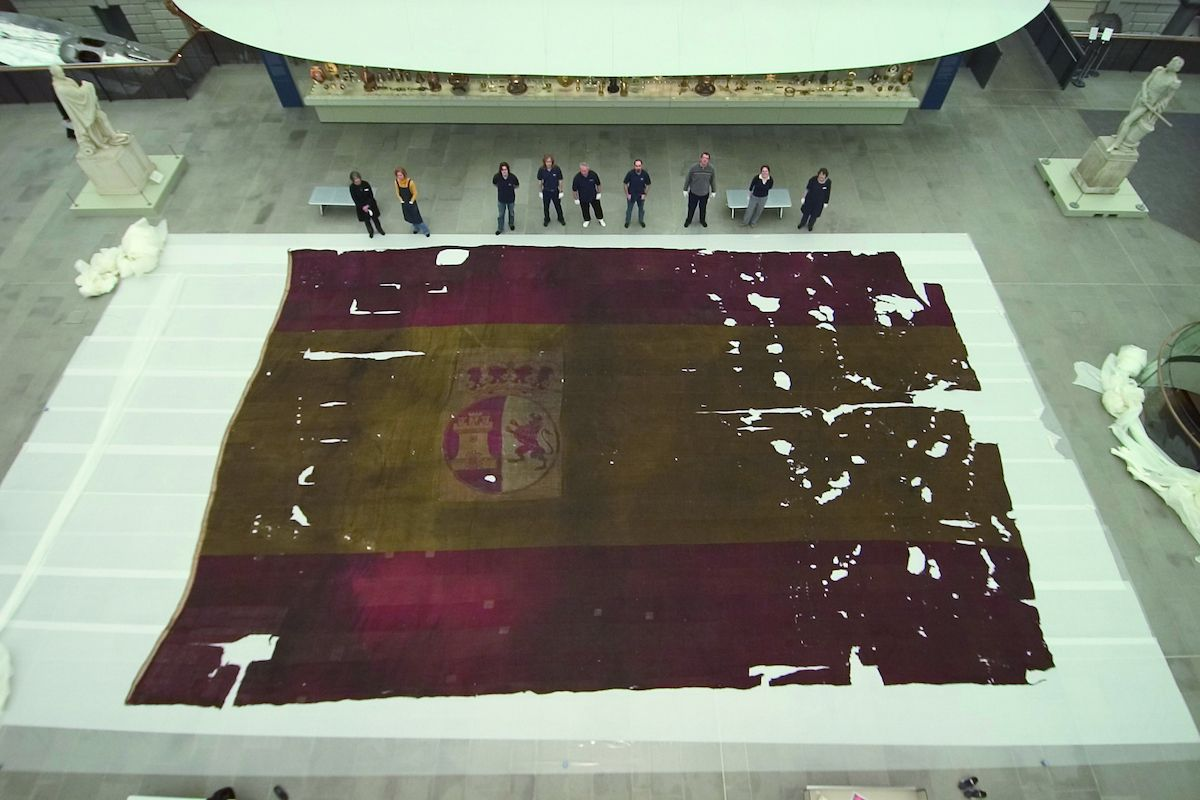
The Battle of Trafalgar and the Ensign of the San Ildefonso: A Testament to Naval Supremacy
The Battle of Trafalgar, fought on October 21, 1805, marked a defining moment in history, securing Britain’s unchallenged supremacy as a naval power. Under the brilliant leadership of Admiral Horatio Nelson, the British Royal Navy triumphed over a larger Franco-Spanish fleet, despite being outnumbered in both manpower and firepower. This clash not only demonstrated tactical brilliance but also symbolized the resilience and innovation of the British naval force.
One of the most remarkable artifacts from this legendary battle is the massive ensign flown by the Spanish warship San Ildefonso. This flag, an enduring symbol of Trafalgar's legacy, provides an extraordinary glimpse into the scale and intensity of 19th-century naval warfare.
Measuring an astonishing 33 feet wide and 47.5 feet long, the San Ildefonso’s flag is a colossal piece of history. Made of wool, it served as the ship’s battle ensign—a flag so large that it could be seen through the dense smoke of cannon fire, ensuring that allies and enemies alike could identify the ship’s status.
Dec
2
A sea wolf and a cowboy
December 2, 2025 | Leave a Comment

Cochrane: Britannia's Sea Wolf, by Donald Thomas, completely exonerates Cochrane from the insider trading scandal. Cochrane made less than 1/4 of a %, and much of the conviction against him depended upon the identification of a red versus green coat.
Monte Walsh has everything a western should have and is easily more exciting and deep than anything of Lamour. Why is it so neglected?
Jack Schaefer was a journalist and writer known for his authentic and memorable characters set in the American West. Schaefer received the Western Literature Association's Distinguished Achievement Award in 1975 and the Saddleman Award in 1986 from the Western Writers of America. His popular Western novels include Shane (1949) and Monte Walsh (1963).
Archives
- October 2026
- September 2026
- August 2026
- July 2026
- June 2026
- May 2026
- April 2026
- March 2026
- February 2026
- January 2026
- December 2025
- November 2025
- October 2025
- September 2025
- August 2025
- July 2025
- June 2025
- May 2025
- April 2025
- March 2025
- February 2025
- January 2025
- December 2024
- November 2024
- October 2024
- September 2024
- August 2024
- July 2024
- June 2024
- May 2024
- April 2024
- March 2024
- February 2024
- January 2024
- December 2023
- November 2023
- October 2023
- September 2023
- August 2023
- July 2023
- June 2023
- May 2023
- April 2023
- March 2023
- February 2023
- January 2023
- December 2022
- November 2022
- October 2022
- September 2022
- August 2022
- July 2022
- June 2022
- May 2022
- April 2022
- March 2022
- February 2022
- January 2022
- December 2021
- November 2021
- October 2021
- September 2021
- August 2021
- July 2021
- June 2021
- May 2021
- April 2021
- March 2021
- February 2021
- January 2021
- December 2020
- November 2020
- October 2020
- September 2020
- August 2020
- July 2020
- June 2020
- May 2020
- April 2020
- March 2020
- February 2020
- January 2020
- December 2019
- November 2019
- October 2019
- September 2019
- August 2019
- July 2019
- June 2019
- May 2019
- April 2019
- March 2019
- February 2019
- January 2019
- December 2018
- November 2018
- October 2018
- September 2018
- August 2018
- July 2018
- June 2018
- May 2018
- April 2018
- March 2018
- February 2018
- January 2018
- December 2017
- November 2017
- October 2017
- September 2017
- August 2017
- July 2017
- June 2017
- May 2017
- April 2017
- March 2017
- February 2017
- January 2017
- December 2016
- November 2016
- October 2016
- September 2016
- August 2016
- July 2016
- June 2016
- May 2016
- April 2016
- March 2016
- February 2016
- January 2016
- December 2015
- November 2015
- October 2015
- September 2015
- August 2015
- July 2015
- June 2015
- May 2015
- April 2015
- March 2015
- February 2015
- January 2015
- December 2014
- November 2014
- October 2014
- September 2014
- August 2014
- July 2014
- June 2014
- May 2014
- April 2014
- March 2014
- February 2014
- January 2014
- December 2013
- November 2013
- October 2013
- September 2013
- August 2013
- July 2013
- June 2013
- May 2013
- April 2013
- March 2013
- February 2013
- January 2013
- December 2012
- November 2012
- October 2012
- September 2012
- August 2012
- July 2012
- June 2012
- May 2012
- April 2012
- March 2012
- February 2012
- January 2012
- December 2011
- November 2011
- October 2011
- September 2011
- August 2011
- July 2011
- June 2011
- May 2011
- April 2011
- March 2011
- February 2011
- January 2011
- December 2010
- November 2010
- October 2010
- September 2010
- August 2010
- July 2010
- June 2010
- May 2010
- April 2010
- March 2010
- February 2010
- January 2010
- December 2009
- November 2009
- October 2009
- September 2009
- August 2009
- July 2009
- June 2009
- May 2009
- April 2009
- March 2009
- February 2009
- January 2009
- December 2008
- November 2008
- October 2008
- September 2008
- August 2008
- July 2008
- June 2008
- May 2008
- April 2008
- March 2008
- February 2008
- January 2008
- December 2007
- November 2007
- October 2007
- September 2007
- August 2007
- July 2007
- June 2007
- May 2007
- April 2007
- March 2007
- February 2007
- January 2007
- December 2006
- November 2006
- October 2006
- September 2006
- August 2006
- Older Archives
Resources & Links
- The Letters Prize
- Pre-2007 Victor Niederhoffer Posts
- Vic’s NYC Junto
- Reading List
- Programming in 60 Seconds
- The Objectivist Center
- Foundation for Economic Education
- Tigerchess
- Dick Sears' G.T. Index
- Pre-2007 Daily Speculations
- Laurel & Vics' Worldly Investor Articles
