Aug
23
Appreciating The Chair
August 23, 2026 | 1 Comment
Obituary: Victor Niederhoffer - December 10, 1943 – August 4, 2026
Alex Castaldo:
I think I was lucky to know Vic for so many years. He was very generous to me and although he liked to do things unconventionally sometimes, it was because he sincerely felt everyone should do things their own way and never just to be eccentric or shock people. He always had interesting points of view on many issues not just work related.
Pamela Van Giessen:
It was my great honor and privilege to publish Education of a Speculator. In fact, working on the book with Victor was the highlight of my career. I knew in my heart that whether the book sold 1 copy or 100,000 copies or more, it was an important work. Throughout the process Victor drove me crazy, but mostly in a good way. He was always challenging the status quo, often spot on. He was one of the most generous people I have ever encountered, and I will carry to my grave all the lessons he taught me, along with the many interesting people he introduced me to including Marty Reisman who negotiated the publishing contract with me/Wiley on Victor’s behalf (and wasn’t that just a trip!) and, of course, Bo, among so many others.
The most beautiful person Victor introduced me to was his amazing wife, Susan. If we were fortunate to know Victor, Victor was beyond fortunate to have Susan in his life. May the hole in your heart, and the hearts of your children, be filled with Victor’s love for you and the love of all those around you.
Vince Fulco:
Terribly, terribly sad to hear this news. Working for him was among the best years of my life. I would have carried his ammo can in any trench, in any war.
May his memory be a blessing. Warmest condolences to all who knew him.
Jared Albert:
I sent this to Vic in June and it seems like I should just share it as my commemoration of the man of extraordinarily outsized importance in my life. My deepest condolences to Susan and all of their children.
Dear Vic,
I was sorry to read that you weren’t feeling that well these days, and I wanted to thank you again, while there’s time in this world, for taking a shot on me 20 years ago. Although it didn’t work out like I hoped, it gave me a kind of seal of approval at a pretty low point in my early 30’s and I’ve always appreciated that you did that.
You've remained a central positive figure in my life and I wish you all the best for a full recovery.
James Sogi:
Condolences to his extended family and past business associates and partners . Vic was truly one of the all time greats of the financial world who helped many and changed the markets. He changed my life and my family through his help. I am very sad to hear of his passing. I will always treasure my association and times with him as one of the highlights of my life.
Tyler Cowen:
In addition to his well-known public roles, he worked very hard to help and befriend me when I was younger. Here are the Google searches for Victor. Less well known about Victor is that he had one of the world’s best collections of private letters. He also once gave me a very nice small painting by Jack Savitzky, for which I remain grateful.
Michael Brush:
Vic did a lot of things, but one thing he did for all of us was to generously introduce us to new worlds, new worlds of ideas, and new people.
Vic was really great man. Meeting him was one of those “before and after” moments in my life, back when he started writing for MSN Money when I wrote there.
I remember our last conversation while leaving one of his parties.
Me: Vic you were such a big influence in my life.
His answer surprised me and to this day I am not sure I know what it really meant: “I hope in a good way.”
I will really miss you Vic. Thanks again for everything.
Steve Ellison:
I posted a photo on X (then Twitter) when the Chair played handball against the Senator at the 2015 Spec Party.
William Weaver:
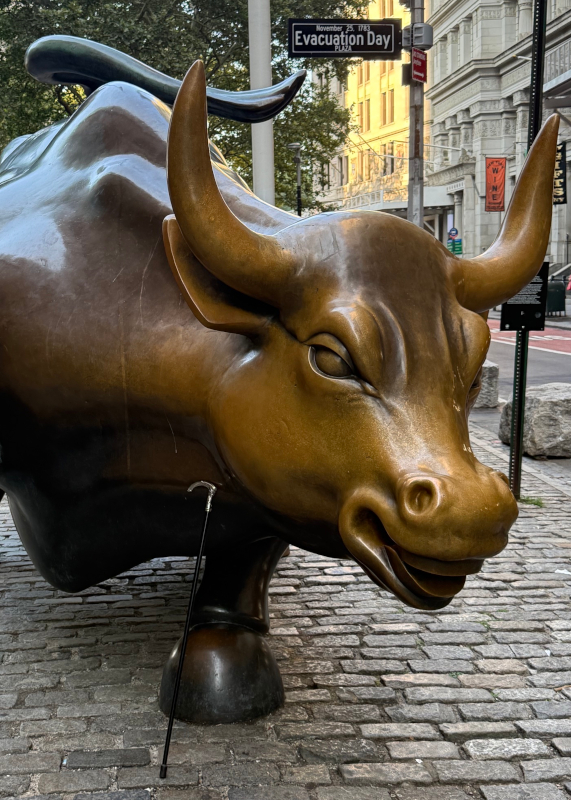
Victor gave a number of us these canes years ago. At least for me it was a reminder anyone can achieve their goals, and it won’t always be an easy path. I took mine down to Wall Street this morning. Thank you, Vic. Will
It is good to take out the canes and hobble down to Wall Street at the close of days when there is a panic. - Victor Niederhoffer
Laurel Kenner:
I found the last cane maker in Manhattan and purchased a number of the most striking ones to send as prizes.
Asindu Drileba:
Until this day, since a few years since I read The Education of a Speculator, I have not found another book remotely close to it. In the finance industry, market analogies are mostly limited to maths & physics. This is why when I read The Education of a Speculator, my mind was genuinely blown by how The Chair would create market references to genetics, music sheets, Dutch philopher Johan Huizinga (Homo Lundens is worshipped in the game design community), checkers and more.
This type of thinking in analogies is what E. O Wilson referred to as "Consilience." So because of this, I would regard The Chair as "The Master of Consilience".
I wrote a short tribute to Vic.
Kiran Kaur:
I was a student of Vic’s. In 2025 he gave me a full weekend at his home, him and Susan both. He walked me through his own book. When I left he put Elmer Kelton’s The Time It Never Rained in my hands and told me The Trees in My Forest by Bernd Heinrich was the other one to read.
I have wondered since whether the pairing was deliberate. A rancher who will not take the drought subsidy and stays on the land, and a biologist counting what is actually happening in three hundred acres of Maine woods. Endurance and counting. He handed it over without a lecture, which I think was the point.
Condolences to Susan, to Aubrey, and to the whole community. Rest in Peace Legend!
Sam Johnson:
A veteran trader pointed me to Vic back in 2011 via speculations website. Encouraged me to think differently about markets and led to a career. Question and test orthodoxy. I wish i could have attended one of his get togethers. He never met me or knew it but he was the second most important person to my trading success.
Yelena Sennett:
Victor certainly did like his hats…
It was a privilege to do podcasts with him. You never knew what fascinating analogy he would come up with to explain the markets. He was always generous with sharing his knowledge, but I believe his greatest gift was an instinct for reading the markets that simply couldn't be quantified.
One of his favorite sayings was, "Never short the market." He certainly lived an extraordinary life, with its share of highs and lows—much like the markets themselves.
Today (August 4th), as the S&P 500 reached another all-time high, it felt like a fitting tribute to his memory.
Richard Barsom:
RIP Victor. Great guy, literally saved my life. Rest in peace Chair.
John Netto:
I remember meeting him for the first time back in the summer of 2011. He graciously invited several from the spec list over to his UWS home. The whole experience fascinated me and his affable personality and welcoming disposition quickly removed any anxiety I had about being in front of a true legend. Thank you to John Floyd for introducing me to the Chair and the list.
Paolo Pezzutti:
I will miss Victor very much. To me, he was a mentor. I received far more from him than I ever gave, and that was part of his greatness. I have applied many of his teachings in both my life and my work.
A brilliant, original and courageous man has left us—courageous even beyond any reasonable limit. He was eclectic, competitive and a great contrarian by nature, but also generous beyond measure. He was a bold, direct and aggressive speculator.
As Nelson used to say: “Go right at them”, Victor always urged me to apply his battle-tested principles to my own trading style.
Newton Linchen:
Victor Niederhoffer was a major inspiration for my development as a market practitioner and had huge impact in the way I view markets and the World.
We are all at a great loss. My respects and sentiment to the family and friends.
Thank you, Chair!
Eric Lindell:
I'm saddened to hear of Victor's passing. I had gotten to know him over the years attending his junto meetings. He was a great guy, and it's a big loss to the investment community and all those whose lives he touched. My deepest sympathies to his family.
Jordan Low:
Victor’s passing is a loss to many. He was so generous with his time and wisdom, and he was a friend to my whole family: he taught my daughter Annabelle tennis, squash, and checkers, and he came to the gala to support my wife Annie when she was honored among the Outstanding 50 Asian Americans in Business. He also taught me the triangle defense in checkers, and drew the line straight to portfolio management: balance risk, reward, and liquidity, and hold the formation at all times. I trade that way to this day. My deepest sympathies to his family.
Rest in peace, Chair. We will remember you fondly.
George Coyle:
Aug
12
Twenty-Seven Years with Victor Niederhoffer
When Vic died Aug. 4, 2026, I was halfway through “The Walking Drum,” a Louis l’Amour book set in the Middle Ages. It’s about a man who repeatedly started from zero, a pioneering trader, a scholar and explorer with vast intellectual curiosity, witty in conversation, a man of respect and great courage, a superior athlete, and a magnet for ladies — whom he always sought to protect.
That was Victor Niederhoffer.
Jan
31
A strange glut of silver, from Laurel Kenner
January 31, 2026 | Leave a Comment

With silver at $110 an ounce, it seemed like a good idea to raid the family heirlooms.
But my friendly coin dealer wasn’t having any. He’s buying nothing but Eagle coins. The usual buyers — industry, mints, and jewelers — don’t have the capacity to handle the inflow.
Read the full post on Laurel's Substack: Nobody Asked Me, But…A strange glut of silver
Nov
26
Give Thanks for Pilgrims — and McDonalds, by Victor Niederhoffer and Laurel Kenner
November 26, 2025 | 1 Comment
 Thanksgiving is about sharing prosperity, and it's a good time to think about where prosperity comes from. The Pilgrims figured it out in 1623. We'll retell that story as we celebrate the way it lives on in countless U.S. families and companies today. And in particular at one company, McDonald's (MCD, news, msgs), that in its humdrum way beautifully demonstrates the source of prosperity and the American way of life.
The Pilgrims started with so little. They had to hide in England because the authorities considered them dangerous. They fled to Holland but found themselves compelled to take menial jobs. On the way to America, many of the company died. They lost their way to Virginia and landed in Massachusetts just as winter set in. The Virginia Co., their backers in London, went bankrupt and couldn't send relief supplies.
To cope with want, the Pilgrims made the same mistake that so many countries do even today: They divided all their land, efforts, supplies and produce in common, to each according to his need.
As always in such systems, need surpassed supply.
The Pilgrims spent their first three years in America suffering from hunger, illness, cold and infighting. People stole from the common stores "despite being well whipped," according to William Bradford's "Of Plymouth Plantation."
Bradford, governor of Plymouth Colony, records what happened next: "They began to think how they might raise as much corn as they could, that they might not continue to languish in misery. After much debate, the Governor decided that each settler should plant corn for themselves."
Under the Land Division of 1623, each family received one acre per family member to farm. That year, three times as many acres were planted as the year before. Prosperity was not long in coming.
The Pilgrims turned from their Old World system of common ownership to incentives. They didn't go that way out of ideological conviction, but because they didn't have the luxury of waiting for support to come to them.
How many families in America tell the same tale? "When we came here, we worked hard and our lives were better."
But that wasn't the end of the story. Before the switch to incentives, the hungry settlers were at each other's throats. Hard workers resented receiving the same portions of food as those who were not able to do even a quarter of the work they did. Young men resented having to work without compensation to feed other men's wives and children. Mature men resented receiving the same allotments as did the younger and meaner sort. Women resented being forced to do laundry and other chores for men other than their husbands. Many people felt too sick to work.
But when they were allowed to farm their own plots, the most amazing thing happened. Everybody — the sick, the women and even the children — went out willingly into the fields to work. People started to respect and like one another again. It wasn't that they were bad people, Bradford explained; it's just human nature. Adam Smith came to the same conclusion later, and Friedrich Hayek updated Smith's ideas for the 20th century. But we don't need to go back to New England for understanding. Similar outcomes can be seen at McDonald's every day.
For centuries, people on the lower rungs of the social ladder weren't able to eat meat. They ate grains and beans. But people like beef. And chicken.
When McDonald's started popping up in every neighborhood, all of a sudden there was an affordable place for families to eat. Previously, one of the main differences between the upper and lower classes was that the rich could eat out. Even if the poor could afford the tab, they couldn't hire baby sitters, and they couldn't bring their kids to the elegant establishments designed for the rich because they would have disturbed the other diners.
Most kids don't like fancy restaurants anyway. They want fries, not polenta with wild mushrooms. They want fried codfish, not turbot. They want burgers, not lamb chops.
How many people has McDonald's made happy? How many families has it brought together? How many Happy Meals have been eaten there? How many kids have enjoyed the playgrounds? How many tired workers have been able to catch a quick meal? How many women are able to pursue careers and other productive activities and dreams because McDonald's has freed them from the task of having to cook every night?
The Pilgrims might have served 200 or 300 American Indians at their Thanksgiving feast. McDonald's serves 26 million customers a day at 13,700 U.S. restaurants.
For the traveler, McDonald's is a home away from home, offering so much for so little. The restrooms are clean. And McDonald's serves hot strong organic coffee in smooth cups of some wonderful material that keeps liquids hot without burning the hand, shaped to fit into the cup holders that just happen to be in your car, with carefully designed tops that permit just the right amount to be sipped.
No regulator, no fascist dictator, no socialist planner decreed sip tops or cup holders. But how many late-night drivers have died for the lack of a good cup of coffee? What could be more munificent than saving lives?
And the story doesn't end there. Consider the employees of McDonald's. How many people have worked there and learned the most important lesson in America: The customer is always right?
The anti-this-and-that people who demonstrate against profit incentives and free markets like to single out McDonald's as a symbol of modern capitalism. (They don't mean that in a nice way.) As the McLibel Support Campaign puts it: "(McDonald's) has pioneered many business practices that have been taken up by others, and have come to represent a symbol of the way that society is going –'McDonaldization.'" But when have you ever seen an unhappy customer at McDonald's? There couldn't be too many of them, because about 10% of America eats there each day. Given the choice of cooking at home or going to other restaurants — and competition ensures that there are other restaurants — people go to McDonald's because they trust they'll find good food, quick service and value for money. What could be more munificent, more representative of sharing the fruits of hard work than McDonald's?
McDonald's and the Pilgrims are the essence of America. The people work hard, motivated by the chance for profits. They provide a welcome to others, whether to Indians joining in harvest celebrations, or to customers looking to satisfy their hunger. Their work results in high quality, low costs and family togetherness.
Those humdrum, everyday attributes are what makes America great. That's what we should be celebrating. It's the source of all our munificence, from the first Thanksgiving to today.
Nov
9
Prestigious consulting firm, from Nils Poertner
November 9, 2025 | Leave a Comment

Came to our financial firm 2007 and gave a 100 page presentation full of bullet points and cartesian logic (why housing boom will last). Either 3,5, or 9 bullet points per page.
At the end of the presentation I was tempted to go over to the presenter and ask him "why do you love your wife? (I didn't). The answer might have been bullet points.
Pamela Van Giessen writes:
Michael Korda tells in his memoir, Another Life, of the time that Simon & Schuster hired probably the same prestigious consulting firm to study how to improve revenues/profitability. Prestigious consulting firm (after taking the prestigious consulting firm fee) told the publishing company that they should publish more bestsellers.
Laurel Kenner comments:
I bet the prestigious firm concluded with ‘Key Takeaways’ as a final insult to the intelligence of the client.
Asindu Drileba writes:
I heard that people pay consultancy firms not for their knowledge, but for the fact that executives use them as a scape goat. If an executive wants to pursue policy X. They simply hire a consultancy to recommend policy X. If policy X ends up as a disaster (legally, morally or financially). They can simply say "Policy X was an idea from XYZ consultancy", we had nothing to do with it.
Peter Ringel adds:
a variation of this are fighting owners/ partners about policy. If decision pipelines are blocked, external council is used. Like a neutral arbitrator. I think, these are the main situations externals are used. Usually a good reason to short the entity, especially outside of markets. If they don't have the capability to decide and act on strategy in-house, it‘s a red flag.
Henry Gifford responds:
Even better is hiring a licensed engineer to instruct everyone to do something stupid that they know won’t work, so everyone who did as the engineer decided is blameless.
Jeff Watson offers:
A consultant is a person who knows 1000 ways to make love to a woman…..but he doesn’t know any women.
Oct
29
The latest from Laurel Kenner
October 29, 2025 | 1 Comment
70++ Trades the Miners
Laurel Kenner
When China suggested Oct. 9 it would strangle rare earth metal exports to the U.S., U.S. mining stocks looked like the easiest way to make a killing since the Internet bubble in 1999.
Being arrogant enough to believe myself among the few who saw the opportunity, I bought a mining stock targeted by Goldman Sachs for a 100% gain.
The stock rose. Then swooned. I sold.
It quickly rose past the earlier high. I bought again. It tumbled below where I had sold the first time.
Greed had led me to forget old investment wisdom. Such as a warning against trying to get even, from Max Gunther’s 1985 “The Zurich Axioms.” Entitled “Stubbornness”, the 11th Major Axiom accurately describes my trade.
I also should have remembered advice from Nick Colas, head of DataTrekResearch, who made his bones at Credit Suisse and Steve Cohen’s SAC Capital. It’s my job, he explained years ago, to know things before they land in the media.
Meaning that if someone is giving tips to news outlets, keep in mind that he inevitably will take better care of his interests than yours.
Read the full post:
Oct
9
Jewish Hungarian, from Nils Poertner
October 9, 2025 | Leave a Comment
What is it with Hungarian Jewish who came to the US - so many of them achieved great things. My book shelf is full of them, Darvas (Trading), S Meisner (Acting)…..even my trading platform Interactive Brokers was founded by one (Thomas Peterffy).
Maybe a combo of rare language ??/ culture + hardship first + grid + ability to flourish in the US gave them superpower. Soros, I guess was (Jewish) Hungarian as well.
Venkatesh Medabalimi asks:
Where is my no.1 Hungarian? May I remind everyone about Paul Erdős.
Laurel Kenner offers:
An amusing book on the subject: Made in Hungary : Or Made by Hungarians, by György Bolgár.
Nils Poertner responds:
Thanks both. Found this on Erdős:
Paul Erdős: The Oddball’s Oddball
He would appear on the doorstep of fellow mathematicians without warning–a frail, disheveled, elderly man, hopped up on amphetamines and wearing a ratty raincoat–and announce, in a thick Hungarian accent, “My mind is open.” For a day, or a week or a month, the man or woman who answered the knock would have to take nonstop care of this helpless guest who couldn’t figure out how to cut a grapefruit or wash his underwear–and in return would be permitted the exhausting, exhilarating experience of following the thought processes of Paul Erdős, the most prolific and arguably the cleverest mathematician of the century.
Sep
7
Music and longevity, from B. Humbert
September 7, 2025 | Leave a Comment
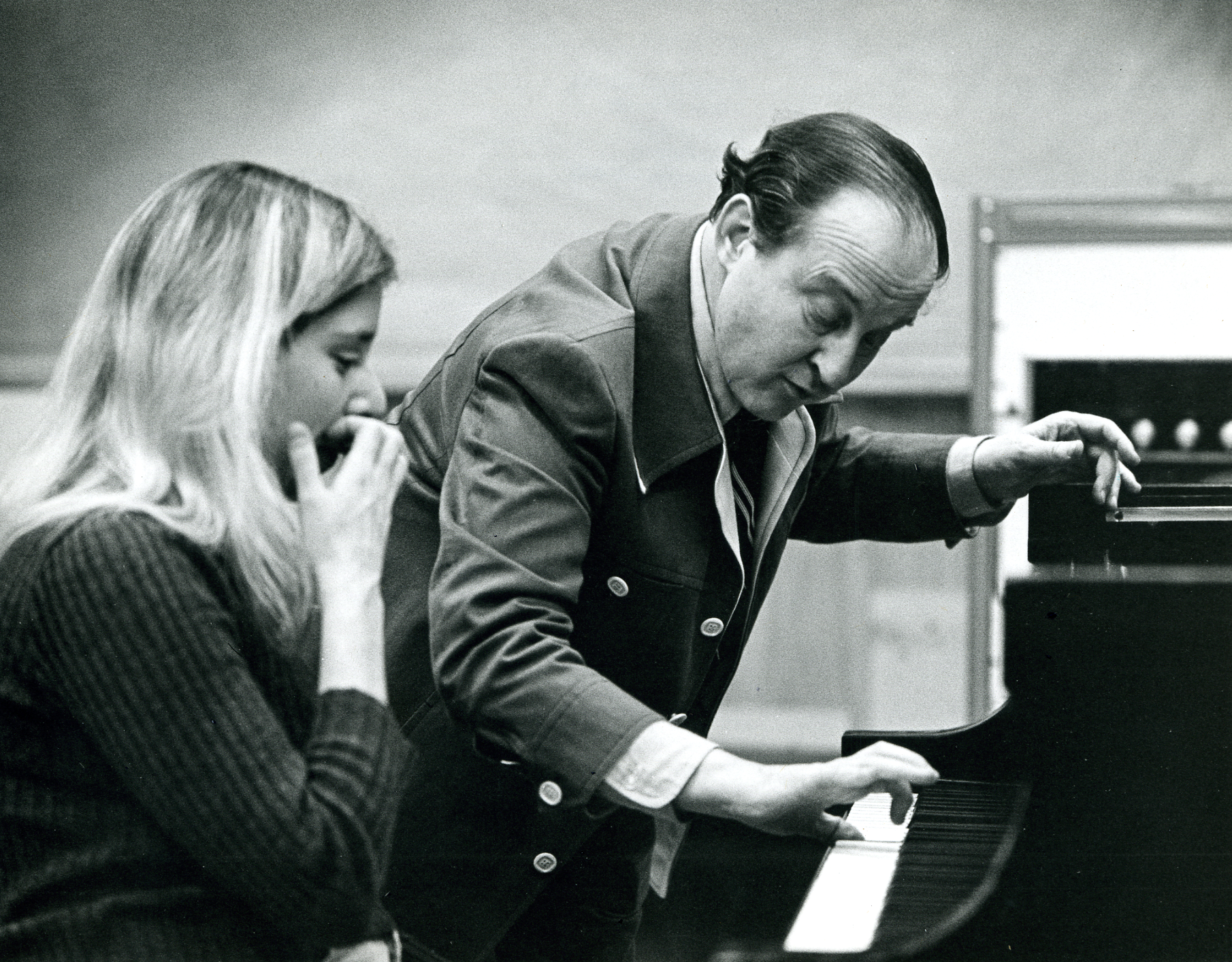
Menahem Pressler played this concert in his 95th year:
Mozart: Piano Concerto No. 23 | Menahem Pressler, Gulbenkian Orchestra & Leo Hussain
Adam Grimes responds:
Thank you. That's lovely. Mozart always requires such precision. That was the second concerto I learned! Near and dear to my heart.
Laurel Kenner writes:
A very great concerto, a very great pianist.
Even monsters have been touched by this haunting music. A vignette re Mozart’s K488 and Stalin, from LA Phil program notes:
In his final years Stalin became addicted to listening to music on the radio, on one occasion a performance of Mozart’s K. 488, played by Maria Yudina, a particular favorite of his – surprisingly, since she was as celebrated for her non-conforming political views as for her interpretations of Shostakovich (of whom she was a close friend), Bach, and Mozart. Instead of playing encores at her recitals, she would read poems by banned Russian writers and recite the sayings of Russian Orthodox clerics: rather than hiding her beliefs, she trumpeted them, so to speak.
Stalin asked Moscow Radio for a copy of Yudina’s K. 488 and they agreed to send it immediately. The problem was that this was a live performance and it had not been recorded. The radio people called Yudina and hastily assembled an orchestra late that night, delivering the recording to Stalin the following day. Volkov relates Shostakovich’s words: “Soon after [Stalin heard the recording] Yudina received an envelope with 20,000 rubles… To which she responded: ‘I thank you, Joseph Vissarionovich… I will pray for you day and night and that the Lord forgive you your great sins…’” The pianist is said to have donated the 20,000 rubles to her church.
Oddly, Yudina was never censured nor imprisoned for any of her renegade acts and her career continued until shortly before her death in 1970. “They [who?] say [according to Shostakovich/Volkov] that her recording of the Mozart concerto was on the record player when the leader was found dead in his dacha [in 1953]. It was the last thing he had listened to.”
Whether one believes all, parts, or none of the story, Yudina did make the recording.
Like Adam, I also played this concerto, written by Mozart at 30. Perhaps you need to be 95 to do it justice. Bravo, Menahem Pressler.
[ One from a list of her performances: Maria Yudina plays Bach Toccata in C minor, BWV 911 - live 1950 -Ed. ]
Laurel Kenner adds:
Yudina's Chromatic Fantasy & Fugue is killer.
Jun
24
Excellent version of Clews, from Laurel Kenner
June 24, 2025 | Leave a Comment

The Wiley edition of Henry Clews, Fifty Years in Wall Street, has annotations by Jon Markman - the editor for Vic and me when we wrote a biweekly column for MSN Money - and a foreword by the Chair.
Henry Clews was a giant figure in finance at that time, and his firsthand account brings this colorful era to life like never before. He reveals shocking stories of political and economic manipulation and how he helped bring down the mighty Boss Tweed. He writes eloquently about the madness of the markets and how the era's greatest speculators amassed their fortunes. This book provides an expansive view of Wall Street in an era of little regulation, rampant political corruption, and rapid financial change.
Henry Clews was born in England in 1836 and emigrated to the United States in 1850. In 1859, he cofounded what became the second largest marketer of federal bonds during the Civil War. Later, he organized the "Committee of 70," which deposed the corrupt Tweed Ring in New York City, and served as an economic consultant to President Ulysses Grant.
Apr
16
The Invisible Gorilla in the Room, from Stefan Jovanovich
April 16, 2025 | Leave a Comment
That is the creature Hugh Hendry - the Acid Capitalist - says we have to find in order to profit from our speculations.
The events in Ukraine are that gorilla. They are predicting the likelihood that Trump, Putin and the Muslim oil producers will establish a Drill, Baby, Drill world of orderly energy production and supply priced in U.S. $. The effects on the European and Asian consumers will be comparable to what happened to the German-speaking world and its silver standard when the French fulfilled the terms of the Treaty of Frankfurt by paying their reparations in gold.
Big Al needs some help:
Perplexity answers the question, "What happened to the German-speaking world and its silver standard when the French fulfilled the terms of the Treaty of Frankfurt by paying their reparations in gold?"
Stefan Jovanovich answers:
They = "events, dear boy". The prediction is that the new cartel of oil and gas exporters will establish "orderly production" that manages the risks of overproduction in the same artful manner that OPEC once operated before the invention of fracking.
William Huggins responds:
So you are suggesting us producers will submit to directives from moscow or Riyadh to limit their production? No evidence of anything but predation among those players but somehow trump purs them all on the same page? I have a bridge for sale….
Apr
7
Surrounded by pessimism
April 7, 2025 | 1 Comment
As we write in mid-2002, surrounded by pessimism, our view is that the required return for holding stocks is at levels unseen since 1990, or 1980, or 1950, when memories of depressions or crashes were still hanging in the air. If ever there were a time that investors would only buy risky investments when the anticipated returns were in the 50 percent-and-over area, this time would seem to be now. We see no reason that our expectations will be disappointed. Why shouldn't an improvement in lifespan or the rules of the game of business reap in the next 50 years the kind of results that greeted investors in the past 50?
Practical Speculation, by Victor Niederhoffer and Laurel Kenner, page 215
Mar
28
The late baseball great studied hitting as closely as a stock strategist studies markets. In fact, Williams' hitting rules can easily make you a better investor.
By Victor Niederhoffer and Laurel Kenner
"Get a good ball to hit."
– Rogers Hornsby to Ted Williams, on the single most important thing for a hitter.
A person, a field, a book. Sometimes they come together with such genius that you wish to carry the lessons around and apply them to everything you do. Such is the case with Ted Williams’ "The Science of Hitting," widely considered the definitive book on the subject. With the baseball season soon starting, the market reeling and investors searching for a rudder, it seems particularly appropriate to learn from the book’s timeless lessons for all fields. But we’ll go even further. We’ll show how to use this method to make a profit by trading IBM (IBM, news, msgs) and similar biggies on Thursdays, when the count is right.

Williams was the last batter to achieve the magic .400 average in a full season — 1941, when he hit .406. (He also had .400 averages in 1952 and 1953, when his seasons were cut dramatically short because of Korean War service.) He is considered one of the three best hitters ever, with Babe Ruth and Rogers Hornsby. “I had to be doing something right,” he said. “And for my money the principal something was being selective.”
His selectivity was unique and inspiring. He divided the 4.6-square-foot batter’s box into 77 zones, and assigned each a hitting percentage. The sweet spot was high over the middle of the plate, where the batting average hit .400.
Rule No. 1: Wait for your pitch
Warren Buffett cited "The Science of Hitting" in his 1998 annual report in a discussion of his favorite subject: How the market doesn’t look good to him. (His most recent annual report, published Saturday, repeats the sentiment.) Buffett said he, like Williams, follows Rule 1 and waits for the great pitches — the great companies — and holds his fire until they arise.
After Rule 1, we will expand the list of hitting rules to 11, drawing from the lessons in Williams’ book.
Mar
13
Seniors: Learn to love AI, from Laurel Kenner
March 13, 2025 | Leave a Comment
Grok 3 helped me drop my glucose from ridiculous to almost normal in one week
I started talking to Grok 3 last week about some health problems. After just a couple of sessions I came to think of AI as a super-helpful genius friend who doesn’t mind long chats, probing questions, or boring tasks.
Feb
23
From the archives: The volatility-market connection
February 23, 2025 | Leave a Comment

Active Trader Magazine, March 2004
The Volatility-Market Connection
By Victor Niederhoffer and Laurel Kenner
Is everything you know about volatility wrong? Find out what history says about the volatility-market relationship — and what the VIX is saying about the stock market’s 2004 prospects.
Volatility is a crucial variable every market participant needs to consider. For speculators, volatility determines how much money to place on each trade relative to initial stake and stop point. For investors, it determines how much to allocate between stocks and bonds, and how much to invest for a secure retirement. For academics, volatility is one blade of the scissors in the fundamental theorem of finance — namely, that expected return is linearly related to volatility.
The article contains a sidebar that begins, "Dr. Hui Guo is one of the most respected and prolific authors in volatility research. Reading some of his articles sparked our quest." Dr. Guo was a senior research economist at the Federal Reserve Bank of St. Louis is currently at U Cincinnati.
Here is one of Dr. Guo's recent research papers:
Taylor Rule Monetary Policy and Equity Market Risk Premia
Hui Guo, University of Cincinnati - Department of Finance - Real Estate
Saidat Sanni, University of Cincinnati
Yan Yu, University of Cincinnati - Lindner College of Business
Posted: 12 Nov 2024, Last revised: 6 Nov 2024
The Fed mainly uses the federal funds rate (FFR) to achieve its dual mandate of price stability and maximum employment. Recent asset pricing models argue that changes in FFR affect equity market risk premia. Consistent with this financial condition channel of monetary transmission, the Fed's macroeconomic needs estimated using the Taylor (1993) rule negatively predict stock market returns. They are also identified as a crucial equity premium determinant along with the scaled market price and conditional market variance via variable selection analyses. The linear multifactor equity premium model has remarkably stable predictive power, outperforming machine learning and other prediction techniques.
Jan
2
Water Into Wine, from Laurel Kenner
January 2, 2025 | Leave a Comment
Maybe Jesus, in his hidden character as humorist and Zen master, was telling us to savor what’s really good for us.
Read Laurel's full post.
Jan
1
A musical New Year’s card, from Laurel Kenner
January 1, 2025 | Leave a Comment
Laurel’s musical New Year’s card
Laurel Kenner performs 1st movement of Mozart Sonata in F major, KV 332.
Oct
31
US National Debt possible consequences & hedges, from Asindu Drileba
October 31, 2024 | Leave a Comment
There is a lot of talk about how precarious US Debt situation is. Two questions:
1. What possible disaster may come out of this? I am thinking Zimbabwe type hyper inflation. What other kind of disaster can happen?
2. What can retail level people do to protect themselves from this? Buy Swiss Francs? Gold & Silver? Bitcoin? What?
Larry Williams responds:
Gloom and doomers here is the chart to look at:

Bud Conrad writes:
Gold 1 year is up 24%. Silver 1 year is up 50%. The circumstances today are still very bad for the dollar. (Which is what is actually declining.)
The BRICS+ are meeting in Russia tomorrow Putin, Xi, Modi, Iran, Saudi Arabia (observer only), UAE etc.) to continue de-dollarization with non-dollar-denominated trade through non-SWIFT transactions for international Central Bank settlement. NO body is talking about this, being focused on how much the candidates will print up to bribe us for votes. The $1.1 T for interest on the $35 T of official Government Debt could rise, as the 10 year Treasury rate hit 4.2% while the Fed CUT short-term rate. Including unfunded liabilities for Social Security and Medicare would say the debt obligations are more like $200 T.
This is 10 year Treasury. Red pointer is when Fed Cut short term rate:

There is no way around avoiding the money printing required. Inflation and price rises are inevitable, as foreigners divest their $8 T of Treasury holdings, to avoid US asserting sanctions or seizing assets like the $300B of Russia holdings. They want out of US Hegemony fast, because of 14 rounds of sanctions on Russia.
Oct
23
Early Voting, from Laurel Kenner
October 23, 2024 | 1 Comment
I am against early voting and other unbounded residuals from Covid. Election day should be a civic event where people actually show up.
Nevertheless, I voted early because it’s now part of the political game. Forecasts based on the ratio of early-voting party members make headlines.
Full post: Nobody Asked Me, But…
Sep
28
What is in Brooklyn?, from Asindu Drileba
September 28, 2024 | Leave a Comment

Lana Del Rey — My boyfriends really cool, but he is not as cool as me. Cause I'm a Brooklyn Baby. An interview recently posted here with The Chair — "I attribute your being humble to being from Brooklyn" (interviewer referring to The Chair). Another person I listen to - Such mistakes can only be made by people who have not spent a lot of time in Brooklyn. Brooklyn comes up so many times. What's is there to know about it? Of course I have heard of people talking about other cities.
But people that talk about Brooklyn always say it like there is something they know which others don't know. What is in Brooklyn? What does it do to people?
David Lillienfeld adds:
In the epidemiology world, when one of the organizations meets in Manhattan, inevitably someone will suggest to the younger members to go across the Brooklyn Bridge and experience Brooklyn. There is definitely something about Brooklyn that focuses one's thoughts.

Steve Ellison offers:
The Chair wrote a whole chapter on this topic, the first chapter of Education of a Speculator, titled Brighton Beach Training.
Laurel Kenner suggests:
Survivors go there when they get to America.
Alex Castaldo responds:
Agreed, immigrants from Central and Eastern Europe often arrived in Brooklyn as a first step towards success and acceptance in America.
H. Humbert writes:
There is a hierarchy among the real estate developers of New York. Those who develop real estate (especially large commercial buildings) in the central area (the island of Manhattan, also known as New York County) consider themselves socially above the multimillionaires who develop property in the boroughs of Brooklyn, Queens, Bronx and Staten Island. They refer to Manhattan as simply "the City" and seldom go to the other boroughs (other than to take an airplane at LGA or JFK airports, which are in Queens).
Donald Trump's father was a developer of large number of properties all of which were in Queens and Brooklyn and he considered Manhattan development too financially risky. He was quite wealthy but in view of the above was not considered a "major New York developer", like Roth, Reichmann and other well known names.
His son Donald was very ambitious and wanted to move up in society. Contrary to his father's policy he took a gamble and decided to put up a large building, the Grand Hyatt Hotel on 42d street in Manhattan. The project was completed in 1978 and Donald Trump joined the ranks of major NY real estate developers. (What the other developers thought of his operation is another subject and requires a separate article). Even if he wasn't fully accepted by all, when his daughter married a member of the Kushner family, another prominent Manhattan developer, a few years later, it confirmed that the Trump family had reached the first rank among New York's wealthy families. But Donald Trump, having overcome his Queens handicap and shown that he could do better than his father, was not quite satisfied and he decided to enter national politics.
In summary, there is a slight prejudice against people from Queens and Brooklyn, which sometimes causes people to be even more motivated to succeed and be accepted.
In addition Brooklyn has its own distinct accent, which causes the prejudice to be slightly greater. If you would like to know what a Brooklyn accent sounds like you can listen to any speech by Janet Yellen. When she was in line for a top job in Washington, a previous Treasury secretary (probably hoping to get the job himself) mentioned her accent as a reason she should not be appointed. She got the job anyway. Another success for Brooklyn.
Jeff Watson gets musical:
Steely Dan nailed it.
Sep
5
A call for an emphasis on predictive distributions, from Victor Niederhoffer and the Spec Trio
September 5, 2024 | 1 Comment
From Ask the Specs, by Victor Niederhoffer, Laurel Kenner, and Dr. Brett Steenbarger (December, 2003):
May I issue a call for an emphasis on predictive distributions rather than descriptive studies? By predictive, I mean, a study that:
• enumerates all observations of what has happened after a defined market event over a specific period of time;
• weighs whether the results indicate a random phenomenon or a tradable anomaly;
• measures the uncertainty associated with the latter conclusion; and
• predicts the probability that an x-percent move will follow the event being studied.
Based on my experience, the biggest mistake a trader can make is to concentrate on “advanced” methods such as Hurst exponents, regression coefficients, Fourier series, chaos, wavelets, fractals, et al. Unfortunately, all of those sophisticated techniques will get you nothing but a barrel of retrospective nothingness.

The key is to find a measure that can be calculated often and independently and then use it to predict. For example, what happens in the next one, five and 10 days after stocks reach a 20-day low? The philosophic memory and longings and expectations of the market are of great interest, but I have found queries as to whether they trend or reverse in accord with Prechter or Fibonacci or Elliott a distraction to the pursuit of profitable trading.
You could put the 100 smartest academics in the world in a room and let them try to predict the market for 100 years, and unless they were steered on a path to make fruitful predictions with readily ascertainable estimates of uncertainty, constantly adjusting for ever-changing cycles, they would achieve below-random results. The numerous professors I have hosted and supported in my office have not disabused me of this assessment.
Aug
7
To Aubrey on Leaving for College, from Laurel Kenner
August 7, 2024 | Leave a Comment

Essentials
See what you look at. Listen to what you hear. Feel what you feel.
Finding a way to use heart, hand, and mind together leads to joy.
Treat yourself as you would a dear friend.
Don’t lie. Lying tangles up your heart and mind. Lies require more lies, sapping energy.
Much of what is considered normal is wrong or worse.
Turn away from cynicism, intoxication, and callousness.
Read Xenophon’s account of Cyrus to learn about leadership. Read Seneca and Publius to learn how to retain your composure and virtue through Fortune’s ups and downs.
Be trustworthy.
Keep a good reputation.
Don’t talk trash about others behind their backs. That sort of talk has a way of flying like a bird back to the target and can turn people into enemies. Talking trash also makes your companions wonder what you say about them when they’re not around.
Genial curiosity can sometimes defuse bad situations.
Bad behavior is often about them, not you.
Deportment
Good manners reveal strength.
Respecting others as human beings is the essence of good manners. You don’t have to overthink it; good manners are often about little things, such as:
Get to appointments early.
Open doors for people with crutches and watch out for their feet.
Open doors for women and mothers with baby carriages.
If a woman joins you at a table where no seat is empty, give her yours. Pull the seat out for her and help her settle in.
Do not swear. It makes you seem churlish.
Don’t comment on the appearance of others. The exceptions: Tell your wife she looks lovely and tell a friend if his fly is open.
Do not make fun of what another person eats, drinks, or thinks.
Invest in comfortable, well-made clothes. Cheap clothes waste money because they don’t last, and they make people wonder if you will be as careless with them as you are with your own appearance.
Women
As you know, one of your most important roles is to protect women.
Women are vulnerable to falling in love too quickly, because they instinctively want a family. That's true of all women.
Sexually liberated women do not exist. Recognize that women who think they can act like men are prey in a harmful culture. You must protect them.
At Home
Wash sheets and pillowcases weekly.
Light and fresh air are healthy. Keep the windows in your room open if possible.
Follow the one-touch rule: Put things in their places. Put dirty clothes in the hamper. Put dishes in the dishwasher. Throw out papers you don’t need.
An orderly house helps keep life happy and productive.
Gratitude
Gratitude creates happiness. Write down five things you’re grateful for in a notebook every day.
Adulthood
What does it mean to become an adult? In a word: responsibility. Paying rent. Creating and protecting your family. Planning ahead. Making a career. Fulfilling your obligations. Making money. Contributing to freedom, community, earth.
On a higher level, adulthood is the ability to consider two opposing concepts. Adults can deal with ambiguity and subtlety.
Many wise sayings have converses that are equally wise and true. For example, perseverance and endurance are virtues; but the adage “survival is mobility” saved many Jews from the Nazi death camps.
In our modern world, “survival is adaptability” may be more apt. You must become adaptable without losing your soul.
Farewell
With all my love, I send you out into the world, an eagle destined to soar among mountain peaks. Be strong. Don’t forget to call.
-Mom
Vic adds:
beautiful advice - reach out to learn new things and be good to friends. don't be too trusting.
Sushil Rungta writes:
Wonderful lessons. While I loved all, the lessons on respecting others resonate with me the most. How often we behave callously towards others! Sometimes, unintentionally. Here, practicing mindfulness really helps.
Jul
26
Precedent weather-change responses, from Kim Zussman
July 26, 2024 | Leave a Comment

A mass sacrifice of children and camelids at the Huanchaquito-Las Llamas site, Moche Valley, Peru
Here we report the results of excavation and interdisciplinary study of the largest child and camelid sacrifice known from the New World. Stratigraphy, associated artifacts, and radiocarbon dating indicate that it was a single mass killing of more than 140 children and over 200 camelids directed by the Chimú state, c. AD 1450. Preliminary DNA analysis indicates that both boys and girls were chosen for sacrifice. Variability in forms of cranial modification (head shaping) and stable isotope analysis of carbon and nitrogen suggest that the children were a heterogeneous sample drawn from multiple regions and ethnic groups throughout the Chimú state. The Huanchaquito-Las Llamas mass sacrifice opens a new window on a previously unknown sacrificial ritual from fifteenth century northern coastal Peru. While the motivation for such a massive sacrifice is a subject for further research, there is archaeological evidence that it was associated with a climatic event (heavy rainfall and flooding) that could have impacted the economic, political and ideological stability of one of the most powerful states in the New World during the fifteenth century A.D.
Laurel Kenner comments:
In Lessons from History, the Durants write that Peru was a happy socialist state until the arrival of the conquistadors in the 16C.
Bo Keely reports:
Iquitos, Peru at the headwaters of the Amazon Rio is the only of two places I've lived in the past 20 years. The other is here in Slab City. I had a trip planned to Peru this month but got a desert skin infection that the jungle would have ravaged. As such, i've lived in the Peruvian Amazon a half-dozen times for months at a stint, all in the jungle hiking and hitchhiking banana boats. The proposed postponed trip was to hitch the rios again doing magic tricks for the natives in putting together a photo-essay. The Peruvian Amazon is my haunt because the people operate very low on the brainstem. Cannibalism and malaria make them perhaps the greatest evolved and toughest humans on the planet. Put succinctly, if one is invited to dinner make sure the host isn't licking his chops. I'll go back, and escape again with magic.
Asindu Drileba is concerned:
Put succinctly, if one is invited to dinner make sure the host isn't licking his chops. I'll go back, and escape again with magic.
You have unlocked a whole new level to what I consider a set of risks people take. Please don't do that again.
Jun
23
Interview with the Chair from 2020
June 23, 2024 | Leave a Comment
Queued up to the start of the actual interview:
An Education from a Speculator: Interview with Legendary Victor Niederhoffer
Laurel Kenner approves:
One of the best interviews of the Chair. —The Collab
Bo Keely writes:
i like it, a fine reacquaintance.
Peter Ringel responds:
Thank you, watching it now. I also want to highlight the recent mkt calls on Twitter, which worked nicely. This and the wonderful articles about MFM Osborne.
May
17
Vienna
May 17, 2024 | Leave a Comment
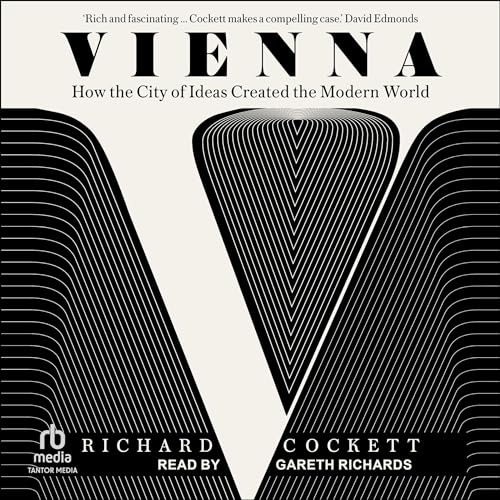
Vienna: How the City of Ideas Created the Modern World, by Richard Crockett.
Viennese ideas saturate the modern world. From California architecture to Hollywood Westerns, modern advertising to shopping malls, orgasms to gender confirmation surgery, nuclear fission to fitted kitchens—every aspect of our history, science, and culture is in some way shaped by Vienna.
The city of Freud, Wittgenstein, Mahler, and Klimt was the melting pot at the heart of a vast metropolitan empire. But with the Second World War and the rise of fascism, the dazzling coteries of thinkers who squabbled, debated, and called Vienna home dispersed across the world, where their ideas continued to have profound impact.
Humbert H. writes:
When I left the Soviet Union, Vienna was the first western city I saw. It's hard to imagine a bigger contrast. It was like moving from a garbage dump to an immaculately maintained dollhouse. My next stop was Italy, and in spite of being the most beautiful country in the world, IMO, Italy was a letdown after Vienna.
As for it's historical significance, it's huge, but this battle was one of the most important in the history of the world, and that's saying something (there have been a lot of battles).
Laurel Kenner suggests:
For a more detailed overview, I enjoyed The Austrian Mind.
May
11
Small business, from Laurel Kenner
May 11, 2024 | Leave a Comment
Greetings from Greenwich, Connecticut, one of the nation's wealthiest towns. This year:
1) Steinway closed its piano store and announced that all pianos would be liquidated at steep discounts.
2) Saks Fifth Avenue closed its brand-new (and very good) restaurant after spending $1 million on a remodel. Also closed its retail stores along the main drag.
3) A favorite Chinese restaurant in Old Greenwich closed after serving three generations.
4) A venerable Old Greenwich sit-down cafe with the best fish-and-chips in Connecticut also closed.
5) A good-value nice clothing store on Greenwich's main shopping street closed, just one of several.
It isn't just East Coast. On a UCLA visit with my son, I breakfasted at a landmark, Patrick's Roadhouse in my hometown, Santa Monica Canyon. The week after I left, a friend told me that Patrick's had closed after 52 years. COVID relief had expired. Arnold Schwarzenegger, who has a special throne there that can bear his weight, had bailed it out previously — but hasn't stepped up to the plate. A GoFundMe campaign is attempting to keep Patrick's alive. Fixer-uppers on my old street start at $6 million.
Why is any of this important? When small businesses close, the ordinary people must move on, be they customers or owners. They spend less. The economy reflects their diminished circumstances.
What grinds me the most is the Steinway store's failure. I'm teaching piano now, and I am so tired of seeing my students fail to develop their ears because they can only afford horrible electric keyboards.
Bo Keely responds:
i think it's a local thing. we can't see the world forest for the American trees. i just traveled through Mexico the hard way under a pack and the country bustles, thrives, and has altered the mindset to friendliness to strangers. the best investment is along the Sea of Cortez where, 15 years ago, there was one sleepy fishing village where i couldn't find a meal or bed. i slept in the weeds. now it's the Platinum Coast with twenty miles of high rises. there's a 200-mile new skyscraping powerline to meet electricity demand across the dune capped desert where, as seen yesterday on my throne on La Bestia, the last poles are driven and strung to blow open the coast to investment.
Dec
26
Laurel Kenner’s Musical Christmas Card 2023
December 26, 2023 | Leave a Comment
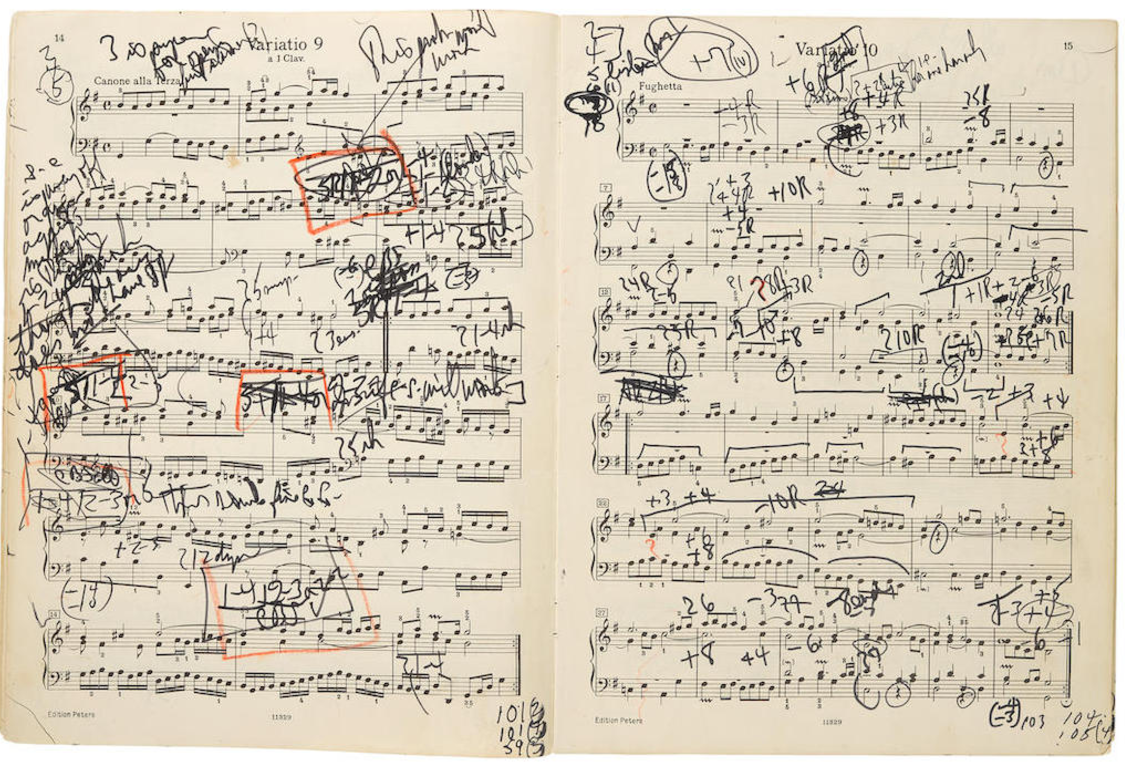
Merry Christmas to all Specs. I hope you enjoy my latest musical Christmas Card. It has been 23 years since the Chair and I, with the assistance of James Goldcamp and now Big Al and Alex Castaldo, founded the SpecList, starting with early readers of our column at TheStreet. The Specs have contributed so much value and humor to our lives. I thank you and wish you all a Happy New Year.
Laurel Kenner's Musical Christmas Card 2023
Laurel Kenner Plays J.S. Bach Prelude in C minor
Laurel Kenner performs Bach's Fugue in C minor, WTC Book I
Adam Grimes responds:
Thank you for sharing! Glorious piece, and such a great set. I continue to chip away through the Goldbergs…a bit at a time. Cheers, Happy Holidays, and perhaps a hint of Peace in these troubled times.
Laurel Kenner encourages:
The Goldbergs are a very worthy pursuit, Adam. Go for it! I’ll look forward to your musical Christmas card!
Oct
19
Bonds…close, from Larry Williams
October 19, 2023 | 2 Comments

Bonds oh so close to major buy point.
Humbert H. writes:
I just keep rolling over T-bills because I don't know any better. Higher for longer or something. At least the interest pays for my recent losses trying to buy all kinds of value stocks at the lows, only to see them broken. That's OK, the next bull market will bail me out completely.
Laurel Kenner comments:
You are never free to deny the truth. You cannot make it up ad you go along.
I bow to Larry. The biggest gains occur in insane bear markets. Because the government has seized control of the bobd market, he is right, especislly leading up to an election. You all should heed him when he gives the buy sign. But it still stinks. I guess you need the nose for success.
Larry Williams replies:
Well lets hope I get this one right and earn those kind words - the ultimate sweet spot to buy is not here yet but it is coming.
Zubin Al Genubi adds:
When the time to buy comes, you won't want to. Like 17% bonds in the 80's.
Richard Bubb writes:
So is the FED [Powell & Co.& etc.] gonna raise the rate, or try the Higher-For-Longer road? Personally I'm thinking the HFL is their better option. Reason: The Fed is notorious for doing one too many rate 'adjustments' that would fix itself if they hit the pause button/s. Back to my 'raise concern'…I think the 2% target is a chimera and going there is an unwinnable move for the Fed.
Humbert H. assumes:
Well they can’t inflate the debt away fast enough at 2% nor is it easy for them to achieve so I’ll assume inflation will stay higher for longer.
Allen Gillespie writes:
While there is a strong seasonal trade that kicks end here around Oct. 19-23 - good till Christmas, such that even during bond bear markets the market held levels for a couple of month, the fundamental issues are the following.
1. Fed Funds Futures are beginning to project a cut in short rates around May 2024 which then continue through the first quarter of 2025 and reach down to a level of about 4.5%.
2. Historical, average spread relations therefore suggest we are seeing a Niederhoffer switch in here where short rates go into the 4-4.5% range and longer instruments up the the around of the current fed funds rates and budget deficit amount. A true switheroo.
3. There is a strong seasonal here (particularly Oct. 19-23) which held even during bond bear markets. IA flush after a weekend would seem about right. In the bond bear markets, however, the range was only good for a couple of month.
4. The long-term fundamental backdrop is the following:
According to the CBO, "since 1973, the annual deficit has averaged 3.6 percent of GDP. In CBO’s projections, deficits equal or exceed 5.5 percent of GDP in every year from 2024 to 2033."
This is the inflation rate - so, if you want a real return on bonds your rates needs to be higher than these levels. That is now just barely true in corporates, but it is not true for government bonds.
If you just charge the inflation rate, there is no real no real return available to bonds. Granted, in the long run government should be neutral offering neither gains nor confiscation, but at any moment they are on either side of that reality.
Today, the CBO projects the deficit will run 6.1% for the next two years. They do have a core adjusted for timing shifting of 3.4% - but do you trust them will all the war supplemental budgets.
Humbert H. responds:
A cut in short rates in May? We have high deficits, strong likelihood of inflation above 2%, no real signs of recession, "higher for longer" is seemingly the consensus of the mainstream economists, but fed fund futures are projecting a cut? Doesn't seem to make much sense.
Allen Gillespie replies:
Election years start getting discounted about Feb/March - so market may start looking past the Biden agenda and the housing season come May will be in the dumps. Forward oil also 10% lower for next year on economic weakness. Oil ran in 3Q because someone probably knew. The energy squeeze in 1973 was 1 year long. Exxon just bought Pioneer, so they can export LNG - trade seems to be setting up to be long domestic production for export.
Oct
12
Wall of worry
October 12, 2023 | Leave a Comment

JPMorgan’s Marko Kolanovic braces for 20% market plunge, delivers recession warning
H. Humbert comments:
Nobody knows anything. If anyone could predict that stuff with any degree of certainty, they’d be worth a trillion dollars over 5-10 years. I listen to what all kinds of analysts say and they modulate their own predispositions by reality, but it’s all worth nothing.
Zubin Al Genubi sees the bright side:
Excellent wall of worry.
He indicates a near-term bounce is still possible because a lot hinges on economic reports over the next few months. "[We’re] not necessarily calling for an immediate sharp pullback,” he said. “Could there be another five, six, seven percent upside in equities? Of course… But there’s a downside."
(Really stupid)
I'll also make a Popperesque non-disprovable prediction: Market might go up, but then again it might go down too.
Laurel Kenner writes:
Sometimes the wall of worry is made of steel-reinforced concrete, viz., late 1999 & 2007.
Humbert H. comments:
This particular wall of worry is made of cotton candy. Not many people on either side predicted the behavior of the market in the last 4 months. Whatever idea people have, they typically expect to be proven right or wrong relatively quickly, and usually proven right.
Laurel Kenner replies:
The smartest bond investor, Paul deRosa, quit several years ago because he no longer understood the bond market after what I think of as the 2008 financial coup. The market hasn't existed since then. This thing that has been committed will bear evil fruit. George Zachar, am I right?
Sure, it could take a long time. Homeowners and businesses locked in those crazy low rates. But the central powers can't keep up the charade. The bond market, what's left of it, will scream. Do we look away now?
Larry Williams doesn't mince words:
This is bullish.
Humbert H. comments:
I wouldn't dismiss any "frame" for predicting the future even if I don't agree with or can't evaluate the premise. Scott Adams, to whom I listen religiously, has a number of "frames" that sound crazy to me but may work. For instance "the most entertaining outcome is the most likely". I don't trade per-se, and the closest I come to is to try to buy value stocks at a local bottom, or sell a current holding to buy a new one of the "local bottom" variety an activity I used to be reasonably good at but have completely failed lately. I do think there is some sort of a possible "scientific" framework to predicting IPOs as they seem to have widely divergent short, medium, and long-term behaviors, seemingly more so than the universe of similar stocks in general. Some of the reasons are obvious, such as the lack of a track record, but even with that emotions seem to play an outsized role.
William Huggins writes:
years ago as a student we ran an investment club with real money that did quite well. the problem, as usual, is leadership succession so in time the org attracted a technical analyst who had lots of prophecies but would offer no reasoning for them ("i'll explain if i'm right…."). this charade impressed some of the newbies but not the vets who demanded to know the basis under which their funds would be invested. being in the skeptical camp, i offered a simple binary prediction exercise: presented with 15 1-year price charts, he simply had to indicate whether to following year would be up or down (we could have corrected for drift but were sufficiently confident his methods were hogwash that we didn't care). if he could get 11 of them correct, that would constitute (roughly) 95% confidence that whatever his techniques were, they weren't producing random results. we didn't tell him but we used 15 of our actual previous holdings which we knew the results of. he got 4/15 correct and promptly stopped trying to inject "woo" into our investment process.
Aug
5
Trees, mostly
August 5, 2023 | Leave a Comment

old gray mare prob at 3-month hi at 35%.
Lott/Stossel: Election Betting Odds
books read this weekend:
The Hidden Life of Trees: What They Feel, How They Communicate - Discoveries from a Secret World
The Battle for Investment Survival
Trees: A Complete Guide to Their Biology and Structure.
i find the study of trees - especially how high they grow, and how they develop buttresses, and how they branch out and compete with other trees for light - immensely revealing for the various moves.
Big Al suggests:
The Age of Wood: Our Most Useful Material and the Construction of Civilization
Nils Poertner comments:
In many parts of central Europe, the Beech tree used to dominate the landscape thousands of yrs ago. Used to be well over 2/3 - and even today it is like 1/3 in Germany. Why? They tend to grow super and sort of take away all the light from slower growing trees. An oak tree would not stand a chance.
Gyve Bones suggests:
Long term strategy: planting a grove of oaks in a forest in France to be ready in 150 years to replace the roof of Notre Dame de Paris when it burns down.
Peter Saint-Andre offers:
Oxford's Oak Beams, and Other Tales of Humans and Trees in Long-Term Partnership
Peter Ringel writes:
For the last two years I am involved in a project for a German horticulture company. They mainly produce young plants of ornamental plants aka flowers. As a little side project (in early stages) they also produce Paulownia trees (as young plants).
Paulownia is the fastest growing tree in Europe. They originate from Asia. (Some criticize them as invasive species.) Typical commercial applications are wood for instrument manufacturing, wood pellets for energy production or particle boards. The wood is very light (caused by very fast-growing).
Propagation is a little challenging. Usually it is done in-vitro via Biotec-lab, which we have. It is not the easiest variety for in-vitro. We also had some success to propagate via cuttings from mother plants.
Laurel Kenner comments:
Terrible idea to grow these, down there with tree of heaven, kudzu and bamboo. Yes, they are quick to grow, but also impossible to eradicate or even to contain. I am not an eco-hippie, just a gardener.
Zubin Al Genubi adds:
A friend planted a tree farm about 25 years ago with rare exotic hardwoods such as Koa, Bubinga, Cedar, rosewood, mahogany, ebony. It is a multigenerational project but some early woods are being harvested. Some of the rare woods will be very valuable as they are disappearing in their disappearing native habitat. There are numerous governmental grants benefiting the project as well.
Laurel Kenner responds:
I like the project. The idea is not to grow "trees" that are in effect big weeds. Pawlonia is illegal in my state, CT, as is Norwegisn maple, another nasty weed-tree planted in a less enlightened day because it grew fast. They often come down in storms because they're weak. One memorably crashed over my driveway in a big blow and its eldritch too brach rang ny side doorbell.
Peter Ringel replies:
Yes, storms are an issue, especially during the first years. My big mouth was referring to the EU government as hippies, because subsidies and grant policies are highly ideological here. Not referring to anyone else.
The church of Greens has Europe tight in their grip and currently they like Paulownia. There is a trend / hype growing. Other psalms the church likes are "renewable raw materials" or "CO2 neutrality". Paulownia fit these mantras. (plants eat and need CO2 to confuse the church)
Paulownia are not really new to Europe. Introduced to Europe 100 years ago or so. So far they were unable to survive in the European wild in size. Maybe because of frequent stronger winds? On a farm, as industrial product it makes a lot of sense to me. I am obviously biased here, because this would be our customers. It is a nice economic product. E.g. after about the first 2 years of growth, farmers cut them back near the ground level. This timber can be sold. They rapidly grow back and faster than without cutting. A case of eat your cake and have it too. One argument is, to use this locally produced timber instead of importing from South America, Asia, Finland or Russia.
forgot: Paulownia on farms are usually all clones of hybrids. Like a mule, they can not reproduce themselves into surrounding areas.
Mar
24
Book recommendation, from Zubin Al Genubi
March 24, 2023 | Leave a Comment

Pirate Latitudes, by Michael Crichton. Aubriesque tale of privateers and Spanish Galleons.
As the SPEC list is about books, as well as markets, counting, and barbeque.
William Huggins adds:
single best book on the history of finance that i've come across is William Goetzmann's Money Changes Everything. He's a Yale finance prof with a background in art history and archeology and its shows throughout the book as he looks at the roots of our toolkit (sumerian word for "baby cow" is the same word they used for "interest", etc). a very good description of the 1720 bubble with the hypothesis that the bubble was a reasonable reaction to the shifting expectations around insurance companies and the lines of risk they could cover. he also suggests that Venetian gov debt (1172) snowballed into the creation of western capital markets, which in turn propelled the west ahead of "the rest" (to steal a ferguson quote). three solid chapters on the tools imperial China used to increase its "span of control" over its rugged territory. 10/10.
(I used to use it as the required reading in my history course until I realized too many were balking at its size)
Jeffrey Hirsch responds:
Appreciate the reco Mr. Sogi. Almost done with Pam V’s reco on Keith Richard’s autobiography, Life, which is far out. Here’s one from me, The Immortal Irishman, by Timothy Egan. Irish revolutionary becomes a Civil War general. Adventurous tale across many continents.
Laurel Kenner writes:
I offer Harpo Speaks, the autobiography of Harpo Marx, the silent brother. Plenty of poker, speculation, and spectacular success, including an account of his Soviet tour, to entertain this List well.
Pamela Van Giessen responds:
Harpo Speaks is fantastic. For a meditative introspective read on things out of our control and how the body copes A Match to the Heart, by Gretel Ehrlich.
Big Al suggests:
I will recommend The Biggest Bluff: How I Learned to Pay Attention, Master Myself, and Win, by Maria Konnikova.
First of all, it's just an entertaining, well-written story. But in her study of poker and portrait of one of the best professional players, Eric Seidel, there are many lessons for traders.
Penny Brown writes:
I recently re-read the cult classic, The Moviegoer, by Walker Percy. It has nothing to do with trading but the main character is a stockbroker. Read it for the wonderful prose and the delineation of Southern characters with great dialogue.
Also, re-read A Fan's Notes, Fredrick Exley's memoir of growing up under shadow of his father's football fame in Watertown. It's amazing that this book even got written since Exley makes three trips to mental institutions where he undergoes electro-shock and insulin therapy and was an inveterate alcoholic for his entire life. You can see the influence of Nabokov and Edmund Wilson (among his favorite writers) in his prose style.
And then I read Embrace the Suck - a book I literally found at my feet on the sidewalk - hey, the price was right - and I assumed it had a special message for me. It certainly did. It describes the training undergone to become a Navy SEAL including the infamously horrid "Hell Week" that resulted in the death of one participant. It has lots of lessons for traders as it extols the virtues of discipline, focus, planning and most of all, a willingness to embrace suffering, as a means of moving beyond mediocrity.
One guy's way of shaping up for the ordeal of SEAL training was to run the Badlands Ultramarathon - a little 100 mile race through the desert at temperatures over 110.
Okay, I'm not going to try that - never could have even in my prime. But it got me out of my chair committed to doing a full set of Bikram's yoga postures including the ones I hate because I can't do it - Salabhsana - or hate because it hurts - Supta-Vajrasana. As the author says, "you've got to embrace the suck everyday."
Gary Boddicker adds:
I recently read Mule Trader: Ray Lum’s Tales of Horses, Mules, and Men. I originally picked it up for the regional interest. Ray was based about 60 miles down Hwy 61 from me in Vicksburg, and traded mules and livestock throughout the Mississippi Delta…but, it turns out a few of the Chair’s favorite writers, Dr.Ben Green and Elmer Kelton, were running buddies of Ray and are mentioned and vouch for his character in the book. Many tales of trades, moving the herds as the tractors slowly replaced them from California to the Delta. In one case, he bought 80,000 horses in South Dakota, and arb’d them to where they could be used. The book rambles a bit, as it is essentially an oral history, but many lessons within.
It brought to mind a discussion I had years ago over dinner with an buddy of mine who farms about 20,000 acres in NE Louisiana. “Gary, there is isn’t a real farmer in Louisiana who picks up that government agricultural census and doesn’t mark down that he owns at least one mule. We are damn slow to admit we gave ‘em up.” I haven’t fact checked him, but a betting man says the mule census is Louisiana is overstated.
Gyve Bones responds:
I have two copies of that book… one autographed by the re-publishing editor. It’s a great book.
Mar
8
On the Firing Line (Fifteenth in a series) Breathe, Breathe in the Air
One of the first exercises we do in clinics is called “Learning to Breathe”. Of course, the athletes have quizzical looks on their face and say, “But we’ve been breathing all our life. What do you mean?” After sharing a laugh, we explain. Infants and very young children breathe very naturally with their belly being drawn down and slightly out as the diaphragm is lowered in order to fill the lungs. Sometime in childhood, as the stress and rush of modern life takes its toll; the natural belly breathing is replaced by a breathing technique that uses upper chest expansion to draw air into the lungs.
In natural belly breathing, the lungs fill in roughly three stages. First the lowest part of the lungs begins to fill as the diaphragm is drawn down and the belly is pushed down and slightly out. Then the middle part of the lungs fill as the lower rib cage expands slightly. Finally, the upper part of the lungs is filled as the upper chest expands. In the more typically observed upper chest breathing, only about 30% of the lung capacity is utilized. Belly breathing has significant positive effect on both the body and the mind.
Vinh Tu writes:
Back when I took piano lessons, I remember getting some advice on how to breathe while playing certain passages. Recently while playing some rhythm-based video games, I've noticed that either I hold my breath, or try to time my inhalation or exhalation so as not to disrupt my rhythm. The wrong syncopation between your breath and the beat can throw you off the rhythm.
Laurel Kenner responds:
For a smooth motion, action should come after you start to exhale.
Dec
7
Trial and error, from Big Al
December 7, 2022 | Leave a Comment
Watching Victoria via PBS Masterpiece sub, and it's shown that, during the 19th century, one treatment for syphilis was basically a mercury sauna, inhaling the vapors - yikes!
The history of syphilis is an interesting case for seeing how quack medical treatments, such as mercury, were applied and killed people even more quickly. Of course, one shouldn't judge too harshly as they were treating things of which they had no understanding.
The relevance to trading is that humans have an impulse, when confronted with challenges they don't understand, to resort to superstition and to believe anything that is claimed with great confidence.
Penny Brown notes:
Flaubert took the mercury treatment for syphilis and as a result his tongue turned blue.
Laurel Kenner adds:
Qin Shi Huang, first emperor of China, drank mercury-infused wine to attain eternal life. Rivers of mercury surrounded his burial chamber, a depiction of China. Qin died at 49.
Gyve Bones writes:
We saw examples of that in the recent pandemic. At first "masks don't work. Don't wear masks." then… "Everyone must wear a mask at all times, even alone outside or in a car." Then "The virus stops dead in the vaccinated person, who will not get Covid, and won't spread it to others." then… "Anthony Fauci contracts COVID three times, but is certain it would have been worse had he not been quad-jabbed."
Now there's this disturbing study which shows the effects on infant cord blood and their immune systems from mothers who have been infected with COVID.
Henry Gifford comments:
The early instruction for people to not wear masks was so that security cameras could see people’s faces. The police seem to really love security cameras with an enthusiasm that strikes me as going above and beyond any usefulness to “fight crime”.
There was the time a landlord in NYC put a camera outside a tenant’s door to prove if the tenant was using the apartment as a “primary residence”, and would therefore still be entitled to rent protection or not. The tenant’s boyfriend put bubble gum on the lens and was promptly hunted down and arrested and charged with every crime the cops could think of, with an enthusiasm certainly not caused by anyone’s love for a NYC landlord.
Not being seen clearly on security cameras was, if I remember correctly, sometimes even stated as the reason to not wear masks, which made me wonder – if they think masks work, more people dying is OK as long as people can be seen on cameras?
Pamela Van Giessen responds:
Henry — There exists decades of research that show that masks do not reduce transmission. I have yet to see meaningful evidence (research or real world) that shows that they do work. The current situation in China would seem real world validation of the lack of mask effectiveness. Lockdowns don’t seem to work much either. Most people don’t die from covid either. They don’t even get very sick.
Henry Gifford writes:
I tend to believe things if they can be measured, if the measurements can be repeated by others, and if they can be explained by the laws of physics. I tend to not believe anything not meeting these three criteria. As the owner and fairly regular user of over fifty measuring instruments, the measuring part often means measured by me.
Nov
21
Boxwood Butchery, from Laurel Kenner
November 21, 2022 | Leave a Comment
A new post from Laurel Kenner: Annals of Greenwich, Pt. 4: Boxwood Butchery
Nov
17
A Trip to the Dump, from Laurel Kenner
November 17, 2022 | Leave a Comment
A new post from Laurel Kenner: Annals of Greenwich, Part 3: A Trip to the Dump
Nov
15
On virtue signaling, from Henry Gifford
November 15, 2022 | Leave a Comment
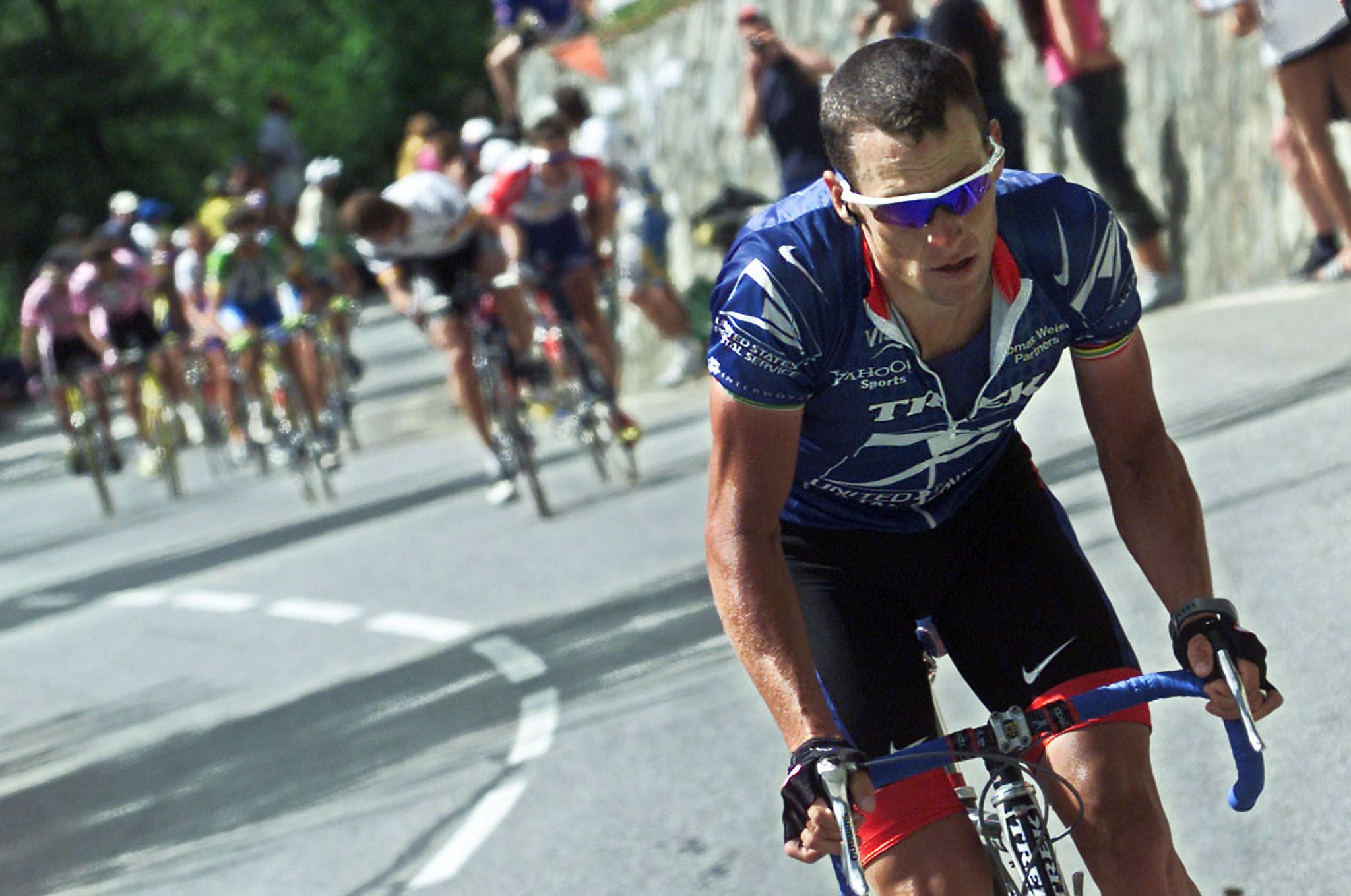
While Lance Armstrong was racing he tested positive seven times, but was let off the hook on technicalities, not all valid, each time. This was well known at the time, but few journalists mentioned it. As far as I know, among the few with the courage to mention it, none said “therefore he is cheating” or said “therefore he was cheating”.
During the years Lance and The US Postal Service team were winning The Tour de France year after year it was said that the team specializes in winning the team time trial (race against the clock) events that were part of the tour. As a former racer I wondered how that could be, as that event arguably does not require special skills different from the skills required for other events - probably fewer skills are required. I strongly suspect that they won those events with a lot of help from electric motors hidden in the bicycles, probably within the “disk” (streamlined) rear wheels. Maybe motor doping helped Lance in his other events as well.
Bo Keely adds:
i remember reading & studying something similar from you before. or, it could be that the electric clocks were fixed. a guy with a top hat used to walk through las vegas casinos & a device in the hat triggered jackpots to his associates. lance armstrong was the marty hogan of bicycling. people supported his cheating because they wanted a hero, and because his sponsors had so much invested in him.
Pamela Van Giessen writes:
The human animal craves heroes so we will go to a lot of lengths to support the illusion. Because admitting that heroism is an act, not a personage, is almost like refuting the existence of god.
Good people can do bad things and bad people can do good things. Too bad we have such a hard time wrapping our heads around this.
Laurel Kenner agrees:
Brilliant insight, Pamela. The idea is hard to embrace because it means confronting our own bad deeds. We all want to see ourselves as good people.
Nils Poertner comments:
in Vedic culture there is something like Maya- the fog …that we see through the world - everybody has a fog around him/her so we never meet - we just see through this fog…and some are more caught up in Maya than others.
Nov
15
Annals of Greenwich: A wedding scam, from Laurel Kenner
November 15, 2022 | Leave a Comment
A new post from Laurel Kenner: Annals of Greenwich: A wedding scam
Sep
30
The Electric Robots are Here, from Laurel Kenner
September 30, 2022 | Leave a Comment
Bye Bye, Mower-and-Blower Gangs. The Electric Robots are Here.
In a step toward ending mower noise, a robot named Farmer Joe, made a debut on the Town Hall lawn on Sept. 21, cutting grass in total silence as reporters and local leaders looked on.
Sep
21
You can transform a patch of weeds into a piece of heaven, from Laurel Kenner
September 21, 2022 | Leave a Comment
You can transform a patch of weeds into a piece of heaven
Sep
19
A new post from Laurel Kenner
September 19, 2022 | Leave a Comment
The infernal racket of blowers and mowers; Greenwich introduces a robotic solution
Sep
16
Federer adieu, from Duncan Coker
September 16, 2022 | Leave a Comment
Market declining in sympathy with announced retirement. I was lucky to see him play on several occasions. A great player and a great gentleman to the game. What a backhand, and what a forehand, serve, volley, footwork, strategy and touch.
Alston Mabry adds:
Farewell address, very classy.
Bud Conrad agrees:
Yes. Classy.
Laurel Kenner recalls:
My tennis teacher knew him and said he never swore.
Aug
11
Summer reading, from Zubin Al Genubi
August 11, 2022 | Leave a Comment
I need some new books to inspire me. Suggestions? Last few science book were great.
Bill Egan replies:
Against the Tide: Rickover's Leadership Principles and the Rise of the Nuclear Navy by Dave Oliver.
Laurel Kenner adds:
Sue Stuart-Smith: The Well-Gardened Mind: The Restorative Power of Nature
William Logan: Sprout Lands: Tending the Endless Gift of Trees
Thomas Sowell: Black Rednecks and White Liberals
Michael Brush suggests:
The Gene
The Emperor of all Maladies
Why We Sleep
Henry Gifford offers:
Buildings Don’t Lie, Better Buildings by Understanding Basic Building Science: The movement through buildings of heat, air, water, sound, fire, light, and pests. By…well…Henry Gifford!
Big Al recommends:
Prime Obsession: Bernhard Riemann and the Greatest Unsolved Problem in Mathematics
The Seven Pillars of Statistical Wisdom
The Biggest Bluff: How I Learned to Pay Attention, Master Myself, and Win
Re Riemann, 3Blue1Brown has a great bit to enhance the visual:
Visualizing the Riemann zeta function and analytic continuation
A reader writes:
Major Transitions in Evolution: Maynard Smith & Szathmary
Indra's Pearls: Mumford + Series + Wright
Coe/Stone: Reading The Maya Glyphs
Fred Schwed: The Pleasure Was All Mine
Japanese Tales: Royall Tyler
African Folktales : Paul Radin
Ernst Haeckel : Art Forms from the Abyss
Owen Jones: The Complete Chinese Ornament
Trigonometric Delights : Eli Maor
Voices from the Whirlwind - Fenc Jicai
The Cowshed - Ji Xianlin
Rural Worlds Lost - Jack Temple Kirby
Paolo Pezzutti enjoyed:
Relentless Strike: The Secret History of Joint Special Operations Command
Laurence Glazier adds:
Emily St John Mandel, Sea of Tranquility. Sequel to her earlier The Glass Hotel, which was partly about a Ponzi scheme.
And Brandon Q. Morris, physicist sci-fi writer.
Peter Krupp writes:
Here are two science books that I found fascinating focused on quantum physics written by one of the great contributors to the quantum theory of computation, David Deutsch.
The Fabric of Reality (quantum theory - many world interpretation, quantum computation, epistemology, and much more).
The Beginning of Infinity (the nature of scientific progress, how it has accelerated in the past few centuries).
Jul
17
Seen on the streets of Maui, from Zubin Al Genubi
July 17, 2022 | Leave a Comment
/cdn.vox-cdn.com/uploads/chorus_image/image/49716283/531739974.0.jpg "TSA lines")
A 3-4 hour TSA line stretching past baggage claim. Horrifying. Some problems in the transportation industry. Its apparently widespread.
Laurel Kenner responds:
Guaranteed to happen when government goes full authoritarian and shuts down the economy for iffy epidemiological reasons.
Mind owner. Mother of fire kid. Hardened gardener.
Bo Keely recalls:
i had a flight out of SF to JFK on the morning of 9/11. i was sleeping on the couch of an executive hobo named 911 who was in charge of Bay Area disaster response. he shook my shoulder awake, and said, 'roll over and go to sleep. they've cancelled all flights into NY because the world trade center was just blown up.' so, i got to sleep in, and rescheduled for a few days later.
on arriving at JFK the security was crazy. we had to go into a tunnel and wait for about an hour, and then through a metal detector before boarding. as an experiment, i stuck a piece of metal in my cap that should have set off the detector. but it was too high on my head and passed without detection. I probably visited u & vic on that trip.
Jul
7
A new article by Laurel Kenner
July 7, 2022 | Leave a Comment
The Fed Fights Recessions by Dropping Rates. Unless Inflation’s Out of Control.
The Federal Reserve has eased past recessions by cutting interest rates, but right now it’s committed to raise rates to bring inflation under control.
Jun
28
Update on the AI discussion, from Laurel Kenner
June 28, 2022 | Leave a Comment
If you missed Newton Linchen's Zoom talk on AI this morning, here is a link to the recording, passcode: &6yLyn*F.
He included a demo, explained the different types of machine learning, suggested books, and related the colorful story of how a powerful reinforcement learning algo of the sort used for self-driving cars and rocket landings took five days to run and nearly melted his computer. (That's not an algo he uses in his trading for clients.)
If you wish to download the recording you can, but be aware that you will be downloading an untrimmed version as Zoom preserves the original. The talk starts at around 30:15.
Laurence Glazier comments:
This is brilliant. It is so nice that nowadays mathematicians have an alternative to aerospace pursuits. I would like to see AI applied to classical music, so I could have an engine at my side as I tried to figure out the complexities of a piece, much as a grandmaster may be assisted by an AI chess engine like AlphaZero. I am also looking at altering the design of the theramin to interpret conductor gestures, and ultimately AI may have a role here too.
Paolo Pezzutti writes:
Excellent presentation. As you highlighted it is all about features. Models are open source therefore you can only work to tune parameters. The choice of features is fundamental. Either as a continuous series or conditional (1 vs 0). It is is also important how you select training data taking into account the current regime. An interesting approach to study in addition to price relationships is introducing alt data such as payrolls or yields spreads, or intermarket relationships. I guess that brilliant minds with powerful computers are continuosly processing huge amounts of data pursuing an edge that is a moving target due to everchanging cycles.
Jordan Low asks:
Thank you for your talk. One of the problems I had with classifying up or down days is that the ML model tends to find "buy-the-dip" opportunities to pick pennies, but might get wiped out on a larger volatility event such as a pandemic. Is this a problem you face as well, and what are the strategies to mitigate this?
Jun
27
Prediction Power Of Algorithms, from Newton Linchen
June 27, 2022 | Leave a Comment
It’s been said that machine learning algorithms have no particular prediction power for the stock market, due to it’s intrinsic randomness and the all pervasive opportunity for curve fitting. (My very first inquiry here on the List, back in 2009, was about how one could avoid overfitting.)
Specially when dealing with short-term trading (day trading), it’s considered that nothing can really beat the random nature of the market. And I agree, to a certain point.
But my experience in recent years, particularly applying machine learning for the day trading of stock index futures, would suggest otherwise. There’s a frontier between stock market analysis and data science that can lead to predictive power using machine learning algorithms.
Perhaps the best advise is to use them for classification, not regression. And here we are in pattern analysis, so to speak. Classification algorithms can identify feature characteristics and recurrent patterns in an nonlinear dimensional space. So, with enough work on the subject, it’s possible to identify tradable patterns, (which in fact remain uncertain, as per the black box characteristic of certain algorithms), and to build a trading strategy around them.
My best experience so far has been with a QDA (Quadratic Discriminant Analysis) algorithm, with real trades for the past 15 months. Here’s the documentation link for the QDA algorithm, which is public knowledge as part of the Scikit-learn python library:
Laurel Kenner asks:
Newton, what role does human inspiration play in revising hypotheses in the scientific method that AI seeks to automate? Can an AI replicate out-of-line ideas, lucky errors, the contrarian stubbornness of human thought? Can it know what it is to add value?
Newton Linchen responds:
After 15+ years in the stock market, I went to grad school in computer science, to learn such algorithms. Before that, I had no idea how they worked, and as a trading strategies developer, my main concern was always to avoid curve fitting at all costs.
I’m not the best student, but from what I’ve learned, and applied in my work as an analyst, it became clear that we, who are foreign to this area, have much misconceptions about the nature and the role of AI. In fact, I think AI is a very bad name, as, most of the time, we are dealing just with approximation functions.
What machine learning algorithms excel, is to perceive relationships between the features, mapping those features in a hyperplane, (which is a confusing name to express that each feature is understood as a dimension itself in the dataset). The quest is not for to suppress human insight, knowledge and creativity, au contraire: is to use it in an orderly fashion as features for the algorithms to learn from. I believe Marcos Lopez de Prado has a body of work in this field, and clearly it is him who should be bringing this topic, not me.
In my experience, the algorithms learn patterns (that perhaps we couldn’t identify), and generate predictions. A whole other work begins when we decide what to do with those predictions (as in terms of time length of the trade, profit target, stop loss, stop-the-algorithm policy, etc). So, AI won’t substitute human knowledge and insight in the markets, but I believe it’s a precious tool for research.
Nils Poertner adds:
human intuition is underrated, isn't it - to make sense of the world sometimes? we are all geniuses in a way but don't see it that way.
The intuitive mind is a sacred gift and the rational mind is a faithful servant. We have created a society that honours the servant and has forgotten the gift.
- Albert Einstein
Paolo Pezzutti comments:
I have not worked with Qda. I am convinced that classifiers are more interesting from the trader's perspective than regressors. I have coded things using xgboost which is also quite popular just to understand the approach and the potential. There is a huge effort to do in order to identify and select features. Overfitting is an easy trap.
Leo Jia writes:
I prefer seeking entry-exit pairs to only predictive conditions. Overfiting is unavoidable. But there are techniques to largely eliminate them. Also, it's not enough to only seek the best performing (however one defines it) conditions based on the given data as paradigm is surely changing, so it's important to find lukewarm or even losing conditions that are to well perform sometimes in the future. In any regard, expecting machine learning to do a great job on timeseries financial data as it can do with, say, image detection is unrealistic due to many factors, notably the lack of training data and the paradigm changes. So other assisting techniques (which turn out essential) have to be used ulteriorly.
May
27
The idea that has the world in its grip
May 27, 2022 | Leave a Comment
i haven't seen an update on this in 20 years. i believe its relevant.
The World in the Grip of an Idea Revisited
Socialism Destroys Institutions, Societies, and Individuals
chalk up the losses of the yankees to the unholy assuaging of the idea that has the world in its grip. its shameful that a manager can't support his players, but this is part of the idea that certain personages are entitled because of the masters 100 and disney syndrome.
Laurel Kenner writes:
I have long wanted to do a study of Sweden, the darling of US socialists.
Peter Saint-Andre adds:
I read an article in the last ~2 years about Sweden (perhaps in Reason magazine?) which argued that these days the country is not nearly so socialistic as "progressives" think.
Jeff Watson comments:
I like Sweden’s system of private roads, and the fact that everyone, rich and poor, has to pay the same rate of taxes.
Andre Wallin writes:
my parents immigrated to the US when Olof Palme was prime minister. they claimed they moved in large part because of his socialistic policies. he was assassinated in 1986 by "Skandia Man" who they only figured out who it was in 2020 posthumously. my uncles do pretty well in sweden as small business owners these days, but nothing compared to what is possible for so many in the US.
Henry Gifford responds:
Some years ago I attended a lecture by two people from Sweden, who argued that Sweden has high taxes, but it is worth it for all the services the government provides. But they did not convince me that they paid lower taxes than we pay in the US – sounds like we pay higher taxes here. They were shocked to hear about paying high real estate taxes with money that has already been taxed.
Yes, Sweden is the darling of socialists in the US. But most articles I’ve read say that Sweden is an example of socialism that works, then include nothing to back up that claim, and don’t even reference it later. I’ve heard that Sweden toys with socialism every 20 or 30 years, finds it is a disaster, and gets as free of socialism as fast as possible. If this is true, it wouldn’t discourage a socialist from claiming that Sweden is socialist.
One time I was talking about “government” schools in the US. Politically incorrect to call them what they are. I might have quoted Cato’s finding that government schools cost twice as much as private schools. A guy was talking about a wonderful “public” school, and I asked if it was a government school. He said he didn’t know. I asked if it was on land or floating around on a boat. He said it was on land. I asked him who owned the land. He said he didn’t know. I assured him that his level of dishonesty qualified him for being a very good comrade. He didn’t object. Some level of dishonesty seems a prerequisite for people who claim to believe that socialism is a good idea.
Bo Keely comments:
After traveling the world to 105 countries, I've concluded it's not a matter of Socialism vs Capitalism. It's a matter of people. Some peoples can make a socialism work and do it. Other peoples at their best cannot make capitalism work nor desire it. So, one should look at squares and circles before deciding which hole they should fit into. I personally prefer the lone wolf life.
May
10
Fed pivots, from Michael Brush
May 10, 2022 | Leave a Comment
…also get sold: spring 2001 and fall 2007.
Zubin Al Genubi responds:
The great bull market ran from 82-2000, but during the mid 80's Volker ran rates up to 17% T Bonds. Lots of pain in real estate but the stock market stayed strong.
Laurel Kenner comments:
I still remember the free toasters banks gave out in 1979 and the 13% money market rates. My dad lost his job and pension for refusing to give inflated commercial RE appraisals for his REIT. The California government, perhaps greedy to participate in the housing bubble, raised property taxes so high that it led to the Prop 13 revolt in 1978, helping set off the Reagan revolution. Oh how the bureaucrats cried over that. By 1984 the Fed had to turn the money back on.
Inflation can result from a complex of factors. Supply issues, government spending, demand for the nation’s products (as in WWI & II, though the latter was temporarily suppressed by price controls). John Steele Gordon did a nice summary of US inflation this month for Hillsdale College’s Imprimus.
Steve Ellison provides the link:
Inflation in the United States, by John Steele Gordon
Apr
27
A new post from Laurel Kenner on Substack
April 27, 2022 | Leave a Comment
Laurel Kenner on Substack: Nobody Asked Me, But…
Apr
13
I've uploaded the Autobiography of Charles Darwin to my website of public-domain books, optimized for reading on phone or tablet. Enjoy!
Laurel Kenner applauds:
Thank you, Peter, and thanks for letting us know about the site. It's a treasure, full of interesting books.
Peter Saint-Andre responds:
Thanks, Laurel. I'm always adding more books and suggestions are welcome.
Bo Keely comments:
I'll read it again because it's worthwhile.
Peter Saint-Andre adds:
Oh, and I've discovered that Francis Galton wrote an autobiography, too. I'll add that to my publication roadmap.
J.T. approves:
Most definitely
Mar
11
One-Minute Piano Lessons, from Laurel Kenner
March 11, 2022 | Leave a Comment
One-Minute Piano Lessons
Inflation-fighting practical tips for a lifetime of playing
A friend of mine used to joke that teaching piano is easy because it required only four words: Faster. Slower. Louder. Softer.
He exaggerated. Teachers devote years to impart artistry, theory, and history to their students. Yet much lesson time is spent on the humble practicalities like fingering, tone production, and overcoming technical difficulties.
In this book I present a collection of practical tricks, tips, and secrets from a lifetime of lessons, practice, and performance. Most take just a minute to read but will bear fruit as they are put into practice.
Laurence Glazier comments:
Nice. Very Leschetizky.
Laurel Kenner responds:
Thanks, Lawrence. Like so many other pianists, I studied with teachers whose teachers studied with Leschetizky.
Adam Grimes writes:
I read your book. I think it's very good. A few random points (some reinforcing, some maybe slightly contradicting):
- I struggled with poor technique for a long time, and I got by, but the thing that made a difference for me was realizing that there is exactly, precisely ONE ideal alignment of hand, wrist, and forearm for each finger. You can find it by pretending you are going to exert maximum pressure through a single, extended finger. (Like you are going to push a refrigerator or something, but don't actually do it!) It's not always possible to have that alignment for every note played, but knowing what it is and seeking it is the key to technique.
-I don't think there's much value to exercises in general. I did Hanon, Czerny, Dohnanyi (dangerous, imo) for years. Complete waste of time, at least for me. All the technique we need is in the literature. Everything needed to play Classic and before period music is in the Beethoven c minor variations… extract exercises from Chopin (not saying just play the Etudes… make exercises from the Waltzes, the Berceuse, from difficult passages in any piece.)
-Absolutely agree on pain being a big STOP signal. And, as for relaxation, this is often confused, but the key is you don't want to have antagonistic muscles activated at the same time. our brains can't tel a muscle to do anything specific, so we have to work through body motion.
-100% agree about piano being a percussion instrument, though with great capabilities to sing. Play Schubert to make the piano sing… then Chopin. I used to tell my students that legato on the piano was a lie… but it can be told as an utterly convincing lie. Listen to great violinists and singers to understand real legato.
-I would prioritize ear training. It's very hard to create something from the instrument that cannot be vividly experienced internally first.
-I have a very long list of practice techniques. Some of my favorites are rhythms, articulations, practicing fast stuff slow and super-expressively, and practicing small sections up to tempo asap.
-With the metronome, suggest using it on "large" beats. For instance, it's obvious a Chopin waltz you'd set the metronome on the dotted half. But consider the first fugue from the WTC… a good way to practice is with a metronome click ONLY on the downbeat… or maybe on 2 and 4. Doing this requires the player to internalize the pulse more than the typical use of metronome on every beat.
-The technique of slowly speeding up with a metronome only works if the player knows how to play fast… it fails with students because there is a speed wall. (Essentially, there's pretty much only one (or a very limited) way you can play a fast passage at tempo, but slowly? If you're playing slowly you can do ANYTHING!) So, I find that doing big jumps close to target tempo is effective. For instance: let's say the target is q=144 and you find the passage easy at 75. Play it 3X perfectly at 65. Then turn metronome up to 130 and try it. (Absolute disaster, of course.) Try it a few times at tempo, then go back to 70… then back to 130… then 72, etc. This is a way to bring the coordination from fast speeds back to slow practice. Your body gradually will find the right way to make it work.
-Another key to doing the slow speeding up thing (which i do sometimes… it's valuable in some situations) is to also practice back to a slower tempo. For instance, play a passage 3X at 62 (I won't use actual mm here just close), 3X 68, 3X 72,… etc 3x 132… which is your target tempo… but don't stop there! Now do 2X 120, 2x 100, 2X 80. Why? Because tension will inevitably arise as you are ratcheting the tempo… tension can become a learned part of a passage… taking the tempo back down allows you to learn relaxation also.
-Divide practice into small sessions. It's ideal if you can nap after a session.
-Most things won't be fixed today. Your brain will consolidate the work while you sleep. If you aren't dreaming about the work, you're probably not working hard enough. (Personal observation, maybe not true for all.)
-Check the volume in your practice room. I discovered mine was spiking 110+ dB! Permanent hearing damage is certainly possible with the piano.
Bo Keely suggests:
the weights should go on top the fingers, to eventually lighten the touch.
Laurence Glazier adds:
My first Leschetizky teacher, along with all the shaking of hands and relaxation, advised playing each note as if with the whole arm. It may seem strange. But I liked it. At the time I was studying ki aikido and it struck me that several exercises were in both.
I didn't take piano playing very far. Loved learning to play from jazz chord symbols.
The magic of music always finds a way to flourish. The development of jazz. The great songs of the Beatles, who did not know the notation. We need knowledge, but must not let it get in the way.
Jan
30
Loving and Loathing Kenny G
January 30, 2022 | Leave a Comment
Penny Lane on Loving and Loathing Kenny G
Love it or hate it, but you've definitely heard it: the so-called "smooth jazz" of saxophonist Kenny G. Filmmaker Penny Lane talks about her documentary, Listening to Kenny G, with EconTalk host Russ Roberts. They discuss the pursuit of perfection, the power of vulnerability in art, and why Kenny G is loved by the people and reviled by the critics.
Here is the trailer for the documentary.
Jeff Watson comments:
If I was forced to listen to Kenny G, I would welcome an increase in the rate of my deafness, in fact deafness would be my safe space.
Zubin Al Genubi writes:
In contrast to Kenny G I've really been into John Coltrane. Took a number of years to truly appreciate his music.
Adam Grimes adds:
I absolutely loathe smooth jazz and New Age music (Einaudi, et. al.). I'm not completely sure why, but I've always had a very strong visceral reaction to music like this. And I DO embrace a lot of simplicity and minimalism… so it's not that… Perhaps it's music that is obviously intended to be trivial.
James Lackey writes:
Well joy! Who loves listening to the same key trillion not low tech music? Kenny G blah blah blah. Charlie Parker on a 50s Miles album. If the ever frustrates me is because I can’t play it. Branford Marcellus probably the best ripper sax ever but whatever. Some may think taking pop tunes re sketch them into EDM is silly or lazy. It’s not hard but it’s hard to do and who wants women to dance anyways.
The point was Kenny G hit a note and held it then. Did not hit a note a rest then hit a note on same scale coming from and angle and your eyebrows raised. Damn!
And guys the emotional response to music rests rhythmic beats to each his own. Like the markets please remember the scientific evidence. Down 20% is always going to be emotional. The first 10, I’m not sure if any of us should lift a brow.
Jeffrey Hirsch writes:
I get into some of that old jazz from time to time. But I am a rocker at heart. Recent highlights:
Grateful Dead in Honolulu Jan 23, 1970, with Pig Pen and an extended Turn On Your Lovelight. It's on Dicks Picks.
Little Feat - Electric Lycanthrope – recent release of a live studio performance in 1974
Laurel Kenner responds:
I'm with Adam — I hate the phony sentimentalism/exhibitionism.
Antonio Porres Miranda suggests:
I end up always defaulting to what ever has to do with Antonio Carlos Jobim.
Laurel Kenner approves:
Jobim is impeccable — good choice!
Vic offers:
i always and continuously listen to Verdi. every aria is a perfect blend of instrumental music and singing. each aria is designed to please. and he's very innovative in his orchestration, sometimes 7 basses, other times 4 clarinets. beautiful augmentation of life for me, heartily recommend it.
Maria Callas - Early Verdi arias
Jan
2
Time for books about time
January 2, 2022 | Leave a Comment
A reader writes:
Time's Arrow by Martin Amis, is a novel which plays on topsy turvyness - everything being upside down, time is moving backwards, what is good is bad and vice versa. E.g, the pimp dishing out cash to the prostitute, doctors killing patients, and garbage men adding more trash into the bin.
In our hyper-rationale world- of cartesian thinking - those novels tease the reader and stretch imagination. Saw pics of overflowing trash bins in NYC - so at least one of the examples could be true today?
Laurence Glazier writes:
Thanks for the reference, I didn't know of this book. I have read some of his earlier, more frivolous books, and also some of his father's, Kingsley Amis. I love time-bending themes, but might find this one harrowing.
A reader adds:
inversion theme - also a link to mkts? novice trader: fundamentals first, then price action, whereas more seasoned trader can see the implicit -and more nuances, eg. house price stocks moved up in 2009, then housing boom in the US etc for yrs to come etc. or spiritually - one can find a few other things ….Castaneda /Gurdjieff - on topsy turvy ness of human perception.
Andrew Aiken writes:
Philip K.Dick’s novel, Counter-Clock World, was published in 1967. By a quirk of physics, time in this future is running backward. In this world, people disgorge whole food, greet with “Good-bye” and part with “Hello”, pregnancy ends with copulation, libraries busily eradicate books, and the dead come back to life in the world’s cemeteries. Because libraries control the availability of knowledge, they have absolute power. Even militaries and police are terrified of the libraries. A departed cult leader, whose following has continued to flourish after his death, comes back to life, with devastating implications.
Nils Poertner responds:
yeah, a number of authors of the previous centuries probably could not take it anymore with society's linear attending to the world and wrote books like these. Lewis Carroll's Through the Looking Glass is another one. some are more light hearted and fun to read than others. good for stimulation of novice traders.
Laurence Glazier comments:
Music is interesting here, as whatever I write is heard linearly, even though I sometimes create it as a non-linear fractal structure. It nonetheless works.
Wondering where the Gurdjieff Work comes in re Time’s Arrow? Phillip K Dick was certainly an extraordinary individual.
A reader responds:
Music is about vibration and energy - and more harmonious energy is good for us and vice versa. We constantly rec and send energy even if we don't think so. I'm not huge into Gurdjieff or Castaneda - only know a few bits about this topsy turvyness in perceptions and tend to concur. Would not interest others here perhaps anyway. Will have a look at Philip K Dick.
Penny Brown writes:
I loved Martin Amis's last "novel" - put it in quotes because it's more of a memoir - Inside Story which chronicles some of his early relationships and the death of his closest friend, Christopher Hitchens, and his literary father, Saul Bellow.
Laurel Kenner enthuses:
Androids DO Dream of Electric Sheep! Reading ALL Dick’s books.
Zubin Al Genubi writes:
I've read pretty much every Michael Connelly book.
Laurel Kenner adds:
I have read all of Michael Connelly, William Gibson, Alexander McCall Smith, John Grisham, John D. MacDonald, Walter Mosley, Eric Ambler, Martha Wells, Earl Derr Biggers, Robert Graves, Gene Wolfe, T.S. Eliot, George MacDonald, and Phillip K. Dick. I recommend Epictetus, Publius, Shelley, Keats, James Burnham, and Curtis Yarvin on Substack. Merry Christmas to all Specs.
Ashton Tate writes:
P.D. Ouspensky, a student of Gurdjieff wrote the novel, Strange Life of Ivan Osokin. It can relate to markets as the story tells of a man who meets a genie who is willing to grant him any wish. The man (Ivan Osokin) wishes to be able to go back in time and replay certain pivotal moments in his life with the caveat that when replaying these events he is aware of the things he did the first time in these instances so that he doesn't mess up again. The genie grants him his wish but assures him that even though he may know what not to do in replaying these scenarios, he will still make the same faulty decision anyways, to which he does, again and again. There is a rumor that this book was used as inspiration for the movie Groundhog Day.
Jeffery Rollert responds:
That idea came from Sartre, in Les Jeux Sont Fait (The Die/Dice Are Cast), and should be required reading by all.
Laurence Glazier adds:
Keith Pearson has written several light-hearted, but well-constructed novels on this theme.
Ouspensky believed in a theory of recurrence, in which lifetimes could be repeated. I don’t think that was connected to Gurdjieff’s teaching, though in Beelzebub’s Tales he suggests that themes in history repeat.
Penny Brown offers:
My greatest literary experience this year was listening to the 1862 classic, Oblomov, which came as a free addition in the Plus Catalogue (Audible). The narrator, Stephen Rudnicki, has a beautiful resonant voice and adds just the right amount of ironic inflection.
"Oblomovism" or "Oblomovshchina" is a term has made it into the vernacular as representing all the negative qualities of romantic inaction.
Kim Zussman replies:
Do you mean the qualities of an inactive lazy indolent being? The sentient women I have known would not consider such inambition very romantic.
Larry Williams adds:
Laurel did you read this one: A Friendship: The Letters of Dan Rowan and John D. MacDonald 1967-1974. Like you I read every novel he wrote.
Laurel Kenner replies:
Thanks for the tip, Larry. If you believe, as I do, that politics are not on a right-left spectrum but are more like an elliptical orbit with totalitarianism at the nadir and freedom at the apex, read Thomas Pynchon, With a salt shaker handy.
One additional recommendation: Louis-Vincent Gave published Avoiding the Punch in August, and I think it's the best book of the year. Chair and I had the pleasure of dining with him and his brilliant father, Charles, at the lamented Four Seasons restaurant and found them kindred spirits.
Some chapter titles:
The Asch experiment we inhabit
CYA, the guiding principle of our time
Fighting for relevance [central banks]
Who will survive the unfolding Marxist clash?
Are US treasuries set to fall from heaven?
Nov
20
The Speculator: 3 lessons from ace investor George Soros, by Laurel Kenner and Victor Niederhoffer
November 20, 2021 | Leave a Comment
The Speculator: 3 lessons from ace investor George Soros
Kim Zussman comments:
I don't think there is such a thing as an unconditional friend. Everyone wants something - what is friendship if you get nothing out of it?
The same with 'unconditional love'. I had a conditional friend who was a feminist, and she said that her cat loved her unconditionally. I told her to do this experiment: Every day when you come home, find the cat and kick it (obviously just a thought experiment because never be cruel to any animal). After a month tell me about your cat's unconditional love for you.
Stefan Jovanovich adds:
Friendship and love are exchanges, contracts of shared interest and sentiment. Those of us who have endured bad partnerships and been sustained by good ones know that the people who sink the ship are those who are incapable of sharing good sense because they want people to promise to sacrifice "everything" in the name of the perfect union.
Aug
5
Did Beethoven need mathematics?
August 5, 2021 | Leave a Comment
those who know about music: it is well known and accepted that beethoven couldn't multiply and couldn't dance. yet he wrote many pieces with complicated rhythms like 13/12 in the Appassionata. and many other unusual rhythmic pieces - how could this be? wouldn't he have had to notate such pieces? and wouldn't that require a very high degree of mathematics?
Laurel Kenner responds:
No, musical rhythm is not like, say, linear algebra. It’s even different from multiplication. Beethoven was a master of syncopation. He probably didn’t get dancing lessons.
Christopher Tucker comments:
A lot of mathematics can be done without the use of numbers and their operators. A lot of it can be done visually without ever mentioning numbers and I think it is safe to assume that the same applies for auditory - tempos, rhythms, scales, finding notes that are all in the same key without having to think about it in a way that is normally associated with doing math.
Peter Krupp adds:
We all have an innate sense of rhythm, to a higher or lesser degree, which can be developed. I was fortunate to have studied for a few years with a professional pianist who was a student of Artur Schnabel, one of the great Beethoven pianists of the 20th century. She played and demonstrated many of the Beethoven sonatas and had me listen to many of Schnabel's recorded performances. Not once did she count out the rhythms or do any sort of mathematical analysis. She demanded "feeling & sensing" the rhythm. I never developed the pianistic skill that she had. I played for my own pleasure. My first love was science and mathematics but prior to her tutelage I lacked awareness of music as a sensory-based art. My experience with her completely changed that outlook.
An historical note:
Statistics of Mental Imagery
Francis Galton (1880)
First published in Mind, 5, 301-318.
Laurence Glazier writes:
The inspiration comes ready made. The composer has to write it out. A steady rhythm is a social construct. The blackbird and nightingale know nothing of it.
I am just now orchestrating Andaluza by Falla, and have been removing a beat from some of the bars which sounds more natural to me.
Had Beethoven actually used the time signatures which came, maybe, to his mind, there would have been resistance from the players. He had enough trouble anyway getting people to play well.
A corollary - the not dancing is helpful, as that would have predisposed the mind to a steady rhythm. However you can be sure of his math prowess.
Nils Poertner writes:
the use of the trampoline (the mini-rebounder) can be a very useful tool on the aspect of re-learning rhythm.
it is probably the case the vast majority of the population these days has got some aspect of blockage or a lack of sense of rhythm - and also learning disabilities - except they don't perceive it that way.
here is good old Ray Gottlieb (former eye doctor from Rochester, New York- who inspired me with his work):
Attention and Memory: A Stress-Point Learning Approach
James Lackey adds:
Army marching singing cadence they are very good at every task as the US Army tells you what to do, how to do it and even explains why.
Anyhow it was 1% that CAN'T dance. It's a heck of a lot lower than all think.
Jul
29
Coming soon: Laurel Kenner on Substack
July 29, 2021 | Leave a Comment
subscribe to Laurel Kenner on Substack
Mar
27
Tokenizing Physical Assets
March 27, 2021 | Leave a Comment
Austin Lackey writes:
Hey Specs,
Does anyone have any experience with the idea of tokenizing fungible assets/commodities? Idea being that you have a lot tracked asset that has the ability to be used in production and/or traded. It may trade hands 1,000 times before it's used, or used by the first buyer. The token coordinates with an exact lot in a warehouse or vault, and would be "burnt" if the owner ever took physical delivery. Has anyone seen (or worked with) anything similar to this, and what pitfalls do you see? I've seen JPMorgan is doing something similar with gold on their platform Quorum.
Laurel Kenner writes:
The chair's son is an expert in this subject.
Oct
23
Bosch
October 23, 2020 | Leave a Comment
Zubin Al Genubi writes:
Murakami writes,"convenient approximations bring you closest to comprehending the true nature of things.
Laurel Kenner writes:
Also: Walter Mosley's two series of noir set in LA and NYC, with heroes East Rawlings and Leonid McGill. Inherent Vice and the Crying of Lot 49, by the paranoid master Thomas Pynchon
and Raymond Chandler for the ultimate portrait of prewar LA.
Peter Saint-Andre writes:
My wife, who is a big fan of the Bosch series, also recommends the Joe
Gary Boddicker writes:
I’ll second the C.J. Box recco, but I’m biased. Chuck was my next door dorm neighbor many years ago at Denver U and a friend. He would disappear into his room (even in the midst of a party) and we’d hear the typewriter banging for hours as we waited in anticipation…out would come a double-spaced, creative, plotted, story…usually things had “gone Western” and the bad guys met a very satisfying end.
He is a wonderful example of someone who always knew what he loved to do, kept working at it until he got a break, and is now among the best in his field. He’s been banging out one or two a year for many years now and you won’t be bored. Especially appealing to those who appreciate the modern West, it’s people, the outdoors, and a good story.
Aug
17
What Makes a Good Mother?
August 17, 2020 | Leave a Comment
Laurel Kenner writes:
Gentlemen, your assistance is requested. As my son enters high school, I am earnestly seeding guidance on how to be a good mother during these next four crucial years. As I understand it, he needs validation and a clean house in all senses of the phrase, and not too much direct advice. I don't want him to become an adult with mommy problems, and I don't want him to go so wild that he spoils his later life. Specs, please share your thoughts. What are your most vivid memories of your mother during these years? How did she help or hurt? What makes a mother of a teenage son good or bad?
kurtsskurtss writes:
Avoid all lecturing/preaching/cajoling. Instead, ask questions and try to act like a friend or confidante, way more than a parent. If he trusts that you will not be judgmental, but instead will be a good listener and help him to recognize potential outcomes for various actions, he will be willing to share more of his life with you.
Zubin Al Genubi writes:
Give him well defined specific tasks he must do to get his allowance or a specified reward of his own choice. He can choose the tasks. Could be wash dishes twice a week or clean his room one a week. Could be all A's. Control behavior using incentives. Use of authority is useless as is an appeal to reason. Kids don't think.
Write down the tasks on a calendar and check off performance as an agreed contract. Put in writing for bigger or long term rewards such as a car for no smoking or drugs till 16.
Big AI writes:
One thing i'll offer is this: once the average boy crosses the puberty
threshold, it's like somebody poured gas on him and lit him on fire.
most of his mental bandwidth becomes focused on girls and negotiating
all of that, especially in school where there are all these girls who
have crossed the threshold too. and at the same time, this new
dynamic that is dominating his life is something he doesn't want to
talk to his mother about.
Paolo pezzutti writes:
We are parents. Not friends nor advisors nor confidants…..
Not even task organizers. Our role in my view is to transmit values. Just that. Transmit values which are the main tools to live their life. They will then choose their objectives. Establish their priorities and tasks. Live their sex life. Values are the core issue.
larry writes:
Teach him to cook, wash clothes and iron. It will make him self sufficient
Jonathan Bower writes:
I'll second this. Additionally, in Scouting many ideals are worthy of pursuit to round out a person's character and skills.
Aug
20
RIP George Carroll, from Laurel Kenner
August 20, 2017 | 1 Comment
 With the murder of my friend George Carroll, New York City just became a lonelier place.
I first met George when I moved to Tribeca in 2008. He was managing a little coffee-pizza place on Reade, and made the only decent latte in the neighborhood in those pre-Starbucks, pre-Pain Quotidien days. He was a good guy and became a friend and confidant. After he left and the owner cashed out her real estate, I would occasionally bump into him on the street. He was one of the genuine people. He grew up poor in Texas, but he was a likely, bright guy and was reinventing himself.
I hadn't seen him in some years, but I thought about him. On Friday, he was stabbed by a couple of thugs hanging out on school steps — right, school steps — while apartment-shopping with his wife in Greenpoint, Brooklyn. The news stories said the attack was random, senseless, unprovoked, and started with one of the kids asking "What you looking at?"
I can see the scene. My friend, running. His wife, screaming. The two kids had been causing trouble in the neighborhood for some time and under another mayor would have been locked up.
It's a bad day when a man can be murdered for nothing at all.
May
23
The Economy is Good, from Jim Sogi
May 23, 2016 | 1 Comment
 Here in Hawaii tax collections are up 4.5%. There were 40K new jobs this year and unemployment figures are down. Anecdotally, tourism is bustling. There are for hire signs at all the businesses. Traffic is bad, and there a lot of new mainlanders here.
Typically Hawaii lags a year or two behind the mainland, both on the ups and the downs.
Laurel Kenner writes:
In New York, the economy has become all about real estate. A tax-dollar-funded ZIRP boom. Commercial rents have tripled and quadrupled. Non-chain businesses have mostly closed. New bank branches have filled the larger spaces where restaurants and small shops once were. Many landlords have opted for building luxury condos. Scaffolding is everywhere. Entire lanes of streets in this already clogged city have been given over to construction material storage. Walk anywhere, and your face will be covered with construction dust. There are more cranes than in pre-crash Dubai, a city-state once pithily described by one of chair's former business partners as a real estate promotion. The socialist NY mayor's office is under federal investigation for selling zoning changes to developers for millions of dollars. I live by the Hudson, and private helicopters fly by once a minute, drowning out conversation as well as the sound of birds and cicadas. The helicopter companies are big-money contributors to the mayor's slush funds. More homeless, more subway delays and slashings. It is a bubble that will end when it ends; meanwhile, New York becomes more dystopian.
Mar
6
How Not to Analyze the Markets, from Laurel Kenner
March 6, 2015 | Leave a Comment
 1. Most journalists are "change-the-worlders" of the collectivist, "government should do more to…" sort.
2. Too many journalists were liberal arts students and are deathly afraid of math…any sort of math, even the common-sense kind.
3. Too many journalists regard their role as writing down the "he said-she said" rather than as working to find the facts.
John Bollinger writes:
The AG's report on Ferguson is so rife with errors in the usage of statistics that it could serve as the course material for a "Mistakes Not to Make in Stats" course or a second edition of Huff's "How to Lie with Statistics". The report features many of the errors commonly seen in analyzing markets. For example, it appears no attempt was made to find the actual distributions to compare discovered distributions to and in no case does it seem that the negative hypothesis was formulated or tested. The interesting thing is that no one seems to have noticed/ objected. The media just picked up the report and ran with it, rather than dowsing it with a dose of critical analysis and skepticism; just as few notice/ object to poor usage of stats in market analysis and run with them. Since a lot of this is common sense rather than math, one wonders why.
anonymous writes:
"One wonders why": The reasons are identical, I think.
Facts are made to fit a particular agenda. An attempt at applying objective truth of the kind that puts a satellite in orbit or makes the technology in an iPhone function never enters into the equation. That is the difference between politics and ideology and an actual, legitimate applied science– unless the science being applied is willful deception, which is realistically what is actually going on.
Jan
12
I’m Waiting, from Victor Niederhoffer
January 12, 2015 | 1 Comment
 I'm waiting for our specs to give me examples from any field of things as exciting as the S&P last week and these racket things from table tennis or this.
Boris writes:
Lake Placid - Olympics final, Team USA vs. Soviet Union.
Laurel Kenner writes:
How about the gladiator contests of ancient Rome? Fed would be the patron with the thumb. Up/down.
Alston Mabry writes:
One of the exciting things about tennis (and similar racquet games) is a function of the game's structure: No matter what the score is in a tennis match, the player on the verge of losing can come back and win the match. Contrast this with a game like American football, where there is a clock, but also where a team far behind in the score can take big risks (long passes, onside kicks, trick plays) to try to get back in the game.
The natural question for a trader: Does the market have a game structure, say, during the course of a single trading day/week/month, that constrains the possible outcomes or the nature of risk-taking? For example, once the relationship of equities vs bonds (or USD vs the €Mark or crude vs whatever) gets to a certain point, does the game require that a rebalancing occur?
anonymous writes:
America's Cup, 2013 with the U.S. having to win last 8 in a row to win 9-8.
Jan
9
Speculator Wolves, from Laurel Kenner
January 9, 2015 | 1 Comment
 To what extent are speculators like the wolves in this very interesting brief documentary on Yellowstone's ecosystem?
Gary Rogan writes:
Clearly the both the wolves and speculators improve their respective ecosystems, so in that sense they are alike. As far as I can tell speculators provide one main benefit to the world: they remove irrational anomalies from markets by making a profit off any irrationality they are capable of perceiving. They also provide liquidity under difficult circumstances, which could be thought of as a special case of the previous function. Is it the same as controlling the overgrazing deer? Seems like a stretch, but if I were on debate team where I'd have to argue this point, I'm sure I could come up with some plausible arguments.
Jan
1
Manifesto 2015, from Laurel Kenner
January 1, 2015 | 1 Comment
 Manifesto 2015
Government has no right to confer economic benefit.
The benevolence of individuals, not government, creates a just community.
Rich and poor share responsibility to build society.
The greatest philosophy of governance is the balance of executive, legislative and judicial authority.
Civility is a worthy goal.
Government is incompetent in most areas in which it is currently active.
Theocracy kills.
Our challenges are planetary.
Humans are lonely without animals.
Glorifying thugs is civil suicide.
Union members are not the only people who work.
Be circumspect in speech, for sowing wind reaps the whirlwind.
Propaganda attacks reason.
Wealth is a great good.
Benevolence is a great good.
Achievement is a great good.
The family is a great good.
Friendship is a great good.
Happy New Year, one and all.
Laurel Kenner
Feb
6
Subsidies, from Laurel Kenner
February 6, 2014 | Leave a Comment
 Hypothesis: inflation is rampant but hidden by federal subsidies. Prove me wrong or prove me right. If I am right I will go into politics.
Jim Sogi writes:
This seems to be what Gross at Pimco is saying as well. Credit growth fuels asset price. Credit deflation may result in asset deflation. Seems to be what is affecting stocks.
The alternative theory is to follow the Fed's explicit explanation that the Fed is preventing deflation, and that removal of the stimulus will allow prices to deflate. This as they say is the greater risk.
Ed Stewart writes:
That makes sense to me. Credit growth or fed asset purchases have created asset price inflation relative to the rest of the economy, which is known as "the rich getting richer".
Deflation of assets is harmful as it impacts the money supply that leverages off of asset prices via credit. Kind of a different dynamic than what most people think of when discussing inflation based in consumer prices. One thing Mises said that I like is that money creation is never neutral across the price structure. It enters in specific ways and impacts specific prices relative to others. I used to think someone must understand how these things work, I now wonder if it is that things change enough such that understanding is not possible.
Gary Rogan writes:
Presumably asset inflation is related not just to the growth of the money supply (a large portion of which sits as excess reserves right back at it's point of origination and isn't contributing to anything other than bank earnings) but also to the intent of the Fed. Otherwise why would relatively tame tapering result in some deflation even while a huge amount of money is still being printed?
Dec
1
Diary of a a Retailer, 4, from Laurel Kenner
December 1, 2013 | Leave a Comment
 Black Friday lived up to its reputation as the biggest shopping day of the year at my little store yesterday. We just about sold out of the glass water bottles, priced below my cost as a promotional item. Sales topped our record by 70%. I opened shop this morning ready for a big rake-in.
Four hours into the day, I have sold one $5 water bottle. People come in and say, "How cute," and shuffle off. Perhaps the overdid it with the credit cards yesterday and are feeling too guilty and burdened to further extend themselves?
Nothing has changed except for one thing. My Jamaican assistant, who has taken care of me and various family members since 2002, was at work yesterday. Chair and I have employed Lorna as nurse's aide, nanny and housekeeper. We appreciated her as a person of brains and discretion. We knew she once had a T-shirt business back in Jamaica. But we little suspected that beneath that gracious exterior were sales and bargaining abilities so profound as to put even the most expert diamond trader or car salesman to shame.
When I tell people I have a special deal for them their lip curls. Disbelief glints in their eyes. When Lorna tells them, they believe. Better yet, they buy. She tells them we are throwing extra bottle seals to show our love. The believe that too! I couldn't even think of saying it with a straight face. All I have to do is show a mild interest in the customer to send them running for the door.
Aubrey is another great sales talent. We first noticed this when he invented a, what shall I call it, a sales dance when we set him up in the lemonade business at age 4. A customer comes into the booth and he jumps to their side, explaining, demonstrating…and ringing up the sale on the iPad.
Nov
27
Thanksgiving gift idea, from Laurel Kenner
November 27, 2013 | Leave a Comment

Check out this product: Jia Canisters .
Hi. Laurel here, co-founder of Daily Speculations and now running Glassery.Com, with a gift idea. Most of the men who walk into my Glassery shop go straight to these black terracotta airtight storage jars and exclaim how wonderful they are. Men don't generally buy themselves kitchenware, but these jars seem to hold such an attraction that they could make a very welcome gift.
You won't find these in any shop in America, and you won't find them anywhere at the price I can offer here. If you bought them separately, they would go for $151. I can do a special price of $125 for the set.
Nov
22
Diary of a Retailer, from Laurel Kenner
November 22, 2013 | Leave a Comment
 The surprise bestseller of my first three weeks as a world retailer is a glass water bottle with a glass stopper that goes for $5. All vendors here were asked to offer one exclusive for the market and I chose to mark them down from $12.
I have a theory that most people are glad to pay up. Set the price too low and the bad connotations of "cheap" enters the buyer's calculations. At the extreme, a giveaway is considered of no value.
Exceptions exist. Children still believe things are free, living as they do in the golden time of innocence. Business minds like Chair will demand a 50 percent discount as a matter of course, being familiar with markup conventions. Chair also says buyers are vulnerable to Schadenfreude and are particularly happy with the idea that a purchase will come out of the seller's hide, completely without profit. And some people, as shown by my water bottles, find pleasure in being shocked by an unexpected bargain. "That's my bottle!" cried an ingenue. "I bought mine in Paris for $30 and broke it!" She was so happy to find the bottle that she overcame any disgust at the price. Perhaps she imagined herself at a Parisian flea market.
I am always experimenting with prices. If someone says, "That is so cheap!!" I mark the price up 50 percent as soon as they clear the door, if they don't buy. The same bottle that goes for $50 one day might be $40 the next and $60 the next.
I love people who bargain. We are collaborators then in the comradely game price discovery.
A deep exposition of this can be found in the Spec classic Horse Trading by Ben Green, recommended to us by a Yale games theorist and professor of great sagacity.
Oct
21
Special Announcement from Glassery.Com
October 21, 2013 | Leave a Comment
Laurel Kenner extends a special holiday season invitation to DailySpec readers to visit www.glassery.com. You can find beautiful holiday presents, lovely hostess gifts and a wide range of glass containers for food storage. Here is our holiday catalog. Or, call us toll-free at 855-707-8800 and let us put together the perfect gift package for the people on your list. We specialize in corporate gift-giving.
Jul
22
Street Smarts, from Laurel Kenner
July 22, 2013 | 14 Comments
 For 20 years, I've been hearing nothing but accolades for China, from Jimmy Rogers and many others. So when I finally had the opportunity for a visit, I went prepared to be wowed.
I was wowed, all right. As in, "Wow, this is the most depressing place I've ever seen. When can I go home?"
Aubrey and I spent 20 days in China. We signed up for a typical, plain-vanilla tour sponsored by Harvard Alumni Association: Beijing, Great Wall, Xian, Chongqing, Yangtze River cruise through Three Gorges, Shanghai.
In Beijing, pollution was so severe that the city was dark all day. A Chinese friend who showed us around said that a sighting of blue sky is a noteworthy event. I saw entire cities of giant public housing projects, as unimaginative as any in Russia or Manhattan. I heard over and over of the central government's plan to move farmers into cities, where they are expected to build more public housing projects and hundreds of dams to keep the economy going. I heard of educational quotas designed to keep provincials in the provinces and out of the universities of Beijing and Shanghai. I walked miles along a Shanghai shopping street entirely devoted to Western brands at 100% markups. I experienced the airport delays that result from the military's control of 90 percent of China's airspace. Everywhere I went, I saw unimaginably wasteful public spending.
The happiest people I saw were a family with a farm just out of reach of the water that submerged tens of thousands of other farms in the Three Gorges area after the construction of the dam. They were grinding corn with a wood-and-stone appliance, and allowed Aubrey and the other children on the tour to have a turn. Bunches of sweet-smelling medicinal herbs and food were drying in the courtyard. A fruit tree provided shade.
Among their neighbors was one of the 1.3 million people displaced by the dam project (that "Damned Dam," as people call it.) Mao, 76, received money in compensation for his lost farm, and the government built him a three-story villa large enough to make a Manhattanite envious. A large magnolia tree provides some shade, and a grape arbor is on the rooftop. We sat in his spacious, almost empty living room with an electric fan running. Yes, he has electricity supplied by the dam's hydroelectric power, for 30 yuan a month (about $5). But he doesn't have running water. Why not? "He says the water tastes bitter," our interpreter told us. "He prefers to draw the water from a well." So this elderly man fills a pail with water when he wants to make a cup of tea, or flush the privy. He is alone most of the time, because his family members work in distant cities.
The Three Gorges power project was supposed to supply 6% of the China's power; it now supplies 3%, and silt is clogging the river.
The most out-of-control development I saw was in Chongqing, where the now-disgraced governor Bo Xilai spent tens or even hundreds of billions of dollars on public works and housing projects. He also led a revival of Maoism and the Cultural Revolution. His trial was supposed to begin this month, and dozens of reporters showed up only to be told that there was no trial. Bo was a demagogue who represented a throwback to China's dark days. American leftists liked Bo Xilai because he talked about narrowing the gap between rich and poor. Wikipedia has a good summation.
In sum, I saw everywhere evidence of pharaonic power making moronic decisions. The Cultural Revolution officially ended in 1976 with the death of Mao, but I believe it continues. I have never seen a country destroy its own past quite as effectively as China has done. As a result, it is a country without charm, with a likely future that bears much more resemblance to the post-industrial nightmares of William Gibson and "Blade Runner" than to a shining city on a hill.
I was therefore astonished to find Jimmy Rogers extolling central planning and the one-party system in in "Street Smarts." I have regarded Jimmy as a kindred spirit since first hearing him back in 1994, and I was delighted to meet him at Vic's libertarian junto. I have enjoyed reading all of his books, and his determination to have his daughter learn Mandarin inspired me to enroll Aubrey in Chinese lessons. As much as I admire him, I suspect that he has, incredibly, committed the trading error of falling in love with his investment. I'm not privy to information about his financial holdings; I mean the investment he made by selling his New York home and moving his family to Asia. He writes that he did so because he wanted his daughter to grow up speaking Mandarin. Jimmy doesn't just defend Singapore's one-party system; he rates it superior to American democracy. The Rogers family lives in a nice villa in Singapore. Has Jimmy visited a Singapore family in their cramped public housing apartment, as I did when I visited in 2004?
As owner of a retail glassware business, I trade with Chinese suppliers. I find that the people I work with are hardworking, responsive and willing to experiment with new designs and ideas, unlike some of their American counterparts. I wish them a better future.

.
.
.
.
.
.
.
.
.
.
Apr
24
Fat Finger, from Jim Sogi
April 24, 2013 | Leave a Comment
 This is some good reporting about yesterday's interesting mini crash:
"Fake Post Erasing $136 Billion Shows Markets Need Humans "
Like aligators lurking just below the surface, gazelles and wildebeast are pulled under by deception. From a micro mechanic point of view, such a fat finger drop might weaken the support structure of the depth by eating away supporting bids despite the subsequent rise. Testing needed.
Laurel Kenner writes:
When the crocs have eaten they get sleepy, and the other members of the herd can then cross the river.
Jan
28
Range Bound Skiing, from Chris Tucker
January 28, 2013 | 1 Comment
I was skiing in Vermont recently and as is usual for skiing in the northeast, the slopes weren't as deeply covered with snow as one would wish. When one attacks a steep run in these conditions, it is guaranteed that the center of the trail will be bereft of snow — thin cover is the term we use euphemistically to indicate ice and rocks — mostly ice though. When this happens, there can usually be found some snow piled on the edges of the trail, it having been pushed there by previous skiers who made all their turns in the center, their scraping edges clearing it away off of the underlying hardpack and pushing it to the sidelines.
Skiing in such conditions can be done, but not without incurring greater than normal risk. And it is usually not as satisfying as skiing using the entire available path whose deeper, more sweeping turns are somehow more satisfying and which provide greater control. But under these conditions, staying in the center is deadly so advanced skiers will stick to the edges of the trail, making all of their turns in rapid succession on what is in effect a trail only two or three feet wide. This means that turns must be small in degree and therefore must happen very quickly so as not to allow the tips to remain pointed straight down the hill and therefore incurring excessive speed. This kind of skiing requires conditioning, linking extremely rapid turns is exhausting and one must not attempt this when fatigued as the resulting inability to really push hard and dig can be catastrophic. It also requires some nerve, for one, keeping near the edge puts one in dangerous proximity to the treeline (or the edge of the abyss -as the case may be) and one slip at high speed and it's all over. And it means high speed, even while carving one edge after another in succession, the lack of available surface on which to gain traction means keeping the tips pointed perilously close to straight down the fall line. Mistakes at these speeds tend to have greater than normal undesirable consequences.
As I enjoy the speed, I will make one or two runs in these conditions just for the thrill of it, but this kind of tight skiing in a narrow and steep path requires tremendous concentration and loses it's appeal rather quickly. I will spend the majority of my time on tamer runs with more snow, even though they may be more crowded, so I can make the more gratifying, longer, carving turns that I prefer.
Jeff Watons writes:
That's just like surfing big waves vs small waves.I am not comfortable in the brutal conditions Mr Sogi San surfs on an every day basis. In those conditions, I will look for the rip current to get outside, paddle and make a bottom turn, and ride it in. Like typical Sunset. I don't stay out very long as I did when I was younger when it is big. But if the waves are 2-3' overhead, I'm good all day long. I'll still find the rip to make paddling out easier, but I'll attack the wave harder. But some of the very best days are those waist-chest high waves where you cruise on a long board, and catch the glide. However, during calm conditions I have suffered the greatest traumas while surfing. Broken vertebra, herniated discs, tendon and ligament damage, broken nose, etc. Somehow, being relaxed while it's calm is more dangerous then when it's big. Or maybe I'm more careless when the waves are small, and a bit reckless thrown in for good measure. Carelessness happens in the markets also. You start taking your profits for granted. It's humming along nicely with all your positions in the green, then wham, the Mistress gets a little PMS(no sexism intended) and throws the whole system off balance or upsets the cart, and your account suddenly needs a tourniquet. The lesson here is to keep your guard up at all times.
Jim Sogi writes:
 Just back from backcountry skiing in the Eastern Sierras. The conditions were snow that was about a week old, with very cold temperatures, and no wind. The sun made a crust where solar energy hit, so the powder stashes were hidden on north facing aspects where there were old growth trees. The cold had dried out the snow making it sparkle and soft and creamy sugar which was excellent for skiing.. Though it had not snowed for over a week, in the shade, on the north facing slopes shaded by old growth pine where the sun did not affect the snow there was beautiful sugary soft powder. It took some doing finding these niches and some hiking to get there and fighting some pesky brush at lower elevations. No one else seems to have discovered these hidden stashes of nice powder. This reminds me so much of the markets, when even in less than optimal conditions, there are hidden stashes of unridden goods. It takes understanding of the underlying processes that create and destroy snow, the equipment and will to get there, and the ability to ride those conditions. Its surprising in such a huge mountain range that only in such limited conditions would there exist such fine skiing. The last day, new wet snow came and turned everything into the famous Sierra cement.
Laurel Kenner writes:
I took Aubrey to our favorite ski place, Telluride, a couple of weeks ago. A drought was on and the mountain was brown, but the resort's snow-making machines had been at work since November and most runs were open. A few patches of grass were visible in some popular places — enough to send a skier head over heels in the old days. The new equipment was somehow able to ride it out, although caution was still warranted. That strikes me as like the market; if you're well-equipped enough with margin and numbers to ride out the rough patches, you can still do well in adverse conditions.
Steve Ellison writes:
I ski 10-15 times per year and encounter a wide variety of conditions. Light is an important factor. An overcast sky causes what skiers call "flat light". I slow down in flat light because the lack of shadows makes it hard to spot irregularities on the surface until one is nearly upon them. Dense fog is even worse. I have been in fogs in which I could not see the trees on either side and momentarily lost track of which way was down.
I like fresh snow, but there can be too much of a good thing. One day right after a 2-foot snowstorm, I started down my first run and fell on the very first turn when my outer ski caught some snow. I pushed off my hand to get up, but my arm sank into the snow all the way to my shoulder. It took a few minutes of wiggling and maneuvering to get back on my feet.
Wind is another factor. The Sierras sometimes have very high winds, which blow loose snow off exposed areas. The result is alternating ice and soft powder (in the spots in which blown snow settles). Going too fast at the transition point can result in a fall. On one traverse I often ski, I use moderate wind to my advantage by letting the wind slow me down as I ski into it with no effort on my part.
Duncan Coker writes:
When backcountry skiing which Mr. Sogi describes another key element is the approach. There are no lifts, so you hike uphill for every turn you will make downhill. It can be exhausting, but also very rewarding and you get to know the terrain including snow pack, the location of rocks, couloirs, tree wells, cliffs and the grade. After enjoying the view at the top you can descend focusing mainly on execution, making some nice turns. Skiing the steeper, untouched terrain has more dangers but is more rewarding.
I love the surfing analogy of "never taking the first wave" alluding to the dangers of being tempted by the first big wave in a set, after a lull. In skiing there are times when it is better to take pass on a run as well. Condition may appear good, but dangers are still there. Ultimately though we all have to "drop in" at some point for whatever activity we are pursuing, and taking some risk is certainly worth it.
Dec
24
Merry Christmas, from Laurel Kenner and Victor Niederhoffer
December 24, 2012 | 5 Comments
The Daily Speculations annual tradition is that we link to Jack Schaefer short story (4,800 words) "Stubby Pringle's Christmas", about the adventures of Stubby Pringle, a young cowboy at Christmas time. We hope you enjoy it and have a Merry Christmas.
Jun
5
Oxytocin, from Victor Niederhoffer
June 5, 2012 | 1 Comment
 Paul Zak has authored a series of papers showing that oxytocin, a hormone released when you're hugging can make people more generous. He can inject people with it, and make them more generous, and find that those with more oxytocin are more generous. He finds that hugging releases oxytocins and encourages hugging in the work place, and follows this practice in the day and fray. The studies seem to be very biased and inconclusive. What is your view of this chicanery or unusual ant like behavior?
Kim Zussman writes:
Volatility is a collective hug.
Daniel Grossman writes:
It probably generates more of that hormone if you have sex with everyone you want to be generous with.
Laurel Kenner writes:
When the Chair and I visited NYU to give a presentation several years ago, the president approached. He started to give Vic a bear hug. Vic stopped him. "You don't need to bother — I've lost all my money." The president looked him over carefully and then said, "I'll hug you anyway."
We later learned that such presidential hugs are often distributed to potential donors to NYU. It is of course immeasurable how much this technique has contributed to the rapid expansion of NYU's campus under his reign, and the question of whether oxytocin is involved is one for the biochemists. I merely note the president's name — Sexton — and speculate in innocent wonderment whether particularly well-endowed dowagers come in for particularly vivacious oxytocin production.
The Chair further speculates that since he had in fact not at that time lost all his money, that oxytocin may have predictive qualities.
Leo Jia adds:
It has been widely debated that the Chinese rich are not generous at all. One strong evidence is that the philanthropic dinner meeting with the Chinese rich hosted by Gates and Buffett received little response. So, the very tradition that Chinese don't hug plays a big role. It was a pity that Gates and Buffett didn't give them big hugs at the meeting.
May
15
A Favored Firm, from Laurel Kenner
May 15, 2012 | 3 Comments
Despite the TV poli-drama, a $2 billion loss carries absolutely no significance to JPM Chase given the size of its asset base. It could be looked at as a rounding error.
— keep looking »Archives
- October 2026
- September 2026
- August 2026
- July 2026
- June 2026
- May 2026
- April 2026
- March 2026
- February 2026
- January 2026
- December 2025
- November 2025
- October 2025
- September 2025
- August 2025
- July 2025
- June 2025
- May 2025
- April 2025
- March 2025
- February 2025
- January 2025
- December 2024
- November 2024
- October 2024
- September 2024
- August 2024
- July 2024
- June 2024
- May 2024
- April 2024
- March 2024
- February 2024
- January 2024
- December 2023
- November 2023
- October 2023
- September 2023
- August 2023
- July 2023
- June 2023
- May 2023
- April 2023
- March 2023
- February 2023
- January 2023
- December 2022
- November 2022
- October 2022
- September 2022
- August 2022
- July 2022
- June 2022
- May 2022
- April 2022
- March 2022
- February 2022
- January 2022
- December 2021
- November 2021
- October 2021
- September 2021
- August 2021
- July 2021
- June 2021
- May 2021
- April 2021
- March 2021
- February 2021
- January 2021
- December 2020
- November 2020
- October 2020
- September 2020
- August 2020
- July 2020
- June 2020
- May 2020
- April 2020
- March 2020
- February 2020
- January 2020
- December 2019
- November 2019
- October 2019
- September 2019
- August 2019
- July 2019
- June 2019
- May 2019
- April 2019
- March 2019
- February 2019
- January 2019
- December 2018
- November 2018
- October 2018
- September 2018
- August 2018
- July 2018
- June 2018
- May 2018
- April 2018
- March 2018
- February 2018
- January 2018
- December 2017
- November 2017
- October 2017
- September 2017
- August 2017
- July 2017
- June 2017
- May 2017
- April 2017
- March 2017
- February 2017
- January 2017
- December 2016
- November 2016
- October 2016
- September 2016
- August 2016
- July 2016
- June 2016
- May 2016
- April 2016
- March 2016
- February 2016
- January 2016
- December 2015
- November 2015
- October 2015
- September 2015
- August 2015
- July 2015
- June 2015
- May 2015
- April 2015
- March 2015
- February 2015
- January 2015
- December 2014
- November 2014
- October 2014
- September 2014
- August 2014
- July 2014
- June 2014
- May 2014
- April 2014
- March 2014
- February 2014
- January 2014
- December 2013
- November 2013
- October 2013
- September 2013
- August 2013
- July 2013
- June 2013
- May 2013
- April 2013
- March 2013
- February 2013
- January 2013
- December 2012
- November 2012
- October 2012
- September 2012
- August 2012
- July 2012
- June 2012
- May 2012
- April 2012
- March 2012
- February 2012
- January 2012
- December 2011
- November 2011
- October 2011
- September 2011
- August 2011
- July 2011
- June 2011
- May 2011
- April 2011
- March 2011
- February 2011
- January 2011
- December 2010
- November 2010
- October 2010
- September 2010
- August 2010
- July 2010
- June 2010
- May 2010
- April 2010
- March 2010
- February 2010
- January 2010
- December 2009
- November 2009
- October 2009
- September 2009
- August 2009
- July 2009
- June 2009
- May 2009
- April 2009
- March 2009
- February 2009
- January 2009
- December 2008
- November 2008
- October 2008
- September 2008
- August 2008
- July 2008
- June 2008
- May 2008
- April 2008
- March 2008
- February 2008
- January 2008
- December 2007
- November 2007
- October 2007
- September 2007
- August 2007
- July 2007
- June 2007
- May 2007
- April 2007
- March 2007
- February 2007
- January 2007
- December 2006
- November 2006
- October 2006
- September 2006
- August 2006
- Older Archives
Resources & Links
- The Letters Prize
- Pre-2007 Victor Niederhoffer Posts
- Vic’s NYC Junto
- Reading List
- Programming in 60 Seconds
- The Objectivist Center
- Foundation for Economic Education
- Tigerchess
- Dick Sears' G.T. Index
- Pre-2007 Daily Speculations
- Laurel & Vics' Worldly Investor Articles
