Apr
29
A goldmine of techniques
April 29, 2025 | Leave a Comment

a goldmine of techniques to use for markets. concentration ratios, capture recapture, signaling, aural detection, etc:
Ecological Methods provides a unique synthesis of the methods and techniques available for the study of populations and ecosystems. Techniques used to obtain both absolute and relative population estimates are described, and approaches to the direct measurement of births, deaths, migration and the construction and interpretation of life tables are reviewed.
Apr
28
11 things I learnt racing that relate to the markets, from Francesco Sabella
April 28, 2025 | 1 Comment

I’ve been a professional racing driver from the age of 3, the first time I’ve been on a karting circuit driving, until 17 doing a formula 4 championship and I placed myself at the 3rd place in the international final race in karting at 15. Here’s what I learnt from that extremely competitive sport that may apply to trading, investing and I’d say to many other aspects of life:
1. You can’t perform well in all the track conditions and different weathers, you may suffer more with the hot weather and perform best with cold, or the opposite , the key is to survive and doing your best when conditions are not ideal, and maximize your performance when the conditions are in your favor.
2. Think astute and strategically, an important part of winning a race was being smart in the way you used your tires. You could only have one set of tires per race, so if you had a very qualification, during the manche (the fight after qualification which will give you a place on the grid of the final race) it was smart to preserve your tires and drive conservative in order to arrive at the final race, maybe even a couple of positions lower of where you could’ve been, but with better tires. In this way you’re going to be performing best at the last race, which is the only one that matters.
3. When I was 12, a retired legendary old man who was the karting principle of Ayrton Senna (he had like 100 t-shirts with still the sweat of ayrton, because senna when he was in Italy racing never changed t-shirt but just threw them away, but he never sold any as memory) called Ernesto, who’s not very well known online but he’s been a crucial person on Senna’s life, was impressed with my driving skills and decided to help me in winning the world championship when I was 12. He told me, as important rule, the importance of being patience. When I was 2nd, to not surpass the 1st guy, stalk him and make him go nervous , always right behind him , until it’s the right time. You’re going to be relaxed, keeping your engine fresh and when it’s the last 2 laps you surpass him. It very well applies to trading and investing I’d say.
4. Do not show your edge and your strong performance. When I was practicing during the weekend race, I’ve never showed when I was performing well. You need to keep the eyes away from you and make your competitors think you’re performing terrible or average. Then you surprise them on Sunday at the race day. It very well applies to fund managers I think.
5. Talent is not enough. You need to be talented, competitive , prepared and very well trained on track; but it’s as much important to be good at selling your talent to the right person, otherwise you won’t go nowhere. My goal was to become a f1 driver , and I’ve seen countless of people and friends getting extremely close , spending a fortune, and then getting nowhere. And then I’ve seen a guy, talented but not as many others, achieving this goal thanks to his ability to network his talent to the right person. In finance it’s the same I believe.
6. Luck. Luck played a very important role in racing , it was the little peace of the puzzle needed to end a perfect race. But after seeing it so many times, I can tell one thing for sure: luck favors the bold, so when you’ve the wind on your back push over your limits, because luck will drift in your favor.
7. Arrogance and humility. The true enemy of a man , I discovered not to be losing but to win and winning too much. That’s where the real strength is seen; not from how you handle losing.
Winning, especially winning streaks, will make you feel arrogant and superior to others, training and practicing less and underestimating your competitors. Always try to stay as much humble as you can because it was humility that made you winning and it’s the lack of humility that will destroy you.
8. Setups. Always change as many setups as you need until your performance improve if they’re bad and you don’t feel adapted to the current circuit conditions, but NEVER change a setup that it’s currently winning. I’ve often see setups working amazing, turning a race into a terrible performance trying to make a great setup a perfect one. When something it’s working, let it work and don’t interfere.
9. Edge. Don’t expect all your competitors to follow the rules, I’ve often seeing racers, maybe multibillionaires ones who could afford to cheat on an international event , doing little cheating maybe to the engine or to the kart itself to gain that very little edge to win a race. As my father used to told me when as young kid, it’s important to be morally on the right side and do what’s right doing the best we can having the best engine as possible at the limits of what’s allowed, but never a single step beyond. It won’t give you an edge today but it will give you an edge tomorrow.
10. Strategy. You need a strategy to perform, but the biggest wins are the ones that come from your intuition where you drive with your heart and soul and let your talent and preparation to the heavy lifting without rationalizing too much. It very well applies to trading, espeicially on volatile times.
11. Keep eyes open, around the paddock I often had my eyes very opened trying to understand what the fastest drivers were doing and which setups they had, not necessarily to copy them but to get a feeling on what’s working; in fact they were often trying to hide crucial parts of the setup, but still every little detail made a difference; in trading I think it’s important to do that.
Apr
28
Most resonant
April 28, 2025 | Leave a Comment
i've always found the 19th century heroes the most resonant. one of the joys of the Tredoux books on Galton is how they all appear: Conan Doyle, Spearman, Cyril Burt, Pearson, Livingston, Bennett, Binet, Gilbert.
Apr
27
Age is just a number, from Jeff Watson
April 27, 2025 | Leave a Comment
88 years old and skating. He started skating at age 70.
Octogenarian skateboarder shreds concrete in Spain's Bilbao
"My bones are special," he chuckles between sips on a post-workout glass of white wine at his favourite bar in Bilbao's working-class neighbourhood of Begoña. "Though I touch wood."
Steve Ellison writes:
In only 2 more years, he will be old enough to have "sufficient experience … to command success" in Wall Street, as Clews put it, and know exactly when to skateboard down to lower Manhattan in a panic.
Apr
26
Book question, from Francesco Sabella
April 26, 2025 | Leave a Comment
Does someone have a great modern macroeconomics book to recommend?
William Huggins responds:
it depends how theory heavy you want it to be. the author i usually recommend is Mankiw but Williamson (intermediate) and Romer (advanced) are good too depending on your needs. for the best "whole picture" i like a CFA publication from 2013 called Economics for Investment Decision Makers, by Piros and Pinto, which gives a great summary of micro, macro, and int'l econ under one roof.
for single-day-beach-reading i bought a casually interested buddy a copy of How Economics Explains the World, by Andrew Leigh, which is a great intro for non-users.
Apr
24
Planck’s principle, from Nils Poertner
April 24, 2025 | Leave a Comment

A new scientific truth does not triumph by convincing its opponents and making them see the light, but rather because its opponents eventually die and a new generation grows up that is familiar with it…
An important scientific innovation rarely makes its way by gradually winning over and converting its opponents: it rarely happens that Saul becomes Paul. What does happen is that its opponents gradually die out, and that the growing generation is familiarized with the ideas from the beginning: another instance of the fact that the future lies with the youth.
— Max Planck, Scientific autobiography, 1950, p. 33, 97
relevance of how new ideas are being adopted in science, markets, everywhere.
Jeff Watson responds:
Science by consensus is not science. Just ask Galileo.
Pamela Van Giessen writes:
John McPhee wrote extensively about this and how the science of geology advanced over a few centuries in Annals of the Former World. Scientific community consensus is pernicious, and it is clear that there is mostly no convincing it.
William Huggins comments:
the foundation of science rests of replicability - anyone with the same data should be able to replicate results (even if they disagree about the mechanism). once replication is established, the difficult questions come from "is this data sufficient and representative?"; "is the data generating process stable or dynamic?"; "did i gather data in support of my hypothesis or to try to disprove it?". the fun stuff.
philosophy of science ensures we ask good questions and have good tools to tackle them with. this is why the Ph in PhD is short for "philosophy."
correction: "same data" is the wrong phrase - "equivalent, out-of-sample" would be a better choice of words.
Asindu Drileba writes:
The problem with the human mind is that it has too many glitches. You can verify data successfully and still be wrong. Here are two examples from Astronomy. First, The Mayans had models that would accurately predict eclipses. So, your data of when eclipses occur would replicate really well with their model. However the model of the solar system the Mayans used, had the Earth at the centre and the Sun revolved around it. The assumptions of the model were completely wrong, but the data (predictions) were accurate.
Second, is Newton's models, that predicted the movement of a comet accurately. Then you often here people say that Einstein proved Newton wrong with Relativity.
I think when it comes to science, explanations are very flimsy. What should matter is if the idea useful or not.
Francesco Sabella responds:
I think it’s a very good exercise to start from the point of view that our mind is bound to make mistakes, have glitches and start to work from that assumption; even if it’s not always true but it can be good as working hypothesis.
Big Al recalls:
Years ago, doing simple quantitative analyses to post to this list, I learned that one of the biggest pitfalls was my own desire to get a nice result.
Apr
23
Modeling the dynamics of life
April 23, 2025 | Leave a Comment

excellent book to study for all biological areas that math will uncover
Modeling the Dynamics of Life: Calculus and Probability for Life Scientists, by Frederick R. Adler
The goal of this book is to each the mathematical ideas that will help us understand various phenomena in life sciences. These are the same ideas that researchers use in their work, as well as in collaborations with colleagues engaged in more empirical activities. They are not specific techniques, such as differentiation or integration by parts, but rather they revolve around building mathematical models.
A mathematical model is that crucial link between a life sciences phenomenon and its description in terms of mathematical objects. We will gain the skills needed to construct a model, make sure it works, and understand what it implies—we will learn how to translate appropriate aspects of a life sciences problem and its assumptions into formulas, equations, and diagrams; how to solve the equations involved; and how to interpret the results in terms of the original problem.
Apr
22
Reading list
April 22, 2025 | Leave a Comment
Victor Davis Hanson Should Stick to the Classics
by Don Boudreaux at Cafe Hayek
Prof. Hanson, for example, presumes that the trade surpluses of various foreign countries are the results of clever cheating by those countries’ governments – cheating that yields unfair benefits to those countries as it damages the U.S. and inflicts on us Americans harmful trade deficits. He’s apparently unaware that countries that run trade surpluses also necessarily run capital-account deficits: global investors prefer, on net, to invest elsewhere than in those countries. In contrast, countries that are especially attractive to global investors run capital-account surpluses – another name for trade (or, more precisely, current-account) deficits.
Jeff Watson is keeping up with the CME dispute:
Here’s an interesting article about the upcoming trial:
Judge clears the way for a titanic trial pitting old-school traders against CME Group
But the plaintiff traders, many of whom formerly worked in the pits and are retired now, allege that CME reneged on a deal preserving members’ rights — including preferred trading floor access and pricing and information advantages — when it closed the physical floors and confined transactions to the Aurora operation. As a result, they say, the value of those memberships (reflected in B shares of CME) has fallen by two-thirds in the past decade even as CME’s A shares (the stock held by ordinary investors) have soared in that period.
Humbert X. writes:
I wonder if the PMs will get a heads up on tariff changes?
Trump Media Launches Separately Managed Accounts
SARASOTA, Fla., April 15, 2025 (GLOBE NEWSWIRE) — Trump Media and Technology Group Corp. (Nasdaq, NYSE Texas: DJT) ("TMTG" or "the Company"), operator of the social media platform Truth Social, the streaming platform Truth+, and the FinTech brand Truth.Fi, along with Yorkville America Equities, an America-First asset management firm, and Index Technologies Group (ITG), an originator and provider of thematic investment solutions, today announced that the three firms have created a strategic partnership and launched a new suite of Truth Social-branded Separately Managed Accounts (“SMAs”). These investment strategies offer investors access to curated, thematic investment strategies rooted in American values and priorities.
The initial lineup of SMA strategies includes:
Faith & Values
Liberty & Security
Energy Independence
Made in America
Apr
20
An interesting article that is making me think its mostly IP theft:
An image of an archeologist adventurer who wears a hat and uses a bullwhip
One of the internet-est things to come out of the most recent update to GPT image generation is the Studio Ghibli-zation of everything - another reminder of how OpenAI (and everyone else) trains on images that are very obviously someone else’s work.
Carder Dimitroff adds:
It's also an energy thief. Some data center owners are trying to get ratepayers to cover infrastructure costs through the state ratemaking process. On top of the capital costs, ratepayers are also expected to pay elevated marginal power costs. It's not just power. It's also natural gas:
This proposed gas plant to power a data center campus is massive
The soaring power needs of data centers continue to raise eyebrows, and nowhere is this more evident than at one Pennsylvania project, where a massive proposed natural gas plant would replace a legacy coal facility.
Pamela Van Giessen responds:
Thanks for sharing this. Every publishing/media legal department should read this, along with all artist guilds. And then they should do their own tests. AI was always theft.
Asindu Drileba offers:
There is a developing case NYT vs OpenAI:
Judge explains order for New York Times in OpenAI copyright case
April 4 (Reuters) - The New York Times made its case, for now, that OpenAI and its most prominent financial backer, Microsoft, were responsible for inducing users to infringe its copyrights, a New York federal judge said in a court opinion on Friday explaining an order from March 26.
Ars Technica did a more comprehensive article about it a year ago.
Apr
19
Regression to the mean
April 19, 2025 | Leave a Comment

Great and sententious discussion of regression by Tredoux in the second volume of his Galton bio (with tremendous applicability to markets):
However the concept of regression to the mean where it has been comprehended at all has led to persistent popular misunderstandings about its nature. Failure to spot regression to the mean recurs so often it seems to be a universal law of human behavior. Examples could be multiplied endlessly. They involve selection of a bad condition to which some intervention is applied after which the condition is observed again. Usually it has improved. Therefore the policy is supposed to work.
Francis Galton's Genius: 1865-1911, page 225
Apr
18
I know The Chair uses linear regression and so do some hedge funds. But what are you people using it for? Predicting earnings? Stock Returns? Stock Prices?
What kind of inputs make sense to insert into a linear regression model? What mistakes do you think people make when using linear regression?
Big Al responds:
A book the Chair has recommended:
Applying Regression and Correlation: A Guide for Students and Researchers
I've used correlation for exploring lots of simple questions like, "Does the move on Monday predict the move on Tuesday?" The basic model is just "does A predict B?"
One mistake often made when looking at time series like stock prices is to use absolute dollar/point changes rather than % changes. Always use % changes.
Apr
17
Options Market Are Prediction Markets, from Asindu Drileba
April 17, 2025 | 1 Comment
An interesting analysis of the options market on April 9th Trump Tariff fiasco. It seems the options market was aware of incoming policies before they were enacted.
$70 Million in 60 Seconds: How Insider Information Helped Someone 28x Their Money
On April 9, 2025, someone risked $2.5 million on SPY call options—and walked away with $70+ million in under an hour. The trade was placed at 1:01 pm. At 1:30 pm, Trump announced tariff pauses. The market exploded upward. These options that cost 85 cents were suddenly worth more than $25.
It wasn’t just the profit. It was the precision. The market moved before the news. The options were bought before the rally. The volume spiked in contracts that almost never see this kind of interest unless something is expected. And the pattern wasn’t visible on previous trading days. This wasn’t a trend. It was a singular event. — $70m in 60 Seconds.
Apr
17
The Theory Of Societal Stupidity, from Jeff Watson
April 17, 2025 | Leave a Comment
Any market parallels?
The Theory Of Societal Stupidity
by Dietrich Bonhoeffer
Dietrich Bonhoeffer (4 February 1906 – 9 April 1945) was a German Lutheran pastor, neo-orthodox theologian and anti-Nazi dissident who was a key founding member of the Confessing Church. His writings on Christianity's role in the secular world have become widely influential; his 1937 book The Cost of Discipleship is described as a modern classic. Apart from his theological writings, Bonhoeffer was known for his staunch resistance to the Nazi dictatorship, including vocal opposition to Nazi euthanasia program and genocidal persecution of Jews.
Stefan Jovanovich asks:
Why do we need a theory?
Steve Ellison adds:
Gustave Le Bon in his 1895 book The Crowd noted that the intellect of any crowd was far lower than that of any of its members. And he considered all political parties to be crowds.
Apr
16
Guaranteed to happen
April 16, 2025 | Leave a Comment
guaranteed to happen: "powell says that they will do what they do regardless of any political pressure." great applauds in the Chicago audience.
Apr
16
The Invisible Gorilla in the Room, from Stefan Jovanovich
April 16, 2025 | Leave a Comment
That is the creature Hugh Hendry - the Acid Capitalist - says we have to find in order to profit from our speculations.
The events in Ukraine are that gorilla. They are predicting the likelihood that Trump, Putin and the Muslim oil producers will establish a Drill, Baby, Drill world of orderly energy production and supply priced in U.S. $. The effects on the European and Asian consumers will be comparable to what happened to the German-speaking world and its silver standard when the French fulfilled the terms of the Treaty of Frankfurt by paying their reparations in gold.

Big Al needs some help:
Perplexity answers the question, "What happened to the German-speaking world and its silver standard when the French fulfilled the terms of the Treaty of Frankfurt by paying their reparations in gold?"
Stefan Jovanovich answers:
They = "events, dear boy". The prediction is that the new cartel of oil and gas exporters will establish "orderly production" that manages the risks of overproduction in the same artful manner that OPEC once operated before the invention of fracking.
William Huggins responds:
So you are suggesting us producers will submit to directives from moscow or Riyadh to limit their production? No evidence of anything but predation among those players but somehow trump purs them all on the same page? I have a bridge for sale….
Apr
15
Bullish
April 15, 2025 | Leave a Comment
the 5 days after service day bullish. about 4 in 5 up. also bonds bullish in that long time since 20-day high. thus despite attempt to beggar the neighbor and embarrassing unanimity of advisers that trade is bad, the stats say bullish.
Apr
15
Trade deficits, from Steve Ellison
April 15, 2025 | Leave a Comment

The president seems to believe that trade deficits are evil and must be stamped out. If he ever actually succeeded at meaningfully reducing the trade deficit (so far the reverse is happening), what would be the implications for capital flows into and out of the US, and how might those changes affect markets?
Humbert L. responds:
Finance professor Jeremy Siegal wrote a piece decades ago about how the trade deficit is driven in part to demographics. Currently, the US is consuming more than it can produce, due to baby boomers retiring, no longer working, while still consuming. China is on the other side of the coin, with a younger workforce that is producing more than it's consuming.
Eventually the demographics will reverse, along with the trade deficit. The old folks in the US pass away, along with their consumption, and the US will start producing more than it's consuming, while China's young ones become old, retire, and they start consuming more than they are producing.
Asindu Drileba writes:
This sounds like a very plausible explanation for the phenomenon of "cycles" in the stock market, as described by the senator.
Apr
14
“Policy” and regularities, from Paolo Pezzutti
April 14, 2025 | Leave a Comment
Although the stated goal is to reshore high-tech manufacturing, exempting tech products undermines that aim, while taxing low-end goods won't bring back production that left decades ago. The policy thus fails on both fronts: it neither restores domestic manufacturing of cheap goods nor incentivizes reshoring of advanced technology.
In any case, the US dominates the key technologies of the future. China is only a follower and Europe is not even in the competition so far. So regardless of who is the the Pres or what he is doing, dynamics related to growth may remain untouched.
For a counter, however, once again the “Tweet-based policy” during the weekend eroded predictability of statistical patterns.
Apr
14
Looking back at 2008
April 14, 2025 | 1 Comment
A Few Observations, from Victor Niederhoffer
October 12, 2008
1. Of the 100 biggest markets around the world, almost all are down 40- 60% in dollar terms with the exceptions' being Tunisia and Botswana. The impact of the decline this week, unless rapidly reversed, is going to be very severe on purchases. The previous 20% caused great angst; imagine what this decline will do to those who rely on retirements. The positive feedback of the decline in a negative direction also impacts the election results with every market decline making it more likely the Republicans will be blamed for the situation.
2. The worst aspect of the decline this week from a health point of view was that fixed income around the world cratered, thereby reducing world wealth by a good 15% as opposed to the normal situation where the equities go down 10% and the fixed incomes go up 8% leaving total wealth down only a little. And the people that talked about how bearish it was for stocks because commodities were up would never say that it's bullish now because commodities are down 40% over the past four months.
3. A new word should enter the market vocabulary, a waterboarding decline, being a decline that seems to have a breath of life at the open before going into a death spiral.
4. Because of the decline in all sectors, the wealth/price ratio has stayed relatively constant with corn, copper, soybeans, wheat and oil down 40- 50% since June 30, thereby keeping the number of bushels and barrels we can buy with one DJIA relatively constant, making the number of ounces of gold you can buy with the Dow less than 10 for the first time in a googol, and looking like a bargain for the Dow.
Cagdas Tuna writes:
The plan was to make US assets cheap and make everyone afraid to invest in them(thanks to VIX spike Monday). We all make joke of him but Trump’s post few hours before 90 days pause was the peak. Look at inflation numbers it is officially coming down as most companies were planning this sh*t beforehand. The more we see bad news the bullish stocks are.
David Lillienfeld responds:
You're making the assumption that we're done. I don't know that we are.
Nils Poertner comments:
in any case - def good to watch out for anomalies, or things that shouldn't happen and then they happen - and then there is more of it normally.
Apr
13
Galton now finished
April 13, 2025 | Leave a Comment

i have now finished the brilliant Tredoux bio of Galton. and Tredoux is very Galtonesque in his masterly ability to explicate every area that Galton touched. After 10 years without proper review of Galton, here's a Galtonian example of two geniuses uncovering it at same time.
From 2002, Review of A Life of Sir Francis Galton, author: Nicholas Wright Gillham, reviewer: Gavan Tredoux.
Starting almost from scratch in all the subjects he investigated, Galton invented rigorous intelligence testing, founded experimental psychology in Britain, established the scientific basis for fingerprint identification, formulated the statistical concepts of regression and correlation, pioneered early investigations of genetics, and founded the biometrical school.
Apr
12

Bessent 's most recent public comments about Treasuries seem to me the best answer to the suggestion that "they" want to debase the dollar:
In his remarks to the American Bankers Association on April 9, 2025, Bessent criticized the current regulatory framework, noting that leverage capital restrictions, such as the Supplementary Leverage Ratio (SLR), can become overly restrictive. He pointed out that these rules sometimes treat Treasuries—the safest assets—as if they carry significant risk, requiring banks to hold additional capital against them. Bessent suggested that regulators should reconsider this approach, hinting at reforms that could allow banks to hold Treasuries with less punitive capital requirements. He emphasized the need for a regulatory system that supports economic growth and questioned why "the safest asset in the country" faces such constraints under current leverage rules.
The question to be asked about "the dollar" is the one Hamilton and Willing tried to answer: who will own the Treasuries IOUs? Since the Americans had no savings, Hamilton thought the answer would have to be foreigners. Willing was clever enough to realize that Treasuries could become the savings if banks gave up the fantasy that deposits could be lent. The banks had to be discounters of each others' notes and dealers in personal loans/commercial paper. They could accumulate Treasuries as capital and leave leveraging to private capital (Astor became, by far, the richest man in the country by being Fannie and Freddie for his own and others' properties).
I doubt that Bessent, of all people, has any plan for the exchange price for the dollar any more than Willing had any belief that the BUS (which owned half the capital of the entire country) could set the discount rate. As he said yesterday, “Up 10 down 5 is not a bad reaction.”
Apr
11
Lessons from a previous crisis, from Rich Bubb
April 11, 2025 | Leave a Comment
I was searching for 'Lobogola' in my saved files… Found this…
Ten Lessons From the Recent Bear Markets, from Victor Niederhoffer
February 3, 2008
1. There is no such thing as a bear market, only markets that have gone down a lot from a previous high in a reasonable time frame.
2. The market had its best week in 5 years two weeks after having the worst week in 5 years.
3. When the vol rises to above 30, expect a 1-2% gain in next two days with say a 90% prob.
4. The differential between the discount rate and the 10 year rate is an excellent predictor of short and long term movements in the market.
5. The market likes to set a big minimum at the beginning of the week and all the limits downs have occurred on such days.
6. The knowledge of a big forced seller in the market will filter out and effect everything and the market will go to unprecedented low levels until the sales are requited.
7. The Fed chair thanked Milton Friedman for insuring with his research that the Fed would never again cause a depression by tightening the money supply during a time of economic doldrum and we may thank Milton Friedman and the Fed chair, and Mr Kerviel for insuring that no such depression or recession will be induced again by such activity.
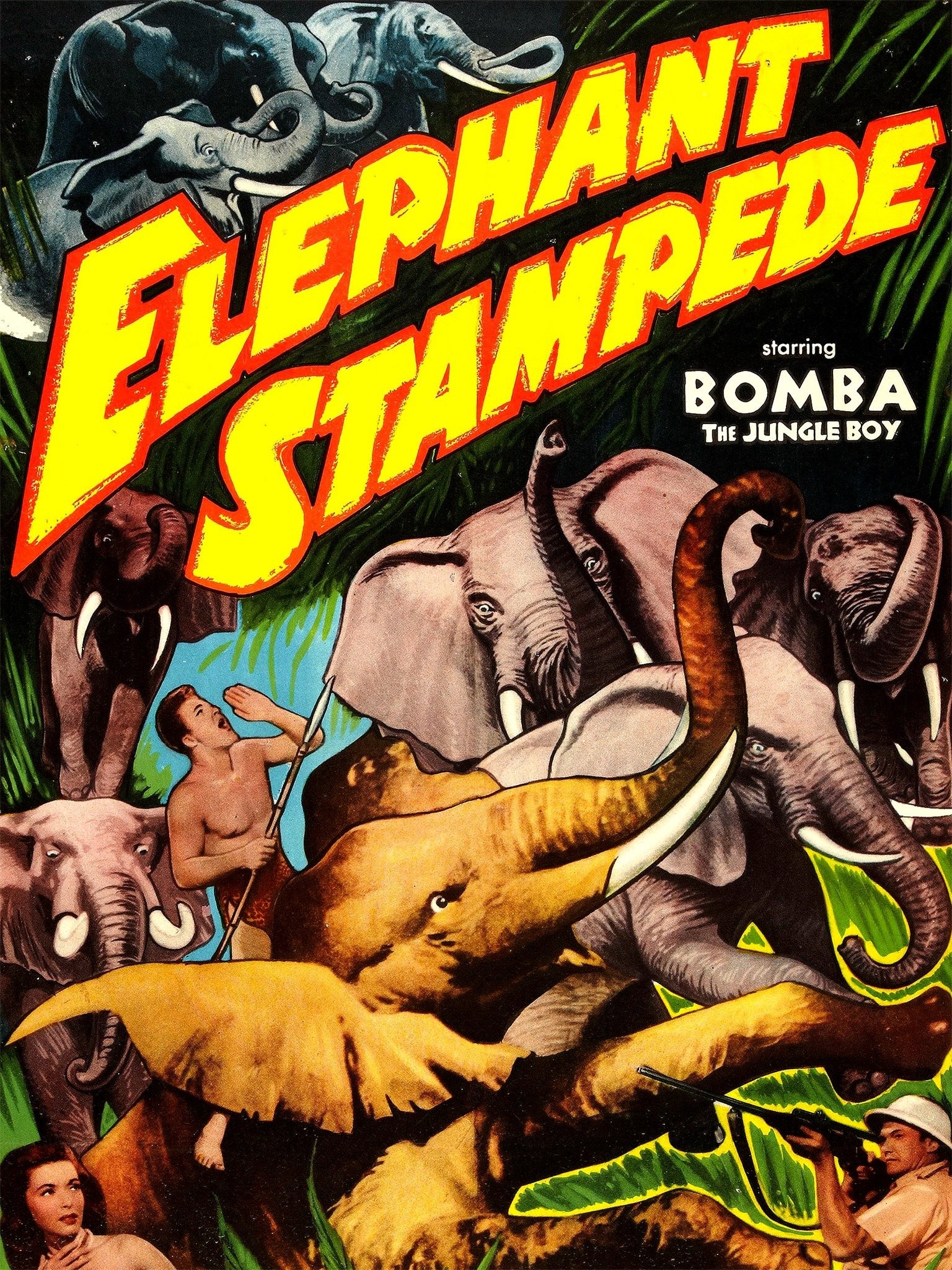
8. The market will go back up along the same path that it went down, i.e. Lobagola lives. (Remember Lobagola's story about the elephants). [More on Lobagola and the elephants below. -Ed.]
9. Buy and hold must not be leveraged too high for it to work.
10. The tried and true patterns are the most dangerous during times of crisis. (Beware of patterns with a 90% chance of success).
Scalawags: Bata Kindai Amgoza ibn LoBagola
But his assumed name lives on amongst the lore of investors. In his book, he tells the story of an elephant stampede. The beasts rush through an area and always return the same way. When there is a surge of the market that soon ceases and comes back again down that same path, that’s called a LoBagola.
Apr
10
Pride
April 10, 2025 | Leave a Comment
the worst thing about the admin's approach to politics, trade, and the economy is failure to take account of the many proverbs along lines of "pride goes before the fall". there are hundreds of examples but "i am the best negotiator" is a perfect one.
Apr
9
20-day highs
April 9, 2025 | Leave a Comment
now 49 days away from last 20-day high on 2-19, 2025 at 6166 (futures). 98% chance that next 20-day high will exceed the old level. expected duration to next exceedance is 12 days.
good example of stock market being the key driver. approval rating dropped to 41% with one 20-day low in stocks after another. someone, a rare bird among advisers, told him to cut the crazy tariff policies.
nice drop in vix of 19 points from 52 to 33. apparently all weak longs were done in.
Apr
7
Surrounded by pessimism
April 7, 2025 | 1 Comment
As we write in mid-2002, surrounded by pessimism, our view is that the required return for holding stocks is at levels unseen since 1990, or 1980, or 1950, when memories of depressions or crashes were still hanging in the air. If ever there were a time that investors would only buy risky investments when the anticipated returns were in the 50 percent-and-over area, this time would seem to be now. We see no reason that our expectations will be disappointed. Why shouldn't an improvement in lifespan or the rules of the game of business reap in the next 50 years the kind of results that greeted investors in the past 50?
Practical Speculation, by Victor Niederhoffer and Laurel Kenner, page 215
Apr
6
The most important influencer of all
April 6, 2025 | Leave a Comment
the most important influencer of all, the stock market was the only indicator that the Fed Chair didn't discuss in his Friday talk to the editors.
one can expect the opposition at the Fed to double down on the unnecessity of lowering rates in order to punch the enemy when he is down and to increase their importance to staying.
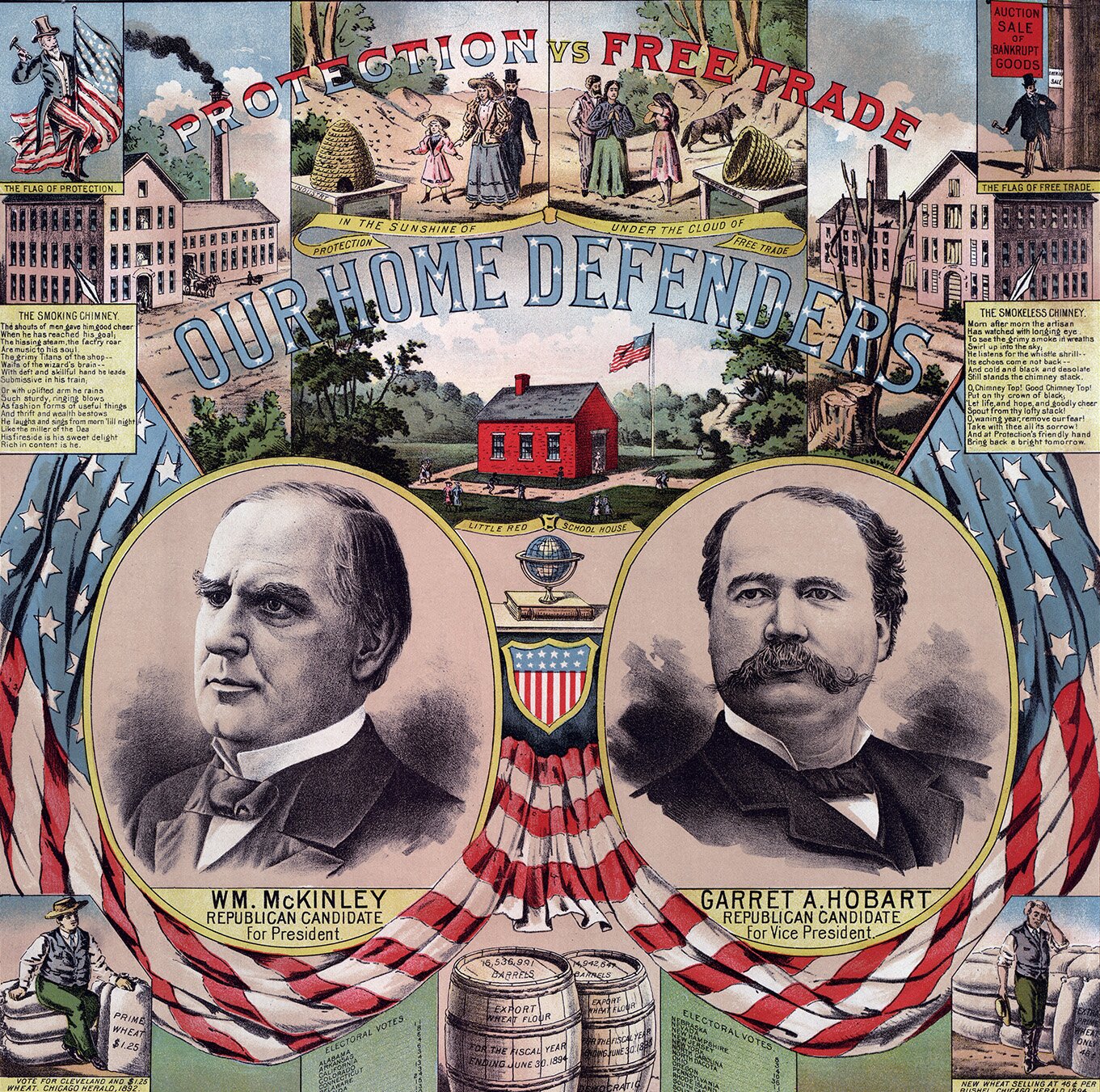
left out in the damaging consequences of tariffs is their increase in the likelihood of war only too often lead to open hostility and armed conflict. For historical confirmation of this fact we need but review the Russo-German "tariff war" of 1893, the German-Spanish tariff war of 1894, the Franco-Italian tariff war of 1888-1899 and the Franco-Swiss tariff war, 1893-1895. The Austro-Hungarian tariff barriers to Serbian exports aggravated the nationalistic conflict between Serbia and Austria-Hungary and precipitated the World War. Economic conflicts and divergence of economic interests.
Apr
5
VIX close over 40, from Jared Albert
April 5, 2025 | Leave a Comment
VIX close over 40–without enumerating because there are often a bunch of close dates with closes over and under 40, but all linked etc:
1) 10/87 with VXO adjusted from 150, I'll call 'over 40' on the modern VIX
2) 8-10/98 Russian financial crises and associated other currency collapses
3) 2000 dot com period into 9/11
4) 2008-9 financial crises begin great recession
5) 8/2011 don't know this one even though I kind of recall it don't think this was flash crash….
6) 8/8/2015 not sure could look it up just counts at 40.74
7) 2/2018 this was XIV and vol related highest closing print was 37.32, but I have to think it traded about that day intraday
8) 3/2020 Covid lock downs
9) 2021-2022 during the lock down there were some spikes, don't recall why, but no closes
10) Today, 4 April, 2025
So kind of 8-10 (depending how orthodox one requires) VIX > 40 closes episodes in the last 40-ish years in terms of canes, We all knew about the tariffs coming , but I would say we all knew about the crappy lending in 07 too…. The others, pardon my youth I was in the scouts in 87, but I think had less general knowledge warning.
Some of these periods with VIX > 40 go on for a while. So definitely not a recommendation or a prediction just a comment about the unusually high level today.
Peter Penha comments:
5) 8/2011 was the debt downgrade of the United States from AAA by S&P - It of course led to a collapse in us government yields in the rush to safety as people had to think through it does not matter what you call or rate the safest asset as long as it remains the safest benchmark asset BUT some people said well if a 2nd ratings firm downgrades the USA then everyone who can only hold AAA assets will have to "dump their treasuries”.
6) August 2015 was the end of the tumble collapse of the Chinese Stock Market ~40% that led to a collapse in commodity prices - oil went from $100 to $40 (a Boston buyside technical analyst had $40 as his oil target and we all thought we would be in a 2009 deflation if we ever saw $40 again) - anyway was the fear of Chinese deflation everywhere - Think the Bank of China came in to sell down the volatility and stabilize markets.
I think in that recent YouTube video link I emailed - the speakers were discussing that in 2009 10 Year US Index equity volatility hit 40%.
I do have one anecdote told across the firm from 2008 from someone who made billions (or “more in 1 week than the firm had ever made globally in a year in derivatives”) in an uncapped covariance swap - he took all the capital from all the equity traders at the firm to put on his covariance swap bet at $100mm per 1% for SPX, Topix, DAX up or down - anyway the reason given was that he said that a top seasoned lifelong professional trader with top Sharpe ratio will second guess themselves and lose money in the chop when the VIX is over 34 - I remember this one as your mentioning covid lockdowns reminded me that Alberta Canda Pension lost some $2bn-$4bn in the blink of an eye selling a similar swap.
Apr
5
Time for the canes?, from Doug Martin (Updated)
April 5, 2025 | Leave a Comment

I'm liking the look of that huge spike down in ES, out of my euro and sterling, that was a crazy move too. Technically it's nice looking low, from a chart perspective. I'm liking the low interest rate and commodity softening posture, I'm pretty damn bullish on equities.
William Huggins responds:
the shock moment is not when the canes come out - those metaphorically come out when the bulls have given up. those are generational moments related to the culling of new speculators who have only known rising markets (ie, anyone who joined robin hood with their stimulus checks in hand). as long as there are people willing to pay x60-100 earnings for hype, i don't think its quite time for a shift in strategic allocation.
this is simply the first serious wakeup call for anyone who thought this administration is doing anything remotely like macroeconomic analysis when it sets policy. according to the executive, there will be more such shocks to come so as many were fond of suggesting in mid-november "buckle up" (your 401k, and the usd, have both been liberated from gravity!)
Steve Ellison comments:
The S&P 500 has not even gone off the bottom of my hand-drawn chart. The move down since yesterday strikes me as more an efficient market repricing of reduced economic prospects than an emotional panic or forced selling.
By contrast, my hand-drawn chart on February 28, 2020.
Adam Grimes states:
Canes? Nowhere close, in my opinion. And the fact that many people think this is a crash is just a lack of perspective (and a misunderstanding of potential.) Again, all in my opinion, which may change with any tick.
UPDATE: Stefan Jovanovich has a shopping list:
The idiot list is the catalog of companies that our model collects on the presumption that their common stocks will be worth more in 5 years than they are now. I publish it when we guess that our stupidity is within the 25% range - i.e. we won't lose more than $1 out of every $4 we invest in those companies if they liquidate. Thanks to the List and others, we have learned not to trade so the publication is, in no sense, a "Buy"; it is simply an indication that prices have gotten low enough that the list has more than 10 companies on it. (A month ago it had 5.)

Apr
4
The beatings will continue until morale improves
April 4, 2025 | Leave a Comment
Milton Friedman on Trade Balance and Tariffs
Why Some People Will Never Admit They're Wrong
• The inability to apologize can stem from trying to maintain an idealized image of oneself to avoid shame.
• Refusal to apologize can result from the misguided belief that we shouldn’t have to since we weren't at fault.
• Conviction that no apology is needed can stem from a lack of self- and relational-awareness.
one of the many virtues of Tredoux's book on Galton is the way he generalizes from Galton's observations to make universal points.
This is a striking instance of the obstructions through which new ideas have to force their way. Plain facts are apprehended in a moment but the introduction of a new idea is quite another matter for it requires an alteration in the attitude and balance of the mind.
the quote is Galton's but my compliment to Mr. Tredoux is true.
Apr
2
An article on tariffs that should be read by all
April 2, 2025 | Leave a Comment
Tariffs Are Awful, but the Income Tax May Be Worse
Every fiber of my economic being cries out against tariffs. If they are so good, why doesn’t each state in the US have one against the products of all of the other 49? That is, Ohio could “protect” its industries against the incursions from Arizona. This is obviously silly. One of the important reasons America is so prosperous is that we have a gigantic, internal, free trade area.
[ … ]
So is there any economic case for tariffs, given the foregoing? Yes, paradoxically, there is—in a way, if the alternative is a tax that’s even worse.
Larry Williams comments:
Tariffs are what made America so powerful when instituted by Hamilton. It’s all about what you place them on Hamilton did it with brilliance.
Stefan Jovanovich responds:
I think more credit goes to Thomas Willing, the President of the Bank of the United States. He understood that tariffs would allow the United States to conduct the same wonderful sleight-of-hand that allowed the national Money to be gold and silver coin while the actual currency became bank notes. The Chair's question - if tariffs are so great, why doesn't every state have them - was answered by the Federal Constitution, which took away from the States the power to issue their own bills of credit as legal tender and the power to regulate interstate commerce. As LW and the Chair both note, it was the ability of the United States to have an ever-growing domestic market that made the U.S. so powerful. People were willing to bring their "real" money to the U.S. to speculate in what is still the largest open market in the world AS LONG AS THEY HAD THE ABILITY TO PICK UP THEIR CHIPS AND TAKE THEIR MONEY HOME. Apologies for the SHOUTING but every "crash" has had as its catalyst the threat that the U.S. would impose capital controls - either directly or by depreciating the dollar by executive order.
Archives
- October 2026
- September 2026
- August 2026
- July 2026
- June 2026
- May 2026
- April 2026
- March 2026
- February 2026
- January 2026
- December 2025
- November 2025
- October 2025
- September 2025
- August 2025
- July 2025
- June 2025
- May 2025
- April 2025
- March 2025
- February 2025
- January 2025
- December 2024
- November 2024
- October 2024
- September 2024
- August 2024
- July 2024
- June 2024
- May 2024
- April 2024
- March 2024
- February 2024
- January 2024
- December 2023
- November 2023
- October 2023
- September 2023
- August 2023
- July 2023
- June 2023
- May 2023
- April 2023
- March 2023
- February 2023
- January 2023
- December 2022
- November 2022
- October 2022
- September 2022
- August 2022
- July 2022
- June 2022
- May 2022
- April 2022
- March 2022
- February 2022
- January 2022
- December 2021
- November 2021
- October 2021
- September 2021
- August 2021
- July 2021
- June 2021
- May 2021
- April 2021
- March 2021
- February 2021
- January 2021
- December 2020
- November 2020
- October 2020
- September 2020
- August 2020
- July 2020
- June 2020
- May 2020
- April 2020
- March 2020
- February 2020
- January 2020
- December 2019
- November 2019
- October 2019
- September 2019
- August 2019
- July 2019
- June 2019
- May 2019
- April 2019
- March 2019
- February 2019
- January 2019
- December 2018
- November 2018
- October 2018
- September 2018
- August 2018
- July 2018
- June 2018
- May 2018
- April 2018
- March 2018
- February 2018
- January 2018
- December 2017
- November 2017
- October 2017
- September 2017
- August 2017
- July 2017
- June 2017
- May 2017
- April 2017
- March 2017
- February 2017
- January 2017
- December 2016
- November 2016
- October 2016
- September 2016
- August 2016
- July 2016
- June 2016
- May 2016
- April 2016
- March 2016
- February 2016
- January 2016
- December 2015
- November 2015
- October 2015
- September 2015
- August 2015
- July 2015
- June 2015
- May 2015
- April 2015
- March 2015
- February 2015
- January 2015
- December 2014
- November 2014
- October 2014
- September 2014
- August 2014
- July 2014
- June 2014
- May 2014
- April 2014
- March 2014
- February 2014
- January 2014
- December 2013
- November 2013
- October 2013
- September 2013
- August 2013
- July 2013
- June 2013
- May 2013
- April 2013
- March 2013
- February 2013
- January 2013
- December 2012
- November 2012
- October 2012
- September 2012
- August 2012
- July 2012
- June 2012
- May 2012
- April 2012
- March 2012
- February 2012
- January 2012
- December 2011
- November 2011
- October 2011
- September 2011
- August 2011
- July 2011
- June 2011
- May 2011
- April 2011
- March 2011
- February 2011
- January 2011
- December 2010
- November 2010
- October 2010
- September 2010
- August 2010
- July 2010
- June 2010
- May 2010
- April 2010
- March 2010
- February 2010
- January 2010
- December 2009
- November 2009
- October 2009
- September 2009
- August 2009
- July 2009
- June 2009
- May 2009
- April 2009
- March 2009
- February 2009
- January 2009
- December 2008
- November 2008
- October 2008
- September 2008
- August 2008
- July 2008
- June 2008
- May 2008
- April 2008
- March 2008
- February 2008
- January 2008
- December 2007
- November 2007
- October 2007
- September 2007
- August 2007
- July 2007
- June 2007
- May 2007
- April 2007
- March 2007
- February 2007
- January 2007
- December 2006
- November 2006
- October 2006
- September 2006
- August 2006
- Older Archives
Resources & Links
- The Letters Prize
- Pre-2007 Victor Niederhoffer Posts
- Vic’s NYC Junto
- Reading List
- Programming in 60 Seconds
- The Objectivist Center
- Foundation for Economic Education
- Tigerchess
- Dick Sears' G.T. Index
- Pre-2007 Daily Speculations
- Laurel & Vics' Worldly Investor Articles
