Jul
6
By the Way, from Victor Niederhoffer
July 6, 2015 | 3 Comments
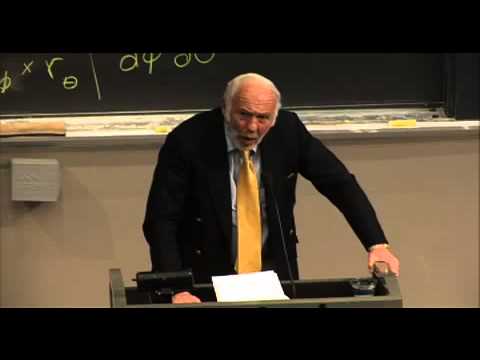 By the way, I believe it might be a subject of speculation whether Mr. Simons and his colleagues have found anomalies that they can still exploit as they might be much too big, and there is much too much competition from other humble anomaly seekers. Yes, as Mr. Harry Browne would say, as described by the true believer below, their pantheon of geniuses soars on a much higher level of cognition than myself or any of my colleagues or hundreds of followers - but then again superior intelligence isn't everything. And aside from the profitability of market making, as first enumerated by MFM Osborne, it might be difficult to capture anomalies on a systematic basis that the competitors in St. Louis and other small venues might have missed, no matter their profundity.
Anatoly Veltman writes:
Does this also answer the query as to WHY would Virtu decide to go public?
A true believer writes:
If there is anything whatsoever to the legion of gambling analogies to markets, market ecology and human endeavor then most of the chips will end up in very few hands.
The Medallion Fund represents the very apogee of human brilliance so applied to financial markets.
What is more likely, that there is something rotten in Denmark? Or that the combined work of pure genius including:
James Simons
Elwyn Berlekamp
Robert Frey
Henry Laufer
Sean Pattison
James Ax
The whole 'European Contingent' - I will not list those names here.
Plus a host of mere 'worker ants' cleaning data, programming testing machines and keeping the lights on.
Might just have come up with the single best group of high capacity strategies ever known.
We should all celebrate this achievement. It represents everything this list is about, surely?
Trying to pick holes in something like this is the equivalent of the Barron's columnist bearing bearish for 30 years on U.S. stocks.
My belief and optimism is based on facts, not some idol worship groupie phenomenon.
anonymous writes:
Is one allowed to agree with both the True Believer and the Chair? What Simons and the others did was pure genius–they used mathematics to identify the consistent anomalies that occur when people buy and sell securities. Those of us who lack their pure brains and mathematical chops marvel at what they have accomplished and have done our best to create a glacially slow mimicry using employment data and their correlation to the business cycle. (They are playing Scarlatti the way Michelangeli did; I am playing chopsticks hitting one key a month.)
But, as Vic notes, the question is whether or not there remain any arbitrage opportunities left now that those anomalies have been examined in such detail for decades by the far greater number of smart people who have come after the folks at Medallion.
Bill Rafter adds:
Like others, I agree with both the Chair and Shane. The question then is "how much juice is left in the fruit?" As Stefan says, he gets one a month.
I would posit that it is a question of time frame. Certainly the HFT opportunities are gone for us simple folk, and maybe much of the day trading. But there are still anomalies if we are willing to accept less certainty and leave our bets on the table a little longer. After all, realize the prop shops do not want their worker bees to have an overnight position. Which means those of us willing to have such a position will have an automatic edge. As an example, compare the Open to Close returns to the Close to Open returns of certain derivatives. There's an edge, less than it used to be, but still there, and the edge favors the overnight holders.
Also, we simple folk cannot expect to outperform by trading only SPY (or perhaps its overleveraged sisters), the most competitive and liquid of assets. The greatest returns have always been in the least liquid of assets.
Shane James replies:
I see no disagreement with the Chair on this thread. As with the Chair, myself, Medallion, DE Shaw, Citadel and all such people interested in trading from all walks of life - we shall continue to look at new angles, different ways of splicing the available information amongst much else. Medallion too will do this. The outcome? Only the shadow knows.
On this next point, the Chair, myself and anyone with half a clue will be in violent agreement - it is always best to be the bookie . The RenTech entity, at the last count when the info was still public, collected 8% management fee and 45% performance fee (I may be off by just a little here).
To use a collection of letters used by my children to describe this: OMG.
It's good the be the king.
Jim Sogi writes:
Much of what they have done is computer science not just math. It also has to do with understanding and moving or changing and understanding and exploiting regulations at the exchanges. In a competitive environment, there will always be an edge available somewhere. They change and move, but there is always opportunity in change, the change in others, the rate of change, the unforeseen effects of changes. I think there is opportunity for the slow and small as well. Computers are stuck with their algos. They leave tracks, patterns, singly and as a group. The markets are complex, and no person or computer knows exactly how it works, though they may find opportunities in complexity. There are always effects of effects of effects, unknown to the actor. Waves spread out from every action.
Feb
6
A Comment from Mathew Hayward, Author of ‘Ego Check’
February 6, 2007 | Leave a Comment
[See Vic's Review of Mathew Hayward's Book, Below]
 During the 1980s I worked as an investment banker in Australia at what was then and still is the nation’s strongest franchise (Potter Partners now UBS); it was the first choice for finance graduates and corporate clients. Corporate raiders made investment banking a very hot business; and we were faced with the choice between defending Australia’s leading company, BHP, from Robert Holmes a Court, or dumping BHP. As events transpired, we dumped BHP, Holmes a Court could not get control of BHP and our other corporate clients started leaving us. On another deal we underwrote an equity offering, accepted the client’s terms not to have an ‘out’ provision and were left holding stock as the market crashed in 1987. On both deals we had no doubt that we were right; after all we were the smartest people in the room.Little did I know at the time that hubris is man’s cardinal sin, that it is latent in all of us and that it needs to be managed.
In 1992 I started a PHD at Columbia to explore all of that. Contrary to Vic’s assertion [below], the book is not based on anecdotal evidence. It is based on behavioral decision theory which has spawned the field of behavioral finance, in which overconfidence in decision making is found to be the most important and pervasive bias in finance and business. The factors that cause hubris in the work place and beyond, those that Vic mentions in his review, are all based on large sample empirical evidence not a small number of anecdotal examples.Ego Check is a checklist-based approach to help you manage your ego, both personally and professionally. It will stand the test of time because it is based on sound theory and large sample research with senior executives, traders and senior executives.I invite you to visit me at ego-check.com . The knowledge contained in the book would have saved me (and Vic probably) a fortune if I had adhered to it throughout my career. In my experience, it’s a lot more fun to undertake the self improvement that the book points to. On the other hand, if you already have all the answers, this book is probably not for you.
Feb
3
Some Thoughts On Excecutive Hubris by Mathew Hayward
February 3, 2007 | Leave a Comment
Hubris Threatens Every Leader and Business
In fact, hubris is man's cardinal sin. Consider how the hubris of leaders of state has shaped defining events of past centuries. In 1764 and 1765, British Prime Minister George Grenville overestimated his ability to tax the American colonies, and underestimated the potential for the Americans to revolt, which led to the American Revolution. In 1812, Emperor Napoleon Bonaparte's false confidence in his ability to conquer the Russian heartland led to France's disastrous Russian invasion. And, in 1939, Adolf Hitler had Germany invade Poland.
We're all too aware of how CEO hubris is stamped on business failures, from Parmalat, Swissair, and Vivendi in Europe, to Enron and WorldCom in the United States, to the National Kidney Foundation in Singapore. Very often hubris is the handiwork of egotistical and reckless leaders of business and state. We hear about the downfall of these individuals on almost a daily basis, and you probably have no trouble conjuring your favorite example of an executive whose excessive ego and stubborn pride has resulted in financial and professional disaster.
For now, put that person out of your mind. Because he or she will distract you from the more present and pressing reality: Hubris is so deeply ingrained in our culture that it is a latent force within each of us, whether we are leaders or not. See hubris in the losses that we investors take as we overestimate our ability to make winning deals and trades. Watch hubris in the damage that we do to our health by trying to "play doctor" by diagnosing our own illnesses, and when real doctors join forces with pharmaceutical companies in overestimating the benefits of their treatments. Listen to the hubris of rookie executives who exaggerate how far their inflated grades will carry them — and our business. Many people take false comfort from being 'very confident' that they can retire comfortably even when their actual savings are inadequate.
Hubris helps to explain why leaders make decisions that are bound to fail. Most conspicuously, mergers and acquisitions are at near-record levels, even though seasoned CEOs know that most of those deals fail. Joe Roth, who has run movie production at 20th Century Fox, Disney, and Revolution Studios, notes that movie houses release a disproportionate number of movies in May, especially around Memorial Day in the United States, even though their executives know that there are not enough moviegoers to support that many simultaneous film releases. Leaders who make these deals believe that they are the exceptions who will beat the odds of failure when, on balance, logic dictates that they cannot.
Hubris originates with our need to be highly confident and our propensity for turning that confidence into overconfidence. So long as crystal balls remain elusive, we're going to be wrong on some judgments that matter most, including those that involve at least some leap of faith and trust, such as taking a job, choosing a partner, or investing in a major project. And, if we are going to be wrong by being underconfident or overconfident, we should err on the side of overconfidence — we must be highly confident to win in business and life, even if that makes us more susceptible to overconfidence. Overconfidence is not uncommon nor need it be damaging. We can act with the best intentions and data and still overestimate next year's sales, our promotion and pay prospects, or the returns from our ventures, projects, and investments. The optimism bred by such overestimation can help spur us on to achieve more than we otherwise might have done. Overconfidence, as an integral part of the discovery process, is also instrumental to scientific and economic progress. Picture, for instance, Thomas Edison testing over 10,000 combinations of materials before perfecting the light bulb. Throughout the testing process, Edison remained supremely confident, believing a breakthrough would come earlier than it did. "I have not failed," he said at the time; "I've just found 10,000 ways that won't work."
The Four Sources of Hubris
In fact, when extraordinary confidence is grounded in the best available data, it is authentic, and a positive force for advancement. It is when our confidence is false, when we are confident for the wrong reasons, that two serious problems arise. First, we are more susceptible to being overconfident than if our confidence were authentic. Second, such overconfidence is more likely to translate into actions and decisions that will damage us and others. Hubris refers to the damaging consequences that arise from the decisions and actions that reflect false confidence and the resulting overconfidence. Having conducted scores of studies and interviews, I have determined that there are four sources of false confidence:
1. Being too full of ourselves. Excessive pride leads to a contrived view of whom we are and an inflated view of our achievements and capabilities, one which often depends on external approval and validation.
2. Getting our own way. Our pride can lead us to tackle single-handedly decisions or actions that could be better addressed by or in conjunction with trusted advisors, or what I call "foils."
3. Kidding ourselves about our situation. We indulge in overconfidence when we fail to see, seek, share, and use full and balanced feedback to gain a more grounded assessment of our situation. We need accurate, pertinent, timely, and clear feedback, whether positive or negative, to ground our knowledge about what's going on around us.
4. Bravely managing tomorrow today. Because we may not know whether we're acting with unhealthful confidence, we need to manage the consequences of our decisions ahead of time. To be courageous is to consider fully the risks and consequences of making and implementing decisions, and then to proceed mindfully. To be brave, however, is to jump in heedlessly, without adequately considering the risks and consequences that will result from your decisions and actions.
Experimenting and probing allow us to see courageously and first hand the consequences of our decisions. By contrast, planning often makes us more confident and brave without increasing our ability to get the job done. False confidence is to hubris what bad cholesterol is to heart disease. Just as the cure for heart disease is to reduce bad cholesterol rather than all cholesterol, the cure for hubris is to fight the sources of false confidence, rather than to reduce confidence altogether.
A fundamental and unheralded challenge for any executive and leader, therefore, is to identify and manage such sources. It is a matter that I've examined as an executive and researcher over the last 20 years, from the time when I first felt and saw hubris as a young investment banker. Based on this research, I have written Ego-Check: Why Executive Hubris Is Wrecking Careers and Companies-And How to Avoid the Trap, to help you learn how to remain highly confident — both personally and professionally — without falling victim to the false confidence that produces overconfident decisions and actions that fuel hubris. This article encapsulates the leadership implications of this research. Please visit me at ego-check.com.
To follow up, a comment from Vic:
I have read the book Ego-Check and find it valuable for all traders. It gives poignant case studies of those who suceeded often for a time, and then failed. It analyzes the main reasons these people failed and provides a checklist of how to prevent it from happening in the future. It is based on his own interviews with business leaders and researchers in the field. In my case, I have implemented a series of planning for the future now, feedback loops, and hallmarks of hubris that hopefully will prevent me from succombing too much again.The subject is particuarly resonant because my father did much scholarly work in the field and I didn't pay enough attention to it in the past — until now. Vic
Nigel Davies adds:
I wonder if much of what is recognized and diagnosed as 'hubris' might not be explained in other ways. For example:
a) The 'hubristic' act was not much different to previous risks, it's just that the 'hubristee's' luck finally ran out.
b) Too much success in one area caused one particular well to run dry, forcing the 'hubristee' to seek other fields. I think this might be applicable to Steve Irwin. The public (and his producers) just had enough of crocs, so he was forced to seek other fields to maintain his lifestyle.
c) If the 'hubristee' has opponents who can influence the dynamics of the game, perhaps it's a question of time before they adjust to his 'style.' This has been true of a lot of risk taking chess players, for example, Tal once noted something to the effect that his opponents started protecting e6 and f7 very securely. Kramnik similarly discovered that a good way to play against Kasparov was to exchange queens and play equal or inferior endgames against him. And once he'd won, everyone started to notice Kasparov's apparent 'hubris.'
Stefan Jovanovich offers:
Hitler's invasion of Poland was hardly an act of hubris. At the time, to most Americans and many Europeans, including a plurality of the British and French public, it seemed an arguably justifiable act by Germany to reestablish its 1914 eastern border. To the German public, it was wildly popular, not as an act of aggression but as the rectification of the last remaining crime of Versailles. Elite public opinion in all "Western" countries was far more upset at the Soviet's unprovoked attacks on Latvia, Lithuania and Estonia; those seemed completely unjustified. After all, the Germans had only asked that the Danzig corridor be removed and that East Prussia be reunited with the rest of Germany. If the Poles had not been so stubborn in their refusals, the war need not have happened at all. The difficulties over Czechoslovakia and Austria had been resolved without bloodshed. Why were the Poles being so difficult?
It does not fit Mathew Hayward's construct, but in 1939 Neville Chamberlain was considered to be the European statesman who was acting out of hubris. How could he presume to drag Britain and France into a war with Germany solely because the British had given their word to the Poles that they would defend them? The Poles, for God sake! If that were not bad enough, Chamberlain was committing the Empire to a one-front war. Hitler had avoided the mistake of 1914; his invasion of Poland had led to a Pact with Stalin that secured Germany's Eastern front and guaranteed a reliable supply of oil and grain. As I have noted before, Chamberlain is the poster boy for "appeasement" in the "kill 'em all - tough guys always win" comic book that passes for military-political history these days. (That seems to be the same tome that some list members are reading from when they join the T-shirt sellers on Telegraph Avenue in describing the current situation in America as "Fascism.")
Chamberlain's real crime is that he was "guilty" of recognizing how weak Britain's position was and how limited its options were. Instead of being its allies in this conflict, Italy and Japan would be Britain's enemies; and the Soviet Union would, at best, be neutral. Given their incredible sacrifices of the First World War, the French could not be expected to match their efforts of 1914-1918. In 1938, the British public remained as isolationist as the Americans were. In describing Czechoslovakia as a "far off land," Chamberlain was offering the compromise position between Churchill's bellicosity and the Left in Britain, questioning why even France should be an ally. Chamberlain knew that, without American help, Britain and France could at best hope to stalemate Germany. He also knew that the French would not go to war over the Sudetenland, but they would accept Poland as a casus belli. In measuring his statesmanship against Churchill's, it is useful to remember that Chamberlain, not Churchill, was the Prime Minister who committed Britain to rearmament in the years before Munich. Hayward should have used Churchill instead of Hitler if he wanted an example of CEO arrogance. When the Russo-Finnish War began, Churchill's recommendation to the Cabinet was that the RAF bomb Moscow! That would have been hubris.
Stefan Jovanovich continues:
Hitler's invasion of Poland was hardly an act of hubris. At the time, to most Americans, many Europeans, and a plurality of the British and French public, it seemed a justifiable act by Germany to reestablish its 1914 eastern border. To the German public it was wildly popular, not as an act of aggression but as the rectification of the last remaining crime of Versailles. Elite public opinion in all "Western" countries was far more upset at the Soviet's unprovoked attacks on Latvia, Lithuania and Estonia; those seemed completely unjustified.
Archives
- October 2026
- September 2026
- August 2026
- July 2026
- June 2026
- May 2026
- April 2026
- March 2026
- February 2026
- January 2026
- December 2025
- November 2025
- October 2025
- September 2025
- August 2025
- July 2025
- June 2025
- May 2025
- April 2025
- March 2025
- February 2025
- January 2025
- December 2024
- November 2024
- October 2024
- September 2024
- August 2024
- July 2024
- June 2024
- May 2024
- April 2024
- March 2024
- February 2024
- January 2024
- December 2023
- November 2023
- October 2023
- September 2023
- August 2023
- July 2023
- June 2023
- May 2023
- April 2023
- March 2023
- February 2023
- January 2023
- December 2022
- November 2022
- October 2022
- September 2022
- August 2022
- July 2022
- June 2022
- May 2022
- April 2022
- March 2022
- February 2022
- January 2022
- December 2021
- November 2021
- October 2021
- September 2021
- August 2021
- July 2021
- June 2021
- May 2021
- April 2021
- March 2021
- February 2021
- January 2021
- December 2020
- November 2020
- October 2020
- September 2020
- August 2020
- July 2020
- June 2020
- May 2020
- April 2020
- March 2020
- February 2020
- January 2020
- December 2019
- November 2019
- October 2019
- September 2019
- August 2019
- July 2019
- June 2019
- May 2019
- April 2019
- March 2019
- February 2019
- January 2019
- December 2018
- November 2018
- October 2018
- September 2018
- August 2018
- July 2018
- June 2018
- May 2018
- April 2018
- March 2018
- February 2018
- January 2018
- December 2017
- November 2017
- October 2017
- September 2017
- August 2017
- July 2017
- June 2017
- May 2017
- April 2017
- March 2017
- February 2017
- January 2017
- December 2016
- November 2016
- October 2016
- September 2016
- August 2016
- July 2016
- June 2016
- May 2016
- April 2016
- March 2016
- February 2016
- January 2016
- December 2015
- November 2015
- October 2015
- September 2015
- August 2015
- July 2015
- June 2015
- May 2015
- April 2015
- March 2015
- February 2015
- January 2015
- December 2014
- November 2014
- October 2014
- September 2014
- August 2014
- July 2014
- June 2014
- May 2014
- April 2014
- March 2014
- February 2014
- January 2014
- December 2013
- November 2013
- October 2013
- September 2013
- August 2013
- July 2013
- June 2013
- May 2013
- April 2013
- March 2013
- February 2013
- January 2013
- December 2012
- November 2012
- October 2012
- September 2012
- August 2012
- July 2012
- June 2012
- May 2012
- April 2012
- March 2012
- February 2012
- January 2012
- December 2011
- November 2011
- October 2011
- September 2011
- August 2011
- July 2011
- June 2011
- May 2011
- April 2011
- March 2011
- February 2011
- January 2011
- December 2010
- November 2010
- October 2010
- September 2010
- August 2010
- July 2010
- June 2010
- May 2010
- April 2010
- March 2010
- February 2010
- January 2010
- December 2009
- November 2009
- October 2009
- September 2009
- August 2009
- July 2009
- June 2009
- May 2009
- April 2009
- March 2009
- February 2009
- January 2009
- December 2008
- November 2008
- October 2008
- September 2008
- August 2008
- July 2008
- June 2008
- May 2008
- April 2008
- March 2008
- February 2008
- January 2008
- December 2007
- November 2007
- October 2007
- September 2007
- August 2007
- July 2007
- June 2007
- May 2007
- April 2007
- March 2007
- February 2007
- January 2007
- December 2006
- November 2006
- October 2006
- September 2006
- August 2006
- Older Archives
Resources & Links
- The Letters Prize
- Pre-2007 Victor Niederhoffer Posts
- Vic’s NYC Junto
- Reading List
- Programming in 60 Seconds
- The Objectivist Center
- Foundation for Economic Education
- Tigerchess
- Dick Sears' G.T. Index
- Pre-2007 Daily Speculations
- Laurel & Vics' Worldly Investor Articles
