Oct
8
Government planning and efficiency, from Big Al
October 8, 2024 |
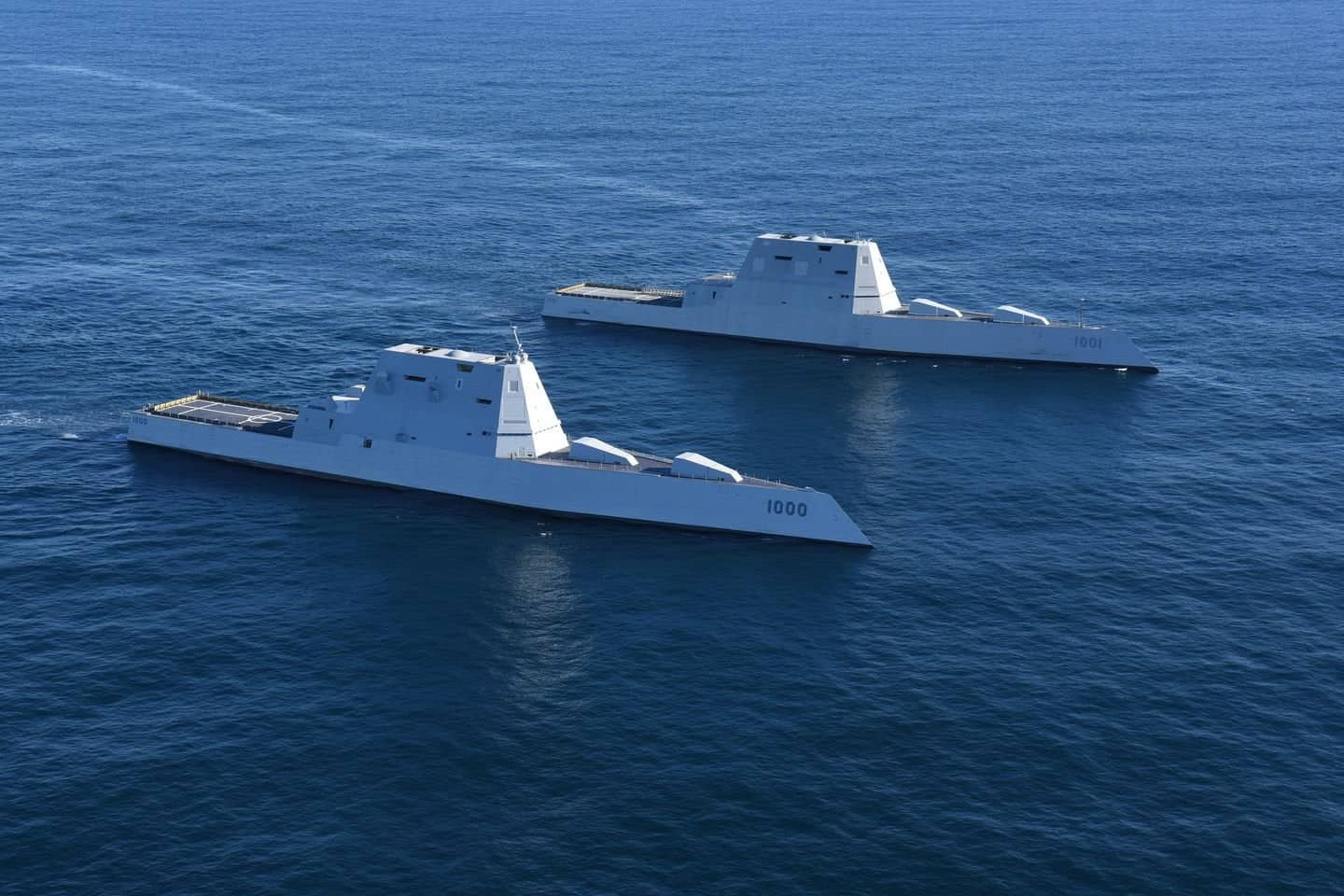
Originally, 32 ships were planned, with $9.6 billion research and development costs spread across the class. As costs overran estimates, the number was reduced to 24, then to 7; finally, in July 2008, the Navy requested that Congress stop procuring Zumwalts and revert to building more Arleigh Burke destroyers. Only three Zumwalts were ultimately built. The average costs of construction accordingly increased, to $4.24 billion, well exceeding the per-unit cost of a nuclear-powered Virginia-class submarine ($2.688 billion), and with the program's large development costs now attributable to only three ships, rather than the 32 originally planned, the total program cost per ship jumped. In April 2016 the total program cost was $22.5 billion, $7.5 billion per ship.
Henry Gifford disagrees with the implication:
I am no fan of runaway government spending, and waste, and stealing, but I applaud the decision to stop construction of the Zumwalt ships when it became apparent they were not what the navy wanted. It would have been better for the egos and careers of senior Navy officers to make believe the Zumwalt ships were desirable and keep making them, then quietly retiring.
The "peacetime" military has a huge challenge predicting what weapons will work well in the next war. At the same time, the military needs to maintain some shipbuilding capacity in the US, so that ships can be made in the US in the future. Maintaining shipbuilding capacity requires continuously building navy ships, needed or not needed, as the capacity to build ships in the future is critical. I haven't heard about anyone putting numbers on the value of this capacity.
Before WW2 the US has a robust shipbuilding industry that shifted to building navy ships, and ramped up for increased production. In the years since, that industry has gone away, except for a few pleasure boats and for military craft. One version I heard was that the last time ships were manufactured in the US installing a porthole required work by members of thirteen different unions, a problem presumably not faced in the places where the shipbuilding industry is robust today. With no significant shipbuilding industry in the US now, outside of military ships, the navy needs to keep building ships. (I think navy ships don't have many portholes, which probably avoids on of the challenges formerly faced by the commercial shipbuilding industry in the US).
One version of the Zumwalt story I heard is that much of the Zumwalt superstructure was made of Aluminum, to save weight, especially high up where saving weight increases stability and/or frees up capacity for mounting weapons high up, while the lower parts of the structure and hull were made of steel, and the dissimilar metals reacted with each other (happens quickly in the presence of salt water), resulting in terrible corrosion and structural damage. The Aluminum superstructure idea has been tried on naval ships before, but as Aluminum burns in a fire, it is not without risk to crew and ship in battle.
Another version of the story I heard is that the ship was designed for weapons which never materialized, thus the ships were cancelled. It all sounds logical, but somehow doesn't have the ring of truth that the version above has.
I also note that the Zumwalt ships were significantly larger than the Burke class ships made before and after it, and it seems quite believable (to me) that the navy simply wanted a larger number of smaller ships. Once upon a time the larger a battleship was the larger the guns it could carry and thus it had the firepower to shoot further than opponents, which meant it had the capability to maneuver to where an enemy was within range of its guns, while staying out of range of the enemy's guns. This battle-winning capability was worth the cost of huge ships. Now in the age of missiles and radar, the size of a ship is not nearly as relevant. During WW2 German soldiers reportedly said "one of our panzer tanks is worth ten of those American Sherman tanks, but every time we build one panzer they build eleven Shermans". As tank-on-tank battles were not the main, or main intended use of tanks, eleven OK tanks had many, many advantages over one superior tank. The US Navy might have decided that for similar reasons they are much better off with a larger number of smaller ships than a smaller number of Zumwalt ships. I would be surprised if the actual truth about the decision is ever made public, and more surprised if I was ever convinced that I was convinced the real reason(s) was made public.
The math about per-unit cost when development cost is amortized over the number of units produced is, I think, useful, but implies that development cost for something that never saw production or only went into limited production was somehow wasted.
The US navy now has hard data on the seakeeping ability of a full-scale tumblehome hull ship design, which I think nobody had before the Zumwalt actually went to sea. No, testing a scale model is not a robust test because much in fluid dynamics does not scale (google "Reynolds Number"). And if computer modeling alone was good enough nobody would have wind tunnels. The history of airplane development is full of planes that were built and flown in very small numbers, with the data helping to inform future designs. As the Zumwalt was such a radical design, departing so far from normal shipbuilding experience and formulas (google "metacentric height", "center of buoyancy", and "center of gravity"), it, I think, deserves to be thought of in much the same way as plane designs that saw very limited production and saw testing, and informed future designs in a useful way.
The US navy also has hard data on the radar signature of a tumblehome hull design, which nobody else has unless they pointed their radar sets at a Zumwalt class ship while configured for battle. I somehow doubt the US Navy sailed the Zumwalts close to the coast of Russia unless they added radar reflectors to them to mask their actual wartime radar signatures.
Maybe someone on the list developed and tested a trading strategy and found it lacking, then used the insights gained to test another strategy that turned out to be useful. Was the cost of developing and testing the first strategy wasted? I think not.
Carder Dimitroff writes:
Henry, your comment about aluminum reminded me of nuclear power plant design. For the reasons you state, aluminum is not allowed inside the containment (reactor building). Copper and stainless steel are used in place of aluminum. Outside the containment, aluminum is everywhere. I assume the US Navy requires similar standards for their nuclear submarines and aircraft carriers. Many design features in commercial nuclear plants originate from the nuclear navy.
Comments
Archives
- October 2026
- September 2026
- August 2026
- July 2026
- June 2026
- May 2026
- April 2026
- March 2026
- February 2026
- January 2026
- December 2025
- November 2025
- October 2025
- September 2025
- August 2025
- July 2025
- June 2025
- May 2025
- April 2025
- March 2025
- February 2025
- January 2025
- December 2024
- November 2024
- October 2024
- September 2024
- August 2024
- July 2024
- June 2024
- May 2024
- April 2024
- March 2024
- February 2024
- January 2024
- December 2023
- November 2023
- October 2023
- September 2023
- August 2023
- July 2023
- June 2023
- May 2023
- April 2023
- March 2023
- February 2023
- January 2023
- December 2022
- November 2022
- October 2022
- September 2022
- August 2022
- July 2022
- June 2022
- May 2022
- April 2022
- March 2022
- February 2022
- January 2022
- December 2021
- November 2021
- October 2021
- September 2021
- August 2021
- July 2021
- June 2021
- May 2021
- April 2021
- March 2021
- February 2021
- January 2021
- December 2020
- November 2020
- October 2020
- September 2020
- August 2020
- July 2020
- June 2020
- May 2020
- April 2020
- March 2020
- February 2020
- January 2020
- December 2019
- November 2019
- October 2019
- September 2019
- August 2019
- July 2019
- June 2019
- May 2019
- April 2019
- March 2019
- February 2019
- January 2019
- December 2018
- November 2018
- October 2018
- September 2018
- August 2018
- July 2018
- June 2018
- May 2018
- April 2018
- March 2018
- February 2018
- January 2018
- December 2017
- November 2017
- October 2017
- September 2017
- August 2017
- July 2017
- June 2017
- May 2017
- April 2017
- March 2017
- February 2017
- January 2017
- December 2016
- November 2016
- October 2016
- September 2016
- August 2016
- July 2016
- June 2016
- May 2016
- April 2016
- March 2016
- February 2016
- January 2016
- December 2015
- November 2015
- October 2015
- September 2015
- August 2015
- July 2015
- June 2015
- May 2015
- April 2015
- March 2015
- February 2015
- January 2015
- December 2014
- November 2014
- October 2014
- September 2014
- August 2014
- July 2014
- June 2014
- May 2014
- April 2014
- March 2014
- February 2014
- January 2014
- December 2013
- November 2013
- October 2013
- September 2013
- August 2013
- July 2013
- June 2013
- May 2013
- April 2013
- March 2013
- February 2013
- January 2013
- December 2012
- November 2012
- October 2012
- September 2012
- August 2012
- July 2012
- June 2012
- May 2012
- April 2012
- March 2012
- February 2012
- January 2012
- December 2011
- November 2011
- October 2011
- September 2011
- August 2011
- July 2011
- June 2011
- May 2011
- April 2011
- March 2011
- February 2011
- January 2011
- December 2010
- November 2010
- October 2010
- September 2010
- August 2010
- July 2010
- June 2010
- May 2010
- April 2010
- March 2010
- February 2010
- January 2010
- December 2009
- November 2009
- October 2009
- September 2009
- August 2009
- July 2009
- June 2009
- May 2009
- April 2009
- March 2009
- February 2009
- January 2009
- December 2008
- November 2008
- October 2008
- September 2008
- August 2008
- July 2008
- June 2008
- May 2008
- April 2008
- March 2008
- February 2008
- January 2008
- December 2007
- November 2007
- October 2007
- September 2007
- August 2007
- July 2007
- June 2007
- May 2007
- April 2007
- March 2007
- February 2007
- January 2007
- December 2006
- November 2006
- October 2006
- September 2006
- August 2006
- Older Archives
Resources & Links
- The Letters Prize
- Pre-2007 Victor Niederhoffer Posts
- Vic’s NYC Junto
- Reading List
- Programming in 60 Seconds
- The Objectivist Center
- Foundation for Economic Education
- Tigerchess
- Dick Sears' G.T. Index
- Pre-2007 Daily Speculations
- Laurel & Vics' Worldly Investor Articles
