Aug
11
Highs in markets and people
August 11, 2022 | Leave a Comment
only question is how long to all-time hi. i don't know but it looks like another big hi in 10 trading days. if bicyclist and senate continue to gain, could be sooner. you have to admire the full court press of the dark bicyclist and of course this is very bullish.
the bonds have arabesqued very quietly to a 17-day low, and crude is up 5 days in a row with stocks at a 120-day hi.
as grandpa Martin would say: Martin served as court interpreter and spoke 25 languages. he didn't like that court interpreters were paid 1/2 of court clerks so he took the exam at 70 years of age and came in second out of 5000. he was a genius. still have his old math books.
He served as controller for Irving Berlin's music firm and there he met his wife who he proposed to on first meeting her. he traded with the boy wonder and liked to buy stocks such as allis chalmers, air reduction, and american standard.
he liked to use the theory of least effort to guide his speculations. "i believe the least effort would be for stocks to go down" he would say. Having lost his fortune in the depression, he always feared a repeat and never took more than a 10% profit on any holding.
like so many others I was fortunate enough to know well, I wish I realized his greatness at the time. Some unsung heroes I have not written about are the Schrade family, Herb London, and Harvey Sellers. "a kite not caught on a tree is like an ice cream cone not eaten."
Aug
11
Summer reading, from Zubin Al Genubi
August 11, 2022 | Leave a Comment
I need some new books to inspire me. Suggestions? Last few science book were great.
Bill Egan replies:
Against the Tide: Rickover's Leadership Principles and the Rise of the Nuclear Navy by Dave Oliver.
Laurel Kenner adds:
Sue Stuart-Smith: The Well-Gardened Mind: The Restorative Power of Nature
William Logan: Sprout Lands: Tending the Endless Gift of Trees
Thomas Sowell: Black Rednecks and White Liberals
Michael Brush suggests:
The Gene
The Emperor of all Maladies
Why We Sleep
Henry Gifford offers:
Buildings Don’t Lie, Better Buildings by Understanding Basic Building Science: The movement through buildings of heat, air, water, sound, fire, light, and pests. By…well…Henry Gifford!
Big Al recommends:
Prime Obsession: Bernhard Riemann and the Greatest Unsolved Problem in Mathematics
The Seven Pillars of Statistical Wisdom
The Biggest Bluff: How I Learned to Pay Attention, Master Myself, and Win
Re Riemann, 3Blue1Brown has a great bit to enhance the visual:
Visualizing the Riemann zeta function and analytic continuation
A reader writes:
Major Transitions in Evolution: Maynard Smith & Szathmary
Indra's Pearls: Mumford + Series + Wright
Coe/Stone: Reading The Maya Glyphs
Fred Schwed: The Pleasure Was All Mine
Japanese Tales: Royall Tyler
African Folktales : Paul Radin
Ernst Haeckel : Art Forms from the Abyss
Owen Jones: The Complete Chinese Ornament
Trigonometric Delights : Eli Maor
Voices from the Whirlwind - Fenc Jicai
The Cowshed - Ji Xianlin
Rural Worlds Lost - Jack Temple Kirby
Paolo Pezzutti enjoyed:
Relentless Strike: The Secret History of Joint Special Operations Command
Laurence Glazier adds:
Emily St John Mandel, Sea of Tranquility. Sequel to her earlier The Glass Hotel, which was partly about a Ponzi scheme.
And Brandon Q. Morris, physicist sci-fi writer.
Peter Krupp writes:
Here are two science books that I found fascinating focused on quantum physics written by one of the great contributors to the quantum theory of computation, David Deutsch.
The Fabric of Reality (quantum theory - many world interpretation, quantum computation, epistemology, and much more).
The Beginning of Infinity (the nature of scientific progress, how it has accelerated in the past few centuries).
Aug
10
Baseball, bears, and bicycles
August 10, 2022 | Leave a Comment
young-appearing bicyclist up to 12.6% chance of victory and his party now 53% to take senate. regulatory capture looks good. the dark bicyclist pulling out all stops to suppress competitor like brumfield.
Joe Torre says the most important thing for winning baseball is to adjust to new conditions. same is true in markets. Elmer Kelton says same thing.
el erian, ms. meister at max of bearishness. only up this much at 930 11 times since 2011. Nice kitchen talk and delphic forecast from bearish site: "i'm no economist but when I go to the supermarket i am paying higher prices."
Aug
10
The Count, from Duncan Coker
August 10, 2022 | Leave a Comment
Rereading the Count of Monte Cristo with my highs schooler, I am struck by the fact the all the virtuous characters are failures at business (ship owner, tailor, inn owner), while all the evil ones are great financial successes (currency speculators, war profiteers, state bankers). Of course the Count rectifies this. His fortune comes by way of a cardinal in Italy, a secrete cave and 14 years in prison. Perhaps the author's ( Alexandre Dumas) message is that every great fortune has a dark past. Maybe that was true in his day, but ones hopes that is not the case today.
Kim Zussman comments:
Socialism is as old as the bell curve.
Gyve Bones writes:
I'm reading this book too, and have found it really interesting. I picked it up because I'd seen two different film adaptations of the story, one starring James Caviezel, who a year later would portray Jesus Christ in Mel Gibson's "The Passion", and an earlier one from the 1970s. The two were so different in many details that I wanted to see the real story in the book. Both movies were good, each in their own way.
Like Les Miserables, by Victor Hugo, the Dumas story is about French society dealing with the ripple effects of the French Revolution. Both have heroes who are sort of New Christ figures. Both characters are unjustly imprisoned. In the case of Danton, the "Count", it was a case of a corrupt prosecutor during a time much like now, where Napoleon is in exile, and his alleged supporters still in France are being hunted down and imprisoned. It reminds me a lot of this nation, which has sent a former president into exile on an island off the coast of Florida, and there is an official inquisition into his affairs which is imposing punitive political prison sentences on his political supporters, and making it a crime to speak with the former president on the phone, in order to thwart any attempt to organize a campaign to return to office.
There's a point where the Count uses and extols the virtues of hashish which you might want to be prepared to discuss with your teenager.
Project Gutenberg has a very nice illustrated edition of the book available, which is helpful in imagining the scenes described.
I had trouble with the size of the illustrated ePub version for my iOS Books app on my iPad. It's 76 megabytes with the images included and it would crash the app. So as an alternative workaround, I downloaded the image free ePub into the Books app, and keep a web page open on the index of the images, which are named according to the page numbers in the book, and I view them as needed as I'm reading along.
Stefan Jovanovich responds:
Dumas pere was anything but a socialist. He was an aristocrat who was beyond snobbery and sentimentality. Good people regularly get screwed by thieves, frauds and liars; but then, so do the thieves, frauds and liars by each other. That is the "moral" of the novel. The Count succeeds in his quest for revenge by turning the bad guys against one another. He is a truly great figure, and the wiki page does him proper justice.
Dumas was neither a monarchist nor a Bonapartist. He was a republican and a Freemason. The novel makes that very clear; and it got Dumas in real trouble when a second Bonaparte became Fuhrer. Dumas had to flee France for Brussels, which also helped him escape his creditors. Read the wiki page; it is a beautiful exposition of an extraordinary life.
Full disclosure: One of the Stefan's weird (academics don't even want to discuss it) speculations about Ulysses Grant is that he was reading Dumas' novels when he was at West Point when he was supposed to be studying "tactics". Grant did not have a full duplex brain when it came to language and music; he taught himself to read German and French, but he found it impossible to speak or understand the languages when spoken. He loved music, but could not play it or read it as anything but notation (i.e. he could not translate the symbols on the page to sounds in his head). Hence, his joking about himself that he only knew two songs - one was Yankee Doodle Dandy and the other was not. The biographers all assume that because Grant had no verbal fluency, he had not read Jomini. He had; he also knew it was complete crap, but why say so except to start an argument? (Grant definitely did not have the legal mind or temperament).
Gyve Bones counters:
Straw men are easy to knock over. I did not assert Dumas was either a monarchist or a Bonapartist. In the same way, Hugo, son of a mother of the ancien regime and a father who was a Revolutionary, he was a melding of the two, and the novel sort of becomes a Hegelian dialectic about the synthesis which emerges from the thesis (the old order) in conflict with the anti-thesis (the Revolution). Jean Valjean is his synthesis, the New Man, a man of Christian virtues without Christ and the sacraments of the Church He founded.
Steve Ellison adds:
Dumas lived a high life and was chronically in debt despite having a number of bestsellers. I still remember one sentence from the book, "He was denounced as a Bonapartist …" It made me think that the first totalitarian society was Revolutionary France, but I hesitate to make such a sweeping pronunciation in the presence of Mr. Jovanovich. In any case, current efforts to make modern denunciations similarly career-ending are a grave threat to liberty.
Stefan Jovanovich agrees:
Great comment, SE. The French revolution - as an event - has a scale and complexity that can only be matched by the global war that began in Spain in 1936 and China in 1937 and ended in Korea in 1954. What Dumas was describing was its net effect: everyone in France had become so kind of spy and snitch. So, yes, it was the first totalitarian society; but you need to give the Citizen Emperor the same credit that Stalin and Hitler deserve for so thoroughly organizing the tyranny.
Bill Rafter offers:
Pardon me for coming in late to this discussion, but there is a mistake: The tailor was Caderousse, one of the three co-conspirators against young Dantes. That failed tailor then became the owner of the Inn at Beauclaire, who then murdered the jeweler. The Inn itself failed because its location was bypassed by a newly constructed canal. That leaves Mr. Morrel, who failed because he was in a highly speculative business (the hedge fund of its time) and was not diversified. However his successors in the business, Emmanuel and Julie were certainly righteous and successful. They retired to a nice home in Paris.
Stefan Jovanovich writes:
Not mine. Dumas was very much someone who believed that an honorable life was the only one worth living, whatever its financial costs or rewards.
Henry Gifford writes:
When I was growing up in a part of New York City that was populated by about half Christians and half Jewish people, almost none of the Christian adults owned a business – they had jobs. The one Christian adult that I knew owned a business did not attend religious services. All the Jewish adults owned businesses except a few that were involved in organized crime (professional level: state senator, state assembly, etc.).
When I was a child attending a Christian school, they made us sing a song that included the words “oh lord, do until me as you would do unto the least of my brothers”. I didn’t sing it, even though I was required to, as I saw it as a request for the all the worst things that happened to other people to all happen to me. As a child I thought this included blindness, loss of multiple limbs, leprosy, locusts (even though I wasn’t sure what those were) etc.
I have never had a mentor in my life. The closest I came were adults who advised me to “make sure you learn a trade so you will have something to fall back on”, who I made sure to steer clear of after I nodded and smiled and made good my escape. When I was 16 I asked my father what he thought I should do when I grew up. He suggested I go on welfare. I never asked again, or brought up the topic of what I was doing with myself, etc. When I was about ten years into writing a book, I showed the almost-finished version to my parents, figuring they should see it while they were still alive. The only comment they had was a harsh criticism of the grammar on one page, which they insisted I correct. The “incorrect” grammar was part of an insightful and charming passage written by Benjamin Franklin in the 1700s.
A few years ago I was walking past a Jewish community center near where I live in Manhattan. On the bulletin board outside I saw a schedule of upcoming lectures. One was titled “The Five Risks Every Entrepreneur Should Take”. I picture a member of the community that sponsored that lecture stumbling in business a little while being surrounded by people who are supportive, and who applaud the person for trying, and then for getting up and going at it again. I doubt any member of that community would ask the person who stumbled if she or he had made sure to first learn a trade to fall back on, or demand that children sing a song like the one I and my classmates were required to sing.
I still manage to do OK financially. Among other endeavors I own or am part owner of property in nine US states, soon to be ten, all worth much more than I paid (including the properties I am contracted to buy on Monday). And I have never “paid my dues” by spending years doing something I hate, or by gaining all the easily available advantages of being dishonest. But the Christian kids I grew up with? I can’t think of one who owns a business, and I can only think of two who likely have enough investments to carry them for long if they didn’t keep working at their job. And I can’t think of any who seem to enjoy or gain much satisfaction from that which they spend their day doing.
As for the emotional toll religion has taken on people over the centuries, suffice to say that someone once summarized the difference between the emotional state of veterans of the US military during WW2 vs. those who were veterans of the Vietnam War as the emotional state of Vietnam War veterans being the embodiment of the result of one generation of young men being lied to by their father’s generation. Likewise, young people being lied to about what economic decisions they ought to make, meanwhile a different reality is there for the seeing, also has its cost.
When growing up I spent time in Jewish households when I could, as the people there seemed to me to have an upbeat and healthier attitude, compared to the funeral home ambience I sensed in most Christian households. But, of course, most people growing up in the US do not have that opportunity, and fewer take the opportunity if available. Most are simply beaten down by the forces of religious insanity and stay down for life. Just today I was waiting for a train and a person nearby was shouting into her phone on speaker, describing in an upbeat tone her life that struck me as horrible, while she periodically mentioned that “god is good.” Not to her, I think, but I didn’t argue with her.
Bo Keely responds:
henry, this is interesting from our comparative angles. I’ll bet the few kids like u and I would say the same thing. as a child, I also rejected the ‘do unto others…’ because it included negative things.
i also had no mentor throughout life. when I eventually took a teacher test that required answering, ‘describe your first mentor’ I wrote about an admitted imagined mentor.
likewise, when I was sixteen, my mother asked, ‘what do you want to do in life,’ on receiving a selective service notice. It had never donned on me, so I replied, ‘be a veterinarian’ since that was my summer job. that’s how I became a vet.
and, i also have never ‘paid my dues’ to society figuring i never owed any. The only real money I ever made was in rental housing in Lansing, MI with a strategy of buy cheap complexes, fix them up, and rent to tenants receiving monthly checks directly deposited into my account. i still do well financially with 25 published books that sell, on average, one each per month. my financial secret of life is to have negligible expenses. I have gained satisfaction from each of dozens of jobs too, and never lived hand-to-mouth. it’s long-term gratification.
I have reacted to the lies of my father’s generation by retreating from Babylon into an anarchic desert town. each is an independent citizen who thinks god is a stinking mess in the sky, and one should learn in youth to take care of himself.
Kim Zussman adds a coda:
After the revolution apartments and land was confiscated and living arrangements made equitably* by central committees.
Los Angeles voters to decide if hotels will be forced to house the homeless despite safety concerns
*government jobs, military, connections, etc.
Aug
9
How to win
August 9, 2022 | Leave a Comment
guaranteed to happen: measures willl be announced to require mail-in voting and ballot harvesting. only question is when is the Doc who loves the cattle trader going to weigh in?
First they came for the Fordham agents, and I did nto speak out because my father was in law enforcement; then they came for the Collective Bargainists, and I did not speak out because I had a small number of emloyees. Then they came for the Scholars, and I did not speak out as my daughter went to Holly cross; then they came for the Service people by increasing their budget by 500% - the goose has no more flesh.
how to win a competition: legend has it that Brumfield broke the finger of his opponent in between games of the finals. same thing apparently happens in music competitions. good to see it hapenning in politics. bullish.
Jul
31
Equipment, from Zubin Al Genubi
July 31, 2022 | Leave a Comment
When you first start learning a sport equipment seems important. After years of practice and finally mastery you realize equipment doesn't matter. I suppose true. I suppose true life mastery makes you realize you don't even need equipment.
Peter Saint-Andre writes:
Recently I visited an uncle of mine for a few days and, to help while away the time, played a cheap guitar he had sitting around in his attic. I sure was happy to get home and play the nice Taylor 6-string I bought years ago on 48th Street (the now-vanished "Music Row") in NYC.
Steve Ellison adds:
I used my skis for 16 years. Good value for money, but in the meantime designs and materials improved. In recent years, my old skis were noticeably skinnier than those of others riding lifts with me. In March I bought new skis, and I hope I can be proficient with less effort.
Larry Williams writes:
Running shoes have made a major breakthrough with the carbon soles, etc. no way will I ever go back to my old Tigers.
Justin Klosek comments:
Musical instruments can improve over time, too — my Nord keyboard has terrific sounds (and effects) that used to require lots of pieces to achieve. now in one convenient package, and more reliable!
Michael Brush says:
Taylors are nice! Jewel used to borrow them from that store for recording sessions in NYC. She helped put Taylor on the map back then, and cutaways.
Peter Saint-Andre responds:
I bought my Taylor jumbo six-string (serial #690, made at their original workshop in Lemon Grove) in 1988, when Jewel was 14 years old and still living on a far.
Jeff Watson offers:
Interesting list of artists who play Taylors. Much more than Jewel.
Michael Brush replies:
Of course. But she put them on the map. I never bought one. I can't stand having to use Elixirs, and they got way to trendy. I have many Martins and Gibsons.
Big Al offers:
Some quotes from Yvon Chouinard:
You perfect a sport when you can do all of these things with less stuff. The most impressive ascent of Everest was by the Swedish guy who bicycled from Stockholm to Kathmandu and then soloed Everest and bicycled back to Stockholm. That is cool, as opposed to this huge multinational guided thing with computers and internet cafes at the base of Everest.
The more you know, the less you need.
The word adventure has gotten overused. For me, when everything goes wrong – that’s when adventure starts.
Jul
31
Trillion Dollar Hubris, from Sushil Kedia
July 31, 2022 | Leave a Comment
Saudi Arabia has sanctioned budgets for a Trillion Dollar Skyscraper. The structure would run 75 miles wide through the desert and it will then likely be the highest mirror structure in the whole world as this skyscrraper will be enwrapped in mirrored glass!
History's biggest hubris ever! What all can one imagine it will mean for this world? With EVs becoming a viable reality by the time this structure comes? Will crude oil settle in a sub 20 Dollar range, forever? Will this setup the final 4th Crescent & Cross wars after a gap of 500 years since the last such war?
Chair can illuminate more. The Hubris Indicator has been originated by him in Ed Spec.
Perhaps, is this announcement of the mega hubristic structure the onset of a phase of super-confidence, not mere over confidence and profligacy will working its way out and by the time they complete this structure a Lobogola would have worked its way up and begun crashing already before the inauguration of the wondrous structure?
Jul
28
A Horla
July 28, 2022 | Leave a Comment
from out my window i see a Horla involving regulatory capture senate - a bycyclist rising apace and it bullish.
Jul
24
Stamping angrily up and down
July 24, 2022 | Leave a Comment
From Gilbert And Sullivan: A Biography:
The constant repetition of exalted sentiments has a most dispiriting effect on fallible human beings, and it is not surprising to learn that during the rehearsals of this play, John Hare, the actor, and William Gilbert, the author, developed the habit of flying into a temper on the slightest provocation. Once they quarreled so violently that each of them left the Court Theatre for the Underground Railway, stamped angrily up and down the same platform while waiting for a train, suddenly decided to make it up, shook hands, returned to the theatre with the intention of continuing the rehearsal, and found that the company had gone home.
reminds one of days when bonds and S&P are way down (red) and then they both go up like last week but there's no one left to requite their buys.
Jul
23
Sergio Garcia bunker nightmare at the 2022 open
Jul
23
Put some junk in the trunk? from Michael Brush
July 23, 2022 | Leave a Comment
Junk bonds aren’t as junky as investors think – which makes them a good contrarian buy
Tim Melvin writes:
I was looking at BB and BBB shorter-term bonds yesterday…4-6% on five years and less. I prefer to own the bonds because it has a stated maturity….If junk market does go south I still get paid my principal at par at maturity.
Junk closed end fund discounts still well below levels that marked turning points in the past so more volatility and downside not out of the question.
Michael Brush responds:
Thanks Tim always happy to hear your views and I thought of you when I posted that here.
Ethics being what they are, people post our work. Also for future reference we do formally share with MSN so you can often find columns there. And with MW you get a few free hits so you can get around the paywall to some degree by using a different browser.
The T. Rowe manager is overweight CCC for the higher yield and greater rebound potential in a (junk and overall) market recovery, which does seem to be under way now.
Tim Melvin comments:
a gutsy move in the CCC but big returns if he is correct about broad rebound. I just want more one more year of 15%+ junk yields from decent businesses ala 2003 and I promise not to piss the money away this time.
Michael Brush responds:
P*ssing money away can be a lot of fun, but I don’t know what you bought and I am definitely not asking.
Kim Zussman scores:
"decent businesses ala 2003 and I promise not to piss the money away this time"
Jul
23
97 year-old billiards pro, from Pamela Van Giessen
July 23, 2022 | Leave a Comment
97-year-old Billings billiards player not letting age slow him down
Nils Poertner responds:
good for him. an inspiration for others.
"It just astounds me the shots he makes. When you’re 97, usually your vision isn’t real good. And to make the shots he makes you have to have good vision. You have to be able to see the ball, you have to know where to hit exactly and he does," Asleson said.
Jul
23
Ray-Ban Man looks at markets
July 23, 2022 | Leave a Comment
important visual image coming up. regulatory capture and young looking bicyclist - need to wait for visual expertise from daughter victoria and perfect wife.
notice the teleprompter and titanic in background:

[Jul 21] first 20-day hi in 4 months and first 20-day but not 150-day hi since oct 20,2021.
ray ban bicyclist now 1 in 9 to be pres, according to betting odds. it's even money on harris and newsom versus bicyclist.
tour of the court: race starts at round number 4000.
nobody asked me, but…it is nice to report earnings without deducting salaries as an expense. how do you fool analysts with such a mulligan? next we will see earnings reported adding bak the cost of goods.
bonds at a big maximum say 60 days with S&P down a moitié say between 50 and 20. it's good for next week.
Jul
23
Books and BBQ, from Duncan Coker
July 23, 2022 | Leave a Comment
You have to admire a state that distinguishes is BBQ intrastate between eastern and western styles. Ole Time BBQ on Hillsborough in Raleigh serves an excellent example of the former for those in NC. (ie Stefan)
Reading The Boys in the Boat about the 1936 U Washington crew team and their journey to compete in the Berlin Olympics. Some great coaching and lessons from Ulbrickson the Washington coach. The downplaying of expectations before big races, "My boys are not ready for the race but they're the best we got", the quiet in the boatyard before the competitions, the practices at night in brutally cold conditions to avoid observation from competitors. The Stoicism in the face of victory and defeat.
Art Cooper responds:
I enjoyed The Boys of '36 by PBS on their American Experience series very much.
Jeff Watson adds:
I’ve been rereading Finnegan’s Pulitzer-Prize-winning Barbarian Days, arguably one of the best autobiographies I have ever read. The best surfing literature.
Nils Poertner writes:
good to read a book at all. most adults I know, in particular - males, and from a certain age onwards, say 40 - often give up on reading long text. why? hm, I guess visual stress during the day from excessive near vision these days so overwhelming (screen time), and made worse by poor visual habits etc (ppl don't blink enough when they read text etc) maybe other reasons, too. lack of curiosity etc.
Jul
19
Crude, crypto, and the corner store
July 19, 2022 | Leave a Comment
do the city's blocks, streets, walls, stoops, and parks have anything to teach us about markets? the corner store is the place where kids go for lunch and there is a concentration of activity at corner stores. what about price movements around 12 noon or other corner store times?
rumpelstiltskin says his favorite market is crypto. compared to the bird it looks good albeit way premature.
partial limited hangout on victory lap for crude by cyclist before it goes rite back up.
professor drops in to september crude now that he finished up on S&P.
mr. convex grabs me by the beard with a message form Alf saying that he's equally happy whether bull or bear. now that half my beard has been pulled off I refer my followers to the triumphal trio and Lorie and Fisher as I attempt to regain my equilibrium and hair.
Jul
17
Seen on the streets of Maui, from Zubin Al Genubi
July 17, 2022 | Leave a Comment
/cdn.vox-cdn.com/uploads/chorus_image/image/49716283/531739974.0.jpg "TSA lines")
A 3-4 hour TSA line stretching past baggage claim. Horrifying. Some problems in the transportation industry. Its apparently widespread.
Laurel Kenner responds:
Guaranteed to happen when government goes full authoritarian and shuts down the economy for iffy epidemiological reasons.
Mind owner. Mother of fire kid. Hardened gardener.
Bo Keely recalls:
i had a flight out of SF to JFK on the morning of 9/11. i was sleeping on the couch of an executive hobo named 911 who was in charge of Bay Area disaster response. he shook my shoulder awake, and said, 'roll over and go to sleep. they've cancelled all flights into NY because the world trade center was just blown up.' so, i got to sleep in, and rescheduled for a few days later.
on arriving at JFK the security was crazy. we had to go into a tunnel and wait for about an hour, and then through a metal detector before boarding. as an experiment, i stuck a piece of metal in my cap that should have set off the detector. but it was too high on my head and passed without detection. I probably visited u & vic on that trip.
Jul
17
The marvels of human achievement, from Gary Boddicker
July 17, 2022 | Leave a Comment

Always progressing. Meals for a lifetime can be found in this story of a mathematician. Not settling. Changing in midstream. Not accepting norms. Intense focus. Then passing it on to the next generation.
Alston Mabry adds:
A trader should enjoy numbers:
A Solver of the Hardest Easy Problems About Prime Numbers
On his way to winning a Fields Medal, James Maynard has cut a path through simple-sounding questions about prime numbers that have stumped mathematicians for centuries.
Jul
17
Attention, from Zubin Al Genubi
July 17, 2022 | Leave a Comment
I notice many people don't really pay attention to others, or listen at all. They often talk, without listening. Or their attention wanders to something else. They are busy with their own train of thought and basically shut off the outside world.
It's important for traders to get out of their head and see what is going on around in price, in the world, in other people's minds.
Larry Williams agrees:
So true and more so when communicating with the market we never listen to it.
Nils Poertner comments:
quite insightful what you said. good to have other ppl remind us of that since humans (on their own) tend to have a tendency to go into their imagination we all do this more or less. painful to hear that from another person in the moment though.
Zubin Al Genubi adds:
Or worst of all, their smart phone. It's a pandemic size problem.
Henry Gifford recalls:
When I was a kid I lived a few blocks from a very large park in the Queens part of New York City. The park is a couple of miles long, mostly woods, and was crisscrossed by a network of trails at least six feet wide that were perfect for riding on our bicycles as teenagers. There was one very hilly part where the bushes and trees were largely missing, as it was heavily trafficked by motorcycles and bicycles going up and down and over the jumps.
Recently I went there on a mountain bicycle that I had bought when I was spending time in Colorado. Now the trails are one or two feet wide at most, with lots of poison ivy all over. I found a spot wide enough to turn around without touching the poison ivy, backtracked, and took streets to the other end of the park where the open area and jumps used to be. The trails there were no wider, and I never found the hilly, open area with jumps, as the whole place is heavily overgrown now.
Remembering that falling is a regular occurrence when I ride a mountain bike, and realizing that one fall into those bushes would likely result in poison ivy all over my face and neck and arms, yielding a summer to remember, I got out of there and sold the mountain bike a few days later.
The guy who bought the mountain bike explained why the trails are so overgrown now: video games, cell phones, etc.
Bo Keely writes:
better poison ivy than video games.
Jul
17
Baseball, bears, and Ray-Bans
July 17, 2022 | Leave a Comment
partial limited hangout setting base for inevitable big rise as useful idiots realize that despite inflation numbers, the average market is down 20%.
baseball mistakes are market mistakes. take the Yankees. stick with old news (el erian is bearish; gallo wasn't good). use relative frequencies rather than conditionals based on current form (take out cortes after giving up 1 run in 7 innings because he threw 89 pitches)
lets be progressive. chap and gallo hate America so lets keep them in lineup as they are GM boys. The manager has dementia like the bicyclist Ray-Ban so keep him in dugout and don't let him make any on-field decisions. what else?
looking at last 100 games, after 90 pitches the pitcher weakens (el erian is bearish).
The upside down man is rite about his former partner always leading from behind.
Lets have announcers all be over 100. and reminisce about things that happened 50 years ago while saying you can't predict baseball. lets have all commercials encourage gambling or other misdeed. you can win if you bet on either team. donate your car even if no title.
don't look or call attention to it above all but S&P no longer in bear a market 3860 versus 4780 high on jan 4, 2022 - down 19%.
i've ordered a ray-ban for myself. will show pictures and will wear it at next spec party.
baseball and markets: the torture of watching Gallo and Chapman as they guarantee a loss with boone idolizing them is similar to watching el erian interviewed on one of the uniformly bearish sites with a Blg columnist idolizing his uniformly wrong calls. oh the torture.
the price is following the news rather than the news following the price. a symptom of hate America.
Jul
14
Nobody asked me, but…the difference between the W.S.J. and the former mayor's data providing service is the same as the bicycling Pres with his normal hair and wearing his Ray-Ban Glasses. he looks 100 yrs older without the Ray-Bans.
The Ray-Ban bicyclist is at an all time low in the probability of triumphing. It reminds one of how bonds used to be "how low can bonds go" in the artificial voice simulator from my brother. but its up and down for S&P next week [July 11-15]. but old gray mare of bonds is bullish.
the price is following the news. even though there has been tremendous decline in metals and crude and food, price of S&P is down big. setting up for big rise.
Nobody asked me, but…Joey Gallo is an albatross on the Yankees team and when he plays, all the other players weep. what is the pc reason that Boone continues to play him?
The older we get the more Ray Ban pictures we take. who's fooled?
Jul
14
Fourier Transform, from Alston Mabry
July 14, 2022 | Leave a Comment
This guy does great vids:
But what is the Fourier Transform? A visual introduction.
Stefan Jovanovich appreciates:
Wonderful. Thank you.
Zubin Al applies:
And what do you do with it?
Fast Fourier Transform in Predicting Financial Securities Prices
Turns all the conflicting signals into a nice oscillator.
Jul
14
How to teach and learn
July 14, 2022 | Leave a Comment
The Secrets of America’s Greatest High School Math Team
A teacher obsessed with identifying talent, maximizing potential and optimizing education has turned a Florida public high school into a dynasty
Former Trader Turns High School Math Team Into Wall Street Pipeline
The Buchholz team won its 15th state title in 17 years at the Mu Alpha Theta math competition. In the 2020-21 school year, a larger number of its students qualified for a rigorous nationwide event called the American Invitational Mathematics Examination, which accepts the top 5% of scorers on a qualifying exam, than all but three other elite schools.
Jul
9

what could make it go up? real wages? repatriation of companies? a better modus operandi how employees are treated? those graphs should be on a front page of WSJ and not how to send more arms to Ukraine.
A reader writes:
How about ending or at least curtailing the welfare state. It is mind boggling to count all the handouts and public assistance that otherwise middleclass people drink up. Look at various housing assistance programs, prescription drug benefits, free breakfasts and lunches. It has gone from helping the truly misfortunate to subsidizing at least half the country.
Alex Forshaw comments:
What's the issue? It went from 63.5% to 62.5% in 7 years. Probably entirely explained by avg age / boomers (who stick around longer than priors) finally aging out.
Nils Poertner responds:
why? there is monster public and private debt plus tons of entitlements…and then we are at the beginning of a long rise in yields (nominal and real) - so better to have a high participation rate. same as in Europe.
Zubin Al Genubi writes:
Its demographics and those are hard to change. Immigration would help, as would education.
George Zachar clarifies:
please only look at the PRIME AGE labor force participation rate, ages 25-54.
Larry Williams offers:
Prime age rate looks strong:

Bud Conrad asks:
So now what does this mean? The almost pre pandemic participation level suggests that the populace is finding jobs, and that the economy is not in such bad shape.
But I see:
- Inflation wiping out savings, Real wages declining from inflation, Rising Rates changing basic discount rates making stocks vulnerable, Demand destruction from rising prices. Import prices rising faster than US CPI, (CPI is cooked books lower than reality closer to 20% per year), Deglobalization.
- Many of the bubbles popping in the last six months: Stocks, Bonds, Cryptos, High yield debt, Housing starting down, and the reaction of collapsing Consumer confidence, Earnings in contraction.
- Debt overhang indicating generational Sovereign Debt collapse (Over 100% of GDP in US).
- Failure of Fed and its sham of fixing inflation, which it can't. Probable Fed "pivot" this fall and returning to money creation to fund the government deficits. Displeasure with the government.
- Tax receipt decline from less income (Bill Rafter's detailed work). International conflict, (Russia, China).
Is the participation rate more important or a better indicator or more predictive than all the other problems?
George Zachar adds:
and the cleanest measure imnsho is the prime age employment/population ratio, which sidesteps the issue of who is technically counted as being in the 'labor force'.
the labor market is quite healthy. otoh, pmi new orders are collapsing. the former lags, the latter leads.
Jul
9
Equity returns in the 70s, from Nils Poertner
July 9, 2022 | Leave a Comment

we are not in the 70s of course coz every era is different anyway, time to sharpen up. [Click on image to see full table.]
Zubin Al Genubi writes:
The 70's were bad: We just lost a 10 year war; Riots crime burning cities, hi crime stagflation, price fixing, crooked president and VP, CIA domestic assassinations.
Vic adds:
interest rates about 4 times the current as of then. the e/p minus the long rate is predictive. works every year almost.
Nils Poertner responds:
yes, and then there are non-US equities out as well - which will represent great opportunities.
Jul
9
For those who are interested, I thought it would be good to share the link to dowload the ebook from Mit Press.
Algorithms for Decision Making
This book provides a broad introduction to algorithms for decision making under uncertainty. We cover a wide variety of topics related to decision making, introducing the underlying mathematical problem formulations and the algorithms for solving them.
Jul
7
Laurel Kenner: Nobody asked me but…
July 7, 2022 | Leave a Comment
Jul
7
A new article by Laurel Kenner
July 7, 2022 | Leave a Comment
The Fed Fights Recessions by Dropping Rates. Unless Inflation’s Out of Control.
The Federal Reserve has eased past recessions by cutting interest rates, but right now it’s committed to raise rates to bring inflation under control.
Jul
3
nice improvement in bicyclist chances in senate looming. bullish for regulatory capture and elections and market.
long duration without a big hi - bullish.
tremendous decline in chances that senate will turn around - now only 55% was 78%. very good for full court press from young looking bicyclist.
bonds at 30 day high. bullish for stocks.
missouri hedge: long sp, short crude. [Before Friday, July 1]
daughter dr. katie tells me that one of key findings of psych research is that natural ability is king. the first time is the best predictor.
test for S&P: when sp up more than 5 in first minute versus down 5 in first minute. difference of 30 big pts in prediction for close. t of 2.1, 2019-present.
all good things must come to end - re missouri hedge. [After Friday, July 1]
query: what would happen to crude if war were to end?
nice 25% decline in wheat futures in last month from 1100 to 850.
Jun
29
RIP, William Thomas Ziemba
June 29, 2022 | Leave a Comment
Jeff Watson writes:
We lost a giant.
William Thomas Ziemba, August 30, 1941 - June 22, 2022
Known as “Dr. Z,” Bill developed scenarios, models and studied anomalies across any market he could think of – from Jai alai, sports betting, currencies, equities, and horse racing, seeing all as forms of investment where decisions could be studied, optimized, and bets appropriately scaled. Believing that the best way to understand a topic was to write a book, Bill wrote over 40 on topics ranging from financial markets, sports betting, anomalies, lotteries and even Turkish flat weaves. Other ground-breaking work focused on energy supply scenarios on what became Canada’s oil sands in collaboration with Sandra. One of the publications of which he was most proud was his memoir, Adventures of a Modern Renaissance Academic in Investing and Gambling.
Jun
28
Update on the AI discussion, from Laurel Kenner
June 28, 2022 | Leave a Comment
If you missed Newton Linchen's Zoom talk on AI this morning, here is a link to the recording, passcode: &6yLyn*F.
He included a demo, explained the different types of machine learning, suggested books, and related the colorful story of how a powerful reinforcement learning algo of the sort used for self-driving cars and rocket landings took five days to run and nearly melted his computer. (That's not an algo he uses in his trading for clients.)
If you wish to download the recording you can, but be aware that you will be downloading an untrimmed version as Zoom preserves the original. The talk starts at around 30:15.
Laurence Glazier comments:
This is brilliant. It is so nice that nowadays mathematicians have an alternative to aerospace pursuits. I would like to see AI applied to classical music, so I could have an engine at my side as I tried to figure out the complexities of a piece, much as a grandmaster may be assisted by an AI chess engine like AlphaZero. I am also looking at altering the design of the theramin to interpret conductor gestures, and ultimately AI may have a role here too.
Paolo Pezzutti writes:
Excellent presentation. As you highlighted it is all about features. Models are open source therefore you can only work to tune parameters. The choice of features is fundamental. Either as a continuous series or conditional (1 vs 0). It is is also important how you select training data taking into account the current regime. An interesting approach to study in addition to price relationships is introducing alt data such as payrolls or yields spreads, or intermarket relationships. I guess that brilliant minds with powerful computers are continuosly processing huge amounts of data pursuing an edge that is a moving target due to everchanging cycles.
Jordan Low asks:
Thank you for your talk. One of the problems I had with classifying up or down days is that the ML model tends to find "buy-the-dip" opportunities to pick pennies, but might get wiped out on a larger volatility event such as a pandemic. Is this a problem you face as well, and what are the strategies to mitigate this?
Jun
27
Financial Time Series Analysis and Prediction With Feature Engineering and Support Vector Machines, from Newton Linchen
June 27, 2022 | Leave a Comment
Financial Time Series Analysis and Prediction With Feature Engineering and Support Vector Machines
Jun
27
You’re invited to an online presentation: Artificial Intelligence in Finance, by Newton Linchen
June 27, 2022 | Leave a Comment
Topic: Newton Linchen; AI in Finance
Time: Jun 27, 2022 11:00 AM Eastern Time (US and Canada)
Join Zoom Meeting
https://us04web.zoom.us/j/73816114244?pwd=j02lTShJrlxEWJYe-gI1g3Zs60taZb.1
Meeting ID: 738 1611 4244
Passcode: 695909
One tap mobile
+13126266799,,73816114244#,,,,*695909# US (Chicago)
+16465588656,,73816114244#,,,,*695909# US (New York)
Dial by your location
+1 312 626 6799 US (Chicago)
+1 646 558 8656 US (New York)
+1 301 715 8592 US (Washington DC)
+1 346 248 7799 US (Houston)
+1 720 707 2699 US (Denver)
+1 253 215 8782 US (Tacoma)
Meeting ID: 738 1611 4244
Passcode: 695909
Find your local number: https://us04web.zoom.us/u/fcqzyv3DI3
Jun
27
Prediction Power Of Algorithms, from Newton Linchen
June 27, 2022 | Leave a Comment
It’s been said that machine learning algorithms have no particular prediction power for the stock market, due to it’s intrinsic randomness and the all pervasive opportunity for curve fitting. (My very first inquiry here on the List, back in 2009, was about how one could avoid overfitting.)
Specially when dealing with short-term trading (day trading), it’s considered that nothing can really beat the random nature of the market. And I agree, to a certain point.
But my experience in recent years, particularly applying machine learning for the day trading of stock index futures, would suggest otherwise. There’s a frontier between stock market analysis and data science that can lead to predictive power using machine learning algorithms.
Perhaps the best advise is to use them for classification, not regression. And here we are in pattern analysis, so to speak. Classification algorithms can identify feature characteristics and recurrent patterns in an nonlinear dimensional space. So, with enough work on the subject, it’s possible to identify tradable patterns, (which in fact remain uncertain, as per the black box characteristic of certain algorithms), and to build a trading strategy around them.
My best experience so far has been with a QDA (Quadratic Discriminant Analysis) algorithm, with real trades for the past 15 months. Here’s the documentation link for the QDA algorithm, which is public knowledge as part of the Scikit-learn python library:
Laurel Kenner asks:
Newton, what role does human inspiration play in revising hypotheses in the scientific method that AI seeks to automate? Can an AI replicate out-of-line ideas, lucky errors, the contrarian stubbornness of human thought? Can it know what it is to add value?
Newton Linchen responds:
After 15+ years in the stock market, I went to grad school in computer science, to learn such algorithms. Before that, I had no idea how they worked, and as a trading strategies developer, my main concern was always to avoid curve fitting at all costs.
I’m not the best student, but from what I’ve learned, and applied in my work as an analyst, it became clear that we, who are foreign to this area, have much misconceptions about the nature and the role of AI. In fact, I think AI is a very bad name, as, most of the time, we are dealing just with approximation functions.
What machine learning algorithms excel, is to perceive relationships between the features, mapping those features in a hyperplane, (which is a confusing name to express that each feature is understood as a dimension itself in the dataset). The quest is not for to suppress human insight, knowledge and creativity, au contraire: is to use it in an orderly fashion as features for the algorithms to learn from. I believe Marcos Lopez de Prado has a body of work in this field, and clearly it is him who should be bringing this topic, not me.
In my experience, the algorithms learn patterns (that perhaps we couldn’t identify), and generate predictions. A whole other work begins when we decide what to do with those predictions (as in terms of time length of the trade, profit target, stop loss, stop-the-algorithm policy, etc). So, AI won’t substitute human knowledge and insight in the markets, but I believe it’s a precious tool for research.
Nils Poertner adds:
human intuition is underrated, isn't it - to make sense of the world sometimes? we are all geniuses in a way but don't see it that way.
The intuitive mind is a sacred gift and the rational mind is a faithful servant. We have created a society that honours the servant and has forgotten the gift.
- Albert Einstein
Paolo Pezzutti comments:
I have not worked with Qda. I am convinced that classifiers are more interesting from the trader's perspective than regressors. I have coded things using xgboost which is also quite popular just to understand the approach and the potential. There is a huge effort to do in order to identify and select features. Overfitting is an easy trap.
Leo Jia writes:
I prefer seeking entry-exit pairs to only predictive conditions. Overfiting is unavoidable. But there are techniques to largely eliminate them. Also, it's not enough to only seek the best performing (however one defines it) conditions based on the given data as paradigm is surely changing, so it's important to find lukewarm or even losing conditions that are to well perform sometimes in the future. In any regard, expecting machine learning to do a great job on timeseries financial data as it can do with, say, image detection is unrealistic due to many factors, notably the lack of training data and the paradigm changes. So other assisting techniques (which turn out essential) have to be used ulteriorly.
Jun
26
Trees, boulders, markets like mountains
June 26, 2022 | Leave a Comment

Excellent book written by a geneticist, entomologist, and economist with applications to every aspect of markets.
Boulders now protrude all over my hill. As I lingered under the red spruces on the sun-dappled ground I heard soft breeze through the branches above me, and I marveled at how the glaciers, lichens encrusted the rocks. Vines of crowberries, blueberries, cranberries and sedges grew on gravelly soil. They held moisture. Mosses took hold, retaining even more moisture. A layer of brown humus accumulated through the ages. Spruce, fir and birch seedlings sprouted. Vines and roots, building soil and supporting moss, crept over the rocks, building yet more soil.
a boulder:
El-Erian: ‘It’s uncomfortably possible’ that the Fed will push the economy into a recession
it is instructive to look at a long-term chart of S&P. it was 1000 in 1996, 2000 in 2007, 2600 in 2016, 4000 these days.
dividing the period up into 4 non-overlapping periods, one finds that in none of them have gone more than 109 days without an 80-day high. in each period, the longer we went without an 80-day high, the more bullish it became. we last hit an 80 day high on 3-18. that's 70 days ago.
it is not often that we go 100 days without an 80 day high. indeed since 1996 it has only happened 9 times. when we go 70 days or more without an 80-day high, it is very bullish. indeed the expectation to the next-80 day high has a t of 16. if you haven't had a recurrence of cancer within 70 months, your survival expectation and probabilities are very high. this is useful and regular use of survival statistics.
despite the backlash, the youthful, biking 80-yr-old, 14.1%, is still only behind the Florida Man by about 6 percentage pts. what can we make of it? The regulatory capture looks bad for Nov. 2022 but we still went up 5% last week. a new meme seems to be taking hold. Perhaps Heinrich on mosses is relevant.
Jun
26
What not to do
June 26, 2022 | Leave a Comment
History Lessons for Investors, By gene epstein
Steve Ellison comments:
The most valuable things I learned from Livermore were:
1) Do your own work in the market; never seek out or act on tips
2) Old Man Partridge's admonition, "But it's a bull market", lest I ever contemplate selling or going short
Jun
26
A shocking and resonant loss buried on bearish site
June 26, 2022 | Leave a Comment
Metals Haven’t Crashed This Hard Since the Great Recession
Prices for copper, tin and other metals plummeted last week as recession fears grow.
Jun
26
A nice historical study
June 26, 2022 | Leave a Comment
A Century of Stock Market Liquidity and Trading Costs
Charles M. Jones, Graduate School of Business, Columbia University
First version: May 1, 2000
This version: May 22, 2002
I assemble an annual time series of bid-ask spreads on Dow Jones stocks from 1900-2000, along with an annual estimate of the weighted-average commission rate for trading NYSE stocks since 1925. Spreads are cyclical, especially during periods of market turmoil. The sum of halfspreads and one-way commissions, multiplied by annual turnover, is an estimate of the annual proportional cost of aggregate equity trading. This cost drives a wedge between aggregate gross equity returns and net equity returns. This wedge can account for only a small part of the observed equity premium, but all else equal the gross equity premium is perhaps 1% lower today than it was early in the 1900’s. Finally, I present evidence that the transaction cost measures that also proxy for liquidity – spreads and turnover – predict stock returns one year or more ahead. High spreads predict high stock returns; high turnover predicts low stock returns. These liquidity variables dominate traditional predictor variables, such as the dividend yield. The evidence suggests that time-series variation in aggregate liquidity is an important determinant of conditional expected stock market returns.
Jun
24
Surface conditions
June 24, 2022 | Leave a Comment
news that will not be highlighted. market no longer in a bear. down 19% from beginning of year at 3854 versus 4750.
highly relevant quote of day from Beating the Market, 1926, R. McNeil: "It is only by buying when surface conditions to the market show stocks to be unattractive - that one may graduate from the ranks of the lambs."
Jun
23
Multiple vectors of deflation
June 23, 2022 | Leave a Comment
another shibboleth beats the bush:
Huge Global Studies Find Low-Carb or Keto Diets Could Lead to Shorter Lifespan
i use know everything about racket sports. hobo keeley dubbed me the greatest all round racket player of all time (i beat Marty Hogan in a showdown when I was limping from an injury) but now i don't know anything about racket sports either. the games and strikes have changed.
in the supreme insult, my son aubrey won't listen to me about tennis. he says his high school coach disagrees with me about belting every shot. She says it's good even though he misses 99% of first serves.
tremendous deflation in last hew days. its good for whispering guy with a temper. regulatory capture will be greater. and his betting odds increased by 4% to 14.4% versus field for big position.
Jun
22
Stakeholder Capitalism Isn’t Working as Planned
June 22, 2022 | Leave a Comment
Virginia Postrel has it right as always, and this calls for a proper scientific study of how the extent of shareholder values that a company strives for versus stakeholder values effects shareholder return. somehow this study will not be undertaken at Harvard.
Stakeholder Capitalism Isn’t Working as Planned
It’s a prescription for culture wars, political backlash, managerial paralysis and human-resources nightmares. And it’s anything but nice.
Jun
22
Freak wave, from Jeff Watson
June 22, 2022 | Leave a Comment
There are many cautionary tales and market lessons in the first minute or so of this video.
Freak Wave Steamrolls Lineup (Opening Scene) – Uluwatu
Jun
20
A conjecture, from Sushil Kedia
June 20, 2022 | Leave a Comment
There is a doubting Thomas in everyone's heart, since no one ever has taken any trades without some risk. It is this risk that always creates doubts in all minds. In day to day flow of the markets the doubts do not get much chance to surface up. But whenever there is an unusual holiday gap, i.e. a longer than normal weekend, a significantly large enough number of minds get the chance to live up to their subdued doubts. Irrespective of whether one is long or one is short, the extra holiday provides the opportunity for one to think enough to choose to act differently than one had been. So long holiday gaps tend to create reversals. Someone might choose to test this. Perhaps a good way to do this might be to create filters such as If prior 5 day returns before a long weekend were <0, then 5 day returns after the long weekend are >0 or vice versa.
Vic responds:
Sushil Kedia elicits an ingenious theory that before holidays humans tend to change their minds. I tested the theory as it mite be highly relevant today. fortunately the multivariate thing i discovered and used for forty years is perfect for testing the theory.
From 2011 to current there were 43 occasions when S&P was up big in 10 days before holiday, and on average 20 days later the market was down 6 points. there were 21 occasions where S&P was down big in 10 days before holiday. after big down, the average 10 days later was up 2% and up 3% 20 days later, with probabilities of 80%.
Jun
20
Henri Poincaré
June 20, 2022 | Leave a Comment

Henri Poincaré (1854-1912) made diversified contributions in many fields of resonance and relevance today including chaos theory, graphical solutions of differential equations, special relativity, topology, astronomy, probability theory. He made discoveries by ignoring detail and pretending that he was mountaineering, going form one peak to another. "logic limits ideas": he believed in the subconscious solving problems. he worked 2 hours in the morning and 2 hours in late afternoon every day. he went from onw peak to another and while mountaineering, the facts he discovered clustering around the center of the mountains were instantly and automatically pigeonholed in his memory. he visualized everything and his creative habits were similar to the great 19th century musicians like Beethoven, Brahms.
Jun
15
The Fed, inflation, the market
June 15, 2022 | Leave a Comment
nobody asked me, but: (1) the Fed and the boy who cried wolf bark bigger than bite. (2) so typical of an agrarian admin to go for price controls. see The speculator as hero and why Antwerp fell when specs stopped "drilling" and citizens stopped economizing consumption with high prices.
the 'chairman' back from Kinderland but still ignorant of economics says that "core inflation is a much better prediction of future inflation than headline inflation." what evidence is there that is true? why are energy and food transitory? are they more effected by policies? when were the studies updated? and what is the confidence that commodity and energy regress?
half of the monetary economists in the world are on the Fed's payroll, but I would be willing to provide an objective evaluation of the fed's view about core inflation being a better predictor.
S&P is a long way from 3801 yesterday at 3pm est. perhaps there was a leak of positive info that caused the 140-pt rise. that's 4% - are we not still in a bear market? perhaps suppress that.
Jun
14
Nobody asked me, but…
June 14, 2022 | Leave a Comment
there's a bit of deflation in grains and oil and crypto.
the ppi gang got the message to tweak the comparisons favorable to the Big One after the cpi gang forgot. too bad the cpi announcement came before the ppi announcement. the importance of the path.
with a major pharma self reporting that one of their major treatments for Covid doesn't work, the time has come for an outside, unbiased statistician to perform an unbiased estimate of the costs and benefits of the panoply given the number of boosters and original dose. a study that will not be covered.
ok we're in a definition of a bear market. but what is the expectation going forward? i don't use % so i will rely on the wsj report that it's up an average of 3% with a 70% prob one month later and even more bullish for 2 months and end of year.
Jun
14
If Thursday, Friday, and Monday are all down, what is Tuesday? from Big Al
June 14, 2022 | Leave a Comment
For SPY since inception (1993):
observations: 127
positive: 79
% positive: 62.2%
mean move: 0.37%
sd: 1.61%
z vs all SPY days: 3.19
Jeffrey Hirsch comments:
Filtering for magnitude might be instructive.
Michael Brush suggests:
Would it need to be Thurs Fri Mon down ahead of a Wed Fed meeting? That seems to be the salient factor. For months markets have been weak in the days leading up to a Fed meeting, and then…
Kim Zussman adds:
There may also be a size effect, i.e., not just down, but down small vs big %.
Jun
12
Touching the bull
June 12, 2022 | Leave a Comment
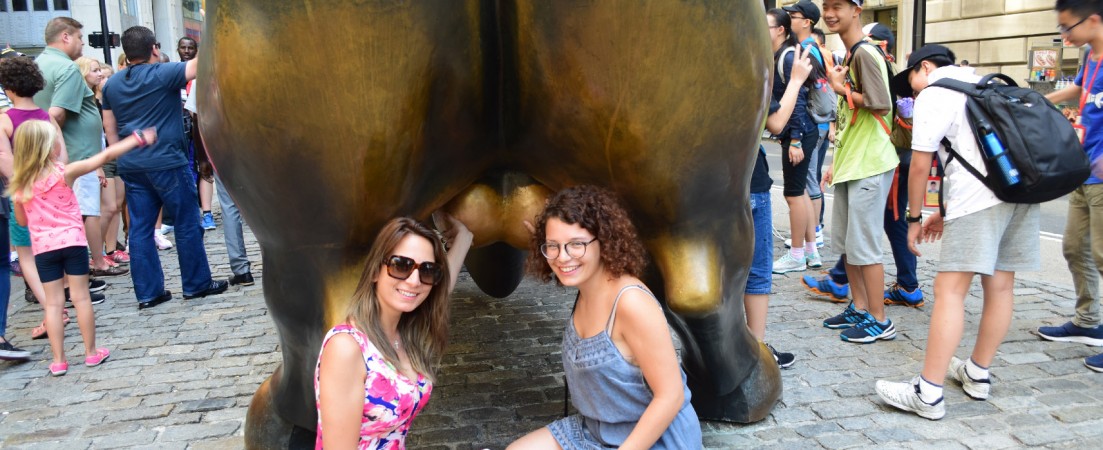
It now attracts tourists posing for photographs and investors superstitiously rubbing its horns for good luck. The bull is now seen as a symbolic mascot for New Yorkers and for world.
Originally published on TheWelcomeBlog, 03/19/2020.
much touching of bull this weekend and myself at near 100 for good luck
Jun
11
Ask me anything on Trading Psychology with Dr. Brett Steenbarger
Jun
10
Three big down days in a row
June 10, 2022 | Leave a Comment

one is almost speechless. with 3 big down days in a row. only happened 3 times since 2011: 8-24-2015, 3-9-2020, 1-21-2022. all three up big on next day. I have an unusual, unique take on why it happened. has to do with the Jan 6 Hearings. Not good enough to to sink the opposition, violence engendered by those incentivized to teach Kavanaugh a lesson, too close to home. So only thing that will save the fair party is a desperate remedy. Not a smiling performance with friend on TV.
Jun
9
All the king’s horses
June 9, 2022 | Leave a Comment
looks like all the kings horses provided input to tweaking the cpi number, especially with the recall it becomes triply important to unravel the decline in it.
the 3 musketeers championing the Idea that has world in its grip are as concerned about Inflation as they have traditionally been about equality, diversification, and climate. with their laser-like attention on inflation, and the track record of helping their mentors along, one looks for some finagling on the cpi on Friday. It would be bad indeed to start another weekend off with the weather gage with the quarry.
one finds that since 2011 there have been 11 occasions when there has been no 50-day max within 110 days. as for the forecast going forward on those occasions, we'll leave that up to ags and other bears when they wish to kibitz with a foundation.
Jun
8
New CBOE floor, from Jeff Watson
June 8, 2022 | Leave a Comment

Sneak peek: The new CBOE open outcry trading floor opening in June
A reader asks:
What % of the floor space is the SPX pit?
Jeff Watson replies:
No clue. The CME is moving what’s left of their trading floor back to the old South Room, where the CBOT bond pit was 40 years ago before the new floor opened in 1982.
[A related link. -Ed.]
FLOORED The Complete Documentary Film
A world that's more riot than profession, the trading floors of Chicago are a place where gambling your family's mortgage is all in a day's work. FLOORED offers a unique window to this lesser-known world of finance. Traders may not have degrees, but they've got guts, and penchant for excess. But like many aspects of our economy, technology is changing their business, and these eccentric pit denizens aren't the type to take kindly to new tricks. Computerized trading may take the emotion out of the job, but it may also take these old-timers out- they are dinosaurs in a young man's game. FLOORED is a gripping, honest look behind the curtain of the trading floor that few have ever seen.
Jeff Watson adds:
A new trading floor in 2022 and I’m stoked.
Stefan Jovanovich offers some history:
Chicago Stock Exchange Trading Room: Reconstruction at the Art Institute of Chicago
Jun
7
Just not cricket
June 7, 2022 | Leave a Comment
SEC Weighs Sending Retail Stock Orders to Auctions for Execution
• Plan under consideration could impact major trading firms
• Agency has been reviewing rules underpinning stock market
that's not cricket. the major purpose of markets is for the infrastructure to prosper at the expense of the public.
Jun
5
Payroll Tax Receipts, from Bill Rafter
June 5, 2022 | Leave a Comment

How are they going to paint this as a strong economy?
[Data source. -Ed.]
Andy Aiken responds:
It's not, but it gives the Fed a pretext to hold off on rate increases in an election year.
Vic adds:
46 leaked the numbers in his speech on Powell. they get the numbers several days in advance.
A reader asks:
Bill, how have ten year yields reacted in the past when the number is both negative year over and continuing to accelerate down trend? It seems this could be the catalyst that causes the long end to flatten out/rally as the Fed continues to raise the short? Does that hypothesis bear out in testing?
Bill Rafter replies:
Thanks for the question. I will not know until I test.
George Zachar asks:
oddly, the y/y% change in private eci wages has roughly doubled since late 2020, now at 5%. can you square the circle?
Bill Rafter replies again:
I will have to look at it. The payroll taxes are most the macro I can tap, so I tend to put their veracity on top.
Paolo Pezzutti comments:
I was hoping an Api could download the file from the treasury website. There are a number of Api's in Python or R to download datasets in json, csv, xml from FRED and other websites as alternative data to find relationships and regularities with stock index prices. Some of these keys are premium. I wonder if this approach provides real added value with respect to counting based on the idea that prices represent the synthesis of all market players actions and views.
Jun
5
Gurus, from Nils Poertner
June 5, 2022 | Leave a Comment
Monty Python's Life of Brian 1979 Alright I am the Messiah
deep seated desire by humans to find a guru in life, in trading, in spirituality, whatever - consciously or not (have the same really, I suppose). eg, friend followed Demark (cult) and his indicators religiously and only later realized he had to tweak it and adjust it and figure things out for himself.
Larry Williams disagrees:
Dead wrong on DeMark.
Nils Poertner responds:
experienced traders like yourself figured out how to use Demark i'm sure. was just trying to say that for most there is a tendency of humans (incl traders) to lean on somebody else but the journey is always a personal one. maybe the obvious.
Larry Williams writes:
Agree we all want someone else to make it easy for us!
How to use DeMark? Tom and I created it together. I was there at day one—we developed it pre computers, talking on the phone every night. He was in Racine Wisconsin, I was in Kalispell Montana—we poured over charts every night making notes, etc. Since then Tom has taken over and thanks to his mind and computers it has gotten even better—-original model gave a buy at the recent low.
Jun
5
High School Mile Record, from Stefan Jovanovich
June 5, 2022 | Leave a Comment
It Actually Happened… || Gary Martin Breaks LEGENDARY Record Of Jim Ryun
Larry Williams clarifies:
He’s really not faster than Ryan—look at the cinder track Ryun ran on vs the new, and much faster one, where the new record was set.
Stefan Jovanovich allows:
LW knows track.
Larry Williams adds:
If I could only run fast. Dyrol Burleson, college roommate—first American to break 4 minutes in the USA—ran, as a college senior, against Ryan, beat him, but told the reporters he was not the story, Ryan was. What he did on those old track and old shoes was amazing.
Speaking of shoes, the new carbon plate ones (Nike Alphafly) are a real game changer - more records to be shattered. Thet are so much easier on your legs.
Jun
4
Bears, Yankees, myths
June 4, 2022 | Leave a Comment
it seems that even more than usual, bears permeates the firmament. the three times that employment has been bad for S&P since 2011 (after thur up), the market has gone up abut 4% the next 4 days. Please tell me why bonds were way down and why they are not bullish.
nobody asked me but… (1) The Yankees are much overrated and ultimately their holes in the lineup with gallo, chapman, and Hicks will cause losses. (2) Having read Joseph Campbell who was fastest half miler in US in 1925, I don't understand the relevance of his main themes to actual myths. plse help. (3) Suzyn Waldman 76 and John Sterling 85 are very good to me as a calming influence while trading in the nite. Their relation is like that of a caretaker (Suzyn) taking care of parent (John) in an old age home. and he is very appreciative and can still keep score.
Jun
3
The first strike
June 3, 2022 | Leave a Comment
my daughter Kate just asked me if the first strike is significant. the team that scores the first basket in basketball wins something like 60% of time. i tested it for the first tick in the S&P, i.e., 930 to 931. if up, quite bullish for the rest of the day. if down, quite bearish. the difference in means is 3. can you think of any others?
the first strike is half the battle. now that i think of it, i always tried to get the first point in squash. then i'd continue and try to get up 5-zip. was very successful that way forcing myself to try hard at the beginning.
Jun
2
Lots of lessons to learn about stocks from this Bull Rider, from Larry Williams
June 2, 2022 | Leave a Comment
The Best Bull Rider of All Time: J.B. Mauney
He’s changing the game. He does things no one else does. There’s not a title in the world that he can’t win. The best bull rider in the world, J.B. Mauney is a throwback cowboy from Moorseville, North Carolina. VICE Sports traveled with J.B. to check out his atypical workouts, his superior technique and unrivaled work ethic that has taken him to unprecedented ground in the bull riding community.
Stefan Jovanovich checks his vitals:
5 ft 10 in (1.78 m) and 140 pounds (64 kg).
Peter DeBaz adds:
The one-way ticket to his first PBA remind me of the burning ships of Cortes.
Jun
2
The usefulness of sports
June 2, 2022 | Leave a Comment
I keep a tennis racket and ball in my desk so I can entertain my 13 grand kids. today I got some extra use out of the racket as the lawn mower people come on tues at the close and the only way I was able to stop them was to alert them to stop with a backhand lob.
of all the schools that my family has matriculated in I have often believed that Williams was the one that gave them the best ed and happiness. The reason to me is the policy of making everyone there participate in at least one sport. if secondary schools insisted that all students joined at least one sport I predict that there would be 99% drop in violence.
Jun
1
Something Deeply Hidden, from Zubin Al Genubi
June 1, 2022 | Leave a Comment
Something Deeply Hidden, by Sean Carroll has changed my understanding of reality more than any book I've ever read. Its the latest explanation of Quantum Fields and wave theory for laymen. For probabilistic thinkers like Spec Listers, it should be readily accessible as probability is the basis of quantum field theory.
The whole world is one quantum wave which evolves according to Schrödinger's formula solves the probability of a reality is the square of the energy wave. Relativities distinctions between matter/energy are gone. Time and space are emergent phenomena of the quantum wave not real things.
Its mind blowing stuff and so different than everything I learned my whole entire life. Highly recommended.
Also interesting are Erwin Schrödinger's lectures, What is Life, describing life, dna, evolution, sentience and consciousness from a quantum physics perspective.
Stefan Jovanovich links to an alternate view:
Q&A: Gerard ’t Hooft on the future of quantum mechanics
The laws of quantum mechanics seem to tell us that there is a fundamental random component to the universe. But Gerard ’t Hooft, who received the Nobel Prize in 1999 for his work on gauge theories in particle physics, is not convinced that physicists have to abandon determinism.
In his new book, The Cellular Automaton Interpretation of Quantum Mechanics (Springer, 2016), ’t Hooft suggests that we may simply be lacking the data that would turn quantum probability distributions into specific predictions.
Nils Poertner adds:
Trading in the Zone, by Mark Douglas, touches on this as well. nice chapter on "Belief vs Truth" in context of possibilities and probabilities. good to be surrounded by folks who stimulate oneself in that direction, too, friends, colleagues, this group here, etc.
May
30
Tipsters
May 30, 2022 | Leave a Comment
Wall Street Stories, by Edwin Lefevre, 1901. the book tells stories of personages very similar to today. the tipster and Pikes Peak or Bust are quite resonant of the useful idiots who proliferate today. In those day, the tipster and the plunger ended up at Trinity Church.
Tipsters in those days ended up in a graveyard, or walking aimlessly from New Street where the bucket shops were to the Brooklyn Bridge. Today they wear suits and are respected columnists and heads of research in big financial firms.
As the result of much thought about his losses Gilmartin became a professional tipster. To let others speculate for him seemed the only sure way of winning. He began by advising ten victims—he learned in time to call them clients—to sell Steel Rod preferred, each man 100 shares; and to a second ten he urged the purchase of the same quantity of the same stock. To all he advised taking four points’ profit. Not all followed his advice, but the seven clients who sold it made between them nearly $3,000 over night. His percentage amounted to $287.50. Six bought and when they lost he told them confidentially how the treachery of a leading member of the pool had obliged the pool managers to withdraw their support from the stock temporarily; whence the decline. They grumbled; but he assured them that he himself had lost nearly $1,600 of his own on account of the traitor.
For some months Gilmartin made a fair living but business became very dull. People learned to fight shy of his tips. The persuasiveness was gone from his inside news and from his confidential advice from Sharpe and from his beholding with his own eyes the signing of epoch-making documents. Had he been able to make his customers alternate their winnings and losses he might have kept his trade. But for example, “Dave” Rossiter, in Stuart & Stern’s office, stupidly received the wrong tip six times in succession. It wasn’t Gilmartin’s fault but Rossiter’s bad luck.
At length failing to get enough clients in the ticker-district itself Gilmartin was forced to advertise in an afternoon paper, six times a week, and in the Sunday edition of one of the leading morning dailies. They ran like this:
WE MAKE MONEY
for our investors by the best system ever devised. Deal with genuine experts. Two methods of operating; one speculative, the other insures absolute safety.[ … ]
Little by little his savings grew; and with them grew his desire to speculate on his own account. It made him irritable, not to gamble.
He met Freeman one day in one of his dissatisfied moods. Out of politeness he asked the young cynic the universal query of the Street:
“What do you think of ‘em?” He meant stocks.
“What difference does it make what I think?” sneered Freeman, with proud humility. “I’m nobody.” But he looked as if he did not agree with himself.
“What do you know?” pursued Gilmartin, mollifyingly.
“I know enough to be long of Gotham Gas. I just bought a thousand shares at 180.” He really had bought a hundred only.
“What on?”
“On information. I got it straight from a director of the company. Look here, Gilmartin, I’m pledged to secrecy. But, for your own benefit, I’ll just tell you to buy all the Gas you possibly can carry. The deal is on. I know that certain papers were signed last night, and they are almost ready to spring it on the public. They haven’t got all the stock they want. When they get it, look out for fireworks.”
Gilmartin did not perceive any resemblance between Freeman’s tips and his own. He said, hesitatingly, as though ashamed of his timidity:
“The stock seems pretty high at 180.”
“You won’t think so when it sells at 250. Gilmartin, I don’t hear this; I don’t think it; I know it!”
“All right; I’m in,” quoth Gilmartin, jovially. He felt a sense of emancipation now that he had made up his mind to resume his speculating. He took every cent of the nine hundred dollars he had made from telling people the same things that Freeman told him now, and bought a hundred Gotham Gas at $185 a share. Also he telegraphed to all his clients to plunge in the stock.
It fluctuated between 184 and 186 for a fortnight. Freeman daily asseverated that “they” were accumulating the stock. But, one fine day, the directors met, agreed that business was bad and having sold out most of their own holdings, decided to reduce the dividend rate from 8 to 6 per cent. Gotham Gas broke seventeen points in ten short minutes. Gilmartin lost all he had. He found it impossible to pay for his advertisements. The telegraph companies refused to accept any more “collect” messages. This deprived Gilmartin of his income as a tipster.
May
29
Financial Analyst Journal, Vol. 26 No.2, pages 111-113:
The above Tables I and II […] show that the traditional Wall Street belief concerning the market's preference for Republicans is in accord with observed market movements surrounding Election Day.
If this Republican bias were justified, one would expect the market to perform significantly better during a Republican administration than during a Democratic one. To test this hypothesis, we looked at every year since 1897 and classified it by party in power and by its yearly position in the administration. The following table summarizes the results:
Year Republican Democratic
1 6.88% 10.35%
2 10.18% -1.21%
3 -6.84% 20.76%
4 7.15% 3.50%There appear to be no systematic differences in the performance of the market during Republican and Democratic administrations, except that during the third year of Democratic administrations the market performs significantly better than during the third year of Republican administrations. Thus, there appears to be no long term pattern in market movements which would justify Wall Street's Republican bias.
For those who would like to know: This article was written by Victor Niederhoffer, Steven Gibbs and Jim Bullock. It was published in the March-April 1970 issue of FAJ.
Zubin Al Genubi comments:
This year is on track with regularity. Will next year be up big contrary to all the bearish pundits?
May
29
Markets, sports, and the Great Idea
May 29, 2022 | Leave a Comment
you wouldn't know it from the chronic bears and pessimists but the S&P is at a 17-day high and bonds at a 30-day high up for the month.
nobody asked me but…if there is one player in the major leagues who has lost his temper and disgraced baseball more than Josh Anderson, I missed it. and the universal reaction to the latest is indicative of the idea that has world in its grip and other recent events.
terrible news for those who support the idea that has world in its grip this week. we got back 6% this week and end with S&P up on the month and bonds and crude at a high. we finally got a week up and 1600 S&P left for a new high.
chickens come home to roost. all the masters 100 support of taking away parents rites at schools leads to tragedy . and I still say with Donaldson-Anderson, universal condemnation of the former was a key.
to make matters worst for supporters of the idea, the betting odds are now 4 to 1 that one or the other of the top two against the incumbent will win.
Nobody asked me but…the increasing trend of equality and diversity in professional sports makes the average athlete feel anomie as to sports and loses all sense of healthy competition and makes him or her a leaf floating in the wind.
it's hard to feel anything but contempt for your team when your role model athletes are billionaires complaining about the National Anthem and Americanism. That's why I say Donaldson-Anderson had much wider repercussions. query: did recent fatherless give up sports?
May
29
i will give a cash prize and a signed book to the best answer to the question: Now that the coaches, announcers, and tv and radio stations have joined the masters 100, the disneys, and now the insurance companies, how does this influence the game?
Reply to: Vic's twitter feed
john G
@dukeofoakes
Less opportunity for the white or non-woke as they add no value for the 100. Level of play decreases as the talent/deserving get replaced by those that serve the 100s interests.
Konrad Kuciej - Value Masochist
@KonradKuciej
Over the last several decades, with the advent of cable tv, internet and all of its applications the amount of advertising revenues for sports has skyrocketed, ticket sales and merchandise sales have taken the back seat. Because of the amount of money being generated all sports outcomes have become more and more clustered around a mostly “known” or at least “presumed” outcomes that drive the most “interest/viewers” and that allow the audience to feel they are part of the spectacle…games have become less “random” and more “staged”, all participants know.
Leet1337
@clozzi_24
The suppression of players expression of free views…. Anti secular & anti political except for those that are pro “wokeness”…… Still basketball except for no meaning behind the game that don’t serve corporate media.
packmansam
@PackManSamm
chasing advertising dollars by subscribing to the current thing amidst a decades long decline in viewership adds to the urgency for the league and refs to make sure the large market teams make the playoffs and ultimately the finals.
DarkWeb Trader
@Darkweb_Trader
Wokeness is for winners. A strength that creates competitive advantage. And a prerequisite for winning the right way and future political candidates. The only game in town.
Rodrigo Sotomayor
@Soto888
Favorite teams tend to generate higher commercial and marketing revenues, putting natural pressure on the refs calls even if unintended./p>
Ox
@OxEquities
Please the advertisers.
john G
@dukeofoakes
The 100 would favor most any team playing against the outspoken vaccine critic Aaron Rodgers.
the winner of the contest is John G. He will receive cash prize of $1000 and signed book. All the other contestants were very good also. They will all get signed books. send me address so I can send it.
May
27
The idea that has the world in its grip
May 27, 2022 | Leave a Comment
i haven't seen an update on this in 20 years. i believe its relevant.
The World in the Grip of an Idea Revisited
Socialism Destroys Institutions, Societies, and Individuals
chalk up the losses of the yankees to the unholy assuaging of the idea that has the world in its grip. its shameful that a manager can't support his players, but this is part of the idea that certain personages are entitled because of the masters 100 and disney syndrome.
Laurel Kenner writes:
I have long wanted to do a study of Sweden, the darling of US socialists.
Peter Saint-Andre adds:
I read an article in the last ~2 years about Sweden (perhaps in Reason magazine?) which argued that these days the country is not nearly so socialistic as "progressives" think.
Jeff Watson comments:
I like Sweden’s system of private roads, and the fact that everyone, rich and poor, has to pay the same rate of taxes.
Andre Wallin writes:
my parents immigrated to the US when Olof Palme was prime minister. they claimed they moved in large part because of his socialistic policies. he was assassinated in 1986 by "Skandia Man" who they only figured out who it was in 2020 posthumously. my uncles do pretty well in sweden as small business owners these days, but nothing compared to what is possible for so many in the US.
Henry Gifford responds:
Some years ago I attended a lecture by two people from Sweden, who argued that Sweden has high taxes, but it is worth it for all the services the government provides. But they did not convince me that they paid lower taxes than we pay in the US – sounds like we pay higher taxes here. They were shocked to hear about paying high real estate taxes with money that has already been taxed.
Yes, Sweden is the darling of socialists in the US. But most articles I’ve read say that Sweden is an example of socialism that works, then include nothing to back up that claim, and don’t even reference it later. I’ve heard that Sweden toys with socialism every 20 or 30 years, finds it is a disaster, and gets as free of socialism as fast as possible. If this is true, it wouldn’t discourage a socialist from claiming that Sweden is socialist.
One time I was talking about “government” schools in the US. Politically incorrect to call them what they are. I might have quoted Cato’s finding that government schools cost twice as much as private schools. A guy was talking about a wonderful “public” school, and I asked if it was a government school. He said he didn’t know. I asked if it was on land or floating around on a boat. He said it was on land. I asked him who owned the land. He said he didn’t know. I assured him that his level of dishonesty qualified him for being a very good comrade. He didn’t object. Some level of dishonesty seems a prerequisite for people who claim to believe that socialism is a good idea.
Bo Keely comments:
After traveling the world to 105 countries, I've concluded it's not a matter of Socialism vs Capitalism. It's a matter of people. Some peoples can make a socialism work and do it. Other peoples at their best cannot make capitalism work nor desire it. So, one should look at squares and circles before deciding which hole they should fit into. I personally prefer the lone wolf life.
May
26
Symmetry, from Zubin Al Genubi
May 26, 2022 | Leave a Comment
Symmetry is a characteristic property of the universe. The 24 May dip and bounce was good as it reflected a similar move 19 May. Question is will the big bar move of 18 May get reflected back up soon? Bears seem tired. Plus the news is all bearish and my brother is law wants to sell.
Getting the start today of completion of symmetry big bar.
Doug Martin suggests:
Maybe the folks at Davos gave the all clear signal, last friday's low was a nice looking pattern.
Michael Brush is bullish:
Let's get ready to rumble. This is from noon yesterday:
Strong insider buying suggests a 15% rally in the S&P 500 from here
One of the troubling things about this market downturn is that as brutal as it got, corporate insiders never showed much interest in their discounted stocks. That’s changed in a big way. They’re bullish now — signaling the stock market is oversold and due for at least a short-term bounce if not more. Using history as a guide, the S&P 500, the Dow Jones Industrial Average, and the Nasdaq Composite stand to advance 15%-20% over the next three months.
May
26
Atomic Annie, from Stefan Jovanovich
May 26, 2022 | Leave a Comment
‘Atomic Annie’ Was the World’s First and Only Nuclear Gun
Twenty were made, but only one fired a nuclear shot.
May
26
Bears, bonds, and crypto
May 26, 2022 | Leave a Comment
a representative bearish story from the bearish data provided:
The Tech Rout Isn’t Just Cyclical—It’s Well-Earned, and Overdue
30-year shows amazing strength given strength in crude and stocks. only down 1 tick on a day at 20-day high.
in retrospect the bell weather for crypto was when it didn't soar in the face of big Florida convention and Rumpelstiltskin saying that crypto was his major bull thing. and laudatory article saying Rumpelstiltskin is always rite on the future memes.
May
25
Minutes, markets, charts and trash talk
May 25, 2022 | Leave a Comment
last minutes were down 16 on day and -60 on 2 days. serial corr is -0.52 on one day and -0.44 on 2 day basis.
nobody asked but trash talk in other major sports like basketball and football is infinitely worse and more prevalent than baseball.
minutes apparently revised to help masters 1000 and professional sports and alphabet agencies and regulatory capture boys along—- but nice deception at 3915.
in old days a company currently an acquisition candidate reported earnings without deducting expenses for salaries. one notes that there is a negative provision for Service expense and negative operating revenues. query: are they still able to report with this largesse?
many lobogola:

i didn't know how to read that cryptic chart myself. like most brokerage houses i have been unable to speak to a human there. but their margins of 5% of the big options house is alluring.
so much disappointment that we will not have a seventh down week in row for sp. all because of backlash against donovan. everyone who plays a team sport is kidded with a nickname highlighting an exuberant or weak moment.
nobody — the mad dog sports announcer is about as useful as El Erian — and both are very knowledgeable and predictably with the idea that has world in grip. makes professor particularly useful tomorrow.
May
23
A specialist in panics, from Steve Ellison
May 23, 2022 | Leave a Comment
“You are a ‘Specialist in Panics,’ which means you buy in panics and at no other time. Whenever you are tempted to go in, ask yourself whether a panic exists. If the answer is Yes, then buy; if No, don’t buy.” – from the Magazine of Wall Street, circa 1908.
“Bull markets start in panics and end in booms.” [From the same source. -Ed.]
May
22
How common are selling climaxes?
May 22, 2022 | Leave a Comment
a page from past:
Fishing in Troubled Waters: What is a Selling Climax?
make mine an old fashioned…
how common are selling climaxes? I looked at it in multifarious ways. (1) it never happened on a non-quarterly expiration. (2) if one defines it as down 50 big S&P points from close to 1 pm, and up 50 big S&P points from 1 pm to close, it happened 5 times since 1996.
(3) you mite think I should use % rather than algebraic but I don't think so. You lose and make the same amount relative to margin and capital regardless of the % move. (4) what was particularly nefarious about this one was that it was down 120 big S&P points from open before closing up.
(5) Nasdaq closed down 1% on the day after being down 3% as of 1:30, and bonds closed at a 20-day high moving up continuously thru the day. (6) The S&P was down 7 weeks in a row. never before. (8) Putting it all together and looking at expectations going forward, what does one see and why?
many things that never happened before make predictions difficult. especially never before 7 weeks in a row down, and big reversal during afternoon during non-quarterly expiration. the one thing that trumps everything is stocks going down big because bonds going down big. but bonds way up.
the one constant is bonds are at a 20-day high in reality. that's extremely bullish for stocks. happened 29 times since 2019 and 81 times since 2011. S&P up 3/4 of time one week later. about 1-2% in magnitude.
you can almost feel the unholy desire of the establishment to see a close at a 20% low bringing us to an "official bear".
After Meltdown, Tech-Bottom Signals Have Yet to Scream ‘Buy Now’
the betting odds remain at more than 2 to 1 in favor of 45 versus 46. (39% versus 15%) and the one constant is no matter what a company does they are urged to unionize above all.
May
18
The best brokerage houses
May 18, 2022 | Leave a Comment
it was a time when the best brokerage houses of the 19th century hastened to get prices to their customers:
There were no tickers in those days. The quotations were circulated by men who got them from the brokers, wrote them down on pads and then went from office to office or from man to man with them. These men, who had the latest prices, were called pad shovers. They came up to you and shoved the pad with the quotations on it right under your nose, hence the appellative. They were the walking tickers. Rushing the pad, they used to call the process. It was not so quick as the ticker, but the brokers who furnished the quotations to the pad shovers were conscientious and careful, and nobody could or ever did question their honesty. The pad shovers were paid for their services by a commission on whatever business they took to the two-dollar brokers, from the offices of other brokers. They received one dollar per hundred shares; hence the term, split-commission broker. The Stock Exchange ruled against this kind of business eventually, and with the advent of the ticker the pad shover went the way of the fluid lamp and the stagecoach.
(from Edwin Lefevre)
The worst brokerage house today won't let you get current prices unless you pay $1000+ a year to the Exchange no matter how many times you're already paying for it. there were panic sin those days as in current. The best brokerage houses would carry their customers and allow them to be way below required margins on grounds that their customers were friends and would rise again. Some panics were the Northern Pacific where the stock rose from 40 to 2000 in one day, the start of the first world war and the 1907 "silent panic". The worst brokerage houses today will not give you the sweat off their testicles if you are under margin for a second.
May
17
A Tale of Two Brokers
May 17, 2022 | Leave a Comment
It was the best of brokerage houses. It was the worst of brokerage houses. It was the age of brokers refusing to let their customers panic. It was the age of giving customers 1 second to meet their 10-times-as-high margins. it was the season of raising money for the great coming industries: the railroads, the autos, the chain stores. It was the age of assuring customers that there was nothing before us but inevitable declines. It was the time when brokers would fight for the best executions for their customers. It was the time when it was impossible to speak to a human.
one brokerage house was memorialized by Edwin Lefevre in The Making of a Stock Broker, written in 1909, and is apparently the forerunner of Merrill Lynch. The other is the notorious present day options leader.
Lefevre tells the story of a dentist. he was long steel at 40. it reached 39 7/8. the dentist did a 4-inute mile to the broker's office. "sell everything!" he shouted. he was still studying the quotation and smiling, not because he had lost but because everything had gone still lower. Next to making money is the pleasure of watching others lose much more. "what did you do with your patient? leave him in the chair?" "Like hell! He heard you say 39. He was long one thousand steel. He beat me to the building by 20 yards."
A lot of the business of the Street in my youth was done in the open air, particularly in Broad Street, where we had the original and real curb market. Business there began right after the close of the Exchange at three, and lasted about an hour and a half. It was a sort of postscript market and at times the volume of business was quite large, almost as much as we did on the floor. In a way it was like a big fair, where everybody was acquainted. The small fry may have admired the big fish, but they usually called them by their first names. Most of the habitués were members of the I-Knew-Him-When Club. The ticker did a lot of social leveling in those days. I might be walking down Wall Street and I’d hear somebody yell ‘J.G.! J.G!’ Looking up, I’d see one of the alert split-commission brokers hurrying after a dark little man with very bright eyes and a black beard - the great Jay Gould, one of the greatest geniuses that ever operated in Wall Street, the sinister figure of whom old Daniel Drew in a moment of financial agony said, ‘His touch is death!’ A very rich and very powerful person, and yet all a man had to do if he wished to speak to him was to yell ‘Jay Gould!’ and the great Jay Gould would wait for him there in the Street.
May
15
Markets, war, baseball
May 15, 2022 | Leave a Comment
Friday close happened 8 times since 2015. bullish for monday.
it was unique week for markets: bonds up 2 1/2 big points, S&P down 100, crude up all-time hi at 110 a barrel. S&P down 6 weeks in a row as of friday. never happened before. much bear commentary. putting it all together, very bullish. especially 5 weeks in row down-very bullish, only 5 times since 2011.
The Winds of War, by Herman Wouk - very good audible - shows FDR to be completely duplicitous: "i will say again and again, your boys will not go to Europe." against certain faiths. Like 43. very shrewd, only 300000 lost very similar to current. highly recommended.
nobody asked me but there is a terrible flaw in analytics that suggests closers like Chapman for Yankees rather than letting the pitcher from the eighth inning pitch one more good inning. same is true for markets. stay with it. (recency bias for Yankees re Riviera.)
May
12
Help and envy
May 12, 2022 | Leave a Comment
does anyone share my belief that the camp kindergard people at the Fed and Treasury will do everything in their power to help the november along? and that they have plenty? in the old days they asked all the dealers what they wished for.
a real behavioral bias, not the contrived ones that Kahneman and colleagues validate by giving college students self-validating questionnaires, is the envy phenomenon. much more than the endowment effect but related to it is unholy wish to see others who once were rich fall and fail.
« go back — keep looking »Archives
- October 2026
- September 2026
- August 2026
- July 2026
- June 2026
- May 2026
- April 2026
- March 2026
- February 2026
- January 2026
- December 2025
- November 2025
- October 2025
- September 2025
- August 2025
- July 2025
- June 2025
- May 2025
- April 2025
- March 2025
- February 2025
- January 2025
- December 2024
- November 2024
- October 2024
- September 2024
- August 2024
- July 2024
- June 2024
- May 2024
- April 2024
- March 2024
- February 2024
- January 2024
- December 2023
- November 2023
- October 2023
- September 2023
- August 2023
- July 2023
- June 2023
- May 2023
- April 2023
- March 2023
- February 2023
- January 2023
- December 2022
- November 2022
- October 2022
- September 2022
- August 2022
- July 2022
- June 2022
- May 2022
- April 2022
- March 2022
- February 2022
- January 2022
- December 2021
- November 2021
- October 2021
- September 2021
- August 2021
- July 2021
- June 2021
- May 2021
- April 2021
- March 2021
- February 2021
- January 2021
- December 2020
- November 2020
- October 2020
- September 2020
- August 2020
- July 2020
- June 2020
- May 2020
- April 2020
- March 2020
- February 2020
- January 2020
- December 2019
- November 2019
- October 2019
- September 2019
- August 2019
- July 2019
- June 2019
- May 2019
- April 2019
- March 2019
- February 2019
- January 2019
- December 2018
- November 2018
- October 2018
- September 2018
- August 2018
- July 2018
- June 2018
- May 2018
- April 2018
- March 2018
- February 2018
- January 2018
- December 2017
- November 2017
- October 2017
- September 2017
- August 2017
- July 2017
- June 2017
- May 2017
- April 2017
- March 2017
- February 2017
- January 2017
- December 2016
- November 2016
- October 2016
- September 2016
- August 2016
- July 2016
- June 2016
- May 2016
- April 2016
- March 2016
- February 2016
- January 2016
- December 2015
- November 2015
- October 2015
- September 2015
- August 2015
- July 2015
- June 2015
- May 2015
- April 2015
- March 2015
- February 2015
- January 2015
- December 2014
- November 2014
- October 2014
- September 2014
- August 2014
- July 2014
- June 2014
- May 2014
- April 2014
- March 2014
- February 2014
- January 2014
- December 2013
- November 2013
- October 2013
- September 2013
- August 2013
- July 2013
- June 2013
- May 2013
- April 2013
- March 2013
- February 2013
- January 2013
- December 2012
- November 2012
- October 2012
- September 2012
- August 2012
- July 2012
- June 2012
- May 2012
- April 2012
- March 2012
- February 2012
- January 2012
- December 2011
- November 2011
- October 2011
- September 2011
- August 2011
- July 2011
- June 2011
- May 2011
- April 2011
- March 2011
- February 2011
- January 2011
- December 2010
- November 2010
- October 2010
- September 2010
- August 2010
- July 2010
- June 2010
- May 2010
- April 2010
- March 2010
- February 2010
- January 2010
- December 2009
- November 2009
- October 2009
- September 2009
- August 2009
- July 2009
- June 2009
- May 2009
- April 2009
- March 2009
- February 2009
- January 2009
- December 2008
- November 2008
- October 2008
- September 2008
- August 2008
- July 2008
- June 2008
- May 2008
- April 2008
- March 2008
- February 2008
- January 2008
- December 2007
- November 2007
- October 2007
- September 2007
- August 2007
- July 2007
- June 2007
- May 2007
- April 2007
- March 2007
- February 2007
- January 2007
- December 2006
- November 2006
- October 2006
- September 2006
- August 2006
- Older Archives
Resources & Links
- The Letters Prize
- Pre-2007 Victor Niederhoffer Posts
- Vic’s NYC Junto
- Reading List
- Programming in 60 Seconds
- The Objectivist Center
- Foundation for Economic Education
- Tigerchess
- Dick Sears' G.T. Index
- Pre-2007 Daily Speculations
- Laurel & Vics' Worldly Investor Articles
