Mar
30
Delmonico’s memories, from Steve Ellison
March 30, 2026 | Leave a Comment

I remember a number of Spec Party dinners in Delmonico's, and I had a very educational conversation with then-81-year-old Yale Hirsch at one of them.
America’s Original Steakhouse Is Expanding - After Nearly 200 Years
When Delmonico’s first opened around the corner from Wall Street in 1837, it coincided with a financial panic, bank failures and the popping of a real-estate bubble. But the steakhouse survived. And in the coming years, it would serve famous customers such as Abraham Lincoln and Mark Twain.
Now, nearly two centuries later, the restaurant that calls itself the first fine-dining spot in the U.S. is poised to open its second outpost in Midtown Manhattan next year.
Jeffrey Hirsch responds:
Thanks for the memory Steve!
Mar
29
Women, men, and change, from Humbert X.
March 29, 2026 | Leave a Comment
Noticed when societies go a bit off kilter, women are much easier to talk to sometimes (Can't believe I ever say this). Or maybe women are less interest to go extreme in the first place (family, home, other values more important). I mean how many lawyers in the city of London make it to the top and are female. Or run hedge funds. Or go for 100km races. Anyway, big changes in societies come when men change - maybe we will see that soon.
Jeffrey Hirsch responds:
Interesting observations. My wife and I actually just watched the Louis Theroux documentary Inside the Manosphere - it’s a fascinating (if often cringey) look at these societal shifts. With two sons (18 and 21), I can see the validity of the motivation behind some of these trends, even if the execution is often extreme or 'trashy.'
I’d highly recommend Scott Galloway’s new book, Notes on Being a Man, as a counter-balance. It covers similar ground but with a focus on being a 'mensch' rather than a hustler. I actually gave copies to my sons this week after I finished it with a note about what fine young men they already are. It’s a great read.
Mar
27
Self-importance in trading, from Nils Poertner
March 27, 2026 | 1 Comment
Self-importance really does weaken humans.
Got a call from 2 (mediocre), young traders. Asked them how they do. They are really in their heads 90pc of their time as their thoughts go in circles (missing out on nuances in markets / changing patterns now.)
Inner dialogue
"How I am doing?"
"Whether am up or down with someone else"
"My career path"
"My degree from this or that famous school" who cares I thought!
"My P/L" or "L"…
etc etc etc
Complete self absorption. Recipe for disaster.
Sushil Kedia responds:
The purpose of all work is to annihilate and subsume the sense of self by focusing as deeply as one can on the task at hand.
Financial Markets have the fastest feedback mechanism and thus any trader is constantly suffering feedback he is right, he is wrong, he is right, he is right, he is wrong, he is wrong, he is wrong.
The speed with which financial markets will make saints out any man is unparalleled as compared to any other work. Those who will realize and learn sooner, will know that no one can hope to be paid at all, forget about getting paid consistently without adding value. To add value one has to be other-centric. When markets are panicking absorb that panic with your cash. When markets are euphoric to the extreme absorb that euphoria by giving away your securities. That's just one example of adding value. When bid-ask has gotten significantly wider than usual, fill up the void. That's just another example of adding value.
All amateurs, with or without articulating to themselves these basic tenets that in no economic activity anyone can get paid without adding value, do grow up.
The whole idea of data reigns supreme amongst all sensorial inputs and that testing matters more than anything is the opposite of self absorbed judgemental behaviour.
Let baptism happen by the fire. No one burns, but just gets baptised.
Mar
26
AI use by firms, from B. Humbert
March 26, 2026 | Leave a Comment
NBER Working Paper Series: Firm Data On AI
We present the first representative international data on firm-level AI use. We survey almost 6000 CFOs, CEOs and executives from stratified firm samples across the US, UK, Germany and Australia. We find four key facts. First, around 70% of firms actively use AI, particularly younger, more productive firms. Second, while over two thirds of top executives regularly use AI, their average use is only 1.5 hours a week, with one quarter reporting no AI use. Third, firms report little impact of AI over the last 3 years, with over 80% of firms reporting no impact on either employment or productivity. Fourth, firms predict sizable impacts over the next 3 years, forecasting AI will boost productivity by 1.4%, increase output by 0.8% and cut employment by 0.7%. We also survey individual employees who predict a 0.5% increase in employment in the next 3 years as a result of AI. This contrast implies a sizable gap in expectations, with senior executives predicting reductions in employment from AI and employees predicting net job creation.
Mar
24
Nobody asked me, but…
March 24, 2026 | Leave a Comment
1) Jay Gould was a hero not a villain.
2) Gilbert and Sullivan: Opera Explained is my favorite nite time listen.
Mar
22
Specs in other disciplines, Nils Poertner
March 22, 2026 | Leave a Comment
The moment specs apply their approach (test ideas, challenge group beliefs, count, be curious etc etc) to other disciplines - eg medicine, botanics, anything really.
One can easily see that one has learned "cliche-thinking" in university/school. And that most normies never leave that cliche thinking. That is fine with me. Gell-Mann effect is real as well. Good to keep it tight and focus on markets though.
Oliver Joseph writes:
To challenge established thinking in any human endeavor whether hard or soft sciences will in my mind invariably produce push back, most of the time. While perhaps a bit hyped right now the K-means algorithm offers in my mind an interesting way to conceptualize group think. In a simplified market context x1= Bull x2= Bear K=2 Bull vs Bear When a local minimum is reached for a cluster often time depending on the data set it makes sense and is workable however there are times where you must reinitialize based on your understanding of the dataset and the results your getting. If we are driving towards a conclusion in a field of endeavor we will reach a local minimum for a variety of reasons. Sometimes what works just works of course conversely sometimes we will converge to a local minimum that does not match our understanding of the dataset. Until we converge we don’t know. Darwin's theory of natural selection represents one such conceptual reinitialization in my mind (with the unfortunate delay in the theories convergence due to many years spent looking at barnacles). There is profound wisdom in the comment by George Soros “buy the lie”. An understanding that the prevailing conclusion is wrong but due to various frictions that exist in the conclusion generator the music will keep playing. Of course until the risks involved in staying with the group's conclusion exceed those of breaking off from convention. The higher the stakes the more pushback from the conventional crowd. Or perhaps Gustave Le Bon:
For it must not be supposed that merely because the justness of an idea has been proved it can be productive of effective action even on cultivated minds. This fact may be quickly appreciated by noting how slight is the influence of the clearest demonstration on the majority of men.
I often ask myself, what barnacles am I staring at?
Mar
19
Requiem for a permabear, from Steve Ellison
March 19, 2026 | Leave a Comment
[Paul Ehrlich's] predictions were not premature but just flat wrong. Not wrong as in they were a little off but wrong as in completely and entirely wrong not even close. However, that is not the part that people are missing.
Ehrlich thinking wormed its way into [so] much thinking and dominates large parts of polite society thinking today. Europe hands out advanced degrees in 'degrowth' and while no one would say it is an advanced degree in Ehrlich's wrongness, his ideas permeate polite society.
It boggles the mind that his ideas which are so universally wrong have such life under a different brand.
William Huggins writes:
It's always useful to understand why a prediction is wrong, rather than simply lambasting anyone with enough guts to take on the humbling task of estimating the outcome of mankind's war against entropy. In this case, Ehrlich, like Malthus, made his predictions on the basis of "the system as we know it, from accumulated data". This made his understanding slow to recognize a new data regime where in both cases, agricultural yields were set to boom as a result of new techs. one of the big contributors to lifting the ceiling on food production between 1960-2010 (+1/3 to +1/2) was the widespread application of chemical fertilizers (from Haber-Bosch, which cratered the cost of nitrogen), while India and much of the rest of Asia began applying Norman Borlaug's seed improvements (plants able to process more fertilizer…). Echoing Malthus' timing right as the British agricultural revolution was hitting its stride, Ehrlich's book came out just as these developments were really kicking into high gear.
The bigger issue appears to be blind spots regarding what "can't happen" (failure of imagination?). Last generation's notion of peak oil was informed by similar thinking but along came improvements in the economics of fracking. While the long-term drop in agricultural commodity prices seems to reinforce the idea that tomorrow is a brighter day, it has been built on processes which are themselves vulnerable to disruption (globalized hydro-carbon trade being the most proximate example) so imo there is also a converse risk in assuming stability.
on that note, is anyone else (long Canada)-(short everyone else) since the attack on Iran? easy macro trade on the stability of oil exports.
Peter Ringel comments:
the problem is, in Europe the base line is Malthusian. always has. Odds are, the inteligencia here has not even heard of Borlaug. And if, then rejected based on the Holy Church of Green. A variation of the idea, that has the world in its grip. Short the continent. Already based on that.
Mar
18
More on intuition, from Denise K. Shull
March 18, 2026 | Leave a Comment
Yes it certainly can be trained – from a note I wrote on intuition a couple of weeks ago:
One of the biggest mental shifts that your work has given me is how I understand intuition. It stopped feeling mystical or vague and became a real internal compass. I really started to see intuition as lived experience, emotional 'data', pattern recognition, and self-awareness integrating in real time. Paradoxically…this has made me calmer rather than more impulsive. I tend to trust myself more, take better risks, and stay aligned with my process more consistently.
- Toby Donovan, CITI, Director, Commodities Trading
His experience exemplifies what the founder of a large hedge fund said on Thursday. “Your brain is picking something up. Are you in touch with that internal conversation?"
Academic researchers also describe the value of intuition. Valerie Reyna, Professor of Human Development and Psychology at Cornell University, the Director of the Human Neuroscience Institute, and the co-director of the Center for Behavioral Economics and Decision Research, directly links intuition to probability, and risk judgment, saying that “intuitive reasoning contributes to performance in hard, fast-paced probability tasks.”
In her fuzzy trace theory, gist-based intuition provides an advanced form of cognition that often outperforms verbatim, analytical processing. She shows how reliance on intuition can grow and yield better decisions than strict adherence to probability calculus, especially when the key is extracting the bottom-line meaning.
Mar
17
The T35 is an index that tracks the largest 35 stocks on the Tel-Aviv Stock exchange. I noticed that the T35 skyrockets during episodes of political aggression. On combing through the actual stocks, it turns out that the largest cap stock (about 10% of the index) is ESLT, a defence contractor.
Gold spikes usually before confirmed acts of political aggression. Oil also has some relationship with that political aggression in the middle east. The T35, mostly ESLT driven also has a relationship with war.
Might some combination of these make a good multivariate predictor?
Spike in Gold predicting a spike in ESLT (T35)?
Spike in ESLT predicting spike Oil?
Big Al writes:
It was often thought that the move of the TASE on Sunday was a predictor for the S&P on at least Monday. However, the TASE stopped Sunday trading in January and shifted from a Sunday-Thursday week to a Monday-Friday week.
Mar
16
Soundness, Trust, and the Real Case Against Fiat Money, by Peter C. Earle
March 16, 2026 | Leave a Comment
Soundness, Trust, and the Real Case Against Fiat Money
Fiat currency may be unsound, poorly managed, or politically abused, but it is not counterfeit by nature, and conflating monetary soundness with legal authenticity undermines any attempt at economic debate. Counterfeiting has a precise meaning: the unauthorized creation of money or financial instruments that falsely purport to be genuine. The defining features are deception and impersonation: a counterfeit bill pretends to be issued by an authority that did not, in fact, issue it. Counterfeiting is a crime under the legal theory that it undermines trust in the monetary system by introducing fraudulent claims that mimic legitimate ones.
Mar
15
Keith Jarrett, from Nils Poertner
March 15, 2026 | 1 Comment
Keith Jarrett – The Köln Concert [Full Album 1975]
Keith Jarrett - quite an unusual artist, music almost from another planet. He believed ppl who like music often listen to it in the car But ppl who understand - don't!
Big Al adds:
Famous story:
TLDR: They got the wrong piano and it had many flaws. Jarrett was exhausted when he arrived and at first refused to play that piano, but the 18-year-old girl who was the organizer convinced him to go ahead. He was forced to improvise within the constraints of the crappy instrument. The recording of the concert went on to become one of the best selling jazz albums of all time and consistently makes "best albums ever" lists.
Adam Grimes writes:
Keith Jarrett is on my top 3 list of living pianists. (Which might be surprising when you find who the others are.)
I've always respected his technique, melodic sense, but more than anything his sense of time is literally impeccable. Also worth noting that he suffered a stroke and the world has lost this voice. A few links off the beaten path. (I'd encourage you to listen to the Blue Note recordings and also of course the famous Köln concert.) But here are two you might not encounter.
I think this will go on record as one of the greatest artistic utterances mankid ever produced. (If posterity cares, that is):
and, melodic sense, and time… wow:
Keith Jarrett - Old Man River (Live from Antibes) - Transcription

Nils Poertner responds:
Terrific, Adam. Whether Musician or Speculator: We got an "Intuitive Mind" which has something vital to say. But it can't come to our "Thinking Mind" as the latter is constantly chatting…this music reminds me / relaxes me.
Oliver Joseph comments:
Keith Jarrett is a great artist and a huge inspiration. A wonderful counterpoint to the above story of the busted baby Bösendorfer at the Köln concert is the album Staircase. Jarrett had gone to record a track at Davout Studio in Paris and really liked the Piano and stuck around and recorded the album with the extra studio time they had. In particular the track Staircase part 3 is just amazing to me. It is a very beautiful and simple piece.
Mar
12
Pigeons in espionage, from Humbert X.
March 12, 2026 | Leave a Comment
The Rest Is History podcast episode
‘If it became necessary immediately to discard every line and method of communications used on the front, except one, and it were left to me to select that one method, I should unhesitatingly choose the pigeons’, wrote Major General Fowler, Chief of Signals and Communications of the British Army, after the First World War.
The book:
Operation Columba–The Secret Pigeon Service: The Untold Story of World War II Resistance in Europe

Between 1941 and 1944, British intelligence dropped sixteen thousand homing pigeons in an arc across Nazi-occupied Europe, from Bordeaux, France to Copenhagen, Denmark, as part of a spy operation code-named Columba. Returning to MI14, the secret government branch in charge of the "Special Pigeon Service," the birds carried messages that offered a glimpse of life under the Germans in rural France, Holland, and Belgium. Written on tiny pieces of rice paper tucked into canisters and tied to the birds’ legs, these messages were sometimes comic, often tragic, and occasionally invaluable—reporting details of German troop movements and fortifications, new Nazi weapons, radar systems, and even the deployment of the feared V-1 and V-2 rockets used to terrorize London.
Gyve Bones adds:
Recently watched a dramatization of this story of WWI in the Ardennes Forest, about the Lost Battalion of US Army that carried out their offensive orders too well, penetrating too far without the units supposedly on their flanks, and became isolated and surrounded by Germans, and their only means of communication with HQ was carrier pigeons, carried in cage backpack by the communications guy. It was a sort of inverse Battle of the Bulge, where the allied offensive bulged in and got cut off, but analogous to the situation of the 101st isolated and surrounded in Bastogne.
Excellent made for TV movie:
The Lost Battalion (2001)
Mar
9
Rates vs inflation, Larry Williams
March 9, 2026 | 1 Comment
As promised, rates drive inflation:
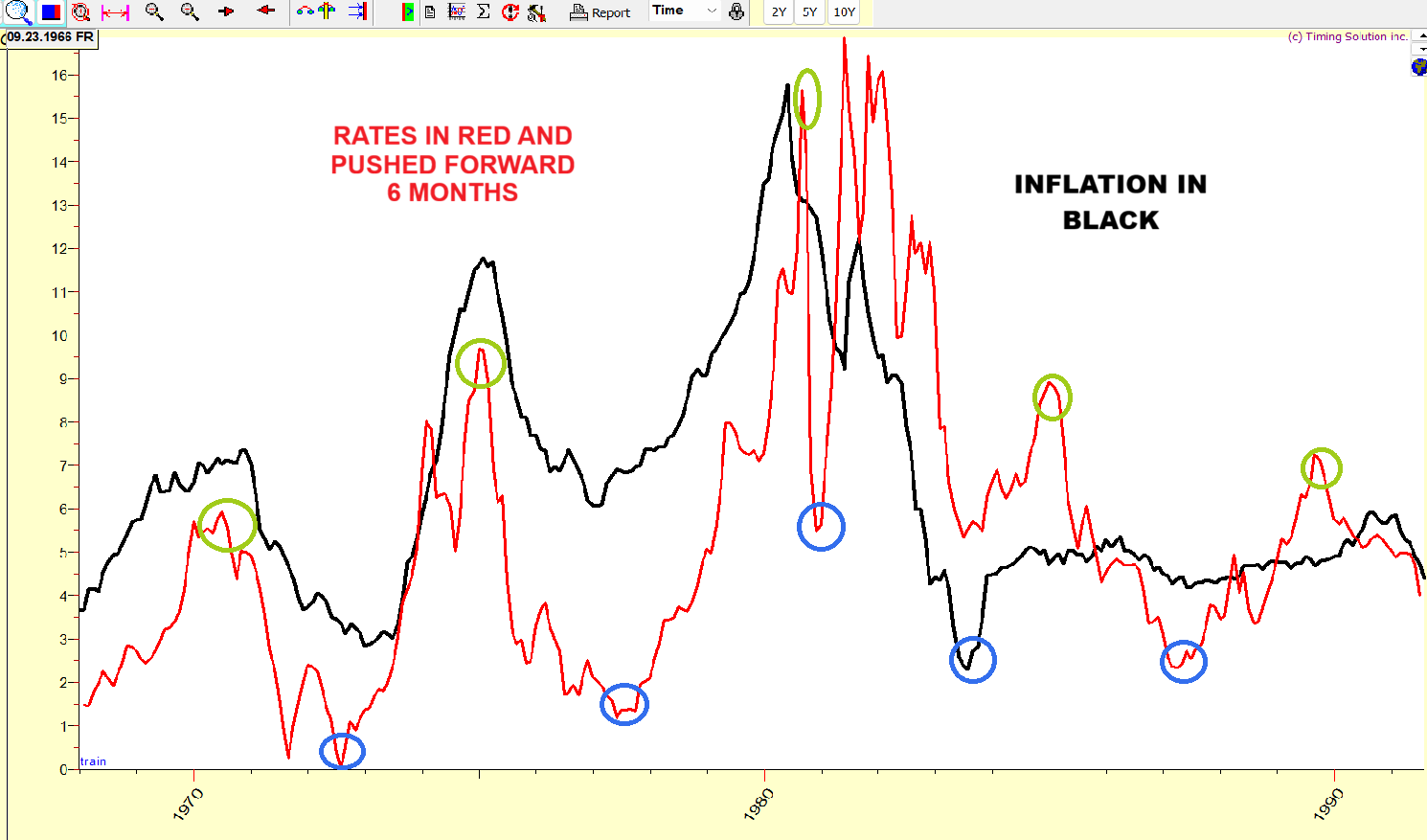
Nils Poertner writes:
With a bit of imagination, one could see that we may get to zero (or even negative short-term rates in the US)
Larry Williams adds:
Zero rates in Japan did not lead to inflation as most econ minds claimed it would.
William Huggins offers:
Richard Koo from Nomura explains why that was - and it has nothing at all to do with the notion that interest rates -cause- inflation.
Larry Williams asks:
Great post thanks.
Inflation is a result of 1) people raising prices and 2) people paying up so what causes that?
William Huggins responds:
as econ understands things (in the MV = PY framework), inflation would be a rise in P, which can result from a shock to any of the other three variables. the most common oversight though is that V is affected by how people behave too - the willingness to extend (or deny) credit has a huge impact on whether or not a transaction (PY) even takes place.
economic historians have long noted the relationship between M and changes in PY which shows up when Mansa Musa dumps a ton (actually several tons) of gold into the Egyptian economy in the 14th century, when the Spanish flood Europe with Inca and Aztec gold (and again when they "discover" Potosi), and during various state-induced hyperinflationary periods in the 20th century (USSR, Germany, Hungary, etc). but as the US from 1873-1893 shows, changes in V (which almost halved during that period) can influence inflation too which was negative for the period, despite increasing M and Y throughout.
overall, the record shows that big increases in the money supply (as in 2020/21) tend to set off inflation with a bit of a lag (digestion time) unless there are equally significant countervailing forces. the big assumption monetarists make (that Koo questions) is that people -will- borrow as rates come down. his argument (for those who didn't watch) is that if you have negative equity, borrowing at any rate is insanity - the whole mechanism of juicing aggregate demand by lowering interest rates relies on the idea that people who can will. as Koo/Japan points out, there is a limit to such linear thinking.
Mar
8
Albert Einstein said, from Zubin Al Genubi
March 8, 2026 | Leave a Comment
The ordinary human being does not live long enough to draw any substantial benefit from his own experience. And no one, it seems, can benefit by the experiences of others. Being both a father and teacher, I know we can teach our children nothing…Each must learn its lesson anew.
—Albert Einstein, October 26, 1929
Mar
4
The US data center buildout looks increasingly supply-constrained, not because of capital, but because of infrastructure. Announced projects far exceed what can realistically be delivered on current timelines. New capacity requires a rare intersection of:

Proximity to internet hubs.
Reliable, large-scale power (plus generators/transformers with multi-year lead times).
Viable cooling and water.
State/local support in communities that are already pushing back on load growth and land use.
Access to critical, long-lead-time equipment currently has multi-year queues.
Finding sites that clear all five hurdles is getting harder in the US and across most Western markets. This is solvable, but on a 5–10 year grid and permitting timelines, not on 12–18 month tech timelines.
Near-term, not many operational changes, but the narrative probably does. When the market internalizes that a meaningful slice of “announced” capacity is delayed or won’t get built, I’d expect:
Incumbent capacity with grid access to gain pricing power.
Late-stage greenfield and some capex-heavy stories to be repriced.
Utilities, grid upgrade plays, and on-site power to screen better than marginal new-build data center names.
High-level takeaway: AI demand is real; the binding constraint is infrastructure. The gap between slide-deck capacity and physically deliverable capacity is likely where the mispricing lies.
Mar
3
FED interest rate decisions are often associated with the SPY.
1) Interest rate decrease –> Increase in SPY
2) Interest rate increase –> Decrease in SPY
Polymarket has a market for FED decisions. Could a combination of Long SPY & Polymarket contracts (betting on rates increasing) provide some kind of arbitrage opportunity?
Larry Williams responds:
This not correct Interest rate hikes are bullish for stocks—most the time. [See chart below.]
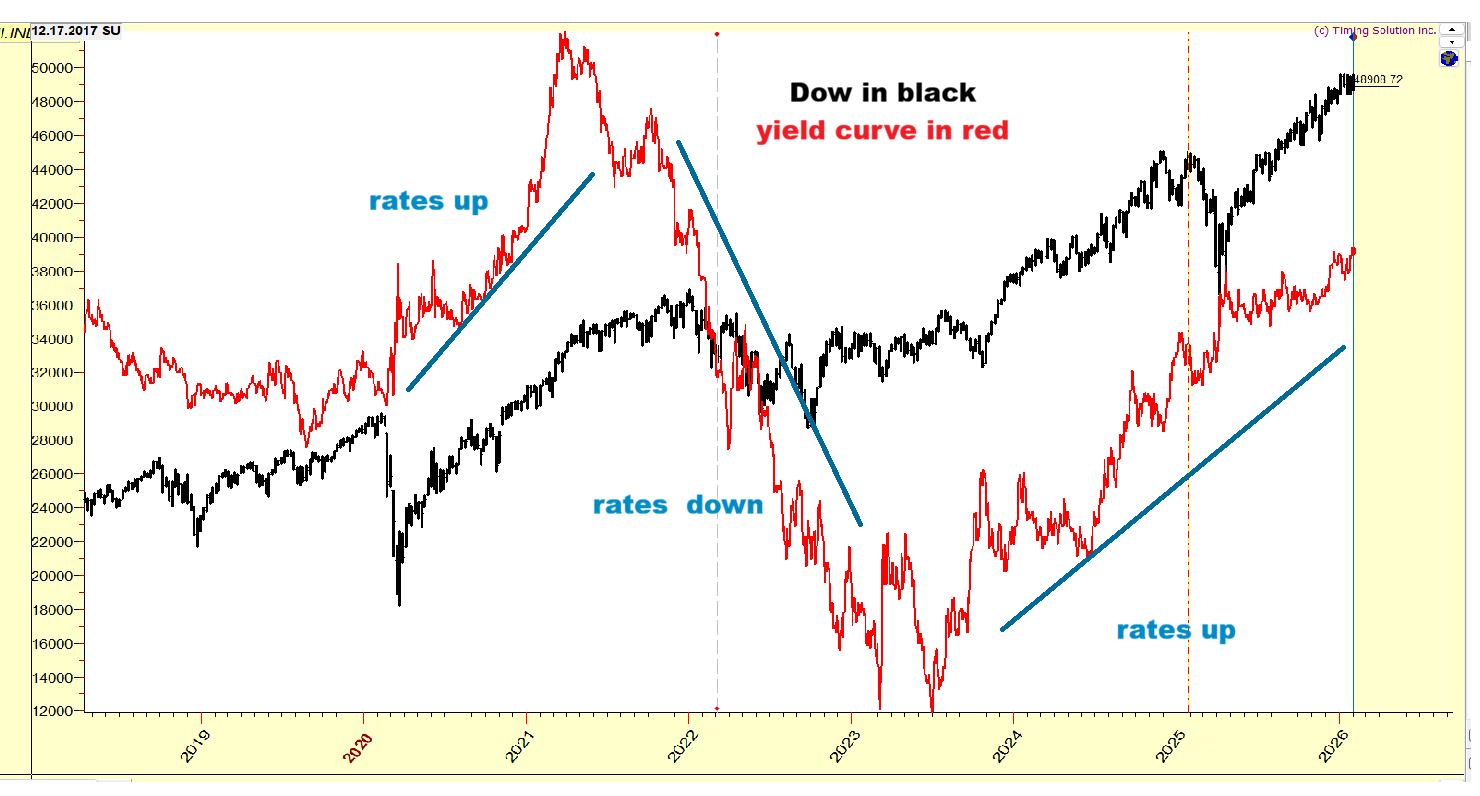
William Huggins writes:
the most important issue with any arbitrage situation is the volume at price is not unlimited, meaning there is a functional "size" to the exploit. my intuition is that such inefficiencies can persist for structural reasons until that size crosses some operator's threshold at which point they trade it until it holds back against the efficient exploit horizon. i don't know what the market depth is like on polymarket but i also suspect the liquidity that such a trade would count on could evaporate such faster than SPY.
Asindu Drileba asks:
[Larry's] pattern indicates:
- Rate increases -> Stock Market up
- Rate decrease -> Stock market down
But for longer periods i.e several subsequent days after.
Since the Polymarket contracts actually expire (resolve) on the day of the announcement. I was thinking this was a strategy that would close on the day of rate announcements. Are stocks also mostly bullish *on the same day* for announcements of a rate increase? (and vice versa)
Archives
- October 2026
- September 2026
- August 2026
- July 2026
- June 2026
- May 2026
- April 2026
- March 2026
- February 2026
- January 2026
- December 2025
- November 2025
- October 2025
- September 2025
- August 2025
- July 2025
- June 2025
- May 2025
- April 2025
- March 2025
- February 2025
- January 2025
- December 2024
- November 2024
- October 2024
- September 2024
- August 2024
- July 2024
- June 2024
- May 2024
- April 2024
- March 2024
- February 2024
- January 2024
- December 2023
- November 2023
- October 2023
- September 2023
- August 2023
- July 2023
- June 2023
- May 2023
- April 2023
- March 2023
- February 2023
- January 2023
- December 2022
- November 2022
- October 2022
- September 2022
- August 2022
- July 2022
- June 2022
- May 2022
- April 2022
- March 2022
- February 2022
- January 2022
- December 2021
- November 2021
- October 2021
- September 2021
- August 2021
- July 2021
- June 2021
- May 2021
- April 2021
- March 2021
- February 2021
- January 2021
- December 2020
- November 2020
- October 2020
- September 2020
- August 2020
- July 2020
- June 2020
- May 2020
- April 2020
- March 2020
- February 2020
- January 2020
- December 2019
- November 2019
- October 2019
- September 2019
- August 2019
- July 2019
- June 2019
- May 2019
- April 2019
- March 2019
- February 2019
- January 2019
- December 2018
- November 2018
- October 2018
- September 2018
- August 2018
- July 2018
- June 2018
- May 2018
- April 2018
- March 2018
- February 2018
- January 2018
- December 2017
- November 2017
- October 2017
- September 2017
- August 2017
- July 2017
- June 2017
- May 2017
- April 2017
- March 2017
- February 2017
- January 2017
- December 2016
- November 2016
- October 2016
- September 2016
- August 2016
- July 2016
- June 2016
- May 2016
- April 2016
- March 2016
- February 2016
- January 2016
- December 2015
- November 2015
- October 2015
- September 2015
- August 2015
- July 2015
- June 2015
- May 2015
- April 2015
- March 2015
- February 2015
- January 2015
- December 2014
- November 2014
- October 2014
- September 2014
- August 2014
- July 2014
- June 2014
- May 2014
- April 2014
- March 2014
- February 2014
- January 2014
- December 2013
- November 2013
- October 2013
- September 2013
- August 2013
- July 2013
- June 2013
- May 2013
- April 2013
- March 2013
- February 2013
- January 2013
- December 2012
- November 2012
- October 2012
- September 2012
- August 2012
- July 2012
- June 2012
- May 2012
- April 2012
- March 2012
- February 2012
- January 2012
- December 2011
- November 2011
- October 2011
- September 2011
- August 2011
- July 2011
- June 2011
- May 2011
- April 2011
- March 2011
- February 2011
- January 2011
- December 2010
- November 2010
- October 2010
- September 2010
- August 2010
- July 2010
- June 2010
- May 2010
- April 2010
- March 2010
- February 2010
- January 2010
- December 2009
- November 2009
- October 2009
- September 2009
- August 2009
- July 2009
- June 2009
- May 2009
- April 2009
- March 2009
- February 2009
- January 2009
- December 2008
- November 2008
- October 2008
- September 2008
- August 2008
- July 2008
- June 2008
- May 2008
- April 2008
- March 2008
- February 2008
- January 2008
- December 2007
- November 2007
- October 2007
- September 2007
- August 2007
- July 2007
- June 2007
- May 2007
- April 2007
- March 2007
- February 2007
- January 2007
- December 2006
- November 2006
- October 2006
- September 2006
- August 2006
- Older Archives
Resources & Links
- The Letters Prize
- Pre-2007 Victor Niederhoffer Posts
- Vic’s NYC Junto
- Reading List
- Programming in 60 Seconds
- The Objectivist Center
- Foundation for Economic Education
- Tigerchess
- Dick Sears' G.T. Index
- Pre-2007 Daily Speculations
- Laurel & Vics' Worldly Investor Articles
