Jul
26
When Falling at More than 75 Miles an Hour, from Victor Niederhoffer
July 26, 2012 | Leave a Comment
 When falling at more than 75 miles an hour, starting from above 100 feet above the ground off a tree, the custom is to yell "headache". Apparently certain death is imminent. I haven't figured out if it's a courtesy to those with the pine box, or just to get out of the way not to die along side.
A certain pres candidate was telling us that he fell 50 feet from a tree after power gliding and did not know the proper call. He lost 1 1/2 inches immediately and it took him 2 1/2 years to recover. Tore all sorts of vertebrae.
One has been in that situation in the market many times, and now I know what to call out. If you hear me, or as a courtesy you are in that situation, you know what the word means.
Russ Sears writes:
I would suggest that this is akin to arranging the chairs on deck or playing in the orchestra on the Titanic. Its purpose to give your left brain a vacation, through a mundane task so as not to panic. The time for logical analysis has passed. While at the same time giving notice to your right brain to engage in humor, art or intuition to create the highest probability of survival and one last chance to take in the beauty of it all; to go out living.
Jul
24
An Event to Honor Harvard Squash Coach Jack Barnaby, from Vic Niederhoffer and the Dailyspec
July 24, 2012 | 1 Comment
 Hi. Vic Niederhoffer here.
I am hosting a party in honor of Jack Barnaby, the squash and tennis coach at Harvard for the better part of 60 years on July 28th at noon. Food and entertainment and all sorts of racket courts and swimming there. Just to honor Jack and reminisce and meet old and possibly new friends. The party is at a home facility in Connecticut. It's merely to honor Jack, not a fund raiser of any kind.
I have also invited all Jack's tennis friends. There is a very good sports library on premises. Please contact Linda at 203 840 0777 or email her at lap(at)mantr(dot)com for details so I can arrange proper logistics.
All who wish to honor this great man who taught so many from scratch including Jay Nelson and me are invited. and please if you know any friends of Jack, and they are legion, let them know about the event.
Sincerely,
Vic
Jul
24
Suppose It Were True, from Victor Niederhoffer
July 24, 2012 | 2 Comments
There is much pessimism on the site about the stock market. One thing I always like to ask is suppose it were true that the economy is really going to be weaker than people expect. Like we'll have 1 or 2% growth rather than 2 or 3. Why should this affect stock prices? What is the evidence that stocks do worse during periods of below average growth? Why should it matter? How does the rate of return on capital of businesses compare to the 30 year rate as stocks are valued based on discounted value of expected future earnings adjusted for risk, with the growth rate of earnings being determined by the rate of return on capital less the pay out on dividends rate. Is it better to buy stocks when people are pessimistic or optimistic?
All these things must be tested. I'm not saying that I'm bullish or bearish on stocks or that one should be. I'm just questioning the glue and the weakness type of stuff. Assuming it was true, which I doubt, why should that be bullish or bearish? Testing is required.
Steve Ellison writes:
A regression of the 1-year S&P 500 return from 1981 to 2010 against the US unemployment rate reported the previous December shows a 16% positive correlation, with the regression line for the next year's S&P 500 net change being -1.9% + (1.9 * unemployment rate).
t=0.86, p=0.40
Leo Jia writes:
I often ask myself similar questions but can not answer them. Perhaps one has to answer this question first: what percentage of the people in the market are rational? Or rather, what percentage of the money in the market is rational? Though I don't have an answer, I tend to believe that there is more irrational money than rational money in general. The clear problem is that the degree varies all the time.
J.T Holley writes:
With the std dev of 18% and annual rate of 8-9%, I'll order a double helpin' of "drift" with a side of "thank you".
If that meal doesn't fill you up then you must question where you get your meals and disregard the gratuity the next time you sup.
Tim Melvin writes:
Drift only exists if you have a 100 year time frame in my opinion. See 1970s and 2000 to present. Much of investing success last fifty years for most investors is result of membership in lucky sperm club.
Craig Mee writes:
Doesn't one new variable in a mix during the testing period influence the outcome– QE, no QE, etc etc…(sure, there's been other ways of doing it). But how to judge what has the over riding influence on the outcome? This could vary under certain conditions. How much of the US equity recent rise is in default of Europe, just like EURGBP taking the heat…and how much of the current price is underpinning based on QE to come?
What has recent price action illustrated, if anything at all…
How should weaker growth effect share prices? I would argue that this would just be a further nail in the coffin, when all the ducks are lining up, but how can we say it's got more weight currently than some other significant half ? It's tough. Are the number of running variables any different than twenty years ago? Maybe not. Are market conditions, HFT, leverage, number of participants in the market any different? Certainly. Has this influenced price action? Maybe Richard Dennis may have some views here.
When does the variation in conditions influence the ability to test? I suppose this might be the question.
Jul
22
Housewares, from Victor Niederhoffer
July 22, 2012 | 5 Comments
 I recently visited a Bed Bath and Beyond and was amazed at the improvement in housewares over the last 20 years. Almost all have automatic features for noise abatement and better grip, and many sanitary and cooking improvements have been made. The extent to which business is constantly improving our standard of living in down home down to earth ways is enormous and under appreciated.
What improvements in packaging, cleanliness, efficiency and cost have you noticed in every day items in recent years? And what are the market implications of this. I am reminded of Roger Longman's idea that the price to weight ratio of a company's products is a good guide to its future market performance. On another note, he is very familiar with the advisory board nasdaq and thinks it fruitful for investigation.
What brought my discussion of improvements in every day things to the fore was that I chatted with Don Boudreaux today, and we discussed the improvements in weather forecasting over the last 25 years. Now, one can get an incredibly accurate forecast of the weather, temperature, and moisture for 5 days in advance with seeming 90% accuracy whereas the old articles in the monthly weather review would have a hard time distinguishing the accuracy of forecasts from random predictions of no change. Of course Galton discovered weather maps, and that improved forecasting enormously but one just wishes his own forecasts of the market were 1/5 as accurate as weather forecasts and one would be a very wealthy man.
Jul
20
Briefly Speaking, from Victor Niederhoffer
July 20, 2012 | 5 Comments
 1. It is remarkable to note that for the S&P futures, there has been a complete symmetry in the number of big up and big down opens over the last 6 years. Using 1/2 % as the cut off, one finds that 340 have been big downs, and 345 have been big ups.
Breaking it down by day of week, one finds that there is no day where the number of big ups diverges by more than 5 from the the number of big downs. Even more remarkable is that no day diverges from any other day by more than 15 in the total number of big ups or big downs. For example, on Monday, there are 64 big downs, and 65 big ups. But of Friday, 70 big ups and 74 big downs.
It used to be article of faith from efficient market types that news was generated randomly in time, like the number of horse kicks (v. Bortkiewicz 1898 ), i.e. a poisson process and that Mondays should have more bigs than the other days.
Big ups followed by big downs
Mon 65 big ups, 64 big downs
Tue 69 73
Wed 68 61
Thur 73 68
Fri 70 74
Even someone as prone to finding regularities in randomness as the signer, can't find any departures from randomness here.
2. The concept of a bear market, i.e. a decline of 10% or 20% as an indicator of further bearishness is a hallmark of the charlatan. I think one recently saw millions of headlines to that effect of a bear market in commodities (right before the 50% rise) but there has been a remarkable decline in Nikkei relative to the S&P, similar to other remarkable divergences notes in these humble speculums. [Note: Nikkei now 8670 vs 10185 on March 27, i.e. down about 15% vs S&P down only 3%].
3. There are many ephemeral things that move the market. One tends to shrug the shoulders and haul out some Shakespeare or Aesop on these occasions. "What fools these mortals be" or "the ant and the grasshopper who played music for the day". But whether they are ephemeral or not in the market, they can have a lasting effect, and there is signaling to consider also.
To me, the most ephemeral things in the market are the reaction to alcoa earnings, and the Philadelphia fed, and the various manufacturing surveys. All of these are random numbers based on a small sample representing 1/1000 th of the economy for one month even if they were not subject to so many sampling and seasonal errors.
Of course, 99% of the announcements are like this. However, they can have lasting effects as the meaningless monthly employment numbers show even though ofter an increase or decrease in the raw employment number of 900,000 or more can be converted to a 50,000 gain or loss through random and self interested adjustments.
One is reminded of times I've tried to make a statement at a lecture before asking a question and in the middle a hundred agrarians from the audience shout out at me in disgust "what's your question".
In any case, what are the most ephemeral announcements and worthless things that move the market in your ken? And which ephemeral things tend to be reversed the most?
Okay. Are then any ephemera that have lasting effects?
Anatoly Veltman writes:
I can think of one that's puzzling: a Nikkei jump over night can create a follow the leader impression, which will trigger a wave of optimistic equity rises around the world. Is it ever considered that an oftentime .5% over night gain in the Nikkei is, in fact, unchanged in the neutral currency terms (by virtue of simply the Yen devalued .5% vis-a-vis the currency denominator of any other equity market)?
Jul
18
A Good Book, from Victor Niederhoffer
July 18, 2012 | 1 Comment
 A good book to put engineering in perspective is To Engineer is Human: The Role of Failure in Successful Design and others by Petroski.
John Lamberg writes:
I have read some of Petroski's works, with To Engineer is Human my favorite (should be required reading for all undergrad engineering students that intend to be design engineers as well as anyone assigned to an engineering Failure Analysis Team), with Success through Failure: The Paradox of Design a not too distant second. I'll withhold comment on his March 2012 release, To Forgive Design: Understanding Failure, until I read it.
Along the theme of engineering failures, Fenyman's account of his role on the NASA Challenger disaster commission is a solid gold classic. Here's a brief clip.
Jul
16
Could You Survive, from Victor Niederhoffer
July 16, 2012 | 5 Comments
 The current issue of Outside magazine has an article called "Could You Survive" with 27 tips on how to survive a shark attack, a cougar attack, an avalanche, falling through ice, and a forest fire. The tips seem very relevant to how to survive in markets. But I don't know enough about survival and Hobo is far away I believe in Ecuador or Blythe and not likely to have access to this issue, so I appeal to the survivalists here to relate the good and bad tips to our field.
Jim Sogi writes:
Surviving specific threats is very specific. With a bear, one does not fight back, but plays dead after the attack. However, before the attack one must counter charge and wave hands, yell make noise because the first few charges are bluffs. With a cougar, one must fight back with all you have. Prevention, avoidance and awareness of bears and cougars before an attack are even more important.
It's important to know the context in which the threat occurs and the nature of the threat. In terms of markets, its foolish to fight back aggressively at the top of a rapidly falling market. Its a different story near lows after a big fall in a consolidating bottom. That's one of the problems with a list of general rules. While they can be good rules of thumb, they might not apply in a certain specific situation. Beginners or the inexperienced tend to rely on simple rules and get into trouble by applying the rules in the wrong context. When the "rule" doesn't work then panic sets in, multiple mistakes are made and death ensues. Experts use different and more specific sets of checklists and know the context.
Tom Printon writes:
Deep Survival by Gonzales and Checklist Manifesto by Atul Gawade echo Jim's points, both make for good summer reads or re-reads.
Bo Keely writes:
I ran this by bear, gator, snake & cougar wrestler naturalist Richard Fowler and he sent us this:
THE MAIN THING IS NEVER RUN FROM A WILD ANIMAL. THEY WAIT AND WANT THAT. UNLESS YOU HAVE A SHORT SPRINT TO A PLACE OF SAFETY, CAR, HOUSE, ETC. ALWAYS CARRY BEAR GAS. HOWEVER LONG DISTANCE WASP SPRAY IS BEST. BRING A GUN THAT STARTS WITH THE NUMBER 4 OR BIGGER, AND. ALWAYS SHOOT THE SHOULDER AREA OF AN ATTACK TO UPSET THEIR BALANCE IN THE CHARGE. THEN FINISH HIM OFF.
Jul
15
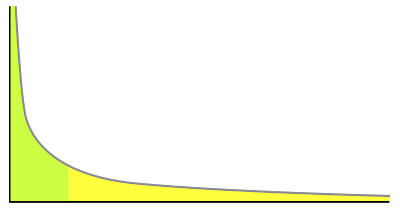 I have always wondered to what extent a random walk with normally distributed steps would differ from a Pareto distribution with comparable means and third moments. I have never believed that stock prices are fractals or infinitely variance, or any way different from a shifting normal distribution or a mixture of same. The hazard rates of fall off for both distributions could be compared, and one would hypothesize that there would not be a observable difference.
Ralph Vince writes:
Vic,
I have always agreed with precisely what you are saying. The "Pereto Explanation," does NOT explain market conditions changing; it is stationary. Clearly, those who posited that were naive when such might be better modelled by moving distributions (maybe even Cauchy distributions, where variance issues still persist).
However, when we speak of variance in returns, we must consider that the ntion of "infinite variance" is equally naive(!) as follows: What is varying is returns, specifically, today's price divided by some price in the past (e.g. yesterday for daily returns). Everyone seems to (conveniently) discount that these cannot go below zero. Thus, if returns were equivalently bound on the upside (at 200%) we could be certain that variance in returns was NOT infinite. Sine we cannot makes this assumption, we can only assume that variance can be infinite ONLY by upside moves of ever increasing maximum magnitude as we increase the window of time into the future.
We should be so lucky!
p.s. my own take on it is that we are dealing with moving distributions, likely Normal or at least where the variance is measurable and finite. The shape of the distribution, it;s moments, however, can move rapidly and without any warning whatsoever. price change, is just the single data point selected at that moment from such chrono-dynamic distributions, the real question pertaining to price change — and challenge — is to discern what that distributions is at the moment. THAT is the real price change, the solitary point witnessed, just a random manifestation of it.
Steve Stigler writes:
On stock models: Some aspects of these models are driven by a wish for internal consistency, that the step distribution is the same (rescaled) for steps in minutes or hours, etc. And the steps are independent. These imply that the steps are "stable distributed", a class that includes normal and some heavy tail distributions. The reason is the central limit theorem (clt) - if the step for a minute was pareto with finite variance then the step for an hour would be the sum of 60 such and by the CLT approximately normal. If the step for a second is pareto, even more like a normal for an hour. So if you don't want a very complicated analysis the only choice with finite variance in normal, and if you take any other step dist for small steps the dist for large steps will be approx normal.
Jul
15
On a Moral Note, from Victor Niederhoffer
July 15, 2012 | 3 Comments
 On a moral note, which I feel totally inadequate to opine upon, why is it considered so universally reprehensible to be a stool pigeon, or to dessert a sinking ship? Maturin always refused to spill the beans on his fellow mariners even when it would have helped to defeat the French or save his ship, or help out his best friend, because of the moral stigma.
Jack Tierney comments:
This dilemma is dramatically presented in "Scent of a Woman." Al Pacino gives a rip-roaring soliloquy on why his "ward" is justified in not implicating three associates who violated the school's honor code - first, by behaving in an ungentlemanly manner, and second by not admitting to it. Due largely to the speech, the young man is exonerated to cheers from his fellow classmates and much of the faculty. The line from the speech that I recall vividly goes something like this: "Many times I was faced with the choice of doing right or wrong. In every case I knew what the right decision was. I never took it. Why? Because it was too damn hard!"
Almost everyone seemed happy with the conclusion. I was not. As far as I'm concerned. the over-riding issue is whether, once we have sworn to adhere to a code, it is permissible to toss it to the winds because popular opinion or powerful forces believe otherwise. The young man and Pacino are, unsurprisingly, both portrayed heroically. Hollywood has a history of lionizing scoundrels and demonizing those who spoke against them. Should that be the template by which we measure honorable behavior?
Rudolf Hauser comments:
This may well be something some of us are genetically programmed to do. The fact that the trait is so common across cultures is suggestive of this. Genetic traits depend on survival of the gene that carries them, which means they aid survival and reproduction. The logic is that on the evolution of reciprocal altruism is that it genetically paid to help one's siblings since they shared many of the same genes, increasing the odds that the gene that encouraged such behavior would be more likely to survive since some of one's siblings would share that gene. But then there was a recognition problem.(The evolution of such traits is likely to have started among our pre human ancestors who did not have the benefit of language.) An older sibling would know who its younger siblings were but not the other way around. But the odds of the gene thriving would increase if it acted in the interest of those who helped one as they might be older siblings. Members of the same tribal group would be more likely to share that gene than outsiders. But altruistic behavior has costs to the entity engaging in it. The most favorable trait would therefore be to appear to be altruistic without being so in fact but benefitting the altruistic behavior of others toward oneself. But that is costly to those who do engage in altruistic behavior, so a genetic response in which the behavior of cheaters and traitors is punished would tend to reduce such cheating. Experiments have shown that people are willing to punish cheaters even if it has an economic cost to them of doing so. Along similar lines, there is more of a hostile attitude toward those outside a group than those within one's group. Both of these traits account for why it is considered so reprehensible to be a stool pigeon or engage in other behavior inconsistent with what are viewed as societal obligations to the group.
From a moral standpoint, doing what is right morally is far more important than loyalty to someone whose moral behavior turns out to be reprehensible. The purpose of liberty in part is the belief that one should be able to act on the basis of one's individual conscience rather than following the possibly evil dictates of society. The opposition of society to such behavior is one reason the fight for liberty is often so difficult and why individuals are often reluctant to stand by what they believe to be right.
Jul
15
It Is Interesting to See, from Victor Niederhoffer
July 15, 2012 | Leave a Comment
It is interesting to see that the sage was the one that blew the whistle on their competitor AIG, in a so typical gesture of deflection, self-servingness, sanctimony, and fellow travelership. How many others beside Sobel and Greenberg has he deflected.
Mr. Krisrock comments:
Buffett hates hedge funds, high tech, anyone who has lots of money and like him hasn't created foundations that pay no cap gains or ordinary taxes…he doesn't buy new cars, he gave up his reinsurance insurance CEO…he is truly the last angry man.
Jul
15
It Is Interesting to Note, from Victor Niederhoffer
July 15, 2012 | Leave a Comment
 It is interesting to note that Friday the 6th of July, the SP closed at 1351.80. And Friday the 13th July SP closed at 1351.70 . Similar proximities occurred on 2/10/2012 and 2/03/2012 at 1327.30. Headlines in the media such as Bloomberg state: "US stocks gain for week, erasing losses".
I am drawn to look at such things as rank correlations and inversions in such books as Kendall on rank correlations to study this with a view to reducing the ability of the market mistress to relieve one of funds.
Chris Tucker asks:
Is the options market in ES, SP, SPY and component stocks large enough to pin the S&P?
Anatoly Veltman writes:
Alas, it should be treated solely as market trivia, of no predictive value. I wouldn't worry about newswire's interpretation; I'd be more worried about optimized coding interpretations. How should researcher classify daily or weekly delta? E.g, is change of mere .10-.90 on SP500 trading 1350.00 = no change, or should some percentage threshold classify as a change rather than unchanged? Percent change makes more sense for longer-term (years) of studies. The levels near 666 should normalize different delta than levels near 1576. I guess that levels of interest rates might also have impact — but we've been relieved of this variable issue for a couple of years hind and hence by the true Libor fixers.
Victor Niederhoffer comments:
One is often involved in things too trivial or microscopic. Indeed that is what was said to me 50 years ago when I started counting eighths in individual stocks in my undergraduate thesis–a count that set off a field that one is told has not been entirely fruitless. Thanks for the firm guidance.
Anatoly Veltman replies:
It's interesting that 25 years ago I was taught that the less observed the security is — the better the technicals! In that regard, one-eighth 50 years ago might have been more predictive than .90 delta in e-mini today. We're in the age of battle of the black boxes, the most successful of whom manage to relieve us of funds the moment we start over-relying on a particular minor indicator.
Jul
13
 To what extent does the concept of speed ratings, popularized by Crist , have applicability to markets. One variant of the idea being which horse had the fastest quarter last race, or which one had the greatest move down from 1 quarter to the next, like from first quarter to stretch, or stretch to close. Can this concept be applied to days within weeks, or months within years? How would some of the handicappers or horses extend this and what would Bacon say?
Bill Rafter writes:
While in grad school a buddy and I used to go to Golden Gate Fields regularly. For some reason it was always on a Thursday, and we went for the last two races to avoid the entrance fee. The lack of admission was critical because it removed the necessity to bet. (relation to low fixed costs?) The Racing Form was a critical part of the exercise, and I would bet on the horse with the highest speed rating that was showing greater than 8 to 1 odds close to post time. The bets were on the minimal side.
My results were successful if you measured my wine supply, which was quite good. The accumulation of wealth from horse racing was not something I relied upon, so any winnings were spent on the way home at the liquor store on the main drag. Racing bets were not something to aspire to, for a very good reason. Going to the payout window revealed the demographics of those who typically bet on longshots, as an 8-to-1 horse was considered. We also tended to meet those same people in the liquor store, where they were buying Thunderbird.
Jul
12
The Infinite Creativity, from Victor Niederhoffer
July 12, 2012 | 1 Comment
The infinite creativity of the market mistress, (who must be very good on the romantic front) gives us and me, a 1% down open after an unchanged day, vis a vis close and yest open to close, to help relieve the weak from their funds in a summer month.
Anatoly Veltman writes:
I listened carefully to everyone at the annual FX WEEK conference Tuesday at NY Hilton. The complacency toward the EUR currency trading levels was stunning: some called 1.22 bottom and rally to 1.32. I was profoundly baffled. Yes, there may be opportunistic pops here and there - but that currency is conceptually doomed. I wonder if equity holders will ever want to take this doomdom into some consideration
Jul
10
Watching the Tennis Match, from Victor Niederhoffer
July 10, 2012 | 7 Comments
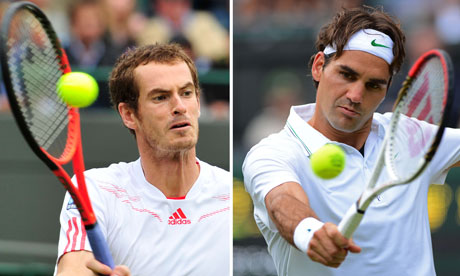 The chair is in the down east 1000 population of Vinalhaven but saw the Murray Federer match. Murray is so stiff and immobile. His serve has no lower body in it. His game is stale and dull and uniform. A total non-entity with no potential whatsoever. He seems a sullen poor sport to boot–must be an agrarian. He should take lessons from Jack Aubrey. It was a foregone conclusion he was going to lose… and he gave up like Djokovic last year in the US Open somewhere in the third set, totally unforgivable. Has no bend in his knees. And in any other sport except perhaps curling he would be bringing up the rear.
Jul
8
Many More Articles to Follow, from Victor Niederhoffer
July 8, 2012 | 1 Comment
(BN): "Obama Proves No Carter in Romney Linkage as Investors Favor U.S."
Let us expect many articles like this using ad hoc measures, selected starting and ending points, and forgetting that the market dropped 50% before Nov 2008 as investors anticipated victory by agrarians.
Phil McDonnell writes:
This is a classic straw man argument. Take the worst performing President and show that Obama is only the second worst performing President.
Jul
8
 Things learned from dinner with Tyler Cowen:
Always order salmon when at a good restaurant (they have to do something good with it to keep it on the menu).
At a fish restaurant, the greater the number of Asians the better. The greater the number of pretty apricot tarts, and joke-telling happy people, the worse the restaurant as they're not serious about food.
Order the ugly and unknown as they have to be good to be on menu.
The best strip malls for food don't have a big box like Walmart.
Conscientiousness is the key quality to get a job for young people these days.
The median income has declined some 10% in last 10 years.
The rate of unemployment for males of working age these days is 18% up from 8%.
Le Bernadin (New York, NY) is his favorite American restaurant.
Get the best sushi on side streets rather than avenues, and stay away from Paris for good food.
He has eaten at Noma in Copenhagen.
Cowen was New Jersey chess champion or some such at age 14. His step daughter Yanna is very expert at health care, and works for a firm The Advisory Board Co. that is very interesting.
German economists have depth but not agility unlike his friend Kasparov, who has both but is better at the tactics than Karpov.
Canned food has the best (i.e. least) environmental impact.
Italian wine growers are leaving their firms disproportionately to their female progeny but he doesn't believe the explanation is mainly genetic as in Galton's demonstration that the decline of eminence in England was due to the eminent marrying heiresses who were relatively barren.
A good question that Tyler always asks before ordering any item of the waiter is "if this were your last meal on earth, what would you order?".
Steve Leslie writes:
I liked the last point. Here are a few extra thoughts. If you have a favorite restaurant, get to know the owner, the maitre d, the bartender, and the ex chef. When you make your reservations, mention the owner by name and tell them you want a good table.
Find out what the specials are for the evening. If there is any advanced preparation necessary tell them to set aside enough for you. If necessary leave your credit card. When you arrive, ask to speak to the chef for just a moment. Depending on the place you might be able to go into the kitchen and speak to the chef directly.
Send a drink to the kitchen for the chef and one to the bar for the bartender. This lets them know that you are discriminating and want special service. They will respect this. Trust me they will take care of you.
If you want service you have to kiss a little ass. Ask the chef what is they would recommend. and go with it.
If you are traveling ask the concierge to suggest somewhere to eat. Have them make the reservations for you. That is their job. Also ask them if they have privileges at private restaurants and clubs by staying at the hotel. Be specific as to what you are looking to eat. Fish, chops, steak, Chinese, Japanese, Italian, Brazilian Beef, Asian Fusion.
When you arrive, be polite and friendly but not snobbish or pretentious. Be pleasant. If the place doesn't meet your expectations, mention to the owner or the manager that things were not to your standards. They will take care of it for you. Once again deftness is the key. Fine dining should be a special experience. In the words of Julia Child "Bon Apetit"!
Jul
8
Quote of the Day, from Victor Niederhoffer
July 8, 2012 | Leave a Comment
"It's not possible to do the same each time, and I wanted to see nonetheless if he could do it again," Federer said. "I was really happy he couldn't do it".
Federer talking about his two wide serves to Djokovich's forehand, the same show that Djokovich luckily slapped back, thinking it was a lost cause to win the US Open final last year against him. Oh my, never fish in the same place twice when crocs are around in Australia or the markets.
Jul
3
 As Anne O'Connell, a professor at University of Cal Berkeley, said "there are important cases in which the chief justice has to put the court's interests above his own ideological or jurisprudential views. This was one such case."
One would suggest that the court acts to survive and prosper like the badger or any other organism subject to incentives and emoluments.
Gary Rogan writes:
We may never know whether he wanted to keep getting invited to all the cocktail parties or they made him an offer he couldn't refuse, but he did change his mind at the last minute. In either case, a man with a lifetime appointment somehow has to side with card-carrying communists while making basic mistakes (like a tax law cannot be challenged until the tax is actually collected, and several others), and redirects trillions of dollars of economic activity. All this to make sure that the rest of them with lifetime appointments and no known personal threats of any kind have no chance of being marginalized? Never has so much been sold out for so little even if this subhuman was threatened.
David Lilienfeld writes:
Two comments:
1. It's significant how many in our country have as low regard for the SCOTUS as they do. Even more so when one has a Senator questioning whether the court has any standing to rule something as being constitutional or not. The dysfunctionalities present in our government are manifesting at the SCOTUS, and the populous is none too pleased about this. Given that we live in the iPhone Society, one might wonder when the populous would expect anything else.
2. At the time Truman desegregated the military, 65 percent of the country opposed the action. When Brown v Board of Ed was decided, 60+ percent of the country opposed integration of the schools (though this was to change rapidly in the wake of the decision). Courts and politicians are political animals, but they are also leaders–or at least at times in the past, have been leaders. Unfortunately, as we have been without political leadership for sometime, it isn't surprising that this case was decided in such a manner as to defy just about any and all expectations. (There are a lot of people on Intrade who got hosed in this decision).
Rocky Humbert writes:
Have you even read Robert's opinion? I did. He didn't do any favors for the left in it; he takes a swipe at Wickard and he is very clear that upholding the mandate should not be construed as any expansion of government power. Essentially, he wrote that if it walks like a duck, talks like a duck, smells like a duck, then it's a duck. Substance over form. He blew away the government on every other substantive argument.
In the future application of this ruling, I believe that his opinion won't be used as opening the door further to govt intervention; quite the opposite is true! But unless you read the opinion, you won't know this and the MSM won't report it. I find it disappointing that the court ruled this way, but as I noted yesterday morning, this was not an easy decision and the opinion reflects that.
I find it reasonable for you to quarrel with the substance of his opinion only after you have read it. But judging from your comment, you haven't. And you comment is vacuous and snarky.
Read the opinion and then comment on the substance.
Gary Rogan adds:
This ruling is a tortured conclusion looking (and failing) to find reasonable arguments as far as the "tax" portion of it is concerned. What is being taxed here?
It was sold as a mandate and this legal genius finds it to be a tax. If someone sells you a duck claiming to be an elephant, and you find that it's OK because you have a license to sell ducks instead of finding fraud, you are not operating in good faith. Especially if the duck isn't even a normal duck but some mutated monster resulting from an unfortunate breeding of a duck with a goose.
He cuts one type of power found in the "living breathing Constitution" by progressive activists and adds another power of similar flawed pedigree. He did no favors to the left? He SAVED the damn left, to continue their abuse of the Constitution and the country. This man is a snake.
Garret Baldwin writes:
"It was sold as a mandate and this legal genius finds it to be a tax."
Respectfully, it was sold as a mandate to the American people and to representatives in Congress. But when it went to the high-court, it was sold as both a mandate and as a tax. There were two arguments provided on behalf of the Administration. One was that the mandate fell under the commerce clause. In essence, Congress was ruling that it could create commerce in order to regulate it. They were creating a program that forced people to buy something, and that would fall under the clause. Could Congress then make you buy anything it wanted, became the question.
Roberts ruled that down. Even Sotomeyor disagreed with that logic.
But then the issue of a tax did in fact come up in discussion. Though the President said that it wasn't a tax on ABC in 2009, the administration argued in front of the court that the mandate fell within Congress' taxing power… but attempted to argue that it was not a tax… They argued that PENALTIES are within the reach of Congress' taxing power, but that this was not a "revenue generating policy" which is what a tax technically is.
What Roberts ruled is that Yes, this does fall under Congress' taxing authority, but you're not allowed to call it a penalty. It's a tax. Congress can tax whatever it wants, soda, medical devices, and even inactivity. For the optimistic on the right, and for people who have being saying this is a tax all along, the ruling isn't necessarily the worst in the world. First, it shuts down Congress' ability to create markets under the guise of the commerce clause. This was especially concerning for me because I feared they would try to create Cap and Trade through similar means. Second, Democrats are now the "Tax Party", and Roberts has given Romney ammo. This is a tax. And the President swore that no new taxes on the middle class would hit them. There are 21 new taxes in this law, and seven of them directly impact the Middle Class.
"It you think healthcare is expensive now… wait until you see what it costs when it's free." PJ O'Rourke
Rocky Humbert writes:
This will be my last post on this subject, so Mr. Rogan et al should feel free to label me a "snake," "commie," or whatever choice epithet that he uses for people who don't agree with his self-declared (and as yet unproven) "superior" weltanschauung.
I am starting to see non-legal analyses on the the web, which may over time cause the currently-celebrating liberals to realize that by bringing this case to the Supreme Court, they have opened a Pandora's Box which they will rue. Sure, you can bitch and moan that they didn't strike down the ACA. But this ruling will have a much more important effect in the months and years ahead in terms of LIMITING government. Sure, I had hoped that they would strike the ACA down, but I'm starting to believe that what Roberts did here may be vastly superior IN THE LONG TERM.
If Mr. Rogan can turn off his kneejerk reaction for just a moment and read the following URL, I think he will begin to see that Roberts may have just proven Voltaire's Maxim: "The perfect is the enemy of the good." It's quite possible that in 50 years, the historians will look back and see this as a defining moment when the pendulum which started in the 1930's begins to swing back.
While I believe the ACA is bad economics and bad policy, I believe that the precedents which this ruling establish (and to which lower courts will be bound) are vastly more important and more supportive for freedom and long term prosperity. I am hopeful that as today's scoreboard and November's election fade from memory, the lasting positive consequences (for those on the right) of this ruling will come into focus.
Jul
1
What a Day, from Victor Niederhoffer
July 1, 2012 | 2 Comments
What a day. And was it so unexpected that the various flexions would arrange to use their trillion war chest and ability to print money, to bail out the less wealthy countries at the expense of the common man.
Gary Rogan writes:
Also puts that "we recommend positioning for 5% down" Goldman note from a week ago in perspective.
Jun
30
Grain, from Victor Niederhoffer
June 30, 2012 | 4 Comments
 To what extent did the 20% rise in the grains in the two weeks preceding the beginning of this week, presage the upward move of 50 points this week in S&P? How to quantify?
Jeff Watson writes:
Grains were oversold a couple of weeks ago because many players thought Greece would leave the Euro, and China's economy might crash.
Gary Rogan writes:
It seems rather unlikely that China crashing would affect its demand for grains much. Perhaps some substitution from animal feed to human consumption. I had read in the past that its demand for basic foodstuffs is pretty inelastic, and in fact this demand becoming such is what really led to the upheavals in the Arab world as there was a huge new inelastic customer entering the market thus leaving the low-end elastic customers in the dust ready for partial starvation. It also seems strange that Greece's fate would have any appreciable demand on grain demand. Oil maybe, but not grain.
Jun
23
 One visited Belmont Park as a guest of noted handicapper, writer and spec Keven Depew's family on a beautiful Saturday afternoon with great gratitude. The place reminded me of a mausoleum. Right out of Rosebud. More empty betting booths than customers existed. Hundreds of unused betting booths with lettering from the 1960s that hadn't been used in decades stood unattended. About 1000 were at the track which sits on at least 100 acres and houses thousands of employees.
The average handle per race was about 150,000 including all exotics and simulcasting. And that's 25000 per race to the associating. The average purse was 60,000 of which about 80% is paid by the track. The losses on the Belmont Park must be of the order of 50 million a year, and taking the opportunity cost of the land on the park which is worth billions, it's a billion dollar a year loser. Naturally the state just agreed to take it over, so the losses will escalate and the ordinary citizen will pay for the entertainment of a dying breed of 90 year old bettors, and for maintaining the status of the owners and horsemen.
Throughout the industry, there is devastation, degeneration and loss. The breeders are desperately trying to sell their farms, and the attendance and handles are decreasing. Not much attention is paid to the losses except that an indirect effect is that twice as many horses are dying each year from the races. We only saw one death on Saturday in the 8th race, and it was properly handled with a black screen, and an ambulance truck. Apparently it's the norm because the purses are getting bigger as an offset to on track occasions and the trainers have more of an inducement to get their horses into the races with greater frequency.
In the good old days, on a nice Saturday with a 300,000 high stakes race like the mother good handicap, we would have seen 60-75,000 in attendance. No touts letters were available and the usher who had been there for 45 years said he hadn't seen the Lawton brothers' the famous clockers, or any replacements there in 25 years.
The mother goose handicap was won by the beaten favorite at 5 to 1, and he had been 2 to 1 against the same field the previous two races. A good lesson to learn for speculators. Laurel got the exact on the mother goose with the help of Lila Depew who knows horse racing so well, and makes one wish that one had half the knowledge in his own field as she does in hers where she runs online racing for the racing form. The average racehorse costs 35,000 a year to keep in a barn and race. With 85,000 foals born each year from the breeders, that's 3 billion a year in costs. The average horse at Belmont wins about 40,000 a year, of which the owners take is say 30,000. Let's say 10,000 of them race each year, making their prize money about 300 million.
Whatever the economics of breeding are and some horses produce 600 foals at 20,000 a foal, there is a tremendous loss to the horse racers. It has to be done for prestige and enjoyment. The race tracks themselves must lose another billion or two a year considering the opportunity costs. No wonder the NY government is taking over the racing association, as the owners can't afford it any more. In New Jersey however, with attendance at The Meadowlands down from an average 0f 25,000 10 years ago to 1,000 these days, all the barns are being torn down, and a grandstand 1/5 the size is being built at a cost of 85 million in the futile hope that a reduced size will make the place look less like the mausoleum that all the non-casino racing tracks looks like.
The main reason for the decline in racing handle is that the average bettor is 90 years old. Young people these days don't wish to spend a whole day at the track for action when they could be playing video games or watching porn. The off-track take of 20% is much higher than they can get at the casinos, and they are not comped and romanced at the races. The price of admission to Meadowlands I believe last time I was there was 0.50 but to its credit Belmont maintains a 2 buck admissions charge, although there is a rebate of 1 buck for most circumstances.
I liked the nice touch that when you come into the horseman's area, it's a jacket and tie policy only. There were about 25 in the only restaurant on premises, and the restaurant looked like it had a capacity of about 600 from the good old days. I was reminded of how uncle Howie walked through the Loews Hotel with a yarmulke on to go to his wedding in one of the private rooms there, and the general manager walked up to Howie and told him to remove the yarmulke as it might offend the guests. Howie has always rued that day to the present. He was so revved up for the wedding that he completely overlooked knocking the block off the general manager, cursing him out, creating an uproar in the hotel and canceling the wedding. As I saw the forlorn handful of bettors straggling at the finish line, I thought of what many commodity brokers have told me. "It's so sad to see Smith trading now. He used to trade 1000 lots. Now he's reduced to trading one lot, and we're on his back every moment to see that he doesn't stiff us if the loss goes above the margin."
There but for the grace of the good one be I and all other gamblers. Laurel is a big gambler and bets much more heavily than I do, and one couldn't but be thankful that …
David Hillman comments:
It's taken three decades, but this is a pretty god description of what's happened at Pimlico in Baltimore. Absent the Preakness, I have to wonder if the course wouldn't have been dismantled already.
J.T Holley writes:
Vic,
Back when Lila and Kevin lived here in Richmond she invited me to bring the kids down to the 17th Street Farmer's Market that she ran. She told me that I should play Tony Cibo in checkers. At that time Tony was 86 years old and was a master of the board. Lila was so nice to walk around with my children after they watched their father get beat in the first two matches. After I realized that it was hopeless and I didn't have a game I asked Tony if he could talk with me about his win against Tom Wiswell. He broke out a newspaper article that was preserved. It had a picture of him sitting at the table playing with Tom and mentioned the feat attained. I asked Tony how he did it and he said "practice", "memorization", and "studying books" from the greats.
That was the first time I also learned about St. John's and being a "Johnnie" as Lila told me of her education. She is awesome and Kevin and her are really great people.
I take my kids to Colonial Downs here in Virginia whenever I can. On Sunday's the place is a ghost town, but they offer a 16 dollar package. You get 4 admissions, 4 tip sheets, 4 hot dogs, 4 drinks, and entry into prize drawings for only those attending that day. I've never been where one of my children didn't win a half way decent prize due to the small pool of attendees!
I don't know how the Jacob's Family is profitable owning that track? I've always thought that it had to be the satellite-casts that they are a part of because the place is complete empty the majority of the time. Heck even the Virginia Derby that is coming in a few weeks only has around 10,000 attendees.
Anything that I've learned from Horse Racing has come from your book/posts over the years and Kevin.
The other slice of heaven that I would recommend people to visit is Montpelier the former home of James Madison. The Orange County Fair is there annually and it is a true historic agriculture fair. It also has been turned into a thoroughbred rescue and has some of the most amazing horses that I've seen. Yes, they have fox hunts, polo matches and steeple chases there as well. Don't go there on any days of those events though. Go when there isn't anything planned. The silence is powerful and Montpelier sits there as if you have been placed back in time. You can listen to the horses in the distance stalls and running around in the fields. It isn't a commercialized landmark but one that is barely kept up it seems and the raw preservation is still intact.
There is a nostalgia that seems to hang onto Mr. Jefferson. I wonder if many who hang onto such nostalgia even have read much about Mr. Jefferson? He actually passed away indebted and broke, if I remember my readings the bankruptcy laws were different back then and when your parents and inlaws passed you inherited their debts. Not many know either that he had a nail manufacturing facility and worked hard with incentives "red coats" to further produce and profit.
One of my favorite quotes by T.J. is in a letter to his daughters. They wrote him and asked him to help buy dresses that were fashionable and newer. His response was "dress like the others, be different with your mind". Far from buying farmland to be fashionable and doing such for nostalgia or to foxhunt and having an expensive hobby.
Jun
21
Duveen, from Victor Niederhoffer
June 21, 2012 | 1 Comment
 Duveen by S.N. Behrman, the prolific playwright (The Second Man, Fanny) contains a smorgasbord of interesting, amusing, and illuminating grist for the mill of readers interested in marketing, history, and finance. Joseph Duveen (1869-1939) was the most successful dealer in fine arts, or indeed any pricey collectibles in history. He achieved almost a monopoly on selling almost all Italian art painted before the 1700's. His techniques to achieve the monopoly are at once hilarious and instructive. He insisted on paying the highest prices for all paintings that came up at auction or through collectors, and made sure that none of his collectors ever suffered a loss on the market value of any paintings he sold to them. He was the main force behind the collections housed in the National Gallery, the Tate Gallery, and the Frick. His customers, included Mellon, Kress, Rockefeller, Hearst, Frick, Morgan, Altman, Huntington, Bache, Goldman (of Goldman Sachs), Widener, Rockefeller and almost every other magnate of his time.
A key feature of his selling method included preparing a catalogue of the collector's holdings that immortalized the collection and the collector. The one magnate he wasn't successful with, Henry Ford, is the subject of a hilarious story. Duveen presented a catalogue to Ford with all the greatest pictures available in the 30s. Ford said it was such a beautiful book, that there was no reason for him to buy the pictures.
On other occasions, he refused to sell to a collector, until his collection has reached a certain point of grandeur. He always insisted that he could sell his best paintings to Mellon or Kress so why would he wish to sell to a mere millionaire who was not one of his favored customers already. In this technique he predated Madoff. In describing his methods, Mrs. Hearst said, "Duveen didn't want to sell any of his paintings. But his customers always badgered the poor fellow until he gave in."
He liked to buy entire collections, and stored the collections in palatial dealing rooms that he maintained in London and New York. His mantra was that "Europe had the paintings but America had the money" so his main customers were the American industrialists, and 5 and 10 centimillionaires of his era.
His financing method was to use his paintings as collateral for loans, and to buy up all good collections and store them until the values increased. He was able to beggar his brothers and sisters by buying up their interests and refusing to pay them off during his lifetime. He didn't understand the concept of interest on money, and gave his collectors infinite time to pay their debts to him. Yet during this time, he had to borrow from banks like the Mellon and pay enormous interest. In addition, he had heavy expenses from maintaining his business and paying off all his runners, and finders across the world. Thus, he was always cash poor during his life.
He bought out all the interests in his family but didn't pay them off during his lifetime. The main problem in his financing was that he had to pay cash for everything he bought but he gave unlimited credit to all his customers. A favorite technique was to lend a painting to a collector to hang in his home or gallery for several years, while he became acquainted with the painting. He liked to say that the painting was the one asset that a collector could buy that would cost him no upkeep, and give him constant enjoyment from viewing it. They were unable to sue because he was the only one that could sell the paintings in his inventory.
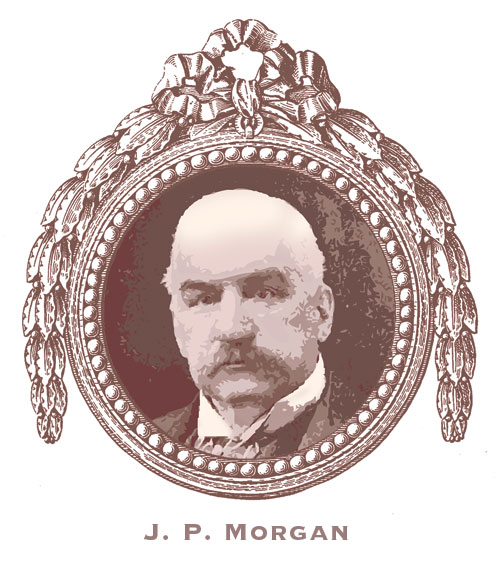 Behrman believed that the main customers were lonely, silent men who were ashamed of how they obtained their wealth, and unhappy with the ne'er do wells in their family. Through the paintings they gained respect and immortality. And the paintings never talked back to them, became playboys or died in race track accidents like their children.
Duveen had many partnerships with those who could aid him in his marketing. One was with Bernard Berenson, who vetted all his pictures, and received a commission on all that Duveen sold. Berenson eventually turned on Duveen, when the two had a bitter fight about the authenticity of a Titian that Duveen wanted to sell. Other partnerships were with the butlers and comptrollers of all his customers so that he could get advance knowledge of what they had to sell, and when they were in a mode of buying.
One of his marketing techniques was to buy up all the English and Impressionist paintings of the era that his collectors had in their possession, so that they would not be tempted to add to their collections. He liked to upgrade his customers into buying only the best paintings and eschewing all commercial items. He found out early that his collectors liked pictures of pretty woman, with bright colors and action in his paintings that came from English Nobility. And when a great masterpiece came up without these characteristics he would buy them but not try to sell them, and store them in his warehouse. He liked to say, "it is much easier to sell a second rate picture that has belonged to any English nobleman than a first rate one that has belonged to a treat man of the Italian nobility."
Duveen got his start selling Delft antiques that his poor family collected in Holland. He learned all the techniques of selling from his family's antique furniture business. But he soon came to the conclusion that it was much better to sell million dollar paintings than $ 5,000 rugs and medals. The book is sprinkled with great anecdotes and selling procedures of the time. For example, when he found a Da Vinci that a Russian countess was selling, he had first to pay for an option to buy the piece at a set price of 1 million. But then it had to be offered to the Tsar at that price before he could buy it.
Behrman, the author, is one of those 20th century men who despised business people. He took pleasure in thinking that Duveens' customers were "scrupulously dishonest". And he seemed to think it fair that Duveen was equally dishonest with the customers. He fails to note that people like Kress, and Woolworth, and Rockefeller, the billionaires of his day got their wealth from selling goods to the masses that uplifted their standards of living and gave them the comforts that the richest of two generations back couldn't buy. Behrman writes, "as his customers aged, they felt guilt about such things as machinegunning the strikers at their mines, they were characterized as exploiters of the poor and the source of their misery. they felt futility and hostility closing in around them, they longed passionately for the happy company, in the even darker regions ahead." Duveen's paintings and persona provided that company and relief from their guilt.
 Duveen was always cash poor, as he had enormous overhead and inventory from carrying all the items that were out of favor. He also maintained a lavish life style and was constantly giving works of art, and paying for the buildings of the institutions that ultimately housed the paintings like the Tate and The National Gallery. His New York Gallery was built at enormous expense on the corner of 56th street and Fifth Avenue, currently the Bendel building, but then called the Ministry of Maine. His family complained about the expense but Duveen assured them he had "all the pictures sold". The family said "show us the bills of sale". Eventually when he died, he made a big sale to Mellon, and was able to pay off all his debts and died with an estate of about 7.5 million pounds, the first time he was solvent and debt free in his life.
After he died a rival dealer said "We miss him but we are glad he is gone". What can we learn from Duveen? He had a complete marketing operation, with tentacles in every aspect of the supply and demand chain, paying every conceivable source of supply with bribes and emoluments. In this he reminds one of the publicity hungry flexions that run conglomerates of today, especially those in the Midwest, with their politician antennae always attuned to the sources of cheap goods that they can get ahead of everyone else.
He liked to pay the highest prices for things, maintaining the market for his goods and creating enthusiasm among his customers. He was completely attentive to the needs of his customers and would do anything to please them, thereby showing the wisdom of the motto used by most great businesses that "the customer is always right", and taking back items with no questions asked at the original selling price regardless of the legitimacy of the complaint. He maintained the viability of his market by buying up all goods that came to it, thereby insuring that his customers always made a profit. But after he died, the prices of all his goods suffered a terrific fall. He was a master at manipulating markets. He bought goods, not because he expected to make a immediate or reasonable profit on them, but in order to maintain the illusion that none of his customers ever sold a painting at a loss, and that his favored 400 year old Italian masters would never decline in value. The importance of running stops, and hitting the exercise price of knock out options comes to mind.
I'd like your comments on what we can learn from Duveen.
Steve Ellison writes:
His operation sounds like a corner.
Jun
21
Bernie, from Victor Niederhoffer
June 21, 2012 | Leave a Comment
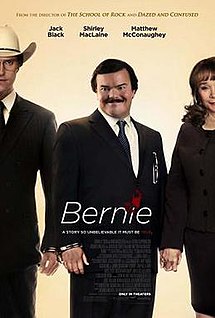 There are two movies named Bernie. Both of them killed a friend. One, the Canadian one, is about the most loathsome person in the world, an alcoholic, trigger happy romantic who helps no one and hates his life. All his actions and all the people about him make you feel low and scatalogical. The other, the American one from Carthage Texas, is about a man who loves life and helps everyone and does good. All the people interviewed are admirable, and have timeless wisdom and character, and one wishes one could learn more from them. One leaves the American Bernie by Richard Linklater feeling uplifted like one feels after reading the Reader's Digest compendia about the greatness of America. But the compassion for the wife is somewhat tarnished. The current Bernie is highly recommended.
Jun
18
One Notes, from Victor Niederhoffer
June 18, 2012 | 5 Comments
 One notes that all the baseball swings end at the opposite shoulder and usually with the opposite hand holding the bat. That's similar to the way the good one handed backhands are hit and one of the 10 lessons I learned about improving my weak backhand.
One thinks of the palindrome. He fired his kids in the summer of 2008 so he could bear the market down. He took on the Bank of England when he thought that the pound was too high. He often swings for the fences. Even his vulgar former partner liked to go for the fences when he had a profit for the year. The most intelligent thing I've ever read about the former soft commodity trader now a philanthropic fund of funds is that he likes when he's had a loss to ride it all the way up for a profit. There must be something to taking a full follow through to the opposite side that can be quantified in markets between and within.
Anatoly Veltman writes:
The "rubber-band trade" logic went as follows:
1. When I first decided to buy, of course, I was rite, as I'm no fool
2. Mr. Market — as it always should — treated me harshly at first, as I'm often in too early
3. But that's where the key event took place: Market saw my back to the wall, barely holding on and unable to add — but Market was so desperate to buy RIGHT HERE, that it couldn't even wait a tiny bit (for me to throw in the towel and give itself an even better price). Now, that really proves my original idea.
4. Market keeps chasing her up, well past my original entry. That's my chance to turn the tables on Market: now I will front-run them, with little risk to be bullied myself
Jun
18
One Predicts, from Victor Niederhoffer
June 18, 2012 | 3 Comments
One predicts without knowing anything about the subject that if the supreme court rejects the health care bill, the market will go down because so many flexions have profited from it. And if they uphold it, the market will go up as the flexions will maintain their profits. Of course, since everything the supreme court does is political especially in a pres year (I don't know this but speculate it's true), their decision will be a middle of the road one, that's not too helpful to either party.
Jun
17
One of My Greatest Regrets, from Victor Niederhoffer
June 17, 2012 | 2 Comments
 One of my greatest regrets outside of death, sickness, of family and friends, and other great losses, is that I have always had a poor backhand in rackets sports. How in the world I won so many championships with that poor backhand I can't imagine. It wasn't quickness or natural ability or any kind or great analytical skill. That I know.
Like most things, the backhand has gone through ever changing cycles of strength and weakness. I started out switching hands the way most handball players did when playing with a paddle or tennis racket. That was very good for a while as it expanded my reach and gave me many angles that the normal backhand couldn't handle. Then I took lessons from a great backhander named John Nogrady and he assured me that I'd have the greatest backhand in two weeks. But it didn't work. And I gravitated to a slice backhand without any torque. But the left, ambidextrous forehand was good enough so I won lots of tournaments, and like an idiot, I decided I could be the best in the world in squash even before I had ever played the game, as I was the best in paddle ball. If I knew how many defects I had relative to the champions, who were so much more athletic than me, and had so much better backhand than I could ever aspire to, I never would have thought that crazy thought. In retrospect, knowing what I do know, I never would have even dared to play squash, considering all the weaknesses, which were soon to be exacerbated by the infernal short slice backhand that all the Harvard guys under Barnaby that hadn't played the game were taught.
That turned out to be bad for my tennis. I never could beat a good 6.0 player, and when we played the tough college matches, where the number 1 and 2 rotated, (I was number 2 throughout. I was ashamed to play the good number 1's on other teams because they were so much better than me, and I was granted the ignominy of playing the number two on the other team twice.) But that cycle was okay for me in squash. Somehow with the hard ball, the slice backhand wasn't that weak. Others, especially all the good Philadelphia payers had infinitely better backhands than me, but somehow I was able to prevail against all except Sharif.
I love Jack Barnaby but I am confident that if I had gone to another college and learned a decent topspin or full swing backhand I would have been able to surmount that one personage who stood in the way of my being best. The slice backhand I picked up at Harvard, was disastrous for me in racketball. I had better stuff than most when I played but I couldn't kill the backhand and other players hit the ball twice or three times as hard as I did. Marty hogan humiliated me with all the torques and backswings and follow-throughs he had on his backhand, as did Steve Keeley. But I was too foolish, and too insensitive to change.
The cycles change again. I've learned a good top backhand in both racketball and squash now, and if I could go back in time, I'm sure I would be 6 or 10 points a game better. But of course it's too late. I can hardly beat Aubrey who's 6 years old now, because I am so much immobile. Anyway, today for the first time in a year, I played tennis. I practice my new backhand playing against myself just dropping the ball. I learned 10 new things I was doing wrong on my backhand, or things I could improve.
1. Take a bigger backswing.
2. End the swing like a baseball player up high on the right side.
3. Get torque from the legs the hips, and the shoulders into the shot.
4. Keep the wrist locked and vertical never dropping it.
5. Tilt the racket into a slight slice face before hitting the ball top so that you get another torque into it
6. Bend the knees so you can get some lower body into it.
7. Extend the left hand at the end of the stroke the way Federer does on his slice.
8. Hit on the outside of the ball when you wish to hit it cross court.
9. Step into the ball like you're going to approach the net on all backhand shots.
10. Get on your toes and keep your head down on the flight of the ball.
All this seems very technical and specialized, but then I realized that the lessons I learned from the backhand today, would also apply to markets, which I'll relate in the next memo.
Bo Keely writes:
A forehand has many similar movements in life– from rattling the crib to grasping a fork and swatting flies– but not so with the backhand. By the time one begins racquet sports even at your tender age of what, five, in the deep end of a swimming pool with your father on the diving board shouting instruction, you had no muscle memories nor neurological models to hit a backhand. I, on the other hand, kept a diary from the same age and developed what others have called the best racquet backhand. Writing is placing an instrument in hand and drawing it across the page in the left to right backhand direction for the righty. By age 16 when I first took a racquet in hand as a senior trying out for the tennis team, I beat the number three and two singles players and so was kicked off by coach Kiley for not going out for the team sooner. The three best ways to develop a backhand, after a decade of teaching racquetball, and for once to fly in the face of a sport's maxim of specificity of training are: write longhand and especially print in order to accustom the fingers and eyes to stop and start, drive golf balls left handed, and throw a frisbee.
Jun
12
Suppose there were 2 people in an economy. And they traded. The second lost a lot. The other did not. A central bank bought the asset that the second had to make him whole. The Treasury then spent the amount of the loss on better environmental things for government buildings. The money to pay for this would come from the first person in current taxes. What would happen? The total spending would not change as the second would have spent the money he was taxed or invested it with someone who would. The incentives of the second would decrease to zero so that there was no effort to improve any more. The situation would not be much different for 10 traders. The incentives would be ruined for the winners. The spending of the winners on voluntarily exchanged things would be replaced by political wasteful spending by the government. The economy would not grow. Jobs would not be created. Why is this not a reasonable model of what's happening now and what happened during the 30's when FDR tried similar government works?
T.K. Marks writes:
A creative academic sort might counter with a disingenuous application of Ramsey Theory, positing that unduly reducing the number of elements in the set strips it of the properties from which the desired outcome will emerge. According to such an approach, reducing the system to only 2 or 10 traders (i.e., dynamics easy to understand) would inherently alter the palliative effect of intervention models. Models which can only work on vast systems of millions of traders (i.e., dynamics extremely difficult to understand).
If somebody can sit before some House subcommittee on something-or- another and manage to keep a straight-face, the above can actually be pulled off. As a matter of fact, variants of it happen all day long in Washington.
"…Ramsey theory, named after the British mathematician and philosopher Frank P. Ramsey, is a branch of mathematics that studies the conditions under which order must appear. Problems in Ramsey theory typically ask a question of the form: "how many elements of some structure must there be to guarantee that a particular property will hold…"
Phil McDonnell writes:
Rocky [see post below] makes some good points but at some point finesses the concept of (some?) politically wasteful spending into all government spending is wasteful. Personally I would posit that some government spending is always wasteful but not all is. On the other hand most government spending is uneconomic. I say this based on the fact that if the activity was economic then the private sector would probably have already done. it.
Jun
12
Dead Weight Loss, from Victor Niederhoffer
June 12, 2012 | 1 Comment
 The economic analysis of "dead weight loss" puts in perspective the loss that occurs to the totality when an external body spends money on things that consumers would not buy voluntarily. Without intervention, consumers buy things where the price does not exceed the value they place on it. For all units purchased except the last, there is excess value or utility that consumers receive over and above the price they pay. With intervention, money is spent on goods that consumers were not willing to pay for before. The real cost might be assumed to be higher than the amount that is paid. There is a dead weight cost to extent that the price of the good is higher than what consumers would have voluntarily paid.
Let us consider all the earmarks in the bail out bill, and all the environmentally friendly improvements to government buildings, and all the construction projects that were earmarked to special groups or unions. How much of this is a dead weight cost? Perhaps 95% of the amount spent. The value of the total output of the economy is reduced by this amount. There is a smaller total to divide among consumers. This to me explains why the economy is having a much smaller recovery from a recession than in the past. See Consumer Surplus.
I have not fine tuned the analysis in the above, and would have to go take into account many other variables and factors, and would have to make my analysis much sharper for it to be dispositive, but I think it catches the essence.
Rocky Humbert writes:
I agree that deadweight costs influence economic performance, but I believe the literature is inconsistent on the magnitude of the costs. A simple example puts this into context. Assume that there are 1,000 unemployed construction workers in Podunk, and lots of potholes in the streets of Podunk. The mayor of Podunk has no money to fill the potholes because his budget has been exhausted by pension contributions to the teachers union, combined with a decline in real estate tax collections (due to the housing price decline.) The mayor has fired a number of employees and cut back his maintenance cap. ex. budget. If the Federal government borrows money from China and uses that money to hire the unemployed Podunk construction workers, and pays them to fill potholes, there are obviously deadweight costs associated with these transfer payments — in particular, the salaries of the government tax collectors, bureaucrats managing the program, debt issuance costs, etc. (The effect of debt is beyond the scope of this example.) The Podunk workers fill the potholes, pay 30% of their wages back to the government (income taxes), get the psychic benefits of productive work, and the other residents of Podunk are able to drive faster, require less car maintenance, etc, and perhaps Federal Express even considers opening a new distribution center in Podunk because of the improved roads. In this example, there's no way the deadweight cost can be 95% — if only because more than 30% of the wages are making a round trip — and this doesn't consider the increased consumption by the hired workers — (which of course raises prices for some stuff they are buying–a "good" deadweight cost!?) — but the increased goods prices benefit the shopkeepers/(owners of private capital) in Podunk who are making more profits.
There are several other assumptions that I made in this example (including the level of wages paid to the Podunk workers, what China would have done with its dollars other than buy US Gov't debt, etc) but the gist is clear — it's unclear how the deadweight cost can be 95% of the money spent. I may be mistaken, but for the deadweight costs to be 95%, it would require a stimulus multiplier that is close to zero. Today's WSJ has two good articles that are on point. On the opinion page, the story "Obama's Real Spending Record" argues that growth is lower when government % of GDP is higher. While I am sympathetic to their view (for many reasons), the authors fall into the trap of using correlation<->causality. That is, ceteris paribus, if gdp is lower, than government spending and taxes as a % of GDP will be higher UNLESS the government engages in pro-cyclical behavior like the private sector does. The second article is "Median Family Net Worth Falls 40% From 2007 to 2010". (This is based on a Fed analysis, and is largely due to the housing price decline.)
Apart from incentive destruction, increased regulation, tax policy uncertainty, foreign labor competition, years of debt-financed consumption, etc. etc., I believe that an important cause of the slow economy is the Wealth Effect. The US economy is highly geared towards consumption — and families that see their largest asset value decline (and stay down) make lasting changes in spending/saving behavior. Apart from reducing worker mobility (due to underwater home prices), I believe that the pernicious reverse wealth effect can be blamed as easily as the deadweight loss effect.
Jun
10
How do multiple lead changes, and their duration in minutes very close, i.e. from up to down from close or open, or within + or - 2 for multiple minutes, affect the outcome of the day in markets? In the playoff game they had a 14 point lead. "There were six lead changes and five more ties in the final 7 minutes of the third. For the next 13 minutes, a span of 46 dizzying possessions, neither team led by more than two points." By the way, the quotes are from the AP story about the game. One of the few times that I've ever seen a good meaty story rather than boiler plate from the AP.
Bill Rafter adds:
Sounds like a job for the Spearman Rank Correlation.
Jun
10
It is Interesting, from Victor Niederhoffer
June 10, 2012 | 3 Comments
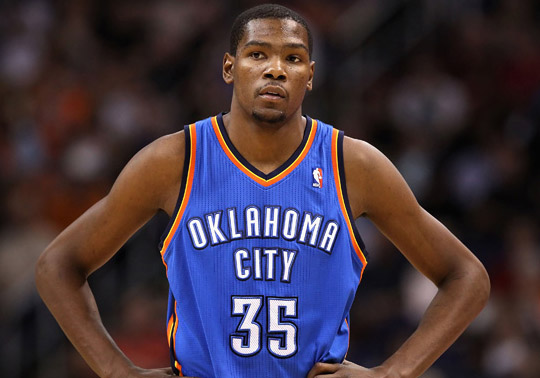 It is interesting how Doc Rivers got his name. He came to a training camp wearing a Doc J sweat shirt. Ever since, the players perpetually have been calling him doc. I like to give nick names to people. Called wisdom "the Wiz". Called John Normile, "normal" or "Doji". Call Michele "Ms. Increment " Yes. I am "the Chair " because it's sedentary. Called the guy who invented "trading algorithms for NYSE "Mr. Small" because he programmed in Small talk.
On another front, I don't know much about basketball but to me the best player I've ever seen is Durant. He can shoot well from outside or inside, and is very fast. So many of the others can only play well when they're a few feet from the basket like James, or Melo, and when they're forced deep have an average eye, and lose the game by shooting because their team is unlikely to get the rebound. Trading for the trend following reminds me of Melo's 30 feet one on one. The other player I think is second best, is Iso Joe on the Atlanta Hawks who again can do everything. I wish I knew a trader like these two, or could aspire to it myself.
Russ Sears writes:
Of course since I am currently residing in OKC area, I've watch a few games. As a runner what struck me was how good Durant was in game 6 in the third quarter, such patients and confidence when the Spurs had spent their legs in the first half, Durant then took it to them. His endurance began to wane in the 4th, but was still above the Spurs starters. Both coaches in my opinion left their starters in too long after obvious signs of fatigue were showing.
In racing the sign of pending collapse in pace of the opponent is change in their breathing pattern. A runner instinctively learns that this is the time to press the pace on the opponent.This will bring the collapse on before they can strategically slow the pace. If their cardio's exhausted they cannot "kick". Both sides were showing signs of cardio exhaustion. For fast twitch, however, there is more than cardio. A fast twitch athlete has 3 or 4 supreme total explosive efforts before their muscles start showing great decline. (Hence why in jumping events in the Olympics strategy calls for passing until the near the optimal height.) . There were several times the Thunder could have made a statement with a explosive dunk, but settled for a gentle lay-up.
Durant played with the legs of a highly conditioned young man, but the strategic timing of an experienced jumper/racer.
Jun
6
NYC Junto, from Victor Niederhoffer
June 6, 2012 | 1 Comment
The next Junto meeting will be held on Thursday June 7, 2012 at the General Society of Mechanics Library, 20 West 44th Street NY NY, and will feature Gene Epstein as the main speaker. He is an editor at Barron's and a former economist for the New York Stock Exchange. All our readers are invited. Meeting opens at 7:00pm, main speaker at 7:30pm.
Alex Castaldo adds:
Here is Gene Epstein's presentation [41 page Powerpoint file].
Jun
5
The Aura of Legitimacy, from Victor Niederhoffer
June 5, 2012 | 2 Comments
 I recently visited a Dr. and when I got there, the nurse asked me to fill out a computer questionnaire that took 1 hour to fill out. After I filled it out, I was asked to sign a statement that said such things as "you will not be paid for filling out this questionnaire, the contents might be used by commercial factors, there are unlimited people in the survey" and a hundred other things that gave it a false aura of legitimacy.
I am wondering to what extent the false aura of legitimacy pervades our field. The classic example is the elections in a marxist or democratic regime, or the government institution that's there ostensibly to protect you from harming yourself but is really a gate for preventing competition from small and new entrants into the field. The committees in the markets to maintain order and proper pricing that are really arenas for the members to mark the positions in their favor, and force out the non-members through margin changes and rule changes comes to mind. The rules against competition in all fields, the licensing requirements, and for example the ethics tests that one must pass in certain fields. How pervasive is this and what is the relevance to our field?
Sam Marx writes:
I agree that the urge not to compete in a fair open market if one is able to set up a monopoly or obtain an advantage is there, and it's a part of human nature. I believe that it cannot be eliminated entirely but there are some changes that would help. I also believe that lying and cheating obtained a large impetus and some begrudging approval when the graduated income tax became constitutional. Therefore, a recommendation I would make is to do away with the graduated income tax and have a flat income tax or replace the income tax with a sales tax. I don't expect to see any of this in my lifetime however.
Bill Rafter writes:
Sham credentials. There exist a variety of market-oriented groups whose stated purpose is to identify the truly worthy. However all they really do is confer the aura of legitimacy on those in need of same, while providing income for the executives at group headquarters and hoodwinking the public. The group is frequently a "non-profit", adding more prestige. The legitimacy is conferred by letting the novice fork over not-insubstantial funds, taking a few tests and eventually getting the rights to put letters after his or her name, provided he stays a dues-paying member of the group. The orientation of the group can be fundamental, technical, quantitative, retirement planning or risk aversion.
My personal observation is that some market-oriented groups are worthy, and those which do not offer the paid initials are the best.
Jun
5
Oxytocin, from Victor Niederhoffer
June 5, 2012 | 1 Comment
 Paul Zak has authored a series of papers showing that oxytocin, a hormone released when you're hugging can make people more generous. He can inject people with it, and make them more generous, and find that those with more oxytocin are more generous. He finds that hugging releases oxytocins and encourages hugging in the work place, and follows this practice in the day and fray. The studies seem to be very biased and inconclusive. What is your view of this chicanery or unusual ant like behavior?
Kim Zussman writes:
Volatility is a collective hug.
Daniel Grossman writes:
It probably generates more of that hormone if you have sex with everyone you want to be generous with.
Laurel Kenner writes:
When the Chair and I visited NYU to give a presentation several years ago, the president approached. He started to give Vic a bear hug. Vic stopped him. "You don't need to bother — I've lost all my money." The president looked him over carefully and then said, "I'll hug you anyway."
We later learned that such presidential hugs are often distributed to potential donors to NYU. It is of course immeasurable how much this technique has contributed to the rapid expansion of NYU's campus under his reign, and the question of whether oxytocin is involved is one for the biochemists. I merely note the president's name — Sexton — and speculate in innocent wonderment whether particularly well-endowed dowagers come in for particularly vivacious oxytocin production.
The Chair further speculates that since he had in fact not at that time lost all his money, that oxytocin may have predictive qualities.
Leo Jia adds:
It has been widely debated that the Chinese rich are not generous at all. One strong evidence is that the philanthropic dinner meeting with the Chinese rich hosted by Gates and Buffett received little response. So, the very tradition that Chinese don't hug plays a big role. It was a pity that Gates and Buffett didn't give them big hugs at the meeting.
Jun
4
 An interesting list of favored stocks as of year end 1928 appears in Common Stocks and the Average Man by George Frederick, 1930.
Allis-Chalmers , American Can , Atlantic Refining , Fleishmann Co , General Motors , Liggett and Myers B , Montgomery Ward , Paramount , Famous Lasky , US Steel , Woolworth .
These were recommended for buy and hold, and the kind for George Baker, who made more in one day than all the gold miners in history, with his method of buying good stocks and holding them and living on interest. It is interesting to note, that as far as I can see, almost all of them went bankrupt or close to the same in the next 90 years.
The book by Frederick and the comparable one by Ralph Badger, a professor at Brown, (Badger on Investment Principles and Practices, 950 pages), although not 100 years old are both highly recommended as being much better and much more helpful than the average treatise of today, or 30 years ago, especially those like Graham and Dodd.
Steve Ellison adds:
From the same era, I reviewed The Art of Speculation by Philip Carret on the dailyspec a few years ago. At the time I wrote the review, the phenomenon of "stocks carrying themselves" had not occurred in nearly 50 years, but that bullish condition did occur beginning in late 2008 and has been in effect ever since, as evidenced by the backwardation in S&P 500 futures. As Mr. Carret wrote, "Borrowed money is the lifeblood of speculation."
Jim Sogi writes:
I remember as a young kid my savings account at Seaman's Saving Bank paid 5%. I had a ceramic savings container for coins that was a merchant seaman in whites of the era. I vaguely recall that my stocks also normally yielded about a 5% dividend. My father's advice at the time was to use your rear not your head, and sit on the stocks. That must have been in the late 50's.
Funny thing is now, again, dividends seem almost attractive with SP yielding over 2%. Some utilities are yielding 4.5% and don't seem to have the volatility of bonds nor industrials.
Gary Rogan adds:
It seems like the SP yield is way below its historical norms, so while
it has been rising it has a long way to go to make it all that
attractive.
Of course given what "they" have done to the fixed yields they are
pretty attractive but sooner or later as we all can feel the fixed
yields will not stay low or negative even in Denmark and Switzerland
forever. If they find a way to leave the dividend taxes alone, no doubt
sooner or later the yields will come back to historical averages, so I
don't think SP is attractive on that basis. I do firmly believe in
sitting on stocks for a long time. The point that was recently made
about all the old favorites having gone BK has a counterpoint: if you
diversify enough into high yield stocks, a small but noticeable
percentage of them will be bought out every year and that combined with
the stream of dividends will overcome the BK factor over the years.
As far as the bank savings accounts are concerned, I remember fondly how the banks and s & l's were engaged in a rhetorical war over, was it, 1/8th of a percent mandated difference? "You could spend that 1/8th of a point crossing town" was what one commercial said. It's pretty crazy how they "deregulated" the banks but left this one innocuous little Fed behind the scenes and now all savings yields are 0 and all the banks of note are TBTF. To me the moral of the story has always been: if you have FDIC in place all "deregulation" is a joke, but somehow the joke isn't funny to those guys and they don't like talking about moral hazards. You don't even get toasters these days.
Jun
4
Quote of the Day, from Victor Niederhoffer
June 4, 2012 | 1 Comment
 Quote of the day.
"The weak job report confirms that the US is vulnerable to a European situation that is going from bad to worse" said Mohamed El-Erian, CEO of Pacific Investment. Query. How did they let him out of Harvard with all these self serving, self interested ideas and talking of book.
Gary Rogan writes:
It's an interesting statement in that it's mostly true, or could be, but it distorts the cause and effect and shifts the blame. The weak job report confirms that erratic, Marxist/radical and pro-flexionic policies destroy economies, but as a side effect they do also make economies more vulnerable to external shocks. As to whether it's more important that the US is vulnerable to the European slowdown or the European economies are vulnerable to the insatiable appetite of the US for consuming all available lending capacity in the world (while of course killing themselves at the same time), that's an open question.
Vince Fulco writes:
Perhaps while job tsar, Immelt, found boll weevils in the domestic silos.
Jun
1
One Would, from Victor Niederhoffer
June 1, 2012 | 1 Comment
 One would hypothesize that the euro seems symbolic of the stability of the entire EC. The world has an idea in its grip. That the purpose of life is to give to the needy, and take from the producers and wealthy. For this idea to fail, would involve the loss of many jobs in the EC, I think. All over the world, flexions, politicians and do-gooders will take whatever money they need and give it to the EC to keep those jobs and the symbol of those jobs in high spirits and prosperity. This is how, I believe, Nock would analyze the situation. And I believe it is sensible. However, I don't know anything about macro factors of any kind, and my views are just those of a devotee of Nock, and a believer in the flagitiousness of flexions.
Gary Rogan writes:
That was a very interesting statement "the euro seems symbolic of the stability of the entire EC." The question to me always has been this: besides the symbolism, why does the stability of the EC matter so much to the euro? I can understand Greek and Spanish depositors bailing out of their banks and moving into dollars of Swiss franks or whatever, in addition to euro-based deposits in Germany and elsewhere, yes that depresses the euro and it's a clear practical effect. But in and of itself, why does Greece being a part of euro matter so much? Who really cares about where Greece is or what currency it uses? Even if you can't hold this house of cards together, if the whole system disintegrates, these euros at some point will be exchanged for new German marks and french franks.
Is the fear that everyone, especially non-local citizens will take a big haircut on the deal because the governments will find a way to screw them (and their citizens to some degree as well)? I do also understand that the French and German banks wind up taking in the shorts on their PIGS loans, this will hit the euro if they have to provide a ton of liquidity, but I still fail to understand why the stability of the euro zone is so important.
To me this all speaks to the ephemeral nature of modern money where it doesn't really mean anything at all and it's all a confidence game based on the sequentially building chain of loans, starting with government obligation turned into money for no good reason other than some history. The euro projects value right now is really only to the German so they can push their products on the starving underachievers without them having any ability to depreciate their currency, but when the damn thing falls apart, you sill have all the European countries still in existence, so what's such a big deal about the stability of the zone?
May
30
Article of the Day, from Victor Niederhoffer
May 30, 2012 | Leave a Comment
"How Political Clout Made Banks Too Big to Fail" by Luigi Zingales"
A brilliant beginning.
Rocky Humbert adds:
But its chock full of sweeping generalities ; not supported by the full historical record.
May
30
The Web, from Victor Niederhoffer
May 30, 2012 | Leave a Comment
 The web that the bankers have always spun with those in political power is more intricate than any spider's web, and could only be duplicated by one of the negative feedback loops that we see in electronic diagrams, and is ably limned and enumerated for current generations of bankers and their flexionic friends and counterparts, by no means exclusive of each other in the education, NGO, banking, treasury, political and consulting field, by Janine Wedel.
May
30
Briefly Speaking, from Victor Niederhoffer
May 30, 2012 | 1 Comment
 One has read the book Smart Choices for Successful Life by Abilio Diniz, the founder and CEO of a chain of hypermarkets in Brazil. He sold his interest for 800 million in 2002 and was ranked as one of wealthiest persons in the world with net worth of 4 billion by Forbes.
He was kidnapped in 1989, on the day of the election and the two Canadians that masterminded it, hoping to gain money for the sandinistas were deported to Canada. The conservatives won the election that day because of the kidnapping. He's written a self help guide. The main elements in it are diet and exercise and love. He follows Covey's 7 principles of success and is big on time management. He recommends eating 5 meals a day, and combining training, stretching and aerobics in every exercise session.
He is a man of faith and gets up at 5:30 every morning for some vigorous exercise with his wife. Testimonials from his kids and wife appear in the book. They are all triathlon and squash players. There is very little scientific but much anecdotal evidence in the book. He runs his business on love and happiness for his employees and customers. It is worth reading to learn these universal principles.
May
24
Enoch Powell, from Victor Niederhoffer
May 24, 2012 | 1 Comment
 Enoch Powell predicted in the 1970's exactly what would happen to the Euro when a individual country's interests were opposite to the greater good of the European community as a whole. It is amazing to see it playing out. I predicted that Brussels would be the best real estate market in the world when I visited in 2002.
I predicted this because of the expected build up in the European community infrastructure, and the associated NGO's and lobbyists and purveyors. I felt that this build up would be even greater than Washington DC, which has never had a down real estate market, because there would be less countervailing force for economy from the heterogeneous and distant countries that make up the E.U. as compared to the individual states in the U.S.
It would be interesting to see if that prediction turned out to be true.
Peter C. Earle comments:
It was sheerly utopian in the Marxist sense to expect that nations as diverse as found in Europe might be corralled into a single currency unit, a classic conflation of proximity with uniformity. Sic semper alvei.
Here's my hoping, but not expecting, that in Greece the forces of Gresham will be brought to bear in the selection of a new currency.
An anonymous contributor adds:
It is debatable whether having a common currency is adverse to a country's interests — if there is labor mobility and free trade. In fact, Hayek free market/hard money theory might? argue the opposite. But this is predicated on certain RULES being followed. The reality is that Greece etc. decided to break the rules and follow short-sighted expedient policies. A skeptic would argue that this was inevitable….
Uncle Milton (Friedman) was also negative/skeptical on the Euro, but (like me) was surprised that they were able to put it together in 1999. (One recalls that part of LTCM's implosion were the Eurozone convergence trades that blew up when Russian defaulted in 1998. I was on the right side of that trade for entirely wrong reasons.)
Here is a nice Cato institute essay that quotes Uncle Milton.
"Not only are member countries unable to finance government
spending through inflation, they are bound by the Stability Pact to
keep their deficit at less than 3 percent of GDP. Except under
unusual recessionary circumstances, violators would face automatic
or semi-automatic and massive fines (The Economist 1996). As long
as these rules are respected, discretionary fiscal policy on the part of
national governments will disappear. Finally, the adoption of a single
European currency would mean the end of arbitrary manipulations
of the exchange rate-"exchange rate policy," as it was called, would
vanish. In its intentions at least, the Maastricht world is one of strict
and impartial rules, a living monument to the market-liberal wisdom."
Can the euro be considered an application of the lessons we have
learned from Milton Friedman? In a sense yes, in a sense no, and in
yet another maybe. Yes, the monetary constitution embedded in the
euro construction is Friedmanian in that it aims at price stability,rules out debt monetization, and helps prevent exchange rate manipulation. No, because the European Central Bank's accountability is
very weak and because the monetary rule is not made explicit.
Nothing is said about how price stability will be achieved. Maybe,
because the monetary authorities could pursue a stable course,
avoiding both stagnation and inflation (yes, in this case), but they also
have the power to destabilize the entire European economy (obviously no, if this happens).
Also, the construct is still based on the rule of man rather than the
rule of law: if things go wrong, there is no provision for remedying the
situation. Milton would not have approved this particular facet. He was
well aware that the unrestrained power to do good is also the
unchecked possibility to do harm. The liberal wisdom, at least since
David Hume, has always assumed that, since it is possible that knaves
could end up ruling, we should draw constitutions on that assumption.
Not because that scenario is inevitable but because it is possible.
So far the ECB has behaved acceptably and it has succeeded in
resisting pressures from national governments, but we have no guarantee that this is going to be the rule in the future. As Milton often
said: "Money is too important to be entrusted to central bankers." He
may prove to be right once more.
John Floyd writes:
Those are pretty big "IFS". While Greece is the headline culprit du jour remember both France and Germany also "excused" themselves from following the rules. I don't have the exact number on hand but I believe various Maastricht or other rule violations would number in the dozens. The economics and politics speak for themselves currently as to the validity of the system working. Remember this currency was borne almost entirely of political will.
The interesting questions to me going forward are:
Does the Greek election even matter anymore?
How large are the feedback loops and knock on impact from future European developments?
Is the market too sanguine given firepower of monetary, fiscal, and bailout money is perhaps largely exhausted?
If the actions of a butterfly flapping its wings in a place like Iceland was a contributing cause to much turmoil how might Europe be viewed?
Who else has positions and exposure similar to JPM?
What about US money market fund exposure to Europe?
What about the size of Spanish private sector non-financial debt?
Why can't the Euro trade at .50?
I would also posit that well beyond current events there will be future attempts at a New Euro of some sort.
May
24
Cold Cures, from Charles Pennington
May 24, 2012 | 2 Comments
 I've had a terrible head cold for the past week, and it's made me think about what a weak approach the world takes to the common cold. Doing a little wiki search you'll find that people are out of commission for something like 2 weeks per year. Tens of millions get poured into some cancer drugs that are viewed as successes because they increase life expectancies from one month to three months. But when you go to the pharmacy for your cold, 80% of what you see is junk, and what's not junk is just barely. (I'm making up a lot of the actual numbers in this post, but you get the idea.)
Here's a rundown on some of the pharmacy items:
Long-last 12-hour nasal decongestants, inhaled (like Afrin): This stuff works for awhile and provides actual relief, but 1) it doesn't work for 12 hours–more like three, and 2) they tell you you can only use it twice per day and up to a maximum of three days. OK, well I'll just have to make sure my cold only lasts three days! If you consider how people treat the warnings about drugs like crystal meth, I would imagine that a lot of people use Afrin for longer than three days and more than twice per day and don't get badly hurt. The CVS pharmacist kind of hinted that that was the case. But on the other hand, I don't want to get a permanent stopped-up nose and Afrin addiction.
Short-last nasal decongestants, inhaled (like Neo-Synephrine): These are supposed to work for 4 hours, but of course they don't. There are scattered hints that they don't pose much dependency risk, but the label says otherwise–use no more than once every 4 hours and not for more than 3 days.
Oral pill nasal decongestants — phenylepedrine — These don't do diddly. I discovered this on my own, but later the pharmacist told me that everybody pretty much knew it.
Oral pill nasal decongestant — pseudo-ephedrine — For these, you have to go to the pharmacist and show your drivers license so that they can check that you're not making crystal meth. Usually I don't want to go to that kind of trouble, but word on the street is that phenylephrine, which is the new pseudo-pseudo-ephedrine, like the one that Mother gave Alice, doesn't do anything at all–you have to get the REAL pseudo-ephedrine. Anyway, I got some 12-hour slow-release capsules of pseudo-ephedrine. They seemed to have some slightly helpful effect, but not nearly enough to give comfort.
"Nite-time" stuff — There are literally dozens of varieties of this at CVS including multiple store-brand versions of the same thing. They're all equal to Tylenol+Phenylephrine (useless) + Dextromethorphan HBr + Chlorpheniramine Maleate. The Dextro… is described as a "Cough Suppressant" and "Chlor…" as an antihistamine. I know what Tylenol and Phenylephrine are. I don't really understand the last two drugs, but I think their real purpose is to put you to SLEEP. That's not the worst thing in the world, but they only last for about 4 hours or so. So then I wake up at 3am and want some more, but I worry about taking more because I've been reading that it's easy to overdose on Tylenol and mess up your liver.
Various Zinc stuff, acidophilus, Vitamin C — I already pretty much know that Vitamin C doesn't work, since I already take a lot of it, having read Linus Pauling's book years ago, but I still get plenty of colds, and they last a good, long time. It's possible that some of the other stuff could work. The typical story is that one study showed good results in 1996, but it had some kind of flaw in its setup. Of the remaining studies about half showed something good and half got nulls. Well gosh, 1996 was 16 years ago, and we're talking about alleviating the common cold, which keeps the entire world out of commission for two weeks per year. Why in the heck doesn't somebody do the definitive study? Meanwhile, I have the option of paying the toll to what I suspect are charlatans.
I read about a real company called Biota in Australia that supposedly has something that pretty much cures the common cold, though it's not on the market yet, and it will be very expensive and perhaps only available to asthmatics [I will apply to become one]. However, in the best of circumstances I can't imagine the FDA approving something like that in less than two decades because it will be argued that since nobody dies from the common cold, it's fine for us to just suffer.
I'd be very interested to hear helpful tips.
Leo Jia writes:
Prolonged exposure to negative psychological states such as fear, tension, anxiety and etc, which seem to be inherent but unconscious to most traders, can make one's immune system weak. The immune system is key in fighting cold and other abnormalities in the body. Best things to me that help strengthen the immune system and alleviate negative senses are physical exercises combined with meditation, Yoga or Zen practices. For me personally, playing the violin helps a lot also as the dedicated playing puts one into a concentrated mental state that can be close to meditation.
Victor Niederhoffer writes:
To what extent do we catch most of our colds from the classmates of our kids at school or our coworkers at work? Is one of the great advantages of home schooling aside from the fact that the kids don't have to spend every weekend with a wasteful birthday party, that they are healthier and don't catch colds as much? And similarly for work at home.
Bill Egan writes:
We homeschool six children. The kids tend to be less sick than the kids of my colleagues at work. Ours still manage to contract a sufficient number of plagues from other kids in our homeschool network, the YMCA, choir, etc.
May
24
Briefly Speaking, from Victor Niederhoffer
May 24, 2012 | 4 Comments
The average American trader is basically insecure due to among other things a 120 point continuous drop. In other words, just from waiting around for that plain little market to go into the gold today, a trader could develop a cold.
May
21
Suction, from Victor Niederhoffer
May 21, 2012 | 1 Comment
 Suction is the production of a more or less complete vacuum with the result that atmospheric pressure forces fluid into the vacant space (OED definition)
To what extent did the big down moves in such markets as gold, Russia, Spain (down 24% on year), Italy (down 15% on year) and Europe cause the decline with a lag in US stocks. Is there a general phenomenon with which suction can predict declines in closely related geographic areas? How does the concept of substitute good enter into the fray. A substitute is defined as a good whose price rises as the other good rises A complementary good is one whose price declines as the price of the other good rises. Are bonds a substitute for stocks? The dollar? What are the predictive relations?
Gary Phillips comments:
It seems many of the moves and traditional correlations occur without much logic behind them and have little to do with valuation fundamentals but rather with the tactical games the liquidity providers play.
Also, country ETFs emerged as an asset class and this has contributed to increased price volatility.
Similar phenomena were seen with commodities whose financialization led (see Tang & Xiong, 2010) to increased price volatility of non-energy commodities and an increased correlation to oil.
Another factor to consider may be global QE policies. Each country that adopts QE [Quantitative Easing] creates mispricings in assets and goods & services; however, the Central Banks have no control over which assets are inflated, to what degree they are inflated, or in which countries they are inflated in.
May
21
It Is Remarkable, from Victor Niederhoffer
May 21, 2012 | Leave a Comment
It is remarkable to see the extent to which the interests of the market are now considered impotent with the interests of the top feeders who have unlimited capital and live off the service revenues of the forgotten men directly or once removed these days.
Whenever a threat to one country remaining in the EC, or any threat to an increase in service revenues occurs, (deficit reduction is now a code word for increasing service revenues on the rich), the market goes down. Is this a syndrome of man's willingness to go into slavery with a sigh, or part of the Stockholm syndrome?
One notes that stocks have gone down continuously through 3 fifties in S&P without a rise from above 1400 to 1350 to below 1300, what I call a negative sequence of length, a very rare event only 3 times previously in last 8 years. And that there have been repeated 20 day lows starting out with a rise, again not having happened since 2009 and 2008 when it occurred twice a year. The two things above are related.
May
16
Gary Johnson Could Catch Presidential Race by Surprise, shared by Victor Niederhoffer
May 16, 2012 | Leave a Comment
Gary Johnson could catch presidential race by surprise
May 12, 2012 Fox News.com By Douglas E. Schoen
With his name slated to be on every state ballot in the country in November, Libertarian presidential nominee Gary Johnson is an important voice – bringing bold new ideas to the table that appeal to voters across the political spectrum.
Johnson, a Republican who served as governor of New Mexico from 1995 to 2003, is running on a platform that includes slashing government spending to balance the federal budget by 2013, ending wars the U.S. in involved in, and drug reform — beginning with the legalization of marijuana but extending all the way to the war on drugs, drug policy, relations with Latin America, and even law enforcement policies and priorities– issues that neither of the two major candidates President Obama and former Massachusetts Gov. Mitt Romney are pursuing right now.
Having received the Libertarian nomination in Las Vegas last weekend, Johnson must now cross a new threshold to ensure that his voice is heard and give these important initiatives a lot of exposure — achieving the 15 percent required by the Commission on Presidential Debates to participate.
May
11
 I'm wondering why Jamie Dimon is so popular with the media.
He's always treated with kid gloves.
Even today's $2 billion was referred to as a "rare black eye".
Is he married to a black woman? Or gay?
Or have some other fact in his background that leads to his being treated as such a good guy?
I'm so out of things I have no idea what's going on here.
Victor Niederhoffer writes:
The more one thinks about it, the more that one believes that Dimon and Buffett have the same hallmarks that make them beloved by the intellectuals and the media. What those hallmarks are, I can't put my finger on exactly. Perhaps it's a zacharian, "your own man says that you must be low".
Anonymous writes:
It's what I call the no-bullshit bullshit factor. Americans like leaders who say, "The buck stops here. And I screwed up." Buffett took a 300+ million dollar whack on some energy bonds that collapsed. And he stood up and took the blame. And no one blinked. He does that regularly. I think the press likes to hear people stand up and say, "I screwed up. I was wrong. I take responsibility. This was bad and stupid." There are countless examples of this in politics, sports, commerce, etc. They don't like people like Audrey McClendon who say things like "I apologize." But who never stand up and say, "The buck stops here and I was wrong."
Victor Niederhoffer adds:
One doesn't admit "I was wrong" when there are likely to be lawsuits as this wouldn't seem very good to a jury when defending yourself against damages. There must be an exemption from civil and regulatory liability for such activities in support of the greater good here that enables one to take blame for such "egregious" behavior and at the same time get it past your lawyers.
Laurel Kenner writes:
The Administration needs a whipping boy, and Lloyd was tired of the job. Anyway, Dimon likes harpooning whales in a highly public, loss-producing way. Remember what happened when he announced to the world that he would be liquidating Salomon's book. Call him Ahab.
Victor Niederhoffer writes:
Perhaps he serves as a depository and station stop in the revolving door for former flexionic officials when they need money in various forms. Also, as a symbol of the trillions of bail out moneys that were taken away from the forgotten man, and given to the banks to invest in such useful activities as synthetic credit derivatives at the CIO's office (note the symbolic name sort of like showing the tv showing bush war activity while beggars starve on tv during a movie to show you're a fellow traveler), he must be shown to be Holier than the Pope to symbolize the verisimiliture, the halcyon nature of the transfer of the trillions and the reason for the lack of jobs.
Rocky Humbert writes:
Folks, we can debate the politics, but don't miss the macroeconomics here. If they had done this by making a few hundred billion in new loans, people (but perhaps not the shareholders) would applaud (at first).But if they do the same trade by buying the CDX index, it confuses people. But it's really the same thing. Therefore, I think it's a multi-dimensional cognitive dissonance. Between the people who want the banks to loan. And the people who don't want them to use derivatives. And the people who hate Jamie Dimon. And the people who love Jamie Dimon. And the fact that as a multiple of price/tangible book value, their stock is among the most expensive money center bank. Lastly, the 10Q says that if the yield curve steepens by 100 basis points, their 12 month pretax earnings go up by $549 million. And, their credit losses made a new cycle low.
May
8
The Upas Tree, from Victor Niederhoffer
May 8, 2012 | 7 Comments
 The Upas tree was a terrible tree according to Erasmus Darwin that was so poisonous that it was able to destroy all life of any kind for 15 miles around it. Who and what are the Upas trees of the market?
I would say that Madoff and Abelson and the conglomerates and real estate slumps are Upas trees, and in increase in rates, perhaps the first change in direction is also quite lethal. The signal of unbridled interference and flexionism galore as in October 08 would also seem to be a curse. The lyrics to "I've got a little list" from Mikado go through the head. The hoodoo, the parson and the albatross from O'Brian go through the head as does the report "there's a little shadow on this x-ray. Probably nothing to worry about."
What would you add? I would like to say Buffett but I refrain.
Victor Niederhoffer adds:
 One Upas tree regularity is the tremendous move against the weak player when he she one is being squeezed out of position. The MF, the Societe General, and the Thailand moves are examples of that. One wonders what the other side of the coin is. What are the apple trees of the market, the benevolent things that cause it to go up. The book "The Man Who Planted Trees" is a very good one for all to read describing how a French man who planted apple trees brought a village to life from death by first stopping erosion. And then providing shade and food and respite from the heat. The oak tree is also a benevolent tree providing food and shelter for countless species and Cervantes mentions the cork tree "whose benevolent fruit provides shelter for beauteous maidens without any thought of its own welfare". What other trees? What's good for the market. Many of the things that are good for the market are bad in the short term but good in the long term. Like a decline in oil prices. The prospect of a decrease in the service revenues is also very good. What are some benevolent and some more destructive things for markets?
Tim Melvin writes:
High junk bond defaults that clear the weak players and reallocate assets to stronger hands come to mind as a short term negative that is a long term positive.
Laurel Kenner adds:
Obamacare and Dodd-Frank are the two worst and most dangerous pieces of legislation ever introduced into the American field, and have the potential to turn into giant ruinous Upas trees. They are only shells for unknown future rules put into effect by people whom neither the electorate nor Congress will be able to control. They have no sunset, no funding limits, and no restraint on their bureaucracies.
Steve Ellison adds:
 I would nominate an inverted yield curve. An inverted yield curve pinches the flexions' net interest margins. 6 of the last 40 years began with inverted yield curves: 1974, 1979, 1980, 1981, 2001, and2007. None of them were good years to be an investor in stocks.
Kurt Specht comments:
European debt concerns and related debt market convulsions are frequently sited as short term drivers of overall market action.
Ken Drees adds:
 I was about to opine about the benefits of the upas, even something so deadly has good parts and then I tried to fold that into a Madoff or an MF Global and couldn't come up with any quick relationships of how a bad market tree can bestow something positive other than a lesson to be learned. Other than a lesson to future investors, sometimes positive regulation comes out of these dark trees.
From wikipedia:
It is a fairly low source of timber and yields a lightweight hardwood with density of 250-540 kilogram per cubic metre (similar to balsa). As the wood peels very easily and evenly, it is commonly used for veneer work. The bark has a high concentration of tannin which is used in traditional clothes dyeing and paints. In Javanese traditional medicine, the leaves and root are used to treat mental illnesses. In Africa and other Asian nations, seed, leaves and bark are used as an astringent and the seeds as an antidysenteric. Most famous to Africa and Polynesia are the strong, coarse bark cloth derived clothings- which are often decorated with the dye produced from the bark tannins.
The plant is often grown purposely for shade or shelter around human dwellings as it provides excellent dense shade from the tropical heat. The leaf litter is an excellent compost material and high in nutrients- often spread around local gardens, which must be grown distant to the antiaris due to its extremely dense canopy.
Recently, the plant had allegedly been used by retired Tanzanian pastor Ambilikile Mwasapile to allegedly cure all manner of diseases, including HIV/AIDS, diabetes, high blood pressure, cancer, asthma, and others.
While found to be harmless to humans when boiled in accordance with Mwasapile's mode of creating a medicinal drink out of the bark, it allegedly was undergoing testing by the WHO and Tanzanian health authorities to verify whether it has any medicinal value. However, conflicting reports suggest that the plant in question is not indeed Antiaris toxicaria, but rather Carissa edulis.
Poison Humans have long used poison for hunting and warfare. Antiaris toxicaria is most famous for being employed as a poison for arrows, darts and blowdarts. In Javanese tradition, Antiaris toxicaria is used with strychnos ignatii. The Antiaris toxicaria latex sap has the active components of cardenolides (chemicals with cardiac arresting potential).
The latex, present in the bark and foliage, contains a cardiac glycoside named antiarin, which is used as an arrow poison called upas: Javanese for poison, but, commonly to the poetic (non literal) quality of many Javanese words has a duality of meanings- watchman, messenger and courier.
In China, this plant is known as Arrow Poison Wood and the poison is said to be so deadly that it has been described as "Seven Up Eight Down Nine No Life" meaning once poisoned a person can take no more than seven steps uphill, eight steps downhill or nine steps on level ground. A visitor to South Kensington Museum in 1881 noted a picture of a Upas tree and wrote in their diary 'a picture of the Upas tree the most poisonous in the world any one fall down dead before they can reach it.
Gary Rogan writes:
It turns out there is a poem about this tree by the traditionally the most famous Russian poet:
The Upas Tree
by Alexander Sergeyevich Pushkin
Deep in the desert's misery,
far in the fury of the sand,
there stands the awesome Upas Tree
lone watchman of a lifeless land.
The wilderness, a world of thirst,
in wrath engendered it and filled
its every root, every accursed
grey leafstalk with a sap that killed.
Dissolving in the midday sun
the poison oozes through its bark,
and freezing when the day is done
gleams thick and gem-like in the dark.
No bird flies near, no tiger creeps;
alone the whirlwind, wild and black,
assails the tree of death and sweeps
away with death upon its back.
And though some roving cloud may stain
with glancing drops those leaden leaves,
the dripping of a poisoned rain
is all the burning sand receives.
But man sent man with one proud look
towards the tree, and he was gone,
the humble one, and there he took
the poison and returned at dawn.
He brought the deadly gum; with it
he brought some leaves, a withered bough,
while rivulets of icy sweat
ran slowly down his livid brow.
He came, he fell upon a mat,
and reaping a poor slave's reward,
died near the painted hut where sat
his now unconquerable lord.
The king, he soaked his arrows true
in poison, and beyond the plains
dispatched those messengers and slew
his neighbors in their own domains.
May
2
NYC Junto, from Victor Niederhoffer
May 2, 2012 | Leave a Comment
The next meeting of the NYC Junto will take place on Thursday May 3, 2012. The main speaker will be Ilana Mercer with "Return to Reason". All readers are invited, 20 West 44th Street, NYC, starting at about 7:30pm.
May
2
Manufactures, from Victor Niederhoffer
May 2, 2012 | Leave a Comment
 The % of manufactures that saw increasing orders went from 53 % to 54.8 % this month, and it caused a break in the round and a 1% up move. Let's say there are 1000 or n manufactures who report in the survey. The standard error of a proportion is 1/2 divided by the square root of n, i.e. 1/60. Thus the actual proportion is less than 1 standard error away from expectation, a 35% shot by randomness to say nothing for the quantum increases in randomness caused by faulty seasonal adjustments. When you add in that manufacturing these days represents 10 or 20% of the economy, it's pretty iffy all around. That's what makes the markets run.
Steve Ellison writes:
If we are generous and estimate "more than 300" as 399 respondents, the margin of error for a 54.8% result is 4.9%, if Manta's listing of 45,000 US manufacturing companies is a rough approximation of the population.
Victor Niederhoffer replies:
As Sholem Alechem would say, "we are both right".
Anton Johnson adds:
An off topic anecdote. For those don't who use Gmail, they mine email text to provide targeted ads. From time to time I get a chuckle at what AdWords elicits for me. Today, from Vic's "sholem alechem" comment, the algo determined that soon I will be travelling to Israel and require lodging in Tel Aviv.
Apr
26
The Knicks and the Market, from Victor Niederhoffer
April 26, 2012 | Leave a Comment
This might have applicability to quantifying market moves. Instead of counting past expectations and % up, and variabilities, count the number of big 1% or 2% or more days in each direction:
"Off the Dribble: Late in the Season, the Knicks Have Won Bigger"
In my last post on Off the Dribble, I wrote that the percentage in which teams blow out their opponents may indicate they are stronger than their record would indicate. This season, the Knicks have won 28 percent of their games by 10 or more points. That rate ties them for seventh best in the N.B.A., a substantial showing despite their middle-tier ranking in terms of actual wins.
One curious fact about these blowout wins for New York is when they occurred. The Knicks made a coaching change after 42 games, swapping Mike D'Antoni for Mike Woodson who has presided over the last 22 matches. Despite the disparity in games, both coaches have the same amount (9) of blowout wins.
Apr
19
Technicals, from Victor Niederhoffer
April 19, 2012 | Leave a Comment
 I claim that all well-known technical chart patterns that are capable of quantification have an opposite predictive power to that posited in the books on technical analysis from Magee to the updates at the top the list is the triple and quadruple top (there's one right now).
Philip McDonnell added:
One is reminded of the paper by Andrew Lo which tested something like 65,000 technical patterns. It found that the double top and double bottom patterns worked and were statistically significant even after adjusting for the serious amount of data mining.
Andrew W. Lo writes:
I believe [Vic's claim]. No pattern can truly be 100% consistent, otherwise it would be exploited to its limit… The problem is when it seems to works 52% of the time.
Rocky Humbert writes:
My former partner was fond of saying, "There are double tops, and triple tops. But no quadruple tops." Importantly, he is my "former" partner….
Anatoly Veltman writes:
In the upside down, they say that only cats have four legs.
Craig Mee writes:
In my opinion, technicals have everything to do with quantification of patterns and allowing for the edges to play out just like any area of business you're trying to gain an edge. The larger the patterns IE 1 hr to 4hr, D to W, and the stronger the boxes ticked in one's strength meter, the more risk, and a little more risk/reward is expected on the trade. One might say all head and shoulders or double or triple tops are not equal.
The risk appears to lie in the fact that most technical traders move off the course, trade too many patterns from trend line breaks to wedges, etc, over too many markets over too many time frames, and thus the edge they're trying to work with or look for is blunted.
Apr
16
Interesting to Note, from Victor Niederhoffer
April 16, 2012 | 3 Comments
It is interesting to note that the S&P has gone up more in the subsequent days when it's up over the past year than when it's down. For example, of 1030 days when it was down over the previous year the expectation the next day is -0.2 % , and of the 2658 days it was up over the previous year the expect the next day was 0.2%. Doesn't appear to be much and certainly not significant, but in total a differential of 600 S&P points in favor of going with.
Apr
10
One Should Read, from Victor Niederhoffer
April 10, 2012 | 3 Comments
 One should read the chapter on strange anomalies in presidential names and victories in Fads and Fallacies in the Name of Science by Martin Gardner to see how multiple classification, i.e. over determination, and many more hypotheseses than elections can come up with the strangest, craziest predictors of election results based on things like their names, or moves in the market during certain period.
I always love when Bloomberg, which is the most biased in my opinion news service in favor of democrats, always trots out the canard that markets do better during democratic presidencies than republicans. Martin Gardner where are you. Of course if you start here or there, and don't take account of the moves likes in 2008 of -50% before the inauguration in fear of the coming president you can come up with things as silly as what Gardner reports.
Apr
10
Showboating, from Victor Niederhoffer
April 10, 2012 | 5 Comments
 It has always seemed to me that one of the worst and most frequent causes of defeat in basketball is showboating. After being ahead two games ago by 17 points at the end of the third quarter, the Knicks managed to lose to Atlanta. The loss came after a 3 point shot by Novak that the whole bench jumped up to cheer about to Novak's Gallinari like smile of triumph and joy. I say that too many games are lost when one team has a large lead to bear consistent with randomness or lack of serial correlation which some Kahneman like biased researchers playing to the crowd have posited for bastketball. A main cause is showboating but the general problem of letting up is relevant also. "Never let up" is a great motto for market players and basketball players. I tried to insulate myself from this in squash by pretending that the score was reversed against me when I got a good lead in squash. I tried to hold my opponents to straight game losses and under double digits when I played. And to a remarkable extent I was successful at it. I don't ever remember losing a match when I had a big lead, and I remember all my losses. I wish I were as good at not letting up or winning in the markets as I was at squash. I am not one tenth as good. What is the remedy for letting up and showboating in the market? I would say the answer must be quantified. What's the expectation when the market is up by x or more with just y hours to the close. What happens after a inordinate move with a bar? That's a start.
A coach unlike the terrible and ineffective D'Antoni who was such a source of the Knicks losing records, and now that he has been fired is receiving such loving and adulatory treatment by the press, in a syndrome of "don't say bad things about the man who died" was actually encouraging of the showboating. Which coaches are good at rooting out showboating, and good at maintaining leads? What can we learn from them? How could it be applied to markets?
On another front, a reader writes in response to Tim Melvin's great piece about baseball that baseball is dying in the US as the blacks abandoned it for basketball and the kids now abandon it for soccer. He says the baseball diamonds are empty. Is this statement true? Are there any profitable activities based upon that idea? I wonder if it can be generalized to buying stocks that the kids are interested in as opposed to what adults like. My kids are very adept at picking stocks.
T.K Marks adds:
The showboating tedium would appear to be not limited to basketball, but rather a pervasive plague that cuts across all sports. Golf may be the last refuge of sporting decorum. Same for Wimbledon.
Some years ago NFl coach Marty Schottenheimer referred to this trend as the "SportsCenter mentality." Everybody wants to be an ESPN highlight. As such, the objective in many football circles is no longer to wrap one's arms around the ballcarrier to better ensure making the tackle but rather to lead with the shoulder and try to knock the guy into the next zip code. The problem is they're going after a moving target and shoulders however brawny can't grab. Arms can.
"…In 1998, when the Kansas City Chiefs were penalized 15 times in a game, many for taunting, showboating, late hits and every act of unsportsmanlike conduct, their disgusted head coach, Marty Schottenheimer, explained, "It's the 'SportsCenter' mentality."
A cultural anthropologist might say that the devolution of decorum that we see on playing fields is a reflection of shifting social mores that increasingly accommodate an anything-goes, me-me-me collective mindset. It's the ascendance of flamboyance over fundamentals.
It's not a trend that is limited to sports. A friend's mother is an English professor. She once shared with me an observation she had made of her students: Nobody could spell anymore. Even seemed to be oblivious to the 'i before e' thing. Rather, they all went for shock value in their compositions. The implication being that spelling was insufficiently postmodern in their eyes, I guess.
P.S. I may have to re-visit that golf as a redoubt of manners notion. As I type I'm watching The Masters on tv and Tiger Woods just hit an errant shot. He kicked his club, demonstrably pouted, cussed. The whole fairway intemperance package.
Kurt Specht writes:
Fortunately, Tiger is the rare exception and nearly all involved with professional golf do maintain civil decorum. He has been an arrogant ignoramus for many years.
Jay Pasch adds:
This is a gold mine for a trader, and for the bullish chartist to invert the chart once in a while in order to see what the other side has in mind…
An anonymous contributor writes in:
Perhaps the markets equivalent to showboating is market arbitrage, because both have a way of snatching defeat from an apparent victory. Both show disrespect for those on the other side of your performance. Both imply that you are the smartest most talented and your approach is the only side worth considering. The other side is either stupid, without hope of duplicating you or blind to the easy win.
Sometime the common sense of "no free lunch" will help those vulnerable to hubris reject something presented with the actual word "arbitrage". However, if you are vulnerable to hubris of omniscience (including science is complete and has all the answers) or manifest destiny (mystical chosen favor) you still are prone to believe the con man pitching your talent, position and place. You want models or world views that confirm you are right rather than confront where you need improvement. You do not want to look for the true risk reward trade off.
The reason both showboating and "arbitrage" are so dangerous is: it disarms one to the risks, so that you become blind to the risk outside your vantage point. It dismisses the risks that you are the one wrong or the sucker at the table that you are being hustled (see AIG or subprime CDO counterparties to the too big to bring to justice). It makes others hold you in the same contempt you show to the weaker hand… and makes you a target for the bigger fish. It invokes envy. It causes you to seek affirmation rather than constructive criticism, making you prey for those with flowery words. It rejects coaching especially from those "beneath" you. It assumes you have arrived and need not evolve.
Risk is constantly evolving. If there was an underlying attitude that caused the crisis it was that AAA credit was not vulnerable to this evolution.
Russ Sears writes:
Vic, one need not worry too much about baseball's future if one visits small towns in Oklahoma and Texas. What the blacks may have abandoned, the hispanics have filled in. There will still be those most hungry for success ready to fill the city kids place.
35 years ago, in 6th grade, I lived in Glencoe, OK, a town so small that I could walk from one side to the other in 5 minutes. I played 3 sports, baseball, basketball and track. The biggest building was the school gym. The stands would be half full for a 6th grade baseball game. The population would more than double when the high school teams played since the county folks and the visiting team's fans also swarmed the stands on a Friday night.
I went back to visit a couple years ago. The dirt track was now trailer classrooms. The whole town had turned into a trailer park, perhaps tripling the population from 1970s. Glencoe is now the "new" poor, those outside the mainstream media view but growing, looking and waiting for their chance. The town is run down, the houses from the 70s all are run down and trailers surround them, even on the smallest lots. Besides the trailers, the school building are all from the 70s.
However, the baseball diamond is much bigger and better than before. The stands and concession building are much bigger also. I imagine them full on a Friday night in May.
I would suggest that in addition to trusting the stock picks of your kids, you ask farmers and others who travel all over the country their local picks. Ask those where the money is flowing what they see.
Apr
4
NYC Junto, from Victor Niederhoffer
April 4, 2012 | 2 Comments
A meeting of the NYC Junto will take place on Thursday April 5, 2012 at the usual place (20 West 44th Street, NYC) starting at about 7:30pm, main speaker at 8pm. The speaker will be Robert Higgs, economic historian at the Independent Institute, and author of Neither Liberty Nor Safety. His topic will be "Likely Politico-economic Legacies of the Current Crisis". All our readers are invited.
Mar
28
Quote of the Day, from Victor Niederhoffer
March 28, 2012 | 1 Comment
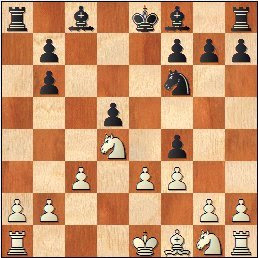 "Try to keep your pawns coordinated. Think of them as the foundation of your house. Every crack and every hole can eventually lead to disastrous consequences for the whole house."
- Jonathan Edwards, US Correspondence champ.
Tom Wiswell couldn't have said it much better. How does it apply to markets?
P.S It is interesting to note that in checkers the traps and gems are every bit as complex, hidden, and far removed as in chess. During the 25 years I took lessons from Wiswell, and he played against people like Leopold who was as good across the board, and his thousands of games with me, I never saw once that a good player fell into a trap in go as you please. Perhaps the Checker Pres will correct me but the main point is true. To play a good player and set a trap is the seeds of death or as Wiswell would say, "beware the spider".
Alan Millhone, the Checker Pres, replies:
Dear Chair
I moved myself into the Masters. I like playing the best. When you lose to the best rated players like Luba or Suki etc you never have to make an excuse for the loss. I also learn from every loss as the astute Market player should.
I never play for traps. Usually setting a trap will weaken your position if your opponent does not make the move you had hoped he would. I make my move assuming my opponent will always make the best reply.
"Come into my parlor said the spider to the fly "
In Checkers as the Market , research is critical before moving or execution of a trade.
Sincerely,
Alan
Anatoly Veltman writes:
There is difference between checker tactics and speculation, in that checker outcome is near binary (win, lose or draw) - while one sets up its market position based on a multi-dimensional scale of odds/size of risk VS reward. Thus, your checker inclination against playing for trap - doesn't profoundly manifest in speculation. My recollection of Silver Monday April 28th, 1987 is perfect example: because a record number of speculators fell into a limit-up trap, the TRADE OF THE LIFETIME proved to be SHORTING, if only for minutes! And multiple cases of not hearing about "that local" ever again.
Reminded me another war story: Tuesday October 20th, 1987 Eurodollar futures pit. That contract normally moved 10 points on a good day. But in the wake of Black Monday, the contract was called to gap in Chicago pit "much higher". How much? Well, speechless clerks and brokers speculated 100 higher!! So seconds before the opening bell, the Salomon Brothers runner fights his way to the pit broker with a ticket sporting conspicuously much ink on the left side. It turned out to be 3000-lot to buy at the market!
So instead of opening between 94.50 and 94.75 (a usual monthly range), the broker tells the offers to shut up and announces 97.00 bid for 3000. Everyone freezes up - except for one regular local, who leaps at him over multiple pit steps with a samurai grunt "Sold!" Price traded back down below 95.00 by the end of the opening sequence, the local covered and was never heard from again in continental United States
Michael Chuprin writes:
As the game begins, lets say within the first 5 or 10 moves, the players inform each other the kind of game that is going to be played by the way that they develop their pawns, whether it be a defensive or offensive or deceiving (luring into a trap) type of structure. After the "mood" is set, the rest of the game proceeds with the development of the heavy pieces and the pawns now act as a buffer between the two armies. Highly ranked players know that the pawns set the terrain as the heavy pieces approach each other, and this is why the accidental loss of a single pawn can shift the entire scaffolding the entire structure, much like a puncture in the hull of a battleship may incapacitate all of the ships cannons. It is no wonder why in many situations strong players give up after miscalculating a position and losing a single pawn. It may be like two martial artists fighting and one breaking a finger, the damage is relatively small, but its effects are conclusive.
Anatoly Veltman writes:
I can easily think of market analogy: personally, it was a memorable first loss of a million dollars on a single commodity position I had. The day was Monday April 28th, 1987. Silver futures were locked limit-up for third straight day, and the freely traded spot contract rushed up yet again to an $11.25 pinnacle. It may not sound high today - but it was a multi-year high back then, and more than double the price in one month! Why - a huge squeeze was put on Mexican and Chilean producers, biggest mines were stricken by labor woes, etc.
Lo'n'behold, Japan Finance Minister is a scheduled White House guest that day - what does that do to getting any more Silver out of the ground? Suddenly, as Silver, Gold and Platinum slowly edge off their intraday peaks - the financial wires begin spitting out lightly co-operative language of the bi-lateral Forex co-operation between the two economic powers, totally periferal to Silver production. Normally quiet lunch-time turns into history's never-before seen massacre, with Silver futures flipping from limit-up to limit-down lock across the board in the time space between the salad and the main course! Physical Silver plunges $4 (more than a third of its morning value), and next day brings further depreciation due to margin call liquidation… But of course nothing changed in the mines - and following the two down days, Silver rose every day for the next three months to achieve the same valuation. Only some Silver Bugs remained buried deep in the April 28th ruins. That day's volume stayed the Exchange's record for decades, although some locals' trading cards have been never found in the aftermath…
Mar
28
Rollover, from Victor Niederhoffer
March 28, 2012 | 4 Comments
Having considered the rollover for many years, I conclude the best thing is not to roll over at all.
Bruno Ombreux agrees:
You are right. But that is if you have a choice. Sometime you have hedges that need to be rolled over. And it is not a choice you make. The hedges are a consequence of your underlying business, which is where you make the money. Then the hedges and the rolls are best seen as a cost, even if sometime they turn out a profit.
Gibbons Burke writes:
An alternative to creating a single continuous contract to model the behavior of a trading regime which may holds a position across contract deliveries (as this must be tested) is to test that model's behavior using individual contract histories as you would do in real time, rolling your position at the indicated times as necessary. If you need more history for your indicators than the new contract has, then you can create a back adjusted contract anew each time with the contract inn which you have the current position reflecting the actual prices at which that contract traded, but the historical data has values from earlier contracts. This minimizes the distorting effect of cumulative rollover adjustments that you get when you make one continuous series covering the entire testing period.
Rocky Humbert writes:
There is a paradox in this discussion. As a *theoretical* matter: I can own a cash position in something for X months/years (as a speculation, hedge or investment.) Or I can buy a future that expires in X months/years. If the p&l between the two is materially different (after taking account of leverage and financing), then this is a pure arbitrage.However, the arbitrage is problematic to exploit in physical commodities because of the logistics involved in owning and storing physical commodities. But the arbitrage should be easy to exploit in things like Stocks, Bonds, Gold, currencies, etc. The arbitrage CAN arise in the course of business precisely because hedgers, investors and speculators all have different motivations. But the arbitrageur will benefit from this dichotomy if his analysis is correct. Let's not fool ourselves: The RATIONAL ECONOMIC ARGUMENT MUST BE: the futures price is the BEST indication of where the price will be in the future. Whether that future is one month or 100 months. Any other interpretation leads to a break down in core economic principles. The rolls are simply a discontinuous manifestation of this phenomenon.
George Coyle writes:
I am sure this is flawed logic and welcome analysis/criticism, but all this talk has me thinking stocks are a more ideal vehicle for true trend following (vs futures). No rolling/transaction costs, potential dividend yield. You don't get the leverage and are probably subject to reg T on stocks but that may not be a bad thing.
Gibbons Burke adds:
Another reason stocks are less susceptible to trend following strategies relative to futures markets are laws forbidding insider trading. The prohibition on a profits from privileged particulars prevents their percolation into prices until promulgated publicly. The predictable result is that when new information is released, it is immediately reflected in the price, causing a quantum move to the new value level, a trend exploitable by only the extremely nimble, or knowledgeable scofflaws.
No such prohibitions prevent futures traders from trading on inside information. The market exists mostly for the benefit of insiders. When they act on information they have, with their fingers on the pulse of the fundamentals of the commodity supply situation, and the condition of crops, etc., that telegraphs that information into the price. As the information spreads, and more traders act on it, the trend to the new value level which reflects the full discounting of that new data. So, the speed with which valuable fundamental data about commodities futures markets gets integrated into price slowly enough for a trend to form in price which is more than just noise. This creates enough beyond-noise trends which makes a trend following system able to operate and squeeze a profit out.
The for trend followers problem comes when the number of trend followers swells, and they all pile onto the signal - the systems acting on smaller noisy trends create their own noise and the increased noise increases the risk to the point where the real trends based on real changes in the supply-demand situation are not big enough to overcome the cost of catching the smaller losing noisy trends for small choppy losses.
Mar
22
Buying the Worst, from Victor Niederhoffer
March 22, 2012 | 2 Comments
 I haven't read all of Mr. Mee's letter on buying the worst but let me say that I completely recant and disavow all my conclusions about buying the worst individual stocks. My conclusions were not based on a prospective files but on compustat files. They didn't take proper account of survivor bias in many different ways nor did they uncover the 1000 fold gems that Gilespie used to like to buy. Dimson has a paper saying that buying the best is better than buying the worst, and he is a very careful researcher.
Stefan Jovanovich writes:
There seems to me one occasion when the worst are the best — when the companies' futures as enterprises are flexion calls. As Mr. Einhorn said recently, "if the market capitalization of the equity is less than half of the face value of the debt, the stock remains in an option area"; buying those options can be profitable if one knows the central bank's is about to flex its rescue muscles. Buying $1 stocks in 1939 (after Germany invaded Poland) is another way of putting it. This is hardly a plan for sustained investing; over time the worst do come last, as the Chair says; but the longshots can be worth the bet if there is a near-certainty that the jockeys on the lead horses have all had instructions to pull back on the reins.
Gary Rogan writes:
The well-publicized "magic formula" really says nothing more than both the price and inherent quality of the business are important, and some weighted average should be used for stock selection. If you can find something that's outstanding in both, as opposed to either outstanding in one of them this will pay off.
Yesterday I finished reading Great by Choice by Jim Collins and Morten Hansen and if I were to distill what's it saying about what it takes to outperform the market by 10x is that (a) you need to be good enough inter terms of both creativity and paranoia (b) more importantly you have to pace yourself for consistency, not moving too fast or too slow almost without regard to the external environment (c) have some sort of a detailed internal recipe that you maintain but also adapt to external changes as opposed to either not having a recipe or sticking wit the present version too long.
Mar
20
One of my Favorite Stories, from Victor Niederhoffer
March 20, 2012 | Leave a Comment
 Dr. John Warren, nephew of Joseph Warren who died at Bunker Hill, was Surgeon General and Eminence Grise at Harvard as only an authoritarian Harvard professor can be. Wells, a dentist came to him in 1840 and said he had invented a painless way of doing surgery. It didn't work and Dr. Warren let the students in a cry of "bah humbug". The rest of the story is described in a book, The Century of the Surgeon. They did it again in 1846 and it worked. Dr. Warren started crying, "Gentlemen, this is no humbug". His whole life had been devoted to debunking such plain people and procedures as Dr. Wells. Another Dr. committed suicide knowing his whole life work had been wrong on the subject. I believe Wells died penniless of course. Perhaps some day, I will be present at a demonstration of the joys and virtues of charting. It will work and I will start crying and say, "Gentlemen, this is no humbug" and will die penniless.
Kim Zussman writes:
Besides typical faults of practicing dentistry and attending Harvard Med School in pursuit of romance, Morton was also illiberal (for trying to profit from ether anesthetic). From wiki:
William Thomas Green Morton (August 9, 1819 – July 15, 1868) was an American dentist who first publicly demonstrated the use of inhaled ether as a surgical anesthetic in 1846. The promotion of his questionable claim to have been the discoverer of anesthesia became an obsession for the rest of his life.
Mar
19
Briefly Speaking, from Victor Niederhoffer
March 19, 2012 | 4 Comments
 1. The stress tests assume a fixed response by the banks to dynamic changes and have nothing to do with the resilience of banks, but are designed to create a facade of sticking it hard to the banks but are really a method like most regulations to reduce competition and create an illusion of the public interest.
2. The bond stock ration has taken one of the worst declines in history the last week and this must be very bearish for stocks and bullish for bonds.
3. The decline in VIX to below 15% sets up another great opportunity for squeezes to be created by the market makers.
4. The Nikkei has crossed 10,000 and this has made the imitative Asians much happier but the foreign buyers haven't profited that much because the value of the yen has fallen about as much as the increase in the stock averages.
5. The S&P has gone above 14,000 from a low below 12,000 in two months without benefit of a reversal and this is unprecedented. But how does it affect the future?
6. Oil is about even over the last few weeks and it's future movements will determine how much stasis the current increases in stock prices will have.
 7. Like the chickadees in Memoirs of a Superfluous Man, the banks refuse to buy puts to meet the stress tests because they are so accustomed to the transfers of wealth fro the forgotten man to themselves by the cronies, and flexions that they refuse to invest the few hundred million to meet the stress tests. The ridiculous absurdity of the stress tests assumes that the banks wouldn't change their position if unemployment were to go up by about 100 %, and that they would still have their current positions.
Let us never forget that the signer named his ramblings "Briefly Speaking" instead of "Nobody Asked Me But" in disparagement of the sanctimonious flexion from Nebraska who said he wasn't "briefed" on the matter of the bribery at one of his insurance companies with AIG where the one briefed went to jail, and similar "briefings" he did not have with Sokol on companies they bought stock in.
I would recommend Ring Lardner's book of short stories Roundup particularly "Alibi Ike", "Horseshoes", and "Champion" to all who wish to enjoy the current baseball season better.
Anonymous writes:
I put on a small long position in TLT on Friday. If one believes that the recent backup in rates will put a dent in the current record pace of corporate issuance, then the relentless rate-lock sales in treasuries ought to diminish. Combine that with the bit of central bank buying of long paper on Friday and the dearth of auctions in the immediate future, and it looks like there is a good setup for bonds.
I'm often wrong about trades like this, but I'm glad the chair is on the same side of the market, opinion-wise, as me. I must be doing something right.
Mr. Krisrock comments:
I couldn't ignore your comment.
You might like to consider this, especially with q end so close…
Over the past several weeks, in stepwise fashion, many profound issues affecting investment policy have been deferred.
Several rounds of ECB 'LTRO' in Europe has convinced investors that the PIG financing dangers have been postponed for the near term, with the highly competent Greek Legal System adjudicating foreign claims.
Here in America, the FED's well staged narrative for releasing stress tests to be followed by large bank dividend increases blew up thanks to miscommunication with JPMORGAN.
Bernanke panicked and shocked the market with the early release of a report that 5 financial institutions had failed the test…
It's obvious from the "careful" staging that we now have "teleprompter" independent regulation.
One must remember that in the 4th quarter of 1999 the FED also telegraphed its intentions to offset financial complications from Y2K
with market participants 100% certain the FED wouldn't increase rates, investors turned to 'momentum' trading, chart breakouts and PE multiple expansion.
The unintended policy consequences planted the seeds for the subsequent negative stock market surprises in March/April 2000 when policy reverted.
Mar
18
The Borders, from Victor Niederhoffer
March 18, 2012 | 3 Comments
I said that great breakthroughs often come from extensions and innovations at the borders of two fields and that you could learn more about markets from checkers than you could from most of the books. I believe that it is significant that after two changes in coaches, Portland went from down 42 against the Knicks a win over league leading Chicago and Knicks won two in a row being up 30 or more in both games. The new coaches are humble. The other teams let up. Portland and the Knicks played harder. The other teams weakened their guard. Okay, how can this be turned into profit in markets at the borders or other fields?
Craig Mee writes:
Just like Bacon, Victor, and pulling up a nag, if not an easy win on the minnow races, possibly flexions allow notes to come to them in the days before payrolls, without driving home the advantage to early. Get the size on, and let the numbers (and seasonals ) do their work…
Mar
16
What is the psychological significance of D'Antoni resigning and the team winning by 40 points for first time in years. The air was cleared. The bad vibes were reduced. Does this have any comparable spill over for big companies when a troubled CEO resigns? Can it be quantified? Can the concept be generalized to markets?
Mar
15
 It's amazing how smart the public is, and how ridiculous all the experiments of the expert's breakfast friend are that duplicitously show how irrational the public is when confronted with contrived situations with deceptive self serving to the academics answers. They always sense when someone knows what he's talking about and pay attention as they did to my lessons from hard ball squash, giving more responses than any other of my posts except the one about Lady Gaga and what she can teach us about the idea that has the world in its grip.
Okay, I have to give some more lessons from the one thing I know about.
7. Never hit a soft drop shot. The opponent will be able to get there near the end of a game and kill it. It's especially bad near the end of a game, when the opponent will run for anything, do or die. Lobs are sure losers near the end of a game also for the same reason. Don't ease into your positions. You'll only get filled when it breaks out, and that's the only time that the opponents will certainly have the weather gauge. And don't arabesque into trial positions in small markets just to get your feet wet as the Pelicans at the top of the pyramid will always eat your bait, as they don't allow outsiders to dine at their expense, especially when the resources are limited.
8. Don't try to win the point with the same shot over and over. Your opponent knows when they run you up to the front right, on your rightie forehand that you are going to hit it cross court. If you happen to catch the perfect angle so that your opponent can't intercept it, and belt it down the backhand wall, for sure it was luck or he'll try harder the next time and you will lose the point. Always be ready to return the straight drop to the right side wall down the wall instead. Please don't try to make money from the market the same way two times in a row. How foolish do you think the adversary is to allow you to take his chips twice in a row. He was only setting you up for the big kill. Most people have a very good memory of what happened the last time, especially if it was a vivid loss. They are so angry that they will put their resources against you the next time, without hesitating to take billions of bail out money which they have received, or use costless loans from their past, current or future cronies at the Fed to go against you.
 9. Please learn from racquetball and jai alai how to hit a proper backhand. The swings of the racquetball players on the backhand, very nicely memorialized by the Hobo are infinitely better than the squash swings. They have 5 separate torque in there to give it exponentially more power than the placid Philadelphia, old boy English swing. And the Philadelphia swing is 10 times more powerful than the ridiculous backhand that the old Harvard players were taught in the hard ball game with the slice backhand with hardly any backswing, and no torque at all. I shudder at how high a % of the games I lost came because of the weak Harvard backhand I was taught and was too foolish ever to change, possibly because the only one that could beat me was Sharif. Martie Hogan's backhand in racquetball was a thing of beauty and since that time, it's been improved upon every 3 years or so by the next generation of racquetball players. Pedro Baccalo had the best backhand in squash which he learned from jai alai, and he could hit it 5 times harder than any other player because of all the torques in it. Learn from these improvements instead of watching the placid, effete swings of all the old time squash players and as far as I can see, the current crop of Internationalists. Okay, for crying out loud. The best lessons in markets and any field come from the borders where it meets another field. You'll learn more about markets from studying checkers or ecology or statistics or sports betting than you will from all the books on markets combined. Study the greats in other fields, e.g. Bronstein, or Armstrong or the Globetrotters to see the secrets of winning in markets.
The first six lessons:
I often get asked to talk to kids about the good old days of squash when you could make a point with a sharp angled shot and a long point only lasted 30 seconds. At a recent occasion talking to Hopkins kids I tried to relate the lessons of squash to wider endeavors. While doing it, I found myself in a dream world where flashes from markets, life, business, and school, circled around, crossed over, and fed back on each other. Since this is the one subject I know about, I thought it might be useful if I turned the tables and tried to think of the lessons that I learned from squash and how it relates to markets.
1. The game is always changing. Who would have thought that hard ball squash would now be as dead as squash tennis, or court tennis. There were once 2,000 court tennis courts in France before the revolution, but now say 10 in the world. There were once 10,000 hard ball squash courts in the world. Now, hardly any as they've all been converted. The markets you are trading now are likely to be very different from the ones you'll trade in 25 years. The rules and equipment will have changed. Electronic speed and international standards will replace manual method. I find it hard to believe that the things I traded 10 years, ago, foreign exchange, bonds, options, are no longer viable for me. How many others will find this out to their cost if they don't prepare for it.
2. The officials, the rule making body, the association in squash, will always be like most such associations a body devoted to maximizing the power, perks and profits of the officials. Time and again, they stood in the way of professional play on the grounds that it would weaken the amateur spirit of the game, the English way of stiff upper lip, poverty for the serfs, and noblesse oblige. If you wanted to be successful in squash, it was very important to stay in the officials' good side so that they wouldn't keep you out of the good spots and good tournaments, as they so often did to me and Gardner Molloy, and countless others. If you want to be successful in the markets, be sure that the rules are not stacked against you. That you will not receive margin calls so that the officials can take the other side against you, that the members will not be able to get the edge on you thru access to unlimited capital, flexionism, and self serving decisions like those that arise when you go to arbitration on an Exchange, where the referees, and judges are invariably chosen by the exchange itself. How can you expect them to rule against their friends and cronies.
3. Counting and record keeping are crucial. A good squash player, should know exactly where the ball will land, when he hits any shot, given his current position on the court, the angle of the wall he aims for, and the velocity of the shot. You could work it out by geometry given starting with the angle of incidence equaling the angle of reflection. Very few players take the trouble to figure it out, or even think about it. How many good market players don't know what the expected volatility is on their trades given how fast and the direction it's been going in the past?
4. The first blow is half the battle. The player that gets ahead by 2 or 3 points is inordinately likely to win the game. The importance of a good start and good preparation are paramount. Bronstein once waited 2 hours before deciding on his opening move while the clock was running. The first blow in markets is still crucial. The expectations are much higher when the first x minutes are up compared to down.
 5. One of the keys to winning in squash is never to stretch. When you stretch you can't hit a hard shot, and you're limited in where you can hit it, so you're opponent can always anticipate perfectly where the shot is going. The other side is that you should always take the extra step so you'll be in position to hit any shot. It's so enticing to stretch because it saves you the step and enables you to get the ball in play but so certain to lose to losing. How many time do you stretch in markets. Put on too big a position, take a regularity that only has happened 3 of the last 5 times and run with it? How often do you end up leaving yourself vulnerable to an adversary who knows exactly how extended you are, and come into full force against you? Certainly one of the worst errors in markets.
6. I could never figure out why Sharif Khan had a winning record on me. He was sure to make at least 5 errors a game, and had a weak backhand that turned over the ball whereas I could go a whole match without making a single error. Then I realized he was the only person that could make 7 winners a game against me, where the ball bounced twice before I could touch it. Then I realized that what he did was to take every shot on the half volley. He worked off my power so that the ball came back at a higher velocity. He also didn't give me time to set up to return the ball. Most important though, by violating the stricture we had learned to wait and make the opponent commit, he prevented one from anticipating his shot and tucking in to retrieve it. Since that time Agassi and even the more loathsome sportsman Connors have pioneered using the half volley in tennis to beat players with much better equipment than they in tennis. Nowadays it's de rigeur in tennis.
Taking it on the half volley in markets means not waiting until the afternoon to put your positions on, not waiting until every market that 's a pilot fish for your market is in the right direction, not waiting for the announcements to reduce your uncertainty. If you want to speculate you have to speculate. Only the house can wait and grind you to oblivion. Taking it on the half volley in markets is getting in way before the pivot has occurred, way before the trend has changed. It's the secret of success of great players in racket sports and markets. Come to think of it, it was the secret of success in handball also.
The old time handball players are so much better than the current ones. Why? For one they hit the off the wall with deadly precision. Artie had a fantastic off the wall shot, and somehow his football killed arm was able to miraculously get back to its youthful vigor when he hit it. He always said that Ralphie Adelman was the best because he could hit everything off the wall for a killer. I now see that Martie Hogan is espousing standing in front of the service line on each shot in racket ball as the key to success there. Some day someone will teach the handball and racket ball players of today that the off the wall killer is key in games and markets.
Chris Tucker writes:
Point 5 is the similar to using power tools as I mentioned in "On Taking Down a Tree":
Never extend your reach beyond what is comfortable. Using a tool at more than arms length puts you in a position that prevents you from reacting quickly if something goes wrong. It puts undue stress on you and the tool. It removes whatever leverage you have on the tool. It also prevents you from "feeling" properly through the tool. When using a power tool you receive signals about the material you are cutting and the nature of the stresses on that material. You can always tell when a branch is about to go if you are listening carefully to the tool. That feedback is denigrated by reaching too far or by using only one hand.
When developing skills you must, occasionally reach beyond your current level. This is different from overextending your reach. But it is important to do so incrementally as overstepping your bounds too egregiously can result in devastation and trauma. Taking small steps into new areas or higher intensity or greater complexity allows you to learn while remaining close to your comfort zone. Yes, you have to reach in this sense, but you want to do it in such a way that you don't destroy yourself in the process. When you push yourself in this way you also expand your comfort zone and your skill set. This can be the translated into taking on larger size, increasing leverage, having more trades on at one time, or introducing new instruments to your repertoire.
John Floyd comments:
 I think Ari would say, "you should set goals that are constantly reaching further, but attainable, then gradually keep moving forward. If you have a stumble then pause and evaluate why. If you set a goal too far out of reach you may be faced with disappointment at not getting it".
Charles Pennington writes:
Steve Sailer has a nice illustration of the problem with some of Kahneman's questions.
Apparently the following background information is NOT supposed to convince you that Jack is more likely to be an engineer:
"Jack has a B.S. degree from Purdue. At work, Jack wears a short-sleeve button-front shirt with a pocket protector full of mechanical pencils, just like most of Jack's coworkers on his floor. Jack always wears a tie clasp to keep his necktie from getting smudged by the blueprints when he leans over a drafting table. Jack's favorite line from Shakespeare is, "The first thing we do, let's kill all the lawyers." In fact, that's the only line from Shakespeare he knows. Jack wanted to name his firstborn son Kirk Spock, but his wife wouldn't let him."
David Hillman comments:
From Forbes' "Five Leadership Lessons from James T. Kirk" (applies to lone wolves and markets as well) :
“You know the greatest danger facing us is ourselves, an irrational fear of the unknown. But there’s no such thing as the unknown– only things temporarily hidden, temporarily not understood.”
“One of the advantages of being a captain, Doctor, is being able to ask for advice without necessarily having to take it.”
“Risk is our business. That’s what this starship is all about. That’s why we’re aboard her.”
“Not chess, Mr. Spock. Poker. Do you know the game?”
“‘All I ask is a tall ship and a star to steer her by.’ You could feel the wind at your back in those days. The sounds of the sea beneath you, and even if you take away the wind and the water it’s still the same. The ship is yours. You can feel her. And the stars are still there, Bones.”
Mar
9
Briefly Speaking, from Victor Niederhoffer
March 9, 2012 | 2 Comments
You have to hand it to the market mistress. After 45 days without a 1 % decline, it came in with the 2% decline, after two down days, just when you wouldn't have expected it in a blue moon, and once having breached the magic 50 as was necessary, went back to the old highs faster than cool papa himself turning off the lights. Totally beautiful with the least effort to use the Greek news over and over to force the weak bottom feeders to contribute so much more than they have to =, to pay the top people, as if their flexionic winnings and hand outs were not enough to offset this weak card again.
Mar
7
 (NYP) New York Post: Knicks' D'Antoni defends decision not to foul Celtics
It looks like very specious reasoning of the kind we see in our field here but I don't know enough about basketball to call it out. Certainly when you don't foul someone, the opponent is more likely to have had a bad shot, so the statistics of 93% when you don't foul them are wrong. But there are other things wrong also. D'Antoni has lost so many of these games you'd think he'd rethink. It also must be demoralizing to stand so far away from your opponent that you don't foul them, and make you play worse defense. The not asking his defensive coordinator is a signal that he's too up in air with his TV programs.
Pitt T. Maner III writes:
The following paper shows a decision tree for the college game given a similar situation.
It addresses this question and concludes that, contrary to popular belief, intentionally fouling is preferable to playing tight defense.
Drawing on the Gonzaga/Michigan State game for inspiration…
The opportune time for the Knicks to have fouled might have been during the exchange between Garnett and P Pierce before the act of shooting could occur. Pierce hits about 80% of his free throws and 37% of his 3 pointers.
Pro 3-pt. line is further out but Paul Pierce against passive hands up and no jumping defenders would seem to be better than 1/10.
Feb
29
NYC Junto, from Victor Niederhoffer
February 29, 2012 | Leave a Comment
 The meeting of the NYC Junto on Thursday March 1, 2012 will feature Alex Epstein, founder of the Center for Industrial Progress, talking about how to achieve the great potential for productivity improvements in energy production, manufacturing, mining, construction and transportation. All are invited: General Society Library, 20 West 44 St., between 5th and 6th Aves., NYC, 7:30pm.
Alex Epstein is an expert in energy and industrial policy. His writings on energy and energy policy have been published in The Wall Street Journal, Forbes, Investor’s Business Daily, and dozens of other prominent publications. He is a Principal blogger for MasterResource, the leading free-market energy blog. Mr. Epstein’s monthly podcast, “Power Hour,” features discussions with leading energy thinkers including author Robert Bryce (“Power Hungry”), climate scientist Dr. Richard Lindzen (MIT), and energy economist Michael Lynch (EnergySEER). Mr. Epstein’s writings on philosophy, business, and energy have been featured in 10 books, including, most recently, Why Businessmen Need Philosophy.
Mr. Epstein’s extensive media experience includes hundreds of radio and TV appearances. A seasoned public speaker, Mr. Epstein has spoken at dozens of universities, including Duke, Berkeley, UCLA, and Northwestern, as well as a diverse range of organizations, from The Federalist Society to the NAACP. Mr. Epstein receives rave reviews for his depth of knowledge, his ability to break down even the most complex issues, and his infectious passion for the power of energy to improve human life.
Mr. Epstein is an alumnus of Duke University, where he studied philosophy and computer science. Prior to founding the Center for Industrial Progress, he was a Fellow at the Ayn Rand Institute specializing in energy issues. His unique background in practical philosophy, combined with his years of energy research, enables him to provide a rare source of big-picture insight and clarity in today’s energy debate.
Feb
29
The Most Important Lessons from Business, from Victor Niederhoffer
February 29, 2012 | Leave a Comment
 Number 1 is never to get in over your head. Not having staying power will prevent you from reaping the benefits that occur on those small number of businesses you own that need just a little bit more before striking the gusher.
Number 2 is never under any circumstances accept an offer out of the clear blue sky for your share of the business that seemingly is good, but where the party offering you the buyout knows much more than you do. I have lost millions on many occasions by accepting a quick profit in a deal where it turned out if I waited a year or two or three, I would have realized a tremendous windfall.
Number 3 is not to mix romance with business. Romance should come out of business not business out of romance. The romantic aspect will cause a strain and make you look foolish too all your colleagues.
Number 4 is not to have 3 person partnerships as too many coalitions can form, and you will be involved in diplomacy rather than business.
Number 5 is to keep your business consistent with the idea that has the world in its grip. Give your customers what they want, and give returns and the customer is always right.
Number 6 is to be sure that you are aligned with the forces in Washington that control so much of life these days, and have so much in perks and profits to give to their cronies.
Number 7 is to associate yourself with good partners, and good friends, and good employees whose loyalty goes beyond the dollar or the clock. An ounce of loyalty and integrity is worth more than a pound of immediate profits. When the going gets tough, and it always does in business, you need to have the loyal ones. Certain groups and certain belief systems are aphoristic and proverbial for their disloyalty and tendency to deceit and they should be avoided.
Number 8 is to always remember that when dealing with a family business, the loyalty of the family members is to themselves but not to you. The worst short term frauds and cons, and some of the worst long term cons, I have been victimized in had a father and son working in concert to deceive you into giving them your chips.
Number 9 is to associate yourself with people that have a record of success in their family, previous career, or athletics. Those who tend to fail in one thing will bring you down in the other.
Number 10 is to work hard and keep good records so that you will learn from your mistakes and be able to jump in with full force on the good opportunities when they occur. Keep a reserve for such. I know there are many more. And some of mine aren't sharp enough. I tried to memorialize business tips that are directly applicable to markets, and number 2 for example can be quantified for very good reward to risk.
Which ones would you correct and how would you add to this list with market implication?
Russ Sears adds:
11. Be aware of the competition, learn from them and have a strategy to compete. Perhaps the reason athletes do well is because they are aware of the competition and develop a niche or strategy to beat or compete with them. Likewise for successful family, there are few things more powerful and motivational than common goals and team-work within a clear framework for utilizing each individuals diverse unique talents and self interest. A successful family man has shown that he is capable of uniting such a competitive group.
Feb
28
Briefly Speaking, from Victor Niederhoffer
February 28, 2012 | 2 Comments
It is rare to see the bonds and stocks at or close to several year highs together and everything else like gold is also there, with oil within a penny or two, nikkei close to 10000, and the grains only at 2 month highs. What a great time to have been bullish. The rising tide lifts all boats.
Feb
27
The Trophy, from Victor Niederhoffer
February 27, 2012 | 7 Comments

The awarding of the trophy to The Artist shows how 100% of voters are tilted towards the "change man". The trophy had to go to the show that had the least attendance during the season to keep man small, and to show how the public is stupid, and how the arbiters in the academy are on a higher plane of significance, a higher aesthetic than you and I.
How long before they all get invited to the Oval, and how consistent with the idea that has the world in its grip, and how bearish for the long term market.
John Tierney, the President of the Old Speculator's Club, writes:
Considering much of Hollywood's output, it's surprising The Artist didn't also capture Best Screen Play….
Victor Niederhoffer adds:
That's funny, Mr. President. But The Academy Awards is in the main a profit making deal which must cost 1.5 million a picture to enter, considering the perks and costs. The 1.5 million for the lowest budget film, The Artist representing a 10% capital contribution has the higher return to that input and is show in to win if it shows how deficient and low brow the public is in its taste. How beautiful to give it to one without talking that went out of style 100 years ago to show how we need redistribution and a raising of the capital gains rate as a solution to our problems.
Vince Fulco writes:
I was discussing a similar matter with someone this weekend re: Gingrich's plan for $2.50 gas. While not focusing on any one political party, what is it about the US citizenry that keeps them accepting (broken) promise after (broken) promise? Thereby guaranteeing they'll stay small.
Pete Earle writes:
I suspect that the GAP's ability, and willingness, to get snookered by political actors and parasitical systems time and time again is the dark side of what, turned over again, is an exceptional ability and willingness to imagine enterprises and undertakings which in many other places would be cast off as unrealistic, insurmountable, or unnecessary.
Essentially, I believe that productive/entrepreneurial optimism is yin to political optimism's yang.
Feb
27
The All Star Game, from Victor Niederhoffer
February 27, 2012 | 2 Comments
The amusing dunking contest that was the all star game won 152-149 by the West shows the weaknesses of playing a loose game with no defense and spacing between the players. It reminds one of how the Knicks play under D'Antoni with total inability to defend because of the 7 second and shoot thing that D'Antoni demoralizes his team with.
It also leads one to speculate that similar spacing and high scoring leads to weakness in markets. The big jumps against one, the ability of the other sider to make runs against one. The high scoring against at an early stage. All these must be very bearish in markets and life.
Feb
24
An Interesting Article on Real Estate, from Jim Sogi
February 24, 2012 | Leave a Comment
 Here's an interesting Schilling article that Real Estate has 20% down to go due to unlisted foreclosures, separation from investing/ownership, and 40% underwater with another 20% drop in price.
However, the real estate cycle is notoriously fast when it takes off, so trying to time it is hard to do.
Victor Niederhoffer comments:
If, if, if. I've seen this reasoning on bonds from a million sources over the last 5 years. If bond yields go up, or go back, it would cause this destruction or that catastrophe. But people in the bond field know as much about the course of the yield curve as anything in the world, indeed they're much more versed than the stock market people. And it just takes a few Grosses or Soroses or DeRosas or dozens of others to set prices exactly where they should be taking account of all future contingencies. In short, the yield curves today provide an extremely accurate forecast of future fixed income yields. The experts, the DeRosas take account of the likely change from easing to tightening and when, and what a impact that will have on everything in their current forecasts. To predicate a trade on the idea that bond yields at 3% or 2% are ridiculously low is to go against the greatest experts in a field the world has ever known, et al.
George Zachar writes:
Unfortunately, the bond mavens today are forced to gauge not the real economic context of the forward curve, but the internal dialogues of Bernanke and Dudley. With the Fed manhandling the yield curve from tip to tip (and TIPS too), the price signaling attribute of the treasury market has vanished.
We are likely years away from private capital allocators fully resuming their role as impartial price setters for money. And there's a real risk the cronies will never be pried loose.
Ken Drees writes:
 I heard one of my mood of real estate indicators loud and clear the other day, ironically on the am radio. The banter back and forth was why renting is better than owning, even though the price may be higher to rent.
radio person a: Why should I tie myself down with a house, if I lose my job I can't move?
person b: Right, its easier to just rent and move.
The job environment needs to bottom and improve before housing can turn–Rocky's 2014 guess is as good as any for a bottom based on soaked up supply.
Fred Crossman writes:
We are in an unprecedented period where the world central banks, instead of suggesting work and saving as a remedy to excessive debt, offer the effortless remedy of federal programs, massive printing, and more debt. Is it ironic, as we reach new market highs, that the biggest per cent mover today (not SHLD, which is up on worse than expected earnings but a shot at more creative financing) is a diet drug that eschews exercise and dieting but instead offers a pill for the same result?
Feb
22
A Query About Volume, from Victor Niederhoffer
February 22, 2012 | 5 Comments
It is interesting to consider whether the levels of volume of the major markets are normally distributed. Related to this is the question of whether a spell of low volumes is predictive of a undue likelihood of a high volume in the future. The question is related to vix predictivity also, but volume may be useful.
One hypothesizes that volume must be shot upwards from time to time for the public to have an adequate chance to lose more than their fair share, so THEY can take their emoluments to live well and cover their overhead.
One notes that volume has been inordinately in the 1 to 2 million area with only 4 days of 2 million volume so far this year for SP futures, and they have not been clustered. What is the hazard curve for a 2 million volume day? Does the lack of high volume days this year relate to all the people who were gipped by the MF bankruptcy or does it merely reflect the normal tendency of scholarly chairs to preclude big declines in an election year so that the stuck out nails in the public will remain small?
Are such queries relating to volume useful?
Feb
22
A Total Travesty, from Victor Niederhoffer
February 22, 2012 | 1 Comment
 A total travesty at Disney World's Hall of Presidents as if Warren Buffett with his never having read a book were to have teamed up with Morgan Freeman to present a black panther view of American history with the presidency running from G.W to Andrew Jackson to Teddy Roosevelt to FDR to Obama with Lincoln thrown in. "All men are created equal" and "all men must be made small". One black person seen among 100,000 in attendance there, but to keep man small, the whole emphasis is on self sacrifice and smallness. Much use of decreasing marginal utility of increasing good at Disney and Universal and Jet Blue as they price everything to reduce consumers surplus to zero. Must be a trend among the consultants. At 9:00 on President's Day, there were approximately 10 people present for the Presidents Show at the Hall of Presidents and approximately 60,000 outside.
Pitt T. Maner III comments:
Vic,
Following are quotes from Wikipedia links that discuss the history and historian (and his father) behind current Disney HOP show. Thought you might find interesting. From the Hall of Presidents:
"The show was then completely renovated in 1993, after Bill Clinton was elected into office. The changes to the show, which in some form remain to this day, are credited to Eric Foner, a history professor at Columbia University. He was able to persuade various Disney executives, most notably then-Disney CEO Michael Eisner, that a new adaptation of the show was needed. Foner is responsible for completely rewriting and changing the script of the show in order to focus more on slavery and other ethical and civil related issues in the United States of America. He is also responsible for rewriting Lincoln's speech, which was originally nearly identical to that which Lincoln gave in the original version of "Great Moments with Mr. Lincoln."
From Eric Foner:
and on Dr Foner's background: Foner was born in New York City, the son of Liza (née Kraitz), a high school art teacher, and historian Jack D. Foner, who actively supported the Spanish Republic against fascism during the Spanish Civil War, the trade union movement, and the campaign for civil rights for African Americans. In 1981, Jack Foner received an apology from the New York City Board of Higher Education for an "egregious violation of academic freedom" in 1941 that had resulted in his blacklisting for thirty years.[6] Jon Wiener, professor of history at the University of California, Irvine, wrote that Eric Foner describes his father as his "first great teacher," and recalls how, "deprived of his livelihood while I was growing up, he supported our family as a freelance lecturer… . Listening to his lectures, I came to appreciate how present concerns can be illuminated by the study of the past—how the repression of the McCarthy era recalled the days of the Alien and Sedition Acts, the civil rights movement needed to be viewed in light of the great struggles of Black and White abolitionists, and in the brutal suppression of the Philippine insurrection at the turn of the century could be found the antecedents of American intervention in Vietnam. I also imbibed a way of thinking about the past in which visionaries and underdogs—Tom Paine, Wendell Phillips, Eugene V. Debs, and W. E. B. Du Bois—were as central to the historical drama as presidents and captains of industry, and how a commitment to social justice could infuse one's attitudes towards the past."[7]
Foner earned a B.A., summa cum laude, from Columbia University in 1963; a second B.A. from Oriel College, Oxford, as a Kellett Fellow in 1965; and a Ph.D. in 1969, under the tutelage of Richard Hofstadter at Columbia University.
During the period of blacklisting, Foner supported his family as an entertainer. A drummer and comedian, Foner worked with Paul Robeson and Harry Belafonte, and maintained a friendship with W. E. B. Du Bois, all of whom also suffered from that era's blacklisting. Although Foner did some freelance lecturing, he was barred from academia until Colby College hired him in the spring of 1969 to teach history.[3]
Feb
22
What is the Proper Model - Part II, from Victor Niederhoffer
February 22, 2012 | 2 Comments
Do markets learn from each other? For example, is the S&P market this year following a similar path to bonds last year, with every trepidatious move down being requited with a rise? Are such "learnings" graduated to the point of regularities. And is it a domino effect or a path of least resistance or consilience or convergent evolution or what have you? What do you think? Can it be quantified? Should it be quantified?
Allen Gillespie answers:
Yes they do. In the old days that could be because some pits closed before other pits, so you could have individuals walk between pits and trade both. Today it would be the result of correlation trading desk and carry trades. The correlations, however, do change depending on what the Street owns - it is simply a balance sheet effect. There is also the issue of relative levels v. absolute levels. This is important because leveraged and professional traders may act on relative relationships more quickly and at higher price levels, where as, unleveraged traders need both an attractive relative and absolute relationships to act. This is the problem with ZIRP. Discount models become meaningless near zero i.r. as values become highly sensitive to small changes and price changes gain increasing amplitude. It encourages leveraged carry trades regardless of the absolute levels sought by cash buyers. That's the issue now no? Inflation targeting is just the gold standard, and under the gold standard short term interest rates were highly volatile while long term ones were not because there was no long term inflation except for natural growth which caused periodic revaluations of the currency. So, the Fed views long bonds as the same as cash, however, this is because the Chairman does not believe that currency is supposed to serve the function of acting as a store of value. If it cannot serve that function then it truly is worthless.
So, stocks are following bonds because there's 600 bps of carry (relative to the Ten Year last August) or 800 bps of carry (relative to ZIRP) or 500 bps relative to corporates. I call it the old bankers trade (3-6-3), borrow at 3, lend at 6, play golf at 3. Stocks then would give you an additional 280 bps on the 6. The issue now is 0,3,6 (borrow at 0, lend at three, get up at 6 because at $1360 on the S&P the earnings yield is 6.4 and this probably does not adequately reward investors in a world where the currency is worthless and where the value of a $1 perpetuity at 10 bps is $1000 and at 11 bps $909 and at a mere 15 bps back to the deal with the devil $666 that the S&P made in 2009. Another way to consider it is to think you will get that 6.4 two thirds of the time or 4.25% which is still better than a bond, but is it adequate? AA bonds have a 20 year cumulative default probability of 2.71% but an average loss severity of 36.5% or so at anything less than 2.3% they really have used your money for free for 20 years. Didn't our president say something about spreading the wealth around? Well, using money for free would meet my definition of how to do it. So, we are in the ABT market (anything but treasuries) since last August and I truly suspect current bond issues will someday be referred to as those Obamanations like the old not worth a Continental all made possible by Wall Street's deal with the devil at Fed. The rub is the math works both ways.
One way to quantify would be to take all market periods (say one year) and then run a correlation against the second market 1 year forward, with the hypothesis being that would be see consistently high correlation numbers. Thus one would see not just the direction of the relationship but the consistency.
Feb
15
How to Keep a Market Busy, from Gary Rogan
February 15, 2012 | 1 Comment
This is how to keep a market busy:
Google Trends: Greece bailout and also this.
Victor Niederhoffer comments:
There is optimism about Greece.
« go back — keep looking »Archives
- October 2026
- September 2026
- August 2026
- July 2026
- June 2026
- May 2026
- April 2026
- March 2026
- February 2026
- January 2026
- December 2025
- November 2025
- October 2025
- September 2025
- August 2025
- July 2025
- June 2025
- May 2025
- April 2025
- March 2025
- February 2025
- January 2025
- December 2024
- November 2024
- October 2024
- September 2024
- August 2024
- July 2024
- June 2024
- May 2024
- April 2024
- March 2024
- February 2024
- January 2024
- December 2023
- November 2023
- October 2023
- September 2023
- August 2023
- July 2023
- June 2023
- May 2023
- April 2023
- March 2023
- February 2023
- January 2023
- December 2022
- November 2022
- October 2022
- September 2022
- August 2022
- July 2022
- June 2022
- May 2022
- April 2022
- March 2022
- February 2022
- January 2022
- December 2021
- November 2021
- October 2021
- September 2021
- August 2021
- July 2021
- June 2021
- May 2021
- April 2021
- March 2021
- February 2021
- January 2021
- December 2020
- November 2020
- October 2020
- September 2020
- August 2020
- July 2020
- June 2020
- May 2020
- April 2020
- March 2020
- February 2020
- January 2020
- December 2019
- November 2019
- October 2019
- September 2019
- August 2019
- July 2019
- June 2019
- May 2019
- April 2019
- March 2019
- February 2019
- January 2019
- December 2018
- November 2018
- October 2018
- September 2018
- August 2018
- July 2018
- June 2018
- May 2018
- April 2018
- March 2018
- February 2018
- January 2018
- December 2017
- November 2017
- October 2017
- September 2017
- August 2017
- July 2017
- June 2017
- May 2017
- April 2017
- March 2017
- February 2017
- January 2017
- December 2016
- November 2016
- October 2016
- September 2016
- August 2016
- July 2016
- June 2016
- May 2016
- April 2016
- March 2016
- February 2016
- January 2016
- December 2015
- November 2015
- October 2015
- September 2015
- August 2015
- July 2015
- June 2015
- May 2015
- April 2015
- March 2015
- February 2015
- January 2015
- December 2014
- November 2014
- October 2014
- September 2014
- August 2014
- July 2014
- June 2014
- May 2014
- April 2014
- March 2014
- February 2014
- January 2014
- December 2013
- November 2013
- October 2013
- September 2013
- August 2013
- July 2013
- June 2013
- May 2013
- April 2013
- March 2013
- February 2013
- January 2013
- December 2012
- November 2012
- October 2012
- September 2012
- August 2012
- July 2012
- June 2012
- May 2012
- April 2012
- March 2012
- February 2012
- January 2012
- December 2011
- November 2011
- October 2011
- September 2011
- August 2011
- July 2011
- June 2011
- May 2011
- April 2011
- March 2011
- February 2011
- January 2011
- December 2010
- November 2010
- October 2010
- September 2010
- August 2010
- July 2010
- June 2010
- May 2010
- April 2010
- March 2010
- February 2010
- January 2010
- December 2009
- November 2009
- October 2009
- September 2009
- August 2009
- July 2009
- June 2009
- May 2009
- April 2009
- March 2009
- February 2009
- January 2009
- December 2008
- November 2008
- October 2008
- September 2008
- August 2008
- July 2008
- June 2008
- May 2008
- April 2008
- March 2008
- February 2008
- January 2008
- December 2007
- November 2007
- October 2007
- September 2007
- August 2007
- July 2007
- June 2007
- May 2007
- April 2007
- March 2007
- February 2007
- January 2007
- December 2006
- November 2006
- October 2006
- September 2006
- August 2006
- Older Archives
Resources & Links
- The Letters Prize
- Pre-2007 Victor Niederhoffer Posts
- Vic’s NYC Junto
- Reading List
- Programming in 60 Seconds
- The Objectivist Center
- Foundation for Economic Education
- Tigerchess
- Dick Sears' G.T. Index
- Pre-2007 Daily Speculations
- Laurel & Vics' Worldly Investor Articles
