Mar
15
9 Lessons from Squash and Markets, from Victor Niederhoffer
March 15, 2012 |
 It's amazing how smart the public is, and how ridiculous all the experiments of the expert's breakfast friend are that duplicitously show how irrational the public is when confronted with contrived situations with deceptive self serving to the academics answers. They always sense when someone knows what he's talking about and pay attention as they did to my lessons from hard ball squash, giving more responses than any other of my posts except the one about Lady Gaga and what she can teach us about the idea that has the world in its grip.
Okay, I have to give some more lessons from the one thing I know about.
7. Never hit a soft drop shot. The opponent will be able to get there near the end of a game and kill it. It's especially bad near the end of a game, when the opponent will run for anything, do or die. Lobs are sure losers near the end of a game also for the same reason. Don't ease into your positions. You'll only get filled when it breaks out, and that's the only time that the opponents will certainly have the weather gauge. And don't arabesque into trial positions in small markets just to get your feet wet as the Pelicans at the top of the pyramid will always eat your bait, as they don't allow outsiders to dine at their expense, especially when the resources are limited.
8. Don't try to win the point with the same shot over and over. Your opponent knows when they run you up to the front right, on your rightie forehand that you are going to hit it cross court. If you happen to catch the perfect angle so that your opponent can't intercept it, and belt it down the backhand wall, for sure it was luck or he'll try harder the next time and you will lose the point. Always be ready to return the straight drop to the right side wall down the wall instead. Please don't try to make money from the market the same way two times in a row. How foolish do you think the adversary is to allow you to take his chips twice in a row. He was only setting you up for the big kill. Most people have a very good memory of what happened the last time, especially if it was a vivid loss. They are so angry that they will put their resources against you the next time, without hesitating to take billions of bail out money which they have received, or use costless loans from their past, current or future cronies at the Fed to go against you.
 9. Please learn from racquetball and jai alai how to hit a proper backhand. The swings of the racquetball players on the backhand, very nicely memorialized by the Hobo are infinitely better than the squash swings. They have 5 separate torque in there to give it exponentially more power than the placid Philadelphia, old boy English swing. And the Philadelphia swing is 10 times more powerful than the ridiculous backhand that the old Harvard players were taught in the hard ball game with the slice backhand with hardly any backswing, and no torque at all. I shudder at how high a % of the games I lost came because of the weak Harvard backhand I was taught and was too foolish ever to change, possibly because the only one that could beat me was Sharif. Martie Hogan's backhand in racquetball was a thing of beauty and since that time, it's been improved upon every 3 years or so by the next generation of racquetball players. Pedro Baccalo had the best backhand in squash which he learned from jai alai, and he could hit it 5 times harder than any other player because of all the torques in it. Learn from these improvements instead of watching the placid, effete swings of all the old time squash players and as far as I can see, the current crop of Internationalists. Okay, for crying out loud. The best lessons in markets and any field come from the borders where it meets another field. You'll learn more about markets from studying checkers or ecology or statistics or sports betting than you will from all the books on markets combined. Study the greats in other fields, e.g. Bronstein, or Armstrong or the Globetrotters to see the secrets of winning in markets.
The first six lessons:
I often get asked to talk to kids about the good old days of squash when you could make a point with a sharp angled shot and a long point only lasted 30 seconds. At a recent occasion talking to Hopkins kids I tried to relate the lessons of squash to wider endeavors. While doing it, I found myself in a dream world where flashes from markets, life, business, and school, circled around, crossed over, and fed back on each other. Since this is the one subject I know about, I thought it might be useful if I turned the tables and tried to think of the lessons that I learned from squash and how it relates to markets.
1. The game is always changing. Who would have thought that hard ball squash would now be as dead as squash tennis, or court tennis. There were once 2,000 court tennis courts in France before the revolution, but now say 10 in the world. There were once 10,000 hard ball squash courts in the world. Now, hardly any as they've all been converted. The markets you are trading now are likely to be very different from the ones you'll trade in 25 years. The rules and equipment will have changed. Electronic speed and international standards will replace manual method. I find it hard to believe that the things I traded 10 years, ago, foreign exchange, bonds, options, are no longer viable for me. How many others will find this out to their cost if they don't prepare for it.
 2. The officials, the rule making body, the association in squash, will always be like most such associations a body devoted to maximizing the power, perks and profits of the officials. Time and again, they stood in the way of professional play on the grounds that it would weaken the amateur spirit of the game, the English way of stiff upper lip, poverty for the serfs, and noblesse oblige. If you wanted to be successful in squash, it was very important to stay in the officials' good side so that they wouldn't keep you out of the good spots and good tournaments, as they so often did to me and Gardner Molloy, and countless others. If you want to be successful in the markets, be sure that the rules are not stacked against you. That you will not receive margin calls so that the officials can take the other side against you, that the members will not be able to get the edge on you thru access to unlimited capital, flexionism, and self serving decisions like those that arise when you go to arbitration on an Exchange, where the referees, and judges are invariably chosen by the exchange itself. How can you expect them to rule against their friends and cronies.
3. Counting and record keeping are crucial. A good squash player, should know exactly where the ball will land, when he hits any shot, given his current position on the court, the angle of the wall he aims for, and the velocity of the shot. You could work it out by geometry given starting with the angle of incidence equaling the angle of reflection. Very few players take the trouble to figure it out, or even think about it. How many good market players don't know what the expected volatility is on their trades given how fast and the direction it's been going in the past?
4. The first blow is half the battle. The player that gets ahead by 2 or 3 points is inordinately likely to win the game. The importance of a good start and good preparation are paramount. Bronstein once waited 2 hours before deciding on his opening move while the clock was running. The first blow in markets is still crucial. The expectations are much higher when the first x minutes are up compared to down.
 5. One of the keys to winning in squash is never to stretch. When you stretch you can't hit a hard shot, and you're limited in where you can hit it, so you're opponent can always anticipate perfectly where the shot is going. The other side is that you should always take the extra step so you'll be in position to hit any shot. It's so enticing to stretch because it saves you the step and enables you to get the ball in play but so certain to lose to losing. How many time do you stretch in markets. Put on too big a position, take a regularity that only has happened 3 of the last 5 times and run with it? How often do you end up leaving yourself vulnerable to an adversary who knows exactly how extended you are, and come into full force against you? Certainly one of the worst errors in markets.
6. I could never figure out why Sharif Khan had a winning record on me. He was sure to make at least 5 errors a game, and had a weak backhand that turned over the ball whereas I could go a whole match without making a single error. Then I realized he was the only person that could make 7 winners a game against me, where the ball bounced twice before I could touch it. Then I realized that what he did was to take every shot on the half volley. He worked off my power so that the ball came back at a higher velocity. He also didn't give me time to set up to return the ball. Most important though, by violating the stricture we had learned to wait and make the opponent commit, he prevented one from anticipating his shot and tucking in to retrieve it. Since that time Agassi and even the more loathsome sportsman Connors have pioneered using the half volley in tennis to beat players with much better equipment than they in tennis. Nowadays it's de rigeur in tennis.
Taking it on the half volley in markets means not waiting until the afternoon to put your positions on, not waiting until every market that 's a pilot fish for your market is in the right direction, not waiting for the announcements to reduce your uncertainty. If you want to speculate you have to speculate. Only the house can wait and grind you to oblivion. Taking it on the half volley in markets is getting in way before the pivot has occurred, way before the trend has changed. It's the secret of success of great players in racket sports and markets. Come to think of it, it was the secret of success in handball also.
The old time handball players are so much better than the current ones. Why? For one they hit the off the wall with deadly precision. Artie had a fantastic off the wall shot, and somehow his football killed arm was able to miraculously get back to its youthful vigor when he hit it. He always said that Ralphie Adelman was the best because he could hit everything off the wall for a killer. I now see that Martie Hogan is espousing standing in front of the service line on each shot in racket ball as the key to success there. Some day someone will teach the handball and racket ball players of today that the off the wall killer is key in games and markets.
Chris Tucker writes:
Point 5 is the similar to using power tools as I mentioned in "On Taking Down a Tree":
Never extend your reach beyond what is comfortable. Using a tool at more than arms length puts you in a position that prevents you from reacting quickly if something goes wrong. It puts undue stress on you and the tool. It removes whatever leverage you have on the tool. It also prevents you from "feeling" properly through the tool. When using a power tool you receive signals about the material you are cutting and the nature of the stresses on that material. You can always tell when a branch is about to go if you are listening carefully to the tool. That feedback is denigrated by reaching too far or by using only one hand.
When developing skills you must, occasionally reach beyond your current level. This is different from overextending your reach. But it is important to do so incrementally as overstepping your bounds too egregiously can result in devastation and trauma. Taking small steps into new areas or higher intensity or greater complexity allows you to learn while remaining close to your comfort zone. Yes, you have to reach in this sense, but you want to do it in such a way that you don't destroy yourself in the process. When you push yourself in this way you also expand your comfort zone and your skill set. This can be the translated into taking on larger size, increasing leverage, having more trades on at one time, or introducing new instruments to your repertoire.
John Floyd comments:
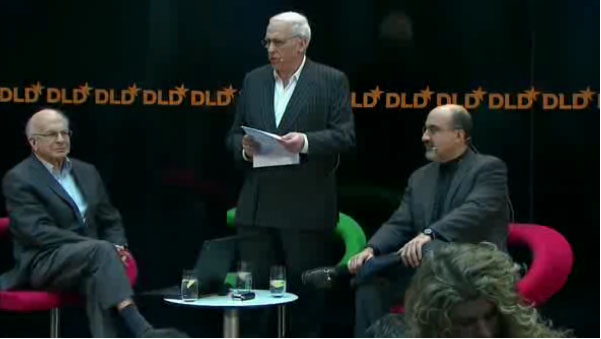 I think Ari would say, "you should set goals that are constantly reaching further, but attainable, then gradually keep moving forward. If you have a stumble then pause and evaluate why. If you set a goal too far out of reach you may be faced with disappointment at not getting it".
Charles Pennington writes:
Steve Sailer has a nice illustration of the problem with some of Kahneman's questions.
Apparently the following background information is NOT supposed to convince you that Jack is more likely to be an engineer:
"Jack has a B.S. degree from Purdue. At work, Jack wears a short-sleeve button-front shirt with a pocket protector full of mechanical pencils, just like most of Jack's coworkers on his floor. Jack always wears a tie clasp to keep his necktie from getting smudged by the blueprints when he leans over a drafting table. Jack's favorite line from Shakespeare is, "The first thing we do, let's kill all the lawyers." In fact, that's the only line from Shakespeare he knows. Jack wanted to name his firstborn son Kirk Spock, but his wife wouldn't let him."
David Hillman comments:
From Forbes' "Five Leadership Lessons from James T. Kirk" (applies to lone wolves and markets as well) :
“You know the greatest danger facing us is ourselves, an irrational fear of the unknown. But there’s no such thing as the unknown– only things temporarily hidden, temporarily not understood.”
“One of the advantages of being a captain, Doctor, is being able to ask for advice without necessarily having to take it.”
“Risk is our business. That’s what this starship is all about. That’s why we’re aboard her.”
“Not chess, Mr. Spock. Poker. Do you know the game?”
“‘All I ask is a tall ship and a star to steer her by.’ You could feel the wind at your back in those days. The sounds of the sea beneath you, and even if you take away the wind and the water it’s still the same. The ship is yours. You can feel her. And the stars are still there, Bones.”
Comments
Archives
- October 2026
- September 2026
- August 2026
- July 2026
- June 2026
- May 2026
- April 2026
- March 2026
- February 2026
- January 2026
- December 2025
- November 2025
- October 2025
- September 2025
- August 2025
- July 2025
- June 2025
- May 2025
- April 2025
- March 2025
- February 2025
- January 2025
- December 2024
- November 2024
- October 2024
- September 2024
- August 2024
- July 2024
- June 2024
- May 2024
- April 2024
- March 2024
- February 2024
- January 2024
- December 2023
- November 2023
- October 2023
- September 2023
- August 2023
- July 2023
- June 2023
- May 2023
- April 2023
- March 2023
- February 2023
- January 2023
- December 2022
- November 2022
- October 2022
- September 2022
- August 2022
- July 2022
- June 2022
- May 2022
- April 2022
- March 2022
- February 2022
- January 2022
- December 2021
- November 2021
- October 2021
- September 2021
- August 2021
- July 2021
- June 2021
- May 2021
- April 2021
- March 2021
- February 2021
- January 2021
- December 2020
- November 2020
- October 2020
- September 2020
- August 2020
- July 2020
- June 2020
- May 2020
- April 2020
- March 2020
- February 2020
- January 2020
- December 2019
- November 2019
- October 2019
- September 2019
- August 2019
- July 2019
- June 2019
- May 2019
- April 2019
- March 2019
- February 2019
- January 2019
- December 2018
- November 2018
- October 2018
- September 2018
- August 2018
- July 2018
- June 2018
- May 2018
- April 2018
- March 2018
- February 2018
- January 2018
- December 2017
- November 2017
- October 2017
- September 2017
- August 2017
- July 2017
- June 2017
- May 2017
- April 2017
- March 2017
- February 2017
- January 2017
- December 2016
- November 2016
- October 2016
- September 2016
- August 2016
- July 2016
- June 2016
- May 2016
- April 2016
- March 2016
- February 2016
- January 2016
- December 2015
- November 2015
- October 2015
- September 2015
- August 2015
- July 2015
- June 2015
- May 2015
- April 2015
- March 2015
- February 2015
- January 2015
- December 2014
- November 2014
- October 2014
- September 2014
- August 2014
- July 2014
- June 2014
- May 2014
- April 2014
- March 2014
- February 2014
- January 2014
- December 2013
- November 2013
- October 2013
- September 2013
- August 2013
- July 2013
- June 2013
- May 2013
- April 2013
- March 2013
- February 2013
- January 2013
- December 2012
- November 2012
- October 2012
- September 2012
- August 2012
- July 2012
- June 2012
- May 2012
- April 2012
- March 2012
- February 2012
- January 2012
- December 2011
- November 2011
- October 2011
- September 2011
- August 2011
- July 2011
- June 2011
- May 2011
- April 2011
- March 2011
- February 2011
- January 2011
- December 2010
- November 2010
- October 2010
- September 2010
- August 2010
- July 2010
- June 2010
- May 2010
- April 2010
- March 2010
- February 2010
- January 2010
- December 2009
- November 2009
- October 2009
- September 2009
- August 2009
- July 2009
- June 2009
- May 2009
- April 2009
- March 2009
- February 2009
- January 2009
- December 2008
- November 2008
- October 2008
- September 2008
- August 2008
- July 2008
- June 2008
- May 2008
- April 2008
- March 2008
- February 2008
- January 2008
- December 2007
- November 2007
- October 2007
- September 2007
- August 2007
- July 2007
- June 2007
- May 2007
- April 2007
- March 2007
- February 2007
- January 2007
- December 2006
- November 2006
- October 2006
- September 2006
- August 2006
- Older Archives
Resources & Links
- The Letters Prize
- Pre-2007 Victor Niederhoffer Posts
- Vic’s NYC Junto
- Reading List
- Programming in 60 Seconds
- The Objectivist Center
- Foundation for Economic Education
- Tigerchess
- Dick Sears' G.T. Index
- Pre-2007 Daily Speculations
- Laurel & Vics' Worldly Investor Articles
