Jun
10
One Wonders, from Victor Niederhoffer
June 10, 2011 | 1 Comment
 One wonders if the short sellers have some flexionic relations with certain publications. They seem to come up with more reasons to be bearish on our friend than any one. It reminds me of when I had Thailand long. First one rating agency then another downgraded them. It got so that if a man with a suitcase saying "fitch" was seen at an Asian airport, the Thai market would open limit down.
Russ Sears writes:
It would seem this week that the flexions have a fondness for driving down the markets the last hour so it can be reported by the news. But how to quantify this and make it predictive?
Jun
8
 On a weekend trip.
1. We head to the Watchtower by the Brooklyn Bridge and they don't have the sign up any more that says, "the dead will rise". But it's there in my mind from the 1970s still. And eventually it will apply to tech.
2. Williamsburg itself is thriving with all the old factories now being converted to condos and family residences and boutique shops. If there is a good infrastructure and the buildings are strong, they will eventually find a good and productive use. The same thing applies to Coney Island where the crowds there now rival what they were in my day in the (I look around 3 times ) thirties. How to differentiate this from the situation in Detroit where the buildings sell for $50 or so. Is it just the unions?
3. We go to Zura's loft where hundreds of immigrants are doing sculptures out of metal working that they learned in Russia and making a good living, and they build model motorcycles and chandeliers among other things in the Mill building which was converted from a Mill 100 years ago when I was a boy. The immigrants are the dynamic entrepreneurs that make jobs for everyone and do things that enable us to augment our horizons.
4. We go to the Hall of Science in Flushing and the circus science is very good, and it shows that things are seldom what they seem. All the contortions and balancing can be learned with practice and family training. A contest between two balancing acts in Niagara Falls in the 1870s shows the importance of competition. One of the balancers had no hesitation in carrying Prince William across on his back as he crossed Niagara on a one inch thick tight rope successfully and dipped down to get a drink from a passing paddle wheeler for sustenance. The unusual is always the usual for the market, and what seems impossible will ultimately happen.
5. As we go home, our door snaps open and grazes a Russian's car, and he extorts us for hundreds as time is not meaningful to such. They were laying in wait for such to happen like a spider in his web. Time has a different value to all, and along with their low service rate, is the key determinant of why the Asians have and will surpass us.
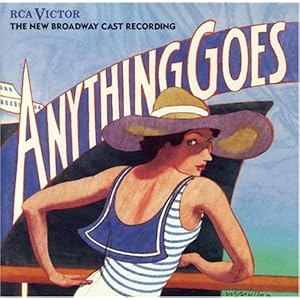 6. "Times have changed"
"In olden days a glimpse of stocking was looked on as something shocking but now the Good one knows. Anything goes".
Aubrey and I saw Anything Goes.
I am thinking of 10 lessons we can learn from Anything Goes. You can help if you will. The first lesson is that in old times if you beat earnings estimates, nay, if you just reported a positive quarter, it was enough, a glimpse of a rise was sufficient. Now you have to beat the earnings estimate, you have to beat the sales estimate, you have to give an upbeat guidance for the future, and your margins have to improve.
7. Also, like in Anything Goes, the crooks are considered honorary captains of the ship. Many admire Madoff 's market making operation and his capacity to lead the auditors to think he was going to be the next head of the agency. The heiress Hope Harcourt (any relation to Jov?) has to marry the wealthy English Lord because her family has lost everything in the depression. However, her father jumped off the ledge of the stock exchange like a Yale man, so his death was honorable.
To be continued.
Rocky Humbert adds:
 For what it's worth, the Jehovah's Witnesses sold the Watchtower building some years ago, and it's now an NYU dorm. Notably, they didn't replace the "Dead Will Rise" with ""Perstando et Praestando," …
The lack of signage might be due to infighting between the dead (and not rising) faculty of Brooklyn Polytechnic (whose campus was absorbed by NYU)… as they are still lobbying for Virtus Victrix Fortunae.
Useless fact: Brooklyn Polytechnic may be the only US university that produced Nobel Laureates AND went out of business.
Jason Ruspini adds:
 Have they have already surpassed us? It looks more like American/European technologies and institutions have just diffused over to their many people. What are the innovative contributions to world society coming out of Asia? They have some tall buildings and big casinos.
If long-termism manifests itself as rigidity, that is a weakness. Not to extrapolate the Fukushima situation to all of Asia, but it does give a general impression of flimsiness under a facade of success and technical prowess. (Japan needed our robots. They will never live that down.)
Math/science that is actually innovative will win in the long-run, but America hasn't been bowed yet.
Jun
6
 Ed.: the June 4, 2011 edition of Barron's contained a review of Malkiel's book A Random Walk Down Wall Street by Victor Niederhoffer.
The review is entitled "A Classic That Still Resonates".
Jun
3
Presumably, from Victor Niederhoffer
June 3, 2011 | 1 Comment
Presumably the Tues move up and the Wed move down in SP were triggered by fixed speculators with systems to buy the turn of the month.
Alston Mabry writes:
Well, you had the last day of the month a Tuesday right after a 3-day weekend…just before the first day of the month being a Wednesday…and 30 days from the end of QE2…with a spattering of bad economic news thrown in for good measure– what am I leaving out? Talk about needing a good system for combining your forecasts…..
Gary Rogan writes:
The House rejecting the debt limit increase? Last time (fall of '08) the spineless tried to grow a spine the language of the falling markets was used to explain to them the error of their ways.
MUST…SAVE…COUNTRY…MUST…PASS…DEBT…LIMIT
Jun
3
It’s the Little Things, from Victor Niederhoffer
June 3, 2011 | 2 Comments
 It's the little things that you do that make losing happen. The Heat were up by 15 with 5 minutes to go, and were shadow boxing (James and Wade) and making howling noises, Bosch, and smiling all around. Loose as a goose. Their joy turned to concern, then fear, then paralysis. Same kind of error as the Heat made could cost you your life in trading. I've been up for 48 hours straight to stay out of the Abbey, and it's those little things that sometimes enable one to pay the bills.
Paolo Pezzutti writes:
In Paris, defending champion Francesca Schiavone battled from a set (6-1) and 4-1 down to defeat Russian teenager Anastasia Pavlyuchenkova and reached the French Open semi-finals. It ended 1-6, 7-5, 7-5. What kind of heart and mind it takes to accomplish such things and never give up. In the semi-finals the adrenaline was still there and she beat the French opponent 6-3 6-3.
This sort of "momentum" exists also in trading. This looks like a bear trap. When prices spike to the downside and then return within the range and explode in the opposite direction. Hopefully it will continue today vs. the Chinese Li Na.
Jun
2
 If one does not hear from me in the next day, it is likely that you can find me at Trinity Church worshiping and walking unsteadily to the east.
T.K Marks writes:
One hopes that you mean in a bargain hunting fashion rather than a spectral one.
P.S. I don't know if you caught the basketball game last game but Dallas' offensive stupor made the one-dimensional Knicks look like the Harlem Globetrotters in terms of panache and creativity. Looked like they were playing rugby.
Victor Niederhoffer adds:
I'll either be at Trinity Church or Westminster Abbey.
Jeff Watson writes:
Better than the Tower of London.
T.K Marks writes:
Meanwhile, across the Channel, the French had a Revolutionary tradition of dispatching of one with a relatively humane suddenness, rather than the death-by-a-thousand-cuts peculiar to modern trading.
May
31
I Found It Very Interesting, from Victor Niederhoffer
May 31, 2011 | 4 Comments
 I found it very interesting that the women at the IMF all find it appropriate to wear pants only so as not to excite too much exuberance from their colleagues there, all of whom are PhD, presumably suffering from the Miseian frustration of knowing how the world should work but no one will listen to them.
How can this be generalized to other market situations and become useful for predictions.
For example, how does the dress code in companies affect market performance, as well as the age differential between CEO and wife?
May
31
 An interesting holideasonal is that there have been 13 big up opens on holidays since 1999, the last being July 6th, 2010, and 11 of these 13 were up a further nice amount, averaging 1.2 % by the close of the subsequent day. (the gig on average was up at that time in retrospect).
Sam Marx writes:
I have become interested in quantitative studies similar to holiday studies just mentioned, determining best trading days of the month,( last I heard it was last 2 days & first 3 days of the month ), predicting next day's move, repetitive run patterns, etc. etc.
I'm interested in finding any websites, articles, books, etc. that discuss these topics.
I remember Fosback and Merrill did some work on this type of trading many years ago (late '70s ) but I was mainly involved with options then, still am.
Back then I started a study of gap trading but did not follow through as making money trading options profitably on the exchange floor was just too easy and data were more difficult to obtain then (no internet). I could trade options profitably then without knowing anything about the underlying stock.
The Stock Market Almanac has some of these studies that I'm exploring , and their Table of Contents is my starting point. However , I've already found 2 of their studies that I believe are in error. However their 6-6 month strategy is interesting although I believe the so-called "Good" period is now starting earlier than Nov.1. The last "Good" period started on Sept. 1.
I've expanded my trading to include value stocks along with options, but I'd like to enlarge my trading to include more quantitative trading.
I welcome suggestions.
Victor Niederhoffer adds:
One is reminded of Beethoven's remark to Rossini when the latter came to pay a courtesy call to b, while Rossini was the greatest star in Europe and B was on the wane. "Stick to comic opera," B told him. The seasonals on a perspective basis are most non-predictive. But they look great in retrospect.
May
31
Angles of Ascent, from Victor Niederhoffer
May 31, 2011 | Leave a Comment
I have recently been considering the angle of ascent as a predictor of subsequent movements as part of a general consideration of the principles of conservation of momentum apliccability to markets. Here's one approach.
Consider all moves during a week of 10 to 20 full points i.e. 1% in s & p
.                  number of obs  move the next day     sd
.previous Wed
.to Friday
.up more than 10     44            -2                   13
.up btwn 5 and 10    27            -1                    9
.up btwn 1 and 5     14             0                    0
.-5 < sp <0          11            0                    12
.sp < -5 9 20 22
There would seem to be some small evidence that for weekly moves during the 1st 10 years, given that the move during the week was between 1 and 2%, the algebraic speed of ascent in the last part was negatively correlated with the move the next day. The approach has many bifurcations and variations and might be interesting to the physicists in our audience.
Chris Tucker writes:
Angles are important in aviation, we use quite a few. Pilots differentiate between angle of climb and rate of climb. Best angle of climb will provide the most vertical gain over a specified distance, which is handy for clearing obstacles like trees off the end of a runway. Best rate of climb will gain the most altitude over a specified period of time. Not the same thing.
Angle of incidence, a fixed value, is the angle between the chord line of the wing and the longitudinal axis of the fuselage and is not to be confused with the all important angle of attack, the angle between the chord line of the wing and the airflow through which it is travelling. Lift generally increases with angle of attack to a maximum point, the critical angle of attack, after which it decreases because the laminar flow of air over the wing begins to separate from the surface of the wing creating a stall condition. (Nice illustration and mention of tennis and golf balls here.
A serious stall involves a complete loss of lift and often results in a spin and frequently ends in tragedy, as in the loss of Air France Flight 447 and the most recent fatal crash in the United States, Colgan Flight 3407.
The thing to consider in aircraft when looking for a superior rate of climb is high thrust to weight ratio and light wing loading. Pilots can cheat, however, by accelerating during level flight and trading this kinetic energy into a single burst of high speed climb. This is known as a zoom climb and I have suggested the use of this maneuver on occasion to convince pilots to penetrate a layer of severe turbulence if the layer is thin enough and there is smooth air above. It is critical to have current and accurate information about the turbulence before attempting something like this. The important thing about a zoom climb is that it is unsustainable and is bounded by the amount of available kinetic energy. Military fighter aircraft, with extremely high thrust to weight ratios need not be concerned with this as they are capable of sustained and extreme vertical speeds. But they burn an awful lot of fuel in the process.
(Sorry for all the links, when I start talking about flight I tend to get carried away….)
Pitt T. Maner III writes:
Played tennis one night many years ago under the lights with a commercial pilot from Nevada who had a naval aviation background and he described the difficulties of landing a jet on an aircraft carrier under low light conditions in fairly rough sea. What he described was having to concentrate, I think, on the pitch, roll and yawl and coordinate it with the similar movement of the carrier flight deck—lots of variables in a short time window and positional awareness. Very harrowing procedure in difficult conditions (it sounded nightmarish, and one for only the most experienced pilots) and he used the term "bought the farm" several times to describe pilots who had crashed in such circumstances.
What was interesting was a technique he described as powering up and down so as to maintain control and complete the landing. Too much power and he would overshoot and too little and he would stall out or not make the deck. It sounded like revving an engine. Short bursts of power on and power off.
Is that a technique that is taught or does that come from experience and feel?
By coincidence it is the 100th Anniversary of carrier landings. Even with the technological advances pilots must very skilled:
"On Nov. 14, 1910, Ely ignored storm clouds and took off in a spindly aircraft from the USS Birmingham, which sat in the waters of Hampton Roads. It was the first time an aircraft had ever lifted off from a ship.
A photograph freezes the moment in time that Ely became airborne. Yes, that would be him, dropping toward the water.
The flight came perilously close to failing. Ely dove toward the water to gain speed and pulled up, but not before his wheels and part of his propeller struck the water. The aircraft climbed into the air, rattling with damage. Steering with his shoulders — aircraft of that day were built by bicycle makers, and were steered by leaning — he managed to land on the beach at Willoughby Spit.
Then in January 1911, Ely closed the historical loop by landing on the deck of a ship. This time, the event was in San Francisco and the ship was the USS Pennsylvania.
Later that year, Navy brass became convinced to give these new-fangled flying machines a try, and put in the first order for aircraft. That makes 2011 the official 100th anniversary of naval aviation.
Many events are planned for next year, but the Navy will get a head start on the celebration come Friday, with a celebration and a display of older aircraft. Coolbaugh's replica is closer to the aircraft that Ely landed out in San Francisco in 1911, as opposed to the one that took off from Hampton Roads a few months earlier. Still, he had hoped to fly his aircraft off the deck of the USS George H.W. Bush as a tribute to Ely's first take-off."
Here is the wiki for Eugene Ely.
"It's a dangerous job"
And an interesting video here.
May
30
The College is a Waste of Time Meme, from Jeff Sasmor
May 30, 2011 | 7 Comments
 One has to wonder why this whole "college is a waste of time" meme has suddenly become so prevalent. Is it because so many people have trouble with college loans? Too many writers who have nothing more to say about O's birth certificate?
Thinking one can predict the future based on what one does in the present is a persistent human foible. For sure a lot of kids go to college who don't need to. But is this truly something new? Would anyone sensible make a decision based on what they read about this subject? Unfortunately some probably will.
It remains to be seen how employers of the future will react to resumes that state "I am really smart but I didn't go to college because I read online that it was BS; but I really am smart."
One of my kids is 1/2 way through college and the other is just entering this fall– and I don't spend any time at all thinking it's a waste of time or money; it's been a path to prosperity in my family where none of the previous generation had any education past high-school (if indeed they finished that at all).
On the other hand my wife and I went to CUNY at a time where the cost was $35/semester. That's not a typo.
But I still wonder what's behind the impetus to discredit higher education?
Ken Drees writes:
I get the vibe that the intent is more of a cost justification issue. You don't send a kid to college who gets middle of the road grades and majors in marketing anymore. The job market out of college is poor and will continue to be poor. College now will set you back serious money as a percentage of household income and there will be serious debt burdens on the student and parents upon graduation. You can't put the college payments on the credit card or the home equity loan anymore.
I believe that a college bound child needs serious career planning up front, which is tough to do since kids sometimes do not know what they want to do prior to going off to the higher education arena. Like the union bubble which is feeling the backlash from the debt riddled state pockets empty reality, colleges need to step back, cut back, stop the pay raises–else enrollment is going to crater and the pie shrinks.
Victor Niederhoffer comments:
 A college education will always serve as a signaling device to employers and partners and parents that one is capable of being admitted under highly competitive circumstances and then has the fortitude to stick with the program, and finish the requirements, and the moral fiber not to have been kicked out. The signaling will always be of value and the rate of return from college should stay relatively constant.
Russ Sears comments:
Very similar qualifications could be said about homeownerships, commitment to paying a mortgage and good citizenship of being a good neighbor. When a persons limit to leverage has no bearing to what they could reasonably expect… many with nothing to loss will gamble with somebody else's money. This of course creates a bubble in some areas where there will be large oversupply of X degrees. For instance everybody will think in 2022, "what were they thinking taking forensic science and $100 grand of loans?"
The problem is when you use the argument that is it "should" be worth it to argue that everybody has a "right" to upgrade there lives. Further when you grant this "right" to any 18 year old capable of getting a high school degree you are bound to get many that should not have been given this privilege without working a few years and tasting responsibility. I still believe orginially there was a segment of responsible people that were granted sub-prime loans. These people however, proved to be the exception to the rule when everybody was given this right.The difference may be that those youth that are the sharpest will see the "bubble" within these areas and avoid them.
Could we be looking at the class of 2011? on a resume and subconsciously think what a deadbeat?
James Goldcamp writes:
 I agree with chair's analysis of the signaling value of education, but one also wonders at what cost. I would find it hard to believe the return on invested capital has not gone down with both greater real costs and general degree (volume) inflation over time. It occurs to me that a rigorous self study program with standardized tests against which one could be compared might provide some lesser but nonetheless valuable signaling vehicle at 1/20th the cost of the current college education. Interestingly, one hire we had years ago was more known for his perfect SAT than his multiple Ivy degrees.
Thomas Miller writes:
This anti college education and anti home ownership "debate", seem to reflect a negative attitude that is growing in this country. The theme seems to be "dont even bother to go to college or strive to own your own home. it's not "worth it." just give up and settle for less." Of course college education or home ownership is not for everyone, but those that propagate these defeatist platitudes, (especially the ones that do it on internet blogs read by a large audience), are doing a great disservice to young people. "just settle for less" is not the attitude that made this country great. A generation ago, many that chose not to pursue college could get a decent job with benefits and be fairly sure of being able to retire from that job. There are very few of those jobs available now. The gap between those with a college degree and those without will continue to widen.
Russ Sears comments:
 I believe those that are "anti" college are saying take more risks start a business instead.
And for those that it will not turn out for the better, it's not good government to guarantee the loan. More responsible decisions will be made if they have to compete for access to loans like anyone else.
Ralph Vince replies:
I cannot speak for others, but I am not advocating a "give up," or defeatist attitude here. I speak with those who have children of college age frequently, as well those who ARE of college age frequently too. One of these day, I'm going to stop speaking to people who don;t take my advice (most people are incapable of taking advice, we simply have to learn things the hard way, and usually more than once)
I hear an awful lot of talk from all of these people that a college education is necessary to enter the American job market, as though it were a ticket to the dance, a means to an end as it were.
(I should point out in full disclosure I do not have a college education. I am self taught. When I decided I should learn math, I started with algebra, geometry, trig, analytic geometry, calculus, topology…..eventually stochastic differential equations, which is used (with near exclusivity) to model prices with (a nice target for a math track for someone interested in the markets, but I find these methods model prices with a degree of reality akin to Oz modeling Kansas). When I wanted to learn literature, I started with Homer, then Virgil….through to the 1950s. Of course one cannot study everything and anything, you have to make selective, intelligent decisions (which is where talking with others comes in) and someone must WANT to dispal their ignorance (and this is the key attribute, the acknowledgement of our ignorance and a desire to overcome that — whether formally educated or not).
The last time anyone ever asked me about my educational background was probably when Reagan was running against Carter.
So when I look at what people are learning, and WHY they are learning it, I DO come away in MOST cases with a "Why bother with that?" attitude.
So once we acknowledge that there are two reasons for edication:
1. To dispel our ignorance, and ultimately, to study material we are passionate about, should have such good fortune, and
2. To make ourselves, personally, a marketable product (i.e. posses a marketable "trade," be it electrician, brain surgeon, or truck driving certificate)
people can make better decisions. Unless they are fortunate enough to be a trust fund kid, they need #2. A mere college degree does NOT provide that — this is a wives tale that floats about America wherein a lot of money is being wasted in its pursuit.
#1 is a luxury — one must have the good fortune of finding what fires their jets at a young age, aside from pornography, and find a way to pursue it. If they have the resources and time, college is the way to go. If not, anyone with a spark and a modicum of resourcefulness will find a way to pursue it.
I've spoken of this before. The number of persons from the 2000 census to the 2010 census is up 20%, the number of households, nowhere near that amount. Clearly, in the not-so-distant future, either much housing must be created or much work must be done to convert the "cul-de-sac development" McMansions into 2 and three household homes. What young person is a yeoman plumber out there, or plasterer? Not many, certainly not many over the past 10 years — but it is the fastest track to acquiring #2, above, for most.
And most need #2. Not everyone needs #1, and if they have that luxury, nothing will stop them from pursuing it. But the notion of borrowing a lot of money for a ticket to a dance based on some parent's misguided model of reality (Oz!) is something the educational institutions feed on, benefit by and play to.
Jim Lackey writes:
 College is the time to meet your mate, your equal. For the fortunate men, it's the better half you spend life with.
In your college years, there is only so far you will go…. Either to fake it, to fit in/get ahead or rebel against, to get off easy and/or explore the adventures of danger. The gist is how you act when no one you know is looking. Sin may resurface later in life. For certain people, the hypocrisy of life will rear its ugly head. If a married couple knew each other during these years of growth and uncertainty it's near impossible to argue later the lack of full disclosure prior to marriage.
A grievance can always be resolved. A slight, an imaginary hurt, the lack of full disclosure–the "I thought I knew that person". That person will hate you til the day they die.
My guess that is how/why bitter divorces ruin families… vs the much higher than average success rate of current marriages from my anecdotal evidence of family, friends and cohorts that married some one they knew from school.
Jeff Sasmor writes:
Good article on "What's a Degree Worth" :
What Are You Going to Do With That?
For the first time, researchers analyze earnings based on 171 college majors
By Beckie Supiano
Tuition is rising, the job market is weak, and everyone seems to be debating the value of a college degree. But Anthony P. Carnevale thinks these arguments are missing an important point. Mr. Carnevale, director of the Georgetown University Center on Education and the Workforce, has argued that talking about the bachelor's degree in general doesn't make a whole lot of sense, because its financial payoff is heavily affected by what that degree is in and which college it is from.
Now, new data from the U.S. Census Bureau sheds light on one big piece of Mr. Carnevale's assertion: the importance of the undergraduate major. In 2009, the American Community Survey, the tool the bureau uses to collect annual estimates of population characteristics, included a new question asking respondents with a bachelor's degree to give their undergraduate major.
After combing through the data, Mr. Carnevale says, it's clear: "It does matter what you major in."
Laurence Glazier writes:
After the signalling provided by college qualifications, the deliberate undertaking of full-time employment may signal the willingness to allow creative fruit to wither on the vine. A shibboleth of perspective. So many wait for retirement (which may not come) to allow vent to such aspirations, but the law of the farm dictates regular irrigiation throughout a lifetime.
To this end there would be much benefit to all if full-time work became less the norm. The end of government subsidy of unsound housing loans would reduce the pressure on people to suppress their finest qualities.
The Harry Potter books emerged not in spite of the writer's modest circumstances, but aided by them.
David Hillman writes:
Very astute observations.
A laborer can be trained to dig a ditch to a certain depth. A monkey can be trained to dance to the organ grinder's tune. Even a plant can be 'trained' to grow in the desired fashion. But few of the former are, nor neither of the latter can be, trained to *think* and creatively problem solve.
One might speculate that emphasizing skills, specialization and technology in educational curricula and employment qualifications may be the culprits.
While a college education being increasingly available only to the affluent because of financial considerations is, indeed, an issue, perhaps another of our chief concerns should be that we are creating a nation of people who are trained, rather than educated.
Kim Zussman writes:
The "education ruins thinking" argument has value, but simply looking at dollars a college degree pays more than just HS diploma. BLS stats below shows increasing income with formal education: about $400/week more for college grads - which of course does not include harder to value assets like volume of learning, tutored critical thinking, facility of life-long learning, status, access to better mates, good memories, signalling, etc.
One would need about 10 years of the additional (median) college grad salary to pay for 4-year private degree (ignoring taxes). Would the degree be worth it if it took 20 years to pay off?
Unemployment rate Education attained Median weekly earnings
in 2010 (Percent) in 2010 (Dollars)
1.9% Doctoral degree $1,550
2.4 Professional degree 1,610
4.0 Master's degree 1,272
5.4 Bachelor's degree 1,038
7.0 Associate degree 767
9.2 Some college, no degree 712
10.3 High-school graduate 626
14.9 Less than a high school diploma 444
8.2 All Workers 782
Note: Data are 2010 annual averages for persons age 25 and over.
Earnings are for full-time wage and salary workers.
Source: Bureau of Labor Statistics, Current Population Survey
Rudolf Hauser writes:
The question of a rate of return on a college education is not that easy to measure. For one, it will vary greatly on the college attended both by cost and quality of education. It would also vary greatly by the course of study and how much a person actually learned as opposed to just getting by and having fun. Even taking account of these variables, it is not an easy question to answer. The math is a simple discounted present value calculation, but the inputs are something else. For one, the attributes of those attending college and those not attending will differ. Those with an interest in learning and working hard, more personal discipline and more ambitious are more likely to be attending college than those who are not. Those people are more likely to earn more than the group that does not go to college even if they had not gone to college. So while the value of the education is the difference in what they earn in the future compared to what they could have earned had they not gone to college, one cannot just assume the latter is what those without a college education currently earn. In addition what is actually earned will not be a single average or medium figure but will have a wide distribution around it based on good or bad fortune, who you know, and countless factors beyond one's control. Costs while being educated in addition to direct costs of tuition ,books include difference in living costs relative to what they would be had one not gone to college and opportunity costs of lost potential earnings from working rather than going to school. Then there is the question of how much of the difference is due to signaling as opposed to the value of what was learned and contacts made during school. That is real but could change if the marketplace found alternatives to such signaling. If lower education had more strict criteria for graduation and grades the signaling value of a college education might lessen as employers had more confidence in that and prior work experience. The cost of loans may also vary, so that how the education is financed will matter a great deal.
In addition to monetary economic measurement, there are other benefits that might be gained. Meeting a spouse has been mentioned by list members as one such benefit. Learning about many areas and learning how to learn, may enrich one's life as a person, contributing to the value one has to society and family and to one's personal richness of life and happiness. But if prospects do not turn out as one hoped, it can also lead to unhappiness. The question then is how much one wishes to pay for these other potential benefits or negatives (i.e., the probability of disappointment). Some areas of study such as general liberal arts, might be expected to have a higher risk of low or negative economic returns than more specialized fields, but specialization runs risks if those skills become of less use to society.
On a personal level, I do not believe it make sense to send a kid to college unless they are actually going to work hard to learn. If not, it might be best for them to work for a time and see how difficult life can be without a college education. Often they may then go to college and actually make the most of it rather than going at a younger age and goofing off.
I might also add that education need not be in the classroom. The time spent learning on one's own is also education. One need not attend college to learn. It might not have much signaling value but it certainly helps in many areas. The cost is the value of the time spent either in terms of the value of one's leisure or economic opportunity cost.
The ability to learn might be enhanced by a formal education. One of the things I would advise a person attending college to learn is how different disciplines think. The way a lawyer thinks about problems, the way a scientist does, the way a creative writer thinks , the way an economist thinks differ and are specialized in some ways that takes a time to learn. The first course in microeconomics is difficult for many students, for example. The more ways of thinking one understands, the broader ones ways of understanding the world, understanding other people and in solving problems. Some of the great innovations come from taking of advantages in knowing something about other areas of learning that provide insights into the problems in your area of interest.
David Hillman writes:
Ok, then, I meant the focus to be on the point of training versus education. If it requires more updated or timeless references than those to the 20th Century, so be it, and I beg pardon.
(1) Backhoe operators are *trained* to operate them, but there are many instances of heavy equipment being stuck because the operator failed to *think* about the application.
(2) Musicians can be *trained* to play an instrument, but without a proper foundation, i.e., *education* in music theory, history, etc., while the music may be technically correct, it is often dry and mechanical, uninspired and with an 'off-the-shelf' feel.
(3) An air traffic controller can be *trained* to direct aircraft, but when an emergency arises, he/she must *think* of how to resolve it, not unlike,
(4) A 9-1-1 operator being *trained* to follow protocol, but when that protocol does not apply, hopefully, that individual may be capable of *thinking* of a way to prevent loss of life.
And, what of entrepreneurs like you and me? How can one be *trained* to brainstorm an idea out of thin air, then take it from the drawing board to reality? But, one can certainly be educated broadly enough to think creatively, make connections, take calculated risks and solve problems. Even in strategic planning, one can follow a plan, but the successful execution of it requires feedback from the real world and adjustment, which requires the ability to think, not just the ability to follow an SOP manual.
Clearly, a liberal arts education is not for everyone and the rise of tech schools and alternative forms of education and training should be applauded. For those who require training, the more well-trained they are, the better off will be all of us who depend upon their services. But, one should not necessarily depend upon them to do anything other than the job for which they've been trained, nor to be able to *think* creatively when faced with a situation or event for which they have not been trained. Trained mechanics may depend upon a diagnostic computer and trained line cooks upon a recipe, whereas a great mechanic might 'feel' a rough idle and a great chef might improvise a dish. The latter two have the ability to think and create, some of which is natural, but a good deal of which may also come from an education.
Nor is a college education always the right thing for someone at any given time. There are plenty of examples of individuals who failed to perform well in college as a recent high school grad, but did stellar work 'going back to school', my own being one of them.
Some eschew those who are 'too educated' as being 'troublesome' precisely because they can think. However, if I knew nothing of one's natural intelligence, and had to choose, I'd probably go with the educated over the trained.
That said, neither education nor training has much to do with 'smarts.' For that, you either are, or you are not. Some of the dumbest guys I've known have had PhD's, but so have some of the smartest. Likewise, some of the least educated have been the smartest and most capable, but there have been many that are dumb as a box of rocks.
As someone once told me, "it's better to healthy and rich, than to be sick and poor." I'm kinda thinking it might also be better in the long run to be smart and educated, than to be dumb and trained.
Stefan Jovanovich writes:
David is right. If there is any fault to his argument, it would lie in his optimism about the capacities of higher education. But, then, my cynicism about schooling comes from having literally grown up in the business and from being a 2nd generation academic bum. (There are not many fathers and sons who share the distinction of having gone to graduate school in English literature solely because they had no better idea of what to do and the GI Bill would pay for it.) School, like most things, is what you make of it. My difficulty is that "education" is now what "national defense" was in the 50s and beyond; an open-ended appeal for more money that is always justified in the name of some higher good that is incapable of being questioned.
Jeff Rollert writes:
I concur with Ralph, and if you believe in the concept of singularity, then a repetitive answer method is most likely to be replaced by a machine.
For me, I believe that standard problems will have standard solutions already applied to them before I'm even aware of the problem. So if one were to find employees who where good at sensing/finding the "unknown-unknowns" then they would have to have a non-standardized approach - in other words a non-academic approach.
Lastly, in a logic sense, how can something be a "value" but still be "expensive"? Aren't these mutually exclusive?
Tim Melvin writes:
We have dealt with both sides of the college issue here in the past few years. My daughter on her quest to be the world only libertarian teacher had no choice. To teach you must have three degrees and credentials. She has on semester left and has pulled a 4.0 throughout. She may have learned some basic teaching techniques she did not know but the general education element was lost on one who reads like her. When I look at the top 10 majors in US colleges I have a hard time seeing what we are producing except middle managers. Teaching and nursing are the only to that offer a truce vocational choice. I would love to have had four years to study literature, but I question the employment value of the degree itself. The top tier schools may be different but is seems to me that our universities are teaching fixed values and information, not how to think. How to think has to be either installed by your parents or learned on your own. I cannot see where this can possibly be worth the cost today. Perhaps Colonel Depew can add a though on this but I think teaching the young to read the Great Books Curriculum would go farther than the current middle management factory that are most schools today.
I never went to college. Truth be told I dropped out of high school at the enthusiastic recommendation of the local authorities. What education I have I obtained from between two covers in the style of Louis L'Amour– I suggest that book as a manual on learning to think by the way. I read constantly when I was a kid. My mother was wise enough to let us read anything we wanted regardless of content. If there was something we didn't understand she made us find the source material to explain it..and this was back in the day when Encyclopedia Britannica was still the source of knowledge not the internet. I have continued to read ravenously all my life. I read anything and everything. I have found that even fiction often contains lessons for life and can be a source of knowledge. As an example, I read two or three of Robert Parker's excellent Spenser series. Great detective books, but read a few and you will learn two or three good quick dinner recipes, several literary quotes worthy of further research and how to win a fight. Many of us on the list have followed the chair's lead and studied the great lessons of Monte Walsh, Don Quixote and Patrick O' Brian. Randy Wayne Whites Doc Ford novels often contain insights into the biology of floridian waterways and the everglades. Knowledge is everywhere if you know how to think. I fear today's world of standardized testing and assembly line universities may not be teaching that valuable skill.
Think about this. The two greatest innovators and business men of the past thirty years both dropped out of college. Some schools may be worth the price tag. I suspect most are not.
My son on the other eschewed school in favor of making a few bucks. He discovered he had a real talent for and love of business. Within six months or so of going to work at Boater's Worlds he was managing one of the top producing stores in the company…at the age of 20. We talked about school and he told me flat out "I can't see the value of spending the money. I have two MBAs working for me now because they can't find jobs that pay enough, and my part time staff includes a phd in English." He moved on when the Ritz family folded the chain. His former district manager brought him over to his new company and he is moving up the rank there. He just undersands the art of working hard and making money. He may need a few accounting classes some day but four years at some state university would have been a waste of time and money.
We need more thinkers who have a passion for knowledge and more curious explorers and fewer managers and chair holders. That's on us as parents as much as the schoools. If our children go onto college make sure they know how to think and the univerisity allows them to do so.
Stefan Jovanovich writes:
Dropping out can be useful even for scholars. Peter Green (the #1 biographer of Alexander the Great) did it.
So did Eddy's favorite professor who didn't teach art history.
Eddy's most treasured legacy from 4 years at Cal was giving Professor Jacobson the recording of her version of the Super Mario tune. He had heard her play it on the UC Carillon and wanted it for the ring tone on his phone.
Dan Grossman writes:
Found this interesting blog post by Steve Sailer proving the value of higher education:
A column on a new Gallup Poll asking "Just your best guess, what percentage of Americans today are gay or lesbian?"
"The mean guess was a ridiculous 24.6%. Only 4% said less than 5%, which is probably the best guess.
Polling companies seldom ask questions on which people can make obvious fools of themselves, since those can raise questions about the value of opinion polls.
Looking at the demographic crosstabs, it's evident that low intelligence people were most likely to wildly overestimate the percentage of homosexuals: 53% of people making under $30,000 annually said that at least 25% of the population was gay, and 47% of those with no more than a high school education. 43% of Democrats versus 24% of Republicans got the question wildly wrong.
In general, people are terrible at estimating or remembering demographic statistics. A 2001 Gallup survey, right after the release of 2000 Census results, found that the average American estimated that 33% of the population was black and 29% were Hispanic. That adds up to 62%, but who's counting? Not most people.
In that 2001 survey, nonwhites estimated that 40% of the population was black and 35% was Hispanic (adding up to 75%). In contrast, people claiming postgraduate degrees estimated that 25% were black and 24% Hispanic (only about double the Census numbers), which proves the value of advanced education."
May
28
Memorial Day, from Victor Niederhoffer
May 28, 2011 | Leave a Comment
 Memorial Day is always a good time to reflect on changes in tempo and trend. A study of going against from 3 day holiday to 3 day holiday, like Memorial day to July 4, and July 4 to Labor Day, and Labor Day to Thanksgiving, and Thanksgiving to Christmas, would be in order. It could be handled like the approach of Kendal in rank correlation methods of m ranking of j scores.
e.g. 8 markets between three of those holidays. Or the results could be generalized to individual stocks.
May
28
Combining Forecasts, from Victor Niederhoffer
May 28, 2011 | Leave a Comment
One of the most common problems in trying to get the edge on markets is the situation where you have two or more different ways of approaching your views as to what's going to happen and you have to come up with a decision. For examples it's Friday, and the employment number is coming out. You know that up days before it are bullish. Yet at the same times fixed income was way down the previous day, and that's bearish. What do you do. Do you weigh based on likelihoods? Or just take the one with a lower probability of chance occurrence. Or do you put them all together? Or bootstrap them in some way? Here's a good article on the approaches that are used.
May
27
The Bulls, from Victor Niederhoffer
May 27, 2011 | Leave a Comment
 The Bulls looked almost as clueless and bereft as the Knicks during the last minutes of their last two playoff losses. How does a team manage to lose a game by 3 that they were ahead by 12 in, with less than 2 minutes to go…?
A canal, a plan, Dallas.
Kevin Depew writes:
I'll have to look at the stats tomorrow, but my impression is that after all games in this series Bulls had a lead in the game for a large percentage of time in all games.
Pitt T. Maner III writes:
Perhaps more experienced professionals know how to pace themselves better over a series and within a game and always leave a bit of "dry powder" for when it is needed most. It might be interesting to review at what times key players were rested. To be able to play tough defense and shoot 3s at the end of a game indicates "fresh legs".
Let the youngsters go out fast, run and expend energy and compress the game outcome to the last quarter:
"Including the regular season, the Chicago Bullswere 53-0 when leading by double-digits in the fourth quarter. So, with only 3:14 remaining in Game 5, and the Bulls leading by 12 points a win appeared all but certain.
The Miami Heathad other plans though, finishing the game on an 18-3 run to advance to the NBA Finals for the second time in franchise history.
According to 10,000 simulations done by Accuscore.com, the Heat had just a 1 percent chance of winning the game with 3:14 remaining."
Full article here.
May
26
A Problem, from Victor Niederhoffer
May 26, 2011 | 4 Comments
 The problem I have had with the former advertising manager's methodology is that it is not clear to me that any studies show that value outperforms growth, and I am not convinced he used prospective files for his studies, even though the rumor is that the Columbia students he hired to do his research did so, and the results in his books are completely random, as well as the wide diffusion of his seemingly random and regime based studies.
Allen Gillespie writes:
The misapplication comes by using P/B to declare stocks growth or value. The best growth stocks have little in way of book but much (non-book) goodwill (though not always booked goodwill) associated with the product or brand. In fact, some of the best growth stocks show this interesting pattern (high sales and earnings growth) while the value competitor shows on Altman Z-Score screens (think SNDK/EK, NFLX/BBI). One grows by eating the other (monopoly rents) and rebirth. How many stores did Walmart eat? If one looks at the pure style indices (RPG and RPV etfs) v. the old Russell two way classification (IWF and IWD) one will find the excess returns above cash for the growth and value risk premiums are equal and greater than the traditional growth and value classification (where there is a value bias). This makes sense, as the pure style indices are more concentrated into those stocks that actually exhibit the growth/value factors. Particularly regarding growth, imagine the age distribution of a population, it will have more adults than children because more are grown than growing. If you sliced it in half you will have one set with some growth, but highly diluted. This also presents an index problem as by definition young companies are likely not to be included in the indices initially and will be underweighted even when they are. None of this, of course, is to deny that there aren't cycles where the relative spreads between the combinations don't over or under shoot the trend.
Industries, of course, can regenerate by cannabilizing themselves at times (I am watching closely) the combination of high fuel prices and cars– the fuel efficient fleet will ultimately eat the existing stock leading to a long number of years of above average growth into a downsized industry. This is the value players dream situation as the stocks will be priced on the history with the future ahead. 100 years ago horsepower add horses, even on the tracks unfortunately.
Rocky Humbert writes:
(With SAT test season approaching, I humbly request that fellow specs weigh-in with the current usage in my paragraph 2 below. Should the correct form of to-be be "is" or "are"? [….a portfolio of stocks which *is* trading…] If we cannot reach consensus on the proper rules of English usage, there's no hope for other conciliations.)
A problem with the problem is the definition of "value" versus "growth." S&P's methodology is to put stocks with low p-e's (or p/b's) into the value category, and stocks with high p-e's into the growth category. The approach is self-referential, and although convenient, it's arbitrary and silly.
Yet, if one takes the S&P approach ad absurdem, The Chair cannot quarrel with the proposition that a portfolio of financially strong stocks which is trading at 5x earnings (and which is paying out 100% of earnings as dividends) will eventually outperform a portfolio of stocks which are trading at 1,0000000000x earnings. The asymptotic nature of compounding and the laws of economics ensure that this will be eventually true. Once The Chair accepts the irrefutable truth of this observation, the discussion becomes much more nuanced — leading to an analysis of what conditions lead to Value outperforming Growth or visa versa.
Lastly, one must note that, in general, the volatility of stock prices is greater than the volatility of the underlying business performance. This is the essence of "taking out the canes" — and one wonders whether value investing is a second cousin of Mr. Clewes?
Tim Melvin writes:
Let's use Walter Schloss's definition and see if any testers with better databases and math skills than I can compute the results.
True value investing as practiced by Graham, Schloss, Kahn, Whitman et al looks something like this:
price below tangible book value
debt to equity ration below .3
profitable or at least breakeven
closer to lows for the year than highs
a minimum of 10% insider ownership
Using pe or relative value is NOT value investing as best and originally define.
May
25
Shifts and Contrivances, from Victor Niederhoffer
May 25, 2011 | 1 Comment
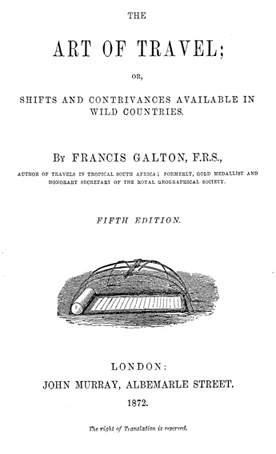 I was looking for the proper word for "rules of thumb" in my post that bounced off the lieutenant's post about sleeping in the nude, (which I believe is a cardinal offense on board a Royal Ship, as it might lead to a capital offense). I knew the right word was not "rule of thumb," and I thought it close to an old "saw" about it being healthy.
As always Galton came to mind, and I came up with the right world. The old "Shift". As in "Shifts and contrivances in tropical countries" from The Art of Travel, always worth reading as one of the greatest displays of ingenuity in print anywhere.
Also, a good antidote to the idiots that write about Galton and call him deficient in intelligence because he believed in individual differences. Terman measured Galton's IQ at about 200 from a retrospective analysis.
May
25
Query of the Day, from Victor Niederhoffer
May 25, 2011 | 6 Comments
 What % of NBA games these days are won by the team that puts in the first point, and can this be generalized to markets?
Jeff Watson writes:
My grandfather used to tell me that a fist fight among boys was usually won by the kid who got in (not threw) the first punch. As an aside, I wonder if markets are susceptible to rhetorical sucker punches?
Russ Sears writes:
In distance racing it is the opposite. You do not want to be out front at the start. This is especially true at High School races and at the big road races. Too much adrenalin spent at the beginning will waste it. The amount of aggression used at the start, may vary from sport to sport. But might I suggest that one on one sports or team against teams are different than sports like running or poker and trading where it is not just about beating the guy closest too you. You don't want to crush your opponent but use them or propel you to the front.
 On the other hand you must be watching for signs they can hold the pace. Exhaustion can be contagious if the pacer slows, all follow. Plus you must have confidence in your plan and stick to it. Do you beat all with a kick or do you win with a blistering last mile?
Having thousands chasing you can be a rush, but it is also very draining to wear the target on your back. You take the wind hardest without any wind blocks and you are also wasting mental energy setting the pace.
What I think all the comments below suggest is there are really 2 questions you need to ask yourself…How aggressive do you want to be at the start? And the second one is how intimidating should you be?
As Scott implies below, thugs will nip at you until they know you are or are not armed. But to answer these 2 questions in most civilized matter, you have to know yourself; be confident in your capabilities and and equally realistic about your limitations.
In racing, poker and trading, patience is the key. Be aggressive when you truly have the edge. Believe in yourself enough to wait for that edge.
What may be more fruitful questions are: what are the signs that the opponent has started too fast? And what are the signs that they are exhausted?
A Mr. T.C responds:
I spent years running, and I choose to disagree a bit. I don't know what type of resume is required, but I did manage two state championships and posted a 4:12 mile time in college.
Going out first doesn't always mean having to go out fast. Runners settle in as soon as someone takes the lead, whether it be track or cross country. If you can use just a quick burst at the beginning to get the lead, you can then set the pace you need in order to win. If it buries others, then great, but if you not, then you know what you have in terms of a kick when it comes to the finish because you set the pace.
Losing stinks, but there is nothing worse than losing and still having something left in the tank. That can happen if you let someone else set the pace, and you can't outkick them. Why? Because they set a pace knowing they could still have a strong finish. Yes, there are rabbits, but they are pretty easy to ferret out. They sprint out too far, too far, plus in any race you should have a pretty good idea of who your competition is not just who are the participants are. The wind is a factor, but only when the wind is actually a factor. Giving yourself some distance gives those behind you no benefit. They will hit the same wind. The idea of having to chase someone down can be tiring, and mentally it can crush you if you catch them, then they pull away.
The real key is any race with hills. A leader can really stretch a lead on the hills. It is where races are won and lost. I can tell you from experience, you do not want to be chasing on a hill nor do you want someone else to set your pace on a hill. If you have the discipline then being in front means you do not have to catch anyone else, and you merely only have to run the race. The same race you've trained for day in and day out. The same race you've run in your head so many times.
When I was good (and believe me when I say I am not good anymore), there was a span of 12 races that I did not lose (it was the 800m for those that care). In that time, I did not even trail a single lap. My first loss came when I altered strategy and ran with the pack. Through a combination of injury and mental roadblocks, I didn't win again after that…until the 4:12 road mile in which I never trailed. It is rarely about adrenalin. It is about preparation, planning, and running your race. And no, for some, it isn't from the front, but for others, they become almost unbeatable if you give them even an inch.
Russ Sears responds:
 Yes, there definitely are times to be the front runner. If you are better than everyone in the field and know it, taking the lead, pushing the pace is the way to go. Winning 8 races in a row shows that you had out grown your competition which does happen in high school and college. But as you imply, if a rabbit sprints to the lead let them go. The goal is not to win the first 100 meter, but the race.
A 4:12 mile would never have happened without preparation, planning and running your race, but also a personal record also never happens without digging deeper and find something extra within yourself at the end. As a 2:58 1200 meter runner, but only a 4:05 miler; I did not have a kick. So I understand that often you do not want to leave it down to the last 100 meter and you beat them when you can. But having to lead from start to finish sets yourself up for mental roadblocks in tough races.
Finally, I must disagree somewhat about the hills. If you are clearly better than your competition then the hills may further show this. But if your competition is equal or slightly better than you, extra resistance of the hills prevent you from putting too much distance between you.
On my hill workouts, I would practice relaxing at the punishing pace up a hill. In a race I would let my equal push trying to get away but near the top when the heart rates are at the highest, I take the lead. After the peak I then tried to stretch the lead on the level or down hill parts.
As a high school coach, kids would often think that we did hill work so we could beat the competition on the hills. So they would try to demolish the competition on the hills. But I would tell them it was to withstand the hills, and learn to relax while still giving the most effort, so that you can beat them when they are hurting the most. It is like buying the dips or taking out the cane.
Sam Marx writes:
4:05 is very impressive.
The greatest mile race I ever saw was Roger Bannister defeating John Landy at the Empire Games in the early 50s. For those of you unfamiliar with these names, etc., Bannister, of England, was the first one to run the mile in under 4 minutes, a major athletic feat at the time. John Landy, an Australian, broke Bannister's record shortly thereafter.
The two greatest milers in the world, both of English background, by a strange quirk of scheduling would then shortly meet thereafter and compete at the Empire Games.
In their race, Landy had the lead on the 4th lap going around the turn and looked over his left shoulder for Bannister. As Landy was looking, Bannister darted past him on the right took the lead for the last 100 yds and won.
It was the first time two men ran the mile in the same race in under 4 minutes or the first time anyone ran the mile in under 4 minutes and lost.
Maybe the film clip is on the net. An exciting race to watch and historic.
Russ Sears adds:
The distance runners are posting some incredible times. Granted the Boston marathon was wind aided point to point course, but simply amazing.
Thimes remained flat and perhaps a bit slower from 1985-1994 then times started dropping again.
Some of it is in the new training methods, some is due to the coaching available to most that show a promise, some is due to more ways to make a living while still coming up the ranks, and some may be due to the drugs available, but I suspect many of the best are clean, and those that aren't add motivation.
Jay Pasch writes:
Jeff, quite the interesting post as my father coached the same thing, and being small in stature, that it's not the size of the dog in the fight but the fight in the dog, and to work in tight, inside, where you have the advantage.
Scott Brooks writes:
Having grown up in a "rough" neighborhood and in light of the fact that I've been stabbed 3 times, I have always found that the best course of action was to avoid the fight at almost any cost.
I learned early on in life that there are "guys" out there who don't see the world the way 99% of the people do. They don't feel pain or fear like like 99% of the world. They are capable of a level of brutality and violence that is, quite simply, mind boggling. The way they fight and the things they are willing to do to their opponent in a fight is truly scary. They win fights because they are willing to go to a level of violence that 99% of the people in the world are not willing to escalate too.
My brother and three of uncles were "those guys". I witnessed them do things in fights that was truly stunning. My uncles grew up in one of the worst toughest neighborhoods in St. Louis. They were, hands down, the toughest guys in that neighborhood….no one was a close second to them. Two of these uncles were only a 2 - 5 years older than me.
 I remember one time when I was around 12 years old, I was over at my grandmothers house visiting. I was playing down the street from her house when these 4 guys came up to me and started to "accost" me. They surrounded me, started shoving me around and telling me to give them my money, and that they were going to beat the $#!% out of me. Basically, I think they picked on me because they didn't recognize me (they left the rest of the guys I was playing with alone….all of whom were from the neighborhood). One of the thugs asked me what I was doing in their neighborhood and I told them I was visiting my grandma. They kept picking on me. I was really scared and my mind was racing as they were starting "the process" of beating me up. It was then that a possible way out of this situation occurred to me. I asked the guys if they knew my uncles. They, of course, didn't care about knowing my uncles. So I said, you don't know my uncles, Mark and Kerry?
The next moment became frozen in time. You could have heard a pin drop. They immediately stopped shoving me around and all they stood perfectly still, first staring at me with a shocked look on their face, then their eyes began to dart from side to side looking at each other with the same stunned look on their face.
They immediately began to back peddle. They became my best friends and let me know that they were just joking around and were just messing with me. They said they were good friends with Mark and Kerry and that there was no reason to tell either of them. The "fear" in their eyes and their body language was as visible as lava pouring out of an erupting volcano. The mere mention of the names "Mark and Kerry" was like flipping on a light switch in a dark room. These guys who were just getting ready to steal my money and beat me up, who quickly became my friends, were now really anxious to leave the area as quickly as possible.
What happened next was really interesting.
When I saw my uncle Mark later in the day, I told him what had happened. He asked me to describe the guys who tried to mug me. Mark knew exactly who the guys were. Mark told me to stay at the house and he left. He returned some time later with bloody knuckles. He said he took care of the problem and that no one in the neighborhood would ever bother me again.
He was right. I was never bothered again. I saw those guys a few times after that. They not only never bothered me, they were semi-pleasant, while at the same time trying to get away from me as quickly as possible.
Between the level of violence that my uncles, my brother were capable of administering, I have decided that avoiding a fight is always the best policy….why take a chance on running into someone like my brother or uncles.
And anyway, even if you get into a fight and whip the other guys butt, if lands one good punch, you'll be laying in bed for the next week saying to yourself, "yeah, I won that fight, but man oh man, does my broken nose really hurt".
Call me a wuss if you want, but know this: I've been in more fights than most and had my butt WHUPPED by numerous people……and I never enjoyed any of them. I'll take "avoid" over fight any day of the week.
Sam Marx writes:
I grew up in the Weequahic section of Newark NJ, in the '40's (popularized in Phillip Roth's books).
We didn't fight we sued.
Steve Ellison writes:
I find it nearly impossible to literally score the first point in the market because of the bid-ask spread. If I hit the ask, chances are the next transaction will hit the bid. If I have a limit order to buy, it will not be filled unless the price is going lower. The best I can hope for is the analogy Mr. Sogi once made to a football play: the quarterback always has to retreat a few steps from the line of scrimmage to start the play. Similarly, the strategy on a hockey face-off is to draw the puck back to the defensemen so they can establish puck control and start a play.
Vince Fulco writes:
I often dream of being in the inner circle particularly under the scenarios of a nice outsized move off the O/N lows before the cash session. Then cash opens, declines all of 1/2 pt quickly, stops on a dime then zooms higher doubling the overall move.
Steve Ellison writes:
There are interesting parallels to the three choices for commerce posited by William J. Bernstein in his book A Splendid Exchange: trade, raid, or protect.
May
25
A Hairy Rule of Thumb, from Victor Niederhoffer
May 25, 2011 | Leave a Comment

 There is a hairy rule of thumb that sleeping in the buff is healthier for you than not. It relates I believe to the actual tested idea that sleeping with open windows is much healthier and gives much less respiratory disease than sleeping with closed windows as Asian women are all too prone to do, especially those living in air conditioned countries like Singapore. And it should be tested whether their respiratory diseases are much more common than they should be to their decreased longevity. We should ask Keeley what his tests on this show, or Louis L' Amour's study of wildlife.
As for its relation to markets, one comes back to the idea of playing canasta against 5 men named Doc. Impossible to win when markets are inactive as flexions must take their overhead out. Thus one must deal with the Asians, and the hotter the country, the greater the dishonesty I believe.
Jeff Watson writes:
Florida's a pretty hot place and I refuse to do business with any brokers or money people in this state because of the general lack of honesty. Something about the sun, surf, and sand that attracts people of questionable character.
Kim Zussman writes:
Corruption looks to be (inversely) related to latitude, with the obvious glaring exception of The Motherland.
Gary Rogan writes:
Speaking of hot dishonest Asian countries, I coincidentally just came across this story about the black market in Indonesia in RIM playbooks and other things.
John Floyd writes:
There is a somewhat new science that recommends "compression clothing" and I have been experimenting with it for both sleeping and exercise. I have found some merit to use.
In terms of fresh air as I recall the studies I have read indicate the high levels of air pollutants that accumulate inside a building, within in air ducts, etc. I always sleep with windows open regardless of the temperature outside and also use a hospital grade air purifier.
In Japanese there is a saying "Renma" meaning always polishing and improving. I think we can look at air circulation and blood circulation in the same way. Same is true for trading and the more we foment new ideas and ways to improve hopefully the better we become and avoid staleness.
Having lived in the Caribbean for several years and experienced months of absence from the heat while in New England winters I can tell you the adjust to the heat without air conditioning does take at least a day. But I found within a day I was fully adjusted. I think it becomes more difficult if you switch back and forth from A/C to non A/C in a hot climate. Again the trading link here may be one of consistency and allowing for adjustment processes that may be bring one out of their comfort zone.
In terms of the various prevalence of crime, corruption, work ethic, etc. across regions that I think is for one to do some research and analysis that would include Charles Murray's findings, geopolitical history, and personal experiences to reach their own conclusions.
Of course one would need to draw upon a sufficient sample size to determine for example whether those in Korea, Japan, Hong Kong or the Caribbean, etc. have a certain characteristics.
May
25
Regrettably, from Jay Pasch
May 25, 2011 | 3 Comments
Regrettably for the many traders out there that watch such things the 100sma is intersecting directly with the 1308.50 gap.
Victor Niederhoffer writes:
As those of us who strive in the futile effort scratch out a living by taking advantage of microscopic moves know, the market had a terrible excursion down overnight to the dreaded 1300 level stopping at 1302.5, and then gracefully as grandpa martin would say, climbing back to 1313, —– what does it all mean is a excursion down just above the round number, a danger sign, or a sign of strength.
Hard to test this without refining the data so far that it becomes statistically meaningless. But it's an interesting question that could be generalized in many different directions.
Jay Pasch writes:
It is beneficial to have learned here the undesirable nature of stops and to sleep in the buff.
Jeff Rollert replies:
That was not the visual I needed before my second cup of coffee…
Jim Sogi writes:
A couple of sidenotes…
Just around the close, certain brokerages changed the margin requirements certainly wiping out a number of players and causing some of the airdrops in the night as certain large positions liquidated. Secondly, it would be necessary to examine not only 24 hour data, but look to see which countries were manipulating the markets while NYers slept. The idea here is that the overnight markets or foreign interventions are becoming more and more important. Note the existing unfilled gaps that the day markets have not been able to fill for a while now. The same condition existing a few weeks ago in reverse as well. The night session is not a thin as it used to be. Still if you could, why not move things around at the margin for your own gain.
May
25
Martial Arts, from Victor Niederhoffer
May 25, 2011 | 2 Comments
 My martial arts is most unsatisfactory. Louis L'amour who was almost unbeaten as a heavyweight always said, the time to win a fight is at the first blow. That is always when you can escape or win. And the Sacketts always followed this in winning their battles against their evil enemies– the Higgins.
I followed this rule unknowingly in rackets. Always followed the motto "the first blow is half the battle." Desperately tried to get out to an early lead. Then once having achieved it, I would pretend the adversary was ahead by the same 5 zip score that I was ahead so I would try harder and never give up.
I believe the basketball books will take a 55 or 60% bet that the team that scores the first basket will win. Of course there is the part - whole fallacy in this, even more than in the totally worthless January baromoter that hasn't worked since it was discovered.
Many would be flexions apply this idea to the market, and their activities are most amusing to behold.
May
23
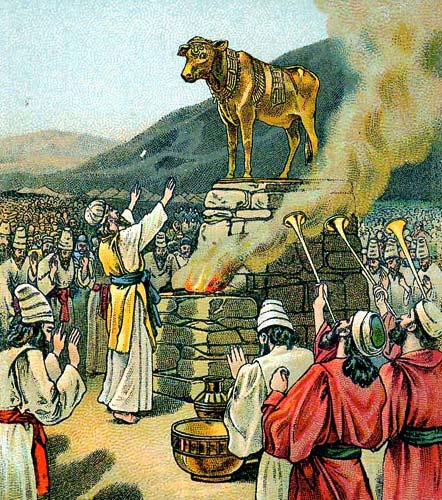 Nicholas Biddle was known as the Golden Calf in the 1830s because of the bent knees, the subservient worship, and hat doffing that accompanied his every utterance and activity, in allusion to the false bowing to that beast in Exodus while Moses was preoccupied.
Who is the comparable Golden Calf in the financial world today, and will his fate be similar?
Indeed, are there golden calves in other fields that deserve to be treated with less reverence?
How can this be distinguished from the "Useful Idiot" or "Your Own Man" or "the Fifth Columnist", and can a scalogram of such be created?
Yes, inquiring minds want to know, and let us not refrain from starting our typology in the corn belt if the boots fit.
Pitt T. Maner III writes:
Might not Dr. Spock have fallen into one of the categories? Some ideas of his were right and some wrong with long and short term implications to the health of a generation.
May
22
Mercenaries in the UAE, from Paolo Pezzutti
May 22, 2011 | 5 Comments
 The UAE has the 6th world's largest reserves. It is a federation of 7
absolute monarchies of about 5 millions of which less than 20% are UAE
nationals, while the majority of the population are expatriates. It
appears they feel pretty vulnerable and the instability domino may not
be over in the region:
"The United Arab Emirates (UAE) has hired the founder of the controversial US security company Blackwater, to set up a paramilitary force made up of foreign mercenaries in Abu Dhabi.
Blackwater founder Erik Prince is to set up an 800-member battalion of foreign troops. Documents obtained by The New York Times (NYT) on Sunday showed the crown prince of Abu Dhabi being behind the $529m deal."
Victor Niederhoffer adds:
In response to our Paolo's heads up on mid east activities, it reminds me of the time my father and his partner– the best team of cops ever, with Miltie being the toughest and my father the smartest, they always got their men and gang– went into a pool room to check on a robbery in my house.
Miltie rushed in drew his gun and made every pool hustler stand up against the wall. "Put up your hands and don't say a word."
A hustler leaned over to my uncle next to him and mumbled "F cken cops". Miltie said, "What did you say, I heard that you son of a gun."
The hustler said, "yeah, so what, that guy (Howie) asked me who you were."
May
21
Our Mysterious Panics and the Story of Jay Cooke, from Victor Niederhoffer
May 21, 2011 | Leave a Comment
 My research today started with Our Mysterious Panics by Charles Coleman, 1931. There is recounted the story of Jay Cooke. He was entertaining President Grant when he received word that "his wall street house, had announced its suspension on September 18, 1873." Mad panic carrying the entire financial world followed. Western Union lost 10 points in 10 minutes. Brokers tore their hair off and ran off mad.
The Commodore refused to help: "I am a friend of the iron road, but building railroads from nowhere to nowhere at public expense, is not a legitimate undertaking." The exchange was closed for a week. About this raged mad confusion. Rock Island was breaking in terrific fashion. Pacific Mail tumbled and Central and Wabash were being tossed from hand to hand. Their paper went to protest. Pale faced brokers, impotent slaves to the dominant catastrophe rushed out upon the floor. Our friend Henry Clews suspended.
But after the downfall—— Recovery. (canes). It may yet to be proved that "the riches of nations can be measured by the violence of the crises they endure" (a self fulfilling prophecy).
 Years after the derangement of 73 had spent themselves, an old man, whose long hair, side whiskers and beard flowed silvery white to the collar of his old fashioned cape coat, was to be seen wandering through Wall Street. He seemed bewildered. He was looking up some half remembered trail. He dropped into the offices of the Union. He was at once admitted to the private offices of Sidney Dillon, the President.
There sat next to him Jay Gould. "How are you Mr. Cooke?". The railway chief reminded him of a long forgotten incident. "I was in trouble then, and you staked me. I shall always remember that, Mr. Cooke. What do you say shall be done?"
Cooke unrolled his maps and presented his care to invest in some silver mines in Utah. In order to develop it, it was necessary to construct 176 miles of railway. "With us three men," observed Cooke as he gathered his documents, "is there the least occasion for a written agreement?" "No," was Gould's abrupt response. "We will take the remaining half interest and supply you with the money."
Cooke's silver mine proved of exceptional value. He sold his interest later for nearly a million dollars. The sum enabled him to regain possession of his old home in the Chelten Hills, Ogontz, from which his creditors had driven him.
May
20
Briefly Speaking, from Victor Niederhoffer
May 20, 2011 | 1 Comment
It would be interesting to make a systematic study of all the negative guidances given by companies, classified by the extent of the move. The moves in individual stocks related to these guidances have to be as ephemeral as those in relation to the random monthly announcements that make the public contribute so much more than they have to. The problem is that studies of 10 years ago, show that these guidances and reductions in earnings estimates were negative. And the funds don't wish to be caught holding such a reduced estimate company as it makes them look bad.
Ultimately the value of companies is determined by…..one wishes he knew, but it has to be the time and p/e that will attach to it when it shows normal future growth relative to the economy. At that time it will have a market p/e. As to the impact of a lowered guidance, of what consequence does that have, unless you believe that in this day and age, the guidance signals something, as if they can't keep the analysts happy from taking things out of the silo, or selling a little something a bit earlier, perhaps they have a deep seated problem. But as to whether you make it this quarter of next quarter as Hewlett and other unmentionable companies have said they are going to do, what could be the total absurd ridiculous non-recurring significance of this.
Along those lines, one notes that the earnings estimates of the S&P for the next year are being rasied again and the e/p of the market is 6% or so versus the 10 year rate of 3.1. Such a divergence, and its increase in the last two or 4 weeks has to be very bullish The information concerning the keys thrown on the table by the owner of the paper to the corn belt faker that one of our own has kindly disseminated to me gives force to my theories of the pernicious influence of the character of a chief executive who would turn on his right hand man.
May
18
Briefly Speaking, from Victor Niederhoffer
May 18, 2011 | Leave a Comment
 Danielle Chiesi who had "intimate relations" with 3 of the prosecution witnesses is an archetype that deserves drilling and generalization– one hopefully will not be remiss on this front from the coasts to Midwest.
Her activities are part of the general tendency for older executives to wish to retire to a life of romance rather then making money. Such a tendency leads to all sorts of unintended consquences including the heightened tendency of older CEO's to be takeover targets, and the reduced premiums that their stocks acheive when they are bought out. It is reminiscent of the general tendency of older people of substance to be vulnerable to delegating work to their trusted subordinates and turning them on an instant when it will hurt their romantic life in the future.
The general utility of cane buying is illustrated by the moves in the stock market the last 25 fearful days of Friday the 13th, and on the even more fearful day of the open market meetings when the average moves of the market on these terrible days, 123 observations in all, is 0.4%.
Since the upside down man has issued his bearish call for bonds, they have very quietly risen 5 percentage points. They are now in a situation where when the economy is strong, buyers appear for bonds on the grounds that the accompanying strong commodity prices will weaken the economy, (how could the economy be strong with oil above 100?), and they go up when the economy is weak on the grounds that the Fed will not reduce its balance sheet or take back money from the cronies.
The influence of romance on markets is a field that needs to be studied in much greater detail. The performance of companies should be stuided classified by the age of their CEO and their marital status, and the frequency of their past divorces. Always to be kept in mind is the Sorosian adage that you should never cement bonds with a partner that you wouldn't wish to divorce.
My general point is that old CEO's delegate all their dirty work to their trusted subordinates and then turn on them when the paint hits the wall, and then call up the chief enforcement officer the same day to exonerate themselves. This is part of the more general point that the older CEO's are all too interested in sex a la the golf player at the silo company and let the business slip as they take care of their romantic proclivities, and I still say that any young attractive reporter is not safe in the corn belt.
Rocky Humbert responds:
Perhaps you should therefore limit your investments to the following 15 Fortune 500 companies: Sara Lee, Yahoo, Wellpoint, Xerox, Sunoco, Western Union, Reynolds American, Avon, Dupont, TJX, Pepsi, Kraft, Rite Aid, BJ's Warehouse, and ADM. The commonality of these large enterprises vis a vis your observation is left as an exercise for the reader.
(This is neither an endorsement nor a rebuttal of your theory.)
Anatoly Veltman writes:
Is it at all odd: Bunds and T-Notes are rising at seemingly equal pace, while the FX rate is fluctuating significantly? I understand that arbitrage is impossible 10 years out. Still, this may be a tip toward a simple explanation: that investment money is passively (and massively) reaching for miniscule nominal yield improvement, without a care to speculate on other variables.
May
17
An Interesting Article, from Victor Niederhoffer
May 17, 2011 | 2 Comments
Here is an interesting article on the age of chief executives versus chances of acquisition. It shows that older CEO's are more likely to accept deals and also lower premiums. It's part and parcel of my investigation of how romantic urges of older CEO's often lead to hurtful results for stockholders from the Midwest to the coaches.
Rocky Humbert writes:
Interesting paper. But if I understand their methodology, they note that the chances of a bid is about 5.5% for geezers over 65, and under 4% for the younger CEO's. But their study seemingly only looked at the CEO's of companies that received takeover bids. They didn't look at companies which did NOT receive takeover bids. Hence, the subset that they analyzed has an obvious bias…. and it's possible that the stock of a company w/ an old geezer CEO of a company (which doesn't get a bid) has generated better long term performance than the stock of a company with a younger CEO. Surely there must be a paper out there which regresses CEO age versus stock price performance (over time). Doctor Z — have you seen such a study?
Victor Niederhoffer writes:
How could they come up with the chances of a bid without the total sample? Even an academic other than Sornette or the derivatives expert wouldn't make that mistake.
Rocky Humbert replies:
I didn't read the paper cover to cover, but section 3.1.2. and 3.1.2 defines their sample. Their study ONLY used the SDC US Merger and Acquisition Database….and CEO's who fell into that database.
The results are still interesting– but they would be much more interesting if they had looked at the bigger question.
Kim Zussman adds:
Here are some somewhat relevant papers from SSRN:
This paper examines the influence of CEO career horizon on the future performance of firms. Specifically, we argue that CEOs with shorter career horizons (as measured by their age) will adopt risk-averse strategies that will, on average, adversely influence future firm performance. Further, we argue that at relatively high levels of CEO ownership control, this relationship is exacerbated. Using a sample of US-based firms from the S&P 500, we find that future financial and market performance are significantly lower for firms with older CEOs but only when those CEOs have strong ownership positions. We conclude by discussing the implications of CEO career horizons in the content of various levels of CEO ownership power.
The announcement of a forced CEO resignation is hailed favourably by the market with a small but significantly positive abnormal return of 0.5%. The market may have anticipated the forced turnover since the abnormal return over a one-month period prior to the turnover amounts to 6%. Whereas voluntary resignations do not cause a price reactions, age-related turnover triggers a small negative price reaction.
While individually age and tenure are only weakly correlated with the stock price reaction to a sudden death, the reaction is strongly positive (5 to 7%) if (1) the executive's tenure exceeds ten years and (2) abnormal stock returns over the last three years are negative. In a number of cases, part of the reason for the positive stock reaction to sudden executive deaths is apparently because in the stockholders' view, an obstacle to a takeover has been removed.
In this paper we examine the cross-sectional determinants of idiosyncratic volatility of biotech IPO firms. We extend current research in two directions. First, we test whether CEO stock options impact on idiosyncratic volatility. Second, we test new hypotheses that relate some easily identifiable managerial characteristics to idiosyncratic volatility. We find that the CEO stock options, resource dependence capabilities, and the age of board members help predict idiosyncratic volatility
A dailyspec classic:
This paper shows that the time of year of a person's birth is an important factor in the likelihood they become a CEO, and conditional on becoming a CEO, on the performance of the firms they manage. Based on a sample of 321 CEOs of S&P 500 companies from 1992 to 2006 we find that (1) the number of CEOs born in the summer is disproportionately small, and (2) firms with CEOs born in the summer have higher market valuation than firms headed by non-summer-born CEOs. Furthermore, an investment strategy that bought firms with CEOs born in the summer and sold firms with CEOs born in other seasons would have earned an abnormal return of 8.32 percent per year during the sample period. Our evidence is consistent with the so-called "relative-age effect" due to school admissions grouping together children with age differences up to one year, with summer-born children being younger than their non-summer-born classmates. The relative-age effect has been demonstrated in numerous sporting and other contexts to last to adulthood and to favor older children within a school grade. Those younger children who nevertheless succeed by overcoming their disadvantage have to be particularly capable within their cohort. Together, the advantage enjoyed by older children and the particularly high capability of successful young children explain the statistically and economically significant findings.
And just a few more:
Regardless of retention , shareholders of acquired firms whose CEO is at retirement age receive lower premiums than shareholders of acquired firms with younger CEOs. This lower premium seems to be explained by the apparent reduced acquisition value of firms led by retirement age CEOs rather than by the target CEO conflict of interest.
Using U.S. plant-level data for firms across a broad spectrum of industries, we compare how career concerns affect the real investment decisions of younger and older CEOs. In contrast to prior research which has examined some specialized labor markets, we find that younger CEOs undertake more active, bolder investment activities, consistent with an attempt on their part to signal confidence and superior abilities. They are more likely to enter new lines of business, as well as exit other existing businesses. They prefer growth through acquisitions, while older CEOs prefer to build new plants. This busier investment style of the younger CEOs appears to be relatively successful since younger CEOs are associated with higher plant-level efficiency compared to older CEOs.
May
17
Quote of the Day, from Victor Niederhoffer
May 17, 2011 | Leave a Comment
 "The utmost that can be expected from any system promulgated by him is that it may be splendid and affecting, that it may suggest sublime and pleasing images. His scheme of philosophy is a mere day dream a poetical creation, like the Domdaniel Carn, the Swerga, or Padalon, and indeed it bears no inconsiderable resemblance to those gorgeous visions. Like them, it is grotesque and extravagant, and perpetually violates even that conventional probability which is essential to the effect of works of art ".
–Macaulay, Thomas Babington, Lord, from "Southey's Colloquies on Society".
Stefan Jovanovich adds an additional quote:
"It scarcely ever happens that any private man or body of men will invest property in a canal, a tunnel, or a bridge, but from an expectation that the outlay will be profitable to them. No work of this sort can be profitable to private speculators, unless the public be willing to pay for the use of it. The public will not pay of their own accord for what yields no profit or convenience to them. There is thus a direct and obvious connexion between the motive which induces individuals to undertake such a work, and the utility of the work.
Can we find any such connexion in the case of a public work executed by a government? If it is useful, are the individuals who rule the country richer? if it is useless, are they poorer? A public man may be solicitous for his credit. But is not he likely to gain more credit by an useless display of ostentatious architecture in a great town than by the best road or the best canal in some remote province? The fame of public works is a much less certain test of their utility than the amount of toll collected at them. In a corrupt age, there will be direct embezzlement. In the purest age, there will be abundance of jobbing. Never were the statesmen of any country more sensitive to public opinion, and more spotless in pecuniary transactions, than those who have of late governed England. Yet we have only to look at the buildings recently erected in London for a proof of our rule. In a bad age, the fate of the public is to be robbed outright. In a good age, it is merely to have the dearest and the worst of everything.
………………
The duties of government would be, as Mr. Southey says that they are, paternal, if a government were necessarily as much superior in wisdom to a people as the most foolish father, for a time, is to the most intelligent child, and if a government loved a people as fathers generally love their children. But there is no reason to believe that a government will have either the paternal warmth of affection or the paternal superiority of intellect. Mr. Southey might as well say that the duties of the shoemaker are paternal, and that it is an usurpation in any man not of the craft to say that his shoes are bad and to insist on having better. The division of labour would be no blessing, if those by whom a thing is done were to pay no attention to the opinion of those for whom it is done. The shoemaker, in the Relapse, tells Lord Foppington that his lordship is mistaken in supposing that his shoe pinches. 'It does not pinch; it cannot pinch; I know my business; and I never made a better shoe.' This is the way in which Mr. Southey would have a government treat a people who usurp the privilege of thinking. Nay, the shoemaker of Vanbrugh has the advantage in the comparison. He contented himself with regulating his customer's shoes, about which he had peculiar means of information, and did not presume to dictate about the coat and hat. But Mr. Southey would have the rulers of a country prescribe opinions to the people, not only about politics, but about matters concerning which a government has no peculiar sources of information, and concerning which any man in the streets may know as much and think as justly as the King, namely religion and morals.
Men are never so likely to settle a question rightly as when they discuss it freely. A government can interfere in discussion only by making it less free than it would otherwise be. Men are most likely to form just opinions when they have no other wish than to know the truth, and are exempt from all influence, either of hope or fear. Government, as government, can bring nothing but the influence of hopes and fears to support its doctrines. It carries on controversy, not with reasons, but with threats and bribes. If it employs reasons, it does so, not in virtue of any powers which belong to it as a government. Thus, instead of a contest between argument and argument, we have a contest between argument and force. Instead of a contest in which truth, from the natural constitution of the human mind, has a decided advantage over falsehood, we have a contest in which truth can be victorious only by accident."
May
17
Did The Market Know, from Victor Niederhoffer
May 17, 2011 | Leave a Comment
 Several interesting aspects of this flexionic story ("Bin Laden Was 'Pulling the Levers' of Al-Qaeda") to me are:
1. The emphasis by Mr. Bin Laden on trying to do deeds around the 10th anniversary of the event, thereby giving force to Gann's theory that recurring events tend to fall on significant anniversaries.
2. The emphasis on the interrogation techniques used and the denial that any of them were valuable.
3. The absence of any inside scoop on the economics of Mr. Bin Laden's operation, e.g. his well known pride in masterminding the September 11th destruction with just a few hundred thousand dollars of expenditures with an output input ratio greater than some of the best op amps.
4. The emphasis on the investigation of those who found out about it.
5. The admission that none of the operations were ready to go. Shortly before 9/11 , I was offered an amazing number of great bids on S and P puts, and I am convinced that the other side had taken their mink coats in the US out of storage so as to be ready for a quick exit. A friend told me the week before that a bloodbath on the scale of 10 17 87 was felt to be imminent.
Anatoly Veltman writes:
I had no inside knowledge; I wish I had– and would've saved my best friend's life.
Oil charts were as telling as the week prior to Saddam's entry into Kuwait in 1990. Into September 2001, oil chart looked Bearish, projecting an imminent and deep dive below $25.00 support…except for one tiny obstacle: oil market was holding like a rock, in a chart position where it was not supposed. All shorting was being stubbornly absorbed, and one could feel the underlying bid's determination. It felt like a classic "buy the Rumor". And then came the Fact; and the long-awaited market re-open. Oil gapping up to literally "one minute of glory above $30.00". The relentless aggressive daily selling immediately commences and takes WTI straight down to the original technical projection below $20.00!
May
17
In the Day and Fray, from Victor Niederhoffer
May 17, 2011 | Leave a Comment
 One is always amazed at the ephemeral announcements that move markets. Today there was a New York man report. That represents 1 /1000 of the economy and is seasonally adjusted beyond recognition. It dropped the market a 1/10 of a %.
For individual stocks, a recall of a 1000 units of a product that represents 1/10000% of sales of a company is newsworthy enough to drop it 1/4 %. I guess these announcements are necessary to add just one more % a day or so to what the public gives to the banks that make money every day on their trading.
May
14
More Sunspot Ideas, from Jeff Watson
May 14, 2011 | Leave a Comment
 Here's an amazing little animated graph showing all the predictions of sunspot activity in real time. Note how the the projections keep getting smaller and smaller.
A good article to point you in the right direction concerning sunspots and solar radiation is here.
Correlating wheat prices with sunspot numbers is not new, Herschel did it in 1801-1805 when he took the wheat price data from Adam Smith's "Wealth of Nations," and plotted it against the number of sunspots.
Here's an excellent paper describing the price of wool and wheat in early England. The charts are an invaluable source of data and are priceless.
Much work needs to be done on correlating the number of sunspots and or solar flux vs grain prices and the predictability of grain prices vs sunspots should be examined. Also, the lead times should be exhaustively studied.
Personally, I think that the sunspot numbers provide the mother-lode of a meal for a lifetime.
Victor Niederhoffer writes:
This work must be supplemented by the related work of Harol Thayer Davis in the economic analysis of time series circa 1926 on the same subject and the follow up work of the Cowles Commission in their early days.
May
13
Briefly Speaking, from Victor Niederhoffer
May 13, 2011 | Leave a Comment
It is interesting to note that of the last 25 Friday the 13 ths stock market moves since 1996, (a random cutoff) 60% were up and the average move during the day was 0.4 % with a non-significant t of 1.4. I believe this is a general manifestation of the microscopic utility of cane buying as well as its macroscopic counterpart which you are all caned on.
May
12
A Prize for a Test of the Principle of Least Action, from Victor Niederhoffer
May 12, 2011 | 7 Comments
 UPDATE:
The Winners of the least effort contest were jointly in a tie. Mr. Gary Rogan and Mr. Steve Ellison. I will split the prize between them. The creative and physical ideas of Mr. Rogan were very excellent and best of all, but there was no testing. Mr. Ellison gave a great test, and a complete answer, but Rogan can't be denied his place either. vic
I'll give a prize of 1000 to the person or locus of his choice that comes up with the best way to test the principle of least action or a related principle of least effort.
It's in honor of my grandfather. Whenever I'd ask him which way he thought the market would go he'd say, "I think the path of least resistance is down" starting with Dow 200 in 1950. We need some more quantification around here.
You might consider max to min or a path through a second market back to home. Or round to round? Or amount of volume above or blow. Or angle of ascent versus angle of descent. Or time to a past goal versus the future? Or some mirror image or least absolute deviation stuff?
Sushil Kedia writes:
With utmost humility and clearly no cultivated sense of any derision for the Fourth Estate, I would submit that since it is the public that is always flogged and moves last, the opinions of all media writers, tv anchors are the catalysts, the penultimate leg of the opinion curve. A test of the opinions of the fourth estate on the markets would provide the most ineffective wall of support or so called resistances. Fading the statistically calculated opinion meter (if one can devise one such a 'la an IBES earnings estimate a media estimate of market opinion) and go against it consistently over a number of trades, one is bound to come out a winner. Can I test it? Yes its a testable proposition, subject to accumulation of data.
Alston Mabry writes:
The following graph (attached and linked) is not an answer but an exploration of the "least effort" idea. It shows, for SPY daily since August last year, the graph of two quantities:

1. The point change for the SPY over the previous ten trading days.
2. The rolling 10-day sum of the High-Low-previous-Close spread, i.e., "max(previous Close, High) minus min(previous Close, Low)". This spread is a convenient measure of volatility.
Notice how these quantities move in tight ranges for extended periods. These tight ranges are some measure of "least effort", i.e., the market getting from point A to point B in an efficient fashion. As one would expect, the series gyrate when the market takes a temporary downturn. Also note how when one of the quantities swings above or below it's mean or "axis", it seems to need to swing back the other way to rebalance the system.
Bill Rafter writes:
 This nicely illustrates how relative high volatility is bearish on future price action.
Jim Sogi writes:
The path of least resistance would be the night session. Low liquidity allows market mover to move market. Every one is asleep. Dr. S did a study some years ago. Updating shows total day sessions yielding 94 pt, but night session yielding 232 points. Don't sleep…stay up all night or move to Singapore. Recent action is in line with hypothesis.
Bill Rafter writes:
Haugen's "The Beast on Wall Street" (i.e. volatility) came to the conclusion that if you want less volatility in the markets, keep them closed more, to essentially force the liquidity into specified periods. That is, 24 hour markets promote volatility. Or a corollary was that a market is never volatile when it is closed. [this is from memory and I may also be regurgitating from a personal conversation with him]. An oft cited example is the period in the summer of 1968 when equities were closed on Wednesdays to enable the back offices to get up to date with their paperwork and deliveries. During that time the Tuesday close to Thursday opening was less volatile than expected (twice the daily overnight vol).
One could take this thought and stretch it to say that the periods of least resistance would be those without heavy participation. One could easily compare the normalized range (High/Low) of those periods versus the same of the well-participated periods.
Craig Mee writes:
Hi Bill,
You would have to think that in 68 there was sufficient control of price and news dissemination. In these times of high speed everything, that this could create bottlenecks and add to the volatility. No doubt a bit of time to cool the heels i.e limit down and up for the day restrictions, is a reasonable action, even if it goes against "fair open and transparent markets" but unfortunate it seems little is these days.
Bill Rafter replies:
I should have been more specific about the research: take the current normalized range for those periods of high liquidity (when the NY markets are open) and compare that to the normalized range of the premarket and postmarket periods. Do it for disjoint periods (but all in recent history) so you don't have any autocorrelation. My belief is that you will find there is less volatility intra-period during the high liquidity times. While you are at that you can also check to see during which period you get greater mean-reversion versus new direction.
If that research were to show that (for example) you had greater intra-period volatility during the premarket and postmarket times, and that those times also evidenced greater mean-reversion, you could then conclude that those were the times of least resistance. That would answer Vic's question. Okay, now what? Well you could then support an argument that with high volatility and mean reversion you should run (or mimic running) a specialist book during those times. That's not something I myself am interested in doing as it would require additional staff, but those of you with that capacity should consider it, if you are not yet doing so.
Historical sidebar: '68 was a bubble period caused in part by strange margin rules that enabled those in the industry to carry large positions for no money. The activity created paper problems as the back offices were still making/requiring physical delivery of stock certificates. The exchanges closed trading on Wednesday to enable the back offices to have another workday to clear the backlog. The "shenanigan index" was high during that time.
Phil McDonnell writes:
Bill, you said "During that time the Tuesday close to Thursday opening was less volatile than expected (twice the daily overnight vol)."
For a two day period and standard deviation s then the two day standard deviation should be sqrt(2)s or 1.4 s. So the figure of twice the volatility would seem higher than expected.
Or am I missing something?
Steve Ellison submits this study:
The traditional definition of resistance is a price level at which it is expected there will be a relatively large amount of stock for sale. Starting from this point, my idea was that liquidity providers create resistance to price movements. If a stock price moved up a dollar on volume of 10,000 shares, it would suggest more resistance than if the price moved up a dollar on volume of 5,000 shares. To test this idea, I used 5-minute bars of one of my favorite stocks, CHSI. To better separate up movement from down movement, for each bar I calculated the 75th and 25th percentiles of 5-minute net changes during the past week. If the current bar was in the 75th percentile or above, I added the price change and volume to the up category. If the current bar was in the 25th percentile or below, I added the price change and volume to the down category. Looking back 200 bars, I divided the total up volume by the total up price change to calculate resistance to upward movement. I divided total down volume by the total down price change to calculate resistance to downward movement. I divided the upward resistance by the downward resistance to identify the path of least resistance. If the quotient was greater than 1, the past of least resistance was presumed to be downward; if the quotient was less than 1, the path of least resistance was upward.
For example:
                           Previous 200 bars
                                                        Up
   Date     Time     Up Points Volume  Down Points Volume Resistance

3/25/2011   15:50   53   6.49  99431    61  -7.38  149867     15311


   Down       Resistance     Actual
Resistance      Ratio      net change
     20310       0.754       -0.03
Unfortunately, the correlation of the resistance ratio to the actual
price change of the next bar was consistent with randomness.
May
9
 I visited the New York Transit Museum, and I am trying to think of what I should have learned there that has applicability to markets.
1. I start with that much of the development of life goes from above ground to under ground, and what you don't see has enormous effects much greater than those above.
2. There's the fact that people don't like to go with fixed routes when they can travel in privacy directly by their own volition. And underground use was 8 million a day in 1930, but only 3.5 million today despite all the subsidies.
3. The private sector always does a better job than the public, especially when there's competition. In 1939, the city and state bought out the 2 private companies, the IRT and the BMT, that had been competing and innovating against each other.
4. There's the 60 year delay so far in rebuilding a line on the east side that is typical of public activities, even though it was promised when the elevated were taken down in that area.
5. Real estate prices and population always follow the subway routes, so it's always good to invest in where the subways will take you. In 1900 5 times as many people lived in the lower east side as the upper east side, but it was reversed when they built the IRT's that carrfied people up north. There is talk about ultimately getting the 3rd avenue line going again.
What other things do you see?
May
6
 Would you attribute the decline to knowledge that the man who doesn't like to spike the ball is 100% likely to become boss and increase the service rates for fairness, or the positions of the chief terrorist are being liquidated, or the spillover declines in metals and commodities and oil and oats down 5% is affecting stocks, or my favorite disillusionment, that the father figure above all next to the scholarly former Princeton chair has shown his spots, and they are black, and new info will be disclosed by the temporarily disgraced and discarded right hand man, and that this creates the loss of a father figure et al.
Gary Rogan writes:
100% is way too high. Both predecessors had over 90% popularity at their respective warrior moments of glory but it didn't last at one for the first one, and only barely for the second one.
He is resorting to deliberate confusion about releasing the photos just to prolong this for a few more days. He has done a lot of damage to the meme that his not of this place, but only temporarily. In just a couple of weeks he will face a renewed assault. He'll be winning on the gas price then and talking that up, but there is nothing he can do about unemployment: there is a feedback mechanism in place, the higher his chances are the higher unemployment will go.
Victor Niederhoffer writes:
Exactly the latter point you make. But what does intrade say now?
Gary Rogan writes:
Well, even that is only at 60.9, but I have not found its predictive power meaningful so far in advance. Two days in advance it's really good because people with access to some hard data or are doing the cheating are moving the numbers, but now it's just as susceptible to the temporarily enthusiasm as an average man on the street.
Jim Sogi writes:
The Princeton pundit did say the spike in commodities was going to be short lived a few days back. Remember also the advice to buy stocks the day before the low. It may be worthwhile not to discount them at their word on these things because they have a lot at stake and are willing to do anything to stay in power.
May
6
One Admires, from Victor Niederhoffer
May 6, 2011 | 1 Comment
One admires the way bonds have gone up 6 days in a row "very quietly" as Grandpa Martin would say to a 6 month high in a clear manifestation of gestalt theory, the theory of least observable differences, the frog in hot water theory, and how to inflict maximum pain on one side of the market, the shorts, without giving them cause to jump off the bandwagon. And also, how the bonds predicted the decline in commodities.

May
6
 One day in 1979, I went down to Staten Island during the day to play Ruben Gonzalez a game of racketball. It was while I was pyramiding gold, and I had been able to pyramid 50,000 into 20 milion in 6 months. I had given instructions to my staff before hand that if I ever lost half, they should sell me out, plug their ears with cotton and not listen to me if I told them to disregard my previous instructions, having read The Iliad and learned from my hoodoo father in law, (who lived to 90 with one leg and a completely dissipated intestinal system (as he liked to boast and prove he could outdrink any man)) that people in Vegas always had a stop point for how much to lose, but never from how much to win.
We split the first two games, and then I called my office. It was a day like yesterday when all commodities were down 10% my office told me. (It all started after our first game). I had lost 15 million. They had followed my instructions but before they could get me fills, I had lost another 5 above the 10, (those were the days when silver traded limit down for a week, and the only way to get out was exchange for physical, etc).
I left the court and club without saying goodbye to Ruben after that second game (it's two out of three) after berating my staff for selling me out (that staff is still next to me 31 years later, as Pug Pearson's wife said about the diamond ring she's still wearing that her husband threw into a pot after taking it off her ring finger as collateral during a no limit poker game on the evening of her honeymoon).
Yesterday at 5 pm, for the first time in 31 years, I saw Ruben again. He has been playing pro racketball for 35 years, has won many world championships, and last year got to the quarterfinals of the nationals, and still plays in the open circuit. Ruben was hear to deliver some art that he had painted, and I loved the paintings I bought.
Ruben was the best sport in racketball aside from Hobo, and we hugged when we met. He said to me, "Vic, I haven't seen you in 30 years, since you walked out of that racketball court without saying goodbye to me. How come?"
I realized at that time that commodities today, May 5th, had had their worst day ever since 31 years ago when I had seen Ruben for the last time. What are the chances of that happening without attributing it to a commodities hoodoo?
But as Paul Harvey would say that's not the end of the story. Ruben challenged me to a game of racketball on the squash court down stairs. We played. ( I used a tennis racket and he used a racketball racket).
One– at the age of 90 + (older than the octogenarian sage who is equally sanctimonious)– I will not be overly hubristic to reveal the outcome of the game. I will say however, that I bought some more art from Ruben, (a very good thing), and he's going to deliver it when he finishes it.
I'll tell you a day in advance when he's due.
 .
.
.
.
.
.
.
.
.
.
May
6
Thought of the Day, from Anton Johnson
May 6, 2011 | Leave a Comment
It is refreshing to experience mythology in real-time. Yesterday, CL stop running was near picture perfect, acceleration through resistance, a short reversal and pause to retest, then a sharp move to take out the next.
But then again, describing a chart formation as being a resistance or support is subject to one's perspective. For clarity, support should replace resistance.
Victor Niederhoffer writes:
One must not forget the ecology of markets. All related. Down big in so many has gravitational and equilibrating return.
Jonathan Bower comments:
Overnight CL trading reminded me of this Simpson's episode. Enjoy.
May
4
Douglas Rassmussen will be speaking on the following subject on Thursday May 5th at the junto at The Mechanics Institute at 20 West 44th Street, New York, NY:
"Check Your Premises"
Defenders of Liberty grant their opponents a crucial premise, that the aim of government is to assist people in attaining their well-being. But what justifies this premise?
All are welcome. Hope to see you there.
Here is a link to the Junto's meetup group.
May
4
It Is Interesting, from Victor Niederhoffer
May 4, 2011 | 1 Comment
 It is interesting that in many of the electronic markets that one has traded millions of contracts in, but still don't know how to participate in the official "opens" where there is a "single price" determined by a complicated set of rules that would take a hundred lawyers a year to figure out, the "open" is often the extreme of the day, and the only people who get it at the extreme are those who somehow have figured out how to trade the "open" or who have the equipment to do so. Such a situation occurred in the Bunds today, where it opened at "80", set a high of "82" a nano later, and then very delicately as my grandfather Martin would say, fell all the way down to 20 or so, "relieving" all the longs of their hard earned "wherewithal". The days of Livermore and Grandpa Martin, of Morse and Little and Boss Tweed and Drew and Travers ("although of genial disposition, he was a chronic bear") are not forever gone.
Nor for that matter are the days of James Hill who could not resist succumbing to some inside trading in railroad stocks based on the Chinese situation and who Harriman, the decorated political office holder and flexion cubed of his day, turned in to the office holders of the day for "hearings" and punishment for his "inexcusable and inexplicable behavior". James Hill who built the greatest railroad, the Great Northern,and spared no expense to engineer it perfectly for safety and efficiency and inspected every inch of the track he layed. Reminds one of the Scapegoat under fire today.
Vince Fulco writes:
I have had the chance to tour his home in St. Paul last year. I dare say while opulent for the area, it was a functioning house and not a copy of the palatial, "money is no object" places like the gilded age titans out East. In keeping with the grounded, pragmatic Midwestern mindset I have witnessed often. The boiler room running hot water through the house; the first of its kind in town, is simply not to be believed.
May
4
 I have been asked what I think about the fed model these days. Here's my answer: pretty positive.
The earnings price ratio is still way 2 percentage points ahead of the 10 year rate which is very bullish empirically. Of course with the odds of the trigger man now 100% to win, we can expect great increases in the service rate, which I believe should be factored in some way. Probably the reason that 08 went down so much. Of course, the reason the market went down so much was to force him not to raise.
May
4
A Zacharian Variant, from Victor Niederhoffer
May 4, 2011 | Leave a Comment
 Let us augment the Zacharian situation which I used to call a Finnegan where you look at the screen and a price is too terrible to contemplate because it's ruinous to you, and then you realize to your utter delight that the price was a misprint on the screen, and you're whole, and not losing at all, but …. by the end of the day or week, the price you feared actually turns out to be worse than you feared and you lose even more. Such a situation occurred in conjunction with the flash crash of May 6 when the price of 1060, which was ruinous for individual stocks and S&P was there for a second, but then it rose 8% in a day, and then Zachar predicted it would go bak there after it rose 100 points.
Okay, two other situations deserve a name.
You look at the screen, and you smile. Your market or stock is way up you think. But then– "Oh no," you were looking at the wrong market. And your thing is the only one that's not good or up if your long. That happened to me with my Rimm and Vix today. I see a market way up. I smile. Oh no. It's not Rimm, it's Vix that's way up.
What should this be called. And what about the variant where you have a price in mind to get out, and then you go to shave or take a call from a non-agenarian, and the price is realized, but by the time you can enter the order it's not there any more. And it never gets back.
A related situation is that you're out of office for a second, and you hear an announcement. The economy is very strong. However, bonds are down because of the crazy idea that a strong economy is inflationary. But that's causing stocks to go down. Okay, you're losing money on your longs. The market is crazy right? You grit your teeth and go back to take a look. Amazingly the bonds are way up however. WHY? Because stocks are way down. In other words, you lost on stocks because bonds were going to be down, but they actually went up when stocks went down, so you lost for an opposite reason.
What are the proper names for all these? And what variants of these type of things deserve a name?
Peter Earle writes:
The one where you look at the screen and smile– perhaps that moment is best termed an "Eastwood", a "Harry", or a "Dirty Harry", or being struck with/by (a) "Sudden Impact", as demonstrated by the relevant portion of this scene: first from 0:18 to 0:51…and then from approximately 1:05 to 1:13.
Chris Tucker writes:
The last situation could be referred to as a "Cyclone", not for the storm, but in honor of the Chair and the iconic roller coaster of his youthful digs at Coney Island. The Cyclone is terrifying, filled with thrills, dips, lunges and jerks. And people keep coming back to plunk down there hard earned cash for more.
Very nice short history of the park at Coney Island here.
Vince Fulco writes:
The Cyclone seems most apropos. What is it about Mr. Market's ability, esp. with these leveraged ETFs to give you a nice gain but not hit your target price and then revert back to your cost in an instant (many multiple percent away and seemingly not to be seen again in the near future with the new info) then turn within pennies and return you back to profit mode testing your temperament so mightily? The silver ETFs have acted like scalded dogs the last few days.
George Zachar comments:
The Coney Island Cyclone was the signature thrill ride of my youth. I've ridden it well over 100 times.
What's always fascinated me about it, is how the experience varied with one's position in the 12 rows of seats.
In the very front, with the center of gravity many feet behind you, the visual danger signs led the acceleration by a couple of seconds, giving you the sensation of hanging over a cliff.
In the very back, my favorite spot, the acceleration came before you could see the rails dip, so it would catch you unawares and whip you sooner/faster than your mind anticipated.
Also, at the start of the right turn off the NW corner, the right-front wheels would leave the track for an instant, making first-time riders wonder if they were destined to die on Surf Avenue, in the shadow of the D train.
Alston Mabry writes:
The one where you're out of the office for a second, and hear an announcement– It's called "duck season".
The followup is too good to leave out: "Pronoun trouble".
Craig Mee writes:
About the one where "it's even worse than the mistaken price you mistakenly thought was your" :
I thought you were going to say, Victor, if after getting heart palpitations at the first incorrect reading, just by the fact you had done this, it's better to get out of your said stock now anyway, as you've brought bad karma to the trade.
May
1
Briefly Speaking, from Victor Niederhoffer
May 1, 2011 | 3 Comments
 A recent trip to Boston leads me to note the principle of least action (i.e. that physical systems evolve via the most efficient route possible to their ultimate destination, i.e the path for which the numerical value of the action integral is smallest) mentioned at the Boston Museum of Science, and the principle of convergent evolution, noted in the exhibit of lung fish and their deep sea counterparts at the Boston Aquarium, both visited with Aubrey and the Floyds on our trip to the Hartford science museum, the best for kids I've seen, and our trip to Sturbridge Village, where one learned that banks of the 19th century closed down at 12 so that the cashier could approve loans, and saw some great mills in action, and saw that the Boston Redsox under John Henry's management provide a much more sober and enjoyable experience at Fenway Park than any of the raucous New York arenas, with the kids is a most stimulating trip, and this will explain my absence for the last several days. I will try to think of ways to quantify the principle of least action in a general way as a meal for a life time. One thing I accomplished on my trip in my efforts to improve my mathemagician work is that I can remember 5 or 6 digits on my hands and feet and elbows and this should be very helpful if I am ever forced to spend much time alone.
May
1
Sokol’s Lawyer, from Victor Niederhoffer
May 1, 2011 | 5 Comments
 What is the significance that when Sokol brought the Lubrizol deal he showed Buffet projections, but "these projections went unexamined" by Buffett. Despite the Talmudic education I have received, I claim that when someone serves as right hand man for 10 years, and then suddenly something like this trading comes to light, it is not a single instance. Much of the posturing must be designed to cast a positive spin on this.
Bill Egan writes:
Sokol's lawyer's latest includes:
"It is alarming that Mr. Buffett would be advised to so completely flip-flop and resort to transparent scapegoatism. After 11 years of dedicated and hugely successful service to various Berkshire Hathaway subsidiaries, Mr. Sokol would have expected to be treated fairly. That would have been in Berkshire’s interest."
Will Buffett relearn wisdom of Ben Franklin vis-a-vis Vic's comment below? "Three can keep a secret if two are dead."
"That would have been in Berkshire’s interest…"
May
1
No Comment, from Victor Niederhoffer
May 1, 2011 | 2 Comments
 Has any one commented on the subtle reasons that the accounting firm that made the audit report for Berkshire on the Sokol trading did not ask him one question or have one meeting with him before the report? There must be a legal reason for this. But to the layman, it would appear to be that they were afraid of having to report his response.
Henry Gifford comments:
An apartment house was built in Manhattan with parapets (those brick walls at the perimeter of the roof) which leaked so much water into the apartments they were removed and replaced at great expense. The architect was one of the people sued. The architect pointed out that the contractor did not build the parapets according to the plans, thus the architect was blameless, and was dropped from the lawsuit, and was not further involved in the next two removals and replacements of the parapets in further efforts to remedy the problem.
Perhaps the architect could have been asked to refund the fees paid for supervision of the work, but nothing more.
Numerous people hired to do designs in the construction industry advise never physically going to a construction site, thus there is no responsibility for defective work.
It would be interesting to know the physical location where the auditor's work was done, and to know if there are any standards of conduct that require a visit to an office, a visit to a business if the work exceeds a certain size (such as the business I once visited that looked very prosperous until I noticed the phone almost never rang), seeing originals of documents, seeing documents while no other parties are in the room, having documents in possession for a certain period of time before a report is due, or if all work can be done remotely based on copies of documents faxed over few minutes before the report is due.
Rocky Humbert writes:
The Chair writes: "…subtle reasons that the accounting firm … did not ask him one question or have one meeting…"
From a partner of Munger Tolles & Olson (a very large corporate Law Firm (not accounting firm) which represents Berkshire):
"Mr. Sokol was interviewed at least three times regarding his Lubrizon trading activity and contacts with Citi bankers. In connection with the preparation of the audit committee report, a request for a further interview with Mr. Sokol was made to his attorney. Mr. Sokol was not made available."
On the advice of his attorney's, Sokol stopped cooperating. What's subtle about that?
Victor Niederhoffer writes:
There's nothing funny about that. What's funny is how the attorney for Mr. Sokol said that "without the care and deceny to ask even a single quetion of Mr. Sokol". Only two lawyers or Sholem Aleichem could show how both lawyers could be right in what they say.
Rocky Humbert adds:
A little talmudic interpretation may help:
Sokol's lawyer wrote: "I am profoundly disappointed that the Audit Committee…would authorize the issuance of its report to the public without the care and decency to ask even a single question of Mr. Sokol."
This is semantic deconstructionism worthy of Bill Clinton's the meaning of "the".
Sokol's lawyer didn't say that the Board didn't ask him questions. It says that the board didn't ask him questions about the issuance of the report!
Stefan Jovanovich writes:
Has no one heard the joke about the lawyer, the accountant and the engineer trapped on a sand bar surrounded by tiger sharks with the tide coming in– the one with the punch line of "Professional courtesy"? What else would 2 lawyers say? The R-Man is nearly infallible; but he is wrong about Charlie Munger's firm being "very large". In the world of bulk word carriers, it is not even a PanaMax.
That does not prevent MT&O from preserving its reputation for Janus-like integrity. Before we surrendered our tail fins as LA lawyers, Eddy's Mom and I used to play a game of identifying the local law firms by show tunes. From Day One MT&O was always matched with Kurt Weill's signature tune.
Apr
27
The Gradual Diffusion of New Products Syndrome, from Victor Niederhoffer
April 27, 2011 | 2 Comments
 Umberto Eco wrote a great essay about how when new products start they are used first by high end users, and then gradually diffuse to the masses so that by time the masses use them, the marginal utility keeps reducing and the first users that got real value out of it stop using them. He points to such things as railroad use and cell phones as examples.
We have see how IPO's prospectuses follow this model with info in it being completely worthless as they have to go through so many hoops that it becomes merely a boiler plate to reduce the settlements in class action litigations when the case is settled.
One notes now the apparently standard thing in financial statements "cautionary note regarding forward looking statements".
I note in a company like Rimm 30 cautionary notes including "difficulties in forecasting quarterly results" and "regulation certification and health risks". My goodness, there was a time when management statements could actually convey useful information that had a high marginal revenue.
Could we attribute this syndrome to crony capitalism or flexionism or just a natural outgrowth of the law of diminishing marginal utility?
Rocky Humbert writes:
While the chair's assertion that disclaimers have proliferated since the passage of the PSLRA is correct, there is scant evidence that management statements ever have consistent predictive value w/r/t either the organic performance of the business or its market valuation — over a reasonable investment time period. See wikipedia on the Private Securities Litigation Reform Act.
One reason for this is that companies which are performing well have no need for management cheerleaders or CEO soothsayers; the market will eventually figure that out on its own. In fact, the worst companies are the ones where the CEO is front and center (giving "upbeat" guidance) when things are rosy, but then when things turn challenging, release 8-K's on Friday afternoons using terms such as "exogenous factors" and "one-time adjustments" (and the CEO is nowhere to be seen.) Citing Philip Arthur Fisher's Rule #14: "Does the management talk freely to investors about its affairs when things are going well but "clam up" when troubles and disappointments occur?" It's a rare company that does an IPO or secondary when business is sickly (the exception being banks which sell stock at the behest of regulators.) Hence the entire IPO process can be viewed as a possible violation of Rule #14.
On a related point, one notes that INTC stock (which was mentioned recently by Dr. P) has a compound annual return since 1982 of about 15.6% per year (versus 11% for the S&P). During the same period, AAPL stock has produced a 17.5% compound return. Yet, right now, INTC has a 10x p/e and AAPL has a 17x p/e. Both of these companies have demonstrated good long-term organic growth, RoE, product innovation, and impressive market dominance. Yet, if Mr. Market would reward Intel with only a market multiple, it's return-to-shareholders would blow away Apple — demonstrating once again that Mr. Market's valuation at any given moment dwarfs every other factor for a profitable enterprise. I submit that it's folly to attribute this irrefutable statement to crony capitalism or flexionism or the law of diminishing marginal utility. The blame should be place squarely on the market participants who continue to make the same mistakes (such as buying INTC at a 70x p/e on 3/1/2000) but shunning it at a 10x p/e on 3/1/2011.
Ken Drees writes:
Consider the cell phone and its recent tracking news out of apple– or police being able to plug a device into your cell phone and download all your data from it– the high end user will now need tech applications to shield their privacy and will demand a next generation product that the masses do not have– a private communication device. The cycle keeps moving forward. Maybe a self destruct feature will come on the scene.on the subject of mumbo useless jumbo in fin states. Is not persistency of litigation like ants digging into the timepiece to blame for the creeping destruction of worthy information?
Bill Rafter writes:
In looking to eliminate stocks in mergers or merger talks I cannot always get that information as quick as I would like. Sometimes I have to resort to looking at the individual stock's news headlines. Before I even get to the news about the merger I see the inevitable: "The law office of Dewey, Cheetham and Howe launches an investigation into possible breaches of fiduciary duty by the Board [of the company]…"
That, I contend, is why you don't get useful information.
An Anonymous Commenter writes:
I recently read an article that the author was try to further disgrace a Euro based company whose board member had made a remark at a meeting referring to "the weaker sex". The article told of the various ways, non business groups and political active parties tried to protest these remarks. However while raising a good smoke screen; the parties complaining were inefficient and did not understand business. Has any body done a study on the stock price of a company whose leadership made non PC remarks? Could it actually increase the price, due to the signal of boldness and management willing to think outside the box? Would not such a study have been quoted in these articles that hold a company up to ridicule? Could such a study have been done but be not published due the opposite than hoped for results?
Apr
24
Briefly Speaking, from Victor Niederhoffer
April 24, 2011 | 1 Comment
 I have been asked if a lower yield after seemingly bad news like the S&P downgrade is bullish for bonds. A lower yield than before happens often. Is it bullish or bearish? If you specify the time and the magnitude and the other conditions it can be tested. Such tests must be made conditional on the time of the day. As a hint, such tests as of the end of the day do not support anecdotal assertions being made here about qualitative factors, and sensible sounding technical shibboleths. The problem with qualitative analysis is that there are so infinitely many smart people constantly tinkering to get the right price, that the right price is the result of so many people like Paul DeRosa and the palindrome, the former of whom is completely sagacious and knowledgeable, and the latter of whom takes along with him trillions of fellow travelers that are part of the affinity group, as well as the wisdom of all the flexions that rely on such as the upside down man and he for guidance as to what they should do to finesse their positions along. Furthermore the wisdom and the access to such info from all these types is always varying, and depends on the ethos with which they look at things, which is often right during bad economic times for example for the Man of Many Books. Sometimes they're good and sometimes bad. So it's hard to follow a qualitative guru, and even more difficult to find a qualitative divergence. Certainly impossible is to make money following a shibboleth that hasn't been tested, and to extent it has, one wouldn't be writing that it's worthless unless it were truly wrong.
Rocky Humbert responds:
Here are some stats:
1. Japanese National Debt/GDP = 228%. Yet their currency is very strong; and their yields remain near record lows.
2. Italy Natioanl Debt/GDP = 115%. Their yield is 120 bp over bunds.
3. US National Debt/GDP = 97% (if you include social security etc); 60% if you don't. Yields at 10 bp over bunds.
Although academics try, it's clearly impossible to draw a straight line between National Debt/GDP and nominal sovereign debt yields.
Furthermore, and more on point, last week Gallup (and Google Trends) showed the US Budget Deficit had risen to be the "Nation's Most Important Problem." This story moved to the front of the pack — displacing job; war; healthcare; and Charlie Sheen.
That Obama gave a speech on this and that S&P issued their non-news is simply a mirror of the established public mood. Therefore, definitionally, it's in the price.
One more thing: Normally, a company PAYS MONEY to S&P to get a credit rating. That's not the case with S&P's rating of US Government debt. Hence I think we taxpayers should all thank S&P for their incredible generosity — providing their useful, cerebral and predictive analysis of the United States of America — totally free of charge. (Either that, or you get what you pay for.)
Ken Drees writes:
Looking for the next trend or meme– could this all be a preamble to QE3 in June or the no mas to GE? So it's a battle stations type of market that comes to us this summer with much more volatility then we have been conditioned for? I wish I could quantify the persistence of trend beyond the rational into some type of indicative feature. Financial alchemy– chasing that idea.
Gary Rogan comments:
How high the debt to GDP needs to be before a country goes kaput is clearly numerically an unsolvable problem, especially for sovereign money printers like US and Japan. If the bond market keeps buying the debt this can go on essentially forever. If the economy is barely making it but trending upwards there doesn't even have to be any appreciable inflation for an unknowable period of time. Therefore it's not clear what the rational approach should be to evaluating the situation, and then people focus on the differences like the Japanese debt being owned so much by the internal population, and that population being so thrifty. Clearly part of the reason that the debt has risen in importance is not the absolute level but the seemingly uncontrollable actions of those who are creating this debt while paying lip service to "living within our means". People don't like it because to them this symbolizes irresponsible behavior, because they know that their neighbors or relatives who do that get in trouble, so then there are political consequences to this behavior and the opposition party makes even a bigger issue, and so it goes and goes. This is totally different from the bond market making a judgment about the country in question defaulting. I personally think its the ridiculous that the main generator of this debt has just made a speech in which he proclaimed that we can't spend more than we take in, and have heard it compared to Colonel Sanders making a speech declaring that we can't just go on killing chickens this way. And yet I don't know where it's all going any more than the next guy.
Apr
24
Quote of the Day, from Victor Niederhoffer
April 24, 2011 | Leave a Comment
 Good for the market:
"You half expected to see Jared Jeffries or Roger Mason, jr. on one of the other Knicks who were floating through the fourth quarter dive to the ground and tap out."
Touche.
Pitt T. Maner III writes:
The series "tap out" was foreshadowed when Carmelo Anthony heaved up a well defended, no-chance, 3-pointer at the end of regulation play in Game 1 in Boston instead of driving to the basket and possibly tying the game and extending play into overtime.
Before that final play the Knicks were turned over on a ticky tack offensive foul, Turiaf was disoriented and lost on an inbounds play that led to a slamdunk, and Celtic Ray Allen gunned in a 3. Knick discipline evaporated.
Well if your coach doesn't feel the need for a timeout at game end to settle things down and to improve chances with a set play and he doesn't want to risk grinding it out and working for a win in OT then what is your coach telling the opponent (you)? Heh you know it is going to take a lot of luck on our part to beat you (those) guys.
Improvisation works well in NYC comedy clubs and on asphalt playground courts, but it is not recommended for most teams and players on the hardwood courts of the NBA.
Apr
24
The Big Companies, from Victor Niederhoffer
April 24, 2011 | 2 Comments
 The big companies, the kind that make up the S&P 500 and the kind that accompany the President of the United States to China and Chile with 17 planes and 25 boats, (presumably gourmet meals for the beggars and their others also), are very dependent on government handouts, bailouts, licenses, and restrictions of competition. I am not sure that if the government expenditures were cut substantially, and service rates reduced by 4/5 or so, that this would not have an immediate negative impact on the S & P. After all, the theory of least effort and everything. Now these companies would have to compete rather than get hand outs. A terrible thought. Of course this immediate reaction would be counterbalanced in the fullness of a week or so by the realization that total consumer spending and wealth would increase 100% and life expectancy by 10 years, and this would be grandly bullish.
Apr
24
Green Days, from Victor Niederhoffer
April 24, 2011 | Leave a Comment
There have been many green days (bonds and stocks both up). About the highest since Nov 2009 and March.
# of green days
2009 2010 2011
Jan 2 3 3
Feb 3 5 6
Mar 6 8 0
Apr 5 5 6 to date
May 5 2
June 5 2
July 5 5
Aug 6 2
Sep 3 4
Oct 4 6
Nov 10 5
Dec 2 7
What do you think it portends, and less interestingly, how come there are so many positive comovements?
Steve Ellison comments:
In the mid-1990s, stocks and US Treasury bonds moved in the same direction on over 65% of all days. In the last four years, stocks and bonds have moved in the same direction on less than 40% of all days. Even after the recent green days, stocks and bonds have moved in the same direction on only 27 of the 77 trading days (35%) in 2011.
Comovement
Year Percentage
1993 0.647
1994 0.739
1995 0.663
1996 0.706
1997 0.652
1998 0.418
1999 0.560
2000 0.482
2001 0.512
2002 0.348
2003 0.400
2004 0.536
2005 0.532
2006 0.512
2007 0.410
2008 0.351
2009 0.413
2010 0.368
The hypothetical value of a stock is the net present value of all future income, discounted by the risk-free interest rate. All other things being equal, then, an increase in bond prices should be bullish for stock prices. However, this relationship might break down for several reasons, including:
- Bond prices might rise (fall) in response to deteriorating (improving) economic fundamentals that reduce (increase) expected future corporate income
- Asset allocation changes between stocks and bonds might drive price movements more than fundamentals
- Variations in very low interest rates might have little or no effect on the net present value of future income (because models might assume more normal rates in the future)
Regarding the last point, there appears to be a correlation between the level of interest rates and the degree of comovement of stocks and bonds:
10-year bond yield
greater less than Comovement
than or equal to N Percentage
2% 3% 203 0.374
3% 4% 822 0.370
4% 5% 1353 0.466
5% 6% 1124 0.560
6% 7% 862 0.643
7% 8% 246 0.687
8% 9% 4 0.750
Apr
24
Galton and the History of Counting, shared by Bill Rafter
April 24, 2011 | Leave a Comment
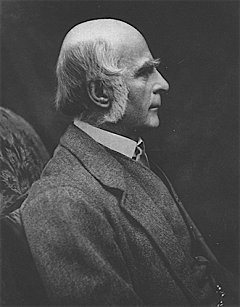 Very interesting article on Galton:
One, two, many: The prehistory of counting
The Victorian idea that "primitive" tribes can't count has cast a long shadow over efforts to understand the origins of mathematics
LOOKING back, Francis Galton would call it "our most difficult day". It was 4 March 1851, and the young English explorer was beginning to appreciate the obstacles confronting his attempts to map out the Lake Ngami region of south-western Africa. Struggling to navigate a narrow ridge of jagged rock, his wagon had "crashed and thundered and thumped" while his oxen "charged like wild buffaloes".
To make matters worse, Galton had little faith in his local guides from the Damara tribe, who appeared to lack even an understanding of basic arithmetic - a situation Galton found "very annoying". He recounts that having established an exchange rate of one sheep for two sticks of tobacco, he handed four sticks to a local herdsman in the expectation of purchasing two sheep. Having put two sticks in front of the first sheep, the man seemed surprised that two sticks remained to pay for the second. "His mind got hazy and confused," Galton reported, and the transaction had to be abandoned and the sheep purchased separately.
As further evidence of the apparent ignorance of the Damara, Galton wrote that they "use no numeral greater than three" and that they managed to keep track of their oxen only by recognising their faces, rather than by counting them. At a most inopportune time for his expedition, Galton seemed to have stumbled into a world without numbers.
To a modern reader, these tales in Galton's 1853 Narrative of an Explorer in Tropical South Africa seem little more than pithy anecdotes that reflect his prejudices as a gentleman of the growing Victorian empire. (His preoccupation with the supposed inferiority of other peoples persisted in his later work in eugenics.) Within 10 years, however, those same reports of primitive innumeracy were being used by the finest scientific minds of Victorian Britain to glimpse the savage condition of prehistoric humans.
Read the full article here.
Victor Niederhoffer writes:
This seems wrong to criticize Galton. What am I missing?
Steve Stigler writes:
Vic,
The author is a 1st year PhD student at Princeton who isn't even working on Galton, and writes carelessly without knowledge. See his bio. He looks bright but has a lot to learn.
Apr
23
The Best Selling Books of All Time and Markets, from Victor Niederhoffer
April 23, 2011 | Leave a Comment
 The enclosed list of best selling books of all time is an excellent indicator of popular culture I think, and should have interesting market applications. How would one dig down into that, and do you think or do you think it's not applicable?
Steve Ellison writes:
The first thing I notice is what a diverse list it is. The Lord of the Rings is a fantasy book. Think and Grow Rich is a self help book. There are conventional novels, children's books, religious books, and even a book about science by Stephen Hawking.
Charles Pennington comments:
Who'd have guessed that A Tale of Two Cities is the best seller (single volume) of all time? I didn't even know it was the best-selling Dickens novel, which apparently it is by a factor of 20, since no other Dickens novels appear in the list. That's very surprising; am I misinterpreting?
Stefan Jovanovich writes:
 No misinterpretation here. ATOTC was so wildly popular in the U.S. - like all Dickens' writings - that people in New York and Boston and Baltimore (? not absolutely certain about that one) literally waited at the dock for the packet to arrive from England with the latest installment. One reason Dickens disliked America and Americans is that some of our enterprising ancestors are known to have bought a copy of the latest serial, set it in type over night and had reprints out on the street the following morning for sale - at, of course, a suitable discount from the price of the legitimate copies.
Tale of Two Cities was also the last book that "Phiz" illustrated. Starting with The Pickwick Papers, Dickens has written "monthly parts" that were sold as part of a serial publication. (It literally revolutionized British publishing.) The serials were close to being graphic novels. Robert Seymour, George Cruikshank, and George Cattermole all did illustrations. Hablot Knight Browne (1815-1882) — "Phiz" — did the ones that are best remembered. When Dickens began self-publishing in his own weekly periodicals, Household Words and All the Year Round, Dickens fired his friend as chief illustrator. The parallels with Walt Disney are interesting.
Pitt T. Maner III writes:
In digging down a bit one sees that 3 of the authors, with over 100 million copies sold, are buried within a couple of hundred miles of each other in England (within a shared cultural environment) and that some of their literary themes had connections with class or race distinctions and warfare /murder (Dickens–French Revolution, Tolkien–races of mythological creatures, Christie– see wiki article on And Then There Were None (which originally had a different title and is about murderers from different classes being tricked into meeting on an island and being tricked in some cases into bumping each other off).
There is a whole series of study devoted to the Chinese book Redology and (having not read it), " Dream of the Red Chamber" appears to involve issues of class mobility.
Tsao Hsueh-chin, the author of A Dream of Red Mansions, lived between 1715 and 1763. His ancestral family once held great power. As such, he led a wealthy noble life in Nanjing as a child. When he was 13 or 14, the family was declining and moved to Beijing, where life took a turn for the worse. In his later years, he even led a poor life.Drawing on his own experience, Tsao Hsueh-chin put all his life experiences, poeticized feelings, exploratory spirit and creativity into the greatest work of all time - A Dream of Red Mansions. Drawing its materials from real life, the novel is full of the author's personal feelings filled with blood and tears.
A Dream of Red Mansions is a novel with great cultural richness. It depicts a multi-layered yet inter-fusing tragic human world through the eye of a talentless stone the Goddess used for sky mending. Jia Baoyu, the incarnation of the stone, witnessed the tragic lives of "the Twelve Beauties of Nanjing", experienced the great changes from flourishing to decline of a noble family and thus gained unique perception of life and the mortal world. Revolving around Jia Baoyu and focusing on the tragic love between Jia Baoyu and Lin Daiyu and Xue Baochai against the backdrop of the Great View Garden, the novel portrays a tragedy in which love, youth and life are ruined as well as exposes and profoundly reflects the root of the tragedy – the feudal system and culture.
Found here.
Terrible things can happen if you leave the rich and powerful unchecked and unpunished… is that close to the themes that may be partially beneath the success and appeal of the above best sellers of all time.
The meme being that it will be back to the dark ages of murder and mayhem on earth if government social services are the least bit underfunded and the rich continue to not pay their fair share.
Dylan Distasio writes:
I thought it might also be worthwhile to look at bestsellers by decade. There is a course on 20th century American literature that has been kind enough to share their materials with the interwebs. The full list by decade for the 20th century is at the below link and is worth checking out.
Pitt T. Maner III comments:
In my first paid job as a 12-year old library aide, Agatha Christie made shelving a pile of returned books easy– her works constituted 10% of the pile and were quickly put back with little effort to the same spacious shelf location. I remember reading "Jaws" then, a book hugely popular at the time.
It is doubtful, however, that the Palm Beach socialites checking out multiple Christie books each week would ascribe her popularity to the "Burkean paradigm".
The following is a piece on Christie from a self-described "Wilsonian". Perhaps an example of reading into things a bit too much…the retrospective reasons for success when starting with a point of view.
Her work conforms to Burkean conservatism in every respect: justice rarely comes from the state. Rather, it arises from within civil society – a private detective, a clever old spinster. Indeed, what is Miss Marple but the perfect embodiment of Burke's thought? She has almost infinite wisdom because she has lived so very long (by the later novels, she is barely able to move and, by some calculations, over 100). She has slowly – like parliament and all traditional bodies, according to Burke – accrued "the wisdom of the ages", and this is the key to her success. From her solitary spot in a small English village, she has learned everything about human nature. Wisdom resides, in Christie and Burke's worlds, in the very old and the very ordinary.
Apr
22
An All Too Human Tendency, from Victor Niederhoffer
April 22, 2011 | Leave a Comment
Part of the reason for the virulent critical reviews I suspect was that at this time Hal and I were resented as having become successful despite our maverick ventures. We had done eccentric shows and yet were not living in garrets. In the commercial theater this was not only an anomaly, it was an irritation. If we'd been teaching or working at odd jobs to stave off starvation, or if I'd been getting rich by sticking to formulaic musicals and thus easy targets for snickering condescension, it might have been acceptable. But to have done shows like Follies, Pacific Overtures, and Sweeney Todd, and still be living well was not our best revenge. It was theirs. The glory days for Hal and I were over and our partnership ended.
-Stephen Sondheim discussing the reaction to Merrily we Roll Along, his partnership with Hal Prince.
 I believe this tendency is a all too human one, rivaling the tendency of old successful men to cast aspersions on younger better successors. It also, like all general tendencies, has many market implications. I believe the reviews to new products like Playbook from a successful 10 billion entity like Rimm suffer from this. If they had still been in an attic, or Africa, and their market value was 10 mill, why great, it has lots of potential and when they fix the email, and negotiate the things with the carriers who they are now one of best suppliers to, why that would be great. But not for a company with millions of users who came out of 5 mill 8 years ago. Sort of like Lloyd Webber with the new musical Love Never dies. If it was the best ever, it still would have received unamimous negative reviews. The only exception is the Wilt Chamberlin exception, where a freak of nature, if a personage of color is given a free pass as it doesn't create the envy.
Apr
22
Here is a very interesting article called "The End of the Live Bat Era in College".
Victor Niederhoffer writes:
This is a very significant development that Stefan has noted, and I believe by implication (see prac spec) as one of the 100 regularities that the collab and I had to come up with to get Larry Ritter to reveal the truth about the fake doc was direct predictive relation between power hitting and subsequent stock movements. I believe that Stefan has come up with the most indicative thing about coming bear markets that I've seen since Nock woke up at the Wigwam and heard the strains of Marching through Georgia. Hats off to our resident Historian and Baseballist (as if the two were not intertwined).
Apr
20
If D’Antoni Were A Fund Manager, from Victor Niederhoffer
April 20, 2011 | 10 Comments
 Amazing ability of D'Antoni to deflect criticism of him by complimenting his players: "I have never been prouder of a team". With a good coach, the Knicks would have won both games. What is the trading significance?
T.K Marks writes:
Such deflective behavior by D'Antoni reminds one of those monthly letters to investors after a fund's programs were caught on the wrong side of a violent market move.
If D'Antoni were a fund manager, at some point he would be writing something like this:
"…Though loses were severe last month we are heartened to observe that had the market moved with such vigor and determination in the opposite direction our programs would have performed in a truly Olympian fashion…"
 Therefore, it was the direction's fault. Everybody and everything else is exonerated. Variations on this theme happen every month in those monthly investor letters. One might say that it's Wall St.'s version of pulp fiction, though they do come written on higher-grade paper.
Then again, the more expensive a piece of stationary is the more circumspect I am about the verity of what's written on it. And whenever I come across something gold-embossed, my antennae go way up. Because politicians have a fetish for using (very expensive, taxpayer-paid-for) gold-embossed stationary. Guess they figure it lends an air of the regal to their act.
Apr
20
10 Things I’ve Learned About Markets, from Victor Niederhoffer
April 20, 2011 | 1 Comment
 1. "There is no such thing as easy money"
2. Events that you think are affected by cardinal announcements like the employment numbers at 8:30 am on Friday are often known to many participants before the announcement
[An example supplied on April 18 by Mr. Rogan: "The Reason For Geithner's Weekend Media Whirlwind Tour: White House Learned About S&P Downgrade On Friday" (zerohedge )]
3. It's bad to try to make money the same way several days in a row
4. Markets that have little liquidity are almost impossible to profit from.
5. When the stock market is way down, policy makers take notice and do what they can to remedy the situation.
6. The market puts infinitely more emphasis on ephemeral announcements that it should.
7. It is good to go against the trend followers after they have become committed.
8. The one constant, is that the less you pay in commissions, and bid asked spread, the more money you'll end up with at end of day. Too often, a trader makes a fortune on the prices showing when he makes a trade, and ends up losing everything in the rake and grind above.
9. It is good to take out the canes and hobble down to wall street at the close of days when there is a panic.
10. A meme about the relation between today's events and those of x years ago is totally random but it is best not to stand in the way of it until it is realized by the majorit of susceptibles
11. All higher forms of math and statistics are useless in uncovering regularities.
Mark Schuetz comments:
A point about # 2: This one might be fun to try to rigorously measure and test, looking at price movements in the time leading up to and including certain announcements (knowing this type of thing has been shown by list members before, but usually it's more descriptive instead of measured). Is it possible to show which types of announcements are more often known by participants beforehand as opposed to other types? Also, if certain participants are informed ahead of time, how far ahead of time do they know and in which way will they "front-run" the announcement (there can sometimes be many different ways to make a position on one economic statistic) ?
Victor Niederhoffer replies:
Certain participants know it and they react to it, and you can figure out which announcements are go with and go against——-but but but. The pre and the post regularities are always changing vis a vis the flexions and cronies and their nephews.
Ralph Vince writes:
What a great post. Thanks Vic. I certainly must second points 1 and 11, the bookends….and they have me thinking…
1. There is no such thing as easy money
This is so true, in the markets, in everything. Those who happen upon money where it DID come to them easily, it seems, as a witness, have had it very fleetingly. In my own case, although I am supremely confident in the profitabliity of what I am doing, in practically any market, in virtually any "regime," doesn't mean it's easy. It works like clockwork and is incredibly painful and distressing. It would be so much easier to simply sell buckets of blood."
11. All higher forms of math and statistics are useless in uncovering regularities.
Certainly in a post-'08 world, quants are out of favor, and for good reason. Most anyone I know who DOES make money in the markets, does so with very simple, robust techniques. Having considered going to quant school, and studied a good deal of it, I finally came to the conclusion that they are simply working with "models." Models of how the world behaves. unlike hard sciences like Physics and such where you can perform a test, come back a year from now, perform it again and get the same results, you don't have this in financial modeling. And I think this is where the quants have fallen short. Models are NOT reality, and they never got down to the bedrock, the reality of what his game is about. Of course it had to fail, and in a large way, at some point. A good rule of thumb is that if I need a computer, if it isn't simple enough to do in my head on the fly in the foxhole after I have been awake for over 100 hours, I can't use it.
Jim Lackey writes:
About point # 10: It takes no time at all for the information to spread. Yet how many times have we acted, lost a bit, recovered, then seemingly too much market time expires, and we close out a position. We say "awe everyone knows that it's priced in." The meme is then repeated for the 57th time and on a low pressure day, month, or year and then, kaboom!
Of course, I can think of the few times where we missed a huge score, being short YHOO in 2000 or selling some short in 2008. Yet there are hundreds of low magnitude fantastic long only ideas that we forget about. I look back 6 months later and say wow look at that beautiful rise, what happened? It went up very small, day after day, and only buy and hold would have worked.
Alston Mabry adds:
 12. One should not make one's analysis more precise than one's actual trading could ever possibly be.
13. If the rational mind has not determined the parameters of a trade, then upon execution, the lizard brain will decide.
14. Never go on vacation with open trading positions.
Or, zooming in:
<click> home
<click><click> to lunch
<click><click><click> to the bathroom
Paolo Pezzutti writes:
One could test how the stock market reacts to good (very good, wonderful) or bad (very bad, terrible)(a sort of matrix) news when the news is released and after some time. It might help build a strength indicator. Amazing how the earthquake in Japan and the unrest in Middle East, admittedly extremely bad news, were absorbed by the strong trending markets without any problem (so far). In other times, stock markets might have crashed confronting with the same news.
Alston Mabry comments:
Amazing how the earthquake in Japan and the unrest in Middle East, admittedly extremely bad news, were absorbed by the strong trending markets without any problem (so far). In other times, stock markets might have crashed confronting with the same news.
Chris Tucker adds:
Stick to your guns, but realize when you are wrong. Easier said than done. Good ideas can lead to conviction, but only experience can strengthen ones resolve. Forget the last trade, look to the next. Try, try, try to learn from your mistakes, but also from your wins.
Anton Johnson writes:
15. When correlations among many typically disparate markets become high, one should reassess leverage and seek novel opportunity.
Jeff Rollert writes:

17. Sell side liquidity is an inverse function of cell signal strength and micros0ft patch frequency, especially at lunch time.
Rocky Humbert writes:
The First Law of Rocky – In every "macro market" (indices, bonds, commodities), all prices WILL be seen at least twice. The only unknowns are: (1) how long it takes and (2) how far prices go, before the price is re-visited. This Law is true 99.999999999% of the time.
The Second Law of Rocky – Rocky always keeps his calculator precision set to two decimal places. Any trade that requires more precision than the hundreth decimal place, is a trade that Rocky leaves for smarter participants
Jeff Sasmor writes:
About Jeff R's # 16:
16a. Never go to the doctor when you have a profitable position as it will reach its maximum profit and reverse exactly at the time that you enter the doctor's office.
Happened to me yesterday…
Ralph Vince comments:
With regards to the First Law of Rocky…."Unless it is a new high, that price has already been seen before."
Victor Niederhoffer adds:
Beware of using hard stops as it's bad enough that the floor can always know your physical hard stops.
Jay Pasch comments:
No wonder over-leveraged daytraders always lose as they are required to deposit a hard stop with their leverage, along with their hard earned money…
Ralph Vince adds:
Despite numerous posts on this thread, it has not been opened up beyond Vic's original 11…
T.K Marks writes:
Aristotle felt the same way about drama, posited that it could be comprehensively reduced to 6 elements. And any additional analysis would by definition be but variations on those original half-dozen themes:
"…tragedy consists of six component parts, which are listed here in order from most important to least important: plot, character, thought, diction, melody, and spectacle…"
Jim Sogi writes:
Always be aware of and consider current market conditions and how they might affect or even negate your prior analysis.
Even the the weather forecast says sunny, if the clouds look dark and the wind is blowing, stay home or dress warm.
James Goldcamp writes:
One good anecdotal rule I've found that works for investing is that the market that causes you the most psychological pain, revulsion, and visceral response from prior bad investments, or overall perception, is probably currently the best opportunity since others may also have a similar overly pessimistic view (or over assign risk premium). This seems to be especially true for post calamity emerging markets, high yield bonds, and fallen growth stocks (tech). If for no other reason, this is why I think stocks like Citi and the West Virginian's company are good buys now (and perhaps government motors and Russian stocks).
Ralph Vince comments:
 Thinking on this a great deal the past 24 hours, I think I would add one more, which is to me the most important of them all perhaps, or at least tied with #1 and #11. And that is that most people have no business being here. They don't know why they are here, and, if pressed, can only give a sloppy, struggling answer. "I'm here to make money." "I'm here to improve my risk-adjust return," or some other nonsense.
They are here for action– whether they know it or not, whether they acknowledge it or not. The market is a magnet for gamblers, a magnet for those who compulsively seek out the very action she puts out. People are here because they want to feel they have one-up on the masses, the system, or that they are not as inadequate as they suspect. The very proof of that is their utter inability to instantly articulate their criteria in specific terms. Absent that– they're in a bad place.
They're looking for girls in the wrong dark alley.
It makes no difference how well-capitalized the individual is. The world is full of guys with $10,000 accounts who will lose it all and then some, and full of guys with very fat checkbooks who will lose all of it equally as quickly, in similar fashion.
They still think it is about what you buy, when you buy it and when you get out, facets that have nothing to do with what is going on here (which is specifically why mathematics, simple or higher-order, fails in this endeavor; people are applying to aspects they mistakenly think this thing is about.)
If you examine institutions, they may be equally as clueless as to what this thing is about, but they have one big up on the individuals– they have a specific, well-defined criteria in most cases about what they are in this for, what they are willing to do to achieve something very specific.
Most individuals– of all gradations of wealth– can't, and that's the red flag that they here for all the wrong reasons.
Jeff Rollert adds:
Amen. If it doesn't hurt a little, you're wrong.
Apr
19
Briefly Speaking, from Victor Niederhoffer
April 19, 2011 | Leave a Comment
 1. From time to time, I read headlines of articles that try to encap the news in order to trade. I find these articles very deficient because of the difficulties of content analysis, a field I studied in detail in connection with my thesis. "World events and stock prices" an essay that amazingly was cited by Shiller to falsely support his views that markets are irrational.
There is apparently a content trend that one of the search engines puts out. People often use it as a foundation for a prediction, and I seem to note that based on the favorabilty of the headlines, computer algorithms seem to buy and sell a nano second ahead of everyone else as they get the headlines. They seem to be wrong as much as right, although on occasion like the downgrading by S&P they got the headline ahead and then sell in strength to the poor, buy limit orders from those who can't afford a million dollar hookup adjacent to the exchange, or advance info from the flexions who worked the talk shows the previous days.
From my work on content analysis there was grave difficulty in measuring the strength of assertions, the verisimilitude and wisdom of who making it, and taking into account the activity of the statements (a scalagram score from high to low on fast slow), as well as taking into account the degree of negatives in the statement double or triple and whether that makes it favorable or unfavorable. Taking into account the untested nature of the indicator itself, as well as the look back bias in any fields and times that it actually worked on paper, I wouldn't put too much reliance on it.
In short it's another random element in the market that provides extra vig for the infra structure and top feeders.
2. I have been asked if a lower yield after seemingly bad news like the S%P downgrade is bullish for bonds. A lower yield than before happens often. Is it bullish or bearish. If you specify the time and the magnitude and the other conditions it can be tested. Such tests must be made conditional on the time of the day. As a hint, such tests as of the end of the day do not support anecdotal assertions being made here about qualitative factors, and sensible sounding technical shibboleths. The problem with qualitative analysis is that there are so infinitely many smart people constantly tinkering to get the right price. That right price is the result of so many people like Paul Derosa and the palindrome, the former of whom is completely sagacious and knowledgeable, and the latter of whom takes along with him trillions of fellow travelers that are part of the affinity group, as well as the wisdom of all the flexions that rely on such as the upside down man and he for guidance as to what they should do to finesse their positions along. Furthermore the wisdom and the access to such info from all these types is always varying, and depends on the ethos with which they look at things, which is often right during bad economic times for example for the man of many books. Sometimes they're good and sometimes bad. So it's hard to follow a qualitative guru and even more difficult to find a qualitative divergence. Certainly impossible is to make money following a shibboleth that hasn't been tested, and to extent it has, one wouldn't be writing that it's worthless unless it were truly wrong.
Apr
19
I Note, from Victor Niederhoffer
April 19, 2011 | Leave a Comment
 A note that "one of the first investors in the world to be bearish on mortgage back" has come across the horn. I have seen many such statements made about someone who was right the previous time. Often, as Harry Browne points out, when you read their things, it is not quite as clear cut as that as they make many statements and often their positions are different if they trade or not. But, But, But. Here's the rub. Why should the fact that someone was right or prescient at some time have anything to do with ones prescience in the future. I would posit an opposite relation.
Studies of the persistence of mutual fund performance support this. A person is not good for all seasons. My former good friend, the fencer was very bearish throughout the 2000s. He saw a 50% chance of a terrible debacle at all times. It happened in 2008. He made money. What does that mean for the future? He still sees a 50% chance of total ruination and like 99% of the bears he missed the bull market but is very happy he's only down 10% or so because he was positioned for the big one.
The same is true for the worst naivete that comes out of the route 125 boys. They noted that 1929 the months were similar to 1987. So they became very bearish and the drunken grain thresher knew that on Oct 19, it had to be a crash like Black Friday in 1929.
Such reasoning. Have conditions changed? Is there any relation between what happened 50 years ago and today. Do things repeat in a predictive way or reverse as they go the way of least effort.
Such considerations enable one to reduce the vig and grind at least by not being influenced. Hopefully those on this list will not add overly to the vig or grind. That would be a blow to the muse of not succumbing to the evil houses and their NGO consultants et al.
Steve Ellison writes:
I once worked with people whose jobs were to forecast sales. One posted a humorous list of rules for forecasters. The #1 rule was: If by some chance you are ever right, never let anyone forget it.
Apr
18
Connections, from Victor Niederhoffer
April 18, 2011 | Leave a Comment
 Connections. That is the nerve center of market knowledge. Recently I came across a great connection that sheds considerable insight on an important but controversial subject (please forgive Mr. former rocket scientist) in Mortal Games by Fred Waitzkin. He describes a disease that grandmasters get. It's the disease of thinking that every other grandmaster after them who made more money and achieved more fame was morally corrupt. Botvinnik believed that Fisher had bribed Spassky to win their match. Spassky believed that Kasparov had bribed Karpov to end their matches in a draw and that was the reason that in game 19 of their title match when Karpov had a seeming winning position, he had shaken hands with Karpov, offered him a draw and then sat animatedly analyzing the game.
Okay, if that disease doesn't afflict the old men who don't want anyone else to invest in derivatives or anyone else to pay anything but higher service rates than the current, what does? What is the bacterium that causes this disease? And how can it be used to predict markets and deflate the self serving ballyhoo of these old lions?
Tyler McClellan writes:
Let me suggest, not too strongly, that the answer has something to do with the propensity of wealthy capitalists to make gardening their post retirement focus.
Apr
18
Give Me the Flexionic Analysis, from Victor Niederhoffer
April 18, 2011 | 2 Comments
What is the flexionic analysis of the S&P downgrade of sovereign debt? A move to force the Republicans to capitulate on their "unholy" demands to reduce the very temperate spending of the government sector so needed by the voters?
Gary Rogan writes:
My initial thought it was to force the Republicans to roll over on the debt extension without a peep, and it may still be because that's the nearest battle, but if the text has any meaning it's to make sure that tax hikes are a part of the "solution".
Apr
17
A Good Article, from Victor Niederhoffer
April 17, 2011 | Leave a Comment
This article "The Next Epidemic: bubbles and the growth and decay of securities regulation" has a nice historical survey of bubbles and stock prices and fraud with an interesting simplistic model of when fraud pays. It could be expanded to predicting individual stock prices or markets I think with some benefit. The conclusions about regulation of course one finds completely out of blue.
Russ Sears comments:
I must tie this to the one to the Chair's "10 things I learned about the market" post. I have found that higher math is NOT useless in the markets, in fact I have built my career on it time and time again. Studying them has been quite fruitful for the firms I have advised. However, it is not by actually applying them; rather it is understanding how regulators use them and thereby create blind spots for the bubbles to develop. Why people build faith in their sophistication and regulators love their absolute answers, but miss the glaring obvious that is outside the model/numbers, but still numerable.
There is a simple rule that the risks you are most blind to is the risks that naturally builds up and is totally over-allocated in your portfolio.Now that we have GPS watches that accurately measure a course, it is clear that my favorite courses were all about 1/4 mile short of my estimate and the courses I avoided were estimated as short than reality. Bubbles build because the general public and the regulators are blind to the risk in their models.
I have heard that the regulators have pinned the crisis on everybody being driven to invest in the same thing at the same time, hence they all crashed together. To solve this problem, they have come up with the wonderful (not) idea of measuring the correlation of a bank with the correlation to the others to determine the capital required of any one bank. This might actually work if we had hundreds of banks all about the same size and none of them big enough that they could dominate anyone market. So now instead of nearest neighbor/ copula coefficients misunderstanding the correlations rather than cause and effect over/under-allocations. We soon will have a system built on distancing from the nearest neighbor driving them to exotic allocations. So soon instead of having all banks investing in a deep market like the housing market until it is overwhelmed by the cash pouring in due to cheap capital requirements on AAA rated bonds. We will have each of the big banks overwhelming the smaller asset classes, due to it non-correlation to the markets.
While I have used this successfully, I purposely left out some of the details on how its executed, I will leave it to the Chair to determine if this is too valuable information to the general public/ website.
Apr
17
Review of Atlas Shrugged: The Movie, from Victor Niederhoffer
April 17, 2011 | 2 Comments
 Atlas Shrugged opened April 15 in some 240 theaters across the country. It got a 23% review on metacritic, and ends with a fire at the Wyatt oil fields, after a brief talk with John Galt who convinced him to leave things where they started, as Taylor Schilliing playing Dagny gives a non-orgasmic scream. The actors "speak the words" of the novel in many cases and you can get the gist that business men are unfairly portrayed as evil by the moochers in Washington, although the moral idea that the purpose of life is not sacrifice but pursuit of happiness is not touched on much. the completion of the railroad track scene is not very stirring as there don't seem to be many obstacles. nor is it too clear or believable why everything depends on the completion of this railroad.
The businessmen who are portrayed are the kind that would make you hate businessmen, sharp tongued, austere, inward looking. The romance in the film is quite tepid, and the cocktail scene where Dagny trades the ring with lilain is rather hateful and narrow. The movie does well on cocktail chatter and the directors must have been very experienced with that. I had hoped to recommend the film to my many acquaintances that had not read the book, but I am afraid that after seeing the movie, the viewers would have an even more stereotyped and hurtful view of the idea that has the world in its grip than they do now.
It took 54 years to make the movie, and the many readers of the book seem glad that it was finally made. It is hard to make a movie of an epic nature that shows that the idea that has the world in its grip, that the purpose of life is sacrifice, and that the people who produce must be leveled so that others will feel they are getting the fair results of the dice of life wont feel bad about themselves. It's against everything that Hollywood and the collectivists stand for, so it is guaranteed to get 23% critical success, with only true believers giving it a good review. Thus the audience for it must be very limited and it was guaranteed not to be a money maker with a big budget.
Martin Fridson gave a great review in Barrons, and I was hopeful that it would live up, but what a disappointment it was. Leaves you feeling like a bad meal or unrequited romance.
Update:
One notes that Atlas had 2 million in revenues this weekend with 300 theaters for $6,700 per theater which was second best average for this week's movies which included Rio and Scream and conspirators. That's pretty good. Also, one notes that many pictures are redone 20 years later, and this might be a good omen.
Galt told me that one of the keys to movie revenues is whether the talent is gung ho to support it with publicity and interviews. One notes that none of the stars of the movie appeared to be at the openings, and the rumour is that the female star is a (one looks around 3 times) agrarian reformer. The producers said that the talent agents wouldn't send them their A list actors, and perhaps this is a symptom.
It is amazing that Al Ruddy, the producer of the Godfather, tried for 15 years to get this film produced with people like Clint Eastwood starring, but that Ayn Rand wouldn't give up total control of the content. On such small strands do great disasters and triumphs in movies and markets.
But you have to give the current producer, John Aglialoro, credit for making it happen. I guess a 1/4 of a diamond is better than no diamond at all.
Apr
15
More on Begging, from Ken Drees
April 15, 2011 | Leave a Comment
I found this good article on the blog Money Matador about begging called "Good to Great: 5 reasons why some beggars earn more money than you."
I would add another tip I found on a wikihow article on panhandling:
Swallow your pride. Most people find it difficult to quietly beg for
money from friends or relatives; it's even harder to beg from complete
strangers where everybody can see you. Still, you're going to have to
suck it up and be humble. If you've already exhausted the alternatives
(see Tips) and begging is your last resort, it may help to keep in mind
that in many countries, begging does not hold the stigma it does in most
of the Western World, and in some places asking for alms is considered
an honorable profession.
Victor Niederhoffer adds:
The flexions from the banks seems to have intuitively mastered this, especially with their dress code and their need to protect them from such disasters as "breaking the buck".
Apr
14
Gavekal Notes, from Victor Niederhoffer
April 14, 2011 | 2 Comments
Gavekal is noting that corporate profits are down except for financials, and feels this is bearish and that the fed should get out of their quant easing and bail-outing. I didn't realize that this is true. A diffusion index of profits versus last year and expectations would be interesting as a predictor.
Apr
13
When Comparing a Current Price, from Victor Niederhoffer
April 13, 2011 | Leave a Comment
In comparing a current price to something 10 years ago, it is instructive to consider the correlation of a part to a whole the correlation of ( x1+ x2 + x3 + x4 + x5 + x6 + x7 + x8 + x9 + x10) to p when the x's are uncorrelated with each other. If the correlation of x10 to p is negative then the average correlation of the other 9 x's to p must be positive, surprisingly so. And good to calculate. The correlation between the first quarters earnings and the whole years earnings is of the order of 50% assuming randomness and uncorrelation.
I had many old men very angry with me when I pointed out this fallacy in Green and Segall's and Myron Schole's work that showed that first quarter earnings were not predictive of the whole years earnings. It meant that the next 3 quarters were highly negative correlated. The same defect is relevant to the chronic bear's work, and when I took the liberty of pointing this out to him, he demurred and apologized and said something about the stochastic calculus, a trick he tried on Andy Lo with similar absurdity.
Charles Pennington writes:
I suspected that this tale had grown a bit tall with age, but here is a link to the first page of a 1966 article by Green and Segall. On that first page they do say that they can't seem to prove that the first quarter's earnings are helpful in predicting the annual earnings.
Apr
12
Julius Shiskin, from Victor Niederhoffer
April 12, 2011 | Leave a Comment
 Julius Shiskin (1913-1978) pioneered some seasonal analysis programs at The Census Bureau that are widely used and responsible for much of the random data we receive on monthly increases and decreases. Around 1970, he wrote a great paper applying his methods of seasonality to stock market prediction. It was very suggestive. He immediately withdrew the paper, presumably for bureaucratic reasons. It would be interesting if that paper existed and could be applied prospectively. I looked through some google stuff and could find no reference to it.
Vince Fulco writes in:
I believe the title of the paper you are looking for is, "Systematic Aspects of Stock Price Fluctuations", ~1968. Ask Doc to find a copy for you.
Apr
12
One is Reminded of Meyer Berman, from Victor Niederhoffer
April 12, 2011 | 3 Comments
 I saw a Flip camera in an automatic dispenser Best Buy tube at the airport and bought it for 200. I see today they are the world's biggest fakers are discontinuing the product (I am long that fakers stock). Meyer Berman used to go to all the discount stores to see what's not selling and what's bad. I wonder if there are any modern ways of playing that game. I have always liked the idea of buying the companies that consumer reports rates as having the best product but it is hard to bite into such a study.
Apr
10
Evil and Benevolence, from Victor Niederhoffer
April 10, 2011 | 4 Comments
 The talk recently about evil men, the Titanic Thompsons, the Barnies, the Madoff's, the flexions et al…. the …., has led me to consider that it might be interesting to consider what is an evil and benevolent market. As a start, consider that when a market creates a bust, and then goes back to where it was, many weak players loses everything at the expense of the strong, and had they held out for just a little longer, they would have been whole. How would you gain footing on such a quest, and what predictive, and insightful ideas might derive from such a quest?
Sam Marx adds:
What I find interesting and somewhat overlooked is that getting into a stock after a crash and near the bottom can result in profits of 200%, 300%, 700%, or more and that trivializes the attempt at 18% returns which seems to be today's holy grail as attained by Harvard, Yale, etc.
The formula seems to be get out of a bull market when it becomes fully priced, even if it has more to run as Jos. Kennedy Sr. did in 1928, a year before the crash, and then bargain hunt (vulture invest) strong undervalued companies or in Kennedy Sr.'s case NYC real estate.
Timing and valuation are the keystones. But who are the good timers?
Steve Ellison writes:
Robert Drach, a commentator who has appeared on Nightly Business Report, has said that the stock market is an evil mechanism that transfers wealth from individuals to wealthy institutions during panics.
Jeff Watson writes:
But the fact that the public rushes in means nothing to me. Without any judgment on my part, it does not matter to me if the public makes money in the game, it only matters if "I" make money in the game. The professional spectator has no interest in whether the public will make money, or if society will benefit from his speculations, he has a personal interest in that he will make money. Society will benefit from that man's speculations by increased supplies, better availability of product, and all the other good things that result from speculation. The public is just betting that there will be a greater fool to come along in the future to ensure that the public makes a profit. (see Greater Fool Theory). Those evil hands earlier described are just running up the market and ensuring their profit now. Really, the difference is just in the time frame, "Will I make my profit now by running up the market and catching the public, or will I buy the market now and hope that a greater fool will come in and bail me out at a later date." Gaming the market, running the market, goosing bids, camouflaging positions, and fading offers, protecting bids, protecting positions…….none of this is evil or larcenous unless there is dishonesty or fraud involved. The market is just a huge game with many different smaller games being played simultaneously. The public is playing one game, the small spec is playing another, the spreader has his game going, while the broker dealer might be playing an entirely different game. Sometimes, the players don't even know which game is being played, and they are the ones that have no business being in the game. But unless dishonesty, fraud, or cheating is involved, none of the game is evil.
Stefan Jovanovich writes:
 Our esteemed surfer could have been a railroad man.
After William H. Vanderbilt, president of the New York Central Railroad, arrived in in his private railroad car in the yards of the Michigan Central Railroad in Chicago on Sunday October 8, 1882, a freelance reporter, Clarence Dresser, entered the private car and asked to speak to Vanderbilt. (In his memoir, Melville E. Stone, who had been the head of the Associated Press, described Dresser as "one of the offensively aggressive types—one of those wrens who make prey where eagles dare not tread. Always importunate and usually impudent.") Vanderbilt's interview with Dresser began by Vanderbilt's saying that he was in the middle of eating dinner but, if Dresser would wait until he had finished, he would give him a minute. According to Stone, the interview continued as follows:
"But it is late," Dresser said, "and I will not reach the office in time. The public—"
"The public be damned," Vanderbilt burst out. "You get out of here!"
John Steele Gordon says that Dresser tried to sell the story to the Chicago Daily News, where Stone was then editor. When the night editor refused to print the story, Dresser went to the Chicago Tribune, who ran the story the next morning. It was reprinted throughout the country and became the scandal of the year; and to this day, the only quotation for which Vanderbilt is remembered in Bartlett's. Here is the version of the interview Dresser sold to the Tribune:
"Does your limited express [between New York and Chicago] pay?"
"No, not a bit of it. We only run it because we are forced to do so by the action of the Pennsylvania Road. It doesn't pay expenses. We would abandon it if it was not for our competitor keeping its train on."
"But don't you run it for the public benefit?"
"The public be damned. What does the public care for the railroads except to get as much out of them for as small a consideration as possible. I don't take any stock in this silly nonsense about working for anybody's good, but our own because we are not. When we make a move we do it because it is our interest to do so, not because we expect to do somebody else some good. Of course we like to do everything possible for the benefit of humanity in general, but when we do we first see that we are benefiting ourselves. Railroads are not run on sentiment, but on business principles and to pay, and I don't mean to be egotistic when I say that the roads which I have had anything to do with have generally paid pretty well."
Vanderbilt's nephew, Samuel Barton, was traveling with his uncle that day. His version of the interview, as told to William A. Croffut, who published a biography of Vanderbilt in 1886, went like this:
"Why are you going to stop this fast mail-train?"
"Because it doesn't pay. I can't run a train as far as this permanently at a loss."
"But the public find it very convenient and useful. You ought to accommodate them."
"The public? How do you know they find it useful? How do you know, or how can I know, that they want it? If they want it, why don't they patronize it and make it pay? That's the only test I have of whether a thing is wanted—does it pay? If it doesn't pay, I suppose it isn't wanted."
"Mr. Vanderbilt, are you working for the public or for your stockholders?"
"The public be damned! I am working for my stockholders! If the public want the train, why don't they support it?"
in his article for American Heritage magazine (September/October 1989) John Steele Gordon notes that Vanderbilt had said things that matched much of what was printed in each of the versions of the Dresser interview. When Vanderbilt gave testimony to a committee of the New York State Assembly in the 1860s, he gave the following testimony:
"I have always served the public to the best of my ability. Why? Because, like every other man, it is my interest to do so, and to put them to as little inconvenience as possible. I don't think there is a man in the world who would go further to serve the public than I."
"My system of railroading is … to take care of it just as careful as I would of my own household affairs, handle it just as though it was all mine; … and take good care of its income; that is my aim, you know, and give that to the stockholders."
Vanderbilt, controlled the largest railroad company in the world. He never took a salary as president of three railroads; he paid himself solely out of the dividends on his shareholdings. By the time of his death he was, by his own calculation, the richest man in the world and, as he told a friend, "I would not cross the street to make another million." Harper's Weekly estimated that Vanderbilt's fortune exceeded the total value of all assessed property in Nebraska, Colorado, Nevada, and Oregon combined. In his own calculations Vanderbilt did concede that the Duke of Westminster might have a slightly larger fortune ($200,000,000 vs. his $194,000,000); but Vanderbilt thought his was the greater actual wealth because the Duke's landholdings paid less than 2 percent while his own portfolio of government bonds and railroad securities paid 6 percent, Vanderbilt's investment income was roughly a million dollars a month at a time when a middle class salary was $80-90 a month. When he suddenly died in 1885, the report of his death was the only story on the front page of The New York Times.
Apr
10
Murray Raphel, from Victor Niederhoffer
April 10, 2011 | Leave a Comment
 Just read Murray Raphel Remembers, a great heroic autobiography by a man who loves life, his family, friends, customers, business. He was always ready to go the extra mile to do something new, and is a pioneer in public speaking, direct marketing, supermarket marketing, Atlantic City development, and small business retailing.
Five of his marketing rules are: everybody sell. Easier to get repeat business than new business. Your customer asks "what's in it for me?". Find out what the customer wants and give it to them. Winners do things now. 90% of bus comes from old customers or customers they recommend.
The rules about repeat business show why building up a customer base, the old time mailing list, or new fangled eyeballs is a tremendous asset. Shows why internet was not a bubble among other things. Also would suggest interesting hypotheses about the movements of price relative to open interest. The importance of price moves with reduced open interest for example rather than increased. Well worth reading about a heroic man, and a friend, the son who once was my President and forced me to throw Monroe Trout out compared to himself among other heroic contributions. The importance of having a good woman behind you also exemplified.
Apr
10
A Problem, from Victor Niederhoffer
April 10, 2011 | 2 Comments
A problem with waiting and caning is that it can occur once every seven years, and if you try to catch the falling knife, you can elicit a 20% drop in a week like in Sep 2008. The falling knife occurs often in telescoped time with individual stocks. But no evidence that buying these worst performers leads to superior return is possible without a precise contemporaneous as was, non- retrospective file.
Apr
9
A Market Symphony, from Victor Niederhoffer
April 9, 2011 | 5 Comments
It was nice that like the finale of a symphony in sonata form, the final measures recapped and coalesced the entire themes from the previous movements. Friday's move was the same in range as the entire week, and its up and down recapped all the previous Mon, Tues, Wed, Thurs reversals and return to the origin, and then it closed where it started the previous Friday open. Floor traders and conductors would love such movements.
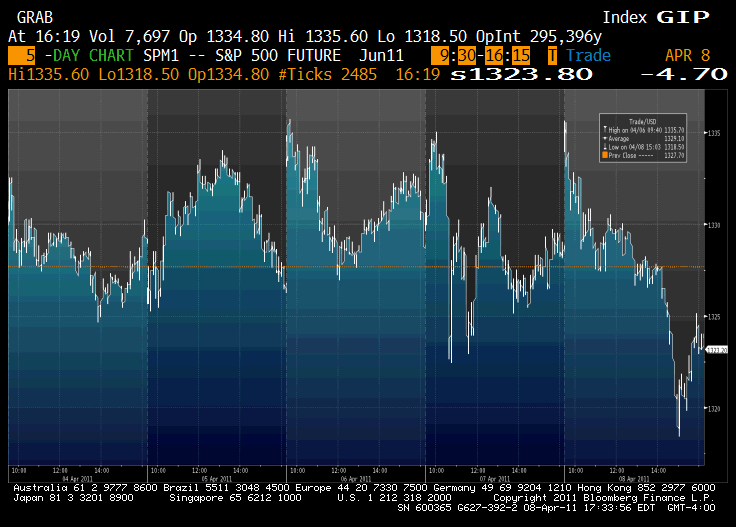
Apr
8
More on The Path, from David Hillman
April 8, 2011 | Leave a Comment
 My home is built on land carved out of what was once a large, hilly, wooded urban park. The property undulates a ways from the back of the house, slopes down about 30', flattens into a glen, then rises to a ridge about 50' in height. The area is populated with tall elms, poplars, birch and ash with a few pines, locusts and other native trees in the mix.
A small herd of about a couple of dozen whitetail deer share these woods with the human residents. The area provides great cover for them. It's also a good source of food, and they forage around the house and surrounding woods most days.
It is well known that deer actively feed in the early morning, at dusk and on moonlit nights. Many evenings around dusk, weather permitting [by that I mean temps > 0 degrees, no rain or blinding snow, and wind less than gale force], I walk out onto the deck to contemplate, drink a glass of wine and/or smoke a good cigar. This is also a perfect time to observe the deer feeding in the woods on shoots and leaves of woody plants which they generally do in groups of about three to six.
Having grown accustomed to humans, they wander the neighborhood, frequently stopping to stare though a kitchen window and regularly can be spied walking single file down the middle of the street without trepidation. But, when feeding, the deer are alert and wary and they move stealthily through the woods, often freezing at unfamiliar or sudden sounds and scents. At times, they'll spook and move with dispatch, covering a great deal of ground very quickly, only to freeze and look around the glen three times. As they feed, they tend to cluster withing a few yards of one another. Safety in numbers, I guess.
Often, one will stray from the group for a while, then others follow and they cluster again. Rarely does one that strays return to the group. It is almost always the other way around, as if the stray was the point man or was scouting the next stop on the buffet. When they move as a group, it is almost always single file. One might characterize the movement of these observed groups as being in fits and starts, and along paths from node to node.
Observing deer in the forest at dusk is not an easy task. If they move quickly, one can hear a rhythmic rustle of leaves and try to use that sound to locate them. Unfortunately, it's not unlike the sound of the gray squirrels frolicking, so one can easily come up with nothing but tree-rats by using that method.
And, deer have evolved to blend into the natural habitat, even in winter when there is no foliage. In color, they are very similar to the gray-brown bark of trees with mossy highlights, making it very difficult to discern the deer among the vegetation. Walking to an observation point, standing very still and staring into and through the stands of trees produces very few observations, even if the deer are in relatively close proximity, so well do they blend in. But, one can increase one's chances if one thinks a little differently.
What I've found works nicely [for me] in locating these particular deer unaided by optics is to look for specific shapes.
The trees in the habitat are strongly vertically oriented, except those that have fallen to the forest floor. Deer, on one hand, have long slender legs that at a distance look very similar to saplings or small diameter tree trunks. In other words, they are vertically oriented and virtually invisible. On the other hand, deer bodies are long, thick and horizontally oriented.
I've found that peering into the woods, focusing on a small section at a time, attempting to distinguish horizontal shapes approximately the size of a medium tree trunk, i.e., a couple of feet in diameter, from the vertical noise is a pretty effective method of finding a deer among the trees. Even though their coloration is nearly identical to the forest of tree bark that surrounds them, while standing, the deer cannot hide their predominantly horizontal bearing. And, except for the few fallen tree trunks, there are far fewer horizontal shapes in these woods than vertical, and virtually none at three to five feet from the ground.
The trick seems to be to focus first on any horizontal shape rather than looking for the complete shape we know to be 'a deer'. The latter offers too much distracting information and angles that more easily blend in to the cover, while the former allows one to drill down to the basic configuration by immediately eliminating a great deal of superfluous data.
Last evening, using this method, it took about 30 seconds to find four feeding deer hidden on the side of the ridge. Thinking through this feeding and discovery technique while watching them feed, I wondered if good market or trading opportunities cluster. Or if they are fluid, moving sometimes with stealth, sometimes with abandon. Or if they hide among lesser opportunities, camouflaged and appearing to be something they're not. Yes to all, I suppose.
But, I wonder if the better question is, when looking for the profitable side of a trade, or the right stock, or the market's path in amongst all the possibilities, we might not be well served as often as not by looking for the horizontal shapes among the vertical.
A couple thoughts before closing;
1. This post is not about deer hunting, about which I know less than zero.
2. BP = d/ [1+ square root of p1/p2], Reilly's Law of Retail Gravitation………..(stats on the table.)
Victor Niederhoffer writes:
Brilliant post by Hillman. Reminds me of L'Amour's story similar to the godfather Bastian where a master leader of rustlers teaches his son every thing. First thing he has to learn after fixing the faro wheel and shooting straight and of course boxing is to catch a deer by the tail the way Indians do without the deer knowing your there.
David Hillman writes:
The Indian way conjures up thoughts of the little guys trying to grab the tail of the flexions, just to get a little piece of the action before the flex notices you're there and kicks you in the face.
Apr
8
The Path, from Victor Niederhoffer
April 8, 2011 | Leave a Comment
 The path is very key in markets. And I have been remiss in not taking into account the road that is taken by a market rather than concentrating on just it's last x maneuvers. "The road is better than the inn," as they say. If He Will, Let that be the heroic thought for the day inspired by Rocky, as one is being beat up markets today, and must confine ones attention to current activities rather than heroes from the past or current.
Ken Drees writes:
Carlos Castenada–who wrote the Teachings of Don Juan, A yaqui way of knowledge– comes to mind here when through a vision of true seeing explained that the way to clearly "SEE" and understand a tree for example, was to concentrate on the spaces between the branches, the spaces between the leaves, and then one can fully see the tree's truest form and dimension and uniqueness. Similar to the post on black and white with color as an attract function that eliminates the true picture structure– the cheapened eye seeks the easy answer, look its just a tree.
The market's rode is like the leaves or the branches, what lies in between these daily prints that have not been touched may truly indicate the path.
Pitt T. Maner III writes:
Which is somewhat similar to being able to draw. You have to look at an object in a different way and see the spaces and judge the proper proportions.
One of the first exercises using the following method from Betty Edwards is to turn a picture upside down so that it is unrecognizable to the left, judgemental side of the brain and then try drawing it—it is pretty amazing what you can do. Perhaps there are benefits to be gained from additional exercises for the right side of the brain as well as the left.
I am not sure how it can be applied to stock picking but the results are impressive for the before and after drawings shown and draftsmanship is a useful skill to have.
Apr
8
Hero of the Day, from Victor Niederhoffer
April 8, 2011 | 2 Comments
Who is hero for day today? I want to say something about the world's second biggest faker taking "bold steps" but one must find a hero to counterbalance.
Phil McDonnell writes:
Here is the internal memo from the West Virginian:
He could be a hero too. He was a co-developer of S, the statistical programming language that many of us use. Conceptually it is very similar to the open source R.
Apr
7
Morse is Back, from Victor Niederhoffer
April 7, 2011 | Leave a Comment
The old bull on trolley was spotted at Trinity Church, and immediately all the stocks he used to bull up went up 5% on the thought that he was ready to do it again (even though he had gone bust 5 years before and was living in a bowery flophouse where Grandpa Martin might have met him seeking out entertainment.) An earthquake in Sendai was registered, and stocks immediately dropped a 1 % and bonds went up 1 % on the idea that Morse was back.
Apr
7
An Open Letter to the Collab, from Victor Niederhoffer
April 7, 2011 | 13 Comments
 Dear Collab,
I put money where my mouth is and shorted some nice brk /b the other day and with the luck of the Irish, finally his bubble has burst to my credit. Amazing how little it takes for your friends to turn on you. We can take second fiddle to no one on being the most prevalent detractors. I am hopeful that these transgressions are not the tip of an iceberg, and doubt that everything is corrupt from the top. When the head might be considered a faker or poseur, every one might desire to pull the wool on everyone else's eye. It's also the natural consequence of buying all these firms without any infrastructure and buying companies based on a 5 minute balance sheet review and getting a feel for the executives' integrity over a coke or big mac. An owner of a business needs incentives. And when Warren precludes that the incentives can be displaced into fraud. In retrospect when W. said "my trigger finger is still very itchy", the very sexual utterance of a depraved egomaniac, the handwriting was on the wall, as he took a tour of India to ferret out other acquisitions that his European travel agents arranged. Let us hope the "agents" did not take a cut on that one also.
A quote of Warren's that captures everything about him is this:
"You can sell your business to Berkshire, and we'll put in in the Metropolitan Museum; it'll have wing all by itself, it'll be there forever. Or you can sell it to some porn shop operator, and he'll take the painting and he'll make the boobs a little bigger and he'll stick it up in the window, and some other guy will come along in a raincoat, and he'll buy it".
How could everyone have been conned to think that only he can give a business a good home, and that the fake notion that they will leave everything the same after selling to him is not a snare and delusion. Who else could have said that and not been escorted off his stage by his family or partners immediately for his own protection. I could see Beethoven or Verdi saying it, but fortunately a concertmaster or his assistant Schindler was always around to escort Beethoven off when he broke the pianos or was 10 measures behind the orchestra because of his hearing or choleric temper.
Apr
6
Samuel Smiles. His great self help book is great for children and parents who wish to teach self esteem and self reliance in their kids.
Phil McDonnell adds:
The book itself is available here from Project Gutenberg.
« go back — keep looking »Archives
- October 2026
- September 2026
- August 2026
- July 2026
- June 2026
- May 2026
- April 2026
- March 2026
- February 2026
- January 2026
- December 2025
- November 2025
- October 2025
- September 2025
- August 2025
- July 2025
- June 2025
- May 2025
- April 2025
- March 2025
- February 2025
- January 2025
- December 2024
- November 2024
- October 2024
- September 2024
- August 2024
- July 2024
- June 2024
- May 2024
- April 2024
- March 2024
- February 2024
- January 2024
- December 2023
- November 2023
- October 2023
- September 2023
- August 2023
- July 2023
- June 2023
- May 2023
- April 2023
- March 2023
- February 2023
- January 2023
- December 2022
- November 2022
- October 2022
- September 2022
- August 2022
- July 2022
- June 2022
- May 2022
- April 2022
- March 2022
- February 2022
- January 2022
- December 2021
- November 2021
- October 2021
- September 2021
- August 2021
- July 2021
- June 2021
- May 2021
- April 2021
- March 2021
- February 2021
- January 2021
- December 2020
- November 2020
- October 2020
- September 2020
- August 2020
- July 2020
- June 2020
- May 2020
- April 2020
- March 2020
- February 2020
- January 2020
- December 2019
- November 2019
- October 2019
- September 2019
- August 2019
- July 2019
- June 2019
- May 2019
- April 2019
- March 2019
- February 2019
- January 2019
- December 2018
- November 2018
- October 2018
- September 2018
- August 2018
- July 2018
- June 2018
- May 2018
- April 2018
- March 2018
- February 2018
- January 2018
- December 2017
- November 2017
- October 2017
- September 2017
- August 2017
- July 2017
- June 2017
- May 2017
- April 2017
- March 2017
- February 2017
- January 2017
- December 2016
- November 2016
- October 2016
- September 2016
- August 2016
- July 2016
- June 2016
- May 2016
- April 2016
- March 2016
- February 2016
- January 2016
- December 2015
- November 2015
- October 2015
- September 2015
- August 2015
- July 2015
- June 2015
- May 2015
- April 2015
- March 2015
- February 2015
- January 2015
- December 2014
- November 2014
- October 2014
- September 2014
- August 2014
- July 2014
- June 2014
- May 2014
- April 2014
- March 2014
- February 2014
- January 2014
- December 2013
- November 2013
- October 2013
- September 2013
- August 2013
- July 2013
- June 2013
- May 2013
- April 2013
- March 2013
- February 2013
- January 2013
- December 2012
- November 2012
- October 2012
- September 2012
- August 2012
- July 2012
- June 2012
- May 2012
- April 2012
- March 2012
- February 2012
- January 2012
- December 2011
- November 2011
- October 2011
- September 2011
- August 2011
- July 2011
- June 2011
- May 2011
- April 2011
- March 2011
- February 2011
- January 2011
- December 2010
- November 2010
- October 2010
- September 2010
- August 2010
- July 2010
- June 2010
- May 2010
- April 2010
- March 2010
- February 2010
- January 2010
- December 2009
- November 2009
- October 2009
- September 2009
- August 2009
- July 2009
- June 2009
- May 2009
- April 2009
- March 2009
- February 2009
- January 2009
- December 2008
- November 2008
- October 2008
- September 2008
- August 2008
- July 2008
- June 2008
- May 2008
- April 2008
- March 2008
- February 2008
- January 2008
- December 2007
- November 2007
- October 2007
- September 2007
- August 2007
- July 2007
- June 2007
- May 2007
- April 2007
- March 2007
- February 2007
- January 2007
- December 2006
- November 2006
- October 2006
- September 2006
- August 2006
- Older Archives
Resources & Links
- The Letters Prize
- Pre-2007 Victor Niederhoffer Posts
- Vic’s NYC Junto
- Reading List
- Programming in 60 Seconds
- The Objectivist Center
- Foundation for Economic Education
- Tigerchess
- Dick Sears' G.T. Index
- Pre-2007 Daily Speculations
- Laurel & Vics' Worldly Investor Articles
