Feb
15
What a Tour of the Court That Was, from Victor Niederhoffer
February 15, 2012 | Leave a Comment
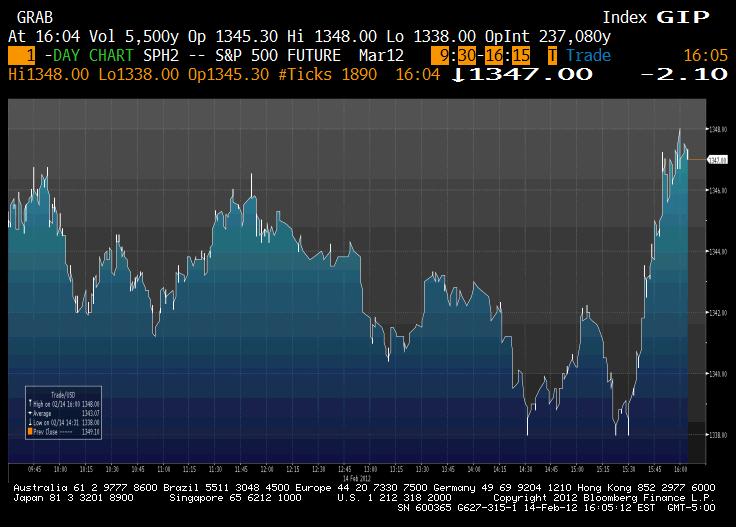
Certain formerly good players of racquetball and squash after a victory often heard the crowd say, "what a tour of the court that was!". Such could be said of the market which ended just a point or two from the open and the previous close yet was able to inflict much damage on the adversary the public.
Feb
13
Briefly Speaking, from Victor Niederhoffer
February 13, 2012 | 5 Comments
 1. It is remarkable to have a streak of 30 consecutive days go by in the SPU's without a move down of 1/2% or so broken like it was on Friday. The way it was broken with an up from open to close after a down open of 1%, yet down on the day is equally remarkable. It shows to me that the recent spate of 15 days with a vix below 20%, and volume below 2 million contracts is causing strains in the underpinning of the market, as there's not enough happening to cause the public to lose as much as it should to keep the wheels of commerce going (although less would seem to be required when the market goes up 15% without a single down day of consequence). It also shows the infinite creativity of the market. One notes also that this is the longest stretch of daily S&P moves without a decline of 0.5% going back at least 15 years.
2. How many times does the market mistress pull out of the hat "Greek Deal Falling Apart" one day and cause massive public selling and then the next– "Greece Parliament Approves Austerity Plan". It's happened about 10 times, and countless billions by the public has been lost. You'd think that the same old overreaction to bad news gambit would not work so many times in a row, but …. we're close to a 50, and I guess anything goes until we get there.
Gary Rogan writes:
I could never figure out why the market (as opposed to some of the participants) is interested in keeping the wheels of commerce turning. It the wheels are not turning, someone other than the public is losing more than their "fair share" to use O's favorite expression, but how does that translate into a market counter-reaction?
Vince Fulco writes:
I am waiting for the deliciously ironic day when our President points to ”the markets” as evidence his policies are working. I still haven't heard the Fed's announcement of their estimate of SP fair value as they like the market up, up, up and are releasing so many other targets. Let's call a spade a spade…
Feb
13
Things Are Very Bad, from ACF
February 13, 2012 | 3 Comments
 My dear friends,
Just now Athens city in every corner have fire. Shops, banks, hotels, are burning. As about the stupid politicians they are in the parliament looking how they will offer the last pieces of our country to Merkel & Sarkozy. I am so sad as all the people. Also sad for Whitney Houston, because I liked her voice. Good afternoon to you, goodnight to me.
Love,
Despina.
Scott Brooks shares:
I don't feel the least bit sorry for her. She did this to herself. I feel sorry for her innocent children and the innocent people in her life that will be so adversely effected by her reckless behavior and her inability to control her desires for the immediate satisfaction that "Dr. Feelgood" delivered. Her children have been given the worst possible example of how to be a responsible adult and as a result will be scarred lessened as human beings. Hopefully, they will escape the chains of bad parenting and the weakness of addiction that destroyed the life of their mother and turned their father into an abusive loser.
Hopefully they will find inner strength that all too few in their circumstances find and rise up from the ashes of lost childhood and become the best they can be.
Can they? I don't know. But let's hope they have inside of them burning desire to live….to survive…that Viktor Frankl wrote about in the first half of the book, Man's Search for Meaning.
I feel the same way about Greece. They did this to themselves. What I do feel sorry for are the innocent Greek people who are going to have their lives turned inside out by the insidious devil known as statism. Because of the reckless behavior of several generations of people indulged in the immediate satisfaction of political "Dr. Feelgood" (statism, living off the government teet), several generations of Ggreeks are going to have to suffer.
A whole generation of Greeks is about to riot….a generation that doesn't understand why there is no pellet delivered to them when they push the lever and, as a result, becomes angry and burns down their maze. They are a generation made weak and crippled by the "Dr. Feelgood" of statism.
It will take their children to begin to realize that the maze was simply a cage and the pellet was drug of statism. Some of them will escape and find freedom, but many (most?) of them will stay in the maze wailing at the machine to give them the pellet that they deserve…..but they'll know not why they deserve it……they'll only "feel" that it's owed them as they wail and chant and burn.
This is cancer of statism. The Dr. Feelgood of political philosophy.
In case the Dr. Feelgood analogy is lost on anyone, I give you Motley Crue and Dr. Feelgood.
Feb
13
An Important Lesson, from Victor Niederhoffer
February 13, 2012 | 7 Comments
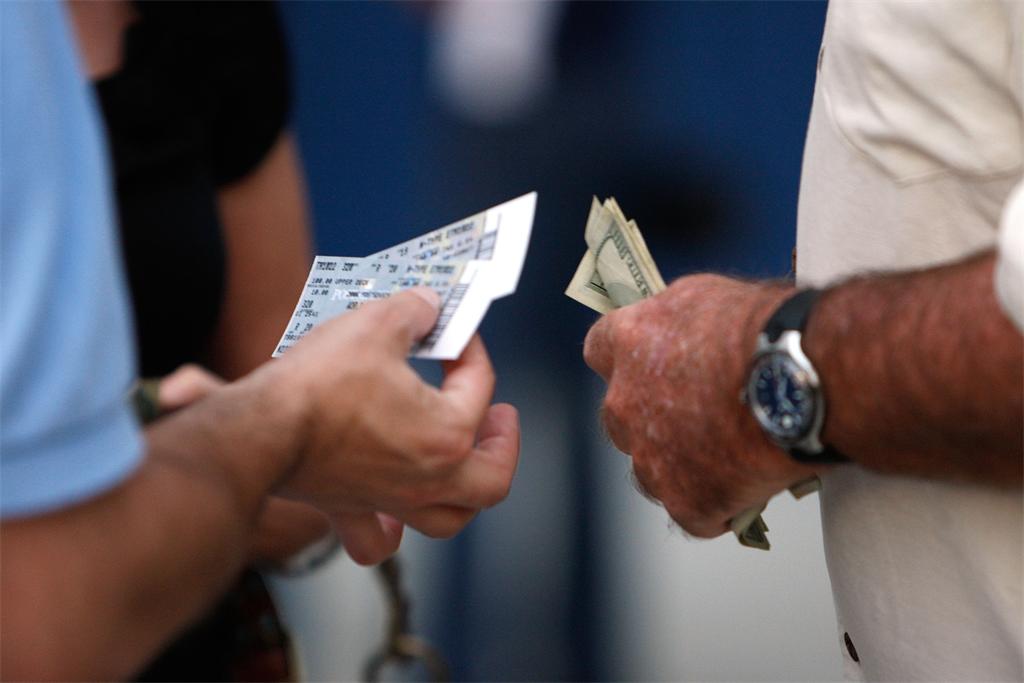 Aubrey learned a good lesson today. I took him to buy ticket scalped to the Knicks/Lakers game at 5 pm yesterday. Game starting at 7 pm. Our first con man insisted on the street that tickets were 400 a piece but we should be very careful because there were disreputable people selling tickets. When I told him I only had 400 bucks, he introduced us to one of his colleagues who pointed to the pizza joint north east and told us to wait there and he would see what he could do. He then came back and told us, "I have to tell you and repeat that these tickets are for the third upper level. Is that okay?". I appreciated his honesty and turned over the 400. When I looked at at he tickets when Aubrey said "let's go to our seats" I noticed that they were for a Bucks game that had transpired 2 weeks prior. I went to look for him on the corner but he and his accomplice had disappeared. I felt it was a great lesson for Aubrey that I wish I had learned from my dad many years before as it would have saved me tens of big. I believe the lesson has enormous market implications and I will test a few things in its honor.
What I liked most about the con was the attempt to show their honesty by pretending to be super scrupulous in telling me that they weren't giving me the best tickets. I guess this is like the broker who tells you that most customers lose. Or the market that tells you that you're selling below the previous high et al.
T.K Marks writes:
 Many years ago I fell for a similar switching con, one perpetrated by a deft band of street entrepreneurs.
It happened at the end of the day as I made my way to the E train entrance in the World Trade Center. Amidst the rush hour bustle were two guys with two cartons from which they were purportedly selling phone answering machines for 10 bucks apiece, a bargain price at the time. Being familiar with the wily ways of the City I would ordinarily be somewhat circumspect about these type of retail circumstances, but my fears were allayed by the fact that the things were in official looking boxes, each sealed in shrink-wrapped plastic. But the thing that really sold me on the deal was the weight of the box — It clearly wasn't empty and in fact appeared to weigh almost exactly what a phone answering would.
So I bought the thing and got on the subway.
Upon reaching my apartment I got a knife, cut through the plastic wrapping, and opened the box.
Inside, gingerly swathed in a cushion of some Chinese newspaper, was a brick.
It wasn't even a new brick, it was an old brick.
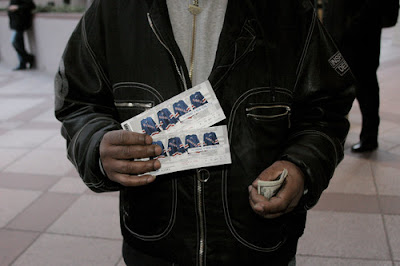 Rather than get furious with the situation I just sat there and smiled wanly, admittedly impressed with the creative lengths the "retailers' how gone to to pull this routine off. They had picked the right place, the right time of day, somehow came up with the real boxes, and then topped it all off with the plastic shrink-wrapping gimmick so that none of the customers could inspect the goods right on the spot. Balanchine couldn't have choreographed this ballet any better.
After proper reflection though, I learned a little lesson though. Given that the store price for these things at the time was about $60, I should have realized that at10 bucks, those street guys were selling the stuff too low.
One should always be wary about buying anything offered beneath the bid.
Russ Sears writes:
Scalping tickets is legal in Indiana (at least it was when I lived there) and therefore apparently much safer and honest transactions more likely to occur. Sellers often sell in front of the police to insure honesty and safety for both sides. Family guys will routinely offer to sell a ticket for you if you cannot make it to a big game at Purdue or IU. Not sure if this has changed in Indianapolis due to the Final Four and Super Bowl.
Alston Mabry writes:
I would say that asking you the question whether upper-level seats are okay is not so much to demonstrate honesty as it is to control your attention. I think a critical part of any con is to control the mark's attention and direct it away from the incriminating part of the trick. As I understand it, this is how good magicians work, too.
Feb
9
Thoughts on China, from Victor Niederhoffer
February 9, 2012 | 3 Comments
 Not to be hostile or anything, but I have never had dealings with Chinese where they haven't cheated me. I am told that there is a Northern Chinese persona and a Southern Chinese persona, and that I believe in the South, everyone is dishonest with Westerners, and the more you have done business with such a one without a wrong being committed the more likely it is that it will happen the next time, a very strange kind of hazard rate by the way. I may be wrong about this, it cost me much of real time wrongness, many years ago which compounded, my goodness—I'd be a wealthy man— but I'd like to know if there's a kernel of truth to it. You, Mr. Jia seem like a very worthy and honest man, and nothing in this is personal, but the memory still stings, especially in these markets.
Yishen Kuik writes:
China today is often compared with America in the 19th century. What I find remarkable is how true this can be.
The Chinese in China will cut corners, bamboozle, harass, deceive and cheat you on par with any 19th century "wily yankee". They are energetic, entrepreneurial and as hungry as any red blooded capitalist can be.
The melanine milk poisoning scandal is often held up as the worst example of Chinese business men run amuck.
And it is an echo of New York City in 1858 where "swill milk" killed thousands.
The horrors of working conditions in Chinese sweatshops is an echo of Upton Sinclair's expose of the Chicago meat packers — which created such an uproar that Roosevelt sent a secret fact checking mission that largely corroborated Sinclair's novel.
If you have ever been on a boat or a plane in China and it is about to land, they will all surge towards the exit, pushing each other out of the way to save a few seconds on exiting. They are a nation that has industrialized late and are pushing and shoving to catch up.
Scott Brooks writes:
I believe Yishen is correct. China as a nation is where the US was back in the 1850's (of course, with modern technology and infrastructure mixed in). They are still transitioning from a 3rd to 2nd to 1st world country. If you stop and think about it, they are really all three mixed into one. To expect a country to act and behave like a mature adult when they are really more like an adolescent, raised by dysfunctional parents is simply not foolhardy.
It will take the Chinese several generations to move into full 1st world status, and several generations to after that to mature into a moral system that is akin to the US.
We all go through our growing pains, the key is recognizing where the other person, or country or trading partner is on the "national maturity continuum" and the relate to them accordingly.
However, it is also a mistake to underestimate or minimize someone or a group of people because you see them as "less sophisticated" than you. That's why there is such a divide in America between the coastal elite snobs and us backward country bumpkins out here in fly over country.
Jay Pasch writes:
One of my best friends had an IT business selling computer mainframes and services into overseas markets. He did fine everywhere he went until he wound up in China; he had the equipment shipped, put boots on the ground, bolted the mainframes together, bus & tag to the disk systems and tape drives, IPL'd the system and turned the project over to the Chinese with a perfectly turned-up MVS system complete with blinking cursor. To his dismay the Chinese all of a sudden wanted application support, which was not in the contract, nor part of the company's forte. The Chinese government detained the engineers for six months, holing them up in their hotel rooms, and withheld contract payment until the company was forced into bankruptcy after the big bank notes came due. That was a long time ago, but even today we can't get through a pitcher of beer without the inevitable cussing about dealing with the Chinese…
Rocky Humbert writes:
My dealings with the Chinese are largely limited to my contact with the venerable General Tso. I should note that The General has treated me well over the years. However, one serious exception comes to mind: It was in a small, nondescript restaurant inaptly named, the Jasmine Rose, located on a hardly-traveled road in northwestern Massachusetts where my friend, who was seriously allergic to garlic, and I ordered dinner. We advised the waiter of his food sensitivity and were assured that our dishes would be prepared without any garlic. After my friend started to show preliminary signs of anaphylactic shock, we discovered some garlic in the dish and called over the manager. What amazed us was not that the kitchen had made a mistake (which happens), but rather that the manager when faced with irrefutable evidence simply kept repeating (in broken English), "NO GARLIC! NO GARLIC! NO GARLIC!" as if his protestations were proof that we were wrong and that he was right. It was a bizarre, but memorable experience, and left an indelible impression on my mind, and on my friend's medical chart.
More relevant to Specs is some below-the-radar-screen litigation currently underway against certain Chinese companies and their US underwriters. A lawyer friend, working on these cases has explained to me that vast numbers of listed Chinese companies are complete and total frauds — and that in fact, a variety of (private) Chinese firms exist solely for the purpose of providing seemingly-kosher accounting paper trails for the fraudulent Chinese companies– so legitimate US accountants will see their (completely bogus) payables, receivables and assets, and provide a clean bill of health. Every time I am tempted to buy a Chinese stock (or index), I think of this story and I stay away. It's not that US companies are immune to malfeasance (Worldcom, Enron, Adelphia, MF Global?), nor it is true that US companies don't massage their earnings (GE, etc.). But, rather, if you throw a dart at a list of US companies, the odds are good that you won't hit a complete fraud. It's my impression that the same cannot be said about Chinese companies, hence I will not invest there directly, but prefer to invest in world-class US companies that can complete their own on-the-ground due diligence in China. Lastly, the Chair has opined periodically on nature vs. nurture. At the risk of putting words into his mouth, he has usually come down on the side of nature. Without taking a position, I would suggest that corporate and personal behavior MIGHT BE more influenced by genetics than by culture. If this is so, certain countries and people will be inhospitable to passive investors for a very very very long time, while other countries and people will demonstrate very different characteristics. Again, I am NOT taking this position. I'm just putting it out there…
Feb
7
A Nice 3 Point Range, from Victor Niederhoffer
February 7, 2012 | 1 Comment
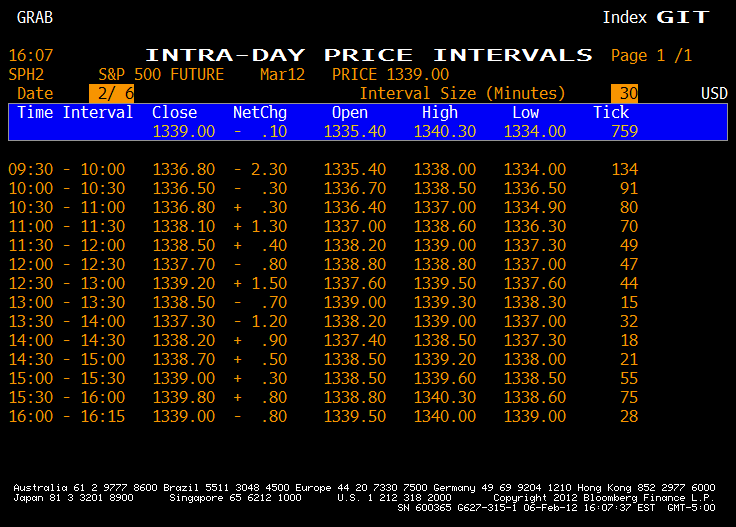
A nice 3 point range [in s&p futures] from high to low on the half hourly prices yesterday [February-06-2012]. How could money be lost in required quantities [by the public] with such small volume and small swings. Perhaps the answer is that after big two year maximus, where your "banker" is providing liquidity in unprecedented amounts, you don't need to nickle and dime the public to cover your overhead the next day or two.
Feb
7
What is the Proper Model, from Victor Niederhoffer
February 7, 2012 | Leave a Comment
 Do markets learn from each other? For example, is the S&P market this year, following a similar path to bonds last year, with every trepidatious move down being requited with a rise? Are such "learnings" graduated to the point of regularities. And is it a domino effect or a path of least resistance or consilience or convergent evolution or what have you? What do you think? Can it be quantified? Should it be quantified?
Gary Phillips writes:
Price discovery has become as anachronistic a term as capital formation. The Fed is supposed to be listening to the market to give it guidance in it's policy decisions, not dictating to the market, what the market should do. If investors feel there are no surprises left, as the Fed is concerned, they will once again lever up, and inflate asset prices…QE1 - QE whatever. Rinse and repeat.
Bill Rafter adds:
Here’s a related (perhaps derivative) question: Do stocks learn from each other?
Let’s say you take a list of ~6,000 stocks and look at them over a 10+ year period encompassing both up and down markets. And you come up with a trading plan that buys a stock if it exhibits pattern ‘A’ and sell it if it exhibits pattern ‘B’. It is not unreasonable to then have a universe of perhaps 150,000 transactions.
On the first pattern you pick you will find positive average results for certain stocks, while other stocks on average will be negative. Some of these winning stocks will knock the cover off the ball by having say 35 of 50 trades positive, and vice-versa.
Now let’s say you pick different patterns, and again you find a collection of stocks that outperform. You think this is going to be somewhat of a random process where some of the winning stocks from pattern A/B become losers when you try patterns C/D or Y/Z. And that does occur. But you also find that some stocks are consistent winners throughout the various patterns. And of course, some are repeat losers (perhaps hoo-do stocks).
That leads to further inquiry to find what constitutes winning qualities or hoo-do qualities. Note that this is not a study of profitable patterns since the behavior is exhibited across different patterns, some mutually exclusive like trend-following and mean-reversion. Nor is it a study of good management styles, as the same behavior is exhibited with ETFs, which typically have no management.
You then try to identify specific characteristics (or group membership) of the winners. You might think sectors, because the behavior also occurs in ETFs, but not all of the constituents of a winning ETF are consistent winners, and ETFs behave differently than their constituents. You trot through the various possibilities: volume, volatility, beta, name recognition, size, sales, earnings, debt, short interest, institutional holdings, etc.
Continuously you come back to the possibility that some stocks are simply winners and others hoo-dos, until you can prove otherwise. It turns out (tongue firmly in cheek) that this is a good thing to know.
Alex Castaldo writes:
Probably I misunderstand or oversimplify the issue, but I think what is happening is like this.
Among stocks in your database there are some that have considerable price runups and declines, and others that have fewer such features. It is not exactly a question of volatility as conventionally defined, but it is somewhat related to it.
When you examine trading rules, selecting ones that are more successful with some stocks, you are necessarily picking up more stocks in the first category and fewer in the second.
There is a kind of oversampling at work that concentrates the successful population with stocks from the first category.
To take an absurd extreme to make things clear, if there is a stock that spent the entire data period at 10.00 (the ultimate quiet stock), then no method will make money from this stock, not trend-following, not mean-reversion, not seasonality, etc. This stock has zero chance of being among the 'winner' stocks, not because of its industry, or who is the CEO but simply because of the time-pattern of prices.
Feb
6
What Do Trees Tell Us About Markets, from Victor Niederhoffer
February 6, 2012 | 3 Comments
[Ed.: some field research on this topic recently. Why did this tree grow the way it did? And what are the implications?]

.
.
.
.
.
.
.
.
.
.
Alice Allen writes in:
Years ago in the forest, a fledgling tree was noticed by hiking naturalists in the woods for its fortuitous position next to a large boulder that kept it from toppling when strong winds blew from the front. From all appearances, this was a lucky tree to have a neighbor with such gravitas willing to lend a shoulder to lean on early in its development. The tree, reaching toward the sky, would surely keep growing upright and strong!
Was it overconfidence that came with such an auspicious beginning that prevented the tree from sending its roots down under the boulder for stability and balance during stormy times? Or was it always fundamentally beyond the capabilities of any tree of that species to send roots down so far? Or maybe it was a combination of soil, weather, and location.
We do know that on one random cloudless, windless day, the tree collapsed across its supportive rock. To forest visitors, it looked sad and doomed. It would fail to become a perfect example of its prototype and would never pose for the shiny photo in the botany textbook.
But never rule out random redemption or random catastrophe, this time a positive miracle. Relieved of the pressure of supporting itself and aided in a more passive way by the hard, silent pillar below, the tree found the sun again and stretched heavenward back on its natural trajectory. Best of all, better than the textbook specimen, the tree became unique and memorable in its life.
So many trading strategies come to mind that can be discarded. Not ‘buy and hold…hold…hold.’ Not ‘never give up.’ Not ‘don’t accept outside help.’ Better I think to be reminded that when you accept help and assistance in the short term, you may also be accepting serious limitations you cannot forsee. Also miracles do happen, and not just to trees.
Feb
2
NYC Junto, from Victor Niederhoffer
February 2, 2012 | Leave a Comment
The meeting of the NYC Junto on Thursday February 2, 2012 will feature the annual celebration of Ayn Rand 's birthday; main speaker will be Donald Luskin . All are invited: General Society Library, 20 West 44 St., between 5th and 6th Aves., NYC, 7:30pm.
Jan
31
All the Single Ladies and the Market, from Victor Niederhoffer
January 31, 2012 | 3 Comments
 There's a kind of dance that the 20s do these days where they move forward with high kicks and movements first forward and backward "honey I need you" "no, go away, get a job". The kids tell me it's a Beyonce song: "All the Single Ladies" that has a chorus "if you want me, put a ring around it". It is so reminiscent of the market vis a vis 1300 the last week. First it goes down to 1302 than right back up to 1315. Then back down again and up. 5 times. Once it actually gets in the house at 1296 but no action there as it gets thrown out at 1030 to get a job, that's yesterday. Where its close at 1309 only to go back to 1302.5 before closing unchanged yesterday. I'm told it's called free style dance, a combination of rap and rhythm and blues where the man tries hard to get in but the women constantly gives him a little opening and then turns him out until he can show the car and house and job and gives up the ho.
This is to the point but there was a lot more coming forward and being pushed apart like magnetic poles in the ones I saw at Rand's wedding.
Tim Melvin comments:
Sounds like the line dance we used to do to Paradise by the Dashboard Light at weddings and parties
Of course, as that song points out, often getting the "fill" you so ardently desire and work for is the worst thing that could ever happen.
Jan
30
Ten Steps One Should Take to Become a Successful Speculator, from Victor Niederhoffer
January 30, 2012 | Leave a Comment
 I am often asked what ten steps one should take to become a successful speculator.
I would start by reading the books of the 19th century speculators, 50 Years in Wall Street, The Reminiscences of a Stock Operator by Markman, and others.
Next I would read the papers of Alfred Cowles in the 1920s and try to compute similar statistics on runs and expectations for 5 or 10 markets.
Third I would get or write a program to pick out random dates from an array of prices, and see what regularities you find in it compared to picking out actual event or market based events.
Fourth, I would read Malkiel's book A Random Walk Down Wall Street and update his findings with the last 2 years of data.
Fifth, I would look at the work of Sam Eisenstadt of Value Line and see if you could replicate it in real life with updated results.
Sixth, I would start to keep daily prices, open, high, low, and close for 20 of so markets and individual stocks and go back a few years.
Seventh, I would go to a good business library and look at the old Investor Statistical Laboratory records of prices to see whether it gave you any insights.
Eighth, I would look for times when panic was in the air, and see if there were opportunities to bring out the canes on a systematic basis.
Ninth, I would apprentice myself to a good speculator and ask if I could be a helpful assistant without pay for a period.
Tenth, I would become adept at a field I knew and then try to apply some of the insights from that field into the market.
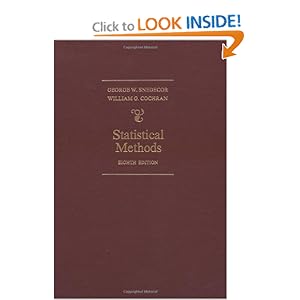
Eleventh, I would get a good book on Statistics like Snedecor or Anderson and be able to compute the usual measures of mean, variance, and regression in it.
Twelfth, I would read all the good financial papers on SSRN or Financial Analysts Journal to see what anomalies are still open.
Thirteenth, of course would be to read Bacon, Ben Green, and Atlas Shrugged.
I guess there are many other steps that should be taken that I have left out especially for the speculation in individual stocks. What additional steps would you recommend? Which of mine seem too narrow or specialized or wrong?
Rocky Humbert writes:
 All the activities mentioned are educational, however, notably missing is a precise definition of a "successful speculator." I think providing a clear, rigorous definition of both of these terms would be illuminating and a necessary first step — and the definition itself will reveal much truth.
Anatoly Veltman adds:
I think with individual stocks: one would have to really understand the sector, the company's niche and be able to monitor inside activity for possible impropriety. Individual stocks can wipe out: Bear Stearns deflated from $60 to $2 in no time at all. In my opinion: there is no bullet-proof technical approach, applicable to an individual enterprise situation.
A widely-held index, currency cross or commodity is an entirely different arena. And where the instrument can freely move around the clock: there will be a lot of arbitrage opportunities arising out of the fact that a high percentage of participation is inefficient, limited in both the hours that they commit and the capital they commit between time-zone changes. Small inefficiencies can snowball into huge trends and turns; and given the leverage allowed in those markets - live or die financial opportunities are ever present. So technicals overpower fundamentals. So far so good.
Comes the tricky part: to adopt statistics to the fact of unprecedented centralized meddling and thievery around the very political tops. Some of the individual market decrees may be painfully random: after all, pols are just humans with their families, lovers, ills and foibles. No statistical precedent may duly incorporate such. Plus, I suspect most centralized economies of current decade may be guilty of dual-bookeeping. Those things may also blow up in more random fashion than many decades worth of statistics might dictate. Don't tell me that leveraged shorting and flexionic interventions existed even before the Great Depression. Today's globalization, money creation at a stroke of a keyboard key, abominable trends in income/education disparity and demographics, coupled with general new low in societal conscience and ethics - all combine to create a more volatile cocktail than historical market stats bear out. 2001 brought the first foreign act of war to the American soil in centuries. I know that chair and others were critical of any a money manager strategizing around such an event. But was it a fluke, or a clue: that a wrong trend in place for some time will invariably produce an unexpected event? Why can't an unprecedented event hit the world's financial domain? In the aftermath of DSK Sofitel set-up, some may begin imagining the coming bank headquarter bombing, banker shooting or other domestic terrorism. I for one envision a further off-beat scenario: that contrary to expectations, the current debt spiral will be stopped dead. Can you imagine next market moves without the printing press? Will you find statistical precedent of zooming from 2 trillion deficit to 14 trillion and suddenly stopping one day?
Craig Mee comments:
 Very generous post, thanks Victor…
I would add, in this day and age, learn tough typing and keyboard skills for execution and your way around a keyboard, so you don't wipe off a months profit in the heat of battle. I would also add, learn ways of speed reading and information absorption, though these two may be more "what to do before you start out".
Gary Rogan writes:
Anatoly, I don't think really understanding the sector and and the niche is all that useful unless one knows what's going on as well as the CEO of the company, which means that in general understanding quite a bit about the company isn't useful to anyone without access to enormous amount of information. It's the subtle, little, invisible things that often make all the difference. There are a lot of people who know a lot about pretty much any company, so to out-compete them based on knowledge is usually pretty hopeless. It is nevertheless sometimes possible to out-compete those with even better knowledge by sticking with longer horizons or by being a better processor of information, but it's rare.
That said, it has been shown repeatedly that some combination of buying stocks that are out of favor by some objective measure, possibly combined with some positive value-creation characteristics, such as return on invested capital, do result in market-beating return. Certainly, just about any equity can go to essentially zero, but that's what diversification is for.
Jeff Watson adds:
 In the commodities markets it's essential to cultivate commercials who trade the same markets as you(especially in the grains.) One can glean much information from a commercial, information like who's buying. who's selling, who's bidding up the front month, who's spreading what, who's buying one commodity market and selling another, etc. When dealing with a commercial, be sure to not waste his time and have some valuable information to offer as a quid pro. Also, one necessary skill to develop is to determine how much of a particular commodity is for sale at any given time…. That skill takes a lot of experience to adequately gauge the market. Also, in addition to finding a good mentor, listen to your elders, the guys who have been successful speculators for decades, the guys who have seen and experienced it all. Avoid the clerks, brokers, backroom guys, analysts, touts, hoodoos etc. Learn to be cold blooded and be willing to take a hit, even if you think the market might turn around in the future. Learn to avoid hope, as hope will ultimately kill your bankroll. When engaged in speculation, find one on one games like sports, cards, chess, etc that pit you against another person. Play these games aggressively, and learn to find an edge. That edge might translate to the markets. Still, while being aggressive in the games, play a thinking man's game, play smart, and learn to play a strong defensive game……a respect for the defense will carry over to the way you approach the markets and defend your bankroll. Stay in good physical shape, get lots of exercise, eat well, avoid excesses.
Leo Jia comments:
Given that manipulation is still prevalent in some Asian markets, I would add that, for individual stocks in particular, one needs to understand manipulators' tactics well and learn to survive and thrive under their toes.
Bruno Ombreux writes:
Just to support what Jeff said, you really have to define which market you are talking about. Because they are all different. On one hand you have stuff like S&P futures with robots trading by the nanosecond, in which algorithms and IT would be the main skill nowadays, I guess. On the other hand, you have more sedate markets with only a few big players. This article from zerohedge was really excellent. It describes the credit market, but some commodity markets are exactly the same. There the skill is more akin to high stake poker, figuring out each of your limited number of counterparts position, intentions and psychology.
Rocky Humbert adds:
I note that the Chair ignored my request to precisely define the term "successful speculator," perhaps because avoiding such rigorousness allows him to define success and speculation in a manner as to avoid acknowledging his own biases. I'd further suggest that his list of educational materials, although interesting and undoubtedly useful for all students of markets, seems biased towards an attempt to make people to be "like him."
If gold is up a gazillion percent over the past decade, and you're up 20%, are you a successful speculator?If the stock market is down 20% over a six month period, and you're down 2%, are you a successful speculator?If you have beaten the S&P by 20 basis points/year, ever year, for the past decade, without any meaningful drawdowns, are you a successful speculator?If you trade once every year or two, and every trade that you do makes some money, are you a successful speculator?
If you never trade, can you be a successful speculator?
If you dollar cost average, and are disciplined, are you a successful speculator?
If you compound at 50% per year for 10 years, and then lose everything in an afternoon, are you a successful speculator?
If you lose everything in an afternoon, and then learn from your mistake, and then compound at 50% for the next 10 years, are you a successful speculator?
If you compound at 6% per year for 10 years, and never have a meaningful drawdown, are you a successful speculator?
If the risk free rate is 6%, and you are making 12%, are you a more successful speculator then if the risk-free rate is 0% and you are making 6%?
If you think you are a successful speculator, can you really be a successful speculator?
If you think you are not a successful speculator, can you be a successful speculator?
Who are the most successful speculators of the past 100 years? Who are the least successful speculators of the past 100 years?
An anonymous contributor adds:
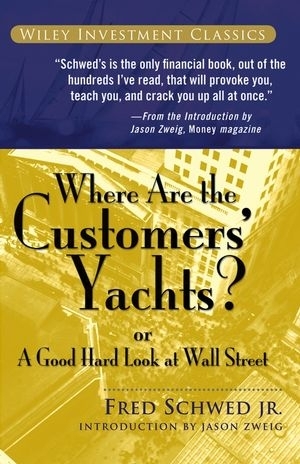 In conjunction with the chair's mention of valuable books and histories, I would append Fred Schwed's Where are the Customers' Yachts?.
While ostensibly written with a tongue-in-cheek hapless outsider view of 1920s and 1930s Wall Street, it has provided as many lessons and illustrations as anything by Henry Clews. In this case, I am reminded of the chapter in which Schwed wonders if such a thing as superior investment advice actually exists.
Pete Earle writes:
It is my opinion that the first thing that the would-be speculator should do, even before undertaking the courses of actions described by our Chair, is to open a small brokerage account and begin plunking around in small size, getting a feel for the market, the vagaries of execution quality, time delays, and the like. That may serve to either increase the appetite for such knowledge, or nip in the bud what could otherwise be a long and frustrating journey.
Kim Zussman adds:
The obligatory Wikipedia* definition of speculation is investment with higher risk:
Speculating is the assumption of risk in anticipation of gain but recognizing a higher than average possibility of loss. The term speculation implies that a business or investment risk can be analyzed and measured, and its distinction from the term Investment is one of degree of risk. It differs from gambling, which is based on random outcomes.
There is nothing in the act of speculating or investing that suggests holding times have anything to do with the difference in the degree of risk separating speculation from investing
By this definition one must define risk and decide what comprises high and low risk — which may be simple in extreme cases but (as we have seen repeatedly) is not very straightforward in financial markets
*Chair is quoted in the link
Alston Mabry writes in:
I'm successful when I achieve the goals I set for myself. And rather than a target in dollars or basis points or relative to any index or ex-post wish list, those goals may simply be to act with discipline in implementing a plan and then accepting the results, modifying the plan, etc.
Anatoly Veltman adds:
And don't forget Ed Seykota: "Everyone gets out of the market what they want". I find that everyone gets out of life what they want.
Plenty a market participant is not in it to make money. Fantastic news for those who are!
Bruno Ombreux writes:
This will actually bring me back to the question of what is a successful speculator.
In my opinion success in life is defined in having enough to eat, a roof, friendships and a happy family (as an aside, after near-death experiences, people tend to report family first). You can forget stuff like being famous, leaving a legacy or being remembered in history books. If you are interested in these things, you have chosen the wrong business. Nobody remembers traders or businessmen after their death except close family and friends. People who make history are military and political leaders, great artists, writers…
So you are limited to food, roof, friends and family. Therefore my definition of a successful speculator is a speculator that has enough of these, so that he doesn't feel he needs to speculate. I repeat, "a successful speculator does not need to speculate."
Paolo Pezzutti adds:
I simply think that a successful speculator is one who makes money trading. Among soccer players Messi, Ibrahimovic are considered very successful. They consistently score. They experience short periods without scoring. Similarly, traders should have an equity line which consistently prints new highs with low volatility and a short time between new highs. Like soccer players and other athletes it is their mental characteristics the main edge rather than knowledge of statistics. One can learn how to speculate but without talent cannot play the champions league of traders and will print an equity line with high drawdowns struggling losing too much when wrong and winning too little when right. Before dedicating time to find a statistical edge in markets one should assess his own talent and train psychologically. In this regard I like Dr Steenbarger work. In sports as in trading you very soon know yourself: your strengths and weakness. There is no mercy. You are exposed and naked. This is the greatness and cruelty of markets and competition. This is the area where one should really focus in my opinion.
Steve Ellison writes:
To elaborate a bit on Commander Pezzutti's definition, I would consider a successful speculator one who has outperformed a relevant benchmark for annual returns over a period of five years or more. Ideally, the outperformance should be statistically significant, but market returns can be so noisy that it might take much of a career to attain statistical significance.
Jeff Rollert writes:
I propose a successful speculator dies wealthy, with many friends. Wealth is not measured just in liquid terms.
Should a statistical method be preferred, I suggest he is the last speculator, with capital, from all the speculators of his college class.
In both cases, I suggest the Chair and Senator are deemed successful, each in their own way.
Leo Jia adds:
If I may wager my 2 cents here.
I would define a successful speculator as someone who has achieved a record that is substantially above the average record of all speculators in percentage terms during an extended period of time. The success here means more of a caliber that one has acquired which is manifested by the long-term record. Similarly regarded are the martial artists. One is considered successful when he has demonstrated the ability to beat substantially more than half of the people who practice martial arts, regardless of their styles, during an extended period of time. It doesn't mean that he should have encountered no failures during that time - everyone has failures. So, even if that successful one was beaten to death at one fight, he is still regarded as a successful martial artist because his past achievements are well revered.
With this view, I will try to answer Rocky's questions to illustrate.
Julian Rowberry writes:
An important step is to get some money. Preferably someone else's. [LOL ]
Jan
27
Quite a Scan, from Victor Niederhoffer
January 27, 2012 | 2 Comments
 Since December 19 2011, we've gone through a remarkable bullish period in the market. We had 19 out of 23 days up as of close yesterday. A good way to quantify these is with scans, a variant of runs except instead of x in a row in the same direction, it's x out of the recent y in the same direction. Like runs, scans could be quantified with magnitudes by multiplying the consecutive changes adjusted for mean together and normalizing by a goodmanesque number.
One notes that out of the last 3400 daily trading days from year end 1995 in S&P, such an event occurred just 5 times; all such happened in 2010, around the middle of March, March 12, March 16, March 22, March 23, and Nov 9 (note the failure of independence and thus the need for a real goodmanesque adjustment). One notes that 20 days later they all were up, an average of 3%. Rocky Humbert rules again.
It is interesting to note that there has never been a 19 or 23 down, but there were four, 17 of 23 down, all around Aug 8th, Aug 10, Aug 22, and one outlier 9/29/1999. Anyone who didn't take out the cane during those times, lost a quick 6%. It is interesting to reflect on this phenomenon and to see the "expert " for what he is.
A nice application of scan statistics is contained in Fast Spatial Scan .
A textbook on scans from Wiley is Balakrishnan, N. and Koutras, M. V. (2002): Runs and Scans with Applications.
Also, one notes that bonds have set some nice clusters, with 19 of 23 up occurring 3 times since 1996 being bullish.
Jan
25
Story from The Bond Pit, from Gary Phillips
January 25, 2012 | 1 Comment
 Anyway, no drug, not even alcohol, causes the fundamental ills of society. If we're looking for the source of our troubles, we shouldn't test people for drugs, we should test them for stupidity, ignorance, greed and love of power.
-P.J. O’rourke
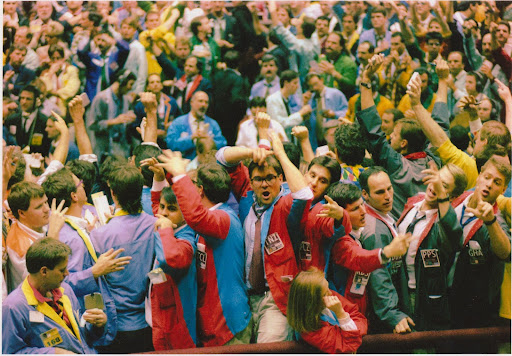
It was rollover and I was standing close to the center of the bond pit so that I would have access to both the spread paper and 2nd month brokers, when D. X walked up to me. The bond market was experiencing a brief respite from it’s usual frenzied trading activity and Dx had taken the opportunity to come by and talk to me. He informed me that he was working with some large institutional traders in New York and overseas, and that they were going to be trading some size in the 30 year. He then asked me if I would like to fill their orders, or at least a portion of them. I explained to Dx that although I occasionally did brokerage, it was only as an accommodation to the floor brokers I stood next to, so that they would be able take a break or have lunch.
The majority of the time I functioned as a trader, and I wasn’t interested in being taken out of the market, to fill some orders. Besides, I didn’t know who these customers were. Dx went on to tell me that there was going to be a considerable amount of business, and that if I did a good job, I could have the deck. I respectfully declined his offer and Dx walked away. It wasn’t long before I saw Dx talking to another broker on the other side of the pit, and then another. Little did I know, that I had just made one of the smartest decisions of my life.
I had met Dx and his wife Lisa, who doubled as his clerk, in the lounge of my clearing firm. He was a very talkative and gregarious guy, but in a used-car-salesman kind of way. He was a perennial bust-out, kicked out of numerous clearing firms at both the Merc and the Board, but now had an account where I cleared my trades. There were a lot of *Dxs* that hung around the Merc and Board; ego-driven dreamers that chronically blew up their trading accounts, yet always found a way to get back in the game; hanging on a little while longer before justice was inevitably meted out. A lot of them would quietly disappear, while others would get jobs on the floor, evaporating into the milieu of floor clerks never to be seen or heard from again, yet always fantasizing about making it big one day.
Every trader did it; dreamed about the big trade; fantasized about taking a shot. Chicago’s traders had their own mythical way for making this dream come true, the O’hare spread. The idea was to put on an incredibly large position, get in a cab, and head for O’hare airport. If the trade was a winner, you either returned home or got on a plane to Hawaii — if the trade was loser, you bought a one way ticket to a country that did not have an extradition agreement with the U.S. We also had a saying, “If you are going to blow out, blow out big” If your debit was too small, your clearing firm would write off the loss, and then write you off. But in the CBOT's version of “too big to fail", if you hurt your clearing firm bad enough, they would arrange a way for you to generate the income necessary, to pay them back. Apparently, Dx had taken these fantasies to heart having already already planned to put on an O'hare spread, before he approached me in the pit that day. While I had refused his offer, he did manage to enlist 9 unwitting brokers to assist him and his partner, Tony C, in a scheme that would bring down one of the oldest clearing firms at the CBOT.
The bell rang at 7:20 AM on a Thursday morning and Tony, who had strategically placed himself in the Bond options pit, was buying up every at-the-money put he could get his hands on. Meanwhile, Dx was putting in huge sell orders in the bonds to the 9 brokers whose help he had enlisted earlier. Tom B was on the other side of the bulk of these orders, and when the options traders started to lay off the puts they sold to Tony, with short hedges in the bond futures, panic ensued and the market had nowhere to go but down. Dx then entered the pit himself and began to sell more bonds. In the Bond options pit, the put options were going through the roof, and Tony was beginning to take profits on his long put position.
This all took place before 7:30 AM, when an economic release came out which was negative for bond prices. In a stroke of incredible luck, the market broke even more and Tony covered the balance of his position for about a 1.5 million profit, while Dx was now short about 12,000 bond futures, and up about 5MM on his open position. The feedback loop of selling they had created was working perfectly.
Dx had been dismissed long ago from my clearing firm, and along with Tony C, was now clearing Stern & Co., a family run business that was founded by Lee B. Stern. Lee had made his fortune trading grains, and owned the Chicago Sting soccer franchise, a piece of the White Sox, and was one of the most respected members of CBOT. Lee rarely came onto the floor anymore, but when he did make an appearance in one of the grain pits, his actions were highly scrutinized by other traders, as a possible clue to where the market was headed.
Bad news travels fast in the futures industry and virally fast on the floor, so it did not take long for word of Dx’s and C’s involvement in the "bond panic," to reach Stern’s office. Lee’s son and a few of the firm’s employees rushed to the floor and quickly enlisted the help of the security guards. Dx had lost his count and was standing outside of the pit when they grabbed him, while they physically pulled C out of the Bond options pit. After witnessing this melee, traders in both pits began to piece together what had happened. Tom Baldwin, who had been unsuccessfully taking the opposite side of Dx’s orders, realized the sell-off had been artificially induced, and that traders would have to cover their shorts. He quickly took advantage of the situation and began to bid up the price of bonds. Bond futures and bond options prices reversed on a dime and snapped back with a vengeance.
Meanwhile, Stern’s employees, who had wrestled the trading cards out of Tony and Dx’s hands, were frantically trying to get a handle on what was now, Stern's position. In addition to the trades that Tony and Dx had made, were the fills of the 9 floor brokers, which had to be collected and aggregated in order to get an accurate count. It took them 2 hours before they could figure out the position, and what had been a $5MM winner, had turned into an $8.5MM loser by the time the position was liquidated. Had they been able to figure out Dx’s position quicker, and not tipped off floor to what was going down, Stern could have escaped with anywhere from a small loss to a small gain. Instead, Stern had to make good for Dx’s $8.5MM loss, and as a result, lost it’s clearing status after 25 years in business, and had to lay off 20 employees.
Tony C tried to collect on his $1.5MM profit on his options position, but received a 42 month prison sentence instead. The proceeds from his trades were awarded to Stern to help offset his losses, while Stern went after the 9 filling brokers for the balance. Dx hopped in a cab to the airport and got on a plane to his parents home in Canada, completing the other leg of the O’hare spread. He was eventually extradited and sentenced to 42 months for *his *efforts. Dx came very close to pulling off his insane plan, but he let his ego and his greed get the best of him. Had he executed his plan on a smaller scale, in a more restrained manner, he might not have aroused the suspicion of his clearing firm. He had the market right where he wanted it, and had he not lost his count and tipped his hand, he might have been able to cover his position while it was still a huge winner. Whether they would have let him keep his profits is highly dubious, because Dx’s sole legacy from his lunatic scheme, is the eponymously named rule, that allows clearing firms to seize the profits of any trader that attempts to take a shot at them.
Victor Niederhoffer comments:
A generalization and quantification of Mr. Philipp's great story would show why when there is a big swing down and it recovers, it has a long way to go on the upside. All this must be quantified and the reverse as the story probably captures a basic element of human nature.
Jan
25
Galt’s New Movie, from Victor Niederhoffer
January 25, 2012 | 2 Comments
 She was the producer and did the hard work of financing this with two high price stars and bringing it into the can getting almost unanimous positive reviews almost opposite to the media bias. One is very proud of her.
Jan
23
Encounters with Hats, from Victor Niederhoffer
January 23, 2012 | 2 Comments
 The first hat was the blue Policeman's hat worn by my father. I thought it made him look a giant and one dared not dispute his authority. I learned from him that the hat was a universal symbol of authority and respect. And that it was made of a sturdy felt that protected the head from falling objects, blows with a stick and even gun shots. The hat came in handy whenever I got into trouble in school. Artie would go into the principal's office with his hat on, and his holster, and ask the principal if he had read me my rights before disciplining me and extorting the confession from me. The funny thing is one of those encounters got me into Harvard. Although I was very good at tennis and college boards, Harvard accepted only a handful of Jews from all of Brooklyn in those days, and I didn't have the 100 average that thousands of other National Junior champions among applying Brooklynites had. But the principal was so incensed by my father's visit that he wrote on my application that Harvard should not admit me. The man who interviewed me had been exposed to a similar blackballing and was so incensed that he insisted as a big donor that they admit me.
 In those days, indeed throughout the history of our republic until 1950, everyone wore hats in the winter. But near the beach, at Sea Breeze Park on W. 4th street, where the checker tables were, it was customary to take the hat off when the temperature was above 80. There was one person however, who a crowd always stood behind, who never took his hat off even in the summer. I learned that it was Tom Wiswell, the world go as you please checker champion. I eventually took weekly checker lessons from him for 20 years. He wrote to me once, "I wore my hat, I won many tournaments, Wylie was the first checker teacher and I will the last. It's time for me to take my hat off.". At the age of 85 he suddenly lost his memory and I never saw him again. But I will always love him, and I will never take my hat off again, except when in the presence of a lady, or if I ever patronize a lady of the night for the first time, in his honor.
 My next encounter wiith hats came at the foot of my grandfather Martin, who was genius court interpreter that spoke 50 languages at least. After working as chief accountant for Irving Berlin's music firm, he became a highly successful speculator in stocks, channeling most of his trades through Bache and Company. Like some of his descendants however, he had one major failing. He liked to trade on 20 times leverage and when the depression came and many stocks fell 20% in one Black Friday, he lost everything. He was always studying the market thereafter and loved to buy the can't misses, true blues like Western Union and Radio and Trolley and Canal which were the blue chips of his day. He told me for my Bar Mitzvah that he would buy me 10 shares of any stock I liked under 10. I asked him what was the best for the long term, something that I could hold onto for growth and peace of mind until I went to college, and that was near 10. Hat Corporation of America he told me, people will never stop wearing hats. They make them in all varieties. There are thousands of uses. And they have a monopoly on all the machines that are necessary to make them. You can wear this one for ever and sleep well with it under the bed. "But Martin," I said, "I read that there were 110 hat manufacturers in 1900 and only 7 left today. Hats have been in a decline since 1900 because people don't want to be formal any more and they don't walk to work." "Never Mind," he said, "the time to buy a stock is when it's out of favor. They have a new method of manufacturing where they substitute a resin for the felt that totally automates what was once a hand made process." Hat as it was called never spent a day above 10 after I bought it and like Union and the others eventually receded to below 1 before being delisted and declaring belly up.
Whether it was because of the car, or the many overhead vestibules, hats have continued their decline ever since. They received what the owner of the HCA called their death blow when Kennedy became president because he never liked wearing a hat. When Cavanaugh the owner told him he had ruined the hat business, Kennedy took to always holding a hat but never wearing it.
T.K Marks comments:
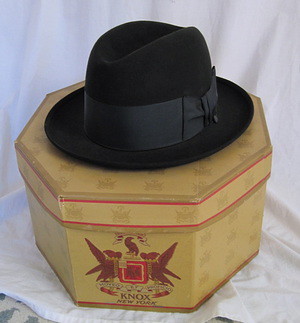 At the end of each evening my father would gingerly place his hat in its box on the top shelf of half (quarter) of my parents' closet.
Infants should be handled so delicately.
It was a Homburg if my memory serves correct.
The thing would sleep there, upside-down in its comfy confines, till the next day's dawn came around.
Then both it and he would be off to catch the Long Island Rail Road so that they would both be an hour early for work.
Rudy Hauser comments:
Given all the talk of hats, I should perhaps add my own comments since I have been wearing hats for many years. Back when I was young I did not wear hats. But after one snowy day which I encountered with a bare head, I decided to wear a hat in the winter. I choose a fur hat made with relatively inexpensive rabbit fur. Drafts from air conditioning in trains that aggravated an allergy induced sinus headache caused me to add hats for the remainder of the year. In the moderate temperature range of spring and autumn, I wore a derby hat I purchased at a very reasonable price at the South Street Seaport for a few decades. Unlike a true derby this was made of soft rather than hard felt. In recent years I have worn a better quality Homburg. In the summer I wear a Panama hat. It has the advantage of helping keep the head a bit cooler in the sun and protecting my face from sunburn.
As to the impact a hat has, back when I was an economist for a money management firm, I would go down to Washington on occasion with a small group arranged by an economist/political analyst consultant consisting of a small number of his institutional clients to visit with government officials. One member was a distinguished lady who was the political policy advisor of a major mutual fund complex. She had once remarked (not to me directkty) how my presence with my derby added a certain dignity to our group. One of the Panama style hats I wore was not a true Panama and was rather flexible, creating its own unique sharp from long wear. My boss and colleague had indicated that it was time to have it replaced. We had both attended a meeting of the Mont Pelerin being held in Cambridge as his guest. Chuck had made the remark in the earshot of a fine classical liberal of the British peerage, who remarked that the hat had character and should be retained. I often hear compliments on my hats on the street. This even applies to my very old and worn rabbit skin fur hat, whose black dye has faded and now is a shade of black and brown with little bits of the fur missing. My attitude is that it still keeps my head very warm, and should I be discarded just because I have lost hair and what I have left is turning gray? Since my response to the latter question is in the negative, I see no reason why I should treat the hat differently.
But the hat business has clearly suffered greatly. To my knowledge there were only two very good quality hat stores left in Manhattan, and the one on Madison Avenue in the 40's closed well over a decade ago leaving only one on Fifth Avenue around 30th Street. There is (or at least there was as I am not sure if it is still in business) a hat store downtown, but the selection of quality hats is not that great, although it did have many lesser quality hats. There is a cigar store on Lexington that has high quality hats, but its selection is very limited.
Sam Marx comments:
With the government backing them (and Peter Lynch saying good things about them ), even FNM seemed indestructible.
Jan
22
Hats, from Victor Niederhoffer
January 22, 2012 | Leave a Comment
 I am researching and reviewing my contact with hats over a not uneventful life. I am considering their value, their uses, their symbolic significance, the great people I know who have worn them, the hat corporation of America I bought as my first trade, the hat that Tom Wiswell always wore to prevent sunburn and cover up baldness, the hat that Shane wore that made him an icon, the hat that the accountant in Monte Walsh wore that Hat Hendersson just couldn't resist noting was just right for a pistol shot, the hat that I wear now to show my respect for those previous, the man I called Hats H. because he always had a million different conflicts of interest while working for us. The importance of a hat outdoors in the West to shield from rain, sun, and the elements. Et al. What value do you see in hats these days? What anecdotes? They seem to have gone out of style because of the automobile. You don't need protection from the elements any more. Also they're hard to store. How do they relate to markets?
Alan Millhone writes:

Dear Chair,
I remember well the hat Tom wore. The ball cap I wear has a board on it (see picture). The Market trader might wear such a hat to remind them to look ahead and make the right moves (trades).
.
.
.
.
Sam Marx writes:
On the subject of "Hats". I am reminded of the aversion that John F. Kennedy had to hats and the picture that has stayed in my mind, since 1961, is of his carrying and not wearing his hat at his inauguration. I believe it was his attitude that caused the downswing in hat wearing in the U.S.
Tim Hesselsweet writes:
 Seems like a good example of ever-changing cycles. The hat has been making a comeback for the last several years. Kate Middleton has become a popular figure and she frequently wears hats. Upscale department stores like Saks now carry a large selection of hats as well.
Alston Mabry responds:
Yes, but…mens hats are a different dynamic:
Look at this photo of mens hats at a Liberty Rally in Columbus Circle, 1918, and mens Hats at the Horse Races 1920s style, and 1950s Men with hats.
Scott Brooks writes:
When I graduated high school, the guy who measured my head for my mortar board said, "Young man, I've been doing this for 35 years and you have the biggest head I've ever measured".
 As a result of my freakishly large cranium, hats rarely fit me. I wear one from time to time, but only out of necessity, and occasionally for functionality.
Necessity is when I need to keep my bald head from burning in the sun or freezing in the winter or dry in the rain. Never under estimate the insulating and protective qualities of hair.
Functionally is because I need a hat when I hunt to keep the sun out of my eyes when I'm scanning for game, peering through my scope to place the cross-hairs on the shoulder of my intended quarry, or placing the aiming pins of my bow in the middle of said quarries chest cavity.
I avoid hats otherwise as I can rarely get one big enough to fit. If I wear one too long, it gives me a headache. Therefore, when it comes to trading, if you see me placing a trade while wearing hat, fade my position as I'm likely making a losing trade because my mind is clouded by the hat that is squeezing my brain all to tightly.
Pete Earle writes:
I wear a hat, and have for seven or eight years. When I began to wear one, I expected to be lightly razzed by friends; that not only didn't deter me, but never occurred. Instead I've received unexpected compliments, and over the last few years other have seen a higher frequency of hat wearers in Manhattan, Washington D.C., and even when I'm down in Auburn and Atlanta.
Christopher Tucker writes:
The grandfather of my best friend from college was one of the kindest and most sensible men I have ever met. He was a traveling sales rep for the John B. Stetson company. The man always had the best (the absolute BEST) hats.
GAP Capital comments:
 Born and raised in Chicago, so "hats" remind me of only one person…Dorothy Tillman!!!
Anton Johnson writes:
"By some accounts, Christopher Michael Langan is the smartest man in America……….he has a fifty-two-inch chest, twenty-two-inch biceps, a cranial circumference of twenty-five and a half inches–a colossal head, more than three standard deviations above the norm"
Esquire article on "The Smartest Man"
Alan Millhone sends another photo:
Here is Tommie Wiswell with his trademark hat tilted back. Might also been used to keep
overhead light from his eyes while he focused on the many boards.

.
.
.
.
.
.
.
.
.
.
.
.
.
Russ Herrold writes:
 I am traveling, and so cannot conveniently post, but I placed orders this week for a new Stetson, a couple of Fedora designs, and some other … I forget …and have in my car, for the conference I am at this weekend, easily 5 or so, which I use both for their protection of my head from the cold, and also so I can 'do some branding' work in the community the conference represents (I also have other 'branding' in my clothing, and appearance), such that people I deal with, who don't know me by sight, can recognize me anyway.
Marion Dreyfus adds:
I think I am fairly well known as a hat person, and have been since I wore unusual chapeaux /to synagogue and school when 12 or 13.
Aside from style and stating an individualistic aspect, I think a hat harks back to a gentler, more mindful age, perhaps 100 years ago. It also keeps the head, inside of which are all these excellent ideas and scenes for a better tomorrow and a niftier evening today, comfy-cozy. Hats also show, oddly enough, respect. Hatless men in the 1970s were declaring their freedom from the mindfulness of suit and hat, and perhaps we are the poorer for having abandoned hats.
They also keep milliners in funds, and milliners I went to grad school with in the early 90s were aghast at the drop in hat-wearing citizens, alleviated only by temporary crazes or fads that fade as swiftly as they arise.
As a biker, for me, even mild days produce a breeze when one is on that leather seat, and a hat prevents sunstroke and sun in one's eyes as well as too much wind over one's head.
In the Orthodox world, wearing a hat connotes one is married, so it may be foolish of me to wear hats, because i communicate a status I do not currently entertain. But i do like the fashion and focus statement being made by wearing a lid, many of which, actually, i create myself.
Finally, one can maintain a superior air of mystery in a hat, which is impossible to the same degree in a hatless state.
Alan Millhone adds:
What really amazes me on hats are the clods at football games I attend who don't remove their head cover when the National Anthem is played.
Ken Drees muses:
 The baseball cap trend: rappers wearing the caps askew, wearing caps with logos of designers and companies, wearing caps for status/advertising, caps as gang signal, wearing caps in restaurants/indoors, wearing hoodies in lieu of caps, caps as fashion, caps on backwards, caps with brim curved just so, it all has to do with being cool. Lebron James wears Yankee cap to Indians games–it's all about me, fool.
Gary Phillips writes:
"Wearing a cap backwards is a baseball fan tradition that started with Yankee fans. It wasn't because they liked Yogi Berra, either. The Yankees and Red Sox have a century-old rivalry. A group of young guy Yankee fans, around 1980, took the train up to Boston to catch a couple of games. Boston fans are loud and boo other teams. The young Yankee fans were seated in front of loud Bostonians. The New Yorkers didn't want to start an altercation, but made statement. Those guys turned their Yankee caps around backwards to show the Bostons that they were Yanks fans and proud of it."
Anton Johnson writes:
On baseball's rally cap superstition:
"A rally cap is a baseball cap worn while inside-out and backwards or in another unconventional manner by players or fans, in order to will a team into a come-from-behind rally late in the game. The rally cap is primarily a baseball superstition."
And hockey's Hat-trick.
Victor Niederhoffer writes:
It would be nice if this worked in the market. But then the adversary could always tell if you were weak or strong, especialy if signals could be reflected from the hat. I was surprised to see that in all the uses for hats I have collected, including flopping the rump of your horse, and fanning a fire, and collecting water from a stream or the rain, I did not see many variants of using it as a signal to get a cab or alert a Native American that a interloper was near, or to collect bets, or to conceal a salt shaker. This latter is particularly effective in the west because to ask a man to remove his hat is akin to a date with boot hill.
Gary Phillips adds:
 Surely not a hat, barely a cap, let us not forget the kippah or yarmulke. The Talmud says that the purpose of wearing a kippah is to remind us God is the Higher Authority over us. He alone is Lord of Lords and King of Kings. When we pray and worship with our heads covered, we are saying that we are in total and complete submission to the will of God Almighty now and forever.
I was recently in the hunt for 2 of the crocheted variety for my 2 and 4 year olds to wear to school. My elder son demanded that the kippah be white with a blue Magen David. The synagogue gift shop was unable to fill our order, so I turned to a higher authority - E-bay. As J. Peterman would say, it is 6" in diameter — one size fits all. Handmade in Israel with a *very small* fine stitch. The yarmulkes are from Israel and are made by people who have made Aliyah; low income and handicap people, generating income to make a living.
I grew up and observant Jew until I had my first taste of bacon and blondes, and I never looked back. However, I now find myself lighting the candles, saying the hamotzi, and making Kiddish on Friday nights… Nice.
Jim Sogi writes:
 A hat is essential in Hawaii to keep off the sun, rain and wind, to keep glare out of your eyes, and at night on the mountain for warmth when it gets cold. There are different hats for different situations. A baseball cap is good all around since it keeps the sun off your face, stores easily, can be worn in a car and is cheap and stays on in a brisk wind. A good brim hat is good to keep the sun and rain off the back and shoulders as well. A nylon hat is light and can be washed. A waterproof rain hat is good for extended rain, and a light nylon brim is good for hot sun. A small brim bucket with a strap is worn in the water while surfing to keep intense sun at bay for hours in the water, and to stay on in the surf. A knit or fleece watch cap is good for boating at night or sleeping in the cold. A helmet is good for sports to protect the skull from boards, rocks, trees and impact. The Original Buff is an adaptable piece that can be worn as a hat, scarf, or facemask. A balaclava is good for winter conditions and can be used as a hat, or face mask in windy conditions. I must have 20 or more hats.
As with all equipment, each type of hat is specialized for specific conditions, and there is not one that is good for all conditions. As with markets, its good to have specialized systems and rules for the differing conditions or cycles and no one rule is good in all conditions but must be tailored to match the expected conditions.
Rudy Hauser writes:
I do not wear a hat indoors with the exception of trains and planes or if there is no good place to put the hat. If there is a draft from air conditioning it helps to keep me from getting a headache. But more important is that unless I just want to hold my hat in my hands there is no good place to put it. I prefer to read, not hold a hat. I once made the mistake of putting a Panama hat in the overhead rack in a plane. The motion of the plane bounced it around enough to ruin it. That gives me little choice but to wear it. If I have a hat without a brim, such as my winter hat, I can a do take it off aside from trains which are not that warm.
Bill Rafter adds:
 Glare, particularly from lensed overhead lights or high-hat floodlights can cause headaches and eyestrain. That can easily be counteracted by wearing a baseball cap or other large-brimmed hat indoors. I have kept one at my desk for decades.
For years I noticed that whenever I saw a certain actor & director, he was always wearing a hat, even indoors. Then I saw him entering a food emporium at a ski area and he removed his hat. I immediately understood why he always wore one — his particular baldness aged him at least 10 years. So his vanity choice was either a wig or a hat, and he chose the hat.
Hats indoors also provide a level of anonymity for those who do not want to be recognized in an airplane or robbing a bank.
My first "real" hat was a Homburg, which was required for one of my college jobs: pallbearer.
Jan
22
The Knicks, from Victor Niederhoffer
January 22, 2012 | 1 Comment
 One was sorry to miss the 100 to 86 5th straight loss of the Knicks to the Bucks today as one likes to see the arrogance of D'Antoni permeating its ugly effluence on the rest of the team with the system that doesn't work. It is sad that no one will say that when you have a poor wrist and ankle like Melo that it's fantastic to shoot 30% at all. But the arrogant D'Antoni making sardonic remarks must create total demoralization on his team and one wishes he would stop his television shows and posturing and let someone like Goodson or Williams get the team to play a system that's not guaranteed to lose. The tragedy of it is that most market systems have the same guru's with the same tragic flaws and the same impossibilities of ever winning. It's not the players it's the system.
Gary Phillips adds:
“It’s possible to train people to perform to a certain level in chess, but if this training does not promote self- education and a philosophical attitude, then the trainees will be little more than performing seals.”
-Nigel Davies, Daily Speculations
T.K Marks writes:
Isn't there an old axiom that within most any matter subject to inevitable variance that any system is better than no system at all?…Be that as it may, proper allowance should be made for the D'Antoni Disclaimer.
It's a game-changer.
Jan
22
Briefly Speaking, from Victor Niederhoffer
January 22, 2012 | Leave a Comment
 Yet another pattern widely disseminated falls to the dogs. The bank whose heads like to cash in without gains service and head the big beltway departments bordering the oval published a widely disseminated study showing that the 1 to close from year end 2008 to year end 2010 was a nice 0.1 % in the index. Which astute second hander noted carried through to futures with a nice t of 4.1 and 62% up. It is good to know that in 2011 the effect led to a -0.5% decline with a 42% up. Thus, Milton and Rose can rest easy again that there is no free lunch.
Jan
20
Will We Stop Wearing Shoes? from Leo Jia
January 20, 2012 | 4 Comments
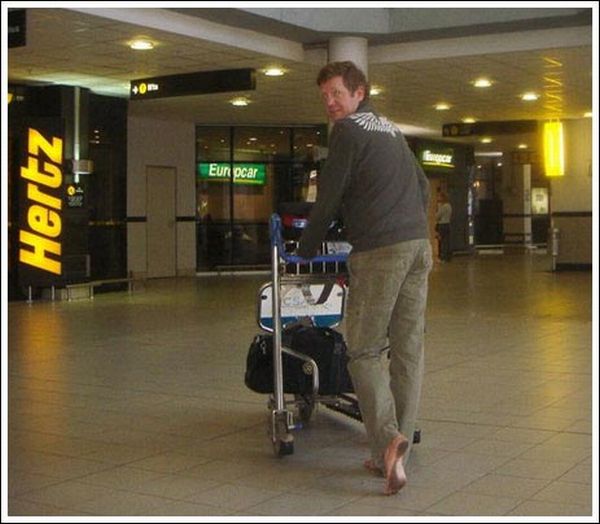 Inspired by Vic's grandfather's advice "people will never stop wearing hats", I wonder if perhaps shoes will lose favor with people. This seems to have occurred to me. I used to love shoes and bought many. Now since I work mostly from home, a pair of socks or sleepers are what I wear the most. Then since I mostly live in warm climates, sandals are what I wear the most for outdoors. The next is sport shoes for working out. Formal leather shoes, which I have a bundle of, are rarely worn. What is going to happen 50 years from now?
Victor Niederhoffer comments:
This will be very bad for China. There is not one manufacturer of shoes left in America. They're all in China an India now. When I worked in Wilkes Barre 50 years ago as tennis pro, there were at least 30 shoe manufactures in the Scranton Valley alone, all of whom where members of the club. Alas, Poor Yorick.
Leo Jia replies:
Hi Vic,
Yes, that would be very bad for China. But I tend to think that it would also not be easy for the world either.
Simply looking at the iPad shares in the world, we can see how big an exaggeration are China's GDP numbers from its real economic contributions/benefits. In the iPad case, China records the full $275 while its real contribution is only $10. I presume the shoes industry (and all others) would be similar only in varying degrees, with many American and European brands taking the big shares.
Look from the other way, China's economy is not as big as we think it is.
Best,
Leo
Jim Sogi writes:
 In Hawaii, everyone wears slippers and goes barefoot often. The feet get tough and the toes spread out in a more natural position which is wider. City feet get cramped in misshapen in the form of the latest fashion almost like Chinese foot binding. Native kids who have gone barefoot their whole lives have wide feet with space between their toes.
There is a new trend in running shoes towards a less structured shoe with a flexible sole that allows the foot to naturally flex during the running motion. Prior technology in running shoes put a large and rigid heel which forced a heel strike, which unintentionally caused greater impact on the knees. The flexible sole allows the foot arch to naturally flex and absorb the impact resulting in less impact to the knees and back. A popular shoe is the five toe design, similar to ancient Japanese toe socks. African runners run long distance barefoot.
Jan
20
The Tangled Bank, from Victor Niederhoffer
January 20, 2012 | Leave a Comment
 It is interesting to contemplate the tangled bank of the markets, clothed with the intricacies of the European attempts to keep their standing in the EC, with the siren song of the US stock market which crawled down to 1199 just a month ago, and has been reflected back to 1312 in less than a month, with just one or two down days intervening, while the bonds fly up and down above and below, and the metals and grains flit about through the Earth. Each of these markets so different from each other yet dependent upon each other in so complex a manner move in a fashion to relieve the weak from their funds and transfer it to those who feed upon their weakness. There is grandeur in this view of the markets, and the place of the bottom and top feeders in this ensemble. While this planet has gone circling on according to the fixed laws of gravity, which in no sense can be gainsayed vis a vis the markets themselves, with the S&P move from below the earthly pull of 1200 not to the heights of 1312. From so simple a beginning and with such modest principles, endless moves most beautiful and most wonderful have evolved to allow the strong to prosper and weak to die off.
Jan
14
Equities and Bonds, from Kim Zussman
January 14, 2012 | Leave a Comment
The attached charts the ratio SPY/TLT 2002-present [The S&P ETF vs the US Treasury ETF]. The current ratio of about 1.06 is near the bottom of the post 08-09 crisis range, but still far from the bottom reached in March 2009.

Victor Niederhoffer writes:
This illustrates the wisdom of the proverb "there is always a web between markets but the web is always changing". Conversely nothing exemplifies this proverb better than the shifting relation between fixed income and stocks.
Alston Mabry adds:
Just as an exploratory reminder to myself, attached is a chart showing the variations in 60-day correlations between two 1000-day series (of % changes) generated randomly but with an overall correlation of -0.3. In other words the true correlation is -0.3 but we pretend we don't know that and measure the 60-day sampled correlation.

Ken Drees adds:
Zussman's chart makes one think about potential energy–the buildup of potential change as one sector grows larger than the other.
Alston Mabry adds:
And again, just to see what it looks like, here's the rolling 20-period correlation for the weekly % changes of Dr Z's SPY and TLT.

Finally, one last chart, combining the previous two ideas: the rolling 20-week correlation of SPY and TLT, graphed with the rolling 20-period correlation of two random series with the same overall correlation as SPY-TLT (-0.41).

Jan
12
An Inconvenient Truth, from Vince Fulco
January 12, 2012 | Leave a Comment
 How is this behavior any different from an inconvenient truth applied to the financial arena: "Treasury Statements Omit Projected TARP Losses, GAO Says".
Victor Niederhoffer comments:
Might this be called the decoy or the perfect lie where you tell a little something about what you did wrong so as to omit the big thing? Galton reported that it was always necessary to cache some very invaluable loot at your hiding place while caching the real loot in the overhead branches of some impenetrable tree. Perhaps someone will recall the name of that impenetrable tree so it can be compared to the decoy. How much have they loaned to the banks e.g. and what is the opportunity cost of that?
Jan
10
Briefly Speaking, by Victor Niederhoffer
January 10, 2012 | 3 Comments
The main purpose is to generate revenues for the top feeders to cover their overhead at the expense of the bottom feeders, the small people, those who can be squeezed, those who pay high commissions. The slow moving people with fixed systems that Osborne liked to write about. After 4 small days like existed as of yesterday, it had only happened 6 times in last 10 years, and most of them around holidays. They all went up substantially next day or two like today.
To add misery to the equation just to make all the regularity people lean the wrong way, they gave us an up day yesterday and a 50 day max just to make sure everyone who could possibly be bearish was bearish. But of course then the real January effect should chip in with big rises in the first x days, succumbing to terrible declines by the end of the month, just so that more chips can be eaten and those sold out bulls will rue the days they tried to come in on the bandwagon.
The question in my mind is whether it will first go to 1300 before succumbing. Of course aside from the counting above, the latter is just speculation and meals for a lifetime.
Jan
10
Query of the Day, from Victor Niederhoffer
January 10, 2012 | 1 Comment
 With all the charlatans hawking the January barometer, randomly stating that the first month is predictive of the last last 11, how come we have never heard of a first day barometer, or a first week barometer? I believe Galton would have written on this in Natural Faculty.
Update: Indeed there is a first week barometer and it's much less consistent with randomness than the first month barometer, and of course it's opposite.
Jan
9
 In Dec 2010, Daily Spec announced a contest for best investment ideas for 2011 at this link . Several volunteered to judge the contest. And this seems necessary as there were many intricacies in judging. As a start to declare the winner, would those who feel they are in the running for the winner's prize, please alert me to their recommendations, the results, and why they feel they may be near the top. Thank you. Vic
Dan Grossman writes:
Vic, below is my contest-entry email, with the results indicated in italics. It should perhaps count in my entry's favor that my percentage gains were achieved without the use of derivatives or other form of leverage, and that they were very specific stock predictions, easy for anyone to implement and make money from.
As indicated, if I am lucky enough to win, I will donate my prize to a free market or libertarian nonprofit organization.
—
Trying to comply with and adapt the complex contest rules (which most others don't seem to be following in any event) to my areas of stock market interest:
1. The S&P will be down in the 1st qtr, and at some point in the qtr will fall at least 5%. S&P wasn't down for the quarter but second part of prediction was accurate in that S&P fell 6.4% from Feb 18 to Mar 16.
2. For takeover investors: GENZ will (finally) make a deal to be acquired in the 1st qtr for a value of at least $80; and AMRN after completion of its ANCHOR trial will make a deal to be acquired for a price of at least [corrected in followup email to $16]. GENZ (50.93 at contest date) was acquired early in the year for a then-current value of $74, but including a contingent right which could still bring total value to $80. AMRN (8.20 at contest date) was not acquired, but soon traded above 16 for some two months.
3. For conservative investors: Low multiple small caps HELE and DFG will be up a combined average of 20% by the end of the year. HELE and DFG had a combined price at contest date of 58.58, and a combined price at year-end of 75.00, for a combined average gain of 28%.
For my single stock pick, I am something of a johnny-one-note: MNTA will be up lots during the year — if I have to pick a specific amount, I'd say at least 70%. (My prior legal predictions on this stock have proved correct but the stock price has not appropriately reflected same.) MNTA was 14.97 at contest date and 17.39 at year-end, for a gain of 16.17%.
Finally, if I win the contest (which I think is fairly likely), I will donate the prize to a free market or libertarian charity. I don't see why Victor should have to subsidize this distinguished group that could all well afford an contest entrance fee to more equitably finance the prize.
Best to all for the New Year,
Dan
Yanki Onen writes:
Dear Vic,
Once again I would like to thank all of the contributors to the daily spec word press for sharing their insight and wisdom. It is a never ending journey. Below were my ideas but to be quite frank I don't know if they were eligible for the contest. But if they were results should be alright
1) Going long csco and long put lost $2,18
2) Sell contango buy backwardation trade for cotton buy selling spreads
made a lot of money but I don't know how to quantify that cause it is trading call 3) Leveraged ETFs suckers play. This strategy was right in the money and made quite a sum.
Our lively hood depends on what we make of the beloved mistress, if you get a long she is quite charming. Thanks for the challenge. Also would like to use this opportunity to wish you all a great prosperous new year.
Phil McDonnell writes:
My trade on the Silver ETF SLV was closed out when the ETF hit its target price of 40 as stated in the original instruction (at the bottom). On April 11, 2011 the trade was exited with the following post to the list in reply to a suggestion from Big Al:
Yes, they are short puts. Yes, you are right. In my original contest entry I said close out the 'entire position' if and when slv hits 40. So I think I need to go with that. I don't think we were allowed to change our original entries beyond fixed original. instructions.
So taking the SLV at this morning's open when silver broke 40 it went out for .12. The net on the calendar spread was 2.50 less .12 is 2.38 credit. On a cash investment of .50 this is a return of 376%. After a dismal January the Phoenix rises from the ashes.
Originally I wrote:
If 40 is not reached then exit on 2/31/2011 at the close.
Correction it should have been: 12/30/2011 instead of the nonsensical
2/31/2011.
And here is my corrected submission:
When investing one should consider a diversified portfolio. But in a contest the best strategy is just to go for it. After all you have to be number one.
With that thought in mind I am going to bet it all on Silver using derivatives on the ETF SLV.
SLV closed at 30.18 on Friday.
Buy Jan 2013 40 call for 3.45. Sell Jan 2012 40 call at 1.80. Sell Jul 25 put at 1.15.
Net debit is .50.
Exit strategy: close out entire position if SLV ETF reaches a price of 40 or better. If 40 is not reached then exit on 12/30/2011 at the close.
Brendan Dornan writes:
Victor,
Thank you very much for putting on the contest. The reason I started to write a blog is to document some picks, and hopefully build a reputation after a decade of being in isolation behind the screens. The contest enabled this goal. Thank you for the opportunity.
The contest entry updates earlier this year did not include my entries, probably because the access to quotes for the instruments added an extra degree of difficulty, so allow me:
1. Credit Default Swaps on:
· +99.44% : French Gov CDS
· +70.80% : German Gov CDS
· +99.88% : Italian Gov CDS :
2. Short the Euro + Far OTM put options near parity · +% : 1.3224 - 1.30469, not great: learned spot FX poor for tail event trades. 3. Long Put X-Warrants or CDS on any Hong Kong or Chinese Property Developer · +103.20% (20.64% X 5 for warrant use) Shanghai Property Index,
(2759.58-2190.11):
3a. or Credit Default Swaps Chinese 5 year Government Debt · +118.26%: China Gov CDS
Extra Credit: · + 214.25% : Short Copper:
o 4.4455-3.4695 NYMEX Copper HG
o ($111,375 - $86,725) = $24,650.00
· Short Iron Ore, Cement, similar declines (SWAPs would have done well) · + 52% : Short Japanese Industrials via CDS o Hugh Hendry's fund is up and can be a proxy · +32.96% peak, but plunged -60.80% below open : Cleveland Biosciences (CBLI) o Although unsuccessful, CBLI spiked higher amid the Japanese Nuclear Meltdown, serving its purpose as a hedge
Stanley Rowen writes:
And the winners are…? I fortunately did not participate in last year's contest (my guesses turned out to be non-winners. But, I am indeed curious if there will be a major article posted to Daily Speculations dot Com with the winners? I'm looking forward to it.
Victor Niederhoffer comments:
These entries from the contest for 2011 investments. These are the ones so far in the running. Would any like to add their selections to this list for judging.
Jan
7
Joshua Bell and Put Up Jobs, from Stefan Jovanovich
January 7, 2012 | Leave a Comment

By now you have probably read the Pulitzer prize winning Washington Post article about violinist Joshua Bell performing in the D.C subway.
You have to love the Posties; if they can find a way to diminish and demean their own subscribers, they go for it - because they know that their newspaper can only continue to be the font of wisdom as long as the civil servants believe they have to read it each morning.
Playing Bach in a subway station is like playing baseball indoors; all the skill in the world can't make it anything but a nuisance.
P.S. Bell's virtuosity is unchallengable; his musicianship, like Midori's, so dreadfully earnest that, of course, it gets an A+ from the Wurlitzers of record and requires an audience full of schoolies full of superior appreciation.
Kim Zussman writes:
Aesthetics and taste are subjective and subject to presentation. Examples include statistical inconsistency in rating fine wine and celebrities out of context. When you meet so-called "knock out" actresses in person, more often the surprise is disappointment.
Russ Sears writes:
I am in the middle of reading "Thinking Fast and Slow" by Daniel Kahneman. It tries to describe what psychologist "know" about how intuition (fast thinking) and analysis (slow thinking) work and work together. I will try to give a more complete report once I am finished with it.
However, briefly it mainly describes how thinking creates biases, while at the same time tries to show respect and analyze how amazing "thinking" is.
One of the biases: it is clear most people underestimate the persuasiveness of their surrounding to their effect on their mood, judgment and decision making with even subtle unperceived differences he calls "priming". Such things as a poster with big eyes in the room with a "honor box" for coffee greatly increases the amount put in the box. And a forced smile creates happier people much later.
In the intro- he implied that his main criticism has been the of focusing on the biases rather than the strengths of "thinking", However, so far my main criticism is his over generalizations, and insistence that these studies prove "we" (all of us) are victims of these biases. And so far the book seem to imply that only through analysis (by such studies) can these be recognized and "we" overcome them. Yet, I would suggest that many of the more successful and happy people's "edge" comes from intuitively having perceived many of these biases early on in their lives and having made adjustments to offset them…without perhaps knowing the "science" behind "why".
Such are the people that stopped for the music in the subway station. Even though primed to ignore it. Yet while he insist that "all" are victims of specific biases. Their is perhaps in total evidence that we all accept, the possibility of biases for the power of thinking. But it is natural for life to perceive that they are the superior different one in overcoming these biases. The violinist show many think they would stop and listen, but few actually do.
Even so, the book thinking fast and slow has given me much to think about, and I would recommend it to all.
Dan Grossman writes:
 As a former violinist, I had enjoyed the You Tube video and the seeming fact Bell would play incognito in the subway. But I hadn't realized it was a put-up job by the Washington Post.
It's like all those Kahneman and Tversky experiments everyone is so excited about to show there's no rational man that economics is based on, where students play games with small amounts of money given to them.Contrary to that famous fairness experiment, if the student in the real world were negotiating to divide $1 million dollars of real money and he had the choice of getting 10% ($100,000) or nothing, while the other player got 90%, he would take the $100,000.
Victor Niederhoffer adds:
One would add that when Bell plays, his body movements are very poetic and add immeasurably to the sense of music of the audience. Presumably because this was a set up job similar to what Prof Phil pointed out vis a vis the tag team of beggars and homeless brought in to keep man small, and the chair to his credit first brought to the attention of the list vis a vis The Port Authority in New York, which is always laden with the beggars and homeless to keep man small, a la Ayn Rand's essay on Victor Hugo's The Compafriros, the maimed in Spain raised to show how bad the lot of some people can be relative to the feudal existence of the masses, one can assume that Joshua did not make those body movements and twists and turns that lets the audience know he is really making music, so that it would be more likely that the Wash Post could prove the point that no one would notice. 31 bucks on the other hand seems pretty good considering the lack of charity in workers in the beltway who are living off the fruit of other peoples labor.
Jan
5
The Knicks, from Victor Niederhoffer
January 5, 2012 | 1 Comment
 When will The Knicks realize that it's not the players but the system that causes them to be so bad. You can't throw the ball to the basket in 9 seconds and win a game in modern basketball. If it ever worked for D'Antoni it was due to a changed game when he employed it 10 years ago at Phoenix. I doubt that the powers that be will realize this as they seem to be the worst kind of shysters. Every ad that they have on the radio is out of the keep man small, and borders on fraud and angry at the rich kind of thing. "Are you being cheated on your mortgages?". It reminds me of all the Geico ads which are typical of the sage. Almost could have been written by him. Everything is small except Geico. A typical one: a son complains to his mother, "How come you don't have an 800 number so I can call you free. Get with it." "You don't have to berate your mother to save money. Just come to Geico." Now if that isn't the sage himself talking as are all their other ads. "Is the world round? Just save money at Geico et al". My point is that it's just like "all the brokers, all the middlemen are crooks and provide no service and are getting too much in fees. So I'll do it on the cheap."
Of course, the problem I have with the Knicks "it's not the players but the system" is the main problem with market plays. It's not the trades. It's the gains and losses relative to the range of the day, the vig, and the risk, and margin. It's the system not the regularities that 's wrong.
When the Knicks had the head of the players union as their center with his sullen long ball game, a la Gallinari, the sullenness was contagious, and in addition to the system being bad, it was the center who can't get a job as a coach any more because people realize how his sullenness would ruin everything. So in that case it was the player as well as the system.
Jan
5
A Little Boy Says, from Victor Niederhoffer
January 5, 2012 | Leave a Comment
 A little boy says, "Guess what I'm thinking?". I say "when are we going to play monkey in the middle." The little boy says, "No. I'm thinking of when I am going to be a millionaire?". I ask him when he thinks that will be? He says, "maybe when I'm 10 or 12."
Anatoly Veltman writes:
1. Can't be sure (but the way a few trillion ballooned to 14 trillion deficit), everyone may be a millionaire by then.
2. Can't be sure which prof. on my first day in Business School said: general goals (like becoming rich) don't get one there. It is a step-ladder plan of how to get there that may.
3. Can't be sure of precise spelling after all these years (was it Sir Brian Bixley?), but he introduced "marginal utility" to my Microeconomics 101 audience in an entertaining fashion of "villas at the cote d'azur" vs hamburgers. He further confided that his goal in life was to die with his debt maximized! I pray he hasn't delivered just yet — and is alive and well.
4. Can be sure of one thing. He, of all the lucky kids, will well receive his early lesson: The richest are not the people who have the most. They are the people who need the least.
Kim Zussman adds:
From Greg Mankiw
"De Gustibus non est Taxandum"
Bryan Caplan quotes a passage from Daniel Kahneman's Thinking, Fast and Slow (which I have not read, but plan to):A large-scale study of the impact of higher education… revealed striking evidence of the lifelong effects of the goals that young people set for themselves. The relevant data were drawn from questionnaires collected in 1995-1997 from approximately 12,000 people who had started their higher education in elite schools in 1976. When they were 17 or 18, the participants had filled out a questionnaire in which they rated the goal of "being very well-off financially" on a 4-point scale ranging from "not important" to "essential."…Goals make a large difference. Nineteen years after they stated their financial aspirations, many of the people who wanted a high income had achieved it. Among the 597 physicians and other medical professionals in the sample, for example, each additional point on the money-importance scale was associated with an increment of over $14,000 of job income in 1995 dollars!In other words, one reason that people differ in their incomes is that some people care more about having a high income than others.
Russ Sears writes:
For kids, both money and numbers are largely abstractions. I would suggest that one of the important lessons a parent is to give to kids is to understand how money relates to the reality of "being very well off financially" or goals they set in general. From what I have observed most parents do not tie the kids life goals into what financial steps it takes to get there. While a young kid, parents want to teach their kids not to worry about money, that it is their responsibility to take care of them and supply their needs and wants. Both the epidemic now the norm of assumed "adultlescence" of young 20 somethings (why else would 26 year old need to still be on Mom and Dad's health insurance) and the now common "failure to launch" of young adults suggest that many parents are not doing their kids any favors by perpetuating this when their kids are in their teens.
I would suggest that parents talk about what is expected of the teen starting to go to college, and give a dollar figure to both the profession and life styles young teens and kids talk about when they talk about what they want to do when they "grow-up"; besides just encouraging them to dream and share these dreams.
Jan
3
Some Reflections on a Trip to London and Paris, from Victor Niederhoffer
January 3, 2012 | 3 Comments
 1. Every store in London was having a sale of 50% or more except for the Bates one I went to to buy a hat, and all the big stores like Harrods had queues of at least 2 hours. In Paris, no stores had sales and business seemed quite slow except for the health food stores that substitutes quinoa for rice and hummus. Why is there so much better retailing in London than Paris? Does it have to do with the service rate or National Character? The marginal utility for consumers to buy goods in London and Europe rather than property seems to be a function of the much larger ratio of space to population in US versus Europe. When you have 100 square feet to a person, goods seem very attractive and the Holidays with all their bargains, bring out in London "50% of the population". By the end of a week, people are willing to spend a lot more to buy things than at the beginning when they're still testing the waters and looking for bargains. Can this be quantified in markets?
2. The drop and close below 1200 on Dec 19, 2011 is right out of the playbook of the Trojan War. Time and time again a day before the death of one hero or another, in this case Hector as he firebrands the Greek ships and kills and wounds one Greek defender after another, including Ajax, Menelaus, and Odysseus, the Gods look down, especially Zeus, and say, "look he's going to die tomorrow, let him have a blaze of victory today before he goes to Hades as he's put up a good fight and is the favorite of a few mistresses and daughters." One receives a pretrial settlement letter from Dan about a HP executive's harassment of a party planner, including his showing her his million dollar balance at the ATM. And it gets him in trouble because there is an obvious attempt to cover up through his assistant who might not be buyable off now that he is no longer top guy. It's right out of the Trojan war where all the problems arise from romance and the fate of the war hinges on who can seduce Zeus the last, and which Goddess is consumed by revenge the most because Paris chose Aphrodite and how they can use their wiles to turn the tides of war.
3. A trip to the British Museum starts with a building cramming exhibit of Russian Architecture right after the Revolution to show the Russian's spirit and intelligence, and the love and egalitarianism of Russia by the British right now. But at the British Museum a room is devoted to Roman everyday life then compared to England today, and the conclusion is that it's pretty much the same with the soldiers being able to retire to a nice plot of land after 20 years of service then and now. But on looking closer one sees that most of the wealthy in Greek times were the freed slaves who were able to fill the everyday jobs of merchants, doctors, and financiers since they were not tarnished by striving for money and didn't possess extensive land holdings.
 4. Throughout Europe the opportunity cost of time is close to zero. Queues are everywhere because free admission is given to all the attractions. One can only get into the Louvre through a back entrance as the lines at the front are 3 hours long, but when you do get in, you have to walk through 10 miles of religious paintings depicting sacrificial and revengeful scenes from the Bible. No such luck at a the Musee D'Orsay where one would have to wait 5 hours to get in, even after purchasing a ticket at the only billetiere open in Paris.
5. London is the theater capital of the world, and it's nice to see the common man at all the events, enjoying his ice cream between acts at 1/4 the price of US events. I have to walk out of Crazy for You and Matilda, two of the hits there, because the music is terrible, and the plots totally contrived and hateful to the business person. The Crazy For You plot is exactly the plot of the current Muppets movie with their depiction of the heartless business man who wishes to close down the theater and the decent poor folk who must stage a show to earn enough to buy out the theater from the evil profit mongers. I enjoyed Three Days in May which shows men as they should be with compromises between Churchill, Chamberlain, and the Hunting Saint that led to the British refusing to surrender as it becomes clear that France was going to capitulate in a week. "Neville, can I chat with you for a half hour before the meeting tomorrow. Without your support, I'll have to resign because I don't believe we should give up," Churchill said. How many times one has been in that position as every man was for himself as in this case the estimate that came back from the front was that 2000 men would be returned from the Dardanelles rather than the 250,000 that came back. Worst of all as Churchill pointed out to his cabinet dissenters, is a show of uncertainty and disharmony as the public would leap on the weakness and the whole battle would be lost. One finds the courage and diplomacy of Churchill inspiring in this case, and one did have it in his rackets career.
 6. A highlight of the trip is a visit to Ile de la Cite to see the prisons where the upper class and producers were kept before being guillotined. But instead one lands at the Sainte Chappelle where one is seated in the first row of this 14th century church, to hear a medley of Renaissance music with harpsichord, viola, various flutes and a singer. The highlight as always is a Couperin and Bach piece which is invariably ingenious and beautiful compared to the predecessors. One was mistakenly given a VIP seat here as the reservation made from a fancy hotel and I am reminded of the most valuable thing I got from Soros other than the two tennis can thing. Once I had pneumonia and the hospital mistakenly heard that I was a partner of Soros and they gave me the best room in the hospital, about 2500 square feet with a beautiful view of the park. I did meet a great Dr. there, Dr. Lou Depalo, who I would recommend to anyone with a respiratory problem of any kind, who bought me a Barrons, and I bonded with when it turned out that he had a total love of the Master and Commander canon and unlike me was a nautical personage.
Gary Rogan comments:
I was in Paris with my wife and daughters over the week preceding and including Christmas. We didn't do much shopping since it was mostly about taking the kids to the main museums, and they all know how much I hate "shopping" but we did spend a couple of ours at Galerie Laffayette, their main shopping mall, on Christmas Eve and the level of energy seemed pretty good to me, but I don't have too many comparison points. I also didn't see any sales signs, but could that be a sign of strength?
The outdoor shopping area at the lower end of Champs Elysees was so crowded in the evening it was almost impossible to walk, and this is definitely not the height of the tourist season. The faces of people on the metro which we used a lot seemed somewhat grim, but that's also hard to interpret without recent comparison points.
Rocky Humbert comments:
 1. Back when I lived in the UK in the 1980's, there were semi-annual sales (post-Christmas and July). This was a tradition at the likes of Selfridges, Harvey Nichols, and the other serious London department stores. Prices were generally not discounted except during these sales. No self-respecting Londoner would shop at Harrods (except at the food court) — as it was mobbed with foreign tourists, and the prices were exorbitant. Perhaps a current Londoner can share whether the semi-annual sale pattern still exists.
2. In comparing London and Paris, one recalls Adam Smith's (and Napoleon's) observation that England is a Nation of Shopkeepers.
3. The Chair asks, "Why is there so much better retailing in London than Paris?" As Perry Mason would say, "Question assumes facts not in evidence."
Bruno Ombreux comments:
1. About the traditional semi-annual sales (post-Christmas and July), it is the same in France, but the Winter sales are starting only next Wednesday. Which explains why there were sales in London and not in Paris. Different calendars.
2. About the English nation of Shopkeepers, it can be explained by different cultures too. Sales are widely attended in both countries, but from my anecdotal experience living both in London and in Paris, they are really a sacred institution in London compared to Paris.
Steve Ellison adds:
Kathryn Schulz, in Being Wrong, one of the books on the Chair's recommended reading list, wrote:
In short, we are wrong about love routinely. There’s even a case to be made that love is error, or at least is likely to lead us there. Sherlock Holmes, that literary embodiment of our … ideal thinker, 'never spoke of the softer passions, save with a gibe and a sneer.' Love, for him, was 'grit in a sensitive instrument' that would inevitably lead into error.
Dec
22
Stubby Pringle’s Christmas, from Victor Niederhoffer and the Dailyspec
December 22, 2011 | 7 Comments
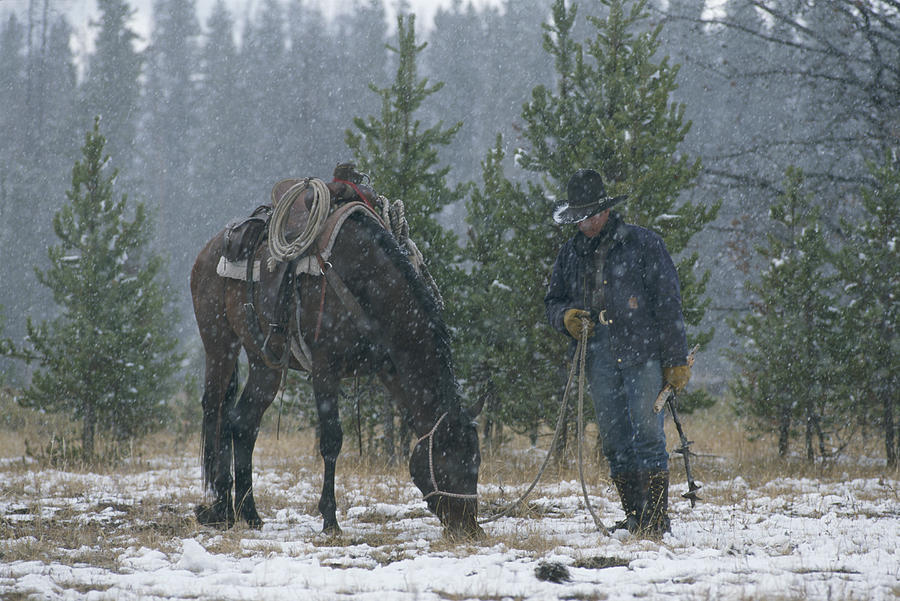 [Editor’s Note: Every year at Dailyspec we post the story of "Stubby Pringle's Christmas" by Jack Schaefer. It is a wonderful, heartwarming story. Hope you enjoy it and Happy Holidays.]
High on the mountainside by the little line cabin in the crisp clean dusk of evening Stubby Pringle swings into saddle. He has shape of bear in the dimness, bundled thick against cold. Double stocks crowd scarred boots. Leather chaps with hair out cover patched corduroy pants. Fleece-lined jacket with wear of winters on it bulges body and heavy gloves blunt fingers. Two gay red bandannas folded together fatten throat under chin. Battered hat is pulled down to sit on ears and in side pocket of jacket are rabbit-skin earmuffs he can put to use if he needs them.
Stubby Pringle swings up into saddle. He looks out and down over worlds of snow and ice and tree and rock. He spreads arms wide and they embrace whole ranges of hills. He stretches tall and hat brushes stars in sky. He is Stubby Pringle, cowhand of the Triple X, and this is his night to howl. He is Stubby Pringle, son of the wild jackass, and he is heading for the Christmas dance at the schoolhouse in the valley.
[For the entire text of the story, please follow this link or this link].
Dec
22
10 Things You Can Learn About the Market from Greek and Roman Times and Myths, from Victor Niederhoffer
December 22, 2011 | 2 Comments
 1. There is a critical point in the market, a critical decision that the market gods weigh on a scale like Zeus with his balance scale deciding whether Achilles or Hector will win, that determines the market fate, and it is key and should be the focus of all news stories and market considerations but never is.
2. Never trust anyone but your family and best friend because everyone is disloyal in a pinch. Peleus was left for dead by his father in law after killing his brother in law to become ruler and this led to the Trojan war. Caesar trusted his best friends but they turned on him when an opportunity for power, money, and romance reared its ugly head.
3. Deception is key. The most successful Greek was the Deceiver Odysseus, and he tricked everyone he dealt with as the market tries to trick you with Odyssean power.
4. The goal is always to come home. Odysseus went home, as does the market. The only loyal ones were the wife and son and the best servant. The market retraces and comes home to break even an inordinate number of times.
5. Never mix romance with business or the market. The Trojan was was started by Paris intervening in romance and being swept off his feet by Aphrodite, and Achilles killed tens of thousands and prolonged the war by 10 years when Menelaus stole his mistress.
6. Don't try to walk with the Gods. Peleus married a half God and married her the last time the Gods and mortals mingled at a celebration and it caused him to be the most distressful of men. Trying to emulate Soros or the other greats is the seed of destruction.
7. Okay, give me the rest. And correct and tighten the above. I'm out of my depth but wanted to get the gist across.
Ken Drees comments:
 Like using a mirror against Medusa, one must plan against the adversary and sometimes use their expected attacks to beat them. Like shielding oneself from the siren song, one must be totally prepared, seek council before the journey (the trade) about what dangers are expected.
Also, it seems every entity in mythology had a weak spot. It's probably best to note these weaknesses in your thinking and in your emotions, not how can I beat the market, but how can the market beat me today?
Bill Rafter writes:
The greatest two rules:
(1) nothing to excess and (2) know yourself.
Pete Earle writes:
One lesson from mythology which resonates with me is the oracles/prophets/predictors almost always forecast correctly, but rarely in an obvious or immediately relevant way. The predictions made are usually realized, but not before taking extremely circuitous, and usually counterintuitive ways to reach fulfillment.
In my experience, predictions regarding the direction of equities or commodities inferred from option markets so often prove accurate…but only after traveling in the most wrong, most unanticipated ways.
Alston Mabry responds:
 Pete, I think of that as "shaking the tree", i.e., we're gonna get there, but we're gonna shake out as many weak hands as we can along the way.
Peter Earle replies:
Absolutely. Stop-running and the like as the "gods" way of seeing who's "worthy"; who can withstand the flood, the fire, the sturm und drang.
Jim Lackey writes:
In 2008 I learned from Ryan Carlson– Sisyphus. There is a little useless book Wit and Wisdom from Wallstreet. So many of the quotes are the exact opposite from 3 pages ago… yet for a day they are seemingly sage advice. Worse for the long term. It's all good advice, yet in the mean time we must eat, and in the long term we all end up dust in the wind.
Traders lament when we miss profits. We are miserable when we lose. If we are not careful we are never happy. I have the habit of having to work myself up into a fury to win a race, pass a test or trade. My wife calls it "business mode" everyone else calls it being a jerk. Finally this year I have the ability to take a loss and this week miss a glorious rally and profit… yet at 4:20 PM its over. I am done pushing the boulder back up the hill for the day. I will return at 1:30am or by 7am, all but two business days a year. It can be torture if you do not like to trade, but if you love it…
Here is a quote from my kids music, "This is Our Science" by Astronautalis: "Our work is never done/ We are Sisyphus".
p.s I notice that if I don't like the rap beats I miss quite a bit of new poetry. I hear my teenagers say random lines and say what! That is amazing. Then I hear the song and say no wonder I never heard that line before. Damn drum machines.
Jack Tierney adds:
Recently I've been reading up on complexity, system dynamics, and the unpredictable consequences that occur when tinkering with non-linear systems. The markets seems subject to all and, if I'm even remotely correct in interpreting the literature, there's only one certainty: expecting linear consequences (e.g, provide banks with more liquidity, bringing about an increase in business borrowing, resulting in a resurgent economy) is rarely, if ever, realized.
Instead, the unseen effects on unimagined factors, almost always derails the logic train. A source I've referred to on occasion is "Cassandra's legacy." Appropriately enough, the custodian of that site provides an interesting historical allegory, in the form of Goth Princess/Roman Empress, Galla Placidia, and her part in the demise of the Roman Empire. It's a very lengthy read and, unless history like this interests you, tough going. So, a few highlights:
"Managing any large structure is difficult and we tend to do it badly; a whole empire may be an especially difficult case. To do it well, we would need to use a method what I mentioned before: system dynamics; which is a way to describe systems and the relation of the various elements that compose them.
"…every time that the Romans fought the Barbarians, they could win or lose, but each battle made the Empire a little poorer and a little weaker. The empire was using resources that could not be replaced; non-renewable resources, as we would say today….the solution was not more troops but less troops. It was not more imperial bureaucracy but less imperial bureaucracy, not more taxes but less taxes.
"In the end, the solution was right there and it was simple: it was Middle Ages. Middle ages meant getting rid of the suffocating imperial bureaucracy; it meant transforming the expensive legions into local militias; have people paying taxes locally, in short transforming the centralized empire into a decentralized constellation of small states. Without the terrible expenses of the Imperial court and of the Imperial bureaucracy, these small states had a chance to rebuild their economy and start a new phase of prosperity, as indeed it happened during the Middle Ages.
"What Placidia could do as an Empress was, mainly, to enact laws….It seems that Placidia was acting according to her style; ease the unavoidable, don't fight it….Placidia forbade the coloni, the peasants bound to the land, to enlist in the army. That deprived the army of one of its sources of manpower and we may imagine that it greatly weakened it. Another law enacted by Placidia, allowed the great landowners to tax their subjects themselves. This deprived the Imperial Court of its main source of revenues."
Stefan Jovanovich comments:
As much as King George's scribbler Edmund Gibbon despised Christianity, he had the Middle Ages even more because its bureaucracies were the worst of all — local and mean and stupid.
Professor Bard should revise his history. What he wrote here — "Middle ages meant getting rid of the suffocating imperial bureaucracy; it meant transforming the expensive legions into local militias; have people paying taxes locally, in short transforming the centralized empire into a decentralized constellation of small states. Without the terrible expenses of the Imperial court and of the Imperial bureaucracy, these small states had a chance to rebuild their economy and start a new phase of prosperity, as indeed it happened during the Middle Ages." - is nonsense.
The Roman Empire's tax collections were always "local"; that is why Roman politicians were willing to pay such enormous bribes to be appointed provincial governors. The legions were also "local"; the Empire's expansion came from granting "foreigners" - i.e. the people we would today call Spaniards, French and Syrians - the privileges of citizenship, which meant they were also qualified to serve in the local legions. This was equally true under the Republic; "crossing the Rubicon" would not persist as a bad metaphor if Rome's soldiery had been centralized.
As for economics, whatever the "terrible expenses of the imperial court", they were nothing compared to the ravages of coin clipping. The solidus of the Eastern Empire maintained an unchanged weight and measure for 4+ centuries - a record that is likely never to be broken. (It exceeds the span of sound money for the British Empire and the United States of America put together.) After Princess Placida's day coinage, under the wonderful decentralization of the Middle Ages, effectively disappeared.
"Dearth of provisions, too, increased by degrees, and the scarcity of good money was so great, from its being counterfeited, that, sometimes out of ten or more shillings, hardly a dozen pence would be received. The king himself was reported to have ordered the weight of the penny, as established in King Henry's time, to be reduced, because, having exhausted the vast treasures of his predecessor, he was unable to provide for the expense of so many soldiers. All things, then, became venal in England; and churches and abbeys were no longer secretly, but even publicly exposed to sale." - William of Malmsbury wrote this in 1140 AD - the period that Professor Bard praises so highly for its progress over the degeneracies of the Empire.
Hume deserves the last word on this and most other subjects that interested him.
"Mankind are so much the same, in all times and places, that history informs us of nothing new or strange in this particular. Its chief use is only to discover the constant and universal principles of human nature."
Easan Katir adds:
The Greeks have fooled people since the Bronze Age. Instead of a horse, they now have Trojan bonds.
Steve Ellison comments:
Jack, the Atlantic had an article about why projects that had successful pilots often failed when rolled out to the general population.
Why Pilot Projects Fail– Here are some excerpts:
Promising pilot projects often don't scale … Rolling something out across an existing system is substantially different from even a well run test, and often, it simply doesn't translate.
Sometimes the 'success' of the earlier project was simply a result of random chance …
Sometimes the success was due to what you might call a 'hidden parameter', something that researchers don't realize is affecting their test. Remember the New Coke debacle? …
Sometimes the success was due to the high quality, fully committed staff. …
Sometimes the program becomes unmanageable as it gets larger. You can think about all sorts of technical issues, where architectures that work for a few nodes completely break down when too many connections or users are added. …
Sometimes the results are survivor bias. This is an especially big problem with studying health care, and the poor. Health care, because compliance rates are quite low (by one estimate I heard, something like 3/4 of the blood pressure medication prescribed is not being taken 9 months in) and the poor, because their lives are chaotic and they tend to move around a lot … In the end, you've got a study of unusually compliant and stable people (who may be different in all sorts of ways) and oops! that's not what the general population looks like.
Dec
21
3 Tips for Traders from John Wooden
December 21, 2011 | 1 Comment
 Here are three good suggestions from The Essential John Wooden that are good for trading.
1. Start and end every practice at exactly the same time.
2. Expect failure. Assume every shot will be missed. Be ready for what comes, be it a tip in, rebound, fast break or something else.
3. Get the fundamentals right. Double tie all shoelaces. Make the uniforms fit perfectly and get in position for every rebound the perfection of little things usually determines if a job is well done.
Anatoly Veltman comments:
This reminds your "Base of Operations" post last year. I commented that I beat out almost a million checker challengers in the old country by merely sitting straight down the precise middle of the checkerboard, which allowed me to quickly count as much as 30 moves ahead on 100-square board.
Dec
13
How to Sell, from Victor Niederhoffer
December 13, 2011 | 4 Comments
 How I Raised Myself From Failure to Success in Selling by Frank Bettger, written in 1949, and endorsed by Dale Carnegie as the best book on selling, is a classic on how to improve your selling techniques. Bettger, a Philadelphian who died in 1981 at the age of 93, was first a baseball player, then a failure in insurance selling before he discovered the secrets of success. He then became the top insurance salesman for Fidelity Mutual for 10 years. He believed so much in insurance that he put his entire estate into life insurance and when he and the wife died in the 90's they were temporarily strapped until the proceeds came in.
In a typical gesture, they used the proceeds to start a philanthropic fund for indigent speakers. The path and techniques he used to become successful are covered in the book's 36 chapters, each of which describes a way of making the sale. There are summaries after every 3 or 4 chapters of the key points, and a few tour the forces about unique techniques that Bettger used to make fantastic sales. Many of the techniques were first written about by Benjamin Franklin and ample borrowing from Abraham Lincoln also livens the book. Here are some of the best techniques for selling that Bettger recommends:
The first rule is to be enthusiastic. Dale Carnegie believes this the most important rule. Bettger applied this to his baseball also, sliding into every base.
The second rule is to keep good records. Apparently IBM and GE, the best sales organizations of his day insisted that every salesman prepare in advance a list of all the people he was going to call on the next week. Bettger also kept records of the number of appointments and number of sales he made. And the commissions made per hour from first, second, and third meetings.
The third rule is to find out what the customer wants. Bettger's methods to find this out were silence, asking the question "why " all the time whenever an objection was made, and then asking a very important add on: "in addition to that, is there another problem?". This last is one of the keys to his success. But mainly the spirit of letting the customer tell what he really wanted by letting him tell his story. The query "Please tell me how you got started in business. And could I have the privilege of walking through your warehouse or factory" once the prospect got started telling his story was very important here. The sincere appreciation of his customers became a key add on here to close the sale.
 The fourth rule is a variant of "make the customer feel that it would be very good to place the order now". Bettger did this often by setting up an appointment with a Dr. for one hour after his meeting. A variant of this was always to praise his competitors so as not to get involved in the objections that could arise.
The fifth rule is always to make appointments. That way the customer treats you as an important part of his day, and the salesman's part of this was to be prepared with exactly what the customer needed. Once he was at the meeting, Bettger always asked the question "why" whenever an objection was made so he could find out the main thing the customer wanted.
As an aside, it is good to hear Bettger quoting Pierpont Morgan favorably who he considered one of the shrewdest business men ever: "There are two reasons for a person to do something. The reason he gives you that sounds good. And the real reason." Bettger's use of the "in addition to that is there any other reason that you have for not giving the order now?" was very effective here.
The sixth rule is to be a good listener. And here he has a quote from Franklin from the autobiography which is filled with good ways of getting people to give you the order and give them and you what you want.
The seventh rule is to praise your competitors at all times and to get a haircut and shine the shoes every week. He suggests gaining the confidence of a haberdasher to help you look good. As part of his constant quest for enthusiasm he suggests smiling at everyone you meet.
The eight rule is to become the sincere friend of your customer, keeping records of the names of his family, and secretaries. He often told a young man that he felt that the young man was destined for greatness, and this tip of the hat often proved true, much to Bettger's successful sales when the young man became head of a big Steel Company of bank and gave Bettger all his insurance business.
The ninth rule is to sell in stages. Try to sell the appointment first then the product. After the appointment you can find out what the customer wants by the techniques above and then move into the close.
The tenth rules are variants of the attention, interest, desire, action for closing. He has an unusual way of getting the close. He prepares a contract in advance. Then he asks the prospect if the vital statistics are correct, and finally he asks him to sign where a big X is in the contract.
The eleventh rule is to use demonstrations, and to get your customers to make referrals for you. He prepares post cards with "I would like you to meet Bettger who did a great job for me" for all his customers.
Dec
12
Urgent Request, from Victor Niederhoffer
December 12, 2011 | 4 Comments
 Regarding Bo Keeley, world traveler, frequent emailer to all his friends, occasional contributor to this site. We last heard from him going to Baja in mid October. Has anyone heard from him? He's had 81 lives already? Let us hope. Vic
Art Shay forwards this letter he sent to journalists who have written about Bo Keeley:
Steve Keeley, whom I knew and photographed as a racquetball luminary (and was his photo guru) and you wrote of as a financial-ill-advisor in connection with your Vic Niederhoffer story, has disappeared. He was on a Guatemala-Mexico-US trip intent on further describing the ease of flouting borders while hoboing. I had helped him place a few articles in Swans.com. They haven't heard from him since Oct. 9.
Keeley had been held up a dozen times on his 100 + rail peregrinations on 3 continents. He had his portable computer with him. (At "home" in his 10 foot dugout near the Cocoa Mountain Gunnery range, there exists a shelf , or shelves 30 feet long of his notebooks, a young biographer's prize.) I am, alas, 89. He had (self- or nearly self) published two books recently. One on hoboing, one on his Kures. He, as you know, was a graduate veterinarian and healer. He corrected my vision by raising my computer screen to force me to look up.)
Niederhoffer has joined the search. I thought you might have an idea or two on this sad situation.
As an old Life staff reporter and fairly well-known fotog (I did the furtive nude noted in your magazine in 2008 of my pal Nelson Algren's erstwhile lady friend, Simone de Beauvoir), I much admire your work.
Art Shay,
Deerfield, Illinois
Laurel Kenner writes on Tuesday December 12th:
News flash: Hobo Keeley is alive and well. Details to follow.
Bo Keeley himself responds to our message "How are you?":
I have been sifting sand at the digs for two months till touching civilization yesterday. all well. i built a gorilla snot swimming pool in anticipation of warmer weather from the 300 gallon tank used on the adjacent chocolate mt. bombing range for dust control. it took elbow work to get the biodegradable snot out . ate oats, soup and crackers, walked four hours daily w/ ten-lb. ankle weights, handled a tarantula and baby western diamondback, so everything is fine. my concerned brother filed a missing person's report w/ the local police ignorant that the unnamed desert roads demand a concocted address not on maps.
Dec
12
Briefly Speaking, from Victor Niederhoffer
December 12, 2011 | 1 Comment
 1. Evolutionary Dynamics by Martin Nowak
Wherever information replicates, wherever there is life or culture, whether in the fields of stocks, language, viruses, cancers, HIV, infections, rumors, games, there is evolution. Evolutionary Dyamics is a masterful book, the kind that you will wish to read 5 or 10 times that gives you a foundation for studying the processes involved, and then applies it to all the fields. I can't recommend the book too highly.
It starts with a discussion of how simple models can lead to extraordinarily complex behavior. The discussion of finite difference equations and how the basic equation X(t+1 ) = X(t)(1-X(t) * A can lead to all the paths that you have ever seen or imagined with time series in your life.
A discussion of the basic mathematics of how an error in replication, a mutation, can change the dynamics and lead to all sorts of ultimate outcomes from coexistence, to complete exclusion to survival of the first is also a point of departure for all topics covered.
Each chapter applies the basics to a new field. The fields covered include cancer, language, epidemics, viruses, HIV. The chapter starts with a discussion of a basic dynamic equation, how it relates to the foundation laid in previous relative to growth rates, carrying capacities, feedback effects, and equilibrias. Diagrams illustrate the main points. And summaries at the end of each chapter contain a nice review of all the main points.
 The book uses differential equations as the basic building block for illuminating all the applied fields covered. A knowledge of the basic solutions is helpful. However, the layman without that training can get the gist, and with a pencil and paper, and review of each chapter can find himself marveling about how much fuzzy thinking in the field is clarified by precise counting and tracing.
If there is one suggestion I have for the book, it would have been to use difference equations more than just once or twice to illustrate the topics covered rather than using the closed form mathematical solution. It also would have been nice to see how the computer friendly reader or researcher might have simulated the conclusions and principles reached. Applications to economics would also have been appreciated.
I can't recommend the book too highly. It's set in easy to read type. And it has a great discussion of the history and development of each field in it. I intend to read it over and over as a lynchpin for understanding modern biology, disease, and meme transmission. Darwin and Galton would both have expressed keen appreciation and amazement at the clarity which this superb book brings to the many areas that they studied.
2. The search for isomorphisms, propositions of the same structure valid in two or more disciplines, was part of systems analysis as developed by Kenneth Boulding as a way of unifying the sciences, natural and social.
-Nathan Keyfitz, in a biography of Kenneth Boulding.
What isomorphisms are useful for augmenting our knowledge and profits in markets?
Peter Grieve writes:
 I think that unification is the highest scientific endeavor. For me, taking two things that look completely different on the surface and demonstrating an underlying unity is as good as it gets.
The highest example of this (for me) has to be when Einstein did it with space and time. He unified them into the concept of "interval" ( although they are not quite isomorphic since time has that minus sign). He also unified electric and magnetic fields to the same degree, and they appear very different on the surface.
Gary Rogan writes:
Until we answer how the physical laws "know" to work in every part of the Universe or at least a lot of it, we won't know anything but the symptoms of the cause. There is something very strange and basic about the structure of the Universe that keeps some aspects invariant.
Dec
11
Briefly Speaking, from Victor Niederhoffer
December 11, 2011 | 2 Comments
The stolid, the officious, the rigid but orderly German Dax has gone to the big round number of 6000 three times today and saluted and gone bak. That seems very Teutonic to me, as does the predicted aftermath.

Dec
2
Epidemics, from Victor Niederhoffer
December 2, 2011 | Leave a Comment
 To what extent can the concept of epidemics be useful in considering the performance of individual stocks? The key variables being the number of infected, the chances that a person with a disease will have contact with the next, and the chances that once a contact occurs that the disease will be transmitted with its consequences, and the time to incubate once contact is made, and finally the chances of becoming immune once contacted. The comparable things would be a product that good or bad in the case of that notorious company that's caused such damage, the chance the good product will be noted and passed on by a customer, the chance that the product will be bought by the next customer, et al.
Alston Mabry writes:
Here is a nice brief explanation of epidemic waves.
Gary Rogan writes:
To be thought of as an epidemic, the company should have a ground-breaking new product and, preferably but not at all necessarily, itself be relatively new. It helps if the product appeals to young people, it also helps if there is a social aspect to the product, either in the form of communications, fashion, status. The vast majority of such companies are either in the technology or fashion business, with most of the rest in some sort of end-consumer business. Most companies don't seem to fit any of these descriptions. They grow or fail by finessing their business or strategy without any type of sudden dramatic growth.
Russ Sears writes:
It would appear to me that any attempt to consider how infections spread within the financial world should start with the investor, and their attempt to pick the strongest, shun and avoid the infected, and attempts to acquire herd immunity by grouping with those who appear to have a natural immunity. Any "epidemic" to an individual stock, sector of stocks, or even market often seems to be a meme caught by the investor, creating the sickness of fear, and damaging the stock.
Nov
29
10 Problems with Nickel and Diming, from Victor Niederhoffer
November 29, 2011 | 4 Comments
 1. You often get the other side so angry that he walks away from the deal.
2. The counterparty sees that you are only interested in the short term money and you are not interested beyond the dollar and clock and won't hire you.
3. You can only get the edge on someone once and the next time he will save the good stuff for someone else or get even with you.
4. You get known as an ephemeral person.
5. The other side when he thinks about how you got the edge on him all the time ultimately bears many hard feelings and there is a backlash of unpleasantness much greater than the amount at issue.
6. You become a short term person only possibly getting short term edges and miss out on the big deals.
7. You lose the big for the little.
8. Loyalty is lost.
9. You look cheap to your other half and she hates all the unpleasant situations you get involved in as you haggle.
The above comes about because a lecturer at the Junta tried to get an extra edge on me. It reminds me of the time I had a chemical company for sale. The owner had a 30 million deal signed and sealed. Then in the car, he asked a wasp public company owner for 1 million more. The public company got so mad he thought he couldn't trust the guy and canceled the deal. The owner eventually sold for 1/10 the price and his life was ruined.
Nov
28
A Good Article, from Victor Niederhoffer
November 28, 2011 | Leave a Comment
 An article I read recently would seem to have significance for producers of branded products like the bottlers, and P and G, and the bond market. What's happening on the internet seems to be spilling over into all areas with price competition increasing.
Kurt Specht comments:
Very true, but another big issue right now for all consumer goods producers is staying ahead of commodity inflation and figuring out how much to pass along to consumers in the form of price increases and package size reductions.
Steve Ellison adds:
In his book Trends 2000, Gerald Celente said that consumers turn away from brand names periodically, but they always come back. He noted a tendency for brand names to be out of favor in the years ending in 0 to 2 each decade, which have often coincided with recessions (the Senator has noted that those years have often not been kind to the stock market). Mr. Celente attributed this regularity to a "10-year corporate spending cycle."
Pitt T. Maner II adds:
Chlorox would seem to be one of those companies that has had to work for decades to keep market share against generics (bleach). They appear to maintain their higher price per gallon through strong branding/advertising. Perhaps the need for the services and the money spent on strong marketing and advertising companies increases when generics and cheaper alternatives threaten. Or when one is running for election.
Nov
27
The Path Ahead, from Victor Niederhoffer
November 27, 2011 | 4 Comments
 I believe we've had enough of the grist for the chair and that we return from commodities. We have learned from the exchange. The market is down 7 days in a row. Where's it going? I note only 3 other occasions in the last 15 years. There is not necessarily light at the end of the tunnel 10 days later based on the past.
Ken Drees writes:
With the euro news winds moving US equities and the "bad" German bund auction capper for the moment, the inner core begins to feel the fallout and therefore the closer we are to a plan B coming up out of the blue. Every euro bond auction is now going to be bad until something is done. I would say we are close to the rumor stage of rescue and that equities are tilted for a rally. I think the 7% retail spending increase may be enough to get things started if some positive rumors surface for rescue in euroland.
Paolo Pezzutti writes:
Who should be the rescuer? Unless in Europe somebody questions the excessive welfare state built over the years, nothing can change. People still give for granted "rights" and privileges that cannot be afforded any more. Somebody has to question the size of governments and the perimeter of their interests and actions. Nobody is doing it so far. They are still looking for lenders and trying to find money rising taxes. How can we be optimistic?
Nov
25
6 Down Days in a Row, from Victor Niederhoffer
November 25, 2011 | 3 Comments
 We've had 6 down days in a row taking us down 100 points with every variety of way to do it. 2 up opens, 2 big down opens, small declines, big declines. The kids book Caps For Sale comes to mind. Every kind.
Paolo Pezzutti adds:
Maybe this down streak of 6 anticipated lower sales is for Black Friday. Or simply, the market is schizophrenic, printing huge up and down swings driven by algos. My view is that with Europe already in a recession and the US with very few weapons left (practical and political), hoping to provide additional stimulus to the economy, even Apple will sell far fewer iPads and iPhones.
Of course, as far as weapons are concerned, we need to closely follow the Iran and Syria crisis. It could provide new elements of instability and deception from other issues. In this environment during sell-offs I am always tempted to buy lower opens…
Nov
22
Briefly Speaking, by Victor Niederhoffer
November 22, 2011 | Leave a Comment
Investment bank predicts 1100 S&P (news item ).

 1. It used to be with the dignified female fundamentalist who issued her forecasts invariably upon very bullish technical occasions like 100 day minimums, that she would come up with some folderol after a huge decline, and pretend that the fundamentals were bullish as she issued her bullish forecast.
But now the bank apparently wishes to panic its customers and have them sell into panics. They predict a 10% decline if no further service revenues are preferred. The reason for their reason to reason that further reasoning at the hill to accept a compromise with reasonable service increases seems unreasonable to this non flexion.
2. Could the "bank" predicting a 10% decline be doing this to curry favor with the flexions and cronies, or do they dare to blind side the base so that they can take the position, or do they already have that position and wish to hype it like the upside down man, or do they really believe a 10% decline is in order?
Russell Sears responds:
Could it be the bankers signal to their masters in central planning what the bankers predict will happen if the central planners most recent proposals are adopted or in this case no new compromise proposal comes to be? Or could this be a second order deception, where they imply to the markets they are against such ill conceived planning, but secretively have already front run the public and hope, as they have been lead to believe by the central planners, that no deficit reduction compromise will be reached.
Nov
22
What Are the Chances, from Ken Drees
November 22, 2011 | Leave a Comment
 I see a water boil type market where slowly the heating ramps up until it bursts into boil. Multiple country bond market auctions failing or stumbling, euro equities struggling, S&P hanging like a turkey from a hunter's hand, mf global is a needle in the confidence arena, the heating up of a bad kettle keeps going.
So I'm not seeing things from a contrary view, but I'm seeing things as slowly unraveling…or maybe there is a grand rescue that will be hatched on turkey day?
Somehow I feel that table talk will be interesting on Thursday.
Victor Niederhoffer comments:
The idea of buying the announcement and selling the rumor for profit has been exemplified recently.
Nov
21
Review: All The Devils Are Here, from Victor Niederhoffer
November 21, 2011 | Leave a Comment
All The Devil's Are Here by Bethany McLean and Joe Nocera describes the speed with which a sickness in one part of the financial industry spills over to others. The failure of the Bear funds led to the failure of Bear which led to the failure of Lehman which led to the fire sale of Merril, and the failure of AIG. All was set in motion by the aggressive selling without checks at Countrywide and Ameriquest. The loss of confidence in one week which could crater all the banks of those days leading to 80% losses in a month was astonishing if you hadn't seen movies like Contagion or read about the Black Plague. Many of the characters talked about in the book have great tragic flaws, striving to emulate Goldman, for example, or not wishing to hear bad news, or firing their risk officers when the sales volume gets too low. It's a sobering tale of the fault lines among people and Wall Street that gives me the same willies that I feel when I read about all the writers who went under during the depression. Well worth reading.
Nov
17
Some Questions, by Victor Niederhoffer
November 17, 2011 | 8 Comments
 Some questions about the Fitch announcement:
1. When a ratings service says there is a potential for contagion if the situation worsens, is this bullish or bearish.
2. If it were true, is it bullish or bearish.
3. What are the chances it is true?
4. Why does it happen at 310 so as to liquidate longs.
5. Is it subsumed by the next highly important piece of data like the state of manufacturing in the phil area?
6. Does is serve any purpose except to create friction so the strong can take chips from weak.
7. When the market drops 2 % in a half hour like it did, is it bullish or bearish?
8. Is the sentiments of a rating service related to the threat by the French to vet all their methodologies and to switch in the future? How does this relate to the profit margins and survivability of the services
9. Do the sentiments of one rating service tend to be unduly reversed by an announcement from the next rating service?
10. What other queries would seem relevant?
Rocky Humbert adds:
About the Fitch announcement:
1. Why do people tend to attribute market price moves to announcements by credit rating agencies? Has there been a single news story that notes that the US Treasury is higher versus when the USA lost its AAA; whereas the French 10 year is roughly 8 points lower since it held its AAA at the same moment in time.
2. Why do people think that falling gasoline prices are bullish but spiking WTI prices are not bearish? Why do people choose to pick particular headlines as "explanations" but ignore the other hundreds of headlines that appear coincidentally? (i.e. MF Global's bankruptcy judge yesterday withheld his ruling on the release of billions in frozen collateral (which isy leveraged into massive liquidity)…and this non-decision arguably has a much bigger impact on the day-to-day price moves)…etc.
3. The ratings agencies receive no compensation for their ratings of the G7 sovereign debt. They do this as a "public service" and a legacy. Why do they do this? If they ceased to issue sovereign ratings, would anything change? Would that be bullish or bearish?
4. After a multi-week/multi-month period of downward prices, a 2% spike in the last 30 minutes brings out the naysayers "the market cannot be trusted," "it's a bear trap," etc. But I've found with absolutely no statistical significance (due to insufficient data points) that it's often a very tradeable bottom. In contrast, a 2% decline in those conditions rarely makes the news.
5. What does bullish or bearish mean?
John Floyd makes three points:
1. Today's action in Europe provides and interesting contrast. Amongst other negative factors the Spanish bond auction was by almost accounts a failure and yet spreads are tighter between Spain-Germany, Germany yields are up, the Euro higher, etc. So perhaps there are many factors at play that determines what drives prices and it is instructive to observe how the market moves relative to a given piece of news in comparison as to how one would expect it to react. For example if Spanish bond spreads had been tightening the past few days prior to the auction would they react the same?
2. I am not sure given the daily volatility in SPX and the track record or operations of rating agencies that they are able to time and focus on the minutia of the market in such a way. I would need to look but I imagine there are instances like the Spain one above where the market acts in opposite fashion as to what one might expect.
3. I would liken the rating agencies to a biker in the back of a peloton, or a swimmer behind a pack of others, they are getting dragged along by other forces en masse, not breaking new ground. There is the consideration however that a ratings change may cause sales (or buys) buy making an asset class unavailable or available to a subset of market participants.
Nov
17
Sears Quarterly Loss, by Ken Drees
November 17, 2011 | Leave a Comment
 Sears started as a catalog/mail order company and will eventually turn back to its old roots–shed the real estate, close all the stores and sell from the internet only.
Just a thought.
Rocky Humbert comments:
Interesting timing for Ken's post!
Exact 7 years ago today, (11/17/04), Eddie Lampert announced the acquisition of Sears by Kmart. Lampert took control of Kmart during its bankruptcy.
Eddie (a fellow Yalie and GS risk-arbitrage alum) is a very smart guy. His resume includes the improbable feat of having talked his way out of a kidnapping, and some fabulous investments, including Autozone.
Alas, Sears was Eddie's biggest transaction.
And how have Sears shareholders fared? Not so good. The Sears story morphed from a real-estate play (which quadrupled the stock) to cost-cutting to "we're not going to sacrifice profits for revenues" to who cares about sames-stores-sales to the present morass.
Since the merger, the S&P 500 has returned +23.1%. Walmart has returned 24.1%. Sears has returned negative 24%.
Which raises the tasteless counterfactual question: How would have Sears performed if the kidnappers had not been persuaded?
The lesson: always have an exit strategy other than the graveyard.
Stefan Jovanovich comments:
This is Sears' own potted history of its going into store building:
The first Sears retail store opened in Chicago on February 2, 1925 in the Merchandise building. This store included an optical shop and a soda fountain. During the summer of 1928 three more Chicago department stores opened, one on the north side at Lawrence and Winchester, a second on the south side at 79th and Kenwood, and the third at 62nd and Western. In 1929 Sears took over the department store business of Becker-Ryan Company. In 1933 Sears tore down the old Becker-Ryan Company store in Englewood, and built the first windowless department store, inspired by the 1932 Chicago worlds fair. In March of 1932, Sears opened its first downtown department store in Chicago on State Street. Sears located the store in an eight-story building, built in 1893 by Levi Z. Leiter, which for years housed the Stegel-Cooper department store. The original Chicago occupant on this piece of land was William Bross who in 1871 mounted his house on wheels and rolled it down State Street to the corner of Van Buren Street. He kept his house on wheels for several years because of the marshy conditions of the land. The Leiter Building, designed by famous skyscraper architect William LeBaron Jenny, included walls of New England granite.
The store sat on the corner of Van Buren, State and Congress streets and cost over a million dollars to refurbish. A 72-foot long electric Sears sign greeted shoppers at the front entrance. A stunning black and white terrazzo covered the main floor. The State street store was the first Sears store in a downtown shopping district, the sixth store in Chicago, and the 381st store the company built. Opening day for the State Street store took place deep in the Great Depression. Local newspapers reported that 15,000 shoppers visited the new store and several thousand people flooded the store's employment office. Sears did everything it could to help put people to work, employing 750 Chicago workers for four months during the renovation and staffing the new store with over 1,000 people.
Illinois Governor Louis Emmerson in a message to Sears Chairman Lessing Rosenwald stated, "I cannot help but feel that this opening will mean a great deal for your organization as well as for your city." Rosenwald proudly proclaimed that, "We regard the opening of our new store on the world's greatest thoroughfare as one of the high spots of our company's history." Within the store the sale of tombstones, farm tractors, and ready-made milking stalls caught customer's attention. The sporting goods department featured a model-hunting lodge. Other attractions included a candy shop, soda fountain, lunch counters, a shoe repair shop, a pet shop, dentists, chiropodists, a first aid station with a trained nurse, a children's playground, and a department for demonstrating kitchen utensils.
The company's chronology of its adventures in retailing in North Carolina is revealing. It did not build stores outside of the major cities– Charlotte, Durham, Goldsboro, Raleigh, etc, — until the 1980s! Meanwhile, some bright people in the truly small town of Wilkesboro had started their own enterprise, now known as Lowes.
Market Caps today (according to Google Finance):
SHLD - 6.83B LOW - 29.98B
Nov
14
A Letter Received When I Asked to Publish an Article from L. Humbert on the Site, from Victor Niederhoffer
November 14, 2011 | Leave a Comment
 Dear Vic,
Thanks so much for the compliment and kind consideration.
Regarding publishing, my concern is mainly around the tight controls by the government on this side. In this country, anything can easily be fathomed as a state secret — I was shocked at times when I saw slogan banners on streets saying "keeping state secrets is every citizen's responsibility". At the moment, financial topics are especially sensitive for the reasons that on the one hand there is a crisis on the globe and at home the government has a lot of hardship, and on the other, the wave of shorting China is coming. Shorting China is being generally portrayed and perceived as hostile to China's development. Although to my belief the article has no non-public information and my concern might not be very well-grounded, I just try to be cautious.
Pardon me if this may have caused your confusion. The situation may be hard for Americans to understand, just as in quite the same ways some American situations are hardly imaginable to the Chinese. I have experienced both. Over 20 years ago, I had never known what freedom really meant until I stepped on American soil to study for my PhD at Dartmouth. Then in America, the concept of being controlled gradually faded away from my mind. Only about 10 years ago, I started to re-realize it after I came back to China to lead an American business.
Your kind efforts in circulating it will be very much appreciated. While I fully understand that in this age, nothing stays being covered for very long, a circulation at the moment within a community (let's say the financial community, large or small) rather than over to the general public makes me feel a little more comfortable. I appreciate very much your kind understanding.
Again, my great honors in communicating with you.
Best,
Leo Humbert
encl.
Mainland China's Securities and Derivatives Exchanges [15 page PDF]
Nov
13
Suddenly Non Seasonal, from Victor Niederhoffer
November 13, 2011 | 4 Comments
 One of the greatest regularities known to seasonal players is the tendency for the market to rise on the first day of the month. It was strange, as for many years despite its wide dissemination, it continued. Indeed for the last 180 of them, the market has rises about 62% of the time, averaging up about 1/3 of a % on the day. Indeed, the entire market gain during the last 15 years in a sense came on the first day of the month, and you would have lost money by buying on all the other days.
How could something so widely anticipated and disseminated actually give someone a chance to profit? Possibly it was due to the fixed schedule of purchases and sales of investors who received pay checks and institutions that put their money to work at the end of the month. Based on the regularity, an ETF giving investors the opportunity to participate in the regularity was formed. It is interesting to consider the performance of the market on the first day of the month in 2011 in that context.
Performance first day of month 2011 S&P futures
Jan +08
Feb +17
March -21
April +8
May -11
June -32
July +20
Aug -45
Sep -49
Oct -08
Nov -25
The average is down 10, about 0.8% down so far this year with six of the last 7 being particularly ruinous.
Thus, another seasonal regularity, one of the most long standing, and one that had the most reasonable foundation for working goes to boot hill.
Nov
9
One Is Always Reminded, from Victor Niederhoffer
November 9, 2011 | 7 Comments
 One is always reminded in situations like today where the market is down 3% at the open, of card games I played in 50 years ago, where negotiation about the split was allowed before the call. If one was bluffing or busted, especially in hi lo, one would often smile at the other side, and say something like split 50-50 before the close, expecting a pleasant acceptance from the other side. But instead, the other side never had mercy on you when you were bluffing and would take all your chips and refuse to split with you until the final call, where invariably he'd go both ways against you or the same way as you.
The market has weak longs in its grips. Many brokers and others and hangers on with access to weak hands and liquidations, make their money by front running their weak customers or trading the other side when their customers are forced to liquidate. The idea of mercy or a split is non-existent. This is when they take everything, albeit it has to be a temporary thing here, because the news is ephemeral and tomorrow yet another rabbit will be pulled out.
Nov
9
Today (November 8, 2011), from Victor Niederhoffer
November 9, 2011 | 3 Comments
 Today was a first ever for up, up, and up, and up, reasonably defined. With this 1 or 2% magnitudes. Amazing.
Like a stone wall, the stolid Germans are ready to sacrifice for the good of the over lords + or - at the round number of 6000.
Vince Fulco adds:
Negative news couldn't make a dent for long; does that mean teflon conditions till Thanksgiving? Not likely.
Russ Sears writes:
Pardon the talk of politicians, but the count is two days in a row that prime ministers have announced their resignation and the market moved up.
At this rate one wonders how high the Dow would go if every day a member of Congress would announce their retirement.
Nov
8
An Strange Question, by Kim Zussman
November 8, 2011 | 2 Comments
Why would people PAY the government to take their money?
WSJ: Paying to Give U.S. Money? Some Like Idea [registration may be required]
By MIN ZENG
With yields plummeting on U.S. government bonds, the Treasury Department has quietly asked some banks if they would agree to buy new short-term bills offering yields below zero.
Effectively, the Treasury is asking investors if they are willing to pay the government to take their money. And some big banks have answered, "Yes."
It may sound crazy, but yields on Treasurys of less than three-month maturity are already occasionally trading below zero in the secondary market. Under current auction rules, though, the Treasury can't sell so-called T-bills with a negative yield. In the bond market, however, higher yields mean lower prices, so the Treasury is effectively losing out every time it sells bills with higher yields than the prevailing level in the market.
The question was included in a questionnaire the Treasury delivered on Oct. 14 to the 22 primary dealer banks that are obligated to bid on primary auctions of its debt.
[…]
Gibbons Burke comments:
It is just another form of protection racket. For a small tribute, you can keep your money.
Victor Niederhoffer comments:
The banks are so indebted to the government for their survival and bonuses and trading and purchase of distressed assets, and redeeming of sovereign debt, and capital at the funds rate, and bailouts, and investments et al , and freedom out of hotels that they are happy to accommodate their masters on the Hill with any emoluments like paying the master a fee for the privilege of holding the master's…
Nov
7
Briefly Speaking, by Victor Niederhoffer
November 7, 2011 | Leave a Comment
 Two of the common features to crashes such as the 60 point drop from Friday to Tuesday are:
1. The forced liquidation of European accounts because of margin calls, in this case because of MF where all their account were liquidated Tuesday at the German open and
2. The missing piece of the puzzle. In this case the 450 million that supposedly was missing from MF segregated customer funds that may or may not have ended up with a large bank.
It is reminiscent of the 1987 crash where the missing piece was whether the us investment banks would be forced to make good on the British Petroleum underwriting price. Of course the most comparable crash was the crash set out by Kerviel where again the inside trading of European entities knowing that there would be massive liquidation at the opening added an exponential fall to the panic. Similar liquidation followed the Lehman bankruptcy.
Nov
2
NYC Junto, from Victor Niederhoffer
November 2, 2011 | 8 Comments
 The NYC Junto will feature Tracy Quan, a frequent contributor at The Daily Beast and author of the bestselling Nancy Chan trilogy. Her writing has appeared in Financial Times, New York Times, Marie Claire et al. Tracy Quan talks about trends and factions in romantic work.
The meeting will be held at 8:00 pm on Thursday November 3rd, 2011, at the Mechanics & Tradesmen Library, 20 West 44 Street, NYC. All are invited.
Nov
1
False Modesty, by Victor Niederhoffer
November 1, 2011 | Leave a Comment
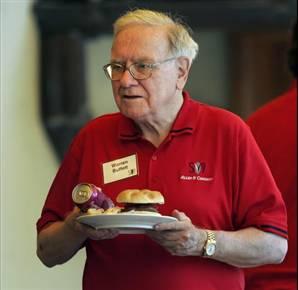 One is working on a post about false modesty. From Uriah Heep to the sage and gross and denial of false modesty by the "bank" and would appreciate any insight you might have. To me, pretending to be low, when you wish to gain sympathy and set a low bar for doing better is very common. The athlete that pretends "all the young kids are so much fresher than I" should not be overlooked.
Gary Rogan writes:
False modesty is mostly useful when you are buying, and for some reason almost everyone seems to be aggressively selling something complicated, and it also seems like these days (and it's not always been the case), the way to do a big sale is to seem like the big man on campus fully confident in your product as opposed to someone who just fell of the turnip truck and has no idea how to price what they are selling. Probably because when you are selling complicated things it strains credibility to claim that you have no idea what they are or what they are worth, yet they somehow will work. On the other hand if you are selling horses or gold-mining rights it pays to appear stupid.
There are of course still many examples. One example is Soros often understating his involvement in various causes buy being way too casual in his comments, as in this OWS case.
“Actually I can understand their sentiment, frankly,” he told reporters while announcing a large donation to the United Nations. “I can sympathize with their grievances.”
While not exactly false modesty, it's a kind of diminution of his involvement in a very similar way.
And just about anyone who had anything to do with the credit crisis is very modest about their involvement. Barney Frank, Chris Dodd, Fannie Mae, all the people who encouraged the millions of loans that had no chance of being repaid have turned into gently well-meaning almost-bystanders.
Pitt T. Maner III comments:
 False modesty could be a means of minimizing the potential backlash caused by delivering false opinions to the public (while taking the opposite side on the trade). Also it may lower the mental costs of engaging in the deception and manipulation of others ("that's what I believed at the time too").
1) New book out by Robert Trivers entitled The Folly of Fools: The Logic of Deceit and Self-Deception in Human Life may be of interest.
2) From a recent review:
In “The Folly of Fools” Robert Trivers, an American evolutionary biologist, explains that the most effectively devious people are often unaware of their deceit. Self-deception makes it easier to manipulate others to get ahead. Particularly intelligent people can be especially good at deceiving themselves.
All of this deceit comes at a price. Mr Trivers suggests that the most cunning people (whether conscious fibbers or not) tend to benefit at the expense of everyone else. He highlights the way overconfident Wall Street traders may hurt investors and taxpayers at little personal risk. Then there are politicians who spin stories of national greatness to bolster support for costly wars in which they will not be fighting.'
3) Consider this paper from von Hippel and Trivers:
Abstract:
to conscious deception that might reveal deceptive intent. Self-deception has two additional advantages: It eliminates the costly cognitive load that is typically associated with deceiving, and it can minimize retribution if the deception is discovered. Beyond its role in specific acts of deception, self-deceptive self-enhancement also allows people to display more confidence than is warranted, which has a host of social advantages. The question then arises of how the self can be both deceiver and deceived. We propose that this is achieved through dissociations of mental processes, including conscious versus unconscious memories, conscious versus unconscious attitudes, and automatic versus controlled processes. Given the variety of methods for deceiving others, it should come as no surprise that self-deception manifests itself in a number of different psychological processes, and we discuss various types of self-deception. We then discuss the interpersonal versus intrapersonal nature of self-deception before considering the levels of consciousness at which the self can be deceived. Finally, we contrast our evolutionary approach to self-deception with current theories and debates in psychology and consider some of the costs associated with self-deception.In this article we argue that self-deception evolved to facilitate interpersonal deception by allowing people to avoid the cues
 4) Dr. Trivers is making the speaking rounds to promote his new book, about which there is probably lively debate.
About Dr. Trivers:
Robert L. Trivers (born February 19, 1943) is an American evolutionary biologist and sociobiologist and Professor of Anthropology and Biological Sciences at Rutgers University. Trivers is most noted for proposing the theories of reciprocal altruism (1971), parental investment (1972), facultative sex ratio determination (1973), and parent-offspring conflict (1974). Other areas in which he has made influential contributions include an adaptive view of self-deception (first described in 1976) and intragenomic conflict. Trivers is arguably one of the most influential evolutionary theorists alive today. Steven Pinker considers Trivers to be "one of the great thinkers in the history of Western thought". Says Pinker, Robert Trivers has:
"inspired an astonishing amount of research and commentary in psychology and biology—the fields of sociobiology, evolutionary psychology, Darwinian social science, and behavioral ecology are in large part attempt to test and flesh out Trivers' ideas. It is no coincidence that E. O. Wilson's Sociobiology and Richard Dawkins' The Selfish Gene were published in 1975 and 1976 respectively, just a few years after Trivers' seminal papers. Both bestselling authors openly acknowledged that they were popularizing Trivers' ideas and the research they spawned. Likewise for the much-talked-about books on evolutionary psychology in the 1990s— The Adapted Mind, The Red Queen, Born to Rebel, The Origin of Virtue, The Moral Animal, and my own How the Mind Works. Each of these books is based in large part on Trivers' ideas and the explosion of research they inspired (involving dozens of animal species, mathematical and computer modeling, and human social and cognitive psychology)."
By the way, he will be speaking at a meetup in LA next week.
5) True modesty is a discerning grace, and only blushes in the proper place; But counterfeit is blind, and skulks through fear, Where 'tis a shame to be asham'd t' appear: Humility the parent of the first, The last by vanity produc'd and nurs'd. - William Cowper
Pitt T. Maner III continues:
A statement from Dr. Trivers (in light of his controversial views, past associations, and strange biography) catches the eye:
Interviewer: "Are you a self-deceiver?"
Trivers: I end the book with a chapter on fighting our own self-deception. I've been remarkably unsuccessful in my own case. I just repeat the same kinds of mistakes over and over. If you ask me about my self-deception, I can give you stories, chapter and verse, in the past. But can I prevent myself doing the same damn thing again tomorrow? Usually not, though in my professional life as a scientist, I feel that I probably practice less self-deception, I'm more critical of evidence, a little bit harder nosed.
Interviewer: You could be deceiving yourself about that.
Trivers: Absolutely."
Oct
31
The Win of the Cardinals, by Victor Niederhoffer
October 31, 2011 | 2 Comments
 The win of the Cardinals in game 6 of world series combing from one strike away from losing in both the 9th and 10 inning of game 6 is very similar to the win of Djokovich over Federer in the open where he came from one service return away from losing to Federer in the semis'. Both the Djokovich and the Cardinals went on to win the championship. It should give us all hope that fighting to the end is possible, and can snatch victory. It should also teach us never to let up.
I have often seen people give up in the market when one strike away from total disaster, when winning was still possible. Also, much more common the trader who's ahead and relaxes. What did the Rangers and the Federer do wrong in the last service and strikes to give the other side the chance to snatch victory away? How can you and your kids prevent that from happening to you?
James Lackey comments:
In racing we are taught to attack get to the front and go as fast as you can go, push, push, push. However there is one small problem.. Its not that you relax or take a victory for granted.. Oh no.. Its not like traders that are afraid to lose so they book the week month or year and do not take any risk at all. Racers always push, push, push, but it's quite rare to take on a new big risk with a lead.
When we are going as fast as the bike or car vs the track can go.. it's rare to find a new line on the track that is faster when your in the lead at the end of the race. Its much easier to be in a close 2nd and judge your very aggressive risk taking, vs the leaders times on the track. The best ever is when a winless one is leading and thinking too much and the champion is hot on his tail, showing him a wheel in every corner. Hi kidm I am on your 6. From 3rd you can see both lines of the track. If the winless one chokes and bumps the champ you have the double edge.. you know the fastest and 2nd best line on the track and they were forced to slow down for a corner. Its the old joke of life, you win with experience, you gain experience by making mistakes. Mistakes cause losses.. A loss can be you could have won the race but finished second. In the markets there seems to be no shame in finishing way out of the top ten.. All the shame is from blowing up, losing more than X%.. The joke is if your 99th and up small, all your funding may be pulled. Your result is the same, your out of a driving job.
Which to any racer is not winning, at least one day or one qualifier race of a day in a long season. What drives me nuts about the markets is traders walk around and brag they have never lost. The joke is if you do not win or finish in the top three on the podium often in MX your sleeping in the trailer. If you win your sleeping at the Ritz. I am not a big fan of sports where men that finish 99th make millions. I look at it all if your top 3 your great… even once in your life that is awesome.. If your top 10 you get to sleep in the hotel. If your 11th 20th in the USA your sleeping in the trailer. If your 99th and your prospects do not improve by next season.. even if you do not crash and blow up , your done get a real job kid. The results are the same, with out winning, your done.
Mr Vic's examples are for the best in the world. I have never been in the position to be top two in the world and have it all go down to the last race. Yet, for the life of me I can't imagine any man, team or organization not laying it all out there for the win. There is no shame in finishing 2nd at that point and the only risk is blowing it from being too aggressive. I cant find fault in any man that is too aggressive going for the win and losing. Then again, I have been trained to go strait for the lead and push. I hate to attempt a comeback from way behind. There is too much risk for disaster. We do try to take losses like men. The most difficult is being stuck in the pack with all the indecision and not knowing if you have what it takes to get to the front for the race. One bad move and your going to 99th, with severe injuries after being run over by the field.. Even with savings your out for the next season as the injuries are too severe to over come.
There are usually happy endings to all racing stories. The best comebacks stories are from guys off injury, very strong, well rested, but an under capitalized privateer. Any top 10 finish is considered amazing by all. Its one of those times in a career where your satisfied with anything but first place. Only men that have won will understand this next line. It's the only time your happy.
Winning brings all the pressure to continue, therefore your never satisfied. Finishing 2nd is frustrating. Fourth is the worst plate you can run. Tenth is some what motivating as you know the ten kids sleeping in the trailer want your hotel room and are going to do what ever it takes to run you over to get to the top.
Oct
28
Briefly Speaking, from Victor Niederhoffer
October 28, 2011 | 2 Comments
 It's amazing that in 60 years, a better product than white out to remove ink has not been found. Why is that? The white out smells, takes a long time to dry, is easy to spill and has thickness that requires a woman's touch to apply correctly. One recalls that the best experts on tree climbers were not the foresters or the scientists but the tree work companies themselves that taught everyone else how to climb.
In general the businesses know how to solve problems like this infinitely better than the academics as we see so often in our field. There are many companies that produce and dispense ink. What do they use to clean up spills and why can't this be applied. I am going to have Aubrey test if anything common works with his Kosmos chemistry set which I brought from Germany to the US. So I could use their great German sets to teach Galt since I couldn't understand their chemistry.
All the chemistry sets these days are in the form of games as kids apparently don't wish to read a manual and trial and error it. What other products needs a solution in the real world that industrial manufacturers have already solved for their continued profitability and ability to meet competition and provide proper conditions to their workers.
Oct
27
Briefly Speaking, from Victor Niederhoffer
October 27, 2011 | 2 Comments
With Stocks up 3.5% and Bonds down 3.% the ratio of Stocks to Bonds has increased by 6 .5 % today and a nice 20 percentage points since the terrible beginnings of the month. The wisdom of those who allocate based on the ratio is shown. And it's a quasi-Gannian moment with the anniversary of October 19, 1987 being [followed by a] tremendous extreme but the other way.
Oct
27
Briefly Speaking, from Victor Niederhoffer
October 27, 2011 | 2 Comments
 A Spec notes: I have found that markets are moving in the direction of the announcement to an inordinate extent recently. And relates it to who knows what and the sneakers he sent the fake Doc and the book he sent to Patrick Ewing, the most sullen player to ever put on baggy long shorts, asking these two to change places. But Rocky is doubtful and demands to see the evidence.
Philip J. McDonnell comments:
Personally I am waiting for Occupy the White House. But that is not likely to come from the ACORN backed OWS movement. The Chair can use me as a human shield. But in a sense I agree with Rocky but for a different reason. I assume you are speaking of a significant correlation regarding such pre announcement movements. The practical problem is that all one can really assert is that someone figured it out in advance. For example the jobs number can be gamed by looking at the number of jobs posted on Monster.com or even craigslist.org. If the market moves in advance is it because someone leaked or someone legally gamed it using a little cunning. Personally I lean toward the conspiracy/leak theory as more likely but it fails the legal hurdle of proof.
The other problem is that legal standards require proof beyond a reasonable doubt, but we trade on mere correlations alone. We also know that correlation does not imply causation but it is usually good enough to trade on.
Oct
26
A Dubious Achievement, from Victor Niederhoffer
October 26, 2011 | 1 Comment
Yesterday's move from open to 940 was the greatest decline in the history of markets. A mere 1%. But it is a tribute to the mistress that she likes to keep the wheels of commerce moving in a direction consistent with the forces that she doesn't often greet the hopeful speculator with more than 100 dow points down in the first 10 minutes. It is also helpful to the margin clerks one would think. But that's part of the point.
Oct
26
A Letter to a Friend Who Owns a Stock That Went Down Big, from Victor Niederhoffer
October 26, 2011 | Leave a Comment
 When a stock goes down big, the bears gang up on it. For no more reason than they could gang up on any other stock. But whatever the company does, the good isn't enough and whatever is bad anywhere is magnified 100 fold.
Further, the danger of looking at files that are not as of the time of announcement without changes should be emphasized.
And Andy Lo 's point about Compustat never being the same because they change all the time is also underlined. I am reading a book about chronic bears and it is the worst book I've ever read. (One was asked to review it). But they are great at spreading bearish news about stocks at conferences and among their friends. It doesn't take much to start a stampede. People are descended from the oxen, as beautifully limned by Galton.
I thought silver cheap at 14 bucks. But my friends in the pit remembered it at 3 bucks and told me it seemed expensive to them even after it had dropped from 40 to 14. I made the same mistake over and over with other stocks I've owned. Part to blame is studies that show the worst perform the best. Many of these studies I now believe are terribly biased. Also to blame is the natural tendency to try to get part of someone's hide.
Gary Rogan comments:
It seems to me that most things based on some novel, original ideas once hit rarely recover, but things based on execution, or the economy, or something very common and prosaic, or that have a long and previously successful history, often do recover.
It is also often impossible to tell which category the thing belongs to once it's a little old and complicated, and old things do get totally obsolete but the newer something is, it is obviously more high risk/high return. So this is all obvious, but somehow undifferentiated studies that predict what happens to the worst have to be separated into novel/"old school" components.
Oct
24
Briefly Speaking, by Victor Niederhoffer
October 24, 2011 | 1 Comment
One wishes to give a heads up to three fine performances lately. Rorianne Schrade played the Gounod Liszt Faust Waltz at a concert Sunday at Weill Hall that was the finest bit of piano playing I have ever heard. Couldn't stop crying.
Infinitely better than Van Cliburn . Made me think of Laurel's performance of Schulz-Evler's transcription of Blue Danube Waltz, equally magnificent. Also, Aubrey passed his third grade Stanford Math exam. And Galt gave a fantastic duet with uncle Roy at Rand & Adam's wedding.
Oct
24
News and the Market, by Victor Niederhoffer
October 24, 2011 | 4 Comments
One of the absurd aspects of the efficient markets work is the idea that the variance over the weekend should be 4 times as great as from an ordinary close to open , as there are approx 4 times as many hours for news to come in, and everyone knows that news is random. It gets me to thinking about the current market moves, where a new idea, doubtless engendered by flexions and those feeding information to the media has come into play. It's the headline in a European paper that moves the market a fast x % in a second . The financial times and the guardian and the average German paper are candidates. It's another one of those worthless things that are designed to part the public from their money.
Yes,I know but what is the average variation from hours to hour. And is there any tendency for the news to be biased in one direction.
Here's a count
hour        big rises big declines    stand dev

800 to 900        39      49            3.4

900 to 1000      83      80            4.5

1000 to 1100     91      96             4.7

1100 to 1200     48      72            3.7

1200 to 1300     23        40            2.9

1300 to 1400     31      46          3.1

1400 to 1500     47      51            3.5

1500 to 1600     67        74        4.1

1600 to 1620      7        7        1.6
Thus, we can say that the news tends to be most newsey from 9 to 1000 and 1000 to 1100, and from 1500 to 1600. ( all G.M.T) and that there is not much news around lunch time, and that bad news tends to come from 1100 to 1400.
We see a variance ratio of 2.5 between the 1000 to 1100 move and the 1200 to 1300 move , close to a 1 in 20 shot.
Oct
21
Nikkei 225, Victor Niederhoffer
October 21, 2011 | 1 Comment
The Nikkei 225 (Singapore) is a contract to buy or sell 500 times the Nikkei index in Yen . Margin is 281000 Yen . Tick size is 5 so one tick equals 2500 Yen + or -. volume is approximately 50000 contracts a day.
Today's Range was: Open Hi Low Close
8695 8705 8655 8685
My question is with a range of 0.57%, how can the public be induced to trade enough to do the wrong thing ? I would think this query could be generalized to other markets. How does it relate to required margin? I wonder if the momentum and the swings in markets are related to their between and within market volatility for example. Perhaps this is a naive question, but I believe it might be good to start with basics like this.
Oct
21
How Women Can Win on Dates and Markets, by Victor Niederhoffer
October 21, 2011 | Leave a Comment
A good friend of my daughter asked me for advice on the best way of winning a man's heart on a first or second date.
I told her to use the Jennifer Flowers Gambit (the surprise erotic interlude when stopped on a drawbridge) or the Lee Raziwell gambit (listen intently to everything he says and ask about his expansive greatness), or the Leona Helmseley Gambit (pretend that there is another suiter waiting for you that evening so you have to leave at 11 pm as nothing inflames a man more than competition) but I feel that others here are more sapient in this area and others and I would appreciate your insights.
An Anonymous writer comments:
My conclusion is that the number one sign of a good long term relationship with a woman is based on the quality of her relationship with her father.
I am basically engaged to be engaged with a woman, and the emotional commitment on my end happened after a dinner where much of the conversation was her describing her relationship with her dad, and how he helped her with her math and physics homework, and then they would walk to the store for a treat, etc, and just the general way that her face lights up when talking about her dad.
So anyway, that's what worked on me. Perhaps she should try it.
/my 2 cents
Gary Rogan responds:
This sounds like good advice and the father thing is pretty well-known, but I'm just amazed that you have made some conclusions about long-term relationships after having dated women in around ten countries over two years.
Pitt T. Maner III comments:
Well then there are some who base decisions and strategies on a few minutes of observation. The HFT of the dating scene—your most important impression—the first 3 seconds!
José Bonamigo shares:
From Forbes Magazine:
The mating practices of human beings offer a reason for thinking beauty and intelligence might come in the same package. The logic of this covariance was explained to me years ago by a Harvard psychologist who had been reading a history of the Rothschild family. His mischievous but astute observation: The family founders, in 18th-century Frankfurt, were supremely ugly, but several generations later, after successive marriages to supremely beautiful women, the men in the family were indistinguishable from movie stars. The Rothschild effect, as you could call it, is well established in sociology research: Men everywhere want to marry beautiful women, and women everywhere want socially dominant (i.e., intelligent) husbands. When competent men marry pretty women, the couple tends to have children above average in both competence and looks. Covariance is everywhere. At the other end of the scale, too, there is a connection between looks and smarts. According to Erdal Tekin, a research fellow at the National Bureau of Economic Research, low attractiveness ratings predict lower test scores and a greater likelihood of criminal activity.
http://www.forbes.com/forbes/2005/0815/096.html
Best regards from Brazil
JB
Gary Rogan inquires:
After a while this degenerates into just socially dominant and not necessarily intelligent men. This modified effect can be readily seen in the Charles/Diana coupling, at least in the older Prince William. Of course how did Charles come about if the theory is correct?
Stefan Jovanovich comments:
Trusting Forbes magazine on stories of family history is more than a bit like buying a Degas ballerina sculpture from Toby Esterhase's Soho gallery. The notion that the 5 founding brothers were "supremely ugly" is part of the standard viciousness of the portrait of the Jewish banker as Shylock that survives to this day. There is no evidence of any special ugliness in their portraits.
http://en.wikipedia.org/wiki/Salomon_Mayer_von_Rothschild
http://en.wikipedia.org/wiki/Amschel_Mayer_Rothschild
http://en.wikipedia.org/wiki/Nathan_Mayer_Rothschild
http://en.wikipedia.org/wiki/Carl_Mayer_von_Rothschild
http://en.wikipedia.org/wiki/James_Mayer_de_Rothschild
The Rothschilds married money - the Ephrussis, the Guggenheims and the Oppenheims. One suspects that, as in most things, the question of beauty was left to the beholders.
In the 19th century the great minds were certain that criminal behavior could be predicted by examining the bumps on people's heads. It should hardly be surprising that we are back to estimating future viciousness by measuring the asymmetry of human features.
http://en.wikipedia.org/wiki/Phrenology
http://en.wikipedia.org/wiki/Smiley's_People
Jim Wildman comments:
I would say that she can't on the first or second date. Winning someone's heart in a deep, lasting way, takes time. Anyone can fake interest for a while. What about when she is sick? When he is grumpy? When life intrudes on the lovers? Are their hearts still connected?
Granted, I haven't dated anyone for over 3 decades, but I have watched 3 daughters struggle with guys..
Marion Dreyfus questions:
My question:
And some may find this offensive–
Does the ubiquity of pornography, specifically for the ones who purvey it day and night (I understand that equals a LOT of the male population), make falling in love with and making love with real women –including the physical aspects of affection–much more difficult than it used to be before every late-night channel offered a raft of such virtual substitutes for real relationships?
Rocky Humbert comments:
Choices:
(a) Korean BBQ. Nothing excites a man more than watching a lady handle chopsticks amidst an open flame. Alas, times change. Woo Lae Oak has gone out of business. http://nymag.com/listings/restaurant/woo-lae-oak/
(b) Take whatever advice a parent provides, and do exactly the opposite.
(c) Que Sera, Sera
(d) http://www.datingish.com/695368212/how-to-win-your-guys-heart/
Score 1 point for picking the right answer. Deduct 1/4 point for picking the wrong answer.
Bill Rafter writes:
When you are fishing, you need to match the bait to the fish. Striped Bass like clams, but Bluefish and Flounder will eat anything, so you might as well use bunker. Think of it this way: a young lady would wear one kind of dress on a date and a different dress when meeting the young man’s mother.
If a man is 25 or younger he is probably only interested in one thing and he is not looking for lasting qualities. Not that there’s anything wrong with that. The interlude on the drawbridge is something he will never forget. A woman with an interesting job is attractive as long as it does not threaten him.
At some time the man starts to look for additional qualities in a mate. Maybe because of pressure from his parents he starts to think of having a family. Then he starts looking for someone who might be a good wife and mother. A schoolteacher is attractive in this case.
In foods, women are attracted to chocolate whereas men are attracted to cinnamon.
Tim Melvin writes:
I told my daughter in response to a similar question that anything won so easily or quickly likely had little value in the long run. She should be herself at all times and the man who liked and fell for that woman was likely a better match. I taught all the tricks her old man had used over the years to win fair lady specifically so she could avoid them.
Jose Bonamigo responds:
My intention with the Forbes extract was not to present solid evidence, just a likely explanation for couples like Charles and Diana (a common combination), as Gary pointed out.
Looking at the portraits it seemed to me they were "regular" uglies (just kidding)…
For a more scientific approach, at least in the physical part of dating:
http://www.ncbi.nlm.nih.gov/pubmed/17173598
http://www.ncbi.nlm.nih.gov/pubmed/16318594
Oct
21
Women and The Market, by Victor Niederhoffer
October 21, 2011 | 1 Comment
What is the definitive answer as to how we can learn from the best way to catch a man about how to catch a good market move?
Debra Belanger Kettle responds:
Well now that you put it this way.
1.) I suggest that one pays attention to the stocks that could care less if they are purchased or traded. The quiet ones. The non volatile ones.(the best, most stable women are thriving and so busy enjoying their lives they don't really worry about being snagged, they have more men in pursuit than they can usually manage or have time for.) They are the best catches. They don't dress to necessarily impress or seduce, they don't have to.
2.) If the idea of competition stirs interest, don't get seduced, investors might merely be competing with each other when they should be focused on learning about how the market moves and what she needs at the moment. The male or investor might miss something big being divulged or demonstrated when he worries about the competition. The conversation/connection with the woman or the market must be sustained fully.
3.) Men can NEVER be caught. Men fall in love first. If a woman tips her hand in this regard she is done. Men are suspect if something comes too easily. Unless he's a narcissist and imagines that he is irresistible or invincible. It doesn't hit him immediately that he has to have her. If a stock gains lots of attention it will probably lose it's momentum soon and is probably just flirting with you or using you to create competition for the man she truly wants. Real interest from a woman is steady and climbs deliberately, carefully, without much frenzy. Watch out for those stocks and when you find one commit.
Bottom line. Tell your daughters to develop their own lives. This is intoxicating to a healthy man, to a man worth having. And as far as my loving Ayn Rand. Clarification. I love her quote on femininity. Just because she can define something as clean as two plus two does not imply she is a great mathematician. Truth be told, I love Hugh Laurie, (House MD). He is brilliant, tall, not easily manipulated I hope, and has a British accent. This combination makes my knees go weak.If he were a stock he would require careful management, not wild abandon straight out of the gate. But I digress, relationships whether they be stocks or people are neck up jobs. Yes, the heart knows things the head knows nothing of. But the head must lead or stupid decisions are made. Marriages that are too emotional might last but don't thrive. Many also don't last.
In my practice I have had 5 women marry in the past 3 years following my advice to immediately start dating at least two other men when she finds one she might like to spend her life with. (something I don't apply to my own life because the thought of 3 dates a week would seriously cramp the time I need for my true loves: dancing and reading). So initially, the plan is genius to create a dating sperm war, so to speak. I will keep you posted on how these connections fare over time. Men who seem invigorated by the competition might be more interested in the game than the woman. Do investors play the stock market, each other, or both? To me it seems the best products are won by trusting the relationship and ignoring the competition or lack thereof.
My best advice to women( the stocks)………..keep busy with your owns hopes and dreams. Grow, thrive, develop. Interesting, happy women, women worthy of committment are never at a loss for male attention.My best advice to men….. Just listen. Pay attention to her more subtle moves. Like women, the market speaks softly of her secrets and will reveal them when you might least expect it.Not only will a good woman not make you feel manipulated, she might also make your life richer.
Gary Rogan writes:
The Market Mistress wasn't quite fulfilled And simply bored with the orders filled. Her soul was yearning still to feel the fire That came along with passion and desire.
And mortal fools that tried to play her game Were also boring, they were still the same While she was different and waiting to seduce A worthy challenger while tightening her noose.
She glanced at her reflection in the sky, A moving cloud. What was there to try To bring to life a plan that would attract The challenger she needed so to act?
Should she stay still or gently throw the dice, Surprise the world a little once or twice? Or steadily reward the fools until They felt they understood her steady will?
She smiled and shook the world until it screamed. It's time, she thought. It worked, or so it seemed. The crowd dispersed and to fulfill her soul
Her charming prince appeared to take the fall.
Jason Ruspini comments:
The suitor is judged against others so one answer is the fed model, which is very appropriate for the Hegelian Rand passage where the essence of femininity is defined as the worship of masculinity. But that was uncharacteristically subtle of her.. In markets and outside of tautological symbols, A is indeed not-A at the margin. Is the USD just the USD? Why would one complain that increased correlations are invalidating one's "fundamental" work on a stock when those dividends are constantly being re-discounted, not to mention developments in the whole rest of the stock universe making the suitor more or less attractive on a relative basis.
Do people who say that stocks are too volatile even have any quantitative basis for what the volatility should be given all these cross-influences?
Regarding today's action and that of the last few years, it is much easier to tell the temperature than to predict where specific particles (policy officials) will go.
Oct
19
Comparing Two Mountains (part II) , by Allen Gillespie
October 19, 2011 | 1 Comment
How to quantify similarities between such "mountains" [i.e. price charts] ?
1) Decide trailing periods and criteria to be used - YTD performance > X, last 5 year performance > Y, etc
2) Build universe/database of similar companies for each year
3) Build correlation table to confirm
4) Build composite model
5) Look at forward if-then test
In my experience, the bearish case on high momentum names, frankly any name, is best fundamentally analyzed as a move from Blue Oceans to Red Oceans and along with general market trends. Blue oceans situations tend to be P/E unconstrained, consistent growers, etc http://www.blueoceanstrategy.com/ but once we move into the Porter world of Competitive Strategy then P/E becomes constrained which leads to compression. Generally, there are subtle clues - RIMM announced a move into consumer markets where AAPL played- so the business market was saturated - NFLX CFO left when the stock was below $200 on its way to $300. They started focusing on cost strategies, changing the story from new subscriber adds. I haven't followed GMCR that closely - but is there a competitive threat that is changing the marketplace - are they experiencing a strategy change - that's the key question.
Solar existed on subsidies granted by bankrupt governments, so it has to compete with more economic alternatives. Hence, the president's loan issue.
Stocks have to compete with bonds, so stocks crashed in 1929, 1987, 2000, 2008, etc
EK lost to digital photography.
My worst mistake ever came from Able Labs - a generic drug maker - had 26 NDAs pending, huge margins and a new lab in NJ - problem: small reference to litigation in the SEC filings that later turned out to be because they were getting their margins by diluting the drugs - stock went from new high list to opening down something like 86%, where I sold before watching it go to $0 in 30 days. Subtle clues. They are really important if one is making the bearish case.
in reply to Victor Niederhoffer's comment:
Strange similarity between those two [NFLX and GMCR] to a person who looks at it as
two mountains of different heights with similarly looking crests
relative to the peak.
Query. How would one quantify similarities between such mountains?
And once quantified, what is best way to see the predictive value of
such similarities. I am reminded of the cotton traders most famous
trade. He noted that 1987 looked similar to 1929. then he knew it was
going to have a crash. The drunk man saw the same similarity and started
out long that Monday, and then sold. Between the two of them, they were
enough to trip the portfolio insurance to sell.
Query. How ridiculous can you get without quantifying the two
questions I asked? I say it wasn't that similar to 1929 as compared to
other years. and also that the ones most similar to a given few years of
bearishness, in the past, the less is the relation between past and
present. i.e. no predictive value to start.
Gibbons Burke comments:
There is another model which incorporates a similar gradual buildup with no appreciable change, then catastrophic breakdown, like the straw breaking the camel's back. A simple model is dropping grains of sand onto a surface. A pile builds up. With each grain the pile gets higher and higher, in an orderly fashion and is stable, until the angle of repose gets to a critical point, at which the next grain of sand sets off an avalache. Similar but subtly different. The concept is known as "self-organized criticality", and I suppose it may have some relevance to how bubbles build up and then collapse:
http://en.wikipedia.org/wiki/Self-organized_criticality
Christopher Tucker writes:
See also Slope Stability Analysis Methods:
http://en.wikipedia.org/wiki/Slope_stability#Analysis_methods
A similar criticality phenomenon is Flashover:
(quoting the wiki - http://en.wikipedia.org/wiki/Flashover )
A flashover is the near simultaneous ignition of all combustible material in an enclosed area. When certain materials are heated they undergo thermal decomposition and release flammable gases. Flashover occurs when the majority of surfaces in a space are heated to the autoignition temperature of the flammable gases (see also flash point). Flashover normally occurs at 500 °C (930 °F) or 1,100 °F for ordinary combustibles, and an incident heat flux at floor level of 1.8 Btu/ft²*s (20 kW/m²).[1]
another is Phase Transition: (from http://en.wikipedia.org/wiki/Phase_transition )
A phase transition is the transformation of a thermodynamic system from one phase or state of matter to another.
see also Crystallization: http://en.wikipedia.org/wiki/Crystallization
see also Nucleation http://en.wikipedia.org/wiki/Nucleation
see also Vitrification http://en.wikipedia.org/wiki/Vitrification
Gibbons Burke responds:
I was lucky to be in the right place at the right time to capture a flashover in a fire near my home (in 2006) in New Orleans:
http://web.mac.com/gibbonsb/Site/Blog/Entries/2006/3/13_Portrait_of_a_flashover.html
Stefan Jovanovich comments:
The sad fact is that the firefighter community still has no agreement on how to deal with flashover risk. They have not even settled on the question of whether to use a wide fog or straight stream!!!!!
The best teacher I ever had (an instructor at the Navy's Damage Control School in Philadelphia), said that the Navy were the only firefighters who had figured out how to do something besides spray and pray - i.e. use foam to suffocate fires and inert gases to secure the fuel lines - and even so there was a fatal tendency to believe that all you needed to do was get a big enough bucket. He pointed out to the class that the greatest risk of the Forrestal fire turned out to be the water from the firefighting itself, which almost capsized the ship and washed away the retardant foam.
http://en.wikipedia.org/wiki/1967_USS_Forrestal_fire
Oct
17
Briefly Speaking, from Victor Niederhoffer
October 17, 2011 | 6 Comments
 People often come up to me and to many other contributors to this site also, I'm sure, with a remark like, "Doctor Niederhoffer, I just wanted to tell you that I read your book and it is the key foundation for all my trading. It got me into the futures markets. I've made millions from applying your methods. It led to a really happy life and family situation. And I just wanted to thank you. I just read your book over again the ninth time," et al. After thanking them, I always have to refrain from telling them the story of Hans Sennholz , who received a similar welcome in Houston at one of his lectures. "Proffsa, do you knooo how much mona we made from yer book on silver? 800 million". Hans answered, "And you know how much money I made? Twenty five dollars." Why should I disappoint my well meaning, would be friend with the facts of life about my own trajectory and road to Babylon et al?
Oct
14
I Have Often Thought, from Victor Niederhoffer
October 14, 2011 | Leave a Comment
 To the tune of The Street Where You Live from My Fair Lady :
I have often thought
that the street is caught
in a crazy dance to relate the fance of the 1920's and 1970's
to the present.
How could similarities
between the depression
and the current situation have
relevance for markets.
Cycles, things, information, are not unchanged.
Anatoly Veltman writes:
I agree that statistical indicators should NOT be relied upon, as markets have not just changed — but rather to n's degree. Yet, this is not to be confused with charting.
Throughout the non-electronic history of markets, keen statistics would yield competitive edge - as evidenced by the Chair's trading awards over decades pre-2007. Roughly coinciding with volume takeover by the machines of current era, I believe, gone are the statistical methods of yesterday.
As to charting, which remained more art than science — the machines have yet to catch up to human brain's artistic idiosyncrasies. Somewhat akin to AI's chess challenges… But even tougher here for the machines, as humans may change/bend market rules or be more selective of contest arena.
Oct
14
Ten Special Thoughts About Markets, from Vic Niederhoffer
October 14, 2011 | 8 Comments
1. The hft boys play exactly the same role that insider traders do. They get there first with better information. They take out many billions of dollars from the market. The argument exists that insider trading and hft is good because they move prices to where they should be faster. I don't buy it. The hft compete against those with short term horizons as do the insider traders. There is only a certain amount of chips to go around. The special hft and insider traders take those chips away and make it impossible for the average person to profit and for everyone else to get a fair deal. This stuff about liquidity provision is a canard. Yes, they get in and out ahead of you. They provide liquidity to other people, not the short term traders under consideration.
2. The bond stock ratio has moved about 10 percentage points back to where it should have been from the exacerbated levels it was at with bonds [futures] at 144 and stocks [S&P futures] at 1100.
3. The holidays are the worst time to trade as the markets move to create margin calls and wipeouts only to reverse as soon as the normal volume gets back.
4. The snakes have two main ways of killing. One is by constriction like the boa and the other by sharp fast thrusts from out of the blue like the viper. Which way do you generally die on your trades? A visit to the Bronx Zoo reptile house might be in order.
5. I loved when the reason given for the crony bank to receive 100% of the amount due on its trade with the insurance company was that the French banks insisted on 100% payment or else they would have violated a mandate. I am reminded of that by the Fed minutes which say that the reason that the Fed can't lower the 1/4% they pay on reserves is that it would upset the equilibrium of monetary affairs. The entire minutes seem like an exercise in euphemism and reaching out to the public to seem omniscient, judicious, equipoised, and at the same time benevolent. Much better to think of it as Nock did I think —- flagitious et al.
6. The market went from 1200 to 1000 without a break and then back again in true Lobogola fashion. When will a theory of lobogola moves be developed that is useful and predictive.
7. All the very predictive patterns of 2008 didn't work in 2009, and all the predictive patterns of 2008-2010 didn't work in 2011 until the "terrible" month of October.
8. My terminals like to go blank and disconnected so that I am rudderless whenever I have left in a big order that must be monitored on a second by second basis. How does it know ?
9. The intrade prob of a Obama win is steady at 48% and the moves above and below the magic number of 50 one predicts will correspond inversely to moves above and beyond the magic number of 1200 in sp.
10. In addition to Patrick O Brian and Frederick Forsyth, David Mamet seems to be the only writer that appreciates business as our engine for improvements in material well being and personal freedom. Along those lines, it was amazing to see that Moneyball didn't contain all the hateful, supercilious, and envious stuff about the rich that characterizes all else of his work. One must credit Billy Beane as a great manager and human being. Who else do you know that gave up a 10 million increase in salary because he wanted to be with his family. Or could it be that he objected to trend following?
and just one more:
11. The sensibilities of those buying the refunding are always hurt by even a momentary loss, and like nite precedes the day the flexions let all the bad news out before the auctions so these sensibilities will not be offended. I always think of Enoch Powell railing against a price fixing board who were similarly offended by a recipe for Bernaise sauce that they didn't feel justified an increase during the English march to agrarianism and the EC.
Rocky Humbert comments:
Firstly, I would like to compliment The Chair on his recent 10 thoughts list, which had some genuine pearls of wisdom. However, I cannot help but note that there was an "11" as well — which, along with his comment below is seemingly written in the key of D minor. Nigel Tufnel would note, "D minor is the saddest of all keys. People weep instantly when they hear it, and I don't know why." I think I know why. Because The Chair's writing (and the key of D-minor) triggers receptors in the anterior cingulate cortex, yet it does not pass muster from a rational analysis of the facts and history.
Back in the 1970's if you wanted to buy and sell 100 or 10,000 shares of IBM, you paid (fixed) commissions and bid/ask that amounted to 1% (or more!). And a great business (for the NYSE specialists) it was.Back in the 1980's and 1990's if you had a membership on the MERC or the CME, and you stood in the pit, you earned the bid/ask spread, and front-run your customers and made a great living sucking the blood out of your customers. (Until the occasional customer blew up and bankrupted you.) And if you were willing to make a tighter bid/ask in the pit, you could take all of the business/flow that your heart desired.And now, the game has changed again, and the competition grows fiercer to earn the bid/ask spread, and it's delicious irony that a libertarian claims "foul" because someone has innovated and made his approach obsolete. Somewhere missing from this is the obvious point is that the raison d'etre for capital markets is not as a gambling casino — but rather to move capital to where it's most needed.
Hence, if I want to buy a quantity (Q) of an asset at a price of P, I will bid P for Q shares — and if there is a willing seller of enough quantity at P, I will get filled. Whether it's on the bid or the offer should be entirely irrelevant if the bid/ask is tight. What matters is buying Q at P. Remember that the HFT/market maker/specialist needs to find a home for Q — and if he's paid P.001, and I (and my breathren) stay firm at P, we will get filled. And the fact that the HFT stepped in front of me is completely and totally irrelevant UNLESS I fold, and play his game, and lift the offer.
The HFT people make money ONLY because other market participants choose to allow them to do so. If the real money in the markets go on strike and never pay the offer or hit the bid, the HFT people don't make a dime. (Duh.) Yet, I am quite content to pay that extra .005 cents if and when the offer is P and the size is Q. The same libertarian who claims foul about how technology has given an "unfair" advantage to others and left him wanting, would be advised to consider whether the game is rigged or whether he's still driving a Studebaker and was just passed by a McLaren F1. When I see tearful laments in the future, I'll spare the verbosity and just type: D-Minor.
Oct
14
The Market Mistress, by Victor Niederhoffer
October 14, 2011 | Leave a Comment
 The market mistress had a tough day today [2011/10/10]. The banks were closed [for the Columbus day holiday]. And volume overnight was at 1/10 the normal level. So what could she do to get the volume up to 2 million by end of day versus the standard 3 million. You saw.
Gary Rogan inquires:
Victor, two questions:
1) Why does the market mistress care about the volume (vs. levels), is it because she feels obliged to feed the top feeder who thrive on volume? My mental image of her is that she fundamentally wants to trick as many participants as possible, and the top feeders thrive because they have better access to information and infrastructure, so it's not her "goal" to feed them per se.
2) Second, could the actions of some Europeans that matter be considered something that the market mistress did, vs. what a few government officials did?
Oct
10
Competition by Paul Keddy, reviewed by Victor Niederhoffer
October 10, 2011 | 1 Comment
 The field is ecology and the discussion is of the negative effects that one organism has on another by controlling access to a limited resource.
The foundation is provided by work on competition at the molecular level based on the work of Morowitz that compounds of higher energy state increase at the expense of lower energy states, while energy is flowing into the system. This idea is extended to the study of sperm competition, nest destruction by wrens, competition among plants, competition among salamanders in ponds, competition at the shoreline, competition between finches relating to bill length and shape. Models of competition are covered with detailed examination of the Lotka - Volterra model wherein two species growth is each effected simultaneously by the other species and stable coexistence and exclusion develop based on the varying effects. Tools that make competitors more effective are covered including size, efficiency in using the resources,and foraging ability.No theory of competition is developed but excellent exploration of the reasons that scientists have been unable to reach a theory in this field and others are developed.
I have long felt that competition is the major factor behind our material and emotional well being. It gives consumers what they want, and makes the producer responsive. But like others, I hate competition when the adversary has an unfair advantage over me at the start. And I agree with Milton Friedman's point that you can always be sure that one competitor will always tend to bad mouth his other competitors. I have often told my daughters that the secret to a better romantic life is to increase competition among their suitors.
I immediately applied some of the models and techniques to the competition between those who have the better equipment and size to take the limited resources available in the trading field. I found the discussion of competition of whales for krill, and owls for prey gave me great insight into the ability to get there first with better size of the hft . The access to better information that the flexions have I found illuminated by the competitive advantages that high flying and better eye-sighted birds have in seeking prey.
The entire subject calls for study and reflection and humility in the pervasiveness of competition in shaping our life. An illuminating book.
Steve Ellison asks:
At whose expense do high frequency traders take out their profits? My first guess would be slower-moving liquidity providers, who are left with fills more likely to suffer from adverse selection. Liquidity takers probably benefit from high frequency trading (at least until there is a flash crash).
Victor Niederhoffer comments:
I believe they take their profits from any short term traders because they get there faster like an insect.
Anton Johnson responds:
An assured death by a thousand cuts.
Anatoly Veltman agrees:
Very apt, Anton. I can't imagine any counter-argument, given the statistics of $50m average daily HFT profit year-round.
Oct
5
NYC Junto, from Victor Niederhoffer
October 5, 2011 | 6 Comments
The NYC Junto will feature Janine Wedel , author of The Shadow Elite, inventor of "flexions" and store keeper of all Flexionic activities talking at 7:30 pm on Thursday October 6, 2011. The meeting takes place at the Mechanics & Tradesmen Library, 20 West 44 Street, NYC. All are invited.
Oct
5
Would Everyone Agree?, by Victor Niederhoffer
October 5, 2011 | 4 Comments
Would everyone agree that the employment numbers serve the same purpose today that the money supply did 15 years ago. Merely a number to make people weak and to flexionisize so that more money to the cronies will be paid. How can the ADP numbers be up while the BLS numbers are down when they both take the same sample. Surely the seasonal adjustments and hedonistic adjustments can't be that different. There must be immense horsetrading going on with the numbers being vetted back and forth, and heads up to the various cronies going this way and that way before the final meaningless tweaks are given. Depends on how close to an election also one would think. Do you feel this is all wrong on my part and I am much too cynical?
George R. Zachar comments:
One can't be too cynical in this environment.
The ADP and BLS samples do overlap, but they are not identical, the former being literally just the businesses serviced by ADP.
Also the massaging is rather different, with ADP's count subjected to secret sauce by Larry Meyer's firm in St. Louis. And g-d knows what manipulations BLS performs in its bowels.
How odd ADP reported +91 today, having reported
+91 last time, and Blankfein's shop touting a
+91 topline forecast just now on CNBC. Bloomberg
reports +90 is consensus for private payrolls.
The clustering and repetition could be a coincidence, but that's hardly the way to bet these days.
Oct
3
An Interesting Table, from Victor Niederhoffer
October 3, 2011 | 2 Comments
Here is an interesting table:
. Concurrent moves in euro and s&P  close to 8am
.             number of rises        number of declines
. euro move          in sp               in sp
. <-200                 2                     8
. -200<eur < -100      14                    63
. -100<eur < -50       29                   117
. -50 <eur < -1       158                   190
. 1< eur < 50         246                   131
. 50<eur < 100        102                    53
. 100<eur <200         60                    13
. euro > 200            6                     1
Thus there is a very high coterminous correlation between euro moves and sp moves in the same period which is particularly pronounced for moves more than 50 absolute in eur. I.e. If you knew the euro move, you would know pretty much the s and p move in the same period. ( current euro 1.3350 down 37 ). To forestall meal for a day questions, one notices no predictive properties for the future in any of these 16 categories.
Oct
3
Briefly Speaking, from Victor Niederhoffer
October 3, 2011 | 1 Comment
How many markets have opened today [October 03, 2011] like the end of the world, and then ended with a "hope spring eternal". And is it related to human psychology, the first day of the month, life imitating a football game, randomness, or an anecdotal description. Take Japan and Israel as cases in point.
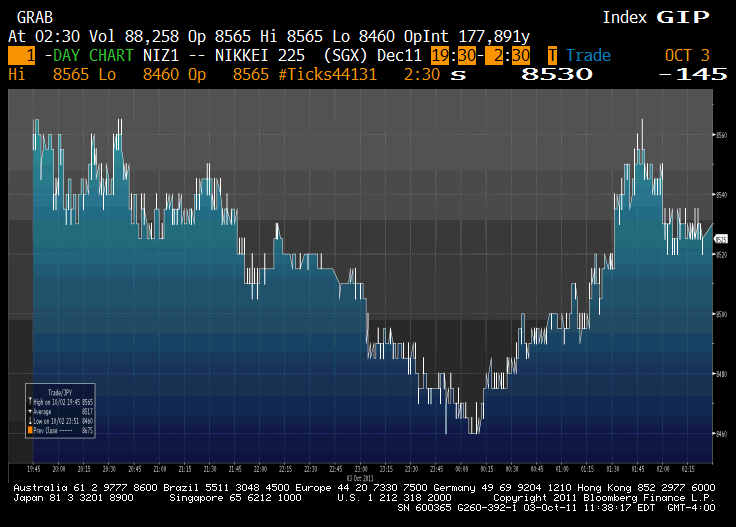
Archives
- October 2026
- September 2026
- August 2026
- July 2026
- June 2026
- May 2026
- April 2026
- March 2026
- February 2026
- January 2026
- December 2025
- November 2025
- October 2025
- September 2025
- August 2025
- July 2025
- June 2025
- May 2025
- April 2025
- March 2025
- February 2025
- January 2025
- December 2024
- November 2024
- October 2024
- September 2024
- August 2024
- July 2024
- June 2024
- May 2024
- April 2024
- March 2024
- February 2024
- January 2024
- December 2023
- November 2023
- October 2023
- September 2023
- August 2023
- July 2023
- June 2023
- May 2023
- April 2023
- March 2023
- February 2023
- January 2023
- December 2022
- November 2022
- October 2022
- September 2022
- August 2022
- July 2022
- June 2022
- May 2022
- April 2022
- March 2022
- February 2022
- January 2022
- December 2021
- November 2021
- October 2021
- September 2021
- August 2021
- July 2021
- June 2021
- May 2021
- April 2021
- March 2021
- February 2021
- January 2021
- December 2020
- November 2020
- October 2020
- September 2020
- August 2020
- July 2020
- June 2020
- May 2020
- April 2020
- March 2020
- February 2020
- January 2020
- December 2019
- November 2019
- October 2019
- September 2019
- August 2019
- July 2019
- June 2019
- May 2019
- April 2019
- March 2019
- February 2019
- January 2019
- December 2018
- November 2018
- October 2018
- September 2018
- August 2018
- July 2018
- June 2018
- May 2018
- April 2018
- March 2018
- February 2018
- January 2018
- December 2017
- November 2017
- October 2017
- September 2017
- August 2017
- July 2017
- June 2017
- May 2017
- April 2017
- March 2017
- February 2017
- January 2017
- December 2016
- November 2016
- October 2016
- September 2016
- August 2016
- July 2016
- June 2016
- May 2016
- April 2016
- March 2016
- February 2016
- January 2016
- December 2015
- November 2015
- October 2015
- September 2015
- August 2015
- July 2015
- June 2015
- May 2015
- April 2015
- March 2015
- February 2015
- January 2015
- December 2014
- November 2014
- October 2014
- September 2014
- August 2014
- July 2014
- June 2014
- May 2014
- April 2014
- March 2014
- February 2014
- January 2014
- December 2013
- November 2013
- October 2013
- September 2013
- August 2013
- July 2013
- June 2013
- May 2013
- April 2013
- March 2013
- February 2013
- January 2013
- December 2012
- November 2012
- October 2012
- September 2012
- August 2012
- July 2012
- June 2012
- May 2012
- April 2012
- March 2012
- February 2012
- January 2012
- December 2011
- November 2011
- October 2011
- September 2011
- August 2011
- July 2011
- June 2011
- May 2011
- April 2011
- March 2011
- February 2011
- January 2011
- December 2010
- November 2010
- October 2010
- September 2010
- August 2010
- July 2010
- June 2010
- May 2010
- April 2010
- March 2010
- February 2010
- January 2010
- December 2009
- November 2009
- October 2009
- September 2009
- August 2009
- July 2009
- June 2009
- May 2009
- April 2009
- March 2009
- February 2009
- January 2009
- December 2008
- November 2008
- October 2008
- September 2008
- August 2008
- July 2008
- June 2008
- May 2008
- April 2008
- March 2008
- February 2008
- January 2008
- December 2007
- November 2007
- October 2007
- September 2007
- August 2007
- July 2007
- June 2007
- May 2007
- April 2007
- March 2007
- February 2007
- January 2007
- December 2006
- November 2006
- October 2006
- September 2006
- August 2006
- Older Archives
Resources & Links
- The Letters Prize
- Pre-2007 Victor Niederhoffer Posts
- Vic’s NYC Junto
- Reading List
- Programming in 60 Seconds
- The Objectivist Center
- Foundation for Economic Education
- Tigerchess
- Dick Sears' G.T. Index
- Pre-2007 Daily Speculations
- Laurel & Vics' Worldly Investor Articles
