Sep
18
It is Interesting to Reflect, from Victor Niederhoffer
September 18, 2013 | 1 Comment
It is interesting to reflect that out of 37 open market meetings since the beginning of 2009, 11 have closed the day before at a 20 day high versus just 3 at a 20 day low. That might seem unusual without the knowledge that since 2009 there have been 292 separate 20 day highs and only 95 20 day lows. Thus 25% of all days have been at 20 day highs since 2009 but 30% of the open market day precedings have had that honor. A most insignificant but interesting difference and framework.
Jeff Rollert writes:
I had a long discussion about this with someone internally yesterday.
Writing and "doing" concurrently in a team is a very difficult organizational exercise, as ideas and implementation folks have different time frames frequently. I've seen similar dynamics with pilots and racing skippers with their navigators.
Steve Ellison adds:
I found that even talking about my trades introduced subtle motivations that I did not believe to be performance-enhancing.
Sep
16
Allocation Limits, from Ralph Vince
September 16, 2013 | Leave a Comment
The following paper may be of interest to you. It explores allocation limits for single and (symmetrical) multi-asset cases (in the context of blackjack, as a precursor to a further, pending paper on this focused on capital markets implementations).
In short, the paper goes into maximizing risk-adjusted returns (as opposed to simply seeking to maximize risk, all else be damned), so as to construct money management strategies that are mathematically optimal in a risk-return context (e.g. MAR ratios, etc.)
The techniques are things that are not only germane for any portfolio of assets (save buy and hold) but even more so for those where portfolio insurance (or some other measure of tapering commitment is involved, such as leveraged ETFs or inverse ETFs) where we find there is an (risk-adjusted returns optimal) upper bound in terms of percentage commitment, and it is not only < 100%, it is < the growth-optimal point (Often referred to as the Kelly Criterion — herein we specify two other points on the growth function that are optimal in terms of risk-adjusted returns).
Sep
13
Article of the Day, from Victor Niederhoffer
September 13, 2013 | 3 Comments
 An article in honor of Jeff : Amarillo Slim plays Bobby Riggs in Ping Pong with Coke Bottles.
"Amarillo Slim Hustles the Hustlers"
Jeff Watson writes:
Some take aways from that most excellent article.
"Once again I proved that you can make a living beating a champion just by using your head instead of your ass. The easiest person in the world to hustle is a hustler."
" So I practiced and practiced until I could hit the ball over the net every time, and right then I knew that Coke bottle was going to make me a boatload of money. "
Sometimes, you need a stall. This one was perfect………………. "Let's get it on!" Lefty said. "No," I said, savoring the moment. "Let's post our money and play thirty days from now. I need to practice a little, now that I see you got yourself a real-life Ping-Pong champion."
" I am not interested in speculating, nor am I interested in making a small score. You see, friend, when I make a wager, the bet has already been won. And if I'm gonna win, I sure as hell want to break somebody doing it."
" I like to bet on anything—as long as the odds are in my favor."
"….I also learned that there are people who love action and others who love money. The first group is called suckers, and the second is called professional gamblers, and it was a cinch which one I wanted to be."
" If there is one fatal flaw, the Achilles' hell of every gamble, it is hubris. No gambler ever wants to lose face, and I have used that psychological edge to my advantage. All I have to do is play to a wealthy man's ego, and not only can I get him to gamble, but I can get him to gamble with me for life."
I can't even count how many market lessons are contained within that story. But then again how much money did my own hubris cost me over the years?
Sep
12
The Hidden Waterfront of New York, from Victor Niederhoffer
September 12, 2013 | 1 Comment
 I went to a lecture on the hidden waterfront of New York, where containers, boats, and docks handle the biggest port in world. There was a good example of productivity started by Mclean, a trucker waiting for delivery of goods on a boat. He figured it might be good to provide a standardized flat size container that could be loaded on and off by cranes. The results. In 1965 there were 15,000 long shoreman handling, let's say, 50 million tons of freight. Now there are 1,200 comparable long shoreman handling 750 million tons of freight. (the ratios are right, but I have to check the base). As an aside, the waterfront is a very highly paid profession with about 500,000 workers there now making an average of 150,000 a year. A long shoreman makes 150,000 and a pilot 300,000. A great job for a nautically minded kid.
Stefan Jovanovich comments:
McLean put the idea of cargo containers and container ships into practice when he got out of the trucking business and bought the Pan Atlantic Steamship Company which became Sea-Land. For whatever reason Willie McCovey and Henry Aaron's birthplace has been for the 20th century what Boston was for the 19th - the place where American maritime innovation flourished. By the time McLean sold Sea-Land to R. J. Reynolds in 1969 it was the largest container carrier in the world.
Why RJR? Because McLean trucking had gotten its start hauling empty tobacco barrels. The McLean Brothers were from Maxton, NC; and they were, like almost everyone in the Depression, broke but they were not "poor" and certainly not without connections. Angus Wilton McLean had been Governor from 1925 to 1929 and an Assistant Secretary of the Treasury during the last year of the Wilson administration.
McLean was an inveterate innovator. McLean Trucking were among the first companies to switch their rigs from gasoline to diesel. Later on [in the mid 1970s] when McLean decided to get back into the container ship business by buying U.S. Lines, he decided that shipping's status quo needed to be challenged just as Brunel had done 120 years earlier. Like Brunel McLean bet that the demand for cargo would rise fast enough to justify really large vessels. When it was launched in 1858, the Great Eastern had a capacity of 19,000 tons, easily more than twice the size of current ships (it would be another 40 years for that size vessel to be regularly constructed). When McLean ordered his 4300 TEU ships from Daewoo in 1878, the largest existing container ships had only 3,000 TEU capacity.
Both ventures were failures — but not because of the increased size. What killed Brunel's great ship and McLean's Econships was that they were both designed to run more efficiently at slow speeds. The market demanded faster transit times than their vessels could economically deliver.
When he died in 2001, McLean was developing another innovation - roll on roll off large capacity van transport. That company - Trailer Bridge - is still at it.
Alex Castaldo adds:
Just to put these numbers in perspective, the biggest container-carrying ship today is 18,000 TEU.
Sep
12
Several Things Bonds Don’t Take Account of, from Victor Niederhoffer
September 12, 2013 | 1 Comment
There are several things that bonds don't take account of I think. The threat is worse than the execution. If the Fed tapers, it's already in the market and the amount of their reduction will be offset by reduced sales because of increased revenues. The stock of bonds is about 20 trillion As Tyler Cowen said, the stock of bonds, what existing holders will accept, is more important than the flow of 25 billion. The rate of inflation determines the yield. The rate past and expected is close to 1.5% and the premium that bond yields pay to the holders based on the Fed model is at an all time high. The ratio of stock market levels to bond levels is at a 3 year high and this is not bullish for stocks and bullish for bonds. The 10 year yield has pierced the barrier of 3% and frustration has been relieved. The levels of yields at 3% for the 10 and 4% for the 30 year are competitive with stocks and would cause a decline in the economy if they increased. I don't have a position in bonds but trade them fairly actively within the week.
Rocky Humbert writes:
FWIW, I agree 100% with everything that the chair wrote here — with a couple of additions:
1. The primary challenge that the market faces here is assessing the equilibrium yield in the absence of fed interventions. There will always be fed interventions at the front end, but the back end interventions are a recent (3 year) phenomenon and many purchasers (and now sellers) were engaged in front-running of the fed type activities. This is a flow-oriented phenomenon, not a value-oriented phenomenon. My general rule (and the Chair would surely agree) is in the short-term, flow trumps fundamentals for longer than the average leveraged speculator can tolerate. So, the primary question, I believe, is whether the front-runners have exited the market. My guess is that on the announcement of the taper, that process will be complete.
2. On a longer-term basis, the question of what real yield is "right" remains in front of us. The other Tyler has written eloquently (but I disagree) that TIPS should command a near zero real yield. I believe that TIPS should command a real yield that approximates the real growth rate of the economy plus some sovereign risk premium plus some liquidity risk premium plus some tax rate premium plus some risk premium associated with gaming the CPI which the government is motivated to do.
I have a speculative long (trading not investment) position in bonds (especially muni's and tips) right now, but that could change quickly and I don't recommend that anyone follows me into this, as we are suffering from a hindsight/anchoring bias where things look inexpensive because they were expensive before NOT things look inexpensive because they are really inexpensive. I think the odds substantially favor a rally versus an immediate further decline , but I base this on unqualifiable drivel which is not worthy of this list. In contrast, my Apple call was based on an extremely rare confluence that was in fact quantifiable and yesterday's decline in Apple (which I didn't participate in) was likewise statistically probable.
Jeff Rollert adds:
I agree with both Chair and Rocky.
As long as the Fed can use open mouth policy and have traders do the heavy lifting, they will IMHO. Rolloff re-fills their quiver that way over time.
As I've mentioned on the list for a few years, an analytical shift has begun. As we never step into the same river twice, the next cycle begins with the consideration of what is the risk free rate when sovereign bonds are manipulated.
I have some unfinished ideas on this, but the core is a replacement of T-Bills. An alternative path is the question of can there be a risk free rate.
As modern monetary systems appear to share the characteristics of religious belief systems, I believe this is a material change.
Sep
9
One Has Been Watching Youtube Videos on Footwork, from Victor Niederhoffer
September 9, 2013 | 2 Comments
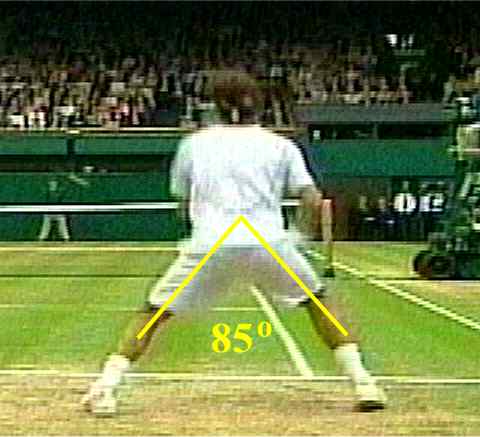 One has been watching youtube videos on tennis footwork with a view to improving Aubrey's squash game. Many videos talk about moving in to the ball rather than waiting. Apparently this is the secret of Federer's footwork with his walking step which just means, as far as I can see, hitting every shot as if it were an approach shot. Paul Gold has a series of 4 steps that he recommends. Using the eyes to watch the ball, and getting into an athletic position, taking a split step on every shot to take a proper first step, and getting to the ball with big steps pushing off the opposite foot to where the ball is going.
I wonder if these steps have a value for market people. Get prepared before the day with the proper equipment and study deciding whether you wish to buy or sell and which ones adjusting your trade level and size with the proper current volatilities and market movements and announcement. Trading and then preparing for the next shot…
Alston Mabry writes:
The trading analogy for me is that I find myself in two basic modes: (1) reactive, waiting to see what's going to happen next, or (2) predictive, identifying what I think are the highest-probability paths over the next X time period, defining what I will do in each case and preparing for that action.
On the morale side, it's easy for lack or preparation or a losing trade to push me into mode (1); whereas getting back into mode (2) takes preparation, focus and discipline.
Anonymous writes:
Related to the preparation stage of the game, it is interesting to pontificate about how many moves ahead board game players and sportspeople think and how the speculative game can be improved by adding this type of thinking.
I played basketball up to a fairly high level ( I played center for my state) and in that sport one only tried to anticipate one move ahead (to try and steal the ball or make the rebound).
My limited experience in tennis and squash leads me to think that the best in these games have time to think perhaps two moves ahead (Chair may have a view on that given that he has been known to hit the occasional hard squash ball just above the tin).
I read that chess and checkers players may think many moves ahead — perhaps all the way to a game's conclusion given an opponents error (or good move). Distinguished personages on this list might add meat to this point?
So, how many reactions ahead in the markets…? My various quantitative approaches likely have a substantially shorter holding period than most on the list so the following needs to be filtered by this fact:
* In terms of prediction, I have not been able to produce consistent alpha from any method that looks more than two steps ahead or behind (Market A's move effects Market A's future as well as Market B's future and Market A&B's move effects the future of Markets A,B & C)
* I guess one can also look at this in terms of degrees of freedom- more than 3 or 4 is probably too many. (Or to quote Arnold Zellner "…KISS….Keep it Sophisticatedly Simple)
* It might be a reasonable generality that the more steps ahead (or back) you look the longer needs to be your time frame.
Back more directly to Tennis & basketball. As a center in basketball I had two things to do in preparation. These were to be fully stretched out to jump high and to be completely focused on getting the ball to my pre- chosen team mate. When rebounding you have to commit before the shooter fully raises his arms. In tennis, the unbeatable ground strokes are often those hit on the rise — as it were. In both cases you have to anticipate to hit the perfect stroke or 'deny' the shooter.
The same in markets I think.
This comes back to being ready — obviously.
Pitt T. Maner III writes:
I would wonder if there are specific training or virtual simulators (software) for traders that would be useful to identify and improve weak areas in preparation, execution, timing, psychological tendencies, etc.
For athletes and racquet players the analogy might be some type of virtual practice such as Virtual Tennis Academy where there would be actual analysis of footwork and stroke production in slow motion using attached sensors. With eventually perhaps some type of instant feedback (ie. sound, vibration) to cue the practicing player on what he or she is doing right.
Film analysis is becoming important in tennis as well.
A recent article, for instance, suggests that improvement in cognitive abilities in older persons is possible through the use of computer games:
"Commercial companies have claimed for years that computer games can make the user smarter, but have been criticized for failing to show that improved skills in the game translate into better performance in daily life1. Now a study published this week in Nature2 — the one in which Linsey participated — convincingly shows that if a game is tailored to a precise cognitive deficit, in this case multitasking in older people, it can indeed be effective."
The world of quantified self programs appears to be ever expanding. Why not financial and sports feedback too?
Charles Pennington writes:
I tentatively have a theory that players stand way too far back to receive serve. One of the most awkward serve receives is a high backhand. But if you stand up close to the service line, perhaps halfway between the service line and the baseline, then you know that the ball is going to be bouncing nearby, and you can try to catch it low before it gets above your shoulders. If things go as planned, you'll punch the ball back and make the server have to scramble for the ball with little time to spare. However, I haven't really had a chance to try this out against a big server.
Anton Johnson writes:
It is a joy to watch the masterful footwork of an accomplished base thief.
The speedster, with orders received, his eyes fixed on the pitcher, quickly side-steps, while never crossing his feet, feeling his way to tease the 12' danger zone. When sensing the pitcher suddenly whirl, with his weight biased to the left, he must cross right foot over left, to initiate the saving dive, and avert the embarrassment of a catastrophic pick-off.
However, when the enemy is committed, and with armed help at the plate, with explosive power he crosses left foot over right to continue the fight, knees powering forward, to slide just under the tag, to win the battle to own second base.
Sep
6
Issue with Employment Numbers, from Stefan Jovanovich
September 6, 2013 | 1 Comment
There is an issue about the employment numbers that may not be getting proper attention - Section 530 and its interaction with state unemployment benefits. Section 530 of the Revenue Act of 1978 was the Carter Administration's gift to the farm belt. Under Section 530 an individual will not be classified as an employee if the alleged employer has a reasonable basis for treating that person as an independent contractor. "Reasonable basis" can be proved by:
(1) "Judicial precedent, published rulings, or technical advice with respect to the taxpayer, or a letter ruling to the taxpayer; (2) "A past IRS audit of the taxpayer in which there was no assessment attributable to the treatment (for employment tax purposes) of the individuals holding positions substantially similar to the position held by this individual"; or (3) "Long-standing recognized practice of a significant segment of the industry in which the individual was engaged."
The IRS has a "whistle-blower" form that individuals can file to challenge their classification - the SS-8. But - and here is the kicker - on the form itself the IRS warns the taxpayer that "A Form SS-8 should not be filed for supplemental wage issues." What this means, in real terms, is that people who get "fired" from their independent contractor jobs cannot use the IRS to bully state unemployment agencies into paying them benefits.
Since the states all have incentives to cut down on the cash drain from unemployment benefits, even the deep blue ones like California do not make much effort to reclassify contractors as employees once the issue gets to unemployment benefits. the result is that "the workforce" has more and more people in it who are not now and never will be classified as "employees". "Employment" itself becomes less and less of an indicator of actual incomes because the payroll numbers cannot reflect the contractors' fortunes (both good and bad).
Bill Rafter writes:
For the "percent unemployed" number, reclassification as to who is or is not an employee may have an impact. However this is the beauty of simply looking at the payroll tax data, as all persons (traditional employees and individual contractors) are required to pay.
Victor Niederhoffer writes:
But with all the seasonal adjustments and other things that enter the employment numbers, how can payroll numbers not using the census seasonal adjustments be meaningfully compared.
Bill Rafter elaborates:
It is the seasonal adjustments by the officials that we distrust. We think the adjustments are a fudge factor to be used by an administration eager to paint a picture. I don't know who is responsible (BLS or Census), but their adjustments historically have made little sense. BTW, the Fed also could use someone better at seasonal adjustment, although their number jockeys are better than whoever plays with the payroll data.
A problem is (a) do you want the truth, or (b) do you want to make money? If you are decent at it, doing your own work will get you the truth. However if the world follows the official releases as gospel, you could be right and broke. I have been in that predicament a few times.
Aug
30
Challenging, from Gary Rogan
August 30, 2013 | Leave a Comment
 [The company said] the target for its general insurance business was
“challenging” following disaster-related losses.
"Zurich Defends Accounts as Ackermann Exits After CFO’s Suicide"
Using some pop psychology, I would anticipate that what exactly is referred to as "challenging" has some bearing on the magnitude of future declines. In this case some financial target being "challenging" simply means that there is no way in hell they will meet it. If however the business environment is described that way it's likely to mean two things: all hell is breaking loose and the management not only lost control but doesn't want to take responsibility for what's going on.
Victor Niederhoffer writes:
A study of use of "challenging" and NYSE might show some evidence of future inordinate declines a la Sornette but taking account of both side of the distribution, not just one tail, i.e. a real study.
Here is a 2007 study of that hypothesis which is somewhat "challenging" on a number of fronts.
Ken Drees writes:
I find this Stunning.
The poetry of the the modifier word "healthy" pointing to cash flows as in blood flow that sustains "a strong and resilient balance sheet", the body of the corporation, juxtapositioned against the wan image of a very "dead" monitor, (CFO), of the bloodflow of the corporation's health under a "sheet" at the morgue.
Aug
30
Advice, from Victor Niederhoffer
August 30, 2013 | Leave a Comment
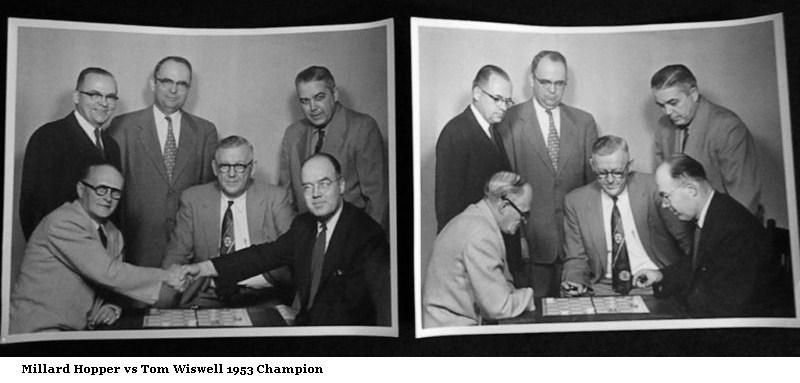 One repeats that Tom Wiswell wrote 30 books and he considered the book he was writing of quotations of advice for board players and others the best book he ever wrote although it has not been published. All of his aphorisms are very very good for kids and there are about 500 of them in Edspec. One I believe that is most important for business is "never get in over your head". Whenever Tom got into a complicated position he'd shake his head and say "I think I'm in over my head. I have to simplify" He never lost for 25 years or so. I've heard that from others in business also. I would be a wealthy man if I followed that advice.
Pitt T. Maner III writes:
Here is a link to some of Wiswell's proverbs on an older page on Daily Speculations, and here is an interesting site for the chess players with Mr. Davies advice on learning from the strong part way down.
Aug
30
Real Estate, from Victor Niederhoffer
August 30, 2013 | 1 Comment
One notes that real estate stock prices have declined about 30% from recent highs in line with the increase in mortgage rates. One believes that big collapses in stock prices in markets around the world have to an inordinate extent been preceded by big declines in housing prices. The housing prices have not declined but the real estate stock prices which presumably are signaling same have. It would be interesting to test whether there is a negative predictive correlation between housing stocks prices and the S&P composite. All the statements in my note should be tested.
Rishi Singh writes:
Chan, Erickson and Chang (2002) is an amazing book for REITs that discuss structure and an overview of the studies done on them. It was recommended to me by a real estate professor back in Virginia and I loved it.
Aug
29
The Market, from Victor Niederhoffer
August 29, 2013 | 1 Comment
The market has finally refuted the hypothesis that it can't go up when quantitative easing is going to taper. A popperian change of the guard.
Aug
23
A Message Sent to the Spec-List at 6:29:48 on 8/22, from Victor Niederhoffer
August 23, 2013 | Leave a Comment
It might be good for the collective unconscious for Erica to come up with some increased claims to be reported at 8:30 gmt today.
That's a prediction.
A song was heard on a bus sighted with the initials Camp K, circa 2 Mass Avenue —-Petroiska.
Aug
23
Is the High Open and Open Low Closer to Equality, from Victor Niederhoffer
August 23, 2013 | Leave a Comment
Is the high-open in a day compared to the open-low much closer to equality than would be expected in a random walk with standard deviation and expectation similar to the stock market, (an expectation of 0 per hour and standard deviation of 4.5 per half hour and 6 1/2 per hour with 7 half hours per day might be very close to reality.) If so, can any predictive systems be devised from it, and are there other markets where similar excursions could be limned?
| SPU3 | Open | High | Low | Close |
| 8/23/2013 | 1660.0 | 1662.5 | 1652.5 | 1661.4 |
| 8/22/2013 | 1644.0 | 1657.5 | 1643.5 | 1654.8 |
| 8/21/2013 | 1646.0 | 1654.7 | 1636.3 | 1636.5 |
| 8/20/2013 | 1645.3 | 1656.5 | 1643.5 | 1650.6 |
| 8/19/2013 | 1651.2 | 1656.5 | 1643.0 | 1644.9 |
| 8/16/2013 | 1655.5 | 1661.0 | 1650.0 | 1651.1 |
| 8/15/2013 | 1669.0 | 1669.0 | 1655.5 | 1655.7 |
| 8/14/2013 | 1690.5 | 1692.7 | 1681.2 | 1682.0 |
| 8/13/2013 | 1689.2 | 1694.4 | 1679.2 | 1690.8 |
| 8/12/2013 | 1679.7 | 1688.2 | 1679.2 | 1687.1 |
| 8/9/2013 | 1691.0 | 1696.0 | 1682.5 | 1686.2 |
| 8/8/2013 | 1695.7 | 1696.8 | 1684.5 | 1693.7 |
| 8/7/2013 | 1687.2 | 1689.2 | 1680.8 | 1688.2 |
| 8/6/2013 | 1698.8 | 1700.3 | 1688.9 | 1693.9 |
| 8/5/2013 | 1701.0 | 1704.7 | 1699.0 | 1702.5 |
Aug
22
Why in the Name of the Good One, from Victor Niederhoffer
August 22, 2013 | 1 Comment
Why in the name of the good one, should bonds be going down on news that the taper will be reduced by 25%. By how much are interest rates affected by an additional 25 billion of liquidity a quarter or so. None of my books on liquidity preference versus expectations seem to think it should be anything like it is. What a tendency to supine submission we mortals have.
Tyler Cowen writes:
That is exactly my feeling. I have been asking this question for about two months now and nobody has a good answer for me…
It's as if only the current flow matter and the stock of liquid assets somehow fades into irrelevance. Strange.
Rocky Humbert writes:
Excuse me, gentlemen, But can either of you please explain the raisson d'etre for any investor (i.e. someone who buys and holds to maturity) to have purchased a 10 Year TIP at a non-trivial negative real yield — and which has been the case since QE started in earnest.
I submit that your perceptions of befuddlement may be due to price anchoring/recency bias — and that a previous dislocation due to fed interventions is finally being corrected. Investors are now sensibly demanding a positive real return on their fixed income investments. Sensible, unless we are in a persistent deflation. But if a persistent deflation is in the card, the stock market's nominal earnings expectations are horribly wrong.
I further note that bank CD rates are not rising with market rates. To me, this is a potentially ominous conundrum with the following potential explanations: (1) There's little demand for loans. (2) Bank capital rules are limiting their purchase of marketable securities. (3) Banks are funding their loans with overnight excess reserves. (4) Volker rule-type fears are limiting participation. (5) Banks have been told that short-rates won't rise for a really long time.
Aug
22
The Fact that the Dax Was Up, from Victor Niederhoffer
August 22, 2013 | Leave a Comment
 The fact that the Dax was up 3 ratio points against the US markets shows that the largesse of the flexions on our numbers is not withheld from those who make recipes for the bernaise and bechamel sauces in Brussels .
Alan Millhone writes:
Dear Chair,
Am afraid the bernaisacky sauce might upset my stomach.
Note Dow was below 15. That is upsetting enough to many without adding any sauces.
Sincerely,
Alan
Kim Zussman writes:
It was dyspepsia from absence of Bernanke sauce.
Peter St. Andre writes:
I really need to write a little poem that starts with "Ben Bernanke makes me cranky"…
Gary Rogan contributes:
There once was a man named Bernanke
Engaged in some bad hanky panky
But he went AWOL
and skipped Jackson Hole
And now the markets are cranky.
Craig Mee adds:
Bernanke the captain of Fed
Resembles Titanic's, Smith Ed
Evades all bergs, engines full out
Bond infinity, no damnable doubt
"Untapered, untwisted, now screwed", he said.
Aug
21
Buying On the News, from Victor Niederhoffer
August 21, 2013 | 5 Comments
While others ponder the existence of the universe, there was a perfect example of buying on the news. Also deception. The headline was "Fed has consensus to taper". (as if that was bearish). Stocks dropped to a 2 month low, and then calmly went up 15 big points in a minute when the deception was unraveled. A perfect example of how fear can lead you to losses that one has no right to receive. And to think that all the 100 banks and public relations people on the distibution list had a heads up well in advance according to Bus Insider's template.
Aug
19
Leaves and the Market, from Victor Niederhoffer
August 19, 2013 | Leave a Comment
 On a visit to the Botanical Gardens today, I found myself thinking about the purpose of leaves in trees as a way of improving my knowledge of markets. I picked up some oak leaves and tulip tree leaves and saw many veins in them. The veins seem to provide more paths to exchange nutrients and perform photosynthesis. The leaves are very light, so they maximize their surface area relative to volume, thus giving them more opportunity for photosynthesis, and probably preventing an excess of loss of water through evaporation. But in handling the leaves, I was amazed at their toughness, like a abalone. In researching the subject, I learned that toughness of leaves, i.e. the amount of cellulose in them, is now considered the main way that leaves survive. It also reduces their palatability to predators.
What can we learn from leaves about markets. Perhaps a wider range at a price below increases their resistance to death? Perhaps a stronger book of limit orders (in contrast to Mamis's dictum that the larger the buy limits the worse the price?).
What can we learn from the roots of trees? I wish all my people would learn to have strong roots rather than deferring to the latest fashion or predictive hour? In general the trees change with the seasons? Can we learn from trees about ever changing cycles? The summer has been very different from the previous spring and winter this year. It always seems to be. Strong moves in one market, i.e. the bonds have overwhelmed the rest. And of course my favorites, the theory of uniform distribution, — why do trees together reach the same height,and my favorite of favorites, the theory of least effort which relates in part to how branches curve to have the same forces on them at all levels of the branch. But I know nothing about trees compared to the rest of you. What can we learn? How can it help us?
David Lillienfeld writes:
Let's play with this idea a bit further. We know that photosynthesis occurs in response to the presence of sunlight, and varies in response to such presence. The process takes place in specialized organelles. Might the organelles be like market makers? Without them, the leaf dies, ie, they are vital for providing the liquidity (energy) the system needs to survives. They need an external energy source to function, and in the absence of that energy, the supporting system (the leaf) dies. Though I'm not certain of the fact, I would expect that in the presence of sunlight, chloroplast number increases, much as market makers increase in the face of liquidity.
The analogy works to a degree, but I'm not sure where it might take us.
Alan Millhone writes:
I am not a stock forrester but can relate how the leaf veins branch out into many openings found in British Draughts Player.
The lines of play that go in many directions and studied and learned well gives you solid footing and deep roots of knowledge for a strong game at the board.
I can see where stock research in a methodical way can benefit the trader.
Aug
19
Inflation, from Victor Niederhoffer
August 19, 2013 | Leave a Comment
 It used to be that employment was a direct function of output /price. What is this mumbo and desire of the Fed to get inflation over 2% a year. Low prices are good. On a recent visit to Japan, the prices there were much lower than the US because there had been no inflation there in 10 years. That made us want to purchase things.
Anatoly Veltman writes:
Interesting to note that in centralized economies the cause and effect are different. When I went to Russia with lectures in 1995, they couldn't comprehend that bad economy does NOT bring forth inflation. In their past, bad economy would bring official price hikes, as government deficit spending would immediately levy all goods and services.
Aug
19
5 Occasions When Stocks Fell, from Victor Niederhoffer
August 19, 2013 | 2 Comments
 There have been 5 occasions when stocks fell by more than 200 Dow points in a day and bonds the same time fell by more than 1/2 a big point 3 of them occurred in last two months including last Thursday. This has many market implications including the changing the guard of the relation between bonds and stocks, and the importance of liquidity preference.
Rocky Humbert writes:
Agree 100% with Vic's astute observation and hypothesis. Mr. Market is seemingly at the point in the economic cycle when good news is bad news for financial assets. What's difficult to believe is that in the current cycle, this inflection point is occurring with lackluster GDP growth (i.e. substantial output gap in domestic and global economies) and high unemployment. These facts help explain why the 2 year Treasury is not backing up.
One surmises therefore that Mr. Market is trying to find an equilibrium yield in the long end of the curve with no prospect of further aggressive manipulative Fed interventions. Since the current easing cycle began (and before the Fed started buying long-dated securities), the extreme of the 2/10 spread has been +288 bp. We are currently at +248 — which gives a price anchored sense of magnitudes to where we may be headed. If the curve steepens another 40bp, that will coincidentally also put the 10 year TIP at about +100 real yield — all of which is sensible, consistent and not a panic overshoot. This will also put the 10 Year Treasury at about 3.2%ish.
I'm not making any predictions about the effects of this on stock prices. Except that I would expect stocks to get into some potentially serious problems should the 2/10 spread quickly widen past 300bp as that will represent a new regime (as Vic says, "changing of the guard"). There are too many other variables to be more precise. Including the relationship between nominal yields, yield ratios, etc. I will note that bank CD rates have not been increasing with market interest rates. This can be interpreted numerous ways but it's an important fact for investors.
Gary Rogan writes:
Perhaps this is as simple as the market is taking seriously Ben's statements that he will keep the short end of the rates low, but is determined to use any good news, fake or real to taper/stop the QE. There is just going to be less money for any kind of financial assets so that any rates not controlled directly by the traditional Fed manipulations so that their prices all have to go down, stock, bonds, and everything. The market must believe that the Fed sees real danger in continuing QE and it thus must come to an end almost for sure. This has puzzled me for a while since I can't see how any kind of housing recovery can be sustained with higher mortgage rates nor how the US treasury can afford the higher rates, because I expect the deficits to start increasing again. But Ben's term is coming to an end and he probably wants to leave on a certain not that only he can judge to be the most optimal for his post-Fed future. In a couple of years it could be deluge as far as Ben is concerned but not in a couple of months. Perhaps he just doesn't want the QE in place when he leaves.
Anatoly Veltman writes:
This is an unusual Ponzi, in the most important respect: that there is no official to call it. Alas, where market is bound to err, the market will focus on public sector Ponzi alone. The more important is the derivatives Ponzi, and that's what is liable to cause 90% market contraction off of whatever pinnacle.
Happened twice already in new millenium: with .com stocks, and then with bank stocks. Yet, most participants' philosophy is that it can't happen. Or has no right to happen? What right is there to take a billion-dollar underlying, re-hypothicate it without an end in sight, and pass it for a trillion-dollar book? Mr. Market is bipolar; trying to fit it onto historical precedent will work, for most of the trading days — but not for the most important trading days.
Jeff Sasmor writes:
It's also possible that this is a trial balloon and that there will be feedback from the market reaction into what the fed does.
If interest rates rise and choke off the housing market wouldn't they act to reverse that?
"Plans within plans," as the Guild Navigator said.
Rocky Humbert writes:
Anatoly is of course correct that markets go further and trends persist longer than reasonably sane people expect. The most recent examples of this are the Platinum/Gold spread; the WTI/Brent oil spread; and the 2008/2009 period. But his conclusions about "most important trading DAYS" are not only disproved by the duration of these episodes, they are also suspect in the context of investment and wealth accumulation — as the power of compounding requires time.
There remains no evidence that ANYONE can consistency anticipate or profit from the "most important" trading days. Those "important" days pale in the fullness of time as we see over and over and over again. Furthermore, he can (as I do) lament the Fed's mechinations. But they in no way resemble a Ponzi scheme. A Ponzi scheme requires new money to pay off old money, and can persist in perpetuity so long as there is sufficient new money to pay off old money. So long as the Fed has a printing press and the ability/willingness to expand its balance sheet AND THE US DOLLAR IS STABLE, the status quo can and will persist. Social Security (as a standalone entity) is a better example of a societal Ponzi scheme.
Further to the "status quo," among the things that I find most remarkable about the past few years is the relative stability of the major currency markets. Sure there have been some violent moves. But the Dollar, Yen and Euro are all within a couple of percent of where they were exactly 20 years ago! . Even the Chinese Yuan was trading at about the same price twenty years ago. (They devalued it to about 8 in 1994, and then gradually moved it back towards 6ish.) Lastly, does anyone remember Bill Ackman's breathless announcement from a couple of years ago that he had a massive call position on the Hong Kong dollar … and that they were going to be forced to imminently re-value their currency. With his problems in JCPenny, Herbal Life etc, he should consider unplugging his Bloomberg and read "All Quiet on the Western (sic) Front."
Gary Rogan adds:
I expect that they can't live with the effect of the rising 10 yr and mortgage rates even as they stand today. My initial supposition when Ben first started the tapering talk was that he wanted to puncture the stock bubble, but can't afford to puncture the bond bubble. He seems to have punctured both. The genie is out of the bottle and with all the loose talk emanating from the various Fed associates it will now take a pretty dramatic action to reverse what looks like a looming crash for most asset classes.
Aug
19
Goetzmann, from Victor Niederhoffer
August 19, 2013 | 1 Comment
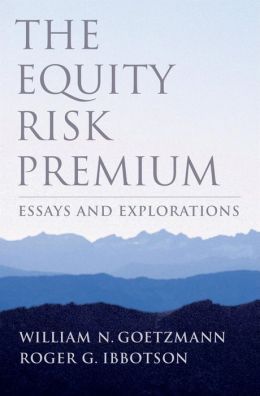 There is an amazingly good set of articles by William Goetzmann including articles estimating the expected return on stocks, a framework for analyzing returns, the drift in earnings after announcements, and innovative Dutch Securities to capture land value in the US in the late 18th century.
The book with Ibbotson, The Equity Risk Premium, is one of the best books on markets I have read and will bring you up to date with all modern portfolio theory. A must read for all serious investors who wish to be brought up to date on how economists analyze markets these days.
Aug
12
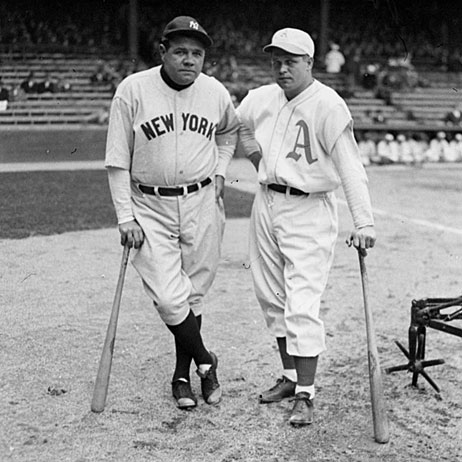 Pitt has inspired as usual some cross field thoughts. I recently read "You Know Me Al" a compilation of all Ring Larnder's baseball stories. And it struck me that nothing has changed in baseball in the last 100 years. All the plays were the same. And the travel and romance was the same. Alibi Ike for example went into a tailspin and lost his team the pennant when he alibied about the engagement ring he bought for his girl and she overheard it. The owner of the Pittsburg team in those days was a woman who liked scholarly guys from Yale. There were guys on every team that knew everything and antagonized their teammates so much that they couldn't stay on the team. And the sabermetrics that the coaches used was very similar also.
I was thinking. What plays are there in baseball that are similar to what the market does. The streaks that each team has at home and away. The records after this pitcher or that pitcher is against rigties or lefties. The records after home and away games. The double plays, the triple steals, the inducement to get into a fight to get a player kicked out of the game, the crooked umpires, the thrown games, the emphasis on the world series money for the coaches, the travel expenses. All the same and related to markets. The problem is that I don't know anything about baseball. And many here, most here know much more about our national pastime than I do.
Could you suggest some areas from baseball that the market might copy, and that might lead to interesting hypotheses about markets that would be useful predictives to test. I have to admit that with my limited knowledge of baseball, when Larry Ritter challenged me to come up with 100 of such, before he would tell me that his thesis student, the fake Dr. received a fake doctorate, it was hard for me to come up with them, even with the Collab's able inspiration.
Pitt T. Maner III writes:
One of the things I have wondered about is why sports techniques that appear to offer statistically better results like Rick Barry's two-handed "granny" basketball free throw or maybe knuckleball pitching in baseball are so infrequently used. Is there is a fear of using unorthodox means of winning, a fear of looking stupid/uncool, or just not wanting to stand out from the way it has always been done?
Here is a film about knuckleball pitchers that some of the baseball fans might enjoy:
"Knuckleball! is the story of a few good men, a handful of pitchers in the entire history of baseball forced to resort to the lowest rung on the credibility ladder in their sport: throwing a ball so slow and unpredictable that no one wants anything to do with it.
The film follows the Major League’s only knuckleballers in 2011, Tim Wakefield and R.A. Dickey, as they pursue a mercurial art form in a world that values speed, accuracy, and numerical accountability."
David Lilienfeld writes:
For Os and Bosox fans, there was actually an interesting piece in today's NYTimes about both teams giving some thought to the knuckleball. It sounds like the Os want to build their pitching staff around the pitch–or at least many of the pitchers. I'm hopeful that they succeed, not simply because I remember Hoyt Wilhelm in an Orioles uniform (ah, those not-so-golden days of Jim Gentile, Brooks, and Dick Hall), but it also raises the prospects of longer-throwing pitchers. I don't just mean longer careers, though there is that. I'm also thinking of more innings pitched, 4 starter rosters and the like. Having come of age during the Orioles pitching trifecta of 1969-71, I find the idea of a 4 man starting rotation appealing. The notion of "one-hundred and one, and then you're done" isn't a mantra I'm partial to. Some have suggested that Sandy Koufax's retirement after winning only 165 games (I think he has the fewest of anyone in the HOF who wasn't a reliever–and I also can think of few who would argue that he doesn't belong there) is testimony to the need to rigorously monitor pitch count. Perhaps, except that Koufax's well-known arthritis (he used to ice down his elbow for up to 2 hours after each outing) resulted from an injury running the bases, not from pitching. Pitchers weren't coddled the way they are today. It's been suggested that better swing guidance has resulted in better hitting players requiring pitchers throwing with greater finesse or power. Perhaps. I'm pretty sure that's not true for the knuckleball pitcher, though. Having watched Jim Palmer pitch, I doubt the idea applied to him, either. His slider broke down and his fastball would rise. I don't care how good your swing might be, you still have to figure out how to contact the ball, and that's something batters had a devil of a time doing. The same was true of Bob Gibson. Now Denny McLain and Steve Stone are great examples of a pitcher destroying their arms in the name of pitching performance. But I don't think that was as common as some would suggest, and if their arms weren't coddled, they would be fine dealing with today's batters. After all, there haven't been a surge in HR production, or even extra bases (esp triples), which I might expect if the effects of the improved swings were that probative. I don't think there have been two seasons where there was improved hitting performance (absent PEDs) requiring changes in pitching staffs along the lines that we've seen. It's like writing–with PCs and MS Office, writing has become easier, far easier, than in time past. Has writing become any better? Has the average speed of a fastball increased during the past 20-30 years? What about the degree of breaking balls? In almost 50 years, no one has come close to the Koufax curve. That wasn't a matter of an "improved arm" and it would have broken just as much (well, maybe less well with reduced amounts of pitching) today as it did then.
In short, I look forward to the rise of the knucklers and the return of the 4 man rotation and pitching staff sanity.
Aug
9
IWM. SPY and Normality, from Kim Zussman
August 9, 2013 | 3 Comments
A question for Kim or Victor: Since IWM has more stocks than SPY, does it follow that daily returns on IWM are closer to the Normal Distribution than SPY? - A Reader
Victor Niederhoffer replies:
It does, as a consequence of the Central Limit Theorem .
Kim Zussman replies:
Let's look at it empirically. Here is the "Anderson - Darling" test for normality of daily SPY returns, 2000-present (SP500).

Next is the same test for IWM (Russell 2000 ETF), 2000-present.

Rocky Humbert writes:
Vic, I'm not sure that the central limit theorem is the right paradigm. An unknown is whether the covariance within the two groups is sufficiently different to offset the CLT. I have never tested this. And testing is tricky because you need to use compounded total returns with dividends reinvested. The index and stock prices produce misleading results because dividends are greater for big caps.
Intuitively, I believe that most of the perceived differences can be explained by 2 things:
1) the dividends…which is really just a duration effect and 2) the reality that companies leave the R2k only when they are incredibly successful or when they die. Stocks only leave the SP500 when they die. They never leave the SP500 and go to the R2k when they are successful. So over time, the perceived differences are a micro sampling of a survivor bias between the 2 indices. Not sure how to test this theory…
What we do know is the implied volatility of r2k is almost always higher than the implied volatility of the SPX. I think this could be an analogue to the fact that out of the money puts are more expensive than out of the money calls. Put another way, if you are long SPX and short r2k in equal dollar amounts, you will usually make money during violent and persistent market downdrafts. I think this is proof that the distributions are different.
Victor Niederhoffer writes:
Those are good points you make about areas that I should have considered in estimating the departures and distributions of comparative performances. It is also amazing to me that the statistical tests, especially the Kolmogorov Smirnov, show such departures. I am a great believer that the risk premium on untried and small stocks is much bigger and that they should perform better and that buying two handfuls of them will have a limiting distribution that converges to a return a percentage or two above the 8 % you get from the average NYSE stock. I must go back and check my premises. It reminds me of how I told the people in my family to buy the riskiest vanguard over the counter fund, and they tell me that they are always getting notes in the mail that the funds I recommended are being sued by their holders as the worst performing funds in history due to all sorts of wrongs of a practical and theoretical nature. I mean this response in a humble and appreciative way although it is sometimes hard to communicate that by email in the face of all the errors that are elicited.
Ralph Vince writes:
Like everything else in this realm, it depends on the unit of time used in analysis. If you use annual data, things play much more nicely to Normal. The shorter the time unit used, the less so.
Aug
9
The Inductor and the Market, from Victor Niederhoffer
August 9, 2013 | 1 Comment
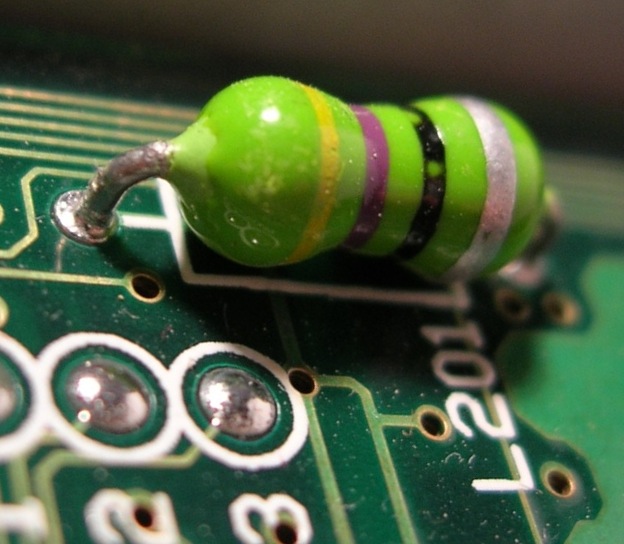 To what extent does the basic passive electronic, the inductor, which opposes change in current have a similar role in markets.
If two inductors are coupled, a voltage is induced in one by the magnetic field coming from current flow in the other inductor. The car and television use this effect among other important applications like transformers and radios.
To what extent does a component like an inductor, perhaps one market coupled to another have uses in market work? To what extent do other electric components give rise to useful hypotheses?
Aug
9
The Upside Down Man, from Victor Niederhoffer
August 9, 2013 | Leave a Comment
The Upside Down Man now says he was wrong about stocks. He's been bearish since 1990. While the market gains a few hundred %, he 's wideley followed. He's caused perhaps as much damage as the chronic bear at Barrons. William Morton invented anesthesia. Dr. Warren at Harvard didnt believe it and pooh-pooed it. Bah Humbug, the Harvard kids said. When Morton subsequently performed the operation Warren started crying. "Gentleman this is no humbug". Many who had derided anesthesia honorably committed Hari Kari. Considering the harm that The Upside Down Man has caused, some suitable expiation would be appropriate. Perhaps similar to Hsieh, kindly mentioned by Mr. Owen, absolute silence and no tweets for at least a year.
Aug
5
The Science of Fear, from Victor Niederhoffer
August 5, 2013 | 8 Comments
In talking about what I learned in the last 10 years, which I wish had been more, I concentrated on four factors. Everything is deception. Fear creates tremendous non-random underperformance. The purpose of markets is to take from the weak. The cycles are ever-changing (they recently changed again for bond stocks) and the solution is to buy and hold. I quantified several aspects of the fear of underperformance and alluded to a study by Mr. Curve that by selling at the fear point, traders lose 4 percentage points a year. That's big.
I'm reading some books on fear. Namely The Science of Fear by Daniel Gardner. The great praise it received is that it's as good as Gladwell. My goodness, at least it had no references so far to the Expert. However, I came across an idiot reference to one of the contrived Kahneman references that supposedly shows that fear is ubiquitous. The naval research bureau which reached such height with Osborne's stock market work, swings to the other side of the pendulum by supporting the masters of part whole biased answers to contrived question. The Kahneman group asks students: "heads you win 150, tails you lose 100." Would you take it. Amazingly to those who wish to show that rationality don't exist, the students don't take it. With these kinds of ridiculous questions and the choices to the answers are again designed by Pam Alikes to guarantee that the hypothesis will be chosen, the supposed irrationality is built; :"Why Investors Make the Wrong Choice".
What kind of world do we live in when the very rational response of students that they don't have 100 bucks to lose, or their liquidity doesn't permit it relative to frat parties, beer and dates, leads to a whole science of behavioral irrationality which Arnold Zellner tells me is called the promiscuous science around the faculty clubs at Chicago.
Gary Rogan writes:
Everything makes perfect sense especially the buy and hold conclusion and the fear factor, and the useless behaviorist bias experiments and the whole aura of ridiculousness of the same behaviorist conclusions being rehashed as new science for over 30 years, but I'm still searching for some way to see whether markets have a purpose. To me they seem to just exist. What gives them purpose? Why do they have to have any more purpose than the ocean which you can surf, in which you can swim and fish and ride boats, or drown or lose a house if it's next to it?
Anatoly Veltman adds:
An intriguing subject to be sure, and I'm certain that someone will be able to quantify fear. Personally, I only get fearful at dizzying new highs — not at scary lows. But yes, the mass psychology seems to err on that count.
I don't know what to do about buy and hold, fully four years and counting of correctionless appreciation. In the current case from 667 to over 1700 so far… I suspect individual stock picking is of increased importance at this point, as I don't believe the indexes' survivorship bias provides any edge during the Bullish phase.
This time it may be different, as I've noticed marked difference in Chair's attitude toward commodities and Gold in particular. I recall stopping by the Junto in early summer 2007 to quite an ear full about stocks having risen 10000 over half century, but Gold barely a handful. And good meal at a favorite SF eatery only a three fold or so. I couldn't understand why this statistic made a Bullish case for stocks and not Bullish for commodities, at that junction. But in the course of this year, Chair has appeared partial to any sweet dip in Gold. I can only suspect, that the liquidity opium has rightfully impressed just about everyone on the planet. And little distinction is being made any more about what exactly to buy and hold! A true contrarian might begin to suspect that, maybe…nothing? Might be soon, too. Are market manipulators really bigger than market - this seems to be the question to answer in 2013. And yet, over the centuries, all of this may just prove statistical noise.
Commenter Kevin adds:
"Everything is deception". Is that in markets…or life…or both! I kind of know the answer but the latter is kind of depressing. What's real!?
Gary Rogan writes:
The trick is to fear neither the highs nor the lows, that's what buy and hold is all about. They are just blips on the exponential rise towards infinity. That's for stocks, not gold or anything that's in it's final form. The ability of people to create more wealth will increase until everything collapses, hopefully many many years from now, but commodities are just things that are produced for as little as someone can figure out how to produce them. Yes, they are a hedge against all the currency debasement and gold is special, but there is no intelligent force making them better and better. I like the lows because then I can buy, but that's not essential. Sooner or later this market will crash hard, but when? And then it will get a hold of itself and will resume it's climb up. And unlike the bond rates it won't be for a few decades or a few years but forever, sort of.
Gary Phillips comments:
Or perhaps the optimists edge is the next piece of low hanging fruit to be picked and traded out of the market.
Sam Marx comments:
With so much apprehension at this point may mean that the S&P has further to go up.
Anatoly Veltman adds:
Why not Sam. Yet up how much before down how much? Is 17 trillion deficit realistically manageable just like the 3 trillion was — within the economy that haven't been pacing near that? Eventually, something will have to be cut — and the spiral will quickly shave some 90% off the top. And of course, the records will be regained again over decades, and compound again. Alas, a pattern like THAT only loosely resembles commonly defined drift. I put forward that it's extremely rewarding to partake of drift from any cyclical bottom; but also that records can't serve as bottoms, by any reasonable method.
Stefan Jovanovich adds:
Vic, you said:
1. everything is deception
2. fear creates tremendous non-random underperformance
3. the purpose of markets is to take from the weak
4. the cycles are ever changing
5. the solution is to buy and hold
That is an excellent concision. I suggest the challenge is to buy and hold, over any chosen time frame.
If I might add my own, they would be:
1. understanding is itself a necessary self-deception c.f. Hume's Inquiry
2. fear in investing comes from envying other people's successes and wanting, out of envy, to ridicule other people's failures
3. the purpose of markets is to test everyone's strength of mind — the rich can be as weak-minded as anyone else
4. cycles exist because we need to see patterns which may, or may not, actually be there - see 1 above
5. only the steadfast survive the second-by-second test of not knowing whether or not there is a spoon
Aug
5
Saws, Markets, and Life, from Victor Niederhoffer
August 5, 2013 | Leave a Comment

What can we learn from the various kinds of saws and their uses for our profit in markets and life? Is it a fruitful or frivolous question? I was induced to it by looking at the saw tooth pattern of the results from many different patterns, i.e. negative serial correlation of order 1 or n.
Alan Millhone comments:
Dear Chair,
We had hand saws in the early days of carpentry. Akin to stock trading by ticker tape?
Today we have power saws and reciprocating saws for cutting lumber.
Along those advances in sawing we have the computer for making stock trades. Faster sawing (keep hands out of the saw blade path!). Same with that thin finger and trading as being careful when you hit send !
There are also estimating programs for figuring remodels etc. A program does one thing for sure — let's you make mistakes faster!
I prefer pad and pencil for estimating.
Sincerely Alan
Aug
2
At the Junto, from Victor Niederhoffer
August 2, 2013 | Leave a Comment
 After putting up a chart of the Dimson, Marsh and Staunton very thorough enumeration of buying every stock in the US, from 1899 to date showing that $1 grew rather steadily to 25507 (the 1929 and 2008 declines look like blips), my college roommate Jim Wynne, in the audience, who recently won the equivalent of the Nobel prize in engineering for inventing laser surgery asked, "how could you say buy and hold" which was sung beautifully by Tamra Paselk (to the tune of "Night and Day"), is great when stocks like Kodak and Xerox have fallen on such hard times or gone bust and so few of the Dow stocks of 1899 are here today.


 I explained that the complete enumeration of the triumphal trio covers all bad and all good (they even take account of the total zero of Russian stocks in 1914 and China in 1944), and there are many bad and many good that make up the totality. But on the spot, I couldn't think of a physical example to show that taking one instance of an experiment, an anecdotal approach, the flash of one outlying proton in a collider, did not determine the average results, and that diversification of 12 stocks would give a correlation of 95% or so with the results of the trio.
What physical analogy should I have used to educate my erudite former roommate who is now working on a cure for skin cancer with the same lasers he used to create laser surgery.
Shane James writes:
What about the growth a Sequoia Tree. More generally the Allometry involved. The tree grows out & up even though some branches fall by the wayside and die.
Pitt T. Maner adds:
I would imagine that there are some biological curves under certain restrained conditions that could be overlain for effect and be quite memorable.
Or groundwater testing where pumps are turned on and off over intervals and cause drawdowns that quickly rebound once the pumps are turned off.

Victor Niederhoffer adds:
As to the reason that it goes up 30,000 a century, I attribute it to the power of compounding along with the required rate of return on investments, and the amount that the entrepreneurs must pay the investor to obtain risk capital, with the spillover effect to publicly traded issues. Amazing a 9 % compounding leads to 200 times as much as a 5% compounding (from memory) after 100 years. That's why Asian stocks are so much better values than ours.
Steve Ellison adds:
An event that is vivid, such as the failure of a once-giant company, may not be at all representative. Consider airplane crashes, for example, which cause many to fear flying. At one moment in 2011, for example, over 5000 airplanes were airborne over the US. How many of them crashed? Probably none.
Similarly, 20 times as many people are killed by falling coconuts as by sharks. I'm still waiting for the movie Return of the Killer Coconuts.
Gary Rogan writes:
The simplest, albeit imperfect, analogy seems to be the number of species on earth. It is estimated that over 98% of all known species are extinct and it's likely that well over 99% of all species that ever existed are extinct.
In addition to the constant relatively steady elimination of species there are mass extinctions:
"In the past 540 million years there have been five major events when over 50% of animal species died."
And yet, will all of that biodiversity has increased over time:
"Based on analyses of fossils, scientists estimate that marine biodiversity today is about twice the average level that existed over the past 600 million years, and that biodiversity among terrestrial organisms is about twice the average since life adapted to land about 440 million years ago. Fossil records also indicate that on average species exist for about 5 to 10 million years, which corresponds to an extinction rate of 0.1 to 1 species per million."
Aug
2
(BN) *FED WON'T RAISE FUNDS RATE UNTIL 2016, PIMCO'S CRESCENZI SAYS
But didn't he say pretty much the opposite yesterday that it would be in Sep if it hit 175. It was nice of Erica to take 0.1 off the rate to keep man small. Exactly what Laurel and Tamra talked about last Nite. "Whenever it looks like your opponent has given you an opening, remember the story of the spider and the fly".
Aug
1
The $10 Trillion Miss in GDP, from Victor Niederhoffer
August 1, 2013 | Leave a Comment
What is the cause of this 10 trillion miss if not the opportunity cost of the bailout and buying of bonds and mortgages by the Fed, the expansion of their asset base, the main accepted principle of macro economics that providing high powered money will create a multiplied effect on output.
"Is Life Still Good If You Miss Out on $10 Trillion?"
"A new analysis from the Federal Reserve Bank of Dallas provides a broader perspective on the weakness of this recovery and the damage caused by the crisis. They estimate that the shortfall in GDP from 2008 through 2023 amounts to about $10 trillion in today's dollars."
anonymous writes:
Retrospectively, It would have been fascinating to see if the animal spirits could have sorted things out better than the 'rescue packages' of our overlords. I suspect that with the same level of regulation as we had pre-'crisis' the difference would have been, inter alia, that we would have lost two or three of the 'global banks'.
The volatility of economic conditions would have been a little higher for a short time. There would be more smaller competitors now in many industries providing better levels of service and competition. The distribution of the economic gains since the lows would have been shared amongst a wider set of private enterprises rather than the 'semi private' banking sector.
Jul
30
NYC Junto, from Victor Niederhoffer
July 30, 2013 | Leave a Comment
Regrettably on August 1st, 2013 Tyler Cowen will not be speaking, a schedule change occurred. Instead however a speculator will be talking about his education the last 10 years. All are invited. Usual place: 20 West 44th St, NY NY. First floor reading room. Start 7:30pm.
Jul
30
Squeeze Plays, from Andrew Goodwin
July 30, 2013 | 1 Comment
 If you are the trader getting squeezed and know it then you don't have to liquidate the threatened positions. What you do is rank the most liquid correlated positions and especially the liquid OTM options of correlated and liquid items and let the predator activity enrich you.
I'd like to see your answer on this plan about cutting the slippage and hopefully doing it near the point where they think they've got you and you can exercise options to hit back.
It's a military type tactic that suckers the predators into a trap. If one can slice and dice orders anonymously without a bank holding all the cards, one might make it work.
The trader getting squeezed has perfect information on the vulnerable positions and goes to the electronic and somewhat anonymous options markets to buy cheap OTM volatility explosion options in all liquid and related assets to soften the blow. Let's see the predators game the algo slicing and dicing of hedges while inflicting what they think is pain. They should pay off the victim of such a squeeze 2:1 at a minimum.
Victor Niederhoffer writes:
What do you people think of this? For reasons of loathing, and avoidance of squeezes, I have avoided any study or consideration of options for many years.
Russ Sears writes:
It seems much of the hedge cost is tied up in matching an exact date and risk of sudden jumps across the strike as that date approaches. From my experience hedging variety of equity indexed annuities (S&P indexed call options embedded in an deferred annuity). I believe the secret to not getting squeezed is to manage the gamma position under "normal" conditions by writing shorter dated options an buying slightly longer time positions. And manage the delta exposure by the different strikes. If you are long gamma you maybe shorter delta than you want after a big drop, this can be carefully reversed (sell long dated, buy shorter options) as volatility spikes.
While not endorsing the derivative expert's new book "antifragiles" (he is too long winded), I would recommend only reading the prologue. It is like exercising, if you practice hard the first order effect is to tear down. The second order is to recover. So you go long the healing process under healthy times to prepare for age and diseases. People dread the first order pain too much so they don't exercise and buy out of the money expensive puts.
What the expert misses is not only do you stress yourself to increase your ability to recover, you indulge your self after the stress, sleep, food and ice baths etc. if inflammation is too much. In the book he says he is on a fast of some kind almost always. But he also lifts weights walks and exercises. This is not healthy. It is as much about the recovery as it is accepting some first order pain.
Jul
29
Levels of Deception, from Victor Niederhoffer
July 29, 2013 | 3 Comments
 Mitchell and Thomspon list 4 levels of deception in animals: false markings, false behavior, feigned injury, and verbal deception. What examples of such deception can be found in markets? Is such a classification or consideration useful?
Shane James writes:
1. Verbal Deception: Central Bank Currency announcements. At one time it was Negara, then the BDF, then Bundesbank then BOJ…. Lately, the Russian CB has become master at attempting to wrong foot the markets about its intentions. Comments like "we think the CAD is a good addition to our reserves." The market buys it then the CB sell CAD into strength. (No need to mention The Yoga Billionaire in the fixed income world)
2. False Behavior: repeated failure to take out the round number in the lead market. Encourages traders go against with stop loss orders just above the round.
3. False Markings: Extended periods of obviously measured (say, close to close) co-movement in related assets that encourage simplistic approaches AFTER the form has peaked.
4. Feigning Injury: Many consecutive down days in markets that have negative serial correlation, into relevant minima. Most obviously the stock markets.
2, 3 & 4 can and have been quantified. Verbal deception is something harder to 'count' as it were. Although, I have had exposure to speech recognition software applied to financial commentary that could easily be programmed to perform or not perform a certain action when specific words are used.
Gary Rogan writes:
We've talked about this before, but I think there needs to be a clear separation between a market participant and/or interested party practicing deception on the one hand and the market as a whole behaving in a deceptive way in a kind of "evolved" fashion. While it's entirely obvious why a single sentient participant or a small consortium of such would want to deceive the market for their specific purposes, it's far from clear why the market would evolve a deceptive technique.
In nature, only the first "paradigm" has analogues. A bird would feign injury or a moth evolve to be able to better blend with the surroundings to protect a biological entity that can pass genes to the next generation, and it's a simple feedback process: adapt or die, with deception being one of the many tricks in the bag of ticks that evolution possesses.
Over the many years of discussing deception here, I have failed to understand what's in it for the market to adapt deceptive behavior. You may say that it evolves to benefit the top feeders, but why? In nature, the grass of the savannah or the weather patterns do not evolve to benefit the lions and hurt the antelopes, while the antelopes certainly evolve to escape the lions in "deceptive" patterns or to jump high to demonstrate their supposed fitness and the lions evolve to hide their intentions from the antelopes as much as possible, but this is just a race between two co-evolving species, not a net benefit to the lions.
The first category below is clear as day, but are the rest there because some powerful market participants are able to explicitly or implicitly cooperate to fool the less powerful or is there some natural imperative for the market to fool as many people as possible because that's the path of least resistance?
Shane James writes:
The slowness of change and human cognitive behavior probably produces the environment for deception shenanigans to be executed. Though it's only a sup group not the main meal. Getting back to our diet example… and the fruit and veg solution… if groups were that smart as a whole then simple problems would be cleared up far sooner, but procrastination and laziness even in this day and age holds the upper hand.
Jul
29
Bond Stock Consilience, from Victor Niederhoffer
July 29, 2013 | 1 Comment
Number of times that a market showed a consilience of bonds and stocks both up from close to close or both down from close to close:
2012 both up both down
Jan 4 1
Feb 5 0
Mar 2 3
April 4 1
May 2 3
June 3 1
July 3 1
Aug 3 3
Sep 3 3
Oct 4 3
Nov 4 1
Dec 4 4
Jan 2013 8 2
Feb 4 2
Mar 2 0
April 3 0
may 4 2
June 4 4
July 8 2
Jul
25
Nothing Like, from Victor Niederhoffer
July 25, 2013 | 4 Comments
There is nothing like the prospect of a weak fish, having to liquidate his positions to cause the cowardly wall street top feeders to front run the forced selling.
Jul
24
Like a Bad Penny, from Victor Niederhoffer
July 24, 2013 | 3 Comments
Like a bad penny or a bad dream, a nightmare that comes to life, the bonds are down substantially again, and there must be frowning in the palatial breakfast dining rooms of the Fed, and the fake doctor must be on the "wire" with the Upside Down Man.
Jul
21
A Franklinian Announcement, from DailySpeculations
July 21, 2013 | Leave a Comment
Dailyspeculations is pleased to announce that on May 29, 2013 our co-founder Laurel Kenner opened her new business Glassery.com purveying useful, beautiful, and safe glass products, many of her own design.
I have used many of these products and found them functional, attractive, and benevolent.
I invite you to visit, if you haven't already.
Jul
21
 One of the highlights of my trip to Japan was dining on the top of the mountain or hirobun in Kyoto. (photos can be found here). In addition to a magnificent meal starting with, "Here's the shogun. Let us make sure he gets to sit with a back on his chair" and ending at their accounting office where I paid– yes. We had 100 courses in the keirotsu style and the custard and abalone and sushi were great.
A highlight was looking down at the next set of benches at a geisha in training with her boss, the owner. I asked how much it might cost to have the pleasure of such a one, and the owner mistakenly thought it was a real life query rather than a hypothetical. I speculated 10 million yen. She responded, she couldn't even consider such a request as she already had a customer sitting next to her at the table and to feign interest in any other proposal would be discourteous. However, the price would have been 10 or 20 times a high as my hypothetical.
Jul
19
A Life Enhancing Thought, from Victor Niederhoffer
July 19, 2013 | Leave a Comment
 Jack Barnaby, the best rackets coach, never learned how to string rackets. He wanted to be a coach and mentor for the boys and not a stringer. My friend Larry Abrams decided not to let others buy his time but to do something he loves every day and became an investor. I don't know how tanki works or other computer games so I can't discuss it with Aubrey when he calls each day to talk about tanki. So I can talk to him about other important things. Life is short. Do what you love. Try to realize the things that you're best suited to do. How does this apply to markets? Don't take flyers in things that you don't know about. Study up on the field that you're involved in. Don't listen to experts?
Vince Fulco writes:
One excellent lesson I learned from the Chair after too much time on the sellside was shut off the media message almost entirely. In most instances, they highlight/profile those who are available and especially with a sharp witted sound bite. Neither of which makes for successful speculation.
Anatoly Veltman writes:
So true. Specialization, niche, is what scores big. Anyone achieving monopoly/oligopoly is real — just try to hold on to it!
On a parallel subject, the greatest coups in marketing history were by leaders who cultivated a whole new consumer culture. Ford, Gates, Jobs, Zuckerberg, Dimon…who else comes to mind?
Stefan Jovanovich writes:
A minor quibble about Anatoly's earlier comment about people who forged a whole new consumer culture. Ford and Hitler are not people who belong on the list. Ford created a new industrial culture but his "consumers" were as nostalgically retrograde as Dearborn Village. The customers for the Model-T were "country" people who used them as substitutes for mules and horses; the Model T was as mechanically simple as the small motor equipment that was already in use (cream separators, for example) so the farmers themselves could work on them. The car's greatest virtue were its high axles and body; it could navigate the mud of back roads in a way that other cars could not. The automobile consumer culture - automatic starter, changing body styles, pneumatic tires and brakes, dealerships and credit sales - were all invented by people other than Ford. But for Edsel, who managed to persuade his father to adopt some of these innovations, Ford might have failed even before the Depression (by 1940 it was bankrupt but was saved by WW II's war orders, rationing and tax laws which gave the family 6 years' relief from competition). As for Hitler the consumer culture of the Third Reich was even more backward-looking. The most successful industrial country in history was to become an empire of small-holding farmers - like the dairymen of the Bavarian alps. Women were not supposed to work (the most amazing single fact of WW II is that the Germans, unlike the British and Americans and, most of all, the Russians, never had any women doing any war work at all).
Jul
18
Review: The Perfect Swarm, from Victor Niederhoffer
July 18, 2013 | 3 Comments
 The Perfect Swarm by Len Fisher is a model of a what a good quasi scientific book simplifying recent findings in the theory of complexity, chaos, crowd behavior, decision making, swarm intelligence, group think and social behavior in humans and insects should be. The author is a physical scientist and inventor with uncommon insight into many subjects that are relevant to our everyday and market life. Typical is his perfect one sentence summary of the Madoff fraud: "Investors collectively deluded themselves into thinking that he must be cheating on their behalf rather than his own." Exactly. There was always the hope that he would front run the limit orders of the over the counter market making operation he ran on their behalf and this led many to gloss over the complexities and fuzzy explanations of how he purportedly made profits for the investors, marks, and stooges. What's surprising is that someone not close to the markets could see this so clearly. It's typical of the Fisher insights and laser ray reporting of many of the studies and anecdotes in the complexity field.
The book opens with a discussion of how locusts and bees manage to go about their lives and find food. They follow three simple rules with wide application. Avoidance, alignment and attraction (move toward the average). These rules when quantified explain a myriad of patterns in human, fish, bird, and insect behavior. How would they apply to markets? Certainly the alignment would relate to following the trend. Attraction would be a form of moving to the limit orders and stop orders. And avoidance—reduce vig. "Computer simulations have shown that synchrony emerges because each locust acts as a self propelled particle whose velocity is determined by those of its neighbors according to a simple rule". Robots can be trained to find the right place to move to with similar rules and humans in crowds follow these rules whenever the density reaches more than 1 person a foot. We don't flap our wings but keep our arms close to our sides. Instead of diving we shorten our steps. The bees and ants get to their food sources by following in the paths of a knowledgeable leader. The investors tendency to follow Buffett, Gross, Soros, and the leaders of the Fed springs to mind.
There is a nice discussion of how averaging can lead to better estimates of things like weights, marbles, or answers to tests. Galton is treated respectfully here although Fisher is quite clear that he is a fellow traveler and agrarian who believes strongly in the idea that has the world in its grip, and is in the anti Bush, climate change is the source of all evils camp. I didn't like the discussion that follows showing how Page's diversity theorem can lead to reducing error as a function of diversity. It seems to me to be an identity similar to the corrections made for between group and person means in standard experimental designs.
The discussion of group think was particularly valuable to me. He shows how it led to the Columbia and Challenger disasters. He reveals the little known fact that Feynman's demurrals to the group think that administrative failure was the cause but that physical problems with the O Rings resilience to cold was the cause were suppressed. The leader of the report, Rogers, a flexion of the Rubin, Paulson persuasion considered Feynman a trouble maker and tried to keep Feynman's conclusions from the public and his own group members. Apparently similar suppression of divergent and unpopular views figured in various assassination reports that have come down the pike. A strong leader can cause many errors and damage by not being open to divergent views, as we know from the Lehman bankruptcy, and the mortgage crisis. I know of many who traded derivatives with big losses who also would have benefited had they encouraged a Feynman in the wings and paid more attention to such a independent thinker. Perhaps it would be advisable for the bearded chair to encourage diverse views about the wisdom of the bailout and quantitative easings, and whether there is more harm to the common man in such than the benefits to the banks whose bad assets are being purchased.
The most insightful chapter of the book, and the one with the least tarnish from hauling in the grab bag of pseudo scientific psychological studies that make up the unfalsifiable, contrived, irrational behavior paradigms that come down the pike from Kahneman and his followers in New Mexico is the chapter on decision making under uncertainty. He lists five ways of making decisions: Recognition, fluency, tallying, taking the best, and satisficing. All of them are highly relevant for market participants. The chapter is footnoted with good summaries of the literature in each field. A typical finding is that just making a list of the good and bad reasons for doing something and putting them on a balance scale without weighting leads to better predictions than regressions. There is also a nice summary of satisficing citing Mosteller's work that a good rule is to take the first third of the applicants, see which is best, and then choose the next one from the remainder that exceeds the best. This rules leads to amazingly good chances of finding the best 5 or 10% in a sample. I have always felt that applying this rule to the first 10 extremes in a day or week might lead to similar beneficent results. An interesting aside as to how the great social media companies Yahoo, Amazon, Google modify these rules for their fast moving markets to hire, fire, set boundaries, and exit ensues. Regrettably many of the star companies mentioned like Nortel, Orticon, and Enron have fallen on hard times using these heuristics.
There are too many good anecdotes in this book to pass over. For example, James Thurber reports in his bio that everyone in Columbus, Ohio, started running madly thinking that a dam had broken instigated by just one random sighting of a person running with "practically everyone in the city following him madly in the first half hour". In talking about the dangers of group think he points out that if we had not believed in basic research we would never have had x-rays, antibiotics, radio, television, or cars with inflatable tires. It is refreshing to know that in many panic situations, in crowds trying to escape fires and crushes, "the overwhelming reactions of people to the crowd pressure was to attempt to help those nearby who seemed to be in trouble".
The book is well footnoted with 72 pages of footnotes with discussions and very well indexed. If it weren't for the defects in many of the quasi scientific studies he cites, it would be useful to a wide range of investors without digging deeper into the subject. However, on the mathematical and statistical aspects of the studies he cites, the author often fall prey to the promiscuous hypothesis bias wherein whatever results come out from the study, he attributes to a real behavioral regularity rather than a random permutation of the data or a reasonable attempt at rationality when putting the contrived laboratory situations into a real life framework. One highly recommends this book for learning, stimulation, and profit.
Pitt T. Maner III comments:
Great review. I find it interesting these processes are at work with some of the simplest organisms as well:
"In the mid-1990s, Ben-Jacob discovered two strains of bacteria that form some of the most spectacular patterns of collective behavior known. When grown on thin, hard surfaces with limited nutrients, a colony of the soil-dwelling facultative anaerobe Paenibacillus vortex secretes a lubricating fluid that allows the cells to swim and form large colonies with intricate fractal-like branching patterns. At the end of each branch, a swirling vortex of bacteria expands its edges.
Within the swarm, which typically contains a greater number of cells than the number of humans on Earth, lanes and highways much more complex than those formed by shiners or wildebeests transfer information and even cargo throughout the colony."
from "Crowd Control"
I also found this presentation on "Learning from Bacteria about Social Networks" fascinating. The same guy has also compared the stock market to an epileptic patient.
Also great is the Microbes Mind Forum and Dr. Ben-Jacob's bacteria as art.
Jul
18
Measuring Hills and Valleys, from Victor Niederhoffer
July 18, 2013 | Leave a Comment
 There must be a way of measuring the hills and valleys and their durations. Possibly with survival statistics. And then computing similarities of the present to the most egregious bad or remarkably good ones in the past. Once this similarity is measured, presumably with a squared distance, the similarity would be correlated with subsequent action. I would imagine geologists and modern statisticians have many rules of thumb for computing such distances of current to past.
Rocky Humbert writes:
I think we both know that the vast corpus of academic research demonstrates no systematic predictability from simply looking at price charts.
The issue is, when one is otherwise bullishly or bearishly inclined, can the chart's characteristics help an investor improve his/her results?
For Bruce Kovner et al, the answer is yes. "Fundamentalists who say they are not going to pay any attention to the charts are like a doctor who says he's not going to take a patient's temperature."
Pitt T. Maner III writes:
It does look at times as though certain "faulted" structures get reactivated and blocks rise again in the basin and range of the market (with reference to HPQ, GMCR, NFLX, SODA, CMG, et al.) Are they more susceptible to future reversals based on past history?
"Ultimately, the broader scientific challenge in the Basin and Range Province is to compare geologically determined rates and styles of deformation to contemporary strain fields determined by GPS to see if regions of accelerated extension are relicts of geologically recent activity or precursors of future activity. Hopefully, the new compilation of faults in the Basin and Range will provide an ever-growing archive of paleoseismic information that will encourage such comparisons."
from "Summary Of the Late Quaternary Tectonics of the Basin and Range Province in Nevada, Eastern California, and Utah"
Gary Rogan writes:
Assuming random news flow, something that has really negative sentiment will react with a larger upward move to a positive piece of news than something that has really positive sentiment. Clearly something that has been going down for a long time is likely to have negative sentiment, therefore it is more susceptible to a reversal than something that has been going up for a long time (which is actually incapable of a reversal on positive news unless it's "sell the news", and the effect of similar positive news is also likely to be smaller). On the other hand if there are no positive news or a state of illiquidity is achieved than negative sentiment doesn't help. So the trick is to look for things that have SOME chance of positive news and are not near bankruptcy.
Jul
17
It is Interesting to See, from Victor Niederhoffer
July 17, 2013 | 1 Comment
It is interesting to see a la Erica that Bernanke is expected to say today that sharp cuts in federal spending would be harmful to the recovery, while trying to say that the tapering of asset purchases is not bearish for bond prices. What a precarious perch we foolish speculators must stand on with all this increases in power for the collective in our midst.
Jul
17
The Worst Airport, from Leo Jia
July 17, 2013 | Leave a Comment
 Laurel told me her flight to Shanghai from the regional airport of Yichang was delayed 20 hours. I must admit I don't fly very frequently (thank God), but none of my flights in recent years were on-time, and this is countrywide not only in Beijing and Shanghai. Best delay was 3 hours and worst was 12 hours. This is much worse than say 5 years ago. It is a serious detriment to businesses and I believe it serves as a big drag to the economy. The key reasons as cited in the article are poor air traffic control and the occupation of the air space by the military.
Victor Niederhoffer writes:
I have heard that it is impossible to check your bags through from one country in China to the other and this adds to the number of delays which I have also heard comes from the restricted air space with the rest allocated to flexions.
"China's Airports, World's Worst for Delays"
Jul
16
Chinese Market Valuations, from Victor Niederhoffer
July 16, 2013 | 2 Comments
 Jim Rogers in his excellent book Street Smarts continues to advise putting all the chips into China. People I met with in China told me they don't know anyone who's ever made money in Chinese stocks except for the members of the party. The growth rate of China according to Jim is a completely doctored number with all the Asian countries trying to outdo the other the same way they do here. But I thought that the p/e and p/b would be of interest. It will be a fight between the amount of money siphoned off by the flexions and the natural growth rate of a country whose labor costs are rapidly rising to our level.
Leo Jia adds:
Hi Vic,
You asked about these in Shanghai, which I did not have the answers. I found the following numbers for July 12.
PE of Shanghai A-Shares market is 10.49, of Shenzhen A-Shares is 24.96, and of Hong Kong Exchange is 9.98.
PB of Shanghai A-Shares market is 1.39, and of Shenzhen A-Shares is 2.43
Market value of all floating shares of Shanghai A-Shares market is 12,174 billion Yuan, and of Shanzhen A-Shares is 5,278 billion Yuan.
Best,
Leo
Jul
16
 At the Shanghai parks, thousands of Asian women sit with posters behind them advertising their college educated girls' availability for marriage. The girls seem to be in a minority in the population because of the one boy syndrome so they have a competitive edge but they are too busy with the exams and too shy to meet to have a good chance of marriage. The prices in China for American goods seem a bit higher than they are in the US for the comparable goods.
Prices in China seems slightly lower than in the US. The McDonalds Big Mac costs 4 $ or so. And the meal comes to $ 8. To the extent that China has benefited from low prices and low wages in the past, and this has been their model to grow, aside from spinning off the state owned businesses to members of the party, they would seem to have a damper on the growth.
The Chinese 30 and unders like to wear the kinds of clothes that 12 and under wear here with frills and ribbons and lace and sequins. The % of women wearing high heels is about 5 times higher than in the US. Of course, the skyline in Shanghai and the number of skyscrapers on the Bund and the number of good restaurants there easily dwarfs by 3 or 4 fold the comparables in NY.
All the restaurants are twice as busy in China as New York as the space is cramped at home, and it is traditional to have the family and friends dinners at restaurants.
All this talk about the smoking and pollution in China is terribly exaggerated. There are numerous parks in Shanghai and the air there is just as good as anywhere in New York. The % of smokers in Shanghai would seem to have been well below 10%. The prices of sushi in Japan seem to be about 1/50 at the fish market and the fish stores in the fishing villages as what one would pay in New York. And of course there is no freezing and the taste is much better. Had more abalone there in a week than in the US in the last 50 years, and much better.
 The competitive economy in Japan seems to be riddled by duopoly, oligopolies, unneeded distribution, and layers of the old boy network. My very entrepreneurial brother in law has been there 30 years and had dozens of entrepreneurial ventures, and each is blocked at the end by an old boy network or extra level of distribution that has to be overcome. Of course, in his defense, he has a great entertainment business based in Kobe, and that was knocked off the block by the earthquake.
The plight of women in Japan is somewhat saddening as they have to be overly subservient, and they do not seem to have much opportunity for advancement to the upper levels of success.
A haircut in Japan is a major adventure as you need 5 or 6 hair cutters to cut your eyebrows and hair, and the good one forbid the facial and neck hairs. That is typical of everything else in this stratified society. But everything works much better in Japan than in the US. There is nothing that would not fix their economy and make it thrive a thousand times better than the US that open immigration would not cure. While I was there, they seemed to be adopting a much more open view towards letting skilled immigrants in than the US policy of closing down the businesses with illegals making the minimum wage.
Of course things are so much more harmonious in Japan than the US with no honking of horns, no dirt on the street, no garbage cans because people are so neat, and everyone trying to do a good job. Throughout the Chinese economy one sees pockets of amazing activity e.g Hagen Daaz in every corner, but it turns out that these have to a large extent been delivered and granted and licensed to high ranking members of the party.
Much of the woes and obstacles to a dynamic society in Japan and China come from the examination system where a very small number of students get into the best schools and everyone has to study 120 hours a week for the exams until they are 12 or 15 and has no time for anything like innovation.
There is about 1% as much physical activity like jogging in Japan as in the US but in China all the parks have thousands exercising in the morning whereas in Japan there is hardly any.
Mr. Leo Jia performed admirably in facilitating all aspects of the trip for Aubrey, Laurel, Susan, me, and Victoria and Artie, and Mr. David Cole was totally beneficent in Japan.
 Worth the time and price of a trip to Japan in and of itself is a meal at Hayashiya in Hyago port in Kobe city on Awaji Island. Magnificent shell fish and tuna and yellow tail and sea urchin and white fish fresh off the boats for a meal that would cost perhaps $ 12,000 at Nobu or Masa but for $ 300. And of course nothing frozen or delayed 10 days.
The monkeys in Kobe are behaved just as well as the Japanese. I gave them a few tests on using tools and they lived up to their names (they were the first to discover how to wash bananas and pass it on) when they used a broom to sweep the apples I placed away from them down an inclined plane to get their food.
The one untoward incident I had was when I was chased away by a guard with a cudgel waving after me after I mistakenly walked a few steps into the Eastern part of the Imperial Garden. It is amazing to see the wealth of the shoguns in Kobe and the castles and parks that they maintained.
The Japanese respect for their elders is somewhat harmful to their economy as they can't be thrown out until they are 80 and this reduced the flexible turnover and new blood necessary to compete in a competitive economy.
The traditional Keirutso dining in Kyoto has much to do with tradition and face. We ate in the highest restaurant on a mountain with the water down to all the other restaurants about 30 in a row. Like Ishmael who liked to get the first draft of wind, the best restaurants like to have their water flow down to the others, and this applies to the way they hang their laundry also, with the senior patriarchs hanging their clothes out above the others.
John and Rosanna Floyd are can do harmonious travel companions that made the whole trip even more harmonious than would have been possible to imagine and Susan and I and my family thank them. Amazingly, the last things said to each other was "where are we going next year?" after 10 days of togetherness and encumbrance by me.
Jim Sogi comments:
The observation that women are subservient is an illusion. They only appear to be subservient in public face. The reality is that women control the home and most of the men in Japan and are tigers, dragon women. Don't be fooled.
Jul
4
The Importance of Erica, from Victor Niederhoffer
July 4, 2013 | 3 Comments
 At times like these, with the employment report two days away, the importance of Erica ("Obama Labor Agency Nominee Sent her Kids to Communist Rooted Summer Camp") can't be gainsaid. Presumably would wish a number that's not too good.
Rocky Humbert writes:
Quoting from website: "Founded in 1923 by Jewish activists as a retreat for their children from the tenements of NYC, Camp Kinderland is true to the vision of its founders. In a difficult world, we are an oasis for children; a place where they can be themselves, feel at ease, and work and play in an atmosphere of cooperation and trust. As at many camps, our campers play sports, swim and hike, gain new experiences in arts, drama, music, dance, nature and camping. But at Kinderland they also encounter ideals of social justice and peace. They don't hesitate to sing a Yiddish labor song, paint a mural of Harriet Tubman or write a skit about putting an end to war—that's just what you do at Camp Kinderland, where it is okay to think, to care, to question and to act. There is nothing quite like it; and it works because the values of community and culture, of justice and righteousness, are inextricably integrated with the friendship, the joy, the beauty, the sheer fun and adventure, of life at sleepaway camp. Please feel free to explore our website ."
Dare I suggest that someone you know might actually benefit from a couple of weeks in this environment? I remember a summer at YMCA camp and it not only strengthened my Jewish identity, it strengthened my immune system. (The bathrooms didn't have hot water and it was my first and last interaction with a pork chop.) My wife, who's political views are somewhat right of Attila-the-Hun spent a few weeks at a Workman's Circle camp during her youth. The menu was better, but the sports were worse.
Gary Rogan writes:
"social justice" = "redistribute the loot to the 'rightful owners'", AKA "Communism", its Jesuit and later Jewish roots notwithstanding. It's worth avoiding anyone who excitedly talks about believing in it.
Stefan Jovanovich writes:
The idea of social justice first took root in the US in the 1840s when the first flood of German immigrants - Lutherans, Catholics and Jews — took advantage of cheap tickets on the paddle wheel steamers from Hamburg. To this day their descendants remain the largest single "ethnic" group (sic) in the country.
Rocky Humbert responds:
Perhaps Mr. Rogan might consider starting Camp Hassen-land as an alternative to Camp Kinderland? He might find a couple of willing investors from spec list. Rocky offers this advertising copy for his website:
Founded in 2013 by cynical atheists as a retreat for their children from the tree-lined streets of Greenwich and Palm Beach, Camp Hassenland is true to the vision of its founders. In a difficult world beset by a particular idea in its grasp, we are an oasis for the self-accomplished - those who earn, deserve and consume the best; a place where money can be spent without thinking about the less fortunate or considering the possibility that one's place in life might be (just occasionally) outside of one's control. As at many camps, our campers play sports, swim and hike, gain new experiences in arts, drama, music, dance nature and camping. But at Hassenland, they also encounter vodka and inane propositions bets. They don't hesistate to sing a negro spiritual — recalling the golden age of this country — paint a mural of Sir Francis Galton, or write a skit about stepping over homeless people in the gutter — that's just what you do at Camp Hassenland — where it is okay to think, to not care, to act, and to screw your fellow campers if they are that dumb. There is nothing quite like it; and it works because the values of individualism and greed, of entitlement and smugness, are inextricably integrated with the the sheer fun and adventure of life knowing that you are superior to everyone else. Please feel free to explore our website.
Jul
3
The Purpose of Markets, from Victor Niederhoffer
July 3, 2013 | 2 Comments
 One must always remember the purpose of markets. To take from the weak and give to the strong. To pay for the enormous infrastructure of the top feeders. To transfer money from the common man to the flexions. To maintain hope for the public at the lower levels so that they can provide the food for the higher levels.
When we see an announcement, a report, we must ask ourselves as Elton did, here comes the badger. How does he live. And how does he get his food and how does he reproduce. Who are his prey besides ourselves. How can he maximize our dissipation of energy so he can eat us with the least possible effort. A framework like this and related ones that you my colleagues on the site can augment I believe is helpful.
Please let me add:
To induce you to be stopped out at the worst possible levels like the round yesterday, but when you don't use the stops, as the Senator and Mr. Humbert like to say, it's certain ruination also. In Old Man and the Sea they have a Spanish expression for something very bad like the Spurs loss to Miami in the sixth game. It's something like "phttthhhhhf". But it means "bad, very bad". Yes, but it's the only market we have. And how can all the evil levels of the troposphere induce you not to buy and hold which would overcome all this.
Pitt T. Maner writes:
Was that term asqueroso?
synonyms: repugnante, repulsivo, repelente, inmundo, puerco, cochino, guarro, marrano, cerdo, sucio, mugriento, cochambroso, nauseabundo, vomitivo, corrompido, infecto, vicioso, deshonesto
Also Hemingway uses the term "salao" for jinxed and unlucky. It is related to "salty" in Spanish but has the unlucky meaning in the Carribean region:
He was an old man who fished alone in a skiff in the Gulf Stream and he had gone eighty-four days now without taking a fish. In the first forty days a boy had been with him. But after forty days without a fish the boy's parents had told him that the old man was now definitely and finally salao, which is the worst form of unlucky, and the boy had gone at their orders in another boat which caught three good fish the first week. It made the boy sad to see the old man come in each day with his skiff empty and he always went down to help him carry either the coiled lines or the gaff and harpoon and the sail that was furled around the mast. The sail was patched with flour sacks and, furled, it looked like the flag of permanent defeat.
Jun
30
A Question to be Investigated, from Victor Niederhoffer
June 30, 2013 | 1 Comment
Are there any tendencies for S&P levels classified by 10 point intervals like
1590 - 1599 = 9
1600 - 1610 = 0
1610 - 1620 = 1
1680 - 1690 = 8
to be springing or compressing in the subsequent day, i.e. is it bullish or bearish when the S&P index closes at 1607 the way it did on Friday, perhaps classified by the path preceding day?

Jun
29
Movie Review: Unraveled, from Victor Niederhoffer
June 29, 2013 | 2 Comments
 "Unraveled" is a reprehensible showing of the last month of Dreier's house arrest before he was sentenced for 18 years for pleading guilty to a 750 million fraud. He built a firm of 200 lawyers up in 6 years with him as the only equity holder. One of his major clients was Solow whose balance sheet he captured and used to sell debt to unsuspecting hedge funds. At the end with the funds he borrowed from demanding repayment, he took 40 million from an escrow account, and then went to Canada where he impersonated a member of the lender's firm to try to show that the firm truly was borrowing the money.
The movie was supposed to build up sympathy for Dreier. He did it according to him because he was angry with Solow for not caring about him, and he just wanted to be big. He will be unable to see his dog again. He had no friends. He was going through a nasty divorce. And he is sad because he won't be able to see his two kids except in jail for 15 years. We are supposed to feel sympathy for him because when he was in Dubai, he still had 100 million in the bank account and could have stayed there with no extradition treaty, and similarly he could have stayed in Canada had he not been jailed there when they caught on. Left out was the incredible harm he inflicted on the 28 hedge funds he stole from, the cascading problems that a loss of 750 million causes to all those that lost. Yes, hedge funds have investors and they are hurt when they lose money.
In addition to being victimized by Stockholm Syndrome, the director should be censored for being conned by Dreier himself. Dreier got him to pay 50,000 for his house expenses for a month. And carefully staged every interview to make himself look like a sympathetic personage. On the contrary, I've never heard a thief come up with such weak and feeble explanations for his wrongdoing. He had a 15 million yacht, and 3 homes, and gave lavishly to charities he says to maintain his image and get funds. But the money he dissipated had to have much benefit to him.
I disputed that a fraud of this magnitude could be implemented by one person alone but the director answered that the prosecutors didn't feel it worthwhile to prosecute any of the others that might or should have known. One is amazed that the accounting firms of the hedge funds involved or his own fund would not have somehow uncovered the fraud as they usually audit all items on a funds balance sheet. The family supposedly didn't receive any benefits from the fraud, but the power, perks, and spillovers of having your dad or son be able to dissipate that much money would be enormous.
In addition to being victimized by Stockholm Syndrome, the director should be chastised for not showing one iota of the damage that the victims of the crime suffered. Everything in the movie was shown from the standpoint of sympathy for the perp– he will never see his dog again, he will have to say goodbye to his son, who seemed oblivious to the crime, he will not be able to watch the Mets games unless he goes to a minimum security prison, and he may have to sleep in a bunk bed with snoring.
The director seems to have no idea that the punishment is 1000 times less than the crime. There is also no compunction from the director for any money that the attorneys at the firm may have received from money that may have been stolen from the funds that he stole from.
To book, it seems that the director was conned into paying 50,000 for a month of expenses to pay for his house arrest. Somehow he had enough money to pay his very estimable attorneys, but did not have enough money to pay for 1 month more of house arrest. A total reprehensible movie about a reprehensible crook.
p.s. This is merely a review, and I have not checked all my facts nor am I familiar with the full extent of who knew or should have known, or who was or was not involved and who did or did not benefit.
Documentary maker Marc Simon replies:
As I attempted to convey last night [after the showing], I am not in disagreement with your view of Dreier and I am not seeking to convince the audience that he is deserving of empathy (nor am I drinking the Dreier kool-aid –thus the Stockholm reference). I am trying to present an unreliable narrator, in a setting that we almost never see in a documentary, and give the audience an intelligent, complicated and manipulative man to wrestle with and judge for itself — I feel that the film did strike a chord with you and that's my hope as a filmmaker.
For more insight on my views see my director's statement [1 page pdf].
Jun
28
 At around a $1.20/ball or less, a tennis ball is a pretty good deal.
"Tennis balls used at Wimbledon are made with New Zealand wool which travels 40,000 km around the world before being served up at SW19, new research has found."
and
'Dr Mark Johnson, Associate Professor at Warwick Business School, was stunned to unearth the surprisingly long and complex journey to one of the world's biggest sporting events.
"It is one of the longest journeys I have seen for a product," he said.
"On the face of it, travelling more than 50,000 miles (80,000kms) to make a tennis ball does seem fairly ludicrous, but it just shows the global nature of production these days, and in the end, this will be the most cost-effective way of making tennis balls."'
(link found via economist Justin Wolfers tweet)
Victor Niederhoffer writes:
In Following the Equator, Mark twain describes the genesis of the Rhodes fortune showing how the shark is the most efficient way to deliver mail (one delivered news of the outbreak of war with the Germans to Rhodes), and Rhodes made a fortune not in wool for tennis balls but wool for coats and shirts.
Jun
27
 There's something about the movie The Three Stooges that reminds one of the variegated Governors of the Fed as they are called out to give speeches and interviews when the market goes south. They once caused much mischief as the three stooges did when left alone and able to give their views on the operation of the orphanage or the Fed. But then the "orfedage" runs into trouble and the three stooges are called to raise money to get the things on an even track again. You would think that these "governors" would have more dignity than to beckon at the call of the Monseigneurs and spout humorous things about the weakness of the economy as an antidote to the decline.
Jun
27
Like Magic, from Victor Niederhoffer
June 27, 2013 | 1 Comment
 Like magic, and the opposite of last Thursday, everything is up. You have to hand it to the powers that be that they were able to turn everything around in a week, after cataclysmic declines in stocks and bond, soon to be followed by gold and the grains.
And to add icing to the cake as I write, stocks above the round of 1600… as Barron Coleman liked to say, "everything's up except my w….".
Jun
24
But Isn’t it Likely, from Victor Niederhoffer
June 24, 2013 | 2 Comments
Isn't it likely that anything like the current level of prices will cause a slowdown in the economy and soon we will be hearing that the tapering is not imminent?
Anatoly Veltman writes:
I assume energy prices are meant. Maybe food, too? Any other, "input" prices?
And my second question: ok, suppose "we will be hearing that the tapering is not imminent". Will it necessarily sustain record equity prices? What about cyclical fluctuations? What about economic realities? Will stocks always necessarily go up (from ANY level) due to Fed "hopes" alone? What about fiscal issues around the world? What about geo-political strains? What about currency wars? What about old fashion profit-taking, correction…
Again, the chart looks eerily like 1987 - when a drop of historic proportions proved to be a mere correction
I think the most dangerous for the market situation will arise precisely as described by the Chair: that participants will be given more Fed "hopium"; and we'll get a lot more of them in for the wrong reason and at the wrong levels.
Ralph Vince writes:
Vic,
Don't you think that depends on the pace of events though here, doesn't it?
Conceivably, things can fall off very, very rapidly given the political backdrop right now and the history of anemic real GDP growth leading as a reliable prelude to recession (and the fact that YoY real GDP has seen successively lower troughs since 1980, the stage is certainly set for a rapid descent). And if the jawboning (which is likely priced in already) doesn't provide the support it is thought to?
A commenter adds:
A Fed official has already bandied this idea in the media. On Friday Bullard said that the pace and duration of QE will respond to market conditions.
Gary Rogan writes:
The costs of the rising rates are already hitting the mortgage refinancing market severely and may soon derail the housing recovery. The cost to the Treasury of higher interest payments and the lack of the profit rebates from the Fed would be enormous, while simultaneously increasing outlays for unemployment and food stamps if the Fed causes a recession. The recovery is tepid and not self-sustaining. Also getting to 6.5% unemployment is a long way off.
It seems likely that the Fed saw a stock bubble building and decided to puncture it. When the first downtrend after the initial attempt started to reverse itself, Ben jawboned some more. He probably has a target level in mind, but he can't afford to to let the rates rise too much so it's a balancing act. What may be best from his perspective is a stock market crash followed by a quick rhetoric reversal from him and perhaps even more QE to lower the rates. He needs to have stocks and bonds to move in the opposite direction by any means necessary.
Scott Brooks writes:
IMHO, there is no amount of stimulus that ward off the coming demographic shift that is occurring in America as well as most of the rest of the developed world.
In America, the final wave (the 3rd wave) of the baby boomers have exceeded their peak spending years and are refocusing their money. Generation X is not yet ready (nor do they have the numbers) to replace the spending of the baby boomers.
Spending is one of the biggest (if not the biggest) driver of our economy. Spending peaks at about age 47/48.
If one were to look at an immigration adjusted birth index, one would clearly see that the baby boom peaked in 1961 then leveled out (with an ever so slight increase increase) thru early 1964 and then off precipitously after that. Add 48 to 1964 and you get 2012.
Spending will decrease for the boomers. The big index companies that sell to the boomers will see their profits further erode. The secular bear that started in 2000 will continue on for several more years.
It will be a traders market with several bear market rallies and opportunities to make money on the short side. I predict higher than normal volatility.
Old "buy and hold" dinosaurs like myself will have to adjust our portfolios and be more nimble. It will be a great opportunity for the day traders and option/future traders of this list to make profits (that is if you profit off volatility). Smaller more diversified positions, low leverage (you don't want to get burned by big moves in volatility), and hedging will be the hallmarks of the day. The long only crowd may experience more pain they are accustomed too, unless the volatility increases the premiums enough on OTM puts that it makes them worthwhile to sell without getting burned on the downside.
Although the potential exists, I don't see big moves down (like 1987)….I see more of a slow bleed like we saw in 00/01/02.
The combination of statist entitlements based on unrealistic assumptions are going to put excessive pressure on governments to deliver on their promises. The same pressure is going to be put on private pensions, many of which are currently underfunded.
This won't last forever, though. Things will get better. Watch demographic tables for those countries which see their demographic start to move positively and buy there when demographics make their positive move. Don't look at typical "index stock" type companies though. When demographic changes take place and the younger generation starts to move into power, they will innovate. Look at smaller companies for profits.
Of course, I've been wrong many times before so it may be best disregard everything I've said.
Ed Stewart asks:
Scott, where do productivity increases fit into this type pf analysis? After all, isn't this what boosts living standards over the long run? Rather than think in money terms, what about the creation of real goods and services that improve lives.
If it is just "spending" that is needed, they could just poof cash into everyone's bank account in the same way that today they "poof" cash into the QE programs.
Scott Brooks replies:
Ed, it's more than just spending that drives any economy. Innovations that improve productivity do play a role.
As to real goods and services and improving lives…..I am very excited about that. Difficult times are often the fertilizer needed to cause innovation. As one generation (the baby boomers) moves off into the sunset of their lives, the next generation (GenX) moves into power and gets to apply their new ideas and innovations.
Each generation builds on the work of the last….and even comes up with brand new ideas along the way.
We saw it happen from 1968 - 82, 1929 - 48 (with a hiccup due to the war), and I could go back even further. Generation shifts occur and we are in one now.
Carder Dimitroff writes:
Your argument makes sense. Unfortunately, this is not how the system has been working. Worse, those advocating for the good 'ol days do not realize they are asking for more government guarantees, a la Solyndra.
Utilities love these guarantees. Given the choice of free markets or government controls, utilities pick government controls every time.
Look at the southeastern states. They had several opportunities to create a free market, called "Grid South." They rejected that idea, preferring instead to remain centrally planned by comrades in state utility commissions.
Almost two decades ago, liberal states began implementing free-market systems for New England to Virginia and all points in between. Soon after, California jumped in. Late to the game was the Midwest. Even later was Texas. Of course, utilities operating in these states were not pleased when their generating assets exit the state's rate base.
It gets better. For decades, gas and electric utilities operated a "cost-plus" enterprise. From time to time, utilities would visit their regulators, present their [prudently acquired] costs, seek an adjusted rate to recover those costs and then asked for a modest margin.
It's like milking your neighbor's cow.
Jun
24
It is Interesting to Note, from Victor Niederhoffer
June 24, 2013 | Leave a Comment
It is interesting to note that there have been 92 days over the last 15 years, that's six a year, that bonds and stocks have both been down 1/2 on a daily basis. But three of them have occurred in the last month. The red colors on our DailySpec graph illustrate this in part. Looking at the concurrent of down 1% and 2% days, we've had 3 years without such events but 3 of them in last month. We are entering a different world where the old regularities much be reconsidered.
Anatoly Veltman writes:
Of course you remember that going into October 1987, it was the pervasive downdrift in bonds which eventually got the better of stocks. The other element was the currency wars, which Jim Baker didn't handle appropriately.
I speculate that should the bond market of today continue its route, then stocks will follow in much more blistering fashion than Mr. Rogan predicts.
Gary Rogan writes:
I don't think I predicted that stocks will not go down substantially. In fact, my point was that Ben really wants them to. My other point was that he wants bonds to go up. However if neither he nor any of his colleagues at the Fed say anything of substance, I see absolutely no reason for both of them not to go down together, perhaps in a spectacular fashion. I'm not capable of making any kind of time-based predictions, but they are both overvalued on any kind of substantive basis and what has been keeping them both up is liquidity from the Fed. Now if Ben and company keep making disparate noises, some about tapering and some about doing the opposite, while keeping QE to infinity that would be such a mess that I wouldn't even attempt to predict how that will turn out. Ben clearly wants the redirect all the liquidity into bonds, but whether the bond vigilantes will let him do that is anybody's guess.
Jun
24
A Query or Two, from Victor Niederhoffer
June 24, 2013 | Leave a Comment
Isn't one of the main reasons that the economy has not been as vibrant as hoped because of the QE? The Fed has an opportunity cost for the assets it has bought. That opportunity cost around the world must be 400 billion. It was taken from the common man, either through direct payments not given or futures increases in service rates and interest costs, and given to the banks. The Fed itself must have a loss of 200 billion on those assets purchased. How has this provided an artificial and frictional stimulus which in the reasonable future will leave us worse off? Regardless, they can't let stocks go down too much, or else everyone will complain and it will be bad for the flexion in November, 2014.
Gary Rogan writes:
QE is mostly an response. The cause is the federal spending that would be unsustainable were it not for QE. You can't stop QE while the government is running enormous deficits and while everybody and their brother is actively encouraged to go on food stamps and disability. Until the federal government totally changes its tone and approach, QE is inevitable and in fact the only thing that prevents quick collapse. It's not stimulus, as you can't push a rope but a destruction of new government debt via wealth transfer. Inflation plus the interest not paid to those who have cash is what's subsidizing the government largesse.
Jun
20
One Notes, from Victor Niederhoffer
June 20, 2013 | 1 Comment
One notes that bonds and stocks have to an inordinate extent gone in opposite directions for 7 years. For example, since 2008 on days when stocks were down 20 or more, bonds were up 120 times and down just 12 for a 10 to 1 odds ratio. With bonds down 200 or more, stocks were up concurrently 25 and down 6, a 4 to 1 odds ratio. There was just 1 occasion in the last 5 1/2 years when both bonds and stocks down 200 on the day, 1/30/2009. It's great to be living in historic times.
Jun
20
One Would, from Victor Niederhoffer
June 20, 2013 | 2 Comments
One would speculate as one often does when seeming short term liquidity is tightened but long term inflationary expectations are dampened, that another day or two like this, and the flexions can forget about ever having to give up on qe2 because the wealth effect will contribute to an increase in unemployment.
Jun
19
Popovich, from Victor Niederhoffer
June 19, 2013 | 2 Comments
 Popovich likes to yell at his players, possibly manhandling them the way he possibly did at the Air Force Academy. He reminds one of McNamara and the whiz kid when they toured the Ford factory in 1944 to install modern management methods there. In order to show the whiz kids how tough they were, Bennet, Ford's assistant in charge of security, manhandled all the operatives on the factory floor pushing them around and berating them for this and that infraction. Of course the whiz kids were astonished as they used cuddly management in the armed forces to embrace their soldiers to provide good morale. One wonders whether Popovich's yelling at his players caused them to slack off in the last 28 seconds and that's why they lost the game. Also, whether rough management in companies, firing willy nilly, and providing no benefits, a la Welch (assuming you couldn't talk sexy to him on Saturday mornings before golf), leads to inferior performance.
Richard Owen writes:
Branson's maxim is a company should be for employees first, then customers, then shareholders. That will create the best spirit, thus the best product, thus the best return. There seems to be a bifurcation of high performers: at one extreme are the psychopathic cultures that rule by fear, at the other, those that resemble religious/positive thinking inculcation.
Jun
19
I Like What Ginobi Said, from Victor Niederhoffer
June 19, 2013 | 1 Comment
I like what Ginobi said about the loss to the Heat when ahead by 5 points with 28 seconds to go. "Bad, very bad". How many times has one felt that way about the market and one's posture within it at the buzzer.
Jun
19
What Would Nock Do, from Victor Niederhoffer
June 19, 2013 | 1 Comment
How would Nock or the subsequent public choice economics analyze what the Fed is likely to do with the Qe2. I would think he would say that they would not wish to give up their power too quickly. They like it that every utterance and every decision cam move the market by trillions. And that it can insure that an incumbent or agrarian can stay in power. That's what I think anyway.
Jun
14
Mumbo Jumbo Department, from Victor Niederhoffer
June 14, 2013 | Leave a Comment
The Nikkei entered a bear market sliding 20% from its peak.
"Stock gains accelerated after the S&P 500 recovered from a brief dip below its average price in the past 50 days. A measure that's watched by some analysts to gauge the markets trend, the S&P 500 has closed above the threshold on all trading days so far this year except for April 18". Bianco said that market volatility will continue "until the taper tantrum stops".
A WSJ news report said that the Fed may "push back on market expectations of higher interest rates. The market fell earlier on a world bank report that growth will be 2.2 % this year, less than its Jan forecast of 2.4 %".
A round number was broken for the second time in the S&P 500 at 1600 intra day and rejected. That was a weight on scale also.
Okay. Those are the weight on the balance scale that tilted the market and caused its quantum jumps today, the pitches in the pinch of Christy Mathewson.
Let us all join Willie Sutton and turn oursevles into headquarters for being such fools to succomb to churning over such things.
Jun
11
Review of Endgame, from Victor Niederhoffer
June 11, 2013 | 4 Comments
 Endgame by Frank Brady, the excellent biography of the rise and fall of Bobby Fisher, perhaps the greatest chess player of all time, and a man not unlike Beethoven who thought the whole world owed him deference, shows Bobby at 9 playing chess in a bathtub like Alan Greenspan at 80, for five hours at a time, the only way his mother Regina could get him to take a bath. His mother spoke 9 languages and was a stenographer for Hermann Muller who won a Nobel Prize in genetics. She was a devoted though impoverished mother and professional protester throughout Bobby's life. Bobby's biological father was reputed to be an eminent physicist, Paul Nemenyi, who sent modest support payments throughout Bobby's childhood. Bobby's normal day from the time he was introduced to chess at the age of 8, until he won the world championships 20 year later consisted of 15 hours of study of chess, reading every chess book in all the book stores and libraries in all the original languages. He was given a scholarship to to the progressive Community Woodward school at the age of 10 with the idea that he'd teach the kids chess, and his IQ of 180 would take care of the rest of his education. He dropped out of Erasmus at the age of 14 so he could play in chess tournaments as he was the youngest Grandmaster in history, and already the US junior and Amateur Champion. Thus, as in almost every other case a combination of immersion in his field, environment and genetics led to his genius.
At the age of 9 he developed his central ideas of chess–rapid development of the officers, occupying or controlling the central squares at the equator, and mobility-giving maximum scope to the pieces. The ideas might be likened to following the opening range breakout, building a solid foundation whenever a movement against the breakout occurred, and insuring that there was enough liquidity in the position at all times to add and subtract without undue friction. I liked the numerous little touches that Bobby used to improve his changes like wearing a visor during his matches so that his opponent wouldn't see what pieces on the board was looking at, and his invention of a clock with an overhead push button that would not make noise like the spring pushed versions, and his insistence on the spectators sitting 65 feet away from him.
He had numerous mentors throughout his career starting with Camine Nigro, a music teacher who introduced him to the Brooklyn Chess club at 9, and Jack Collins who became a second father to him and took him to the chess clubs of New York, especially the Manhattan and Marshall clubs. Bobby renounced all contact with these and all other mentors for infractions such as taking a photograph of him, or asking for him to write an introduction to their books of experiences.
The book opens with one of the three times Bobby was imprisoned, this time in Japan for 15 months, a very good prison to avoid, and then transports the reader back in time to the beginning and end of his tragic life. As is well known, Bobby was snatched by a religious group that believed in impending apocalypse in the world, and recommended against medical treatment for its million + believers. He added to this total belief in the conspiracy of the elders of Zion to take over the world. As part of this he refused to sit at a chess table, or eat any foods that came from Israel, and loudly broadcast his views on this subject and the deserving retribution of 9-11 on radio. An arrest warrant from the US was issued and this was the reason he was arrested in Japan. Eventually he was granted citizenship in Iceland, and the book movingly describes the last 4 years of his life in Iceland as he wasted away, almost friendless, and without family as he refused hospital treatment for the kidney ailments that eventually killed him.
There are many great set pieces in the book that show the development of a paranoid genius. Almost all his friends were excommunicated by him for the slightest bit of self interest on their part. A typical incident came with Walter Brown, a Berkeley friend, who showed him hospitality and room and board for four months but dared to note that Bobby was eating him out of house and home with his 4 hour long distance phone calls. As soon as he mentioned it, Bobby walked out of the home and never spoke to Walter again. He repeated the same excommunication with every friend that had mentored him throughout his life.
He spent 25 years after winning the world championships in Iceland without playing a competitive match. His belief was that if there were any chips that were on the table from his play, that 100% or more had to devolve to Fisher. Frequently whatever the offer was, and it could be 10 million to play in Zaire or Manila or Yugoslavia, he would have to have double, and if anyone else were to make a profit on it, then the deal was off. Thus, he believed in the socialist idea that life was a zero sum game and that whatever chips someone else made from a mutually beneficial exchange came out of his pocket. This view, doubtless devolved from his mother's pro Russian views, was the source of his ruin as well as his lack of education and common sense.
 In one of his humorous remarks, Bobby noted that after he won the championships from Spassky, the US newspapers had chess on the front page and the Russians had it on their back page for the first time in history. He believed that the Russians were always conspiring to cheat him out of the world championships and that they contrived in all their matches to do him in. He also believed that they were so hurt by his winning the championships that they were apt to try to kill him. Apparently, as documented in the book, there is truth to both of these fears.
The author is a great historian with empathy for Bobby. He describes how while Bobby went through what he does to prepare for a match over dinner they were having, he started crying because he could see he was in the presence of genius. Out of the Head of Zeus came Bobby Fisher. Of course romance is always a factor. And Brady gives a very even handed and complete recounting of Bobby's courtship and marriage proposals to a chess playing fan 30 years his junior and his attempts to father a child with a worthy receptacle of his genes and genius in the Philippines.
It is sad to think about the 37 years of Bobby's life after his championships that went without any published or competitive games except for his anticlimatic re-match with Spaasky in 1992. That match did make Fisher a milionaire, and the book contains a nice epitaph describing the legal battle over the $3 million estate he left. There is much for all speculators and parents to learn from this great book about the tragic life of Bobby Fisher and it is highly recommended.
P.S. I became aware of this book when I enrolled Ob. as the youngest member of the Marshall chess club. The book sat atop a table where Fisher player the game of the century at the club where Fisher sacrificed a queen at the age of 13 against Robert Byrne, a grandmaster and won. Strangely, I knew many of the persons described in the book including Art Bisguier who was his second in many tournaments and broke up a fight with another grandmaster, and Jackie Beers who is described as having a great temper which he showed frequently at Brighton Beach Baths where I knew him well, and Walter Browne who I had the pleasure of playing poker against.
I was born in the same year in Brooklyn as Bobby and achieved many of the realms of excellence that he did in another sport, squash. We took the same tests in high school at the same time, but he was in Erasmus where Artie went to school and I in Lincoln. 8 miles to the South. It was interesting for me to note that Bobby was an avid tennis player and swimmer and baseball player, like myself. (It is an interesting irony to me that like Bobby , I took a five year sabbatical from my sports career when I was at my peak at the age of 20. but for opposite reasons to Bobby's. The irony is that I stopped playing because they wouldn't allow any Jews in all the clubs in Chicago where squash was played ( except for one reputed to be a bagman). I didn't wish to demean myself by playing where I couldn't bring a guest, have a locker or order a coke. ( I was able to play for free). Bobby quit the game because he feared that there was a conspiracy among the Jews to grab all power and do him in). Instead of becoming a tennis bum, my parents were able to edge me into Harvard–albeit to my discredit or possibly credit, eventually I became a micro speculator. Bobby who had no contact with his legal or biological father undoubtedly could have achieved untold extra greatness had he been reared by a strong and loving father and mother the way I was. One hopes that Ob. and I and others will learn from the highways and byways of the life of Bobby and will be able to avoid the pitfalls while ascending the summits.
Jun
5
 Things Are Seldom What They Seem
Another bit of topsy turvy, a double negative, is the meme. It used to be that when the economy was weak, the stock market would go down and bonds would go up. Or when the economy was strong the stock market would go up and bonds go down. That's been the idea for at least five years. But now, when the economy is weak, the idea is that the Fed will continue buying weak assets of banks longer, so that stocks go up and bonds go down. When the economy is strong according to the latest random economic number, the idea is that the qe2 will not be prolonged, so the stocks do down and bonds go up.
This is a rather loathsome state of affairs that only Gilbert and Sullivan or Voltaire could have seen. It all stems from the abysmal buying of weak assets by the centrals. Okay. They've bought 2 trillion of assets. The bonds are down about 5 or 10%. That's means to me that 100 or 200 billion has been transferred from the portfolios of banks to the Fed, and this 150 billion has an opportunity cost. One opportunity cost is that instead of enhancing the colleagues and clients, it could have gone to the common man—- even in the form of lump sum payments or a reduction in, dare we say it—- no we don't.
Addendum:
What's the appropriate response to this topsy turvy. The old idea was crazy because when the economy is strong, then inflation is less by the quantity theory of money, mv = pt and t is higher. So bonds should go up not down. But this is even worse. The economy is strong, so stocks go down because the Good one will not buy the weak assets for as long as hoped. What's the world coming to. Which is appropriate. The Willie Sutton thing—- he wanted to turn himself in after Thomson hit the home run. The cricket thing, it ain't cricket. Or my squash opponent who would always say, "this isn't squash, mate" when I moved in to volley a few instead of waiting.
Jun
4
John Mackey (CEO of Whole Foods) will be the next speaker at the Junto on Thursday, June 6th at the Mechanics Institute at 20 W 44th St in NYC. His talk on the social and profit responsibilities of business will start at 8 pm. Regular Junto Franklinian thing will begin at 7:15. Please come early if you wish a seat.
Jun
3
A Shocking Decline, from Victor Niederhoffer
June 3, 2013 | Leave a Comment
 A shocking decline in S&P of 28 points occurred in the last 2 hours of trading on Friday, the largest since 9/21/2011. The present countist inquires whether any of the following have descriptive or predictive significance.
1. It was preceded on Tuesday by a 3 1/4 point decline on Tuesday in bonds, the largest since 11/1/2011. Was it causal?
2. As of 2 pm on Friday, the bonds were down 9 points since the beginning of the month, the worst decline since may/27/2009. Did it cause the decline?
3. The ratio of stocks to bonds at 118 as of 2pm was the highest in at least 10 years. Did it trip the wire?
4. Are the moves in 4 day weeks significantly more volatile than those in 5 days weeks?
5. Ends of months in the past have traditionally been times for those who don't trust business and believe in fairy tales to sell stocks on the grounds that they're bearish. This has vanished for a few years as they licked their wounds. Did they come out of the closet once again?
6. Gold had receded by 30 bucks by 2pm on Friday, hitting 1388 below the round of 1400. Was it a harbinger?
7. Japan dropped 4% on wed overnight, with no apparent impact on Europe and North America. Was it a pilot fish?
8. A tweet by The Upside Down Man that he was no longer bearish on 5 year and 10 years came at exactly the time of the devastating decline and managed to pick bonds up by a point in the subsequent 1/2 hour before the denouement from 3 m to 4 pm in SPU.
9. It was the end of the month and those who sold puts and bought calls had been having a field day for 18 months. Were they complacent and did they get their due.
10. Did margin calls in bonds and gold especially for those who banks were closed in the Mideast and those who can be sold out with 1 second notice from their internet accounts exacerbate the final deluge?
A commenter adds:
Looking at SP500 index sectors, the lowest return for the past month was utilities -7.85%. The highest financials +5.25%
Seems the expectation is that as bonds decline banks will make out and people will get out of utilities.
May
29
A Franklinian Announcement, from DailySpeculations.Com
May 29, 2013 | 3 Comments
 Dailyspeculations.com is pleased to announce that our co-founder Laurel Kenner has opened her new business Glassery.com purveying useful, beautiful, and safe glass products, many of her own design.
I have used many of these products and found them functional, attractive, and benevolent.
May
28
 Anyone who appreciates the scientific study of finance will recognize the name of MFM Osborne as a pioneer, visionary, and creator of our field. He was the first to discover Brownian Motion in Stock Prices, the first to study technical analysis scientifically, the first to note the lognormal nature of prices, the first econophysicist, the creator of automated market making algorithms 50 years before they became common place, the creator of market microstructure, and the discoverer of clustering of prices among other things.
They might also know that he was an eminent physicist whose work on sound and electricity led to his discoveries in finance. Yet despite his renown, he is somewhat of an unsung hero having done his work mainly in the 1960s when our field was in its infancy and many of his contributions have languished in such journals as Econometrics, Operations Research and Journal of the American Statistical Association from that period.
I had the pleasure of knowing him fairly well during the 1960s when he did much of his work in finance. And indeed we collaborated on some papers, we had an extensive correspondence, and he served as one of the original directors of my firm Niederhoffer, Cross and Zeckhauser, Inc., the original name of the current firm of Manchester, Inc. I also had the pleasure of meeting and befriending one of his astronomical colleagues, Harold Weaver at the Univ of Cal, Berkeley, who audited my classes there, and we exchanged many a story about the astounding trajectory of Osborne's scientific career.
During the time I knew Osborne, I was aware that he was the most creative and competent eye in the world of finance, far surpassing in that respect all my teachers at the University of Chicago, of that period, many of whom are widely known, revered, and honored. And I always wondered, where did it all come from, how did a man of such genius arise, and how did his scientific work in physics, astronomy, entomology and oceanography lead to his contributions to finance.
Out of the clear blue sky, I recently found the book "Autobiographical Recollections of M.F Maury Osborne", transcribed by Melita Osborne Carter from a series of cassette recordings in 1987. Attached to the autobiography was a hand written note from MFM Osborne: "You have often asked about the path I took in life. Well here it is. And as you can see my upbringing and path was diametrically different from yours."
It is a pleasure, honor and duty to review this book, as I believe we can all learn from it. And a man of such great accomplishment should receive his due. The book reminds me of what Tom Sawyer would have been like if Tom had trained to be a scientist rather than a detective, and if he had been raised by genteel Southern Scientists rather than a house aunt. It's divided into 34 sections: Early Childhood, Mrs. John's School, Public School, Games and Other Activities, Kites and Model Airplanes, The effects of Personal experience, My House on Westoer Wenue, Summer Camp, Scouts High School, Eoodberry Forest, Mother's Influence, Incidents in Norfolk, University of Virginia Sophomore Year, With Hrdicka in the Aleutions, University of Virginia Other Activities, Mrs. Rose's Farm, American Student Union, Jail– Right and Wrong, University of Cal at Berkley, Lick Observatory, Student of Oppenheimer, Operations of the Naval Research Laboratory, Life in Forest Heights, Non-nrl Research Eddington Studies.
Maury was born on December 1916 and passed away in early 2003 at the age of 86. He has two daughters and two sons. During his life he published 47 scientific papers, received his PhD from the University of Maryland in biology in 1952, served as the Mayor of Forest Heights, and was a gadfly for all the physicists working in the fields of relativity, and all the early believers in the random walk theory.
Like most greats, his life was shaped by a combination of inheritance from eminent predecessors and a fortunate environment that enabled his inherited talents to prosper. He was the proud great grandson of Matthew Fontaine Maury, a famed astronomer, oceanographer and meteorologist who was known as the Pathfinder of the Seas and the Scientist of the Seas "because of his seminal work" The Physical Geography of the Seas, 1955. After great efforts to eradicate slavery in the South, as a proud resident of Virginia, Maury resigned his commission as Superintendent of the US Naval Observatory and joined the confederacy.
He then devoted a good deal of the remainder of his life to the commercial possibilities of discovering and extracting minerals in the South as a way of rebuilding the fortunes of Southerners. MFM Osborne was very proud of his heritage from Matthew Fontaine Maury and followed in many ways in the highways and byways of his grandfather's career.
It was always hilarious to read in the autobiography that despite MFM Osborne's positions in highly classified government research, he always refused to sign any loyalty oaths because he would have had to deny that he was descended from a grandfather who had sworn to overthrow the US government with the outbreak of the civil war.
Here comes the scientist, MFM Osborne. What was his life like? What were the major influences on him? The significant events? How did he reproduce and eat? To get a flavor for his ecology, let's consider several of the typical events described in his autobiography. Osborne never accepted anything without proof. When he found an error in some respected authorities work he liked to say something like, "Someone's going to eat crow, raw squawking and fully feathered, by the time I correct his errors." He applied the same approach to life situations. He noted many people being sent to jail. But why were they sent? The answer would teach him what a society regarded as right and wrong. "No one is surprised if people want for no other reason than to explore mountain tops or caves or jungles. Well, the same is true in society. There are segments of society that one layer does not know anything about or very little about, and you can explore it with the idea of learning about it or improving it." So Osborne decided to spend a few months of his summer vacation from the University of Virginia in jail. He went about it by hoboing across the country until he was picked up by a plain clothes sheriff in Vanceburg, Kentucky. The Jail was a pre-Civil War masonry cell with two rooms with a cage on the outside with masonry walls three feet thick with 30 people inside. What did he conclude from his months in jail? "These people were not bad so much as they were just amoral in just the same way as primitive societies… Looking back I can say it enlightened me as to what constitutes right and wrong. Very much depends on arbitrary standards which change with time." He applied these insights into his study of the Constitution, the Bible, and his scientific pursuits. "It contributed to my understandings of the limitations of truth and falsity — of right and wrong. My experiences in Vanceburg, Kentucky were consonant ultimately with what I learned in many other parts of my life, and in many other circumstances." He applied this learning to question and correct the conclusions of science in many fields, particularly astronomy where he concluded that the errors of measurement were so great that separate investigators were liable to come to completely different conclusions concerning such fundamental questions as the truth of Einstein's hypotheses about the movements of the planets and satellites during eclipses, to the world of finance where he concluded that the students of the random walk were completely on the wrong track because they didn't take account of the influence of the bid asked spread, and the relation between volume and price.
It should be mentioned here that Osborne was a can do person. He was a boy scout and a fix it person. He built model airplanes, boats and kites while in his teens. "If you flew one of these airplanes at night and hung on it a thin wire in which there was a rubber band attached hanging down below the airplane, and the put a match to the rubber band, the rubber band would burn and melt and drop little flaming balls"— The unsympathetic police soon put a stop to that. "I told my children that I had taken a trash can and made a huge catapult out of old inner tubes and shot one of the smallest boys in the neighborhood in the trash can as a space capsule". He liked to hobo and hitchhike across America. He took a year off from school to work on a farm to improve his physical conditioning. He enjoyed pushing a wheelbarrow around, and hauling dirt and using a shovel. Eventually he used these skills to become the main hand on an archeological expedition with Professor Hrdlicka to explore the antiquity of man.
Time and again he used the knowledge he gained of how to get and improve his bearings to get out of life threatening experiences. On one of them however, hauling a car up to the observatory in Mr. Lick while he was studying at Berkeley, he managed to fall off a cliff and spent 1 month prostrate on his back in a hospital which time, he characteristically used to improve his knowledge of tensor calculus.
One of his typical chores there was to rake manure. He used his experiences there to come up with his solution to the problem of why the bee can fly or some insects can travel at 500 miles per hour, or how salmon can swim upstream 500 miles without eating. His conclusion: "Salmon are more efficient than the most efficient rigid body boat that humans can devise because they seek out and gain energy from the varying velocities of water that they navigate." When he performed archeological work, he had no compunction of diving 50 feet under water without deep sea equipment to recover a rake.
Another example of the Osborne way came when he was made mayor of Forest Heights. It was the first city outside of the city limits of Virginia. Anyone who moved tended to allow their dogs to run free. The dogs ran in packs and terrorized all the people of Forest Heights. Osborne concluded the solution was to have a dog day where every stray dog not on a leash that day would be shot. He became world infamous for that solution and received many a threat that he would be killed if he implemented it.
The path and conclusions of many of his scientific discoveries in astronomy, biology, entomology, finance, physics, optics, sound and especially Eddington's theory of relativity are detailed in the autobiography. His schooling at the University of Virginia, Berkeley, and Harvard provides a great window on the process of scientific education and discovery during the first half of the 20th century. His work at the Naval Research Laboratory provides insights into how large research institutions work, and the ins and outs of the bureaucratic process. His experiences with Oppenheimer, Feynman, and other great geniuses of physics and astronomy as well as the hum drum day to day of the kind of instruction provide a great foundation for the way science was carried out in practice rather than theory.
In view of the importance of Osborne's contributions to the world of finance and science, and the intrinsic interest of his autobiographical notes, I would be pleased to send a copy of his recollections to anyone sending me a self addressed envelope which you can send to Manchester at 101 Merritt 7 Corporate Park, 6th floor, Norwalk, CT, 06581.
May
24
MFM Osborne, from Victor Niederhoffer
May 24, 2013 | Leave a Comment
Relative to the Swedish Riots …
MFM Osborne reports in his biographical notes which I have the pleasure of reading, that it is much easier for an American to get published in a European Journal than an American one. His paper on the migratory behavior of salmon could not find a publisher in the US but it was gladly received in the Journal of Experimental Biology in England. Similarly for his seminal work on the flapping behavior of insects, and browning motion in stock prices. One believes it is part of a general tendency for the grass to be greener on the other side of the street. We are all taught to defer at once to those of discordant belief, especially if they believe in the idea that has the world in its grip, i.e. that the pursuit of happiness should be punished by death, or eschewed for a better world above. However, when we see it on the other side of the street, we are free to note it but have to cover it up and excuse it here, as in the confession of the three murders by the brothers before the bombing.
Gibbons Burke writes:
"But Jesus said to them: 'A prophet is not without honor, save in his own country, and in his own house.'" [Matthew 13:57]
May
20
Up the Lazy River with Bonds, from Vic Niederhoffer
May 20, 2013 | 3 Comments
This chart of 10 Yr Treasuries reminds one of the very kind companionship that Mr. Pitt provided to Aubrey and myself up the lazy river in Disneyworld Orlando a year ago. One wonders whether there are any regularities in it. vic
Anatoly Veltman comments:
One may observe the consecutive higher lows throughout the multi-year uptrend. One concludes that any first lower low will serve to produce technical downtrend of significance; at that time get out. Easy money!
Jeff Watson adds:
I'll say it again, the mistress never gives away, "Easy Money," and there is no such thing as easy money for the non-Flexion. One suspects that those who make "easy money" in the market have some kind of Faustian Bargain in effect. I have to fight tooth and nail for every quarter cent.
John Netto says:
Jeff- start studying market positioning and how the market is structured before large Econ data releases and Fed announcements. Being aware of this will point out asymmetrical situations which tend to provide profits at a much higher velocity.
Jeff replies:
John, thank you very much for the most enlightening market lesson I've had in 35 years of trading.
Vic Niederhoffer is skeptical:
One is content to eke out any profit let alone one at a higher velocity. When I can unravel the meaning of Mr. Netto's post, I mite be poised to become a wealthy man.
John Netto clarifies:
The Chairman has asked me to provide further detail on what specifically i'm referring to by putting oneself in trades where the velocity of P and L can appreciate at a greater intensity based on identifying market asymmetries. Take the most recent nonfarm payrolls number. During the beginning of the week we saw estimates around 150,000. The day before we saw ADP miss … estimates were then lowered for the nonfarm payrolls number from 150,000 to 140,000 by the Street.
We saw a rally in the bond market and some weakness in equities with the S and P sitting around 1585. This was the first sign of how the market was positioning for what was believed to be a weak jobs report.
The number beat consensus coming in at 165,000 and with the market surprised by the results and positioned the opposite way, bonds sold dramatically and equities put in a gap up, go up day - with neither of those markets returning to the scene of the crime since. As a professional trader supporting myself from my trading P&L, understanding market positioning is one of the big ways I generate P&L. The aforementioned example was particularly lucrative.
May
19
Woodson, from Vic Niederhoffer
May 19, 2013 | Leave a Comment
Woodson reminds me of the trader who holds a losing position 10 days in a row until it totally ruins him. He stays with Smith despite the fact that he's a loose cannon,loses the ball by relaxing on offense, goes 1 for 6 from floor continuing his usual shooting percentage,has Anthony giving up as he unbelievably notes Smiths bad play, gives a gratuitous technical foul, and generally tries to get his game back when the season is at a precipice. Yet Woodson stays with him regardless the way a trader holds a losing position until he goes broke. Its pathetic to see this stubbornness. The worst thing that happened to Knicks aside from the sullen Ewing resonance on the team and the three point holdover from Antoni is the lucky game winning shots that smith made at the beginning of the season. One remembers the winning shots he made, two, but he lost 10 or 20 games with the same shots later in the season.
Craig Mee adds:
The cowboy really doesn't have a place in this day and age of professional sport or markets. Players are way too fit and every part of their game is looked at and tested to expose any edge the opposition can utilise. The question now is how on earth are things going to evolve in the next 10 years as the last 10? For sport or the markets … and is there a way to foresee this and be better for it, in knowledge or profit.
May
18
Briefly Speaking, from Vic Niederhoffer
May 18, 2013 | Leave a Comment
The regularities in fixed income seem much less numerous than the regularities in stocks. What is the cause of this?
First one market goes down much in one week, then another market goes down the next week. Is it random or predictable ? Last week it was gold.
Is there an all seeing eye that looks for ways to inspire mish and churning in markets that learns from recent outcomes and paths of scores in vivid sports events?
The growth in the belief in the value and inevitability of the world state has preceded the decline in gold.
The gold is down 7 days in a row and this has happened only 4 times since the new millennium. But it is unlike other markets except bonds. Why?
number of runs of 7 or more
in new millenium

market      up runs         down runs

bonds       9                 3
sp         40                 7
bunds      11                16
dax        21                10
nas        41                13
gold       18                 4
crude      14                18
euro(fx)   15                10
yen        15                10
The number of bonds you could buy with one spu (i.e the stock to bond ratio) and the amount of gold you could buy with one spu (i.e. the stock to gold ratio), are at 5 year highs. What does this portend? Are there any other ratios of moment and are they predictive?
Why have central banks which used to be in general antithetical to big stock market rises become so favorable to them, to the extent that many of them are buying equities themselves?
What is the frequency of scandals as a function of the duration before and after major elections?
What are the seasonal tendencies of the outbreak of wars as a function of weather?
The nikkei to spu ratio was once 60 and fell to 7 and is now 9.5. Does it show trends? ( one must check these numbers).
The vix is at 12.5, and all who have sold puts on stocks have made fortunes since 2008. How will this situation be rectified?
The euro at $1.28 is in the lower half of its 1.60 to 1.20 range since 2005. Is the Troika getting an itchy finger? And do they like to see the US wealth prospering at their expense?
And just one more: Is there a point in life and markets, where all resistance to pressure to succumb ceases as in Beauty and the Beast or a market rise of a certain % in the case of stocks or a decline of a certain % in the case of bonds? The danger of relying on a equilibrium ratio comes to mind with the ratio of stocks to bonds at a 6 year high.
Veteran trader Anatoly Veltman adds:
You cite the same poignant reason for the recent Gold demise as was the Palindrome's predictive opinion voiced way before April 2013. Of course, the clincher was the fact of the relative over-valuation of Gold as a currency on its way to $1921 peak in 2011.
When Gold is high, i.e. over the latest decades' boiling points of 500-800 USD - it trades as a currency on a cross against other majors. The USD is still a premiere reserve currency, and EUR and JPY represent the next largest economies. Note that against the JPY, Gold is still holding near the all-time record!
Now, there would be some change in Gold's complexion if it traded under its current marginal production cost of $1100. We might see producers' moves to shut down, hedge, finance, etc. The world average production cost is estimated anywhere in $550-800 range, and those levels are simply unimaginable given the growing distrust of the world's population toward fiat money. It's not impossible, however, to have a spike down there one day: under a scenario that world Central Banks were to reach a consensus - and lighten up. Curiously, such consensus could only come about if your current concept of the sudden universally found "belief" were to fall on hard times. I'm sure this logic is somewhat counter-intuitive.
Yet, in the near-term, a lot of back and forth trading is guaranteed to happen. Just like the May 6th of 2010 stupendous one-day range in stocks has basically contained the price discovery that followed over the next months and months -so may Gold be mired in a range not far exceeding it's mid-April spike. Gold's done exactly that for a full month already; and with allowance for a few currency spikes, we are likely to see Gold at current levels again by summer's end.
May
18
 Sam Eisenstadt has mentioned that he likes to use a potpourri of overlapping, multicollinear monthly changes in the S&P to predict future price changes.
It would be a good thing to see what predictivity there is in regression models of monthly changes that extends and augments, one thinks.
.
.
May
18
The Path, from Vic Niederhoffer
May 18, 2013 | 2 Comments
Everything in the market is path dependent. You can have the best insights, the best trades, but if you do it this week versus next week the whole thing is different. Had I not done this or that when the adversaries were lined up against, I mite be flying and wealthy. Is there any doubt that if all these scandals had not been revealed a few months after the election, the outcome would have been different. Even the man who turned 10 thou into 50 million in his IRA could have won. vic
May
17
Before the Weekend, from Vic Niederhoffer
May 17, 2013 | Leave a Comment
Whenever a market I was long goes way against me and I sell at the market, (if one had a Xantippe for a wife - it would be her demanding one get out before the weekend — or else) , I have Tom Wiswell saying to me, " Now you're Thinking ". After he put me in a untenable position.
Now you're selling.
One believes that there will be many conservatives without romance this weekend. vic
Alex Castaldo adds:
I spoke to my mother today. Eighty four years old. "I read it in the paper a week ago that you shouldn't buy gold or bonds. They are going down".
May
16
Modern Times, from Victor Niederhoffer
May 16, 2013 | 3 Comments
I just had a modern Finnigan happen to me. I got to sleep long a commodity that I had a profit on when I fell asleep but I left my limit orders to buy well below the current price in. I heard a computer ring tone 12 times waking me up. I am reluctant to get up because I know that means that I have a substantial loss and one limit order below after another must have been filled. But one must face the music. So I drag myself up, (I hadn't slept for two days as was long another commodity that refused to budge while I waited for the hoped for rally in it in vain.) So I get up finally, reluctantly, meanderingly, and walk outside my room. To my relieve I hear Toria shouting, "dad, I'm locked out, please let me in. Are you home?". The ring of the door bell is exactly like the ring of the computer. So with relief I make my way to the computer. Sure enough, the price has fallen to right above my limits and I have lost just as much as I would have if I had not mistakenly thoought the ring on the door bell was the ring on the computer. One hopes that I've made myself clear.
May
15
The round numba is never a penumbra. Today's example: Gold.

Archives
- October 2026
- September 2026
- August 2026
- July 2026
- June 2026
- May 2026
- April 2026
- March 2026
- February 2026
- January 2026
- December 2025
- November 2025
- October 2025
- September 2025
- August 2025
- July 2025
- June 2025
- May 2025
- April 2025
- March 2025
- February 2025
- January 2025
- December 2024
- November 2024
- October 2024
- September 2024
- August 2024
- July 2024
- June 2024
- May 2024
- April 2024
- March 2024
- February 2024
- January 2024
- December 2023
- November 2023
- October 2023
- September 2023
- August 2023
- July 2023
- June 2023
- May 2023
- April 2023
- March 2023
- February 2023
- January 2023
- December 2022
- November 2022
- October 2022
- September 2022
- August 2022
- July 2022
- June 2022
- May 2022
- April 2022
- March 2022
- February 2022
- January 2022
- December 2021
- November 2021
- October 2021
- September 2021
- August 2021
- July 2021
- June 2021
- May 2021
- April 2021
- March 2021
- February 2021
- January 2021
- December 2020
- November 2020
- October 2020
- September 2020
- August 2020
- July 2020
- June 2020
- May 2020
- April 2020
- March 2020
- February 2020
- January 2020
- December 2019
- November 2019
- October 2019
- September 2019
- August 2019
- July 2019
- June 2019
- May 2019
- April 2019
- March 2019
- February 2019
- January 2019
- December 2018
- November 2018
- October 2018
- September 2018
- August 2018
- July 2018
- June 2018
- May 2018
- April 2018
- March 2018
- February 2018
- January 2018
- December 2017
- November 2017
- October 2017
- September 2017
- August 2017
- July 2017
- June 2017
- May 2017
- April 2017
- March 2017
- February 2017
- January 2017
- December 2016
- November 2016
- October 2016
- September 2016
- August 2016
- July 2016
- June 2016
- May 2016
- April 2016
- March 2016
- February 2016
- January 2016
- December 2015
- November 2015
- October 2015
- September 2015
- August 2015
- July 2015
- June 2015
- May 2015
- April 2015
- March 2015
- February 2015
- January 2015
- December 2014
- November 2014
- October 2014
- September 2014
- August 2014
- July 2014
- June 2014
- May 2014
- April 2014
- March 2014
- February 2014
- January 2014
- December 2013
- November 2013
- October 2013
- September 2013
- August 2013
- July 2013
- June 2013
- May 2013
- April 2013
- March 2013
- February 2013
- January 2013
- December 2012
- November 2012
- October 2012
- September 2012
- August 2012
- July 2012
- June 2012
- May 2012
- April 2012
- March 2012
- February 2012
- January 2012
- December 2011
- November 2011
- October 2011
- September 2011
- August 2011
- July 2011
- June 2011
- May 2011
- April 2011
- March 2011
- February 2011
- January 2011
- December 2010
- November 2010
- October 2010
- September 2010
- August 2010
- July 2010
- June 2010
- May 2010
- April 2010
- March 2010
- February 2010
- January 2010
- December 2009
- November 2009
- October 2009
- September 2009
- August 2009
- July 2009
- June 2009
- May 2009
- April 2009
- March 2009
- February 2009
- January 2009
- December 2008
- November 2008
- October 2008
- September 2008
- August 2008
- July 2008
- June 2008
- May 2008
- April 2008
- March 2008
- February 2008
- January 2008
- December 2007
- November 2007
- October 2007
- September 2007
- August 2007
- July 2007
- June 2007
- May 2007
- April 2007
- March 2007
- February 2007
- January 2007
- December 2006
- November 2006
- October 2006
- September 2006
- August 2006
- Older Archives
Resources & Links
- The Letters Prize
- Pre-2007 Victor Niederhoffer Posts
- Vic’s NYC Junto
- Reading List
- Programming in 60 Seconds
- The Objectivist Center
- Foundation for Economic Education
- Tigerchess
- Dick Sears' G.T. Index
- Pre-2007 Daily Speculations
- Laurel & Vics' Worldly Investor Articles
