May
28
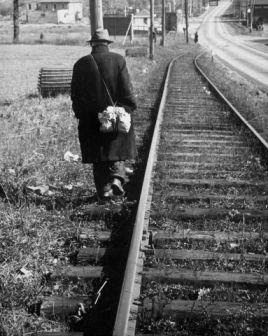 Anyone who appreciates the scientific study of finance will recognize the name of MFM Osborne as a pioneer, visionary, and creator of our field. He was the first to discover Brownian Motion in Stock Prices, the first to study technical analysis scientifically, the first to note the lognormal nature of prices, the first econophysicist, the creator of automated market making algorithms 50 years before they became common place, the creator of market microstructure, and the discoverer of clustering of prices among other things.
They might also know that he was an eminent physicist whose work on sound and electricity led to his discoveries in finance. Yet despite his renown, he is somewhat of an unsung hero having done his work mainly in the 1960s when our field was in its infancy and many of his contributions have languished in such journals as Econometrics, Operations Research and Journal of the American Statistical Association from that period.
I had the pleasure of knowing him fairly well during the 1960s when he did much of his work in finance. And indeed we collaborated on some papers, we had an extensive correspondence, and he served as one of the original directors of my firm Niederhoffer, Cross and Zeckhauser, Inc., the original name of the current firm of Manchester, Inc. I also had the pleasure of meeting and befriending one of his astronomical colleagues, Harold Weaver at the Univ of Cal, Berkeley, who audited my classes there, and we exchanged many a story about the astounding trajectory of Osborne's scientific career.
During the time I knew Osborne, I was aware that he was the most creative and competent eye in the world of finance, far surpassing in that respect all my teachers at the University of Chicago, of that period, many of whom are widely known, revered, and honored. And I always wondered, where did it all come from, how did a man of such genius arise, and how did his scientific work in physics, astronomy, entomology and oceanography lead to his contributions to finance.
Out of the clear blue sky, I recently found the book "Autobiographical Recollections of M.F Maury Osborne", transcribed by Melita Osborne Carter from a series of cassette recordings in 1987. Attached to the autobiography was a hand written note from MFM Osborne: "You have often asked about the path I took in life. Well here it is. And as you can see my upbringing and path was diametrically different from yours."
It is a pleasure, honor and duty to review this book, as I believe we can all learn from it. And a man of such great accomplishment should receive his due. The book reminds me of what Tom Sawyer would have been like if Tom had trained to be a scientist rather than a detective, and if he had been raised by genteel Southern Scientists rather than a house aunt. It's divided into 34 sections: Early Childhood, Mrs. John's School, Public School, Games and Other Activities, Kites and Model Airplanes, The effects of Personal experience, My House on Westoer Wenue, Summer Camp, Scouts High School, Eoodberry Forest, Mother's Influence, Incidents in Norfolk, University of Virginia Sophomore Year, With Hrdicka in the Aleutions, University of Virginia Other Activities, Mrs. Rose's Farm, American Student Union, Jail– Right and Wrong, University of Cal at Berkley, Lick Observatory, Student of Oppenheimer, Operations of the Naval Research Laboratory, Life in Forest Heights, Non-nrl Research Eddington Studies.
Maury was born on December 1916 and passed away in early 2003 at the age of 86. He has two daughters and two sons. During his life he published 47 scientific papers, received his PhD from the University of Maryland in biology in 1952, served as the Mayor of Forest Heights, and was a gadfly for all the physicists working in the fields of relativity, and all the early believers in the random walk theory.
Like most greats, his life was shaped by a combination of inheritance from eminent predecessors and a fortunate environment that enabled his inherited talents to prosper. He was the proud great grandson of Matthew Fontaine Maury, a famed astronomer, oceanographer and meteorologist who was known as the Pathfinder of the Seas and the Scientist of the Seas "because of his seminal work" The Physical Geography of the Seas, 1955. After great efforts to eradicate slavery in the South, as a proud resident of Virginia, Maury resigned his commission as Superintendent of the US Naval Observatory and joined the confederacy.
He then devoted a good deal of the remainder of his life to the commercial possibilities of discovering and extracting minerals in the South as a way of rebuilding the fortunes of Southerners. MFM Osborne was very proud of his heritage from Matthew Fontaine Maury and followed in many ways in the highways and byways of his grandfather's career.
It was always hilarious to read in the autobiography that despite MFM Osborne's positions in highly classified government research, he always refused to sign any loyalty oaths because he would have had to deny that he was descended from a grandfather who had sworn to overthrow the US government with the outbreak of the civil war.
Here comes the scientist, MFM Osborne. What was his life like? What were the major influences on him? The significant events? How did he reproduce and eat? To get a flavor for his ecology, let's consider several of the typical events described in his autobiography. Osborne never accepted anything without proof. When he found an error in some respected authorities work he liked to say something like, "Someone's going to eat crow, raw squawking and fully feathered, by the time I correct his errors." He applied the same approach to life situations. He noted many people being sent to jail. But why were they sent? The answer would teach him what a society regarded as right and wrong. "No one is surprised if people want for no other reason than to explore mountain tops or caves or jungles. Well, the same is true in society. There are segments of society that one layer does not know anything about or very little about, and you can explore it with the idea of learning about it or improving it." So Osborne decided to spend a few months of his summer vacation from the University of Virginia in jail. He went about it by hoboing across the country until he was picked up by a plain clothes sheriff in Vanceburg, Kentucky. The Jail was a pre-Civil War masonry cell with two rooms with a cage on the outside with masonry walls three feet thick with 30 people inside. What did he conclude from his months in jail? "These people were not bad so much as they were just amoral in just the same way as primitive societies… Looking back I can say it enlightened me as to what constitutes right and wrong. Very much depends on arbitrary standards which change with time." He applied these insights into his study of the Constitution, the Bible, and his scientific pursuits. "It contributed to my understandings of the limitations of truth and falsity — of right and wrong. My experiences in Vanceburg, Kentucky were consonant ultimately with what I learned in many other parts of my life, and in many other circumstances." He applied this learning to question and correct the conclusions of science in many fields, particularly astronomy where he concluded that the errors of measurement were so great that separate investigators were liable to come to completely different conclusions concerning such fundamental questions as the truth of Einstein's hypotheses about the movements of the planets and satellites during eclipses, to the world of finance where he concluded that the students of the random walk were completely on the wrong track because they didn't take account of the influence of the bid asked spread, and the relation between volume and price.
It should be mentioned here that Osborne was a can do person. He was a boy scout and a fix it person. He built model airplanes, boats and kites while in his teens. "If you flew one of these airplanes at night and hung on it a thin wire in which there was a rubber band attached hanging down below the airplane, and the put a match to the rubber band, the rubber band would burn and melt and drop little flaming balls"— The unsympathetic police soon put a stop to that. "I told my children that I had taken a trash can and made a huge catapult out of old inner tubes and shot one of the smallest boys in the neighborhood in the trash can as a space capsule". He liked to hobo and hitchhike across America. He took a year off from school to work on a farm to improve his physical conditioning. He enjoyed pushing a wheelbarrow around, and hauling dirt and using a shovel. Eventually he used these skills to become the main hand on an archeological expedition with Professor Hrdlicka to explore the antiquity of man.
Time and again he used the knowledge he gained of how to get and improve his bearings to get out of life threatening experiences. On one of them however, hauling a car up to the observatory in Mr. Lick while he was studying at Berkeley, he managed to fall off a cliff and spent 1 month prostrate on his back in a hospital which time, he characteristically used to improve his knowledge of tensor calculus.
One of his typical chores there was to rake manure. He used his experiences there to come up with his solution to the problem of why the bee can fly or some insects can travel at 500 miles per hour, or how salmon can swim upstream 500 miles without eating. His conclusion: "Salmon are more efficient than the most efficient rigid body boat that humans can devise because they seek out and gain energy from the varying velocities of water that they navigate." When he performed archeological work, he had no compunction of diving 50 feet under water without deep sea equipment to recover a rake.
Another example of the Osborne way came when he was made mayor of Forest Heights. It was the first city outside of the city limits of Virginia. Anyone who moved tended to allow their dogs to run free. The dogs ran in packs and terrorized all the people of Forest Heights. Osborne concluded the solution was to have a dog day where every stray dog not on a leash that day would be shot. He became world infamous for that solution and received many a threat that he would be killed if he implemented it.
The path and conclusions of many of his scientific discoveries in astronomy, biology, entomology, finance, physics, optics, sound and especially Eddington's theory of relativity are detailed in the autobiography. His schooling at the University of Virginia, Berkeley, and Harvard provides a great window on the process of scientific education and discovery during the first half of the 20th century. His work at the Naval Research Laboratory provides insights into how large research institutions work, and the ins and outs of the bureaucratic process. His experiences with Oppenheimer, Feynman, and other great geniuses of physics and astronomy as well as the hum drum day to day of the kind of instruction provide a great foundation for the way science was carried out in practice rather than theory.
In view of the importance of Osborne's contributions to the world of finance and science, and the intrinsic interest of his autobiographical notes, I would be pleased to send a copy of his recollections to anyone sending me a self addressed envelope which you can send to Manchester at 101 Merritt 7 Corporate Park, 6th floor, Norwalk, CT, 06581.
Comments
4 Comments so far
Archives
- October 2026
- September 2026
- August 2026
- July 2026
- June 2026
- May 2026
- April 2026
- March 2026
- February 2026
- January 2026
- December 2025
- November 2025
- October 2025
- September 2025
- August 2025
- July 2025
- June 2025
- May 2025
- April 2025
- March 2025
- February 2025
- January 2025
- December 2024
- November 2024
- October 2024
- September 2024
- August 2024
- July 2024
- June 2024
- May 2024
- April 2024
- March 2024
- February 2024
- January 2024
- December 2023
- November 2023
- October 2023
- September 2023
- August 2023
- July 2023
- June 2023
- May 2023
- April 2023
- March 2023
- February 2023
- January 2023
- December 2022
- November 2022
- October 2022
- September 2022
- August 2022
- July 2022
- June 2022
- May 2022
- April 2022
- March 2022
- February 2022
- January 2022
- December 2021
- November 2021
- October 2021
- September 2021
- August 2021
- July 2021
- June 2021
- May 2021
- April 2021
- March 2021
- February 2021
- January 2021
- December 2020
- November 2020
- October 2020
- September 2020
- August 2020
- July 2020
- June 2020
- May 2020
- April 2020
- March 2020
- February 2020
- January 2020
- December 2019
- November 2019
- October 2019
- September 2019
- August 2019
- July 2019
- June 2019
- May 2019
- April 2019
- March 2019
- February 2019
- January 2019
- December 2018
- November 2018
- October 2018
- September 2018
- August 2018
- July 2018
- June 2018
- May 2018
- April 2018
- March 2018
- February 2018
- January 2018
- December 2017
- November 2017
- October 2017
- September 2017
- August 2017
- July 2017
- June 2017
- May 2017
- April 2017
- March 2017
- February 2017
- January 2017
- December 2016
- November 2016
- October 2016
- September 2016
- August 2016
- July 2016
- June 2016
- May 2016
- April 2016
- March 2016
- February 2016
- January 2016
- December 2015
- November 2015
- October 2015
- September 2015
- August 2015
- July 2015
- June 2015
- May 2015
- April 2015
- March 2015
- February 2015
- January 2015
- December 2014
- November 2014
- October 2014
- September 2014
- August 2014
- July 2014
- June 2014
- May 2014
- April 2014
- March 2014
- February 2014
- January 2014
- December 2013
- November 2013
- October 2013
- September 2013
- August 2013
- July 2013
- June 2013
- May 2013
- April 2013
- March 2013
- February 2013
- January 2013
- December 2012
- November 2012
- October 2012
- September 2012
- August 2012
- July 2012
- June 2012
- May 2012
- April 2012
- March 2012
- February 2012
- January 2012
- December 2011
- November 2011
- October 2011
- September 2011
- August 2011
- July 2011
- June 2011
- May 2011
- April 2011
- March 2011
- February 2011
- January 2011
- December 2010
- November 2010
- October 2010
- September 2010
- August 2010
- July 2010
- June 2010
- May 2010
- April 2010
- March 2010
- February 2010
- January 2010
- December 2009
- November 2009
- October 2009
- September 2009
- August 2009
- July 2009
- June 2009
- May 2009
- April 2009
- March 2009
- February 2009
- January 2009
- December 2008
- November 2008
- October 2008
- September 2008
- August 2008
- July 2008
- June 2008
- May 2008
- April 2008
- March 2008
- February 2008
- January 2008
- December 2007
- November 2007
- October 2007
- September 2007
- August 2007
- July 2007
- June 2007
- May 2007
- April 2007
- March 2007
- February 2007
- January 2007
- December 2006
- November 2006
- October 2006
- September 2006
- August 2006
- Older Archives
Resources & Links
- The Letters Prize
- Pre-2007 Victor Niederhoffer Posts
- Vic’s NYC Junto
- Reading List
- Programming in 60 Seconds
- The Objectivist Center
- Foundation for Economic Education
- Tigerchess
- Dick Sears' G.T. Index
- Pre-2007 Daily Speculations
- Laurel & Vics' Worldly Investor Articles

Dear Victor,
It’s hard to imagine to read your blog here. I have had two of your books. How can I get a copy of M.F.M. Osborn’s recollections. I live in Toronto, Canada.
Thanks
Dear Mr. Niederhoffer,
would it be possible to receive a digital copy of the book?
Many thanks
I am a huge fan of MFM Osborne. Is a copy of his recollections still available?
I am working on mortality rates for diseases and procedures in health care. I am drawing on his work as it appears that mortality rates, like stock prices, are log-normally distributed, and do not follow a Gaussian distribution.
Hi Victor, very informative article! However, you said he had 4 children, but he actually had 9. I was talking to 3 of them today, and he came up in the discussion. I found your website looking for more information.