Jun
11
Review of Endgame, from Victor Niederhoffer
June 11, 2013 |
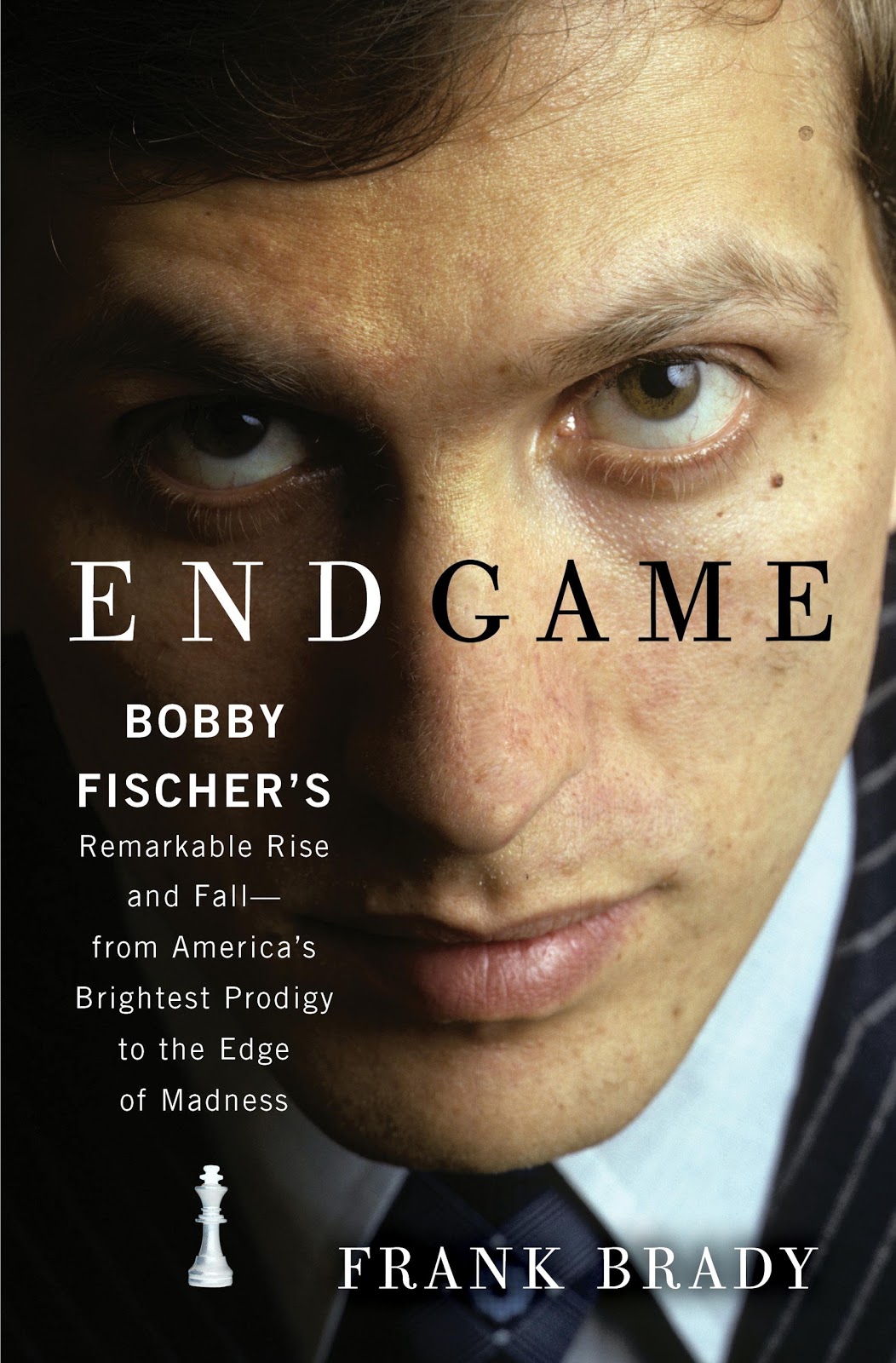 Endgame by Frank Brady, the excellent biography of the rise and fall of Bobby Fisher, perhaps the greatest chess player of all time, and a man not unlike Beethoven who thought the whole world owed him deference, shows Bobby at 9 playing chess in a bathtub like Alan Greenspan at 80, for five hours at a time, the only way his mother Regina could get him to take a bath. His mother spoke 9 languages and was a stenographer for Hermann Muller who won a Nobel Prize in genetics. She was a devoted though impoverished mother and professional protester throughout Bobby's life. Bobby's biological father was reputed to be an eminent physicist, Paul Nemenyi, who sent modest support payments throughout Bobby's childhood. Bobby's normal day from the time he was introduced to chess at the age of 8, until he won the world championships 20 year later consisted of 15 hours of study of chess, reading every chess book in all the book stores and libraries in all the original languages. He was given a scholarship to to the progressive Community Woodward school at the age of 10 with the idea that he'd teach the kids chess, and his IQ of 180 would take care of the rest of his education. He dropped out of Erasmus at the age of 14 so he could play in chess tournaments as he was the youngest Grandmaster in history, and already the US junior and Amateur Champion. Thus, as in almost every other case a combination of immersion in his field, environment and genetics led to his genius.
At the age of 9 he developed his central ideas of chess–rapid development of the officers, occupying or controlling the central squares at the equator, and mobility-giving maximum scope to the pieces. The ideas might be likened to following the opening range breakout, building a solid foundation whenever a movement against the breakout occurred, and insuring that there was enough liquidity in the position at all times to add and subtract without undue friction. I liked the numerous little touches that Bobby used to improve his changes like wearing a visor during his matches so that his opponent wouldn't see what pieces on the board was looking at, and his invention of a clock with an overhead push button that would not make noise like the spring pushed versions, and his insistence on the spectators sitting 65 feet away from him.
He had numerous mentors throughout his career starting with Camine Nigro, a music teacher who introduced him to the Brooklyn Chess club at 9, and Jack Collins who became a second father to him and took him to the chess clubs of New York, especially the Manhattan and Marshall clubs. Bobby renounced all contact with these and all other mentors for infractions such as taking a photograph of him, or asking for him to write an introduction to their books of experiences.
The book opens with one of the three times Bobby was imprisoned, this time in Japan for 15 months, a very good prison to avoid, and then transports the reader back in time to the beginning and end of his tragic life. As is well known, Bobby was snatched by a religious group that believed in impending apocalypse in the world, and recommended against medical treatment for its million + believers. He added to this total belief in the conspiracy of the elders of Zion to take over the world. As part of this he refused to sit at a chess table, or eat any foods that came from Israel, and loudly broadcast his views on this subject and the deserving retribution of 9-11 on radio. An arrest warrant from the US was issued and this was the reason he was arrested in Japan. Eventually he was granted citizenship in Iceland, and the book movingly describes the last 4 years of his life in Iceland as he wasted away, almost friendless, and without family as he refused hospital treatment for the kidney ailments that eventually killed him.
There are many great set pieces in the book that show the development of a paranoid genius. Almost all his friends were excommunicated by him for the slightest bit of self interest on their part. A typical incident came with Walter Brown, a Berkeley friend, who showed him hospitality and room and board for four months but dared to note that Bobby was eating him out of house and home with his 4 hour long distance phone calls. As soon as he mentioned it, Bobby walked out of the home and never spoke to Walter again. He repeated the same excommunication with every friend that had mentored him throughout his life.
He spent 25 years after winning the world championships in Iceland without playing a competitive match. His belief was that if there were any chips that were on the table from his play, that 100% or more had to devolve to Fisher. Frequently whatever the offer was, and it could be 10 million to play in Zaire or Manila or Yugoslavia, he would have to have double, and if anyone else were to make a profit on it, then the deal was off. Thus, he believed in the socialist idea that life was a zero sum game and that whatever chips someone else made from a mutually beneficial exchange came out of his pocket. This view, doubtless devolved from his mother's pro Russian views, was the source of his ruin as well as his lack of education and common sense.
 In one of his humorous remarks, Bobby noted that after he won the championships from Spassky, the US newspapers had chess on the front page and the Russians had it on their back page for the first time in history. He believed that the Russians were always conspiring to cheat him out of the world championships and that they contrived in all their matches to do him in. He also believed that they were so hurt by his winning the championships that they were apt to try to kill him. Apparently, as documented in the book, there is truth to both of these fears.
The author is a great historian with empathy for Bobby. He describes how while Bobby went through what he does to prepare for a match over dinner they were having, he started crying because he could see he was in the presence of genius. Out of the Head of Zeus came Bobby Fisher. Of course romance is always a factor. And Brady gives a very even handed and complete recounting of Bobby's courtship and marriage proposals to a chess playing fan 30 years his junior and his attempts to father a child with a worthy receptacle of his genes and genius in the Philippines.
It is sad to think about the 37 years of Bobby's life after his championships that went without any published or competitive games except for his anticlimatic re-match with Spaasky in 1992. That match did make Fisher a milionaire, and the book contains a nice epitaph describing the legal battle over the $3 million estate he left. There is much for all speculators and parents to learn from this great book about the tragic life of Bobby Fisher and it is highly recommended.
P.S. I became aware of this book when I enrolled Ob. as the youngest member of the Marshall chess club. The book sat atop a table where Fisher player the game of the century at the club where Fisher sacrificed a queen at the age of 13 against Robert Byrne, a grandmaster and won. Strangely, I knew many of the persons described in the book including Art Bisguier who was his second in many tournaments and broke up a fight with another grandmaster, and Jackie Beers who is described as having a great temper which he showed frequently at Brighton Beach Baths where I knew him well, and Walter Browne who I had the pleasure of playing poker against.
I was born in the same year in Brooklyn as Bobby and achieved many of the realms of excellence that he did in another sport, squash. We took the same tests in high school at the same time, but he was in Erasmus where Artie went to school and I in Lincoln. 8 miles to the South. It was interesting for me to note that Bobby was an avid tennis player and swimmer and baseball player, like myself. (It is an interesting irony to me that like Bobby , I took a five year sabbatical from my sports career when I was at my peak at the age of 20. but for opposite reasons to Bobby's. The irony is that I stopped playing because they wouldn't allow any Jews in all the clubs in Chicago where squash was played ( except for one reputed to be a bagman). I didn't wish to demean myself by playing where I couldn't bring a guest, have a locker or order a coke. ( I was able to play for free). Bobby quit the game because he feared that there was a conspiracy among the Jews to grab all power and do him in). Instead of becoming a tennis bum, my parents were able to edge me into Harvard–albeit to my discredit or possibly credit, eventually I became a micro speculator. Bobby who had no contact with his legal or biological father undoubtedly could have achieved untold extra greatness had he been reared by a strong and loving father and mother the way I was. One hopes that Ob. and I and others will learn from the highways and byways of the life of Bobby and will be able to avoid the pitfalls while ascending the summits.
Comments
Archives
- October 2026
- September 2026
- August 2026
- July 2026
- June 2026
- May 2026
- April 2026
- March 2026
- February 2026
- January 2026
- December 2025
- November 2025
- October 2025
- September 2025
- August 2025
- July 2025
- June 2025
- May 2025
- April 2025
- March 2025
- February 2025
- January 2025
- December 2024
- November 2024
- October 2024
- September 2024
- August 2024
- July 2024
- June 2024
- May 2024
- April 2024
- March 2024
- February 2024
- January 2024
- December 2023
- November 2023
- October 2023
- September 2023
- August 2023
- July 2023
- June 2023
- May 2023
- April 2023
- March 2023
- February 2023
- January 2023
- December 2022
- November 2022
- October 2022
- September 2022
- August 2022
- July 2022
- June 2022
- May 2022
- April 2022
- March 2022
- February 2022
- January 2022
- December 2021
- November 2021
- October 2021
- September 2021
- August 2021
- July 2021
- June 2021
- May 2021
- April 2021
- March 2021
- February 2021
- January 2021
- December 2020
- November 2020
- October 2020
- September 2020
- August 2020
- July 2020
- June 2020
- May 2020
- April 2020
- March 2020
- February 2020
- January 2020
- December 2019
- November 2019
- October 2019
- September 2019
- August 2019
- July 2019
- June 2019
- May 2019
- April 2019
- March 2019
- February 2019
- January 2019
- December 2018
- November 2018
- October 2018
- September 2018
- August 2018
- July 2018
- June 2018
- May 2018
- April 2018
- March 2018
- February 2018
- January 2018
- December 2017
- November 2017
- October 2017
- September 2017
- August 2017
- July 2017
- June 2017
- May 2017
- April 2017
- March 2017
- February 2017
- January 2017
- December 2016
- November 2016
- October 2016
- September 2016
- August 2016
- July 2016
- June 2016
- May 2016
- April 2016
- March 2016
- February 2016
- January 2016
- December 2015
- November 2015
- October 2015
- September 2015
- August 2015
- July 2015
- June 2015
- May 2015
- April 2015
- March 2015
- February 2015
- January 2015
- December 2014
- November 2014
- October 2014
- September 2014
- August 2014
- July 2014
- June 2014
- May 2014
- April 2014
- March 2014
- February 2014
- January 2014
- December 2013
- November 2013
- October 2013
- September 2013
- August 2013
- July 2013
- June 2013
- May 2013
- April 2013
- March 2013
- February 2013
- January 2013
- December 2012
- November 2012
- October 2012
- September 2012
- August 2012
- July 2012
- June 2012
- May 2012
- April 2012
- March 2012
- February 2012
- January 2012
- December 2011
- November 2011
- October 2011
- September 2011
- August 2011
- July 2011
- June 2011
- May 2011
- April 2011
- March 2011
- February 2011
- January 2011
- December 2010
- November 2010
- October 2010
- September 2010
- August 2010
- July 2010
- June 2010
- May 2010
- April 2010
- March 2010
- February 2010
- January 2010
- December 2009
- November 2009
- October 2009
- September 2009
- August 2009
- July 2009
- June 2009
- May 2009
- April 2009
- March 2009
- February 2009
- January 2009
- December 2008
- November 2008
- October 2008
- September 2008
- August 2008
- July 2008
- June 2008
- May 2008
- April 2008
- March 2008
- February 2008
- January 2008
- December 2007
- November 2007
- October 2007
- September 2007
- August 2007
- July 2007
- June 2007
- May 2007
- April 2007
- March 2007
- February 2007
- January 2007
- December 2006
- November 2006
- October 2006
- September 2006
- August 2006
- Older Archives
Resources & Links
- The Letters Prize
- Pre-2007 Victor Niederhoffer Posts
- Vic’s NYC Junto
- Reading List
- Programming in 60 Seconds
- The Objectivist Center
- Foundation for Economic Education
- Tigerchess
- Dick Sears' G.T. Index
- Pre-2007 Daily Speculations
- Laurel & Vics' Worldly Investor Articles
