Apr
1
The Book of the Day, from Victor Niederhoffer
April 1, 2014 | 1 Comment
In honor of the President of the Old Speculators Club. "The Duck Hunter's Book" by Lamar Underwood
Remembrances of the good old duck hunter's days by Gene Hill: your good wife downstairs in the kitchen making oatmeal and maybe a buttermilk biscuit or two to tamp the whole thing down. Along about half pas three, with the second cup of coffee in yur hand you'd be out on the porch semilling the wind like an eger hound. Your wife sees the timeless excitement in your face and takes pleasure in the fact there's still a lot of boy that's living in the man she married years ago. I hope she'll be the one to hear my horse's hooves striking sparts from the frrozen road and come out say hellow when I stop to pick you up– with a hot cup and maybe a biscuit or two.
Mar
28
The Parable of Google Flu: Traps in Big Data Analysis, from Steve Stigler
March 28, 2014 | Leave a Comment
It seems like computer science people are finally discovering ever-changing cycles.
"The Parable of Google Flu: Traps in Big Data Analysis"
Victor Niederhoffer asks:
Do you believe ever changing cycles are related to the regression fallacy in any systematic way?
Steve Stigler writes:
No. EC Cycles is a real change — a reaction. But regression is only a selection effect. Google Flu works. Google changes to add ads around it and draws more clicks. Google Flu stops working. Analysts adjust. Etc.
Mar
27
Banks and Storms, from Victor Niederhoffer
March 27, 2014 | Leave a Comment
 One must say that there is no reason to believe that banks are subject to always doing the wrong thing, putting on excessive risk. They've made mistakes in the past. That doesn't mean they will make them in the future. To assume that they don't learn, that they're more prey to error than others, is wrong. There are probabilities associated with their activities and expectations and distributions of the expectation. They make decisions. To assume that they should prepare now for a repeat of 2008 would be irrational. Perhaps there could be check points, where as they get closer to various pitfalls, they adjust their positions. That's what everyone in the world does,—- banks would do it also. Why should they prepare now for an event that occurs 3 times each hundred years. Anyone in the options business for example adjusts their position. They are not subject to wide spreads. I believe I've made my gist clear. They are flexible, and should be. The analogy with the bridge which usually can't be changed in its structure is not relevant for human being with access to many different alternatives to structure their balance sheet and access to many liquid markets.
Stefan Jovanovich writes:
As some DailySpec readers already know from my private grumblings, I am still pissed off about having had to settle for an architectural degree from Harvard when what I wanted was one in naval architecture from M.I.T. The R-Man's bridge analogy may not be ideal; but he is right to look to the rivers and the oceans for a comparison. When you design a ship, one of the first calculations to be made is how strong will the bow steel be. To answer the question, you have to decide how large a wave will break over the bow - i.e. what the weight of water will be. Before satellite observation and remote telemetry buoys, the nautical world had to rely on the observations of mariners and the examinations of the damaged ships that survived rogue waves to determine what was an appropriate "stress test". What modern researchers have discovered is that the size, weight and length of freak waves is far, far greater than all previous estimates. The otherwise unexplained disappearance of super tankers and large freighters is now attributed to their having had the misfortune to run into a wave that literally tore open the ship's skin and flooded it beyond its buoyancy.
There is no lesson in any of this. Shipbuilders and ship owners still have to make the calculation of how much more money is to be spent on further strengthening bows and decks. Whatever budget is decided on will not be enough to assure absolute safety; the Breton Fisherman's Prayer will still be true.
What bewilders us aging cranks is why our central banking world persists in the belief that the fluid dynamics of credit can somehow be engineered so that nothing ever sinks. The common sense of the old world was that money should be something that could survive wrecks, storms and frauds. Credit needed no protections; it was in the very nature of people to believe in the future and to bet on it and to take the risk of sailing small boats on a large ocean. What was folly was to think that lashing all the ships together into mighty armadas would somehow persuade God to permanently moderate the waves.
Mar
25
Instead of all the Mumbo Jumbo, from Victor Niederhoffer
March 25, 2014 | 3 Comments
 Instead of doing all the mumbo jumbo about social media mentions of various companies and the ridiculous studies that show that this board or that board would have done better on its shorts, all that's needed is to count the number of headlines with John Kerry in it. He's an albatross, a hoodoo, a jonah, a short black stick, for the market.
Mar
23
Alfred Cowles, from Victor Niederhoffer
March 23, 2014 | 1 Comment
It is interesting to note that Alfred Cowles the founder of the Cowles Commission, and author of the first good empirical paper on stock market variations, and son of the owner of The Chicago Tribune, in the early 1900s, is a forgotten man. No bio on wikipedia or mention on google except for his father exists. Like Sloane and Kettering at Memorial, the denizens of the institution he founded seem to be ashamed of him. I corresponded with him when he was 70.
Orson Terril writes:
This is a song from a skit that junior researchers performed in the 1950's:
"The Cowles Commission was featured in this one, to the tune of "The American Patrol" march:
We must be rigorous, we must be rigorous,
We must fulfill our role.
If we hesitate or equivocate,
We won't achieve our goal.
We must investigate our systems complicate
To make our models whole.
Econometrics brings about
Statistical control!
Our esoteric seminars
Bring statisticians by the score.
But try to find economists
Who don't think algebra's a chore.
Oh we must urge you most emphatically
To become inclined mathematically,
So that all that we've developed
May some day be applied!
Its exact authorship is surrounded by a certain degree of obscurity, which perhaps is just as well."
Little late here, catching up. I would like to echo our underwriter's points by expressing my surprise that there is not a single entry of Alfred Cowles on the wikipedia article for the Cowles Commission. This is worthy of surprise because, as was alluded to, the Cowles Commission is also now the Cowles Foundation. Titans of economics like Nobel Laureate Robert Solow, whose growth models are given a thorough workout in any intermediate or above macro-economics course, were funded by the Cowles Foundation. Robert Shiller is a researcher there. If he, and others, are worthy of a Nobel according to those who make such decisions, the namesake of his underwriter is certainly worth a mere wikipedia entry.
Mar
21
10 Adages About Markets in Honor of Mark Skousen, from Victor Niederhoffer
March 21, 2014 | Leave a Comment
1. "Never marry a position you wouldn't wish to get out of"
2. "Don't play in markets where men named Doc control it"
3. "The rules committee members never lose"
4. "Don't go against the palindrome or others with unlimited capital"
5. "Moves before key flexionic announcements will continue"
6. "The Israeli market is the most sagacious in predicting the US market"
7. "The DAX and SPU dance together with one leading the other"
8. "The bonds and stocks move opposite until the reverse monkey rope snaps"
9. "The most assured way of losing money is to short stocks" (the palindrome told me he lost more money that way than any other, and all the great traders I know except for Ed Marks have told me similar )
10. "Reverse at the beginning of a period and go with at the end"
Mar
21
Article of the Day, from Gibbons Burke
March 21, 2014 | 3 Comments
 I found so much value in this article. Worth your time:
"The Surprisingly Large Cost of Telling Small Lies"
Russ Herrold writes:
That article makes me think about something that has been on my mind lately.
One of my routines for more than a decade has been starting the day at the coffee shop. There is large cohort of people who drop in (and leave without needing to say good-bye) for work or other obligations. Lots of social strata, lots of political viewpoints, and lots of economic situations are represented.
Another Dailyspec member and I have a common friend who frequents that coffee shop. We both were discussing the other day how quickly strangers could pick up on a dissonance between our common friend's words and his true behaviors.
I do not even feel that it is a malicious difference nor perhaps is it under the control of that friend. Certainly he would takes offense if we pointed the dissonance out, and so we have all learned or been trained to avoid confrontation.
Time and again, that common friend would be introduced into a new situation or exposed to new people. Almost at the onset of the introductions, the new counterparties would approach him or me privately during a later debrief or meeting and remark on the 'strange vibe' they got when interacting with that common friend.
I think Polonius' advice in Hamlet and Twain's adages about honesty and lying are relevant here. There is some background detection process running in a thoughtful person that picks up on coinage offered which does not ring true.
Mar
20
Sports Commentary, from Victor Niederhoffer
March 20, 2014 | 2 Comments
 I follow the sports news and commentary and find it much more erudite
and analytic than the financial commentary. Try reading the NY Times
analyses of games The Knicks play, and you'll learn more about the
market and human nature than you will from Bloomberg.
Ken Drees writes:
I once worked on technology to automate sports reporting using "canned" or routine language. It came to nothing at the time but it amazed me how simple it would be to automate sentence and paragraph structure of a simple sport score/ game report. You would have selected templates and fill in bursts of stats to make it seem true. Anyone who listens to an athlete's interview these days hears the same old same old.
"We battled, and that's what we are about–never give up, keep focused on the game at hand." "No, I am not looking ahead towards the next series, I am focused on the day to day–what it takes to win today is what I am about".
Seriously all these athletes talk program. All the same crap every time—I can hear it before they say it!
Anton Johnson writes:
This is the best ever basketball interview.
Ralph Vince writes:
It is a most peculiar sport, and the great Meadowlark Lemon worth study; that someone can be so good, so adroit at what they do, which is not comedic, that they can transform it into comedy, not take oneself so seriously, and perform to perfection. Mastery occurs when someone can do something to such perfection that they can laugh about it and about themselves as their virtuosity expresses itself, carried on a wave of euphoria of their own creation.
Contrary to what I would have expected, basketball seems to have players who are more articulate and analytical. Among the worst are those who are involved in the individual sports like golf, tennis, as well as most NFL locker rooms. For whatever reason, NBA players seem to do far better in front of the microphone.
Stefan Jovanovich writes:
Players are not any better than actors at coming up with original lines on their own; it is the coaches (who like the writers are usually not on camera) who have the interesting stuff to say.
Mar
18
While on Route to Bermuda, from Victor Niederhoffer
March 18, 2014 | 1 Comment
 While on route to Bermuda, I whiled away the time by studying the logistic equation which models the growth of a population when constrained by space, resources, and competition. I read section 1-5 of Braun's excellent book Differential Equations. The formulation that Braun uses which is general is dp/dt = ap - b ( p) x (p). The curve grows to a limiting value of a/b. It grows at an increasing rate to 1/2 x ( a/b) and then starts decreasing. Its graph is called a logistic or an s shaped curve. It models very well the growth of innovation, the growth of salmon when confronted by sharks, and the start of epidemics, when p ? A/b. This is relatively elementary to those who study population models, but I found that many companies with innovative products seem to follow the logistic curve, and many markets seem to follow the curve with a lag when confronted by startling movements in other markets. I wonder if fitting logistic curves to markets and companies under appropriate conditions would be of use for prediction? As for Bermuda, a country with no income service rate, no unemployment, and no welfare, and great prosperity and civility, conformity is the norm. One was fortunate not to be expelled, one believes.
Mar
12
Some Quick Common Sense About the SAT, from Dan Grossman
March 12, 2014 | 2 Comments
 The SAT has been diligently and scientifically designed to predict performance in college. It predicts such performance better than HS grade point average.
Think about that for a moment. A 3 hour test that predicts college performance better than 4 years of HS exams, papers, classroom performance, etc. Pretty impressive.
Further, when judging the value of the SAT for college admission, one has to ask, "compared to what?"
HS grades? As indicated, the SAT is better. And HS grades are impossible to compare across thousands of different high schools, and in addition are subject to significant manipulation by the high schools seeking to look good or have their students do well. That's why college admission offices use both the SAT and HS grades.
Teacher recommendations? They are notoriously even worse.
The recommendation of the Headmaster of Exeter as to which 40 or so of his graduating seniors should be admitted into Harvard? That's the way things used to work. Good luck to Vic Niederhoffer's getting admitted to Harvard under that system.
Stefan Jovanovich writes:
The SAT is a scam. It has been around for 50 years. It has never measured anything. And it continues to measure nothing. And the whole game is that everybody who does well on it, is so delighted by their good fortune that they don't want to attack it. And they are the people in charge. Because of course, the way you get to be in charge is by having high test scores. So it's this terrific kind of rolling scam that every so often, somebody sort of looks and says–well, you know, does it measure intelligence? No. Does it predict college grades? No. Does it tell you how much you learned in high school? No. Does it predict life happiness or life success in any measure? No. It's measuring nothing. It is a test of very basic math and very basic reading skill.
- Jon Katzman, Founder of the Princeton Review
The interview is worth reading in full.
But (of course, there would be a caveat from yours truly), Katzman wants to ignore the success that crammers have always had because he, like everyone else, does not want common public education to be what works - an intensive drill and practice of basic reading and math skills. These are subject that are, as Katzman himself says, "Nothing that a high school kid should be taking." Yet, they are the very skills that almost all children leave school now without having mastered.
Victor Niederhoffer writes:
And yet. I disagree with him on all parts. I believe the sat is a basic measure of IQ, highly correlating with it. And IQ is the best predictor of success in school and life. I'll have to look at the studies that confirm or infirm this.
Stefan Jovanovich adds:
Gentlemen: Mr. Katzman is admittedly hyperbolic, and he was, very skillfully, talking his book. Of course the test measures IQ, but IQ is itself a measure of one's ability to take these kinds of tests. That was and is his larger point. Schooling should be about test-taking and there should be as many different kinds of tests given as possible - those for dexterity, spacial awareness, physical assembly of a jumbled set of parts. The advantage that Eddy and all the other bright kids have is that their home schooling was competitive and testing yet built confidence and pushed away fear because there was always a new and different test to take and they quickly discovered that, in some things, they could be even better than their old man. My Dad was right - for all but the most fortunate school is simply the barrel in which the poor are told to put their children so they can learn how to keep each other from climbing out. That truth is what Mr. Katzman discovered about the Joes of this world and how much the SAT has become the barrel used for adult life; and, to his credit, it pisses him off just as much as it did my old man.
Mar
11
Juan Pablo and the Markets, from Victor Niederhoffer
March 11, 2014 | Leave a Comment
 One was asked for the market lessons learned from the current bachelor Juan Pablo who didn't find a girl to get engaged to after dating 30 of them, and didn't have a persona except to say, "you're so pretty" to all the girls. Apparently he misled the losing finalist, and she walked away from him. Susan said that he proved the palindrome's adage about never marrying a girl you wouldn't wish to divorce when she told him off and he said, "thank goodness I didn't pick her."
I am usually good about finding market relations. But all I can think of is the person who looks at 20 different signals and announcements, and each one twists him a different way, and he can't make up his mind to trade at all or to get out of his position. And then there's the derivatives specialist who lures you into a trade telling you that you can buy or sell it at a vol of 28-29, and doesn't mention that the bid asked spread is 200%. There's also the dishonest intermediary who quotes you an interest rate of 5% with great leverage to get your account, and then once you have your position on says they're going to have to raise the interest rate to 10%. (all of the above has happened to me, and more). But in general, he was a man without a foundation, he reminded me of the scarecrow in The Wizard of Oz, the person that enters the fray without a raison d'etre, bound to lose. Thank goodness the fine women on the show didn't end up hitched to such a person. What other lessons can we learn from that reprehensible personage who tricked the producers into giving him a ring and a vacation, with the idea that he was seeking to find a woman to fall in love with.
Tim Hesselsweet writes:
 When you said "a person who looks at 20 different signals and announcements, and each one twists him a different way, and he can't make up his mind to trade at all or to get out of his position", it made me think that
a speculator needs a rudder but sometimes the uncertainty is the source of opportunity. The following quote from Seth Klarman's Margin of Safety illustrates the idea:
"Most investors strive fruitlessly for certainty and precision, yet…investors frequently benefit from making investment decisions with less than perfect knowledge and are well rewarded for bearing the risk of uncertainty."
anonymous writes:
To most people, uncertainty is instinctively regarded as something bad. But it simply refers to an inadequate mental state, which in no way can be tied to things good or bad. At most, it may mean that there is a probability that something bad could happen. But with that, one should never forget that it also means that there is a probability that something good could happen.
Gary Rogan writes:
 The last statement probably applies more to long-term investments than short-term speculations simply because over the long time uncertainties do get resolved. Besides simply not having the information available at all, searching for precision among mountains of data seems counterproductive for things that can easily lose 90%+ of their value or go up 10x.
Ken Drees replies:
A few weeks prior to the finale (unfortunately the ladies around my house watch this show), I saw a headline in a tabloid at the market that Pablo was a no-good. So the tabloid had him pegged.
Juan Pablo, reminds me of the dog who had two bones. A dog with a bone in his mouth goes over a bridge and sees his reflection in the water. What's that? A small dog with a big bone is staring back up at him, so in greed he opens his mouth to attack or get the bone and then drops his real bone into the pond. Greedy greedy makes a hungry puppy. Maybe JP just kept looking for a bigger profit till he ran his account into the ground.
Mar
11
The Market Today, from Victor Niederhoffer
March 11, 2014 | Leave a Comment
 The market today is like a pretty girl. It is very attractive from the long side in many markets, but it gives you no opportunities to buy on the cheap. Where is Anatoly with his bargains outside of Hawaii and Disney today?
Larry Williams writes:
One of our members has not had a losing trade in many years now; not a one in, I'm not sure, maybe 10 years. Ironically one of his clients, a large bank, closed out a few years back thinking something was wrong because of the excellent performance. Such is the life of a trader.
Alston Mabry writes:
You could argue that you don't need a transaction tax when it has already been levied by HFT firms.
Ed Stewart writes:
Virtu's dividend paying history seems very aggressive to me relative to what looks like its operating earnings and net assets. Last year $250m of the $430m dividend payment was financed. $250 being very close to the firms book value equity while earnings were 180m.
2011 and 2012 had earnings near 90M and dividend payments of 120M and 130M. Around 1.5B total paid since 2006.
Is this the magic of steady returns + finance + limited liability?
Mar
10
Briefly Speaking, from Victor Niederhoffer
March 10, 2014 | 1 Comment
 Sir Harold Jeffreys recommends that the simplicity of a model be counted as the number of degree, the order, and the sum of the absolute values of the coefficients of the differential equation that models. He believes it is an immutable law of science that all great discoveries fall into a sum less than 7 or so . (See Ackermann [8 page pdf] for review and critique).
I wonder if the moves of markets can be modeled usefully in simple laws like this. The simplest solutions of an exact equation are
y dx + x dy = 0 which derives from xy = c and dx/x + dy/y = 0 which derives from ln ( xy) = c
Which markets move like that during a day or week and can useful predictions about the continuation of this relation for further parts of the period be made? Are there other simple models which work like
x (y)(y) = c or (x)(x)(y) = c
that are just a tad less simple that work as well.
On another note, a visit to the Drexel Museum of Natural History reveals the interesting fact that even though the lion is classified as the king of the jungle, old lions are often eaten by hyenas and leopards. One can see that playing out in the corn belt and those businesses that rely too heavily on yoga.
The beaver on the other hand, one learns often sends a seasoned emissary to help his colleagues build a new dam before returning home.
Gary Rogan writes:
I'm having trouble thinking of any reasons why the markets should behave like simple laws of physics or simple differential equations. Conservation laws in physics are fundamentally based on the symmetries evidently present in our universe and also on the constancy of the amount of some quantity integrated over any surface enclosing it's source. Why would any of this be relevant to the decisions of millions of people and computers, all in the presence of a great deal of noise?
Anatoly Veltman adds:
Yes, reflexivity theory is more appropriate. For instance, Ukraine is a negative — but only longer term. That's because trade wars, etc, cause stagflation, which is a long-developing process. US equity prices are more likely to suffer from credit contraction, and that's why China woes are way more significant. But US equity players will only begin catching up to this reality after China's drop gains speed.
Mar
7
First order differential equations of the form:
the rate of change of a variable + the original variable x a constant equals a constant times a function, or
dy/dt + p * y = k1 * q(t)
has wide applicability in all physical settings. it's used to model the cooling and diffusion equations for example, as Arthur Mattuck in a brilliant and relatively easy to assimilate lecture shows.
For what variable in the market does its rate of change depend on its level and the movements of a second variable. The moves of stocks relative to bonds and currencies comes to mind. Is it predictive in certain cases and how do random perturbations affect the solution and its predictivity? Are there any methods used to solve these first order equations that are useful for markets without regard to stochastic, useless solutions?
Leo Jia writes:
I once attempted to use it to model the market, but I did not proceed. The reason is that I realized the solution would be a function of two coefficients, i.e. K and K1 in this case, and so by varying the coefficients, one can fit the solution well onto the historical chart. The way to fit it wouldn't be very distinct from that of fitting a moving average onto a historical chart. So to me it seemed to fall into the same dilemma as trying to profit from a moving average model. Would anyone correct me?
Mar
5
NYC Junto, from Victor Niederhoffer
March 5, 2014 | Leave a Comment
Thursday March 6, 2014 the NYC Junto will feature Mark Skousen as speaker (bio ). He will discuss Benjamin Frankin's advice for today. Meeting begins at 7:30pm, speaker at 8:00pm. General Society Library, 20 West 44 St, NYC. All DailySpeculations readers are invited.
Mark Skousen is the author of "The Making of Modern Economics: The Lives and Ideas of the Great Thinkers" (M.E. Sharpe, 2009) and "Investing in One Lesson" (Capital Press, 2007).
Mar
4
Briefly Speaking, from Victor Niederhoffer
March 4, 2014 | Leave a Comment
 1. The SPU on March 3 showed a rise of 45 points relative to the DAX which was down 3.5% versus the SPU 0.75%. The ratio of DAX to SP fell from 5.20 to 5.09 in one day.
2. Eileen Power, the libertine expert on medieval economic history who no woman or man could resist (she was engaged to the chief senichal of the last emperor of China) had a father who apparently used the same techniques as Drier to defraud his creditors. He pretended that he was borrowing money for his clients, and used their balance sheet to borrow, but he kept the money for himself. It is amazing how in frauds there's nothing new under the sun.
3. Stoudemire is the only one that seems to know the source of the Knicks problem. Smith, of all people, the worst player in the NBA said the problem with the Knicks is they don't have heart. No one had the courage to contradict him, apparently because they all frequent the same clubs as him, except Stat who said "before making accusations, the accuser should look in the mirror".
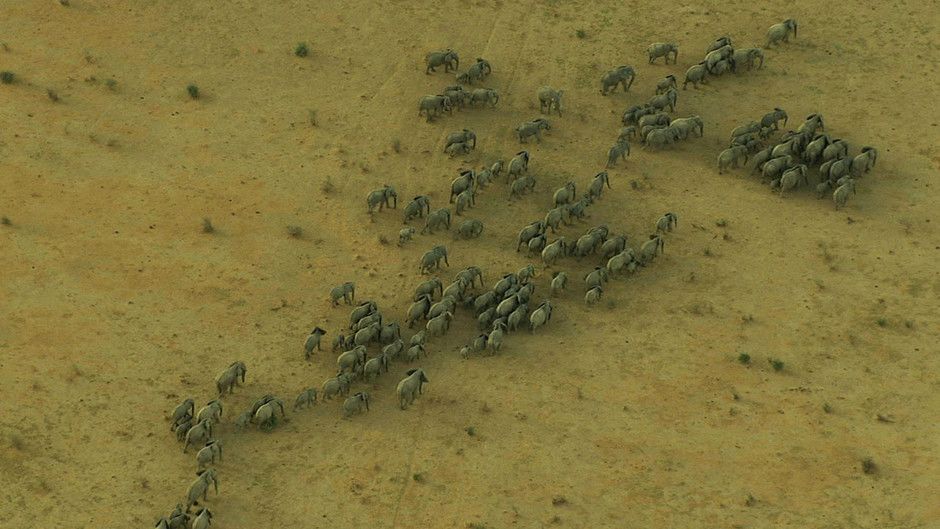 4. The move from Friday to Monday and Monday to Tuesday in all markets was an amazing example of a Lobagola. It usually takes at least a week or two for the elephants to migrate back the same way they started, but this time it only took a day. And as the wild liberal from the Beltway said in his most (perhaps only) intelligent pronouncement: When it goes one way big and catches you, and then it recovers, go with it. Hold on. This must be tested.
5. The great composers always have poignant thing to say about life that are applicable to our field. I like what Verdi said: "symphony is symphony, and opera is opera"; he wasn't talking about the proper separation between technical and fundamental analysis, but he should have been.
 6. I am re reading the book Our Mysterious Panics by Charles Collman, 1930. (see prev post ) He believes the cause of all the panics was excessive speculation and lack of liquidity. He asks relative to the 1907 panic, "Did Morgan deliberately engineer a stupendous financial panic, which was likely to paralyze business, ruin industry, throw his own interests into confusion and set the country back ten years at least, simply to buy at a low price, a stock valued at seventeen million dollars." He bought Tennessee Coal and Iron Company on the cheap at the height of the panic.
7. Stocks are opening at a new all time high today, March 3, after a big decline the previous day. It's never happened before. You have to give the market mistress credit for always coming up with something new. As usual the unusual is a good motto for the market. Time and again, one tries to encap the most similar events to a given days moves looking back 10 years or so, and finds nothing similar.
8. The biggest mistake that new speculators make when trying to look at things like trade station plus, lim, or the things that they "borrowed" from me is to make things too complex, and to forget about the problem of multiple comparisons. When you cut a sample 2 or 3 times, you need a probability of 1/1000 at least to come up with something inconsistent with normal 5% randomness. The next biggest mistake is when keeping it simple is to assume that the simple relations will repeat. Thus, between Scylla and Charybdis.
 9. The predictive relations between bonds and stock in the short term is exactly the opposite in 2013 and 2014 from what it was in 2012.
10. The fawning coverage of the benevolent grandmother at the Fed was guaranteed to happen. After all, no chair of a Fed ever has been more devoted to the idea that has the world in its grip than her. I like the comment that "she is perhaps the most qualified chair of the Fed in history". People in my family took her course in International trade at Harvard, and have confirmed her fine sense of humour of which there are 1.4 million references thereto on Google.
Anatoly Veltman writes:
August 1991's failed Russian coup comes to mind as a proper example of two-day Lobagola in stocks, bonds, USDDEM, and oil.
Mar
4
One Notes, from Victor Niederhoffer
March 4, 2014 | Leave a Comment
One notes that if stocks were down as much as DAX today (March 3rd), they'd be down another 45 big points SPU.
Anatoly Veltman writes:
But of course on the day when the Russian Index shed 11% and Russian currency traded a record low, the DAX reflects liability and the S&P is nearly a safe haven lol.
Mar
3
Silent Night, from Victor Niederhoffer
March 3, 2014 | Leave a Comment
 All is calm, all is bright.
Richard Owen writes:
Further proof one should never forget obscure cross-market correlations, and here is a link for those who didn't grow up in the UK.
Feb
28
A Hypothesis, from Victor Niederhoffer
February 28, 2014 | 1 Comment
The same way that the market saw going from red to black on year as a target, and it was hit as many of the studies predicted, and the same way triple tops are always broken, and round numbers always fulfilled, I make another hypothesis. The DAX is at 9700 and the SPU at 1865. One predicts 10000 DAX and 2000 SPU by end of year.
Feb
27
Janet Yellen’s Humor, from Victor Niederhoffer and M. Chuprin
February 27, 2014 | 1 Comment
 The Chairman of the Fed is known for her wit and wisdom. One thought it useful to memorialize some of her wit on a continuing basis. We hereby inaugurate a compilation of her "Sublime Jokes" so as to gain gravitas from her the same way her colleagues and supporters in the press who always admire her sense of humor.
Please feel free to augment this list with other examples of her hilarious remarks.
Janet Yellen's humor:
But even as she pushed for more aggressive policies to deal with the financial crisis [of 2008] and the economic downturn, Ms. Yellen also displayed an ability to disarm her critics with a sort of gallows humor, even in the darkest days. "In the run-up to Halloween, we have had a witch's brew of news," she said to the laughter of her colleagues, before quickly apologizing for her sarcasm.
2.
As a forecaster, Ms. Yellen was at something of an advantage. She was based in California, where some of the earliest signs of distress appeared. In a lighter moment, she joked that the problems were not just in the collapsing housing market.
"East Bay plastic surgeons and dentists note that patients are deferring elective procedures," she said to laughter, according to a transcript of the meeting on Sept. 16, 2008.
"The Silicon Valley Country Club, with a $250,000 entrance fee and seven- to eight-year waiting list, has seen the number of would-be new members shrink to a mere 13," she said to more laughter.
But she also was looking for clues anywhere she could find them. In June, she told her colleagues about employees at her bank who "had their home equity lines slashed."
"One has deferred a planned home renovation project as a consequence," she said. "If that is happening to them, I can only imagine how hard it must be to get a loan if you have a merely average credit rating."
"Sales of cheap wine are soaring," Yellen reported to the Fed on March 8, a week before Bear Stearns collapsed
Yellen, unlike Greenspan or a pre-2008 Bernanke, is probably the last person you'd hear repeating one of Reagan's favorite jokes: "The nine scariest words in the English language are: 'I'm from the government, and I'm here to help.'
Yellen is humorous. In the recently released transcript of the Dec. 16, 2008, FOMC meeting, she said: "An accounting joke concerning the balance sheets of many financial institutions is now making the rounds, and it summarizes the situation as follows: On the left-hand side, nothing is right; and on the right-hand side, nothing is left."
Charles Pennington adds:
 This morning I began the process of picking out items of praise from
the link below, but it's lunchtime now so I'll have to adjourn for
awhile.
from "What Janet Yellen will do with the nation's purse":
She's ultrasmart but also ultramethodical
Yellen was not ordinary, even as valedictorians go.
Yellen is inclined to ask probing questions and to be interested in people even as she grapples with abstract ideas.
Yellen
revealed not so much a combative personality as someone prone to get to
the point and to avoid becoming too proud of her own intellect.
wanting to think through problems from every angle and with an open mind.
brilliant and a hard worker,"
"I don't think she ever just got along on brilliance."
Her thorough, skip-no-detail approach will be tested in the years ahead
Arguably no individual will have more influence over financial conditions for American families.
"The Fed is the only game in town,"
For
Yellen, that will mean navigating a difficult course from the moment
she occupies the head chair in the Fed's ornate conference room in
Washington: trying to move the economy toward more solid growth while
also backing the central bank off its stimulative policy of holding
short-term interest rates at zero. This will affect everything from
unemployment to inflation to stock market portfolios.
One of Yellen's challenges will be to defend the notion that the Fed serves all the American people
even Republicans don't doubt she has the résumé for the position.
 Her career path has led her from prominent teaching positions to varied roles in the Federal Reserve System.
Some have called her the best qualified nominee ever.
Yellen will be the first woman to head America's top financial policymaking post.
Although
Yellen has said in the past that she hasn't felt discrimination during
her career, finance remains a male-dominated realm in America. Her
elevation carries both substantive and symbolic importance.
"every time a glass ceiling is broken it sends a signal that government is more inclusive"
Yellen
once accompanied her parents on a transatlantic summer cruise. A
highlight for Yellen, then in high school, had to do with learning about
rocks. A geologist on board, thrilled to meet a young person with a
keen interest in his field, presented her with a trilobite fossil.
She
already had a credible rock collection. But instead of eagerly adding
the fossil..to her personal stash, Yellen loaned it to the biology lab
at her school so that others could learn from it, too.
Exploration was a kind of family trademark during her time growing up
"They had inquiring minds,"
The melting pot of New York City was itself a kind of global microcosm of arts, sciences, and culture…Yellen took it all in.
[family outings] included plays, concerts, or science lectures
Yellen's
youth wasn't all about igneous rocks and high-brow culture…one of
those concerts that they went to featured a young songwriter coming out
of the folk tradition, named Bob Dylan.
Yellen was a "very normal kid." "We would talk for hours by phone" about typical subjects such as boys, clothes, and "who said what to whom."
"the real gift to teenage girls like Janet and me was the way we were treated by our teachers, our parents and our peers." Instead of being beholden to gender stereotypes, "[w]e were expected to take charge, just as our mothers and grandmothers did when men went off to war."
Yellen was an all-around scholar who, with encouragement from her parents, took an advanced-course track through middle school, allowing her to enter high school as a sophomore and graduate a year ahead of her peers.
Her prowess with language arts propelled her toward the editor in chief role at [the school newspaper]… yet her self-profile revealed her to be fascinated by science and math.
She was fun-loving and showed a ready wit
she said she enjoyed reading philosophy
also seemed to exhibit an unusual degree of discipline.
"She did lots of things, and she did them all really well,"
"What stood out to me was intentionality, purposefulness, a determination not to be better than others but to be the best she could be."
Yellen wasn't one to put on airs
Staff economists remember her eating with them in the bank cafeteria.
But she was motivated to achieve.
An unsigned editorial in The Pilot at the close of her senior year (Yellen believes she wrote it but, 50 years later, can't be sure) urged a do-something outlook that her own life embraced: "Be curious! Wonder why the sky is blue, what fire is, why peace-loving nations feud … but wonder about something!"
headed off to college at Pembroke (then the women's college at Brown University) in Rhode Island. Economics quickly drew her in. "She was totally smitten" after her first course, Grosart says, recalling the excitement Yellen shared when returning home on a break.
Graduating with highest honors led to the opportunity to do doctoral work at Yale University, followed by a rare invitation from Harvard University to start teaching there before she had landed a job anywhere else.
Yellen's career had begun its upward arc.
• • •
In 1977, Yellen met George Akerlof, another rising star in the field of economics. It was essentially love at first seminar.
"We liked each other immediately," Mr. Akerlof writes in an autobiographical sketch. "Not only did our personalities mesh perfectly, but we have also always been in all but perfect agreement about macroeconomics."
The scholar spouses shared an interest in mysteries related to unemployment.
Akerlof's and Yellen's academic lives have been centered around the University of California, Berkeley, where he won a Nobel Prize and she taught for years at the Haas School of Business.
Family interests over the years have included cooking, hiking, tennis, and travel. Yet their dinner table discussions, Yellen acknowledged in 1995, might not be that interesting to an outsider (typically revolving around economics).
The home environment was stimulating enough that Robert Akerlof, their son, chose to enter the same field and now teaches at the University of Warwick in England.
When Mr. Kohn's team of staffers would present economic briefings to the board, Yellen almost invariably seemed to be the one who homed in on the key issue.
"She would find the central point in the briefing, sometimes the central weak point in the briefing. I was often surprised, especially at first," says Kohn, who later held the vice chair role that Yellen would eventually occupy.
It was surprising in part because the other six got to comment or raise questions – starting with Chairman Alan Greenspan – before she, as the newest member, could utter a word.
Kohn's view of Yellen is echoed by Ted Truman,..he recalls similar signs of a sharp intellect.
Yellen's job was to take notes for the whole class, because Professor Tobin wanted the students to be free to listen and discuss. "They were very elegant and careful notes," Truman says, "and they became classics"
• • •
All this may make it sound as if Yellen is a superwoman – someone who crunches numbers about the American economy while wearing a cape. She isn't.
She often prefers to speak from prepared notes rather than spontaneously, which some see as a sign of preparation and precision and others see as too programmed. The best shot one Washington gossip news report could take was to chide her for – horrors! – wearing the same outfit to both her confirmation announcement and her confirmation hearing.
Yet she does draw criticism for where she might lead the Fed.
Her confirmation vote, on Jan. 6, was 56 to 26 – the narrowest margin any Fed nominee has ever been approved by. All the "no" votes were cast by Republicans.
Yellen's history at the Fed shows her to be more pragmatic than ideological. It also suggests she can be tough and persuasive when she wants.
Feb
25
The All Seeing Eye, from Victor Niederhoffer
February 25, 2014 | Leave a Comment
 The all seeing eye would note that stocks and gold closed at all time and 1 year highs, and bonds are within a point of a 6 month high.
Anatoly Veltman writes:
Janet effect?
Feb
24
Economic Sociology, from Victor Niederhoffer
February 24, 2014 | Leave a Comment
The subject of economic sociology with particular reference to the network of lawyers, investment banks, entrepreneurs, accounting firms, and proximities to each other opens up interesting ways of thinking about profits, and markets.
Feb
24
Herbert Gross, from Victor Niederhoffer
February 24, 2014 | Leave a Comment
Herbert Gross is an excellent mathematics instructor. I have listened to many of his lectures on differential equations and find them the best way of learning them. He prepared these lectures 25 years ago, and teaches in that fashion to "community college students". Highly recommended.
Feb
23
What Can We Learn From Spiders, from Victor Niederhoffer
February 23, 2014 | 2 Comments
 What can we learn from spiders. In addition to the Japanese and the Incas, Walt Whitman and Beethoven, and machines, Frank Lloyd Wright said the main influence on his work was the spider. He liked the lightness and strength of their webs. Can we learn anything about markets from the spider?
Ken Drees writes:
King Louis XI was known as the spider king so named because he always wove the most intricate and well conceived plots against his enemies. Markets seem to see further into the move sequences. Maybe there is something to be learned by investigating him.
Gibbons Burke writes:
 I trying to relate the spider to the markets the first thing that occurs to me is the quote from Reminiscences of a Stock Operator:
"It never was my thinking that made the big money for me. It always was my sitting. Got that? My sitting tight! It is no trick at all to be right on the market. You always find lots of early bulls in bull markets and early bears in bear markets. I've known many men who were right at exactly the right time, and began buying or selling stocks when prices were at the very level which should show the greatest profit. And their experience invariably matched mine–that is, they made no real money out of it. Men who can both be right and sit tight are uncommon."
Spiders set up their optimized webs, and then just sit tight, patiently positioned for the meal to show up.
The webs are well-structured, robust, and, like trend trading systems the number of winners (flyies eaten) is vastly outnumbered by the number of losers (fly byes).
The best webs are difficult to see.
A spider does better by making a large web, but too large and ti won't be able to hold the tray. Liken the size of the web to the use of leverage… extend your line too much and when you get a big move (a rather large beetle) it destroys the web rather than getting caught.
In unfavorable conditions, the spider eats up its web and redigests the resource to put it up when conditions are better suited to catching flies.
Chris Tucker writes:
Spiders use sophisticated tools to capture prey, most frequently a web with sticky silk to trap insects. Spider webs are a marvel of engineering and spider silk is incredibly elastic and stronger (by weight) than steel. Spiders are incredibly industrious, many orb weavers consume their webs every evening and build a new one each night.
Spiders are patient. Orb weavers set their traps and wait, letting their tools do the work. Spiders are observant, they wait patiently for signals from their webs (usually vibrations) before pouncing. Several types of spiders use camouflage to fool prey. Ant mimicking spiders wave their front legs in the air to disguise the fact that they have eight legs and no antennae.
Spiders use deceptive behavior to fool/lure prey.
I have copied and pasted some interesting info below from the excellent wiki article on spiders):
When at rest, the ant-mimicking crab spider Amyciaea does not closely resemble Oecophylla [it's prey], but while hunting it imitates the behavior of a dying ant to attract worker ants.
Also from the wiki on spiders:
 About half the potential prey that hit orb webs escape. A web has to perform three functions: intercepting the prey (intersection), absorbing its momentum without breaking (stopping), and trapping the prey by entangling it or sticking to it (retention). No single design is best for all prey. For example: wider spacing of lines will increase the web's area and hence its ability to intercept prey, but reduce its stopping power and retention; closer spacing, larger sticky droplets and thicker lines would improve retention, but would make it easier for potential prey to see and avoid the web, at least during the day. However there are no consistent differences between orb webs built for use during the day and those built for use at night. In fact there is no simple relationship between orb web design features and the prey they capture, as each orb-weaving species takes a wide range of prey.
Spiders leverage their best talents and keep an escape route handy:
The hubs of orb webs, where the spiders lurk, are usually above the center, as the spiders can move downwards faster than upwards. If there is an obvious direction in which the spider can retreat to avoid its own predators, the hub is usually offset towards that direction.
Bolas spiders are like fishermen and use deceptive lures to attract prey:
Bolas Spiders are unusual orb-weaver spiders that do not spin the typical web. Instead, they hunt by using a sticky 'capture blob' of silk on the end of a line, known as a 'bolas'. By swinging the bolas at flying male moths or moth flies nearby, the spider may snag its prey rather like a fisherman snagging a fish on a hook. Because of this, they are also called angling or fishing spider (although the remotely related genus Dolomedes is also called fishing spider). The prey is lured to the spider by the production of up to three pheromone analogues.
Pitt T. Maner III writes:
I found this article on the developing market for spider silk interesting:
"Despite being a protein, spider silk is by weight five times stronger than steel and three times tougher than Kevlar, a p-aramid fiber from DuPont. Strength is defined as the weight a material can bear, and toughness is the amount of kinetic energy it can absorb without breaking. The silk's primary structure is its amino acid sequence, mainly consisting of repeated glycine and alanine blocks.
Potential applications include cables and bulletproof vests. Spider silk's antimicrobial properties make it suitable for wound patches. Because the silk is not rejected by the human body, it can be used to manufacture artificial tendons or to coat implants. And its thermal conductivity is similar to that of copper but its mass density is one-seventh of copper's, making it a potential heat management material."
Feb
23
Topsy Turvy, from Victor Niederhoffer
February 23, 2014 | Leave a Comment
Considerable topsy turvy about who is right and who is wrong about crossing from the red to the black in the first months of the year has passed through these portals. Is it good or bad classified by month? A related query is whether it's good or bad to be in the red or black as of a particular time. I thought it apt to test. We have had 34 trading days in 2014 as of 2/21. I thought it apt to look at those 20 occasions as of Feb 21 to Feb 24 when the market has been down from beginning of year versus those 23 occasions when as of Feb 21 to Feb 24 it has been up from beginning of year. A nice difference exists. After the market was up, the move the next 7 days was -3/4 % after the market was down, the moves next 7 days was up 3/4%. The difference beween t's is 2, and the difference between proportions up, 60% in both cases is 0.
Feb
19
How High and Low Compare to Yesterday’s High and Low, from Alex Castaldo
February 19, 2014 | Leave a Comment
I believe there are 4 cases, conventionally called:
h(t) > h(t-1) and l(t) > l(t-1) an uptrend day
h(t) < h(t-1) and l(t) > l(t-1) an inside day
h(t) > h(t-1) and l(t) < l(t-1) an outside day
h(t) < h(t-1) and l(t) < l(t-1) a downtrend day
Victor Niederhoffer writes:
Excuse me?
Alex Castaldo replies:
OK, OK, let's call then upshift day and downshift day then.
;-)
Kim Zussman adds:
What about outie and innie?
Using SPY (2000-present), checked for outside days (today's high > yesterday's high, today's low < yesterday's low). Then checked the return for the next day.
Days after outies were also checked if the market was up-trending (20DMA > 100DMA), and, in addition to up-trending, if the intra-day return was up (C>O). Here are the c-c returns after (vs zero), for all days (c-c ret), all days after outside days outie+1), days after outside days and up-trending (and 20>100), days after outside days and up-trending, and the outside day was up intra-day (and C>O):
One-Sample T: c-c ret, outie+1, and 20>100, and C>O
Test of mu = 0 vs not = 0
Variable N Mean StDev SE Mean 95% CI T
c-c ret 3550 0.00022 0.0131 0.0002 (-0.0002, 0.0006) 1.01
outie+1 353 0.00049 0.0118 0.0006 (-0.0007, 0.0017) 0.77
and 20>100 234 0.00061 0.0090 0.0005 (-0.0005, 0.0017) 1.03
and C>O 89 -0.00047 0.0090 0.0009 (-0.0023, 0.0014) -0.49
Zeroish, with none significant, and days after outside days and up-trending winning the race at 0.06% per day avg.
Feb
17
Stick Maps, from Victor Niederhoffer
February 17, 2014 | 2 Comments
 Marshall Islanders use stick maps to navigate the currents between the 4 islands which are on straight lines of a square.
Where the currents from the two equidistant islands cross, they find turbulence.
Navigators from other countries memorize the stick maps to guide them when approaching the islands.
Would stick maps be useful for market prices? Perhaps between bonds, stock, gold and currencies.
Feb
17
I looked at all Combos, from Victor Niederhoffer
February 17, 2014 | 1 Comment
I looked at all combos of today's highs versus yesterday's highs, and today's lows versus yesterday's lows, for daily S&P from 2009 to present I find 96 inside days going up an average of 2.8 points with a sd of 15 the next day for a t of 1.7
today high > than yest high, today's low great than yest 516 ob u =0.3
today high > yest high & today low < then yest lo 121 ob u = 0.2
an outside da today high < yest hihg & today low > yest low 96 ob u =2.8 t=1.3
inside da today high < yest high & today lo < yest low 380 ob u = 1.0 t= 0.3
futures prices.
Rocky Humbert writes:
What about if you limit your studies to 1) Fridays? 2) Fridays before 3 day weekends? 3) Fridays before 3 day weekends after severe weather/NYC school closings? 4) Fridays before 3 days weekends after severe weather/NYC school closings when the weekly closing price in natural gas is at a multi year high? 5) Fridays before 3 day weekends after sever weather/NYC school closings when the weekly closing price in natural gas is at a multi year high and the fed funds strip is pricing in no tightening for the next 90 days? 6) Fridays before 3 day weekends after severe weather/NYC school closing when the weekly closing price in natural gas is at a multi year high and the fed funds strip is pricing in no tightening for the next 90 days and there is a new Fed chairman and it's the second year of a presidential cycle and the trailing SPX p/e is 17 and the dividend yield is 1.95 and my dog threw up after eating too much snow?
Victor Niederhoffer writes:
It is always good to have Rocky poking fun at statistical studies. Apparently the mean and measures of the distribution variability have no value to him. However, we are agreed on one thing that splitting a variable with a zero mean into many bins does not add much value to decision making. Without meaning to denigrate the gist of the critique, I hasten to agree that there is a big difference between statistical significance in the past, and predictivity for the future. If there were no such difference, then all my followers and I would be very wealthy men like the Rosthchilds who always said that if they knew where the market was going "I would be a wealthy maaan". How do you say that in German.
anonymous writes:
Ich ware ein reicher mann
Paolo Pezzutti writes:
There are certain market paths and regularities that help making decisions about opening and closing trades. I am not sure whether this process can be fully automated in order to search, evaluate and implement these regularities. For sure, however, knowing and using the methodology is not enough to make you wealthy. There are many other factors, as your trading choices are discretionary, that influence your performance such as money management, discipline, consistency and so forth. I find that the "technical analysis" aspect of trading is not the main problem. Before beating the market I have to beat myself….. In this regard, Brett Steenbarger, for example, highlights pretty well the psychollogical and behavioral issues of trading.
Feb
17
Simultaneous Differential Equations, from Victor Niederhoffer
February 17, 2014 | Leave a Comment
This is a good example of how to solve simultaneous differential equations with applicability to dysfunctional relations between lovers and the relations between stocks and bonds.
Feb
15
Briefly Speaking, from Victor Niederhoffer
February 15, 2014 | Leave a Comment
 1. One wonders whether the days of extreme unpleasant weather in NY, like today when it's snowing and freezing, tend to have an inordinate negative expectation.
2. To what extent can quantile regression , a technique studied by Roger Koenker in Quantile Regression be used to improve market results? One often is confronted with situations where the market has moved a certain amount, and one wonders if it is likely to continue or fail or remain stable. By focusing on say the likelihoods of getting to the 3/4 point of the data once one has exceeded the median, interesting results can be gleaned.
3. It was ludicrous to hear Smith apologizing for not being able to play in the Knicks Sacramento game when his not playing was the only chance that the Knicks had to win. It reminds one of the market salesman who apologizes for his inability to get you an allocation of a hot public issue, or the adviser who's very bad but apologizes when he is out of the office and can't help you with the trades. There's a great joke about the two brothers who lose all their money in commodities and one brother tells the other he's going to tell his broker to meet the Bad One. And the other brother tells him not to do it, as the broker might not help them in future.
4. The magnificent book Blundering to Glory by Owen Connerly recommended by Mr. Jovanovich has many insights into Napoleons modus operandi that are illuminating and fascinating. I like that during the height of the battle of Waterloo he purposely disseminated the false rumour that Grouchy was entering the battle and would save them in order to rally his troops. He liked to say that "The whole art of war consists of a well reasoned defense, extremely circumspect, and a bold and rapid offense". Great advice for market people rarely taken. It is interesting to compare Victor Hugo's description of the battle of Waterloo in Les Miserables with that of Connerly. The former leads one to believe it was all a matter of fate, and the latter puts much emphasis on the strategic decisions and arrival of the Prussians. I like that when Napoleon spotted the Prussians marching into the battle, he asked his depute what the news was: "Bad Sir, they are Prussians."
5. The latest Gavekal piece has an interesting implication that the Chinese banks stocks are vastly undervalued. I always learn much from reading Gavekal, but never can figure out what to do based on their analysis, as they like to ride on both halves of the camel.
6. The market has gone up 7 days in a row, an is now at the open in the 1800 to 1810 decile and is in dangerous territory. As Gavekal would say, its dangerously close to being absorbed by the Round, but on the other hand, it's usually not bearish when it opens big down after a big run on the upside. Ill go with the upside down man today and speculate that the flexions will not be discommoded at the auction.
7. One has enjoyed studying differential equations on Youtube and finds that the lecture in the MIT open courseware series are uniformly excellent and thought provoking.
8. The book Mavericks by Jack Schaefer is one of the most enjoyable I've ever read, and makes one want to rush out and buy a Mustang for my young kids. It confirms once again that Schaefer is the best Western writer I've ever read. Schaefer truly respects and admires the men he is writing about in the same way that Stubby Pringle is heroic. By the way, Stubby makes a cameo appearance in Mavericks, worth the reading in and of itself. The problems that the hero encountered in the 650 mile race to Nebraska are reminiscent to the ascent we must all face in our trading every day, against the evil owners of the Thoroughbreds who are so much better capitalized and will stop at no evil in order to do us in.
9. The stock bonds ratio a week ago was at its lower level since October and is still some 8% down from its October highs.
10. I find few limit orders on the books at the number 13 in any market, and wonder whether that's a good place to put ones orders in. Whenever I try to put an order in before a big announcement, to take account of erroneous front running by high frequency boys who front run the number because they get it early, I miss my limit by one tick unless it's going to go against me by a full standard deviation or two.
Kora Reddy submits:
With the help of the NOAA, I found this.
The database goes back to 96
$SPY changes in percentages, t(1) is the one day later in % , t(2) is the $SPY change % 2 days later .
XXX - Market closed
— - two events recorded on the same day
Date Type Time t t(1) t(2)
19-07-2013 Excessive Heat AM 0.18 0.20 -0.21
08-02-2013 Winter Storm AM 0.56 -0.02 0.16
31-01-2013 High Wind AM -0.24 1.03 -1.13
26-12-2012 High Wind PM -0.42 -0.13 -1.08
29-10-2012 Coastal Flood AM - - -
29-10-2012 High Wind AM XXX XXX XXX
18-07-2012 Excessive Heat AM 0.74 0.26 -0.91
29-10-2011 Winter Storm AM XXX XXX XXX
28-08-2011 Tropical Storm AM - - -
28-08-2011 Storm Surge/Tide AM XXX XXX XXX
21-07-2011 Excessive Heat AM 1.39 0.06 -0.56
16-04-2011 Coastal Flood PM XXX XXX XXX
01-02-2011 Ice Storm AM 1.61 -0.20 0.22
26-01-2011 Heavy Snow AM 0.39 0.25 -1.74
11-01-2011 Heavy Snow PM 0.36 0.90 -0.17
26-12-2010 Blizzard AM XXX XXX XXX
04-07-2010 Excessive Heat AM XXX XXX XXX
13-03-2010 Coastal Flood PM XXX XXX XXX
25-02-2010 Heavy Snow AM -0.14 0.07 1.04
09-02-2010 Heavy Snow PM 1.26 -0.20 1.04
25-01-2010 Strong Wind AM 0.52 -0.43 0.48
19-12-2009 Heavy Snow AM XXX XXX XXX
01-03-2009 Heavy Snow PM XXX XXX XXX
12-02-2009 High Wind AM 0.07 -1.08 -4.28
06-09-2008 Tropical Storm AM XXX XXX XXX
08-03-2008 High Wind PM XXX XXX XXX
22-02-2008 Heavy Snow AM 0.62 1.26 0.75
09-01-2008 Strong Wind AM 1.06 0.66 -0.81
16-03-2007 Winter Storm AM -0.27 1.20 0.55
13-02-2007 Winter Storm PM 0.84 0.66 0.14
04-02-2007 Extreme Cold/Wind Chill AM XXX XXX XXX
20-01-2007 Strong Wind AM XXX XXX XXX
01-08-2006 Heat AM -0.49 0.68 0.26
12-02-2006 Heavy Snow AM XXX XXX XXX
18-01-2006 High Wind AM -0.40 0.39 -1.82
09-12-2005 Heavy Snow AM 0.26 0.09 0.68
24-11-2005 Strong Wind AM XXX XXX XXX
25-10-2005 Strong Wind AM -0.21 -0.29 -1.06
16-10-2005 Strong Wind AM XXX XXX XXX
12-10-2005 Flood AM -0.79 -0.06 1.06
08-10-2005 Flood AM XXX XXX XXX
28-04-2005 Strong Wind AM -1.25 1.35 0.57
08-03-2005 WINTER WEATHER AM -0.38 -1.11 0.23
01-03-2005 Heavy Snow AM 0.50 -0.05 0.04
25-02-2005 Heavy Snow AM 0.99 -0.65 0.50
21-02-2005 Heavy Snow AM XXX XXX XXX
22-01-2005 Heavy Snow PM XXX XXX XXX
28-01-2004 Winter Storm AM -1.14 0.10 0.00
15-01-2004 Cold/Wind Chill PM 0.25 0.40 -0.02
05-12-2003 Heavy Snow PM -0.70 0.67 -0.77
13-11-2003 High Wind AM 0.02 -0.84 -0.50
07-04-2003 Heavy Snow PM -0.18 0.15 -1.32
17-02-2003 Heavy Snow AM XXX XXX XXX
05-12-2002 Heavy Snow PM -1.11 0.66 -2.76
01-10-2002 Drought AM 4.80 -3.00 -1.01
11-09-2002 High Wind AM -0.63 -1.83 0.24
01-09-2002 Drought AM XXX XXX XXX
01-08-2002 Drought AM -2.62 -2.23 -3.49
29-07-2002 Heat AM 4.87 1.30 0.25
02-07-2002 Heat AM -2.12 0.57 3.98
01-07-2002 Drought AM -1.95 -2.12 0.57
01-06-2002 Drought AM XXX XXX XXX
01-05-2002 Drought AM 1.23 -0.38 -1.09
01-04-2002 Drought AM 0.04 -0.55 -0.71
01-01-2002 Drought AM XXX XXX XXX
08-08-2001 Heat PM -1.85 0.30 0.34
06-03-2001 Winter Storm AM 1.08 0.71 0.11
22-02-2001 Heavy Snow PM 0.15 -0.68 2.13
21-01-2001 Winter Storm AM XXX XXX XXX
30-12-2000 Heavy Snow AM XXX XXX XXX
12-12-2000 High Wind AM -0.43 -1.38 -1.26
19-02-2000 Winter Storm AM XXX XXX XXX
27-01-2000 Extreme Cold/Wind Chill PM -0.40 -3.11 2.71
25-01-2000 Winter Storm AM 1.14 -0.79 -0.40
21-01-2000 Extreme Cold/Wind Chill AM -0.21 -2.84 1.14
17-01-2000 Extreme Cold/Wind Chill AM XXX XXX XXX
04-07-1999 Heat AM XXX XXX XXX
18-03-1999 Strong Wind AM 1.61 -1.68 0.20
04-02-1998 High Wind PM -0.13 -0.05 1.11
27-11-1997 Strong Wind AM XXX XXX XXX
01-11-1997 Strong Wind AM XXX XXX XXX
31-03-1997 Coastal Flood AM -2.12 0.66 -1.80
06-03-1997 High Wind AM -0.58 0.91 1.05
27-02-1997 Dense Fog AM -1.48 -0.29 0.66
13-12-1996 Coastal Flood AM 0.26 -1.29 0.80
07-12-1996 Coastal Flood PM XXX XXX XXX
06-12-1996 Coastal Flood AM -0.60 1.47 -0.47
19-10-1996 Strong Wind AM - - -
19-10-1996 Coastal Flood AM XXX XXX XXX
19-03-1996 High Wind AM -0.21 -0.12 -0.25
07-03-1996 Winter Storm AM 0.50 -3.24 1.16
25-02-1996 High Wind AM XXX XXX XXX
16-02-1996 Heavy Snow PM -0.40 -0.99 1.23
03-02-1996 Heavy Snow AM XXX XXX XXX
27-01-1996 High Wind AM XXX XXX XXX
19-01-1996 High Wind AM - - -
19-01-1996 Flood AM 0.67 0.00 0.24
07-01-1996 Blizzard PM - - -
07-01-1996 Coastal Flood PM XXX XXX XXX
Feb
13
A Recent Lobogola Move, from anonymous
February 13, 2014 | 1 Comment
 Is it just me or has something changed in the recent Lobagola move with regards to short term price change that we have not seen in awhile. It reminds me of when I first started trading seriously. Old tricks are new again. I wonder if this elephant brought seeds on his feet that have been ground into the village dirt, which might lead to longer lasting environmental change. Did he bring discomfort to the new first lady: "Not on my watch, not my reputation." Moves from somewhere in the back of the mind are struggling to form a conscious thought. I will attempt to put meat on the observation tonight.
Victor Niederhoffer writes:
As the creator of Lobogola, or should I say the keeper, I would say that Lobogola is timeless. The funny thing is that Lobogola was a Jewish dentist imposter and all his stuff was created from the British Library. However, I have looked often for details about elephant migrations and have found very little concerning their singularity with respect to paths. The monkeys are a different story. I named my macaque after my thesis adviser, Jim Lorie. The rest of the story is too sad to tell.
Feb
10
The Direction Field Method, from Victor Niederhoffer
February 10, 2014 | 11 Comments
The Direction Field method is used to find the shape of the function that yields a field of slopes going through various points. (Here is a lecture about it on youtube). One wonders if it might be useful to use it to find the shape of a predictive function during the remaining part of a period. For example, using the changes on each of the previous 4 days to predict the change of the fifth day. One has explored some tendencies in that direction without much success but finds it opens up some interesting speculative ideas. In any case, it's a nice foundation to put in ones' Ken, especially for those who like geometry.
Feb
7
‘The Longest Walk’ Book, from Victor Niederhoffer
February 7, 2014 | Leave a Comment
 Victor writes to Bo:
What is your relation with the book The Longest Walk. It's very good. And the author has a nice character and adventurous spirit that reminds one of you.
Bo Responds:
See George Meegan's wikipedia. I wrote it.
George comes to NYC often and you and especially Aubrey would benefit from meeting him. However, he would need a place to stay for a couple days while visiting. His primary interest is children's education and has written Democracy Reaches the Kids that I may also self publish for him.
George and I met in Iquitos on the amazon river via a mutual friend as an introduction of 'walkers'. You're right, we're a bit like each other except he has a seafaring gait from like Ken Smith from 7 years at sea. He would be a strong speaker at Junta, and has spoken at the NYC Explorer's Club, Studs Terkle, Larry King Live, etc. and they all asked him back twice.
When I read his book & learned that it was out of print & that he wasn't making a penny on it, and that he had the copyright, we huddled & inserted some new front material, appendices, & pics. I just published a second book by him that went amazon.com yesterday The Longest Walk Companion authored by me.
After The Longest Walk trek and book, George faded from the American spotlight. He travels exactly as I do, on a shoestring, but pauses in one spot to live longer. He's been more or less on the road for an age. Read his wikipedia link above, and I'll send a note of introduction.
Feb
7
A Brilliant Talk, from Vic Niederhoffer
February 7, 2014 | 1 Comment
We had a brilliant talk yesterday at my Junto by Keith Smith about his low cost, out-patient surgery with 0% suits against them, 99% patient satisfaction and 1/10 of the cost of comparable operations. The outfit has a founding philosophy in Austrian economics, and its creators gave up regular anaethesia in main stream hospitals because they didn't cotton to the bureaucracy and the situation where a hospital bills the patient 100000, the insurance company pays 30000, the surgeon receives $500. And the hospital reports a loss of millions from free care that they provide, and has cranes outside every wing of their existing facility.
Gene Epstein said: I first learned about the amazing work of Keith Smith in this video and article by Reason journalist Jim Epstein: Surgery Center Provides Free Market Medicine .
He quotes "the welfare of the people in particular has always been the alibi of tyrants" by Camus in reference to the eleemosynary activities of the " loss making" free care provided by emergency rooms. Also of note was the back and forth that emerged when I suggested that this national anthem mite be played at the BLS today. My successor as moderator of the Junta pointed out that not only the children of Furrier Workers were sent to Camp Kinderland in the Catskills, but future economics editors like himself went there also.
Feb
6
At The Metropolitan Club, from Victor Niederhoffer
February 6, 2014 | Leave a Comment
 At the Metropolitan Club and University Club on Fifth Avenue, it was customary for the older members to sit by the window, and frown at the shortness of the women's skirts. "There should be a law against it". When the women covered up there was aplomb. The old codgers at Davos were very concerned that people of color were being hurt in the emerging markets. They had to do something about it. One can imagine that at private meetings at the slope shortly after Davos closed down, they buttonholed the members of the centrals, and the other big world operatives and demanded that something be done to help the poor, to create a more egalitarian society. With the S&P up 16 today there must be much patting oneself on the back going on over there.
Feb
5
NYC Junto, from Victor Niederhoffer
February 5, 2014 | Leave a Comment
Dr. Keith Smith of Surgery Center (Oklahoma City, OK) will be speaking at Junto this Thursday, February 6. 8pm to 10pm at 20 West 44th Street, ground floor. Gene Epstein says: I first learned about the amazing work of Keith Smith in this video and article by Reason journalist Jim Epstein: Surgery Center Provides Free Market Medicine .
Feb
5
One Wonders, from Victor Niederhoffer
February 5, 2014 | Leave a Comment
One wonders if the stooges, the puppets from the centrals will be hauled out to make reassuring comments about the health of the economy and the resonance of the qe's. After all, small people in emerging markets might be hurt and the idea that has the world in its grip will come into play. Trading it from that cynical world view has not been entirely unprofitable the last two days. But it was entirely unprofitable on Monday. However, it often takes a day for the puppets to receive their marching orders.
Rocky Humbert writes:
I note a Bloomberg news story from this morning that the INVERSE VIX ETF (XIV) had a record inflow of money last week — the largest amount since the ETF started trading in 2010. This tells me that the market has become conditioned to extrapolating the behavior of the past five years.
I believe that among the biggest challenges in investing and running one's models is figuring out when the game has changed (or "ever changing cycles").
I am not making a prediction about when the game will change. But the risk is rising substantially. Conditions precedent for the game changing are (1) "Everyone" is conditioned for the same behavior; (2) High leverage in the system; (3) Rich valuations and/or optimistic assumptions; (4) Subtle changes in monetary conditions and/or other related expectations; (5) A long period of time since things looked really scary. (FWIW NYSE December Margin levels are at records fwiw.)
Think back a few years — what were you thinking then? How many people laughed at "Green Shoots"? Why do people believe the bankers now? But they didn't back then? What is different? I'll predict that we don't have another financial calamity. But to quote the wisdom of Roseanne Roseannadanna, "If it's not one thing, it's another."
Bill Rafter writes:
For the next shoe to drop you may want to look at my post of last week.

Gary Rogan writes:
When I said we'll see 5% down I was using every one of those reasons other than 4 that I don't understand other than slightly lower QE. The margin leverage chart is the scariest thing in the world if you are looking for scary things.
Feb
5
A Classic Correction, from Victor Niederhoffer
February 5, 2014 | Leave a Comment
"(BN) Goldman to Fidelity Call for Calm After Global Stock Wipeout"
"That's why we think we are in a classic correction". One could write a sonnet about that one.
Anatoly Veltman writes:
One thing bothers me somewhat deeply: even before current correction started two weeks ago, the Shanghai index was trading around 2000, which was some one-third off of its record two-plus years ago. Mind you, we're talking about the world's second most powerful economy in the world here. The one America counts the most to support its Treasury Bond Market!
So was that perfectly fine for US stocks to become dearer by an equal one-third in the same time period?? And the moment we deflated 5 percent off the record, was that perfectly fine to rely on one hundred statistical reasons to be an immediate buyer? I wish I had b@lls of brass, too. But I am just a little more cautious.
Feb
5
Listening to Gay Ravenal, from Victor Niederhoffer
February 5, 2014 | 1 Comment
 Listening to Gay Ravenal in Showboat trying to induce Magnolia to live the life of ecstasy with a gambler, it reminds me of all other cons one is exposed to in market.
And one notes that Edna Ferber is the greatest writer for women who wish to love business and see how strong woman prosper in business.
Giant, and Chicago, as well as Showboat are all great for strong women to be, and those who wish to eschew gamblers.
Feb
4
Some Odd Consiliences, from Victor Niederhoffer
February 4, 2014 | 1 Comment
 One notes that music on the radio often coincides in tempo and volume with the market movements. That's because of changing stations at the hour. Certain music mirrors the market. The funeral march or the second movement of the Third Symphony is always playing when one is about to be sent to Davey Jones's Locker. That's because one's colleagues put that music on when the reaper appears.
My dentist asks me to let him know in advance when I have an appointment because the market always goes way down on the day of the appointment and he'd like to sell short. The reason is that I see him on Mondays. I make the appointment after a lull in the market. But the market reverses. So after it's up and I make an appointment it's likely to have a day like yest.
A little woman was known to have romance with a poor speculator. She says, "are you sure we can afford it? We always lose when you are indulged." The reason is that one requests the possibility on those rare occasions when the market has not had a big down day in a few months. That's always the time for it to stick in the big decline.
One occasionally attends to the necessaries in the chamber. The market is always likely to drop 7 figures against you during that time. The reason is you choose the relaxed moment. Always expect an ambush from the Apaches when you would never expect it.
Certain hoodoos always call asking for money when the market is in a terrible tailspin. They need money badly during that time. Other people do also. The lack of liquidity causes them to ask for money and also causes the market decline.
One never makes money in the evening the same way. The market knows you can't stay up 48 hours straight. Only 24 hours. By the time Europe has digested yesterdays' move, they can consult with the other centrals and take corrective action.
A vacation is always the time for a drastic reversal in your fortune your appointments during market hours will always have to be canceled because it will turn way against you. Same reason as above.
Whenever you have a big positions, the headlines on the tv and screen will have a story drastically against you. The news follows the price. Your brother or you will always have either the best or worst year. The principle of ever changing cycles.
What other unusual consiliences that really are due to logic and probabilities illuminate and enliven your market days?
A brother writes:
Good hypotheses possess four qualities:
1) Falsifiable (can be easily proved wrong)
2) Causal (if possible there should be a reasonable causal link between independent and dependent variable)
3) Parsimonious (few variables)
4) Robust (as broad as possible)
It would be interesting to rate your many hypotheses above on these characteristics.
Feb
4
Overtime, from Victor Niederhoffer
February 4, 2014 | Leave a Comment
 "I felt like if it went into overtime, we would have got the win".
Exactly. How many times has one stared at the screen at the end of the day with the same thought. If only—- the screen wants to move. It couldn't be stuck there. But of course the real problem is Smith. He scored some lucky shots that kept them in the game, and then when they needed him, he lost the game for them as he always will while he's on the team. The regression fallacy again. But in basketball not markets.
"Falling to Bucks, the Knicks Continue a Pattern of Not Having One" by Ben Strauss
Jan
29
One is Accustomed, from Victor Niederhoffer
January 29, 2014 | Leave a Comment
 One is accustomed to the contumele of certain parties, especially when I point out, as the loose cannon Mr. Kora, who could ruin us all by posting such good stuff, shows that 8 or 8 such events led to substantial profits, a point which one intentionally omitted so as not to self destruct the list. But one is very surprised on a list with so many free market devotees, albeit a conservative here and there, that one doesn't consider the right of a personage to better himself. If an immigrant can gain gainful improvement and housing in this country, why in the world should we stand to prevent his pursuing his happiness and bettering himself. And of course it's good for both parties.
Jordan Neuman writes:
The Chair is correct of course– ceteris paribus. Unfortunately, it is not ceteris paribus. For example:
In 2009 (based on data collected in 2010), 57 percent of households headed by an immigrant (legal and illegal) with children (under 18) used at least one welfare program, compared to 39 percent for native households with children.
Immigrant households' use of welfare tends to be much higher than natives for food assistance programs and Medicaid. Their use of cash and housing programs tends to be similar to native households.
A large share of the welfare used by immigrant households with children is received on behalf of their U.S.-born children, who are American citizens. But even households with children comprised entirely of immigrants (no U.S.-born children) still had a welfare use rate of 56 percent in 2009.
Gary Rogan writes:
I would like to add that eventually these immigrants start to vote and they vote, by a huge margin, for big government because (a) to them it's a significant net benefit (b) they know of no other way of thinking about the role of the government. Additionally, they are used as pawns by said big government in every way imaginable to maintain itself as the master of us all. And additionally, large flexionic business absolutely love these immigrants because they work for less (good) but as their families are subsidised to an enormous degree by the taxpayers, these business do not bear the full brunt of their cost. As these flexionic businesses are enormously powerful with the government, being flexionic and all, this creates an almost unbeatable coalition of government and crony capitalists to import a certain kind of immigrants to the detriment of us all.
Greg Rehmke writes:
Research supporting the benefits of immigration to the U.S. is compelling. Welfare programs continue to be expensive and distorting, but vary by state. "Generous" welfare in California is more expensive and damaging to immigrants than Texas programs. But recent studies show the services provided and taxes paid by immigrants (legal and illegal) outweigh the cost of welfare programs including govt. education.
Immigrants run or are key technology people in half of Silicon Valley tech firms, for example. But even low-skill immigrants free U.S. workers to concentrate on higher skill jobs. Immigrant workers in hospitals and nursing homes provide key services.
Here is more information from Ben Powell on Liberty Fund site.
I have links to various articles here.
Stefan Jovanovich comments:
Qui bono? As long as it is that marvelous construct — the economy, "immigration" always wins; and the trivial question about whether or not people are following the Constitutional rules for naturalization can be conveniently discarded. When the question becomes who pays for the price effects of competition from illegal immigrants, obfuscation is needed. But then what else are "studies" good for if not to tell ordinary Americans that their common sense is not good economics.
I do wish Greg would read the footnotes. Mr. Powell is distorting the truth beyond all recognition when he writes that "George Borjas is probably the most established academic critic of immigration. But even he admits that immigrants create net benefits for the native-born." What Professor Borjas actually stated was this:
"The evidence indicates that the wage of the skill groups–defined in terms of educational attainment and labor market experience–that experienced the largest influx of immigrants grew most slowly over the 1960-2000 period. It has been estimated that the wages of native workers in a particular skill group will decline by about 3-4 percent for every 10-percent increase in the number of workers that can be attributed to immigration."
I have come to the conclusion that Libertarianism is, at heart, a theology that wants ownership of property, including the property of citizenship, to always be subordinated to the idea of liberty. Yet, at the same time, people should not be free to exercise the freedom to truck and barter in credit. We are back, once again, in the world of Fourier and George Ripley and Brooks Farm.
Greg Remkhe replies:
I can’t speak for libertarians or economists in general, and I don’t believe economic gain is the most important thing. I think justice is. People have rights and deserve freedom and justice before the law. Welfare state programs and business regulations distorted the immigration process for California in ways very different from Texas. Texas government policies are more open to enterprise and its booming economy is putting latin american immigrants to work. Welfare is harder to qualify for in Texas and enterprises are easier to start and expand.
It is important to separate the consequences of immigration from the consequences of dysfunctional U.S. immigration policy (and distorting state welfare and business regulation).
New competition benefits consumers,but can challenge or hurt existing producers. Immigrants are producers in the labor market and where they compete with existing producers–American workers–they challenge and can hurt both unskilled workers and high-skill tech and engineering workers.
But the challenge part matters too. Imported cars from Japan challenged U.S. car companies to improve their cars. Many U.S. firms met the challenge of imported goods and improved to regain market share and also export. The tens of thousands of immigrant workers employed by U.S. firms helps them compete overseas, and that helps U.S.-born workers in those firms.
And now U.S. companies like Boeing, Ford, Apple, Dell, HP and others are global with goods and services produced by a mix of U.S. employees plus employees and subcontractors overseas. Plus Honda, Toyota, VW and other foreign car companies invest billions and employ hundreds of thousands of U.S. workers, engineers, and designers.
Robert Guest’s “Borderless Economics ” is I think one of the most compelling discussions of the dynamics of the new global economy.
The benefits to the U.S. from immigration and from outsourcing is one part of the story. But the benefit of immigrant entrepreneurs returning home to energize China’s and India’s economy is another major benefit. Hundreds of millions have been helped overseas by the return of inspired entrepreneurs trained at American and European firms. And these now wealthier producers and consumers in China, India, Brazil and Mexico now buy more goods and services from American companies and workers.
All that said… I must agree that a combination of crummy schools and corrupt government in Mexico and other Latin American countries shapes new immigrants, legal and illegal who come to the U.S. to live and work. Crummy schools and corrupt governments in the U.S. make matters worse.
Someone noted that we don’t need to make a wall around the U.S. but instead to make a wall around the welfare state. Over the last couple years, I’ve been recommending the Krieble Foundation’s Red Card proposals. They argue that Mexican working in the U.S. now and those who wish to come should apple for a worker visa Red Card that provides documentation and insurance, but not access to welfare programs.
Jan
29
Today’s 2pm Announcment, from Victor Niederhoffer
January 29, 2014 | Leave a Comment
 Let the Fed note the havoc in the market and do something very temperate today. And as they gather for their resplendent lunch, perhaps with the fake doc attending, let them make some noises to their cronies, perhaps in the men's room or the corridors marbled that the Fed must put things on an even keel, so as to give the market the weather gage.
Ken Drees writes:
Let them never be irryellevant.
Jan
29
Many Good Points, from Victor Niederhoffer
January 29, 2014 | 1 Comment
 There are many good points in this report of xtandi. First one notes that life expectancy increased from 32 months to 34 months, a measly increase. Doubt very much it's real life significant. And it must not be statistically significant either as the stand deviation must be 5 years. With a sample of 1000. The standard error is 1/6 year or 2 months. But for most of these drugs, they are never tested to treat recurrence, or as a preventive. So thousands of drugs are never tested but the biology makes them worthwhile and a good Dr. can prescribe off label uses. See the web for a book by a Dr. using a multi factorial approach "Beyond" that has cured many knowing of such things and also Chinese uses where they don't care about this ridiculous double blind thing that is not used for decision making in any other field but is used here probably as a natural consequence of keeping out competition and flexionic interaction between regulator and regulated for the benefit of reducing competition.
Richard Owen writes:
I read on the weekend a bit about Rupert Sheldrake, who was formerly a Cambridge don but was frozen out of the academic establishment for pursuing ideas such as remote reviewing and ESP. He recently wrote a book called "The Science Delusion", a play on Dawkin's book.
But it is interesting to read of Brian Josephon a Cambridge physics Nobel winner and Richard Wiseman a well known "skeptic" of the paranormal at Hereford Uni, saying that "by the standards of any other area of science that remote viewing is proven". Particularly, by the statistical standard applied to medicine and drug trials. Wiseman's view, however, is that exceptional claims need exceptional evidence.
Sheldrake make's an interesting point of the casuistry applied: Theoretical Physicists propound concepts for which there is no empirical evidence at all (e.g., multi-verses, etc.) whereas for the sorts of intuitive paranormal effects the proverbial man in the street believes in (dogs knowing their owners are coming home, guessing who's calling you on the phone), the standard is unobtainable, even though the claims are somewhat isomorphic (e.g., physics: quantum pairing / instant communication, vs. remote viewing)
Does this say more about the quality of medical trials or mysterious voodoo? Worry not, I suppose: a man in a white coat is here to tell you what to think.
"Rupert Sheldrake and Richard Wiseman Clash Over Parapsychology Experiments"
"Could there be proof to the theory that we're ALL psychic?"
Jan
28
Poisson Distributions, from Victor Niederhoffer
January 28, 2014 | Leave a Comment
 In a poisson distribution the number of events, e.g big declines in a time period occurs with a specific average rate, regardless of the time that has elapsed. For example, the average number of big declines per month is two. How likely is it to have 2 declines in the month, 3 declines. The time between such events, follows an exponential distribution. What is the distribution of time that elapses between such events? The time between events has a mean of 1 / the average rate, e.g. 1/2 a month in the above example. The variance is also 1/2.
Mr. Vince proposes that the rate and average elapsed time changes conditional on what has happened in the most recent period, a very good proposal, which can be modeled most practically by the use of survival statistics that all here are familiar with, i.e. what is the average duration between declines based on what the most recent event has been. Vince proposes that one look at the likely variations in that time, which may be skewed to the near term or long term.
Rocky Humbert writes:
My stats are rusty but I believe poison specifies an average time between events (lambda) as a parameter and further specifies that's the actual time between events is random. Others please correct me, but I believe volatility in stocks experience clustering and so the independence assumption of poison is violated.
Ralph Vince writes:
I'm talking about modelling the times between declines of x% with the fishy distribution, determining lambda. Then testing various past time windows vs futures ones to find a window length such that lambda settles and converges.
Gary Rogan writes:
Why would it be a reasonable theory that a process where actual sentient being react to a previous decline in some way resemble a process where every event has no informational connection to not only the prior event but any other?
Ralph Vince replies:
Why not? Has dependency been proven here?
Jan
28
In the Dos-Si-Do of the Apple and S&P Yesterday, from Victor Niederhoffer
January 28, 2014 | Leave a Comment
 In the dos-si-do of the Apple and S&P yesterday, one could see a ballad, a microcosm of the purpose of markets, the idea that has the world in its grip, and the weakness and evil and insecurity that lies within the hearts of man.
First the market went down 10 points flexionically knowing what the number was going to be. Was it disseminated on a "need to know" basis? Then the S&P went down another 1/2 % as the terrible earnings were released. "The market had no right to go down that much" but it did. And then at 6 pm, the market went up a fast 8 points as what? Perhaps short covering by weak flexions, the kind that knew of terrorist attacks but insisted on getting the bid asked spread in addition. And then as Apple went down 40 points, the market this morning had to go down in anticipation of it.
But, but, but, there are other companies that report earnings. And the worse it is for one, there is the FOMC tomorrow to take account of. But their last action was very bullish. So today, one must anticipate what?
It's a great day for the give and take, the terrible evility of the market taking from the weak and giving to the strong. A Laurel or a Caroline could say it so much better than me. But a poor speculator must trade for a living.
Jan
27
Do We Have Any Predictions, from Victor Niederhoffer
January 27, 2014 | Leave a Comment
Do we have any predictions of the path of S&P in the next 5 days… based on the past 16 years, looking at the most similar moves over the last two days, I see Monday up. But perhaps a terrible decline along the road.
Alan Millhone writes:
Dear Chair,
Is the failure of Obama care and concerns on its bailout making folks jittery ?
Sincerely,
Alan
Ralph Vince writes:
I don't know if it is something that conscious, Alan, but surely, whether one alludes to it as success or failure, there IS some economic impact to higher premiums, to the socialization of anything. In this instance, the bigger question, is given that there must be some diminishment in economic activity as a result of this "law," (and if that were not the case, it would be fully implemented at present rather than piecemeal) my concern is what kind of a multiplier effect is there on this across other sectors of the economy.
This, coupled with 10 billion/month less in pumping, and there is a drag out there that was not there 120 days ago. The extent of that drag remains to be seen.
Alan Millhone writes:
I feel the drag will turn into a good dragging.
The 10B was a poor band aid to cover a deepening economic wound.
I see a big increase of street people walking thru my town. I see increased numbers of people using the Cash lands in my town. I see more U hauls on the road
My local banker CEO says last year he had more charge offs since he has been there. He also says delinquent payments are up considerably.
A local bank is closings its three local locations and basically all employees lost their jobs. Huntington Bank bought the bank.
I have rental property and renters overall having a rough time.
My gut tells me bad times ahead.
Ralph Vince writes:
My GDP models have me expecting the next leg down to be considerably worse than 2008. This is very disturbing to me.I won't delve into obamacare yet.
Anatoly Veltman writes:
Funny you should say that, Ralph. I haven't taken a position in many years; but it's crazy how charting can work within some minds. When she started coming off the 2009 bottom, I had a conversation with a friend in front of a live but very long-term chart. Looking at it, I explained that penetrating the 2002 bottom by substantial amount, the SP chart has sustained significant damage. At the time, I could confidently state that the 666 low will one day brake. Alas, I added, the chart is imminently Bullish — so I will not be assuming a Short any time soon. Next question was: "How Bullish is it?" And I had to shake my head: "Possibly, new record first…" Well (I was deservingly told), you're no help Anatoly.
For full disclosure: I have since changed my mind about breaking the 666. The sole reason for my change of heart is my belief that by the time that were to come around, the measuring unit (the USD) will not have nearly the purchasing power of 2009. So in real terms, I'm holding to my speculation; but not in nominal terms. To complicate things, the lower we may go right now, the less Bearish I will become. I really prefer to be Bearish at records - and it's harder for me to believe the top is in place when the move down is already in progress. Kinda opposite to Chair's weekend topic…But when Rocky was forced and announced his market call earlier in January — I was forced into seconding him instantly. Partly because we all knew that profit takers will not act out before January, for tax reasons.
David Lillienfeld writes:
I came across some notes I made last year about an interview with Leon Cooperman. Cooperman was commenting about having taken a large position either in student loan bonds. When he was asked about the increase in student debt, the problems graduates are having finding jobs, the lack of much increase in wages, and so on, all of which suggest a coming default, Cooperman just smiled and commented that the bonds were likely to paid off at par by the US government should they default and that he looked at them as being low risk at worst. Last time I looked, student debt was north of 1 trillion, and I think it may be up at 1.3 trillion by now. I don't hear many talking about student debt as the underbelly of the economy these days, but it seems to me that there's a storm brewing there. How long would it take for a default on the first tranche or two of those loans to spook investors?
Jan
27
Briefly Speaking, from Vic Niederhoffer
January 27, 2014 | 1 Comment
It is interesting to note that the spu have been down 7 days in a row open to close. Such an event has only occurred 8 times in this century. vic
Jan
26
One is Firmly Convinced, by Victor Niederhoffer
January 26, 2014 | 1 Comment
 One is firmly convinced that the quantitative approach can add much info during crises and during non crises. I have posed 50 queries to the world of statistics about the current decline, and the answers to me appear helpful. For example, Mr. Vince asked if there is dependency in the durations or waiting times until big declines. An answer from this century after 105 trading days when the market had shown a daily change -5000 < market < -30 point the average duration to the next decline of more than 30 points was 37 days. The average duration goes up continuously. When 10 days have elapsed without a 30 point daily decline, the duration to the next one is 57 days. There were 53 occurrences when exactly 10 days had elapsed without a 30 point daily decline after a 30 point daily decline, the chances of a 30 point decline the next day, called the hazard rate, i.e. the chance of dying in medical terms is 9/107. The hazard rate falls to 3.5 % after 10 days have elapsed without such a decline. Thus, we answer Mr. Vince's query.
Jan
26
Delphic Predictions, from Victor Niederhoffer
January 26, 2014 | Leave a Comment
 One always likes to see the delphic predictions. After a market has fallen 5 % or so, a market writer will say "temporary top is in". The latest one is DeWayne Reeves an award winner. Yes, of course by random numbers it will take about 100 days. Has to be true.
Anatoly Veltman writes:
These things are different for people who must have a short or long position every day, or people who must only invest for great many years and only selectively divest at times.
I think the real question is by what percentage has the market risen (or at what rate) within the current up cycle vs. the current economic forecast vs. after-tax attraction of alternative investments. If that rate has been too fast (which I speculate), then the market may not gain in 100 or even 1500 days from here. The other matter is foreseeable drawdown, which might simply relieve one of any stake. Who can estimate the coming drag? I think the world has been subjected to more than it's regular doze of mismanagement for just enough time to teeter on the brink of critical mass, debt-wise and moral hazard-wise. So I can't exclude that we're in uncharted territory. I continue to hold opinion that so many years of ZIRP will effect the inflation/deflation perceptions in ways that were never experienced by policy makers before. Thus, I'm afraid that years and decades of markets stats have been poisoned for market application directly ahead. But of course everyone will bet in accordance to their agenda - and not every participant is in it to make money. For example, gold bugs are in it for what they believe is a strive for own freedom. There is a lot of currency uncertainty around the world; I speculate that USD will prevail, but many speculate that technology outpaced the regulators - and that alternative currencies will proliferate. Again, unprecedented.
Ralph Vince writes:
Anatoly raises an interesting point, one I have been thinking about as well: Zirp has changed our models, not just the models we are using to gauge today's market, but models in the foreseeable future will be created on data that has been zirp-perverted (and pump-perverted as well).
For example, if 90 day rates were, say, 4%, and the 3 which is currently around 3.62x%, that inversion would certainly be ominous. But we don;t get to see it. For many years, many equities models were driven in large part by rates (because, if modeled, one would have seen back then the very driving force of rates) one of the more famous and widely-followed "in the day" was that of Abby Joseph Cohen.
Zirp-n-pump has perverted these things, and the effect leaches into many other indicators I suspect (breadth, momentum, etc). I find these days we are relying far more on measures of sentiment (which is mercurial in quantification at best) and trend persistence than in the past (who, in their right mind, would have relied on trend following on equities indexes in the past? That was simply a very bad way to go, "back in the day").
Jan
23
I Dreamed, from Victor Niederhoffer
January 23, 2014 | 4 Comments
 I dreamed that a Sage invited me to Nebraska to play racketball with him. We dined at a McDonalds with Bill Gross and Abraham Briloff. Cherry Coke was served by a very attractive 28 year old woman who was recently appointed the chair of three big companies. Gross immediately said, "My batteries are fully charged and I'm ready to go for another 40 years." The Sage said, "I am ready to complete a super charged acquisition. My gun is loaded." "Apparently neither of us need Viagra. But we've both had our problems with our key men recently." Briloff gave both men a copy of his book "Unaccountable Accounting" and said "please don't fool around with the deferred liabilities on your balance sheet. The Scott and Fetzer acquisition should have been a lesson. The cash flow statement and the income statement show too much of a divergence". The woman led the blind Mr. Briloff to a waiting bus to the airport. I joined him without getting to play a game.
Vince Fulco writes:
On a related note, here's a nice little bit of research and tutorial for the fundamentally inclined.
The Misrepresentation of Earnings:
On earnings misrepresentation, CFOs believe that in any given period a remarkable 20% of firms intentionally distort earnings, even though they are adhering to generally accepted accounting principles. The economic magnitude of the misrepresentation is large, averaging about 10% of reported earnings. While most misrepresentation involves earnings overstatement, interestingly, one third of the firms that are misrepresenting performance are low-balling their earnings or reversing a prior intentional overstatement. Finally, CFOs provide a list of red flags that can be used to detect earnings misrepresentation.
Related paper: "Earnings Quality: Evidence from the Field"
Teaching Presentation Slides: "A Guide to Earnings Quality"
Jan
22
Djokovic vs. Wawrinka, from Victor Niederhoffer
January 22, 2014 | Leave a Comment
 "(BSP) Novak Djokovic Upset by Wawrinka in Australian Open Quarter final"
Many market things in this one. But I like best that the last time Warinka played Djokovich he lost by a gnat's eyelash, and that was ephemeral. So this time the odds were 50-50 he would win. But even better than that, I like that Djokovic seems to be developing some character and sportsmanship as he ages.
Ralph Vince writes:
I was watching it sans volume at the gym, and the IBM stats box kept popping up that ND had an 83% chance to win this match (not unlike many market "fights"). This 83% had me grinding, wondering, "How do they calculate that," etc. as any good systems guy or technician might.
But Jimmy Connors refers to tennis as "a fight where you are 90 feet away," and today's match comports to the notion I am constantly reminded of in life, that "In any fight, ANYthing can happen."
Jan
22
Movie Recommendation, from Victor Niederhoffer
January 22, 2014 | 1 Comment
 One would recommend the movie Jack Ryan: Shadow Recruit to specs. It opens with Jack dozing on a mathematical economics book, and then shows scenes at the London School of Economics where he gets his PhD. He is shot over Afghanistan and joins the marines. He meets Keira Knightley, a budding Dr. Who he falls in love with. The story is not from Tom Clancy but made up. And it's eerily true. The Russians wish to create a combined financial and explosive crisis because they're upset about the price of oil. But Jack goes to Russia with some good footage on the highways, hotels, and restaurants there to uncover the plot. Keira, his girlfriend, has to seduce the Russian mastermind while he breaks into the office. She is very homely throughout the picture and there is no romantic interest except for the time she surprises him in his Russian hotel, where he drowns an assassin from Uganda, to make sure he's not cheating on her. The Company is very adept at siding Jack, and has the ability to instantly find the whereabouts of anyone two hops away from a terrorist of 12 years ago.
Nothing is realistic except for the combination of a financial attack in conjunction with the terrorist attack. Out of the clear blue sky I got bids on the way out of the money options in the week before 9-11. And in the previous week, the market looked like it was ready for a Oct 19, 1987 type swoon. It took a week to stabilize a bit before the denouement just as the Russians in the movie allowed the dollar to rise before planning to put the boom on it. There is nice footage of a trading floor, and romance is mingled with arbitrage. Apparently the PC thing is to blame it on the RUsshians rather than the cronies of the Master Terrorist who was so proud that he was able to cause so much havoc and killing with the expenditure of only a medium 6 figure amount.
Jan
21
Remember the Purpose, from Victor Niederhoffer
January 21, 2014 | 3 Comments
One must remember that the purpose of markets is to take from the weak and give to the strong so they can pay for the infrastructure. The stop loss serves this purpose very well, as it gives to the strong who don't have to worry about losses, since they have unlimited capital available for example at a 1/4 fed funds rate, or diffused from customers after a 15 % sales cost. The stop loss is beautiful because it is sure to get elected. But it leaves the "mark" the "pigeon", the "sucker" with hope so he will come back to the game, and tell his friends that had he not been stopped out, he would have been a wealthy maaan.
Jan
21
Lotka-Volterra, from Victor Niederhoffer
January 21, 2014 | Leave a Comment

Shane James writes:
Perhaps looking at one of the two markets as the 'prey' and one as the 'predator' is also helpful
The JPY and the Bonds come immediately to mind.
Jan
20
Any Time, from Victor Niederhoffer
January 20, 2014 | 2 Comments
Any time the other side knows your positions, you're in grave danger. That happens for most people in currencies and options and other markets run by people named doc. They know what your limits are, what your margins are, whether you've been good or bad, what your proclivities to go with or go against are.
The drastic moves to 530 EST to the gold and currency fixings without any volume in between show how a vacuum to do one in can develop. The situation in options is often worse as in addition to all the other problems, the people on the other side make the margins and have specials dispensations for themselves.
Jan
17
What Are the Major 3 Body Markets, from Victor Niederhoffer
January 17, 2014 | 3 Comments
 What are the major 3 body markets that orbit around each other in our solar market system and how do their epicyclic orbits relate to each other (in the future)?
Bill Rafter writes:
I think the most important word in the Chair's sentence is "epicyclic", specifically because it is non-linear. Stocks specifically exhibit non-linear behavior, and seeming have forever. Bonds used to behave very linearly, but now behave similarly to stocks, although contrarily so. We have yet to find the defining characteristics of currency markets, but keep trying, hoping to find useful information relating to other markets. Gold is also a tough one, making one think it is a rigged game. REITS behave like a hybrid equity-debt vehicle. We tend to think of REITS as a free market version of the variable annuity (but without the huge vig).
Shane James writes:
Arguably, and addressing prediction, the big 3 change regularly.
Simple stuff like the listing the biggest moves in X time periods is a useful, elementary starting point for cross market prediction.
Anton Johnson writes:
Sadly, our system is unstable with the sub-stellar central mass consisting of the collective Central Banks. Orbiting, and sometimes consumed by, the central mass are the various financial instruments periodically switching in relative predominance as they accrete/disperse assets due to the actions of the brown dwarf.
Jan
16
Briefly Speaking, from Victor Niederhoffer
January 16, 2014 | 4 Comments
 1. The book Too Different For Comfort by Louis-Vincent Gave is one of the best melanges of theoretical and practical insights for investment that I have read. Every business school student should read it as an antidote and every investor should read it for ammunition.
2. The ephemeral drops in the stocks of individual companies from quantum events like earnings misses should be studied and generalized in a scientific fashion for investment and swing opportunities.
3. Smith has the worst record of any NBA player for + and - for long durations of play and has the worst character. Yet whenever the Knicks lose a game without him, there is a witch hunt for the coach. "You needed him to spark the third quarter". I agree that the problem is Anthony. How does a leader like him let a man party late into the night when the games are so crucial and his %s are so off.
4. I often find that at the hour itself like 1 pm exactly there are big moves like in the old days when traders had to hand in their cards on the hour. These moves often coincide with the finales of music on the radio. It's not change. The music has to end at the hour and the pieces have to have a climactic ending to heighten the listener's emotions.
5. Birinyi's book The Master Trader is an amazingly good compilation of money making techniques from a master trader.
6. Everyone talks about the end of gold because other things are so good. But gold has been a store of value for many thousands of years, and it's beautiful so whenever it has a big decline, and the expectations look good, I buy it. It has not been entirely futile
7. My books from the 19th century have the same complaints about flexions making a fortune from inside information from their cronies at the dept of the interior that we find so pervasive and maddening now.
 8. I am reading some books on differential and difference equations so I can better understand excellent books like Applied Probability Models by D. L Minh and of course the fantastic book Evolutionary Dynamics by Martin Nowak. Many of the techniques he analyzes to win the prisoner's dilemma game have direct applications to markets. The best math course for an budding quant investor to take is one in differential equations or difference equations rather than advanced calculus. I find the book Maths by Jenny Olive a useful bedside and long plane ride companion. I find that practicing one's integration is a great antidote for old man's disease.
9. Speaking of old man's disease, a certain sage's cash flow statement shows that his company regularly pays a cash service rate of 11% versus the accrued service rate of 38% on the earnings statements.
10. To what extent do companies that have a high sales per employee ratio and a higher % of revenues coming from activities related to the dept of the interior performance than the average?
Jan
15
Some Remembrances of Coney Island, from Victor Niederhoffer
January 15, 2014 | 1 Comment
 In the late 19th century, trolley and train service to Coney Island made it the premier amusement park in the world. Millions of people rode the vehicles for a nickel and it became a middle class retreat from the hot concrete and buildings of the city. Three race tracks held big stakes races, and two hotels with 800 suites (the Brighton Beach Hotel and Manhattan Beach Hotel) were opened to cater to those who wished to partake of the gambling and amusements. The hotels were still there when I lived, and like many old hotels of that era, like the Sagamoor and the Berkeley, they lived on until the depression before going belly up.
The boardwalk was built in early 20th century and the sides were lined with solariums and bath houses. Handball was played in each of the bath houses, and Artie was one of the best in the 30s. No equipment was needed and it fit the depression era.
 Artie was very handsome and was the pick up man for the girls walking on the boardwalk. But as he pointed out, he'd meet them and stop them, and then he'd have to turn them over to his friends because he never had a nickel for the coffee. I once had to admit when I was 30 and the National squash champ and supposedly a millionaire from my well publicized merger business that I couldn't go out for dinner with a friend because I couldn't afford it.
The teens played football on the sand in the winter at coney island. And Artie was very good at all aspects. But he got his nose broken 18 times because they didn't wear a helmet in those days, and he was younger and better than any of the players. He had his arm broken many times, and that ruined his handball game and he became a B+ player. But amazingly he could still hit the off the wall shot and pass a football like the old days.
His father Martie thought he was the greatest of all time in everything and when the coach at Brooklyn College dared to take him out of a football game for 5 minutes, he sent him a blistering letter which the coach read to all the players. He was called All American from that time.
 A day with Artie for me started at 8 am when we would drive to the tennis courts with our permits to sign up for a court. As we went there, Artie would bemoan that every car ahead of us was getting there first to sign up so we wouldn't get a court until noon. He had a group that he played doubles with, and he had the most perfect service swing I have ever seen, but he was not overly accurate. After the games, I would sneak in about 5 minutes of hitting the ball back over the net between games. But I preferred to watch the semi pro football and baseball games that they held at the big park.
I loved watching him play however, and eventually my uncle challenged me to a game of tennis. And I was able to beat him at 8 even though he was 5 years older than me, and a very good handball player already.
After the game, we would walk 10 blocks to get an iced watermelon from a stand and then walk to Nathans for some moo goo gai pan and a mazola-based french fries that they still use. Then we'd walk to the fenced off checker area on west 5th street, where I'd watch 100 checker players, including Tom Wiswell play games.
 Brooklyn has always had the best checker players, and people like Boland who weighed 500 pounds, would have their families save for them and finance them because they were geniuses. Many of the greats were gassed during the first world way and died. Now they still have the same fenced off area, but there is not one checker player left. They're all Russian chess players. Next to it they built a bandstand, and the last time I went there Franki Valli was playing before 50,000 for free. And I waited to hear him. But he didn't start until 1 am, and I left because I had to bring A. back to his mother.
West 5th street always had many handball hustle games going, and my uncle was the best player. He played dozens of money games against Stevie Sandler, who always had an angle whether stolen typewriters or a dumped game at his finger tips.
I played paddles there rather than concentrating on tennis as my parents begged me. And I became the best. I invited a honey to see me play in a tournament in my first year in college thinking that it would be a breeze. But my first round was against a Howie Hammer and to my chagrin he beat me 21-17.
I was a horse's ass in those days, very self centered, and absorbed with my great success and publicity in squash. I wish I had spent more time in reflection and learning. But people mistakenly thought later on that because I was so good at squash, that I could be good at trading. I wasn't and am still trying to improve and make up for the defects in my training and persona.
Jan
14
Dip and Rebound, from Vic Niederhoffer
January 14, 2014 | Leave a Comment
The man from Dallas is talking [13:20 EST 2014/01/14]. How about a fake decline when he provides a dose of free markets and questions the decline in velocity that the manipulation of the short term rate below the natural rate has caused. vic
Jan
13
The Three Body Problem in Finance, from Vic Niederhoffer
January 13, 2014 | 2 Comments
What are the major 3 body markets that orbit around each other in our solar market system and how do their epicyclic orbits relate to each other ( in the future) ?
Alex Castaldo suggests:
I would say Stocks, Bonds and a commodity such as Gold or Crude (I am not sure which of these two). Crude is probably more closely related to the macro economy.
Jeff Watson replies:
One must never underestimate the importance of the grains, which I would include in the 3. While they can be both cyclic and periodic, they do not observe Kepler's laws of planetary motion.
Bill Rafter adds:
IMO the most important word in the Chair's sentence is "epicyclic", specifically because it is non-linear. Stocks specifically exhibit non-linear behavior, and seeming have forever. Bonds used to behave very linearly, but now behave similarly to stocks, although contrarily so. We have yet to find the defining characteristics of currency markets, but keep trying, hoping to find useful information relating to other markets. Gold is also a tough one, making one think it is a rigged game. REITS [Real Estate Investment Trusts] behave like a hybrid equity-debt vehicle. We tend to think of REITS as a free market version of the variable annuity (but without the huge vig).
Duncan Coker wrote:
If the original three bodies are the sun, moon and earth. I believe the markets equivalents would be equities, bonds and the euro/$. Put another way they are ownership, credit and money. Unfortunately there are no Universal laws that govern their relationships, but there are relationships.
I just visited a planetarium yesterday and it is astonishing to see the really big picture. Elliptical patterns like the solar system planets follow are seen in many places.
David Lilienfeld wrote:
Equities, bonds, cash, gold: the permanent portfolio .
From Peter Saint-Andre:
You're both right.
Jan
13
Get Ready for the Test, from Vic Niederhoffer
January 13, 2014 | 1 Comment
Pam from the Princeton Review Is giving us a very hard question today [2014/01/13] in the market. She has quit her job at the Princeton Review and now is in charge of befuddling market participants.
The spu has been up 4 days in a row. Yet it is lower than it was 9 days ago. Ha. Happens only once in the Good One's death, — not since 2008, previous one in 2004.
Jan
10
Rather Tame Volume, from Victor Niederhoffer
January 10, 2014 | 1 Comment
We have been having rather tame volume. Birinyi's studies show that monthly declines in volume for the averages are bearish as of 2010ish. It would be interesting to update this, and to see if there is a seasonal tendency for volume to decline in Jan. Regardless, the forces that specialize in unleashing weaks from their trades will have to come up with something very volatile shortly to ply their trade.

Bill Rafter adds:
For decades our research shop has studied volume data, and almost all of that was a waste. Most of the fruitless effort was in trying to find significance in volume-weighted price changes. We also attempted to find useful seasonality in volume. Again, no happiness. Yes, there is a significant drop in volume between Christmas and New Year’s, but knowing that will not make you money. However we have learned and now use relative volume alone as one of our major indicators for buying both indices and individual equities.
What we found useful (and very much so) was that the best volume period to be considered depended upon whatever price history was relevant. This should not be shocking. For example, why would you look at monthly averages of volume if the financial world was upended only 10 days ago, or 70 days ago? Anyone averaging data over say a month, 50 or 200 days will be hard-pressed to find significance. This creates an interesting feedback loop in that we use volume to predict future price, but we use past price to tell us what volume data to use. Reminds one of Alice in Wonderland.
We found a similar parallel in analyzing intra-day data. Again, decades ago I came up with an idea for using intra-day vectors of O, H, L, and C to identify the future path inter-day. (I have previously posted information on it here.) It seemed so mathematically elegant that it had to work, but of course did not. And I gave up on it probably about 10 years ago, before I learned how to adapt periods under review. Recently I remembered the old work and tried it all over again with newfound success.
Jan
10
Article of the Day, from Victor Niederhoffer
January 10, 2014 | 1 Comment
 "Gambler 'Killed Wife' After Losing Bank Millions"
As Artie said. "All gamblers die broke and become degenerates. Don't gamble".
Richard Owen writes:
This is such an incredibly sad story. I think I recall reading on spec-member, Mark Goulston's, blog the idea that the suicide rate is higher in young men because they attach so much to their perception of other's assessment of their competence. Thus experiencing a material failure can make them do insane things. In contrast, women are much more self-assured plus their parenting of children, who can be unintentionally cruel, has prepared them to cope readily with criticism.
I recall reading a statistic that in the UK, if you strip out inherited wealth and the like, almost 100% of individuals of net worth over £50m come from one of three categories: (i) immigrants, (ii) they attended boarding school, or (iii) they were Jewish. What is the common factor among these categories? Probably some element of "otherness" in their upbringing. British boarding schools of the era of those featured in the statistics were brutal places where bullying was a standard ingredient in toughening up the kids. There is a great book by Sir Peregrine Worsthorne ("silly Perry" as Thatcher once called him) called Democracy Needs Aristocracy. One point he makes is that part of how aristos used to earn their place was the excruciating right of passage of attending a boarding school. Ironically, the spine building experience that foreigners now pay through the nose to obtain has disappeared through their own subscriptions. To attract foreign wealth, 'brand' boarding schools have been turned into a combination of five-star hotel and country club.
Jan
7
Most Important Lessons and What We Can Learn From Sports, from Brett Steenbarger
January 7, 2014 | Leave a Comment
 Here are the three most important things I've learned from you and the DailySpec.
1. Count. Then count some more. If you see something you think is promising, capture it in a statistical test and see–first hand–how correlated it is with what you already know and how much variance in prospective price change it truly accounts for. There is no better antidote for overconfidence bias (and no better stimulus for humility, objectivity, and perspective) than to rigorously test one's ideas.
2. Explore. What you observe in nature, human events, music, and so many other facets of life can teach you a great deal about people and markets. Some of the best market inspirations come from being away from markets and absorbing wisdom from insightful people, good books, and the arts and sciences.
3. Achieve. Half of life's battle is staying young-hearted and benevolent in spirit. There is no better barometer of a person's sense of life than seeing his or her emotional response to great achievement. Being young hearted means staying inspired and always pursuing new vistas. It means reveling in the best of others and thereby fueling the best within us.
Victor Niederhoffer writes:
I believe that most of us including me, consider Brett one of the most sagacious personages we've ever had contact with. He says explore exploring "what you observe in nature, human events, music, and so many other facets of life can teach you a great deal about people and markets. Some of the best market inspirations come from being away from markets and absorbing wisdom from insightful people, good books, and the arts and sciences."
I thought it might be useful to explore if there are some things we learn from sports that might be useful in markets. I have some ideas along these lines like offense wins the game more than defense. The home team always wins. The first blow is half the battle. Wins by a few points are not indicative of future success. The lucky shots and lucky wins tend to reverse. The end of the game tells the form. Slow and steady wins the game. The horses change at the beginning of new season. Start young if you wish to achieve mastery. Don't play your opponent's best game. You can't run with the hounds and play with the foxes. I haven't quantified many of these ideas, but some I have. But Brett seems to imply that big ideas even when not quantified (perhaps the counting can come later ) can be useful. I'd like to hear if any of you have ideas from sports helpful for markets, (other than that Smith and Antoni are the curses from the Bad One).
John Floyd writes:
Focus on developing a good base of fundamentals(trading principles/methodology) and follow them, gimmicks and tricks will only go so far at higher levels.
Play to your strengths, don't trade others ideas or positions.
Longevity and being able to stay in the game is key, you can't win if you are ejected from the game.
Maintain balance, overreaching and thinking you can master many markets often spreads one too thin.
Cross market feedback mechanisms(how does a slowdown in China impact Brazil, etc.), skills in one sport are often complementary to others.
Discipline and routine, when this change it is all too easy get off track.
Jim Sogi writes:
1. Big waves come in sets, and rarely is the first the biggest. Never take the first wave.
2. Trust your board. Stay on it as long as you can. Riding until the end of the wave is the safest exit.
Jan
3
David Goodhill on the Abuses of Our Medical System, from Victor Niederhoffer
January 3, 2014 | Leave a Comment
 David Goodhill gave an interesting talk at the Junto last night based on his book "Catastrophic Care: how American Healthcare Killed my Father and How We Could Fix It." He pointed out that cost controls don't work, that costs are skyrocketing to 15% of GNP versus 5 % 50 years ago, that the ACA won't neccessarily increase the number of insured, that there is no relation between the amount spent on health care and life expectancy, that numerous excess costs, excess treatments, errors in doctors treatments, and inadequacies and inefficiencies in the insurance that people buy and other problems that occur in our medical system.
He had many solutions that at the margin would remedy some of these problems, including competition in say 5% of the treatments like they have in Singapore. He was upset that many patients receive treatments and prescriptions that statistical studies say have costs much higher than the benefits, especially in states with many doctors. Statins and colonoscopies were pointed to as very guilty and excessive remedies and procedures, and he had many quillets and quiddities in his presentation that had a quasi economic ring to them, like "why is it that in states that have a disproportionate number of docs that the costs aren't lower— this violates the law of supply and demand." He is also upset that hospitals make so many errors compared to other professions, 1 in 140 for non-contagious treatments, and he seemed to have no understanding of decision making under uncertainty and the necessity of making errors in areas of changing dynamic information and alternative treatments that are possible.
Regrettably, he missed the forest for the trees. He had no understanding that the basic problem is the monopoly nature of the medical system. Things like the licensing of Drs, the restrictions on treatments, the unholy alliance between the FDA and the drug companies and hospitals, the lack of competition between drs, and hundred of other violations of how the free market and competition has been abolished that are covered in such seminal articles as Reuben Kessel's on Price Discrimination and Monopoly in the medical profession.
All the problems that he found were guaranteed to happen. Friedman proposed a solution in Capitalism and Freedom starting with the abolition of licensing of drs, and the restrictions on starting hospitals, and the treatments allowed by the various regulatory agencies. In general David Goodhill served as what might be classified as somewhat between the "your own man" says that what we need is just a little more regulations and the useful idiot Rand quant type study that is a honey net for criticism by the opposition.
Here is a good article that teaches some good economics while explaining what's going on in health care.
Jan
3
Cruel to be Kind, from Victor Niederhoffer
January 3, 2014 | Leave a Comment
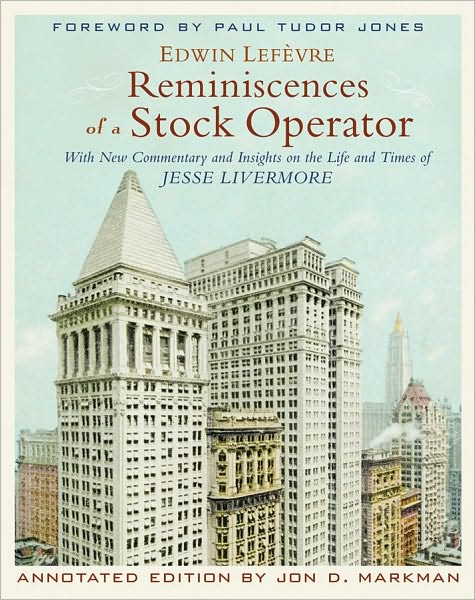 Many people come up to me, the most recent being a superior Greek Trader, Mr. Lambis, telling me that their two favorite books are Reminiscences of a Stock Operator and Edspec. I tell them they are cruel by being kind. Here's why.
"History Lessons for Investors: An annotated reissue of Edwin LeFevre's
Reminiscences of a Stock Operator is reviewed by hedge-fund manager and
author Victor Niederhoffer."
IMAGINE THAT MASTER NOVELIST and chess
aficionado Vladimir Nabokov wrote a fictional memoir about
Capablanca—the 1920s world champion who never made a mistake on the
board—and that Bobby Fisher then published an updated and annotated
version, incorporating all of the important developments of modern
chess strategy, along with a foreword by Anatoly Karpov.A similar multilayered feast on investment is now available, with minor differences. Edwin Lefevre's Reminiscences of a Stock Operator
is a novel told in the first person by a character inspired by
legendary trader Jesse Livermore. This classic is now graced with
extensive annotations by investment advisor Jon Markman and a foreword
by hedge-fund manager Paul Tudor Jones.The result is big and beautiful, cutting across two centuries of
booms and busts and market and economic history, with a myriad of
vintage historical photos and instructive historical charts throughout.One of Lefevre's favorite adages is that there's nothing new on Wall
Street. The similarity between the financial panic of 2008 and the 1907
panic recounted in the book is a prime example.The numerous squeezes, manipulations,
insider trading, government hauling in of scapegoats and frauds settled
for pennies on the dollar that Lefevre and Markman recount are horses
that are found as well in the modern stable.
Full article here.
Jan
3
Mavericks, from Victor Niederhoffer
January 3, 2014 | Leave a Comment
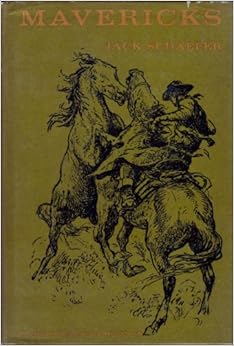 When someone talks about tinkering with the data, I think about how one of Louis L'Amour's favorite words was tinker, and many heroes of his stories are tinkers, who were door to door fix up people and salesman for the Sacketts.
However, I repeat that Jack Schaefer surpasses L'Amour as a writer, story teller, and benevolent personage by a mile. I would recommend his book Mavericks for all about mustangs captured for Barnum, a horse race, horse thieves, and more.
Very beautiful.
Almost as good as Monte Walsh or Milo Bennet.
Jan
3
Local Motors, from Victor Niederhoffer
January 3, 2014 | Leave a Comment
Here's an introductory article on Local Motors at its inception with the idea that I think would be worth developing here. One wonders if we could apply it here.
Jim Sogi writes:
I've been looking at making a 4×4 E350 camper van for various adventures. You can buy a new one set up for $150K, or you can buy a empty van and build it up your self to your own design. It seems like a fun and exciting project. There is a North Carolina 4×4 conversion kit.
Jan
2
Feedback in Real Life, from Victor Niederhoffer
January 2, 2014 | Leave a Comment
 If market or individual stock a has a positive predictive correlation with market b, and b had a positive predictive correlation with market a, then there is positive feedback, and an explosive growth when a is up would occur. Similarly, if there is a positive predictive correlation, i.e. the serial correlation of a with b say one day forward is 0.2, then market a goes down. If there is a negative predictive correlation of market a with market b, then when a goes up, b will tend to go down, and vice versa, and there will be a stable equilibrium between the two with each pulling the other in opposite directions.
The situation is very similar to what occurs in all feedback circuits in electronics, including what you seen in any kind of amplifiers where there is negative feedback to maintain stability.
What are the markets that have positive predictive correlation with each other, i.e. when a is up today, b tends to go up tomorrow, and when b is up today, a tends to go up tomorrow? There aren't many. And when such occurs, it is only for a limited time. So you have to be on your toes if you wish to use positive feedback. All this can be quantified with varying degrees of reality and rigor.
Steve Ellison writes:
I evaluated the correlations of the 1-day change (16:00 to 16:00 US Eastern time) in 6 markets with the following 1-day change in each of the 6 markets. The 1-day correlations from September 13, 2010 to September 4, 2012 (498 trading days) were as follows:
S&P 500 10-year bond crude oil gold silver euro
S&P 500 -0.08 0.12 -0.05 0.05 0.11 -0.11
10-year bond 0.01 -0.05 0.04 0.05 -0.02 0.04
crude oil -0.04 0.05 -0.06 0.00 0.04 -0.05
gold 0.01 0.00 -0.01 -0.01 -0.01 0.03
silver -0.03 0.03 -0.01 0.02 0.05 -0.01
euro -0.05 0.07 -0.03 0.06 0.06 0.03
By randomly reshuffling the daily changes in each market and running 1000 iterations of a simulation, I identified that a correlation with an absolute value greater than or equal to 0.09 was significant. Hence there were only 3 correlations that were significant, and 2 of them were positive:
10-year bond vs. previous day S&P 500: 0.12
Silver vs. previous day S&P 500: 0.11
Euro vs. previous day S&P 500: -0.11
None of these correlations held up in later data. From September 5, 2012 to May 2, 2013, the correlations of the 10-year bond with the previous day S&P 500 and silver with the previous day S&P 500 were negative. The correlation between the euro and the previous day's S&P 500 was -0.08. However, from May 3 to December 27, 2013, the correlation of the euro with the previous day S&P 500 was positive.
Rocky Humbert writes:
 An apochryphal tale: Rocky was hired to be the operations manager of a local towing company/garage and instructed to optimize his manpower work schedules and resource utilization to improve profitability.
Rocky noticed that tow truck drivers sat around idly drinking coffee at certain times of the day. But then there would be a surge of demand and customers might have to wait many hours to get a jumpstart or tow (and the garage would lose business to competitors).
It was a classic operation research/queueing theory problem. Under pressure to quickly turn the company around, and with a HBA MBA plus a PhD in applied mathematics in tow, Rocky conducted a study looking at six months of trailing data (between November 1st and April 1st) and discovered that the peak demand for service was daily between 7am and 8:45 am. His p-values were low. His T-tests were high. He was highly confident and energized to put his statistics to work concluding that batteries must die sitting unused overnight. So he changed his company's work roster to have more staff at the peak 7:00-8:45 hours and implemented the changes effective May 1st. Lo and behold, starting around May 15th, there were almost no customer calls between 7:00 and 8:45 and instead the demand spiked between 4:00 and 6:00.
So instead of improving things, he screwed them up and by September, Rocky concluded that the prior data must have been faulty and re-jiggered the staff to meet the afternoon demand — and implemented the changes effective November 1st. (Yup, the demand shifted yet again just in time for the chilly autumn air ).
Rocky was fired and became a successful money manager and annoying DailySpec poster. The moral of the story is that all of the cool statistical analyses should produce the QUESTIONS. Not the ANSWERS. What is the underlying process at work????
There will be times when stocks and bonds correlate. There will be times when stocks and bonds negatively correlate. Rocky submits that at some point in the not-too-distant future good news for the economy will be bad news for stocks (which is the opposite of the current regime). This isn't ever changing cycles. It's common sense. Or as Rocky's dad (a pioneer in digital computing) liked to say: GIGO.
Jan
2
It Would Be Interesting, from Victor Niederhoffer
January 2, 2014 | Leave a Comment
 It would be interesting if the all seeing eye could see the reasoning behind all the typical reactions to a number like ISM manufacturing or employment. Let's say it's like 57.4 up versus 57.6 like today's number. First a rise in S&P because it's down. That means the Fed is less likely to taper. Second, a rise because it's only down 0.4 and it's still way above 50. Third, a decline because it means that the economy isn't strong. Fourth, a rise as the flexions cover their short. They were told the number was going to be down but most of them didn't get the exact number and it's only down a little. Fifth, a decline as the economic forecasters alert their readers that the number was down. Sixth, a further decline because Germany is down a tremendous amount more than the US. Many other cross currents also. All ephemeral and designed to unleash the weak from their chips.
Gary Rogan writes:
It seems like reacting to any news of that nature in any way is counterproductive unless you had the information in advance. And yet 'everybody does it'. Why do people feel compelled to act on information even if they don't know what it means (relative to the reaction that has already occurred by the time they can act)?
Craig Mee writes:
There was an ex deputy treasure secretary on CNBC Asia yesterday, (he may have held the top job for 4 days and I missed his name). His insights were little better than the rhetoric from a standard middle range company CEO, however he did appear straight down the line. Possibly the government at the highest levels is not necessarily implicit in the flexionic behavior of others. Many may not quite understand what they have available to them or that lower ranks are happy to take cut deals for peanuts on partial info. Big business, on the other hand, is able to squeeze every ounce of juice from all and sundry to create the beast that marches forward to all others' misfortune.
Dec
30
The Regression Fallacy and Smith, from Victor Niederhoffer
December 30, 2013 | Leave a Comment
 A quote from The Examiner about the Knicks loss to Toronto on Friday. "The main culprit was JR Smith who made only 2 of his 9 shots during the fourth quarter". How many can this man lose for the Knicks after winning two games in the early part of last year. 50. No one is a bigger example of the interplay of luck and skill (or lack thereof) than Smith to illustrate the regression fallacy and the problems in trading which arise from succumbing to it, i.e. buying stocks at the open on Monday after a big decline on Friday and seeing it work a few times.
Dec
30
Book Review: Wall Street and the Wilds, from Victor Niederhoffer
December 30, 2013 | Leave a Comment
 Wall Street and the Wilds by A.W. Dimock, 1915, contains the sage of the rise and fall and rise and fall of a Wall Street gold trader, options seller, stock manipulator, developer of the clearing house, pool operator, Steamship promoter, real estate developer of Elizabeth, New Jersey, telegraph line builders, railroad builder, hunter, photographer and naturalist from 1850 to 1915.
It includes chapters on black Friday, the day that the gold bulls broke the US Treasury in 1870, the effect on prices of the civil way, the way manipulations were carried out in those days, the relation of the flexions to financiers in those days (not much different from today), systems for profiting in gold, the legal system in those days (fees of a million dollars for routine cases were common even in 1880, the early developments of photography in the wilds, hair raising tails of wars between the Native Americans and the US military, pinpoint shooting, advanced fly casting techniques, and much more.
Everything talked about is totally a propos of current techniques in Wall Street. Dimock was a minister's son born in 1840 who went to Andover and came to Wall Street at 15 and got his start scalping odd lots in insurance stocks. He developed a system of selling gold every 1/8 up and buying it every eight down. He became the Little Napoleon of Wall Street and dominated the gold exchange the way the big grain companies dominate the grain market today, using some of the same techniques. He made so much money that it was easy come, easy go, and he lost it all by guaranteeing the purchase of friends, defrauding by the Goulds during Black Friday, and finally in the crash of 1873.
The book is compelling, and instructive and a great history of 19th century stock and commodity markets, very much akin and resonant of today. It's highly instructive. I'll quote from some of the more resonant and sagacious passages:
All day I stood there, buying and selling, with a stubby pencil. Always my bids and offers were a quarter percent apart. Thus, if I had just bought five thousand at a premium of fifty and 1/8 percent, (gold was quoted at around $16.50 an ounce as a premium to dollars), I would big fifty for five more, and offer to sell five at fifty and one quarter. Every purchase was balanced. The profits of my machine were so great at the end of the year that I could withstand a fall of 25% in the price of gold.
There is a fascinating account of the lending and borrowing business and the treachery and integrity of various operators very resonant of today.
Stefan Jovanovich writes:
 Going up against Big Al, the Chair and Dimock should be the final proof of my gilded idiocy. Here goes.
Dimock — like all the large size traders in the Gold Room — thought that the corruptions of the Lincoln and Johnson Administrations would continue under Grant and Treasury Secretary Boutwell. When they didn't, when Federal spending kept declining and the public debt kept being reduced, the speculators assumed that it was a temporary reprieve. They and most politicians expected some kind of compromise that would allow for continued greenbackery. They bet wrong, and Grant's reputation has suffered for it ever since. Not only had Grant and Boutwell opposed the conventional academic opinion - which was, then as now, that the economic pump needed continuous monetary/credit priming with more and more currency; even worse, Grant allowed his Treasury Secretary to go against the street. Only the businessmen of the country - Vanderbilt being the foremost - thought Grant and Boutwell were right. Indeed, Vanderbilt thought Grant was as much a hero for saving the country's finances and its currency as for his leadership of the Union Army during the Civil War/War Between the States. When Grant's son lost the family money in a swindle with the Bernie Madoff of the day, most of the surviving speculators from '73 celebrated; Vanderbilt, on the other hand, saved Grant by buying from him all of his memorabilia, which he later returned to the Grant family as a gift.
What did happen in 1870 was that the Treasury was unable to float its proposed loan at 4 1/2% in Europe because of a little thing called the Franco-Prussian war. What Boutwell did instead was borrow here in the U.S. "The circumstance that war was declared between France and Prussia simultaneously with the passage of the loan bill put it out of the power of the Department to make the negotiation as had been expected. The large revenues, however, of the Government continuing without material abatement until the present time, improved the credit of the country, enabled the Treasury Department, by weekly purchases, to reduce the amount of surplus bonds offered for sale, and contributed to depreciate the market value of gold."
Here are Boutwell's reports for 1870 and 1871. To understand exactly how deep a hole the war had put the country in, you need to know that in 1870 the Federal government spent $129,235,498 for interest on the public debt. The gross receipts for that same year were $411,255,477. The total public debt, including the nearly $400 million in U.S. Notes and greenbacks was $2,418,673,044 - 6 times the Federal tax collections.
1870:
"The financial condition of the country has improved during the past 5'ear. The average rate of gold for the year 1869, as shown by weekly sales, was 32.9 per centum premium, and for the first eleven months of the year 1870,15.2 per centum premium, indicating an improvement in the value of the paper currency of about 17 per centum. From the 1st day of July, 1869, to the 30th of June, 1870, inclusive, the public debt, as shown by the warrant account, was reduced in the sum of $101,601,916 88. From the 1st day of December, 1869, to the 30th day of November, 1870, inclusive, the reduction was $119,251,240 58, as shown by the monthly statements of the public debt, and the total reduction, from the 1st of March, 1869, to the 1st of December, 1870; was $191,154,765 36. The consequent reduction in the interest account is at the rate of more than ten millions of dollars per annum.
1871:
 "The country has been prosperous during the year now closing, and the public finances have shared in the general prosperity. During the fiscal year ending June 30, 1871, the reduction of the pubic debt was $94,327,764 84. The total decrease in the public debt from March 1, 1869, to December 1, 1871, was $277,211,892 16; and during the same period the annual interest charge has been reduced $16, 741, 436 04. The revenues for the year 1871, and the receipts since the first of July last, show that the time has arrived when a considerable further reduction in taxes can be made, and yet leave the Government in a position to pay at least fifty millions of dollars annually of the principal of the public debt, including the amount pledged through the sinking fund. In my annual report to Congress for 1870, I expressed the opinion that the settled policy of the country should contemplate a revenue sufficient to meet the ordinary expenses of the Government, pay the interest on the public debt, and from twenty-five to fifty millions of dollars of the principal annually. To that opinion I adhere, with even a stronger conviction that the payment annually upon the principal of the public debt should no,t be less than fifty millions of dollars.upon favorable terms if, unhappily, in the future an exigency should require such loans to be made. The power to negotiate a large loan at five per cent, interest and to enter upon negotiations for the sale of bonds bearing four-and-a-half, and four per cent, interest, is derived entirely from the exhibition of an honest purpose on the part of the people to maintain the public faith, and the consequent ability on the part of the Government to answer that expectation by large and frequent payments upon the public debt."
source
Boutwell is a great, great figure. I steal most of my opinions about the Constitution from his great work The Constitution of the United States at the End of the First Century.
Dec
27
One is Reminded, from Victor Niederhoffer
December 27, 2013 | 3 Comments
 One is reminded of a dinner I hosted at Bernadin where E and a beautiful money manager from abroad were my guests. E confided to her that he owned 1/4 of the entire soybean crop at that time. And that he took time off from composing for Billy Joel to visit the crops each year and just came back from a personal barnstorming. Needless to say, the money manager paid no attention to me, not only because of our relative wealths, but also because he exuded so much more stature and resilience than myself. Presumably E in pointing to the futility of the counters is indirectly but politely pointing to the follies of a counter such as I. Yes. I have been short on several days this year, despite the correspondence of this year to 1999 (I believe it was I who gave him the final bullish nod in 1999 based on millennium signs in City Island). And I'll be short overnight tonight. Furthermore, I'll be long bonds. If anyone told me that I'd have the exact same positions overnight as the Upside Down Man, and be going against the giant money making machine of E at the same time, why—- I look around 3 times —- I'd report myself to headquarters like Willie.
Dec
24
Bonds Approaching 2 1/2 Year Low Before Holiday, from Victor Niederhoffer
December 24, 2013 | Leave a Comment
Bonds are approaching a 2 1/2 year low before holiday yield of 3.91 on 30 year and yield of 2.977 on 10 year. The Upside Down Man perhaps will be conferring with his colleagues in Washinton and twittering about giving the little woman and his money away to worthy causes like Gates and Buffett, as well as saying bullish things about his holdings.
« go back — keep looking »Archives
- October 2026
- September 2026
- August 2026
- July 2026
- June 2026
- May 2026
- April 2026
- March 2026
- February 2026
- January 2026
- December 2025
- November 2025
- October 2025
- September 2025
- August 2025
- July 2025
- June 2025
- May 2025
- April 2025
- March 2025
- February 2025
- January 2025
- December 2024
- November 2024
- October 2024
- September 2024
- August 2024
- July 2024
- June 2024
- May 2024
- April 2024
- March 2024
- February 2024
- January 2024
- December 2023
- November 2023
- October 2023
- September 2023
- August 2023
- July 2023
- June 2023
- May 2023
- April 2023
- March 2023
- February 2023
- January 2023
- December 2022
- November 2022
- October 2022
- September 2022
- August 2022
- July 2022
- June 2022
- May 2022
- April 2022
- March 2022
- February 2022
- January 2022
- December 2021
- November 2021
- October 2021
- September 2021
- August 2021
- July 2021
- June 2021
- May 2021
- April 2021
- March 2021
- February 2021
- January 2021
- December 2020
- November 2020
- October 2020
- September 2020
- August 2020
- July 2020
- June 2020
- May 2020
- April 2020
- March 2020
- February 2020
- January 2020
- December 2019
- November 2019
- October 2019
- September 2019
- August 2019
- July 2019
- June 2019
- May 2019
- April 2019
- March 2019
- February 2019
- January 2019
- December 2018
- November 2018
- October 2018
- September 2018
- August 2018
- July 2018
- June 2018
- May 2018
- April 2018
- March 2018
- February 2018
- January 2018
- December 2017
- November 2017
- October 2017
- September 2017
- August 2017
- July 2017
- June 2017
- May 2017
- April 2017
- March 2017
- February 2017
- January 2017
- December 2016
- November 2016
- October 2016
- September 2016
- August 2016
- July 2016
- June 2016
- May 2016
- April 2016
- March 2016
- February 2016
- January 2016
- December 2015
- November 2015
- October 2015
- September 2015
- August 2015
- July 2015
- June 2015
- May 2015
- April 2015
- March 2015
- February 2015
- January 2015
- December 2014
- November 2014
- October 2014
- September 2014
- August 2014
- July 2014
- June 2014
- May 2014
- April 2014
- March 2014
- February 2014
- January 2014
- December 2013
- November 2013
- October 2013
- September 2013
- August 2013
- July 2013
- June 2013
- May 2013
- April 2013
- March 2013
- February 2013
- January 2013
- December 2012
- November 2012
- October 2012
- September 2012
- August 2012
- July 2012
- June 2012
- May 2012
- April 2012
- March 2012
- February 2012
- January 2012
- December 2011
- November 2011
- October 2011
- September 2011
- August 2011
- July 2011
- June 2011
- May 2011
- April 2011
- March 2011
- February 2011
- January 2011
- December 2010
- November 2010
- October 2010
- September 2010
- August 2010
- July 2010
- June 2010
- May 2010
- April 2010
- March 2010
- February 2010
- January 2010
- December 2009
- November 2009
- October 2009
- September 2009
- August 2009
- July 2009
- June 2009
- May 2009
- April 2009
- March 2009
- February 2009
- January 2009
- December 2008
- November 2008
- October 2008
- September 2008
- August 2008
- July 2008
- June 2008
- May 2008
- April 2008
- March 2008
- February 2008
- January 2008
- December 2007
- November 2007
- October 2007
- September 2007
- August 2007
- July 2007
- June 2007
- May 2007
- April 2007
- March 2007
- February 2007
- January 2007
- December 2006
- November 2006
- October 2006
- September 2006
- August 2006
- Older Archives
Resources & Links
- The Letters Prize
- Pre-2007 Victor Niederhoffer Posts
- Vic’s NYC Junto
- Reading List
- Programming in 60 Seconds
- The Objectivist Center
- Foundation for Economic Education
- Tigerchess
- Dick Sears' G.T. Index
- Pre-2007 Daily Speculations
- Laurel & Vics' Worldly Investor Articles
