Jun
16
Review of Man of Steel, from Marion Dreyfus
June 16, 2013 |
 MAN OF STEEL
Actually Stalin meant steely man, too. Would his mild-mannered alter ego wreak more impressive havoc today than the muscled one-man wonder?
Directed by Zach Snyder
Superman was created in 1938 by Jerome Siegel and Joe Shuster, designed as an adolescent anodyne and savior, in large part, from the hitlerian juggernaut that had sent so many surviving graphic artists and novelists over the oceans for succor.
For fact-chasers, this year marks the 62nd anniversary of the first Superman movie, Superman and the Mole Men—but not many will recall that first go-round of the man of steel franchise. The first Superman most of us recall or can see on late-night TV was the impressive Christopher Reeve, whose looming physique and chiseled good looks combined with his Juilliard-trained acting technique to generate the most paradigmatic Superman to grace the screen for the 5-issue franchise beginning in 1978.
The Brit Henry Cavill, who plays American Man of Steel without a lapse back into English (joke intended), is certainly handsome enough, but lacks the smooth, seamless facial planes and hauteur of his predecessor. Certainly, Cavill's physique is peerless, but he seems querulous and even hesitant onscreen as often as he seems commanding. It does not fill one with confidence. He seems a bit weather-worn, in a way that Reeve did not. Also lacking from this man of steel is much of a personality, or that naughty glimpse of sly humor that delighted audiences as it trickled out when Supe dealt with Margot Kidder's Lois—especially in those close-ups with chemistry evident between the two leads. Amy Adams, always competent, talented and pert-nosed cute, does not resonate any of the heat that you hope to see, especially as so few of these moments are visible onscreen altogether in MoS. She is a spunky, responsible reporter, refusing to reveal Superman's whereabouts to Zod or his people. But no frissons.
The Krypton mega-villain, the re-enlivened comeback Zod, played by a face familiar from innumerable mob pics, Michael Shannon, does not measure up to MoS villains of the past–Terence Stamp, Jack O'Halloran, Kevin Spacey, or the slightly buffoonish but clever Gene Hackman as Lex Luthor (whose solid chops as a tough guy, G-man and outlaw before this character stood him in good stead when the part as written could have defenestrated a lesser actor–and his diction slips into thugdom's unwonted dese, dem and dose from time to time. Krypton did not have a canton of Brooklyn to school such a pronunciation.
Jor-El, chief Kryptonite scientist [and father of Kal-El] played by sturdy Russell Crowe, sports a beard; one person, at least, who doesn't have a dimpled chin, as almost every major character seems to. It seems almost a cast member on its own, these dimples everywhere. (Is there something about dimpled kids that hurtles them into acting? It would seem so.)
This absence of chemistry between Lois and Supe may have been a choice of the writers, who figured people would go for the effects (yes) and the escapism (ditto), not necessarily for the romance (wrong).
Harking back to the innate value of the story (if that is what you unconsciously expect at base), the plot points are artificial, as nothing is at stake—the bad guys are just bad. There's no "On the other hand…" The earth is imperiled, OK, but that's SOP. We don't really worry about Metropolis and the violated and punctured mountain tops or glacial vistas. We watch the screen, zonked by the amazing effects that seem impossible. Thirty five years in advancing SFX have made a discernible difference. But viewers don't feel invested in either the characters or the outcome.
 As a counterpoint to the pure evil, we can say, of the Reich and its übercommandos, Superman was conceived as a polar opposite. You know the drill: Dedicated to truth, justice and the American way. (Had the comic geniuses that poured into the US to escape nazism fled to the steppes, we would have had a different and less fortunate motto: Truth, justice and the Really Red Cape Way.)
For lovers of complexity, Clark/Kal El is hard to get, one would think. An übermensch too loaded with powers and too innately good to be a source of much dramatic tension. Except in our day, when goodness and power are not often a matched set, a character exemplifying these traits may seem obvious for the child primed by a constant stream of fiction fodder. For the sager adult knowing the shades of complexity and gradual moral elasticity/atavism of the world we inhabit now, the dramatic tension shifts not to this avatar of goodness and ethicism, but to our shifting relationship and accommodation to compromise.
One could argue that we adjust to evil and a full-spectrum response in hellholes, say, Sudan, Iraq under Saddam, North Korea, Uganda under Amin, Chechnya, Romania under Ceaușescu, under their absolute tyrannical heirarchs, more easily than we do to the obverse scenarios. We idealize Shangri-La, but would soon grow irritated and restless under its unfailing puffy white cumulus and imperturbable smiling sun. Nothing but free golf and chicken croquettes.
Though Superhero Kal-El (in Hebrew, where the preponderance of comic book ethos originated: Vessel of G-d) is supposed to be uncomplicated, in reality, this generation of consumers of the myth sees a character fighting against his better instincts, as instructed by his earthly parents (Kevin Costner, Diane Lane). The battle is maintaining the goodness in the face of vast cynicism and normalized unwholesome. Young Clark wants to vent his anger when taunted, pestered by school colleagues—but holds back. We are taught now not to suppress our wishes or desires or instincts (other than murderous rage, perhaps, or the male lusts to have every passing female on the average American street). Superman must squelch his natural desire to pay back bullies so as not to raise fear among his little schoolmates and community. Thus there is a reverse dramatic tension: We would not hold back. We'd smash their faces into the electric fence, knock the bejezzus out of the drunken jerk in the bar. But Clark doesn't, even when his own father (Kevin Costner) is at risk.
Risen out of adolescent escapism, Supe had, critics had it, nothing much to say about the human condition other than to indicate by his existence and responses to threat or calamity that salvation was possible, and that goodness could be sustained in the world of constant unpleasant surprises. Today that optimistic template reads as revolutionary. We've largely forgotten optimism.
After devouring Superman and his Action Comics supercolleagues as a child—I often ascribe my relatively commodious vocabulary to the thousands of comic panels I consumed after buying them with my tiny allowance—during my teen years I came to apotheosize him as the ideal boyfriend. Not someone I could hope to locate, but someone to aim for—he was a goody two -boots in the primary colors with all the Jewish values: Decency, charity, openness to others, helpfulness, sobriety and zero dark mishugas. Unlike American friends, I was brought up British-strict, and he represented my salvation from a personal raging tyrant. As it turned out, the boyfriend I had was probably better than Superman, because he was smarter, funnier, and clued me into many of the clandestine realities my family never imparted.
 Superman makes broad-brush discriminations: These are good people. These, bad. We have many more dubious opponents, however, than were dreamt of in that Shuster and Siegel cosmogony. Most baddies today would not fall easily into either definitive camp. Superman and his cohort followers Batman, Wonder Woman, Flash, Aquaman et al., never dealt with the latter-day scourges of Communism or, more immediately, terrorism and radical islam. The seeping result of infiltration that imperils the free world with its encroaching ooze into all segments of society is not amenable to flying thrusts and grunting, lifting pounds per square foot. A man as rigorously physical as Superman has less impact on such foes than would, in fact, the meeker, milder spectacled version, Clark Kent. Kent's métier, as a reporter/journalist, unmasker of evil schemes and unholy plots, would today be effective in subtler ways, by informing the public and helping to dismantle terror networks. Clark is a crusader without a cape, a pen-in-hand counterweight to the forces tripping us up.
The film disappointed in its conscientious product placement of restaurant chains, camera brands, electronics and a variety of stuff we don't want to see any more in prominent Look-At-Me locations in our films. The flurry of product placement roused a counter-reaction that made such deliberate "subliminal sales" efforts embarrassingly gauche. Bad enough to have to cope with banner ads and customized computer–generated product sells on our laptops. No doubt the producers lowered the staggering costs of the film by selling rights to these commercial interests. (They have reputedly already netted $150 million before the film officially opens.) The authors of the hero, by the way, got the princely sum of $130 when they sold their strip in 1938, and until their dying days (1992, 1996) fought court battles to a fairer remuneration for the titan that is the Man of Steel. Using a dedicated lawyer and comic maven, Marc Toberoff, their heirs recovered some millions after epic battles in succeeding decades. $130!
For the alert, the film features a number of homages to films before it: Field of Dreams (Costner's 1989 baseball fable), Orson Welles' immaculate Citizen Kane, and a host of other swift visual refs. Most unsettling are the subtle but iterated Christ-like iconic shots of the Man of Steel as he stands still in the sky above citizens, erect and crucifix-like. Created by Jewish artists, about a largely idealized reverse-Dybbuk-figure of idolatrous [Jewish] beneficence, Christ imagery comes as a bit of a startle. There is no end of pertinent applications of Christian imagery in myriads of books and tales; this is not one.
It does damage to the well-worn legend of the destruction of the planet Krypton, a planet peopled by extra-uterine birth (but for our man Kal, who is the only normally birthed child, on screen, according to Jor-El, "in centuries"). The fellow next to me whispered: "First time I knew Jor-El was an Ob-Gyn!"
That pointed to another problem in the movie. There were too many scenes where if the audience was not so rapt on the special effects and blam-blam, they would have laughed at the silliness and unsubtle goings-on. Amy Adams scoots around the North Pole in her kicky parka and cute booties, no face mask, no earmuffs, all solo, crawling on rock faces jagged with ancient glacial formations. Really? I mean, really? The guy playing Zod, Shannon, is this side of over-exposed, a bad guy we have seen in one too many gangster flicks. His elocution is hardly Richard Burtonesque, when it needs to be, frankly, better. The guy next to me: "Burton wasn't available." Other reviewers, mind you, loved Shannon's performance.
Superman himself was slightly weathered in a way Chris Reeve was not, the planes of his face being more indented and chiseled than we are used to. He is immensely well-built, of course, so perhaps most people won't mind his indented look. The exuberance of diving up and clomping down on mountaintops, however, wears thin: Why just showcase wanton destruction of ice-faces, berms, earth forms?—We know what he can do. We miss the scene of the complicated Krypton baby-pod (hat-tip to Alien) landing in a Kansan field. But the liberties this sequel/prequel/he-quel takes with the cherished Superman tale (the film runs 143 minutes) get under the skin, even if viewers don't notice the feebler elements of the script, or the occasional silliness overall. Did anyone notice that all major characters except Diane Lane and bearded Russell Crowe had chin dimples? Even the bad-guy generals. What were the producers trying to say?
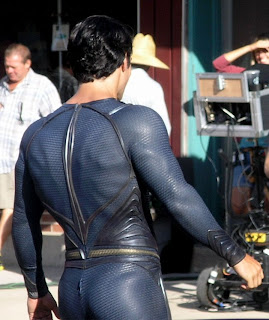
The time-honored red cape and red, blue and yellow body-leotard and tights worn by the toothsome but not quite right Superguy has been darkened here to deep navy, ruby wine red, and ochre yellow. It is a magnificent textured suit, a more mature palette, with a marvelous cape that you can tell at a glance has a lovely "hand," drapes beautifully as he walks or flies. Superman appears, from a distance, slightly colorized pewter.
But you'll go to see it no matter what the criticisms listed.
Best advice: Go with a witty companion. And note that the reporter actually has more impact against true evil today than the mighty Superman ever could. One serious op-ed, a stomping journalistic call-out, and Boom go the bad guys entrenched and doing their utmost damage in our upper echelons.
Comments
Archives
- October 2026
- September 2026
- August 2026
- July 2026
- June 2026
- May 2026
- April 2026
- March 2026
- February 2026
- January 2026
- December 2025
- November 2025
- October 2025
- September 2025
- August 2025
- July 2025
- June 2025
- May 2025
- April 2025
- March 2025
- February 2025
- January 2025
- December 2024
- November 2024
- October 2024
- September 2024
- August 2024
- July 2024
- June 2024
- May 2024
- April 2024
- March 2024
- February 2024
- January 2024
- December 2023
- November 2023
- October 2023
- September 2023
- August 2023
- July 2023
- June 2023
- May 2023
- April 2023
- March 2023
- February 2023
- January 2023
- December 2022
- November 2022
- October 2022
- September 2022
- August 2022
- July 2022
- June 2022
- May 2022
- April 2022
- March 2022
- February 2022
- January 2022
- December 2021
- November 2021
- October 2021
- September 2021
- August 2021
- July 2021
- June 2021
- May 2021
- April 2021
- March 2021
- February 2021
- January 2021
- December 2020
- November 2020
- October 2020
- September 2020
- August 2020
- July 2020
- June 2020
- May 2020
- April 2020
- March 2020
- February 2020
- January 2020
- December 2019
- November 2019
- October 2019
- September 2019
- August 2019
- July 2019
- June 2019
- May 2019
- April 2019
- March 2019
- February 2019
- January 2019
- December 2018
- November 2018
- October 2018
- September 2018
- August 2018
- July 2018
- June 2018
- May 2018
- April 2018
- March 2018
- February 2018
- January 2018
- December 2017
- November 2017
- October 2017
- September 2017
- August 2017
- July 2017
- June 2017
- May 2017
- April 2017
- March 2017
- February 2017
- January 2017
- December 2016
- November 2016
- October 2016
- September 2016
- August 2016
- July 2016
- June 2016
- May 2016
- April 2016
- March 2016
- February 2016
- January 2016
- December 2015
- November 2015
- October 2015
- September 2015
- August 2015
- July 2015
- June 2015
- May 2015
- April 2015
- March 2015
- February 2015
- January 2015
- December 2014
- November 2014
- October 2014
- September 2014
- August 2014
- July 2014
- June 2014
- May 2014
- April 2014
- March 2014
- February 2014
- January 2014
- December 2013
- November 2013
- October 2013
- September 2013
- August 2013
- July 2013
- June 2013
- May 2013
- April 2013
- March 2013
- February 2013
- January 2013
- December 2012
- November 2012
- October 2012
- September 2012
- August 2012
- July 2012
- June 2012
- May 2012
- April 2012
- March 2012
- February 2012
- January 2012
- December 2011
- November 2011
- October 2011
- September 2011
- August 2011
- July 2011
- June 2011
- May 2011
- April 2011
- March 2011
- February 2011
- January 2011
- December 2010
- November 2010
- October 2010
- September 2010
- August 2010
- July 2010
- June 2010
- May 2010
- April 2010
- March 2010
- February 2010
- January 2010
- December 2009
- November 2009
- October 2009
- September 2009
- August 2009
- July 2009
- June 2009
- May 2009
- April 2009
- March 2009
- February 2009
- January 2009
- December 2008
- November 2008
- October 2008
- September 2008
- August 2008
- July 2008
- June 2008
- May 2008
- April 2008
- March 2008
- February 2008
- January 2008
- December 2007
- November 2007
- October 2007
- September 2007
- August 2007
- July 2007
- June 2007
- May 2007
- April 2007
- March 2007
- February 2007
- January 2007
- December 2006
- November 2006
- October 2006
- September 2006
- August 2006
- Older Archives
Resources & Links
- The Letters Prize
- Pre-2007 Victor Niederhoffer Posts
- Vic’s NYC Junto
- Reading List
- Programming in 60 Seconds
- The Objectivist Center
- Foundation for Economic Education
- Tigerchess
- Dick Sears' G.T. Index
- Pre-2007 Daily Speculations
- Laurel & Vics' Worldly Investor Articles
