May
24
Noticed Today, from Jim Sogi
May 24, 2009 | 2 Comments
 The mosquitoes in Hawaii are gnarly, fast, smart. They hide behind your leg where you can't see them. They hide in the dark under my desk. They circle smelling the blood. They love fresh meat from the mainland. They're fast compared to the bombers in Alaska. They've wiped out most of the native birds.
Chris Cooper responds:
I live part-time in Indonesia (Bali) now, and can't say that I have found the mosquitoes to be much of a problem. Granted, where I live in the hills it is better than in the lowlands. I sometimes will spray repellant on my skin around sunset. I used to use mosquito netting over the bed, but now find it is unnecessary as long as you keep the door closed around sunset. I would be much happier if my neighbor would do something about the standing water in his rice fields, but really it's not bad at all. It's also very pleasant to sit in the open-air living room as it is getting dark and watch the local bats fly around the room looking for mosquito morsels.
Another tactic is to stay near my partner, who seems much more attractive to the bugs than I am. I don't have to be entirely unattractive to mosquitoes, I just have to be less attractive than he is.
May
22
5% Swings — Bathtub Trade, from Jim Sogi
May 22, 2009 | Leave a Comment
The market feels, looks, trades and counts like political discourse these days. Everyone either bullish or real bearish. Not much middle ground. Like a bathtub swashing its whole contents from side to side. S&P cut through 900 in the middle of the night like nothing.
May
20
Trends, from Phil McDonnell
May 20, 2009 | 8 Comments
 To understand the serial correlation in a time series it is helpful to look at a simple random walk model such as:
p(t) = p(t-1) + u
where p(t) is the price level at time t and u is a random variable, the net change for the time period.
Suppose the price started at 100 years ago. Then the current price level will be the sum of all the previous daily changes plus the original 100. Over time the dispersion of the sum of these random changes will increase with the square root of elapsed time. This growing dispersion can be interpreted as a trend by one reading a chart even for a truly random price series.
As far as real markets go, we know that the daily serial correlations between changes is small and generally has tended to be negative in recent years. But it is also true that the variance of the market movement is serially correlated. In other words volatility persists. So we wind up with a slightly more complicated model where the u's in the above formula have a wandering variability.
Dr. McDonnell is the author of Optimal Portfolio Modeling, Wiley, 2008
Jim Sogi comments:
Phil has written often that price levels are serially correlated. This is a characteristic of a time series. Why is this? For some mechanical or structural reason levels are limited in the amount of their change over a given time. In markets in general, the market forces and competition of bid and ask tend to compress prices. In Globex, the 1/4 point tick and the depth prevents large jumps or moves in between trades. I posit that this is one of the basic market forces, and can be used to the trader's advantage. Globex itself as a market making mechanism has incentive to dampen wild price swings. Market makers, and stat arb traders have incentives to prevent wild price swings and big trends.
The second main force in markets is the force that overcomes the gravity, so to speak, of the serial correlation, and overcomes the structural dampening mechanisms inherent in a time series. This is described in part as volatility, or also as trending. This is the force that moves the market away from any given price. What is this force? It might be market imbalance of supply and demand much larger than the inside depth or of one day or week's trade volume as we saw this year and last. It could be underlying financial movements, changes in investor perceptions that outweigh the tendency of correlation. It might be government risk. This appears to be the balance of force between mean reversion and trending.
Another aspect of trending is the appearance of trends in a random time sequence as an artifact of the correlation and the increase or variation in volatility. This calls into question the fundamental nature of the force or explanation of the market forces as an explanation for trends.
These two forces might be quantified, and a metric used to define a trend. The serial correlation appears to be the basis for mean reversion trading for which trending is an anathema. Some trading methods utilize trending but it is problematic defining a trend. One of the problems is the existence of trends as an artifact of random time series and how to distinguish such artifacts from a fundamental move, in advance. The answer will also change with cycles.
The worst thing for a range trader is for a break out. The worst thing for a trend follower is a range. A single big move can wipe the reverter, and multiple range entries can ruin the trend follower before he catches the train. The correlation continues during a trend and results in the channel phenomenon, so this can be used to the traders advantage both contra and following.
May
19
900, from Jim Sogi
May 19, 2009 | 2 Comments
 S&P crossed 900 on 25 days on the way down. And it took detours to 800 as well in the process. It's been only seven days so far on this side of the river.
May
19
Arnold’s Six Secrets of Success, from Jim Sogi
May 19, 2009 | 5 Comments
 Arnold Schwarzenegger spoke at my son's graduation ceremony at USC. Despite criticisms of how he governs California, he is a great speaker. His secrets of success:
1. Do what you love and want to do, not what others tell you to do.
2. Ignore the naysayers.
3. Work your butt off.
4. Don't be afraid to fail.
5. Break the rules.
6. Give back.
He loved bodybuilding, but when his mother saw the pictures of the half naked men she brought in the doctor and cried. They said: be a policeman. Bodybuilding will get you nowhere. Mohammad Ali didn't even start counting situps until the pain started. Give it all you have. There will be setbacks. All traders know this. Everyone said no one would appreciate Arnold's accent or huge build in movies.
May
11
Nobody Asked Me, But… from Victor Niederhoffer
May 11, 2009 | 3 Comments
 Nobody asked me, but which recent Wimbledon champion had his role in default due to mother and daughter sanitized to win because of injury in a recent obit?
As usual the bond vigilantes are close to causing a double dip, and a well deserved one at that, in the economy.
The US long bond and German Bund now both at 120 1/3 move together like love and marriage despite their differences in everything, like the S&P and Nikkei now close to the magic 1000 but still flirting with the mid 900s.
Longwood Gardens has the most fun children's garden in the world and had lines of 50 cars waiting to get into their 1500 car parking lot.
There are entire blocks of seaport communities wherever I look vacant before the boom season of summer auguring badly for the state of recreation.
A store offers 10% off to those ripped off by Madoff and another one out of business offers prices reduced by 70% in line with the cold weather of February.
The discount stores continue to do very well with all the Bob Evans and Applebees I went to with big lines outside. Thus the price mechanism works well with high priced items showing much reduced demand and low priced items increasing in line with Walmart and McDonalds performing better than Tiffany's .
The price to weight ratio pioneered by Roger Longman is a better indicator of abnormal, exceptional business than return on equity. The correlation between the price to weight ratio and subsequent return is highly negative during recessions.
The economy would have been in much better shape right now without the interventions than with them. The evidence that bank failures were highly correlated with reductions in output is due mainly to the output's causing the failure rather than the bank failures' causing the output declines.
The fears of crony capitalism that Albert Jay Nock wrote about vis a vis the Secretary of the Interior's being the most important person in the government that everyone wanted to glad hand as he twirled around like a teetotum not being able to sing the last lines of Marching Through Georgia are so resonant with the crony capitalism that is so common in Russia, the old Germany, and places and times so much closer.
Alan Millhone writes in:
Speaking of one of favorite restaurants, I took my mother to the Parkersburg Route 50 Bob Evans today for the last time as it closed for good today at 4 PM. Very unusual for any Bob Evans to ever close as new ones open all the time in America. A good book is out about the life of Bob Evans who began as a short order cook at his roadside cafe in Gallipolis, Ohio years ago. He and his wife lived on a farm in Rio Grande, Ohio and he passed away not that long ago. He gave away much of his wealth to a variety of good causes. It was sad to see today one of his namesakes close. All the workers there knew our names and we knew theirs. We will miss going there.
Jim Sogi comments:
 Look at some past excesses that in hindsight seem so obvious, but at the time seemed, well, kind of high. Real estate of course seemed kind of high, but it wasn't clear the effect of the fallout on credit and bonds. The dot com bubble of course seemed high, but the fall out was bad tho contained. The premature bailout caused the real estate boom. The high teen bond yield in the 80s was outlying. Looking around now, what seems, 'kind of high'? Government spending/debt is the obvious answer. Just as crashing real estate wasn't really comprehensible, government itself crashing isn't comprehensible to many. But look at the Palindrome, the Distinguished Prof, at Russia, at Iraq, at Sarajevo, Japan, Germany, all governments that fell rapidly in recent memory. It's not so farfetched. States and municipalities are stretched. The Feds are painting themselves into a corner. The boomers are getting old. I shudder to think of the downside. To protect yourself, you have to think of the downside. What if?
Douglas Roberts Dimick comments:
Why Nobody Did…
All the time that Greenspan and clan where being hurrahed, I wondered about the Bob Evans and Big Mac folks.
It seemed he was fixated on the eminence of real estate and stock portfolio managers and their giants of ownership, allowing them to feast and fatten on the depositories of working people post Glass-Steagall.
Meanwhile, Greenspan’s so favored and their legions of bean counters and suits figured new ways to lean out related entitlements and private sector employee benefits.
This article’s taking to task the recent interventions appears well founded in that context of price to weight ratio. Though valid in ideal and policy, two-party, two-administration applications may be collectively recorded as the epitome of the saying that we use to spout out in the Army… “Good enough for government work.”
Therewith, the legalized corruption of the US federal (and some state) electoral processes came to roost.
The question to be answered now: as a society and as a voting electorate, have Americans become too blind (or perhaps jaded or merely reduced in common sense quotient) to see above those well manicured bank and financial hedges, now only pillared a la government bailouts when not political party sellouts?
Will we seek out those who now hide behind well-trimmed bush, so appropriately labeled “crony capitalists” as they are now seen, as the tide continues to ebb outward, to be not only financially and morally naked but quite two-faced about the role(s) of government in business and society?
The time to smell the roses is past. Time to spread their manure and plant our new, hopeful hybrid-seeds for individual and collective wealth generation.
Derrick Humbert writes:
When in the Atlanta area I strongly recommend Callaway Gardens, located 50 mi southwest of Atlanta and 60 miles from Auburn Al. It has so much to offer from PGA golf, to world class bass fishing to butterfly exhibit to herb garden seen on PBS to a Christmas display.
I visited it some years back and the view is absolutely breathtaking. I suggest if you plan on lodging you get a cabin for the week and a restaurant package as there are no real restaurants in the area. Plan ahead as cabin availability is severely limited for the summer.
Nearby is the winter home of FDR, who came for the warm springs to help with his polio.
Much to offer here and the place in not affiliated with the golf company Callaway.
Apr
18
Volume, from James Sogi
April 18, 2009 | 3 Comments
Interesting drop off in ES volume today. Not sure what it means if anything.
2009-04-17 866.75 1873990
2009-04-16 861.50 2587100
2009-04-15 848.50 2175733
2009-04-14 840.25 2351211
2009-04-13 854.00 1635670
2009-04-09 852.50 2081575
2009-04-08 822.50 2088351
Apr
11
Ships and Markets, from Paolo Pezzutti
April 11, 2009 | 4 Comments
 When you maneuver a ship, there are controllable forces, such as propeller and rudder effects. There are also uncontrollable forces, such as wind, current, sea conditions. Moreover, each vessel has different characteristics and reacts differently. You have also to take into account the characteristics of your ship that may not be constant and given, such as ship loading and hull conditions. As a result, a captain works in an environment where a ship's behavior is not observed in exactly the same way and each situation is different from another. A maneuver is a dynamic process. You have your plan and when you execute it, you want to have a continuous update to understand the effect that your order has achieved and the next course of action in order to be able to follow your plan. Each time you find yourself in situations where your ship reacts differently due to everchanging combinations of speed, rudder, wind, current, sea state.
You need to be adaptable to the environment. Often, a too frequent assessment of your orders is not good because you need some time to let the ship react to your order because of its inertia. At the same time, if your feedback cycle is too slow, you might not have enough time to correct your action. You might end up not being able to follow your plan any more. In that case, the wisest thing you can do is give up and start again the maneuver from scratch instead of trying improbable corrections.
In markets, you do not have controllable forces, but you have expected crowd behaviors. In this context also each situation is different. A trader establishes a plan and during the trade execution, as new data come in, he/she assesses the market's behavior. The frequency at which this feedback process is done is critical. Traders may overreact and be deceived by the short term noise (you need time for the trade to develop), or they may be too slow to realize that the trade is not going as expected. How much data do you need, how often? How is the behavior different from what is expected is an interesting parameter. What is the threshold that makes you realize the trade went wrong? A ship maneuvering characteristics can be modeled mathematically, but in real life captains have to apply their experience and judgment to work in an observe-evaluate-decide-act cycle, which is very similar to what a trader does in a real time environment. Similarly, the market can be modeled, but most of the times expected outcomes require judgment and interpretation. It is all about the human dimension, where the action-effect cycle is matched against broad assessments of a generic "system" behavior.
Jeremy Smith comments:
“Consider how often a vessel must change its course in leaving a harbor, yet once on the high seas a single heading may bear it to its destination. Only
a major navigational hazard could change it.”
– Louis Auchincloss, The Embezzler [1966]
J.T. Holley adds:
In the spirit of Patrick O'Brian I would have to disagree or at least add to this quote. Pirates, Enemies and Gov't can cause navigational changes in both the ships directions and destinations as well as in the markets. Seamanship by David Dodge is a excellent book that discusses the navigational patterns as well that the U.S. Navy utilizes. Having served onboard the U.S.S. Stark I can assure you that rarely is "a single heading" utilized to reach a destination. Sure it is the broad direction, but there are other directions that are in between when going from point A to point B.
Pitt T. Maner III writes:
Let me add a nice quote from The New Dictionary of Thoughts (1963). I wish I knew who "Anon" was:
A smooth sea never made a skilful mariner, neither do uninterrupted prosperity and success qualify for usefulness and happiness. The storms of adversity, like those of the ocean, rouse the faculties, and excite the invention, prudence, skill, and fortitude of the voyager. The martyrs of ancient times, in bracing their minds to outward calamities, acquired a loftiness of purpose and a moral heroism worth a lifetime of softness and security. Anon.
The pdf of the book is searchable and many a fine old quote can be found there.
Jim Sogi adds:
Jeff is right. A sailing ship in particular will sail the best course made good, rather than rhumb line. For example, it will take the best angle to the wind, for the ship best speed, even though off rhumb line, for best course made good. A catamaran, for example, will go faster tacking down wind, zig zagging rather than shortest distance. I think day traders know this instinctively. It's quantified in markets in the absolute volatility numbers, or in Sharpe result numbers.
Another curious effect is when there is a strong current setting the vessel down. The vessel aims at a different point than where it intends to go, and 'crabs' along its course. This is hard for people to understand, as they can't really see the current, but one has to be aware of the motion of the ship in relation to the course, which is a derivative function. I suppose this might be thought of as Sharpe as opposed to gross dollars in trading or percent.
Another odd effect I experienced last weekend up in Alaska skiing was during a white out, a sense of vertigo. There is no visual reference point to balance, and its easy to lose balance in total white out conditions. While standing still, a small avalanche passed by, and though I was standing still, seeing the snow pass by gave the impression of motion, and threw me off balance. Or there is the feeling of standing still, then all of a sudden hit a bump and realize the skier was moving, but couldn't see it. The idea is that sometimes the perception is not correct and some other reference is needed. Pilots know this. This was one of the main points in survival. Loss of a reference point often lead to panic and death. In the markets, it's easy to lose reference. Chair's international numbers, I believe, are an attempt to get some sort of reference point. I had guides skiing up in the wilderness, who have a lifetime of experience and reference. Like markets, if you lose your reference point, you'll be dead in short order.
Apr
7
 Redundancy is one of the keys to digital cell phone transmissions, and packet transmissions for the internet, human speech, credit card numbers, music composition. The list goes on and on, but should include the market. In speech, typically people say the same thing over and over, to guaranty the message gets through. Digital cell phone technology uses some sort of redundant error correction to insure the correct message. Musical composition often has three verses, and repeats the theme to get the message through.
The market does the same. The mechanism is the result of trial and error, to some degree, but also of communication, error correction. A minimum of three is needed to provide some sort of error correction, and to insure transmission of the message. This is why we often see things in threes. It is good to know or expect repetition or redundancy as it gives an edge. For some reason the news and commentators seems to think rather of endless continuation as the normal mode.
Paolo Pezzutti adds:
Redundancy increases reliability of systems, usually in the case of a backup. You can find in many critical-performance systems and applications that some components or modules can be at least doubled. When you have a federated system, for example, you can choose to have a central "intelligent' core and a number of "non-intelligent" sub-systems, or you can have "intelligent" subsystems providing a higher degree of resilience to failures. This is typical of some combat systems on board ships for example. The point is that not only redundancy adds reliability, but it increases also the performance, because intelligence is distributed throughout the system of systems and decentralization is a more efficient and effective solution (there are less bottlenecks and so on).
Redundancy and reliability, however, have a cost. When designing a system you have to weigh costs and benefits to find a balance that meets the user requirements. Markets find dynamically a balance between costs and benefits through the price discovery process. Also in this case, network-enabled players that apply a decentralized approach have an advantage in situational awareness, speed of evaluating the situation and making decisions, and speed of execution have an advantage over bureaucratic, centralized and slow players.
Phil McDonnell comments:
Redundancy can be very good but there are some occasions when it accomplishes less than one might think. For example, most data centers have more than one server. But if they are running on the same electrical power system they are still vulnerable to the loss of that common critical resource.
Another example might be when the sources of failure are not independent. One example using two servers might be if both are plugged into the same wall plug. They are susceptible to common power surges and lightning strikes transmitted over the power lines. Even several computers connected via long network cables can be simultaneously damaged by the EM pulse from a nearby lightning bolt.
Apr
3
Linear Trend Lines, Part I, from Phil McDonnell
April 3, 2009 | 3 Comments
 The Chair has issued a challenge for anyone who can prove of disprove the existence of linear trend lines as suggested by Jim Sogi.
The first issue in doing a market study is to develop an adequate definition of what a trend is. Given that the idea is widely and perhaps first used in Technical Analysis it is good to start there. Tom DeMark, a widely known and respected TA guru, defines a trend line as the line connecting two bottoms in a price series. This, of course assumes one has a good definition of a bottom. He defines a bottom as a daily low which has the property that the low of the previous day and the low of the next day are higher than the bottom low. Thus it takes three days to define a bottom day. The most recent bottom cannot be known until one day after it has happened.
The idea of a trend line is to find the most recent bottom and then go back to the next most recent bottom. The whole pattern takes at least 6 days to work out and can be much longer because there can be an arbitrary number of days between the two most recent bottoms. Our own John Bollinger has confirmed that this is essentially what his understanding is of how trend lines are used by practitioners.
The theory of a trend line based on lows is that it acts as support. In other words the market will tend to stay above the line more often than would be expected by chance. It should be noted that nothing in the above definition presupposes an uptrend or a down trend. In an uptrend the second low point is higher than the first low point. And the difference per day defines the slope of the line. In a down trend the second low is lower than the first.
There is another type of trend line which is based on the highs of the day. A high point is defined as the high day between two adjacent days, whose highs are both lower. Again two high point days are required to draw a well defined trend line.
Mathematically it is always possible to draw a line between two points, so one should not be surprised to find trend line patterns in random data as well as real market data. The real challenge is to test whether they occur more frequently or less frequently. More importantly do trend lines have any predictive value either as measured by higher probability of a successful trade or a higher average return?
The study looked at 1800 trading days of SPY, the S&P ETF. This period started 100 days ago and went back 1800 days. It should be noted that the SPY was down 1.5 points during this period resulting in an average daily return of 0.00% to 5 decimal places. The study was further classified into four categories based on whether it was a high point or low point trend and whether it was an up or down trend:
Low Up
Low Down
High Up
High Down
The measure of profitability was the simple next day close to close return for the trade.
For trends based on Low points we have:
Trend n # Up % Up Avg Profit Total Profit
Up 204 109 53.4 -0.212 -43.23
Down 202 115 56.9 +0.031 6.33
For trends based on High points we have:
Trend n # Up % Up Avg Profit Total Profit
Up 182 86 47.3 -0.143 -25.98
Down 225 106 47.1 -0.050 -11.22
Most of the results showed about 200 pairs of trend points. This means that the typical trend point pair took about 9 days to form and thus had about 3 days in between points. TA practitioners would expect more days to be up after a trend point pair is put in place. There appears to be weak support for this idea because for both cases based on Low points the % Up seems slightly favorable. However this is belied by the fact that the avg profit for Up trends is actually strongly negative. Thus the preferred strategy is probably to fade the appearance of and up trend pattern.
For High Points the expectation is that the market has reached an extreme. Thus we expect it to fall back. In fact all the above does qualitatively agree with that premise because both the % Up and the Avg Profit are negative.
The key to all of this is to test the results for significance. Often one has noted that when a trend line is broken there is sometimes a dramatic drop. The import of this is not whether it is true or not. Rather if true then it implies a negatively skewed distribution. Thus the standard normal / log-normal assumptions may be too far off. For something like this then that argues that it would be better to choose a bootstrap test for significance so that we do not have to worry about the normality of our data.
That is the subject of Part 2.
Dr. McDonnell is the author of Optimal Portfolio Modeling, Wiley, 2008
Jim Sogi writes:
 Thanks Phil. The problem with defining a 'trend line' is that a rather random number of bars may or may not form the trend 'line'. More than two points would be needed to define a trendline as any two points forms a line, so it become totally random as to which points when only two define it. Then when not all lines touch the support line, then it turns random again. By the way, I was wrong. Random walks DO regularly form 'trend lines' to the naked eye.
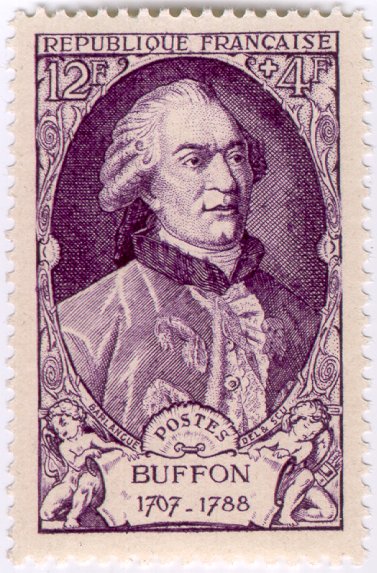
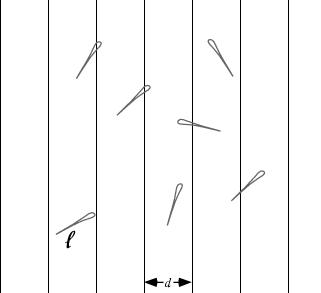
One idea is to follow the a variant to the solution to the math problem Buffon's Needle which determines the probability of a needle of a given length touching two parallel lines when its thrown down. The problem must be restated to determine the probability of a needle of fixed or variable length touching three or more points on a grid of timeseries points. Then the time series could be randomly simulated from actual data, and probability determined or randomly generated and compared to actual data. Here is a nice trailhead with the R code to visualize the problem.
If this code could be altered to solve the above variation, this might help solve this problem.
The solution may require limiting the time period to some defined time period such as a day, week or month so that the 'straw' has a defined length and require that the touches, touch within 1 point of an interval low to give a little slack as you do when eyeballing. However, there appear to be solutions to Buffon's Needle allowing for various or random length needle's. Perhaps Buffon's 'points' could also be lengthened to be short parallel lines that make up the time series, and use the formula to determine the probability that the needle (trendline) crosses three or more time series points to create the trendline.
Apr
3
Linear, from James Sogi
April 3, 2009 | 38 Comments
 I don't understand why prices seem to chart out along a line along their tops or bottoms of the bars in a line. A random walk would not and does not do that. What is the function that makes it happen?
Victor Niederhoffer replies:
What we need to do is write a little essay on the linear thing of Jim's. He asks "why lines drawn between highs or lows tend to be straight in markets." Its a very good question. It reminds me of the work that The Professor and his student Chris Hammond did to test whether there were turning points or bear and bull markets in the Dow. An anonymous donor will give $500 for the best answer for this. Committee of me and Doc Castaldo and Jim Sogi to decide. I would point out that the above duo concluded there was no such thing as bull and bear markets, that the turning points were completely consistent with chance. My working hypothesis is that the same thing is true here.
Phil McDonnell responds:
One possible idea is the cobweb theory. In this, the declines come back to the demand curve which is a 45 degree line supporting successive bottoms. The upper bounds (the tops) are delineated by a parabola. The whole thing can be described by a difference equation. The following site describe the math and have some graphics. The graphs with the rising 45 degree line and the overlaid parabola above it are the most interesting.
Dr. McDonnell is the author of Optimal Portfolio Modeling, Wiley, 2008
Mar
29
Bollinger Bands, from Sam Marx
March 29, 2009 | 1 Comment
I have a question regarding Bollinger Bands. Is there such a thing as Double Bollinger Bands? That is when the stock goes down and touches the first Bollinger Band ring, you buy, but if the stock does not reverse itself and continues downward, you sell out when it hits the second Bollinger Band ring.
Jim Sogi writes:
Buy and Read John's Book, Bollinger Bands by Bollinger. He explains all the various signals there. He's a member of the list, so I will tout for him. My only comment, is that like other indicators, they are retrospective. They are better than most because of the prospective expectation of persistence of volatility. My theory as I have propounded here is that concurrent market internals are helpful if not better than many retrospective guides, and even prospective guides from prior data used alone especially on a short term horizon or at least for execution.
Mar
29
A Month and a Year, from Victor Niederhoffer
March 29, 2009 | 1 Comment
 What a difference in the complexion of the world markets from last year where at the end almost every market was down 50% with no exceptions. This year as of March month-end the world markets are down a mere 10% and there are exceptions galore, notably Israel up 15% and Russia up 31%. All over, anomalies exist. Norway up 10%. Pakistan and Taiwan up 17%. Indonesia up 10%. All over South America markets up from 10 to 30 % in Peru and Venezuela. Venezuela up 40% from 1999. Recapping the wisdom of Maturin during the French Revolution advising Sophie to buy stocks, a stridency relevant to today shortly.
George Parkanyi writes:
Many a financial network talking head these days pronounces that "buy-and-hold" is dead. Here, or somewhere around here, is the perfect time to initiate a buy-and-hold strategy. This is from where the $3 AMDs and Motorolas of the world go back to $30 or $40 in the next bull market. And what of it if it takes 10 years, not that it's likely to take that long. That's still 100% per year non-compounded. My ex-high-school teacher and stock market mentor Omar Sheriffe Vernon-el-Halawani in the last two decades of his life (he passed away in 2005) did just that for most of his portfolio — buy good companies on the incredible cheap when the opportunities arose, and just put them away. He introduced me to "Reminiscences of a Stock Operator" long long ago, and in his last few years kept admonishing "George, why bother to sell?" (Though he wasn't inflexible either — he did sell Sun Microsystems once it got to $200. A couple of his closer friends rode Nortel back down to nothing.)
Paolo Pezzutti replies:
What if in ten years from now Motorola and AMD do not exist any more because a Chinese or Taiwanese corporation has wiped out these companies in an already mature market of telecoms and semiconductors? Sort of a General Motors and auto industry fate in 2015? In the meantime we have to see if the Western countries will manage to lead the next wave of innovation. It is not a given.
Stefan Jovanovich adds:
Motorola may survive as a defense/government contractor like Studebaker did; but its days as a competitor in the mobile dial-tone device market are long over. It has a legacy business in walkie-talkies, but those devices are now commercial products for — oh, happy day! — the construction and events trades. The "next bull market" will be in businesses that do not need the help or money of the academic/finance/regulatory complex. Some pissed off genius who is dropping out of graduate school right now because he can't stand another day listening to a discussion about hockey sticks will be the guy who creates a viable alternative to the internal combustion engine. The fact that the next Henry Ford did it because his uncle died and left him enough money to allow him to pursue his dream of racing an electric motorcycle will definitely NOT make the history books. Instead, some not-so-bright but perfect resume student of "economic trend analysis" at Berkeley will write a seminal paper explaining how it was all due to the "convexity of the forces of ecological history" (assuming, of course, that CalPERS has not blown all the money and put the University of California into receivership — which may the wildest of all my surmises). On a happier note, the Cal Men won the national swimming championships this week. Go Bears!
Pitt T. Maner III writes:
"Hardened silo" companies, with strong management, that have survived through and handled multiple, steep cycles over the past decades by mothballing equipment as needed, sending seasoned hands "back to the house" when necessary, and which have high barriers to entry (and negative government support) into the particular business would appear value candidates now. High quality drilling and drilling service companies, over the longer term, are appealing at present prices unless solar, windmill, nuclear, and alternate energy supplant the need for hydrocarbons. There are many other groups and companies that probably fit this undervalued, "tough-times survivor" model that odds would favor moving forward.
Jim Sogi adds:
After such a rally, and now when more and more people and pundits are calling a bottom, and I hear news proclaiming a thaw, and I hear talk of people starting to buy, these are the type of things that put my radar up. It's funny that the news media is somewhat stultified in that despite their steady barrage of bad news, the markets are all up. They actually have to change their copy of bit as it's hard to proclaim, markets up 15% on steady barrage of bad news. Obama did make a good call to buy, the day before the low and gave everyone a chance to buy. He knew what was in the govvy cards of course. That was the time to make the big commitment, not now. There should be more chances before they proclaim the next bull market as the market tops.
Legacy Daily writes:
Given things stay roughly the same, I cannot disagree with any of these comments. The challenge right now is that nothing is given.
For people who trade via systems, I have a question.
At which point does one decide to a) modify the system (and to what degree and based on what), b) discard the system (and why), c) continue relying on the system (and for how long); if such a system is producing losing trades more recently but has worked fine for a long time (definition of time scales not relevant)?
Perhaps the answer contains clues regarding our recent government actions (and market reactions) where the scale of the system and the magnitude of its impact is great. The problem is further complicated by control over one's actions but lack of control over [negative] consequences of those actions in a human system.
The second question that does not leave me alone is whether a game of chess (or any other game) can be won if every few moves, the game rules are modified. Does the player quickly adjust and remain focused on winning the game according to the new rules ("queen can only move three squares at a time" for example) or does the focus shift on guessing what the next set of rule changes may be? After a few set of changes and corresponding adjustments, does the player begin to suspect the rule maker in taking one side or the other?
Mar
22
Form, from Victor Niederhoffer
March 22, 2009 | 2 Comments
 Is there a form for the typical market? Does it have a shape, a proper way of conducting itself? Is the form for a week regular enough to defy randomness or better yet to be predictive in any way? Is there a form corresponding to the a b a form of music in markets? How does rhythm and volume of sound enter into the picture? Those are the questions I'm pondering this after reading a great book on the walking bass by Jon Burr.
Thomas Miller writes:
I have always believed the markets are similar to musical pieces. A rhythmic sideways market lulls many into relaxed state only to burst higher or lower in mighty sudden crescendos, and a rallying or declining market moves in musical waves with mini crescendos noting momentary tops or bottoms. I wonder how many successful traders have musical backgrounds? Music and mathematics are universal languages and convey the messages of markets. I regret not having more formal training in either.
Newton Linchen replies:
I always thought "Metamorphosis IV" by Philip Glass to be the perfect "market music", not only by its crescendos and decrescendos, but by its impression of regularity (Philip Glass is known as the father of "repetitive music"). Nevertheless, its changes in tempo and volume (strength) gives a rhythm almost fluid. And there's a part of "explosion" (volatility) where the fast-pace is in order — without loss in harmony or structure. I always thought of moments of "trading range" of market going aimlessly followed by a explosion in price upwards or downwards. And it's kind of sad melody remembers us of the majority who only find losses in the markets.
James Lackey comments:
Yeah it's been brutal awful market music. Reminds me of all the VIP mumbo parades, changes of command formations, and dress blue parties I was forced to attend in the Army.
0300 with the Dax open its reveille. Then we all form up into one huge cluster in the parade grounds stand for an hour then "the stars and stripes forever" plays with a government official on the mic saying how far we have come our history and how they are committed to Change "us" with too many last hour's "retreat."
Then with so many brutal last hours "to the colors" reminds me of Flag detail after the close then the discussions with old Colonels passed over, that didn't want to go home to family asking "the kids" new soldiers over a 5pm coffee what we wanted to do with our lives "when I was your age and if I could do it all over" then every few nights after Chow we get "Washington post march" the tune used most in movies to sound off patriotism and how if we all work together, after the next bailout everything will be back to the normal American way… Then back at 7pm "Auld Lang song" to the Nikkei open.
I have noticed over the years my music tastes intra day trading go with the market flows, Baroque, Jazz, Fusion, and when the market is rockin', new alternative rock.
I am in a bad way when all music sounds awful, like Army band music. I would rather listen to the hum of the ceiling fan and as of late the birds singing to the open windows..and to my surprise, spring has sprung and a lawnmower engine sounds more inviting than the music of the markets. ha.
The U.S. Army Band Ceremonial Music Guide
Legacy Daily responds:
 When the Soviet Union collapsed, I witnessed the creation of foreign exchange markets and also of stock and other types of markets in Armenia. These images are very vivid in my mind. When I read about people trading on Wall Street (I mean before the exchange building was even a consideration), I can see how that trade took place, because I participated in similar trades in a few of the streets of Yerevan (different places of gathering for different markets). That experience always overrules the charts, the derived statistics, the counts, and all the jargon that I hear daily.
Does the market have a form, a proper way of conducting itself? This question brings up the picture of the crowd dealing in foreign exchange (with the usual guys leaning against their usual trees) against the typical crowd dealing in real estate or stocks or stamps or coins. Of course each market has its form, its unique characteristics, its shape, its place, its rules. Each market has its rhythm, its language. I have not had the opportunity (and never really wanted) to participate in the floor trade at the NYSE or in the outcry system. But having seen the seedlings in their early stages of germination, I only see supply and demand and the various factors that affect these.
In this digital age, it is easy for one to go long bonds and short stocks or long XOM short CVX without ever realizing that the market for every single security represents a unique gathering of those who run the market and those come to the market. If I had to put this picture into something related to music, I'd imagine a choir of professional singers that sing a particular song we recognize. At some point, we join in singing in our heads and then at one point begin to sing out loud thereby changing the overall experience of everyone around us until we move on to the next choir singing a different song. Could one be successful in singing with multiple choirs all at the same time? Can we really understand the market for the SDS and SPY which are derived from hundreds of unique markets with their tunes in addition to their own market creating noise at the same time? What about the noise from the "gold" room affecting the singing going on in the "dollar" room or the other way around?
When it comes to commodity markets, I remember the fruit and vegetable market where some of the sellers would sell what they had grown and the others would sell what they had bought from those who couldn't or didn't want to travel to the market. Does that have a music? If you have ever been in a similar market, you'd recognize the buzz, the "singing" of the man selling his delicious watermelon, and the aroma coming from the area where peaches are sold.
The big question - is all this random or is it predictable? There is nothing random to it, yet it is completely unpredictable. The market makers operate in a very normal expected way, yet those who come to the market act in ways I cannot anticipate or predict. The only elements visible are my own instincts, wishes and desires which happen to approximate those of the people who go to the market very well. Imagine you have a phone to your ear that is connected to a line on a speakerphone where hundreds of people are talking at the same time. What do you hear? Noise! Can you find patterns and conversations in the noise, in some cases yes. Are the conversations and patterns going to repeat? In some cases, absolutely ("How are you today?" is typically followed by "I'm well thank you." or some variation of that) I'd like to be convinced that they could be consistently reliable but then again if that was feasible someone would have already found a way and would have proudly advertised that "past performance does not guarantee future results" does not apply to them.
Jim Sogi writes:
One constant regularity of form in music is the return to the root or home base. I think the market tends to have a root or home for each of its pieces. Recent root seems to be 800. Prior jump on Fed had to return Treasury plan to resolve. 800 was a big theme earlier in the year as well. Now we are in the contrapuntal mode, as Bach would play it doing it from the reverse. In a larger sense, it all satisfies the craving for symmetry and resolution.
Often the craving is frustrated creating a tension. Music is all about emotions on different levels, as is the market. Musical gaps are one of the greatest sources of tension. We still have this Monday gap right below created by maestro Timmy G and the trillion dollar blues. Too much tension and disruption of rhythm to make good music.
Mar
18
Other People’s Mistakes, from Jim Sogi
March 18, 2009 | 1 Comment
 Thanks to Ryan for recommending The Game by Ken Dryden. It is a very human and personal analysis of top level pro sports that makes it applicable to all high level activity. Also touching to me was the part about getting old. Ironically he wrote it in his twenties. I face this out in the big wave lineup competing with the young guys. I wonder how much longer can I do it. Of the many lessons in the book a few really jumped out at me. First was his routine before games designed to give him emotional equanimity and balance and to quiet all the inner voices that might throw him off. I've read of the trainers of the high level sumo wrestlers in Japan who protect their fighters from emotional upset that might affect their sport performance. I know I need to come to the fray each day on an even keel. If there is an imbalance in the force, I'll walk away.
Dryden wondered about the difference between his own, or his own team's, performance and other people's mistakes. In my life as a lawyer, I see people make mistakes, high powered guys who act like they should have known better. In trading, I believe I can see when people make mistakes. Today for example, bidding up the contract to a new high on the belief that the Fed can solve our problems. Well, that was a 2% mistake right off the bat. In the summer of '07 I wondered about the 9K plus bidders buying the tops at days end. I wondered what they were doing up there. They are too, now. Sometimes its not so obvious, but there are times to be aware of. I sure know when I blow it. The dangerous times are when you blow it and don't know it. Dryden always lived in fear of that, as should we all.
Mar
18
Risk Theory, from Jim Sogi
March 18, 2009 | 2 Comments
 Here's an investment theory. Rather than buy when the expectation is greatest, buy when the risk is the least. The question is whether or not they are the same times. I define risk as the lowest probability of account drawdown from entry, rather than common definitions of volatility. A corollary of this is that buying at what appears to the public as the greatest risk is actually the time of least risk. A recent discussion here looked at expectation of range vs expectation of change. The theory of the least risk would be to buy at the expected maximum extension of range, at the time of greatest expectation. The other issue is the holding period and expectation of gain. Some argue that the maximum expectation period over time will reap the highest returns. The problem is that the deviation goes up as fast if not faster, increasing risk. The second problem is the issue of changing cycles and prior history may not match future performance. Dr. Phil has pointed out that profit stops reduce deviation but not necessarily rate of return. Yet account deviation is the bottom line. He has proposed formulas to optimize risk/loss vs return. But realtime trading demands some sort of realtime system. This is hard to implement. The underlying idea is that management of risk is more important than maximizing return. This has been the basic systemic flaw in the recent boom and bust. The idea is distinct from the idea of leverage as risk. The answer will differ from individuals to institutions and funds with differing goals.
Martin Lindkvist comments:
Try creeping commitment, that is, start with a small line and increase if market goes in one's favour. But this has a built in assumption of some kind of trending behavior of prices, which might or might not be true depending on other circumstances.
A twist to the creeping commitment of a single position is to start out a period (year, or other of your choice) and increase risk taking after profits have been made, and decrease if losses are incurred to the capital at beginning of time period; that is play harder with "market money". I believe that both this method and the first one might have some psychological benefits if nothing else.
Risk in the usual deviation sense has sometimes been disguised, through e.g asymmetrical strategies ("picking up nickels in front of a bulldozer") where the risk might seem far away only come back hard when least expected. Moral - one should always be suspect when one thinks one have found a good way of managing risk - "what am I missing". Liquidity issues comes to mind too.
Using leverage as the risk manager, still seems to me the most clean way to manage risk. Cutting off risk with stops or options also is a way but run of the mill costs for these should be higher over time. That doesn't matter though if you meet black swan on day one….
Phil McDonnell writes:
A knotty part of this question is to define risk. To academics it is probably something like standard deviation of returns. To traders it may be only the losing trades, in other words only the downside deviations need to be considered. Another metric might be draw down or maximum loss.
The risk measure one chooses makes a big difference. For example suppose we look at the standard deviation of the market after it has been rising for a while. Assume our criteria of rising is that the market is above its 200 day moving average. We would find that the risk measured by the standard deviation is less for all such periods than it would be for those periods which are below the 200d moving average.
When markets approach major bottoms they are often quite volatile. Currently we often have daily moves of 3 to 5%. If one were to study the subsequent behavior the probability of large down moves the next day are quite high as are the chances of large up moves at such times. This is true even though one can often argue that after such large declines the market is close to good value levels and has not much more to fall.
Note that one can get two different answers to the question depending on time frame. At a low area such as now, the long term risk outlook might be that it cannot go much lower. But because of volatility the short term outlook is for continued riskiness.
Dr. McDonnell is the author of Optimal Portfolio Modeling, Wiley, 2008
Legacy Daily replies:
As for this statement, "Rather than buy when the expectation is greatest, buy when the risk is the least," the risk of not being in the market is the least (assuming cash is constant). Perhaps you mean "buy the highest expected return for the lowest risk." Theoretically, "maximize return but minimize risk" may be suitable for a linear programming model where one would need to define the various constraints and let the machine solve for the best alternative to maximize return given the constraints. The challenge: the right definition of the constraints. Also, the optimal solution may change tick by tick.
And as for this statement, "a corollary of this is that buying at what appears to the public as the greatest risk is actually the time of least risk," I think many market participants buy and hold. Therefore, the main reason a market appears a great risk to them is because their money disappears. The more money disappears, the greater the fear (hence perception of risk). It also seems that these "emotions" are only visible during intermediate-term/long-term market turning points which may not be suitable for a day trader.Furthermore, "time in the market" and "percent invested" are also ways to increase/decrease risk when account balance rather than security price volatility is the key criteria. Account balance is an extremely useful risk manager. AUM does not have the same effect.I cannot remember where but I came across the concept of a very successful trader at one point or another getting completely wiped out and some being so good that they could build a fortune multiple times and get wiped out more than once in a lifetime. If true, is that possibly a manifestation of "buy when the expectation is greatest" with not enough focus on "when the risk is the least?"
Mar
12
21st Century Games, from Victor Niederhoffer
March 12, 2009 | 12 Comments
 I wonder if snow, for example the deluge on Feb 1, 2009, in New York has a negative impact on stocks. It had a positive influence on the ability of youngsters in the 1950s to buy stamps, as school was out and Nassau Street was accessible by train. Now you can't even find kids having snowball fights as they are all inside with Nintendo or Twitter or IM.
Paolo Pezzutti comments:
Last evening I left my girls to spend a few hours at some friends' place. I left them playing with a "Chinese" toy pen with very basic videogames such as bowling or skying in it. When I came back they were still playing with that silly toy. They were hypnotized, although sleepy, but they would not give up. What is the power of these applications — even as simple as this? We can track a parallel with a trading screen and its ability to hypnotize wanna-be traders (and not only them) creating a compulsive attraction and dark force to trade even when it is not the best setup.
I was somewhat nervous about my daughters because they were not stimulated to do something different. It seems that if they are not "educated" and addressed to healthier and outdoor activities kids (and adults too) in most cases prefer spending their time following action on a screen. This is what game companies and stock brokers exploit.
Michele Pezzutti adds:
 That's true. This is something I always think about when I reflect on the way kids are growing. I often wonder if the way the kids play today is healthy. I do not want to sound old-fashioned. I do not come from the 18th century. But are fantasy and creativity stimulated the same way by a computer game as they are by Legos, for example? I think that the problem is not in the technology itself but in the use we make of it as in everything else. Too much is poisonous. And I feel relieved when I see that my kids, when they feel like, can still play as only kids can do. From nothing they are still able to create their world and stories. They have plenty of imagination. Then my worries fade away as I can see in them the same kids we used to be. In the end, every new generation must have asked the same question.
Jim Sogi replies:
When my son was younger, we also worried that he also loved computer games and stayed up all night playing. I reasoned, better playing at home than out on the street. He was also an athlete who surfed, snowboarded, skate boarded. But the training he got playing games serves him well now in his new career in the financial markets. Is what we do 24 hours a day glued to a screen any healthier? I say no. It's really the future of work and communication and social structure.
Speaking with my daughter, we compared our contacts with old high school friends and family. She right pointed out that it is easier for her with IM, Twitter, email, sms, and use cell phones to keep in touch. Don't be old fashioned. It's a new world.
Alan Millhone writes:
 On the news tonight it was reported on a program in El Paso, Texas schools that has a regular exercise program in the schools that shows that regular exercise in youth produces better test scores, etc.
When I was a youth the neighborhood kids played outside till dark and our parents had to call us in for supper. In the Winter we built snow forts that we defended with snow balls against attackers. In the Summer if a new basement for a house was being excavated when the workers left we had dirt clod battles!
I began collecting stamps at age seven when that Christmas my parents gave me a Coronet stamp album and some stamps from H. E. Harris and Co. of Boston. In my early years they gave me sets of Lionel Trains (still have both sets in the original boxes ). We had no computers, cells, Ataris, etc. to fritter away our time and no TV for several years. We played board games, rode our Huffy bikes with a baseball card held in the rear spoke with a wooden clothespin. Modern technology is good to a point for youngsters. Much though that was good and wholesome has been forever lost. Just like the Checker players that at one time could be found on a daily basis in Central Park under the wooden canopied shelters. Tom Wiswell would not believe the changes there.
Jeff Watson comments:
I just got through watching the excellent movie Surfing For Life. Written and produced by David Brown and narrated by Beau Bridges, it chronicles the lives of people who are still surfing in the twilight of their lives. The movie took a sampling of notable surfers from the ages of 60-93, gave brief bios, and showed them surfing well as seniors. Surfing for Life is much more than a surfing documentary, it's a celebration of man's optimism and the results of living a life of optimism. It showed one particular surfer who visits senior facilities on a volunteer basis, and most of his charges are younger than him. It then cut away to him surfing a nice 6' wave. The central theme of this movie is that living a life with an optimistic bias will ensure personal happiness. My favorite scene is the closing where they show Doc Ball, 93 years old, riding a skateboard. Not only was he riding a skateboard, it was obvious that he was clearly enjoying it like a little kid. I've been told by many that I'm just like a little kid, and take that as a compliment whether they meant it as such or not. Little kids enjoy playing games, are optimistic by nature, and receptive to new experiences and knowledge. I'm of the view that trading is a game, an extension of the games we played as children. It can't be mere coincidence that a plurality of traders I know usually excel at one form of game or sport. Whether it's checkers, chess, poker, the racket sports, or surfing, these games played for a lifetime keep one's mind sharp, and mentally nimble. Game playing also keeps our competitive edge well honed, which serves us well in the markets. Surfing for Life is such a positive, uplifting movie that it should be seen by all, as it exudes optimism. It would be an interesting study to analyze the optimism/pessimism ratio for all market players. I have a hunch that the successful players would fall into the optimistic category. Optimism breeds self confidence.
Russ Sears says:
 When I hear tales of the freedom of youth my thoughts often turn me back to my 7th grade year, in Pauls Valley OK, where I delivered the Pauls Valley Daily Democrat door to door on a rusted out Schwinn bike I had spray painted baby blue.
I recently went back and visited the town 33 years later. The drugstore where my brother and I spent our share of the subscription price on comic books, baseball cards and soda fountains chocolate shakes had moved from across the street from the newspaper to the new Wallmart. Parts where still the same, with only a fresh coat of paint, others totally gone.
We had a great time "owning" our part of town. However, I think we were one of the last two kids to deliver papers this way. The only reason they gave me the job, since the Sunday papers weight more than me, was cause they were desperate. Few parents would let their kids do something like this even in small town mid late 70s. And thinking back, there were several times where I think "what were my parents thinking"… As I had a machete to my neck from a high druggie, learned where to drop my collection money off before I went to certain areas, and narrowly escaped a pedophile.
Bottom line is it's not all the kids' fault.
Anton Johnson writes in:
In addition to dirt clod fights, we would play king-of-the-hill on construction excavation mounds, resulting in the occasional emergency room visit. During spring-time we played Monkey-in–the–Middle and 500, honing our baseball skills, all the while dodging vehicles and swatting mosquitoes. On moonless sultry summer nights, we played neighborhood wide team hide-in-seek, some of us subtly maneuvering to get close to the object of our affection. Not even brutal winter weather could keep us inside. Often a dozen would-be Bobby Hulls would play ice hockey, taking brutal hits without pads (some of us even wearing figure skates). We shoveled our own rink on the lake, and hauled seemingly endless buckets of water to fill in ice cracks. Almost nothing could deter us, we played whether +40F or -15F degrees, sometimes coming home soaked after falling through the ice or occasionally with a frostbitten appendage. I wonder whether the electronic generation will reflect on their childhood with a similar nostalgia.
Mar
9
Survival, from Jim Sogi
March 9, 2009 | Leave a Comment
 Deep Survival by Laurence Gonzales is good re-read in these troubled times. I've reviewed it before, (see past discussion on the site here) but so many big and small are not surviving. Live a river, a good book is never the same when read over. He has some good advice.
There are two aspects to survival: avoiding getting into trouble, and surviving once in deep.
How to avoid getting into trouble.
Tao Te Ching says, The farther ones goes, the less one knows. There are a number of phenomenon at work that put you in deep trouble.
1. When in danger, the IQ goes down and the mind starts shutting out appropriate input, or goes into a stupor. This compounds the danger and leads to death. 75% of people react this way. Perceptions themselves change. Its very dangerous. Training and preparation help avoid shutdown.
2. We make mental models and as a result of confirmation bias, ignore cues that the model is not appropriate. Experts are especially susceptible to this. Models are simplifications, and complex systems can go way out of bounds. Like the current market situation. Then the models are no longer appropriate but we cling to them, putting us in harms way. Models come from past experience, limited experience and may not be appropriate as new situations arise, as they always do. Here is where humility comes in. A Zen saying,"In the beginners mind there are many possibilities: in the expert's mind there are few."
3. Be able to perceive, change plans, adapt, bail out.
How to get out of trouble.
4. The right positive mental attitude can keep one out of trouble, and allow survival when in deep. Some aspects of the right attitude are humility, awareness. Take personal responsibility rather than blaming outside factors. Surprisingly empathy and taking on the role of rescuer, rather than victimhood helps with survival. Death comes when people lie down and give up.
5. An interesting aspect of survival is friction. More effort cannot overcome friction. It only leads to exhaustion. Plans never go right, there are always delays, at the worst possible moment. Its Murphy's law at work. Its the vig. The cure is to conserve energy. Only go at 60%. Keep a reserve. Exhaustion is often the cause of death. When in danger or lost, people panic, and start flailing about, become exhausted, and lay down and die. Rather, be still, rest, observe. Then start to consolidate and make a plan. Get your bearings. Don't hurry. Get back on path.
Epitecus said, "Let silence be the general rule, or let only what is necessary be said, and in few words." The idea is to avoid chattering. Mental balance and focus is critical in survival situations.
"If you get a lucky break really use it. You have to fight like a bastard." Says one survivor. Other use other mantras repeated, to help survival mentality.
Last thing: be cool.
George Parkanyi writes:
In late October 1999 I went into a cold river and pulled someone out who had jumped off a bridge. Luckily her winter clothing had kept her afloat, and as it turns out thankfully the rescue was not all that difficult. . When I saw her shadow floating in the dark under the bridge, I remember thinking she could sink at any time, and for all I knew she was already dead. She'd been in the water at least 5-7 minutes. (I had run from the nearby video store to see what was going on when someone rushed in to call 911.) I quickly threw off my coat, sweater, and shoes so I'd have something dry to come back to, said a split-second prayer, and waded in. Then time slowed down — and I felt more like a detached observer. It was like something or someone else had taken over and was driving, and I was just watching it happen. I don't remember feeling the cold.
When I reached her, surprisingly she was still afloat, face-up and conscious. I was up to my chin in water but didn't have to swim. I introduced myself with "Hi I'm George. I'll be your rescuer for this evening. What's your name?" "Nobody", she murmured — par for the course I suppose as she was trying to kill herself. So I grabbed her coat and literally just towed her in. I heaved her onto shore and threw my coat over her, but about half a minute later the firefighters and paramedics arrived and took over.
Before then, I never knew what I'd do in that situation, or what it would be like. As Jim says, the mind really does go into a totally different state. And I think it starts at the point where you've fully committed yourself. But before I went in I did make some quick calculations; perhaps 30 seconds worth — help would be on its way, I was a strong swimmer, pretty cold water, shoes off, need something dry later, how much time to get there, how much time would she have, how much time would I have. So the rational mind is still key.
The one funny thing about that night was the look the video store clerk's face when I sloshed back into the store all wet and finished renting my video.
Russ Sears writes:
Just today, I was thinking about what makes US strong is that we all face the "prisoners' dilemma" together, but most of the people I know tend to think of it instead as the "rescuers' dilemma".
Best case, small gain, most likely case cold, pain from an ungrateful soul, but the worst case…
Do you risk it?
When the neighbor's barn burns or is hit by a tornado, we all pitch in to help. Because we know it could have been us. She may not have wanted help, but if she was your daughter, you would have been delighted that someone like you was there. People here in fly over country are talking survival of buying guns and heading for the hills of Canada or Alaska, if things get ugly and bad. But it is just talk, always will be, we have a duty.
George Parkanyi replies:
Helping others is critical, because as you point out "There but for the grace of G_d go I." I'm sure everyone has been in a position of vulnerability at some point in their lives when a helping hand made a huge difference. It has for me, many times over, and my regret is that sometimes I forget that. And everyone has also been in the position of being that helping hand. I think on balance people will rise to the occasion and do more good than harm to each other as times get tougher here in the near term.
Marion Dreyfus comments:
It doesn't sound as if anyone made a big fuss about your bravery and cool under the crisis conditions. I will make such a fuss: Since I am fairly terrified of water, having drowned when I was 11 and been brought back to life by a doze-y lifeguard who saw a woman take me to the deep end of the pool when I could not swim, I am impressed at your calculations that did not impede your swift and funny intentions. Did you really say "I'll be your rescuer for the evening"? That is hilarious. Belatedly: You are a hero! You deserve some sort of acknowledgment that those people back then forgot to give you. Bravo!
Victor Niederhoffer adds:
My father did the same thing. But it wasn't so heroic because he was a policeman and had to do it. I have the letter from the woman he saved, and she was very grateful he saved her life as she came back and enjoyed life. I know a few people who tried to kill themselvees and they have had very happy lives afterwards including a frequent contributor to this site, who is one of the happiest guys I've ever met, even though his life style might not appeal to those who dont like 150 degree weather. The video store operator —- to make the story complete: "When I sloshed bak into the store, the clerk looked at me in amazement. He said "my goodness, you're a hero. That will be 2.50 by the way ." I said " 2.50!!!! After all that!" He said, "Oh, right, I forgot to add the VAT. Sorry."
Mar
5
Curve Fitting, from Newton Linchen
March 5, 2009 | 9 Comments
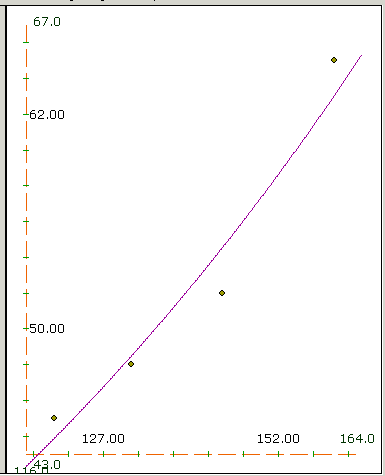 How can we avoid curve fitting when designing a trading strategy? Are there any solid parameters one can use as guide? It seems very easy to adjust the trading signals to the data. This leads to a perfect backtested system - and a tomorrow's crash. What is the line that tells apart perfect trading strategy optimization from curve fitting? The worry is to arrive to a model that explains everything and predicts nothing. (And a further question: What is the NATURE of the predictive value of a system? What - philosophically speaking - confer to a model it's ability to predict future market behavior?)
James Sogi writes:
KISS. Keep parameters simple and robust.
Newton Linchen replies:
You have to agree that it's easier said than done. There is always the desire to "improve" results, to avoid drawdown, to boost profitability…
Is there a "wise speculator's" to-do list on, for example, how many parameters does a system requires/accepts (can handle)?
Nigel Davies offers:
Here's an offbeat view:
Curve fitting isn't the only problem, there's also the issue of whether one takes into account contrary evidence. And there will usually be some kind of contrary evidence, unless and until a feeding frenzy occurs (i.e a segment of market participants start to lose their heads).
So for me the whole thing boils down to inner mental balance and harmony - when someone is under stress or has certain personality issues, they're going to find a way to fit some curves somehow. On the other those who are relaxed (even when the external situation is very difficult) and have stable characters will tend towards objectivity even in the most trying circumstances.
I think this way of seeing things provides a couple of important insights: a) True non randomness will tend to occur when most market participants are highly emotional. b) A good way to avoid curve fitting is to work on someone's ability to withstand stress - if they want to improve they should try green vegetables, good water and maybe some form of yoga, meditation or martial art (tai chi and yiquan are certainly good).
Newton Linchen replies:
The word that I found most important in your e-mail was "objectivity".
I kind of agree with the rest, but, I'm referring most to the curve fitting while developing trading ideas, not when trading them. That's why a scale to measure curve fitting (if it was possible at all) is in order: from what point curve fitting enters the modeling data process?
And, what would be the chess player point of view in this issue?
Nigel Davies replies:
Well what we chess players do is essentially try to destroy our own ideas because if we don't then our opponents will. In the midst of this process 'hope' is the enemy, and unless you're on top of your game he can appear in all sorts of situations. And this despite our best intentions.
Markets don't function in the same way as chess opponents; they act more as a mirror for our own flaws (mainly hope) rather than a malevolent force that's there to do you in. So the requirement to falsify doesn't seem quite so urgent, especially when one is winning game with a particular 'system'.
Out of sample testing can help simulate the process of falsification but not with the same level of paranoia, and also what's built into it is an assumption that the effect is stable.
This brings me to the other difference between chess and markets; the former offers a stable platform on which to experiment and test ones ideas, the latter only has moments of stability. How long will they last? Who knows. But I suspect that subliminal knowledge about the out of sample data may play a part in system construction, not to mention the fact that other people may be doing the same kind of thing and thus competing for the entrees.
An interesting experiment might be to see how the real time application of a system compares to the out of sample test. I hypothesize that it will be worse, much worse.
Kim Zussman adds:
Markets demonstrate repeating patterns over irregularly spaced intervals. It's one thing to find those patterns in the current regime, but how to determine when your precious pattern has failed vs. simply statistical noise?
The answers given here before include money-management and control analysis.
But if you manage your money so carefully as to not go bust when the patterns do, on the whole can you make money (beyond, say, B/H, net of vig, opportunity cost, day job)?
If control analysis and similar quantitative methods work, why aren't engineers rich? (OK some are, but more lawyers are and they don't understand this stuff)
The point will be made that systematic approaches fail, because all patterns get uncovered and you need to be alert to this, and adapt faster and bolder than other agents competing for mating rights. Which should result in certain runners at the top of the distribution (of smarts, guts, determination, etc) far out-distancing the pack.
And it seems there are such, in the infinitesimally small proportion predicted by the curve.
That is curve fitting.
Legacy Daily observes:
"I hypothesize that it will be worse, much worse." If it was so easy, I doubt this discussion would be taking place.
I think human judgment (+ the emotional balance Nigel mentions) are the elements that make multiple regression statistical analysis work. I am skeptical that past price history of a security can predict its future price action but not as skeptical that past relationships between multiple correlated markets (variables) can hold true in the future. The number of independent variables that you use to explain your dependent variable, which variables to choose, how to lag them, and interpretation of the result (why are the numbers saying what they are saying and the historical version of the same) among other decisions are based on so many human decisions that I doubt any system can accurately perpetually predict anything. Even if it could, the force (impact) of the system itself would skew the results rendering the original analysis, premises, and decisions invalid. I have heard of "learning" systems but I haven't had an opportunity to experiment with a model that is able to choose independent variables as the cycles change.
The system has two advantages over us the humans. It takes emotion out of the picture and it can perform many computations quickly. If one gives it any more credit than that, one learns some painful lessons sooner or later. The solution many people implement is "money management" techniques to cut losses short and let the winners take care of themselves (which again are based on judgment). I am sure there are studies out there that try to determine the impact of quantitative models on the markets. Perhaps fading those models by a contra model may yield more positive (dare I say predictable) results…
One last comment, check out how a system generates random numbers (if haven't already looked into this). While the number appears random to us, it is anything but random, unless the generator is based on external random phenomena.
Bill Rafter adds:
Research to identify a universal truth to be used going either forward or backward (out of sample or in-sample) is not curvefitting. An example of that might be the implications of higher levels of implied volatility to future asset price levels.
Research of past data to identify a specific value to be used going forward (out of sample) is not curvefitting, but used backward (in-sample) is curvefitting. If you think of the latter as look-ahead bias it becomes a little more clear. Optimization would clearly count as curvefitting.
Sometimes (usually because of insufficient history) you have no ability to divide your data into two tranches – one for identifying values and the second for testing. In such a case you had best limit your research to identifying universal truths rather than specific values.
Scott Brooks comments:
If the past is not a good measure of today and we only use the present data, then isn't that really just short term trend following? As has been said on this list many times, trend following works great until it doesn't. Therefore, using today's data doesn't really work either.
Phil McDonnell comments:
Curve fitting is one of those things market researchers try NOT to do. But as Mr. Linchen suggests, it is difficult to know when we are approaching the slippery slope of curve fitting. What is curve fitting and what is wrong with it?
A simple example of curve fitting may help. Suppose we had two variables that could not possibly have any predictive value. Call them x1 and x2. They are random numbers. Then let's use them to 'predict' two days worth of market changes m. We have the following table:
m x1 x2
+4 2 1
+20 8 6
Can our random numbers predict the market with a model like this? In fact they can. We know this because we can set up 2 simultaneous equations in two unknowns and solve it. The basic equation is:
m = a * x1 + b * x2
The solution is a = 1 and b = 2. You can check this by back substituting. Multiply x1 by 1 and add two times x2 and each time it appears to give you a correct answer for m. The reason is that it is almost always possible (*) to solve two equations in two unknowns.
So this gives us one rule to consider when we are fitting. The rule is: Never fit n data points with n parameters.
The reason is because you will generally get a 'too good to be true' fit as Larry Williams suggests. This rule generalizes. For example best practices include getting much more data than the number of parameters you are trying to fit. There is a statistical concept called degrees of freedom involved here.
Degrees of freedom is how much wiggle room there is in your model. Each variable you add is a chance for your model to wiggle to better fit the data. The rule of thumb is that you take the number of data points you have and subtract the number of variables. Another way to say this is the number of data points should be MUCH more than the number of fitted parameters.
It is also good to mention that the number of parameters can be tricky to understand. Looking at intraday patterns a parameter could be something like today's high was lower than yesterday's high. Even though it is a true false criteria it is still an independent variable. Choice of the length of a moving average is a parameter. Whether one is above or below is another parameter. Some people use thresholds in moving average systems. Each is a parameter. Adding a second moving average may add four more parameters and the comparison between the two
averages yet another. In a system involving a 200 day and 50 day
average that showed 10 buy sell signals it might have as many as 10 parameters and thus be nearly useless.
Steve Ellison mentioned the two sample data technique. Basically you can fit your model on one data set and then use the same parameters to test out of sample. What you cannot do is refit the model or system parameters to the new data.
Another caveat here is the data mining slippery slope. This means you need to keep track of how many other variables you tried and rejected. This is also called the multiple comparison problem. It can be as insidious as trying to know how many variables someone else tried before coming up with their idea. For example how many parameters did Welles Wilder try before coming up with his 14 day RSI index? There is no way 14 was his first and only guess.
Another bad practice is when you have a system that has picked say 20 profitable trades and you look for rules to weed out those pesky few bad trades to get the perfect system. If you find yourself adding a rule or variable to rule out one or two trades you are well into data mining territory.
Bruno's suggestion to use the BIC or AIC is a good one. If one is doing a multiple regression one should look at the individual t stats for the coefficients AND look at the F test for the overall quality of the fit. Any variables with t-stats that are not above 2 should be tossed. Also an variables which are highly correlated with each other, the weaker one should be tossed.
George Parkanyi reminds us:
Yeah but you guys are forgetting that without curve-fitting we never would have invented the bra.
Say, has anybody got any experience with vertical drop fitting? I just back-tested some oil data and …
Larry Williams writes:
If it looks like it works real well it is curve fitting.
Newton Linchen reiterates:
my point is: what is the degree of system optimization that turns into curve fitting? In other words, how one is able to recognize curve fitting while modeling data? Perhaps returns too good to believe?
What I mean is to get a general rule that would tell: "Hey, man, from THIS point on you are curve fitting, so step back!"
Steve Ellison proffers:
I learned from Dr. McDonnell to divide the data into two halves and do the curve fitting on only the first half of the data, then test a strategy that looks good on the second half of the data.
Yishen Kuik writes:
The usual out of sample testing says, take price series data, break it into 2, optimize on the 1st piece, test on the 2nd piece, see if you still get a good result.
If you get a bad result you know you've curve fitted. If you get a good result, you know you have something that works.
But what if you get a mildly good result? Then what do you "know" ?
Jim Sogi adds:
This reminds me of the three blind men each touching one part of the elephant and describing what the elephant was like. Quants are often like the blind men, each touching say the 90's bull run tranche, others sampling recent data, others sample the whole. Each has their own description of the market, which like the blind men, are all wrong.
The most important data tranche is the most recent as that is what the current cycle is. You want your trades to work there. Don't try make the reality fit the model.
Also, why not break it into 3 pieces and have 2 out of sample pieces to test it on.
We can go further. If each discreet trade is of limited length, then why not slice up the price series into 100 pieces, reassemble all the odd numbered time slices chronologically into sample A, the even ones into sample B.
Then optimize on sample A and test on sample B. This can address to some degree concerns about regime shifts that might differently characterize your two samples in a simple break of the data.
Mar
4
Obama Buy Recommendation, from Jim Sogi
March 4, 2009 | 5 Comments
It's unusual for a President to give a buy tip on stocks, but he did. The Japanese government has threatened to buy stocks as well, a thumb in the dyke so to speak. Do you think the mythical "plunge protection" team might be getting ready? I wonder if this is the usual jawboning or something else.
On another subject, I watched The Seven Samurai by Akira Kurosawa for the umpteenth time. The phrase that really jumped out at me was, "If you only defend you will lose." The other interesting aspect was the counting of the deaths of the bandits, one by one. Kind of like these continuing down days. They must be getting desperate.
George Parkanyi replies:
Oh yeah? What's he buying? (Thinking out loud: How many stocks out there have the name Lincoln or Roosevelt in them? Franklin? BEN! … nahh, it can't be that easy …)
This is not unprecedented. Not two years after taking over taking over Hong Kong, the Chinese government bought Hong Kong blue chips (and probably took a few shorts out back to shoot for good measure) to shore up the market during the Asian crisis. It worked; the market rebounded shortly thereafter and they gradually sold off the positions. (They kept the up-tick rule for a while, but only for sentimental reasons.)
I wish I could print money to buy stocks. But people on the whole seem to be purists, and react negatively when I try, for example, to add zeroes to a $10 bill at the check-out counter.
Feb
28
Nullah’s Trade, from Jim Sogi
February 28, 2009 | 5 Comments
 Did you see the movie Australia with Hugh Jackman and the boy Nullah, played by the fantastic Brandon Walters of Aboriginal descent? In one scene, the villain of the movie sets fires to stampede some cattle into heading towards a cliff where they will jump off in a panic. Nullah stands directly in front of the stampeding herd right on the edge of the cliff. He sings his shaman's tune while staring the head steer in the eye. He redirects the entire stampede, and all are saved. Great scene.
This is exactly like many recent trades in the markets, this morning being a prime example. The market is in full stampede, panic, heading towards the edge of a cliff. The trader needed to stand at the edge of the cliff, directly in front of the stampede and sing the shaman song. I'll call this Nulluh's trade. Probably more rad than even taking out the canes. By the way, how did the villains know a full two hours before the announcement to stampede them? Someone knew. Very fishy.
Feb
17
Where Does Money Come From To Stimulate the Economy? from Sushil Kedia
February 17, 2009 | 7 Comments
 This question is akin to an inverse of the rabbit from the empty hat trick. The rabbit has to be there in the hat before it has been taken out. The inverse of this trick would be that the affairs of men relating to wealth and money during a downturn and crash are prone to imagining a rabbit vanishing into a hat that was never put into the hat.
Money in its broadest realm is a state of the mind. Cash and currency are but one tangible subset of money, a much smaller one. There are many other tangible subsets. Then there are the intangible ones. The wealth effect espoused by financial behaviorists is but nothing else. Today's context is nothing different really conceptually from the Tulip mania or any other that has happened in between since.
Value is what money is supposed to store. Cash is one form of money. Central Banks are creating money in modern times as their dutiful function. Financial markets are producing money and consuming away their own and others' money creations periodically as a by-product of their other core functions. Whatever can be a store of value and a medium of exchange is money. That's how there was a time not too long ago when the Tulip bulb was the most important store of and producer of more money. As confidence and thus belief in the existing amount of collective wealth and value goes up so does the amount of money perceived goes up. When the amount of money perceived around exceeds far beyond the utility or the utilizable value, mankind is presented with the bills enabling reality check.
Where would the money go that never existed? That rabbit was never put in to the hat. No point in searching it there at least. But then in such cases, there were several rabbits that never existed.
Now markets, crowds, societies and the entire mankind are known to have swung from one extreme to the other one. So, as this all gets prepared to be relegated back behind to leaves of history, yet again the real rabbits will be put into the hat and won't be visible before being pulled out. In markets, non-existent rabbits are being put into hats and existent rabbits don't get seen inside the hat. Men of the markets are indulging in relishing and enjoying the magic of both kinds they are themselves creating again and again.
George Parkanyi asks:
But where has the actual cash that's been created (not the intangibles) gone? Every balance sheet begins and ends with the current assets line-item Cash. I understand that the Treasury can create money out of thin air - but whatever dollars it has created to date exist somewhere as cash - net of those dollars that have been taken out of circulation. It cannot not exist. A big chunk of it may not be CIRCULATING, or at least not in our economy, but it's SOMEWHERE. My question is where? and what would cause the money not circulating to begin circulating again?
Now some balance sheets are of course over-stated because they value assets at a market value that is not realizable. And real cash was lent against those unsustainable values. This just means that a significant amount of cash was deployed unproductively buying a house for $1,000,000 that could be replaced for $400,000, or a $1,000,000 mortgage backed issue that may only receive back $300,000 of principal. But even where cash went to purchase intangibles, the seller of the intangible still received the cash, and either "saved" it or went and bought something else.
If we assume that the cash the Treasury has created over time still mostly exists, then I believe the question becomes to what extent have balance sheets been bloated with unrealizable intangible values? And to what level do these intangibles need to readjust down for businesses to again begin investing and for people to still show up for work and maintain and grow an economy?
There are some potential implications. For example, if you have $30 trillion of cash around the world (I have no idea what the real number should be), then adding another 2, 5, or 10 trillion may not necessarily be all that inflationary. Also, if intangible "assets" on books are 3 or 4 times the amount of cash available, and they suddenly go out of favor (e.g. real estate prices drop, no-one wants junk bonds, no-one wants to pay more than book value for stocks), then demand for cash and "safe" cash equivalents will soar (and cause one godawful depression- especially if the cash is just hoarded). There may even be bank runs despite federal deposit insurance. And what if the real cash is mostly overseas, and we're holding the bag with mostly intangibles? Ouch.
I would expect that the tipping point to inflation will come when we begin to see shortages (or perceived shortages) in real assets (e.g. from droughts causing food shortages or commodity shortages due to global supply disruptions) to meet current needs, but especially if there is a fear-driven demand to acquire and hoard real assets (loss of confidence in the currency), possibly leading to hyper-inflation. That doesn't seem to be the case right now, especially in North America and Europe.
My gut reaction on this is to lean toward the deflation scenario, because even though the Treasury may throw a few $trillion out there, much of it may be absorbed by born-again savers and foreigners, and still mostly stay out of circulation while asset prices fall. However, that deferred latent purchasing power, when unleashed, could be enormous when asset prices finally turn.
Easan Katir comments:
George, here is the train of thought I think you're asking about/ applying your line of questioning to what everyone says is the root problem: housing.
Trillions were in pensions and sovereign funds. Pension plans, sovereign funds, no doubt Orange County ( they get in on all the deals ) bought CDOs from investment banks. So their cash went to investment banks. To create the CDOs, the banks had to buy mortgages from lenders. So the cash went to mortgage lenders. To originate the loan, mortgage lenders gave cash to home sellers. At this point in the logic train we have two layers of paper, not cash: CDOs and mortgages, which have had to be reduced in value because the home buyers overpaid.
Buyers and lenders gave their cash to the homebuilders, who were of course, sellers. So the homebuilders should have mountains of money. Since they don't appear to, one assumes they must have taken their money and bought more land, built more houses, which they couldn't sell, and have had to write down. Some cash went to the land sellers, the subcontractors and the materials suppliers. Private homebuilders bought more investment real estate, and gave their cash to those sellers.
Those who now have the trillions don't seem to be standing up and waving "it's here. I've got it", do they….
So a "nutshell" answer to your question, "where is the cash?" might be, it's in the bank accounts of anyone who was a seller of houses, land or stocks a few years ago. Herb and Marion Sandler, for example, who sold in 2006.
Stefan Jovanovich comments:
Most of "the money" is gone. Some very little of it is sitting in safes and vaults in the form of greenbacks and bullion, but most of it is simply up in smoke. Very few of the people invited to the A-List party have the wisdom to want to leave early or the guts to be seen leaving early. The homebuilders here in California put most of the money they made into options for and outright purchases of new lots, heavy equipment and (in the case of the public companies) stock buy-backs. They also paid a lot of money in income taxes. The value of the lots they bought or optioned here in California is close to zero, and I assume it is the same in Florida and the other places that saw a boom. The heavy equipment is worth between 10 and 25 cents on each dollar they paid in 2005, 2006 and 2007. (It is not just the slow-down in orders from China that is killing Caterpillar right now; the competition from used equipment is murderous.) The idea that somehow only we poor Americans were the suckers is funny. If anything, we have gotten off comparatively easy. The property markets in Europe and the Middle East and Asia have, as the Beach Boys might have put it, all become California dirt; and their central bankers bought far more of our crap paper than Helicopter Ben bought of theirs. What is also funny is the notion that the money center banks need to start lending again to get the economy moving again. They ARE lending - to the Treasury. Why, in a world of ZIRP, should they do anything else?
Bud Conrad writes:
 There are so many good questions and answers it is hard to focus on simple explanations. But first a few clarifications on George Parkanyi's initial point of view: Money is not a real thing of substantial value, and it is not created by the Treasury, but by the Federal Reserve. The Dollars in your pocket are Federal Reserve Notes. This is a minor point because your question makes perfect sense if you wrap the word "government" around both the Treasury and the Federal Reserve, and replace your use of the world Treasury by the word government.
Then your question still stands: Where did the money go? First, the real assets of homes and land and factories still exist, and they are still owned by someone. What disappeared was the value expressed in dollars. This is a form of money implosion as experienced by holders of deeds of trust that don't cover the defaults. It means less money in total. That is why we have deflation.
But as you say the government (Fed) can print money pretty much at will to keep things going. The system of fractional reserve banking is set up so that most of the "money" comes from the banking system as it makes loans. For example, mortgages are used to buy homes, not the money from a down payment. These mortgages were based on the banks making money by creating loans. About 6 times as much "money" was made by the banking system as by the Fed. In boom times and according to theory, banks always want to make more loans as that is the way they make money. They are constrained by having enough reserves to meet the Fed's requirement of supposedly 10% of deposits put on deposit at the Fed. When the Fed adds new reserves by buying Treasuries from banks, the theory expects the banks to make new loans an "multiply" the money throughout the economy making new loans. In this situation today, the Fed has bought Toxic waste giving the banks new money that could be lent. But the banks aren't lending because they have bad debts, and need to have capital adequate to meet regulatory review and because they can't find lenders they can trust who want money. So the banks have piled up "Excess Reserves" at the Fed and the money multiplier is leaving the Fed "Pushing on a string" getting no expansion of the money, even after their bailouts that they thought would be stimulating.
P.S. I like the rabbit that isn't there being put in the hat as explanation as it makes as much sense as all the details here. It is only an illusion that money is worth anything, that is left over from convention before 1971 when foreign central banks could convert dollars at $32 per oz for gold. De Gaul reached for the gold and Nixon slammed the window on his fingers after we sold off half our store. Since then it is mere historical convention, image and illusion that keeps the dollar afloat.
Nigel Davies offers:
Here's another take on it. What if most energy in any system is lost simply through friction, this frictional tendency actually increasing during an asset bubble. When the bubble deflates again, most of what you have left is the huge waste caused by people chasing something that never really existed in the first place. They were pursuing an optical illusion caused by increased liquidity and dissipating real wealth via their frenetic activity.
Jim Sogi writes:
Money, cash, and credit, is merely a counting method for confidence, or now, the lack thereof. It is created as an ether, and disappears as the fog. It is a strong only as our full faith. With mass communication, global memes seem to spread faster, turn on a dime, so to speak. I wonder if there is a correlation between speed of decline and recovery time?
Vincent Andres responds to Nigel Davies' questions about China:
Once upon a time they did build a big wall, I would posit it's now imprinted in their DNA. The surface inside the wall + the number of people there seems already a nice piece to manage. And btw, In 2008, everybody also knows how too big empires end.
So, I'm really not worrying too much about China. China managing China is already a really great challenge. Kudos if they succeed.
Just my two cents feeling, I would like to hear the flaws/missing points above.
George Parkanyi adds:
The mitigation of risk and the collective formation of capital in the capitalist system incents exploration, invention, innovation, and experimentation. Look around you at the marvellous things it has built, and the amazing discoveries it has facilitated. Next time you take a flight think about all that went into you being able to do that. Or even just driving a car. There's nothing really wrong with the current monetary system other than we've allowed it to run amok. Credit is fine as long as there is a reasonable expectation of most of it being repaid. (But even if it isn't the stuff gets built anyway; someone eventually just takes a haircut.) With some better checks and balances, there is no reason we can't dust ourselves off from this face-plant and continue to progress - hopefully a little less rough-shod over the environment and each other. The key is to keep enough people incented to keep innovating and working productively to sustain the complex societies and systems we have built.
Feb
17
Fishing, from Jim Sogi
February 17, 2009 | Leave a Comment
 We went down around South Point to fish. It is wilderness beyond there, with no houses, no cars, no other boats, and no land until South America 4 thousand miles away. Its wide open ocean. We had to go between two gale warnings and small craft advisories, so the weather was sketchy, but like many predictions is subject to "standard error" and changing conditions on the ground. We decided to go see what the conditions were and decide whether to press on or turn back. We got a call from campers that the wind had died, and drove on through the night in relatively less rough conditions. It was still fairly rough going, but at least not as rough as last time when the waves were continually covering the boat. We scored big catching big tuna, small tuna, Red snappers, mahi mahi. Chair's huge insight that life has analogies to the market is my favorite pastime so here are a couple of things I learned from my master waterman fisherman friend that might be of help in markets.
1. Don't rely 100% on the weather report. They are based on models. You have to open your eyes and see what the sky looks like, what the water is doing, what friends tell you is happening right now. Be flexible and ready to change your plan. Don't have a fixed plan. Wait to read the current conditions. Same in markets. Don't rely on the prognostications, the predictive models blindly. See how it actually develops and act accordingly. Factor in your own mental and physical conditions to weather the weather in case it turns bad.
2. Be prepared. My friend is a fishing fanatic. He's always very prepared. He had big lures, little lures, jets, birds, poppers, outriggers, downriggers, big poles, little poles, live bait, chum, hand lines, bottom fishing gear, casting gear. We had alternatives. When one thing didn't work, we tried a different technique. We had a week worth of food and fuel. In markets, have different trades, different entries, different exits, different allocations, different leverages, different markets. You need them all to survive and succeed. One small example, when trolling, we ran a long left, a medium right, a short stern, and a medium stern line, all spread out. When entering a trade, one way is to spread out your bids, long, medium, short. One might hit, all might hit. Either way, its one good way to troll for big game.
3. There is a large random element in fishing, but technique is very important. Where do you drop? There are instruments, but looking at the land formations where water might filter down and promote nutrients to feed fish. I found a buoy on the GPS and headed there and immediately got double strikes with mahi mahi jumping in the air while fighting. Once the fish is hooked, there is little or no room for error. Any lapse and the fish might jump off the hook. The most critical time is the landing. The leader has to be handled just right, the gaff must be precise or the fish might escape. Gaffing the wrong place damages the meat. Handling the fish, icing it properly preserves the value of the fish for the market or plate. There is very little room for error. In seamanship, there is little room for error with a rocky coast and large waves crashing near shore. Same in markets, despite the random element, once hooked, there is little room for error. Errors are costly, and even deadly: errors of execution, in entering at trade, in the technique to exit, errors of judgment. Its all happening fast.
4. Lastly, when we caught the little tuna, we cut it up and ate some of it raw with soy sauce, and wasabi as sashimi on the boat. It was still alive. I really felt like one with the ocean then. Some times you can really get in tune with the market. Its a good feeling. You're not fighting it. Its feeding you.
Feb
12
Lessons From a Life Well Lived, from Jeff Watson
February 12, 2009 | 5 Comments
 My grandfather (1885-1989) was the greatest teacher and influence in my life. His love of life and adventure was unparalleled. A true Renaissance man, he was comfortable with everyone from janitors to presidents. Since he always wrote everything down and was making lists, he once gave me a list on how to live my life. A truncated version:
1. Pay your bills on time
2. Pay your gambling debts first.
3. Never do business with a friend, but allow a friendship to develop out of a business.
4. Never, ever, cosign on a note.
5. Always buy bonds when they hit 60.
6. Always treat everybody at a business, from the bottom up, like he was the president of the company.
7. Always buy real-estate on the cheap.
8. Never touch the capital, and save part of the interest.
9. Live well below your means.
10. Never allow friends to know how much money you have and always "cry poor."
11. Spread your money and investments around.
12. Never lend more than pocket change to friends.
13. Family first in everything.
14. Congratulate your opponent when he wins, and be gracious when he loses.
15. Don't be a deal hog, and leave something for the next guy.
16. Speak little and listen a lot.
17. Never be afraid to say no.
18. Learn poetry, history, philosophy, and a second language.
19. Keep current in events, and keep an ear on the street for opportunities.
20. Learn good manners.
21. Treat every woman like she was going to be your future wife.
22. Don't trust the government, and never trust politicians.
23. Circumnavigate the globe at least once in your life.
24. Big game fishing is a manly pursuit.
25. Don't ever get drunk in public.
26. Don't ever embarrass yourself or family.
27. Never complain about your family to outsiders.
28. Teach someone your business and pass your skills along.
29. Never listen to race track touts or tipsters of any kind.
30. If they're selling it, why is it such a great deal or opportunity.
31. Never cheat at anything, nor be dishonest.
32. Never welsh on a deal or wager.
33. Always keep your promises.
34. Pay your people a fair wage.
35. Never pay retail for anything, but don't be a hog.
36. Allow your opponents to save face.
37. Never keep a mistress within 300 miles of your home.
38. Always give a guy on hard times some spare change.
39. Support a charity.
40. Be a stand up guy in all areas of your life.
41. Respect the flag.
42. Respect and listen to old people, as they know more than you do.
43. Work as hard as you can and play as hard as you can.
44. Keep your house and business tidy.
45. Allow your kids to be themselves and have fun.
46. Learn to play at least one musical instrument.
48. Respect other races and nationalities.
49. Never argue religion or politics.
50. If it sounds too good to be true, it probably is.
My grandfather was full of life lessons, and I listened.
Sushil Kedia adds:
Here are some more important lessons to consider:
1. Other Points of View (OPV): Accepting, rather than denial or immobilizing fear, is the beginning. The situation definitely gets refined when one looks at it from Other Points of View. One must look at the situation from the views of ones adversaries as well as from the perspective of an unengaged onlooker. Dispassionate observation is facilitated by comparing OPVs with one's own view and building up a strategic process that is always computing the odds.
2. Grow beyond wrong and right: Anger originates as sequence of feeling wronged and guilt originates as a sequence of having done wrong. In winning, it is crucial to be beyond computations of wrong and right. Focus instead on what defines winning for you and what is appropriate for achieving that win.
3. Economy of Movement: Decisive action including communicating the bare minimum necessary innuendos (action as well its absence are both communications) not only helps conserve energy it consumes the energy of the adversarial situation or people.
4. You are the problem: The same situation involving another man has another solution. Recognize your unique gifts and the precious effort that must go in to defending and growing this uniqueness. No handicap is thus in the middle of battle a drain on your resources. Viewing the complete picture with you at the center of the problem is necessary to identify the path of least effort applicable to you.
5. Be your own decision maker: Responsibility for all outcomes is the facilitator for achieving a focus beyond destiny and helplessness. Assume no help will come but will have to be obtained.
6. Don't celebrate your success, in the usual way: Deception is an ingredient of every contest. Feign strength when weak and display weakness when strong is something Sun Tzu taught centuries ago, in any case.
7. The Pain gain formula: Nothing comes free. Pain & gain are often the two sides of the same coin. Always check if an advantage achieved or to be achieved has not come or will not come at an unfair cost incurred unknowingly elsewhere. With such a focus the need to enjoy the journey is extraneous. What may begin with pain could be the ticket to gain and vice versa. The driver of joy being the final destination, the journey will become worth engaging in all situations.
8. Beautiful mind: Beauty of cause is a state of the mind. Being conscious that the mind has states and one can by conscious choice alter those states one may overcome the definition of mind as espoused by Edward de Bono that, "mind is a self organizing pattern seeking system." You and the situation together are the problem. Be conscious of your cognitive states.
9. Believe that you will succeed: You cannot argue with this point since as much as is true that seeing is believing so also is it true that believing is seeing. The solution and the current moment are separated in time. In traveling across the correct strand of time, one would need to traverse the correct strand of time. Believing is the lens to find the correct strand.
10. Be the witness: Changing the perspective from being the doer to one who is a witness to the struggle drives objective and rational sides of the self organizing pattern seeking system called the mind. Fear and hope that are the normal controls of minds in normal states need to be put aside whilst input and output control need to take over.
11. Do, only whatever is necessary: One can always be aware of not creating more problems while solving the ones at hand.
12. Give up when required, only temporarily: need for rest, rejuvenation, re-organizing apart. Many times silence, inaction, inactivity provide the ultimate deceptive veil for more lethal and smashing action.
Jim Sogi comments:
The Pain gain formula: Nothing comes free. Pain & gain are often the two sides of the same coin.
I love this, and Jeff's list too. But I wonder why pain and gain are so correlated? Is it the issue of going against the herd vs the genetic urge to comply? It applies in physical fitness. I sure would appreciate some ideas on this one.
Jim Rogers replies:
Pain is a necessary, but not sufficient, condition for gain.
Additionally, not all pain produces gain, but both concepts are relative. Because of the differences in both pain "tolerance" and measurements of gain (in terms of "value"), it's pretty difficult to turn this observation into any type of concrete maxim.
Finally, it seems that there are occasions where the value of a gain outweighs the pain endured, indicating some type of arbitrage situation. However, the pain of spending one's time looking for free lunches (combined with the "pain" of acquiring the skills to recognize arb opportunities) may minimize the net gain.
Alston Mabry writes:
What about that special pain the Mistress inflicts with volatility? One takes a position that then goes against, and one has to try to wait it out until it turns back in one's favor. So many times one gives in, escapes the position and the pain, only to watch the fulfillment come in exactly as predicted. Book the loss, learn the lesson, try again.
Marion Dreyfus responds:
You cannot win a great body without heavy working out. You don't fall into piles of earnings and wealth–you invest judiciously. Pain is obviously correlated to gain — otherwise we would leave the womb and float through life with strawberry sundaes glissando-ing off our lanais as we polish off language texts in the Copacabana with cognac fountains spurting gleefully in the front 40. We don't. We have to work to elicit goodies.
Feb
11
Survival of the Fittest, from Jim Sogi
February 11, 2009 | 3 Comments
 Evolution is a random function, such that as conditions change, the random mutations of a species makes one particular mutation more successful in the particular niche or in response to the environmental change, thus allowing it to flourish. The other manifestations do not survive. As much as we might want to delude ourselves into some control, it's not probably very true. The trait may not be better or superior, but it just happens to work.
Kind of like many patterns in the market. Some random pattern will start working in a regime for a while. Then it won't. It's important not to get too locked into any one style, pattern, regime to avoid the extinction issue. This is adaptability and is more important than almost any other issue. That's the problem with the "xyz" trade or what ever. Even the one that work, won't work a third of the time. Is it worth dying over, or worse?
Marlowe Cassetti writes:
I agree that the Darwinian model is probably the better model of the dynamics of the market and an explanation for "everchanging cycles." In my view, it trumps the Efficient Market Hypothesis, Fib Ratios, reversion to the mean, MACD histograms, or Uri Geller's psychic visions. From what I surmise the Darwinian model is encompassed in the rubric of behavioral finance and evolutionary economics.
So let's raise a glass of wine this Thursday for the 200th birthday celebration of Charles Darwin, considered by science historians one of the greatest scientists of all time. Also, Abraham Lincoln and Charles Darwin share the same 200th birthday.
Riz Din reports:
I'm off to see the Darwin exhibition at the British Library, so no time to refer to the specific papers, but I recently looked at some research that investigated how the rate of random mutation of a type of baceria changes when environmental conditions become stressed. I find this fascinating as it points to a direct link between random changes in the environment and random mutations. It may be interesting to see by how much mutation rates change for a given change in external conditions, as mutation carries costs as well as benefits.
Also, what do you think–The Origin was the first truly convincing contradiction of the literal biblical view of creation and it caused a storm.
Stefan Jovanovich responds:
 I disagree. The literal Biblical view of creation had been openly challenged in Britain since the first Civil War. Belief in Christianity itself had been optional since the Lord Protector welcomed the Jews back to the United Kingdom (being a Catholic, on the other hand, was still a civil disability when the Origin of the Species was published). The notion that Darwin faced opposition is simply not true; he had no trouble with publications, and people were as mad for the theory of evolution as they were 60 years later for Einstein's theory of relativity. It made Darwin a star. Darwin did face considerable skepticism from Lyell and other Lamarckians (Lyell never fully accepted natural selection), but no one seriously accepted poor Bishop Ussher's chronology by 1860. (It is fascinating to note that both Newton and Kepler had agreed with Ussher's calculations - so much for scientific stare decisis). The Huxley-Wilberforce debate was a great show - like the Snopes trial - but it was hardly a "storm". This is yet another of those factoids of history that present scientists as having to bravely challenge the forces of Christian ignorance; and like so many of them (Galileo et. al.), it is a complete canard. Darwin did lose his own belief in the Resurrection, but that loss came not from his evolutionary theories but from the questions raised in his mind by the death of his young daughter.
Riz Din adds:
Here are some notes taken from my visit to the small but enlightening Darwin Exhibition at the British Library:
- When Darwin was living at his home in Kent he would walk down his 'thinking path' every day, come rain or shine. His daily routine was as follows:
Go for a short walk before sunrise
7:45 - 8:00 Light breakfast
8:00 - 9:30 Best time for research
9:30 - 10:30 Relax on sofa and read letters
10:30 - 12:00 Research
12:00 - 1:00 Visit greenhouse and walk along Sand Walk and think
1:00 - 2:00 Lunch and read newspaper
2:00 - 3:00 Write letters
3:00 - 4:00 Rest while Emma reads aloud
4:00 - 4:30 Afternoon stroll
4:30 - 5:30 Research
5:30 - Evening begins
10:30 To bed
- Darwin graduated in theology and was thinking of life as a clergyman when he was offered the invitation to be a naturalist on the HMS Beagle.Darwin writes that the Beagle voyage was the single most important event in his life.
- The naturalist suffered much ill health through his life, yet his output was prolific. Darwin had a strong desire to understand everything he observed. His eight year study on barnacles won him a gold medal award by the Royal Society, and after Origins of the Species was published Darwin went on to study orchids in great depth.
- Evolution was not a new idea at all and the works of others paved the way for Darwin. Erasmus Darwin, his grandfather, alluded to the idea in his poem 'The Temple of Nature', writing 'mankind arose from one family of monkeys on the banks of the Mediterranean.' Other key figures in the story of evolution include Malthus, Lamarck and Lyell.
- At the same time as Darwin, fellow naturalist Alfred Wallace had the similar ideas about evolution and survival of the fittest. Darwin's and Wallace's ideas were jointly presented to the Linnean Society in 1858, but Darwin's thesis had been twenty years in the making, and extensively researched, and he published The Origin of the Species shortly after. The Origin was written for popular consumption, in a conversational style, and quickly sold out. However, Darwin was careful not to include explicit discussion of man's place in evolution, even if it was obvious for all to see. The Origin was the first truly convincing contradiction of the literal biblical view of creation and it caused a storm.
- The exhibition has a couple of amusing notes on marriage. Writing to congratulate his friend on his recent marriage, Darwin says 'Long may you live in your now perfect state. We poor bachelors are only half men,—creeping like caterpillars through the world, without fulfilling our destination.' In 1838, Darwin produced an highly entertaining list of the pros and cons of marriage
Feb
3
The Touchdown, from Victor Niederhoffer
February 3, 2009 | 16 Comments
 The touchdown interception in the last second of the first half, changing the score from a likely 10-14 to 17-7, immediately brought to mind whether sports imitates the market. And of course the mistress had already thought of this going from -1/2% at 350 to +1/2 % at the 415 close on two occasions in the last 10 years, and the reverse on four occasions. In each case, the mistress gave the final outcome the next day, to the side that had the 3 50 advantage. perhaps to make it more realistic I should have reported 1150 to 1200 reversals.
Jim Sogi comments:
Don't forget the bad calls being reversed and changing the outcome. And the multiple fakes out of the hike. It just needs to fake one defender out to work. The full field reversals, like the 100 yard interception, feel like recent markets. Even at the last minutes of the game or quarter.
James Lackey adds:
As the regulators throw too many flags.
Gordon Haave responds:
I was thinking about the game in terms of stupid behavior that people engage in, over and over again. In football it is the "prevent defense. Teams play great D all game, then in the last five minutes shift to "prevent" defense, where they take out linebackers in favor of more backfield players. All it ever does in prevent the team from winning. This is why the endings of games are so high-scoring.
In the markets, people do all sorts of things to prevent them from losing lots of money, which only insure that they lose the game. Such examples include most of the technical rules, and the dollar-cost-averaging.
Scott Brooks replies:
What Prof. Haave is saying about dollar cost averaging is true if someone has a lump sum to invest. In that case, unless he thinks he can time the market, he should go all in. American Funds had a nice piece on this a few years ago showing two people who invested a lump sum each year. One did at the market high, the other did it the market low every year for a long time. Of course the person who invested at the market low each year got the best return, but the one invested at the market high still got an exceptional return.
However, DCA is not a marketing ploy for the masses, it is a salvation for them. It encourages them to invest on a monthly basis and be in the market each month no matter what the market is doing. It allows them to invest without worrying about the highs and lows of the market. It gives them peace of mind to invest when times are bad. It, quite literally, gets them excited about investing when the market is not so good.
DCAing is very important to Johnny and Sally Lunchbucket… even if they don't know it!
Also, Kurt Warner has been to three Superbowls. He's lost two and barely won one (see "The Tackle")
In both cases where he lost, it was the defense that let him down. I can't say for sure, but I believe it was the "Prevent Defense" that was at fault. In the case of "The Tackle", a porous defense came within 1 foot of losing the game as the clock ran out.
In each of his three Super Bowls, he played against one of the most highly rated defenses in NFL of that year. He and the offense did their job and scored enough points to win.
Kurt Warner should have three Super Bowl Rings in his collection instead of just one. Unfortunately, his defenses let him down.
Phil McDonnell adds:
The reason Dollar Cost averaging works is because it benefits from volatility. Individual stocks are more volatile than the averages so we would expect it to work better on the 30 individual Dow stocks than just on the Dow average itself. The fatal flaw in any strategy is that one needs to invest in stocks that do not go down. For DCA sideways is OK, it will actually make a little money. But if you put all your eggs in the Enron basket you are still broke, DCA will not save you.
About half of the returns of all the stock markets over the last 100 years are due to DCA. Reinvestment of dividends is a form of DCA. The average return in prices has been about 6%/annum. The dividend yield has been about 3% overall. So one would think that the returns if dividends are reinvested will be about 50% higher. In fact dividend reinvestment outperforms by 100% because of the subtle contribution of DCA.
Dr. McDonnell is the author of Optimal Portfolio Modeling, Wiley, 2008
Jan
31
End of the Dinosaurs, from Chris Cooper
January 31, 2009 | 2 Comments
 I trade mostly spot forex, so my comments are limited to that market. Also, my trading is moderately high-frequency.
From my perspective, there has been a pretty big change since mid-2008. Liquidity has dried up, and spreads have increased. That makes it more difficult to be profitable. For example, one year ago a typical spread in a currency pair might have been 2 pips, and now it is 3 or 4 pips. Furthermore, it is hard to get filled at a decent price for larger orders…it seems like market reactions to your order are a little more sensitive.
Not surprisingly in a time of such turbulence in all financial markets, volatility has increased. I'm seeing more breakouts, which I attribute to greater uncertainty and thus sensitivity to market-impacting news. Or, perhaps it is just that the news recently has been of greater "amplitude".
I think there has been a gradual trend to return to what I would, with my limited experience, consider "normal". That process will likely require many more months. As you may know, liquidity in the forex markets is primarily supplied by banks, and to the extent that they become more risk-averse, the market will continue to suffer.
Jim Sogi's question was:
Have you noticed a change in the markets due to the changes in the large investment banks such as GS, Leh, Bear Stearns or other large funds? I can't really quantify it or pinpoint it in a meaningful way yet, but it just seems different, more rhythmical, less jerky, and easier in some ways. It seems more large crowd oriented, fewer huge orders in the pipe or ts.
Stefan Jovanovich adds:
In the days when boxing was THE American sport and New York City was its Mecca (when, according to the promoters for the old, old Madison Square Garden at least one of the fighters had to be or pretend to be Jewish if you wanted to draw a decent crowd), fighters would work a whole round to set up one punch. George just won the prize for champion of the List for January with a knockout right cross at the bell.
George Zachar writes:
The few pools of liquid discretionary capital remaining face the prospect of Barney Frank acting as a Caligulan Nero overseer.
Transient calms of nostalgic transactional ease only remind us of the wreckage on the seabed, and capriciousness of our new masters.
The fixed income market, once the most comely of mistresses, is now a Frankenstein's bride; a halting, disfigured, spastic wreck.
Jan
27
Chutes, from Jim Sogi
January 27, 2009 | Leave a Comment
 Recent day market charts are forming a tectonic pattern seen in mountain formations created by the tectonic forces pushing up plates creating chutes down which skiers ski in Alaska. There are tectonic forces at work in the market and there are plates of players getting squeezed around creating these patterns. As in the mountains, the chutes are steep, vertical, cover large vertical footage, are very dangerous. There are rocks on either side and avalanches make negotiating them quite dangerous. All like current markets despite the curious fact the but for the movements, we are close to unchanged for two weeks. Kind of like heli skiing in some ways, straight up and down. The Japanese candlestick guys have a name for something like this, called mountain tops, or river bottoms. The distinctive feature of the chutes is the chutes. Appropriate since in Alaska the mountains drop straight into rivers.
(I skied down some of the chutes pictured )
Valdez, AK


Jan
27
Magic, from Jim Sogi
January 27, 2009 | 1 Comment
 There are typically three stages of a magic trick. First, the pledge is something that appears ordinary but is not. The magician uses distraction, misdirection, deceit and illusion. The turn is where the ordinary becomes extraordinary. Then the prestige is the effect of the illusion producing a surprise and amazement.
The market, (and our government perhaps) is involved in an intricate magic trick involving the markets at the present time. What started as an ordinary dip turned into an extraordinary global crisis. Misdirection, deceit and illusion abound as evidenced by bailout funds going to fund massive bonuses and lavish office redecoration, buyouts and private airplanes. Apparent failures blamed on the markets but rigged to hide huge inefficiencies. Showing huge misdirections such as Madoff distracts attention like the pretty magician's assistant. The market itself makes horrifying drops or glorious rallies like this Monday morning only to fall back to break even territory.
The trick here as part of the audience is to figure out the illusion that is going on. Things are not as bad as the pledge and turn are showing them to be. Many interests will profit from painting a bleak picture to the public audience. The government needs financial panic to increase its scope. Before people feared terrorists. Now the government is painting fear of economics to increase government power. Big inefficient, bloated, top heavy companies need to create the illusion of imminent collapse to receive billions. Big investors need to create fear to shake out the last holder to be able to buy the lowest prices in decades before and hence. More than entertainment is at stake. We are coming near the end of the turn. Out of the hat will come a wonderful and breathtaking recovery leaving all amazed.
Rod Fitzsimmons Frey adds:
An interesting aspect of a successful magic trick is that it requires the complicity of the audience. Viewers, for their own reasons, want to be deceived and assist the magician in accomplishing that goal.
The boy in the front who yells "I know how you did that!" is not appreciated by the other audience members.
Jan
23
Big Surf, from Jim Sogi
January 23, 2009 | 1 Comment
 We've been having some big surf here lately up to 25 feet. The timing of the swell hitting our local breaks is a big issue. Typically the primary wave model is used, but I've found that in fact the swell period is a better predictor than the wave height model for timing the arrival of the swell. The wave size model is distorted by the interaction of the islands in the swell direction and is usually grossly wrong. Since everyone reads these erroneous reports, we often get perfect waves to ourselves.
Entering the water over the rough rocky shores requires waiting for the end of a large set waves. We always sit a watch the water for a while before going out and count and time the wave sets to see how big and how long the period between the sets and how many waves are in each set. Wait for the water to run up the shore on the last wave of the set. Jump in and let the outgoing retraction of the swell take you out to sea, and paddle out in between sets. If the timing is wrong, you fight the surge, get pushed back on the rocks, and can get pummeled by the next or the remainder of the large set.
The market has also been having some big waves and it seems anecdotally that a periodic model might be a good predictor for the arrival of the market swells. Of course market wave size is very important and the average volatility is up, but combining timing the entries along with noting the wave size is helpful, just like in the ocean, and can avoid drowning or getting washing machined by the market. Also since the public often follows an erroneous model, it is possible to get good market action to yourself.
Phil McDonnell adds:
Several key points about ocean waves:
1. Unlike sound waves or light waves that occur in a medium, ocean waves occur on the boundary between two media (air and water).
2. Because of 1., wind can have an effect on waves. Waves can add turbulence to wind.
3. Larger amplitude waves go deeper than small ones.
4. Waves sets are formed by the interference and cancellation of multiple waves with similar periods. Effectively the complex of these waves creates a wave envelope which itself is somewhat sinusoidal.
5. When a tsunami strikes the curvature of the Earth acts to refocus the wave fronts about 12,000 km away where they can do additional damage.
Some good discussion can be found at seafriends.org. Especially interesting was the factoid about the Chilean tsunami that traveled at about 500 mph to New Zealand.
Dr. McDonnell is the author of Optimal Portfolio Modeling, Wiley, 2008
Jeff Watson comments:
Swell height and period have another correlation, which Sogi-San doesn't have to worry about with the monster waves he gets every winter. The longer the period, the more powerful the swell. With the same wave heights, I would look forward to a six foot swell with a period of 15 seconds, whereas I might not get too excited about the same six foot swell with a period of nine seconds. I went surfing yesterday and wrote about it:
While I was out waiting for waves to come, I was thinking of how a surfer positions himself to catch a wave. You see waves on the horizon, and knowledge and experience tells you approximately where to paddle to get into position to catch the wave. A successful speculator needs to do exactly the same thing with the market. Practice, experience and knowledge will tell you when and where to position yourself with entry points to try to ride the market wave. After you catch the wave, experience tells you how to ride it….whether you bail out, wipe out, tear it up, rip, pump for speed, ride it lazily, or take it all the way into shore. There are lots of market lessons in surfing.
Russ Sears writes:
The wave not in the old model:
I recently locked in a refi-rate at the rate of 4 3/8 % (simple interest) for 15 year. And also could have locked in 4 3/4 % on 30 years on that date I moved in 2005, so I had a 5.5% mortgage on 30 year.
A few comments about this mortgage some I learned myself while "shopping" some was told by the mortgage officer.
1. In 2005 the rates where very close from one bank to the next. Like the gasoline station several had same rates. If they didn't, you could often simple tell them about the rate their competitor gave and get it lowered. I went with the local bank last time only because I wanted to close faster. This time the money seems to be at the local banks. Bank of Oklahoma, and MidFirst are both regional banks and a strong balance sheet. Many of the smaller banks didn't get into the trouble the big guys did. Not sure if this was because they didn't have the size to get into a specialty space like sub-prime or if they simply didn't
2. While I didn't buy points, they were cheaper than in 05 to get the same rate reduction of 1/4 it was about 1/2 price.
3. Like the banks, you need a good balance sheet to get these cheap rates FICO scores of 740 or better got the best rates.
4. Jumbos loans are not nearly as low of rates.
5. Rates have since gone up. about 3/8 %. It was getting too hectic at 4 3/8 % or 4 3/4 %. But they are still very busy. I got the impression that they let up on the gas, simply because they were so busy, without the big boys to compete against.
Still at these rates it is obviously the trigger point: A few 1/8th higher and the spigot will close, a points lower and they will get a big big wave.
While clearly much more restrictive underwriting than in 2003, we may see more than 1/2 that kind of turn-over.
You should ask a true Wall Street quant, but in my opinion what causing the log jam in credits, in balance sheets and therefore the mortgage originators and the housing market, is nobody knows where the trash is hidden in the MBS markets. This wave of fresh air could very well separate the wheat from the chaff.
Jan
22
Hate, Loathing and Fear in the System, from Jeff Watson
January 22, 2009 | 2 Comments
 Much ado has been made in the media about the market decline, the bailouts, TARP, and the excesses on Wall Street. The average guy on the street has had his fill of listening to the constant scandals, price declines, loss of jobs, and real fear of a big depression. For many, opening their 401-K statement puts a knot in the pit of their stomach and the resolve to have to delay their retirement a few more years. Many people stoically accept their victimhood with a sense of camaraderie, comparing their brokerage statements with their peers during their morning coffee breaks. Despite this outward bravado, a sense of hatred is developing with many passive investors regarding the markets, traders, speculators, and the whole system. This isn't the hatred described by Descartes, but is a more insidious hatred, a type of hatred described by Aristotle. This is the hate that results in the destruction of the entire capitalist system. Right now, speculators and traders aren't very popular on Main Street, being blamed for everything from the crash, the low values of 401-K's, to all the crooked scandals. We're denigrated, admonished, bashed, and set to be the fall guy for all the ills that have beset the country. The media and government seems to ignore the political social engineering decisions that started the downward spiral. Never mind the fact that many speculators have been hit hard by recent market action, the public sees us as parasites, contributing nothing to society while taking everything. Portraying speculators as looters is a brilliant method the genuine looters are using to camouflage their agenda of control. Whipping up public hatred of risk takers will enable the real looters to justify the nationalization of the economy and solidify their control over the means of production and our lives. It is already starting, and this crisis is playing right into the hands of those citizens who loathe and fear the productive. The public is ripe to willingly go along, being duped by a partisan government and complicit media, and being offered the empty promise of forty acres and a mule or whatever the modern equivalent is. Meanwhile, the speculators might have to lay low for awhile and let this whole mess play out. Whether business is nationalized, the country is socialized, or we end up in a series of five year plans, there will still be room for risk takers and individuals in the future. Ideally, it would be nice if we all were able to go on strike, but that won't happen. However, in my humble opinion, as long as there is a difference in the opinion of two or more people, there will be a market somewhere. And this fact, and this fact only, makes me cheerfully optimistic for the future. No matter how bad things might get in the USA, it will always be worse in Pakistan.
Jim Sogi writes:
Things were way worse in the 60s and 70s, then again in the 80s. Remember the stench of the bums lining Grand Central station, the bums everywhere on the streets, the crime, garbage in the streets, New York City under Lindsey almost bankrupt, riots, anti war demonstrations, race riots, lynchings. Remember the 50,000 dead in Viet Nam. Remember the savings and loan. Remember 24% interest rates? Remember the 50% drop in 74? The S&L thing was really bad. Real estate tanked for a decade after that. Remember the junk bond crisis? This "crisis" for all its blown up to be, is not as bad. Sure real estate is down 20%-30% , but it ran up 600% before. Sure there are some foreclosures, but in Hawaii there used to be 4 on every block. Mexico went down. Asia went down. Japan went down. Its not as bad now. Sure the market is down 38% or whatever, but wait a few years. All these people complaining at cocktail parties now will be daytrading again in the next decade at the new highs and bragging how they bought during the end of 08 during the crisis. But really, its time for some new blood. A new generation is coming up. The baby boomers are done. Bankers were always chumps no wonder they are going down the tubes. Those egomaniac overpaid CEO's deserve to go down. Let the fires clean out the filth and waste, finally. Remember, the public is usually wrong. Its a new dawn. I can almost smell it coming. Its been in cycles like this for all of history. An its happening again. Heck, the bottoms are only 50 or so points away, so what if there are new lows. Good, we got over it really fast and we should be happy about it for crying out loud. When it takes off, its going to make your head spin.
Nigel Davies comments:
The greatest irony of this situation is that it hasn't been the traders and speculators who are to blame, at least not those with this title who assume risk. It's the politicos who operate within the financial world, the guys who have looked for a risk free return from finance by manipulating the system. It's not hard to identify them, just look for signs like the creation of frankenstienian instruments, paying themselves huge amounts for having done and only ever risking the wealth of the shareholders who own the company they're leeching.
These same guys will perform this role in whichever system they find themselves in. As a case in point look at how the KGB 'elite' went from milking the socialist system to owning companies and getting elected as presidents etc. They never took a real trade in their lives.
I think this is what confuses the public, the villains change their costumes. And what better way to stay one step ahead than by yelling 'THEY'RE THE ONES', whilst pointing to those wearing the clothes that they had on last.
Jan
20
Rhymes, from Victor Niederhoffer
January 20, 2009 | 7 Comments
 One of the imagineering tenets is to bring yourself back to your childhood to create spectacular entertainment. They like to use erector sets and play dough and sand and paints to get their ideas. I tried to go back to my childhood to get some ideas while I was driving and allow the non-logical brain to brainstorm as they recommend. I figure that kids like to rhyme and sing music and swim and do independent things and do jobs and find out about the world.
I started with rhymes. The question is whether the market rhymes. I started with the last x minutes before 10 and looked to see whether there was a one-three rhyme or a one-two rhyme. I found no evidence of a one-two rhyme but much evidence of a one-three rhyme as in "Yankee Doodle." For example, the rhymes at 10 repeat at 12 but not at 11, defined with reasonable precision, with a chance likelihood of 1/20. The subject of how rhyming and childhood play in the market deserves exploration.
Jeff Watson writes:
A common element of video games is that a series of different recurring patterns are interspersed throughout the game. The best players are the ones who practice endlessly and learn to identify and predict the patterns. It would be an interesting study to design a trading platform that mimicked a video game, and allow a group of young video game wizards to try their hand at it. With the right software, would the best video game players be the best traders?
Jim Sogi writes:
Etymology of rhyme from Wikipedia:
The word comes from the Old French rime, derived from Old Frankish language *rim, a Germanic term meaning "series, sequence" attested in Old English (Old English rim - "enumeration, series, numeral") and Old High German rim, ultimately cognate to Old Irish rím, Greek ????µ?? arithmos "number".
An essential part of rhyme is meter, as in the essential and compelling use by Shakespeare of iambic pentameter. There is something in this structure that captures the human function and rhythm. Di dah di dah di dah, di dah, di dah.
The meter of the market might even be broken down from days, di dah, to the actual timing of the spoken and thought phrases, rather than from hour to hour.
As with jokes, ballads, most nursery rhymes come in sets of threes. It's a natural rhythm seen in natural phenomenon as well. Rhymes have application in markets and quantification.
Phil McDonnell adds:
Some years back my son was an accomplished video game player. He was rated number one on the Microsoft Zone in Warcraft. At the time they had about a million players. Our family often played as a team. I, my son, and daughter played against three other opponents. Our motto was 'The family that slays together, stays together.' That won out against 'The family that preys together, stays together.' My guess would be that became the Madoff family motto at some point.
One time my son left my PC logged on as his screen name. So I sat down to play. At the time my son was number one in the world. Immediately I was messaged by a 16 year old kid with the screen name of psycho. He lived in nearby Redmond and was rated about number three or four in the world at the time. At the time I was rated about number 10 in the world.
We played a 2 vs 2 game against some world ranked players. We kicked their butts. However the reality is that psycho won the game. I was merely a major contributor. After the game was over he asked me why I was off my game. It was clear that there was a huge difference between number one in the World and number 10. I had no choice but to fess up to psycho. The fact is that there is a huge difference between number one and number 10 in terms of performance.
To date, my daughter has been to Singapore for the local software company and is now back in Redmond at headquarters working in Treasury. My son went on to work for a Redmond based group of ex-Microsoft video game people. Then he joined the big Redmond behemoth. Subsequently he was stolen by the big G in Mountain View. His purview was as tech lead on the last software to look at your search results. Presently he is off to Zurich to improve the efficiency of the many big G programmers Euro programmers.
It is fair to say that some traders are destined to be great and others not to. It is also fair to say that many people with video game backgrounds are unrecognized for many reasons.
Dr. McDonnell is the author of Optimal Portfolio Modeling, Wiley, 2008
From the President of the Old Speculators Club:
I suggest that searching for a rhyme is obvious and that if the market is anything, it is not obvious. A more fruitful idea may be to look for rhyme's forgotten brother: assonance.
"Assonance, (or medial rime) is the agreement in the vowel sounds of two or more words, when the consonant sounds preceding and following these vowels do not agree. Thus, strike and grind, hat and man, 'rime' with each other according to the laws of assonance." (J.W. Bright and R.D. Miller, The Elements of English Versification, Ginn and Company, 1910)
These are harder to identify and when they appear it's difficult to determine whether their existence is by happenstance or design. However, if a sufficient number occur it might be worth examining. But be careful of an overabundance of them:
"Beware of excessive assonance. Any assonance that draws attention to itself is excessive." (John Earle, A Simple Grammar of English Now in Use, Smith, Elder, & Company, 1898)
Since the vowel sound is key, and must be bracketed by non-agreeing consonants, one might look for similar volatility between simultaneously divergent averages (e.g., the S&P and the NAZ).
Russ Sears adds:
This quotation is from an interesting article entitled the "16 Habits of Highly Creative people."
While perhaps the author's ideas need some testing, the quotations alone are worth the read.
"There is no use trying," said Alice. "One can't believe impossible things." "I daresay you haven't had much practice," said the Queen. "When I was your age, I always did it for half an hour a day. Why, sometimes I've believed as many as six impossible things before breakfast." - Lewis Carroll
And my favorite, considering 2008: “If you are not confused, you are not thinking clearly" — Tom Peters, quoted by Shalu Wasu
Scott Brooks comments:
Of course the market rhymes…until the poem changes. And the Mistress loves to change the poem when most are least expecting it.
During a secular bull market, the Mistress says: Up, up and away with very little volatility on any given day.
I'll make you money and you'll think it's great
you'll leverage to the hilt until it's too late
For when I change from bull to bear
you will pull out all your hair
If you confuse brains for a bull
it will be ugly when the mistress starts to cull
Culling the quants, the fundamentalist, the techs
You will feel the noose around your neck
When times are great, we all think bulls will always last
Those who do, ignore the past
During a secular bear market the Mistress says: Up today, gone tomorrow
I hope you didn't make your bull returns with money you had to borrow
The market changes from bull to bear so fast
So that if you were leveraged you lost your a$$
For a bull is very different than a bear
I know this for I've lot most of my hair
When times are bad we all think bears will always last
Those who do, ignore the past
So a trader must remember:
All the gains do not matter when you're leverage just gets fatter and fatterSo don't swing for the fences it's okay to settle for just a hit
then you'll win more than you lose and won't find yourself in deep $#!^
And finally, remember to stay out of the poo
losses hurt more than gains help you
Jan
19
Market Rhythms, from James Sogi
January 19, 2009 | 1 Comment
 The market has had a daily rhythm known in the blues as a shuffle; di dah, di dah, di dah. You might also hear this in William Tell's overture.
Marlowe Cassetti replies:
An interesting thought. Has anyone transcribed market movements to a musical score and does the playing this "music" have any predictive significance?
Dr. Janice Dorn comments:
Tom Hamilton has done some interesting work in this area. I have his CD, London Fix–Music Changing With The Price Of Gold.
I do not believe there is predictive significance, but I have not tested this.
Marlowe Cassetti writes:
I listened to the excerpt of "London Fix" and it is beautiful. Certainly not random tones.
Last year I built a mole chaser that comprised of a micro-chip that generated random tones. While testing it on my workbench I literally got nauseated listening to it. My wife forbid me from running it in the house. The moles weren't too fond of it either.
Jan
14
Survival and Fitness, from James Sogi
January 14, 2009 | 11 Comments
 The surf line up is a competitive arena requiring strength, endurance, and agility. Almost none of my contemporaries survived. I see them hanging out on the beach, drinking, overweight. I am one of the last survivor of my generation out there. Makalawaena Bob, at 73, is still surfing.
Disease at this stage of life is one of the main factors. A negative mental and moral attitude seems to correlate with disease among my acquaintances who have been struck down. There have been a large number of business failures on a large and small scale this past year. Survival is the name of the game. Survival requires fitness which is a combination of strength, endurance and agility. An imbalance reduces fitness. With age comes a reduction of physical and mental agility. With effort, strength can be maintained. The mental aspect requires avoiding bad attitude. It requires daily diligence to every detail: eating, sleeping, exercise, drinking. These are such simple things, but it's so hard to execute them. It is extremely difficult to maintain fitness, both physically and in the business world.
In trading this year, survival also was the name of the game. It required fitness of the mental sort. Strength and endurance to handle the awesome swings. Endurance to stay up the late nights. Agility to move quickly in 100 point ranges. The main thing was to survive. With so many of the big names going down, with those all around going down, and suffering massive losses, survival. How does one survive? Physically, be fit. In business, always be careful, always protect oneself. Many lost all due to failure to do so. Attend to detail. Avoid mental error and bad attitude and the dangers of hubris. Avoid the string of errors spiraling out of control ending in death. Competition and survival seem diametrically opposed, but in fact they are not. Sometimes, merely surviving wins. This was Croesus's dilemma.
Jeff Watson writes:
 Our surf line up is composed mainly of teenagers and 20 somethings who are pretty aggressive and competitive like surfers of that age group tend to be. The three surfers who are over 40 at my break rely on knowledge of the waves, experience, and physical conditioning to be able to compete in the young man's arena of our little circus. The parking lot is full of guys my age, sitting on the beds of their pick up's, drinking beer, smoking cigarettes, and talking story to whoever will listen. It is evident from the old wax jobs that their boards haven't been ridden in a long time. They claim that they will only go out when the waves are good, but somehow conditions are never good enough for them to go out and get wet. They sit there like deteriorating relics, gaining weight, polluting their lungs, ruining their livers, and reminiscing on how much better it was thirty years ago. Like middle aged armchair quarterbacks everywhere, they always have an opinion and never fail to critique of our waves. Sitting in that parking lot will never get them ready for the rare big swell that passes through. Meanwhile, our small geezer patrol is hitting every swell that's over knee high, having fun and staying healthy in our advanced age.
Russ Sears writes:
 2008 was finally the year that even at my best times an average collegiate runner could beat me. At the shorter races (5k-10k), a good high school kid would also. I've fought the good fight, I've kept the faith. I'm definitely not out of shape, nor sitting on my couch talking about the old days, drinking cheap swill, bragging like I could still do it if I could only find the time to train or if the perfect right wave came.
Many distance runners, run and train hard for life. But few of my contemporaries kept at it. You'll still see a few of the late 70s early 80s USA distance stars, make a speaking engagement tour to show-up at road race expos and some will even run. I believe Bill Rodgers may still have a few age records but the stars in the Masters divisions usually can beat them. Age and a few too many battles has finally taken that extra zip away.
I've had the privilege to train with several great runners over 40. I've had insights to their training, racing and personal life. They have in turn made me aware of how many of the great master runners have trained. Here are few insights that might apply to working with a tough market.
Often those that bloom to be the Masters champs are those that either took time off in their youth or never started serious training to begin until their 30s or late 20s (this is especially true with women).
I've also known runners that were clean up till their 40s start to lose their competitive edge and turn to banned drugs to get it back. The rules don't seem to matter once they see their youth and promise start to slip to age. But the thing was everybody knew what was happening. It was clear to those that watched they were using something. Their times would place them in the middle pack. Suddenly they would have a phenomenal race or races. One was not to be believed and they'd get caught in a drug test a few months later.
However, I know many runners that were great in their youth and suddenly, often on turning 40, would start to run again. They'll find and contact me, since they know I've kept trying, and expect in a few months to be setting new age records. I've yet to see one of these succeed.
With this insight you might think I would have done better after 40 than I did. On approaching and turning 40 I first tried running same amount and did not back down on workouts. I didn't heed the coaches warnings to those thinking they were invincible: "just because you could, doesn't mean you should". This placed me on the injured and sick list too much. So I've cut back to less miles.
A for the marathon and beyond however, where the race is often about survival on the edge of what the athlete is capable, the battle still goes to the experienced and mentally tough. Not that a good young marathoner couldn't still beat me, it's that few will. Even at the local no named races I expect to be beaten by some young well trained younger runner, but he must be well trained and give enough to last the whole race. Are they willing to grind it out, when things get really tough.
What gives the edge to the youth is their resilience. As HBR said: “More than education, more than experience, more than training, a person’s level of resilience will determine who succeeds and who fails. That’s true in the cancer ward, it’s true in the Olympics and it’s true in the boardroom.” – Harvard Business Review, May 2002. Many aspects of resilience are internal and hard to detect. However, one outward clue to self resilience is sense of humor. Comedy is aimed at youth, many men simply become grumpy old lions. Do companies have a sense of humor, in these markets?
Jan
14
The Big Myth of Self Delusion, from James Sogi
January 14, 2009 | 1 Comment
 In general people have a much higher self image and a higher opinion of their level of skill than is warranted by the true facts. I happily suffered from this grand self delusion but sadly have gotten over some of its helpful effects. It is much easier to see this in others to the point where it is amazing where people get such delusions in almost an inverse proportion to the actuality. Practically it must be a requirement of survival to maintain a modicum of self respect and to alter the self image. Otherwise reality can be depressing. The Churchillian idea of running from one failure to the next with no loss of enthusiasm is a daunting prospect. Everyone has their strong points and it is easy to inflate the wins in the mind. The problem is recognizing the weak points. It is nearly impossible to do.
One of the great things about trading is it highlights your weaknesses right in the face. Self delusion is one of the greatest dangers in trading where only the facts matter. There is the type 1 delusion: to think one is smarter than the markets, and the type II delusion where you think you are dumber than the market and get washed out of a winning position. Delusion is deadly in the markets. The numbers don't lie. You are as good as your results, at least in the market. This is why it is good to have other interests, at which you might excel as markets are not always kind and the competition is always tough and relentless. In Mistakes Were Made (But Not By Me), Carol Tavris and Elliot Aronson explain how people actually change their recollections of the past to fit their present delusion. Rationalization and justification and excuses are big lies.
Jan
12
Constants, from James Sogi
January 12, 2009 | 5 Comments
 There are mathematical constants such as the ratio of a circle to its radius we all know as pi, the relationship of a line u and a segment such that u/u+v=u/v or the golden mean, and lim x -> 0+, (1+x)^ 1/x Seattle Phil's favorite constant, "e" a valuable computational tool allowing additive solutions. "e" allows doing complex calculations with relative ease, by replacing multiplications with additions. Pi is used in statistical computations involving the Gaussian distribution. They don't really know who discovered e. Archimedes discovered pi. Such ideas had commercial application in practical things as determining whether the coins were fake, or the volume of the King's golden crown. The curious thing about each is that no computer can state the number since some are irrational or transcendental. Each is critical to whole fields of prediction. Identification of market constants might uncover some regularities otherwise hidden and allow calculations and solutions. Some say market moves often follow the golden mean. I have been pondering what other important but unused constants might exist in the markets. Time, of course, is a constant. The vig is another. The use of the normal distribution might be viewed as a constant for computational ease and allow use of constant ratios such as standard deviation, mean, median. In the past, gold or the dollar might have been a constant but globalization and floating currencies stopped that one. The ratios are important still. What other constants might be in the markets?
Sushil Kedia writes:
I am visualizing two broad categories of market constants. The first category that is a list of constants for all participants and the later one which contains transitory constants for individual participants and varying values of the same constant for different types of participants at a given point in time.
The first variety of constants are relating to the sense/measure of time, of the variety:
1) Minimum Tick Size for each contract / market
2) The weekend
3) Market opening & closing time
4) National & other regular Holidays
6) Occurrence of earnings announcement seasons
7) Presidential Elections (every four years)
8) Options & Futures expiration cycles
… so on and so forth
The second classification of constants comes from a less easy to describe and more amenable to visualize variety that most of us are more often interested in are the price related constants. I would surmise that given any particular state of a trader the amount a particular trader is willing to risk on the next trade is a constant in the near vicinity of his recent wealth / income / consumption matrix. Thus, it may be useful to visualize a +/-2 Standard deviation price move in a day/week/month measured over the same units of time say at 20, 50 and 100 day/week/month span could be that constant threshold which evokes sense of pain/gain for say traders, speculators and investors. Variable constant for different types of participants varying for each over their journeys inside markets and varying across different participants at any given point in time is what makes the market a self sustaining, self perpetuating contest.
If one assumes that a disciplined trader is making repetitive constant sized bets (the search for that "optimal F") and Value at Risk is changing due to changes in volatility at a chosen time horizon then eventually this class of individual state dependent constants are again connecting back to the individual sense of time.
The search for thoughts on market constants is thus taking one back in a loop of figuring out if there is an inner market time.
Jan
11
Sampling Without Replacement, from Victor Niederhoffer
January 11, 2009 | 5 Comments
Sometimes one sees almost every conceivable variations of prices during the year. It's like an evil genius had a bag of tricks and never had to repeat one exactly the same way. I wonder if it's possible to turn this around and assume that there is a finite number of tricks, possible variations that will occur and then predict that the ones not used yet will eventually be used. This becomes particularly relevant for people who look for repetitions of past patterns and in days like this find that there is nothing similar to it in history. Regrettably, that is true almost every day. There should be some creative ways of testing this.
Bruno Ombreux comments:
We could look at market entropy, in an information theoretical sense:
Code every possible pattern in bit form, eg 1110011000111
Measure entropy.
See if the market is maximizing it, this would be the "Second Principle of Market Dynamics".
We could also have a Prigogine's Theorem analog i.e the market is forming patterns that will minimize its entropy production.
Sam Marx adds:
As an analogous situation, I believe that slot machines, keno games, etc. have their results or numbers selected by random number generator formulas. I always thought that if one is an expert on the existing formulas or was able to generate a random number generator formula based on a series of outcomes then he could beat the game.
I realize that the casino could easily thwart this in keno but it would take additional work on their part for the slots.
In the stock & futures market, I understand there is some pattern recognition software now available. I have no experience with it.
James Sogi writes:
Maybe sampling something simple like variance over the last couple days might give one a clue. Volatility clusters, and lack of volatility clusters, and variance of volatility within those clusters or length of the clusters, or the survival rates. Again the replacement issue and the assumption of independence clash. The replacement assumes independence, but a cluster model assumes some correlation.
 Vincent Andres comments:
A related (and very important) topic is the number of stable patterns achievable by a set of interconnected nodes. On this topic, a worthwhile read is Stuart Kauffman. Kauffman's work is rather well presented in a chapter of Deep Simplicity: Bringing Order to Chaos and Complexity , John Gribbin, Random House. 2005. ISBN 1-4000-6256-X.
Jan
8
The Last Lecture, from Victor Niederhoffer
January 8, 2009 | 17 Comments
 If one were to deliver a last lecture like Randy Pausch, what would it be like? I'd start with trying to prolong life. It's terrible to die at an early age like he did, and there are many things that a person can do now to prevent it. Let's start with the Mediterranean and Okinawa diets and statins, Tagamet, and nsaids like Vioxx and Celebrex. In addition to the added time to enjoy and liquify the wealth, this gives one the power of compound interest.
The second thing I'd say is always be aware of deception. The market is at least as smart as the caterpillar which has a hundred ways of deceiving its predators. A good understanding of deception in nature, and models that go into first, second and third level deception in various games is a good start.
The third thing is similar to Randolph's head fake thing and is contained in Liddell Hart best. The power of indirection. A frontal attack is often met by the adversaries best defenses. It wastes too many resources. Absolutely essential is to divide and conquer.
The fourth thing is to develop a good character. All your faults will come out in the market. and if you are a chronic complainer, or liar, or compulsive gambler, or procrastinator, the market will ferret them out and do you in.
The fifth thing is to always be humble. The market is so smart, so changing that to think you ever have the answers for too long, is certain to lead you to be behind the eight ball when things change.
The sixth thing is to develop good fundamentals. Randolph says that he likes to use football analogies and to get a good three point stance and to play well without the ball. I'd go back to coach Wooden and start with washing the hands, and putting on the socks, and keeping your execution costs low, and making sure that you don't pay too high a cost in promotion or that you're carrying too many people on your shoulders who aren't paying an appropriate part of the passage.
The seventh thing is to learn how to count. Too many people are prey to wishful thinking and an inability to distinguish regularities from randomness too many are subject to real psychological biases, (not the ones talked about by the Nobelites) to think that you can overcome them without some hand studies and calculations of variability.
The eight thing is to learn how to handle failure. It's bound to happen, and you have to learn from it.
The ninth is to read good books. We have many that we recommend on this site.
The tenth thing is like Shakespeare to suit your apparel to your position, and to suit your positions to your size so that you don't get in over your head.
The eleventh thing is to have some escape hatches and contingency plans i.e. the mouse with one hole is quickly cornered or as Randolph says, what happens if the wolves are after you. I could go on and on, and perhaps I will but I"d like to get your insights on this.
Valery Kotlarov comments:
I’d take the best of the best writers and begin with something like what Kurt Vonnegut said here. I love every book he wrote, and the most important thing that I took from them is the fun– that every situation in life can be so comical and funny, so we should never take anything too seriously. As humans, we are driven by language, and sometimes it’s funny what one can understand from the same sentence or even word– something totally different from what another would understand. Also, I’d speak about the charismatic and optimistic personalities, like Ayn Rand. I’d mention the legendary people. I’d also speak about the bank robber, whatever his name, just to show that success is something that we can create and follow, but we should never be slaves of it, or friends of it.
When I was in Turkey, I heard that many families build homes for themselves. Each year, they build it higher and higher, step by step, so in a few years they get a warm house. And I’d speak about some of the greatest inventors like DaVinci, Edison, Tesla, Archimedes, and what they did to show the achievements and that dreams can come true. I’d take some of the Gregory Bateson’s ideas, and emphasize that the ideas and dreams are things we are made of. And from here again to Vonnegut: “We are what we pretend to be, so we must be careful about what we pretend to be.” And, well, I’d also emphasize reading and learning– the importance of it, and to try make fun of it all–life, whatever it is. Also I’d never think or call it my last lecture, just too optimistic for that, even if 99% of facts would point that it is (gimme events not the descriptions) Last, I’d buy some S&P or other stocks of healthier, economologically speaking, countries, and give it to someone I love (so he or she could only use it after some 15-20 years.)
Nigel Davies writes:
There's only one major addition that I can think of, and that's the importance of having a higher purpose or mission in life. This is something that all the great people in history have in common, whether it's 'queen and country' (e.g. Nelson), 'the truth' (e.g. Galileo) or helping others (e.g. Mother Theresa). This could even be the biggy, the one that holds other principles in place.
GM Davies is the author of Play 1 e4 e5: A Complete Repertoire for Black, Everyman, 2005
Victor Niederhoffer adds:
Find a good mentor. You can ride on their shoulders and they will achieve immortality and pay back for the mentoring they received through you. But by the same token, never take a tip from anyone, a trade for the day, because you won't know if it fits in with your persona as it did with theirs, and you'll never know how strong their convictions are, and when they change them, and you'll be weak.
Be optimistic. Nothing good has ever come to those who hope for the destruction of civilization or the market or who fight the upward drift which must continue up to follow the strands of human progress, which is still grand, even today especially if you consider all the individualism unleashed on the world in India and China.
One of my mentors, Dr. Raymond Chang, says that the best meal for a lifetime he knows is to take a vitamin D3 Supplement each day, and I would add it to the list. Exercise is always helpful as it prolongs the life, and eases the tensions, and improves the digestive process, and makes you look better, thereby attracting better mates, and mentors, and is in keeping with the fundamental nature of humans, which involves play and sympathy.
Family. The people that you can always count on are your extended family, and the more you use this to support you, the better you'll be. Conversely, be aware that most of your non-extended family, except for your very good friends, can never be trusted to support you when you need it the most and indeed are likely to disappoint you over the long run.
Friends. Friendship based on business is always better than business based on friendship. I would augment my little thing about deception above by saying that one should always beware of the negative lie as a tool of deception. The thing where the deceiver tries to say something bad about himself so as to get you off your guard so he can go in for the big kill. I was interested in this regard to see that the French firm that killed itself out of honor on the Madoff matter was taken in by the very self deprecating manner in which B. M. told them that he once lost too big while his kids were tugging at his coat, and telling him not to help others, when he tried to intervene with big bucks against his kids advice. It is interesting how the kids "apparently" did not tug at his coat vis a vis any of his other less noble activities.
Stephen Stigler comments:
That is a good list, although I'm tempted to repeat a comment of my father's, "There are not ten good reasons for anything." Which would suggest focus and priorities.
James Sogi adds:
Do what you love. Love what you do. Don't do what you hate. Many people will tell you what to do. There are social and family pressures, some hidden. Follow your own agenda. Trade your own style. You can't follow someone else's style. It won't fit, and you will lose money. Trade and make money the way you know how, they way that is comfortable to you.
Spend time with your family. As Vic says, no one but they will really be there when your really need them. There is not much time, and it will soon be gone. Spend time with them.
Kim Zussman writes:
Regarding Vic's "fourth thing," use the market-mirror for self-diagnosis, but never rule out the possibility that your condition (you + the market you're in) could be pre-malignant and require complete excision.
Laszlo Birinyi comments:
There are two things I would add. One, read different books and develop breadth. Drucker amazed me in school because he could illustrate ideas from history, literature, life and whatever. I encourage my kids to take courses in Arab culture or Norwiegen or whatever, not just literature and art which are their major interests.
Second, learn to listen. I find at bonus time everyone has inflated opinion of their contribution. I did well in my career because I never argued with my bosses. If they paid me x, my contending that I was worth 2x wasnt going to fly. If it was .5x (fortunately it never was) that was a signal to shape up.
David Brooks writes:
All of Victor's ideas about ways to prolong our mortality are right on. I particularly like the comments about deception, because I have always believed that one of the things that differentiates excellent surgeons from merely good surgeons is the ability to see things that others don't, such as tissue planes, obscure vessels, the deceptive picture that disease often presents.
Jan
4
Love and Trading, from Jim Sogi
January 4, 2009 | 10 Comments
 The most powerful kind of love is the love that is not self centered, but goes outward. This kind of love can take many forms such as the love of knowledge, compassion and empathy towards others, the love of nature, love of one's profession and work, or the love of art. In some respects one can love the market as a love of knowledge.
I disagree with the oft used characterization of the market as 'mistress'. That definition embodies and emphasizes more tawdry, baser instincts in the relationship. It is an erroneous anthropomorphication and an unhealthy relationship. Empathy is one of the elements of love. Empathy can be used to understand the herd's motivation to profit in the market. Love enables late nights, long hours and tedious computations. Love is power. Love creates power and that is why it is the greatest of all.
Jeff Watson adds:
I'm so glad that the holiday season has passed, as all of the commercialized sentimentality tends to give me a case of a sour stomach and the need for a strong bromide. Holiday cheer is supposed to allow one to demonstrate love for his fellow man, and a person is supposed to show this love by purchasing as much swag as possible to keep the holiday numbers strong. To all of this, I have to agree with Dickens and say, "Bah Humbug." Not to say that I have anything against love, but love has some psychological components that should be examined. Love has been shown to be a mammalian trait, much like hunger or thirst. Psychologists state that there are different stages of love in an interpersonal basis that include lust, attraction, and attachment. These stages can be overlapping and all involve the chemistry of neurotransmitters in the brain and other endocrine glands. Some theories about this misunderstood phenomenon also state that love is composed of three components that are intimacy, commitment, and passion.
While it is all good that psychologists have done exhaustive studies of love, it is my contention that self delusion is a major component of what we call love. When there is that initial attraction between two people, only the good sides are shown, and one only sees an incomplete picture of what the other person is all about. The mind makes up an idealized model of the other person, ignoring all of the other characteristics that could cause one to change one's mind.
Love happens to be a very irrational concept, although it's worked since time began. Love has been the subject of writers from Shakespeare and Ovid, to Danielle Steele and a hundred other cheap romance writers. Love happens to be big business, in fact it's a multibillion dollar business. It would be a tough calculation to determine the amount of our GDP, that is a derivative of love.
Love happens to be a very bad thing for speculators or any traders for that matter. When one falls in love with a position, irrationality takes over, and one only sees the idealized position, not the real one. When one loves one side of the market, whether it be bullish or bearish, all other rational arguments fall upon deaf ears. When one loves a particular method of trading… a style, one might not see that the method has become unprofitable before it's too late. Love will keep one going back to the same mistakes, all irrational of course, but that's what happens sometimes. One might fall in love with the Mistress of the Markets, and feel a strong desire to be at her side 24/7, and always have a position on. Spending all of one's time in the market courting the Mistress, carrying a position, can spell financial doom. I'm sure that a hundred different analogies about the detrimental effects of love regarding trading could be listed, and this short list is by no means complete. I will admit that I feel a lot of love in my heart for friends, family, and my country. I will also admit that I've felt love in the markets before and paid very dearly for that love. Since I've gotten older, the best trading lesson I've finally gotten after all these years is the lesson of a dispassionate attitude, not love.
Kim Zussman writes:
 A man walks into the market, and asks, "What kinda Gin ya got?"
She replies, "Oxygen, Nitrogen, and Estrogen"
It seems no accident to refer to the market's alluring, seductive, narcotizing, hypnotic, deceptive, convoluted, torturous, capricious, punitive, empty, destructive path as "mistress". Not just any mistress; but that just ripe girl with a perfect body, blemish-less skin, and crystal eyes that smile with love just for you. Until you grow to need it.
How do you dally with her without falling in love? As Jeff says, love is the point beyond which ruin no longer matters. If you can be intent enough to see it coming, can you be strong enough to resist the temptation of heroic sacrifice?
Maybe it takes a good lady's man. Presumably the guy who can take it right to the edge, make her believe, but hold back enough of himself to walk away unscathed at any moment. See Casanova.
Dr. Janice Dorn observes:
 In my experience, one approaches the study of the markets, the long hours, the tedious computations with a sense of passion. People truly fall in love with the study of the markets and the attempt to make sense of them. Perhaps it is the challenge of attempting to understand or explain that which can possibly be understood or explained after the fact — not before.
First Corinthians 13: 1-13 says that — of faith, hope and love — the greatest of these is love.
In the actual trading of the markets, there is no place for faith, hope or love. Markets are not entirely rational and not entirely random. They hold out hope and dash it. They hold out faith and dash it. One can fall in love with the idea of trading until your real money in on the line. Then, the mean markets show themselves and love turns to fear and loathing. Certainly, one can use the concept of empathy to understand the motivation of the herd to profit in the markets. The herd needs empathy because, for the most part, the herd loses.
The markets are neither friendly nor loving. This is a game where some 60 million people compete everyday to take your money before you take theirs. If love is truly a battlefield, there is no better place to find the battle than in the markets.
The markets demand humility, they demand gratitude, they demand that one approaches each day as a loser.
I challenge anyone who actively trades these markets every day to tell me that they are not a demanding mistress, that they are not there to take as much money from as many people as possible or that they are loving and kind.
Paolo Pezzutti adds:
The relationship between love and passion is interesting. A sane passion helps you reach significant results and objectives. You do not have great objectives if you are not a dreamer, and somehow an irrational component in these endeavors is always involved. Markets are not loving and caring, but you can actually love the way they are structured and twork, and how they surprise investors with sudden and unexpected moves which systematically trap the herd on the wrong side.
You can love the long and patient endeavor to discover hidden inefficiencies and short term behaviors due to specific and repetitive moves of certain participants in the markets. However, love must not be confused with obsession. In this regard, the initial phase of a relationship is characterized by an instantaneous attraction. This phase can be replaced by an anxious and obsessive phase, characterised by an unhealthy attachment possibly overwhelming your life. The final destructive phase may involve extreme feelings of self-blame, anger, and desire to seek revenge. Markets are a fascinating expression of social behavior. The emotional behavior and the ever-changing characteristics and number of participants makes them so complex and quite unpredictable. But the feelings that participants in the markets can have are quite similar to those in a relationship. The post Lady in Sorrento I wrote back in November is about this.
Jan
4
Private Jet Indicator, from James Sogi
January 4, 2009 | Leave a Comment
 On the way to the beach this New Year weekend, there was row after row of big private jets, with a total of approximately 60, on the Kona Hawaii tarmac, the poor guys with the little jets parked in the dark at the edges. The overflow has to park on Maui. Helicopters ferried the private jet passengers to their homes at Kukio. I talked to a few high flying friends, and they are buying. The indicator did not work well last year, or maybe my count was bad, but there were fewer jets last year than this, and so I project a good year for 2009 overall. These guys are both smart and lucky to have private jets which are not cheap to own and run. I note a positive change in attitude after Christmas, an increase in traffic with lower gas, and increase in shoppers, travelers. This is born out in the Christmas rally and the New Years rally.
Dec
31
Poisson Distributions, from James Sogi
December 31, 2008 | 1 Comment
 David Stirzaker's Probability and Random Variables, a Beginner's Guide discusses Poisson distributions which can be used to determine the probability of some rare independent event in a specific period of time. At higher n it approximates the normal distribution. Applied to the market the issue can be stated, during the time that I am long, what is the probability of a crash in the magnitude of 10-10-08 or over 100 points high to low or greater than 7 standard deviation moves. Of 13 such occurrences since 94, 9 were this last October and November. The prior occurrence was in 2000. The clustering reflects that the events are not truly independent negating one of the assumptions of the Poisson model. The clustering seems to be the more important survival factor rather than the probability distribution model. Thus once these outliers appear, the probability of another occurring might be better modeled by a cluster model rather than a distribution curve. It was shown by Rama Cont of the Ecole Polytechnique in 2005 that volatility clusters. We've argued about the effect of these outliers on the distribution curves, but the two regime analysis might be safer. There are other solutions obviously.
Looking at a search for cluster probability models;
1. Wikipedia
2. A cluster-based probability model has been found to perform extremely well at capturing the complex structures in natural textures (e.g., better than Markov random field models).
Having said this, the vacation trade is markedly dampened, and I wonder if the volatility is wearing off as time passes. Some argue for another volatility event in early or mid 2009 but that would not really fit a cluster model of volatility. There seems to be a nice wall of worry to climb and some nice symmetrical drops and gaps in September trade for the elephants to mirror.
Anecdotally, at the store the other day, I heard a lady loudly commenting on how many private jets were lined up on the runway. I'm heading down to the beach after close and will do the jet count for this year. The indicator didn't work too well last year. I'll include my friend's private jet that comes in on the third. Which brings to mind Monty Python… "I'm not dead yet!"
Bruno Ombreux adds:
There is one thing with the Poisson distribution. It converges to Gaussian but not uniformly. Tails converge more slowly than the body. One needs quite a few observations in the tails to reach normality, but there are not a lot, else this wouldn't be tails.
This implies we can't even be sure that these events are outliers. Fat tails may not be fat. They may look so only because we don't have enough observations.
Add to this regime changes, volatility clustering etc… The only solution I can think of is not to use too much leverage.
Adam Kretschmann adds:
Sharp Sports Betting by Stanford Wong has a good chapter on Poisson distributions for those less mathematically inclined.
Dec
20
Strategies, from Jim Sogi
December 20, 2008 | 2 Comments
 Looking back at the year, a down year, what type of strategies worked best? A different question is also, what type of strategies that worked before would have worked this year. All this should be tested of course a la Seattle Phil's methods, but generally, from a qualitative view, it seems that timing worked better than stock picking this year. Secondly, lower leverage seems to have produced better returns. This at first blush seems obvious in a downmarket, but could produce higher profits on profitable methods. A risk return matrix could quantify the sweet point, at least in retrospect, and might be used going forward when a regime is recognized by the pilot fishes' first appearance. The February 2nd outlier turned out to be that pilot fish and the introduction of the new high volatility regime. This last Friday was a low volatility day and volatility levels seem to be dropping. With 8% daily moves in equities, 2% moves in currencies and bonds, who needs leverage?
With the Madoff imbroglio in full bloom, due diligence, apparently sorely lacking, will make a big comeback. I've commented before on the beauty of the markets ability to make large deals in standardized forms without reams of paperwork and lawyers, but the wilt is on that bloom. Now you have to keep a daily eye on the values and balance sheets of the bank, broker, contractors, car repairman, so they don't go bust while holding your stuff. Witness Refco, Lehman, Madoff, Citigroup, WaMu et. al. No wonder there is no confidence. Perhaps some of these funds and banks should have had the lawyers and accountants take a look at these multi-billion dollar investments as they would will any other deal of this size. It shows that the Emperor had no clothes, and no one noticed.
 Looking forward, the entire industry seems to be changing. The volumes are down leading to big fast moves. Many of the big Wall Street dinosaurs are dead, or dying. I think there will be opportunity from all this, like after the forest fires. Life leaps back. The ultimate slow mover, the government, will provide loads of opportunity. I started my career with the IRS. Fresh out of school I was handling huge deals, cutting my teeth. Typically a government worker is fresh out of school and will be assigned to run GM, or the entire banking system. The boss, the name, will be lunching on the private jet, but the person making the decisions will be a 23 year old kid, smart, no doubt, but still 23 years old. I, when 23, dealt with these old crafty 60 year old guys who made me feel just great, but no doubt made a great deal for their clients at the expense of the government interest.
Next year should be a good year. Just got to survive to see it!
Vinh Tu writes:
It has been an interesting year. That fact timing worked better than stock picking is consistent with the factor analysis that says that beta is by far the most important factor. That lower leverage was better than higher leverage is also very interesting. In part this was due to optimal bet sizes going down as volatility went up. On the other hand, it was also related to the highly-leveraged ecosystem being over-crowded, and the deleveraging becoming a stampede.
Dec
14
Thoughts, from Victor Niederhoffer
December 14, 2008 | 6 Comments
Many elements of the fraud charges against M would seem to have applicability to markets. The macher thing, where he was seen as a "macher," a big-hearted big shot. His denying to some people the favor of taking their funds. His friend the tall partner who would mention at clubs that "Bernie earned me 12% this year and he's not open to the public but I can probably get you in." Cialdini apparently calls this a triple threat fraud where someone else mentions how great M is, and then you don't investigate because it would be an affront to the accomplice (who you don't know is getting a fee), and you use all your energy to see if you can get in rather than to investigate the performance. Amazing is that we've all been subject to reports of returns in the security field that seem way out of line with those actually achieved.
Sam Marx comments:
In addition, because M owned and ran a large brokerage firm, the "mark" would feel that his investment was getting some illegal inside advantage that resulted in high returns, such as front running. Most, if not all, confidence games rely on the greed of the mark. You never hear about successful Ponzi Schemes that have been successfully unwound.
James Sogi writes:
That's a good point. Its the reverse of the survivor bias. Let's call it the loser syndrome, where the losses are hidden, as the successful con, the mark doesn't know he's been taken. Further if he does, he doesn't want to blow the whistle because of either romance, his own complicity or blameworthiness. On a more common scale, the denial syndrome often glosses over and forgets failures, losses, defects, losing trades, that extra drink
James Goldcamp writes:
The surprising part of this to me is much less the regulatory overnight or lack thereof, but the third party fiduciary roles. Where was the administrator and the auditors of the funds? How could this have happened? Will it turn out that he invented counterfeit bank and Prime Broker statements and if so did he personally have the technical means to do so? (Unless he was his own PB, but it's hard to believe any reasonably sophisticated investor like Tre~0nt would buy into such a set-up). I have to ask, how did the trial balance, balance?
Victor Niederhoffer requests:
Let us never forget the human tragedies here. I cry when I read the letters of people who had their life savings or wealth or retirement or plans ruined by this. My goodness, what a terrible crime and way to live one's life.
Ronald Weber writes:
Tragic indeed, but I can’t help to quote the good old Livermore, almost one century ago, on the average investor:
“He wants to get something for nothing. He does not wish to work. He doesn’t even wish to have to think.”
“There is profit in studying the human factors-the ease with which human beings beleive what it pleases them to believe; and how they allow themselves-indeed, urge themselves- to be influenced by their cupidity or by the dollar-cost of the average man’s carelessness. Fear and hope remain the same.”
“Investments were not wanted. The demand was for easy money; for the sure gambling profit.”
Dec
12
Keys to Today’s Action, from Victor Niederhoffer
December 12, 2008 | 25 Comments
 A key to today's action was Senator Reid's comment, "I hate to think of what's going to happen to Wall Street tomorrow" (Friday) overnight at S&P 830.
Jim Sogi comments:
Yen and Bonds shot to new highs, concurrent with the drop in equities, temporarily in the night market when everyone's defenses were down. Yen this morning, with no jiggles or pauses, mechanically marched down from 1.11 to 1.10, the proscribed PC number. It had the signs of a heavy hand. All seemed geared in lockstep in the various directions, like a clock. The equities are barely spare change compared to these markets. Imagine the economic effects of the marginal trades on a currency or on the the bond holdings. It made the equity moves almost seem… sedate? As for the comment, what a hubristic and ultimately wrong thing for a politician to say, almost like the mayor of a windy town. And now these are the people controlling the markets?
Thomas Miller writes:
He has a bright future on Wall Street after the political thing is over.
Alex Castaldo goes over the facts and figures:
S&P March futures closed at 885.40 on December 12, up 10.90 on day.
From Bloomberg December 11:
“I dread looking at Wall Street tomorrow,” Majority Leader Harry Reid said before the vote in Washington. “It’s not going to be a pleasant sight.”
Asian stocks and U.S. index futures immediately began falling after Reid’s comments. The MSCI Asia Pacific Index slumped 2.2 percent to 86.13 as of 12:33 p.m. Tokyo time, while March futures on the Standard & Poor’s 500 Index slipped 3.4 percent [i.e 844.75 at 22:33 EST, although they fell further to 830.0 in the next 10 minutes].
Dec
12
Barrier States, from Jim Sogi
December 12, 2008 | 2 Comments
 Models of Adaptive Behavior by Houston and McNamara models biological systems (such as little birds) using states. At one bound there are barrier states, i.e, death, birth, beyond which, in scientific theory, organisms cannot go beyond. Another concept is that of the life history of the individual and that of the group, which can be very very different as traders know. The organism trades off behavior choices that optimize and balance the state of its health, food, and reproduction.
Looking at markets, there are certain theoretical barriers. In bonds, it is a zero yield. For companies, it is zero value or bankruptcy. In Yen, the G7 inform us it is near $1.10. As an adaptive ecology of the markets we see some markets approaching their barrier levels. The fear of course blaring in the press is death — of companies, of countries and of markets, and in some cases, we are seeing this. But for the group, what does the barrier represent? For the adaptive survivor, isn't it going to provide opportunity? How might the trade balance the various states in an optimal manner? Will a broader range of behaviors improve overall state than perhaps the single behavior which previously sufficed. For example, we see broad move in bonds and currencies where as equities are quiet. Houston speaks of convergence to a stable state. Vic and Laurel have spoken of the tradeoff in bonds and equities seeking stability. Houston uses models with tradeoff charts which seem similar to Friedman's Price Theory charts of marginal values. Bonds are up 15 points, Yen up .03 in a month and SP is basically flat on the month. Where is the food for the little bird? Would a classical asset diversification have helped? Many tough questions in a stressed environment.
Jeff Watson writes:
Biologists like to study the “Edge Effect,” which is the result of the boundary between environments in an ecosystem, a good example is where a forest meets a grassy field. The whole ecosystem is affected for a distance from the edge, and many changes from the norm occur with regularity in this area. At the edge, one might find increased wildlife, changes in flora and fauna, territorial changes, adaptive behavior, irregular patterns of animal behavior, ecological imbalances, and changes in weather. The edge has patterns that might not make natural sense, but is natures way of achieving homeostasis. It would be interesting to study what kind of “Edge effect” is exhibited by different markets juxtaposed upon one another.
Dec
8
Book Surfing, from Jim Sogi
December 8, 2008 | Leave a Comment
 I like to read several books at a time for half an hour each. Some of the recent books are pretty thick going and half hour is barely a page or two. Also I'm in waay over my head on a few. Its good to read both fun books as well as challenging material.
1. The World Without Us by Alan Weisman is a Fun book about what will happen to man made infrastructure when man disappears. Manhattan streets become rivers, and the bridges and skyscrapers fall down, and animals take over. Most shocking was the information on the amount of plastic waste clogging up the planet and how it never degrades. Made me switch to glass plates, and cloth shopping bags. Its clogging the oceans and rivers. Awful.
2. Shadow of the Silk Road by Colin Thubron is a somewhat mystical, political travel book by a Brit traveler who speaks Chinese and Russian and travels the old Silk road. He has an odd and, I suppose, British style, but once into it, very pleasing. He visits ancient religious sites along the way and describes modern life. I saw a DVD called the Journey of Man which postulates using DNA evidence that cavemen migrated out of Africa up through central Asia, and then to the rest of the world. This made the description of the people and cultures on the Silk road even more fascinating to me as the cross roads of man as he spread out to the world.
3. Mathematical Constants, Stephen R. Finch, Cambridge University Press is really an encyclopedia of fascinating mathematical constants with a plethora of references. It is rather technical, terse and in mathematical terms. It is not at all like Berlinski's Tour of the Calculus which is aimed at casual readers. Of course the most interesting are Pi and e. These show up in the oddest places and in more places than you might imagine. They show up in the sums and products of sequential fractions. PI of course is part of statistics and used to compute the area under the various distribution curves.
A fascinating constant is one of the Feller coin tossing constants used in determining the probability of a run of heads in n sequence of coin tosses. Its not as trivial as it seems and different than some other solutions to this that I've seen. In conjunction, of course I had to revisit my daughter's Calculus text.
 4. Patterns Formation, Rebecca Hoyle, Cambridge University Press, is about mathematical methods to define patterns such as leopard spots, fingerprints, oscillatory patterns such as traveling and standing waves. I''ve only skimmed this book except for the introduction which identifies symmetry as the basis for defining patterns. This of course has deep implications for the market analysis. Typically books of this nature have only one or two sections dealing with subjects that might apply directly to markets. The idea that an algorithm can be found that models the market and that can be coded and used for market prediction is always the elusive goal.
Dec
7
Circular Definitions and Market Definitions, from Jeff Watson
December 7, 2008 | 3 Comments
 I've always been intrigued by circular definitions, which are described as, the meanings of whatever is to be defined are found in the definition itself. Time is one of those constructs that might exist, but one would be hard pressed to find a definition of time that didn't have "time" included in the description. Many other circular definitions exist in the world, and many fundamental units such as the kilogram are best described by circular definitions. Circular definitions, sometimes paradoxical in nature, extend to other areas of nature and humanity with regularity. One would be hard pressed to define exchange without including some aspect, meaning, of exchange in the definition. I can't think of how one could define the meaning of the word trade, without having an element of the meaning of trade in the definition, Trade and exchange could even be used interchangeably Debt could be another term best described with a circular definition, as I'd be hard pressed to find a meaning that didn't include owing something in the definition. Value, as in monetary terms, is another construct that could best be described by a circular definition. Although it's a stretch, the word money, when stripped to it's essence is best described using a circular definition, as "medium of exchange" is still money. It seems that when you drill down to the essential things in science and nature, the building blocks, the things we take for granted, circular definitions pop up with increasing regularity. If fundamental units like time and mass cannot be described without resorting to circular definitions, then our entire bedrock of human knowledge, from the time of Aristotle, is laid on quicksand.
Art Cooper writes:
The bedrock of human knowledge is in fact based on universal human experience in its broadest sense. Your criticism of circular definitions brings to mind Noam Chomsky's universal grammar, which relates to universal human experience. There is a universal human understanding of such fundamental concepts as time and mass, although there are cultural differences in the way such concepts are perceived.
Vinh Tu comments:
For those who are inclined towards things computer-sciencey, the free MIT online book Structure and Interpretation of Computer Programs is great, and in particular I found the chapter and lectures on the "metacircular evaluator" to be mind-expanding.
Vincent Andres writes:
Among the best things I have read about time are :
from I. Prigogine
1. La Nouvelle alliance - avec Isabelle Stengers, 1986,
ISBN 2-0703-2324-2
2. Les lois du chaos (Le leggi del caos) - 1993, ISBN 2-0821-0220-3
I think 1. is : Prigogine, Ilya; Stengers, Isabelle (1984). Order out of Chaos: Man's new dialogue with nature. Flamingo. ISBN 0006541151. Unfortunately, I don't know if 2/ was translated in English.
Both books are clearly written (but not always easy). It appears I. Prigogine did a great work as a contemporaneous scientist. But in those books he also achieves a truly impressive history of science job. It's this sort of book you just regret to not have read earlier.
I'd like to hear about other good books/texts on the topic of time.
Phil McDonnell adds:
How about this for a non-circular definition of time:
Time is a condition of increased entropy in the universe.
The usual meaning of 'circular definition' is when someone uses the word itself in an attempt to define the word. In order to understand such a definition one must already understand the word.
However this discussion has embraced a much wider interpretation of the word circular. If I understand correctly it is that a definition is equal to the thing itself. That is always true for every definition. A thing is equal to itself and by extension to its definition.
Dr. McDonnell is the author of Optimal Portfolio Modeling, Wiley, 2008
Jim Sogi writes:
In Henri Poincare's time, there was great dispute over time, where the meridian would be and exactly what time was it? Two places could not agree on time without adequate communication and accurate clocks, neither of which were available back then.
Now time in data is still an interesting issue. Time in Europe, NY, Chicago, Tel Aviv, Japan… whose time is it and what time is it really? Whose framework will prevail. I think this is still contested daily and weekly now. If we take a holiday, does time stop? Who is moving the markets? There have been many big gaps when our markets are closed. Whose time is it?
Dec
4
Yo Yo, from Jim Sogi
December 4, 2008 | Leave a Comment
 Yo yos were popular at various times when I was a kid. The basic yo yo movement was up and down the length of the string. As the speed built up, one could make the yo yo sleep by spinning a while at the bottom of the string as the yo yo spun. If it didn't sleep long, the yo yo would come back up pretty fast. If it slept too long, sometimes it used up the spin and would not come all the way back up. If you really did it hard, and the string was old, it would break and drop to the ground.
Recent market action reminds me of kid days yo yo ing. The market yo yos up and down the length of the string. It bounces up fast, some times spinning a bit on the bottoms. The length of the string is about equal. Its better than a couple of weeks ago when the string kept breaking. Like the yo yo fads of old, soon the fad wore out and was gone. Probably same with the market.
Nov
27
Herding, from James Sogi
November 27, 2008 | Leave a Comment
 Marketeers have been herding or stampeding recently. The NYSE up volume/down volume has been over 10:1 and over 1 million on one side. The days have been "trendy." Fish school and gazelles stampede for safety when under attack. Predators have to stand back or just pick off strays. Seems to be an effective survival type tactic. A question might be: when does the stampede start, and what triggers it?
Vinh Tu writes:
Virtual birds form flocks, when each bird individually follows three rules:
1. Separation: steer to avoid crowding local flockmates.
2. Alignment: steer towards the average heading of local flockmates.
3. Cohesion: steer to move toward the average position of local flockmates.
Here's a nice demo.
I'm looking for other good demos, for other types of herding behaviour.
Similarly, traders can stampede and trend as each individually decides that there is a trend going on. An exogenous shock that triggers a buy signal for enough traders would be able to trigger the stampede.
Adi Schnytzer writes:
In Australian and other bookmaker horse betting markets, herding is triggered by inside trades (plunges) and takes the odds lower than they the horse's true winning probability. This creates arbitrage opportunities. I have not yet gotten round to tote-only markets like the US or HK, but know that things there are more complicated by the absence of tradable updating prices. In the stock market, I'm sure it's also insiders or big money that triggers the herding and I hope to get around to this next year. Meanwhile, see A. Schnytzer and A. Snir, "Herding in Imperfect Markets with Inside Traders", Journal of Gambling Business and Economics, Volume 2, No. 2, 2008, 1-16. (available upon email request).
Nov
19
Perfect Pitch: Blessing or Curse, from Jeff Watson
November 19, 2008 | 8 Comments
 Much has been written on Daily Speculations about the correlation of music and markets. I've found quite a lot of literature comparing charts with the notes on a musical score. Vic and Laurel have written extensively about this, and quite a number of articles have appeared in Daily Speculations comparing music with markets and trading. I, myself happen to be blessed/cursed with perfect pitch. I was diagnosed with this affliction/talent at a very early age, and my parents always attributed it to the amount and variety of music we had around the house. Later on, I did some reading about it and found much so contradictory information regarding perfect pitch as to render it useless. The curse of it has been that I simply cannot listen to things like beginning orchestras, or bad karaoke singers, which are like fingers on a chalkboard to me. I find myself out of my comfort zone when listening to "less than perfect" pitch which appears quite frequently in day to day living…
I've noticed that perfect pitch also can help me stay out of a bad situation when I'm in the market, and all of the sudden where it's trading effortlessly in what could be compared to a C-Major scale, then it suddenly shifts to a to a C-sharp minor. Such shifts are often a good indicator of the ever changing cycles in the market, especially when a flat note appears out of the blue. It has been my observation that my perfect pitch has allowed me to keep from stepping on the many landmines that the mistress of the market spreads in our path, however this is anecdotal and cannot be proved… I would be interested if any psychologist has ever studied the prevalence of traders with perfect pitch (sometimes referred to as absolute pitch), and the effects of such. I would also be interested in any anecdotes from Vic and Laurel, or any readers of their experiences with perfect pitch. Perhaps I'm going up another blind alley, but this is a subject that should, or ought to be quantified. One blessing of perfect pitch is that I can tune any stringed instrument by ear, which amazes my friends.
Nigel Davies writes:
 Strong chess players are similarly pained when they see a move which isn't in keeping with the position. And coming from a musical family I've long been fascinated by the connection between music and chess, outstanding practitioners of both having been Mark Taimanov (GM and concert pianist), Lajos Portisch (GM and singer), Vassily Smyslov (GM and singer) and Andre Philidor (the leading player of his day and operatic composer).
One theory I have is that whilst music represents harmony within differentiated sound, chess has a similar kind of harmony within differentiated space. Is it too fanciful to believe that markets are similar in having a harmony within differentiated price? I don't think so, and it's interesting to speculate that many list members have an interest in all three disciplines precisely because of this similarity.
Jim Sogi adds:
The physics of many musical instruments do not allow them to be in consistent tune on the various octaves. For example, a guitar is not perfectly in tune along its neck and for open strings at the same time and requires some fiddling with the nut and bridge to get the notes to be consistent along the length of the neck. The Buzz Feiten tuning system is a corrective measure to address these issues. I submit that the mechanics of the market do not allow perfect tuning and harmony, and some discordance is inevitable.
Laurence Glazier writes:
Seeing the similarities between music and market is bound to be helpful, but is unlikely to be predictive. They remain two different fields. An analogy in music would be to take the first several chords of a Bach Chorale and try (without sight of them) to predict the next few chords. Or likewise to predict the next few moves of a great chess player. So while the Market may walk with a recognizable gait, that might be as far as it goes.
I'd also suggest that while it seems that the rules have broken down, it is just that things are playing out faster, Volatility nudges the metronome setting - but interference by government is stirring the pot. When writing music one may adjust the harmonic rhythm for dramatic effect, perhaps there is are equivalents in the market to changes in the durations of chords in a chorale, or to a series of measures on a dominant pedal.
Laurel Kenner writes:
I play a lot of chamber music, and learned recently that string players tune to A=441. Pianos are tuned to A=440. The strings tune to the higher frequency for more "presence."
The market abounds in such slippage, and sometimes it pays not to argue over a the odd quarter-point.
Jim Sogi adds:
One more comment on this subject. Playing music, one never really hits a perfect pitch. There's no emotional content to it. That's why those funky Kmart keyboards sound so bad, they are in perfect pitch. A good singer, a guitar player, a violin player, all waver around the note with vibrato, or bend up to the note or bend down to the note, and move it around, stretch it, giving it much more powerful feeling of discomfort and resolution in a subtle manner.
Let's take today, Friday, in the market. A straight run up after the gap would not have had nearly the emotional impact the midday drops to new lows, the wavering about the bottoms, and the strong surprise finish. That's emotion.
Nov
15
Musical Symmetry Composition, from James Sogi
November 15, 2008 | Leave a Comment
 Like Bach's contrapuntal motion playing mirror images of a theme, the market seems to be playing rather striking mirrored images of price sequences over two day periods and around the round. Market, like music, seems to like a theme and a key. The intervals are larger now, say 100 points and the notes larger, say 12 points.
Some rules from Wikipedia on musical "rules" for composition follow below. I wonder if any might provide "rules" for the markets. Take the idea of consonance, as the market returns to its round this Friday afternoon. I have actually been studying the various modes in an effort to extend my guitar playing skills and have these ideas in mind. Intervals are very important. The same scale can be played at different levels. Surprise is often a pleasant mode of musical creativity.
(Following quoted from Wikipedia)
Students of species counterpoint usually practice writing counterpoint in all the modes except Locrian (Ionian, Dorian, Phrygian, Lydian, Mixolydian and Aeolian). The following rules apply to melodic writing in each species, for each part:
1. The final must be approached by step. If the final is approached from below, the leading tone must be raised, except in the case of the Phrygian mode. Thus, in the Dorian mode on D, a C# is necessary at the cadence. 2. Permitted melodic intervals are the perfect fourth, fifth, and octave, as well as the major and minor second, major and minor third, and ascending minor sixth. When the ascending minor sixth is used it must be immediately followed by motion downwards. 3. If writing two skips in the same direction—something which must be done only rarely—the second must be smaller than the first, and the interval between the first and the third note may not be dissonant. 4. If writing a skip in one direction, it is best to proceed after the skip with motion in the other direction. 5. The interval of a tritone in three notes is to be avoided (for example, an ascending melodic motion F - A - B natural), as is the interval of a seventh in three notes.
And, in all species, the following rules apply concerning the combination of the parts:
1. The counterpoint must begin and end on a perfect consonance.
2. Contrary motion should predominate.
3. Perfect consonances must be approached by oblique or contrary motion
4. Imperfect consonances may be approached by any type of motion
5. The interval of a tenth should not be exceeded between two
adjacent parts, unless by necessity. 6. Build from the bass, upward.Finally, in species counterpoint it is important to remember that the interval of the perfect fourth is usually considered a dissonance.
Laurence Glazier replies:
How nice to find this post on Daily Spec, as I am spending two days per week in the studio applying these rules, an activity even more fascinating than trading.
Both pursuits relate strongly to human emotion.
I have come to the conclusion that principles like these are valid in the way other empirical observations are. There are ideological battles over it in which I am involuntarily part of the fray, ultimately the defense rests with the music.
These contrapuntal rules are describing two part counterpoint. It is worth playing through Bach's 371 Chorales, the rules play out over four parts, applied to each pair of voices 12, 13, 14, 23, 24, 34. If pawns are the soul of chess (Philidor, the composer/chess player), then chords are the soul of music.
Arnold Schoenberg goes into these principles in great detail in his book Theory of Harmony. A good read. Even he has difficulty rationalizing the effect of consecutive fifths (as a revealing footnote shows), a principle to be added to the Wikipedia rules. I used to think of those in terms of information theory (a succession of perfect fifths adds no new information), but the same is true of perfect thirds from fa and so, which sound OK.
Interestingly in jazz, whose genius has turned everything on its head, it can be nice to build the chords downwards from the top, in fourths.
Nov
14
Most Kids Desire Strong Fathers, from Victor Niederhoffer
November 14, 2008 | 7 Comments
 Over and over again, we see the market moving in trepidatious concert with the father figure of the moment. It used to be the fake doc and then it was the scholarly economist chair, and now it's the former chair of the white shoe firm that maintains the Chinese wall with its former colleagues. On past occasions it's the Sage, and every now and then, a big executive like the head at Intel or the basketball player from Conn.
What's particularly damaging to the market is when these people bow. The spectacle of the Intel chief bowing and begging forgiveness I believe forever tarnished the aura of high p/e deservingness that his company with 59% profit margins might have deserved. The news that the former white shoe chair knelt in front of the chair of the Democratic party and begged her to pass the bail out bill was the death warrant for the market for a time. And now that he changed horses in midstream and gave up on buying mortgages directly, a position he had previously begged for, "based on a different set of circumstances" was the death knell for the market.
The trader has the Dostoiyefskian tendency to feel guilty about their activities from the time they were small. And they wish their father figure to be strong and not to kneel. When these figures regain the respect of their kids by being strong, maintaining the stiff upper lip, etc., we can expect a much better market. How would you quantify this and what other instances of kneeling as a bearish indicator have you seen?
Anatoly Veltman writes:
You mean like when Chancellor of the Exchequer raised discount rate 9/16/92 three times (from 3% to 7%), before rolling it back to 3% by the end of the same day… and recognized that ERM snake was in fact beheaded?
James Lackey replies:
The return of the dipsy doodle is a good start. The most damaging current meme is that the markets are at fault… and market prices do not forecast. "Free markets need help and regulation from governments," The dog is chasing its tail. Government regulations are what cause markets to come up with crazy schemes to avoid the previous market patches, in Microsoft terms, a "hot fix."
A more direct answer is price discovery. Once we all figured out too many prices were rigged they panicked and traders bought as usual. Then when the father figures changed the rules to bailout their kin, we went on strike. No traders, no liquidity for the markets. Now the prices are caught in the crossfire of the Hatfield-McCoy feud. Do not blame the hired guns.
Art Cooper adds:
Obviously the market and economy respond positively to strong leadership, as this relates directly to human emotions (animal spirits) which are so essential a part of Main Street economics, finance and the financial markets. Hence, the Great Depression market responded positively to a strong leader who declared that "The only thing we have to fear is…fear itself," even though his economic policies were in fact counter-productive to recovery (see Jim Powell's "FDR's Folly").
Kim Zussman interjects:
The child is racked with disorienting insecurity when they first witness their parents own uncertainty, indecisiveness, and fear. Now the children are being dragged by their mother to a new daddy with undetermined rules of discipline, while being told that the last daddy was really an immoral fraud.
It's hard growing up, especially with a fickle mother.
James Lackey writes:
I listened to Santana's show tour warm-up in 2002 or so. Later that evening he was on an interview, local radio, and was describing his so called comeback. His rebirth was through collaboration with new young artists. His quote went something like, "I wanted my teenage kids to know dad can jam, and how the system works, sure they saw my old awards and shows from back in the day… but to a teenager..it's now that counts." The gist was, the only reason he did the work was to prove a point to his children… boom… the return of a father figure.
J.T Holley writes:
Highly apropos, like all great literature, call me crazy if ya'll don't see it that way, this has been written in William Golding's Lord of the Flies.
Kids abandoned due to crash from adults.
Ralph pleads with Piggy about Simon's death: "You were outside, Outside the circle, Didn't you see what they did" (paraphrased).
Piggy before his murder: "Which is better? Law and rescue or hunting and breaking things?" (paraphrased). Then the rock falls.
Kids rescued from abandonment and panic/chaos when Ralph looks up at Naval Officer (adult).
I guess the big question right now and maybe one that Golding proposed is who is going to rescue the naval officer and his boat? In other words who saves the adults themselves?
Now substitute War, Atomic Bomb, Ralph, Jack, Simon, Piggy, Naval Officer, Naval Ship with traders, investors, banks, citizens, government, and politicians.
Kevin Eilian writes:
Before it became a quote dejour by Mac and others, R*bin's upper lip, bone straight poker face, "the economic fundamentals are strong,"– you believed it. He made sure he did, too, as his net worth was tied to white shoe IPO.
James Sogi says:
Demographics is the counting of the "father figure" issue. We saw the effect in the aging of Japan. Now we are seeing the aging of America. The rest of the world is quite young, averaging something like 15 years old… Many of our parents are sick, old or dying or died. There is a changing of the guard. The boomers are retiring. America is aging and gaining weight. Though America "the great white father" is kneeling or brought to its knees, the emerging world will rise in its place over time. I would watch this trend over the long term. The world is becoming multicultural. Witness, O witness, the non white majority in California.
Russ Sears adds:
I have been thinking for the last few weeks that all of this could have been avoided if the investment bankers had learned a few lessons on risk management from a mother of a smart, curious two year old or a teenage boy. You can't just tell them no and then ignore them once they've moved on and not still expect some experimention to happen. The alerrt mom always seems to have an instinct, before the father, when silence is a clue they are into something or when the truth has been stretched. How the mother always is prepared to contain while still delighting in their first taste of chocolate cake or discovery of girls and love. The good mom has the sense to help them limit these new found divine obsessions, before they ruin their mental and physical health.
Nov
12
The Gravitational Attraction of a Round Number, from Victor Niederhoffer
November 12, 2008 | Leave a Comment
 I started my career in counting stocks 53 years ago, by counting stocks below $1 and then at round numbers. To keep in practice, I am always prone to a hand study of this or that round number. I once found that stocks that break above $10 have fantastic future returns, but the study was marred by an inordinate predominance during the time when the weekly columnist was imprinted. I just looked at breaks below the round in the S&P index since year end. The market starts circa 1500 and ends at 900, a decline of 600, or three points a trading day. There were 23 breaks below the round number, averaging a decline on the day of the break of 32 points. Holding to the next round either + or - yields random results, as does holding for the next x days. However, there was an inordinate tendency to rise the next day.
Jeff Watson writes:
I've often heard comparisons of when the market "goes for the buck," or tries to hit a round number as a strong gravitational attraction. Since gravity is only one of the four fundamental forces in the universe, I wonder how one could correlate market action with the characteristics of strong interaction force, electromagnetic force, and weak force. Although the aforementioned forces have similarities, they are very different in scope, strength, and range. Two of the forces, strong interaction and electromagnetic, can also have repulsive qualities. Many numbers and price levels in the market have repulsive qualities also. Many years ago, I tried to apply and integrate different natural laws, mainly Newtonian derived, to the markets. My quest for an oracle using physics was soundly rebuffed and I shifted my quest. I found better results using some kinetics applications (reaction rates), until the market cycle shifted and rendered it useless.
Victor Niederhoffer adds:
I was inspired to do the hand study as the S&P broke below the round today at the close and then broke above in Japan trading hours. But really what did it was the always down to earth, checker like posts of Alan Millhone. I went to see the checker and chess table at Central Park with Aubrey Sunday, and there were two chess players, five degenerates and a Mah Jong player sitting at the twenty tables. New York must have one thousand tables with boards inscribed and I always check them out, hopeful that there will be a game. I was particularly hopeful on Arthur Avenue in Little Italy at the Italian park on 187th street and Arthur, as I read in a puff piece that your purses are always returned there and the old world traditions like checkers live on. But no, just sandwiches and cards there. There is something checker like in the moves below and above the round. A sort of third position like thing where you get strength from rebuilding in the double corner. Or maybe it's like a Five Man Dyke, and the only way to break it is with a rather ephemeral pitch or else you're doomed.
Jim Sogi responds:
I have been studying QED, a Strange Theory of Light and Matter by Richard Feynman, recommended by an erudite Spec. This is a truly wonderful book, and I will post some ideas shortly. In brief, Feynman uses a system of probability arrows based on time and direction to compute the total probabilities of the path dependency of light. Contrary to common sense, light does not necessarily travel in a straight short line, but may take more circuitous paths with reduced probabilities. A light came on on seeing this as a possible way to look at path dependencies of the market price.
Feynman explains the math in a simple manner analogous to computing mathematical multiplication problems such as 250*130 by putting pebbles in jars, say 130 pebbles into 250 jars, dumping them in a pile and counting them. This is something a 2.5 year old could do without having memorized the multiplication tables. The idea is that a 55 year old philosopher with little math can use Feynman arrows to compute probabilities of path dependencies accurately without 7 years of formal study. This is connected in an as yet undetermined way to the questions of are drops faster than rises, and the polar angles of price paths. Chair's questions often delve into the path dependencies of price in this case at the round. Surely at some point we will see 1000, 1100, and even 1200. The question is whether it will beat holding a bond, or if one will go bust before seeing the profit or whether other paths in the interim will give a greater profit. This is the importance of path dependency.
Nov
11
Recession Prediction by the Markets, from Russ Sears
November 11, 2008 | 2 Comments
It has been mentioned several times here that stocks (S&P 500 index) predict the economy six months in advance. What about interest rate spreads, do they look forward six months in advance?
To test both ideas I looked at stocks' six month prior return before a recession started as defined by NBER. I defined this as the predicted "start" of the recession. I also looked at the six month change in spreads of Moody's BBB index to 10 yr Treasurys. I used the last nine recessions (first one in 1954) and assumed we have begun the 10th one.
Further I defined the predicted middle of a recession as the period from start to six months before the recession ends. Not all recession have a middle as the 1980 recession lasted only six months.
Finally, I predicted the end as the period six months to the end of the recession.
My hypothesis: If the markets "predict" a recession to start six months prior, returns should be negative for stocks and the spread change should be positive (spreads increase). Likewise if the recession is to continue. And opposite if it is to end.
The table displays the results.
. Predicted Predicted
. by by Overall
Predicting Spreads Stocks Count
Start 7 7 10
Middle 6 6 8
End 3 8 9
While most of the hypothesis seems solid, it would seem that credit risk continues to increase even with the recession ending.
I will leave it to the reader to calculate the magnitude of the changes. It is tricky partially because the "start" of the current recession, if there is to be one as I assumed, is not yet defined; and the magnitude of change of prior 6 months greatly depends on the starting month, but not so its being negative.
But to whet the readers appetite, the starts totals changes are not too large in size. The middle is bigger and so are the ends.
And since the scale of the current spread increase and stock decrease is the largest of these, let me refute a meme. It appears that the prior 9 spread change magnitudes at the start had a negative correlation ( r ^2 near 50%) to length of the recession. Perhaps because if the spreads did not predict a recession the dead weight dragged down the economy, but if it did predict and raise competitive cost to borrow, the dead weight died quicker and better capital allocation speeded the recovery. Further, the stock magnitude correlation was near 0.
As noted both indicators are currently more pronounced than the prior 9, so clearly in some ways "this time it is different". But the implication would seem the opposite of the meme from the press. And as for the analysts, let's remember they had a vested interest in keeping the markets booming in the dot com days, as their left hand had a great thirst for leverage and risk then. Perhaps now, with their left hand deleveraging and shunning risk, they would like stocks to remain cheap till they can participate again.
James Sogi adds:
What is so amazing is the speed from which just a little over a year ago the markets were at an all time high and all seemed so rosey. Then so suddenly everything turned so sour in everyone's mind and the entire system seemed so at risk. A good example is the speed of the decline in Iceland. There certainly is a wall of worry in place. The last big bull run started with a bang, literally, even if it didn't shock and awe the Iraqis. Things looked pretty bad in March 2003, and the dot.com crash had wiped out many. One of the characteristics of the last bull run was the low volatility, and the steadiness of the rise, such that buying almost any drop was a winning strategy. Perhaps a retrospective thing to look at is when the market started to go up in relation to the end of the recession.
Sushil Kedia comments:
The Hindi movie superstar of yesteryears — Rajkumar — immortalized in the movie Waqt (meaning time) the line that translates to roughly, "Trees that refuse to bend lower will break down".
If the markets, economies and hoi polloi in general knew that there existed a large unresolved credit problem and still markets were being pushed higher and higher it could very well be that the last skeptic (read the permabear) was being cleaned out. Once achieving the minimum possible pessimism the time varying nature of variance then goes on to catch up (sic down) in a hurry. Trees (read: price structures) that weren't agreeable to bending lower in a timely fashion were then forced to be broken down with time.
Memetics, discussed and mentioned earlier, is about acknowledging that a meme shall prevail until it has got the largest possible number of believers. And so, while things are hurtling lower for now, it too could be that the inertia of observing minds will prevail on a pessimistic mood while prices (the new meme) would uncoil ahead of the perceived economic environment.
Nov
1
BBQ Snook, from Jeff Watson
November 1, 2008 | 1 Comment
 Yesterday, late in the afternoon I went fishing for snook, which is one of the best tasting game fish around. Real snook is not available commercially, nor found in restaurants or markets, and can only be served at home. Right in my neighborhood on the ICW is some of the best snook fishing in the world and that stretch of water is known appropriately as Snook Alley .
It was an outgoing tide, and using a DOA shrimp lure, I caught a nice 29" snook right on the dock of Pop's which is one of my favorite haunts in the neighborhood for a bit of libation. Interestingly enough, I was sitting at the outdoor bar with a couple of waterman buddies swapping lies about fishing, when we made a bet who could catch a snook the fastest off the dock. I ended up losing the bet, but my taste buds won in the end. Incidentally, the winner caught his snook with his first cast and it took me about 15 minutes to catch mine.
I brought the snook home still alive, scaled it, gutted it and did my best to remove as much of the skin as possible. I cut three diagonal slits across both of the sides of the fish and filled each slit with a piece of lemon, bay leaf, and garlic. I used a big tub and marinated the whole fish for about an hour with a mixture of olive oil, chopped ginger, soy sauce, white wine, balsamic vinegar, with a touch of salt and pepper. I fired up the Weber grill and put a non stick grill over the coals. When everything was ready, I grilled the fish for about 11 minutes on each side until done, brushing with rosemary infused olive oil frequently. Meanwhile, I grilled some artichokes, and some tomatoes on the side. I brushed the grilled snook with some olive oil, soy sauce, and seasoned it a little. The grilled artichoke and tomato, I combined into a little salad with a little Dijon mustard mayonnaise. I had a cucumber which I chopped up and added sour creme and a pinch of salt. Dessert was a cannoli from Publix, and the wine was a cheap B&G 2006 Cabernet. Eating the delicious meal in solitude with some Mahler playing in the background, I realized that some of the best things in life are the little unplanned surprises that come along.
Jim Sogi writes:
Ok, since we're swapping fishing tales, a couple weeks ago we went south around South Point to fish and surf. South Point is the southernmost point of the United States. Rounding the point at daybreak after running during the night, the water was rough, about 7 foot swell with 33 knot winds causing regular breakers that washed over the boat going up wind. There is a strong current and the waves run into an underwater ledge about 36 fathoms that cause the rough seas. Only the GPS and depthfinder would alert the modern boater to the underwater features, though the ancient seafarers knew this area well as a dangerous spot. Two hands holding tight to the boat prevented being thrown into the ceiling or washed away as seas covered the vessel. The boat could handle no problem, but the passengers can only take so much abuse. Kind of like a position in the markets this last few weeks.
Well, to make a long story short, we gave up and turned around. We knew the surf spot would be blown out so the expedition to the never before surfed spot had to wait. Even downwind it was tense as the boat surfed in large breakers and the helmsman had to maneuver around the breakers to avoid getting swamped or digging the bow in the hole in front of the breakers. Finally we made it around the point to the protected area below the cliffs and rested.
Running up the coast from there we trolled and caught a 30 pound Mahi mahi off a small point. Pulling into a small protected cove a few miles up the coast, the anchor set, I broke out the Poor Man's Mojito, (Sprite, Capt Morgan's rum and mint), the bag of frozen pasta with Italian sauce. My friend cut up the fish into filets. I dumped the pasta and fish filets into the pan, enjoyed my libation, and presto, dinner 5 minutes. If you've ever cooked in a rocking boat you'll appreciate the time saved. It was rather delicious if I do say so myself. The fish down there is healthy and clean as there is clean water and a lot of good nutrients, and no development and no people.
Oct
31
Polar Plots, from Jim Sogi
October 31, 2008 | 5 Comments
 Winter surf is starting up. Surf prediction is almost as important, (to me) as stock prediction. One of the tools for surf prediction are polar plots of wind and swell direction from the offshore buoys. A few years back Chair mentioned polar coordinates and plots. These can be done in R. I thought a simple plot of the direction and angle of market price might be helpful in some models to predict. For waves, NOAA uses data from offshore data buoys and says:
Spectra and source term are presented for selected output locations in the form of polar plots. The radial lines in the polar plots depict the directional resolution of the model. The concentric circles are plotted at 0.05 Hz intervals, where the innermost circle corresponds to 0.05 Hz and the outermost circle corresponds to 0.25 Hz. Wave energy plotted in the lower left quadrant travels in SW directions etc. The blue arrow in the center of the plots depicts wind speed and direction. Colors represent wave energy density for spectra and rates of change of energy density for source terms and are plotted at a logarithmic scale where the contours separating the colors increase by a factor of 2.
This application might be good for markets as a different sort of plot on the question, "Is the market going up or down, and how fast?". Surf direction and speed is critical to choose the spot, and equipment. Market direction and intensity is critical, but hard to predict. Surf travels generally from north to south in the winter. Market forces generally tend to travel East to West. Perhaps a polar plot of the prevailing market winds, and the concentrations of energy might be helpful in predicting market direction and intensity.
Jeff Watson writes:
As a serious student of surf prediction, I note and live by the seasonality of the swells. Different seasons bring swells from different directions, and Sogi-San is lucky to live in a place that gets swell from all 360 degrees, ensuring year round surf somewhere in the islands. Surf prediction is easy at my location as we have roughly two primary causes of swell; Cold fronts and hurricanes. We only have a window of roughly 90 degrees where conditions will produce rideable waves I check our weather maps daily and look at all the buoy information from the NOAA, whether it's surf season or not. From my location it is pretty easy to predict when we will get swells, although predicting the size gets rather tricky. To predict the size takes a lot of experience, comparisons of past data, and a firm grasp of current weather conditions…much like looking at the markets. Although it's anecdotal, I find it much easier to predict the possibility of waves than future market action.
One thing of note, sometimes mysto swells will appear out of nowhere, lasting only a very short time, with no apparent cause, disappearing as quickly as they arrive much to the chagrin of the locals. The swells that hit with no warning cause a lot of surfers to miss out on waves, because they aren't positioned to hit the swell. The markets do the same thing with movements that come out of nowhere, surprising the participants who are out of position, causing the players to be frantic while trying to catch the move which is usually missed. All of this, whether with the waves or markets, sometimes comes with no valid explanation. When I talk to groms about the waves and swell, I sometimes resort to using the cliche, "It is what it is." The same thing can be said about market moves.
Vinh Tu adds:
Mathematically, angles are even closer to correlations. Two series of t observations can be represented as two vectors in t-dimensional space. You get the cosine from dividing the dot product of the two series by the volatility of each series.
I'm not sure whether, with more than two instruments, you can still flatten it to a circle and still have it show anything useful. But restricting the plot to two series, we could take one series to be "North" –logical candidates for this might be an interest rate, or a "market portfolio", or a major market index. Then the other series could be examined in relation to North. Samples of the other series could be colour coded and assigned polar positions.
Alternatively, perhaps north could be a straight line representing a desired or hypothesized drift. The result would be somewhat related to the R-squared technical trend indicator.
Alex Castaldo quibbles:
A correlation is exactly like the cosine of an angle, as opposed to an angle. Because cosine is an even function, there is an ambiguity as to the sign of the angle. For example if Bonds represent North and Stocks are correlated 0.5 with Bonds, how should that be plotted? As +60 degrees (approx. W-N-W) or -60 degrees (approx E-N-E)?
Oct
26
Picking Coffee, from Jim Sogi
October 26, 2008 | 4 Comments
 It's coffee picking season again [here in Hawaii] and the coffee cherry beans are turning red. I hate picking coffee and have just enough trees to call myself a gentleman farmer (emphases on the former). The process starts with waiting for the rows of beans on the tree branches to turn red and pick only the red ones, not the green ones. I pick just enough to drink so go for the quality over quantity, and pick the best and easiest to pick beans. So in my humble opinion my coffee is the best coffee I have ever drunk. The commercial pickers who are paid by the pound include many green and unripe beans to add weight, but not taste or quality. It's easy to see how incentives shape behaviors. What are the incentives are for mortgage holders who have a moratorium on foreclosures, or the incentives to banks who can sell their mortgages to the fed for 90% rather than move them now for 60%.
After the beans are picked, they are run through a pulper, an industrial device made of cast iron in England from a design from the Industrial Revolution. Mine had a hand crank, but a friend in the neighborhood to whom I lent it to pulp his coffee added a small motor bringing it squarely into the modern age. The pulper takes off the fleshing fruit leaving a seed in a wrapper. This is soaked overnight, then dried in the sun to 14% moisture. This is called parchment. Most of the value in the operation is in this simple processing and provides a much higher return than the farmer or picker receives. The sun drying is the key to the flavor. Most commercial coffee is dried in heated machines. This takes away the mellow soft palate to the coffee and gives a harsher bitterness that is often criticized in some Kona coffees. Be sure your gourmet coffee is sun dried. After the parchment is dried, a husker machine takes off the thin skin and leaves the green bean which is shipped to the roaster. These huskers are large and rather expensive so I go across the street where there is a coffee farm and have them do it. I strongly recommend buying just green beans, then using a small roaster such as "I Roast" to roast a weekly batch for drinking to enjoy the best flavor. As soon as the bean is roasted, the gases start to escape and with it the flavor. There is nothing like a fresh roasted cup of coffee hand picked from your own yard.
Oct
19
Deception and Signaling, from James Sogi
October 19, 2008 | 2 Comments
 My daughter, PhD candidate, coauthored this paper. At my level of understanding how this might relate to markets is that TB deceives its host through a signaling process on a micro scale that affects its virulence. This study on a micro level shows that the answer to the question, how does news affect the market, and how might it be approached from the micro level. It is interesting how the scientists look at spectometry charts to see some of the effects and how some of the chart are simlar to stock return charts or charts of micro structure. In a different vein, Vic and Laurel wondered how mixtures and or enzymes in chemical reactions might be a good model for markets.
The news is some sort of signaling process, as is price itself. The virulence of the reaction is certainly described in the market microstructural property or in broader quantitative characteristics. . Micro study lends itself to shorter terms predictions, but I see no reason why it cannot be aggregated to higher time levels. Recent market news has allowed a virulent government meme to invade and virtually take over our banking and market systems and allowed government ownership of our banks. Perhaps takeover of the markets themselves is next. The hypothesis is that government is the disease not the cure and its growth is like that of TB or cancer.
Oct
14
Panic and the Compassionate Investor, from James Sogi
October 14, 2008 | 13 Comments
 Albert Jay Nock wrote of the regular recurrences of panic, of unreasonable and debilitating fear that takes over a society. Henry Clews wrote of the regularity of panics with the regularity of the seasons. In fact, on a recent visit to New York I actually saw the very same wealthy old codgers hobbling on canes on Thursday night in the splendor of their private clubs. I don't think I will ever forget them despite my own state of panic. It happened in Orson Welles's reading of the Martian invasion, it happened in ancient Greece.
I have seen panic in the water and the unreasoning behavior it creates. In our discussions of survival, I see how panic leads to mistakes, and then the mistakes can compound and lead to death. We're in a panic, no questions. I've felt it. Everyone has. It's an unreasoning blind fear that takes control of your mind.
But as empiricists, we need to take a look at what is happening and what will happen after, and what has happened after and avoid the series of mistakes that leads to death. Rather follow the path to survival. And like in Forrest Gump, mere survival might be success.
The Dalai Lama said that compassion is the key. I might modify that to say that compassion is the key to investing. By acknowledging that other peoples feelings are the same as your own, you understand their needs. In a panic their need is to stop the pain, stop the uncertainty, and have some cash. Your job as a compassionate investor is to give them what they want, despite your own similar feelings. You should be rewarded for such altruism and compassion.
Michael Cook agrees:
I like this point of view. It suggests investing from an "enlightened" point of view, which might also include: not being obsessively attached to outcomes, rather enjoying the process; being relaxed, maintaining an expansive, embracing view of things grounded in acceptance; being mindful; and relaxing and quieting the mind thus allowing spontaneous insight to manifest itself.
This does not necessarily mean assuming the demeanor of a Zen monk, or a Bodhidharma in a cave (although that might work); I think one can be "enlightened" and also be a man (person) of action. See Chogyam Trungpa's "Meditation in Action," for instance. But the best athletes are the most relaxed, aren't they?
The idea of compassionate investing has many more suggestive connotations — thanks.
Jeff Watson remarks:
 With all of the volatility in the markets of late, my protege gets very excited every time he has a trade on. His knees swing, he chews through pencils, and he has to use the bathroom a lot. He develops nervous tics, and talks just a little too fast, a result of his brain going 900 mph. Contrast that with me: I approach the screens in a slow, languid motion, sit down and relax. I look at my positions and don’t panic because of the bad ones, I eliminate them quickly without vocalization. My good positions cause me to absent-mindedly ask questions to myself and ask him about arcane scenarios that might have some value. Since I’m rather dispassionate about the whole deal, he gave me the nickname “Spock.” Whether that’s good or not, I’ll let you know after this storm blows over. He can’t ever find out if I’m mad or glad after a trade, because I do the same thing after every trade. Take a breath, and drink from a glass of water, and change whatever song is playing. I still maintain a cheerful disposition whatever the outcome, the same disposition I had when played ”Chutes and Ladders” in first grade.
Nigel Davies writes:
I'd need some convincing that balanced emotional gearing is an essential for the pursuit of excellence; I think a lot of champs just learn to channel their emotions into doing the right thing at the right time.
Thus it was OK to vent one's frustrations on the cat on Friday as long as one didn't sell.
GM Davies is the author of Play 1 e4 e5: A Complete Repertoire for Black, Everyman, 2005
Larry Williams comments:
The Dalai Lama is not a trader. There can be no compassion in trading; compassion does not make a wrong call any better.
The enlightenment is making the correct decisions, understanding and compassion are for marriage counselors, not investors. There are absolutes here; rocks are hard, water is wet, margin calls must be met.
Dr Williams is the author of How I Made One Million Dollars.. Last Year, Windsor, 1998
James Sogi adds:
I'm talking about the philosophical definition of compassion, i.e. awareness of others' emotional states, rather than the softer emotional state of kindness or pity with which the definition is mostly associated. The idea is to understand them in order to take their money, and hence some irony in the definition and its utility in speculative life. Sometimes they are willing to pay for the solace of giving up the position. Tends to be at the worst time. I know — I've done it.
Oct
13
What Happens After a Big Bear Market? from James Sogi
October 13, 2008 | 10 Comments
 Consider the reversals off the July and Oct '02 lows and thereafter. Things were pretty bad then as well. If you'll recall, a president had been killed, another president resigned, a lost war, race riots, bankrupt cities. It's not as bad now. A quick Google shows many are studying the '74 and '31 & '37 bottoms as well. Well worth looking in to. What happens after a big bear market?
Oct
10
Lunch Hour, from James Sogi
October 10, 2008 | 1 Comment
 Here is a hypothesis. After a hectic morning of trading, traders are tired, have low blood sugar and tend to be pessimistic, or want to unload a position before going to eat lunch, driving the market down. After a nice lunch or an appropriate refreshment, the world looks a lot rosier and leads to buying and an up market. I remember a funny story when I was a young clerk at a law office on Wall Street back in the late 60s going out to lunch with the office. Back then the 2+ martini lunch was normal business. I'm not sure how they did any business after lunch, but everything seemed fine after lunch. By the way, I just had a nice lunch at Pepolino in Tribeca on West Broadway. Highly recommended. Today the lunch market was a bit dreary and slow as usual, but after lunch there was a nice little surge and as the market's blood sugar revived.
To test the hypothesis I looked at the average pre lunch, lunch time period and the post lunch time period for the last 20 years or so.
Pre lunch av. -.04
Post lunch av. .07
Might be fun to see how much more pronounced this might have been in the martini lunch era.
Sep
26
What I Would Do If I Were King, from Daniel Flam
September 26, 2008 | Leave a Comment
The thing to do would be to let the giants fail and just guarantee everyone's 401k, bank account, credit card debt and mortgages…
Laurence Glazier adds:
How about educating people about the true risks of buying property on loan, and explaining how it is only the assumption of government intervention to remove risk that supports a belief in this golden calf, the obeisance to which diverts many an artist from their element and muse.
And what happens to the giant firms of Wall Street is immaterial now. Trading is being democratized, moving from the ivory towers to empowered individuals, as computers did twenty years ago. One of those big waves.
Nigel Davies is sceptical:
 What if there is no solution, and that this whole business is merely evidence of a fatal flaw in humanity. As far as I can see EVERYONE could have acted differently at some point so as prevent this, but instead they drifted en mass along a line of short term apparent self-interest.
And what if the 'rescue plan' itself is of a similar ilk, putting off paying the piper because 'something' had to be done. After all, those making this decision couldn't possibly have their careers tarnished by a huge crisis in their time. Better to defer it to a future generation/generations, eh?
BTW, at the chessboard such thinking is heavily influenced by an excess of caffeine, so I wasn't joking about the Dr Pepper/no sleep thing. People ALWAYS try to force matters when tired and on a caffeine high.
James Sogi ponders the situation:
It is out of our hands now. Rather than trading fundamentals or quant strategies we are left waiting to see what the politicians do and jerk around with that mess as this or that secretary or politician plays their stupid game while the world markets hang in the balance. This is the problem with too much power in too few hands.
Victor Niederhoffer replies:
Yes, but all that happened was in the numbers to start with and would have happened the same way regardless, as will the eventual aftermath.
Vincent Andres replies to Nigel Davies:
Maybe not a fatal flaw in humanity, but a fatal flaw in the part of humanity which has to deal with money ?
Human societies need a blood system. Money/stocks/derivatives/etc. is this blood. But money is such an extraordinary feature/tool/invention that people working too much with it and too close to it become always crazy.
Radioactivity, morphine, also are very powerful things, but some rules must be respected.
Sep
23
Setting Main Street vs. Wall Street, from Jim Sogi
September 23, 2008 | 15 Comments
 The vilification of Wall Street is taking full force. It is the worst form of scapegoating, denial, and mistakes were made (but not by me). It is similar to the criticisms of the legal profession where the intransigence, unreasonableness, and greed of the litigants is blamed on the representatives who are doing the job set out for them in the system. The current crisis originated in the greed and failure to save by homeowners, their use of real estate borrowing for consumptive lifestyles. Their failure to save, their spendthrift ways are all being loaded on to the investment community who were doing their function within the system. Now emails are floating around fighting the bailout of billionaires on Wall Street. You are an easy scapegoat. No matter that the speculator helped provide the liquidity to create trillions in new wealth. No matter that the long held family home is valued at many multiples of it's purchase price. It is the most culpable real estate speculator and overextended consumer that now point the finger in the attempt to avoid their own errors, lack of judgment. With an election coming up, the politicians, the worst of all, are jumping on the BANDWAGON. The cycle is ending. The funny thing is that equities are barely down a 1/5 and they are throwing out the baby along with the bathwater. But it's good. We really don't need the big firms anymore with universal access and electronic execution. Truth is we really don't need big government either, but its turn comes next.
For the speculator, many new niches and many opportunity will arise. The government will be the ultimate slow mover. As they try to enter the market, as we have seen this last week, there are big waves kicked up. The least qualified populate government functions. Small and fast moving adaptors can thrive in such an environment. Seems that many big hedge funds are going down or weakening. The white shoe brokers are weak. The change will be good. It's just like evolution and climatic change. New species will arise. Many will perish unless they adapt. Even the data itself is reinventing itself with data over a year old being almost irrelevant. As Lack says, regulation will be a joke. Every rule will create a dozen loopholes to exploit that the slow moving professors never thought about. THEY can't control the markets. The big illusion is that government can cure the problems when in fact, THEY are the problem.
Kim Zussman replies:
 "Greed and failure to save by homeowners" is also what caused the markets to recover from the tech-bubble / 9-11 bear market. The FOMC could have chosen not to increase liquidity / ease rates in that environment — in which case there might have been a deeper/longer "my father's" recession.
Remember the wealth effect: as people's homes increased in value, they felt richer, borrowed more, spent more, and drove earnings up. And felt a lot of pressure to do so. How do you say no to the Mrs. when she complains about the many vacations the neighbors take, or their new boat?
One of my favorite symbols of this period was the web-ads showing ethnic-minority couples dancing on rooftops when their loan was approved. Hey, it's a free country.
Bruno Ombreux sees a silver lining:
Am I the only one thinking that this mess is actually very good news for small speculators?
Fewer investment banks, fewer hedge funds, higher cost of capital and more regulations mean less efficient markets, that is more edges. And at the same time less competition for those edges.
The golden age of speculation is coming.
Janice Dorn adds:
 Some days ago, I sent a copy of my first book to Alan Millhone. The title of the book is: Personal Responsibility: The Power Of You.
We are living through an epidemic of failure/unwillingness to accept personal responsibility for our actions. The blame game is just that. No personal responsibility. Mistakes were made ( but not by me). When the locus of control shifts from inward to outward, there is nothing but whining, blaming, gnashing of teeth, bullying, etc.
The worst lies are the lies we tell ourselves.
Tim Melvin argues:
 Don't confuse speculators with the banks and Wall Street. There is an enormous gulf between the two. The fact is the banks did create loans and loan structures that encouraged excessive borrowing. Merrill used to encourage homeowners to take out home equity loans and put the money in stocks. Homeowners did not create option ARMs or understand them. Banks created then and sold them. The public did not slice, dice and engineer toxic securities from their mortgages. Wall Street did that.
Does the public have culpability for their stupidity and greed? Of course they do and they are paying for it. Look at foreclosures. That can't be a pleasant experience. However, the Street has to take its share of blame for creating the speculative fires and then pouring gas on them.
Most "speculators" had nothing to do with the creation of this mess. They do not lend money or create securities. They trade. And most of us do it with our own money.
Jim Sogi replies:
While you are entirely correct, the public doesn't know or care of the difference, and blames you as much as Gold Man. Anything to deny personal responsibility.
Sep
20
The Long Spoon, from Victor Niederhoffer
September 20, 2008 | 7 Comments
 I wonder naively, with the news of the bailout: will there not be clamors with the $1 trillion of assets that are being bought by the government at above market values, to extract some bits of flesh from those who are bailed out? Peter Public is being robbed to pay Paul Financial Firm, so to speak. But will Peter not complain and get his ounces of flesh? And will that not tarnish the luster of the gains in financial institutions in due course?
This is a speculation about which I have no expertise and no recommendation over and above saying, as I have for 30 years, that when you get out of the market because it's a "bear market," you have to get back in some time to reap the drift, and I don't know anyone astute enough to overcome that drift while he's out.
Alex Forshaw adds:
It reminds me of the October 15, 2007 announcement, except that this time the "Super Siv" (or MLEC) is $1 trillion-plus in size (instead of $75-100bn), the regulations are all the more drastic, the government has thrown $1 trillion away to save Wall Street's richest socialists, and… yeah, that's pretty much it.
If one had actually stuck to one's capitalist convictions throughout all this, one might actually not even be very surprised at the enormity of Bernanke's and Paulson's failure.
Alan Millhone worries:
I wonder if that 'long spoon' cradles castor oil? You hear the term hard to swallow. To me this applies to the bailout as the Bureau of the Treasury is running the presses 24/7 with someone holding the oiling can to keep down the sparks from the printing presses and all that paper may over time become nothing more than shin plasters!
Nigel Davies writes:
On the long term drift: Can someone please show me the data for all these centuries in which stocks went up 1 million percent, or are we talking about just one, the 20th? The last 24 hours have admittedly seen some of the most desperate short covering from a heavily leaning market, but I don't think one should extrapolate too much from this.
About the bailout: Maybe these measures will "save the system," but there's a huge cost involved for Mr Taxpayer. And as Mr Taxpayer is also Mr Voter I wouldn't want to bet against his supporting some heavy handed regulation by those seeking office. Not to mention the fact that he's being hit real hard in the wallet region by this mess.
James Sogi comments:
The problem with the rescue plan and the upcoming regulation is that the creators of the plan are filled with hubris. Why should these few men with limited experience and knowledge compared to the smartest people of the entire financial world be able to solve the problems that the entire financial world was unable to? Like central planners around the world, they will just create new problems and backlogs and inefficiencies that were so prevalent in the authoritarian and socialist countries.
The country is sliding into socialism, which is the extension of the moral hazard. Where there is no more risk, there will be little reward. On the television, the prevailing meme seems to be the bailout is for the benefit of the greedy Wall street moguls and is paid for by Joe Sixpack. In any case, it will create new opportunities as cycles change yet again. Today's S&P high from yesterday's low was the greatest up move. This is a signal of new cycles, just as much as February 28, 2007 was a signal to move into a high vol cycle. The definition of cycles resists quantitative testing, so the qualitative will have to suffice.
Alex Castaldo takes a turn to the left:
Why should these few men with limited experience and knowledge compared to the smartest people of the entire financial world be able to solve the problems that the entire financial world was unable to? — James Sogi.
Yes, but don't we also need to revise downward our estimate of how smart the so-called smartest people were? When the Warren Spector's, the Dick Fuld's, etc. etc. issue so much mortgage debt to people who now can't pay, that the entire financial system is put at risk, can we really continue to call them the smartest people?
Irrespective of that (…maybe I would have made the same error…), doesn't it make sense at this point to have the "smartest people" take a time out while the second-rate people in government (and I fully agree that they are second rate) try to patch up the problem so the game can resume again? Or do we just let the system blow up because the mistakes were made in good faith by the smartest people available at the time?
Don't tell me that markets are better than Soviet style central planning, Mr. Sogi, I already know that. Tell me what is to be done under these circumstances.
Someone told me today that the nationalisation of AIG is just like what happens in France and Argentina. I am sorry but again I have to disagree. The French government ran Air France for 40 years. The AIG measure is temporary; rather than a nationalisation in the Argentinian sense I would call it a controlled liquidation of AIG. Rather than be liquidated immediately (as was about to happen) they will do so gradually over two years; rather than receive subsidies from the Argentinian government they will have to pay LIBOR plus 8%, a punitive rate, etc. The differences are major. Let's not put all government interventions on the same plane.
Back to the "smartest people" issue. The analogy I see is the following: you have been operated on by the best available surgeon; unfortunately he made a mistake and left a clamp in your abdomen before sewing you up. It is midnight on a Saturday and the only available surgeon is a semi-retired practitioner of average skills. Would you agree to have him operate on you to save your life? It may well be that you would have not agreed to be operated on by this guy in the first place. But what do you do now?
[Disclosure: Alex is a depositor of Washington Mutual and owns Morgan Stanley stock].
James Sogi replies:
It is the spoiled child syndrome. Each time the spoiled child is saved from his mistakes, errors, rudeness, tantrums – he is inadvertently being trained to make these mistakes again. Better to mete out a measured negative punishment, time out, a reprimand, or suffering the consequences of bad behavior. Soon the child learns. There are behavioral cycles, adaptive mechanisms inherent in nature and free markets. By tampering with these, we end up with worse and worse swings as the adjusters over-adjust. Better to let Dick Fuld, and the overborrowers, take the hit. The entire financial system will not fail. It will start up again the next day no matter what happens. It may look different. There may be different players, but it will be there.
Remember the bitter pills Volcker dealt out in the 1980s with 24% mortgage rates, 14- 17% bonds. I saw many people take the hit. But inflation was crushed, and we enjoyed 20 years of moderation and prosperity. That was worth the price. Those who make bad choices should not be bailed out. It will encourage wild swings. It's the Greenspan Put all over again. If people know there's no second chance, they won't take the risks. If they do, they should be entitled to their profit or the pain of failure. When you do it your way, there is no cleansing cycles, and the toxin remains. Like Japan. It's just hiding the problems and they'll resurface somewhere else. Better to kill it now.
Let the big banks, big brokerages go down. New ones will take their place, smaller, faster moving. The market will find a way.
Sep
14
The Beaten Track, from Victor Niederhoffer
September 14, 2008 | 4 Comments
 I never can read an O'Brian without learning something timeless or bursting out with laughter. While listening to Far Side of the World, I came across the hands getting very disturbed about the extirpations from the boobies which wore away the metal of the guns "and while the Dr. wasn't looking, they gave the boobies a good beating whenever they could."
Next comes two tortoises going down a thoroughly beaten track. Yes, a "beaten track." That's how trains got started. Originally the horses used beaten tracks, converted into rails and then with steam locomotives pulling.
Does the market go on a beaten track? More than a Lobogola migration back and forth on the elephant tracks. This must be tested, but do keep the tests to yourself.
James Sogi relates:
USC trounced Ohio State this weekend 35-3. Coach Pete Carroll said of the win, "Over the years when we prepare this well, we're hard to beat. It doesn't matter who we play, We didn't do anything out of the ordinary." This surely applies to traders who prepare well, who have a number of appropriate strategies for the various market conditions — they are going to be hard to beat. The USC team has a great organization, and attracts top talent. Their coaches and facilities are tops. They have a supportive audience.
Even now, with markets in turmoil it gives the short term guys opportunity, and even the long term guys well-priced buy in points. Even if it bounces down a hundred, it will bounce back up with a vengance. In any case, a good trader should be hard to beat, especially on his home turf, even against other top ranked teams in any market.
 In Tao of Poker, by Larry Phillips, one of the top all time favorite trading books, up there with Bacon and with Niederhoffer & Kenner, there is a treasure of deep wisdom. At the core is the idea of playing right at all times. Even when things are down, continure to play the proper game. Don't blow out and turn a 20k loss into a 100k loss. He says don't get greedy on the wins, take what the game gives. He says when the cards are right, and the players are weak, press it. There are times when the market is turning or turned and you've got to pull a Nelson and go right at them. Hanging back leaves one behind, or, worse, vulnerable later to counterattack. He talks about the black holes of breath taking depth, with is scary to keep in mind. He says play for money, not for the thrill or the feelings which are associated with certain positions. As with all deep wisdom, it much easier said than done.
George Parkanyi muses:
There have been panics before in the US markets that looked as dire, or more dire, to the participants at the time than this. One difference now though is the interconnectedness of the global economy. To me things look a little like a nonlinear system that has been in a period of stability for a long time, starting to becoming chaotic. The feedback loops, both negative and positive, seem to be overcorrecting more and more wildly (recent commodity moves both up and down). If the global linkages start breaking, through the sheer force of these movements (e.g. credit market participants no longer want to trade because they don't know how to value assets), then you could potentially see a period of total financial collapse in terms of today's major world currencies. (The physical and human assets will still all be there and eventually re-monetized.)
Remember that famous video clip of the Tacoma Narrows Bridge collapse?
I'm not saying it will happen, but the normal money flows do seem to be decoupling in some markets, and where does that lead us?
Sep
7
Psychology and the Stock Market, from Alston Mabry
September 7, 2008 | 1 Comment
I have been reading
Psychology of the Stock Market
by G. C. Selden
Ticker Publishing, New York, 1912
Available online at Google Books
Here are some representative quotations:
Preface
[This book] is the result of years of study and experience as fellow at Columbia University, news writer, statistician, on the editorial staff of The Magazine of Wall Street, etc.
pp. 11-12
The psychological aspects of speculation may be considered from two points of view, equally important. One question is, What effect do varying mental attitudes of the public have upon the course of prices? How is the character of the market influenced by psychological conditions?
A second consideration is, How does the mental attitude of the individual trader affect his chances of success? To what extent, and how, can he overcome the obstacles placed in his pathway by his own hopes and fears, his timidities and his obstinacies?
pp. 27-28
...The point we fail to remember is that public opinion in a speculative market is measured in dollars, not population. One man controlling one million dollars has double the weight of five hundred men with one thousand dollars each. […]
This is why the great body of opinion appears to be bullish at the top and bearish at the bottom. The multitude of small traders must be, as a plain necessity, long when prices are at the top, and short or out of the market at the bottom. The very fact that they are long at the top shows that they have been supplied with stocks from some source.
Again, the man with one million dollars is a silent individual. The time when it was necessary for him to talk is past - his money now does the talking. But the one thousand men who have one thousand dollars each are conversational, fluent, verbose to the last degree; and among these smaller traders are the writers - the newspaper and news bureau men, the manufacturers of gossip for brokerage houses.
It will be observed that the above course of reasoning leads us to the conclusion that most of those who write and talk about the market are more likely to be wrong than right, at least as far as speculative fluctuations are concerned. This is not complimentary to the "moulders of public opinion," but most seasoned newspaper readers will agree that it is true.
[…]
It has often been remarked that the average man is an optimist regarding his own enterprises and a pessimist regarding those of others. Certainly this is true of the professional trader in stocks.
Jim Sogi comments:
Certainly the price action on Thursday and Friday's announcement that here is your pink slip and the end of Western Civilization is imminent put all that to the test.
Aug
21
Double Pump, from Jim Sogi
August 21, 2008 | 1 Comment
Did you ever see Michael Jordan floating through the air doing the double pump fake out shot as two or three blockers got faked out by his feints?
Today's [August 20, 2008] S&P looks like a double pump after a quick dip under the basket. Looks like it was a fake out. Took a bit of travel and not a three pointer, but point was made.
Aug
19
BBQ, from Jim Sogi
August 19, 2008 | 3 Comments
Some fancy BBQ: Squab (breast, sliced), lightly seared, mushroom or Bearnaise sauce on top of some fried Foie Gras, on top of shitake mushrooms chopped, sauteed and seasoned; all on top of a toasted and seasoned French bread slice ala Brochette style, with Raptor Ridge Pinot Noir from Oregon 2006. As we say in Hawaii, "Broke da mouth" (tastes so good).
Aug
11
More Thoughts on Stops, from Jim Sogi
August 11, 2008 | 13 Comments
The use of fixed mechanical resting stops seems to be an admission of inability to trade your way out of a paper bag. It is also an admission you are undercapitalized. It is one thing to realize you were wrong. It is another thing to give up on the bottom tick.
Isn't it better to trade your way out of a bad situation rather than give more of your money to the opposition in defeat? It is a harmful mechanical crutch. It is better to watch for a better opportunity to exit with some grace. It is better to know the market, and know yourself.
Larry Williams objects:
What if you cannot exit with grace — market goes limit down 10 days? No way to trade your way out of that…
Stops prevent failures and allow one to regulate the size of the loss.
I'm talking trading here; not investing… value investors buy and hold until value changes or overall market gives a sell, that seems to be best strategy.
Shui Kage adds:
The old Japanese market proverb: "Mikiri senryō".
"To ditch a small loss is worth a thousand ryō" (In today's language: is worth one million dollars).
Most amateurs are unable to take losses at small size and most amateurs are not very good traders.
Phil McDonnell dissents:
 If the market goes limit down (or up) against you then stops will not help either. The stops will not be executed. In that case only proper position sizing in the beginning or an option hedge will protect your position. There is no guarantee a stop will be executed at your price or anywhere near your price in the event of a gap open.
There is no theoretical basis that stops should work either. I have written about this here on numerous occasions. Thus the best advice is to back test, taking stops into account explicitly. When testing stops one should use great care to increae the assumptions regarding slippage. Invariably stops will be hit during fast markets when slippage is the greatest. Compare that to a back test without the stops. If the test using stops gives a superior overall risk reward profile then it is reasonable to use stops. One should never think of stops as the sole money management technique because of the slippage and gap issues discussed above. Rather stops are more of a trading tool to reshape your risk reward profile.
There is another reason to consider stops and that is psychological. Many of us are simply unable to pull the trigger when we get into a losing situation. Suppose you had a trading model that predicted that tomorrow would be up by the close. The obvious way to trade that would be to get in and get out by the close tomorrow. But if your system was wrong (and they all are sometimes) then you may find yourself holding the position simply unable to admit the loss and freezing on the trigger. It is easy to come up with all sorts of rationalizations for this behavior. "The drift will bail me out" might be one. Suddenly your plan has changed from a one day trade to hold it for ten years until the long term drift bails me out. So if you find yourself doing this too often then having a preset stop may be the psychological crutch you need to be successful. Better than that, of course, might be to simply write your plan down and execute it as planned.
Dr. McDonnell is the author of Optimal Portfolio Modeling, Wiley, 2008
Janice Dorn adds:
 I would add to this that placement of stops is both art and science. It is among the most difficult concepts for a trader to grasp, and there is more confusion surrounding stops than almost any other aspect of trading. How often do we hear: “They see my stops” or “There is clear stop-running going on” or something similar re: stops. That is why when I trade ( not invest), I use multiple contracts, keep taking profits and trailing stops ( on a good trade) and get out as quickly as possible when the trade is not going right for me. Also, I am prepared to lose on a certain percentage of all trades per my trading plan. I used to hate and could not accept getting “stopped out” but now accept it as part of the cost of doing business.
Also, it is very challenging for most traders to “stop out” and then get back in again. Part of the reason for this is inexperience, and the other part is the way that losses are seen by the brain. Losses are weighed about 2.5 times as heavily as gains. This means that if you are down 10% on one position and up 10% on another position, you are break even on paper, but are down 25% in your brain. There is a complex process that goes on inside the brain of the trader that is looking at losses. But that is another topic and I have already digressed from the “stops” thread.
Dr. Dorn is the author of Personal Responsibility: The Power of You, Gorman, 2008
Jeremy Smith tries for the final word:
Everyone uses stops.
Some put them in immediately.
Some keep them stored in gray matter for later deployment.
Some wait for the margin call.
Kim Zussman exclaims:
 "Say uncle!"
If you trade less than 100% of your investable capital, that is a stop.
If you trade predominantly the capital of others, that is a stop.
If you let the account blow up without borrowing against your home or retirement accounts, or hitting up friends/family, that is a stop.
If you decide to trade small enough to preserve your marriage, sanity, or life, that is a stop.
Even the Kamikaze had stops.
Nigel Davies suggests extending the discussion:
What about broadening this discussion still further to include the 'reverse-stop', ie a profit target? I don't see much difference between the two from a conceptual point of view, the issue here being psychological (one represents a loss, the other a win).
Can one be ideologically opposed to stops without also being unable to take a profit? I don't see how we can discuss one without the other and they all come under the category of 'planned exits'.
Jul
31
Music and Markets, from Jim Sogi
July 31, 2008 | 2 Comments
If you look at a guitar string in slow motion, you will see the vibrations of the string around an axis. As the player frets the notes, the locus of vibration changes. On a more micro level, a graph of the sound waves themselves display a variation around an axis. When playing in a musical group in improvisation the player must use his ear to determine the correct key. The improvisations vary above and below the correct key in pleasing intervals, and eventually resolve back to the tonic key.
Such a model seems useful in current markets with the prices fluctuating around a tonic "key". We have discussed the 1250 key before, but as the music and market progresses it important to be in the correct, but ever changing key. Determining the range of variation or intervals is important to playing the rights notes in sync with the other musicians. In a Wykoffian fashion, the market appears to have jumped up an octave. Classical composers used similar techniques in building up a theme, jumping to higher and higher levels, in a repeating pattern. The quantifications are quite simple to measure but much of the process is in ear trainging, and timing. Timing is another, but quite important element in playing music and markets.
Jul
29
Musashi, from Jim Sogi
July 29, 2008 | 1 Comment
GM Nigel writes that Musashi preferred wooden weaponry because he found them more reliable. I'm glad he mentioned Musashi — who describes three strategies:
- Attack.
- Retreat.
- Attack while retreating.
The third is very interesting and useful when outnumbered or fighting a larger but slower foe. Running fast, the opponents stretch their line in chase, then quickly stopping for a quick reversal and attacking a few then continuing on with the retreat. Timing is critical, but it throws the opponent off balance. It gives the fighter the chance to pick his spot, rather than be cornered where the opponent is strongest. You see this often in the Samurai movies where the protagonist runs, then turns and slashes a few, and runs on. Its often good to use the cover of darkness to aid the strategy or timed when the opponents guard is down or balance is off.
Jul
23
Focus in Trading, from Jim Sogi
July 23, 2008 | Leave a Comment
One of the elements of posture is focus. In a fighting stance, the eyes should look ahead in line with the head. The eyes should not focus too sharply on a specific thing, such as the opponent's fists or head. The focus should be soft, and there should be a general awareness of the surroundings and behind, below and above. Specific focus on the opponent's hands leaves opening to the opponent for feints and deception, or telegraphs to the opponent the plan of attack to the head. It also leaves open side swipes and diverts alertness to attacks from left field.
In the counting approach to trading, with statistics and math, there is a tendency to focus too sharply due to the illusion of precision. It is better to keep awareness of things outside the area of focus or research to avoid blindsiding. Some examples of things to watch for are the increased margin required by brokers, news, regulatory changes.
Jul
22
Surf Reports and Misdirection, from Jeff Watson
July 22, 2008 | 3 Comments
 There's a hurricane spinning out in the Gulf, and the waves have been good in front of my house. They were good enough for my 6' glassy rule to come into effect that says "If the waves are 6' and glassy, drop everything, no trading, and go surfing." Ignoring the markets today, I spent the day in childish glee that only surfing can provide. Earlier this morning, I called my local surf shop about piece of equipment, and had to listen to their surf report before speaking to an employee. The report was dated today, and said that there were ankle high waves in the Gulf, and not worth a go out. I joked with the owner, and he admitted that he usually misleads when he posts surf reports, his reason being that the number of waves are finite, and he doesn't want to increase the crowd factor from in-landers. While I respect the nobility of his intention, I wonder how often the financial press plays the same game of deliberate misdirection regarding market matters, for less than noble reasons. Since I live at the beach and pay a premium for doing so, I don't need to call a report to determine surf conditions, and get the first crack at the good waves. Living at the beach allows one access to the inside market on waves, and the locals usually get the cream. An exchange member on a floor that has active trading is much like a surfer that lives at the beach, in that he gets the first crack at the inside market, after paying the appropriate price of a membership.
As Sogi-san has said to me before, and I concur, "Many a lesson for trading in the waves as well."
Jim Sogi replies:
Today a new swell was supposed to arrive, so I headed down to the beach. When I got there the waves were small and junky. I timed it so that I would be out when high tide started coming in. Often, contrary to popular belief, the tide does not slowly seep in, it rushes in in the form of several big waves. So out there surfing junky waves all of a sudden big waves start rushing in all at once from a combination of the tide pushing in and a new swell. The big waves rush in.
It felt like that today (7/22) in the market as the new bullish swell rushed in in the afternoon all at once. Often the big up moves happen in a short time, and you got to be out there or you will miss it. Another little market lesson from surfing.
I hope you had a good session. My rule is go out no matter how junky the waves are. Then you'll be in shape for when they are epic. A lot of older guys like to wait until it's six foot and glassy, but when it is they are so out of shape they get worked. Got to surf the junk to get the goods. How many times is it junky and you're out there by yourself and all of a sudden it gets really good for an hour, then it goes away? Showing up is half the battle.
Jul
21
Irrational and Metarational, from Jim Sogi
July 21, 2008 | Leave a Comment
Irrational behavior should be distinguished from the set of behaviors that are not based on rationality. Many of the issues GM Nigel has been raising recently in the areas of Eastern use of non rational methods such as Tao, Zen, etc. tapping into larger areas of the mind than cognitive thought are not based on rationality but should not be classified as irrational. There is great power in these methods. The Western idea of intuition could also be included. Recent work cited in Ariely's book Predictably Irrational shows that even those processes considered rational have hidden processes embedded in them that make their results decidedly irrational.
Jul
14
Mistakes Were Made, from James Sogi
July 14, 2008 | 8 Comments
 "Mistakes Were Made, (but not by me)" by Carol Tavris and Elliot Aronson is the best of the recent books about cognitive biases. It succeeds by convincingly extending the theory to the broader social issues of politics, divorce, criminal justice, and war. Ariely's book "Predictably Irrational" described the quaint academic experiments but did not extend the theory well to broader issues. Aronson answers Dr. Taleb's Black Swan issue of process vs jump by describing the process of how an initially honest cop or politician or executive starts honest, but ends up as a criminal (or society ends up in war and genocide) in a series of small steps down a pyramid of self deception, cognitive bias, and end up unknown to them, in a manner mysterious to them, at the bottom of slippery slope of deception. This process is the unrecognized missing element in the Black Swan, which upon retrospect when at the bottom of the slope appears in the mental narrative as a catastrophic anomaly but which in fact was a step by step process.
Cognitive dissonance causes great pain. The thinking goes: There is no way a good person like me could do something so stupid? That causes a chain of alteration of memory, selective cherry picking of evidence agreeing with a preconceived result, self justification, even false memories, shifting of blame and justification. The result is war, divorce, wrongful conviction of innocent people, prejudice, mistaken governmental policies, plain bad decisions. We have all seen people place blame on others for their own faults. This is the heart of many, many failures. The simple recognition of this phenomenon is critical to its avoidance.
As traders we are uniquely confronted with cognitive dissonance and cannot easily escape the reality of our mistakes as the stats make clear what our weaknesses and mistake are. Trading has been the main tool in my life to face up to my personal weaknesses and to try do something about them and has been worth way more than the money gained. The difficult issue for me is to realize when I am right and to press the attack, rather than to worry maybe I'm wrong. It's a tough call in balance.
I recommend this book most highly of all the recent books.
« go back — keep looking »Archives
- March 2026
- February 2026
- January 2026
- December 2025
- November 2025
- October 2025
- September 2025
- August 2025
- July 2025
- June 2025
- May 2025
- April 2025
- March 2025
- February 2025
- January 2025
- December 2024
- November 2024
- October 2024
- September 2024
- August 2024
- July 2024
- June 2024
- May 2024
- April 2024
- March 2024
- February 2024
- January 2024
- December 2023
- November 2023
- October 2023
- September 2023
- August 2023
- July 2023
- June 2023
- May 2023
- April 2023
- March 2023
- February 2023
- January 2023
- December 2022
- November 2022
- October 2022
- September 2022
- August 2022
- July 2022
- June 2022
- May 2022
- April 2022
- March 2022
- February 2022
- January 2022
- December 2021
- November 2021
- October 2021
- September 2021
- August 2021
- July 2021
- June 2021
- May 2021
- April 2021
- March 2021
- February 2021
- January 2021
- December 2020
- November 2020
- October 2020
- September 2020
- August 2020
- July 2020
- June 2020
- May 2020
- April 2020
- March 2020
- February 2020
- January 2020
- December 2019
- November 2019
- October 2019
- September 2019
- August 2019
- July 2019
- June 2019
- May 2019
- April 2019
- March 2019
- February 2019
- January 2019
- December 2018
- November 2018
- October 2018
- September 2018
- August 2018
- July 2018
- June 2018
- May 2018
- April 2018
- March 2018
- February 2018
- January 2018
- December 2017
- November 2017
- October 2017
- September 2017
- August 2017
- July 2017
- June 2017
- May 2017
- April 2017
- March 2017
- February 2017
- January 2017
- December 2016
- November 2016
- October 2016
- September 2016
- August 2016
- July 2016
- June 2016
- May 2016
- April 2016
- March 2016
- February 2016
- January 2016
- December 2015
- November 2015
- October 2015
- September 2015
- August 2015
- July 2015
- June 2015
- May 2015
- April 2015
- March 2015
- February 2015
- January 2015
- December 2014
- November 2014
- October 2014
- September 2014
- August 2014
- July 2014
- June 2014
- May 2014
- April 2014
- March 2014
- February 2014
- January 2014
- December 2013
- November 2013
- October 2013
- September 2013
- August 2013
- July 2013
- June 2013
- May 2013
- April 2013
- March 2013
- February 2013
- January 2013
- December 2012
- November 2012
- October 2012
- September 2012
- August 2012
- July 2012
- June 2012
- May 2012
- April 2012
- March 2012
- February 2012
- January 2012
- December 2011
- November 2011
- October 2011
- September 2011
- August 2011
- July 2011
- June 2011
- May 2011
- April 2011
- March 2011
- February 2011
- January 2011
- December 2010
- November 2010
- October 2010
- September 2010
- August 2010
- July 2010
- June 2010
- May 2010
- April 2010
- March 2010
- February 2010
- January 2010
- December 2009
- November 2009
- October 2009
- September 2009
- August 2009
- July 2009
- June 2009
- May 2009
- April 2009
- March 2009
- February 2009
- January 2009
- December 2008
- November 2008
- October 2008
- September 2008
- August 2008
- July 2008
- June 2008
- May 2008
- April 2008
- March 2008
- February 2008
- January 2008
- December 2007
- November 2007
- October 2007
- September 2007
- August 2007
- July 2007
- June 2007
- May 2007
- April 2007
- March 2007
- February 2007
- January 2007
- December 2006
- November 2006
- October 2006
- September 2006
- August 2006
- Older Archives
Resources & Links
- The Letters Prize
- Pre-2007 Victor Niederhoffer Posts
- Vic’s NYC Junto
- Reading List
- Programming in 60 Seconds
- The Objectivist Center
- Foundation for Economic Education
- Tigerchess
- Dick Sears' G.T. Index
- Pre-2007 Daily Speculations
- Laurel & Vics' Worldly Investor Articles
