Aug
1
How do you fight the Vig?, from Asindu Drileba
August 1, 2025 | 1 Comment
I interpret the "Vig" as the collective term for:
1) bid-ask spread (difference in prices between buying & selling) due to market makers
2) transaction fees (for limit & market orders) charged by the exchange
3) slippage (an instrument is more expensive the deeper in the order book you go) due to how liquid an asset is.
Possible solutions for each?
1) Can be fought with the exclusive use of limit orders instead of market orders.
"Be patient and you will have the edge", The Chair in, Practical Speculation — The fine art of bargaining for an edge
2) I noticed (at least in crypto markets) that the more volume you trade, the less fees you pay (on a percentage basis)
3) Restrict yourself to deep and very liquid markets.
Also, one technique is to trade as less often as you can (buy & hold). That way you will automatically pay less of all the three sources of Vig. I think this is so important as I often found many "edges", then accounted for the vig and they often became loosing strategies.
Big Al writes:
I would also add "opportunity cost" as part of the "Meta Vig" (MV), i.e., the total costs associated with trying to trade the markets. The MV would also include the negative effects of cortisol on the human body.
Henry Gifford suggests:
I think two good steps are to ask others what the big is, and to try to calculate it yourself. Both exercises will no doubt be educational. A few times over the years I have asked horse bettors what the big is, but none seemed to know. As for calculating yourself, one hopefully will learn how much it varies by, and maybe also gain insight into hidden vig.
Steve Ellison responds:
There is no free lunch with limit orders because of adverse selection. Sooner or later, you will place a limit order on a security that simply moves up and never looks back. It would have been your best trade ever, had you actually been filled. In the opposite scenario, for example when I bought Coca-Cola in 1998, and it was already down 25 percent by the T + 3 settlement date, you will of course be filled.
Studies of retail investing accounts have shown a negative correlation between number of transactions and investment returns. In one study, accounts that had been inactive for 18 months because their owners had died, and their estates had not been settled, outperformed the vast majority of their retail account peers.
Peter Ringel writes:
Generally, the lower you go ( smaller time frame - smaller scope of the trade ) the larger the relative Vig costs. a subclass of opportunity costs is spent time of (daily) preparation. my required prep is nearly the same over many time-frames - but the scope of a trade is way lower for lower time-frames. in cash equities, the resale of your order-flow by your broker to some HF shop can be counted as Vig too. is this a common practice in option markets too? Yes, the Vig greases the fin-industry, but it is mostly unavoidable paying / avoiding the Vig does not lead to success or failure in mkts IMHO.
Vic simplifies:
just trade once a quarterfrom long side
Zubin Al Genubi comments:
The biggest vig is capital gain taxes. The richest people in the world hold their single company stock 10000x and realize no gain. Its very hard to beat a long term hold.
Jul
27
The finest man of Westport
July 27, 2025 | Leave a Comment
Tommy had the best way of starting a meeting or conversation: "tell me a story - or teach me something." try it sometime on a first date or meeting.
Where Westport meets the world: Tommy Ghianuly
Friday Flashback #131
Posted on March 1, 2019
When Tommy Ghianuly died last month, Westport lost more than a great barber and good friend.We lost a man who loved local history — and made his Compo Shopping Center business a shrine to it.
The walls of Tommy’s barber shop are filled with vintage photos. Most customers see them in the mirror as they get their hair cut. Sometimes, someone glances a bit more closely at one or two.
Each of them has a story. Tommy knew them all.

Video: Compo Barber Shop and Thomas Ghianuly
In 2001, Dr. Phil Woodruff approached me to help work on video project for the Westport Historical Society. One of the project ideas he wanted to explore involved the Compo Barber shop and its owner Tom Ghianuly. Tom had over the years decorated the barber shop with historically significant photos of Westport. Dr. Woodruff wanted me to help him create a video about the barber shop, Tom Ghianuly, and all of the photos on his walls.
Jul
24
A nice example of economy
July 24, 2025 | Leave a Comment

a nice example of economy in the 1800's. a colleague tells him to get out of the rain but finds him a hour later drenched. what's the explanation? he was waiting the one penny bus not the two penny.
George Peabody never quite escaped the marks of his boyhood poverty. He routinely worked 10-hour days, every day of the week, and during one 12-year stretch he never took off three consecutive days. More visibly, he was frugal to the point of absurdity. His partner, Junius Morgan (father of J. Pierpont Morgan, who began his distinguished career in finance at the New York office of George Peabody), once found him standing in a drenching London rain. Morgan realized that Peabody had left the office 20 minutes earlier. Ron Chernow recounts their exchange: “’Mr. Peabody, I thought you were going home,’ the younger man said. ‘Well, I am, Morgan,’ Peabody replied, ‘but there’s only been a twopenny bus come along as yet and I am waiting for a penny one.’” At the time, Peabody had more than £1 million to his name.
Jul
12
The case for free trade
July 12, 2025 | Leave a Comment

The Case for Free Trade
By Milton Friedman, Rose D. Friedman
Thursday, October 30, 1997
For example, the supporters of tariffs treat it as self evident that the creation of jobs is a desirable end, in and of itself, regardless of what the persons employed do. That is clearly wrong. If all we want are jobs, we can create any number–for example, have people dig holes and then fill them up again or perform other useless tasks. Work is sometimes its own reward. Mostly, however, it is the price we pay to get the things we want. Our real objective is not just jobs but productive jobs–jobs that will mean more goods and services to consume.
How Trade Agreements Have Enhanced the Freedom and Prosperity of Americans
By Daniel Griswold and Clark Packard
The most straightforward and preferable path to trade liberalization for any country is the unilateral reduction of trade barriers without regard for other countries’ trade policies. Unilateral liberalization allows a country to realize the gains from openness—mainly lower prices for consumers, lower-cost inputs for businesses, and a more favorable exchange rate for exporters—without the need for complicated negotiations with other countries. Many nations have followed this route with success, from Great Britain in the mid–19th century to China and India and other emerging economies since the 1980s.
Recommended Readings on Free Trade Versus Protectionism
By Williamson M. Evers
Economists, going back to Adam Smith and David Ricardo, are virtually unanimous that free trade benefits consumers and the overall economy. But there exist special interests who would gain in the short run from protectionist barriers. And there is a large segment of the public that doesn’t understand the arguments for free trade. Not surprisingly, there are politicians who are all too willing to gain votes by catering to protectionist interests.
'Ulysses Grant' comments:
"Free trade" was the English rebuttal to the ungrateful Americans who decided in 1789 that they would pay for the national government with tariffs. The intellectual debate only began in the United States a generation later; but, even then, it was only about how much harm Congress would do to libertarian beliefs in order to pay the bills. "True" freedom would only come much later, with the income tax - which has none of the defects that make tariffs so inherently immoral.

Jul
11
Spectacular reported profits
July 11, 2025 | Leave a Comment
To what extent are all the spectacular reported profits of short term traders due to specialized lower commissions and preferred access to the bid-ask spread, especially but not limited to the openings?
Jul
9
Free trade is a good thing
July 9, 2025 | Leave a Comment
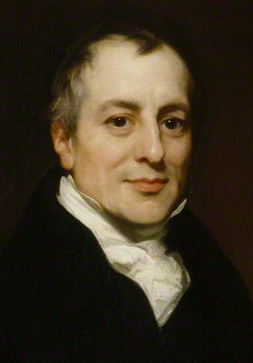
Terms of Trade and the Gains from Trade | AP Macroeconomics | Khan Academy
The Benefits of Free Trade: Addressing Key Myths
By Donald J. Boudreau and Nita Ghei
The growing rhetoric about imposing tariffs and limiting freedom to trade internationally reflects a resurgence of old arguments that stay alive in large part because the benefits of free international trade are often diffuse and hard to see, while the benefits of shielding specific groups from foreign competition are often immediate and visible. This illusion fuels the common perception that free trade is detrimental to the American economy. It also tips the scales in favor of special interests seeking protection from foreign competition. As a result, the federal government currently imposes thousands of tariffs, quotas, and other barriers to trade.
Jul
7
A loitering rogue
July 7, 2025 | Leave a Comment
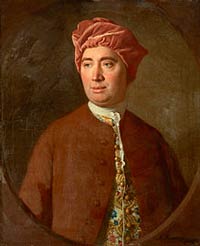
Lytton Strachey, in Biographical Essays, writes about David Hume:
Not long before he died he amused himself by writing his autobiography — a model of pointed brevity. In one of his last conversations — it was with Adam Smith — he composed an imaginary conversation between himself and Charon, after the manner of Lucian: "Have a little patience, good Charon, I have been endeavouring to open the eyes of the Public. If I live a few years longer, I may have the satisfaction of seeing the downfall of some of the prevailing systems of superstition." But Charon would then lose all temper and decency. "You loitering rogue, that will not happen these many hundred years. Do you fancy I will grant you a lease for so long a term? Get into the boat this instant, you lazy, loitering rogue."
Jun
30
Daily Spec Calendar Transitions
June 30, 2025 | Leave a Comment
sp and bonds 1-day changes similar to Mendel's independent moves to next generation. when an event occurs that throws one of pair of bond or sp off, treat it as a mutation.

The Punnett square is a square diagram that is used to predict the genotypes of a particular cross or breeding experiment. It is named after Reginald C. Punnett, who devised the approach in 1905. The diagram is used by biologists to determine the probability of an offspring having a particular genotype. The Punnett square is a tabular summary of possible combinations of maternal alleles with paternal alleles. These tables can be used to examine the genotypical outcome probabilities of the offspring of a single trait (allele), or when crossing multiple traits from the parents.
Asindu Drileba writes:
Orange (S&P Up, Bonds Down) and Green (S&P Up, Bonds Up)
Orange appeared 4 times. In 3/4 times, Orange transitioned to Green with an average point gain of 35.4 in the SPY.How long will this continue? I noticed the pattern last month, unfortunately I didn't "count" it. Was it around for longer periods of time?
Jun
24
Forces of fate
June 24, 2025 | Leave a Comment
the forces of fate. finally a new all-time high. previous all-time high: 23 January, 2025, S&P 6123.
The Hallé - Verdi: The Force of Destiny Overture
Over the years La forza has acquired a reputation for being cursed, following some unfortunate incidents. In 1960 at the Metropolitan Opera, the noted baritone Leonard Warren collapsed and died during a performance of the opera. The supposed curse reportedly kept Luciano Pavarotti from ever performing the opera, and the tenor Franco Corelli used to follow small rituals during performances to avoid bad luck.
Jun
21
 Anyone who appreciates the scientific study of finance will recognize the name of MFM Osborne as a pioneer, visionary, and creator of our field. He was the first to discover Brownian Motion in Stock Prices, the first to study technical analysis scientifically, the first to note the lognormal nature of prices, the first econophysicist, the creator of automated market making algorithms 50 years before they became common place, the creator of market microstructure, and the discoverer of clustering of prices among other things.
They might also know that he was an eminent physicist whose work on sound and electricity led to his discoveries in finance. Yet despite his renown, he is somewhat of an unsung hero having done his work mainly in the 1960s when our field was in its infancy and many of his contributions have languished in such journals as Econometrics, Operations Research and Journal of the American Statistical Association from that period.
I had the pleasure of knowing him fairly well during the 1960s when he did much of his work in finance. And indeed we collaborated on some papers, we had an extensive correspondence, and he served as one of the original directors of my firm Niederhoffer, Cross and Zeckhauser, Inc., the original name of the current firm of Manchester, Inc. I also had the pleasure of meeting and befriending one of his astronomical colleagues, Harold Weaver at the Univ of Cal, Berkeley, who audited my classes there, and we exchanged many a story about the astounding trajectory of Osborne's scientific career.
During the time I knew Osborne, I was aware that he was the most creative and competent eye in the world of finance, far surpassing in that respect all my teachers at the University of Chicago, of that period, many of whom are widely known, revered, and honored. And I always wondered, where did it all come from, how did a man of such genius arise, and how did his scientific work in physics, astronomy, entomology and oceanography lead to his contributions to finance.
Out of the clear blue sky, I recently found the book "Autobiographical Recollections of M.F Maury Osborne", transcribed by Melita Osborne Carter from a series of cassette recordings in 1987. Attached to the autobiography was a hand written note from MFM Osborne: "You have often asked about the path I took in life. Well here it is. And as you can see my upbringing and path was diametrically different from yours."
It is a pleasure, honor and duty to review this book, as I believe we can all learn from it. And a man of such great accomplishment should receive his due. The book reminds me of what Tom Sawyer would have been like if Tom had trained to be a scientist rather than a detective, and if he had been raised by genteel Southern Scientists rather than a house aunt. It's divided into 34 sections: Early Childhood, Mrs. John's School, Public School, Games and Other Activities, Kites and Model Airplanes, The effects of Personal experience, My House on Westoer Wenue, Summer Camp, Scouts High School, Eoodberry Forest, Mother's Influence, Incidents in Norfolk, University of Virginia Sophomore Year, With Hrdicka in the Aleutions, University of Virginia Other Activities, Mrs. Rose's Farm, American Student Union, Jail– Right and Wrong, University of Cal at Berkley, Lick Observatory, Student of Oppenheimer, Operations of the Naval Research Laboratory, Life in Forest Heights, Non-nrl Research Eddington Studies.
Maury was born on December 1916 and passed away in early 2003 at the age of 86. He has two daughters and two sons. During his life he published 47 scientific papers, received his PhD from the University of Maryland in biology in 1952, served as the Mayor of Forest Heights, and was a gadfly for all the physicists working in the fields of relativity, and all the early believers in the random walk theory.
Like most greats, his life was shaped by a combination of inheritance from eminent predecessors and a fortunate environment that enabled his inherited talents to prosper. He was the proud great grandson of Matthew Fontaine Maury, a famed astronomer, oceanographer and meteorologist who was known as the Pathfinder of the Seas and the Scientist of the Seas "because of his seminal work" The Physical Geography of the Seas, 1855. After great efforts to eradicate slavery in the South, as a proud resident of Virginia, Maury resigned his commission as Superintendent of the US Naval Observatory and joined the confederacy.
He then devoted a good deal of the remainder of his life to the commercial possibilities of discovering and extracting minerals in the South as a way of rebuilding the fortunes of Southerners. MFM Osborne was very proud of his heritage from Matthew Fontaine Maury and followed in many ways in the highways and byways of his grandfather's career.
It was always hilarious to read in the autobiography that despite MFM Osborne's positions in highly classified government research, he always refused to sign any loyalty oaths because he would have had to deny that he was descended from a grandfather who had sworn to overthrow the US government with the outbreak of the civil war.
Here comes the scientist, MFM Osborne. What was his life like? What were the major influences on him? The significant events? How did he reproduce and eat? To get a flavor for his ecology, let's consider several of the typical events described in his autobiography. Osborne never accepted anything without proof. When he found an error in some respected authorities work he liked to say something like, "Someone's going to eat crow, raw squawking and fully feathered, by the time I correct his errors." He applied the same approach to life situations. He noted many people being sent to jail. But why were they sent? The answer would teach him what a society regarded as right and wrong. "No one is surprised if people want for no other reason than to explore mountain tops or caves or jungles. Well, the same is true in society. There are segments of society that one layer does not know anything about or very little about, and you can explore it with the idea of learning about it or improving it." So Osborne decided to spend a few months of his summer vacation from the University of Virginia in jail. He went about it by hoboing across the country until he was picked up by a plain clothes sheriff in Vanceburg, Kentucky. The Jail was a pre-Civil War masonry cell with two rooms with a cage on the outside with masonry walls three feet thick with 30 people inside. What did he conclude from his months in jail? "These people were not bad so much as they were just amoral in just the same way as primitive societies… Looking back I can say it enlightened me as to what constitutes right and wrong. Very much depends on arbitrary standards which change with time." He applied these insights into his study of the Constitution, the Bible, and his scientific pursuits. "It contributed to my understandings of the limitations of truth and falsity — of right and wrong. My experiences in Vanceburg, Kentucky were consonant ultimately with what I learned in many other parts of my life, and in many other circumstances." He applied this learning to question and correct the conclusions of science in many fields, particularly astronomy where he concluded that the errors of measurement were so great that separate investigators were liable to come to completely different conclusions concerning such fundamental questions as the truth of Einstein's hypotheses about the movements of the planets and satellites during eclipses, to the world of finance where he concluded that the students of the random walk were completely on the wrong track because they didn't take account of the influence of the bid asked spread, and the relation between volume and price.
It should be mentioned here that Osborne was a can do person. He was a boy scout and a fix it person. He built model airplanes, boats and kites while in his teens. "If you flew one of these airplanes at night and hung on it a thin wire in which there was a rubber band attached hanging down below the airplane, and the put a match to the rubber band, the rubber band would burn and melt and drop little flaming balls"— The unsympathetic police soon put a stop to that. "I told my children that I had taken a trash can and made a huge catapult out of old inner tubes and shot one of the smallest boys in the neighborhood in the trash can as a space capsule". He liked to hobo and hitchhike across America. He took a year off from school to work on a farm to improve his physical conditioning. He enjoyed pushing a wheelbarrow around, and hauling dirt and using a shovel. Eventually he used these skills to become the main hand on an archeological expedition with Professor Hrdlicka to explore the antiquity of man.
Time and again he used the knowledge he gained of how to get and improve his bearings to get out of life threatening experiences. On one of them however, hauling a car up to the observatory in Mr. Lick while he was studying at Berkeley, he managed to fall off a cliff and spent 1 month prostrate on his back in a hospital which time, he characteristically used to improve his knowledge of tensor calculus.
One of his typical chores there was to rake manure. He used his experiences there to come up with his solution to the problem of why the bee can fly or some insects can travel at 500 miles per hour, or how salmon can swim upstream 500 miles without eating. His conclusion: "Salmon are more efficient than the most efficient rigid body boat that humans can devise because they seek out and gain energy from the varying velocities of water that they navigate." When he performed archeological work, he had no compunction of diving 50 feet under water without deep sea equipment to recover a rake.
Another example of the Osborne way came when he was made mayor of Forest Heights. It was the first city outside of the city limits of Virginia. Anyone who moved tended to allow their dogs to run free. The dogs ran in packs and terrorized all the people of Forest Heights. Osborne concluded the solution was to have a dog day where every stray dog not on a leash that day would be shot. He became world infamous for that solution and received many a threat that he would be killed if he implemented it.
The path and conclusions of many of his scientific discoveries in astronomy, biology, entomology, finance, physics, optics, sound and especially Eddington's theory of relativity are detailed in the autobiography. His schooling at the University of Virginia, Berkeley, and Harvard provides a great window on the process of scientific education and discovery during the first half of the 20th century. His work at the Naval Research Laboratory provides insights into how large research institutions work, and the ins and outs of the bureaucratic process. His experiences with Oppenheimer, Feynman, and other great geniuses of physics and astronomy as well as the hum drum day to day of the kind of instruction provide a great foundation for the way science was carried out in practice rather than theory.
In view of the importance of Osborne's contributions to the world of finance and science, and the intrinsic interest of his autobiographical notes, his daughter Melita Osborne has prepared a biographical document that is available here [MS word .docx file, approx 300 Kb].
Jun
17
Bullish timing
June 17, 2025 | Leave a Comment

max without all time high currently >250 days very bullish. what else in timing is bullish?
"Time schedule are most strict for flowering and fruiting," says Heinrich. "I can make observations and then speculate about these schedules on the assumption that they came into being, and persisted because they uniquely served the tree of each species to reproduce itself better in the particular environment that it grows in." - The Trees in My Forest
Seasonal timing on a cyclical Earth: Towards a theoretical framework for the evolution of phenology
Phenology refers to the seasonal timing patterns commonly exhibited by life on Earth, from blooming flowers to breeding birds to human agriculture. Climate change is altering abiotic seasonality (e.g., longer summers) and in turn, phenological patterns contained within. However, how phenology should evolve is still an unsolved problem. This problem lies at the crux of predicting future phenological changes that will likely have substantial ecosystem consequences, and more fundamentally, of understanding an undeniably global phenomenon. Most studies have associated proximate environmental variables with phenological responses in case-specific ways, making it difficult to contextualize observations within a general evolutionary framework. We outline the complex but universal ways in which seasonal timing maps onto evolutionary fitness. We borrow lessons from life history theory and evolutionary demography that have benefited from a first principles-based theoretical scaffold. Lastly, we identify key questions for theorists and empiricists to help advance our general understanding of phenology.
Jun
15
Gregariousness, glory, and memorable experience
June 15, 2025 | Leave a Comment

gregariousness. in bison, locusts, passenger pigeons. what insights does this have for markets?
listening to now:
The Glory of Their Times: The Story of the Early Days of Baseball Told by the Men Who Played It
one of the most memorable and saddest experiences of my life was visiting with Larry Ritter as he was dying at Roosevelt hospital. i had befriended Larry 10 years ago and found him equally knowledgeable about finance and old time and Negro Baseball. He traveled in a Yankees bus.
while visiting him on his last days a big curmudgeon walked in. we discussed Glory and I mentioned that the spoken words of it was just as good as the book. the curmudgeon said he never listened to radio, tv, computers or anything else. he didn't believe in any of the modern.
I was not surprised when he tried to ruin the US economy shortly thereafter. Paul Volcker was proud to be wrecker. The curmudgeon was a colleague of Larry's at NYU.
Jun
12
From the archives: 10 Things I’ve Learned About Markets, from Victor Niederhoffer
June 12, 2025 | Leave a Comment
Posted on April 20, 2011:
1. "There is no such thing as easy money"
2. Events that you think are affected by cardinal announcements like the employment numbers at 8:30 am on Friday are often known to many participants before the announcement
[An example supplied on April 18 by Mr. Rogan: "The Reason For Geithner's Weekend Media Whirlwind Tour: White House Learned About S&P Downgrade On Friday" (zerohedge )]
3. It's bad to try to make money the same way several days in a row
4. Markets that have little liquidity are almost impossible to profit from.
5. When the stock market is way down, policy makers take notice and do what they can to remedy the situation.
6. The market puts infinitely more emphasis on ephemeral announcements that it should.
7. It is good to go against the trend followers after they have become committed.
8. The one constant, is that the less you pay in commissions, and bid asked spread, the more money you'll end up with at end of day. Too often, a trader makes a fortune on the prices showing when he makes a trade, and ends up losing everything in the rake and grind above.
9. It is good to take out the canes and hobble down to wall street at the close of days when there is a panic.
10. A meme about the relation between today's events and those of x years ago is totally random but it is best not to stand in the way of it until it is realized by the majorit of susceptibles
11. All higher forms of math and statistics are useless in uncovering regularities.
Read the full post with additional comments.
Jun
10
Trees, instinct, octets
June 10, 2025 | Leave a Comment

The Trees in My Forest by Bernd Heinrich is one of the best books about nature that I have ever read. theme of the book is, 'Trees exist as parts of an unfathomably complex web where each species is linked to others in growth, reproduction, sex'.
Each chapter teaches me big things about markets. (1) evolution of small versus big. (2) construction for strength. (3) Tree geometry. (4) time for a tree. (5) sex in a tree. (6) seeds and seedlings. (7) ants and trees.
The Homing Instinct by Bernd Heinrich is a great companion piece. Much detail about Lobagola in many migratory species.
the inexorable fate of round numbers: Octet Rule
Jun
6
On a recent tour
June 6, 2025 | Leave a Comment

books read on recent tour of California, Japan, Thailand, Singapore and Hong Kong with Aubrey and his good friend:
Singapore: A Biography, by Mark Ravinder Frost and Yu-Mei Balasingamchow
The Trees in My Forest, by Bernd Heinrich
The Birth of the Modern: World Society 1815-1830, by Paul Johnson
And for music: La Divina - the Best of Maria Callas Compilation
Also, a great book about 200 years of peace and harmony in Japan, The Fantastic Edo Era, but a completely opposite take by Paul Johnson in The Birth of the Modern.
also one terrible book, Every Man a Speculator, by Steve Fraser. the author hates speculation in all forms and writes 800 pages of selected anecdotes with thousands of footnotes to support his biased and hateful review.
Gavan Tredoux comments:
Paul Johnson is not a careful writer, makes too many factual mistakes, often accepts received wisdom uncritically. He writes well, as a journalist would, but I wouldn't trust anything he produced.
Jun
5
Aubrey and Vic in Thailand last week
June 5, 2025 | 1 Comment
back from a few weeks tour of Asia with many books read and museums visited and zoos and botanical gardens and aquariums, and much abalone from many great restaurants. will provide reviews shortly.

Jun
4
A very healthy day
June 4, 2025 | Leave a Comment
today (Wed, 4 June) a very healthy day for sp.
Jun
4
Big round numbers
June 4, 2025 | Leave a Comment
round # of 6000 approaching, sp now at 5973. the octet rule in chemistry: the concentration of stops at rounds. what else causes inordinate concentration? limit orders tend to be concentrated at round numbers. many compounds lose electrons to reach a stable, nonreactive 8. tests show that when a stock breaks thru a round number, it is bullish.
The Octet Rule: Help, Definition, and Exceptions
The Octet Rule is a general rule that is used to describe chemical bonding and draw Lewis Structures. The rule states that Main Group elements form bonds in a manner that results in each atom having eight valence electrons in the highest energy level (sometimes called outer shell). This results in each atom having the same electronic configuration as a noble gas.
May
25
Atlas Shrugged, from Francesco Sabella
May 25, 2025 | 1 Comment

This morning I finished rereading the classic Atlas Shrugged of Ayn Rand and every time I learn something new; her thought is monumental. I don’t agree with a lot of her ideas and I fully agree with others, but I’ve always found this book to be an impressive catalyst for thought; this is in my opinion her power: the ability in sparking debate.
Rich Bubb comments:
Atlas Shrugged is also available as a 3-part movie. I think the book was better.
Adam Grimes writes:
My opinion on her work has shifted over the years, in a strongly negative direction. Too much of my experience contradicts her metaphysics and epistemology, particularly the rigidity of her rational materialism, and, as someone who treasures the craft of writing, much of her prose lands as clunky and overly didactic. I'm also now unconvinced on the primacy and sufficiency of rational self-interest… but, as you said, perhaps her greatest value is in creating discussion.
Asindu Drileba adds:
Ayn Rand had a reading group called the "Ayn Rand Collective" — Which Alan Greenspan was part of. They [Greenspan, Rand and a "professor"] would meet at Rand's apartment to read every new chapter of her new book. She (Ayn Rand) then fell in love with the professor and they started dating.
After sometime, the "professor" encountered a pretty young student in his own class and he "fell in love with her". The professor told Rand about the affair, but Rand begged the professor to cancel it. The professor then said that he would dump Ayn Rand, and then exclusively date the young pretty student. He said that this was the right thing to do since he was following his "rational self-interest". Ayn Rand got angry, slapped the professor in the face twice and kicked him out of her reading group.
This was a good illustration of cognitive dissonance. Rand thought her readers should practice "rational-self interest" towards everyone else, except her.
Francesco Sabella met a girl:
I was very fascinated to meet a girl times ago who I knew for her philanthropic activities and for her ideas being the exact opposite of Rand; and I was surprised to see her carrying an Ayn Rand book and she told me she didn’t like at all her; it made me think of her ability in creating debates.
Victor Niederhoffer responds:
i would always marry a girl who admired the book. susan introduced me to it and i knew then i had to marry her. it was very good choice.
May
12
Multiple proportions
May 12, 2025 | 1 Comment
does the law of multiple proportions apply to the way markets combine with each other and the general factor which combines with specific factors to make up intelligence?
todays market up exactly 3% and 0.5% and 1% on other days inordinately likely. 75-day hi in sp today at 5850 but not an all time high of 6100 from nov.
Thus we have a two-month max in sp but still 3.5% below nov all time hi of 6100, a relatively common way of coming bak that is short-term neutral but bull for next several months.
May
7
One is reminded
May 7, 2025 | Leave a Comment
one is reminded of table tennis against a robot or chess game against deep 6 or later computers but the analysis at the fed that is data dependent as long as it sinks the bad guys. "only monetary policy here and no influence of politics". But there has to be a philosophy.
May
7
Francesco Sabella in Conversation With Victor Niederhoffer: Harvard Educated Hedge Fund Pioneer
Gary Boddicker writes:
Thanks Francesco. Always good to see and learn from Vic. Subscribed and look forward to your future interviews.
Steve Ellison adds:
This is a great interview. The 2 minutes starting at 13:36 about ever-changing cycles is itself a meal for a lifetime. "The world is always changing, and [the] road to success is always a little different, and the techniques that you’re using are always subject to competition. You should try to be alert to change."
I increasingly perceive that the pre-2020 world in which I lived most of my adult life is gone forever. It's a new era, and old techniques in many fields don't work any more.
Apr
29
A goldmine of techniques
April 29, 2025 | Leave a Comment

a goldmine of techniques to use for markets. concentration ratios, capture recapture, signaling, aural detection, etc:
Ecological Methods provides a unique synthesis of the methods and techniques available for the study of populations and ecosystems. Techniques used to obtain both absolute and relative population estimates are described, and approaches to the direct measurement of births, deaths, migration and the construction and interpretation of life tables are reviewed.
Apr
28
Most resonant
April 28, 2025 | Leave a Comment
i've always found the 19th century heroes the most resonant. one of the joys of the Tredoux books on Galton is how they all appear: Conan Doyle, Spearman, Cyril Burt, Pearson, Livingston, Bennett, Binet, Gilbert.
Apr
23
Modeling the dynamics of life
April 23, 2025 | Leave a Comment

excellent book to study for all biological areas that math will uncover
Modeling the Dynamics of Life: Calculus and Probability for Life Scientists, by Frederick R. Adler
The goal of this book is to each the mathematical ideas that will help us understand various phenomena in life sciences. These are the same ideas that researchers use in their work, as well as in collaborations with colleagues engaged in more empirical activities. They are not specific techniques, such as differentiation or integration by parts, but rather they revolve around building mathematical models.
A mathematical model is that crucial link between a life sciences phenomenon and its description in terms of mathematical objects. We will gain the skills needed to construct a model, make sure it works, and understand what it implies—we will learn how to translate appropriate aspects of a life sciences problem and its assumptions into formulas, equations, and diagrams; how to solve the equations involved; and how to interpret the results in terms of the original problem.
Apr
19
Regression to the mean
April 19, 2025 | Leave a Comment

Great and sententious discussion of regression by Tredoux in the second volume of his Galton bio (with tremendous applicability to markets):
However the concept of regression to the mean where it has been comprehended at all has led to persistent popular misunderstandings about its nature. Failure to spot regression to the mean recurs so often it seems to be a universal law of human behavior. Examples could be multiplied endlessly. They involve selection of a bad condition to which some intervention is applied after which the condition is observed again. Usually it has improved. Therefore the policy is supposed to work.
Francis Galton's Genius: 1865-1911, page 225
Apr
16
Guaranteed to happen
April 16, 2025 | Leave a Comment
guaranteed to happen: "powell says that they will do what they do regardless of any political pressure." great applauds in the Chicago audience.
Apr
15
Bullish
April 15, 2025 | Leave a Comment
the 5 days after service day bullish. about 4 in 5 up. also bonds bullish in that long time since 20-day high. thus despite attempt to beggar the neighbor and embarrassing unanimity of advisers that trade is bad, the stats say bullish.
Apr
14
Looking back at 2008
April 14, 2025 | 1 Comment
A Few Observations, from Victor Niederhoffer
October 12, 2008
1. Of the 100 biggest markets around the world, almost all are down 40- 60% in dollar terms with the exceptions' being Tunisia and Botswana. The impact of the decline this week, unless rapidly reversed, is going to be very severe on purchases. The previous 20% caused great angst; imagine what this decline will do to those who rely on retirements. The positive feedback of the decline in a negative direction also impacts the election results with every market decline making it more likely the Republicans will be blamed for the situation.
2. The worst aspect of the decline this week from a health point of view was that fixed income around the world cratered, thereby reducing world wealth by a good 15% as opposed to the normal situation where the equities go down 10% and the fixed incomes go up 8% leaving total wealth down only a little. And the people that talked about how bearish it was for stocks because commodities were up would never say that it's bullish now because commodities are down 40% over the past four months.
3. A new word should enter the market vocabulary, a waterboarding decline, being a decline that seems to have a breath of life at the open before going into a death spiral.
4. Because of the decline in all sectors, the wealth/price ratio has stayed relatively constant with corn, copper, soybeans, wheat and oil down 40- 50% since June 30, thereby keeping the number of bushels and barrels we can buy with one DJIA relatively constant, making the number of ounces of gold you can buy with the Dow less than 10 for the first time in a googol, and looking like a bargain for the Dow.
Cagdas Tuna writes:
The plan was to make US assets cheap and make everyone afraid to invest in them(thanks to VIX spike Monday). We all make joke of him but Trump’s post few hours before 90 days pause was the peak. Look at inflation numbers it is officially coming down as most companies were planning this sh*t beforehand. The more we see bad news the bullish stocks are.
David Lillienfeld responds:
You're making the assumption that we're done. I don't know that we are.
Nils Poertner comments:
in any case - def good to watch out for anomalies, or things that shouldn't happen and then they happen - and then there is more of it normally.
Apr
13
Galton now finished
April 13, 2025 | Leave a Comment

i have now finished the brilliant Tredoux bio of Galton. and Tredoux is very Galtonesque in his masterly ability to explicate every area that Galton touched. After 10 years without proper review of Galton, here's a Galtonian example of two geniuses uncovering it at same time.
From 2002, Review of A Life of Sir Francis Galton, author: Nicholas Wright Gillham, reviewer: Gavan Tredoux.
Starting almost from scratch in all the subjects he investigated, Galton invented rigorous intelligence testing, founded experimental psychology in Britain, established the scientific basis for fingerprint identification, formulated the statistical concepts of regression and correlation, pioneered early investigations of genetics, and founded the biometrical school.
Apr
11
Lessons from a previous crisis, from Rich Bubb
April 11, 2025 | Leave a Comment
I was searching for 'Lobogola' in my saved files… Found this…
Ten Lessons From the Recent Bear Markets, from Victor Niederhoffer
February 3, 2008
1. There is no such thing as a bear market, only markets that have gone down a lot from a previous high in a reasonable time frame.
2. The market had its best week in 5 years two weeks after having the worst week in 5 years.
3. When the vol rises to above 30, expect a 1-2% gain in next two days with say a 90% prob.
4. The differential between the discount rate and the 10 year rate is an excellent predictor of short and long term movements in the market.
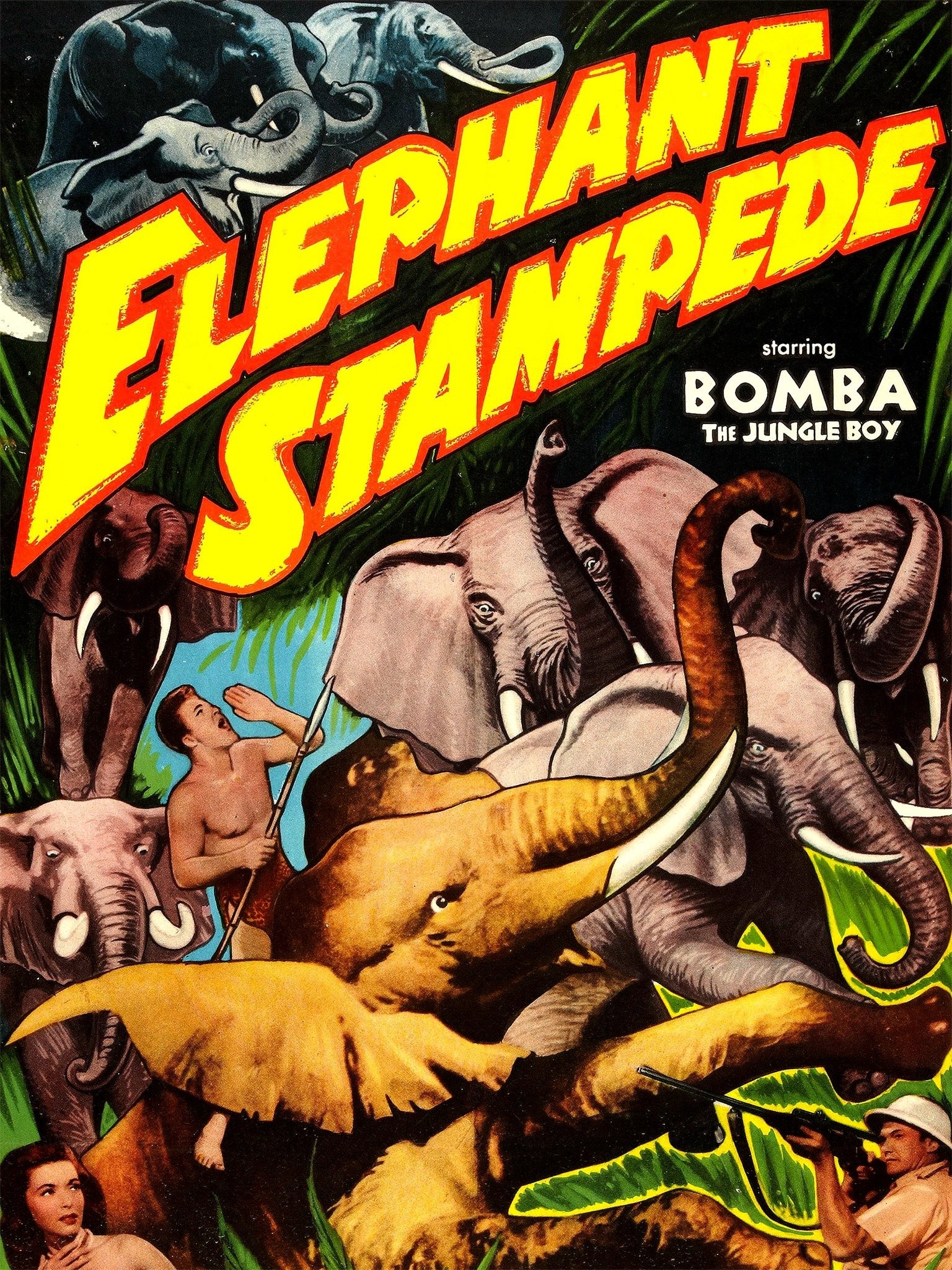
5. The market likes to set a big minimum at the beginning of the week and all the limits downs have occurred on such days.
6. The knowledge of a big forced seller in the market will filter out and effect everything and the market will go to unprecedented low levels until the sales are requited.
7. The Fed chair thanked Milton Friedman for insuring with his research that the Fed would never again cause a depression by tightening the money supply during a time of economic doldrum and we may thank Milton Friedman and the Fed chair, and Mr Kerviel for insuring that no such depression or recession will be induced again by such activity.
8. The market will go back up along the same path that it went down, i.e. Lobagola lives. (Remember Lobagola's story about the elephants). [More on Lobagola and the elephants below. -Ed.]
9. Buy and hold must not be leveraged too high for it to work.
10. The tried and true patterns are the most dangerous during times of crisis. (Beware of patterns with a 90% chance of success).
Scalawags: Bata Kindai Amgoza ibn LoBagola
But his assumed name lives on amongst the lore of investors. In his book, he tells the story of an elephant stampede. The beasts rush through an area and always return the same way. When there is a surge of the market that soon ceases and comes back again down that same path, that’s called a LoBagola.
Apr
9
20-day highs
April 9, 2025 | Leave a Comment
now 49 days away from last 20-day high on 2-19, 2025 at 6166 (futures). 98% chance that next 20-day high will exceed the old level. expected duration to next exceedance is 12 days.
good example of stock market being the key driver. approval rating dropped to 41% with one 20-day low in stocks after another. someone, a rare bird among advisers, told him to cut the crazy tariff policies.
nice drop in vix of 19 points from 52 to 33. apparently all weak longs were done in.
Apr
7
Surrounded by pessimism
April 7, 2025 | 1 Comment
As we write in mid-2002, surrounded by pessimism, our view is that the required return for holding stocks is at levels unseen since 1990, or 1980, or 1950, when memories of depressions or crashes were still hanging in the air. If ever there were a time that investors would only buy risky investments when the anticipated returns were in the 50 percent-and-over area, this time would seem to be now. We see no reason that our expectations will be disappointed. Why shouldn't an improvement in lifespan or the rules of the game of business reap in the next 50 years the kind of results that greeted investors in the past 50?
Practical Speculation, by Victor Niederhoffer and Laurel Kenner, page 215
Apr
6
The most important influencer of all
April 6, 2025 | Leave a Comment
the most important influencer of all, the stock market was the only indicator that the Fed Chair didn't discuss in his Friday talk to the editors.
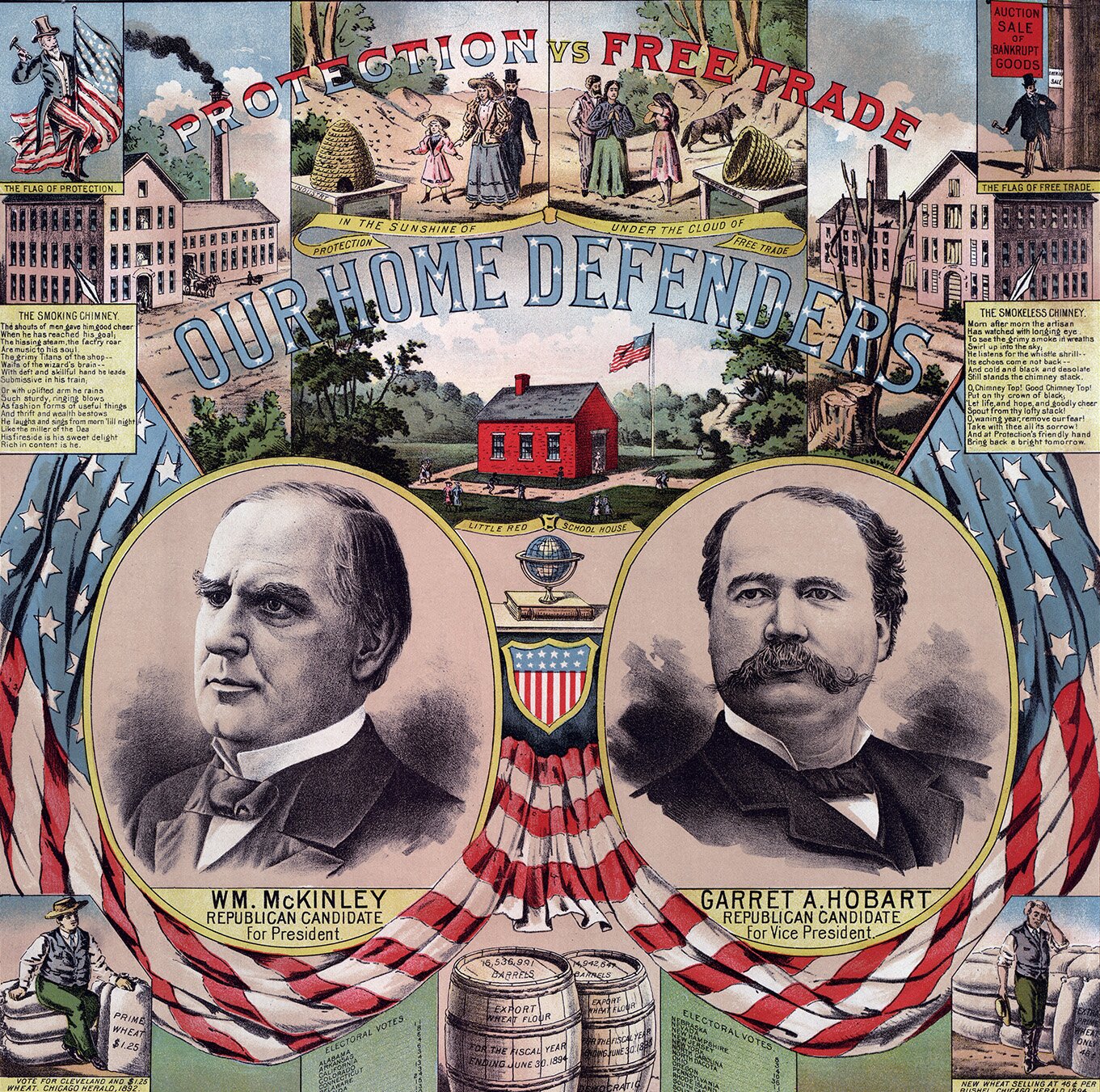
one can expect the opposition at the Fed to double down on the unnecessity of lowering rates in order to punch the enemy when he is down and to increase their importance to staying.
left out in the damaging consequences of tariffs is their increase in the likelihood of war only too often lead to open hostility and armed conflict. For historical confirmation of this fact we need but review the Russo-German "tariff war" of 1893, the German-Spanish tariff war of 1894, the Franco-Italian tariff war of 1888-1899 and the Franco-Swiss tariff war, 1893-1895. The Austro-Hungarian tariff barriers to Serbian exports aggravated the nationalistic conflict between Serbia and Austria-Hungary and precipitated the World War. Economic conflicts and divergence of economic interests.
Apr
4
The beatings will continue until morale improves
April 4, 2025 | Leave a Comment
Milton Friedman on Trade Balance and Tariffs
Why Some People Will Never Admit They're Wrong
• The inability to apologize can stem from trying to maintain an idealized image of oneself to avoid shame.
• Refusal to apologize can result from the misguided belief that we shouldn’t have to since we weren't at fault.
• Conviction that no apology is needed can stem from a lack of self- and relational-awareness.
one of the many virtues of Tredoux's book on Galton is the way he generalizes from Galton's observations to make universal points.
This is a striking instance of the obstructions through which new ideas have to force their way. Plain facts are apprehended in a moment but the introduction of a new idea is quite another matter for it requires an alteration in the attitude and balance of the mind.
the quote is Galton's but my compliment to Mr. Tredoux is true.
Apr
2
An article on tariffs that should be read by all
April 2, 2025 | Leave a Comment
Tariffs Are Awful, but the Income Tax May Be Worse
Every fiber of my economic being cries out against tariffs. If they are so good, why doesn’t each state in the US have one against the products of all of the other 49? That is, Ohio could “protect” its industries against the incursions from Arizona. This is obviously silly. One of the important reasons America is so prosperous is that we have a gigantic, internal, free trade area.
[ … ]
So is there any economic case for tariffs, given the foregoing? Yes, paradoxically, there is—in a way, if the alternative is a tax that’s even worse.
Larry Williams comments:
Tariffs are what made America so powerful when instituted by Hamilton. It’s all about what you place them on Hamilton did it with brilliance.
Stefan Jovanovich responds:
I think more credit goes to Thomas Willing, the President of the Bank of the United States. He understood that tariffs would allow the United States to conduct the same wonderful sleight-of-hand that allowed the national Money to be gold and silver coin while the actual currency became bank notes. The Chair's question - if tariffs are so great, why doesn't every state have them - was answered by the Federal Constitution, which took away from the States the power to issue their own bills of credit as legal tender and the power to regulate interstate commerce. As LW and the Chair both note, it was the ability of the United States to have an ever-growing domestic market that made the U.S. so powerful. People were willing to bring their "real" money to the U.S. to speculate in what is still the largest open market in the world AS LONG AS THEY HAD THE ABILITY TO PICK UP THEIR CHIPS AND TAKE THEIR MONEY HOME. Apologies for the SHOUTING but every "crash" has had as its catalyst the threat that the U.S. would impose capital controls - either directly or by depreciating the dollar by executive order.
Mar
31
An insightful section
March 31, 2025 | Leave a Comment
An insightful section of Mr. Tredoux's Francis Galton's Nature and Nurture: 1822-1865 shows that the poor forecasts and poor scientific methods of Robert Fitzroy, as uncovered by Galton, probably led to his suicide. Let us hope that a similar fate does not await some of the useful idiots and bears recounted in my posts.
Mar
28
Reverse effects, trunks
March 28, 2025 | Leave a Comment

usually one is accustomed to a political news effecting stocks but now after 50 days form a 20-day high and only 2 pts from a 50-day low at 5579 on march 13, we can expect stocks to effect politics. another decline in sp will create tariff easing.
Single trunks grow at a rate determined by the species of tree and the care it gets. Multi-trunks have seperate root systems and since they are close together, they compete for nutrients. This competition results in slower growth rates….Since they compete, multi-trunk trees grow 30% to 50% slower than singles trunk trees of the same species. Despite a slower growth rate, these trees can still flourish with attention and care.
Heritage Tree Service of Texas
a single trunk tree grows considerably faster than a multitrunk tree. is the same true for stocks? a test will answer this.
Mar
28
The late baseball great studied hitting as closely as a stock strategist studies markets. In fact, Williams' hitting rules can easily make you a better investor.
By Victor Niederhoffer and Laurel Kenner
"Get a good ball to hit."
– Rogers Hornsby to Ted Williams, on the single most important thing for a hitter.
A person, a field, a book. Sometimes they come together with such genius that you wish to carry the lessons around and apply them to everything you do. Such is the case with Ted Williams’ "The Science of Hitting," widely considered the definitive book on the subject. With the baseball season soon starting, the market reeling and investors searching for a rudder, it seems particularly appropriate to learn from the book’s timeless lessons for all fields. But we’ll go even further. We’ll show how to use this method to make a profit by trading IBM (IBM, news, msgs) and similar biggies on Thursdays, when the count is right.

Williams was the last batter to achieve the magic .400 average in a full season — 1941, when he hit .406. (He also had .400 averages in 1952 and 1953, when his seasons were cut dramatically short because of Korean War service.) He is considered one of the three best hitters ever, with Babe Ruth and Rogers Hornsby. “I had to be doing something right,” he said. “And for my money the principal something was being selective.”
His selectivity was unique and inspiring. He divided the 4.6-square-foot batter’s box into 77 zones, and assigned each a hitting percentage. The sweet spot was high over the middle of the plate, where the batting average hit .400.
Rule No. 1: Wait for your pitch
Warren Buffett cited "The Science of Hitting" in his 1998 annual report in a discussion of his favorite subject: How the market doesn’t look good to him. (His most recent annual report, published Saturday, repeats the sentiment.) Buffett said he, like Williams, follows Rule 1 and waits for the great pitches — the great companies — and holds his fire until they arise.
After Rule 1, we will expand the list of hitting rules to 11, drawing from the lessons in Williams’ book.
Mar
25
We were younger
March 25, 2025 | Leave a Comment

i had the privilege of sitting at the actual Galton desk and a secretary was using it. Jensen and I complained about the sacrilege, and the secretary moved to a modern desk. I noted there in Galton's library a well-read copy of the 1st edition of Wealth of Nations.
we were younger:
Someone in a Tree - Stereo - Pacific Overtures - Original Broadway Cast
Mar
24
Two champs skiing
March 24, 2025 | Leave a Comment

Mar
23
One of my favorite books of all time
March 23, 2025 | Leave a Comment
Dear Mr. Tredoux : I am now through p. 157 of the first volume of your bio of Galton, Francis Galton's Nature and Nurture: 1822-1865. I have never found a life more interesting than yours of Galton. Even though I had read all books and previous bios of Galton I found new material on every page.(i never know he played fives and could throw)
congrats Mr. Tredoux on the Homeric epic you wrote. I particularly admired the way you followed up every mention of people Galton met until 30 with their subsequent fate and fame.
I am sure Mr. Tredoux that many of my friends now departed (like Arthur Jensen) would have enjoyed and learned from your book as I did ( with many questions and follow up still to be.
Perhaps you will cover it later but I still have not seen the answer to why Galton did not have children. (was it the few moments of Pleasure that he experienced on his Islamid travels at age 25?)
Mar
19
QOTD, ATH, Lunar Society
March 19, 2025 | Leave a Comment
A human being should be able to change a diaper, plan an invasion, butcher a hog, conn a ship, design a building, write a sonnet, balance accounts, build a wall, set a bone, comfort the dying, take orders, give orders, cooperate, act alone, solve equations, analyze a new problem, pitch manure, program a computer, cook a tasty meal, fight efficiently, die gallantly. Specialization is for insects.
- Robert A. Heinlein
best for stocks, now 20 days since ATH.
UBS Global Investment Returns Yearbook 2024
Leveraging deep history to navigate the future
Elroy Dimson, Paul Marsh, Mike Staunton
one has been reading of the Lunar Society and the early childhood of Francis Galton in the fascinating and magnificent book Francis Galton's Nature and Nurture: 1822-1865. one of my favorite books of all time.
Mar
14
Best review of a great person
March 14, 2025 | Leave a Comment
Nicholas Wright Gillham
A Life of Sir Francis Galton: From African Exploration to the Birth of Eugenics
Oxford University Press, 2001
Reviewed by Gavan Tredoux, August 2002
This is only the third full-length biography of the eminent Victorian scientist and polymath Sir Francis Galton (1822-1911). Remarkably, it is the first in quarter of a century. Galton was the product of a distinguished lineage, with men of marked ability in every one of ten preceding generations. He had first made a name as an African explorer and meteorologist, active in the affairs of the Royal Geographical Society. Late in life, inspired by his half-cousin Charles Darwin, he went on to found the scientific study of heritability, which soon encompassed differential psychology, anthropology, genetics, criminology, statistical methods, and eugenics. Starting almost from scratch in all the subjects he investigated, Galton invented rigorous intelligence testing, founded experimental psychology in Britain, established the scientific basis for fingerprint identification, formulated the statistical concepts of regression and correlation, pioneered early investigations of genetics, and founded the biometrical school. Financially secured by a legacy from his moderately wealthy father, he might have followed so many of his contemporaries into comfortable idleness. Instead he chose the career of a “gentleman scientist”, and would on his death endow his well-managed legacy to further research in the areas that interested him.
Mar
12
A nice find at Moe’s
March 12, 2025 | Leave a Comment
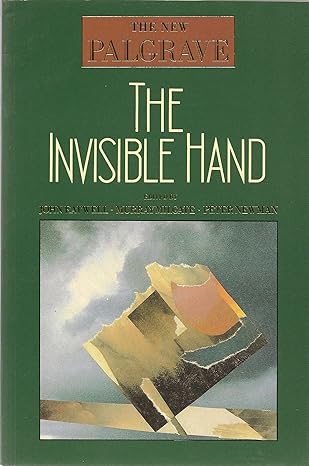
The Invisible Hand, First Edition
by John Eatwell (Editor), Murray Milgate (Editor), Peter K. Newman (Editor)
Covers Smith, Bentham, Hobbes, Hume, Locke, and Mill, as well as collective action, economic freedom, individualism, and property rights.
The Highlite of a trip to Berkeley: Moe's Books
Moe Moskowitz opened the doors of Moe’s Books in 1959, and so established one of America’s preeminent independent bookstores, a favorite destination for book-loving locals and tourists alike. Now boasting an inventory of over 200,000 new, used, and rare selections, Moe’s was noted by the New York Times in 2008 as the bookstore where “those in the know still all head.” Moe revolutionized the predigital used book business by establishing buying policies that ensured a trust with his customers: the highest prices would be assured when they brought their books to his store. Moe may be gone, but his policies and store remain very much alive today.
Mar
6
Disruptive behavior
March 6, 2025 | Leave a Comment
Examples of disruptive behavior in animals
like disruptive behavior in markets.
yale opponent who tried to kill me - ancestors surrendered to George Washington.
Mar
5
The search for a foolproof system
March 5, 2025 | Leave a Comment
"the search for a foolproof system is in vain. there will never be a foolproof system." - vn and tw.
very good advice from bacon and all speculators and gamblers:
Some amateur players carry inconsistency to such a degree that they demand consistency from the horses, while at the same time being utterly inconsistent in their methods of play. It's not the races that beat these players — it's the switches!
Racing is simple. Everything about the game is logical and common sense and elementary. All the figuring and the mathematics and the mechanics of racing can be understood by a child in junior-high school. But the game is decked out in an endless number of minor contradictions and open switches and deadfall traps, in order to lure the average player into doing everything wrong .
If the average player — the public play — kept out of all these switches and traps, then the powers-that-be would have to make the game far more complicated in order to insure the fact that the majority of players (as we learned in a previous chapter) continue to lose and thus continue to furnish money to keep up the game.
The amateurs who play so carelessly and who fall into all the wrong switches, do not stop to consider the percentages of their rightful losses. When an amateur goes to the track and loses nine bets (eight races and a daily double) and loses all his capital for the day, he has lost many times what the percentage calls for. He has no right to lose so much. It's almost as if he did it on purpose!
- Secrets of Professional Turf Betting
and just when you are ready to give up at the bottom or top, get ready for a change.
as you get nearer the King's row, you remember all your victories vividly (whether they happened or not).
ratio of Europeans like dax to sp at an all time hi.
I remember my 6 gold rackets (an important tourney in my day where my opponent tried to kill me by hitting at my head just when he was about to lose) which reminds me of the turn around in sp today.
Feb
23
From the archives: The volatility-market connection
February 23, 2025 | Leave a Comment

Active Trader Magazine, March 2004
The Volatility-Market Connection
By Victor Niederhoffer and Laurel Kenner
Is everything you know about volatility wrong? Find out what history says about the volatility-market relationship — and what the VIX is saying about the stock market’s 2004 prospects.
Volatility is a crucial variable every market participant needs to consider. For speculators, volatility determines how much money to place on each trade relative to initial stake and stop point. For investors, it determines how much to allocate between stocks and bonds, and how much to invest for a secure retirement. For academics, volatility is one blade of the scissors in the fundamental theorem of finance — namely, that expected return is linearly related to volatility.
The article contains a sidebar that begins, "Dr. Hui Guo is one of the most respected and prolific authors in volatility research. Reading some of his articles sparked our quest." Dr. Guo was a senior research economist at the Federal Reserve Bank of St. Louis is currently at U Cincinnati.
Here is one of Dr. Guo's recent research papers:
Taylor Rule Monetary Policy and Equity Market Risk Premia
Hui Guo, University of Cincinnati - Department of Finance - Real Estate
Saidat Sanni, University of Cincinnati
Yan Yu, University of Cincinnati - Lindner College of Business
Posted: 12 Nov 2024, Last revised: 6 Nov 2024
The Fed mainly uses the federal funds rate (FFR) to achieve its dual mandate of price stability and maximum employment. Recent asset pricing models argue that changes in FFR affect equity market risk premia. Consistent with this financial condition channel of monetary transmission, the Fed's macroeconomic needs estimated using the Taylor (1993) rule negatively predict stock market returns. They are also identified as a crucial equity premium determinant along with the scaled market price and conditional market variance via variable selection analyses. The linear multifactor equity premium model has remarkably stable predictive power, outperforming machine learning and other prediction techniques.
Feb
21
Good day(s)
February 21, 2025 | Leave a Comment

A good day -1.6% to start another break of all-time hi with dax and bonds moving to great support and foundation.
Those were the days:
NY Squash Legend: Victor Niederhoffer, Storied American Player of the 60’s and 70’s
And Steely Rival to International Legend Sharif Khan
A five-time winner of the U. S. Nationals and one of only seven American-born players to capture the most coveted crown of hardball squash, the North American Open, Victor Niederhoffer is very near the top of the list of squash’s most significant figures and intriguing personalities. His rivalry with Sharif Khan during the mid-1970’s defined that crucial era in the sport’s evolution and played a determinate role in the formation and rise to prominence of the professional hardball tour that had such an impressive run in the following decade.
Part of what made Niederhoffer’s ascent to the top echelon of the sport so compelling is the degree to which his background and self-presentation differed from the norm during the era in which he competed. Unlike the large majority of America’s best college and amateur players—almost all of whom by the time they entered college had learned the game either in junior programs at exclusive private clubs or while attending prestigious New England prep schools (and in many cases from fathers who themselves had been active squash players)—Niederhoffer, the son of a Brooklyn cop, had never played squash prior to entering Harvard in September 1960. His sole previous exposure to wall games had been to those that were played at the Brighton Beach Baths, a sports complex located near the Niederhoffer's home near Coney Island. This complex featured more than 20 one-wall handball courts and was known as the mecca for that sport.
Feb
19
Finally, an ATH, and The Origins of Value
February 19, 2025 | Leave a Comment

Finally an ATH after 20 days of feinting and following the intellectual and second handed who hate Wealth.
The Origins of Value: The Financial Innovations That Created Modern Capital Markets is a beautiful and informative book that traces the development of all current financial instruments and institutions to their origins especially in Holland in the 16th century.
From the invention of interest in Mesopotamia and the origin of paper money in China, to the creation of mutual funds, inflation-indexed bonds, and global financial securities, here is a sweeping survey of financial innovations that have changed the world. Written by a distinguished group of experts - including Robert Shiller, Niall Ferguson, Valerie Hansen, and many others - The Origins of Value traces the evolution of finance through 4,000 years of history.
the chapter Origins of the NYSE by Richard Sylla is the best illumination to the forces that led to American Capitalism from the 18th century to today, completely enthralling and informative. The whole book is one of the best I've ever read of the thousands I've read on this subject.
Feb
17
Very bullish
February 17, 2025 | Leave a Comment
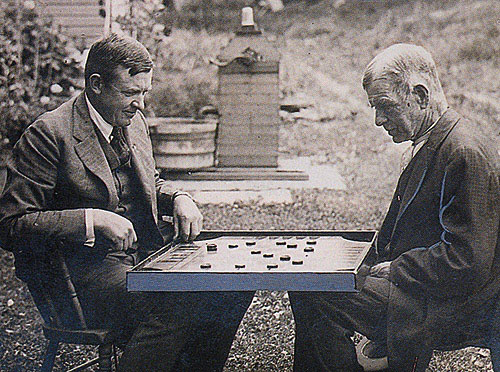
refusal [on Friday] to go last 20 pts for a.t.h very bull.
The Mountain Shadow, sequel to Shantaram, is a set of contrived incidents of violence and corruption with made up characters. I gave up on it after 500 pages when a ridiculous financial coup involving the fictional Karla was so fake.
Christy Mathewson once beat world checker champion Newell Banks in a game of checkers. he liked to angle the board after a game and then review the baseball game with checkers being the players.
The Player: Christy Mathewson, Baseball, and the American Century
Feb
16
From the archives: 22 Things a Man Should Know About Trading
February 16, 2025 | Leave a Comment

1. Never try to make money the same way twice in a row.
2. Don't trade inactive markets.
3. Don't assume that the relation between your two favorite markets will stay the same from year to year.
4. Be alert to big minimums on Monday as they tend to reverse.
5. Try not to sell markets that have big drifts upwards like stocks.
6. Try to go with with the central banks.
7. Be one with the idea that has the world in its grip and be on the side of the market that will further that grip.
8. Never go for small profits as the vig is too great relative to your gain as a %.
9. Don't trade when a loved one is very sick.
10. Round numbers will be broken.
11. For example, play the yen to break 100 and the S&P to break 16000 and Apple to swing from below 400.
12. Gold has been a store of value for a long time. When it gets hit hard, think of all the people in the world and the institutions that use it for insurance.
13. Don't sell premium in the grains as they move explosively.
14. Never trade so that you exceed your margin. (You will have to get out at the close unless it moves in your favor and that makes you weak).
15. Don't listen to tips or try to follow fast moving operators as you won't know when they are going to change positions and how strong and on what basis their views are made.
16. Let your profits run after you have a big loss and get back to even sell to the sleeping point.
17. Don't take positions that you plan to extricate from in inactive trading hours.
18. After or just before a major announcement don't use limits.
19. Only buy the worst markets or stocks at the end of a quarter or year.
20. Never trade when you're out of the office or on vacation or on a whim.
21. Beware of trading when the market is going to be closed and you will not be able to extricate from your position like European markets when they close for a month around Christmas.
22. Don't short big up opens.
Okay, that's a start. Hopefully, I am more adept at this kind of thing a trader should know than I am at the things a man should know.
- posted by Vic, 29 April, 2013
Feb
12
Squeakers?
February 12, 2025 | Leave a Comment

an interesting study that shows that buying relative strength gives superior returns - consistent with all other studies on ssrn:
Relative strength over investment horizons and stock returns
do similar studies show that betting on squeaker winners in baseball and football are losers? does betting against squeaker winners work in baseballl, football, and markets?
Tom Wisell: "sometimes it is the move you didn't make that beats you rather than the move you did make."
Feb
10
Sports betting; prediction markets (updated)
February 10, 2025 | Leave a Comment

Gambler: Secrets from a Life at Risk, by Billy Walters. A spectacle of compulsive gambling in every field by a very flawed individual with a template of ever changing factors that influence football betting.
Andrew Moe agrees:
Would also recommend Gambler, by Walters - in particular for the two chapters where he details his method of handicapping NFL games. He uses a variety of factors to build his own line and compares that to the public line. The bigger the difference, the bigger the bet. Lots of quantitative factors, for example being the home team on a Thursday night game is worth 0.4 spread points. If home and away have different playing surfaces (grass/turf), it's worth 0.2 spread points. A great team coming off a bye and away is worth 1.6 points - if they are home off a bye, it's worth 1.4 pts.
Big Al writes:
I have read various pieces re online sports betting recently. I also have been listening to season 4 of Michael Lewis's podcast, Against the Rules, which is all about sports betting.
The podcast reinforces points made by others, the main one being that Draft Kings and Fan Duel weed out the winners and allow only losers to make bets. Pros try to find ways around this, but amateurs are just suckers. Also, thanks to software, the system is largely automatic.
When I compare this to markets, I think of market makers on one side, and retail traders on the other, along with the whole ecology of touts that try to get retail's attention and make you think you should be buying this or selling that.
One specific bit from the Lewis podcast I thought was interesting: A pro was talking about prop bets on individual player performance and he said that people like to see things happen as opposed to not happen, so usually betting the under is advantageous because the over is over bet.
Asindu Drileba comments:
I think the days of the bookies are numbered. I am confident the future of sports betting rests in prediction markets like Khalshi, Poly Market, Smarkets etc. The odds will be better, will change in real time, and best of all, there will be no need to kick out winners. It will be like the futures market.
Only two reasons why bookies still exist: 1. The infrastructure for these "Event Derivatives" has not yet been built. 2. Regulatory hurdles.
Big Al offers:
A very interesting deep read:
Why prediction markets aren’t popular, by Nick Whitaker & J. Zachary Mazlish:
Rather than regulation, our explanation for the absence of widespread prediction markets is a straightforward demand-side story: there is little natural demand for prediction market contracts, as we observe in practice. We think that you can classify people who trade on markets into three groups, but each is largely uninterested in prediction markets.
Savers: who enter markets to build wealth. Prediction markets are not a natural savings device. They don’t attract money from pensions, 401(k)s, bank deposits, or brokerage accounts.
Gamblers: who enter markets for thrills. Prediction markets are not a natural gambling device, due to various factors including their long time horizons and often esoteric topics. They rarely attract sports bettors, day traders, or r/WallStreetBets users.
Sharps: who enter markets to profit from superior analysis. Without savers or gamblers, sharps who might enter the market to profit off superior analysis are not interested in participating. They also largely don’t need prediction markets to hedge their other positions.
Update: Asindu Drileba remains confident:
I see the article was written in May 2024. Towards the US presidential election, close to $2B in real money was placed on Polymarket. Polymarket is extremely difficult to use (you need to buy the right crypto, install the proper wallet, just to get it working). Last year Americans spent $100+ Billion on sports betting.
Sports betting books can simply be restructured to work by having their odds computed by a prediction market and not bookies. It would also be the best way to buy insurance. On say hurricanes, earthquakes, fires. I see a lot of catastrophe insurance gravitating towards prediction markets.
If someone asked me. "What trillion dollar business is no one building?" I would respond, "A well done prediction market." Trust me, the demand is there.
Feb
9
A Plethora of Auguries
February 9, 2025 | Leave a Comment

For those who don't have a statistical mind or who have not been exposed to card games or gambling, the possibility of a random explanation for many phenomena is hard to grasp. Simply put, what we observe in real life is a sample from a population. Even if the sample is random, the mean of the values observed from the sample is likely to differ from the population mean. The differences observed for many market phenomena are merely due to sampling variations resulting from the large number of samples taken and the high variability within the population.
Consider, for example, the world famous Superbowl indicator. Germany watches it like a hawk. If the winner of America's Superbowl is a team that hailed originally from the NFL, the signal is bullish. If a team originally from the AFL wins, the signal is bearish. The moves in stocks in the 12 months following the NFL and AFL wins are enumerated and summarized in table 3.3.
The results are striking. The total change in the DJIA during the 12 months following victories by teams originally in the NFL has been 4412.08. The average change is 259 Dow points. During years when AFL teams were victorious, the total DJIA change has been -7.3. Reviewing the average ranks of changes in the Dow with respect to the two origins of winners, it turns out that differences as large as these could be explained by chance only once in 300 occurrences. But how many different sporting events could be served as a benchmark predictor with equal plausibility? The World Series, the NBA Championship, the NHL Stanley Cup, the New Year's Day bowl games, or the won-lost record of the Chicago Bulls or the New York Yankees over a single season? Each of the winners might provide an independent prediction of the Dow. Reformulating the question: Since 1967, what are the chances that, in five major annual sporting events, the win by one of the 10 competitors will be associated with the DJIA's rising at least 250 points in that year? The answer, determined by simulation, turns out to be about 1/2. And if not predictive of the Dow, how do bonds match up with the winners?
The Superbowl analysis shows why the random walk or efficient markets model is often consistent with many of the effects found by technical analysts or the more dressed up retrospective anomalies of the academics.
When people ask me whether markets are random, I feel as I did when people asked me who, in my opinion, was the best squash player of all time. "Jack Barnaby, my coach," I always replied.
- The Education of a Speculator, pages 78-82.
Feb
7
The wisdom of Wiswell, the effort of Carnegie
February 7, 2025 | Leave a Comment
As we get older, we remember all our victories whether they happened or not. -Tom Wiswell (and many older men).
T.W. again: At 83, I've lived life. I've done my work. Now I will take my hat and go.
Andrew Carnegie: A Hero of Capitalism
Andrew Carnegie’s life, if conceived by an imaginative novelist, would be difficult to believe. It is perhaps the greatest example of an individual rising from “rags to riches” via talent and productive effort, a rise enabled by the essentially free market system of 19th-century America.
Jan
31
Varieties to species, horses to bicycles to airplanes, and round numbers
January 31, 2025 | Leave a Comment
in reading The Origin of Species yesterday along with Scribners 1895 concerning the evolution of the bicycle industry to cars and airplanes I was struck with how the transformation of industries was similar to the move of varieties to species.

Having always had this mild mania for flying, I was much impressed a few years ago when some one said to me: “If you want to come as near flying as we are likely to get in this generation, learn to ride a pneumatic bicycle.” Then I began for the first time to take a serious interest in the bicycle upon which my eldest boy was so fond of scurrying around the country; and today I am only too willing to say all that I can in its favor. When one begins to tell why the bicycle is one of the great inventions of the century, it is hard to begin, because there is so much to say. A bicycle is better than a horse to ninety-nine men and women out of a hundred, because it costs almost nothing to keep, and it is never tired.
- Philip G. Hubert, Jr., in Scribners 1895.
apparently this subject has been well researched:
The Evolution of Industry 1.0 to 4.0 and Beyond
People have been revolutionizing the production and manufacturing industry for as long as mankind has been around. The changing of items being made and distributed in the home to transitioning to them being mass manufactured and distributed using machines and new technology is what we call the Industrial Revolution. There are four main Industrial Revolutions: coal, gas, electronics and nuclear, and currently the internet and renewable energy. These are also known as Industry 1.0, 2.0, 3.0, and currently 4.0. At the rate technology and knowledge is going though, is an Industry 5.0 soon to follow? If so when and what will that entail? Let’s look into each Industry and see how they have each helped shape and create the next.
the best description I can think of for the way the sp attempted to break the round at 6100 and waited to do so decisively was the way Jimmy Jacobs played handball, waiting 30 shots to hit a killer. can you think of a better example?
Jan
30
New Wiswell proverbs
January 30, 2025 | Leave a Comment

Some recently discovered proverbs of Tom Wiswell that apply to markets:
1. Often by the time the opening is over what is going to happen in the ending is already happening and cannot be reversed.
2. It isn't only the number of games you win that counts. It's the number of drawn games you don't try to win. In short, don't overplay a slight edge.
3. All the wins and draws must be in your head before they can be at your fingertips (or else how can you beat those who beat you to the price and pay 1/10 of commissions as you - VN).
4. Some players study too much and play too little. Unless you are an isolated player in the country, you should play and study in equal parts. Studying is the planning, play is the doing.
5. Games in commerce are usually won or lost in the first 10 minutes (moves). Have a good plan.
6. Take a writing pad with you and record your game. Go over the games - especially the losses - or you'll surely repeat them.
Tom Wiswell says that the greatest influences on his career were having his father reading Tom Sawyer to him.
Here is the DailySpec archive of Wiswell's proverbs.
Jan
28
An anecdote which gave me a lot of pleasure
January 28, 2025 | Leave a Comment
An anecdote which gave me a lot of pleasure: Darwin wrote the origin in 1868 and in 1869 there was tremendous fervor and a meeting of 1000 people at the British Museum was called. Huxley as a defender of the evolutionists cause was persuaded to attend. Bishop Wilberforce was there. Professor Henslow was the chairman. The then Admiral Fitz-Roy, still and ardent fundamentalist was there. Darwin was absent. The Bishop spoke for half an hour and ridiculed Darwin and Huxley "but all in such dulcet tones, so persuasive a manner, and in such well-turned periods." However, the bishop showed himself to be quite ignorant of the details of Darwin's book and said, "I should like to ask Prof Huxley, who is sitting by me and is about to tear me to pieces when I have sat down, as to his belief in being descended from an ape. It is on his grandfather's or his grandmother's side that the ape ancestry comes in?"
The bishop concluded with the point that Darwin's ideas ran counter to the revelations of god in the scriptures. Huxley was reluctant to reply but eventually he said, "I am here only in the interest of science and I have not heard anything which can prejudice the case of my august client." He then demonstrated the bishop's poor understanding of Darwin's thesis and concluded with a reference to his descent from a monkey. "I asserted and I repeat that a man has no reason to be ashamed of having an ape for his grandfather. If there were an ancestor whom I should feel shame in recalling, it would be a man, a man of restless and versatile intellect, who not content with an equivocal success in his own sphere of activity, plunges into scientific questions with which he has no real acquaintance, only to obscure them by an aimless rhetoric and distract the attention of his hearers for the real point at issue by eloquent digressions and skilled appeals to religious prejudice."
The Bishop's remarks remind of chronic bear of the stock market and other useful idiots that I have not refrained from quoting.
Jan
25
Teller of tales
January 25, 2025 | Leave a Comment

the book Teller of Tales: The Life of Arthur Conan Doyle depicts an energetic man with many talents, many of them shared with Sherlock himself.
This compelling biography examines the extraordinary life and strange contrasts of Sir Arthur Conan Doyle, the struggling provincial doctor who became the most popular storyteller of his age when he created Sherlock Holmes. From his youthful exploits aboard a whaling ship to his often stormy friendships with such figures as Harry Houdini and George Bernard Shaw, Conan Doyle lived a life as gripping as any of his adventures.
Jan
23
Biological Evolution
January 23, 2025 | Leave a Comment
Price on evolution is a beautiful informative book that every person interested in markets should read. magnificent summary of the three main stepping stones in Darwin's discovery: Lyell's Geology, voyage of beagle, study of Galápagos.
Here is Price's summary of what Darwin would say: "variation between individuals occurs in all species and is caused by the variability of environments to which a population is exposed - the slight variation that benefits an individual in its struggle for existence enables it to survive longer and reproduce more successfully than others." apply this to markets especially stocks.
Carder Dimitroff writes:
For those interested in historical details, Charles Darwin credited William Charles Wells as one of his precursors in natural selection and biological evolution.
[Wells] distinctly recognises the principle of natural selection, and this is the first recognition which has been indicated.
- Origin of Species, 4th edition
Stefan Jovanovich offers:
Pioneer of Natural Selection: William Charles Wells of Charleston
Jan
20
Price gouging
January 20, 2025 | Leave a Comment
price gouging - This week’s news affirms earlier reports from all of human history that price controls discourage producers, reduce supply and impose shortages that cause consumer suffering (wsj).
In Praise of Price Gouging
When demand far outstrips supply, unfettered prices are just what we need.
We should praise price gouging, not ban it. Yes, we should pass a new federal price gouging law—one that nullifies the many state laws prohibiting it.
The Problem with Price Gouging Laws
Is optimal pricing during an emergency unethical?

Many people feel price gouging is morally wrong. The remarks of newspaper columnists and state legislators provide ready evidence on this topic. Survey research by Daniel Kahneman, Jack Knetsch, and Richard Thaler, published in the American Economic Review, further establishes this point: most respondents found price increases during difficult times to be unfair, except in cases in which retailers were only passing along cost increases.
More recent research suggests that these unfairness judgments are driven primarily by emotional responses to the price increases. Careful examination of the ethics of price gouging raises questions for these emotion-driven judgments. The ethical case for limiting price gouging is weaker than it may appear.
Jan
17
Cold outside (and in)
January 17, 2025 | 1 Comment
In Galton's autobiography of 1909 he discussed a time in his Rutland London address when he felt it necessary to wear 15 articles of clothing to keep himself warm as there was no heat in his house. two of his prized monkeys died in that cold.
I had a similar experience in Conn on Thur Jan 16; the temperature dropped to 5 Fahrenheit and I had no heat nor a wife as she was in London. I froze all over. In a similar event in Chicago 65 years ago my pet Macaque died from the cold.
Jan
16
Bear hopes, and a good book
January 16, 2025 | Leave a Comment

the hope of the bears was that jan 31 close would be LOWER than dec 31 close of 5935 so they could tout the Jan barometer showing bear and they could attribute it to their feminine champion not being there to raise service rates.
a good book by a good man:
My Years with General Motors, by Alfred P. Sloan, Jr.
My Years with General Motors became an instant best seller when it was first published in 1963. It has since been used as a manual for managers, offering personal glimpses into the practice of the "discipline of management" by the man who perfected it. This is the story no other businessman could tell - a distillation of half a century of intimate leadership experience with a giant industry and an inside look at dramatic events and creative business management.
but how the divisions survived with all those reports and restrictions one doesn't know. perhaps this is why they needed a bailout in 2008.
Jan
14
A job that might vanish
January 14, 2025 | Leave a Comment
"i see you referenced technical analyst as a job that might vanish in the next 50 years. How could you say that when Stanley Druckenmiller sold out his longs in Oct 1987 because the months of 1987 were similar to 1929?" and Bill Gross has been bear since 1950 Dow 800.
don quixote part 1, chapter 47: "it is you who are crazy not me for failing to see the value of moving averages and fibonacci series and head and shoulder patterns. even andy lo has found them significant as long as you don't consider the last 10 or 20 prices."
"have you not read Technical Analysis by John Magee? it you had the pleasure of seeing his 20 or so wize old men with slide rules and protractors following the trends and moving averages as I did in 1964 you wouldn't dare to question its staying power."
Mite I suggest that Dr. Magee's former headquarters in springfield mass 1 block away from Pembroke College be named as a National Monument and that he and his band of Brothers be placed in the t.a. Hall of Fame with the full honors that were accorded to Joe Granville.
Jan
13
Assessing causes
January 13, 2025 | Leave a Comment
an excellent study explaining moves of over 2.5% in all markets attributing the moves to monetary factors:
What Triggers Stock Market Jumps?
Scott R. Baker, Nicholas Bloom, Steven J. Davis and Marco Sammond, 9 December 2024
We examine next-day newspaper accounts of large daily jumps in 19 national stock markets to assess their proximate cause, clarity as to cause, and geographic source. Our sample of over 8,000 jumps, reaching back to 1900 for the United States, yields several novel findings. First, news about monetary policy and government spending triggers twice as many upward jumps as downward ones and a highly disproportionate share of all upward jumps. Second, upward jumps due to monetary policy and government spending are much more frequent after a stock market crash. In this sense, the “Fed put” emerged decades before the 1990s, extends to other central banks, and characterizes fiscal policy as well. Third, greater perceived clarity about the reason for a jump foreshadows lower market volatility. Clarity trends up over the past century and is unusually high for jumps triggered by monetary policy. Fourth, leading newspapers attribute 38 percent of jumps in their own national stock markets to US economic and policy developments. The US role in this regard dwarfs that of Europe and China.
daily moves of 2.5% in the HBS study but explanations of reasons for moves are retrospective and can't be objective. its a "monetary" reason rather than ineluctable random reason following a major decline.
one was looking for research on the fate of markets. one believes that underneath the upward drift of 10000 % per 125 years there is a fate factor that brings markets to fates like 100000 in bitcoin and 50000 in dji, 7000 in sp.
Jan
8
From the Archives: Winning Ugly
January 8, 2025 | Leave a Comment

Winning Ugly, reviewed by Vic
After my recent writings on such things as social insects, evolution, cladification, hydraulics, technology, roulette, marketing, herding, communication theory, herding, piracy, military strategy and opera, I felt it was high time to return to the one thing that I really know about — the lessons from racquet sports. Thus, it was a pleasure to come across the 1993 book on the mental game of tennis, Winning Ugly by Brad Gilbert and Steve Jamison. We all have much to learn from any book by a player who beat Conners and was confronted by him in the locker room afterward in his jockstrap shouting, "You shouldn't be on the same court with me!" and whose victory over McEnroe prompted McEnroe vow to quit the game forever at the age of 27 (and actually do so for six months) or who beat Boris Becker while Becker cursed in German about the humidity and the low-flying planes.
Indeed, the subject of the lessons from games is one of the most valuable for all specinvestors because games are developed to teach us through childhood play the universal things that will help us become competent in our life. To keep it simple, here are 11 useful lessons that I learned from Winning Ugly:
1. Keep the eye on the ball. Gilbert recommends forgetting about the player and following the ball on the serve. I tried it and found that it gives you a split second of extra starting time that is key to proper positioning. I would suggest that this is analogous to watching the open rather than the call. So often , we wait for that great or terrible opening call to be realized, or that terrible reaction to the number that you know should ensue, and miss the trade entirely.
2. Bring proper equipment to the game. Gilbert has a list that for openers includes water, eight rackets (including two with lower and higher tension), energy food, Ibuprofin, Flex-All, chemical ice, towels, sweatbands, extra grips, shoelaces, Band-Aids, cap with visor, dry shirts, socks and sneakers, and pen and notebook. What do you bring as a trader to the opening of the game? Might I suggest that if Gilbert will go all out to win $5,000 in a match, your own efforts to prepare for the trading session might be just as careful? Be prepared with everything you conceivably might need — make up your own list — but strangely, many of the same items that Gilbert mentions might be useful. I would add such things as studies, financial numbers, position sheets, previous games against your trading opponent, a plan for the day, a limit as to how many and where you will trade, alternate communication links, a backup personage for when you leave the room, a phone intercept, music and food.
3. Keep a notebook handy at all times to record your thoughts about your opponent. Gilbert does this during the game, and I would suggest that this would be an excellent thing for specs to do — but your good ideas will come to you at all times. Carrying a notepad has the further advantage of convincing those you have contact with that you are a man of respect.
4. First points are key. Gilbert says that among top players, the person who takes the lead first wins 85% of the time. He believes that an early lead gets the adversary to play defensive and overly pressing tennis. I believe that in trading when you start out with a profit you become much stronger during the rest of the match as you can withstand a greater loss, and the adversary has to extend himself much greater with his mini-booms and busts to squeeze you out.
5. Practice hard before you play. Gilbert has a most unsportsmanlike workout he likes to go through which I deplore, involving getting your opponent to hit it to you first at the net, then hit you lobs and cross-courts and serves so that by the time you play the game you're thoroughly warmed up. I like the idea of preparing everything in advance, even to the extent of entering your orders before the session starts so that you won't, in the heat of the moment, miss the big ones. Certainly you should go over all conceivable contingencies before the game starts.
6. Some points are much more important than others. Gilbert believes that these are the advantage points and the points that lead up to them. My friend Martie Riesman, the champion table tennis player, believes the same thing, and so did Christy Mathewson in Pitching in the Pinch. To me, every point is key, but who am I to argue? Certainly there are key times in the market, I would include the first 20 minutes, the intervals before 11 a.m., and the opening relative to the call as key points here. Also what the market does at the beginning of a period versus the end.
7. Recognize your opportunity. Analyze what's involved, then capitalize on it. That's the Gilbert formula that he applies before, during and after the match. I guess this would be similar to what I consider the key to the spec world: Ask the right questions and then test. But the recognition part, trying to keep an open mind as to when, what and where the questions come from, would augment my guidelines, and it's something that I'll try to improve upon.
8. Be your own doubles partner. Partners in a good doubles team talk to each other about 90 times during a match. Do remind yourself to do the right thing, to prepare for your opponent's strengths, to move to the right position, to give the key points your all during the trading day.
9. Play to your opponent's strengths and weakness. This is key to Gilbert's success. And he has guidelines for playing against the retriever, the player with speed, the attack to your backhand, the good server, the excellent return of serves, the serve volley player, the weak server, the lefty and the heater (the player who makes the point last less than 3 seconds the way they do at Wimbledon). Think of who is on the other side of your trades — is it a dealer or a market maker, a chronic, a charlatrendist? — and act accordingly. Have a plan for dealing with each.
10. Learn from the experts. Gilbert has a chapter on what he learned from Agassiz (hit them on the rise), Lendl (vary the pace), Connors (go for the opponent's weaknesses and return serve properly) Becker (go for the lead and be aggressive). There are many books about how the experts trade. I would think that most of the material in such books is promotional or misinformation, but occasionally in an interview or by analyzing their objective actions, say in the positions of trader's reports, you can glean some information that is not out of date or designed to mislead.
11. Be tournament-tough. Here's a potpourri of catchwords from Gilbert: desire, dedication diligence, mental management, get the early edge, play smart, don't let the other player upset you, have a plan for every aspect of your tennis, mental preparation, stretching warm up, the start of your match, don't rush. All these things are key to success.
Gilbert is to be complimented on a masterful book. Everyone who's seen Gilbert play has the same reaction: "How the Hades did this man win? He hits like a caveman!" I can think of no type of player better to learn from. Anyone who reads Winning Ugly and applies the lessons to his own games and pursuits will find many beautiful outcomes arising from this ugliness.
Jan
7
Tips
January 7, 2025 | Leave a Comment
the sage says don't follow tips, and the palindrome cautioned me not to follow his tips, especially when they were on tv. yet the most successful investor I knew in my 65 year foray into investments followed every one of them very successfully.
i have two tips I received at a recent lunch with a very successful and knowledgeable biotech investor - Crispr and Biomarin - both are down about 1/3 last 12 months.

the worst experience i had on tips came when I was writing for MSN with Miss Kenner. the tip was to buy a company that was a consolidator. their last consolidation involved a garbage disposal company. i posted this in my column. the next day the stock opened -15%.
it turned out the tipster took the occasion to unload his holding of the stock the next day. He had recently recovered from a year in Jail with his only complaints being they didn't serve kosher food. he sensed how easy it was to sucker me.
i used to trade 2000 gold contacts with impunity. the position reached a critical stage in 1981 in the midst of the Polish crisis. fortunately I had as a partner at that time a Prof at Harvard who was very close to the dean who had been an ambassador to Hungary.
My partner transmitted to me that Russia had to combat this insurrection. I sold out my long position based on this tip. the next day Russia didn't go in and gold went up 10%. as this happened some 50 years ago, some of facts may be off but the gist is true.
bring bak to mind the old horse racing tip joke of 78 years ago. it ends with not following a tipster's suggestion that turned out rite 3 times in row. finally he asks me for pop corn and I bring him bak cracker jacks. "you know I cant digest cracker jacks. i have false teeth."
"i thought i should fade you this time"
Jan
5
Two investors
January 5, 2025 | 2 Comments
A very wise investor and an old washed up man

Jan
4
The Influence of Sea Power Upon History
January 4, 2025 | Leave a Comment
Alfred Thayer Mahan: “The Influence of Sea Power Upon History” as Strategy, Grand Strategy, and Polemic, by Thomas Jamison
No book has had greater effect on the composition of and justification for industrial navies than Alfred Thayer Mahan’s 1890 The Influence of Sea Power Upon History, 1660-1783. Indeed, it is likely true that no other piece of “applied history” has been as successful (for better or for worse) in the making and shaping of U.S. national security policy; George F. Kennan’s 1947 “X Article” comes to mind as a comparable example. Written during a period of U.S. naval reform and expansion, Mahan’s research is at once a parochial argument about the need to revitalize U.S. “sea power,” and a broader account of the relationships between the ocean, trade, and national strength. Many critics have read Influence as transparent propaganda for a domestic audience or a set of dated prescriptions about naval strategy. True, the book is both of those things, but Mahan’s account of Atlantic imperial rivalries is also more valuably an “estimate of the effect of sea power upon the course of history and the prosperity of nations.” That form of comparative and nomological history makes Influence a strategic classic of enduring relevance.
This essay leverages Mahan’s personal correspondence, archival sources, and an extensive body of commentary to explore the content, creation, and reception of Influence. In doing so it encourages readers to consider the text through three lenses: polemic, naval strategy, and grand strategy. Like a piece of stained glass held up to the light, the Mahanian concept of “sea power” is many things at once, depending on one’s perspective. In a narrow sense, Influence is a specific argument—a polemic—aimed at fin de siècle “navalists” about the necessity of expanding the United States Navy (USN). As an analysis of purely naval strategy, it is also a thesis emphasizing concentrated battle fleet engagements as a means of achieving command of the sea. Most importantly, however, it is an outline of a grand strategy bound up in a national turn toward the maritime world.
Dec
31
Lions in winter
December 31, 2024 | Leave a Comment
in a discussion of U.S. strength in Scribner's jan 1900 they point to not only the cost of Europe's 4 million soldiers but the loss of productive activity from these young men. How many in the 3 letter agencies are contributing to our loss in productivity and current expenditure?
a resonant character from the past: In "East of Eden," the father figure who is considered to have a "fake" persona is Cyrus Trask; he presents a facade of a strong, military hero but is revealed to have exaggerated his war record and suffered a debilitating hit.
Cyrus is the Papa Bear. He's a one-legged ex-soldier who takes his brief military career very seriously. He destines his favorite son, Adam, for the army—whether Adam wants it or not—and lets his other son Charles tend to the farm or whatever. All of the nation's military higher-ups take Cyrus very seriously, and Adam is just about the only one who sees through his dear old dad for what he really is: a fraud. It eventually comes out that Cyrus probably did something shady because when he dies he has way more money than he should have.
from 2010 to 2025 there have been 12 years with sp up more than 10% - the next year was up in 11 years up about an average of 20%.
Biden is an 82-year-old lion in winter who fills his public and private meetings with war stories from a long career and reminders of his achievements. He seeks to burnish his legacy, infusing even the most rudimentary of White House events with a retrospective look at his career.
Dec
26
Cons
December 26, 2024 | Leave a Comment
i have fallen victim to more scams than anyone. let me describe some of them. the typical one was a big con that a bookseller from Pennsylvania pulled on me. first part was to have all my good books removed because of "mold" etc.
a part of the book seller bib con was to have another independent autograph and bookseller assure me that the best thing for me was to remove all my books and send them to Penn. unknown to me was that he was receiving a fee from the supposedly independent but sickly Penn.
There were many other strands in this big con which particularly hurt me since books was a a sin qua non of my parents. I have not gone into my library since I fell into the con. I hope one of my siblings doesn't fall victim to another big con.
Dec
22
Alfred Cowles
December 22, 2024 | Leave a Comment
A stock market person who is always sensible, with a memorable reference to Harold Davis:
Dutch biochemist Charles H. Boissevain…advised him that multiple-correlation analysis could be applied to economic research and recommended that he speak to Harold T. Davis, a mathematician at Indiana University who spent his summers in Colorado Springs and a member of the fledgling Econometric Society. Cowles called Davis to ask if it was possible to compute a correlation coefficient in a problem involving 24 variables. Davis suggested that the calculations could be performed by Hollerith punch card machines, developed by a company that would later become International Business Machines (IBM). Cowles acquired a Hollerith computer and worked with Davis on the problem. When it turned out that the machines were ill-suited to the task, Cowles decided to perform a series of linear regressions to test the hypothesis that market analysts using current estimation techniques could not outperform random guessing.
Can Stock Market Forecasters Forecast?, By Alfred Cowles 3rd, December, 1932
This paper presents results of analyses of the forecasting efforts of 45 professional agencies which have attempted, either to select specific common stocks which should prove superior in investment merit to the general run of equities, or to predict the future movements of the stock market itself. The paper falls into two main parts. The first deals with the attempts of two groups, 20 fire insurance companies and 16 financial services, to foretell which specific securities would prove most profitable. The second part deals with the efforts of 25 financial publications to foretell the future course of the stock market. Various statistical tests of these results are given.
Harold Thayer Davis, a forgotten great and his time series book was the first to calculate the distribution of runs of all lengths.
Dec
21
Deviations from Real Earnings Yields, from Hernan Avella
December 21, 2024 | Leave a Comment
An Investigation into the Causes of Stock Market Return Deviations from Real Earnings Yields
Posted: 6 Dec 2024
Austin Murphy, Oakland University - School of Business Administration
Zeina N. Alsalman, Oakland University
Ioannis Souropanis, Loughborough University
This research demonstrates that the simple difference between the current earnings yield on the S&P500 and the long-term real TIPS yield has significant forecasting power for excess returns on that stock market index over both short-term and long-term investment horizons. For all time frames, deviations from that theoretical identity for the equity premium are positively related to current economic slack in the economy. Over annual horizons, those excess stock return deviations are negatively (positively) associated with recent inflation rates (money growth). Inflation is found to be positively (negatively) related to monetary policy restrictiveness (long-term real profit growth) in the future.
Vic asks:
is this bull or bear?
Dec
19
The service rate
December 19, 2024 | Leave a Comment
two heroes of speculation and investment are both receiving cheers all over. but left out is the one common factor they have. a better relation with service as well as better commission and margin structure.
how can someone paying 3.5 a round trip compete with someone who pays zero - and if you buy a company that was paying dividends and then you stop on grounds that your secretary pays a greater %.
what was average service rate over previous 15 years for these fossils? (one still living)
« go back — keep looking »Archives
- October 2026
- September 2026
- August 2026
- July 2026
- June 2026
- May 2026
- April 2026
- March 2026
- February 2026
- January 2026
- December 2025
- November 2025
- October 2025
- September 2025
- August 2025
- July 2025
- June 2025
- May 2025
- April 2025
- March 2025
- February 2025
- January 2025
- December 2024
- November 2024
- October 2024
- September 2024
- August 2024
- July 2024
- June 2024
- May 2024
- April 2024
- March 2024
- February 2024
- January 2024
- December 2023
- November 2023
- October 2023
- September 2023
- August 2023
- July 2023
- June 2023
- May 2023
- April 2023
- March 2023
- February 2023
- January 2023
- December 2022
- November 2022
- October 2022
- September 2022
- August 2022
- July 2022
- June 2022
- May 2022
- April 2022
- March 2022
- February 2022
- January 2022
- December 2021
- November 2021
- October 2021
- September 2021
- August 2021
- July 2021
- June 2021
- May 2021
- April 2021
- March 2021
- February 2021
- January 2021
- December 2020
- November 2020
- October 2020
- September 2020
- August 2020
- July 2020
- June 2020
- May 2020
- April 2020
- March 2020
- February 2020
- January 2020
- December 2019
- November 2019
- October 2019
- September 2019
- August 2019
- July 2019
- June 2019
- May 2019
- April 2019
- March 2019
- February 2019
- January 2019
- December 2018
- November 2018
- October 2018
- September 2018
- August 2018
- July 2018
- June 2018
- May 2018
- April 2018
- March 2018
- February 2018
- January 2018
- December 2017
- November 2017
- October 2017
- September 2017
- August 2017
- July 2017
- June 2017
- May 2017
- April 2017
- March 2017
- February 2017
- January 2017
- December 2016
- November 2016
- October 2016
- September 2016
- August 2016
- July 2016
- June 2016
- May 2016
- April 2016
- March 2016
- February 2016
- January 2016
- December 2015
- November 2015
- October 2015
- September 2015
- August 2015
- July 2015
- June 2015
- May 2015
- April 2015
- March 2015
- February 2015
- January 2015
- December 2014
- November 2014
- October 2014
- September 2014
- August 2014
- July 2014
- June 2014
- May 2014
- April 2014
- March 2014
- February 2014
- January 2014
- December 2013
- November 2013
- October 2013
- September 2013
- August 2013
- July 2013
- June 2013
- May 2013
- April 2013
- March 2013
- February 2013
- January 2013
- December 2012
- November 2012
- October 2012
- September 2012
- August 2012
- July 2012
- June 2012
- May 2012
- April 2012
- March 2012
- February 2012
- January 2012
- December 2011
- November 2011
- October 2011
- September 2011
- August 2011
- July 2011
- June 2011
- May 2011
- April 2011
- March 2011
- February 2011
- January 2011
- December 2010
- November 2010
- October 2010
- September 2010
- August 2010
- July 2010
- June 2010
- May 2010
- April 2010
- March 2010
- February 2010
- January 2010
- December 2009
- November 2009
- October 2009
- September 2009
- August 2009
- July 2009
- June 2009
- May 2009
- April 2009
- March 2009
- February 2009
- January 2009
- December 2008
- November 2008
- October 2008
- September 2008
- August 2008
- July 2008
- June 2008
- May 2008
- April 2008
- March 2008
- February 2008
- January 2008
- December 2007
- November 2007
- October 2007
- September 2007
- August 2007
- July 2007
- June 2007
- May 2007
- April 2007
- March 2007
- February 2007
- January 2007
- December 2006
- November 2006
- October 2006
- September 2006
- August 2006
- Older Archives
Resources & Links
- The Letters Prize
- Pre-2007 Victor Niederhoffer Posts
- Vic’s NYC Junto
- Reading List
- Programming in 60 Seconds
- The Objectivist Center
- Foundation for Economic Education
- Tigerchess
- Dick Sears' G.T. Index
- Pre-2007 Daily Speculations
- Laurel & Vics' Worldly Investor Articles
