Jul
26
Precedent weather-change responses, from Kim Zussman
July 26, 2024 | Leave a Comment

A mass sacrifice of children and camelids at the Huanchaquito-Las Llamas site, Moche Valley, Peru
Here we report the results of excavation and interdisciplinary study of the largest child and camelid sacrifice known from the New World. Stratigraphy, associated artifacts, and radiocarbon dating indicate that it was a single mass killing of more than 140 children and over 200 camelids directed by the Chimú state, c. AD 1450. Preliminary DNA analysis indicates that both boys and girls were chosen for sacrifice. Variability in forms of cranial modification (head shaping) and stable isotope analysis of carbon and nitrogen suggest that the children were a heterogeneous sample drawn from multiple regions and ethnic groups throughout the Chimú state. The Huanchaquito-Las Llamas mass sacrifice opens a new window on a previously unknown sacrificial ritual from fifteenth century northern coastal Peru. While the motivation for such a massive sacrifice is a subject for further research, there is archaeological evidence that it was associated with a climatic event (heavy rainfall and flooding) that could have impacted the economic, political and ideological stability of one of the most powerful states in the New World during the fifteenth century A.D.
Laurel Kenner comments:
In Lessons from History, the Durants write that Peru was a happy socialist state until the arrival of the conquistadors in the 16C.
Bo Keely reports:
Iquitos, Peru at the headwaters of the Amazon Rio is the only of two places I've lived in the past 20 years. The other is here in Slab City. I had a trip planned to Peru this month but got a desert skin infection that the jungle would have ravaged. As such, i've lived in the Peruvian Amazon a half-dozen times for months at a stint, all in the jungle hiking and hitchhiking banana boats. The proposed postponed trip was to hitch the rios again doing magic tricks for the natives in putting together a photo-essay. The Peruvian Amazon is my haunt because the people operate very low on the brainstem. Cannibalism and malaria make them perhaps the greatest evolved and toughest humans on the planet. Put succinctly, if one is invited to dinner make sure the host isn't licking his chops. I'll go back, and escape again with magic.
Asindu Drileba is concerned:
Put succinctly, if one is invited to dinner make sure the host isn't licking his chops. I'll go back, and escape again with magic.
You have unlocked a whole new level to what I consider a set of risks people take. Please don't do that again.
Jul
25
Naval art lagniappe
July 25, 2024 | Leave a Comment

- Lord Cochrane's 'Speedy' capturing the Spanish frigate 'El Gamo', by Nicholas Pocock
Description from the Royal Museum Greenwich:
Between 28 March 1800 and 3 July 1801, Thomas Cochrane, in command of the 14-gun brig-sloop ‘Speedy’, claimed to have taken 50 vessels, 122 guns, and 534 prisoners while cruising off the Spanish coast. The most spectacular of his small-ship victories was the boarding and capture of the 32-gun Spanish frigate ‘El Gamo’, a ship more than twice as powerful as his and with a complement nearly six times larger.
Cochrane ran ‘Speedy’ alongside the ‘Gamo’, and fired his guns treble-shotted into her. The Spanish tried three times to board but, at each attempt, Cochrane pulled away briefly and fired on the concentrated boarding parties. Eventually, having depleted the enemy, ‘Speedy’ emptied her whole crew upon the Spanish ship’s deck and carried her after a bloody struggle that cost four killed and seventeen wounded, the Spaniards losing fourteen and forty-one wounded.
In a calm sea, ‘El Gamo’, flying a Spanish ensign, is shown in starboard-broadside view, obscuring all but the stern end of ‘Speedy’ behind her. ‘Speedy’ flies both white and blue ensigns (the American colours Cochrane is said to have flown on approaching are not depicted). Both ships’ sails have been peppered with shot, and vicious hand-to-hand fighting is underway on ‘El Gamo’’s quarter-deck. In the background, a few miles distant, the Barcelona coastline is depicted approximately, in aerial perspective.
Inscribed: “To the Right Honourable Earl Spencer (late First Lord of the Admiralty) this print representing the Boarding and taking his Catholic Majesty’s Xebecque Frigate El Gamo, by His Majesty’s Sloop Speedy, Commanded by the Right Hon. Captain Lord Cochrane after a close Action of One Hour and Ten Minutes off Barcelona at Noon on the 6th of May 1801. Is most respectfully Dedicated. El Gamo 32 Guns 309 Men. Speedy 14 Guns 54 Men”.
Bio of the man: Cochrane: Britannia's Sea Wolf, by Donald Thomas.
Jul
24
Mega-Tinderbox buy-and-hold, from Kim Zussman
July 24, 2024 | Leave a Comment

‘Greatest Bubble’ Nearing Its Peak, Says Black Swan Manager
Universa’s Mark Spitznagel, who has made billions from past crashes, sees last hurrah for stocks before severe reckoning
Humbert H. asks:
His job is to make money on black swans, not to predict black swans. What kind of black swan is it if it can be predicted?
Asindu Drileba writes:
Black Swans are relative. If you have tail risk protection it means you are aware of tail risk. If you don't have tail risk protection, the notion of a "surprise" when it happens means you encounter a black swan. So Mark may be speaking form the perspective of those that actually don't think they will encounter a black swan.
Humbert H. responds:
Is there anyone who invests in the magnificent seven and NVDA in particular who isn't aware of their elevated valuations, possible bubble formation, and the risk of a major decline? There's some level of obviousness to warning people of this possibility. It's like he is suddenly preaching "past performance is no guarantee of future results" or "correlation does not equal causation". Is he doing this to help humanity? Someone will make more money and someone will make less money if they act on his warning, and there will be bagholders either way, so humanity will not benefit as a whole.
Asindu Drileba adds:
I think for his case, he is just marketing his fund.
Zubin Al Genubi observes:
Cheap Deep OTM puts are up 45% on a 3% decline showing exponential gearing in place from ATH as a directional trade or as a hedge. Surprisingly unidirectional.
Asindu Drileba expands:
His philosophy is more like that of "insurance" for stocks. I think Uncle Roy also has the same philosophy. I remember his describing portfolio protection akin to having fire insurance for your house. To benefit from fire insurance on your house, you don't need to predict when it will burn down. Just make sure you always have coverage for it. So most of the time, percentage wise, your predictions of having a fire are going to be wrong. He mostly advocates that everyone should have "fire insurance" for your portfolio.
To learn more about Mark's strategy:
1) A section called "The Forest In the Pine Cone" inside his book The Dao of Capital
2) His solution to the "narrow framing" problem
3) How he sizes his positions
Nils Poertner comments:
good to be open minded. that said: the more stories (like this one) we can read in mass financial media (FT, WSJ, etc) - the less likely this is going to play out anytime soon. "get the joke"
Humbert H. writes:
I don't think it makes any difference unless "everybody" has the opposite view of the future from what the market is doing. Every single day multiple people prognosticate both doom and gloom and full steam ahead. Since the motivation for this warning is clearly suspect this is white noise. But if his prediction comes true soon which it obviously has a reasonable chance of doing he'll be venerated for decades as the great prophet. This guy is clearly a disciple of Taleb, and they even collaborated in the past. Victor's take would be interesting.
Jul
23

We cheered on Larry who competed in the Big Sky Games, Sunday, July 21.
Big Al adds:
Larry had a great result in the 5k.
Larry Williams writes:
Pam’s donuts, she kindly brought a box to Red Lodge were the most beautiful I have ever seen (cute little ones) and best tasting…well worth a trip to the Home of Dan Bailey.
Big Al is enthusiastic:
Daisy Donuts look great!
Pamela Van Giessen responds:
Not great pic of the mini donuts Larry enjoyed. I should have taken a photo before we left instead of in the car while driving. For anyone venturing to Red Lodge MT, we highly recommend the pig races in Bear Creek. And a nice visit with Larry!
Jul
22
Probability matching, from Big Al
July 22, 2024 | Leave a Comment
Probability matching is an interesting phenomena, a bit subtle as to trading.
Probability matching is a decision strategy in which predictions of class membership are proportional to the class base rates. Thus, if in the training set positive examples are observed 60% of the time, and negative examples are observed 40% of the time, then the observer using a probability-matching strategy will predict (for unlabeled examples) a class label of "positive" on 60% of instances, and a class label of "negative" on 40% of instances.
Andrew Lo takes a very deep dive into probability matching:
Evolutionary Foundations of Economic Behavior, Bounded Rationality, and Intelligence
Andrew W. Lo, Massachusetts Institute of Technology
Institute for Pure and Applied Mathematics, UCLA May 19, 2015
Jul
21
Classic SPEC reading list (with movies, too)
July 21, 2024 | 1 Comment
From the original version of the Daily Spec site and worth a review:
Jeff Watson writes:
Being There is a movie adapted from Jerzy Kosinski’s book about a gardener who took Washington DC by storm. His name was Chance and he could not read or write, but the public thought he was a genius. He ultimately became the President of the United States. The book should also be on the list.

Stefan Jovanovich suggests:
Asindu Drileba offers:
- Risk Savvy by Gerd Gigerenzer. How to cut your cancer risk by 50%, how to beat Nobel Prize portfolio strategies, why certainty is an illusion. I think everyone can benefit at least one thing from reading this book. It doesn't matter if you're a spec or not.
- The Visual Display of Quantitative Information (everything by Edward R. Tufte is worth reading)
- Adam Curtis documentaries. He has dedicated his life talking about "Power", mostly the relationship between Markets, Politics, Science, Religion & Philosophy. He informed alot of my thinking about the relationship between those. An incomplete assortment.
- Zurich Axioms. This was recommended by on a podcast. I think it was Larry Williams (but I am not sure). It's a very good book of aphorisms, useful to get your psychology right.
- This is the Road to Stock Market Success (1944). Recommend by Vic. I also find the book very instrumental in developing a psychological edge.
Zubin Al Genubi recommends:
Conrad, J, Heart of Darkness. A river trip into Africa loses grip.
Khilav Majmudar agrees:
Loved Heart of Darkness. Conrad's writing is hypnotic.
Humbert H. adds:
Heart of Darkness is kind of similar to Kafka’s writing in that it’s mysterious and unusual, and nobody knows what it’s really about after reading it. It was famously an inspiration for the movie Apocalypse Now which is arguably even stranger.
Jul
20
Looking deeper into employment, from Bill Rafter
July 20, 2024 | Leave a Comment

First the chart. The two data sets are of different magnitude, so to compare them they must be normalized. The chart represents the slope of the data divided by the trend of that data. Both are determined by regression over 12 months. Each point on the chart is effectively the expected rate of change of the data as determined by the moving trendline. As such, the data is NOT lagged, and presents a truer picture than that of lagged data.
Interpretation. Periods of higher part-time employment tend to coincide with recessions. However, if the employment picture is recessionary, then how would one explain the growth in Payroll Tax Receipts, which I have shown separately? Well, it turns out that the growth from January to June in Part-time employment matches the growth in Payroll Tax Receipts. Thus, the economy is growing solely by the increase of part-timers.
Zubin Al Genubi writes:
Many young people I know do gigs, seasonally or part time. Recent employment numbers (with temp way up and full-time way down)support the theory.
Humbert H. adds:
I’ve seen a lot of information on part-time vs full-time. Often it’s accompanied by foreign-born vs native-born, where the dichotomy is similar, in favor of the foreign-born.
Jul
19
The golden ratio
July 19, 2024 | Leave a Comment

golden ratio of 1.65 appears in thousands of settings over thousands of years.
The Golden Ratio: The Divine Beauty of Mathematics, by Gary B. Meisner (Author) and Rafael Araujo (Artist)
The Golden Ratio examines the presence of this divine number in art and architecture throughout history, as well as its ubiquity among plants, animals, and even the cosmos. This gorgeous book—with layflat dimensions that closely approximate the golden ratio—features clear, enlightening, and entertaining commentary alongside stunning full-color illustrations by Venezuelan artist and architect Rafael Araujo.

A trader writes:
I have used the golden ratio trying to predict where the technical people find Fibonacci support and resistance levels in both cash and futures and applying them to grain spreads and basis capture. This was in conjunction with other tools being used and tested. I completely abandoned the method after finding other, more successful ways that work better than random.
William Huggins offers an historical lagniappe:
Leonardo of Pisa may be best known for his "sequence" but in his lifetime, it was his work as a tutor to the rich business class of late-Medieval Italy that paid the bills. His mathematical treatise Liber Abaci (1202), which was only "recently" translated into English, is broken into chapters including basic operations but he quickly jumps into the calculation of profits from business voyages and even introduces the notion of the time value of money.
Jul
18
More on property rights, from Asindu Drileba
July 18, 2024 | Leave a Comment

Investing in places where property rights are fundamentally not respected just isn't worth it because you can't calculate the risk.
This is completely true. In my country (Uganda) there is a lot of what you may call "arbitrary use of power". If you a Ugandan and are political connected enough, you can screw almost any foreign or local financier by summoning a "presidential directive". Here are some examples within the past 2 - 3 years:
1. Some guys lent money to a financier and used the mosque as collateral. When the mosque defaulted on the loan, the Moslem community appealed for "help" from politicians. The liquidation of the mosque was blocked.
2. In another instance, some foreign financiers lend money to some local "tycoons". When they defaulted on their loans, the courts suddenly declared that the foreign entities did not have enough paperwork to actually lend the local "tycoons" any money. So the "tycoons" didn't have to pay anything back. This didn't happen once, but *thrice* in the last 3 or so years.
3. Last year (2023) people woke up one day to discover that all licenses and permits to export timber were cancelled. So if you invested money into forestry for export, your return on investment was basically marked to zero.
So if you do business in these places:
a) Be well connected politically
b) Plan your exit at least as well as how you enter into business
c) Don't think long term
d) Restrict yourself to a business that is easy to move to neighbouring country.
A group of financiers however that has seen some success seems to be Venture Capitalists. They are well positioned in b) & d). VCs for example will not touch your business if it is not a Delaware C-Corp. This limits how much damage local politics can affect your business. Also, VCs tend to favour software businesses & service businesses over say manufacturing. This makes them easy to expand or ship operations at a whim. Some VC backed Startups for example just have 1 employee per country just for legal & administrative purposes.
Humbert H. writes:
Regarding publicly listed companies in sub-Saharan Africa, I do not think there are many that would fit the requirements of global institutional investors. This fact contributes to the challenges that private equity firms have in finding exits for investee companies.
Many of the listed companies in Sub-Saharan Africa are owned by the public pension funds in the corresponding country. For example, South African pension systems (PIC, GEPF, ESKOM) are significant shareholders in companies listed on the JSE therefore there is limited liquidity.
Every time I go there I am reminded how small the national economies of countries in sub-Saharan Africa are relative to Europe and the US. In 2010 Goldman Sachs published a paper called Lions on the Move which sounded a bullish tone; however, in my view most of what they predicted did not come to fruition.
Sub-Saharan Africa needs to produce higher value products with their raw material and natural resources on the continent as opposed to simply exporting their raw material and natural resources.
H. Humbert comments:
Historically, property rights were respected in Northern Europe and some of their former settlements/colonies, parts of Central Europe, China, Japan, Korea, small parts of Italy, and small enclaves in Southeast Asia and the Iberian Peninsula. These are relatively high-trust societies. Among many problems I have with mass migration is that it always flows from low-trust societies to high-trust societies, which can't be good for the latter. Migration and ever-decreasing penalties for property crimes even in the high-trust societies leave very few counties safe. Switzerland and Japan are likely to last the longest, Germany is doing pretty well although I think it's doomed long term, but the rest of the world is circling the drain. It's possible to reverse trends locally, as recently demonstrated in El Salvador and Argentina, but that's not common. In Russia and Ukraine, if you didn't give bribes or had "blat" (connections) nothing could be done. I don't know the current details, but they're obviously still highly corrupt, as there was no reason for high trust to be established. China (which is a historically high-trust society but corrupted by the Communist dictatorship) and India are complex and have elements of both high-trust and low-trust. If you look at the map of the world, between Russia, Africa, Latin America, and (arguably) a lot of Asia property rights are rare indeed.
Jul
17

I don't have much knowledge of foreign exchange, although I admire and envy people like John Floyd who do. In 2017 I was interested in the idea of using PPP (purchasing power parity theory) to select countries that might be good prospects for stock investing over a 4-5 years horizon.
Looking at 2 different publicly available PPP rankings I noticed that SAR (South African Rand) was considered undervalued approximately 50% (!) on a PPP basis. In addition after several years of mismanagement the country seemed ready for a turnaround (bad policies cannot continue indefinitely). I purchased some shares of EZA (IShares South Africa ETF) in October 2017 at 59.36 usd a share.
Today, 7 years later, EZA is at 44.32 a share. More interestingly SAR is considered undervalued by 52.5% (on one of the 2 rankings, I can't find the other at the moment) and has been one of the most undervalued currencies throughout this period.
My mistake was not to do a thorough historical study of stock markets of countries that are undervalued on a PPP basis, and giving too much credit to the academic theory that PPP undervaluations are substantially corrected in 4 or 5 years time. Clearly some countries (eg Switzerland) can stay PPP overvalued more or less forever, and some like SAR can be consistently undervalued more or less continuously.
I learned my lesson.
Humbert H. writes:
I have been involved in raising private equity funds for emerging markets (Asia, Latin America, and Sub-Saharan Africa) since 2004. I have been specifically focused on Sub-Saharan Africa since 2017.
In my view and the view of others who I know that have been tasked with raising capital for these markets over the past 20 years, investors in these markets have not and do not get paid for the risk they are taking.
Nils Poertner responds:
maybe you are right on SA. am interested in the liquid stuff - and that is already a challenge in some of the EM markets.
Bruce Kovner used to say that most investors never really practise much imagination and test new ideas- they tend to go along with what others tell them - and then repeat the learned ideas (as their own). keeping this in the back of the mind everyday (even intelligent ppl forget that).
H. Humbert comments:
Investing in places where property rights are fundamentally not respected just isn't worth it because you can't calculate the risk. I've always considered Russia uninvestable, had one Chinese stock, would never buy any stock in a country led by a dictator. I do have a Mexican stock but in general avoid highly corrupt countries. SA is just too full of crazies to calculate the risk. The US love of sanctions and confiscations of Russian assets and the desire to impose wealth taxes endangers property rights and thus the overall level of attractiveness. At the moment, looking what happened in France, that makes it un-investable. When an Antifa leader leader on the national security watchlist gets elected to the National Assembly and and admirer of Hugo Chavez and Fidel Castro has a realistic path to be PM, watch out.
Henry Gifford responds:
Investing in places where property rights are fundamentally not respected just isn't worth it.
Indeed there is no need to look to outside the US to find examples. Just buy an apartment building in New York City and try to make a profit with the politicians telling you how much rent to charge. A politician looks at an apartment building and sees the owner as one vote, but the tenants as a large number of votes, thus the politician "buys" votes by "giving" low rent to the tenants. A few years ago the property owners in California lobbied for universal rent control on all properties, and got it, out of fear of a worse version passing into law.
In general avoid highly corrupt countries: In New York City it is impossible to get a gas or electric meter installed without a cash bribe to a utility company employee, and almost impossible to get any improvement to a building, including a single-family house, past inspection without a cash bribe to a city inspector. And the sanitation police who come fine store owners $250.00 for a cigarette butt or a leaf on the sidewalk (or on the street within 18" of the curb) have been reported paying their supervisors to assign them to areas with lots of stores, not single-family homes, so they can collect bribes for not fining the store owners $250/day.
Yes, it is possible to do honest business in New York, but it is very, very hard. I have never paid a bribe but don't make nearly the money I would if I did. Things are getting worse this way in New York City, which is perhaps the future of the US as the idea that our chair says has the world in its grip gets ever more popular.
I think Mr. Humbert's advice is very wise, but amounts of socialism and corruption are relative - find someplace completely free of both and I will move this afternoon.
Pamela Van Giessen suggests:
Wyoming might be the closest we get to corruption and socialist-free from what I can tell. Corruption, tho, is hard to uncover from a distance.
Jul
16
First and second derivatives of bulk power prices, from Carder Dimitroff
July 16, 2024 | Leave a Comment
The trade is the first (power producers) but not the second (uranium). I'd caution anyone considering uranium as an investment proxy for nuclear power. Traders may see bumps from news stories, but uranium fundamentals should not and do not track well with bulk power production.
Speculating in bulk power prices is difficult because power is a unique commodity with no [mature] futures market. The first derivative of bulk power might be merchant power plant fleets composed of nuclear, natural gas, and coal-fired power plants. Wind power might be responsive, but solar would be low on my list.
Since this thread is about nuclear energy, commercial nuclear power plants could emerge as profitable assets for the first time in over a decade. Consequently, merchant nuclear power plants would be among the first derivative beneficiaries.
Sticking with the nuclear theme, nuclear fuel would be the second derivative, and uranium would be the third. Therefore, speculating on uranium at the end of nuclear power's value chain would require different considerations. Let me explain.
All commercial nuclear plants operating in the United States are large light water reactors. Unlike military reactors, commercial reactors consume low-enriched uranium (enriched between 3 and 5 percent). This enrichment level is by design and regulation.
Mining is the first of many steps in producing nuclear reactor fuels. Globally, vast reserves of raw uranium, including Virginia, Australia, and many other places, could be available for mining.
The second step in creating nuclear fuel is milling and processing, generally conducted at NRC and EPA-regulated sites near the mine. Processing uranium into yellowcake is the last step in creating a commodity. Because yellowcake is a highly regulated asset, speculating on its pricing is a unique endeavor requiring specialized knowledge.
Regulated carriers ship the yellowcake to enrichment facilities, where the fuel is de-commoditized. The enrichment process and fuel fabrication add the most value. Fuel fabrication creates customized fuel rod assemblies tailored to fit into specific reactors. Because they are customized, those fuel assemblies are, for the most part, not fungible.
Commercial nuclear plants must order their new fuel from approved facilities capable of handling their fuel configurations. They must order far enough in advance to ensure that their place in the facility's queue meets refueling schedules (this queuing problem is why Germany could not extend or restart its retiring nuclear plants after Russia invaded Ukraine; they fell out of the fabricator's queue).
After receiving new fuel, individual nuclear power plants store it onsite and wait for the next refueling. Volumetrically, small amounts of new fuel are needed because most commercial plants run on existing fuel for 24 months before refueling. When they shut down, they do not replace all the old fuel with new fuel; they replace their oldest fuel with new fuel and reconfigure the remaining fuel to achieve specific physics.
In summary, for uranium investors, the critical points are:
Uranium may be a commodity, but nuclear fuel is not.
Nuclear fuel is highly regulated, controlled, and difficult to trade.
Nuclear plants do not consume uranium like legacy plants consume coal.
The elapsed time between mining and consuming is months or years.
Speculating in uranium is complex and requires specialized knowledge.
So, the question remains: how do investors profit from the coming changes in the power markets? For me, it's not speculating in uranium or uranium mines.
I don't provide investment advice. Be cautious, do your additional research, and seek professional advice. Given those disclaimers, consider Constellation Energy (CEG), the owner of the nation's largest fleet of merchant nuclear power plants. They also own other generating assets. They stand to gain if bulk energy transactions sustain elevated prices.
Keep in mind the following facts about merchant nuclear power plants:
Their LCOE is relatively high compared to gas and coal-fired power plants.
Their production costs are relatively low compared to the same plants.
They run 24/7/365, independent of market prices (capture negative prices).
They need constant access to cool water (problem: droughts and warm water).
The market value of nuclear assets is likely below book value ($ is in decommissioning).
Not all US commercial nuclear plants operate as merchant plants.
Nonpartisan federal/state policymakers protect nuclear power assets.
For me, CEG is a long-term investment. But short-term prices may react to the news.
Jul
15
Possible demand-supply mismatch coming in the power markets, from Carder Dimitroff
July 15, 2024 | Leave a Comment

Only some people agree, but the power industry believes there may be a demand-supply mismatch from AI data centers. Here are some summary views - from the American Nuclear Society's Nuclear Newswire (April 2024):
Major tech companies see artificial intelligence (AI) as something that will transform their industry, and there is a race to be first. When they look for clean, dependable power 24/7, nuclear clearly stands out as a good match. Constellation [the nation's largest nuclear utility] summarized it best in its recent forecast:
• AI and data center growth will drive power demand.
• Major tech companies are expected to invest $1 trillion in data centers over the next five years.
• In the next five years, consumers and businesses will generate twice as much data as all the data created over the past 10 years.
• AI data center racks could require seven times more power than traditional data center racks.
• Between now and 2030, domestic data center electricity consumption is expected to grow anywhere from 6.5 percent to 7.5 percent (335 terawatt-hours to 390 terawatt-hours).
• In its report, Data Centers 2024 Global Outlook, global real estate services company JLL has said that "AI is driving extreme scale for new developments with requirements now ranging from 300 megawatts (MW) to over 500 MW."
From the IEEE Spectrum (June 2024):
Scientists have predicted that by 2040, almost 50 percent of the world's electric power will be used in computing. What's more, this projection was made before the sudden explosion of generative AI.
From Data Center Dynamics (May 2024):
US utility Dominion expects to connect 15 more data centers to the grid in Virginia over the course of 2024, after connecting 15 facilities last year totaling almost a gigawatt of capacity [1 gigawatt = 1 nuclear plant]. In its most recent earnings presentation this week, the company said it had connected 94 data centers with more than 4GW of capacity in Northern Virginia since 2019. This included 15 data centers totaling 933MW in 2023, and 15 more are due to be connected in 2024. The company didn't include the capacity of those 15 facilities going live this year, and in the earnings call, CEO Robert Blue said he doesn't know how quickly they will ramp up to full capacity.
For those who think new nuclear power is the solution (2024), this is not a quote but a fact: The new Vogtle nuclear power plant took about 20 years to design and build, from concept to commercial operations. This recent construction schedule was set by an experienced nuclear utility that previously built access to transmission on a nuclear site they've owned for decades.
The critical metric is not the overall demand. Data centers' demand sits on the grid 24/7, so generating capacity must be available 24/7. While massive amounts of energy are already oversupplying some US power markets, most new sources originate from part-time wind, solar, and battery assets. Those part-time assets cannot serve the 24/7 load demanded by data centers. Therefore, the critical metric is the difference between the base supply and the constant load.
With growing 24/7 demand, a fleet of legacy power plants (natural gas, nuclear, coal) is needed to fill in the [significant] gaps left by part-time renewable energy sources. That fleet currently exists, but its overall capacity is declining. Retired plants (to the extent they can be summoned) and new generation will be needed.
However, any new base generation will experience poor capacity factors and difficult gross revenues. Both impair investors' revenues and erode their expected levelized cost of energy. Even if investors overcome profitability concerns, the time it takes to commercialize any new traditional generating asset exceeds the expected demand for new power (extreme example: Georgia Power).
These projections and concerns appear to contradict current trends. Demand has declined in the United States, Europe, and the United Kingdom. Current reporting suggests there could be too much supply, particularly in Europe. However, if projections described by ANS, IEEE, and utilities are correct, the opposite problem could be presented: insufficient supply. If supply becomes the issue as expected, scarcity curves will be taxed, unprofitable generating assets will become profitable, and residential, commercial, and industrial consumers will pay more. This issue is not limited to North America.
Humbert H. writes:
I was listening to an interview of some fund manager from Reno earlier today and he was talking about power shortage around where he lives due to AI server farms. He said they could be quickly and cheaply addressed with new gas powered plants, but due to the Biden administration now requiring all such plants to have complete carbon sequestration this stopped them from being a practical solution.
H. Humbert writes:
Increased the energy supply for data centers is the obvious and near-term brute-force solution. Of course (almost) everybody not in the tech industry assumes that the joule per bit per second for data centers can't be improved and hence producing more energy is the only solution using nuke. In fact Sam Altman said that too, what conventional thinking can possibly go wrong, right?
Zubin Al Genubi asks:
What would be a good way to invest in modern nuclear power? How about Bill Gates project?
Asindu Drileba adds:
I would suspect via buying Uranium ETFs? I first saw this conjecture from following the financier Lyn Alden.
Mark Zuckerberg of recent also mentioned in an interview that Energy and not Compute will be the number 1 bottle neck to AI progress.
H. Humbert responds:
The energy being the presumed AI investment proxy won't last in the long term. Increasing the energy supply is just an incremental engineering no-brainer approach to solve a longer term problem and the approach is not disruptive and it doesn't change the world.
Stefan Jovanovich offers:
Radiant Nuclear
Kaleidos: a Portable Nuclear Microreactor that Replaces Diesel Generators
Peter Penha writes:
A relevant interview on the Hidden Forces podcast with Brian Janous who was hired by Microsoft in 2011 to focus on energy (Google had just hired someone themselves as they thought the cloud might become something) - wound up as VP of Energy.
AI data centers need to be where they can individually draw the electricity of a city like Seattle (800 MWh) - so away from major urban areas - discusses the history of the grid from Sam Insull through to where we are going…also on the efficiency / consumption of AI chips - his view with AI is Jevons Paradox will apply and the more efficient the chips and the (new) grid gets the more consumers will demand.
Jul
14
Randomness, with a bit of song
July 14, 2024 | Leave a Comment

I would love to ask Dr. David Hand to answer the question of randomness of the negative correlation between Yankees winning and S&P performance. i believe the negative correlation is a real expression of the nature of the commercial background and spirit of the Yankees. all commercials e.g. are dei.
i thought it mite be an easy example of a random coincidence that would be grist for Dr. Hand's mill. i admire his work enormously. sent one of his, Statistics: A Very Short Introduction, to Berkeley son. The book has no numbers or maths in it and my Aubrey just received yet another 5 on his grads even though he never took a stats class.
[And now for the song…] completely fictional made up by Sondheim. example of how great composers with evil in hearts and do great things like Debussy and Wagner:
Someone in a Tree - Stereo - Pacific Overtures - Original Broadway Cast
Jul
13
Goldman Sachs prediction, from K. K. Law
July 13, 2024 | Leave a Comment

I am sure there are people who treat what Goldman Sachs says as Gospel.
GEN AI: Too much spend, too little benefit?
Tech giants and beyond are set to spend over $1tn on AI capex in coming years, with so far little to show for it. So, will this large spend ever pay off? MIT’s Daron Acemoglu and GS’ Jim Covello are skeptical, with Acemoglu seeing only limited US economic upside from AI over the next decade and Covello arguing that the technology isn’t designed to solve the complex problems that would justify the costs, which may not decline as many expect.
Big Al writes:
The main critique seems to be one of cost/benefit: benefits are, as of now, too small, and costs too high. But it's apparent, even from the cheap seats, that lots of very smart people are devoting lots of resources to (1) improving existing models and creating new ones, thus increasing benefit; and (2) improving the efficiency of the hardware (and related software) to improve processing efficiency and reduce power consumption. Given how quickly things have developed over the last few years, it's hard to predict where we will be even 2-3 years from now.
Fwiw, this caught my attention:
GS US semiconductor analysts Toshiya Hari, Anmol Makkar, and David Balaban argue that chips will indeed constrain AI growth over the next few years, with demand for chips outstripping supply owing to shortages in High-Bandwidth Memory technology and Chip-on-Wafer-on-Substrate packaging—two critical chip components.
So I asked Gemini:
What companies produce High-Bandwidth Memory?
There are a few major companies that produce High-Bandwidth Memory
(HBM), but the top three are:Micron Tech
Samsung
SK Hynix (https://en.wikipedia.org/wiki/SK_Hynix)
These companies have been producing HBM since its introduction in 2014, and they continue to develop new and improved versions of the technology. HBM is used in a variety of high-performance computing applications, including artificial intelligence (AI), graphics processing units (GPUs), and supercomputers.
What companies produce Chip-on-Wafer-on-Substrate packaging?
Chip-on-Wafer-on-Substrate (CoWoS) packaging is a type of advanced packaging technology that is becoming increasingly important for high-performance computing applications. Here are some of the leading companies that produce CoWoS packaging:
TSMC (Taiwan Semiconductor Manufacturing Company)
Intel
Samsung
ASE (Advanced Semiconductor Engineering)
Amkor Technology
JCET Group: JCET Group is a Chinese company that is a leading provider
of OSAT services in China.
K. K. Law comments:
Regarding the bandwidth constraints, the other one is communication bandwidth which still has yet to catch up with the computational speed. There are limits as to how close they can move their chips closer together even using 3-D integration to shorten the latency caused by propagation delay. In the near term, there are companies, including Intel, working to move the optical communication pipelines to the chip level. That in and of itself also soon presents a challenge as there are only so many optical fibers can be accommodated right next to the chip.
The generative AI appears to the biggest elephant for now because that gets the most attention from general public. However, AI/ML is penetrating into all sorts of applications that have not got much attention. The Goldman Sachs people, despite they are highly paid, they are surprisingly ignorant in this subject mater.
Jul
10
Correlations, miracles, and rare events
July 10, 2024 | Leave a Comment

the negative corr between the Yankees winning and the S&P during last 25 days is about -0.80. can you come up with an explanation?
Yankees record in last 25 games
The Improbability Principle: Why Coincidences, Miracles, and Rare Events Happen Every Day
In The Improbability Principle, the renowned statistician David J. Hand argues that extraordinarily rare events are anything but. In fact, they're commonplace. Not only that, we should all expect to experience a miracle roughly once every month. But Hand is no believer in superstitions, prophecies, or the paranormal. His definition of "miracle" is thoroughly rational. No mystical or supernatural explanation is necessary to understand why someone is lucky enough to win the lottery twice, or is destined to be hit by lightning three times and still survive. All we need, Hand argues, is a firm grounding in a powerful set of laws: the laws of inevitability, of truly large numbers, of selection, of the probability lever, and of near enough. Together, these constitute Hand's groundbreaking Improbability Principle.
Jul
9
Amazing Weston Lifetime Collection of a Gentleman
July 9, 2024 | Leave a Comment
Amazing Weston Lifetime Collection of a Gentleman
Sale begins to close:
Wednesday, July 10th 2024 at 8:05 pm est
Jul
9
Floored, from Jeff Watson
July 9, 2024 | 1 Comment
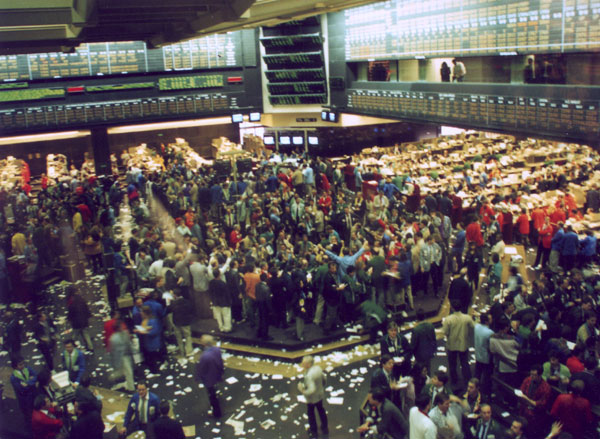
I’ve posted a link to this documentary before but feel compelled to post it again for all of the newcomers to the list. It’s a great weekend flick, and covers a period when we used to do our business in the pits. There was nothing like it.
Floored - The Complete Documentary Film
Floored is a 2009 documentary film about the people and business of the Chicago trading floors. The film focuses specifically on several Chicago floor traders who have been impacted by the electronic trading revolution and whose jobs have been threatened by the use of computers in the trading world. Directed by James Allen Smith, the film runs for 77 minutes.
Jeffrey Hirsch writes:
Thanks Jeff. Just sent it to my 18yo son who has been getting into the markets and trading.
Nils Poertner asks:
Were you a floor trader, Jeff, and if so, what lessons did you learn that helped you in trading electronically?
Jeff Watson replies:
Yes I was. The most important lesson I learned was to not overtrade.
Humbert H. comments:
Asking Jeff is he was a floor trader is like asking Paganini if he ever played the violin, asking Taylor Swift if she ever thought of making a living as a pop singer, or LeBron James if he ever heard of a game named "basketball". But what I really want to know Jeff is if you like to surf?
Jeff Watson answers:
I would love to surf, but my health won't allow it. We’re still a surfing family, but I just don’t surf anymore and am relegated to taking pictures from the beach.
Jul
8
Ralph Vince and Larry Williams Win 2024 CMT Association Charles H Dow Award for Groundbreaking Paper, from Andrew McCauley
July 8, 2024 | Leave a Comment
The CMT Association proudly announces Ralph Vince and Larry Williams as the recipients of the prestigious 2024 Charles H Dow Award for their seminal paper, The Ripple Effect of Daily New Lows. The award, bestowed annually, recognizes outstanding research contributions to the field of technical analysis and market behavior.
The winning paper, The Ripple Effect of Daily New Lows, delves into the intricate dynamics of market movements following the occurrence of daily new lows. Through rigorous analysis and innovative methodologies, Vince and Williams unveil the profound implications of this seemingly minute event, shedding light on its cascading effects throughout financial markets.
Their groundbreaking research not only expands our understanding of market behavior but also provides invaluable insights for traders, analysts, and researchers alike. Their work exemplifies the essence of the Charles H. Dow Award, which honors excellence, innovation, and scholarly rigor in the field of technical analysis.
Ralph Vince, an esteemed figure in the financial industry and a pioneer in quantitative trading, expressed his gratitude for being recognized with this esteemed award. "It's a tremendous honor to receive the Charles H. Dow Award for my research on the ripple effect of daily new lows," said Vince. "I am deeply grateful to the CMT Association for this recognition and to all those who have supported and inspired me throughout my journey."
Williams added, "This is the star on the Christmas tree of my career, and to share it with Ralph (we’ve been working together since 1986) is a glow that will last many years."
Pamela Van Giessen writes:
Congratulations, Larry. I recall the first time I met you in person was at a CMT conference where you were a keynote speaker, and I thought you were given some kind of award but I am hazy on those details. May 1995. I also vividly remember that the Grateful Dead were staying at the same only non-gaming hotel in Vegas and would pass Jerry Garcia by the pool. I signed you to write a book but neglected to get Jerry’s signature. There has to be a trading analogy here. I think that you have single-handedly gotten more people into trading all around the world than maybe anyone else.
Humbert H. adds:
It’s a good thing you didn’t sign Jerry to write a book since in May 1995 he only had three months left to write it.
Pamela Van Giessen responds:
I should have asked Garcia for his autograph. The trade I let get away. 3 months later I took a 5 am flight from Phoenix to LA for a meeting with Bill O’Neil. Walked into his office wearing a Jerry Garcia tie (remember those?) on the day it was announced that Garcia died, but I didn’t know it. O’Neil and the editor of IBD asked if my tie was signed. I did not tell them that I could have had it signed a few months before in Vegas. That would have been sort of embarrassing but I can admit to it now.
Jul
7
I found this interesting piece of research:
Ergodicity transformations predict human decision-making under risk
Decision theories commonly assume that risk preferences can be expressed as utility functions, which vary from person to person but are stable over time. A recent model from ergodicity economics reveals that if people want their wealth to grow at the fastest rate they need to adjust their utility functions depending on the dynamics of their wealth. Here, we ask whether humans make such adjustments by exposing them to different wealth dynamics….Together, these results provide evidence that human risk-taking behaviour is sensitive to the dynamical context in which decisions are made and that long-term wealth maximization is an important explanatory principle.
It's about two things concerning the psychology of gamblers. First, is the attitude of risk towards bets that entail absolute returns & absolute losses. An absolute return from a bet is when:
- a gambler is given say $10 if they win
- and if they loose the outcome is -$5
What amount they loose or gain is absolute i.e in dollars terms, $10 or -$5.
Second is a group of gamblers whose risk is phrased in relative terms. A relative return on a bet is when:
- a gambler gains 10% if they win
- and if they loose the outcome is -5%
Rewards & gains are framed as percentages.
The conclusion of the research is that people that gamble in absolute terms take more risk than people that gamble in relative terms. People do change their risk appetite if you present gambles to them differently.
So I have a question for you specs: Which statement would make you more likely to buy Nvidia's stock?
a) $1,000 invested in Nvidia stock at IPO ($0.04) would become about $3,200,000 ( i.e absolute terms)
b) $1,000 invested in Nvidia stock would grow by 327,000% (i.e relative terms)
Personally a) would do a better job at baiting me to buy some stock (the research is true for me). What about you?
Here is a twitter thread by one of the authors with a more simplified explanation.
Jul
6
Identifying Tourism Opportunities With Credit Default Swaps, from Asindu Drileba
July 6, 2024 | Leave a Comment

I just listened to this guy who uses Credit Default Swaps for countries (sovereign CDS) as an indicator to evaluate if a country is good for tourism investments. He claims his methods can make between 15% to 20% annually. The person interviewing (Joe De Sena) was also a trader on wall street for 20 years and asked some questions I liked.
Do all countries have these sovereign credit default swaps? I did some Googling and I could only find a few dozen listed on here. If more countries have them, is there a comprehensive list where I can look them up? I need those of Kenya right now for example.
In this episode, Joe De Sena, chats with his friend Kalojan Georgiev, currently residing in Zanzibar. Kalojan provides an engaging insight into the untapped potential of Zanzibar as a prime investment destination and a wonderful place to live.
Big Al responds:
There is some web data.
Nils Poertner comments:
by and large, CDS on sov not really relevant at all for so many reasons. better to look at traded bonds in USD (or EUR) and look at volume, too. in any case, test everything!
Asindu Drileba adds:
I don't know if anyone here is following what's happening in Kenya but it's falling apart:
- They are heavily in debt (foreign debts are 65% of GDP)
- They government wanted to increase taxes to service the debts
- We are seeing heavy protests in Nairobi & other Kenyans cities
- The new tax Bills have been withdrawn
- Protests are still intensifying
- Interest rates on treasuries are at 19% (I often laugh when I hear Americans complain about 5% interest rates)
I just wanted to know how the Sovereign CDS are pricing the events or if the predicted them.
Nils Poertner writes:
plenty of opportunities coming for EM markets (listed equity) - one needs to do a lot of research, as always (and look beneath the surface and dig deeper and test ideas and express it in a trade and learn and so on). your search, Asindu is your search alone and am not laying out the road map, just saying it is possible.
Jul
4

Bud Conrad is not sanguine:
We avoided an official recession despite negative 2% to 3% tax growth. The Treasury and the deficits were pumping money into the economy in 2023. It now looks like no problem in Tax receipts, but I just don't believe that things are clear sailing. Wars, Debts, Foreigners cashing in Treasuries from their trade surpluses (our Trade deficit), Stock market toppy concentration in the Tech winners. Incompetent politicians. I think things are worse than I think they are.
Steve Ellison keeps the wall of worry updated:
Updated! Now 53 years of convincing reasons why the stock market should go down, superimposed over the 48x increase in the S&P 500 during the same time period (logarithmic scale). 2023: Nearly everybody expected a recession. That reason is added, along with the S&P's 24% increase.

Jul
3
Chaos Kings, from Hernan Avella
July 3, 2024 | Leave a Comment

I found this to be one of the worst books I've ever read; I couldn't even finish it. It felt like a disjointed collection of blog posts, miscellaneous information, and ramblings about catastrophes. However, the topic of portfolio protection through options trading does have its merits. Here are a few observations:
Spitznagel's Track Record: While Universa has shown good results, its success could be attributed to the specific sequence of market events. It raises the question of how it would perform in a more stable, long-term market environment.
Leveraging Equity Risk: The argument that paying a 3% annual "fee" allows for taking on more equity risk is compelling. This is reflected in the fund’s CAGR relative to the S&P 500.
Options Trading During Crises: As someone not deeply versed in options, I'm curious about how traders manage to capitalize on positions at the peak of a crisis without losing the hedge if conditions worsen, thus maintaining their investment mandate.
Relationships with Dealers: Effective trading in size in options seems to require solid relationships with dealers.
Further Reading: I plan to revisit Safe Haven: Investing for Financial Storms to pinpoint other intriguing aspects.
Asindu Drileba responds:
On the contrary, I liked Chaos Kings. Scott Patterson is not a financier so I understand it when you read him expecting him to sound like a financier but he doesn't. He is just a story teller. You can tell this in his earlier book, The Quants. Which was not really about finance but just a story about financiers.
Reading "The Quants" for example reinforced/confirmed my suspicion on the relationship between gambling & financiers. I found it to be a very beautiful story. A beautiful beginning & a beautiful ending.
Quick overview of "The Quants":
- It's starts with this poker tournament organized amongst financiers.
- During the tournament, the author describes the characters traits of the financiers by outlining their attitude towards playing poker
- The book then talks about their character when there are in the market. (mostly when they are winning)
- The financial crash of 2007/08 humbles alot of the cocky characters. Previously humble financiers remained humble (also made money). (By cocky I mean hubris)
- Another poker tournament was held after the 07/08 crisis. And the attitudes financiers had towards each other actually changed.
To me, Chaos Kings is a continuation of The Quants. It has 3 central themes. 1st theme is the human story behind the characters.
- Didier Sornette & his love for motorcycles (whom some people in this thread think is useless)
- Yaneer Bar-Yam getting heart broken by famine in Ethiopia
- Mark Spitznagel's love for goats
2nd theme is about the disconnect between how "non chaos kings" think about markets & "chaos kings" think about markets.
- Mark Spitznagel's philosophy on risk for example is that risk management should not simply be to cap your down side, but to actually increase returns. But predicting crashes is impossible.
- Didier Sornette thinks some huge market disasters can be predicted & tactically mitigated.
3rd theme is seeing how people apply inter disciplinary research to markets.
- Didier Sornette uses techniques used to predict mechanical failure in rocket engines. And applys them to classifying the nature of bubbles in financial markets and when markets are likely to fail.
- Yaneer Bar-Yam has his background in modeling epidemics & pandemics (Ebola, COVID). And he uses the same tool box to predict the likelihood of crashes in the market. One of the tools described in the book is a statistical indicator described as "mimicry".
So, my take away is that Chaos Kings is not really an "investment book". It's just a story about how a certain group of financiers approach market crashes. I found it to be a great source of potential research topics.
Jul
2
What markets teach
July 2, 2024 | Leave a Comment

a book recommended as the best book on economics ever is Reinventing the Bazaar, by John McMillan. you learn about flower markets, camel markets, pharma markets, bazaar markets in Morocco. and what it takes for them to work. i found the book fascinating albeit takes middle road.
Dasgupta, very erudite and sharp economist, recommends the McMillan book as essential for every current and would be economist. it tried to be eclectic as to free markets and need for government control. it's good to keep the enemy close as Godfather says.
Economics: A Very Short Introduction, by Partha Dasgupta.
Wes McCain is one of the most successful and erudite economists I have met in my 65 years career in Wall street. He recommends the Godfather as the most important and useful book for traders. I just watch the three Godfather Movies and they are excellent and highly recommended.
one of lessons that I wish my colleagues followed: "Fredo, don't ever take sides against the family again." so important in business and military, and markets especially.
every one says the opening line "i believe in america" is one of greatest opening lines ever. imagine the contumely that would be directed at it today.
Jun
30
Grandeur, and a very, very good wife
June 30, 2024 | Leave a Comment
There is grandeur in this view of life, with its several powers, having been originally breathed into a few forms or into one; and that, whilst this planet has gone cycling on according to the fixed law of gravity, from so simple a beginning endless forms most beautiful and most wonderful have been, and are being, evolved.
- Charles Darwin, The Origin of Species
there is grandeur in the inexorable rise in the S&P, documented by Dimson and Lorie.
i am forced to move and my paintings don't have much auction value so i would gladly reveal my methods for 50 million + and throw in a very valuable wife to the bargain.
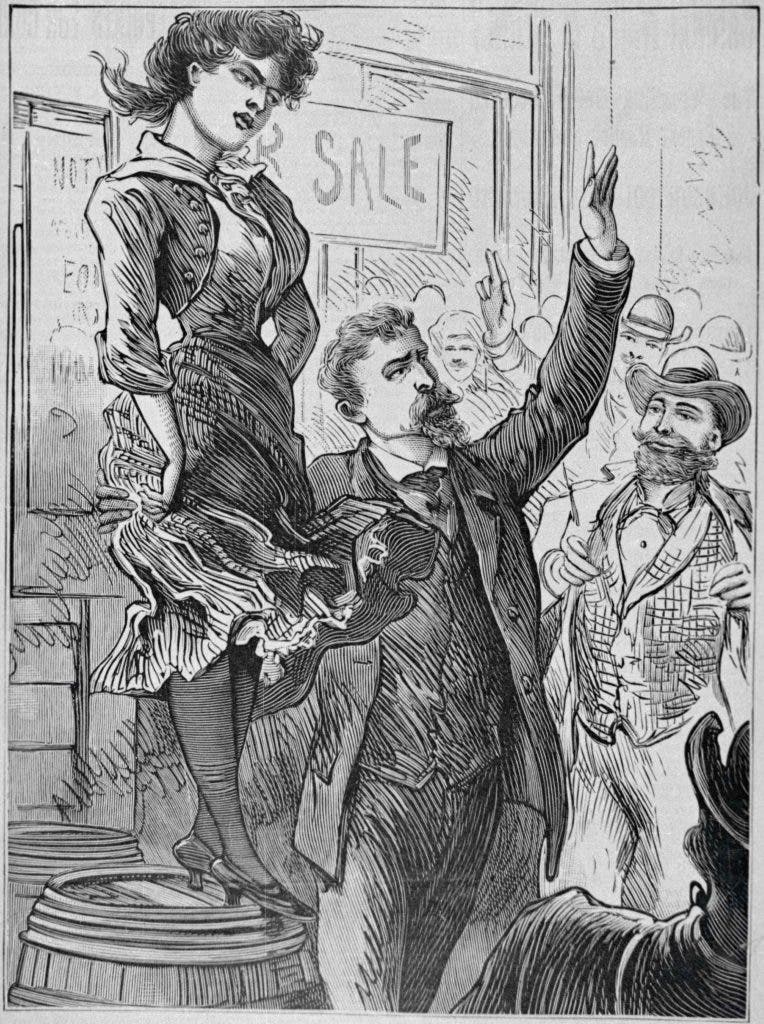
English Men Once Sold Their Wives Instead of Getting Divorced
Between the 17th and 19th centuries, wife-selling was a weird custom with a practical purpose.
she's a very good one. Tom Wiswell said his one regret in life was that he didn't marry a girl like Susan and since then many visitors have said same. The problem is that she is necessary to take care of me so I believe she could sell me for more than I could get for her. I told her at dinner that I was looking at ways of making money by selling some of our trees. She looked at me and said immediately that she wasn't going to send me the picture of her I asked for.
Jun
29
Canary?, from Zubin Al Genubi
June 29, 2024 | 1 Comment

Seen yesterday in Kona Hawaii, billionaire's playground:
1 private jet at FBO. Very unusual.
25% commercial vacancies in prime retail.
Tourism down 9%
(Galtonesque count)
Stefan Jovanovich comments:
ZAG's reports are a treasure - and a source of future profits.
Nils Poertner wonders:
easier to be bullish on European /UK equities than having bearish view on US stocks?
Jun
26
Bonds, from Hernan Avella
June 26, 2024 | Leave a Comment
Bonds, especially long-term bonds, seem to be the most disliked asset class at the moment. However, they are not only great diversifiers but now might also be an opportune time to start investing in them or increase your current allocation. Here are a few considerations from my perspective:
- Duration Matching: Align the duration of your bonds with your investment horizon. Being relatively young, it makes sense for me to opt for longer durations.
- Capital Efficiency of Futures: Utilizing the capital efficiency of futures can be challenging with current borrowing rates. Nevertheless, if leverage is used productively, it can still yield benefits.
- Inflation Protection: Enhance your fixed income exposure with assets that are protected against inflation.
- 12M Stock-Bond Correlation is at max (as of 17 June):

There's a fourth dimension that complicates implementation. When examining term premiums, such as the spread between 30-year and 5-year yields, the benefits of long-term exposure are minimal—aside from the potential convexity benefits if rates significantly decline.

Furthermore, historical data indicates that long bonds have a lower Sharpe ratio compared to short bonds. However, short bonds lack sufficient volatility to effectively diversify an equity-heavy portfolio. Consider the hypothetical performance of buying short-term (~5 years) versus long-term bonds, adjusted for volatility:
Strategy CAGR Stdev Max DD Sharpe Corr w/ S&P 500
Short-Term Bonds 4.19% 4.81% -14.45% 0.39 -0.06
Long-Term Bonds 4.86% 11.11% -45.29% 0.27 -0.07
Leveraged ST Bonds 6.03% 11.11% -38.11% 0.37 -0.04
The question remains: Is it possible to 'have our cake and eat it too' by leveraging short bonds?
Big Al asks:
In your model, what is the implementation of "Leveraged ST Bonds"?
Hernan Avella answers:
Long VFTIX 2.35x, short 3M Bills as proxy to futures embedding financing costs.
Jun
25
Bendopnea, from Kim Zussman
June 25, 2024 | Leave a Comment
Why This Simple Heart Failure Symptom Is So Easy to Ignore
Patients with decompensated heart failure who have bendopnea on discharge from hospital appear to be at significantly increased risk for all-cause mortality within 2 years, reported investigators.
The research, presented here at the Heart Failure Association of the European Society of Cardiology (HFA-ESC) 2024 and published in the European Journal of Preventive Cardiology, found that across two study cohorts, the risk for all-cause mortality was at least doubled among patients with shortness of breath when bending forward.
"Bendopnea can be assessed through a simple and noninvasive examination," said lead researcher Taisuke Nakade, MD, from the Department of Cardiovascular Biology and Medicine, Juntendo University Graduate School of Medicine in Tokyo, who pointed out that the association with mortality is "independent of other known prognostic factors."
Jun
23
Interview with the Chair from 2020
June 23, 2024 | Leave a Comment
Queued up to the start of the actual interview:
An Education from a Speculator: Interview with Legendary Victor Niederhoffer
Laurel Kenner approves:
One of the best interviews of the Chair. —The Collab
Bo Keely writes:
i like it, a fine reacquaintance.
Peter Ringel responds:
Thank you, watching it now. I also want to highlight the recent mkt calls on Twitter, which worked nicely. This and the wonderful articles about MFM Osborne.
Jun
20
Odds, books, and Wilde in America
June 20, 2024 | Leave a Comment
with odds differential of 20 percentage points a max, how can we expect a change in the numbers announced? i would predict an increase in ppi and cpi.
a sensational phantasmagorical book building up from birth-death processes to the evolutionary theory of markets:
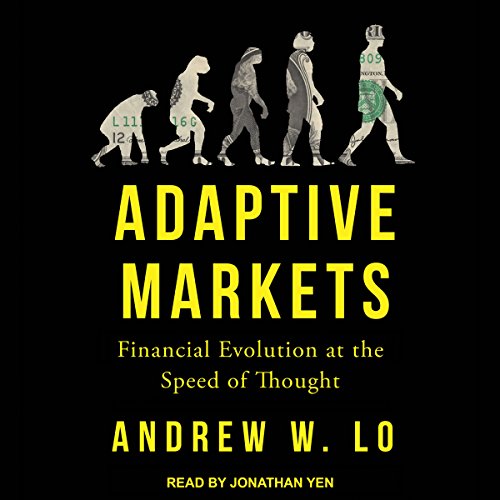
Adaptive Markets: Financial Evolution at the Speed of Thought, by Andrew Lo
Drawing on psychology, evolutionary biology, neuroscience, artificial intelligence, and other fields, Adaptive Markets shows that the theory of market efficiency isn't wrong but merely incomplete. When markets are unstable, investors react instinctively, creating inefficiencies for others to exploit. Lo's new paradigm explains how financial evolution shapes behavior and markets at the speed of thought - a fact revealed by swings between stability and crisis, profit and loss, and innovation and regulation.
given the latitude and longitude of a market, at a time, what do rotational symmetries enable you to predict?
The Force of Symmetry, by Vincent Icke
The Force of Symmetry gives an elementary introduction to the spectacular interplay among the three great themes of contemporary physics: quantum behavior, relativity, and symmetry. In clear, nontechnical language, it explores many fascinating aspects of modern physics, discussing the nature and interaction of force and matter. All these themes are drawn together toward the end of the book to describe the most successful physics theory in history, the "standard model" of subatomic particles. The book is suitable for undergraduate students in physics and mathematics.
D'Oyly Carte arranged for Oscar Wilde to tour U.S. to build up audience for Patience.
Oscar Wilde In America, The Definitive Resource Of Oscar Wilde's Visits To America
These pages document for the first time a detailed, comprehensive, and accurate record of all the dates, venues, and subjects of Oscar Wilde’s 1882 lecture tour of North America. Wilde conducted some 141 lectures over 11 months of 1882 and each has its own page beginning with the first lecture in New York City.
Jun
18
Back to school
June 18, 2024 | Leave a Comment
Aubrey one day before Berkeley. My kids all asked if I would be moving as Beethoven did when Karl left for school.

i cried when he didn't get into Harvard. he tried so hard and did so much. how could someone with 1600, a benevolent business in Eswatini, and 20 straight 5's on AP not get in? i guess his squash was not world caliber, and dei.
he only ran a 4.5 mile. his compatriots said if he knocked 30 seconds off he 'd have a chance. the best i ran was a 7.5 minute mile.
Jun
17
NVDA, from Big Al
June 17, 2024 | Leave a Comment

Yes, the chart looks like a moonshot. Two things:
1. NVDA is selling for about 37x revs, which looks very expensive. But at that P/S ratio, it's selling for only 70x earnings. The reason is that it's a profit monster, with ttm operating income almost 60% of ttm revs.
2. Maybe tech gurus can comment on this: Looking into GPUs, I find they have a limited lifespan, especially if run 24/7 at high workload, which AI seems to demand. Even ignoring upgrades, I'm thinking the chips NVDA is selling today may need to be replaced in as little as 3-4 years. Maybe I'm wrong, but I don't read about this aspect of their business model.
Humbert H. writes:
What matters is whether anyone will catch up. That is truly an open question. They're the leader, but more so due the inertia of their customers and not because nobody can replicate their technology. That's the thing about super-highly valued tech growth stocks, nobody can predict their situation even two years from now. Starting before the dotcom era, Microsoft has been growing forever, Cisco not as much, Nortel even less so, to put it mildly.
High-end AI chips are replaced due to obsolescence much more so that "wearing out". Some will certainly fail, but less so than the graphics card-type GPUs, and that's not the driving force for the replacement cycle. Trying to decide if Nvidia is properly valued is a pointless exercise. There are always people who will know 100x about the situation, and if they could truly value it properly, they'd find a way to follow up.
H. Humbert comments:
I would think as the computing power of the GPU or TPU (tensor processing unit) increases, the communication bandwidth among the chips, server chassis and server racks is the limiting factor that affects the overall computing speed of the entire AI high performance computing center's performance. The latter is a complicated issue, depending on the data center's server connection topology and so forth. I am sure NVDA knows about the issue and they will come up with a solution to resolve some of the speed bottlenecks either organically or by M&A. As a result, they will come up with next-gen solutions and products undoubtedly. There are designed obsolesces built into the products.
There is another issue. The training of the LLMs requires exorbitant amount of energy that it can't be sustained. The energy trajectory is almost exponential. Somehow these issues need to be mitigated. The increasing amount of energy expended also translates to the huge burden of cooling for the data center. So either NVDA or other companies may come up with the solutions to address some or all of the issues. Long story short, the product lifecycle remains relatively short.
The culmination of these issues and hence the potential solutions are of course good business for those who sell the gadgets. Both of the private sectors and the brain trust of the government and the defense departments worldwide are well aware of these issues and have been working hard to come up with some viable solutions.
Asindu Drileba writes:
There are other areas like Gaming, Molecular Dynamics Simulation, 3D Rendering/Computer Graphics, Video Editing, Crypto Mining that are GPU heavy and expected to grow in the future. As for AI, I think Nvidia riding on the AI hype is a bit precarious. Yes. They have mostly "locked in" AI tooling such that it makes no sense to compete with them.
What makes it precarious, is that a single paper that finally describes how to perform current AI applications with very cheap compute i.e CPU compute. Will destroy a lot the stock. As this problem is more of a software problem and not a hardware problem. So I expect it to move & get adopted very fast if it is actually solved. Several companies like Symbolica are working on such a solution.
Dylan Distasio adds:
No comment on the investing angle or future of the industry, but modern day chips are capable of handling pretty high temperatures for a very long time. Running at 24/7 high work load at a stable temp within the safe zone probably would actually result in a longer life than a gamer situation where the chip is stressed/heated and cooled down repeatedly. In any case, I don't think lifespan and failure due to thermal issues (if maintained properly) is a significant concern with GPUs. They'd be replaced due to obsolescence first.
Humbert Humbert writes:
This is a position for electrical interconnect. The current NVDA Blackwell chiplets are connected with very short electrical interconnects which are reaching their speed limits. The speed resolutions are to bring the optical connects closer to the edges of the chips. A few years ago DAPRA has a program called PIPES is to do just that using optical fibers. I don't recall the spec and I believe it has energy spec in terms of how many femtojoules per bit as it have been recognized a number of years ago that the digital switching energy will become an energy burden. But this solution may eventually run into chip edge real estate problem because of the size of the optical fiber core.
There are limits with the current state of the art digital neural network even though it is the hottest subject in town. Analog neural network may have its niche applications that could compute at higher speed and with lower power consumption. The following is one of the many example programs that the DoD is investing in.
Jun
16
Brighton Beach knishes
June 16, 2024 | Leave a Comment

I grew up in Brighton Beach Brooklyn. By far the greatest Knishes of all time. The long gone Mrs Stahls.
Mrs. Stahl’s delicious Brighton Beach knishes
Yonah Schimmel gets credit for inventing the humble knish in 1910 at his still-thriving knishery on East Houston Street.
But knish fiends all over New York still lament the loss of Mrs. Stahl’s Knishes, a dingy place tucked under the elevated train at Brighton Beach Avenue.
The shop served up hand-made cushions of potato, kasha, and cabbage inside flaky baked dough. They were truly legendary.
A recipe: Old Fashioned Potato Knishes
Jun
15
Megacaps in Random Land, from Big Al
June 15, 2024 | Leave a Comment
Lots going around about how NVDA dominates; and MSFT, NVDA and AAPL now account for about 20% of the S&P 500. I was curious to see what happened in a toy index and so did an experiment (using R):
1. Create an index of 500 stocks, each with a starting value of $100.
2. Each year, for 40 years, each stock's value is multiplied by 1 + a value randomly drawn from a normal distribution with mean 8% and sd 15%, roughly what you might see with the S&P 500.
3. The starting value of the index was $50,000. The final value after 40 years was $1,152,446.
4. The final summed value of the largest 10 out of 500 stocks was $142,320, or 12.35% of the 500-stock index.
I was curious to see if megacaps would emerge from a simple toy model. I ran it only once, and they did. For me, this is a comment on the perennial alarm stories about "Only X% of stocks account for Y% of the market!" Even with a simple model, you wind up with something like that.
Adam Grimes agrees:
Can confirm. Have done variations of this test with more sophisticated rules, distribution assumptions, index rebalancing, etc. Get similar results.
Peter Ringel responds:
so we can take this ~12% of the index as a base value, that develops naturally or by chance? Then a clustering of being 20% of a total index (only greater by 8%) does not look so outrageous.
William Huggins is more concerned:
keep in mind it's 10 companies making up 12% (~1.2% each) vs 3 companies making up 20% (8.3% each) - in that sense, the concentration DOES look pretty high. am reminded of when NT was 1/5 of the entire CDN index in 99/00.
Peter Ringel replies:
You are right, I failed to catch this difference of only 3 stocks. In general, I am not so much surprised about the concentration. Money always clusters. Always clusters into the perceived winners of the day. Should they blow up, money flows into the next winner. To me, the base for this is herd mentality.
Adam Grimes comments:
It's Pareto principle at work imo. I'm not making any claims about exact numbers or percents, but as you use more realistic distribution assumptions (e.g., mixture of normals) the clustering becomes more severe. There's nothing in the real data that is a radical departure from what you can tease out of some random walk examples. Winners keep on winning. Wealth concentrates. (As Peter correctly points out.)
Asindu Drileba offers:
Maybe you try replacing the normal distribution of multiples with a distribution of multiples constructed with those historically present in the S&P 500? It may reflect the extreme dominance in the market today.
To me, the base for this is herd mentality.
It is also referred to as preferential attachment:
A preferential attachment process is any of a class of processes in which some quantity, typically some form of wealth or credit, is distributed among a number of individuals or objects according to how much they already have, so that those who are already wealthy receive more than those who are not. "Preferential attachment" is only the most recent of many names that have been given to such processes. They are also referred to under the names Yule process, cumulative advantage, the rich get richer, and the Matthew effect. They are also related to Gibrat's law. The principal reason for scientific interest in preferential attachment is that it can, under suitable circumstances, generate power law distributions.
Zubin Al Genubi writes:
Compounding of winners is also at work and returns will geometrically outdistance other stocks. No magic, just martini glass math.
Anna Korenina asks:
So what are the practical implications of this? Buy or sell them? Anybody in the list still owns nvda here? If you don’t sell it now, when?
Zubin Al Genubi replies:
Agree about indexing. Hold the winners, like Buffet, Amazon, Microsoft, NVDIA. Or hold the index. Compounding takes time. Holding avoids cap gains tax which really drags compounding. (per Rocky) Do I? No, but should. It also works on geometric returns. Avoid big losses.
Humbert H. wonders:
But what about the Nifty Fifty?
Jun
14
Oppenheimer and his students, from M. F. M. Osborne
June 14, 2024 | Leave a Comment

To give you another example of Oppenheimer and the way he acted, and also which illustrates that his bark was worse than his bite, is when I took my prelims, they came in two parts - one in physics and one in astronomy - and he was the sole administrator of the physics prelim, which was an oral. This was probably in the spring of 1941. I am not sure exactly when it was.
He called me into his office and started asking me questions in physics and it was a disconcerting procedure, because he would ask you a question and if you started to answer it and he could see that you did know the answer, he would cut you off without allowing you to answer it as soon as he saw that you knew it or knew enough about it, and move on to something else. Well, pretty soon he found something I did not know and he listened to me flounder for a while and then he said, "Well, you should know that and this is the answer," and he even wrote it down on the board and then he said, "You passed and did very well," which sort of left me gasping.
But it turned out that I do not think my treatment from him was different from other people, in that he really did give a damn about his students and when he found out that I was going to leave Berkeley in 1941 (because the war was on and the draft was on), he wrote letters around to find me employment without my even asking him for it. I mean he assessed me and assessed other students and did things for them.
Another thing which other students pointed out to me was that Oppenheimer really made his contribution through his students. That the number of papers which came out from Berkeley, especially theoretical papers (but others too, in experiments and interpretation) rarely had his name on them, but if you looked at the bottom line at the end you would always see an acknowledgement or very often that great help was provided by, or the problem was suggested by Dr. Oppenheimer, and that is the way he operated.
From his daughter, Melita Osborne's biographical document available here [MS word .docx file, approx 300 Kb].
Jun
12
Capgras delusion
June 12, 2024 | Leave a Comment
when a sizable part of speculators refuses to acknowledge the work of dimson et al and lorie and fisher et al in showing the 1000 fold increase in stocks over the last 100 years, we may attribute it to capgras delusion of imposters within.
Capgras delusion or Capgras syndrome is a psychiatric disorder in which a person holds a delusion that a friend, spouse, parent, another close family member, or pet has been replaced by an identical impostor. It is named after Joseph Capgras (1873–1950), the French psychiatrist who first described the disorder.
odds differential is now max of 17 percentage pts against regulatory capture. need a reduction.
Jun
12
Opposites
June 12, 2024 | Leave a Comment

Gilbert and Sullivan by Hesketh Pearson: sullivan was an inveterate gambler and inventor. personality was opposite to gilbert who was most litigious playwright in history.
From page 195:
Sullivan was at Monte Carlo when this letter arrived. He had recently been staying with the Prince and Princess of Wales at Sandringham, had then accompanied the Prince to the Continent, and was now enjoying princely festivities on the Riviera. His regular visits to the tables were reported in the papers, and he was extremely annoyed when certain English journals commented on his heavy gambling. What with dining among lords and counting his losses, he was in no mood to discuss grand opera with Gilbert. But he wrote again, recapitulating his main objections to Gilbertian comic opera: he was tired of it; his work was too good for it; he did not want to spend the rest of his life in clothing the same old types with music, e.g. "the middle-aged woman with fading charms"; he disliked the inhuman and impossible plots; in fact, the whole business had become distasteful to him.
Hesketh Pearson:
Hesketh Pearson published his first full-length biography, Doctor Darwin, when he was 43. By the time of his death thirty-four years later he had written another eighteen biographies, three travel books (all with Hugh Kingsmill), three books of reminiscences (one written with Malcolm Muggeridge), four collections of brief lives, a collection of short stories and essays, and a book on the craft of biographical writing, as well as numerous articles and talks. In England he was the most popular and successful biographer of his time.
From: Harry Ransom Center at the University of Texas
Jun
11
Recession of recession indicator, from Kim Zussman
June 11, 2024 | Leave a Comment
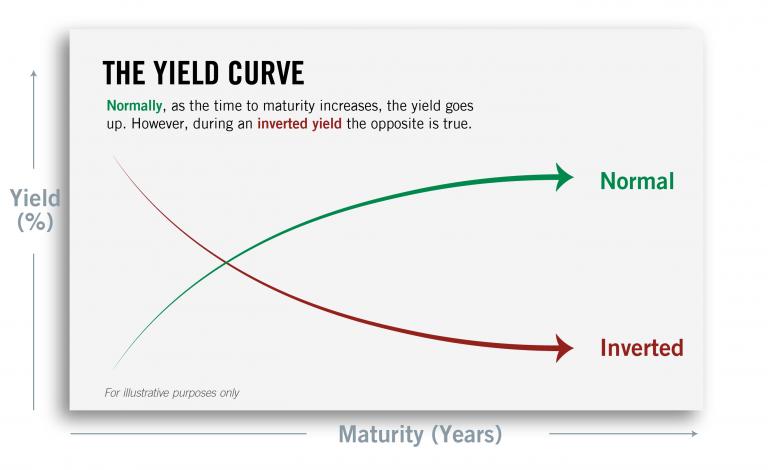
Wall Street’s Favorite Recession Indicator Is in a Slump of Its Own
Treasury yields have been inverted for the longest stretch on record
One of Wall Street’s favorite recession indicators looks broken. An anomaly known as an inverted yield curve, in which yields on short-term Treasurys exceed those of longer-term government debt, has long been taken as a nearly surefire signal that an economic pullback looms. In each of the previous eight U.S. downturns, that has happened before the economy sputtered. There haven’t been any glaring false alarms.
Now, though, that streak is threatened. The yield curve has been inverted for a record stretch—around 400 trading sessions or more by some measures—with no signs of a major slowdown. U.S. employers added a solid 175,000 jobs last month, and economic growth this quarter is expected to pick up from earlier in the year.
Big Al snarks:
If a recession doesn’t materialize soon, it could do lasting damage to the yield curve’s status as a warning system.
I'd hate to have to spend my day thinking up stuff like that.
Larry Williams writes:
A close up study of it shows it has often been way wrong—this is just one more time.
Nils Poertner comments:
As those "indicators" lose their importance, the more ppl (and WSJ and FT in particular!!) talk about it. "get the joke" Lack would have said.
Jeffrey Hirsch responds:
NBER that said 2020 was a recession. Fed started cutting rates in 2019 and the curve inverted then.
The recession lasted two months, which makes it the shortest US recession on record.
It is just a shame bond market traders didn’t tell the rest of us that covid was coming. And what about the 2 back-to-back negative quarters of GDP in Q1&2 of 2022? That looked like a recession as well IMHO.
Big Al adds:
The Fed (from before the GFC) says levels matter, too:
The Yield Curve and Predicting Recessions
Jonathan H. Wright, Federal Reserve Board, Washington DC
February 2006
Abstract:
The slope of the Treasury yield curve has often been cited as a leading economic indicator, with inversion of the curve being thought of as a harbinger of a recession. In this paper, I consider a number of probit models using the yield curve to forecast recessions. Models that use both the level of the federal funds rate and the term spread give better in-sample fit, and better out-of-sample predictive performance, than models with the term spread alone. There is some evidence that controlling for a term premium proxy as well may also help. I discuss the implications of the current shape of the yield curve in the light of these results, and report results of some tests for structural stability and an evaluation of out-of-sample predictive performance.
Jun
10
Stock/Bond ratio, from Hernan Avella
June 10, 2024 | Leave a Comment
I use a slightly modified version, I think is apt to use a rolling vol adjustment. Using VFINX (stocks) Long, VUSTX (long bonds) short. The stock bond ratio is higher than it was in 2000. the chart will show whatever you want; however, if you make the assumption that stocks and bonds have similar RISK ADJUSTED returns, mean reversion should be expected….at some point, but I don't think there's an actionable point here other than stay diversified. Here's a visual:

Stefan Jovanovich writes:
In the 40 years between the return of the dollar to the Constitutional standard (i.e. all paper issued by the Treasury had to be redeemable in coin) and the creation of a central bank that guaranteed that call money would always be available, the returns on the stock and bond markets had similar risk adjusted returns. For investors it was a choice whether to buy the common stocks of railroads with their wonderful but variable dividends or the secured bonds of the same companies.
A reversion to the mean could be a return to a period when cash, bonds and stocks all competed with one another in a connected equilibrium. That world saw creations of extraordinary fortunes; but against the one successful oil trust one had to measure the losses of all the enterprises that were unable to compete with Rockefeller's price-cutting for kerosene. What if AI means that sourcing for semiconductors only needs a few large relentlessly successful companies?
Vic asks:
how about no roll, no averaging on the bonds stock ratio?
Jun
9
M. F. M. Osborne recalls Oppenheimer
June 9, 2024 | Leave a Comment

There was one other pearl of information of a technical sort that I got from Oppenheimer, although it took me about ten or fifteen years to really appreciate it, but it shows how his mind worked. I asked him about two partial differential equations - one the Laplace equation and the other the Wave equation (d'Alembert's equation). The two were almost alike except that one has a plus sign and the other has a minus sign; and the conventional interpretation of the Wave equation is of two waves moving to the right and the left, and this is something you can read in any textbook. And I asked him why one could not have the same kind of an interpretation of the Laplace equation because you could get from the one to the other by changing one of the coordinates from real to imaginary units.
Oppenheimer said without any hesitation that the solution of two waves going in opposite directions didn't tell you a damn thing about the answer, contrary to whatever you read in the textbook. That tells you nothing beyond the continuity of the answer and, in fact, the real interest in those problems is not where the solution exists, but at the boundaries or the initial conditions where the continuity and solution breaks down; and that really controls what the answer is all about. In other words it is not where the equation is satisfied. It is where the equation is not satisfied that really describes a specific problem. The same happens to be true for Laplace's equation; it's the poles and the singularities where the analytic properties break down that really controls what the solution of Laplace's equation is like.
Well, the idea that you understand the theory and how a theory is determined is not the way it works but the way it does not work is a very useful idea. As I said it took me ten or fifteen years to suddenly realize, or gradually realize, that this was a very profound and important piece of mathematical and physical philosophy. You can in a sense relate it to Popper's ideas (that is Karl Popper), that a theory is not a theory unless you can show where it breaks down and then you begin to understand it. It is not where it works but where it does not work that really gives you enlightenment as to what it is all about and, of course, this statement of Oppenheimer's is an example of this. That it is the boundaries and the initial conditions where the equation breaks down that really control what is going on in any particular problem.
From his daughter, Melita Osborne's biographical document available here [MS word .docx file, approx 300 Kb].
Jun
8
Coney Island again
June 8, 2024 | Leave a Comment
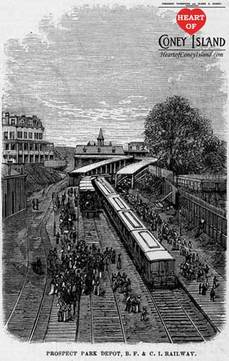
Coney Island History: The Rise and Fall of Engeman's Brighton Beach Resort
This article covers the rise and fall of Brighton Beach as a leading resort between 1870 and 1920. During these years, Brighton Beach competed for supremacy of Coney Island with Manhattan Beach to its east, and West Brighton to its west. Bill Engeman and the Brighton Beach Railroad Company both placed their bets on Brighton Beach and did everything they could to attract visitors to their particular resort. Brighton Beach was home to a beautiful hotel, music hall, and a well-known horse-racing track. When first built, it appealed primarily to the middle and upper-middle classes, while its competitor West Brighton initially appealed to the working and middle classes, and Manhattan Beach to the upper class.
Jun
7
More classic research
June 7, 2024 | Leave a Comment
Market Making and Reversal on the Stock Exchange
Victor Niederhoffer, University of Chicago, and M. F. M. Osborne, Washington, D. C.
Source: Journal of the American Statistical Association, Vol. 61, No. 316, (Dec., 1966), pp. 897-916
The accurate record of stock market ticker prices displays striking properties of dependence. We find for example that after a decline of 1/8 of a point between transactions, an advance on the next transaction is three times as likely as a decline. Further examinations disclose that after two price changes in the same direction, the odds in favor of a continuation in that direction are almost twice as great as after two changes in opposite directions.
Jun
5
M. F. M. Osborne
June 5, 2024 | Leave a Comment
M. F. M. Osborne. works on farm for free. uses his strength to go on anthropological dig. purposely spends 1 month in jail. graduate degree at Lick Obs. in Berkeley. becomes student of Oppenheimer who was smartest man at School. takes job at US Naval Research in sound division. writes scenes from life of the greatest contributor to random walk behavior.
while carrying his bio around, I fell down 7 stairs on my head onto concrete and all pages mixed up.
Brownian Motion in the Stock Market, M. F. M. Osborne.
It is the purpose of this paper to show that the logarithms of common stock prices can be regarded as an ensemble of decisions in a statistical steady state and that this ensemble of logarithms of prices, each varying with the time, has a close analogy with the ensemble of coordinates of a large number of molecules. We wish to show that the methods of statistical mechanics, normally applied to the latter problem , may also be applied to the former.
Jun
4

Top-Level Domains | The Economics of Everyday Things
Those letters at the end of web addresses can mean big bucks — and, for some small countries, a substantial part of the national budget. Zachary Crockett follows the links.
Asindu Drileba writes:
Mali owns the .ml domain for that may do well for Machine Learning. I wonder why they are sleeping on it?
Jun
1
Demonstration of Non-linear Effects Using Volumes of Cones, Asindu Drileba
June 1, 2024 | Leave a Comment

Numberphile Video demonstrating that a cone that is 80% full in height is actually 50% full in volume. You will also know if your getting scammed in a bar.
Cones are MESSED UP - Numberphile
Zubin Al Genubi writes:
This is why convexity, compounding, and geometric or exponential growth are hard to comprehend.
Kim Zussman comments:
Geometric returns are important when assessing performance. From an investor's perspective, average returns underweight when a manager loses everything (because it is sum-based), but geometric returns don't (because it is a product).
May
31
Kings of the Court
May 31, 2024 | Leave a Comment

Kings of the Court: The Story of Lawn Tennis by E. C. Potter, Jr. - the good old days in 1879, the third Wimbledon victory, Hartley got to the finals on Saturday. he had not arranged for anyone to replace him in pulpit. he rushed off the court, took a one-hour trip to Yorkshire, arrived at W. just in time to change his flannels, averted default and won W. those were the days of the identical twin Renshaws and Dohertys. many still rank the Dos in top 5 of all time from 1903. Pim in between the two sets of twins could pull of a let cord whenever he wanted. But he only won W twice because he only cared about perfecting his stoke.
May
30
NYC history lagniappe
May 30, 2024 | Leave a Comment

Coney Island Was Once Full of Dueling, Backstabbing Theme Parks
Come one, come all to the controversial, ugly beginnings of what was once called ‘Sodom by the Sea.’
Coney Island was once a glittering star of the early 1900s. It was the Progressive Era, amusement parks were becoming enormously popular across America, and New York City’s version of roller coasters and carnival games seemed like the epitome of wholesome fun. But the beachy entertainment land was quite different than it is today. Coney Island mainly consisted of three theme parks: Steeplechase Park, Luna Park, and Dreamland. And from 1904 to 1911, all were locked into a perpetual dance of stealing acts, copying rides from each other, and some dirty competition.
Steve Ellison recalls:
We had a big Spec Party event at Coney Island in 2007 when Aubrey was still a toddler.
May
29
A good overview, from Hernan Avella
May 29, 2024 | Leave a Comment
A Fresh Look at the Kalman Filter
In this paper, we discuss the Kalman filter for state estimation in noisy linear discrete-time dynamical systems. We give an overview of its history, its mathematical and statistical formulations, and its use in applications. We describe a novel derivation of the Kalman filter using Newton's method for root finding. This approach is quite general as it can also be used to derive a number of variations of the Kalman filter, including recursive estimators for both prediction and smoothing, estimators with fading memory, and the extended Kalman filter for nonlinear systems.
Big Al adds:
Forecasting with the Kalman Filter
Mike Mull, PyData Chicago 2016
The Kalman filter is a popular tool in control theory and time-series analysis, but it can be a little hard to grasp. This talk will serve as an introduction to the concept, using an example of forecasting an economic indicator with tools from the statsmodels library.
May
28
The Last Bear, from Humbert H.
May 28, 2024 | 1 Comment
The last bear on Wall Street: Why JPMorgan's Marko Kolanovic is sticking by his forecast for a 20% market sell-off
• JPMorgan's Marko Kolanovic sees no reason to turn bullish on the stock market despite record highs.
• In a Monday note, Kolanovic reiterated his view that the S&P 500 could fall 20% to 4,200.
• "We do not see equities as attractive investments at the moment and we don't see a reason to change our stance," Kolanovic said.
Larry Williams responds:
Here is something from what I have been writing:
Led by “Rich Dad, Poor Dad” Robert Kiyosaki’s warning of, “Be careful, it’s the biggest crash in world history,” the bears have come out of their winter caves. “We can’t make it past 2025,” warns Patrick Bet-David. Wells-Fargo is saying it’s recession time. Mark Spitznagel, who serves as chief investment officer of Universa Investments, is predicting “Biggest market crash since 1929."
They always walk among us…if they can only last until late 2025.
May
27
Weekend Reading, from Zubin Al Genubi
May 27, 2024 | Leave a Comment
Right, that Comey, fired as head of the FBI. But the book is a good murder mystery by someone who obviously knows law enforcement and investigation, and has a real nice human touch. Recommended. Also it has a pretty funny dig on the hedgies…right, that Westport.
Westport, by James Comey:
It's been two years since Nora Carleton left the job she loved at the US Attorney's Office to become lead counsel at Saugatuck Associates, the world's largest hedge fund. The career change also meant a change of scenery, relocating her to Westport, Connecticut, fifty miles north of New York City. But it was worth it to get her daughter, Sophie, away from the city. Plus, she likes the people she works with. Especially Helen, who recruited Nora because of her skills as an investigator.
Then, Nora's new life falls apart when a coworker is murdered and she becomes the lead suspect. Nora calls in her old colleagues from the US Attorney's Office, Mafia investigator Benny Dugan and attorney Carmen Garcia. To clear Nora's name, Benny and Carmen hunt for the true killer's motive, but it seems nearly everyone at Saugatuck has secrets worth killing for. As Benny sets out to interrogate her colleagues, Nora examines her history with the company to determine who set her up to take the fall.
May
26
The Oceans and the Stars, from Zubin Al Genubi
May 26, 2024 | Leave a Comment

This modern Jack Aubreyesque story of naval warfare is some of the best fiction I've read recently. Lots of action written in beautiful prose.
The Oceans and the Stars, by Mark Helprin.
A Navy captain near the end of a decorated career, Stephen Rensselaer is disciplined, intelligent, and determined to always do what’s right. In defending the development of a new variant of warship, he makes an enemy of the president of the United States, who assigns him to command the doomed line’s only prototype––Athena, Patrol Coastal 15––with the intent to humiliate a man who should have been an admiral.
Big Al recommends:
Covers key psychological issues around trading, with clear action steps:
The Mental Game of Trading: A System for Solving Problems with Greed, Fear, Anger, Confidence, and Discipline, by Jared Tendler.
Khilav Majmudar is reading:
Models.Behaving.Badly.: Why Confusing Illusion with Reality Can Lead to Disaster, on Wall Street and in Life, by Emanuel Derman.
In this bitterly funny novel by the renowned Polish author Witold Gombrowicz, a writer finds himself tossed into a chaotic world of schoolboys by a diabolical professor who wishes to reduce him to childishness. Originally published in Poland in 1937, Ferdydurke became an instant literary sensation and catapulted the young author to fame. Deemed scandalous and subversive by Nazis, Stalinists, and the Polish Communist regime in turn, the novel (as well as all of Gombrowicz’s other works) was officially banned in Poland for decades. It has nonetheless remained one of the most influential works of twentieth-century European literature.
Vic adds:
The Oceans and the Stars, and The Whole Story: two excellent books that have similar trajectories and conclusions - struggle, with love conquering adversity.
May
25
Looking back at Spec research history
May 25, 2024 | Leave a Comment
The Behavior of Stock Prices on Fridays and Mondays, by Frank Cross
Financial Analysts Journal, November-December 1973
The objective of this article is to document an example of non-random movements in stock prices. Specifically, we shall examine the distribution of price changes on Fridays and Mondays, and the relationship that exists between price changes on those two days. Other researchers have found little or no evidence of dependence in successive daily price changes. Apparently, however, these researchers have not investigated the possibility that dependence might occur on some days of the week but not on others.
Frank Cross is Secretary and Treasurer of Niederhoffer, Cross & Zeckhauser, Inc. The author wishes to express his thanks to Dr. Victor Niederhoffer for his helpful suggestions concerning this paper.
May
24
Slow to adapt, from Big Al
May 24, 2024 | Leave a Comment
It's been 44 years since the introduction of the 3-point line in the NBA. To me, it's a curious case of slow adaptation. Of course, you have new generations of players growing up shooting the 3, but surely players in the early 80s were capable of learning and practicing. The low number of 3s seems like a failure of analysis, failure to understand the impact on points-per-possession, which wasn't much of a moneyball concept yet.
Also, early on it was pretty much just guards who shot the 3 well, with the big exception of Larry Bird. But now, lots of players 6-10 or taller shoot 3s with considerable accuracy. To me, this is more an issue of assumptions, that big men couldn't shoot from long. And then some big men put in more practice and showed they could do it, opening up the possibilities.
Interesting how there are thresholds people believe can't be crossed…until somebody crosses them…and then lots of people are running sub-4-minute miles.
The 3-Point Revolution, by Stephen Shea:
A gimmick? A publicity stunt? That’s what many thought of the 3-point line when the NBA adopted it for the 1979-80 season. Back in 1979, Washington Bullets coach Dick Motta commented, “The three-point field goal will definitely make things interesting.” He meant interesting in the sense that a game that would have been over might now be sent to overtime by a desperation heave. Neither Coach Motta nor anyone else foresaw an NBA game played like it is today.
Five years after its inception, NBA teams were only averaging 2.4 three-point attempts (3PA) per game. This past season, James Harden alone averaged ten. Teams averaged 29.
[ More data on 3-point shooting. ]
Larry Williams comments:
Good point!! …like the 4 minute mile…and we can only beat the averages by a few points…
Vic wonders:
what adjustments have markets been slow to adapt to in last 5 years?
Big Al adds:
An interesting sidebar from 2017:
The Basketball Team That Never Takes a Bad Shot
The NBA’s most efficient offenses seek out layups and threes. A high school in Minnesota takes the idea to the extreme.
By Ben Cohen
PINE CITY, Minn.—Jake Rademacher made a mid-range jumper in a recent high-school basketball game. But as soon as the ball left his hands, even before it banked in, Rademacher knew it was a bad shot. And his team doesn’t take bad shots.
Pine City High School seeks out only the most valuable shots in basketball: from underneath the rim or beyond the 3-point line. They play as if they’re allergic to all the space in between.
May
23
The Whole Story
May 23, 2024 | Leave a Comment
The Whole Story by John Mackey - a story of how an entrepreneur learned about the bourgeois virtues and thanks to his father and his supportive partners, wives, and in spite of the venture capitalists, went from rags to riches.
Whole Foods Market's cofounder and CEO for forty-four years, John Mackey offers an intimate and provocative account of the rise of this iconic company and the personal and spiritual journey that inspired its remarkable impact.
The Whole Story invites listeners on the adventure of building Whole Foods Market: the colorful cast of idealists and foodies who formed the company's DNA, the many breakthroughs and missteps, the camaraderie and the conflict, and the narrowly avoided disasters. Mackey takes us inside some of the most consequential decisions he had to make and honestly shares his regrets looking back.
May
22
AI again: weather forecasting, from Big Al
May 22, 2024 | Leave a Comment
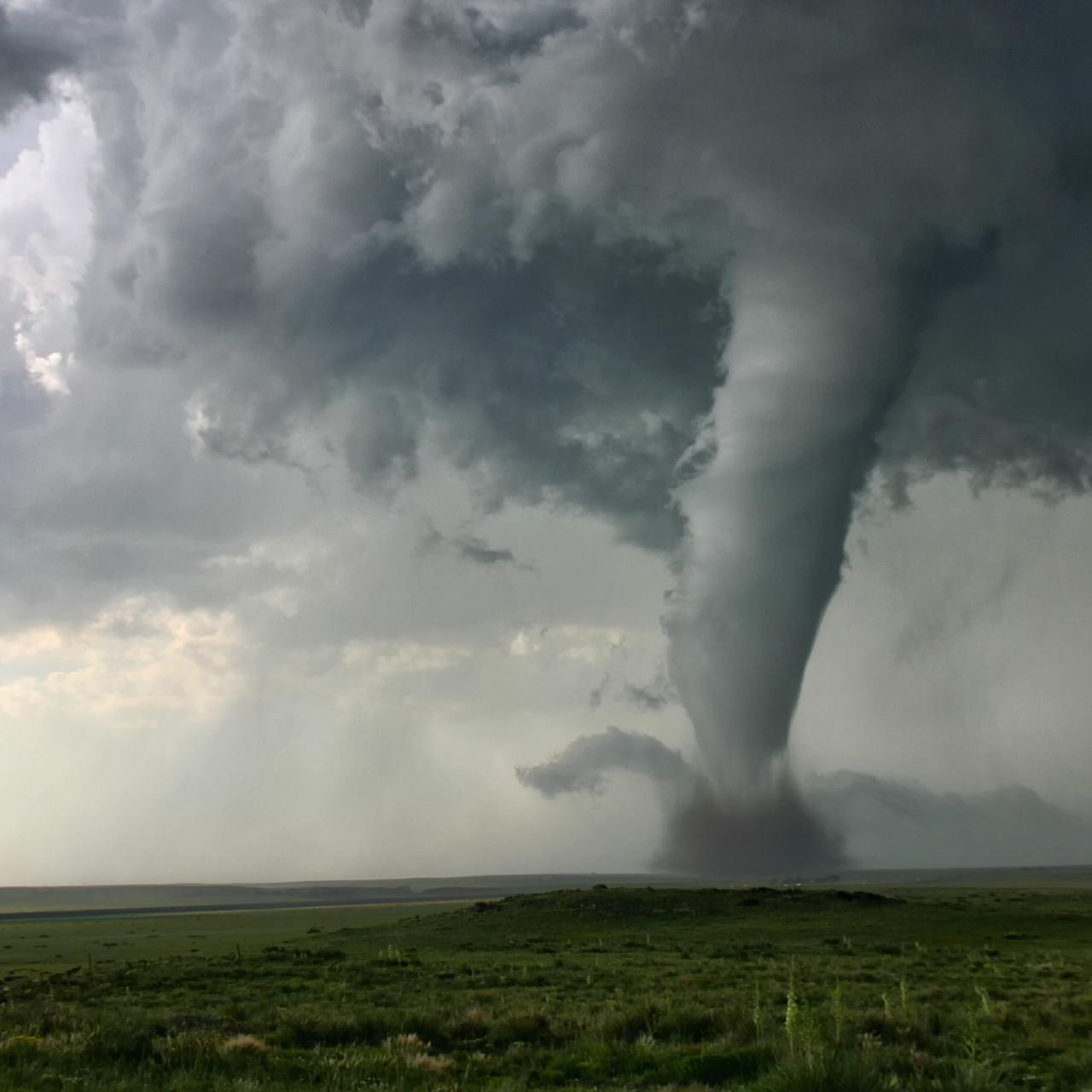
Learning skillful medium-range global weather forecasting, from Google DeepMind:
Global medium-range weather forecasting is critical to decision-making across many social and economic domains. Traditional numerical weather prediction uses increased compute resources to improve forecast accuracy but does not directly use historical weather data to improve the underlying model. Here, we introduce GraphCast, a machine learning–based method trained directly from reanalysis data. It predicts hundreds of weather variables for the next 10 days at 0.25° resolution globally in under 1 minute. GraphCast significantly outperforms the most accurate operational deterministic systems on 90% of 1380 verification targets, and its forecasts support better severe event prediction, including tropical cyclone tracking, atmospheric rivers, and extreme temperatures. GraphCast is a key advance in accurate and efficient weather forecasting and helps realize the promise of machine learning for modeling complex dynamical systems.
Asindu Drileba writes:
I looked and how they split the surface of the earth into tiny meshes in order to form a Graph upon which the rest of the model is built. This technique's description looked familiar to another technique called "Numerical Weather Prediction" or "NWP". The paper by Deep Mind does have several papers referencing "Numerical Weather Prediction" or "NWP".
I learnt about NWP from this PBS Nova documentary, Prediction By The Numbers. The documentary has many descriptions on tools for predicting. Wisdom of the Crowds, Probability Theory, and Numerical Weather Prediction. Meteorologists were interviewed and they showed their NWP programs in action (it is shown how the model generalized with time to predict a more accurate forecast of the in the weather). The meteorologist says it is their best model and also goes ahead to say that "it works so well."
May
21
Last Train to Paradise
May 21, 2024 | Leave a Comment
an excellent bio of the gilded age and a man who loved adventure and created the Florida East railroad and overcame numerous engineering and weather challenges. highly recommended.
The paths of the great American robber barons were paved with riches, and though ordinary citizens paid for them, they also profited. Les Standiford, author of the John Deal thrillers, tells how the man who turned Florida's swamps into the playgrounds of the rich performed the almost superhuman feat of building a railroad from the mainland to Key West at the turn of the century. An extraordinary man and partner of John D. Rockefeller in the Standard Oil Company, Flagler had the vision to build railroads to link this backward territory with the rest of America. Last Train to Paradise shows how he masterminded the nearly impossible engineering feat of spanning more than 100 miles of ocean and islands to reach the southernmost tip of the Eastern seaboard.
May
19

Apropos worry wall:
- Unprecedented US debt
- Presidential candidates to debate from jail cell vs hospital room
- Democracy in decline
Humbert H. writes:
Sooner or later, everyone is right.
Larry Williams responds:
Bob Prechter would like to hear that!
Steve Ellison adds:
My pinned tweet documents 53 bricks in a 53-year wall of worry. But Venita Van Caspel made the original chart in her 1983 book The Power of Money Dynamics. I just added 40 years of additional worries.
May
18
Following the money, from Asindu Drileba
May 18, 2024 | Leave a Comment
Lots More on How CHIPS Act Money Got Awarded
In 2022, Congress passed the CHIPS Act, which set aside tens of billions of dollars in loans and grants in order to encourage companies to build new semiconductor fabs in the United States. We're still very early in the process. It's going to be a long time before we know if the US will become a major player again in the production of advanced chips. But the process is well underway and the bulk of the awards have been officially announced, with much of the money going to Intel, Samsung, TSMC, and others. So how did the grants get allocated — and what's next?
While it is clear that money earning or losing events like quarterly earnings announcements have an impact on the market (stock prices). I am not sure if government subsidies & grants have an impact on stock prices. Is there a tool that can be used to track events related to government subsidies & grants?
Big Al responds:
An interesting question. Probably start here:
USAspending is the official open data source of federal spending information, including information about federal awards such as contracts, grants, and loans.
Also interesting research tracking stock trades by members of the US Congress:
Capitol Trades
Smart Insider
Senate Stockwatcher
May
17
Vienna
May 17, 2024 | Leave a Comment
Vienna: How the City of Ideas Created the Modern World, by Richard Crockett.
Viennese ideas saturate the modern world. From California architecture to Hollywood Westerns, modern advertising to shopping malls, orgasms to gender confirmation surgery, nuclear fission to fitted kitchens—every aspect of our history, science, and culture is in some way shaped by Vienna.
The city of Freud, Wittgenstein, Mahler, and Klimt was the melting pot at the heart of a vast metropolitan empire. But with the Second World War and the rise of fascism, the dazzling coteries of thinkers who squabbled, debated, and called Vienna home dispersed across the world, where their ideas continued to have profound impact.
Humbert H. writes:
When I left the Soviet Union, Vienna was the first western city I saw. It's hard to imagine a bigger contrast. It was like moving from a garbage dump to an immaculately maintained dollhouse. My next stop was Italy, and in spite of being the most beautiful country in the world, IMO, Italy was a letdown after Vienna.
As for it's historical significance, it's huge, but this battle was one of the most important in the history of the world, and that's saying something (there have been a lot of battles).
Laurel Kenner suggests:
For a more detailed overview, I enjoyed The Austrian Mind.
May
16
“Index young man, index!”, from Kim Zussman
May 16, 2024 | Leave a Comment
Wealth Creation in the U.S. Public Stock Markets 1926 to 2019
Hendrik Bessembinder, W.P. Carey School of Business
Last revised: 12 Nov 2020
Date Written: February 13, 2020
Abstract
This report quantifies long-run stock market outcomes in terms of the increases or decreases (relative to a Treasury bill benchmark) in shareholder wealth, when considering the full history of both net cash distributions and capital appreciation. The study includes all of the 26,168 firms with publicly-traded U.S. common stock since 1926. Despite the fact that investments in the majority (57.8%) of stocks led to reduced rather than increased shareholder wealth, U.S. stock market investments on net increased shareholder wealth by $47.4 trillion between 1926 and 2019. Technology firms accounted for the largest share, $9.0 trillion, of the total, but Telecommunications, Energy, and Healthcare/ Pharmaceutical stocks created wealth disproportionate to the numbers of firms in the industries. The degree to which stock market wealth creation is concentrated in a few top-performing firms has increased over time, and was particularly strong during the most recent three years, when five firms accounted for 22% of net wealth creation. These results should be of interest to any long-term investor assessing the relative merits of broad diversification vs. narrow portfolio selection.
May
15
Florence Nightingale, statistician
May 15, 2024 | 1 Comment

Florence Nightingale - Statistics and sanitary reform
Florence Nightingale exhibited a gift for mathematics from an early age and excelled in the subject under the tutelage of her father. Later, Nightingale became a pioneer in the visual presentation of information and statistical graphics. She used methods such as the pie chart, which had first been developed by William Playfair in 1801. While taken for granted now, it was at the time a relatively novel method of presenting data.
The image is an example from the Crimean War by way of The Royal Society.
More from Scientific American:
How Florence Nightingale Changed Data Visualization Forever
In the summer of 1856 Florence Nightingale sailed home from war furious. As the nursing administrator of a sprawling British Army hospital network, she had witnessed thousands of sick soldiers endure agony in filthy wards….Nightingale arrived back in London determined to prevent similar suffering from happening again. It would be an uphill slog. Many government leaders accepted the loss of common soldiers as inevitable….Resolute, Nightingale set out to sway the minds of generals, medical officers and parliamentarians. Their poor data literacy muted statistical arguments that could have oriented them toward the facts. Nightingale, with her quantitative mind, had to persuade people with common understanding but uncommon standing. Her prime target throughout this effort was the head of the British Army, Queen Victoria.
And an expert offers a balanced view:
The real goods and the oversell
To many, Florence Nightingale is a hero. But like all heroes, elements of her story have been exaggerated. Lynn McDonald, editor of Nightingale’s collected works, sorts fact from fiction.
May
13
TLT returns, from Big Al
May 13, 2024 | Leave a Comment
Not sure why I did this, but once I did, I thought it was interesting. This shows the to-date total return of TLT depending on when you bought it. The data is weekly adjusted close (so I'm assuming YHOO got it right, with interest payments correctly included). Some buyers as far back as 2012 are under water, whereas from last October nicely ahead. Speaks to a comment from Dr. Zachar re bonds: "date them but don't marry them."

May
12
Cost of Carry, from Zubin Al Genubi
May 12, 2024 | Leave a Comment

A carry trade is borrowing/buying at low interest and selling/lending at higher interest rates using leverage. Its used in currencies. The authors propose the trade had become systemic including the FED such that the markets have disconnected from fundamentals and are moved by dynamics of the carry/bust pattern. Further that it is the main driver of economic cycles not classic economic supply and demand.
If so, maybe the Fed watch traders are not always wrong as I've stated and the bad news is good news idea has merit under the carry trade.
Humbert H. writes:
Is there anyone who has done this for decades and not blown up, other than maybe Palindrome? Leverage combined with simultaneous forex and interest rate bets seems like it will eventually blow up, unless you always get advance warnings from central bankers.
Jeff Watson expands:
In the grain markets we determine the cost of carry as Futures price = Spot price + carry or carry = Futures price – spot price. Carry consists of storage costs, insurance, and interest. Carry provides the farmer with signals helping with crop marketing decisions while it provides a trader an opportunity to capture the carry. As an aside, here’s a handy dandy little formula to play around with:
F = Se ^ ((r + s - c) x t)
Where:
F = the future price of the commodity
S = the spot price of the commodity
e = the base of natural logs, approximated as 2.718
r = the risk-free interest rate
s = the storage cost, expressed as a percentage of the spot price
c = the convenience yield
t = time to delivery of the contract, expressed as a fraction of one year
Steve Ellison adds:
The US stock market had a carry trade from 2008 to 2018 and again in 2020 and 2021 when zero interest rate policy made it possible for traders to buy stocks with borrowed money, and cover the interest costs using the stock dividends. Philip L. Carret wrote in his 1931 book The Art of Speculation that the best time to buy stocks is in such situations when stocks "carry themselves".
As a quick approximation, the prices of the front-most ES contracts are:
June 5225
September 5282
So the cost of carry at the moment is roughly 47 points per quarter, and the S&P 500 is not carrying itself (if it were, the contracts would be in backwardation).
May
11
Small business, from Laurel Kenner
May 11, 2024 | Leave a Comment
Greetings from Greenwich, Connecticut, one of the nation's wealthiest towns. This year:
1) Steinway closed its piano store and announced that all pianos would be liquidated at steep discounts.
2) Saks Fifth Avenue closed its brand-new (and very good) restaurant after spending $1 million on a remodel. Also closed its retail stores along the main drag.
3) A favorite Chinese restaurant in Old Greenwich closed after serving three generations.
4) A venerable Old Greenwich sit-down cafe with the best fish-and-chips in Connecticut also closed.
5) A good-value nice clothing store on Greenwich's main shopping street closed, just one of several.
It isn't just East Coast. On a UCLA visit with my son, I breakfasted at a landmark, Patrick's Roadhouse in my hometown, Santa Monica Canyon. The week after I left, a friend told me that Patrick's had closed after 52 years. COVID relief had expired. Arnold Schwarzenegger, who has a special throne there that can bear his weight, had bailed it out previously — but hasn't stepped up to the plate. A GoFundMe campaign is attempting to keep Patrick's alive. Fixer-uppers on my old street start at $6 million.
Why is any of this important? When small businesses close, the ordinary people must move on, be they customers or owners. They spend less. The economy reflects their diminished circumstances.
What grinds me the most is the Steinway store's failure. I'm teaching piano now, and I am so tired of seeing my students fail to develop their ears because they can only afford horrible electric keyboards.
Bo Keely responds:
i think it's a local thing. we can't see the world forest for the American trees. i just traveled through Mexico the hard way under a pack and the country bustles, thrives, and has altered the mindset to friendliness to strangers. the best investment is along the Sea of Cortez where, 15 years ago, there was one sleepy fishing village where i couldn't find a meal or bed. i slept in the weeds. now it's the Platinum Coast with twenty miles of high rises. there's a 200-mile new skyscraping powerline to meet electricity demand across the dune capped desert where, as seen yesterday on my throne on La Bestia, the last poles are driven and strung to blow open the coast to investment.
May
10
Same-Weekday Momentum
May 10, 2024 | Leave a Comment
Same-Weekday Momentum
Zhi Da, University of Notre Dame - Mendoza College of Business
Xiao Zhang, University of Maryland - Robert H. Smith School of Business
Apr 24, 2024
A disproportionately large fraction (70%) of stock momentum reflects return continuation on the same weekday (e.g., Mondays to Mondays), or the same-weekday momentum. Even accounting for partial reversals in other weekdays, the same-weekday momentum still contributes to a significant fraction (20% to 60%) of the momentum effect. This pattern is robust to different size filters, weighing schemes, time periods, and sample cuts. The same-weekday momentum is hard to square with traditional momentum theories based on investor mis-reaction. Instead, we provide direct and novel evidence that links it to within-week seasonality and persistence in institutional trading. Overall, our findings highlight institutional trading as an important driver of the stock momentum.
Peter Ringel writes:
I find this a sexy area of research. It also effects the indices. My guess is some sort of behavioral bias among large players plus some technical constraints, how they have to enter complex trades. Why is a certain fund buying the sector every Tuesday at 10:30? I see such regularities pop up, exist for a while - and vanish again.
Big Al does some counting:
Here is a quick, simple study just to kick this can. This is looking at NVDA, days of the week, for about the last year. The z scores show Wednesday being a significantly poor day and Thursday being good (but with a big sd).

I also did a thousand sim runs, resorting the % changes randomly, and pulled out the max-min spread for each sim run. For the actual data, the range is 1.86% points (Thursday mean minus Wednesday mean). Only 2.08% of the sim runs had a wider range. Taking that to a z score table gives the actual range a score of +2.03.
However, here is the correlation for each weekday predicting the next trading day that is the same weekday:
NVDA correlations, weekday to next instance
Mon-Mon 0.06
Tues-Tues 0.04
Wed-Wed 0.03
Thurs-Thurs 0.09
Fri-Fri 0.01
May
9
Teller of tales
May 9, 2024 | Leave a Comment
an excellent bio of a multitalented writer, thinker, and sportsman. a very chivalrous man. the story of Doyle going to a performance of Patience is resonant.
Teller of Tales: The Life of Arthur Conan Doyle
This compelling biography examines the extraordinary life and strange contrasts of Sir Arthur Conan Doyle, the struggling provincial doctor who became the most popular storyteller of his age when he created Sherlock Holmes. From his youthful exploits aboard a whaling ship to his often stormy friendships with such figures as Harry Houdini and George Bernard Shaw, Conan Doyle lived a life as gripping as any of his adventures. Exhaustively researched and elegantly written, Teller of Tales sets aside many myths and misconceptions to present a vivid portrait of the man behind the legend of Baker Street, with a particular emphasis on the Psychic Crusade that dominated his final years, the work that Conan Doyle himself felt to be "the most important thing in the world".
May
8
Commodities voyeurism (and also some ride-hitching for Bo), from Big Al
May 8, 2024 | Leave a Comment
This Sahara Railway Is One of the Most Extreme in the World
Trains on the railway are up to 3 kilometres (1.9 mi) in length, making them among the longest and heaviest in the world. They consist of 3 or 4 diesel-electric EMD locomotives, 200 to 210 cars each carrying up to 84 tons of iron ore, and 2-3 service cars. The total traffic averages 16.6 million tons per year.
And a bit of Oz, with "driverless" thrown in:
The Driverless Iron Ore Trains Of Rio Tinto Australia
May
7
Sogi levels, from Zubin Al Genubi
May 7, 2024 | Leave a Comment
From Market Tremors: Quantifying Structural Risks in Modern Financial Markets, discussing how dealers and market makers need to rebalance delta on their option book with futures causing mean reversion:
We observe that interest tends to be highest for strikes that are a multiple of 50. Investors typically like round numbers.
Hence Sogi levels. Finally, an explanation:
Pinning Arises from Dealer Hedging: Avellaneda and Lipkin (2003)
We propose a model to describe stock pinning on option expiration dates. We argue that if the open interest in a particular contract is unusually large, Delta-hedging in aggregate by floor market-makers can impact the stock price and drive it to the strike price of the option. We derive a stochastic differential equation for the stock price which has a singular drift that accounts for the price-impact of Delta-hedging. According to this model, the stock price has a finite probability of pinning at a strike. We calculate analytically and numerically this probability in terms of the volatility of the stock, the time-to-maturity, the open interest for the option under consideration and a "price-elasticity" constant that models price impact.
Asindu Drileba writes:
I first saw this in Vic's Practical Speculation. I discovered a few edges based on this in the Bitcoin market.
May
6
Thomas Sowell’s personal journey
May 6, 2024 | Leave a Comment

Thomas Sowell's A Personal Odyssey shows him as a Maverick in military, government, foundations and academia. the book follows his path to greatness through 70 years. He shines as a photographer, boxer, thinker, family man. an inspiring bio.
wherever he went, and refused to kowtow, his compatriots would remark "we have another Thomas Sowell in our midst." Reminds one of how Elmer Kelton was called "Doc" 5 years after his father upbraided him for being slow at cowboy things.
May
5
For the O’Brian fans
May 5, 2024 | Leave a Comment
Six Frigates, by Ian W. Toll (2006).
From the NYT review:
This first book by Toll, a former financial analyst and political speechwriter, is a fluent, intelligent history of American military policy from the early 1790s, when Congress commissioned six frigates to fight the Barbary pirates, through the War of 1812. But the book’s real value, and the pleasures it provides, lies in Toll’s grasp of the human dimension of his subject, often obscured in the dry tomes of naval historians. The battle depictions are worthy of Patrick O’Brian (whose fictional hero, Jack Aubrey, he cleverly uses to illustrate a scene in the December 1812 shootout between the American frigate Constitution and the British frigate Java).
Stefan Jovanovich adds:
Here is a discussion with Toll about his book on the last two years of WW 2 in the Pacific.
May
4

The Doctor Is In. And He’s an Orangutan.
For the first time, researchers have seen a wild animal treat an open wound with a medicinal plant. After getting injured—probably in a brawl with another male—a wild Sumatran orangutan chewed the stems and leaves of a vine humans use to treat wounds and ailments such as dysentery, diabetes and malaria. The orangutan then repeatedly smeared the makeshift salve on an open gash on its cheek until it was fully covered. After the treatment, scientists saw no signs of infection. The wound closed within five days. And it healed within a month.
Jeffrey Hirsch is enthusiastic:
This is awesome! An good friend of mine spent several years in Borneo working with Orangutans under Birute Galdikas’ program. They are super crafty and smart. Don’t doubt this.
Humbert H. writes:
And nobody can explain how they know to do this in these situations. There is obviously a lot of learning apes can acquire from others, but this? There is also no way the current understanding of how genetic information is passed on that can explain this. There is something very mysterious about the mind and animals doing non-obvious things is the best example, this is not a simple biological phenomenon.
Asindu Drileba comments:
One of the things I hear in the AI research community in the pursuit of of AGI (Artificial General Intelligence) is people thinking of intelligence as something hierarchical like height.
In The Singularity is Near Raymond Kurzweil makes a plot of Computers approaching AGI. He puts insects at the bottom and manuals later then humans at the top. You often hear some people say that "We haven't yet reached dog level AI, so we can't say we can reach human level AI soon." That statement makes the assumption that A humans intelligence is more than that of a dog. But it has been reported in some cases a dog's sense of smell can be 100,000 more acute than that of a human being! And not just that it can tell time just by smelling what's around. Another example is also how birds can sense magnetic fields and use them like a compass.
Anyway my point is that just by the (limited) way humans perceive reality we have access to some secrets we can't pass to animals. My suspicion is that animals also have their own secrets that they cannot pass to us.
Humbert H. adds:
They have recently discovered that some insects are self-aware. The test that's used for animals is that they recognize their reflection in the mirror as themselves judging by their reaction. Usually only dolphins, apes, and some corvids (crows) pass the test.
But more importantly, what I meant was that animals seem to "know" how to do things that no current scientific understanding can explain. This means we don't understand basic things about animal (and human) mind. AI is a machine function: an algorithm using some data provides some outputs in response to inputs. A mind is like that too, except we really don't understand the nature of self-awareness, nor do we understand how animals just "know" things. Sometimes they call it "instinct" but there is no real science behind that word. And in this case it's not even that, apes have no "instinct" to cure wounds with specific processed plant material.
Jeff Watson writes:
Here is an interview with cognitive psychologist, Donald Hoffman. Some find him brilliant, some a flake. His ideas are unconventional to say the least, but the questions that come to mind out of his interview will break one’s brain. Many moments in the video, I pause and ask myself how this applies to markets.
Stefan Jovanovich gets philosophical:
The wheel of time turns on the axle of our self-awareness: Transcendentalism.
May
3
Odds and highlights
May 3, 2024 | Leave a Comment

change in odds to induce bullish press conference. how's the weather in durham? the next rate cut will depend on the odds, not on the labor market.
The highlight of this week's listening makes me cry about the untimely passing of Artie and Elaine.
Saddle up and come along on a Cowboy Christmas with Marshal Matt Dillon and "King of the Cowboys" Roy Rogers! During the years now known to old-time radio fans as the Golden Age of Radio, listeners could expect to hear special guests and holiday sketches on their favorite programs. Even the Western shows and cowboy stars of the day could be counted on to show the holiday spirit, especially at Christmas time. This Audio Archive presentation showcases two such Christmas episodes from two of radio's most popular Western programs: Gunsmoke and The Roy Rogers Show, both from December 1952.
i listen to The Complete Sherlock Holmes every evening and accompany it with the life and music of Verdi and the life and music of Gilbert and Sullivan - thereby bringing me back to a beautiful and restful Victorian age.
May
2
Smörgåsbord for the beginning of May
May 2, 2024 | Leave a Comment
Smörgåsbord for the beginning of May
Zubin Al Genubi recommends:
Market Tremors: Quantifying Structural Risks in Modern Financial Markets
Clear exploration of potential causes of and prediction of volatility events caused by Dominant Agents. Explores imbalances created by ETFs ETNs Banks, FED Market Makers.
Asindu Drileba suggests chaos:
Doyne Farmer describes the relationship between Roulette Wheels, The Weather, Financial Markets, and Economies as a whole. He thinks companies that don't make the energy transition from fossil fuels will all go bankrupt in the next 5 years. He is also promoting his new book:
Here is the discussion:
Simplifying Complexity: Making sense of chaos with Doyne Farmer
Nils Poertner points to probability:
stochastics is really quite counter-intuitive - it deals with "uncertainty" rather than basic algebra or geometry which one learns in schools. good training ground for learning about markets as well. (always found that stochastics often attracts folks who are a bit off the normal conventions / and have an genuine curiosity in things rather than go with what is fashionable)
Apr
30
For the cowboys thread
April 30, 2024 | Leave a Comment

The Highly Exalted documents the life of working cowboys on the last horse-drawn chuckwagon in modern America. Shot against the spectacular backdrop of northern Nevada, nine cowboys and their cook tell colorful stories of six months roaming the half million acre ranch where they work. These are some of America’s last true cowboys. They are horse-back specialists: men unwilling to do the haying and maintenance work and who are not looking for job security or a permanent home. The Highly Exalted presents a vestige of the past, a portrait of a nearly extinct way of cowboy life. Against the wild and isolated country of northern Nevada, the nine cowboys and chuckwagon cook tell their stories of six months roaming the half-million acres of the IL Ranch.
Apr
29
Follow-up to bourgeois virtues
April 29, 2024 | Leave a Comment

Jimmy Buffett and the Bourgeois Virtues
Jimmy Buffett was known for his “tropical rock,” whose music and lyrics borrowed liberally from rock, country, calypso, and island life. He sang with Frank Sinatra and Alan Jackson, and covered Old Hank. But he was also a lifelong entrepreneur – and erstwhile journalist – much like the great French economist Frédéric Bastiat. AIER is the home of the Bastiat Society, “a global network of individuals committed to advancing free trade, individual freedom, and limited government.” AIER is also the home of the Sound Money Project, something Jimmy knew about: “Now I got quarters in my loafers, tryin’ to fight inflation/When it only used to take a cent.”
Jimmy’s unflagging entrepreneurship embodies the “bourgeois virtues,” about which my AIER colleague and friend Art Carden has written with his mentor Deirdre McCloskey. Art is a Senior Fellow at AIER and Dr. McCloskey is a contributor. I don’t know if either is a fan of Jimmy Buffett.
Apr
28
A good antidote
April 28, 2024 | Leave a Comment
Carnegie Hero Fund Commission
Jameson Lobb, New York, NY
Jameson Lobb helped save a man from drowning, New York, New York, October 4, 2021. As a middle-aged man floated motionless in the East River between two piers at a popular waterfront overlook, a bystander on the pier nearest the man called for help. Alerted on the opposite pier was Lobb, 24, banking analyst, who was exercising with his friend. Lobb climbed over a railing and, fully clothed, jumped into the cold river and swam toward the submerging man’s location. Lobb submerged, grasped him, and resurfaced as the friend swam to them and positioned the man, who appeared to be unconscious, face up on the friend’s chest. Lobb held the man’s legs, and they swam, towing the man at least 100 feet back to the wooden, barnacle-covered fender of the far pier, where they had entered the water. While the friend held the man to the fender about 8 feet below the pier’s deck, Lobb climbed onto a beam, and they used a rope and life ring lowered by others to secure the man as he became responsive. With help from Lobb and the friend, bystanders then lifted the man onto the pier. Arriving first-responders tended to the man, who was taken to a hospital. Lobb, who suffered cuts on his arms, climbed back onto the pier and went to a hospital for precautionary treatment.
« go back — keep looking »Archives
- October 2026
- September 2026
- August 2026
- July 2026
- June 2026
- May 2026
- April 2026
- March 2026
- February 2026
- January 2026
- December 2025
- November 2025
- October 2025
- September 2025
- August 2025
- July 2025
- June 2025
- May 2025
- April 2025
- March 2025
- February 2025
- January 2025
- December 2024
- November 2024
- October 2024
- September 2024
- August 2024
- July 2024
- June 2024
- May 2024
- April 2024
- March 2024
- February 2024
- January 2024
- December 2023
- November 2023
- October 2023
- September 2023
- August 2023
- July 2023
- June 2023
- May 2023
- April 2023
- March 2023
- February 2023
- January 2023
- December 2022
- November 2022
- October 2022
- September 2022
- August 2022
- July 2022
- June 2022
- May 2022
- April 2022
- March 2022
- February 2022
- January 2022
- December 2021
- November 2021
- October 2021
- September 2021
- August 2021
- July 2021
- June 2021
- May 2021
- April 2021
- March 2021
- February 2021
- January 2021
- December 2020
- November 2020
- October 2020
- September 2020
- August 2020
- July 2020
- June 2020
- May 2020
- April 2020
- March 2020
- February 2020
- January 2020
- December 2019
- November 2019
- October 2019
- September 2019
- August 2019
- July 2019
- June 2019
- May 2019
- April 2019
- March 2019
- February 2019
- January 2019
- December 2018
- November 2018
- October 2018
- September 2018
- August 2018
- July 2018
- June 2018
- May 2018
- April 2018
- March 2018
- February 2018
- January 2018
- December 2017
- November 2017
- October 2017
- September 2017
- August 2017
- July 2017
- June 2017
- May 2017
- April 2017
- March 2017
- February 2017
- January 2017
- December 2016
- November 2016
- October 2016
- September 2016
- August 2016
- July 2016
- June 2016
- May 2016
- April 2016
- March 2016
- February 2016
- January 2016
- December 2015
- November 2015
- October 2015
- September 2015
- August 2015
- July 2015
- June 2015
- May 2015
- April 2015
- March 2015
- February 2015
- January 2015
- December 2014
- November 2014
- October 2014
- September 2014
- August 2014
- July 2014
- June 2014
- May 2014
- April 2014
- March 2014
- February 2014
- January 2014
- December 2013
- November 2013
- October 2013
- September 2013
- August 2013
- July 2013
- June 2013
- May 2013
- April 2013
- March 2013
- February 2013
- January 2013
- December 2012
- November 2012
- October 2012
- September 2012
- August 2012
- July 2012
- June 2012
- May 2012
- April 2012
- March 2012
- February 2012
- January 2012
- December 2011
- November 2011
- October 2011
- September 2011
- August 2011
- July 2011
- June 2011
- May 2011
- April 2011
- March 2011
- February 2011
- January 2011
- December 2010
- November 2010
- October 2010
- September 2010
- August 2010
- July 2010
- June 2010
- May 2010
- April 2010
- March 2010
- February 2010
- January 2010
- December 2009
- November 2009
- October 2009
- September 2009
- August 2009
- July 2009
- June 2009
- May 2009
- April 2009
- March 2009
- February 2009
- January 2009
- December 2008
- November 2008
- October 2008
- September 2008
- August 2008
- July 2008
- June 2008
- May 2008
- April 2008
- March 2008
- February 2008
- January 2008
- December 2007
- November 2007
- October 2007
- September 2007
- August 2007
- July 2007
- June 2007
- May 2007
- April 2007
- March 2007
- February 2007
- January 2007
- December 2006
- November 2006
- October 2006
- September 2006
- August 2006
- Older Archives
Resources & Links
- The Letters Prize
- Pre-2007 Victor Niederhoffer Posts
- Vic’s NYC Junto
- Reading List
- Programming in 60 Seconds
- The Objectivist Center
- Foundation for Economic Education
- Tigerchess
- Dick Sears' G.T. Index
- Pre-2007 Daily Speculations
- Laurel & Vics' Worldly Investor Articles
