Jun
15
Megacaps in Random Land, from Big Al
June 15, 2024 | Leave a Comment
Lots going around about how NVDA dominates; and MSFT, NVDA and AAPL now account for about 20% of the S&P 500. I was curious to see what happened in a toy index and so did an experiment (using R):
1. Create an index of 500 stocks, each with a starting value of $100.
2. Each year, for 40 years, each stock's value is multiplied by 1 + a value randomly drawn from a normal distribution with mean 8% and sd 15%, roughly what you might see with the S&P 500.
3. The starting value of the index was $50,000. The final value after 40 years was $1,152,446.
4. The final summed value of the largest 10 out of 500 stocks was $142,320, or 12.35% of the 500-stock index.
I was curious to see if megacaps would emerge from a simple toy model. I ran it only once, and they did. For me, this is a comment on the perennial alarm stories about "Only X% of stocks account for Y% of the market!" Even with a simple model, you wind up with something like that.
Adam Grimes agrees:
Can confirm. Have done variations of this test with more sophisticated rules, distribution assumptions, index rebalancing, etc. Get similar results.
Peter Ringel responds:
so we can take this ~12% of the index as a base value, that develops naturally or by chance? Then a clustering of being 20% of a total index (only greater by 8%) does not look so outrageous.
William Huggins is more concerned:
keep in mind it's 10 companies making up 12% (~1.2% each) vs 3 companies making up 20% (8.3% each) - in that sense, the concentration DOES look pretty high. am reminded of when NT was 1/5 of the entire CDN index in 99/00.
Peter Ringel replies:
You are right, I failed to catch this difference of only 3 stocks. In general, I am not so much surprised about the concentration. Money always clusters. Always clusters into the perceived winners of the day. Should they blow up, money flows into the next winner. To me, the base for this is herd mentality.
Adam Grimes comments:
It's Pareto principle at work imo. I'm not making any claims about exact numbers or percents, but as you use more realistic distribution assumptions (e.g., mixture of normals) the clustering becomes more severe. There's nothing in the real data that is a radical departure from what you can tease out of some random walk examples. Winners keep on winning. Wealth concentrates. (As Peter correctly points out.)
Asindu Drileba offers:
Maybe you try replacing the normal distribution of multiples with a distribution of multiples constructed with those historically present in the S&P 500? It may reflect the extreme dominance in the market today.
To me, the base for this is herd mentality.
It is also referred to as preferential attachment:
A preferential attachment process is any of a class of processes in which some quantity, typically some form of wealth or credit, is distributed among a number of individuals or objects according to how much they already have, so that those who are already wealthy receive more than those who are not. "Preferential attachment" is only the most recent of many names that have been given to such processes. They are also referred to under the names Yule process, cumulative advantage, the rich get richer, and the Matthew effect. They are also related to Gibrat's law. The principal reason for scientific interest in preferential attachment is that it can, under suitable circumstances, generate power law distributions.
Zubin Al Genubi writes:
Compounding of winners is also at work and returns will geometrically outdistance other stocks. No magic, just martini glass math.
Anna Korenina asks:
So what are the practical implications of this? Buy or sell them? Anybody in the list still owns nvda here? If you don’t sell it now, when?
Zubin Al Genubi replies:
Agree about indexing. Hold the winners, like Buffet, Amazon, Microsoft, NVDIA. Or hold the index. Compounding takes time. Holding avoids cap gains tax which really drags compounding. (per Rocky) Do I? No, but should. It also works on geometric returns. Avoid big losses.
Humbert H. wonders:
But what about the Nifty Fifty?
Jun
11
Recession of recession indicator, from Kim Zussman
June 11, 2024 | Leave a Comment
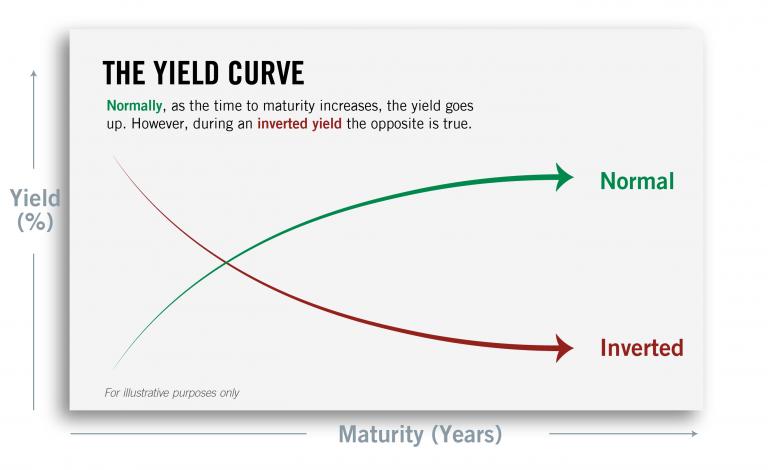
Wall Street’s Favorite Recession Indicator Is in a Slump of Its Own
Treasury yields have been inverted for the longest stretch on record
One of Wall Street’s favorite recession indicators looks broken. An anomaly known as an inverted yield curve, in which yields on short-term Treasurys exceed those of longer-term government debt, has long been taken as a nearly surefire signal that an economic pullback looms. In each of the previous eight U.S. downturns, that has happened before the economy sputtered. There haven’t been any glaring false alarms.
Now, though, that streak is threatened. The yield curve has been inverted for a record stretch—around 400 trading sessions or more by some measures—with no signs of a major slowdown. U.S. employers added a solid 175,000 jobs last month, and economic growth this quarter is expected to pick up from earlier in the year.
Big Al snarks:
If a recession doesn’t materialize soon, it could do lasting damage to the yield curve’s status as a warning system.
I'd hate to have to spend my day thinking up stuff like that.
Larry Williams writes:
A close up study of it shows it has often been way wrong—this is just one more time.
Nils Poertner comments:
As those "indicators" lose their importance, the more ppl (and WSJ and FT in particular!!) talk about it. "get the joke" Lack would have said.
Jeffrey Hirsch responds:
NBER that said 2020 was a recession. Fed started cutting rates in 2019 and the curve inverted then.
The recession lasted two months, which makes it the shortest US recession on record.
It is just a shame bond market traders didn’t tell the rest of us that covid was coming. And what about the 2 back-to-back negative quarters of GDP in Q1&2 of 2022? That looked like a recession as well IMHO.
Big Al adds:
The Fed (from before the GFC) says levels matter, too:
The Yield Curve and Predicting Recessions
Jonathan H. Wright, Federal Reserve Board, Washington DC
February 2006
Abstract:
The slope of the Treasury yield curve has often been cited as a leading economic indicator, with inversion of the curve being thought of as a harbinger of a recession. In this paper, I consider a number of probit models using the yield curve to forecast recessions. Models that use both the level of the federal funds rate and the term spread give better in-sample fit, and better out-of-sample predictive performance, than models with the term spread alone. There is some evidence that controlling for a term premium proxy as well may also help. I discuss the implications of the current shape of the yield curve in the light of these results, and report results of some tests for structural stability and an evaluation of out-of-sample predictive performance.
Jun
4

Top-Level Domains | The Economics of Everyday Things
Those letters at the end of web addresses can mean big bucks — and, for some small countries, a substantial part of the national budget. Zachary Crockett follows the links.
Asindu Drileba writes:
Mali owns the .ml domain for that may do well for Machine Learning. I wonder why they are sleeping on it?
May
29
A good overview, from Hernan Avella
May 29, 2024 | Leave a Comment
A Fresh Look at the Kalman Filter
In this paper, we discuss the Kalman filter for state estimation in noisy linear discrete-time dynamical systems. We give an overview of its history, its mathematical and statistical formulations, and its use in applications. We describe a novel derivation of the Kalman filter using Newton's method for root finding. This approach is quite general as it can also be used to derive a number of variations of the Kalman filter, including recursive estimators for both prediction and smoothing, estimators with fading memory, and the extended Kalman filter for nonlinear systems.
Big Al adds:
Forecasting with the Kalman Filter
Mike Mull, PyData Chicago 2016
The Kalman filter is a popular tool in control theory and time-series analysis, but it can be a little hard to grasp. This talk will serve as an introduction to the concept, using an example of forecasting an economic indicator with tools from the statsmodels library.
May
26
The Oceans and the Stars, from Zubin Al Genubi
May 26, 2024 | Leave a Comment

This modern Jack Aubreyesque story of naval warfare is some of the best fiction I've read recently. Lots of action written in beautiful prose.
The Oceans and the Stars, by Mark Helprin.
A Navy captain near the end of a decorated career, Stephen Rensselaer is disciplined, intelligent, and determined to always do what’s right. In defending the development of a new variant of warship, he makes an enemy of the president of the United States, who assigns him to command the doomed line’s only prototype––Athena, Patrol Coastal 15––with the intent to humiliate a man who should have been an admiral.
Big Al recommends:
Covers key psychological issues around trading, with clear action steps:
The Mental Game of Trading: A System for Solving Problems with Greed, Fear, Anger, Confidence, and Discipline, by Jared Tendler.
Khilav Majmudar is reading:
Models.Behaving.Badly.: Why Confusing Illusion with Reality Can Lead to Disaster, on Wall Street and in Life, by Emanuel Derman.
In this bitterly funny novel by the renowned Polish author Witold Gombrowicz, a writer finds himself tossed into a chaotic world of schoolboys by a diabolical professor who wishes to reduce him to childishness. Originally published in Poland in 1937, Ferdydurke became an instant literary sensation and catapulted the young author to fame. Deemed scandalous and subversive by Nazis, Stalinists, and the Polish Communist regime in turn, the novel (as well as all of Gombrowicz’s other works) was officially banned in Poland for decades. It has nonetheless remained one of the most influential works of twentieth-century European literature.
Vic adds:
The Oceans and the Stars, and The Whole Story: two excellent books that have similar trajectories and conclusions - struggle, with love conquering adversity.
May
24
Slow to adapt, from Big Al
May 24, 2024 | Leave a Comment
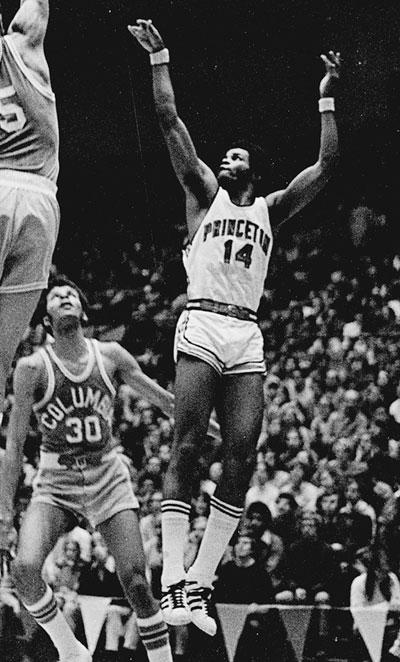
It's been 44 years since the introduction of the 3-point line in the NBA. To me, it's a curious case of slow adaptation. Of course, you have new generations of players growing up shooting the 3, but surely players in the early 80s were capable of learning and practicing. The low number of 3s seems like a failure of analysis, failure to understand the impact on points-per-possession, which wasn't much of a moneyball concept yet.
Also, early on it was pretty much just guards who shot the 3 well, with the big exception of Larry Bird. But now, lots of players 6-10 or taller shoot 3s with considerable accuracy. To me, this is more an issue of assumptions, that big men couldn't shoot from long. And then some big men put in more practice and showed they could do it, opening up the possibilities.
Interesting how there are thresholds people believe can't be crossed…until somebody crosses them…and then lots of people are running sub-4-minute miles.
The 3-Point Revolution, by Stephen Shea:
A gimmick? A publicity stunt? That’s what many thought of the 3-point line when the NBA adopted it for the 1979-80 season. Back in 1979, Washington Bullets coach Dick Motta commented, “The three-point field goal will definitely make things interesting.” He meant interesting in the sense that a game that would have been over might now be sent to overtime by a desperation heave. Neither Coach Motta nor anyone else foresaw an NBA game played like it is today.
Five years after its inception, NBA teams were only averaging 2.4 three-point attempts (3PA) per game. This past season, James Harden alone averaged ten. Teams averaged 29.
[ More data on 3-point shooting. ]
Larry Williams comments:
Good point!! …like the 4 minute mile…and we can only beat the averages by a few points…
Vic wonders:
what adjustments have markets been slow to adapt to in last 5 years?
Big Al adds:
An interesting sidebar from 2017:
The Basketball Team That Never Takes a Bad Shot
The NBA’s most efficient offenses seek out layups and threes. A high school in Minnesota takes the idea to the extreme.
By Ben Cohen
PINE CITY, Minn.—Jake Rademacher made a mid-range jumper in a recent high-school basketball game. But as soon as the ball left his hands, even before it banked in, Rademacher knew it was a bad shot. And his team doesn’t take bad shots.
Pine City High School seeks out only the most valuable shots in basketball: from underneath the rim or beyond the 3-point line. They play as if they’re allergic to all the space in between.
May
22
AI again: weather forecasting, from Big Al
May 22, 2024 | Leave a Comment
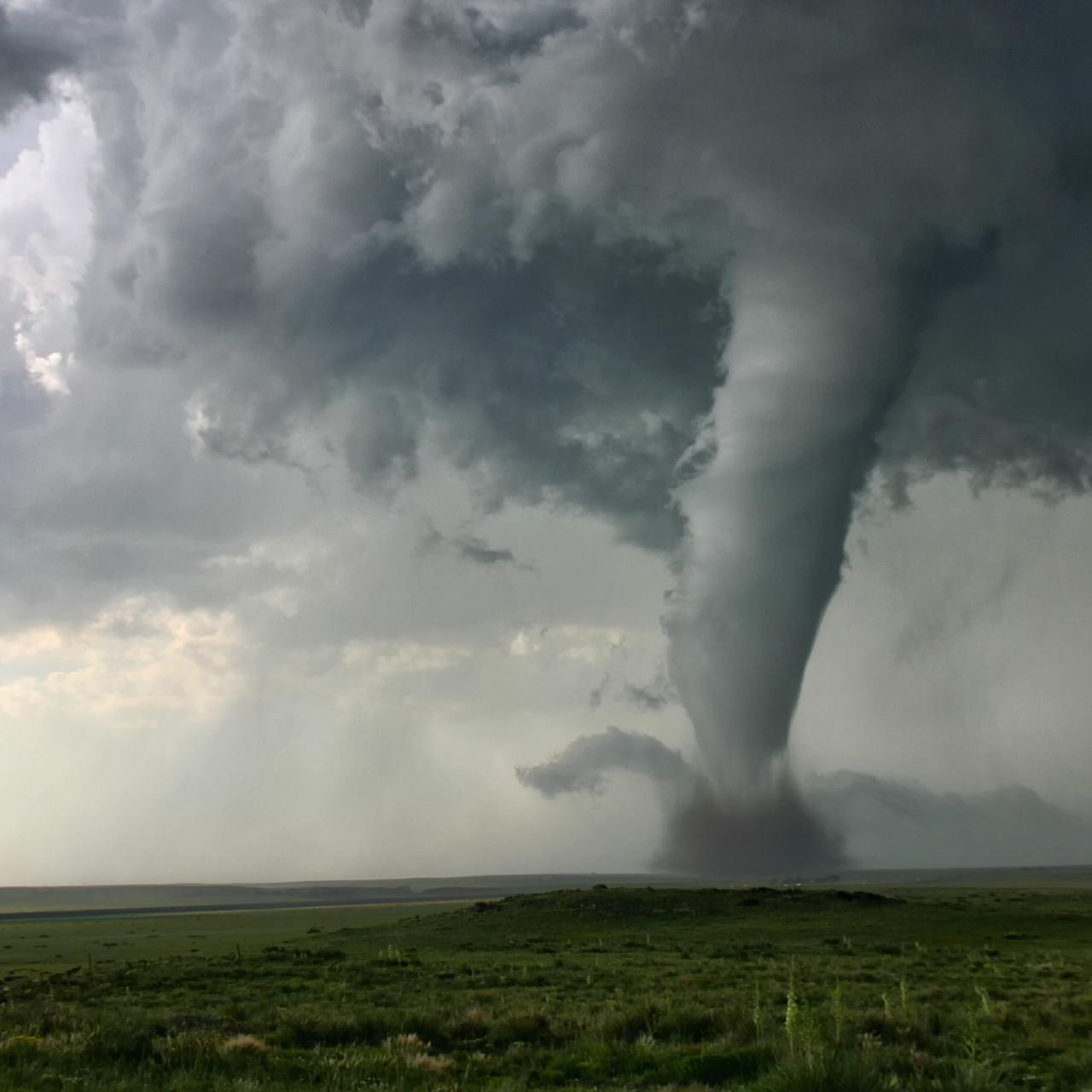
Learning skillful medium-range global weather forecasting, from Google DeepMind:
Global medium-range weather forecasting is critical to decision-making across many social and economic domains. Traditional numerical weather prediction uses increased compute resources to improve forecast accuracy but does not directly use historical weather data to improve the underlying model. Here, we introduce GraphCast, a machine learning–based method trained directly from reanalysis data. It predicts hundreds of weather variables for the next 10 days at 0.25° resolution globally in under 1 minute. GraphCast significantly outperforms the most accurate operational deterministic systems on 90% of 1380 verification targets, and its forecasts support better severe event prediction, including tropical cyclone tracking, atmospheric rivers, and extreme temperatures. GraphCast is a key advance in accurate and efficient weather forecasting and helps realize the promise of machine learning for modeling complex dynamical systems.
Asindu Drileba writes:
I looked and how they split the surface of the earth into tiny meshes in order to form a Graph upon which the rest of the model is built. This technique's description looked familiar to another technique called "Numerical Weather Prediction" or "NWP". The paper by Deep Mind does have several papers referencing "Numerical Weather Prediction" or "NWP".
I learnt about NWP from this PBS Nova documentary, Prediction By The Numbers. The documentary has many descriptions on tools for predicting. Wisdom of the Crowds, Probability Theory, and Numerical Weather Prediction. Meteorologists were interviewed and they showed their NWP programs in action (it is shown how the model generalized with time to predict a more accurate forecast of the in the weather). The meteorologist says it is their best model and also goes ahead to say that "it works so well."
May
18
Following the money, from Asindu Drileba
May 18, 2024 | Leave a Comment
Lots More on How CHIPS Act Money Got Awarded
In 2022, Congress passed the CHIPS Act, which set aside tens of billions of dollars in loans and grants in order to encourage companies to build new semiconductor fabs in the United States. We're still very early in the process. It's going to be a long time before we know if the US will become a major player again in the production of advanced chips. But the process is well underway and the bulk of the awards have been officially announced, with much of the money going to Intel, Samsung, TSMC, and others. So how did the grants get allocated — and what's next?
While it is clear that money earning or losing events like quarterly earnings announcements have an impact on the market (stock prices). I am not sure if government subsidies & grants have an impact on stock prices. Is there a tool that can be used to track events related to government subsidies & grants?
Big Al responds:
An interesting question. Probably start here:
USAspending is the official open data source of federal spending information, including information about federal awards such as contracts, grants, and loans.
Also interesting research tracking stock trades by members of the US Congress:
Capitol Trades
Smart Insider
Senate Stockwatcher
May
13
TLT returns, from Big Al
May 13, 2024 | Leave a Comment
Not sure why I did this, but once I did, I thought it was interesting. This shows the to-date total return of TLT depending on when you bought it. The data is weekly adjusted close (so I'm assuming YHOO got it right, with interest payments correctly included). Some buyers as far back as 2012 are under water, whereas from last October nicely ahead. Speaks to a comment from Dr. Zachar re bonds: "date them but don't marry them."

May
10
Same-Weekday Momentum
May 10, 2024 | Leave a Comment
Same-Weekday Momentum
Zhi Da, University of Notre Dame - Mendoza College of Business
Xiao Zhang, University of Maryland - Robert H. Smith School of Business
Apr 24, 2024
A disproportionately large fraction (70%) of stock momentum reflects return continuation on the same weekday (e.g., Mondays to Mondays), or the same-weekday momentum. Even accounting for partial reversals in other weekdays, the same-weekday momentum still contributes to a significant fraction (20% to 60%) of the momentum effect. This pattern is robust to different size filters, weighing schemes, time periods, and sample cuts. The same-weekday momentum is hard to square with traditional momentum theories based on investor mis-reaction. Instead, we provide direct and novel evidence that links it to within-week seasonality and persistence in institutional trading. Overall, our findings highlight institutional trading as an important driver of the stock momentum.
Peter Ringel writes:
I find this a sexy area of research. It also effects the indices. My guess is some sort of behavioral bias among large players plus some technical constraints, how they have to enter complex trades. Why is a certain fund buying the sector every Tuesday at 10:30? I see such regularities pop up, exist for a while - and vanish again.
Big Al does some counting:
Here is a quick, simple study just to kick this can. This is looking at NVDA, days of the week, for about the last year. The z scores show Wednesday being a significantly poor day and Thursday being good (but with a big sd).

I also did a thousand sim runs, resorting the % changes randomly, and pulled out the max-min spread for each sim run. For the actual data, the range is 1.86% points (Thursday mean minus Wednesday mean). Only 2.08% of the sim runs had a wider range. Taking that to a z score table gives the actual range a score of +2.03.
However, here is the correlation for each weekday predicting the next trading day that is the same weekday:
NVDA correlations, weekday to next instance
Mon-Mon 0.06
Tues-Tues 0.04
Wed-Wed 0.03
Thurs-Thurs 0.09
Fri-Fri 0.01
May
8
Commodities voyeurism (and also some ride-hitching for Bo), from Big Al
May 8, 2024 | Leave a Comment
This Sahara Railway Is One of the Most Extreme in the World
Trains on the railway are up to 3 kilometres (1.9 mi) in length, making them among the longest and heaviest in the world. They consist of 3 or 4 diesel-electric EMD locomotives, 200 to 210 cars each carrying up to 84 tons of iron ore, and 2-3 service cars. The total traffic averages 16.6 million tons per year.
And a bit of Oz, with "driverless" thrown in:
The Driverless Iron Ore Trains Of Rio Tinto Australia
Apr
27
A few useful ideas
April 27, 2024 | Leave a Comment
From Asindu Drileba:
This video is about how to use a technique known as "dimensional analysis" that can be used to derive equations or attain further insights about a physical system.
From Big Al:
A nice, simple explanation of Markov chain.
(Sidebar history note:Alexandre-Théophile Vandermonde.)
More complex: Markov Decision Processes - Computerphile.
Apr
25
FTC Announces Rule Banning Noncompetes, from Big Al
April 25, 2024 | Leave a Comment
FTC Announces Rule Banning Noncompetes
Today, the Federal Trade Commission issued a final rule to promote competition by banning noncompetes nationwide, protecting the fundamental freedom of workers to change jobs, increasing innovation, and fostering new business formation.
“Noncompete clauses keep wages low, suppress new ideas, and rob the American economy of dynamism, including from the more than 8,500 new startups that would be created a year once noncompetes are banned,” said FTC Chair Lina M. Khan. “The FTC’s final rule to ban noncompetes will ensure Americans have the freedom to pursue a new job, start a new business, or bring a new idea to market.”
Kim Zussman writes:
This will also help knock down the value of businesses. Mike sells his business to Mary. One week later Mike opens the same kind of business one block away, and contacts all his old customers. How much should Mary pay to buy Mike's business?
H. Humbert comments:
Certainly has more merit than trying to destroy Amazon or preventing Kroger from buying Alberson's, her two other favorite busybody activities. Not a very libertarian thing to do, but noncompetes are often used against many powerless people as a nakedly aggressive move.
The argument she uses is that Silicon Valley where noncompetes are illegal beat out Boston Route 128, and is doing just fine in terms of starting new businesses. Whether it's due to noncompetes or the weather is anybody's guess. The other argument is that noncompetes are used to restrain security guards or sandwich shop workers from getting employment across the street, cases where intellectual property or customer lists are clearly not involved.
Pamela Van Giessen adds:
There is another downside to this. When companies lay off people, especially middle and senior management, they give them attractive parting gifts that are contingent on non-compete agreements. E.g, ABC co lays off senior manager, pays them up to 1 yr salary plus health benefits, etc. but the caveat is that former senior manager doesn’t work for a competitor for x period of time. These workers already have the right to decline the parting gifts if they don’t want to sign the non-compete. Now there is almost no incentive for companies to provide compensation to the people they lay off since they can’t bargain for a non compete. That sucks for employees who can now be laid off with pretty much nothing. I’d say this is a loss for employees and a win for big companies. Thank you to Joe Biden & co.
William Huggins responds:
let's not oversell this - firms seek out non-compete agreements for THEIR benefit, not that of employees. strange that an erosion of their position would somehow strengthen them but war is peace and ignorance strength?
Apr
24
Pandemics good for profits, from Big Al
April 24, 2024 | Leave a Comment
From FRED:

George Zachar comments:
A big inflation effect — the cpi index:

Apr
23
Speak of the devil, from William Huggins
April 23, 2024 | Leave a Comment
Looks like someone in Can Gov was listening in for ideas (Tax rate to rise from 50% of reg to 67% of reg):
In the 2024 budget unveiled Tuesday, Finance Minister Chrystia Freeland said the government would increase the inclusion rate of the capital gains tax from 50 per cent to 67 per cent for businesses and trusts, generating an estimated $19 billion in new revenue. Capital gains are the profits that individuals or businesses make from selling an asset — like a stock or a second home. Individuals are subject to the new changes on any profits over $250,000.
Big Al is sanguine:
No worries - it only affects a few:
The government estimates that the changes would impact 40,000 individuals (or 0.13 per cent of Canadians in any given year)…
H. Humbert writes:
With 67%, the government clearly thinks that either it both needs and deserves the profits of some people more than they do OR that those people need to be treated like one would treat an enemy, without any regard for their needs or feelings. Let's see, would a Communist think that way (both ideas) about his or her class enemy?
William Huggins explains:
It's a move back towards the status quo ante 1980s tax cut. The idea that tax cuts are only good is just silly. As silly as the notion that government is efficient with those same taxes. This isn't revolutionary, simply the slow reduction of a subsidy we -thought- would lead to more investment. Turns out future demand is a larger determinant of that than current taxes. We gave too much to capital back in the early 80s when we rebalance last time and now were rebalancing again. Cap gains will still pay less tax than working folks. No need for enemies or "communists".
H. Humbert replies:
I apologize William, the problem was my reading comprehension as I wasn't familiar with the meaning of the term "inclusion rate" in the Canadian tax system and interpreted it incorrectly after, to be honest, spending about 20 seconds to "read" the article. With your explanation and the tiniest bit of research, this makes sense. As I mentioned before, I'm against special cap gains rates, but only if (a) the losses aren't capped (b) there is no special "investment gains" tax as currently exists in the US.
Asindu Drileba adds:
David Graeber once mentioned that the most productive period in American industry was when the tax rates were highest (65%). The referenced the advances made by Bell Labs as a example. He claimed that the productivity occurred because corporations were nudged by the high taxes to invest more money into research and development.
H. Humbert provides context:
Very few people paid the top marginal rate as tax shelters were highly prevalent and a lot easier to use than they are now.
Hernan Avella comments:
True MMT’rs would argue that rates should be 0 and the tax rate higher, as needed to curb inflation.
Apr
21
Very bullish
April 21, 2024 | Leave a Comment
very bullish when S&P is down 7 days in a row - only occurred 5 times since 1996, expectation in 2 days is +39 big. 6 20-day minimums in a row, happened 7 times since 1996, expectation in 4 days 100% up, mean gain 45 big.
Hernan Avella agrees:
I imagine the 2 or 3 fellow specs that still trade a significant size in this list are already loaded up with enough spu, because one expects fireworks next week.
From the department of non predictive studies: Choose your favorite trend indicator, or better yet, create an ensemble of trend indicators. Choose a measure of persistence of extreme readings (intensity and duration). Look back in history what happens after your signal gets triggered, look at different time frames.
I get 12 signals since 1980: 1985, 1987, 1991, 1994, 2001, 2007, 2008, 2009, 2011 and 2022.
Good luck next week.
Larry Williams comments:
We have only seen 6 down days in a row here in S&P 500 and not that in the Dow.
Big Al suggests:
Regarding the Dow vs S&P divergence, a relevant comparison below. INTC is the only shared component.

Apr
20

Copenhagen stock exchange fire: Spire collapses as historic Borsen engulfed in flames
a bad omen? ppl are way more superstitious than they like to admit…
Big Al adds colour:
One of the paintings that was saved:
From Copenhagen Stock Exchange (Danish: Fra Kjøbenhavns Børs) is a monumental 1895 oil on canvas group portrait painting by Peder Severin Krøyer, featuring 50 representatives of the Danish commercial and financial industries gathered in the Great Hall of Børsen (the Exchange Building) in Copenhagen, Denmark.
A list of building fires in history.
Apr
19
Sins of omission, from Big Al
April 19, 2024 | Leave a Comment
Fear and Loathing in Las Vegas: Evidence from Blackjack Tables
Bruce Ian Carlin and David T. Robinson
NBER Working Paper No. 14955, May 2009
Psychologists study regret primarily by measuring subjects’ attitudes in laboratory experiments. This does not shed light on how expected regret affects economic actions in market settings. To address this, we use proprietary data from a blackjack table in Las Vegas to analyze how expected regret affects peoples’ decisions during gambles. Even among a group of people who choose to participate in a risk-taking activity, we find strong evidence of an economically significant omission bias: players incur substantial losses by playing too conservatively. This behavior is prevalent even among large stakes gamblers, and becomes more severe following previous aggressive play, suggesting a rebound effect after aggressive play.
Apr
18
Sooner or later, from Nils Poertner
April 18, 2024 | 1 Comment

cf Sidney Homers' classic book, A History of Interest Rates:
Sooner or later every generation is shocked by the behaviour of interest rates.
!! (first ! is for me to figure out what it means, 2nd ! is one for everyone else)
Big Al adds:
What If Fed Rate Hikes Are Actually Sparking US Economic Boom?
A radical theory is spreading as economy defies expectations
‘The reality is people have more money,’ one convert says
One of the more bullish points is that a large block of homeowners are shielded by the effect of higher mortgage rates because they locked in low rates during zirp. In other countries (much of Euroland) with only variable-rate mortgages, the effect is very different. Something else that doesn't get mentioned is the covid stimulus. That money doesn't get spent just once. I asked Bard/Gemini:
Disaggregating the exact total for stimulus checks vs. business support is a bit difficult, but here's what we can find:
Stimulus checks: There were three rounds of Economic Impact Payments totaling $814 billion distributed to individuals and households. Pandemic Oversight
Business support: The CARES Act alone allocated $500 billion for various business relief programs, including loans, grants, and other assistance. This number doesn't include other legislation passed to aid businesses. The COVID-19 pandemic: The US economic stimulus program for businesses: The legislative response
Since some business support involved grants (essentially free money), it's impossible to give a perfectly precise combined total. However, you can be confident that the federal government provided well over $1.3 trillion in total aid through stimulus checks and business support programs.
H. Humbert reminds us:
Larry Williams stated quite some time ago that all the money being paid out in interest to savers is beneficial for the economy.
Apr
17
Bits and pieces
April 17, 2024 | Leave a Comment
Zubin Al Genubi on market prices:
Twenty S&P points used to be a good trading day. It still is, but now 50 points is the new normal. Need to recalibrate mentally and recalibrate old systems. It's a dichotomy between points and percentages as the prior Rocky/Vic argument discussed. The higher price has resulted in a stealth increase in leverage. Announcements widen spreads and create great small entry points. The FED speak traders are always wrong and offer great opportunity. Why are they wrong? Bad news is not good news.
I've read that the current market price is always right. I disagree. The market price is set at the margin by a few, maybe several hundred participants with a variety of reasons for transacting. The reasons are often wrong and the price is wrong at that moment. This can be used to advantage either in patterns prospectively, or in the case of liquidity holes on the fly.
Big Al suggests:
Daniel Kahneman on Cutting Through the Noise | Conversations with Tyler
Andre Agassi tennis hack against Boris Becker
Nils Poertner on effortless learning:
When learning a foreign language, we learn the best when being PRESENT and don't fret to get it right all the time. This being right puts a huge amount of unnecessary stress on the student. To some extent it seems the same in trading: we don't need to know everything in advance - far more important is to be PRESENT.
Easan Katir on an old book:
NHK offers a sensitive review of In Praise of Shadows. The book is by Juni'chiro Tanizaki, one of Japan's eminent novelists. Market relevance? One can muse on how much of market activity takes place in the shadows, the dark pools, the anonymous orders whizzing by on level 2… is there a shadowy level 3, 4, 5 where identities are revealed?
Kim Zussman responds:
Relatedly to spec interests, A Taxing Woman, a nice film about Yazuka/tax evasion at Nippon ATH ca late 80s.
Apr
13
Memorylessness, from Asindu Drileba
April 13, 2024 | Leave a Comment
This is a topic that keeps appearing when people talk about probability. I don't seem to have a good intuition for it. Is the stock market with memory or without memory? Why? What would be your intuitive explanation of what memory is?
From Memorylessness:
In probability and statistics, memorylessness is a property of certain probability distributions. It usually refers to the cases when the distribution of a "waiting time" until a certain event occurs does not depend on how much time has elapsed already. To model memoryless situations accurately, we must constantly 'forget' which state the system is in: the probabilities would not be influenced by the history of the process.
Only two kinds of distributions are memoryless: geometric distributions of non-negative integers and the exponential distributions of non-negative real numbers.
Humbert H. responds:
Of course it's not completely memoryless otherwise there would be no point to any spec of this list trying to beat the market. It's ALMOST memoryless, and that's why it's hard to beat, but there are still some irregularities, like days of the week, month, season, reaction to events, like increased volatility following a big change. It would have a lot more memory if people didn't try to take advantage of the irregularities, because market participants have emotions and also information doesn't spread instantaneously even in this day and age.
Eric Lindell comments:
Blackjack is with memory, provided the number of decks is finite. As you play with more and more decks, the game becomes less memory-dependent. A small player in a huge market makes trades that are less memory-dependent than a big player's trades. The bigger the portion of the total market a trader trades, the more memory-dependent it becomes.
Wikipedia's discussion of a memoryless probability distribution refers to a poisson process. The time before the next car arrives at a toll booth doesn't depend on the time since the last car arrived — provided the cars' arrivals are truly random. This would NOT be the case with a nonrandom distribution, as when more cars arrive per minute during rush hour.
Zubin Al Genubi writes:
A normal distribution of a series of events, indicates that the events are independent of each other, in that the occurrence of one does not affect the probability of another. Of course the market has memory and emotion. We are looking for the regularities to trade that are not random with a high degree of confidence.
Larry Williams agrees:
Amen! People react in similar fashion to events and those reactions create patterns. Plus, there are unique time elements to many markets; jewelry is mostly sold at Christmas, hogs live and die in 18 months etc.
Penny Brown adds:
Investors who suffer a big, sudden decline in a stock remember it. Often they vow to hold on until they are made "whole". This can cause a stock to sell off as it approaches that spot. But if the stock clears this area, the weak hands are gone, and the stock can move up sharply.
Big Al suggests:
For further study, re the quality of "memoryless" and possible applications:
Also, Vic has referred to Markov processes relating to the market calendar at the top of this site.
Apr
7
Interesting research
April 7, 2024 | Leave a Comment
Kim Zussman is optimistic:
Age and High-Growth Entrepreneurship
Pierre Azoulay, Benjamin F. Jones, J. Daniel Kim, and Javier Miranda
American Economic Review: Insights
Vol. 2, No. 1, March 2020
Abstract
Many observers, and many investors, believe that young people are especially likely to produce the most successful new firms. Integrating administrative data on firms, workers, and owners, we study start-ups systematically in the United States and find that successful entrepreneurs are middle-aged, not young. The mean age at founding for the 1-in-1,000 fastest growing new ventures is 45.0. The findings are similar when considering high-technology sectors, entrepreneurial hubs, and successful firm exits. Prior experience in the specific industry predicts much greater rates of entrepreneurial success. These findings strongly reject common hypotheses that emphasize youth as a key trait of successful entrepreneurs.
Asindu Drileba adds:
This infographic is really good.
Big Al finds value in experience:
Neoclassical Theory Versus Prospect Theory: Evidence from the Marketplace
John A. List
ISSUE DATE June 2003
Abstract
Neoclassical theory postulates that preferences between two goods are independent of the consumer's current entitlements. Several experimental studies have recently provided strong evidence that this basic independence assumption, which is used in most theoretical and applied economic models to assess the operation of markets, is rarely appropriate. These results, which clearly contradict closely held economic doctrines, have led some influential commentators to call for an entirely new economic paradigm to displace conventional neoclassical theory e.g., prospect theory, which invokes psychological effects. This paper pits neoclassical theory against prospect theory by investigating three clean tests of the competing hypotheses. In all three cases, the data, which are drawn from nearly 500 subjects actively participating in a well-functioning marketplace, suggest that prospect theory adequately organizes behavior among inexperienced consumers, whereas consumers with intense market experience behave largely in accordance with neoclassical predictions. The pattern of results indicates that learning primarily occurs on the sell side of the market: agents with intense market experience are more willing to part with their entitlements than lesser-experienced agents.
Apr
6
From Thinking Fast and Slow:
I had one of the most satisfying eureka experiences of my career while teaching flight instructors in the Israeli Air Force about the psychology of effective training. I was telling them about an important principle of skill training: rewards for improved performance work better than punishment of mistakes. This proposition is supported by much evidence from research on pigeons, rats, humans, and other animals.
When I finished my enthusiastic speech, one of the most seasoned instructors in the group raised his hand and made a short speech of his own. He began by conceding that rewarding improved performance might be good for the birds, but he denied that it was optimal for flight cadets. This is what he said: “On many occasions I have praised flight cadets for clean execution of some aerobatic maneuver. The next time they try the same maneuver they usually do worse. On the other hand, I have often screamed into a cadet’s earphone for bad execution, and in general he does better on his next try. So please don’t tell us that reward works and punishment does not, because the opposite is the case.”
This was a joyous moment of insight, when I saw in a new light a principle of statistics that I had been teaching for years. The instructor was right—but he was also completely wrong! His observation was astute and correct: occasions on which he praised a performance were likely to be followed by a disappointing performance, and punishments were typically followed by an improvement. But the inference he had drawn about the efficacy of reward and punishment was completely off the mark. What he had observed is known as regression to the mean, which in that case was due to random fluctuations in the quality of performance. Naturally, he praised only a cadet whose performance was far better than average. But the cadet was probably just lucky on that particular attempt and therefore likely to deteriorate regardless of whether or not he was praised. Similarly, the instructor would shout into a cadet’s earphones only when the cadet’s performance was unusually bad and therefore likely to improve regardless of what the instructor did. The instructor had attached a causal interpretation to the inevitable fluctuations of a random process.
Apr
5
Disruption wins: 3% of companies created all the wealth, from Humbert H.
April 5, 2024 | Leave a Comment
From a Bank of America report:
Understanding which breakthroughs are on the cusp of commercialization has never been more important. In the past 100 years, 3% of companies generated nearly 100% of global net wealth (source: Bessembinder), and roughly a third of the S&P 500 index has been replaced since 2015. In our separate primer picks report, we highlight the enablers to access these breakthroughs theme with a combined market cap of c.$16tn. We identify 30 breakthroughs & tech evolutions across AI, computing, robots, communication, health tech, energy and mobility.
Big Al adds:
Just for reference, combined cap of MSFT, AAPL, AMZN, NVDA, META, and GOOGL is ~12.5T.
H. Humbert comments:
The problem with breakthroughs is this: most of the wealth is created by breakthroughs, but most companies working on breakthroughs or trying to commercialize them fail. Once the breakthrough has been so successfully commercialized that some specific companies are identified with it, they're prices are typically so high that you have to bet on their continuous growth, and if you do, you will often lose, and of course sometimes you will keep winning for a long time. "Understanding breakthroughs on the cusp of commercialization" seems like a good goal, but it's not clear it can be turned into a successful investment strategy. Cathie Woods attempts to ride these waves, so this whole approach isn't exactly a well-kept secret.
Andy Aiken writes:
What we call productive disruption (i.e., technology adoption that has sufficient economies of scale that above-market returns are available to investors) is in fact two “laws” at work: Moore’s law and Wright’s law.
Although in recent years we have not continued the log-linear progression of miniaturization obtained in an earlier time, Wright’s law (cost of technology decreases as the cumulative production of the technology increases - later famously marketed by Bruce Henderson and BCG as the “experience curve”) has continued to hold. It my view, it’s one of the few reasons that even headline inflation isn’t in double digits at the moment.
The challenge is to find the innovative companies with technology improvements on the scale of Moore’s law with cost reductions that outpace the cumulative production of the technology. At least, that’s what I look for.
Apr
2
Unintended (intended) consequences, from Kim Zussman
April 2, 2024 | Leave a Comment
California Restaurants Cut Jobs as Fast-Food Wages Set to Rise
Chains lay off workers, shave hours ahead of state minimum-wage increase
Big Al suggests:
Jacob Vigdor on the Seattle Minimum Wage, Mar 4 2019
Jacob Vigdor of the University of Washington talks with EconTalk host Russ Roberts about the impact of Seattle's minimum wage increases in recent years. Vigdor along with others from the Evans School of Public Policy and Governance have tried to measure the change in employment, hours worked, and wages for low-skilled workers in Seattle. He summarizes those results here arguing that while some workers earned higher wages, some or all of the gains were offset by reductions in hours worked and a reduction in the rate of job creation especially for low-skilled workers.
Mar
25
History of KC BBQ, from Humbert Humbert
March 25, 2024 | 1 Comment
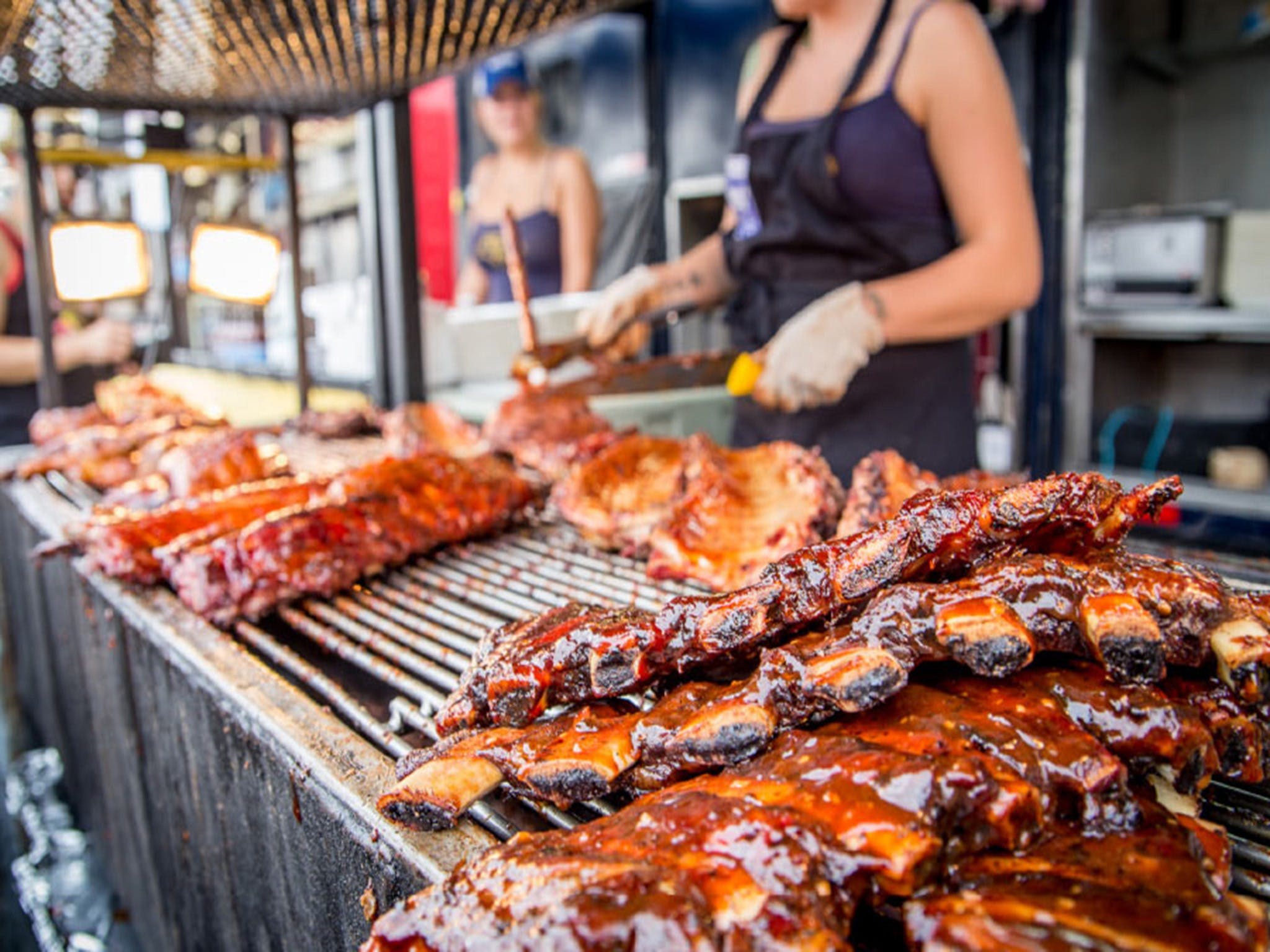
Interesting to learn that Gates and Arthur Bryant's trace their lineage to the original BBQ entrepreneur. As a KC native I'm biased, but it really is the best city for BBQ. Although plenty of good BBQ can also be found in TX and Memphis.
How did Kansas City become Barbecue City, USA? KCQ cooks up a delicious tale
“What’s your KC Q” is a joint project of the Kansas City Public Library and The Kansas City Star. Readers submit questions, the public votes on which questions to answer, and our team of librarians and reporters dig deep to uncover the answers.
Big Al offers:
More BBQ history:
Barbecue in Memphis has a rich history with deep roots
Mapping Texas Barbecue History
A Barbecue Nerd’s Guide to the Most Historic Joints in Texas
The History of BBQ in St. Louis
And for anybody travelling, here is some information on upcoming BBQ competitions and festivals in the US:
Check out 10 of the Best BBQ Festivals in the U.S.
Northeast Barbecue Society: Event Calendar
Rocky Mountain BBQ Association
And per Jeff's comment:
8 Restaurants That Prove Arkansas Barbecue Is Here To Stay
Jeff Watson adds:
This place has the best BBQ in Arkansas, and they’ve only been around for 10-12 years:
Face Behind the Place: Susie Powell of Hoots BBQ & Steaks
Mar
24
An alternate understanding of a market being at all time high (market reaching new prices it has never encountered) is this: "Everyone that has ever bought that stock or instrument is now in profit". What might be the psychological implications of this?
Kim Zussman comments:
It is possible (and probable) to buy, then sell after a decline and stay out only to see it reverse and go up further. This (timing) is one reason it is so much easier to do better with B/H than trading.
Big Al adds:
The other advantage to B&H is that the opportunity cost viz time/attention required is basically zero. I have looked at various index timing approaches and have not found anything that beats B&H, especially when considering the vig and opportunity cost. However, should one need to scratch the itch, timing strategies may work better with individual stocks. But again, opportunity cost.
Humbert H. writes:
I've always been believer in B&H vs. trading. But even in B&H the debate between indexing and individual stock selection never dies. I don't like indexing, but I don't have a mathematical basis for that. It's a fundamental belief that buying things without any regard to their economic value has to fail in time, at least relative to paying some attention to it.
Zubin Al Genubi adds more:
Another aspect of buy and hold that Rocky pointed out is the capital gain tax severely eats into returns. The richest guys hold for years and have only unrealized untaxable gains.
Art Cooper agrees:
There was an excellent article in the Jan 7, 2017 issue of Barron's by Leslie P. Norton on VERY long-lived closed end mutual funds which have surpassed the S&P's performance. They have all followed buy and hold strategies.
Michael Brush offers:
Far more money has been lost by investors in preparing for corrections, or anticipating corrections, than has been lost in the corrections themselves.
- Peter Lynch
Steve Ellison brings up an important point:
And yet trading is one of the focal points of this list. The way I square this circle is to keep most of my trading account in an equity index fund at all times. When I think I have an edge, I make trades using margin.
Larry Williams writes:
B&H is the keys to the kingdom, but…the massive fortunes of Livermore were short term trades despite his comment about sitting on your hands. Even the current high performers, Cohen, Dalio, Tudor etc use market timing. When I won world cup trading $10,000 to $1,100,000, it was all about timing and wild crazy money management. One approach wins big the other wins fast. A point to ponder.
Bill Rafter writes:
What we found in studying only the SPX/SPY is that in the long run a buy-and-hold yielded 9.5 percent compounded annually. That was from 1972 to recent. Our argument is that studies before 1972 are flawed. That 9.5 was great considering there were several collapses of ~50 percent. However if you could just eliminate the collapses you could raise the return to 13.5 percent compounded annually.
Eliminating the down moves did not involve prescience. You did not need to forecast recessions, only identify them when you were in one. That was not difficult, and timing was not a critical as one might think. We identified several algos that worked well.
When you were out of equities, you could either simply hold cash, or go long the 10-year ETF. The bonds were better, but not by much. Interestingly, long term holding of bond ETFs yielded low single-digit returns. Best avoided. Which also means that the Markowitz 60/40 strategy was a sub-performer.
Taxes are investor/vehicle specific. For example, if you use a no-tax vehicle, there are no taxes. Regarding turnover, there are very few transactions, as there are very few recessions. The strategy is basically B&H, but with holidays.
Asindu Drileba has concerns:
My problem with buy & hold Is that it has no risk management strategy. If you bought the S&P 500 in 1929 for example during the wrong month. It took you 25 years i.e until 1954 not even to make profit, but just to break even. The real question is, how do you know your not investing in a market path that will take 25 years just to break even?
Humbert H. responds:
That’s why, dollar cost averaging. I don’t think anyone thinks buy once in your lifetime and never interact with the stock market ever again. I think if you had averaged in monthly or quarterly from the summer 1929 through summer 1959 and then held and lived off dividends or cashed out/interest in retirement, you did well.
Art Cooper adds:
The year 1954 is almost universally given as the "break-even" year to recoup losses for buy & hold investors who bought at the 1929 peak. It's wrong to do so. First, it ignores dividends. Had dividends been re-invested the recovery year would have been much earlier. Second, it ignores the deflation which occurred during the Great Depression. In this column Mark Hulbert argues that someone who invested a lump sum at the 1929 peak would have recovered in real economic terms by late 1936.
I'm not arguing against dollar-cost averaging, merely pointing out a historical falsehood.
Hernan Avella writes:
What people should do while they are young and have human capital left is to leverage!
Life-Cycle Investing and Leverage: Buying Stock on Margin Can Reduce Retirement Risk
The most robust research, incorporating lifecycle patterns and relevant time horizons for long term investors tells us that the optimal allocation is 50/50 all equities, domestic and international. But most ppl don’t have the gumption to be 100% on equities.
Mar
13
Contextualization, from Asindu Drileba
March 13, 2024 | Leave a Comment
I found this podcast episode very interesting.
Contextualization Within a Framework of Conditional Probabilities w/ Will Gogolak
As a risk officer with the Chicago Mercantile Exchange, Will Gogolak was setting margin requirements and saw a wide variety of traders’ accounts and what separated the winning traders from the losing ones, before leaving to pursue his own trading and obtaining a PHD in finance and share his knowledge of quantitative analysis and market experience with students at Carnegie Mellon University. Combining his market experience with knowledge of statistics helps William create his custom buy the dip strategy with futures and leveraged ETFs, and focusing on probabilities and determining market direction for informed trading decisions.
Peter Ringel agrees:
Love the hole series. Half of speclist was a guest.
Big Al offers:
Also very informative are these interviews with "Uncle Roy", on Top Traders Unplugged:
Zubin Al Genubi comments:
Speaking of cognitive bias, I realize that if I feel bearish, so does everyone else. You have to go against how you feel and against the consensus.
Sam Johnson asks:
Do you need to go against the cognitive bias of how everyone FEELS or how everyone is positioning?
Zubin Al Genubi responds:
Don't most traders and their systems trade and position for that past regime? As Roy said, trend followers are all piled in at the turns and all will reverse at the same time. With the widespread use of systems everyone is doing basically the same trade. You can't get a fill after the turn as we saw last fall. You have to pre-position…be in position ahead of the enemy forces.
Feb
22
Games again, from Big Al
February 22, 2024 | Leave a Comment

I grew up playing lots of board games, and later, computer games. I see videos of college students not being able to do basic math, and I think, "They needed to play Monopoly when they were kids!" Here is an interesting Numberphile with Marcus du Sautoy about the game Risk:
The Game of Risk - Numberphile
du Sautoy has a book on games:
Around the World in Eighty Games
From Tarot to Tic-Tac-Toe, Catan to Chutes and Ladders, a Mathematician Unlocks the Secrets of the World's
Greatest Games
He is an interesting guy and has done a lot of popular math work.
Humbert H. writes:
I grew up in a house where cards were played all the time. We played everything from pinochle and canasta to spades and bridge. I was a degenerate rummy player in my teens, half a cent a point. Later on graduated to low ball, which is a truly sick game, only for the degens. Always managed to hold my own in all kinds of poker. Cards improved my memory and on the spot mental arithmetic. Learned a few hundred prop bets using cards and had a good measure of success with them. We still play all the time, and when grandbaby is a few years older, he can join.
James Goldcamp adds:
While Risk was always fun, it's Avalon Hill's Diplomacy that for me is the pinnacle of board games. It combines negotiation and cooperation useful in business, the bluffing and dissembling of poker, along with an element of pure calculation a la chess. While the board presents somewhat of a tight closed system (ask anyone who has played as Turkey!) I believe it teaches the best balance of grand strategy, pure tactics, and anticipation (and manipulation) of the intent and designs of the other players. In the initial days of the pandemic my gaming friends of decades prior reconvened using one of the free online diplomacy sites.
Honorable mention for baseball enthusiasts goes to another Avalon Hill great - Superstar Baseball. An excellent way for a kid to gain an appreciation for early 20th century players through Mays and Aaron.
Big Al wonders:
Was there a message here?
Thank you for your interest in the monetary policy game, Chair the Fed. The game has been a useful and fun tool to learn more about monetary policy. However, the Fed has updated its approach to monetary policy, and the changes are not readily accommodated within the existing structure of the game. As of June 1, 2021, the game is no longer available.
Asindu Drileba writes:
I came across this game from Jane Street.
Figgie is a card game that was invented at Jane Street in 2013. It was designed to simulate open-outcry commodities trading. Most of the skill in Figgie is in negotiating trades that benefit both the buyer and seller. Like in poker, your objective in Figgie is to make money over a series of hands.
Several financiers I have studied like to play games of chance outside the market - Warren Buffet (Bridge), Charlie Munger (Poker), Edward Thorpe (Blackjack), Vic (Checkers — I still don't know what to make of the checkers like board on the Daily Speculations homepage).
Feb
19
Trailhead (or rabbit hole), from Big Al
February 19, 2024 | Leave a Comment

Wandered across it a bit randomly. Of course, one could argue that "experimental finance" is/should be what every trader is practicing.
Potentially useful links in this article:
Experiments in finance: A survey of historical trends
A key figure:
The Lab Man: How experimental economics emerged from the shadows
Jeremy Clift interviews Nobel Prize winner Vernon L. Smith
Also:
Herd Behavior in Financial Markets: An Experiment with Financial Market Professionals
Kim Zussman adds:
Late list member Ross Miller worked with Vernon Smith and Charles Plott during his undergrad at Caltech in the early 70s.
How to Stay Mentally Sharp Into Your 80s and Beyond
Vernon L. Smith, 97, is a very busy man.
The economist at Chapman University just finished writing a book about Adam Smith and works about eight hours a day, seven days a week in his home office in Colorado Springs, Colo. He enjoys chatting with friends on Facebook and attending concerts with his daughter.
“I still have a lot of stuff to do. I want to keep at it,” said Smith, who won the Nobel Prize in economics in 2002.
Feb
5
Trading smörgåsbord
February 5, 2024 | Leave a Comment
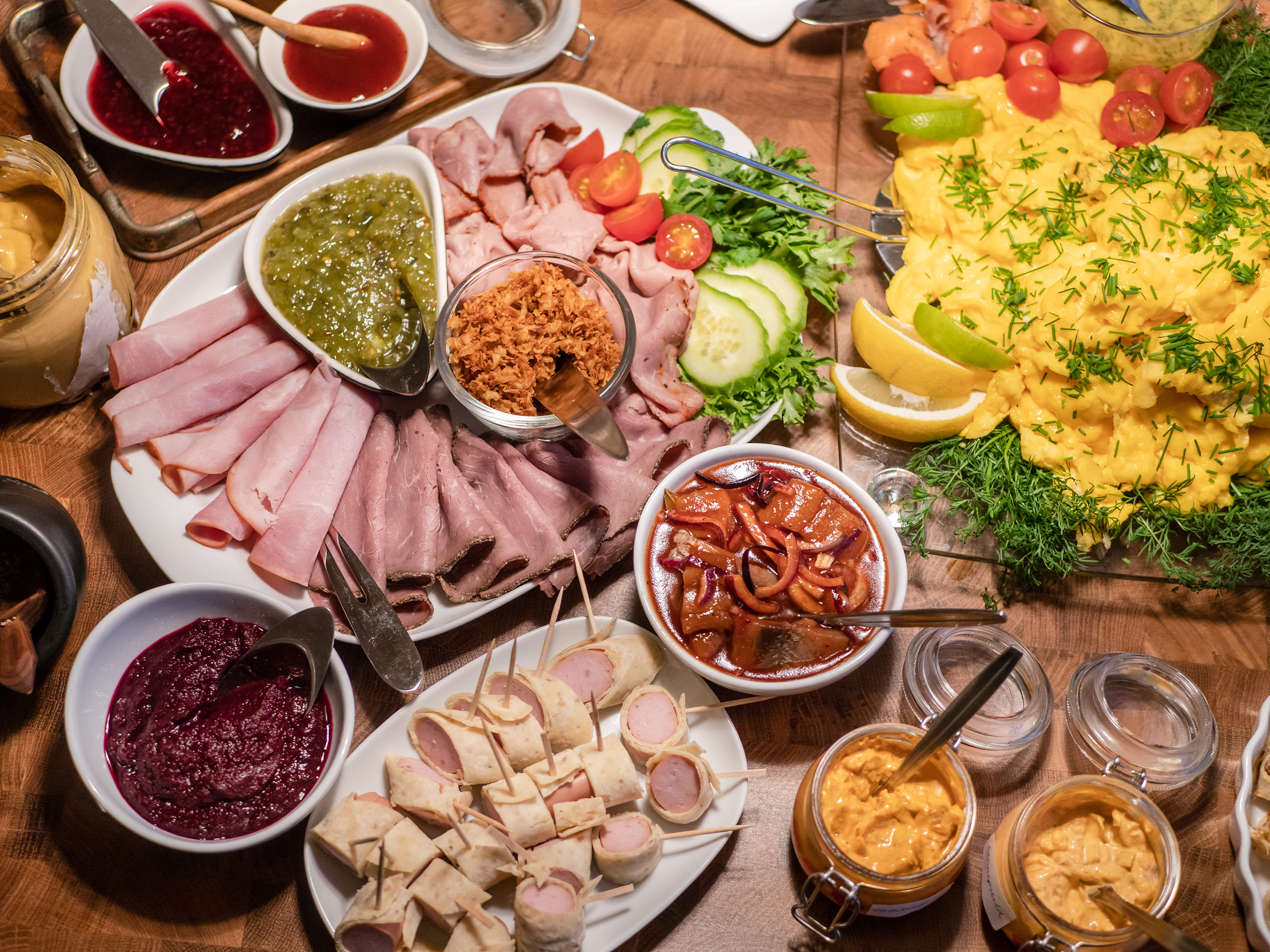
Kim Zussman offers:
Meet the Investors Trying Quantitative Trading at Home
Pietros Maneos trades stocks like many of Wall Street’s most sophisticated operations: running dozens of computer-driven strategies in parallel to chase market-beating returns. But he isn’t some tech-savvy math type. He is a published poet who doesn’t know how to code. Maneos, 44 years old, uses online-trading platform Composer.trade to build, test and bet on quantitative trading algorithms that buy and sell stocks and exchange-traded funds out of his home office in Boca Raton, Fla. One algorithm, for example, holds a triple-leveraged exchange-traded fund tracking the Nasdaq-100 index if the S&P 500 index has recently trended higher—and Treasury bills otherwise. He is currently running 72 such schemes he constructed with the application’s graphical interface, but can also type requests in plain English that Composer’s AI will translate into code. “It’s like having my own personal black box,” he said. “You could argue that I’m a hedge fund with 72 strategies.”
Big Al is puzzled by this bit from the above:
Many users praise its simplicity. But several warned about the tax implications of wash sales and the absence of some common Wall Street risk-management tools, such as one that would automatically exit a strategy when a specified loss is reached.
Huh?
Zubin Al Genubi wonders about market microstructure:
On CME is not clear. Is there somewhere how price changes is explained? Seems the asks should go to 0 before price clicks up but they don't. There is a lot of juggling in the queue as well, spoofing, stuffing. I'm reading Flash Crash, by Liam Vaughan.
Jeff Watson responds:
Here is an excellent perspective on spoofing.
Big Al adds:
This book gets recommended a lot but I haven't read it. Pubbed in 2002.
Trading and Exchanges: Market Microstructure for Practitioners, by Larry Harris.
Asindu Drileba recommends:
I am currently enjoying this biography of Jessie Livermore by Patrick Boyle. It's so well narrated, I hope some of you enjoy it.
Henry Gifford observes:
Patrick Boyle says he used to work for Vic.
Jan
28
Revelations of The Prisoners Dilemma, from Asindu Drileba
January 28, 2024 | Leave a Comment

This is my favourite channel an YouTube. And I liked this particular episode so much it may be my favourite so far:
What The Prisoner's Dilemma Reveals About Life, The Universe, and Everything
The prisoners dilemma is a choice participants need to make that are as follows:
1. If both participants cooperate, they both get $10 each.
2. If only one of the participants cooperate, the defector gets $1, and the one trying to cooperate (be honest) gets $0.
3. If both participants defect (both are dishonest to each other), they both get $1, which is way less than the $10 they would each get by both cooperating.
These are the only four possible states or outcomes of the game. The objective is simple, if the game is repeated for several rounds, under different environments (varying ratio of cooperators & defectors). What strategy should one choose to make the most money? Several agents choose independent strategies and play against each other with whatever strategy they have chosen. All with the aim of making the most money. It turns out that the best strategy for this game amongst different agents is one they call "Tit for Tat". It can be summarised as, "Be Nice, Try to forgive, But don't be a doormat/push over."
Stefan Jovanovich writes:
Pinched from a Stanford course catalog from 1998/9: Axelrod's Tournament:
In 1980, Robert Axelrod, professor of political science at the University of Michigan, held a tournament of various strategies for the prisoner's dilemma. He invited a number of well-known game theorists to submit strategies to be run by computers. In the tournament, programs played games against each other and themselves repeatedly. Each strategy specified whether to cooperate or defect based on the previous moves of both the strategy and its opponent.
Big Al adds:
The Evolution of Cooperation, by Robert Axelrod
We assume that, in a world ruled by natural selection, selfishness pays. So why cooperate? In The Evolution of Cooperation, political scientist Robert Axelrod seeks to answer this question. In 1980, he organized the famed Computer Prisoners Dilemma Tournament, which sought to find the optimal strategy for survival in a particular game. Over and over, the simplest strategy, a cooperative program called Tit for Tat, shut out the competition. In other words, cooperation, not unfettered competition, turns out to be our best chance for survival.
Kim Zussman gets biological:
Cooperation and Darwin:
Humbert H. comments:
The original prisoner’s dilemma was about literal prisoners who didn’t get to play even twice with the same “partners”. There are a lot of situations in the real world that map to the prisoner’s dilemma, but a lot fewer that map to playing the same game with the same partners who are rational and capable of learning.
Big Al appends:
Yale Game Theory Course (24 videos), with Dr. Benjamin Polak.
Peter Grieve goes deep:
I am convinced that the principal functions of a healthy society are (1) to get to the good payoff of the Prisoner's Dilemma, and (2) to find an acceptable solution for the Trolley Problem.
Jan
26
With direct applications to markets
January 26, 2024 | Leave a Comment

two excellent books with direct applications to markets:
Regression: Linear Models in Statistics, by Bingham and Fry.
Event History Analysis: Statistical theory and Application in the Social Sciences, by Blossfeld, Hamerle, and Mayer.
both highlly recommended
Zubin Al Genubi adds:
Previously recommended by Vic:
Event History and Survival Analysis: Regression for Longitudinal Event Data
I've used survival statistics for studying survival time between crashes, x-day highs/lows, ATH, bear markets. Poisson distributions are the distribution for time occurrences as well.
Big Al offers:
Free online book using R language:
Statistical Modeling: Regression, Survival Analysis, and Time Series Analysis, by Lawrence Leemis, William & Mary.
Jan
22
The Poisson Process and Poisson Distribution, from Asindu Drileba
January 22, 2024 | Leave a Comment

This is the best explanation I have seen so far concerning the Poisson Process & Poisson Distribution. It has clearly defined math variables (something explanations involving maths seldom do) & very clear practical examples. I wish more people describing math concepts wrote like this.
A Poisson process is a model for a series of discrete events where the average time between events is known, but the exact timing of events is random. The arrival of an event is independent of the event before (waiting time between events is memoryless).
Zubin Al Genubi comments:
Seems useful to study occurrences of crash or bear market.
Big Al offers:
3Blue1Brown does some great math videos, eg:
Binomial distributions | Probabilities of probabilities, part 1
H. Humbert is skeptical:
It's hard to know without a lot of study whether this is useful for any real-world applications. This distribution has been used in network traffic modeling since the advent of networks because networks have packets and packets have rates that COULD be pretty stable over the period of interest. It worked pretty well for legacy telephone networks, but not so much as computer networks become more and more complex. People still like it because it's a relatively simple formula where if you know the lambda you know everything, and it has no memory of the past so you don't need to store the past, but it doesn't really work well. It doesn't even work that well for predicting meteor showers because the rate itself is subject to change, so can it really work well as a predictive tool for the markets?
Andrew Moe writes:
Poisson has shown to be useful in predicting soccer and hockey scores. In the markets, one test might be to model uncorrelated markets against each other in a double Poisson, like the soccer quants do. Offense and defense, up markets and down.
Jan
19
Numberphile interview with Jim Simons, from Big Al
January 19, 2024 | Leave a Comment
Interesting in many ways:
James Simons (full length interview) - Numberphile
He worked a lot on differential geometry which would seem to be the area of Ralph Vince's manifolds.
Zubin Al Genubi writes:
Differential geometry would be good for Ralph Vince's optimal f portfolio calculation finding the peak "hump" in the multidimensional surface. Can anyone recommend a good entry level book?
Big Al offers:
Possible: The Leverage Space Trading Model: Reconciling Portfolio Management Strategies and Economic Theory by Ralph Vince.
Also a list of Ralph's publications.
Zubin Al Genubi comments:
An interesting aspect of Vince's optimal f calc for a portfolio is that it solved by iteration. The idea of iteration is interesting in finding optimal values in functions. Also, graphing is an important tool to find maxima, and inflection points in curved functions.
Big Al adds:
Newton's method in optimization
Jan
16
IID, from Zubin Al Genubi
January 16, 2024 | Leave a Comment
One main assumption in statistics is that samples are independent and not correlated. However, it seems apparent to almost every trader that the outcome for one day is related to yesterdays price action.
Andrew McCauley writes:
Your comments reminded me of something that Benoit Mandelbrot mentioned in his book The (Mis)Behavior of Markets: A Fractal View of Financial Turbulence:
Speaking mathematically, markets can exhibit dependence without correlation. The key to this paradox lies in the distinction between the size and the direction of price changes. Suppose that the direction is uncorrelated with the past: The fact that prices fell yesterday does not make them more likely to fall today. It remains possible for the absolute changes to be dependent: A 10 percent fall yesterday may well increase the odds of another 10 percent move today—but provide no advance way of telling whether it will be up or down. If so, the correlation vanishes, in spite of the strong dependence. Large price changes tend to be followed by more large changes, positive or negative. Small changes tend to be followed by more small changes. Volatility clusters.
Big Al offers:
Just felt like doing some tinkering, so here is a chart with two series: The upper series is the moving 20-day C-C % return of SPY adj, calibrated by the right hand axis. The lower series (left hand axis) is the 20-day rolling sum of the absolute value of the daily % changes. As expected, the lower, vol series tends to peak when the upper series is spiking downward, but the chart could provide some interesting trailheads for further research.

Jan
14
The Wisdom of Rationals, from Asindu Drileba
January 14, 2024 | Leave a Comment

I have an interest in prediction markets (also known as information markets or idea futures), such as election betting odds, that allows people to place bets on who they think will be the next president. I wrote an article on my blog some time back (2020) describing the phenomena referred to as the "wisdom of the crowds" that makes these prediction markets possible:
For years now I have been fascinated by prediction markets. The source of excitement is the idea is that you can use financial markets to do inference — just like machine learning. A famous example of such prediction markets are the orange futures. The orange futures market is one that allows entities to buy oranges in advance. How it works, is that one can pay $1,000 to receive 1,000 oranges that will be delivered next year. An interesting side effect of this orange futures market is how it accurately predicts temperatures in certain locations more specifically, the temperature of the locations where the oranges are from.
Peter Ringel writes:
this is a clever thought, and also a terrible situation. I too noticed that it seems - in places - to be easier to predict pockets of the real economy with the financial markets. Of course, traders like it the other way around. Mkts got so efficient. The outside world has way more inefficiency left. (Also enjoyed your mention of "J" language - never heard about it before.) the source of excitement is the idea is that you can use financial markets to do inference.
Zubin Al Genubi comments:
The difference between prediction markets and financial markets is that prediction markets are binary outcomes and markets have non binary outcomes. The distributions are different.
Larry Williams responds:
What a great point. That’s a massive difference….then add in position size.
H. Humbert writes:
An option price seems awfully similar to a prediction market price: both deal with a discrete event at a particular time in the future (or at least close enough for most prediction markets), and right before expiration both, in a way, create a binary choice. I don't trade options, but that's what it appears like.
Zubin Al Genubi replies:
One big difference is options are subject to arbitrage. The prediction markets are not and get wildly inaccurate swings.
Big Al offers:
Binary Option
Superforecasting: The Art and Science of Prediction
Brier scores
From an interview with Michael Mauboussin:
…when you have an investment thesis to buy or sell something, that means you believe you're going to generate an excess return, or there's a mispricing in the market. And…that thesis should have sub-components to it that will allow us to create a scoring system. The most common of these or known of these is called a Brier Score….To have a Brier score you only need three things. You need an outcome that we can agree upon, within a time period that we are finite, with some probability….And so my argument is break down your thesis and put it into some Brier score ready predictions…what I find is the very discipline of writing those things down will force you or compel you to think more…deeply about them. For example, if you're assigning probabilities, you're going to immediately start searching for base rates.
Jan
10
Mises Stationarity Index, from Zubin Al Genubi
January 10, 2024 | Leave a Comment
Buy S&P when MS in lowest quartile. Hold bonds in highest quartile. Beats S&P buy hold by 2%. Per Spitznagel.
James Goldcamp responds:
Is the quartile a rolling or calculated over the entire history, a fixed lookback, etc? (I have this book I think somewhere I guess I could find it myself). The graph would suggest, if using "max quartiles", it stays a buy or hold (bonds) for long periods. I feel like that would also generate many flat periods if you are in bonds in the highest and wait until it drops to lowest to get back into the market.
My interpretation could be totally wrong (above) , so apologies if I'm grossly misrepresenting, but I've always been nervous with very long term timing mechanisms because you may miss good investing years before you know the model is flawed. Of course you might say the same for "long only" domestic investors in Japan investing in the 80s. But it's always nice when flawed ideas fail fast non-catastrophically.
This does bring up fond memories of watching a presentation of various long term timing models of the late Nelson Freeburg in Orlando in 1998 (I think) - I believe one was called "Competitive Returns" that compared equities and bonds and may have been originally attributable to Ned Davis. He reviewed several that day (one may have been a Zweig timing mechanism). I always liked Nelson's newsletter which he graciously sent to our office for many years.
Big Al offers:
The Single Greatest Predictor of Future Stock Market Returns
And the current version on FRED.
Dec
31
A diet shock Bill Gates does not mention, from Larry Williams
December 31, 2023 | Leave a Comment

Mr Fake Meats does not support is own research:
Findings: In 2017, 11 million (95% uncertainty interval [UI] 10-12) deaths and 255 million (234-274) DALYs were attributable to dietary risk factors. High intake of sodium (3 million [1-5] deaths and 70 million [34-118] DALYs), low intake of whole grains (3 million [2-4] deaths and 82 million [59-109] DALYs), and low intake of fruits (2 million [1-4] deaths and 65 million [41-92] DALYs) were the leading dietary risk factors for deaths and DALYs globally and in many countries. Dietary data were from mixed sources and were not available for all countries, increasing the statistical uncertainty of our estimates. [Funding: Bill & Melinda Gates Foundation.]
Note meat does not pop up in this data.
Jeffrey Hirsch writes:
Lot’s of meat works for me. Keto, exercise and sleep. I’m down 50lbs. Skipping the Booze was a big help.
Pamela Van Giessen comments:
Virtually all nutrition studies are pretty meaningless because it is almost impossible to confine study to one food to the exclusion of all else (do people who eat red meat also not drink and exercise regularly; do people who eat low grain diets also eat a lot of processed food and lack exercise, and so on).
Maybe you can hack your health and longevity with diet. Maybe not. I’d err on the maybe not side and get a lot of good exercise (mix of cardio and strength training), dial back the alcohol and soft drinks, drink a goodly amount of water, eat everything in moderation but be sure to get good protein, green veggies, and fruit, especially as you age. But know that your diet is meaningless without the exercise, good mental health, and purpose in life — whatever it may be for you.
Pretty much what my grandmother, born in 1901, used to say. Except I also drink a glass of athletic greens every morning. Can’t hurt. And stretch and do planks/core work. Both are super important to maintaining balance and agility. More ill health and deaths start with falls than anything else.
K. K. Law wonders:
No argument about the benefit of exercising. But a simple and cursory inspection of the regional maps of (a) and (b) show the people in the regions highlighted by red ellipses appear to have lowest death rates. Do they have something in common in their diets that lead to longer lives?
Pamela Van Giessen responds:
Shouldn’t the question be to first isolate commonalities in everything among the people in those regions as opposed to assuming it is solely a food such as fatty fish? Is it just omega 3 or do peoples in those areas also have lower obesity rates, for instance? If they have lower obesity rates (and where there are lower obesity rates, there are routinely lower premature death rates), how come? What are they doing? Is it all diet or are there other variables?
That said, I try to eat fish at least twice a week. Fortunately I have a neighbor who likes to fish but he doesn’t like to eat fish. So we have a steady stream of fresh Montana trout. And elk. Elk meat is fantastic.
Kim Zussman adds:
Genes are a big factor in longevity, likely the biggest factor (besides distance from windows in Moscow). Could explain regional performance since primates primarily mate locally. The best tactic is to choose your parents carefully.
H. Humbert writes:
The media story on how the 100 yr old lived that long because he had one shot of whiskey per day or ate French fries three times a week always crack me up. I’m not saying nutrition (and exercise) do not matter, but of course their longevity is most likely because they won the gene pool lotto and not because of whatever quirky dietary habit they had.
“Virtually all nutrition studies are pretty meaningless”. This comment always cracks me up. It is untrue. Of course epidemiological and observational studies (observation) have value, even if they are not double blind placebo. For example, if you observe four people eat strychnine and die, would you not conclude that it might be dangerous? Would you stay in line to be the fifth person, even though you have merely done an observational study, and strictly speaking causation is unproven by a scientific study? If your answer is “no” then you must believe that epidemiological and observational studies have some value. Otherwise, you would be “blinded by science” (and dead).
Humbert H. responds:
Of course simple studies, like is strychnine dangerous, are useful. However, studies of subtle effects are generally useless, because of the various biases involved. It is to this day not possible to know if Ivermectin helps fight Covid, or if so, to what degree. Partly is because people are invested in the outcome and the set up of the studies appears suspect, and partly is because the effect is seemingly not overwhelming. Hearing about various "Coffee is good/bad for your health" through the years is a more common example.
Big Al adds:
Another issue with broader studies is that we are learning more about how different individuals with different genetics respond differently to coffee or salt or red wine or a high-fat diet. It becomes more difficult to make conclusions like "coffee is good/bad for you".
Humbert H. replies:
I agree completely. Coffee, if I drink it for a week and than stop, gives me terrible, incapacitating headaches, and if I keep drinking it, eventually I will get the same headaches. I don't know anyone else who has the same side effects, but I can only drink it once in a while. So all the recent studies I've read about the positive effects of its consistent use are of no use to me.
H. Humbert agrees:
Yes, this is absolutely true. And the genes may respond differently to foods over time, as other lifestyle factors change. Epigenetics.
Big Al offers:
An interesting show to watch:
Live to 100: Secrets of the Blue Zones
Though thinking about the stats, you would assume there would be pockets of longevity around the world just by chance. Also stat-wise, he claims there is a correlation in Corsica between the longevity of people in towns with the steepness of the streets in the town (steeper = longer lived). Haven't seen the data, but that's an interesting one on an intuitive basis. Maybe you could compare NYC residents on the first floor vs those on the fourth floor of a walkup building. 
Peter Saint-Andre is skeptical:
That Blue Zone hypothesis is somewhat questionable. Here's one critique.
My impression from previous reading is that in some of these remote and frankly somewhat backward areas (e.g., Sardinia, Ikaria), the original cohort of centenarians contained a large number of people who faked their ages (e.g., to obtain government benefits), which they could do because they were born before birth certificates were common. The centenarian numbers didn't hold up in cohorts born after documentation of birth dates kicked in.
Pamela Van Giessen maintains:
The comment is true. Nutrition studies are meaningless. It’s a backward science in crisis with a host of issues starting with what gets published (and then reported) to garbage analytical studies on the same data sets, most of which have null results (but don’t get published) done from a laptop in about an hour.
Until people spend some time learning how “science” gets funded and what gets published, and demanding change, our knowledge will remain more antiquated than my grandmother’s guidance which was at least practical and based on real world experience.
John McPhee wrote about the funding problem in geology in Annals of the Former World. His observations apply to most fields. In short, what gets funded is what is trendy until it is not and then the new trend gets funded. This process takes about 100 yrs. In nutrition it may be worse. Vinay Prasad does a nice recap of the problems.
Dec
22
Fire, from Nils Poertner
December 22, 2023 | Leave a Comment
A number of factors contributed to the destruction caused by the Great Fire of 1910. The wildfire season started early that year because the winter of 1909–1910 and the spring and summer of 1910 were extremely dry, and the summer sufficiently hot to have been described as "like no others." The drought resulted in forests with abundant dry fuel, in an area which had previously experienced dependable autumn and winter moisture. Hundreds of fires were ignited by hot cinders flung from locomotives, sparks, lightning, and backfiring crews. By mid-August, there were 1,000 to 3,000 individual fires burning in Idaho, Montana, and Washington.
same as in mkts- the longer the rally…might not be one major fire but more a series coming.
Perhaps the most famous story of survival is that of Ranger Ed Pulaski, a U.S. Forest Service ranger who led a large crew of about 44 men to safety in an abandoned prospect mine outside of Wallace, Idaho, just as they were about to be overtaken by the fire. It is said that Pulaski fought off the flames at the mouth of the shaft until he passed out like the others. Around midnight, a man announced that he, at least, was getting out of there. Knowing that they would have no chance of survival if they ran, Pulaski drew his pistol, threatening to shoot the first person who tried to leave. In the end, all but five of the forty or so men survived. Pulaski has since been widely celebrated as a hero for his efforts; the mine tunnel in which he and his crew sheltered from the fire, now known as the Pulaski Tunnel, is listed on the National Register of Historic Places.
Stefan Jovanovich recommends:
Gyve Bones agrees:
I was tempted to mention that book, which I enjoyed. I read it after reading A River Runs Through It.
Pamela Van Giessen suggests:
For a comprehensive look at the fire of 1910 and how it was fought (and lost), The Big Burn: Teddy Roosevelt and the Fire that Saved America, by Timothy Egan, is interesting.
Big Al points to:
Fire Weather: A True Story from a Hotter World
About the Fort McMurray wildfire in 2016.
Dec
19
Arithmetic vs geometric average returns, from Zubin Al Genubi
December 19, 2023 | Leave a Comment

How does the arithmetic average differ from the geometric average in measuring returns?
The arithmetic average calculates the average gain per trade without accounting for the compounding effect. On the other hand, the geometric average (CAGR) considers the actual compounding from start to finish, providing a more accurate measure of the actual return.
Can positive arithmetic averages lead to losses or ruin in trading?
Yes, even with a positive expected arithmetic average, losses or ruin are possible due to the risk of ruin and the increased burden in recovering from drawdowns, . Geometric averages, considering drawdowns and compounding, offer a more realistic view of potential outcomes.
From quantified strategies.
This is the path dependency issue. Conclusion is position sizing is important to avoid risk of ruin or catastrophic drawdown.
Bill Rafter responds:
You are almost there. Think: can these two means be used to identify anything else?
Kora Reddy adds:
also called volatility drag:
vol_drag = mean(x) - exp(mean(log(x)))
or an approximated formula
Volatility Drag = -0.5* (Volatility)^2
PFA useful leteratrue
Zubin Al Genubi replies:
The expectation and the maximum drawdown can be used to compute optimum f, the fixed fraction of capital to risk on each trade.
I read the article [on volatility drag] and disagree with it. Ralph Vince says that a system will experience drawdowns equal to f and that is the only way to the highest compounding resulting return. It is impossible to get the return without the volatility. Diversifying systems can counter balance drawdowns if truly uncorrelated.
It is non-ergodicity of trading markets that make the geometric mean more important. A loss is not a straight line down, but convex because it takes a 100% gain to recoup a 50% loss. The geometric mean captures this. Arithmetic mean does not.
Big Al offers:
Shannon's Demon, or rebalancing between uncorrelated assets (they claim it's "little known", but that is doubtful).
Kim Zussman contextualizes:
"Say, your fund is down almost every year. What value do you add?"
"We're uncorrelated! (with buy and hold)."
Dec
19
Optimizing profit over time, from Zubin Al Genubi
December 19, 2023 | Leave a Comment
Most people search or try optimize for highest system return. It is not the most profitable over time. The amount of profit over time is determined by the money management you apply to the system more than by the system itself. This is mind boggling to me.
H. Humbert counters:
In one of the many money manager podcasts I listen to, one of them used this very assertion as an example of, shall we say politely, a less than optimal belief. But he used stronger language.
Peter Ringel writes:
It is still important to aim for a good naked system (without position sizing applied). The risk/drawdown vs overall return relation comes from the position sizing applied world. A better core system makes more aggressive position sizing possible.
Zubin Al Genubi replies:
A better core system makes more aggressive position sizing possible.
Disagree. According to Ralph Vince bets in excess of optimal f results in lower overall system returns due to larger drawdowns with larger size! Comparing core systems should be by geometric mean, not necessarily w/l, %win, t score, etc. Interestingly Sptiznagel says something very similar. There is something very important going on here that is being missed.
Gyve Bones comments:
Depending on the breaks of course, there is no money management system method that can turn a no-edge “loser” naked trading system into a winner apart from lucky breaks. But a winner with a naked edge can be ruinous with over-sized bets, or smothered by various vig drags if the bets are under-sized. As one guy put it in this article from 2000, the key is to find the sweet spot in between.
But as Ralph has shown, the sweet spot, the “optimal-ƒ”, means that the better the system, the higher the ƒ value, on a scale of 0.0 to 1.0 means that if the largest losing trade used in the sample ever re-occurs, your stake will have a single-trade drawdown equal to ƒ%. That is, if the optimal–ƒ is 0.65, and then you have a re-occurrence of the worst trade from the history of the system, you will have a 65% drawdown of the portfolio. But trading at ƒ is the only way to make sure you’re not over betting or under-betting in order to maximize the potential gains of the trading system, if you accept the premise that the series of trades you feed into the optimal-ƒ algorithm is a reasonable and realistic representative of the trade returns going forward trading that system.
Larry Williams has a definite view:
BETTER CORE SYSTEM ETC IS MEANINGLESS. The past is never the future and it takes only one trade to put a bullet through your skull when you mess up. Past ’good numbers’ from a trading strategy are meaningless.
Peter Ringel responds:
but even the Kamikaze-trader dialed it up to 11 to win championships in a stellar way and endured brutal drawdowns. and the final win, of course, impossible without an underlying strategy.
Larry Williams replies:
Kamikaze man was clueless, mindless and fearless as well as blessed with luck and Mr Vince to plug holes in the dyke.
Zubin Al Genubi gets statistical:
A benefit of using parametric techniques is that empirical data isn't required and we can do what if's as conditions change.
James Goldcamp writes:
When coming up with a position size rule it must be as with the system itself subjected to in and out of sample testing. We used to have a program circa 1998 that would calculate the optimal ("f") amount of capital over first X trades then apply to the rest of history using the optimal method. This led to hypothetical out of sample blow up not infrequently due to the instability of model returns (even for models that were to some degree still profitable on blind data).
My subjective belief is that most edges (perhaps other than those derived for market making ultra, frequent, or arbitrage/structural type trades) are way too unstable to try to extract anything approaching a past optimal bet size. It seems like the 3 questions or dimensions that one deals with are will it still work at all in future, if it does how much will it vary from the past (expectation and path), and how will the aforementioned two work in relation to other methods you have that work. The last point relates to in my observation the most common form of risk management, multiple bets with negative or low correlation, that's perceived to be a better way of managing risk than dialing leverage of any particular return stream. Any of the aspects are subject to the ever changing cycles.
Big Al adds:
Often the tricky part is finding uncorrelated assets that are reasonable trades or investments.
James Goldcamp responds:
I agree totally. For me it's the 3rd uncontrollable variable - if the ideas work, how well they repeat (robustness I guess), and how they continue to relate to other things. Hypothetical modeling of complex portfolios often assumes all of these properties will continue. There are lots of ways for a leg on your table to collapse!
H. Humbert comments:
Since the number of unknown important variables in complex real-world problems as opposed to simple games of chance of even poker can never be fully known, and the influence of even known variables, by themselves and in combination, can only be examined via past data and in no controlled experiments, it seems like any system can experience a catastrophic failure and/or change in being amenable to any strategy at any time. I admire traders who brave these unknowns and prefer to rely on drift that seems to be more robust and stopped only by major wars and revolutions.
Dec
18
TLT follow-up, from Big Al
December 18, 2023 | Leave a Comment
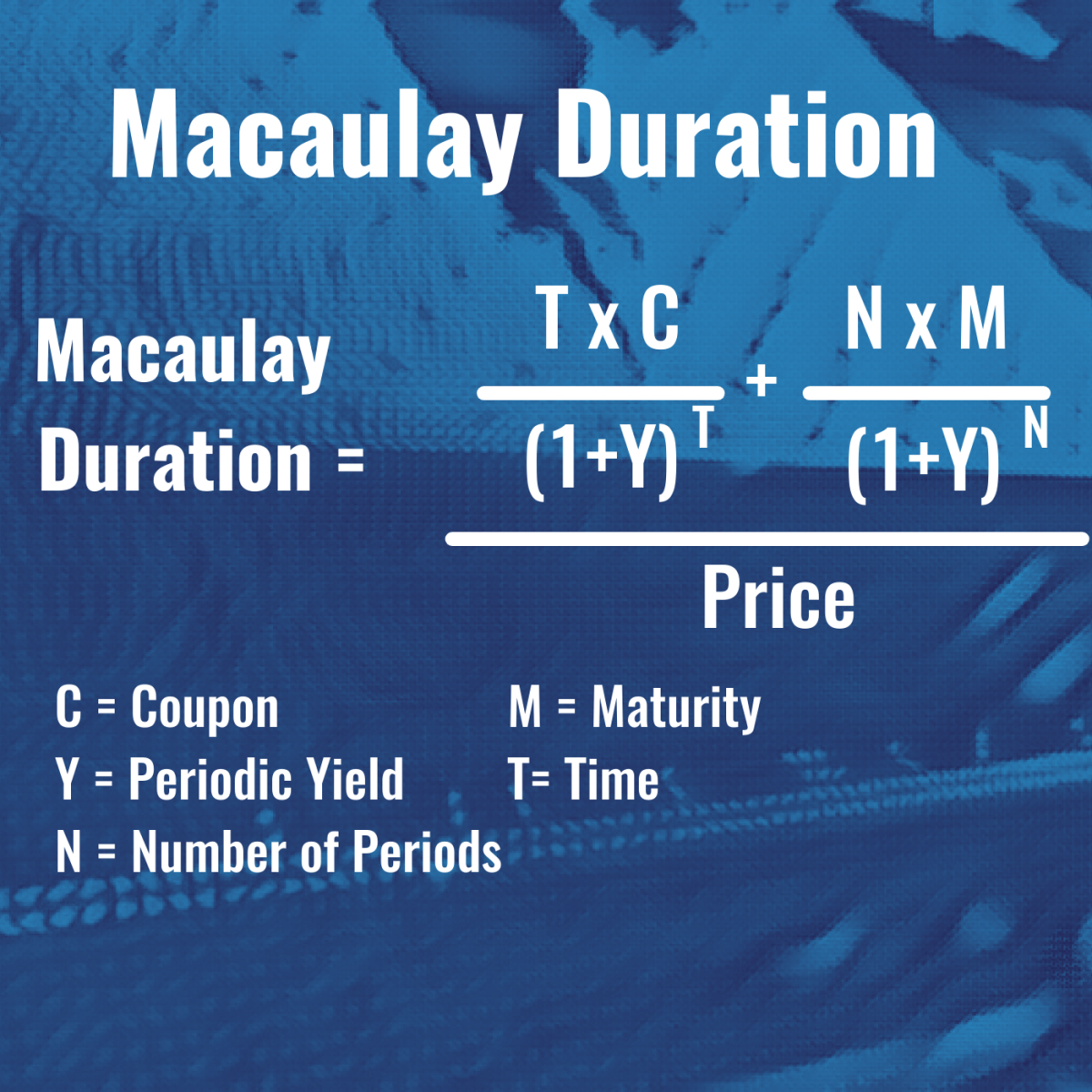
TLT was way down since we discussed it at the end of August. Interestingly, HYG down nowhere near as much and still ahead of TLT YTD. My intuition would *not* be to see a narrowing of the spread between UST and HY.
Zubin Al Genubi responds:
Bonds have positive convexity, and will experience larger and larger price increases as the yield falls.
Alex Castaldo explains:
I am disappointed that the major ETF web sites (etfdb.com, etf.com, etc.) don't seem to give Duration values for Bond ETFs in a reliable and consistent way (sometimes they have it sometimes they don't). With a little effort I was able to find the following on 2 different sites:
TLT Portfolio Data
DURATION 16.11
YIELD TO MATURITY 5.19%
HYG Portfolio Characteristics
Average Yield to Maturity as of Dec 15, 2023 7.64%
Effective Duration as of Dec 15, 2023 3.37 yrs
Assuming these are both correct, up to date, etc. we can see that the Duration (responsiveness of price to yield change) of TLT is about 4.7 times that of HYG. And this is quite common when comparing high yield and high rating bonds (or bond funds).
Zubin Al Genubi adds:
Convexity, along with duration explains bank issues with rapid yield changes, and TLTs rise this month.
Oct
28
Risk, from Duncan Coker
October 28, 2023 | Leave a Comment

It seems a misnomer to call longs bonds risk free. Indeed the default risk is near zero, but the interest rates risk is wilder than a bronco at Montana rodeo. Credit risk is also a factor with potential downgrades. Which begs the question will risk premiums decrease equity vs bonds. Which asset class is actually carries more "risk"" on an annual basis.
Big Al asks:
Are long bonds (UST 30s) referred to as "risk free"? I think of the "risk-free rate" as Treasury bills. Whereas with bonds, doesn't longer duration equal greater risk?
William Huggins responds:
the risks of a long-term contract are mostly in getting out early at a bad time (and thus having a holding period yield lower than YTM), default, and of course inflation. if you hold to maturity (liability matching for instance) then the first risk vanishes but the last two remain. in gov bonds, the second risk also vanishes but the third becomes all important since a gov can promise to give you 1000 currency units but makes no reps about what that will buy at maturity.
Hernan Avella writes:
Interest rate volatility is only a problem for people who don't know how to immunize the risk. One should always match the investment horizon to the duration of the bond holdings. To quote Campbell and Viceira:
In financial economics a one-period indexed bond is usually thought of as riskless. Over one period, a nominal bond is a good substitute for an indexed bond, and thus by extension the riskless asset is often identified with a short-term nominal asset such as a Treasury bill. In a world with time-varying interest rates, however, only the current short-term real interest rate is riskless; future short term interest rates are uncertain. This makes a one-period bond risky from the perspective of long-horizon investors. For such investors, a more natural definition fo a riskless asset might be a real perpetuity, since this asset pays a fixed coupon of one unit of consumption per period forever.
In practical terms, given that we do live in the most powerful country in the history of the world and this country issues indexed bonds. For a long term investor, a TIPS ladder to finance your long term consumption is the riskless asset. Which should be 100% of the portfolio of the infinitely risk averse investor with zero intertemporal elasticity of substitution.
Kim Zussman reflects:
The most risk-free state is death because nothing worse (or better) can happen to you. Less severely one likes to lay on the floor. The cool hard surface is good for back pain and there is no further to fall.
Sep
18
AI hype, from Nils Poertner
September 18, 2023 | Leave a Comment

remember the hype about Chat GPT some weeks /months ago? def for trading /investing - I doubt using that or any other program will help to master time ahead - prob a recipe for disaster at the end.
Peter Ringel writes:
I am still hyped! Hyped for boost in efficiency of the economy via AI. Not hyped for AI-trading systems! So far the training data set seem too small for AI - trading, thankfully. Together with what the Senator and others posted here: humans still beat skynet. Yet, I like to remind myself every day: the bastards are coming.
Hernan Avella responds:
So far the training data set seem too small for AI - trading , thankfully.
How do you figure this? Each trading day probably produces more than 100's million rows between trades and quote updates for all levels and exchanges, if you include futures, equities. I don't think lack of data is the issue here.
Peter Ringel replies:
I know even less about AI-coding, than about trading-coding. So everything is based on perceived experts. Thankfully, so far they are pessimistic.
Hernan Avella continues:
So everything is based on perceived experts.
The set of experts in ML-DL is very small, and the set of experts in trading is also small. I imagine the intersection is even smaller and more importantly, secretive. My suspicion is that the training set is more than enough, but the problem of ergodicity and stationarity (lack of) of the ever evolving competition are the culprit.
Peter Ringel responds:
I hope, you are wrong with this. But at some point you will be not. I speculate, that the "small" existing universe of trading history data + some sort of data - > model on human psychology - will be enough - will make us traders obsolete.
Peter Saint-Andre writes:
In my limited, non-trading experience with LLMs, I've found that their output reflects conventional wisdom. That might leave plenty of room for creative strategies outside the mainstream.
Peter Ringel agrees:
yes, they are regression x1000 on speed. so far feedback loops/ "reflexivity" kill it. As far as I understand.
Hernan Avella warns:
I would abstain from making any statements about the state of the art ML applied to trading, specially from a place of ignorance. Whoever works in this field (which there are only a handful in this list), and interacts with just the basic chat GPT 4.0, realizes immediately the productivity boost and immense potential to improve one's process. Only a moron would expect a good output from just feeding prices to the engine or asking simple questions.
Peter Ringel agrees again:
nooo! especially if you are ignorant in a field , better check if that poses a risk to your systems. I believe AI is a risk to traders. Here is a fact already reality: ChatGPT empowers people to do substantial back-tests.
Big Al adds:
And doing backtests poorly, or being improperly overconfident in backtests, is a threat to one's trading.
Humbert K. wonders:
With reference to the skynet, it is hard to guess if and when fully autonomous weapons will happen. My 2 cents is: Fully autonomous weapons will happen. There are debates as to whether we should let machines make kill decisions. I can say though our adversaries' weapons developments will not be bound in any way by any moral or ethical standards. If the bots can communicate with each other and collaborate to perform. When will they no longer need human inputs or interventions?
Eric Lindell writes:
There's a limit to what computers can do with the massive amounts of data available in countless categories. To find the perfect mix of factors to plug into a formula — if there is such a thing — would require a number of operations that increases exponentially with the data-set size.
Humans are good at intuitively navigating such complex search spaces. Computers using brute force just aren't powerful enough yet — and may (in principle) never be. That said, if a human comes up with a plausible conjecture relating stock picks with subsequent price performance, computers can certainly back-check the theory.
I'm working on one now regarding immediate post-IPO performance of stocks selected by certain criteria — criteria that aren't widely (or even narrowly) recognized for their relevance — pertaining to historical research of a revisionist nature.
Sep
8
Reliability of econ figures, from H. Humbert
September 8, 2023 | 1 Comment
More an open question - don't have the answer…To what extent are economic figures released from gov and gov related entities are really representative of the whole eco situation in the US and Canada? Eg have a number of friends in the US who have lost their jobs in recent months in various industries - and find it hard to get back in. Of course these are all anecdotes only.
The thing I noticed about so many analysts now (also traders) is that they take everything for granted- but our world is based (at least to some extent) on smoke and mirrors.
Larry Williams responds:
For years I have heard this argument: the Gummint guys cook the books, yet their data has, indeed, reflected reality. As I see it, the Shadow Stat crowd just seeks something to prove they are right about being wrong.
Humbert H. comments:
This weekend some figures came out with a huge drop in employment of the native-born Americans and a large increase in the employment of the foreign-born. Supposedly, Bureau of Labor statistics show that 1.2 million native-born workers lost their jobs last month while the number of foreign-born workers increased by 668,000 in August. So depending on who your friends are, you can get a vastly different impression of the overall employment situation.
Steve Ellison comments:
The labor market is very much a mixed bag. The Wall Street Journal had a feature article in May about the "white-collar recession", while it appears that job openings for blue-collar and service workers are going begging.
The big tech company layoffs this year included significant numbers of H-1B visa holders. An H-1B visa holder who is laid off must find a new job within 60 days or leave the US. I read a month or so ago that 90% of the laid-off H-1B visa holders had found re-employment. That situation might be exacerbating the white-collar recession for native-born workers as even in good economic times, many companies use H-1Bs as a way to pay below-market salaries. It is easy to imagine that in a tech market glutted with job seekers, most companies choose the cut-rate H-1B holders.
I looked in the latest BLS report:
Comparing apples to apples (in thousands):
first number July - second number August
Foreign-born employed: 29728 - 30396
Foreign-born unemployed: 1142 - 1171
Native employed: 132254 - 131031
Native unemployed: 5230 - 5452
Big Al writes:
When I think of economic data, I think about how the releases affect markets. As has been posted on the list before, the question is: If you knew the number beforehand, could you trade it? How will the market react? And in today's market, there may be many black boxes programmed to trade each release in particular ways, and then adapting to the reactions to previous releases. And then one must wonder whether some players get the number faster than others.
I asked ChatGPT for examples of data breaches, and it provided these:
US Federal Reserve Lockup Breach (2020): In March 2020, it was reported that a former Federal Reserve employee and his contacts had allegedly leaked confidential economic information to a financial analyst, who then provided it to traders. This case raised concerns about the security of the Federal Reserve's data release process and led to a review of its procedures.
UK Pre-Release of Budget Information (2013): In 2013, it was discovered that some traders had gained access to the UK government's budget information a day before its official release. This breach resulted in regulatory investigations and legal actions against those involved.
Australian Bureau of Statistics Data Leak (2016): In 2016, the Australian Bureau of Statistics had to delay the release of its employment data due to concerns about leaks. The incident highlighted the importance of maintaining data integrity and security in the release process.
European Central Bank Data Leak (2016): The European Central Bank had a data leak in 2016 when it accidentally released sensitive market-moving information to a select group of media organizations a day ahead of the official announcement. This breach raised questions about data handling procedures.
Kim Zussman adds:
NGOs too:
Unusual Option Market Activity and the Terrorist Attacks of September 11, 2001
Eric Lindell asks:
Relative to which indicators would you say their data reflects reality? The government misdirects on so many things, why would their data be reliable? Cost projections for scientific or national security projects are not reliable. Remember when they redefined unemployment to make it drop a few points? Didn't they stop reporting M2? Didn't they lose a couple trill in the pentagon budget? Have recently reported CPI numbers reflected actual costs to consumers? From what I've seen in stores, CPI numbers seem low.
Nils Poertner answers:
exactly. Eric, or see this Gell-Mann amnesia effect. People (not just medical doctors) correctly knew about "misreporting" related to some viral infections, but then read the WSJ and think CPIs numbers are all correct.
H. Humbert comments:
My take is the labor market is just fine and doing exactly what we want to see. Labor participation is rising. Demand for workers is falling.
Aug
20
Serial correlation, from Duncan Coker
August 20, 2023 | Leave a Comment
It would be interesting to look at the daily serial correlation of major markets last few weeks and months. I would posit it has turned positive or more positive than usual. I will take a shot at it. And if positive what does it pose for the coming days.
Zubin Al Genubi adds:
One of the the longest stretch of lower lows consecutive or nearly. 1986 had 8 down days in a row.
Big Al computes:
Rolling 60-tday autocorr for SPY back to 2018:

Looking at the calendar on Daily Spec made me wonder about this: SPY - Rolling count of down days in every 20 trading days:

Aug
13
Inflation back up because, from Larry Williams
August 13, 2023 | Leave a Comment
Inflation back up because fed has raised rates—when will they figure it out - high rates cause inflation.
William Huggins responds:
That's what Erdogan believed in turkey too but those beliefs crashed the lira. Rates (chosen) are a response to inflation (explicitly too).
Larry Williams replies:
Higher rates mean more money into the economy…hence inflationary.
John Floyd writes:
I think Larry probably has some careful thought or evidence behind this in and is not likely influenced by a Crucian Thanksgiving upcoming, MMT in the ‘hood or the like. I am not sure I agree given MV=PY, the collapse of M in the US, UK, Europe, rising financial stress, China headwinds, etc. But I would love to hear the other side.
Larry Williams responds:
MMT has some deep insights—rates cause inflation is one of them.
Stefan Jovanovich writes:
Apologies to all for what is another heretical comment from someone who thinks the United States lost its greatest advantage when it joined the other nations of the world in establishing a central bank as the issuer of sovereign currency IOUs. "Inflation" is always and everywhere a credit phenomenon; the supply of legal tender - the unit of account by which loans are measured - is never the cause. It is, as William implies in his remark about Turkey, the response; the hyperinflations in Germany, Zimbabwe and the moderately awful ones in Argentina and Turkey and elsewhere are not caused by money printing. The money is printed in response to the fact that the country's credit supply has been destroyed; all that is left is to run the rapid wheel of money supply. The prices for things have gone up because the Covid shutdown and regulations were the economic equivalent of a war; the regulations destroyed businesses (including our family office's last operating company; we formally dissolved at the end of last year because there was no reason left for us members to own securities collectively). The destruction reduced the supply; the transfer payments from Trump and Biden gave people the additions to their personal balance sheets that allowed them to spend more.
H. Humbert comments:
Only those with a lot of cash get more money, any new borrowers wind up with less money, and many potential borrowers are scared off by the high cost of debt. Do people with a lot of cash to begin with have a high propensity to spend their extra 2-3% after taxes, enough to compensate for the countereffects?
Larry Williams disagrees:
Wrong. The largest payer of rates is the Gummint - it goes, one way or another to many. Soon I will post chart to prove point but look at Japan and low rates to inflation.
Nils Poertner writes:
we live in a predatorial world - in which inflation is obviously deliberately created to benefit some and hurt others. it still goes in cycles - eg EM fx and inflation - Turkish Lira and Brazilian Real the fx and inflation figures may go the other way - as in previous yrs…as those countries were pretty early w tightening and it is going backwards now.
Larry Williams responds [tongue in cheek?]:
That is so so wrong that someone causes inflation to hurt/help others.
Big Al posits:
Governments need inflation to reduce the future value of their present promises.
John Floyd writes:
There is a myriad more drivers in Japan both economically and culturally driving things. Debt, money velocity, ethos on bankruptcy, ethos on price hikes, demographics, zombification, lost decades. yes govt ownership of debt growth depends on whether money spent or saved.
While I on the topic, those are the headlines generally carried in Turkey and created the narrative; beneath that and related are many different ingredients that put Turkey where it is today, and those are the things to watch for a turn one way or the other; you can be sure the current leader is not going to do a public about face on the below causality belief system, but there are other things happening geopolitically and on the macro. I wrote in 2020 about the challenges; they are pretty much unchanged and give clues what to watch for.
Larry Williams responds:
Sure always drivers but some are race car drivers and mean more and as a general rule.
Stefan Jovanovich offers:
The NY Fed's definition of what they call Underlying Inflation
Their August 2023 reading of the UIG
Bud Conrad writes:
My views on what causes rising prices and declining purchasing power of the dollar:
I follow the simple axiom that inflation will rise when too much money is chasing fewer goods. (And the reverse). The rising quantity of money starts with Federal Government deficits: They print Treasuries to cover the deficit, borrowing new money they spend that exceeds taxes. Traditionally, the public would buy Treasuries to gain guaranteed interest. Banks did the same. When banks make loans they do that by printing money out of thin air given as new deposits at the banks for borrowers to spend; as for example in buying a house with a mortgage. As loans expand, money supply expands almost by definition. A few decades ago, much of Treasury issuance was bought by foreigners with the dollars they accumulated from their trade surplus from the US buying more foreign goods than it sold. The Trade Deficit became the support for the US government Budget Deficit. Foreigners took the dollars that exporters gained and exchanged at their Central Banks for local currency to pay workers, and the foreign Central Banks bought Treasuries. China and Japan had $1.3 trillion each in Treasuries backing their own currency issuance. But foreigners have begun to slow such purchases as they realize that the US dollar is not as good as gold. China has sold a third of its Treasuries, and Russia sold all of its holdings. So foreigners are not the buyers of our government debt now. They are trying to de-dollarize for both financial and political reasons, with the risk that if they turned to net sellers, they could drive rates higher. While domestic institutions provide some buying for themselves and customers, they are not big enough to cover all deficits.
In the current situation, of $ trillion deficits, the Fed becomes the "lender of last resort" that prints up new money to accommodate the new treasury issues, in the form of QE and expanding their balance sheet; which is accomplished by creating new deposits with which to buy Treasuries (and MBS). They increased the money supply, now by about $6 trillion since 2009. They supplied enough buying power that interest rates were kept low. Inflation as measured by consumer goods purchasing was commensurately low, because foreign consumer goods were manufactured in Asia at a wage rate of one fifth of the US. We could just print money to buy cheap goods. The government CPI is manipulated lower with hedonic substitution, calling technological improvements like more powerful computers as a decrease in price, and using rental equivalent housing prices. Their resulting measure of inflation is about half what it should be. Even more seriously: a comprehensive measure of what the dollar can purchase should include asset prices; namely stocks, bonds and accurate housing; and commodities like oil to be a more inclusive indication of changes in the purchasing power of the currency. We had low CPI but higher asset prices when the Fed forced rates below usual market levels, and that drove stock prices higher, (which is not included in the government inflation measure). In summary, the foreign expanded supply of goods kept CPI low, so inflation was below the expected growth in money alone might have indicated.
We are in a different world from before 1971 when international trade was settled in gold, and currency issuance was limited by having backup gold. Our government (and the rest of the world) are creating new deficits and new money at unsustainable levels. The expected new gold backed Currency from the BRICS is expected to replace the importance of dollars to world trade. Politically, the US dominance is declining with losing wars and over spending. Deficits will expand to cover the aging baby boomers demographics. The Fed will be creating trillions to buy the Treasuries to fund the deficits. This quarter Treasury funding is scheduled at $1 Trillion new money and Q4 is planned to be $800Billion (maybe more when the taxes slow in recession). There will be cycles, but the big move is to create new money by the government and banks which will decrease the purchasing power of the dollar in the decade ahead.
Summary differences from common beliefs:
1. Inflation starts from government deficits. (It is affected by many things, but this is the fundamental driver. (not wage push, consumer demand, price gouging, interest rates))
2. Cutting inflation requires less government deficit.
3. Raising interest rates by the Fed is not a very effective way to control inflation.
4. The Fed is forced to raise rates when government deficits and inflation rise; to keep the markets functioning so lenders get some real return. (Not the reverse)
5. We can get a slowing economy AND inflation together. With no anchor to the currency, this is the usual pattern and has happened a hundred times in many countries. (The opposite is expected in the Fed raising rates to fix inflation)
6. Inflation can go much higher than in 1980 when it hit 20%, because we have 120% Debt to GDP now, and it was 30% then. It took three waves.
7 Expect currency destabilization, inflation, and no deflation in the foreseeable future.
Zubin Al Genubi comments:
Credit creation cycle fuels inflation. As credit is given, asset prices go up at the margin. More collateral leads to more credit in a self reinforcing cycle. In contrast to financial assets, Prices of goods demand/supply curve is linear. Financial assets are convex crating booms busts. FED should focus on financial asset price not goods cpi.
John Floyd responds:
Look at money supply, fin stress indicators, consumer buying power info adjusted as savings rate is below pre Covid stimulus in many countries , etc…that will tell you a bit of odds of prospective future infl from demand side …supply side a bit trickier as reshoring, ESG govt led direction takes away Mr Smiths can’t see hand. Simpler equation is to ask how many times the CB’s get it right.
Stefan Jovanovich adds:
Goods can boom and bust because of the order cycle. Customers will double even triple orders on the upcycle and then threaten to pull them in the down cycle.
Aug
5
Trees, mostly
August 5, 2023 | Leave a Comment

old gray mare prob at 3-month hi at 35%.
Lott/Stossel: Election Betting Odds
books read this weekend:
The Hidden Life of Trees: What They Feel, How They Communicate - Discoveries from a Secret World
The Battle for Investment Survival
Trees: A Complete Guide to Their Biology and Structure.
i find the study of trees - especially how high they grow, and how they develop buttresses, and how they branch out and compete with other trees for light - immensely revealing for the various moves.
Big Al suggests:
The Age of Wood: Our Most Useful Material and the Construction of Civilization
Nils Poertner comments:
In many parts of central Europe, the Beech tree used to dominate the landscape thousands of yrs ago. Used to be well over 2/3 - and even today it is like 1/3 in Germany. Why? They tend to grow super and sort of take away all the light from slower growing trees. An oak tree would not stand a chance.
Gyve Bones suggests:
Long term strategy: planting a grove of oaks in a forest in France to be ready in 150 years to replace the roof of Notre Dame de Paris when it burns down.
Peter Saint-Andre offers:
Oxford's Oak Beams, and Other Tales of Humans and Trees in Long-Term Partnership
Peter Ringel writes:
For the last two years I am involved in a project for a German horticulture company. They mainly produce young plants of ornamental plants aka flowers. As a little side project (in early stages) they also produce Paulownia trees (as young plants).
Paulownia is the fastest growing tree in Europe. They originate from Asia. (Some criticize them as invasive species.) Typical commercial applications are wood for instrument manufacturing, wood pellets for energy production or particle boards. The wood is very light (caused by very fast-growing).
Propagation is a little challenging. Usually it is done in-vitro via Biotec-lab, which we have. It is not the easiest variety for in-vitro. We also had some success to propagate via cuttings from mother plants.
Laurel Kenner comments:
Terrible idea to grow these, down there with tree of heaven, kudzu and bamboo. Yes, they are quick to grow, but also impossible to eradicate or even to contain. I am not an eco-hippie, just a gardener.
Zubin Al Genubi adds:
A friend planted a tree farm about 25 years ago with rare exotic hardwoods such as Koa, Bubinga, Cedar, rosewood, mahogany, ebony. It is a multigenerational project but some early woods are being harvested. Some of the rare woods will be very valuable as they are disappearing in their disappearing native habitat. There are numerous governmental grants benefiting the project as well.
Laurel Kenner responds:
I like the project. The idea is not to grow "trees" that are in effect big weeds. Pawlonia is illegal in my state, CT, as is Norwegisn maple, another nasty weed-tree planted in a less enlightened day because it grew fast. They often come down in storms because they're weak. One memorably crashed over my driveway in a big blow and its eldritch too brach rang ny side doorbell.
Peter Ringel replies:
Yes, storms are an issue, especially during the first years. My big mouth was referring to the EU government as hippies, because subsidies and grant policies are highly ideological here. Not referring to anyone else.
The church of Greens has Europe tight in their grip and currently they like Paulownia. There is a trend / hype growing. Other psalms the church likes are "renewable raw materials" or "CO2 neutrality". Paulownia fit these mantras. (plants eat and need CO2 to confuse the church)
Paulownia are not really new to Europe. Introduced to Europe 100 years ago or so. So far they were unable to survive in the European wild in size. Maybe because of frequent stronger winds? On a farm, as industrial product it makes a lot of sense to me. I am obviously biased here, because this would be our customers. It is a nice economic product. E.g. after about the first 2 years of growth, farmers cut them back near the ground level. This timber can be sold. They rapidly grow back and faster than without cutting. A case of eat your cake and have it too. One argument is, to use this locally produced timber instead of importing from South America, Asia, Finland or Russia.
forgot: Paulownia on farms are usually all clones of hybrids. Like a mule, they can not reproduce themselves into surrounding areas.
Jun
27
Ergodicity, from Zubin Al Genubi
June 27, 2023 | Leave a Comment
Ergodicity - odds of group equal odds of individual over time. Risk differs in coin toss and Russian Roulette due to absorbing barrier. Adopt strict risk aversion in trading. Survival is key.
Big Al suggests:
Luca Dellanna on Risk, Ruin, and Ergodicity
May 29 2023
Author and consultant Luca Dellanna talks with EconTalk host Russ Roberts about the importance of avoiding ruin when facing risk. Along the way Dellanna makes understandable the arcane concept of ergodicity and shows the importance of avoiding ruin in every day life.
Ergodicity: Definition, Examples, And Implications, As Simple As Possible, by Luca Dellanna
Larry Williams asks:
What the fun of life with modulated risk?
Nils Poertner wonders:
why do so many traders self-sabotage themselves (self-sabotage is perhaps a strong world but from the outside world it looks like that). some deeper religious guilt thing or so? addictions?
H. Humbert responds:
You can get your fun from winning instead of from the risk taking it takes to win.
Larry Williams asks again:
And how do you win without risking???
H. Humbert answers:
You can't. I was reacting to "the fun of life with modulated risk" comment. You can enjoy the risk taking part, the winning part, both, or none. To me, simply enjoying the risk taking part incentivizes the wrong thing, but enjoying winning, the right thing. You could say that simply enjoying taking risks will lead to winning but then every gambling addict would be a winner, so it's not that simple.
Zubin Al Genubi responds:
As a practical matter money management and convex asymmetric payoffs. Recognizing the risk and the extent is a big part of the puzzle. There is a large range from the coin flip to Russian Roulette not quite recognized by static statistics. The time element is important, hence ergodicity.
Larry Williams states:
Risk within reason but still risk - keeps us young!
May
29
in what other areas, apart from financial markets and sports betting, is there vig? and what is really relevant for everyday life? and how to avoid it?
maybe we don't see it that way because of Gell-Mann Amnesia affect.
Hernan Avella responds:
There’s a rich literature on rent-seeking behavior. It’s pervasive, Pharma, Telecom, Agriculture, Natural Resources. Not all lobbying is RS but the majority is.
Vic asks:
is there a universal law of vig where it goes to 2% in all activities like sports betting?
Jeff Watson offers:
I wrote this in 2009 about vig:
The Vig Keeps Grinding Away, from Jeff Watson
Steve Ellison comments:
Games that advertise that they're commission free usually charge the highest vig of all …
Mr. Watson's statement was written well before all the retail brokerages offered commission-free trading, which I contend simply means convoluted execution that costs customers much more than the $7.95 commissions that existed previously. "Where are the customers' yachts?", indeed.
Separately, the way the CME evolved is a good example of the Professor's constructal theory that all systems evolve to increase flow and velocity.
Hernan Avella disagrees:
Your insights on electronic trading seem to lack sufficient grounding. Abundant evidence disputes your hypothesis, highlighting the significance of the percentage extracted rather than the total volume. The evidence is clear that more opaque markets, like credit and emerging debt, are more expensive, for everybody except for a selected group that invests heavily in keeping the status quo. Electronic markets are more transparent, more anonymous, standardized, continuous, centralized, offer multilateral interaction and informationally more efficient.
Zubin Al Genubi responds:
Give the evidence then, if its so abundant, rather than your usual vague negative comments.
H. Humbert comments:
The beauty of long term investing is there's no vig and there are no taxes, other than once or twice in a few years.
The origin of the word is interesting. It's a Yiddish corruption of a Russian (or some other Slavic) word pronounced "vi igrish" or "gain", but it's more like "winning in a game", and the root means "game".
Alex Castaldo adds:
Interesting. The word can be found in online Russian dictionaries.
"vigorish" has a similar pronunciation, though the meaning has changed to be the fee for the game instead of the winnings.
Nils Poertner writes:
we want to battle against vig in all aspects of our lives. almost build a register where there is vig and share it with family and friends.
Henry Gifford comments:
Vig is one of the many things I find it helpful to view with an understanding of the laws of thermodynamics. The laws of thermodynamics describe the movement of heat in the universe, and because all energy is either heat now or becoming heat, they could be called the laws of heat.
The idea of “follow the money” to understand a system or organization or relationship is closely parallel by “follow the heat”, and heat follows clearly defined laws.
In approximate inverse sequence to importance, the fourth law says that if things A and B are at the same temperature, and things B and C are at the same temperature, then things A and C are at the same temperature. This is also called the zeroth law because it is so basic it should have been thought of first. The fourth law reminds me of the unlikelihood of much true arbitrage existing.
The third law says nothing can be cooled to absolute zero, because that would require something colder to absorb the heat, and nothing can be colder than absolute zero.
The first law says energy can neither be created nor destroyed.
The second law, most analogous to vig, says that heat always flows from hot things to cold things, and never flows the other way on its own. This law is the most profound, with many implications.
For example, one implication of the second law is that a car engine cannot convert all the energy in gasoline to mechanical energy - some will leave as heat that is not useful (except for heating the passenger compartment during the winter). Vig. A utility power plant burns fuel and about 31% of the energy in the fuel gets to the customer’s electric meter - 5 or 10% transmission losses (heat escaping from wires is “lost” - see first law), the rest is waste heat at the power plant. Vig. Various devices can reduce the amount lost to heat, but these devices have too high a vig themselves.
Big Al adds:
The first law makes me think of markets (not the Fed or banking) where money is neither created nor destroyed. For example, in the FTX collapse, the media talked about all the money that was "lost". But of course it wasn't lost, it was simply transferred from one group of entities to others.
Hernan Avella critiques:
This line of thought fails empirically when looking at deflationary crises, loss of crypto keys, central bank operations, bad loans, bankruptcy.
Henry Gifford responds:
Loss of crypto keys and central bank operations both follow the first law - printing money leads to inflation (if inflation is defined as a lowering of the value of money), destroying some of the money in circulation by losing keys, or destroying a dollar left in the pocket of clothing getting washed, increases the value of the remaining money.
I have heard the term “deflationary crisis” before, but don’t believe there has ever been a crisis whose root cause is the increase in the value of money.
In the saving and loan crisis of the late 80s, lenders sometimes asked borrowers to make sure they borrowed enough to make the payments for two years, as it was taxpayer money being lent out, and the lenders were collecting enough vig to make it worth going under I s couple of years.
A bankruptcy stops wasteful behavior, and the threat of bankruptcy causes people to take steps to prevent it. But I guess the waste in a government can continue forever, apparently violating the first law, while also proving that a perpetual motion mechanism really can exist, violating both the first and second laws.
Larry Williams comments:
printing money leads to inflation—data does not suggest that to be true
May
18
Simple modeling, from Zubin Al Genubi
May 18, 2023 | Leave a Comment

What are the most basic market states traders might need to model?
1. Going up
2. Going down
3. Reversing
Ranges, trends are subsets of the 3.
Next step is modeling what simple mechanism causes the 3.
Hernan Avella writes:
There are no “simple mechanisms”. But I would start with the microscopic dynamics of “the turn”. Yesterday [2 May] was a good day to study.
Big Al offers:
An interesting thought experiment is to imagine that you have a chart of a random walk but you still have to trade it. Money management, trade sizing, stops, limits - could you still trade it?
Zubin Al Genubi responds:
Random walk with drift would be the default basic state (S) with random factor u say with sd2. What simple rules might model market activity. Like ants and bees following simple rules but building coordinated complex structures. Adam Smith first mentioned emergence in his invisible hand.
Hernan Avella responds:
Isn't this the basis for most uniform trading that occurs?. While the other big chunk of participants "think" they have a model, "think" they have patterns, but are essentially doing a version of the same?
This reminds me of the infamous Kirilenko paper:
We examine the profitability of a specific class of intermediaries, high frequency
traders (HFTs). Using transaction level data with user identifications, we find that high frequency trading (HFT) is highly profitable: 31 HFTs earn over $29 million in trading profits in one E-mini S&P 500 futures contract during one month. The profits of HFTs are mainly derived from Opportunistic traders, but also from Fundamental (institutional) traders, Small (retail) traders and Non-HFT Market Makers. While HFTs bear some risk, they generate an unusually high average Sharpe ratio of 9.2. These results provide insight into the efficiency of markets at high-frequency time scales and raise the question of why we don’t see more competition among HFTs.
Zubin Al Genubi adds:
Yes HFT guys probably have done it at market maker level. Chair says yes you can trade random walk with drift with buy and hold due to drift. MM and HFT may also have order flow info they buy which may or may not be a different process.
Adam Grimes writes:
Absolutely and of course… that's why the hurdle rate for any test has to be the baseline (unconditional) drift in the sample.
[Re the "thought experiment"] Unless I'm missing something, not profitably (over a large sample size). All these other things are important, but they, at best, keep you at breakeven in a RW environment (i.e., no "signal" or "edge" possible). In real life, a comparable approach keeps you paying the vig with consistency. As for the thought experiment, correct?
Big Al responds:
For me, the thought experiment doesn't have a correct answer but forces me to think more rigorously about issues such as money management, trade sizing, stops, limits.
Andrew Moe writes:
Chair often advised that rather than considering just up/down or above/below a given threshold, one might look at "up big"/"up small"/"down small"/"down big" as classifiers. This is particularly salient in information theoretic calcs (ie, entropy) but interestingly moving to deciles offers little or no improvement.
Zubin Al Genubi adds:
I've been interest in agent based modeling of complex systems using simple rules. A new wrinkle would be adding a random factor following power law distribution in tails which stock data displays.
Jeff Watson responds:
That sounds like a perfect task for ChatGPT.
Gary Phillips adds:
Absent from the previous post on modeling was any mention of time frame. There is greater model risk the shorter the time frame you’re trading in, because price action is more random. Realized volatility, liquidity, gamma, and 0DTE options can and will, shape the trading environment. And, has been demonstrably evident the past 10 weeks, each day has its own ecosystem and market structure. This makes modeling in a short time frame a fool’s errand, and its participants useful liquidity providers.
As one moves to a higher time frame, positioning, money flows and sentiment become most important. Fund flows and positioning, along with cross asset flows, target dated funds, corporate buybacks, seasonal factors, and factor flows take on more meaning.Yet, even if one could ascertain the above factors with certainty, he wouldn’t know if the data was priced into the market or not.
And finally, while there may be a lag or even a disconnect on a long term time frame, macro economic factors, geo-political factors and CB policy, will inevitably exert its influence on the market. But, we don't know if we have experienced the event(s), nor know how traders will react to the event(s), that will finally move the market out of its current trading range.
A pragmatist's model then, is to know the market one’s trading, and to have a well defined process. Then one can make (bias free) observations and accurate, probability-based assumptions.
May
10
Sell in May and go away, from Big Al
May 10, 2023 | Leave a Comment
Lately I have seen a lot of "sell in May" analysis with this being a good example:
Chart of the Day: Sell in May S&P 500
So I looked at all SPY years and calculated the returns for two periods: (1) "summer", end of May to end of October, and (2) "winter", end of October to end of May:
For owning "summer", $100 became $186.
For owning "winter", $100 became $790.
Seems like a clear victory for "sell in May", except for what they always leave out: buy and hold over the whole period turns $100 into $1474.
H. Humbert adds:
It's obviously a much more ridiculous idea if you consider capital gains taxes, which would be short-term if you truly buy and sell for the winter.
Jeffrey Hirsch replies:
Issued my Best Six Months MACD Sell Signal on April 25 for Dow and S&P. Everyone gets so hyper focused on "sell in May", they forget to "buy in October and get themselves sober," as I like to say.
Larry Williams provides perspective:
Never forget: Prior to 1950's best was to buy in may to make some hay….Long gone but once in the data.
Jeffrey Hirsch responds:
Thanks for the Reminder Larry! So true. Here's the chart I use to make that point:

Steve Ellison writes:
For any seasonal pattern, I ask, "Who is the sucker at the table who will buy too high at one time and sell too low at a different time?" And do said suckers have a reason to continue their behavior into the future? The late Mr. E said that a lot of money flows into the stock market at the beginning of a new calendar year as, for example, high-income people who maxed out their 401(k) contributions the previous year can resume.
There was an annual cycle of profitability at the multinational technology company where I worked for 20 years; conveniently, their fiscal year end of October 31 aligned exactly with the Best/Worst 6 months thesis. First quarter, ending in January, was usually strong as it included both the Christmas season and the end-of-year "budget flush" in which corporate managers had to spend any surplus lest their budgets be cut the next year. Second quarter, ending in April, was also usually strong.
Third quarter, ending in July, tended to be a bit weaker as summer started. Fourth quarter, ending in October, was a mixed bag as back-to-school selling season was offset by European businesses mostly shutting down in August. But with commissions and bonuses on the line, the sales force would work 24/7 in the second half of October to close deals and bring in a strong quarter.
Additionally, with third quarter results being reported in mid-August while Wall Street was in the summer doldrums, the company was disproportionately likely to report any major writeoffs or other bad news in the third quarter.
Apr
22
International (viz the USA) diversification, from Big Al
April 22, 2023 | Leave a Comment

Caught a discussion of the benefits/drawbacks of international diversification for US investors, so I had to do at least some basic counting and found that over the last 10 years, using weekly % changes, SPY and VXUS (Vanguard ex-US ETF) have a correlation of +0.85. But SPY provided twice the return (155% vs 74%).
If you want an uncorrelated asset, EEM (MSCI Emerging Markets ETF) had about a zero correlation with SPY or VXUS…but a return of about -10%!
Hernan Avella responds:
This is a rather unsophisticated way to look at the issue of diversification. How about you extend the lookback period, run some simulations, perhaps including a withdrawal rate. Anyways, to some extent I agree with the idea that US investors might be ok with a bit less international diversification vs investors from other countries. 20-30% should be ok. I believe all cap funds for international might not be optimal, I prefer to use cheap multifactor funds. Mother Vanguard is recommending 40+% in foreign.
Starting period is a bit unfair to US equities, but it's the longest overlapping period of the 4 funds. Since Jan 1999, cagr and correlation:
S&P 500 +6.97%
International value (DFIVX) +6.02% cagr .82 corr
Emerging value (DEMSX) 10.52% cagr .75corr
China (MCHFX) 10.79% .53 corr
The framework on a forward basis should be robust/agnostic to globalization - deglobalization, war, currencies crisis. Passive, Cap weighted is a good starting point.
Big Al replies:
Yes, different lookback periods and different funds give you different results. My point is that it's hard to sell people on diversification given the last 10 years.
John Floyd adds:
How do we best consider this on a forward looking basis?
1. What about a reversion given massive US outperformance vs ROW past 10 years plus led by tech mega caps?
2. What about massive reshoring to NA (Canada, Mexico, US) of US and non-US firms given COVID, geopolitics, etc.
3. China had one of the greatest credit booms in history with the speed and size (beyond Japan in 80s, US in 2000s, etc.), that game is over.
H. Humbert writes:
The Sage has Japan in his sights:
Warren Buffett’s trip to Tokyo is seen as a ‘stamp of approval’ for investing in Japan
“For Japanese institutional investors, this really is now the stamp of approval that Japan can deliver superior returns,” Monex Group’s Jesper Koll told CNBC’s Street Signs Asia.
BTW, I had owned exactly one Japanese stock in my life prior to last year, and obscure bra maker, and it hasn't gone anywhere, literally. But in the beginning of last year to me Japan started appearing really attractive, especially for dividend-paying value stocks which is the only kind I buy, so I bought two stocks: TAK, at the beginning of the year which so far has provided a 24% return not including the 4% dividend and KNBWY a year ago which provided an 11% return not including a 3% dividend (both are documented online at the time of purchase). Nothing to write home about but better than the market. If you consider that they are one of the largest pharma companies and beverage companies in the world selling for peanuts, you couldn't find anything of comparable value and safety profile in the US at the time.
Hernan Avella asks:
Mr Humbert, what % of your portfolio did you put in 2 stocks?
H. Humbert replies:
1% for the first one and 0.5% for the second one. Since I own over 200 stocks that's my typical purchase size for something I don't have any particular conviction about. I don't believe in concentrated portfolios since (a) I don't trust my own judgment THAT much (b) I never sell other than in rare cases for tax loss purposes, so this way regardless of what the stock does it never becomes a critical part of my portfolio so I have to trim it and pay taxes.
I also bought four British stocks, so pretty soon you run out of percentage points this way, but way over half of my purchases last year were in foreign stocks. I found much better values abroad, but the European stocks had different reasons to be more attractive than the Japanese ones.
Mar
24
Book recommendation, from Zubin Al Genubi
March 24, 2023 | Leave a Comment

Pirate Latitudes, by Michael Crichton. Aubriesque tale of privateers and Spanish Galleons.
As the SPEC list is about books, as well as markets, counting, and barbeque.
William Huggins adds:
single best book on the history of finance that i've come across is William Goetzmann's Money Changes Everything. He's a Yale finance prof with a background in art history and archeology and its shows throughout the book as he looks at the roots of our toolkit (sumerian word for "baby cow" is the same word they used for "interest", etc). a very good description of the 1720 bubble with the hypothesis that the bubble was a reasonable reaction to the shifting expectations around insurance companies and the lines of risk they could cover. he also suggests that Venetian gov debt (1172) snowballed into the creation of western capital markets, which in turn propelled the west ahead of "the rest" (to steal a ferguson quote). three solid chapters on the tools imperial China used to increase its "span of control" over its rugged territory. 10/10.
(I used to use it as the required reading in my history course until I realized too many were balking at its size)
Jeffrey Hirsch responds:
Appreciate the reco Mr. Sogi. Almost done with Pam V’s reco on Keith Richard’s autobiography, Life, which is far out. Here’s one from me, The Immortal Irishman, by Timothy Egan. Irish revolutionary becomes a Civil War general. Adventurous tale across many continents.
Laurel Kenner writes:
I offer Harpo Speaks, the autobiography of Harpo Marx, the silent brother. Plenty of poker, speculation, and spectacular success, including an account of his Soviet tour, to entertain this List well.
Pamela Van Giessen responds:
Harpo Speaks is fantastic. For a meditative introspective read on things out of our control and how the body copes A Match to the Heart, by Gretel Ehrlich.
Big Al suggests:
I will recommend The Biggest Bluff: How I Learned to Pay Attention, Master Myself, and Win, by Maria Konnikova.
First of all, it's just an entertaining, well-written story. But in her study of poker and portrait of one of the best professional players, Eric Seidel, there are many lessons for traders.
Penny Brown writes:
I recently re-read the cult classic, The Moviegoer, by Walker Percy. It has nothing to do with trading but the main character is a stockbroker. Read it for the wonderful prose and the delineation of Southern characters with great dialogue.
Also, re-read A Fan's Notes, Fredrick Exley's memoir of growing up under shadow of his father's football fame in Watertown. It's amazing that this book even got written since Exley makes three trips to mental institutions where he undergoes electro-shock and insulin therapy and was an inveterate alcoholic for his entire life. You can see the influence of Nabokov and Edmund Wilson (among his favorite writers) in his prose style.
And then I read Embrace the Suck - a book I literally found at my feet on the sidewalk - hey, the price was right - and I assumed it had a special message for me. It certainly did. It describes the training undergone to become a Navy SEAL including the infamously horrid "Hell Week" that resulted in the death of one participant. It has lots of lessons for traders as it extols the virtues of discipline, focus, planning and most of all, a willingness to embrace suffering, as a means of moving beyond mediocrity.
One guy's way of shaping up for the ordeal of SEAL training was to run the Badlands Ultramarathon - a little 100 mile race through the desert at temperatures over 110.
Okay, I'm not going to try that - never could have even in my prime. But it got me out of my chair committed to doing a full set of Bikram's yoga postures including the ones I hate because I can't do it - Salabhsana - or hate because it hurts - Supta-Vajrasana. As the author says, "you've got to embrace the suck everyday."
Gary Boddicker adds:
I recently read Mule Trader: Ray Lum’s Tales of Horses, Mules, and Men. I originally picked it up for the regional interest. Ray was based about 60 miles down Hwy 61 from me in Vicksburg, and traded mules and livestock throughout the Mississippi Delta…but, it turns out a few of the Chair’s favorite writers, Dr.Ben Green and Elmer Kelton, were running buddies of Ray and are mentioned and vouch for his character in the book. Many tales of trades, moving the herds as the tractors slowly replaced them from California to the Delta. In one case, he bought 80,000 horses in South Dakota, and arb’d them to where they could be used. The book rambles a bit, as it is essentially an oral history, but many lessons within.
It brought to mind a discussion I had years ago over dinner with an buddy of mine who farms about 20,000 acres in NE Louisiana. “Gary, there is isn’t a real farmer in Louisiana who picks up that government agricultural census and doesn’t mark down that he owns at least one mule. We are damn slow to admit we gave ‘em up.” I haven’t fact checked him, but a betting man says the mule census is Louisiana is overstated.
Gyve Bones responds:
I have two copies of that book… one autographed by the re-publishing editor. It’s a great book.
Mar
19
Counting the Final Four, from Big Al
March 19, 2023 | Leave a Comment
Below is an update on some counting I did on the NCAA basketball tournament and the Final Four, originally posted in 2010. The data are the programs that made it to the Final Four from 1979-2022, as well as the results. I divided the schools into ones that had made 1 trip to the FF, 2 trips, 3 trips, and 4 or more trips.
58 programs made 172 trips to the Final Four, 1979-2022
Total FF slots: 172
Total Championships: 43
Schools that made 1 trip to the FF
FF trips: 28 - 16.3% of total trips
Championships: 2
Success rate: 7.1%
2-trip schools
FF trips: 14 - 8.1% of total trips
Championships: 1
Success rate: 7.1%
3-trip schools
FF trips: 21 - 12.2% of total trips
Championships: 3
Success rate: 14.3%
Schools that went 4 or more times
FF trips: 109 - 63.4% of total trips
Championships: 37
Success rate: 33.9%
You can see that programs that consistently get to the FF have a much higher success rate for winning the championship. These "power programs" dominate the "lucky underdogs" who have only gotten to the FF once or twice.
The "modal Final Four" is probably 3 power programs and one lucky underdog, and the underdog's luck has usually run out. The 3 power programs then each have about an equal chance of winning the championship.
Notes for fans: The two 1-trip teams that have won the championship are NC State in 1983, and Baylor in 2021. Of the power programs, the outlier is UConn which has been to the FF 5 times and won 4 championships, for an 80% success rate.
Scott Haley asks:
Pardon my ignorance, but the data considers programs' number of FF trips "prior" to the championship of that year, correct? Not total as of 2022?
Big Al replies:
Not ignorance but a good question! No, this is purely an ex-post analysis, totaling up all FF trips and championship wins. Predictively, it supports betting against first-time FF teams, but maybe a lucky underdog is starting a period of sustained performance that will make them a powerhouse.
Scott Haley adds:
An interesting consideration would be the effect of the head coach often being poached by another team after a lucky run. It almost always happens as the lucky underdogs rarely have the resources and/or gravitas to keep them. Basketball is not my speciality so I am unlikely to be able to properly do the analysis. But it's food for thought.
Mar
6
Term structure 101, from Duncan Coker
March 6, 2023 | Leave a Comment
Futures prices, particularly financial futures like S&P and Bond prices, have a relationship to the cash markets which can be arbitraged. It is a function of cash flows usually interest borrowing costs and dividends, but it depends on being able go short and long the cash/spot markets. My questions is this: seems to not hold in hard assets like crude where there is currently large backwardation. You can buy Dec 24 Crude at a large discount and have been able to do so for some time. Specifically, is it possible to short the spot market for crude? Is there a counterparty that will accept this trade? It seems that for term structures like crude futures, the prices are an actual prediction of supply and demand and not an interest rate arbitrage.
Zubin Al Genubi responds:
With crude, storage (or not to store) is part of the future price. I read there is a lot of Russian crude stored in ships now. I'm not sure how that figures in.
In backwardation (tight market) normally one buys the future waiting for convergence with spot. Selling spot- yes you can, but delivery is an issue.
Big Al ruminates:
Not sure what "shorting the spot price" would even mean, other than Zubin's point where you have to have crude for delivery. Doesn't the concept of shorting a contract inherently involve a future price point? You could have 1-day futures, but then the vig might be far more significant.
If we model it on stocks, then shorting spot crude would involve "borrowing" somebody else's oil and then selling it for delivery. But then you're just back to why futures exist in the first place, aren't you?
But speaking of the term structure of crude, I ran across this:
Forecasting WTI crude oil futures returns: Does the term structure help?
Abstract
Nelson-Siegel (NS) factors extracted from the term structure of WTI oil futures are shown to predict subsequent WTI holding period returns in-sample. This in-sample predictability is not diminished by augmenting with macroeconomic indicators or oil market specific predictors. Allowing the decay factor in the Nelson-Siegel model to vary over time improves in-sample predictions at medium horizon return forecasts. We conduct out-of-sample forecasting exercises on models that use NS factors, such as a simple two factor model that uses a composite leading indicator along with the NS decay factor, and a LASSO model that combines NS factors with macroeconomic indicators and oil market specific predictors. These models significantly reduce forecast errors relative to a no change benchmark across a range of return horizons and futures contract maturities. We also find consistent evidence that models that use the NS factors result in trading strategies with higher Sharpe ratios and better skewness properties than buy and hold strategies and historical mean strategies.
Relatedly, the Nelson-Siegel model.
Feb
27
Statistical hypothesis testing in trading strategy development, from Leo Jia
February 27, 2023 | Leave a Comment
This has long been in my mind, recently put to text and published on my webpage. Happy to have any feedback.
Statistical hypothesis testing in trading strategy development
So What is statistical hypothesis testing? From Wikipedia: “A statistical hypothesis test is a method of statistical inference used to decide whether the data at hand sufficiently support a particular hypothesis.”
Though the exact procedures are still not without debates, the general idea is: if a hypothesis can be confirmed as true or valid, it has to stand out from the random processes that apply to the same matter of the hypothesis.
So, it sounds very logical. For instance, if you want to prove that you have good skills at the football penalty kicks, you do say 100 kicks (without a goalkeeper) and compare your results with those of a thousand idiots. Say you scored 97 and rank the 11th among the thousand idiots, or the top 1.1%, then the committee confirms your skill, or in other words, they confirm that your claim of having good skills at the football penalty kicks as true or valid. That means that since you rank at the top 1.1% they trust that you truly have the skill and you will score similarly in future kicks.
Steve Ellison comments:
I am one of the "idiots", ha ha, who has found patterns that back-tested with a statistically significant edge, only to find they did not work very well when I actually traded them.
Part of the problem is that, with a threshold of p = 0.05, if you evaluate more than 20 hypotheses, you are likely to find some that show significance just by random chance. And this problem is multiplied in any study that involves multiple comparisons.
Furthermore, in an era of widespread machine learning, some institution is likely to find a pattern before you do, and may either arb the edge away or discover at its own expense there really is not an edge. David Aronson, who was on the Spec List for some years, discussed "data mining bias" in his 2007 book Evidence-Based Technical Analysis, when machine learning capabilities were in their infancy compared to today.
Big Al adds:
That appears to be a big problem with all sorts of research. It's easy to imagine a large, diverse group of researchers forming a sort of "meta-researcher" that is data snooping on multiple levels, even though the individual researchers are not aware of it.
As a trader, one must be skeptical and ideally have enough data to split it into a test dataset while reserving an out-of-sample data set for confirmation.
When I'm feeling more optimistic, I think of the market as layers of players, from very large down to minute (e.g., me), and most of the market bulk is the result of the bigger players making macro moves, which creates effects that smaller players can trade off of. The issue now is that, with AI technology, tens or even hundreds of billions of dollars can be deployed to black-box strategies that constantly search for smaller anomalies and patterns. But then the Palindrome's concept of reflexivity kicks in as all those black boxes create effects of their own.
Zubin Al Genubi writes:
I am looking at what factors causes price change and why and how. Model it to understand its function. Test with Monte Carlo. Its gives you a step ahead of price. Volatility clustering is a classic example. This what modern biologists do.
Jeffery Rollert responds:
My mental model is a sphere of sponge, suspended in space, with rain droplets hitting it everywhere all the time. It’s a variation of Al’s idea yet with more dimensions. One additional dimension is the age of the idea. As ideas are older, they are absorbed and move to the center where they have less impact on the balance. Market moves are represented when the sphere’s center of gravity shifts from the geometric center. Sort of plate tectonics but with a lot of plates.
Jan
26
Nice quantitative analysis for the Counting 101 class, from Big Al
January 26, 2023 | Leave a Comment
The first chart needs mouseover code, but otherwise…
An Analysis of Deaths in U.S. National Parks
Charles Sorkin comments:
Before I even scrolled down to the horizontal bar chart, my guess for most likely cause of death was "car accident." The bubbles with the highest death frequency are the ones with extremely high road traffic, such as Yosemite, Great Smoky Mountain NP, and the Blue Ridge Parkway. I'd expected that the super-remote parks, like North Cascades and Denali would be more death-prone, but perhaps visitors are far more prepared for contingencies.
H. Humbert writes:
A man seems to have killed himself or slipped into one of the boiling geysers in Yellowstone this past summer. His foot surfaced a few months ago.
Having hiked pretty extensively in Yellowstone, I can attest to there being more danger from falls than grizzly bears. You can be hiking along and all of a sudden find yourself on a cliff.
My biggest fears when hiking have been lightning (when hiking on a ridge with a quick moving summer storm rolling in) and trees — as in being in a lodge pole pine forest trying to get out and over much deadfall and the wind picks up.
A few of us were wandering far off trail, exploring mud pots and geysers. All of a sudden the ground started sinking under me. Fortunately I reacted quickly and alerted the rest of the group. That was way scarier than the wet grizzly paw print we came upon one time.
Most park visitors don’t venture far off the beaten path which is why drownings and falls are the leading causes of death. Those who do venture out tend to be more prepared and knowledgeable. Most of the time.
There is an older gentleman who does a lot of off-trail hiking in Yellowstone to see wildlife and he records his hikes. He seems to have mastered the art (and science) of wildlife spotting while keeping himself safe.
Shortly after he did this hike, he did another where he had to make himself scarce from two grizzlies. I learned a lot by watching what he did to stay out of harm's way.
Zubin Al Genubi connects:
The category Death by GPS has some lessons for quants who don't look up and around.
Big Al adds:
An interesting fist-person read:
‘That Girl is Going to Get Herself Killed’
There is risk in the wilderness — even in mild adventures — and yet we still seek to reason with it, to assign order to it, to control it, and to tempt it.
H. Humbert responds:
Thanks for the read, Al. It is spot on. I would add that even when we are careful and respectful and experienced, anything can happen. In the wild, especially a place like Yellowstone, change is constant so what may have been safe last year may not be so stable this year. Even for Stan Mills who is super experienced, respectful, and cautious, he found himself between two grizzly bears. As he pointed out in his video on the incident (not the one I linked to), when two bears meet, chaos can ensue and he would have been right in the middle of that mix if not for his swift action and a whole lot of luck. For those of us bit by the wild bug, we do tempt it. Because hiking in these places offers a “high” that is almost impossible to obtain any other way because when you are in the wild you have to be so aware of your surroundings that there can be no space in your head for anything else, and you feel and hear and see more of everything. I call it being in the complete and total present tense. But I have no illusions about trying to order or reason with it.
Dec
7
Trial and error, from Big Al
December 7, 2022 | Leave a Comment
Watching Victoria via PBS Masterpiece sub, and it's shown that, during the 19th century, one treatment for syphilis was basically a mercury sauna, inhaling the vapors - yikes!
The history of syphilis is an interesting case for seeing how quack medical treatments, such as mercury, were applied and killed people even more quickly. Of course, one shouldn't judge too harshly as they were treating things of which they had no understanding.
The relevance to trading is that humans have an impulse, when confronted with challenges they don't understand, to resort to superstition and to believe anything that is claimed with great confidence.
Penny Brown notes:
Flaubert took the mercury treatment for syphilis and as a result his tongue turned blue.
Laurel Kenner adds:
Qin Shi Huang, first emperor of China, drank mercury-infused wine to attain eternal life. Rivers of mercury surrounded his burial chamber, a depiction of China. Qin died at 49.
Gyve Bones writes:
We saw examples of that in the recent pandemic. At first "masks don't work. Don't wear masks." then… "Everyone must wear a mask at all times, even alone outside or in a car." Then "The virus stops dead in the vaccinated person, who will not get Covid, and won't spread it to others." then… "Anthony Fauci contracts COVID three times, but is certain it would have been worse had he not been quad-jabbed."
Now there's this disturbing study which shows the effects on infant cord blood and their immune systems from mothers who have been infected with COVID.
Henry Gifford comments:
The early instruction for people to not wear masks was so that security cameras could see people’s faces. The police seem to really love security cameras with an enthusiasm that strikes me as going above and beyond any usefulness to “fight crime”.
There was the time a landlord in NYC put a camera outside a tenant’s door to prove if the tenant was using the apartment as a “primary residence”, and would therefore still be entitled to rent protection or not. The tenant’s boyfriend put bubble gum on the lens and was promptly hunted down and arrested and charged with every crime the cops could think of, with an enthusiasm certainly not caused by anyone’s love for a NYC landlord.
Not being seen clearly on security cameras was, if I remember correctly, sometimes even stated as the reason to not wear masks, which made me wonder – if they think masks work, more people dying is OK as long as people can be seen on cameras?
Pamela Van Giessen responds:
Henry — There exists decades of research that show that masks do not reduce transmission. I have yet to see meaningful evidence (research or real world) that shows that they do work. The current situation in China would seem real world validation of the lack of mask effectiveness. Lockdowns don’t seem to work much either. Most people don’t die from covid either. They don’t even get very sick.
Henry Gifford writes:
I tend to believe things if they can be measured, if the measurements can be repeated by others, and if they can be explained by the laws of physics. I tend to not believe anything not meeting these three criteria. As the owner and fairly regular user of over fifty measuring instruments, the measuring part often means measured by me.
Dec
1
Questions that lead to excuses
December 1, 2022 | Leave a Comment
DealBook to ask SBF "tough questions". perhaps 1 million investors and their counselors who have lost (10 billion?) will be not as forbearing? i would ask verification of his interview that he gave as much to both sides of the aisle. apparently according to interview with Asian reporter he gave money to other side darkly so that he wouldn't be ridiculed by agrarian sources. either way it's deception like the angler fish. i'd also ask him to expatiate on his statement that he doesn't read books.
Mr. Gitarts or Mr. Aiken who knows infinitely more about the crypto than I: "what questions would you ask SBF at end of deal book conference?" to the observer he seems to be the Houdini and the spider of deception.
a third person who knows as much about crypto as anyone answers my query, "why aren't you in jail you piece of — ?"
Barry Gitarts writes:
Yes, SBF was an outright fraud, but there are other things brewing in the space that have been banned a long time ago in traditional markets but have emerged again in crypto.
Remember the bucket shop? Well it's back as a crypto protocol. It pools investors money and will offer a trader a slippage free trade, the trader gets to choose when they enter and exit, however the pool charges 10BPS on the way in and on the way out, they charge double digit interest rates on the position even unlevered and offer up to 150x leverage which of course leads to liquidations.
So how has it done? Since inception in 2021, traders have lost $40m to this pool, and that is not counting interest, trading and liquidation fees. The pool currently holds $375m in assets, one year ago it had $100M in assets.
One would think traders would leave the venue after consistently losing, but trading volume recently hit a new high of $1B notional traded in a day.
Big Al adds:
The question I would ask is, "Who got those billions that SBF lost?" Mr. Gitarts comments may be a trailhead.
Nov
16
Tells
November 16, 2022 | Leave a Comment

i have been asked what signals Mr. Bankman gave of wrongness. khaki shorts, effective altruism, tremendous gifts to 46 and hope of giving 1 billion more, entire family interconnected in supposedly altruistic causes…virtue signaling - what else?
smartest guy in room, stanford professors in family, lover of video games, naming rites. frequent use of curse words. first name basis with head of sec. wanted to be first trillionaire, use of standard of silicon valley " it sucks" in "heartfelt" apology. walked out of meeting with regulators with one crucial demand " need more ubers".
Mr. Bankman's activities and interconnected firms has been compared to Enron, and Madoff, but I would add it to Bernie Cornfeld at IOS. the only thing missing is sex.
Barry Gitarts writes:
- Renaming Miami stadium to "FTX".
- Running a crypto company but sponsoring anti-crypto legislation.
- Talked about how they made so much money arbitraging the "kimchi premium", when no one else in the industry could get around the capital controls of South Korea.
- Badly out of shape and was always visibly shaking (now known to be a result of strong stimulants).
- Goes to congressional hearings with his shoelaces untied.
- Arrogant against critics online, tweets out: "Sell me all your SOL at $3 than F*CK off" in response to an account that asked him what is going on with the price of Solana which he is a big backer of.
- Only achieved a bronze level after playing the video game League of legends for years.
- Playing the video game he is so bad at while on important calls like trying to raise money from Sequoia capital.
- Claims to be frugal only driving a toyota corolla but lives in a $40M condo.
Big Al adds:
Misleading statements?
FTX US, Four Others Ordered to Correct FDIC Insurance Claims
Agency ramping up efforts to crack down on misleading comments
Follows similar action against bankrupt crypto firm Voyager
The Federal Deposit Insurance Corporation issued letters to five companies, including crypto exchange FTX US, demanding that they take immediate steps to correct “false or misleading statements” about certain products being eligible for insurance protection.
John Floyd asks:
I find it interesting delving into how this can help us become better traders in large part by recognizing the human psychology at play here. Is it as simple as if it looks to good to be true it is? Or a filter on linguistic frequency relative to price movement? Or a filter on price movement relative to one's expectations of prospective fundamentals? I can remember being in a room of 10-20 people in 1998 and saying we all own 85% plus of Russia's local currency debt….is that a bad thing and what can go wrong?
Clearly there were smart and successful investors/traders who waived their usual safeguards….what can we learn from this?
Nils Poertner suggests:
I think every company, every group, etc should have at least one person (better a whole team) which only job is to constantly imagine the complete opposite of what the group is doing or thinking.at the moment…
Big Al again:
It also helps to have experienced people on board:
Ultimate Bet Scandal Lawyer Daniel Friedberg at Centre of FTX Crypto Crash
The poker world was shocked to learn that one of the main players in the FTX crypto crash is none other than Daniel Friedberg, the attorney who was in it up to his neck in the Ultimate Bet and Absolute Poker scandals of the late noughties.
Easan Katir writes:
An anecdotal tell with a sample size of one: When I was managing an emerging markets fund, while doing due diligence on the island of Mauritius I met a young fellow who looked a lot like SBF who was guaranteeing his investors that he would profit 50% each year. I advised him to never guarantee anything, since markets are…well, y'know, fickle. He didn't listen and kept repeating his guarantee, with the predictable result: big losses, angry investors.
What strikes me is the same body type: large round head, gangly, same slightly vacant expression… probably coincidence…
Penny Brown suggests:
All movie stars (Matt Damon) and celebrities (Giselle & Brady, Naomi Osaka) the new shoe shine boys Joe Kennedy warned against?
Oct
11
Interesting cultural lagniappe, from Big Al
October 11, 2022 | Leave a Comment
Americans Are Fake and the Dutch Are Rude!
Do all human beings have emotions, just like we all have noses or hands? Our noses have different shapes and sizes but when all is said and done they help us breathe, and let us sniff and smell the world around us. Our hands can be big or small, strong or weak, but regardless they help us touch, grasp, hold, and carry.
Does the same hold for emotions? Is it true that emotions can look different but, in the end, we all have the same emotions—that deep inside, everybody is like yourself? It would mean that once you take the time to get to know somebody, you will recognize and comprehend the feelings of people who have different backgrounds, speak different languages, come from other communities or cultures. But are other people angry, happy, and scared, just like you? And are your feelings just like theirs? I do not think so.
Andrew Aiken asks:
Why do Belgians have windshield wipers on the inside of the windshield?
Peter Saint-Andre doubts:
As someone who is half American and half Dutch, I am skeptical. The fact that there is a difference between Americans and Dutch in the style of public emotional expression doesn't mean that Americans experience, say, gratitude and Netherlanders don't. Also, if this person had come to New York (New Netherland!) instead of the midwest (midwesterners are fake, New Yorkers are rude!), she might have come to different conclusions.
And let's not forget that one of the world's famously untranslatable words is "gezellig", which in Dutch means the warm, cozy, comfortable feeling you experience when in the company of family or close friends.
Pamela Van Giessen agrees:
Over 50% of social science research, of which psychology comprises a significant proportion, fails on bad data, poor data management, and is unreproducible. Seems like this author is a poster child for that.
Oct
5
Cheating, from Zubin Al Genubi
October 5, 2022 | Leave a Comment

Chess.com: 'Niemann Has Likely Cheated In More Than 100 Online Chess Games'
We based this decision on several factors. First, as detailed in this report, Hans admitted to cheating in chess games on our site as recently as 2020 after our cheating-detection software and team uncovered suspicious play.
The interesting thing to me is the cheating detection system.
Big Al imagines:
Trying to imagine what it might be, the first thing that comes to mind is feeding each situation, move by move, into AlphaZero and seeing what AlphaZero would do. If the player's moves match too closely to a program rated 3800, when the player's rating is maybe 1200 points lower, then one must assume the play is computer-assisted.
Antonio Porres Miranda offers:
Steve Ellison writes:
I am not sure if the grandmaster is still among us on the list, but I have seen him on social media expressing concerns about what level of due process there is in the event of a public accusation of cheating. He thinks the possibility of being accused might be enough to motivate top players to skip events. For example, here.
Aug
30
Keeping charts by hand, an interview with Helene Meisler
August 30, 2022 | Leave a Comment
Big Al writes:
A fun and interesting interview with Helene Meisler who has been keeping charts by hand since the 80s.
Helene Meisler On What's Going On With the Stock Market Now
The Federal Reserve is in tightening mode. And there's that old adage "don't fight the Fed" which means in theory it's a bad time for stocks. And yet we saw a surprisingly powerful rally off the bottom in June. But now what? Can the market resume its ascent? Or will we return to the lows, or possibly make new lows? On this episode we speak to Helene Meisler, who has been trading stocks for roughly four decades, and who has a unique approach to analyzing the market. She draws stock charts by hand. In our chat, Meisler explains her methodology, and gives her assessment of the market right now.
Jeff Watson comments:
I still keep up my charts by hand, and I know at least 3 others on the list who do the same. Does keeping charts add value for those who partake in the practice?
Duncan Coker responds:
I would posit that the physical act of writing and drawing is beneficial. It improves focus and generates a sense of mastery and accomplishment, however small, both of which are good for trading. This is all in addition to the statistical information garnered.
Aug
30
Practical applications of counting beyond finance /trading, from Nils Poertner
August 30, 2022 | Leave a Comment
1. telling marauding children in back of a car (when on longer trips) to count number of green vehicles….and then red and so on (or let them experience boredom and don't give in and hand over a tablet).
2. for natural vision building -so ppl who lost ability to see far ahead (myopia), they would benefit from counting leaves of a tree or anything they can see - and don't worry if it is still blurry…it is getting better - coz nature rewards those who at least try….but once we believe something (that it can't get better - well, then it won't) - same for presbyopia (start counting tiny letters font size 1 btw).
counting can be wonderful for the brain and the brain is the motor that keeps it all together….millions of other applications. I wish ppl would do more counting - we are just going (as society) in the complete other direction. but the individual can escape that trend.
Vic comments:
very Galtonian who said "always count" and he kept a little pad and pricker with him at all times. counted the number of fidgets in the audience at 90.
Big Al offers:
I practice counting steps to measure distance, say around the park with the dogs, or on a hike. I count only lefts or rights (switching between the two at intervals) so that for me one "pace" is two "steps". I calibrated my pace counting against a wristband GPS and found that a mile is about 1100 paces for me.
Another practice is to count breaths, on the exhale, following the breath with one's attention. It is focusing and relaxing. One can calibrate one's breaths to measure time.
Nils Poertner writes:
love that counting for breathing - it is not that the drama outside does not exist, but in order to see things more realistically and go with probabilities also for trading… one better improve own mental health….. and many people (not just traders) are so fickle.
eg one of my trader friends would call me in the middle of the night and leave a voicemail that this and that is going to happen since he saw it on TV - mostly pictures that have a strong impact on his amygdala…
Zubin Al Genubi adds:
I count breathing 5.5 seconds in, 5.5 second out, 5.5 breaths a minute, and 5.5 liters per breath.
Andrew Moe writes:
I count seconds during cooking, particularly when operating on multiple dishes simultaneously. Also count seconds when trying to squeeze out an extra minute or two in the sauna.
Duncan Coker notes:
Watering the plants with a garden hose. 10 seconds about half gallon with my
sprayer.
Jul
31
Equipment, from Zubin Al Genubi
July 31, 2022 | Leave a Comment
When you first start learning a sport equipment seems important. After years of practice and finally mastery you realize equipment doesn't matter. I suppose true. I suppose true life mastery makes you realize you don't even need equipment.
Peter Saint-Andre writes:
Recently I visited an uncle of mine for a few days and, to help while away the time, played a cheap guitar he had sitting around in his attic. I sure was happy to get home and play the nice Taylor 6-string I bought years ago on 48th Street (the now-vanished "Music Row") in NYC.
Steve Ellison adds:
I used my skis for 16 years. Good value for money, but in the meantime designs and materials improved. In recent years, my old skis were noticeably skinnier than those of others riding lifts with me. In March I bought new skis, and I hope I can be proficient with less effort.
Larry Williams writes:
Running shoes have made a major breakthrough with the carbon soles, etc. no way will I ever go back to my old Tigers.
Justin Klosek comments:
Musical instruments can improve over time, too — my Nord keyboard has terrific sounds (and effects) that used to require lots of pieces to achieve. now in one convenient package, and more reliable!
Michael Brush says:
Taylors are nice! Jewel used to borrow them from that store for recording sessions in NYC. She helped put Taylor on the map back then, and cutaways.
Peter Saint-Andre responds:
I bought my Taylor jumbo six-string (serial #690, made at their original workshop in Lemon Grove) in 1988, when Jewel was 14 years old and still living on a far.
Jeff Watson offers:
Interesting list of artists who play Taylors. Much more than Jewel.
Michael Brush replies:
Of course. But she put them on the map. I never bought one. I can't stand having to use Elixirs, and they got way to trendy. I have many Martins and Gibsons.
Big Al offers:
Some quotes from Yvon Chouinard:
You perfect a sport when you can do all of these things with less stuff. The most impressive ascent of Everest was by the Swedish guy who bicycled from Stockholm to Kathmandu and then soloed Everest and bicycled back to Stockholm. That is cool, as opposed to this huge multinational guided thing with computers and internet cafes at the base of Everest.
The more you know, the less you need.
The word adventure has gotten overused. For me, when everything goes wrong – that’s when adventure starts.
Jul
14
Fourier Transform, from Alston Mabry
July 14, 2022 | Leave a Comment
This guy does great vids:
But what is the Fourier Transform? A visual introduction.
Stefan Jovanovich appreciates:
Wonderful. Thank you.
Zubin Al applies:
And what do you do with it?
Fast Fourier Transform in Predicting Financial Securities Prices
Turns all the conflicting signals into a nice oscillator.
Jun
14
If Thursday, Friday, and Monday are all down, what is Tuesday? from Big Al
June 14, 2022 | Leave a Comment
For SPY since inception (1993):
observations: 127
positive: 79
% positive: 62.2%
mean move: 0.37%
sd: 1.61%
z vs all SPY days: 3.19
Jeffrey Hirsch comments:
Filtering for magnitude might be instructive.
Michael Brush suggests:
Would it need to be Thurs Fri Mon down ahead of a Wed Fed meeting? That seems to be the salient factor. For months markets have been weak in the days leading up to a Fed meeting, and then…
Kim Zussman adds:
There may also be a size effect, i.e., not just down, but down small vs big %.
Apr
13
Skills transfer, from Big Al
April 13, 2022 | Leave a Comment
Carlsen has a great poker face:
World Number One Magnus Carlsen Stuns Everyone With His Poker Skills
Every time you watch the world chess champion, Magnus Carlsen, he never fails to amaze. It’s like he is the best in everything he touches. His brilliant skills are not just limited to the world of chess. But the Norwegian Grand Master can easily adapt to other games as well. While Carlsen’s stats in the Fantasy Premier League can give you chills, his poker skills are even better.
WATCH: Magnus Carlsen, Best Chess Player In History, Turns Pocket Aces Into A Bluff
A reader writes:
i have noticed that ambitious chess players, by and large, seem to be pretty straightforward type guys….not saying they never lie - they are humans but it made me think about certain disciplines in life requiring a sense of honesty to improve - also honesty for oneself - cuz the game itself is not about gaming others but by using memory, logic etc. and lying itself puts extra mental strain on the brain, and they need to concentrate for hours and hours. whereas say ppl who manage OPM…well, a lot are good in marketing etc. no prob with that, just saying.
Zubin Al Genubi adds:
The joke about lying in our family comes from when our kids were little.
We asked,"Who did this?"
Big sis says,"Kenny did it."
Little Kenny says,"Kitty did it!"
J.T. asks:
So poker is the antithesis of chess?
Big Al responds:
From what I've read, von Neumann didn't consider chess to really be a "game" because of complete information. On the other hand, he loved poker because of incomplete information and the possibility of bluffing. He felt poker was, therefore, a true "game".
Andy Aiken comments:
Sprague-Grundy Theorem states that all impartial games are equivalent to Nim. Since a chess game starts impartially, and there is a process of removing pieces (and therefore at each turn, a chess game has a nim-state equivalent), it is a game in the classic sense. But the randomness of play is due to human error, not chance.
The current chess programs can beat international grandmasters and eventually they'll be insurmountable by humans. The final stage of programs playing one another (if anyone cases to watch such games) will probably consist of elaborate opening traps and gambits, with volatile position scores until midgame, at which point the winner will be obvious.
Poker has a large element of chance that can be increased without any change to game rules (adding decks to the shuffle, table bet limits, etc). And there's the additional issue of money/bankroll management that adds further uncertainty. In contrast to poker, in which everyone plays for money, I only know one person who plays chess for money, and he's a 2600+ rated player.
J.T. writes:
Don’t forget the use of bluffing in poker whereas chess doesn’t have such.
Stefan Jovanovich disagrees:
"Bluffing" is the essence of chess - and warfare. Both players see the board - as opposing armies see each other's deployments. What each player cannot see is where their opponent intends to attack and where they plan to defend and how much those plans will change as the game continues.
The biggest part of the blitzkrieg lie is that the French and British did not see the Germans coming through the Ardennes. They did; they did not think it was going to be the main axis of attack. And, until the Germans had the good fortune to have their opponents recover a copy of their tasking orders from a general staff officer, the plans did not have the Ardennes being the center of focus.
I am, as in most things, barely mediocre at chess; but I am unembarrassed by my lifelong habit of asking dumb and then dumber questions. The one person I know who is capable and who studies the game like a real-life Philip Marlowe tells me that deception is the key and the great challenge is not to fall victim to your own certainties about what is going to happen next on the battlefield.
Big Al responds:
You've using a very soft/fuzzy definition of information and bluffing. In game theory, chess is a game of *complete information*, i.e., all the information about the game is visible on the board to both players at any given time. Poker is a game of *incomplete information*, e.g., in Texas Holdem you don't know what your opponents hole cards are and you don't know what cards will be dealt on the flop, turn, and river. Also, in poker you can truly "bluff", i.e., pretend, through betting, that you have cards you don't have. In chess you can't pretend to have more pieces than you do or that they are in positions on the board other than the ones they actually occupy.
War is definitely a "game" of incomplete information.
Stefan Jovanovich contends:
No. Militaries know what each other side has - in terms of resources - and unlike poker the game is continuous. There are no hands, bets and then the winner takes all; and then new hands are dealt. I can understand how JHH and others see Ukraine as winning; judging each day's events as a single operation or poker hand shows a picture of success for Ukraine. Yet here we are in a war that continues with no end in sight even as Ukraine gets more advice based on the presumption that Russians cannot think more than one move ahead.
Apr
7
Washington Inoculates an Army, from Big Al
April 7, 2022 | Leave a Comment
Washington Inoculates an Army
The Continental Army Battles an Invisible Foe
Stefan Jovanovich comments:
Washington was always a better strategist than tactician. Even though he lost more battles than he won he had command of the larger picture. In this case he scored a seemingly impossible victory against an invisible enemy.
First sentence: meaningless. Washington was never Commander-in-Chief in the way Lincoln and Roosevelt were. Congress and the French (and later Spanish) allies determined the "strategy" based entirely on their territorial ambitions. You kick the British out of Boston so they and their soldiers have to go to Halifax and then you decide the best of all possible strategic choices is to try to capture Quebec City when the smallpox has already weakened your army?
Second sentence: equally meaningless. The "larger picture" was always the one in the Caribbean, Mediterranean, and the Indian Ocean, not the Atlantic colonies.
Third sentence: The only proof that they did are the Army's own records of the soldiers who reported being sick. The number of those infected with smallpox fall off dramatically in the last two years of the war (1778-1779), but the evidence that attributes this to successful inoculation rather than the accrual of natural immunity is a single case study. The Army surgeons conducted a clinical trial during the winter in Morristown (which was far worse than Valley Forge) when 6 out of 6 soldiers who were vaccinated did not die from the disease versus 5 out of 6 for those who were not vaccinated. See Smallpox in Washington's Army: Strategic Implications of the Disease During the American Revolutionary War.
Mar
20
Jevon’s paradox, from Big Al
March 20, 2022 | Leave a Comment
How does Jevon's paradox play into the current situation with commodities?
Oil demand holds up in Norway, despite record electric car sales
In September, electric cars reached a record 77.5% share of new car sales in Norway. Yet, surprisingly, oil demand is higher than ten years ago when the first zero-emission cars were sold in the country. (UBS Editorial Team, 08 Dec 2021)
Zubin Al Genubi laments:
It's like my garage storage and my budget, demand grows to meet supply. Also despite efficiency the same energy created is used.
Big Al adds:
The road-congestion version:
The Fundamental Law of Road Congestion: Evidence from US Cities
Gilles Duranton and Matthew A. Turner
AMERICAN ECONOMIC REVIEW
VOL. 101, NO. 6, OCTOBER 2011
Abstract
We investigate the effect of lane kilometers of roads on vehicle-kilometers traveled (VKT) in US cities. VKT increases proportionately to roadway lane kilometers for interstate highways and probably slightly less rapidly for other types of roads. The sources for this extra VKT are increases in driving by current residents, increases in commercial traffic, and migration. Increasing lane kilometers for one type of road diverts little traffic from other types of road. We find no evidence that the provision of public transportation affects VKT. We conclude that increased provision of roads or public transit is unlikely to relieve congestion.
See also induced demand.
Stefan Jovanovich comments:
There is no marginal cost of entry into the "system" of free roads. The only way that public transit can begin to compete with highways is for their cost of entry - i.e. the fares - to also be zero. I had one great professor at what was otherwise a mediocre school - what Harvard then called Architectural Sciences - who taught this. I can still remember his lectures and one in particular - when he explained how he had been unable to convince the Indonesian government that the solution to their particular traffic problem was to fix the phone system. It was so unreliable that even in what was still a poor country the streets in Jakarta would be jammed by merchants and others getting in their cars so they could talk to one another in person.
See also bid-rent theory.
Big Al adds:
You'd think that policy would be a natural, especially for "progressive" regimes, given that public transport fares must skew towards a tax on the bottom deciles.
Feb
18
An old canard, from Jeff Watson
February 18, 2022 | Leave a Comment
The old canard, “You never go broke taking a profit” was not coined by a winner, that’s for sure.
Big Al adds:
Markets are an excellent venue for cultivating outcome bias and hindsight bias. It's too easy to look at a chart and think, "Why didn't I buy *here* and sell *there*???" Then you turn to face the future, and the future is blank.
Jeff Watson writes:
People who watch televised poker with the hole cards exposed and % to win, frequently make judgments of the players performances based on the complete information they see vs the incomplete information the player is working with. It’s easy to be an armchair quarterback.
Dendi Suhubdy comments:
True. You could however predict the bluff rate, and percentages from past play, which can be used to win a game. New outlier players are hard to predict because lack of data, you need some sort of one-shot learning there. Hard.
Zubin Al Genubi responds:
The best buys are at the point of maximum pain and uncertainty.
Feb
3
Musical intuition, from Nils Poertner
February 3, 2022 | Leave a Comment
From Einstein On Creative Thinking: Music and the Intuitive Art of Scientific Imagination:
In other interviews, he (Albert Einstein) attributed his scientific insight and intuition mainly to music. "If I were not a physicist," he once said, "I would probably be a musician. I often think in music. I live my daydreams in music. I see my life in terms of music…. I get most joy in life out of music" (Calaprice, 2000, 155). His son, Hans, amplified what Einstein meant by recounting that "[w]henever he felt that he had come to the end of the road or into a difficult situation in his work, he would take refuge in music, and that would usually resolve all his difficulties."
btw, today [3 Feb] is the birthday of Felix Mendelssohn Bartholdy.
Stefan Jovanovich writes:
I don't really think; the few insights I have come from early training in copy editing and a certain skill for moving 3D objects around in space so they fit better (in the good old days this was called warehousing). For that kind of mind mulling, Haydn's Piano Trios have become the essential daily brain food for over a year now.
Nils Poertner replies:
perhaps there is a type of music, or composer, or melody, that resonates with a certain person for a while - almost like good medicine? a little goes a long way though.
Adam Grimes comments:
Speaking personally, I can't listen to complex music and do any other task. My attention is too easily diverted to the music and I spend too much time focusing on the music, which is an obvious reflection of how my brain has been trained. (I do think there are some fundamental differences in the way musicians perceive music compared to "everyone else", and different types of musicians also perceive differently, based on my experience.)
I do, however, like a wide range of musics, and I find bluegrass and old-school country are especially conducive to writing and programming. (Again, a very personal perspective.)
I do think musical training teaches people to hold and to manipulate patterns in a special way. There's also a lot to be said for the work ethic and focus of a musician. (When I was younger, I spent 6+ hours in front of my instrument, day after day. That requires a degree of focus and attention to detail that most people don't encounter very often.) But I'm still a little skeptical about wide-ranging benefits… maybe they are there, but expertise can be frustratingly domain-specific. I suspect there might be something in the pattern recognition and manipulation aspects that's meaningful, though.
Stefan Jovanovich responds:
For one thing, AG, you all actually hear the music. I can recognize the differences between the F-Minor (#26) and the E-Flat Minor (#31) because I have heard the pieces often enough to distinguish one combination of noises from the other; but that is all. I do not perceive the music.
Zubin Al Genubi adds:
After training and practice you can hear in your mind the perfect pitch of a note out of thin air and tell if a note is not in tune. Its another thing to train your voice to hit that perfect pitch.
Adam Grimes writes:
The skill of "perfect pitch" (absolute pitch), which is the ability to name notes out of thin air, is actually not trainable, despite a lot of work and effort. It appears to be a skill that probably all babies have, just as babies have the ability to hear all phonemes in all human languages. At some point, early on, the brain changes and unused (unheard) phonemes become relatively inaccessible (which is why, for instance, native French speakers struggle with the English "th" (and there are many other examples), and this appears to be the window that closes on developing perfect pitch. If musical training begins at a young age, this skill of absolute pitch may continue into adulthood.
It's also interesting that there's a range of pitches that will be accepted as "A", just as there are a range of mouth sounds that will be perceived as a specific phoneme. (in other words, not all speakers will produce the same sounds in a language exactly the same, and the same speaker might produce sounds slightly differently in different words, but the brain adjusts by categorizing.) I don't have absolute pitch myself (though I do have a few absolute "notes" that I can recognize or pull from memory), but in working with people who do, I've noticed they don't have quite the precision of a tuning fork. What they do have is a radically different perception of music than the rest of us, though the rest of us aren't as handicapped as we would be inclined to think.
There's a lot of very interesting work done and being done on perception. David Huron has written a few books that are both precise and accessible–always a nice combination of attributes!
Though perfect pitch can't be trained, what CAN be trained is the ability to judge relative pitches and to hear multiple notes played with precision. As you say, training the voice is another skill. I'm a very poor singer, but producing pitches with the voice is a critical part of internalizing pitch (and music, in general) for instrumentalists.
Big Al adds:
I think one of the most important lessons in music, especially for young people, is that you can begin studying something you know nothing about and, through practice, master it. Many people do not learn this and schools don't overtly teach it.
Jan
30
Marion Tinsley, checkers master
January 30, 2022 | Leave a Comment

Chess is like looking out over a vast open ocean; checkers is like looking into a bottomless well.
- Marion Tinsley
Marion Franklin Tinsley (February 3, 1927 – April 3, 1995) was an American mathematician and checkers player. He is considered to be the greatest checkers player who ever lived. Tinsley was world champion 1955–1958 and 1975–1991 and never lost a world championship match, and lost only seven games (two of them to the Chinook computer program) from 1950 until his death in 1995. He withdrew from championship play during the years 1958–1975, relinquishing the title during that time. It was said that Tinsley was "to checkers what Leonardo da Vinci was to science, what Michelangelo was to art and what Beethoven was to music."
in honor of Marion Tinsley and the game of checkers, I pulled out yet another book of proverbs of Tom Wiswell, who is the Marion Tinsley of problems: the book is called Maxims, Mysteries, and Memories. It so far is unpublished but it will live on.
Here are some new Wiswell proverbs that are good for markets: "don't try to be brilliant, just try to survive." I think I succeeded. "there is never an end to the fine endings in checkers; like old man river, they just keep rolling along." and Tom's favorite: "Moves that disturb your position the least, disturb your opponent the most."
"Defeat is what happens to you while you are making other plans." Wiswell from Maxims with proposed associate editor and shout out to Susan Niederhoffer. have you tested that — from Wiswell: "Checkers seems to guarantee a long life - it is the board of health." Tom writing about Larry Evans and Sammy Reshevsky.
I repeat: checkers moves are very close to all the logic moves that go into the circuitry of computers for truth tables and arithmetic calculations. as such it is the best training for a youngster.
Laurence Glazier offers:
How Checkers Was Solved
The story of a duel between two men, one who dies, and the nature of the quest to build artificial intelligence
Zubin Al Genubi writes:
Sometimes when I trade I like to think I see signs of computer trading…such as multiple players running the same algo and doing something stupid. Probably just hubris on my part. In the old days I would like to think "now here is a bunch of retail guys calling their broker" and the broker sloppily entering orders, or some big fund in trouble and exiting a big holding like Worldcom. The tape talks. Why can't a computer figure it out. Its just a problem of size and bandwidth.
Big Al suggests:
The Man Who Solved the Market: How Jim Simons Launched the Quant Revolution
« go back — keep looking »Archives
- October 2026
- September 2026
- August 2026
- July 2026
- June 2026
- May 2026
- April 2026
- March 2026
- February 2026
- January 2026
- December 2025
- November 2025
- October 2025
- September 2025
- August 2025
- July 2025
- June 2025
- May 2025
- April 2025
- March 2025
- February 2025
- January 2025
- December 2024
- November 2024
- October 2024
- September 2024
- August 2024
- July 2024
- June 2024
- May 2024
- April 2024
- March 2024
- February 2024
- January 2024
- December 2023
- November 2023
- October 2023
- September 2023
- August 2023
- July 2023
- June 2023
- May 2023
- April 2023
- March 2023
- February 2023
- January 2023
- December 2022
- November 2022
- October 2022
- September 2022
- August 2022
- July 2022
- June 2022
- May 2022
- April 2022
- March 2022
- February 2022
- January 2022
- December 2021
- November 2021
- October 2021
- September 2021
- August 2021
- July 2021
- June 2021
- May 2021
- April 2021
- March 2021
- February 2021
- January 2021
- December 2020
- November 2020
- October 2020
- September 2020
- August 2020
- July 2020
- June 2020
- May 2020
- April 2020
- March 2020
- February 2020
- January 2020
- December 2019
- November 2019
- October 2019
- September 2019
- August 2019
- July 2019
- June 2019
- May 2019
- April 2019
- March 2019
- February 2019
- January 2019
- December 2018
- November 2018
- October 2018
- September 2018
- August 2018
- July 2018
- June 2018
- May 2018
- April 2018
- March 2018
- February 2018
- January 2018
- December 2017
- November 2017
- October 2017
- September 2017
- August 2017
- July 2017
- June 2017
- May 2017
- April 2017
- March 2017
- February 2017
- January 2017
- December 2016
- November 2016
- October 2016
- September 2016
- August 2016
- July 2016
- June 2016
- May 2016
- April 2016
- March 2016
- February 2016
- January 2016
- December 2015
- November 2015
- October 2015
- September 2015
- August 2015
- July 2015
- June 2015
- May 2015
- April 2015
- March 2015
- February 2015
- January 2015
- December 2014
- November 2014
- October 2014
- September 2014
- August 2014
- July 2014
- June 2014
- May 2014
- April 2014
- March 2014
- February 2014
- January 2014
- December 2013
- November 2013
- October 2013
- September 2013
- August 2013
- July 2013
- June 2013
- May 2013
- April 2013
- March 2013
- February 2013
- January 2013
- December 2012
- November 2012
- October 2012
- September 2012
- August 2012
- July 2012
- June 2012
- May 2012
- April 2012
- March 2012
- February 2012
- January 2012
- December 2011
- November 2011
- October 2011
- September 2011
- August 2011
- July 2011
- June 2011
- May 2011
- April 2011
- March 2011
- February 2011
- January 2011
- December 2010
- November 2010
- October 2010
- September 2010
- August 2010
- July 2010
- June 2010
- May 2010
- April 2010
- March 2010
- February 2010
- January 2010
- December 2009
- November 2009
- October 2009
- September 2009
- August 2009
- July 2009
- June 2009
- May 2009
- April 2009
- March 2009
- February 2009
- January 2009
- December 2008
- November 2008
- October 2008
- September 2008
- August 2008
- July 2008
- June 2008
- May 2008
- April 2008
- March 2008
- February 2008
- January 2008
- December 2007
- November 2007
- October 2007
- September 2007
- August 2007
- July 2007
- June 2007
- May 2007
- April 2007
- March 2007
- February 2007
- January 2007
- December 2006
- November 2006
- October 2006
- September 2006
- August 2006
- Older Archives
Resources & Links
- The Letters Prize
- Pre-2007 Victor Niederhoffer Posts
- Vic’s NYC Junto
- Reading List
- Programming in 60 Seconds
- The Objectivist Center
- Foundation for Economic Education
- Tigerchess
- Dick Sears' G.T. Index
- Pre-2007 Daily Speculations
- Laurel & Vics' Worldly Investor Articles
