Jan
20
Briefly Speaking, by Victor Niederhoffer
January 20, 2011 | 1 Comment
One notes limits in Bunds price size "84 478 83 292 82 533 81 43 80 1030 79 181 78 696 77 211" thus the even numbers show a preference from the public relative to the odd ( as is true for migratory salmon? )
One puts on the bath robe, and starts to walk to shower at 7 am,but sits down at the trading for a minute before hand, and gets up 6 or 7 times, but has not taken more than 2 steps, as he waits now for the useless weekly employment numbers, with their ersatz moves, too close in time to get in and out of shower.
Alan Millhone writes:
I am at VA in Chillicothe. I was up at six AM to shower. Dark at that hour and Market in US closed. If I were a trader of Dow only I would shower very early and no distractions.
Note watching news in lobby that DOW and NAS down nicely waiting for poor unemployment numbers to surface.
Jan
20
Briefly Speaking, by Victor Niederhoffer
January 20, 2011 | Leave a Comment
To what extent are the absolute maximum or minimums concentrated at certain hours of the day, and to what extent does this disprove the random walk theory, and are there any speculative possibilities that derive therefrom. As a first step, one notes many hours later in the day with many more extreme max, or minimums i.e. nothing higher before or after, and this is highly non-random as simulation would show.
Jan
20
Last Minute of US Equities Trade, by William Weaver
January 20, 2011 | Leave a Comment
Did people just jump in and buy the dip, or was that the result of legions of traders going flat overnight? Wasn't a huge move, but I kind of expected more of a panic.
Victor Niederhoffer comments:
One who was short and waiting could cover his shorts short of the big house.
Paolo Pezzutti writes:
…interesting to know if there is a ten minute effect…
Victor Niederhoffer responds:
Believe it much dissipated and changed in 2010.
Russell Sears writes:
What shocked me was the out performance of the Dow compared to the S&P, especially given the relatively low inter-day vol.
To check this out I did the following, took the ln close to close Dow - ln close to close S&P then ranked them. Today was rank 37th of the 2700 days I look at. Then I took this out performance divided by the max (interdayvol Dow, inter-day vol S&P) where inter-day vol is LN(high/low) for the day. This ratio placed was number one !
I do not know what this out performance means, but looking at the dates that "beat" today or came close did not bring pleasant memories back. They were 2000 to 2001 vintage then big time gap and appeared again in Sept 2008-Jan 2009 and another small time gap. This would indicate that when things get volatile and down it often best to be in the big Dow.
What this means with a relatively weak volatile period I do not know.
I will leave it to the reader to come up with a test to see if this is a indicator of Large over small cap shift that is reverse the small outperforming large gap the last couple of years.
Jan
19
Briefly Speaking, by Victor Niederhoffer
January 19, 2011 | 3 Comments
How can the lunacy of going up on increased sales above expectation and earnings below expectation go on , and isn't this a symptom of flexionicism ?
Vince Fulco responds:
Everyone being led to believe 4% plus growth is baked into the year for sure.
Alan Millhone comments:
There is a election in two short years and all need to be very wary of all stats coming out of Washington.
On another note two local gas stations have been back and forth from 3.06 to 3.15 twice today. This afternoon I was at our ACF Bulletin printer and had a nice chat with the owner who like me is a small businessman. He feels when regular hits 4.00 it will be a killer for what he sees as a struggling economy. His business is in parkersburg , W. Va. The council there recently passed a 2.50 " user fee " per employee per week of anyone who works in the city. Yet the city has 1.6 million of uncollected fire and police and flood wall fees.
Craig Mee comments:
It could be a relative symptom of lack of striking negative news after a period of so much and then the shear relief of a being able to breath. Bit like a sick person, who is able to walk and go to the park, after months in bed but still has a chronic condition. When the immune system gets hit again, and white blood cell count gets nasty then it will be back to bed….but in the meantime , the flowers are amazingly beautiful.
Jan
18
Barney’s Version, by Victor Niederhoffer
January 18, 2011 | 1 Comment
Barney's Version is about a typical hypocrite mogul who as in every picture from Hollywood is a movie producer. Divorces first wife when he finds her sleeping with best friend, then divorces second one when he finds her sleeping with other best friend, but at same time at his second wedding, he runs away with girl he just met who likes hockey. Tries to kill his best friend, fights with his kids, develops Alzheimer's, treats his employees like dirt, tries to suppress wife's career, always drunk, or at bar watching hockey, disdains the rich, insults his father in law because they don't wish him to ruin wedding.
Deplores the Jewish Princess because she wishes him to use soap before getting romance below belt, loves his father who is interested in nothing but drink and woman, hangs out with wishy washy artistic types who give him psychic values but loathes them because they are Bohemian and will not give him any tangible values in exchange.Typical situation where writer hates every thing about life including what he is writing about and yet makes his living there. Right out of Ellsworth Toohey kind of view of world, and reminds one of Dominique taking Rourke to see " No skin off his nose" to keep him cold. No wonder the review is rated almost 100% by every pro critic.
Third wife, Miriam is decent woman and shows wish fulfillment of totally loathsome Hollywood (in this case Montreal) trash to marry above their self esteem. Film of 2 hours + seems like 6 hours when you're through and makes you feel as low as the Mogul, director hero. Kind of movie that is guaranteed to happen when Flexionism, and its first cousin , cronyism is rampant in market. Grist for a Max Nordeau.
Typical of such self loving director writers, he causes his first wife to commit suicide by being in drunk stupor watching hockey for two days after she begs him to come after still birth, and then physically throws out the father from BRIGHTON BEACH. When he comes to see daughter,he finds out she committed suicide, and tries to console Barney, who is the spitting embodiment in spirit of Woodie Allen, but the link is there, in case the audience doesn't get it at first, because the father is actually Dustin Hoffman who is Woodie's most intimate soul mate.
Jan
18
(NYT) FiveThirtyEight: Why Carmelo, by Pitt T. Maner III
January 18, 2011 | Leave a Comment
Amare is currently ranked #12 and Carmelo #25. At PER 20.68 Carmelo is currently a "borderline" all star. Melo looks to be rebounding quite well and that helps a team win. He did help lead Syracuse to a National Championship as a freshman— which might be a indication of future ability to raise the level of team play when in a supporting environment.
I can only conceptualize that for a trader it would be how efficient he performs within the boundaries of time, risk, trade size, contribution to portfolio winning percentage, etc. and all those advanced measures you experts use.
The basics of shot selection, defensive play and positioning, "hustle", and judicious leveraging of innate abilities are pretty important in basketball.
The Player Efficiency Rating is ESPN Insider writer John Hollinger's all-in-one basketball rating, which attempts to boil down all of a player's contributions into one number. Using a detailed formula, Hollinger developed a system that rates every player's statistical performance
All calculations begin with what is called unadjusted PER (uPER).
Once uPER is calculated, it must be adjusted for team pace and normalized to the league to become PER: This final step takes away the advantage held by players whose teams play a fast break style (and therefore have more possessions and more opportunities to do things on offense), and then sets the league average to 15.00. Also note that it is impossible to calculate PER (at least in the conventional manner described above) for NBA seasons prior to 1978, as the league did not keep track of turnovers before that year.
George Parkanyi responds:
It depends on how many people are directly or perhaps indirectly contributing to the final decision of a trade. For example, how many people have a touch in your organization Victor before you make the final decision to trade or implement a trading program? - research/set-up, analysis, programming, execution, and so on … Any one of the these factors could impact the success (profit) or failure (loss) of the trade.
Steve Ellison comments:
"What is missing from formulas like Berri's is an account of what Anthony does to the rest of the Nuggets."
There is a hockey statistic called plus/minus to help assess exactly that. Every player on the ice when his team scores gets a plus one. Every player on the ice when the opponents score gets a minus one. The results are cumulative. A player who does not score much but has a high positive plus/minus total is presumed to be doing something right.
Victor Niederhoffer inquires:
How could this immediately be applied to markets ? There are players on a team also. But rather than simply adding, would a regression work better?
Steve Ellison responds:
One might consider various market "players" and what happens when they are visibly "on the ice". For example, when the President is speaking, does the market go up or down? When the Mayor's news feed features the Sage, does the market go up or down?
Victor Niederhoffer writes:
I would conceptualize that the other players on the team are the other markets. how often does the stock market , create wins for the oil market et al, and for the grains, and are there leads and lags?
T.K.marks comments:
Anecdotal evidence has long had it that the oft-retired Michael Jordan was the ultimate basketball player in terms of making teammates better players. Apropos of the discussion here, it's been suggested that his talent in that regard was not limited to the court, but instead, cross-market in its scope.
From Wikipedia:
"…Jordan's yearly income from the endorsements is estimated to be over forty million dollars… An academic study found that Jordan’s first NBA comeback resulted in an increase in the market capitalization of his client firms of more than $1 billion…"
The journal in which the study is found is a subscription so I'll take Wiki's word for it. Though it would be nice to know by comparison what the overall market cap did during that same time frame.
Jan
16
Kappa Beta Phi, from Victor Niederhoffer
January 16, 2011 | 1 Comment
 One believes that the invisible clubs, the riding in cars together of competitors, the lunches at the gilded offices at the Federal Reserve banks, the squash games, the parties that the partners of the flexions themselves go to together, the telephone calls et al, are the main lines of communication. A point I would make is that trillions have been taken out of the total pot, or the energy totality (in ecological terms), and that these trillions would have been disseminated to what Amiity Schlaes calls "the forgotten man".
I would also point out that such badges and emblems of self dealing, (call it a conspiracy or an informal network, or a kinship thing), have been endemic to wall street from its inception (in a price fixing deal to keep commissions up under the buttonwood tree).
Such insider, wrongful, and dysfunctinoal activity, needs a very capable, speptical, and dedicated personage, a Patrick or Patricia O Brian or Serpico or Puzo to record, memorialize, expose and eliminate.
Wall Street's Secret Society Inducts Members With Lehman Video
By Max Abelson Jan. 15 (Bloomberg)
– A bald man in a tuxedo walked into Manhattan's St. Regis Hotel, muttered to a uniformed attendant and was ushered to an elevator. A woman in a fur hat the size of a lampshade followed, then a man in a topcoat, who licked his lips as he walked under a ceiling painted with naked cherubs.
Kappa Beta Phi, the banking fraternity founded before the 1929 stock-market crash that counts Wall Street's most senior executives and regulators among its past members, held its annual induction dinner behind closed doors at the landmark New York hotel on Jan. 13. This year's names included Josh Harris, senior managing director at Apollo Global Management LLC, the buyout firm led by Leon Black, according to two attendees, who spoke on the condition of anonymity because the society's activities are secret. Harris, 46, was No. 655 on Forbes Magazine's billionaires list last year.
read full article here.
T.K Marks writes:
When word of Wall St.'s pervasive machinations first began to bubble up during the (selective) bailout bonanza, somebody I know likened the expected fallout to the public relations Chernobyl that the Catholic Church continues to face in the wake of the predatory priests scandal. The thinking being that people will not soon forget being duped on a systematic scale. The Church is still reeling from that situation, as the litigation liabilities would bear out.
The difference in the two situations however is that in the eyes of some Wall St. would appear to have an unseemly symbiotic relationship with the government entities that are in theory supposed to ferret out high-level duplicity. They're the guys with the Geiger counters and if they say the situation is not inherently radioactive, who has the wherewithal to challenge them?
Jan
15
An Evil Hand, from Victor Niederhoffer
January 15, 2011 | 1 Comment
This story reminds one of the many times a trader has a position that he is helpless to defend, and is certain to be buffeted by superior line of force from an enemy deploying its resources to the traders certain ruination. The Knicks are completely random. They are always grindable into the dust. It's only a question of how hard, or how marshalled the opponent is. The random nature of the Knicks down town helter skelter play is reminiscent of what the trend followers always call a counter trend rally. While there is no such thing, ultimately a weak trader will go under as the flexions gather together and by an evil hand, visible or invisible, ultimately must prevail, as I did in all my squash games against a player without a big back swing, or one who hit too many short shots like a certain former employee of mine, who married a very worth assistant, and was actually a great player, regardless of that fatal weakness. v
Jan
15
Martin Luther King Day–Then and Now, from Victor Niederhoffer
January 15, 2011 | Leave a Comment
It is interesting to speculate on the difference between Martin Luther King Day, 2008 when the French flexions sold their position at SP 1200, a seemingly low level, marking the market down 7% in the process and the current situation with the market just 10 below 1300. It's very Lobagola like, Gann like, symmetric, and harmonious in a sense. How many flexions have taken money out of the pot during this time, and how much of this has come at the expense of the non-flexions?
Jan
14
Sports Announcers, from Victor Niederhoffer
January 14, 2011 | 1 Comment
 Is the quality of the announcing teams for sports broadcasts unusually high because aside from those who are readers of westerns, the sports listener is the most demanding of accuracy in the world? I like the Yankees baseball announcers, and the Knicks television announcers very much. They seem to be very sagacious, infinitely more so than the average market analyst or CNN reporter.
Dan Grossman writes:
The quality mentioned by Vic also applies to commentary.
Over breakfast I usually switch back and forth between CNBC and Mike & Mike in the morning. The quality, no-nonsense content and science of the latter far exceed any financial commentary that may be offered on the former.
Russ Sears writes:
I had always thought it was because of the large number of former elite athletes that they have to compete with to get a spot. They love the sport either they are doing this in sports retirement or were great in college but not the right size for the big leagues. These elites raise the bar for all candidates.
The elite athlete, transforming himself into an elite second life, is proof that the elite often can transform themselves to what is valued. Rather than just the "luck" of being born in a system that values "X" as the non-hunting gather Sage would have you believe.
I believe you see this somewhat better at the college level where local announcers are often great local college player. But have not thought up a test of this hypothesis on "quality".
Jan
14
Book Recommendations, from Victor Niederhoffer
January 14, 2011 | Leave a Comment
 If you are looking for a good book, try The Shadow Elite by Janine Wedel. She coined and documented the flexions of all stripes. Also very good is The Short Stories of Jack Schaefer, and Mathematics Unlimited, 2001 and Beyond by Engquist, Schmid et al
John Tierney writes:
OK, if you are looking for non-fiction try The Invisible Hook: The Hidden Economics of Pirates
Kim Zussman recommends:
"This Time is Different" by Reinhart and Rogoff
(Spoiler hint: the common ploy of sovereign debt default via confiscation and hyperinflation appears not to apply to U$)
Scott Brooks writes:
We've talked about it on the list before and I I found it very good: Amity Shlaes "The Forgotten Man"
Easan Katir writes:
To the Last Penny is an excellent but little-known Edwin Lefevre work, which, thanks to Google books, one can read online.
Bud Conrad writes:
How about my book, which explains how the economy works from the view of an engineer looking at the total system. It also gives investment recommendations in the second half. It is titled Profiting from the World's Economic Crisis and published by John Wiley. Amazon has reviews and some sample pages. It is number one in one category on interest rates.
Craig Mee adds:
I recommend the Book on Games of Chance. A few of you may be no doubt already connected with it. Here is an interesting excerpt about it:
Cardano was an illegitimate child whose mother had tried to abort him. His father was a mathematically gifted lawyer and friend of Leonardo da Vinci. Cardano studied medicine at the University of Pavia, but his eccentricity and low birth earned him few friends. Eventually, he became the first to describe typhoid fever, a not inconsiderable achievement in itself, but today, he is best known for his love affair with algebra. He published the solutions to the cubic and quartic equations in his 1545 book Ars Magna, but Cardano was notoriously short of money, and had to keep himself solvent by gambling and playing chess. His book Liber de ludo aleae ("*Book on Games of Chance*") written in 1526, but not published until 1663, contains the first systematic treatment of probability, as well as a section on cheating methods. I told you he was bad.
Vince Fulco adds:
A little late to this thread but "Panic" by Andrew Redleaf and Richard Vigilante is proving to be a good read. Redleaf is a convert arb manager out in my neck of the woods who runs Whitebox Advisors. He is in print in his Dec 2006 letter stating, "Here is a flat out prediction for the New Year. Sometime in the next 12-18 months there is going to be a panic in credit markets. Spreads which now hover at an extremely tight 300 bps or so, will gap to more than 1,000. To put it another way, prices of HY securities will drop by something like 20 percent with some weak paper plunging even deeper"
A few powerful paragraphs from the first chapter:
The ideology of modern finance tears capitalism in two, then abandons the half beyond the ken of bureaucrats and the professors. Capitalism demands free markets because it needs free minds. Modern investment theory says efficient markets can moot the minds entirely. The entrepreneur cherishes freedom including the freedom to fail. The bureaucrat of capital dreams of a world in which failure is impossible. Confronted with demons of uncertainty, the entrepreneur wrestles with them till dawn. The bureaucrat of capital crafts idols of ignorance and worships in the dark.
Prevailing in Washington as on Wall St. were the most vile and self-destructive assumptions of anti-capitalists everywhere who imagined they could wield capital while abandoning the principles that created it; that systems could substitute for the moral standards they once embodied; or that men who lost trillions of dollars of other people's money might somehow recover it if only the govt gave them trillions more. Crony capitalists on the right and socialists on the left united as always behind their most fundamental belief, that wealth is to be captured by power and pull rather than created in the minds of men.
Jan
12
Briefly Speaking, from Victor Niederhoffer
January 12, 2011 | 2 Comments
I found something useful and unbiased for the first time in a B news story. When the Fed comes into the market asking for offers on QE2 that their 3 30 yrs old traders are buying an average of 5 billion of day on, at 10:15 in the morning, the dealers all play musical notes on their computers, FED. How appropriate that this would be the first three notes of three blind mice.
Jan
12
Asia, from Victor Niederhoffer
January 12, 2011 | Leave a Comment
As always everyone is afraid to put a Galtonian take on the findings about Asia. It tends to break down the idea that has the world in its grip. That a proper intervention and social structure can create human achievement and happiness, a key aspect of interventionism.
Rocky Humbert responds:
Many of the generalities in that article reflect the values, lifestyles and aspirations that Europeans (particularly emigre Russians, Germans & Jews) held, and brought to the USA in the early 20th century…perhaps including the Chair's ancestors. If one looks at the demographics of the valedictorians and concertmasters of Stuyvesant High School/Bronx Science/City College over the last century, one will see a procession from WASP to Jew to Asian.
There's nothing fearful or shameful about this. It reflects the greatness and opportunity of America.
One also notes that the prominence of Workmen's Circle and Eastern European Concertmasters correlates (when Jascha Heifetz was a recording star.) Not many Asians at the top-of-the-pop-charts, eh?
Jan
9
Briefly Speaking, from Victor Niederhoffer
January 9, 2011 | 3 Comments
 1. Those who have read "how I formed my views on politics" by A. J Nock wil be amazed that there is a resonance in what he wrote that boggles. He started at the Wigwam where, the day before elections, the voters couldn't never get through Marching through Georgia because they were too far gone from bribes of commestibles and drink. He then went to Washington with CJ, " he will never see his likes again". In the middle of the halls of congress, he saw a hundred congressman and senators, slapping their hands in worshipful attention as a drunken, florid man did a hoedown, spinning around like a teetotum or dervish. CJ told him that the spinner held the most important job in Washington, the only job that anyone wanted. He was secretary of interior and gave away all the lands. Nock tried to get away from the spinner, but couldn't as he saw a remnantful man
My goodness, 100 years later, the secretary of the interior is having lunch with all the flexerages almost every day before the 6 week meetings where they announce their sales and purchases. The chair of the interior is constantly talking to the heads of the flexerages and their advisers every day by phone before the sales. The former board members of the interior are having lunch in the executive dining room with all their former colleagues who now vote on the sales every day before they go back to their jobs as 8 figure a year consultants on what their former colleagues are planning to do. The chair of the interior is the nephew of the former chair of the interior, and the two prior chairs of the interior were formerly the heads of the flexerages. On another front, one has had the occasion to be very good friends with the heads of several Exchanges. It used to be a den of wolves and a bottle of vipers there with each one attempting to get his head to the top to strike you. But they told me that on occasion they had to remove a member or two from privileges, either because he was so blatant in kiting orders from the public, and doing bad things to them, or because he was such a bad trader that he was about to go bankrupt. Two of those people mentioned have become chairs of the Interior or the predecessors to the Princeton Chair.
That subsequent Chair is a master of announcing his sales on the mornings of big purchases by his best friends in the flexerages. In a jury trial, if a defendant were to say that he spoke 100 times with his co-defendant who pleaded guilty to the crime, he would be immediately convicted by the jury because they would believe he was guilty also. Yet all the chairs of the supposedly public spirited entities mentioned above are best friends, former heads, and constantly talking to their former employees and colleagues. "Would you ever do anything to help your friends at the expense of the public, they might be asked" and they would say with a straight face, that they's taken trillions and will continue to take trillions to bail out and help out by purchasing lands from their former employees. Nock would laugh. Patrick O' Brian would write a novel Reverse of the Medal about it.
Amazingly, the small businesses, the millions of them that are not headed by the flexerages cronies are not hiring. Indeed their key people are not looking for work any more. But the flexerages and the departments related to the Interior are still hiring at the 100,000 a month level. Tell me that Nock would not be smiling and wishing that CJ could see it all. And that Nordeau would not see a sinking ship to be.
2. The first week of the year is through. Here are some moves:
Market End of year Current
S&P 1258 1271
Bond 30 yr 122 1/8 121.0
Bond 10 yr 120 1/2 120 2/3
Crude 91 88
Gold 1421 1370
value of dlr 0 . 81 0. 83
per 100 Yen
value of Euro $1.33 $1.29
DAX 6927 6928
Eurostox 2794 2807
Silver 31 28.6
Corn 6.29 5.95
Wheat 7.94 7.74
Soybeans 14.03 13.65
Will someone forecast to what extent they believe that these moves in
the first week will be reversed by the end of the year? To what extent
have moves like these in the first week of other years waxed or waned?
Steve Ellison writes:
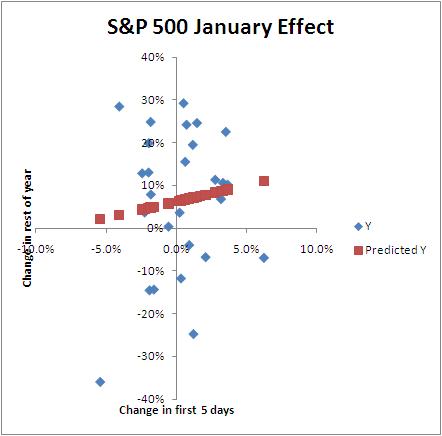
During the 28 full years of S&P 500 futures trading from 1983 to 2010, the futures declined over the first five trading days of the year 11 times. Subsequent to these declines, the futures were up from the close on day 5 to the end of the year 8 times.
After the 17 advances during the first five trading days of the year, the futures were up from the close on day 5 to the end of the year 12 times.
A regression of the results in the first five trading days with the results the rest of the year shows an insignificant positive correlation with R square 0.015, t=0.62, and N=28.
Sam Marx writes:
Bunching the years together and treating all of them equally, and drawing conclusions is I believe incorrect.
For example, I believe where the year is in the Presidential cycle has been shown to have an effect on that year's performance.
Better statistical results perhaps could be drawn by grouping the years based where it was in the Presidential cycle and then doing the analysis.
Jan
9
Just Breaking Bread, from Victor Niederhoffer
January 9, 2011 | Leave a Comment
Can someone tell me why it was not guaranteed to happen that the pro business friendly, appointed by Obama, would be lobbyist for the biggest bank as the former flexerage whose chairs, or nephews of chairs headed the dept of the interior for most of last 12 years is now in disrepute. Thank goodness he is the brother and son of former Mayors of Chicago.
Vince Fulco comments:
The president of the Federal Re serve Bank of New York doesn't know when to keep his mouth shut.
The entire Fed regularly observes what it calls a "blackout period" starting one week before Federal Open Market Committee meetings and lasts until the Friday after those meetings.
Jan
8
I Have Always Said, from Victor Niederhoffer
January 8, 2011 | Leave a Comment
I have often said that instead of looking at sales by industry sector, we should look at the % of the business a company does that is with or from the government, and that should be the first cutoff you choose in selecting above average future performance. Leontief was right, but for the wrong reasons.
Jan
4
Junto, from Victor Niederhoffer
January 4, 2011 | 1 Comment
The next meeting of the NYC Junto will be held on Thursday, January 6th at The Mechanics Institute at 20 W. 44th St at 7 pm, with Prof. Jerome Huyler speaking on "a country in crisis. What's to be done."
All are welcome.
Jan
4
The Yale Professor, from Rocky Humbert
January 4, 2011 | 2 Comments
 Without debating the merits of the Yale Professor, the Harvard Professor, or my favorite professor (who teaches at the School of Hard Knox), one asks:
If one purchases a portfolio of 30 year investment grade bonds with a yield of 12% (call this Portfolio A), and one purchases the same portfolio of investment grade 30 year bonds with a yield of 2% (call this Portfolio B) … and one holds both portfolios for a few years… then are there any circumstances (other than Weimar-like inflation) in which 2% yield portfolio will provide a nominal return greater than the 12% yield portfolio? (Or in Shiller speak, p/e matters.)
Isn't the essence of Professor Shiller's point? And if one drank from this essence, one would have been increasingly bearish during the late 1990's, and increasingly bullish during the late 2008's. And increasingly less bullish right now.
What am I missing?
Victor Niederhoffer replies:
The main missing points are three.
1. The Yale professor does not use predicted earnings. So his p/e are past yields, not expected yields.
2. The p/e he uses are 10 year averages which have even less to do with the expected future yield as they are on average 5 years out of date.
3. The earnings yield is not discounted by the rate of interest.
4. The discount rate that should apply to an earnings yield, has everything to do with future growth and the appropriate rate of discount.
5. The Yale professor has been bearish since 1980 when it was dow 800 or so. His published books based on the volatility of dividends and how much less this volatility is than stock prices, thereby refuting to him the random walk are comparable horses from that same hateful of human productivity garage in New Haven.
To say nothing about the common habit of non investing p/e people like the Yale Professor and many others of throwing out all negative earnings because they don't know how to compute an e/p rather than a p/e. As well as retrospective survival data problems also exist.
One would be very skeptical of Prof Shiller's data if one were considering using it, as when confronted with the 0 ish square of p/e versus subsequent returns by the signer, and the necessity of using 10 year p/e versus 10 year returns or some such, and the signer pointed out to him that the positive 10 year correlation between the previous 9 years and the current would imply a negative correlation between last and next, and that it was very anomalous to think that something two years ago would affect something 1 year in future more than the last year, and in an opposite direction, he at first suggested that with stochastic calculus sometimes a 10 year average did better than a 1 year, and finally he gainsaid that he really hadn't studied this that much. Many errors in calculating p/e from the old days, when earnings were reported 2 months after the end of year, and part whole effects, and working type statistical wrongness from using retrospective averages rather than contemporaneous levels, as well as data problems with using earnings when they weren't reported at all in the early days, which gave the entire spurious correlation to his data to start with also exist, among other gaps, hoping one's negative position about the economy along, and always bearish sentiments along, (as could be expected from a Yale professor) further mar and mask and make meaningless and useless the results among serious other problems.
Jan
4
IPO Performance, from Victor Niederhoffer
January 4, 2011 | 1 Comment
A study from Birinyi shows that IPO's made 20% last year, and it supports my point that all these IPO's in hard times must show an expected a priori return of 40% a year compounded for 5 years to get made these days, and all risky assets must be priced off of this benchmark. I claim that in 2008 for an IPO to be made, the underwriters would have had to tell the company people, that their investors need an a priori return of 80% a year, and IPO's would have been priced accordingly.
Kim Zussman shares:
Check out the latest update to the famous academic study of IPOs by Prof. Jay Riiter of the University of Florida. [34 page PDF].
Rocky Humbert replies:
Thanks Kim, perfect…. actually a bit more dramatic than my foggy memory recalled.
See Page 24: Average 3 year buy&hold over 28 year history returns show -19.8% market-adjusted returns; and -7.1% style-adjusted returns. Additionally, Figure 5 (page 33) shows that the average first day returns in 2008-2010 were in line with previous (non-bubble) years.
Perhaps Vic can take a few minutes respite from skewering the Yale professor to elaborate on his comment in light of these numbers… ?
There is an excellent bloomberg function called IPO <go> which allows one to analyze historical IPO performance by region, industry, time frame etc. A quick look shows results suggestive that (in general) buying every IPO at the first public trade price and holding for five years will, (over time) under perform the S&P500. (SEC rules bar Hedge Fund managers from participating in IPO'S until they start trading publicly.)
Bloomberg subscribers can run their own numbers and adjust for the many variables.This is consistent with some studies I recall (?kim?) that shorting EVERY IPO and hedging with futures is a winning strategy.
Mr. Albert writes:
For me it's first pass kind of thing.
I know from experience that I under perform the dart throwing monkeys on a stock picking basis. And although I can classify stocks in kind of a factor model way, and say this is growth, this is value and if I had done this then this, in practice, I cannot tell when to switch regimes etc.
I have no a priori way of screening IPO's to test if they go up or down and if I shorted them when the underwriters can lend etc and so I wonder about all of them first, then I may try to 'curve fit'.
But then again, I'm not very successful and perhaps this is an illustration of why that is.
Gary Rogan adds:
From my experience, if you restrict yourself to the few ones that have a significant operating history and "good" (cheap in the value sense) financials, and low debt, you will invariably make money. Could take days, could take a couple of years. Many of these are mispriced spinoffs, that seem rare these days but used to be more abundant.
The only one I bought last year, about a month ago, was "BODY', after it has been trading for a few weeks. It wasn't obviously mispriced, but it had a very high sales growth rate for a reasonably priced retailer. It was a scary ride, since it started falling as soon as I bought it, but in strange twist I managed to set an all-time low for it with my last limit buy and then it went up. I sold it way too soon only to watch it soar, but at least I came out ahead. In years past, after I got over tech IPOs in 2000 that pretty much all lost money, I bought maybe 30 of them on the open market over a seven year period and held EVERY SINGLE ONE to the point where it was higher than the price paid. You just have to have patience and a strong stomach, and be extremely selective.
Rocky Humbert retorts:
Mr. Rogan starts out with a promising value-oriented approach; but then veers off the rails– touting in the worst possible way– that one will "invariably make money."
Whether Mr. Rogan is demonstrating patience or several simultaneous foibles of behavioral finance (prospect theory; loss aversion; status quo bias; gambler's fallacy; money illusion; cognitive framing; mental accounting; price anchoring) is something only his hairdresser knows for sure.
What I know for sure is that IPO's, as a group, underperform the market; and if Mr. Rogan is gifted-enough to buck these odds (and outperform the index) and find gems, he is a gifted stock picker.
Such people really do exist– however, it's really annoying to meet them at cocktail parties– where they invariably say things like "EVERY SINGLE ONE" of their stock picks made money.
Perhaps even more annoying is, while they proclaim their genius and long term investment confidence, they write things like:
" A complete worldwide economic collapse has become unavoidable. There is no way out, there are no realistic scenarios that avoid this outcome. The sooner there is a consensus that playing with shifting debt around is not going to solve the problem, the less dramatic this collapse will be. There may not always be an England" [January 23, 2009. S&P level = 831.95].
One must conclude that Mr. Rogan doesn't like the English IPO market. Hmmm.
Jan
2
True Grit and the Best Western Novel, from Victor Niederhoffer
January 2, 2011 | 6 Comments
 There is something about True Grit that is truly loathsome. Each of the 3 main characters is deeply flawed. Marshall Rooster Cogburn is a drunk and dead beat who speaks unintelligibly. Texas Ranger LaBoeuf is a show off, loser, and a chauvinist. The girl is sharp tongued, litigious, and naive (no wonder she didn't get married). It all fits in with the idea that has the world in its grip, that the purpose of life is to keep oneself small by sacrifice. There is no chemistry or romance between any of the characters except for Pepper the Quixotian leader of the outlaws, who as could be predicted was the only man good in his every day business of being a outlaw. No wonder this Western follows the code of the west breaking, denigrating Brokeback Mountain and no wonder that Louis L'Amour's novels have sold more than all western authors combined since the beginning of time, and that they dare not make one of them or an Atlas Shrugged, in favor of this disrespectful Portis trash that violates all the rules of good mystery by having one hair breadth, extraordinary, lucky escape after another, and stereotyped snake bite scene (a la Larry Mcmurtry) release the tension.
P.S I have never written about a subject not directly related to the multivariate analysis of time series that Mr. Jovanovich has not corrected and amplified on where I was astray. And I must admit that I didn't realize that the Western Novel was yet another of his expertises. Okay, I want to know from him if he agrees with me, on this one point that Monte Walsh is the greatest western novel, (if the chapter where the accountant comes to reduce the pay of the hands that took vengeance on the trainmen doesn't make you cry, I'll eat that hat the accountant wore that was so tempting to Hat, Cal and Monte), and the best business novel of all time.
Stefan Jovanovich replies:
Grub street used to honor the basic code for reviewers: read the book first, then slander the author. We should do the same. Portis' book is like neither of the movies; the John Wayne version comes much closer in spirit, but it is still far, far too "nice". The actual novel is a memoir written by a tough-spirited, one-armed spinster Presbyterian capitalist remembering the one man whom she loved and how they avenged the murder of her father when she was– by other people's standards– "still a girl". Blaming authors for what Hollywood makes of their books is like blaming men for the conduct of their ex-wives after they finish paying the alimony; all the authors can be held accountable for is the size of the check they cash.
I am old enough to have lived near (but definitely not in) Beverly Hills when Louis L'Amour still gave readings at the library. He was a great and good man, and– yes– Monte Walsh is the classic. As is often the case, my anger is misdirected; what infuriates me about this latest version of True Grit is what is says about the Coen brothers' decline and fall. The novel will survive their abomination of it; hell, it will probably be reread again. But for the Coen brothers, what hope is there now? Intolerable Cruelty is the best and funniest film ever about Hollywood and lawyers and now the guys who made it can only do splatter trash.
P.S. Eddy just called. She thinks our only hope is to pray that South Park's explanation once again holds true and blame it all on Matt Damon and his friend.
Dylan Distasio writes:
At the risk of raising some hackles, I'd make the argument the McCarthy's "Blood Meridian or the Evening Redness in the West" is one of the greatest Western novels in that genre and one of the best I've read from 20th century authors in general.
J.T Holley writes:
If you like Blood Meridian then go read Suttree. IMHO, it is an existential masterpiece. Cornelius being a man of the "made, trust-fund baby, life of given not earned goes to be a fisherman in TN. Though the content could be considered as a rebellious misguided stab at the establishment, I found it a read that was of self-introspect, self-realization, self-reliance while battling vices with choice by going to the extreme to find such. Once again not oft mentioned amongst Cormac's works, I feel it is one of my favorite reads to crack open and read again. I'm a Southerner so the read is much suited to me, so some of the "in between the lines" stuff might not be appreciated.
Jim Wildman writes:
My personal favorites in the Western genre.
"The Virginian" (Wister) if for no other reason than "Smile when you call me that"…and the baby swap prank.
"A Man Called Noon" (L'Amour) always makes me think about how I define who I am.
In "The Last of His Breed" Mr L'Amour applies similar themes from his Westerns to modern times. For my taste, the book is a bit long, but in fairness, it takes a while to walk across Siberia. And it has a great last line.
Trader Craft comments:
Another great classic of the West is Thomas Bergman's "Little Big Man". Much better than the Dustin Hoffman movie.
Scott Brooks writes:
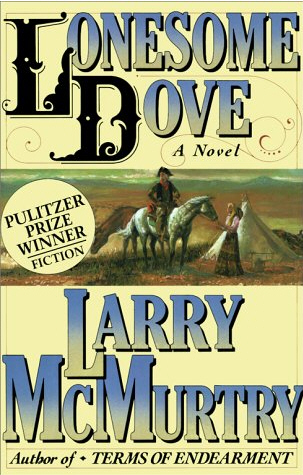 As one who doesn't read a lot of westerns, (and I'm sure the purist will scoff at me) I have to say that Larry McMurtry's, "Lonesome Dove" is my favorite of that genre.
Good guys and bad guys. Multiple story lines all intertwined. Sudden and unforgiving death. Fortunes made and fortunes lost. Adventures piled on top of adventures. Good choices and bad choices. Friendships that are strong, but that don't override honor. Human foibles that override honor to do what is perceived as the "right thing". False friendship's that never were except to be used as seen fit by the "user".
Story of youth and aging and lesson's learned, lessons shared and lesson's taught. Love found, love spurned, and love lost. The superficial wannabes intermingled with the intellectual drivers. The high self esteem and low self esteem of characters revealed for the world to see.
Characters that arrive unexpectedly and stay and others that depart just as unexpectedly. Ego's that clash and feelings that are hurt. Life and time wasted on loves that can never be.
High risk adventures fraught with deadly consequences. People that love risk, taking more and more risk because the downside never happens to them…until it does.
Their are cowboy versions of "Eddie Willer's" (hard working and reliable) tying their horses to the wagon's of cowboy versions of "John Galt" (hard working reliable, but intellectually superior)…..but in a much more realistic sense….i.e. there's no mythical "static electricity generator" or "nearly infallible hero's"….just really smart people who make more good decisions than bad decisions…but who make bad decision…sometimes with catastrophic consequences.
I could go on and on, but something has just struck me as I write this general description of "Lonesome Dove"…..am I describing a Western Novel, or the modern day "Spec List".
Jack Tierney writes:
The Chair's mention of L'Amour reminds me that I've neglected to comment on the man's autobiography, "The Education of a Wandering Man". Unpublished during his life, the manuscript was found in his desk only later. The author of the Introduction speculates that L'Amour purposely put off publication fearing charges of braggadocio.
After reading the book, it's a possibility. For many years he kept a written record of the books he had read– the selections are so diverse and numerous that it's impossible to pigeon-hole his preferences or determine how he found the time.
Because of finances, he left home at early and, Hoffer-like, rode the rails in search of employment. He also shipped out for as many foreign ports as he could find, baby-sat an abandoned mine for three months in the middle of nowhere without any human contact, and took up small-town prize-fighting when he really needed money and the locals really needed a fight.
But no matter where he was or how broke, he always had books. If there's any drawback in his story it's the realization that one could have read much, much more if he hadn't been sidelined by trivialities.
Pitt T. Maner III writes:
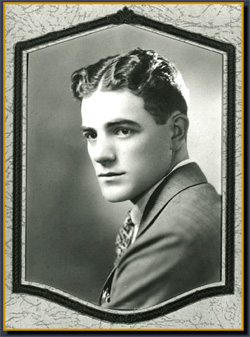 It looks from L'Amour's autobiography that, from the years from 1930 to 1937 in particular, he tried to read approximately 100 books and plays each year. They were not what you would think a man writing Westerns would be reading.
Not a bad New Year's resolution if one has the time. It takes discipline too.
A quick perusal indicates he liked to read several books by one author or playwright that he liked within each year. Certain themes or genres captured his attention. Perhaps he was buying books in bulk or series from bookstores.
In 1930, for instance, he read many of the plays of Eugene O'Neill. In 1931 he read Flaubert. Shakespeare and Detective stories were popular with L'Amour in
1932. It looks like works by H.G. Wells and Conrad were favorites. L'Amour's lists are interesting because there are many books included that are not commonly read these days.
For instance "Trader Horn" by A.A. Horn and Ethelreda Lewis was a book made into a movie with filming done in Africa under extremely difficult conditions (they don't make movies like the used to).
The world was less explored and a bit more mysterious just 80 years ago.
The best writers often do a tremendous amount of critical reading and know a little bit about a vast array of subjects— even things that would be considered controversial today.
Dec
31
A Prize for Profitable Ideas in 2011, from Victor Niederhoffer
December 31, 2010 | Leave a Comment
UPDATE 1/31/2011:
Contestants Summary:
- 31 Spec-listers contributed to the 2011 Investment Contest with "specific" recommendations.
- Average 4 recommendations per person (mean of 4.2, median and mode of 4) came in.
- 6 contestants gave only 1 recommendation, 3 gave only 2 and thus 9 out of the total 31 have NOT given the minimum 3 recommendations needed as per the Rules clarified by Ken Drees.
- The Hall of Fame entry for the largest number of ideas (did someone say diversification?) is from Tim Melvin, close on whose heels are J. T. Holley with 11 and Ken Drees with 10.
- The most creatively expressed entry of course has come from Rocky Humbert.
- At this moment 17 out of 31 contestants are in positive performance territory, 14 are in negative performance territory.
- Barring a major outlier of a 112.90% loss on the Option Strategy of Phil McDonnell (not accounting for the margin required for short options, but just taking the ratio of initial cash inflow to outflow):
- Average of all Individual contestant returns is -2.54% and the Standard Deviation of returns achieved by all contestants is 5.39.
- Biggest Gainer at this point is Jared Albert (with his all in single stock bet on REFR) with a 22.87% gain. The only contestant a Z score greater than 2 ( His is actually 4.72 !!)
- Biggest Loser at this point (barring the Giga-leveraged position of Mr. McDonnell) is Ken Drees at -10.36% with a Z Score that is at -1.45.
- Wildcards have not been accounted for as at this point, with wide
deviations of recommendations from the rules specified by most. While 9
participants have less than 3 recommendations, those with more than 4
include several who have not chosen to specify which 3 are their primary recommends. Without clarity on a universal measurability wildcard accounting is on hold. Those making more than 1 recommendations would find that their aggregate average return is derived by taking a sum of returns of individual positions divided by the number of recommends. Unless specified by any person that positions are taken in a specific ratio its equal sums invested approach.
Contracts Summary:
- A total of 109 contracts are utilized by the contestants across bonds, equity indices (Nikkei, Kenyan Stocks included too!), commodities, currencies and individual stock positions.
- The ratio of Shorts to Longs across all recommendations, irrespective of the type of contract (call, put, bearish ETF etc.) is 4 SELL orders Vs 9 Buy Orders. Not inferring that this list is more used to pressing the Buy Button. Just an occurence on this instance.
- The Average Return, so far, on the 109 contracts utilized is -1.26% with a Standard Deviation of 12.42%. Median Return is 0.39% and the mode of Returns of all contracts used is 0.
- The Highest Return is on MICRON TECH at 28.09, if one does not account for the July 2011 Put 25 strike on SLV utilized by Phil McDonnell.
- The Lowest Return is on IPTV at -50%, if one does not account for the Jan 2012 Call 40 Strike on SLV utilized by Phil McDonnell.
- Only Two contracts are having a greater than 2 z score and only 3 contracts are having a less than -2 Z score.
Victor Niederhoffer wrote:
One is constantly amazed at the sagacity in their fields of our fellow specs. My goodness, there's hardly a field that one of us doesn't know about from my own hard ball squash rackets to the space advertising or our President, from surfing to astronomy. We certainly have a wide range.
May I suggest without violating our mandate that we consider our best sagacities as to the best ways to make a profit in the next year of 2011.
My best trades always start with assuming that whatever didn't work the most last year will work the best this year, and whatever worked the best last year will work the worst this year. I'd be bullish on bonds and bearish on stocks, bullish on Japan and bearish on US stocks.
I'd bet against the banks because Ron Paul is going to be watching them and the cronies in the institutions will not be able to transfer as much resources as they've given them in the past 2 years which has to be much greater in value than their total market value.
I keep wondering what investments I should make based on the hobo's visit and I guess it has to be generic drugs and foods.
What ideas do you have for 2011 that might be profitable? To make it interesting I'll give a prize of 2500 to the best forecast, based on results as of the end of 2011.
David Hillman writes:
"I do know that a sagging Market keeps my units from being full."
One would suggest it is a sagging 'economy' contributing to vacancy, not a sagging 'market'. There is a difference.
Ken Drees, appointed moderator of the contest, clearly states the new rules of the game:
 1. Submissions for contest entries must be made on the last two days of 2010, December 30th or 31st.
2. Entries need to be labeled in subject line as "2011 contest investment prediction picks" or something very close so that we know this is your official entry.
3. Entries need 3 predictions and 1 wildcard trade prediction (anything goes on the wildcard).
4. Extra predictions may be submitted and will be judged as extra credit. This will not detract from the main predictions and may or may not be judged at all.
5. Extra predictions will be looked on as bravado– if you've got it then flaunt it. It may pay off or you may give the judge a sour palate.
The desire to have entries coming in at years end is to ensure that you have the best data as to year end 2010 and that you don't ignite someone else to your wisdom.
Market direction picks are wanted:
Examples: 30 year treasury yield will fall to 3% in 2011, S&P 500 will hit "x" by June, and then by "y" by December 2011.
The more exact your prediction is, the more weight will be given. The more exact your prediction, the more weight you will receive if right and thus the more weight you will receive if wrong. If you predict that copper will hit 5.00 dollars in 2011 and it does you will be given a great score, if you say that copper will hit 5.00 dollars in march and then it will decline to4.35 and so forth you will be judged all along that prediction and will receive extra weight good or bad. You decide on how detailed your submission is structured.
Will you try to be precise (maybe foolhardy) and go for the glory? Or will you play it safe and not stand out from the crowd? It is a doubled edged sword so its best to be the one handed market prognosticator and make your best predictions. Pretend these predictions are some pearls that you would give to a close friend or relative. You may actually help a speclister to make some money by giving up a pearl, if that speclister so desires to act upon a contest–G-d help him or her.
Markets can be currency, stocks, bonds, commodities, etc. Single stock picks can be given for the one wildcard trade prediction. If you give multiple stock picks for the wildcard then they will all be judged and in the spirit of giving a friend a pearl–lets make it "the best of the best, not one of six".
All judgments are the Chair's. The Chair will make final determination of the winner. Entries received with less than 3 market predictions will not be considered. Entries received without a wildcard will be considered.The spirit of the contest is "Give us something we can use".
Bill Rafter adds:
Suggestion for contest:
"Static" entry: A collection of up to 10 assets which will be entered on the initial date (say 12/31/2010) and will be unaltered until the end data (i.e. 12/31/2011). The assets could be a compilation of longs and shorts, or could have the 10 slots entirely filled with one asset (e.g. gold). The assets could also be a yield and a fixed rate; that is one could go long the 10-year yield and short a fixed yield such as 3 percent. This latter item will accommodate those who want to enter a prediction but are unsure which asset to enter as many are unfamiliar with the various bond coupons.
"Rebalanced" entry: A collection of up to 10 assets which will be rebalanced on the last trading day of each month. Although the assets will remain unchanged, their percentage of the portfolio will change. This is to accommodate those risk-averse entrants employing a mean-reversion strategy.
Both Static and Rebalanced entries will be judged on a reward-to-risk basis. That is, the return achieved at the end of the year, divided by the maximum drawdown (percentage) one had to endure to achieve that return.
Not sure how to handle other prognostications such as "Famous female singer revealed to be man." But I doubt such entries have financial benefits.
I'm willing to be an arbiter who would do the rebalancing if necessary. I am not willing to prove or disprove the alleged cross-dressers.
Ralph Vince writes:
A very low volume bar on the weekly (likely, the first of two consecutive) after a respectable run-up, the backdrop of rates having risen in recent weeks, breadth having topped out and receding - and a lunar eclipse on the very night of the Winter Solstice.
If I were a Roman General I would take that as a sign to sit for next few months and do nothing.
I'm going to sit and do nothing.
Sounds like an interim top in an otherwise bullish, long-term backdrop.
Gordon Haave writes:
 My three predictions:
Gold/ silver ratio falls below 25 Kenyan stock market outperforms US by more than 10%
Dollar ends 10% stronger compared to euro
All are actionable predictions.
Steve Ellison writes:
I did many regressions looking for factors that might predict a year-ahead return for the S&P 500. A few factors are at extreme values at the end of 2010.
The US 10-year Treasury bond yield at 3.37% is the second-lowest end-of year yield in the last 50 years. The S&P 500 contract is in backwardation with the front contract at a 0.4% premium to the next contract back, the second highest year-end premium in the 29 years of the futures.
Unfortunately, neither of those factors has much correlation with the price change in the S&P 500 the following year. Here are a few that do.
The yield curve (10-year yield minus 3-month yield) is in the top 10% of its last 50 year-end values. In the last 30 years, the yield curve has been positively correlated with year-ahead changes in the S&P 500, with a t score of 2.17 and an R squared of 0.143.
The US unemployment rate at 9.8% is the third highest in the past 60 years. In the last 30 years, the unemployment rate has been positively correlated with year-ahead changes in the S&P 500, with a t score of 0.90 and an R squared of 0.028.
In a variation of the technique used by the Yale permabear, I calculated the S&P 500 earnings/price ratio using 5-year trailing earnings. I get an annualized earnings yield of 4.6%. In the last 18 years, this ratio has been positively correlated with year-ahead changes in the S&P 500, with a t score of 0.92 and an R squared of
0.050.
Finally, there is a negative correlation between the 30-year S&P 500 change and the year-ahead change, with a t score of -2.28 and an R squared of 0.094. The S&P 500 index price is 9.27 times its price of 30 years ago. The median year-end price in the last 52 years was 6.65 times the price 30 years earlier.
Using the predicted values from each of the regressions, and weighting the predictions by the R squared values, I get an overall prediction for an 11.8% increase in the S&P 500 in 2011. With an 11.8% increase, SPY would close 2011 at 140.52.
Factor Prediction t N R sq
US Treasury yield curve 1.162 2.17 30 0.143
30-year change 1.052 -2.28 52 0.094
Trailing 5-year E/P 1.104 0.92 18 0.050
US unemployment rate 1.153 0.90 30 0.028
Weighted total 1.118
SPY 12/30/10 125.72
Predicted SPY 12/30/11 140.52
Jan-Petter Janssen writes:
PREDICTION I - The Inconvenient Truth The poorest one or two billion on this planet have had enough of increasing food prices. Riots and civil unrest force governments to ban exports, and they start importing at any cost. World trade collapses. Manufacturers of farm equipment will do extremely well. Buy the most undervalued producer you can find. My bet is
* Kverneland (Yahoo: KVE.OL). NOK 6.50 per share today. At least NOK 30 on Dec 31th 2011.
PREDICTION II - The Ultimate Bubble The US and many EU nations hold enormous gold reserves. E.g. both Italy and France hold the equivalent of the annual world production. The gold meme changes from an inflation hedge / return to the gold standard to (a potential) over-supply from the selling of indebted nations. I don't see the bubble bursting quite yet, but
* Short gold if it hits $2,000 per ounce and buy back at $400.
PREDICTION III - The Status Quo Asia's ace is cheap labor. The US' recent winning card is cheap energy through natural gas. This will not change in 2011. Henry Hub Feb 2011 currently trades at $4.34 per MMBtu. Feb 2012 is at $5.14. I would
* Short the Feb 2012 contract and buy back on the last trading day of 2011.
Vince Fulco predicts:
 This is strictly an old school, fundamental equity call as my crystal ball for the indices 12 months out is necessarily foggy. My recommendation is BP equity primarily for the reasons I gave earlier in the year on June 5th (stock closed Friday, June 4th @ $37.16, currently $43.53). It faced a hellish downdraft post my mention for consideration, primarily due to the intensification of news flow and legal unknowns (Rocky articulated these well). Also although the capital structure arb boys savaged the equity (to 28ish!), it is up nicely to year's end if one held on and averaged in with wide scales given the heightened vol.
Additional points/guesstimates are:
1) If 2010 was annus horribilis, 2011 with be annus recuperato. A chastened mgmt who have articulated they'll run things more conservatively will have a lot to prove to stakeholders.
2) Dividend to be re-instated to some level probably by the end of the second quarter. I am guessing $1.00 annualized per ADS as a start (or
2.29%), this should bring in the index hugging funds with mandates for only holding dividend payers. There is a small chance for a 1x special dividend later in the year.
3) Crude continues to be in a state of significant profitability for the majors in the short term. It would appear finding costs are creeping however.
4) The lawsuits and additional recoveries to be extracted from the settlement fund and company directly have very long tails, on the order of 10 years.
5) The company seems fully committed to sloughing off tertiary assets to build up its liquid balance sheet. Debt to total capital remains relatively low and manageable.
6) The stock remains at a significant discount to its better-of breed peers (EV/normalized EBITDA, Cash Flow, etc) and rightly so but I am betting the discount should narrow back to near historical levels.
Potential negatives:
1) The company and govt have been vastly understating the remaining fuel amounts and effects. Release of independent data intensifies demands for a much larger payout by the company closer to the highest end estimates of $50-80B.
2) It experiences another similar event of smaller magnitude which continues to sully the company's weakened reputation.
3) China admits to and begins to fear rampant inflation, puts the kabosh to the (global) economy and crude has a meaningful decline the likes of which we haven't seen in a few years.
4) Congress freaks at a >$100-120 price for crude and actually institutes an "excess profits" tax. Less likely with the GOP coming in.
A buy at this level would be for an unleveraged, diversified, longer term acct which I have it in. However, I am willing to hold the full year or +30% total return (including special dividend) from the closing price of $43.53 @ 12/30/10, whichever comes first. Like a good sellside recommendation, I believe the stock has downside of around 20% (don't they all when recommended!?!) where I would consider another long entry depending on circumstances (not pertinent to the contest).
Mr. Albert enters:
 Single pick stock ticker is REFR
The only way this gold chain wearing day trader has a chance against all the right tail brain power on the list is with one high risk/high reward put it all on red kind of micro cap.
Basic story is this company owns all the patents to what will become the standard for switchable glazings (SPD smart glass). It's taken roughly 50 years of development to get a commercialized product, and next year Mercedes will almost without doubt use SPD in the 2012 SLK (press launch 1/29/11 public launch at the Geneva auto show in march 2011).
Once MB validate the tech, mass adoption and revenues will follow etc and this 'show me' stock will rocket to the moon.
Dan Grossman writes:
Trying to comply with and adapt the complex contest rules (which most others don't seem to be following in any event) to my areas of stock market interest:
1. The S&P will be down in the 1st qtr, and at some point in the qtr will fall at least
2. For takeover investors: GENZ will (finally) make a deal to be acquired in the 1st qtr for a value of at least $80; and AMRN after completion of its ANCHOR trial will make a deal to be acquired for a price of at least $8.
3. For conservative investors: Low multiple small caps HELE and DFG will be up a combined average of 20% by the end of the year.
For my single stock pick, I am something of a johnny-one-note: MNTA will be up lots during the year — if I have to pick a specific amount, I'd say at least 70%. (My prior legal predictions on this stock have proved correct but the stock price has not appropriately reflected same.)
Finally, if I win the contest (which I think is fairly likely), I will donate the prize to a free market or libertarian charity. I don't see why Victor should have to subsidize this distinguished group that could all well afford an contest entrance fee to more equitably finance the prize.
Best to all for the New Year,
Dan
Gary Rogan writes:
 1. S&P 500 will rise 3% by April and then fall 12% from the peak by the end of the year.
2. 30 year treasury yields will rise to 5% by March and 6% by year end.
3. Gold will hit 1450 by April, will fall to 1100 by September and rise to 1550 by year end.
Wildcard: Short Netflix.
Jack Tierney, President of the Old Speculator's Club, writes:
Equal Amounts in:
TBT (short long bonds)
YCS (short Yen)
GRU (Long Grains - heavy on wheat)
CHK (Long NG - takeover)
(Wild Card)
BONXF.PK or BTR.V (Long junior gold)
12/30 closing prices (in order):
37.84
15.83
7.20
25.97
.451
Bill Rafter writes:
Two entries:
Buy: FXP and IRWD
Hold for the entire year.
William Weaver writes:
 For Returns: Long XIV January 21st through year end
For Return/Risk: Long XIV*.30 and Long VXZ*.70 from close today
I hope everyone has enjoyed a very merry holiday season, and to all I wish a wonderful New Year.
Warmest,
William
Ken Drees writes:
Yes, they have been going up, but I am going contrary contrary here and going with the trends.
1. Silver: buy day 1 of trading at any price via the following vehicles: paas, slw, exk, hl –25% each for 100% When silver hits 39/ounce, sell 10% of holdings, when silver hits 44/ounce sell 30% of holdings, when silver hits 49 sell 60%–hold rest (divide into 4 parts) and sell each tranche every 5 dollars up till gone–54/oz, 59, 64, 69.
2. Buy GDXJ day 1 (junior gold miner etf)—rotation down from majors to juniors with a positive gold backdrop. HOLD ALL YEAR.
3. USO. Buy day 1 then do—sell 25% at 119/bbl oil, sell 80% at 148/bbl, sell whats left at 179/bbl or 139/bbl (whichever comes first after 148)
wildcard: AMEX URANUIM STOCKS. UEC, URRE, URZ, DNN. 25% EACH, buy day 1 then do SELL 70% OF EVERYTHING AT 96$LB u http://www.uxc.com/ FOR PRICING, AND HOLD REST FOR YEAR END.
Happy New Year!
Ken Drees———keepin it real.
Sam Eisenstadt forecasts:
My forecast for the S&P 500 for the year ending Dec 31, 2011;
S&P 500 1410
Anton Johnson writes:
Equal amounts allocated to:
EDZ Short moc 1-21-2011, buy to cover at 50% gain, or moc 12/30/2011
VXX Short moc 1-21-2011, buy to cover moc 12/30/2011
UBT Short moo 1-3-2011, buy to cover moc 12/30/2011
Scott Brooks picks:
RTP
TSO
SLV
LVS
Evenly between the 4 (25% each)
Sushil Kedia predicts:
Short:
1) Gold
2) Copper
3) Japanese Yen
30% moves approximately in each, within 2011.
Rocky Humbert writes:
(There was no mention nor requirement that my 2011 prediction had to be in English. Here is my submission.) … Happy New Year, Rocky
Sa aking mahal na kaibigan: Sa haba ng 2010, ako na ibinigay ng ilang mga ideya trading na nagtrabaho sa labas magnificently, at ng ilang mga ideya na hindi na kaya malaki. May ay wala nakapagtataka tungkol sa isang hula taon dulo, at kung ikaw ay maaaring isalin ito talata, ikaw ay malamang na gawin ang mas mahusay na paggawa ng iyong sariling pananaliksik kaysa sa pakikinig sa mga kalokohan na ako at ang iba pa ay magbigay. Ang susi sa tagumpay sa 2011 ay ang parehong bilang ito ay palaging (tulad ng ipinaliwanag sa pamamagitan ng G. Ed Seykota), sa makatuwid: 1) Trade sa mga kalakaran. 2) Ride winners at losers hiwa. 3) Pamahalaan ang panganib. 4) Panatilihin ang isip at diwa malinaw. Upang kung saan gusto ko idagdag, fundamentals talaga bagay, at kung ito ay hindi magkaroon ng kahulugan, ito ay hindi magkaroon ng kahulugan, at diyan ay wala lalo na pinakinabangang tungkol sa pagiging isang contrarian bilang ang pinagkasunduan ay karaniwang karapatan maliban sa paggawa sa mga puntos. (Tandaan na ito ay pinagkasunduan na ang araw ay babangon na bukas, na quote Seth Klarman!) Pagbati para sa isang malusog na masaya at pinakinabangang 2011, at siguraduhin na basahin www.rockyhumbert.com kung saan ako magsulat sa Ingles ngunit ang aking mga saloobin ay walang malinaw kaysa talata na ito, ngunit inaasahan namin na ito ay mas kapaki-pakinabang.
Dylan Distasio comments:
Gawin mo magsalita tagalog?
Gary Rogan writes:
After a worthy challenge, Mr. Rogan is now also a master of Google Translate, and a discoverer of an exciting fact that Google Translate calls Tagalog "Filipino". This was a difficult obstacle for Mr. Rogan to overcome, but he persevered and here's Rocky's prediction in English (sort of):
My dear friend: Over the course of 2010, I provided some trading ideas worked out magnificently, and some ideas that are not so great. There is nothing magical about a forecast year end, and if you can translate this paragraph, you will probably do better doing your own research rather than listening to the nonsense that I and others will give. The key to success in 2011 is the same as it always has (as explained by Mr. Ed Seykota), namely: 1) Trade with the trend.
2) Ride cut winners and losers. 3) Manage risk. 4) Keep the mind and spirit clear. To which I would add, fundamentals really matter, and if it does not make sense, it does not make sense, and there is nothing particularly profitable about being a contrarian as the consensus is usually right but turning points. (Note that it is agreed that the sun will rise tomorrow, to quote Seth Klarman) Best wishes for a happy healthy and profitable 2011, and be sure to read www.rockyhumbert.com which I write in English but my attitude is nothing clearer than this paragraph, but hopefully it is more useful.
Tim Melvin writes:
Ah the years end prediction exercise. It is of course a mostly useless exercise since not a one of us can predict what shocks, positive or negative, the world and the markets could see in 2011. I find it crack up laugh out loud funny that some pundits come out and offer up earnings estimates, GDP growth assumptions and interest rate guesses to give a precise level for the year end S&P 500 price. You might as well numbers out of a bag and rearrange them by lottery to come up with a year end number. In a world where we are fighting two wars, a hostile government holds the majority of our debt and several sovereign nations continually teeter on the edge of oblivion it's pretty much ridiculous to assume what could happen in the year ahead. Having said that, as my son's favorite WWE wrestler when he was a little guy used to say "It's time to play the game!"
Ill start with bonds. I have owned puts on the long term treasury market for two years now. I gave some back in 2010 after a huge gain in 2009 but am still slightly ahead. Ill roll the position forward and buy January 2012 puts and stay short. When I look at bods I hear some folks talking about rising basic commodity prices and worrying about inflation. They are of course correct. This is happening. I hear some other really smart folks talking of weak real estate, high jobless rates and the potential for falling back into recession. Naturally, they are also exactly correct. So I will predict the one thing no one else is. We are on the verge of good old fashioned 1970s style stagflation. Commodity and basic needs prices will accelerate as QE2 has at least stimulated demand form emerging markets by allowing these wonderful credits to borrow money cheaper than a school teacher with a 750 FICO score. Binds go lower as rates spike. Our economy and balance sheet are a mess and we have governments run by men in tin hats lecturing us on fiscal responsibility. How low will they go Tim? How the hell do I know? I just think they go lower by enough for me to profit.
 Nor can I tell you where the stock market will go this year. I suspect we have had it too good for too long for no reason so I think we get at least one spectacular gut wrenching, vomit inducing sell off during the year. Much as lower than expected profits exposed the silly valuations of the new paradigm stocks I think that the darling group, retail , will spark a sell-off in the stock market this year. Sales will be up a little bit but except for Tiffany's (TIF) and that ilk margins are horrific. Discounting started early this holiday and grew from there. They will get steeper now that that Santa Claus has given back my credit card and returned to the great white north. The earnings season will see a lot of missed estimates and lowered forecasts and that could well pop the bubble. Once it starts the HFT boys and girls should make sure it goes lower than anyone expects.
Here's the thing about my prediction. It is no better than anyone else's. In other words I am talking my book and predicting what I hope will happen. Having learned this lesson over the years I have learned that when it comes to market timing and market direction I am probably the dumbest guy in the room. Because of that I have trained myself to always buy the stuff that's too cheap not to own and hold it regardless. After the rally since September truly cheap stuff is a little scarce on the ground but I have found enough to be about 40% long going into the year. I have a watch list as long as a taller persons right arm but most of it hover above truly cheap.
Here is what I own going into the year and think is still cheap enough to buy. I like Winn Dixie (WINN). The grocery business sucks right now. Wal mart has crushed margins industry wide. That aside WINN trades at 60% of tangible book value and at some point their 514 stores in the Southeast will attract attention from investors. A takeover here would be less than shocking. I will add Presidential Life (PLFE) to the list. This stock is also at 60% of tangible book and I expect to see a lot of M&A activity in the insurance sector this year and this should raise valuations across the board. I like Miller Petroleum (MILL) with their drilling presence in Alaska and the shale field soft Tennessee. This one trades at 70% of tangible book. Ill add Imperial Sugar (IPSU), Syms (SYMS) and Micron tech (MU) and Avatar Holdings (AVTR) to my list of cheapies and move on for now.
I am going to start building my small bank portfolio this year. Eventually this group becomes the F-you walk away money trade of the decade. As real estate losses work through the balance sheet and some measure of stability returns to the financial system, perhaps toward the end of the year the small baileys savings and loan type banks should start to recover. We will also see a mind blowing M&A wave as larger banks look to gain not just market share but healthy assets to put on the books. Right now these names trade at a fraction of tangible book value. They will reach a multiple of that in a recovery or takeover scenario. Right now I own shares of Shore Bancshares (SHBI), a local bank trading at 80% of book value and a reasonably healthy loan portfolio. I have some other mini microcap banks as well that shall remain my little secret and not used to figure how my predictions work out. I mention them because if you have a mini micro bank in your community you should go meet then bankers, review the books and consider investing if it trades below the magical tangible book value and has excess capital. Flagstar Bancorp(FBC) is my super long shot undated call option n the economy and real estate markets.
I will also play the thrift conversion game heavily this year. With the elimination of the Office of Thrift Services under the new financial regulation many of the benefits of being a private or mutual thrift are going away. There are a ton of mutual savings banks that will now convert to publicly traded banks. A lot of these deals will be priced below the pro forma book value that is created by adding all that lovely IPO cash to the balance sheet without a corresponding increase in the shares outstanding. Right now I have Fox Chase Bancorp (FXCB) and Capital Federal Financial(CFFN). There will be more. Deals are happening every day right now and again I would keep an eye out for local deals that you can take advantage of in the next few months.
I also think that 2011 will be the year of the activist investor. These folks took a beating since 2007 but this should be their year. There is a ton of cash on corporate balance sheets but lots of underperformance in the current economic environment. We will see activist drive takeovers, restructures, and special dividends this year in my opinion. Recent filings of interest include strong activist positions in Surmodics(SRDX), SeaChange International (SEAC), and Energy Solutions. Tracking activist portfolios and 13D filings should be a very profitable activity in 2011.
I have been looking at some interesting new stuff with options as well I am not going to give most of it away just yet but I ll give you one stimulated by a recent list discussion. H and R Black is highly likely to go into a private equity portfolio next year. Management has made every mistake you can make and the loss of RALs is a big problem for the company. However the brand has real value. I do not want town the stock just yet but I like the idea of selling the January 2012 at $.70 to $.75. If you cash secure the put it's a 10% or so return if the stock stays above the strike. If it falls below I' ll be happy to own the stock with a 6 handle net. Back in 2008 everyone anticipated a huge default wave to hit the high yield market. Thanks to federal stimulus money pumping programs it did not happen. However in the spirit of sell the dog food the dog will eat a given moment the hedge fund world raised an enormous amount od distressed debt money. Thanks to this high yield spreads are far too low. CCC paper in particular is priced at absurd levels. These things trade like money good paper and much of it is not. Extend and pretend has helped but if the economy stays weak and interest rates rise rolling over the tsunami f paper due over the next few years becomes nigh onto impossible. I am going take small position in puts on the various high yield ETFs. If I am right they will explode when that market implodes. Continuing to talk my book I hope this happens. Among my nightly prayers is "Please God just one more two year period of asset rich companies with current payments having bonds trade below recovery value and I promise not to piss the money away this time. Amen.
PS. If you add in risk arbitrage spreads of 30% annualized returns along with this I would not object. Love, Tim.
I can't tell you what the markets will do. I do know that I want to own some safe and cheap stocks, some well capitalized small banks trading below book and participate in activist situation. I will be under invested in equities going into the year hoping my watch list becomes my buy list in market stumble. I will have put positions on long T-Bonds and high yield hoping for a large asymmetrical payoff.
Other than that I am clueless.
Kim Zussman comments:
Does anyone else think this year is harder than usual to forecast? Is it better now to forecast based on market fundamentals or mass psychology? We are at a two year high in stocks, after a huge rally off the '09 bottom that followed through this year. One can make compelling arguments for next year to decline (best case scenarios already discounted, prior big declines followed by others, volatility low, house prices still too high, FED out of tools, gov debt/gdp, Roubini says so, benefits to wall st not main st, persistent high unemployment, Year-to-year there is no significant relationship, but there is a weak down tendency after two consecutive up years. ). And compelling arguments for up as well (crash-fears cooling, short MA's > long MA's, retail investors and much cash still on sidelines, tax-cut extended, employee social security lowered, earnings increasing, GDP increasing, Tepper and Goldman say so, FED herding into risk assets, benefits to wall st not main st, employment starting to increase).
Is the level of government market-intervention effective, sustainable, or really that unusual? The FED looks to be avoiding Japan-style deflation at all costs, and has a better tool in the dollar. A bond yields decline would help growth and reduce deflation risk. Increasing yields would be expected with increasing inflation; bad for growth but welcomed by retiring boomers looking for fixed income. Will Obamacare be challenged or defanged by states or in the supreme court? Will 2011 be the year of the muni-bubble pop?
A ball of confusion!
4 picks in equal proportion:
long XLV (health care etf; underperformed last year)
long CMF (Cali muni bond fund; fears over-wrought, investors still need tax-free yield)
short GLD (looks like a bubble and who needs gold anyway)
short IEF (7-10Y treasuries; near multi-year high/QE2 is weaker than vigilantism)
Alan Millhone writes:
 Hello everyone,
I note discussion over the rules etc. Then you have a fellow like myself who has never bought or sold through the Market a single share.
For myself I will stick with what I know a little something. No, not Checkers —
Rental property. I have some empty units and beginning to rent one or two of late to increase my bottom line.
I will not venture into areas I know little or nothing and will stay the course in 2011 with what I am comfortable.
Happy New Year and good health,
Regards,
Alan
Jay Pasch predicts:
2010 will close below SP futures 1255.
Buy-and-holders will be sorely disappointed as 2011 presents itself as a whip-saw year.
99% of the bullish prognosticators will eat crow except for the few lonely that called for a tempered intra-year high of ~ SPX 1300.
SPX will test 1130 by April 15 with a new recovery high as high as 1300 by the end of July.
SPX 1300 will fail with new 2011 low of 1050 before ending the year right about where it started.
The Midwest will continue to supply the country with good-natured humble stock, relatively speaking.
Chris Tucker enters:
Buy and Hold
POT
MS
CME
Wildcard: Buy and Hold AVAV
Gibbons Burke comments:
Mr. Ed Seykota once outlined for me the four essential rules of trading:
1) The trend is your friend (till it bends when it ends.)
2) Ride your winners.
3) Cut your losses short.
4) Keep the size of your bet small.
Then there are the "special" rules:
5) Follow all the rules.
and for masters of the game:
6) Know when to break rule #5
A prosperous and joy-filled New Year to everyone.
Cheers,
Gibbons
John Floyd writes:
In no particular order with target prices to be reached at some point in 2011:
1) Short the Australian Dollar:current 1.0220, target price .8000
2) Short the Euro: current 1.3375, target price 1.00
3) Short European Bank Stocks, can use BEBANKS index: current 107.40, target 70
A Mr. Krisrock predicts:
 1…housing will continue to lag…no matter what can be done…and with it unemployment will remain
2…bonds will outperform as republicans will make cutting spending the first attack they make…QE 2 will be replaced by QE3
3…with every economist in the world bullish, stocks will underperform…
4…commodities are peaking ….
Laurel Kenner predicts:
After having made monkeys of those luminaries who shorted Treasuries last year, the market in 2011 has had its laugh and will finally carry out the long-anticipated plunge in bond prices.
Short the 30-year bond futures and cover at 80.
Pete Earle writes:
All picks are for 'all year' (open first trading day/close last trading day).
1. Long EUR/USD
2. Short gold (GLD)
Short:
MMR (McMoran Exploration Corp)
HDIX (Home Diagnostics Inc)
TUES (Tuesday Morning Corp)
Long:
PBP (Powershares S&P500 Buy-Write ETF)
NIB (iPath DJ-UBS Cocoa ETF)
KG (King Pharmaceuticals)
Happy New Year to all,
Pete Earle
Paolo Pezzutti enters:
If I may humbly add my 2 cents:
- bearish on S&P: 900 in dec
- crisis in Europe will bring EURUSD down to 1.15
- gold will remain a safe have haven: up to 1500
- big winner: natural gas to 8
J.T Holley contributes:
Financials:
The Market Mistress so eloquently must come first and foremost. Just as daily historical stats point to betting on the "unchanged" so is my S&P 500 trade for calendar year 2011. Straddle the Mistress Day 1. My choice for own reasons with whatever leverage is suitable for pain thresholds is a quasi straddle. 100% Long and 50% Short in whatever instrument you choose. If instrument allows more leverage, first take away 50% of the 50% Short at suitable time and add to the depreciated/hopefully still less than 100% Long. Feel free to add to the Long at this discretionary point if it suits you. At the next occasion that is discretionary take away remaining Short side of Quasi Straddle, buckle up, and go Long whatever % Long that your instrument or brokerage allows till the end of 2011. Take note and use the historical annual standard deviation of the S&P 500 as a rudder or North Star, and throw in the quarterly standard deviation for testing. I think the ambiguity of the current situation will make the next 200-300 trading days of data collection highly important, more so than prior, but will probably yield results that produce just the same results whatever the Power Magnification of the Microscope.
Long the U.S. Dollar. Don't bother with the rest of the world and concern yourself with which of the few other Socialist-minded Country currencies to short. Just Long the U.S. Dollar on Day 1 of 2011. Keep it simple and specialize in only the Long of the U.S. Dollar. Cataclysmic Economic Nuclear Winter ain't gonna happen. When the Pastor preaches only on the Armageddon and passes the plate while at the pulpit there is only one thing that happens eventually - the Parish dwindles and the plate stops getting filled. The Dollar will bend as has, but won't break or at least I ain't bettin' on such.
Ala Mr. Melvin, Short any investment vehicle you like that contains the words or numerals "perpetual maturity", "zero coupon" and "20-30yr maturity" in their respective regulated descriptions, that were issued in times of yore. Unfortunately it doesn't work like a light switch with the timing, remember it's more like air going into a balloon or a slow motion see-saw. We always want profits initially and now and it just doesn't work that way it seems in speculation. Also, a side hedge is to start initially looking at any financial institution that begins, dabbles, originates and gains high margin fees from 50-100 year home loans or Zero-Coupon Home Loans if such start to make their way Stateside. The Gummit is done with this infusion and cheer leading. They are in protection mode, their profit was made. Now the savy financial engineers that are left or upcoming will continue to find ways to get the masses to think they "Own" homes while actually renting them. Think Car Industry '90-'06 with. Japan did it with their Notes and I'm sure some like-minded MBA's are baiting/pushing the envelopes now in board rooms across the U.S. with their profitability and ROI models, probably have ditched the Projector and have all around the cherry table with IPads watching their presentation. This will ultimately I feel humbly be the end of the Mortgage Interest Deduction as it will be dwindled down to a moot point and won't any longer be the leading tax deduction that it was created to so-called help.
Metals:
Short Gold, Short it, Short it more. Take all of your emotions and historical supply and demand factors out of the equation, just look at the historical standard deviation and how far right it is and think of Buzz Lightyear in Toy Story and when he thought he was actually flying and the look on his face at apex realization. That plus continue doing a study on Google Searches and the number of hits on "stolen gold", "stolen jewelery", and Google Google side Ads for "We buy Gold". I don't own gold jewelery, and have surrendered the only gold piece that I ever wore, but if I was still wearing it I'd be mighty weary of those that would be willing to chop a finger off to obtain. That ain't my fear, that's more their greed.
Long lithium related or raw if such. Technology demands such going forward.
Energy:
Long Natural Gas. Trading Day 1 till last trading day of the year. The historic "cheap" price in the minds of wannabe's will cause it to be leveraged long and oft with increasing volume regardless of the supply. Demand will follow, Pickens sowed the seeds and paid the price workin' the mule while plowin'. De-regulation on the supply side of commercial business statements is still in its infancy and will continue, politics will not beat out free markets going into the future.
Long Crude and look to see the round 150 broken in years to come while China invents, perfects, and sees the utility in the Nuclear fueled tanker.
Long LED, solar, and wind generation related with tiny % positions. Green makes since, its here to stay and become high margined profitable businesses.
Agriculture:
Short Sugar. Sorry Mr. Bow Tie. Monsanto has you Beet! That being stated, the substitute has arrived and genetically altered "Roundup Ready" is here to stay no matter what the Legislative Luddite Agrarians try, deny, or attempt. With that said, Long MON. It is way more than a seed company. It is more a pharmaceutical engineer and will bring down the obesity ridden words Corn Syrup eventually as well. Russia and Ireland will make sure of this with their attitudes of profit legally or illegally.
Prepare to long in late 2011 the commercialized marijuana and its manufacturing, distribution companies that need to expand profitability from its declining tobacco. Altria can't wait, neither can Monsanto. It isn't a moral issue any longer, it's a financial profit one. We get the joke, or choke? If the Gummit doesn't see what substitutes that K2 are doing and the legal hassles of such and what is going on in Lisbon then they need to have an economic lesson or two. It will be a compromise between the Commercial Adjective Definition Agrarians and Gummit for tax purposes with the Green theme continuing and lobbying.
Short Coffee, but just the 1st Qtr of 2011. Sorry Seattle. I will also state that there will exist a higher profit margin substitute for the gas combustible engine than a substitute for caffeine laden coffee.
Sex and Speculation:
Look to see www.fyretv.com go public in 2011 with whatever investment bank that does such trying their best to be anonymous. Are their any investment banks around? This Boxxx will make Red Box blush and Apple TV's box envious. IPTV and all related should be a category that should be Longed in 2011 it is here to stay and is in it's infancy. Way too many puns could be developed from this statement. Yes, I know fellas the fyre boxxx is 6"'s X 7"'s.
Music:
This is one category to always go Long. I have vastly improved my guitar playin' in '10 and will do so in '11. AAPL still has the edge and few rivals are even gaining market share and its still a buy on dips, sell on highs empirically counted. They finally realized that .99 cents wasn't cutting it and .69 cents was more appropriate for those that have bought Led Zeppelin IV songs on LP, 8-track, cassette, and CD over the course of their lives. Also, I believe technology has a better shot at profitably bringing music back into public schools than the Federal or State Gummits ever will.
Other:
Long - Your mind. Double down on this Day 1 of 2011. It's the most capable, profitable thing you have going for you. I just learned this after the last 36 months.
Long - Counting, you need it now more than ever. It's as important as capitalism.
Long - Being humble, it's intangible but if quantified has a STD of 4 if not higher.
Long - Common Sense.
Long - Our Children. The media is starting to question if their education is priceless, when it is, but not in their context or jam.
Short - Politics. It isn't a spectator sport and it has been made to be such.
Short - Fear, it is way way been played out. Test anything out there if you like. I have. It is prevalent still and disbelief is rampant.
Long - Greed, but don't be greedy just profitable. Wall Street: Money Never Sleeps was the pilot fish.
I had to end on a Long note.
Happy New Year's Specs. Thanks to all for support over the last four years. I finally realized that it ain't about being right or wrong, just profitable in all endeavors. Too many losses led to this, pain felt after lookin' within, and countin' ones character results with pen/paper.
Russ Sears writes:
 For my entry to the contest, I will stick with the stocks ETF, and the index markets and avoid individual stocks, and the bonds and interest rates. This entry was thrown together rather quickly, not at all an acceptable level if it was real money. This entry is meant to show my personal biases and familiarity, rather than my investment regiment. I am largely talking my personal book.
Therefore, in the spirit of the contest , as well as the rules I will expose my line of thinking but only put numbers on actual entry predictions. Finally, if my caveats are not warning enough, I will comment on how a prediction or contest entry differs from any real investment. I would make or have made.
The USA number one new product export will continue to be the exportation of inflation. The printing of dollars will continue to have unintended consequences than its intended effect on the national economy but have an effect on the global economy.. Such monetary policy will hit areas with the most potential for growth: the emerging markets of China and India. In these economies, that spends over half their income on food, food will continue to rise. This appears to be a position opposite the Chairs starting point prediction of reversal of last year's trends.
Likewise, the demand for precious metals such as gold and silver will not wane as these are the poor man's hedge against food cost. It may be overkill for the advanced economies to horde the necessities and load up on precious metals Yet, unlike the 70's the US/ European economy no longer controls gold and silver a paradigm shift in thinking that perhaps the simple statistician that uses weighted averages and the geocentric economist have missed. So I believe those entries shorting gold or silver will be largely disappointed. However in a nod to the chair's wisdom, I will not pick metals directly as an entry. Last year's surprise is seldom this year's media darling. However, the trend can continue and gold could have a good year. The exception to the reversal rule seems to be with bubbles which gain a momentum of their own, apart from the fundamentals. The media has a natural sympathy in suggesting a return to the drama of he 70's, the stagflation dilemma, ,and propelling an indicator of doom. With the media's and the Fed's befuddled backing perhaps the "exception" is to be expected. But I certainly don't see metal's impending collapse nor its continued performance.
The stability or even elevated food prices will have some big effects on the heartland.
1. For my trend is your friend pick: Rather than buy directly into a agriculture commodity based index like DBA, I am suggesting you buy an equity agriculture based ETF like CRBA year end price at 77.50. I am suggesting that this ETF do not need to have commodities produce a stellar year, but simply need more confirmation that commodity price have established a higher long term floor. Individually I own several of these stocks and my wife family are farmers and landowners (for full disclosure purposes not to suggest I know anything about the agriculture business) Price of farmland is raising, due to low rates, GSE available credit, high grain prices due to high demand from China/India, ethanol substitution of oil A more direct investment in agriculture stability would be farmland. Farmers are buying tractors, best seeds and fertilizers of course, but will this accelerate. Being wrong on my core theme of stable to rising food/commodity price will ruin this trade. Therefore any real trade would do due diligence on individual stocks, and put a trailing floor. And be sensitive to higher volatility in commodities as well as a appropriate entry and exit level.
2. For the long term negative alpha, short term strength trade: I am going with airlines and FAA at 49.42 at year end. There seems to be finally some ability to pass cost through to the consumer, will it hold?
3. For the comeback of the year trade XHB: (the homebuilders ETF), bounces back with 25% return. While the overbuilding and vacancy rates in many high population density areas will continue to drag the home makes down, the new demand from the heartland for high end houses will rise that is this is I am suggesting that the homebuilders index is a good play for housing regionally decoupling from the national index. And much of what was said about the trading of agriculture ETF, also apply to this ETF. However, while I consider this a "surprise", the surprise is that this ETF does not have a negative alpha or slightly positive. This is in-line with my S&P 500 prediction below. Therefore unless you want volatility, simply buying the S&P Vanguard fund would probably be wiser. Or simply hold these inline to the index.
4. For the S&P Index itself I would go with the Vanguard 500 Fund as my vehicle VFINXF, and predict it will end 2011 at $145.03, this is 25% + the dividend. This is largely due to how I believe the economy will react this year.
5. For my wild card regional banks EFT, greater than IAT > 37.50 by end 2011…
Yanki Onen writes:
 I would like to thank all for sharing their insights and wisdom. As we all know and reminded time to time, how unforgiven could the market Mistress be. We also know how nurturing and giving it could be. Time to time i had my share of falls and rises. Everytime I fall, I pick your book turn couple of pages to get my fix then scroll through articles in DSpecs seeking wisdom and a flash of light. It never fails, before you know, back to the races. I have all of you to thank for that.
Now the ideas;
-This year's lagger next year's winner CSCO
Go long Jan 2012 20 Puts @ 2.63 Go long CSCO @ 19.55 Being long the put gives you the leverage and protection for a whole year, to give the stock time to make a move.
You could own 100,000 shares for $263K with portfolio margin ! Sooner the stock moves the more you make (time decay)
-Sell contango Buy backwardation
You could never go wrong if you accept the truth, Index funds always roll and specs dont take physical delivery. This cant be more true in Cotton.
Right before Index roll dates (it is widely published) sell front month buy back month especially when it is giving you almost -30 to do so Sell March CT Buy July CT pyramid this trade untill the roll date (sometime at the end of Jan or begining of Feb) when they are almost done rolling(watch the shift in open interest) close out and Buy May CT sell July CT wait patiently for it to play it out again untill the next roll.
- Leveraged ETFs suckers play!
Two ways to play this one out if you could borrow and sell short, short both FAZ and FAS equal $ amounts since the trade is neutral, execute this trade almost free of margin. One thing is for sure to stay even long after we are gone is volatility and triple leveraged products melt under volatility!
If you cant borrow the shares execute the trade using Jan 12 options to open synthetic short positions. This trade works with time and patience!
Vic, thanks again for providing a platform to listen and to be heard.
Sincerely,
Yanki Onen
Phil McDonnell writes:
When investing one should consider a diversified portfolio. But in a contest the best strategy is just to go for it. After all you have to be number one.
With that thought in mind I am going to bet it all on Silver using derivatives on the ETF SLV.
SLV closed at 30.18 on Friday.
Buy Jan 2013 40 call for 3.45.
Sell Jan 2012 40 call at 1.80.
Sell Jul 25 put at 1.15.
Net debit is .50.
Exit strategy: close out entire position if SLV ETF reaches a price of 40 or better. If 40 is not reached then exit on 2/31/2011 at the close.
George Parkanyi entered:
For what it's worth, the Great White North weighs in ….
3 Markets equally weighted - 3 stages each (if rules allow) - all trades front months
3 JAN 2011
BUY NAT GAS at open
BUY SILVER at open
BUY CORN at open
28 FEB 2011 (Reverse Positions)
SELL and then SHORT NAT GAS at open
SELL and then SHORT SILVER at open
SELL and then SHORT CORN at open
1 AUG 2011 (Reverse Positions)
COVER and then BUY NAT GAS at open
COVER and then BUY SILVER at open
COVER and then BUY CORN at open
Hold all positions to the end of the year
WILD CARD
3 JAN BUY PLATINUM and hold to end of year.
RATIONALE:
. Markets to unexpectedly carry through in New Year despite correction fears.
. Spain/Ireland debt roll issues - Europe/Euro in general- will be in the news in Q1/Q2
- markets will correct sharply in late Q1 through Q2 (interest rates will be rising)
. Markets will kick in again in Q3 & Q4 with strong finish on more/earlier QE in both Europe and US - hard assets will remain in favour; corn & platinum shortages; cooling trend & economic recovery to favour nat gas
. Also assuming seasonals will perform more or less according to stats
If rules do not allow directional changes; then go long NAT GAS, SILVER, and CORN on 1 AUG 2011 (cash until then); wild card trade the same.
Gratuitous/pointless prediction: At least two European countries will drop out of Euro in 2011 (at least announce it) and go back to their own currency.
Marlowe Cassetti enters:
Buy:
FXE - Currency Shares Euro Trust
XLE - Energy Select
BAL - iPath Dow Jones-AIG Cotton Total Return Sub-Index
GDXJ - Market Vectors Junior Gold Miners
AMJ - JPMorgan Alerian MLP Index ETN
Wild Card:
Buy:
VNM - Market Vectors Vietnam ETF
Kim Zussman entered:
long XLV (health care etf; underperformed last year)
long CMF (Cali muni bond fund; fears over-wrought, investors still
need tax-free yield)
short GLD (looks like a bubble and who needs gold anyway)
short IEF (7-10Y treasuries; near multi-year high/QE2 is weaker than
vigilantism)
Dec
31
Query of the Day, from Victor Niederhoffer
December 31, 2010 | 1 Comment
To what extent does the inner guilt within all market players lead to revulsion at such times as Auld Lang Syne is sung?
Dec
29
Emanuel Lasker, from Victor Niederhoffer
December 29, 2010 | Leave a Comment
 Emanuel Lasker always tried to forget as much as possible so he'd be fresh for any game. He was apparently very weak in opening games because of this. But the freshness was enough for him to be world champion for many years. Presumably Nigel would say that this is no longer possible. The degree of freshness in studying market regularities is probably a key as what happened x years ago is usually opposite in regularity to what's happening now, a variant of ever Baconian racing.
Jay Pasch writes:
This is a great piece of trading advice. Forget yesterday's game and concentrate on the airborne serve…
Nigel Davies writes:
Yes it would be much more difficult to go into major tournaments without extensive opening preparation these days. But I think it's still a good idea not to do this on the day of a game, and I tend to advise students to cultivate a repertoire that is fairly immune to surprises. This helps cultivate the balance and ease that Lasker felt was so important.
Dec
27
Fellow Travelers, from Victor Niederhoffer
December 27, 2010 | Leave a Comment
 Most books and movies have a indirect way of indicating that their talent and authors are fellow travelers. The common thing is to have the radio or tv on showing some stereotyped situation where the rich are living in mansions while the homeless are on the street, or a Republican President like Regan or Bush or Nixon saying something that looks evil and cold-hearted when taken out of context. A new technique would be "Fox News would have us believe that"…."tenure gives university professors the green light to teach that revolutionary overthrow of the capitalist system is appropriate." What are some of the other techniques? How does financial news color the news to make us do and think the wrong things?
Scott Brooks writes:
It doesn't matter what you say, it can be edited to be anything that the "opposition" (whoever they may be) needs it to be. Witness Alan Grayson's attack on Dan Webster.
In today's MTV short attention span 10 second sound bite world, the media can easily manipulate the 90% of the population that are the "unthinking masses". They lack the critical thinking skills necessary to put 2 and 2 together to get 4. Unfortunately, in today's society, the world is much more complicated than 2 and 2. The media, the government and complicit so called capitalists industry (which they are not) have complicated things so much that we're way past 2 and 2….we're easily at 3 and 3 and with the housing market derivative meltdown we're at 4 and 4.
Asking 90% of the population to put 4 and 4 together is ridiculous…..you may as well ask them to explain how gravity works.
Ken Drees writes:
Looking back at 2010 and market / news coverage related trades I would confess that I missed a big one–being taken in by fear even when intuitively I knew I should have tried to buy that fear.
BP
The coverage was oppressive. Obama was going to keep a boot on the throat, x billion was for "starters". BP would have to sell off divisions, they would be constantly garnished—every market guy on tv said BP this and BP that but always ended the interview with "Of course I would not buy it at this level yet".
I made up my mind to pass it up since I couldn't figure out how the USgov was going to handle it. BP CEO looked out of touch–yacht racing when he should have been in the bunker, then he gets sacked. Someone was buying all that BP stock and Jeff Watson framed the big picture of how much was spilling into how big an area–but the logic of this was weighed with the fact that cap was still leaking and the blowout may need a nuclear option and the shrimpers were committing suicide.
The news was the most bleak and black–and not only network news but blogs and such. In the end I missed a biggie—there is a lesson to be learned here that I still have not completely distilled out in terms of what triggered me not to even "try" a trade. Even when the leak stopped–it seemed like it would not hold!
George Coyle writes:
Having recently read some books on screen writing techniques, it becomes apparent that certain structures are conventions and are generally present (or should be if one wants to sell dreams to studios for production). Also, the biggest grossing films tend to be either love stories or Horatio Alger style rags-to-riches tales of the poor boy turned not so poor. People love these stories because they allow escape into the ideal growth toward fame and fortune (financial or otherwise) and provide hope. We don't see many modern videos selling being green or moral values either…it is all g5 this, bling that, etc. Take Avatar of late, crippled none-too-bright man on earth becomes champion of a new world, gets the girl, becomes the leader, etc. Hollywood is notorious for sticking with what works and the fact is selling love and rags-to-riches tales just trump the alternatives because who wants tragedy in fantasy or to come out of a situation we paid for feeling bad, life provides more than enough of that. It is a story telling norm and is rarely violated in mainstream commercial profit seeking films. So patterns not only exist, they were specifically tailored to what made a profit last time and will again. As pretty much everyone is seeking more wealth and/or love and wouldn't turn down becoming the hero of a new world we all become fellow travelers on these stories. The stories feed our hope of being something greater.
As for popular media, especially the financial variety, they seem to filter their speakers to suit the topic du jour. During the crisis Roubini was a financial God and was quoted by everyone I knew but he doesn't get near as much air time at present with the spx nearly double the crisis lows. Should the market collapse again they will undoubtedly trot out the doomsday seers to explain why the longs got it so wrong. Media giants allow price action to dictate program lineups such that when markets go one way or another out come the biggest advocates of that move to tell us all why. It serves as a reinforcing phenomenon and can foster buying more or widespread panic depending on the environment. But I feel people will generally believe what they hear on tv (especially people who aren't market professionals). It would be interesting to see the p n l of following the recommendations of all of the commentators. Who knows if they are telling us the truth or dumping their positions profitably to the general populace.
Galt Niederhoffer writes in with a comment:
Movies have always been a populist medium and the structure of the plot is best suited for very simple ideas to be proven or disproven with beginning, middle and end. I don't think writers are socialists by nature. I just think that movie plots best lend themselves to tales of good and evil and it's easiest to prove the error of new, mass or radical ways than the opposite.
Gary Rogan writes:
The most important tool at the disposal of the information industry is choosing what not to cover. If it's a politician they like, they will not cover significant concerns about their background, like the lack of basic information about their past. If it's a financial bailout, etc. they will create an illusion that there is a consensus supporting it by concentrating on those with the "right" opinions.
Dec
26
Titanic Thompson, from Victor Niederhoffer
December 26, 2010 | 5 Comments
 Titanic Thompson by Kevin Cook is a deeply flawed book about a reprehensible man that has many lessons for market people. The deep flaws in Ty's persona are ably expressed by Herman Keiser, a former masters winner, who was just one of Ty's hired stooges, hired to pretend to be a caddy. "He was a thief," Kaiser said. "One day, at 80 he shows up at my house with a partner and two young girls. Herman, I've got a plan that's gong to make you rich. Give me 5,000, Herman." I tell him, "Ty, stay here. I'll be right back." I go to the house and get my 22 pistol. I come out and tell him, "Get outta here right now or I'm gonna shoot you."
Ty had no shame in cheating his best friends. When he was a sergeant in the army, he cheated all the soldiers under him out of their pay check. When in an old age home, he cheated all his fellow patients out of all their money. His father stole his mother's last money, and Ty treated his wives similarly. Worst of all, he fixed the game that Arnold Rothstein lost his fortune in and that led to Rothstein being murdered, when he welched on the deb on the grounds that he had been cheated.
And yet, there are many things we can learn from him. The first is the importance of practice. He practiced card throwing, dice throwing, horse shoes, shooting, and golf in line with the 10,000 hour rule and became the best in each of them. He kept records of the throws and was able to reduce the odds of throwing a 7 in dice with various dodges. He always made his proposition bets the kind that he had fixed before hand, and that could not be tested afterwards. I like the one where he offers to retrieve a golf ball from Lake Michigan 100 yards out in the winter where he marks many balls with an x before hand, and then retrieves one with an x, but no one is likely to swim into Lake Michigan and dive in to the bottom to test him. Or the time he bet that he could hit a golf ball 500 yards and he did on a frozen Lake Michigan, but he had the rules of the bet set down in writing before hand so he didn't have to hit it 500 yards on the course.
Also good was his trick of throwing loaded lemons and peanuts over a roof where the object he was throwing would disappear. His numerous proposition bets make you realize that you should never take the opposite side of a derivatives bet, as there is always something you don't know. The advice in Guys and Dolls about a jack squirting you in the eye if someone bets you it will, is a good one. Never accept a deal that looks too good to be true.
What a waste. He was so skilled. About the best golfer, horse shoe thrower, shooter in his day. He could throw a key through a key hole, and chip a put into a cup loaded with water so the ball wouldn't fall out from 15 feet, or flip 50 cards in a row into a hat 10 feet away.
What evil lied in this man, and how many men were ruined by him.
The best thing anyone ever said about him was that he would never steal or hustle all the money from someone who would kill himself afterwards. How fortunate that he died broke, hated by everyone including his son. And how the biographies show that evilness is inherited. His father and he were both the most evil of men, who thought of nothing but themselves and gaining money by any means and it runs in his family with his kids.
My favorite con of his:
He dresses the best golfer of his generation up as a farmer. Has him driver a tractor around a gold course for a month, pitching manure, and chopping trees. Then he goes to the golf club where they've seen the farmer doing his rounds routinely and says he'll challenge the best two player in the club to a match, and they can choose any partner for him in the world. They choose the farmer. The farmer is a -4 handicap and they win and rush out of town.
Ty was very good with the gun, had to kill many people, and was often in jail and left for dead by thugs. Had to travel with a body guard as he was always cheating to win, and his fellow gamblers were as adept at marking cards, and using wires as him.
One con that he tells is hiring Harry Lieberman to feed him checker moves in a checker match against the best in Kansas city through a wire. Hard to believe that a checker player would do that, and the story doesn't ring true as supposedly the wire told him when a move was bad as he was wavering and touch move must have been played.
His cons remind me so much of the kind that the brokers play when they send you a big research report on a company or industry or country and then offer to take the other side of your trade. You are in the same position as the club people who insisted the farmer be his partner.
Gordon Haave comments:
My experience when they offer to take the other side of the trade, if you press them, is that they say they are just a middleman and are offloading the risk on someone else. Or course as they own the fed, treasury, congress, CFTC, and FINRA they can pretty much do whatever they want.
Pitt T. Maner III writes:
A fellow Arkansan and famous pinup girl who also used the results of hours of practice to advantage :
'Jeanne Carmen was born in Arkansas in 1930 into a family of poor cotton sharecroppers. She ran away at 13, first to St. Louis, then to New York City, where she eventually landed a job as a fashion model. In 1949 she got an assignment to model clothing for Jack Redmond, a local golf pro and shop owner. Carmen, who had never seen a golf course, was modeling different outfits at Redmond's indoor golf range when he playfully asked her to take a swing at the ball. A lefty, she spun the right-handed club around in her hand and, with the back side of the club face, smacked the ball into the canvas backdrop, knocking it off its support.
"You sure you haven't played before?" asked Redmond. He then set up the backdrop again. "He had me stand on the other side of the ball and hit right-handed," Carmen recalls, "which was harder, but I knocked the drape down again."
Redmond asked her to come in the next day: "I'd like someone to see you."
The next day Redmond had the golf champion Jimmy Demaret watch as Carmen hit balls.
"They were oohing and aahing," she says, "and I thought, 'What's the big deal?' I don't think this is a very difficult thing."
Finally, Redmond said, "I think I can make a trick-shot artist out of you," and asked if she would mind coming in two or three times a week.
"Sure," she said. She hit nearly every day, sometimes for hours on end, for six months. Then she was ready.
"I could stack three balls on top of each other, which itself is very hard to do. I'd hit the middle ball 200 yards, the top ball would pop up and I'd catch it, and the bottom ball would rest, untouched. I could hit the ball 200 yards while standing on a chair on one leg. I could hit a flagpole 150 yards out."
She and Redmond traveled up and down the East Coast, putting on three shows daily at various clubs and earning upward of $1,000 per day. For their finale, she would have a volunteer from the gallery lie flat on his back and tee a golf ball between his lips; then she would drive it 200 yards without disturbing so much as a whisker.
Within a year personal differences ended this lucrative partnership. Carmen then met a dapper young man from Chicago, John Roselli, and moved with him to Las Vegas. Roselli was a lackey in the Chicago mob who helped run the Sands Hotel. When he found out about Carmen's golfing talents, he told her, "Look, honey, we're going to play a little game here." The way he described it, she says, "He said we're never going to take a nice guy. We're only going to take the assholes, and I know who they all are."
"I could hit the ball 200 yards while standing on a chair on one leg. I could hit a flag- pole 150 yards out…."
"Well, that sounds good to me," Carmen recalls saying. "What did I know?"Roselli would plant her in a lounge reading a magazine. He'd sit at the bar, scouting for pigeons. Eventually he'd strike up a conversation and steer it toward golf and gambling."That's not so great," Roselli might say. "Even I could beat that." Then, pointing at Carmen, "Hell, even she could beat that."
Says Carmen: "And the guy might say something like 'Maybe in the bedroom but not on the golf course.'"Wanna bet?
The group then would go over to Carmen, who, pretending to be a stranger, would innocently agree to be a pawn to their betting proposition. Dressed as provocatively as the era would permit, she would stand on the first tee and spin the club around in her hand, feigning to have never played before.
"I'd hold the club all wrong and then duff it, or slice it, whatever. After a couple of holes the guy would say, 'This is getting to be a bore. I'm going to win this hands down.' And John would say something like, 'Give the lady a chance. Give it a few more holes.' And then I'd get a little better and a little better. Until right at the end, when I'd start reeling them in. We'd win every time. They never knew what hit them."
The two worked the scam for about a year, until one day when Carmen slipped. She'd had a drink while waiting for Roselli to set up the mark, and, a bit tipsy, started playing too well too soon. The man knew he had been set up. "He was carrying on, complaining," Carmen says, "and Johnny said, 'Look, pay up, you lost the bet. Pay up and let's call it a day.' But this guy refused."
Roselli told Carmen to go to her room; he'd call her later.
"He then roughs this guy up. He calls me and tells me to get to the roof of the Sands Hotel. I get up there and open the door to see Johnny toss this guy over the side. Oh, my God. I'm in shock. I'm crying. So Johnny says, 'Come over here and look.' I didn't notice that the guy had a rope tied around his ankle. I go over and see this guy dangling down there… . He pulls the guy up and … Johnny's got his money and cuts the guy loose.
"Right then I decide I'm in too deep. I had to get out of there. I go pack my things." She moved to Los Angeles and became a star in B-movie potboilers such as Guns Don't Argue, Reckless Youth, and Born Reckless. '
Jeff Watson writes:
I'm not a chess player, never have and never will be one. I know how each piece moves, a little strategy and that's it. However, school my best friend was a solid chess player and a member of the chess club, however ranked kind of low on the totem pole. I heard of a surefire method to beat a whole group at chess without cheating and ran a proposition against him and a bunch of the guys in the club. I bet him and the guys that I could play chess against the club and win at least 50% of the games, no draws allowed, play each game to the conclusion, and also beat him.in the process;. We commandeered a classroom and set up 16 chess boards on desks in a circle around the room with me in the center. I assigned different numbers to different tables and when one would make a move, I'd make that exact move on another player. In reality, they were playing each other, and I was just the mailman. I won exactly 50% of the games and I beat my roommate by having him play the club champion. I couldn't believe that they fell for that one, but I made the bet so high that their greed made them irrational and the took the bet hook line and sinker. If that is cheating, that's up to someone above my pay grade. I thought it a clever bet, like most of my props but never used gaffs only percentages, exact terms, paradoxes, math, or physics to win. The lesson here is that one can make a bet so high that people will take it, especially when they think they have the edge. If one makes a really, really high bet, the edge better be huge. The best prop hustlers play games that they have an edge in, play it for freeze out, and let old man vig grind away at their opponents stack. Small prop games like flipping coins can be played for loose change, you will have a very high edge, and your friends will be delighted and amused, thinking you're clever, while you take their money. Gotta let your opponents win sometime as someone once said, maybe it was Runyon that "While you can shear a sheep all the time, you can skin him only once."
Nigel Davies comments:
This is an old con that was repeated on TV by Darren Brown. I'm sure that the assembled titled players knew very well what was happening but they must have been getting well paid to get them to wear suits!
Dec
23
An Idea, from Victor Niederhoffer
December 23, 2010 | Leave a Comment
I propose as one measure of trend, the number of runs of exactly x or more y day changes up or down in a market.
For example:
exactly # of times 10 day sp change up
1 220
2 153
3 132
4 109
5 101
6 91
7 85
8 80
9 76
10 71
11 56!!!
12 48
13 or more 398
A 10 day change is up if today's close is higher than the close 10 days ago.
Dec
23
Briefly Speaking, from Victor Niederhoffer
December 23, 2010 | Leave a Comment
 1. I am reading the deeply flawed book Bounce by Matthew Syed who believes that the quantity and quality of practice is key to determining greatness. Also reading another book from the same garage of hatred of the subject he writes about– The Company Town by Hardy Green and also Titanic Thompson: The Man Who Bet On Everything by Kevin Cook, about a man that should be hated but is quite interesting.
2. They say that when there is a big traffic accident in an area and it's cleared, there is still a traffic jam there the next day, I think because people are slow to observe past effects. And one is reminded of that at the opens of all the markets. In the pit days, there used to be tremendous volatility and big moves like in the first 5 minutes. But now there is no pit trading in most markets, but there's still the same volatility that occurs, like in bonds today at 820.
3. One notes that after 13 or more 10 day changes up, the expectation the
next day is -1/10 of a % and after 13 or more 10 day changes down the
expectation for the next day is -1/10 of a % however there are 244
occasions when the 10 day SP is down 13 or more times in Rowand 398
occasions when the 10 DYA SP is up 13 or more times in row. Thus,
declining 10 day moves less harmonious than up 10 day moves a meal for a
day not here but possibly for life time.
Thomas Miller shares:
Trafficwaves is an awesome website by an electrical engineer about what causes "invisible traffic jams" with lots of illustrations.
Chris Tucker writes:
I've heard this referred to in an astrophysics class as a Density Wave, it is one of several theories brought up to account for the formation of the distinct arms in spiral galaxies. The teacher used this specific example of highway traffic to explain it.
Jim Sogi adds:
When particles interact due to input of energy they move at different speeds. The faster ones overtake the slower ones. A buildup occurs at the slow point. Everyone has seen this in traffic. This is how big waves are created in the ocean. The interaction of energy pushing forward, and forces of resistance due to bunching, due to structural resistance (in the ocean its the bottom) in markets due to vig etc., and the secondary forces created by interaction of the various maxima and minima gets complex. It seems the areas of maxima and minima are easy to focus on and they provide distinct boundaries, maximum energy, and minimal densities.
T.K Marks comments:
Apropos of the peculiarities of traffic mishaps otherwise involving cars, just moments ago I had sent sent a similar response to your thoughts contained below only to be have it unceremoniously bounced back to your humble correspondent.
So here we go again.
Back in the day when pit trading held sway, the lion's share of the action took place on the open. Afterwards, the tempo was akin to the pace of watching grass grow. The occasional rock'n'roll news developing days notwithstanding.
So after I would take care of my market opening responsibilities and see that there was not unduly pressing on my book, I would delegate responsibilities to my second-in-command and repair upstairs to the the gym on the 8th floor gym of the WTC for a palliative steam and sauna.
The equilibrium benefits of such generally worked wonders because the close made the open look like the most genteel of tea parties,. It was the closet I'v been to Nam. Every day was a Tet Offensive.
Dec
22
Cheaper to Walk, from Rocky Humbert
December 22, 2010 | 1 Comment
 One notes that:
1. NY Commuter rail fares will increase by more than 11.1% on December 30th (for the Harlem and New Haven lines.)
2. NY Commuter rail fares will increase by more than 14.3% on December 30th (for the Hudson line).
Assuming a brisk walking pace, a Westchester County resident can make this round trip trek in about 12 hours. In contrast, a round-trip peak ticket costs $28.50 and train-station parking costs $6.50. Hence, a day-trip into Manhattan costs $35.00 per person. Assuming a 40% marginal tax rate (State & Federal Income Tax), the pre-tax cost becomes $58.33. This is about $4.86/hour.
It's therefore a relief to know that the New York State Minimum Wage is now $7.25/hour. So it still pays to work.
Victor Niederhoffer writes:
One would have to adjust Mr. Humbert's calculations based on the age distribution of the population. "One senior ticket and one child," Aubrey always says when the conductor comes. That's Keely's 7 bucks for me, but my walking pace has slowed, (as witness my failure to pass the California test for the DUI). Say I am at 3 miles and hour. It would take me 17 hours to get to Manhattan for my 50 miles. (I believe Elonra Sears, the lady squash champ, would do it in 16). If my time is worth more than 50 cents an hour or so, it pays to take the train, assuming I would not make losing trades. (In the past, when asked to do chores, I could always tell Susan, that the chore cost me 1000 or 5000 an hour when I could make money with impunity, but now that doesn't work and Susan often says that I'd save money by washing the dishes or changing the light bulb, or shoveling the snow.)
Russ Sears writes:
 A couple guys come to mind when you talk of going 50 miles a day to work.
Legend has it that Bill Rodgers headed for nowhere, working in a morgue delivering bodies, when his motorcycle was stolen. He started to run everywhere. This helped him to start running again after stopping after college track. He also was smoking before this. And he is the only guy I have heard of that doing more than 150 miles per week actually strengthen him. He topped out at 200 miles per week 16 in the morning 13 in the evening.
The other guy is Dr. Horton, who was a Phys Ed Professor at Liberty. He set the record for running the Appalachian Trail. He averaged I believe, near 50 miles per day. He had line up Churches to help him throughout the course. He would meet them at points most nights, so he could eat hardy and sleep and then next morning drop him off at the same point. It was getting to the meeting points that added to the distance to the 2,200 mile course. (now I hear 2 other guys have broken his record of 52 days) This was very tough on him and I heard from my CC coach that it took him over 2 years to shake the mental depression such distances placed on his mind and body.
At 50 miles: plans would have to be made to have plenty of liquids along the way some light food. then latter eat and eat hardy and well. A mile burns roughly 100 calories, for average weight guy. Plus the normal 2000 calories, would require about 7000 calories a day. Phelps is said to eat 12,000 calories a day.
One summer in college, I lived on a nickel to save for the next years tuition and road a bike near 30miles a day for a couple months to work. 100 mile days are normal for serious bicyclist.
Henry Gifford writes:
I used to compete in and win, 24 hour bicycle races– ride as much as you like, rest as much as you like. Some wimps even took naps.
At the level we were at, consuming enough food was a deciding factor during a race, and buying it was a major expense, for a race and at all other times. One year someone handed me up candied pineapple, which I had never eaten. I barfed, but still rode as hard as I could, but I was like the car in the Indy 500 with the torn gasoline fill pipe from a sloppy pit stop exit. I was able to keep up, but couldn't refuel, surely coudn't have finished or won.
Someone helping run the team knew to feed me boiled potatoes, after which I was good to go. I ate everything on the next lap around.
Larry Williams wrote:
I also found boiled potatoes to be the key, with salt, to correct food for ultra marathons.
Dec
20
USPS, from Phil McDonnell
December 20, 2010 | 1 Comment
At our local post office, at the morning opening the line was 37 deep. They only had 1 person at the desk and some customers took as much as 20 minutes to complete their orders. The institution should be closed. It is obsolete and not cost effective. It is fundamentally customer antagonistic. UPS and Fed Ex do a better job.
Victor Niederhoffer comments:
As Nock pointed out, the first thing a govt does is to establish a
postal service so that they can collect the service benefits.
Stefan Jovanovich writes:
Our political parties take their origin from Jefferson's wanting to take the Post Office away from Hamilton's Treasury Department and give it to his Department of State. As Nock observed, the argument was about patronage: Hamilton already had the customs officers. Jefferson wanted the postmasters. The Whiskey Rebellion was hardly the great blow for freedom that Jefferson's orations have led people to think. He and Madison were upset by Washington (and Hamilton's) success in establishing the excise because it meant rewards for the Federalists/Whigs patronage constituency. That arguments about the national bank had the same origin. It is hardly surprising that the first thing Jefferson and Madison each did as President was try to establish an embargo that would starve the customs officers while at the same time embarking on a program of expanded postal roads.
Dec
20
Speed Math Rules and Speed Market Rules, from Victor Niederhoffer
December 20, 2010 | 2 Comments
 One has been reading a book on speed mathematics by Bill Handley. Most kids who take the course can do all arithmetic operations much faster in their head then with a calculator, a very useful thing I've found. To multiply 98 by 97 take 2 from 97. That becomes 9500. Then add 2×3 for 9506. To multiply 11 by any 2 digit number, like, 11 x 32, the answer has a 3 and a 2 in it at the ends, and the sum of digits 4 in between 3 4 2. I'm not that good at it yet as there are as many rules as memorizing the tables almost.
But… one wonders whether there are any speed rules for making a profit that apply to all markets.
Alan Millhone writes:
Tom says. Move in haste - repent in leisure.
Does that fall under the "speed rule" for the Market?
Jeff Watson writes:
Most successful pit traders had a mastery of "quick arithmetic" out of necessity. In fact, I never ran across one that wasn't an arithmetic whiz.
Steve Ellison writes:
Arthur Benjamin's Secrets of Mental Math has many similar techniques. For example, the square of any 2-digit number ending in 5, let's call the number n5, always ends in 25. The product of n and n+1 goes before the 25. For example, 75 squared is 5625 (7×8 with a 25 tacked on).
Professor Benjamin recommends solving math problems left to right, contrary to the standard method of solving right to left and carrying digits. An advantage of solving left to right is that if one wants to instantly answer a problem called out by the audience, as Professor Benjamin does at his public appearances, one can start speaking the first part of the answer while still working out the final digits.
My daughter and I were watching a video of Professor Benjamin in which he showed a standard multiplication table from 1 to 10 and asked what the sum of all the results was. In 2 seconds, my daughter called out a formula, which was easily solvable using one of the mental shortcuts.
There are some mental shortcuts for the stock market that have become part of Wall Street lore and seem to have some validity, although they are far from 100% accurate:
- "Sell in May and go away"
- "Don't fight the Fed"
- "Never short a dull market"
- "Cut losses and let profits run"
My suggestions for the stock market would be: - Liquidity premium (when there is forced buying or selling as evidenced by a sharp price move, it often pays to take the other side)
- Follow the insiders
- "Always copper the public play" (Bacon)
For physical commodities:
- Buy backwardation; sell contango
- "The trend is your friend"
Sushil Kedia writes:
Vedic Mathematics, a book I remember having sent to you by post a few years ago is a brilliant SYSTEM of only 10 rules that will facilitate a very wide variety of calculations. It can calculate as good as instantly a multiplication of any digits of numbers multiplied by any number of digits too. There are recipes in that…
Dec
18
The Knicks, from Victor Niederhoffer
December 18, 2010 | Leave a Comment
 Galt's partner of 10 years, James Strouse, is a master at writing books and screen plays for movies about low lifes, under achievers, ne're do wells, dysfunctional families and other darker matters. One of his recent films was "The Winning Season" that features a girl's basketball team, (coached of course by a woman who prefers women of her own sex), that depicts a girls team that is so bad that they shoot in their own basket, lose 100 to 2, are trampled by the other team, etc. The Knicks against the Heat reminded one so much of that team. They looked like midgets and little leaguers against the Heat on Friday, during the second half, and it looked like if the Heat wanted to so they could have won the second half 100 to 2 or some such. Of course, the reason aside from the poor coaching and the fact as TK has said that any shots that Amar doesn't take for the Knicks are random, is that they are such poor sports. They booed James from start to finish with the encouragement of the coach and the owners. And they so incensed the other better team, that the Knicks were lucky to come out of the game with their shirts on back. They didn't so it was absolutely predictable that it would start yet another losing streak which they started against Cav's today. The game against the heat reminds me so much of the games that my father, Artie Niederhoffer would have played against Notre Dame when he was quarterback at 16 for Brooklyn College against where they usually lost 98 to 3 or some such, (I don't believe they ever achieved a minus score). It would be funny if only Artie didn't get knocked out and carried off the field so often (he suffered a literal 17 broken noses on the Brooklyn team that I believe it shortened his life as I believe that being knocked out at an early age send signals to shorten life to the body systems.)
Dec
16
The Knicks, from T.K Marks
December 16, 2010 | 1 Comment
 That was some game.
Afterwards I looked up the following and was not entirely surprised, as years ago it had been pointed out to me that in basketball, defense in terms of points allowed is largely an illusion. The reason being is that it is less an indicator of dogged fundamentals on the part of the defenders as it is a function of how capable those same are of scoring when they have the ball.
For the overwhelming part of any basketball game if a team can score with alacrity, they generally do. And, unless it's in the waning seconds of a quarter other than the fourth, the game clock is an afterthought.
But if a team is saddled with poor shooters and otherwise less creative opportunity makers on offense, they tend to use most of the 24-second clock looking for somebody to get a lesser contested look at the basket.
That shortens the game.
The Knicks in their present form can score.
But by being nimble with the ball, they lengthen the game in that they give the opposition more possession and, thus, chances to score. Presently, out of the 30 NBA teams they rank a sterling first in points scored, but a lowly 28th in points allowed.
And notwithstanding their overperforming record so far this year, 16-10, it's illuminating to note they're doing all of this with a scoring differential of less than 2 points per game.
In the long run it might seem that they would be hoping that the vagaries of a coin flip suggested by that thin a margin would continue to smile on them.
Over the course of a long season, that's asking for a lot.
In the media accounts of this game it will be noted that the reason that Boston won was solely because Paul Pierce hit a money shot with but 4/10ths of a seconds left and A'mare Stoudemire's heroic answer to such came just an even smaller fraction of a second too late.
But I would maintain that's not why they won the game. They won the game because their earlier tenacious adherence to a fundamental put them in a position to win the game.
They were a perfect 21 of 21 in free throws.
That's why they won the game.
There are parallels to this in most every human endeavor. That is, putting oneself in a position to have the optimal chances of success.
A task much easier written than consistently done.
Victor Niederhoffer adds:
Shades of my friend Dr. Brett adds to the analysis of this game. The Knicks lost because of a personality disorder in that they gave up two technical fouls and lost possession and the 2 points. They keep high fiving themselves and showing off for their fans, and he coach allows them to explode their emotions on court. It is loathsome to see the coaches terrible strategy of helter skelter shooting holding back such a good team with the best player on the league on the team able to shoot from inside.
T.K Marks replies:
About the coach allowing them to explode their emotions on the court, check out the Jets in that regard. The coach there has allowed them to become the pariahs of pro football while the players on the other teams openly question what in the world are these guys basing their considerable conceit on. How can they theoretically be cocky when they haven't won a Super Bowl in over four decades. Haven't even come close. Now that is a textbook example of a collective personality disorder, a DSM code waiting to happen.
Presently the Knicks are an outside shooting team, attempting and making more 3s than anybody else in the league. As such, they will live and die by the hot hand.
That's unduly risky. A structurally flawed strategy, begs fate for an edge. Can only last for as long as fortune's fickle window remains open.
And by way of a market heuristic that might buttress the above point, over the educational years I've had mountains of my out-of-the-money calls expire worthless.
I love education.
Though I wish a little less of it would not be initially lost on me.
Brett Steenbarger writes in:
The one thing I've learned being part of hiring processes at trading firms:
In life's racetrack, bet on the workhorses, not the show horses.
Distributions of returns, conditional probabilities of having a winning period after a losing one (and vice versa), performance under differing/changing market conditions: much of a speculator's psychology is revealed in their stats. Same for basketball players: assists to turnovers, number of times making it to the free throw line, offensive vs. defensive rebounds, etc help define the workhorses.
Dec
13
Range of Bonds, from Victor Niederhoffer
December 13, 2010 | Leave a Comment
Range of bonds was only 4 times as great as stocks today. One still wonders what terrible collisions in the foundations of markets would be caused by a 5% yielding 30 year bond compared to 4.4 % today.
Jordan Neuman comments:
The Baa corporate bond yield is a better barometer. While spreads have narrowed, there is still room to tighten before they return to the glory days. While none of us (Rocky?) expect that, stocks could survive a 5% 30-year with the Baa rate where it is. That being said, stocks would be in trouble by this metric if the Baa would follow the 30-year's direction even a little.
Dec
13
De Tocqueville Lives, from Kim Zussman
December 13, 2010 | Leave a Comment
 The Government won't request more service revenues from Wall St. because the service code prohibits government entities from generating service revenues from themselves.
Stefan Jovanovich writes:
John Steele Gordon has a story about a friend who preferred "fairness" above all. He concludes it with these remarks:
We have lowered the marginal rates on high incomes four times since the inception of the income tax - in the 1920s, the 1960s, the 1980s, and the 2000s. In each case, the result was a much more prosperous national economy, lower unemployment, and higher tax revenues for the government. If you do A (lower marginal rates) four times, and four times, despite differing economic circumstances, B (increased prosperity) happens, a rational person might conclude, at least tentatively, that B is the result of A. Not liberals. As I said, high tax rates on the rich is a religious principle with the left. If the poor have to suffer because of it, so be it.
Gary Rogan writes:
I think it's important to remember that the socialist enemies of freedom have very clever strategies, some of which go back decades. That these socialist enemies are paying off their crony capitalist paymasters, who should not even exist as a matter of "fairness", and who in turn reward whoever they chose with their ill-gotten gains, should not be confused with the fairness of normal corporations paying whatever bonuses they wish without undue government interference or populist anger. The marriage of the socialists and their capitalist cronies is one of convenience because they have different end goals, and the socialists are happy to play up the righteous populist anger against their paymasters to promote anger against all capitalists. It's probably wise not to side with either of the two evil "spouses" in this marriage.
Dec
13
The Enzyme Factor, from Rocky Humbert
December 13, 2010 | Leave a Comment
 Since the Chair mentioned Dr. Shinya three times in the past 24 hours, (as a humble omnivore) I fell compelled to point out that the counting here doesn't pass the "smell" test. Given the subject matter, failing the smell test is serious, indeed!
Chair wrote: "dr. shinya would also recommend based on his personal completion and examination of 400,000 colonoscopies with dietary data on each eliminating all dairy, and meat from diet…" He also pointed to the wiki link.
Wiki actually reports that Dr. Shinya has performed approximately 300,000 colonoscopies and, since his breakthrough in 1971, has performed a colonoscopies every 20 minutes.
Let's do the math:
1. Dr. Shinya is now 75 years old. He performs 3 procedures per hour for 8 hours per day (no lunch or rest), five days per week, 52 weeks per year. That's 24 procedures per day; 120 procedures per week; 6,240 procedures per year. This is improbable, but let's continue the arithmetic.
2. Let's assume that he has never taken a vacation; never gotten stuck in traffic; never played a round of golf; never taken a sick day; never given a speech; never done anything at all except perform colonoscopies FOR THIRTY-EIGHT YEARS. I feel sorry for his family, yet even so, that is "only" 237,120 procedures.
The only way one can get to 300,000+ procedures would be to assume that he is performing colonoscopies for 365/7/24….and if this is true, it raises even more serious concerns about his judgement.
I am skeptical about taking advice on ANY matter from a person who has spent the last 38 years looking into peoples' colons to the exclusion of every other activity. The saying goes, "To a hammer, everything looks like a nail." Dr. Shinya takes this aphorism to a deeper level.
Jim Lackey adds:
From medical student forums online:
"Hi theremy, chief resident said in private practice he'd be able to do 35-40 Gas/colons a day easy on a 9-5 list with an efficient OR setup. Has anyone seen this being done. He said when hes's done with his residency he could pull in 15-20Gs a day doing just gas colons. sounded a little outlandish.
thanx."
"A single person can do 30 -40 scopes per day. I am telling you…..a majority of scopes are screening scopes, and take 5 minutes……the next pt is in and you can easily do 5-7 cases per hour. I have seen this. It is a very busy day, and do not forget, like a surgeon, GI doctors do not scope every day. Usually only 1-2 days per week. 25-30 is very easy to do in a well functioning private practice. Get out in the real world, out of academia, and you will see this for yourselves..Breaking upwards of 40 scopes requires lots of committment and a very good functioning clinic….But 30 is easy for a good colonoscopist……"
"As an anesthetist, I am joining a private group this summer which covers a GI group. 30-40 colonoscopies is indeed very doable. More than a few groups I interviewed at were involved in this, as it is very lucrative for anesthesia as well the GI docs. These places are very efficient, and need to have a very good phase II recovery protocol in place. Some GI docs still sedate themselves, using an opioid plus a benzo. However, it takes time to titrate to effect safely, and recovery may be up to a few hours in older patients. The centers doing 30-40 cases per room per day uses an anesthesia staff, and use, for the most part propofol only. 50-100mg of propofol iv, is sufficient for most colonoscopies with no other meds given. A good colonoscopist is done in less than 10 minutes, often 5 from the time the scope goes in. The anesthesia bill is separate from the GI docs bill, so once the GI doc sees how efficient this is, how much happier the patients are, and mostly how much cash they are raking in, they love having anesthesia handle the seadtion. It can be a very nice way to offset non-insured patients and can boost an anesthesia practice's income tremendously. Typical reimbursement is 500-1100 in the greater NYC area."
It's "possible" and more likely he's the Henry Ford of the procedure. Hades, you can show up to one country, hit one hospital, and have thousands waiting for the scope. He was the innovator. But the mean seems to be about 775per year a week and 16 per week per Dr. who scopes 2 days a week…for profit. In the US of A.
So I see what you're saying– a local Dr group barely can do so. The only reason I believe it was in the Military you can line up 3,000 men and a few Docs and medics can perform assembly line of so many procedures in less than a full day– it's wild…and if youve ever seen a mash unit… a full blown surgery unit in the middle of the desert…then you know it can be done. Luckily I only needed stitches, but the level and the ability is amazing. Doctors are trained to work 24-36 hour shifts so pulling 5-12's and supervising a team…. Think "chief surgeon" not local private practice.
Victor Niederhoffer writes:
To my credit the last time I visited with Dr. Shinya, I subjected him to a withering cross examination to verify the 400,000 colonoscopies he claims in his books. He gave me a enumeration, and then dismissed me with "I have to see patients. I can't waste my time with people who don't understand medicine." I have always found that the worse the bed side manner of a competent Dr., the better he is at curing. I believe this the case with Shinya.
Rocky Humbert writes:
I have no personal knowledge of Dr. Shinya — but these sorts of claims are eerily similar to the sorts of results reported by Madoff.
Even Shinya's response to Vic's cross examination is reminiscent of Madoff's response to the SEC field investigators.
Consistent, remarkable, implausible performance/results that defy logic or reason … and which improbably persists for years…should cause one to raise one's antenna. This is true in every field of endeavor. (And I'm an optimist!)
Nigel Davies writes:
I read Dr Shinya's 'Enzyme Factor' but found Dr. Servan-Schreiber's 'Anti-Cancer' much better and more thorough on many levels. As a clinical professor of psychiatry who was diagnosed with brain cancer, he undertook extensive investigations of cancer mechanisms and how food/lifestyle can prevent it developing. All of us have cancer cells in our bodies but this disease tends to develop in favourable 'terrain'.
Please note that I've not been diagnosed. But a quick look at the odds makes a convincing case to adopt certain measures in the interest of attempting an extended life span. This is very chess btw; Nimzovitsch, prophylaxis and forcing them to take carry you off to the netherworld kicking and screaming.
Dec
10
Hobo is Back, from Victor Niederhoffer
December 10, 2010 | Leave a Comment
Hobo is back. A good story he wrote was published by Swans Commentary here.
Dec
7
What’s Wrong With Republican Messages, from Victor Niederhoffer
December 7, 2010 | 13 Comments
 You would think that the republicans would be smart enough to have an answer to the meme going around that "bam insisted that unemployment cuts be extended as a trade off to allow the rich to keep their tax breaks". That message makes the democrats the heroes of 99% of the voters. Instead the message should be that "the repubs insisted that the current tax rate be continued for all as almost all the jobs are created by the firms and savings of those that make the big bucks. Further the incentive to get into those brackets is one of things that makes everyone work hard, and makes USA the land or opportunity. Further the idea of singling out one group to pay a much higher % of their income than others is the kind of thing that leads to a zero sum, hatred of one group against the other society that leads to the kind of thing that happened in Germany before they put all the Gypsies and Jews into the concentration camps."
Stefan Jovanovich comments:
Vic's polling needs adjustment. The poll questions on the tax rates have built-in skews: Question 1 - "Should taxes be raised during a recession?" gets a resounding No. Question 2 - "Should the rich receive a tax break?" gets the same answer. The only times in American political history that Republicans have suffered at the polls is when they "compromise" and allow tax rates to increase. ("Read my lips" is the most recent example, but Hoover is a better one; the 1932 landslide was primarily a function of Republicans staying home after Hoover raised taxes. The comparison with Germany is suspect. The Weimar hyperinflation and its Austrian cousin both came in societies where wages were fully-indexed. Imagine our golden state with nearly EVERYONE working for the DMV and getting automatic pay raises linked to the Fed's rate of monetizing the debt; that was Weimar and Schumpeter and Hayek's Austria. The Gypsies and many of the Jews were an easy target precisely because they were the people who had been excluded from the comfortable union arrangments and they adapted to the hyperinflation far better than the civil servants did. But, the greatest support for the Nazis came from the shopkeepers and small farmers who were ruined, who got literally squeezed out of business by their inability to match costs with selling prices in a world where the bill for dinner changed depending on when you ordered the meal.
Dec
5
Ceuta and Melilla: A Silly Indulgence, from John Tierney, President of the Old Speculator’s Club
December 5, 2010 | 1 Comment
 A stimulating excursion from the President. Vic.
John Tierney writes:
I read an interesting article today regarding two small Moroccan enclaves, Ceuta and Melilla, over which the Spanish have retained control for years. Franco refused to cede control as the location is at the southern entrance to the Straits of Gibralter.
The Moroccan government wants Madrid out; Moroccans, even many of them Muslims, want Madrid to retain control.
In and of itself, the story isn't especially exciting or interesting. In 1960 few had ever heard of Quemoy and Matsu; the islands, about the only territory that Mao hadn't wrested from Chiang Kai-Shek, controlled the Taiwan Strait. However, in the Kennedy/Nxon debates of that year many claim it proved pivotal in the outcome of the election…and, hence, reshaped history (what would a President Nixon have done about the Bay of Pigs, the Berlin Wall?).
Going back a little further, few had ever heard of Archduke Ferdinand. Whether true or not, his assassination is widely attributed to the outbreak of the First World War.
Interestingly many of history's major upheavals were triggered by seemingly trivial events. Like the one additional grain of sand that brings down the whole pile. For a while I have kicked around the idea of a website with a name like "The Final Grain."
However, I'm nowhere near worldly enough to even grasp a fraction of the potential locales or personalities that circumstance might place in the center of a world altering event.
However, postings from a multitude of intelligent, widely dispersed individuals with a multitude of different experiences, opinions, and contacts might create some interesting speculations on events that the conventional media would never think about twice.
Feel free to run with it…
Dec
2
A Color 100 Times More Yellow Than Yellow, from Victor Niederhoffer
December 2, 2010 | 3 Comments
If there were any color 100 times more yellow than yellow, the color we put up for stocks up and bonds down, it would have to apply to the 5 percentage point move in stocks favor today. We will see if the deprivation in the fed model, and the common sense view that if interest rates on long bonds approach 5% it will put a whammoo on housing, and everything will spill over as it always does in a Hendry Georgian sense to ultimately crater the other financial and real sectors, is counterbalanced by the Milton Friedman view that adding high powered money is just what the Dr. orders to stop the recession.
Nov
30
Mr. Round Day, from Victor Niederhoffer
November 30, 2010 | Leave a Comment
Mr. Round Day before end of month harmonizes.
Ken Drees adds:
It gave bears hope and bulls sustenance.
Dow 11000 fence straddle.
Bulls feel better below 11 and bears feel better above.
Basketball play where the team purposely slows the tempo and slowly walks the ball down floor for a planned play comes to mind here.
Steve Ellison comments:
EUR/USD at 1.3002.
Gary Rogan writes:
It continues today: now S&P at 1200, dow at 11200. NAS can't quite find a really good round number after yesterday's 2500, but still glued to 2550.
Nov
29
What Does This Portend? from Victor Niederhoffer
November 29, 2010 | 2 Comments
Disregarding the penumbra of small moves, 5 big 10 reversals in a row… what does it portend?
Anatoly Veltman writes:
In the good old times, when charting still worked– increased choppiness of this magnitude tipped pending "previous trend" reversal. Currently, "previous trend" would have to be the up-move from 1000 to 122.
George Parkanyi writes:
I would agree with Anatoly in this situation. Quiet day today, yet treasuries and VIX up a lot on a relatively mild 8 point S&P drop. Major skittishness here I think precursing a downdraft. (Asian markets looking scared in particular with China's anti-inflation sabre-rattling.) But all the bailouts and easings won't just vanish either, so I'm thinking we're at/near the top of some kind of range, to be pushed around for a while by the news-du-jour. Don't have any great conviction for where we go next, but if you put a gun to my head, short-term I would sell equities and commodities and buy treasuries or just go to cash. (And two weeks from now I'll be writing about why that was a bad idea.)
Nov
26
A Bull Ready for All Comers, from Victor Niederhoffer
November 26, 2010 | 3 Comments
At year end 1999, I purchased a red wood bear about 10 feet high carved by a prominent American Indian sculptor as a symbol and reminder of the perils of bull markets. I placed it in a prominent spot on my driveway, and I joined it in subsequent years with several more examples of bears made with chain saws from State Agricultural fairs. Little did I think at the time, that ever since I purchased the bears, the market has not metaphorically had an up period. Indeed, in real life the market is down some 25% since I bought my first bear. and we've gone through what must be the first or second worst 10 year period in the history of the stock market. It's enough to turn one into a pessimist of the market, and to actually believe the bearish underlying view of the Triumphal Trio despite the ineluctable optimistic force of their enumerations and statistics for all existing markets.
I thought it was time to turn the situation around. Fortunately, I met Mr. Zura Bushurishvili , a sculptor, outside of his metal working shop in Williamsburg. I liked the optimistic, emotional,and representational stance of his sculptures. I retained him to sculpt a bull out of brass for me, hoping that it would be a symbol, and a sign of the turnaround. I believe he has created a masterpiece. and that it will counterbalance all the woes that the bears have caused.
An unveiling took place on Thanksgiving at a home in the suburbs and suitable words concerning the glory of skillful sculpture, bulls ready for all comers, and the dignity and value that immigrants bring to this country (Zura has been here 10 years from Georgia) were uttered.

Nov
26
Thanksgiving Writing Contest, from Victor Niederhoffer
November 26, 2010 | Leave a Comment
 This Thanksgiving one would like to have an uplifting story to tell to the assembled guests and many non-flexions who read our site.
I propose a contest for a good original Thanksgiving story in the line of how a great hero celebrates or handles Thanksgiving. Someone like Stubby Pringle, or Jack Aubrey, or Jean Valjean, or Matt Dillon.
I'll offer a prize of $1,000 for the winner. Thank you.
[And by tradition we always like to repost a popular DailySpec post on Thanksgiving and economic incentives. ]
[For those not familiar, our favorite Christmas story is Stubby Pringle by Jack Schaefer. ]
[Ed.: you may submit your contest entry as a comment to this post, or email it to vic2009 AT dailyspeculations.com, inserting an at sign in place of _AT_ ].
Nov
24
Briefly Speaking, from Victor Niederhoffer
November 24, 2010 | Leave a Comment
 1. Will someone please note that the amount of profit you can devolve is related to the amount of capital at your disposal for traders, the same way the profits of a company are related to its total capital, via the rate of return. When a firm such as a former broker now a bank et al, received hundreds of billions extra in capital availability through bailouts, investments from flexions, borrowing at the federal fund fate of zero, or having a fixed buyer in line for its assets, and many other emoluments such as having your former boss, or his nephew at the dept of the interior, that is the wherewithal that enables the entire profits pool to exist, and the bonuses that the public pays for through this increase in capital.
2. Here's an interesting kettle of empirical finance queries. Given that 6 of the last 7 days are up, what are the chances that the last day was up? One finds for bonds that there were 50 such occurrences when the last day was up. and 4 days when the last day was down. It's interesting to reflect back on your binomial formulas for this. And it's also interesting as a stepping stone for some useful counting for futures.
3. One can never read Mahlon Hoagland and Bert Dodson's work The Way Life Works recommended as the best biology book by James Watson without being amazed at the regularities it reveals in all aspects of life and markets.
4. Germany, Sweden, and Turkey up over 15% lead all the others. What mega trends does this reflect?
Gary Rogan comments:
Germany and Sweden seem to be an affirmation of the rise of fiscal conservatism in Europe and soon around the world. Turkey seems to be a special case with a somewhat peculiar government getting a grip on a number of local problems plus their re-emergence as a leader in the Muslim world.
Alston Mabry adds:
from the Globe and Mail this morning:
While it may seem odd, Germany appears to be benefiting from the European sovereign debt turmoil," said BMO Nesbitt Burns economist Benjamin Reitzes, who tracked the performance of German stocks and bonds since the beginning of the year.
Germany has become a driving force during the debt crisis, which has sidelined Greece and Ireland, and now threatens to engulf Portugal and Spain, pushing up borrowing costs and forcing harsh austerity measures.
"Weakness in peripheral Europe drives money into Germany, a safe haven, lowering German yields and stimulating the economy," Mr. Reitzes said.
"Another side effect of the crisis is a weaker euro, which benefits German exporters. No wonder Germany's economy is outperforming and the DAX is among the top performing stock markets in 2010. (+14 per cent year to date).
Nov
24
On The Deliciousness Factor, shared by Victor Niederhoffer
November 24, 2010 | Leave a Comment
 The principal of my children's former Montessori school wrote this in the school newsletter for Thanksgiving. A good Thanksgiving tale as only Mary Z. can tell:
Dear Montessori Parents,
Earlier this week I wrote a few words about the Deliciousness Factor, a taste so good, so compelling and infusive, it cannot be contained. It's Umami, the quality of delicious that goes on at The Montessori School every day. Today at Gathering, a group of children presented a "thankfulness turkey" they'd cut from paper with an abundance of paper feathers containing handwritten words. "The words are things we're feeling thankful for, like mothers and birthdays and warm houses and sticks and pajamas and jokes and friends". "And my grandpa," someone else said. It was a brief and earnest chorus of Thanksgiving, spontaneously amended by other students; so many words we had to stop. And every word was a delicious reflection of the things that matter most in life. Moving into the holidays, the pace will step up, expectations will escalate but our children's truest, simplest desires will not change a bit. What we mark, they will be marked by. What we bless is what blesses them.
May Umami be present around your tables this week, in your choices and your celebrations. May it enrich reunions and compel the stories told and heard. May it appear in your favorite recipe or come along when you take a walk. May it enliven a family game or embolden conversation. May it be present in your laughter, in your listening and the time you take for little things. May it sparkle at the heart of giving thanks, inspire and reassure you. It is the enduring factor of delicious, right here, right now.
With love,
Mary Z.
Nov
22
The 100 Most Hated Companies, from Victor Niederhoffer
November 22, 2010 | 1 Comment
 My wife makes a suggestion. How about a list of the 100 most hated companies. Dilbert's Scott Adams points out that he hates Wells Fargo, because they bought all the companies that went bankrupt for him, including Worldcom and Enron, but their stock went up. And he hates Apple so he bought that one too. Taking a look at the companies that the sage owns, one would hate them, and even the average person must know what a sanctimonious self serving poseur he is. Perhaps they would be good ones to buy also. But how would you come up with the other 98% ?
Steve Ellison comments:
I would actually nominate Apple as one of the most loved companies, with many users having a near-religious devotion to Apple products. However, I have many politically liberal relatives and Facebook friends who regularly express outrage at "corporations" (said with a tone of disgust), especially the following:
1. Wal-Mart drives competitors out of business and allegedly underpays and denies health benefits to its employees
2. The entire "Big Oil" sector raises gasoline prices whenever it can and pollutes the environment; Exxon Mobil is the biggest company, but BP is now more hated.
3. Halliburton got no-bid contracts to profit from the war in Iraq
4. Monsanto develops genetically modified crops, never mind that humans have been genetically modifying plants and animals for over 10,000 years using lower-tech methods
5. Microsoft is a monopoly
6. The tobacco sector allegedly tried to suppress evidence that smoking is harmful to health
7. News Corp. owns Fox News and the Wall Street Journal
8. The utility sector raised rates and built nuclear power plants or CO2-emitting coal-fired plants
9. McDonald's serves unhealthy food that can lead to obesity; some interpret the sight of a McDonald's restaurant outside North America as a tragic destruction of local culture.
Jeff Watson writes:
Somehow, I suspect the most reviled companies are probably the best run, most profitable companies in their sectors. The general public always despise a winner that does it on their own terms, a la Readon.
Ken Drees suggests:
Halliburton and BP are hated as enviro haters.
Nov
18
Showboating, from Victor Niederhoffer
November 18, 2010 | 5 Comments
 One of the ways guaranteed to lose in racket sports is showboating. It takes energy from you, upsets your rhythm, and energizes your opponent. One of the ways the Knicks lose is by showboating. Their coach is a show boat and has his own tv program, that must distract him from teaching the players such things as how to shoot a free throw, and how to get a rebound. But worst of all is Gallinari, the italian stallian, who looks just like all my opponents when he finally makes one of his non-percentage 3 point shots, on which it's impossible to even hope for a rebound. He gloats, looks at the bench, expands his chest, looks for a teammate to shake hands with, and struts backwards as he finally gets into bad positin for the defense. I beat Martie Hogan that way in racket ball, as he gloated every time he won a point, and I caught him 21-20 in the third game, being the only person in history to have a + record on him.
Nov
17
Briefly Speaking, from Victor Niederhoffer
November 17, 2010 | Leave a Comment
 1. The bonds are acting more like the S&P futures of the old days, and the S&P futures are acting more like the bonds of the old days. This is the kind of co-evolution that one sees so much between plants and animals. My statement would have to be quantified, but it is patently apparent to my many followers.
2. The biggest mistake a person can make in life or markets that is easiest to correct is getting in over the head.
3. The Knicks are like the person who has a system that is guaranteed to fail because of poor money management or excessive slippage. They are endlessly creative in losing. They cant win because they have a bad coach, and what Marbury says about the coach having a system that worked 10 years ago but is not applicable could be said about most market systems. Marbury is a reprehensible personage in my book, typified by his refusal to play when asked last year. No wonder no coach will touch him, aside from the fact that he's a shooting star who's not fast or accurate enough to be good anymore, but even a reprehensible person could say something true because he's not beholden to anyone. In case, I am always inspired by the many ways the Knicks have of losing, (they're currently on a 6 game streak). Yesterday they lost never being ahead at any time during the game. Considering the number of minutes, it's highly improbable, although I would guess it's true in 15% of all games. In any case I looked to see how many times the market is up each hour of the day, and whether that's bullish or bearish. I found no regularities, except that it's bullish for the fest of the day if it's happened every hour until 300 pm, except that it hasn't worked for the last 2 years. Surprisingly the market registers up every hour of the day 1/4 of all days, and it's down every hour of the day, about 22% of all days.
4. It is an interesting exercise to estimate the expected move of a dependent variable from an independent variable being up or down on the day given it's correlation. I have found a useful approximation to be that the expected value is the mean change + 90% of the standard deviation. For example, if the correlation between bonds and stocks is 0.20 and the standard dev of stocks is 10, then when bonds are up, you can expect stocks to be up 1.8. I don't believe it sensible to give a closed form solution of this, given all the mixed up distributions and varying parameters, and relations between the absolute deviation and the standard deviation, and up or down, although one is certainly possible.
Pitt T. Maner III responds:
About the knicks: a statistical anomaly. Ostensibly a loss due to fewer free throws. Was there a dribble off the foot near the end as contributing factor?
"They made more field goals. They made more 3-pointers.
They had more rebounds.
They had more assists.
They had fewer turnovers.
And they had more blocked shots.
The Elias Sports Bureau told us that the last 266 times a team outperformed its opponent in all of those statistical categories, that team won the game.
Except the Knicks didn't win. They lost again, 120-118, their sixth straight defeat, this one starting a tough West Coast road trip.
The last team to lose a game despite meeting all of the criteria listed above were the Cleveland Cavaliers, who lost to the Toronto Raptors, 95-87 on November 22, 2006, a game Cleveland lost despite those edges, and 30 points, 10 rebounds, eight assists, and four steals from LeBron James. "…..
Lars Van Dort adds:
Dean Oliver is for basketball analysis what Bill James is for baseball analysis. Oliver is known for identifying the 'Four Factors' that win basketball games, in this ranking of importance:
1. Shooting (effective field goal percentage)
2. Turnovers per possession
3. Offensive rebounding percentage
4. Free throws per possession (can be measured as free throw attempts as well as free throws made, Oliver actually prefers the first, because he thinks getting fouled is the more variable skill)
See more. He has a book 'Basketball on Paper' I'd like to read.
When applying the four factors to the Knicks-Nuggets game, both teams win two of them. The Knicks had better numbers in turnovers and offensive rebounding, but the Nuggets where better in shooting and getting/making free throws. Seen like this, the (2 pt) loss for the Knicks is less of a mystery. Dean Oliver actually works for the Nuggets as their Director of Quantitative Analysis.As for the mentioned 2006 Cavaliers-Raptors game that is also supposed to be an anomaly, also there both teams won 2 of 4 factors, with a massive edge in free throws for the winning Raptors.
I think assists is the most useless statistic the ESPN article mentions, how would that be of importance in winning games.
Tonight the Knicks play against Sacramento, who are on a nice 5 game losing streak themselves and are the NBA's worst defensive team. Let's see if they are motivated by the Chair's post and can score a win somehow.
Pitt T. Maner III adds:
Assists would be seemingly indicative of unselfish ball distribution and/or offensive efficiency and perhaps leadership by a good passing point guard (ie. Cousy, Stockton, Magic, Nash, Kidd, etc.). Thinking back to the Celtics with Bird, Parrish, DJ, McHale et al. or even earlier with Havlicek and JoJo White it seems that passing and assist creation were an important factor in team success. Assists reflect a thought process such that a player is normally passing the ball to a teammate who is unguarded or in a better or higher percentage shooting position—shot selection and field goal % are thus shown to be valued by the team.
Granted if you have a superstar player on the team, run and gun works well too.
A post about Dean Oliver (thanks to Lars for the book recommendation) suggests that he found assists, as a single statistic, to have a good correlation with winning percentage. Perhaps the rankings have changed with more recent data. Defensive (not offensive) rebounds (holding other teams to one shot) though might explain Dennis Rodman's longevity in the game.
Category Won Loss Tied Win %
Field Goal % 4595 1132 33 .801
Assists 4007 1414 339 .725
Def. Rbds. 3984 1485 291 .717
Ass./Turn ratio 3991 1717 52 .697
Total Rbds. 3526 1959 275 .636
FT's made 3453 2022 284 .624
Blocks 3182 1930 648 .609
Free Throw att. 3358 2174 228 .603
Fewer fouls 3256 2094 410 .601
Steals 3148 2037 575 .596
Fewer Turns 3114 2186 460 .581
Free throw % 3224 2459 77 .566
Offensive rbd. % 3205 2513 42 .560
Offensive rbds. 2452 2900 408 .461
Nov
17
An Exchange Between a Speculator and a Broker Friend
November 17, 2010 | 1 Comment
 Just finished "Surprise" again. Aubrey went at Marengo and was hulled over 200 times with 24 pounders. He succeeded in convincing Linois that the Indiamen had a larger military escort and Linois backed down, but Surprise took a tremendous battering. Had the french gone for the rigging instead of her hull things may have been worse. The fact that Marengo couldn't open her lower (leeward in this case) gunports and bring her 36 pounders to bear (due to the swell) was sheer good fortune and provided the crux of Aubreys tactic. Things could have been much, much worse, women and wine or no!
Chris Tucker
A speculator replies:
Such a weakness was also prevalent in the boy wonder, Jesse Livermore, who was married 4 times, and had several follies girls on his payroll when he filed for bankruptcy the fourth time before committing suicide because of his excessive churning. An interesting side light is that one of his wives had 5 husbands, including him, all of whom committed suicide.
Chris Tucker writes back:
Why is that? Must be something glandular that leads to the inevitable incorrect choice - I'm sure there's a human behavior study in there someplace.
A speculator writes:
it is guaranteed to happen when one's position is such that one cant hold for fear of ruination, and the market senses that and takes one final move to shake the weak holders out, just at the worst time as it did with me. The antidote to that terrible condition is to wait, hold the fire, as Jack Aubrey did with the French and then go right at them.
P. S. One had an excessive position in fixed income and stocks believing
that they would maintain their negative coterminous correlation and
could not appropriately hold both fixed income and stocks at the same
time, so had to choose one, and chose the wrong one. Guaranteed to
happen.
Chris Tucker replies:
Yes, though one could argue that strategy was easier for him to effect as he faced an adversary less stout than current markets.
A speculator responds:
Yes. The French were too interested in their food and women to put up much of a defense even when they had the better ships.
One had in his day in his vault, many tokens of the tendency of the French to revel in those priorities, with many exquisite French Prisoner of War sculptures, ( including one in ivory of the Guillotine), as a reminder of that all too human tendency and its inevitable consequences.
Nov
17
One Wonders, from Victor Niederhoffer
November 17, 2010 | Leave a Comment
 One wonders whether there is excessive pessimism at this time.
Vince Fulco comments:
Where is the bolt from the blue story to save all the longs and squeeze the life out of the shorts? Something along the lines of "Berkshire asking for outsized allocation of GM…"
Rocky Humbert writes:
Forgive me for asking, but where is the excess pessimism? Last week's AAII Survey had the second lowest level of pessimism of the year. And, even after this bond market shellacking, the five year tips are still NEGATIVE 11 basis points; and yes, the commodity space is having a Niagra Falls decline– but from the highest levels since 2008. If one's time horizon is twenty minutes, perhaps this constitutes "excessive pessimism" but in my world, one hopes the Chair's barrel is waterproof and well-lined should this evolve into a real waterfall (not that I'm predicting anything). I'll see y'all down river … !
Stefan Jovanovich writes:
 There is still considerable pessimism in consumer sentiment, measured by the Conference Board and Michigan Surveys. But, at the same time, the general public has greater confidence about the possibilities of good results from the recent political change than the professionals in D.C. do.
So we have a Hugh Hendry paradox: as Rocky notes, the investor class continues to believe in the future of risk assets and is, at the same time, pessimistic about political change, while the common (sic) people know they are in hard times but have hopes that the Tea Party/Republicans will actually change things for the better.
That, and $8 will buy Vic the cup of coffee I will soon owe him.
Alston Mabry writes:
Everyone needs to fret for a while and then wake up one morning and think, "Oh yeah, the New York Fed is buying $6B a day! What was I thinking?"
Paolo Pezzutti adds:
In no way. Europe can be a better haven than the dollar as bailouts continue to be the only way to delay the payment of an expensive bill. The dollar found a wall at 1.40, which is too high even for QE.
Victor Niederhoffer responds:
Ultimately the public will go on strike. Enoch Powell predicted this so clearly 25 years ago. By what normal human instinct, can people in Germany or any other country be expected to spend their money and work, to give to visible needy in another country they've never met or who are not part of their family. When money is printed and given to a specific group, it reduces the value of everything that other people own, by that total I believe, the same way a discovery of a mineral reduces the value of every other holder of that minerals by the amount of the value of the find. Landburgh is good on this point, and I think I am correct in generalizing.
Stefan Jovanovich comments:
 The Second National Bank had been chartered to act as an American cousin to the Bank of England - a private bank that would be the nation's depository for the taxes collected by the Treasury. When Jackson campaigned for reelection in 1832, he ran on a platform of "an independent Treasury" - i.e. the nation's precious specie would not be under a single bank's control but would be held "independently". What that meant in practical terms was that the specie on deposit in Philadelphia and the Bank of the United States' branches would be transferred to banks that favored the Democrats. (My own theory is that this was the first of several wars between the New York and Pennsylvania bankers. Henry Clay's running mate, the Whig Vice-Presidential nominee, was John Sergeant was from Pennsylvania; Jackson's Vice President was Martin Van Buren, "the Little Magician" from New York.) After Jackson's landslide victory in the 1832 election, he issued an executive order transferring the Treasury's gold to seven state-chartered banks. By the end of 1836 the Treasury had accounts at ninety-one of Jackson's "pet" banks. Most of these failed in 1837, causing the Panic that ended Martin Van Buren's political career.
Jackson and Clay - the first two prominent American politicians from west of the Appalachians - thoroughly hated each other. There survives a letter that Clay wrote to Nicholas Biddle, the 2nd National Bank's President, before the 1832 election. It says volumes about Clay's inability to count votes (in the election he won only 6 of the 23 states and gained 49 electoral votes compared to Jackson's 219 and the anti-Masonic candidate's 7) and his and Biddle's naïve optimism that people actually like bankers: "You ask what is the effect of the Veto (Jackson had vetoed the renewal of the bank's charter). My impression is that it is working as well as the friends of the Bank and of the country could desire. I have always deplored making the Bank a party question, but since the President will have it so, he must pay the penalty of his own rashness. As to the Veto message I am delighted with it. It has all the fury of a chained panther biting the bars of his cage. It is really a manifesto of anarchy such as Marat or Robespierre might have issued to the mob of the faubourg St Antoine: and my hope is that it will contribute to relieve the country from the dominion of these miserable people. You are destined to be the instrument of that deliverance, and at no period of your life has the country ever had a deeper stake in you. I wish you success most cordially, because I believe the institutions of the Union are involved in it."
I stopped reading Griffin's book when I got to this explanation of the Second National Bank crisis: Biddle's bank "had promised to continue the tradition of moderating the other banks by refusing to accept any of their notes unless they were redeemable in specie on demand. But when the other banks returned the gesture and required that the new Bank also pay out specie on their demand it frequently lost its resolve." Whatever Nicholas Biddle's faults, "resolve" was not one of them. Biddle used his position as the de facto central bank to call in the loans of the "country banks" in the year between Jackson's veto of the recharter and the October 1833 when Jackson's executive order took effect. Jackson turned that to his benefit by announcing that the country should not come to him for money but should go to Mr. Biddle: "he has all your money." Biddle proved to be a better banker than the state banks; but he was unable to survive the ravages of the Panic of 1837. By 1841 his bank was also gone.
Gary's theory about xenophobia is interesting but it does not fit the facts. Before the Civil War "the public" was chronically short money; there was very little for a central bank to steal, and there was no central bank. The episode from the Resumption Act to World War I is the exception in our history, not the rule; it is the only time when both the people and the government were net savers and the New York Clearing House handled all the transfers now handled by the Fed without finding it necessary to try to reconcile the divergent needs of the holders of money and the buyers and sellers of credit.
Russ Sears writes:
I guess we will see tomorrow if such a nice start deflating late in day to negative for S&P index yesterday was close enough to count.
Gary Rogan writes:
According to G Edgar Griffin, the author of "The Creature of Jekyll Island" (here's an audio link where he explains everything he believes) the only purpose of all central banks (from the government perspective) is to steal money from the public through inflation in order to avoid explicit taxation. All else is pretense. The mechanism is exactly the same: print, give to a particular group, dilute the value for all pre-existing owners. It's interesting that it takes doing this very thing, but giving the money to foreigners instead of the government which of course spends it on the favored domestic groups, for the public to become agitated. It takes xenophobia to make people care about what is equally objectionable in both cases.
Stefan Jovanovich adds:
There is no question that the Panic of 1907 created a trans-Atlantic consensus that trade had to be "better managed" by the financial authorities in London and New York through coordinated central banking. What is usually omitted from the story is how much of that consensus came from purely mercantilist interests. Both the Brits and the Americans had been literally shocked by how effective the Norwegians and Germans had become as competitors in the North Atlantic shipping trade. (J.P. Morgan's one conspicuous failure was his attempt to create a shipping trust; the Hamburg-American Line saw no reason why they should abandon their Wal-Mart approach to fare pricing.) Cecil Rhodes and Teddy Roosevelt contributed their view that the "Anglo-Saxon" race should rule the world and its gold supply. Gary's comment about xenophobia is, If anything, too polite with regard to Aldrich-Vreeland and what followed. Our modern monetary system has its founding in a joint desire of the more leveraged British and American banks to create a permanent imperial preference that would allow them to be able to clip their own coins in the name of "the money supply". What is amazing is that this is - even now - considered a good thing by the same academics who shudder at the idea that people should be able to ship goods and send services across sovereign boundaries by paying an ad valorem customs excise and not bothering the WTO.
Read more here.
What is completely forgotten is that the pre-WW I Left in the United States and France agreed with laissez faire capitalists on the question of open trade and the gold standard. As Michael Polyani's brother Karl puts it, "where Marx and Ricardo agreed, the nineteenth century knew no doubt." The Socialists and peaceful anarchists like my grandfather agreed with their class enemies: both opposed the Federal Reserve Act because it would allow the government to spend money it had neither borrowed nor collected in taxes. Both agreed that the gold standard and trade taxed at value but not otherwise restricted were the foundations of the capitalist economic order. The Socialists like Jean Jaures assumed that the growth of international commerce would lead to a peaceful transformation of world affairs because it would make war financially impossible. They were right, of course. And a lot of good it did them.
Without the Federal Reserve's literal monopoly over international transfers, it would have been impossible for the Wilson Administration to allow the Treasury Department to (1) suspend the domestic gold standard, (2) close the NY stock exchange for 4 months, and (3) reach swap agreements with Britain and France that allowed them to run a bar tab for war supplies. If international exchange had followed the old pattern of individual banks dealing with their foreign correspondents, the more cautious American banks would very quickly have come to the conclusion that their correspondent's IOUs could no longer be discounted and they would need to ask for some gold bars to be packed in barrels and put on a ship heading west before they sent the next shipment of artillery shell casings from Pittsburgh.
Nov
16
The Time is Ripe, from Victor Niederhoffer
November 16, 2010 | 1 Comment
One would believe that the Fed's credibility is on the line and that they might pull out all the stops to save it, and Omid's cartoon and the vitriol towards them transmitted by the interested economists, and those who would seem doomsday is not isolated.
Tim Melvin adds:
My question for the Fed is simply "If 1.7 trillion did not work, what makes you think $600 billion will?"
Victor Niederhoffer replies:
Regardless of that, they have many interested flexions who would come to the rescue around the world, not the least of whom has been mentioned by the polymathic trend follower in the context of a shout out to the academic work of the all too human friend of Summers who couldn't resist picking the pockets of the Russians.
George Zachar agrees:
There is no doubt the flexers will circle their wagons ever-tighter, and draw upon their considerable resources.
The one thing they never anticipated, anywhere in their writings or chatter, was a popular revolt by the reserve currency's masses. They have no tools other than soothing "trust us" propaganda to fight back, and it's far too late in the game for that to be effective.
Vince Fulco asks why the volte face:
One of the things I have trouble reconciling is the about face Bernanke did during the summer. At one point, he seemed quite firm in his expressed opinion that the Fed had done all it could do and it was the turn of the legislative branch do the heavy lifting. For once in recent memory, it looked like a Fed head would not be rolled by the Pols. Something or someone turned his policy course abruptly and demolished any chance of holding the fiscal deciders feet to the fire. Surely the unemployment forecasts were well known through the balance of the year. Maybe a quid pro quo for pushing thru his confirmation? If only I had listened to the well connected Larry Lindsey in the middle of the summer when he telegraphed QE2 at YE and stepping on the accelerator as the best course of action. I could be sailing the islands for the holidays. Suffice it to say, I remain doubtful of all this new found budget conservatism being bandied about.
Rocky Humbert feigns puzzlement:
It's a strange day when the United Nations General Assembly and the Chair are bedfellows. If the Russians and Chinese and Europeans are upset about QE, and are lecturing the Fed on the appropriate way to do its job, a kneejerk reaction might be to conclude that the Fed has stumbled upon something good — imagine if OPEC were to complain about the environmental hazards of natural gas fracking …
Vic reemphasizes his main point:
The battle is joined, and it will work itself outself not in the fullness of time, but in just a speculative minute.
Nov
15
Exquisite Sensibilities, from Victor Niederhoffer
November 15, 2010 | Leave a Comment
The exquisite sensibilities of this — selecting just a few high yielding securities, only doing it in modest increments, removing the % of outstanding restriction– one must applaud their discipline and endeavors for the public good while buying all the outstanding debt held by their clients. It would be nice if one owned 200% of the outstanding debt of such a security to know that the Fed was going to buy that security without regard to concentration requiremnts. Indeed, it would seem to be a license to profit et al.
Gary Rogan writes:
They are just helping their friends, because that's what friends do.
Is QE2 A Stealthy $90 Billion Gifting Scheme To The Primary Dealers?
We have previously discussed how due to the inability to know at what price (par or market) the Fed is buying back bonds from the Primary Dealers, there is a distinct possibility that due to the par-market difference, especially with many CUSIPs trading near record prices over par, the Fed may be implicitly letting PDs pocket the market-to-notional difference. The total, as shown below, could amount to over $40 billion. Furthermore, by avoiding the tight spread of on the run bonds, the Fed is effectively allowing PDs to pocket a huge bid/offer spread, which assuming a total size of ~$800 billion (low estimate) of all USTs bought over the (initial) life of QE2, aka QE2.5 and higher pre-extensions, amounts to $50 billion over the next 8 months.
Vince Fulco writes:
Isn't this just another version of Japan's price keeping operations (PKO) done in the early 2000s and perhaps for some periods in the decade before? Just substitute govvies and drechy mortgage products for equities in the case of the rising (or is it setting) sun?
Nov
14
Still Looking, from Victor Niederhoffer
November 14, 2010 | 4 Comments
 I am still looking for the proper expression for pretending that you are economical when you are a spendthrift, for pretending to have the public's interest at heart , when you are giving money to your friends and clients, for pretending that you're giving someone a good deal when you're setting up a big con. Where is Zachar when you need him?
George Zachar responds:
I'm so depressed about all this, my fingers are scraping the bottom of my bon mot bucket. The classic definition of a demagogue is someone who deliberately tells lies to people he believes to be fools, so the fed chair certainly falls into that category. But there's also an element of affinity fraud, as he evokes the cool, disinterested, public servant technocrat. It's an awful, criminal deceit being perpetrated on the whole world, given that the dollar is/was the basis for the planet's financial system. Ben Strong and Norman Montague escaped the verdict of history for engineering the 1929 stock bubble/crash and the awful decade that followed. i don't think Bernanke will have such luck.
Nov
14
The Knicks, from Victor Niederhoffer
November 14, 2010 | Leave a Comment
The Knicks are able to lose when being up 21 points very readily. They do so because everything is up for grabs as they try random 3 point shots more than any other team, and with about the least accuracy. The coaching they get is the worst in the world. Their performance reminds one so much of what happens when a market opens up 1% more after an up day. Slowly, gradually, the ineluctable happens.
Tim Melvin writes:
This was far from being just another Knicks loss. The game was historic. Keven Love had the first 30 pr 30 rebound game in 28 years….
Nov
14
Inquiring Minds Wish to Know, from Victor Niederhoffer
November 14, 2010 | Leave a Comment
Tremendous run of red and green colors in the bond stock interrelations foretelling a return to days when increased output was considered good for both bonds and stocks, and decreased output was considered bad for both bonds and stocks. What does this foretell for the future? Is it bullish or bearish for both? And why did it happen? Inquiring and hopeful of profit minds wish to know.
Nov
11
Leave It to the Stock Exchange’s Second Biggest Faker, from Victor Niederhoffer
November 11, 2010 | 7 Comments
Leave it to the stock exchanges second biggest faker to send the market tanking on a shortfall and dissimilitude. It's the confrontation with reality that occurs whenever he speaks that makes one realize "how could I have been such a fool to believe in him when I knew all the time he was like that." Such revisions of hopeful feelings are common in the market and life and seem to cause what used to be called agonizing reappraisals. Other personages that cause this when they are shown to be without substance or window dressing their positions on could be predicted to be the Sage or …
Nov
11
Gary Johnson in the News, from Victor Niederhoffer
November 11, 2010 | 2 Comments
Follow up from a friend of Aubrey who climbed Mr. Everest with a broken leg, and vetoed more bills than all other Governors combined when in office:
"Forget Palin, here's Gary Johnson"
from CNN.
Nov
10
One Admires, from Victor Niederhoffer
November 10, 2010 | 2 Comments
 One admires the insouciance, the shiftiness, the redeployment, the false signaling, the appearance of propriety, (what is the right expression?) with which the Fed announces their schedule of securities eligible for their quantitative easing at 2:00 pm. this afternoon. They wish the "flexibility " to buy the highest yielding securities from the bank so that they can "give the public" the best return. What a snare and delusion, a displacement, a false marking et al, to displace attention from fact that they are buying a trillion dollars of securities by force from the clients that own them, adding to the demand schedule by 100% or so with every security always fairly much the same shift from each other so that buying one raises the price of all others to their clients non animadversion.
Nov
9
The Flexis and the Vigis, from Victor Niederhoffer
November 9, 2010 | 1 Comment
No sooner said that increase in inflation expectations might change the schedule of flexionic payments, then bonds go to a 3 month low. The vigilantes finally do their thing.

Vince Fulco writes:
Especially on a day when the former Harvard head said the Fed "needs to do much more".
Ken Drees comments:
Back to back red days per dailyspec calendar– recently rare.
Nov
9
Briefly Speaking, from Victor Niederhoffer
November 9, 2010 | Leave a Comment
 I recently played with Aubrey at the new Stuyvesant park on West Street. It illustrates many things that made America great and are appropriate to think about relative to the well known abundance that giving each settler his own plot gave to the pilgrims enabling them to have a Thanksgiving. Everything is better now. Think back to the catalogs you used to order from 10 years ago, and see if there's anything you would buy. Not only in electronics, but in toys , gifts, cosmetics. The park has products from Kompani and Berliner– that are infinitely safer and more playful than the old parks. The ropes of the jungle gym protect the kids from falling and doubtless save hundreds of lives a year. The artificial soft turn prevents thousands of deaths a year from concrete and asphalt accidents. All the equipment turns and jumps with unbreakable springs. The plastic that Kompani uses is infinitely safer and more playful than the splintering and depreciating wood that our kids grew up on. How many things are infinitely better now than they were 20 years ago.
What causes this? Incentives, competition, specialization and trade. I must improve on this thought for my annual thanksgiving message based on the incentives that Governor Bradford provided.
Russ Sears writes:
While one would hope that there is truth in this post, I believe the closer you look the more you see this is the incentive of government in charge of most parks and hover parents, not a free market. Parks often are most concerned with preventing lawsuits, rather than the entertainment or the education or even the holistic physical well being of the kids. Gone are the Basketball goals, the volleyball nets, and the score of competitive sports played on baseball field that encourage kids to casually compete, testing who is best. Even a kid Aubrey's age understands when helmets are good and when they are for show and support of over protective parents.
It is outside the parks system. To find the free market and true innovation you must go to the mountain climber, the bicyclist, the hikers, the campers, and even running specialty stores. There kids are thought to take educated risks and how to swing the odds greatly in your favor, to have a great time and live life fully in true freedom. These store are amazing places with gear that would stun a Rip Van Winkle awakened from a 20 year nap.
Rocky Humbert writes:
 Each year, emergency departments treat more than 200,000 children for playground-related injuries.
And from 1990 to 2000, 147 children aged 14 and under died from playground-related injuries. 56% died from strangulation and 20% died from falls. This may not seem like a troubling statistic, unless it's your kid that hit the ground at terminal velocity.
I submit that the Plaintiff's Bar is the "unsung hero" in playground safety evolution.
Russ Sears adds:
How many of increasingly obese, depressed, apathetic and unambitious youth and young adults are there through lost opportunity cost? Like the FDA, let us never forget "safety" has a hidden cost. In fact it could be argued that the bubble in safe AAA bonds was the fuel that allowed the housing bubble to start, grow and explode.
Jeff Watson writes:
 You're right that most things have improved in science kits and electronics. However, chemistry sets have gotten worse, although they are much safer. My old Gilbert set from when I was a kid had a much wider range of experiments and greater variety of chemicals than any set today due to the legalities and regulations. Although I love the new electronics kits, the old Allied Electronic "Knight Kit 200" was the best electronic kit I ever played with because it was a breadboard and even had a solar cell. I tried my hand at designing simple circuits with this kit and always had a propensity to blow out .01uF ceramic discs due to my adventure.
Victor Niederhoffer replies:
 I disagree with you. The Kosmos Chem 3000 is infinitely better as are the snap tech kits much better than allied or radio shack. You must come and see the new science curricula that Kosmos provides.
Jeff Watson elaborates:
The nice thing about the old Allied 200 in one kit was that it was a breadboard kit and used 110VAC with a multi tapped transformer. The breadboard came with plenty of extra connectors and I could add all the extra resistors, capacitors, transistors, coils, chokes, diodes, tubes, etc, that I could scrounge from old TV sets etc. The new kits just don't allow that flexibility, at least from what I've seen online etc. I still have that old kit and taught John the rudiments of basic circuitry when he was a kid. That kit is so old, I had to change out all the electrolytics and put in a new transformer as components change values with age. In my case, all the science and electronic kits I had ended up getting heavily customized by me, and they never resembled the original after a few days.
Victor Niederhoffer writes:
Yes. But that's infinitely more difficult and harder to learn and attach the springs than the snap-ons, which come with all those components and educational sets keyed to actual curricula.
Jeff Watson counters:
I know that the springs are harder, but they worked for me. When I was a kid, I never followed a curriculum, but by 5th grade, I was looking at schematics in Popular Electronics and building workable models on my Knight Kit breadboard. I made many improvements to their schematics and sent them to the magazine and I was published and rewarded with a free subscription. My tweaks weren't much, but for a 11 year old kid, they were pretty cool and left me with a sense of accomplishment. I never did much digital as it wasn't around then, but when I was a freshman in college, I remember studying "Digital Electronics for Scientists" by Malmstadt. Good book that is dated but still useful today.
Nov
9
Paper Cups as an Economic Indicator? from Alan Millhone
November 9, 2010 | Leave a Comment
 Hello Everyone:
Today I stopped at Third Street Deli. I have dined there for many years. I always have their iced tea. Up until today they gave you a sturdy plastic cup with their name and logo on each cup with bright green lettering. Today they have begun using a mediocre generic paper cup. I asked if out of the others? Was informed it was a 'cut back' .
Regards:
Alan
Victor Niederhoffer comments:
I think the paper cup may be much healthier. This reminds me of the purveyor of paper cups for Dannon yogurt that owned the old dixie cup plant that I was trying to sell. They told me they had a lock to grow exactly as Dannon did because Dannon needed their cups. I asked, "what about all the colorful plastic cups the other yogurts are beginning to use?" "No way," they said, "yogurt can't be sold in plastic cups because it doesn't taste as good or ferment as well."
Shortly thereafter the company was 1/5 its former 15 mm size. A strange follow up came when I read Roger Kahn's book about running a minor league team. Roger accroding to Larry Ritter was an egomaniac who fancied himself a great baseball player and tried to place it prominently in every book. But Roger found a backer for his minor league team. It was the same owner who assured me nothing could go wrong with the dixie cup. They fought like cats and dogs, and the book makes a hilarious reading as the two of them tried to impose their will on a down trodden minor league team with all the problems of selling ice cream and peanuts and programs to cover the salaries. Paper cups look pretty good in my book.
Nov
8
An Interesting Chart, from Victor Niederhoffer
November 8, 2010 | 2 Comments
There's an interesting chart illustrating Livermore's point that when a market goes above a round number (1000) it is bullish. Gold approaching 1400, - round numbers at 1200 were temp turning point but runs through other 100s show no tendency to reversal. A whole study has to be done with as is data on individual stocks.
Alan Millhone writes:
All I know is reg gasoline over three now and killing the average citizen. Gold will push two the way things are faltering.
Ken Drees writes:
I am not hearing the gas price complaint yet as it seems that many are very conditioned in the high 2's and even the low 3's may seem not worth complaining about.
I think a round "4" handle on the gas price will start up the wailing and gnashing of teeth this time around.
Sam Marx prophesies:
$4 gasoline will occur at or before the 2012 election.
Nov
7
Briefly Speaking, from Victor Niederhoffer
November 7, 2010 | 2 Comments
 1. Geitner said that it would be tragic to let the wealthy not pay taxes above 250,000 , thereby losing credibility forever with the sapient who know that: one, all LLC and subs will be affected; two, 1/4 of all below 250,000 will be above in the next 5 years; three, incentives are ruined by fear of having all their income serviced away; and four, it's picking on one group to take their property and give it to another, (a variant of graduated income tax (as Dicey said) is why businesses don't hire, and why Germany finally found "no one left" as the Bishop said.)
2. The path that SP took from 1300 to 666 is now almost totally Lobagola-d with the sequences and reversals, and run down through the hundreds are now being replicated almost exactly on the way up.
3. One met with Gary Johnson who will be a front runner for president when he likely wins New Hampshire and Iowa according to politico, and he and Aubrey had a good chat about Gary climbing Mt. Everest with a broken leg, and then afterwards he said, "Aubrey is a genius like my daughter who graduated valedictorian at University of Colorado with 250,000 students. Gary is a tea party favorite but I had to intervene with the rules of the British Navy to stop a fight between conservatives and libertarians over Iraq engended by our convert. Jack Aubrey to the rescue again.
Nov
7
Good Beverages, from Victor Niederhoffer
November 7, 2010 | 5 Comments
 The leading historian says that he'll buy me a $ 8 cup of coffee under certain considerations. And I don't know much about coffee. But I've had occasion to have coffee at Stumptown Coffee, an Oregon firm with branches in New York now, and it's far and away the best coffee i've ever had. Next in line is the coffee at Kaffe that Mr. Florida surfer has recommended. The web mistress is a vegan, and I don't pay her that much to do all the editing and picturing so she usually doesn't put our stuff on barbecue up unless I get her mother on the case, which isn't that effective since she doesn't believe in coercion. Let us expand our mandate from bar b que to good beverages like coffee and tea.
Vince Fulco comments:
I wouldn't say THE top tier but for solid, day-in, day-out coffee, a NYC mail order institution which we order from is portorico. It's been around for over 100 years and we especially like their couple times a year sale with numerous versions of beans $5.99-7.99/lb, a veritable bargain when retail goes for similar prices for 10 ounces. They also have a weekly sale of one kind or another.
Jeff Sasmor writes:
For NJ suburbanites, the local roasting of primo beans and a nice college town quasi-hipster atmosphere is provided by Small World Coffee in Princeton. In spite of a Starbucks opening around the corner, Small World has actually grown larger.
David Hillman writes:
Stumptown is among best ever drunk here, too. We have a pound or two shipped in regularly. They ship the same day they roast and deliver in about 2-3 days, so coffee is very fresh. Currently in the cabinet is Indonesia Sulawsi Toarco and the African's are exceptional this year. An admirable direct trade business model worthy of support.
 Also, when in Portland, breakfast at Mother's. They serve Stumptown varieties in a french press at the table. That and the wild salmon hash is more than worth the long weekend a.m. waits.
Boom Bros. in Milwaukee is also happily recommended. Excellent roastmaster, their Velvet Hammer is the 'every morning' coffee at Cafe DGH.
Another favorite is this coffee from the D.R. Very cheap, very good. Best drunk in a cafe on the beach in Sosua. Maybe there's a Caribbean store of some sort in NYC?, but if not, there's always Bonanza:
"…..Always the most fresh production guaranteed! Manufacturer send my orders 3 times a week…..Thanks for looking!!!"
Chris Cooper writes:
Coincidentally, I have recently embarked on a quest to brew (consistently) the best cup of coffee. I have started roasting my own beans, and now it is evolving to importing my own green beans. Next month on the container arrives 300 kg of single-origin green beans from Indonesia from five farms. We call them Bali Kintamani, Java Jampit, Aceh Gayo, Sumatra Lintong, and Torajah Kalosi. I guess this may become more than just a hobby.
 While Mr. Surfer and family visited not so long ago, we served some Kopi Luwak, famous due to the journey of the fresh beans through the digestive tract of a civet. It turns out that there are various grades of Kopi Luwak, and since that time I've found a verifiably authentic version, which is rarer because often the growers will mix in other beans. I may try to import that as well, but it's very, very expensive, and I can probably only get 10 kg per year. The taste is really different, much earthier.
Larry Williams comments:
My cup runneth over with coffee from these guys, but thanks for the tips. I will begin my journey again for greatest java.
By the way, Overstock.com seems to have the best deals on espresso machine.
T.K Marks writes:
All this talk of coffee has gotten me nostalgic for one of my life's more squandered opportunities.
There was this little coffee spot on the Upper West Side, just a stone's throw from Lincoln Center, called Cafe Mozart. I used to spend much time there.
I would get a pot of coffee. Once even this thick Turkish stuff that perhaps made one look of Left Bank sensibilities, but tasted like tar. Would while away the hours there with reading, backgammon, or chess. It was a peaceful place.
So one night I'm sitting alone at my table reading when walks in and approaches, a woman.
A woman with a very fetching smile.
Bob?…she asked hesitatingly, as one would when meeting a blind date.
I stood up politely, smiled at her for a few seconds, and, No, was all I said.
Till this day I regret not lying through my teeth.
Had nothing to lose.
Jeff Watson writes:
 Many of my friends are coffee experts but I am sadly lacking in that department. One thing I do know is how to make is one of the better pots of coffee on the planet. The following recipe will even make even the most mediocre coffee taste good, and good coffee taste……delicious.
1. Wash an egg then break it into the bottom of an old fashioned metal campfire coffee pot, beating the egg slightly, leaving egg, shells and all in bottom of the pot..
2. Add a cup of very cold water to the pot, covering the egg and then add a pinch of salt.
3. Pour in a whole cup of course ground coffee to the water and egg mixture, and stir it up.
4. Pour enough boiling water over the coffee, egg, mixture to almost fill the pot up, and stir until mixed.
5. Cover the pot and plug the spout with a dish towel.
6. Put the coffee pot over a fire, heat it up to a gentle boil, back off, then let it simmer for a couple of minutes.
7. Take the pot off of the fire, let the coffee settle for a couple of minutes then add a cup of very cold water to precipitate the coffee grounds/egg mixture. Let the coffee settle for another minute, then serve.
My grandfather was taught to make coffee this way from some real cowboys when he went to the Arizona Territory for a trip sometime before 1910. He taught me how to make coffee when I was around 7 or 8, and put me in charge of the coffee every time there was a family picnic or outing. The secret to wonderful coffee is the egg, the pinch of salt, and good water. Coffee prepared in this manner evokes many good memories, and the good smell alone will attract any friends or neighbors in the near vicinity. Once in a great while, I will make this coffee on the stove and it's almost as good as on a campfire.
I have often wondered what a Kona coffee would taste like if prepared in this manner.
J.T Holley writes:
 I'm not a professional roaster or barista, but the keys that I learned in the 8-9 years that I mentored to roast, grind, and brew coffee are the following:
1) The time between roast and grind needs to be minimal (oils of the roast and storage important)
2) Method of brewing important to your individual tastes (percolate, press, or electric drip)
3) Water is 99% of a cup of coffee! Good tasting waters need to be used and free of chlorines, flourides, and impurities
4) Filtration choice and cleanliness of the brewer of choice imperative for consistent cups of good flavor
5) Once pot is brewed then stirring the pot and stirring the cup is important regardless of cream and sugar for consistency of coffee.
That's the basics!
All good shops should know this regardless if its a private house, private shop, franchise or friend.
Kim Zussman queries:
How can coffee gourmets taste fluoride but not civet excrement?
Jim Sogi writes:
Chris's special Java java was distinctive and earthy. A treat especially in the palatial surroundings.
The key to brewing good coffee from whatever origin, is:
1. Be sure the parchment is sun dried, not machine dried. It has a much mellower smooth flavor.
2. Roast your own coffee. My favorite roast is 462 degrees, 11 minutes give or take based on humidity and ambient. Roast until the oil just starts to show, but is not oily. The oily roast is more for show. Roast only what you can use in 3 days.
3. Grind your own fresh roast. This is the most important of all. Don't try to freeze coffee beans.
When brewing in filter, only pour a little, not boiling, water through at a time.
Oh yes, Kona Coffee is without doubt the best in the world.
Nov
4
Highest Since Day of the Flexions, from Victor Niederhoffer
November 4, 2010 | Leave a Comment
 Stock market highest since day of the flexions.
Ken Drees writes:
Coupled with a tone of "don't fight it", "go with it" and "long term hate it but short term love it", and you have a very potent potion.
Victor Niederhoffer adds:
Very good for owners of Fed in that all bonds they have would be bought.
Rocky Humbert writes:
One notes that the Fed's rhetoric turned bearish (and they hiked the discount rate and some thought the fed cycle had turned) when the bank stocks were at their cycle highs back in March/April. one wonders whether the tell will again be the bank stocks (XLF)? Shouldn't the Fed's P&L look similar to the generic banks' p&L? Or has the banking system been zombified by Dodd-Frank, and the only profitable lender left standing will be the Fed?
Nov
2
A Ping Pong Meme, from Victor Niederhoffer
November 2, 2010 | Leave a Comment
 It would be funny if the meme of shouting "dho" after every shot in ping pong had spread to all the players. I think it has. It's sort of like the mania that often grips speculators when they ride on a bandwagon before landing in the pillories.
T.K Marks comments:
Vic,
Your recent ruminations on ping pong have gotten me to sighing that so much of Wall St. is a "racquet" sport as well.
Just with a little more anglicized spelling.
The commission guys and the boilerplate lawyers down there never have a losing day.
All while never taking a chance.
Now that's a tidy little racket.
Nov
2
One Wonders, from Victor Niederhoffer
November 2, 2010 | 1 Comment
 One wonders how the new compulsory health plans, and increase in government jobs, and suppliers, and the old entitlement programs, and union shovel jobs, and pro labor laws, and those on social security, and those needing housing relief, and the increase in flexions, and moneys available for distribution to those who profit from stimulus funds, as well as the almost 100% in favor of increased government in those of color and scholarship, to say nothing of those who believe in choice, and the partners of all these, and perhaps their relatives, (never bring an action against a policeman because everyone on the jury has a relative who is a policeman and you'll end up paying for 1/8 of a heart attack you caused the policeman by bringing the action) —– how could all these groups ever total less than 50 ? And to the extent that evil pundits see these trends, how could the analysis of a Mr. Cost with all his microscopic bottoms up projections compare to those who have the idea that has the world in its grip like Kevin Phillips, and Texeira et al, in their sights. Perhaps Mr. Jovanovich will enlighten me and correct my ignorance, first brought to mind when Herb London said that 45% of the voters in New York state in 1988 were government employees, or entitlees, or welfare recipients et al.
Stefan Jovanovich responds:
The answer to Vic's question about how the Republicans can possibly find a majority in a world of special privilegs is the one that Lincoln, Grant, Garfield and Coolidge offered - which has always been a winner: (1) The people have earned the entitlement to be treated equally and to receive the rewards for which they have paid and those which Christian charity demands that we pay - Military Pensions, Social Security, Medicare, Unemployment, Aid to the Deaf, Dumb and Blind. (2) No one is entitled to favoritism based on race, religion, national origin or economic interest. (3) The government may not issue currency beyond its capacity to redeem the certificates in gold. That Constitutional Republicanism is the political ideology that enabled a rag-tag collection of Free Soil Whigs and No Nothings to produce the only successful start-up in the history of American political parties. Whenever it is offered, it wins; whenever Republicans abandon that platform - Hoover, Nixon, Bush I and II - their party loses, as Dick Cheney would say, "big time". It is more than feasible for the Republicans to revive their archaic majority by promising to "save" (sic) Military Pensions, Social Security, Medicare, Unemployment, Aid to the Deaf, Dumb and Blind and Just Saying No to everybody else.
I can't quarrel with what Herb London said about New York State in 1988; he could say the same thing now about California. The Democrat majorities in the Empire State and its western Annex are now unassailable even by RINOs. But, in the decades to come, those 2 eminent states are likely to endure the same political fate that our first and finest commonwealth suffered. At this country's founding Virginia was the most populous and influential of the states; before the Civil War half of the Presidents in office were from Virginia and had been born there. After 1860 there has been only 1 Virginia President - the awful Wilson. New York and California are not nearly as important in national politics as they think they are, and they are likely to be even less so in the future. It took the Republicans nearly a century before they won back to back Presidential elections in Virginia; and it may well take them that long before they ever again win back to back Presidential elections in Van Buren and Nixon's places of birth. But, the likelihood is that such a future will mean for California and New York school teacher pensions what it meant for Confederate pensions: the states will be free to pay them but they will get no help from the national Treasury. The premise of Vic's question is that the people wanting checks from the government -both earned and unearned - are an irresistible majority with the fantasy solidarity of the Union makes us strong. The actual evidence from American labor history is that the first thing that happens after the politically-enabled checkbook is taken away is that the cops/nurses/firemen/teachers/civil servants begin rioting among themselves over who will get the remaining spoils. The suggestion that CALPERS itself fund this year's pension contributions by lending California the money is an indication of the likelihood that this will all turn into a circular fiscal firing squad.
A legal footnote: No one here in California ever brings a suit against the cops here in California except for publicity; the legal immunities based on sovereign authority are overwhelming. The individual cops get sued - like the recent BART policeman who was convicted of manslaughter after he used what he thought was his taser but what was, in fact, his service weapon. But even those are show trials; the cop is usually broke from having to pay his criminal defense fees because the union knows better than to spend its money on such a loser.
And now let us hear from Russ Hodges– like so many of the greatest New Yorkers an immigrant from the unwashed Biblical gun-toting hinterland–
The Giants Win the Pennant!– and MORE!!!!
Oct
31
The Knicks, from Victor Niederhoffer
October 31, 2010 | 1 Comment
It is amazing how poorly coached the Knicks are. They were winning 93-84 with 4 minutes to go and managed to lose. They missed 6 foul shots in a row. They had the ball stolen 3 times. And they had two technical fouls called on them previously. The grind of the house upon the spastic day trader never comes through more clearly.
Oct
29
Speed Trading, from Victor Niederhoffer
October 29, 2010 | Leave a Comment
How would the speed up stuff (see below) work in trading?
Trading while standing up?
Trading with a gun rather than a mouse?
Taking a fast 4 ticks? (guaranteed to lose money unless you have the infrastructure of a flexion)
Trading 3 markets in succession???
Larry Williams adds:
Going from yesteryear's 200 day moving average to a shorter one? Trading instant spreads?
Jim Sogi writes:
It's a whole new skill set, both different motor and mental with a learning curve. Years of practice with certain tools cannot be discounted. Like switching from squash to tennis to ping pong. Or longboard to shortboard.
Ralph Vince writes:
Great questions. Based on my own, limited, life experience, I would add that there is an element of a certain mental "groove," to all of this, necessary to success, not altogether very different than that of an athlete on the top of his game (we have discussed this at length in this forum– some great discussions on it I think) or when you are thinking a problem through– a very difficult, elusive one, threatening to drip off the edge of your consciousness…….and I'm not so sure that is even timeframe-specific, so long as you find your groove.
When I put on a trade, I KNOW I'm going to make money on it, I'm not worried about it one jot. You get into certain habits, which are a function of your cadence, and "settling in' to that, whereas I think it IS timeframe-specific, seems to be timeframe specific to the individual and how he trades.
I very much believe that the kind of "hurry up" trading you are describing here may fit certain individuals and may sabotage others. Even if on a purely mechanical basis. What comes to mind for me on this is trying to play simple, basic strategy blackjack at a table with a fast cadence– I can't handle it, and am certain to fumble it.
Ken Dreees writes:
It would be interesting to create a dynamic trading skills test in which you had mutliple positions open in multiple markets and were then given simulated info in a real time sense that caused market disruptions. You would be graded under criteria such as:
1. exiting safety
2. capital protection
3. Finding and exploiting panic etc.
Like a trading version of star fleet's test.
Jeff Watson adds:
Here's an interesting site with info on CBOT full seat prices from 1898-2004. There's a handy little excel download in the site with the high/low of CBOT seat prices on a yearly basis. 1942 was the year to go long the CBOT.
Russ Sears comments:
My opinion is that building up the endurance to concentrate for long periods of time is not like riding a bike. If you've been away from it a while train yourself back into it.
Taking scheduled stress relief breaks should be required to be on your best defensively, especially in volatile markets.
Oct
29
Ping Pong Officials, from Victor Niederhoffer
October 29, 2010 | Leave a Comment
 It is interesting that the good table tennis players spend hours with glue before they play, and that the good tournaments require a special biologist tester to test the toxicity of the different layers of glues and sponges used nowadays. What a mess the officials of table tennis made with the game in their efforts as all officials of associations are tempted to do with the exception of our own Mr. Checkers, to siphon as large a chunk of the profits from the players to the officials. (Let us all wish Mr. Alan Millhone good luck in taking care of his mother on the critical list at 88 now). You have to hand it to the exchanges and the pro basketball and baseball associations for their ability to make it win win for the players and the officials. Also, of course the exchanges themselves that have made the members so wealthy while not neglecting to wet their own justifiably long beaks.
Oct
27
An Open Letter to Jon Markman, from Victor Niederhoffer
October 27, 2010 | Leave a Comment
 An Open Letter to Jon Markman.
Your annotation to Reminiscences about the rise and fall of William Crapo Durant brings to mind many consiliences. First, the story that Hans Sennholz told of his talk in Houston about his book on silver. After the talk, some Texans came up to him and said to him, "Professor, do you know how much money we made from your book–345 million." And Professor Sennholz responded, "do you know how much money I made? " $25.
Durant had an entrepreneurial career starting with his buggy whip business. He started General Motors, lost control, got it back, formed pools in the 1920s market, regained control, hired Sloane and Kettering to run the new General Motors, and then tried to bull the 1929 market up in 1929 and 1930 and declared bankruptcy in 1936. He ended his life running a bowling alley in Flint, living on a modest pension provided by Sloane.
Jon, with your writing gigs at the Journal and MSN, and your ability to write books of the caliber of Reminiscences, I don't think you will ever be forced to run a bowling alley, or live on a modest pension provided by the boy wonder who dropped out of Harvard to form the parent company to MSN.
I hope I am as fortunate as either you or Crapo, as I am an entrepreneur like him, and have been too early and had too little capital to hold on to the General Motors of my career, including Navtech and Etrade and Rex Radio, to say nothing of my various once number 1 performing forays into the hedge fund business, either one of which would have made me billions if I had the helping hand of a Sloane, or a bailout from the government.
Thanks for the memories and the story about Durant, who rightfully belongs in the entrepreneurs hall of fame.
Sincerely,
Vic
Oct
26
New Tools of the CTFC, shared by Gary Rogan
October 26, 2010 | Leave a Comment
 Interesting article on tools to detect fraud in silver.
Victor Niederhoffer comments:
While we prefer an independent summary of important articles transmitted, there are some like the article on fraud in silver including spoofing, (bids or offers but cancel them before the close), banging (acquiring a substantial positions leading up to the close then offsetting the position in the final minutes to manipulate the closing price), and quote stuffing (flooding the market with large numbers of orders) that are so sui generous that they resonate through all our experiences.
How many of us have been victimized by these direct manipulations, and how many of them can be quantified in markets to show how temporary efforts at manipulation lead to opportunities. It would repay careful study.
As discussed, being on the rules committee is a good first line of defense to make these manipulations more effective and harder to punish. Also, setting of margins against the other side of your trade,by being on the margin committee, or entitlement to do so at your volition by terms of your contract, a la famous examples in the 2008 crash, and 2007 August stock market declines provides a nice synergistic platform in conjunction with the other manipulations, and many others not specifically named, but covered in part in such books as Reminiscences.
Alex Castaldo adds:
An interesting quote from the article: "The CFTC's only successful manipulation prosecution in its 36-year history was against a broker charged with manipulating settlement prices for electricity futures in 1998."
Oct
26
Another Funny Thing about Secretariat, from Victor Niederhoffer
October 26, 2010 | 2 Comments
 One of the funny things about Secretariat was seeing deceased Harvard devl eco prof Hollis Chenery showing his true colors raw and ugly when he thought that there was an offer of 8 for the horse and his share would be x. "I'll sue if you lose it," he immediately told the sister. All family ties went out the window. Apparently in breeding syndication deals, there is a performance clause which is that you don't pay as much if the horse doesn't win the triple.
Amazingly Chenery apparently gave the other owners of the syndication rights a guarantee that Secretariat would only lose one race as a three year old. Or else the price was reduced substantially.
The movie is played out against a backdrop of the decline of the racing business. "It's a minor sport," said Chenery, and it's good to see it back in the news. When we went to Belmont with the specs a few years ago, on a high August day near the Belmoont Stakes there were about 3 people in the entire track, and we got a real bargain on the food since no one was there besides us. At Meadowlands, there's a lonely Ben and Jerries and that's it.
Steve Leslie comments:
It is often said one thing that separates a champion from all the challengers is their heart.
Now there is the physical heart and there is the intangible heart. the heart within the heart.The spiritual heart. The heart that cannot be defined by physical measure. The true spiritual heart cant be quantified by mechanical means, it cant be captured nor conquered. There once was a champion who had the rare blessing of both.
Secretariat was in all likelihood the greatest racehorce of all time. He was sired by the marvelous champion Bold Ruler and foaled March 30th 1970 In a sport that measures margins of victory as "by a nose" or "by a neck" and a "photo finish" Big Red as he was called was so majestic and powerful he won he just didn't win. He vanquished. He crushed. He completely destroyed the field at the 1973 Belmont Stakes winning by 31 lengths and establishing a world record at the mile and a half distance that stands to this day. Although I watched the race on television and it happened 33 years ago, I will NEVER forget the image of Secretariat charging toward the finish line on the backstretch with no horse in sight. And even though the race was never in doubt, there was absolutely no quit in him at all. It was as if he were telling the racing world that I am going to give you a show that you will never see again. You bought a ticket to watch me run and I will not disappoint you. And the ground shook and crowd thundered. They should have created a word to describe the event that day. Secretarian. Even though I grew up in a blue collar town in the rust best of the United States, From that moment on, I became a life long fan of the Sport of Kings. He gave me a story to tell to my children and my children's children that I had the honor to watch the mightiest of the mighty. The greatest of all the greats.
He also set speed records at the Kentucky Derby and the Preakness. The only horse in history to accomplish that herculean feat. He thus became the the first triple crown winner since Citation in 1948. All in all, there have been only 11 horses to have been christened triple crown winners. This requires an entrant to win 3 races in 5 weeks against the most elite field in its sport and across 3 varying distances on three different tracks. A bronze statue of the great horse stands in the paddock area of Belmont Park in Elmont NY forever immortalizing this most unique of equines.
After his unfortunate death in 1989 due to laminitis an incurable hoof disease, he was euthanized on October 4th. He was buried whole at Claiborne Farms in Paris Kentucky. This is such a unique honor befitting the great champion. By tradition, thoroughbreds are buried by parts, their head to symbolize intelligence, their heart to signify strength and their legs to describe power.
An autopsy was performed at the University of Kentucky; by Dr. Thomas Swerczek, the veterinarian who performed the autopsy. To his utter amazement, he found that Secretariat's heart was the largest he had ever seen in a horse—approximately three times the size of a normal horse's heart. Unlike most enlarged hearts, Secretariat's showed absolutely no signs of disease. The heart weighed 21 pounds (9.6 kg); the normal is 7 pounds (3.2 kg). He had a powerplant that was nuclear when all the others were running on diesel.
In 1999 a commemorative stamp was issued by the United States Postal Service to honor the spectacular champion. A fitting honor to one whose likes we may not see for a hundred years or more.
As we approach the Kentucky Derby and the Run for the Roses I wanted to take the time to honor this most amazing turf warrior with a humble tribute befitting him . I can only say that if you ever saw him run My Lord you would never forget it.
An autopsy was performed at the University of Kentucky; by Dr. Thomas Swerczek, the veterinarian who performed the autopsy. To his utter amazement, he found that Secretariat's heart was the largest he had ever seen in a horse—approximately three times the size of a normal horse's hea
Oct
26
Query on Accounting Principles, from Victor Niederhoffer
October 26, 2010 | 4 Comments
 Not being an expert on the current state of accounting principles, the ability to hold stocks like KFT on your balance sheet and not write them down to market value because "you are confident that they will appreciate" would strike one as totally amorphous, spongelike, and grievously misleading if anyone other than the sage were to say it, but in his case would seem like a sanctimonious display of ignorance and epater the bourgeoisie.
Stefan Jovanovich writes:
I am too lazy to do the research, but I suspect the answer is to be found in the reserve accountings required under the various state insurance laws and regulations that Berkshire and its subs have to comply with. Buffett and Charlie (I don't need to show you no stinking compassion) have been playing that flute and harp duo for decades: contingent policy liabilities deductible against present taxes UP, present restricted - i.e. has to be in plain cash with no derivative chasers - reserve contributions DOWN. No wonder they have such instinctive sympathy for the public employee unions and come up with the same policy prescription– namely, the rest of us should pay more taxes.
Oct
24
Settle, from Victor Niederhoffer
October 24, 2010 | Leave a Comment
 With respect to Anatoly's post about a biased CFTC judge, one should note that almost all brokerage contracts that I have signed including my cash bond agreements call for arbitration at the NYSE. These judges, all of whose average age is 95, are selected by the NYSE based on how often they rule in favor of the Broker, I believe. I had a terrible experience in my arbitration case against them where I served as my own council and then I realized the poignancy of the defendant's warning to me when he urged me to settle: "remember, the NYSE itself is going to arbitrate this." A typical moment at the trial came when I noticed the defendant holding a rolled up wad of paper in my adversaries pocket when I questioned him. I asked the judges to kindly let me and the court see those papers as I suspected it had all the answers that the defendant was supposed to give to my questions as he testified. They refused saying, "we all know that defendants are prepped before testifying.
One of the greatest mistakes I made in business among hundreds of others was not to settle cases before I sued the defendant in my early days. Time and time again I turned down offers of 70% and even once 95% of my claim, only to spend more on legal fees and in some cases ending up receiving nothing at all as the final decision. Regrettably when I started in business I felt that it was mandatory for all parties to be honest and that it was wrongful rather than normal to be chiseled out of a fee or some such. My training in athletics, where I learned after 4 years never to appeal a referees decision, and from Artie where he taught me always to take the judge out for Chinese food, should have been paramount.
In my favor, I must say that I won many a squash match by not dissipating my energy arguing with the referee while my opponent fumed. I still have not learned that lesson as well as I should have in the law courts of life.
Anatoly Veltman shared:
CFTC judge claims colleague issued biased rulings
DANIEL P. COLLINS
Published 10/14/2010
Futures Magazine
Commodity Futures Trading Commission (CFTC) Administrative Law Judge George H. Painter made serious allegations regarding fellow CFTC judge Bruce Levine in announcing his retirement.
In a notice sent to complainants and their attorneys, Judge Painter claims that Levine told him that he had promised former CFTC Chair Wendy Gramm "that he would never rule in a complainants favor". Painter's notice goes on to say, "A review of his rulings will confirm that he has fulfilled his vow."
In the notice Painter recommends the CFTC request the services of an administrative law judge to be detailed to the Commission from another regulatory agency to handle the remain cases on his docket. Painter writes, "If I simply announced my intention to retire, the seven reparation cases on my docket would be reassigned to the only other administrative law judge at the Commission, Judge Levine. This I could not do in good conscience."
The judge also attached a December 2000 Wall Street Journal story by Michael Schroeder titled, "If you got a beef with a futures broker, This Judge Isn't for You—In Eight Years at the CFTC, Levine Has Never Ruled In Favor of an Investor" that details Levine's penchant for favoring brokers over investors seeking reparations.
« go back — keep looking »An attorney who handles futures litigation says that the notice "will freeze [the seven cases currently in Painter's docket] for a considerable amount of time.
Archives
- October 2026
- September 2026
- August 2026
- July 2026
- June 2026
- May 2026
- April 2026
- March 2026
- February 2026
- January 2026
- December 2025
- November 2025
- October 2025
- September 2025
- August 2025
- July 2025
- June 2025
- May 2025
- April 2025
- March 2025
- February 2025
- January 2025
- December 2024
- November 2024
- October 2024
- September 2024
- August 2024
- July 2024
- June 2024
- May 2024
- April 2024
- March 2024
- February 2024
- January 2024
- December 2023
- November 2023
- October 2023
- September 2023
- August 2023
- July 2023
- June 2023
- May 2023
- April 2023
- March 2023
- February 2023
- January 2023
- December 2022
- November 2022
- October 2022
- September 2022
- August 2022
- July 2022
- June 2022
- May 2022
- April 2022
- March 2022
- February 2022
- January 2022
- December 2021
- November 2021
- October 2021
- September 2021
- August 2021
- July 2021
- June 2021
- May 2021
- April 2021
- March 2021
- February 2021
- January 2021
- December 2020
- November 2020
- October 2020
- September 2020
- August 2020
- July 2020
- June 2020
- May 2020
- April 2020
- March 2020
- February 2020
- January 2020
- December 2019
- November 2019
- October 2019
- September 2019
- August 2019
- July 2019
- June 2019
- May 2019
- April 2019
- March 2019
- February 2019
- January 2019
- December 2018
- November 2018
- October 2018
- September 2018
- August 2018
- July 2018
- June 2018
- May 2018
- April 2018
- March 2018
- February 2018
- January 2018
- December 2017
- November 2017
- October 2017
- September 2017
- August 2017
- July 2017
- June 2017
- May 2017
- April 2017
- March 2017
- February 2017
- January 2017
- December 2016
- November 2016
- October 2016
- September 2016
- August 2016
- July 2016
- June 2016
- May 2016
- April 2016
- March 2016
- February 2016
- January 2016
- December 2015
- November 2015
- October 2015
- September 2015
- August 2015
- July 2015
- June 2015
- May 2015
- April 2015
- March 2015
- February 2015
- January 2015
- December 2014
- November 2014
- October 2014
- September 2014
- August 2014
- July 2014
- June 2014
- May 2014
- April 2014
- March 2014
- February 2014
- January 2014
- December 2013
- November 2013
- October 2013
- September 2013
- August 2013
- July 2013
- June 2013
- May 2013
- April 2013
- March 2013
- February 2013
- January 2013
- December 2012
- November 2012
- October 2012
- September 2012
- August 2012
- July 2012
- June 2012
- May 2012
- April 2012
- March 2012
- February 2012
- January 2012
- December 2011
- November 2011
- October 2011
- September 2011
- August 2011
- July 2011
- June 2011
- May 2011
- April 2011
- March 2011
- February 2011
- January 2011
- December 2010
- November 2010
- October 2010
- September 2010
- August 2010
- July 2010
- June 2010
- May 2010
- April 2010
- March 2010
- February 2010
- January 2010
- December 2009
- November 2009
- October 2009
- September 2009
- August 2009
- July 2009
- June 2009
- May 2009
- April 2009
- March 2009
- February 2009
- January 2009
- December 2008
- November 2008
- October 2008
- September 2008
- August 2008
- July 2008
- June 2008
- May 2008
- April 2008
- March 2008
- February 2008
- January 2008
- December 2007
- November 2007
- October 2007
- September 2007
- August 2007
- July 2007
- June 2007
- May 2007
- April 2007
- March 2007
- February 2007
- January 2007
- December 2006
- November 2006
- October 2006
- September 2006
- August 2006
- Older Archives
Resources & Links
- The Letters Prize
- Pre-2007 Victor Niederhoffer Posts
- Vic’s NYC Junto
- Reading List
- Programming in 60 Seconds
- The Objectivist Center
- Foundation for Economic Education
- Tigerchess
- Dick Sears' G.T. Index
- Pre-2007 Daily Speculations
- Laurel & Vics' Worldly Investor Articles
