Nov
9
Briefly Speaking, from Victor Niederhoffer
November 9, 2010 |
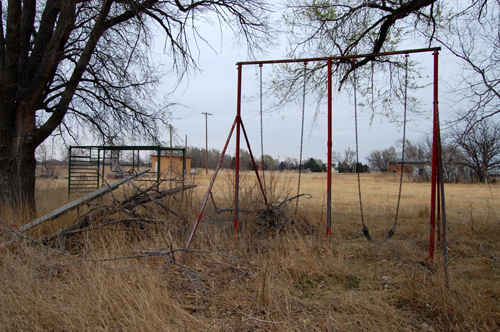 I recently played with Aubrey at the new Stuyvesant park on West Street. It illustrates many things that made America great and are appropriate to think about relative to the well known abundance that giving each settler his own plot gave to the pilgrims enabling them to have a Thanksgiving. Everything is better now. Think back to the catalogs you used to order from 10 years ago, and see if there's anything you would buy. Not only in electronics, but in toys , gifts, cosmetics. The park has products from Kompani and Berliner– that are infinitely safer and more playful than the old parks. The ropes of the jungle gym protect the kids from falling and doubtless save hundreds of lives a year. The artificial soft turn prevents thousands of deaths a year from concrete and asphalt accidents. All the equipment turns and jumps with unbreakable springs. The plastic that Kompani uses is infinitely safer and more playful than the splintering and depreciating wood that our kids grew up on. How many things are infinitely better now than they were 20 years ago.
What causes this? Incentives, competition, specialization and trade. I must improve on this thought for my annual thanksgiving message based on the incentives that Governor Bradford provided.
Russ Sears writes:
While one would hope that there is truth in this post, I believe the closer you look the more you see this is the incentive of government in charge of most parks and hover parents, not a free market. Parks often are most concerned with preventing lawsuits, rather than the entertainment or the education or even the holistic physical well being of the kids. Gone are the Basketball goals, the volleyball nets, and the score of competitive sports played on baseball field that encourage kids to casually compete, testing who is best. Even a kid Aubrey's age understands when helmets are good and when they are for show and support of over protective parents.
It is outside the parks system. To find the free market and true innovation you must go to the mountain climber, the bicyclist, the hikers, the campers, and even running specialty stores. There kids are thought to take educated risks and how to swing the odds greatly in your favor, to have a great time and live life fully in true freedom. These store are amazing places with gear that would stun a Rip Van Winkle awakened from a 20 year nap.
Rocky Humbert writes:
 Each year, emergency departments treat more than 200,000 children for playground-related injuries.
And from 1990 to 2000, 147 children aged 14 and under died from playground-related injuries. 56% died from strangulation and 20% died from falls. This may not seem like a troubling statistic, unless it's your kid that hit the ground at terminal velocity.
I submit that the Plaintiff's Bar is the "unsung hero" in playground safety evolution.
Russ Sears adds:
How many of increasingly obese, depressed, apathetic and unambitious youth and young adults are there through lost opportunity cost? Like the FDA, let us never forget "safety" has a hidden cost. In fact it could be argued that the bubble in safe AAA bonds was the fuel that allowed the housing bubble to start, grow and explode.
Jeff Watson writes:
 You're right that most things have improved in science kits and electronics. However, chemistry sets have gotten worse, although they are much safer. My old Gilbert set from when I was a kid had a much wider range of experiments and greater variety of chemicals than any set today due to the legalities and regulations. Although I love the new electronics kits, the old Allied Electronic "Knight Kit 200" was the best electronic kit I ever played with because it was a breadboard and even had a solar cell. I tried my hand at designing simple circuits with this kit and always had a propensity to blow out .01uF ceramic discs due to my adventure.
Victor Niederhoffer replies:
 I disagree with you. The Kosmos Chem 3000 is infinitely better as are the snap tech kits much better than allied or radio shack. You must come and see the new science curricula that Kosmos provides.
Jeff Watson elaborates:
The nice thing about the old Allied 200 in one kit was that it was a breadboard kit and used 110VAC with a multi tapped transformer. The breadboard came with plenty of extra connectors and I could add all the extra resistors, capacitors, transistors, coils, chokes, diodes, tubes, etc, that I could scrounge from old TV sets etc. The new kits just don't allow that flexibility, at least from what I've seen online etc. I still have that old kit and taught John the rudiments of basic circuitry when he was a kid. That kit is so old, I had to change out all the electrolytics and put in a new transformer as components change values with age. In my case, all the science and electronic kits I had ended up getting heavily customized by me, and they never resembled the original after a few days.
Victor Niederhoffer writes:
Yes. But that's infinitely more difficult and harder to learn and attach the springs than the snap-ons, which come with all those components and educational sets keyed to actual curricula.
Jeff Watson counters:
I know that the springs are harder, but they worked for me. When I was a kid, I never followed a curriculum, but by 5th grade, I was looking at schematics in Popular Electronics and building workable models on my Knight Kit breadboard. I made many improvements to their schematics and sent them to the magazine and I was published and rewarded with a free subscription. My tweaks weren't much, but for a 11 year old kid, they were pretty cool and left me with a sense of accomplishment. I never did much digital as it wasn't around then, but when I was a freshman in college, I remember studying "Digital Electronics for Scientists" by Malmstadt. Good book that is dated but still useful today.
Comments
Archives
- October 2026
- September 2026
- August 2026
- July 2026
- June 2026
- May 2026
- April 2026
- March 2026
- February 2026
- January 2026
- December 2025
- November 2025
- October 2025
- September 2025
- August 2025
- July 2025
- June 2025
- May 2025
- April 2025
- March 2025
- February 2025
- January 2025
- December 2024
- November 2024
- October 2024
- September 2024
- August 2024
- July 2024
- June 2024
- May 2024
- April 2024
- March 2024
- February 2024
- January 2024
- December 2023
- November 2023
- October 2023
- September 2023
- August 2023
- July 2023
- June 2023
- May 2023
- April 2023
- March 2023
- February 2023
- January 2023
- December 2022
- November 2022
- October 2022
- September 2022
- August 2022
- July 2022
- June 2022
- May 2022
- April 2022
- March 2022
- February 2022
- January 2022
- December 2021
- November 2021
- October 2021
- September 2021
- August 2021
- July 2021
- June 2021
- May 2021
- April 2021
- March 2021
- February 2021
- January 2021
- December 2020
- November 2020
- October 2020
- September 2020
- August 2020
- July 2020
- June 2020
- May 2020
- April 2020
- March 2020
- February 2020
- January 2020
- December 2019
- November 2019
- October 2019
- September 2019
- August 2019
- July 2019
- June 2019
- May 2019
- April 2019
- March 2019
- February 2019
- January 2019
- December 2018
- November 2018
- October 2018
- September 2018
- August 2018
- July 2018
- June 2018
- May 2018
- April 2018
- March 2018
- February 2018
- January 2018
- December 2017
- November 2017
- October 2017
- September 2017
- August 2017
- July 2017
- June 2017
- May 2017
- April 2017
- March 2017
- February 2017
- January 2017
- December 2016
- November 2016
- October 2016
- September 2016
- August 2016
- July 2016
- June 2016
- May 2016
- April 2016
- March 2016
- February 2016
- January 2016
- December 2015
- November 2015
- October 2015
- September 2015
- August 2015
- July 2015
- June 2015
- May 2015
- April 2015
- March 2015
- February 2015
- January 2015
- December 2014
- November 2014
- October 2014
- September 2014
- August 2014
- July 2014
- June 2014
- May 2014
- April 2014
- March 2014
- February 2014
- January 2014
- December 2013
- November 2013
- October 2013
- September 2013
- August 2013
- July 2013
- June 2013
- May 2013
- April 2013
- March 2013
- February 2013
- January 2013
- December 2012
- November 2012
- October 2012
- September 2012
- August 2012
- July 2012
- June 2012
- May 2012
- April 2012
- March 2012
- February 2012
- January 2012
- December 2011
- November 2011
- October 2011
- September 2011
- August 2011
- July 2011
- June 2011
- May 2011
- April 2011
- March 2011
- February 2011
- January 2011
- December 2010
- November 2010
- October 2010
- September 2010
- August 2010
- July 2010
- June 2010
- May 2010
- April 2010
- March 2010
- February 2010
- January 2010
- December 2009
- November 2009
- October 2009
- September 2009
- August 2009
- July 2009
- June 2009
- May 2009
- April 2009
- March 2009
- February 2009
- January 2009
- December 2008
- November 2008
- October 2008
- September 2008
- August 2008
- July 2008
- June 2008
- May 2008
- April 2008
- March 2008
- February 2008
- January 2008
- December 2007
- November 2007
- October 2007
- September 2007
- August 2007
- July 2007
- June 2007
- May 2007
- April 2007
- March 2007
- February 2007
- January 2007
- December 2006
- November 2006
- October 2006
- September 2006
- August 2006
- Older Archives
Resources & Links
- The Letters Prize
- Pre-2007 Victor Niederhoffer Posts
- Vic’s NYC Junto
- Reading List
- Programming in 60 Seconds
- The Objectivist Center
- Foundation for Economic Education
- Tigerchess
- Dick Sears' G.T. Index
- Pre-2007 Daily Speculations
- Laurel & Vics' Worldly Investor Articles
