Jan
28
Range Bound Skiing, from Chris Tucker
January 28, 2013 |
I was skiing in Vermont recently and as is usual for skiing in the northeast, the slopes weren't as deeply covered with snow as one would wish. When one attacks a steep run in these conditions, it is guaranteed that the center of the trail will be bereft of snow — thin cover is the term we use euphemistically to indicate ice and rocks — mostly ice though. When this happens, there can usually be found some snow piled on the edges of the trail, it having been pushed there by previous skiers who made all their turns in the center, their scraping edges clearing it away off of the underlying hardpack and pushing it to the sidelines.
Skiing in such conditions can be done, but not without incurring greater than normal risk. And it is usually not as satisfying as skiing using the entire available path whose deeper, more sweeping turns are somehow more satisfying and which provide greater control. But under these conditions, staying in the center is deadly so advanced skiers will stick to the edges of the trail, making all of their turns in rapid succession on what is in effect a trail only two or three feet wide. This means that turns must be small in degree and therefore must happen very quickly so as not to allow the tips to remain pointed straight down the hill and therefore incurring excessive speed. This kind of skiing requires conditioning, linking extremely rapid turns is exhausting and one must not attempt this when fatigued as the resulting inability to really push hard and dig can be catastrophic. It also requires some nerve, for one, keeping near the edge puts one in dangerous proximity to the treeline (or the edge of the abyss -as the case may be) and one slip at high speed and it's all over. And it means high speed, even while carving one edge after another in succession, the lack of available surface on which to gain traction means keeping the tips pointed perilously close to straight down the fall line. Mistakes at these speeds tend to have greater than normal undesirable consequences.
As I enjoy the speed, I will make one or two runs in these conditions just for the thrill of it, but this kind of tight skiing in a narrow and steep path requires tremendous concentration and loses it's appeal rather quickly. I will spend the majority of my time on tamer runs with more snow, even though they may be more crowded, so I can make the more gratifying, longer, carving turns that I prefer.
Jeff Watons writes:
That's just like surfing big waves vs small waves.I am not comfortable in the brutal conditions Mr Sogi San surfs on an every day basis. In those conditions, I will look for the rip current to get outside, paddle and make a bottom turn, and ride it in. Like typical Sunset. I don't stay out very long as I did when I was younger when it is big. But if the waves are 2-3' overhead, I'm good all day long. I'll still find the rip to make paddling out easier, but I'll attack the wave harder. But some of the very best days are those waist-chest high waves where you cruise on a long board, and catch the glide. However, during calm conditions I have suffered the greatest traumas while surfing. Broken vertebra, herniated discs, tendon and ligament damage, broken nose, etc. Somehow, being relaxed while it's calm is more dangerous then when it's big. Or maybe I'm more careless when the waves are small, and a bit reckless thrown in for good measure. Carelessness happens in the markets also. You start taking your profits for granted. It's humming along nicely with all your positions in the green, then wham, the Mistress gets a little PMS(no sexism intended) and throws the whole system off balance or upsets the cart, and your account suddenly needs a tourniquet. The lesson here is to keep your guard up at all times.
Jim Sogi writes:
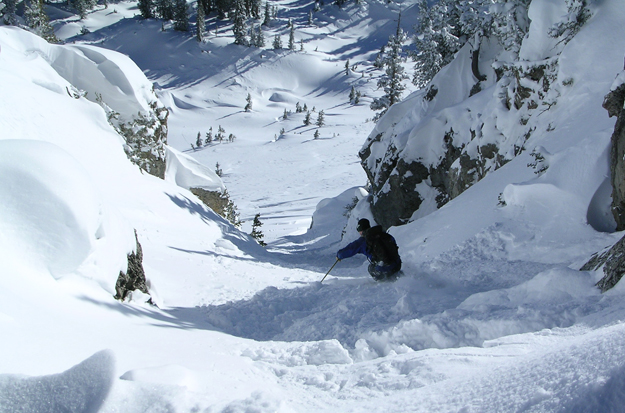 Just back from backcountry skiing in the Eastern Sierras. The conditions were snow that was about a week old, with very cold temperatures, and no wind. The sun made a crust where solar energy hit, so the powder stashes were hidden on north facing aspects where there were old growth trees. The cold had dried out the snow making it sparkle and soft and creamy sugar which was excellent for skiing.. Though it had not snowed for over a week, in the shade, on the north facing slopes shaded by old growth pine where the sun did not affect the snow there was beautiful sugary soft powder. It took some doing finding these niches and some hiking to get there and fighting some pesky brush at lower elevations. No one else seems to have discovered these hidden stashes of nice powder. This reminds me so much of the markets, when even in less than optimal conditions, there are hidden stashes of unridden goods. It takes understanding of the underlying processes that create and destroy snow, the equipment and will to get there, and the ability to ride those conditions. Its surprising in such a huge mountain range that only in such limited conditions would there exist such fine skiing. The last day, new wet snow came and turned everything into the famous Sierra cement.
Laurel Kenner writes:
I took Aubrey to our favorite ski place, Telluride, a couple of weeks ago. A drought was on and the mountain was brown, but the resort's snow-making machines had been at work since November and most runs were open. A few patches of grass were visible in some popular places — enough to send a skier head over heels in the old days. The new equipment was somehow able to ride it out, although caution was still warranted. That strikes me as like the market; if you're well-equipped enough with margin and numbers to ride out the rough patches, you can still do well in adverse conditions.
Steve Ellison writes:
I ski 10-15 times per year and encounter a wide variety of conditions. Light is an important factor. An overcast sky causes what skiers call "flat light". I slow down in flat light because the lack of shadows makes it hard to spot irregularities on the surface until one is nearly upon them. Dense fog is even worse. I have been in fogs in which I could not see the trees on either side and momentarily lost track of which way was down.
I like fresh snow, but there can be too much of a good thing. One day right after a 2-foot snowstorm, I started down my first run and fell on the very first turn when my outer ski caught some snow. I pushed off my hand to get up, but my arm sank into the snow all the way to my shoulder. It took a few minutes of wiggling and maneuvering to get back on my feet.
Wind is another factor. The Sierras sometimes have very high winds, which blow loose snow off exposed areas. The result is alternating ice and soft powder (in the spots in which blown snow settles). Going too fast at the transition point can result in a fall. On one traverse I often ski, I use moderate wind to my advantage by letting the wind slow me down as I ski into it with no effort on my part.
Duncan Coker writes:
When backcountry skiing which Mr. Sogi describes another key element is the approach. There are no lifts, so you hike uphill for every turn you will make downhill. It can be exhausting, but also very rewarding and you get to know the terrain including snow pack, the location of rocks, couloirs, tree wells, cliffs and the grade. After enjoying the view at the top you can descend focusing mainly on execution, making some nice turns. Skiing the steeper, untouched terrain has more dangers but is more rewarding.
I love the surfing analogy of "never taking the first wave" alluding to the dangers of being tempted by the first big wave in a set, after a lull. In skiing there are times when it is better to take pass on a run as well. Condition may appear good, but dangers are still there. Ultimately though we all have to "drop in" at some point for whatever activity we are pursuing, and taking some risk is certainly worth it.
Comments
Archives
- October 2026
- September 2026
- August 2026
- July 2026
- June 2026
- May 2026
- April 2026
- March 2026
- February 2026
- January 2026
- December 2025
- November 2025
- October 2025
- September 2025
- August 2025
- July 2025
- June 2025
- May 2025
- April 2025
- March 2025
- February 2025
- January 2025
- December 2024
- November 2024
- October 2024
- September 2024
- August 2024
- July 2024
- June 2024
- May 2024
- April 2024
- March 2024
- February 2024
- January 2024
- December 2023
- November 2023
- October 2023
- September 2023
- August 2023
- July 2023
- June 2023
- May 2023
- April 2023
- March 2023
- February 2023
- January 2023
- December 2022
- November 2022
- October 2022
- September 2022
- August 2022
- July 2022
- June 2022
- May 2022
- April 2022
- March 2022
- February 2022
- January 2022
- December 2021
- November 2021
- October 2021
- September 2021
- August 2021
- July 2021
- June 2021
- May 2021
- April 2021
- March 2021
- February 2021
- January 2021
- December 2020
- November 2020
- October 2020
- September 2020
- August 2020
- July 2020
- June 2020
- May 2020
- April 2020
- March 2020
- February 2020
- January 2020
- December 2019
- November 2019
- October 2019
- September 2019
- August 2019
- July 2019
- June 2019
- May 2019
- April 2019
- March 2019
- February 2019
- January 2019
- December 2018
- November 2018
- October 2018
- September 2018
- August 2018
- July 2018
- June 2018
- May 2018
- April 2018
- March 2018
- February 2018
- January 2018
- December 2017
- November 2017
- October 2017
- September 2017
- August 2017
- July 2017
- June 2017
- May 2017
- April 2017
- March 2017
- February 2017
- January 2017
- December 2016
- November 2016
- October 2016
- September 2016
- August 2016
- July 2016
- June 2016
- May 2016
- April 2016
- March 2016
- February 2016
- January 2016
- December 2015
- November 2015
- October 2015
- September 2015
- August 2015
- July 2015
- June 2015
- May 2015
- April 2015
- March 2015
- February 2015
- January 2015
- December 2014
- November 2014
- October 2014
- September 2014
- August 2014
- July 2014
- June 2014
- May 2014
- April 2014
- March 2014
- February 2014
- January 2014
- December 2013
- November 2013
- October 2013
- September 2013
- August 2013
- July 2013
- June 2013
- May 2013
- April 2013
- March 2013
- February 2013
- January 2013
- December 2012
- November 2012
- October 2012
- September 2012
- August 2012
- July 2012
- June 2012
- May 2012
- April 2012
- March 2012
- February 2012
- January 2012
- December 2011
- November 2011
- October 2011
- September 2011
- August 2011
- July 2011
- June 2011
- May 2011
- April 2011
- March 2011
- February 2011
- January 2011
- December 2010
- November 2010
- October 2010
- September 2010
- August 2010
- July 2010
- June 2010
- May 2010
- April 2010
- March 2010
- February 2010
- January 2010
- December 2009
- November 2009
- October 2009
- September 2009
- August 2009
- July 2009
- June 2009
- May 2009
- April 2009
- March 2009
- February 2009
- January 2009
- December 2008
- November 2008
- October 2008
- September 2008
- August 2008
- July 2008
- June 2008
- May 2008
- April 2008
- March 2008
- February 2008
- January 2008
- December 2007
- November 2007
- October 2007
- September 2007
- August 2007
- July 2007
- June 2007
- May 2007
- April 2007
- March 2007
- February 2007
- January 2007
- December 2006
- November 2006
- October 2006
- September 2006
- August 2006
- Older Archives
Resources & Links
- The Letters Prize
- Pre-2007 Victor Niederhoffer Posts
- Vic’s NYC Junto
- Reading List
- Programming in 60 Seconds
- The Objectivist Center
- Foundation for Economic Education
- Tigerchess
- Dick Sears' G.T. Index
- Pre-2007 Daily Speculations
- Laurel & Vics' Worldly Investor Articles
