Jul
18
Japan wins World Cup, from Jim Sogi
July 18, 2011 | Leave a Comment
Posted here some years ago.
A study showing that a Country winning World's Cup has significant out performance of stock in following year.
Japan up?
Jul
14
One Guesses, from Victor Niederhoffer
July 14, 2011 | Leave a Comment
 One guesses that the review by the ratings company of the rating on US debt is a shot across bow to force service revenues from the rich to be putatively increased and must have been vetted before hand for that venerable purpose.
Jim Sogi writes:
You can be sure this whole dance is choreographed. When the music stops, some one will be out of a musical chair though.
Jul
13
Nice Ranges Today, from Jim Sogi
July 13, 2011 | 1 Comment
As Lionel Ritchie sang, "All night, all night, all night long."
Jun
28
The Thrill of the Long Shot, from Ken Drees
June 28, 2011 | 3 Comments
 As specs we snicker at the lottery player, he is a sucker. We smile when we hear how the crowd is routing for the hometown favorite when we know odds favor the other side. We hopefully carry out the canes when the crowd is tossing down the tickets in disgust, we sniff for value when there is no value there–so says the financial press.
But what is our own attachment to this concept–catching a falling knife, holding a loser, getting involved in some fiasco stock since the market is beginning to bore, riding a coattail that turns into a skid, throwing in "just this once"? Why do we fail to follow our own good sense from time to time?
There must be a thrill or an ego impulse underneath this temptation to turn from the path and into the wind of long odds–"cause we can handle it".
Victor Niederhoffer writes:
Our own attachment should be based on quasi scientific study., not riding a coattail.
Ken Drees writes:
True, but do we fasten our own rickety reasons from study based on the past which has no real reason to work in the future other than past frequency, tendency and relationship, and thus delude ourselves into thinking that our proof more than compensates for the new speculation? And if finding tendency and causality can be negated by the speculative theme of ever-changing cycles, and also trumped by the unknowns –how do we believe this and thus risk capitol?
I think that the chair has outlined many great themes in speculation, almost like laws:
1. Methods must be tested in order to find relationships of validation.
2. The laws of ever changing cycles are present in the market at critical-mass moments.
3. There is a high degree of relationship between markets and natural systems. What can be said of the "unknown"? What is this speculative doomer, the whispy apparition above the pond at days end? What law can be attributed to this unknown force that seemingly has uncanny timing?
Ralph Vince writes:
Ken,
I think it's simpler than that.
-The past gives us a proxy for the distribution of what can happen.
-We can amend that distribution of what can happen based on how we foresee the future diverging from the past
-That very distribution can now be used to determine how aggressive we might want to be withing a given risk (drawdown) constraint.
-If we don't exceed that drawdown constraint, and our distribution is reasonable of the future, the profits accrue.
Gibbons Burke writes:
I wrote this in a previous thread about the difference between speculators and gamblers, and I think it holds true: "Gamblers are willing losers who occasionally win; speculators are willing winners who occasionally lose."
At bottom, and at one time or another, most of us are gamblers. It takes a very disciplined, brilliant, and perhaps unrealistic person to only play games where the odds are in our favor. The reasons many engage in knowingly losing propositions are greater than the stars in the night sky in rural flyover territories. Entertainment and division rank high among them, sociability, peer pressure, guilt about the money they are risking (unconsciously disposing of it), fear of success, self-disgust, compulsive addiction to the stimulus-response loop, adrenalin junkie.
But all these are all proxies for the thing everyone is really seeking, usually unconsciously: a desire to be in union with the godhead, the creator, the divine purpose. As St. Augustine wrote in the opening lines of his autobiographical "Confessions": "You made us for thee, Lord, and our hearts will be restless until we rest in thee."
Phil McDonnell writes:
When I ask people why they do not invest in a guaranteed savings account or short term t-bills they usually respond that they are too boring. And they are, or at least used be because they could not lose. Most traders unconsciously seek to lose because it represents action and excitement. While I think the usual arguments that it takes assumption of risk to increase return have validity, at the sub-conscious level the desire is really no more complex than risk seeking for excitement.
Ralph Vince writes:
I agree — this is what frightens me about individuals who are out investing their own money — no kid needs to relive the station wagon as home for awhile as a consequence of Dad's gambling proclivities.
I'm beginning to think institutions are just the individual lambs in the wolves clothing of trading with other's money.And the reason I say this is because, again, not only can they not articulate their criteria for being involved in this, most criteria involve the ultimate metric of "what is the probability of getting smacked x% in the coming y period(s)."
And I don't see ANY of them operating that way. Rather, their risk metrics are ones that don't really tell them anything, analgesic salves that do not stave off the infection.
Russ Sears writes:
Personally, my record shows that I am more often guilty of trying to catch the falling knife on an individual stock and on an option trade, than I am on an allocation strateging or long term market timing basis. I believe this is because of two reasons, One reason is I am just to gullible for a single stock, and buy the story the more it goes down the more I am convinced it will pop, often averaging down. I believe most businesses as a whole are running honorable businesses, that is they are trying to do what is best for the long term. However, the exceptions happen and there are frauds/crooks and businesses that have agency problems (businesses run for the executives or employees short term interest) The second is that I am often guilty of believing that the studies timing is much more stable than it actually is. It may be that the market is over sold and will bounce back, this results is the crux of my "edge, but the time period is often part of the ever changing cycle.
I have helped this some by giving myself some boundaries or a do not buy or sell if held rules of:
1. If the market believes the board or leadership is not acting in the stockholders interest, based on key decisions they have made.
2. If there are union grievances making the press.
3. If there are rumors of fraud or accounting problems.On options buying time or gamma seems to work better. And in general I have learned to not do as many option trades as I am not as good at them as I think I am.
These rules are simply my adjustments for my own shortcomings.
Jim Sogi writes:
The heuristic at work here is risk aversion where one would rather face a known small risk with bad odds of a big win, rather than a 51% favored odds with a risk of a large loss. It's very hard to overcome the natural tendencies.
Jun
23
Netflix Instant Watch Recommendation, from Jim Sogi
June 23, 2011 | Leave a Comment
 Between the Folds, on Netflix, is a fascinating movie about origami and the new directions modern practitioners are taking the art form. Everything has folds, space, the galaxy,DNA, and market moves. The flat plane of a piece of paper, when folded takes on complex and dynamic forms, curves, moves and can mimic forms of nature and remarkably realistic forms. The new generation of origami including mathematicians and physicists use complex math and computers to design the folds to create realistic and beautiful forms.
I've always talked about the higher dimensions of the market above the flat charts, but reflecting on the transformation of a flat paper to complex design based on folds may reveal some interesting approaches and ideas to analyzing the folds, the turns of the market and what kind of forces and dynamics are being created. Paper, you see, is not a flat plane, but has dynamic properties and memory. The folds are memory, but the paper wants to return to flat and the tension creates a dynamic force with the intersection of the many vertices. What is the force created when the market reverses? What is the effect of the intersection of two or more folds or turns in the market. How does the turn in the market represent a memory and what force is trying to return to the old form.
We've recently seen a turn off the bottom in this market and there seems to be a memory in the turns from the down turn. How might this "unfold"?
Jun
21
Life Lessons from Trading, from Jim Sogi
June 21, 2011 | Leave a Comment
In trading, we can all agree that fewer conditions or filters results in better conclusions, better understanding, and less curve fitting. Conditions or filters block information. Too filters can result in less new insight and fewer opportunities.
Here is where trading is a good lesson for life. As we grow older our tendency is to filter out information, people, paths. It's partly a necessity to avoid the bad or overload, but good things can be missed. Our experience tends to specialize our knowledge and narrow our focus. Though this has some benefit in expertise what opportunities or knowledge or growth may be missed. Ignoring, filtering or refusing to hear or listen to ideas we disagree with or that are different than our own may lead to narrow mindedness, missed opportunity to change and important information. For younger people it might be seen as closing doors. Meeting new people, hearing new ideas, going to new places. Nobel laureates advise not to tighten parameters too tightly as the surprise result may reveal itself. I recommend opening up parameters, let the fresh air in. Let's not become grumpy old men. We've seen closed small minded people and don't look on them with respect. Broad vision is necessary to see above and beyond the noise. You really need to force yourself against the tendency to close the mind.
Jun
21
Group Think, from Jim Sogi
June 21, 2011 | 1 Comment
 Most people love to think and act alike. It starts in infancy when you mimic your parents or siblings. Teens are notorious for talking, dressing, acting, and thinking alike, and many dangers arise for them as a result. Young adults I notice tend to dress alike and sport similar hairdos. In Japan, consensus is a compulsion.
In trading it has been common recently to see everyone piling on in the same direction during the day. The internals confirm this. Big players seem to like to wait to see which direction the day is going and all pile in the same direction. Are we much more than fish? Apparently not. There doesn't seem to be much science, analysis or thinking going on in the market recently, nor in the news coverage. It looks like group think. The problem is it's hard going against, in life and in markets. However when used as strategy it's productive, but when used for misdirected frustrations, its not.
Jun
21
The Observer Effect, from Jeff Watson
June 21, 2011 | 6 Comments
 I was reading about the famous double slit experiment and then thinking about the Heisenberg uncertainty principle, the math, and the observer effect. I wonder what types(if any) of market implications could be attributed to the observer effect.
Ken Drees writes:
Interesting. I was contemplating this more than a few weeks ago too, but let it drop. It made me think of Schrodinger's Cat:
Schrödinger's cat is a thought experiment, usually described as a paradox, that Austrian physicist Erwin Schrödinger devised in 1935. It illustrates what he saw as the problem of the Copenhagen interpretation of quantum mechanics applied to everyday objects. The thought experiment presents a cat that might be alive or dead, depending on an earlier random event. In the course of developing this experiment, he coined the term Verschränkung (entanglement).
I was considering how a trade is alive and real only when one puts it on or opens the box and everything else is meaningless– the counting, the theory, the expected outcome– all meaningless unless you commit and then make it real and apart of consciousness, reality, an entity.
Michael Cohn adds:
 Schrodinger's kitten's also interesting as a thought experiment across space and time. What I recently learned about the uncertainty principle was that there is a different way to think about it. I always thought about it in terms of how the observer may be creating the uncertainty in measuring both mass and acceleration with the instruments. What I now understand is because of quantum uncertainty these particles actually don't really know exactly where they precisely are at a given point in time beyond a prob distribution so if they don't know where they are I certainly can't help them as much as I would likes to be able to do so…
Jim Sogi comments:
2 closing related issues:
There's the insidious cursor and key watcher viruses.
Another related aspect is the inadvisable practice of putting your cursor over the execute button onscreen and having it execute without having touched the mouse, or accidentally touching the mouse or keyboard at the wrong time triggering the trade. Been there, done that.
There is also the issue of order field depth, which is a form of "disclosed" watching, and other order related manipulation issues perhaps posing, perhaps honest bid, perhaps flow bashing or bandwidth hogging, flashing. Lack surely can speak to many of these techniques he sees in individual stocks.
Russ Sears adds:
 If risk is defined as what is not known in the future that if it happens would hurt you, than imagination of what could happen causes you to avoid and prevent that perception.
Done to extremes this creates new risks from the over abundance of care and lack of focus on any other risks even to the point of altering the minds ability to cope. Think interest rate duration management and the creation of the tranches in the securitization process and modeling of those securities. Done in mass this creates bubbles, hysteria, or pop-stars. ( I believe this is the "Lady Gaga" "Apple" link. It is not mysticism but the creation of popular mystic.)
Much of psychology is the study of how unrealistic risk perception creates a difficult life and alters their reality for the fearful and anxious. Why should the markets be immune?
Ken Drees comments:
Lady Gaga is to Apple as Amy Winehouse is to Rimm.
Jun
21
For SPY from 2000 on here is the count of "inside" and Outside days, if inside day is defined as High < prior day High and Low > prior day low. Likewise outside day is High > prior day high and Low is < prior day low.
It would appear that the inside days do not like to occur in middle of week. While outside days like to occur in the middle. But Mondays do not have many occurances of outside days.
Why?
Binomial Distribution
Jim Sogi comments:
T 15.64
W 14.86
T 15.32
F 14.27
Jun
17
Abandoned Baby, from Jim Sogi
June 17, 2011 | 2 Comments
 Steve Nison in Candlesticks describes the "Abandoned Baby" pattern where price gaps up, then gaps down the next day.
This occurred two days ago. The pattern was bearish (despite prior drop) according to traditional candlestick theory and modern scientific analysis.
Jun
17
100 Points, from Jim Sogi
June 17, 2011 | 1 Comment
It has been just over 100 points pretty much straight down since the high over a month ago to today's low. Common sense and hope tells you it ought to be bullish, but it ain't necessarily so scientifically speaking. The drops sure are dizzying and the pops are breathtaking as well. You can see see how they design them to scare the living daylights out of you or suck you in deeper and the rallies are designed to give you hope but just shy of a new high. Takes some strength, stamina and savvy to be involved here. In 08 the drops went into the hundreds. The action is all day and all night long without let up.
May
12
A Prize for a Test of the Principle of Least Action, from Victor Niederhoffer
May 12, 2011 | 7 Comments
 UPDATE:
The Winners of the least effort contest were jointly in a tie. Mr. Gary Rogan and Mr. Steve Ellison. I will split the prize between them. The creative and physical ideas of Mr. Rogan were very excellent and best of all, but there was no testing. Mr. Ellison gave a great test, and a complete answer, but Rogan can't be denied his place either. vic
I'll give a prize of 1000 to the person or locus of his choice that comes up with the best way to test the principle of least action or a related principle of least effort.
It's in honor of my grandfather. Whenever I'd ask him which way he thought the market would go he'd say, "I think the path of least resistance is down" starting with Dow 200 in 1950. We need some more quantification around here.
You might consider max to min or a path through a second market back to home. Or round to round? Or amount of volume above or blow. Or angle of ascent versus angle of descent. Or time to a past goal versus the future? Or some mirror image or least absolute deviation stuff?
Sushil Kedia writes:
With utmost humility and clearly no cultivated sense of any derision for the Fourth Estate, I would submit that since it is the public that is always flogged and moves last, the opinions of all media writers, tv anchors are the catalysts, the penultimate leg of the opinion curve. A test of the opinions of the fourth estate on the markets would provide the most ineffective wall of support or so called resistances. Fading the statistically calculated opinion meter (if one can devise one such a 'la an IBES earnings estimate a media estimate of market opinion) and go against it consistently over a number of trades, one is bound to come out a winner. Can I test it? Yes its a testable proposition, subject to accumulation of data.
Alston Mabry writes:
The following graph (attached and linked) is not an answer but an exploration of the "least effort" idea. It shows, for SPY daily since August last year, the graph of two quantities:
1. The point change for the SPY over the previous ten trading days.
2. The rolling 10-day sum of the High-Low-previous-Close spread, i.e., "max(previous Close, High) minus min(previous Close, Low)". This spread is a convenient measure of volatility.
Notice how these quantities move in tight ranges for extended periods. These tight ranges are some measure of "least effort", i.e., the market getting from point A to point B in an efficient fashion. As one would expect, the series gyrate when the market takes a temporary downturn. Also note how when one of the quantities swings above or below it's mean or "axis", it seems to need to swing back the other way to rebalance the system.
Bill Rafter writes:
 This nicely illustrates how relative high volatility is bearish on future price action.
Jim Sogi writes:
The path of least resistance would be the night session. Low liquidity allows market mover to move market. Every one is asleep. Dr. S did a study some years ago. Updating shows total day sessions yielding 94 pt, but night session yielding 232 points. Don't sleep…stay up all night or move to Singapore. Recent action is in line with hypothesis.
Bill Rafter writes:
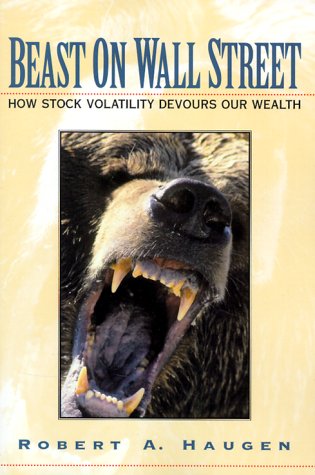
Haugen's "The Beast on Wall Street" (i.e. volatility) came to the conclusion that if you want less volatility in the markets, keep them closed more, to essentially force the liquidity into specified periods. That is, 24 hour markets promote volatility. Or a corollary was that a market is never volatile when it is closed. [this is from memory and I may also be regurgitating from a personal conversation with him]. An oft cited example is the period in the summer of 1968 when equities were closed on Wednesdays to enable the back offices to get up to date with their paperwork and deliveries. During that time the Tuesday close to Thursday opening was less volatile than expected (twice the daily overnight vol).
One could take this thought and stretch it to say that the periods of least resistance would be those without heavy participation. One could easily compare the normalized range (High/Low) of those periods versus the same of the well-participated periods.
Craig Mee writes:
Hi Bill,
You would have to think that in 68 there was sufficient control of price and news dissemination. In these times of high speed everything, that this could create bottlenecks and add to the volatility. No doubt a bit of time to cool the heels i.e limit down and up for the day restrictions, is a reasonable action, even if it goes against "fair open and transparent markets" but unfortunate it seems little is these days.
Bill Rafter replies:
I should have been more specific about the research: take the current normalized range for those periods of high liquidity (when the NY markets are open) and compare that to the normalized range of the premarket and postmarket periods. Do it for disjoint periods (but all in recent history) so you don't have any autocorrelation. My belief is that you will find there is less volatility intra-period during the high liquidity times. While you are at that you can also check to see during which period you get greater mean-reversion versus new direction.
If that research were to show that (for example) you had greater intra-period volatility during the premarket and postmarket times, and that those times also evidenced greater mean-reversion, you could then conclude that those were the times of least resistance. That would answer Vic's question. Okay, now what? Well you could then support an argument that with high volatility and mean reversion you should run (or mimic running) a specialist book during those times. That's not something I myself am interested in doing as it would require additional staff, but those of you with that capacity should consider it, if you are not yet doing so.
Historical sidebar: '68 was a bubble period caused in part by strange margin rules that enabled those in the industry to carry large positions for no money. The activity created paper problems as the back offices were still making/requiring physical delivery of stock certificates. The exchanges closed trading on Wednesday to enable the back offices to have another workday to clear the backlog. The "shenanigan index" was high during that time.
Phil McDonnell writes:
Bill, you said "During that time the Tuesday close to Thursday opening was less volatile than expected (twice the daily overnight vol)."
For a two day period and standard deviation s then the two day standard deviation should be sqrt(2)s or 1.4 s. So the figure of twice the volatility would seem higher than expected.
Or am I missing something?
Steve Ellison submits this study:
The traditional definition of resistance is a price level at which it is expected there will be a relatively large amount of stock for sale. Starting from this point, my idea was that liquidity providers create resistance to price movements. If a stock price moved up a dollar on volume of 10,000 shares, it would suggest more resistance than if the price moved up a dollar on volume of 5,000 shares. To test this idea, I used 5-minute bars of one of my favorite stocks, CHSI. To better separate up movement from down movement, for each bar I calculated the 75th and 25th percentiles of 5-minute net changes during the past week. If the current bar was in the 75th percentile or above, I added the price change and volume to the up category. If the current bar was in the 25th percentile or below, I added the price change and volume to the down category. Looking back 200 bars, I divided the total up volume by the total up price change to calculate resistance to upward movement. I divided total down volume by the total down price change to calculate resistance to downward movement. I divided the upward resistance by the downward resistance to identify the path of least resistance. If the quotient was greater than 1, the past of least resistance was presumed to be downward; if the quotient was less than 1, the path of least resistance was upward.
For example:
                           Previous 200 bars
                                                        Up
   Date     Time     Up Points Volume  Down Points Volume Resistance

3/25/2011   15:50   53   6.49  99431    61  -7.38  149867     15311


   Down       Resistance     Actual
Resistance      Ratio      net change
     20310       0.754       -0.03
Unfortunately, the correlation of the resistance ratio to the actual
price change of the next bar was consistent with randomness.
Apr
10
Good Summer Reading, from Alston Mabry
April 10, 2011 | Leave a Comment
 In the summer reading vein, I very much enjoyed Alex Berenson's first novel, The Faithful Spy, with his main character, John Wells. The next two books in the series, The Ghost War and The Silent Man, were very good, too. The next book, The Midnight House was just okay, and Berenson's most recent effort, The Secret Soldier, is unfortunately a failure.
Jim Sogi writes:
My son turned me on to the spy series by Vince Floyd, including Transfer of Power, The Third Option, Extreme Measures. The books are surprising well written current historical fiction with three dimensional characters with full backstories and touching personal details. The bad guys are complex but the series has a decidedly non PC attitude, so that's fair warning. Its good entertainment though and hard to put the books down. Great for airplane or vacation reading. The main character is an assassin but has realistic doubts and feelings. I briefly compared it to Clancy, but it is astonishing how the technology just a decade back seem so archaic and outdated. I have them downloaded to Kindle for iPad.
David Hillman writes:
And given our particular interest in markets here, one might enjoy the David Liss's "Benjamin Weaver" series. Set in early 18th Century London, Weaver is a former pugilist and highwayman come "thief-taker", i.e., private detective. The son of a Jewish Portuguese stock jobber, his cases involve intrigue and deception revolving around the relatively newly formed stock exchanges, combinations, Bank of England and corporate giants of the time.
Liss' has also written "The Coffee Trader", set 50 years before in Amsterdam, the locus of which is cornering the market in the newly discovered "coffee fruit" and "The Whiskey Rebels", set in America just after the revolution focusing on the attempts of those whiskey rebels on the western frontier attempting to bring down Alexander Hamilton and the Bank of the U.S.
Liss began by writing his first Weaver novel, "A Conspiracy of Paper" while a doctoral candidate at Columbia. All are well written and offer looks at finance and markets, many pretty familiar, not to mention murder, a large cast of ne'er-do-wells, prostitutes and a pretty frank look at the cultural and social biases of the time. He even has a Watson-like sidekick for Weaver, Elias Gordon, a likable bounder of a Scottish surgeon given to bleeding and such, who also schools Weaver in scientic method and probability. A lot going on, fun and good stuff.
The Collab writes:
William Gibson plays with the theme of pattern recognition in his technologically edgy, subversive books. One of the books, in fact,is called "Pattern Recognition." I have devoured all of them as soon as they come out. The newest one, "Zero History," contains the throwaway insight that when/if someone succeeds in aggregating order flow, the market will cease to exist. Hubertus Bigend — not a hero or a bad guy, but rather a nexus — is one of the most fascinating and ambivalent characters in fiction — comfortable with unpredictability, glinting Bertelsmann, Ralph Lauren and Goldman Sachs.
Apr
6
Adventure in Alaska, from Jim Sogi
April 6, 2011 | 3 Comments
 My family had a great adventure on an ski mountaineering expedition to the Ruth Glacier in Denali National Park Alaska last week. We stayed at the Mountain House. We were skiing several objectives in the area and had good weather. We could see Mt. McKinley close by. The primary danger was falling into a crevasse in the glaciers. The glaciers are 3 mile acres, 30 miles long, and 4,000 feet deep. I read a number of books on crevasse rescue, bought gear, practiced and headed into the wild. It's quite amazing how much one can learn from books. We flew in a ski plan from Talkeetna 50 miles into the wilderness and were dropped off with our supplies of food and wood for 5 days. We had to melt snow for water.
Mar
18
Flexionism in the Land of the Rising Sun, from Jim Sogi
March 18, 2011 | Leave a Comment
The flexions are over their head in water, or lack thereof. The solution if any will take years. The flexions don't have years, they operate in bits and days. This is a bigger problem and uncovers systemic flaws in technical as well as flexionic issues. The nuclear storage and energy issues go deep to the core of our system.
Mar
12
Distractions, from Jim Sogi
March 12, 2011 | Leave a Comment
 There are so many distractions that try to take your focus off the market when you need it the most. Wailing sirens every hour, tsunamis, earthquakes, movies, pretty girls, boats, music, food, the news, the mideast, the electrical workers strike, thunder, lighting, vacations, family obligations, phone calls, bills, errands, and the list goes on. Obviously some require a balance. Its a common strategic trick used in other contexts of battle, combat, negotiation, art, humor, magic, romance.
Alan Millhone writes:
You make good points on distractions. I know that many on the list have no TV which plays on our emotions.
At Checker tournaments I pretty much block out all around me and concentrate on the board before me. My opponent is there but only to make their move or reply to mine. I keep a legal pad handy and record my moves and on occasion make a note beside my move here and there or same with my opponent.
I suspect the Market trader should conduct themselves in a similar way.
Craig Mee writes:
Remember Tiger Wood's father used to either yell at him or play music super loud on the putting green– one or the other, from a very early age to combat distractions.
No doubt the scalpers in the pit that excelled had mastered that area as well.
Mar
4
Absolute or Relative Value, from Jim Sogi
March 4, 2011 | 3 Comments
There are two theories on stock valuations: 1. That the market accurately discounts the correct absolute value; 2. That the market is irrationally exuberant or depressed and overshoots the correct values. Under theory 2 the values are relative. If theory 1 is correct, it will be hard to achieve former all time highs soon as fundamentals still lag former glory. If theory 1 is correct, prior values may have been exuberant, but compared to recent lows achievable if every one piles in, especially the last few hundred points. We seem to be still in a market that won't go down. My take is theory 2 as money in general is nothing more than confidence or lack thereof.
Feb
13
How Does News Affect Markets, from Jim Sogi
February 13, 2011 | 1 Comment
 Despite the fact we're in the market "that doesn't seem to go down" the issue remains whether or how new affects markets. There are several alternatives: 1. Positive news pushes markets up. and vice verse. 2. News does not affect markets. 3. The reaction to the news is usually a) right, or b) wrong. My theory is 3(b), the reaction tends to be wrong. Last week news of Egypt occurred at a time when the markets were pushing to new recent highs. The market has been rather new hungry and reactive since the massive government meddling with the financial system and probably rightly so. But I am not sure why the news from Egypt is good for equities in the US. Sure its a bell for freedom and all, but it brings much uncertainty to many markets.
The second theory is the Teenage Ninja Turtle theory such that when I go out of town for a few days the market drops. Do you remember the classic scene "What if, What if??". It did last month. I'll be out of town later this week. What if?
Rocky Humbert writes:
It's not new information per se to which markets may react. Rather, it's new information versus current perception(s) that may cause prices to move. This phenomenon operates at many different levels– including the purely psychological– which can then cause feedback effects which amplify the change.
Since Mr. Sogi chose the "news" from Egypt to elucidate his point, it seems apt to reference the stock "Blue Nile" (ticker=NILE) Despite the "good" news from its namesake, this stock dropped about 12% on Friday because of disappointing quarterly results. Who said that a rising tide (or in this case, "river"), lifts all boats???
Jan
12
Unrecognized Genius, from Michael Ott
January 12, 2011 | 1 Comment
 This is one of my all time favorite news stories.
Relatedly, a friend of mine was at a karaoke bar in CA and a dirty blonde white guy was hogging the stage. He was terrible and people started booing. Then he sang a few Tom Petty songs and the crowd turned around. That's because it was Tom Petty.
This is another example , with Jewel, but staged.
Jim Sogi comments:
The question is not, "Do people recognize genius" here. What is being tested is "Do people, know, care about classical music?" Lets say they posted some brilliant computer code. Surely no one would recognize the genius therein. Let's say Bob Dylan stood with his guitar outside Alice Tully theatre. Most theater goers might ignore him and the screeching music, assuming they did not recognize his face.
Jan
12
Samurai Rebellion, from Jim Sogi
January 12, 2011 | Leave a Comment
 Samurai Rebellion is one of the best Japanese samurai moves. Toshiro Mifune stars as Sasahara, a mid rank guard officer. The scene is beautifully set and filmed in 1725 Tokugawa feudal era. The feudal lord orders one of the young maids to "serve" as his mistress ruining her pending engagement. Later the lord dumps her and orders his vassal, one of the guard's son, to marry her though she has the lord's son. Though reluctant, the Sasahara family takes her, and soon they have a child of their own, fall in love, and are happy. Then the lord's other son dies, and orders the wife back to the castle without regard at all for the feelings of the new couple, their child, or the family. It is intolerable morally, emotionally, politically. Sasahara has had all he can take and the result is well expected. Blood flows. The acting is powerful and touching, though it must be difficult for Japanese who do not overtly show emotion, and the seething feeling shows through the stifled masks. This is much different than other sometimes cartoonish samurai acting. They had no rights of liberty, life, property. There's a great tension the negotiations when the chamberlain asks Sasahara to ask to return the son's wife, rather than have the lord order it, so appearances are preserved.
The theme of the trampling of the rights, the feelings, the property of the lower ranks is so resonant with Chair's current themes of the flagrant abuses of power by the flexions and their brethren in command and other top feeders while they maintain appearances so properly.
Dec
27
Jet Indicator, from Jim Sogi
December 27, 2010 | Leave a Comment
 Only 59 private jets at the fixed base. Mostly big ones. There were 120 before the crash.
George Zachar writes:
Aspen airport private jet parking inventory down roundly the same %, if not a bit more. Empty storefronts during the busiest week of the year here, and real estate blather has an unseemly pleading tone.
Nov
10
Symmetry, from Jim Sogi
November 10, 2010 | Leave a Comment
Very symmetrical shaping in ES over last couple weeks. Symmetry seems to be one of the underlying principals of the universe, to put it most broadly. Eastern philosophy calls it yin and yang.
Nov
8
Thought of the Day, from Jim Sogi
November 8, 2010 | 2 Comments
 There are some great opportunities for day trading. Recent months have had some good opportunities. It goes in cycles though. Some days are no good and it's just as well to go surfing instead. There are many edges available.
People have different niches. Some systems may not make as much money, but then again some make more, and more consistently than swing trading.
Oct
19
Question About IB, from Jim Sogi
October 19, 2010 | 1 Comment
Does anyone know whether the samples of data IB uses to display their charts and trades in order to keep up with fast markets is representative and proportionate on either side of market or where that info might be researched?
Phil McDonnell replies:
My understanding from list member Chris Cooper is that IB skips trades to maintain real time numbers. The way to test for bias would be to get hold of some real tick data and compare for anomalies or bias.
Oct
8
Smart Swarms, from Jim Sogi
October 8, 2010 | 1 Comment
 The Smart Swarm by Peter Miller analyses crowd decision making by looking at ants, bees, locusts, and then humans. He discusses various heuristics making delayed response decision making difficult. The thermostat game and the beer game are good examples of difficulties in making decisions where the results are delayed. It usually ends up in a boom bust cycle. The cure is to reverse against the trend earlier. Experiments show that decisions made by 3 average persons are better than those made by the smartest person due to diversity of information. This is the Slumdog Millionaire phenomenon where the crowds answer tends to outperform the experts. Analysis of ants and bees show how the swarms make decisions: they simply follow those next to them. The remarkable aspect is how this information travels across large groups almost instantaneously and how this information is more than any of the individuals would have access.
Phase transition is the point at which the entire crowd or swarm behavior changes. Birds, locusts, fish, people in crowds, and even inert molecules can all instantly change phase. Markets seem to as well. Computer modeling requires quantification, and interestingly as Wolfram posited, simple rules create complex behavior and learning that arrive at group solutions which are not preprogrammed in. This differs and improves upon statistical analysis in its adaptability to change and new information. This recalls Wolfram's thesis where simple rules create complex patterns and reverse engineering is hard. Miller looks at the process of reverse engineering crowd decisions. Analysis of crowd stampedes in Mecca show waves in pilgrims backing up before the stampede. Traffic shows similar waves in traffic jams. Analysis of locusts show the rapid change in behavior of the locusts when crowded. One of the beauties of the market is the plethora of data and the platforms to deliver and analyze it. Half the problems the scientists faced was data collection. The question is what are the precursors and triggers to phase change in markets? There is a tipping point to every change in direction, of which there have been many recently. There are precursors, triggers and the phase change. These conditions when identified might give good signals. Pit traders seem to have worked out the dynamic in the pit, but what are the electronic signals? If ants and bees can work this out, can't traders?
Pitt T. Maner III comments:
Now that almost everyone has a smartphone, iPhone, etc, the potential for "super swarms" to develop amongst groups of people seems ever more heightened. One can imagine interesting collaborative efforts forming inside and outside of company boundaries. Swarmanomics. Or in negative cases, mobocracy—mobile vulgus.
It is reminiscent of the bee returning to the hive and doing a little dance to give the direction, distance, and quality of potential food.
One such network is Foursquare, where you can become a virtual "mayor" by being a habitue and boulevardier and a potential director of traffic (or dare say, wallets) to locations. Status and prestige are bestowed to the tireless, individual "worker bee". Where is the party today? Will not "killer" bees and killer apps be soon to follow? Facebook has entered this arena too. Marketing on steroids.
The head of Foursquare states his idea of the future here:
Crowley also offered a glimpse of his vision of Foursquare's long-term future. "In the future, I want Foursquare to be able to tell people where to go wherever they are in the world, based on their previous visiting habits, likes and dislikes and the time of day…We want to be able to push venue suggestions to you. That's what I am pushing towards as we develop Foursquare's tools and how we use our data," he explained.
While the super swarm badge is among the hardest to win, the significance of last night's event is somewhat debatable. There is very little, physically, to show for this achievement. But as social gaming takes off, game mechanics– the idea of giving out tiny rewards to encourage certain behavior– are very much in vogue, with several start-ups and marketing campaigns incorporating check-ins and badges.
Oct
1
System Weakness, from Jim Sogi
October 1, 2010 | 1 Comment
 Every system has a weakness. Where or what is it? Each human has a weakness. Each argument has a weakness. Financial systems have weaknesses. Financial models have weaknesses. The last one was the mortgage system generation and securitization and rating system. That was so big no one saw it. Governmental systems have weaknesses. The prior Greenspan put was good example of a system gone bad without realizing it. This is a good place to look for the weakness in the current situation. I can't put my finger on it exactly, but this government intervention cannot help but have some very unintended consequences. Governmental incentives are not properly aligned. The caliber and tenure of government workers is low. They are rather short term and incentivized to stay in power. In China, acknowledging one party system weakness, the tenure issue is improved. It is important to know your own weaknesses and the weaknesses of the model you use for survival and defense. It is good to know the weakness of your enemies, and those of the markets or system in which you engage.
Finding weakness is difficult without lengthy understanding, study and experience. Self delusion makes analysis very difficult. The lengthy time period of the play out of over 4 years is difficult for humans to comprehend. The comprehension of humans does not extend much beyond 3 or 4 years into the future at the most.
Ken Drees asks:
Can you expand on the 4 year time frame–not sure what this is.
Jim Sogi replies:
When you began high school could you imagine or picture yourself as a Senior? As you began college, did you imagine your self working? Can politicians, economists, market speculators conceive 4 years into the future, much less remember 4 years ago. Some deceive themselves that they can, but it is hard. Humans seem to lack some capacity for time periods in excess of 3 years. The Bible makes it 7 year cycles, but the 4 year cycle is based on my poorly articulated 4 year phenomenon. Another explanation is there are just too many variables.
William Weaver writes:
SWOT was a big part of my corporate strategy class in undergrad and I think it holds a lot of water with regard to analyzing trading strategies, governments and other systems as well as companies.
Strengths (internal)
Weaknesses (internal)
Opportunities (external)
Threats (external)
If I remember correctly it was HBS professor Michael Porter (I think there are two; one at HBS in corp fin and another in the econ dept) who wrote two or three papers on the subject, offered through HBSP.
Sep
15
A Thought Experiment, from Jim Sogi
September 15, 2010 | 1 Comment
 Assume that only daytraders are left trading. Assume they all enter in direction of recent moves sometime after open. One would believe that they try to maximize profits by trailing or waiting til near close to close position, then on close close position and pull orders. What would market result be? I am guessing something like today's price action might result. It is difficult to verify this, but perhaps the assumption is not too far off or just a case of fitting the theory to the facts after the fact?
Jeff Sasmor asks:
Are you talking about human daytraders or robot daytraders?
I doubt human daytraders have much effect on anything these days. Isn't it so that something like 3/4 of volume is robots trading about 100 stocks?
Jim Sogi replies:
The "robot" trader needs to be defined. There are human system programed execution bots, and perhaps a few "intelligent" trading systems which do not have pre-programed systems, but rather gather current info, process that, make a quick rule, test it, and trade on it, but I strongly doubt it. There might be market making algorithms which might be classified as bots, but I doubt they are making directional bets all day long looking for legs. IB has some entry algo's such as VWAP and I think a few more algos for order execution. Seems on the 5-6 flash crash some skirts were lifted with a glimpse into some order spamming systems which would have to be automated at that speed. You and Russ might be best to say what is out there and what is possible and I sure would appreciate what might be possible.
Russ Herrold comments:
 Yes, real time adaptive and intuitive systems are to some degree possible and exist– consider robotic market maker assistant algorithms, that are permitted to 'fly themselves' with no-one with sentient hands on a 'dead man's' switch, assuming so long as the market stays within known parameters [some of these gone haywire (or simply unimaginatively constrained) clearly could have been 'goaded' into playing on May 6]
I took the open question to be tested to be a restatement of the buy (or sell) at close, and to sell (or buy) at open, [perhaps biased by an anticipated mean reversion 'bias' to decide which way to lean, as a first extension].
As I recall we've had posts on this in the past here, and I was just going to run a couple of simple scenarios through some back testing and do some 'binning' or anticipated 'regime changes' based on the a look-back of 'scheduled news' calendar.
The market making algorithms that could be classified as Bots have performed well, all day long; other times, they fall off the tracks wildly as well. Thus the need for that 'dead man's switch'. The question becomes, can one train a few 'turtles' to spot regime changes that a bot cannot, at a low enough cost to pay them to 'play the video came' in shifts and cover a trading day.
Concerning what you said about how "IB has some entry algo's such as VWAP and I think a few more algos for order execution. Seems on the 5-6 flash crash some skirts were lifted with a glimpse into some order spamming systems which would have to be automated at that speed"…
The data response feedback loop rates have long since gone beyond the limits of a remote link and having an electron crawl back and forth. Local computers in a data center are competing with one another, and the trick at this point may simply to predict how the battle will progress, grab hold, and hang on for a ride!
I am set up to test it fairly readily, and that ZH listing seemed promising. I rather hate to publish my personal culling screens rather than to use one explicitly in the public domain, as I invest some effort 'sharpening' how I look at data and would lose the benefit of the effort by floating that personal symbols list.
Ken Drees comments:
The motorman–someone drives the train, someone slumps and the dead man's switch kicks in. The Taking of Pelham 123, the great movie from the 70s, not the butchered remake, was telling about an operation–a good sleuth can sniff out your footprint and catch you as you sneeze unknowingly. Gesundheit!
Robots all have humans in charge and humans are chained to their human condition and flash speed just makes a human's mouth open on occasion and then they do something emotional. We are now into the area of advanced human overload error–flash crash redux will not be hiccup.
Russ Herrold replies:
I was approached a few years ago by a couple of vendors on the design of such feeds, and the meta-tagging to be added. An XML delivery is easy to parse with existing Open Source tools, about which I wrote a couple of years ago.
Just as one of the themes of this list is 'ever changing cycles', it seems to me that another 'ever changing scales' having fractal repetition of patterns as one 'zooms in and out' (a la Mandelbrot). Interestingly, the site includes a 100 page Word document of capsule reviews of 'The (Mis)behavior of Markets', for those of you who have not slogged through the whole work… the takeaway being that the bots can play for the penniescompeting against one another, without a lot of analytic skill perhaps; while the humans still can play in longer time frames, again (perhaps) with the benefit of deeper insight.
It is a Brave New World, every morning, and perhaps the trick is to adapt and swim with the flow of what one cannot control, and to stand firm when one can make a difference.
Aug
24
Mountain Climbing Stops, from Jim Sogi
August 24, 2010 | 1 Comment
 I have been learning about ski mountaineering and climbing. One aspect of safety is setting anchors and belay points called protection. When starting up a steep pitch where falling and injury or death is possible in case of a mistake, the climber creates an anchor by tying a loop around a rock or putting pitons or nuts in a crack which will hold the rope tied to the climber to limit how far he can fall. As the climber climbs higher, the rope is shortened, and new protection is placed limiting the fall length. In case of a fall, there is some give in the system to avoid too hard a shock.
In climbing there are other "stops". One is the summit…goal reached, or back home. The other stop is time. If the climber has not reached the summit by enough time to return home by dark or before bad weather hits, its time to stop and turn around.
The trading applications are obvious, and in both cases it appears to be an art. Phil has stated that stops do not improve performance, but merely lower deviation of return. Senator has always advocated using stops. What is unclear to me is some scientific way to determine the optimum stop. Time stops seem common. Profit stops are too common. The difficult question is the use to trailing stops and the distance or adjustment and size. I've never seen a satisfactory analysis. Adjustment for volatility seems a must. Chair has advocated adjusting or limiting leverage, rather than stops as "protection".
Advice sought.
George Parkanyi writes:
This is very timely, because I just set three rows of stops in August trying to catch the down-leg (short) while keeping my risk low, and I got taken out of the meat of my position all three times– FOMC fake-out, sheared right before the 20-point drop, and sheared again this morning before the market settled down again. Arggh. Luckily still made a little something on the scraps, but basically managed to completely miss the move. (Please feel free to point and laugh.)
Sometimes taking a larger position (and risk) and commensurately narrowing your stops can pay off big, but there's something to be said for taking smaller positions and more forgiving stops (and a longer holding period to adjust reward to risk). While I was frantically trying to catch the equities just so, my relatively smaller short oil position (whose stop I had not touched) was plodding along building up nicely, looking over now and then going "What's YOUR problem?" Maybe you do a hybrid. I don't know.
So, what looks good on the long side then? Bargain-hunting in the long bonds perhaps?
Phil McDonnell comments:
There are many interesting themes in this discussion so I will address a few.
First a few basics assuming a random walk - if you use stops:
1. Your expectation will not change. You will neither make or lose more money assuming a random walk.
2. Your variance will be reduced (a good thing)
3. Your probability of having a loss as least as great as the stop will DOUBLE! Suppose the odds are about 16% that a stop loss set at 1 std deviation will be exceeded to the downside. If you use a stop loss at that price point, the probability it will be hit is 32%. The reason is the Reflection Principle of Statistics which essentially says that every path that reaches that point has an equal and opposite path that reflected back from that point. There are some graphs in my book Optimal Portfolio Modeling (Chapter 4) which illustrate this point.
4. If you use profit targets the preceding points are reversed.
5. On Friday I posted a 9 minute video with charts to theStreet.com which discusses my use of stop profits with respect to options. It is in the Options Profits section but people can get a free trial at the site.
In my opinion it is possible to optimize a stop loss or profit target provided you first specify an objective function that you want to optimize. My preference would be something that includes both risk and reward like a Sharpe Ratio. In one sense a stop loss and a stop profit are much alike. They both double the odds of winding up there. But a loss is more important in the sense of compounding your money. A 25% loss needs a 33% gain to break even. But this information is captured by taking the log as your weighting function. The trick is to take the log at the portfolio level and not the trade level.
Optimizing stops can easily be done in Excel using the solver. But I am not saying that such optimization will always be productive. Essentially it is a search for an anomaly just like a trading system. Just like a trading system it requires a significance test and sufficient data. Adding the stop parameters brings one that much closer to the slippery slope of data mining and curve fitting.
Nick White's interesting point about information is spot on. If you compare the formulas in my book to the formulas developed by Claude Shannon the father of Information Theory they are essentially identical. Yet mine were derived from first principles and compound interest math. As an aside the formulas in list member Ralph Vince's book are essentially the same math even though when you look at them Ralph does not use logs (mostly) so on the surface they appear different from the formulas Shannon and I wrote, but they are not.
To me this says that the market pays for information. That explains the beautiful symmetry between the formulas of Information Theory and portfolio optimization.
Aug
22
Mindfullness, from Jim Sogi
August 22, 2010 | Leave a Comment
 It's rather startling to realize how much of the time we stumble about completely unaware of what we are doing, moving on autopilot. A simple example of this is if some asks you to tell them what color your wife's dress is without looking. Or more commonly, finding your keys after you've put them somewhere and can't find them. As you try recreate the minutes the realization hits that you were totally unaware of what happened as you went through your motions.
One of the most difficult tasks is determining where the market is. Is it high, is it low, where is it going, what is it doing. We watch, but are we aware of what it is doing? Do we overlay our preconceptions on it. Are we mindful of its movements and what they mean? Are we looking at the current situation or trying to pigeon hole the market into our prior experience?
In Eastern transcendental philosophy one of the main concepts is mindfulness. It is an awareness of current actions and avoiding the trap of autopilot while the mental tape runs blinding us to what is going on. It would be good to apply this to the market before entering a trade and during. During a trade bias and emotions can overwhelm a calm observant mien. The conflict between prior expectation and current action is not easy to resolve during the fray.
Another interesting thing is the ability of the human mind to comprehend complexity and perform at high levels based on experience and intuition. Playing catch with a baseball is a good example of complex things done naturally. I am sure there are great traders who trade on instinct and do well. Can they beat a rigorous systematic approach. Probably not consistently because of the fallibility of the human condition prevents continuous high level performance. How about a combination of systematic analysis and discretionary trading. Will that beat systematics?
I've argued this with list members who concede that even systems are tweaked in a discretionary manner blurring the line. Their argument says that "discretion" is really just an unstated system that may or may not work better. The human mind can observe changes in cycles faster than a lookback system and also incorporate qualitative input. The human weakness is sadly the stumbling block.
Aug
22
The New Normal, from Jim Sogi
August 22, 2010 | Leave a Comment
 This talk about the "new normal" reminds me a little of the new economy at the turn of the century where by high p/e's were the new norm, where sky high values were the new norm. The talk has shifted to bonds, where the sky high values and super low yields is now the new normal. We saw what happened when that last bubble burst. Is this another one of the Fed's bubbles like the last one they created? It seems many of the market disruptions are cause by the unintended consequences of governmental actions getting out of control. Like the thermostat experiments.
Aug
18
Sumo Trading, from Jim Sogi
August 18, 2010 | Leave a Comment
 The market trades much differently at bottoms than in the middle, and the tops. How to figure where we are is in part disclosed by how the market trades. Entries and trades should be completely different, but its very very hard to switch gears from day to day.
Seems like Sumo trading where one side gets the momo and knocks the other side clean out of the ring till the next match at few moments later.
Aug
18
Books on my Front Bookshelf, from Victor Niederhoffer
August 18, 2010 | 1 Comment

Being Wrong by Kathryn Schulz [cat]
Horse Trading by Ben Green [cat]
Analyzing Multivariate Data, J. Latvin [cat]
S&P Security Price Index Record [cat]
On Fencing, Nadi [cat]
Conceptual Physics, Hewitt [cat]
The Ticker, volume two [cat]
Short Novels of Jack Schaefer [cat]
Difference Equations, Paul Cull [cat]
State of Humanity, Simon [cat]
Introduction to Biomathematics, Robeva Kirkwood et al. [cat]
Modeling Dynamics, Adler [cat]
Musimathics, Loy [cat]
An Introduction to Regression Graphics, Cook [cat]
The Energy of Nature, Pielou [cat]
Biological Invasions, Williamson [cat]
Epidemic Modeling, Daley [cat]
Science of Swimming, Counsilman [cat]
Fifty Years of Wall Street, Henry Clews [cat]
Court Martial of Mackenzie [cat]
Checklist Manifesto, Gawande [cat]
Fourteen Methods Magazine of Wall Street [cat]
Wall Street Stories, Lefevre [cat]
Makers of Modern Strategy, Paret [cat]
Elements of Forecasting, Diebold [cat]
Statistical Methods in Psychology, Howell [cat]
The New Bill James Historical Baseball Abstract, James [cat]
Stocks and Shares, Withers [cat]
Price Theory, Landsburg [cat]
Price Theory, Friedman [cat]
Discrete Mathematics, Rosen [cat]
Extraordinary Chemistry of Ordinary Things, Snyder [cat]
Conceptual Introduction to Chemistry, Bauer cat
Introduction to Sun and Stars, Green [cat]
Handbook of Linguistics, Aronoff [cat]
To Rule the Waves, Herman [cat]
Rainbows End the Crash of 1929, Klein [cat]
I would like to reread all of these if I had some good light and time and money.
Jim Sogi writes:
Here is my current top shelf.
Wild Snow, by Louis Dawson (Classic ski descents North Am.)
Free Skiing, by Choukas (best encyclopedia on subject)
Glacier Mountaineering, Andy Tyson (best book on subject)
Statistical Models, Freedman
R-Reference Manual, Vol I
Alaska Backcountry Skiing: Valdez & Thompson Pass by Matt Kinney
Jul
8
Symmetry, from Jim Sogi
July 8, 2010 | 3 Comments
 Some pretty awesome symmetry forming up this last month or so.
Chair commented before that the big down bars often seem to get mirrored by the big upside bars like today.
The other thing I've noticed is what a difference the next week makes. Last week the news stories were all end of the world, even trotting out Prechter. What a joke.
Why is it that a lot of big buying seems to occur at the highs?
As for pilot fish, seems like a big out of place vol bar is a good canary. (Sorry to mix metaphors.)
Nick White comments:
One would note that the sword in Asia has certainly not been sleeping since Friday…Therefore I would argue that such a rise as we saw in the S&P today is simply the US playing catch up with the Asian move from the holiday weekend.
I would also contend that there's a bit of relative catch up yet hanging in the stars.
Sushil Kedia writes:
How would a counter convert the concept of symmetry in prices over any time frames to testable hypotheses? I confess, I continue to have weaknesses in converting ideas to testable hypotheses. So, I will be learning from those who will share.
Pardon kindly if this next question diverts the thread to any other: How do folks like me sharpen our imagination to focus on converting vivid thinking to be able to arrive at testable hypotheses?
Jun
15
Marking to Market in Real Estate, from Gene Gard
June 15, 2010 | Leave a Comment
 As a first-time homebuyer a few years back, I am now working on becoming a first time homeseller. I was told by our realtrix that she recently had a closing that was held up by a house that failed to appraise at the selling price. Since she specializes in old houses (and ours is pushing 95) she told us that it was unlikely but possible that a sale of our house could be held up for the same reason, depending on how much we were able to get for it.
I nodded my head at the time, but thinking on it later in the day, I was more and more baffled the more I considered it. In the financial markets, if you value infrequently traded securities, then you know that the absolute holy grail of a security's valuation is an arms length trade, in size, viewable on the "tape" (stock exchange, TRACE, MSRB, etc.). Even if you have no trade, an appropriately sized offering on the security sets a ceiling on the price, while a live, executable bid sets a floor price beneath which there's no justification to value the piece. The terminology varies from sector to sector, but fair valuing, marking to model, etc., should be avoided whenever possible.
I guess people for a while have been saying the appraisal system for houses was a contributor to the housing crisis, but most claim it was improperly performed appraisals which led to the problem. To me, the whole structure of the system is wrong. Right now, it works like this: customer pulls a price less than selling price out of the air, and probably after some negotiations, a price is settled upon by the buyer and seller. At this point, it is probably a written, binding offer, contingent upon inspection and appraisal at or above selling price . THEN, an appraiser is brought in to determine "market value." But the market price has already been set! If the appraiser can't take the live, accepted bid on the very property in question as the house's value, then what can he possibly go on?
The answer, incredibly, is that the appraiser is marking to market. He is marking to a model, based on comps, accouterments, neighborhood, lot size, rebuild cost, etc., but it is undeniably a model. If the system made any sense, it wouldn't go offer -> negotiate -> agree -> appraise -> close. The appraisal would be conducted prior to the offer and negotiation as a bidding tool to the buyer… or even as justification by the seller for the offering price. As it is, the appraisal serves two purposes. One, it gives the buyer a false sense of security that he paid the right price, and it gives the bank a false sense of security that sufficient equity will be coupled with the down payment to motivate the mortgagor to perform, and/or that a sale under duress could make the bank sufficiently whole to take the loan risk. I know that theoretically appraisers don't try to "hit the number" but it seems like the knobs on the appraisal are probably turned a little bit at least to get in the right ballpark. I know that it's supposedly a science and they are professionals, etc., but still…
The structural problem, of course, is that the buyer and the lender are trusting an appraiser's mark-to-model to protect their long-term interests. It allows lenders to be more impersonal and buyers the sense they are delegating responsibility. To me, it's yet another example of unintended consequences of regulation: a process that was intended well but ultimately creates an environment where a buyer's biggest purchase in a lifetime and the financier facilitating the trade are entrusting huge sums of money to the model and signature of an interested (but probably not interested enough) third party. A signature counts more today than it ever, in a time when it probably means less than ever.
But I sure hope my house appraises right when I accept an offer!
Jim Sogi comments:
The appraisers' methods have been well tested in the courts, and recently not so well in the markets. There are 3 ways to value property:
1. Comparable Sales
2. Income
3. Replacement Cost.
Marginal price in liquid markets are set by comparable sales of that security. But we know that they can be wrong also. Comparing the appraisal methods to see if there is undue variance give some back up to each method. If one or more are way off, perhaps something is not right. Chair's Fed Model looks at the income for stocks. Replacement cost is rarely used and does not account for things like location or in the stock market, goodwill. Over reliance on comparable sales, which are set at the margin, resulted in the boom and crash of real estate and derivatives of the mortgages.There is quite a bit of play in the range of price that an appraiser can defend, and it plays out regularly in court with the IRS in estate tax cases so the method has been well tested.
They key is getting a good appraiser.
Sam Humbert explains:
The prospective buyer of your home isn’t the young couple with the cute kids and Labrador retriever you’ve been “negotiating” with. It’s their bank. The bank takes all the risk, aside from the small haircut the down payment represents. And appraisals are how banks roll. If you don’t like it, sell to an all-cash buyer instead, so there’s no bank in the picture.
Jonathan Bower writes:
Appraisers are part of the vig in a real estate transaction. As recent first time homesellers (about a year ago) who "scratched" the house, we discovered the long line of people with their hands out to help facilitate my transaction…
City (Sales and Stamp Tax)
County (Sales and Stamp Tax)
School
2 Brokers (on the market less than 2 weeks…)
Appraiser
Inspector
Surveyor
Title
Company
Municipal Service Fee
Document Preparation Fee
Closing Fee
Wire Fee
Overnight Fee et al
This is when I realized why the gov't is so interested in stimulating the housing market…
Ken Drees writes:
In general, during the housing boom there was no restraint on the appraisal part of the transaction. The appraisal price was matched to or above the agreed upon sale price in order for the loan to go through. The appraisal person often asked the real estate agent what number they needed. Once again, this is not true in all cases–but obviously lax rules and lax ethics swirled around this function during the boom. Now there is a lot of heat and scrutiny on the appraisal part of the process. These people can and will be held liable and responsible for any questionable values. So naturally they are over reacting and sharpening their pencils to the point of overkill on the low end of ranges. It really is a buyers market–and only now the appraisal needs to be at or below the selling price for the loan to go through.
No wonder that money supply is high at the base level and crashing in terms of reaching the people. Where is the lending?
Rocky Humbert comments:
If a lender isn't involved, there's no need for an appraiser, and there's no bank closing fees. If one has engineering expertise, an inspector is optional. A knowledgeable buyer can also conduct his own title search from public records and (bravely) skip the Title insurance, and can also (in most states) represent themselves "Pro Se," and not retain an attorney. You can also buy and sell without a broker. All of these people are providing risk-reduction or other services for the parties.
The real "vig" in a real estate transaction is not only the stamp tax and bid/ask spread, but also new drapes for all of the windows, and the discovery that there's no way to fit your 9-foot Steinway Concert Grand Piano through the front door.
Real estate markets have one unique peculiarity: In what other market is the seller's identity and cost-basis a matter of public legal record, but the buyer can remain anonymous prior to the closing?
Phil McDonnell adds:
In a market with fungible items the fair market value is the gold standard. The reason is that the previous transaction is a good measure of value given that all items traded are identical. But in Real Estate every property is unique. Even in cookie cutter developments the locations are unique.
Real Estate also differs in financing because the margins are only about 10% or so. Your broker can and will sell you out if your stock falls in value below maintenance margin even momentarily. The bank cannot do that to a homeowner. In effect a mortgage is a loan and a put option. This is because the homeowner can put the house back to the bank if it falls underwater via a foreclosure or short sale.
In California during the boom an immigrant gardener was able to buy something like 10 houses from his friend for inflated prices because of lax mortgage appraisal standards. In scams like that the friend walks away with fast cash from the overpayment. Appraisals are really designed to weed out the risk of less than arms length transactions for the banks.
Stefan Jovanovich writes:
Around here (Contra Costa, Alameda Counties) in California the appraisers were usually in on the deal and their justification for the absurd valuations was the "fair market value" of the lots on which the houses were built. The primary fallacy was– and is– the idea that the dirt itself could be adequate security for the loan. That has been a recurring delusion throughout American history– that land alone could support debt. In the bad old days when money was itself the gold standard, bankers refused to lend against land; they limited their risk to the earnings power of the improvements - i.e. the buildings or the prepared soil. Rents and reliable crop yields were seen as the only reasonable estimate for comparable value; and, since those were expressed in dollars, properties were not considered unique. That was, of course, one of the limits of the gold standard that the newer, more flexible currency was going to solve. And it did in one sense; imagine what dirt prices would be without FHLBs, FNM, FRE and the AAA of 1938.
Rock Humbert replies:
 Ouch. Maslow's Hammer just came down on my head, as Stefan once again suggests that society's ills would be cured by the gold standard.There is an important difference between saying "appraisers were usually in on the deal" (which suggests fraudulent intent), and saying the justification was "fair market value.""Fair Market Value" (FMV) is a defined term: the "price" where a willing buyer and a willing seller complete a transaction. This concept is applicable to all assets (including land, copper, gold, horses, equities, etc.), and the price can be stated in any agreed medium of exchange (dollars, gold, salt, seashells). Although it wasn't called FMV, the FMV concept dates back to at least King Solomon and the Talmud.
If a third party (e.g. a bank) provides capital for an asset purchase/investment (debt, equity or barter), and the third party is falsely induced to provide capital, this is fraud. And the existence of fraud also pre-dates modern history. Hardly an argument for the gold standard.
If the third party provides capital based on assumptions (including FMV) regarding the asset purchase that turn out to be wrong, this can be called a bad business decision. And bad business decisions are not a recent development either. Again, hardly an argument for the gold standard.
However, if the bank makes an investment because it plans to flip the loan to Fannie & Freddie– that's a completely different story. And much of the recent mess can be attributed to this phenomenon.(Yet I don't understand why a gold standard and the existence of a gold-rich Fannie & Freddie are necessarily mutually exclusive.
Perhaps Stefan will explain….
Stefan Jovanovich explains:
No Fannie or Freddie could possibly be or want to be "gold-rich"; if you can exchange your paper with the central bank why would you want to endure the vicious discounts that 19th century merchants imposed because they insisted on valuing their inventory by what it would sell for in cash, not what it could be appraised for or securitized into? No one here has disagreed that the state has a monopoly of legal tender. What the medium of exchange folks have said is that the government monopoly (and the potential for abuse inherent in any legal monopoly) does not matter because you can always trade your horses, copper, land for money whenever you want and the government's self-regulation will prevent abuse. Or, as Rocky put it, the tax man will take property instead of cash in payment of taxes. Alas that part is simply not true: the tax liability remains even after the taxpayer's property is seized; it is only discharged when and if the property is sold. (One of the interesting interactions of the present tyranny is how the drug laws have revived debtors prison.) Perfect liquidity, like FMV, is a notion that works better on paper than it ever does on the barrel head where - even now - legal tender (Fed reserve balances and notes) remains in limited supply. Because legal tender is in limited supply, there is the unavoidable temptation for the holders of the government to make more money available whenever Congress and the President want a war - whether against poverty or Iraq. That was what the Founders properly feared. They wanted the unavoidable monopolies of our central government - the powers to make Money and War - to be constrained by the requirement that both be approved by an actual vote of the Congress. Since they knew that no unpopular war could be waged without a debasement of the currency, they imposed the further restraint of insisting in our Constitution that the Money be Coined to a Standard Weight and Measure. Credit would regulate itself, even in a world of mark to model and foreign military/aid adventures, as long as the government monopoly could not create legal tender as needed. Money exchangeable on demand into specie was the ballast for republic itself; it might seem useless to waste all that precious cargo space carrying heavy weights that were only hoarded– until you found yourself caught in a storm– and then the ballast would be the only thing that would give the ship of state's righting arms the weight with which to do their work.
David Hillman writes:
Speaking of real estate, more particularly of having the ranch foreclosed upon, TCM [Turner Classic Movies] will air this evening at 10 EDT/9 CDT, a chair and list favorite, the original 1970 version of the classic 'demise of the old west' tale, "Monte Walsh" starring Lee Marvin. Thought some might like a heads up. Enjoy.
Stefan Jovanovich adds:
And now for a brief jab at Maslow: anyone who would compare being the lonely Jew in a New York school full of gentiles in 1920 to being "the first Negro enrolled in an all-white children" had a sense of self-importance that would have made even our country's original hammer head (aka George Washington) blush. Talk about a hierarchy of needs!
May
12
Changing Cycles, from Jim Sogi
May 12, 2010 | Leave a Comment
 Recent cycle changes have been instantaneous rather than phasing in over time. The big recent drop changed the stultifying lack of vol and upward crawl which persisted over the last 15 months. Weather wise here in Hawaii we've had drought for 5 months, but since spring arrived, its been raining ever since. Another interesting and instantaneous change in cycles.
A related but different idea is the effect of cataclysmic events which have occurred historically with profound effects on dinosaurs and weather. We are seeing some recently such as Iceland, recent year's and recent weeks market crashes. A cataclysm is an obvious departure from recent norms which seem to kick off changes in cycles or make it clearly recognizable. Perhaps analysis of cataclysm or cycles norms rather than overall norms and means might be a good way to look at data. The dividing line might be tail events.
Paolo Pezzutti writes:
We are all used to changing cycles. In our lives, things go on routinely for months and years, when suddenly an event modifies things dramatically. It can be so disruptive to put into discussion values and relationships that have been quietly developing for years. Unpredictability, ironically, is what counts the most in our life. Most of us live their life striving for stability. We want a family, we want an indefinite contract job, we work to build a pension, we pay expensive health care insurance policies and so forth. Suddenly, a thunderclap, such as a death, a divorce, a new acquaintance or a new job opportunity accelerate the speed of our life. We find surprisingly ourselves making decisions with new parameters that we would have never considered only a few weeks before.
Similarily in markets, cycles changes suddenly, with no possibility to predict when they change. (Or is there any clue that this can happen?) Similarily, investors move from a low volatility environment to wild swings in a matter of days. At first, they are disoriented and react emotionally. Then they get accustomed to it and play according to the new rules of the game.
Also, robots seem to have the same approach– because they are built by humans. They slowly trade crawling up prices, printing higher opens and strong last hours for weeks, and then suddenly go wild selling all they can until the orders book is empty. I am not sure all this can be predicted. If one knew the logic with which robots (and humans) operate, one could try to anticipate… Alternatively, fast adaptation to the new environment is key. What are the parameters and signals that indicate that a cycle has changed? Is it possible to automate this process of monitoring and learning? Is it only a matter of volatility or is there something "less visible"? Visually, it was clear after a couple of weeks how the market was developing the up leg after 8 Feb. Visually, in fact, we noticed how the market changed pace during the past week. In this case, we should try and find quickly the new way of trading this environment post Eurozone sovereign debt bailout announcement.
May
2
BBQ Sauce, from Jim Sogi
May 2, 2010 | 1 Comment
 Just made some killer BBQ sauce: tomato sauce, Worcestershire sauce, molasses, brown sugar, cinnamon stick, garlic salt, liquid smoke, chili powder, rice vinegar, Jack Daniels, fine chopped onions, clove powder. Soak braised ribs for a couple hours before heating in the oven or over coals. Oh my gosh, "Broke da mouth" as they say in Hawaii.
Jeff Watson adds:
If you were to sauté the onion and garlic in butter instead of oil, the chemistry dictates that the onion will be sweet instead of bitter.
Apr
28
On Taking Down a Tree, from Chris Tucker
April 28, 2010 | 2 Comments
 Last summer I had to take down a large Birch tree that had died from infestation of Bronze Birch Borers. The tree overhung the site where I was preparing to build a shed and I decided to remove it first to prevent damaging my new creation.
Upon climbing the tree in preparation for its removal I found myself reflecting on trading metaphors. There are tremendous risks in being high in a tree with a powerful chainsaw.
When one gets very high in the branches of a tree one finds it is critical to take the effects of the prevailing wind into account before doing anything. The wind can determine which part of the tree to remove first and where to drop the debris.
I think about safety first and at all times during the operation. I wear a climbing harness and attach myself to the trunk of the tree in two places with two separate lines. I pay close attention to where I place my feet and hands.
Familiarize yourself with the tree. Is it recently dead or has it been for some time? Can it be climbed safely or should it be taken down from below or from a cherry picker? A recently green tree will support large weights on a one inch diameter branch, a dry or rotten tree will do no such thing. Can you drop branches safely or are you too close to the house? Sometimes each piece has to be secured prior to cutting and lowered carefully with a line.
Use a ladder to get into the tree. Tie the ladder off to the tree in a way that prevents it from wobbling or rotating. In markets, sometimes one must stand on others shoulders to get oneself in place.
Have the necessary tools with you before you climb. It is time and energy consuming to have to go back for them. And not having the proper tool can induce you to use the wrong one rather than go all the way down and back to do it right.
Be familiar with your tools and know how to use them and care for them. Powerful tools, like leverage, allow you to do big jobs quickly but they bring powerful risks. It is amazing the number of ways a chainsaw can ruin your day. Chainsaws can bounce back out of the cut right at you so it is important to keep your face and body off to one side when cutting. Chains can break and fly back as well and fly or wrap in entirely unexpected directions. Be aware of the damage that your tools can do to you, not just the tree. Pay attention to them and treat them with the respect they deserve. Try to make allowances for the unpredicted. I've seen a chain fly off the saw and become entangled around the large branch it just removed and very nearly pull the user out of the tree.
Secure heavy tools to you or to the tree with a line strong enough to hoist them but light enough to part if the tool becomes ensnared in falling debris.
Never start using a heavy power tool until you have secure footing. I usually rest my weight into the harness and let my lifelines support me, using my feet to keep me stable.
Take your time. Being rushed will get you hurt.
Never bite off more than you can chew. When removing large portions of the tree with a single cut, they can behave in unpredictable ways, such as twisting or bouncing the tree or grabbing your lifeline and pulling it down with them. Once a very heavy piece begins to fall, there is absolutely nothing you can do to stop it.
Never extend your reach beyond what is comfortable. Using a tool at more than arms length puts you in a position that prevents you from reacting quickly if something goes wrong. It puts undue stress on you and the tool. It removes whatever leverage you have on the tool. It also prevents you from "feeling" properly through the tool. When using a power tool you receive signals about the material you are cutting and the nature of the stresses on that material. You can always tell when a branch is about to go if you are listening carefully to the tool. That feedback is denegrated by reaching too far or by using only one hand.
Several years ago a friend was cutting off a tremendous horizontal limb from a large oak. He was on a ladder extended to its maximum height and leaned up against the limb. The ladder was resting on the limb between the trunk and the cut and as the limb came off, this stub end jumped up and the ladder fell away beneath it. My friend tossed the saw and grabbed the three foot thick trunk and tried to hold on but slid down and finally fell off, shattering his femur and tearing up his chest and the insides of his arms. Had he and the ladder been secured to the tree he probably would not have fallen.
What have I missed?
Scott Brooks adds:
Hunting is considered by many to be a dangerous activity, what with a bunch of guys running around with shotguns or rifles. However, there are very few actual injuries from shooting accidents. The main cause of accidents are not the inanimate objects that send forth projectiles, but another inanimate object…tree stands.
Every year, people who feel that they are immune from the laws of gravity climb into stands and sit or stand waiting for their prey to wander by. And every year there are people who are stunned to find out that the laws of gravity are much more brutal and punishing than they thought.
There are only two types of tree stand hunters: Those that have fallen and those that haven't fallen yet. No matter how much you think you'll be able to hang on, or how adept your dexterity, you simply can't react fast enough to ward off an accident or mechanical failure.
I can personally attest to the feeling of bile rising in my throat from the fear of lost balance while perched 15 up in the air…and that was when I was wearing a safety strap.
I have a standing rule on my land. If you climb up into a tree stand, you must not only wear a safety strap, but it must be the first thing you put on when you get into the stand, and the last thing you take off when you climb down. I have asked (told) people to leave my farm because I caught them up in a tree without a safety strap.
So why even climb a tree stand if it has that much risk? It's about risk vs. return. I love the return I get from arrowing a nice buck. Same is true with trading. I love it when I get a great return for my clients. But the reality is that it's important to wear a safety strap when trading. Just as I profited in my poker playing days by taking a slow grind it out approach (never going all in), I do the same with trading. I'm satisfied with the inferior returns of a non-leveraged portfolio. My theory is that the more you leverage, the higher you're climbing and the thinner your safety strap gets.
All of my bad losses and sleepless nights have come from leveraging or taking too much risk.
That's why I'm a pretty boring guy these days.
Jim Sogi comments:
Professional tree trimmers all use a belay. Mountain climbers also belay themselves for protection or to 'hedge' their position in case of a fall.
Ken Drees writes:
Never lend your chainsaw to someone who doesn't use them much. As in don't give stock advice to people or just give them advice that is general in nature–this saves on friends. Always remember torque and twist. If you don't read and predict how the cut will behave, rethink it. I have seen trees twist and pull the wrong direction, seen limbs bind back on the saw and have trees fall off course because of hidden dead spots. Be ready for the twist of the market as it takes your trade and bends it slightly the wrong way. Once I saw a dead tree being taken down by a friend. This large straight tree as it was falling broke apart into 3 huge sections. The trunk part closest to the ground went the right way and the other two in tangents like a V. Market wise–don't mess around with a junk-trade–its just not worth it and you can get hurt. And lastly don't drink beer before operating a chainsaw, nor chop wood with only shorts on, or put your hot saw down in a pile of dead leaves.
Pitt T. Maner III adds:
 Ok, this is a little bit like what I have been doing the past 2 years–namely Health and Safety oversight for pipeline and tank construction workers… guess who the least favorite person on the jobsite is?
There are probably better business analogies than below but here it goes (this is the short list! and not complete by any means, OSHA website would be a good resource):
1. I would have a health and safety plan in place with contact numbers and how to get to the hospital. Is there a written plan of action for each step of the process with the risks involved and the ways to mitigate the risk. (Investment plan)
2. Use a "buddy system". Have a friend nearby that can help you in case of an emergency. Have a 1st Aid Kit and someone Red Cross trained in 1st Aid and CPR. (Mentors and advice of others)
3. Survey the tree to make sure there are no hazards you have missed. Electrical lines. Red ants. Poisonous plants. etc. Ask yourself what is the worse thing that could happen (What could go wrong with your investment? What could come back to bite you?)
4. Inspect your equipment. Is your climbing harness worn anywhere? Are the lanyards of the proper length? (Guys have died or hurt themselves badly by not having the proper length on the lanyard, yeah they had their fall protection on it just didn't stop them in time from hitting the ground). Is the ladder rated for your weight? Do you have a GFCI if you are using an electric chan saw? Do you have cut resistant gloves? Do you have on hearing and eye protection? Level D OSHA clothes?
5. If it is hot or cold you need to take a break. Drink water. If you get tired you are more likely to make a mistake. (Take regular breaks from the computer screen)
6. Do you have enough light? Night time operations are doubly dangerous for workers. You need visibility. (Transparency in your investments)
7. Have you set up for disposing of the branches and such. You don't want the city to fine you unnecessarily for yard trash. (Tax consequences)
8. Wouldn't it be cheaper given the risks to have a professional service do it? (ETFs/mutual funds vs. individual management)
9. Are you sure the tree won't fall on someone else's property or their fence? (What are the liability issues?)
10. If I do get hurt what will the effects be to my family and others? Do I have the skills, knowledge, and physical abilities necessary to do the job right and do I understand the risks? Am I in a good state of mind and able to stay calm and not get angry if something doesn't work out right? Do I have a fear of heights?
We always carry a card around in the wallet for safety reference and it sort of boils down to 3 steps: 1) Assess; 2) Analyze; and then 3) Act.
It sounds like overkill but an effective safety "culture" within companies has been shown to dramatically reduce injuries, deaths and all sorts of economic and emotional costs. And it is a good idea to teach everyone at home how to stay safe too. If you do not have a sense of vulnerability then you are susceptible to hurting yourself or others around you.
Russ Sears comments:
In the last four years I took down three cedar trees that were dying. Here are a few things I did that were missing from the lists above.
1. Limit the access to the area. Shut down the drive-way, no extra people or kids allowed etc. Tree cutting is not a spectator sport. The trading room is sacred. No extra people or kids. Never show off.
2. Notify the neighbors when near their property. Likewise no kids. They let me know if they would be outside etc. I worked around their schedule. When working with others money, its all about them, not you.
3. Call the buried cable hot-line to have it marked before. Know the hidden risks and try to avoid them.
4. Have lots of rope. Extra rope tied to the tree and other trees can help prevent the tree from going the wrong way onto the house. Controlled slack on a large trade is a must.
5. Keep the area clean, limbs dragged away as they are cut. You never know when you may need that exit.
6. Rent what you do not have, but get the right size saw above all. It may cost more, but do it right.
7. Have patience. Take it in small pieces. It is only impressive in the vast woods when it all comes down at once. In your yard it will only be damage. Know your size. And do not try to meet a schedule. Pay that extra day's rent, Leave the stump up till next weekend. Do not try to swing for the fences to meet some arbitrary goal.
Vincent Andres writes:
All valuable advice in this tree thread! Not to say it's missing, but I often add an iron chain as a line (with mountain climbing equipment).
Among dangerous things a falling tree is able to do, having the foliage act like a spring is a rather vicious one. The tree falls nicely with its big round green foliage, everything seems OK, but the green foliage is slowly compressed/crushed (for 2 or 3 seconds) and then the compressed unbroken foliage uncompresses and moves the 3 ton trunk in whichever direction. If you're in the way you're killed without even noticing it. (Certainly a market analogy here!)Folded branches are also a very classic cause of injures.
Many things can happen when cutting trees– unexpected things, so as a general rule, better be largely too cautious then slightly too incautious. Even if other people do not understand, you are in the tree with the chainsaw, not them.
Mar
28
On Walking Uphill and Seeing an Ohia Tree, from Jim Sogi
March 28, 2010 | Leave a Comment
 Walking up hill is great exercise. Walking on the flat is not very aerobic and doesn't do the trick, but as the grade gets above 10 degrees it becomes good cardiovascular conditioning without any jarring or pulling on bones or tendons like running or other sports. You can easily walk for several hours and get a great feeling as you really warm up and get outside while burning the fat off surprisingly fast.
Above my house are three volcanoes 8,000 and 13000 or more high. There are11 of the 13 microclimates, rain forest, jungle, alpine, desert, fields. There are even glacial moraines from an ice field during glacial times. There are native birds, turkeys, hawks, pheasant, quail, chukkars, Franklins. There are wild pigs, sheep, cattle, even buffalo, goat, horses. As the altitude gets higher, the climate changes from warm tropical to subzero. Another fun part is orienteering with maps, compass, and GPS. It is rather easy to get lost in the jungles, or when enveloped in a cloud. A compass is indispensable to maintain the correct direction and to fix a position. Old topo charts reveal hidden or abandoned trails and paths.
In Hawaii much of the attention is fixed on the coastal areas which are subject to use pressures. Very few are up in the huge expanses up in the mountain areas. There are huge forest reserves with beautiful trees and vegetation. One day while hiking in the high forest enveloped in a cloud with no rain and high humidity an Ohia tree cupped leaves trapped the moist air and formed water droplets which fell to the ground to water the trees roots. The tree waters itself out of the thin air. Quite remarkable. Victor often speaks of trees so companies such as Google could be comparable to the Ohia tree as companies that take profits out of the thin air where nothing existed before and sustain themselves where none could before with an adaptive mechanism.
Mar
22
The Right Angles in Basketball and Markets, from Victor Niederhoffer
March 22, 2010 | Leave a Comment
 An interesting and scholarly article on basketball angles and spins in the Washington Post, kindly sent my way by Dan Grossman of Florida, indicates that physics calculations show that the angle with which a shot is thrown influences its accuracy. The gist is that the higher the arc, the greater then chances it will go through. Also, the higher the height the ball is launched from, the greater the margin of error on the shot, and the greater the success. Taking one thing with another, a launch angle of between 45 degrees and 55 degrees seems best.
Angles have played a big role in stock market technical analysis. The most influential angles are those derived from the work of W. D. Gann who believed that when price breaks through an angle of 30, 45 or 60 degrees from a previous low to previous high, a continuation in direction of the break through was possible. As to how to compute the previous low or high, where it should start, where it should end, and what the time scale should be — why, that's why there are 1.4 milion entries on the subject of Gann angles with most concluding that they have been superceded by more sophisticated tools in these days of modern computers.
Being one to believe that taking the pencil to paper might help to find regularities, I computed some subsequent prices moves for the last 15 years for daily, weekly, and monthly prices. I looked at the angle between the two last moves of an index. For monthly prices, I looked at the subsequent moves following the moves in the previous two months. For example I looked at the moves in January and February to predict March. For weekly moves, I looked at the two previous weeks to predict the third week. For exampe the first and second week of the month to predict the third. For daily moves, I looked at the previous two days to predict the third. For example, Monday and Tuesday to predict Wednesday. The angles formed could be computed by using trigometric identities to compute the adjacent angles and noting that the sum of the three angles is 180 degrees. Here are the results:
subsequent period prior previous expectations number of obs
monthly + + 4 53
monthly + - -4 41
monthly - + 7 40
monthly - - -6 33
weekly + + -2 185
weekly + - 4 186
weekly - + -3 189
weekly - - 1 147
daily + + -0.7 952
daily + - -0.5 898
daily - + 0 904
daily - - 1 744
The many regularities that this table reveals are a good start to find angles that are useful for success in shooting for profits in markets.
Bill Rafter offers:
If there is some mystical or otherwise relationship of price to time, it would perforce need to dictate the scale of the price charts for any angles to describe that relationship. In earlier times graphs and charts were drawn in pencil on standard graph paper, such as 10 x 10 to the inch. If everyone kept the same charts in the same scale, an argument can be made (i.e. the self-fulfilling prophesy) for various angles, Gann or otherwise. However the person who used a scale not similar (in the geometric sense of the word) to the standard scale would have different points of intersection with respect to the same angles as the standard scale. Fast-forward to today and we find computers rescaling charts to fit on the visual page to the extent that no longer is there a standard scale. So at the very least, there can no longer be a self-fulfilling prophesy. Whether there is a price-time relationship, I do not know. But the next time I see Master Yoda I will ask him.
Dr. Rafter is President of Mathematical Investment Decisions, a quantitative research consultancy
Jim Sogi writes:
 One of the problems is asymmetry. Contrary to symmetry theory, the markets are not symmetrical. It makes the Gann ideas or other symmetrical equations inaccurate. This includes normal distributions.
Sushil Kedia comments:
A few years ago Mr. Sogi had written a review of a book from a publisher in Australia providing co-ordinate geometry treatments of the Mathematics of the Divine Ratio. The Chair and Dr. Castaldo too have written about the applications of polar co-ordinates to transforming prices to study appropriately, thereon. Perhaps a number of ideas from that book could be applied to produce suitable transforms and then fitments to the effect of say treating the rate of drift as equivalent to an angle of zero or one would provide perhaps some worthy examinations of the other standard angles as 1/3rd or 2/3rds (pi/12 or pi/6) etc.
Jim Sogi replies:
Why is it that the last few weeks, the price followed an upper and lower line so well as moving mechanically upward? It has kind of broken that recently, but it seems more than random things the mind puts together like a taking patterns out of random dots. I've graphed random series and seen the so called trends, but they don't seem as linear. And it seems to continue for days and weeks.
On the subject of the negative time idea Rocky talked about earlier, and since it's spring now, a look at our Gregorian calendar shows the inaccuracies in the counting system. Assume as a mind experiment that the market operates on absolute time. Given an inaccurate Gregorian system, at times the measurement of absolute time might appear to jump or reverse at various adjustment points. See the wikipedia entry on Julian Day Calculation and on the accuracy of Gregorian Calendars.
Pitt T. Maner III writes:
 The discussion on shooting angles in basketball reminded me of one of John Wooden's favorite ideas which is to use the backboard or "glass".
Within days of implementation of this new 'back' board, players found that they could gauge the angle and use this new tool to their advantage to make shots. The problem today is that players have either forgotten or never learned its full advantage. Arguably the most successful coach of his era and probably of all time, UCLA Hall of Fame Coach John Wooden was renowned for teaching his players to use the glass both in the post and especially off of fast break transition. Coach Wooden's teams won 9 straight NCAA Titles (10 in 11 years) a feat unparallel before or since in collegiate basketball. Coach Wooden believed that if his players practiced making 5-10 foot bank shots at the 45 degree angle off the break and could make them at a rate of about 75-80% these shots were nearly as good as getting a lay-up. For those young players that missed the opportunity to see the great UCLA teams they were almost always successful in transition. Probably the single greatest scoring performance ever in an NCAA Championship Game was by UCLA's Bill Walton’s 21 for 22 field goal shooting performance against Memphis in the 1973 title game. Bill Walton’s' patented move was the up and under using the glass.
I have found that it is possible to use the target square on the backboard to advantage when shooting free throws and banking shots in instead of trying to get a "swoosh" each time. Having a visual target behind the "bucket" seems to help.
Banking in shots, however, is probably best used (like Wooden suggests) when shooting from the sides in basketball. Wooden believed in playing percentages and when a basketball hits the backboard it has almost a "second" chance of going in as opposed to hitting the front or side of the rim or completely overshooting or undershooting the mark. I think the coach would have preferred a sure layup over a dunk any day—and how many times has one seen a sure dunk pop out when thrown down with too much force when a layup would have scored two.
Not quite sure what a market analogy would be for a backboard–perhaps some type of straddle where you can make money on the continuation of the angle in either direction?At any rate one of the fun aspects of the NCAA basketball tournament is getting a chance to see various styles of play and the leveraging of seemingly higher risk approaches. The Cornell–Kentucky game on Thursday night, for instance, if it stays close, could be an example of excellent, confident outside shooting and defense vs. more pure interior power, younger talent and athleticism (and good outside shooting too). But as they say, you can "live and die by the 3-pt. shot".
Mar
21
10 Things I Learned From…, from Victor Niederhoffer
March 21, 2010 | 18 Comments
 The recent moves by central banks around the world to spend and add trillions of dollars to their balance sheet leads one to revisit the great coup when an investment firm speculated that a foreign currency was too high, took a short position against the currency, and was so powerful and correct that the central bank succumbed and devalued thereby leading to a 10 figure profit for the investment firm. I knew and spent considerable time in both business and personal activities with the head of that investment firm before he severed his connection with me, and thought that it might be apt to reconsider what I should have learned from him so that I and others might learn from his wisdom for the future.
1. Play sports every day, but not golf, and always use two cans of balls, and hire a pro as a doubles partner, so that you don't waste time chasing the balls around. There is a high opportunity cost to your time, and don't distract yourself with mundane activities like changing diapers or knowing where the refrigerator is, or make trivial investments that would distract you from the main chance.
2. Make your entire persona and investment approach consistent with the idea that has the world in its grip, i.e., the purpose of life is to do good for the needy. Like Lady Gaga, be the kind of person who should be a frequent visitor to the Oval.
3. Never marry a woman you wouldn't wish to divorce, i.e., never get into a position you couldn't get out of with ease, and think of this before you make the commitment. I would add that the selfish wife or selfish price or selfish dog should never marry a man that will leave her in oblivion if things don't work out. Imagine the great harm that the selfish dog did itself by killing a human. Now they're all likely to be rounded up.
4. Never trust anyone. And especially the more they talk about their honesty, the faster and more closely you should count your silver.
5. Foster above all relations with lenders so that you will have enough collateral and staying power at all times as the banks.
6. Be sure that you can play the float that unrealized liabilities provides.
7. Develop economical habits so that you can apply them in the business. Demand a discount on all transactions even if you are going to donate a million times that much to charity at the end.
8. Never waste your time with old ties and loyalties if they that don't have an immediate short term benefit, i.e, "what can you do for me tomorrow and today." Be careful you don't get roped into going to too many funerals and choose your acquaintances accordingly.
9. Never admit to having made a profit, but always emphasize your losses.
10. Surround yourself with big and powerful players so that your positions will be with the forces when you disseminate or implement them.
11. Have a loyal and very tight friend, preferably a retired accountant who vets all your deals with family and only invest in them pari passu with your friend if he invests in it on his own. Be sure that your lawyer is your best friend, and run everything by him at an early stage.
12. Always be humble and admit that your future looks bleak, that you yourself couldn't understand your own thesis, and surround yourself with people that you know are much smarter than yourself.
13. Stay away from attractive women aside from your wife as they can be too expensive and distracting, but feel free to admire them from a distance.
14. Develop a few flow hobbies like chess or music that can take your mind temporarily away from the business.
The most important lesson of all is that survival is the key. Never allow yourself to be expunged from the game or life. If something life-threatening is in the air, get out — whatever the cost.
Addendum:
Always hire a pro to second you when you are playing tennis or investing. The pro makes you look good and can always win his serve and two or three points on the return of serve. It's important not to make a fool of yourself when doing something you're not so good at, as people mistakenly think your abilities in one thing are related to your abilities in another. (People, including myself, have mistakenly made that mistake about me, thinking that because I was so good at hardball squash I might be almost as good at something else). Having a pro besides you for your investments in a field is something I first learned about when I met a friend of the head of the investment firm under consideration and he told me that he was in charge of his investments in Bora Bora or some such which had a population of 136, and I realized that similar pros were handling investments in every other country with population above 50 around the world. Since then I have been amazed at the quality of the pros that the head of the investment firm under consideration has hired or partnered with to lead him to victory.
Also, never wear an overcoat to a restaurant. When you're as rich as Gino or the aforementioned, the hat check people will hate you if you leave too little, and if you leave too much you'll ruin it for the other people who aren't that rich. The investor I refer to was a very economical tipper, and always said that he adhered to this abstemiousness because he didn't want to ruin it for others that couldn't afford it like him. This had the virtue of maintaining the economical habits so essential for business, as well as the benevolent affect on those less fortunate in the investment battle.
More important, what are the lessons that you have learned from persons almost as, equal to, or even more influential and helpful in your life than The Pal was in mine before he sagaciously severed his connections with me?
Tom Marks adds:
 To make it an even baker's dozen to the 12 of those original 10 while perhaps being more idealistically precise, any truly estimable sort would also have found a way to convey the following precept.
In matters of rooting for other people, and with everything else being genuinely equal, always have one's heart wager unabashedly on the underdog as determined by society and convention's Vegas. Maybe it's the temporal variation on Pascal's Wager, as the potential payoff joys dwarf the ante of possible disappoint. Besides, even if the sporting sort loses, which they oftentimes do, they still earned karma dividends simply by rooting for another in the first place. It's win/win. I take that shot every time. Why not, it's amazing how many loses of that type one can endure while still being spiritually solvent.
Jim Sogi writes:
What I have learned is that it is the wave from within that swamps the canoe. All problems come from within. Most mistakenly blame external sources for their woes. This is called denial. The world is basically beautiful. We are all defective in some way. Learning how to accommodate these various intrinsic human, and particular peculiarities is the road to self realization. It's a long hard trail.
An anonymous commenter adds:
1. Invest in stuff you do not understand. The Complexity Premium will carry you for awhile, see Enron and Alphabet Soup of securitization for proof. In the mean time people will think you are really smart and that is why you out perform in the short term.
2. Never let someone go over your long term results. Focus on what you just bought in any analysis or comparison.
4. Blow up only when the economy stinks, that way you have a good excuse. Many decent years followed by one excusable bad year. The opposite of course can apply to hedge fund guys. Only have one spectacular year, and everybody will think you out smarted the optimist.
5. If someone models your risks and says it is too high, call the models garbage. After all nobody could model the stuff you bought.
6. Buy everything complex from your friend you played on the same intramural team in college. After all he has a McMansion and would never hurt a friend. He has great contacts, and loves being the middle man and controlling what you and your boss sees. Besides he will then take you to all the greatest golf courses when you are in town.
7. Call being in front of the herd, "herd following" and "group thinking". But bottom selling and top ticking is simply an irrational market and bad economy. If you are in front and something goes wrong, you simply look stupid. But if you get caught at the tail, nobody could have seen it coming, because everybody was doing the same thing.
8. Always be quick with a joke, but make sure it is at somebody Else's expense, not your own.
9. The better people are, the more you need to dig to find their weakness. Once it is found, make sure to define them by this problem.
10. Never win at golf, but prove your expertise in the clubhouse by knowing your liquor. Be sure to always be in the "power" group when you play and drink.
11. Make sure you are friends with your bosses mistress…you never know when you will need to call in a favor and have someone fired.
12. Control the minutes of every investment meeting, nobody reads them anyway, but it is a great way to not have to do something you do not want to, but those in charge want you too.
OK, so this was a conglomeration of several poor guys I've known.
Tom Marks adds:
One recalls that the stock market last topped out with Scott Browns'
election. And this weekend may in fact mark the passage of Obamacare.
If the markets rally despite Obamacare, might this be an example of the "busted hypothesis" of which a certain famous speculator wrote?
Mar
20
Backwardation, from Jim Sogi
March 20, 2010 | Leave a Comment
Can readers help me understand the meaning of backwardation vs contango in the past in the ES? Why is it negative now? Does it mean people think it's going to go down, or are the rates that low? I've studied, but don't really understood the formulas for computing the values of the future contracts or why there is a negative spread now when is was +4 points or higher spread in 2007 as the market topped on the rolls.
Nick White lends a hand:
Garden variety futures valuation is just a simple cost of carry model: the price of the underlying today adjusted for the cashflows you expect to pay/receive until expiry. The whole bundle is then appropriately adjusted via interest rates for time — effectively, the exact same as any other asset.
Intuitively, this is easy to understand if you think of how NPV — or a DCF model — works and then team it up with the laws of arbitrage. What is your asset worth today given what you will spend and receive for it over a given period, adjusted for interest rates? If your asset can be exactly replicated, is the price of that replication worth more or less than the original? If so — ceteris parabus — you can arb it.
The proviso to the above is that not everybody has the same interest rate in their model… your cost of funding may be very different to mine, which will be very different to GS's. I would argue that — care factor on Index Arb notwithstanding — one's ability and inclination to practice any form of index arb depends vitally on this cost of funding rather than some point spread in the rolls… and that in turn "depends" on whether the arb is long stock / short future or vice versa. Risk free rates are just a proxy.
So, if you cannot perform index arb… what is this info useful for? Knowing the fair value spread might give you a few ticks edge when placing an order because the future may already be a bit over/under extended vs the cash market. So, to provide an example, if you're buying, you may be better to place your order — per the Chair's admonition — a couple of ticks behind the BBO if the fut is over-extended vs the cash. Otherwise, you might want to lift the fut if the cash has moved and the future is lagging.
Very simplistic — but backwardation and contango are just natural progressions of these pricing models, adjusted for the vagaries of short-term supply and demand.
Steve Ellison comments:
 Philip L. Carret, in his 1931 book The Art of Speculation, considered it very bullish when stock dividend yields exceeded the margin interest rate. In such circumstances, he said, stocks "carried themselves", i.e., one could buy stocks on margin and pay the interest on the loan using dividends. Backwardation indicates that S&P 500 futures now carry themselves.
The S&P 500 futures began trading in 1982 and almost never traded in backwardation for the next 20 years. They went into backwardation in mid-2002 and stayed in backwardation for most of the next two years, advancing 53% during this time. They have been in backwardation continuously since October 17, 2008, advancing 25% during this time.
Russ Sears interjects:
 I have seen some option quotes on Enron, that had calls, same strike, different maturities (I believe it was Oct and Dec maturities) that apparently had some time arbitrage. Not sure they were actionable though. In 2000 I bought some deep deep out of the money long term custom interest rate options, that later became in the money, for my old company. The selling counterparty called in 2003 and begged us to sell them back, because they were very difficult to hedge. He told me they were so far out of the money that they sold them thinking they would never have to actually hedge them. I suspect in both cases the option seller, simply booked the premiums as 100% profit, so the theory really went out the door.
Quant Chicken writes in:
The personal impression I formed when I reviewed the empirical academic literature 4-5 years ago was that the forward is not an unbiased predictor (contrary to the theories of FX I had learned in school). The "forward premium puzzle" has been confirmed using so many different statistical tests (some quite esoteric) that I came to believe there is something to it.
I was getting interested in investing real money in this anomaly when I was dissuaded by wiser colleagues, who pointed out that this "carry trade" idea (borrow in low yielding currencies, invest in high yielding ones) was getting crowded, everyone was getting into it, DB started an ETF to allow public to participate (this was in 2006), etc. And statistically the evidence was not very strong. In retrospect I am glad my friends advised me to stay out of it.
Mar
18
Surf Seasonals, from Jim Sogi
March 18, 2010 | Leave a Comment
 Spring is near. The storm surf pattern is shifting from Northern Hemisphere to the Southern Hemisphere and New Zealand where 35 foot swells are forming as they shift into winter. Two decades or more ago there used to be big summer swells, but there have not been many big summer waves for decades. I wonder if this summer will be different as this winter was? Just more pondering on the long term cycles I am seeing change.
We've had a long long bull run. Prior bull runs have lasted years with only a few minor pullbacks. I wonder if the change of seasons will have much effect on the markets. Dr. Phil points out it's hard to test. Last March the market turned. I wonder if it had anything to do with the change of seasons. Plants notice it and the gardens change their growing patterns. There are many big things to consider.
Mar
17
Market Prices and Weather, from Jim Sogi
March 17, 2010 | 2 Comments
 On Wednesday the surf report called for 20 foot waves so I headed out to my favorite big wave spot. I ended up surfing way out on the north point where I hadn't surfed for nearly a decade because it hadn't broken out there for years like that. Weather and waves are cyclical though there are rather random local or short term permutations. I'm wondering whether market prices are similar to weather and have decade long cycles or more. Ice ages have century and millennium long cycles. Sunspots have 11 year cycles (prime again). If so, what are the differences or similarities in the long term market cycles. Always looking at the same 10-15 year data will not reveal these longer term cycles. .
Mar
15
The Day After 11 Up In A Row, from Jim Sogi
March 15, 2010 | 2 Comments
 In the book Beyond Candlesticks by Nison, he identifies 8 or 10 record sessions as being an extended market in Japanese lore. Here we also have a case of a prime number that would negate any daily cycle system. He also discusses the use of 3 line break charts as a trend following system. This cycle this past year surely has been the revenge of the trend followers. Even the micro level has been very trendy intraday in an almost eerie way. I keep wondering what mechanisms are at work behind this big change in the way the markets are operating now. IF one had followed a trend system over the past couple years, it might have been successful. As he says, you really don't know and are blindly trailing a stop.
Mar
8
The Dogs of Capitalism, from Jim Sogi
March 8, 2010 | Leave a Comment
The Dogs of Capitalism by Mitchell Jones follows the history of dogs, but in the process is one of the best books on the history of the legal system I've ever read.
Mar
8
2011: A Prime Year, from Jim Sogi
March 8, 2010 | Leave a Comment
 Locusts tend to swarm in prime number intervals. It reduces the years in which there might be an overlap with other niche competitors.
Following this idea, here is a thought experiment. Any yearly cycle system must peak or trough on a multiple, making a prime a non-peak or trough in any given cycle system. That in turn means under a cycle following analysis that we are between either a peak or a trough. Since we had a trough recently, that would leave that we have not hit the peak.
Ki Zussman notes:
Speaking of prime numbers, here are the DJIA annual returns for years which were prime numbers (1930-present):
Date DOW prime
12/1/2003 0.253
12/1/1999 0.252
12/1/1997 0.226
12/1/1993 0.137
12/1/1987 0.023
12/3/1979 0.042
12/3/1973 -0.166
12/3/1951 0.144
12/1/1949 0.131
12/1/1933 0.637
12/1/1931 -0.527
One notes these years had higher mean returns than non-prime years, but the difference was insignificant:
Two-sample T for DOW prime vs DOW
DOW prime 11 0.105 0.288 0.087 T=0.52
DOW 70 0.058 0.181 0.022
The next prime year is 2011, followed by 2027
Mar
2
Ribs, from Jim Sogi
March 2, 2010 | Leave a Comment
 "You don't need no teef to eat my beef"
I made the best ribs I ever ate this weekend for the band. I bought two big double racks on sale and cut the ribs individually. I braised them for 2½ hours low low simmer in water, rock salt, peppercorns. Then I slathered using the whole big bottle of KC Masterpiece sauce from Costco for four hours to soak. Then baked at 350 for an hour, about two hours before eating. That sauce is really good. Soaking the ribs in the sauce after braising for several hours seems to be the key difference. Cooling so you can pick them up with your fingers helps. Of course you have to start in the morning for dinner. Worth it. Served with baked beans, fresh picked lettuce from garden in lieu of coleslaw, and rice.
Scott Brooks writes:
I know there are many BBQ aficionados on this list and there is great BBQ to be had all over the country. But with all due respect to BBQ purveyors across the country, the capital of BBQ is Missouri. Being from St. Louis I'd like to say that St. Louis takes that crown, but the reality is KC is the BBQ capital of the world.
I have a buddy in KC who goes to the KC BBQ fest every year. He is friends with guys who are into the competition big time. I have a standing invite to attend. Although I have not made it, I have sampled some of the BBQ.
I go to KC to water-ski on friends' boat in the summer and we are treated to award winning variations of BBQ by his friends. Homemade, fresh and made to be eaten on the spot.
 I eat myself into a stupor every time I'm out on the boat. Good times, good times!
Prof. Haave has attended some of these boat outings with me and I'm sure he can attest to the quality (and quantity) of the feast that is had both on the boat and back at the house.
Varieties of meat marinated or dry rolled (or both) to perfection, then smoked with a variety of different types of wood flavoring at the perfect temperature. Meat that literally melts in your mouth. But it doesn't stop there. The homemade sauces are absolutely to die for. Any variety you'd like. From spicy hot, to sweet as you can stand it, and everything in between. Odd flavors that you wouldn't think of, to the normal favorite flavors.
The saddest part (well the second saddest part) of it all is that the side items are delicious, too….and you don't want to waste any stomach space on anything but the BBQ.
The actual saddest part is that regardless of how hard you try, your stomach will eventually fill up and you'll have to stop eating, and you won't even be close to having tasted all the vittles.
But the good news is, it'll keep you coming back for more!
Mar
1
The Impact of the Earthquake, from George Parkanyi
March 1, 2010 | 2 Comments
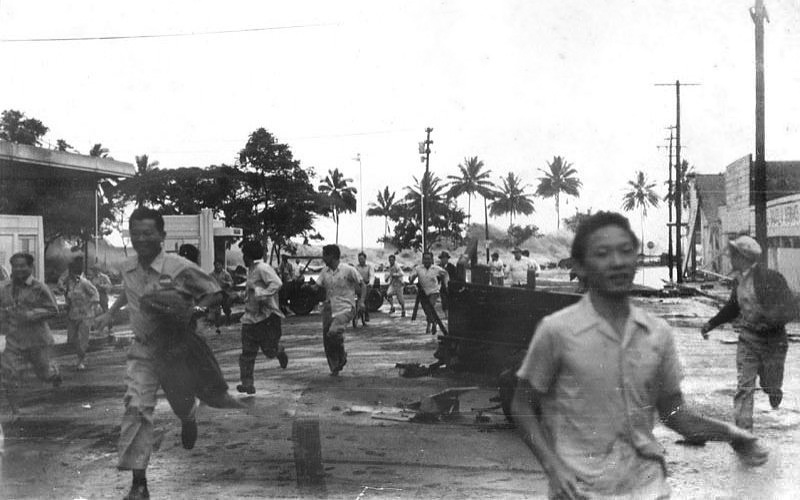 One wonders about the impact of this earthquake on copper and basic materials prices. Is the infrastructure (rail, ports, etc.) in Chile damaged to the extent that copper shipments will be impaired for several weeks/months? And what of the demand for basic materials to repair all the other infrastructure? More ominously, is there a trend in increasingly destructive earthquakes (and collateral effects such as the 2004 tsunami disaster?)
Anton Johnson comments:
I found the paper "Measuring the Impact of Natural Disasters on Capital Markets" by Worthington and Valadkhani of Queensland University of Technology to be interesting.
George Parkanyi adds:
On vacation in Hilo last summer, we went to the tidal wave museum. There have been many major earthquakes around the Pacific rim in the past 100 years, yet only two generated killer tsunamis in Hilo Bay. The profile of an earthquake is very important to how much and how the energy propagates. The ones that tend to spawn dangerous tsunamis are the ones that cause a shearing and shift up or down of one side of the ocean floor, like the 2004 one in Indonesia. It is always correct to take the precaution of evacuating low-lying areas, because you can never know if any given earthquake will be one to generate a killer, but I don't think it is something to be overly feared, because of the relative infrequency, and the fact that there is usually plenty of time to evacuate. When you don't have a lot of time, and need to move really fast, is when you feel the earthquake, because that means it happened nearby, and is its own warning.
The risk of anyone's being hurt, in Hilo at least, is also lessened by the fact that Hilo was smart and didn't allow any re-building of residential buildings in the low-lying mapped out flooding zone. There are commercial buildings, but the chances of anyone being surprised at night in their beds is near 0. I'm pretty sure that Japan has similar measures in place along its coasts.
Kim Zussman writes:
Thanks to Big Al for the link, which produced the following academic study:
Looking just at earthquakes >7 magnitude, since 1900 has the death/year increased over time?
Running two regressions, one (death count) vs year, and the other (death count) vs year only for deaths>10, the slope coefficient was not statistically significant. Here for the second regression:
The regression equation is
deaths10+ = - 121592 + 66.3 Year
Predictor Coef SE Coef T P
Constant -121592 131916 -0.92 0.358
Year 66.27 67.36 0.98 0.326
S = 30633.2 R-Sq = 0.4% R-Sq(adj) = 0.0%
Note however the "Year" coefficient of 66 is positive (ie, rate increasing by 66 per year), so perhaps it will become significant sometime before Nasdaq 5000.
Jim Sogi comments:
There are interesting google results on earthquake and full moons. The theory is that gravity and tides contribute to geological pressures. We've discussed the full moon effect before on markets. Similar result for geological phenomena, but anecdotally very compelling.
Mar
1
2004, from Jim Sogi
March 1, 2010 | 1 Comment
It is interesting to look at 2004 after a long run up off the bottoms at prices similar to current and wonder about the similarities between then and now.
Feb
20
Staying Alive in Avalanche Terrain, from Jim Sogi
February 20, 2010 | Leave a Comment
 In Staying Alive in Avalanche Terrain, Bruce Tremper describes safety protocols for avoiding disaster in avalanche areas, describes the basics of snow science, weather and equipment. Of interest for speculators is the decision-making section. Curiously, he compares the process to stock trading, and describes the best method as a Bayesian iteration of information gathering and probability functions. He discusses human heuristics similar to the backcountry skiing book. He discusses the use of decision making aids such as checklists, and decision tree cards, or flow charts.
In the backcountry there are many variables which he narrows down to three basic: terrain, snow, weather. He tries to simplify the decision making process to a matrix of three or four relative conditions such as low, moderate, considerable, high, extreme, against three variables. A go-no go matrix results. This might be a good way for a speculator to gauge trade entry as opposed to a 25 point check list that often gets overlooked in the heat of battle. This can be on a card visible at the workstation. Both entry and leverage might be computed on such a system.
One of the basic methods for determining the safety of the snow pack is to dig a pit and examine the layers. Some layers are weak and are prone to causing avalanches. Another area to concentrate in terrain are steep rollovers where the slope angle changes. My analogy to trading is that the trader should examine the quantitative make up of the the season or cycles actual trades. This is more than just looking at a chart. There are chart methods though that take their cue from avalanche analysis. Sharpe direction changes often show stress areas in the market and seem to affect subsequent price action. Further quantitative analysis of these areas may reveal interesting and helpful data. This may be used to update your prior probability analysis as the day progresses.
Feb
17
Hubris, Hope, and Luck, from Jeff Watson
February 17, 2010 | 9 Comments
 I cannot count the number of times my trading was going along really well, then all of the sudden, wham… all my profits were erased in one fell swoop, one bad trade. In retrospect, I got arrogant, and decided, because of my invulnerability, to assume extra risk which became my undoing.
Despite many decades of trading, I still occasionally get a b**ch-slap from the mistress of the market when I get excessively confident. In my own case, this seems to happen when I have many trades on and all are solidly in the black, or I've had a real good run. I get a sense of invulnerability, hubris, and that's my own personal kryptonite. At least I can recognize this flaw, and it hasn't reared its ugly head in a few months. Usually when my normal balance between my offensive and defensive game goes out of whack is when I get killed. Now I have a system in place that identifies when I'm about ready to go on tilt. The system hasn't kicked in yet, so maybe I'm learning something.
When I was coming up, an old grain trader told me that "Hope" is for losers. I used to get stuck in a position, and hope it would come back, and it usually would not. In fact, my friends saw me hoping for an improvement and were fading me all the way down. It took awhile, but I learned that hope won't bring the market to your favor, but hope will make you go bankrupt. Finding people full of hope can be a gold mine for you, provided you play it right. Seeing a person "Hope" for his position to improve enables another person to get additional clarity on what the market is going to do….at least in my case…..but I like fading losers. The converse is that I don't mind or take it personally when people fade me when I'm wrong.
Luck is just wrong. I don't believe in luck, and if it were to exist it would be a zero sum game. Is a person who wins the lottery lucky, or is he just part of the statistical distribution? I like to think of luck as an offspring of statistics and probabilities. There is a probability for every possible occurrence in the universe, and things just happen without any mysticism involved..Some gamblers like to have lucky rabbit's feet, or other talismans. I like to sit in position to those guys in table games. Some guys like to brag about their lucky streaks and I listen carefully. I like to observe their streak, and at some point, start to fade them, a little at first before I really press. Sometimes this works, sometimes I get my butt handed to me on a silver platter, it depends.
My favorite are the superstitious, as they believe that some mystic power controls their destiny. Evidence of any kind of lucky charm raises my curiosity and I try to observe that person for any fade clue. It's tough enough to pull money out of the markets. The emotions of hubris, hope, and luck make it near impossible to make money. These emotions are akin to having a horse player bet the his idea of an overlay, only to lose, and hear the lament, "Boy, I wish there were just one more furlong." In horses, as in the market, and life, there is not one more furlong and do-overs aren't allowed.
Kim Zussman replies:
How about this definition of luck:
From Merriam-Webster:
1 a : a force that brings good fortune or adversity b : the events or circumstances that operate for or against an individual
2 : favoring chance
3. Favorable or unfavorable outcome which was not caused by skill, effort, or actions taken.
I purposely left out "ability", since some large fraction of ability is genetic, and one can only obtain good parents by luck.
Janice Dorn writes:
Self attribution bias applied to trading posits that traders attribute good results to skill and bad results to bad luck. This is a common bias that underlies the inability of many to admit they made a mistake.
Rudolf Hauser writes:
Kim's definition of luck is a good one but I disagree when he writes "I don't believe in luck, and if it were to exist it would be a zero sum game." There is no question that ability, persistence, preparation and work in general are needed to take advantage of opportunity, but luck also plays a part. So much of what we do involves interaction with other people and some depends on being in the right place at the right time. The geologist or anthropologist who is traveling somewhere and happens to notice some clues that will lead to a significant discovery is the beneficiary of both his or her skill and good the good fortune of being alert (not luck –or is it if you were just doing something else at that time and so missed what you otherwise would have notice so you had bad luck) and the luck of being in the right place at a time they had the experience to take advantage of the opportunity.
Or what about the person who takes a job in a local company that just has a product about to take off and ends up making a super salary and seeing the stock he purchased in the company rise and make him rich whereas if he had done the same in another town with the same skills and hard work doing much less well because the people running the company in and industry with no such product line and whom he had never meet were bad managers and ran the company into the ground? Sure he or she did not have perfect foresight and the ability to evaluate the thousands of people one interact with and predict how will interact with them over a lifetime–but then who does?
There is no question in my mind that a person who does not fully apply themselves is not likely to be able to take advantage of what good fortune of opportunity presents itself but there is also no question that luck plays a major part in life. And it's not just genetic– if you were born in a country in perpetual war and poverty your changes of a good life are much less than if you were born in the U.S.A. Or what about the Jewish children born in the 1930's in Germany or central Europe rather than the U.S.A. or being born in either place in the 1960's? Was that there bad luck or a failure of keen judgment and hard work on their part if they died in Hitler's gas chamber? What about the person who contracts a disease and dies from it when a cure would have been available had he gotten the disease a decade later? Was that something he or she could have prevented or just bad luck?
Kim Zussman adds:
I know a guy who is a retired contractor/developer, who "came from Germany with $20 in his pocket" and is now very wealthy. He developed a number of commercial and residential properties.
Why so successful?
1. He happened to like to work outdoors, was good with building, and good at commanding laborers
2. Was born charming
3. Was lucky to have lived through three decades of atypically high appreciation in real estate
Had any of the above three been missing, especially #3, he would not been as successful — maybe even a failure. I call that luck.
You can say the same about stock bulls in the 90s, oils and railroads in the past — all kinds of bull markets and bubbles, without which the great moguls and flops would not be. Not to mention war heroes who survived to tell the story, as opposed to those who took equal action but were silenced.
Economic society is pretty much zero sum over short periods, if you add all the give and take together.
Russ Sears writes:
Much of what we call luck is really the skill, effort and actions taken by others and given to us by the generosity of those most successful.
This would include living in a free country.
Further, much of this skill, is willingness to take actions and give effort where the difference between success and failure often hinges on the smallest thread. A thread so small, that even the most skilled, those putting the most effort can not be assured that any fruit will be borne. But one where the skill lies only in putting the edge in their favor.
This would include parenting and trading.
Finally, much of what looks like incredible luck is compounding of these skills over time and history.
However, to anecdotal throw a wrench into the "no such thing as luck" I have a relative by marriage, that won 2 lotteries. One a $4.3 million jackpot in MO state lottery, by entering one ticket a week. The other a half million Reader Digest sweep-stake, by answering the junk mailer. But she would like to remain anonymous.
The untold story however, is how the money tore apart her family. Luck or curse, I leave it to the reader.
Jim Sogi writes:
 Chinese proverb

Good Luck Bad Luck!
There is a Chinese story of a farmer who used an old horse to till his fields. One day, the horse escaped into the hills and when the farmer's neighbors sympathized with the old man over his bad luck, the farmer replied, "Bad luck? Good luck? Who knows?" A week later, the horse returned with a herd of horses from the hills and this time the neighbors congratulated the farmer on his good luck. His reply was, "Good luck? Bad luck? Who knows?"
Then, when the farmer's son was attempting to tame one of the wild horses, he fell off its back and broke his leg. Everyone thought this very bad luck. Not the farmer, whose only reaction was, "Bad luck? Good luck? Who knows?"
Some weeks later, the army marched into the village and conscripted every able-bodied youth they found there. When they saw the farmer's son with his broken leg, they let him off. Now was that good luck or bad luck?
Who knows?
Feb
15
Backcountry Skiing: Skills for Ski Touring, from Jim Sogi
February 15, 2010 | Leave a Comment
 I've been hooked by a perfect day back country touring in the Wasatch Mountains. It was like a big win on the first trade. I'm hooked for life. Back-country Skiing: Skills for Ski Touring and Ski Mountaineering by Martin Volken, Scott Schell and Margaret Wheeler (Kindle) is an excellent introduction to the sport covering equipment, basic avalanche safety, planning, and basic skills. There are some very interesting sections on group dynamics and decision making on which your life sometime hinges. There are many paths to the truths, and this book holds some universal applications to life and trading. Decision making and quantifying risk and mitigating the risk are a large part of avalanche safety. Human factors tend to be the cause of 90% avalanche fatalities. The human element include things like:
1. The negative event feedback loop which inures one to constant danger;
2. Back to the barn syndrome;
3. The false perception that stress is external when in fact it is internal.
4. Unwillingness to listen to others;
5. Overconfidence;
6. Limited observations;
7. Tunnel vision and narrow thinking;
8. Heuristic traps: familiarity, group think, getting locked into the plan,
expert halo.
The study of avalanches offers some interesting analogies to market analysis. The genius of Chair's use of analogy to find market ideas can be applied here. Skiers using the science of avalanches makes use of a technique of digging pits and examining the layers of snow. Here you can see some examples of snow pits and back country skiing in one of my favorite places, Valdez, Alaska. Avalanches are caused by the condition of the snowpack layers and current forces acting on it. Statistical analysis is powerful tool, however the study of averages and distributions has limitations. Study of actual recent data and its effect on current and future prices and vice verse should be done in a scientific method to augment study of distributions. This might be considered quantifying TA ideas of support and resistance, breakdown areas and the like. The market is affected by the T&S, order book, prior executions, open interest. This data is available or can be derived through simple arithmetic and scientifically tested. Market avalanches are due in part to the condition of the recent market action. Its a whole new worthwhile area for study.
Chris Tucker writes:
I have found similar useful ideas from Ed Viesturs' book No Shortcuts to the Top. Viesturs incredible training regimen and focus on safety have made him one of the most prolific and successful mountaineers in the world. His mantra: "Getting to the summit is optional, getting to the bottom is not" has kept him alive and enabled him to come back time and time again, even at the cost of sometimes being considered "shy" when others go forward. Others opinions bounce off him, if something doesn't feel right to him he will not press. I recall a description of a climb where two climbers precede ahead of him to traverse a very large and steep snow/ice pack. Viesturs took a few steps and felt that the pack was "loaded" (under heavy stress due to its weight and condition) and might come loose at any moment. He opted to pass on his summit attempt and waited for the others to do so. The fact that they succeeded in traversing the pack safely did not phase him in the least. He was content with his decision to remain safe. And yet he has summited Everest seven times and was the 12th person in the world to summit all fourteen peaks over 8000 meters.
Feb
6
Backcountry Skiing and Markets, from Jim Sogi
February 6, 2010 | Leave a Comment
 This weekend we're going to try Alpine touring in the backcountry far away from the resorts and helicopters. Avalanche danger is considerable. The guides dig a pit in the snow and look at the consistency of the various layers to get an idea of its structural soundness and whether there are ice layers, or loose layers or slabs that might break loose and cause an avalanche. The take notes on the aspect, temperature, depth.
I noticed Vic doing something similar with data. Rather than just look at charts, he makes tables and looks at the layers, the structures and consistency of the data elements and relationships. Though looking forward, it is important to understand the structure of the current and prior market, just as the backcountry skier needs to understand the structure of the snowpack. The theory is that the structure will affect the performance of the snow and the market.
It is also important to look up and see the sky, the weather, the wind and measure the steepness of the slope. These type of things add up to markets like today's, approaching a 3% drop.
For markets, the weather might be the economic climate and news. The slope steepness might be analogous to the interest rates, yield curve or ROC of the market. I do not believe they are built into the data.
Feb
2
Volume, from Jim Sogi
February 2, 2010 | 2 Comments
Interesting drop in volume on today's up move in ES:
2010-02-01, 1896011
2010-01-29, 3068079
2010-01-28, 3052088
2010-01-27, 2634603
2010-01-26, 2449263
2010-01-25, 2080292
The old TA theory is that an up move on low volume is weak, and a down move on increasing volume is strong, but it doesn't prove out scientifically.
Sushil Kedia comments:
A homegrown theory I developed borrowing on the Chair's applications of the concept of struggle to markets interprets volume as a struggle for price discovery. Extending this with memetics, a higher volume indicating a higher struggle for price discovery meme implies an ongoing persistence of the meme. So, within any time frames or patterns or noise, if you perceive a meme then interpreting lower volume as lesser struggle tilting towards consonance and thus implying a fading meme comes by. This way of looking at price and volume relationships does lead to several testable ideas getting the gut feel closer to science.
Bill Rafter writes:
The only use we have found for volume is as a surrogate metric for volatility. Indeed S&P volume and VIX have very interesting relationships. However the standard TA mantras that (a) volume “confirms” price and (b) volume-weighting indicators makes them better, have not been confirmable.
Here is an excellent graphic I prepared relevant to volume.

Dr. Rafter is President of Mathematical Investment Decisions, a quantitative research consultancy
Kim Zussman writes:
Here's another check. SPY daily returns (c-c), with volume traded, 1993-present, were used to check for big up days = >+1% (0.01). Then calculated relative volume (RV) as:
(today's volume) / (average volume prior 5 days)
Then compared next day's return for two cases; if it followed a big up day which had low RV (RV<0.8) or a big up with high RV (RV>1.3):
t-Test: Two-Sample Assuming Equal Variances
low RV hi RV
Mean 0.0010 -0.0015
Variance 0.0002 0.0002
Observations 151 146
Pooled Variance 0.0002
Hypothesized Mean Difference 0.0000
df 295
t Stat 1.5263
P(T<=t) one-tail 0.0640
t Critical one-tail 1.6500
P(T<=t) two-tail 0.1280
t Critical two-tail 1.9680
Jan
31
Drought, from Jim Sogi
January 31, 2010 | Leave a Comment
 El Nino has brought drought to Hawaii. It rained once in four months. The last few days have brought a welcome rain. Many of the plants are already brown, and the rain is not enough to revive the shriveled branches and leaves. It will take new shoots of growth to replace the vegetation. I see this as an analogy to our economy. Some irrigation is not enough to revive dead industries and businesses. One rain is not enough to support the new shoots, especially where the new shoots sprouted with the one rain, or irrigation, and then it stops. The shoots wither. Further next year's drop is diminished as there is no rain to set the coffee flowers for the next crop.
The drought has caused fire. We've studied fires here before, and concluded they can be healthy in nature. However, managed fire prevention, while stopping the natural breakouts of small fire allows lots of weeds to grow, so when the fire does go out of control, it becomes much larger, much worse and threatens the entire forest and human areas. Again good analogies for the economy. When the week businesses are not allowed to fail naturally and get propped up, when economic difficulty does strike, it threatens the entire economy as chains of businesses go up in flames.
Jan
31
Innovation, from Jim Sogi
January 31, 2010 | Leave a Comment
 Shane Dorian held a surf contest for the local kids as a public service. His friends are world famous surfers 8 time world champion Kelly Slater, Rob Machado, Fred Pattacia and come to sign autographs and pose with the kids. They put on a surfing demonstration. Kelly and Rob were using really really short 5' boards. This is something new. Kelly is always thinking of new things to do surfing, new moves. It's why he's 8 time world champion.
It's similar to music. Mile Davis always was on the cutting bleeding edge of jazz. He was the only one from the 50's bebop scene to survive and thrive in the new age. He always was playing something new. He didn't rehearse. He told his players, don't play what you played in practice. Here's the riff. He said music was in the moment. You had to improvise, and make the moment happen. Most people use what worked before because its comfortable, because they got approval, because they made money with it. But it all died away… all of it.
It's the same with the market. The market is always throwing something new at us every single day. It's always changing. There is no rehearsal for the market. It's in the moment. Trying to reuse the same hackneyed trades that world a decade ago won't cut it. Sure they may be statistically significant, but the world, systems, change. Got to live in the moment. Otherwise you're going to fall the way the old jazz of the old jazz musicians. It's not going to thrive. You have to have new stuff all the time. Sure it's scary.
Jan
30
International Bond Markets, from Andrea Ravano
January 30, 2010 | 1 Comment
 Greek and Portuguese bonds are in a nasty spiral. Very little seems to be working in terms of convincing the markets to mop up some paper. Greece 3.7 2015 is now trading 86-86.5, yielding approx 6.6 pct and some long term Portugal bonds are down a point or so since yesterday. I don't think Europe is in any way capable of rescuing Greece, or anybody else for the matter; the virus will soon spread to Italy, as it suffers from the samle chronic high debt to gdp ratios as the afore mentioned countries. Thus the trade of the day could be long Bunds short Btps.
Jeff Rollert writes:
Would it be unreasonable to compare the inability of any country to act as the world's military police, and in a similar sense, one country being the worlds bank?
Seems like the ECB built a wing on their house with wood full of termites.
I've always enjoyed the science fiction writers observation that the world will never unite until there is a non-Earth threat. Perhaps that includes monetary unions.
Alston Mabry writes:
It used to be so simple: The Greeks would have a crisis, the drachma would fall, and the Neuro's would swarm down for sun and fun and economic stimulation. The Greeks then took the extra money and started another story on the house because they knew that keeping the cash was not a good long-term investment. You'd see half-finished buildings everywhere, bristling with rebar — just the local version of a savings account with a currency hedge.
Bruno Ombreux adds:
Have you been to Athens recently? That's exactly what they have. Half-finished houses. They don't even bother covering the concrete. I was told that it was for tax reasons. As long as the house is unfinished, there are no real-estate taxes. So they don't finish their houses. This is very creative.
Jim Sogi replies:
Same thing in Peru.
William Weaver comments:
I didn't attend either event, but I remember in 2003 when Athens hosted the FISA Junior World Rowing Championships and then in 2004 Olympic Games someone made a comment about how clean everything was. It wasn't until about a week into Jr Worlds that someone finally noticed the grass on the sides of the highway between the athlete village and the rowing venue wasn't grass, but a green tarp covering heaps of trash.
The state of the art rowing venue is to my knowledge abandoned today. It was also only finished one week prior to Jr Worlds, and no one thought to anticipate the mid-August winds that sweep the city. The winds created such waves that the Men's eights heats had to jump ship and swim their boats between 500m and 1000m to cross the finish. Finals were reduced from 2000m to 1000m. The Games were lucky and didn't have this problem.
But what about selecting cities in order to build athletic facilities that will help the community in years to come? I wonder if there is been any research regarding future price performance of munis issued to build venues for Olympic Games. Most venues go unused after the event.
Henry Gifford adds:
Another reason for the rebar sticking out the tops of buildings in some places is that they expect to build the building taller later, when money is available, but without a mechanism for collecting on debts there is little money available for lending, thus things tend to be paid for in cash, and built gradually. Here, with loans available, that strategy doesn't pay as well as borrowing the money to build a property to it's "best" economic use, as the cash flow is much worse on a partially built-on property - same land taxes, same land cost, lower return, higher hassle/permit costs for repeated small construction jobs.
Jan
29
The Dubai Crisis, from Jim Sogi
January 29, 2010 | Leave a Comment
 November 27, 2009, the Dubai crisis hit dropping markets from a high of 1111.25 to 1067, and as I recall a bit lower that night. Greece debt crisis going on and market approaches the 1067 level again tonight.
It's my theory that context is important. A ball has different statistical importance with a 3-2 count than at 1-1. The bottom tick means something different than the top tick. While it sounds trivial in this example, qualitative analysis should be combined with quantitative analysis. Running or swimming x in x at 25 is different than at 55. Time, season, context is important.
.
Jan
29
Gold Consilience, from Jim Sogi
January 29, 2010 | Leave a Comment
Gold S&P consilience. 1140 to 1080.

Jan
28
Elephants, from Jim Sogi
January 28, 2010 | Leave a Comment
 Elephants are doing the Lobogola thing. Nice London Bridge shape too. Here's a conundrum. Chair has rightly said that it is hard to quantify geometric chart patterns. Part of the reason is decimals do not easily describe geometric patterns, or even fractions for that matter accurately. That is why Pythagoras' discoveries about geometry were such a great breakthrough. This is why sines co sines are used with success to describe and predict geometric patterns. What algo easily describes a bridge, a set of waves, a triangle? Yet the eye easily see it. How do you catch a ball, throw it back. Its a complex math problem, but a kid can do it.
I suppose you could quantify a Lobogola, or a bridge pattern. I'll leave it as an exercise for the reader. The patterns just happened to catch my eye, and frankly took my breath away with its ferocity. I believe the movement and vol is good though. Its better than when the government tells us what the price is supposed to be and it just sits there without motion. I saw some cool triangles, flags, waves, head and shoulders also. My hypothesis is that these things are coming back. Old time stuff is coming back. The 50's and 60's are echoing back.
Jan
14
Data Stream Waves, from Jim Sogi
January 14, 2010 | 2 Comments
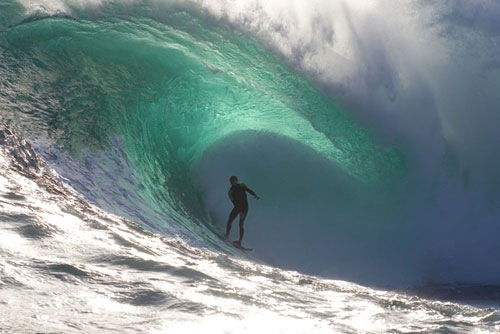 Surf has been between consistently 15-25 feet and even higher on occasion for several weeks here with glassy perfect conditions. When it gets big, there are only a handful of guys out. Many don't have the right equipment. You need a big wave gun to handle the big drop and high speeds. I've been able to catch some of the biggest waves I've ever ridden. You really need to be in top shape. Old guys have some advantage (or maybe less disadvantage) in big waves where physical speed is not as important as experience and strength. Also, good surf equipment is expensive. A big wave gun might be close to a grand, but gets used only a few times a year. Some guys on standup boards are getting some big ones. It's a new way of catching waves, but they get really creamed if they get caught. The boards are not maneuverable enough to negotiate the twists and turns of the wave.
Watching all the waves made me want to ask others about data stream. One can measure the speed of one's Internet connections, but my sense in watching the ticks is that the data, or perhaps the executions themselves, are coming in waves and sets of waves. The price swings have certain wave characteristics, and none of the Prof's good studies on Fourier models will convince me otherwise. For those of us further than 50 yards from the exchange and that might possibly have nothing better to do all night than watch the ticks. Out of curiosity do the data come in waves over the cable and fiber and air? Electricity surges, as I understand.
The question of the stream is of purely academic interest, but the entirely different question of execution waves might be a source of profit if understood. If Globex has an algorithm, and if the autobox executions are using algos as well, some sort of wave pattern is likely to result mathematically. This is not volume, but rather rate of execution, or bunching or clustering.
Sine waves, tides, surf, all by definition will pass through the 0 or unchanged. During this extended flat period despite the slow up drift, the zero or unchanged mark seems to have more fascination for the market than the scene of the crime. The question and hypothesis is whether the deviation on either side of unchanged might be measured or predicted and the probabilities thereof.
Mr. Albert shares:
I believe that the data waves have to do with execution programs that may be keying off the same feeds or slicing big orders into smaller orders. It seems like executions are less and less continuous even for very thick stocks.
Jan
7
Talking To Your Kids, from Russ Sears
January 7, 2010 | 4 Comments
 One of the only times left today in our busy world for families to spend alone in close proximity with each other is in the car. Now that families eat out more and kids are being rushed from one practice to the other, traveling to school, games or activities.
My family also often take a 13 hour trp one way to Grandma's in the car. My kids and I spends more time together than I ever did as a youth with my Father including nightly meals.
But cars are not conducive to heavy discussions. While often my wife and I use this time to get caught back up to, what is happening in each others world; this generally has not been the case for the kids. Rather than bonding its time, it has either been a time to bicker or ignore each other for the girls (girls 11 and 16). Fighting, or stopping a fight,especially in a car while driving is probably one of the most distracting dangerous things you can do. We have a strict, no fighting in the car rule. I often say, "Unless it litterally is worth dying for…I do not want to hear it."Like many our family car is an SUV. It is now equipped with a plethora of mobile electronic devices that would make the early James Bond's car seem boring. Judging from the small screen DVD players, cell phone conversations, game boxes, and I-pod you see on the road, ignoring each other seem to be the alternative many families choose.
So in the past year I invented a game we call "the imagination game". The rules of the game, as we play it is every body has a chance to think of a topic they would like to hear the others imaginary story about. Then everybody listens to the story until it is finished. And then someone else's turn to either tell a story of the same topic or think up a new topic an asks someone else to go.
The girls love it. The oldest girl ups up and shares her feelings…something I think is pretty amazing for a 16 year old. And the youngest loves having the floor and chance to ham it up. It has probably changed my relationship with her the most. Because, like her Dad, she is a severe introvert. This allows her to express herself like an actor, or artist with a layer of protective detachment. But also because she now looks for chances to go to the hardware store or other trips just with me, so we can play.
I try to draw from my childhood daydreams and works of art for my topics. Some typical topics may be:If any book you read came to life what would it be? Which character would you be and which character would the rest of the family be?
If you could invent anything what would it do and how would it change the world?
If you dug a hole in the back yard and found something amazing what would it be and how did it get there?
If you could buy anything what would it be and what would you do with it?
What movie would you like to be real? What character would you like to be?
Etc.
Jim Sogi adds:
 I found one of the best times to talk with the kids (when they were kids) was while driving in the car. They had a long commute to school. When the other kids in the car pool were in the car, they chatted away, and I got to hear about everything going on. Its a good non-confrontational situation since you are not looking at them, so they don't feel on the the spot and tend to open up more. It was a good time to raise things away from the rest of the family as well. The gadgets in the car might tend to discourage this nice talk time.
Jeff Watson remarks:
 My son and I always had an agreement that he could decorate his room anyway he wanted from kindergarten on. He had a rather eclectic style of decorating, and his room (in surf-rat style) still reflects who he really is, not the Classics Scholar he wants the world to see. We always had an agreement that I'd come into his room every day, ignore the putrid mess, and we could have any discussion and he would have total immunity for anything he divulged. I heard a lot of things, but as my word is my bond, never punished him for any transgressions he revealed. Ultimately, the real lesson he learned was that he could trust me, that I was on his side, and it's better to be a good citizen than an outlaw. Since we live at the beach, he's run into many eclectic characters, has had to grow up early, and has seen many things that might not be age-appropriate. I've always played the role of "Ward Cleaver," and have provided guidance without hovering, but encouraged him to make his own rational choices. The result of our laissez faire parenting is that my son will tell me anything, won't lie to me, and will make and listen to rational analysis. I'm willing to let him go off on tangents (with a rope in hand to bring him back to earth), and I provide a safety net, so he has security which will give him courage to spread his wings and fly. So far, so good, but he's 21 and as a parent I will still worry about him until he's 80.
Jeff Watson, surfer, speculator, poker player and art connoisseur, blogs as MasterOfTheUniverse.
Jim Lackey writes:
 Mr. Jim, we all talk to kids on the way home from school or best, after sports practice when they can think without emotion. Long drives are greater than 3 hours but less than 8 hours or 500 miles. Brutal drives are 8-13 and 14 and over hours is pure torture. My brother and I call it "seeing fireflys".
The imaginary game sounds cool. We have a million BMX/MX miles and the 500 mile 8 hour drives are good for books on tape.That Turkey day Thunder run to Fla to see family, 13 hours, my wife had fun with "Sundays at Tiffany". I said OMGauche a romance novel Jenn? It was, weird… an imaginary friend comes back to romance her.
One trip the BMX kids groaned one AM when I plugged in a murder mystery. "What is this, a book? No!…Let's listen to music!" The next rest area/stop the kids ran back to the van to listen. One trip a book had 30 minutes to go and everyone wanted to hear the end of the book before race practice. I've also used "cliff notes" books on tape for those Victorian classics that I would never read. We are talking Pride and Prejudice here. Which reminds me, my 8 year old girl is on Dickens. Last night after dinner she mentioned England, living in London. Yet our discussion was cut short with that pesky tech…1$ redbox movie the TV and DVD player and Cloudy With A Chance Of Meatballs. Cute story. The kids read the book. Only thing I got out of it was, "See, she is playing dumb blonde" which is one of my pet peeves and I tell my girls to "please never play dumb blonde." Yet do practice your southern drawl and lay it on thick during negotiations. Which was another spec list meal for a lifetime we learned here. Wish I had the ability.
Jan
5
Private Jets, from Jim Sogi
January 5, 2010 | 2 Comments
 Counted 58 jets over Christmas/New Year Week. Empty spaces. More small jets. This is thinner than prior years. It's still impressive to see a billion of hard assets parked there all shiny. The corporate guys probably can't use the company jets to fly their kids anymore. Some great custom paint jobs on the private jets.
Great waves over the week. The seasonals on waves are remarkably consistent with large global forces at play. No reason why markets should be any different.
There is really no such thing as randomness, only ignorance of real causes. The ancients attributed it to dieties.
William Weaver comments:
Kamstra, Kramer and Levi find in their 2003 paper "Winter Blues: A SAD Stock Market Cycle" that stock returns are significantly related to season. Their study examined equity performance during the six months between fall equinox (SEP 21) and spring equinox (MAR 21) for the northern hemisphere and the opposite for the southern hemisphere. Overall, stock markets underperformed in the seasonal summer and outperformed in the winter. As an example, the authors cite the returns of a portfolio invested 50% Sydney, Australia and 50% Stockholm, Sweden. From 1982 to 2001 the portfolio earned 13.1% annually. If the portfolio was rotated following darkness (SEP-MAR = Stockholm; MAR-SEP = Sydney) the portfolio returned 21.1% annually. Following the light (opposite above) the portfolio returned 5.2% annually. — Paraphrased from Inside the Investors Brain, Peterson
I ran the numbers through present and found significance using a sample of two means. The recent returns are less impressive; L/S is possible to create long term AR.
Also, are we able to understand all confounding variables given our position within the system? I'm going to open a bucket shop on the moon. No inter-sphere communication, just observation. The shop will be open to moon people with no connection to Earth.
Phil McDonnell replies:
Unless I totally misunderstand the point of the paper it shows that the strongest return in the US comes in Jan following a sharp rise from Oct through Dec. The weakest monthly return is Sep, which neither corresponds to maximum sun nor minimum sun. Apparently the claimed effect is that minimum sun causes us to buy stocks. This is not what I would expect if SAD is the true cause.
Also the claimed effect of a ten parameter regression explains only 1.1% of the variance in both US and Sweden. That does not give one much of an edge for ten parameters.
Henry Gifford writes:
Persons who have attributed aspects of human behavior to DNA/evolutionary related causes have noted that after 9 months in a relationship women ask for a longer term commitment, and then either receive it or move on.
William Weaver writes:
In the past four years I've ended four relationships in October or early November and started a new one in December or early January with the exception of one year where I started a relationship in June. Might this be influenced by weather/seasons or other variables that could influence behavior and thus financial market volatility?
Dec
17
Documentary Recommendations, from Jim Sogi
December 17, 2009 | 3 Comments
 The documentary Space Within Us about Paul McCartney's US tour is a really good movie for you Beatle fans. His band is great, and he does the old Beatles songs note for note. There is backstage coverage which I like.
The movie Botany of Desire is a very good documentary also.
Motherland Afghanistan is an interesting glimpse into an country I knew nothing about. An Afghan born doctor, who lives and was trained in the US returns to try help maternal surgical care. There is nothing about the war at all in the movie.
Dec
14
The Botany of Desire, from Jim Sogi
December 14, 2009 | 7 Comments
 My wife is reading The Botany of Desire by Michael Pollan on her Kindle. There is a movie about the book as well. She describes the thesis that plants trained the humans to change the human's behaviour to form an agricutural society to further the propagate plant species.
I haven't read it yet, but the immediate question is whether the market controls the humans, or do the humans control the markets for their gains? Chair's thesis is that the powers of the market control the humans to milk their upkeep. Another view is that of bubbles. Humans change their behaviour to reap the easy fruit, such as the easy availability of mortgage money. The recent ranges train certain trading behavior. Markets train governmental internuncios and nabobs to engage in certain protective artificial behavior.
Dec
14
Aristotle, from John Watson
December 14, 2009 | Leave a Comment
 Aristotle once said, "All paid jobs absorb and degrade the mind" Is there any way of quantifying this, and are there any implications in the markets, life, and trade?
Aristotle also said, "We are what we repeatedly do. Excellence then, is not an act, but a habit." Does this extol the virtue of practicing until we get it right? How does one know if they are getting it right, and if they have the proper tutor.
Aristotle wrote in his Nicomachean Ethics "It is not always the same thing to be a good man and a good citizen." I've been wringing my head trying to figure out all of the different philosophers who have borrowed this idea, and have come up with a list of at least 20. Any help in compiling a complete list would be appreciated.
He also wrote in Nichomachean Ethics, "It is possible to fail in many ways…while to succeed is possible only in one way." I would like to disprove this as there are more than one path to success.
Kim Zussman replies:
Do a twin study:
Find pairs of identical twins (same genes) with different employment histories. Best would be congressman vs. doctor. Failing that, find pairs with large differences in total hours worked to date.
Perform intelligence testing on the pairs, and use paired t-test to check for difference as a function of high vs low prior work/brain wear.
A related study could be done on the productivity effects of wearing robes and fondness for little boys.
Jim Sogi writes:
At the risk of disagreeing with Aristotle, excellence is a constant struggle. At least for me it is. Habit implies some sort of easy continuation. Constant vigilance is very very difficult. Excellence also connotes superiority over others. Thus there is a the constant pushing and straining to excel over others who try even harder.
J.T. Holley replies:
I don't think Mankind or Aristotle (all thought is a mere footnote to him in Philosophy circles) should be given a break at their points in time now that we've evolved Capitalism to the point it is today. Seems to me that the most important principle here is that what was shared by Susan Niederhoffer the other day "everyday seek out knowledge". In the agrarian society that was around in Ari's time we can certainly understand that doing some "meaningless paid job" took away from the devotion, persistence, focus and the ability that Ari had at driving forward to thought and knowledge. He is reluctant to realize though that the underlying power of Capitalism and his own mind freed him up to pursue his own thoughts and not degrade his mind.
"We are what we repeatedly do."
I happen to agree with this but not in totality. His teacher Plato spoke of to paraphrase "to know the good is to be the good". Much more objective than Aristotle's "do do the good is to know the good" of which leans towards being subjective. I think both are acceptable in "being". Case in point is Plato's "Allegory of the Cave". Being tied to the post the man competed and "repeatedly" learned to beat his peers at guessing at the shadows, but once freed and outside the cave he saw the light! The objective in this allegory trumped the subjective that was thought to be the truth. The objective with the subjective seems to be balanced though if we apply Aristotle's "golden mean" that he also mentions in Nich. Ethics. A wonderful balance of both instead of just one or the other.
"Nicomachean Ethics," he said, "It is not always the same thing to be a good man and a good citizen."
Kierkegaard found and wrote of this as well. He found great power, strength, and lessons in the paradox and hypocrisies of life. His three stages of life's way is a good example of this with the movement from aesthete to ethical to final religious. In the final stage of religious for Kierkegaard he used the Paradox of Abraham to find his strength. Being told by Gawd to go to the mountain and sacrifice his son what thoughts must have been in his mind and that of his town or family? He was either a lunatic by most or the most devout believer in Gawd's word. Kierkegaard spoke of the "fear and trembling" that must've been going on as the knife was thrust to the air to the point to where it was almost at apex to come down into his young son's chest. "good man" or "good citizen"? "religious" or "crazy"? Of course as the passage goes he didn't have to ultimately sacrifice his son but the lamb. The paradox was there though when thought and decision was made to be true to himself.
He also wrote in"Nichomachean Ethics," "It is possible to fail in many ways…while to succeed is possible only in one way"
to quote the Chair "The best way to achieve victory is to master all the rules for disaster, and then concentrate on avoiding them." Trial and error is important in life and speculation. The pain from failing can often lead us to being better individuals and profit takers.
Nigel Davies writes:
 I think there are a number of problems in discussing 'ancient wisdom', for example culture, language and context. One might ask what defined paid and unpaid work in Aristotle's time? I'd argue that to really understand what he was saying one would have to be a several thousand year old Greek.
As for the internalization of excellence (i.e. habits), the valuation of such may depend on whether one prefers 'reason' to 'intuition born of vast experience (ie habits)'. Taking a different angle on this, does an inexperienced but opinionated newcomer deserve to win against an old hand? Humans value their reason, but maybe this is just vanity talking.
Peter Grieve adds:
I bow to no man in my admiration for the literature of classical Attica, but Nigel has put his finger on a weakness. The surviving philosophical writers did tend to value reason over experience. This may be why they made tremendous progress in mathematics, but were dreadful scientists and mediocre engineers (Archimedes came later, and was a Syracusean). Their mathematics was largely intended to support astrology, for heavens sake. This is in line with their feeling that people who actually produced anything were of a lower order. Apparently people were amazed when Socrates spoke to artisans in an attempt to find answers. Aristotle's attitudes about paid work may reflect this bias.
Dec
12
Personal Faults, from Jim Sogi
December 12, 2009 | 1 Comment
 One of the great things about trading is that it brings you face to face with many of your personal faults and shortcomings. With maturity should come recognition of personal faults. Unfortunately, some or most of these personal faults are not easily fixed and are real limitations. Of these limitations, some are psychic but others are physical, such as hearing loss. Psychic faults are anger problems, narcissism, etc. These faults can be damaging to your life, your loved ones, to your bank account, and to your health.
It is important to recognize and deal with these faults. Faults are easy to see in others, but almost impossible to see in yourself. Very very few can recognize their own faults and limitations. The most common response is denial and shifting the blame to others or outside forces. Many elderly people have hearing loss, but for odd reasons, deny it. They blame others for mumbling. Alcohol addiction is a prime candidate for denial. The list goes on.
It's difficult to deal with the realization that you have faults and limitations. People can be unbelievably obstinate in denying faults that seem so obvious to others. It makes it hard to perform and live on. Who wants to live with the realization that you may not be as smart or as tough as you think? That is why the easiest solution is denial. In many cases even if the fault is recognized, it is hard or impossible to cure. It may be hardwired in, or it might be caused by a physical limitation. The answer is creating some sort of workaround that minimizes the damage caused by the personal fault or physical limitation. A simple fix for hearing loss is a hearing aid. Other faults present greater hurdles to find a solution or to even to recognize.
Nigel Davies writes:
There's still room for self-deception in markets regardless of the bank balance; you can lose when playing well or win when playing badly. And this may be especially pronounced with methodologies which have a high percentage of winners plus a few big losers.
Chess tends to have less of this because your results contribute directly towards a published rating and each win or loss has a fixed value. But if someone really wants to kid themselves they can do it there too.
Sushil Kedia adds:
Markets produce the same series of prices, volume, open interest etc. for each participant, yet the individual performances off the market are so different. I thus conclude that none makes any money off the market and each makes money off themselves utilizing the market as the proverbial touchstone where the self is rubbed.
It is the different speculations originating from the unique anticipations that differentiate each performance. The attitudes, beliefs and convictions that form the a,b,c of any personage reflect in the choice of systems, choice of methods, actions taken, actions avoided etc etc.
This could well be true of any profession, yet the instantaneity with which a mind interacts with the financial markets makes for the most expeditious feedback system. Marked to market is an idea that is most easily implementable in a trading / investing career. Like a mirror the market reflects you only. For all the cosmetics that is around it is still said that the mirror never tells any lies. So for all the cookery and creativity that can be and is, the P&L eventually never lies.
At a recent past when the credit marts were being forced into dispensing away from the MTM requirement because all the mirror was displaying was a sad requiem of the dead bodies, the dyeing bodies, the destructed youth and vigor it was an ostrich burying the head in the sand act. Hope, free markets will never again give up the reality check and fault facing device ever again but have the courage to give up the dyeing or dead that are so horrified to look at themselves in the MTM mirror.
Russ Sears writes:
What this analysis is missing is that many marked to market advocates miss are many markets are not liquid. Further, many markets even liquid markets quickly can become illiquid. The policyholder does not choose what bank to use based on market forces, nor the bank what to invest in based solely on market forces.
Because your neighbor trashed his house, and then let the bank take over may suggest that you personally lost some value to your house.
When several of your neighbors do the same… you have lost even more on paper. Have you lost any real wealth? Should you be forced to sell it, if your marked to market nearest neighbor model put you underwater?
Likewise, when there was too many buyers,not liquid enough seller and your price doubled. Did your wealth really increase, if you stayed put?
Taking out the collateral, and accepting the inflated prices as Marked to Market prices on home equity loans got alot homeowners an banks in trouble. Should the banks be forced to lend if they believe the house price is inflated long term?
If you want to have Marked to market to determine "death" then you must have true market forces determining if a bank is dead… not some regulator who will be forced to jump the gun to give the organs to those on life support. The markets would if allowed, no doubt determine how close a bank really is to death by a very broad flexible array of models, not some fixed regulators model. And these models will limit who and how many of these potentially illiquid loans a bank would be willing to hold, not some regulator.
Currently death is determined by marked to model… so there is enough left in the company that FDIC can survive. If policyholders where forced to make this decision themselves, Without regulators setting up an arbitrary marked to regulatory model cushion of protection, the policy holders and the banks would be forced to be more conservative and transparent to gain the policy holders trust. And the process of a death would be much more gradual, with a risk premium limiting how much of these potentially illiquid assets it would hold.
Marked to market is only good if you can tell me the liquidity premium. In a market set up for marked to model then forced to switch to marked to market, this premium is bound to jump.
In a market full of few buyers and a forced domino effect of sellers, this premium must to be very high. If you do not trust the models, it is not estimable.
In short, you can not have a clear picture using regulatory forced markets and models at the front and then switch to marked to market forces on the the Death bed. Policyholders with the moral hazard blurred vision using regulators simple marked to model glasses at the beginning of the process (which bank to invest in), regulators telling banks what they can successfully invest in using simple capital model and then using a comprehensive marked to market process on the death bed. They would all fall together.
Nov
25
Game Theory and Markets, from Jim Sogi
November 25, 2009 | Leave a Comment
 Game theory has use in the markets certainly in the macro area, but it seems applicable to micro as well. Take for example the consumer confidence numbers recently. Game theory reverse reasoning says that many will jump in the direction of the announcement, as happened. Game theory says that the announcement is malarky and the move in that direction will fade, as it did. The key difference is that one adds a factor for what the others may do in a given situation such as an announcement and adjust probabilities, rather than use a straightforward looking random distribution model. This is a key point. It weighs the future possibilities and then assigns a relative probability to each, and then adjusts the current probabilities based on the relative future values. The random distribution model looks a prior history only to predict. It does not look at the future possibilities and the positions of the players.
Framing the issue to quantify in game theory is key. Use relative values across the variables. Too many variables will lessen the robustness of the model, just as with markets.
Nov
25
Trading as an Art Form, from Laurence Glazier
November 25, 2009 | Leave a Comment
 Of ten principles I drew up earlier this year as guidelines for artists, the eighth states "Do not make ideological or political art." Here I imagine the artist to withdraw from personality and get on with doing the job without identifying with the fashions of the day.
Looking at trading as an art (which I believe it to be), this suggests to me that the political provenance of a trader may be irrelevant. A communist and a capitalist may be able to practice it equally well, as they might similarly play the piano or chess. To the trader's art, capitalism (if untrammeled by government bail-outs) functions as the rules of a game. Since I got involved in trading, I have found politics less relevant to me. Similarly, the more I write music, the less I listen to it.
Laurence Glazier is a British musician, artist, philosopher and speculator.
Jim Sogi replies:
I respectfully take issue with "Do not make ideological or political art." I submit that all art has ideological and political elements. The fact that you make it, is proof.
Secondly, my opinion is that it is important to listen to music to write. Other music provides the language people are speaking.
Oct
22
Game Theory II, from James Sogi
October 22, 2009 | Leave a Comment
Bruce Bueno de Mesquita's book Predictioneer's Game was my first comprehensible book on the subject and definitely piqued my interest in game theory. He is a political scientist using quantitative rational choice models. He quantifies in a relative way the actor's bargaining power, motivation, position, and in later models, a stochastic factor. The most important step is to ask the right questions and frame the issue to quantify. Relative values are given to the variables, and they can easily be combined to show, at one level, the likely outcomes. Perhaps not so obviously, one's bargaining power and position, and motivation, when combined,give some relative indication of the likely outcome of that parties negotiation or actions. He has developed a computer model which does the calculations and give predictions. Deconstructing the computer model, which he does not disclose how to do, requires some further background research for which he give some clues in the notes. The model is based on the Nash equilibrium which oversimplified is demonstrated in the tragedy of the commons and the prisoner's dilemma. The basic idea is that people will act in their own self interest resulting in an equilibrium lower than optimal for the actors, but which results when each actors acts with his own self interest foremost.
There are recent algos which model this and which allow one to iteratively compute the game tree likely outcomes and equilibrium at each step between parties. If I'm not mistaken, the basic algos use basic math. For the stochastic element, bootstrapping techniques seem to be used to derive a derived mean. With two or three parties, one can keep these in mind and intuitively figure it, but with multiple parties and multiple issues, the combinations are factorial in number and can't be tracked without computer spreadsheets.
Taking a game theorist's look at the current economic situation, one can see that Geithner's and Bernanke's true self interest is preservation of their public image and place in history as the one's who prevented the depression, rather than the one's who allowed it. With that as their self interest, one can see that they will spend all the money, and more, and keep rates lower long than needed, regardless of the out come down he road. They will both be gone later, so they don't care if the next administration/generation is broke, as long as their reputations in history are good. We saw the same thing with Greenspan. The is the example of self interest acting above the common good. This is one of the structural weaknesses in the current constitutional system, with short tenures.
I see no reason market fluctuations couldn't be framed in the game theory model as well. The market actors can be quantified, as can their motivations. Chair often does this in a qualitative manner, but it could be quantified under game theory in a scientific manner.
The next book on the subject I'm going to read, which appears in the notes, is The Art of Strategy: A Game Theorist's Guide to Success in Business and Life by Avinash K. Dixit and Barry J. Nalebuff.
Oct
19
The Blind Swordsman, reviewed by James Sogi
October 19, 2009 | 1 Comment
The Blind Swordsman, Zatoichi by Takeshi Kitano (2003) is a modern remake of a samurai classic that the Grandmaster Nigel would love. Kitano, who also stars, did a wonderful job directing in a modern style. There are touching scenes, comic scenes, great fighting scenes with more realistic fighting sequences. There is a fun dance scene at the end. Its really a 21st century samurai movie. The swordsman is blind, but with sixth sense seems to know where his opponents are and can fight better than any. He tries to obtain his advantage by fighting at night or in the dark. From a market point of view, some reversion heavy models leave one feeling like a blind swordsman in perhaps the greatest bull market. Speed, like Zatoichi, and a sixth sense, or at least other data, seem helpful. The movie received international critical acclaim. There are some dark forces at work: revenge, greed, exploitation. Zatoichi takes care of them though.
Jun
21
Living at Micro Scale, reviewed by Jim Sogi
June 21, 2009 | Leave a Comment
 Living at Micro Scale by fellow Reedie David Dusenbery details the history of physical sciences concerned with the study of small living things. The physics of microscopic life is markedly different than at our size due to the physics of fluids and molecules. Over 80% of life is small, and over 80% of the five billion year history of life on earth has been micro organisms. He discusses the development of optics to allow study of micro organisms, the development of physical science and math in fluids, Brownian movement, gases. Many of the advances in the physical sciences were by names important in statistics like Bernoulli, Laplace, Fourier in no small part due to the algorithms developed and used in statistical computations. Many ideas can easily be used in market studies and many of the quantitative information presented in graphical form are familiar.
An interesting example is the remarkable discovery by Hungarian mathematician George Polya in his study of random walks that the probabilities of returning to the start is 1 for one or two dimensions, but in three dimensions the probability is only .34. In testing this in market it is easy to see the high likelihood of daily change being 0 as a time series is limited to 1 or 2 dimensions. The average daily change over the last 15 years is in fact -.05, or close to 0, and a quick histogram will confirm the distribution. This is similar to the the appearance of trends as an artifact of randomness as a function of time series, correlation and volatility.
Another interesting idea is the use of dimensionless constants to facilitate computations and study and classification. The Reynolds number is the ratio of inertia to viscosity. This seems like a useful criterion in market movements.
The book is fascinating, well written and accessible to non specialized scientists. I highly recommend it despite a sometime soporific effect due to its technicality. It is a completely different approach to microbiology than any other and very refreshing as a result.
Jim Sogi elaborates:
Dusenberry's thesis is that physics of the environment and the established quantification in physics can be used to explain and predict many micro biological phenomenon. He uses ideas such as diffusion, Brownian motion, information theory, hydro dynamics, laws of motion, thermodynamics to analyze micro organisms. In the chapter on diffusion, organisms interact with their environment chemically, absorbing food and information , and to send out chemicals. For example fungi send out enzymes that dissolve surrounding tissues and provide nutrients to for them to absorb.
A similar analysis might work in markets. Take the diffusion of market moving factors such as FOMC which we saw two days ago move the markets some 4% quite dramatically. How does this diffuse? Today the effect on the market is pretty much gone and it seems stuck at 912. Distance in the market would be measured by time and by points, so 2 days and 40 points counted.
Ideas such as inertia and Brownian motion have been used before.
Jun
11
Masters of Surfing, from James Sogi
June 11, 2009 | Leave a Comment
 The best surfers know just where in the lineup the peak of the wave will arrive as the waves travel from over the edge of the horizon and sits in exactly the right spot. Just as the wave steepens up, the edge feathers, the master surfer turns, takes a few easy strokes and slides down and angles across the face of the pitching wave as the lip roars overhead. The entire wave tips over as the lip of the wave, a hissing mass of water traveling at 40 miles an hour carrying tons of weight and mass throws just over the surfer's head as he stands in the tube almost motionless. As the wave ends he casually kicks out and glides towards the lineup.
The waves have varying recurring patterns due to lunar and tidal effects of ocean and weather and seasonal patterns. The wave sizes vary from narrow ranges to larger ranges over the weeks. One rule of thumb is never take the first wave in a set. Waves come in sets of typically three to five waves, but occasionally more. After a long lull, the smart surfer moves out side and waits for a large set statistically more likely to come and avoids getting caught inside and worked, smashed, cut and bruised on the bottom with sharp razor coral and rocks. When entering the water over the reef, a good time to enter is just after a big set, as the likelihood of a lull is higher and allows one to paddle out without a working over.
Jun
8
Japanese Women vs. Herbivore Men, from James Sogi
June 8, 2009 | 1 Comment
Japanese men's image of masculinity is changing, according to Maki Fukasawa .
Japanese women have changed notably from years ago. They are taller, better looking, better dressed. The large majority of travelers from Japan in Bali and Hawaii are groups, pairs, and singles of Japanese women. They don't seemed interested in getting married early and getting locked into a rut. They enjoy the freedom of working, living at home, and traveling and being independent.
Jun
8
Grajagan, Java, from James Sogi
June 8, 2009 | 1 Comment
Grajagan, Java, known as G-Land, is located on the edge of an untamed impenetrable jungle. It is arguably the best surf spot in the world. Access is by 12 hour grueling overland jungle/ferry trek or by speedboat across the straight from Bali. Komodo dragons, peccaries, monkeys, snakes, palms with 2 inch spikes and barbs eat along the edges of the jungle. There were cat tracks on the beach.
Top surfers come from Peru, Argentina, Japan, Brazil, Australia, US, Canada, Tahiti, to wage their luck against the most difficult, dangerous and best waves in the world. On one day one poor bloke broke three surfboards. Others suffered cuts, bruises in bounces off the reef when thrown through the air by the waves onto the sharp coral reef just feet below the surface.
Certain Keelyesque ex-pats spend up to 3-6 months in the area and have devoted their lives to surfing the elusive waves and exotic lifestyles. The waves scream down a two kilometer reef. The skill of the surfers is skewed to the highly skilled. There are no kooks out there, mostly the top surfers in the world. They call it entering the lion's den. There is little or no room for mistakes, but the rewards are enormous.
Waves are quantified by a number of variable which are assessed each day to determine which equipment to use and which area to surf. The numbers are posted on a board each morning.
Wave Height: 2.5 meters
Wave Period: 16 seconds (crest to crest)
Swell direction: 206 Tide depth: 1.7 meters Wind speed/direction: 5 knots NNE
These are the main variables. Similar quantification in a wave theory of stocks might also be helpful in assessing market conditions and could provide and improvement over other less accurate market wave models. Perhaps a similar posting each morning might be useful for markets of interest.
« go back — keep looking »Archives
- October 2026
- September 2026
- August 2026
- July 2026
- June 2026
- May 2026
- April 2026
- March 2026
- February 2026
- January 2026
- December 2025
- November 2025
- October 2025
- September 2025
- August 2025
- July 2025
- June 2025
- May 2025
- April 2025
- March 2025
- February 2025
- January 2025
- December 2024
- November 2024
- October 2024
- September 2024
- August 2024
- July 2024
- June 2024
- May 2024
- April 2024
- March 2024
- February 2024
- January 2024
- December 2023
- November 2023
- October 2023
- September 2023
- August 2023
- July 2023
- June 2023
- May 2023
- April 2023
- March 2023
- February 2023
- January 2023
- December 2022
- November 2022
- October 2022
- September 2022
- August 2022
- July 2022
- June 2022
- May 2022
- April 2022
- March 2022
- February 2022
- January 2022
- December 2021
- November 2021
- October 2021
- September 2021
- August 2021
- July 2021
- June 2021
- May 2021
- April 2021
- March 2021
- February 2021
- January 2021
- December 2020
- November 2020
- October 2020
- September 2020
- August 2020
- July 2020
- June 2020
- May 2020
- April 2020
- March 2020
- February 2020
- January 2020
- December 2019
- November 2019
- October 2019
- September 2019
- August 2019
- July 2019
- June 2019
- May 2019
- April 2019
- March 2019
- February 2019
- January 2019
- December 2018
- November 2018
- October 2018
- September 2018
- August 2018
- July 2018
- June 2018
- May 2018
- April 2018
- March 2018
- February 2018
- January 2018
- December 2017
- November 2017
- October 2017
- September 2017
- August 2017
- July 2017
- June 2017
- May 2017
- April 2017
- March 2017
- February 2017
- January 2017
- December 2016
- November 2016
- October 2016
- September 2016
- August 2016
- July 2016
- June 2016
- May 2016
- April 2016
- March 2016
- February 2016
- January 2016
- December 2015
- November 2015
- October 2015
- September 2015
- August 2015
- July 2015
- June 2015
- May 2015
- April 2015
- March 2015
- February 2015
- January 2015
- December 2014
- November 2014
- October 2014
- September 2014
- August 2014
- July 2014
- June 2014
- May 2014
- April 2014
- March 2014
- February 2014
- January 2014
- December 2013
- November 2013
- October 2013
- September 2013
- August 2013
- July 2013
- June 2013
- May 2013
- April 2013
- March 2013
- February 2013
- January 2013
- December 2012
- November 2012
- October 2012
- September 2012
- August 2012
- July 2012
- June 2012
- May 2012
- April 2012
- March 2012
- February 2012
- January 2012
- December 2011
- November 2011
- October 2011
- September 2011
- August 2011
- July 2011
- June 2011
- May 2011
- April 2011
- March 2011
- February 2011
- January 2011
- December 2010
- November 2010
- October 2010
- September 2010
- August 2010
- July 2010
- June 2010
- May 2010
- April 2010
- March 2010
- February 2010
- January 2010
- December 2009
- November 2009
- October 2009
- September 2009
- August 2009
- July 2009
- June 2009
- May 2009
- April 2009
- March 2009
- February 2009
- January 2009
- December 2008
- November 2008
- October 2008
- September 2008
- August 2008
- July 2008
- June 2008
- May 2008
- April 2008
- March 2008
- February 2008
- January 2008
- December 2007
- November 2007
- October 2007
- September 2007
- August 2007
- July 2007
- June 2007
- May 2007
- April 2007
- March 2007
- February 2007
- January 2007
- December 2006
- November 2006
- October 2006
- September 2006
- August 2006
- Older Archives
Resources & Links
- The Letters Prize
- Pre-2007 Victor Niederhoffer Posts
- Vic’s NYC Junto
- Reading List
- Programming in 60 Seconds
- The Objectivist Center
- Foundation for Economic Education
- Tigerchess
- Dick Sears' G.T. Index
- Pre-2007 Daily Speculations
- Laurel & Vics' Worldly Investor Articles
