Nov
6
Ketchup Bottle, from Alan Millhone
November 6, 2007 | Leave a Comment
 Right now in my area of Ohio it is tough to find a qualified renter — one who has his deposit and first month's rent in hand. I have one renter I am currently evicting who has not been there for two weeks, but will hang onto the unit and not pay anything till I go to court and take possession of the unit from him. Looking through his window I can see his belongings scattered all around the bedroom and can see through the kitchen and note a ketchup bottle on the counter that is upside down. This fellow will not return my calls and left me no choice but to file for eviction. The ketchup bottle, to me, indicates he is broke. Owning rental property is an entirely different education in the economy and is not for everyone.
Scott Brooks adds:
 I used to own a piece of rental property and I hated it. First of all, I am not a handy guy. My wife has a toolbox and will not allow me to touch it under any circumstances. All the other men in my family are extremely adept at handy work, but somehow I managed to have a mutated "handy gene."
What bothered me about renters was that they were often late with payments and always had some lame excuse as to why. When I would go by the house to pick up the late rent, there were always lots of beer cans in the trash, beer and liquor bottles in the fridge and cartons of cigarettes on the counter (the lease prohibited smoking in the house).
These people could afford alcohol and cigarettes, but couldn't afford their rent payment. When I would ask them about this, it was like talking to a wall. It seemed that they were completely incapable of understanding the simple concept of financial prioritization and that shelter was far more important that cigarettes.
But in retrospect, maybe they did understand the concept. They probably knew that they had the ultimate "enabler" in a government that protected their rights far and above my rights, and the same government would shelter them from the consequences of their poor decisions.
I sold the house at a profit and have not gotten back into the rental property game.
Alan Millhone updates:
The ketchup bottle has not moved and is still inverted! However, one new twist I noticed this afternoon in this renter's door: a court notice has been placed there by a process server sometime today! My late father used to quip, "When they get the court notice they don't have to move right away, but they know that someone will be breathing down their neck soon." Court day for his eviction is 11/30/07 at 2pm. Stay tuned!
Oct
30
Pumpkin Drop! from Alan Millhone
October 30, 2007 | 1 Comment
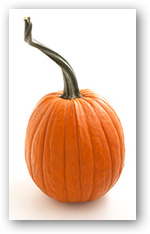 Tonight I watched 100 carefully wrapped pumpkins thrown off a second-story roof by two overzealous pumpkin tossers. My nine year old grandson's pumpkin was one of those tossed. It survived and he got a free book of his choice as a prize. My wife yesterday selected a small and firm pie pumpkin rather than a larger one. She decided the smaller one would survive the fall (reduction of risk) better than a larger one (more exposure to risk) falling two stories. Packaging is the key so this morning I visited a UPS store and bought a 10×10x10 box, shipping 'peanuts' and a roll of good strapping tape. The pumpkins falling and some splattering all over the ground remind me of investing and deciding if more or less exposure is the best route to follow. Also, finding ways to insulate your exposure (doing careful research) in stocks make sense. A good time was had by 200 students, parents and grandparents.
Oct
29
Rounding, from Alan Millhone
October 29, 2007 | Leave a Comment
There is a saying in the construction business that 'rounding' will get your estimates in trouble! All insurance adjusters hate 'rounding' of insurance estimates that a contractor prepares and submits. An estimate for insurance repairs will have smooth sailing with an adjuster (for the most part) if you use odd dollar and cent amounts for each item you are bidding; this will make the adjuster smile from ear to ear. I had a mentor years ago who specialized in fire loss restoration who told me to break down each segment of the estimate; this way you have less chance of missing anything and can get more out of the job.
Having a penchant for detail is good in construction estimates, evaluating a checker or chess move, or looking at a market move in detail before you hit the 'buy' button. In all three cases a handwritten manuscript will allow you to do a synthetic study of past performance and to see how it applies in your current scenario.
Oct
24
Scout’s Honor, from Jeff Rollert
October 24, 2007 | 1 Comment
 I was in the LA wildfire this weekend, and I can tell you that having been in hurricanes, this held up in comparison. We had a thirty person Cub Scout camping trip to Leo Carrillo State Park campground, five miles north of Malibu. Friday was quiet, but the wind started picking up about midnight Saturday night. By 1 am, gusts were at 60 mph, and I had to wake about half the sleeping campers at other campsites to put out the fires they had left unattended (140 campsites). One guy had embers blowing about 20 feet. Our campsite was at the end of a box canyon, so with the wind at our back we'd never smell the fire coming if these bozos caused one. I kept a few people alive that night. By 3 am, the gust were up to 80 mph. My son and I were lifted and moved just short of two feet in our pup tent — while we were lying down in it trying to sleep. Surprisingly, only one tent shredded in the wind that night. When the wind lifted us, it blew our ground cloth away — out from under us. I guess we weren't in Kansas. We were told to evacuate at 8:30 am and drive to Oxnard. Up to that point, the skies were azure blue all weekend and the weather was incredible. Right now in Pasadena, you would think it's sunset.
Alan Millhone writes:
To earn my First Class in the Boy Scouts I had to "get a message through" in Morse Code, 20 words in a minute. I still have all my Cub and Boy Scout manuals and all my scouting items! Fond memories of a much simpler time in America. I am proud to have been involved in Scouting. In today's world Scouting should offer a merit badge in the markets — a real challenge for proficiency!
Oct
21
Blackbeard the Pirate, from Duncan Coker
October 21, 2007 | Leave a Comment
 While spending some time in the Outer Banks of North Carolina I had a chance to read "Blackbeard the Pirate" by Robert Lee, published 1974. Blackbeard often sailed in this area and met his bloody end in Ocacoke inlet at the southern end of the Outer Banks. Born as Edward Teach, he was from Bristol, England, and perhaps from an educated family. He quickly went to sea on an "expedition" to the West Indies. The author argues that at this time in history most sea adventures were mainly plunder activities, which lasted for several years and were often hugely profitable. For example a century earlier, Francis Drake's famous three-year expedition earned 1.5m pounds. In Blackbeard's time, around the turn of the 18th century, ventures would routinely bring back 200,000-800,000 pounds. This alone would be strong incentive to go to sea to seek fortune. In addition, England was constantly at war with either Spain or France and often employed privateers to disrupt enemy shipping. This distinction gave private ships a license to plunder at will enemy ships abroad. Pirates would do the same, though without license, so technically illegal.
The Bahamas at that time was under the authority of the England, but had no rule of law to speak of other than that of the pirate and privateers. They had a semi-democratic system of government, though most disputes were settled by one of the captains, at the tip of a sword. The formed a loose Alliance and called themselves the Brethren of the Coast. While at sea, the Brethren would never attack one another. Outsiders like Spanish or French trading ships were fair game. On land the pirates broke few laws other than drunkenness and small arguments. Blackbeard apprenticed here under another captain and showed all the core traits for a successful pirate. Highest among these was an excellent knowledge of the sea, navigation, and naval combat. He was also ruthless, violent and aggressive in his pursuit of "prizes." After several years, Blackbeard took over one of the captured sloops and command of a crew of 50 men.
Blackbeard cultivated his reputation and was feared across the sea. Many under attack would surrender before shots were ever fired. He was tall, did indeed have a long black beard, carried two pistols and a cutlass, the pirate sword of the day. He would, oddly, burn rolls of hemp strung from his hair to add to the image. Blackbeard enjoyed a decade of successful plundering during the early 1700s. One of his boldest acts was a blockade of the city of Charleston, which he held for ransom. At that time he had four ships under his command. It goes to show how defenseless and lawless the early colonies were. No one was killed in this blockade, and he collected only a small ransom of medical supplies, which apparently were highly valued at the time.
 Often when ships would approach at sea they would fly false colors to confuse the other ship. Most ships carried at least six flags. So it was a dance as they would approach, each knowing the other was trying to deceive and each changing flags as they got closer. Usually it was only within shouting distance that they could identify the other party and know his intentions. For Blackbeard it was an ultimatum: surrender and he would grant quarter; resist and all would be killed.
On land, many of the local economies were based around the pirate trade. Brokers thrived by trading the riches pirates had obtained, often bought at a huge discount. The taverns, brothels and inns catered to pirates. Piracy was accepted as a business activity of the time by the locals, though still not legal. Blackbeard, when on land, was very popular with the fair sex. He was a softy with women and would many times marry as he left port, thought maybe never see his new wife again. He was married sixteen times. Often when a war would end in Europe, the Crown would offer clemency to existing pirates, if they swore an oath to stop their ways.
Blackbeard is believed to have gone into semi-retirement around this time in 1716, near the town of Bath in North Carolina. Though he still took small prizes in his local waters, his major ventures into the West Indies came to an end. However, after several years even these small conquests were noticed by authorities. As a result the governing authority of Virginia sailed south and came into battle with Blackbeard in Ocracoke inlet. After a bloody day, Blackbeard was killed, taking five bullets and dozens of sword wounds. Blackbeard died as he had lived. Virginia took 2200 pounds from his ship. But his real treasure, many times greater, was believed to be buried elsewhere, and is searched for to this day. His reputation and place in history were welled earned. He is deservedly the most famous and successful pirate of his time.
Alan Millhone writes:
In 1985 my late father took my younger brother and me to Normandy to see all the landing points of the D-Day Invasion that our father was a part of in the Signal Corps. One day we took a catamaran from France to Jersey. On the approach, our boat guide told us the fortress we saw ahead at the tip of Jersey was once inhabited by Blackbeard and later by Sir Walter Raleigh as the island's governor. Both men literally lost their heads in their later days.
Oct
13
Tesla Motors, from Bud Conrad
October 13, 2007 | 4 Comments
 I went to a presentation by Martin Eberhard, co-founder and President of Tesla Motors, on Wednesday. I've seen one of the eight cars built and it is slick: 0 to 60 in 3.86 seconds with no shifting. And Eberhard is a slick presenter. Arnold Schwarzenegger has ordered a car.
But they have a huge mountain to scale with gargantuan problems, not the least of which is the distribution and service. They have taken the unprecedented step of making a completely new car that is to be status symbol and new technology at once. It is a complete design from bumpers and fenders to suspension and the electronically controlled antilock breaks. I think they have bitten off too much. Battery technology is the latest lithium, but with stacks and stacks of cells, it is a huge battery. It takes all night to charge from a 220 electric dryer but does go for 250 miles. The electricity is cheap at pennies per mile. The car is expensive at over $100K. Divide that by 100,000 miles of useful life and you have capital costs of $1/mile.
Great breakthroughs in technology, but the take-out is a rich Asian car company with lots of dollars. Reminds me of Tucker Car that after WWII developed the best technology but was squashed by the big guys.
Alan Millhone adds:
Nice to see something new and innovative in the automotive area! My first car was a 1964 Mustang fastback that was raven black with a white interior, 289 H.P. and a Hurst shifter and Hurst mags. I ordered it from the factory for $3,105! I still have the original owner's manual, bill of sale and a sterling Mustang tie-tack (still on the card). The car is gone, but the memories of taking possession of that car at the dealership will stay with me like it was yesterday. America has always had a love for the automobile and I hope the Tesla will have its own following.
J.P. Highland remarks:
For $100,000 I would rather buy a Porsche Cayman and a Toyota Tundra, one for the fun and the other to be my workhorse.
Oct
10
Organizing My Mind, from Alan Millhone
October 10, 2007 | Leave a Comment
 This past weekend in Richmond, KY, I was playing Checkers with Don Brattin and made a move that enticed him to move out of his king row and put the 'squeeze' on one of my pieces. He thought I would 'close up' the position with another of my singles. Instead I moved a piece from my king row and allowed him to jump two of my pieces. Then I took two of his back and got an early king and got behind his singles and won the game on position. This past weekend I finished second, my top finish for a long period of playing in tournaments. I only lost one game out of 14 played and had two draws with the player who won. He won his other six rounds and I was the only player to draw him two games. I have not been studying much, but feel that reading Daily Spec has greatly organized my mind and thought processes and I find myself in complex checker games looking at positions in a far different way than I have in the past. In Ohio recently at our yearly tourney, World Champion Alex Moiseyev told me that my game has improved and in Kentucky last weekend two players told me the same, so it is not just my imagination. I read every posting on Daily Spec and try to garner positive information that I can use in everyday life, in my business and in competitive checkers.
Oct
9
Motorcycle Helmets, from Alan Millhone
October 9, 2007 | Leave a Comment
Leaving last weekend's Richmond, KY, Checker Tournament, on I-75 I saw an overhead sign and could not believe what it said:
YOUR HELMET MISSING?
HAVE YOU SIGNED YOUR ORGAN DONOR CARD?
I found it to the point and a real attention-getter! I think South Carolina, and my own state of Ohio, are the only two states without a motorcycle helmet law in place.
David Hillman explains:
 It's far more complicated than that. Only four states have no helmet restrictions; South Carolina and Ohio are not among them. Colorado, Illinois, Iowa and New Hampshire are. Ohio and 18 other states exempt adult riders [age 18+]. South Carolina and six other states exempt riders age 21+, and 20 states have full helmet laws [everybody wears]. The full helmet law states are predominantly West coast, Southeast and Northeast. if you're cagey, you can actually ride from Phoenix to Dover, DE without ever donning a hard hat. You see, we hilljacks and clodhoppers out here in the Midwest and Plains [except Michigan, Missouri, Nebraska] don't care much about head injuries. It's true there's not much uglier than a deer strike on a bike, but, hey, give us freedom and/or give us death.
Oct
1
Handicap Tags, from Alan Millhone
October 1, 2007 | 1 Comment
In my little town of Belpre, OH, lives a couple who now sport handicap tags on their mirrors 24/7. In Ohio you are supposed to remove them while driving. They both now have the tags, and I wonder why? The man broke his hip years ago and walks with a limp but I see him and his wife out doing yard work every week. Recently they both went to Africa and went on a safari! I feel doctors may be too quick to hand the tags out to anyone who asks for them. My mother is 86 and walks on a cane and has failing eyesight, but will use hers only if it's raining really hard as she moves quite slowly.
Sep
29
At Last My Trophies I Lay Down, from Alan Millhone
September 29, 2007 | Leave a Comment
 The ACF (American Checker Federation) recently lost one of our Life ACF Members and a top Master player — Gene Lindsay of Tennessee. Gene was 52, never married and no children. He loved the game of checkers, as I and many others do as well. The ACF a couple of years ago hosted an International Match at the Plaza Hotel in Vegas and we paid for rooms and meals for visiting players from England, Scotland and Ireland and received some contributions to defray expenses. Gene told me then he had a dream of putting $100,000 into a trust account with the interest to be used to fund a tournament every five years — we'd alternate between their coming here or a team of Americans going to Europe to play. We discussed his idea at several tournaments.
The day Gene died of a massive heart attack I received in the mail from him a large packet of papers that he found from when he was ACF Secretary in the mid-1990s. That evening I opened the packet and was pleased at what he had sent and decided to call his cell and thank him. I got no answer so I called his home and Betty, Gene's companion of 20-some years, answered. Betty and I chatted and I told her I'd called to thank Gene for what he sent and Betty replied, "Alan don't you know?" and then told me Gene had died that morning at 10:30. I was shocked and speechless.
Nigel Davies adds:
Events like this put things into perspective, and there tend to be more of them as we get older. Of the things we leave behind personal wealth may be one of the most transitory, and I suspect there is strong mean reversion amongst the descendents of the wealthy.
This leaves things like 'creative output' and the effect (good or bad) we might have had on friends and family. And all this presupposes that we're not here to just have fun.
Sep
25
Ahmadinejad, from Alan Millhone
September 25, 2007 | 3 Comments
 Someone invited him into the USA and Customs admitted his entry. Now we get him here and he is subjected to ridicule and verbal abuse. Two wrongs don't make a right! Even President Bush got his jabs in. The US should show we are the better people and not lower ourselves with verbal tirades while he is a guest in America. If his mind is ever to be changed (perhaps it cannot be) America and its leaders need to set a pristine example. I totally disagree with Iran's terriorist ties and abuses of human rights — but we did invite him here.
Nigel Davies writes:
Reminds me of a live televised discussion I once saw between a British and Russian school, back in the days of the USSR. The Brit kids were incredibly obnoxious, using it as an opportunity to lambast the USSR without really knowing what they were talking about. The Soviets kids, on the other hand, were really nice and polite and tried very hard to have a normal civilized conversation. As this was televised live in Russia too, it was quite a coup in demonstrating the superiority of the Soviet child.
This sensitivity might be a games player's thing. In our tournaments and travels we have to get on with a wide range of folk who can be culturally very different. I don't see much sign of it in the Western mainstream.
Eric Blumenschein responds:
I don’t believe appeasement as a geopolitical strategy works. Neville Chamberlain was very polite to Adolf Hitler and WW2 still came around. If I am correct, Ahmadinejad was invited to the UN, not to the USA. If he thought Columbia University was going to fold over like sheep and give him the podium unchallenged, then he was obviously mistaken. Kudos to that university to call him out in a way that would never happen at the UN.
Nigel Davies replies:
Chamberlain tends to be dredged up a lot with such issues, but there is middle ground between appeasement and plain rudeness. The way this has been handled the guy will look like a hero back home for sallying forth into a hostile land. And now if they invite Bush to Iran and he declines, it can be portrayed as cowardice back home. You’ve gotta consider the other guy’s moves.
Adi Schnytzer remarks:
My understanding is he came to visit the UN and as such the US government was forced to let him in. Columbia then decided to invite him and in the spirit of democracy (which was the original excuse for inviting him) they permitted an expression of views contra his own.
Nigel Davies responds:
The issue as I see it is one of strategy. He will soar in the opinion polls back home because of his 'courage' in going to a hostile land and fighting the infidel.
What about just not giving him quite so much attention? If he can't distract the Iranian population with his slanging matches with external enemies, they're more likely to judge him on his actual leadership qualities.
Sep
7
Oysters, from Mark McNabb
September 7, 2007 | Leave a Comment
 In the US, those oysters along the Katrina coast are some of the sweetest and largest found. But here in the southern Chesapeake, which has the best oysters on the East Coast, those found on the Middle Peninsula are even sweeter, almost like butter. However, don't expect to find the best on a plane to NYC — waterman keep their best for local customers, as most in the cities have no idea how a good oyster tastes. We have to call a tug captain named Puddin', who is about 400 pounds, and he'll send a diver down by a bridge support to get some of the really large ones in return for beer money. If you want the best, come down to the Urbanna Oyster Festival on the first weekend in November you'll be very pleased. On the Eastern Shore, the Chincoteague oyster is a saltier (brinier) lad with a taste that some NYC critics prefer, but in oysters (and music) it gets personal after a while. I've been along the NW and NE coasts and those oysters taste like seaweed to me.
Alan Millhone adds:
A few years ago we stayed in Blainville with our French-Canadian friends Jean-Claude and Joelle. One day with the tide out Jean-Claude took me, my wife Vickie and our oldest grandson David out oyster hunting. The law there is that any oysters on the outside of the oyster cages were free for the taking by anyone. We waded into the soft seabed and collected a bucket of fresh live oysters. Jean-Claude and I shucked the oysters while Vickie and Joelle prepared a clear sauce for them. I prefer a hot sauce — but, when in Rome! They were great. Nice memories.
Bill Rafter advises:
Always go to a real oyster bar, where you can watch the staff shucking the oysters. Watch for a while (not just five minutes), ask questions and then tip the guy when you're done. Note that they can enter the oyster from either the bill end or the hinge end. If you are going to shuck them yourself, don't buy many, as you will probably give up. I like using an awl and entering from the hinge end. Avoid using a hammer and smashing the bill end to gain entry. The shells are quite brittle if hit that way and you will be picking the bits of shell out of your mouth.
You may want to try clams first, as they are considerably easier to open, but not as interesting. Do not waste money buying a "clam knife" which has a sturdy handle and a really dull blade. A paring knife with a sharp blade is best. Little Neck clams are small, tasty and considerably easier to open than Top Necks or Cherrystones.
At home: If you have access to clean salt water, get a bucket full and put the critters in there for several hours. As they have been shut up for hours or days in a cooler, they have been defecating in their shells. A couple hours in salt water and they will clean themselves. After you dump the water you will be most glad you did. You don't want to ingest that stuff.
Frequently, clams and oysters are sold at bayfront shacks. Most people are put off by that, but if the shack does of volume, patronize it. If you are coming to Long Beach Island NJ, there's such a place on Bay avenue in Manahawkin.
Sep
4
Fear, from Ken Smith
September 4, 2007 | 2 Comments
_____goateestyle.jpg) Bad news is always around. Bad news and dire predictions are reasons to dump holdings and perspicacious traders are aware of this. They game the news, game economists, game everyone. Fear drove me out of a position Friday; had I held I would have had a profit to take as of half an hour into the trading day. I let fear temporarily overtake logic.
Bad news is always around. Bad news and dire predictions are reasons to dump holdings and perspicacious traders are aware of this. They game the news, game economists, game everyone. Fear drove me out of a position Friday; had I held I would have had a profit to take as of half an hour into the trading day. I let fear temporarily overtake logic.
Eric Ross adds:
Join the team! Fear and emotions have driven me out of trades, have prevented me from taking positions. Today, after dawn patrol, I wanted to enter the market, but emotions prevented me. It seems one should just buy the dips and not look back, accept the risk of a drawdown.
Alan Millhone remarks:
I wonder if we had no TV, did not look at magazines or newspapers, and stayed focused on the data at hand — would that exclude emotions and thus make traders more successful? The news media can twist anything — and when you see something you automatically believe it!
Sep
2
The UI of the 1915 Dodge, from Sam Humbert
September 2, 2007 | 1 Comment
 At the farm-market in Greenfield Hill today, a restored 1915 Dodge pulled up, and as the wife browsed the corn and tomatoes, hubby gave our family a quick tour of the car.

What struck me was how close the user-interface is to today's. Gear selection was via a floor-mounted shift-lever on the driver's right, with gears 1-3 and reverse in an H-pattern. The gas/brake/clutch petals were arranged right-to-left on the floor. Steering was via a hand-controlled wheel. Round tick-marked analog gauges indicated speed, RPMs, electrical current, oil pressure.
Essentially, today's UI is unchanged from this setup (excepting the automatic transmission, popular with Californians who need a free hand for the cell phone). The driver of a 1915 Dodge could step into a modern auto, nearly 100 years later, and operate it immediately.
When I remarked on this, the owner told me that in the years just before 1915, there was widespread experimentation with user-interfaces in the auto industry, and the 1915 Dodge's layout was the design that "stuck."
The QWERTY keyboard comes to mind as a parallel. And I wonder if the computer GUIs of 100 years hence will still involve overlapping windows, icons of running programs at the bottom, pulldown menus at the top, left-click to select, right-click for context menus…
Arthur Cooper adds:
The experimentation period is illustrated by the autos in the collection of the National Auto Museum in Reno NV. It's definitely worth a visit.
Alan Millhone writes:
I have a four-door 1948 Chevy that needs restoration. The motor is frozen (not original, a re-built Sears six-banger). The car is an antique, which makes me one as well — '48 is my birth year!

Sep
2
Sound Moves, from Alan Millhone
September 2, 2007 | Leave a Comment
 On September 17-21 the Plaza Hotel in Vegas will host the American Checker Federation (ACF) World Qualifier, with players coming from all parts of the globe to compete for the right to challenge for the Go As You Please ("Freestyle") World Checker Title, currently held by Ron "Suki" King of Barbados. Playing for draws will not win this tournament. Players will have to sharpen their lines of play, be innovative and play for wins. Players will have to play for strong mid-game positions, then hope for favorable endgames with an edge that can secure a win.
The late GM Marion Tinsley used to quip, "Many tournaments are won before the tournament begins". A player will find previously played games of possible opponents and study their style, look for a chink in their armor, see if they play a strong endgame (many Masters neglect endgame study) and rely too much on knowledge of prepared lines of play.
In checkers, with the red pieces beginning 11-15 is supposed to offer a slight advantage by coming directly out of the "single corner." Checkers is a constant battle for control of the board's center. I will be at the World Qualifier as an observer and ACF Official and will observe the methods players use in their games to score wins. "Stepping out" can lead to disaster, as can overextending one's position. "Keep the draw in sight," the late GM Tom Wiswell used to admonish.
There will be turmoil between rounds of play. The market of late has also exhibited much turmoil and one has to be as careful as possible in seeking an advantage when making trades. Tom Wiswell also used to say that "Moves that disturb your position the least disturb your opponent the most." In checkers, many times "waiting moves" are indicated, to avoid disturbing your position. Then your opponent has to show his hand. Many times, by waiting you cause your opponent's position to crumble right before your eyes.
Making "sound moves" in the market during troubled times is important in "holding your position" till an "opening" presents itself. "Move in haste, repent at leisure," said Tom Wiswell.
Nigel Davies remarks:
A major difference between markets and board games is that in markets every score is carried over to the next tournament. I believe this puts the onus on consistency and strong defense rather than a high rate of scoring.
Aug
22
Toxic Waste, from Alan Millhone
August 22, 2007 | Leave a Comment
 I just looked over the state-by-state list and noted many former landfills are now golf courses. The average person in the US throws away 3.5 lbs. of garbage a day. I visit my local Waste Management landfill in Parkersburg, WV with regularity with construction debris from my jobs and am charged $34.05 per ton for dumping, plus a fee for being "out of watershed" because I cross the Ohio River from Ohio to dump there.
It is unreal what you see dumped. One time I backed my dump beside a Dept. of Natural Resources truck that was loaded with dead deer. Really nice to be there on a hot August day!
Aug
20
Mastery of the Game of Checkers and the Market, from Alan Millhone
August 20, 2007 | Leave a Comment
 I’ve been reading with interest the definition of the word "master" in many situations. Looking through my checker library I found two books of interest and will make some observations. In 1909, William Timothy Call wrote his Vocabulary of Checkers. It is a small hardbound book that has become quite scarce. I decided to find the word 'master' in it and was surprised not to find that word listed, but the word 'expert' was instead.
But on the first page of his book is found the word “abecedarian.” Maybe it’s a new Scrabble word for many of you. Call’s definition: One who is learning the rudiments of the game; a new beginner. The stage of advancement are: abecedarian, beginner, novice, student, advanced player, expert, champion. I note the obvious absence of the word “master.”
Call says about the beginner on page 16 of his work: One who has started to learn something about the game as a science. The abecedarian becomes a beginner, then a novice, then a student.
Novice according to Call: An advanced beginner who has not had much experience in the game as a scientific diversion, no matter he may have indulged in it as an amusing pastime.
Thumbing through the book I find a term I have heard on some occasion: “scrub.” It is a colloquialism to designate the large class of adroit players who are not rated as experts. Tyro: A beginner or novice.
On page 190 of Learn Checkers Fast, we find the word “master.” Comparatively few players ever reach this high station in the game. Actually, the name is misleading, as no expert has ever really mastered the game to the extent he was immune to defeat. The author lists the following classifications of checker players: novice, amateur, near expert, expert, junior master, master and grandmaster.
Student: One who occupies an intermediate position between the novice and the expert class, particularly one who follows new play (lines of published checker play) with a critical eye.
My observation: I can see where beginners in the market (as myself) would begin at the bottom of the list and hopefully through study, listening to others, making mistakes, keeping a hand written manuscript, etc., would gain knowledge and put that knowledge to proper use in the market.
Aug
7
A Higher Purpose, from Riz Din
August 7, 2007 | Leave a Comment
.jpg) I fully agree that trees are not thinking things in the strict sense, and they cannot imagine the future. However, trees may 'think' (I use that term very loosely) about the future as much in as it is to their benefit. That is, while certain aspects of trees are purely reactionary to circumstance (e.g., growing toward light), if we consider seed dispersal strategies then perhaps it could be said that trees are exhibiting a form of forward looking intelligence. They are making their best guess about what time to release their seeds. While it probably a very simple model, based on tens of thousands of years experience of the seasons, it could be called a form of anticipation and planning.
I fully agree that trees are not thinking things in the strict sense, and they cannot imagine the future. However, trees may 'think' (I use that term very loosely) about the future as much in as it is to their benefit. That is, while certain aspects of trees are purely reactionary to circumstance (e.g., growing toward light), if we consider seed dispersal strategies then perhaps it could be said that trees are exhibiting a form of forward looking intelligence. They are making their best guess about what time to release their seeds. While it probably a very simple model, based on tens of thousands of years experience of the seasons, it could be called a form of anticipation and planning.
Alan Millhone writes:
Earlier today I had a conversation with one of my long time renters. Next to his building is a very tall and full oak tree and it has begun to release its acorns. The renter was complaining about the mess the tree was making. I told him that the tree in its fullness was shading his side of the building, filtering the air we breathe and cooling that air by about 20 degrees when the hot air (95 degrees here in Belpre today) passes through the branches and leaves to reach his windows. I told him the tree needs to be trimmed sometime, but care must be taken not to injure such a wonderful living thing.
The taller part of the tree has extended its branches over to the gutters of the building, knowing that water flows there when it rains. The tree has deep roots and is solidly anchored. It has learned to withstand gusty winds, hot weather and the cold winters of Ohio. Man can learn much by careful observation of trees and the ways they adapt to many situations.
Bill Craft writes:
Working with forest ecology on a daily basis I have seen and studied the adaptive response of trees to stimuli, growth and regeneration. Whether it be seed dispersal, wind, sun or gravity, as earlier stated these responses evolved over many millennia and are fun to observe, admire and use. Something stalwart, romantic and functional about trees. Trees’ persistence to survive always inspires me to take out the cane and invest.
Aug
3
Emotions vs. Rationality, from Henrik Andersson
August 3, 2007 | 2 Comments
It is so easy to be negative on the future after the market is down. But I believe to be successful you need to be more positive the more the market drops. Yet maybe it has to be this way for the market to take its rake.
Alan Millhone writes:
The late World "Free Style" Checker Champion, Mr. Tommie Wiswell told me once to "eliminate the negative and accentuate the positive," and "to keep your head, while others around you are losing theirs."
I do my own thing and don’t march to the same drummer as others. I try and do a little good every day. Does the Market Mistress take her 'rake,' or do the soaring vultures swoop down on occasion to feast? It appears to me to be in anything over the long haul one has to be able to ride the waves.
Aug
2
Engineering Indicators: An Update, from Rick Foust
August 2, 2007 | 2 Comments
 Background: I once described how I use fellow engineers as contrary indicators. Engineers nearing retirement are best. When they walk up on their toes, sell. When they shuffle with their heads hanging, buy. One engineer in particular was such a precise indicator that, for example, he bought his first (and last) block of NASDAQ stocks on the day before the bottom fell out in 2000, and traded an economy car for a new Chevy Tahoe just before gas began to rise. As he came within 10% of the nest egg value he had targeted for retirement his moods intensified and he became a precise contrary indicator for stock market swings. Unwittingly I had even improved his precision by clueing him into the correlation. After that he would try to resist his own tendencies, only to betray himself a few times per year at major inflections.
Update: Well, he retired, and for a while I was partially blinded. But as luck would have it, he has come out of retirement to work part time. So, last week he bears down on me and loudly pronounces that the market is about to tank for three days and then run up. Why? He had committed to pull $28K out of a mutual fund to finance the purchase of a hybrid car and it would take three days for the transaction to clear. As I pondered whether or not he had given me a valuable stock market tip, it became clear that gas prices had peaked.
I know that many here are confident in their quantitative analysis. But I have to tell you that when I witness the ability of the human subconscious to process countless diverse inputs and arrive at precisely the wrong answer, I suspect that quantitative analysis is a distant second.
Alan Millhone asks:
I wonder what input your fellow engineers will offer on the current Minneapolis bridge collapse? Something I suspect in the way of construction repairs and one lane traffic triggered this horrible disaster.
Rick Foust replies:
There has been no mention of a bridge collapse among our engineers. But your email gave me quite a start. My permanent residence is in Minneapolis, a small town I affectionately refer to as Mayberry, where 1500 souls live, in north central Kansas. I am away from home four days per week and don’t turn on the TV, so it came as a quite a shock to hear that one of our two tiny bridges had finally collapsed.
OK, I am not quite that naive, but the thought did cross my mind. Regarding an engineering assessment of the catastrophe in a somewhat larger Minneapolis, it may be a while before the engineering collective falls into sync with speculation on this event.
Jul
20
Cheesed Off, from Alan Millhone
July 20, 2007 | Leave a Comment
 In the paper recently was a half-page article on the rising cost of cheese. Block cheddar cheese — the benchmark for mozzarella and other cheeses — reached $2.08 a pound on the Chicago Mercantile Exchange, up 78% from $1.17 a pound a year ago! Experts see no immediate relief in sight for pizza makers. The article featured a photo of a worker at Constantly Pizza in Concord, N.H. preparing a pizza and carefully watching his cheese use (skimping on how thick they pile on the cheese?).
My family prefers The Pizza Place because they use a first-quality cheese on their pizzas. Some others use a type of artificial cheese and you can tell the difference.
Atlanta-based United Dairy Industry Association says corn prices have risen amid growing demand for ethanol fuel. Also driving higher cheese costs has been a strong U.S. and global demand for dairy products.
And speaking of corn, in our area some of the best corn comes from along the Ohio River at Reedsville, Ohio. A dozen fresh picked ears runs $4.00 at a local roadside market.
Jul
19
Truss Bridges, by Jim Sogi
July 19, 2007 | Leave a Comment
Tower and suspension bridges are good market models, but an important structure is the truss.
The zig zag price over the last three months and beyond forms beams with zig zags between, and larger truss structure in the June July area. The reason for a larger beam would be to support more weight. The current structure this week reminds me of cable stay bridges.
Mixed metaphors seem to work well in the market, and the classic Beethoven's Fifth pattern, di- di- di- dah, played out its tune. In the Fifth, Beethoven plays the signature lick twice, the second time a little bit lower and slower as the set up.
Alan Millhone writes:
Some years ago in checkers there was an author by the name of Ben Boland who wrote many ending books on the game. One was Boland’s Bridges. This is where you have supporting pieces in your king row (usually on 2 & 4 or 30 & 32).
Peterson's Drawbridge is a standard checker ending that can be won or lost according to positioning of single pieces around the bridge. In checkers at times your bridge is 'blown' by your opponent and your 'position' is crushed as your bridge collapses. I can see this happening in the market as you attempt to shore up a shaky position. In construction, loads, and the proper calculation of loads are critical to maintaining safety. 'Spanning' the market with safe positions is just as critical.
Jul
16
No Ethanol in Greece? from Alan Millhone
July 16, 2007 | Leave a Comment
 My best friend is Greek, and he has been in Greece for a month now. He emailed me today that roast corn on the grill in Athens is two euros a cob ($2.70 US)! The smog and acid rain in Athens are terrible, but at those prices one cannot imagine any of their corn will go towards alternative fuels!
Cliff Roche replies:
My brother-in-law just vacationed in Corfu. He had a great time and said prices were dirt cheap. And the pictures showed it was a beautiful location. Like most places, I guess it all depends on where you are in Greece.
Jul
11
Did You Know? from Alan Millhone
July 11, 2007 | Leave a Comment
 In my latest Northwest Draughts Federation Newsletter is an article about English exhibition player William Strickland giving a draughts (checkers) exhibition in South Stockton in 1855, consisting of playing 10 boards simultaneously while blindfolded. After the games concluded he astonished everyone by repeating all of the moves played on the 10 different boards both forwards and backwards!
What an exceptionally well organized mind he must have possessed. A market trader of today could keep track of multiple trades and instantly recall previous trades, etc. The study of board games will enhance ones mind in many areas that carries over into many facets of life. Developing mental acuteness could save anyone from a serious blunder by doing something hurriedly that was not carefully planned.
Jul
5
San Francisco Food Review, from Victor Niederhoffer
July 5, 2007 | 2 Comments
 One can’t leave San Francisco without posting some comments on the two restaurants there that have been in continuous operation and under relatively the same ownership since the gold rush days, 1850 in Tadich’s case, and 1865 for Sam's Grill on Bush Street.
Both restaurants prove that supplying goods to a growing business is a very profitable way of prospering, as they were able to provide a small item to all who came in the gold rush days without being caught up in the speculative frenzy of the day. I first ate at these restaurants 45 years ago, and it was good to see that they were both going strong without any changes of consequence over the years.
A 1943 menu is posted for Sam's and almost all items are the same on both menus. The prices then for appetizers and main courses and desserts are about 10 times today what they were 65 years ago, with a petrale being about 10 dollars today and 1 dollar in 1943, a shoestring potatoes being four dollars today versus forty cents yesterday, and a Coke being 2.50 versus 0.15. The two exceptions are that a whole chicken is 10 dollars today versus 1.25 in 1943 and abalone is 50.00 today versus 75 cents in 1943.
Abalone today is farm raised around Monterey and loses much in comparison to the fresh product that was available before unintended consequences from environmental regulation depleted the supply. The prices illustrate that stocks which had gone up by some 150-fold during this period have realized about a 10 to 15-fold increase over labor and food costs during this period, and also provides indirect evidence concerning the vast improvement in standard of living during the period.
Both restaurants are still packed for lunch and dinner every day, and their longevity illustrates that a formula for great prosperity is to give the average person a superb product and value, and stick to your knitting, and if you do it better than anyone else you will prosper. Both restaurants are famous for concentrating on superb product and not caring that much about personal service. Indeed, the waiters at both places are known for their reticence and lack of glad handing their customers.
I found the Sand Dabs and Petrale, and the Oyster bellies at Sam's far superior to any fish dinner I have had at any other restaurant, with the exception of some turbot from the North Sea, about 18 inches in diameter, that I had in Venice, the Four Seasons, and Circo. The potato dishes at both places which presumably have evolved to perfection over 150 years were also highly superior and great values at three dollars each for the 10 varieties they offered. And I am told by Mr. Gibbs, of the food bus Gibbs McComick, and a 75-year customer whom I met there, whose in laws met there 100 years ago, that the Veal Chop, and Sam's other meat dishes are equally meritorious. He assures me nothing has changed at Sam's in 100 years.
He was not as high on Tadich’s saying that the service there was so bad that he felt they were resting on the laurels. I tend to agree with him, although I found the Oysters Rockefeller at Tadich’s a most superior concoction to most I have had elsewhere. Too many of the dishes at Tadich’s had succumbed to popular taste and were combo fish and turf, and fish medleys and bouillabaisses, and in my case tasteless turbot wrapped around listless shrimp in a turbot wraparound.
The cost in both establishments is about fifty dollars a head, and both restaurants apparently have three times as much lunch business as dinner business. Sam’s will always have a deep place in my heart as it was my custom to celebrate all my fine Berkeley student grad papers there with a dinner, and John Mcquown of Wells Fargo, introduced me to it some 50 years ago. Its been my favorite fish restaurant since then, and I expect it to remain so. I can highly recommend Sams' as one of life’s best dining experiences.
The decor at Sam's and Tadich’s consist of wood paneling, white table cloths on wooden tables in booths, and the general look of an old-fashioned bus station. The waiters are knowledgeable and the service is fast. The entrees are grilled simply without any sauces except for the celery Victor and oyster stew at Sam's and the Oyster's Rockefeler at Tadich, which I found to be one of the best recipes and tasting versions I have sampled.
My favorite dish at Sam’s was the pancakes Anisette which I still remember with pleasure from 40 years ago. It gains much from a just flambéed presentation, which I had on two of three occasions I sampled it at Sam's on this trip. The price of a good dinner is $60-75 at Sam’s and $50 at Tadiches, great bargains in this day and age for perfect fish and meat dinners.
Alan Millhone writes:
In 1972 the Army brought me back to Oakland, Ca. to be discharged. A buddy of mine learned in finance that we had two to three days before our names were called. We put our money together and decided to head to Frisco and see the City. We stayed in a round hotel called the Villa Roma. We beat around the city and I told him some day I would like to return.
In the late 90s I took Vickie and we booked a hotel on the waterfront called the Cable Car Inn for a week. We settled in and had a great time riding the cable cars, visiting China Town and dining there on several occasions, visited an old brewery near Height/Asbury and a turn-of-the-century bar. We took a side trip one day to Muir Woods and enjoyed the redwoods and the fresh air there.
We took a trip over to 'the rock' and a trip to wine country one day and savored the wines at each stop that day, and had supper one night near Pier 54. I was amazed at all the different oysters they offered. I decided to have a large platter with a varied selection and deliciously prepared fish for supper and enjoyed some Dungeness crab and the sour dough bread.
I brought back good family memories. The saddest part of our trip was our visit to the SF Zoo. It was pitiful to see, and I hope over the years the conditions there have improved. I remember a lady working there told us they were severely under funded for operating.
Your account brought back good memories of my visit and I enjoyed reading your account.
Jul
2
Technology Corner, started by Steve Leslie
July 2, 2007 | 2 Comments
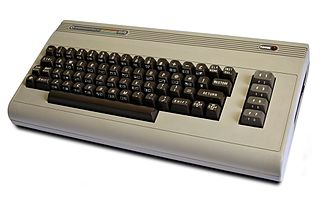 I remember back in the mid 1980s, the huge battle when AT&T and IBM entered the personal computer market. The Commodore 64 was the product that first entered the market place as I remember, in 1982, and it was an amazing hit. Then everyone else decided to pile in.
I also recall the Bowmar Brain that was so popular as a hand held calculator. Bowmar was later overtaken in market share and technology by Texas Instruments, Hewlett Packard, and others.
AT&T, after years of losing money, exited the PC business and left it to HP, Apple and Dell to charge forward. IBM is as strong and as powerful as any technology company ever was — they did not get the name "Big Blue" for nothing.
Ultimately IBM decided to leave the PC business and focus on their bread and butter mainframe business. Technology can be a very very difficult boat to steer, and it can be extremely hazardous and dangerous to stay ahead of consumer needs, wants, and demands.
Andrew Moe comments:
Talking of advancing technology, these guys are in the news today after taking apart an iPhone step by step, and identifying all the parts by make and model. If the profits are ephemeral, they won't be for Apple alone.
James Lackey adds:
The iPhone may be a leap of innovation, but of course others will adapt, and prices will fall. What is uncertain is how much innovation and cost will trickle down to the sedan market of cell phones. Perhaps that equation, how the mass market accepts and is willing to pay for the new bells and whistles, will set the pricing and production of future iPhones? Will the iPhone still be a sporty two seater high performance vehicle, or just another used sedan at 50% off current retail, in five years time.
Greg Calvin offers:
The fear of competition eating away market share of the iPod has been one of the chief concerns for aapl shareholders over the last few years. Somehow its market share has held up, despite an array of competitors entering the arena, including Microsoft and Sony. The iPod, and it would increasingly seem Apple themselves, have garnered cache, or an enviable 'cool' factor. Cache, when ingrained into the social consciousness, draws and retains business, wards off even possibly superior competition, and protects profits that would all but disappear with commoditization. Sony had it, and for the most part lost it.
The first generation iPhone needs a good number of improvements, notably Web speed, voice rec., an expansion slot, and availability of keyboard in landscape mode. A shame not to have GPS with that big beautiful display. If Apple can address the most critical of these issues, the challenge of attaining 1% market share might be done more with brand than technical wizardry. Who knows what the competition might come up with however. Advanced voice recognition apps, maybe.
Just a few of the countless names that still do at least reasonably well and lever their brand names to command premium over cheaper generic and/or superior competition include Coke, Bayer, Nyquil, Listerine, Marlboro, Intel, Rolex, Bose Wave $400 alarm clocks, Oakley, diamonds, Baskin Robbins, Harley Davidson, Jim Beam, Windows, Rolls Royce, Foster Farms, Chanel, Federal Express and Starbucks.
Alan Millhone adds:
In 1964 my parents took my to NYC for the World's Fair. My father worked all his life for the telephone company and I remember going to the 'Ma Bell' exhibit with them. There we saw things of the future like being able to see one another when you talk!
Scott Brooks adds:
I am reminded of two things from college (1982 - 1986) at little 'ol Southeast Missouri State University.
I took a statistics class and we had what I believe were Texas Instrument calculators. They were a bit bigger and bulkier than the units we have available today (maybe the size of two or three calculators stacked on top of each other). Their read-outs were all and you had to push the buttons real hard to the point where they "clicked". But what I remember most about them was that they were "caged" to the desks. Literally attached to the desk by some sort of metal unit that prevented them from being stolen.
The other thing I remember was that the statistics professor, who was also a psychology instructor, had me do an experiment with him of the effects of Scopolamine Hydrobromide on mice. It was pretty cool. I got to give mice shots of SHB, and put them in spinning apparatus to make them dizzy. Then the coolest part was that I got to do brain surgery on the mice.
At the end of the experiment, I had to type up a paper on my findings and notes. Bob, one of my fraternity brothers, had this typewriter looking thing that had a small screen on the front of it (similar in size to the read out screen on an calculator). You could type the words and see them scroll across the screen. As a result, you could proof read what you were typing, but only one or two words at a time. And there was no spell check so you’d better know how to spell. If memory serves me right the read out was so small that I couldn't even fit big words or phrases on the screen at the same time.
It was a very slow and tedious way to type a paper. Finally Bob, who was a computer science major, decided to type it for me since he figured he'd need the practice to be ready for the real world. I remember thinking to myself that he wasted his college career on a worthless major. I couldn't see how computers were ever going to catch on. There was no way that this tedious machine with a small 10 or so letter screen was ever going to achieve wide spread public acceptance!
I don't know what ever became of Bob. What I do know is that I was completely wrong about computers. I've never forgotten that lesson and try to apply it to my life everyday, especially when confronted with something that I think is stupid and a waste of time. I try to look beyond whatever that something is today and see what it can become tomorrow!
Jul
2
Oil at Seventy Dollars per Barrel, from Sam Marx
July 2, 2007 | 2 Comments
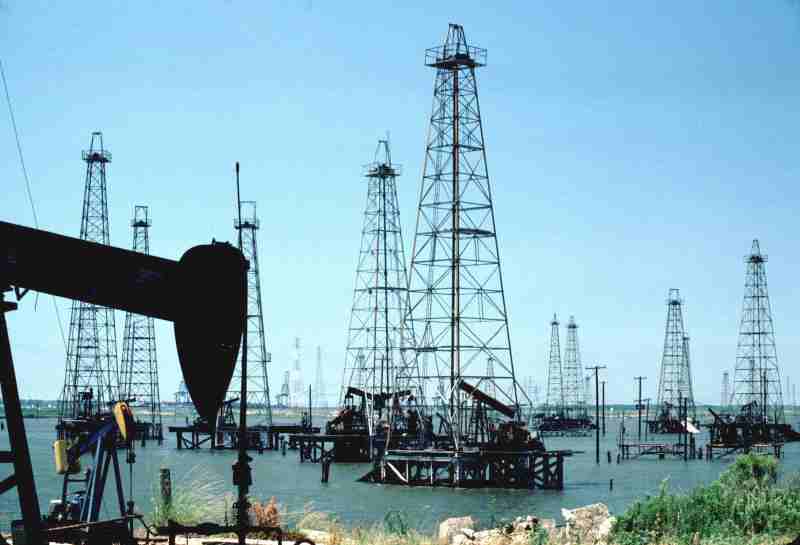 Oil is again trading at over $70 per barrel. However, as I understand it we (the US) have more oil in four states than there is in Saudi Arabia, locked in shale, and it can be extracted profitably at less than $35 per barrel.
Meanwhile the U.S. is pursuing and subsidizing ethanol from corn, driving up corn and meat prices. I think that a policy of extracting oil from shale should be our primary policy. What am I missing?
Of course, more than 30 Senators are from farm states and a policy of oil from shale, tar sands (under $30/barrel), or coal ($40/barrel) would drive down oil prices.
Jaime Klein writes:
Exploiting shale requires immense investments as well as a change in environmental regulations. Historically, oil markets suffer from cycles of overproduction followed by tight supply (like recent years). Investment in oil production has a long maturation period and is very risky. Any number of events, such as an outbreak of stability in Iraq, opening up Iran to foreign investments in oil, Hugo Chavez retired by a military coup, strengthening of demand destruction (in many developed countries oil demand is falling), could cause crude prices to collapse and then settle at its historical level (maybe half of its current price). I am shorting oil.
Sam Marx replies:
If oil goes below $50, Saudi Arabia will cut production as it has in the past.
Alan Millhone comments:
Yes, then a 'created' scarcity. Alternative fuels, hybrid cars, etc. have been 'beat around' for years, but little done. In Vegas they have built an elevated monorail from MGM to the Sahara and talk is to extend it all the way to the airport. Taxi drivers are against this, but something has to be done to ease traffic congestion and fuel consumption in one isolated area of the US. America has always had a love affair with the automobile.
In Europe you can get a passenger train to about any location and buses and subways are readily available. I drove in Paris once and quickly realized I would not want to have a car there. Problem is not many of us are willing to 'cut back' on our driving.
Sam Marx writes:
I believe that the only "alternative" fuel that will work is oil produced in this country. That means drilling in Alaska, offshore, and very deep drilling on land. Aside from that are oil produced from shale, coal, and tar sands (Canada). Money and necessity should be the solution to environmental problems.
I believe that by hybrid cars you mean they also use ethanol. For many reasons I don't believe that ethanol is the solution. As for smaller cars, it is my understanding that since 1972, an additional 50,000 people have died in auto accidents in the U.S. because they were in a small car, but would've survived if protected by being in a larger car.
During WW II , Germany had to resort to oil from coal. After everything is considered and there is rational leadership in this country, willing to stand up to big oil, I believe we will have to resort to oil from shale, tar sand, or coal also.
I don't believe that there is a conspiracy by big oil to drive up prices, but I do believe that they don't want prices to come down and oil from shale, tar sands, or coal would do that.
Henry Gifford writes:
A man named Peter Judd did a study of the amount of fuel used to make heat and hot water for each of thousands of apartments in New York City in the 1980s. He divided the buildings into five categories: old law tenements (pre 1901), new law tenements, pre WW2, post war, and post 1974 oil embargo. The average use for each category was about the same, except for some improvement in the post 74 buildings, which when credit for more bulk and therefore a lower surface area/floor area ratio is considered, means there has been approximately zero progress in 100 years.
The most interesting thing he discovered was the spread between the best and the worst buildings - about 700% when the unusually high and low consumption buildings were tossed out of the mix. The spread persisted in all categories.
The main exception were the buildings gut renovated in the 1980s, which had new double pane windows, insulation for the first time, and new boilers and controls. They used 50% more fuel than the average of the existing housing stock. Since they were renovated by the government, and Peter was a government employee, he was moved to a do-nothing job, and soon left. His counting skills are now put to use in producing off-off-Broadway theatre.
The lesson I took from this is that some buildings use 1/7 of what others use, while providing better comfort. Meanwhile, this is all done unintentionally, as it wasn't until the mid 1990s that anyone even claimed to be making energy efficient houses in NYC. The extra cost of course was zero. I think this argues that there is a lot of potential gain from conservation.
It turns out there is a field called "Building Science" which is a study of the factors which effect comfort and building durability and energy use, which is widely ignored by the industry. But the science to explain this exists, as does the counting to show what is possible. Knowledge of these things has led me to believe that buildings could be built that use 10% or 20% of the energy that existing, average buildings use, and be built this way for no extra cost. I have done this, and am one of the only people in the field who shows fuel bills to back up claims. Of course, zero extra cost has its own problems, not the least of which is that there are approximately four people in the US who work on energy efficiency in buildings and are not paid by the government. This causes many conversations to start with "money is available for…" instead of "energy can be saved by…", which of course is an impediment to innovation.
I cannot predict how widespread sound building practices will become, but have no doubt that from a technical perspective, all the necessary technology has existed for decades, and is currently for sale in Home Depot. It's just that the industry that knows how to design and build such buildings mostly does not exist.
As for oil from coal, it is true the Germans did it, but at a high cost, and only in the face of severe shortages. The rumor that fuel was so scarce in Germany that the first jet planes in history were towed to the runway with horses is simply not true. They used cows, because the army was using all the horses. I think fuel will get more scarce before oil shale is economically viable.
One of the costs is the energy used in the process. The Canadians say that it will take the energy from two barrels of oil shale to produce a third barrel. Perhaps in our milder climate the numbers will be a bit better, but probably not by much. At best, it will be a costly and difficult process.
Jul
1
Some Random Thoughts, from Victor Niederhoffer
July 1, 2007 | Leave a Comment
The specialist in panics, from The Ticker magazine of 1908, went through a three year period while he waited for the steel markets to crack: ten, twenty, thirty percent on the day, and it was very hard for him. All of his friends were making money, and going to Delmonico's and fancy watering spots like the Brighton and Sheepshead race tracks. Even the hack drivers were moving up in the world as they opened up trading accounts too.
Many speculators must feel the same way about the markets now, where the reasons for bearishness seem so flimsy and so labored. First it was an increase in bond yields, but then the bonds went up three points in two weeks, and all yields go to or below, five percent, and the curve isn't inverted any more.
It's the bomb scare in Boston, or the smoking car outside the night club in London, or the other events of this kind that the bears like to jump on to increase the fear factor. When these blow over, it's the hedge fund that lost money, or the lender that called the high risk mortgage market wrong, or the contagion from all those unwanted dollars from foreign sources, or the risk for the layman in derivatives (a'la the Sage), or the risk of a global economic meltdown (a'la the star CNBC Dow 5000 advertiser).
Needless to say, this has been the same beat we've been hearing since 2002, and it's amazing that those who are hoping they can catch the next bear move still have the mojo to communicate and strut after losing so much during the doubling of the S&P that has taken place during these years. Yet they persist, and if it's a slow Friday, they can knock it down a fast 1% in 10 minutes, on a sighting of a stranger or straggler.
I believe the differential between the five percent on bonds, and the sixteen percent on equities, will eventually come through and be of higher significance than the recent end of world stories. Those who wait for that opportune time to get out of stocks, and into the fixed income, as recommended in the (much too harshly reviewed by me) Ken Fisher book, will have no more luck in overcoming the drift in stocks, than all the palookas and poseurs who would have you believe that they see the debacle coming off the back of one or another scare stories.
Of course, this is just my qualitative opinion, and except for the counting on our web site that we have done with the Fed Model, there is no reason that my insights on this should be valid.
Alan Millhone writes:
A few years ago I was being kind of coached for the then upcoming ACF National Tournament and was asking Dr. Gerry Lopez for some advice on lines I could play at the [checkers] Nationals. One of the lines of play I was considering was not the best and a bit suspect. Gerry told me something that carries over into the market. He said "Alan, why play a weak line? Stick with the best lines and openings that you can vs. your opponent".
In checkers or the market one needs to 'hammer' out your best plan of attack and stay the course. Gerry has told me on several occasions that he has kept a manuscript of familiar mid-game landings that are diagrammed for review and study. Those in the market need to do the same thing and keep careful records for constant reference if one is to keep ahead of the game, or at least even for the most part.
In late July the ACF will be hosting a GAYP (Go-As-You-Please) National Tournament at the Plaza Hotel/Casino in Las Vegas. I am doing my best to study and learn the strongest lines of play either as my opening move or as my rejoinder to my opponents’ opener. Staying with the winners (openings checker moves) would apply to those who follow and invest in the market. Why select a 'shaky' stock when you can find those who are good performers and have the potential for steady growth?
So in checkers find your best lines and stick with same, in the market pick a portfolio of good performers and don't deviate. Just some thoughts from an average checker player.
Jun
28
The American Bald Eagle, from Steve Leslie
June 28, 2007 | 2 Comments
 Today is an historic day.
The Interior Department will announce it is removing the American Bald Eagle, the most majestic bird, from the protection of the Endangered Species Act, capping a four-decade struggle for recovery.
Government biologists have counted nearly 10,000 mating pairs of bald eagles, including at least one pair in each of 48 contiguous states, giving assurance that the bird's survival is no longer in jeopardy
There was a time when the American Bald eagle's future was in grave doubt, with only 417 mating pairs verified in the 48 contiguous states. It was a victim of hunting and of excessive pesticide use, most notably DDT, which seeped into the ecosystem, killing the bird and its eggs.
This time, American Conservatism got it right. It preserved a symbol that has carried through the founding of this country, and was established by the Continental Congress to be on the official seal of the United States in 1782. It has been worn with distinction by the 101st Airborne as its official patch, and has seen our armed forces through their most bitter campaigns.
The bald eagle is the most powerful symbol of America we have. It is the national bird of the United States and appears on most of its official seals including the seal of the President of the United States.
The Eagle is sacred in some North American cultures and its feathers are central to many religious and spiritual customs among native Americans.
One never forgets the experience of seeing an eagle in the wild, spreading its majestic wings, with over a 7 ft span, and soaring with the currents above the mountains and the plains. It would have been a crime against nature to have lost such an amazing creature to excess and abuse.
Alan Millhone adds:
I just now caught a segment on the return of the eagles to the Catalina Islands. It appears DDT did the trick in eliminating them for decades. Today the chicks are incubated and hand-fed for weeks before being taken to the Islands. All of us need to take care of our precious resources and our native animals and birds.
Jun
28
Corn on the Cob, from Alan Millhone
June 28, 2007 | Leave a Comment
 Tonight I knew summer was here! Coming back into Belpre today I noted sacks of fresh corn at a little roadside market. The corn was picked fresh early this morning along the Ohio River at Reedsville, Ohio. It was delicious tonight with melted butter and freshly brewed iced tea. Corn in this country goes back to the Pilgrims. It was introduced to them by Native Americans. Corn on the cob will compliment any backyard BBQ during the summer months.
Jun
27
Brown Turns 100 this Summer, from Alan Millhone
June 27, 2007 | Leave a Comment
 I just caught a segment on tonight's news telling how in 1907, Jim Casey with $100.00 began the American Messenger Company to deliver telegrams. The advent of the telephone killed that enterprise for Casey and he shifted gears and reorganized to become UPS and began to deliver department store packages. Then along came FedEx who offered overnight delivery service. UPS took the challenge and followed suit. Today UPS has 300 planes and is the eighth largest airline in the world. They have 94,000 trucks on the road and deliver 15 million packages per day! Impressive.
Jun
23
Question on Christy Matthewson, from Alan Millhone
June 23, 2007 | Leave a Comment
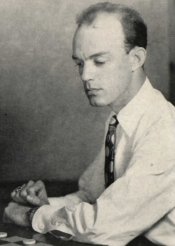 Mr. Richard Fortman is in his early 90s and can be called the Dean of Checkers. I visited his home a couple of years ago and took him and his wife Faye to lunch. He showed me his checker library and ran up some play for me. His books on openings, Basic Checkers, is a mainstay for three-move enthusiasts. Joe Schwartz who won 10 and drew 10 in the recent International Match and was the highest US scorer credits the study of Basic Checkers to his dramatic success. Mr. Fortman below replies to my query on Mr. Matthewson and thought you would enjoy his reply to me.
Hello Alan,
Christy Mathewson was before my time, however, my coach Harland Richards once met him while on a business trip to Boston at the local checker club in the early 20s. He said Christy's profession was baseball and that checkers was just an enjoyable hobby. He liked to entertain his teammates on long train rides to the west coast by playing them blindfolded. That is an art not given to all, as you know. Although Tinsley, Ryan, Banks, and Lieberman were adept, other masters such as Long or Hellman were not. Richards suggested a game but Christy declined (no time) but did autograph a scorecard for him. There is a photo that shown Christy playing Sunset Bell with members of his team as spectators. I was told his board and checker set are in the baseball Hall of Fame. I don’t ever recall seeing a published game that he played. Gassed in WWI, his life was cut short.
Jun
22
A Legend Lost, from Alan Millhone
June 22, 2007 | Leave a Comment
 I just heard on the nightly news that Ohioan Bob Evans passed away today. I met Mr. and Mrs. Evans at a political dinner some years ago. He began his career in restaurants with a small diner he owned in Gallipolis, Ohio and ran the grill as the short order cook.
He has a farm in Rio Grande, Ohio and each summer has Bob Evans Days there. Mr. Evans built a multitude of Bob Evans restaurants across a lot of America and the food quality is always consistent with a down-home and friendly atmosphere. I dined at one this past Sunday and enjoyed my visit as always. We have lost another entrepreneur and the world has lost one more consummate businessman.
Jun
20
How to Beat Granddad at Checkers, from Alan Millhone
June 20, 2007 | Leave a Comment
 In today's mail I received a newly printed checker primer geared to the younger generation of checker player. This fine little book was authored by John P. Cardie and illustrations expertly done by Robert Murr. Both men are from Colorado and have grandchildren who play checkers. My copy was a gift from Mr. Cardie and he is offering signed copies for $14.00 which includes s/h and tax. He says to make checks payable to "checkers creates Kings".
Proceeds from his book will be donated to the American Checker Federation youth program. You can order one online or toll free at: 1-877-843-1007.
This book is 62 pages and contains the rules of the game, dozens and dozens of basic problems for the novice to set up and solve, sections on being a good sport and a good loser. This fine book is divided into eight chapters. I feel the "Author's Aim" deserves mention and I quote:
It is the goal of the author to have as many young children as possible get involved in playing checkers and to learn the beneficial lessons of life it teaches. Although underrated, this granddaddy of all board games, is simple to learn, yet very intense. Checkers helps children to cultivate critical thinking skills. My hope is to spearhead a national 'revival' of checkers.
Mr. Cardie has four young grandsons and he will be bringing them to compete in the annual Arthur Niederhoffer Youth Tournament. This year that event will be held in the Plaza Hotel in Las Vegas. I am bringing along my two young grandsons to compete as well. More on the youth event and other checker tournaments can be found on the ACF website. The ACF is 501 (C) 3 non-profit.
Jun
16
The Year Was 1967, from Alan Millhone
June 16, 2007 | Leave a Comment
 I have taken Ms. Kenner's advice and just now ordered The Wonderful World of Mathematics for my grandson. Amazon had one original 1955 copy for $10.00. This got me to reminiscing back to 9-14-67 and an old hand typed letter I have in front of me from the late Checker World Champion Tommie Wiswell of Brooklyn, N.Y. In that letter and many others Tommie sent me he gives much sound advice.
I just found his earliest letter to me dated 9-8-67 and he thanks me for my order for catlin checker pieces at $3.50 per set and green and buff boards at $3.50 per. Today the ACF through our online store sells pieces at $22.50 and boards for $15.00 per. I still have those early board sets and all the books I bought from Tommie. Amazon is quick, but over the years something has been lost in that personal 'one on one' relationship that I knew dealing with Mr. Wiswell.
He wrote, "Thanks for the letter and check, mailed boards and checkers today. Books must be divided into various categories: For reference, for openings, end game study, midgame play, problems, general study." He goes on to say, " These are only a small number of the books I recommend for a complete library. Books are important because knowledge is power in checkers and the more good books you have the more ammunition you can acquire for the battle. You are not supposed to study them all, especially the reference books but to refer to them when you lose. The openings you should study as well as the endgame books. Some are just for enjoyment alone."
In 1980 Tommie wrote a deluxe hard bound book with Mr. Jules Leopold of NYC titled: The Wonderful World of Checkers and Draughts. Two world class players explain the game's fundamentals and explore both its simple pleasures and challenging complexities. Original cost on my dust jacket for this book was $10.00 and my copy is personally signed by Mr. Wiswell. This fine book is 175 pages and covers such tactics as the dyke, the bridge, the opposition, and the dog hole. In the discussion on how to win second position, it is actually shown that it is possible to see eighty moves ahead in a game!. In this book the reader learns how to conduct the game at each stage. Meanwhile, as he becomes increasingly aware of the myriad ideas that arise in play, he will begin to appreciate the beauty and depth of this 'simple' game.
Mr. Wiswell's advice carries over into the market when he advocates building a large library of reference materials and says, knowledge is power. In checkers or the market you have to know what you are doing and make moves in the right direction or you are doomed. Tommie speaks of knowing where to begin and end in a game. Keeping one's mind alert and sharp will greatly help in many endeavors in business and in life.
In the Chair's Education of a Speculator, he devotes one chapter to board games and their usefulness and 'carry over' into the market. One has to learn to think outside of the box and let your mind flow freely and without limits.
Jun
12
 I had the pleasure of being at a yearly checker tournament this past weekend in Grove City, Pa. Our current world champion, Mr. Alex Moiseyev, was there and he hosted other players who competed. Alex won the tournament by one point over Mr. Bruch, who lost but one game to Alex after 7 rounds of playing other opponents. Last year's American Checker Federation National Tournament was held in Medina, Ohio and the tourney was named in Mr. Bruch's honor.
In 1939 Ed played in the 10th ACA (American Checker Association) National Tournament (later in 1948 the name was changed to the American Checker Federation) which is a 501 (c) 3 non-profit under IRS guidelines for education. Below I quote from Ed’s biography. He has played competitive checkers all his life. His mind is sharp as a razor and he possesses a remarkable memory and has the patience of Job. I feel lucky to know him and have played him on several occasions.
Edward (Ed) Bruch was born on June 12, 1916, in Buffalo , NY and today at age 91, is the only active Grand Master player and one of just two survivors of the 1939 10th. Am. Tournament, the other being Eugene Zuber who, at age 97, is residing in a retirement complex in Northern Ohio. Ed became interested in the game at age 14, by one of his school's coaches, who was a member of the Buffalo Checker Club, where he met Harrah B. Reynolds, a ranking Master, who was instrumental in coaching Ed, and also Jack Dworsky, and Joe Kitka. Playing in Humbolt Park, across from the Buffalo Post Office, where Reynolds was Superintendent of the Postal Division. Practice such as this, over six or seven years, advanced all three to the expert class. And so, Ed Bruch entered his first U.S. National Tournament. Ed won three rounds over O'Melay, Gould, and Zuber, drew one round vs. Gene Winter, and lost to Fuller and Lewis, to finish in a tie for 7th.-8th. with DeBern.
Ed's checker career was interrupted by the advent of WW2, in which he served in an infantry division under Omer Bradley's 1st. Army, with combat in the Normandy Invasion, France and in the Battle of the Bulge in Germany, April 1941 to October 1945. He joined the Buffalo Police Dept. as a street patrolman in a densely populated high crime area, and retired in 1980 with the rank of Lieutenant.
Ed lives with his wife Vickie in a patio community in Buffalo, with his married daughter living nearby. Ed is the oldest active Master player and is rated in the top 10 players on earth. Later this year he will travel to the Plaza Hotel in Vegas to compete in a WCDF (World Checker/Draughts Federation) sanctioned World Qualifier.
Mr. Bruch always records his games and keeps them in a handwritten manuscript for later reference so hopefully the same mistakes won't be repeated again.
Much of what I have written carries over into the market and the market players who are attempting to master the Market Mistress. One must keep their ego in check, show humility, and don't execute a 'move' (checker game or market one) until you are sure and have done all the research.
Jun
2
A $125.00 Investment, from Alan Millhone
June 2, 2007 | Leave a Comment
 My daughter coaches two soccer teams and my eight and 10-year-old grandsons play on her teams. Forest's team got first place and a nice trophy. Solomon's team placed last this season and got a nice medal for their efforts.
This year for the second time I sponsored a team for the American Checker Federation of which I am the president. I always carry ACF business cards and get to talk up the game when questions arise over the ACF Team. My investment of $125.00 buys shirts sporting the ACF logo on the backs for each team and the rest of my sponsorship goes into the soccer club's treasury to keep it running. It is a cheap investment and the return is tremendous on my meager investment.
Jun
1
The Golf Doctor, from Alan Millhone
June 1, 2007 | 1 Comment
 In my local morning's paper I found six items that carry over into other endeavors. Sometimes a few unexplained sentences are more effective than a detailed analysis because they encourage the reader to do more of the heavy lifting required to learn.
There are some things in life that you can't think about while you do them, and golf is one. Golf isn't played the way it's learned. It's learned by conscious competence on the driving range and played by unconscious competence on the golf course.
There was never a champion who just wandered up to the ball and hit it. So approach the ball as if you mean it. The average player plays with no commitment to the shot. The good player plays with partial commitment to the shot, but the champion plays with total commitment to the shot.
Relax! The time you have to swing the club is not a second and a half but 30 to 45 seconds. It runs from the beginning of your shot routine until the ball is in the air.
The late and great checker world champion Tommie Wiswell admonished, "Move in haste, repent in leisure". With golf, chess, checkers, tennis, stock trading, take your time. Survey the situation. Do your homework. Keep a manuscript full of your notes on whatever you are doing.
"Knowledge is power" in anything!
From Mark Goulston:
Thank you Alan. You might like this article along those lines:
The Success Secrets of Jack Welch and Tiger Woods
May
27
Late on a Saturday Night McDonald’s, from Alan Millhone
May 27, 2007 | 1 Comment
 I just now decided to have a late night Big Mac and pulled into our local McDonald's and noted they were closing. I hurriedly pulled to the drive through and placed my order. I got to the window to pay and was told the grill was shut down and I could get my # 1 with a Big Mac, but it would be made with a quarter pound of meat. I said that was fine. I got back home and found they had included a second burger at no extra charge.
I like McDonalds anyway, but that little extra tonight is good PR and keeps customers happy and thus helps McDonalds stock.
Many years ago one of the first McDonald's opened up on Hamilton Road in Columbus. My mother's sister and her husband lived in Columbus and took us to this brand new restaurant. I was probably 10 and can still remember the golden arches that I saw for the first time. At that time they had single burgers with ketchup and a pickle for around 29 cents. They came wrapped in paper. Hard to beat that occasional Big Mac, hot fires, and a cold Coke, as American as apple pie.
Ross Miller adds:
Despite Ray Kroc's best efforts, McDonald's quality varies widely from store to store (I am reluctant to use the word "restaurant"). I once considered the better stores to be reasonable places to eat, but my tastes have changed (I hope for the better) over time.
My current favorites in pre-fab food are four regional chains that have settled into the Albany, NY area on an experimental basis. Here are some quickie reviews in descending order of quality:
Carrabba's: Ersatz Soprano eatery. Surprisingly good and an okay "date" restaurant that pegs one with a net worth of under $25 million — so some dates may object. I am a regular so the help knows that I will have them executed in the parking lot if I have to wait for anything.
Nothing but Noodles: A good date restaurant, seemingly from Arizona, for the sexually ambiguous. The name is a misnomer. I'm a regular there too but turnover is so high no one has noticed. Southwestern style noodle dishes are amazing by local standards. Free Wi-Fi, but happily few use it. Don't look too long at the other dinners or a Zoloft/Merlot chaser may be necessary.
Five Guys: Great authentic DC area hamburgers and even better French fries. Not a date restaurant unless your net worth is over $1 billion. Free peanuts are a bonus to attract the hedgie crowd. Now open at National Airport, though eating is the last thing on my mind when I'm staying there so I have no idea how the food is at that outlet.
Moe's: Upstate New York's weak attempt at Una Mas, a great Bay Area burrito place. Makes me miss California a whole lot. I am a regular there and they yell "Happy Monday" whenever I walk in. I am probably their version of Stevie, which is really sad.
May
20
FX Trading Results, from Larry Williams
May 20, 2007 | 1 Comment
 FX trading has become huge and very popular with the public, system sellers, and brokers. This report is from a dear friend.
I recently spoke to one of the largest Forex FCM's in the country, who has thousands of clients. He made a statement to me that is very telling. Out of the thousands of clients who have accounts with them, only about 60 - 80 are profitable this year so far. A majority are down significantly.
From Riz Din:
Welcome to my world. FX does not afford sufficient protection to the public, and unscrupulous brokers abound. I hear complaints of trading platforms freezing up around the big numbers (payrolls etc), of orders being slipped, and of stops not being honored. I will not question the validity of these complaints but I do not believe they lie at the heart of the problem. Instead, I attribute most retail level blow-ups to inadequate capital and excessive leverage — with just 10k the inexperienced retail investor can command up to 4m of underlying.
There is also a high level of price uncertainty due to the lack of an underlying marketplace (this is being addressed). Also, while the manipulative marketing by brokers and system sellers is worrying, I have faith in the development of the market over the long-term. Spreads have tightened considerably over the past five years, and banks are moving into the retail space, offering trading platforms with more credibility than the off-shore broker who sends marketing e-mails offering 'price guarantees,' 'no slippage,' etc.
Also, while this may be less relevant to the day trader, another factor that makes FX trading a tricky proposition is the absence of a clear upward drift. Individual exchange rates may appear to exhibit long-term trends. But at their core, we are just dealing in relative prices and there is no such thing as a built-in reward for the entrepreneur such as is found in the equity market. Banks are now launching various ETF-type products that claim to capture the exchange rate beta — incorporating strategies that have proved rewarding over the longer-term, such as the carry trade. But I believe this is far more questionable than equity beta.
I find the dynamics of this marketplace fascinating, but there is no doubt that it's a tough racket. Still, I am surprised by those numbers.
From Chris Cooper:
I, too, have been trading a lot of forex recently. I don't find it too hard to believe that there are very few profitable retail traders. Most retail brokers run operations designed to milk money from their customers. That, plus the leverage available, pretty much guarantees that few will profit. My commissions are not high, but since I trade fairly frequently (not scalping) I know that commissions alone cost me 50% of my equity annually. Slippage is even more costly. That's a pretty big nut to overcome.
There are retail brokers who are built with ECN technology, and these tend to give their customers a better deal. I would recommend either Interactive Brokers or EFX Group.
Once you move past the retail stage, I have noticed that another serious issue is liquidity. Because of the lack of a central exchange, you end up having to execute in multiple locations to find liquidity and that complicates the trading. Claims about forex being the biggest market in the world (trillions!) are so much hogwash. I can see that my trades have a brief but visible effect on the market occasionally, more than I see by trading index futures. It doesn't take much to buy the entire amount offered at the best ask.
I am optimistic about the industry, and one of the reasons is the big increase in numbers of small retail traders. They are certainly losing more than they have a right to lose, but the competition engendered for their accounts will ultimately better the experience for all customers.
Alan Millhone writes:
You all talk of 'slippage', lack of liquidity, costly commissions, retail brokers who milk their customers. Do all of you stay in the market as a challenge, make a living, just something to do to pass time?
In construction we also have 'fly by nights' who prey on the elderly and the unsuspecting and give the good builders a bad rap. Perhaps it is the same in any business. I have had plenty of experiences in the construction business where on the other end some people run out of money and simply will not pay you. Because the court always assumes the builder is making a fortune, 99% of the time it rules against the builder.
Chris Cooper replies:
To be fair, one must distinguish between the costs of doing business, which are simply features of the marketplace, and those which are borderline fraudulent.
Commissions, slippage, and lack of liquidity are all costs of trading which are fair in principle, and the magnitude is determined ultimately by competition among providers. Also, brokers in the forex markets artificially widen the spreads and take the difference for themselves, and trade against their customers. While perhaps not unethical, such practices don't enhance the perception of fairness that will ultimately lead to increased participation. Traders can educate themselves to avoid these brokers, but for now plenty do not.
From Yishen Kuik:
This brings to mind epidemic models. If account fatality rates are so high, should one assume that marketing is a key driver in this business (to renew the population of accounts)?
Vincent Andres adds:
My experience in the market is short. For what I understand from this retail market, I don't see that brokers need to do great marketing. In fact FX customers are too optimistic. They see what they want to see, e.g., "Mr. X won the FX contest with 1000%." They don't see what they should see, that 99% of participants loose their account.
I posit that some of the overconfidence may be due to the presumed knowledge each of us has about currencies, which seems simply better than what we have about stocks, etc. I believe I understand the Euro better than Merck & Co./Soybeans etc, simply because I practice/use/own them everyday.
The FX market is a closed finite market, with ten main currencies, 10×10 main vehicles. This may calm people, the liquidity meme, forgetting to look at the granularity of this liquidity. FX is de facto an oligopoly archetype, the guru. I understand nothing. But I rely on somebody who understands. In fact, the simili-pro is like one of Mr. Rafter's nice examples. The only thing the simili-pro understands is how to dupe his customers.
The reading of FX forums is a 4th dimension experience. The customer's innocence/ignorance/unwillingness to try to understand/learn/look seems without limits. At the retail level, there are few attempts to know the market, the brokers, who are the players, what is the leverage, the spread, etc. It seems like people want deliberately to play blindly. When they buy a piece of fish at the fish market, they will carefully compare, weigh, smell, touch, remember, etc. When they buy 10,000 euros with leverage 10, they will base it on two crossing lines from a surrealist Picasso like painting.
It is not so hard to quantitatively verify that a great part of the losses is not due to the market, but to the broker. People focus on the market (even completely wrongly), while the real play is not there. A great percent of trades/plays don't happen at the market level, but stay intra broker. (Hence, if you want to make money, you'll strongly have to make it from your broker, and not from the market. That's a rather different game.)
Despite all the above remarks, I found the FX a very nice teaching and training field. Since the broker's big obstacle, an oligopoly, etc, searching edges is quite hard. It's thus quite formidable. I do not pretend other markets are marshmallows, but the FX is specific.
May
20
Knowing Your Limits, from Victor Niederhoffer
May 20, 2007 | Leave a Comment
 One of the best things that I've done in my own speculative career is to realize that I am a loser in various niches and to exit those forever.
I retired relatively gracefully from squash after losing for only a year or two. I did the same with fixed income, and after a loss with foreign currencies. Vis-à-vis the latter, I concluded that whichever way I traded the market would go the other way — It wasn't so much a matter of running my stops and taking advantage of my fixed decision making, it was more a matter of the banks making say 300 billion a year from the markets. How in the world is there going to be enough money left over for me to make?
I shudder at how active and how good one has to be at something just to try to stay above water. I would urge all who trade the markets to periodically stop and think whether they have an edge. They should decide if they've made money, taking into consideration all their bad luck and the rule of ever-changing cycles.
The market loves to let you make money on small capital (like they did with the trend followers and so many hedge funds) just so you invest humongous amounts on 'the system that can't fail', only to take you for billions later on.
But of course the rate of return is still positive, and the manager still has 50% of the fund that he owns, since he takes out the fees monthly — the customer takes the losses on the big capital.
If only managers and customers were more humble, more willing to admit that they are guaranteed to lose in certain niches, the public would lose so much less than they have to. Moreover, the world of markets would be a much healthier place, and we would have fewer poseurs and flimflam artists in our midst.
Mark Goulston comments:
This post makes a great point. Here are a couple reasons why people don't cut their losses.
If as right as you thought you were is as wrong as you turned out to be, the fear is that you could be wrong about lots of things.
People confuse making a mistake with being a loser. If, however, you see every loss as a mistake and learn the lesson it teaches, you never have to view losses as a failures, just as lessons.
A friend of mine, Jason Calacanis, who has made and lost lots of money in Internet ventures, told me that if you make a decision that turns out to be dead wrong, recognize it when it is obvious, change direction, and never make the same mistake again. Then you'll be better off than 90% of people.
Steve Leslie adds:
One of the great lessons in poker is that it is a game of imperfect information. Therefore you have only so much to go on. And you have a very limited time to make decisions, never more than a minute or two at the very most. Now in no limit hold-em this can be a decision that can end your tournament hopes or advance you to the championship.
Once you make your decision there is no going back. You can call, raise, or fold. That is it. And all decisions are binding. Just like trading.
After playing serious poker for a decade, I have made many incorrect decisions. I have also made plenty of correct decisions. But I think I have made more correct ones that wrong ones.
My goal every time I sit at a table is to try and play each individual hand as correctly as I can. Once I decide to play a hand I try to conjure up energy in my mind to focus exclusively on this event, to attack with laser like focus, eliminate as many distractions as possible, and to play within myself. That is all anyone can expect in the game of poker. The rest is a result of mathematics, statistics, and luck or variance. Sometimes you win; sometimes you lose. But unlike baseball you never get rained out. And you accept the outcome.
Finally, after these many years, I believe that my first impression of the correct play is the best one. After observing, calculating odds and my bet, I go with my initial decision. I do not try to talk myself into something else. It may not be the one, but it is the clearest one, the one that has the best vision, at least in my view. And this is the one that counts.
There are plenty of coulda, woulda, shoulda's, but after all it is all part of the game. If it were easy, then everybody would do it and they would be good at it and there would be no value left, or exploitation, or need to try to get better.
Just like trading.
From Dylan Distasio:
I firmly believe that there is a meal for a lifetime in this post. Even with an edge, beating any particular market average over the long term is an incredibly difficult proposition. Without an edge, it becomes impossible.
Besides gauging the dynamics of a particular market, and examining your edge through experience, knowledge, or other empirical means, I think it's also critical to examine whether a particular style or timeframe of trading agrees with your personality and psychology.
As an example, some people are able to thrive in an intra-day environment, whereas others due to psychological makeup alone may not be suited for this pace of trading despite having the informational tools available to make a go at it.
There are a myriad of timeframes, markets, and methods of trading out there. Finding one that suits you from both an empirical edge and a psychological edge is your best chance at finding long-term success.
The psychological edge, I believe, becomes extremely important during the inevitable draw downs, mistakes, and bad luck that accompany all trading.
Alan Millhone writes:
Would there be any fund managers who would honestly admit in public that they are not making money? The Chair makes a well-founded point for a person to leave alone areas where they are not familiar. I try to stay with areas where I have some knowledge and familiarity. In construction we have two major hospital additions going up as I type. This type of commercial work is out of my realm. I don't have the crew, equipment, or bonding capability to ever consider undertaking such projects.
As Clint Eastwood says, "Man's got to know his limitations." This holds true in the market and with about any other undertaking we can envision in life. Years back I did a lot of work for a local oil and gas business. It was interesting to watch them pour over a map of an area and decide where to drill and then go out and find investors. I think I could have pinned the map to a wall and thrown darts at it and been just as accurate. The owner once told me the definition of an oil well. He said it was a hole in the ground with a bunch of liars standing around the hole looking down into it!
May
20
Kitchen Talk at Home, from Alan Millhone
May 20, 2007 | Leave a Comment
 Collectibles are fun to work with, and the value appreciation just seems to come along for the ride as you sit on what you have over the long haul. In 1958 my parents gave me two sets of Lionel trains for Christmas. They are safely housed in my father's World War II army footlocker. Both sets of trains are still in their original boxes. The boxes are worth as much as the trains in today's collectible market.
What stocks to buy and hold? As a non-trader if I were looking, I would see what kind of salaries, perks, etc., the companies paid executives. In today's world I would lean towards energy stocks, as I don't see gasoline or utilities going down anytime soon.
May
16
Fifteen Minutes a Day, from Steve Leslie
May 16, 2007 | 4 Comments
 The average child spends 34 hours watching television a week.
A recent poll indicated that over 90 percent of the population of the United States never reads a newspaper. Fewer read more than one book a year.
There are 1440 minutes in a day. If one spends 15 minutes reading, one can read a 300 page book in a month.
Question: What is the difference between someone who can't read and someone who won't?
Answer: Nothing!
Alan Millhone asks:
 I had not heard these terrible statistics before. The United Negro College Fund coined the slogan "a mind is a terrible thing to waste." Children today sit endlessly in front of the boob tube, which serves as a babysitter for many parents. Thirty-four hours per week is staggering.
Recently my daughter took her cable TV back to "basic" and has no Internet for her two young sons. Solomon makes all A's and Forest is a B student. She is conscious of the time they spend on video games and TV, and she makes sure they are involved in school and after-school sports (currently soccer). They also have to do their homework as soon as they are home from school.
Pizza Hut and Tim Hortons in our area have a book program once a month for students, where they read and have their reading certified by a parent. My daughter says Pizza Hut is under fire for this because they are, in a way, encouraging bad eating habits for children. I suppose Tim Hortons will come under the axe next for selling donuts!
I am lucky that my parents encouraged me to read and I enjoy learning new words to this day. I wonder what can be done to change the terrible trend amongst our nation's youth?
Tom Ryan replies:
I really hate to be the park ranger, but is there really a study that actually has data about kids and 34 hours of TV a week, and what poll was it that indicates less than 10% read one book a year? Can we get back to numbers on the table?
Conversations on how "things are going to heck these days" only bring us all down and serve no purpose, not to mention that I don't believe in the premise in the first place. I, for one, am very encouraged by what I see going on with young kids these days.
George Zachar offers:
When technology permitted advertisers to study viewership with greater detail than the old Nielsen diaries, they discovered that having a TV on counted as watching, whether there was anyone in front of the box or not. Cooking, chatting, copulating, sleeping all counted as viewing, as long as the tube was clicked on.
Stefan Jovanovich adds:
The periodic release of alarming statistics about the decline and fall of literacy in America is one of our country's most enduring traditions. It usually coincides with the discovery by publishers that they are losing market share to another medium. Forty-five years ago the new scandalous fact of America's illiteracy (prompted by the rise of color television) was that Americans were now spending more on pet food than on books. When I told my father the book publisher of this alarming fact, his comment was that it confirmed the obvious: dogs and cats eat more than they read. I think that (yet again) the apocalypse may be a bit farther off than the New York Times fears.
Jim Sogi writes:
As our esteemed resident philosopher states, "happiness is the end that alone meets all the requirements for the ultimate end of human action." The distinction between wants and needs makes it harder to make a concrete rule for action. For example the desire for honor is not something that is needed, but is a worthy aspiration. The more concrete way to frame the dichotomy is to put it terms of "stuff". If the goal is to get a lot of stuff, the wants never end. If the goal is to get rid of stuff, and end up with a wooden bowl and a robe, there is a finite goal. Once the stuff is gone, only the needs are left and true happiness is possible.
Regarding television: it is evil and promotes the acquisition of stuff, thus fostering unhappiness. Those who seek happiness in stuff are never happy, for there is always more. Eliminating television will improve life. The least benefit is the added 14 hours per week available for self-improvement; the greatest is the freedom from incessant exhortations to feed a desire for more stuff. For children, it avoids the frenetic programming of the brain into 3-second sound bites, which can destroy the ability to concentrate and focus.
May
14
 A striking feature of recent stock market moves is the weakness of the housing sector. For example, the S&P 400 Homebuilding Index, which is a cap-weighted index with six members (NVR, Toll Brothers, Ryland, MDC, Beazer and Hovnanian), with a base of 100 as of year end 1990, hit a high of 725 in July 2005, and now stands at 373, down from 450 as of three months ago.
Needless to say, this decline has been heralded as indicative of coming woes in the overall stock market. But as with most things widely disseminated by the media, shouted from their posts in Trinity Church by chronic bears (where they wait to hook a lunch from a member who's not broke from listening to them), such views are false and lead to the public's losing much more money then they have to.
Practical Speculation has a chapter on the relation between real estate prices and stock prices, following in the footsteps of Henry George. Studies show that boom/bust cycles in the economy and stocks are started when real estate prices get out of line with underlying economic activity. When real estate is too high, retailers can't make a profit and they downsize. When real estate falls, retailers and others who use property make more profit because their costs of real estate is lower. Henry George and others, such as Homer Hoyt, documented this phenomenon for many economic cycles up to the 1930s. David Ricardo first elucidated the theory.
Laurel and I documented that the cycles had continued vis a vis REIT prices, with declines in quarterly REIT prices forecasting gains in the overall market in the next quarter of about twice the normal rate, 7% versus the normal 3%. We recently updated the study to look at what happens to the overall market after changes in the S&P 400 Homebuilding index and found a highly negative predictive correlation of -20%. After quarterly declines in the Homebuilding index, such as we've just witnessed, the average gain in stock prices in the next quarter is 5%, with about a 75% chance of a rise. Once again, a commonly held fallacy leading the pubic to sell when they should buy bites the dust.
Kim Zussman writes:
Here is a quick check of HMI this month change vs next month change in SP500 index (12/85-3/07):
Pearson correlation of HMI chg and nxt mo rt = -0.085
P-Value = 0.167
Regression Analysis: nxt mo rt versus HMI chg
The regression equation is nxt mo rt = 0.00889 - 0.0535 HMI chg
Predictor Coef SE Coef T P
Constant 0.00889 0.00260 3.42 0.001
HMI chg -0.05353 0.03859 -1.39 0.167
S = 0.0424313 R-Sq = 0.7% R-Sq(adj) = 0.3%
Negatively correlated, but not quite significant, on monthly frequency.
James Tar remarks:
Shorting real estate and housing is difficult. You can't go out in the housing market and get a borrow on a few million homes that you can then go out and short. So everyone in the market who wants to be short housing/real estate is crowded into the homebuilders and select REIT issues. REITs have high dividends, so you can imagine how expensive it to carry your bearish disposition. A few buddies of mine running fairly large funds are feeling the pinch.
A good way to make sense of it all is to step back and take a look at what is really going on. I believe inflation, just like alpha in the stock market, is a finite quantity. There is only so much inflation that can go around. My studies indicate that the deflation we are seeing in housing/select REITs/mortgage banks is just about the same amount in dollar terms as the inflation we are seeing in energy, precious metals and agriculturals. So there is an inflation/deflation cycle constantly at work in the marketplace. As some assets inflate, others deflate.
To make sense of a confusing cycle, look for smaller, more easily identifiable components within this difficult game. I am looking at firms such as Georgia Gulf Corporation. Till the middle of last week the market believed it was headed for Chapter 11. But now this key supplier to the housing market has a much different story unfolding, perhaps indicating the imbalances in the housing market are declining.
From Alan Millhone:
On a very local note, I was talking to a neighbor the other night who was chatting with a man we both know who wants to build a new home. My neighbor said the fellow had scheduled several appointments to meet several builders and none of them ever showed. He asked me if I wanted to meet with this person and I told him no.
Houses are hard to figure due to rising material costs and the volatile changes in prices, sometimes on a daily basis. Also, I am now figuring mileage for my employees into my jobs X-number of days I project we will be on a particular job. I am confident giant home builders are having a tough time getting a firm handle on material prices to 'lock in' their hard costs of building homes in vast subdivisions. At present I would want little to do with building stocks of any type.
Roger Arnold writes:
The real estate pros who stepped out in 2005 are prepping to get back in and with big ideas about restructuring the entire industry. Gargantuan funds are prepping to get into the real estate game.
May
14
Fat March, from Sam Humbert
May 14, 2007 | Leave a Comment
 Fat March, a reality-TV program currently in production (based, as usual, on a similar UK program) passed through Westport yesterday with no fanfare. The premise is to take several persons of size on a Bataan march from Boston to Washington, record their sufferings, and the survivors win prizes (and lose weight!).
I happened to pass the crew, on my bike headed eastbound, as they walked westbound on Beachside Ave. We crossed near Imus's beach house. As I approached, the soundman waved his arms wildly at me, but I couldn't tell if he meant "naff off, you're ruining a Kodak moment" or "hey, swing by for a photo op." Since I was looking dapper (yellow jersey/ yellow bike) I assumed the latter, and did a quick 360 around the group, calling out "good luck!" to contestant Will Millender, who returned a cheery grin despite his obvious distress — flushed, and sweating profusely, although conditions were ideal, shady and 70 degrees.
Those at points south (Darien, Greenwich, Larchmont, etc.) might expect to see the entourage soon.
Alan Millhone laments:
They will do whatever it takes to drive up TV ratings at overweight people's expense.
Mike Desaulniers remarks:
Speaking of Boston, where the March kicked off — from today's WSJ:
Last year, the Boston area counted at least 1,210 doughnut shops, or one for every 5,143 residents — five times the national average.
May
11
Trucking, from Alan Millhone
May 11, 2007 | 1 Comment
 The US is short by about 20,000 tractor-trailer drivers. I have a Class B license for my International dump truck with air brakes. Class A is much tougher to get and keep. Many drivers have too many fines, and trucking companies, for insurance reasons, will not hire those with a bad record. Fewer drivers will restrict supply, thus higher prices on trucked goods.
Ken Smith replies:
My brother died of truck driving. He owned two sleeping cab tractors, one 40' flatbed trailer, and two 40' boxes. He slept in the cab of his favorite tractor, urinated in a bottle, ate greasy food, smoked two packs a day to pass the lonely time away. He got home infrequently for sex and when he did, found someone else had already been there. Spouses of truckers are like spouses of sailors, soldiers, and traveling salesmen. Most of the money he made went to keep his equipment going.
Drivers are sometimes found dead behind the wheel of a big rig that has turned over in a ditch at the side of the road after tearing up a lot of dirt and ditch. Drivers stay behind the wheel long hours, keep two sets of books, one set for the inspectors and one set for real travel time that they get paid for. They are paid by the miles they drive. In the old Soviet Union, officials would move unemployed autoworkers into truck driving.
Drivers don't make a nickel sitting empty in a truckstop parking lot. When you own your own equipment the job is better but still a hassle waiting for a dispatcher to give you a load or a half load. I don't doubt there is a shortage of qualified drivers — if they can get something else they will; except for guys and dolls addicted to that lifestyle, as traders are addicted to what they do.
May
10
Haste, from Alan Millhone
May 10, 2007 | Leave a Comment
 Sitting on your hands (in your mind) is a good skill to master. I am talking about not being in a rush to make a move on your keyboard in the way of trades.
As a checker player I imagine I am sitting on my hands each time it is my turn to move. It slows and calms me and enables me to see things more clearly.
The great Tommie Wiswell once remarked, "Move in haste and repent at leisure." Those quick and impulsive moves in the market and in checkers can be devastating to your positions.
May
10
Bad Days, from James Tar
May 10, 2007 | 1 Comment
 On days like today, when I have been proven wrong by the market and I am down a considerable amount of coin — when my nose is completely shot off — I close my book, take my losses, and start looking at the market all over again. I might re-enter, I might pass on the remainder of the day completely.
What I am seeing today: nothing has changed. I have not seen the market this fearful of an additional sell-off since May 1, or April 12, or March 30. Who cares if some imaginary geometry on the SPX has suddenly come into question?
I pay close attention to what the market has become: fantastically efficient. I see the market doing its dirty work in a much more efficient manner than even a few months ago.
Alan Millhone adds:
The market ebbs and flows like the tides, sometimes every 24 hours. I note today the Dow is down 120 points, however what about all the past days it went higher and higher? A short time ago it fell 400 points, but it all came back and then some. It stands to reason that at certain points traders are going to sell off certain holdings and thus take a profit. Then the market settles down and begins to climb once more to a certain level. Mr. Tar is in the market every day and gets in and out all the time. I stand back and watch oils, precious metals, lumber, etc.
Jim Sogi extends:
Blaise Pascal wrote in "The Philosophers" in 1623:
Continuous eloquence wearies. Princes and Kings sometimes play. There are not always on their thrones. They weary there. Grandeur must be abandoned to be appreciated. Continuity in everything is unpleasant. Cold is agreeable, that we may get warm.
Nature acts by progress, itus et reditus, It goes and returns, then advances further, then twice as much backwards, then more forward than ever. The tide of the sea behaves in the same manner, and so apparently does the sun in its course.
And so does the market. Pascal's quote brings to mind yesterday's pyrotechnics on an otherwise unremarkable FOMC plain talk release. The broker's quotes disappeared for a number of minutes, but at least they were busy filling orders in a timely manner. Globex seemed overwhelmed. Why the market goes through these circumlocutions is not clear, but a few things stand out. First, there is some sort of clearing function. Second, the action seems to stretch the capacity of both the Globex system and the trading platforms, which are not good signs. The PPI announcement led to a similar reaction in bonds, which dropped a point in three minutes, then rallied. This has the smell of a mechanical issue rather than an economic reality. It is the thorny path the S&P futures must take to their inevitable new highs. The appearance of a madhouse, of panic, so different than the market's normal stately mien, reminds me of the little chickens in the yard scattering, the mother squawking, all running this way and that from their cover in a panic as the hawks pick them off. Then ending right back where they started.
Victor Niederhoffer remarks:
You can't expect any market, even one with a six percent-a-year upward drift, to go up every day, especially after a series of maxima. The problem is that if you wait for just the truly high-Sharpe days, you'll miss the 10,000-fold-per-century rise.
May
8
No Fun at All, from Victor Niederhoffer
May 8, 2007 | 8 Comments
 There is a point of view out there that the best performance comes when you're having fun. In my lifetime I have played in more than 10,000 refereed squash matches, and won at least 50 national tournaments, and I never had fun in any of my matches. When I tried to have fun, it was disastrous, and I shudder at what a horse's ass I was on those occasions.
To someone who's a serious competitor, the idea of having fun in a tournament is ridiculous. There's so much work, and so many better athletes that you have to beat. So many officials working to do you in, and so much equipment to properly deploy. So much practice and preparation before and during the event. You might think that this is a matter of individual differences or different sports, and I grant that there are some so great that they can soar so high and so much better that it's possible for them to have fun.
I believe that Sharif Khan and Hashim Khan had fun when they beat me, but they didn't have that much fun when I beat them, on those much too rare occasions.
I do know it's totally wrong to try to have fun in the market — it's much too hard, and there are no naturals. The cycles are always changing.
One of the best things I've done in my operation is to make sure that no one has fun in my office. Every now and then, I catch someone who doesn't get the joke, and I upbraid them.
I try to suppress all exuberance, and when I hear of some former trader who loves to have fun by trading I know he's a straw man waiting to be exposed, and I only wish I could short his fund. Normally I wouldn't comment on a subject like this but I am sure that all frivolity should forever be knoced out of the speculative arena, especially when even an iota of other people's money is involved. They should have their own fun with money you make for them through serious and scholarly discipline and improvement, with no fun whatsover.
Charles Pennington adds:
I don't know whether he considered himself to be having fun, but I remember a quote from Rod Laver in which he said that he would just swing for his big shots until they started landing in. If they didn't, then he would lose. I guess he knew that losing when you're having a bad day was inevitable when you're playing at the top of the game.
Regardless, I remember that he was my favorite player to watch when I was a kid. It's difficult to find footage of those old matches now, except for a few minutes of a match with Borg in 1977. Laver is past his prime, but he's definitely holding his own with Borg. His modest height of 5'8'' makes the court look like a football field. Notice the beautiful drop shots he makes, even from near the baseline, which are so startling when mixed among his blasting drives.
From Alan Millhone:
Your remarks carry over into competitive checkers with ease and are sound advice. When you play in a competitive tournament you had better be focused 100% or get crushed by your opponent. I have not had the proper time to devote to serious study for some time and my game has suffered accordingly. You have to spend time preparing for any tournament. The better players have obviously prepared with diligence.
Our World's 3-Move Champion, Mr. Alexander Moiseyev has often said that he is wary when making a move as his opponent (regardless of their strength) can make any reply move, and their reply may be a very good move. He is watchful in every game regardless if he is playing one of the top players or an average player as myself. You might play 'skittle' checkers at a party for fun on occasion, but in a tournament leave the fun outside of the playing room or suffer the consequences .
" Knowledge is power" in the market, checkers, chess, or any athletic event.
From Russell Sears:
At least in marathoning nobody comes to the line and expects to "have fun." The fans don't say, "look at how much fun he is having out there." The best they used to say of me was "he doesn't even look like he is trying." But believe me I was "trying." It's funny now that I am older, and much slower, they don't say that any more.
It's good to hear from Vic, that it's only the weekend warriors that think it's all about fun even for the serious competitor. The fun is left for after the finish. Or as the old country song goes, "time enough for counting, when the dealings done."
Nigel Davies writes:
I think there must be a difference between how a games player or sportsman defines 'fun' and how the average person on the street does so.
Steve Leslie adds:
Here is a profound clarification of fun that is so on the mark from my perspective.
I heard tournament poker pro Amir Fahidi say "If you are not willing to die you cannot live."
George Patton said, "Compared to war, all acts of human endeavor pale in comparison." In the movie Patton there is a dialogue between Omar Bradley played by Karl Malden and George C. Scott as Patton.
Bradley: "You know the difference between you and me George? I do this because it is my job. You do it because you love it."
Upon reflection Patton remarks: "God help me I do love it so."
From Alfonso Sammassimo:
Playing a tournament match with the aim of having fun has only occasionally entered my mind since junior days, simply because it has always been such a costly attitude to take onto the court. In particular I recall matches where I subtly tried to imitate players whose styles I admired and envied, especially when I had only recently watched them, and how badly it affected the score for me, cost me more matches than I can count.
I recently had my first competitive match (our annual club championships) in a while after a shoulder injury, meeting up in the second round against an older fellow who used to tour our satellite circuit and played a for a few years as a pro. He had been playing club matches for months and was in sharp form, typical Australian grass style player. I was very fit going into the match but hadn't played much, and my plan was to just enjoy myself. But after realizing my range was way out and seeing that the guy couldn't hit three high forehands in a row I decided to turn the match into a hack-fest, the only game plan I was capable of executing well on the day.
Fortunately fitness and concentration won the day for me, and as ugly as the game was it satisfying to win knowing that I managed to change plan, use my available strengths to make him push himself to hurt me - no fun involved until shaking hands.
The tournament player walks onto the court to win, and it's no fun losing no matter how fancy you looked - the fun is in the prize. With so many things that need to be done in consecutive matches to win a tournament and the concentration that is required, there is no room to think of enjoying it. My P&L tends to suffer the same fate when I trade for fun or try to get fancy, not playing the game that feels most natural to me. And I have more recently been prone to some imitation of market players, but that hasn't hurt me much.
From Stefan Jovanovich:
What poker has to do with either running or baseball, I have no idea. I do know that Don Schlitz wrote "The Gambler" in 1976, and Kenny Rogers' recording of it was a hit in 1978. As "old" wisdom, that is bit on the short side even for the more synthetic products of Nashville. I will defer to one of the many poker experts like SL to comment on whether players at the table count. My amateur observation tells me that they can tell you the history of every chip they have in the stacks in front of them.
Those of us whose sporting careers were limited to the John Kruk school of athletics ("M'am, I'm not an athlete; I am a ball player") have no way of understanding what Russell Sears knows as a marathon runner. We are even more puzzled by why he is so moved to anger when told that fun is a necessary part of baseball. Baseball is a game that you can only play well after 10 years of daily practice, study and good teaching. The first time a player gets to the major leagues he fails - either mostly or completely. (Tim Lincecum's debut yesterday with the Giants was a "mostly" so he may, in fact, be the next "pheenom".)
If, thereafter, you are hard working and talented and lucky enough to stick at the major league level, you get to fail only 3 out of every 4 tries. If you are that 1 in a million player whom God has truly blessed, you fail only 2 out of 3 tries instead. Precisely because it mostly about failure, baseball has one cardinal rule: you never "show the other guy up". If you do, the guy standing 60 feet 6 inches away holding a rock-hard ball has the right to aim it for your ribs instead of the inside corner; and even the players on your own team will think you had it coming. What almost all baseball players share, whatever their degree of success, is the capacity to find joy in its daily grind of failure and humor even in its worst moments of humiliation.
Rodger Bastien writes:
Have fun all of the time? Ha!! I think the struggle to excel is universal, in any sport. The idea that it's more "fun" in baseball or that the struggle is less is to me absurd. However, I would give anything to be able to enjoy that struggle again!
Russell Sears adds:
Perhaps there is an element of frustration, in what I wrote. The original reply was not meant in anger, but from a Spartan spirit. Nigel said it much better.
Age has forced me to run marathons for "fun" and feel many of the same sentiments Nigel expressed. However, unlike Nigel, my game suffers no matter the discipline I bring to it. But discipline can be exhilarating, even in defeat. Discipline can make the game fun.
Nigel Davies adds:
After some further thought I think I know exactly what the fun is in competitive sports (and trading) if you play for blood. It's the intensity of the experience which is completely off the spectrum of those we have in 'normal life'.
A chess game in which one puts everything in can lead one to feel either great highs or great lows, but always the feeling that one is more intensely alive because of the rich tapestry of emotions. Strong players will also tend to have feelings of pride and self-worth linked to good performance, and not necessarily to favorable outcomes, though the two tend to run side by side.
Those who can't bring themselves to play with much intensity are those I'd describe as dabblers. And they'll never be much good because they won't be able to fire on all cylinders.
Rodger Bastien adds:
My intent wasn't to diminish Mr. Jovanovich's knowledge or opinion pertaining to baseball as much as to respectfully disagree with the idea there are absolutes unique to baseball, especially regarding that difficult period at the beginning of a major league career.
I suspect that the first year in any sport at the major league level is especially daunting. The NBA is a prime example where the first or second year is often a year of learning. I'm convinced that these elite athletes do such a good job of making it look easy that we mere mortals can't begin to understand how gifted they are. When we relate our experience playing the game to the game they play at that level it is truly comparing apples to oranges, their game being that much more difficult.
That all said, I have always enjoyed Mr. J.'s musings and am partial to anyone who loves baseball and respectful to their opinions of it as it certainly is expressed from the viewpoint of greatest affection. Now Vic, I am still trying to figure out how you achieved such great success in the racquet sports without indulging yourself in a modicum of fun! Is it that to label it as fun is to infer a lack of seriousness? I know that at the moment of my most outstanding athletic achievement the almost orgiastic release would be defined in many ways, fun being nearing the top of the list.
Stefan Jovanovich replies:
Rodger: I think you are right. I was going to offer pitcher's WHIP stats as an example of baseball's uniquely absolute level of failure and compare that to the number of unforced errors in a tennis match. But, when I looked at the statistics for matches between professional players at the same level of excellence as the best major league hitters and pitchers (the top 25), their ratios of points won on service games vs. double-faults, unforced errors and winners by their opponents were roughly the same - 1 in 3 or 4. I am afraid that I got mesmerized by my memories of looking at the game through a mask and the joys of doing something well, at least at the orange level.
May
6
 I have been watching the Queen on the news and her day-to-day visits to the US. Her last visit was in 1956. The Queen has one of the finest collections of rare stamps. On occasion she will lend certain portions of this vast collection to World Philatelic events. She has been afforded the honour of collecting stamps and also having her likeness printed on many stamps. I wonder what she thinks about our new inflation proof US forever stamp. Speaking of stamps, our current 39-cent stamps go up a few pennies this month! Is the forever stamp a good investment over the long haul?
Henry Gifford writes:
Regarding the "forever" stamp vs. inflation, I have a narrow definition of inflation: the lowering of the value of money.
If the price of hamburgers goes up after an epidemic of hoof-and-mouth disease reduces the supply of beef while the demand does not change, the price increase probably reflects an increase in the value of beef. This is not inflation. Describing it as "beef price inflation" is a mishmash of two factors.
True, the factors cannot ever be separated any more than anyone can say with certainty why a stock goes up in price. But inflation can, and I think should, be used only to only describe a lowering of the "price" or value of money. I once started a collection of the various and conflicting definitions, and the wide variety of points supported by changing the definition to suit the situation, but was quickly overwhelmed.
Suffice to say that I think the most honest definition is the simplest: a lowering of the value of money. With regard to the stamps, if the value of delivering a letter does not change, buying "forever" stamps is a hedge against inflation, sort of like holding dollar stocks (39 cents of dollars) while also repeatedly buying call options on the price of the dollar, with the price of the calls equal to the opportunity cost of not investing the money elsewhere.
As the price of delivering a letter is simultaneously taxpayer subsidized and a protected monopoly, the actual value and its change over time is hard to judge, much less predict, as there has been no actual price data available since the government monopoly was started. The excuse was that it was necessary to thwart spying during the Civil War. Changing technology since then makes it hard to judge the change in value.
May
4
Mark Twain, from Alan Milhone
May 4, 2007 | Leave a Comment
 Just got home from an evening at the historic Smoot Theatre and was entertained for two hours by a wonderful one man show performed by Hal Holbrook . This is his 53rd. consecutive year for his remarkable show. Out of the theatre program tonight, Holbrook's biography takes up two full pages. He was born in Cleveland in 1925 and his life story is remarkable.
I remember seeing him in Magnum Force opposite Clint Eastwood . I met him in person a few years ago in the waiting area of LAX. We were going back to Ohio and he was headed to do his one man show in Chicago. We rode on the plane together and I often thought I would love to see him perform as Mark Twain one day.
He kept us enchanted this evening and one could smell the aroma from the black stogie he on occasion would light and puff while telling tales. His comments that he made about life in his time are just as relevant today.
His appearance tonight in Parkersburg, WV, was part of a fundraiser put together by the Ohio Historical Society to benefit the restoration of the National Historic Landmark towboat W.P. Snyder, Jr. that resides along the banks of the Muskingum River in Historic Marietta,OH. The Snyder is the sole surviving steam-powered, 'pool' type towboat in America, and one of only three steam-powered towboats still in existence.
The Smoot Theatre was sold out tonight and I had a great time hearing about a great writer, as told by a great actor!
May
3
 Driving down Washington Boulevard here in Belpre I noted the local Speedway has just boosted their regular gas to $3.19. I hear on the news that fears are mounting that Iran may mine the Straits of Hormuz, and thus oil could approach $100.00 per barrel and gasoline might reach $5-6 per gallon. This will affect all of us to some degree. All of this may benefit my overall health as I am a bit too heavy and will begin to walk a little more. My walking and others who do the same might have a direct correlation to the Market! I will need a pair of good tennis shoes and if enough of us walk and buy shoes those companies will benefit and so will their stocks.
On saving fuel: The other night on the news a tip was given for saving some gas. Instead of going through to get that favorite Big Mac, it was recommended you park your car and go inside and get your carryout order. You will be saving fuel by not idling in line and get in some walking to boot. Others I am sure have their own tips to share.
Henry Gifford adds:
There are approximately two meaningful ways to save gasoline used to operate a car. One is to keep the tires inflated to the correct pressure. This is widely overlooked, and can save money and gas. The other way is to replace the air filter when it gets dirty, which saves the energy used to suck air through a dirty filter.
Otherwise, other than turning the engine off when possible, as described below, very little else can be done. The energy profile of a car is basically fixed the day it rolls off the assembly line.
Approx. 28% of the fuel is typically used while idling at red lights or in very slow traffic, when the overall efficiency is essentially zero. Gas/Electric hybrids avoid this, which is one of the ways they save fuel.
Apr
22
The Civil War, from Alan Millhone
April 22, 2007 | Leave a Comment
 Tonight I took my mother to a live production of the Broadway play "The Civil War" at historic Smoot Theater. It was professionally done by local talent. The production is based upon letters, diaries, and correspondence of Civil War soldiers and their families, as well as words and writings of Abraham Lincoln, Frederick Douglass, and Walt Whitman.
I have always had an interest in the Civil War as my Great-Great Grandfather was in Co. D of the 11th. W.Va. Infantry. He was a private and was a POW for a time, captured at High Bridge, Va.
When I was 12 my mother's dad gave me his grandfather's medals and Civil War discharge paper, things I will always treasure as part of my family history. Not until some years back did I get interested in family history. I have been looking as to where he is buried and a little more about his life. Maybe others on the list have relatives who served in the Civil War. Looking back I could have asked many question of my mother's father and his father, as both were living when I was younger. I just never asked any questions.
Apr
12
Marbles, from Alan Millhone
April 12, 2007 | 1 Comment
 Do any of you still have your marbles from when you were little? I have a few that were my father's when he was a boy. They are clay fired and quite old. I have a jar full of my own when I was a youth. I also still have a couple of my leather marble bags that I used when in grade school.
I can remember at recess a few of us gathering and someone would take a stick and draw a circle in the dirt and then make a small notched mound in the ring's center to rest marbles that we would shoot at from outside of the ring. If you leaned 'in' too far someone would shout "no hunchies."
Most of us had our own favorite 'shooter' marble and we all dreaded losing our prized shooter in a game. My area years ago had the Vitro Agate Marble Company, long gone. I still have marbles from that company and they made beautiful cat's eyes.
Every year in St. Mary's, W.Va., they close of the streets and vendors come from all over to set up and hawk their marbles to collectors who come from everywhere to buy and sell. Marbles are beautiful and some are highly collectible. Yes, I have a few good ones tucked away.
The Discovery Channel had a nice program on the making of marbles tonight and it made me think back to my youth and the fun I used to have shooting marbles.
J. T. Holley adds:
My son has his marble belt loop from Cub Scouts. Many vintage games are still part of the Cub Scout program. I get a kick out of remembering and participating in the games with him as we move through the ranks. We have a marble racer game and invented a marble soccer game, and we also spend hours playing traditional marbles.
Apr
9
Between a Rock and a Hard Place, from Jim Sogi
April 9, 2007 | Leave a Comment
 The book Denali chronicles the history of climbing Denali, tallest mountain in North America. Severe storms can set in with little warning and can trap climbers for days with winds of up to two hundred miles per hour or blow them right off the mountain. The deaths occur when unprepared climbers are caught near the peaks in a storm in temperatures down to 100 below zero with wind chill, and high altitude dehydration, and the accompanying errors in judgment that start to pile up. Small slips can lead to a fall and death.
A classic error is waiting too long when the opportunity presents itself. When near the top or the bottom when good weather presents itself, it is imperative to make progress immediately. Waiting, wasting good weather can result in getting caught later in a bad storm. By waiting, the odds of getting caught in storm increase. When caught, the climbers get stuck in a position where they can neither go up nor down. Bad situation.
In markets it is easy to let opportunity on high peaks slip by for one reason or another, be it bad judgment, bodysnatcheritis, fear, busy with something, lack of attention, a million reasons or faulty reasoning. Once the good weather slips by one is running behind. The odds of getting stuck in a bad place increase. Getting stuck, too late to enter, too late to reverse, can't go forward, can't go backwards. Stuck. Not a good situation, and all arising from the initial failure to take advantage of the good conditions.
From John Floyd:
On a related note I remember a quote that Ed Viesturs once told me. "Getting to the top is optional, getting down is not." Ed has the ability not only to summit numerous peaks but to do so while treading the fine line of pushing limits while always remembering survival is the paramount goal.
Likewise, I have found in trading it is important to know when to push the limits of risk. In fact, without pushing the limits it will be impossible to earn high rates of return over time. On the other hand, those limits need to be put to the test in conjunction with a full focus on survival. If we lose our bankroll getting back into the game will be that much more difficult.
Alan Milhone writes:
 Aside from scaling the heights of mountains there are those who scale financial heights and lose their head when at the pinnacle.
I think about the tirade that ensued between Donald Trump and Rosie O'Donnell. Mr. Trump is at the top of his mountain (though he constantly looks for higher peaks to conquer in the financial world). However I feel he should not lower himself to trade barbs with Ms. O'Donnell and a man of his caliber should keep himself well above the fray. Did he verbally attack her for ratings? I am sure the 'haircut' bet with Vince McMahon was 100% over ratings and money.
As a billionaire I am sure Mr. Trump has a gigantic ego to feed. I like what the Chair says about being humble in what we say and do. I admire Mr. Trump for his successes and am sure he does a lot of behind the scenes donations for various charities. So when climbing the financial mountains one should maintain humility and civility in what is said and done; many are watching every move.
Apr
5
Deception in the Market/Games, from Dean Davis
April 5, 2007 | Leave a Comment
 I spent some time reviewing the DS site and the discussions of deception. I did this after noting that the upcoming featured article on Wikipedia is a piece on one of the most amazing deceptions in the history of chess, "The Turk." Apparently many of its age were drawn in by the fake computer/machine, including Charles Babbage, Fredrick the Great, Catherine the Great, Edgar Allan Poe, Benjamin Franklin, and Napoleon Bonaparte. The ruse was made all the more credible by the construction that allowed the cynic to look through the cabinet and the fact that a Hungarian grandee, Wolfgang von Kempelen, was its creator and sponsor. There were vocal critics, however, the machine continued to attract attention as long as it remained on display in Europe.
The Turk was purchased by Maelzel and brought to America, which allowed Poe to create an account. It is interesting to note the skepticism and fascination in the following passage by Poe:
"What shall we think of a machine which can not only accomplish all this, but actually print off its elaborate results, when obtained, without the slightest intervention of the intellect of man? It will, perhaps, be said, in reply, that a machine such as we have described is altogether above comparison with the Chess-Player of Maelzel. By no means–it is altogether beneath it–that is to say provided we assume (what should never for a moment be assumed) that the Chess-Player is a pure machine, and performs its operations without any immediate human agency. Arithmetical or algebraical calculations are, from their very nature, fixed and determinate. Certain data being given, certain results necessarily and inevitably follow. These results have dependence upon nothing, and are influenced by nothing but the data originally given. And the question to be solved proceeds, or should proceed, to its final determination, by a succession of unerring steps liable to no change, and subject to no modification."
How many times do market operators take for granted that some function of the market is beyond being gamed, a mere logical extension arising from "certain data" and the ensuing calculation? Might the artifice we see be constructed to allow for examination, but concealing the kernel of deception? Might sponsorship of the esteemed be the final cog that turns the deception to its highest degree?
I saw many of the items at work in the late 90s in the OTC market as large bids or offers were flashed by proprietary traders on Instinet creating the perception that a natural buyer/seller was available in size. The ensuing stampede would generate the desired profit courtesy of the deception.
Nigel Davies adds:
A book has been written about the history of the Turk. The idea of human intervention in 'machine' decisions was echoed by Kasparov's 'hand of god' accusations during his match with Deep Blue. But now the focus is on humans receiving machine help, signifying that there's been a turning point during the last decade.
Victor Niederhoffer adds:
Turk in its modern incarnation is somewhere on 42nd street with Pillsbury playing inside it and another checker midget champion. I believe I may have played against it in the 42nd street freak shop that Larry Ritter wrote about in some of his NY stories, next to a great former pitcher.
From
Alan Millhone:
Was this the checker playing automaton that was at Eden's old Musee? 'Ajeeb' was another one that appeared for some years at Coney Island and you played against it for a dime a game. Samuel Gonotsky reportedly played inside of 'Ajeeb' for some time as well as other checker players. Pillsbury was a terrific 'blindfold' chess & checker player. Branch Rickey loved checkers as well as Christy Matthewson. You can find a little information on 'Ajeeb' in William T. Call's long out of print Vocabulary of Checkers. The art of playing both games 'blindfolded' is another interesting story.
I quote Mr. Call on page 12 of Vocabulary of Checkers. He describes "automaton" as follows:
A lay figure that apparently plays the game mechanically, the moving arm being operated by- but the ethics of the pastime forbid details, because of the harmless pleasure the public finds in telling how it is probably done. The impassive attendant, when pressed for an explanation, gives rapid vent to something like the following: 'The board is sensitized by that the move you make operates a corresponding change in the power of the piece controlling the square reflecting the correct reply.' Ajeeb, Mazam, Ali, and Akimo are the names of some famous automatons.
Recently Durgin's Single Corner, by E.A. Durgin 1894 was sold on eBay for $13,000.00 becaue this little book belonged to Baseball great Christy Matthewson and he signed his name inside of the book showing that it was his.
Checker's is deep in history and dates back to the Egyptians.
Apr
5
The Psychology of Risk, from Alston Mabry
April 5, 2007 | Leave a Comment
 The Psychology of Risk: A Brief Primer, Paul Andreassen
ILLUSION OF CONTROL
In principle, the distinction between skill and luck would seem clear. Skill situations are characterized by a causal link between behaviors and outcomes. Success in skill tasks is controllable, whereas success in a chance activity is not. Yet the distinction is often not recognized. ln a series of essays and studies, Ellen Langer showed how people often treat a chance event as if it involved skill and was therefore under their own control. Studies conducted in Las Vegas casinos have found that a dealer who experiences a run of bad luck risks losing his or her job. Dice players often concentrate carefully on the outcomes they desire, throwing their dice harder when they need higher numbers and tenderly when low numbers are required. Langer argued: "by encouraging or allowing participants in a chance event to engage in behaviors that they would engage in were they participating in a skill event, one increases the likelihood of inducing a skill orientation; that is, one induces an illusion of control. By introducing choice, familiarity with [the situation], active involvement, or competition into a chance situation where people cannot influence the outcome, they will show behavior more appropriate to a skill event."
Alan Millhone writes:
"Luck is the residue of preparation." Vince Lombardi
In Marion, Illinois this past week-end I was playing young Patrick Parker in the final round of the Illinois Checker Tournament. Patrick 'pitched' me a piece (checker) and got a King and was behind me causing havoc with his free King. We got to a critical juncture and I made a brilliant move and considered all of Patrick's replies. He made his move and we made a couple of jumps and he ended up with his free King 'pinning' my King and one of my singles in mid board.
I looked over the situation and noted I had to move out my sole single piece from my King row and thus allowed his long trapped King to move. The situation appeared hopeless and I resigned my position as untenable. I must have become 'brain dead' as I was still a Checker piece up on Patrick! Mr. Larry Keen took me aside after the game and set up our ending and asked why I did not move here and here to a draw. The draw was easily seen after he showed it to me! In the end I failed to review the total situation in our game and never even counted each side's pieces.
The Market can also be deceptive and induce one to sell too quickly at times. You have to do your homework in checkers and in the market to make educated decisions that affect the final outcome. Mr. Tom Wiswell said to "keep the draw in sight." In other words, don't overreach your position. Better to live to play another day.
Mar
31
“In God We Trust,” from Alan Millhone
March 31, 2007 | 1 Comment
 I traveled 500 miles today, to Marion, Illinois. I noticed many things crossing 70W and then on to 57S. Some of the Illinois license plates are a blue with white lettering and red and white flowing stripes on the bottom of the plates. To the left of the numbering is "IN GOD WE TRUST." It was nice to see that in today's troubled America.
Traveling alone afforded me plenty of time to reflect and think about many things. Without TV I did not hear all the bad news on the various channels. All of us need to stay positive and believe in our great nation. I don't even have a clue what the Dow did today! There are checker players here this weekend from Louisiana, Missouri, Illinois, Indiana, Kentucky, and Ohio, to name a few. All of us have a common bond; we are Checker players. Checkers will be the sole topic all weekend.
All the players have different skill levels (I am average) but we have a common bond in that we all love to play and be around other players. All Americans need to band together and be supportive of each other and reach out to our neighbors to the north and across the ocean. Negativity serves no useful purpose and undermines confidence. The great Tom Wiswell told me once at my home to "Accentuate the positive and eliminate the negative."
Mar
23
Where’s The Beef? from Alan Millhone
March 23, 2007 | Leave a Comment
I note just now that McDonalds is testing the Angus beef sandwich in selected markets.
Nothing will ever replace the time-tested Big Mac, but more choices at McDonalds is good for attracting even more customers. They have done a dramatic turn around with upward sales and stock performance. McDonalds does a tremendous amount of good with their Ronald McDonald houses. I always drop my change into the under the window collection box at their drive-through.
Mar
23
 My parent's gave me my first stamp album (Coronet) for Christmas when I was seven. An old friend used to work for the Nestle Company and that same Christmas gave me a Nestle album and a selection of stamps. I still have both albums and over the years have added to those with a few other odds and ends.
Stamps are little pieces of paper and each one has a little bit of history printed on it. I never collected stamps with the idea of investment. I enjoy the hobby of collecting and fool with them more in the winter months. Many people took a 'bath' in the 70s, as prices crashed on many overpriced stamps, like the C 13-15 Zep set.
In stamps as in the stock market you have to do your own research and look for items that you feel will appreciate over time. To be clear though, I am not advocating stamps as an investment, but as a pleasurable hobby.
Tom Larsen adds:
I collected stamps as a kid, then dropped it when I started chasing girls and feared that my peers might think stamp collecting was uncool. But I still have all of my stamp stuff 45 years later. In a way, the stock market has replaced the stamps. I am not talking about the trading part. I am talking about the collecting of all the market books and paraphrenalia (OK, junk).
By the way, one of the biggest stamp collectors is bond billionaire Bill Gross.
Alan Millhone adds:
That was a most interesting article on Mr. Gross. Donald Sundman of Mystic Stamp Company owned the "Z" grill and it was on exhibition in Cleveland, Ohio a few years back at the APS Convention. I got to see it close up, along with several C3a's (famous inverted Jenny's). It would be nice to be able to purchase any stamp you wanted at any time. But some of the thrill of the chase would be lost due to a person having unlimited funds to spend on one's hobby (not a bad thing!).
My best friend is Greek and we collect the early Hermes heads of Greece. We both have DAVO hingless albums to house our meager collections. The #8 is a scarce Hermes and I have a couple of them. The #10 Hermes is really rare and I hope to have one in my collection some day.
In the US, FDR will be remembered as one of the most famous stamp collectors. During his terms as President he personally approved or reviewed every stamp that was printed. The Postmaster General at that time was a Mr. Farley and a set of stamps was printed at one time solely for FDR. The public got wind of this and demanded mass production of that series. This mini scandal became known as Farley's Follies.
When FDR died his collection was sold over several auctions by Harmer Rooke and brought a very large sum. Greg Manning Auctions is a publicly traded firm on the NASDAQ. Stamps are big business and the APS has a worldwide membership of around 55,000.
Mar
22
SKICOD, from Paolo Pezzutti
March 22, 2007 | 1 Comment
 This acronym stands for Skill, Commitment, and Discipline.
I like to refer to SKICOD when analyzing my approach to markets and assessing whether I will ever succeed as an investor and a trader.
The first element is skill. Proper and detailed knowledge of the market structure and the related products is a fundamental requirement. Having an edge is also the basis. If you buy and hold for 25 years, as it was proposed recently on the SPEC list, you do not need an edge. But if you want to be active on the markets, not having an edge will bring you sooner or later to a loss (it depends on how lucky you are if it is later than sooner). An edge you have today may also disappear. A market inefficiency you identify in now could fade away with time, reducing margins. Continuous research is therefore necessary to keep you competitive in the markets.
The second requirement is commitment. Passion (and obsession) for trading is necessary if you want to obtain above average results. Only with sacrifice and determination you can get the knowledge, the experience, and the hunger for results that is typical only of ultra motivated and committed people. Time is an important component of commitment. Unfortunately, time is a scarce resource. As a part-time trader, I suffer from the lack of time. Family and work may absorb an enormous quantity of energy from you. And if you want to be healthy also some hobbies and cultural activities are necessary. The rest has to be dedicated to trading with great sacrifice.
Discipline is the last but not least requirement. This is probably the most difficult part. Building proper procedures and implementing them consistently is a complex challenge. One must also consider the psychological and behavioral aspects of trading. Being able too build a map of your decision making processes, defining your trading "decision tree," and sticking to it are the keys for success.
I am still struggling to improve myself from a technical and mental perspective in a continuous iterative process, that eventually would lead me to make my meal for a life time, be a better trader, and a better man.
Alan Millhone adds:
I enjoyed your fine article. Your three areas have a direct carry over to my game of checkers.
Number one is skill. In the scientific study of checkers skill is important and has to be developed with study of the game and over the board play with better players. In the market one must associate with the top traders who have paid their dues and have learned a great deal about the market over years of trading.
Number two is commitment and in checkers you have to devote yourself to study the books on the game and do so on a regular basis in order to understand and improve one's game. Rome was not built in a day and neither will one improve in checkers overnight. I am not a trader, but have learned much from this list of experts and seasoned traders. Your article and many others carry over to the board and thus have helped my game improve. The main thing in checkers and the market is keeping your mind open and to think outside of the box.
Number three is discipline, and in a game you have to set a course to follow once the opening moves of a game have been played. When you arrive at a critical juncture and decide to do something else, you usually encounter trouble. Discipline to 'stay the course' in the market is just as important and many times you do your own research and chart your own course to pursue.
I enjoyed your article.
Mar
18
Principle of Proportion, from Nigel Davies
March 18, 2007 | 2 Comments
 In explaining the theory of Steinitz, Lasker tells us that the strength of an attack must be in proportion to the amount of advantage held at a particular time. A player can be 'right' about who holds the advantage in a chess position, but they will lose anyway if they gauge the extent of their advantage poorly.
How should someone gauge his or her advantage? Lev Alburt proposed the idea that advantages could be stated in terms of expected results between equal opponents, and thus a 55% position would mean that White should slightly outscore his opponent (e.g., 5.5 points from 10 games). But if someone thinks his advantage is much bigger (e.g., 85%) he'll probably lose to someone who is essentially 'wrong' on the judgment but who is closer to the correct proportion (e.g., 50% or 45%). The point is that a large overestimation will lead to someone over committing to the attack and paying too little regard for the weak underbelly of his position.

The applicability to trading is very clear, but usually these issues seem to be dealt with as just a binary signal (e.g., 'bullish', 'bearish', 'entry,' or 'exit') and with money management being approached as a separate issue, again with rather artificial discrete inputs (what is the maximum adverse excursion, what can I risk, where's my entry/exit, etc.).
It strikes me that a more proportional approach is much better, e.g., committing or reducing forces according to the amount of advantage. But how should one model such an approach and test it statistically? The problem would seem to be that highly variable commitment dramatically increases the complexity of any test.
Alan Millhone writes:
Excellent article. Tom Wiswell used to say, "Position bests possession." Two weekends ago I entered the yearly Lebanon, Tennessee Checker Tournament. The tourney had around 60 entrants and 23 in the Masters. In my last round I played Dr. Robert Shuffett, author of three excellent checker books. We drew an opening that became the 'White Doctor' and with reds I went down a piece early into the game. Despite being a piece short, I had a death grip on his pieces which were held on his double corner side of the board. I had to maintain carefully that grip to keep any kind of edge or else he would have traded pieces with me and then being a piece up on me would have won the game through attrition.
The market holds simililarities to a checker game, as one is always conjuring ways to keep ahead of the game and the market and to have more winners than losers at the end of the day. At the Tennessee Tournament we played eight rounds of two games each. World 3-Move Champion Alexander Moiseyev was there and won eight out of eight rounds. A truly remarkable feat to accomplish against veteran Masters. To be able to 'win' every trade would be also a remarkable feat of accomplishment and you would thus become a sought-after advisor to the multitudes of traders as Grand Master Mosieyev is to checker players.
Stefan Jovanovich adds:
I had a chance to ask Gil Hodges some questions once after the Mets had finished winning a game. The first question was whether he thought that a well-hit ball would be a hit 50% of the time (this was and has been the prime number of baseball statistics: a perfect hitter will have a .500 batting average). Hodges said that the number was about right but it was probably slightly less than it had been when he was a player because fielders had much better gloves and greater range than they had in the "good old days." He smiled when he said that.
Did he think that there was such a thing as "clutch?" Yes, but it was not that certain players got better in pressure situations, rather that they did not get worse. If the pitcher threw them a hanging slider they would hit it out of the park in October just they way they did in April. "Clutch" for a pitcher was the ability to throw good pitches behind in the count. Whitey Ford was the definition of clutch. Hodges said it took "us" (meaning the Brooklyn Dodgers) three World Series to figure out that Ford would deliberately fall behind in the count. "We thought that gave us an advantage but what it really did was get us to over-swing against the 2-0 or 3-1 curve ball and hit another weak grounder to a corner infielder."
At its best baseball is chess with spitting and cleats.
Mar
12
Steve Forbes, from Alan Millhone
March 12, 2007 | Leave a Comment
 Recently I attended a luncheon at the historic Lafayette Hotel in downtown Marietta, OH, where about 300 attended the Economic Roundtable of the Ohio Valley to hear Steve Forbes speak on the economy. He told of his grandfather's coming to the US as an immigrant with a grade-school education, one of ten children, and living the American dream. After his talk he was presented the Bernard P. McDonough Award for Excellence in Leadership. Mr. McDonough grew up in my town, Belpre, OH, and later owned Ames Tools and a variety of other businesses. Today the Bernard P. McDonough Foundation is in Parkersburg, WV, directly across the bridge from Belpre. Forbes publishes the Gilder Technology Report and a number of other investment newsletters. News media were on hand and all who attended listened intently to Forbes's speech and the Q&A session following. I took a couple of pictures of the event as well. It was a good experience for me.
Feb
18
Bird Nests and Markets, by Victor Niederhoffer
February 18, 2007 | Leave a Comment
He hovered nightly like a dove around its pillaged nest.
 Bird nests provide an environment of shelter and protection for eggs to develop. The exquisite variety of the construction techniques, building materials, and camouflage used in these nests, and also their importance to the ecology of birds is described here. Numerous articles cite the importance of nest building in birds as an essential aspect of their evolution, and such articles include Dawkins The Extended Phenotype For Behaviors. With something as important as this, one would expect that markets would have borrowed from nature and that there would be numerous areas where the mistress and the invisible hand would have developed comparable features in market behavior for the development of the young. Yet a search shows that the main references to bird nests in markets are to the habits of very successful Asian traders in eating gourmet delicacies such as birds' nests rather than using them for profit in their strategies. As a start, this must be remedied by me and the colleagues here.
Undoubtedly, the main application of nests to markets is the protective function that companies in one index play with respect to their graduation to the next stage of life. The mid market S&P 500 is always the best bet for young companies to develop into the big 500. The Nasdaq is a nest for the NYSE, and the S&P small cap is a nest for the midcap. The IPO's are a stage in the life for future NAS 100. What strategies do such companies play? Do the parents of the index themselves play to separate the survivors from those who decay? Are there comparable forms of altruism that some companies play as they do in birds' nests where the young devote their life to feeding their kin knowing that it will lead to a much greater overall transmission of the essence of their being?
Another area where nests are found is at levels of price that bring one into a new class. One level would be the movement from below five where stocks are usually not eligible for margin to above five where companies are eligible for inclusion in most portfolios. The same would happen for a company that starts paying dividends for the first time since certain funds and institutions are restricted to dividend payers only. At a more general level, big orders often rest to provide nourishment for a company. It could be from a buy back program or perhaps an insider who is accumulating Insiders often accumulate stock in their companies. This is sometimes a signal that a change in state, like an acquisition, is in the offing or perhaps a buyout in a going private transaction.
Option strike levels provide barriers and nesting sites for traders to nourish themselves until the price is ready to come out of the nest into an area where real buying, selling, exercises and conversion of the stock are possible. Considering the strategies of nest building, in particular the effort that is put into its construction with reference to the probability of survival for the egg to maturity, one should consider the many fledgling companies that are incubated in research laboratories, entrepreneurial efforts within companies, and previous acquisitions that are being nourished for a proper time in the market.
May I suggest that we expand the subject to the many fruitful areas that could be considered and fomented by a general study of bird behavior. Such questions as the following would only be a beginning. How do the feathers of birds enable them to fly? What are the special functions of display behavior in birds that are so successful in the sexual selection of their partners, in particular, the back and forth strutting that stocks often do to attract the interest of the public and the dealers? What are the migration patterns and timing of stocks that follow in the footsteps of our feathered friends? Most important of all, what are the functions of birds, the stocks and companies that fly about in the general structure, growth, and stability of markets? What songs do markets sing to attract, warn, and establish territory?
From Alan Milhone:
"Birds of a feather flock together." Is this the same with investors and brokers in that they all want to stay with the winners (performers)? I liked the way you described the construction of a bird's nest, guess that is where the term 'nest egg' developed? Or 'putting all your eggs into one basket' meaning one should stay diversified? The strong and secure nest is analogous to a strong and protected portfolio.
I enjoyed the Chair's article and it gave me a different perspective on nesting & ways of attracting investing. Not sure about songs used for attraction. My guess is how online or televised marketers vie to attract a potential investor's attention in hopes of getting them to buy into their program, much like a male bird hoping to attract a female's attention. The male bird's 'chirping' is music to the females' ears (hopefully) and the online/televised promoter of various stocks and investment programs is hoping to lure our attention in similar ways.
Jim Sogi writes:

Another bird nesting behavior in the market is the bunching of the price range within a certain area. For example over the last few days we see the bunching nesting behavior in the 1256 area, and before a nest was built in the lower branches at lower levels. When the little birds are strong enough, they venture out and start to fly from the nest, taking forays flying to higher levels.
There is busy back and forth activity as the nest is build. The nest normally must have a structure and normal time to build before the birds either venture out or, for some reason, the whole nest falls out of the tree an on to the floor, as in rare occasions it does, killing all the little chicks. Bigger birds like eagles that build bigger nests at higher altitudes soar higher. Perhaps that is why Dow big birds are hitting all time highs and SPs are still moving up to their all time highs, in sight a couple bird nest levels away.
J. T. Holley writes:
On a similar note [to previous post] you can look down the option chains intra-day and see birds perched either on nests or on wires and see them "spooked" as higher and higher numbers are reached historically. It's almost like opening up a dark room and seeing the cockroaches scatter when the light of day hits them.
Feb
13
Game Theories, by Nigel Davies
February 13, 2007 | 1 Comment
 Some time back I mentioned the book Gm-Ram: Essential Grandmaster Chess Knowledge , by Rashid Ziyatdinov, and ordered a copy for review. It is a chess book with little text, no notes to the games and no solutions to the 256 positions…
Alan Millhone writes:
But few of us are in that 'elite' category that we need neither instruction nor guidance. As an average checker player I look for books that are well annotated and full of diagrams and solutions towards the back of the book.
Every checker book in my library would be the opposite of his book on chess. The late English Grand Master Derek Oldbury once wrote a book called Move Over, but it is written in non-checker notation and most difficult to follow. Our current 3-Move World Checker Champion recently wrote a book he calls Sixth, and it is well annotated and full of diagrams. It is as if Alex is talking to you in the first person all the way through … Ah, my kind of book.
Nigel Davies adds:
Yes, but the problem is that your understanding will tend to be 'second hand' rather than unique and cutting edge. My best results always came after individual creative work where I went my own way. I might end up agreeing via a roundabout route, but my agreement would carry much greater depth.
Alan Millhone replies:
But keep something in mind: I am just an average tournament checker player. The skill levels of someone like Alexander Mosieyev or Suki King of Barbados, and myself, are miles apart. Perhaps someday I can hammer out my own individual lines of play. Most top players study the greats in our game then try to improve on those tried-and-true lines of defense and attack. I am not at that level yet, may never be, but I love to compete!
Nigel Davies writes:
 But what comes first, the chicken or the egg? Do you not try to forge your own lines because you are an average tournament player, or are you average because you are not doing this work?
I believe that one of the major problems 'late improvers' face is in changing their attitudes and habits. Teenagers are notoriously disrespectful, and this allows them to challenge everything. So those who were full-timers as teenagers developed the habit to challenge, whilst hobby players developed the habit to accept.
I think it's good to find just one thing at which you can be the best, but being the best necessarily involves refutation of the old.
Feb
6
Automotive News, by Alan Millhone
February 6, 2007 | Leave a Comment
 I got a card in the mail today saying Nissan Altima, etc. will be out with a hybrid. Also a V-6 and a V-4. Ford may be history, but the ingenious foreign carmakers will be on the cutting edge of technology.
Feb
4
Coffee Roaster, by James Sogi
February 4, 2007 | 1 Comment
With this last year's crop of parchment back from the millers in the form of fresh green beans, the old Zach and Danni (now known as Nesco) coffee roaster bit the dust, and in shopping for a new one, discovered a good review of roasters here. I decided on a programmable I Roast 2. The review says that Nesco did not do a good dark roast as well and was a bit slow making a 'dead' cup, which I did experience with the Nesco. In the meantime, roasting is done on the Wok on the stove. Cast Iron fry pan is what the old time farmers used and it gives a very complex flavor but kicks off some smoke. The fry pan allows graduated programmable roast also, but requires standing there stirring the beans. Hopefully I will have heavenly coffee, better than a millionaire's money can buy. Fresh roast is the best way to go.
Alan Millhone writes:
Interesting article. My Daughter likes to grind her own fresh coffee and likes Caribou for grinding. My Wife and I are lazy and have been members of Gevalia for a number of years. Each month we get our standard shipment of 4 to 8 oz. boxes.
Every so often we get an additional special of some coffee. In front of me I have Maragogype from Mexico, Papua New Guinea, and Antigua that have come as additional shipments. Recently from Gevalia we got a nice coffeemaker and two boxes of coffee for $10.00. Another time or two I notified them that our pot went on the blink and we were shipped a new pot for no charge. They also sell teas, but to date have not tried them. In Belpre this morning the wind chill was three below zero, and I am currently having a cup of Bigelow brand Constant Comment tea  . It's an old favorite of my grandfather's and mine. He started me drinking it many years ago. I readily admit there is nothing like the aroma of fresh ground beans being brewed. My best friends are Greek and they like Bravo brand of coffee from Greece.
Tom Larsen adds:
On vacation in Florida this week, I was driving on I-75, yawning like crazy. I knew I needed coffee and MCD saved me. I didn't even have to get out of the car to buy it and I thought about the Chair's earlier post about McDonald's coffee. I would have had some food too, if my wife weren't with me!
James Sogi reports:
Reporting back on the new coffee roaster, I-Roast-2, which produced a beautiful cup, roasted to perfection medium dark with a hint of sheen. Highly recommended over Nesco. What is interesting is that it has different programmable temperatures for first crack and second crack and finish so the oils don't come out too soon. It came with a nice variety of exotic green beans from Sumatra, Peru, Guatemala, Mexico, East Africa, Timor, so it will be fun to try the different varieties. The roast finished in less than 15 minutes, as coffee should not roast longer at the risk of getting flat.
Feb
3
Kids’ Games, by Victor Niederhoffer
February 3, 2007 | 1 Comment
I have been thinking about kids' games. The purpose of these games is to prepare them for a productive and happy life. The game they seem to play first is one where they take something out of a bag and put it back in. I wonder how many market situations are like this in which the game prepares you. The gap to a new level is one. The refusal to go up a certain large amount is another. The inability of a market to be number one is another. Other situations include when the price hasn't been fulfilled, and when the stop hasn't been hit. I will attempt to quantify this and other lessons that we can learn from kids, and would appreciate your help and suggestions.
Mark Goulston comments:
While you're on the subject of kids' games, you might want to check out zoooos here. It's an educational interactive toy/device that three year olds can use to interface with educational DVD's rather than plopping in front of a tv.
J.T. Holley offers:
I have been thinking about kids' games. The purpose of these games is to prepare them for a productive and happy life.
When my three kids were each around one or two, my favorite activity was to play the interaction/game Peekaboo. That purpose, it seems, is to spawn and draw out those beautiful smiles and giggles in that specific stage of development. But it also could very well be the initial training of anticipation for earnings announcements, IPO's, government figures, AP headlines, CNBC guests talking, and spin offs. We all know what's coming within a half a deviation most of the time, but we so easily giggle and get all bent out of shape with enthusiasm and expectation. It's as if the Mistress places her hands over her face knowing that she can make us all giddy and put a smile on our faces. She controls our giggles.
Jeff Sasmor comments:
My younger daughter learned to read whilst playing Role Playing Games (RPGs) where there's a lot of dialogue popped up for everyone to read aloud. Many games are also good for hand/eye control improvement. That said, Grand Theft Auto is NG and other M-rated games are not for kids. Excessive use of games and videos as babysitters is also bad. It's also no good for kids to be so booked up with sports, tutoring, music, et al after school that they don't have any free time and can't have a social life!
But not everyone can afford a nanny and parents need some rest once in a while. What parent hasn't envied the DVD player in the minivan? What parent hasn't plunked down their child in front of the TV to watch Lion King so they could rest? A kid with a Gameboy in the back seat of the car lets you concentrate on the road rather than having to concentrate on the child's needs while driving. A kid reading a book in a car may throw up. And checkers in a car? Well, maybe magnetic checkers …
Many video games teach logic and thought in the same way that chess or checkers do. For example, strategy games where you battle various players against the AI in the game. You move around players and pieces which have various move types and capabilities - and the game tries to knock your players out. These games are very much like chess in spirit.
Both my kids have had an unrestricted diet (but a well selected choice!) of video games and computer use (but no games on school nights so I get a chance to play) and they're intelligent children & excellent students.
Parents have to modulate choices for children, but it's too easy for Grups to blanket-condemn a whole lifestyle and genre because some parents are too lazy to monitor what their kids do. Guidance and monitoring is what's important. Kids deserve to have some fun of a type that they choose. We don't need to control everything down to the last molecule.
Alan Millhone adds:
On our ACF website I always say: Checkers — the mental sport alternative to video games. Children of today are too addicted to video games and TV as babysitters. Children's minds have to be challenged in any way we as parents and grandparents can.
J.T. Holley adds:
On our ACF website I always say: Checkers — the mental sport alternative to video games. Children of today are too addicted to video games and TV as babysitters. Children's minds have to be challenged in any way we as parents and grandparents can.
OK I'll speak up on this one. Now guys, really, I'm not a spring chicken and I grew up with a Stretch Armstrong, Green Machine, Red Rider, various board games, Cable TV, microwaves, and yes Atari. I also had a Commodore 64 that I won in a raffle from a minor league baseball fund raiser, and I also had my favorite 64 in one electronics kit from Radio Shack. That was only to establish background.
My point is "the ole gray mare ain't what she used to be." I do not, repeat, do not allow my children carte blanche the ability to watch hours and hours of tv, but have ya'll watched what is out there for children these days? I mean in the 70's when I watched tv it was Captain Kangaroo, Electric Company and Sesame Street and all those lingering cartoons from the 50's and the 60's that had smoking, gun shootin', Popeye's tatto's, and fist fights. These days it's Dora teachin' Spanish, Wonderpets dishing out principles, Little Einsteins introducing Classical Music to three year olds, Bear in the Big Blue house teaching four year olds to "Clean up the house," and my favorite on Discovery Kids Prehistoric Planet educating my children about dinosaurs that we were never told about! The bottom line is that it's good stuff and educational in content and delivery as long as you stay away from old man Turners Cartoon Network (junk) and be selective with duration and channel.
Now having said that, tv is no substitute for reading, flipping index cards with numbers and letters, and interacting with your children in the traditional sense. Heck, my little Addie loves reading Dick and Jane.
On the topic of boardgames, I'm an addict and I will say that we've advanced to higher levels as well, as far as education and skills. To once again show my lineage, I grew up with Risk, Stratego, Checkers w/ Grand Daddy Holley, Connect Four, Monopoly, Chutes & Ladders, Pay Day, Perfection, Simon, and Axis and Allies, my favorite game around 16 years old. These board games today made by Cranium are out of this world. If you want to see your children ages three to eight stimulated and become a ball of laughs while learning competition and creativity, then go buy Cranium's Hullabaloo either on DVD or with the Simon-esque plastic voice box. The other that I highly recommend is a newer game called Zingo! It is a mix of Memory and Bingo. Once again, the bottom line is that kids these days have far greater choices and boardgames to play than the classics that we had. If you play enough of these newer boardgames, you'll see that children at an earlier age are picking them up than it seemed before.
I won't even go into Leapad, Leapster, and the other computer stuff that exists out there in the electronics world today. It ain't all Doom, Drive-by Shoot 'em up either!
Yes, myself and my children spend countless hours walking paths identifying trees, birds, rocks and such. We run, bike, hike, and swim too! We also do Tae Kwan Do, Soccer, Golf, Bocce, Badmitton, Croquet, and Kick the Can.
James Sogi offers:
A favorite kid's game is "drop it." My kids would say, Dad pick it up … drop it, Dad pick it up, drop it etc. It's lots of fun.
A favorite market game is market drops. Dad picks it up … market drops, Dad picks it up … lots of fun. It's profitable too.
Nigel Davies adds:
I'd like to put in a word for computer games for kids, which don't necessarily include shooting aliens or others with laser guns etc. You not only get strategy and problem solving in quite realistic scenarios (well kind of realistic!), but also the development of computer and motor skills. The characters can also talk in context. The 'Thomas the Tank Engine' series are especially good, especially 'Thomas Saves the Day.'
Even with board games I think they can be made much more fun if they're on a computer with nice graphic presentations, warnings about illegal moves, ready made opponents etc. You and your child can take the same side against computer generated play, much better than having you beat them or letting them win I think.
My son's a bit young for chess right now but when I do start him off, it will be with Chessmaster, not a strong program but with nice graphics and teaching facilities.
Jan
31
Time, by Ryan Carlson
January 31, 2007 | Leave a Comment
The competitive side of me says push on and make more money (make hay while the sun is shining). Don't change the model (assuming your model works) and press on. -Scott Brooks
A point Jon Krakauer wrote about in Into Thin Air is that mountain climbers need to haul ass when the weather is good since they have to expect bad weather rolling in at some point and they won't be able to move. In my experience, good markets are infrequent and that's the time to trade with full effort. When the opportunities dry up, it's best to hunker down and spend the day surfing the internet or taking a vacation.
I've seen many traders ease up when the goings good and then be in a desperate position to trade when the market is quiet. Being wrong in both situations always leads to an early exit in the business.
Ryan Maelhorn comments:
Suppose it is February 1st, which it almost is, and suppose that already, your fund is up 20%. This is amazing for any given month, and pretty good for the YTD as well. I don't know what 20% sounds like to everyone here but that is double the drift of the market as a whole, so I will assume for this writing that ending the year up 20% is seen as a pretty good year. This being the case, how long should one go without making a trade? Should the fund close up shop for the rest of the year?
How does one measure time as risk? At some point, it becomes illogical not to make another trade. We can think of this on the maximum scale — the length of our lives, and realize that if we never make another trade for the rest of our lives, nor any investments, our money would start to be riddled away by various expenses, taxes, and inflation. What are the concerning factors such as having a good year early, the possible closing of the fund next year and the desire to try for a record year, etc.? What is a good formula to value time as risk? How many hours of non-involvement in the market should one percentage of our total capital buy?
Russell Sears offers:
Don't invite me to Vegas … I can't take it, too nerve racking. Everything within me rebels the longer I stay, knowing that the house will grind me down. Every loss hurts twice, once the wallet, second the mind.
However, stocks are different. You have the edge. You are the house and time is on your side.
At the start of 2006, I believe I counted the average return when the economy is not in a recession, and when it is in a recession. The bottom line is that unless you expect a recession, stocks are the place to be. If 2007 gives the average return of no recession, which I think is likely, the S&P would be at 1602, which is very close to what Markman predicted in his MSN money column.
Russell Sears adds:
At the start of 2006, I believe, I counted the average return when the economy is not in a recession, and when it is in a recession.
This is an excercise that I believe a reader should do by hand, at least I found it a learning experience.
Alan Millhone comments:
My father began building spec homes in 1955 and he always did remodeling and insurance repairs. I began working with his crew when I was 13 during the summers and he always expected more out of me than his regular crew of carpenters. I have had new employees who were amazed that I could tell them how long it should take to move a dump load of gravel or sand by wheelbarrow or how long it takes to tar coat a basement wall and then install a French drainage system around the perimeter of a home. I do have years of experience in construction and I mostly learned from the ground up, and have been around several good contractors over the years and have always listened to what they expounded on 'tricks of the trade.' Owning and renting apartments is another 'niche' in the market that is not for the faint of heart! Most think all you have to do is collect the rent … However, you have maintenance of units, renters who will not pay, and you have to legally evict them. You need to be a little bit of a handyman if you own units, so it is not for everyone. Also, you have to know when to raise rents. I was asked once by a fellow who owns a lot of rentals if I knew the best time to raise rents. He told me at Christmas time! … People cannot afford to move then. Yes, a bit cold harded, but many renters will not give you any breaks. The best time to raise rent is when a unit becomes empty. I always scout around the area and get a feel of what other apartment owners are charging. I would not mind building a few new units, but material prices are currently too high to make the numbers work.
Now in return for my treatise on renting, I expect the spec. list to help educate me a little on investing.
Victor Niederhoffer responds:
You seem to do very well in real estate. For someone who knows the field, I imagine real estate is as good as stocks. Jim Lorie once told me that the main difference between the returns of stocks and real estate was that you could get a very good return from stocks through index funds without knowing anything about it, but in real estate to get that return, you had to know a lot about it.
James Sogi adds:
It's up 20%.
How can one maximize gains? Say if it's up but it does not want to liquidate, could a trailing stop on a portion give a synthetic option? We've discussed them and they are inefficient, but path dependency prevails, so they might have function. Another way to think about the question is say you are up 2% on a trade on your margin, do you liquidate with the idea of buying back lower? Let's assume your risk factor has gone up. Do you lighten up? I think our conclusion last time was to adjust leverage in a market with drift to protect gains. That seems to be the answer to catching further gains, but reducing risk ala. Gardiner Principal: be small when wrong and large when right. The corollary of which is to adjust leverage to the probabilities thereof.
Jan
28
Thoughts Derived From Suicide Noughts and Crosses, by GM Nigel Davies
January 28, 2007 | Leave a Comment
This afternoon, I started teaching Sam about board games, starting with noughts and crosses. What was particularly interesting was the problem of how to play as badly as possible so that Junior would get a taste for winning. I worked out that I should aim for the squares a2, b1, b3 and c2 on the 3×3 matrix, and above all avoid the center square (b2). And these thoughts led me towards what is probably the optimal strategy if one is trying to win, i.e. going for b2 immediately. OK, the game will be a draw, but this maximizes the number of losing possibilities for the opponent. And the same strategy is the best way to play chess, and I'm sure checkers too.
Anyway, this line of reasoning got me wondering whether the best strategies in other games (e.g. chess, checkers and markets) might be worked out by first considering the worst things to do. My top losing strategies for chess and markets are the following:
Chess:
a) Getting into areas one doesn't understand
b) Violating the laws of Steinitz (e.g. trying to 'win' from inferior positions or playing on the wrong side of the board)
c) Burning bridges
Markets:
a) Making commitments based on hearsay
b) Shorting markets with drift
c) Applying too much leverage
Besides the clear analogy between the a's, b's and c's in both lists, what really struck me about this was that weak players violate all of them whereas the best players will only transgress b and c, and this will be to pursue exceptional returns in markets or finishing in the top five or so in a 200 player tournament.
My conclusion from these ruminations is that it's not that hard to play a sound game, but the demands required to play an exceptional game probably increase exponentially the higher one raises the bar. It reminded me of a piece that Rashid Ziatdinov, an interesting and original chess thinker, sent me some years back.
Agzamov's style was to win by making no mistakes; he was determined to make no errors. This puts titanic pressure on opponents. He played similarly to how a computer plays now: no "great plans," but no tactical mistakes. This strategy was successful against many of Agzamov's powerful opponents.
Tal-Agzamov is one of George's best games. Look how the great Tal missed d4! (but not George!). Black won the exchange but not the game. The next step was to force Tal to make another mistake, to make him tired; this sounds dishonorable, but its not, its an honorable stratagem. George repeated the position many times and finally, when the real battle began, Tal made another mistake (Bd5) induced not from time-trouble, but from fatigue.
Alan Millhone adds:
I knew Marion Tinsley well 30 years ago. He played chess when he began college and switched over to checkers. He will be known as the greatest checker player who ever lived. He played the best move that he knew (always) and was patient to wait until an opportunity arose. When playing 3-Move, he disliked the easy openings and would ask for a draw, hoping to draw a more difficult opening from the ballot of cards. When two equal opponents play checkers, they are supposed to end in a draw. Ron 'Suki' King will play out about any seeking to win. He has a high record for won games because of his pursuit of wins.
I have the book on Chinook and the annotated games Marion played against Chinook. I doubt if he would stand a chance today with the new expanded opening book and end game databases on checker programs. The computer computes too quickly and never gets tired!
I know little of the stock market (will learn a lot from being on the spec list, but I know a lot about losing in checkers. I found out years ago that to play better, you have to play better opponents. I left the game in 1970 and did not return until 1999. In 2000, I entered my fist nationals and played in the majors. From then on, I moved myself into the Masters and continued to play there. I don't have the time necessary to master the openings, so I drift into trouble early at times with those more learned than I am. Now to chess:
a) I readily get into areas I don't know due to my lack of knowledge. Lack of knowledge (research), I am sure, will hurt you in the market as well.
b) Tommie Wiswell admonished to "keep the draw in sight." This, I am sure, applies to the market on knowing when to 'fold' on a particular stock and move on to the next 'trade' (game).
c) To me, burning bridges in a board game is getting too developed (exposed) and then having no 'back up' or way out. In the market, you buy and buy a stock when it is time to unload.
Does your thoughts on Agzamov have anything to do with game theory ? Our World Champion, Alexander Moiseyev, has his own set of 'golden rules' for the game of checkers. His fine book, Sixth, pays homage to how he plays and to his own theories on the game of checkers.
Tinsley played 'safe' until an opportunity presented itself. Those before him like Long, Hellman, and Case also were all safe players until they could secure an 'edge' due to their opponent overplaying their position or simply making a blunder.
Nigel Davies comments:
Thanks for the interesting thoughts. Despite not playing checkers, I can see there are a lot of parallels. I wonder if anyone has attempted a generalized theory of game playing. My debate with the Israeli professor betrayed the fact that I don't think 'game theory' has any relevance to a practical struggle, and those more academically inclined than myself were able to add flesh to the bones of my argument by pointing out the oversimplified assumptions. Lasker wrote an encyclopedia of card games that was very interesting, as is Lasker's Manual of Chess. But I have only seen a copy of the former in Copenhagen's Library - I don't believe it was ever reprinted.
Ziyatdinov is a mathematician as well as a Grand Master strength in chess, and his thoughts will reflect this to a large extent. But as far as I know, they bear no relation to anything devised by game theorists. They are his own and are quite original. He maintains for example that a player should learn some 300 positions perfectly as explained in his book, GM Ram. As a player, he is also highly original, playing old fashioned openings without any particular theoretical knowledge, but showing great practical strength in the later stages. He marches to a different beat.
The area of 'knowledge' and 'understanding' is much more complex than I portrayed with my one-liner. For example, I think that many players, even professionals, find themselves playing without a perfect understanding of what they are doing. There is just so much to every field when you start to get deeply into these things. I have been struggling myself to juggle too many obligations (actually I think my chess has been getting weaker ever since my peak around 1993-97) and have concluded that trying to master more than one field is already way too much for ordinary mortals. So the problem players in unprofitable areas face is how to find the time. Many only get to devote themselves when their minds aren't quite as mentally sharp (not to mention reduced stamina). One of the good things about Communism was that they allowed their game players to maintain amateur status by giving them jobs, but all they had to do was collect their paychecks!
Jan
27
BBQ Map, by Alston Mabry
January 27, 2007 | Leave a Comment
A few weeks back, Spec Dean posted a link to some nice BBQ reviews. That got me thinking about travel plans, and then it made me want to make myself a little map of BBQ festivals and competitions and what not. Then that kind of grew as I did more research, and it expanded beyond BBQ at times, and it's still a work in progress, but it may provide some use and inspiration to others wanting to hit the BBQ trail in 2007.
Alan Millhone comments:
In my state of Ohio, I don't know of any barbecue gatherings. Let me know if Ohio is added to your excellent map. I noticed recently along route 33 from my home to Columbus a new barbecue restaurant at an exit for Logan, Ohio. It has been built with a green metal roof. I also noticed a large stack of wood ricked up at the back of the restaurant. My daughter for some years lived in Charlotte, N.C. and I visited "Smokey Bones" and "Sonny's Pit Barbecue" on a couple of occasions. Your map is excellent and I enjoyed looking at it. I saw a segment on TV a few days ago interviewing the creator of "KC Masterpiece" barbecue sauce (# 1 in America) and he now has a restaurant to serve up ribs, etc. coated with his secret recipe sauce — only in America.
Russ Herrold adds:
In my state of Ohio, I don't know of any barbecue gatherings.
There is the annual Jazz and Ribfest at Columbus along the Scioto River.
Finalists over the years based in Columbus include: City BBQ (started at a location in the 2000 block of W. Henderson Rd.) is my personal favorite and it's in an easy driving distance. Others include: the Damon's chain (started here by some folks who also ran a local financial recovery collections firm); the locally started Hoggy's chain (their third location at the corner of Fifth and Grandview Ave. is about 1/2 mile from my office); and the Knotty Pine (one location on West Third, near Ashland), which was a long time favorite, but as noted in a review:
The Knotty Pine originally opened in 1935, and was taken over by new ownership five years ago.
The change was not for the better as they lost their fire for barbecue.
One of my children lives in Memphis (ask for Eric at Bar-B-Q Shop), but he is married to a St. Louisian, and there are regular wet vs. dry rub debates.
The location down on Rt. 33 near Logan is just one of many in southeastern Ohio — go down Fairfield Co. Rd. 86, and a couple others are waiting to be sampled.
Charles Pennington offers:
I lived in Columbus for 12 years, so I wanted to chime in on a few barbecue topics covered by Russ Herold.
City BBQ on Henderson Road is a wonderful place. I stalked the restaurant before it opened, rejoicing that good barbecue might be arriving. I thought I was their first customer, but the owner, Rick Malir, denies it. I went through long streaks of eating there almost every day, either for lunch or dinner. I like the chicken, but really the brisket is probably what they do most distinctly. Credit me for their offering of green beans and Brunswick stew. I lobbied for these intensely. They also have good macaroni and cheese.
Damon's is a chain, and I don't think it's as good as the best non-chains, but still it's very good, and much better than the option of eating something that's not barbecue.
Hoggy's is also good, but not as much to my taste as City or even Damon's. It places more of an emphasis on a mustard-based sauce that isn't to my liking. Often it's a little too loud in there too. The barbecue restaurant should be more like a sanctuary for contemplation in my opinion.
Some recommended Columbus non-barbecue restaurants, if you must: La Chateleine on Lane Avenue (ask to meet Gigi as part of the experience, and listen to the sounds of Salvatore Adamo, Gigi's favorite, in the background), Katzinger's deli (I prefer it over New York delis.), Schmidt's Sausage Haus, the Gyro Shoppe.
A note on New York barbecue: Really the best in New York is Dinosaur Barbecue, which is way west of Harlem (646 W. 131st St. New York, NY 10027). It has very, very good food and surprisingly low prices for Manhattan. Before I got reading glasses, I once misread the check as $83, and started to fill in a tip and sign the Visa receipt, until my dining companion alerted me that the bill was actually $33. $83 seemed very plausible for the amount of food we had eaten and also taking into consideration the Manhattan location. However, this place is not really a sanctuary — it's a bit boisterous. It's a spinoff of the original location at Syracuse University, a loud campus hangout.
Scott Brooks adds:
On the theme of BBQ, I would like to throw into the mix a small midwestern BBQ chain of restaurants, Bandana's Bar-B-Q. I know we usually don't go for the chain stores, but I believe this one is unique
It started locally in St. Louis and became so popular that they began to expand. They are now in several cities throughout Missouri and Illinois.
They serve BBQ as part of a lunch or dinner platter and you can get either at any time of the day. I always get the lunch pork platter. It is more than adequate to fill you up … I usually can't eat it all. The lunch platter comes with a lot of BBQ, two side dishes, and two big pieces of garlic bread. With the dinner plates, you get a third side dish.
The food is consistently good at all stores. They smoke the meat and let you add sauces to your taste (which is what I prefer). All their sauces are good, however, I prefer to mix a few sauces together as follows:
About eight parts "Sweet and Smokey" sauce with one part each of "Spicy" sauce and "Hot" sauce, ending up with a tasty sweet mixture that has just a little bite to it.
The original sauce that they are famous for is mustard based and has a unique flavor … but I'm not fond of that one (although many people are).
I like to go eat at the Bandana's in Columbia MO, where they know my name, or the one in Arnold MO (a suburb of St. Louis) right at highways 55 and 141 where my best friend's wife is a server. I always sit in her section … she is a great server. If there were a spec list for servers, she would be the Chairman … she's that good!
If you get a chance to eat at the Bandana's at 55 and 141 in St. Louis, ask to sit in Sharon C.'s section. Tell her Scott sent you!
Jan
25
U.S. Cities Don’t Make The Intelligence Cut by Jay Gilletee, sent by Dr. Janice Dorn
January 25, 2007 | 1 Comment
By Jay Gillette, Network World, 01/24/07
HONOLULU - For the second year running, no U.S. city has made the list of the
world's top Intelligent Communities of 2007, as selected by global think tank
Intelligent Community Forum. The ICF met and announced this list as part of the
29th annual Pacific Telecommunications Council (PTC) conference here in Hawaii
last week.The ICF selects the Intelligent Community list based on how advanced the
communities are in deploying broadband, building a knowledge-based workforce,
combining government and private-sector "digital inclusion," fostering
innovation and marketing economic development.As announced by ICF chairman John Jung, the intelligent city finalists are:
* Dundee, Scotland, United Kingdom
* Gangnam District, Seoul, South Korea
* Issy-les-Moulineaux, France
* Ottawa-Gatineau, Ontario-Quebec, Canada
* Sunderland, Tyne & Wear, United Kingdom
* Tallinn, Estonia
* Waterloo, Ontario, Canada [Read more here]
Alan Millhone comments:
Is that report telling us something about a possible problem with our entire educational system in the USA ? Everything in this country revolves around sports and the money it generates. It would be a dream to see chess and checkers taught in our schools at an early level. Bob Pike of Chula Vista, CA teaches a two week checker program in the local schools in his area. He can prove that a class taking his two week program will perform better on tests during the year than a class that does not take his program.
The current World 3-Move Style Checker Champion, Mr. Alexander Moiseyev, came over from Russia in the early 90's. He told me that in Russia, at a very early age, his parents put him in a special school to learn checkers and chess and was taught to record his games, use a clock and other academics in the second grade.
I will make a bet that the winning cities still use some form of discipline in their schools. In my school years, almost every teacher had a paddle under their desk or a belt, and I still respect every teacher I had even if they were still living today.
Stefan Jovanovich adds:
Benet developed "intelligence" testing to identify those relatively few people whose cognitive faculties were impaired. He saw it as a diagnostic tool for confirming other symptoms of physical brain damage, Down syndrome and other mental impairments. He considered Stanford's use of the testing methodology to rank all people's intelligence as a gross misuse of his methodology. My dad made a sizable personal fortune from being an executive and shareholder in a company that was the largest for-profit publisher of standardized tests in the world. He knew what every cramming coach since Samuel Johnson has known; if you have a willing student and you teach to the test, you can change someone's scores. Just before he died, we had a brief discussion of what the effect of the No Child Left Behind Act would be. His answer was "some teachers will cheat on the scoring and within a decade everyone will be teaching to the test." The well-to-do and their children seem to agree. Why else would they pay for Kaplan, Princeton Review, etc.? For the SAT, LSAT and GRE, if a student puts in four to six good months of steady cramming, someone with an "average" IQ can produce well above average scores. The extraordinary literacy of Americans in the period before the Civil War (compare the Grade Levels of the State of Union addresses of Andrew Jackson with that of the most recent of his populist Democratic successors) was the product of the same kind of instruction. Students were crammed in reading and writing in a daily grind. After only a few years of study, they knew the language thoroughly.
There is no logical reason why compulsory American education cannot be limited to the span of Lincoln's formal education - four to five calendar years - and the curriculum "dumbed down" (sic) to nothing more than reading, writing and arithmetic. That would be a sufficient tool set for people to be able to go on in life and learn to become plumbers or lawyers or GrandMasters by their own means. Politically, this is an impossible dream, of course. We can rely on the private market to provide us with food and shelter and images for the walls of our caves, but the state must be guaranteed in its monopoly over the teaching of young children. Who says America has no official religion?
Jan
12
Missed the ‘Mark’ on My Denny’s Reply, by Alan Millhone
January 12, 2007 | Leave a Comment
Forgive me for not making a tie to Denny's and the market. I had gotten used to your old site where you posted comments on a separate section. I will exercise more care when responding in the future to show a 'tie' as Mr. Brooks and others have in their responses.
At the Denny's I visited, I noticed that one way they held down costs was through the careful use of labor. They run a bare bones operation and have as few table servers as possible, waiting on as many tables as possible.
« go back —Archives
- October 2026
- September 2026
- August 2026
- July 2026
- June 2026
- May 2026
- April 2026
- March 2026
- February 2026
- January 2026
- December 2025
- November 2025
- October 2025
- September 2025
- August 2025
- July 2025
- June 2025
- May 2025
- April 2025
- March 2025
- February 2025
- January 2025
- December 2024
- November 2024
- October 2024
- September 2024
- August 2024
- July 2024
- June 2024
- May 2024
- April 2024
- March 2024
- February 2024
- January 2024
- December 2023
- November 2023
- October 2023
- September 2023
- August 2023
- July 2023
- June 2023
- May 2023
- April 2023
- March 2023
- February 2023
- January 2023
- December 2022
- November 2022
- October 2022
- September 2022
- August 2022
- July 2022
- June 2022
- May 2022
- April 2022
- March 2022
- February 2022
- January 2022
- December 2021
- November 2021
- October 2021
- September 2021
- August 2021
- July 2021
- June 2021
- May 2021
- April 2021
- March 2021
- February 2021
- January 2021
- December 2020
- November 2020
- October 2020
- September 2020
- August 2020
- July 2020
- June 2020
- May 2020
- April 2020
- March 2020
- February 2020
- January 2020
- December 2019
- November 2019
- October 2019
- September 2019
- August 2019
- July 2019
- June 2019
- May 2019
- April 2019
- March 2019
- February 2019
- January 2019
- December 2018
- November 2018
- October 2018
- September 2018
- August 2018
- July 2018
- June 2018
- May 2018
- April 2018
- March 2018
- February 2018
- January 2018
- December 2017
- November 2017
- October 2017
- September 2017
- August 2017
- July 2017
- June 2017
- May 2017
- April 2017
- March 2017
- February 2017
- January 2017
- December 2016
- November 2016
- October 2016
- September 2016
- August 2016
- July 2016
- June 2016
- May 2016
- April 2016
- March 2016
- February 2016
- January 2016
- December 2015
- November 2015
- October 2015
- September 2015
- August 2015
- July 2015
- June 2015
- May 2015
- April 2015
- March 2015
- February 2015
- January 2015
- December 2014
- November 2014
- October 2014
- September 2014
- August 2014
- July 2014
- June 2014
- May 2014
- April 2014
- March 2014
- February 2014
- January 2014
- December 2013
- November 2013
- October 2013
- September 2013
- August 2013
- July 2013
- June 2013
- May 2013
- April 2013
- March 2013
- February 2013
- January 2013
- December 2012
- November 2012
- October 2012
- September 2012
- August 2012
- July 2012
- June 2012
- May 2012
- April 2012
- March 2012
- February 2012
- January 2012
- December 2011
- November 2011
- October 2011
- September 2011
- August 2011
- July 2011
- June 2011
- May 2011
- April 2011
- March 2011
- February 2011
- January 2011
- December 2010
- November 2010
- October 2010
- September 2010
- August 2010
- July 2010
- June 2010
- May 2010
- April 2010
- March 2010
- February 2010
- January 2010
- December 2009
- November 2009
- October 2009
- September 2009
- August 2009
- July 2009
- June 2009
- May 2009
- April 2009
- March 2009
- February 2009
- January 2009
- December 2008
- November 2008
- October 2008
- September 2008
- August 2008
- July 2008
- June 2008
- May 2008
- April 2008
- March 2008
- February 2008
- January 2008
- December 2007
- November 2007
- October 2007
- September 2007
- August 2007
- July 2007
- June 2007
- May 2007
- April 2007
- March 2007
- February 2007
- January 2007
- December 2006
- November 2006
- October 2006
- September 2006
- August 2006
- Older Archives
Resources & Links
- The Letters Prize
- Pre-2007 Victor Niederhoffer Posts
- Vic’s NYC Junto
- Reading List
- Programming in 60 Seconds
- The Objectivist Center
- Foundation for Economic Education
- Tigerchess
- Dick Sears' G.T. Index
- Pre-2007 Daily Speculations
- Laurel & Vics' Worldly Investor Articles
