Apr
5
 Does not the cascading avalanche of negative publicity about the wrongness of the sage's mojo prove my point that "if you put a beggar on horseback he will gallop"? What is the classical story behind that?
Pitt T. Maner III responds:
The expression is said to be Irish in origin but its first appearance in literature as quoted by Chair appears to be in "The Anatomy of Melancholy" by Robert Burton. (Part 2 Section 3 Member 2). The Latin quote from Tully or Cicero that Burton quotes below means "Nothing is more annoying than a low man raised to high position".
"A beggers brat will be commonly more scornful, imperious, insulting, insolent, then another man of his rank: nothing so intolerable as a fortunate fool, as c Tully found long since out of his experience. Asperius nihil est humili, cum surgit in altum: set a begger on horseback, and he will ride a gallop, a gallop, &c. ……………… he forgets what he was, domineers, &c and many such other symptomes he hath, by which you may know him from a true gentleman."
(page 20).
The classical reference might be to Bellerophon and Pegasus:
Bellerophon felt that because of his victory over the Chimera he deserved to fly to Mount Olympus, the realm of the gods. However, this presumption angered Zeus and he sent a gad-fly to sting the horse causing Bellerophon to fall all the way back to Earth. Pegasus completed the flight to Olympus where Zeus used him as a pack horse for his thunderbolts.[21] On the Plain of Aleion ("Wandering"), Bellerophon, who had fallen into a thorn bush, lived out his life in misery as a blinded cripple, grieving and shunning the haunts of men.
Apr
5
Hero of the Day, from Victor Niederhoffer
April 5, 2011 | 1 Comment
 Burton Fulsom in his book The Myth of the Robber Barrons shows that many of the great industrialists of the 19th century, the ones that didn't get government help like Harriman and Fulton, but the independent productive geniuses like James Hill, Cornelius Vaderbilt, The Mellons (My friend Dan Grossman wrote a great review of the recent Mellon bio), and the Scrantons and the Rockefellers were great men who opened up new vistas of consumer benefit and weath.
It totally disproves the myth that has the world in its grip, and things like the Palindrome who calls them crook capitalists. We know who the crook capiatalists are today, and they're not the men like Steve Jobs, and many others.
Who else would you nominate as the opposite of the cronies? Let us come up with some good ones in honor of Rocky's Humbert's request for us to honor the creation of value.
Alston Mabry writes:
Deng Xiaoping and John Doerr.
Also here is something interesting from the original foreword to The Robber Barons, by Matthew Josephson, first published in 1934:
When the group of men who form the subject of this history arrived upon the scene, the United States was a mercantile-agrarian democracy. When they departed or retired from active life, it was something else: a unified industrial society, the effective economic, control of which was lodged in the hands of a hierarchy. In short, these men more or less knowingly played the leading rôles in an age of industrial revolution. Even their quarrels, intrigues and misadventures (too often treated as merely diverting or picturesque) are part of the mechanism of our history. Under their hands the renovation of our economic life proceeded relentlessly: large-scale production replaced the scattered, decentralized mode of production; industrial enterprises became more concentrated, more "efficient" technically, and essentially "coöperative," where they had been purely individualistic and lamentably wasteful. But all this revolutionizing effort is branded with the motive of private gain on the part of the new captains of industry. To organize and exploit the resources of a nation upon a gigantic scale, to regiment its farmers and workers into harmonious corps of producers, and to do this only in the name of an uncontrolled appetite for private profit — here surely is the great inherent contradiction whence so much disaster, outrage and misery has flowed.
…and from the Foreword to the 1962 edition:
In the crisis years of the 1930s economic intervention by the Federal Government was employed on an unprecedented scale, not only in the interests of human welfare, but also to regulate and control the masters of capital who, by their excesses and bad leadership, had helped to bring about the debacle of 1929-1933. At that period a critical literature also arose (of which the present work may perhaps be taken as an example), providing background material to the men of the New Deal.
Of late years, however, a group of academic historians have constituted themselves what may be called a revisionist school, which reacts against the critical spirit of the 1930s. They reject the idea that our nineteenth-century barons-of-the-bags may have been inspired by the same motives animating the ancient barons-of-the-crags—who, by force of arms, instead of corporate combinations, monopolized strategic valley roads or mountain passes through which commerce flowed. To the revisionists of our history our old-time moneylords "were not robber barons but architects of material progress," and, in some wise, "saviors" of our country. They have proposed rewriting parts of America's history so that the image of the old-school capitalists should be retouched and restored, like rare pieces of antique furniture. This business of rewriting our history — perhaps in conformity to current fashions in intellectual reaction — has unpleasant connotations to my mind, recalling the propaganda schemes used in authoritarian societies and the "truth factories" in George Orwell's anti-utopian novel 1984.
Sam Marx writes:
Every time I'm in NYC going up the ramp at Park Ave So. I see the statue of Cornelius Vanderbilt and I'm reminded of how he created a shortcut to California by way of Panama.
After the California '49 discovery of gold, increasing the migration there, he cleared that thin strip of land in Panama, placed boats on the Pacific side and transported passengers by boat from NYC to Panama, horse and wagon to the Pacific and then by boat to California, thereby saving the long and dangerous trip across country or around South America. No robber baron in that endeavor.
Pitt T. Maner III writes:
How about Ray Kroc? McDonalds in the news for hiring 50,000 new employees this month.
Kroc created a new kind of fast food with McDonald's, implementing Henry Ford's assembly line idea into his restaurants. He also utilized standardization, a business tactic that he used to make sure that every Big Mac would taste the same whether a person is in New York or Tokyo. Kroc also revolutionized the art of franchising, where he set strict rules on how the food was to be made. These strict rules also were applied to customer service standards with such mandates that moneys be refunded to clients whose orders were not correct or to customers who had to wait for more than 5 minutes for their food. However, Kroc let the franchisees decide their best approach to marketing the products. For example, Willard Scott created the internationally recognized figure known as Ronald McDonald to improve sales of hamburgers in the Washington, D.C. area. Kroc established various foundations for alcoholics, and also started the Ronald McDonald House foundation.
Jeff Sasmor writes:
A later Vanderbilt created one of the first concrete roads in the nation, the Vanderbilt Motor Parkway . Some remnants remain, my wife and I used to bike on a part of it that I believe still remains between Cunningham Park and Creedmore hospital in Queens NYC.
Allegedly the VMP was the first road designed for autos only.
A much later Vanderbilt, a great^n granddaughter, used to work for me and my partners in the early 1990s, but got fired because the wife of one of my partners got jealous of her good looks.
Jeff Watson writes:
 Jay Gould was my favorite robber-baron, although he was deeply flawed, and a vile and disgusting cheat. One could say that Gould had an inner drive and a pronounced sense of pluck. Getting his speculative stake from the ashes of the Panic of 1857, he astounded the financial world with his decades of manipulations. His railroad corners were amazing. His attempt to corner the gold market resulting in Black Friday was something out of a novel, His bribery to influence legislation was legendary. His chicanery with using forged stock certificates set the bar for all other cheats and swindlers. He controlled Western Union. His corners in the Chicago commodities markets were equal to those of Armour, Cutten, and Gates.. As bad as he was, he still managed to combine a bunch of railroads together and creating value by achieving a better operating scale. I have problems with the way he treated the help, but at that time, laborers were very shabbily treated. Finally, when Gould died, he had an estate of $75 million dollars, so he must have done something right.
Apr
5
Advanced Apex Predator Skills, from Pitt T. Maner III
April 5, 2011 | Leave a Comment
Advanced apex predator skills described. (A good picture shown with the article.)
from a New Scientist story on "How Whales Hunt":
Some killer whales are adept hunters, but picky eaters. New observations of "pack ice" killer whales roaming the waters off the Antarctic Peninsula show they dine almost exclusively on Weddell seals, which make up just 15 per cent of the seal population.
Robert Pitman and John Durban at the Southwest Fisheries Science Center in La Jolla, California, documented how these killer whales, or orcas, cooperatively stalk their prey.
Often, one killer whale pops up to identify a Weddell seal perched on an ice floe (shown), then alerts others in the area. A group – up to seven were observed – then charges the floe, spawning waves that wash the seal into the sea. Finally, the whales surround the seal, tiring it before they drown it by pulling on its hind flippers.
Genetic studies suggest these pack-hunting, seal-eating killer whales make up a unique species, distinct from other varieties that feast primarily on fish or minke whales.
Anton Johnson write:
The seal's expression says it all.
Apr
4
 If someone could relate the 10 most important ways to be a successful beggar and somehow rate the big CEO's on how they fare on this, perhaps it would be a good way to pick investments these days. Certainly the basketball player, and the [deleted pending resolution of offer and counteroffer] would be high up there, and the heads of the certain institution from areas that are renowned for their ability to compromise would have many lessons to teach, and juicy stocks ripe for investment. The head of a metals company renowned for its low cost elevators in my day was a butler and this would seem to be very ideal training in the absence of a school for beggars in this country. How to generalize?
Gary Rogan writes:
They can't really beg and retain any illusion of authority. They have to prostitute themselves to the regime while plausibly (somewhat) appearing highly enthusiastic and supportive.
Some of the skills:
-Be able to speak with passion and conviction about complete nonsense, generally in the collectivist/green future and similar areas.
-Be able to deny obvious truth with passion and conviction in public, such as the real motivation for any help from the government.
-Regularly show up in Davos.
-Express a great deal of concern for various oppressed constituencies, at home and abroad and describe at length how the company/CEO are helping them.
-Be excited about creating jobs, especially "good" jobs, "skilled" jobs, "green" jobs. Talk at length about how the US needs to be a country that "builds things".
-Be able to motivate a large number of employees by any means necessary to contribute the government political candidate.
-Invest heavily in a number of "relationships" in DC to create wide-spread support for bailing out the company.
-If the company is a conglomerate that owns any media properties turn those properties into the echo chamber for the regime.
-Infrequently offer mild criticism of the regime while emphasizing the silver lining.
-Get involved as advisers to the various regime commissions.
-Hire former regime members.
Steve Ellison writes:
Maiming: In one country I visited, there were many beggars, who served an important role in their religion by giving the faithful opportunities to do good deeds. Many of the beggars had been purposely maimed by their handlers in order to attract more alms.
Spinning a yarn: When I first worked in the big city as a young man, I was stunned by how many panhandlers there were. Locals informed me that the Republican president was to blame. I saw the same panhandlers day after day, but every once in a while somebody would approach me with a sad story. One woman rode the subway telling everyone she needed to get to a hospital for a medical procedure but needed money to get there. I occasionally would be approached by someone claiming to be a stranded traveler who needed money to get home.
Performing unwanted services to create a sense of obligation: The last time I went to the Los Angeles airport, I was approached as I walked out of the terminal by a woman who asked if I needed help finding anything. I said I just needed to find the shuttle bus for rental cars. She pointed out where it was (it was right in front of me, and I would have found it myself within five seconds) and then asked for money. Squeegie men and charities that send preprinted address labels are in this category, too.
Feigning virtue: I know people who have offered jobs to people holding signs saying, "Will work for food". None of the sign holders have ever shown up to work.
John Tierney writes:
10 attributes which get the alms seeker off to a good start:
1. stresses that the company is concentrating on "giving back to the community"
2. actively involved in and/or seeking out green initiatives.
3. putting increased emphasis on organic growth, but always has an eye-out for M&A opportunities
4. working hand-in-hand with government agencies/NGOs to address hunger/AIDS/climate change
5. supports and serves on advisory boards of outfits like Breast Cancer Awareness, Habitat for Humanity, Thurgood Marshall Scholarship program, anti-vivisection league, and Sierra Club
6. never misses annual meetings at Davos & Jackson Hole; always has time for interview with CNBC and others; dresses casually, but not ostentatiously for same, addresses interviewer by first name…refers to this year's meeting as "one of the most exciting" ever
7. rarely indulges in short-term predictions, instead devotes most of his time to long term initiatives (which he'd like to discuss, but, at this time, is premature); sees things improving slowly but surely
8. believes the Fed did the right thing - might have made a few small errors but, generally, moved decisively at a critical time. Country will bounce back, always has.
9. bailouts, QE1 & QE2, though regrettable, were necessary for the preservation of the financial system.
10. insists the public will realize a "healthy return" on bailout funds
Vince Fulco writes:
Not to be forgotten, the institutions that pound their chests with pride in their ad campaigns using misinformation as JPM has been doing recently re: the X number of mortgages (400M as I recall) the company has modified in 2010. "In order to do our part and assist ordinary consumers get back on their feet…" is the approximate spirit of the ad. Needless to say, for better or worse, in early consultation with these companies, the administration & Treasury planned for a 4-5X number of alterations.
Gary Rogan adds:
Basically, the main requirement for being a CEO today is excelling at credible hypocrisy.
Russ Sears contributes:
Here are a half dozen more.
1. Beg for federal money for your customers. This should allow your prices to double what they put in. Plus the room for undetected fraud goes up. (See higher education and Medicare, medicaid and first time buyers tax credits). This way you get the best of both worlds, customers thanking you for making it affordable and tax payers footing the bills.
2. Give away your product to third world countries with tax breaks so that the Feds will extend the favor by lengthening your patent protection in US. Again gratitude for sticking it too us.
3. Have the government make it illegal not to be insured, and then make sure your product must be paid for by insurance. (car, health, PMI etc) Again with the government involved raising the easy of defrauding insurance companies.
4. If you are captured by the unions, make the government give only union shops a chance.
5. Use your size to get tax breaks as incentives, use your popularity to have the citizens build your stadiums.
6. Make sure that court system understands that with all the lawyers you hire, you are the ones keeping the judges in a job. Bringing regulatory capture to a new level, too big to prosecute.
World traveler B.K. writes:
I've seen countless mutilated beggars in India, enough to make you want to cry coins to them. However, the practical advice is not to give: "In India thousands of children are being mutilated annually. The joints of their bones get injected with bleach. Infection is the result and amputation follows. Eyes are stuck out as well. …"
However, the greatest beggar I ever saw was an armless man in the NYC subway with a sign around his neck, 'Please give to buy drum set.'
George Parkanyi writes:
That may well be, but I look at it this way– who am I to judge? I once gave a leg-less homeless man a ten-dollar bill. Well he just absolutely lit up into a beautiful smile, looked me straight in the eye and said "God bless you!". That blessing hit me like a sonic boom. I felt it physically, and walked away feeling like I received much more out of that exchange than he did. Make of that what you will, but it had a huge impact on my outlook on life, and how we relate to each other.
Marion Dreyfus writes:
I saw the same mutilations and deliberate crippling in Nepal. Hundreds of kids tottered after Westerners, begging and making mewling sounds. If once you gave you were encircled and could not advance another step until each and every child had gotten coins from one.
Art Cooper writes:
One of my favorite Sherlock Holmes stories is "The Man With the Twisted Lip," an exceptionally successful London street beggar, who gave his benefactors psychic value for their alms.
Pitt T. Maner III writes:
Here is an article on organized phony beggars. Those who donate must be able to differentiate the individuals worthy of a helping hand:
"Certain persons posing as social leaders have been running the racket of beggary. We are busy in gathering necessary evidence to initiate criminal action against them," Ramalingappa said.
He claimed that at few places the "beggary business" was going on a "commission basis"
and whenever the officials conducted raids, the beggars escaped from the clutches of law and also alerted others over mobile phones.
"Whenever the beggars in disguise are arrested, lawyers rush to get them released," Ramalingappa said. Most of these rackets thrive in and around well known pilgrim centres and religious places where people generously offer to beggars. He said an awareness programme will be launched to impress upon people that beggary should not be encouraged.
Stating that no proper rehabilitation of "genuine beggars" has taken place anywhere in the State, Ramalingappa said a comprehensive survey on the conditions of beggars will be taken up soon. There are 914 beggars including 168 women in rehabilitation centres all over the State. Steps were being taken to set these centres in order.
Mar
30
Drilling to the Earth’s Mantle, from Pitt T. Maner III
March 30, 2011 | Leave a Comment
 Drilling to the earth's mantle and the Mohorovičić discontinuity was pursued by the USA back in the late 50s and early 60s under the name Project Mohole and then attempted by the Russians on the Kola peninsula in the 70s and 80s. Thoughts of drilling to the earth's mantle to find out what is there are being revived.
1) from a national geographic article:
It may not be a journey to the center of the Earth, but it could be the closest thing yet.
Scientists are planning to drill all the way through the planet's miles-thick crust to Earth's deep, hot mantle and retrieve samples for the first time. The samples, they say, would rival moon rocks for sheer scientific import—and be nearly as hard to get.
"That has been a long-term ambition of earth scientists," geologist Damon Teagle told National Geographic News. But a lack of suitable technology and insufficient understanding of the crust have long tempered that ambition."
2) Check out a second article in April 1961 Life magazine written by John Steinbeck during his time on board CUSS 1 at the start of drilling for Project Mohole.
Charles Pennington asks:
The best place to drill, Teagle said, is in the mid-ocean,
because that's where Earth's crust is thinnest—only about four miles
(six kilometers) thick, versus tens of miles deep in continental
regions.
Is there some simple explanation of how we even know how thick the
earth's crust is and what's below it when we've never drilled through it
before?
Pitt T. Maner replies:
It's the depth at which the seismic velocity changes probably due to a compositional change to periodotite type minerals with perhaps some changes due to temperature regimes.
So the only samples that geologists have to look at from mantle depths were brought to surface enclosed in magma as xenoliths.
Other than that there are probably lots of questions as to what will be
found and whether the mantle differs from location to location in
composition.
One question they hope to find out is how deep life extends below the earth's surface.
A lot has been learned since I studied Geology 29 years ago.
Mar
30
John “Earthquake” Milne: Father of Modern Seismology, from Pitt T. Maner III
March 30, 2011 | 2 Comments
 The life of John "Earthquake" Milne, developer of the horizontal pendelum seismograph ("Father of Modern Seismology') is well worthy of a screen or stage play.
A quite fascinating person and true gentleman from the Victorian-age. Milne is remembered and honored by the Japanese for his contributions to seismology but little known on his home turf (Shide, Isle of Wight, England) where a pub evidently is named after him.
He must have had a very good sense of humor as this account relates:
'When the seismograph had been set up,' he recalls, 'Milne visited it often but nothing ever seemed to happen. Then, one day, the Professor was excited but puzzled to find a series of enormous swings on the trace for which he could not account. A week later and at the same time of the day they appeared again. Milne eventually deduced that the records were made when the butler and the housekeeper were both off duty together!'
- Earthquake Milne and the Isle of Wight by Leslie Herbert-Gustar and Patrick A. Nott, Vectis Biographies (1974)
Paul Kabrna has written a book about Milne and it is ironic that Milne's great-nephew is pictured holding a print of a Japanese tsunami. Milne's elegant,Japanese wife Tone is frequently shown in pictures from the seismological observatory in Shide, Isle of Wight and must have been a great help and support to Milne.
This great-nephew, Australian doctor William Twycross is making a documentary about Milne that will likely be completed in time for the 100th year commemoration of Milne's death.
from an article about him:
'The English-born Milne was the first to scientifically measure tremors so that he could delineate the earthquake fault line near Japan's east coast, one of many feats that clearly impressed Dr Twycross. "He was quite an extraordinary man, a watercolour artist, an ornithologist, an archaeologist, a very inventive geographer, an inventor, and he played the piano very well, very much a man of the people," he says.'
Mar
28
Is the War Business Unaffected by Recessions, from Pitt T. Maner III
March 28, 2011 | Leave a Comment
Is the war business unaffected by recessions? :
Despite the continuing global economic recession in 2009, the total arms sales of the SIPRI Top 100 of the world's largest arms-producing companies increased by $14.8 billion from 2008 to reach $401 billion, a real increase of 8 per cent, according to new data on international arms production released today by Stockholm International Peace Research Institute (SIPRI).
Many Swedes have been surprised by recent newspaper articles detailing shipments to questionable customers. Actions have been taken to curtail some of those sales (for now):
"We have withdrawn licences (for weapons exports) to two countries … due to the situation in the region," Andreas Ekman Duse, the head of the Swedish Agency for Non-Proliferation and Export Controls (ISP), told AFP.
"We cannot say which countries, due to commercial and diplomatic classified information," he said.
His agency, which controls Sweden's exports of military equipment, would closely watch the situation, and the licences could be restored "if the development in these countries goes in a democratic direction," he said, adding "when that will happen I cannot say."
Mar
26
Doctors Without Data, from Pitt T. Maner III
March 26, 2011 | Leave a Comment
 This is an article about craft, intuition, art, and "feel" vs science. It's an article and book sure to raise a few hackles in the medical community. Perhaps there are some associations to investing.
I believe most physicians practice in a virtually data-free environment, devoid of feedback on the correctness of their practice. They know very little about the quality and outcomes of their diagnosis and treatment decisions.
And without data indicating that they should change what they're doing, physicians continue doing what they've been doing all along.Physicians rely heavily on the "art" of medicine, practicing not according to solid research evidence, but rather by how they were trained, by the culture of their own practice environment and by their own experiences with their patients.
Mar
22
Preparing for the Jimmer, from Pitt T. Maner III
March 22, 2011 | 3 Comments
 As Florida prepares once again to face the preeminent, college basketball 3-point shooter, BYU's Jimmer Fredette (121 of 298, 40.6%, from beyond 20 feet 9 inches), in the NCAA Sweet 16, thoughts of anxious coaches, fans and alumni turn to how to avoid being "Jimmered". Many wonder how Fredette could develop a touch to sink shots from 22, 23.75 (pro distance) and the statistically ridiculous, 25 (downtown) or more feet?
To shut the Jimmer down is going to be a very difficult task. The two schools of thought that come to the forefront are: 1) Let him get his points, contain him as best possible, and clamp down on his teammates and limit BYU shots through effective rebounding and 2) Harass and double-team the boy wonder, deny him the ball in the 3-point zone, and give up defensive pressure on his skilled teammates. There are varying defensive sets and strategies to try out—using UF senior forward, 6 foot 10-inch Chandler Parsons to provide help on the 6 foot 2-inch Fredette, starting a running game with BYU in hopes of wearing out Fredette's legs, working Jimmer hard on defense, and the dubious action of denying shots through fouling and other forms of harassment. In short, hope and pray the Jimmer has a bad day, goes cold and loses his mojo in New Orleans Arena.
But how do these shooters with downtown range develop? A derogatory moniker can quickly become attached to shooters by fellow youngsters— you are a "gunner", "hot dog" or "selfish" player. Coaches will oftentimes bench and lecture players who shoot from pro distances and discourage the taking of "bad shots". Misses from long distances will be decried while less skilled players clank shots off the rim from 15 feet. Multiple laps around the court, "suicides", "6-counters" and other tiring exercises will be prescribed as punishment, to express disapproval and to correct the ways of the offending youngster who dares to shoot from well beyond the arc.
In Fredette's case, his skills and mindset were developed early with the help of family and mentors:
Jimmer's most steadfast supporter was TJ, who recognized a prodigy in his chunky little brother. "He was the most determined, competitive four-year-old I had ever seen," says TJ, who is seven years older. Playing with TJ and TJ's friends on the family's backyard court, Jimmer developed range—at five he could drain a three—and an arsenal of head fakes, scoop shots and floaters to get around the long limbs. "He willed himself to find ways to win, even if he was physically outmatched," says TJ. "From the time he was 10, I was telling everybody he was going to make the NBA."
At eight Jimmer graduated to pickup ball with Al and TJ against adults at Crandall Park, then Hoop It Up tournaments, then trips to Hartford and New York City for no-foul games on the blacktop "that toughened him up," says Al. Jimmer's development was a family affair: Al, a financial adviser, helped coach his AAU teams while Kay—a substitute teacher who coined the nickname Jimmer at birth (his real name is James)—put no restrictions on bouncing the ball in the house and even built him a small dribbling studio in the basement with a linoleum floor and mirrors on the wall. Kay's brother, Lee Taft, a personal trainer who now runs his eponymous Speed Academy in Indianapolis, started him on running drills when he was five. "I wouldn't be where I am today without him," says Fredette, who still works out with Taft. "He's the reason I move as well as I do."
Mar
19
Lunacy & Earthquakes, from Phil McDonnell
March 19, 2011 | Leave a Comment
 Does the orbit of the Moon trigger earthquakes ? If so then March 16 through the 22nd could be interesting. The Moon makes its closest approach Mar 19 during the new Moon.
Here is something from Nolle's web site: his March forecast.
On a more interesting note my research showed that the stock market performs better from the new Moon to the full Moon than during the waning half of the cycle.
Jon Longtin comments:
I wouldn't lose sleep over it.
The stress that the moon produces on the earth by constantly darting from one side to the other every day is orders of magnitude greater than the small variation in its distance to earth.
Put another way, high tide maybe a few thousandths of an inch higher when the moon is closest to the earth, on top of a several foot swing in sea level that day.
(But such events do make lovely fodder for the doomsayers…)
Peter Grieve writes:
The mixture of explicitly stated science with implied superstition seems to becoming an art form.
Jupiter and Saturn have a combined mass of less than .002 solar masses. And tidal effects vary like the inverse cube of distance. Which means that Jupiter's tidal effect is reduced by another factor of 1/64, since at its nearest it is 4 times further from us than the Sun is.
Putin will undoubtedly be pleased with dire predictions for the West.
Kim Zussman writes:
This kind of prediction is old news: see The Jupiter Effect .
As recalled, at the time astronomers estimated the net tidal pull of the 1982 planetary alignment on the sun (which, in turn, was to effect solar radiation and subsequently interact with earth's magnetic field) of ~1mm. The sun is about 864,000 miles in diameter.
Eventually with enough of these they'll get one right.
Pitt T. Maner III writes:
Here is a good video on "pseudo-predictions" for this weekend from down under. Multiple, vague predictions debunked by scatter graphs.
I would guess, however, that there will be a resurgence of interest in the writings of catastrophists– Velikovsky being considered one of the last of the old time breed…
Phil McDonnell comments:
Speaking of Velikovsky a version of his theory is now the most favored theory for the formation of the Moon. The exception being that he thought the Moon was formed during historical times and used Biblical references to date it. For example he claimed the parting of the Red Sea was a giant Moon tidal effect. Instead current thinking dates the Mars sized Earth impact at about 300 million years after the formation of the solar System.
More on Moon formation theory:
I also ran a test looking at all the earthquakes > 7.0M in 2010. I found that the number that were 'predicted' by Nolle's super Moon windows was 19%. But the number of days covered by the windows was only 10% of the year. On its face it seems like modest support, but the sample size of correct hits was only 4, so the jury is still out.
Mar
17
Jumpers, from Pitt T. Maner III
March 17, 2011 | Leave a Comment
 I remember reading about this group of people ("jumpers") as a kid in the 70s when they made about $11 per hour (around 7x min wage I think) and received a full years dose of radiation in a short period of time.
The brave Japanese workers fighting the problems at the reactors without regard for their own lives reminded me of this hazardous "occupation".
"Nobody wants that job," said Brett Allen, an instructor at Cuesta College who heads a PG&E training program. "It's like a lifeguard specializing in 100-foot-wave rescues. You may not live as long."
But just as there are those who revel at the chance to engage in high-risk rescues, there is a specialized breed of nuclear power plant workers who enjoy going where few dare to go. Officially they are known as nozzle dam technicians, but to those in the industry, they are the "jumpers."
It appears that this job category still exists.
Mar
16
More Natural Disasters Likely? from Victor Niederhoffer
March 16, 2011 | Leave a Comment
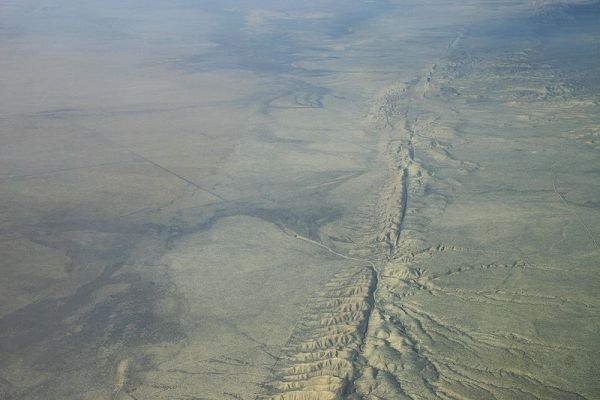 What is the geophysics of thinking that more natural disasters are more likely now that the earth quake has occurred?
Kim Zussman shares:
Read this article.
Rudolf Hauser writes:
Another factor to consider is the shifting of the magnetic poles. This is reportedly associated with violent swings in weather and more earthquakes and volcanic explosions. Apparently there has been a marked acceleration in the rate of shifting in the past few years. Some question whether this might be the cause of recent weather extremes and geological activity. Since such shifts occur only every half million years or so we obviously have little idea of how they progress. If this is a real reason for concern it is an issue far more immediate and important that the global warming fears.
Pitt T. Maner III writes:
There have been suggestions of a connection with renewed (regional?) vulcanism.
The last eruption of Mt. Fuji , for instance, occurred 49 days after the previous largest earthquake in Japanese history.
Another Japanese volcano has resumed activity but cause/effect from the March 11 quake may be tenuous.
The volcano, Shinmoedake, is famous for standing in as the villain's secret rocket base in the 1967 James Bond film, "You Only Live Twice".
Bill Rafter comments:
Earthquakes and volcanism are simply different manifestations of the goings on of plate tectonics.
Read this article from New Sceintist: "The megaquake connection: Are huge earthquakes linked?".
Feb
22
The New Zealand Earthquake, from Pitt T. Maner III
February 22, 2011 | Leave a Comment
 Here is an explanation of the possible causes of the very destructive New Zealand earthquake (from a post-doc at U of Chicago) and its relationship to previous seismic activity.
Some of the typical effects of soil liquefaction are:
1) loss of bearing strength;
2) lateral spreading;
3) "sand boils";
4) flow failures;
5) ground oscillation;
6) flotation; and
7) settlement.
Feb
3
Ravens, from Pitt T. Maner III
February 3, 2011 | Leave a Comment
 Raven minds are capable of all manner of sophisticated ploys and deceptions and signaling at a distance over time.
Here is a link to a 2010 film about the man who has spent quite some time amongst ravens and who has researched and written about their keen intelligence.
"AN UNCOMMON CURIOSITY: at home & in nature with BERND HEINRICH" follows Bernd Heinrich, one of the world's most insightful and original biologists, over the course of a year as he reflects on his past and shares his ideas about nature, science, art, beauty, and writing. Heinrich has been both a Guggenheim Fellow and a Harvard Fellow, and has been awarded two honorary doctorates. Considered by many to be today's finest naturalist author, Heinrich has written 18 books on various aspects of the natural world and published numerous scholarly papers, professional book reviews, book chapters, and articles for magazines and newspapers as diverse as the New York Times, Outside and Runners World. In addition to his scholarly work he is a world-class ultramarathoner currently holding a U.S. 100-mile track record.
Dylan Distasio adds:

Although I have not had the pleasure of seeing this film (I didn't realize it was out there, thank you, Pitt!), I would also highly recommend his books, especially Mind of the Raven, since we are on the subject of birds. Raven's are arguably one of the smartest of all birds, and are able to solve puzzles that even many mammals would have trouble with.
I especially enjoyed his other book Winter World, about the ingenuity of animal survival about how various creatures make it through a tough, lean winter.
Totally unrelated, but on the subject of Scott's favorite nuisances, I saw a coyote walking on the snowy tracks of my Metro North train station earlier this week here in Connecticut. The air was cold and still and the moon and what I assume was Venus were up in the pre-dawn sky. The coyote was skulking nervously southwards down the opposite tracks. He stopped to stare at me for a few moments before resuming his nervous journey. I've also seen a beautiful red fox in the warmer months hanging around our birdfeeder looking for a quick meal. Quite a menagerie here in suburbia.
Jan
24
Number of the Week: Americans Dipping Into Savings, by Vince Fulco
January 24, 2011 | Leave a Comment
http://blogs.wsj.com/economics/2011/01/22/number-of-the-week-americans-dipping-into-savings/
Pitt T. Maner III comments:
One notes that the price of beer has gone up to the point where many beverage companies are selling single, large bottles or 4-packs. Food stamp labels and codes are affixed to supermarket shelves and cashiers ask if what you have in your hand is actually cash or food stamps.
The trend seems to be to reduce sizes and amounts to hide the true costs to the consumer.
Lots of freebies too in Costco and local supermarkets to whet the appetite and induce spending.
Its an odd vibe in many ways. Perhaps companies will begin to even more closely track "spenders" like Vegas does gamblers and comp them accordingly.
Jan
21
Science and Tennis, shared by Pitt T. Maner III
January 21, 2011 | 2 Comments
There is a new book out with a mathematical perspective on the paradigm for future tennis:
Paradigm Shift for Future Tennis
One of the authors also has a piece about Who is Going to Win the Australian Open 2011 . FWIW his answer is Roger Federer.
Jan
21
Ecology and Financial Markets, by Pitt T. Maner III
January 21, 2011 | 1 Comment
Ecology and Financial Markets is on the front page of current Nature.
"In the run-up to the recent financial crisis, an increasingly elaborate set of financial instruments emerged, intended to optimize returns to individual institutions with seemingly minimal risk. Essentially no attention was given to their possible effects on the stability of the system as a whole. Drawing analogies with the dynamics of ecological food webs and with networks within which infectious diseases spread, we explore the interplay between complexity and stability in deliberately simplified models of financial networks. We suggest some policy lessons that can be drawn from such models, with the explicit aim of minimizing systemic risk."
http://www.nature.com/nature/journal/v469/n7330/full/nature09659.html
and from
http://www.scientificamerican.com/blog/post.cfm?id=can-ecological-models-explain-globa-2011-01-19
'Bananas, cacao and bee-pollinated crops are all threatened with collapse in part because of their monoculture management. When a biological or social system is full of uniform individuals—be they bean plants or banks—one shared weakness can spell disaster for the whole lot. Even when a new beneficial trait or tool enters the picture, if all organisms adopt it, as many financial institutions did with credit default swaps and other risky trades that led to the financial meltdown of 2007-08, a tenuous balance can be quickly upset, argued an economist and an ecologist in a new essay.
"Excessive homogeneity within a financial system—all the banks doing the same thing—can minimize risk for each individual bank, but maximize the probability of the entire system collapsing," Bank of England's Andrew Haldane and Oxford University's Zoology Department's Robert May wrote in their new paper, which will be published in the January 20 issue of Nature (Scientific American is part of Nature Publishing Group). Thus even as banks themselves were pursuing internal diversity by adopting new financial tools, across the board "banks' balance sheets and risk management systems became increasingly homogeneous," they wrote. And that similarity led to a vulnerable system.
A thoroughly interconnected food—or financial—web might provide the illusion of security, as "high connectivity distributes, and thereby attenuates risk." But as the authors pointed out, when a shock does hit the system, it will affect more institutions.
One way to combat this issue is to establish more self-contained "nodes" as has been employed in forest management and even computer networks, so that if one element takes a hit, it doesn't take down the entire system.
And rather than regulating with the aim of individual institution stability, Haldane and May noted, attention should be tuned to the overall system's risk. Like the spread of an infectious disease, financial troubles can be launched by so-called "super-spreaders," such as Lehman Brothers. By "focusing preventive action on 'super-spreaders' within the network to limit the potential for system-wide spread," regulators might be able to avoid the contagious hemorrhaging that occurred with the 2008 Lehman Brothers collapse.
Not everyone is convinced the ecological model is ready to be incorporated into policy-making decisions. Haldane and May asserted—and reasserted—that the dynamics they present are "deliberately oversimplified" and that "there are, of course, major differences between ecosystems and financial systems" (including preference of speed over long-term fitness and the interference of governments). Nevertheless, "rigorous statistical validation of any toy model or analogy is essential before policies are suggested," asserted University of Miami physicist Neil Johnson in an essay published in the same issue of Nature. By way of comparison, he asked: "Would you fly in a paper plane that had been scaled up to the size of a 747?"
But other non-biologists are ready to entertain the ecological model. University of Kiel economics professor Thomas Lux noted in another essay in the same issue of Nature that it is "essential" to "take stock of the accumulated knowledge on network structures when studying systemic risk in the banking sector."
Whether or not experts agree that biology is a useful lens through which to study financial markets, Haldane and May suggested that financial regulation is already "following in the footsteps of ecology, which has increasingly drawn on a system-wide perspective when promoting and managing ecosystem resilience."'
Gary Rogan comments:
Good article, but let's look at this conclusion:
'Whether or not experts agree that biology is a useful lens through which to study financial markets, Haldane and May suggested that financial regulation is already "following in the footsteps of ecology, which has increasingly drawn on a system-wide perspective when promoting and managing ecosystem resilience."'
To extend the parallel, who is it that's "promoting and managing ecosystem resilience", generally speaking, in nature? Since we were asked not to talk about religion, I won't answer the question but it's clear where the role of the system-wide regulator fits in this analogy. Of course most ecosystems reach robustness simply by following the rules of survival of the fittest, so it's interesting how a mostly good analogy is used to reach a politically correct, but unworkable conclusion.
Jan
19
Scientific Concepts, by Steve Ellison
January 19, 2011 | 3 Comments
The Edge Question of 2011 is, "What scientific concept would improve everybody's cognitive toolkit?"
Edge posed this question to some well-known scientists and thinkers, and their answers are at http://edge.org/q2011/q11_index.html
Here, for example, is Matt Ridley's answer.
"…Human achievement is based on collective intelligence — the nodes in the human neural network are people themselves. By each doing one thing and getting good at it, then sharing and combining the results through exchange, people become capable of doing things they do not even understand. As the economist Leonard Read observed in his essay 'I, Pencil' (which I'd like everybody to read), no single person knows how to make even a pencil … The idea of bottom-up collective intelligence … is one idea I wish everybody had in their cognitive toolkit."
I have always thought the Pareto Principle is one of the great secrets of life, and Clay Shirky advocates it :
"You see the pattern everywhere: the top 1% of the population control 35% of the wealth. On Twitter, the top 2% of users send 60% of the messages. In the health care system, the treatment for the most expensive fifth of patients create four-fifths of the overall cost. These figures are always reported as shocking … Pareto distributions are nothing like [Gaussian distributions] — the recursive 80/20 weighting means that the average is far from the middle. This in turn means that in such systems most people (or whatever is being measured) are below average, a pattern encapsulated in the old economics joke: 'Bill Gates walks into a bar and makes everybody a millionaire, on average."
Pitt T. Maner III comments:
The concept of networks and how they grow is still being researched but it is important at many different scales in the biological, economic and sociological realms.
Jan
18
Bill Walters Professional Gambler on 60 Minutes [Part 2], by Gary Rogan
January 18, 2011 | 2 Comments
Krisrock writes:
Sports betting is about emotion more than reason.
People love the Patriots and bet according to their heart.They count one way and others count other way, proving how you can get beat with 100% confidence you're right and all those who you disagree with are wrong.
Walters proves that point especially in the equity markets…he just doesn't know those who count in a different way.
Pitt T. Maner III responds:
I have heard of people that have a "team-like" attachment to stocks like AAPL. It would be almost impossible for them to sell their AAPL stock; almost as difficult as it would be for a Pats fan to bet against his team.They are emotionally attached to Macs, iPods, iPhones and everything AAPL. Perhaps there is some component of this that is reflected in price action. There are not that many companies that have that sort of following.
Jeff Watson comments:
The devotion, attachment, or worship of a team by the general public might be the "Achilles Heel" that allows them to exploited and/or manipulated by the flexions. It would be hard to find something rational with devotion, attachment, or worship.
Gary Rogan Responds:
Most of the story was about his sports betting operation, which looked quite impressive and totally devoid of emotion. He counts, knows a lot about all the teams, diversifies, employs experts with total recall who remember even more, and on top of it attempts to "push the line". The story ended with his complaint about the market, but it seemed like he simply didn't apply any of his normal techniques to a new area and got wiped out.
Jeff Watson comments:
Walters attempts to "push" the point spread is no different than a local at an exchange or a market maker trying to goose the bids or offers to move the direction of trading to prices that have the most liquidity, stops, and booby traps for the unsuspecting. The sports gambling market is really no different than any other market when you think about it, and it's probably percentage wise, more honest.
Jan
18
(NYT) FiveThirtyEight: Why Carmelo, by Pitt T. Maner III
January 18, 2011 | Leave a Comment
Amare is currently ranked #12 and Carmelo #25. At PER 20.68 Carmelo is currently a "borderline" all star. Melo looks to be rebounding quite well and that helps a team win. He did help lead Syracuse to a National Championship as a freshman— which might be a indication of future ability to raise the level of team play when in a supporting environment.
I can only conceptualize that for a trader it would be how efficient he performs within the boundaries of time, risk, trade size, contribution to portfolio winning percentage, etc. and all those advanced measures you experts use.
The basics of shot selection, defensive play and positioning, "hustle", and judicious leveraging of innate abilities are pretty important in basketball.
The Player Efficiency Rating is ESPN Insider writer John Hollinger's all-in-one basketball rating, which attempts to boil down all of a player's contributions into one number. Using a detailed formula, Hollinger developed a system that rates every player's statistical performance
All calculations begin with what is called unadjusted PER (uPER).
Once uPER is calculated, it must be adjusted for team pace and normalized to the league to become PER: This final step takes away the advantage held by players whose teams play a fast break style (and therefore have more possessions and more opportunities to do things on offense), and then sets the league average to 15.00. Also note that it is impossible to calculate PER (at least in the conventional manner described above) for NBA seasons prior to 1978, as the league did not keep track of turnovers before that year.
George Parkanyi responds:
It depends on how many people are directly or perhaps indirectly contributing to the final decision of a trade. For example, how many people have a touch in your organization Victor before you make the final decision to trade or implement a trading program? - research/set-up, analysis, programming, execution, and so on … Any one of the these factors could impact the success (profit) or failure (loss) of the trade.
Steve Ellison comments:
"What is missing from formulas like Berri's is an account of what Anthony does to the rest of the Nuggets."
There is a hockey statistic called plus/minus to help assess exactly that. Every player on the ice when his team scores gets a plus one. Every player on the ice when the opponents score gets a minus one. The results are cumulative. A player who does not score much but has a high positive plus/minus total is presumed to be doing something right.
Victor Niederhoffer inquires:
How could this immediately be applied to markets ? There are players on a team also. But rather than simply adding, would a regression work better?
Steve Ellison responds:
One might consider various market "players" and what happens when they are visibly "on the ice". For example, when the President is speaking, does the market go up or down? When the Mayor's news feed features the Sage, does the market go up or down?
Victor Niederhoffer writes:
I would conceptualize that the other players on the team are the other markets. how often does the stock market , create wins for the oil market et al, and for the grains, and are there leads and lags?
T.K.marks comments:
Anecdotal evidence has long had it that the oft-retired Michael Jordan was the ultimate basketball player in terms of making teammates better players. Apropos of the discussion here, it's been suggested that his talent in that regard was not limited to the court, but instead, cross-market in its scope.
From Wikipedia:
"…Jordan's yearly income from the endorsements is estimated to be over forty million dollars… An academic study found that Jordan’s first NBA comeback resulted in an increase in the market capitalization of his client firms of more than $1 billion…"
The journal in which the study is found is a subscription so I'll take Wiki's word for it. Though it would be nice to know by comparison what the overall market cap did during that same time frame.
Jan
17
Bill Walters Professional Gambler on 60 Minutes, shared by Gary Rogan
January 17, 2011 | 1 Comment
"I've been swindled out of quite a bit quite a bit of money on the stock market. And I bought a lot of Enron stock once. And I got swindled. I bought a lotta WorldCom stock, got swindled. I bought a lotta Tyco stock. I got swindled," he told Logan.
His disdain for Wall Street is one of the reasons Walters decided to talk to "60 Minutes" - a chance he says to make the point that the gambling world is not as shady as most people think.
"I ran into a lotta bad guys, a lotta thieves. I mean, they'd steal the Lord's Supper. But I can tell ya, percentage-wise, I ran into many more with suits and ties on than I have with the gamblers," he told Logan.
"So you would say that the hustler from Vegas got hustled by Wall Street?" Logan asked.
"There's no doubt about it," Walters replied.
Read the full article here.
Pitt T. Maner III writes:
It was interesting how Walters as a "whale" or "great white" was able to push the sports book line on games by initially placing bets on the team he intended to bet against. I would think it would take more than a couple of 100,000 dollars to do the same in the stock market where the competition is more fierce and pockets much deeper.
It seems that the early games in college season often have very large spreads and might be more exploitable for professionals until the actual strengths of the teams are determined. Someone who has scouted all the preseason practices and knows more than the average bettor will likely have an advantage especially at the start of a season and the lines become more accurate.
Jan
12
Barber Shop Trading, from Pitt T. Maner III
January 12, 2011 | 1 Comment
 There is a current TV ad where a barber shop customer asks his barber to wait a second while he finishes a trade on his smart phone. The barber complies and says he hopes the customer's trade is successful and that the customer will give him an extra tip.
Yesterday at a local barber shop my barber stopped to take a call from his broker. The conversation revolved around a stock price (in the $9 range), recent volume, and how stocks are like women.
While barbers have been known to become wealthy, one wonders if it is a healthy sign for them to trade while cutting your hair or whether it portends a forthcoming market "hair cut".
Jan
7
Microfinanciers or Micro-Chupacabras, shared by Pitt T. Maner III
January 7, 2011 | 1 Comment
 Tough times for Microfinance. Daniel Ortega et al. and the "Movimiento No Pago":
Microcredit is losing its halo in many developing countries:
Microcredit was once extolled by world leaders like Bill Clinton and Tony Blair as a powerful tool that could help eliminate poverty, through loans as small as $50 to cowherds, basket weavers and other poor people for starting or expanding businesses. But now microloans have sparked political hostility in Bangladesh, India, Nicaragua and other developing countries.
In December, the prime minister of Bangladesh, Sheikh Hasina Wazed, who had championed microloans alongside Clinton at talks in Washington in 1997, turned her back on them. She said microlenders were "sucking blood from the poor in the name of poverty alleviation," and she ordered an investigation into Grameen Bank, which had pioneered microcredit and along with its founder was awarded the Nobel Peace Prize in 2006.
Here in India, until recently home to the world's fastest-growing microcredit businesses, lending has slowed sharply since the state with the most microloans adopted a strict law restricting lending. In Nicaragua, Pakistan and Bolivia, activists and politicians have urged borrowers not to repay their loans.'
"Even as the results for borrowers have been mixed, some lenders have minted profits that might make Wall Street bankers envious. For instance, investors in India's largest microcredit firm, SKS Microfinance, sold shares last year for as much as 95 times what they paid for them a few years earlier.
And things are not going too well for Muhammad Yunus, Nobel Peace Prize winner and microfinance pioneer:
….Finally, a court has ordered Yunus to appear on Jan. 18 to face charges of defamation, apparently for saying in 2007 that politicians pursue only money. He could be arrested and tossed in prison for that. And given the timing, it sure looks as if this is an orchestrated campaign to take him out, and seize the bank for the government. If this is a concerted campaign, then presumably it could happen only with the approval of Prime Minister Sheikh Hasina. And she does seem to have changed her pitch: a former supporter of microfinance, she recently denounced it as "sucking blood from the poor in the name of poverty alleviation."
Jan
4
Rare Earth Rockets, from Pitt Maner III
January 4, 2011 | Leave a Comment
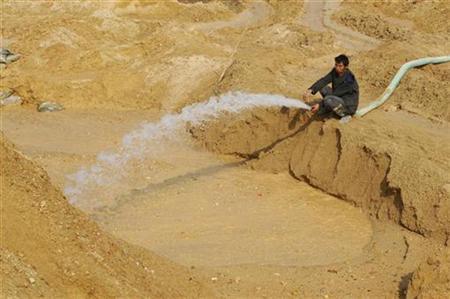 Rare Earth minerals are in the news day after day and share prices are rocketing. When will gravity take hold?
I don't know but it seems like there are a lot of variables to consider and things might look quite different a year from now– particularly if true substitutes are found and new, mined sources start to or are anticipated to enter the marketplace. Rhodium is a fairly costly metal so it will be interesting to see if the following discovery has commercial applications and if it will lead to other "artificial rare earth metals".
It also will be interesting to see how China plays out its hand :
China's decreasing rate of rare earth exports is forcing the world to scramble for alternative sources. Now the Japanese have artificially produced a palladium-like metal, commonly used for catalytic converters.
The world–and particularly the Japanese–may be in a frenzy over China's newly announced 35% cut in rare earth exports, those used to produce many high-tech devices, in the first half of this year. But a Japanese scientist has found one answer: Create the metals artificially.
Professor Hiroshi Kitagawa of Kyoto University has announced that he and his team of researchers have artificially produced a metal similar to palladium, a material commonly used in catalytic converters. In his lab, Kitagawa used a heating method to produce ultramicroscopic metal particles, ultimately mixing the usually resistant rhodium and silver to create the palladium-like metal.
Jan
4
Generational Predictability and Cyclicity, from Pitt T. Maner III
January 4, 2011 | 1 Comment
 I wonder if generational attitudes are indeed predictable or whether the social scientists are just picking and choosing data to make it fit their theories.
Several of my family members were impacted by the the sights seen as youngsters during the Depression and sometimes they became excessively stingy (penny-wise, pound foolish) with their money decades later. One of the funny stories was one of saving 2 cents by not buying a bottle opener (church key) in the early 1960s, instead opening the Coke bottles in advance, then leaving the opened bottles on the floor of the Oldsmobile, and then watching them spill out later at the first major bump in the road. It seemed like a good idea at the time.
Strauss and Howe, perhaps flawed but interesting. Will austerity and thriftiness become ever increasingly in vogue and create deflationary pressures? Is there any value in this type of analysis? If people were rocks I would say yes.
* Arthurian Generation (1433-1460)
* Humanist Generation (1461-1482)
* Reformation Generation (1483-1511)
* Reprisal Generation (1512-1540)
* Elizabethan Generation (1541-1565)
* Parliamentary Generation (1566-1587)
* Puritan generation (1588-1617)
* Cavalier Generation (1618-1647)
* Glorious Generation (1648-1673)
* Enlightenment Generation (1674-1700)
* Awakening Generation (1701-1723)
* Liberty generation (1724-1741)
* Republican generation (1742-1766)
* Compromise Generation (1767-1791)
* Transcendental Generation (1792-1821)
* Gilded Generation (1822-1842)
* Progressive generation (1843-1859)
* Missionary Genration (1860-1882)
* Lost Generation (1883–1900)
* G.I. Generation (1901–1924)
* Silent Generation (1925–1942)
* (Baby) Boom Generation (1943–1960)
* 13th Generation (Gen X) (1961–1981)
* Millennial Generation (Gen Y) (1982–2004)
* Homeland Generation (Gen Z) (2005-?)
Jan
2
True Grit and the Best Western Novel, from Victor Niederhoffer
January 2, 2011 | 6 Comments
 There is something about True Grit that is truly loathsome. Each of the 3 main characters is deeply flawed. Marshall Rooster Cogburn is a drunk and dead beat who speaks unintelligibly. Texas Ranger LaBoeuf is a show off, loser, and a chauvinist. The girl is sharp tongued, litigious, and naive (no wonder she didn't get married). It all fits in with the idea that has the world in its grip, that the purpose of life is to keep oneself small by sacrifice. There is no chemistry or romance between any of the characters except for Pepper the Quixotian leader of the outlaws, who as could be predicted was the only man good in his every day business of being a outlaw. No wonder this Western follows the code of the west breaking, denigrating Brokeback Mountain and no wonder that Louis L'Amour's novels have sold more than all western authors combined since the beginning of time, and that they dare not make one of them or an Atlas Shrugged, in favor of this disrespectful Portis trash that violates all the rules of good mystery by having one hair breadth, extraordinary, lucky escape after another, and stereotyped snake bite scene (a la Larry Mcmurtry) release the tension.
P.S I have never written about a subject not directly related to the multivariate analysis of time series that Mr. Jovanovich has not corrected and amplified on where I was astray. And I must admit that I didn't realize that the Western Novel was yet another of his expertises. Okay, I want to know from him if he agrees with me, on this one point that Monte Walsh is the greatest western novel, (if the chapter where the accountant comes to reduce the pay of the hands that took vengeance on the trainmen doesn't make you cry, I'll eat that hat the accountant wore that was so tempting to Hat, Cal and Monte), and the best business novel of all time.
Stefan Jovanovich replies:
Grub street used to honor the basic code for reviewers: read the book first, then slander the author. We should do the same. Portis' book is like neither of the movies; the John Wayne version comes much closer in spirit, but it is still far, far too "nice". The actual novel is a memoir written by a tough-spirited, one-armed spinster Presbyterian capitalist remembering the one man whom she loved and how they avenged the murder of her father when she was– by other people's standards– "still a girl". Blaming authors for what Hollywood makes of their books is like blaming men for the conduct of their ex-wives after they finish paying the alimony; all the authors can be held accountable for is the size of the check they cash.
I am old enough to have lived near (but definitely not in) Beverly Hills when Louis L'Amour still gave readings at the library. He was a great and good man, and– yes– Monte Walsh is the classic. As is often the case, my anger is misdirected; what infuriates me about this latest version of True Grit is what is says about the Coen brothers' decline and fall. The novel will survive their abomination of it; hell, it will probably be reread again. But for the Coen brothers, what hope is there now? Intolerable Cruelty is the best and funniest film ever about Hollywood and lawyers and now the guys who made it can only do splatter trash.
P.S. Eddy just called. She thinks our only hope is to pray that South Park's explanation once again holds true and blame it all on Matt Damon and his friend.
Dylan Distasio writes:
At the risk of raising some hackles, I'd make the argument the McCarthy's "Blood Meridian or the Evening Redness in the West" is one of the greatest Western novels in that genre and one of the best I've read from 20th century authors in general.
J.T Holley writes:
If you like Blood Meridian then go read Suttree. IMHO, it is an existential masterpiece. Cornelius being a man of the "made, trust-fund baby, life of given not earned goes to be a fisherman in TN. Though the content could be considered as a rebellious misguided stab at the establishment, I found it a read that was of self-introspect, self-realization, self-reliance while battling vices with choice by going to the extreme to find such. Once again not oft mentioned amongst Cormac's works, I feel it is one of my favorite reads to crack open and read again. I'm a Southerner so the read is much suited to me, so some of the "in between the lines" stuff might not be appreciated.
Jim Wildman writes:
My personal favorites in the Western genre.
"The Virginian" (Wister) if for no other reason than "Smile when you call me that"…and the baby swap prank.
"A Man Called Noon" (L'Amour) always makes me think about how I define who I am.
In "The Last of His Breed" Mr L'Amour applies similar themes from his Westerns to modern times. For my taste, the book is a bit long, but in fairness, it takes a while to walk across Siberia. And it has a great last line.
Trader Craft comments:
Another great classic of the West is Thomas Bergman's "Little Big Man". Much better than the Dustin Hoffman movie.
Scott Brooks writes:
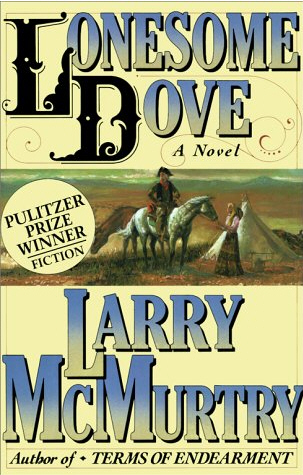 As one who doesn't read a lot of westerns, (and I'm sure the purist will scoff at me) I have to say that Larry McMurtry's, "Lonesome Dove" is my favorite of that genre.
Good guys and bad guys. Multiple story lines all intertwined. Sudden and unforgiving death. Fortunes made and fortunes lost. Adventures piled on top of adventures. Good choices and bad choices. Friendships that are strong, but that don't override honor. Human foibles that override honor to do what is perceived as the "right thing". False friendship's that never were except to be used as seen fit by the "user".
Story of youth and aging and lesson's learned, lessons shared and lesson's taught. Love found, love spurned, and love lost. The superficial wannabes intermingled with the intellectual drivers. The high self esteem and low self esteem of characters revealed for the world to see.
Characters that arrive unexpectedly and stay and others that depart just as unexpectedly. Ego's that clash and feelings that are hurt. Life and time wasted on loves that can never be.
High risk adventures fraught with deadly consequences. People that love risk, taking more and more risk because the downside never happens to them…until it does.
Their are cowboy versions of "Eddie Willer's" (hard working and reliable) tying their horses to the wagon's of cowboy versions of "John Galt" (hard working reliable, but intellectually superior)…..but in a much more realistic sense….i.e. there's no mythical "static electricity generator" or "nearly infallible hero's"….just really smart people who make more good decisions than bad decisions…but who make bad decision…sometimes with catastrophic consequences.
I could go on and on, but something has just struck me as I write this general description of "Lonesome Dove"…..am I describing a Western Novel, or the modern day "Spec List".
Jack Tierney writes:
The Chair's mention of L'Amour reminds me that I've neglected to comment on the man's autobiography, "The Education of a Wandering Man". Unpublished during his life, the manuscript was found in his desk only later. The author of the Introduction speculates that L'Amour purposely put off publication fearing charges of braggadocio.
After reading the book, it's a possibility. For many years he kept a written record of the books he had read– the selections are so diverse and numerous that it's impossible to pigeon-hole his preferences or determine how he found the time.
Because of finances, he left home at early and, Hoffer-like, rode the rails in search of employment. He also shipped out for as many foreign ports as he could find, baby-sat an abandoned mine for three months in the middle of nowhere without any human contact, and took up small-town prize-fighting when he really needed money and the locals really needed a fight.
But no matter where he was or how broke, he always had books. If there's any drawback in his story it's the realization that one could have read much, much more if he hadn't been sidelined by trivialities.
Pitt T. Maner III writes:
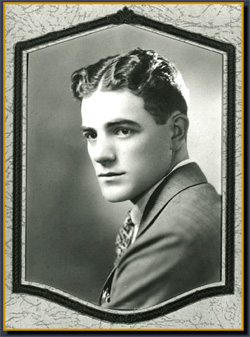 It looks from L'Amour's autobiography that, from the years from 1930 to 1937 in particular, he tried to read approximately 100 books and plays each year. They were not what you would think a man writing Westerns would be reading.
Not a bad New Year's resolution if one has the time. It takes discipline too.
A quick perusal indicates he liked to read several books by one author or playwright that he liked within each year. Certain themes or genres captured his attention. Perhaps he was buying books in bulk or series from bookstores.
In 1930, for instance, he read many of the plays of Eugene O'Neill. In 1931 he read Flaubert. Shakespeare and Detective stories were popular with L'Amour in
1932. It looks like works by H.G. Wells and Conrad were favorites. L'Amour's lists are interesting because there are many books included that are not commonly read these days.
For instance "Trader Horn" by A.A. Horn and Ethelreda Lewis was a book made into a movie with filming done in Africa under extremely difficult conditions (they don't make movies like the used to).
The world was less explored and a bit more mysterious just 80 years ago.
The best writers often do a tremendous amount of critical reading and know a little bit about a vast array of subjects— even things that would be considered controversial today.
Dec
31
Niall Ferguson, from Stefan Jovanovich
December 31, 2010 | Leave a Comment
 Author Niall Ferguson continues to disappoint. His book on the Rothschilds is wonderful, but his recent work (High Financier, The Ascent of Money) is pure muddle. Nowhere does he mention what was the primary cause of the hyperinflation– the linking of pay for everyone in the economy who worked as an employee, whether of the state or private enterprises, to the official measure of inflation. The farmers and independent business people– the future voters for the Nazis– were the only people not so protected. Ferguson follows Keynes in blaming the reparations (even though at their highest point they represented less than 1/4th of Germany's exports), the "right-wing" civil unrest (even though the rate of assassination of public figures was less after the war than it had been before, Hitler's attempt at revolt was put down by the "conservative" Bavarian government, and the greatest violence came from the Left, not the Right) and the Army (who, in fact, mostly stayed in their barracks).
To be fair, Ferguson does quote Addison: "The daily creation of fresh paper money which the government requires in order to meet its obligations both at home and abroad (services and goods which it is 'obliged both to render and deliver') inevitably decreases the purchasing value of the mark and leads to fresh demands, which in turn bring about a further decline, and so on ad infinitum." But Ferguson seems determined to look to every cause except the obvious one: in a country that had lost its wealth, people could not restore their former "standard of living" by having the government print money and pretend that the war had never happened. Lord Curzon's observation at the time was "There has been no real determination to stop the printing press, there is little efficiency in the tax-collecting system, and there is very great timidity in putting a stop to doles and subventions."
The doles and subventions were the moving force - both for printing money and for tax evasion - just as they always are in any country. What was different in Germany was that everyone, except the future Nazi supporters, already worked for the DMV and had automatic escalators in their wage contracts.
Kevin DePew writes:
Speaking of Weimar, here is a free ebook available from Google that I found very interesting. "Cool conduct: the culture of distance in Weimar Germany," by Helmut Lethen.
The Google summary: "Cool Conduct is an elegant interpretation of attitudes and mentalities that informed the Weimar Republic by a scholar well known for his profound knowledge of this period. Helmut Lethen writes of "cool conduct" as a cultivated antidote to the heated atmosphere of post-World War I Germany, as a way of burying shame and animosity that might otherwise make social contact impossible."
Apart from the irony that Ferguson's book about the Weimar hyperinflation (Paper and Iron) is available for free (a year or so ago library copies were selling for more than $1,000), the Lethen book I found more informative about cultural conditions in the wake of economic distress/collapse. Everyone knows the mechanics of hyperinflation, which is what Ferguson's book largely deals with– only a small portion is devoted to the sociological aspects. Less known, and more instructive, are the methods societies use to cope with extreme economic disturbances.
Stefan Jovanovich responds:
I wish I could share Kevin's appreciation for Lethen's book. I tried reading it over the weekend and did not succeed. Lethen's assumption that the culture of Weimar was "cool" seems to me too much of a stretch to be even comic in its absurdity. George Grosz was anything but "cool". I wish I could agree that "everyone knows the mechanics of hyperinflation". You can read Fergusson's book and Keynes's diatribe about the economic consequences of not listening to him and not find a single mention of wage indexing in either tome. It is not enough to point to "money printing"; you have to answer the question of how it becomes politically acceptable to debase the currency. At the end of his life Hayek wrote this: "I do not want to leave this recollection of the Great Inflation without adding that I have probably learnt at least as much if not more than I learnt from personally observing it by being taught to see - then largely by my teacher, the late Ludwig von Mises - the utter stupidity of the argument then propounded, especially in Germany, to explain and justify the increases in the quantity of money…None of those apologists of the inflationary policy was able to propose or apply measures to terminate the inflation, which was finally ended by a man, Hjalmar Schacht, who firmly believed in a crude and primitive version of the quantity theory. - From Occasional Paper 45, Institute of Economic Affairs, July 1975. Hayek recalled that his salary went from 5,000 krona a month in October 1921, to 15,000 krona in November, and to 1 million krona by July 1922.
Zimbabwean economics was introduced to the former German-speaking empires after WW I because it was politically impossible for anyone to tell the public employees of the war economy that the Great War had destroyed their wealth and reduced the market value of their labor. We have the same situation developing now in the People's Republic of California. Our various wars on behalf of the causes of "social justice" and "the environment" and "education" have produced an economy where the activities of the people who work for the state and those whose only customer is the state are easily more than half the state's GDP. The immediate crisis here is much the same as the one that started the presses printing in Vienna and Berlin - retiree pensions.
The one significant difference is our latter-day paradise of Bismarckian socialism does not have the ability to create its own legal tender. We Californians can and do issue vouchers; but even our own state Treasurer will not accept those same vouchers in payment of California taxes. (Yet another example of the inescapable postulate that, in a society with a sovereign monopoly, money = legal tender.)
I would welcome the speculations of the readers of this site as to whether or not our golden state will be "saved" by a re-enactment of the Dawes plan (the "strong" country drains its legal tender reserves to pay back the preferred creditors who bet wrong on the great leap forward - i.e. the war to end all wars. You may have a rooting interest since since the People's Republics of Illinois/New York/New Jersey would be part of the same "rescue package". If one comes, it seems only appropriate that we name this "societal method for coping with extreme economic disturbance" as Lusitania II.
Ken Drees comments:
Cally will be bailed in version .3 of QE– Jerry Brown will receive a huge check a la Monty Hall– let's make a deal!
A bundle of lesser tier bailouts ala a fruit basket of rotten munis, bruised and blemished states will happen in conjunction– version .31 QE because the people can gulp down only one massive bailout per year so make it a big horse pill and wash it down with a big gulp.
2011 March/April for this to go down?
Mr. Krisrock shares:
Here is a great speech Ferguson gives on"empires on the edge of chaos".
Pitt T. Maner III comments:
The paintings by Thomas Cole ("The Course of Empire") referred to by Professor Ferguson at the beginning of his lecture can be found at the New York Historical Society, 170 Central Park West at 77th St and are available as prints . I imagine they make fine postcards too.
Dec
29
The Human Google, from Pitt T. Maner III
December 29, 2010 | Leave a Comment
 "Better by far that you should forget and smile than that you should remember and be sad." Christina Rossetti
Featured on 60 Minutes and dubbed "the Human Google" by Good Morning America, Brad is only the second person ever studied for HYPERTHYMESIA, an extremely detailed memory for the events of his life.
It is a nice song too, but do we really want to remember everything intensely: a cautionary fictional (I think) story from Nature .
"The pressure to succeed steadily increased and so did the need to stay alert, to focus relentlessly. I prowled the smart-drug chat-rooms and message boards. During the day I traded stocks and shares, during the night I was trading ideas and experiences. I learned about stacking and cycling, optimizing the stimulation and minimizing the side effects. All of us avidly sought the pot of gold at the end of the pharmacological rainbow, an eidetic memory, capable of perfect recall. I got the drugs from incurious online pharmacies."
And are there virtues to be found in the ability to forget? also a good read here.
Abstract
The default view in the epistemology of forgetting is that human memory would be epistemically better if we were not so susceptible to forgetting—that forgetting is in general a cognitive vice. In this paper, I argue for the opposed view: normal human forgetting—the pattern of forgetting characteristic of cognitively normal adult human beings—approximates a virtue located at the mean between the opposed cognitive vices of forgetting too much and remembering too much. I argue, first, that, for any finite cognizer, a certain pattern of forgetting is necessary if her memory is to perform its function well. I argue, second, that, by eliminating "clutter" from her memory store, this pattern of forgetting improves the overall shape of the subject's total doxastic state. I conclude by reviewing work in psychology which suggests that normal human forgetting approximates this virtuous pattern of forgetting.
and
"At first glance, AJ might appear to have an enviably good autobiographical memory. But closer examination of the case suggests that though we naturally assume that increased access to stored memories (less forgetting) would amount to an improvement to memory, this is not in fact the case. There are two points to note here. First: Though it is natural to assume that a \better" memory would provide us with a signi cant cognitive advantage, this is likely not the case. As Parker, Cahill, and McGaugh point out, AJ's exceptional memory has provided her with no apparent advantage in daily life or in her studies; nor is it helpful on IQ tests and the like (2006, 48). And at the same time, AJ's unusual retrieval capacity carries heavy cognitive costs. In particular, she \spends much of her time recollecting the past instead of orienting to the present and future" (2006, 48).An increased retrieval capacity comes at a price: time that would otherwise be spent on other cognitive tasks is devoted to retrieval; time that would otherwise be spent acquiring new knowledge is spent simply processing \surplus" retrieved memories."
Sam Marx writes:
The 60 Minutes program piqued my interest in people who have this super memory as a natural talent. It is obvious that there are people who are super geniuses in certain fields such as chess, music, math, etc. Maybe Thomas Edison was a super genius, he certainly accomplished a lot. Super geniuses in these fields can be easily discerned.
There may be super geniuses in other fields, business for example, but luck and other variables may affect their success.
I once knew a fellow who was just a clerk on the trading floor but he could complete the NY TIMES crossword puzzle in minutes. He was amazing. Maybe he was a super genius in just this one field because he never advanced further than that of a clerk.
These study of these super geniuses may someday lead science into creating a race of super geniuses to hopefully help mankind.
I've wondered as I watched football is there a super genius offensive director who can anticipate the moves of each defensive player for each offensive play he calls, a Prof. Nash in the booth.
Ralph Vince writes:
About your last point–No. Great offense — like great chess — or brilliantly playing a
mediocre bridge hand– requires the element of surprise moreso than
knowing what all the pieces might do.
"Surprise," is anticipatating what most are quite certain will happen,
fienging it, then taking advantage of that en masse, not individually.
-Ralph Vince
T.K Marks writes:
 My recollection of Jerry Lucas' memory methodology is that it had much more to do with technique than talent. Something he readily admitted. There's an old axiom in legerdemain: A magician never tells. Lucas told. Heresy happens.
But, first of all, Lucas was delightfully different from the get-go.
While on the Knicks he played center so far from the basket that the other team's defender would look confused as to what to do because if he went out to meet Lucas he effectively just took his own team's best rebounder out of the equation. Therefore it would oftentimes appear as if Lucas was playing offense undefended. A bizarre sight to behold.
My first brush with his mnemonic capabilities though was when he demonstrated his ability to recite pages from a New York phonebook to Johnny Carson on The Tonight Show.
Intrigued by how he was able to do that, I read some of his materials. He freely provided how one could easily and quickly memorize long lists of objects and actions in precise order by using rhyme and incongruity.
It worked like this. There was a rhyming scheme linked to the number of the sequence of items/actions to be memorized. For instance, 1 corresponded to gun, 2 to shoe, 3 to tree, 4 to door,…8 to gate, …44 to knock on a door….
Rhyme resonates in memory and Lucas, a luminous soul, knew this. As such, It was very easy to learn the initial rhyme key, and one could readily extrapolate further from what was provided.
The second part of the equation involved somehow associating the number-linked rhyming sequence with the object or action to be memorized. And the incongruity involved helped make it stick as an image.
For example, if the second thing to be remembered is a bottle of aspirin, the memorizer pictures in their mind a bottle of aspirin in a shoe. That's an unlikely scenario, and that's what helps make it stick. And just keep on going. If item 8 were a cat, picture a cat walking up and opening up a gate to a country estate. If item 44 were a rogue politician, picture him knocking on the door of a convent for a shakedown donation. The idea obviously was to make it as incongruous as possible, provided it remained consistent with the rhyming key.
It was remarkable how quickly this information could be retained based on this easily learned technique. So much so that I fondly recall as a kid having a little fun with my father as soon as I learned it. I said, Da, write down 20 items and I bet you I can recite them back to you in less than 5 minutes. Frontwards, backwards, randomly, any way you want. He said, no way you can do that in 5 minutes.
After we concluded the little demonstration, he asked — demanded actually — how his kid had just done that. Told him I couldn't tell him. It was magic.
He smiled.
I sensed as well that there was also a little "magic" involved in the 60 Minutes piece on autobiographical memory. Some of subjects too quickly and unsolicitedly mentioned what day of the week it was when asked about what had transpired on a random date. That suggested a key-scheme gimmick peculiar to days of the week in any given year. And with such, a presumption of legitimacy in a larger sense.
But there were other non-scientific methodologies mentioned as well. The least of which was certainly not the fact that the lead reporter, Leslie Stahl, had remembered midstream that she just happened to know well one of the final 5 subjects, actress Marilu Henner, and so brought her into the tiny sample group.
She just happened to know a 1 in a supposed xx million shot? How is that not curious.
I was initially intrigued by that piece when I had first heard that it would be aired, but after watching it, found it to be much more science-cum-show biz than peer-reviewed journal. The editorial board of The New England Journal of Medicine would get them on the Leslie Stahl/Marilu Henner abject lack of randomness angle.
One would hope.
Dec
26
Titanic Thompson, from Victor Niederhoffer
December 26, 2010 | 5 Comments
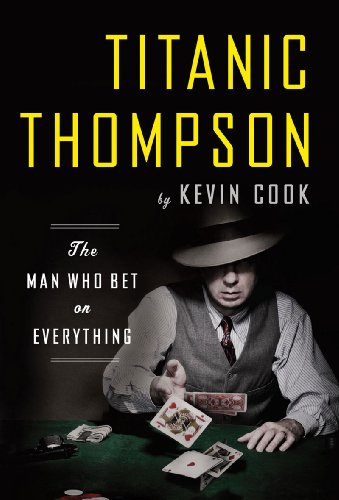 Titanic Thompson by Kevin Cook is a deeply flawed book about a reprehensible man that has many lessons for market people. The deep flaws in Ty's persona are ably expressed by Herman Keiser, a former masters winner, who was just one of Ty's hired stooges, hired to pretend to be a caddy. "He was a thief," Kaiser said. "One day, at 80 he shows up at my house with a partner and two young girls. Herman, I've got a plan that's gong to make you rich. Give me 5,000, Herman." I tell him, "Ty, stay here. I'll be right back." I go to the house and get my 22 pistol. I come out and tell him, "Get outta here right now or I'm gonna shoot you."
Ty had no shame in cheating his best friends. When he was a sergeant in the army, he cheated all the soldiers under him out of their pay check. When in an old age home, he cheated all his fellow patients out of all their money. His father stole his mother's last money, and Ty treated his wives similarly. Worst of all, he fixed the game that Arnold Rothstein lost his fortune in and that led to Rothstein being murdered, when he welched on the deb on the grounds that he had been cheated.
And yet, there are many things we can learn from him. The first is the importance of practice. He practiced card throwing, dice throwing, horse shoes, shooting, and golf in line with the 10,000 hour rule and became the best in each of them. He kept records of the throws and was able to reduce the odds of throwing a 7 in dice with various dodges. He always made his proposition bets the kind that he had fixed before hand, and that could not be tested afterwards. I like the one where he offers to retrieve a golf ball from Lake Michigan 100 yards out in the winter where he marks many balls with an x before hand, and then retrieves one with an x, but no one is likely to swim into Lake Michigan and dive in to the bottom to test him. Or the time he bet that he could hit a golf ball 500 yards and he did on a frozen Lake Michigan, but he had the rules of the bet set down in writing before hand so he didn't have to hit it 500 yards on the course.
Also good was his trick of throwing loaded lemons and peanuts over a roof where the object he was throwing would disappear. His numerous proposition bets make you realize that you should never take the opposite side of a derivatives bet, as there is always something you don't know. The advice in Guys and Dolls about a jack squirting you in the eye if someone bets you it will, is a good one. Never accept a deal that looks too good to be true.
What a waste. He was so skilled. About the best golfer, horse shoe thrower, shooter in his day. He could throw a key through a key hole, and chip a put into a cup loaded with water so the ball wouldn't fall out from 15 feet, or flip 50 cards in a row into a hat 10 feet away.
What evil lied in this man, and how many men were ruined by him.
The best thing anyone ever said about him was that he would never steal or hustle all the money from someone who would kill himself afterwards. How fortunate that he died broke, hated by everyone including his son. And how the biographies show that evilness is inherited. His father and he were both the most evil of men, who thought of nothing but themselves and gaining money by any means and it runs in his family with his kids.
My favorite con of his:
He dresses the best golfer of his generation up as a farmer. Has him driver a tractor around a gold course for a month, pitching manure, and chopping trees. Then he goes to the golf club where they've seen the farmer doing his rounds routinely and says he'll challenge the best two player in the club to a match, and they can choose any partner for him in the world. They choose the farmer. The farmer is a -4 handicap and they win and rush out of town.
Ty was very good with the gun, had to kill many people, and was often in jail and left for dead by thugs. Had to travel with a body guard as he was always cheating to win, and his fellow gamblers were as adept at marking cards, and using wires as him.
One con that he tells is hiring Harry Lieberman to feed him checker moves in a checker match against the best in Kansas city through a wire. Hard to believe that a checker player would do that, and the story doesn't ring true as supposedly the wire told him when a move was bad as he was wavering and touch move must have been played.
His cons remind me so much of the kind that the brokers play when they send you a big research report on a company or industry or country and then offer to take the other side of your trade. You are in the same position as the club people who insisted the farmer be his partner.
Gordon Haave comments:
My experience when they offer to take the other side of the trade, if you press them, is that they say they are just a middleman and are offloading the risk on someone else. Or course as they own the fed, treasury, congress, CFTC, and FINRA they can pretty much do whatever they want.
Pitt T. Maner III writes:
A fellow Arkansan and famous pinup girl who also used the results of hours of practice to advantage :
'Jeanne Carmen was born in Arkansas in 1930 into a family of poor cotton sharecroppers. She ran away at 13, first to St. Louis, then to New York City, where she eventually landed a job as a fashion model. In 1949 she got an assignment to model clothing for Jack Redmond, a local golf pro and shop owner. Carmen, who had never seen a golf course, was modeling different outfits at Redmond's indoor golf range when he playfully asked her to take a swing at the ball. A lefty, she spun the right-handed club around in her hand and, with the back side of the club face, smacked the ball into the canvas backdrop, knocking it off its support.
"You sure you haven't played before?" asked Redmond. He then set up the backdrop again. "He had me stand on the other side of the ball and hit right-handed," Carmen recalls, "which was harder, but I knocked the drape down again."
Redmond asked her to come in the next day: "I'd like someone to see you."
The next day Redmond had the golf champion Jimmy Demaret watch as Carmen hit balls.
"They were oohing and aahing," she says, "and I thought, 'What's the big deal?' I don't think this is a very difficult thing."
Finally, Redmond said, "I think I can make a trick-shot artist out of you," and asked if she would mind coming in two or three times a week.
"Sure," she said. She hit nearly every day, sometimes for hours on end, for six months. Then she was ready.
"I could stack three balls on top of each other, which itself is very hard to do. I'd hit the middle ball 200 yards, the top ball would pop up and I'd catch it, and the bottom ball would rest, untouched. I could hit the ball 200 yards while standing on a chair on one leg. I could hit a flagpole 150 yards out."
She and Redmond traveled up and down the East Coast, putting on three shows daily at various clubs and earning upward of $1,000 per day. For their finale, she would have a volunteer from the gallery lie flat on his back and tee a golf ball between his lips; then she would drive it 200 yards without disturbing so much as a whisker.
Within a year personal differences ended this lucrative partnership. Carmen then met a dapper young man from Chicago, John Roselli, and moved with him to Las Vegas. Roselli was a lackey in the Chicago mob who helped run the Sands Hotel. When he found out about Carmen's golfing talents, he told her, "Look, honey, we're going to play a little game here." The way he described it, she says, "He said we're never going to take a nice guy. We're only going to take the assholes, and I know who they all are."
"I could hit the ball 200 yards while standing on a chair on one leg. I could hit a flag- pole 150 yards out…."
"Well, that sounds good to me," Carmen recalls saying. "What did I know?"Roselli would plant her in a lounge reading a magazine. He'd sit at the bar, scouting for pigeons. Eventually he'd strike up a conversation and steer it toward golf and gambling."That's not so great," Roselli might say. "Even I could beat that." Then, pointing at Carmen, "Hell, even she could beat that."
Says Carmen: "And the guy might say something like 'Maybe in the bedroom but not on the golf course.'"Wanna bet?
The group then would go over to Carmen, who, pretending to be a stranger, would innocently agree to be a pawn to their betting proposition. Dressed as provocatively as the era would permit, she would stand on the first tee and spin the club around in her hand, feigning to have never played before.
"I'd hold the club all wrong and then duff it, or slice it, whatever. After a couple of holes the guy would say, 'This is getting to be a bore. I'm going to win this hands down.' And John would say something like, 'Give the lady a chance. Give it a few more holes.' And then I'd get a little better and a little better. Until right at the end, when I'd start reeling them in. We'd win every time. They never knew what hit them."
The two worked the scam for about a year, until one day when Carmen slipped. She'd had a drink while waiting for Roselli to set up the mark, and, a bit tipsy, started playing too well too soon. The man knew he had been set up. "He was carrying on, complaining," Carmen says, "and Johnny said, 'Look, pay up, you lost the bet. Pay up and let's call it a day.' But this guy refused."
Roselli told Carmen to go to her room; he'd call her later.
"He then roughs this guy up. He calls me and tells me to get to the roof of the Sands Hotel. I get up there and open the door to see Johnny toss this guy over the side. Oh, my God. I'm in shock. I'm crying. So Johnny says, 'Come over here and look.' I didn't notice that the guy had a rope tied around his ankle. I go over and see this guy dangling down there… . He pulls the guy up and … Johnny's got his money and cuts the guy loose.
"Right then I decide I'm in too deep. I had to get out of there. I go pack my things." She moved to Los Angeles and became a star in B-movie potboilers such as Guns Don't Argue, Reckless Youth, and Born Reckless. '
Jeff Watson writes:
I'm not a chess player, never have and never will be one. I know how each piece moves, a little strategy and that's it. However, school my best friend was a solid chess player and a member of the chess club, however ranked kind of low on the totem pole. I heard of a surefire method to beat a whole group at chess without cheating and ran a proposition against him and a bunch of the guys in the club. I bet him and the guys that I could play chess against the club and win at least 50% of the games, no draws allowed, play each game to the conclusion, and also beat him.in the process;. We commandeered a classroom and set up 16 chess boards on desks in a circle around the room with me in the center. I assigned different numbers to different tables and when one would make a move, I'd make that exact move on another player. In reality, they were playing each other, and I was just the mailman. I won exactly 50% of the games and I beat my roommate by having him play the club champion. I couldn't believe that they fell for that one, but I made the bet so high that their greed made them irrational and the took the bet hook line and sinker. If that is cheating, that's up to someone above my pay grade. I thought it a clever bet, like most of my props but never used gaffs only percentages, exact terms, paradoxes, math, or physics to win. The lesson here is that one can make a bet so high that people will take it, especially when they think they have the edge. If one makes a really, really high bet, the edge better be huge. The best prop hustlers play games that they have an edge in, play it for freeze out, and let old man vig grind away at their opponents stack. Small prop games like flipping coins can be played for loose change, you will have a very high edge, and your friends will be delighted and amused, thinking you're clever, while you take their money. Gotta let your opponents win sometime as someone once said, maybe it was Runyon that "While you can shear a sheep all the time, you can skin him only once."
Nigel Davies comments:
This is an old con that was repeated on TV by Darren Brown. I'm sure that the assembled titled players knew very well what was happening but they must have been getting well paid to get them to wear suits!
Dec
20
The Guessing Game, from Pitt T. Maner III
December 20, 2010 | Leave a Comment
 It seems that many expect or at least pronounce that there will likely be a market "pullback" ("the market has gotten too far ahead of itself") within "the next 3 to 4 weeks" or a "correction around mid-January" or "in February".
James Montier brought up the following example of how people might think when predicting what other people are going to do– it sticks in the head. I wonder if these 2nd and 3rd order behavioural thought processes have any predictive usefulness in the real world, either in there being less or more time until the next stock market downswing actually occurs.
It's an interesting game if nothing else and I imagine investing pros think in even more complicated fashion.
This game can be easily replicated by asking people to pick a number between 0 and 100, and telling them the winner will be the person who picks the number closest to two-thirds the average number picked. The chart below shows the results from the largest incidence of the game that I have played - in fact the third largest game ever played, and the only one played purely among professional investors.
The highest possible correct answer is 67. To go for 67 you have to believe that every other muppet in the known universe has just gone for 100. The fact we got a whole raft of responses above 67 is more than slightly alarming.
You can see spikes which represent various levels of thinking. The spike at fifty reflects what we (somewhat rudely) call level zero thinkers. They are the investment equivalent of Homer Simpson, 0, 100, duh 50! Not a vast amount of cognitive effort expended here!
There is a spike at 33 - of those who expect everyone else in the world to be Homer. There's a spike at 22, again those who obviously think everyone else is at 33. As you can see there is also a spike at zero. Here we find all the economists, game theorists and mathematicians of the world. They are the only people trained to solve these problems backwards. And indeed the only stable Nash equilibrium is zero (two-thirds of zero is still zero). However, it is only the 'correct' answer when everyone chooses zero.
The final noticeable spike is at one. These are economists who have (mistakenly…) been invited to one dinner party (economists only ever get invited to one dinner party). They have gone out into the world and realised the rest of the world doesn't think like them. So they try to estimate the scale of irrationality. However, they end up suffering the curse of knowledge (once you know the true answer, you tend to anchor to it). In this game, which is fairly typical, the average number picked was 26, giving a two-thirds average of 17. Just three people out of more than 1000 picked the number 17.
I play this game to try to illustrate just how hard it is to be just one step ahead of everyone else– to get in before everyone else, and get out before everyone else. Yet despite this fact, it seems to be that this is exactly what a large number of investors spend their time doing.
Dec
17
100th Anniversary of the Boy Scouts, from Scott Brooks
December 17, 2010 | 1 Comment
 Any Boy Scout who achieves his Eagle in 2010 not only gets an Eagle Pin, but this year, their Eagle Pin will even have a "100" on it to commemorate the 100th anniversary of the Boy Scouts.
If this site will indulge me to boast a little…….
Tonight, David had his Eagle Scout Board of Review and passed with flying colors. He is very excited about getting his Eagle pin with the 100th anniversary logo on it. He worked long and hard to achieve Eagle.
Those on this list that have met my son know that he is one of the finest of the rising generation.
I am honored and blessed to be his father!
David Brooks writes:
Hi everybody, this is David. Thank you everyone for the kind words on me getting my Eagle. My father asked me to give a short report on how I got my eagle and my eagle project.
Well the first year of scouting one works on getting first class. In order to get this there aren't any merit badges needed, its just stuff like getting enough camp-outs and knowing the scout oath, scout law, etc.. once a person achieves first class the new challenges are merit badges. In order to get one one has to work on the badge and meet with the counselor for that badge. A person needs twenty-one merit badges to be an eagle (plus the eagle project). I believe 15 of those 21 are not optional, one needs to get merit badges like: citizen ship in the nation, first aid, swimming, etc.. and 6 optional merit badges-one can pick six out of the over one-hundred optional merit badges. That is the relatively easy part.
Then work on the eagle project begins. After thinking of ones project and getting it approved from the organization one is doing it for the first step in this drama is begins. one meets with the eagle board with there proposed eagle project. they 'ingterigatin' of the persons eagle project and will hopefully approve it with only a few minor changes-on mine I only left out a few minor details on the report-. a typical eagle project a takes about twenty hours of the actual scouts time and about fifty hours of the troop and other volunteers time(all their time combined). On mine I spent about twenty-four hours personally and my troop and volunteers spent about fifty hours on the project. After this, one writes a report on the project and sets a date to meet with the final eagle board. I spent an hour and thirty minutes in the room with the scouting 'enthusiasts' and, thankfully, they passed me. This is just a brief overview of what one can do in scouting, but there are definitely many other things, enjoyable things like campouts, canoeing trips, the Klondike Derby-a sled race- but its not all just boring merit badges and writing reports, I have definitely enjoyed my scouting experience.
For my eagle project we picked up trash, planted twenty native MO trees, and built six wildlife bundles. My project was located on a flood plain and there was an abundance of trash that had been washed into the park from the previous flood. I instructed my team to make a police line and pick up all the trash in one quick sweep. then I instructed my team to divide into smaller groups and plant the trees. After this we built the six wildlife bundles which are basically six feet high 'teepee' like structures to house the small game in the area.
Pitt T. Maner III writes:
 Congratulations David!
Coincidentally, I was going through some old books the other day and ran across my grandfather's Boy Scout handbooks from around the time of WWI. He was born in 1902. If you were able to learn all the things in the handbook you would have had a very good start on a practical education. I imagine that some of things you have to learn today are similar and perhaps some of the tasks remain the same.
Unfortunately I was pulled from scouting after the local troop asked for an extra donation. But I did participate long enough to help carve and build a small, hand-sized, wooden racing car that finished in 3rd place after running down a short ramp. It was a nice summer memory. Don't imagine that many kids do a lot of whittling these days!
Planting trees is a very commendable endeavor. You may be interested in the following organization. I have enjoyed doing a bit of field volunteer work with them– environmental preservation and restoration certainly is a great cause.
Jonathan Bower adds:
Congratulations David! As a fellow Eagle Scout I know the amount of time invested by you, your troop, and your family in this achievement. It takes hard work and commitment to achieve the rank of Eagle as evidenced by the fact that less than 2% of all Scouts have ever achieved this milestone. The lessons in life learned from Scouting will provide you with a solid foundation for great things ahead in your personal, scholastic, and professional life. Well done!
Dec
14
Survival, Deception, and Detection, from George Coyle
December 14, 2010 | 2 Comments
 We the specs talk a lot about survival and deception respectively. I decided to do some research on deception and associated clues as it impacts both topics. However, the real impetus for digging into this came from re watching the scene with Dennis Hopper and Christopher Walken in Tarantino's True Romance. At one point in the scene the aggressor, Walken, says,
Sicilians are great liars. The best in the world. I'm Sicilian. My father was the world heavy-weight champion of Sicilian liars. From growing up with him I learned the pantomime. There are seventeen different things a guy can do when he lies to give himself away. A guy's got seventeen pantomimes. A woman's got twenty, but a guy's got seventeen… but, if you know them, like you know your own face, they beat lie detectors all to hell. Now, what we got here is a little game of show and tell. You don't wanna show me nothin', but you're tellin me everything. I know you know where they are, so tell me before I do some damage you won't walk away from.
The scene itself is powerful but very dark and graphic. But the whole thing got me thinking, do there really exist a set of 17 to 20 pantomimes or any universally accepted set of rules to detect deception?
I did a little google research and found some articles which tended to identify the same culprits over and over: lack of eye contact, body language, lack of details, long pauses, defensive/offensive behavior, touching the face, nervous movements, pupil dilation, trusting one's instinct and intuition, etc. They quoted psychologists and interrogators but without much supporting evidence. Forbes had a pretty good article on the topic. But there existed no specific set of "laws" so I decided to go a little further and investigate academic papers and CIA/Law Enforcement style publications (the agency writes some incredible manuals). Apparently, at the municipal levels of police work the interrogators generally assume guilt from the onset. The higher ranking government agencies, when dealing with suspected terrorists for example, use techniques like waterboarding and various other fear inspiring methods which are of no use in everyday life should you enjoy life outside prison. Not much help there so I moved to academia.
Saul M. Kassin wrote a paper entitled "Human Judges of Truth, Deception, and Credibility: Confident but Erroneous" in which he says research on the subject has pointed to the fact that in laboratory studies people are generally right only 55% of the time (vs. the 50% coin toss) in detecting deception yet they are very confident in their abilities. Kassin says closing one's eyes and listening tends to result in more accurate lie detection as the cues generally come from, "pauses, hesitations, changes in pitch, and increase in speech rate." But this also assumes you aren't dealing with someone who just talks faster or with an accent (think NYC speech vs anytown, USA). How does one define the control group?
At U of Texas James Pennebaker has developed a linguistic writing analysis software program that is said to be able to identify liars (with 67% accuracy) by virtue of: 1. fewer first person pronouns (i.e. they don't take ownership) 2. More negative emotion words (presumably as they feel guilt) 3. fewer exclusionary words (but, except, nor). However, all of this would only work if someone would submit to a writing test (and had a decent command of the English language). Rachel Adelson in APA Monitor 2004 says deceivers without adequate preparation take longer to respond but those with a rehearsed story begin more quickly. There were some physical cues but the article wasn't that convincing. They also found verbal patterns alter for liars (voice pitch).
This all seems suspect as well since most people view public speaking as the bane of being alive. Seinfeld's joke that most people would prefer to be in the coffin to reading the eulogy comes to mind. Either way public interrogation undoubtedly changes people's methods of communicating. Even if innocent, I am fairly certain someone facing a life sentence would be a bit excited. Or in matters concerning large sums of money people often have difficulty remaining calm…is that broker trying to trick me or is s/he busy and flustered? In the end the whole thing is subject to confirmation bias like so many numerological claims. Simply put, you find whatever you are looking for just by virtue of the fact that you are looking for it. Is that person a liar or did his/her nose itch?! There does not seem to be a clear means to determine with any real degree of accuracy without a large amount of detail and cross examination.
Based on modern research, Tarantino seems to have just written exciting dialogue without any truth behind it. In an unintended twist, while this post hasn't done much to identify deception quickly and easily it probably helps those who would lie to hone their craft. The best laid plans…if anyone has any related info I would love to hear it.
Pitt T. Maner III writes:
A little time back there was a discussion of Ekman's facial research and whether left brain techniques can truly tell what someone is thinking or what they feel in their heart.
I think that reading facial cues though can give clues to deceptive behavior (maybe with the exception of emotionless sociopaths or people who have trained themselves to respond differently or with a poker face). According to Ekman there is a universality to how facial muscles express and reveal emotions.
For a nominal fee of $69 you too can read faces in 1 hour's time. To be tested ….
"METT Advanced will improve your accuracy, as it has more practice and training items-and a review section for additional training than the original version. It will take about one hour.
METT Advanced-Online only This training is meant for those whose work requires them to evaluate truthfulness and detect deception - such as police and security personnel, and those in sales, education, and medical professions . If you should achieve the minimum target score of 80% or higher on the post test, a certificate of completion will be emailed to you . A minimum score of 80% or higher will grant you a certificate of satisfactory completion, a score of 95% or higher will grant you a certificate of expertise.
You can continue to access the training for refresher purposes."
It would be interesting to be proficient in this area and to try to read all the CNBC analysts and stock promoters. There was a guy, for instance, who hammered Netflix last week and was so negative it was almost too much. Did he really believe in what he was saying? How can one be sure without researching his arguments? I guess he was right today …
Heh, and there is a TV show related to the subject. On tonight I believe. Haven't seen it but might be of interest.
LIE TO ME is the compelling drama series inspired by the scientific discoveries of a real-life psychologist who can read clues embedded in the human face, body and voice to expose the truth and lies in criminal investigations.
DR. CAL LIGHTMAN (Tim Roth) is the world's leading deception expert. If you lie to Lightman, he'll see it in your face and your posture or hear it in your voice. If you shrug your shoulder, rotate your hand or even just slightly raise your lower lip, Lightman will spot the lie. By analyzing facial expressions and involuntary body language, he can read feelings ranging from hidden resentment to sexual attraction to jealousy. His work gives him the knowledge and skill set to expertly deceive others as well as detect lies.
A Webmistress adds:
 George, you should check out my favorite blog Eyesforlies.com– she is a true expert on detecting deception with a 99. something percent accuracy rate on high profile cases where she knew people were lying before the truth was known. She says there are no hard and fast ways to know if people are lying, and all the sites and articles that tell you things about how looking to the left or itching your nose or even using facial expressions alone to detect deception are totally misleading and off.
The way she usually analyzes lies I've found after reading all her blog posts for two years is she tries to see whether the things people say and the emotions they show on their face when they are talking about their crime make sense… like if a person is radiating a glow when they are talking about their child being killed by an intruder, they probably were not an innocent bystander in the crime. A parent who loved their child would remember that night as the most horrifying event of their life and the emotions they experienced during that event would come back to them as they remembered it and would show on their face. If they are experiencing joy for whatever twisted reason as they are remembering the event, then something is obviously off. A lot of times people's emotions do not match their stories.
Also she analyzes what people say when they talk about a crime. When people are lying sometimes they don't make total sense because it's hard to lie…you are fabricating a story and you have to think and constantly censor yourself. But when you are speaking the truth from the heart, it just flows….So often people say things that don't make any sense or indicate what they actually did rather than what they say they did…
Those are just some things I see her doing, but she always emphasizes there are never any rules in detecting deception. The site is great–I've learned a ton from it.
Stefan Jovanovich comments:
Penebaker and Kassin's investigations confirm once again that baseball is the key to finding the truth in life. If you square up a baseball every time, you will hit .500 (the high school batting averages over .500 are attributable to the poor quality of the fielding). When Ted Williams hit .400, he was, in fact, 8 for 10. A quality player hits .300 - i.e. squares it up 6 out of 10 times, one more than a coin toss. May we all hit .300 for these holidays and the years to come.
Dec
13
Two Con Men Tales, from Pitt T. Maner III
December 13, 2010 | Leave a Comment
 Amazing how long it can take to bring them to the light of day and justice and people's willingness to give the benefit of the doubt.
The international con artist's tale of deception began 35,000 feet in the air, on a small plane shipping flowers to Miami International Airport.
He was found unconscious on the tarmac under the Arca Airlines plane. It was 80 degrees at 2:30 a.m. on June 4, 1993, but his olive skin was frostbitten and turning blue.
When immigration officials greeted him at Pan American Hospital, he said he was a 13-year-old orphan from Colombia who sneaked into the Arca Airline plane's wheel well. Name?
“Guillermo Rosales.''
That was the first lie.
Now he has matured into one of the world's notorious jewelry thieves, who has escaped prison and dizzied detectives in at least five countries using a slew of stolen identities: A budding doctor studying in Ireland. A Colombian diplomat's son. An English family man. A New York priest. A German prince. A wealthy Bahraini.
The thefts, though, were stunningly similar. In each, he pretended to be a guest at a five-star hotel. Then he'd sweet-talk a member of the staff into getting a room key and the password for a safe. Finally, he'd pocket everything — credit cards, jewelry, cash, passports. Police estimate his total bounty at close to $1 million.
He seemed like Superman, able to guide jumbo jets through perilous skies and tiny tubes through blocked arteries. As a cardiologist and United Airlines captain, William Hamman taught doctors and pilots ways to keep hearts and planes from crashing.He shared millions in grants, had university and hospital posts, and bragged of work for prestigious medical groups. An Associated Press story featured him leading a teamwork training session at an American College of Cardiology convention last spring.
But it turns out Hamman isn't a cardiologist or even a doctor. The AP found he had no medical residency, fellowship, doctoral degree or the 15 years of clinical experience he claimed. He attended medical school for a few years but withdrew and didn't graduate
Dec
11
Madoff in the Local News, from Pitt T. Maner III
December 11, 2010 | Leave a Comment
 Holder called Palm Beach "ground zero" for Madoff. Several mailings have arrived related to Madoff auctions– but who wants his stuff– like having a clown painting done by John Wayne Gacy. Bad luck.
I have not kept up with the case but the "Shiny Sheet" has tracked it locally.
Some money is being returned. One would think all of the truly honest, capable of doing it, would volunteer to return stolen money with interest.
Dec
10
Well, Skip To My Loo, from Victor Niederhoffer
December 10, 2010 | 3 Comments
 The Collab points out that Ron Paul is taking over the Fed oversight panel and he promises it will not be a rubber stamp. "Skip to my loo" as Stubby would say and what consternation there must be at those marbled floors, and the executive dining halls. To say nothing of how bearish it is for the market if the flexions will not find it as easy to chip the first billions off the top of the find. (Pitt help me with the proper geological thing).
Pitt T. Maner III replies:
A few geological metaphors and terms I think Chair is looking for…
Overburden provided by oversite members of the Party of the Elephants?
Marble is of course metamorphized limestone created by heat and pressure– an appropriate stone for the floors of the deliberaeors.
Styolites are those wonderful pressure solution features that make marble so attractive.
Vince Fulco writes:
It would also seem a strange twist of fate that the Dems are verbally pushing back hard on the tax/unemployment deal Obama reluctantly agreed to. He may find himself more isolated than he ever imagined soon.
Gary Rogan writes:
He knew that he would be isolated from the very beginning. The extra significance of how quickly he reached the deal and how quickly he changed his position from "no likelihood of a double-dip" to "we will get a double dip if we don't pass the measure" is that for the first time he provided an important tell that he cares more about reelection than ideology. He basically threw his base under the bus because the positives for his reelection outweighed the negatives in a very complex calculation.
Jeff Sasmor comments:
Neither party (if you think we actually have two) shows any real effort to rein in deficits. But I agree that it won't go on indefinitely…
Gary Rogan writes:
Well, clearly some portion of the population responded to the bewildering decay around them with some degree of cohesion. The two parties are not some static entities with permanent agendas, and that's why saying that Bush "your own man" creating multi-billion dollar deficits is proof positive that nothing will ever be done doesn't work. Politicians do respond to the mood of the country over time. Ron Paul will have now a platform to accuse gentle Ben of mortal sins, the same Paul Ryan who voted for the TARP and bailouts will channel Von Mises and Mitch McConnell will support the ban on earmarks because of the "important symbolism". This is a rich country with a lot of assets to sell if push comes to shove. Until recently I saw absolutely no path to stopping the madness in time, and it may be too late, but when Jon Stewart stars mocking Bernanke and Bam can talk about the connection between taxes and recessions, as opposed to stimulus and recessions, the future at least depends on whether the voters will continue to stay involved as opposed to being completely hopeless.
Rocky Humbert writes:
Moving the conversation back to the markets, (which I justify as my reason for participating on SpecList), I note with interest, Mr. Rogan's comment: "Alan, I see a lot of the same things. I've seen them for two years. But I see some positive future results from the recent political changes. The tax deal was more notable for it's speed and cooperation at the top than anything else. Even with the rising rates I now like stable dividend payers and have acted accordingly in the last two days."
Mr. Rogan: I welcome you with open arms to the camp of us optimists. It is admirable when people publicly change their opinions when they believe the facts have changed. I believe Winston Churchill got it right when he said: "Americans can always be counted on to do the right thing …. after they have exhausted all other possibilities." (It just took you a little bit longer to realize this than did Winnie.)
In my humble opinion, however, stock markets are tricky beasts — and during the past two years, while you were cooking spam over sterno in your bomb shelter, the market capitalization of US equities increased by approximately $8 Trillion — with a most notable inverse correlation between President Obama's popularity and US stock prices — this phenomenon climaxing with last month's election.
Given the extremely low levels of the President's current popularity plus Zeno's Paradox, a new convert to the cult of equity should pray that this anti-president correlation breaks down in the months ahead…resulting in a Clinton-esque p/e expansion. However, I do believe that your dismissiveness of the bond vigilantes seems imprudent, and I believe is a huge risk that only increased with the "quick" tax deal.
Lastly I want to go on record as wishing you all the best in your stock purchases, and look forward to chocolate, roses and champagne in your future posts as your portfolio optimism translates to your verbal optimism.
Dec
10
A Structural Geology Course, from Pitt T. Maner III
December 10, 2010 | Leave a Comment
 A structural Geoology Course given by UF Professor Channel 28 years ago was quite a challenging one to pass. It's a good field to study and pursue though if you like to travel and hike in the Alps (where many classical exposures are present) and drink Gold and Kirschwasser in stuffed leather chairs by a warm fire.
Structural geology can involve complicated field detective work in order to reconstruct the time sequence of various stresses and strains placed on rocks in 3 dimensions. There are all sorts of notations…S1, S2, F1, F2 etc. to denote the first stress direction, the folding direction and on and on. Often fossils in the rock strata in question are looked at to determine what stresses have distorted their known original shape.
It would be like someone handing you a penny flattened on a railroad track and you trying to decide the amount and direction of the forces involved that caused the distortion of Lincoln's profile.
Some of the most unusual, colorful and esoteric vocabulary has been developed to describe various, geological structural features. A visual classification scheme has developed that tries to account for the probable orgins of landscape features.
I suppose various economic outcomes, somewhat predictable structural patterns and "landscapes" develop from known inputs and stresses (interest rates, monetary policies, currency rates, etc) over time even if more ephemeral than the geological ones.
But what to make of this wonderful example of "chocolate tablet boudinage". How would you determine the original competency of the rocks and then the stress field and timing of those forces that created it?
Structural geologists have sometimes used pizzas to explain the type of reasoning needed to unravel the sequence of events leading to deformation.
Dec
5
Recorded Future, from Pitt T. Maner III
December 5, 2010 | 1 Comment
 Recorded Future is a startup company with a method of organizing, analyzing, weighing, connecting and graphically displaying pronouncements made about future events that has been mentioned in Wired and MIT Tech Review. Looks like an advanced Google Trends program with aspects of data mining and prediction markets. Company plans to have a Webinar for traders on Tuesday, Dec 7th. May be of interest to some. How predictive it really is remains to be tested. Perhaps a small but potentially useful edge if not skewed by noise. Ahlberg evidently has a Swedish military background.
The session will feature an in-depth presentation of Recorded Future's temporal data and web service capabilities led by our Chief Analytic Officer, Dr. Bill Ladd, who will discuss how, using computational linguistics, we extract and temporally index events and entities from a wide variety of online media to identify historical, current and expected future occurrences as well as associated statistical metrics such as momentum and sentiment.
Ladd also has a blog. Recent post talks about buying on rumours before an "event" day occurs:
"We ran an event study to look at stock returns following high momentum high sentiment days for the S&P 500 over the last 21 months or so. And while we did see an increase in market adjusted returns after the event, we saw much more dramatic returns before the event."
and
"However the bulk of positive return associated with the event occurs before the event happens. Given the large jump on event day, its clear that the information isn't completely priced in before the event occurs. But someone was buying well before the events. Someone who had access to the rumor."
An article about them:
'A startup called Recorded Futurehas developed a tool that scrapes real-time data from the Internet to find hints of what will happen in the future. The company's search tool spits out results on a timeline that stretches into the future as well as the past.
The 18-month-old company gained attention earlier this year after receiving money from the venture capital arms of both Googleand the CIA. Now the company has offered a glimpse of how its technology works.
Conventional search engines like Google use links to rank and connect different Web pages. Recorded Future's software goes a level deeper by analyzing the content of pages to track the "invisible" connections between people, places, and events described online.
"That makes it possible for me to look for specific patterns, like product releases expected from Apple in the near future, or to identify when a company plans to invest or expand into India," says Christopher Ahlberg, founder of the Boston-based firm.
A search for information about drug company Merck, for example, generates a timeline showing not only recent news on earnings but also when various drug trials registered with the website clinicaltrials.gov will end in coming years. Another search revealed when various news outlets predict that Facebook will make its initial public offering.
That is done using a constantly updated index of what Ahlberg calls "streaming data," including news articles, filings with government regulators, Twitter updates, and transcripts from earnings calls or political and economic speeches. Recorded Future uses linguistic algorithms to identify specific types of events, such as product releases, mergers, or natural disasters, the date when those events will happen, and related entities such as people, companies, and countries. The tool can also track the sentiment of news coverage about companies, classifying it as either good or bad.
Recorded Future's customer base is currently "sub-100," says Ahlberg. It includes a mix of financial firms, government analysts, and media analysts, who pay a monthly fee to access the online tools. "Government analysts are interested in tracking people and places, while financial services may want to reveal events coming up around particular companies," says Ahlberg.
As well as providing a slick online interface to perform searches that spit out timelines showing the results (see video), Recorded Future offers free e-mail newslettersthat tip users off to predictions in specific areas. It also makes it possible for customers to write software that draws on the tool's data and analysis through application programming interfaces, or APIS.
In time, this may lead to the development of apps targeted at consumers, says Ahlberg. "If I'm about to buy an iPhone, I might want to know if I am going to look stupid because they'll launch a new one next week, or how long it usually takes for competitors to launch competing products after a new Apple launch." Financial analysts are already using the company's APIs to overlay or even integrate Recorded Future's data into their own models, he says.'
Nov
18
Skill and Luck, from Pitt T. Maner III
November 18, 2010 | 1 Comment
 An article that would suggest the Knicks have less skilled players and team winning % will not be helped by mean reversion. Given Tversky, Gould, Buffett, and Graham are all mentioned I wonder if all the conclusions reached by M have validity:
"Professional basketball in the U.S. certainly stands out as the sport where skill plays the largest role in shaping results. One intriguing explanation for the NBA's strong skill contribution is the height of the players. In most sports, the most skillful players within a wide range of heights can make it to the pros. But a relatively small percentage of the population is tall enough to play in the NBA. In their book, only about 3 percent of the male population in America is 6' 3" or taller, and a tiny percentage is above 6' 10" (about four standard deviations from the average). Yet almost 30 percent of NBA players are at least 6' 10". They conclude that a "short supply of tall people" contribute to the talent disparity and hence the greater relative role of skill. The right tail of the height distribution does not overlap completely with the right tail of the skill distribution. The Wages of Wins, David Berri, Martin Schmidt, and Stacey Brook note that…"
George Zachar comments:
Occam's razor: The Knicks' owner, James Dolan, is a hoodoo.
Nov
18
A Gold Panning Lesson, from Pitt T. Maner III
November 18, 2010 | Leave a Comment
 With gold around $1400 per oz. I took the opportunity while in Alabama last week to head to the Alabama Gold Camp (AGC) near Cragford to learn how to pan for gold. It was a pleasant 2-hour drive from Montgomery through bright fall colors to get to the site.
Once at the AGC "country store" it became readily apparent to the proprietress (an extremely helpful and nice husband and wife team run the facility for the landowner) that I was a pure greenhorn lacking the proper equipment and skills needed for the job (no need to mention the geology degree here for sure).
Although it was mentioned that a high banker dredge/sluice system could be rented for about $35 for several hours that would do the work of several panning prospectors, I passed on the labor saving device and insisted on the purist pursuit of gold panning proficiency.
Quickly the proprietress assessed my needs and outfitted me with a $10 shovel; a green plastic, riffled, gold pan; a sieve; 5-gallon bucket; squirt bottle; a plastic "pipette" to suck up flakes of gold; a Brillo pad, and several small glass bottles to store my "sure to be found" gold. Total investment cost around $70 with the daily permit.
The AGC store, to be sure, was extremely well equipped and organized with all manner of gold sluices, dredgers and tools for sale that easily could have brought the bill into the hundreds of dollars. That there is money to be made in providing picks and shovels, food, cabins and camping facilities to prospectors is indisputable. The husband of the husband-wife AGC team, with an electrical background, noted that he intends to bring in power to run rental high bankers in the near future and replace the current gasoline fed units. The entrepreneurial spirit was quite evident at this well-run facility. (examples of the type of equipment available now for the small time prospector )
The camp proprietress then gave me a very instructive lesson in how to pan and took me to the front of the store to a water trough full of gold- bearing sand and gravel. She pointed out it was necessary to "classify" the material first, which basically meant sieving out the larger gravel and leaving orange-colored sand. Wonderful specimens of gold-laden quarz gravel were on display to emphasize and underscore the need to look carefully through the sieved gravel before tossing it aside. The gravel also was laden with small rounded garnets. If one was lucky a good size, semi-precious garnet might be found and cut into a fine ring.
After transferring some the sieved silt and sand into the gold pan, my instructor carefully washed it back and forth with water at the proper angle to prevent the unwanted loss of the finer dark auriferous sand that soon separated out into the riffles of the pan. It was readily apparent that panning takes skill and practice. The washing angle and agitation level have to be carefully undertaken. A sharp and attentive eye is needed.
Soon enough shiny material began to appear in the washed sands in my instructor's pan, but alas it was tiny flakes of muscovite (mica), that pesky phyllosilicate that mimics the flash of gold. After a few more washings, however, using the squirt bottle, my patient teacher had one speck of gold that could be distinguished from the mica. Excitedly I reached with my finger to pick the gold from the pan but was admonished and told that the tiny gold flake might pick up the oil from my skin and float out of the pan. No this gold must be "pipetted" or sucked up with the small plastic tube. It was interesting to note that the Brillo pad was needed to condition/triple-wash the new green plastic gold pan bought in the store for the same reason–oil used in the plastic forms to make the pan had to be removed before it could be used to pan for gold.
With the gold panning lesson completed, I was assigned my location on the nearby creek and told to pan material that had been removed by a track hoe and left on the banks of the creek. It turned out that a white-bearded, grizzled prospector in coveralls and boots and an old van with Alaska plates (8 years in that state as it turned out) had already set up a portable power sluice (i.e. http://www.goldfeverprospecting.com/poposl.html) in the same location. He was a friendly fellow though and not too territorial and told me that I would have good luck if I took a few shovel loads from his pile.
But after 2 hours of hard shoveling, sieving, panning and such, my arms ached, my tennis-shoe covered feet were cold from cool creek water and my greenhorn gold panning efforts had produced only black sand (possibly magnetite or reduced iron pyrite), mica, and a plethora of small garnets washed out from schist. No gold and the lowering sun, low light levels, and cooler temperatures told me it was time to pack it up and head for home. Meanwhile the undaunted, veteran prospectors prepared to camp out by the busy railroad tracks and wait for the next day.
Before I left the site, the AGC proprietor stopped by on a 4-wheeler and gave further panning instruction and noted that while the gold found might be small in amount, it was for him the excitement of finding something never before seen and 100s of millions of years old. He stated that one gained respect for the pre-1849ers in Alabama and Georgia who went out in the field back then with heavy gold pans, panning for endless hours with "Popeye-developed" forearms, in hopes of finding a few, gold flakes.
Gold fever reached a top in Alabama in the 1840s when a German immigrant discovered gold while digging a wine cellar near Hillabee Creek, north of present Alexander City—the find became the "Dutch Bend Mine". In fact nearby Goldville, AL had over 5000 prospectors in the early 1840s and hyperbolically handled quantities of mail rivaling New York City (perhaps enticements for investors and gold seekers?) Soon after though the prospectors headed for the more lucrative California gold fields. With WWI graphite production from Clay County became the target mineral of interest in the 1920s.
Yes, panning for gold is a fun hobby for the entire family for which there is always the potential to find a nice nugget to pay for dinner. The exercise, focused concentration on the task, and fresh country air is invigorating and conducive to a good night's sleep. And the $3 BBQ sandwich at the end of the day hits the spot.
Nov
17
Briefly Speaking, from Victor Niederhoffer
November 17, 2010 | Leave a Comment
 1. The bonds are acting more like the S&P futures of the old days, and the S&P futures are acting more like the bonds of the old days. This is the kind of co-evolution that one sees so much between plants and animals. My statement would have to be quantified, but it is patently apparent to my many followers.
2. The biggest mistake a person can make in life or markets that is easiest to correct is getting in over the head.
3. The Knicks are like the person who has a system that is guaranteed to fail because of poor money management or excessive slippage. They are endlessly creative in losing. They cant win because they have a bad coach, and what Marbury says about the coach having a system that worked 10 years ago but is not applicable could be said about most market systems. Marbury is a reprehensible personage in my book, typified by his refusal to play when asked last year. No wonder no coach will touch him, aside from the fact that he's a shooting star who's not fast or accurate enough to be good anymore, but even a reprehensible person could say something true because he's not beholden to anyone. In case, I am always inspired by the many ways the Knicks have of losing, (they're currently on a 6 game streak). Yesterday they lost never being ahead at any time during the game. Considering the number of minutes, it's highly improbable, although I would guess it's true in 15% of all games. In any case I looked to see how many times the market is up each hour of the day, and whether that's bullish or bearish. I found no regularities, except that it's bullish for the fest of the day if it's happened every hour until 300 pm, except that it hasn't worked for the last 2 years. Surprisingly the market registers up every hour of the day 1/4 of all days, and it's down every hour of the day, about 22% of all days.
4. It is an interesting exercise to estimate the expected move of a dependent variable from an independent variable being up or down on the day given it's correlation. I have found a useful approximation to be that the expected value is the mean change + 90% of the standard deviation. For example, if the correlation between bonds and stocks is 0.20 and the standard dev of stocks is 10, then when bonds are up, you can expect stocks to be up 1.8. I don't believe it sensible to give a closed form solution of this, given all the mixed up distributions and varying parameters, and relations between the absolute deviation and the standard deviation, and up or down, although one is certainly possible.
Pitt T. Maner III responds:
About the knicks: a statistical anomaly. Ostensibly a loss due to fewer free throws. Was there a dribble off the foot near the end as contributing factor?
"They made more field goals. They made more 3-pointers.
They had more rebounds.
They had more assists.
They had fewer turnovers.
And they had more blocked shots.
The Elias Sports Bureau told us that the last 266 times a team outperformed its opponent in all of those statistical categories, that team won the game.
Except the Knicks didn't win. They lost again, 120-118, their sixth straight defeat, this one starting a tough West Coast road trip.
The last team to lose a game despite meeting all of the criteria listed above were the Cleveland Cavaliers, who lost to the Toronto Raptors, 95-87 on November 22, 2006, a game Cleveland lost despite those edges, and 30 points, 10 rebounds, eight assists, and four steals from LeBron James. "…..
Lars Van Dort adds:
Dean Oliver is for basketball analysis what Bill James is for baseball analysis. Oliver is known for identifying the 'Four Factors' that win basketball games, in this ranking of importance:
1. Shooting (effective field goal percentage)
2. Turnovers per possession
3. Offensive rebounding percentage
4. Free throws per possession (can be measured as free throw attempts as well as free throws made, Oliver actually prefers the first, because he thinks getting fouled is the more variable skill)
See more. He has a book 'Basketball on Paper' I'd like to read.
When applying the four factors to the Knicks-Nuggets game, both teams win two of them. The Knicks had better numbers in turnovers and offensive rebounding, but the Nuggets where better in shooting and getting/making free throws. Seen like this, the (2 pt) loss for the Knicks is less of a mystery. Dean Oliver actually works for the Nuggets as their Director of Quantitative Analysis.As for the mentioned 2006 Cavaliers-Raptors game that is also supposed to be an anomaly, also there both teams won 2 of 4 factors, with a massive edge in free throws for the winning Raptors.
I think assists is the most useless statistic the ESPN article mentions, how would that be of importance in winning games.
Tonight the Knicks play against Sacramento, who are on a nice 5 game losing streak themselves and are the NBA's worst defensive team. Let's see if they are motivated by the Chair's post and can score a win somehow.
Pitt T. Maner III adds:
Assists would be seemingly indicative of unselfish ball distribution and/or offensive efficiency and perhaps leadership by a good passing point guard (ie. Cousy, Stockton, Magic, Nash, Kidd, etc.). Thinking back to the Celtics with Bird, Parrish, DJ, McHale et al. or even earlier with Havlicek and JoJo White it seems that passing and assist creation were an important factor in team success. Assists reflect a thought process such that a player is normally passing the ball to a teammate who is unguarded or in a better or higher percentage shooting position—shot selection and field goal % are thus shown to be valued by the team.
Granted if you have a superstar player on the team, run and gun works well too.
A post about Dean Oliver (thanks to Lars for the book recommendation) suggests that he found assists, as a single statistic, to have a good correlation with winning percentage. Perhaps the rankings have changed with more recent data. Defensive (not offensive) rebounds (holding other teams to one shot) though might explain Dennis Rodman's longevity in the game.
Category Won Loss Tied Win %
Field Goal % 4595 1132 33 .801
Assists 4007 1414 339 .725
Def. Rbds. 3984 1485 291 .717
Ass./Turn ratio 3991 1717 52 .697
Total Rbds. 3526 1959 275 .636
FT's made 3453 2022 284 .624
Blocks 3182 1930 648 .609
Free Throw att. 3358 2174 228 .603
Fewer fouls 3256 2094 410 .601
Steals 3148 2037 575 .596
Fewer Turns 3114 2186 460 .581
Free throw % 3224 2459 77 .566
Offensive rbd. % 3205 2513 42 .560
Offensive rbds. 2452 2900 408 .461
Nov
7
The Search for Good Indian Food, from Pitt T. Maner III
November 7, 2010 | Leave a Comment
 Many enjoy looking the search for good Indian restaurants in unexpected places across the country. A fine vindaloo and a pint of your favorite Samuel Smith's ale are hard to beat.
Here is one economist's list for whipping up a quick start Indian dish:
Buy whole spices, not ground. Get:
Cinnamon stick (not the Mexican kind) Cumin Coriander Cloves Cardamom, preferably both green and black Black peppercorns Red chilis, or red chili powder Wet ginger paste (go to an Indian grocer's), or fresh ginger, never ever ever powdered ginger Garam masala, here a good powder from an Indian mart is OK though better to make it fresh Turmeric, powder will do
For bases, draw upon:
1. Sauteed and pureed yellow onions
2. Plain yogurt, some will wish to add heavy cream as a thickener
3. Coconut milkNow start your dish. Create the chosen base. Ghee (clarified butter) can be added to #1 or #2 for yummy richness but I usually don't for health reasons. Don't mix #2 and #3.
Then take your preferred mix of spices. Fry the hard ones for two to three minutes over medium heat (3.5 on an electric stove) and puree them. Cinnamon stick should be left whole in the sauce to leach out its flavor. Never are more than three cloves needed and they can be left whole too.
Cardamoms can be inserted whole and then removed, especially if large ones are smashed open a bit with a blunt edge. Otherwise experiment with preferred combinations.
In a separate pan, quickly cook your preferred meat over high heat, just enough to make it a bit translucent or pink. Insert the partially cooked stuff into the liquid base and turn to low heat until the dish is ready.
Vegetables can be substituted for meat.
You can introduce mace and mustard seeds, or tomato can be a base in sauces.
You now have a combinatorial knowledge of many many Indian recipes and you need not memorize anything.
By the way, if you must buy powdered curry, Golden Bell is by far the best. It is packed with bay leaves and stays potent for months. You can sautee some chopped yellow onions, toss in ground lamb, douse it in Golden Bell, cook over low heat until dry, and when on the plate, over rice, coat it in plain yogurt.
Nov
1
Some Good Ping Pong Videos, from Pitt. T. Maner III
November 1, 2010 | Leave a Comment
 Here is a video of Wang Hao, current Table Tennis World Champ, in action with his "penhold" grip.
Around the 2:20 and 3:30 marks on the following clip there are good
points played but not exactly, one presumes, a probing "dialogue" like
the old masters.
And here are some more ping pong links for fun and comparison:
Hardbat play for comparison
Mr. Riesmann apologizes for the "inacessabillty of tickets" to his match
Practicing against the robot while getting ready to "beat the hell" out of a 20-yr old!
I had not seen the old days before. It's nice to learn a little bit about hardbat play and Mr. Riesman. He's quite a fun character. His playing is much more like true table tennis. Long rallies, lots of cuts and spins, tactics, mental games, history…neat film noir lighting…jazz cool.
It's too bad about the intro of sponge and short rally smash play… strange now to think of the spongiform game in retrospect as the diplomatic foray with China for Nixon/Kissinger. A metaphor for shaking hands with vinyl medical gloves on. Add the solvents and glue for antiseptic…now the ads on TV for China "owning" us in the future…
Oct
29
Speed in Sports and Trading, shared by Larry Williams
October 29, 2010 | Leave a Comment
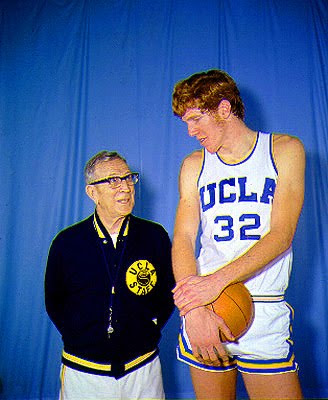
UO football
Oregon football: Ducks' success on offense is just a matter of time
Oregon's fast offensive tempo has baffled opponents this season, and USC will try to solve it Saturday
By Rob Moseley
The Register-Guard
Appeared in print: Wednesday, Oct 27, 2010
In college football, it's best to take things one week at a time - unless Oregon looms on the schedule.
Because of the Ducks' withering offensive pace, USC has increased its tempo in recent practices. And not just this week or during the preceding bye week, Trojans coach Lane Kiffin said, but even earlier than that.
"Over the last couple of weeks, even going into the Cal game, we've picked up our tempo in practice whenever we were going against the defense," Kiffin said Tuesday. "I just think that if you try to all of a sudden do it in the week you're playing Oregon, it's not going to help a whole lot. …
"We've been doing this for a few weeks and took a different approach to the bye week than if we were probably playing someone else, by the speed we practiced at and the way we approached it."
The list of top-ranked Oregon's scoring drives this season, entering Saturday's 5 p.m. game at No. 24 USC, includes 16 shorter than a minute, and only three longer than four minutes. To some extent that reflects the big-play ability of such stars as LaMichael James, Jeff Maehl and Josh Huff, and also some favorable field position owing to the 25 turnovers forced by the UO defense and special teams.
But it also illustrates the tempo at which Oregon's offense plays, and the minimal time the Ducks take between snaps. Mostly, that's determined by how long it takes officials to spot the ball after the previous play.
"We're playing at a pretty good clip right now," UO coach Chip Kelly said. "I think it's because our players have a really good understanding of what we're trying to do. We just try to eliminate that time between plays, and then just go play."
Snapping the ball just a handful of seconds after the previous play minimizes the time available for the defense to call plays, substitute or react to Oregon's offensive formation. It's a common occurrence to see defenders spend those moments with their hands on their hips, a sure sign of fatigue.
Oregon doesn't have such trouble signalling plays to the offense. The Ducks streamlined their terminology in order to play faster on offense when Kelly was promoted to head coach in 2009, he said, and they employ a complicated system of signboards and hand signals to indicate plays during offensive possessions.
The signs each include four images - faces of ESPN personalities are among the most recognizable.
Kelly said the signs indicate a package of plays, and hinted that they can sometimes be used as a decoy. Sometimes, he said, players aren't asked to "go to the board" to get the call.
"It's just another way to play fast," Kelly said. "The analogy I can give you is, iif you go to McDonald's and order a No. 2, that's all you have to say and you get a Quarter Pounder and a drink and fries, and you just say, 'No. 2.' If we send them to the board, one picture can mean the formation and the play and the snap-count. That's all it is. It's just another way to play faster."
The Ducks' tempo seems particularly suited to their spread-option offense, which doesn't feature excessive pre-snap shifting and motion to fool the defense, as in the scheme employed by Boise State, to use just one example. But Kelly said he'd look to push the tempo even if Oregon's personnel was best suited to packages requiring three tight ends and a fullback.
"You could play up-tempo no matter what you do," Kelly said. "You watch (Indianapolis Colts quarterback) Peyton Manning, they're not running any option but they play as fast in the NFL, in terms of him being able to get their plays in and the speed they want to play at. So it's not married to the system."
Kelly also quipped that, "The byproduct is, as the play-caller, you can call a lot of really bad plays, and people forget about them quickly because we're on to the next one." But clearly Kelly, whose offense leads the nation in points and yardage, hasn't had many missteps in that regard.
The potential drawback to playing so fast on offense is that Oregon's defense is on the field so long. The Ducks are 114th out of 120 teams nationally in time of possession, at 26:40 per game; the 516 plays defended by Oregon are more than anybody else in the Pac-10 but Washington State.
The Ducks try to mitigate that with a regular rotation of about 25 players at the 11 positions on defense.
But Oregon also uses about 20 players regularly on offense, another challenge for opponents.
"The different ways they mix and match that personnel in terms of personnel groupings and formations, you're trying to identify what their top runs are and their top passes are, and when there's more of them it's hard to really pinpoint what their favorite ones to do are and defend them," Stanford coach Jim Harbaugh said.
Kiffin and his staff at USC are trying to tackle that challenge this week.
"You don't know who's going to be in when," Kiffin said. "They do rotate guys in. I'm sure it's because they know they're going to play a lot of plays because their offense scores so fast and doesn't use very much time.
"The 14 touchdown drives under (54) seconds, that's unheard of for four years of games, let alone half a season. I'm sure that's why they do that. I don't think until this week I realized how deep they were. For them to play so many people on offense and defense, they've got great depth."
All of it speedy, as Oregon tries to keep pushing the pace of this historic season.
"We just try to eliminate that time between plays, and then just go play."
- Chip Kelly, Oregon Football Coach
Pitt T. Maner III shares:
On speed in practice:
Bill Walton on Wooden and UCLA basketball practice, from (With Steve Jamison) Wooden: A Lifetime of Observations On and Off Court, Contemporary Books (Lincolnwood, IL), 1997.
For us, it all started with our practices at UCLA, which were nonstop action and absolutely electric, super-charged, on edge, crisp, and incredibly demanding, with Coach Wooden pacing up and down the sidelines like a caged tiger, barking out instructions, positive reinforcement, and appropriate maxims: "Be quick, but don't hurry." "Failing to prepare is preparing to fail." "Never mistake activity for achievement." "Discipline yourself and others won't need to.
"At the same time he constantly moved us into and out of minutely detailed drills, scrimmages, and patterns while exorting us to "Move…quickly…hurry up!" It was wonderfully exhilarating and absolutely intense.
In fact, games actually seemed like they happened in a slower gear because of the pace at which we practiced. We'd run a play prefectly in scrimmage and Coach would say, "OK, fine. Now re-set. Do it again, faster." We'd do it again. Faster. And again. Faster. And again.
I'd often think during UCLA games, "Why is this taking so long?" because we had done everything that happened during a game thousands of times at a faster pace in practice.
Ralph Vince writes:
It's a game of evolution, the hurry up, with a mobile quarterback, an absence of putting a man in motion (and hence, plays that aren't contingent on defensive reads) and spread out receivers.
The counter to it is the part I am trying to study, and seems to be confusing blitzes (which are difficult to coordinate when faced with a no-huddle), middle zones and man for man on the outside (and, surprisingly, it appears the outside coverage man should take the INNER of to wideouts on the same side when that occurs).
Russ Sears writes:
Football is a sport requiring quick short burst of speeds. Speeding up the normal pace of the game cause the recovery time to shorten drastically. An offense that knows before the position of attack can rotate the burst of speeds, where as the defense must all be ready and attacking. The stamina to endure these burst of speeds with short recovery takes a good month of training. This is, I believe, the Indy Colts advantage also.
In basketball, it takes even longer because of the aerobic base needed. Wooden and several other great basketball coaches practiced running stairs and full court press. As full court press is the basketball equivalent to no huddle offense.
In distance running the equivalent is cycles surging the letting up the pace. If you practiced this you could beat better runners who are not prepared for this.
Oct
28
Cyclicity of Influenza, from Pitt T. Maner III
October 28, 2010 | Leave a Comment
 Flu has not been mentioned much in the news so far this year. Local availability of flu shots is good and many supermarkets and drug stores are providing vaccines. New strains may require a vaccine update sooner than expected acccording to some. A difficult subject for prognosticators and vaccine developers:
Influenza pandemics and epidemics have apparently occurred since at least the Middle Ages. When pandemics appear, 50% or more of an affected population can be infected in a single year, and the number of deaths caused by influenza can dramatically exceed what is normally expected. Since 1500, there appear to have been 13 or more influenza pandemics. In the past 120 years there were undoubted pandemics in 1889, 1918, 1957, 1968, and 1977. Although most experts believe we will face another influenza pandemic, it is impossible to predict when it will appear, where it will originate, or how severe it will be.
Researchers overseas think that the H1N1 influenza virus may be mutating, but say more study will be needed to determine how deadly the new strain is.The slightly new strain is beginning to show up in Singapore, Australia and New Zealand, RedOrbit.com reports.
Ian Barr, of the World Health Organization's Collaborating Center for Reference and Research on Influenza, in Melbourne, Australia, told RedOrbit.com that more study is needed to determine if current H1N1 vaccines can protect against the new strain completely.
"It may represent the start of more dramatic antigenic drift of the pandemic influenza A-(H1N1) viruses that may require a vaccine update sooner than might have been expected," Barr said, RedOrbit.com reports."
Oct
28
Got Bastnäsite, from PItt T. Maner III
October 28, 2010 | 1 Comment
-177535.jpg/664px-Bastnasite-(Ce)-177535.jpg "Bastnasite") Rare earth metals are in the news. Chinese are the main producers of them at present but substitution and/or mining of these metals in other countries may change the picture over time. The following article gives an overview of the situation:
Rare earth metals are in the news. Chinese are the main producers of them at present but substitution and/or mining of these metals in other countries may change the picture over time. The following article gives an overview of the situation:
Stepped-up mining operations and accelerated manufacturing schedules in Africa, Australia, Canada, Malaysia, the United States, Vietnam and elsewhere could provide supply-chain alternatives to China, which controls more than 95 percent of the world's rare earths. The U.S. House of Representatives, fearful the U.S. military might become dependent on Chinese-made electronics, approved H.R. 6160, the Rare Earths and Critical Materials Revitalization Act of 2010, late last month.
Japan, one of the countries hardest hit by the tightening of rare earth supplies, has fast-tracked efforts both to recycle rare earths from discarded electronics and to develop alternatives to the materials for use in electric motors and the nickel-metal-hydride batteries deployed in hybrid vehicles.
Recent testimony from Professor Eggert at Colorado School of Mines:
"First, world generally has been successful in replenishing mineral reserves in response to depletion of existing reserves and growing demand for mineral resources. Reserves are a subset of all mineral resources in the earth's crust. Reserves are known to exist and bothwe are not running out of mineral resources, at least any time soon. The volume XXVI, number 4, 2010, pp. 49-58. The paper discusses minerals for national defense as well as for emerging energy technologies.
In this testimony, I do not discuss military or defense issues. Reserves change over time. They decline as a result of mining. They increase as a result of successful mineral exploration and development and technological advancements in mineral exploration, mining, and mineral processing. Over time, reserve additions generally have at least offset depletion for essentially all mineral resources.Second, rather than focusing on running out of mineral resources, to consider the constraints imposed on emerging technologies by the costs, geographic locations, and time frames associated with mineral production. because over time production tends to move to lower-quality mineral deposits—those that are less rich in mineral, deeper below the surface, in more remote locations, or more difficult to process. The result is higher costs for users, unless technological improvements are sufficient to offset these cost increases. Thus the constraint that mineral availability sometimes imposes on users is one of higher costs rather than physical unavailability."
Prepublication version of paper Eggert refers to in his testimony.
Oct
27
Deceptive Vibes, from Pitt T. Maner III
October 27, 2010 | 1 Comment
 The predator becomes a meal :
The assassin bug (Stenolemus bituberus) is a spider-hunter. Sometimes, it simply sneaks up to spiders on their own webs before striking, plunging its dagger-like mouthparts into its prey. But it also has a subtler technique. Sitting on the web, it plucks the silken threads with its legs, mimicking the frequency of weakly struggling prey. These deceptive vibes are an irresistible draw to the spider, who rush towards their own demise. The bug effectively has a way of ordering for delivery when it doesn't want to go out for a meal.
Gary Rogan writes:
Good article. If you look at today's situation, not that different from Goldman establishing a de facto consensus that there will be a $2 trillion QE2 without the Fed ever saying any such thing, luring the unsuspecting little spiders with the hopes of a lower dollar and higher everything only for those expectations to be crushed today. I actually came across several speculative articles to this effect yesterday, so someone's hand may have been forced.
Oct
26
Indonesian Plate Boundary Activity, from Pitt T. Maner III
October 26, 2010 | Leave a Comment
Tectonic activity along the Indo-Australian and Eurasian (Sunda/Java Trench portion?) plates may bear watching in light of tsunami and eruptive Merapi phases. Very dangerous volcanoes and faults in this area :
The signs were all there that Merapi was headed towards a new eruptive phase and today at ~6 PM (local time in Indonesia), Merapi erupted. This is a double (possibly triple) whammy for Indonesia that is suffering after a M7.7 earthquake off Sumatra that generated a tsunami as well. The Indonesia government has their work cut out for them as they try to evacuate over 50,000 people from the slopes and nearby region around.
Oct
21
Article on Confederate Inflation from an Interesting Website, shared by Ken Drees
October 21, 2010 | Leave a Comment

Counterfeit Money and the Yankee Scoundrel
Economic and monetary historians have largely ignored the role of counterfeit money in the Confederate inflation because data are not available on the amount of bogus notes. Nevertheless, contemporaries and scholars of the Civil War have noted that counterfeit money posed a serious problem for the Confederacy (Hughes, 1992). More money chasing the same number of goods created inflation, reducing the central government's take from the inflation tax. The Confederacy was unable to curtail counterfeiting because they lacked the resources and equipment to produce high quality money. Counterfeiting was such a widespread problem that people sometimes joked that fake money was of higher quality than government issued currency.
Weidenmier (1999b) studied the effects of counterfeit money on the Confederate price level by examining the history of the war's most famous counterfeiter, Sam Upham. The Philadelphia lithographer, printed nearly 15 million dollars of bogus Confederate notes during the war. Upham claims that he originally printed bogus "rebel" notes as souvenirs. Although this may have been initially true, Upham certainly became aware of the fact that smugglers were using his notes to buy cotton in the South. The businessman expanded his business to include mail orders and placed advertisements for his bogus notes in leading Northern cities, including Louisville and St, Louis. Upham's venture was so successful that the Confederate Treasury Secretary Memminger made the following comments about the "Yankee scoundrel" in June 1862:
"Organized plans seem to be in operation for introducing counterfeiting among us by means of prisoners and traitors, and printed advertisements have been found stating that the counterfeit notes, in any quantity, will be forwarded by mail from Chestnut Street
[Sam Upham's address], in Philadelphia to the order of any purchaser." (Secretary of the Treasury Memminger to Confederate Speaker of the House of Representatives, Thomas Bocock, quoted in Todd, 1954, p. 101).
President Jefferson Davis and the Confederate government placed a $10,000 bounty on Upham. The bogus money maker was never caught and some have suggested that the U.S. government protected the businessman with secret service agents.
Weidenmier (1999b) attempted to quantify Upham's effect on the Confederate price level by making different assumptions about the proportion of Upham's notes that ended up in the South. Weidenmier estimates that Upham printed between 1.0-2.5 percent of the Confederate money supply between June 1862 and August 1863. Upham stopped printing bogus notes once Confederate money had depreciated so much that it was no longer accepted as a medium of exchange in cotton smuggling. Given that the Philadelphia businessman was one of many counterfeiters, it is probably safe to assume that bogus money makers had a large impact on the Confederate price level. The actions of bogus money makers fueled the Confederate inflation via a large increase in the money stock.
from "Money and Finance in the Confederate States of America" by Marc Weidenmeir
Pitt T. Maner III comments:
One of my ancestors kept a roll of Confederate notes in a house safe just in case outcomes changed. Evidently he also stored cotton in England during the Civil War and sold it for considerable profit post-Appomattox. With the cash from the cotton he engaged in several successful real estate ventures. Subsequent generations spent the money very quickly, squabbled over land ownerships and inheritances, and left little– other than memories of grander times.
Some of the notes have considerable collectible value today. Perhaps this also is true for the original Confederate counterfeit money.
It also is interesting to note, and Stefan can confirm this, but there were areas in the South, that were fairly pro-Union, such as northern Alabama, that did not have as large a financial interest in maintaining the cotton trade and probably resented having to fight in the Civil War.
Stefan Jovanovich writes:
After watching the Giants and Phillies play last night, I am in anything but an ornery mood; but I have to say that this article is an example of why Shakespeare was wrong - the econometric historians deserve to go before the lawyers. In the initial flurry of lunacy after Fort Sumter and First Manassas the Confederacy collected all the Southern banks' specie in exchange for bonds, which promised to pay interest and be redeemed in gold; but within months people realized that they were living in the equivalent of Zimbabwe. There are lots of "prints" of transactions during the history of the Confederacy from which to draw econometric conclusions like those by Professor Weidenmier, but the data is, as the guys from the Car Show would say, "BO-O-O-GUS". Transactions for supplies for the state militias (remember: other than the fewer than 20,000 soldiers and officers from the Regular Army, everyone who fought in the Civil War/WBTS served as a member of a State military unit; no one was a member of "the Confederate Army") were denominated in Confederate dollars but they were effectively requisitions, not purchases. Upham's "counterfeiting" (sic) was openly advertised precisely because no one - North or South - took the Confederate dollar certificates to be anything but curios. The reason Grant ordered all the Jews expelled from the Army of Tennessee's jurisdiction is that the cotton brokers loyal to the Confederacy were trying to exchange cotton in exchange for Union greenbacks which would, in turn, be used to buy gunpowder and other military supplies. (But why "Jews"? Because cotton brokerage in the ante bellum South was an exclusively Jewish trade; so, for that matter, was finance itself. No one in the Confederacy thought it anything but natural that Judah Benjamin should be the Secretary of War and then Secretary of the Treasury.) There was no Confederate inflation in any real sense because the currency never took hold in the first place. Professor Weidenmier's elaborate calculations are very much like the conclusions reached by Fogel and Engerman on the economics of slavery; the numbers make sense by themselves but the premise is complete folly. People took Confederate money in the same way that Soviet citizens accepted rubles; whenever they had a choice, they said no.
P.S. Since even Professor Weidenmier's later scholarship confirms this we may have to relent slightly and give the econometricians and the attorneys equal billing.
Oct
8
Smart Swarms, from Jim Sogi
October 8, 2010 | 1 Comment
 The Smart Swarm by Peter Miller analyses crowd decision making by looking at ants, bees, locusts, and then humans. He discusses various heuristics making delayed response decision making difficult. The thermostat game and the beer game are good examples of difficulties in making decisions where the results are delayed. It usually ends up in a boom bust cycle. The cure is to reverse against the trend earlier. Experiments show that decisions made by 3 average persons are better than those made by the smartest person due to diversity of information. This is the Slumdog Millionaire phenomenon where the crowds answer tends to outperform the experts. Analysis of ants and bees show how the swarms make decisions: they simply follow those next to them. The remarkable aspect is how this information travels across large groups almost instantaneously and how this information is more than any of the individuals would have access.
Phase transition is the point at which the entire crowd or swarm behavior changes. Birds, locusts, fish, people in crowds, and even inert molecules can all instantly change phase. Markets seem to as well. Computer modeling requires quantification, and interestingly as Wolfram posited, simple rules create complex behavior and learning that arrive at group solutions which are not preprogrammed in. This differs and improves upon statistical analysis in its adaptability to change and new information. This recalls Wolfram's thesis where simple rules create complex patterns and reverse engineering is hard. Miller looks at the process of reverse engineering crowd decisions. Analysis of crowd stampedes in Mecca show waves in pilgrims backing up before the stampede. Traffic shows similar waves in traffic jams. Analysis of locusts show the rapid change in behavior of the locusts when crowded. One of the beauties of the market is the plethora of data and the platforms to deliver and analyze it. Half the problems the scientists faced was data collection. The question is what are the precursors and triggers to phase change in markets? There is a tipping point to every change in direction, of which there have been many recently. There are precursors, triggers and the phase change. These conditions when identified might give good signals. Pit traders seem to have worked out the dynamic in the pit, but what are the electronic signals? If ants and bees can work this out, can't traders?
Pitt T. Maner III comments:
Now that almost everyone has a smartphone, iPhone, etc, the potential for "super swarms" to develop amongst groups of people seems ever more heightened. One can imagine interesting collaborative efforts forming inside and outside of company boundaries. Swarmanomics. Or in negative cases, mobocracy—mobile vulgus.
It is reminiscent of the bee returning to the hive and doing a little dance to give the direction, distance, and quality of potential food.
One such network is Foursquare, where you can become a virtual "mayor" by being a habitue and boulevardier and a potential director of traffic (or dare say, wallets) to locations. Status and prestige are bestowed to the tireless, individual "worker bee". Where is the party today? Will not "killer" bees and killer apps be soon to follow? Facebook has entered this arena too. Marketing on steroids.
The head of Foursquare states his idea of the future here:
Crowley also offered a glimpse of his vision of Foursquare's long-term future. "In the future, I want Foursquare to be able to tell people where to go wherever they are in the world, based on their previous visiting habits, likes and dislikes and the time of day…We want to be able to push venue suggestions to you. That's what I am pushing towards as we develop Foursquare's tools and how we use our data," he explained.
While the super swarm badge is among the hardest to win, the significance of last night's event is somewhat debatable. There is very little, physically, to show for this achievement. But as social gaming takes off, game mechanics– the idea of giving out tiny rewards to encourage certain behavior– are very much in vogue, with several start-ups and marketing campaigns incorporating check-ins and badges.
Sep
27
Neanderthals Demise Helps Predict Volcano Eruptions, from Pitt T. Maner III
September 27, 2010 | Leave a Comment
 A controversial new theory has been proposed to explain the disappearance of the Neanderthals—current thinking is that they were replaced and crowded out by modern humans. And [ (2) below] a study on increased crustal tensions being used to predict likelihood of volcanic eruptions within a region.
An untimely overlap of several future natural events (including Mr. Watson's sunspot activity) might produce significant climate effects.
The Neanderthals were a hardy species that lived through multiple ice ages and would have been familiar with volcanoes and other natural calamities. But the eruptions 40,000 years ago were unlike anything Neanderthals had faced before, Cleghorn and company say.
For one thing, all the volcanoes apparently erupted around the same time. And one of those blasts, the Campanian Ignimbrite, is thought to have been the most powerful eruption in Europe in the last 200,000 years.
"It's much easier to adapt to something that's happening over a couple of generations," Cleghorn said. "You can move around, you can find other places to live, and your population can rebound.
"This is not that kind of event," she said. "This is unique."
and from the UK Daily Mail :
"The study's authors write: 'Volcanic eruptions had an unusually sudden and devastating effect on the ecology and forced the fast and extreme climate deterioration ('volcanic winter') of the Northern Hemisphere.'
The team analysed the soil layers in Russia's Mezmaiskaya Cave and identified two types of volcanic ash corresponding to two separate volcanic eruptions in western Asia between 45,000 and 40,000 years ago. "
Also:
Dr Hamling said: "If you look at this year's eruptions at Ejafjallajokull in Iceland, by estimating the tension in the crust at other volcanoes nearby, you could estimate whether the likelihood of them eruption has increased or decreased. Knowing the state of stress in this way won't tell you when an eruption will happen, but it will give a better idea of where it is most likely to occur."
Here is a useful blog that stays on top of potential volcanic activity.
Sep
20
More on NBER, from Victor Niederhoffer
September 20, 2010 | 1 Comment
They just announced 1 1/4 years late that the recession ended. Many interesting questions arise. What would happen if you bought and sold a swing system, when they announced recession and when the announced expansion? What are the chances that a random number generator or intelligent robot could do better at calling turns in the economy than the NBER? Many others.
Scott Brooks comments:
The recessions over?!?!!!?
I find that hard to believe. Just a minute….let me turn around and check something….looking….looking….OH MY GOSH!!!! There ARE monkeys flying out of my butt….the recession MUST BE OVER!!!
I work with a lot of insurance related organizations (brokerages, TPA's, insurance companies) and there is nothing happening in the insurance world that indicates the recession is over. Workers insured under workers compensation is down 20%+ off it's high. Workers comp premiums are down. Business insurance premiums are down. There are still more companies that are going out of business than there are start ups. There are still more companies that are contracting than there are companies that are expanding.
At the grassroots level, there is a lot of pain….and the bad stuff outweighs the good.
The recession is not over.
Jeff Sasmor writes:
What they said was that the last one ended June 09. They also said a decline now would count as a new recession. Talk about a lagging indicator!
NBER said "The committee decided that any future downturn of the economy would be a new recession and not a continuation of the recession that began in December 2007. The basis for this decision was the length and strength of the recovery to date.
Pitt T. Maner III writes:
Not only is the recession over but now the technical purists say it is impossible to have a "double-dip" since another downturn would be counted as a separate recession. Let the cheerleading begin…
Stefan Jovanovich shares:
"The Business Cycle Dating Committee was created in 1978, and since then there has been a formal process of announcing the NBER determination of a peak or trough in economic activity. Those announcement dates were: June 3, 1980; July 8, 1981; January 6, 1982; July 8, 1983; April 25, 1991; December 22, 1992; November 26, 2001; July 17, 2003; December 1, 2008; and September 20, 2010."
From NBER FAQ
NBER Cycles
Sep
9
Article on Tennis, from Victor Niederhoffer
September 9, 2010 | 1 Comment
 Here's an interesting article about how tennis is improved by playing on soft surfaces, moving in all directions, and not concentrating on winning at early ages with obvious market implications.
Pitt T. Maner III comments:
One doesn't remember seeing the top Spanish players missing a lot of easy overheads, double-faulting on key points, and letting line decisions get into their heads. They are mentally prepared to grind it out and play with "corazon" and a bullfighter attitude—and an added touch of machismo for those long 5-set matches. The Spaniards look better able to play and adjust to windy conditions too.
From Chair's referenced article:
Jose Higueras, a former Spanish player who is now director of coaching at the US Tennis Association, believes that playing on slower-paced courts has taught the Spanish to become more athletic and make fewer mistakes. "If you grow up on hard courts, missing becomes a lot more normal because the courts are faster and you don't have much chance to get set up," he said. "On clay, the misses are normally not as acceptable."
The current physicality of tennis seems to favor body types that are generally lighter, faster and stronger. These players have become masters of taking away the advantage of bigger opponents possessing more powerful serves and groundstrokes. Federer, for instance, has an unbelievable ability to return balls hit hard at him that would normally break down a player's stroke and cause a weak return.
Federer's fastest, well-placed serves at around 120-125 mph also are extremely effective (he had an 18-2 ace advantage over Soderling last night). The 6' 3'' to 6' 7'' players with the ability of hitting the 130-140 mph serves know they will have to hold serve almost every game against Roger or Rafael Nadal. That adds a lot of pressure, particularly on getting the first serve in.On the physical nature of tennis played with the modern, powerful racquets:
Training guru Mackie Shilstone, who has worked with Serena Williamssince 2008 and has educated many elite athletes, says tennis is among the most taxing activities on muscles, joints and tendons.
"I've seen it all," says Shilstone, whose clients range from boxer Roy Jones Jr., to baseball's San Francisco Giantsand hockey's St. Louis Blues. "It is one of the most grueling sports you will ever encounter."
I think most free, community tennis courts in the S. FLA area are hard because you have to maintain clay courts and that costs money and makes it necessary to charge fees that are somewhat stiff to the average Joe who can more readily find a free football or baseball field or basketball field to play on.
Sep
9
New War Technology, from Pitt T. Maner III
September 9, 2010 | Leave a Comment
 The remote sensing of gunshot noise in high crime areas becoming more widespread. Here is an article about it.
Vince Fulco writes:
I happened to see similar technology in use in Iraq/Afghanistan about a year ago which pinpoints sniper shots in less than a second. Each Humvee is equipped with a pod bristling with omni-directional microphones. Upon registering a shot, it instantly calculates direction and distance often not allowing a second one to be delivered before a counter response. As I recall it was an offshoot of MIT research.
Jeff Watson adds:
Nassau County uses "Shot Spotter," which is the same technology. Yesterday, the police used that technology to determine where a bunch of shots were fired. Unfortunately, the person who fired the shots defending his family and property went to jail for excessive force or something like that. I'll save the editorial for later.
Sep
5
Wharton Energy Conference, from Will Weaver
September 5, 2010 | Leave a Comment
 If anyone knows of energy companies that would like to display their products at the Wharton Energy Conference this year, please let me know. Stephanie Nieto, whom I brought to the Spec Party this year is hosting exhibiting companies.
Pitt T. Maner III:
Will,
It was nice to meet you and Stephanie at the Spec Parties. I am hoping to maybe get up to Boston with my friend Martin Conroy to watch him compete in the Head of the Charles and hope to see you there too if you go.
In thinking of the Wharton conference:
As one of those long shot, nutty, literally " Don Quixote chasing windmills", sub-penny investments I have a few shares in Helix Wind, HXLW.OB. They have an interesting technology "if " they can get it patented and improve on it. http://www.fastcompany.com/1683897/let-the-great-wind-spin
CEO seems to be a skilled marketing type fellow but the stock imploded last year and you can probably tell the way it is setup if it has any viability or chance to survive. But Helix Wind is an eye catcher, "work of art" concept that brings a product with a small footprint, low noise, efficiency from wind in all directions, etc. and I have seen Target for instance in S. Florida show interest in small, vertical wind turbines (fitted into their signs) to run power to individual stores and save on their electric bills.
On another note, large, diesel-powered, portable generators for businesses and condos in S Florida became much more more prevalent after Hurricane Wilma hit several years ago. Once winds hit about 50 mph you can count on the power to go off here in West Palm Beach for days if not weeks in some cases.
With respect to Canada the stocks that used to interest me were CFK (drilling mud and supplies and tool expertise) and the driller Precision Drilling (PDS). Those are business areas that require a lot of expertise and experience and offer significant barriers to entry. But probably would tend to favor PTEN and the beaten up offshore drillers—DO, NE, RIG, etc. and good old SLB now as stocks to think about for slightly longer term given a potential rebound in energy and perhaps a return to more favorable regulatory environment. Definitely a boom /bust business cycle and one requiring much research.
Good luck with the conference.
Best regards,
Pitt
Sep
4
Four Lessons from Druckenmiller, from Rocky Humbert
September 4, 2010 | 1 Comment
 Here is an article about the lessons from Stan Druckenmiller's career. The author identifies four lessons: "Size matters," "Outperformance is possible," "Excellence takes hard work," "The money doesn't matter."
I note that these platitudes are not unique to money management– and could be straight out of a Tom Peter's Motivational Speech. The sad truth is that no matter how much I love, study and practice basketball and purchase AirJordan shoes, I still won't play like Michael Jordan. But it's a nice dream to think otherwise.
Pitt T. Maner III writes:
With practice there are many (even Rocky) who could give MJ a challenge at the free throw line or from the 3-pt line or playing "HORSE". Specialists in narrow aspects of the game. Trick shot artists. The niche players. So by practicing the unpracticed skills one might eke out a small advantage against the pros in the arcane areas where there is not actual physical contact.
It seems though there is a certain lack of diversity these days in basketball compared to era of Earl the Pearl, "Lucas layups", Pete Maravich, underhand freethrows by Rick Barry, Dr. J, Bird, Magic, et al.—more athleticism and muscle now (aka Shaq-types) with more plain vanilla in most cases and less skill/finesse. More of a business and more money on the line and more risk adverse to unusual styles. Defense and team play emphasized where every knows his "role". Even Lebron will have to adjust to team play at Miami and pass more and do other things.
On another note, interesting also that Mr. G is rolling out new mutual funds and a sequel to his "magic formula" book that apparently has many followers and "still beats the market" for now.
Victor Niederhoffer adds:
Knowing of the humility and inabilities of some of the people mentioned here, including myself, and there is certainly no absence of down years and sub par performance in the ones that I know about very well, including the 50% down year, in the year before I met him of one of them, and 7 years of 0 performance after that, I am still amazed that the records can be so good. I attribute most of it to the remaining winner of the coin toss problem. But something else is going on. The one thing that seemed right in the four lessons. They all go to the same schools. They lived next door to each other in the summer and often had dinners together or talked to each other every day. They all were agrarian reformers. And they all hated free markets. Thus with the idea that had the world in its grips. But mainly, they were always on same page with their positions, especially until the end of the year. Not an artifice I believe.
Vince Fulco adds:
And I think it was mentioned (maybe here, too much reading material this week) that Biggs is his father-in-law? Guessing the Pequot-MS cabal loomed large in the mix.
Russ Sears writes:
After 08-09 it should be clear that much of the MBS and other structured securities markets were a Lemon Market. With the manufactures putting all the faulty parts into the same car, One side knew exactly which cars were clunkers.
Further, while perhaps they were totally naive to get so close to the edge, once near, there was plenty of muscle willing to give company after company the final shove over the edge by marked to market in a lemon market. So much so that even those securities with seasoned cash flows and stockpiled protective subordinates tranches became suspect.
Of course if size is a disadvantage and does not matter, why would you buy so much insurance on these securities that you knew the counterparty would never have enough collateral to pay you. Unless of course that was the whole idea.
Sep
4
Detection of Deceptive Pronouncements, from Pitt T. Maner III
September 4, 2010 | 1 Comment
 Perhaps related to the horse whispering discussion and a tell of potential value until bosses are more heavily trained what words to never say. The expert facial readers might harder to fool.
From the Irish Times:
Further research is likely to prove fruitful, the researchers conclude. Vocal cues provided by Federal Reserve chairman Ben Bernanke might assist in forecasting interest rates, they say, while exploration of executives' facial expressions should also yield results.
Such techniques are already being employed by Business Intelligence Advisers, a Boston firm staffed by a number of ex-CIA operatives that conducts behavioural analyses of top executives.
Over the last decade, it claims to have analysed more than 50,000 question-and-answer exchanges, more than 4,000 earnings calls, across more than 1,500 companies in 30-plus countries, using its "tactical behaviour assessment model". Their clients reportedly include Goldman Sachs and some of the world's top hedge funds.
and the related recent study:
Abstract:
We estimate classification models of deceptive discussions during quarterly earnings conference calls. Using data on subsequent financial restatements (and a set of criteria to identify especially serious accounting problems), we label the Question and Answer section of each call as "truthful" or "deceptive". Our models are developed with the word categories that have been shown by previous psychological and linguistic research to be related to deception. Using conservative statistical tests, we find that the out-of-sample performance of the models that are based on CEO or CFO narratives is significantly better than random by 4%- 6% (with 50% - 65% accuracy) and provides a significant improvement to a model based on discretionary accruals and traditional controls. We find that answers of deceptive executives have more references to general knowledge, fewer non-extreme positive emotions, and fewer references to shareholders value and value creation. In addition, deceptive CEOs use significantly fewer self-references, more third person plural and impersonal pronouns, more extreme positive emotions, fewer extreme negative emotions, and fewer certainty and hesitation words.
Sep
3
Notes From the Field, from Alan Millhone
September 3, 2010 | Leave a Comment
 Took my daughter to Cleveland and the Browns game last night.
I told her cell phones are an epidemic observing from my seat all the texting etc. and noticed all the fans around us covered in tattoos.
Inking is expensive. Makes me ponder if the economy is really so bad.
Fireworks show after the game were unreal and made the evening complete.
Regards,
Alan
Peter Earle writes:
Actually, like the market for shoes, the skin inking enterprise is a great example of the economic possibilities of a virtually unregulated market.
Typically relegated to prisons, the backs of bars/liquor stores, and other venues which the political parasites aren't wont to enter or be concerned with, the market for tattooing has seen explosive growth over the past 15 years; I personally attribute the growth to both (a) the social acceptance, later encouragement, of women to get tattoos, at least doubling the size of the market; and (b) the growth of musical and sports "gangsterism", in which an arms race for flesh adornment has led to "sleeves" and neck/head/facial tattoos to grow in prominence and, again, broadening acceptance of the undertaking.
With that explosive demand, from a fairly small number of parlors and side-venues I note the arrival of small entrepreneurs, ranging from affordable, storefront tattoo shops in malls to artist partnerships offering extremely high level quality and service: a virtually unfettered capitalism resulting in a wide range of various (sometimes bundled) services across a gamut of specialties and levels of talent, availability and differentiation resulting in a lowering of cost and huge product diversity.
Thus has arisen the inarguable ubiquity of the illustrated populace.
Marion Dreyfus comments:
My friends and I personally find tattoos artistic, executed in the main with extraordinary skill, and yet horrendous on a human being. I would not date a man with tattoos, and I avoid females who have indulged.
One always muses: What will happen in 10 years? How hideous will you find what you have done?
I surmise the followers of this unfortunate craft will subscribe to that existential philosophy: Live fast, leave a pretty corpse.
Peter Earle replies:
But from a broader perspective– the growth of tattooing is not only, in a market or business sense, a great example of the potential of free markets, but also illustrative of the social effects of what this country is in fact evolving into economically -hampered, intervention belabored, highly-regulated and increasingly socialist.
The social consequences arising of a credit-inflated, saving-disinclined, personal responsibility-defenestrated environment is/tends to be an immense high-time preference inclination of society; people thinking of the next 10 minutes, ten weeks or four years, and less of the long term picture.
In 60 years, elderly women with sagging, blotchy lower-back tattoos will crowd shorelines, and men's biceps/forearms/backs will murkily herald rock bands, songs, products and memes long since discredited and in any case extinct.
Pitt T. Maner writes:
Temporary tattoos made with henna were seen available near Manhattan east side docks where tour boats to Statue of Liberty are located. Advertised as an approximate 2-week tattoo experience. You could get the vicarious sailor tatoos around Halloween time as a good addition to your costume. Some might be allergic to henna though.
Indian bridal henna tatoos can quite elaborate and beautiful in some cases.
But I'll pass on anything permanent.
I also thought the 3-D photo images available at the docks where they holographically put your image in a block of plastic were kinda of neat if not a bit touristy. Good for a paperweight. Sort of dates the old photo booths. Evidently you can spend more on a real portrait. What tourists are being sold and what they buy is an interesting study in itself. It has to be a highly studied field.
I couldn't resist the Mexican jumping beans at JFK. Hadn't seen them in 40 years. You end up paying about a $1 a bean if you count only the alive ones! A nice markup there.
Gordon Haave writes:
A friend of mine who had tattoos and now is getting them removed says there is big competition and the laser removal guys are quick to cut rates. Apparently GE financed the purchase of the lasers the last few years and now people have defaulted and the lasers have hit the market cheap.
Just one date point, I don't know this firsthand.
Sep
3
Midlife Surfing, from Pitt T. Maner III
September 3, 2010 | Leave a Comment
 With waves up from the hurricanes, surfers will be out…and they will need to know their abilities well to safely handle bigger waves and strong currents.
A good video and article by Mrs. Edlinger follows about taking up surfing later in life and the associated benefits of and lessons learned from the sport.
My limited personal experience has been exclusively with body surfing and even then you have to evaluate the wave fairly quickly (if it is going to break too fast, too steeply and wipe you out with little water out front to cushion the blow) and feel the pull just before it begins to break and launch, swim, and kick yourself into the proper position/angle and use your hands like fins to control your trajectory. You are always trying to decide whether to go with the first wave of a set or the second one and one tends to become a waveform critic because you want to have a ride that is worth going in on and that makes it worth expending the energy to get back to the break area. On rare days you get big glassy, slow breaking, wonderful waves for body surfers. Its always a bit scary though on the bigger waves when you sometimes get driven downward and finally come up for air only to have a second wave wash over you as you try to grab a quick breath—there is a half second of panic you have to learn to control. Pro surfers obviously train to stay down underwater and work through downward water column pressure for extended time as the movies show.
All in all it is good exercise and you get a lot of twisting, turning and stretching, and tend to sleep quite well that night.
But as Mrs. Edlinger shows even midlifers can learn to get on a board, overcome fears and have fun:
by Susan Edlinger, M.Ed.
"You're never going to catch a wave paddling like that!" a strong male voice bellowed from behind me. He sounded angry, as if my paddling skills were a personal affront to him. "Great," I thought, "I'm already padding as hard as I can!"
My self-appointed surf coach paddled up and reiterated, "You're never going to catch a wave the way you paddle!" and proceeded to do a not-so-funny re-enactment of my paddling style. Watching him, I realized that by now I should be used to this when I'm surfing. As soon as my board hits the water, I become a part of the community, where although you may feel alone, you never are. Surfers, as a group, are a loosely formed coalition of people who share a passion, and that passion binds us, for better or for worse. Chances are, this gentleman felt these connections particularly strong this morning.
Coming back to reality, I mused, "Why is he talking to me", and more importantly, "Why does he seem so mad?" What then ensued was a brief conversation and demonstration of how I should be paddling vs. what I was actually doing.
"You've got to DIG, and FAST, not just paddle." Then as quick as he appeared, my surf coach turned to catch the next wave, with this sweet grumbled parting, "I just want to see you catch some waves."
Relief! He wasn't angry after all. He was just frustrated watching my incompetent paddling attempts (I secretly believe that good surfers are like artists, they become aesthetically offended at the sight of clumsy, unrefined effort.) Nonetheless, I was thankful for his advice. And I must add, it's not as if I am a total "kook". I do catch waves, but in all honesty, my personal ratio of waves caught to effort expended is embarrassingly low.
As the next few waves approached, I practiced my newly learned paddling skills, but no success. Then I heard another voice rising above the waves, "Wait till the wave almost breaks on you!" My new mentor glides over to me, "These waves are slow, take off only when they look like they are going to break on top of your head!" I smiled, nodded and wondered, "Was there anybody in the water who didn't have something to say about my surfing?" I knew what I was doing wrong, but still couldn't master the skills. Knowledge and application were oceans apart.
Finally, I caught a wave, to the whooping and hollering of my surf comrades. I was pleased and as I turned to paddle back out, I saw another surfer heading my direction. As he paddled by, he commented briskly, "It's not about the paddling, it's more about the ANGLE."
"Oh no, what's this"? I thought. Another secret other surfers know that I had to learn. I quickly paddled inside to my newest teacher to hear more of his wisdom. "Your board is like a kid's teeter-totter," He told me in-between taking every ride on the inside, "When you're paddling for the wave, keep you're back arched, then when the wave gets to about your ankles or calves, put your head quickly down on the front of your board and angle downward". To me this sounded vaguely like a surfer version of the political slogan, "It's the economy, stupid." It became "It's the angle, stupid."
For the next hour I practiced. Digging instead of simply paddling, watching my timing, and most of all, angling on my board. Surprise, surprise, I caught waves. I had fun. Strangers cheered.
So, what's the point of my story? Well, as I later contemplated that morning surf, I found myself reflecting on what I had learned, both in terms of surfing skills, and also how it reflected on my life. I was reminded again of the maxim 'how we do one thing, is how we do all things.'
I was behaving the way I typically behave when frustrated by something not working; I try harder. I do the same thing over and over, thinking I'm going to get better results if I just put in more effort. In this case, if only I paddled harder, I'd catch those waves. Wrong.
The definition of insanity, I've heard, is doing the same thing over and over again and expecting different results. If an ounce of something doesn't work, maybe a gallon will? Like so many areas in my life, I needed to learn to paddle smarter, not harder. There was more to catching a wave than how hard I paddled; I had to dig fast, watch my timing, and lastly, pay attention to the physics of board leverage.
I also relearned several other things that morning in the surf. People are essentially good; we want to help each other. There is a joy we all share in watching someone else be successful; watching another surfer catch a great wave. This is called community.
I remembered once more that life can be easier, less strenuous, and more successful when I allow myself to actually listen to what other people are trying to tell me and then simply do what they say!
The road to learning is paved with humility and there are teachers everywhere. I learned that being stubborn about my paddling and trying harder and doing more of the same was not going to result in my catching a wave, only getting more tired. I had to try something different. I needed a community to learn to 'paddle smarter, not harder.'
What about you? Where can you 'paddle smarter, not harder?' What do you need to do differently, and who can teach you?
Susan Edlinger, M.Ed. is a certified Executive and Life Coach, living in Woodland Hills, and practicing her art wherever waves and people meet.
Victor Niederhoffer writes:
One must be aware of being knocked unconscious by body surfing as "Uncle Howie" was recently. It is nice to be able to afford the time and luxury of such activities in the fullness of time also.
Chris Tucker writes:
As Captain Aubrey, "always a hand for the ship", one must always "keep an eye for the waves."
Jeff Watson adds:
Any type of surfing is very addicting and has similarities to heavy drugs. Surfing is our form of crack, and we start getting tweaky when away from the waves or beach for a long time. Most mid-life surfers get hurt a lot, at least the crew of geriatrics that I surf with do. We view the aches, pains, sprains, and broken bones as part of the cost of doing business. In my case, I have had an injury every year for the past ten years that has resulted in some sort of medical treatment or hospitalization. In fact, I'm out of commission right now but my injury is skateboarding related, not surfing, and skateboarding and surfing are closely related in the surfing tribe.
My crew has similar experiences, and our eldest member is 69 years old, I get asked all the time why I still surf. My answer is that I just never quit. On that note, here is a good movie, "Surfing for Life" that describes the lives of many senior citizens that still surf seriously. I gave The Chair a copy and he said that he enjoyed the movie which I found to be one of the most uplifting documentaries of all time.
Interesting that the surfing tribe would be worthy of a study by Mead. Here's a very good MA thesis that an acquaintance wrote back in 1976 describing the surfing tribe of Santa Cruz, CA.
"Uncle" Howie Eisenberg corrects:
You neglected to mention not to bodysurf a wave that has become whitewater as uncle Howie did in winning the worlds stupidest bodysurfer award. I did not become unconscious. After "breaking my fall" with my head snapping my neck back, I emerged from the sea a bloody mess with tingling from my wrists to my shoulders, picked up my sandals, walked to the lifeguards who placed me on a wooden board, was ambulanced to a hospital where 3 CT scans, especially the brain scan showed nothing.
David Hillman writes:
at the chiropractor this a.m for an adjustment…
Doc says, "took my 6 year old son to the waterpark yesterday afternoon for an 'end of summer' day."
"How did it go?" asks I.
"Really well, first we went on Lazy River, a slow meandering stream one paddles down leisurely, then we went for a few runs down the big slides."
"Oh, knowing him, he must have really liked the action down the big slides."
"Yes, he does, so it was really a big surprise when he said 'Dad, let's go back down the Lazy River.' It surprised me because it's usually a little too tame for his liking. But we put the raft back in the Lazy River and we're paddling downstream a little when he says 'DAD! Do you see that lifeguard?' I take a look in the direction he's staring in agape and here's this beautiful blonde college girl lifeguard in one of those form-fitting Speedo suits. Six years old and it's already ingrained in him."
We laughed a bit, and, "Then, on the way home in the car," says Doc, "my son says to me out of the blue, 'Thanks for the best end-of-summer day ever, Dad."
Yes, yes…..always a hand for the ship and an eye for the waves….
Craig Mee adds:
Don't forget the change in tide either. It can get you into trouble if you have not taken into account the change in water depth at the front of a wave when attempting to pull off.
A bit like the markets.
Sep
2
Florida Once Part of Africa, from Pitt T. Maner III
September 2, 2010 | 1 Comment
Here in Florida we are sitting on top of a carbonate platform that overlies what is thought to be part of the African plate that separated when the continents drifted apart .
And from UF, one of the early paleomagnetism/plate tectonic researchers, Dr. Neil Opdyke shares some interesting background on how research on the earth's magnetic field in the 1950's and 1960's provided the first evidence in favor of the continental drift hypothesis.
Aug
30
Things I Learned at the Spec Party, from Victor Niederhoffer
August 30, 2010 | 1 Comment
 Siskind thinks that resi real estate has bottomed, commercial real estate is very overbuilt because of people working at home, and retail real estate is going to get killed because refinancing wont be available and securitization makes it impossible for any other outcome beside bankruptcy.
E believes that the oil spill will create a boom in wheat. Mr. Pitt and E believe that Iceland is the biggest disruptive geo factor on the horizon.
Mr. Hauser gave me a lesson in how all the big transfers from the rich to the deserving poor is bound to create a reduction in long term growth, as well as the difference between money and credit.
The Ted Rosenthal troupe that performed Sunday is one of best jazz trios in world.
Ken Drees adds:
Remember the howl regarding commercial real estate being the next shoe to drop a year ago? Seems like it's taking longer than first feared.
Apartment REITS doing real well now.
Pitt T. Maner III writes:
My First Spec Party was a super experience. The music at both parties was wonderful and it was privilege to meet and talk to many highly intelligent spec-listers.
It was my first time in NYC too and it was interesting to see how popular dogs are in Manhatten and how people are learning to do new things out in the open. For instance in front of the mirrored side of the Metropolitan Art Museum there was an older lady teaching a young man how to cast and fish with a fly rod on the lawn. Near the south entrance of Central Park a young lady outfitted with boxing gloves was taking a lesson along a footpath from a very strong, athletic male boxing instructor. Along the Hudson there was a location where people were practicing on the trapeze. So the city is a very stimulative environment and a place for lifelong learning.
And somehow you can walk all day and still gain weight eating shish kabobs, pastrami sandwiches, egg cream sodas, gyro sandwiches, Swedish cardamon rolls and coffee, Thai food—how is that possible?
The Museum of Natural History is just a spectacular place to learn about geology, paleontology, early man, minerals and many other things–4 hours over 2 days was just enough to get a taste. What a wonderful place it is for children too to learn about nature.
Again many thanks to our gracious hosts for a fun weekend.
Aug
22
The College Season, from Pitt T. Maner III
August 22, 2010 | Leave a Comment
 With the college season just a couple of weeks away:
The Bear lays out the 4-year plan to incoming freshman. His math is a bit fuzzy but the message about dedication, discipline, teamwork and preparation comes through strong. Anything less than a National Championship just doesn't cut it.
In the 60s Bryant had Namath and Stabler as quarterbacks and the Alabama teams were built on speed, effort and conditioning—with smaller wiry players the norm. With integration occurring in the 70s and the advent of larger, faster and more powerful football players (like those on the Nebraska, Oklahoma and USC teams) Bryant changed his strategy and started recruiting the John Hannah, Dwight Stephenson, Barry Krauss and Curtis McGriff-type players and adopting a "wishbone-attack" of ground and pound. Although the "wishbone" offense was later modified to allow for more passing plays for Richard Todd and Ozzie Newsome it eventually faded away as an effective offensive formation in the changing cycles of Xs and Os.
Alabama with Heisman Trophy running back, Mark Ingram, has been selected to repeat as National Champions but "2-peats" are rare in recent decades and Auburn, the traditional in-state rival, could be spoiler if the Crimson Tide is not careful. Oddly if Boise State is able to defeat Virginia Tech in their opener (the same opening team that Bama had for their championship season last year) they may have an outside chance at the title given the plethora of returning players they have. Ohio State, Nebraska, Texas, Florida, and several others will have a shot too. Oregon appears to be the most volatile position-wise amongst pollsters.
It is always fun to see the preseason polls and compare them later at season end to see how far off the football prognosticators were.
Aug
16
The Hindenburg Omen, from Pitt Maner III
August 16, 2010 | Leave a Comment
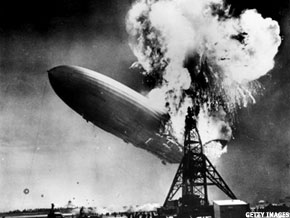 The solemn and ominous sounding bear cultists are bringing out the flaming hydrogen ballons. Several mentions today of the Hindenberg Omen– not talked about on this site since an April 18, 2006 mention (at a time when the market found helium and moved up roughly 20% over the next year). Nattering nabobs of negativism…
The traditional definition of a Hindenburg Omen requires that:
The daily number of NYSE new 52 Week Highs and the daily number of new 52 Week Lows must both be greater than 79. (Source) The daily number of NYSE new 52 Week Highs and the daily number of new 52 Week Lows must both be greater than 2.2 percent of total NYSE issues traded that day. The NYSE 10 Week moving average is rising. The McClellan Oscillator is negative on that same day. New 52 Week Highs cannot be more than twice the new 52 Week Lows (however it is fine for new 52 Week Lows to be more than double new 52 Week Highs). This condition is absolutely mandatory.
Paolo Pezzutti comments:
More about it on this chronically bearish site. To me it looks like a nostradamus prediction more than a pattern. Bears are trying to find new ammunitions…and last week was encouraging.
Victor Niederhoffer comments:
I can't tell if everyone is kidding or not about Hindenberg. But in edspec, I show how a run of 25 in one direction is not inconsistent with randomness, and Birinyi turning points and come up with an infinitely better indicator than Hinden.
Marlowe Cassetti replies:
But The Chair should admit that Hindenberg Omen has such a funereal appeal, an air of foreboding. Rather like the Mayan 2012 Prophesies.
Russ Sears comments:
But could you come up with a better marketing name? It has great name recognition and implies that they know something that others do not, but will soon after the fact think it should have been obvious. It would seem the splashier the name of this or that indicator in the media, the more desperate their position and need to bring in the masses to offload their positions. May be profitable if one could quantify such an inverse correlation.
Aug
5
Hormuz Incident, from Pitt T. Maner III
August 5, 2010 | 3 Comments

 The unexplained damage [picture #2] to a Japanese oil tanker in the Strait of Hormuz last week is a bit unsettling and reminds me of the 1982-1988 Tanker War . Tankers (i.e. 20% of oil supply) in the Straight of Hormuz would appear vulnerable to attack by small high speed boat packed with explosives. There must be, however, many classified military counter measures in place to prevent such.
An initial testing and probing effort by militants?
From the WSJ:
An al Qaeda affiliate said it attacked a Japanese oil tanker in the Strait of Hormuz last week, adding a twist in the mysterious incident and raising fresh concerns about the vulnerability of the vital oil-supply route.
The United Arab Emirates has taken charge of the investigation amid suspicions that a militant attack damaged the supertanker, the M. Star, according to diplomats and government officials familiar with the situation.
Aug
3
Rockies Straight Hits Record, from Pitt T. Maner III
August 3, 2010 | Leave a Comment
 Baseball's straight hits record broken. A portentous sign? A hot hand omen?
Wonder what the odds are for this occurance and how they compare to other types of streaks–like market days up in a row? Reminds me of the Isner/Mahut tennis match where only 1 game was needed to secure the win yet it went on and on and on. In the Cubs case it was one out needed to finish the inning. Sisyphus rolling an ever increasing mental load up the hill.
From the Denver Post:
"I have never seen anything like that," manager Jim Tracy said, echoing what Cubs boss Lou Piniella said down the hall.
The Rockies delivered a season-high 21 hits, impressive but hardly as remarkable as the eighth inning alone, when they scored 12 runs. They strung together 13 hits, including 11 straight, which is a major-league record. To put the onslaught in perspective, the Cubs took 28 minutes to get the final out. The Rockies batted around twice, and the 12 extra-base hits for the game were a franchise record. So much for Huston Street's save opportunity. (It was 5-2 when the inning began.)
Aug
3
Golden Lobsters and Mansions, from Pitt T. Maner III
August 3, 2010 | Leave a Comment
 A portentous Narragansett arthropod was recently found: "Yellow lobsters are rare, but not unheard of. When one was brought ashore in Massachusetts last year, several experts said its coloration came from a gene carried by both parents, and it occurs in about one in 30 million lobsters."
Which reminds me of a nice stay in Newport, RI several years ago looking at the fabulous "cottages" and mansions of the Gilded Age. The fried seafood and beer later at Flo's Clam Shack really hit the spot. There also is a strong Portuguese influence in the Providence, RI area and many wonderful chowders and hearty soups are to be had there. But its hard to beat those "Reds" shrimp from the best shacks and dives around Gulf Shores, Alabama. Steamed and soaked in butter, they are just sweet and delicious. Hopefully the BP release will have little impact on the future availability of these fantastic, succulent shrimp.
Jul
26
Israel’s Effect on US Markets, from Victor Niederhoffer
July 26, 2010 | 2 Comments
 To what extent does the scholarly market or Israel predict the US markets?
Marion Dreyfus comments:
Aside from the timing differential, 6 hours ahead of us, why might Israel even be thought to have any impact on our market, other again than the fact that many investors there are American and they might vote the same way we vote with their shekels and dollars.
(In Israel today there is still a strong feeling of suspicion over markets, since many many Israelis lost their sandals and shirts in a crash some years ago–a huge bubble that hurt many.)
Pitt T. Maner III writes:
It appears that 2 pharmaceutical companies, 2 financial firms, a fertilizer (potash) co., and a telecommunications co. weight about 50% of the TA-100 index. Teva Pharmaceuticals, the biggest stock, took a 6% loss today–otherwise the TA-100 would probably have been positive.
So the connection would seem possibly related to the TA-100 as an early indicator of US demand, possible relationships/sensitivity to currency exchange levels (stronger dollar as positive for drug sales), indicator of relative stability in the Mideast in advance of Monday opens (US oil supply region stability), and future demand for ag commodities–fertilizer sales in advance of planting.
Phil McDonnell writes:
At a lag of a few days the TA-100 'Granger predicts' the US market (SPY) with a statistically significant R squared of 6% (~25% correlation). Details are an exercise for the reader.
Oddly some academic papers indicate that the US and Israeli business cycles (using hierarchy analysis) are not nearly as correlated as the stock exchange indices.
It is odd too that Teva was up in 2009 at the time the US markets were down 20% and now Teva has had bad news surrounding competitor drugs and is down near a 52 week low as US markets hover around the 0% YTD mark.
Given the complexity of the correlation it must be the result of something entirely different!
Jul
23
The Colony, by Pitt T. Maner III
July 23, 2010 | Leave a Comment
Hard to believe that it has been almost 30 years since "The Road Warrior" movie (Mad Max 2), a classic of the dystopian genre and coinciding with DJIA 800 ranges. The show The Colony, starting next Tuesday the 27th, on the Discovery Channel has a bit of that Mad Max/Andromeda Strain post-apocalyptic feel.
I just hope the poor geology professor with no practical skills makes a good showing and can at least find some water–coming from Arizona State. She probably knows a bit of geohydrology. Did not see Season One, but this looks entertaining:
What would you do in the wake of a global catastrophe? Even if you survived it, could you survive the aftermath?
Season Two of THE COLONY introduces viewers to a new group of volunteers with differing backgrounds, skills and personalities, to bear witness to how these colonists will survive and rebuild in a world without electricity, running water, government or outside communication. Over the course of 10 episodes, the colonists - who include a construction foreman, teacher, carpenter and auto mechanic - must work to utilize and strengthen their exploration, technology and survival skills in ways they've never had to before.
Ralph Vince comments:
This, culturally, is AMAZING to me. A few weeks back I had an extended discussion with a group of very bright guys all in their early 20s — a candid discussion about their perceptions. A few very revealing things:
1. They are all very upbeat, economically, on a personal level. They feel they are smart and educated and will do fine even though they expect things to dissolve, they believe their formal education is their life preserver.
2. They all hate the boomers and consider them the "entitlements" generation — they regard the ones who were mostly their parents, the ones they refer to as "The greatest generation" as deserving of entitlements, but the boomers NOT entitled. Very interesting — I couldn't get to the logic of this other than we, the boomers, "screwed everything up, did nothing as a generation, and have a grotesque (to them) sense of entitlement to us".
3. They all, universally, expect things to decay, eventually, one way or another, into this MadMax anarchist future. When I would press them on this one, with things such as "Well you were saturated with these types of images growing up of the future, can't you foresee a less dark one, a more optimistic one?" They all universally agreed that "There is no other way the future can work out." Fascinating. Absolutely fascinating. With housing now more affordable than it ever was to any of the boomers — with borrowing at interest rate levels never before seen (and long rates banging around 4% !!!) and a protracted, decade-long-already contraction, the thought of a major up move over the next 15-20 years was something they could not possibly conceive of.
Vince Fulco writes:
Would note the release of the movie "Book of Eli" on DVD recently follows this post apocalyptic meme. Also has a fairly strong underlying theme of Pogo's "we've seen the enemy and he is us."
Pitt T. Maner III responds:
When will the post-Boomers give up on the end of "The Road " ideas and swing towards the "On the Road " themes again? Cyclicity.
James Lackey comments:
One posits (as Mr. Vic did with movies and baseball) stock returns or better said premiums ratios are higher during futuristic movie and tv times.. see 60's twilight zone and late 90's everything was deep space futuristic.. then post crash it was all cop shows and today perhaps its true on the mad max which came in when the rust belt was dying post 70's Opec deals.
One does not say that its different this time. In my day Generation X was deemed stupid, spoiled and lazy.. It was a cultural and economic shift and we didn't know what to do, but the second we figured it out everyone I know ""just did it" hence the Nike slogan "just do it".
It's good to see the young beat up the old on the net, but quite respectful in person. I have a great deal of respect for my Son's buddies and all the BMX kids we train. Their only problem is over specialization and the quote above shows that in their belief their credentials will be their savior.
I do not agree they despise the boomers… I'd rather think we like to think or say that as Gen X ers for a revenge trade.. No Gen X er believed for a minute SSI [Social Security] would work out so for the Gen YZ kids to even think about it at all is a big joke..Ive never heard about it once…matter of fact if any Old BMX racers bring up the 3 sins of talking about Work Marriage or Politics at the track the kids ride off… the older adult pros age 18-24 say it flat out and crack me up "I can't handle this drama, I am gonna go talk to the girls" These kids today are "awesome".
Ken Drees comments:
TV has recently been and still now is based on these themes "biggest loser" "bachelor" "dancing with the stars" "angry biker building show" "rock star real life" "idol" "top model" "fashion designer contest show" '"hell's kitchen" "next iron chef" "tattoo shop people" "dangerous fishing boat" "man in the wild" etc—a lot of contests, makeup, high energy, tears, people being eliminated, emotive overkill, action with real life injuries. All of this started with "survivor"–which is pretty much over–except they have a Spanish version of it on the Latin channel that I just flipped over yesterday so that trend must be in the last hurrah phase.
But these themes are lottery like–taking a chance to make it to the top–be the one who can outlast the competition and the make it all the way. So maybe that consciousness seeps into markets–can we survive another day, the odds are against us but I feel the magic. A big cross section of age groups are relating to these shows—I personally got hooked on Hell's Kitchen–something about the angry language that I try to keep under control and watching that blond haired man just let his anger spew at those inept cooks. Then you get into the finalists and start rooting for a favorite —like horse racing.
Survival in a post 401k smashed world, surviving unemployment, etc.
Kim Zussman comments:
1. They are all very upbeat, economically, on a personal level. They feel they are smart and educated and will do fine even though they expect things to dissolve, they believe their formal education is their life preserver.
2. They all hate the boomers and consider them the "entitlements" generation — they regard the ones who were mostly their parents, the ones they refer to as "The greatest generation" as deserving of entitlements, but the boomers NOT entitles. Very interesting — I couldn;t get to the logic of this other than we, the boomers, "screwed everything up, did nothing as a generation, and have a grotesque (to them) sense of entitlement to us.
Ralph please send our apologies for screwing things up for them. Ask them not to see "Avenue q", because exactly as Mr.s Rogers and Henson told them - and it is statistically remarkable - they really are all gifted, special, and specially equipped to make this a better world.
Sorry too about our house that you've been eyeing; its 20% upside down because of those college loans, and the one for your first car. At least there won't be any estate tax on it. And remember to hang that Ivy diploma proudly in the latrine - you never know when it might come in handy.
If you decide to get more education - forget about cloud quantum computing gene sequences. Go get your CPA, with emphasis on forensic accounting, and take some classes on retrieval of deleted emails, cash-tracing, and banking in the Bahamas. Also get certified to sell the plastics of the future - insurance.
Big shame about that 401 account. We were, as always, worried about you when they went below 700 and we sold everything. The good news is we got back in at 1200, so please work hard so your earnings propel it to the 12,000 you deserve.
About that screw-up: We were taught something like 2008-2009 was more unlikely than an asteroid collision. However now that the problem has been corrected, you have nothing to fear. Please tell your boss to deduct the maximum for your retirement account, auto-deposited in one of the index ETF's on the first of each month. Add to it on the taxable side too. More is better - buy as much as you can while you're young. Find a good ETF that will go up. If it don't go up, don't buy it.
Sorry about our health. We've been doing cardio for decades, so we're not going to MI like Opa or stroke like Oma. And we floss every day, so there won't be any need for chemo. But we did think to get long-term care insurance, and though you're mad hope you will pick nice nurses for us, and bring a case of Ensure now and then.
Alan Brice Corwin writes:
I've also recently had discussions with a large group of twenty-somethings, but I came away with a different impression. This may be a sampling or a context problem. They may have been less candid towards my generation because they were looking for money for their projects
The main difference in my encounter is that most of these people had boomers for parents. While most of our parents were in their early twenties when we (boomers) were born, their parents were often in their thirties and forties when they were born. There were a few with younger parents, but not very many. (We refer to our parents as the greatest generation because they beat the Nazis and the depression, but who are they referring to and why?)
In fact, I noticed a lot of sympathy for their boomer parents. Several of them noted that their parents had worked hard all of their lives and had expected to retire soon, but are now looking at having to work into their seventies or eighties. There was a general feeling that they would not allow this to happen to them. They would take care of their retirement needs while they were still young.
The main resentment that I encountered was that I was able to get my education for free. They don't think social security will be there for them, but they were young enough so that wasn't really a concern. The idea that someone could go to college for ten years and have money in the bank at the end of it was simply mind-boggling to them. People with full scholarships all the way through told me they had forty grand in debt after school.
I also detected less regard for their formal education among the group I talked to The pretty much all had college degrees, but they regarded their life preserver as their skills at seeing what was needed and building something to meet that need. Several told me that their college education was only good for getting a crappy job for a big corporation, and they had no interest in that.
One point of similarity I noticed is the sense of impending decay. One young man told me that he thought we would see a thousand bridges fail in the US in the next ten years, and that no one would step forward to maintain them. He said he saw no inkling of the common sense of purpose that must have existed when the roads were built. He further pointed out that the infrastructure needs were far greater today because there are now so many more people, but China and Dubai seem to be the only places where they are actively working to build a modern infrastructure. He said we have a 1900 model railroad system and a 1950 highway system (I didn't point out that the interstate highways weren't built until the late fifties and early sixties).
There was a sense that they would never have the life their grandparents had. This same young man said that his grandfather went to work for a company right out of college, worked for them for thirty five years without a layoff, and had been retired and playing golf on a generous pension for thirty years. His grandfather had bought his house for less than ten thousand dollars, and three years ago he could have sold the lot the house was on for nearly a million dollars (not any more).
Another thing I noticed was that almost everyone they idolized in business was a boomer. As you might expect with a group that was more iPhone app developers than anything else, Steve Jobs was far and away the person most admired. Eric Schmidt of Google was another favorite, but ranking way behind Jobs.
Marlowe Cassetti writes:
Wouldn't it be great if they were to make a new reality program based upon the Turtle Traders experiment. All the intrigues of students from diverse backgrounds competing. Ah, the high drama. I bet some of us Specs might be so inclined to view a few episodes. Am I right?
Lars van Dort comments:
Actually the BBC had a program called 'Million Dollar Traders' last year:
"Eight ordinary people are given a million dollars, a fortnight of intensive training and two months to run their own hedge fund. Can they make a killing?
The experiment reveals the inner workings of a City trading floor. The money is supplied by hedge fund manager Lex van Dam: he wants to see if ordinary people can beat the professionals, and he expects a return on his investment too. Yet no-one foresees the financial crisis that lies ahead.
The traders were selected in spring 2008, before the US credit crisis gathered pace. The successful candidates were chosen, trained and dispatched to their specially created trading room in the heart of the Square Mile. Among them are an environmentalist, a soldier, a boxing promoter, an entrepreneur, a retired IT consultant, a vet, a student and a shopkeeper.
The eight novice city traders struggle to ride the storm as stock markets around the world go haywire. Some of them take big risks, and others lose their nerve in spectacular fashion."
Episode 1:
http://vids.myspace.com/index.cfm?fuseaction=vids.individual&videoid=56317671
Episode 2:
http://vids.myspace.com/index.cfm?fuseaction=vids.individual&videoid=56321444
Episode 3:
http://vids.myspace.com/index.cfm?fuseaction=vids.individual&videoid=56337345
I quite enjoyed it.
Jul
19
 The grandson of Hank Greenberg was on CNBC this morning to briefly discuss his machine learning-based hedge fund. He appeared to be a very serious young man (no smiling) and it was interesting to hear that his AI system selects stocks tohold for months and years not microseconds. Sort of counter to what is heard with about algo trading.
I believe Grandpa, however, thought that getting on base was more important than hitting home runs…his baseball career was unfortunately shortened by WWII. Here is how Spencer Greenberg, the slugger's grandson, would describe quant trading to a 5-yr old. (elevator routing a complex problem).
Maybe these "rebellious" youngsters just out of school or still in it will do fairly well in the current environment.
A provocative quote:
"It's pretty clear that humans aren't improving. But computers and algorithms are only getting faster and more robust." - Spencer Greenberg
More on the math-focused, brave new world "toddlers".
Victor Niederhoffer comments:
Yes. The son ruined my squash career with his terrible tennis follow through.
Pitt T. Maner III writes:
Sorry to bring up bad memories. The son seems to be a fairly successful value investor. A yellow pad and pencil sort of grind it out guy. Bad knees and connective tissues evidently from bygone days playing DT with Calvin Hill while studying English at Yale.
Here is a 2010 lecture (using high speed) shows him lecturing at Columbia.Glenn Greenberg of Brave Warrior Advisors, and formerly of Chieftain Capital Management, recently gave a lecture for Bruce Greenwald’s class at Columbia University. Highlights include:
* Asks two questions: 1) Is it a good business? and 2) Is it cheap?
* Marketing is a waste of time for money managers.
* Making an investment is just like making a bet.
* Has a 15% hurdle rate–as low as 13% if not many opportunities.
* Looks at returns in terms of free cash flow yields plus reasonable growth
rates.
Jul
18
Intriguing Book, from Pitt T. Maner III
July 18, 2010 | Leave a Comment
 If it as good as they say…
From Tyler Cowen at marginal revolution:
"David Grossman, the well-known Israeli writer, has a new book coming out this September, namely To the End of the Land (pre-order at that link). The basic plotline is of a mother who sets out on a wander through the Galilee, with a former lover, to avoid any news of her son's possible death on the front in Lebanon.Has any book received better blurbs? Nicole Krauss blurbs that Grossman "may be the most gifted writer I've ever read"; Paul Auster compares the book to Madame Bovary or Anna Karenina.
Here is a discussion of whether the blurbs for the book are overwrought. Yet it has received amazing reviews in Israel. It has won a German book prize. It was strongly recommended to me in two German bookstores, by sales clerks. Grossman himself seems to realize how good the book is.
Here is an interview with Grossman. I am on p.100 of about 700 pp., and while the book develops slowly, I am not ready to reject the extreme claims made on its behalf. I am sad when it comes time to put it down. Have any of you read it? Heard credible accounts of its quality?"
Stefan Jovanovich writes:
Grossman has a wonderful phrase– "the acuteness of life" — to describe what it is like to live in a world where it is commonplace for parents to lose children. The more one reads about the Revolutionary War period in America the more one has a sense of how much those people had in common with Israelis. We now have the luxury of knowing how the story would turn out; the original Americans didn't. For a decade they got to watch children die every day while the war for independence and freedom ground on. There was one great difference: after 1788 at least we Americans had the reassurance that the French marines were off-shore waiting to land. Who, if anyone, is waiting to come to Israel's aid? Alas, Grossman himself still has the atheist illusion that somewhere over the rainbow rationality will triumph and the Palestinians will eventually tire of hate. Perhaps; but a more likely future is that nothing will change. Among my grandfather's many misfortunes were his in-laws. Their explanation for all the miseries of the world's history was that "the Yids did it". When I asked him why they thought that, his answer was: "they need that stupid excuse in order to be able to continue to live in misery with one another." They were and are not the only ones.
Jul
14
How would one interpret a chart like this? In terms of numbers, a certain beginning harmony with DAX above 6200 and SPU lobogaling toward 1100 has been achieved with 6 up days in a row after 11 down in a row. How can chart swings be quantified to advantage and harmonies?

Pitt T. Maner III writes:
From February to April a nice Moldau from Smetena ever building in its 3-4 month cycle and then from May to July a bimonthly Waltz of highs and lows.
Now impresarios, big band leaders, conductors, choreographers, tenors, alto sopranos, glee club members, and assorted cheerleaders lining up in Fellini-esque fashion to lead the choir toward the November subscription drive.
See the song: "We're in the money".
Allen Gillespie comments:
Think of the circle of fifths. If 11 is too high an octave, then divide by 2, yields 5 1/2. And the point drop was nearly 1/2 of the Hz of middle C.
Kenneth Sadofsky comments:
This video seems askance, but it shows a sumo wrestler and a monkey in a game of tug of war. It seems that most of the time isometric strength was used. Then the wrestler stood up, losing his leg strength and ended up on top of the see saw, here losing some contact with the ground and center of gravity compared to the monkey. Then the monkey fed the wrestler rope where the wrestler would fall down and come undone. This probably doesn't answer the question necessarily, but my mind wandered into this area. Of course the monkey could just be stronger , but they were equal for a few seconds.
Here is a biomechanics paper taken without permission that describes force, etc. I stumbled into it while doing a search. Probably not much for those that already know the material, and of negligible value to those like me. It did stir my curiosity.
Jul
13
Computerizing the Chaos of Epilepsy, from Pitt T. Maner III
July 13, 2010 | 1 Comment
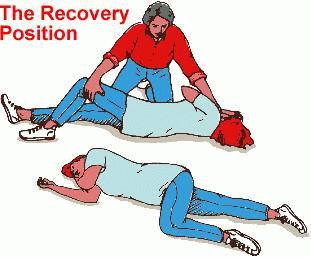 There is some very interesting work being done to uncover the causes of epilepsy.
A laymen wonders, given the prevalence of automated trading, if seizure-like "symptoms" can result from algorithmic programs that start to resonate or oscillate around triggered price levels. And if resonant behavior amongst the machines can be induced by crafty humans with proper tuning forks:
“Nothing has moved in the last 20 to 25 years,” said Wim van Drongelen, professor of neurology at the University of Chicago Medical Center. “There have been a lot of new anti-convulsant medications, but that one-third of patients who do not respond to medication has remained the same. My conclusion from that is that apparently all the new medications that have been developed address more or less the same type of epilepsy. In this context, epilepsy is comparable to cancer - there’s not just one type of cancer, and there’s not just one type of epilepsy, there are multiple types.”……………….."
The research team, led by Jennifer Dwyer, “injected” a small amount of current into their model and simply let it run. The neurons in their computerized cortex quickly fell into a pattern of oscillation that replicated what one would typically observe in an EEG recording. But the higher resolution afforded by the model allowed the team to figure out why networks of neurons fall into oscillation patterns. The answer was not a coordination of electrical spikes, as was theorized, but a more subtle fluctuation pattern of the cell’s electrical baseline: resonance."“
This gets at the idea that one of potential mechanisms that could start seizures could be resonance,” van Drongelen said. “Think of the Tacoma bridge, where resonance did lead to extreme large fluctuations and in the end the bridge was destroyed.”
Jul
10
Cuba Libres in Habana, from Pitt T. Maner III
July 10, 2010 | 2 Comments
 Americans have been able to sneak into Cuba from Mexico, but a lift of the travel ban might have some interesting economic effects. I have flown over Cuba on the way to Nicaragua and it is remarkable to see the apparent lack of development and the beautiful, pristine white sand beaches down there. Many Americans enjoyed the Cuba of the 50's and earlier but it is a bit of a dilemma now if one does not want to potentially help sustain continued corruption and dictatorship. But things might change quickly.
Earlier this month, senators of both political parties indicated they have sufficient votes to lift the American travel ban to Cuba. They said they plan to push legislation in the next few weeks to eliminate it.
President Barack Obama modified the travel restriction last year, allowing Cubans to visit their relatives in Cuba, but declined to rescind America’s decades-old embargo before the Caribbean nation ends its prosecution of political dissidents. Human rights have long been a sticking point in U.S.-Cuban relations.
Under existing law, American journalists and persons on humanitarian missions are permitted to travel to Cuba.
With little American presence there since the late 1950s, Cuba is considered a ripe market for U.S. hotel and service companies — a potentially profitable Caribbean playground.
Jul
8
The Big Mac Index, from Pitt T. Maner III
July 8, 2010 | 2 Comments
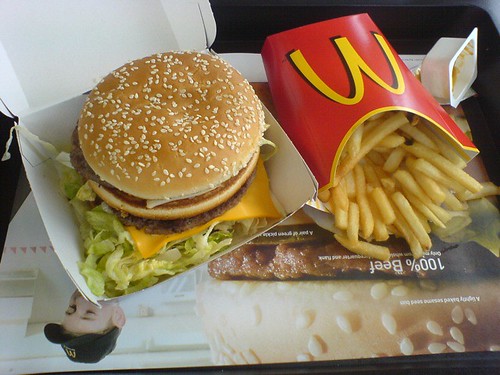
"If the Big Mac Index says that a currency is undervalued, it tends to appreciate," [Univ. of Florida Professor] Denslow said. Palm Beach Post.
I am not sure that Dr. Denslow has tested it but the Economist magazine appears to be the source of the idea. Pam Woodall, the Economist's Asia Economics Editor, evidently originated the Big Mac index . Others appear to have tried to refine it a bit. Perhaps the Big Mac index is a rough indicator useful as a starting point for more research.
The following UBS AG paper uses the index along with other consumer items but in the form of how many minutes of working time it takes to purchase the items. See page 11 of pdf.
And here is Burgernomics: A Big Mac Guide to Purchasing Power Parity [20 page PDF] from the St. Louis Fed and an online writeup from the Dallas Fed.
Jul
2
Double Faulting, from Pitt T. Maner III
July 2, 2010 | 1 Comment
 Double faulting is one of the most discouraging aspects of tennis. Watching Djokovic double fault the 2nd set away (and to end up losing the match) this morning during a tiebreaker against Berdych in the Wimbledon semifinal match shows that even the number 3 player in the world can feel pressure, fear and nerves on a critical point. Giving away points to an opponent after working hard is extremely aggravating and mentally difficult to overcome.
The tennis serve is very dependent on a good, consistent ball toss–it is so easy to get the wrist involved and throw the toss in all directions and to lower the head (anticipating the return of the serve) during the serve and serve into the net. It's almost better to serve long and try to add more spin than it is to dump a serve into the net. It is also important to think positive thoughts and not tighten up–that little voice in the head can easily lead you to a double fault.
Regular cues and ball bouncing rituals can be helpful.
It's shame though to lose a match due to choking or self-defeating behavior, and you don't see it that much amongst the top pros, but when it happens it is a hard thing to get out of the head. And more particularly when your nickname is "Joker" the press has an easy rhyming headline to use to remind you of your past failures.
Ralph Vince adds:
 RE: it is also important to think positive thoughts and not tighten up.
This is SO absolutely true, and SO difficult to really define–that being loose, yet in a controlled pace without any real slack on the line. This is vital to performance in anything, be it tennis, fighting…or even thinking through problems. The Old Frenchman would say, "C'est toujours la meme chose," (It's always the same thing).
Think of anytime you've ever choked at anything– the aforementioned mental and physcial state was absent. Think of ANY fight you've ever been in. They always, ALWAYS tighten up, succumbing to fear and adrenaline.
I think pro athletes really understand this, and not just in the individual sports like tennis or golf, but even when these guys are shooting foul shots in basketball. Learning that mental groove is worth more than all the years one can spend in school I think. It's the kind of thing that one learns only by doing it, learned only through the prompting of pain and discomfort until it is found.
Learning things any other way is not really learning.
Charles Pennington adds:
The serve has got to be the most non-intuitive and difficult-to-learn shot in tennis. Whenever I look at slow motion video showing the trajectory of the racquet, I am amazed that it's possible for a human to do it.
Here's a video of McEnroe serving, showing the fundamental steps–the weight shift, the toss, the swing of the racquet, and the line call argumentation.
Nigel Davies writes:
I wonder if the frequency of this kind of mistake may increase in proportion to a player's muscle mass. The 'nerves' might be a simple chemical equation.
Jun
29
Hayek’s Book, by Jeff Watson
June 29, 2010 | 2 Comments
"The Road to Serfdom" is one of my favorite books of all time. It is also on the bestselling lists because of some media mention. Here is a great version of the book in cartoon fashion, very suitable for children of all ages.
And speaking of McChrystal, one of my favorite places to surf in the world is New Smyrna Beach, Florida. Best wave in the state, funky beach town vibe, very cool, mellow tropical paradise. It also has more shark bites than any place on the planet . It's a rather disconcerting feeling when I'm out on the water and realize that I'm not at the top of the food chain.
Victor Niederhoffer comments:
About McChrystal and the good surfing versus the sharks reminds one of selling premium or buying the big downs.
Pitt T. Maner III writes:
And Jeff's odds are not too bad. Last fatality in the cooler waters off the Brevard/Volusia Co. area was in 1934 despite 339 documented attacks in the 1882-2009 time frame. Benchley unfortunately got us all thinking negative thoughts every time entering the water in the early 70s… as did a co-worker in the early 90s who had a shark nip story.
« go back — keep looking »Archives
- September 2026
- August 2026
- July 2026
- June 2026
- May 2026
- April 2026
- March 2026
- February 2026
- January 2026
- December 2025
- November 2025
- October 2025
- September 2025
- August 2025
- July 2025
- June 2025
- May 2025
- April 2025
- March 2025
- February 2025
- January 2025
- December 2024
- November 2024
- October 2024
- September 2024
- August 2024
- July 2024
- June 2024
- May 2024
- April 2024
- March 2024
- February 2024
- January 2024
- December 2023
- November 2023
- October 2023
- September 2023
- August 2023
- July 2023
- June 2023
- May 2023
- April 2023
- March 2023
- February 2023
- January 2023
- December 2022
- November 2022
- October 2022
- September 2022
- August 2022
- July 2022
- June 2022
- May 2022
- April 2022
- March 2022
- February 2022
- January 2022
- December 2021
- November 2021
- October 2021
- September 2021
- August 2021
- July 2021
- June 2021
- May 2021
- April 2021
- March 2021
- February 2021
- January 2021
- December 2020
- November 2020
- October 2020
- September 2020
- August 2020
- July 2020
- June 2020
- May 2020
- April 2020
- March 2020
- February 2020
- January 2020
- December 2019
- November 2019
- October 2019
- September 2019
- August 2019
- July 2019
- June 2019
- May 2019
- April 2019
- March 2019
- February 2019
- January 2019
- December 2018
- November 2018
- October 2018
- September 2018
- August 2018
- July 2018
- June 2018
- May 2018
- April 2018
- March 2018
- February 2018
- January 2018
- December 2017
- November 2017
- October 2017
- September 2017
- August 2017
- July 2017
- June 2017
- May 2017
- April 2017
- March 2017
- February 2017
- January 2017
- December 2016
- November 2016
- October 2016
- September 2016
- August 2016
- July 2016
- June 2016
- May 2016
- April 2016
- March 2016
- February 2016
- January 2016
- December 2015
- November 2015
- October 2015
- September 2015
- August 2015
- July 2015
- June 2015
- May 2015
- April 2015
- March 2015
- February 2015
- January 2015
- December 2014
- November 2014
- October 2014
- September 2014
- August 2014
- July 2014
- June 2014
- May 2014
- April 2014
- March 2014
- February 2014
- January 2014
- December 2013
- November 2013
- October 2013
- September 2013
- August 2013
- July 2013
- June 2013
- May 2013
- April 2013
- March 2013
- February 2013
- January 2013
- December 2012
- November 2012
- October 2012
- September 2012
- August 2012
- July 2012
- June 2012
- May 2012
- April 2012
- March 2012
- February 2012
- January 2012
- December 2011
- November 2011
- October 2011
- September 2011
- August 2011
- July 2011
- June 2011
- May 2011
- April 2011
- March 2011
- February 2011
- January 2011
- December 2010
- November 2010
- October 2010
- September 2010
- August 2010
- July 2010
- June 2010
- May 2010
- April 2010
- March 2010
- February 2010
- January 2010
- December 2009
- November 2009
- October 2009
- September 2009
- August 2009
- July 2009
- June 2009
- May 2009
- April 2009
- March 2009
- February 2009
- January 2009
- December 2008
- November 2008
- October 2008
- September 2008
- August 2008
- July 2008
- June 2008
- May 2008
- April 2008
- March 2008
- February 2008
- January 2008
- December 2007
- November 2007
- October 2007
- September 2007
- August 2007
- July 2007
- June 2007
- May 2007
- April 2007
- March 2007
- February 2007
- January 2007
- December 2006
- November 2006
- October 2006
- September 2006
- August 2006
- Older Archives
Resources & Links
- The Letters Prize
- Pre-2007 Victor Niederhoffer Posts
- Vic’s NYC Junto
- Reading List
- Programming in 60 Seconds
- The Objectivist Center
- Foundation for Economic Education
- Tigerchess
- Dick Sears' G.T. Index
- Pre-2007 Daily Speculations
- Laurel & Vics' Worldly Investor Articles
