Oct
29
Speed in Sports and Trading, shared by Larry Williams
October 29, 2010 |
UO football
Oregon football: Ducks' success on offense is just a matter of time
Oregon's fast offensive tempo has baffled opponents this season, and USC will try to solve it Saturday
By Rob Moseley
The Register-Guard
Appeared in print: Wednesday, Oct 27, 2010
In college football, it's best to take things one week at a time - unless Oregon looms on the schedule.
Because of the Ducks' withering offensive pace, USC has increased its tempo in recent practices. And not just this week or during the preceding bye week, Trojans coach Lane Kiffin said, but even earlier than that.
"Over the last couple of weeks, even going into the Cal game, we've picked up our tempo in practice whenever we were going against the defense," Kiffin said Tuesday. "I just think that if you try to all of a sudden do it in the week you're playing Oregon, it's not going to help a whole lot. …
"We've been doing this for a few weeks and took a different approach to the bye week than if we were probably playing someone else, by the speed we practiced at and the way we approached it."
The list of top-ranked Oregon's scoring drives this season, entering Saturday's 5 p.m. game at No. 24 USC, includes 16 shorter than a minute, and only three longer than four minutes. To some extent that reflects the big-play ability of such stars as LaMichael James, Jeff Maehl and Josh Huff, and also some favorable field position owing to the 25 turnovers forced by the UO defense and special teams.
But it also illustrates the tempo at which Oregon's offense plays, and the minimal time the Ducks take between snaps. Mostly, that's determined by how long it takes officials to spot the ball after the previous play.
"We're playing at a pretty good clip right now," UO coach Chip Kelly said. "I think it's because our players have a really good understanding of what we're trying to do. We just try to eliminate that time between plays, and then just go play."
Snapping the ball just a handful of seconds after the previous play minimizes the time available for the defense to call plays, substitute or react to Oregon's offensive formation. It's a common occurrence to see defenders spend those moments with their hands on their hips, a sure sign of fatigue.
Oregon doesn't have such trouble signalling plays to the offense. The Ducks streamlined their terminology in order to play faster on offense when Kelly was promoted to head coach in 2009, he said, and they employ a complicated system of signboards and hand signals to indicate plays during offensive possessions.
The signs each include four images - faces of ESPN personalities are among the most recognizable.
Kelly said the signs indicate a package of plays, and hinted that they can sometimes be used as a decoy. Sometimes, he said, players aren't asked to "go to the board" to get the call.
"It's just another way to play fast," Kelly said. "The analogy I can give you is, iif you go to McDonald's and order a No. 2, that's all you have to say and you get a Quarter Pounder and a drink and fries, and you just say, 'No. 2.' If we send them to the board, one picture can mean the formation and the play and the snap-count. That's all it is. It's just another way to play faster."
The Ducks' tempo seems particularly suited to their spread-option offense, which doesn't feature excessive pre-snap shifting and motion to fool the defense, as in the scheme employed by Boise State, to use just one example. But Kelly said he'd look to push the tempo even if Oregon's personnel was best suited to packages requiring three tight ends and a fullback.
"You could play up-tempo no matter what you do," Kelly said. "You watch (Indianapolis Colts quarterback) Peyton Manning, they're not running any option but they play as fast in the NFL, in terms of him being able to get their plays in and the speed they want to play at. So it's not married to the system."
Kelly also quipped that, "The byproduct is, as the play-caller, you can call a lot of really bad plays, and people forget about them quickly because we're on to the next one." But clearly Kelly, whose offense leads the nation in points and yardage, hasn't had many missteps in that regard.
The potential drawback to playing so fast on offense is that Oregon's defense is on the field so long. The Ducks are 114th out of 120 teams nationally in time of possession, at 26:40 per game; the 516 plays defended by Oregon are more than anybody else in the Pac-10 but Washington State.
The Ducks try to mitigate that with a regular rotation of about 25 players at the 11 positions on defense.
But Oregon also uses about 20 players regularly on offense, another challenge for opponents.
"The different ways they mix and match that personnel in terms of personnel groupings and formations, you're trying to identify what their top runs are and their top passes are, and when there's more of them it's hard to really pinpoint what their favorite ones to do are and defend them," Stanford coach Jim Harbaugh said.
Kiffin and his staff at USC are trying to tackle that challenge this week.
"You don't know who's going to be in when," Kiffin said. "They do rotate guys in. I'm sure it's because they know they're going to play a lot of plays because their offense scores so fast and doesn't use very much time.
"The 14 touchdown drives under (54) seconds, that's unheard of for four years of games, let alone half a season. I'm sure that's why they do that. I don't think until this week I realized how deep they were. For them to play so many people on offense and defense, they've got great depth."
All of it speedy, as Oregon tries to keep pushing the pace of this historic season.
"We just try to eliminate that time between plays, and then just go play."
- Chip Kelly, Oregon Football Coach
Pitt T. Maner III shares:
On speed in practice:
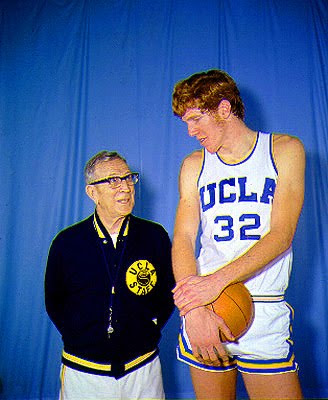
Bill Walton on Wooden and UCLA basketball practice, from (With Steve Jamison) Wooden: A Lifetime of Observations On and Off Court, Contemporary Books (Lincolnwood, IL), 1997.
For us, it all started with our practices at UCLA, which were nonstop action and absolutely electric, super-charged, on edge, crisp, and incredibly demanding, with Coach Wooden pacing up and down the sidelines like a caged tiger, barking out instructions, positive reinforcement, and appropriate maxims: "Be quick, but don't hurry." "Failing to prepare is preparing to fail." "Never mistake activity for achievement." "Discipline yourself and others won't need to.
"At the same time he constantly moved us into and out of minutely detailed drills, scrimmages, and patterns while exorting us to "Move…quickly…hurry up!" It was wonderfully exhilarating and absolutely intense.
In fact, games actually seemed like they happened in a slower gear because of the pace at which we practiced. We'd run a play prefectly in scrimmage and Coach would say, "OK, fine. Now re-set. Do it again, faster." We'd do it again. Faster. And again. Faster. And again.
I'd often think during UCLA games, "Why is this taking so long?" because we had done everything that happened during a game thousands of times at a faster pace in practice.
Ralph Vince writes:
It's a game of evolution, the hurry up, with a mobile quarterback, an absence of putting a man in motion (and hence, plays that aren't contingent on defensive reads) and spread out receivers.
The counter to it is the part I am trying to study, and seems to be confusing blitzes (which are difficult to coordinate when faced with a no-huddle), middle zones and man for man on the outside (and, surprisingly, it appears the outside coverage man should take the INNER of to wideouts on the same side when that occurs).
Russ Sears writes:
Football is a sport requiring quick short burst of speeds. Speeding up the normal pace of the game cause the recovery time to shorten drastically. An offense that knows before the position of attack can rotate the burst of speeds, where as the defense must all be ready and attacking. The stamina to endure these burst of speeds with short recovery takes a good month of training. This is, I believe, the Indy Colts advantage also.
In basketball, it takes even longer because of the aerobic base needed. Wooden and several other great basketball coaches practiced running stairs and full court press. As full court press is the basketball equivalent to no huddle offense.
In distance running the equivalent is cycles surging the letting up the pace. If you practiced this you could beat better runners who are not prepared for this.
Comments
Archives
- September 2026
- August 2026
- July 2026
- June 2026
- May 2026
- April 2026
- March 2026
- February 2026
- January 2026
- December 2025
- November 2025
- October 2025
- September 2025
- August 2025
- July 2025
- June 2025
- May 2025
- April 2025
- March 2025
- February 2025
- January 2025
- December 2024
- November 2024
- October 2024
- September 2024
- August 2024
- July 2024
- June 2024
- May 2024
- April 2024
- March 2024
- February 2024
- January 2024
- December 2023
- November 2023
- October 2023
- September 2023
- August 2023
- July 2023
- June 2023
- May 2023
- April 2023
- March 2023
- February 2023
- January 2023
- December 2022
- November 2022
- October 2022
- September 2022
- August 2022
- July 2022
- June 2022
- May 2022
- April 2022
- March 2022
- February 2022
- January 2022
- December 2021
- November 2021
- October 2021
- September 2021
- August 2021
- July 2021
- June 2021
- May 2021
- April 2021
- March 2021
- February 2021
- January 2021
- December 2020
- November 2020
- October 2020
- September 2020
- August 2020
- July 2020
- June 2020
- May 2020
- April 2020
- March 2020
- February 2020
- January 2020
- December 2019
- November 2019
- October 2019
- September 2019
- August 2019
- July 2019
- June 2019
- May 2019
- April 2019
- March 2019
- February 2019
- January 2019
- December 2018
- November 2018
- October 2018
- September 2018
- August 2018
- July 2018
- June 2018
- May 2018
- April 2018
- March 2018
- February 2018
- January 2018
- December 2017
- November 2017
- October 2017
- September 2017
- August 2017
- July 2017
- June 2017
- May 2017
- April 2017
- March 2017
- February 2017
- January 2017
- December 2016
- November 2016
- October 2016
- September 2016
- August 2016
- July 2016
- June 2016
- May 2016
- April 2016
- March 2016
- February 2016
- January 2016
- December 2015
- November 2015
- October 2015
- September 2015
- August 2015
- July 2015
- June 2015
- May 2015
- April 2015
- March 2015
- February 2015
- January 2015
- December 2014
- November 2014
- October 2014
- September 2014
- August 2014
- July 2014
- June 2014
- May 2014
- April 2014
- March 2014
- February 2014
- January 2014
- December 2013
- November 2013
- October 2013
- September 2013
- August 2013
- July 2013
- June 2013
- May 2013
- April 2013
- March 2013
- February 2013
- January 2013
- December 2012
- November 2012
- October 2012
- September 2012
- August 2012
- July 2012
- June 2012
- May 2012
- April 2012
- March 2012
- February 2012
- January 2012
- December 2011
- November 2011
- October 2011
- September 2011
- August 2011
- July 2011
- June 2011
- May 2011
- April 2011
- March 2011
- February 2011
- January 2011
- December 2010
- November 2010
- October 2010
- September 2010
- August 2010
- July 2010
- June 2010
- May 2010
- April 2010
- March 2010
- February 2010
- January 2010
- December 2009
- November 2009
- October 2009
- September 2009
- August 2009
- July 2009
- June 2009
- May 2009
- April 2009
- March 2009
- February 2009
- January 2009
- December 2008
- November 2008
- October 2008
- September 2008
- August 2008
- July 2008
- June 2008
- May 2008
- April 2008
- March 2008
- February 2008
- January 2008
- December 2007
- November 2007
- October 2007
- September 2007
- August 2007
- July 2007
- June 2007
- May 2007
- April 2007
- March 2007
- February 2007
- January 2007
- December 2006
- November 2006
- October 2006
- September 2006
- August 2006
- Older Archives
Resources & Links
- The Letters Prize
- Pre-2007 Victor Niederhoffer Posts
- Vic’s NYC Junto
- Reading List
- Programming in 60 Seconds
- The Objectivist Center
- Foundation for Economic Education
- Tigerchess
- Dick Sears' G.T. Index
- Pre-2007 Daily Speculations
- Laurel & Vics' Worldly Investor Articles
