Analysis of Train Derailment in East Palestine, Ohio, from Stefan Jovanovich
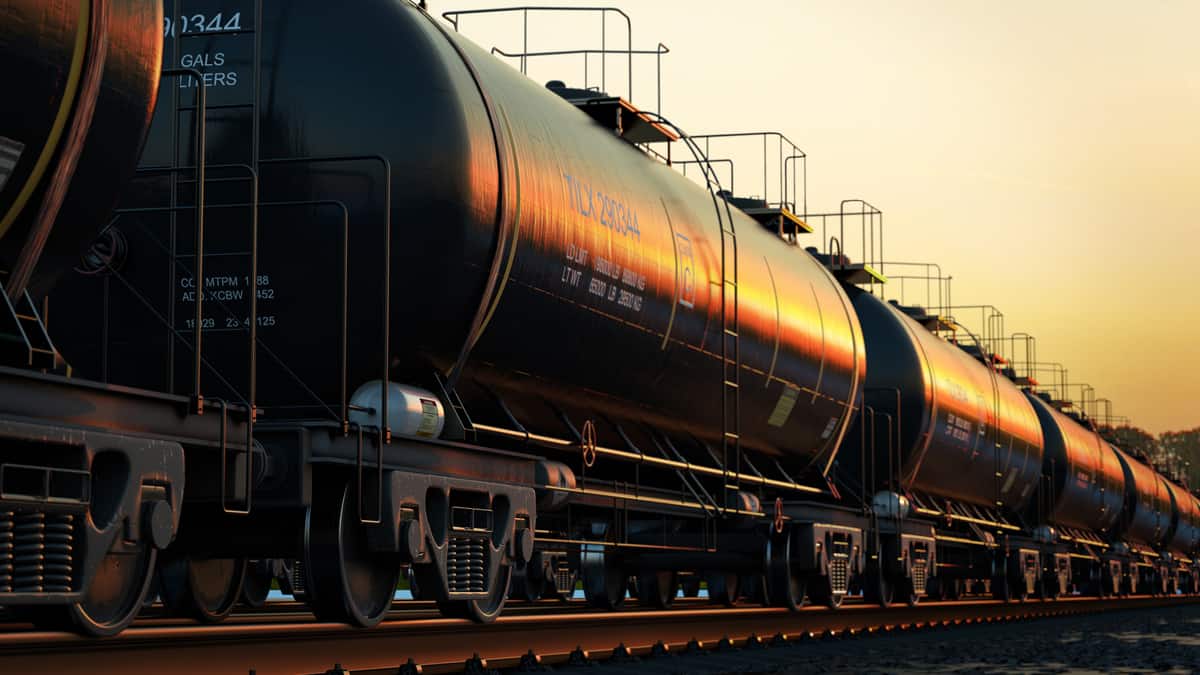
Starts at Minute 4:00: A Failed Defect Detector and the Train Derailment at East Palestine
The achievement of railroads is that they can carry massive loads thousands of miles with an economic efficiency that no other form of ground transport can come close to matching. To do this they have to violate the first rule of all practical mechanical engineering and have metal scrape against metal without any lubrication. The wheels and rails are steel against steel. If an air brake fails for a wheel, it stops it dead and the wheel becomes a giant flint throwing sparks and then flames. The only solution to this problem is to slow the train to walking speed and move it to a siding. If the train continues at speed (30-40 mph in developed areas), that car will eventually derail. The unanswered question for this incident is why the train crashed in the pattern of an emergency stop by the engine, not the derailment of a single car. That could have been caused by the engineer not having the skill and temperament required to avoid literally slamming on the brakes because "the train is on fire". But, that is pure speculation by those of us sitting safe in the bleachers.
Bud Conrad writes:
Thank you for the explanation in bigger picture context. There seems to be something much more unusual about this particular incident, than just a mechanical failure, of a type that must happen frequently because steel is riding on steel.
Jeffery Rollert comments:
Modern rail cars have systems that brake all cars at once (locomotives included). It’s done by a radio signal or wire, and no longer a pneumatic propagation. I know, because a very good friend designed and built the system decades ago. Cars derail, when the locomotive derails and effectively becomes the brake. So why did the locomotive derail?
I haven’t seen the video, but strongly suspect something in the tracks or a switch was improperly diverted that the locomotive couldn’t handle the redirection at that speed.
Henry Gifford explains:
Steel rolling on steel is a great idea because there is such a small amount of friction. An adult human can allegedly push a fully loaded (200,000 Pounds or more) railroad car along a level track (but not get it started – another story). Rubber covered wheels, in contrast, require much more energy because heat is generated as the rubber flexes (internal friction from molecules rubbing on each other). But, if the railroad train car bearings seize up, steel is sliding on steel – still lower friction than rubber rubbing on a road, thus the locomotive(s) can drag it along until derailment.
If/when a train car derails, the rubber air hoses connecting one car to the other – in a long chain the length of the train – break, which lets the air out of the braking system along the whole length of the train, as if the brakes were put into emergency stop.
The air brake system in use today was designed and patented by George Westinghouse to be “fail safe” in the sense that a failure stops the train, instead of a failure allowing the train to keep going, maybe going too fast on a downhill…. However, trains these days are longer than George probably imagined, thus it takes a while for all the air to bleed out of the system at the locomotive end, leading to a situation where the brakes are fully applied at one end of the train and not applied at all at the other end. Because of this, trains routinely slow down in advance of anticipated stops, which reduces overall speed along the route. And, if the train slows below a certain speed, it must stop completely and wait until the air bleeds out of the system along the whole length of the train before starting again. They still get where they are going, but more slowly than they would with a better system.
The solution is to use electronic means to apply the brakes simultaneously along the entire train, which would improve safety while avoiding otherwise unnecessary slowing or stopping caused by limitations in the air brake technology in use today. The challenge is to maintain compatibility between all the freight railcars in the US fleet. While today not all railcars are compatible with all tracks (weight, height, width), the whole fleet is compatible in terms of connectors between railcars, the wheel/track fit, etc. The brakes are (I think) all 100% compatible fleetwide, which has tremendous advantages.
The braking technology in use today is, at least in theory, compatible back to the original air brakes invented in the 1860s. In practical terms, I think there has never been a situation where some freight cars can’t be put on a train with other cars because of a lack of compatibility with the oldest cars in use anyplace in the country. Right now the industry is implementing an electronic system that will control the air brakes simultaneously along the length of a train. The new system is being introduced fleetwide with a minimum of compatibility problems going both backwards and forward; something the computer industry could take a clue from.
As for the hazards of transporting chemicals in tank cars, the federal government has, in recent years, repeatedly increased the required safety of tank cars. The tanks are required to be covered with thermal insulation that keeps the product from heating up quickly in the case of a fire nearby. The required amount of insulation on new cars, at least for those that transport petroleum products, has been increased repeatedly. Other safety improvements have been added – most related to avoiding spilling of product in the case of an accident.
As discussed below, the recent incident seems to have been caused by a fairly routine bearing failure that was not detected in time. “Routine” in the sense that these failures occur rarely among the huge number of wheel bearings on a long train, and usually only occur after a number of miles that far exceeds the life of a typical automobile or truck. But, they still occur. Usually they are detected by sensors/cameras along the track that “see” infrared light (heat emissions on the infrared light spectrum – the way that about half the heat moved from sun to earth gets here) emitted from a hot bearing or hot (dragging) wheel, and report the same to the train operator by radio. The trackside “hot boxes” also report by radio to a train operator the news that there are no problems with a train, if that is the case, which means that parts of the hot box system are, in effect, tested each time a train passes.
What is apparently unusual about the recent incident is that a wheel was reportedly sliding along the tracks (the resulting shower of sparks was reportedly seen by a security camera) but was not detected by or reported by the next hot box. Or, maybe it was reported but the train operator did not slow the train in response.
Bo Keely adds:
It's a very old hobo trick to get a train to stop by disconnecting the brake hose under your feet. The train emergency stops and one must skedaddle before the front end brakeman walks the line to couple the break.
'Hot boxes' on RR wheels are so common that before a freight pulls out a yard a worker always walks or quads the line of cars looking for overheated wheel journals. It's also very common for a train I'm on to stop in the middle of nowhere due to a hot box and have that car sided before continuing. Hot boxes are the big chance for hobos to talk to workers to glean information on where the heck he's going.
Stefan Jovanovich comments:
JR is right about the propagation: the signal is no longer pneumatic but by electronic networking. But they are still "air brakes" in the sense that the pressure is exerted by gas pressure.
Bud Conrad writes:
…This criticism of lobbying money and discussion of company support now that it is public may interest some.
Henry Gifford asks:
Could this be the cause of all the supply chain problems in the US?
Bo Keely writes:
pulling a brake hose to emergency stop a train is an old but infrequently used hobo ruse. in all my rides i've only seen it happen twice and I wasn't the one who did it. but that's enough to encourage newcomers to sit at the back of any car to not be thrown off the front in a sudden stop such as a derailment.
Stefan Jovanovich offers some color:
Archives
- October 2026
- September 2026
- August 2026
- July 2026
- June 2026
- May 2026
- April 2026
- March 2026
- February 2026
- January 2026
- December 2025
- November 2025
- October 2025
- September 2025
- August 2025
- July 2025
- June 2025
- May 2025
- April 2025
- March 2025
- February 2025
- January 2025
- December 2024
- November 2024
- October 2024
- September 2024
- August 2024
- July 2024
- June 2024
- May 2024
- April 2024
- March 2024
- February 2024
- January 2024
- December 2023
- November 2023
- October 2023
- September 2023
- August 2023
- July 2023
- June 2023
- May 2023
- April 2023
- March 2023
- February 2023
- January 2023
- December 2022
- November 2022
- October 2022
- September 2022
- August 2022
- July 2022
- June 2022
- May 2022
- April 2022
- March 2022
- February 2022
- January 2022
- December 2021
- November 2021
- October 2021
- September 2021
- August 2021
- July 2021
- June 2021
- May 2021
- April 2021
- March 2021
- February 2021
- January 2021
- December 2020
- November 2020
- October 2020
- September 2020
- August 2020
- July 2020
- June 2020
- May 2020
- April 2020
- March 2020
- February 2020
- January 2020
- December 2019
- November 2019
- October 2019
- September 2019
- August 2019
- July 2019
- June 2019
- May 2019
- April 2019
- March 2019
- February 2019
- January 2019
- December 2018
- November 2018
- October 2018
- September 2018
- August 2018
- July 2018
- June 2018
- May 2018
- April 2018
- March 2018
- February 2018
- January 2018
- December 2017
- November 2017
- October 2017
- September 2017
- August 2017
- July 2017
- June 2017
- May 2017
- April 2017
- March 2017
- February 2017
- January 2017
- December 2016
- November 2016
- October 2016
- September 2016
- August 2016
- July 2016
- June 2016
- May 2016
- April 2016
- March 2016
- February 2016
- January 2016
- December 2015
- November 2015
- October 2015
- September 2015
- August 2015
- July 2015
- June 2015
- May 2015
- April 2015
- March 2015
- February 2015
- January 2015
- December 2014
- November 2014
- October 2014
- September 2014
- August 2014
- July 2014
- June 2014
- May 2014
- April 2014
- March 2014
- February 2014
- January 2014
- December 2013
- November 2013
- October 2013
- September 2013
- August 2013
- July 2013
- June 2013
- May 2013
- April 2013
- March 2013
- February 2013
- January 2013
- December 2012
- November 2012
- October 2012
- September 2012
- August 2012
- July 2012
- June 2012
- May 2012
- April 2012
- March 2012
- February 2012
- January 2012
- December 2011
- November 2011
- October 2011
- September 2011
- August 2011
- July 2011
- June 2011
- May 2011
- April 2011
- March 2011
- February 2011
- January 2011
- December 2010
- November 2010
- October 2010
- September 2010
- August 2010
- July 2010
- June 2010
- May 2010
- April 2010
- March 2010
- February 2010
- January 2010
- December 2009
- November 2009
- October 2009
- September 2009
- August 2009
- July 2009
- June 2009
- May 2009
- April 2009
- March 2009
- February 2009
- January 2009
- December 2008
- November 2008
- October 2008
- September 2008
- August 2008
- July 2008
- June 2008
- May 2008
- April 2008
- March 2008
- February 2008
- January 2008
- December 2007
- November 2007
- October 2007
- September 2007
- August 2007
- July 2007
- June 2007
- May 2007
- April 2007
- March 2007
- February 2007
- January 2007
- December 2006
- November 2006
- October 2006
- September 2006
- August 2006
- Older Archives
Resources & Links
- The Letters Prize
- Pre-2007 Victor Niederhoffer Posts
- Vic’s NYC Junto
- Reading List
- Programming in 60 Seconds
- The Objectivist Center
- Foundation for Economic Education
- Tigerchess
- Dick Sears' G.T. Index
- Pre-2007 Daily Speculations
- Laurel & Vics' Worldly Investor Articles
