May
19
 Roughly 47% of "Debt Held by the Public" ($13.1 trillion as of March 30, 2015) is now owed to people (individuals and institutions) who do not use the dollar as their own unit of account. The rest is owed to holders who do their accounting in greenbacks.
I can remember Galbraith making one of his royal appearances at the one undergraduate class he still taught and entertaining the assembled worshippers with a quip about the national debt not mattering because "we owed it to ourselves".
"We" are about to become the minority creditors. Clearly, the solution is abolish the use of cash itself so that even the vague historical memory of currency as the yardstick for measuring debt can go bye-bye.
May
15
News for Serious Counters, from Stefan Jovanovich
May 15, 2015 | Leave a Comment
This is probably old news to our serious counters: "Gridded Population of the World (GPW), v3"
May
13
 When Harcourt, Brace & Company bought World publishing, the wags said that my father Bill Jovanovich had taken over the world. (The better joke came later when the firm changed its name again to Harcourt Brace Jovanovich and someone said that Dad had replaced the world because he knew better.)
The second joke was funnier to me because in the world of testing (which is what World Publishing did) Bill Jovanovich always did know better. He understood something that was so simple and radical that it will be another century, if at all, before the world catches up.
The only sensible use of testing is to allow people to find the full range of their failures; then they can decide what are their best chances for success.
Dad wanted "school" to be nothing but tests– of reading, hopscotch, sewing, everything possible. He wanted them to be voluntary, and he wanted them to be subject to the competition of choice. His idea of open enrollment was literally that– people could send their children to any courses they chose.
That was the only way for "society" to allow people to figure out what they "should" and "could" learn. He thought standardized education was an abomination, precisely because it allowed the helpers to always know best and gave the students and parents no escape from "the permanent record".
May
13
The Oldest Profession, from Stefan Jovanovich
May 13, 2015 | Leave a Comment
 The charity industry is America's oldest profession (the whores came only after the British took over New Amsterdam and brought in the young men in uniforms).
"Helping" in the name of God/Progress/Equality was established as the primary career for the properly educated even as the Indians were coming close to driving the colonists back into the Atlantic.
Without "helping" there is no justification for compulsory primary and secondary education, college attendance and all the soft subjects that are now the bulk of graduate school education in the United States.
It is– and always will be– the real "jobs" program because it is the only way the commercially-inept can maintain their social status and pass on their sinecures. As the First Lady reminded us the other day, she is "an Ivy-League educated lawyer". So there.
Russ Herrold writes:
The thought that I had when I saw the initial post was this meditation:
"I am for doing good to the poor, but … I think the best way of doing good to the poor, is not making them easy in poverty, but leading or driving them out of it. I observed … that the more public provisions were made for the poor, the less they provided for themselves, and of course became poorer. And, on the contrary, the less was done for them, the more they did for themselves, and became richer."
― Benjamin Franklin
May
11
 The only reasons why Europe is recovering (euphemism) are the collapse of the euro (ie almost a return to the old currencies (peseta, lira, franc and drachma, etc ..) and the collapse of oil.
Steve Ellison writes:
Stef, this is an excellent point, and there is a meal for a lifetime if one can understand and anticipate how markets move to correct imbalances. As one who trades only S&P 500 futures, I have noticed that every time that market sold off in the past 5 years ostensibly over Greek worries, the euro went down at the same time, which directly alleviated the root cause of Greek non-competitiveness. Soon enough, there was no longer any reason for the S&P 500 to decline further.
anonymous writes:
I threw challenge a few weeks back: could anyone test "5 year expected earnings" vs ES.
I'll re-post these links as a trailhead at least for how one might go about such a study:
"Expectations and the Valuation of Shares", Burton Malkiel, John G. Cragg
May
7
A Record for World Peace, from Stefan Jovanovich
May 7, 2015 | 2 Comments
 From Strategy Page:
There has not been a war between the Great Powers in Europe since the surrender of Nazi Germany on May 8, 1945, a peace that has lasted 70 years so far. This is the longest period of major-power peace in Europe since before the fall of Rome 1500 years ago. The second-longest such period of peace among the European Great Powers was the 43 years between the end of the Franco-Prussian War (January 31, 1871) and the Austro-Hungarian declaration of war on Serbia (July 28, 1914), which signaled the outbreak of the First World War two days later. In effect, since November 5, 1988, every day that the European Great Powers have not been at war with each other has set a new European regional –and pretty much a world– record for the duration of a peace.
May
7
At Times Like This, from Victor Niederhoffer
May 7, 2015 | Leave a Comment
 At times like this one is reminded of Horatio Nelson's admonition to Aubrey: " Forget the maneuvers and go right at them".
Stefan Jovanovich comments:
But if your men cannot go right at them, your only choices are to avoid engagement either by using the ocean's wide spaces or by staying in port. Pierre-Charles Villeneuve was shrewd enough to know that the only role for the French and Spanish fleets was to be a potential threat but never to actually come out and fight, except in those brief moments when they had overwhelming local superiority. That threat of a "fleet in being" would compel the Admiralty for political reasons to devote most of its energies to patrol duties in the Channel to guard against invasion and to blockading the Atlantic and Mediterranean ports of the enemy. It would maintain a stalemate which would, in fact, be a victory for Napoleon's continental system. But Villeneuve had the bad luck to work for a man who could never sustain a strategy that was working if it contradicted his latest impulse. So, Villeneuve was doomed to be ordered repeatedly to use absolutely the worst of all possible tactics. To this day, the French continue to blame him for the defeat at Trafalgar. They even join the English is questioning the Admiral's character for finally obeying Napoleon's stupid orders when faced with the choice of obedience or execution.
P.S. Nelson's contemporaries had the grace to acknowledge that Villeneuve was a better sailor than Nelson; when he attended the funeral ceremony, his presence was not considered shameful but a further endorsement of Nelson's military greatness.
May
7
Food Commodities, from Shane James
May 7, 2015 | 1 Comment
 One notes the almost 5 year decline in the prices of Maize, Wheat, Soybeans and notably/most importantly, in the price of Rice.
I am often told to pull my head out of my ^%$#% and look at the real world. Well, I look directly at it now and say this: Why are the international food agencies not involved in these markets now (maybe they are?) buying whatever amounts necessary to begin alleviation programs.
They seem more interested in blaming evil speculators when prices are high.
Perhaps Stefan and Jeff could both rightly put me back in my myopic little box and correct my interpretation of the current situation?
Stefan Jovanovich writes:
I can't, Shane. Your comments are literally a meal for the billion and more who still live have not to mouth. The central banks and national treasuries and the electorates have avoided the follies of the 1930s; they have not assumed that only preparations for war can justify income subsidies. But those people who have "learned the lesson" of the Great Depression have also done their best to ignore what the people who survived WW 2 did to get back on their feet again. They hoarded.
The rise of grain prices that had Britain remain on food rationing longer than West Germany came not from crop failures but from the producers' decision to build up inventories rather than release them.
The Marshall Plan was about bribing the American farmers to trust the government for once to pay them a log-dated premium over the market large enough to justify current sales from the inventory and a commitment to "overproduction". Without such a Marshall Plan output could remain flat while prices rose because farmers were still reminding themselves of the lesson of the past half-decade.
After restrictions of the the risks that come with a world in which commentators on current events no one can remember.
Scott Brooks adds:
Because there's no power to be gained by actually helping people get ahead. A downtrodden, hungry, oppressed man will reach out to grant power over his life to anyone who tells him the lies he wants to hear.
Stefan Jovanovich adds:
I thought Shane was pointing out that the non-profitistas were not buying low after complaining about the speculators selling high in the past. That seemed to me a shrewd observation not only for its comment on the nature of the helping professions but also for its implicit reference to how international food relief got started in the first place. In any case, I appreciated taking what he wrote as an invitation to discuss the political origins of the Marshall Plan and an amateur exploration of how grain producers might be shifting to hoarding. (Jeff has been silent because he is busy actually trading; I suspect he is also being kind enough to refrain from publicly reminding me that current production is controlled by entirely different government rules than those around in 1948.)
Where, in this meander, does Scott's comment fit? Are we supposed to say "Oh, dear, the poor are being stupid - again?" In my own direct experience of being poor (not just broke but also cut off from the safety nets of family and professional connections), I don't remember having any "power". If I had, I would have been happy to trade it for lies, if there had also been some cash to go with it. The poor don't mind being used as the excuse for the ministering to their needs; why should they? They may get only one piece out of eight from the money being spent but it is still better than nothing.
Neo-socialism does not exist in America because "the poor" demanded it but because the markets are as cruel to the well-educated as they are to the rest of us. The Congregationalist claque in Massachusetts and the Quaker gang in Pennsylvania learned that straight off; and they did not like it. Their solution was no different from the 19th century Progressives, Kennedy's Peace Corps or the current LDS - tithes and non-profit jobs for respectable children and their elders and, of course, price supports paid for by government paper money.
The lie that will always sell is the notion that people can be helped "to get ahead" through anything but commerce.
May
6
"Credit Supply on the Housing Boom":
"An expansion in credit supply was the fundamental driver of the surge in household debt and that borrowing against the increased value of real estate accounts for a significant fraction of this build-up in debt."
anonymous writes:
And it was prefaced by a fed rate hiking cycle in 2004 where financial market conditions did not tighten, but in fact, loosened significantly. Yellen's comments this morning seem to support the idea of a "yellen collar" on equities, while the recent sell-off in bond prices seems to also fit nicely with her master plan.
May
4
 Courage to write freely comes in many forms and only some are proper.
This article contains the latest list of those writers who require that any First Amendment bravery be "fastidiously exercised for the good of humanity."
"204 PEN WRITERS (THUS FAR) HAVE OBJECTED TO THE CHARLIE HEBDO AWARD – NOT JUST 6"
May
4
 Give me the place to stand, and I shall move the earth."
This is the translation from the Greek of what Archimedes is quoted as saying about the power of the lever. (Pappus of Alexandria, Synagoge, Book VIII, c. AD 340; Chiliades (12th century) by John Tzetzes, II.130.)
Since 2008 the predictions of doom by the goldistas have all been wrong. There has been no hyperinflation among any of the countries whose currencies can be cleared in large amounts through the central banks of the world. Gold has proven to be no more reliable a "store of value" than any other investment, even if you go all the way back to Nixon's cutting the last feeble fetter in 1971. (Yes, over that 4+decades gold ownership has been wonderfully rewarding for those early investors but no more so than ownership of the shares of Philip Morris, for example. As in the past tobacco has proven to be a more than adequate pseudo-money.)
The best explanation for why fiat money has not utterly failed is the simplest: currency itself no longer counts towards leverage. In a U.S. banking system with nearly 3 Trillion $ in "excess" reserves, vault cash on hand has become a footnote to any reserve accounting. Even the amount of money in circulation in the country becomes an inert variable compared to the volume of credit card transactions. (One suspects that even the traditional #1 users of dollar bills - those in the U.S. illegal drug trade - have moved on the debit cards.) So, we are in a new world where John Law's experiment has succeeded, where credit is the means for all transactions and the form of all savings. Law's system failed because gold was still the ultimate unit of account, and foreign exchange dealings remained in private hands. The livre could be traded for coin, and the governments, for all of their monarchical tyrannies, lacked the mechanisms to prevent people from taking their specie and running over the border. But, in the new world of central bank mercantilism, that is not a problem; the players at the table cannot cash in their chips. They can only exchange them for a differently colored legal tender IOU.
"Monetary policy" has been based on the assumptions that (1) banks wanted to lend to consumers for transactions and real estate asset purchases, (2) consumers wanted to borrow to buy now and would pay for the privilege, and (3) interest rates would control how much lending took place. But what if the consumers decide that they, too, want to hold "excess" reserves in the credit system? In a world of debit cards both consumers and banks may have discovered that they have less need or use for hassle of short-term leverage. The Fed has already hinted that it will be frowning on the uses of credit that are not "investments" - i.e. loans to existing members of the Fed club. "(W)e will use the rate of interest paid on excess reserves (IOER) as our primary tool to move the federal funds rate into the target range. This action should encourage banks not to lend to any private counterparty at a rate lower than the rate they can earn on balances maintained at the Fed, which should put upward pressure on a range of short-term interest rates."
If the Fed is going to keep its promise to draw down the assets on its balance sheet while tugging upward on the IOER, won't its interest rate policies necessarily be drawing private credit balances from consumption to savings? How else can they help create the necessary customers for the issuances of fresh Treasury paper; there has to be someone out there to do the buying so that the Treasury can actually send principal back to its best old customer. There are only two alternatives to that dreadful scenario of higher interest rates and lower consumer spending: (1) the Fed continues to be the Treasury's best new customer, or (2) the U.S. Treasury issues further regulations under the Trading with the Enemy Act outlawing "private counterparty" (sic) interest-bearing bank accounts.
But who can imagine the Fed breaking its word or the U.S. Treasury outlawing the private holding of money - er, credit?
May
4
The Perfect Lie, from Victor Niederhoffer
May 4, 2015 | 2 Comments
 Is one that puts the liar in a somewhat but much reduced negative light while hiding the real gravament of major culpability? A good example is Cole Porter saying that he was a member of the French Legion and that the reason that they took him was that they wanted an American to be in it for public relations. But he really wasn't in it at all as he had gone to France to avoid the Draft. And Gross's upside down thing that the secular in stocks and bonds, is over is an example of that perfect lie, although one would guess that he is not aware he is lying and just would not ever say anything good about stocks because that would hurt allocations to his fixed income activities. And he's been calling for the end of the rally in stocks since Dow 1000 or so.
Stefan Jovanovich writes:
"In July of 1917, he set out for Paris and war-engulfed Europe. Paris was a place Cole flourished socially and managed to be in the best of all possible worlds. He lied to the American press about his military involvement and made up stories about working with the French Foreign Legion and the French army. This allowed him to live his days and nights as a wealthy American in Paris, a socialite with climbing status, and still be considered a "war hero" back home, an 'official' story he encouraged throughout the rest of his life."
From Cole Porter's bio on coleporter.com
Draft registration began June 5, 1917.
To justify the enslavement of American citizens, the Supreme Court looked not to the Constitution but to "the law of nations" - i.e. what the Europeans had always done.
May
3
Calvin Peete, from Stefan Jovanovich
May 3, 2015 | Leave a Comment
 "Calvin Peete, golfer, obituary: American golfer who came late to the game and overcame physical limitations to become a top player"
.
.
May
1
 Cantillon got his start by doing the accounts for the exiled Irish money from Kerry that landed in Daniel Arthur's hands. He got his real boost from becoming the agent in Spain for James Brydges, who got rich as the Paymaster for the British Army during the War of Spanish Succession. In both cases finance was ecumenical; no one complained about the Catholics negotiating bills of exchange for the Anglican sovereign.
Until recently, the same generosity of spirit had governed current financial matters involving Ireland and the continent. But, as the Apple disclosure about tax liabilities noted, the EU is not happy that American companies have used Ireland's intellectual property laws to such extreme advantage. Even more important is the fact that the most recent Irish budget seems to have decided that 12.5% is to be a real and not fictional rate on trading profits, even those made elsewhere.
For some people this could be a nasty scissor between U.S. recapture which takes effect in 2017 (just in time for a possible Republican Secretary of the Treasury to take office) and the Irish desire to clip the virtual coins that have already passed through their jurisdiction.
Apr
27
Briefly Speaking, from Victor Niederhoffer
April 27, 2015 | Leave a Comment
 1. Are there any idiosyncratic moves for 4 trading day weeks that are not around on other weeks?
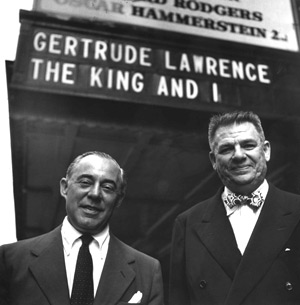
2. Hammerstein liked to sit with his back to the audience and listen to the ruffling of programs, and the number of coughs to tell if the audience was responding well to his shows. This is similar to Galton's method of counting the number of fidgets. Are similar indirect measures indicative in market moves?
3. When will someone make a good study of the expected moves of individual stocks when they break through round numbers such as 100?
4. Is one of the major causes of the decline of the Roman Empire the hatred and contumele aimed at the rich and the lack of banking during the centuries surrounding the C. E causing a lack of growth, and the need to extract resources by military conquest and slave labor? The book The Invention of Enterprise by David Landes makes this case.
5. To what extent do Hong Kong, Japan, and the US equity markets move in a feedback relation with each other, and is it predictive for any of them?
6. What does the inordinate rise in us stock/us bond and us stocks/dax in the last several weeks foretoken?
7. One is asked frequently why one doesn't trade the 10 year bond versus the 30 year bond because the former is 15 times as liquid as the latter. One notes that the 30 year had a 6 point range last week, and the 10 year a 1 pt range. Ending up down 1/2 a pt or so. Versus 3.5 pts for the 30 year. The answer is that the rake, the vig, is too high on the 10 year.
8. Everything that should have worked last year in predicting the crude is working this year as is generally the case.
9. Are the equity moves bullish in year 5, and bearish for year 7 predictive in any sense?
10. To what extent will Centrals, and plunge protection teams or their counterparts shield major declines in the market during election years?
Stefan Jovanovich writes:
Quibbles re #4:
We moderns see the fall of the Italian half of the empire as "the decline" because Rome is where the Pope lives; for Gibbon and his readers, the important decline and fall was the loss of the wealth of the East - Egypt and Damascus and Constantinople.
There was no decline in banking around the C.E. That was the period of its tremendous growth, which continued in the East until Gibbon's villain–Christianity–had succeeded in converting the Mediterranean world as a whole into believing that the very notions of profit and interest were sins (of which the Jews were, of course, particularly guilty).
Slavery was always at the root of all economic systems in that world; acquiring slaves was, as they became in the American South, the primary means for an ordinary (sic) person to save and invest. (The first investment a successful free black or Indian made was to acquire his own slaves.) Productive land was already owned by the established families–just as it is in our American West–and you needed a lot of it. That was beyond the means of any "entrepreneur". But slaves could be acquired one at a time; they were fungible and they could be rented out to the landowners as seasonal or long-term workers. ("Rome" (the TV serial drama) gets this right. Vorenus plans to retire from the legion by saving up the rewards from his military service–i.e. the slaves.)
The fiction of an independent libertarian-believing yeomanry of Roman citizens electing a representative government is just that–a fiction. The appeals to the mob began generations before the Republic "fell"; and every successful "middle class" (sic) Roman was a slaveholder.
Apr
20
All Hades, from Victor Niederhoffer
April 20, 2015 | 1 Comment
 All hades broke loose in Europe in 1846, and the Rothschilds played the same role, begging favors, and granting pocket money to the politicians, and financing debt that their modern counterpart of faith and Flexionicism played in 2007-2008, albeit none of them officially received a post in the cabinet. However, despite the revolutions in Germany, France, and Italy, the Rothschilds' offer to take down Austrian debt at 4 3/8% was only 1/4 % higher than the going rate prior to the Hades.
It was interesting to learn how openly the Rothschilds influenced the rates with well timed purchases to help their changing political alliances along. Natah proudly told Metternich "I raised the rates very easily yesterday by buying Mettelligique". In those days a rise in the stock market was good for raising confidence and lowering rates.
The general impression from reading the history of the Rothschilds in this period was that their influence was quite similar to their modern counterparts in Treasury but their grand balls and mansions seemed to the observer from the grandstand to be of a much more ostentatious scale. Hopefully, the great historian Stefan will correct and sharpen these observations.
Stefan Jovanovich comments:
There were two differences: (1) the Rothschild brothers had to raise the money they lent and paid for their trades. They could not print it or engage in a perpetual swap of one debt instrument for another. They had to have customers believe in their resources and also have the actual specie reserves to back up that belief. Their personal displays of wealth were important as theater and necessary as investments in private accommodations in an age when important visitors became house guests, not hotel customers. (2) they never indulged in national policy. Being permanent outsiders as Jews allowed them to avoid the corruptions of patriotism. They were accused of being guilty of caring only about self-interest and at the same time trusted because no other interest would supersede. They would act in a way that benefited themselves and their clients but never at the expense of their reputation with others. It is impossible to imagine their advising any of their sovereign clients to choose devaluation at the expense of their trading partners.
David Lillienfeld adds:
The Rothschilds did not earn their money from banking. They worked for sovereigns, too, as when they ran the funds for the British government to Wellington's army in Spain. Supposedly, no one else was willing to do it and the Nathan and company earned a nice fee for their troubles. That was supposedly not an unusual undertaking.
Stefan Jovanovich comments:
Er, not quite. The Rothschilds were merchant bankers; if you can imagine a band of brothers of Larry, Watsurf, the Zachar et. al. dealing in everything from cotton bales to consols, you have a picture of who they were and what they did. They took deposits, underwrote loans and also dealt in used furniture, as the Maturin saga notes.
The story about Wellington's Army has been retailed for over a century; the Sharpe books (and the TV serial made from them) have an episode with Nathan pretending to be a Quaker (or Baptist? this part is entirely from recollection) woman missionary riding in a coach through Spain so he can smuggle a letter of credit to Wellington. It makes - I suppose - good fiction; but absolutely none of it is true.
With Wellington paper would have been more than useless; the French were paying their allies in script. If Wellington and his allies were to win what was the first modern Spanish Civil War, they had to pay in gold. This is where Nathan and his brothers came in; they dealt in bullion. The Rothschilds were sensible enough never to stray very far from their security; Wellington's gold was delivered to John Charles Herries in London. He and the Royal Navy had the responsibility of getting it to Lisbon.
Apr
20
Quote of the Day, from Jeff Watson
April 20, 2015 | Leave a Comment
 "There is one good thing about Marx: he was not a Keynesian."
-Murray Rothbard
Stefan Jovanovich writes:
Marx also agreed with Rothbard about central banking: "Talk about centralization! The credit system, which has its focus in the so-called national banks and the big money-lenders and usurers surrounding them, constitutes enormous centralization, and gives this class of parasites the fabulous power, not only to periodically despoil industrial capitalists, but also to interfere in actual production in a most dangerous manner— and this gang knows nothing about production and has nothing to do with it." (Das Kapital, Volume 3, chapter 33).
They also shared - along with nearly everyone else - the notion that money was something other than the unit of account that the people with guns and official uniforms accept in payment of taxes.
Neither they nor the best current historians on the Constitution (Rakove, David. O. Stewart) understood the full genius of the Federal answer contrived by a collection of planter debtors, merchant lenders, lawyers and army pension holders in 1787:
1. The country would have only coin as money because no other form could avoid the cheating that can be produced by the stroke of a lawyer or accountant's pen or the vote of a State Legislature
2. Congress had the power to define what the Coin would be, provided that the unit of account for both U.S. and foreign money was a specified weight and measure
3. What the States and people and the Federal government did with their freedoms to get, borrow and spend was up to them
Apr
18
The End of Tube Warfare, from Stefan Jovanovich
April 18, 2015 | Leave a Comment
 "Steel rain" was the tactic developed by both the British and Germans in WW I (it was eventually copied by the French and Americans after they surrendered their illusions that elan could have much effect against enemies who kept their heads down). It was–literally–the idea that exploded artillery shell fragments and bullets would fall from the sky directly on top of the enemy's trenches. The British developed their techniques of indirect fire to the point that Lewis guns were aimed not like rifles but like mortars so that the bullets would arc up into the air and then come down on the Germans.
In his memoir "Storm of Steel" Ernst Junger writes about how he found comrades being killed by bullets striking the tops of their skulls. Trench mortars were even more effective; they could be fused so that they exploded just before hitting the ground, turning the enemy's own defensive wire into shrapnel.
Hollywood shows wars with rifles and gas bombs (those fireball explosions that never happen when artillery shells and rockets strike home); but, going back to Napoleon, most of the killing and maiming of the other guys in uniform got done not by individual firearms but by the explosions delivered from large tubes. (Aerial bombardment was spectacular but woefully inaccurate.)
There is a good argument to be made that the Allied Air Forces helped defeat the German Armies not by their actual bombardments which killed mostly civilians (more French civilians died from Allied bombardments in the weeks up to and immediately after D-Day than Allied soldiers on the beaches at Normandy.) Where the Allied Air Forces succeeded was in diverting so much of the German artillery from the Eastern front to anti-aircraft duty defending Berlin and other cities of the Reich.
Steel rain is not going away; but the large tubes are. It is difficult to fit GPS guidance onto shells that have to withstand the heat and pressure of being shot out of an artillery piece; but with rockets there is no problem. Two hundred years after Congreve's rockets were a miserable failure, his idea has become THE ANSWER.
Apr
16
Glenn Beck and Thomas Paine, from Stefan Jovanovich
April 16, 2015 | Leave a Comment
 Glenn Beck is Savanarola withut political control; he is no more reactionary than Huey Long. Beck also admires Jefferson; he is the Father Coughlin of our age–full of righteousness in the name of the common people.
As for Thomas Paine, few of the people who made the United States into a country had any quarrels with his ideas. They did find him to be a pain in the ass personally because he never could accept the fact that other people also had interests and sometimes he would have to come second. He was–like so many of the people who despise Americans for wanting to keep their own religions–convinced that the state could ultimately get them to think straight. All it would take was some benevolent central authority. The French Revolution would have killed him but for Morris and Washington's intervention, yet it was the American one he repudiated.
Apr
15
The PTO Challenge, from David Lillienfeld
April 15, 2015 | Leave a Comment
 Kyle Bass recently opened a new strategy against drug companies: short their stock and then attack their patents, using a law from three years ago that basically opens the door to such things.
"Hedge Funds Found a New Way to Attack Drug Companies and Short Their Stock"
Even if the challenge results in no action by the PTO, it will take a while for that to come to closure. In the meantime, there's some discounting of the presumed NPV of the portfolio as those wily masters of earnings estimates on the Street (who are never ever wrong) conclude that the company's earnings will be adversely impacted in this way or that. Stock drops, shorts cover, and PTO denies the claim. If the patent is for a cytokine, the challenge may be upheld based on recent SCOTUS rulings, but that's about it.
Some patents may seem absurd (and some are!), such as Schering's (now Merck's) patent on interferon alpha (used for Hep C) dosing—how many times a week, and so. That patent was challenged, and the challenge was denied. That doesn't stop the perceived value of the company from dropping, though.
For big pharma, this may be more of a pain than a major matter. Sure, they will go to Congress to get the law repealed or at least reformed. And the structure of matter patents key to industry are probably intact so long as they are not straight copies of a naturally occurring molecule (I think that's been the new SCOTUS standard). After all, if they were at risk, the chemical industry would be at risk, too. And the capitalization of the majors is such that a drop, while unwelcome, can be weathered.
However, for the start-ups, this may be a bigger problem. Not only is there usually tight spending already so that paying attorneys' fees has a potentially major impact on the budget (could it mean needing to raise more capital, likely with significant dilution??), never mind management's attention more productively spent on product development.
Then there's the stock price. Many start-ups look forward to being acquired as an exit strategy for investors in the company. However, they prefer to do so when the company is in Phase 3, when the valuation has considerably risen. (Including product failures and the like, peak valuation of start-ups is midway through Phase 3). However, if the stock drops because of shorts piling on the company, the market cap will drop, potentially enough to attract the attention of a major pharma looking at the company's assets as priced at a bargain. If this is early enough in development, the market cap isn't going to be that great to begin with. Consider, InterMune's valuation about a decade ago was 100 mil. Pirfenidone, the stuff it's marketing now (whether it's worth using is a different matter), was in Phase 1 / 2. Early development. Go ahead 9 years, and Roche bought the company for 8.5 bil. (Roche is a conservative company; someday, I want to get the BD fellow responsible for the deal off to a quiet corner of a bar and ply him/her with enough cognac to understand the thinking behind the purchase—but that's just my view of it).
So while the biotech frenzy continues (there may be a bubble, except there are real products generating real earnings (and lots in the pipeline from acquisitions) that's supporting much of the valuations. And while you can say that Celgene is a bit stretched, but Gilead sure isn't. Take a look at its PE, its revenues, its products and therapeutic areas and then its pipeline. Not stretched at all. So, is there a bubble? If you look at Valeant, you might be pardoned for thinking so. At some point, Valeant is going to be big enough that the M&A isn't going to support the company's valuation anymore. Kind of like what happened to PDL before the Facet spin-off. At that point, Valeant has to start functioning like a pharma (and not an PE enterprise) and generating some increases in earnings to support its market cap. Either that or watch the air come out of its balloon (guess where I stand on that assessment).
So back to the patents. I think Congress will do something at some point, just not the current Congress, which could barely pass a bill mandating that Reagan National should remain open. In the meantime, there will be some raids by the shorts until everyone else starts to discount rumors of invalid patents. At that point, it's Game Over. Until then, though, while the big pharmas aren't going to be bothered much, there may be some significant damage on the start-up front. And before you pooh-pooh that sector of health care, it's worth remembering that the amount of productive research in big pharma labs is pretty poor these day. Innovation is taking place in the start-up world (not for big pharma, which may get some bargains, but for the investors in those start-ups, who may decide not to invest as much in the area, or in any given company, citing this "play" as a major risk and lowering RoI as a result. in VC terms, that RoI has to be high enough to cover the costs of the all-too-prevalent product failures).
Stefan Jovanovich writes:
I don't think BIOTEK will go upper 162 (hope).
anonymous writes:
Not to insist, but this latest bounce on BioTek is particularly strong on the numbers/ participation. Will be a maximum of less? The swan song?
Apr
15
The Downside of Being Clever, shared by Scott Brooks
April 15, 2015 | Leave a Comment
 "The Surprising Downsides of Being Clever" :
The first steps to answering these questions were taken almost a century ago, at the height of the American Jazz Age. At the time, the new-fangled IQ test was gaining traction, after proving itself in World War One recruitment centres, and in 1926, psychologist Lewis Terman decided to use it to identify and study a group of gifted children. Combing California's schools for the creme de la creme, he selected 1,500 pupils with an IQ of 140 or more – 80 of whom had IQs above 170. Together, they became known as the "Termites", and the highs and lows of their lives are still being studied to this day.
Stefan Jovanovich writes:
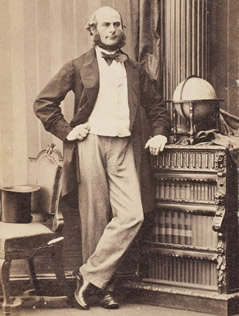
Francis Galton had raised the question of intelligence measurement in the 1860s, and it was one that absorbed people's attention because it raised an important issue: could "society" - i.e. civil servant bureaucracies and charitable organizations - make the common people smarter. For the English-speaking world this was a topic for endless debate because it was really about how much more money Progressives could get spent on public schools. The French, with their universal childhood conscription (no child was allowed to avoid public schooling), did not have to debate the issue; they brought their usual scientific rigor (at least in that period) to bear and had Alfred Binet create a standardized test for all elementary school age children in 1905.
By the Jazz Age (sic) the IQ test was anything but "new-fangled"; on the contrary, it was old hat. When Terman's book, The Measurement of Intelligence, was published in the U.S. in 1916 (it was an almost complete rip and translate from Binet's work), it had been "new-fangled" and was wildly popular. One important reason for its popularity was that it was the first book in American education history that allowed parents the opportunity to test their own children. But, ten years later, when Terman began his longitudinal study, people were sour enough on the question of "I.Q." to make jokes about it. For one thing, they had already suffered through the comedy of seeing the U.S. government try to apply the test results to winning the war. (When the U.S. Army hired Terman in 1917 to use the Stanford-Binet test, it was not a "recruiting" device. The Army took everyone who was drafted now matter how stupid; the test was given to people after they were inducted to try to figure out what MOS they should be trained for.)
This article has a decent summary of what Terman did, but you will have to ignore the usual retrospective judgments that have become part of all current academic writing.
Apr
14
Coal Bits: US Coal Is On The Ropes, from Carder Dimitroff
April 14, 2015 | Leave a Comment
 In the US, coal is on the ropes for several reasons. First, the strong dollar is making exporting coal [and LNG] relatively uneconomic.
Second, coal has become uneconomic. Coal burners are turning to lower-cost natural gas or renewable energy. In fact, no US utility is seriously considering building a new coal-fired power plant. To make matters worse, most utilities who own coal-burning assets are seeking exit plans.
Then, there's this:
"Recent report reveals dramatic decline in number of active W.Va. miners"
The article describes declining mining activity in WVA. They report that 2,596 WVA miners lost their jobs in the first quarter. It should not be a surprise. What they do not say is more jobs will be lost in 2015 as dozens of uneconomic power plants exit from the nation's deregulated power markets.
The article is exaggerating when it suggests the root cause of WVA's mining woes is a federal war on coal. There's no federal war on coal. There is federal [and state] war on carbon.
Just ask the natural gas burners. Ask oil burners. Ask nuclear burners. Ask state regulators. But, don't ask the media. And, for heaven sakes, don't ask a politician.
Victor Niederhoffer asks:
If all this supply is coming off the market, isn't that bullish?
Carder Dimitroff writes:
Interesting question. The answer is not simple.
Coal mining will struggle. Coal transportation will struggle. Gas boilers will struggle. Manufacturers supporting these types of assets will also struggle.
Turbine manufacturers are gaining. General Electric, Siemens and other turbine manufacturers are seeing growth in high technology turbine sales (combined cycle gas turbines). They offer turbines that are 60 percent fuel-efficient (coal burners are approximately 20 to 30 percent fuel-efficient). The combination of high fuel efficiency, low fuel costs and low labor costs offers buyers a significant competitive advantage.
Energy prices are unlikely to improve. Market-clearing prices for wholesale power are challenged as low-cost gas turbines enter the market. Ohio alone expects six new gas turbines (the equivalent of four new nuclear power plants). These turbines will likely lower average market-clearing prices by displacing less competitive sources (coal).
Energy prices are also challenged as renewables and energy efficiency programs take hold and grow. As California demonstrates, it only takes a small amount of renewable energy (or energy efficiency and demand-response) to shave off average market-clearing prices.
Nuclear power is winning on the carbon war argument. The State of Illinois recently passed a carbon bill, which helps existing nuclear power plants (Exelon) and renewable energy sources.
While existing nuclear power is a winner, new nuclear plants are losers. It appears no new nuclear plants will be built for a long, long time. Yes, there are nuclear construction projects underway. Yes, nuclear power displaces carbon and other air pollutants. However, it's not enough. After watching TVA, SCG and SO struggle with spiraling nuclear construction costs, it's unlikely other utilities [or state regulators] will repeat their mistakes. In fact, it appears most other applicants have put their nuclear ambitions on the shelf.
Capacity markets are improving. Old and inefficient plants cannot compete. Some assets are failing to clear auctions. As such, it shouldn't be a surprise that the market's losers are forced into permanent retirement. They can blame the "war on coal" if they want, but it's mostly operating economics that are driving retirement decisions. Those decisions are also capturing other types of plants; not just coal plants.
In the spirit of markets, there appears to be clear winners at the expense of losers.
Stefan Jovanovich writes:
Thanks to another part of my misspent youth, when the U.S. Navy wasted its money teaching me about marine propulsion systems, turbines continue to fascinate me. So, any pretense of knowledge here is restricted to that subject only. The inefficiency of what Carder calls "coal burners" comes from the fuel, not the gas that moves the turbine blades. Steam is actually slighty more efficient than natural gas in its isentropic efficiency because it is easier to capture the residual heat energy from steam after it passes through the first (and second) turbines. (Note: "isentropic efficiency" is the ratio of a turbine's actual power output to those of theoretical turbine with perfect physics with the same inlet conditions and discharge pressures. Or, to put it in engineering speak - actual enthalpy drop divided by the isentropic enthalpy drop).
So, "coal burners" - i.e. plants that burn coal to generate steam - are "inefficient" only because coal has a much lower energy density than other fuels. (This why the British Navy switched from coal to bunker oil; the same ships could go much farther without refueling using the same fuel storage spaces.)
As to how prices for fuels will arbitrage the energy density differentials, beats me; but List members should not take the relative electrical generating efficiency numbers to be a statement about the obsolescence of steam turbines. This is not a repeat of the fate of the railroad steam engine.
Apr
13
Richie Benaud, from Stefan Jovanovich
April 13, 2015 | Leave a Comment
Richie Benaud, who has died aged 84, became so celebrated as the most intelligent and articulate of television cricket commentators that his youthful triumphs, as one of Australia's greatest all-rounders and most inspirational captains, tended to be overlooked. In his seventies Benaud wryly observed that he had lost count of the number of times young cricket fans asked if he had ever played the game. He was, in fact, the first Test player in history to achieve the double of more than 2,000 runs and 200 wickets.
Craig Mee writes:
Well spotted Stefan. Richie was always short sharp and to the point, loved and respected in England almost as much as in Oz, not an easy feat when it comes to sport. He was stoic and always positive. He was often quoted about cricket and life through its ups and downs, something we should all pay careful attention too, and on reflection all of us, no matter their position could say about trading and financial markets.
Apr
10
The Most Frustrating Thing in Trading, from Ed Stewart
April 10, 2015 | 6 Comments
 One of the most frustrating things in trading is when you research a (qualitative, not a systematic) trade, stay up late figuring out how you want to express the idea to maximize gain and minimize loss, and then the next day when you want to put on the trade that stock is up near 3%.
Considering it has done nothing for months you figure, "I will wait till to buy on a decline a bit lower". Then the next day you see it is up 8% and the options you had looked at were would be up 60% in a few days had you conceived of the idea just 1 day sooner.
I think at such times (similar things have happened to me 3 times so far this year) one is very prone to going on tilt, such as finding some other market to chase, or otherwise do something out of frustration that is not logical and end up losing what you would have made had you been one day sooner.
I am wondering if there is any way this sequence of events can be generalized beyond specific circumstances of one trader, to general market phenomenon, maybe even events that lead to predictable circumstances.
Jeff Watson writes:
Whenever I go surfing, I miss a lot of good waves. I either am in a wrong position, miss it completely, or just blow it off thinking a better one will be behind. I never feel bad about missing a wave because there will always be another wave sooner or later. I look at trading exactly the same way I look at surfing.
John Floyd writes:
Agreed, put another way as someone once said to me “there is a bus every 5 minutes”. Also importantly in terms of the limits of time and energy don’t spend it worrying about missed moves, focus on what is ahead.
I read a poignant quote recently in The Joyful Athlete: ”Second tier athletes tended to beat themselves up for mistakes, while the champions simply noted their errors and moved on, wasting no energy on self-recrimination.”
Stefan Jovanovich writes:
I have the same problem. Sometimes I wait on a trade too. I think it is greed, the desire to seize the least/highest perfect. So I remember: "Luke, trust your instincts!"
Anonymous writes:
I strenuously disagree with the philosophy that "there is a bus every five minutes." (My late great father used to say, "there's always another street car.")
This is a rationally flawed analysis. Because it treats an opportunity cost as economically different from a realized cost. The reality is that the P&L from an opportunity cost is real, and it compounds over time. And this is true so long as one is consistent regarding timeframe, methodology and performance benchmarking. The most pernicious thing about this street car delusion is that it can be hidden, rationalized and forgotten.
By way of example, our fellow Spec Lister and Bitcoin Booster, Henrik Andersson declared on March 12: "Crashing commodity prices, currency war, crashing yields (with a big chunk of European debt trading at negative yield), surely this can't be because everything is so rosy in the world, this cant possibly be 'good' news. Couple this valuations close to ATH and I have for the first time in 25 years sold everything (I started investing when I was 12). Everything."
Since this declaration, the SPX, Dax and Nikkei have all risen between 3 and 6% — and the DAX is at an all time high. If Henrik measures his performance on a daily or weekly basis, this is a bona fide opportunity loss of substantial note. But if Henrik measures his performance on a long term, multi-year basis, it is way too early to render a verdict and this opportunity cost may well morph into an opportunity gain.
John Floyd comments:
Point well taken and a good one. I was afraid my quick comment might garner the need for elaboration. The point I was trying to make is if you “miss” a trade you should learn from the experience and move on, while trying not to repeat the same error in the future. Juxtaposed against expending energy lamenting the perceived lost opportunity, which also has a cost. Assuming this is done with some degree of improvement I think it is both rational and sound. In this way the opportunity cost is treated as real and minimized over time. If there is improvement made then returns are compounded in a positive fashion as opposed to a pernicious one. In anonymous’ example that might even mean Henrik recognizes what may or may not have been an incorrect thesis and “buys” everything the minute he read anonymous’ post.
Sushil Kedia writes:
My two cents on the table:
Opportunity costs as well as realized costs are both known and quantifiable only after the market has moved. At the instant of a decision as to whether to decide to take a trade or not, both are unknown.
Since a real P&L is a progression of a series of unknown infinitesimally sized but infinite number of moments, it is likely a flawed debate to undertake whether or not opportunity costs compound, since if those said opportunity costs actually turned out to be realized losses they too would compound.
Transliterating approximately what the Senator has said often in the past, the purpose of a trader is not to be in the market, but to come out of the market, one would like to tune one's mind to focusing on how much could one gain without losing beyond a point. For each this is a unique set of numbers despite the market being same for all. This uniqueness comes not only from different skills, but different restrictions on the types of trade one is allowed to take, the different marketing pitch each has to use for garnering risk capital (oh we keep transaction costs low), the different risk tolerances each must remain within etc. etc.
So each needs to focus on how one will travel from an infinite series of infinitesimally small pockets of time in deciding when to not decide.
Paolo Pezzutti writes:
With regards to missed opportunities, I have two observations.
Firstly, I think our mind is biased in focusing on the good trades that one could have made. We tend to forget the bad calls. It is true, however, that if your trading methodology is systematically not "efficient" then your performance will eventually be sub par.
Secondly, if you continue to miss opportunities, you may have an issue in pulling the trigger when it is the right time to do it. I have a long way to go to improve my trading and I think I have to work on both these areas. My trades are inefficient, because I can spot good entry points but my exits too often get only crumbles that the market mistress is willing to leave on the floor after a lavish dinner. Moreover, one tends to be afraid of taking the trade right when the risk/reward is more convenient, that is when fear is the prevalent sentiment in the market, the moment when you should "embrace you fears" as Larry Williams would say.
As a final comment, I have to commend the market mistress for her naughtiness and deceitfulness. The employment report on Good Friday released with markets closed saw prices of stocks plunge seriously (20 pts in 1 hour) to get 30 pts back on Monday. Many opportunities during the Easter weekend in stocks, bonds, currencies, commodities because of ephemeral end deceptive moves. Who knows if they were orchestrated or simply "random".
I went short gold on Thursday at the close (1715) at 1202.6. The first price printed on Monday was 1212.7. I eventually took a loss later that day of about 14 points. After 2 days gold was down at 1994. Focused on my potential loss, I did not exploit the huge opportunities offered. Afraid of even bigger losses, I liquidated my position instead of trying to close the big gap printed at the open. Moreover, I did not buy stocks or bonds to trade the obvious lobagola move. Double damage.
It is a matter of mindset. There are coincidences, situations; there is the ability of a trader to translate into action tests, statistics related to these conditions created by the market mistress. The more extreme the conditions, the more compressed is the coil, stronger and more powerful it will be the reaction in the opposite direction. Much to learn.
Duncan Coker writes:
I have always had a hard time reconciling opportunity costs/gains with realized costs/gains, though I know in economics they are comparable. For example, a casual friend offered me a private investment opportunity which didn't smell quite right and I declined and I left the money in cash earning -1% real rates. Shortly thereafter the enterprise went bankrupt and all would have been lost. I suppose on an opportunity basis it was a huge success for me, 100% gainer, and yet my cash account is the same earning -1%. Every day trading is a missed opportunity to be fishing on a nearby river which is easier for me to grasp and adds to the overall cost of the trading endeavor. Being able to forget and move on is a useful thing in trading. A swim or run at the end of the day does it for me.
anonymous writes:
I do believe one can go broke from taking profits. Maybe if one has very few positions at a time this could take a while to notice (the benefit to marketing a long term strategy of any sort– few observations) but everyone will fail.
Think of football, a defense might determine that if they can hold the other team to 17 points that they have won their part. What if the offense deploys their secondary after 14 points? May your successes be larger than your defeats.
We are playing an unbounded game, we have no idea the amplitude of future gains or losses, let alone their frequency. Taking profit when unwarranted may not give us a chance at tomorrow.
As for opportunity, we all balance the fear of missed opportunity with the fear of loss. The more successful traders I've known are slightly more fearful of leaving money on the table than losing money. Slightly.
But that depends on the difference between the value and utility of the opportunity. Duncan, you bring up the ultimate question about the purpose of life. Way to make this a deep conversation.
Apr
8
Greece, from Stefan Jovanovich
April 8, 2015 | 1 Comment
 The forced parallels of the current events in Greece with the events before WW I, WW II and the Cold War in Europe fail to fit the facts. The Russians are now using half their effective combat power to support the "volunteer separatists", the Germans spend less than 1% of their GDP on defense, and neither France nor Britain nor Spain nor Italy nor the Netherlands nor Germany has any imperial interests or even pretensions.
A comparison with the events of 1880 to 1890 in Argentina would be more useful. No one with any sense has believed that the Greeks were going to be able to pay the debts they had, yet Greek sovereign debts traded at tiny spreads to German ones for most of the period of this "crisis" (sic). During the 1880s the spread between Argentina's long-term sovereign bonds and the U.K. consols remained equally calm even as "underwriting banks demanded higher fees and Argentina's government accepted leaving more money on the table by underpricing its IPOs as its fiscal position deteriorated."
By 1890 the annual interest on Argentina's debt was 40 percent of that year's fiscal revenue.
anonymous writes:
What do you think about the idea that even closer in time one might draw similarities between Argentina in 2001 before the peg to the US$ at 1.0 broke and Greece today?…
1. In an effort to import policy discipline an ill-suited, rigid fixed exchange rate is adopted. Argentina in 1991 starts peg at 1.0 and Greece in 2001 enters the Euro.
2. Domestic economic policies that are inconsistent with the currency regime are pursued.
3. End game develops as official support wanes, domestic unrest waxes, and fewer pieces on the board heighten the disparity. Further to elaborate on the US dollar comments and some posts earlier…
As mentioned based on current volatility of around 10% markets have a reasonable chance priced of seeing 1.0 in the Euro within the next 18 months.
The Euro was at about 1.40 in May, 2014 and the recent low was 1.0458 March 16, 2015. The all-time low was about .8300 in October, 2001.
In terms of direction I would ask the question of what the drivers of direction have been in the past and what the drivers of direction are likely to be in the future.
Where is the change and variant perception that may cause an acceleration in current medium term direction or a reversal?
Further, given the "blip down" US economic data relative to expectations over the past month or two and the "short term" blip up in European economic data relative to expectations who else is asking this question and perhaps acting upon it? Has the EuroUsd 1.05-1.10 range created some complacency and perhaps allowed some steam to build up?
Apr
7
The Birth of the Blitzkrieg, from Stefan Jovanovich
April 7, 2015 | Leave a Comment
 Today is the anniversary of the Blitzkrieg. The tactic of using an armored division as an independent assault unit was first put into practice not by the British, Germans or French but by the Italians.
It makes me wonder - again - why so wonderful a writer as Rick Atkinson chose to do the long unrewarding slog of following the American Army's follies in North Africa. Some topics are better left buried - like the Seminole War.
If you spend much time there, you come away with a sense of how thoroughly incompetent the official American Army has been whenever it could not leave the bulk of the fighting to someone else. Thank God for the citizen army.
The reward, if any, is to realize how masterful Jackson and Eisenhower were as Presidents. They both knew that Americans' vaunted capacity to fight and win wars depended on having (1) effective allies - France in the Revolution and again in WW I, the Soviet Union in WW II and (2) outnumbered opponents. Yet, each man was able to convince the rest of the world and Americans themselves that the United States had exceptional military skill. Without that triumph of marketing the country's most profitable victories - against Mexico and the Soviet Union - would not have been possible.
Mar
30
"The forty-eight hours after the march into the Rhineland were the most nerve-racking in my life. If the French had then marched into the Rhineland, we would have had to withdraw with our tails between our legs, for the military resources at our disposal would have been wholly inadequate for even a moderate resistance."
This "quote" of Hitler's is now being used to justify arming the Ukrainian Army. It will undoubtedly succeed because "we all know" that, had the Allies stood up to Hitler, nothing bad would ever have happened.
What will be conveniently ignored are these trivial facts:
(1) The only two European victors in WW II - Britain and the Soviet Union -both supported the German military reoccupation of the Rhineland over France's objections.
(2) The actual testimony at the Nuremberg trials of the source of the quote, Paul Schmidt, who was the German Foreign Ministry's translator.
"Considerable fear had been expressed, particularly in military circles, concerning the risks of this undertaking. Similar fears were felt by many in the Foreign Office. It was common knowledge in the Foreign Office, however, that Neurath was the only person in government circles, consulted by Hitler, who felt confident that the Rhineland could be remilitarized without armed opposition from Britain and France. Neurath's position throughout this period was one which would induce Hitler to have more faith in Neurath than in the general run of 'old school' diplomats whom Hitler tended to hold in disrespect."
Source: http://avalon.law.yale.edu/imt/03-28-46.asp
Mar
12
Bitcoin and Gold Mining, from Stefan Jovanovich
March 12, 2015 | 1 Comment
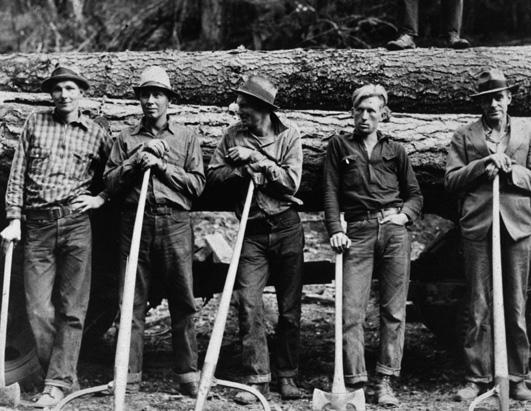 In the 19th and early 20th century the arguments against the gold standard were these:
1. It was barbarous to have the unit of account be determined by the luck, brains, sweat and the money to pay for it that gold mining required
2. Only the rich and the clever would have access to gold
It is difficult to see the difference between Bitcoin and gold mining. The BitCoin miners are clearly putting as much luck, brains, sweat and money into their work as anyone who worked the Comstock. (One notes that the actual costs - electricity - are not being paid in Bitcoins themselves but in the national money that the miners exchange for their production.) If they are not yet rich, they are certainly clever.
In the 19th and 20th century and this century the arguments for a managed currency have been the same: it will have a stable value because it will be supervised by the government.
The mine manager explains away Bitcoins' price fluctuations by the fact that the currency is in "an early stage of development"; he is as confident as any central banker that, when the Chinese government gives the currency its official blessing, it will have a "stable value".
What is fascinating to those of us in the bleachers is how successfully "stability" became the standard of monetary virtue. Even the current defenders of the gold standard believe that its primary justification is the promise of "stable value".
Nothing in the experience of work and saving even hints at the possibility that prices will be stable. And, when the Marxists get their way and the capitalists disappear, the rations fluctuate in the same way the prices once did.
Peel and Grant both knew that there was one reason only that money should be a defined weight and fineness of gold. In the world of promises the clever will always lead; but, with gold as money, the clever have to meet the simple demands of the ignorant if payment in cash. With coin, even the stupid who had teeth could determine whether or not the promise to pay had been met in full. No one, rich and poor, clever and stupid, could hope to escape the fluctuations of the market - except, of course, the people who had a guaranteed government salary and, as the government, could assure that those payments were stable in value.
Mar
2
John Cochrane Explains It, from Stefan Jovanovich
March 2, 2015 | Leave a Comment
"The Fed may have deliberately dug itself in a hole. By buying lots of long-term bonds, the Fed will take big mark to market losses if interest rates rise, and stop remitting money to the Treasury. This is a precommitment not to raise rates. So, a good answer to "how did QE 'work'" is not just by implicitly promising to keep rates low for a long time, but by making it very hard to raise rates!"
and the sequel:
If "respectable central banks" have agreed that no exchanges between them will be refused, then the primary risk of domestic "easing" has disappeared for those countries. Their banking systems can simply accept central bank transfers instead of customer deposits as the base on which to issue credit. The problem for the unrespectable countries is that they cannot rely on foreign counter-parties to take their IOUs. They can, like all other countries that lack a weight and measure definition of money, have their central banks redeem their outstanding debts by issuing reserves; but they can't sell their new debt to anyone but themselves. When Bagehot wrote that the Bank of England could draw specie from the moon if it raised the discount high enough, he was assuming that the Old Lady's credit rating - its ability to redeem paper with coin - was unaffected by the change in rates. If, as Cochrane argues, reserves that pay market interest rates have no monetarist effects for prices, then credit creation is now being rationed even in the "respectable" countries not by reserves but by uncertainty about repayment by anyone not already a member of the primary dealer club.
Feb
27
Yet Another Poll, from Stefan Jovanovich
February 27, 2015 | Leave a Comment
 What is striking is the shift in TOTAL preference for the Democrats. In 2008 it was +20. The best Bush II ever did was in 2003 when preference for the Democrats was only +3. But, in the last four years (2010 to 2013) the numbers have been -4, -3, +4, +5. That really is news; the Republicans have never had 4 years when party preference was statistically EVEN, not once in their entire 150+ year history. We will have to wait for the numbers for 2014, but the election results hardly suggest that the Democrats had a rebound in overall popularity.
Feb
24
Grexit or Something Else, from David Lillienfeld
February 24, 2015 | Leave a Comment
 Whether Grexit is on or off the table, it would appear that the Greek government is boxed in not only by the EMU but also by its own electorate. At one time, I thought that whatever happened in Greece short of Grexit would stay in Greece. Now I'm not so sure. Nationalism is a theme on the rise in the EU. To what degree will responses such as this one by the Greek electorate "spill over" to other countries in Europe?
"Europe Has Approve Greece's Reform Plans"
Stefan Jovanovich writes:
David's use of the domino theory surprises me. In the Balkans there has never been a need for "spill overs"; nationalism is all that these small, poor countries have. What you have to understand about the Greeks is that they actually do remember the Nazis. If the French, British and even Putin have forgiven the Germans and shifted to the Gaullist notion that it is all the Americans' fault, the Greeks still think about what the Third Reich and its Muslim allies did to their country. They think less about how WW II was followed by a hot and cold civil war that continued, with various interruptions, for another 40-odd years - until the fall of the Berlin Wall.
The combination of those historical memories - one remembered, one deliberately forgotten - is what allows practically everyone in the country to now have the politics of a Beverly Hills communist who has just received an audit notice for his/her tax shelter.
Feb
23
Lessons From History, from Duncan Coker
February 23, 2015 | Leave a Comment
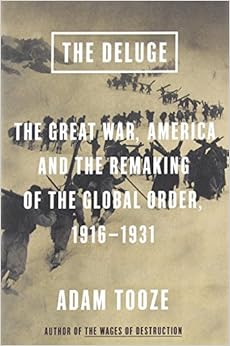 I am finishing The Deluge by Adam Tooze, an ambitious undertaking of a book which covers the post-WW1 rebalancing of power on a global scale. WW1 was largely a war of feuding imperialist nations with entangled alliances. But after the war the world became a different place. One particular issue that has relevance today is that of debt. Europe was very familiar with debt with from 1917 to 1925, particularly Germany. All the powers, Germany, England, France and Britain had borrowed heavily from their populace and international bankers (JP Morgan and friends) to finance the war and reconstructions. The populace could be easily taxed or the currency devalued to eliminate a portion of the debt. The foreign debt holders, however, demanded payment in hard currency or gold and were ruthless in collection. Their was no debt forgiveness by friends or foes. The Entente (Britain, France, Russia) had their ongoing currency and gold wars amongst themselves and with the US over debt. Germany was crushed by debt during that period. Perhaps Germany's intransigence today is due to their history. No one showed them much mercy at that time.
All told today in Greece the total debt at par is roughly 400b euro. A reasonable haircut could easily be absorbed by the central banks and official institutions who own most of the debt. I think the battle is one of ideas. The German notion of aggressive self reliance and go-it-alone attitude, versus the dream of a family of nations which Wilson wanted ( at least for everyone outside the US). I predict in Europe the latter path will prevail. No one wants another war, metaphoric or otherwise. The cost of a write off is negligible when the ECB is prepared to spend 1.6 trillion euro on various paper. The 5 and 10 year Greek bonds appear to agree as they started to rally in October well in advance of the current debate and are up roughly 40% since that time.
Stefan Jovanovich writes:
Adam Tooze has written a very good book on the Nazi economy. Now he has written a very bad one. There was only one foreign debt holder for Britain and France after WW I - the U.S. The only justification for describing the Americans as "ruthless" is the Keynesian one: the U.S. Should not have insisted on being paid back in the same money that it had lent - gold priced at the U.S. Exchange rate. The U.S. Did not, in fact, collect any war debts beyond the amounts lent to Germany under the Dawes and Young plans which were paid to the European Allies as reparations and then sent back to the U.S. Finland is the one country that actually paid back what it borrowed. Germany was not crushed by debt; the hyperinflation literally wiped out all the creditors. The reparations demanded by the Allies were large, but they were less than a third the size of the ones demanded from France after their defeat in 1870. The French actually paid, in gold; the Germans never did pay up. The British thought they could ignore their default by adopting a gold exchange standard - i.e one that only applied to account reconciliation between central banks but not to money held privately. The French and the Japanese, to their credit, actually tried to restore fully so that their money would once again be automatically exchangeable to specie. The Japanese were defeated by the Tokyo earthquake and fire of 1925; the French by the U.S. Reversion to mercantilism under Hoover and Roosevelt's planned economies and the devaluation of the dollar. The great sin of the U.S. Was not to have tried to collect the war debts; it was to have violated the Constitution by failing to value foreign coin. Without the U.S. Treasury and Federal Reserve's connivance, the New York banks would not have been able to discount francs and pounds at pre-war par; and the war in Europe would have ended by summer 1915.
Feb
23
Marx and Engel’s Dispatches to the New York Tribune, from Stefan Jovanovich
February 23, 2015 | Leave a Comment
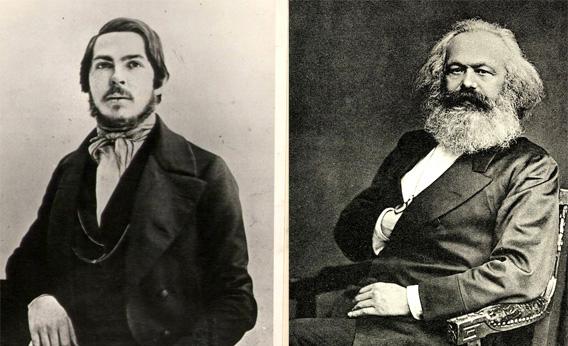 Since Eddy and her mother abandoned me for the pleasures of visiting Charlotte and Charleston this weekend, I have had to amuse myself with reading Marx and Engel's (mostly Marx's) dispatches to the New York Tribune. Poor man; if only he had lived a century or so later, I am certain he would have been able to win the Nobel Prize AND write for the Times.
It is fascinating how much Marx despises the man who gave him and Engels their claim to fame. David Ricardo's assertion that profits and wages inexorably contend with one another is surely the basis for the Marxist's "labor theory of value". Yet neither revolutionary author has even a single kind word to say about the first great English-speaking practical speculator. Neither, for that matter, does Wikipedia. One wonders why. Ricardo was an abolitionist, he opposed the Corn Laws and favored an expansion of trade as the only means by which the poor could escape permanent destitution.
There are only two explanations that I have come up with in a weekend's reading of MarxEngelian journalism (which could, with a few changes of names, easily be reprinted as commentary on the current "Greek" crisis. One, Ricardo was truly at home with international finance and counting; his father was a stockbroker, his sister a mathematician and his family, through its religious connections, had ties with Holland and Portugal. In an age when nationalist rivalries, religious bigotries and Marxian envy were as stupidly persistent as they are now, Ricardo's 19th century liberal belief in freedom and enterprise was an insult to both Right and Left. The other explanation is that Ricardo at the end of his life (he died in 1823) was abandoning the very idea of "value" that was to dominate the ideologies of economics itself. The longer he worked on the idea of labor as the basis of value, the more he came to see it as a theological question that had no practical meaning. There were only prices expressed in currencies; and markets were the only free way of setting those prices.
We are, yet again, at that lovely point where the official Left and Right can come to agreement. How can the Greeks, who are clearly unable to pay the debts to themselves, let alone those to other nations and entities, be allowed to declare bankruptcy? Unthinkable in the minds of anyone whose opinions are likely to be heard on the subject. In the great game of central bank cold warfare, such a surrender to the speculators would be an absolute heresy. Leaving Greek enterprise and labor to find their best prices would be anarchy. Leaving the discounting of the various monies used to price that enterprise and labor and "capital" would be absolute anarchy. Everybody with a proper education knows that the fluctuations of credit can be restrained; it simply requires wise administration by people with the authority to own the means of production or regulate the measure of capital (choose One).
Whatever the current solution to the crisis of "Grexit", the end resolution remains the same: default by the borrowers and– depending on their perceived leverage– large or small trouble for the lenders.
Feb
18
TIPS to Trade, from anonymous
February 18, 2015 | 1 Comment
Given the strong whiff of deflationary sentiment in the group and the extended thread about negative yields, I'd inquire if anyone else got a short term buy signal for TIP today? I am going to ignore my signal this time but not because I disrespect this crowd's sentiment.
Rocky's Ghost writes:
My models have demonstrated with statistical perfection that 100% of the TIPS that traded today were purchased by people who think they will increase in value on either an absolute or relative basis.
But regardless of the sophistication of my tongue-in-cheek model, a discussion regarding under what circumstances an investor/trader should ignore one's "signals" is a very worthy topic of discussion. I have found that ignoring an entry signal is more insidious than ignoring an exit signal. Missed opportunity cost doesn't show up in the P&L, hence it results in self-delusion.
Gary Phillips writes:
Missed opportunity can often end up costing you more than money, especially if it causes one to chase or revenge trade.
anonymous writes:
One corollary question associated with the negative yield situation is as follows: how negative must yields get before managers of short-term assets decide that it is more cost-effective and return-supporting to cease putting assets in sub-zero instruments, and instead hoard physical currency in their own private vaults. Yes, it would incur security and insurance costs, and probably tempt personnel to engage in fraud, but one wonders about the extent to which significant and persistent negative yields would lead to disinternediation.
anonymous writes:
Samuelson discusses negativity in an opinion piece today
"A new economic mystery: negative interest
Stefan Jovanovich writes:
"Negative interest rates" are no more unprecedented than the idea that the Federal government should be smaller than the combined bureaucracies of New York, Massachusetts, Ohio, Illinois and Pennsylvania - which was the case by the time Ulysses Grant left office in 1877. If you held money - either coin or U.S. notes or a demand deposit account at a bank that saw itself as an intermediary and not a lender, you paid negative interest rates; if you had bullion and you wanted to convert it to money, both the U.S. Mint and the brokers who still dealt in "gold" exchanges would charge you a fee. So would the depository you trusted. The closest you would come to not paying negative interest rates was to do as Charles notes and incur your own "security and insurance costs".
Under the Constitutional gold standard, you traded the costs of negative interest rates for (1) avoiding foreign exchange risk - your gold dollar would be worth exactly as much as its weight in pounds, francs and marks, and (2) the market risk that the fluctuations in securities and asset prices always holds.
In abandoning the gold standard, the United States joined other believers in central banking in the notion that foreign exchange could be "controlled" in a way that still allowed national governments to play credit roulette using their own debt as currency while, at the same time, administering "stable" prices and full employment.
La-di-da.
Gary Rogan adds:
For the purposes of calculating the discount rate of future cash flows and for valuing the stock markets it seems like today's market-based negative (or low) interest rates are in a different category than being charged a fee for bullion conversion.
Feb
16
Controlling Foreign Exchange, from Stefan Jovanovich
February 16, 2015 | Leave a Comment

"Currency guru Barry Eichengreen–the world's leading expert on the collapse of the Gold Standard in 1931–thinks Grexit might be impossible to control. "It would be Lehman Brothers squared," he said."
The greatest ever changes in the history of human beings and their money came in the 19th century from two disastrous wars: (1) the American Civil War and (2) the Franco-Prussian War. The first created the structure of individual credit dealings that we all live with now - where anyone with any actual money savings has a bank account, credit cards, and property and casualty insurance and people with families have life insurance and investments in securities. None of this existed before 1862 anywhere in the world. What started it off was the literal explosion of printing for currency and debt instruments set off by Secretary of the Treasury Salmon Chase's 7-30 bond issue.
The Franco-Prussian War (called the War of 1870 in France) produced the international gold standard. The German Confederation's receipt of France's reparations gave it sufficient specie reserves; the need to borrow gold to pay Prussia forced France to abandon bi-metallism. The British, in turn, were required to limit the use of silver coin to their imperial transactions, principally with India, while the U.K. and the self-governing countries under the Crown turned sterling into gold. With the U.S. Resumption the major trading nations of the world were on a unitary standard by the end of the decade. The result was the development of a the first international market of private credit independent of sovereign controls and bank regulation. Commercial paper, negotiable, warehouse receipts and bills of lading, commodity contracts for present and future deliveries and the tens of thousands of intermediaries who dealt in them sprang up almost overnight. The conventional narrative of this period pretends that the national banks were somehow in charge of all this. They weren't. The clamor for a flexible currency that led to the creation of the Federal Reserve came from the commercial banks' desire to use their one remaining advantage - their ability to have their checks treated as quasi-legal tender - to regain their former prominence. For the world at large WW I was a tragedy; for the banks it was salvation. International Finance would go back to the good old days of sovereign authority and private credit dealers would stop being such grubby pests.
Feb
10
The Most Expensive Art Work of All Time, from Stefan Jovanovich
February 10, 2015 | 1 Comment
A Paul Gauguin painting of two Tahitian girls has smashed the record for the world's most expensive single work of art, after Qatar bought the canvas from a Swiss collector for almost $300 million (£200m).
 Experts said that the sale could be the start of a new trend of trophy sales that bypass auction houses in favour of lucrative direct deals.
"£200m Gauguin becomes most expensive work of art of all time"
Henry Huntington, who made his own "big" money from the Uber of its day, set the record for an art purchase by buying Gainsborough's The Blue Boy for $728,800 in 1921. In the legal tender of the time (1 oz pure gold = $20.67), that was 35,258.8 ounces of the evil metal, which would be worth $43,434,714.
That may not be the correct adjustment to make if one wants to compare prices then and prices now. M2 in 1921 was 32.85 billion; Huntington's check represented 1 out of every 45,074 dollars outstanding in currency in coin. M2 right now is 11,714.1 billion. Qatar's check for $288 million represents 1 out of every 40,674 dollars presently outstanding.
Feb
4
Tony Gwynn, from Stefan Jovanovich
February 4, 2015 | Leave a Comment
 I never saw Rod Carew play (I never, ever watch designated hitter rule baseball) so this comment may be both ignorant and unfair. But, the best pure hitter (leaving home runs out of it) I have ever seen live is Tony Gwynn. He is the last person to come close to hitting over .400 for a season, and he hit .415 against Greg Maddux (107 appearances, ZERO strikeouts).
He had the fourth best career average (Cobb .366, Speaker .345, Ruth .342, Gwynn .338).
And yet, even he had trouble with pure speed. Against Randy Johnson he hit .111, striking out 5 times in 18 appearances.
Scott Brooks writes:
It's not so hard to hit guys with a lot of speed, if they are a one-trick-pony.
What is hard is to hit the guys who can throw really hard and then change speed (accurately, of course, in both instances). Mix in one more good pitch (curve ball, slider, cutter, etc.), and you've got an almost unhittable pitcher.
Jan
21
The Trouble With Movies, from Stefan Jovanovich
January 21, 2015 | 1 Comment
 The trouble with movies is that they have to pretend that a bunch of people hitting focus marks according to a shooting script somehow represent "reality". The trouble with war movies is that their portrayal of "reality" is almost always made by people who have never gotten shot at. There are some exceptions: They Were Expendable (which was a box office semi-dud) had Robert Montgomery, and he was even able to prevent John Ford from injecting his usual bravado. James Stewart was able to convey something of what it is like to fly bombers in combat and he helped his friend Gregory Peck put that across in Twelve O'Clock High; but these are the only ones that come to mind for this former Hollywoodista. I doubt American Sniper is much different; but I am not curious enough to find out. (My taste in films is now antique; I find the underscoring in most "modern" films and TV so maddening and deafening that I limit myself to the ones where there is a reason for the music - i.e. Fred and Ginger are doing something to it.) What I can say, without having seen the movie, is that they probably made it about the wrong guy. As Chris Kyle himself was generous enough to say in his C-SPAN interview, Carlos Hathcock is the model; everyone is else is just trying to learn his lessons.
Pitt T. Maner III writes:
Michael Moore received a bit of feedback for one of his recent comments related to the film: "Marine Sniper Dakota Meyer: Michael Moore's the Real Coward". Maybe he should stick to Selma…
Craig Mee writes:
"Hitchcock once said that he survived in his work because of an ability to "get in the bubble," to put himself into a state of "utter, complete, absolute concentration," first with his equipment, then his environment, in which every breeze and every leaf meant something, and finally on his quarry."
Jan
12
Political Economic Counting and the Change in the Direction of the Drift, from Stefan Jovanovich
January 12, 2015 | Leave a Comment
 The notion that the United States has had a two-party system over the last hundred years is largely a fantasy. This may be another successful schoolteacher fairy tale designed to discourage "conservatives" from having any patience with the minority party; it may be simply part of the American notion that the two teams on on the field have an equal chance that is to be determined by "how much they want it". Either way, the fantasy of equal competition does not fit the facts. The Republicans have only won the trophy once in the last hundred years - in 1928. That was the only time where the Republicans continued to control both houses of Congress as a member of their party was re-elected President. The results were these: Republican House margin of majority: 12%, Republican Senate margin of majority (including Vice-President's vote in the event of a tie): 10%.
The Democrats, on the other hand, have 4 Super Bowl rings: 1936, 1940, 1944, and 1964. Their first - Roosevelt's 2nd election - was the biggest blowout: Democratic House margin of majority: 30%, Democratic Senate margin of majority (including Vice-President's vote in the event of a tie): 34%.
Even in the era of divided government and less than landslide elections, the drift has remained in favor of the Democratic party.
2008 election results - Democratic House margin of majority: 19%, Democratic Senate margin of majority (including Vice-President's vote in the event of a tie): 21%
2014 election results - Republican House margin of majority: 17%, Republican Senate margin of majority (deducting Vice-President's vote in the event of a tie): 3%
What interests me is the likelihood that the United States may finally have a genuine two-party system. If it does happen, it will be because the Republicans finally become what Grant planned for them to be 140 years ago - the party of the new Constitution that included the 14th Amendment.is may actually change. The Democrats have been the party of Federal executive authority since their founding; whenever possible, they have looked to the White House to order the entire country to do what they wanted - i.e. buy Louisiana, chase slaves, regulate the sale of sick chickens, etc. During my lifetime, the notion that that the States who make up the Union have equal sovereignty suffered the same fate as Grant's reputation as President. It ceased being taught in any law or other type of school, and the presumption of absolute Federal authority became universal. Now, to my delight and surprise, the idea equal sovereignties and rights of citizenship for the States and the Union has revived. People, even judges, have read the 10th Amendment and understand the meaning of its plain language. We shall see.
Jan
5
Evaluating Trading Strategies, from Stefan Jovanovich
January 5, 2015 | 1 Comment
Here is an interesting paper and nice reference to a concept called the Probability of Backtest Overfitting (PBO).
Abstract:
We provide some new tools to evaluate trading strategies. When it is known that many strategies and combinations of strategies have been tried, we need to adjust our evaluation method for these multiple tests. Sharpe Ratios and other statistics will be overstated. Our methods are simple to implement and allow for the real-time evaluation of candidate trading strategies.
Jan
5
Blame it All on Someone, from Stefan Jovanovich
January 5, 2015 | Leave a Comment
Here is an investigation of the puzzling fact that individual income inequalities have not changed in half a century in the United States (if we trust the Census and Treasury data) but family income inequalities have (again, if we trust the government data).
Dec
28
Uber, from Stefan Jovanovich
December 28, 2014 | Leave a Comment
 Uber is already in the process of making the necessary regulatory captures. What those of us stuck in the 19th century lane foresee is their being undercut by local Uber knockoffs that demand "equal access" — i.e. using their own (or even Uber's software) to provide local alternatives. I am not saying that these locals will make money any more than most short line railroads did in the last quarter of the 19th century; what I am saying is that they will undercut Uber's "network" profits with the same efficiency that short lines undercut the large roads in lawfaring before the ICC. Markets work in lobbying just as they do in so-called "free enterprise"; what is maddening to the people who keep score by money is that the efficiency of political markets is measured by people's perceptions of satisfaction, not by actual increases to their wealth.
Dec
23
Angus Maddison, from Stefan Jovanovich
December 23, 2014 | Leave a Comment
Whenever I find myself thinking about something "everybody knows" regarding world history, my first impulse is to reach for Angus Maddison's data.
His autobiography is wonderfully detailed about his influences and experiences.
As a scholar he has had the greatest reward; people are keeping up his work even though he is gone.
Dec
23
American Exceptionalism, from Stefan Jovanovich
December 23, 2014 | Leave a Comment
 American Exceptionalism. I have always hated that phrase and the perverse doctrines that accompany it. The American Constitution is remarkably exceptional; one wishes it were still followed. But the idea that we Americans were born or (equally bad) become endowed with some special grace is one that makes me look for the Exit sign in the hall every time I hear it.
It also reminds me of the disastrous presumption that infected so much of the period that Stern writes about and led to WW I.
Ed Stewart writes:
I notice that every time I start believing that I am an exceptional trader (like I did a few weeks ago), a large loss is near at hand. Best to curtail commitments at the hint of that feeling– the opposite of what the feeling suggests to do.
Gary Phillips writes:
Success is more destabilizing emotionally than failure.
Ralph Vince writes:
Failure is absolutely necessary–in fact, nothing is more necessary, in all aspects of life.
For one, it teaches the individual not so much not to do what caused the failure, but how to regroup, reassess and recover from failure. The lesson of failure is about what you do afterwards.
Many things in life require failure. No one learns, say, to lift a lot of weight, to solve a differential equation, or do a backflip on pavement, without failing many, many times. There is no may to accomplish many things in life without enduring the requisite and many failures required.
Jeff Watson writes:
Failures teach you much more than successes which can lull you into complacency and hubris (like when you have 10 successes in a row). But you must attention pay attention to and analyze the failures inside and out. You have to ask yourself "why?". Ralph hit the nail on the head with his post.
Ralph Vince replies:
The 13-year-old boy looks around the gym, struggling to lift pipsqueak weight. Failing.
I point to all the old smellies, putting up ungodly amounts of weight.
"You see those guys - every one? Every one of them failed at every increment, every 5 pound increment between what you are failing at and lifting what they lift and they failed at every increment over and over. That had to keep trying, eventually, sneaking up on it. Failure, repeated failure, is part of the process."
Dec
11
A Cop Speaks, from Jeff Rollert
December 11, 2014 | 3 Comments
 From the Facebook page K9s4Cops, by Lt. Daniel Furseth:
Today, I stopped caring about my fellow man. I stopped caring about my community, my neighbors, and those I serve. I stopped caring today because a once noble profession has become despised, hated, distrusted, and mostly unwanted.
I stopped caring today because parents refuse to teach their kids right from wrong and blame us when they are caught breaking the law. I stopped caring today because parents tell their little kids to be good or "the police will take you away" embedding a fear from year one. Moms hate us in their schools because we frighten them and remind them of the evil that lurks in the world.
They would rather we stay unseen, but close by if needed, but readily available to "fix their kid." I stopped caring today because we work to keep our streets safe from mayhem in the form of reckless, drunk, high, or speeding drivers, only to be hated for it, yet hated even more because we didn't catch the drunk before he killed someone they may know.
Nevertheless, we are just another tool used by government to generate "revenue." I stopped caring today because Liberals hate the police as we carry guns, scare kids, and take away their drugs. We always kill innocent people with unjust violence. We are called bullies for using a Taser during a fight, but are condemned further for not first tasing the guy who pulls a gun on us.
And if we do have to shoot, we are asked "why didn't you just shoot the gun out of their hand?" And when one of us is killed by the countless attacks that do happen (but are rarely reported in the mainstream media) the haters say, "Its just part of the job." I stopped caring today because Conservatives hate us as we are "the Government." We try to take away their guns, freedoms, and liberty at every turn. (continued)
Stefan Jovanovich comments:
What Lt. Furseth is really complaining about is the 1st Amendment. No one in his actual life has ever asked him to shoot a weapon out of the criminal's hand. That is a question that he has only read or seen asked in the public soup we call social media and the press. For cops this the golden age in terms of pay, weaponry, body armor, mortality and public pensions so, of course, the logical consequence is that their public posture should be to complain about the lack of respect from people in general.
Dec
3
A Partridge in a Pear Tree, from Stefan Jovanovich
December 3, 2014 | Leave a Comment
 My daughter and her mother have a recurring holiday joke that probably has its origins in their love for "Diamonds Are a Girl's Best Friend". (Their favorite part: Time rolls on, And youth is gone, And you can't straighten up when you bend. But stiff back Or stiff knees, You stand straight at Tiffany's.) The holiday joke is this: "Memo to True Love: Keep the Animals, Send the Rings".
The joke is mostly a tease of my interest in the Constitutional gold standard and love of its savior Ulysses Grant. It certainly is not a hint about what I should do to express my gratitude, lover and devotion. (The women will buy their own jewelry, thank you!). But it does remind me of another part of the Constitution that they do insist on importing into our domestic lives. It is Clause 7, Article I, Section 9: "No Money shall be drawn from the Treasury, but in Consequence of Appropriations made by Law; and a regular Statement and Account of the Receipts and Expenditures of all public Money shall be published from time to time."
The only debate in Philadelphia was over the question of how often the statement and account would be published. Many wanted it to be annually, and some even monthly; but it was agreed to leave the scheduling question to Congress.
The accounts here in Chaos Manor are produced monthly, and they are models of 19th century American book-keeping (which is to say, 13th century Italian accounting). All Money is recorded without regard to whose name - human or corporate - is on the account, all assets are marked to the market or to the estimation of market price based on the most recent similar transactions, and all debts are booked at their full liabilities without any discounting. What is never calculated is a rate of return. All really, really, really small businesses (those that in good years earn their owners the equivalent of a GS-15, Step 10 base salary - roughly $2500 a week) are incorporated wallets. They have no access to credit other than credit cards and the asset prices of the businesses themselves cannot even be estimated because there are never any real comps. So, a rate of return calculation is meaningless. So are projections. There is no way to predict how often the phone will ring or an email will arrive with a customer order; and we certainly have no control over prices. All we can estimate about the future are costs. And the goal - every year - is find ways to make those go down by figuring out how to do the same thing better, cheaper, faster so we can follow John Wanamaker's example and waste at least half the money we spend on adding more and new things to our inventory of stuff to sell.
Nov
24
Novoeconomics, from Alston Mabry
November 24, 2014 | Leave a Comment
 The money printing has driven up prices, the prices of paper assets, including the prices of Treasuries, which has to be the largest paper asset class globally. But the money that winds up at the banks has largely then been put back to the Fed for the interest it pays. Banks haven't been lending like crazy, so that mechanism isn't pushing inflation. Meanwhile, cheap money has allowed corporations to manage their PE ratios by buying back stock, again pushing up assets prices. And for broad inflation, you need upward pressure on wages, but globally for the last decade plus there has been profound downward pressure on wages caused by China dumping tens of millions of smart, motivated workers into the global labor market every year, not to mention the other emerging Asian countries. And speaking of China, that country has served as an inflation sink for years now, via there currency/import/capital controls policies - there is inflation, and a lot of it, in China.
Stefan Jovanovich writes:
Big Al's analysis is perfect. But he is describing the short-term credits issued by central banks to float their national Treasuries' deficits. Money itself - cash and customer's bank balances - has not been increased dramatically. I realize this can be seen as a distinction without a difference in a world of fiat money, but it does highlight the difference between the present and the 1970s. Then central banks and rich people worried about whether or not U.S. currency would keep its exchange value, whether the dollar would continue to decline to oblivion as the franc, lira and mark had after WW 1. Now there is no reason for such outright fear because currency positions can be hedged fully and there is, in effect, a monetary Treaty of Vienna assuring a balance of financial power among the largest trading nations that allows them all to quantify credit as needed. As Big Al notes, that balance does not answer the question of how a commercial truce can be sustained under a 19th century combination of steadily declining prices for metals, fuels and grains and increasing prices for land and financial assets supported by public/private finance.
Nov
7
Political Counting, from Stefan Jovanovich
November 7, 2014 | 1 Comment
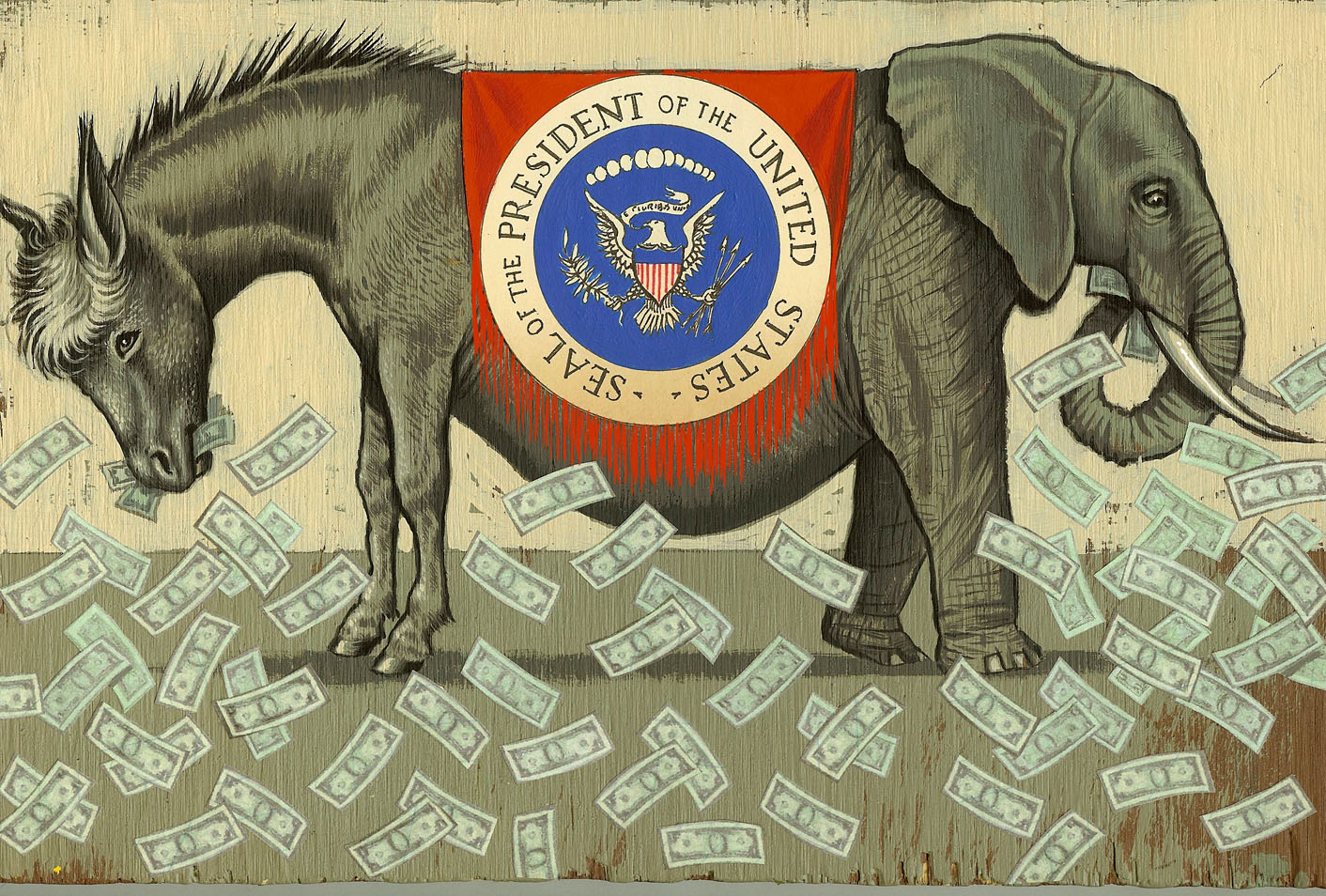 These are the numbers from the election in the U.S. They are truly historic; to find a parallel in terms of partisan shift from the Democrats to the Republicans, you have to go back to the Wilson Administration elections of 1918 and Davis' crushing defeat in 1920 and Hoover's coronation as Coolidge's successor in 1928. Even Truman's successive losses in mid-term elections was not a comparable defeat because the Democrats remained solidly in the majority in state legislatures and governorships. Measured by all elective offices throughout the country, this is the first time in American history that Republicans have been the majority party for more than a single election.
A few details:
After the Louisiana runoff on December 6, Republicans will hold 54 seats in the U.S. Senate; they began the week with 45. The last time Republicans defeated more than one incumbent Senate Democrat was in 1980 when Reagan's landslide won them 2 seats. In this election they will have defeated 5 Democrats - in Alaska, Arkansas, Colorado, Louisiana and North Carolina. If you extend the calculation to include open seats previously held by Democrats (Iowa, Montana, South Dakota, and West Virginia), the Republicans gained 9.
Republicans now hold 31 (possibly 32) of the 50 governorships and 29 (possibly 30) of the state legislatures, a total that matches the Republicans' all-time greatest success in 1928. In the count of all state legislative bodies (99 total, thanks to Nebraska's unicameral legislature) the Republicans control 69; that is 5 more than their greatest previous success of 64 in 1920.
The President's record is truly extraordinary as the leader of an American political party. Since his election in 2008 the Democrats have lost 14 Senate seats (60 to 46), 72 House seats (257 to 185), and 10 governorships (28 to 18).
Oct
30
Minor League Companies, from Stefan Jovanovich
October 30, 2014 | 1 Comment
 "For others who did make it to the major leagues it took 5 and even 10 years longer to grow to the necessary maturity and capability. That was what the industrial and minor leagues were for; it is what college baseball now does."
George Brett, who is in the Baseball Hall of Fame and owns the highest season batting average in post WW-II baseball, has a career batting average of .305. He ranks 16th among baseball players of all time in career hits.
But, in his four years in the minor leagues, he never once hit above .300.
He needed the time to grow up to become great.
P.S. I still want the Giants to win (once a Giants fan, always) but I do love the Kansas City team; I hope it goes 7 and Tim Hudson gets his ring before he retires.
Victor Niederhoffer writes:
Are there any companies like that which become good buys after 5 years of mediocrity?
Gary Rogan writes:
It's rare, but if it does happen it's only when there is a new CEO. Analogous change doesn't seem possible with individual human beings.
Oct
24
The Wrongness, from Victor Niederhoffer
October 24, 2014 | 3 Comments
 The wrongness of the sage's idea that you can just buy a company, a brand, and keep it forever is shown by these examples. A study in Soccernomics shows that of the 50 biggest companies in 1970 or some such, almost half of them were no longer in existence by 2010. Of course all these studies fail to consider being acquired. But the return of these 50 biggest companies have to be tremendously lower than the average. Mr. Jovanovich has the one major secret to the Sage's high returns, and it has to do with a service strategy that I don't understand. But next to the service strategy, and the affair with the owner of the paper, he is the consummate mooch always creating the public face of saying that everyone else should give more to the government, and service payments from everyone else should be higher, thereby defusing attention from all the handouts he gets from the government for being the public face of the idea that has the world in its grip, i.e. sacrifice is what we were all born for.
Ed Stewart writes:
All of Buffetts's cash cows that have stumbled are big on buyback plans, particularly IBM. With interest rates so low the share buyback plans seems like a no-brainer. The problem is competition. A relatively free market does not want to allow competitors to have copious cash flow and return on investment. Right when these companies think it is time to "milk the cow" the reality is it might be time to reinvent the business model. I have read for example, that Kodak was very good with its alternative investments while its cash cow was killed by the market. The extreme buyback formula might work best in highly regulated industries where competition is restricted.
Rocky's Heir writes:
The title of Mr. Niederhoffer’s piece is “The Wrongness” but this noun could better be applied to Mr. Niederhoffer’s characterization that Mr. Buffett keeps his investments “forever.”
Admittedly, Mr. Buffett’s stated favorite holding period is “forever.” One can demonstrate that this is the analytically optimal strategy for both deferring capital gains taxes and harvesting the implicit call option in all companies that grow earnings at a faster rate than the index. However, there are numerous examples of Mr. Buffett and Berkshire Hathaway selling the stocks of companies whose characteristics, he believes have deteriorated. The current headline example is Tesco, which he acknowledges as a huge mistake http://www.cnbc.com/id/102092816 . Less recently, he substantially reduced his position in Moody’s (MCO) after the financial crisis, which in hindsight was a mistake, since Moody’s stock is now trading at an all-time high. Whether IBM joins the list of his winners or losers remains to be seen, but if it turns out to be the latter, then expect Mr. Buffett to eventually sell, harvest the capital loss, and not ride the stock to zero.
Notably also, during 2014, BRK sold holdings in NOV, PSX, DTV, LMCA, COP, GHC, STRZA — although these were comparatively small holdings.
If one finds the methodology of Soccernomics to be laudable, then the same analytical rigor should be used to examine the portfolio strategies of someone who will surely be remembered as among the greatest stock investors of the past 100 years. Confusing political biases with incorrect generalizations is just plain “wrong”.
Stefan Jovanovich adds:
There are 3 events in American financial history that changed everything that went before them: (1) the Constitutional Amendment that enabled both Federal and State income taxes, (2) the rise of 50%+ estate taxation on great wealth, and (3) the abandonment of the gold standard. It is no coincidence that all 3 came in the same decade - the 1910s - that also brought government absolutism (of course, we can conscript you into the Army even though the Declaration of Independence promises "life" and "liberty"). The Oregano has been the master of working all 3 of the wrinkles and the government absolutism that came with them (of course ownership of liability insurance should be compulsory).
His avoidance of paying dividends is a direct lift from Henry Singleton. It is now obvious but in the 1950s it was not; if you pay out cash under (1), it gets taxed twice at the highest possible rates when the same flow could be taxed only once. The reason the Oregano's pilot fish (mixed vegetable/aquatic metaphor) is so consistently dismissive of HS is that it pains him that they had to copy the idea from someone.
His acquisitions of private companies - Marmon being the latest American example - are all enabled by (2). Since he works the tax system and knows it in a way that is absolutely foreign to CEOs, he is the acquirer of choice for any holders like the Pritzkers who are facing enormous potential tax bills if the sale is "normally" structured.
The "moat" around his successful companies - Coke, insurance - is the one built by (3); in an age of steady inflation unmoderated by any shortages of legal tender - prices can be ratcheted above costs for generations.
There is a fourth advantage that BH has for which I think the Oregano himself deserves the credit; he figured out how, as Ed Stewart and the paper he cited both note, insurance companies can provide an investment leverage that is "safe" from any call risk. In this area other people copied him - specifically, John Templeton and the Lazard folks with their bets on Japanese insurance companies in the late 50s, early 60
Oct
23
Rosenthal, from Stefan Jovanovich
October 23, 2014 | Leave a Comment
 Leo Robin wrote the lyrics to what will always be the best song about love and money– "Diamonds Are a Girl's Best Friend"– if only because the Monroe/Nixon rendition is near perfect.
Robin's usual collaborator was Ralph Rosenthal ne Rainger, who is still horribly under-appreciated as a composer. Rosenthal gave Schoenberg the money to leave Europe in 1933.
Schoenberg, who described himself in later life as "a "bourgeois" turned monarchist", has the best anecdote of military life I have ever read. When challenged by an officer as to whether or not he was the notorious composer Schoenberg, the composer replied: "Beg to report, sir, yes. Nobody wanted to be, someone had to be, so I let it be me."
Oct
20
The Geography of Missed Shots in U.S. Professional Basketball, from Stefan Jovanovich
October 20, 2014 | Leave a Comment
 I thought this article about "How Rebounds Work" was quite fascinating.
And here is an even better link on the same topic with some very interesting graphics: "Where do rebounds go?"
Pitt T. Maner III writes:
Very nice graphics and analysis.
One of the fundamentals of rebounding used to be that you tried to track your opponent while the ball was in the air to see what direction he was going and then you tried to turn your body at the last possible second in order to "box" him out or put a body on him before he got into the rebounding zone. Wide bodies (Wes Unseld, Malone, Barkley-types, etc) were particularly effective in doing so. It took energy and work effort to do this.
The example with Noah shows him going through uncontested–the defensive players turned their backs too early and lost the opportunity to box him out–it looks rather lazy. To some degree it seems that modern pro basketball players have concentrated on areas of the game or specialized to such an extent that the fundamentals are not practiced and are often found lacking.
A fair number of rebounds are made below the rim so positioning by shorter players can make up for height differences (some of those Princeton-Georgetown matchups demonstrated that).
And the really aggressive guys like Rodman, if they managed their fouls well, and scraped and clawed were often rewarded. Rodman was a master at judging rebound distances and "worming" his way to a rebound through narrow spaces. How he ended up in North Korea I don't know…crazed.
Scott Brooks writes:
Rebounds pretty much go to the opposite side of the hoop from where they are shot. That is not a new discovery.
What a coach should pay attention to therefore is where do shots initiate from. That is the key.
Since most of the world is right handed and since most players move in the direction of their dominate hand (thus keeping their body between the defender and the ball), most shots are going to come from the right side (or the defenses left side).
This bit of knowledge is very important, especially at the high school level or lower (it is still important at the college or higher level as well)…….but how to apply that knowledge…..now there's the rub.
Rebounding is more than just boxing out (which is a lost art nowadays). Rebounding is a team effort. I like my guards and forwards that play the toughest defense to guard the opponents shooters if we're in a man to man defense or to play to the "strong side" if we're in a zone (strong side is the offenses right side/defenses left side). I want my defenders to play the shooters tight so that when they do shoot, they can get a hand up high (the closer you are to the shooter, the higher you hand is relative to the shot), and force the shooter to put a little more arc on the ball than they would have preferred.
A ball with a high arc, more often than not, comes off the rim "soft" i.e. it is rebounded close to the rim and is usually rebounded in the paint, whereas a hard bounce will goes outside the paint to be rebounded away from the rim. Soft bounces allow my center and weak side forward to control the rebound the vast majority of the time, assuming they've properly boxed out.
What about the other players, what are they doing?
My strong side guard and forward are the ones usually defending against the shot. If the shot is taken by the shooting guard (sometimes called the "2 guard"), then the strong side forward chip blocks his man (if he's close) and rushes to the hoop in a sideways motion with his back to the baseline keeping his eye on the man he's defending until he gets close to the rim, then he plants his right foot and pivots on it towards the basket with his left foot and body moving clockwise motion.
My strong side guard defending the opposing shooting guard (2 guard), boxes out the shooting guard at the point of the shot and, if done right, neutralizes him 99% of the time, i.e. he will not get his own rebound and is out of the play unless the his team gets the offensive rebound (which will cause me, as a coach to "verbalize instructions in a loud manner" to my team for allowing an offensive rebound).
So what I have is my center covering the middle of the of the paint, my strong side forward covering the left side of the paint (from the defenders perspective) and I've got my weak side forward (my best rebounder) covering the right side of the paint…..i.e. the spot where the ball is most likely to go……and all of them are violently boxing out the opponents.
That leaves only my weak side guard. What is his job.
He is tasked with covering/preventing quick passes across the top of the key from (the defenses perspective) left to right…..i.e. in this scenario, instead of shooting the ball, the"2 guard" does a quick pass the point guard ("1 Guard") who whips it over to the small forward ("3 forward") who then shots. So my weak side defender has to play with his back to the baseline (basically parallel to the baseline) while the keeping the opposing "3 forward" in front of him. (it's another story for another day of what to do if their "3 forward" moves down to low and has to be passed off to my weakside forward). My weakside guard is, therefore, tasked with keeping pressure on their "3 forward" to stop that quick shot if a the quick pass I just described happened. If he does his job right, the "3 forward" can't get off the quick shot and it allows my defense the 1/2 of a second it needs to switch from (their perspective) left side to right side defense.
Back to the original scenario (ball on left side of the defense in the hands of the "2 guard"…….When the shoot is taken (by the "2 guard") , my weak side guard has to chip block the "3 forward", then roll out for the outlet pass. If done correctly, when he gets the outlet pass he takes a few quick dribbles and looks for our strong side guard…..(remember him).
If my strong side guard has done his job right in boxing out the shooting guard (remember I said the "2 guard" has been neutralized from the play) he's got the inside position on the shooting guard. And if the oppossing point guard (1 guard) on the other team is forced to deal with my weakside guard (who now has the ball) we basically have 2 on 1 fast break occurring.
What does a 2 on 1 fast break have to do with rebounding you say? Well, if you do enough of them, then the opposing team has to assign a man to fall back near center court each time they shot to defend against the fast break which means that I have a 5 on 4 rebounding advantage.
The art of rebounding is a team endeavor. A great rebounder is one who is surrounded by a great supporting cast that simply do their jobs.
Yes, you want your best rebounder on the weakside (forward position). This guy may not be the tallest person out there, but he is the most vicious tenacious meanest SOB on the floor. He is quick and he is instictive and has the ability to multitask…..i.e. watching the opposing players and timing his "boxing out" (that's an entire art that we should discuss another day), while watching the trajectory and velocity and spin on the ball to determine where it is likely to come off the rim.
Heck, my weakside forward is usually the smartest player on the floor. I call him my "Floor General"…..but why I can him that and the job I assign to him is an entire discussion for another day.
I've written about this before, but there is a lot more to the strategy of rebounding than what I've just written here. Heck, I've only discussed the defensive side of the equation…..and I haven't even elaborate (although I have in the past) on the subtle violence and mind games that are associated with great rebounding and stifling defense or even discussed offensive rebounding……maybe I'll write about those another day.
Oct
20
Glorious Ancestors, from Stefan Jovanovich
October 20, 2014 | Leave a Comment
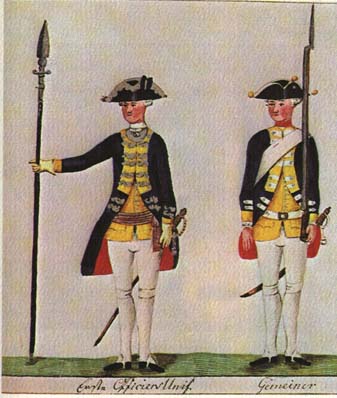 My branch of the Davis clan began its American adventures through the German export trade. The Landgraviate of Hesse-Kassel was in the business of selling the luxury item of the 17th and 18th centuries - professionally trained soldiery. Current scholars calculate that during this period 7% of the entire population (perhaps as much as 1/4 of the males 16-45) were kept under arms and then rented out to whoever would pay for them. (For the United States today that would be slightly more than 22 million soldiers.) It was a steady trade: the British historian John Childs has done a tally that is quoted in the wikipedia article on the Hessians:
"Between 1706 and 1707, 10,000 Hessians served as a corps in Eugene of Savoy's army in Italy before moving to the Spanish Netherlands in 1708. In 1714, 6000 Hessians were rented to Sweden for its war with Russia whilst 12,000 Hessians were hired by George I of Great Britain in 1715 to combat the Jacobite Rebellion. … In the midst of the War of the Austrian Succession in 1744, 6,000 Hessians were fighting with the British army in Flanders whilst another 6,000 were in the Bavarian army. By 1762, 24,000 Hessians were serving with Ferdinand of Brunswick's army in Germany."
Roughly 30,000 Hessians were sent to North America to help King George put down the rebellion. The first group (16,000) arrived in 1776 to help Clinton and Howe capture New York. They had not, as they had been told in Germany, come to the colonies for fight Indians. Today is the anniversary of the Battle of Pell's Point (Pelham) in which Clinton and Howe tried to cut off Washington's Army as it retreated from the Bronx. It did not work, and the Hessians discovered that being under British command was not particularly good for their health since the tactics used at Breed's Hill remained unchanged.
Somewhere between Pell's Point and Trenton my ancestor deserted; by 1777 he acquired title to 50 acres of yet unsurveyed "Western" land. The amount is how I know that the person recorded as "Davies" was a German and most likely a private who had run away from the Landrave's army; under the first Bounty Act American privates were offered 100 acres to enlist and Hessians 50 acres to desert.
Oct
17
What Would…Do, from Stefan Jovanovich
October 17, 2014 | Leave a Comment
During the 1946 election season the question was asked "What would Roosevelt do if he were alive?". There were a number of reasons for people to ask the question. The Marxists were attempting to bring true labor socialism to America by staging strikes against the auto makers just as they were converting back to their peacetime businesses, the coal mines (then the only fuel for power generation) and the railroads. Truman was doing his best to help by listening to the Harvard economists who warned against the catastrophe of abandoning the wartime wage and price controls.
After the election (in which the Republicans gained 55 seats and elected Joseph Martin as Speaker - the first one since Nicholas Longworth in 1928), the wags changed the question. It became "What would Truman do if he were alive?"
The answer, which came in 1948, was "buy the farm vote" with the system of subsidies, allotments and quotas that still rules American agriculture 2/3rds of a century later. I owe my career as a formerly licensed adviser to tax cheats to those farm bills and the compromise of 1954 that adopted its form of high nominal rates and massive and obvious loopholes. Rayburn could sell it to the Marxists (who never, ever know how to count), the real estate developers and oil producers while Martin thought the independent business people would be pleased and Eisenhower got his National Defense Highway system that he had wanted for a third of a century.
Oct
17
The World Coal Trade, from Stefan Jovanovich
October 17, 2014 | Leave a Comment
 The international trade in steam (thermal) coal is a major source for electricity generation. It turns out that the new kid on the block is Indonesia. According to the World Coal Association, Indonesia overtook Australia in 2012 (the last year for which they offer data) as the largest coal exporter. In 2012 the total international shipments of steam coal were 1.142 Billion tons. This is 1/6th of the total world consumption.
According to the WCA, "transportation costs account for a large share of the total delivered price of coal". Here are the import figures, by country:
Total Steam Coking
PR China 289Mt 218Mt 71Mt
Japan 184Mt 132Mt 52Mt
India 160Mt 123Mt 37Mt
S. Korea 125Mt 94Mt 31Mt
C. Tapei 64Mt 56Mt 8Mt
Germany 45Mt 36Mt 9Mt
UK 45Mt 40Mt 5Mt
The figures for India are notable because the country has been importing more and more of all forms of energy. The U.S. Energy Information Agency had a report on the question in August. Here is the section on coal:
Coal is India's primary source of energy (equaling 44% of total energy consumption), and the country ranked as the third-largest global coal producer, consumer, and importer of coal in 2012. Despite its significant coal reserves, India has experienced increasing supply shortages as a result of a lack of competition among producers, insufficient investment, and systemic problems with its mining industry. Although production has increased by about 4% per year since 2007, producers have failed to reach the government's production targets. Meanwhile, demand grew more than 7% annually over the past five years with the rise of electricity demand and lower power generation from natural gas and hydroelectricity as a result of recent supply disruptions. Because power plants rely so heavily on coal, shortages are a major contributor to shortfalls in electricity generation and consequent blackouts throughout the country. Because coal production cannot keep pace with demand, India has met more of its coal needs with imports. Net coal import dependency has risen from practically nothing in 1990 to nearly 23% in 2012. India imports thermal coal for power generation from Indonesia and South Africa. The steel and cement industries are also significant coal consumers. India has limited reserves of coking coal, used for steel production, and imports large quantities of coking coal from Australia.
So, the rupee price on steam coal from Australia is not really very relevant to the question of power generation in India. Mea culpa.
Oct
6
So Much, Once Again, for Moneyball, from Stefan Jovanovich
October 6, 2014 | Leave a Comment
 So much–once again–for moneyball.
Kansas City-9
Oakland-8
Ralph Vince writes:
Baseball is certainly a game where you truly need at least a 7 game series to determine who is the better team. Unlike, say, football, where in most games, the better team wins, that margin is much, much smaller in baseball, given the nature of the game (truly, a game of inches…and bounces…and breezes, and tiny margins that decide the day).
Don't take my word for it, however. We can compare major league baseball, to say, basketball, where the percentage of time the better team wins, given the nature of basketball vs baseball, is higher than baseball. Here is the data for all 7-game playoff series from 1905-2013:
1905 - 2013
Series Baseball Basketball
1-0 62.7 77.3
2-0 82.7 93.7
3-0 97 100
2-1 71.1 82
3-1 84.6 96.3
3-2 69.8 85.9
So, series 3-2 we see that in baseball, the team that is up 3 games to 2 games has taken the 7-game series 69.8% of the time vs basketball's 85.9% of the time. Clearly, basketball dominates baseball in this metric, and further evidence that the outcome of any single baseball game reflects who the better team is less frequently than most other sports.
Stefan Jovanovich comments:
In baseball the "best" team is the one that actually wins in the post season, not the one that has the "better" stats during the regular season; that is, as the coach said, "why they play the game" and why the game, which can be counted so easily, still eludes the precision that sabermetricians have promised.
What makes baseball relentlessly unfair is that the advantage that "better" teams usually enjoy - home field - counts for the least. Of all the major sports, baseball is the one has the lowest "home field" advantage - 52-48. What makes the game doubly unfair is that the "inches" even out, just as they do in the racquet sports; and the referees cannot easily, as they often do in football and basketball, decide the game.
For those of you who have not read Moneyball, the reason for my snarky reminder of the final score (Kansas City-9, Oakland-8) was that the Royals won the game by doing precisely what Master Beane has argued against - they stole bases and sacrificed - and the A's got their 8th run by doing exactly the same thing.
Sep
29
The Need for “Change” in Education, from Chris Tucker
September 29, 2014 | Leave a Comment
 I liked the conclusion of this article:
"I predict that if we continue implementing Common Core, average students will drop out of math as early as they are allowed. Even math-bright students will hate math. Tutoring companies will proliferate to serve wealthy families. The educational gap between rich and poor will widen. If we want to destroy math and science education in this country, keep Common Core."
Ed Stewart writes:
In my opinion a lot of the need for "change" is very likely driven by PC motives, which is why when it is looked at logically from a mathematics perspective it makes no sense. My guess is (using an example from article) it was hoped that allowing calculators for everything and allowing an increased use of "cheat sheets" would open up math for more equal distribution of supposed talent.
In terms of pace when I was in school we did have an accelerated math program but one had to test into it with an IQ test. The notion that a curriculum can be designed that can shuffle through all kids to be "above average" is part of the problem. It is a lack of realism.
I strongly disagree with the author that non-college kids are necessarily sent to dead-end jobs while college kids are not. Reality is working in a cube with a degree is just as much a dead in job as others, particularly in the outsourcing era where such work has been massively devalued. The notion that keeping ones hands clean is always better is just a bias. Guys who get involved in a field that actually builds something or is otherwise productive such as Natural resources will be better off vs. a twin of equal ability shuffled through the "college" program. And clearly many who see that opportunity follow this different track. Charles Murray is right we'd be better off admitting college is useless for all but the relative few - making it more accepted for people of even moderate above-average ability to go right into a job for training.
Stefan Jovanovich writes:
The need for "change" in education is driven by nothing more than the same financial incentives that operate in all markets where the customers are not the actual users of the product. Even military contractors have to deal with the fact that at some point the soldiers, sailors, airmen and marines have to use the weapons; and, if they don't work or work well, people get hurt, and then the survivors get mad and resolve to get even. Elementary and secondary public education in America has no such feedback mechanism. No school keeps data on the future trades and incomes of their students; in fact, in the name of "privacy" (that Federal Constitutional right that first trimester unborn children lack but the rest of us have), schools are prohibited from collecting and keeping such data. So, in education, "change" happens not because of any customer demand but because of the incentives it offers to the people who manage and create the changes. Every curriculum change means more money for the creators of the curriculum and, far more important, more paid time on and off time for research studies, training and conferences - all of which guarantee time away from the nasty children.
It does not matter whether or not the change works for the customers; indeed, there is a real incentive for the change to fail because that has invariably meant that more money, not less, should be spent on schooling. (Er, sorry, not "spent", "invested")
P.S. There is no evidence that public "job training" works any better than classroom education in the academic subjects; "job training" is another field where the government pays the money and the customers' feedback is completely ignored. The roughnecks who are getting semi-rich in North Dakota right now learned their trade from the informal apprenticing that comes from having an uncle in the oil bidness.
Sep
22
Not About the Oregano, from Stefan Jovanovich
September 22, 2014 | Leave a Comment
We spend a great deal of time discussing the Great Seasoner but never give due attention to the person who has best understood what Henry Singleton was doing all those years.
anonymous writes:
Reinvesting cash flows while deferring taxes indefinitely?
Sep
21
Quote of the Day, from Kim Zussman
September 21, 2014 | Leave a Comment
All government, in its essence, is a conspiracy against the superior man: its one permanent object is to oppress him and cripple him. If it be aristocratic in organization, then it seeks to protect the man who is superior only in law against the man who is superior in fact; if it be democratic, then it seeks to protect the man who is inferior in every way against both. One of its primary functions is to regiment men by force, to make them as much alike as possible and as dependent upon one another as possible, to search out and combat originality among them. All it can see in an original idea is potential change, and hence an invasion of its prerogatives. The most dangerous man to any government is the man who is able to think things out for himself, without regard to the prevailing superstitions and taboos. Almost inevitably he comes to the conclusion that the government he lives under is dishonest, insane and intolerable, and so, if he is romantic, he tries to change it. And even if he is not romantic personally he is very apt to spread discontent among those who are.
-H.L Mencken, The Smart Set (December 1919)
Stefan Jovanovich comments:
That voters once turned out in much greater numbers than they do now is true. But those better days were times when the franchise was limited so voting was like balloting in takeover battles for corporate control; the voters for both sides had direct stakes in the outcome. That direct stake on the outcome continued after the franchise was expanded; with that Jacksonian revolution patronage also expanded. The stakes for voters remained very real. Those same rules still apply but now they are limited to the significant campaign contributors; for their interests who gets elected still matters. But for the millions or hundreds of thousands of voters who show up for elections there is no individual interest that is furthered by their ballot. For them voting is a completely ritual activity. Many people know this and choose not to bother. The fact that so many continue to vote is what is truly noteworthy. One can take the turnout either as proof of people's faith in democracy or as confirmation that politics has nothing to do with logic. Mencken would say "both".
Sep
19
Ingenuity and the Tax Man, from Stefan Jovanovich
September 19, 2014 | Leave a Comment
 Some of the largest wooden vessels ever built were designed as throwaways. These "disposable ships" were built in Canada to be sailed to Britain where they would be broken apart so their timber could be sold. Cargos of oak and pine were subject to an import duty of 275% of market value. There was no import duty collected on ship hulls and superstuctures.
Any comparison of these tax dodges with the current popularity of disposing of U.S. incorporation is clearly subversive. No patriotic American would ever do anything legal to avoid the tax on foreign earnings being landed on American shores.
Sep
18
Measuring the GDP, from anonymous
September 18, 2014 | Leave a Comment
I have been spending a lot of time researching GDP construction and it's history and this will be a part of my book that will be out in about 6-9 months. The basic issue is that "how" to measure an economy is a difficult thing. Very difficult. There were many competing theories on it in the first 1/3d of the 20th century. Modern GDP was constructed to serve the purpose of measuring the potential output of the economy for the purposes of conducting WW2. It has since become standard around the world as the only way to measure the economy.
The issue is that it does a very good job of measuring things in the short run. However, it can't take into account the "quality" of economic activity in the long run.
For example, under GDP 100 guys digging ditches and filling them in again are seen as better for the economy then 75 guys doing productive work and 25 guys staying home and taking care of their kids.
Likewise, 100 guys getting paid to destroy productive capital and kill people are seen as better for the economy then 50 guys working in 7-11 and 50 guys taking care of kids, painting, and playing the guitar.
GDP assumes in essence that people are rational actors and that if someone is being paid to do a job that it is by definition productive activity. However, with government that is not always the case, and with zero interest loans for wall street that is not always the case either.
There is a lot of chatter in public about why wages are stagnant and the average person isn't better off than they were 20 years ago despite the rise in GDP. The answer lies in GDP's accounting for War and other government expenditures, as well as the much more complex issue of how the banking/finance industries are reflected in GDP (you would be shocked at the answer to this most likely, but it is so complex I still don't fully understand it myself).
Stefan Jovanovich writes:
I remain amazed at how easily our political economy dismisses the pure waste of warfare and its effects.
Ed Stewart writes:
Interesting points anonymous and Stephan. Anonymous, I look forward to reading your book.
Your ditch digging example is an easy one to see but when you start using that logic - what about the tax preparation industry that exists do to an ultra-complex tax code? There are many other examples. Many aspects of the regulatory state might be best considered a jobs program for the reasonably intelligent in the way that ditch-digging is a jobs program for physical laborers.
I had a realization a while back. We might be better off if we could shut down all of the fake work and specific social programs that actively harm productivity, that provide bad incentives (more kids = more $$$), and then just pay a basic annuity to all adults (privatized as a property right) to set a floor on living standards. Make it tradeable and you have an easy mechanism to transfer citizenship, etc. Citizenship is worth something why can't be buy and sell it, and why don't we earn anything directly from it like a dividend stock or bond.
Stefan Jovanovich writes:
Ed (and anonymous also) may be going down the path that my grandfather first set me on back in 1950s. He said that the Wobbly idea about "one big union" was hopelessly naive (he had been in his early 20s when he and grandma joined the IWW), but there was at the heart of it one very good idea - markets work brilliantly for consumers aka people who have the ready but they don't work nearly as well for "jobs". He had started mining when hand drills and sledgehammers were used to create the holes for the dynamite. (He told me that he even worked on one old and stupid mine in Southern Illinois where the owner still used black powder; he said he was young and stupid about politics but not about mining. He worked that job until he got his wages and then took the train to Chicago where he found a job working on what became the Navy Pier.)
He thought the Marxists had it backwards; the last thing you wanted was for the government to own anything and have permanent workers. They would inevitably become worse than even the most naked capitalists because they would never, ever have to stand the test of the market. You wanted competition and prices in everything; BUT you had to have everyone who accepted those rules be able to share in the prosperity they created. In his day miners did that sharing by literally passing the hat for sick and disabled workers and for burial expenses (for the children as much as for the miners and their wives). The idea of a "one big union" was that the hate would be passed for every person who was in the United States legally (which was everyone back in the day when people were freely allowed to come here if they passed the entry test for communicable diseases).
When he asked him about Bismarck's "social" programs, which were the model the American Progressives used for their "reforms" (sic), he just laughed. "You mean the laws that guarantee that every gymnasium graduate has a job telling everyone else how to behave?"
He would have agreed with Ed that even citizenship was a property right that people should be free to buy and sell. What he wanted attached to that right was the annuity claim to have the hat passed. And, he thought everyone - Rockefeller included - should have an account. "It is the only way to prevent people from thinking they need to make distinctions between the people who "deserve" to have the hat passed and those who don't." Sooner or later, he told me, the preachers will want to get their hands on the money and say it came from God. "But what about the communists and the socialists?" "Same thing, only they will say it came from Darwin."
The man has been dead for more than half a century, and I still miss him nearly every day.
Ed Stewart writes:
Very interesting, Stefan. It makes a heck of a lot of sense to me. I would love to read more if your grandfather or anyone else ever mapped out the idea further.
Stefan Jovanovich responds:
Ed asked if anyone had ever mapped out the Wobbly idea of one big union. The answer is "yes" - every time someone sits down and calculates what is spent on "poverty" and the parts of public health that do not deal directly with quarantines, innoculations and other direct measures against communicable diseases (in other words, almost all of the "wellness" spending). The most recent effort was this one:
"This week, the U.S. Census Bureau is scheduled to release its annual poverty report. The report will be notable because this year marks the 50th anniversary of the launch of President Lyndon Johnson's War on Poverty. In his January 1964 State of the Union address, Johnson proclaimed, "This administration today, here and now, declares unconditional war on poverty in America." Since that time, U.S. taxpayers have spent over $22 trillion on anti-poverty programs (in constant 2012 dollars). Adjusted for inflation, this spending (which does not include Social Security or Medicare) is three times the cost of all military wars in U.S. history since the American Revolution."
"Federal and state governments spent $943 billion in 2013 on these programs at an average cost of $9,000 per recipient. (Again, Social Security and Medicare are not included in the totals.) Today, government spends 16 times more, adjusting for inflation, on means-tested welfare or anti-poverty programs than it did when the War on Poverty started. But as welfare spending soared, the decline in poverty came to a grinding halt. How can this paradox be explained? How can government spend $9,000 per recipient and have no apparent impact on poverty? The answer is that it can't. The conundrum of massive anti-poverty spending and unchanging poverty rates has a simple explanation. The Census Bureau counts a family as "poor" if its income falls below specific thresholds, but in counting "income," the Census omits nearly all of government means-tested spending on the poor. In effect, it ignores almost the entire welfare state when it calculates poverty. This neat bureaucratic ploy ensured that welfare programs could grow infinitely while "poverty" remained unchanged."
Grandfather, being clear-sighted, knew that you could take all the money spent on the officially poor and divide it up among everyone - Rockefeller included - and eliminate poverty tomorrow; but, that would offend everyone who wants vices to be illegal and everyone (usually the same person) who wants official helping to be a sinecure that can be passed down from generation to generation just as parsonage livings once were. These are my words but his thoughts: "The snobbery of the caring classes will always win."
Sep
15
Do Random Paths All Lead to the Same Place, from anonymous
September 15, 2014 | Leave a Comment
 Shades of Galton….
In his fourth-floor lab at Harvard University, Michael Desai has created hundreds of identical worlds in order to watch evolution at work. Each of his meticulously controlled environments is home to a separate strain of baker's yeast. Every 12 hours, Desai's robot assistants pluck out the fastest-growing yeast in each world, selecting the fittest to live on, and discard the rest. Desai then monitors the strains as they evolve over the course of 500 generations. His experiment, which other scientists say is unprecedented in scale, seeks to gain insight into a question that has long bedeviled biologists: If we could start the world over again, would life evolve the same way?
Stefan Jovanovich writes:
The absence of time's arrow is fascinating. The "fittest" compete in a world where the rules are constant and invariable - "meticulously controlled" - while everything we know says that the rules are always changing in ways that even we brilliant humans fail to predict. Still worse for the purposes of experiment, the rules sometimes instantly and violently, even as they obey all of our entirely predictable laws of physics.
Ralph Vince comments:
This has nothing to do with "fitness," and everything to do with randomness.
Take X scenarios. At each discrete point in time, they branch into one of these X scenarios, such that after Q discrete periods, you have X^Q branches.
Your "expectation," (not in the classic sense) is the sorted median outcome (whereas the classic sense expectation is the probability weighted mean outcome, and I contend that in the limit, i.e. as Q->infinity, they converge *).
About this sorted mean outcome (at QP0, in the paper this thread pertains to) there is a vast region of similar-outcome branches. It sounds to me as though this experiment has lass to do with evolutionary "fitness" and more to do with artifacts of expectation in finite time.
I am working on a proof of *, but working on it with respect to continuously-distributed outcomes (as opposed to discrete "scenarios") as well as continuous(though fininte) time, rather an discrete increments of time to Q.
It is a struggle.
Mr. Isomorphisms adds:
This may not be what you're looking for in proving *. But the other day I worked out that you can exploit the "soft max" identity (seen in tropical geometry and elsewhere) to get analytic formulae for the median, third-from-top, etc. (only with log base ∞) which might get you where you need to go.
max = log_t ( t^a + t^b + t^c ), t going to infinity
min = log_t 1/( t^-a + t^-b + t^-c ), t going to infinity
second_max = max( {a,b,c} - max({a,b,c}) )
With recursion you can get all the way to the middle. (Now since we've turned the median into a continuous function we can take derivatives, which I haven't simplified or played around with since I realized one can do this. But I don't think that relates to your * — just hoping the method would.)
Steve Ellison comments:
Regarding Shane's original question, yes, there is a phenomenon known as evolutionary convergence. Isolated areas with similar conditions often have similar life forms that developed independently. For example, cacti originated in the Western Hemisphere, but there are plants that originated in Eastern Hemisphere deserts that also store water and have spiky exteriors.
Gary Rogan writes:
Clearly there are niches in the environment, just like there are in the economy, the market, the arts, sports, etc. It seems self-evident that a species that thrives on a Pacific island is likely to be different from a species being able to survive in the Arctic or at the bottom of the ocean. Not having "a single, cannibalizing species inhabiting the planet" only speaks to the niches in the environment not some complicated problem with evolution.
Ralph Vince adds:
Perhaps we DO, in effect, have one, cannibalizing species, depending on how broad the field of view of our lens of examination.. How many animal life forms on the planet have but one eye? "Evolution" having eliminated that not-so-robust construction in all earthly environments. Is our notion of "species," which we believe to exhibit a vast array of life forms, only show us carbon-bases life forms with, at most, five senses. In that sense, is a penguin so much different from a scorpion from a human being? The notion itself of "food chain," with such biochemically similar life forms, is, in effect, an exercise in cannibalism.
Gary Rogan writes:
Since the evidence points to life arising or being successfully introduced to Earth just once, it's not surprising that we only have carbon-based life forms. And just because a scorpion shares a lot of genes and proteins with penguins doesn't mean they are of the same species, simply based on the definition of the word: to be so classified they'd have to be able to interbreed. I'm now no longer sure what the point is, but hopefully "descent with modifications" is not in question.
Ralph Vince clarifies:
My point simply put, is that I don't find "evolution," or "Survival of the Fittest," an adequate model, i.e. a panacea for how life arose and differentiated (to the restricted sense that it has) on earth. I find it too simplistic of a solution, believe there are likely many other explanations (all of which are, in a limited sense, true, similar to the wave/particle properties of light) and am interested in any other explanations (there is not a debate here, aside from one which I don't believe you ascribe to of "Fitness" being an explanation for all life on earth).
For example, (to the best of my knowledge) every living thing seems to fit somewhere into the food chain. Perhaps there is an overriding-yet-undiscovered mechanism requiring this as a license for life on earth? (And if not, why not? A stupid question, unanswered, is still an unanswered question. I believe evolution seems to explain so much that we use it to explain where a different mechanism may be the driving one, yet, occluded by the seemingly-obvious-to-us explanation of "fitness"). Evolution is a powerful explanation, but it does not explain everything.Not that I have a problem with "fitness" as a driver here — clearly it is, so I am not at odds with you there (though I am not so sure life was introduced on earth only once, again, viral and fungal life is a difficult leap from living cells). So I simply wonder of what other driving mechanisms are at work here that we are unaware of.
Gary Rogan writes:
Ralph, as it's generally hard to prove a negative, especially in open-ended complicated situation, I can't argue that there are other forces at work. As for fitting somewhere on the food chain, all carbon-based life forms eventually get weak and if not eaten at that point die. Weak or dead concentrated proteins and other valuable chemicals present too rich and too easy a food source not to be consumed by something, so this particular point doesn't instill a sense of wonder in me, but perhaps there is more to it than meets my eye.
We should keep in mind that on the average over any appreciable number of generations every existing species or otherwise categorized collection of biological creatures has almost exactly one descendent per individual, otherwise within a short span of time the group's mass would exceed that of the planet or conversely disappear. Therefore available resources present arguably the highest hurdle on the success of species, but as Hamlet said, "There are more things in heaven and earth, Horatio, than are dreamt of in you philosophy."
Ed Stewart writes:
Speaking of the food chain, I think the concept of the tropic level has some serious application to the markets, as I the chair documented in his first book. Might be particularly good model to analyze the impact of various stimulus measures - what level the stimulus directly stimulates, then who feeds on that level directly and indirectly for investments opportunity.
anonymous writes:
There are no marsupials above the Wallace Line above Australia. Below there are the myriad odd and strange life forms in Australia. It was a function of geology creating distinct eco zones and separate paths of development of life forms.
Sep
15
Henry Ford and Debt, from Mr. Isomophisms
September 15, 2014 | Leave a Comment
 From Borrow: The American Way of Debt:
While Ford may have pushed cars, he never pushed debt. Ford so loathed the sapping of freedom that debt represented for him that for most of the 1920s he refused to sell his cars on financing plans, and in the process nearly bankrupted Ford Motor Company. His hostility to finance, coupling an anti-Semitic hostility to Jewish bankers and a mechanic's hostility to anyone who didn't make anything, hobbled the company. That Dick could get a job at General Motors, which believed in debt wholeheartedly, is largely a testament to Ford's hostility to consumer credit.
In the 1920s, Americans, both borrowers and lenders, discovered new ways to finance consumer credit, and, of course, it was only the beginning. Debt was everywhere, and its ubiquity was made possible by changes in finance, manufacturing, and law that had occurred after the First World War. High interest on consumer loans had long been illegal in the U.S., but around World War I, progressive reformers, seeking to drive out loan sharks, pushed states across the country to raise the legal interest rate. Now able to lend money legally, at rates which could be profitable, new consumer finance industries sprung up overnight. The legal changes coincided with a new generation of cars and electrical appliances that were both expensive and mass produced. The installment credit allowed manufacturers to sell these new wonders at a volume, and consumers could afford them because of the easy monthly payments. What ultimately made all this lending possible was that lenders could now, for the first time, resell their debt.
Stefan Jovanovich writes:
This is very bad history. Henry Ford disapproved of debt, but he had no problem with his dealers offering it. Where Ford's stinginess really hurt was his failure to offer financing to his dealers to allow them to finance their inventory. That is what GMAC did. Sloan had the wit to insist that GMAC be truly separate so that the brand managers could not channel stuff. The explosion in debt in the 1920s was not in consumer debt at all. It was in producer and public finance.
Sep
8
The 13 Virtues, from Dylan Distasio
September 8, 2014 | Leave a Comment
 I am sure you have seen and heard the story of Benjamin Franklin's 13 moral virtues, but here they are as a good reminder for all of us:
TEMPERANCE. Eat not to dullness; drink not to elevation.
SILENCE. Speak not but what may benefit others or yourself; avoid trifling conversation.
ORDER. Let all your things have their places; let each part of your business have its time.
RESOLUTION. Resolve to perform what you ought; perform without fail what you resolve.
FRUGALITY. Make no expense but to do good to others or yourself; i.e., waste nothing.
INDUSTRY. Lose no time; be always employ'd in something useful; cut off all unnecessary actions.
SINCERITY. Use no hurtful deceit; think innocently and justly, and, if you speak, speak accordingly.
JUSTICE. Wrong none by doing injuries, or omitting the benefits that are your duty.
MODERATION. Avoid extremes; forbear resenting injuries so much as you think they deserve.
CLEANLINESS. Tolerate no uncleanliness in body, cloaths, or habitation.
TRANQUILLITY. Be not disturbed at trifles, or at accidents common or unavoidable.
CHASTITY. Rarely use venery but for health or offspring, never to dullness, weakness, or the injury of your own or another's peace or reputation.
HUMILITY. Imitate Jesus and Socrates.
Stefan Jovanovich comments:
Two grunts from the peanut gallery (where everyone is still unhappy about seeing the end of the Fed's career):
1. The maxims were written as a scold for his son William, who was Royal Governor of New Jersey at the time (1771) and hardly needed lessons from Dad about how to get on in the world. (He could have used some help later on when the Revolutionists threw him into their improvised jail; Franklin literally turned his back on the man and never spoke or wrote to him for the rest of his life. This matters because it is only through the efforts of his grandson that the autobiography was published.
2. One of Twain's early hits was his essay on Franklin's autobiography; it was not a favorable review but it was wildly popular when it was first published in 1870 (of course, these are the same people who voted twice for Grant so what can you expect.) My favorite line in the Twain essay is this one: "His maxims were full of animosity toward boys." They were and are.
Sep
4
“Free” Markets - Lose the Word “Free”, from Stefan Jovanovich
September 4, 2014 | 3 Comments
The emphasis is always on "free" when it should be on markets. Markets are the miracle of human invention– the one thing that we do than other creatures, event those more intelligent, skilled and long-living, have not bothered with. Markets only exist where 2 things occur at once:
1. People, by force or common acceptance, have outright ownership in what they are selling
2. Buyers have either money or good promises to pay money that the sellers believe they can use for payment when they become buyers
Markets are never "free" - there are always rules from the king, the viceroy or the legislature, as enforced by their minions, that dictate the conditions under which buyers and sellers are allowed to meet. And, most certainly, the king, the viceroy or the legislature, enforces through their minions the monopoly of the government over the question of what can be used to pay taxes. And, most certainly of all, there are always taxes. Commerce is always bent; but, even so, it is more liberating than anything else people do to each other because it assumes that each person is, as Friedman, put it "free to choose".
I wish/pray (depending on the day's preference) that the Libertarians and their allies would abandon their prohibitionist/abolitionist manias about absolute freedom (no borders, no armies or navies, no copyright laws, no legal tender, etc.) and simply become the party of "more" markets. The American labor movement only began to grow freely, without government enforcement, when Samuel Gompers persuaded others that their demands should be simple. "We do want more, and when it becomes more, we shall still want more."
Sep
2
The Hawthorne Effect: Being Watched May Not Affect Behaviour, After All, from Scott Brooks
September 2, 2014 | Leave a Comment
Questioning the Hawthorne Effect: Light Work"
The data from the illumination experiments had never been rigorously analysed and were believed lost. But Steven Levitt and John List, two economists at the University of Chicago, discovered that the data had survived the decades in two archives in Milwaukee and Boston, and decided to subject them to econometric analysis. The Hawthorne experiments had another surprise in store for them. Contrary to the descriptions in the literature, they found no systematic evidence that levels of productivity in the factory rose whenever changes in lighting were implemented.
Stefan Jovanovich writes:
No one who has ever owned or run a factory (guilty on both counts) believes that you can somehow game productivity. Workers, even if they are also profit participants, will ration their work effort, not out of class envy, bitterness or any of the usual Marxist explanations but simply because they want to have enough energy left at the end of the day to go shopping or play softball with their friends and they know that tomorrow they will have to get up and do it all over again. The people who put in conspicuous extra effort are dangerous: they are brown-nosers who aspire to middle management, and they encourage owners/managers to believe that they need hierarchies of oversight instead of simple, hard rules - don't lie and don't ever ship stuff you wouldn't buy yourself. No labor union can tolerate such a system: it leaves nothing for the shop stewards to pretend to do.
Sep
2
Mobility vs Equality, from Victor Niederhoffer
September 2, 2014 | 2 Comments
 How many of the rich were in the lower quintiles like What's App which recently sold for 18 billion to Facebook and the owners were on food stamps the previous year. Is that bad for a society to provide such opportunity and for the mobility between classes to increase or should we be like England where once you're in one class you can never move to another.
Richard Owen writes:
I am unsure if its really true that class barriers exist to any greater degree in the UK than the USA, other than perhaps in the mind or money of the classes themselves. A bit like Mr. Cosby's riffs to African Americans: don't perceive barriers for yourself. As my friend staying at the Knickerbocker club and being variously harassed for his attire, decorum and guests the other week reported "a certain strain of New Yorker could surely teach the British a thing or two about snobbery." Sure, we have a Conservative government with a disproportionate number of Etonians in it, but when one becomes Prime Minister, one tends to reach for trusted friends and fellow travelers. And being an Etonian is not a vote enhancer. Annunziata Rees-Mogg was asked to reframe herself Nancy Mogg for the purposes of election PR. The USA does not seem short of its own political dynasties and classes.
Ralph Vince writes:
The chair's example of WhatsApp I believe is the exception more so than the rule.
The churn at the higher stratas sees parties leaving unexpectedly. Those arriving, arrive slowly, believing they will be there forever.
Vast sums of money are lost in a day, a minute or the blink of an eye. You see this principle play out at the baccarat tables and the markets. The new arrivals, the beneficiaries of money-begetting-money for protracted periods, often generations.
Mr. Isomorphisms writes:
Regarding the very long timetables, I admired both the diligence/ingenuity of Gregory Clark and The Economist for publishing that the surname "Micklethwait" has enjoyed a run of good luck, when its chief editor is John Micklethwait (graduate of Ampleforth College, and later Oxford). Miles Corak also earns a mention in that Economist piece. A short list of Americans from expensive high schools includes Dan Ellsberg, Charles Coker, Thruston Moore, Glenn Close, Adlai Stevenson, Cosma Shalizi, but not Dan Einhorn.
Stefan Jovanovich adds:
If you do any serious searching of genealogical records, you discover 2 things:
1. Longitudinal searches of census data by county locations, including the immediately adjacent ones, show limited "social mobility" because the people who stay where they are born and whose children stay there are largely content with their lots in life. This is one reason America scores better than Britain in the 19th century; the people who stayed in Britain were ok with their lives where as, in America, nearly everyone was moving around, even if many of them eventually came back to "home".
2. The people who leave are the ones who become very rich, by local standards, or flat broke or need to get away from the law. The very rich tend to move to the places where they can be with their financial equals (so the Rockefellers abandon Euclid Avenue Baptist Church and become Episcopalians in New York) and the flat broke know they have better chances getting help from distant relatives than from local ones (a great deal of the Northern migration of freed slaves and, even more so, their children follows that pattern). The need for people to get away from the local sheriff hardly needs explanation.
The Harvard study deliberately ignores #1 and #2. "We assign children to commuting zones based on where they lived at age 16 – i.e., where they grew up – irrespective of whether they left that CZ afterward." The study also makes no adjustments for relative costs of living as a discount factor in gauging incomes. A child who migrated from Charlotte to San Jose gained 50% in gross income during the study period; but he or she gained no wealth with the added income compared to a child of lesser social mobility who stayed back home.
There is one other fact of human nature that you learn from reading the ancestry searches people have done: Everyone with any pretensions finds a way to trace their ancestry back to European royalty, even if the parish records stop 300 years or more before the connection is made.
Aug
20
What We Can Learn From The Two Wolf Men and The Greeks, from Victor Niederhoffer
August 20, 2014 | 2 Comments
 The erudite and esteemed historian of ours raises the question what can we learn from ancient Rome. Richard Epstein [cv ], believes that almost all that is good in our own law comes from Rome. Nock believed that only classics should be taught in college because everything good and bad happened in Rome and Greece and all we have to do is learn from the mistakes. I have always believed with Nock that the stock market will do whatever it has to do to increase agrarian reform, i.e. whatever will create a easier flow for reduction of social power and increase in the palindrome type of state. I often follow that line in my own trading. Do you believe Rome, Caesar, the two wolf men et al the Greeks, have things to help up with our investing?
Stefan Jovanovich writes:
Eddy aka our daughter Nora had the great good fortune to study Art History at Cal Berkeley while doing the requisite training in molecular and cell biology that would enable her to go to the wikipedia school of medicine at UCLA. She had the even greater good fortune to discover Andrew Stewart and make certain that she took every one of his classes. This left Eddy with the handicap of having the closest thing to an Oxbridge education one could get in America; Stewart was a kind, clever and relentless tutor; he even forgave her at graduation for abandoning a career in art history for the dubious privilege of wearing progressively longer white coats.
My apologies for the long-winded preamble; I am attempting to explain where I got my answer to the Chair's question. The "Greeks" of the Hellenistic period, not the classical one, are the people from whom we should take our lessons about finance; for they are the people who established the patterns of trade - grain from Egypt, Crimea and Sicily, manufactures from the Eastern Mediterranean, spices and clothes from West Asia, etc. - that endured in spite of the Roman's preference for military-industrial pillage.
Dylan Distasio writes:
 Today marks the 2000th anniversary of the death of the emperor, Augustus.
If our esteemed historian would be so kind, I was hoping he might provide one of his favorite books on either Augustus or ancient Rome in general.
Stefan Jovanovich replies:
Karl Galinsky's "Augustus: Introduction to the Life of an Emperor"
His discussion of Augustus as a politician is the best description of how "Rome" actually worked politically that I have ever read.
Pete Earle adds:
Ironically, this was published today as a 'Think Piece' by the Adam Smith Institute: "Currency Reform in Ancient Rome". In it I look at four obscure emperors and their efforts (as well as their fates) with respect to shoring up the denarius as Rome entered its "Age of Inflation".
Aug
19
How to Be Prepared for a Secular Stagnation, from Victor Niederhoffer
August 19, 2014 | Leave a Comment
 "How to Be Prepared for a Secular Stagnation" by Mohamed A. El- Erian
A bad agrarian reformed always comes back.
Stefan Jovanovich writes:
"Economists know how to beat secular stagnation. There are really two sorts of policies here according to Summers: prevention and cure. Policies that stimulate productivity growth and raise labour-force participation build in buffers against the zero lower bound by boosting persistent investment demand. Such pro-growth policies are uncontroversial in the policymaker world, even if they are politically difficult to implement."
It would be cruel and possibly racist and certainly totalitarian to find where Hubert Humphrey and Augustus Hawkins' minds came from and then impose a Carthaginian peace on the places and ideas. But it is tempting. The idea that enterprise can somehow through "policy" be connected to employment is the soft socialist fantasy of the modern world. There are no "policies" that stimulate productivity growth; there are only ideas and their applications through machinery and process that allow people to do things better, faster and cheaper. And the "cheaper" invariably involves substituting software and equipment for labor.
"Pro-growth policies are uncontroversial in the policymaker world" precisely because the only growth in employment those policies create is more jobs for policymakers and the Keynesian knock-on effect that comes from their spending money to go to conferences.
Shaw really did have it right. The problem with the undeserving poor is that they have even greater requirements than the people who accept the market values for their skills and services. What makes those casualties of "secular stagnation" so attractive is precisely that their greater requirements involve perpetually more funding for the people who know they can fix the problem.
Aug
14
Kathleen Ollerenshaw, from Stefan Jovanovich
August 14, 2014 | Leave a Comment
 "Dame Kathleen Ollerenshaw Obituary"
Dame Kathleen Ollerenshaw, who has died aged 101, was one of Britain's most eminent mathematicians, an influential educationist and a former lord mayor of Manchester, where she led the city council's Conservative group. She achieved all this, and more, despite being almost totally deaf from the age of eight until she acquired an effective hearing aid at 37. Dame Kathleen — who published her autobiography at 93 — wrote that maths was "the one subject in which I was at no disadvantage. Nearly all equations are found in textbooks or shown on the blackboard as the teacher speaks. Mathematics is a way of thinking. It requires no tools or instruments or laboratories. It may be convenient to have a pen and paper, a ruler and a compass, but it is not essential: Archimedes managed very well with a stretch of smooth sand and a stick." An Oxford hockey blue and champion skater in her youth, she was also a keen astronomer — Lancaster University named its observatory after her.
Aug
14
US Back Into Iraq, from David Lillienfeld
August 14, 2014 | 2 Comments
 Isn't this how the US began in Vietnam, as I recall it (Stefan, please correct me on that one if I'm off base)?
"Militants’ Siege on Mountain in Iraq Is Over, Pentagon Says"
Stefan Jovanovich replies:
Bless you, David, you are not off base; you are not even playing the same sport. The American attempt at "guns and butter" in Southeast Asia involved the last mass conscription among Western nations and outright expenditures on the war itself (not counting the other military efforts for the Cold War) that were a larger percentage of GDP than the entire Defense Department budget, with all its social spending, is now. "Viet-Nam" was the last war of mass armies in what will be seen in retrospect as the age of Napoleonic state militaries (the French, as with so many things, started it, the Prussians, Russians, Holy Roman Empire (Italy, Austria) followed and the British and Americans came in last and made the final industrial improvements.)
We are back in the age of small wars - tactical encounters between professional soldiers (Hamas and ISIS are no more a bunch of amateurs than the Barbary pirates were; this is their trade). If you want to see things in their proper light, look to the campaigns for which Vauban built all those fortresses; there are no proper comparisons to be found with any of the large wars in past American history. This is going to be an age of extraordinary gains in technology just like those of the 18th century before the French revolution - i.e. the French making the first systematic application of mathematics to warfare by inventing ballistic science. The fighting is going to be expensive but nowhere near as economically ruinous as the the mass wars were. It is also going to be equally bloodless - at least for the Westerners.
Aug
12
The Eugster, from Pitt T. Maner III
August 12, 2014 | Leave a Comment
 Dr. Eugster is giving Jack LaLanne a run for his money. I found this article quite entertaining:
"Miracle man: The 94-year-old who will put your fitness regime to shame"
The fact that he started making changes in his mid-80s is quite impressive. He is the new 100m (25.67s) and 200m (58.03s) British champ in the 95 year-old age category per his Twitter feed!
Here are some quotes I found interesting from Dr. Eugster:
…' There are three main techniques to achieving healthy old age, he believes – work, diet and exercise, and of these, number one is work: "Work keeps you healthy. You have to work because it keeps your mind and body active," he says, adding that soon after giving up work on his newsletter at the age of 82, he began to notice a physical decline.
"My mind and body weren't as busy. You must have a purpose in life. If you retire you're a nobody; you make no contribution to society and your health deteriorates," he says.
Retirement, believes Eugster, "is a financial disaster and a health catastrophe." It was never meant to go on as long as it does nowadays, he maintains. The second most important factor in a long and healthy life is nutrition, he says: "What we're eating nowadays is destroying our health. The human race is committing mass suicide by eating too much of the wrong food."
Thirdly, is exercise – take it regularly and make sure it's the kind of exercise that's relevant to your body type, he says. "In old age, no matter how old you are, food and exercise are crucial," says Eugster, adding that he is preparing to publish a book about ageing and, while he hasn't yet decided on a title, he's thinking about calling it, "95 and Loving It!"
He's currently in discussions about the establishment of a fitness training scheme for the elderly. While old age may be associated with problems such as loss of strength, muscle mass, balance or mental agility, Eugster believes these common ailments can be combated with specifically-tailored fitness programmes.
A passionate advocate for training in old age, he believes that the right type of training can be of huge benefit to older people.
Most gyms are targeted at 30-50 year-olds, he says, and don't usually have fitness programmes specifically tailored around problems related to old age. He is now, he says, at the age of 94, considering a potential business opportunity in the fitness coaching sector. Such a training programme for older people would emphasise continuous assessment of their physical strengths and weaknesses and their progress.
Although you may be old, competitive sports keeps both mind and body healthy, he believes. Life is all about challenges, and it's important to always attempt something new, no matter how old you are.
"One should take part in competitive sports at any age – or start a new sport at any age," says Eugster, pointing out that, although he has never run in his life, he is currently preparing for the British Masters Athletics Championships race in Birmingham next August. He will attempt the 100 and 200 metres for men aged 95 and over.
Since no records have yet been set in this age category, Eugster is currently aiming to beat all records set in the lower category, for men aged 90-plus.
And, if you need to be reminded, he himself is living proof of his own adage:
"Anyone's life in advanced years can be dramatically better than they can ever have imagined if they invest in the right type of training."
Stefan Jovanovich writes:
I hate to even hint at arguing with Pitt, but Dr. Eugster's pitch reads to me very much like an argument against people ever having enough money to do a Donald Eugene Little. This reads very much like an Animal Farm poster: keep people in harness until they drop because it is really better for them.
"If you retire you're a nobody; you make no contribution to society"….
People "retire" so they can take care of their grandchildren, so they can stop being sickened by the physical conditions of their work, so they can go fishing, so they can be free to do something other than what they have been doing.
And who is "society" that it should have the right to demand contributions?
Aug
8
Review of Money, from Marty Fridson
August 8, 2014 | Leave a Comment
 This is a link to my review of Money: How the Destruction of the Dollar Threatens the Global Economy and What We Can Do about It, by Steve Forbes and Elizabeth Ames.
Even if you don't accept the authors' prescriptions, this book will make you reexamine your assumptions about exchange rates, the gold standard, and other economic topics.
Aug
4
Jean Panhard, from Stefan Jovanovich
August 4, 2014 | Leave a Comment

Jean Panhard, who has died aged 101, played a vital role in ensuring the survival of his family firm which, as Panhard et Levassor, had marketed the first production cars to the public in 1891.
The French company, founded by Jean's great-uncle Réné Panhard and Emile Levassor in 1887, had rewritten the automobile design rule-book, putting the engine at the front, and, for the first time, transmitting power through a system of gears. In 1894 Evelyn Ellis, driving a Panhard et Levassor vehicle, became the first man to drive a car on British soil, making the journey from Micheldever station in Hampshire to his home at Datchet, Berkshire, thus helping to persuade the government of the day to scrap the requirement for a man with a red flag to walk in front of any self-propelled vehicle (up to now usually farm vehicles powered by steam traction engines) on a public road.
In 1900 Panhard et Levassor was still the most important car manufacturer and exporter in the world, and the firm maintained its reputation for engineering excellence into the 20th century. A Panhard roadster set a world speed record of 133mph in 1934. Panhard cars excelled on the racetrack too, winning a famous victory in the 1893 Paris-Nice-Paris race and going on to win a further 1,500 races, including the Index of Performance Award in the Le Mans 24 Hour race on no fewer than 10 occasions.
-from Jean Panhard's Obituary
Jul
29
An "indeterminate, unpolitical, but highly sensitive miscellany of men" mutinying "against the vast, oppressive, ever-extending apparatus of parasitic bureaucracy."
"Fighting parasitic bureaucracies and crony capitalism"
"The Crisis of the 17th Century"
« go back — keep looking »Archives
- October 2026
- September 2026
- August 2026
- July 2026
- June 2026
- May 2026
- April 2026
- March 2026
- February 2026
- January 2026
- December 2025
- November 2025
- October 2025
- September 2025
- August 2025
- July 2025
- June 2025
- May 2025
- April 2025
- March 2025
- February 2025
- January 2025
- December 2024
- November 2024
- October 2024
- September 2024
- August 2024
- July 2024
- June 2024
- May 2024
- April 2024
- March 2024
- February 2024
- January 2024
- December 2023
- November 2023
- October 2023
- September 2023
- August 2023
- July 2023
- June 2023
- May 2023
- April 2023
- March 2023
- February 2023
- January 2023
- December 2022
- November 2022
- October 2022
- September 2022
- August 2022
- July 2022
- June 2022
- May 2022
- April 2022
- March 2022
- February 2022
- January 2022
- December 2021
- November 2021
- October 2021
- September 2021
- August 2021
- July 2021
- June 2021
- May 2021
- April 2021
- March 2021
- February 2021
- January 2021
- December 2020
- November 2020
- October 2020
- September 2020
- August 2020
- July 2020
- June 2020
- May 2020
- April 2020
- March 2020
- February 2020
- January 2020
- December 2019
- November 2019
- October 2019
- September 2019
- August 2019
- July 2019
- June 2019
- May 2019
- April 2019
- March 2019
- February 2019
- January 2019
- December 2018
- November 2018
- October 2018
- September 2018
- August 2018
- July 2018
- June 2018
- May 2018
- April 2018
- March 2018
- February 2018
- January 2018
- December 2017
- November 2017
- October 2017
- September 2017
- August 2017
- July 2017
- June 2017
- May 2017
- April 2017
- March 2017
- February 2017
- January 2017
- December 2016
- November 2016
- October 2016
- September 2016
- August 2016
- July 2016
- June 2016
- May 2016
- April 2016
- March 2016
- February 2016
- January 2016
- December 2015
- November 2015
- October 2015
- September 2015
- August 2015
- July 2015
- June 2015
- May 2015
- April 2015
- March 2015
- February 2015
- January 2015
- December 2014
- November 2014
- October 2014
- September 2014
- August 2014
- July 2014
- June 2014
- May 2014
- April 2014
- March 2014
- February 2014
- January 2014
- December 2013
- November 2013
- October 2013
- September 2013
- August 2013
- July 2013
- June 2013
- May 2013
- April 2013
- March 2013
- February 2013
- January 2013
- December 2012
- November 2012
- October 2012
- September 2012
- August 2012
- July 2012
- June 2012
- May 2012
- April 2012
- March 2012
- February 2012
- January 2012
- December 2011
- November 2011
- October 2011
- September 2011
- August 2011
- July 2011
- June 2011
- May 2011
- April 2011
- March 2011
- February 2011
- January 2011
- December 2010
- November 2010
- October 2010
- September 2010
- August 2010
- July 2010
- June 2010
- May 2010
- April 2010
- March 2010
- February 2010
- January 2010
- December 2009
- November 2009
- October 2009
- September 2009
- August 2009
- July 2009
- June 2009
- May 2009
- April 2009
- March 2009
- February 2009
- January 2009
- December 2008
- November 2008
- October 2008
- September 2008
- August 2008
- July 2008
- June 2008
- May 2008
- April 2008
- March 2008
- February 2008
- January 2008
- December 2007
- November 2007
- October 2007
- September 2007
- August 2007
- July 2007
- June 2007
- May 2007
- April 2007
- March 2007
- February 2007
- January 2007
- December 2006
- November 2006
- October 2006
- September 2006
- August 2006
- Older Archives
Resources & Links
- The Letters Prize
- Pre-2007 Victor Niederhoffer Posts
- Vic’s NYC Junto
- Reading List
- Programming in 60 Seconds
- The Objectivist Center
- Foundation for Economic Education
- Tigerchess
- Dick Sears' G.T. Index
- Pre-2007 Daily Speculations
- Laurel & Vics' Worldly Investor Articles
