Oct
20
The Geography of Missed Shots in U.S. Professional Basketball, from Stefan Jovanovich
October 20, 2014 |
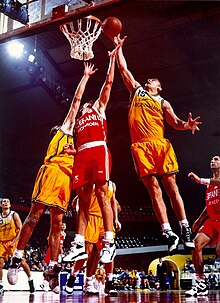 I thought this article about "How Rebounds Work" was quite fascinating.
And here is an even better link on the same topic with some very interesting graphics: "Where do rebounds go?"
Pitt T. Maner III writes:
Very nice graphics and analysis.
One of the fundamentals of rebounding used to be that you tried to track your opponent while the ball was in the air to see what direction he was going and then you tried to turn your body at the last possible second in order to "box" him out or put a body on him before he got into the rebounding zone. Wide bodies (Wes Unseld, Malone, Barkley-types, etc) were particularly effective in doing so. It took energy and work effort to do this.
The example with Noah shows him going through uncontested–the defensive players turned their backs too early and lost the opportunity to box him out–it looks rather lazy. To some degree it seems that modern pro basketball players have concentrated on areas of the game or specialized to such an extent that the fundamentals are not practiced and are often found lacking.
A fair number of rebounds are made below the rim so positioning by shorter players can make up for height differences (some of those Princeton-Georgetown matchups demonstrated that).
And the really aggressive guys like Rodman, if they managed their fouls well, and scraped and clawed were often rewarded. Rodman was a master at judging rebound distances and "worming" his way to a rebound through narrow spaces. How he ended up in North Korea I don't know…crazed.
Scott Brooks writes:
Rebounds pretty much go to the opposite side of the hoop from where they are shot. That is not a new discovery.
What a coach should pay attention to therefore is where do shots initiate from. That is the key.
Since most of the world is right handed and since most players move in the direction of their dominate hand (thus keeping their body between the defender and the ball), most shots are going to come from the right side (or the defenses left side).
This bit of knowledge is very important, especially at the high school level or lower (it is still important at the college or higher level as well)…….but how to apply that knowledge…..now there's the rub.
Rebounding is more than just boxing out (which is a lost art nowadays). Rebounding is a team effort. I like my guards and forwards that play the toughest defense to guard the opponents shooters if we're in a man to man defense or to play to the "strong side" if we're in a zone (strong side is the offenses right side/defenses left side). I want my defenders to play the shooters tight so that when they do shoot, they can get a hand up high (the closer you are to the shooter, the higher you hand is relative to the shot), and force the shooter to put a little more arc on the ball than they would have preferred.
A ball with a high arc, more often than not, comes off the rim "soft" i.e. it is rebounded close to the rim and is usually rebounded in the paint, whereas a hard bounce will goes outside the paint to be rebounded away from the rim. Soft bounces allow my center and weak side forward to control the rebound the vast majority of the time, assuming they've properly boxed out.
What about the other players, what are they doing?
My strong side guard and forward are the ones usually defending against the shot. If the shot is taken by the shooting guard (sometimes called the "2 guard"), then the strong side forward chip blocks his man (if he's close) and rushes to the hoop in a sideways motion with his back to the baseline keeping his eye on the man he's defending until he gets close to the rim, then he plants his right foot and pivots on it towards the basket with his left foot and body moving clockwise motion.
My strong side guard defending the opposing shooting guard (2 guard), boxes out the shooting guard at the point of the shot and, if done right, neutralizes him 99% of the time, i.e. he will not get his own rebound and is out of the play unless the his team gets the offensive rebound (which will cause me, as a coach to "verbalize instructions in a loud manner" to my team for allowing an offensive rebound).
So what I have is my center covering the middle of the of the paint, my strong side forward covering the left side of the paint (from the defenders perspective) and I've got my weak side forward (my best rebounder) covering the right side of the paint…..i.e. the spot where the ball is most likely to go……and all of them are violently boxing out the opponents.
That leaves only my weak side guard. What is his job.
He is tasked with covering/preventing quick passes across the top of the key from (the defenses perspective) left to right…..i.e. in this scenario, instead of shooting the ball, the"2 guard" does a quick pass the point guard ("1 Guard") who whips it over to the small forward ("3 forward") who then shots. So my weak side defender has to play with his back to the baseline (basically parallel to the baseline) while the keeping the opposing "3 forward" in front of him. (it's another story for another day of what to do if their "3 forward" moves down to low and has to be passed off to my weakside forward). My weakside guard is, therefore, tasked with keeping pressure on their "3 forward" to stop that quick shot if a the quick pass I just described happened. If he does his job right, the "3 forward" can't get off the quick shot and it allows my defense the 1/2 of a second it needs to switch from (their perspective) left side to right side defense.
Back to the original scenario (ball on left side of the defense in the hands of the "2 guard"…….When the shoot is taken (by the "2 guard") , my weak side guard has to chip block the "3 forward", then roll out for the outlet pass. If done correctly, when he gets the outlet pass he takes a few quick dribbles and looks for our strong side guard…..(remember him).
If my strong side guard has done his job right in boxing out the shooting guard (remember I said the "2 guard" has been neutralized from the play) he's got the inside position on the shooting guard. And if the oppossing point guard (1 guard) on the other team is forced to deal with my weakside guard (who now has the ball) we basically have 2 on 1 fast break occurring.
What does a 2 on 1 fast break have to do with rebounding you say? Well, if you do enough of them, then the opposing team has to assign a man to fall back near center court each time they shot to defend against the fast break which means that I have a 5 on 4 rebounding advantage.
The art of rebounding is a team endeavor. A great rebounder is one who is surrounded by a great supporting cast that simply do their jobs.
Yes, you want your best rebounder on the weakside (forward position). This guy may not be the tallest person out there, but he is the most vicious tenacious meanest SOB on the floor. He is quick and he is instictive and has the ability to multitask…..i.e. watching the opposing players and timing his "boxing out" (that's an entire art that we should discuss another day), while watching the trajectory and velocity and spin on the ball to determine where it is likely to come off the rim.
Heck, my weakside forward is usually the smartest player on the floor. I call him my "Floor General"…..but why I can him that and the job I assign to him is an entire discussion for another day.
I've written about this before, but there is a lot more to the strategy of rebounding than what I've just written here. Heck, I've only discussed the defensive side of the equation…..and I haven't even elaborate (although I have in the past) on the subtle violence and mind games that are associated with great rebounding and stifling defense or even discussed offensive rebounding……maybe I'll write about those another day.
Comments
Archives
- October 2026
- September 2026
- August 2026
- July 2026
- June 2026
- May 2026
- April 2026
- March 2026
- February 2026
- January 2026
- December 2025
- November 2025
- October 2025
- September 2025
- August 2025
- July 2025
- June 2025
- May 2025
- April 2025
- March 2025
- February 2025
- January 2025
- December 2024
- November 2024
- October 2024
- September 2024
- August 2024
- July 2024
- June 2024
- May 2024
- April 2024
- March 2024
- February 2024
- January 2024
- December 2023
- November 2023
- October 2023
- September 2023
- August 2023
- July 2023
- June 2023
- May 2023
- April 2023
- March 2023
- February 2023
- January 2023
- December 2022
- November 2022
- October 2022
- September 2022
- August 2022
- July 2022
- June 2022
- May 2022
- April 2022
- March 2022
- February 2022
- January 2022
- December 2021
- November 2021
- October 2021
- September 2021
- August 2021
- July 2021
- June 2021
- May 2021
- April 2021
- March 2021
- February 2021
- January 2021
- December 2020
- November 2020
- October 2020
- September 2020
- August 2020
- July 2020
- June 2020
- May 2020
- April 2020
- March 2020
- February 2020
- January 2020
- December 2019
- November 2019
- October 2019
- September 2019
- August 2019
- July 2019
- June 2019
- May 2019
- April 2019
- March 2019
- February 2019
- January 2019
- December 2018
- November 2018
- October 2018
- September 2018
- August 2018
- July 2018
- June 2018
- May 2018
- April 2018
- March 2018
- February 2018
- January 2018
- December 2017
- November 2017
- October 2017
- September 2017
- August 2017
- July 2017
- June 2017
- May 2017
- April 2017
- March 2017
- February 2017
- January 2017
- December 2016
- November 2016
- October 2016
- September 2016
- August 2016
- July 2016
- June 2016
- May 2016
- April 2016
- March 2016
- February 2016
- January 2016
- December 2015
- November 2015
- October 2015
- September 2015
- August 2015
- July 2015
- June 2015
- May 2015
- April 2015
- March 2015
- February 2015
- January 2015
- December 2014
- November 2014
- October 2014
- September 2014
- August 2014
- July 2014
- June 2014
- May 2014
- April 2014
- March 2014
- February 2014
- January 2014
- December 2013
- November 2013
- October 2013
- September 2013
- August 2013
- July 2013
- June 2013
- May 2013
- April 2013
- March 2013
- February 2013
- January 2013
- December 2012
- November 2012
- October 2012
- September 2012
- August 2012
- July 2012
- June 2012
- May 2012
- April 2012
- March 2012
- February 2012
- January 2012
- December 2011
- November 2011
- October 2011
- September 2011
- August 2011
- July 2011
- June 2011
- May 2011
- April 2011
- March 2011
- February 2011
- January 2011
- December 2010
- November 2010
- October 2010
- September 2010
- August 2010
- July 2010
- June 2010
- May 2010
- April 2010
- March 2010
- February 2010
- January 2010
- December 2009
- November 2009
- October 2009
- September 2009
- August 2009
- July 2009
- June 2009
- May 2009
- April 2009
- March 2009
- February 2009
- January 2009
- December 2008
- November 2008
- October 2008
- September 2008
- August 2008
- July 2008
- June 2008
- May 2008
- April 2008
- March 2008
- February 2008
- January 2008
- December 2007
- November 2007
- October 2007
- September 2007
- August 2007
- July 2007
- June 2007
- May 2007
- April 2007
- March 2007
- February 2007
- January 2007
- December 2006
- November 2006
- October 2006
- September 2006
- August 2006
- Older Archives
Resources & Links
- The Letters Prize
- Pre-2007 Victor Niederhoffer Posts
- Vic’s NYC Junto
- Reading List
- Programming in 60 Seconds
- The Objectivist Center
- Foundation for Economic Education
- Tigerchess
- Dick Sears' G.T. Index
- Pre-2007 Daily Speculations
- Laurel & Vics' Worldly Investor Articles
