Mar
27
A Good Sunday Read, from Jeff Watson
March 27, 2011 | 2 Comments
 A few years ago, Gladwell wrote an interesting story on how the underdog can beat the favorite. When the underdog plays the favorite's game they lose around 65% of the time. When the underdog refuses to play the favorite's game and plays another game entirely, the win/loss reverses and they win over 60% of the time. This magnificent article has many, many lessons in trading and life in general.
Russ Sears comments:
I loved this article also, and have recommended it to many non scientific minded friends.
However, like many of Gladwell's writing that are entertaining summaries of other experts ideas, I believe he misses some of the more relevant points. Perhaps it is literary license, to make it more entertaining to the masses, or perhaps, it is just poor science to focus on what he believes can tie these ideas all together in a nice neat package without the lose ends that reality always messes up tight arguments.
While I can not disagree with his lawyer like presentation style of writing quasi scientific pieces for marketing purposes, most of his works leave me wishing to talk to the real expert's and scientist's whose life work he is putting into these boxes… to get the real story. The end result I believe is that his work often over-reaches to make a scientific case for his pet ideas. In my opinion, the masses buy them as "science" but they tend to fall apart when the rigor of science is really applied.
One thing that bothered me about this piece was his glossing over hard training to achieve the fitness level of the players for the underdog basketball teams. Knowing a few things about how to get peak running performance out of somebody. It would seem that while those coaches that get their players to consistently peak during the March Madness Tournament would have to loss a few games that they could have won because the players trained too hard and did not sufficiently recover. During the regular season the players would have to train so hard they leave their game on the practice field and loss some to teams that have less talent but are fresher. Then near the tourney, the coach would lighten up the practices to let them peak at the right time. Cardiovascular wise you can only really peak for a little over a month. It would appear to me that those teams that are coached to win every game during the regular season would be ranked higher than they should because they cannot "peak" any more. While those that worked harder, lost more games due to fatigue, are ranked lower than they should be. In other words are they "underdogs" because they train so hard during the regular season that they can peak higher than the other teams or are they Cinderella teams like David because they are prepared and fit enough to attack Goliath.
Also the pacing of the game must be such that the underdog's players are able to still match the jump and burst of speeds of the other team at the end. Some of this can be achieved by burning out the other team's fast twitch muscles early on…but some of this also has to be taught to strategically hold back a little at first, so your team does not suffer the same fate.
I have not watched any game this year, I have been too busy, however, this may explain why all the underdogs are left. And Gladwell may very well have made this style of coaching popular in basketball today. Whatever it is teams like Butler certainly have made the tourney exciting this year.
And while I think the numbers may be overstated, it would appear that there is some substance to the 3 ideas he states that underdogs should try:
1. Take an unconventional approach,
2. Try harder than the top dogs
3. Aggressive attack with determination and no thoughts of losing.
The first one helps you believe in yourself, that it is possible. The second gives you moral basis for why you should win. And the third can stun the others into thinking you will win.
Mar
26
Grain Prices, from Jeff Watson
March 26, 2011 | Leave a Comment
 Farm Journal surveyed farmers and found out some very interesting facts, opinions, and intentions. Corn production is going to increase 3.37% while soybean production will decrease 3.46%. Farmers might decrease production of hay to grow more corn or beans. Increased corn or bean production will come at the expense of either corn or beans depending what the farmers shift to. Cotton farmers plan on growing more cotton at the expense of their corn crops. 24% of respondents plan on waiting until planting time to determine what crops they will plant. 56% are making their decisions based on crop rotation.
The article also has break even levels for prices which would induce farmers to shift acreage to other crops.
Mar
20
Lessons Taught By Kids, from Sushil Kedia
March 20, 2011 | Leave a Comment
 Two things we can learn from kids are how to:
1) stay happy, for no reason in particular.
2) keep busy, doing something or the other.
What else would you suggest we could do to keep the child in each of us active, so as to be better adults?
Alan Millhone writes:
3) Young children are very honest and seldom tell falsehoods.
Jeff Watson suggests:
To stay a kid at heart, one should spend at least an hour a day engaged in exercise and another hour playing some kind of childish game, it doesn't matter what. It also helps to hang around with kids as they will keep you young.
Mark Goulston writes:
4) Every morning think of someone you are grateful to: a) what they did; b) the effort it took for them to do it; c) what it personally meant to you.
5) Make an effort to reach those people (or next of kin) and thank them for those three things
Mar
16
Kangaroo Bounce, from Jeff Watson
March 16, 2011 | Leave a Comment
Scientists are studying how the kangaroo bounces and how it is one of the few species that doesn't change posture as it grows larger or hops faster. Kangaroos are very efficient and make great subjects for those studying athletic motions and the fluidity of such motions.
Mar
15
Article on Day Trading, shared by Jeff Watson
March 15, 2011 | 3 Comments
Here's an interesting article on day trading and increased profits by going with the crowd. I'd like to see his original paper to see exactly how scientific the study was.
Mar
8
Hubble Finds a Far Off Galaxy, from Jeff Watson
March 8, 2011 | 1 Comment
 The Spaceship Hubble, the Telescope, has been bringing in some real finds. Lately, it discovered a galaxy that was around when the Universe was only 480 million years and it's light has persisted for 13+ Billion years. This is the oldest so far. Many good segments in this article and a good read for your morning science column of the day.
Mar
1
 With all the attention the Federal Reserve has gotten lately, Rothbard's "Origins of the Federal Reserve" has been published in pdf form. Very interesting read.
Stefan Jovanovich writes:
Veronica Wedgwood said somewhere (sorry– I can't find the reference) that the test of a historian is whether he or she lets the facts change opinions. Wedgwood herself passed that test in her own work. That is why her history of the Thirty Years War is still the definitive work– 75 years after it was published.Wedgwood also said that a book was only worth reading if you could take its facts and find that they were true.
I wish I could share Jeff's enthusiasm for Rothbard; but, when I took one of the first paragraphs in Rothbard's book and put it to the Wedgwood test, it failed badly.
"The alliance of big business and big government with the Republican Party drove through an income tax, heavy excise taxes on such sinful products as tobacco and alcohol, high protective tariffs, and huge land grants and other subsidies to transcontinental railroads. The overbuilding of railroads led directly to Morgan's failed attempts at railroad pools, and finally to the creation, promoted by Morgan and Morgan-controlled railroads, of the Interstate Commerce Commission in 1887."
The Revenue Act of 1861 was extended in 1862 to apply the excise to gunpowder, playing cards, feathers, iron, leather, piano, billiard tables, yachts, drugs, patent medicines and whiskey. At the end of the war, the taxes were repealed on everything; only the traditional excise - on liquor and tobacco - remained. The same Revenue Act of 1861 enacted the income tax. It was a flat tax - 3% on all income above $800 (what would be $20-25K now) - and 5% on the income of all Americans living abroad. The 1862 amendments changed the income tax to a progressive tax system; they also included an explicit date for its repeal - 1866.
Rothbard is correct in noting that the Morrill Act introduced "high" protective tariffs; but even that statement is out of context. The overall tax rate under the Morrill Tariff was 26%; for dutiable items the average rate was 36%. That was higher than the Walker Tariff rates (17% overall, 21% dutiable). The rates in the 1820s had been much, much higher (roughly 50%).
At heart Rothbard is making the standard Mises.org/diLorenzo/never-mind-the-facts doctrinaire Libertarian argument that the sons of the South were only seeking liberty and small government (never mind the first attempt at the legislative reach of Obamacare - the Fugitive Slave Law). But, try as they might, those who try to make the Morrill Tariff and not slavery the central cause of the Civil War/War Between the States run up against two very inconvenient facts: (1) President Buchanan, a Democrat, signed the Act into law and (2) Morrill's bill would never have passed the Senate, let alone gotten through Conference if the Secessionist Democrats had not already left the Senate.
I will spare everyone any further lectures for now, but I promise to return to those thrilling days of yesteryear and explain why Rothbard's history of the Interstate Commerce Commission and the Indianapolis Monetary Convention is just as specious.
Later:
I promised to return to Rothbard's history of the Indianapolis Monetary Convention.
First factoid: "the Rockefeller forces, dominant in their home state of Ohio and nationally in the Republican Party, had decided to quietly ditch prohibition as a political embarrassment and as a grave deterrent to obtaining votes from the increasingly powerful bloc of German-American voters".
Since all political parties are coalitions, there is a hint of truth here; but only that. The Republicans, in general, favored the "dries" - Methodists, Northern Baptists, Southern Baptists, Presbyterians, Disciples of Christ, Congregationalists, Quakers and Scandinavian Lutherans. The only concession made on the issue of prohibition was that McKinley decided to serve wine in the White House, symbolically reversing Hayes' no-alcohol policy. That was hardly "ditching" prohibition; neither political party dared publicly come out for "rum" or even "beer".
Worst factoid: "As soon as McKinley was safely elected, the Morgan-Rockefeller forces began to organize a "reform" movement to cure the "inelasticity" of money in the existing gold standard and to move slowly toward the establishment of a central bank."
Rothbard reads into the Report an elaborate Rockefeller-Morgan conspiracy to defeat popular opinion when the issue was anything but hidden from the public. The country was openly divided on the question of bimetallism with the Democrats supporting it as a means of issuing "cheap" dollars and the Republicans opposing. Even the Prohibitionists were split among themselves. The "gold" Prohibitionists - i.e. those who sided with the Republicans on the monetary question– won control of the Prohibition party itself .
For James Lawrence Laughlin and others, the purpose of the report to the Indianapolis Monetary Convention was to escape, once and for all, the snare of bi-metallism. The Report is unambiguous about that purpose. Here is the preamble:
We submit, for the reasons hereinafter stated, a plan of currency reform, in the hope that it will, if enacted into law, accomplish, so far as possible, these results :
1. To remove, at once and forever, all doubt as to what the standard of value in the United States is, and is to be.
2. To establish the credit of the United States at the highest point among the nations of the world.
3. To eliminate from our currency system those features which reason and experience show to be elements of weakness and danger.
4. To provide a paper currency convertible into gold and equal to it in value at all times and places, in which, with a volume adequate to the general and usual needs of business, there shall be combined a quality of growth and elasticity, through which it will adjust itself automatically and promptly to all variations of demand, whether sudden or gradual ; and which shall distribute itself throughout the country as the wants of different sections may require.
5. To so utilize the existing silver dollars as to maintain their parity with gold without imposing undue burdens on the Treasury.
6. To avoid any injurious contraction of the currency.
7. To avoid the issue of interest-bearing bonds, except in case of unlooked-for emergency; but to confer the power to issue bonds when necessary for the preservation of the credit of the government.
One more thing:
John Taylor finds himself once again defending his Rule.
The questions that James Laughlin would have wanted to ask Professor Taylor and Chairman Bernanke are these:
(1) how can you have "reserves" in a banking system with a sovereign monopoly on legal tender and no specie exchange requirement?
(2) if a rule is to be the only constraint on unlimited "supply" of money in a world where money and sovereign credit are synonymous, how can the rule avoid circularity when sovereign spending is one of the major components of "growth"?
Rocky Humbert writes:
And for reasons related to Professor Taylor, one finds oneself again poking fun at Anatoly's continuous calls for a top in gold.
On February 9th (18:45), Anatoly wrote:
"We used to be mesmerized by round numbers. But ever since Crude topped at that $147.27 print, I've gone on red alert well on approach of 150-ish. Lo'n'behold, next came an all-time high in 30-y bond futures at 143. And Gold print of $1431, in my opinion, will stand for years…Nothing beats an audited track record (and an internet paper trail) to debunk nonsense and test veracity…for both traders and central bankers."
Anatoly wrote: "…the gold print of 1431 … will stand for years…"
It didn't even stand for 8 weeks!!!!
Even before this latest crude spike, real interest rates were re-testing their record negative yields. Now, the feedback effects of negative real rates are percolating even faster ….
P.S. The gold price continues to rise at a 27% annual rate. While gold options have a sub-15% volatiltiy. Get the "drift" ???? With a nod to the options quants who wince at this bastardization of black-scholes, this risk-averse speculator gets the drift.
Russ Sears writes:
 When hundreds if not thousand of people are dying in the streets from their own government firing at them, millions more hungry because of rising food cost creating the helplessness needed for uprising, and the emerging markets have billions people with new found wealth to protect and a long tradition of hoarding gold for the hard times… the demand is not all about trader/speculators.
I have told the story to the list more than once, how my grandmother's family came to the US with only the gold they had around their house in lamp-stands, candle sticks and silverware made of gold, when their factory, land and home were taken by the WWI revolutionaries, leaving them to flee for their lives. She was seven at the time but she told the tale every time "gold" or "silver" was mentioned in her presence. Tell her gold is useless. The demand does not have to be a bubble soon to bust. Without the shock and awe of the US or Britain and especially not the Israeli military intervening, I would say we are in for a longer haul of uncertainty to the unrest than has been the case to most recent Middle East wars.
Rocky Humbert writes:
Howard Marks (Oaktree Investments) wrote a nice essay on this subject. Because he's a respected stock & bond guy, his articulate thoughts are worth a read.
One of the more pithy things he writes:
My view is simple and starts with the observation that gold is a lot like religion. No one can prove that God exists, or that God doesn't exist. The believer can't convince the atheist, and the atheist can't convince the believer. It's incredibly simple: either you believe in God or you don't. Well, that's exactly the way I think it is with gold. Either you're a believer or you're not.
I'll add that a speculator has a slightly different spin on this. A successful speculator needs to assess the conversion rate from gold atheist to gold believer to gold atheist.
One remembers that when Moses returned from Mt. Sinai, he saw the Israelites worshipping the Golden Calf (Exodus 32:4). This posed a "problem" because it was both wrong for the Israelites to be engaged in idol worship, and it was wrong for them to ascribe a physical representation of God. (Both acts are forbidden.) Nonetheless, 5000+ years ago, Anatoly would have bonded with Moses — because both saw the Golden Calf as an "outrage." Yet the successful speculator would have been long gold — while the calf was under construction — but it's unclear whether the speculator would have subsequently shorted gold due to the nuances of the Biblical story.
Gold prices will rise and fall — based on supply and demand. However, the belief that stocks are (in the long run) are the best performing asset class has elements of religion too — as this too requires "faith." Just faith in different things.
Anatoly Veltman defends himself:
My trading biases come from chart structure - but I would never bet money on something I don't understand. To that end, before putting up $10,000 deposit to Comex - I'd make sure that charts mostly reflect the supply and demand, both near- and long- term.
My family also fled Europe, albeit not in WWI - but in the course of more civilized era of a mere Soviet excursion into Afghanistan and subsequent US-led Olympic boycott. We were able to make necessary transatlantic connections over the phone to arrange currency swap of Russian Rubles here for US Dollars there (at four times premium to official non-competitive exchange rate). Thus, we didn't have to risk trafficking gold through customs. I guess, my bias in that sense is slightly different. I'm not a believer in impending world currency backwardation, and I see even less sense in Silver playing any role in this. So as an investor, I was always very interested and Long Silver in $4-$5 historical areas - when it would languish for a long time devoid of any speculative interest. I remember a stretch of over 5 straight years (and possibly even 8, depending on stats reliability), in which silver usage outstripped silver mining - yet world price hasn't perked by a penny!
Going into Labor Day 2010, I commented that Silver is obviously breaking out of an unprecedented protracted base in $17 handle - and that Shorts will be 100% squeezed. Rocky, who has apparently kept up an e-mail folder of "Anatoly's predictions", should be able to dig it out. Now, since price doubling has been fulfilled - I try to use events like Lybia to invest in Shorts.
Feb
23
Ceres & Markets, by Jeff Watson
February 23, 2011 | 2 Comments
 With the recent price action across the board on ag futures, why would one be surprised to have a day or even a week like that? I’ve been expecting something like this for a couple of weeks and am hedged so it doesn’t matter anyways.
Much to the chagrin of most, markets can’t go up every day. Fact of the matter is that the price moves in the ags can be just as violent as any moves in the metals, but people get complacent, thinking that corn is only going to have a 3 cent range.
People from other markets getting into grains, thinking they are “easier” and making mistakes like going long corn into the crop report etc. Ceres is much like the mistress except his treatment is more like a prison rape.
Feb
22
Think Like A Grain Trader, from Jeff Watson
February 22, 2011 | Leave a Comment
Here's a good article in Farm Journal that has many elements that, when applied with common sense, will allow one to discern the rudiments of grain trading from a fundamental standpoint. Whether or not it makes one profitable is up to the individual.
Feb
12
An Inspiring Poem, from Jeff Watson
February 12, 2011 | Leave a Comment
I found a very inspiring poem today, but alas,it was uncredited. I found so many lessons in life as well as markets that I felt compelled to share it.
If you think you are beaten, you are;
If you think you dare not, you don't.
If you'd like to win, but think you can't
It's almost certain you won't.
If you think you'll lose, you've lost.
For out in the world we find
Success begins with a fellow's will:
It's all in the state of mind.
If you think you're outclassed, you are:
You've got to think high to rise,
You've got to be sure of yourself before
You can ever win a prize.
Life's battles don't always go
To the stronger or faster man,
But sooner or later the man who wins
Is the man who thinks he can.
Dylan Distasio comments:
Thanks for sharing, Jeff. The author is Walter D. Wintle.
Feb
3
Ayn Rand’s Birthday, from Jeff Watson
February 3, 2011 | 7 Comments
 Today would be Ayn Rand's 106th birthday. A fitting excerpt from Atlas Shrugged via John Galt is in order:
The symbol of all relationships among [rational] men, the moral symbol of respect for human beings, is the trader. We, who live by values, not by loot, are traders, both in matter and in spirit. A trader is a man who earns what he gets and does not give or take the undeserved. A trader does not ask to be paid for his failures, nor does he ask to be loved for his flaws. A trader does not squander his body as fodder or his soul as alms. Just as he does not give his work except in trade for material values, so he does not give the values of his spirit—his love, his friendship, his esteem—except in payment and in trade for human virtues, in payment for his own selfish pleasure, which he receives from men he can respect. The mystic parasites who have, throughout the ages, reviled the traders and held them in contempt, while honoring the beggars and the looters, have known the secret motive of their sneers: a trader is the entity they dread—a man of justice.
We owe Ayn a debt of gratitude.
J.T Holley adds:
Capitalism demands the best of every man – his rationality – and rewards him accordingly. It leaves every man free to choose the work he likes, to specialize in it, to trade his product for the products of others, and to go as far on the road of achievement as his ability and ambition will carry him.
Feb
1
Trading Rooms, from Larry Williams
February 1, 2011 | Leave a Comment
 Stopped off to see a buddy in a large trading room here…apparently no one can speak above a whisper. It seems a strange way of doing any trading…it is imperative that one learns to curse at himself (often and with gusto) to do well in this business.
Mr. Krisrock writes:
They use buttons…one beep ok, two beeps get the fades out of my way, three beeps with one following get me a single coffee, two beats two coffees…
Jeff Watson writes:
Interesting about the character of many trading rooms. While they might play music as background, the players are generally as quiet as church mice, concentrating very hard. On the other hand, at my tiny room, because of my floor based background, anything goes. Rabelaisian jokes, potty humor, pranks, lots of noise, telephone calls, nothing bothers me and I encourage discussion, stories, jokes, etc. I guess it all depends on how one was brought up. Floor guys are just different, much more animated and aren't as cerebral as screen guys. Just because there is a lot of money involved doesn't mean that one can't have a sense of humor, or gallows humor;Plus, it might be better if one can trade with distraction, much like floor traders had to deal with,, but this should be tested.
Feb
1
Wheat Supplies, from Jeff Watson
February 1, 2011 | Leave a Comment
 Farm Journal had a good article on the tightening wheat supplies.
Their contention that milling quality wheat is getting scarce (but not to 2007 levels) and the market reflects this, resulting by the ever expanding Chicago/Mgex wheat spread. The resulting scarcity of high protein milling wheat has caused all contracts of Minneapolis Wheat to trade at a premium to Chicago. A few months ago, Chicago Dec 2011 was trading at a 5 cent premium to Minneapolis, which was an anomaly as every other contract of Minneapolis wheat was at a premium, except Dec 2011. As Minneapolis wheat normally trades at a premium to Chicago (Quality trumps everything and transport and storage are basically a wash), Chicago trading at a premium to MGEX can mean a good trading opportunity, but one must be very careful. It can also mean ruin if the mistress of the market continues her irrational behavior as evidenced by the Dec 2007 debacle that bankrupted many traders caught on the wrong side. Right now, in the wheat market, the seven wild cards are the next crop (there is a wheat crop harvested somewhere on the planet every 3 months), China's demands, our other exports, what Russia will do, the dollar's value, and acreage yields, and numbers of acres planted.
(As a side note, the government's directives might result in a reduction of wheat acreage like 2007 in order to plant more corn for ethanol, but this is speculation and not fact as of yet) However, supplies of Chicago's lower protein wheat are not very tight as evidenced by the front month, March, trading at a 30 cent discount to May. If there was a tight supply, the front month would trade at a much higher price, possibly even a premium, to shake some wheat out of storage to accommodate immediate needs.
The milling wheat on the other hand is only trading at a 6 cent discount in the front month suggesting much tighter supplies. From a practical standpoint, I am noticing a substantial increase in the price of pasta at the grocery store, and fewer markdowns on a retail level.My milling contacts also are mentioning substantial price increases in the near future. Still, this upward drift of the entire wheat market is rather confusing as the fundamentals somewhat support the rise, but there's something else going on beyond the mere fundamentals. I'll leave it up to others above my pay grade to ascertain and explain the intricacies of the market.
Meanwhile, I will try to make it safely to port without any damage. My mea culpa here is that 8 months ago I was of the opinion that while there might be a slight upward drift in the wheat market, it would be orderly and negligable and I saw no real rally unlike other sagacious members of the list. I even reported this on Daily Speculations, on Jan 26th. Larry Williams was the hero of the day when he said, "Wheat is set up to rally." Kudos to Larry, and a hairshirt for me…. I was so wrong, but still providence was with me when I decided to not try to buck the ever rising market and keep my longs.. Thinking of all the times I have been completely wrong, (and I keep very exacting records) it's amazing that I have managed to stay afloat and am not working the overnight shift at the 7/11.
Larry Williams writes:
I hate to disagree with a trade journal, but my stuff is bearish on wheat at this time.
Jan
31
Some Good Books, from Victor Niederhoffer
January 31, 2011 | 1 Comment
 Here are some good books I am reading when Aubrey is playing with someone else: The Mind of Bill James by Scott Gray has great stuff about James' methods including many based on regressions, the law of competitive balance, the non-existence of most shibboleths (clutch hitting doesn't work nor do streaks), the prevalence of miracles in compressed markets (leagues), leave a good young stock (player) alone, forget about stealing bases (if you want to win you have to go against the grind), similarity scores are predictive, pareto distribution of talent etc., stay away from the best performers (free agents) et al,
Stigma by Erving Goffman. How we relate to those whose relations stigmatize them, and don't buy them when we should.
The War at Troy by Lindsay Clarke. Finally tells you why the other women, and Peleus and the well meaning Nestor created the war and many other useful facts about the walls and the hypotenuse.
Honus Wagner by Dennis and Jeanne DeValeria. The greatest ball player, and how his business developed, and his touch for the common man and all the postiions he played, the importance of family inheritance et al.
Mortal Games by Fred Waitzkin. Everything about the killer instinct of Garry Kasparov, and how he won his matches even while being distracted with politics and showboating, and the peculiar relation that the writer, his son Josh had with Garry (while standing on his head or otherwise).
The History of Banks by Richard Hildreth, 1837. How free markets worked in the old days, and the attempts at flexonopoly by the banks after the before and after the first banks.
The Seventy Great Mysteries of the Natural World by Michael Benton. It clears up all the mysteries of evolution, and gives the best scientific explanations for such things as selfish genes, why we're big, who rules, why species die, how plants and animals relate.
Roundup by Ring Lardner. The best short stories including "Alibi Ike" which every one who hires or deals with a trader should know.
Secrets of Mental Math by Arthur Benjamin and Michael Shermer. Tells you how to do squares and cubes up to 10000 with a variety of methods, but the close together method is by far the best, and I can only go up to 1000 so far, but it keeps you from old mans' disease when not playing checkers.
Bayesian Models for Categorical Data by Peter Congdon. how to choose models and count outcomes. A highly technical book that requires a pencil and paper and does nothing for those without total background in categories, simulations, and bayesian methods to start. But it's an interesting reference.
American Business Since 1920 by Thomas McCraw. A beautiful discussion of what made p and g great, (the white shirts, the soap operas, the two person partnership, the combination of mass advertising and mass development of purchasers.) Written from a liberal perspective by someone who actually likes business but is a Harvard professor, and the anti-business and fund raising that is part and parcel of that nook of the woods often leaves the reader wishing it was not so biased, but written by a real scholar.
Jeff Watson adds a book:
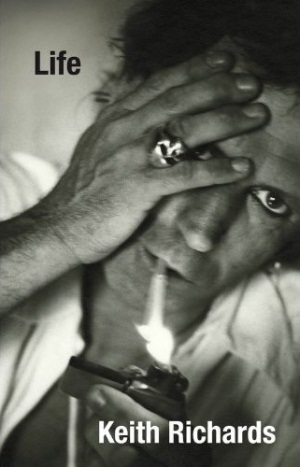 Although I have a well known prejudice towards the Rolling Stones as my favorite rock band of all time,
I've been reading Keith Richards autobiography Life. Since reading this book, I have a newfound admiration of his music ability, his composition skills, and his ability to improvise with different tunings of the guitar, eliminating a string making a six string a five string guitar etc. His knowledge of technique and music composition has put him in the category of the best trained from Berkee and Juilliard, His desire to emulate the best of the Chicago Blues, the Mississippi blues, the Nashville Country and the Bakersfield Country made him a much better guitarist, plus he became a very accomplished piano player along the way.
His associations with the people of that period, prefering the black musicians as, to quote Richards, they put the roll in "Rock and Roll." Richards knew and worked with everyone in that era from the Everley Brothers, John Lennon, Jimi Hendrix, to classical composers, to Johnny Cash and Chet Atkins. His love/hate (mostly love) relationship with Mick Jagger allowed for the creation of some of the most enduring songs of the rock and roll era. He was a musical theorist who improvised and created many things that are still in use today. His hooks are legendary.
One thing of particular note was that he stressed firstnlearning to play with an acoustic guitar with cat gut strings, mastering that, moving on to an acoustic with steel strings, before going electric, all the while reading and writing music. His claim was that progression would make one a better player. An interesting fact was that the small musician fraternity would gladly share techniques and short cuts without any expectations other than a quid pro quo. He preferred associating with black musicians over white musicians as he thought they were more original and daring and played with more emotion and soul. Richards is a deeply flawed individual, with many personal flaws such as womanizing, drug usage, legal problems, addiction etc. However, he has since gotten relatively clean, still plays better than most people 45 years younger than him, and has the constitution of a bull. His guitar technique is flawless, and he even had to develop techniques to make up for when the late Brian Jones flaked out and he had to add extra picking techniques as the Stones was a two guitar band.
Comparing the Beatles and Stones is like comparing apples and oranges as the Beatles were mainly a pop group, and the Stones were a rock/blues band. A lthough they did write many remarkable songs, the Stones started as a cover band, but they ended up writing music on par with the best of Lennon and McCartney, and while the Beatles career took a nosedive in 1970, the Stones were just hitting their stride with songs like "Sympathy for the Devil,"." Gimme Shelter,"" Honky Tonk Woman," You Can't always get what you want" and many others too numerous to list here. I manage to see most of of their concerts, and have since 1964, and one thing you can say is that they still have their chops and sound as good as in 1964, even better as one doesn't have to contend with adolescent girls screaming. On another note, they are coming out with an album of entirely new material later on in 2011. Richard's most poignant observation was that "I play not for the money or the adoration of the crowds, but I play for myself."
Tyler Cowen writes in:
I also like Bill Simmons on the NBA…
Alston Mabry writes:
Exploring the Keef meme lead to this little jewel What Would Keith Richards Do?
Jan
28
The Italian Cold Fusion Saga Continues, from Jeff Watson
January 28, 2011 | 7 Comments
 As a person who has an advanced degree in Physical Chemistry, this article about the Italian Cold Fusion saga piqued my interest. Reading the article, the papers, observing their high school attempts at being scientific, and looking at the amateurish lab equipment makes me adopt a "wait and see" attitude, the same attitude I adopted when the guys from Utah announced their debunked "Cold Fusion." I think my "wait and see attitude" will still be in effect in the next hundred millenia or so. One key caveat was when I read that Zero Hedge, Popular Science and other minor players were interested, and the AIP Journal, Journal of Applied Physics, and International Journal of Applied Physics wasn't included, and showed no interest. I like to question why do these pseudo breakthroughs always come from minor league universities and research facilities, and not from MIT, Cambridge, Harvard, Caltech, Rensselaer Polytechnic (The Toot) etc? These attempts and vast pronouncements that crop up every decade or so and defy every conceivable law of science, and frankly, they bore me. Somehow, I suspect that there are gullible investors involved who are chomping at the bit looking for free energy and untold riches. Frankly, I wish they would perfect a perpetual motion machine and do away with all this ballyhoo..
Rocky Humbert replies:
Jeff: One cannot help but smile when one notes that the research was done at the eponymous University of Baloney. (I've forwarded the paper to my brother who has a Princeton PhD in Plasma Physics (say that five times fast)– and who changed careers after both developing a stutter and concluding that we will not see commercially feasible fusion in his lifetime.)I may have already shared this seminal MIT paper– which tests the Effectiveness of Foil Hats … with surprising results. Interestingly, ZeroHedge has not mentioned the paper. See this article.
Michele Pezzutti comments:
Jeff and Rocky: have you spent more than five minutes in doing research on comments and opinions on their work before brushing this off? Or you have just stopped looking at the words 'cold fusion', the picture or the name of the University? By the way the University of Bologna has very ancient origins, it is considered the first University of the Western world. Conventional date set by a committee of historians dated the origin of the University of Bologna in year 1088. May be it is not cold fusion but an efficient way of producing energy anyhow and deserves attention and funding. And regarding the amateurish lab equipment, many scientists started their work building their own equipments in an amateur way. Is it really true that great discoveries can be done only by huge and rich institutions or it is more the individual genius that matters? Where was Bill Gates when he created MS-DOS? At MIT with a team of 300 scientists or in a garage with a friend?
Jan
25
My Delphic Prediction, from Victor Niederhoffer
January 25, 2011 | 3 Comments
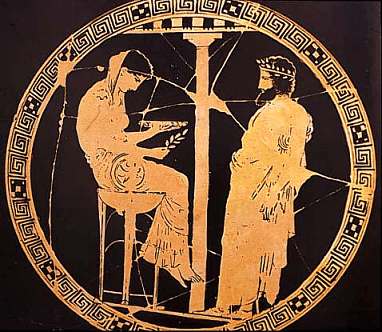 Today I made a Delphic prediction when asked: "should be opportunities on port and starboard. But best not to talk to me unless in response to a query or order while I'm on quarterdeck with enemy in site".
This is the kind of thing that kept Delphi in business for a few thousand years. Completely unfalsifiable. Also, it keeps the range bound boys in business, and the wave and Gann boys in business also, as well as the media when they say something resembling a forecast that isn't a quote from someone with a position.
It also occurs to me that this is the kind of prediction that confirms in your enemy's mind that one is a horse's ass and in your friends minds, they thank you profusely for your wisdom.
Jeff Watson writes:
It occurs to me one could make an excellent living as a financial reporter, financial guru, predictor, prognosticator by learning how to "Cold Read". Applying these methods should impress the general public with one's financial acumen, prescience, and ability to make money. Truly masterful technique allows one to blame the public for their failure when things don't turn out as described.
The best cold readers don't say anything of meaning, and just allow the victim to internalize and believe what they already thought. Cold reading is usually done by fortune tellers, mentalists, con men, and other charlatans seeking to remove money from the wallets of their victims. Here's a good twelve step method on how to learn cold reading. With a little modification of these techniques and an audience, you'll be on your way to richness, and everyone will think you are a genius…..
Remember Chaunce the Gardner, Jerzy Kosinski's creation in Being There, had the highest levels of society fooled and he wasn't even a cold reader… he was just an example that demonstrated that "People will believe whatever they want to believe as long it is an affirmation of their belief system.
Jan
24
Conceived in Liberty, by Jeff Watson
January 24, 2011 | Leave a Comment
Mises Institute has published a pdf of volume 1 of Rothbard's "Conceived in Liberty ," which provides an excellent overview of the history of the colonies from a Libertarian point of view. Many thanks to the chair who is especially noted by the Mises Institute for his munificence and appreciation in assisting in publishing this seminal publication in the electronic arena. This online publication is evidence of the superiority of the private sector vs the government as one speculates that the government and its agents would not even bother with a history that flies in the face of many popularly held conventions. Many of the popular, mostly undisputed memes include "Washington chopping down the cherry tree," "Honest Abe," and "The manufactured story about the traitor Benedict Arnold,' and too many others to list.
Jan
21
SGX, by James Sogi
January 21, 2011 | Leave a Comment
Heard that Singapore Exchange will get rid of its infernal lunch hour break.
Michael Cohn comments:
As someone who very much enjoyed my old 11-1 TSE break later revised during my tenure to 1.5 hours I regret the lost of civility. Started work at 7am. Exercised during the break. Would work perhaps to 7-7:30pm and home at 8 fully exercised and sated with the work experience.
Jeff Watson writes:
In the old days, I might have said that I would enjoy what basically is two opens and closes in a day, especially from a floor perspective. That being said, I'm sure that Mr' Sogi is relieved as there's not the opportunities today that were present in the opens and closes 20 years ago.
Jan
21
Chess, Shogi, & Brain Science, by Jeff Watson
January 21, 2011 | 1 Comment
Some new studies have shown that chess and shogi use different, hidden parts of the brain.
http://www.brain.riken.jp/shogi-project/project_en/relation.html
Jan
18
10 Rules for Betting Football, from Jeff Watson
January 18, 2011 | 3 Comments
I came across a good article from Chris Maloney listing ten rules for
betting with a bookie. Substitute a few words and the list could be
referring to discipline in trading.
Charles Pennington comments:
From Rule 3:
"There is probably no better bet in sports than playing an underdog at home," Moseman says. "Teams play inspired ball at home. Slim underdogs regularly win outright. Big underdogs often find ways to cover the spread and they rarely give up toward the end of a game in front of the home crowd."
Are the sports betting markets so slow moving and dumb that you can make money doing something as simple as this?
Jan
16
For All You Math Geeks, from Jeff Watson
January 16, 2011 | 4 Comments
Here's a superb video course on calculus in 20 minutes, but unfortunately it only includes 9 minutes…
Here's a calculus video done to Queen's "Bohemian Rhapsody"
Another "Bohemian Rhapsody" video that teaches and parodies integration by parts.
This parody of "I will Survive", "I will Derive" is very entertaining.
A parody of M.C. Hammer's song, "Can't Touch This," "U Can't Graph This"
Not to leave out the rappers– "This Is Why I Graph"
Another good rap song, "Take it to the Limit"
These videos make a good argument that the total decline of education
and learning, the dumbing down, has been greatly exaggerated.
Jan
12
The Best Surfer, from Jeff Watson
January 12, 2011 | Leave a Comment
 Mark Foo was a real poseur and publicity hound. Bradshaw is much better and he started very late to the game at 21 or so. I saw Foo surf in California and was not impressed. Kelly Slater was much better. In fact, I know local kids here who are better than Foo. But then again I believe that the best surfers are the ones who surf the biggest waves. Many big wave surfers catch the wave, make the drop, do a bottom turn, cut a line, and ride before kicking out…… and that's all they do. It's harder to excel on small, crappy waves which is the reason that Florida produces the best surfers on the planet and we have a higher proportion of top pros than anywhere else sans Hawaii. It's much easier for a small wave surfer to adjust to big waves than vice versa…..not to say that big waves can't and won't kick your butt. Back in 1984, I almost died in Tavarua, Fiji from the effects from getting bounced off a shallow reef in conditions that were much too big for me. For me, I prefer waves in the 6-10' range, long period swell, clean, and hollow. I have nothing to prove by catching big waves, as all I want to do is have fun. The best surfer is the one who has the most fun.
Jan
7
A Different Take on Deception, from Alston Mabry
January 7, 2011 | Leave a Comment
The jewelry business—like many other businesses, especially those that depend on selling—lends itself to lies. It's hard to make money selling used Rolexes as what they are, but if you clean one up and make it look new, suddenly there's a little profit in the deal. Grading diamonds is a subjective business, and the better a diamond looks to you when you're grading it, the more money it's worth—as long as you can convince your customer that it's the grade you're selling it as. Here's an easy, effective way to do that: First lie to yourself about what grade the diamond is; then you can sincerely tell your customer "the truth" about what it's worth.
As I would tell my salespeople: If you want to be an expert deceiver, master the art of self-deception. People will believe you when they see that you yourself are deeply convinced. It sounds difficult to do, but in fact it's easy—we are already experts at lying to ourselves. We believe just what we want to believe. And the customer will help in this process, because she or he wants the diamond—where else can I get such a good deal on such a high-quality stone?—to be of a certain size and quality. At the same time, he or she does not want to pay the price that the actual diamond, were it what you claimed it to be, would cost. The transaction is a collaboration of lies and self-deceptions.
from: The Lie Guy
Chronicle of Higher Education
Jeff Watson writes:
Back in the mid 80s, I was a co-owner of a small emerald mine in Colombia. The stones were plentiful, but the quality was mediocre, very dull. My on site partner used to gather all the emeralds, clean them up, wrap them in gauze, soak them in mineral oil, then put the whole gauze wrapped package over a 100 watt light bulb for a few weeks to "treat" the emerald with heat. After being treated, the emerald was not of higher quality but did look nicer, good shine, better colors to the eye. The emeralds also acted differently under fluorescent and UV light, We would wholesale the stones to buyers who came onsite, and we never dealt with the jewelery trade. The buyers all knew the stones were treated, and didn't care as they were mainly concerned with size and color and weight. I brought a treated stone back to the states and had a local jeweler look at it proclaiming it to be the best stone he ever saw. I showed him the equal stone but untreated and he couldn't believe the difference.
Deception really does work in the gem trade with everything from obvious phony stones, to treated stones, to cut stones made to look bigger, and a whole other bag of tricks. One lesson I learned is that 90% of the emeralds sold in the USA have been "treated" in one way or another, with only the untreated high end stones going to Winston, Tiffany, Stern, etc..
Bill Rafter recommends:
Recommendation: Influence of Fear on Salesmen by Frank Budd. Excellent book from the 1970s, written for salesmen in the life insurance industry. One of his points is that only a fraud can sell something he does not believe in, and that eventually that fraud will be unsuccessful. Obviously he never knew Bernie M. who was both a fraud and successful.
Jan
3
Happy Birthday, from Jeff Watson
January 3, 2011 | Leave a Comment
I never seem to get it on time, and missed it by two days, but I would like to wish a Happy Birthday to every thoroughbred race horse in the Northern hemisphere. I especially would like to wish Seans Silverdancer and Point Your Finger an extra happy birthday and a good year to come in 2011.
Dec
31
Corn Rationing, from Jeff Watson
December 31, 2010 | 1 Comment
It is very unusual to see an article like this in the Farm Journal, which is a magazine that offers good editorial and insight to general ag market conditions. It reminds me of the hoopla right before the 1973 corn blight/Russian grain purchase season. That big grain move in '73 got me into this business. I wonder what 2011 will bring….other than major volatility?
Dec
26
Titanic Thompson, from Victor Niederhoffer
December 26, 2010 | 5 Comments
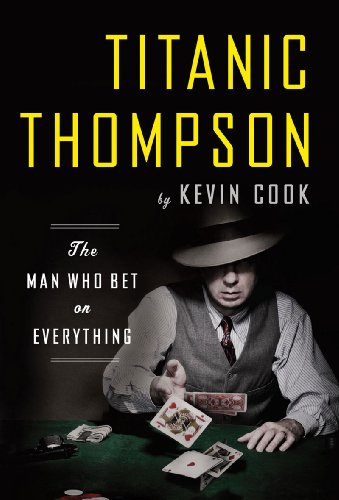 Titanic Thompson by Kevin Cook is a deeply flawed book about a reprehensible man that has many lessons for market people. The deep flaws in Ty's persona are ably expressed by Herman Keiser, a former masters winner, who was just one of Ty's hired stooges, hired to pretend to be a caddy. "He was a thief," Kaiser said. "One day, at 80 he shows up at my house with a partner and two young girls. Herman, I've got a plan that's gong to make you rich. Give me 5,000, Herman." I tell him, "Ty, stay here. I'll be right back." I go to the house and get my 22 pistol. I come out and tell him, "Get outta here right now or I'm gonna shoot you."
Ty had no shame in cheating his best friends. When he was a sergeant in the army, he cheated all the soldiers under him out of their pay check. When in an old age home, he cheated all his fellow patients out of all their money. His father stole his mother's last money, and Ty treated his wives similarly. Worst of all, he fixed the game that Arnold Rothstein lost his fortune in and that led to Rothstein being murdered, when he welched on the deb on the grounds that he had been cheated.
And yet, there are many things we can learn from him. The first is the importance of practice. He practiced card throwing, dice throwing, horse shoes, shooting, and golf in line with the 10,000 hour rule and became the best in each of them. He kept records of the throws and was able to reduce the odds of throwing a 7 in dice with various dodges. He always made his proposition bets the kind that he had fixed before hand, and that could not be tested afterwards. I like the one where he offers to retrieve a golf ball from Lake Michigan 100 yards out in the winter where he marks many balls with an x before hand, and then retrieves one with an x, but no one is likely to swim into Lake Michigan and dive in to the bottom to test him. Or the time he bet that he could hit a golf ball 500 yards and he did on a frozen Lake Michigan, but he had the rules of the bet set down in writing before hand so he didn't have to hit it 500 yards on the course.
Also good was his trick of throwing loaded lemons and peanuts over a roof where the object he was throwing would disappear. His numerous proposition bets make you realize that you should never take the opposite side of a derivatives bet, as there is always something you don't know. The advice in Guys and Dolls about a jack squirting you in the eye if someone bets you it will, is a good one. Never accept a deal that looks too good to be true.
What a waste. He was so skilled. About the best golfer, horse shoe thrower, shooter in his day. He could throw a key through a key hole, and chip a put into a cup loaded with water so the ball wouldn't fall out from 15 feet, or flip 50 cards in a row into a hat 10 feet away.
What evil lied in this man, and how many men were ruined by him.
The best thing anyone ever said about him was that he would never steal or hustle all the money from someone who would kill himself afterwards. How fortunate that he died broke, hated by everyone including his son. And how the biographies show that evilness is inherited. His father and he were both the most evil of men, who thought of nothing but themselves and gaining money by any means and it runs in his family with his kids.
My favorite con of his:
He dresses the best golfer of his generation up as a farmer. Has him driver a tractor around a gold course for a month, pitching manure, and chopping trees. Then he goes to the golf club where they've seen the farmer doing his rounds routinely and says he'll challenge the best two player in the club to a match, and they can choose any partner for him in the world. They choose the farmer. The farmer is a -4 handicap and they win and rush out of town.
Ty was very good with the gun, had to kill many people, and was often in jail and left for dead by thugs. Had to travel with a body guard as he was always cheating to win, and his fellow gamblers were as adept at marking cards, and using wires as him.
One con that he tells is hiring Harry Lieberman to feed him checker moves in a checker match against the best in Kansas city through a wire. Hard to believe that a checker player would do that, and the story doesn't ring true as supposedly the wire told him when a move was bad as he was wavering and touch move must have been played.
His cons remind me so much of the kind that the brokers play when they send you a big research report on a company or industry or country and then offer to take the other side of your trade. You are in the same position as the club people who insisted the farmer be his partner.
Gordon Haave comments:
My experience when they offer to take the other side of the trade, if you press them, is that they say they are just a middleman and are offloading the risk on someone else. Or course as they own the fed, treasury, congress, CFTC, and FINRA they can pretty much do whatever they want.
Pitt T. Maner III writes:
A fellow Arkansan and famous pinup girl who also used the results of hours of practice to advantage :
'Jeanne Carmen was born in Arkansas in 1930 into a family of poor cotton sharecroppers. She ran away at 13, first to St. Louis, then to New York City, where she eventually landed a job as a fashion model. In 1949 she got an assignment to model clothing for Jack Redmond, a local golf pro and shop owner. Carmen, who had never seen a golf course, was modeling different outfits at Redmond's indoor golf range when he playfully asked her to take a swing at the ball. A lefty, she spun the right-handed club around in her hand and, with the back side of the club face, smacked the ball into the canvas backdrop, knocking it off its support.
"You sure you haven't played before?" asked Redmond. He then set up the backdrop again. "He had me stand on the other side of the ball and hit right-handed," Carmen recalls, "which was harder, but I knocked the drape down again."
Redmond asked her to come in the next day: "I'd like someone to see you."
The next day Redmond had the golf champion Jimmy Demaret watch as Carmen hit balls.
"They were oohing and aahing," she says, "and I thought, 'What's the big deal?' I don't think this is a very difficult thing."
Finally, Redmond said, "I think I can make a trick-shot artist out of you," and asked if she would mind coming in two or three times a week.
"Sure," she said. She hit nearly every day, sometimes for hours on end, for six months. Then she was ready.
"I could stack three balls on top of each other, which itself is very hard to do. I'd hit the middle ball 200 yards, the top ball would pop up and I'd catch it, and the bottom ball would rest, untouched. I could hit the ball 200 yards while standing on a chair on one leg. I could hit a flagpole 150 yards out."
She and Redmond traveled up and down the East Coast, putting on three shows daily at various clubs and earning upward of $1,000 per day. For their finale, she would have a volunteer from the gallery lie flat on his back and tee a golf ball between his lips; then she would drive it 200 yards without disturbing so much as a whisker.
Within a year personal differences ended this lucrative partnership. Carmen then met a dapper young man from Chicago, John Roselli, and moved with him to Las Vegas. Roselli was a lackey in the Chicago mob who helped run the Sands Hotel. When he found out about Carmen's golfing talents, he told her, "Look, honey, we're going to play a little game here." The way he described it, she says, "He said we're never going to take a nice guy. We're only going to take the assholes, and I know who they all are."
"I could hit the ball 200 yards while standing on a chair on one leg. I could hit a flag- pole 150 yards out…."
"Well, that sounds good to me," Carmen recalls saying. "What did I know?"Roselli would plant her in a lounge reading a magazine. He'd sit at the bar, scouting for pigeons. Eventually he'd strike up a conversation and steer it toward golf and gambling."That's not so great," Roselli might say. "Even I could beat that." Then, pointing at Carmen, "Hell, even she could beat that."
Says Carmen: "And the guy might say something like 'Maybe in the bedroom but not on the golf course.'"Wanna bet?
The group then would go over to Carmen, who, pretending to be a stranger, would innocently agree to be a pawn to their betting proposition. Dressed as provocatively as the era would permit, she would stand on the first tee and spin the club around in her hand, feigning to have never played before.
"I'd hold the club all wrong and then duff it, or slice it, whatever. After a couple of holes the guy would say, 'This is getting to be a bore. I'm going to win this hands down.' And John would say something like, 'Give the lady a chance. Give it a few more holes.' And then I'd get a little better and a little better. Until right at the end, when I'd start reeling them in. We'd win every time. They never knew what hit them."
The two worked the scam for about a year, until one day when Carmen slipped. She'd had a drink while waiting for Roselli to set up the mark, and, a bit tipsy, started playing too well too soon. The man knew he had been set up. "He was carrying on, complaining," Carmen says, "and Johnny said, 'Look, pay up, you lost the bet. Pay up and let's call it a day.' But this guy refused."
Roselli told Carmen to go to her room; he'd call her later.
"He then roughs this guy up. He calls me and tells me to get to the roof of the Sands Hotel. I get up there and open the door to see Johnny toss this guy over the side. Oh, my God. I'm in shock. I'm crying. So Johnny says, 'Come over here and look.' I didn't notice that the guy had a rope tied around his ankle. I go over and see this guy dangling down there… . He pulls the guy up and … Johnny's got his money and cuts the guy loose.
"Right then I decide I'm in too deep. I had to get out of there. I go pack my things." She moved to Los Angeles and became a star in B-movie potboilers such as Guns Don't Argue, Reckless Youth, and Born Reckless. '
Jeff Watson writes:
I'm not a chess player, never have and never will be one. I know how each piece moves, a little strategy and that's it. However, school my best friend was a solid chess player and a member of the chess club, however ranked kind of low on the totem pole. I heard of a surefire method to beat a whole group at chess without cheating and ran a proposition against him and a bunch of the guys in the club. I bet him and the guys that I could play chess against the club and win at least 50% of the games, no draws allowed, play each game to the conclusion, and also beat him.in the process;. We commandeered a classroom and set up 16 chess boards on desks in a circle around the room with me in the center. I assigned different numbers to different tables and when one would make a move, I'd make that exact move on another player. In reality, they were playing each other, and I was just the mailman. I won exactly 50% of the games and I beat my roommate by having him play the club champion. I couldn't believe that they fell for that one, but I made the bet so high that their greed made them irrational and the took the bet hook line and sinker. If that is cheating, that's up to someone above my pay grade. I thought it a clever bet, like most of my props but never used gaffs only percentages, exact terms, paradoxes, math, or physics to win. The lesson here is that one can make a bet so high that people will take it, especially when they think they have the edge. If one makes a really, really high bet, the edge better be huge. The best prop hustlers play games that they have an edge in, play it for freeze out, and let old man vig grind away at their opponents stack. Small prop games like flipping coins can be played for loose change, you will have a very high edge, and your friends will be delighted and amused, thinking you're clever, while you take their money. Gotta let your opponents win sometime as someone once said, maybe it was Runyon that "While you can shear a sheep all the time, you can skin him only once."
Nigel Davies comments:
This is an old con that was repeated on TV by Darren Brown. I'm sure that the assembled titled players knew very well what was happening but they must have been getting well paid to get them to wear suits!
Dec
23
A Funny Video, from Jeff Watson
December 23, 2010 | Leave a Comment
This video is NSFW, but shows that the boys in the pits still have fun. I used to like to light the shoe laces of unsuspecting victims on fire. One would be surprised how flammable shoelaces can be. As well as I could dish it out I still had to take it with a smile on my face. If they weren't pimping you, that means you weren't liked, and that means you're likely out of business, if you're a local.
Dec
23
Dali Art Forgeries, from Jeff Watson
December 23, 2010 | Leave a Comment
 It's the holiday season and prime time shopping season for art from retail sources. It's also the perfect time to sell forgeries, fake art goods. Salvador Dali has probably been the most forged artist in history. In fact, probably 300,000 forgeries of his works exist. Here's a good article that discusses the forgery methods, markets,and players.
According to the aforementioned article, this gallery is the most unscrupulous of the bunch that preys on innocent art buyers, conducting art auctions on cruise ships and other resort venues. As bad as they are, there are many more charlatans out there selling fake Dalis.
When Dali was old and in his dotage, he sold over 300,000 blank signed sheets of paper according to this paper. Since most of his works are forgeries, it would be advisable to avoid purchasing a print, etching, lithograph or even painting with his signature. If reputable houses like Sotheby's and Christie's won't sell Dali's etchings and lithographs, that is a market tell. If you happen to own one, it would be advisable to get an appraisal and verification, which might be difficult as most houses won't even look at a lithograph, etching, or drawing from Dali.
Several years ago, a friend of mine found out I was a serious art collector and wanted to show me his "Fine" art collection. As art patrons tend to be proud of their collections, I felt privileged to be invited to see his collection which he described as a vast collection of a major artist, without revealing any details. Lo and behold, when I got to his house, I was surprised to see about 100 framed Dali lithographs and etchings, all fakes. I didn't have the heart to say anything, and left on a gracious note.
Like bucket shops and forex shops fleece newbie investors, unscrupulous galleries and dealers fleece another type of sheep, the beginning unsophisticated art collector. And just because they're unsophisticated (and not stupid people at all as the best of us get conned), that doesn't mean that they will balk at paying $20,000+ for a worthless fake. It happens every day and is probably happening right now at this very minute, somewhere in this world. If you have an insatiable desire to see a real Dali and are in St. Pete, Fl. there is the excellent Salvador Dali Museum which houses a good selection of his major works, all 100% real.
Caveat emptor.
Dec
22
An Entertaining Paper, from Jeff Watson
December 22, 2010 | Leave a Comment
Here's a paper on wagering from someone from the stat dept. of Columbia. I suspect that he's an intellectual and has not spent much time at the track, poker rooms, betting on sports, etc. However, there is some good discussion following the article which makes for a very entertaining read. As little as I know about the real world, it's refreshing to know that there are people who even know less. I wouldn't mind sitting down with the author betting on a game of his design, choice, or anything. Getting the losers to pay is another topic that deserves a paper from the same department with equal gravitas.
Dec
22
A Christmas Carol: Socialist Screed? from Jef Watson
December 22, 2010 | Leave a Comment
 The other day, I was forced to attend an amateur showing of Dickens "A Christmas Carol." The production was well executed, the stagecraft was excellent, and the scenery was first rate. I've seen the Dickens classic so many times, I either just nod off, daydream, or try to improve my mind. During the show, I started to think of how the author, Charles Dickens, really hated capitalists and was a socialist at heart. He portrayed Ebeneezer Scrooge as the prototypical capitalist of the day, but his real "sin" was that he was a miser, only interested in his self, mistreating everyone. The fact that Scrooge had a bad attitude and dour personality did not work in his favor and was a great device used by Dickens to generate hatred for capitalists and the rich in general.
This got me thinking on many levels. For one thing, Scrooge was a businessman who earned his money fair and square. He cheated nobody and expected his contracts and debts to be paid as per any previous agreements, Scrooge ran a tight ship, to the point of being called miserly. He was a demanding employer of his clerk Mr. Cratchit, who accepted the employment contract with Mr. Scrooge with good cheer. Much has been said and written about the evil Mr Scrooge, his name has become part of the lexicon of the definition of an evil capitalist. Even the people in the neighborhood made disparaging remarks about Scrooge, and this mistreatment and lack of respect added to his dour personality. There was no evil to Mr Scrooge, and his unfavorable treatment was a literary device, a populist reaction by the left, the socialists who portray all rich as greedy, evil people who allow people to suffer while they live rich, extravagant lives.
As I said before, Mr Scrooge had an employment contract with his clerk, Mr. Cratchit who was a man of good cheer. Cratchit's wife constantly complained that Scrooge was an old miser with a flinty heart of stone. She neglected to mention that Mr. Cratchit was free to seek employment elsewhere if his working conditions were so bad, but this aspect and so many others were left out by Dickens. As for Scrooge's miserly description, some would call his miserliness thrift, which is an esteemed Franklinian virtue.
Scrooge's refusal to participate in a festive dinner with his nephew and wife was his business and he certainly didn't deserve the ridicule heaped upon him by the women folk, nor was he required to offer an explanation or apology. He was merely exercising his freedom to do what he wanted, and if he chose not to celebrate Christmas, that was his natural, god given right. During Scrooge's pre ghost phase, he was a hard nosed flinty business man, albeit a bit ill mannered. There is no law against being ill mannered, dour, mean, or miserly. Scrooge was free to do whatever he wanted, with no worries what society would think as long as he behaved within the law and remaining scandal free.
Every good story likes to make a case of human redemption, a change from self interest to the interest and service of the collective. In popular culture, rich are inherently evil, their gains ill gotten off the backs of workers, and the poor always triumph over the rich. Dickens masterfully pulled this off when he had three ghosts visit Scrooge on Christmas Eve to scare the hell out of him and change his evil ways. His powerful scare tactics caused Mr Scrooge to abandon his own self interest, abandon his personal freedom for the good of society, destroy the profitability of his business, and spend his hard earned wealth on charity to repent for his earlier miserliness.
The messages Dickens made in a Christmas Carol were very clear. Productive people must give to the more deserving poor to be considered worthy, rich people are not happy due to guilt, producers must abandon self interest in order to satisfy the needs of others in a society who don't work as hard, businessmen must run their personal business for the sole benefit of their employees, conversely to the detriment of the stockholders. And finally one must give exorbitant sums to the poor, provide medical care for the employees, and give retroactive raises to allegedly underpaid employees. Benevolence is not a virtue in this world, it is a requirement. Scrooge was manipulated into this transformation by the three ghosts creating immense guilt and fear, and by the end of the story Mr Scrooge was more concerned with what people thought of him, his personal image, than the real work of creating profits, creating jobs, growing a business, and contributing to the general business climate.
At the end of the story Mr. Scrooge was a transformed man. He was happy, benevolent, highly thought of, giving,almost giddy, much like a person who has had a drink or ten. A good case could be made that he was a better man, but w hat he lost was the real tragedy. Scrooge lost his independence, his freedom, became dependent not on profits, but on the opinions of others. He was required to give money away, raised expectations of others, and caused economic imbalance by changing the market pay scale of employees in his business. In a way, Scrooge's new found largesse probably was bad for the economy as a whole a la the theories of Hazlitt. On another note, happiness tends to be fleeting much like health and I suspect that with Mr Scrooge, old habits die hard.
When the curtain closed, everyone was cheering. I felt a bit of sadness, as here's another story of poverty trumps wealth, rich is evil while poor is good, and being a second hander is more important than being a real, virtuous free man. In the end, Mr. Scrooge was the real loser and the real story was the transformation of a rich, productive man into a welfare state.
Rocky Humbert comments:
Dear Jeff:
Considering "A Christmas Carol" to be an indictment of Victorian Capitalism is not a novel idea, yet I still find your words and spirit to be sad, indeed.
While you are free to intrepret Dickens however you see fit, you have no such freedom with respect to core Judeo-Christian values, which parts of Dickens' play embodies. The principles which you lament are the core principles of Judaism and Christianity.
What you find lamentable, I find laudable. When you find trivial, I find grand. In short, I celebrate the charity and goodness toward man that Christmas celebrates, while you mock it as political correctness.
I wish you a happy holiday, and hope that you someday discover what Scrooged learned– that there is no greater joy than bringing happiness to others.
Scott Brooks adds:
 Let's not confuse charity with force of threat.
Scrooge offered a fair deal at a fair price. The way we can infer that this is the case is that people came to him, and willingly signed a contract. Scrooge performed his half of the contract by loaning them money. What is wrong with him expecting that they honor their portion of the contract?
And, let's not confuse what Scrooge did for charity. Giving to other under threat of force…..i.e. the spirits (under the direction of Dickens) threatened him with the threat of eternal damnation if he didn't commit business suicide.
Another problem with "A Christmas Carol" was that the story ended on December 25th. Let's flash forward to the "The Week After Christmas":
Bob Cratchit shows up at work on the 26th only to find that he doesn't have a job. Why? Because Scrooge, in his "fit of charity to bring happiness and joy to others" tore up all the debts owed to him and there was no more accounting work for Cratchit to do.
Later that day, and throughout the next week, a bunch of former Scrooge customers come to the office to borrow more money, only to find it closed because Scrooge has no more money to lend out. If he did, it would be evil (under Rocky's view of the world) to unfairly loan out money. And he couldn't just keep the money, he would have to give it away to atone for his supposed sins.
Therefore, the vital role that Scrooge played in the community…i.e. loaning money to people that had need of a loan for whatever purpose they felt they needed a loan for (and that Scrooge deemed as a good "loan risk")….that vital role was no longer available in the community.
And what happens when credit dries up in a society….well, I think we can all agree that that's not a good thing.
Sorry Rocky, but you're wrong in your assessment. This is not charity or Christian/Judeo ethics. This is a story by a man who didn't like Capitalism, that slams capitalism. It could have been written by most any journalist or university professor in today's society.
David Hillman writes:
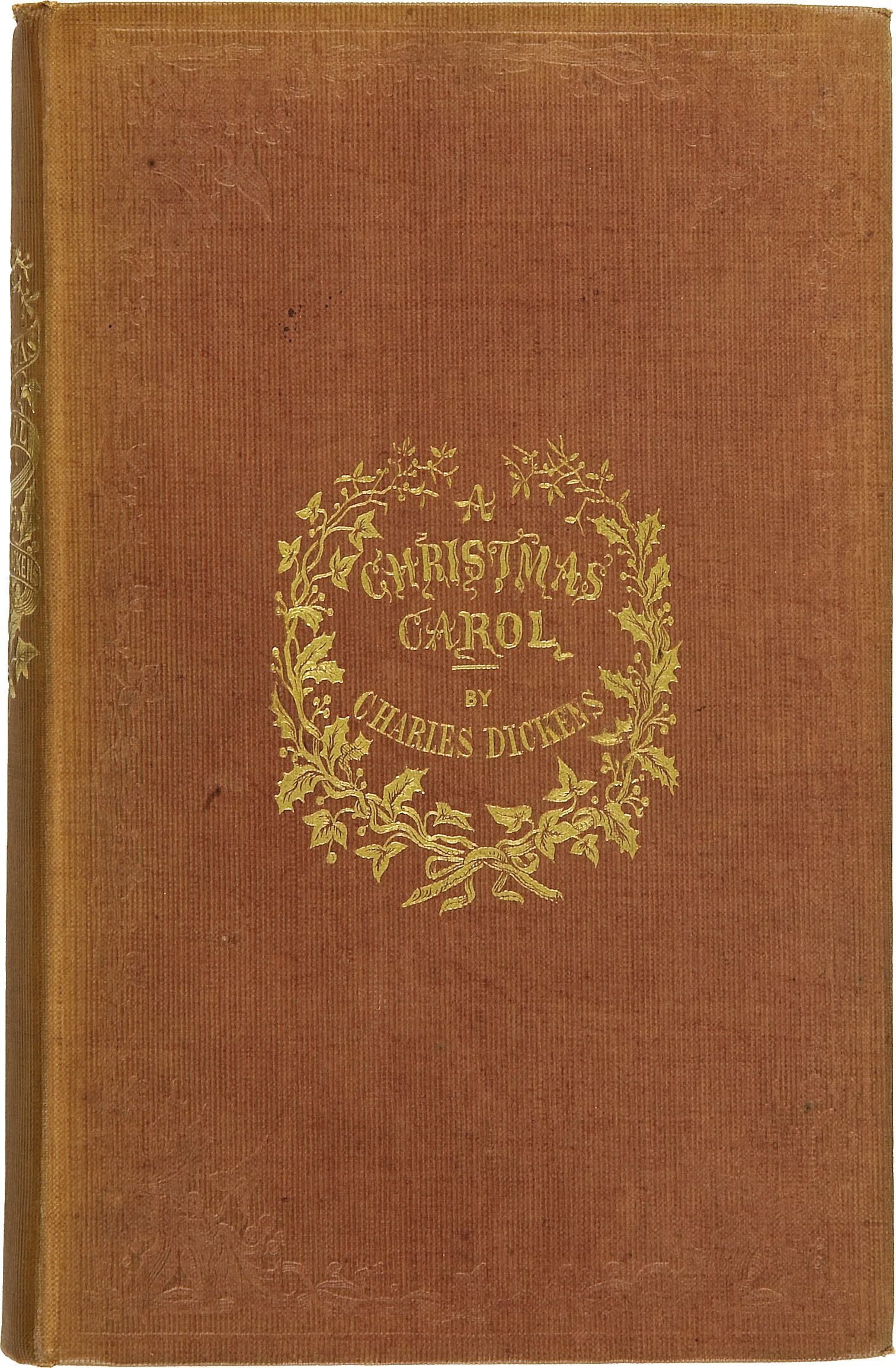 And then, there's the contrarian point of view…
….which makes as much sense as does the interpretation of A Christmas Carol as an indictment of Victorian Capitalism [which, by the way, was far different from what we generally think of as 20th Century capitalism, i.e., the kinder, gentler Fordist model or the so-called millennial capitalism that has been evolving since the 1980s.]
I don't know much, but two things I know, 1) what Dickens' meaning and intent in A Christmas Carol was is about as clear as what the founding fathers intended in the Constitution, or as clear as whether the origin of the universe was a God or a Big Bang, and 2) we don't see things as they are, we see things as we are.
That said, I would posit that one's interpretation of A Christmas Carol, or just about anything else for that matter, tells us far more about the interpreter than it does of Dickens.
Gary Rogan writes:
It's interesting that with all of his supposedly anti-capitalist novels, Dickens undertook two trips to America mostly to lobby for copyright enforcement. He also blamed his bankruptcy and later health and financial problems close to his death on being deprived of his rightful royalty stream. Somehow various American software companies and their hyper-liberal billionaire founders fighting intellectual property theft in China come to mind, although they are all in decidedly better financial shape.
Kim Zussman chimes in:
It's not every day you see Jewish pro-Christmas arguments against Mormons; a market top indicator?
The 1938 Christmas Carol is a great film, and if you don't tear up your trading accounts are definitely too flush.
Scrooge's encounters with ghostly futures cause us to ask what is really important. It is difficult to balance the race for money with taking time for things and people who will too soon be grown, old, or gone.
Stefan Jovanovich writes:
"A Christmas Carol" is far less about what our List calls "capitalism" - i.e. pricing by competition - and far more about Dickens' wanting the world to have a universal catcher in the rye and not be like the America he saw in 1842. He was appalled by our slavery and by our insane "push". He was also upset by the fact that, like the East Asians today, Americans were notorious copyright pirates. We were also the source of his growing wealth by being the best customers for his books. During his visit to New York his American publisher and his admirers (Washington Irving, William Cullen Bryant) held a gala in his honor, with 3000 people attending.
Dickens knew almost nothing about business by 1843 (the date of A Christmas Carol's publication) from direct experience or observation. His father had worked in the Navy Pay office and lived on a family inheritance. Dickens' only job in any "dark, satanic mill" was a few months sticking labels on bottles of shoe polish. He then went back to school. After school he worked in a law office as a clerk, taught himself the new short-hand and became a court reporter through a family connection. That led to political journalism. Sketches by Boz - his first book published in 1836 - is a collection of his political pieces for the Morning Chronicle, covering the Parliamentary elections.
The socialism Jeff finds in the story is there; it is the same socialism you find in Thoreau. It came from the same source - Unitarianism - which Dickens became interested in while visiting the U.S. And, capitalism in its modern forms was still in its infancy. It would be another decade and more before limited liability was formally recognized in Britain in the legislation of 1855-1856.
Gibbons Burke writes:
A Christmas Carol is not anti-Capitalist as such. But it makes a case strongly against Capitalism run by capitalists who serve Mammon rather than God. Scrooge, who initially perfectly represents that anti-human form of Capitalism at its worst soul-less excess, is the perfect picture of a seemingly-self-satisfied soul roasting in a Hell on Earth of his own devising, and he seems certainly destined for the eternal flame pit until his heart is converted later in the book. At that moment he becomes filled with the Joy that is the gigantic secret of the Christian (according to Chesterton).
Here is Dickens' initial description of old Scrooge - which seems to have plenty of editorial voltage:
Oh! But he was a tight-fisted hand at the grindstone, Scrooge! a squeezing, wrenching, grasping, scraping, clutching, covetous, old sinner! Hard and sharp as flint, from which no steel had ever struck out generous fire; secret, and self-contained, and solitary as an oyster. The cold within him froze his old features, nipped his pointed nose, shrivelled his cheek, stiffened his gait; made his eyes red, his thin lips blue; and spoke out shrewdly in his grating voice. A frosty rime was on his head, and on his eyebrows, and his wiry chin. He carried his own low temperature always about with him; he iced his office in the dog-days; and didn't thaw it one degree at Christmas.
External heat and cold had little influence on Scrooge. No warmth could warm, no wintry weather chill him. No wind that blew was bitterer than he, no falling snow was more intent upon its purpose, no pelting rain less open to entreaty. Foul weather didn't know where to have him. The heaviest rain, and snow, and hail, and sleet, could boast of the advantage over him in only one respect. They often "came down" handsomely, and Scrooge never did.
Nobody ever stopped him in the street to say, with gladsome looks, "My dear Scrooge, how are you? When will you come to see me?" No beggars implored him to bestow a trifle, no children asked him what it was o'clock, no man or woman ever once in all his life inquired the way to such and such a place, of Scrooge. Even the blind men's dogs appeared to know him; and when they saw him coming on, would tug their owners into doorways and up courts; and then would wag their tails as though they said, "No eye at all is better than an evil eye, dark master!"
But what did Scrooge care! It was the very thing he liked. To edge his way along the crowded paths of life, warning all human sympathy to keep its distance, was what the knowing ones call "nuts" to Scrooge.
The book is available in several illustrated editions for free on Project Gutenberg.
Jeff Watson responds:
So, in other words, while Scrooge was unpopular, he enjoyed total freedom. That sounds pretty good to me. At least If I had his rep, I wouldn't have to say no to 30 requests for donations a day. Can you imagine how refreshing it would be to perform an essential service, perform admirably in business, deliver superior service, and not give a damn what people thought of you? That would make Hank Reardon proud. It is not a crime to be disagreeable, a skinflint, self serving or any other eccentricity. If we punished men for their eccentricities, Henry Ford would have never created and revolutionized the automobile business, J.P. Morgan would never have risen beyond the level of margin clerk, the old Commodore Vanderbilt would have probably died in a house of ill repute, Barney Frank would have been hanging out on…, and Bill Clinton would probably be in an Arkansas … for a very youthful indiscretion.
John Tierney writes:
In 1899 Elbert Hubbard viewed the "Scrooges" thusly:
We have recently been hearing much maudlin sympathy expressed for the "downtrodden denizen of the sweat-shop" and the "homeless wanderer searching for honest employment," & with it all often go many hard words for the men in power.
Nothing is said about the employer who grows old before his time in a vain attempt to get frowsy ne'er-do-wells to do intelligent work; and his long patient striving with "help" that does nothing but loaf when his back is turned. In every store and factory there is a constant weeding-out process going on. The employer is constantly sending away "help" that have shown their incapacity to further the interests of the business, and others are being taken on. No matter how good times are, this sorting continues, only if times are hard and work is scarce, the sorting is done finer- but out and forever out, the incompetent and unworthy go.
It is the survival of the fittest. Self-interest prompts every employer to keep the best- those who can carry a message to Garcia.
I know one man of really brilliant parts who has not the ability to manage a business of his own, and yet who is absolutely worthless to any one else, because he carries with him constantly the insane suspicion that his employer is oppressing, or intending to oppress him. He cannot give orders; and he will not receive them. Should a message be given him to take to Garcia, his answer would probably be, "Take it yourself."
Tonight this man walks the streets looking for work, the wind whistling through his threadbare coat. No one who knows him dare employ him, for he is a regular fire-brand of discontent. He is impervious to reason, and the only thing that can impress him is the toe of a thick-soled No. 9 boot.
Tim Melvin comments:
 The question of scrooge and how we view him is one that men of business have wrestled with since the damn story was published. The thing is that Dickens does not paint Scrooge as the example of every businessman. We tend to take much of the Scrooge story out of context, I think. Business itself is not painted as evil or wrong. Was not Fezziwig the owner of a prosperous and successful business when young Ebenezer was employed there in his youth. Judging by the Christmas party it was prosperous business indeed. Yet Fezziwig was a generous soul to his employees who treated then well and asked for a fair days work for a fair day's pay and got it it cheerfully from those in his employ. Scrooge described his time employed there and his boss thusly, "The happiness he gives, is quite as great as if it cost a fortune ."
In contrast Scrooge underpaid Bob Cratchitt and treated him poorly. To say that Mr. Cratchitt could simply look for other employment is as ridiculous a statement as it is heartless. With a large family and a sick child he would be foolish to change what employment he did have by seeking other employ. Given the hours he toiled when would he had the time anyway?
Scrooge is indicted not for being a man of business but for being a man who shuts out the world and pursues only business in a mean spirited way. I greet my lender when I see him on the street. Scrooge was harsh man who was probably the lender of last resort and treated his customers poorly. Good business is a win win were the partied walk away feeling that both have scored a victory in my experience. To have your neighbors ignore you in the street and cackle over yor corpse does not paint the idea that he did business fairly in my mind. To be sure we all have probably made some enemies along the way, but we have made friends as well who would mourn our passing/ not so in this case.
Scrooge is indicted of closing his heart to all of humanity. He chooses commerce over the love of a woman and the potential for a life and a family. He helps no one with a kind word, a gentle lesson or a shared idea. The concept of charity is unique to us all. But hard asses as all of us are, as libertarian and objectivist rooted as we are, would we hesitate to assist a friend, relative or even employee who had an ill child if we had the resources to do so? Which of us would not give our nephew, our only family a visit on a holiday eve or at least a kind word, a lesson in the ways of the world that might help them succeed in life?
Scrooge was not indicted and sentenced to haunting for being a business man. He was convicted of living without love. The love of a child, of a woman, of humanity. He hated himself as much as he hated the rest of the world. Scrooge's crime was not being a business man but for failing to appreciate the wonder that life actually can be. I like so many other readers of this site detest the corporate charities, and I say no quickly and clearly in my best bah humbug fashion. But just like everyone else here there are charities and causes I believe in and donate my time and money. I do not buy the in the give to all philosophy or faceless giving anymore than the rest of you. I do believe in libraries, special olympics and a few other causes and I give. So do you whether it's a church, a cause, a philosophy of a friend in need so quit pretending your are an objectivist hardass who helps no one. Not only is that so much BS, it's a heartless life that would create a scrooge like existence and so far I have met no spec who fits that description.
Scrooge's crime was not business. It was living with love, without the touch and hear of another, without a child's smile, a lover kiss or the hand of a friend. By Dickens account he denied himself all the makes life special. There is no account given of good food, or beautiful music or even good books. Scrooge's crime was not one of business. He was guilty of crimes against life itself.
Jeff Watson responds:
(While I agree with much of Tim's premise, I'd like to see the statutes Scrooge violated regarding the aforementioned crimes). If those are indeed crimes that Scrooge committed, I fear the state is on the road to becoming more totalitarian if they feel the necessity to regulate those areas of normal but eccentric human behavior. Again, it's not against the law to be a total dick, nor should the government concern itself with forbidding person to be rude, self absorbed, cheap, hated, or mean spirited. I certainly can't find anything in the constitution addressing this issue.
Stefan Jovanovich writes:
Dickens wanted women to stay in the kitchen; Hubbard wanted them to own the restaurant.
His company - Larkin Soap - gave Frank Lloyd Wright his first big commission. The friezes on open galleries of the building had these mottoes: GENEROSITY ALTRUISM SACRIFICE, INTEGRITY LOYALTY FIDELITY, IMAGINATION JUDGMENT INITIATIVE, INTELLIGENCE ENTHUSIASM CONTROL, CO-OPERATION ECONOMY INDUSTRY.
Here is Hubbard's story of how he started the Philistine magazine and the Roycroft shops. Begins at page 309
Dec
20
Hayek Vs. Keynes: Investing, from Kim Zussman
December 20, 2010 | 1 Comment
 Keynes was interested in markets, and did pretty well. What about Hayek?:
"Keynes was another Kelly-type bettor. His record running Kings College Cambridges Chest Fund is shown in Figure 2 versus the British market index for 1927 to 1945, data from Chua and Woodward (1983). Notice how much Keynes lost the first few years; obviously his academic brilliance and the recognition that he was facing a rather tough market kept him in this job. In total his geometric mean return beat the index by 10.01 per cent. Keynes was an aggressive investor with a beta of 1.78 versus the bench- mark United Kingdom market return, a Sharpe ratio of 0.385, geometric mean returns of 9.12 per cent per year versus Ð0.89 per cent for the benchmark. Keynes had a yearly standard deviation of 29.28 per cent versus 12.55 per cent for the benchmark. These returns do not include Keynes (or the benchmarks) dividends and interest, which he used to pay the college expenses. These were 3 per cent per year. Kelly cowboys have their great returns and losses and embarrassments. Not covering a grain contract in time led to Keynes taking delivery and filling up the famous chapel. Fortunately it was big enough to fit in the grain and store it safely until it could be sold. Keynes emphasized three principles of successful investments in his 1933 report:
1. A careful selection of a few investments (or a few types of investment) having regard to their cheapness in relation to their probable actual and potential intrinsic value over a period of years ahead and in relation to alternative investments at the time; 2. A steadfast holding of these in fairly large units through thick and thin, perhaps for several years until either they have fulfilled their promise or it is evident that they were purchased on a mistake; and 3. A balanced investment position, i.e., a variety of risks in spite of individual holdings being large, and if possible, opposed risks.
Jeff Watson writes:
I could not find much about Hayek's investment performance and speculate that his work in getting a Nobel Prize and publishing seminal works probably attenuated any desire to actively play in the market. Granted, Keynes was a genius……completely wrong about everything, but a genius nonetheless. I notice no comment from his fans on the left about his legendary Anti-semitism, his frequent use of the N-word when describing American Blacks, and his dismissive attitude towards Russians, and other Eastern Europeans who he thought to be the unwashed masses and very ignorant. Still, in his complete wrongness, he provided a very bright beacon for those of us who wish to pursue the correct course. Keynes is our own perfect fade factor, a Douglas "Wrong Way" Corrigan of economics.
Larry Williams writes:
What an article on this that does not mention Ralph Vince. Oh, I get it…much of his comments are lifted from Ralph, so why let people know he exists? Trade kelly and you are doomed to die.
Ralph Vince responds:
Thank YOU Larry. A couple of things on this.
1. Whenever people start talking "half Kelly," or other ad-hoc locations on a dynamic curve (with respect to the number of plays) I realize they don;t know what they are talking about. It doesn't mean they aren't good mathematicians, they just don;t understand their material well enough. Ziemba has been doing that for years.
How can a man look at the curve and not begin to discern the nature of it beyond that???
2. The "Kelly" Criterion answer is NOT what any of these guys thought it was. It is NOT the optimal fraction to invest. It is a leverage factor — a number not bound between 0 and 1 but 0 and + infinity. Thus, if you treat it as a fraction, you will inadvertently be using a fraction that is way beyond optimal in trading.
3. Once you discern what the real optimal fraction is to invest (and you won't get there with the Kelly Criterion) then you can make intelligent decisions on what value to use as a prediction of where the optimal fraction will be in the forthcoming periods.
All of that if you want to be growth optimal. Go ahead, have at it slugger. The REAL benefit to understanding the nature of the curve of the optimal fraction (not to be confused with Kelly's misguided criterion) is that you can use it to satisfy OTHER objectives aside from the incredibly aggressive growth optimal one.
I don't claim to be the mathematician any of these guys are. But I know I understand this material better than all of them combined.
And I have the real-time track record to prove it.
Dec
20
Grain Basis, from Jeff Watson
December 20, 2010 | 1 Comment
The University of Iowa Ag Department has enacted a pilot program of mapping the basis of corn and soybeans on a county by county basis. Although the project is far from complete, here is an example of what it will look like:
The grain companies already have trading rooms that look like NASA control, and maps like this are all over the walls. Now the general public will get to enjoy some of the same tools as the big grain. Before you get excited, you can be sure that the big grain companies will be one step ahead of you and the public will still be behind the form. That's just why the grains are so hard to handicap, and even harder to cash out…
Dec
20
Speed Math Rules and Speed Market Rules, from Victor Niederhoffer
December 20, 2010 | 2 Comments
 One has been reading a book on speed mathematics by Bill Handley. Most kids who take the course can do all arithmetic operations much faster in their head then with a calculator, a very useful thing I've found. To multiply 98 by 97 take 2 from 97. That becomes 9500. Then add 2×3 for 9506. To multiply 11 by any 2 digit number, like, 11 x 32, the answer has a 3 and a 2 in it at the ends, and the sum of digits 4 in between 3 4 2. I'm not that good at it yet as there are as many rules as memorizing the tables almost.
But… one wonders whether there are any speed rules for making a profit that apply to all markets.
Alan Millhone writes:
Tom says. Move in haste - repent in leisure.
Does that fall under the "speed rule" for the Market?
Jeff Watson writes:
Most successful pit traders had a mastery of "quick arithmetic" out of necessity. In fact, I never ran across one that wasn't an arithmetic whiz.
Steve Ellison writes:
Arthur Benjamin's Secrets of Mental Math has many similar techniques. For example, the square of any 2-digit number ending in 5, let's call the number n5, always ends in 25. The product of n and n+1 goes before the 25. For example, 75 squared is 5625 (7×8 with a 25 tacked on).
Professor Benjamin recommends solving math problems left to right, contrary to the standard method of solving right to left and carrying digits. An advantage of solving left to right is that if one wants to instantly answer a problem called out by the audience, as Professor Benjamin does at his public appearances, one can start speaking the first part of the answer while still working out the final digits.
My daughter and I were watching a video of Professor Benjamin in which he showed a standard multiplication table from 1 to 10 and asked what the sum of all the results was. In 2 seconds, my daughter called out a formula, which was easily solvable using one of the mental shortcuts.
There are some mental shortcuts for the stock market that have become part of Wall Street lore and seem to have some validity, although they are far from 100% accurate:
- "Sell in May and go away"
- "Don't fight the Fed"
- "Never short a dull market"
- "Cut losses and let profits run"
My suggestions for the stock market would be: - Liquidity premium (when there is forced buying or selling as evidenced by a sharp price move, it often pays to take the other side)
- Follow the insiders
- "Always copper the public play" (Bacon)
For physical commodities:
- Buy backwardation; sell contango
- "The trend is your friend"
Sushil Kedia writes:
Vedic Mathematics, a book I remember having sent to you by post a few years ago is a brilliant SYSTEM of only 10 rules that will facilitate a very wide variety of calculations. It can calculate as good as instantly a multiplication of any digits of numbers multiplied by any number of digits too. There are recipes in that…
Dec
17
Quotes of the Day, from Jeff Watson
December 17, 2010 | 3 Comments
All my life, I have been a student of notable quotes from my betters. I've learned many a valuable lesson, many little nuggets of wisdom from the most offhand quotes. I found a nice little list of quotes assembled from F.A. Hayek that deserves consideration from my friends and fellow readers.
Dec
16
RIP Bob Feller, from Jeff Watson
December 16, 2010 | Leave a Comment
 Last night, we lost another baseball great, Bob Feller.
Ralph Vince comments:
He was here all the time, in this little town of Chagrin Falls, (along with a few other old-time MLB pitchers, none in stature to Feller). I don't know if he lived here, or just hung around here. This is the kind of place people come to just to hang. (God alone knows why. This is a bit of a pre-lapsarian place. At the local hardware store, if you need anything metric, you won't find it in this town. Need film? At the drugstore you can get Kodak, but not Fuji or Konika.)
He was not very well liked, not regarded as a pleasant guy at all.
Stefan Jovanovich writes in:
And, why, pray tell, should it matter a tinker's damn whether the man was "well-liked" or considered "pleasant"? The man had the unfortunate habit of always telling the truth– about baseball and about this country. He and Wahoo Sam Crawford were two of a kind.
Jack Tierney writes:
This reminds me of my home town's only claim to major league fame, Jay Hook. Jay was the local hero who made it to the "bigs" but never made a big splash.
He wound up with the Mets and Stengel in the expansion draft and had the honor of pitching the first Mets' win ever. He was a graduate of Northwestern (thermodynamics) so could tie his shoes without help.
Jay's most notable accomplishment, though, (and maybe even the one that lead Stengel to ask "Can anyone here play this game?") occurred as he and another pitcher sat making calculations in the dugout during a game.
Stengel wanted to know what the hell they were doing.
Displaying a sheet containing a host of complex maths calculation Jay told Casey that they were assuming Gibson could throw a curve ball at 90 mph. The problem: Given that speed and distance between home plate and where Gibson released the ball, how many revolutions did the ball make?
I never discovered if they determined the answer as Casey snatched the paper and dumped it.
I don't know if this story ever made the papers but it was related to me by his father, Cecil (proprietor of Cec's Drugstore), over a traditional Sunday morning after-Mass vanilla malt.
Dec
13
The Lure of the Forbidden Fruit, from Jeff Watson
December 13, 2010 | 6 Comments
 As this is only my opinion, we always adopted a very laissez faire approach to media materials in the house. Since the lure of the "Forbidden Fruit" is so great, we dispensed with any censorship and instead engaged in discussion why the lyrics of 50 Cent were so poorly written, the music bad, extremely crude and misogynistic (yet we never banned the music). Same thing with the TV show "Southpark," the artistic renderings of Playboy and certain websites.
Realizing that nothing was forbidden within an age appropriate setting, we faced no rebellion or major dishonesty on our son's part. Since the media is so pervasive, we did monitor what our son viewed and participated in, and managed to find ways to discuss the merits or lack of, in his media choices. We never told him that "Ludicrous is a bunch of crap and don't let me hear you listening to him or you're grounded." We did discuss the merits of what he saw and heard, the pros and cons. Not all rap music is bad, not all German Industrial Death Metal is bad, just as not all the content of Playboy is bad….In fact all of the aforementioned have very many positive things, I tried to concentrate on the good parts while comparing the bad parts with other things and values he knew was bad.
Somehow, kids are very resourceful and will find out about forbidden fruit, especially those children from strict or religious homes or homes where the children are under constant parental surveillance. Although this is anecdotal, I've noticed strict parents increase the allure of the forbidden, and this allows for the children not only to pursue the forbidden, but to need to lie about it to the parents creating a double whammy of dishonesty and the tragedy of leading a double life.
Our house was a haven for children from repressive homes, a place where frank discussion could take place without punishment, reprisal, or tattling to other parents. (On the other hand, we did tattle when we heard about activities that were illegal, immoral, or drug related). Our dinner table discussions were legendary, comparable to any salon in Paris, but the Boulevardiers being replaced with 10-17 year old tow headed kids. Honest, frank discussions about music, movies, current events, art, porn, and literature create a trust, a bond between children and parents that transcends any generational boundaries. As my son so eloquently told me, "The reason I never rebelled is because you never gave me a reason to rebel." I like to think that I had something to do to help my son become a world class free thinker, a son who actually had the courage to vote for Bob Barr while I wussed out and voted for McCain.
Dec
6
Quotes of the Day, from Jeff Watson
December 6, 2010 | Leave a Comment
Here is a list of 22 quotes from Albert J. Nock that should provide inspiration for the reader.
Nov
29
Food Safety Modernization Act, from Jeff Watson
November 29, 2010 | 5 Comments
 The lame duck Congress might get around to passing the Food Safety Modernization Act, which the president has indicated that he will sign. This law, if enacted will be one of the greatest thefts of our freedom by the planners. Imagine a world where it is illegal to grow your own food in a garden, share food with your neighbors, sell extra produce from your garden, even have a bake sale….this is a distinct possibility. Here is a link to an editorial, which is opinion and not fact, but the authors get the gist of the bill.
The NYT's Scholsser is for the bill, at least on the op-ed page, which is proof that the bill is fundamentally wrong. He creates the spin that all planners wish to create, the elimination of victims of corporate evil. What is really going on here is the government attempting control over our food supply.
With Government in control of the banking, insurance, automakers, health care, insurance industry, and others, it is only natural for them to go after the food supply.
Nov
24
An Interview with Jerome Kerviel, from Jeff Watson
November 24, 2010 | 1 Comment
 Here's an interesting interview with rogue trader, Jerome Kerviel.
There's something very disconcerting in his attitude where he feels his blame should be minimized because his allegation that the bank and his superiors all knew exactly what he had done. He seems like one who doesn't want to take responsibility for his actions, yet claims that others need to take responsibility. His mildly whining tone, his sense of being a scapegoat is irritating to me, a person who has been humbled by the markets all my life in one way or another.
As cold blooded as it may seem, I don't feel sorry for him.
Nov
23
The Perfect Rock and Roller, from Jeff Watson
November 23, 2010 | 2 Comments
 Neil Peart, the drummer, frontman, and principal lyricist for the Canadian rock band Rush, is the quintessential rock and roller. However, in addition to his excellent musical chops, he is also a staunch Libertarian with his core beliefs coming out in many of his lyrics. A lifelong drummer, Peart believes in multi-tasking while playing the drums, often playing other instruments while maintaining a very complex beat on his insanely cool drum set-up.
Peart has been very strongly influenced by the likes of jazz drummers Gene Krupa and Buddy Rich, but has proven to be at least as good as his idols. As far as rock drummers go, a strong case could be made that Peart blows the socks off any drummer in rock and roll. He's certainly better than drummers like Ginger Baker, John Bohnam, or Keith Moon. Peart strongly believes in hard work, continuously reinventing his style and revisiting new drumming methods. He still takes drum lessons from jazz coach and drummer Freddie Gruber, always perfecting his craft and staying ahead of the curve. While I can talk all day about how good of a drummer Peart is, as the old saying goes, one picture is worth a thousand words and here is a 9 minute drum solo. If this doesn't blow you away after the first five minutes, then nothing will.
Sifting through Neil Pert's lyrics, one finds a great deal of Objectivist/Libertarian philosophies entwined in the prose. In fact, Rush's biggest album of the 1970s 2112 was dedicated to Ayn Rand.
Here are some lyrics from his song, The Trees:
There is unrest in the forest,
There is trouble with the trees,
For the maples want more sunlight
And the oaks ignore their pleas.The trouble with the maples,
(And they're quite convinced they're right)
They say the oaks are just too lofty
And they grab up all the light.
But the oaks can't help their feelings
If they like the way they're made.
And they wonder why the maples
Can't be happy in their shade.There was trouble in the forest,
And the creatures all have fled,
As the maples scream "Oppression!"
And the oaks just shake their headsSo the maples formed a union
And demanded equal rights.
"The oaks are just too greedy;
We will make them give us light."
Now there's no more oak oppression,
For they passed a noble law,
And the trees are all kept equal
By hatchet, axe, and saw.
Here are some lyrics from his song, "Something for Nothing" from the album 2112:
You don't get something for nothing,
you can't have freedom for free.
You won't get wise with the sleep still in your eyes,
no matter what your dreams might be.
Peart's song "Free Will" from the album Permanent Waves:
You can choose a ready guide in some celestial voice.
If you choose not to decide, you still have made a choice.
You can choose from phantom fears and kindness that can kill.
I will choose the path that's clear, I will choose free will.
Peart has been the drummer for the band Rush since 1974. I first discovered them when I was in high school and was blown away by the Objectivist lyrics on many of Peart's songs. For me, Rush changed rock music altogether. Many musical styles have come and gone since 1974, but Rush's complex style of rock is still going very strong. Their concerts are always sold out and tickets are always traded at a premium. Peart believes strongly in giving the audience a good show, with the band performing at the highest level. They are the tightest band in rock, and their hours of practice and deduication to their craft does not go unnoticed. Furthermore, there is no three man band that puts out such an amount of pure music on stage than Rush. Not ones to rest on their laurels, Rush is constantly stretching new boundaries in rock. One will never see Rush perform and not be blown away by their dedication, expertise, and fine music. Their Objectivist lyrics are a bonus. I consider them to be the icing on the cake.
Nov
22
The 100 Most Hated Companies, from Victor Niederhoffer
November 22, 2010 | 1 Comment
 My wife makes a suggestion. How about a list of the 100 most hated companies. Dilbert's Scott Adams points out that he hates Wells Fargo, because they bought all the companies that went bankrupt for him, including Worldcom and Enron, but their stock went up. And he hates Apple so he bought that one too. Taking a look at the companies that the sage owns, one would hate them, and even the average person must know what a sanctimonious self serving poseur he is. Perhaps they would be good ones to buy also. But how would you come up with the other 98% ?
Steve Ellison comments:
I would actually nominate Apple as one of the most loved companies, with many users having a near-religious devotion to Apple products. However, I have many politically liberal relatives and Facebook friends who regularly express outrage at "corporations" (said with a tone of disgust), especially the following:
1. Wal-Mart drives competitors out of business and allegedly underpays and denies health benefits to its employees
2. The entire "Big Oil" sector raises gasoline prices whenever it can and pollutes the environment; Exxon Mobil is the biggest company, but BP is now more hated.
3. Halliburton got no-bid contracts to profit from the war in Iraq
4. Monsanto develops genetically modified crops, never mind that humans have been genetically modifying plants and animals for over 10,000 years using lower-tech methods
5. Microsoft is a monopoly
6. The tobacco sector allegedly tried to suppress evidence that smoking is harmful to health
7. News Corp. owns Fox News and the Wall Street Journal
8. The utility sector raised rates and built nuclear power plants or CO2-emitting coal-fired plants
9. McDonald's serves unhealthy food that can lead to obesity; some interpret the sight of a McDonald's restaurant outside North America as a tragic destruction of local culture.
Jeff Watson writes:
Somehow, I suspect the most reviled companies are probably the best run, most profitable companies in their sectors. The general public always despise a winner that does it on their own terms, a la Readon.
Ken Drees suggests:
Halliburton and BP are hated as enviro haters.
Nov
18
Showboating, from Victor Niederhoffer
November 18, 2010 | 5 Comments
 One of the ways guaranteed to lose in racket sports is showboating. It takes energy from you, upsets your rhythm, and energizes your opponent. One of the ways the Knicks lose is by showboating. Their coach is a show boat and has his own tv program, that must distract him from teaching the players such things as how to shoot a free throw, and how to get a rebound. But worst of all is Gallinari, the italian stallian, who looks just like all my opponents when he finally makes one of his non-percentage 3 point shots, on which it's impossible to even hope for a rebound. He gloats, looks at the bench, expands his chest, looks for a teammate to shake hands with, and struts backwards as he finally gets into bad positin for the defense. I beat Martie Hogan that way in racket ball, as he gloated every time he won a point, and I caught him 21-20 in the third game, being the only person in history to have a + record on him.
Nov
18
Uncle to Sage: Love You Too! shared by Gary Rogan
November 18, 2010 | Leave a Comment
WASHINGTON (Reuters) – President Barack Obama will name Warren Buffett as one of fifteen winners of the 2010 Medal of Freedom, a White House official said on Wednesday.
Buffett, one of the world's most successful investors who has donated a vast chunk of his multibillion dollar fortune to charity, will receive the medal at a White House ceremony early next year. The award is the highest U.S. civilian honor.
Buffett is one of Obama's closest defenders in the business community and the president has sought his counsel dating back to the 2008 presidential campaign and since.
Nigel Davies adds:
A person in Sage's position would be wise to support both sides so that whoever wins will be grateful.
Scott Brooks comments:
Whoever wins will go to him with cup in hand. He's a "made man".
Jeff Watson shares:
Barry Ritholtz, on his blog, crafted an excellent parody of the Oracle's thank you to Uncle Sam note in the NYT.
Scott Brooks adds:
We as a nation have foolishly allowed the federal government, which was set up to by the states to serve the states and endowed with less than 20 enumerated powers, to exceed it's mandate. Today, we not only have a nearly omnipotent federal government, that is controlled by two political parties that are only nominally different in key area's (i.e. they are taking different paths to the same destination), but we have a single leader that is so powerful that our entire country revolves around this one man, regardless of who "he" is.
We are learning the hard way that when we put together a "gang of voters" to elect a person ("our guy") to give us favors, that we are endowing that "office" (position) with the power. And when "our guy" is no longer in the office, power to "give favors" doesn't leave with him, they stay with the office and are/can be used the person who occupies that position next.
That is legacy of Lincoln playing out before our eyes. He saved our nation is a contiguous geographical/demographic cohort, but the ultimate legacy of his power laid the groundwork for what we are as a nation today. (that noise you just heard was Stefan's head exploding.)
Stefan Jovanovich responds:
I can't argue with Scott about the disease– imperial Federalism; but he and I will always have very different opinions about its causes. Lincoln had no actual legacy; that is why he was a safe saint for everyone who wanted to ignore the 14th Amendment. Anyone who takes the trouble to watch Birth of a Nation will see that. What makes my hero, Grant, a universally-reviled figure is that he was willing to use his powers as Commander in Chief to enforce the individual rights granted to citizens by the Constitution (which is what the powers are there for) and, at the same time, he had no taste for having the government "manage" life in America or the country's money. The Big Lie in the tradition of American conservatism is how much the doctrine of "states rights" was about imposing slavery on the territories and free states by using the Federal power and how much it continued to be about keeping the darkies down and those awful immigrants away from our shores. Conservatives were more than happy to extend government's reach for those purposes. Roger Taney's career– first as the enabler of Jackson's "spreading the wealth around" with the state banks and then as Chief Justice - is the best evidence of this unavoidable historical truth.
I know it does not fit Scott's construct, but it is what happened. Thanks to Grant and his Republicans, the Federal government had far less power of citizens' lives in 1890 than it had in 1848; and, if you exclude the political tyranny over black citizens, the country's government as a whole was not only smaller and less expensive but also less authoritarian under Harrison than it had been under Polk. The modern expansion of Federal authority has its sources in the two World Wars and the Progressive reforms in banking and trade laws that preceded them. Lincoln can rest in peace. As for my head, the only thing that even gives it an occasional ache is the continuing belief of otherwise sensible conservatives that the tyrannies of county sheriffs and the state drug laws are somehow less offensive than those of the Department of Agriculture. As my favorite Justice– Hugo Black– once said, "No law means no law". We have far too much of all kinds in this country, and that - not the relative distribution of the presumption of authority - remains the problem.
Gary Rogan writes:
Once again an excellent educational post from Stefan. I just have a quibble with this statement: "As for my head, the only thing that even gives it an occasional ache is the continuing belief of otherwise sensible conservatives that the tyrannies of county sheriffs and the state drug laws are somehow less offensive than those of the Department of Agriculture." Without commenting on the "merits" of either form of tyranny, anything Federal IS more offensive because (a) the Founders' idea was that you could escape a state much more easily than the Federal government if the state becomes offensive, by moving to another state as opposed to leaving the country, thus actually providing feedback to the state that it has gone too far (b) ANY claim by the Federal government of non-enumerated powers is likely un-constitutional and against the spirit of the founding of the country.
Stefan Jovanovich responds:
I wish what Gary wrote was true. Mobility in 1787 was practically non-existent. People rarely moved between counties, let alone between states. There were more French soldiers at Yorktown than American because the French could move on ships while the Americans had to march. Gary may know the Constitutional debates better than I do; but I can't find a single remarks by any of the Founders regarding the idea that a citizen could somehow escape state tyranny by moving. What the Anti-Federalists disliked most about the Constitution was that it placed real limits on the claims of the states to absolute authority. Patrick Henry is, in that regard, all too typical: brave words about tyranny followed by persistent lobbying that the boundaries of the state of Virginia should extend as far west as the Pacific Ocean. The Founders who voted in favor of the adoption of the Constitution wanted a Union that would guarantee citizens' Federal rights and a supremacy clause that would assure that those rights could not be abolished by State or local action. They wanted the doctrine of "non-enumerated powers" to apply as much to the states as to the Union, and they were so adamant about establishing a balance of authorities precisely because the states had behaved so badly during the Revolution. I should have recommended Calvin H. Johnson's book, Righteous Anger at the Wicked States: The Meaning of the Founders' Constitution before now. It is the best history on the subject, and - like Grant - it remains thoroughly unpopular because it refuses to accept the rightist cant of slave-states rights or the leftist fantasy of inherent Federal moral superiority.
As always, the historical truth struggles to get its boots on.
"A lie can travel halfway round the world while the truth is putting on its boots." - This quote has been attributed to Mark Twain, but Twain stole it ("geniuses steal") from Charles Haddon Spurgeon (1834-92), who said: "A lie will go round the world while truth is pulling its boots on."
Nov
14
Most Dominant Athlete Ever? from Jeff Watson
November 14, 2010 | Leave a Comment
 Kelly Slater won his 10th world title in Surfing last week. No other surfer has even come close to the records Mr. Slater has racked up. Since starting on the professional tour, Slater has won 54 events, and has had many runner ups . Looking further into his winning statistics, Slater has won 72.4% of his individual heats in surfing competitions which is equivalent to batting 720 in baseball. Kelly Slater first won the world title at the age of 20 (youngest surfer to win) and he won it at the age of38 (the oldest surfer to win). He first won the Pipeline Masters at the age of 20, and was also the oldest to win it at the age of 38 in 2009. His surfing style cannot be compared to anything ever seen in the sport. He is the most fluid surfer, the most well balanced surfer, and the most aggressive surfer in the history of competitive surfing. His style evokes the finest poetry. Mr. Slater makes surfing look easy and his effortless grace reminds me of the way Joe DiMaggio played baseball. Kelly has repeatedly stressed the need to find the best coaches, learn, and practice, practice, practice.
Originally from Cocoa Beach, Fl, Mr. Slater had a mother who supported his love for surfing and drove him down to Sebastian Inlet every weekend. Sebastian Inlet is known for having a group of the most hard core locals in the world, but Kelly was at the top of the food chain by the age of 14. In fact he was so good, by the age of 11 he had tube riding, floaters, cutbacks, off the lips, aerials , and a ton of other tricks up his sleeve. Slater became very wise to the ways of the ocean and adopted an intellectual approach to the science of surfing. He was a very talented amateur, had a great career, and became a pro at the age of 18. His career took off and since 1990, Slater has been the man to beat, and most have failed trying over the last 20 years or so. In 1992, Kelly took time off from the tour to co-star in the TV series Baywatch.
Also at this time, Slater started entertaining as a troubador showing off his excellent guitar skills and great singing voice. In 1999, he combined forces with a couple of other talented surfers to form a band, eponymously named, The Surfers . They only made one album, but it was certified gold in 2001. Since then , Slater has performed with such great artists like Jack Johnson , Eddie Vedder/ Pearl Jam, Jewel, and Soundgarden. Also, during the 1990s Kelly mastered the game of golf and carries a real 3 handicap. He is well known for his ability to bet really big on his golf games and the added tension of a large wager makes his game better.
In 2004, he wrote a book, Pipe Dreams, and in 2008 he wrote the autobiography For the Love. He has written countless articles and stories for various surfing magazines, Outside Magazine, Sports Illustrated, Esquire, and many foreign periodicals. Mr. Slater is very articulate and extremely well read. He has a sideline career of trading on his good looks as a very successful model.
One could agrue endlessly about the athletic comparisons of NFL, NHL, NL,AL, NBA players versus professional surfers. But comparing Slater's 20 year reign to athletes in another individual sport, tennis, one immediately comes up with names like Rosewall, Connors, King, Navratilova. For every Rosewall or King, there was a Laver or Evert to challenge. None completely dominated tennis like Slater does surfing.
Edwin Moses had a great career in track, won a lot of victories in a row, but only dominated his niche for 10 years.
Many golfers had long careers, names like Nicklaus, Hogan, Snead, Palmer but the opposing talent was very good and they were apt to lose quite frequently. Tiger Woods has had a stellar 13 year career, but his personal problems might mean that he will never win another event.
Boxers like Sugar Ray Robinson, Ali, and Foreman all had careers lasting into their 40's, but nobody completely dominates in a sport like boxing for 20 years and they didn't.
In basketball, Bill Russell and Michael Jordan both completely ruled their sport for periods of a little more than a decade, but had to share the limelite, Russell with guys like Chamberlin and Jordan with Bird, Magic, etc.
Ted Williams, the greatest hitter of all time had a .388 average at the age of 39, but he never played on a championship team.
One could go on and on comparing Kelly Slater to Kobe Bryant, Joe DiMaggio, Carl Lewis, but it would be a moot point. None have so completely dominated their sport like Kelly Slater has dominated surfing. Equally at ease in the smallest waves to the largest macking waves, Slater has won the Eddie Aikau contest at Waimea Bay HI as well as six Pipeline Masters, which is a feat that has never been matched.
The amazing thing is that Slater's career doesn't seem to be slowing down. All of the new blood coming into the sport, talented guys like Wickwire, Jordy Smith, and Dane Reynolds get regularly taken to the woodshead and seriously schooled by Kelly Slater on a regular basis. His career is a juggernaut, and he mows down the competition even at the age of 38.
The most important thing about Slater is that he is the penultimate example of what a good sport should be. He always loses gracefully, and congratulates and compliments the winner with absolute sincerity. He has been known to call a foul on himself for interference for example. During a contest, Slater has been known to hoot and holler and exchange a high five when an opponent scores a particululary nice ride. His polite, soft spoken demeanor, and good manners demonstrate the fact that his mother did a good job of raising him.
Naysayers in the media have said Slater was through in the years, 1992, 1997, 2002, 2006, nd 2009. Mr. Slater has proven them dead wrong, yet he treats those naysayers like old friends always willing to give an interview. He's just so polite.
Kelly Slater may not be the greatest pure athlete in surfing……..guys like Laird Hamilton and Ken Bradshaw are better athletes, but Mr. Slater is the best surfer in the world, no contest. He might also be the best sportsman in the world, but I will leave others to debate that fine point. All I know is that when he was making his run at a 10th world title, I was following pro surfing for the first time in 20 years, and these past few months reminded me of the months Sosa and McGuire were going after Roger Maris's home run record. And, that is a good thing.
Nov
10
Thought of the Day, from Jeff Watson
November 10, 2010 | 2 Comments
In this article I recently read, "Oil Will Run Dry 90 Years Before Substitutes Roll Out, Study Predicts", Dr. Niemeier says, "We need stronger policy impetus to push the development of these alternative replacement technologies along." Spoken like a true statist who depends on government largesse and central planning.
In the real world, what we need is for there to be an incentive, as described by a real price, and the free market will find a solution to the oil depletion, in short order.
Nov
9
Briefly Speaking, from Victor Niederhoffer
November 9, 2010 | Leave a Comment
 I recently played with Aubrey at the new Stuyvesant park on West Street. It illustrates many things that made America great and are appropriate to think about relative to the well known abundance that giving each settler his own plot gave to the pilgrims enabling them to have a Thanksgiving. Everything is better now. Think back to the catalogs you used to order from 10 years ago, and see if there's anything you would buy. Not only in electronics, but in toys , gifts, cosmetics. The park has products from Kompani and Berliner– that are infinitely safer and more playful than the old parks. The ropes of the jungle gym protect the kids from falling and doubtless save hundreds of lives a year. The artificial soft turn prevents thousands of deaths a year from concrete and asphalt accidents. All the equipment turns and jumps with unbreakable springs. The plastic that Kompani uses is infinitely safer and more playful than the splintering and depreciating wood that our kids grew up on. How many things are infinitely better now than they were 20 years ago.
What causes this? Incentives, competition, specialization and trade. I must improve on this thought for my annual thanksgiving message based on the incentives that Governor Bradford provided.
Russ Sears writes:
While one would hope that there is truth in this post, I believe the closer you look the more you see this is the incentive of government in charge of most parks and hover parents, not a free market. Parks often are most concerned with preventing lawsuits, rather than the entertainment or the education or even the holistic physical well being of the kids. Gone are the Basketball goals, the volleyball nets, and the score of competitive sports played on baseball field that encourage kids to casually compete, testing who is best. Even a kid Aubrey's age understands when helmets are good and when they are for show and support of over protective parents.
It is outside the parks system. To find the free market and true innovation you must go to the mountain climber, the bicyclist, the hikers, the campers, and even running specialty stores. There kids are thought to take educated risks and how to swing the odds greatly in your favor, to have a great time and live life fully in true freedom. These store are amazing places with gear that would stun a Rip Van Winkle awakened from a 20 year nap.
Rocky Humbert writes:
 Each year, emergency departments treat more than 200,000 children for playground-related injuries.
And from 1990 to 2000, 147 children aged 14 and under died from playground-related injuries. 56% died from strangulation and 20% died from falls. This may not seem like a troubling statistic, unless it's your kid that hit the ground at terminal velocity.
I submit that the Plaintiff's Bar is the "unsung hero" in playground safety evolution.
Russ Sears adds:
How many of increasingly obese, depressed, apathetic and unambitious youth and young adults are there through lost opportunity cost? Like the FDA, let us never forget "safety" has a hidden cost. In fact it could be argued that the bubble in safe AAA bonds was the fuel that allowed the housing bubble to start, grow and explode.
Jeff Watson writes:
 You're right that most things have improved in science kits and electronics. However, chemistry sets have gotten worse, although they are much safer. My old Gilbert set from when I was a kid had a much wider range of experiments and greater variety of chemicals than any set today due to the legalities and regulations. Although I love the new electronics kits, the old Allied Electronic "Knight Kit 200" was the best electronic kit I ever played with because it was a breadboard and even had a solar cell. I tried my hand at designing simple circuits with this kit and always had a propensity to blow out .01uF ceramic discs due to my adventure.
Victor Niederhoffer replies:
 I disagree with you. The Kosmos Chem 3000 is infinitely better as are the snap tech kits much better than allied or radio shack. You must come and see the new science curricula that Kosmos provides.
Jeff Watson elaborates:
The nice thing about the old Allied 200 in one kit was that it was a breadboard kit and used 110VAC with a multi tapped transformer. The breadboard came with plenty of extra connectors and I could add all the extra resistors, capacitors, transistors, coils, chokes, diodes, tubes, etc, that I could scrounge from old TV sets etc. The new kits just don't allow that flexibility, at least from what I've seen online etc. I still have that old kit and taught John the rudiments of basic circuitry when he was a kid. That kit is so old, I had to change out all the electrolytics and put in a new transformer as components change values with age. In my case, all the science and electronic kits I had ended up getting heavily customized by me, and they never resembled the original after a few days.
Victor Niederhoffer writes:
Yes. But that's infinitely more difficult and harder to learn and attach the springs than the snap-ons, which come with all those components and educational sets keyed to actual curricula.
Jeff Watson counters:
I know that the springs are harder, but they worked for me. When I was a kid, I never followed a curriculum, but by 5th grade, I was looking at schematics in Popular Electronics and building workable models on my Knight Kit breadboard. I made many improvements to their schematics and sent them to the magazine and I was published and rewarded with a free subscription. My tweaks weren't much, but for a 11 year old kid, they were pretty cool and left me with a sense of accomplishment. I never did much digital as it wasn't around then, but when I was a freshman in college, I remember studying "Digital Electronics for Scientists" by Malmstadt. Good book that is dated but still useful today.
Nov
7
Good Beverages, from Victor Niederhoffer
November 7, 2010 | 5 Comments
 The leading historian says that he'll buy me a $ 8 cup of coffee under certain considerations. And I don't know much about coffee. But I've had occasion to have coffee at Stumptown Coffee, an Oregon firm with branches in New York now, and it's far and away the best coffee i've ever had. Next in line is the coffee at Kaffe that Mr. Florida surfer has recommended. The web mistress is a vegan, and I don't pay her that much to do all the editing and picturing so she usually doesn't put our stuff on barbecue up unless I get her mother on the case, which isn't that effective since she doesn't believe in coercion. Let us expand our mandate from bar b que to good beverages like coffee and tea.
Vince Fulco comments:
I wouldn't say THE top tier but for solid, day-in, day-out coffee, a NYC mail order institution which we order from is portorico. It's been around for over 100 years and we especially like their couple times a year sale with numerous versions of beans $5.99-7.99/lb, a veritable bargain when retail goes for similar prices for 10 ounces. They also have a weekly sale of one kind or another.
Jeff Sasmor writes:
For NJ suburbanites, the local roasting of primo beans and a nice college town quasi-hipster atmosphere is provided by Small World Coffee in Princeton. In spite of a Starbucks opening around the corner, Small World has actually grown larger.
David Hillman writes:
Stumptown is among best ever drunk here, too. We have a pound or two shipped in regularly. They ship the same day they roast and deliver in about 2-3 days, so coffee is very fresh. Currently in the cabinet is Indonesia Sulawsi Toarco and the African's are exceptional this year. An admirable direct trade business model worthy of support.
 Also, when in Portland, breakfast at Mother's. They serve Stumptown varieties in a french press at the table. That and the wild salmon hash is more than worth the long weekend a.m. waits.
Boom Bros. in Milwaukee is also happily recommended. Excellent roastmaster, their Velvet Hammer is the 'every morning' coffee at Cafe DGH.
Another favorite is this coffee from the D.R. Very cheap, very good. Best drunk in a cafe on the beach in Sosua. Maybe there's a Caribbean store of some sort in NYC?, but if not, there's always Bonanza:
"…..Always the most fresh production guaranteed! Manufacturer send my orders 3 times a week…..Thanks for looking!!!"
Chris Cooper writes:
Coincidentally, I have recently embarked on a quest to brew (consistently) the best cup of coffee. I have started roasting my own beans, and now it is evolving to importing my own green beans. Next month on the container arrives 300 kg of single-origin green beans from Indonesia from five farms. We call them Bali Kintamani, Java Jampit, Aceh Gayo, Sumatra Lintong, and Torajah Kalosi. I guess this may become more than just a hobby.
 While Mr. Surfer and family visited not so long ago, we served some Kopi Luwak, famous due to the journey of the fresh beans through the digestive tract of a civet. It turns out that there are various grades of Kopi Luwak, and since that time I've found a verifiably authentic version, which is rarer because often the growers will mix in other beans. I may try to import that as well, but it's very, very expensive, and I can probably only get 10 kg per year. The taste is really different, much earthier.
Larry Williams comments:
My cup runneth over with coffee from these guys, but thanks for the tips. I will begin my journey again for greatest java.
By the way, Overstock.com seems to have the best deals on espresso machine.
T.K Marks writes:
All this talk of coffee has gotten me nostalgic for one of my life's more squandered opportunities.
There was this little coffee spot on the Upper West Side, just a stone's throw from Lincoln Center, called Cafe Mozart. I used to spend much time there.
I would get a pot of coffee. Once even this thick Turkish stuff that perhaps made one look of Left Bank sensibilities, but tasted like tar. Would while away the hours there with reading, backgammon, or chess. It was a peaceful place.
So one night I'm sitting alone at my table reading when walks in and approaches, a woman.
A woman with a very fetching smile.
Bob?…she asked hesitatingly, as one would when meeting a blind date.
I stood up politely, smiled at her for a few seconds, and, No, was all I said.
Till this day I regret not lying through my teeth.
Had nothing to lose.
Jeff Watson writes:
 Many of my friends are coffee experts but I am sadly lacking in that department. One thing I do know is how to make is one of the better pots of coffee on the planet. The following recipe will even make even the most mediocre coffee taste good, and good coffee taste……delicious.
1. Wash an egg then break it into the bottom of an old fashioned metal campfire coffee pot, beating the egg slightly, leaving egg, shells and all in bottom of the pot..
2. Add a cup of very cold water to the pot, covering the egg and then add a pinch of salt.
3. Pour in a whole cup of course ground coffee to the water and egg mixture, and stir it up.
4. Pour enough boiling water over the coffee, egg, mixture to almost fill the pot up, and stir until mixed.
5. Cover the pot and plug the spout with a dish towel.
6. Put the coffee pot over a fire, heat it up to a gentle boil, back off, then let it simmer for a couple of minutes.
7. Take the pot off of the fire, let the coffee settle for a couple of minutes then add a cup of very cold water to precipitate the coffee grounds/egg mixture. Let the coffee settle for another minute, then serve.
My grandfather was taught to make coffee this way from some real cowboys when he went to the Arizona Territory for a trip sometime before 1910. He taught me how to make coffee when I was around 7 or 8, and put me in charge of the coffee every time there was a family picnic or outing. The secret to wonderful coffee is the egg, the pinch of salt, and good water. Coffee prepared in this manner evokes many good memories, and the good smell alone will attract any friends or neighbors in the near vicinity. Once in a great while, I will make this coffee on the stove and it's almost as good as on a campfire.
I have often wondered what a Kona coffee would taste like if prepared in this manner.
J.T Holley writes:
 I'm not a professional roaster or barista, but the keys that I learned in the 8-9 years that I mentored to roast, grind, and brew coffee are the following:
1) The time between roast and grind needs to be minimal (oils of the roast and storage important)
2) Method of brewing important to your individual tastes (percolate, press, or electric drip)
3) Water is 99% of a cup of coffee! Good tasting waters need to be used and free of chlorines, flourides, and impurities
4) Filtration choice and cleanliness of the brewer of choice imperative for consistent cups of good flavor
5) Once pot is brewed then stirring the pot and stirring the cup is important regardless of cream and sugar for consistency of coffee.
That's the basics!
All good shops should know this regardless if its a private house, private shop, franchise or friend.
Kim Zussman queries:
How can coffee gourmets taste fluoride but not civet excrement?
Jim Sogi writes:
Chris's special Java java was distinctive and earthy. A treat especially in the palatial surroundings.
The key to brewing good coffee from whatever origin, is:
1. Be sure the parchment is sun dried, not machine dried. It has a much mellower smooth flavor.
2. Roast your own coffee. My favorite roast is 462 degrees, 11 minutes give or take based on humidity and ambient. Roast until the oil just starts to show, but is not oily. The oily roast is more for show. Roast only what you can use in 3 days.
3. Grind your own fresh roast. This is the most important of all. Don't try to freeze coffee beans.
When brewing in filter, only pour a little, not boiling, water through at a time.
Oh yes, Kona Coffee is without doubt the best in the world.
Oct
29
Speed Trading, from Victor Niederhoffer
October 29, 2010 | Leave a Comment
How would the speed up stuff (see below) work in trading?
Trading while standing up?
Trading with a gun rather than a mouse?
Taking a fast 4 ticks? (guaranteed to lose money unless you have the infrastructure of a flexion)
Trading 3 markets in succession???
Larry Williams adds:
Going from yesteryear's 200 day moving average to a shorter one? Trading instant spreads?
Jim Sogi writes:
It's a whole new skill set, both different motor and mental with a learning curve. Years of practice with certain tools cannot be discounted. Like switching from squash to tennis to ping pong. Or longboard to shortboard.
Ralph Vince writes:
Great questions. Based on my own, limited, life experience, I would add that there is an element of a certain mental "groove," to all of this, necessary to success, not altogether very different than that of an athlete on the top of his game (we have discussed this at length in this forum– some great discussions on it I think) or when you are thinking a problem through– a very difficult, elusive one, threatening to drip off the edge of your consciousness…….and I'm not so sure that is even timeframe-specific, so long as you find your groove.
When I put on a trade, I KNOW I'm going to make money on it, I'm not worried about it one jot. You get into certain habits, which are a function of your cadence, and "settling in' to that, whereas I think it IS timeframe-specific, seems to be timeframe specific to the individual and how he trades.
I very much believe that the kind of "hurry up" trading you are describing here may fit certain individuals and may sabotage others. Even if on a purely mechanical basis. What comes to mind for me on this is trying to play simple, basic strategy blackjack at a table with a fast cadence– I can't handle it, and am certain to fumble it.
Ken Dreees writes:
It would be interesting to create a dynamic trading skills test in which you had mutliple positions open in multiple markets and were then given simulated info in a real time sense that caused market disruptions. You would be graded under criteria such as:
1. exiting safety
2. capital protection
3. Finding and exploiting panic etc.
Like a trading version of star fleet's test.
Jeff Watson adds:
Here's an interesting site with info on CBOT full seat prices from 1898-2004. There's a handy little excel download in the site with the high/low of CBOT seat prices on a yearly basis. 1942 was the year to go long the CBOT.
Russ Sears comments:
My opinion is that building up the endurance to concentrate for long periods of time is not like riding a bike. If you've been away from it a while train yourself back into it.
Taking scheduled stress relief breaks should be required to be on your best defensively, especially in volatile markets.
Oct
28
The 40 Year Food Outlook, from Gary Rogan
October 28, 2010 | 1 Comment
• World population will grow 2.3 billion by 2050, to over 9 billion
• Nearly all this growth will come in developing countries
• This population growth will require a 70% increase in global food production
• In developing countries, production will need to nearly double
• Making this happen will require annual investment averaging $209 billion.
Jeff Watson writes:
With our productivity in agriculture, the population increase will be great for our exports and great for business. With science being applied to agriculture, yields/acre have been steadily increasing for the past 300 years. There's no need to think we've hit the maximum in production either. 40 years ago, Erlich, in The Population Bomb sounded alarms about the population doubling by 2010 and he laid out a doomsday scenario. We're here and none of Erlich's predictions have been realized.
Michael Ott writes:
Jeff makes great points. Additionally, yields for commodity crops are surging and seed companies are investing in growing crops in suboptimal soil.
This year's decline in yields is an aberration due to late season flooding. Farmers that I have talked to are getting 190-200 bushels of corn per acre or 120 if they were flooded. It's netting out to an average of 168 or so with a leptokurtotic distribution. I expect next year to average 180+, given reasonable weather. Combined with new crops designed to grow in arid and sandy soil, we should be swimming in excess.
Seed companies are scrambling to find uses for extra corn, so famine and starvation not an issue for those who are actually paid to grow the food.
George Zachar writes:
It's wealth, not religion, that governs birth rates.
Alternatively wealth is caused by (low) birthrate.
Kim Zussman comments:
GZ's excellent link sheds light on a prior study sent to the list, showing high positive correlation between national per capita GDP and distance from the equator ( abs (latitude) ). Fertility rate is generally higher in countries closer to the equator, which on average are poorer.
1. It is warmer and women wear less
2. There is little work and more idle time
3. Indoors + outdoors vs just indoors
4. Mountain movement necessitates more Mohammeds
Oct
22
The Greatest Player, from John Tierney, The President of the Old Speculator’s Club
October 22, 2010 | Leave a Comment
 I'm sure we'll never agree on who was the best but I ask you not to forget Minnie Minoso. He had some great stats although he never had an opportunity to play in the "bigs" until he was 28. (And continued on until he was 65.)
What made Minnie stand out was his determination to get on base. If the White Sox really needed a runner or Minnie was in a slump, Minnie had the sure-fire way to get on base.
He just stuck his head over home plate and took one in the ear, got up, and jogged to first (and frequently stole second). Led the league in this category 10 times, Never saw that in the Yankee Clipper, the Man, the Mick, or the Splendid Splinter.
Stefan Jovanovich writes:
Yogi Berra - Minnie Minoso story: Whitey Ford was starting for the Yankees and they were playing the White Sox when they had their great 1950s team. Ford throws the first pitch - a fastball - and Luis Aparicio lines a single to center. Nellie Fox comes up and Ford and Yogi decide to switch to the curve ball; Fox hits if off the right field wall for a double, Aparacio scores. Minnie Minoso is next; and they decide to go soft ball. Minoso hits the change-up into the left field bleachers. 3-0 White Sox. Casey Stengel decides to invite Yogi to join him in making a visit to the mound. "How we doing, boys?" he asks Ford and his catcher. "Well, Skip," says Yogi, "Whitey's mixing up his pitches." "Yes," says Stengel, "but how is he doing?" Yogi answered: "I can't really say. I haven't caught any yet."
Jeff Watson comments:
Not wishing to diss the Mick who's easily in my top ten, but my favorite person in baseball of all time would have to be Ty Cobb. Not only was he was a great rough and tumble, aggressive ballplayer, he was a sagacious trader who died rich off of his investments. Cobb had a "need to win," part of his make-up that came straight from his gut– it's too bad that he had more than a few character flaws. But then again, one could make an argument that his flaws were a sign of the time….apologists make that argument for Jefferson all the time.
Tim Melvin writes:
My favorite Cobb story from wikipedia:
Cobb's competitive fires continued to burn after retirement. In 1941, Cobb faced Babe Ruth in a series of charity golf matches at courses outside New York, Boston and Detroit. (Cobb won.) At the 1947 Old Timers Game in Yankee Stadium, Cobb warned catcher Benny Bengough to move back, claiming he was rusty and hadn't swung a bat in almost 20 years. Bengough stepped back, to avoid being struck by Cobb's backswing. Having repositioned the catcher, Cobb cannily laid down a perfect bunt in front of the plate, and easily beat the throw from a surprised Bengough.
Sam Marx writes:
It is usually agreed that Ted Williams was a better hitter than Joe DiMaggio, but what quality is it that allows a lesser hitter, like DiMaggio, to have hitting a streak of 56 games whereas no other hitter ever came close. I believe DiMaggio also had other long streaks of hitting in games including when he was in the minors.
Oct
21
A Deal in Wheat, from Jeff Watson
October 21, 2010 | Leave a Comment
 Frank Norris, author of The Pit, wrote this short story in the early 1900s. It's critical of the grain trade as it paints the farmers and consumers as victims. Still, the story is a very quick and easy read. Also attached to this link are some other great stories of the old and new west.
Many valuable trading lessons here.
George Zachar writes:
The Pit is a true classic. It's one of my favorite books of any genre. I can see my copy from where where I'm sitting now.
Oct
19
Observations on Penny Stocks, from Pete Earle
October 19, 2010 | 1 Comment
 Let's not forget the existence of many other distinct possibilities when dealing with microcap, possibly shell stock issues; the two currently being discussed here– simply 'going to zero'' vs. 'shooting up to $100/share'– are not, by any means, the only two possibilities, and in my experience traipsing about the world of Bulletin Board, Pink Sheet and letter/Restricted stock trading, I'd actually deem those the least likely outcomes. Adding to those:
Possibility #3: "The Yawn of Death". Company trades sideways for years - literally years - within a one or two cent range from the current price. (#3A: This, but periodically mgmt issues a few million/hundred million shares, expanding the float and ensuring little or no movement in the price other than possibly slipping agonizingly down towards 'bid wanted'.)
Possibility #4: "The Roach Motel". Company rises from, say, 4 cent per share present price to trading @ 10, even 15 cents per share (or drops to, say, 2 cents per share) - then volume drops to nothing and the bid/offered spread explodes; in former scenario, to 3 bid/20 offered or in latter 1 bid/5 offered, with only a scant bit trading daily.
Possibility #5: "The Long Goodbye". Company rises to, say, 15 cents per share (or $4 per share, for that matter), is suddenly and unexpectedly halted by a regulatory body, and either (#5A) never reopens for trading, leaving you with your sole 'return' reading regulatory proceedings concerning your dead money, or (#5B) reopens to trade 0.0001 bid, offered at 0.0003 for years.
Possibility #6: "The Shapeshifter". Company, with nary a hint of warning, issues a Press Release one day saying it is changing its business from stem cell research to researching and eventually opening the world's first chain of cold-fusion powered laundromats.
The world of corporate finance fairly bristles with avenues and options for locating and funding good ideas and talented entrepreneurs. Scant few - none, that I can recall - have ever come through the drillbit equity markets.
Jeff Watson writes:
Speaking of penny stocks…..are there any good studies out there comparing the vig in penny stocks vs regular exchange listed and NASDAQ stocks? Although beyond the scope of my limited intelligence, I would suspect the vig in penny stocks to be the highest of them all, as high or higher than a game of keno.
Kim Zussman adds:
It is hard enough to find something to buy which will one day go up. But after you buy at 0.05, what will you do when:
1. It doubles? (On the way to 10X or 0?)
2. Stays at 0.04-0.06 for 5 years– giving you plenty of time to get discouraged and sell– only you check back at year 7 and it is now trading over $1?3. You have enough guts to hold until 10X, and realizing this was a miracle, sell. Only to find it was the next MSFT
All hugely successful long-term investments will, along the way, ask what you are made of. For most of us this information is carefully concealed and thus the path is non-navigable.
Vince Fulco comments:
Moreover I would argue the energy required to follow the situation will exhaust the h-ll out of you and absorb the precious time you can use to find vastly more profitable situations. In the mid-2000s, way past the Net burst, a colleague who should know better bot converts and common in a new age company (prefer not to mention the industry to protect the innocent), participating with a top tier Greenwich HF in financing rounds. For the HF, the position was de minimis but whose participation was a great selling point to other investors. The technology underlying the company was patented but time was wasting on it and it faced much bigger competitors. It took only a few days of fact checking and looking through the SEC filings by me to realize something wasn't right. While the company surrounded itself with all the buzzwords of the day and had a great marketing effort, its cash burn was always way too high relative to its size and it was obvious existing shareholders would be diluted ad nauseum if the company were ever to gather sufficient resources to really grow. Deals booked were always tiny relative to the market potential and industry installed base. Bottom line: the red flags were all over the place but you had to be willing to listen and not drink the kool-aid. The majority of penny stocks are simply fool's gold surrounded by a sub-culture whose sole purpose is to tout by any means necessary. Suffice it to say, my Pal is still nursing this POS (piece of %^&*) as we call it in the industry.
George Parkanyi writes:
Back in 1980-82 I was a stockbroker. One of the guys in the office, Paul C, connected with some guys out in Vancouver who were promoting/pumping a junior coal company. Paul had his clients buying the stock, and some of the guys in the office, including myself bought a little as well. I had about 5 or 6 people in it– some friends and relatives, and for a few weeks it rose nicely and I averaged up the positions.From what I heard of Paul's end of the conversations, you could tell these Vancouver guys had a certain amount of money they were using to work the stock, and the rise was carefully choreographed with orders placed just so and press release this and press release that timed just so. I wasn't paying a lot of attention, but Paul was constantly on the line with the promoters and with his clients. At some point, I forget the reason, my mother wanted to sell her position, so thinking nothing of it, I sold her out at the market at a good profit somewhere in the $5 or $6 range. Not 30 seconds later, some guy is on the phone chewing out Paul about "market orders coming in from his office". Paul looked really uncomfortable and came over to talk to me about it. I remember saying to him, "Are you *^&%$# serious? My mother's rinky-dink order is "messing up their market"? I'm outta here, and you should be too." So as quickly as I could call everyone in the stock, I blew out all the positions– at the market. Within days the whole thing collapsed. I personally got out already on the way down, only because I had to get all my clients out first. Paul and his clients never got out. I can still picture him sitting leaning back in his chair, staring out the window with that blown-up look, absentmindedly swinging his telephone around in circles beside his chair. He took it like a man though, and never held any of it against me.
As a general rule, unless you REALLY know something, never get into these things on the buy side. You need to assume that they are all pump-and-dump operations, no matter what the story. In fact, I remember doing a study at the time and concluded that a great strategy would be take a pool of money and short every Vancouver stock that popped its head over $5. When these things go, they collapse like a house of cards. Sure, a couple would have burned you, but if you did them all you would have made a killing.
Oct
18
A Venerable Technique, from Victor Niederhoffer
October 18, 2010 | 2 Comments
 One of intelligent honest things that Livermore did was to get out of one market by selling a related market, inducing the other traders to think that there was weakness in one market which would carry over to the related market. The art of indirection and letting people use their own intelligence and inferences to come to their own conclusion. for example if he wanted to get out of cotton, he'd sell some coffee. If he wanted to get out of a common, he's sell the preferred or a related company that owned a big chunk of it, like sell Christiana which owned general motors et al. This technique one wonders how often is it used today. When it happens, is it artful indirection or chance? How to quantify and what predictions to be made? Would the robots be smart enough to do this?
Anatoly Veltman writes:
There was a moment in late 80s Energy trading, when legend has it that a great admirer of Livermore who runs a venerable hedge fund near New York was Bearish to the tune of 40,000 lots. If you think it's not much, just remember that Exchange limit for open speculative position in any contract was 6,000. Of course, his positions were in all possible inter-month spreads and across products. So once decision to cover was made, he picked up the phone and asked for the cockiest trader in the Crude pit. "Are you a man or mouse?" Trader thought it was a prank: "Come on Paul, what do you want?" "I'll give an order to sell 1,000 market, and I mean worst. But if I don't see Crude print through even– they're all yours! Do you accept?"
Tim Melvin comments:
Smart enough? Its one of the key concepts the black box guys I have spoken to use every day? I am not a programmer, nor do I play one on TV but it seems to me that a good one could set that up in short order….
Jeff Watson comments:
One technique still used today on a limited basis is to buy or sell a large order in a single batch and see how the market digests it. A trader can glean a lot of information about direction by seeing if his bid or offer is gobbled up or many of the same order comes out of the woodwork. This method worked great when the pits were active, and still works somewhat in the computer age.
Oct
12
Are Utility Stocks Better Than 5-Year TIPS? from Rocky Humbert
October 12, 2010 | Leave a Comment
It's generally accepted that large electric utility stocks are interest rate sensitive. They also have earnings growth based on a regulator-sanctioned "acceptable return on capital." The stocks are considered cheap when they are trading near book value (not now), and also when their yields are relatively high versus treasuries and bonds (yes now). There's some economic sensitivity to electric demand of course– but the stocks are still very low beta.
I posit that at their current relative prices, a basket of quality utility stocks should outperform TIPS… with similar risk and reward. The reason is not that utility stocks are particularly cheap, but rather because many TIPS have trivial and/or negative real yields. In a rising inflation environment, utilities should be able to get regulator approval to raise prices [to maintain their statutory ROE]– and in the current status quo environment, the stock yields will exceed the TIP yield.
At this moment, the 5yr Treasury has a 1.1% nominal yield, the 5 year TIP has a -0.50 real yield, and the UTY has a 4.34% nominal yield.
What am I missing here? Other than regulatory risks, in what environment will the UTY significantly underperform a 5-year TIP held to maturity?
Mr Krisrock comments:
In his book on theory, Ray Dalio of Bridgewater theorized that "stress testing" an investment theme by asking other unsuspecting traders their views, in effect is a surreptitious poll, as we note here in this textbook case of pedestrian "street begging".
Rocky Humbert responds:
Perhaps Mr. Krisrock will be so kind as to put a penny in this beggar's cup with an insight using all of his over-sized frontal lobe (and not just the amygdala).
I thank the speclisters who kindly pointed out (offlist):
1) During the 1930's depression, utility stocks held their dividends… And people who paid their bills saw higher rates to compensate for the people who did not pay their bills.
2) The TIPS will return par at maturity — there is no similar guarantee for utility stocks.
3) Because TIPS are currently trading at a premium to par, outright deflation can be injurious to their returns.
4) Utilities are taxed as corporations — and are also subject to the risks of cap&trade etc. However, the state rate-setting boards may/may-not compensate for the increased costs of cap&trade with rate hikes.
The daily and weekly statistical correlations between utes and tips are quite poor. But as the attached chart shows, they do seem to move in the same directions.Perhaps foolishly, I'm least worried about technological innovation– because the primary motivation for investing in a regulated utility is that they set rates based on a statutory ROE….
Jeff Watson writes:
Wireless electrical power transfer has been around since Leyden, Franklin, van de Graaf, and Tesla, just to name a few. Radio waves are a wireless electrical transmission system….just ask me, as a ham radio operator I have gotten many very nasty RF burns when my system wasn't properly grounded, or I stood directly in front of a beam antenna when someone keyed up the transmitter putting 2KW through the antenna. Further back was the study of charged amber by the ancient Greeks and the ability to turn static electrical potential into kinetic energy. The thermoelectric effect has reputedly been described since the middle ages. Now, the newest commercial application of wireless electrical transfer is with those new cellphone and iPod chargers where you just lay them on the pad and it magically charges the batteries with no electrical circuit. One might expect for more practical applications as time goes by and the market demands the convenience.
Mr. Krisrock adds:
In India, for example, there are many rural areas without electricity or the likelihood of same. Some years ago we partnered with Reliance and built cell towers with solar panels that allowed locals to plug in their mobile phones into the cell towers to recharge them. Until we did this they had to send them back to the cell phone company to recharge them…clearly some pennies for the beggars cup….
Tyler Mclellan comments:
You're missing this. The future nominal rates are the sum of the short rates (at least to some point on the yield curve). If you finance the position at overnight money (which many marginal buyers do), you cannot lose money if the sum of the short rates is less than the yield. I repeat, no matter what happens to inflation etc…you cannot lose money so long as the short rates one finances at are less than the yield. Through one more iteration, TIPS work the same way.
So i suspect the answer to your question has to do with the nature of "return".
David Hillman adds:
Once we could not imagine a wheel nor a printing press nor telescopes nor electricity, nor steamships, nor the camera, nor the radio, nor the automobile, nor the incandescent light, nor telephones, nor submarines, nor television, nor computers, nor endoscopic surgery, nor nanotechnology.
The 4 ounce, 4.75"x2.5"x0.5" device clipped to my belt is a GPS, a voice recorder, an 8MP camera, a calendar, an alarm clock/stopwatch, a music/video/tv player, a language translator, a dictionary, an encyclopedia, a library, an internet browser, it allows remotely operating a computer half-way across the globe, it connects to gmail, to WiFi, it recognizes touch commands and voice commands, it will both convert the spoken word to text and vice versa, and oh, yes…..it's a telephone, too. The cost of entry is $99 + $55/mo. Such a device was not imaginable as recently as 20 years ago.
A world without a power grid depends upon a collective will to have it, vision, investment, R&D, innovation, efficient production, practicality, affordability, and profitability.There are many individuals moving "off the grid" now, some adopting current [no pun intended] technology, wind, solar, water, other renewable, that allows same, others eschewing that technology in favor of more basic passive and mechanical means, horsepower and elbow grease.
But while basic technology exists, instead of pursuing advancement in earnest, we persist in taking the easy, short-sighted, petroleum-based way out, screwing ourselves in the process.Still, given the history of technological advancement, one might suggest somewhat optimistically that, someday, we will will it and the question is less "could there be?" than it is "when?" Until then, we'll just plod along from crisis to crisis as we humans are wont to do. Plus ca change…..
Jeremy Smith comments:
You wrote, "It's generally accepted that large electric utility stocks are interest rate sensitive. They also have earnings growth bas…"
"Generally accepted" is statistically incorrect, at least since 1994, which is a long time. Correlation to bond prices is actually negative. Utility dividends also increase. They can estimate 3-4% increase for an index of these, more for the better companies. Of course the longer you hold a higer yielding stock with dividend growth, the more hopeless fixed income is by comparison, especially with regard to income generated. As income rises it forces higher the value of the instrument producing the income, all other things being equal.
Phil McDonnell comments:
I do not think that it is generally accepted that utilities are negatively correlated with bonds but that appears to be the case. I picked idu for utils, tlt for 20+ treasuries and shy 1 yr treasury. For last 105 days of daily net changes we have the following co-terminal correlations:
idu tlt idu
tlt -59
shy - 54 74
Perhaps the utility– interest rate connection is more complicated than upon first reflection. 1. They are heavy borrowers for their capital equipment financing so one would think they are hurt by higher rates. 2. Their are regulated, so when their regulators are convinced that rates have risen they will often give them rate relief which means higher rates are eventually mitigate. 3. The stocks sell in competition for investment dollars with other income producing assets such as bonds etc. So they must be priced to yield competitive returns.
Steve Ellison writes:
Could it be that there is little interest rate sensitivity when rates are very low? Or that the correlation was arbed away when everybody knew about it? Last year, I noted a similar regime change in the correlation of stock prices and interest rates.
Tyler McLellan writes:
Look, stocks and bonds have been Correlated negatively in price terms since 1999/2000, I would bet that utilities have been correlated enough to the market as a whole that they've been at least partially along for the ride.
One reason to suspect this? Maybe if equity price are set my marginal preferences of equity investors if tech stock a goes down and that makes people want to sell some ute b to buy more, it might not matter that bonds are twenty bps lower, especially when the bond buyers don't care about either.
Rocky Humbert writes:
I played with the data a bit more, and it looks like the Tyler and Steve's observations account for most of the the regime change. The Ute's stock market beta/correlation dwarf their bond market beta/correlation (notwithstanding the low stock mkt beta of Utes.) Since stocks versus bonds have gone their separate ways over the past 12 years– the ute's regime change riddle is mostly solved.
There is one last data point worthy of mention: more than 65% of the UTE's total return is due to their dividends…and the attached chart graphically illustrates investor preference for utility dividends versus bond market dividends. This chart highlights the fact that the mean dividend yield for utes is 69% of the bond yield … and we are currently 3 sigma cheap…on a yield comparison basis. But that's true of many stocks…
My intuition remains that Ute's will probably outperform 5-year TIPS from these relative prices, but it appears that this intuition is a restatement of my bias that stocks overall should outperform bonds from these relative prices. If Ute's get whacked because of a hike in dividend tax rates, this may provide an attractive entry point for Ute's on their own absolute-return merits.
I'd like to thank everyone for contributing their thoughts (especially when they disagree with my thesis). It's a pleasure and privilege to interact with a group of such intelligent, independent-thinking people.
Jim Sogi comments:
Undistributed power using local generation, solar, wind, battery, water will be what undermines the monopoly just as cell phone undermined the phone land grid.
Stefan Jovanovich replies:
I think it is an exaggeration to argue that the cell phone has "undermined" the phone land grid. The "land" grid is, in fact, the backbone that now connects all the cell towers; if wireless were truly able to handle the data rates, the towers would be off the grid. They are not; and the "wholesale" wireless technology– microwave– has been the greatest single casualty so far during this wireless revolution.
Oct
11
Thoughts on Wall Street II, from Jeff Watson
October 11, 2010 | 5 Comments
 I would love to hear comments from you all if you've seen Oliver Stone's new Wall Street II. Yesterday, my companion and I went to see the movie and nearly walked out after 15 minutes, it was that bad. Blaming speculators for the "Crisis," irrelevant discussion of "Moral Hazard," the Lehman and Bear Sterns references, heroic yet cutthroat actions of the bankers, artful cutouts of the talking heads of CNBC, the Oracle of Omaha, the improbable plot line, the horrible dialogue, Michael Douglas' insufferability, the resurrection of the corpse of Eli Wallach, the Phoenix like rise of Gordon Gekko, the tangled plot line!!!
I could go on and on. Does anyone else agree with me or am I overreacting? Frankly, instead of wasting my money on this horrible movie, I wish I would have sat home watching the local Spanish Channel watching my favorite telenovela, where the passion is real, and the revenge is sweet…and believable.
Sushil Kedia writes:
I attended the movie too. One good thing was the movie hall, the seats were extra comfortable, and it had a really good ambiance. Some things in India have changed for the better, in such measure.
But that's not all. Michael Doulgas resembled someone too popular on Wall Street. Someone whose name reads backwards and forwards the same kept coming to mind on the facial lines and contours that Douglas exuded effortlessly. The flinch, the long deep gaze, so many other things were all pretending to mimick the famous name. Was it a flawed make up design or a purposeful resemblance created for getting "eyeballs"?!
As a movie making exercise, this seems to me an outright fraud. But then again, I did witness such fraud pass by in the form of a movie effortlessly. The crowds in India may not have noticed it, really.
In the same vein, my two humble cents submitted herewith are that for non Wall Streeters the movie could well be a good entertaining account of so many things relating to lives on the Wall Street. A movie is after all an illusion and an entertainment. For those from the Street and around it, of course the real stuff is so much more real that forget Oliver Stone, any other movie maker will find it difficult to please us and to get close to portrayals of genuine resemblance.
But then, how could Douglas be made to resemble the big name so well. Accident? Design? Transferred Epithet?
The human touch, the daughter, the fetus, the tears all came in to show that the street does have living beings. Huh! I would say the guy scripting the story forecasted the depressing markets would be lasting until the 3rd quarter of 2010 and settle with a simpler way of reasoning why the movie is what it is: It wasn't made for educating this universe about what Wall Street is. It was made for making money while the makers forecasted the Street would still be not making any. Bad forecast, that's all. Else the movie being a movie is fine.
Jeff Watson writes:
Did you notice the photo-shopped picture on the fireplace mantle of Josh Brolin with his character and the Palindrome? I got a kick out of that one.
Oct
4
One of the Greatest Errors, from Victor Niederhoffer
October 4, 2010 | 4 Comments
 One of the greatest errors people make is to think that the level of good or bad economic or earnings news is related to future stock market performance. Always the market is anticipating the future, and the market now has in its sights the election, the coming increases in service rates, and all else.
It is interesting to contemplate a graph of the DJI and its 10% continuous rise in September and relate it to Iowa bets on the outcome of the November election with its steadily decreasing blue line and increasing red line graphed below.
Ken Drees writes:
The idea that the market is a seeing creature, very blind short term but correct and on target 6 months out really has been taken for granted as an old sharp cutting saw. So what is the market seeing now 6 months out? In April when the market was topping–what did that market see for this October. Thereby in March of this year when the market was moving up–it forecasted the best September in 70 years?!
I really don't get this, but actually am programmed to believe that somehow the market sees things that the crowd doesn't. Now we are told that the market sees a republican victory and stoppage of anti-business actions–maybe the start of repeals against major programs, or at least old fashioned gridlock. What is the best way to use the market as a "seeing" tool?
Gary Rogan writes:
Everywhere I turn I read about how the liquidity injections by the Fed are what's really pushing the stock market higher. How would one go about separating the effects of the extra liquidity from the anticipatory ability of the market?
Also, since correlation does not imply causation, could it be that some of the same underlying causes that result in high liquidity also result in the increased republican takeover. For instance:
High Unemployment -> More Liquidity to Spur Employment -> Higher Stock Market
High Unemployment -> Higher Republican Chances
High Unemployment -> Lower State and Federal Revenues -> More Need To Borrow -> More Need for Low Interest Rates -> Higher Liquidity -> Higher Stock Market
…-> More Need To Borrow -> More Dissatisfaction with High Debt -> Higher Republican Chances
… -> More Need To Borrow -> Lower Dollar -> Higher Stock Market in Today's Dollars
High Unemployment -> Higher Mortgage Defaults -> More Government and Fed Intervention to Prevent Defaults -> Higher Dissatisfaction with These Efforts -> Higher Republican Chances
… -> More Need To Borrow -> Higher Concern with the Stability of the System -> Higher Gold Prices -> Higher Stock Market to Maintain Some Parity with Gold
This can go on for a while, but I think the point is clear.
Charles Pennington comments:
It would be alarming that the public apparently trades so poorly, but I've never actually met anyone who was a member of the public, so likely the losses are not significant, and whatever they are, surely they are compensated by all the winnings at poker, for I have not heard of a single soul who loses at that game.
Mr. KrisRock writes:
Has anyone seen "my old friend" Gold…he was supposed to top out like the way "gut feel" counting Russian said it would…unfortunately, Ben Bernanke's actions have made the Russian feel like he's not welcome at the FED…happiness in when you don't fight the FED but unlike the public who are buying GOLD hand over fist, the PROS always know right.
Jeff Watson adds:
Conversely, perhaps it's us "professionals" who are the ones who trade poorly, like I did a week ago last Friday going long the entire grain complex, only to get blasted on Monday and Tuesday. Or, like some of us who play poker, people like me who play six games at a whack on six screens on Pokerstars, losing at 5 of the games. Those losses, plus the vig, the mistakes, and the admitted waste of time and talent are the real crime.
Oct
1
WTF! from Victor Niederhoffer
October 1, 2010 | Leave a Comment
 The web mistress, and entrepreneur behind a line of vegan shoes, tells me that my use of a million question markets and exclamation points for the mindless and senseless reaction to the Chicago purchasing managers, one of 100 cities, one of 100 numbers in each city, seasonally adjusted, senseless fury, signifying nothing, pre-released by flexions to their clients and cronies– is very au courant– the sort of thing that someone in her generation would use. I said what's the abbreviation for that. And she said: WTF! I looked around 3 times a la Jack Barnaby when he stuck his– backside out to show how to hit a side corner, and said I should say WTH! What the hades.
Jeff Watson writes:
When I was a kid, I cursed in a manner that would make a sailor blush. The important lesson I learned from my grandfather was to never curse in front of women, members of the clergy, my elders, or people in positions of authority like cops and judges. Realizing that my son was going to grow up as a beach rat, surrounded with boys, I knew that he would learn to curse by the age of 4 or 5, as those boys seemed to curse in every other word.. My instructions to him were much the same as what my grandfather gave to me with one major addition addition. If he was to curse, he should curse in the most artful, funny, witty, Rabelasian manner that would add humor and substance and turn it into a very funny story. He took the matter to heart and ended up rarely cursing…..but when he does, it would make Oscar Wilde proud. We never censored speech, reading materials, movies, music, porn, or any other forbidden fruits and it seems that my kid grew up relatively well balanced. It seems that the kids who grew up in houses that had such restrictions all gravitated to our house. We forewarned parents of our views, but were still accused of fostering seditious behavior more than once.
T.K Marks writes:
By way of experiment, further advise her that the gospel of Strunk & White notwithstanding, writing is akin to a feudal society wherein character is king, punctuation niceties lowly vassals to such, and this contemporary abbreviation scourge a mere band of grammar gypsies just passing through.
Stefan Jovanovich writes:
Eisenhower rarely cursed; but when he did, he was a master who was more than a match for Patton and other habitual swearmongers. One hopes that he avoids Eisenhower's fate in dealing with academic hierarchies. When Ike wrote on article for the November 1920 issue of the Infantry Journal explaining how tanks had fundamentally changed the nature of warfare, he received a summons from the chief of Infantry, who informed Ike that his ideas were wrong and that henceforth he would keep them to himself or face a court-martial.
Sep
29
Disney, Dreams and Dads, from Russ Sears
September 29, 2010 | Leave a Comment
%5D&sink=preservemd%5Btrue%5D) Disney parks must be judged through the eyes of a young dreamer. The success of the Princess line of dreams for the toddler set of girls is in sharp contrast to the heroes offered up to the young boys. Perhaps the poor boys last hope is become a pandering President from Hall of Presidents.
Disney parks must be judged through the eyes of a young dreamer. The success of the Princess line of dreams for the toddler set of girls is in sharp contrast to the heroes offered up to the young boys. Perhaps the poor boys last hope is become a pandering President from Hall of Presidents.
Perhaps the pendulum has swung from the days of my youth and before. Before my time when Disney's Davy Crocket was the rage, coonskin caps enabled trappers to continue to make a living many years after their trade would have otherwise dwindled. Swiss Family Robinson inspired several failed attempts by my older brother and me to build a canoe. And I remember fondly The World Greatest … series and Herbie series that seemed to appear in theaters every summer. While I Dream of Jeanie and I Love Lucy occasionally crossed the line to demeaning, it certainly made clear that women can be silly. While now Tim Allen and Tom Hanks supply the laughs, juxtaposed with the women's punch-lines. The women's lines all are through sarcasm, more complete common sense and superiority in minds and romantic motives. It has been a few years for me, since we have been to Disney and I have only daughters, but it is clear to me then that dreams are hard to come by for today's sons.
This of course can now be seen as more women graduate from college than men. The link is a few years old, but I believe a more up to date analysis of the statistics would prove the problem is worse. If you add to this additional stress factor such as poor, black or Hispanic discrepancy between women and men graduates becomes a crisis to some communities. Disney is of course just selling the ideas that has the world in its grip as Vic says. Yet study after study shows that the parents involvement in the kids academics makes the difference. Dads must learn to become more active in their son's dreams to help the dream survive.
Disney's success largely comes from kids natural ability to dream. As a kid everything imaginable is obtainable. A parents job, in my estimation, largely is to keep that dreaming spirit alive but also to mature it so the teen learns to adapt evolve and develop the dreams to turn them into reality.
Kids rather quickly now a days out grow Disney. Yet there again, if you look closely at the "princesses" and the merchandise for sale at the park, it is clear that girls are allowed to fantasize longer than the boys. I would suggest that Dad's indulge their sons dreams well past their peers especially not just in sports. The evolution of the dream, in my estimation the second stage, however, seems not to nearly be as natural for parents of today's youth. Next year both my daughters will be teens. The world is full of narcissistic teens where participation trophies and parents routinely go through social upheaval to get the kids at every practice. Then both must watch them sit over half the game on the bench. This is the new norm. My mother was dead set against her scrawny teen participating in distance running. But she did countless times tell me I was "brilliant" and talented in many aspects. But she also made it clear that being poor, being a fundamentalist preacher's kid and being a runt meant I had to try harder than anybody else to get past their first impression. Consequently I only ran a few Junior high races. I did not train at all until I was at college. Started running as a freshmen at Liberty U on my own. Walked on the team as a sophomore and barely made it. But by the time I graduated with a year of eligibility left I was good enough that my coach at Liberty would not let me use it, if I transferred. I did come back the next year at Virginia Tech and smoked everyone on the Liberty team, with times that would have been a LU record back then. I say this to show that: 1. To get kids to put forth effort, you have to let them know they can fail. True success only comes from negotiating a brutal survival of the fittest world. 2. That as a parent you believe in them, you see their potential and want them to succeed. But you can not want it for them. 3. That as parent, you do not get to choose what the kids are passionate about. It maybe hard to accept, but they know themselves better than you do. And if you taught them faith in themselves tempered with the necessity but not sufficiency of total effort than whatever they are passionate about will make them succeed. These steps would seem somewhat self evident to me. But as a parent, there seems to be little direction in how to achieve these goals in daughters let alone sons. Though I did not qualify for the USA Marathon Olympic Trials until 1996, physically, at 30, I was most capable during the 1992 Olympic,. Around the 92 Olympics I set almost all my personal best time in every other distance but the marathon. The 92 Marathon Trials had a much weaker field than any since then. Based on my 20 mile split (1:42 and change) in the LA marathon, trying to qualify, it would appears that I had a realistic possibility to have made the 92 Olympic team. If I had only learned how to run through "The Wall" that hits racers near 20 miles. But I crashed and burned. With a few more years of experience, to go with the physical development, and who knows what could have been.
Not to say my parents did not do a great job overall in helping me keep my dreams alive and to go all out for them. But to show potential and fine line of nurturing a dream. And a little more understanding of the process of dreaming who knows what the next generation is capable.
With a bright 16 year old daughter trying many shoes to see how they fit, I now find myself on the other end of the nurturing a kid's dream. She has my spunk and determination to make it in something, but she is not sure what yet. She has a beautiful voice and loves music, but is totally put off by the HS music scene. She loves biology, (she likes science yet hates the math), she reads and devours US history. But perhaps her passion and much free time is spent in writing. How could I help her get a coach/ mentor for writing? Expertise appreciated.
Jeff Watson comments:
Still, when I hear "It's a Small World After All" it evokes the emotions that I felt when I was a six year old and first saw it the first time. Same thing with the display, "This is the ways the birdies sing, tweet, tweet, tweet….." Those still get to me 48 years later. Although I denigrate Disney due to the damage they have done to Florida, those timeless pieces still get to me…but then again I'm a sentimental fool.
Mr. Krisrock comments:
You are talking about themes the original Walt Disney enshrined. Right now, DIS is about PC…and super liberal causes that will never survive the test of time…just like Obama's ideas won't.
Sep
17
Disappearing Sunspots, from Jeff Watson
September 17, 2010 | 6 Comments
 Sunspots form on the sun due to magnetic anomalies in the sun, the oscillation of the magnetic field results in sunspots being formed. Sunspots are cyclical in nature and right now, we should be gearing up for a susnpot peak, yet there are very few sunspots. In fact, for the past 7 years years, the number of sunspots has been much below average and seems to be going down vis a vis past cycles. Anyways, here's a good article predicting that sunspots will disappear for many decades starting in the year 2016.
The article states that, "The last time the sunspots disappeared altogether was in the 17th and 18th century, and coincided with a lengthy cool period on the planet known as the Little Ice Age." The market implications of a change of this magnitude cannot even be fathomed, especially with the high population of humans on the planet .As an amateur radio operator, the study of sunspots is one of my interests, and I plot the numbers every day (a habit I started in high school). I also study things like the J index, K index, and total solar output (which has been declining for years.) I have seen a downward trend in solar output and sunspots for several years.
Someday, the markets will wake up to the solar events, which could(at worst case) have a very detrimental effect on our climate and economy on the earth .
While the aforementioned article is mere speculation, it is a fact that the sun has cycles, and right now the sun is going into a "solar minimum."
There might be climate change going on, but it will be the type of climate change that will be the exact opposite of what Mr. Gore and the cabal of anti business academics and government types so eloquently and passionately tried to sell the general public. In fact, this type of climate change would require the exact opposite of what people of Mr. Gore's ilk profess, and demand everyone to increase their carbon footprint by multiples.
Either way, the market implications of a change in solar output are enormous, (Like nothing we've ever seen before) and deserve statistical modeling for different scenarios. Events of this magnitude, the climate changes, occur in a matter of months, not decades, so time is of the essence.
Sep
11
Eldest Children, from Jeff Watson
September 11, 2010 | Leave a Comment
 In most families the sons will be eldest sons and the daughters eldest daughters. Take a population of 200 families that have two children. The fraction that will be eldest boys or girls will be 3/4. Look at a population of 200 that each have 3 kids and the fraction of eldest will be 7/12. Only children will all be eldest.
Several studies have shown that for all populations that the fraction of eldest children is over 1/2 and for most populations it is well over 1/2. With smaller families being the rule this day, the families with single children virtually cancels out the families with 4 or more children. In the US, the average number of children in a family has been reported to be between 2.1-2.3 which would validate that most children are eldest with a fraction ranging from ~ 7/12-3/4..
Sep
9
New War Technology, from Pitt T. Maner III
September 9, 2010 | Leave a Comment
 The remote sensing of gunshot noise in high crime areas becoming more widespread. Here is an article about it.
Vince Fulco writes:
I happened to see similar technology in use in Iraq/Afghanistan about a year ago which pinpoints sniper shots in less than a second. Each Humvee is equipped with a pod bristling with omni-directional microphones. Upon registering a shot, it instantly calculates direction and distance often not allowing a second one to be delivered before a counter response. As I recall it was an offshoot of MIT research.
Jeff Watson adds:
Nassau County uses "Shot Spotter," which is the same technology. Yesterday, the police used that technology to determine where a bunch of shots were fired. Unfortunately, the person who fired the shots defending his family and property went to jail for excessive force or something like that. I'll save the editorial for later.
Sep
8
The Evils of Speculation, from Jeff Watson
September 8, 2010 | Leave a Comment
Here's an article describing the evils of speculation.
Sep
7
A Libertarian Question, from Jeff Watson
September 7, 2010 | 1 Comment
 With the view that there is a strong Libertarian streak across this web site, I pose these questions:
Should investment professionals, brokers, etc be registered and regulated by the government?
Should the government be able todetermine who should or should not be in the investment business or should the free market determine this?
Is it the government's duty to attempt to preemptively protect investors from potential fraud?
Should the government have strong laws against fraud yet have few laws determining who should be in the investment business?
A discussion delving into both sides of this would be very interesting.
Stefan Jovanovich replies:
Jeff's question deserves a proper answer. Common law fraud was the strongest possible law, and it did not involve the government (as opposed to the civil court) at all. Under common law, three elements were required to prove fraud: (1) a material false statement made with an intent to deceive (scienter), (2) a victim's reliance on the statement and (3) damages. This was the legal/regulatory world that the authors of the American Constitution were familiar with. They had all - both civilians and lawyers– read Black's definition of fraud: "All multifarious means which human ingenuity can devise, and which are resorted to by one individual to get an advantage over another by false suggestions or suppression of the truth. It includes all surprises, tricks, cunning or dissembling, and any unfair way which another is cheated."
Having such a broad and general definition might seem an invitation for perpetual litigation; but it had, in fact, the opposite effect since both parties- plaintiff and defendant– had at risk the cost of their own attorneys AND those of the opposing party, if that party won the case. Nick may have a more benign view of regulation precisely because Australia follows the old American and current British tradition of requiring the loser to pay the winner's costs and attorneys fees. But, I doubt that, even in the Commonwealth countries, the sovereign has surrendered its immunity from having to pay the other party's costs and fees when the government is the loser. That immunity is really at the heart of Scott's and other's anger. The government is never required to pay its share of the burden of the regulatory system. The government can, with ease, tyrannize the citizens by bringing a criminal or regulatory action; the citizens may successfully defend themselves but they are ruined by the expense of maintaining their innocence. Under our system of sovereign immunities (the last holdover from the theocratic idea that the government is God's instrument) being the government means never having to pay any tithes for your civil servants' mistakes or, heaven forbid, requiring the civil servants themselves to have any personal stake in the outcome of their decisions.
Easan Katir writes:
There was the famous case in old England where a father on his deathbed bequeathed his interest in a brewery equally to his six daughters, thinking he was giving them a wonderful gift.
After his death, it turned out the partners in the brewery had burdened the enterprise with mountains of debt. The creditors exercised their legal right to collect from all partners. This was before the corporate shield, so all six families of the daughters were bankrupted.
Some gift.
Gibbons Burke writes:
Small businesses, farms, individual traders and some professionals still operate in a mostly free market where the rules of accountability and the mechanism of creative destruction still obtain.
Big corporations are just as much the enemy of a free market as big gummint. I am starting to think that the world would be a better place if corporations had never been allowed to exist. The idea that the owners of an enterprise should not be held responsible for it's debts or its crimes, beyond their investment in the enterprise, seems to be an immoral one with bad consequences.
Salomon Brothers was a better organization than Salomon, Inc., as Michael Lewis has observed in many of his writings. When the partners were absolved of the risk of their investment schemes, the tenor of the schemes turned malignant and metastasized. Same idea applies to ….
Sep
3
Midlife Surfing, from Pitt T. Maner III
September 3, 2010 | Leave a Comment
 With waves up from the hurricanes, surfers will be out…and they will need to know their abilities well to safely handle bigger waves and strong currents.
A good video and article by Mrs. Edlinger follows about taking up surfing later in life and the associated benefits of and lessons learned from the sport.
My limited personal experience has been exclusively with body surfing and even then you have to evaluate the wave fairly quickly (if it is going to break too fast, too steeply and wipe you out with little water out front to cushion the blow) and feel the pull just before it begins to break and launch, swim, and kick yourself into the proper position/angle and use your hands like fins to control your trajectory. You are always trying to decide whether to go with the first wave of a set or the second one and one tends to become a waveform critic because you want to have a ride that is worth going in on and that makes it worth expending the energy to get back to the break area. On rare days you get big glassy, slow breaking, wonderful waves for body surfers. Its always a bit scary though on the bigger waves when you sometimes get driven downward and finally come up for air only to have a second wave wash over you as you try to grab a quick breath—there is a half second of panic you have to learn to control. Pro surfers obviously train to stay down underwater and work through downward water column pressure for extended time as the movies show.
All in all it is good exercise and you get a lot of twisting, turning and stretching, and tend to sleep quite well that night.
But as Mrs. Edlinger shows even midlifers can learn to get on a board, overcome fears and have fun:
by Susan Edlinger, M.Ed.
"You're never going to catch a wave paddling like that!" a strong male voice bellowed from behind me. He sounded angry, as if my paddling skills were a personal affront to him. "Great," I thought, "I'm already padding as hard as I can!"
My self-appointed surf coach paddled up and reiterated, "You're never going to catch a wave the way you paddle!" and proceeded to do a not-so-funny re-enactment of my paddling style. Watching him, I realized that by now I should be used to this when I'm surfing. As soon as my board hits the water, I become a part of the community, where although you may feel alone, you never are. Surfers, as a group, are a loosely formed coalition of people who share a passion, and that passion binds us, for better or for worse. Chances are, this gentleman felt these connections particularly strong this morning.
Coming back to reality, I mused, "Why is he talking to me", and more importantly, "Why does he seem so mad?" What then ensued was a brief conversation and demonstration of how I should be paddling vs. what I was actually doing.
"You've got to DIG, and FAST, not just paddle." Then as quick as he appeared, my surf coach turned to catch the next wave, with this sweet grumbled parting, "I just want to see you catch some waves."
Relief! He wasn't angry after all. He was just frustrated watching my incompetent paddling attempts (I secretly believe that good surfers are like artists, they become aesthetically offended at the sight of clumsy, unrefined effort.) Nonetheless, I was thankful for his advice. And I must add, it's not as if I am a total "kook". I do catch waves, but in all honesty, my personal ratio of waves caught to effort expended is embarrassingly low.
As the next few waves approached, I practiced my newly learned paddling skills, but no success. Then I heard another voice rising above the waves, "Wait till the wave almost breaks on you!" My new mentor glides over to me, "These waves are slow, take off only when they look like they are going to break on top of your head!" I smiled, nodded and wondered, "Was there anybody in the water who didn't have something to say about my surfing?" I knew what I was doing wrong, but still couldn't master the skills. Knowledge and application were oceans apart.
Finally, I caught a wave, to the whooping and hollering of my surf comrades. I was pleased and as I turned to paddle back out, I saw another surfer heading my direction. As he paddled by, he commented briskly, "It's not about the paddling, it's more about the ANGLE."
"Oh no, what's this"? I thought. Another secret other surfers know that I had to learn. I quickly paddled inside to my newest teacher to hear more of his wisdom. "Your board is like a kid's teeter-totter," He told me in-between taking every ride on the inside, "When you're paddling for the wave, keep you're back arched, then when the wave gets to about your ankles or calves, put your head quickly down on the front of your board and angle downward". To me this sounded vaguely like a surfer version of the political slogan, "It's the economy, stupid." It became "It's the angle, stupid."
For the next hour I practiced. Digging instead of simply paddling, watching my timing, and most of all, angling on my board. Surprise, surprise, I caught waves. I had fun. Strangers cheered.
So, what's the point of my story? Well, as I later contemplated that morning surf, I found myself reflecting on what I had learned, both in terms of surfing skills, and also how it reflected on my life. I was reminded again of the maxim 'how we do one thing, is how we do all things.'
I was behaving the way I typically behave when frustrated by something not working; I try harder. I do the same thing over and over, thinking I'm going to get better results if I just put in more effort. In this case, if only I paddled harder, I'd catch those waves. Wrong.
The definition of insanity, I've heard, is doing the same thing over and over again and expecting different results. If an ounce of something doesn't work, maybe a gallon will? Like so many areas in my life, I needed to learn to paddle smarter, not harder. There was more to catching a wave than how hard I paddled; I had to dig fast, watch my timing, and lastly, pay attention to the physics of board leverage.
I also relearned several other things that morning in the surf. People are essentially good; we want to help each other. There is a joy we all share in watching someone else be successful; watching another surfer catch a great wave. This is called community.
I remembered once more that life can be easier, less strenuous, and more successful when I allow myself to actually listen to what other people are trying to tell me and then simply do what they say!
The road to learning is paved with humility and there are teachers everywhere. I learned that being stubborn about my paddling and trying harder and doing more of the same was not going to result in my catching a wave, only getting more tired. I had to try something different. I needed a community to learn to 'paddle smarter, not harder.'
What about you? Where can you 'paddle smarter, not harder?' What do you need to do differently, and who can teach you?
Susan Edlinger, M.Ed. is a certified Executive and Life Coach, living in Woodland Hills, and practicing her art wherever waves and people meet.
Victor Niederhoffer writes:
One must be aware of being knocked unconscious by body surfing as "Uncle Howie" was recently. It is nice to be able to afford the time and luxury of such activities in the fullness of time also.
Chris Tucker writes:
As Captain Aubrey, "always a hand for the ship", one must always "keep an eye for the waves."
Jeff Watson adds:
Any type of surfing is very addicting and has similarities to heavy drugs. Surfing is our form of crack, and we start getting tweaky when away from the waves or beach for a long time. Most mid-life surfers get hurt a lot, at least the crew of geriatrics that I surf with do. We view the aches, pains, sprains, and broken bones as part of the cost of doing business. In my case, I have had an injury every year for the past ten years that has resulted in some sort of medical treatment or hospitalization. In fact, I'm out of commission right now but my injury is skateboarding related, not surfing, and skateboarding and surfing are closely related in the surfing tribe.
My crew has similar experiences, and our eldest member is 69 years old, I get asked all the time why I still surf. My answer is that I just never quit. On that note, here is a good movie, "Surfing for Life" that describes the lives of many senior citizens that still surf seriously. I gave The Chair a copy and he said that he enjoyed the movie which I found to be one of the most uplifting documentaries of all time.
Interesting that the surfing tribe would be worthy of a study by Mead. Here's a very good MA thesis that an acquaintance wrote back in 1976 describing the surfing tribe of Santa Cruz, CA.
"Uncle" Howie Eisenberg corrects:
You neglected to mention not to bodysurf a wave that has become whitewater as uncle Howie did in winning the worlds stupidest bodysurfer award. I did not become unconscious. After "breaking my fall" with my head snapping my neck back, I emerged from the sea a bloody mess with tingling from my wrists to my shoulders, picked up my sandals, walked to the lifeguards who placed me on a wooden board, was ambulanced to a hospital where 3 CT scans, especially the brain scan showed nothing.
David Hillman writes:
at the chiropractor this a.m for an adjustment…
Doc says, "took my 6 year old son to the waterpark yesterday afternoon for an 'end of summer' day."
"How did it go?" asks I.
"Really well, first we went on Lazy River, a slow meandering stream one paddles down leisurely, then we went for a few runs down the big slides."
"Oh, knowing him, he must have really liked the action down the big slides."
"Yes, he does, so it was really a big surprise when he said 'Dad, let's go back down the Lazy River.' It surprised me because it's usually a little too tame for his liking. But we put the raft back in the Lazy River and we're paddling downstream a little when he says 'DAD! Do you see that lifeguard?' I take a look in the direction he's staring in agape and here's this beautiful blonde college girl lifeguard in one of those form-fitting Speedo suits. Six years old and it's already ingrained in him."
We laughed a bit, and, "Then, on the way home in the car," says Doc, "my son says to me out of the blue, 'Thanks for the best end-of-summer day ever, Dad."
Yes, yes…..always a hand for the ship and an eye for the waves….
Craig Mee adds:
Don't forget the change in tide either. It can get you into trouble if you have not taken into account the change in water depth at the front of a wave when attempting to pull off.
A bit like the markets.
Aug
17
Do We Own Our Bodies, from Jeff Watson
August 17, 2010 | Leave a Comment
 I was engaged in a discussion with a statist, collectivist friend of mine about the merits of organ transplant, organ donation, state ownership, and government regulations of our bodies. He was of the belief that the government does not own our bodies, and I disagreed. My main argument was that if we are not allowed to sell our organs for profit, to be transplanted, we don't own them. My hypothesis is that if you really own something, you should be allowed to sell it any time for any reason, like any other personal property. Since there are laws in this country forbidding the sale of organs, especially for profit, we really don't own our bodies.
If we were allowed to legally sell our organs, the supply of available organs would increase, costs would come down and the lives saved would increase. Government regulation of the "organ market" has distorted the market, made for lengthy waiting lists, and increased the costs in regulation and transport.
I made a few other points regarding the illegality of suicide and the taking of drugs being a control by the state over our bodies, but my statist friend didn't buy it. Although he was unable to give a rational response to my hypothesis, he left feeling that he had won the argument. I wonder what type of state would have to exist in which we, not the state, would own our bodies. Does such a state exist in today's world? Do we own our bodies, or do we merely rent them?
Rocky Humbert writes:
If your main argument was that if we are not allowed to sell our organs for profit, we don't own them, it's not clear that the sine qua non which defines "ownership" is the unfettered ability to sell that item for profit, as it ignores ethics and regulation.
For example, the Government imposes regulations on markets (for better or worse). I can own certain ivory and switch blade knives, but I cannot "sell for profit" ivory and switch blades. But as possession is "9/10th of the law," my inability to sell switchblades and ivory does not mean that I don't own my ivory and switchblades.
Another example is that I can own a dog or cat, but it is generally unlawful to starve and torture the pets which I own. Also, I am not permitted to sell a "sick" cow to a slaughterhouse for profit. But there's no question that I own the dog, cat and cow.
And of course, the abortion/murder/etc discussion illustrates the profit question too. A woman may "sell" her eggs or body (as a surrogate mother), but if she is pregnant, the fetus at some point is considered a separate human being, and the discussion goes down a different path– where the mother's rights of ownership conflicts with the fetus' rights of self-ownership… etc.
A final example is conscription and coercion. You can be threatened by a mugger to give up your wallet. But that doesn't mean you didn't "own" the wallet before you handed it over. Likewise, when the Government calls you up to serve in the Army….
Lastly, you use the word "profit" in a strange way. In order to have a profit, one needs to have a cost basis. What is the cost of a kidney for sale? How does he know that he's not selling a kidney at a loss (instead of at a profit)? How does one account for the investment and depreciation?
Obviously, traditional accounting doesn't work too well in this genre.
Nick White comments:
 I remember in law school learning that you can't patent your genes or "own" property in them, but a drug company can patent/ own a derivation of your DNA / biological material if you sign some obscure consent during some procedure that allows your DNA to be used in research. Inevitably they discover some miracle cure for xyz that they then Venter into billions whilst you continue to struggle with a terminal case of athlete's foot or whatever you originally went to be treated for.
The law is a twisted, inconsistent creature and, like any human creation, will be imperfect no matter how we decide it. For more, I would recommend the work of some legal philosophers who wrestle(d) with such things– amongst them Lon Fuller, HLA Hart and, in our day, Richard Posner. Bastiat will be familiar to most here, but he also had much to say on property rights etc etc.
Slight diversion, but best legal columnist and, I believe, one of the very sharpest legal minds in the world today is Lord Pannick, QC who writes for The Times of London…unfortunately, Uncle Rupert now charges to access his stuff, but you can find access to some of his court arguments by following links here and his wiki profile here. In terms of literal "human rights" and state authority over them, Pannick has argued it all.
And, of course, one of the best reasoned arguments for state ownership of anything (though, in the specific it deals with tax) can be found here– "Tax Avoidance in Practice" by David Goldberg, QC. Generous hat-tip to Nozick, John Rawls et al also necessary.
Victor Niederhoffer comments:
Since the purpose of life is to do good for others, according to the
idea that has the world in its grip, a personage of superior
sensibilities far above our own selfish volitions must make that
choice.
David Hillman writes:
 I suppose some might oppose Jeff's hypothesis arguing that freedom to buy/sell one's body parts would lead to wholesale profiteering by individuals, families, persons of influence, predatory brokerages, etc. but, if we should not be free to sell organs/parts privately or on some exchange, why, then, are we encouraged to give blood and why can anyone pop into the local bloodbank three times a week and 'donate' plasma for $20-$30 a visit? I suppose it has something to do with plasma being regenerated, as well as societal mores and fear of things that go bump in the night, of Igor and of the ghoulishness of sectioning the body.
The 'personage of superior sensibilities' seems to dictate that personal profit motive is out, and 'in the name of science' is the threshold of acceptability. But given the present state of the law, as Nick points out, one wonders if the state isn't acting less as an owner of our body parts than it is as an enabler of corporate profiteering from of same….'in the name of science', of course….?
In regard to the question at hand, may I suggest reading The Immortal Life of Henrietta Lacks, Rebecca Skloot, Crown, 2010.
From Skloot's website:
Her name was Henrietta Lacks, but scientists know her as HeLa. She was a poor Southern tobacco farmer who worked the same land as her slave ancestors, yet her cells-taken without her knowledge-became one of the most important tools in medicine. The first "immortal" human cells grown in culture, they are still alive today, though she has been dead for more than sixty years. If you could pile all HeLa cells ever grown onto a scale, they'd weigh more than 50 million metric tons-as much as a hundred Empire State Buildings. HeLa cells were vital for developing the polio vaccine; uncovered secrets of cancer, viruses, and the effects of the atom bomb; helped lead to important advances like in vitro fertilization, cloning, and gene mapping; and have been bought and sold by the billions."Henrietta's family did not learn of her "immortality" until more than twenty years after her death, when scientists investigating HeLa began using her husband and children in research without informed consent. And though the cells had launched a multimillion-dollar industry that sells human biological materials, her family never saw any of the profits. As Rebecca Skloot so brilliantly shows, the story of the Lacks family-past and present-is inextricably connected to the dark history of experimentation on African Americans, the birth of bioethics, and the legal battles over whether we control the stuff we are made of.
If her mother was so important to medicine, why couldn't her children afford health insurance?
free at Google Books.
Ryan Bickley adds:
I am actually reading The Immortal Life of Henrietta Lacks as required reading for my freshman year at Johns Hopkins. I'm about halfway through and second David Hillman's recommendation. It's a very well told story with an engaging plot that reads almost like a novel, except that it's completely true. It gives a good history of how cell research has evolved over the years and all of the problems that scientists and patients have faced over consent, the owning of tissues/cells, and the profits of this research.
Femi Adebajo asks:
Let's look at those climes where there is a thriving underground market in organs then. India comes to mind. How have these forces of demand and supply shaped the market there then? I won't bore you but there were some interesting articles on this subject in the British Medical Journal a few years ago on this subject. I can send you references if you'd like them.
I'll just be as keen to hear your thoughts about what the response should be to those who choose to sell essential organs, in the knowledge that their removal will result in their death.
Jul
18
Floored, from Jeff Watson
July 18, 2010 | 2 Comments
 You must see this movie.
People lament the decline of the print news media, the victim of computer culture. The trading floors of the exchanges have also had a sharp decline in the number of floor traders who populate the floor, as the trading business is being increasingly facilitated by computers. In 1992, there were 10,000 traders on the floors in Chicago, today there are only a few hundred and 95% of the volume is electronic. James Smith, the producer of "Floored," the movie, examines the life of past and present traders both off and on the floor. He discusses the culture, environment, wins, losses, personalities and future of traders, past and present. He pays close attention to the struggles the ex floor guys are having without the edge that the pit gave. He examines the character of the players involved, and lets them reminisce about their floor days. He compares and contrasts the differences between local traders and computer traders. He interviews ex floor traders trying to make it on the screen. He pays particular attention to the off floor lives of traders and gives them a free reign in telling their stories. The stories are great as everyone that was successful in the pit has a great story, and ego to boost. The movie has many great shots of the action in the pits a few years ago and today. Many of the floor traders don't realize that they're subjects of the forces of natural selection, just like any other creature in nature. One of the interviewees said that a big difference between watching the pit and watching a screen would be equivalent to watching an entire football game on TV or just watching the scoreboard. This, and many other observations bring clarity, and numerous trading lessons that might be useful to anyone interested in trading. Also interesting to note is the obvious lesson in humility that is learned by ex-denizens of the trading pits. "Floored" is 87 minutes long, and can be found in its entirety in 8 segments, here.
(I highly recommend this movie to anyone interested in trading, futures, trading floors, etc. It's a 150 year old way of life that's sadly disappearing very quickly.)
Incidentally, for what it's worth, there's still some floor action in the cattle and hog markets, which have resisted the encroachment of electronic trading to some degree. Also, many options are still primarily traded by open outcry.
Jul
15
Stocks and No Limit Poker, from Jim Lackey
July 15, 2010 | 2 Comments
 Stocks are much like no limit these days… you have one or two 10 minute bars to decide to go all in risk all or fold.
Vince Fulco writes:
Phenomenal observation. It's a function of fake liquidity. You've got to pick your spots wider and expect the reactions to be more severe in both directions. I read somewhere the other day the theory that folks are pricing in too much tail risk. Is this what happens when an economy is built on sand?
Jeff Watson writes:
Interesting comparison of stocks with no limit poker. While the risk of ruin approaches 100% in NL poker, I wonder what the risk of ruin would be in the stock market, especially with short term trading. I suspect that it would be higher than one would expect, with the vig, mistakes, and just being wrong factored in.
Jim Lackey writes:
No…anyone is capable of "not taking risk" and to see people brag about not losing is hilarious. No profits either, at least none to brag about vs. some indexing. To make real money you have to take real risk. Period. End of story.
Rocky Humbert comments:
How return is related to risk is a subject worthy of extended discussion, and I don't have the time to launch that thread right now.
However, I want to note that Fama has backed away from his early work that pioneered the model that the two must go hand-in-hand.
I for one do not accept the proposition that one must take large risks to have large returns and this distinction is a key difference between gamblng and investing.
This is a fascinating subject… I hope others will contribute. I have a plane to catch.
Jeff Sasmor comments:
"To make real money you have to take real risk period end of story." Yes!
Isn't the ultimate metric whether or not you make money? If you are good at scalping the E-mini SP on a 5 min chart and make money doing that then IMO it trumps the issues of risk and vig. Personally and IMO, and I know that most here will disagree (except maybe Jim) scalping has the lowest risk albeit with more vig (vig is pretty cheap these days at $4/round trip for the Emini SP and since one Emini SP ~= 500 SPY it's much less vig than the ETF). I don't even factor commissions into my thinking anymore.
But longer time frames are more comfortable for most people - and yes the vig is proportionally less but one downside among many is that you're much more susceptible to your own emotions about getting out of a losing trade (or a winning one) - and that's an additional term in the vig equation.
With computers (Skynet) running the show these days you can get your "head handed to you" no matter what time frame you're using. They seem to love chaos and high volatility, sort of like the Shadows in the old TV show Babylon 5; or for real sci-fi nuts - the eddorians from the Lensman space opera series. Or for others: think of computerized Sith.
Jul
1
To Own the Land, from Jeff Watson
July 1, 2010 | 2 Comments
 I wonder in the "civilized" world if it's possible to really own land. Land that cannot ever be taken away from you by the state. Land that is under an Allodial Title, and can't be confiscated, taxed, subject to easements, or condemned. If the state can take your property, then you really don't own that property.
Stefan Jovanovich writes:
The Fifth Amendment of the Federal Constitution is supposed to take care of the property rights problem that Jeff identified: "nor shall private property be taken for public use without just compensation". Note the use of the word "just"; the Constitution allows "reasonable" searches and seizures" (4th Amendment) because it presumes that anything searched or seized can be restored (this was in the world before drug raids).
But for "takings" the Constitution requires justice. But, this was in the age when lawyers understood the difference between war powers (which are the sole domain of the Commander in Chief after a formal Declaration of War by Congress) and executive responsibilities (under which the President is responsible for carrying out the determinations of Congress).
The whole idea of "police" powers is a modern invention that allows Zoning Authorities to pretend that they are engage in acts of war– which, come to think of it, they are.
One last snark: one of the delicious ironies of the decline and fall of publishing in America is that the victims– the NYT, in particular– are the very people who have undermined their very special Constitutional monopoly property rights. Wal-Mart has no special privileges; but the publishers do under Article I Section 8. ("securing for limited Times to Authors and Inventors the exclusive Right to their Respective Writings and Inventions). It took almost a century of support for the judicial fiction of a "living document" to hold sway, but the Sulzies managed it. They huffed and puffed and produced the Digital Millennium Copyright Act and, as Annie Hall once put it, "Oh, well, la-di-dah." At least, their real estate still appears to be worth something– unless, of course, there is further zoning change.
Jun
29
Hayek’s Book, by Jeff Watson
June 29, 2010 | 2 Comments
"The Road to Serfdom" is one of my favorite books of all time. It is also on the bestselling lists because of some media mention. Here is a great version of the book in cartoon fashion, very suitable for children of all ages.
And speaking of McChrystal, one of my favorite places to surf in the world is New Smyrna Beach, Florida. Best wave in the state, funky beach town vibe, very cool, mellow tropical paradise. It also has more shark bites than any place on the planet . It's a rather disconcerting feeling when I'm out on the water and realize that I'm not at the top of the food chain.
Victor Niederhoffer comments:
About McChrystal and the good surfing versus the sharks reminds one of selling premium or buying the big downs.
Pitt T. Maner III writes:
And Jeff's odds are not too bad. Last fatality in the cooler waters off the Brevard/Volusia Co. area was in 1934 despite 339 documented attacks in the 1882-2009 time frame. Benchley unfortunately got us all thinking negative thoughts every time entering the water in the early 70s… as did a co-worker in the early 90s who had a shark nip story.
Jun
27
Some Fast Impressions From The Track, Victor Niederhoffer
June 27, 2010 | 1 Comment
Among the things a father has to do with his son is make him a hero at amusement parks, play catch with him, teach him how to deal with old, young, girls, boys, teach him to survive, teach him how to use tools, play games that will provide lifelong benefits, and take him to the track. I took Aubrey to the track tonight and he told the bus riders that daddy's horse lost, but it was winning at the beginning but the number 9 came from behind to beat him". I was very impressed and he said when I asked him whether he wanted to go back to the baseball game or track more, he said " i want to go back to both". I was impressed with the whole thing, and yet Artie's wisdom that " all gamblers die broke was running through the mind. The spectacle at The Meadowlands is rather pathetic. They're losing 30 million a year or more, and each year attendance declines, and the purses decline.

About 1500 people came to the track on this beautiful day and in the comparable days when Derosa and I used to go it was 20000. The quality of the 1500 that were left was very high, and they knew more about the game than almost all market speculators that I knew. One of them was telling me that the trainers cant make money with these 8000 purses, so every now and then, all the favorites lose on a coalition and the trainers make out big with the exacta and pick 4. My goodness, this was rite out of Bacon, and shall we say, the squeezes and inflexionic trading that goes on in our field. The tracks have given up on selling handicappers picks, as the 1000 attendance isn't enough to support it, but the post and sports eye have at least 8 handicappers each who rate each race. Considering the average handle on a race of 10000, that would seem like a concentration of forces in a field with a low return to scale and effort. The erudite analysis of Dave Brower on each horse in each race in the program is very reminiscent of the experts I hear on TV when I am in a hotel and need prices.
I like this typical sentence one of 110 for the day. "Machs tenor. Makes third start off the bench here, and this is the spot to take a shot, draws the pole and trust me, he's better than he shows." Amazingly pithy and deep for each race. When Brower's horse wins, the announcer congratulates him. There are helpful operatives all around the track showing us how to use all the machines. But I opt for the old fashioned teller and he has a belly laugh when Aubrey says to him "x on the 4 hours to place". It's one of about 5 tellers left there with hundreds of computers taking all the meager remaining bets. The sports eye has 20 tells for each race, ranging from average winning dollars, percentage, in the money, beaten favorite, strong stretch, good trip, favorable post position, hot trainer, first or second recent race after layoff, favorable driver change, won last race and stays in same company, second recent race in same class after dropping, superior mudder, blocked in last race.
If only the level of analysis in markets was half as good or half as tested. There were dozens of patrons following simulcasts that were being screened and they screamed as the race progressed and the emotions were so much the same as the thing that Jeff and I and so many others on this list saw in the pits, and no prisoners and life and death passed so fleetingly through the rings.
Thomas Miller comments:
I was in Atlantic City a few years ago and was walking through the large public bus waiting area that serves the casinos. 99% of everyone there waiting for the lonely long ride home and looked dejected and sad staring blankly into space, It was eerily quiet, with almost no conversations taking place. They had obviously lost what little money they had for the week. If you ever fear for Aubrey becoming a gambler, take him for a stroll through this area (it's probably still there). Your father's wisdom is played out in real life on a daily basis. These people play an important role for the casinos like many market players that slowly churn through their accounts paying for the upkeep of the mistress.
Ken Drees writes:
NYT: Reasons for the Decline of Horse Racing
I am up too late tonight posting this–going to pay tomorrow.
I am in the lost generation that never knew horse racing. The only touch I got was from my grandmother who would call us on derby day morning and read us the odds and the names over the phone. We would tell her to bet the horse for two dollars and she would—how I don't know, and it didn't matter because we never won.
At least we watched CBS wide world of sports who showed the major horse races with some built up punchiness since we had skin in the game.
Ralph Vince comments:
I don't know HOW anyone can approach ANY risk-opportunity in life WITHOUT having been steeped in "The Track," and all it's (now-evident-to-me-market-relevant) b.s., the list of such which would take the better part of today to catalog.
I was fortunate that my father and uncle's were so swarming-crazy about such things. Railbirds at the top of the lane, where the roar of thoroughbreds coming out of the last turn induced an unforgettable euphoria with each race….
"If you go near that window I'll break your g.d. arm," I remember my uncle reminding me at least a hundred times. (I shouldda listened).
As a little boy, there were three, really BIG days, Christmas, "The Opener," (where the Indians, playing their first at-home game mandated you cut school) and the first Saturday in May — the latter, being the biggest. To go to Churchill Downs for that was nothing less than a pilgrimage to the high temple of life itself.
To go there, on any other day and see firsthand the contrast of the high temple, transformed into Podunk Downs on a Wednesday afternoon, in the middle of dumpy L'ville, taunts a boys imagination and makes him realize that the entire episode, the magnanimity of it, is all in people's heads –as with everything.
Jeff Watson Comments:
I grew up at the track from the age 8 or so. I learned everything the hard way paying a very steep vig. I quickly learned to only bet 1 or 2 races on a card trying to find that elusive overlay and still usually lost. Luckily I discovered Bacon, Cohail, and a few others that made my daily deposit shrink just a little. The smells, cigar smoke, the body odor, the spilled beer, torn up tickets, the touts, the losers, the winners, lost dreams, every human emotion is amplified 200% at the track. As a kid, I learned that if I had a good afternoon at the flats, I could make it to Maywood Park by the 3rd race to bet the sulkies at night. We always found accommodating adults to get down our action. I usually went home a little poorer, but much wiser learning many things. There were so many indicators at the track, and I learned at a very early age when to throw out the chalk, which was perfect training for the pit. In fact, learning when to throw out the chalk was probably the best lesson I ever learned that I could use throughout my life. Electronics has done to the track what it has done to the trading pits and I feel very bad about the disappearance of a way of life. There's nothing like hearing the roar of the crowd of 25,000 people while the thoroughbreds are thundering towards the finish line, neck and neck. OTB and screen trading just don't cut it for sheer excitement.
Jun
25
Don’t Try to Talk to the CEO, by Jeff Watson
June 25, 2010 | 1 Comment
Today, I opened my cable bill and had a heart attack, as the bill had doubled. I use my cable for TV and as a backup fro my internet, with FIOS as my main internet source. For the past couple of years (since I hate to pay retail), I've been playing Comcast and Verizon off against each other in order to lower my bill. In my case, all of the little extras from Comcast went away today and I was faced with a whopper bill. I called the local rep, wasted 20 minutes with her and got nowhere, except for her comment, "That's your tough luck that your bill went up and if you want to use FIOS, go for it." I asked for her supervisor, who told me that since my bill was so cheap, they didn't really find profit in customers like me.
By then, I was fuming. I decided to pull a page out of my grandfather's playbook. I went online, and looked at the company officers of Comcast, looking for the name of the assistant to the president. My late grandfather told me long ago that there's no way a common person can talk to a president of a large company, as he has about 20 people to keep you away. I called the assistant to the president, explained my case, also telling about the rude treatment from the lower support staff. He said that they would get back with me later on today. Much to my surprise, the president of Comcast called me to apologize, take care of the over-billing, and throw in a couple of extras. He told me that he listened to the tapes of my earlier conversations with the support staff and was embarrassed by my treatment, and personally assured my rates would not go up, ever.
That was amazing, but the real lesson here is: If you have a problem that needs quick resolution, never try to talk to the CEO. They simply won't let you speak to him/her. Instead, talk to his personal assistant or executive secretary and politely state your case. They will listen and are readily accessible.. Remember, the assistant and executive secretary have the same power of the CEO in day to day operations of most organizations. They will also be glad to hear your problems.
Jun
25
Nemo, by Victor Niederhoffer
June 25, 2010 | 1 Comment
Its good to classify cons into big and small cons, the degree of complicity of the victim, the use of confederates, and ruses versus bait-and-switches. The market would rate at the top in all of these as is readily seen, especially the use of confederates, and baits-and-switches. I am particularly gullible and an easy mark for cons. Recently, with Aubrey I had the pleasure of being victimized by a nice con at a fair. It was the medium sized con of a basketball game with the player having to shoot into a basket about 20 feet away and 10 feet high, with the basket a little smaller than normal. The only way to get it in is apparently to shoot at so high a vertical angle that the ceiling on the game precludes. The prizes include huge 4 by 5 feet whales and dolphins which I thought would be just the thing for Aubrey. Okay I asked the operator how much it would be to win one of the whales. He demurred. It would be so expensive I am ashamed to say. " How about a hundred i said ? " well, I'll have to ask my boss. " The operator said.
He had a conference with several confederates. And then came back to me with a positive shred. "Bring the kid over and we'll make him a happy camper". I pay my money and then I go to bring Aubrey over. The game is still there, but the big prizes have all disappeared. Only a stuffed Finding Nemo is there. Worth about 1/3 of the prizes I had in mind. "Which one do you want, kid?" Aubrey chooses the Nemo and the man tells him "kid you tried so hard and so well that I am going to give you a prize". As Aubrey walks away holding the Nemo bigger than him many bystanders ask him what he did to get such a prize. " i tried so hard they gave it to me as a reward ". The stages in this con, starting with a rigged game, relying on my desire to get a special deal, bringing in a confederate, then switching the reward are all too familiar. And it is very helpful in thinking about the market to go over these steps I think.
Pitt T. Maner III comments:
I found a nice overview with table of scam types. Elderly are often the main targets.
The success of many attacks on computer systems can be traced back to the security engineers not understanding the psychology of the system users they meant to protect. We examine a variety of scams and “short cons” that were investigated, documented and recreated for the BBC TV programme The Real Hustle and we extract from them some general principles about the recurring behavioral patterns of victims that hustlers have learnt to exploit.
We argue that an understanding of these inherent “human factors” vulnerabilities, and the necessity to take them into account during design rather than naively shifting the blame onto the “gullible users”, is a fundamental paradigm shift for the security engineer which, if adopted, will lead to stronger and more resilient systems security.
From Understanding Scam Victims: Seven Principles for Systems Security , University of Cambridge.
Victor Niederhoffer expands on his remarks:
Part of every big con is the final touch where you make the victim frightful to ever demand restitution,or better yet, ready to put in more money to really get the full advantage. It was a nice touch for the operator to praise Aubrey so highly and let him hold the Nemo with such pleasure that for many many times the amount I paid, I would never have demanded a return to the bigger prize.
Rocky Humbert writes:
The cup is half full: If the objective of The Chair's exercise was to bring joy and happiness to his son, then perhaps this was not a "con" — as Captain Nemo was both larger than Aubrey, yet not so large that his father had to drag around an eight-foot-tall stuffed bear for the rest of the day. After all, the eight-foot-tall stuffed bear had unknown risks including the inability to see oncoming traffic when crossing the street perhaps resulting in the demise of both Bear and Chair.
Jeff Watson comments:
Back in my [adventurous] youth, I ran across a husband wife team that were travelers. Their con was simple and was a beautiful work of art in it's simplicity. The lady(dressed to appear rich and very well coiffed) would drive a brand new Caddie Convertible into a gas station, get a fill up, then would start looking around frantically for the 3 ct. diamond ring she "Lost." while going to the bathroom. She'd enlist the help of the pump jockey and would spend a good 15 minutes looking for the ring. She left very distraught with a note with an address and phone number to the jockey that if the ring were found, there would be a $3000 reward, but please don't tell her husband and only call at a certain time. An hour or so later a ragged man would show up walking through the lot. He'd buy a soda then would show the pump jockey the nice ring he just found. After a little wheeling and dealing, the ragged looking man would walk out with the contents of the register, the pump jockey had the ring and thought he was going to make a big profit. The ring was paste, the address and phone number were all fakes, but the money they made was real serious cash, especially for the 70's when they would regularly pull the con twice a day and average $500 total.
Victor Niederhoffer comments:
What is the market application of Jeff's Cadillac story ? The market applications of the Nemo are that the market has many big up days to lure you in, then you try to buy it on the cheap the next day. At first it doesn't hit your limit so you raise it a little. It doesn't go there so you end up paying near the high ofthe day, or like yesterday, it finally goes down a few points to hit your limit. While this is going on, a tip to a TV or news is given that the market looks great or that his former employee really lost money on that deal et al, and that makes you even more enthused.
You put the position on and then your broker calls you when it goes down. You don't have enough margin in your account. But if you sell within next 10 minutes, he's arranged with his manager not to have the computer extricate you at 1040 the way they did on the flash crash day. Finally, you don't have to come up with more money because you just lost all your margin so you don't have to tell the other half about the tragedy, and the manager gave you an extra special deal by not having the robot take you out ruinously because of your special friendship.
Thomas Miller comments:
Regarding Chair's last paragraph:
Forcing a quick decision under threats and intimidation then showing they are really trying to "help" you is an old scam similar to the "jury scam" I didnt know brokers learned this so well.
http://www.fbi.gov/page2/june06/jury_scams060206.htm
Big Al comments:
On a trip to Europe with a friend, after high school graduation, I started talking to a German merchant marine guy who was traveling with his CentAm wife and kids back to Germany. This was back in the Iceland Air/Air Bahama days, when the cheap flights went through either Rekyavik or Nassau. So we talked for an hour or two during the Nassau layover and then on the plane. When we got to Luxembourg, he hit me with the story about not having money for the bus trip with his family, blah blah blah, and we "loaned" him $20 apiece (I insisted my friend participate - more embarrassment). Then he gave us his address (yeah, right) so we could let him know where we ended up and he could then send us the forty bucks. I still remember the street address: 1 Jahnstrasse. Ha ha.
Watching the bus pull away, I knew we'd been had. He used the technique of familiarity and friendliness, and my obvious yokelhood, to get the money. At first I was really angry and embarrassed, but after a while I almost felt grateful, because the guy taught me an incredibly valuable lesson about myself and about the con and he charged me only $20 for the experience. Cheapest, most effective education I've ever had in my entire life.
And on street cons, I've been targeted enough times to know the pattern: First, the con uses a simple question to make contact with the mark and **get the mark to do something**. It can be just, "May I ask you a question?" Or, sitting in a car with the window rolled down, "Could you come closer? I can't hear you." Then, after the mark has offered compliance, the con hits him with an intense, rapid-fire story - "My husband kicked me out of the house and took my credit cards and I need a room for the night but it's eighty dollars…" - and tries to maintain contact and control and also confuse the mark, until the mark may hand over the money just to break off the engagement.
One way to have fun is start giving it back to them: "Oh that's so terrible. That happened to my sister once, but she was better off without him anyway. The police can help - just let me get your license number so they'll know who to talk to when they get here." It's funny but very consistent how angry they get when you start lying back to them.
Ken Drees recounts:
I just asked my daughter if she remembered the mouse I won for her [at a fair].
"Oh yes, 'mousy', where is he?"
Oh I threw it out years ago when you got tired of him.
"Why did you do that, he was my favorite all time stuffed animal ever, he had a red coat and black whiskers…."
I just turned and slowly closed the door.
R.P. Herrold responds to Ken's story:
From time to time, we 'clean house' and we find the black trash bags, presently carefully tied closed, up in the attic; from time to time, I am instructed to 'get rid of that clutter' as the now grown kids 'will never use those again'.
The Brio trains, the metal Erector set, the cast lead soldiers and molds, the Duplo blocks, the stuffed animals, Lincoln logs, the McGuffey readers, the arrow and ax heads collected in the fields, have all fallen to head of the queue for disposition over time
Stuffed animals were in the dock this past weekend. At that point, I usually carefully re-tie the sack, set it to one side for a moment, and then find a new hiding place for the bag in question after her attention turns to other matters. But a grandchild's mother and the child were delighted with the animal figures from my preservation efforts, even if my spouse was not pleased to see 'those old things' again
A few weeks ago, the Brio train set moved in with a gransdon infatuated with rolling stock and were 'new' again; The Erector set, the melting pot and molds, all gone (not to return with current day safety rules — choking hazard of the nuts and bolts, heavy metal fumes). I am on the lookout for a replacement McGuffey (that friend of books that taught me to read upstrairs in a quiet room as the adults 'talked' downstairs), so I can 'seed' a room for young visitorsThe flints and shaped stones? I was not atuned to their disposition occurring; a 'sharpie' sweet-talked a sale for a pittance from a elderly family memberwhen 'cleaning up' prior to closing down a house before sale. That lot of childhood treasures also carried out the door the minnie balls I dug from the earth at GettysburgEntropy won a round that time; I know we'll battle again.
Jason Ruspini comments:
Forgot who said that cons work because people want something for nothing. Clear implications for naive technical analysis here. See, it's easy, you can get rich by extending straight lines.. just keep one eye on your laptop while at the driving range.
To the young person who had a query about what to do with his trading system, at least he tested something, but perhaps there is some laziness there. Unhealthy to think of one system as your "ticket" even if it looks good. Better to find a good place to work where you might actually learn something new.
Stefan Jovanovich comments:
In the good old days of the 1970s the favorite panhandle con in downtown SF was to be a crazed Viet-Nam veteran. Since I spent half my life in those days lurking outside office buildings waiting to ruin some suits' day by handing him a summons, I got to hear every pitch going. The only way to escape was to do the "crazed killer wanting to go back" routine. "Hey, man, can you help me out; I was in the Nam." "Yeah, me, too, and Brother, am I glad to meet you because we got to go back there NOW!!!!! and finish the job."
Like Big Al's artful sympathy, it worked every time; but the reaction was more fear than anger. The con artists did not want to spend any time near someone who was so obviously crazy - for real.
Gregory van Kipnis writes:
The con that almost got me the first time I encountered it. It repeated itself 4 times over the intervening years.
I have deduced that the mark has to be a distracted businessman, walking alone midtown near the major hotels, hopefully someone in NY on a business trip.
In NYC, about 15 years ago, walking cross town early one evening, lost in thought, I was nudged by someone coming from the opposite direction. That was followed by "Jeez, you knocked the food out of my hand. Don't you look where you are walking". There on the sidewalk was a spilled plastic container of takeout food from the all too familiar corner Korean greengrocers.
I thought for a moment to review the memory playback of the contact and responded, "But you bumped into me."
He turned angry exclaiming he was on a short break from work and I ruined his dinner and I bumped into him and I should pay for the loss.
I started to reach for my wallet, then hesitated sensing a con, and said "No, you bumped into me."
He got belligerent, put his face close to mine and with intensity and a shaking body said he was angry and he ought to take me out. I stepped aside, hand on wallet again and started walking saying "there is a greengrocer around the corner. Let's go in and I will buy you a meal."
After a barrage of invective he leaned down to scoop up the spilled food. I continued on my way with a shaken feeling followed by euphoria when I realized I foiled a con.
I few years later the same thing happened. It was a different person different neighborhood near the St. Regis. This time two people. As soon as he spoke I said "bull shit, you did the same thing to me last month". He tried again to intimidate, but I just repeated the response. The engagement ended. They scooped up the food.
The third time, same guys same neighborhood near the Penninula, they just pulled the same stunt on a couple. He was reaching for his wallet. I yelled from across the street that it was a scam and he should walk away. Lots of hesitation followed on both sides. To my amazement the mark paid anyway.
The fourth time, same guys, I swerved just in the nick of time and yelled "you are still at it huh?" No response.
Whenever I see a food stain on the sidewalk with a few strands of noodles scattered about, I smile — the tell tail sign of the aftermath of the con. You would be surprised at how many there are.
Rocky Humbert comments:
An important distinction between this con and some of the other cons is that this one preys on the mark's sense of duty/charity versus the cons that prey on the mark's sense of greed.
One ponders whether being victimized in the pursuit of selflessness is any worse than being victimized in the pursuit of selfishness ? For example, was Madoff's theft from charities more heinous than his theft from plain old rich people ?
Jun
24
[When it comes to the war on terror,] we need to show the world in absolutely clear terms not only what we can do, but that we are willing to do it.
Unfortunately, there are far too many people in this country who are under the mistaken impression that [people everywhere] want the same things we want, and respond to the same set of incentives that we do, or respond to the same set of values that we do.
They don't.
Yet, we naively apply our "higher standard" to them. I almost hate to say it, but this is akin to the animal rights wacko's who actually think that they can give rights to animals. You can't give rights to anything that isn't capable of understanding them, or who is incapable of handling the responsibilities that go along with those rights…..let alone reciprocate and respect your (our) rights.
You have to deal with an animal at the level of that animal.
Laurence Glazier comments:
Is this not false logic? The mentally handicapped have rights which they may not understand. The rights of the human fetus are the subject of fierce debate. One could argue that the propensity of humans to wage war is a form of projective identification to avoid facing the moral question of the abuse of animals. Those that have resolved the latter issue in their own minds are not noted for forming battalions.
Moreover referring thus to the level of animals is unfair to animals which are less violent than humans.
In the UK animals have limited rights and there are frequent cases of conviction for cruelty to animals. Progress is slow in this area as we are still in the secondary cannibalistic era.
Jeff Watson writes:
The 9th district court in California gave Dolphins (Porpoises) the right to sue the Navy. Somehow, the rights of animals were being denied when the navy was training them to place limpet mines on ships and other tasks. Animals have rights, in fact, those rights should be extended to spirochetes, and they should be able to file a class action suit against the makers of penicillin which is the Zyklon-B of their species..Never mind service animals, the labor board ought to look into their working conditions, no pay, and hazardous duty. Equal rights for seeing eye dogs! As for slaughterhouses and eating animals, we need, as humans to go back to foraging for roots, berries, and lichens in order to protect the dignity and rights of our bovine and porcine citizens.
Kim Zussman comments:
Does it make any sense for the species at the top of the food chain to debate hunting (cultivating, slaughtering, farming, taxing, etc) its lessors?
What if we were somewhere in the middle: "Well, they ate our children again. But really, they deserved to die; in order to feed and perpetuate more successful species. And in any case the Good Book says we were put here for that purpose…"
Jeff Watson writes:
One of my favorite places to surf in the world is New Smyrna Beach, Florida. Best wave in the state, funky beach town vibe, very cool, mellow tropical paradise. It also has more shark bites than any place on the planet. It's a rather disconcerting feeling when I'm out on the water and realize that I'm not at the top of the food chain. http://tinyurl.com/49wgkf
Jun
22
Sports and Trading, by Alan Corwin
June 22, 2010 | Leave a Comment
I've been following these various notes on sports and trading for a couple of weeks now, and I must confess that I don't understand what the underlying theory is. Although I as a lifelong sports fan and a student of the market, I can't even imagine what the connection might be.
For example, why would have it been bad for Federer to lose today? Does it have something to do with his being the favorite? Would a loss by Federer damaged Wimbledon as a capitalist enterprise? Does such a loss indicate less certainty in the world, triggering fears on the part of a world looking for certainty? Is a singles match a more powerful indicator than a doubles match? Why should a first round match at Wimbledon matter more, for example, the golf's U.S. Open?
Are some sports more indicative than others? For example, soccer would seem to have more fans world-wide than tennis; does soccer have more of an effect? If a country wins a world-cup match, does that presage a rise in the winning countries stock market?
Does the market get bullish when NY teams win? Is this something to do with flowing testosterone? Can one be a Red Sox fan and a bull at the same time?
Jeff Watson comments:
Alan, to coin an old pjrade, "Follow the money.": The fix is in in many more sports than you;d realize. In basketball, a point shaving scheme of three points can mean millions of dollars. Boxing,,,,,,I won;t even mention, College sports are particularly vulnerable due to the financial pressures of students and the deep pockets of fixers, Whatever, you have to assume for the worst and hope for the best.
Jun
21
Hoodoos, from Victor Niederhoffer
June 21, 2010 | Leave a Comment
 One was recently asked, how do you spot a hoodoo when you are in or dangerously close to their presence? I would say that their past record of failures is a good starting point. As is their ability to talk a much better game than they play. Also, their attempt to impress you with the trappings of success, ( a conference call with their five principals is a usual gambit). Not to be disregarded is their locus of operations, often from a ephemerally built recreational area where permanent lodgings and such things as pianos are not availalbe. The inclination to befriend you and flatter you is also a clue. But how can this be quantified, and how can we learn to avoid them? What should you do when you've met a hoodoo? I've always taken to burning my shirts, especially if they've hugged me as they ofen do. Dare I ask the question of whether there are such things as hoodoos or is it a figment of random numbers? No, that would be too mind boggling. But please help with your insights.
Alan Millhone writes:
Some years ago my late father and me were enlisted by Banque Worms to take over a failing condo project in our area.
The developer met us and after I shook his hand I could smell his pungent cologne on my hand for the rest of the day. He had a lady friend assistant who wore a see through dress with precious little underneath if the sunlight caught her profile just right. When I first met him I could see " carpetbagger " across his forehead.
He was a genuine "slicky boy" right out of South of the 38th Parallel.
People like him wear a lot of bling and cheap after shave. Usually have a woman at their side as a distraction.
They are long gone. Our crew finished the job.
Stay vigilant and wide eyed.
Pitt T. Maner II adds:
 Fortunately, I associate the word "hoodoos" with the past leader of my university (UF) geology field camp, Professor of Geomorphology, Dr. Robert Lindquist, who was an expert on the formation of hoodoos in the magnificent Bryce Canyon in Utah and knew of the locations of many wonders in the West–original survey markers left by Powell, dinosaur bone and gastrolith graveyards, amazonite on Crystal Peak and ancient lahars in South Park, Co. A geologist's geologist who looked like he had stepped out of the 1800s.
As for the other definition, there was a person who once recommended Enron, Freddie and Fannie, and several other long ago bankrupt companies and who was so consistently wrong for awhile that it was almost uncanny. If one had just done the opposite. It was a good education to lose money at an early age though on hoodoo picks. Better to lose and learn using your own thought processes–at least there is a sliver of hope for improvement.
Russ Herrold writes:
I might add that to view a person's bookshelves (even ones only in public areas) or even books in the process of being read on a table, or to note the absence of such, in each case provide a window into the mind of that personis to me a 'tell'.
Alston Mabry writes:
To see something clearly, it can be helpful to study its opposite. Recent list discussion included one of my favorite anti-hoodoos, Richard Feynman– intelligence, curiosity, enthusiasm, creativity, generosity, joie de vivre.
Russ Herrold adds:
This certainly may work for when to exit or what to avoid. My brother also seemed to have a uncanny ability to leave the party, when things were getting hot… too hot… right before the cops came and arrested everyone. His friends started following him. However, the same may not be true with when to start a party. As a kid I remember people would fight for a seat next to me during a math test. If I did not like them I would pull a Goldman synthetic and write down some wrong answers, to be corrected latter in secret. It has been my experience in investing that the surest sign of a Hoodoo is willingness to copy someone elses system or trade and yet have no idea why they should expect it to work. There seems to be floating around hundreds of billions par value of formerly AAA paper that now only worth hundreds of millions that seems to prove that these Hoodoos are extremely common, if not the most common Hoodoo around.
Nick White writes:
Perhaps the most difficult aspect of detecting hoodoo-ery is to discern the difference between the genuine actions of the bona-fide dealer versus the pretense of the hoodoo (who - come to think of it– may well be bonda fide, too, but just cursed. Let's call these poor souls benign hoodoos versus their more malignant bretheren).
I think the sure tell of a malignant hoodoo is that their most effective lies will be those very closest to the truth…yet there lies their very advantage over us, and requires some street smarts to know the difference. Perhaps the foil is to know and experience for ourselves the difference between ambition and aspiration. The Stoics made this sort of distinction to help them in their quest against self-hoodooery: Ambition was vulgar, akin to avarice, full of scheming and accompanied by a very lowbrow, keeping-up-with-the-jones mentality. These sorts of feelings were to be put to death in oneself moment-by-moment through Stoic practice. Aspiration, on the other hand, was considered more noble, civic and had the connotation of dilligence, discipline and a bent toward giving a world-class performance simply for the sake of excellence as a way of life. Therefore, perhaps we might say this kind of vulgar ambition is the giveaway quality of malignant hoodoo-ery? Applying this little rule-of-thumb might constitute the foundation of an early warning system.
However, before any of us jump on the moral high horse and consider themselves "aspriational", the Stoics further stipulated that it required very great self-knowledge to even know the difference between these two values, let alone to declare oneself in one camp or the other. Even then, the Pyrrhic victory was assured– if you felt yourself to be truly humble and aspirational, you were most likely hopelessly ambitious and required greater training to cure the very need to make such statements about oneself.
Jeff Watson adds:
Nick, you made the most erudite explanation of hoodooism I've come across in a long time. One might wish to consider the partial hoodoo which affects 95% of the population. With the exception of a few good trades and the ability to be a good father, I'm a world class hoodoo, among the best. I won.t deny this because that would be a folly, and total lie as I can make money but my personal life is a train-wreck. I won't get into the Faustian aspects of all of this, but it is there. Hoodooism comes in many ways, shapes, and forms and I've seen and done them all. Hoodooism is like the old adage that history doesn't repeat itself but it always rhymes. The hoodoo that the chair describes isn't enough, the one you have to watch out for is the one that makes money on a regular basis, he's the danger.. He might steer you onto something good, but there is always a price to be paid, and the price is not always what you expect and not the currency you wish to pay..
George Parkanyi writes:
This whole notion of hoodoos frankly I find rather uncharitable, and burning one's shirt after a tainted hug smacks far more of superstition than science.
Now not hanging around negative people I understand. Some just wear you down with their negativity, and you do have to cut your losses at some point. But to classify those who have tried and failed into their own undesirable caste is unfair and a vast oversimplification. People run into difficulty for many reasons– failed relationships, health problems, sometimes just honest mistakes. My experience has been that people have far more to offer than what appears on the surface– regardless of their circumstances.
I wander past homeless people– ostensibly life's greatest "losers"– sometimes as I go to work, and when I really think about, I'm awestruck at how they have managed to survive all this long– with absolutely nothing, through harsh winter conditions. How do they do it? Clearly, they have skills that I don't. One time I gave a not only homeless but also legless man $10. He didn't ask for it. I just walked over and gave it to him. Here he was on the front lines at the very edge of humanity, representing on my behalf one of the worst possible circumstances that I could even imagine for myself and somehow I was drawn to him. When I gave him the money, he beamed at me with this smile of pure joy, looked me straight in the eye, and cried "God bless you!" To this day I will never forget that blessing, because at that moment there was a seismic shift– I actually physically felt it– in my understanding.
In the lands of the dispossessed, I don't see hoo-doos at all. I see potential teachers.
As for people who befriend you only because they want something from you, the best I think you can do is make your own decisions on to what extent and level you wish to engage. If you enjoy their company or there is something about them that you like, go with it, but don't take risks that would seriously jeapordize your business, family, and other relationships. Not everyone is genuine, yet not everyone's on the make either– and some people are absolute gems. To be completely distrustful will cut off a lot of wonderful experiences. To expect too much of people or to be overly trusting will set you up for disappointment, or worse.
It's like trading really. If you diversify your relationships you have less risk and less volatility. If you concentrate your relationships, you have more risk and more volatility, but perhaps a bigger payoff in the intensity of love and friendship. You have to figure out the right mix for you. The interesting thing about relationships is that that while you're investing in others, they're also investing in you. The more relationship value you create, the more relationship value you (and others) will also accrue. I can't quantify it, but I think there is a real multiplier at work there.
Last point. If you're not confident enough to engage or deal with a "hoo-doo" without fearing harm to yourself, then perhaps you should worry less about the "hoo-doo" and examine your own fears. What difference should it make to you if have a conversation, dinner, or even a business deal with such a person (however defined)? In what sense would that make you a lesser person or cause you harm? It may or may not, but I think its a good question to ask.
Jeff Watson comments:
George, it would behoove you to read up exactly a hoodoo is before writing such an elegant, misguided essay. The essay was great, almost fantastic, but missed the point. I can say this because I'm a hoodoo and proud to admit it. Not all hoodoos lose money in the market and in life and divorce. Some lose through gambling drugs, going for long odds, begin too easy with short odds. I lose my money by staking unreasonable ventures, loose women, and bad ventures. Not a lot of misadventures but enough to affect 11% of my bottom line. Add that to my losing trades, my 30 dependents, and I have a big nut to make every month. Nothing like the Chair, but still significant. There should be a place in the hall of fame foe us grinders who knock it out every month for years…That's gotta count for something.
Duncan Coker writes:
On the topic of hoodoos, when I am performing a task others can either help me perform better, have no impact, or lead me to perform worse. A hoodoo would would reside in that last category. I am not so concerned about their motivation or intent, just their impact. With my favorite fishing comrade, we actual raise the level of our game so to speak, so an inverse hoodoo. We share information on the flies that are working, fish caught, good spots on the rivers, ( after a small bit of subterfuge of course for good measure). We have a good rhythm of leap frogging each other up the river, alternating the good stretches, not spoiling the water ahead for the other. Plus the general level of conversation or lack of it fits well with the day allowing us to focus on the river and landscape around us. In a pinch we can count on one another. I recall one day I slipped and snapped my fishing rod while at the same time managed to lose my fly box and all flies and watched it float away into the fast current. My friend saw it all and after a few jibes, offered to share his set up, and we took turns the rest of the day. We landed my rainbows that day.
But I have fished with hoodoos as well. One guy we nicked named Trigger. He was so nervous and jerky casting and moving around the river we thought he had an itchy trigger finger and thus the name. He could destroy a beautiful fish laden stretch of river faster than anyone I have seen, with sloppy casts, poor retrieves and a general disharmony with the environment. And he liked to talk, talked way too much. So just being around the guy brought my fishing down and took away my rhythm. Plus, he had the very real affect of spooking any fish near us. They must have known he was a hoodoo as well. One day was enough with Trigger.
Nick White comments:
Actually, I wonder if the null hypothesis is that we're all natively hoodoos…with only will, practice and a life record to help us refute it?
Thoughts?
George Parkanyi responds:
Humanity in the aggregate, and individuals all, are - maybe flawed isn't the best term - let's say limited, at any given point, by the sum total of our experiences and our genetically born underlying capabilities and pre-dispositions. Most of us I would think have far more potential than we ever actualize. As infants and children, we start out gang-busters, absorbing everything - especially information and ability most pertinent to our survival. It is primarily a world of exploration for us at that time, underwritten by the support of those that take care of us in the early years. We're all about curiosity and imagination. As our thirst for knowledge and experience leads us to new experiences, we also begin to develop routines and habits, which enhance efficiency and conserve energy, but also help us re-experience that which we have enjoyed or that have worked in our favour before. The filtering begins, and the type and nature of recurring experiences that we seek increases. Habits take form, even at a young age. The continuously developing habits, I believe, progressively and increasingly compete with our desire and ability to pursue new experiences. At certain points in life, we even choose massively pre-packaged experiential templates (e.g. marriage, career) as well, which hugely filter and channel our future experiences. Ultimately, we (not all of us, but a large portion) reach a point where there is no further desire to seek new experiences that are outside our past experiences. Our habits completely define us. As we age, we also begin to lose the resources, particularly health and energy, with which to pursue and expand our overall life experience.
Perhaps a hoo-doo is simply a person that can or will not go to the next level, and finally settles for habit being the determinant of his/her future experiences. Perhaps they give up on the pursuit, or are ultimately distracted away from seeing or imaging that next level of experience beyond the point that they have already reached (which point would be different for each person), and never even think to look toward the horizon of their life again. All I know is that habit is a very powerful force, and ultimately I think it overwhelms us.
John Holley comments:
"Amen, JT. Sorry I made you burn a shirt that time I hugged you at the Mets game, Vic!" KD
Just to show I put my actions where my mouth is, I will share with the list that I recently have read two very important books that have shaped my life thus far. Both are shared favorites, highly insightful, and forever giving and common amongst the Spec Listers:
1) Memoires of a Superfluous Man - A.J.N. (via Vic)
2) Five Lessons: The Modern Fundamentals of Golf - Ben Hogan (via my Dad, also Kevin Depew's fav golfing book)
These books are on my top ten list. If you haven't read them then do it. In fact read them over and over again.
Other than G-man's speech in Atlas, the 1 thing I hang onto that Lack shared recently in a post regarding his Father that would get you out of being a Hoodoo is appropriately going to be number twenty six.
26) “If you saw Atlas, the giant who holds the world on his shoulders, if you saw that he stood, blood running down his chest, his knees buckling, his arms trembling but still trying to hold the world aloft with the last of his strength, and the greater his effort the heavier the world bore down on his shoulders—what would you tell him to do?” " To Shrug." Shrug, bare more. Your mind can handle it.
« go back — keep looking »Archives
- October 2026
- September 2026
- August 2026
- July 2026
- June 2026
- May 2026
- April 2026
- March 2026
- February 2026
- January 2026
- December 2025
- November 2025
- October 2025
- September 2025
- August 2025
- July 2025
- June 2025
- May 2025
- April 2025
- March 2025
- February 2025
- January 2025
- December 2024
- November 2024
- October 2024
- September 2024
- August 2024
- July 2024
- June 2024
- May 2024
- April 2024
- March 2024
- February 2024
- January 2024
- December 2023
- November 2023
- October 2023
- September 2023
- August 2023
- July 2023
- June 2023
- May 2023
- April 2023
- March 2023
- February 2023
- January 2023
- December 2022
- November 2022
- October 2022
- September 2022
- August 2022
- July 2022
- June 2022
- May 2022
- April 2022
- March 2022
- February 2022
- January 2022
- December 2021
- November 2021
- October 2021
- September 2021
- August 2021
- July 2021
- June 2021
- May 2021
- April 2021
- March 2021
- February 2021
- January 2021
- December 2020
- November 2020
- October 2020
- September 2020
- August 2020
- July 2020
- June 2020
- May 2020
- April 2020
- March 2020
- February 2020
- January 2020
- December 2019
- November 2019
- October 2019
- September 2019
- August 2019
- July 2019
- June 2019
- May 2019
- April 2019
- March 2019
- February 2019
- January 2019
- December 2018
- November 2018
- October 2018
- September 2018
- August 2018
- July 2018
- June 2018
- May 2018
- April 2018
- March 2018
- February 2018
- January 2018
- December 2017
- November 2017
- October 2017
- September 2017
- August 2017
- July 2017
- June 2017
- May 2017
- April 2017
- March 2017
- February 2017
- January 2017
- December 2016
- November 2016
- October 2016
- September 2016
- August 2016
- July 2016
- June 2016
- May 2016
- April 2016
- March 2016
- February 2016
- January 2016
- December 2015
- November 2015
- October 2015
- September 2015
- August 2015
- July 2015
- June 2015
- May 2015
- April 2015
- March 2015
- February 2015
- January 2015
- December 2014
- November 2014
- October 2014
- September 2014
- August 2014
- July 2014
- June 2014
- May 2014
- April 2014
- March 2014
- February 2014
- January 2014
- December 2013
- November 2013
- October 2013
- September 2013
- August 2013
- July 2013
- June 2013
- May 2013
- April 2013
- March 2013
- February 2013
- January 2013
- December 2012
- November 2012
- October 2012
- September 2012
- August 2012
- July 2012
- June 2012
- May 2012
- April 2012
- March 2012
- February 2012
- January 2012
- December 2011
- November 2011
- October 2011
- September 2011
- August 2011
- July 2011
- June 2011
- May 2011
- April 2011
- March 2011
- February 2011
- January 2011
- December 2010
- November 2010
- October 2010
- September 2010
- August 2010
- July 2010
- June 2010
- May 2010
- April 2010
- March 2010
- February 2010
- January 2010
- December 2009
- November 2009
- October 2009
- September 2009
- August 2009
- July 2009
- June 2009
- May 2009
- April 2009
- March 2009
- February 2009
- January 2009
- December 2008
- November 2008
- October 2008
- September 2008
- August 2008
- July 2008
- June 2008
- May 2008
- April 2008
- March 2008
- February 2008
- January 2008
- December 2007
- November 2007
- October 2007
- September 2007
- August 2007
- July 2007
- June 2007
- May 2007
- April 2007
- March 2007
- February 2007
- January 2007
- December 2006
- November 2006
- October 2006
- September 2006
- August 2006
- Older Archives
Resources & Links
- The Letters Prize
- Pre-2007 Victor Niederhoffer Posts
- Vic’s NYC Junto
- Reading List
- Programming in 60 Seconds
- The Objectivist Center
- Foundation for Economic Education
- Tigerchess
- Dick Sears' G.T. Index
- Pre-2007 Daily Speculations
- Laurel & Vics' Worldly Investor Articles
