May
12
A Prize for a Test of the Principle of Least Action, from Victor Niederhoffer
May 12, 2011 | 7 Comments
 UPDATE:
The Winners of the least effort contest were jointly in a tie. Mr. Gary Rogan and Mr. Steve Ellison. I will split the prize between them. The creative and physical ideas of Mr. Rogan were very excellent and best of all, but there was no testing. Mr. Ellison gave a great test, and a complete answer, but Rogan can't be denied his place either. vic
I'll give a prize of 1000 to the person or locus of his choice that comes up with the best way to test the principle of least action or a related principle of least effort.
It's in honor of my grandfather. Whenever I'd ask him which way he thought the market would go he'd say, "I think the path of least resistance is down" starting with Dow 200 in 1950. We need some more quantification around here.
You might consider max to min or a path through a second market back to home. Or round to round? Or amount of volume above or blow. Or angle of ascent versus angle of descent. Or time to a past goal versus the future? Or some mirror image or least absolute deviation stuff?
Sushil Kedia writes:
With utmost humility and clearly no cultivated sense of any derision for the Fourth Estate, I would submit that since it is the public that is always flogged and moves last, the opinions of all media writers, tv anchors are the catalysts, the penultimate leg of the opinion curve. A test of the opinions of the fourth estate on the markets would provide the most ineffective wall of support or so called resistances. Fading the statistically calculated opinion meter (if one can devise one such a 'la an IBES earnings estimate a media estimate of market opinion) and go against it consistently over a number of trades, one is bound to come out a winner. Can I test it? Yes its a testable proposition, subject to accumulation of data.
Alston Mabry writes:
The following graph (attached and linked) is not an answer but an exploration of the "least effort" idea. It shows, for SPY daily since August last year, the graph of two quantities:

1. The point change for the SPY over the previous ten trading days.
2. The rolling 10-day sum of the High-Low-previous-Close spread, i.e., "max(previous Close, High) minus min(previous Close, Low)". This spread is a convenient measure of volatility.
Notice how these quantities move in tight ranges for extended periods. These tight ranges are some measure of "least effort", i.e., the market getting from point A to point B in an efficient fashion. As one would expect, the series gyrate when the market takes a temporary downturn. Also note how when one of the quantities swings above or below it's mean or "axis", it seems to need to swing back the other way to rebalance the system.
Bill Rafter writes:
 This nicely illustrates how relative high volatility is bearish on future price action.
Jim Sogi writes:
The path of least resistance would be the night session. Low liquidity allows market mover to move market. Every one is asleep. Dr. S did a study some years ago. Updating shows total day sessions yielding 94 pt, but night session yielding 232 points. Don't sleep…stay up all night or move to Singapore. Recent action is in line with hypothesis.
Bill Rafter writes:
Haugen's "The Beast on Wall Street" (i.e. volatility) came to the conclusion that if you want less volatility in the markets, keep them closed more, to essentially force the liquidity into specified periods. That is, 24 hour markets promote volatility. Or a corollary was that a market is never volatile when it is closed. [this is from memory and I may also be regurgitating from a personal conversation with him]. An oft cited example is the period in the summer of 1968 when equities were closed on Wednesdays to enable the back offices to get up to date with their paperwork and deliveries. During that time the Tuesday close to Thursday opening was less volatile than expected (twice the daily overnight vol).
One could take this thought and stretch it to say that the periods of least resistance would be those without heavy participation. One could easily compare the normalized range (High/Low) of those periods versus the same of the well-participated periods.
Craig Mee writes:
Hi Bill,
You would have to think that in 68 there was sufficient control of price and news dissemination. In these times of high speed everything, that this could create bottlenecks and add to the volatility. No doubt a bit of time to cool the heels i.e limit down and up for the day restrictions, is a reasonable action, even if it goes against "fair open and transparent markets" but unfortunate it seems little is these days.
Bill Rafter replies:
I should have been more specific about the research: take the current normalized range for those periods of high liquidity (when the NY markets are open) and compare that to the normalized range of the premarket and postmarket periods. Do it for disjoint periods (but all in recent history) so you don't have any autocorrelation. My belief is that you will find there is less volatility intra-period during the high liquidity times. While you are at that you can also check to see during which period you get greater mean-reversion versus new direction.
If that research were to show that (for example) you had greater intra-period volatility during the premarket and postmarket times, and that those times also evidenced greater mean-reversion, you could then conclude that those were the times of least resistance. That would answer Vic's question. Okay, now what? Well you could then support an argument that with high volatility and mean reversion you should run (or mimic running) a specialist book during those times. That's not something I myself am interested in doing as it would require additional staff, but those of you with that capacity should consider it, if you are not yet doing so.
Historical sidebar: '68 was a bubble period caused in part by strange margin rules that enabled those in the industry to carry large positions for no money. The activity created paper problems as the back offices were still making/requiring physical delivery of stock certificates. The exchanges closed trading on Wednesday to enable the back offices to have another workday to clear the backlog. The "shenanigan index" was high during that time.
Phil McDonnell writes:
Bill, you said "During that time the Tuesday close to Thursday opening was less volatile than expected (twice the daily overnight vol)."
For a two day period and standard deviation s then the two day standard deviation should be sqrt(2)s or 1.4 s. So the figure of twice the volatility would seem higher than expected.
Or am I missing something?
Steve Ellison submits this study:
The traditional definition of resistance is a price level at which it is expected there will be a relatively large amount of stock for sale. Starting from this point, my idea was that liquidity providers create resistance to price movements. If a stock price moved up a dollar on volume of 10,000 shares, it would suggest more resistance than if the price moved up a dollar on volume of 5,000 shares. To test this idea, I used 5-minute bars of one of my favorite stocks, CHSI. To better separate up movement from down movement, for each bar I calculated the 75th and 25th percentiles of 5-minute net changes during the past week. If the current bar was in the 75th percentile or above, I added the price change and volume to the up category. If the current bar was in the 25th percentile or below, I added the price change and volume to the down category. Looking back 200 bars, I divided the total up volume by the total up price change to calculate resistance to upward movement. I divided total down volume by the total down price change to calculate resistance to downward movement. I divided the upward resistance by the downward resistance to identify the path of least resistance. If the quotient was greater than 1, the past of least resistance was presumed to be downward; if the quotient was less than 1, the path of least resistance was upward.
For example:
                           Previous 200 bars
                                                        Up
   Date     Time     Up Points Volume  Down Points Volume Resistance

3/25/2011   15:50   53   6.49  99431    61  -7.38  149867     15311


   Down       Resistance     Actual
Resistance      Ratio      net change
     20310       0.754       -0.03
Unfortunately, the correlation of the resistance ratio to the actual
price change of the next bar was consistent with randomness.
May
4
Query of the Day, from Craig Mee
May 4, 2011 | Leave a Comment
 Yesterday's release of GBP PMI Manufacturing number saw the market drop 60 points 2 minutes before the announcement in a 74 point 1 minute range, and in line with the weaker than expected announcement. The market than went back to its happy 5-10 point 1 minute range for the rest of the evening. More flexions at work?
Paolo Pezzutti writes:
All algos working around the globe now are working to buy any type of dip following "bad" news. I don't know if there's an agreement among strong forces to do so or if, more simply, this kind of behavior has generated "spontaneously" because of other considerations (quant, fundamental or whatever). It would be interesting to learn what would take to change their trading approach. Probably a sudden and "unexpected" big loss. I don't think that "smooth"adjustments of market sentiment could influence this raging river of money flowing into the markets. However, it is well known that some believe that the least beating of wings of a butterfly is able to cause a hurricane on the other side of the world. Paolo
May
4
A Zacharian Variant, from Victor Niederhoffer
May 4, 2011 | Leave a Comment
 Let us augment the Zacharian situation which I used to call a Finnegan where you look at the screen and a price is too terrible to contemplate because it's ruinous to you, and then you realize to your utter delight that the price was a misprint on the screen, and you're whole, and not losing at all, but …. by the end of the day or week, the price you feared actually turns out to be worse than you feared and you lose even more. Such a situation occurred in conjunction with the flash crash of May 6 when the price of 1060, which was ruinous for individual stocks and S&P was there for a second, but then it rose 8% in a day, and then Zachar predicted it would go bak there after it rose 100 points.
Okay, two other situations deserve a name.
You look at the screen, and you smile. Your market or stock is way up you think. But then– "Oh no," you were looking at the wrong market. And your thing is the only one that's not good or up if your long. That happened to me with my Rimm and Vix today. I see a market way up. I smile. Oh no. It's not Rimm, it's Vix that's way up.
What should this be called. And what about the variant where you have a price in mind to get out, and then you go to shave or take a call from a non-agenarian, and the price is realized, but by the time you can enter the order it's not there any more. And it never gets back.
A related situation is that you're out of office for a second, and you hear an announcement. The economy is very strong. However, bonds are down because of the crazy idea that a strong economy is inflationary. But that's causing stocks to go down. Okay, you're losing money on your longs. The market is crazy right? You grit your teeth and go back to take a look. Amazingly the bonds are way up however. WHY? Because stocks are way down. In other words, you lost on stocks because bonds were going to be down, but they actually went up when stocks went down, so you lost for an opposite reason.
What are the proper names for all these? And what variants of these type of things deserve a name?
Peter Earle writes:
The one where you look at the screen and smile– perhaps that moment is best termed an "Eastwood", a "Harry", or a "Dirty Harry", or being struck with/by (a) "Sudden Impact", as demonstrated by the relevant portion of this scene: first from 0:18 to 0:51…and then from approximately 1:05 to 1:13.
Chris Tucker writes:
The last situation could be referred to as a "Cyclone", not for the storm, but in honor of the Chair and the iconic roller coaster of his youthful digs at Coney Island. The Cyclone is terrifying, filled with thrills, dips, lunges and jerks. And people keep coming back to plunk down there hard earned cash for more.
Very nice short history of the park at Coney Island here.
Vince Fulco writes:
The Cyclone seems most apropos. What is it about Mr. Market's ability, esp. with these leveraged ETFs to give you a nice gain but not hit your target price and then revert back to your cost in an instant (many multiple percent away and seemingly not to be seen again in the near future with the new info) then turn within pennies and return you back to profit mode testing your temperament so mightily? The silver ETFs have acted like scalded dogs the last few days.
George Zachar comments:
The Coney Island Cyclone was the signature thrill ride of my youth. I've ridden it well over 100 times.
What's always fascinated me about it, is how the experience varied with one's position in the 12 rows of seats.
In the very front, with the center of gravity many feet behind you, the visual danger signs led the acceleration by a couple of seconds, giving you the sensation of hanging over a cliff.
In the very back, my favorite spot, the acceleration came before you could see the rails dip, so it would catch you unawares and whip you sooner/faster than your mind anticipated.
Also, at the start of the right turn off the NW corner, the right-front wheels would leave the track for an instant, making first-time riders wonder if they were destined to die on Surf Avenue, in the shadow of the D train.
Alston Mabry writes:
The one where you're out of the office for a second, and hear an announcement– It's called "duck season".
The followup is too good to leave out: "Pronoun trouble".
Craig Mee writes:
About the one where "it's even worse than the mistaken price you mistakenly thought was your" :
I thought you were going to say, Victor, if after getting heart palpitations at the first incorrect reading, just by the fact you had done this, it's better to get out of your said stock now anyway, as you've brought bad karma to the trade.
Apr
27
Dollar Day, from Craig Mee
April 27, 2011 | Leave a Comment
 I couldn't help noticing a few things joined at the hip today …before FOMC…
Gold Recent rally from 15 march - 25 April ….of 7 weeks 1382.40-1519.20 = 136.80
Previous rally from 28 Jan- 7 March…. of 7 weeks 1310.90-1447.20 = 136.30
Dollar index on Nov 08 Low 74.00
Eurusd: Recent large rally from low on 6 June 2010 to present = approx 2841 points
Previous large rally from low on 27 Oct 2008 to high Dec 09 = approx 2848 points.
Maybe stars are alligning for some hocus pocus.
And although I would hate to say just off this goldmine, the gods may ulimately have there say.
Apr
26
Deep Optimism, from Craig Mee
April 26, 2011 | Leave a Comment
Matt Ridley's concept of Deep Optimism is very much a concept that the readers of this site can benefit from, and no doubt is a part of our script:
"the knowledge on how to make most of our technologies is distributed collectively across society, it is not held in individual brains…thats is why Im not very interested in IQ and the debate about whether one group is more clever than another. What counts is not how clever people are but how good they are communicating."
Apr
25
Games Show How Economists Lead Us Astray, from Craig Mee
April 25, 2011 | Leave a Comment
These researchers say the social-exchange frame induced a motivation for the players to do what was right, whereas the business-transaction frame induced the motivation to get as much money from playing the game as possible.
All this suggests the success economists have had in recent decades in propagating their way of framing the choices we face has subtly influenced our thinking and behavior, making us more competitive and self-seeking and less co-operative and public-spirited.
If so, we're the poorer for it. We need to frame the economic problem more carefully.
Apr
6
Market Lessons From Photography, from Craig Mee
April 6, 2011 | 2 Comments
 Pictures don't get better the longer you're around the subject. The magic goes. If I go to Delhi, I get off the plane and I start photographing because days later it all starts to look normal.
Market analogy–once you know what your looking for, you will know straight away if there's a trade there. That's why I can't teach anyone, why I'm not a big education man. I think they're a bunch of parrots all learning the same thing.
Market analogy– too much education directs everyone in the same place. You need to be creative in your own right.
Because black and white gives you the message immediately. Colour's a warning thing. Berries are red so that the birds know to eat them. When they're green they don't eat them. When you look at a colour picture you see the colour before you see the message.
Market analogy– don't concentrate too much on the details, just get with the form.
Here is an interesting conversation with notorious photographer David Bailey for more insights on this topic.
Mar
22
Parasites, Edges, and Trading Success, from Craig Mee
March 22, 2011 | Leave a Comment
 You think you don't have an edge in the market, well, if you don't have this you may just have one…… Toxoplasmosis:
Around 15 to 20 per cent of Americans are infected with the parasite, according to a study by the U.S. Centres for Disease Control and Infection (CDC).
The study suggests that male carriers have shorter attention spans, a greater likelihood of breaking rules and taking risks, and are more independent, anti-social, suspicious, jealous and morose. The behaviors observed, if caused by the parasite, are likely due to infection and low-grade encephalitis, which is marked by the presence of cysts in the human brain, which may produce or induce production of a neurotransmitter, possibly dopamine, therefore acting similarly to dopamine re-uptake inhibitor type antidepressants and stimulants.
Femi Adebajo:
There we go again so many conditional verbs and clauses… suggests….likelihood….if….likely due to….may produce..or induce the production of…possibly dopamine… a flimsy theory built on a speculative (not in a trading sense) foundation.
Victor Niederhoffer explains:
Okay. The mice make themselves sexy so they be eaten by cats. Then the cats spread the mice around through the sewerage system. The breakout occurs and the trend followers jump in (one can now say this with much greater impunity than the last year), and then the trend followers and pivot boys and breakout boys spread their genes, I mean money, around to the locals and the homeostasis boys when they get out. In former days the locals played a role in the detritovore works.
Anon writes:
[I hate ladies with too many cats.] The scented candle, mystical music, flavored coffee crowd always that has the de rigeur loofah brush hanging somewhere in the shower. It's all part of the Bed, Bath, and Beyond archetype.
Russ Sears replies:
Considering the alternative Bed, Bath and Beyond is to be praised. Besides John Adam's compassionate pining over his alcoholic son, another major difference between David McCullough's book [John Adams ] versus the mini series movie version was his relationship with Ben Franklin. It was not the moral filth of Franklin's mistress that Adams wrote his wife about that he could not stand, it was the literal smell and filth of the pets of this mistress. This filth was hard for Adam's to get past.
Comparing the movie version to the books is a good lesson in the necessary pandering to the liberal stereotyping needed in a movie this days. Let the historical facts be damned.
Mar
21
Indonesian Coffee, from Chris Cooper
March 21, 2011 | Leave a Comment
 A couple of months ago I was trying to put together a container of coffee from Indonesia, and my experience is somewhat different from SBUX. I find that the "speculators" responsible for the very tight current supplies are the coffee producers themselves. Many farmers have seen prices going up and up, and they therefore hold on to their current supplies in the hope that they can get even more for them. If you do manage to buy some coffee you must be very careful that what you receive is what you tested because there is strong incentive for the farmer to mix in lower-quality beans. Thus it is very hard to put together a large order of high-quality beans. This situation will only rectify itself when prices start to decrease. In this part of the world, that may be around June or July when the new crop comes in. Buyers are now having to consider buying for their anticipated yearly needs at once and storing the beans. Of course, due to their heavy volumes, SBUX has been using forward contracts for a long time, so they have been partially insulated from price hikes.
Though I do not yet have much experience in this field, I do think that higher coffee prices are here to stay. The gross margins on coffee are pretty high, leading to an inelastic demand curve. There is more and more demand for "specialty" coffee, which sells for higher prices and is not price-sensitive. It is also interesting that pricing for Indonesian beans tracks very closely to the New York price.
Ken Drees writes:
If you do manage to buy some coffee you must be very careful that what you receive is what you tested because there is strong incentive for the farmer to mix in lower-quality beans.
An unscrupulous cantonese tea farmer in the late 1700s had the idea too: a very detailed account of tea and its trading, of how it was evaluated, graded and which trading houses bought which varieties was described. The usual cheating methods were illuminated for the reader-stale tea added to fresh tea, chopped willow leaves added for increasing bulk, additives of Prussian blue added for brilliant appeal.you needed a good Chinese point man at the cantonese port to ensure that what you bought was what was loaded onto your ship for the return trip.
From Otter Skins, Boston Ships and Chinese Goods by Gibson.
Craig Mee writes:
When looking at traditional gold mining in local areas of Indonesia, I noticed I could buy good physical 10% below spot, however this was unrefined, and no doubt paying the bro, and slippage would negate the edge in this case. Then with the added query of dealing size, and you really need another 15% off for "local" risk.
I spoke to local geo about one such query, about a new mining venture. He mentioned a company who had claimed the title got approval for mining (no easy task), shipped in all the machinery, and at the 12 hour, a man's brother appeared out of the forest waving a "title paper", and they had no choice but to pay him off.
It seems there is no better place for knowing your market and its participants.
Mar
20
Hoodoos and U2, shared by Craig Mee
March 20, 2011 | Leave a Comment
This is quite a funny read and applicable to Vics hoodoo's in markets:
It took me a while to come to terms with this, to take stock of my envy, put my ambition in perspective and draw some life lessons. But eventually I wrote a book about our misadventures, I Was Bono's Doppelganger. The title was inspired by Bono's joking suggestion that we were cosmic opposites, and I had soaked up his bad luck.
Mar
20
1995 and 2011 Japan Earthquakes, from Kim Zussman
March 20, 2011 | 1 Comment
The attached plots log(nikkei225). The dark line is from a year before to a year after the 1/17/95 Kobe earthquake (arrow). The red line is log Nikkei from a year ago to +5 days after the 3/11/2011 earthquake (arrow).
The 1995 event - which occurred in a market that was flat to slightly declining - was followed by a modest decline over 4 days, then a small rally, followed by a decline which deepened over the next 6 months.
The recent quake occurred with Nikkei substantially lower than in '95, and followed a flattish period which was rising (with all other markets) over the past 6 months. So far the 2011 tragedy has taken the form of a deep 2-day drop followed by a 3-day bounce.
In terms of contextual backdrop, arguably there are more differences than similarities: Earthquake size/damage/future ramifications, recent global financial crisis, etc.

Craig Mee writes:
Thanks, Kim.
Of note the SP in 1995 was up 18.8% in the following 6 months to 17/8/95.
A spread trade short Nikkei, against one of the more stable Indexes at the moment, (potentially one least effected over the last weeks volatility), maybe a consideration as of 3/20/11.
The Russell 2000 index of smaller companies has lost 1 percent since the earthquake in Japan, a slide that is less than half of the pullbacks of large company indexes like the Dow or S&P 500. That's a surprise, considering that the smaller, riskier companies tend to fall the most during stock downturns. Last year, for instance, the Russell index lost 2 percentage points more than the S&P 500 during a market drop that lasted from April to June.
Mar
18
Volatility, from Craig Mee
March 18, 2011 | Leave a Comment
 In periods of higher volatility and shocks across the board, as in the last week, be prepared to alter your trading plan as a position taker.
Where once a constructive market under low-medium volatility allowed you to set defined price entries, and the usual patterns and trading synergies of a particular market held true, which in effect gave you your original edge, now to perform when volatility picks up and markets change, don't be so cute on your entries and exits.
In effect, if it gets close and you want a position, pull the trigger, reduce size and get involved, and be prepared to reload.
The added volatility and your experience in the market should more than make up for any short term hits.
Mar
15
Personal Energy and P and L, from Craig Mee
March 15, 2011 | Leave a Comment
It's quite amazing how personal energy is directly related to p and l. Especially during the drawdown, including whether all safe guards are up held. Then when the dam breaks, so does footspeed. Possibly the following account performance is a direct correlation of this combustion.
Mar
12
Distractions, from Jim Sogi
March 12, 2011 | Leave a Comment
 There are so many distractions that try to take your focus off the market when you need it the most. Wailing sirens every hour, tsunamis, earthquakes, movies, pretty girls, boats, music, food, the news, the mideast, the electrical workers strike, thunder, lighting, vacations, family obligations, phone calls, bills, errands, and the list goes on. Obviously some require a balance. Its a common strategic trick used in other contexts of battle, combat, negotiation, art, humor, magic, romance.
Alan Millhone writes:
You make good points on distractions. I know that many on the list have no TV which plays on our emotions.
At Checker tournaments I pretty much block out all around me and concentrate on the board before me. My opponent is there but only to make their move or reply to mine. I keep a legal pad handy and record my moves and on occasion make a note beside my move here and there or same with my opponent.
I suspect the Market trader should conduct themselves in a similar way.
Craig Mee writes:
Remember Tiger Wood's father used to either yell at him or play music super loud on the putting green– one or the other, from a very early age to combat distractions.
No doubt the scalpers in the pit that excelled had mastered that area as well.
Mar
12
From a Banker Mate in Tokyo, shared by Craig Mee
March 12, 2011 | Leave a Comment
I honestly thought as I was running down 19 floors of stairs at full pace with the building creaking and swinging like a pendulum that "this was it". It was hard to keep on your feet. Then I got out, and was running home like a rabbit. Things started to return to normal so I slowed down, but I got home and couldn't find the family. Then the aftershocks started again, and I just wanted us to be together. Phones were out on the mobile network almost straight away but then even the landlines were clogged. Needless to say, the bath is now stocked with blanket, phone, water and food… and a whistle.
Last night was a series of one aftershock after another. I feel so bad for those 300km north of us and the tragedy that is unfolding. We watched it all on the Internet unfold until 4am as we were rocked with one aftershock after the next. And we were the lucky ones. How someone can build a 27 story skyscraper that withstands that– and thank goodness, our house– I am in total awe.
Our house was trashed inside… but I don't care. We've cleaned up and although insurance will cover it, I couldn't care less. The total feeling of helplessness has now passed. I can't explain it.
All friends seem to be safe– albeit shaken AND stirred.
Youtube video of office blocks swinging.
Mar
11
A Natural Inborn Refining Mechanism, from Craig Mee
March 11, 2011 | Leave a Comment
There's no doubt a direct relationship with your natural inborn refining mechanism and one's trading turnover.
It appears if you're protecting your equity curve, and have a a few losses in a row, and meanwhile have a nice profitable trade on that you're running, the only solution is too cut the profitable one as well. (since any adjustment in the market stops really need to be widened at this point when in the money, not tightened).
This, with Newton's Law, seems to make you pay double for your losses, since the profitable trade keeps running, but it's the only way it seems to keep the wolf from the door, by making a sacrifice to the market mistress, and hopefully by refining your selection criteria, so as too not achieve so many losses in a row that this proves problematic.
It also has to do with how successful you are after a profitable run, and wanting to protect, you find yourself also wanting to leverage and take advantage of the run. If this turns you can give back that hard fought gain, and need to cut that winner as well.
It's really the market's natural inbuilt refining mechanism. The costs of bad trades are not just whats upfront, but what comes from behind is really what's going to hold you back from premium performance.
Mar
11
Extra Nimble Feet Needed, from Craig Mee
March 11, 2011 | Leave a Comment
Got to love it when you are 3 bucks in the money short crude, as you wake in the early hours checking the pocket watch.
Here is my thought process as a holder and trend follower:
"Ok, 3 bucks daily ranges doesn't usually extend too much more than that on a day."
"Though this could be a reversal, may push, to a 96 target next week."
"Equity holding weak, so pressure may hold"
But, I'll roll out, and watch it for a bit to protect account p and l.
Boom. Go to laptop. Scratch trade. 270 point swing in 15-20 minutes
"Gee, that was lucky for me. Guess the market as always makes the right decision for me and is a step ahead of me!"
Mar
11
 This article is something I don't understand. I can understand that rewards should reflect the risk that people are willing to take. What risks do financial advisors personally take to justify the rewards they reap? It seems to me that if you take a much bigger reward than the risk you personally take, then that reward is undeserved and a pure expression of greed vs. what you're truly entitled to. Am I missing something?
Gary Rogan writes:
Clearly the flexionic millionaires don't deserve their rewards, especially after their companies should be long bankrupt if left to the vagaries of the free market. Is the remuneration of a financial adviser, who without any governmental or otherwise illegal/unethical tricks, derives good income from seemingly simple work, "justified"? I suggest that this is another "angels on the head of a pin" questions that cannot be answered, because it's "ill posed". In a free market, anything you get from a voluntary exchange is "justified" by it's existence. If you want what he's got, try it on your own and see if you can do as well or better. I personally don't believe in the services of a "financial advisor" so I've never been to one. I have the same attitude towards them as I do toward well-paid athlete in a sport I don't care about: if somebody is willing to voluntarily pay them their salary, it's not my problem or concern.
The article, in a true populist fashion, confuses ill-gotten gains with the rewards of the free market. This "trick" is a favorite of revolutionaries, who use the existence of scoundrels to destroy any semblance of order and replace it with a dictatorship led by even worse scoundrels.
Mark Goulston replies:
Thank you Gary. It is aimed at the true "flexionic millionaires," and I am in favor of the free market and oof people who are willing to put themselves and finances at risk to reap the rewards when they pay off. I'm just not sure I agree with "flexionic" people reaping the rewards as a result of their risking other people's money.
Gary, Hit me with your best shot about: The Obsfuscation Conspiracy.
Gary Rogan responds:
Mark, I think that most of the "flexionic millionaires" are probably CEOs of large, mostly (but not exclusively) financial companies and to a lesser extent, some hedge and other fund managers. It seems from the context that you were referring to the latter group rather than some down-home financial advisors who take on a few clients personally. To the extent that they derive their gains from their flexionic connection they are just thieves. The problem is it's often hard to separate what percentage of their gains comes from their honest skills and what percentage comes from exploiting the illegal/unethical schemes.
The real truth is that in complex societies those who learn to exploit complicated "angles", legally or illegally do well. We should try to clamp down on the illegality because otherwise everything else becomes corrupt, as corruption cannot be contained to one sector. The quest however to link compensation to the social value of one's work by anything other than enforcing anti-corruption laws and encouraging such attitudes is likely to become a fight with windmills or worse, a populist revolutionary crusade with disastrous consequences. Freedom trumps unfairness, but unfairness due to corruption should fought by good people.
Fast Anonymous writes:
While the flexonic millionaire are an issue. The cause of this issue is those millionaires that made their money by skimming a small sliver of risks and put it on the unsuspecting. No body has gone to jail, for this willful blindness. Not only have they not gone to jail those very workers are the new untouchable, too big too fail, in with the government: flexons. Of course they can put together a new system built on trust (wink, wink, nod, nod). We have all heard of perhaps the urban legend "penny skimming" millionaire. The con where you simply take a few pennies from every account, and 99.9% never notice but simply adjusted their books each month it happens . Those that did notice, did not take the time to complain. those that complained never sued etc.
Many in Wall Street simply skimmed the risks, added more and more risks, to those that thought they were buying safety, got sold garbage. The truth got stretched further an further out. One in 1 in million soon became 1/1000, then 1/100 then 1/10 and thereafter bound to happen sooner or latter. Allstate has done a statistical study that proves without a reasonable doubt many of these mortgage pools were outright frauds. The audacity of the lies were staggering to me. AIG sold over $500 billion of insurance on such securitized products, that they could not cover. They eagerly took the premium thinking they were the ones selling worthless promises.
Craig Mee writes:
Give people an inch and they take a mile. How long is a piece of string… if you do something, your kids will follow. At times no doubt its to do with re-educating people. For example, when countries move to a greater minority group within their populace, initially sometimes, those then deem to capitalise on looseness within the system. The locals then realise they're paying higher premiums because of this and get in on the act. And then the snowball begins. (A mate recently in court with a bad neck from car crash…usd7000 was the going rate. Turns out 8 people were sitting beside him with their hand out, all from the same family two car accident, usd 56000, a nice down payment on small business.)
As banks have been shown to "take liberty" so has the public. On a recent problem with a bank in Australia, atm's started punching out cash regardless of balance… from an official : "we have some people innocently trying to get sums of money out and being given more, through to people pushing security guards out of the way to go and get to it."*
We breed it and deliver 4 year political terms for those to give our cash away at will to secure votes in a socialist environment, and pay the consequences.what the answer. Work Harder!
The old laborer had to stand together, from such risks skimmers, to make a safe work place.
Wall Street must stand up to these skimmers of risks also.
Mr. Krisrock writes:
I appreciate that you posted this because it exposes that you are a supporter of Obama's strategy to VILIFY 500,000 people working in financial services and millions more who work in service industries that support them and the capitalist methods of allocating capital.
VERY VERY VERY few of these people were responsible for the financial crisis and in fact, some of us saw the fact that these same people never chose to attack the PUBLIC PRIVATE SYNDICATE called Fannie Mae.
Craig Mee writes:
Mr Krisrock, you may want to set your scope on a more deserving recipient. How my idea that "banks have taken liberty" has anything to do with a slam dunk and vilification of 500,000 financial service workers I don't quite understand.
I am a supporter of less taxes, that's what I'm a supporter of, and a fair go, for those who are having a crack.
Kim Zussman comments:
The meme gains momentum.
Ralph Vince writes:
It's ALL about money. Nothing else. In ALL walks of life, medicine, teachers, cops, politicians, waitresses, hookers, traders and traitors. Pretending to be "Above it all," is alway, bankably, a phoney act. All the little people's greed is always at the fore of their consciousness (excepting in young men, where that greed is surrogated by something else).
And who says the compensation should be consistent with the risks one takes? Or the good one does? Or their intellect?
I love that expression "…what you are entitled to." It rather rings of the other one those kind of thinkers lob out there, "…fair share."
It's enough to make you think we don't really live in a jungle. My experience, is that these are expressions of the largest predators among us, their weaponry consisting of the very specious argument that we are not in a jungle.
Let's not believe that for one second.
Gary Rogan writes:
The way the world really works is that if you unleash the government to take from those who have to cure sick patients and to house homeless children, you will have more patients unable to pay and more homeless children. Not immediately though. The liberal argument is always about here and now: "If we take the money today, we can spend more of it on worthy causes immediately. How can you not see that those in pain deserve it more than the rich who have more than enough?". Michael Moore who inserted himself into the Wisconsin crisis the other day went further. His claim was that we don't have ANY financial crisis and no government is broke because there is this untapped resource which really belongs to "the people", the wealth of the rich, that is simply not being tapped.
The real argument in Wisconsin is actually more about power than money. In this case the money, more specifically the forcefully extracted union dues of the public employee union members, is what has kept the Democrats in power in a self-sustaining feedback loop: we give you more secure and better paying jobs, you keep getting us elected with your contributions. The left is having the proverbial cow that the election process has somehow gone so wrong as to break this loop. Their reaction is bewilderment and blind rage.
Mar
8
For Those Who Missed It, from Craig Mee
March 8, 2011 | 1 Comment
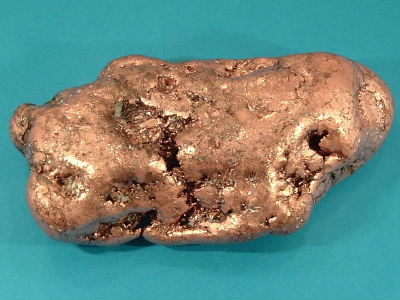 Copper finally succumbed last night, and whether it leads the equity market, or equities lead it, they tend to mimic each other pretty well over the March/April reversal period for the next several months. If they hold this relationship, copper will now have a bit to make up to give this duo strength.
Anatoly Veltman writes:
1. it happened quite abruptly in North American session.
2. mass media explanation: potential premium fuel costs dim prospects for industrial demand.
3. over the years, I've often seen other metals follow next day - although there is no fundamental link. It always was: like players were too busy knocking one market down today; and they switch to the next market next day. Which will be interesting to note tomorrow, as one important nouveau element (cross-market algorithms) should have kicked in already today (?).
Larry Williams adds:
Dominoes is the next game?
Mar
8
Rare Earths, from Craig Mee
March 8, 2011 | Leave a Comment
Nick Curtis made a $5 million contrarian bet in 2002 to develop an Australian rare earth mine, aiming to challenge China's control of global supply of the metals. His company, Lynas, now has a market value of $3.5 billion.
The reform process in China in the metals sector goes through a period of unfettered competition leading to chaos followed by which the state tries to get control of things again," Curtis said.
New supply
Sydney-based Lynas, the second-best performer on the benchmark S&P/ASX200 index last year, is set to become the first new source of supply outside China in at least two decades with the start up this year of the $535 million Mt Weld project, the world's richest deposit of rare earths according to Lynas.
rest here.
I bought this stock on the day before the crash in 87. Cheers! It was demolished at the time. Though I got my brother in too, no doubt he bottom drawed it. Time to let him know the good news! 24 years. Gees it went quick. Many stocks reinvent themselves, just like the wheel.
Mar
4
Amazing, from Craig Mee
March 4, 2011 | Leave a Comment
It's amazing how something, showing all the resilience of a bull one day (or over several days), then turns to water the next, where the past means nothing, and is another "market force" by the mistress which the speculator has to navigate. Like changing winds in the ocean from a increasing build to absolute clear water today. Yesterday's strength, can not be guaranteed to for anything, and only gets in the way, like a ghost plays with the mind. Where this weather was at 3- 6- 12 months ago, is no doubt a truly better indicator. (Even for those looking for a reversal of behavior.)
Mar
3
Excerpt of the Day, shared by Craig Mee
March 3, 2011 | Leave a Comment
30 M Gone: Jetsetter Accused of Having A Lend:
Due to the lack of funding available after the financial crisis, many of them were teetering on the verge of collapse. Unable to secure funding in Australia, dozens of businesses beat a path to luxurious offices in Bahrain seeking financial salvation….
Each was required to pay a non-refundable fee of £26,000 ($41,800). Not only that, borrowers had to pay an upfront fee of 1.6 per cent of the value of their loan. That meant most of the Australian borrowers handed over more than $1 million each.
Not one of the dozens of people who signed up for loans with WGA have received their money.
…This is all the more extraordinary considering that only six years ago Mr Ali, then living in London, left behind a messy flat and £7800 in back rent. He also owed council taxes.
Mr Ali has morphed into a billionaire claiming, erroneously, that he was a graduate of the London School of Economics. Back in Australia, desperate investors are too afraid to speak out as they still hope to recoup their fees.
Mar
1
The Lady From Sorrento, from a Nautical Personage
March 1, 2011 | Leave a Comment
 The view of the bay was breathtaking. The evening breeze caressed her skin. She shivered. "I am sure he loves me," she said, "but I'll never manage to get out of this situation. It hurts so badly."
"I cannot command winds and weather," he started. "Nelson was the greatest Admiral of all times. He meant to say that you cannot change the facts of life. You have to adapt, understand the forces at play and use them to your advantage".
He would not follow the herd. When prices plunged 50% he bought those stocks although there was no real setup. From there the market panicked, the pain seemed to be unbearable. Nevertheless he did not close the trade. It would have been a blow to his self-esteem. Then the market printed a long rebound and he recovered half of his losses. The pain became less intense. With time wounds heal and only scars remind you what happened. Even if you are still losing big money.
He explained: "I learned from markets that taking a loss does not mean there is something wrong with you. Get rid of his ghost, wait for a set up and open a new trade. It is as simple as that."
He was lying to her and to himself. They were friends, but he had always considered the possibility of a different relationship. She was beautiful; there was something intriguing about her. But he was well aware there was no future. She would not be the right person. Her unhappiness, her attitude towards life would drain his energy and he was already exhausted. He needed a dreamer; someone that would give him strength, incentives to do things and not complain or regret something that had not happened or could never happen. Nevertheless, he stuck to this relationship. The same way he stuck to his loss in the stock market. It had been pretty painful at the beginning. Now he had scars to remind the pain and he was still uncomfortable. This would never go away.
Suddenly, as if she was reading his mind, she said: "I will love him forever. Nothing will change this. I must try to forget him even if I know it will not work. I need to replace him in my mind with someone else. That someone cannot be you". He had been awaiting his turn, sitting with his legs at the edge of an abyss and helping her whenever she allowed him to do it. It was like a flash, and he realized he had to do something about it. He turned on his IPhone, accessed the trading account and introduced a sell market order at the next day's open. He had decided to get rid of his long held position and to close a losing trade in his life.
Then he said: "There is no reason for me to be in this trade, I need to get out. I want to look to the future, to the next trade". He thought he would also be a better trader from now on. She looked at the dark sea: "It is your choice. I will not ask you to change your mind. Maybe one day…" He did not let her continue. "Hope is for losers in trading as in life. He managed to say, holding back his tears: "Once a trade is closed, you don't want to look back…to feel regret…or remorse."
He left without turning back. He could imagine her on the terrace, as beautiful as ever.
There was a lady in Sorrento wearing a pink dress at a party that night…
George Coyle asks:
This is great. I thought it might be literature but for the inclusion of the iPhone. The patterns in romance and trading are so similar. Good trades are easy to get into, they go in your direction almost immediately, and they require minimal effort and are a pleasure to have on. Thinking about them makes you feel good. Bad trades inspire doubt and rationalizing, can result in sleepless nights, and usually begin with immediate loss which results in more rationalizing such that even if you are down 50% a small rally inspires unwarranted optimism (even though you are still down 45%). And one generally winds up in emotional distress and makes rash decisions exiting at inopportune times. I have drawn the parallels many times; hope and human psychology seem to be at the core.
I think this is why systematic approaches are so popular in the short-term in trading, the human element is removed. But a systematic approach to dating doesn't really work. For one, by definition if you are in fact part of the dating pool, every relationship you had up until now has failed so it seems a fool's game to even play based on odds. It becomes worse if you have an adequate enough sample size to have approximated the population via the central limit theorem! And you could be viewed as cold and calculating, two things which seldom result in romantic success. Inevitably the initial honeymoon goes awry and a rolling stop results in the end of a relationship. And the vig can be very high so it might pay to approach relationships with a long-term hold investment bent post some initial time based rolling stop out (if one wanted to use a pseudo scientific method). But being a trader, one is always aware when the trade feels bad which can lead to dismay as the patterns usually don't lie!
Craig Mee writes:
The market mistress plays with one's inner demons. On a big turnaround, you can't help but get on, though your immediately exposed to the gun slingers, but as traders know the worst of the two evils is when that baby pops to the moon, and you're not on. To commit and face certain high winds or not commit and be left in the shallows. .. mmm I hate harbour.
Feb
24
From High Frequency Trading To Nothing, from Craig Mee
February 24, 2011 | Leave a Comment
I could have sworn I heard the market take a breath on the low of the mini SP a moment ago.
Maybe not one for day traders or position holders, but maybe for scalpers, the pause can mean indecision. No doubt this can be measured and worth more on a meaningful move.
Feb
17
Here Is An Off-Beat Indicator, from Anatoly Veltman
February 17, 2011 | 4 Comments
 Say you're a little perplexed by a slow creep-up in commodities last few sessions. On the one hand, most commodities have been now climbing day-in day-out for months - so naturally a contrarian, or value seeker would look to be a seller. On the other hand, you are not really getting a tremendous spike, a blow-off into which to sell. So here comes Cotton to your rescue!
You see, Cotton just nearly tripled in the two-quarter period. Obviously, it's a top-of-the-needle daily war of attrition right now between the Longs and the Shorts in that market. Margin hikes by the exchange, price-limit moves adjustments and all that jazz… So watch closely; and the moment that Cotton finally reverses - there will be your indicator that the drift is changing in commodities. Whether it will be orchestrated (in Cotton) by one or another power-party - the jig will be up that, temporarily, Bull market deflation is favored by someone with influence
Ken Drees writes:
A friend just called me this morning saying he heard on Glenn Beck radio about cotton and clothing price hikes– I would be in the cotton correction camp, if I traded this item–usually when a not often talked market is in the news it's time to consider exit door locations.
Anatoly Veltman reponds:
Because of likely limit lock-down in many of the sessions– the outsiders will be confused as to "real" dimension of price changes and balance-of-power day to day. My point was that someone not taking position in Cotton per se– will still get a hint of shifting wind for all of the inflated markets! Remember that today's markets are arguably the most manipulated in decades. Thus, it's doubly important to be tipped-off as to when the flexions decide to loosen the upward pressure valve.
Rocky Humbert writes:
I think Anatoly's focus on cotton as a "tell" is misplaced. I think the entire commodity complex is keying off of Netflix stock (NFLX). As soon as the farmers stop watching videos and get back on their tractors, Netflix stock will crater, and so will the grains…
(Calculating the R-squared between Netflix and one's favorite commodity is left as an exercise for the reader.)
Craig Mee adds:
Talking to a mate in Singapore today in a trip to the sunny island, and he mentioned a farmer in China, who has stock piled cotton: "he has 6 tonnes of the stuff, taking up every inch of his shack, stock piling with price where it is, no interest in selling." I suppose why would you, with price ferociously in the one direction. Though two questions remain, is this a trait of the Chinese race in general… accumlate accumlate… and for such a specie position…is it another reverse market indicator?
Feb
6
Liverpool Owner John W. Henry, from Craig Mee
February 6, 2011 | 2 Comments
 John W Henry, is trying to turn the fortunes of English Premiership team Liverpool, after being a success across the pond at the Red Sox. In a interview in The Guardian, he disclosed a few points in his battle which may be of assistance to us. First, an extract from his trading thinking:
I don't believe that I am the only person who cannot predict future prices. No one consistently can predict anything, especially investors. Prices, not investors, predict the future. Despite this, investors hope or believe that they can predict the future, or someone else can. A lot of them look to you to predict what the next macroeconomic cycle will be. We rely on the fact that other investors are convinced that they can predict the future, and I believe that's where our profits come from. I believe it's that simple.
John W. Henry
On his battle with Liverpool, and strategies for a premiership:
1. That, he said, will be Liverpool's two-pronged approach to rebuilding the squad, which will be financed only out of its income; he and his fellow investors in Fenway will not be pouring cash in.
2. Henry, however, said this did not mean they were not prepared to spend big fees on the right players, as the group has done when turning the Red Sox into a World Series-winning baseball team again.
3. "We intend to get younger, deeper and play positive football.
4. Adding two top players "We intend to get younger, ………Adding two top players [Carroll and Suárez] who have just turned 22 and 24 is a good first step.
5. "It's not a coincidence that the last two ownership groups could not get a new stadium built," he argued pointedly. "What they proposed or hoped for just didn't make any economic sense6. Our goal in Liverpool is to create the kind of stability that the Red Sox enjoy," he said. "We are committed to building for the long term."
OK what does all that mean with respect to trading.
1. Invest from within. Generate cash from within other ares of your business, then use this to improve revenue in your core model (and fit under regulation framework in doing so).
2. Rio trade is alive and well! Well, at least investing larger on a proven strategy where the rest of the business model can fit around it. In fact, this might be the only way to take you over the line with some kind of speed, without grinding it out, and losing to the vig.
3. Do not expect to play defense and win. You must trade positively and add to positions when you can in an effort to score the match winner.
4. Law of ever changing cycles. Get fresh new ideas and strategies. Add to the old tried and true with fresh blood, since this will be where your future lies.
5. Do your books. Money management. Don't over extend on risk.
6. Your after stability in trading and low volatility returns over the long term… not in beating the morning star monthly genius.
Jonathan Bower writes:
I dunno, blowing GBP 35 million on an unproven and injured 22 year-old player with multiple arrests for assault, including his ex-girlfriend, (Carroll) makes much sense from a business or trading perspective.
Feb
3
Kids at Your Side, from Larry Williams
February 3, 2011 | 3 Comments
 Trading is hard with small kids around. I remember when I was trading copper. I'm long, and my actress daughter gets a bloody nose (of course she dramatizes it, she's a born actress). I forget the trade in copper, stop the bleeding….and….go back to see a 45,000 loss in copper. It would have been cheaper to med-evac her to the hospital.
Victor Niederhoffer reminisces:
Twenty five years ago I lost half my wealth between the first and second games of a racquetball game with Reuben Gonzales.
Craig Mee writes:
Shocking…It reminds me of a local interest rate trader, heavily
short, who went for a "quick" haircut, next door to the exchange in
Sydney…. BOOM. Reserve bank unexpected rate move …house wiped out.
An anonymous contributor writes:
They [ed.: i.e. the French] had then learned how easy it is to issue it; how
difficult it is to check its over issue; how seductively it leads to the
absorption of the means of the workingmen and men of small fortunes;
how heavily it falls on all those living on fixed incomes, salaries or
wages; how securely it creates on the ruins of the prosperity of all men
of meager means a class of debauched speculators, the most injurious
class that a nation can harbor,—more injurious, indeed, than
professional criminals whom the law recognizes and can throttle; how it
stimulates overproduction at first and leaves every industry flaccid
afterward; how it breaks down thrift and develops political and social
immorality. All this France had been thoroughly taught by experience.Everything was enormously inflated in price except the wages of labor.
As manufacturers had closed, wages had fallen, until all that kept them
up seemed to be the fact that so many laborers were drafted off into the
army. From this state of things came grievous wrong and gross fraud.
*- Andrew Dickson White, “Fiat Money Inflation in France”, How it Came, What it Brought and How it Ended*
Feb
3
A Fast Food Interest Rate, from Craig Mee
February 3, 2011 | Leave a Comment
 Looking at interest rate futures and considering that trends appeared a lot more prevalent in the 90s and that as a direct result of the world markets becoming more and more intertwined, (and no doubt with rates getting squeezed closer to zero this doesn't help)– the noise and the vig play an ever increasing part.
It appears simple markets out on their own, unbiased, uninfluenced by the majors, are where the drive through meals are. Not sitting down at the hustle and bustle of a downtown cafe, which is akin to trading treasuries. Alright for the scalpers who enjoy the noise, but for us who just want good service and good food, and to be out the door, there are probably easier places to eat.
Feb
1
Tropical Cyclone Yasi, from Craig Mee
February 1, 2011 | Leave a Comment
 For anyone interested in big natural events, check out this article: "Yasi could become category five monster ".
At the moment it's eerily calm… very, very strange. I woke up this morning and there were no birds flying around, no sounds, absolutely nothing. It's like the wildlife knows there's something going on.
CAIRNS resident Carl Butcher is taking a stand against the might of oncoming Cyclone Yasi– he has vowed to keep tweeting through the terror of the storm.
Butcher, whose Twitter handle @cycloneupdate is fast gathering followers worldwide…
Victor Niederhoffer writes:
There are many books by Henty, favorite author of Getty, that describe how frontiersmen could tell what was happening 30 miles away, especially massacres by Indians, by the bird and insect cover in their own settlements. There are numerous market implications of this. I'd be appreciative of other references to the wisdom of birds, and how the layman can improve his profitability based on observing birds.
Ken Drees writes:
Here's a great article about bird behavior prior to the Longbeach earthquake in 1933.
Feb
1
Thought of the Day, from Craig Mee
February 1, 2011 | Leave a Comment
It's funny how just like in building a building, any construction that takes off too rapidly without adequate care and time, usually crumbles, just like the markets and just like riots. Great work and great markets can be torn down in seconds. To gauge what constitutes an adequate time to construct and whether it is strong enough, one must also bring in how tall the building is, how many pillars it has…
Jan
24
Market Choppy? Tepper, by Gary Rogan
January 24, 2011 | 1 Comment
David "Buy Everything" Tepper Will Make An Encore Appearance on CNBC Friday
Ken Drees comments:
There must be a huge request list for his bullish tunes—second time around play–eh?
Craig Mee comments:
Like a trend, while in the top 10 and runs on the board "I'm all ears" but be quick adjust to those melody changes.
Anatoly Veltman writes:
Tepper comes across a totally brilliant man. His September Bullish call at near 1000.00 SP came out as simplistic no-brainer, and it did mark acceleration ofthe upside trend. Tepper's current call is widely perceived to predict 1500.00 SP within a year, although he did remark that current near-1300.00 market contains that much more technical risk - in pursuit of the fundamentally-justified gain.
It's hard to understand why perception of currently-embedded risk appears to completely escape just about anyone's attention. I contend that current market condition, technically, will not allow much enjoyment over 1300, period. Let alone the distant 1500 prospect. We have the market that nobody appears to want to Short anymore; everyone speaking about the market is totally spent out of any will for Bearishness whatsoever .
Ken Drees responds:
State of the union and 12000dow / 1300 s&p nice rounds at a nice time.
Jan
24
The Choking of China - and the World, by Craig Mee
January 24, 2011 | 2 Comments
Firstly, 700,000 people are dying every year in China as a result of the extreme pollution, according to the World Bank. They can’t be compensated at some later date with a wind farm. Secondly, and even more crucially, the West “cleaned up” largely by exporting its pollution to poor countries like China. As Watts puts it: “This model relied on those at cleanup stage being able to sweep the accumulated dirt of development under a new and bigger rug. When this process reached China, it had already been expanding for two centuries. Now “the waste [is] getting too big and the rug too small.” Where is China going to export it to? For how long?
A "plastic soup" of waste floating in the Pacific Ocean is growing at an alarming rate and now covers an area twice the size of the continental United States, scientists have said.
The vast expanse of debris – in effect the world's largest rubbish dump – is held in place by swirling underwater currents. This drifting "soup" stretches from about 500 nautical miles off the Californian coast, across the northern Pacific, past Hawaii and almost as far as Japan.
Ralph Vince Comments:
Nonsense. It wasn't "The West" that swept our pollution to China. It was the multinational entities that TOOK it to China because we (specifically, the United States) passed (and enforced) regulations to clean up.
I'm old enough to remember the stench of sulfer in my fair city, and to remember my father pointing out that the orange-rust-colored ribbon 48 stories below was a river.
The rest of "The West" followed in part. Everywhere else was always a pig sty, even absent the heavy industry which would be fleeing The West. Latin America is a pig sty, as is the middle east and, Eastern Europe, and, with the exception of Japan and Singapore, so is Asia. The subcontinent isn't even worth mentioning.
The academic explanation that the collective "West" swept it under a bigger rug is a lie. The United States would have loved to have kept those manufacturing jobs but the decision was made to move it to where they could pollute with impunity by the polluting entities themselves. Later, trade treaties with these places would be opposed by voters in America, but like the misnomered "Health Care" bill of 2010, would be crammed down the voters throats.
Jan
24
Daily Reckoning.com, No Beating Around, by Craig Mee
January 24, 2011 | Leave a Comment
First, why are so many people unemployed? The answer is very simple.
Because there is no profitable work for them to do as present labor
rates. Thanks to previous meddles, the US economy focused itself on
building houses and importing geegaws from overseas for people who
couldn't afford to pay for them. This was a dead-end economic model. And
the end came in 2007. Now, the latest figures show an uptick in
manufacturing…which is clearly the direction to go. But it will take
years before the US economy has made the adjustment to a new, healthier
model…making and selling things at a profit.
In the meantime, unemployment levels will remain high.
But wait…there's more. For which the adjustment is taking place, US
authorities are trying to block it. How? By taking resources from the
new, unborn industries and using it to prop up the old, dying ones. Like
Wall Street, for example. The financial industry grew like Topsy in the
bubble years. It began to shrink in the crisis of '07-'09, but the feds
came in and pumped more than a trillion dollars into the financial
sector, producing record profits for the big banks, but depriving the
rest of the economy of much needed capital.
Not only that, the feds also take the pressure off labor to make
adjustments. Food stamps, minimum wages, unemployment compensation,
make-work, shovel-ready boondoggles - all these things cause workers to
think they can continue as before…that a "recovery" of the good ol'
days is just around the corner…and that they'll soon be earning as
much as they were in 2007. Maybe more!
Want to really fix the unemployment problem? Listen up. Eliminate all
bailouts, subsidies, giveaways and support systems - both to business
and to labor. Abolish all employment restrictions and employment
paperwork. All free labor - undocumented non-citizens - to compete
equally with native-born workers. Cut taxes to a flat 10% rate for
everyone. Abolish every government agency that begins with a letter of
the alphabet. Then abolish the rest of them.
We confidently guarantee that the nation would be back at full employment within 30 days.
Tyler McClellan comments:
This whole argument is bullshit.
The productive industries are by their own choice and for their own
reasons net suppliers of capital to the rest of the economy. It's a
myth, complete myth that capital flows to where it is most profitable.
It flows from where it is most profitable to where it will be accepted.
Stefan Jovanovich writes:
I wish I could agree with Craig, but he omits a significant handicap.
Because of the catastrophic decline in the productivity of American
elementary and secondary and college education, the skill sets of
workers under 30 are far, far lower than they were in 1945 - 1955. The
transcripts are immeasurably more impressive that they were for people
coming out of the military service and leaving college after the GI
bill. That Army confirms this sad fact in its recruiting statistics. The
handicaps for inductees in WW II were that some had had very little
formal education and were underweight from having struggled through the
Depression. The Army found that these could be remedied with "basic
training" in the 3 Rs (Reading, writing and arithmetic) - usually a 3-4
month course - and some decent chow.
The handicaps for recruits now are obesity and the creeping dumbs -
almost all the kids from the inner cities and slum suburbs are fat,
illiterate and without any learning skills. No entrepreneur in his or
her right mind is going to hire these kids, even if Craig's hallelujah
miracle of sane political economy suddenly appears. Full employment is a
long, long way off - as far away for this generation as it was for
people like my father-in-law in 1930. He had degrees in geology and
petroleum engineering from the Universities of Texas and Oklahoma, and
it took him half a decade to find steady work - initially as a
roughneck. These poor (in all senses of that word) kids don't stand a
chance.
Gary Rogan responds:
While I agree with all the recommendations, guaranteeing full
employment within 30 day while possible contradicts some fairly recent
Nobel prize work (of course the very fact that Krugman has one
invalidates it stature, but still it's something to consider).
The work of the winners,
Professor Diamond of the Massachusetts Institute of Technology, Dale
T. Mortensen of Northwestern University and Christopher A. Pissarides of
the London School of Economics, is best known for its applications to
the job market.
The researchers spent decades trying to understand why it takes so long
for people to find jobs, even in good economic times, and why so many
people can be unemployed even when many jobs are available.
Traditional economics, after all, would predict that wages should simply
drop, helping the labor supply to meet labor demand automatically and
sweeping jobless workers into whatever positions were immediately open.
These researchers’ explanation addresses the complications that come
from searching for jobs and job candidates: it takes time for unemployed
workers to be matched with the proper opening, since people are not
identical, cookie-cutter units, and neither are jobs.
While all this may seem intuitive, in the 1970s it was considered quite
radical. The resulting insights about how search costs can affect
markets also helped revolutionize not only labor economics, but fields
like public finance and housing economics as well. The work is
especially relevant today, as policy makers try to understand and combat
the causes of stubbornly high unemployment in countries like the United
States.
Stefan Jovanovich responds:
The equilibrium assumption behind the Diamond, Mortensen, Pissarides
study is fascinating. Why should there be any necessary match between
ALL the skills being offered and ALL the skills being demanded? Prices
can adjust supply and demand where markets exists; they cannot produce
demand for skills that offer no profit to the buyer at any price. The
neo-Keynesian fallacy is that money dropped from helicopters will cause
private employers to find profits in having holes dug and then filled up
again; the original Keynesian fallacy was that the government can take
money from the incomes of people whose skills are marketable and give
the money to the hole diggers without reducing the amount of savings
available for investment.
Scott Brooks writes:
Capital doesn't flow where it will be accepted, it flows to where the government allows it to flow.
America is like a sick body riddled with metastasizing cancer. Nothing
works properly in a body that is fighting for it's life. Nothing "flows"
properly. The "Body America" is riddled with the cancer of statism. As a
result, the entire "financial organ" of the "Body America" isn't
working properly.
Mr. Albert comments:
The 'Greatest Generation' had an enormous advantage. After the war,
the US faced essentially no mercantile or manufacturing competition, and
thus dominated foreign markets at a time of enormous replacement need.
It was easy for the unskilled and unlearned to find work in that
environment. This advantage lasted essentially for the career length of
that generation. Fortunate circumstances coupled with the wealth
transfer of government borrowing and spending fuels the illusion that
somehow they had it right and the next three generations don't.
Craig Mee writes:
Thanks Stefan and co. It
seems he brings up many areas, but at the heart of it, is protection,
and political correctness and slowly slowly, and looking after the
flexions. When in fact a case of strong medicine is often needed, and a
swift kick up the butt.
Stefan Jovanovich comments:
Tyler makes the conventional mistake of assuming capital and savings are
equivalents. People, by and large, have been remarkably canny about what
they do with their savings as long as their money is immunized from the
manipulations of the government and the better class of people
(academic joke). "Capital" - that Marxist construct now used by central
banks presiding over fiat monetary systems - will always want to snuggle
up to the Emperor and the Praetorian Guard and stay as far, far away
from the unruly uncertainties produced by the getting and spending of
the plebs in the marketplace and their insistence of being paid in
actual coin.
Gary Rogan comments:
While there is something to the paradox of thrift as a game-theory
type concept, the idea that the government can solve it through directed
spending is one of the more evil ideas that ever occurred in terms of
practical impact.
Tyler McClellan comments:
I feel very confident in saying you simply
don't understand the paradox. you have likely never read it, have no
idea (unlike stefan) that it arises from the identity of private sector
account that savings must be equal to investment but that our motivation
towards the one is the opposite and equal of the other. That they are
intermediated by the financial system under any circumstance just at a
level that is previously not computable because it would require knowing
what everyone's planned savings and investment were prior to some of
their income being destroyed by or added to based on others similar
calculations. In aggregate society cannot save by dissaving.
Oh yes it can via the production of indeterminant claims by the
government which is a result of excess private sector savings demand
over and above each individuals in aggregate investment demand (real
investment as a flow).
Now Stefan is learned enough to admit that he at least simply doesn't
believe in the identity, which I must admit is too difficult of a
concept for me to think about after years of trying to have kept at it.
Stefan Jovanovich responds:
Tyler and I have a quarrel over the nature of money, and his is most definitely the majority opinion. Mine is the quaint antiquarian notion that (almost) predates utility curves. You find the odd vestige of it (like a kind of monetary appendix) in the valuation of gold at the price set by President Roosevelt's order under the Trading with the Enemies Act (the loophole that allowed the provisions of the Federal Reserve Act to be superceded). This pricing of gold at a U.S. dollar figure other than the current market serves no evolutionary purpose in a world where Tyler's tautology is not only the economic rule but also the legal tender law.
But these odd remnants of a past economic world should serve as a reminder that the idea that a bank's reserve should be specie - a monetary thing tangibly powerful enough to stop even the most severe breaches of trust - was once common wisdom. It is no accident that the term "reserve" came from military doctrine; a reserve was supposed to be the troops strong and brave enough to held back from the front lines with the understanding that they would be sent forward when the frontline troops had been routed. We have nothing like that now. The Reserves of the Federal Reserve and every other central bank are to be found behind the curtains of the neo-Mussolini architecture (both inside and out) of their buildings where there lie printing presses (excuse me - computer keyboards - with linkages so vastly powerful that no skepticism about the ultimate exchangability of the bank's units of "capital' dare be whispered, even by the girl in the ruby slippers. Until now, that is.
Those odd people who insisted that the Federal Reserve Act itself affirm the exchangeability of U.S. Notes (what were to become our Federal Reserve Notes) into gold under the Constitutional standard thought Tyler's aggregations were dangerous because they established a full substitution between money and credit in the name of "capital". Most of the time this aggregation did no harm; but when people were tempted to borrow and spend (as they had in the American Civil War/War Between the States) without any regard to whether the borrowings could, in fact, be repaid in money as good as gold, the ability of the government to create savings by simply increasing paper bank reserves was a fatal temptation. As we have seen, that temptation has been impossible for modern governments to resist whether the war is one "to end all wars" or "against poverty".
Gary Rogan writes:
Whatever the nature of money is, sooner or later there is a war that interrupts even the most stable tax/spend regimes, and there is never enough political will/desire/ability to tax enough to support it. Or there is a "crisis" and the voters in the next election are always more important than the ones in the following one. So sooner or later the government will find a way to corrupt the monetary standard. It just gets irritating when someone like Bernanke is p***ing on everybody's shoes an telling them this is the rain that will finally end the drought.
George Parkanyi writes:
And what government/country/civilization in the past hasn't done this? It's the nature of the beast. Different regimes will do it a different pace, but the long-term historical result will be the same. Read Machiavelli's "The Prince". This is an excellent treatise on how politics relates to human nature. You could always try working your way into office and try to change the government, or become some kind of guru and try to change human nature -good luck with either.
Stefan Jovanovich responds:
No, George. Machiavelli wrote The Prince as a satire. That is why the book was banned by the Pope aka the Medici's ally Julius II. Machiavelli was a republican - i.e. someone who thought tyrannies were bad because they were so ultimately stupid. Under the Florentine Republic Machiavelli was in charge of the militia and he insisted that only citizen-soldiers serve, breaking with the tradition of hiring foreign mercenaries. If you want to know what the man actually thought about "how politics relates to human nature", read Discourses on Livy. Machiavelli had no doubt that people can and do change the government and the world of political-economy they live in; it is the Princes who want us to think that history is a Hobbesian monotony.
Jan
20
Remembering an Old Quote, by Ken Drees
January 20, 2011 | 3 Comments
"the bottom is always 20% below my bleakest worst case scenario". Author Unknown.
I am thinking of this saying and I am gazing at some metal stocks at the moment.
George R. Zachar comments:
I was explaining short selling to my teenage son last night, and had difficulty communicating the idea of asymmetrical risk. I settled on this: a long stock position can only go to zero. A short position can go to whatever your capital can withstand…plus 10%.
Craig Mee writes:
I was too considering quotes today, and feel that there is no better quote for markets , trading , p and l, the whole spectrum of speculating then the fairly well worn ..'the darkest hour is just before the dawn".
It seems to cover every area that needs to be covered.
The English theologian and historian Thomas Fuller appears to be the first person to commit the notion that 'the darkest hour is just before the dawn' to print. His religious travelogue A Pisgah-Sight Of Palestine And The Confines Thereof, 1650, contains this view:
It is always darkest just before the Day dawneth.
The source of the proverb isn't known. It may be Fuller himself, or he may have been recording a piece of folk wisdom. In 1858, much later than Fuller of course, Samuel Lover attributed the notion to the Irish, in Songs and Ballads:
There is a beautiful saying amongst the Irish peasantry to inspire hope under adverse circumstances:- "Remember," they say,
"that the darkest hour of all is the hour before day."
T.K. Marks writes:
Back in the pit trading days they can recall at times not being entirely above resorting to such folklore logic when the clearinghouse's margin call police came a'callin' about a half-hour or so before the open.
Ken Drees comments:
darkest before dawn always good–agreed.
I like the x% below the worst estimate because it illustrates that the market usually over punishes and it also amplifies the fact that markets have the ability to humilate my best and well thought out assumptions of value—knocking me off kilter. In this flash crash world –the markets can now pulverize any stock, anywhere, anytime.
Maybe an updated version would be:
"The bottom is usually a jaw dropping amount below my worst case scenario, intraday"
Jan
19
Briefly Speaking, by Victor Niederhoffer
January 19, 2011 | 3 Comments
How can the lunacy of going up on increased sales above expectation and earnings below expectation go on , and isn't this a symptom of flexionicism ?
Vince Fulco responds:
Everyone being led to believe 4% plus growth is baked into the year for sure.
Alan Millhone comments:
There is a election in two short years and all need to be very wary of all stats coming out of Washington.
On another note two local gas stations have been back and forth from 3.06 to 3.15 twice today. This afternoon I was at our ACF Bulletin printer and had a nice chat with the owner who like me is a small businessman. He feels when regular hits 4.00 it will be a killer for what he sees as a struggling economy. His business is in parkersburg , W. Va. The council there recently passed a 2.50 " user fee " per employee per week of anyone who works in the city. Yet the city has 1.6 million of uncollected fire and police and flood wall fees.
Craig Mee comments:
It could be a relative symptom of lack of striking negative news after a period of so much and then the shear relief of a being able to breath. Bit like a sick person, who is able to walk and go to the park, after months in bed but still has a chronic condition. When the immune system gets hit again, and white blood cell count gets nasty then it will be back to bed….but in the meantime , the flowers are amazingly beautiful.
Jan
14
Book Recommendations, from Victor Niederhoffer
January 14, 2011 | Leave a Comment
 If you are looking for a good book, try The Shadow Elite by Janine Wedel. She coined and documented the flexions of all stripes. Also very good is The Short Stories of Jack Schaefer, and Mathematics Unlimited, 2001 and Beyond by Engquist, Schmid et al
John Tierney writes:
OK, if you are looking for non-fiction try The Invisible Hook: The Hidden Economics of Pirates
Kim Zussman recommends:
"This Time is Different" by Reinhart and Rogoff
(Spoiler hint: the common ploy of sovereign debt default via confiscation and hyperinflation appears not to apply to U$)
Scott Brooks writes:
We've talked about it on the list before and I I found it very good: Amity Shlaes "The Forgotten Man"
Easan Katir writes:
To the Last Penny is an excellent but little-known Edwin Lefevre work, which, thanks to Google books, one can read online.
Bud Conrad writes:
How about my book, which explains how the economy works from the view of an engineer looking at the total system. It also gives investment recommendations in the second half. It is titled Profiting from the World's Economic Crisis and published by John Wiley. Amazon has reviews and some sample pages. It is number one in one category on interest rates.
Craig Mee adds:
I recommend the Book on Games of Chance. A few of you may be no doubt already connected with it. Here is an interesting excerpt about it:
Cardano was an illegitimate child whose mother had tried to abort him. His father was a mathematically gifted lawyer and friend of Leonardo da Vinci. Cardano studied medicine at the University of Pavia, but his eccentricity and low birth earned him few friends. Eventually, he became the first to describe typhoid fever, a not inconsiderable achievement in itself, but today, he is best known for his love affair with algebra. He published the solutions to the cubic and quartic equations in his 1545 book Ars Magna, but Cardano was notoriously short of money, and had to keep himself solvent by gambling and playing chess. His book Liber de ludo aleae ("*Book on Games of Chance*") written in 1526, but not published until 1663, contains the first systematic treatment of probability, as well as a section on cheating methods. I told you he was bad.
Vince Fulco adds:
A little late to this thread but "Panic" by Andrew Redleaf and Richard Vigilante is proving to be a good read. Redleaf is a convert arb manager out in my neck of the woods who runs Whitebox Advisors. He is in print in his Dec 2006 letter stating, "Here is a flat out prediction for the New Year. Sometime in the next 12-18 months there is going to be a panic in credit markets. Spreads which now hover at an extremely tight 300 bps or so, will gap to more than 1,000. To put it another way, prices of HY securities will drop by something like 20 percent with some weak paper plunging even deeper"
A few powerful paragraphs from the first chapter:
The ideology of modern finance tears capitalism in two, then abandons the half beyond the ken of bureaucrats and the professors. Capitalism demands free markets because it needs free minds. Modern investment theory says efficient markets can moot the minds entirely. The entrepreneur cherishes freedom including the freedom to fail. The bureaucrat of capital dreams of a world in which failure is impossible. Confronted with demons of uncertainty, the entrepreneur wrestles with them till dawn. The bureaucrat of capital crafts idols of ignorance and worships in the dark.
Prevailing in Washington as on Wall St. were the most vile and self-destructive assumptions of anti-capitalists everywhere who imagined they could wield capital while abandoning the principles that created it; that systems could substitute for the moral standards they once embodied; or that men who lost trillions of dollars of other people's money might somehow recover it if only the govt gave them trillions more. Crony capitalists on the right and socialists on the left united as always behind their most fundamental belief, that wealth is to be captured by power and pull rather than created in the minds of men.
Jan
14
To My Credit, from Easan Katir
January 14, 2011 | Leave a Comment
Once upon a time a Chicago acquaintance called. He was raising money for his new company, which was going to manufacture aluminum shipping pallets, and replace all those grungy wooden ones upon which goods are shipped. I reviewed the pro forma, assessed the risk, pointed out that unit cost would be an insurmountable hurdle as with so many new inventions, and said no.
A month or so later he called again, saying he had raised all the money except for one last tranche, and would I please reconsider, that i was such a good friend, and he had always admired my singing voice. When I said no, his voice got thick, he said I was his only hope, that couldn't i just lend it to him for a short time. He was actually crying and pleading. I said i had no interest in being part of the venture, but since he put it that way, I would loan him the money secured by his house. Amid wailing, and protests that his wife would divorce him, he finally agreed. He signed the paperwork, and i wired the funds.
Years of drama-filled annual reports went by. He listed me as an investor in the company, which died a torturous, lingering death, after a second round of capitalization.
More years went by, and I had written it off and forgotten about it.
Lo and behold, one day a set of papers arrived for my signature. The fellow called, and sounding much like a weasel, explained he just needed a quick signature to 'clean up some past documents', which of course he needed asap. After a day, I recalled what the deal had been: I guessed he was now refinancing his house, as this happened back when hapless bankers and reckless householders were still dancing jigs together.
I said I would be happy to sign upon his repayment of the loan. Oh, the shrieking! The sound of his gnashing teeth! He tried to argue I was merely a shareholder, and had taken the risk, and as the stars had in retrospect been badly misaligned, and the venture was kaput, it was only fair i suffered the same fate as his other good friends. I reminded him of the real deal, and proposed that if he paid up withing three days, I would forgive the interest. His other needs must have been pressing, because he sent me a payoff check.
When my son was very young and i was teaching him new words, i taught him this one:
kol - at - er - al …. and had him repeat it over and over and explain the meaning.
Craig Mee adds:
A friend recently told me that a friend of his, quite well-off, borrowed a sizeable "mates" loan… and unfortunately x months later, and after asking for it, had not payed it back. He then mentioned he spoke to an old mentor. His words were "when you make the decision to give a friend money, never ask for it back, and if it reappears then you have had a win". Very interesting, and I find good advice.
Jan
12
Contraction Expansion and Black Swans, from Craig Mee
January 12, 2011 | 1 Comment
With markets, so is life, with life, so are markets.
Brisbane Australia's third largest city on standby for flooding with dams about to break at close to 200% capacity "after a dramatic reversal of dry conditions":
Recent heavy rainfall across eastern Australia has caused a dramatic reversal of dry conditions across Queensland, New South Wales and parts of Victoria and South Australia. Significantly, the Murray Darling Basin has recorded its wettest year on record, ending a sequence of below average rainfall years extending back to 2001. Spring rainfall during 2010 across much of the east was also the highest on record and December was also very wet.
With the dead and missing in its wake, the worst flood in 100 years is building towards Brisbane as Australia's third-biggest city holds its breath and hopes a dam 80 kilometres to its west can keep back enough water to avoid a disaster of biblical proportion.
Read more here.
Dec
30
Memory, from Duncan Coker
December 30, 2010 | 3 Comments
 The Chair offers a meal in the ideas of forgetting and trying to start fresh in trading every day, week, month. In my case I tend to remember and overweight the large losses and not the average gains. This leads to trading too infrequently and then being subject to adverse selection. Sometimes forgetting is a good thing. This past year it would be hard to forget the intra hour move of 10% in May, or intra month move of 25% in Oct 2008. Though they deserve some consideration, their likelihood of occurring again is probably overweighted for me. I am reading a book called Waves where it documents a 1700 foot wave that hit Lituya Bay Alaska in 1958. How many fishermen would ever venture out if they dwelled on the past too much? I have found in tennis, I often play better after a period of not playing, as I forget my bad habits. For some reason I manage to remember the core fundamentals. This affect unfortunately wears off when the dreaded reversion to the mean takes hold.
Ralph Vince comments:
Interesting observation Duncan. I am of a similar mindset, have been working with the idea the past 12 months and have drawn the conclusion therefrom that "expectation," the probability-weighted sum of possible outcomes, aka "Mathematical Expectation," of what might happen, is not only NOT how human beings asses risk-opportunities, and rightly so. If we did, the analogy I like to use is, we would never board a flight.
But we DO board a flight, knowing there is an incredibly small probability of never arriving at our destination. Why? Because we "expect" to arrive at our destination.
In fact, the notion of Mathematical expectation is really a mere proxy (and a poor one at that) for assessing risk-opportunities compared to what we should use.
Thinking about writing a book on this. The problem is it ties into everything else I have ever worked on, and a lot of it would be redundant.
George Coyle writes:
I too suffer from this problem. This is obviously tough for those trading with casino logic which requires the "house" to play all games (subject to size limits). There is a concept in psychology known as systematic desensitization (http://en.wikipedia.org/wiki/Systematic_desensitization) which attempts to stop responses to fear and anxiety. It might be useful for trading, but presumably one would have to incur many losses to get the benefit. Also, if we check the opposite end of the spectrum (the bank traders who take large risk because they can just jump ship and move to the firm across the street if they lose) it would appear having nothing to lose personally, and thus an asymmetric risk profile, would also result in eventual disaster. So there must be some optimal level of fear/greed/caring/indifference, the efficient frontier of trading emotions. It is difficult to think of how it might be measured and then used.
Craig Mee comments:
This seems to be a catch twenty two here, how individuals receive risk, and how the market does.. As everyone is boarding different flights at different times, surely fear and greed , or lack of …fifo's each other out.
Ralph Vince adds:
Put another way, what the casino "expects," and what you, the solitary individual "expects," are not mirror images of each other.
George Coyle adds:
The casino expects a slight positive expected return over the course of time (by virtue of the odds of the games). The only real exception is blackjack in which a player has an edge provided s/he can split aces and double down on split aces. The speculator using a casino approach would expect the same. Basically the central limit theorem says that over a large enough sample the distribution of outcomes will be approximately normal. In this instance both speculators and casinos using this logic assume a slightly positive mean (expectation) to the distribution. So they do expect the same, a profit over time by virtue of the laws above. The amount of said profit varies as markets are not governed by the statistical laws of casino games. So they aren't mirrored, but they have the same trajectory. Both experience runs against the expectation, the goal is to manage emotions such that a big loss does not prevent a speculator from playing the next game which may cause the positive average to be realized. The casino does have the benefit of odds remaining in their favor over infinite time.
Dec
29
A Warrior’s Life, from Craig Mee
December 29, 2010 | 1 Comment
 Just finished reading A Warrior's Life, the autobiography of Paul Coehlo. This man, always searching, always doubting, always persevering, can teach us in many areas. Although he was not without considerable failures and flaws, both personal and in business, he took all opportunities and was quick to reinvent and market himself. With his quest for answers in life and success he covered much territory, and although achieving great world wide acclaim as a writer, he learned much about life in the process.
This passage from his diary is like a beacon for traders:
When I finished writing The Fifth Mountain, I recalled that episode– (getting fired from his CBS executive position many years prior) and other manifestations of the unavoidable in my life. Whenever I thought myself the absolute master of the situation, something would happen to cast me down.
I ask myself: Why? Can it be that I'm condemned to always come close but never to reach the finishing line? Can God be so cruel that He would let me see the palm trees on the horizon only to have me die of thirst in the desert? It took a long time to understand it wasn't quite like that. There are things that are brought into our lives to lead us back to the true path of our Personal Legend. Other things arise so we can apply all that we have learned. And some things come along to teach us…
Maybe dailyspeculations.com represents all three.
Dec
27
Dax Futures fall 150 points + within 2 mins, from Craig Mee
December 27, 2010 | Leave a Comment
Any time a market manages such a drop, is usually due to an era within imput….either by executing broker or a fund manager who is not "on the pulse" of the said market and how to best deliver his order into the market for that specific day.
In a holiday volume reduced day, the chances for an error, increase dramatically , including due to fact that market makers may not be as prevalent.
This no doubt, need to be looked at to increase confidence in the markets.
Note: I had no position, but considering the last 15 days ranges where engulfed, no doubt some species happily enjoying a round of golf and well in the money, wont be too happy once they check p and l.
Dec
20
March – April Turning Points in U.S., from Craig Mee
December 20, 2010 | Leave a Comment
A little chart gazing I was doing showed the following:
Not sure if it's statically significant i.e 14 years only set, and 2 month window, but I can hear a strangle coming up, and maybe even a small backpocket outright short,
March –April Turning Points in U.S. SP500
1997-2010·
5 out of 14 years, the March/April month has seen a turn that has resulted in the price closing the year at the inverse extreme.
11 out of 14 years has seen the market not break the March/April extreme in price for at least the following 3 month period.
Note: Bill Gross of Pimco has suggested that in the past 15 years, every time the fed funds rate was higher than thenominal GDP growth rate, assets such as stocks and/or housing always fell. He even suggested that the best way to price the fed funds rate would be 100 basis points below the nominal GDP growth rate.
This is not a situation at the moment.
Phil McDonnell writes:
Remember that extrema are only known in hindsight. Also remember that extrema are governed by the ArcSine distribution which is counter intuitive once you get the normal distribution wired in your head. One of the corollaries of this is that extrema occur early or late in the given time frame but not so much in the middle time period. Also be aware that the ArcSine is a U shaped distribution. This means that ALL of the distribution is in the tails, little in the middle. So you need much larger samples than for a normal distribution.
This is not meant to throw cold water on Craig's interesting line of thought, but more an explanation of why I try to avoid extrema lines of inquiry. Ultimately you would need to test this using a randomized bootstrap simulation to see where it lies. I suspect n=14 is too small though, but might be fine for a normal dist..
Dec
15
Powerbands, from Craig Mee
December 15, 2010 | Leave a Comment
 Here is an interesting case study on how to develop and sell a product– "Powerband Wrist Straps Forced to Retract Misleading Ads by Austrailan TGA Complaints Resolution Panel". However they utilised a slick marketing campaign– leveraged off an existing trend, i.e something that was already being worn, (those charity plastic wrist bands), added a cool factor, and said you would be a better sportsman, hero, person, whatever.
After a number of people complained to the Therapeutic Goods Administration and those claims were rejected on the grounds of the device not being a "Therapeutic Device" the issue was taken on by Professor Ken Harvey of Latrobe University who took them to task and escalated the issues to the TGA Complaints Resolution.
Marlowe Cassetti writes:
The Australian Skeptics have challenged a lot of these frauds. They have a couple of videos on this here. Scroll down to Applied Kinesiology and Power Balance videos. The sad fact is that many gullible people all over the world have been duped by this crap. I know of two examples where sick people are foregoing real medical treatment to waste their precious time and money on this junk science.
Dec
14
Reset Your Frame of Mind, from Craig Mee
December 14, 2010 | Leave a Comment
 In the markets and trading, it is often worth while to try and re set your position each morning mentally, before taking any course of trading action.
For example, on a upside break, if you are already long, and tempted to book, consider your square– you would probably be buying right here. Why not add to the position, rather than take the easy option of banking the cash. The need to produce 15% a year of trades that RUN, particularly on direction trading, it appears, is paramount to achieving your goals.
Dec
6
Why Does It Work? from Craig Mee
December 6, 2010 | 1 Comment
This article on a man made stream saving endangered fish reminds me of trading. In the last sentence, substitute "water flow, the habitat, the replicated diet, or a combination of these effects" for money flow, economic environment and intermarket relationships. Get the mood lighting right, lay the foundation, and only then pull the trigger:
"They have been trying for years but could never quite pulled it off. Now…… the endangered Macquarie perch are finally breeding again. The artificial stream was created in a pond slightly smaller than an olympic-sized swimming pool, with an excavated U-shape channel that uses paddle wheels and a diesel pump to create a flowing stream. Scientists also placed cricket-ball-sized cobbles in the bottom of the channel and simulated ripples in the shallows to re-create where they would usually lay their eggs.
''We put in all these habitat features that they normally associate with in the wild,'' Dr Gilligan said.
Dr Gilligan said he and his colleagues did not why the artificial stream worked. It could be the water flow, the habitat, the replicated diet, or a combination of these effects.
Craig Mee
Nov
22
Chainsaw Economics, from Duncan Coker
November 22, 2010 | 1 Comment
 The economics of buying a chainsaw highlights some of the ideas on how to value time. How do I calculate, cost, benefits and lost opportunity and what should I consider as leisure, exercise, entertainment time versus labor? For the issue at hand, there is a forest abutting my back yard, and with the recent wind storms a few downed trees. They could lay there for a few more years, but on the other hand they present and eye sore in the other wise organized forest. Second, winter in coming and I am down to around 1/2 cord of fire wood and will need roughly another 1/2 cord to make it through. Market price around here for a full cord delivered is $180 give or take. The chain saw I want is a sparkling new Husqvarna 40cc for around $350. Not considering labor it is a 2-year pay back on the wood alone.
There are other factors though. For one, I like doing yard work and spending time in the woods. Being outside, throwing on the coveralls and getting muddy is definitely a benefit. Running a chain saw is fun as well, (positive marginal utility), though I am sure I would feel differently if I was a full time lumberjack (downward sloping utility curve). Lets assume it is safe and I am somewhat skilled. The exercise involved is fairly high, probably 8 to 10 hours to cut, move, split ½ cord. So I list this as a benefit. Then there the satisfaction part afterward of looking at the neatly pilled wood stack and the peaceful spot in the woods where the dead tree no loner resides.
Opportunity wise, I could always be doing more research as a trader, or spending time with my family, the later being the most important. So there are costs there, but time in nature has benefits as well, like long walks, swimming, rowing.
Add it all up I am leaning strongly toward making the purchase and heading out to the woods this holiday. If anyone has any good arguments for or against let me know.
Craig Mee writes:
Chainsaws and markets… mmm!
This reminds me of a young broker years ago who went on his first interstate trip. On arriving in Melbourne, Australia, he went to take a bank client out to lunch. The client says "let's forget lunch, and hit the hardware store for a spot of shopping" ! Well he promptly got the young guy, who didn't know any better, to buy him the latest chainsaw with his company Amex…and once the client's boss at the bank found out, the client promptly got fired!
Oct
28
Gold Bubbles RBC and GATA, from Craig Mee
October 28, 2010 | Leave a Comment
 I just saw an item on the news that RBC I believe, had created a bubble index from data from many previous bubbles. I have not been able to locate it though they were looking for gold to hit over USD 3000. If anyone on the list has more info that would be interesting to know a bit more about the makeup of it. Though I did find this story from 2002 , which if it was indeed correct, would outline a reason for a lot of the pent up energy in the market together with demand and supply shifts in the years since, leading to gold where it is today.
The RBC report says the price of gold is going to explode and cites "Increasing Evidence of Unsustainable Gold Price Manipulation" as one of its reasons. The RBC report points to 11 "factors" of evidence regarding the gold price manipulation:
1) Aggressive gold lending, which from an economic perspective is indefensible, has filled the supply/demand gap.
2) New York Fed gold has been mobilized when the gold price is rising.
3) Timing of Exchange Stabilization Fund gains/losses corresponds to gold price movements.
4) Audited reports of U.S. gold reserves show unexplained variances.
5) Minutes of Fed meetings confirm officially denied gold swaps.
6) Rules on gold swaps have been revised and then denied. However, individual central banks have repudiated the denial.
7) U.S. gold reserves have recently been re-designated twice, initially to "custodial gold" and latterly to "deep storage gold."
8) Statistical analysis of unusual gold price movements since 1994 indicate high probability of price suppression. The invalidation since 1995 of Gibson's Paradox — that gold prices rise when real interest rates fall — suggests that the real manipulation began then.
9) New York gold price movements versus London prices trading defy odds.
10) Timing of huge increases in bullion bank gold derivatives is consistent with gold price declines.
11) A rapid decline in U.S. Treasury holdings of gold-backed SDR certificates is not explained.
The RBC report goes on to say: "One or two of these factors could be viewed as random, but the full body of evidence is overwhelming."
Anatoly Veltman comments:
It is important to keep exchange of info and ideas un-biased.
1. The bottom story of "suppression" is from GATAwebsite– this should be disclosed in BOLD LETTERS.
2. When RBCcame out with February 2002 report, gold was completing a four-year basing formation on price charts, trading in $200-handle most of that period. I also believed that market was dislocated to the down-side. I was 100% Long and was admonishing anyone willing to hold a Short position.3. Re-printing "same story text" following un-interrupted price move from that level to last week's $1388 record– again, one ought to attach tons of qualifiers. The accusations against US/other authorities remained unproven a decade later. Most important: how relevant is it in context of current price, fully 550% off that former bottom?
Oct
24
Lies, Damned Lies, and Medical Science, shared by Bill Egan
October 24, 2010 | Leave a Comment
Much of what medical researchers conclude in their studies is misleading, exaggerated, or flat-out wrong. So why are doctors– to a striking extent– still drawing upon misinformation in their everyday practice? Dr. John Ioannidis has spent his career challenging his peers by exposing their bad science.
From the article "Lies, Damned Lies, and Medical Science" in the Atlantic.
Craig Mee writes:
Thanks Bill, outstanding read. Everyone should read that including the whole family. It does most reality tv shows and glossy mags out of a job….that's how enjoyable it is. Test and retest, especially the original basic findings seems to be one of the main messages (which dailyspec emphasises often)…and everyone has got their own agenda mixed up in everything all the time.
Replacing quants and traders for reasearchers and physicians in this passage brings some interesting thoughts, and for the passage: "there's simply too much complexity in patient treatment", think individual markets.
"Researchers and physicians often don't understand each other; they speak different languages," he says. Knowing that some of his researchers are spending more than half their time seeing patients makes him feel the team is better positioned to bridge that gap; their experience informs the team's research with firsthand knowledge, and helps the team shape its papers in a way more likely to hit home with physicians. It's not that he envisions doctors making all their decisions based solely on solid evidence—there's simply too much complexity in patient treatment to pin down every situation with a great study. "Doctors need to rely on instinct and judgment to make choices," he says. "But these choices should be as informed as possible by the evidence. And if the evidence isn't good, doctors should know that, too. And so should patients."
Victor Niederhoffer comments:
I have always said that aside from the licensing of Drs. , the insistence on double blind studies needed for approval is one of the greatest reducers of life expectancy, and of course, maintainers of anti competitiveness, and of course, improper use of statistics in the real world aside from our own field.
Oct
17
The Pirate Stock Exchange, from Craig Mee
October 17, 2010 | Leave a Comment
A recent BBC documentary revealed how ingenious pirates have set up a pirate "stock exchange" to encourage investors and build an economy, albeit a black one. Pirate groups of a certain size register themselves in the same way that established companies can on a regular stock exchange. Individuals can then choose to invest in one or more groups, by donating weapons or buying shares. They then get a cut of the earnings when their pirate group strikes lucky.
Oct
17
Combustion, from Craig Mee
October 17, 2010 | Leave a Comment
 For the currency traders, AUDYEN, trading in a two big figure range for now over 1 month, got me looking at the elements in combustion .
No doubt the organic compounds are building up, and a production of light in the form of a explosion in price will be on us soon.
(A quick glance over the last two years has not seen such a period of drought in this market…though 2007 April and May brought about such an occurence, where the result was trend continutaion for 7 big figures in approx the same time 6 weeks as the consolidation)
A loaded Aussie and likewise Yen against the perils of the usd have created a unique atmosphere if not the perfect storm, where we maybe in the eye at the moment.
We await the outcome and hope for direct winds and a full spinaker and not many crosscurrents on the break to prevail.
Oct
12
Technical Break or Momentum Gaining, from Craig Mee
October 12, 2010 | Leave a Comment
 Watching (and trading) GBPUSD today brings up a few interesting oberservations. As cloudy skies enveloped Tokyo and the Nikkei started to get hosed, S&P futures fell easily to carve through the bid. Gold struggling, Crude off ok, specie longs on the QE train booking. Will it turn the USD position?
GBPUSD…bid early… easing easing, bang, through 158.60, and straight to 1.5790 …stops …trendline break…not sure but Europe had been in for 3 hrs, and had good time to look at day's Asian events before acceleration took hold.
Who knows whether technicals are worthy, or if it's just a momentum play, and a flip of the coin…but the break on the day seemed long overdue.
Bill Egan writes:
Gold and dollar even more extended now in model space with values consistent with a reversal; by analogy a couple of springs pulled too far…looking forward to seeing whether this will be a mild pause or rush back.
Oct
12
Exiting Trades, from Craig Mee
October 12, 2010 | Leave a Comment
 Exiting trades is always the toughest part of the game for me on a speculative basis, especially wanting to book trades to protect P and L, after taking a few hits. But what I find interesting is some trades are easier to let run than others with the same risk on the board. And it will come as no surprise to all that these are the low volatility plays… but what is it? Realistically the high volatility are the trader's saviors, and can turn a 3 bagger into a 8 bagger in a heartbeat. These are precisely the ones we should be putting on the risk and shutting down the screen. But hey the risk of scratching in a heartbeat is only too real as well, and there lies the trade off.
Alan Millhone writes:
The late Tom Wiswell said, "keep the draw in sight" at the Checker board. Knowing when to execute a trade at the board certainly carriers over to stock trading and knowing when to liquidate your position on the board or at the big board.
I spent this past week in Medina,Ohio as referee for a world title "Free Style" Checker match of 24 games between reigning Champion , Ron "Suki" King of Barbados and challenger Dr. Richard Beckwith of Ohio. I know a little about Checkers and watching these two Grandmasters all week was quite a treat.
Games one through twelve were all drawn and the players knew when to liquidate their position and make effective trades to exist the game. Suki "changed up" in game 13 and won as Dr. Beckwith stuck around too long and got into trouble by not having an effective exit strategy and lost.
I sat and witnessed game 22 as Dr. Beckwith improved on an ending that Suki and the late Derek Oldbury of England played off another opening that transposed into the line of play that was used in game 22. After 4 hours and 22 minutes Dr. Beckwith emerged as the victor after a hard fought ending that Suki could not escape. Dr. Beckwith had previously studied this ending that arose in game 22 and knew how to win the ending. Hand held notes as the Chair admonishes at the Checker board or the big board are critical to survive.
Suki drew game 22 and won the final game with an odd line of the "Tillcoultry" opening that Dr. Beckwith failed to meet correctly and did not trade out early enough and lost on a ending bind that he could not escape.
"Knowledge is power" on both boards. I was a first hand eye witness to this all last week watching these two greats do battle over the checkered squares.
As Chair points out, there are direct correlations to board games and stock trading and stock exit strategies that will help keep you unscathed.
Phil McDonnell writes:
One strategy I use with certain option spreads is something I call stop profit exit. I talked about it in my book. For strategies such as butterflies and calendar spreads the profit peaks out at a certain definable point relative to the underlying asset. For many ratio spreads there is a peak profit but that point changes dynamically with time. The point is that deciding to get out at the peak profit is a no brainer. Once it hits that point you will give money back if it goes up or down from there. The exit can and should be should be mechanical.
The probability of touching a price target is governed by our old favorite the arc sine distribution. Because of the Reflection Principle the probability of the target being touched is twice that of it being above (or below) that target at the end of a given time period.
Oct
11
Bulls Party, from Victor Niederhoffer
October 11, 2010 | 1 Comment
 With S&P, Crude, Naz, Dow, Euro, Bund, gold, Yen, Dax, Estox, Silver, corn, wheat, soybeans, oats, and hundreds of individual stocks at 1 month highs, it is interesting to reflect how long a bull move can last and how far it can go, when fueled by all the wealth that other bulls have and helped along by expansionary policies by the central banks.
Ken Drees comments:
Since QE is the direct stock and bond market impetus at the moment through indirect likely promises of a recent fed statement and made very pseudo real by the never interviewed but very smart and successful David Tepper on CNBC who basically spelled it out for everyone that the markets are indeed going higher, I say that this rally lasts at least into election day and into the fed meeting where rumor/fact becomes real. All other momo markets are induced as well to grow since the QE feeds them too as collateral liquidity buckets.
As long as I read and hear topaganda I lean bullish.
Gary Rogan writes:
Wow, that was an interesting thought. On Friday I bought something for the first time in 1.5 years, and the first thing ever that wasn't a stock, and that was UNG. I just figured the risks over the next year which is the shortest period of time I intend to hold it are not that high. And for somebody who only buys at 52 week lows the chart looked like the most beautiful thing in the world.
Jeff Sasmor comments:
Just be aware of how UNG has to roll the underlying position once a month. I happen to be in this one too– but it can grind lower and lower on you. And once a month it's gamed when it rolls to the next month. The effect has been discussed to death in many venues. So it's tricky to hold it for a long time if it stays in a range.
Craig Mee adds:
Certainly might drive the speculators out, (or clobber them if they fade it), as runaway markets present less and less opportunities if one isn't in and sitting tight.
Kim Zussman writes:
About the only asset class that hasn't been goosed limit up is real estate. A big up-move in house prices would be very useful, driving LTV down, reducing foreclosures, and re-priming the dual wealth effects of McMansion braggadocio and cash-out refinancing. Not to mention fulfilling the campaign promise of re-establishment of the American Dream.
Oct
1
The Specialized Tree of Evolution, from Victor Niederhoffer
October 1, 2010 | Leave a Comment
 There appears to be at work one of those ascending branches you see in the tree of evolution where each branch gets more and more specialized, ( without disregarding the species that die out). The current most extended branch is not to generalize about what the fed is doing, but taking the example of today to release the Chicago purchasing managers report to the shadow elite 15 minutes before it takes 1 trillion or so out of the market. I don't find that as innocuous as my learned colleague, especially when I'm so often on the wrong side of those trades.
Rocky Humbert writes:
I'm sorry that you got hurt by the price move. With all due respect, I find it improbable that you're "so often on the wrong side of those trades." Rather, I posit that when you are wrong, you attribute it to others having an unfair advantage, and when you're right, you attribute to your own brilliance. I have a similar tendency, however, I attribute the losses to either bad luck or my own incorrect analysis. And when I'm right, I attribute it to my own brilliance. Ha.
Interestingly, had I told you 15 MINUTES IN ADVANCE that the Chicago Index would come in 5 points above consensus, we probably would have been inclined to short the bond market (which perhaps explains the dip … if there was a leak.) Yet, when the news hit the wire, the market rallied. The people who got hurt were the people who shorted the market on the leak — and covered at a scratch or loss. So the people who shorted knowing inside information… got spanked. And the people who followed the people who shorted knowing inside information … got spanked too.
It would seem that the "invisible hand" gave market participants a spanking today?
Craig Mee writes:
Rocky, its a good point, that you bring up, that profitable outcomes are never guaranteed even with "an edge".
Though it would seem this is where risk management can provide the difference, also trade duration, and whether you have a standard set plan, with each "trade".
Quite possibly, though this ones going to be hard to backtest, but surely there's a few home runners out in amongst the trades.
Interesting Nikkei down 190 last night, ..has been taught here …east to west, and US equities couldn't hold on.
Sep
20
A Swing and a Miss, from Craig Mee
September 20, 2010 | Leave a Comment
 I watch Soybeans and Wheat rally from the open of the electronic session, then finally back off the highs after two to three hours of trading.
I wonder if a market moves a "significant amount" from the open, (especially on a Monday in grains weekend weather), then eases back just off the highs, what are the chances that Europe is going to come in (Oh gosh, check out Dec, Nov Soy) and have have a swing for the highs.
Well they did today, they had a swing for the highs and missed. Then the market proceeded to be offered. Now we wait for the main session.
I wonder if we can get a home run… or whether it's back to the dug out.
LATER:
Looks like it was back to the dug out today on this one!
Though it does pose the question–after x significant move early, and then x- small percentage pull back in Asia, if opening of Europe high of x is not taken out, and soldiers retreat for U.S.open, if in first 15mins no bid tone emerges in U.S, what percentage of times does the market retrace for the session?
No doubt you could add all sorts of filters incuding previous days surge, and over what x = to significant move….
Arrrr systems! Sometimes it's easier to trade other ways, but you can't help thinking.
Sep
20
Gold is the Only Actual Bull Market, from Craig Mee
September 20, 2010 | 1 Comment
 I'm still waking up in the morning trying to decipher this statement as I look at Cotton, Soybeans, Sugar…what time frame…what context, what… whatever else?
For someone as "learned as Soros", besides talking about his book, who is missing what? :
Billionaire financier and political activist George Soros shared his thoughts on topics ranging from Japan's yen intervention to the European debt crisis at the Reuters Newsmaker event on Wednesday. According to the host's coverage, Soros remains bearish on the U.S. economy, noting, "If I had to sum it up in one word, I would say 'blah,'" and there may or may not be a double-dip recession.While Soros is never shy about voicing his opinion on the global economy, the billionaire made particularly interesting remarks on gold prices, where his namesake hedge fund, now actively managed by his two sons, is invested. "Gold is the only actual bull market currently," Soros explained, adding "It will be very interesting to see if there is a decline in the next few weeks," and, "It's certainly not safe and it's not going to last forever.
"Recall that earlier this year, Soros called gold the "ultimate asset bubble," as his hedge fund was more than doubling down on its position in the SPDR Gold Trust (GLD). At the end of the second quarter, the ETF was still the largest position among Soros Fund Management's top-15 U.S.-listed equity holdings, as disclosed in 13F regulatory filings. The firm was reducing its position in the gold trust and miner NovaGold Resources (NG) during Q2, but it left the Kinross Gold (KGC) position largely unchanged.
Anatoly Veltman comments:
An 80-year-old trying to keep $20b working can't possibly mind some of the frisky markets you and I both love.
Hany Saad comments:
Soros sports the nasty habit of actually riding a bubble knowing it's a bubble. This seems to have paid off handsomely over the years. Gold is a metal of no industrial use that keeps going up largely due to a universal psychological flaw that it is the only hedge against recession. A lot of similarity between the behavior of Gold and the tulip mania may be, yet fighting it might not be a winning proposition right now.
Sep
15
Interesting…, from Craig Mee
September 15, 2010 | Leave a Comment
While gold got a jam job last night, the USD was weakening the night before aginst the Euro but accelerating sharply today. Who is calling the shots? Equity market? Major Crosses against the Dollar? or Gold? Or most likely…none of the above. Some times (most of the time) the matrix can get a bit congested…
Sep
13
Ever Changing Cycles, from Craig Mee
September 13, 2010 | Leave a Comment
 After writing an earlier piece on this site about the amazing ability and accuracy of the Australian goal kicker Matt Giteau, it seems the tide has turned…at least for the moment. What a good illustration of how whether in sport or tradin, we must be always on our toes and ready for change.
Flying doctor van Straaten was called in to cure Giteau's kicking crisis, but when he is not the consequences can be dire. Such was the case on Saturday night when he missed four of seven shots which could have netted the Wallabies 10 crucial points from failed conversion and penalty goal attempts.
The 26-year-old has landed 50 shots from 58 attempts in 2008, including 16 straight at one point, at a conversion rate of 86 per cent. "I feel as though I'm striking the ball better and more consistently. That's the biggest thing," Giteau said.
Sep
9
Adult Fairy Tales and the Market, from Craig Mee
September 9, 2010 | Leave a Comment
 No doubt there's plenty of market lessons across the board in this lot. The ten bloodiest bed time stories :
Remember the cosy nights of your childhood tucked up in bed as mummy or daddy read you softly to sleep?Well have a read of this lot and you may discover that the tales you remember fondly are actually pretty gruesome.
From the Little Mermaid's suicide to Geppetto the child hating carpenter in Pinocchio, the shine applied to the Disney adaptation wears off upon closer inspection.Tales of fathers selling daughters, matricide, serial wife killing and cannibalism. Sleep well children…
Kevin DePew writes:
My wife recently brought home a "classic Sesame Street" DVD from NYPL for our two-year-old. The beginning had a stern warning: "For Adults Only. These early 'Sesame Street' episodes are intended for grown-ups, and may not suit the needs of today's preschool child." So we looked it up and found this Virginia Heffernan review from the NYT from 2007:
"The old "Sesame Street" is not for the faint of heart, and certainly not for softies born since 1998, when the chipper "Elmo's World" started. Anyone who considers bull markets normal, extracurricular activities sacrosanct and New York a tidy, governable place — well, the original "Sesame Street" might hurt your feelings."
Well, it's true that bull markets no longer seem normal.
Dylan Distasio writes:
I have a nice illustrated hardback of DER STRUWWELPETER, one of the darkest of the German books of which you speak that I am planning on introducing my daughter to…A free illustrated English version is available online on Project Gutenberg.
Victor Niederhoffer comments:
The literature on why children should read horrible stories is pretty voluminous and convincing. German kids are exposed to particularly horrible stories. I had the pleasure of receiving the original of one that he invented and illustrated for his family from the great MFM Osborne as a token of esteem for Gail, my first wife.
Sep
3
Make Yourself Flexible, from Craig Meee
September 3, 2010 | 1 Comment
 The need for versatility and flexibilty in taking a trade, after all the good work early on, is paramount.
After doing all the initial hard work and looking at fundamentals, techinal timing tools, and then entering a trade, you must then step up a gear and heighten your senses for the ensuing battle, because it isn't just the opening foray that you should be prepared for.
Once set in the trade, and if the market missus decides all your good work is worth squat and promptly gives you a back hander, you must be up to the challenge. Realise there is a new variable in the mix and be flexible too take her on at her own game, even if that means changing your initial strategy 180 degrees.
With the battle raging now and both sides in full battle cry after an early setback, you must be able to smell the sweat from your opposition's brow, and give her a battle she deserves. On a second defeat there is one last challenge– an all or nothing shot at capturing the crown (or at least a profitable daily p and l) on a very low risk basis. But this must be your final attempt, for any further damage could put future campaigns and the strength of your compliment under threat.
If the opposition takes you out now, then respect her superior gamesmanship, and retreat with lessons learned, and after a debrief with the troops, relax and prepare for the next challenge.
Sep
3
Midlife Surfing, from Pitt T. Maner III
September 3, 2010 | Leave a Comment
 With waves up from the hurricanes, surfers will be out…and they will need to know their abilities well to safely handle bigger waves and strong currents.
A good video and article by Mrs. Edlinger follows about taking up surfing later in life and the associated benefits of and lessons learned from the sport.
My limited personal experience has been exclusively with body surfing and even then you have to evaluate the wave fairly quickly (if it is going to break too fast, too steeply and wipe you out with little water out front to cushion the blow) and feel the pull just before it begins to break and launch, swim, and kick yourself into the proper position/angle and use your hands like fins to control your trajectory. You are always trying to decide whether to go with the first wave of a set or the second one and one tends to become a waveform critic because you want to have a ride that is worth going in on and that makes it worth expending the energy to get back to the break area. On rare days you get big glassy, slow breaking, wonderful waves for body surfers. Its always a bit scary though on the bigger waves when you sometimes get driven downward and finally come up for air only to have a second wave wash over you as you try to grab a quick breath—there is a half second of panic you have to learn to control. Pro surfers obviously train to stay down underwater and work through downward water column pressure for extended time as the movies show.
All in all it is good exercise and you get a lot of twisting, turning and stretching, and tend to sleep quite well that night.
But as Mrs. Edlinger shows even midlifers can learn to get on a board, overcome fears and have fun:
by Susan Edlinger, M.Ed.
"You're never going to catch a wave paddling like that!" a strong male voice bellowed from behind me. He sounded angry, as if my paddling skills were a personal affront to him. "Great," I thought, "I'm already padding as hard as I can!"
My self-appointed surf coach paddled up and reiterated, "You're never going to catch a wave the way you paddle!" and proceeded to do a not-so-funny re-enactment of my paddling style. Watching him, I realized that by now I should be used to this when I'm surfing. As soon as my board hits the water, I become a part of the community, where although you may feel alone, you never are. Surfers, as a group, are a loosely formed coalition of people who share a passion, and that passion binds us, for better or for worse. Chances are, this gentleman felt these connections particularly strong this morning.
Coming back to reality, I mused, "Why is he talking to me", and more importantly, "Why does he seem so mad?" What then ensued was a brief conversation and demonstration of how I should be paddling vs. what I was actually doing.
"You've got to DIG, and FAST, not just paddle." Then as quick as he appeared, my surf coach turned to catch the next wave, with this sweet grumbled parting, "I just want to see you catch some waves."
Relief! He wasn't angry after all. He was just frustrated watching my incompetent paddling attempts (I secretly believe that good surfers are like artists, they become aesthetically offended at the sight of clumsy, unrefined effort.) Nonetheless, I was thankful for his advice. And I must add, it's not as if I am a total "kook". I do catch waves, but in all honesty, my personal ratio of waves caught to effort expended is embarrassingly low.
As the next few waves approached, I practiced my newly learned paddling skills, but no success. Then I heard another voice rising above the waves, "Wait till the wave almost breaks on you!" My new mentor glides over to me, "These waves are slow, take off only when they look like they are going to break on top of your head!" I smiled, nodded and wondered, "Was there anybody in the water who didn't have something to say about my surfing?" I knew what I was doing wrong, but still couldn't master the skills. Knowledge and application were oceans apart.
Finally, I caught a wave, to the whooping and hollering of my surf comrades. I was pleased and as I turned to paddle back out, I saw another surfer heading my direction. As he paddled by, he commented briskly, "It's not about the paddling, it's more about the ANGLE."
"Oh no, what's this"? I thought. Another secret other surfers know that I had to learn. I quickly paddled inside to my newest teacher to hear more of his wisdom. "Your board is like a kid's teeter-totter," He told me in-between taking every ride on the inside, "When you're paddling for the wave, keep you're back arched, then when the wave gets to about your ankles or calves, put your head quickly down on the front of your board and angle downward". To me this sounded vaguely like a surfer version of the political slogan, "It's the economy, stupid." It became "It's the angle, stupid."
For the next hour I practiced. Digging instead of simply paddling, watching my timing, and most of all, angling on my board. Surprise, surprise, I caught waves. I had fun. Strangers cheered.
So, what's the point of my story? Well, as I later contemplated that morning surf, I found myself reflecting on what I had learned, both in terms of surfing skills, and also how it reflected on my life. I was reminded again of the maxim 'how we do one thing, is how we do all things.'
I was behaving the way I typically behave when frustrated by something not working; I try harder. I do the same thing over and over, thinking I'm going to get better results if I just put in more effort. In this case, if only I paddled harder, I'd catch those waves. Wrong.
The definition of insanity, I've heard, is doing the same thing over and over again and expecting different results. If an ounce of something doesn't work, maybe a gallon will? Like so many areas in my life, I needed to learn to paddle smarter, not harder. There was more to catching a wave than how hard I paddled; I had to dig fast, watch my timing, and lastly, pay attention to the physics of board leverage.
I also relearned several other things that morning in the surf. People are essentially good; we want to help each other. There is a joy we all share in watching someone else be successful; watching another surfer catch a great wave. This is called community.
I remembered once more that life can be easier, less strenuous, and more successful when I allow myself to actually listen to what other people are trying to tell me and then simply do what they say!
The road to learning is paved with humility and there are teachers everywhere. I learned that being stubborn about my paddling and trying harder and doing more of the same was not going to result in my catching a wave, only getting more tired. I had to try something different. I needed a community to learn to 'paddle smarter, not harder.'
What about you? Where can you 'paddle smarter, not harder?' What do you need to do differently, and who can teach you?
Susan Edlinger, M.Ed. is a certified Executive and Life Coach, living in Woodland Hills, and practicing her art wherever waves and people meet.
Victor Niederhoffer writes:
One must be aware of being knocked unconscious by body surfing as "Uncle Howie" was recently. It is nice to be able to afford the time and luxury of such activities in the fullness of time also.
Chris Tucker writes:
As Captain Aubrey, "always a hand for the ship", one must always "keep an eye for the waves."
Jeff Watson adds:
Any type of surfing is very addicting and has similarities to heavy drugs. Surfing is our form of crack, and we start getting tweaky when away from the waves or beach for a long time. Most mid-life surfers get hurt a lot, at least the crew of geriatrics that I surf with do. We view the aches, pains, sprains, and broken bones as part of the cost of doing business. In my case, I have had an injury every year for the past ten years that has resulted in some sort of medical treatment or hospitalization. In fact, I'm out of commission right now but my injury is skateboarding related, not surfing, and skateboarding and surfing are closely related in the surfing tribe.
My crew has similar experiences, and our eldest member is 69 years old, I get asked all the time why I still surf. My answer is that I just never quit. On that note, here is a good movie, "Surfing for Life" that describes the lives of many senior citizens that still surf seriously. I gave The Chair a copy and he said that he enjoyed the movie which I found to be one of the most uplifting documentaries of all time.
Interesting that the surfing tribe would be worthy of a study by Mead. Here's a very good MA thesis that an acquaintance wrote back in 1976 describing the surfing tribe of Santa Cruz, CA.
"Uncle" Howie Eisenberg corrects:
You neglected to mention not to bodysurf a wave that has become whitewater as uncle Howie did in winning the worlds stupidest bodysurfer award. I did not become unconscious. After "breaking my fall" with my head snapping my neck back, I emerged from the sea a bloody mess with tingling from my wrists to my shoulders, picked up my sandals, walked to the lifeguards who placed me on a wooden board, was ambulanced to a hospital where 3 CT scans, especially the brain scan showed nothing.
David Hillman writes:
at the chiropractor this a.m for an adjustment…
Doc says, "took my 6 year old son to the waterpark yesterday afternoon for an 'end of summer' day."
"How did it go?" asks I.
"Really well, first we went on Lazy River, a slow meandering stream one paddles down leisurely, then we went for a few runs down the big slides."
"Oh, knowing him, he must have really liked the action down the big slides."
"Yes, he does, so it was really a big surprise when he said 'Dad, let's go back down the Lazy River.' It surprised me because it's usually a little too tame for his liking. But we put the raft back in the Lazy River and we're paddling downstream a little when he says 'DAD! Do you see that lifeguard?' I take a look in the direction he's staring in agape and here's this beautiful blonde college girl lifeguard in one of those form-fitting Speedo suits. Six years old and it's already ingrained in him."
We laughed a bit, and, "Then, on the way home in the car," says Doc, "my son says to me out of the blue, 'Thanks for the best end-of-summer day ever, Dad."
Yes, yes…..always a hand for the ship and an eye for the waves….
Craig Mee adds:
Don't forget the change in tide either. It can get you into trouble if you have not taken into account the change in water depth at the front of a wave when attempting to pull off.
A bit like the markets.
Sep
2
The Timing of Price Controversy, from Jim Sogi
September 2, 2010 | Leave a Comment
 In addition to the relationship of price change, the time of price controversy is worthy of study. In battle, an opponent can keep up the fight as long as his endurance, his resources, or supplies last. A human has a limited endurance. After 4 or 5 days of intense involvement in the market I know I'm pretty beat. Even machines seems to get stuck in the time loops and have difficult changing gears as fast as humans. Though the machines don't tire, they lack dynamism. The Fib guys do time measurements. I don't know if there's much there, but the length of ranges or trends seem important. This may be a by product of symmetry or some more basic functions. The study of basic functions would be more profitable than study of by products so that's an open question. There are basic structural time limitations imposed by the exchanges. There are basic diurnal cycles in global times. These too are worthy of study. This is different than seasonals, or just more compressed.
Criag Mee writes:
Also Jim, it may involve the simple dynamics of the main partipants of the country of origin. Do they have siestas? Are they up for long days…or do they hot foot it off to the kitchen at the first smell of a brew?
Sep
1
The Big Flush, from Craig Mee
September 1, 2010 | Leave a Comment
 It's always exciting to watch players get their way in markets…..and then get hurt.
Watching a market hold a certain level again and again before, come hell or high water, those bears are going to push it through.
With the appropriate risk, normally it's the trade I want to be on, particularly on a pull back within trend. It's a game of patience and perseverance to see the level and then set bids below at a good place to pick up from the released valve before the market snaps backs and normal less aggressive trading resumes. Sometimes those big evil bears just can't help themselves though…don't forget the bears sometimes win!
Aug
16
Soft Hands, from Craig Mee
August 16, 2010 | Leave a Comment
 Driving the car back from the snowy mountains in New South Wales Australia yesterday, made me contemplate the areas of trading that can not be taught and that are often overlooked. Though it's scary to admit, having travelled at times over a 500 kilometre stretch where at times I failed to remember any specifics of where I was due to chatting and listening to a Indian guru on some radio interview made me think that only due to my 20+ years on the road, can I be relatively safe in the knowledge that my checks and rechecks in being behind the drivers wheel had become automatic, and my safetly mechanisms, and "soft hand " approach had left me in relatively good hands….touch wood.and so be it with trading.
Not much is spoken of the ability that comes from time in the field that gives the infantry man an advantage when taking on full frontal attacks on a daily basis. Im not refering to gut feeling, but absolute awareness, that time (maybe the Malcolm Gladwell 10000 hour rule") allows you to achieve.
Aug
4
Rude Letters to the Editor, from Craig Mee
August 4, 2010 | Leave a Comment
 Looking at the general readers response in letter sections to investment articles, I've noticed they seem to be quite in your face, i.e, yeah, but that didn't happen then…etc..Yeah, but for how long will it take place– I need to know!
That's fine, questioning the writings, but the way people do it, is with a certain right of passage. Either this showcases the need in today's society for instant gratification or at least it certainly explains why a lot of people struggle to make money trading, i.e, they will not take from the information supplied and use it as a part of the greater game.
Aug
3
What I Learned From Toastmasters, from Russ Sears
August 3, 2010 | Leave a Comment
 One of the most common and one of the most intense irrational fears is the fear of public speaking. Even the best speaker can lose his cool giving a spontaneous speech in a high stress situation, say at job interview or meeting the in-laws for the first time (I believe they make movies about this one). On the other side however, one of the most common forms of self-destructive behavior is saying too much. I believe everybody has had an experience where they have said something in anger, spite, arrogance or some other irrational momentary emotion, destroying or badly damaging a valued relationship. Many of the most miserable people I have known are constantly spitting out acidic words, chipping away at others, often at those beaten down souls closest to them.
I've have been going to a Toastmasters club most weeks now for over a year to help me overcome my fear of public speaking. And while I believe that the Toastmasters meetings were helping me, perhaps I made my biggest breakthrough once I realized that for me, and perhaps for most people, the problem boiled down to one word. This word, which Aretha Franklin spells for us, is r-e-s-p-e-c-t. We all crave this in our relationships.
The reason that respect or acceptance and esteem can cause such irrationality is that we develop many of our conditioned responses when we are toddlers and kids. Our ideas of respect get greatly distorted as a kid. It is almost impossible for a kid to understand that their parents reactions may have nothing to do with them. Further given that parental/adult acceptance is seen by a kid as such a necessity for their survival, many distorted and warped views can develop.
Finally, much of what makes a child be held in high esteem is not the same things that make people admire an adult. Sometime they are even the opposite. Take for example our grading system and testing. We hold the kid that makes the fewest errors as the best and brightest. This training can cause several distortions in a kids view of acceptance. For example, kids may come to believe:
1. Mistakes are always bad. Overcoming errors is not possible. But as adults we find the most successful are those that failed and got back up. We admire those that overcame though odds and many failure
2. that they should only worry about what is tested. Curiosity beyond the known is not encouraged. But as adults we admire the discoverer, the explorer, those that do not accept the standard answer and therefore come up with a better one.
3. Excelling at the subjective is a waste of time. But as adults we admire the artist, the actors, the great orators.
4. Kids are to be seen but not heard or not to speak unless spoken to. But many of the highest paid jobs are for the salesman.
5. Respect adults and discount a child's understanding.
Many people are like me, they are fine talking if they are sitting down. But make them stand up and suddenly the primitive brain kicks in… and many of these distorted views from childhood on acceptance impulsively take over.
It seems to me that much of the Toastmaster's system is designed to get you to rethink and recondition much of that training you received as a child. Everything is critiqued, however, all suggestions for improvement are supposed to be sandwiched between praise. At each meeting everybody's grammar, filler words (such as "um", "ah" "and" or "so") are counted and everybody is timed. Roles are assigned to each element of the evaluation (timer, grammarian, wordsmith, etc.), and before each evaluation, they are to explain the goal in their critique.
 The speeches for the day each have a specific purpose to help the speaker improve. Usually this purpose is rather subjective, such as "vocal variety and quality" or "getting to the point". Every meeting has chances for impromptu speaking, standing up and giving a 1-2 minutes speech on the spur of the moment. Even the meetings themselves are critiqued.
The overwhelming implication to all this is that improvement is the most important thing, that any problems can be overcome, and to build on what you did well. I was seeing some improvement in my fear factor as I went to these meetings. However, I think for me the big breakthrough was realizing not just that these fears were irrational, but that they came from my distorted views of respect, acceptance and esteem developed as a child. Not that my parents meant to teach me this, but this is what often develops, within the simple mind of a child, trying to interpret the motivation and meaning of an adult's training.
Only once I started going through my fears one by one and seeing them as an adult did these fears dissipate. I think I stopped believing in these fears. Instead I saw them as "a" childhood interpretation of what I was taught, when there were really many, often much more valid possibilities than just that simple one sided interpretation. Often what I considered my parents "response", was simply AN interpretation, one of many, that I developed as a child.
Another interesting thing I learned at toastmasters concerns body language. For instance, for the impromptu speech, I have learned to listen closely and intently to those asking the question. I consciously direct my body language to suggest that I am hanging on their words. Then when I respond, I relax. I listened closely to them so I have "earned" their attention. I repeat their question, often putting it into my own words to show that I got the emotional part of the question they were conveying, not simply verbatim rote repetition. It shows I cared. Hence as equals they should listen to me. Why should I fear them being bored or inattentive?
It would appear that ramblings and shouting are also an effort to gain respect. General McChrystal spouted off to the journalist apparently because he felt slighted by Obama's "indifference". Understanding these triggers and detonating them before they explode can help control the tongue. For example, if you are in a heated argument standing up, try sitting down. Bring them in closer. If they are a loved one try holding their hand. In contrast, if you are confiding too much, stand up. Distance yourself from them. Of course seeing these situations for what they are in the moment rather than after the fact can be difficult. Yet, if these kinds of situations seem to occur too often, perhaps reconsider whether your motivation and view of respect and acceptance might be a simple child's interpretation and consider how it might affect the situation.
Likewise one speculates that such recurring problems in trading and investing could also be improved by reviewing your childhood understanding of how to gain respect and acceptance. One also speculates if standing to make a trade encourages one to be more aggressive, while sitting more passive, and whether other body postures could help. Say when you are closing a trade, try standing to be more aggressive.
George Parkanyi writes:
An aha moment for me about being self-conscious came in my early twenties at some point, when I realized that people are far more worried about what others think of them than what they happen to be thinking about you. Their pre-occupation with themselves is deep and permanent. Their pre-occupation with you highly transitory– especially in an arms-length engagement such as a public speech. Also, people will tend to be empathetic. If you slip up, most will not be thinking "what an idiot!" but rather "I'm glad it's not me up there".
Once in a while I'll see a guest on a business show that looks really nervous and is clearly struggling. I start to feel uncomfortable for that person, mentally cheering them on, thinking to myself "come on, get it out, get it out…"After that, for me public speaking was more about being prepared, and finding ways to keep the audience interested and engaged. If you do have to wing it, stories and anecdotes are a good way to come up with something on the spot. Usually you can relate something from your past to the current situation. People generally love to hear stories.
Craig Mee adds:
Also someone mentioned to me years ago, "just think you're talking to your best mate" But preparedness seems to help…Tim Ferriss is never far off the mark. His article Public Speaking: How I prepare Every Time is great.
Russ Sears responds:
 Yes, understanding the truth that people are not that focused on you because they are thinking about themselves helps. However, often when the fear is impulsive, simply knowing what is right is not enough. Think of some common phobias: fear of heights, germs, etc… most often the phobic knows the fear is irrational. People are great at holding two incompatible ideas in place and impulsively choosing the irrational one to act on.
What I am suggesting is that you kill the root of the impulse– your distorted belief that is causing the fear. I am suggesting you do this by re-interpreting your childish beliefs caused by a childish interpretation of the threat. To do this you have to dig deep and figure out what your fear is. Is it making a mistake, looking stupid, indifference or several other common fears?
Then you re-interpret that childish belief, for example, that adult esteem = survival, from the adults perspective. Once this is thoroughly done, what I found was what was once held as a "truth" is shown as an immature interpretation of the situation. Hence using both, killing the old belief and giving a new one in its place can end the impulsive fear.
Further, I am suggesting that using this dual method, can improve many areas of our life. Perhaps most if not all of the hubris in trading may stem from similar simplistic childhood misinterpretations of the situation.
Ken Drees writes:
 Taking a theater course or a stand-up comedy training seminar may help by pushing one's self into deeper water and then one could recede back and take a public speaking course to put structure around the process of public speaking. I am lucky to be gifted in public speaking, but scared of stand up comedy–which I think I could do but I am frightened of people not laughing, and thereby having no defenses against ridicule, or of an unloving crowd staring back at me and not laughing.
If I was to pursue it, I would do a lot of structure: rehearse, tape myself, fine tune, do small test groups, ask for feedback–seems like a job now.
I have a tendency to become red-faced when embarrassed or in some terrible stressful moment. If this happened during a routine –oh no. I would have to come up with some sort of routine if it happened–draw the audiences attention to the red face and use it somehow as a joke routine–turn the disaster into something funny.
I remember playing in a poker game for the first time in multi years (3-4 years ago). There was retired cop at the table (9 or 10 people) and I was bluffing in a showdown hand–I could feel the heat coming into my face and knew that I may get called because of it. The guy folded to me and the cop from the other side of the table said "you gotta do something about that red face of yours" then everybody stared at me and then everyone busted up laughing.
The cop said that in interrogation rooms he learned a lot about lying. Needless to say as time went on and practice makes one better, the red face doesn't appear at the table anymore.
Russ Sears replies:
Surprisingly, people say I am funny. I seem to have little problem coming up with a spontaneous humor during a speech. I have found that if the audience understands that you yourself are the biggest target for your jokes, that you do not take yourself too seriously, they are much more willing to give you liberties on almost anything and find it funny. As Ken implies making fun of yourself, almost always gets some attention, if not laughs.
As far as bombing goes, the best comics sometime threw in bad jokes on purpose, just so they could make fun of the hole they had dug themselves into. However, Toastmaster's club is doing a humorous speech contest and we will find out how funny I really am.
Brett Steebarger comments:
It's a very interesting topic. Where I might differ from Russ is that many of those irrational impulses are less the result of distorted beliefs and more related to emotional imprinting that bypasses critical, rational awareness. Edna Foa from U. Penn has done very interesting work in this area that is relevant for those engaging financial markets.
Russ Sears responds:
Brett,
One is impressed after reading about Edna Foa's work, in which significant change can be measured in Vets suffering from PTSD, in only 12 sessions, by getting them to focus on the emotional events and the trauma. How does this relate to much smaller "trauma" but perhaps, much more frequent conditioning. Say taking tests weekly at school, and the learned emotional implusive response about exactly how to please the teacher and parents.
Does focusing on the emotional take less time to "correct" the irrational impluse, because the "trauma" is not intense at all? Or does it take more effort because the conditioning was wide spread and reinforced often?
Further, what does such ingraining in children teach a parent to do? Make sure that the child knows that your esteem for them is based on a well rounded education with plenty of real life experiences?
What would you recommend for my girl who upon entering high school last year is showing clear signs of test anxiety, especially in Math?
Jul
29
The Anatomy of a Gold Bubble, from Anatoly Veltman
July 29, 2010 | 2 Comments
 I traded a lot of gold 20 years ago. It was $350-400 Comex scalping paradise, where out of 30,000 total I managed to execute up to 3,000 in-and-out or 10% of futures total, on dull days. Maintaining an open arbline to gold pit - but being physically off the floor - allowed me more of a neutral perspective…
Fast-forward to summer 2010: gold effortlessly straddles $1250 record. I get a lot of Bullish mail, including people I haven't heard from in years: do I know best ways of securing bullion? Hmm… A dear colleague implores: "gold goes up when it's supposed to (declining dollar, market panic). Gold goes up when it's not supposed to (rising dollar, low inflation). That's textbook bubble behavior. There's no story on the table right now which might kill gold…why don't you stop fighting the bubble … and when this bubble bursts, there will be years of bear market rallies to sell!!!??" Explaining that I'm watching neutral from sidelines, I add: my original $1250 post was based more on my feeling THAT DAY that Bulls got WAY SLOPPY… I'll post if I see something interesting.
Immediately come consecutive daily rises into June 21, and I feel compelled to post my second heads-up of the year: "Are Gold Bulls getting sloppy again at over $1266?" What prompted me that morning was an unmistakable way the chart action was unfolding, complete with classic newsletter analysis of Sunday June 20, that I felt important to share (from Gold Scents, by Toby Connor).
And now for the query of the day: has over-90% Bullish consensus (of June 20) been broken?
Craig Mee writes:
What is interesting is the fact that when gold snapped below 1240, and got given for more than 40 bucks, that in 9 subsequent trading days, it failed to get stuck into that days range in a meaning way. Volatility didn't seem overly massive in turns of ATR, at the high… therefore you would tend to think this move was something of a wash out, but Anatoly was dead on in that gold started failing to be bid on the growth story and that was a big divergence from the previous trading pattern. Where's it going? Who knows, but I'll just be trading the price.
Jason Ruspini adds:
When one looks at gold as a % of global fx reserves or as a % of investable assets or monetary aggregates, it doesn't look like a bubble. Gold bears could have saved themselves some money if they had just gotten over the fact that yes it's relatively useless and negative carry– but that explains why gold does well. It does well when opportunity cost, real rates of return, are low. Yes, insofar as yields may "break out" in the next couple of days, gold will be less attractive. The next day some macro number may end that perception. I tend towards the idea that the long term bet on gold is a bet that real rates of return will be low relative to the 20th century. Granted, this is based on insufficiently tested ideas about demographics, globalization and technological rate of change.
Jul
29
Mystical Ideas, from Victor Niederhoffer
July 29, 2010 | 4 Comments
 Recently I have posited that the market to an inordinate degree shows the main attributes in its daily moves of the most vivid sports game that has not been used. I would add to this that during each hour the market is likely to move to the rhythms and dynamics of the most likely classical music being played on a classical music station in home town, for example the former WQXR in New York, in full knowledge that these programs are often selected 2 months in advance, and noting that I was a subscriber to same when I was 12 years old.
I am adding to my list of mystical encampments and predictions that the fortunes of Apple and Lady Gaga will follow a similar arc in the future, and as soon as the Lady loses her luster, or a substantial base of her gay support, Apple will be ready to nose dive.
Do you feel that because of these ideas that I should resign my post as chair of Daily Spec which is designed to deflate bally hoo, or is this just a symptom of that predilection that old men such as the sage and the fake doc have to maintain their romantic aura?
Ken Drees writes:
Lebron James' Cavs win over the bulls to end that series correlates to the spy top (04/27/10). That was the zenith of his career in Cleveland. They were then going into Boston on a full tank of expectations. The last game (as a cav) in that series marked a secondary top 08/13/10–then the melodrama begins. His great choice to go to Miami did not mark the low but was the midpoint of the latest rally—he is losing his market moving mojo–his ability to focus the market energy . So now he has lost his core fan support like lady gaga at some point will lose her core fan base. No, I don't think the Chair is that off-kilter.
Popular culture icons somehow bleed into market consciousness.
Vince Fulco writes:
I've long thought that the culture has moved into a greater phase of bally hoo, perhaps a derivative of the Romans' 'Bread & Circuses'. We are now just starting to realize or are being forced to understand that flat incomes, poorly funded retirements and insufficient skills in the aggregate set against historically outsized obligations are a recipe for disaster. Fighting falsehoods would seem to be a necessity of survival and good investing for the long haul. Moreover, one has great opportunities to choose from post deflation.
Jim Lackey shares:
Actually no. AAPL has talent and is'nt just a fad or a show. Not sayin' that the Lady doesn't have talent, but if and when I see her write and produce tunes for others and sing Jazz, then she will be an AAPL. But no! No I did buy AAPl in 2003 when Mr. Eyerman stood right here on list and said buy it now. Jobs is back, and Itunes is brilliant. It's been a ten bagger since, which is what got me to tell the father in law naaa na na no this Xmas as he was on visit to Music City and toyed with his new Iphone all week. He's a MD and a tech freak and he said, "you know what, I don't need a PC or internet at home anymore with this"
It's not CSCO when it was on the way to a trillion dollar market cap in year 2,000. It's post crash now. Also it's no shorted up fad stock, but yes it's a fashion device an ipod in all 3 colors for different outfits. If I had to guess its a DELL circa late 90's. It never crashed and burned until much later in the tech wreck. It just stopped going up and in these markets AAPL must trade 299.75 but not 300. ha.
Craig Mee writes:
Just like Seinfeld had the bravery to sell the high and knock back the 10Mil for a tenth season, (one of a tiny minority who do) maybe the gagas and apples should too. To keep up the product development and create new bizarreness no doubt gets harder and harder with everyone hot on your tail. Im sure income changes, say for Seinfeld, from shows to marketing, but he has been smart enough to cut and run, and keep the value. A lesson for us all.
Marlowe Cassetti writes:
The chair has touched on a point of interest that has bothered me. I don’t know about Lady Gaga, but Apple’s climb towards the top of market valuation appears to be inline with the phenomenon of a bubble. Yes, I understand that we cannot declare a bubble until it bursts, but let’s look at the facts:
There are some 47 stock analysts that cover AAPL, all but two have either a buy or a strong buy recommendation. It is the darling of the market. Its market cap is approaching $ ¼ trillion and at the rate it is moving it is on its way to challenge Exxon Mobile Corp. XOM produces stuff that the world needs, AAPL doesn’t produce stuff that the world needs just what they like to have, until something else strikes their fancy.
It reminds me in the 1980's when people couldn't buy enough Wang stock. You hadn't arrived if your office didn't sport a Wang word processor. The bubble will burst when the last fool buys in at a nose bleed price.
Thomas Miller writes:
 Sometimes one's instincts or gut feelings can't be counted or explained but you feel its true. Probably based on years of different observations made subconsciously. A trader may feel strongly a market is about to break without being able to explain exactly why, because subconsciously they have seen patterns many times before. Considering the source, I wouldn't immediately dismiss this as ballyhoo. Instead of resigning, further testing is called for.
Steve Ellison comments:
Mr. Aronson noted in his book that it is no fun being a skeptic and that the scientific method leaves deep human yearnings unfulfilled. Facts are often tedious and dull, but stories are captivating, which is why people who have bought into a narrative continue believing it even when presented with strong counterfactuals. "Story stocks" have always been prominent in bull markets.
Marion Dreyfus writes:
A new study reveals that people are at their angriest on Thursdays. Thus, perhaps deals might better be made on Friday, when people are delightfully anticipating the weekend, or Monday, when they are somnolently reviewing the events of their past free-time indulgences.
interesting … We have been doing product development on a tool to gather data, and do reduction for self-introspection to find and permit prediction of cyclic true 'more productive' highs, and 'down in the dumps' lows.
Jim Wildman comments:
I've been thinking a lot about rhythms. I've noticed on the treadmill at the Y that people tend to fall into step with each other. Being on treadmills, this is easier since you can be running at different speeds, but the same step count. It creates an interesting effect when the treadmills are on a suspended 2nd story as it was at the last gym. I've wondered how many people it would take to collapse the floor.
This study seems to indicate that there are (at least tendencies towards) rhythms in 'group' emotions. What other rhythms are there and how do they affect me? How do they affect the markets?
Vincent Andres adds:
Here is a good paper on this topic of frequency coupling
Some more infor:
Steven Strogatz's publications
TED video (look at the part on fireflies, near the 10th minute on metronomes (1st historical notice by Huygens), near the 13th minute and the bridge (not Tacoma … but not very far !)… in fact the whole video examples are interesting).
Easan Katir writes:
In a year when Paul the Octopus correctly picked 7 consecutive wins, well-documented to the world, when the underwater plume in the Gulf of Mexican Oil matched the plume of gritty ash from Eyjafjallajokull, and the rig explosion coincided with the April market top, who can say anymore what is mystical and what isn't. Lead on, Chair! Lead on!
Craig Mee writes:
Looks like Schumacher should of stayed off the track, as HIS value, now may be plummeting: "For all his greatness, he never knows when to give up. He is a shadow of his former self," added hugely experienced former driver David Coulthard" Ouch!
Jul
26
From the Economist:
The other prediction [of the theory] is that as countries conquer disease, the intelligence of their citizens will rise. A rise in intelligence over the decades has already been noticed in rich countries. It is called the Flynn effect after James Flynn, who discovered it. Its cause, however, has been mysterious—until now. If Mr Eppig is right, the near-abolition of serious infections in these countries, by vaccination, clean water and proper sewerage, may explain much if not all of the Flynn effect.
When Dr Lynn and Dr Vanhanen originally published their IQ data, they used them to advance the theory that national differences in intelligence were the main reason for different levels of economic development. This study turns that reasoning on its head. It is lack of development, and the many health problems this brings, which explains the difference in levels of intelligence. No doubt, in a vicious circle, those differences help keep poor countries poor. But the new theory offers a way to break the circle. If further work by researchers supports the ideas of Mr Eppig and his colleagues, they will have done the world a good turn by providing policymakers with yet another reason why the elimination of disease should be one of the main aims of development, rather than a desirable afterthought.
…
The researchers predict that one type of health problem will increase with rising intelligence. Asthma and other allergies are thought by many experts to be rising in frequency because infantile immune systems, unchallenged by infection, are turning against the cells of the body they are supposed to protect. Some studies already suggest a correlation between a country’s allergy levels and its average IQ. Mr Eppig and his colleagues predict that future work will confirm this relationship.
Jul
21
Book Reccomendation, from Jim Sogi
July 21, 2010 | Leave a Comment
 Beyond the Mountain by Steve House is about committed alpine style climbing of difficult mountains. He is willing to die to accomplish his goals. His goal is not just to climb the mountain but to do it in speed and style. The pain, both physical and mental, he endures is comparable to the struggle of the speculator and the will power and control to accomplish the lofty heights. He describes his struggle, his sacrifice, the failures. The accomplishments are self explanatory, but the commitment needed cuts deep. What sacrifices and failures are the price of success? We all have this difficult choice to make and the stakes are our lives.
Many of his failures actually allowed his survival. There is a point to turn back, and in a confused state the decision is difficult.
This is one of the best and deepest of recent books I have read.
Craig Mee comments:
Thanks James.
It is interesting, that particularly in the younger days, tunnel vision creeps in, and the longer and deeper that this continues for, usually due to failure, the more personal risk you're willing to sacrifice, and the deeper the tunnel.
As daylight emerges, you start to realise there is very little need to hold your breath and throw the dice with the huge downside you allowed for in the darkest days.
Jul
1
Cabin Fever, from Craig Mee
July 1, 2010 | Leave a Comment
 Sitting on the plane yesterday on my arrival into Singapore, I was trying to work out why everyone stands with no where to go as they wait for the doors to open (happens all the time as everyone clearly knows). It occurred to me that cabin fever has probably got something to do with it–the need to escape. In comparing this phenomenon to the markets and cycles, maybe the same can be said, and maybe the reason for short coverers coming in, about a clear downtrend. Anxiety, the need for air, itchiness… all these things conspire to limit profits instead of sitting comfortably and waiting for larger gains.
Victor Niederhoffer writes:
Mr. Mee, this interesting idea has many hidden and untested assumptions in it, and I would think such a test would indicate a trade opposite from the one you seem to think would work.
George Parkanyi comments:
Holding a short position for the bigger move looks really obvious in retrospect when you look at any chart of a failed market. But markets, like all living things, do not like to die easily, and fight vigorously, at least until the latter stages when despondency sets in. Bear market rallies can be quite powerful. As you can tell from the ride from the top in this particular decline, the moves have been violent. Depending on where you enter, because of the volatility, profits– long or short– can vaporize right before your eyes. So you'll have to excuse the shorts for being a little paranoid.
Craig Mee writes:
Sure George, no doubt that's why entry levels on moves are so important and most indicators lag so much that you come in too late. Most of these weak shorts are probably following the latter and their hands are forced with high volatility reactionary bounces, but for the ones positioned well … how many take their foot off the gas too early when they should be adding on the bounce, not liquidating, and what can help us, fundamentally or otherwise, establish this?
It was interesting that the high on the last bounce in equities was established during Asia and sold off during the U.S session. It appears the flight was landing in New York and everyone was up in the isle ready to run off the plane…what scared them so much that they ran and kept running? Maybe turbulence on the way, or they saw something scary in the mid flight sleep.
Jeff Sasmor writes:
 And you often see people lining up at the gate, even though they know they they can't board in the order of their line. They look annoyed as others board ahead of them. Personally I stay seated upon arrival till I can see some of the standees move. Drives everyone else in my family crazy though.
My dad used to call it "the money is burning a hole in your pocket" — the monkey urge to "do something". Explains to me why some days I have trouble sitting on my hands when my logical minds says no no no.
Bill Rafter writes:
For 13 years I commuted from my home in NJ to NYC, almost all of it by train. One thing that was always of interest is the way human traffic flowed down the staircases at Penn Station to the trains. Wind and water flow is almost always strongest in the middle of the stream. Not so with people. If you want to get to the train faster you are much better off by coming in from the periphery.
Somewhat the same happens in automobile traffic. A lane will be closed a click ahead and there will be signs to that effect. Many people immediately get out of the soon-to-be-closed lane, where the obvious choice is to remain in that lane as long as possible.
I am certain that both of these (the steps to the train and the closed auto lane) are the result of behavioral instincts, but so too is the market.
But my question for the list (particularly the international members) is if the human flow in different countries is different from that in the U.S. Is this behavioral tendency human or merely American?
Paolo Pezzutti replies;
 Bill, I would say that in Italy is pretty different and I find the pattern of traffic different in every country I visited. And I have visited many over the past 3 years. It seems that the culture of the peoples influences their behavior although on paper they have to follow rules on the road that are very much the same in the various countries across Europe and America at least. Similarly for markets, different cultures may give life to different types of herd behaviors. And I much believe it. In Italy, however, we tend to stay in the soon-to-be- closed lane as long as possible…
Did you have any doubt? I wonder what kind of herd behavior Italians would develop on the market and how this would be different from the Germans' way of managing the same situation for example.
Rudy Hauser writes:
 My experience on the LIRR at Penn and Jamaica stations in that a left flank approach works almost every time. When it comes to crowds most people seem to behave like a herd of sheep.
George Parkanyi adds:
Holding a short position for the bigger move looks really obvious in retrospect when you look at any chart of a failed market. But markets, like any living thing, do not like to die easily, and fight vigorously, at least until the latter stages when despondency sets in. Bear market rallies can be quite powerful. As you can tell from the ride from the top in this particular decline, the moves have been violent. Depending on where you enter, because of the volatility, profits - long or short - can vaporize right before your eyes. So you'll have to excuse the shorts for being a little paranoid.
Nick White writes:
Personally, off the plane, I just want to get to customs as soon as possible - and every little advantage in this quest helps. I think this is especially pronounced on the international flights I take, as they always tend to arrive at dawn - along with about 2 dozen other 747 / A380 flights full of punters. Nothing worse than sitting in that endless, spiraling queue at Heathrow. On this point, one of the best airport strategy expositions I've seen is the "Airport Security" scene in the brilliant George Clooney film, "Up in the Air".
I also fully agree with Paolo on the regional variations. I suppose, as everything, it depends on the incentive offered to "be first" - and whether such incentives weigh heavier from observance of social "rules of thumb" or conventions, versus a true, rational expectation and "doing what works".
Rocky– i HATE the tailgating thing. I always try to drive behind other cars with a good error margin relative to the speed of the traffic. Yet, in morning traffic, this safety margin ends up causing me deep and abiding road rage because opportunistic scum bags (*ahem*) keep plugging into my safety gap….this then makes me want to tailgate like crazy.
 Driving over the Sydney Harbour Bridge in the morning presents some classic herding examples. There is one lane on the north-side approach toll gates that everyone considers "quickest". Yet, because so many people flock to this lane, one of the peripheral lanes often ends up being relatively traffic free and presents a much speedier option. This is probably a good analogy to the ever-changing cycles and market participants flocking to tired old relationship trades that may only be effectual because they believe it to be (I'm thinking Gold here) rather than any empirical reality behind the herd belief.
In the UK, you can count on people loving a queue and not trying to exploit the fast route. Trying to enter the tube doors from the periphery during rush-hour is usually a sure winner to come first in the seat-quest….however, it may earn you some opprobrium, too.
Universally though, I think in all instances we can count on the majority following convention and herding. The rest will be trying to game this instinct….sometimes successfully, other times getting slotted.
The markets are just an extension of regular life. The empirical, quant approach works in both, with the same limitations. I guess, ultimately, they are the same game of expectation - where those who best measure potential outcomes most likely end up with the shekels - or at least through the queue quickest!
Stefan Jovanovich comments:
The old (1970) NYC solution to Nick's dilemma in rush hour was to respond to any "challenge" — i.e. someone began pulling up on either side of your lane with the clear intention of cutting in– by acting like a cat with her food bowl. You simply lurched forward and closed up the space without showing any indication that you knew the other driver was there. Stupid indifference was a far more effective deterrent than any amount of threatening eye contact. (Of course, it helped to be driving a Checker Cab with fenders that already had multiple dents and scrapes. Even the Road Warriors behind the wheels of the Chevelle 454s owners didn't want to kiss metal with a road tank whose price at auction– less the medallion– would not have covered the cost of their engines.)
Rocky Humbert writes:
Bill: A highway toll both model might also be one approach for understanding the Cabin Fever phenomenon. Traffic engineers have written extensively about the behavior of drivers as highways merge into toll booths.
One common observation is that drivers hate to have other cars cut-in in front of them, hence they tailgate — even if it's not productive and reduces the opportunity for more-productive lane switching. Might standing in the aisle be an airplane equivalent of tailgating?
Spann, et al: Lane changes and Close Following, UMAP Jrl (2005) [14 page pdf]
Personally, I stand in the aisle because it's a pleasure to stretch my legs and spine after sitting for hours in an uncomfortable airplane seat. Entirely rational.There's probably a cultural aspect too. While in Frankfurt, I was caught in a downpour and crossed a busy street against the light in a futile attempt to save my suit from ruin. Two residents started yelling at me in hostile German for this infraction. Perhaps I would be rotting in prison right now if I had jay-walked too!
Tim Hewson writes:
 One thing I have read is people do most unusual things in aircraft emergencies, such as try to secure their belongings to take with them even though their lives may be in danger and the priority should be to get out pronto.
So irrationality in transport situations is not any more unusual then in market situations. And its also understandable. Going to a spec party a few years ago the plane I was on had to turn back an hour over the Atlantic as the hydraulics went and the cabin filled with smoke and people were screaming, etc. It's not a very nice experience. But I would recommend observing the air hostesses: if they appear calm it's probably ok for you to continue reading your newspaper. If you can't see them or they look panicked you might as well continue reading your newspaper because there is nothing you can do.
On the subject of crowd behavior on train stations: Escalator etiquette in most countries tends to match the rules of the road. So why do passengers on the London Underground stand on the right-hand side of escalators when the rules of the road dictate that we drive on the left?
Jim Wildman comments:
At one point I commuted 115 miles each way to work between Tyler, TX and Dallas on I20. Most of the time, traffic out in the country where there was little traffic traveled within 5 MPH of the speed limit. Once I got to more congested areas, there were more speeders. Of course the congestion meant speeding was thrilling, frustrating and ultimately useless. I assumed those speeding felt better at all the cars they were passing. Activity substituting for progress.
Scott Brooks writes:
Speaking of panic on a plane….
I was flying on a Southwest Airlines flight back in 2001 when we hit the worst turbulence I had ever experienced (times 10). The plane was bucking, like a bull with unwanted rider on his back, the people that were unfortunate enough to be standing were tossed around like rag dolls. The stewardess barely made it back to her "stewardess seat".
People we screaming and crying in fear.
I was sitting in the front of the plane in one of those seats where the person in front of you is facing you (I think you only see that on LUV planes). The faces of the people in my row were ashen with fear. I looked around to do a mental calculation of the exits and noticed the stewardess. It was not a good sight. She was obviously terrified.
It was at that moment that I decided to do the unexpected. I raised my hands over my head, put a big smile on my face and started screaming, "Roller coaster, roller coaster, Wahoooo!", over and over again.
It took a few seconds for the people in my area to catch on, but when I yelled at them, "Come on, roller coaster with me, roller coaster, roller coaster", they began to join in.
I looked across the aisle at those people and started screaming the same thing, within a couple of seconds they were joining in. I told them to pass it back in the plane. We then yelled at the people behind and told them to pass it back. It was then I saw the stewardess. She was not only scared to death, but she was livid with anger towards me. She was screaming, "Stop it, stop it".
But it was too late….like "The Wave" at the ball park, it took over the whole plane and pretty soon most of the people on the plane were "roller coaster-ing" with us.
I smiled at the screaming stewardess, and I think I mouthed the words (don't remember exactly), "it's ok". She calmed down and bit.
I then started yelling "roller coaster" to her and after a few seconds, she joined in.
Of course, eventually the turbulence subsided and slowly went away.
As it lessened, people started laughing and applauding. Personally, I felt something I had never felt before to this extent…….the exhilaration of the adrenaline rush associated with fear coupled with the joy and relief associated with the removal of the danger, all mixed together with the "shakes" associated with such fear. I felt the sweet and sour sauce of emotions….joy and fear at the same time!
The plane was abuzz with excitement and all forms of emotion!
A few minutes later the Captain even came over the loud speaker to explain what had just happened. I don't remember exactly what he said next, but he basically said something along the lines of never having had an entire group of passengers do the "roller coaster" before and he thanked the gentlemen in the front who had started the roller coaster. He then offered to go back to where the turbulence was so we could do it again.
His offer was met with a resounding, "NO!" and laughter.
I'm sure every passenger on that plane will remember that 5 or so minutes of that plane ride for the rest of their lives.
George Parkanyi replies:
Scott, great story, and an important leadership dynamic involved.
In a situation over which people have little control, particularly dangerous situations, there is huge psychological benefit in giving them something to do. It alleviates the helplessness and gives back some feeling of control that can be the difference between reason and panic. Throwing their hands up and chanting "roller coaster" in coordinated fashion gave them that something to do, and also provided comfort from a "we're in this together" sense of community.
Jun
29
The Pull and the Push, by Craig Mee
June 29, 2010 | Leave a Comment
I have been looking at the average maximum moves on markets and relative value comparisons lately, and there may be a meal in it.
I.E. today crude got spanked on the open, as equity markets got hammered…though as crude approached down 3.00 bucks, there was a large relative move in terms of ATR, and S&P stalls at 1042-ish, the crude snaps back 20-30 cents. There's not a lot certainly, but maybe there's something in it.
Jun
17
Question, from Craig Mee
June 17, 2010 | Leave a Comment
Over a Chinese meal, I'm considering whether past areas of price accumulation i.e 6 months ago or 12 months ago, have any more significance the closer they are to last price or vice a versa, and whether any hour of the day's trading say in S&P, is stastically significant as a indicator for the close. (As the last hour has seems to lead to plenty of whip saws lately.)
Jun
11
Are Currencies Leading the Stock Market, from Craig Mee
June 11, 2010 | 1 Comment
 I noticed yesterday, even with the latest sell off in equities– Euro, Aussie– most majors against the USD held firm. Was this a signal about an imminent, albeit maybe short term, momentum shift?
Secondly, what great structure the gold market has on this move. It looks interestingly poised at the moment. It failed to take out the recent swing high, resulting in a double top, and now resting on the recent higher degree trendline from its last acceleration at a new velocity. As the double top is fairly close, it's not see as a signal for a massive reversal, but no doubt needs to be respected. There will be a couple of days of tight trading no doubt.
Nick White writes:
 Is not the currency market the place of greatest despair– a sort of trader's purgatory? I can almost smell the sulfur, feel the rush of steam escaping and hear the screams of those labouring eternally under their use of 500x leverage.
In fact, FX markets and traders make me think of the film Gladiator…relegated out into the midst of some provincial nowhere (my edge is in ZAR/ESS!!!), taken as a slave, forced to fight in the most barbarous and treacherous conditions, with shoddy weapons (TA), plagued utterly and hopelessly by randomness: all for the minutest, tiniest conceivable chance that they might one day win the series of coin tosses, fight in front of the Emperor in Rome, win their freedom, and be allowed to trade something substantive again.in less colourful language: FX seems to me to these days to be all noise, no signal– except in a very precious few situations.
Jun
10
Thoughts on Beijing, from Jim Sogi
June 10, 2010 | 5 Comments
 Beijing is a wonderfully surprising modern city defying expectations. The people seem less stressed, happier, more in tune with each other, and better socialized than in US cities. Prices are amazing. Breakfast for 5 $2.50; Lunch $3 for 5 people, dinner with drinks for five $17. Fancy dinner in fanciest part of town, $100 for five with drinks. Beer $2 at fancy restaurant. Rice liquor at Wu-Mart is under a dollar for a liter of 120 proof tasty liquor. Beer is good German style lager and 50 cents. Juice at street convenience stores in 20 oz bottles is 80 cents.
The Metro is beautiful, clean , fast, modern and the fare is a quarter US and same for the electric modern buses and trolleys. The highways are big, fast, and there are no pot holes. There a very few European and almost no American tourists. 99.8% of tourists are Chinese. Cars are new Mercedes, BMW, Honda, Toyota, Hyundai. I sense less anger and less friction between people even in crowded cities. There are no bums, no litter, no antisocial behaviors. No one has tatoos. There is no "attitude" even among the young. People are less self conscious compared to say LA. The Chinese are spending on infrastructure and frankly are surpassing the US. The airport was huge, clean, and modern. The US cities are really falling behind China. Contrary to expectation, the police and government presence is almost non existent. There are many attractive well dressed women about in the city. There are many bicycles in separate bike lanes on the boulevards. I really like China. Look out for Chinese business to grow.
There are 57 cultural minority groups in China. In western regions China has absorbed many different cultures as different as cowboys and Indians. There are numerous languages and enough difference in dialects in China such that people between provinces cannot understand each other. The cultural gap between older and younger generations is complete. In Beijing they are dancing and singing Tibetan hip hop.
Craig Mee writes:
Even after 6 months living in Bali full time and its surrounding countries, having spent my life in Australia and the UK, I still especially when driving am always waiting for the "rage". It just doesn't come. I've seen potential fatal near misses and quickly looked at the expressions of those involved, and it never ceases to amaze me…. NOTHING! It's astounding. All's cool. Whether it's religion, social framework, or combination of many things, why everyone holds it together I'm not sure, but it's a pleasant change.
Jim Sogi replies:
Craig's note on Bali is true for China. After much discussion, I believe it is an intrinsic sense of cooperative society resulting in less friction. Driving is life and death, and even when passing on blind curves the other drivers all back down and let the guy pass or cut in, no rage. Horns blare constantly, but not in anger. This is instinctual behavior at this speed. In the US, it would be fisticuffs or profanity at the least. And there would be no backing down to let the other guy in. It is not just the fear of being noticed by the authorities, though that is a big factor. The Eastern society is more cooperative. Western/European/Judeo/Christian ethos is more confrontational and adversarial. Whether it is based on perceived self rights or not, the net result across society is profound and very very different.
« go back — keep looking »Archives
- October 2026
- September 2026
- August 2026
- July 2026
- June 2026
- May 2026
- April 2026
- March 2026
- February 2026
- January 2026
- December 2025
- November 2025
- October 2025
- September 2025
- August 2025
- July 2025
- June 2025
- May 2025
- April 2025
- March 2025
- February 2025
- January 2025
- December 2024
- November 2024
- October 2024
- September 2024
- August 2024
- July 2024
- June 2024
- May 2024
- April 2024
- March 2024
- February 2024
- January 2024
- December 2023
- November 2023
- October 2023
- September 2023
- August 2023
- July 2023
- June 2023
- May 2023
- April 2023
- March 2023
- February 2023
- January 2023
- December 2022
- November 2022
- October 2022
- September 2022
- August 2022
- July 2022
- June 2022
- May 2022
- April 2022
- March 2022
- February 2022
- January 2022
- December 2021
- November 2021
- October 2021
- September 2021
- August 2021
- July 2021
- June 2021
- May 2021
- April 2021
- March 2021
- February 2021
- January 2021
- December 2020
- November 2020
- October 2020
- September 2020
- August 2020
- July 2020
- June 2020
- May 2020
- April 2020
- March 2020
- February 2020
- January 2020
- December 2019
- November 2019
- October 2019
- September 2019
- August 2019
- July 2019
- June 2019
- May 2019
- April 2019
- March 2019
- February 2019
- January 2019
- December 2018
- November 2018
- October 2018
- September 2018
- August 2018
- July 2018
- June 2018
- May 2018
- April 2018
- March 2018
- February 2018
- January 2018
- December 2017
- November 2017
- October 2017
- September 2017
- August 2017
- July 2017
- June 2017
- May 2017
- April 2017
- March 2017
- February 2017
- January 2017
- December 2016
- November 2016
- October 2016
- September 2016
- August 2016
- July 2016
- June 2016
- May 2016
- April 2016
- March 2016
- February 2016
- January 2016
- December 2015
- November 2015
- October 2015
- September 2015
- August 2015
- July 2015
- June 2015
- May 2015
- April 2015
- March 2015
- February 2015
- January 2015
- December 2014
- November 2014
- October 2014
- September 2014
- August 2014
- July 2014
- June 2014
- May 2014
- April 2014
- March 2014
- February 2014
- January 2014
- December 2013
- November 2013
- October 2013
- September 2013
- August 2013
- July 2013
- June 2013
- May 2013
- April 2013
- March 2013
- February 2013
- January 2013
- December 2012
- November 2012
- October 2012
- September 2012
- August 2012
- July 2012
- June 2012
- May 2012
- April 2012
- March 2012
- February 2012
- January 2012
- December 2011
- November 2011
- October 2011
- September 2011
- August 2011
- July 2011
- June 2011
- May 2011
- April 2011
- March 2011
- February 2011
- January 2011
- December 2010
- November 2010
- October 2010
- September 2010
- August 2010
- July 2010
- June 2010
- May 2010
- April 2010
- March 2010
- February 2010
- January 2010
- December 2009
- November 2009
- October 2009
- September 2009
- August 2009
- July 2009
- June 2009
- May 2009
- April 2009
- March 2009
- February 2009
- January 2009
- December 2008
- November 2008
- October 2008
- September 2008
- August 2008
- July 2008
- June 2008
- May 2008
- April 2008
- March 2008
- February 2008
- January 2008
- December 2007
- November 2007
- October 2007
- September 2007
- August 2007
- July 2007
- June 2007
- May 2007
- April 2007
- March 2007
- February 2007
- January 2007
- December 2006
- November 2006
- October 2006
- September 2006
- August 2006
- Older Archives
Resources & Links
- The Letters Prize
- Pre-2007 Victor Niederhoffer Posts
- Vic’s NYC Junto
- Reading List
- Programming in 60 Seconds
- The Objectivist Center
- Foundation for Economic Education
- Tigerchess
- Dick Sears' G.T. Index
- Pre-2007 Daily Speculations
- Laurel & Vics' Worldly Investor Articles
